Month: May 2026

  • Gene Therapy Bioassays Market Analysis Covering Growth Drivers And Future Outlook

    Gene Therapy Bioassays Market Analysis Covering Growth Drivers And Future Outlook

    The Business Research Company’s 2026 market reports feature enhanced tools like market attractiveness analysis, TAM assessment, and company scoring matrices, along with interactive dashboards, deeper supply chain insights, and startup coverage strengthening the depth, usability, and strategic value of insights.

    How Much Growth In Market Value Is Expected For The Gene Therapy Bioassays Market Between 2026 And 2030?

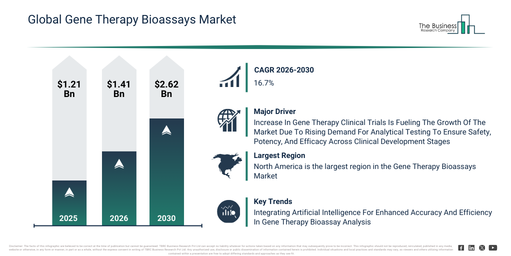
    The gene therapy bioassays market has seen substantial growth in recent years. This market is anticipated to expand from $1.21 billion in 2025 to $1.41 billion in 2026, exhibiting a compound annual growth rate (CAGR) of 16.5%. In the past, this growth was primarily due to an increase in gene therapy research programs, the expansion of viral vector manufacturing, rising clinical trial activity, the implementation of standardized bioassay protocols, and heightened regulatory scrutiny on gene therapy products.

    The gene therapy bioassays market size is anticipated to experience significant expansion in the upcoming years, projected to reach $2.62 billion by 2030, exhibiting a compound annual growth rate (CAGR) of 16.7%. This growth during the forecast period is primarily driven by the escalating commercialization of gene therapies, the increasing need for high-throughput bioassay solutions, the expansion of personalized genetic medicine, rising investments in advanced cell and gene therapy pipelines, and a heightened focus on assay automation and reproducibility. Notable trends for the forecast period include the increasing adoption of cell-based potency assays, a rising demand for viral vector characterization tests, the growing utilization of automated bioassay platforms, the expansion of regulatory-compliant assay validation, and an enhanced emphasis on functional gene expression analysis.

    Access Your Free Sample Report For In-Depth Market Analysis:

    https://www.thebusinessresearchcompany.com/sample.aspx?id=33119&type=smp

    What Leading Drivers Are Supporting The Gene Therapy Bioassays Market Expansion?

    The rising volume of gene therapy clinical trials is projected to fuel expansion within the gene therapy bioassays market. These trials assess the safety, effectiveness, and biological function of gene-based treatments in human participants. Their proliferation is a result of heightened research and development activities and increased funding from biopharmaceutical firms aiming to satisfy critical medical demands using novel genetic therapies. Gene therapy bioassays are crucial for clinical progression, offering essential analytical evaluations to determine biological activity, potency, safety, and how the treatment works, throughout each developmental stage, with escalating regulatory demands as programs advance through clinical phases. For example, the Bioindustry Association (BIA), a national trade association based in the UK, reported that in January 2026, the UK had 193 ongoing advanced therapy clinical trials, with more than 80% specifically dedicated to gene therapies. Consequently, the substantial increase in gene therapy clinical trials is propelling the growth of the gene therapy bioassays market.

    Which Segment Categories Are Included In The Gene Therapy Bioassays Market Segment Analysis?

    The gene therapy bioassays market covered in this report is segmented –

    1) By Product Type: Cell-Based Assays; Viral Vector-Based Assays; Non-Viral Vector-Based Assays; Other Product Types

    2) By Service Type: Assay Development Services; Assay Validation Services; Quality Control Testing Services; Regulatory Support Services; Data Analysis And Reporting Services; Custom Bioassay Design Services

    3) By Application: Research And Development; Clinical Testing; Quality Control; Other Applications

    4) By End User: Biotechnology Companies; Pharmaceutical Companies; Contract Research Organizations; Academic And Research Institutes; Regulatory Laboratories

    Subsegments:

    1) By Cell-Based Assays: Reporter Gene Expression Assays; Cell Viability And Cytotoxicity Assays; Transduction Efficiency Assays; Functional Potency Cell Assays; Cellular Uptake And Localization Assays

    2) By Viral Vector-Based Assays: Adeno Associated Virus Vector Assays; Lentiviral Vector Characterization Assays; Retroviral Vector Titer Assays; Vector Genome Integrity Assays; Infectivity And Transduction Assays

    3) By Non-Viral Vector-Based Assays: Plasmid Deoxyribonucleic Acid Delivery Assays; Lipid Nanoparticle Transfection Assays; Polymeric Carrier Efficiency Assays; Physical Gene Delivery Evaluation Assays; Non Viral Vector Stability Assays

    4) By Other Product Types: Immunogenicity Assessment Assays; Biodistribution And Persistence Assays; Safety And Toxicity Bioassays; Analytical Method Development Assays; Custom Gene Therapy Bioassays

    What Emerging Trends Are Seen In The Gene Therapy Bioassays Market?

    Major companies operating in the gene therapy bioassays market are increasingly integrating artificial intelligence and machine learning into bioassay analysis, such as AI-enabled digital PCR data interpretation. This focus is aimed at enhancing accuracy, reducing experimental variability, accelerating result turnaround, and optimizing the assessment of therapeutic efficacy and safety in gene therapy development. AI-enabled dPCR data interpretation utilizes advanced algorithms to automate the analysis of results, distinguish true signals from background noise, and precisely quantify viral genomes or vector copy number with minimal human intervention. For instance, in April 2025, QIAGEN N.V., a Germany-based molecular diagnostics company, launched expanded QIAcuity lentivirus solutions, which include the QIAcuity RCL Quant Kit and CGT dPCR assays. These solutions offer algorithm-driven absolute quantification, multiplex and singleplex assay compatibility for vector genome and vector copy number analysis, and software-assisted data analysis workflows specifically designed to support regulatory-compliant decision-making in gene therapy bioassay applications.

    Who Are The Active Companies Shaping The Gene Therapy Bioassays Market?

    Major companies operating in the gene therapy bioassays market are Boehringer Ingelheim BioXcellence, AGC Biologics, ICON plc, Lonza Group AG, SGS SA, Eurofins Scientific SE, WuXi AppTec, Charles River Laboratories International Inc., Catalent Inc, Recipharm AB, KBI Biopharma, Syngene International Limited, QPS Holdings LLC, BioAgilytix Labs (operationally independent CRO), Oxford Biomedica plc, Viralgen Vector S.L., ProtaGene Inc., Center for Breakthrough Medicines, RoslinCT, Immunologix Labs, Genezen Laboratories

    Get The Full Gene Therapy Bioassays Market Report:

    https://www.thebusinessresearchcompany.com/report/gene-therapy-bioassays-market-report

    Which Region Leads The Gene Therapy Bioassays Market In Terms Of Market Share?

    North America was the largest region in the gene therapy bioassays market in 2025. Asia-Pacific is expected to be the fastest-growing region in the forecast period. The regions covered in the gene therapy bioassays market report are Asia-Pacific, South East Asia, Western Europe, Eastern Europe, North America, South America, Middle East, Africa.

    Request A Customized Gene Therapy Bioassays Market Report For Competitive Insights:

    https://www.thebusinessresearchcompany.com/customise?id=33119&type=smp

    Browse Through More Reports Similar to the Global Gene Therapy Bioassays Market 2026, By The Business Research Company

    Genes Therapy Market Report 2026

    https://www.thebusinessresearchcompany.com/report/genes-therapy-global-market-report

    Cell And Gene Therapy Clinical Trial Services Market Report 2026

    https://www.thebusinessresearchcompany.com/report/cell-and-gene-therapy-clinical-trial-services-global-market-report

    Cell And Gene Therapy Supply Chain Or Logistics Market Report 2026

    https://www.thebusinessresearchcompany.com/report/cell-and-gene-therapy-supply-chain-or-logistics-global-market-report

    Get in touch with us:

    The Business Research Company: https://www.thebusinessresearchcompany.com/

    Americas +1 310-496-7795

    Asia +44 7882 955267 & +91 8897263534

    Europe +44 7882 955267

    Email us at info@tbrc.info

    Follow us on:

    LinkedIn: https://in.linkedin.com/company/the-business-research-company

    YouTube: https://www.youtube.com/channel/UC24_fI0rV8cR5DxlCpgmyFQ

    Global Market Model: https://www.thebusinessresearchcompany.com/global-market-model

  • G Protein-Coupled Receptor Family C Group 5 Member D (GPRC5D) Targeted Therapies Market Insights Highlighting Opportunities Supporting Growth To 2030

    G Protein-Coupled Receptor Family C Group 5 Member D (GPRC5D) Targeted Therapies Market Insights Highlighting Opportunities Supporting Growth To 2030

    The Business Research Company’s 2026 market reports feature enhanced tools like market attractiveness analysis, TAM assessment, and company scoring matrices, along with interactive dashboards, deeper supply chain insights, and startup coverage strengthening the depth, usability, and strategic value of insights.

    What Is The Estimated Market Size Of The G Protein-Coupled Receptor Family C Group 5 Member D (GPRC5D) Targeted Therapies Market In 2026, And How Will Its Value Evolve By 2030?

    The g protein-coupled receptor family c group 5 member d (gprc5d) targeted therapies market has seen considerable expansion in recent years. Its value is expected to climb from $0.59 billion in 2025 to $0.78 billion in 2026, exhibiting a compound annual growth rate (CAGR) of 32.7%. The observed growth during the historical period is attributable to several factors, such as progress in targeted cancer therapy research, the increasing incidence of multiple myeloma cases, the broadening of monoclonal antibody development initiatives, enhancements in clinical trial infrastructure, and growing investments in oncology drug discovery.

    The g protein-coupled receptor family c group 5 member d (gprc5d) targeted therapies market is projected to experience substantial expansion in the coming years. Its valuation is anticipated to reach $2.42 billion by 2030, exhibiting a compound annual growth rate (CAGR) of 32.9%. This projected growth throughout the forecast period stems from factors such as a rise in regulatory clearances for targeted biological agents, escalating need for individualized cancer treatments, the broadening of next-generation immunotherapy platforms, increased financial commitments to precision medicine frameworks, and greater implementation of biomarker-guided therapy choices. Key developments expected during this period include the accelerated creation of bispecific antibody therapies, a sharpened emphasis on gprc5d biomarker-driven patient stratification, wider adoption of CAR-T cell systems, the enlargement of precision oncology clinical development programs, and improved integration of complementary diagnostic tools.

    Access Your Free Sample Report For In-Depth Market Analysis:

    https://www.thebusinessresearchcompany.com/sample.aspx?id=33116&type=smp

    Which Key Factors Are Driving The G Protein-Coupled Receptor Family C Group 5 Member D (GPRC5D) Targeted Therapies Market Growth?

    An increasing incidence of myeloma is projected to fuel the expansion of the GPRC5D-targeted therapies market in the future. Myeloma, a malignancy affecting plasma cells within the bone marrow, interferes with typical blood cell formation and may lead to issues such as bone injury, reduced red blood cells, and renal dysfunction. The growing occurrence of myeloma is partially attributable to an aging demographic, given that the likelihood of developing plasma cell disorders escalates with advancing age due to the gradual buildup of genetic alterations. GPRC5D-targeted treatments aid in managing myeloma by attaching to the GPRC5D protein found on cancerous plasma cells, subsequently guiding the immune system, particularly T cells, to specifically eliminate these malignant cells, largely preserving healthy cells. As an illustration, in January 2026, the American Cancer Society, a professional organization located in the US, anticipates that in 2026, the United States will report approximately 36,000 new instances of multiple myeloma, with 20,150 cases among men and 15,850 cases among women, alongside an estimated 10,850 fatalities, consisting of 5,780 men and 5,070 women. Consequently, the increasing prevalence of myeloma is fueling the expansion of the GPRC5D-targeted therapies market.

    How Is The G Protein-Coupled Receptor Family C Group 5 Member D (GPRC5D) Targeted Therapies Market Broken Down By Segment Categories?

    The g protein-coupled receptor family c group 5 member d (gprc5d) targeted therapies market covered in this report is segmented –

    1) By Therapy Type: Monoclonal Antibodies; Bispecific Antibodies; Chimeric Antigen Receptor (CAR-T) Cell Therapies; Other Therapy Types

    2) By Indication: Multiple Myeloma; Solid Tumors; Other Indications

    3) By Technology: Precision Medicine Approaches; Molecular Targeted Therapy; Cancer Immunotherapy Platforms; Biopharmaceutical Drug Delivery Systems

    4) By Route Of Administration: Intravenous; Subcutaneous; Other Routes Of Administration

    5) By End-User: Hospitals; Specialty Clinics; Research Institutes; Other End-Users

    Subsegments:

    1) By Monoclonal Antibodies: Fully Human Monoclonal Antibodies; Humanized Monoclonal Antibodies; Chimeric Monoclonal Antibodies; Murine Monoclonal Antibodies

    2) By Bispecific Antibodies: Dual Targeting Bispecific Antibodies; Cross Linking Bispecific Antibodies; Immune Cell Engaging Bispecific Antibodies; Cytotoxic Bispecific Antibodies

    3) By Chimeric Antigen Receptor (CAR-T) Cell Therapies: Autologous Car T Cell Therapies; Allogeneic Car T Cell Therapies; Next Generation Car T Cell Therapies; Gene Edited Car T Cell Therapies

    4) By Other Therapy Types: Targeted Small Molecule Drugs; Receptor Specific Inhibitors; Injectable Biologics; Oral Targeted Therapeutics

    Which Trends Are Guiding The Direction Of The G Protein-Coupled Receptor Family C Group 5 Member D (GPRC5D) Targeted Therapies Market?

    Leading companies in the GPRC5D targeted therapies market are concentrating on developing innovative solutions, such as bispecific T cell engagers, to enhance immune-mediated targeting of cancer cells and improve treatment efficacy. A bispecific T-cell engager (BiTE) is an immunotherapy molecule designed to connect T-cells directly to cancer cells by simultaneously binding both, activating the T-cells to destroy the targeted cancer cells. For instance, in August 2023, Johnson & Johnson, a US-based healthcare company, received approval from the European Commission for TALVEY (talquetamab), Janssen’s bispecific antibody therapy targeting GPRC5D, for relapsed and refractory multiple myeloma (RRMM) in patients who have undergone at least three prior therapies. This is a first-in-class bispecific T-cell engager, targeting GPRC5D on multiple myeloma cells and CD3 on T cells, to treat relapsed/refractory multiple myeloma in heavily pretreated patients. Its key purpose is providing durable responses (ORR >70% in trials) after at least four prior therapies, with advantages including subcutaneous dosing, sustained quality-of-life benefits, and efficacy even post-bispecifics or CAR-T, thereby addressing an unmet need in late-line disease.

    Which Players Are Present In The G Protein-Coupled Receptor Family C Group 5 Member D (GPRC5D) Targeted Therapies Market Space?

    Major companies operating in the g protein-coupled receptor family c group 5 member d (gprc5d) targeted therapies market are Johnson And Johnson, F. Hoffmann-La Roche AG., AbbVie Inc., Sanofi S.A., AstraZeneca plc, Bristol Myers Squibb Company, Genmab A/S, Genentech Inc., Simcere Zaiming Biotechnology Co. Ltd., Innovent Biologics Inc., Essen Biotech Co. Ltd., Nanjing IASO Biotechnology Co. Ltd., CARsgen Therapeutics Holdings Limited, Oricell Therapeutics Co. Ltd., Integral Molecular Inc., Overland Therapeutics Inc., Qilu Pharmaceutical Co. Ltd., Leads Biolabs Ltd., ShanghAI Yake Biotechnology Co. Ltd., Guangzhou Bio-gene Technology Co. Ltd.

    Get The Full G Protein-Coupled Receptor Family C Group 5 Member D (GPRC5D) Targeted Therapies Market Report:

    https://www.thebusinessresearchcompany.com/report/g-protein-coupled-receptor-family-c-group-5-member-d-gprc5d-targeted-therapies-market-report

    Which Region Leads The G Protein-Coupled Receptor Family C Group 5 Member D (GPRC5D) Targeted Therapies Market In Overall Market Size?

    North America was the largest region in the GPRC5D targeted therapies market in 2025. Asia-Pacific is expected to be the fastest-growing region in the forecast period. The regions covered in the g protein-coupled receptor family c group 5 member d (gprc5d) targeted therapies market report are Asia-Pacific, South East Asia, Western Europe, Eastern Europe, North America, South America, Middle East, Africa.

    Request A Customized G Protein-Coupled Receptor Family C Group 5 Member D (GPRC5D) Targeted Therapies Market Report For Competitive Insights:

    https://www.thebusinessresearchcompany.com/customise?id=33116&type=smp

    Browse Through More Reports Similar to the Global G Protein-Coupled Receptor Family C Group 5 Member D (GPRC5D) Targeted Therapies Market 2026, By The Business Research Company

    G Protein Coupled Receptors Market Report 2026

    https://www.thebusinessresearchcompany.com/report/g-protein-coupled-receptors-global-market-report

    Cc Chemokine Receptor Type 5 Market Report 2026

    https://www.thebusinessresearchcompany.com/report/cc-chemokine-receptor-type-5-global-market-report

    Gmp Cell Therapy Consumables Market Report 2026

    https://www.thebusinessresearchcompany.com/report/gmp-cell-therapy-consumables-global-market-report

    Get in touch with us:

    The Business Research Company: https://www.thebusinessresearchcompany.com/

    Americas +1 310-496-7795

    Asia +44 7882 955267 & +91 8897263534

    Europe +44 7882 955267

    Email us at info@tbrc.info

    Follow us on:

    LinkedIn: https://in.linkedin.com/company/the-business-research-company

    YouTube: https://www.youtube.com/channel/UC24_fI0rV8cR5DxlCpgmyFQ

    Global Market Model: https://www.thebusinessresearchcompany.com/global-market-model
  • Global Frontotemporal Dementia Market Expected To Reach $4.98 Billion By 2030 With 9% CAGR

    Global Frontotemporal Dementia Market Expected To Reach $4.98 Billion By 2030 With 9% CAGR

    The Business Research Company’s 2026 market reports feature enhanced tools like market attractiveness analysis, TAM assessment, and company scoring matrices, along with interactive dashboards, deeper supply chain insights, and startup coverage strengthening the depth, usability, and strategic value of insights.

    How Does The Market Size Of The Frontotemporal Dementia Market Compare Between 2026 And 2030?

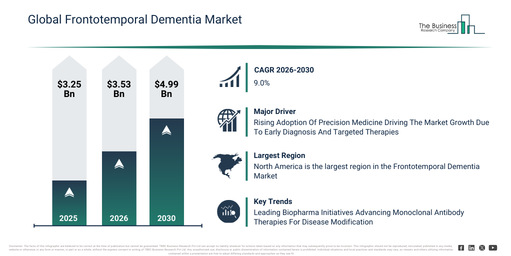
    The frontotemporal dementia market size has experienced significant growth in recent years. It is anticipated to increase from $3.25 billion in 2025 to $3.53 billion in 2026, reflecting a compound annual growth rate (CAGR) of 8.8%. The expansion witnessed in the historical period stems from factors such as improved clinical recognition of frontotemporal dementia, the proliferation of specialized neurology clinics, greater availability of neuroimaging technologies, increasing awareness among healthcare professionals, and the establishment of standardized diagnostic criteria.

    The frontotemporal dementia market size is projected to experience robust expansion over the coming years. It is anticipated to reach a valuation of $4.99 billion by 2030, demonstrating a compound annual growth rate (CAGR) of 9.0%. This forecasted growth is primarily driven by heightened investments in research for neurodegenerative diseases, a surge in the embrace of precision medicine strategies, the broader availability of digital health solutions for evaluating cognition, an intensified emphasis on therapies that modify disease progression, and expanded programs for caregiver assistance and management. Key trends expected during this period involve the increasing utilization of sophisticated neuroimaging diagnostic methods, a greater uptake of genetic and biomarker testing, an amplified concentration on precise and early disease identification, the broader implementation of multidisciplinary care frameworks, and improved incorporation of digital instruments for cognitive evaluation.

    Access Your Free Sample Report For In-Depth Market Analysis:

    https://www.thebusinessresearchcompany.com/sample.aspx?id=33114&type=smp

    What Primary Drivers Are Shaping The Frontotemporal Dementia Market?

    The expanding field of precision medicine is anticipated to fuel the growth of the frontotemporal dementia market moving forward. Precision medicine involves tailoring medical interventions to an individual patient’s unique biological and lifestyle characteristics. Its adoption is on the rise due to advancements in genomics and biotechnology, which facilitate more precise identification of disease causes and the development of targeted treatments, thereby enhancing patient outcomes. In the context of frontotemporal dementia (FTD), precision medicine assists by enabling early and accurate diagnosis through genetic and biomarker analysis and by guiding the creation of specific therapies that address particular molecular pathways involved in the disease, leading to improved treatment effectiveness and slower progression. For instance, according to the Personalized Medicine Coalition, a US-based non-profit organization, the US Food and Drug Administration (FDA) approved 16 new personalized treatments for rare disease patients, marking an increase from six in 2022. The recently approved personalized treatments for 2023 also encompassed seven cancer drugs and three for other diseases and conditions. As a result, the rise of precision medicine is propelling the expansion of the frontotemporal dementia market.

    What Are The Different Segment Types In The Frontotemporal Dementia Market Segment Breakdown?

    The frontotemporal dementia market covered in this report is segmented –

    1) By Disease Type: Behavioral Variant Frontotemporal Dementia (bvFTD); Primary Progressive Aphasia (PPA); Frontotemporal Dementia With Motor Neuron Disease (FTD-MND)

    2) By Drug Class: Cholinesterase Inhibitors; N-Methyl-D-Aspartate (NMDA) Receptor Antagonists; Antidepressants; Antipsychotics

    3) By Diagnostic Methods: Clinical Evaluation; Neuroimaging; Genetic Testing

    4) By Treatment Approach: Symptom Management; Medications; Speech And Occupational Therapy

    5) By End User: Hospitals; Specialty Clinics; Long-Term Care Facilities

    Subsegments:

    1) By Behavioral Variant Frontotemporal Dementia (bvFTD): Disinhibited Type; Apathetic Type; Stereotypic Type; Hyperorality Type

    2) By Primary Progressive Aphasia (PPA): Nonfluent Variant; Semantic Variant; Logopenic Variant

    3) By Frontotemporal Dementia With Motor Neuron Disease (FTD-MND): Amyotrophic Lateral Sclerosis Associated; Progressive Muscular Atrophy Associated; Primary Lateral Sclerosis Associated

    What Trends Are Affecting The Growth Of The Frontotemporal Dementia Market?

    Leading entities within the frontotemporal dementia market are concentrating their efforts on creating novel remedies, including monoclonal antibody therapy, aimed at decelerating the advancement of the disease and tackling its fundamental pathological causes. This therapeutic approach employs antibodies manufactured in laboratories, engineered to pinpoint particular proteins or cells within the body, thereby aiding in disease management by obstructing, neutralizing, or identifying detrimental cells for elimination. An illustrative example occurred in February 2024, when Alector Inc., a US-based clinical-stage biotechnology firm, collaborated with GSK Plc., a UK-based biopharma enterprise. This partnership secured the FDA Breakthrough Therapy Designation for latozinemab (AL001), a compound formulated to address frontotemporal dementia stemming from progranulin gene mutation (FTD-GRN) through the suppression of the sortilin receptor and the augmentation of progranulin (PGRN) concentrations in the brain, thereby targeting lysosomal dysfunction and neurodegeneration. Results from Phase 2 clinical trials demonstrated secure and persistent elevations in PGRN (exceeding 2-fold in plasma/CSF), accompanied by indicators of a deceleration in clinical disease progression.

    Who Are The Well-Known Companies In The Frontotemporal Dementia Market?

    Major companies operating in the frontotemporal dementia market are Novartis AG, Eli Lilly and Company, Siemens Healthineers AG, Alector Inc., Denali Therapeutics Inc., Sangamo Therapeutics Inc., QurAlis Inc., TauRx Pharmaceuticals Ltd., AC Immune SA, AviadoBio Ltd., Passage Bio Inc., Muna Therapeutics Inc., Neurimmune Therapeutics Inc., Coya Therapeutics Inc., Aquinnah Pharmaceuticals Inc., Asceneuron SA, CAMP4 Therapeutics Inc., Libra Therapeutics Inc., SOLA Biosciences Inc., Transposon Therapeutics Inc.

    Get The Full Frontotemporal Dementia Market Report:

    https://www.thebusinessresearchcompany.com/report/frontotemporal-dementia-market-report

    Which Region Is The Top Contributor To The Frontotemporal Dementia Market By Share?

    North America was the largest region in the frontotemporal dementia market in 2025. Asia-Pacific is expected to be the fastest-growing region in the forecast period. The regions covered in the frontotemporal dementia market report are Asia-Pacific, South East Asia, Western Europe, Eastern Europe, North America, South America, Middle East, Africa.

    Request A Customized Frontotemporal Dementia Market Report For Competitive Insights:

    https://www.thebusinessresearchcompany.com/customise?id=33114&type=smp

    Browse Through More Reports Similar to the Global Frontotemporal Dementia Market 2026, By The Business Research Company

    Lewy Body Dementia Treatment Market Report 2026

    https://www.thebusinessresearchcompany.com/report/lewy-body-dementia-treatment-global-market-report

    Alzheimers Drugs Market Report 2026

    https://www.thebusinessresearchcompany.com/report/alzheimers-drugs-global-market-report

    Alzheimers Drugs Market Report 2026

    https://www.thebusinessresearchcompany.com/report/alzheimers-drugs-global-market-report

    Get in touch with us:

    The Business Research Company: https://www.thebusinessresearchcompany.com/

    Americas +1 310-496-7795

    Asia +44 7882 955267 & +91 8897263534

    Europe +44 7882 955267

    Email us at info@tbrc.info

    Follow us on:

    LinkedIn: https://in.linkedin.com/company/the-business-research-company

    YouTube: https://www.youtube.com/channel/UC24_fI0rV8cR5DxlCpgmyFQ

    Global Market Model: https://www.thebusinessresearchcompany.com/global-market-model
  • Fertility Tracking Sensor Market Future Outlook Showing Growth Toward $3.32 Billion By 2030

    Fertility Tracking Sensor Market Future Outlook Showing Growth Toward $3.32 Billion By 2030

    The Business Research Company’s 2026 market reports feature enhanced tools like market attractiveness analysis, TAM assessment, and company scoring matrices, along with interactive dashboards, deeper supply chain insights, and startup coverage strengthening the depth, usability, and strategic value of insights.

    What Is The Forecasted Market Size Trajectory Of The Fertility Tracking Sensor Market From 2026 To 2030?

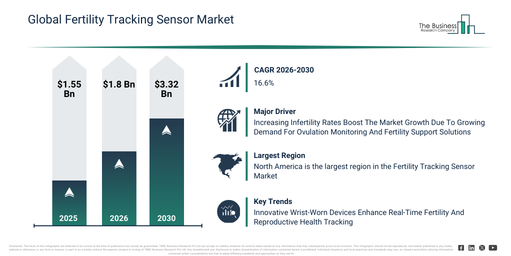
    The fertility tracking sensor market has seen rapid expansion over recent years. It is projected to grow from $1.55 billion in 2025 to $1.8 billion in 2026, at a compound annual growth rate (CAGR) of 16.4%. This historic growth is largely attributable to factors such as increasing awareness of reproductive health management, the rising adoption of digital health wearables, a growing demand for natural family planning tools, the expansion of women-focused health technology, and the availability of affordable sensor technologies.

    The fertility tracking sensor market size is anticipated to experience substantial growth over the next few years. It is forecasted to expand to $3.32 billion by 2030, demonstrating a compound annual growth rate (CAGR) of 16.6%. This expansion during the forecast period is primarily driven by factors such as the increasing adoption of AI-powered fertility analytics, a rising demand for personalized reproductive health insights, the broadening of telehealth-supported fertility management, the growing embrace of remote patient monitoring, and the increasing integration of fertility data platforms with healthcare systems. Prominent trends expected in this period include the rising uptake of continuous ovulation monitoring devices, increased use of wearable fertility sensors, the deepening integration of AI-based cycle prediction algorithms, the expansion of smartphone-connected fertility tracking solutions, and an enhanced focus on non-invasive monitoring technologies.

    Access Your Free Sample Report For In-Depth Market Analysis:

    https://www.thebusinessresearchcompany.com/sample.aspx?id=33111&type=smp

    Which Major Drivers Are Influencing The Expansion Of The Fertility Tracking Sensor Market?

    The rising incidence of infertility is anticipated to fuel the expansion of the fertility tracking sensor market. Infertility describes a reproductive challenge where a couple struggles to conceive naturally even after persistent efforts for an extended duration. A significant contributor to this rise in infertility is the trend of delayed parenthood, with more people opting to start families later, which often corresponds with a decrease in natural fertility and an elevated risk of reproductive health complications. Fertility tracking sensors address infertility by continuously monitoring crucial reproductive markers, including basal body temperature and hormonal shifts. This capability allows couples to precisely pinpoint their fertile window, thereby enhancing their prospects of conception. As an illustration, data from April 2023, provided by the World Health Organization (WHO), a Switzerland-based intergovernmental body, indicates that roughly 17.5% of adults, equivalent to about 1 in 6 individuals worldwide, experience infertility. This statistic underscores the urgent necessity for better access to affordable and high-quality fertility treatments for those impacted. Consequently, the growing prevalence of infertility is a key driver behind the expansion of the fertility tracking sensor market.

    Which Segment Classifications Are Used In The Fertility Tracking Sensor Market Segment Analysis?

    The fertility tracking sensor market covered in this report is segmented –

    1) By Product Type: Wearable Sensors; Implantable Sensors; Patch Sensors; Other Product Types

    2) By Technology: Temperature Sensors; Hormone Sensors; Electrochemical Sensors; Optical Sensors; Other Technologies

    3) By Application: Ovulation Prediction; Menstrual Cycle Tracking; Pregnancy Detection; Other Applications

    4) By Distribution Channel: Online; Pharmacies; Retail Stores; Other Distribution Channels

    5) By End-User: Homecare Settings; Hospitals And Clinics; Fertility Centers; Other End-Users

    Subsegments:

    1) By Wearable Sensors: Smart Wristbands; Smart Rings; Smart Patches; Smart Garments

    2) By Implantable Sensors: Subcutaneous Implants; Intrauterine Devices; Microchip Implants

    3) By Patch Sensors: Adhesive Skin Patches; Transdermal Patches; Disposable Patches

    4) By Other Product Types: Portable Monitors; Smartphone Compatible Devices; Non Invasive Devices

    Which Trends Are Shaping The Fertility Tracking Sensor Market?

    Leading companies in the fertility tracking sensor market are concentrating on developing innovative solutions, such as wrist-worn wearables, to offer real-time fertility monitoring, enhance cycle accuracy, and support women’s reproductive health management through data-driven insights. A wrist-worn wearable is defined as a compact electronic device worn on the wrist that gathers and analyzes physiological data, including temperature, heart rate, or hormone-related signals, to track health metrics and provide actionable insights, encompassing fertility and reproductive health information. For instance, in January 2026, Natural Cycles, a Sweden-based digital health company, launched an NC° Band that simplifies fertility tracking by automatically measuring temperature overnight. This device is engineered for seamless fertility tracking, replacing manual thermometers by autonomously recording overnight skin temperature, heart rate, and movement. Its purpose is to power the app’s NC° Fertility algorithm for detecting fertile windows, facilitating hormone-free birth control (93% typical effectiveness), pregnancy planning, postpartum, and perimenopause support.

    Which Firms Are Contributing To The Fertility Tracking Sensor Market Ecosystem?

    Major companies operating in the fertility tracking sensor market are Swiss Precision Diagnostics GmbH, Natural Cycles Nordic AB, Alfa Scientific Designs Inc., kegg Inc., Quidel Corporation, Tempdrop Ltd., Valley Electronics AG., Babystart Ltd., Bongmi Technology, Fairhaven Health LLC, Femometer Inc., Inito Health Tech Private Limited, Oura Health Oy, Prima-Temp LLC, Quanovate Tech Inc., Raiing Medical Company, Samplytics Technologies Pvt. Ltd., YONO Labs Inc., bioZhena Corporation, Welltwigs.

    Get The Full Fertility Tracking Sensor Market Report:

    https://www.thebusinessresearchcompany.com/report/fertility-tracking-sensor-market-report

    Which Region Represents The Largest Share Of The Fertility Tracking Sensor Market?

    North America was the largest region in the fertility tracking sensor market in 2025. Asia-Pacific is expected to be the fastest-growing region in the forecast period. The regions covered in the fertility tracking sensor market report are Asia-Pacific, South East Asia, Western Europe, Eastern Europe, North America, South America, Middle East, Africa.

    Request A Customized Fertility Tracking Sensor Market Report For Competitive Insights:

    https://www.thebusinessresearchcompany.com/customise?id=33111&type=smp

    Browse Through More Reports Similar to the Global Fertility Tracking Sensor Market 2026, By The Business Research Company

    Fertility Services Market Report 2026

    https://www.thebusinessresearchcompany.com/report/fertility-services-global-market-report

    Baby Monitoring Devices Market Report 2026

    https://www.thebusinessresearchcompany.com/report/baby-monitoring-devices-global-market-report

    Assisted Reproductive Technology Market Report 2026

    https://www.thebusinessresearchcompany.com/report/assisted-reproductive-technology-global-market-report

    Get in touch with us:

    The Business Research Company: https://www.thebusinessresearchcompany.com/

    Americas +1 310-496-7795

    Asia +44 7882 955267 & +91 8897263534

    Europe +44 7882 955267

    Email us at info@tbrc.info

    Follow us on:

    LinkedIn: https://in.linkedin.com/company/the-business-research-company

    YouTube: https://www.youtube.com/channel/UC24_fI0rV8cR5DxlCpgmyFQ

    Global Market Model: https://www.thebusinessresearchcompany.com/global-market-model
  • Excessive Daytime Sleepiness Market Revenue Growth Forecast To Reach $8.52 Billion By 2030 At 9.6% CAGR

    Excessive Daytime Sleepiness Market Revenue Growth Forecast To Reach $8.52 Billion By 2030 At 9.6% CAGR

    The Business Research Company’s 2026 market reports feature enhanced tools like market attractiveness analysis, TAM assessment, and company scoring matrices, along with interactive dashboards, deeper supply chain insights, and startup coverage strengthening the depth, usability, and strategic value of insights.

    How Much Will The Market Value Of The Excessive Daytime Sleepiness Market Grow Between 2026 And 2030?

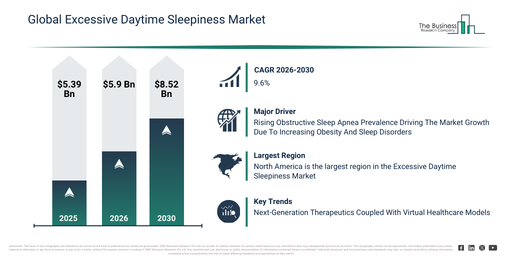
    The excessive daytime sleepiness market has experienced robust growth in recent years. It is projected to expand from $5.39 billion in 2025 to $5.9 billion in 2026, exhibiting a compound annual growth rate (CAGR) of 9.4%. Historically, this growth has been driven by factors such as the increasing prevalence of sleep disorders, a rising awareness of the impacts of sleep health, the expansion of sleep clinic infrastructure, the availability of pharmacological wake-promoting agents, and the broadening of diagnostic sleep testing services.

    The market for excessive daytime sleepiness is projected to experience substantial expansion in the coming years. This market is anticipated to reach $8.52 billion by 2030, exhibiting a compound annual growth rate (CAGR) of 9.6%. Factors contributing to this growth during the forecast period include a rising demand for tailored sleep treatment strategies, the increasing incorporation of digital therapeutics into sleep care, a wider embrace of remote patient monitoring, an expanding emphasis on proactive sleep healthcare, and greater investment in sleep medicine research. Key trends for the forecast period encompass the increasing uptake of wearable devices for sleep monitoring, the broader application of combination therapy methods, the growth of home-based management for sleep disorders, a heightened focus on early detection and screening initiatives, and improved integration of digital platforms for sleep health.

    Access Your Free Sample Report For In-Depth Market Analysis:

    https://www.thebusinessresearchcompany.com/sample.aspx?id=33109&type=smp

    What Key Drivers Are Fueling The Growth Of The Excessive Daytime Sleepiness Market?

    The growing incidence of obstructive sleep apnea (OSA) is projected to drive the expansion of the excessive daytime sleepiness (EDS) market moving forward. Obstructive sleep apnea is a sleep condition marked by repeated interruptions in breathing during sleep due to an upper airway blockage, leading to fragmented sleep and a reduction in sleep quality. The rise in obstructive sleep apnea cases is attributed to increasing obesity rates, which cause excess fat in the neck and throat area, narrowing the airway and resulting in breathing interruptions during sleep. Excessive daytime sleepiness is a prevalent and debilitating indicator of obstructive sleep apnea and frequently continues to affect a substantial portion of patients, thereby stimulating the demand for focused therapeutic and management solutions. For instance, in August 2026, according to the National Library of Medicine, a US-based medical library, it is anticipated that by 2050, approximately 76.6 million adults aged 30–69 in the United States will be impacted by obstructive sleep apnea. Consequently, the increasing prevalence of obstructive sleep apnea is propelling the growth of the excessive daytime sleepiness market.

    How Is The Excessive Daytime Sleepiness Market Organized By Segment Classification?

    The excessive daytime sleepiness market covered in this report is segmented –

    1) By Treatment Type: Pharmacological Treatment; Behavioral Therapy; Continuous Positive Airway Pressure Therapy; Lifestyle Modification Programs; Combination Therapies

    2) By Diagnosis Method: Polysomnography; Multiple Sleep Latency Test; Actigraphy; Clinical Evaluation; Questionnaire Based Assessments

    3) By Type Of Disorder: Narcolepsy; Obstructive Sleep Apnea; Insomnia; Circadian Rhythm Disorders; Idiopathic Hypersomnia; Restless Legs Syndrome; Other Type Of Disorders

    4) By Distribution Channel: Hospital Pharmacies; Retail Pharmacies; Online Pharmacies

    5) By End User: Hospitals; Sleep Clinics; Ambulatory Surgical Centers; Home Care Settings

    Subsegments:

    1) By Pharmacological Treatment: Wake Promoting Medications; Central Nervous System Stimulant Medications; Dopamine Reuptake Inhibitor Medications; Histamine Receptor Modulating Medications

    2) By Behavioral Therapy: Cognitive Behavioral Therapy For Sleep; Sleep Hygiene Education Programs; Stimulus Control Therapy; Sleep Restriction Therapy

    3) By Continuous Positive Airway Pressure Therapy: Fixed Pressure Airway Therapy; Auto Adjusting Airway Therapy; Bilevel Airway Therapy; Adaptive Pressure Support Therapy

    4) By Lifestyle Modification Programs: Sleep Schedule Regulation Programs; Diet And Nutrition Management Programs; Physical Activity And Exercise Programs; Stress Management And Relaxation Programs

    5) By Combination Therapies: Medication And Behavioral Therapy Combinations; Airway Therapy And Lifestyle Modification Combinations; Medication And Airway Therapy Combinations; Integrated Multimodal Treatment Approaches

    What Trends Are Influencing The Excessive Daytime Sleepiness Market?

    Companies operating in the excessive daytime sleepiness market are actively pursuing the development of innovative solutions, such as central nervous system depressants, to enhance wakefulness and improve the quality of life for patients. A central nervous system depressant is a substance that reduces nervous system activity, leading to effects like sedation, calmness, or sleep. For example, in September 2025, Amneal Pharmaceuticals Inc., a US-based pharmaceutical company, received FDA approval for its sodium oxybate oral solution, which directly addresses excessive daytime sleepiness (EDS) in narcolepsy patients. This solution improves treatment continuity through virtual specialist consultations, remote prescription fulfillment, and expanded patient reach in underserved areas, aiming to broaden access, improve affordability, and align established pharmacotherapy with evolving digital and telehealth-driven care models for excessive daytime sleepiness.

    Who Are The Industry Participants Involved In The Excessive Daytime Sleepiness Market?

    Major companies operating in the excessive daytime sleepiness market are Eli Lilly and Company, Takeda Pharmaceutical Company Limited, Teva Pharmaceutical Industries Ltd., Cleveland Clinic, EisAI Co. Ltd, Jazz Pharmaceuticals plc., Emory Healthcare Inc., Alkermes plc., Fisher & Paykel Healthcare Corporation Limited, Harmony Biosciences Holdings Inc., Medanta, Axsome Therapeutics Inc., Compumedics Limited, BIOPROJET, Apnimed Inc., Nox Health Inc., Somnogen Canada Inc., Suven Life Sciences Limited, Theranexus, XWPharma, NLS Pharmaceutics AG.

    Get The Full Excessive Daytime Sleepiness Market Report:

    https://www.thebusinessresearchcompany.com/report/excessive-daytime-sleepiness-market-report

    Which Geographic Region Dominates The Excessive Daytime Sleepiness Market?

    North America was the largest region in the excessive daytime sleepiness market in 2025. Asia-Pacific is expected to be the fastest-growing region in the forecast period. The regions covered in the excessive daytime sleepiness market report are Asia-Pacific, South East Asia, Western Europe, Eastern Europe, North America, South America, Middle East, Africa.

    Request A Customized Excessive Daytime Sleepiness Market Report For Competitive Insights:

    https://www.thebusinessresearchcompany.com/customise?id=33109&type=smp

    Browse Through More Reports Similar to the Global Excessive Daytime Sleepiness Market 2026, By The Business Research Company

    Insomnia Market Report 2026

    https://www.thebusinessresearchcompany.com/report/insomnia-global-market-report

    Sleep Testing Services Market Report 2026

    https://www.thebusinessresearchcompany.com/report/sleep-testing-services-global-market-report

    Sleep Monitoring Apps Market Report 2026

    https://www.thebusinessresearchcompany.com/report/sleep-monitoring-apps-global-market-report

    Get in touch with us:

    The Business Research Company: https://www.thebusinessresearchcompany.com/

    Americas +1 310-496-7795

    Asia +44 7882 955267 & +91 8897263534

    Europe +44 7882 955267

    Email us at info@tbrc.info

    Follow us on:

    LinkedIn: https://in.linkedin.com/company/the-business-research-company

    YouTube: https://www.youtube.com/channel/UC24_fI0rV8cR5DxlCpgmyFQ

    Global Market Model: https://www.thebusinessresearchcompany.com/global-market-model
  • Epitranscriptomic Therapies Market Expected To Grow Steadily And Approach $4.19 Billion By 2030

    Epitranscriptomic Therapies Market Expected To Grow Steadily And Approach $4.19 Billion By 2030

    The Business Research Company’s 2026 market reports feature enhanced tools like market attractiveness analysis, TAM assessment, and company scoring matrices, along with interactive dashboards, deeper supply chain insights, and startup coverage strengthening the depth, usability, and strategic value of insights.

    What Changes In Market Value Are Expected For The Epitranscriptomic Therapies Market Over The 2026–2030 Period?

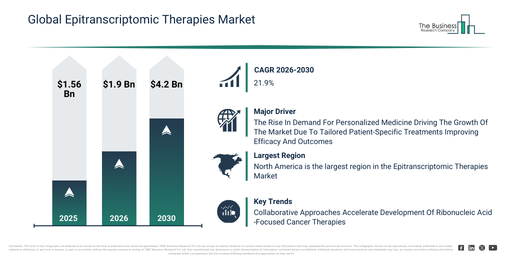
    The epitranscriptomic therapies market has experienced rapid expansion over the past few years. It is anticipated to increase from $1.56 billion in 2025 to $1.9 billion in 2026, with a compound annual growth rate (CAGR) of 21.6%. Historically, this growth was fueled by breakthroughs in RNA biology research, an improved understanding of gene regulation mechanisms, the scaling up of oncology research programs, the accessibility of advanced sequencing technologies, and an increase in translational medicine initiatives.

    The epitranscriptomic therapies market is projected to experience substantial expansion over the upcoming years. This market is anticipated to reach a valuation of $4.2 billion by 2030, exhibiting a compound annual growth rate (CAGR) of 21.9%. The expansion during the projected timeframe stems from various factors, including heightened investments in RNA-based therapeutics, a growing need for targeted cancer treatments, the broadening of personalized medicine strategies, an uptick in clinical trial endeavors within epitranscriptomics, and augmented regulatory involvement concerning innovative RNA therapies. Key trends anticipated for this forecast period encompass the escalating development of epitranscriptomic drug pipelines, the increasing adoption of RNA modification profiling tools, the proliferation of combination epitranscriptomic therapies, the expanding incorporation of bioinformatics into therapy design, and a heightened emphasis on precision medicine applications.

    Access Your Free Sample Report For In-Depth Market Analysis:

    https://www.thebusinessresearchcompany.com/sample.aspx?id=33108&type=smp

    Which Drivers Are Supporting The Epitranscriptomic Therapies Market Growth?

    The increasing demand for personalized medicine is expected to propel the growth of the epitranscriptomic therapies market going forward. Personalized medicine refers to a medical approach that tailors healthcare decisions, treatments, and interventions to the individual characteristics of each patient, such as their genetic profile, lifestyle, and environment. This heightened demand for personalized medicine primarily stems from the rising prevalence of chronic and complex diseases, as tailored treatments can more effectively target individual patient needs and improve outcomes. Personalized medicine supports epitranscriptomic therapies by customizing treatments to an individual’s specific RNA modification patterns, thereby enhancing therapeutic effectiveness and reducing the risk of adverse effects. For instance, in February 2024, the Personalized Medicine Coalition, a US-based non-profit organization, reported that in 2023, the U.S. Food and Drug Administration (FDA) approved 16 new personalized treatments for rare disease patients, a notable increase from six in 2022. The newly approved personalized treatments for 2023 also included seven cancer drugs and three for other diseases and conditions. Therefore, the increasing demand for personalized medicine is driving the growth of the epitranscriptomic therapies market.

    Which Segments Define The Epitranscriptomic Therapies Market Segment Structure?

    The epitranscriptomic therapies market covered in this report is segmented –

    1) By Therapy Type: Small Molecule Inhibitors; Ribonucleic Acid Modifying Enzymes; Antisense Oligonucleotides; Other Therapy Types

    2) By Route of Administration: Injectable; Oral; Other Routes Of Administration

    3) By Application: Cancer; Neurological Disorders; Metabolic Diseases; Infectious Diseases; Other Applications

    4) By End-User: Hospitals; Research Institutes; Pharmaceutical And Biotechnology Companies; Other End-Users

    Subsegments:

    1) By Small Molecule Inhibitors: Methyltransferase Inhibitors; Demethylase Inhibitors; Reader Protein Inhibitors; Writer Enzyme Inhibitors; Eraser Enzyme Inhibitors

    2) By Ribonucleic Acid Modifying Enzymes: Methyltransferase Enzymes; Demethylase Enzymes; Pseudouridine Synthase Enzymes; Adenosine Deaminase Enzymes; Cytidine Deaminase Enzymes

    3) By Antisense Oligonucleotides: Gapmer Oligonucleotides; Splice Modulating Oligonucleotides; Translation Blocking Oligonucleotides; Exon Skipping Oligonucleotides; Gene Expression Silencing Oligonucleotides

    4) By Other Therapy Types: Ribonucleic Acid Interference Based Therapies; Messenger Ribonucleic Acid Editing Therapies; Epitranscriptomic Vaccine Platforms; Gene Regulation Modulation Therapies; Combination Epitranscriptomic Therapies

    Which Trends Are Expected To Impact The Epitranscriptomic Therapies Market?

    Leading companies in the epitranscriptomic therapies market are prioritizing the formation of strategic alliances to develop novel RNA-modifying cancer treatments. Strategic partnerships involve cooperative frameworks where organizations pool resources, knowledge, or strengths to pursue mutual objectives that foster quicker growth, reduce operational risks, and boost market competitiveness. For example, in January 2026, STORM Therapeutics Ltd., a biotechnology company based in the UK, collaborated with Alida Biosciences Inc., a US-based technology company, to further cancer therapies specifically targeting epitranscriptomic mechanisms. This collaboration is centered on integrating AlidaBio’s EpiPlex and EpiScout platforms with STORM’s clinical trials of STC-15, a pioneering METTL3 inhibitor. The partnership intends to identify and validate m6A RNA modification biomarkers that can predict patient outcomes and optimize therapeutic plans. This joint effort combines drug development with advanced RNA profiling, representing a significant progression in epitranscriptomic cancer therapies.

    Who Are The Established Players Within The Epitranscriptomic Therapies Market?

    Major companies operating in the epitranscriptomic therapies market are AstraZeneca PLC, GSK plc, Moderna Inc., Alnylam Pharmaceuticals Inc., Ionis Pharmaceuticals Inc., Arcturus Therapeutics Holdings Inc., Arrakis Therapeutics Inc., AIRNA Corporation, CD Genomics, ProQR Therapeutics N.V., Nimbus Therapeutics LLC, Envisagenics Inc., Skyhawk Therapeutics Inc., Avidity Biosciences Inc., STORM Therapeutics Ltd., Omega Therapeutics Inc., Korro Bio Inc., Accent Therapeutics Inc., Alida Biosciences Inc., and O2nix Bio.

    Get The Full Epitranscriptomic Therapies Market Report:

    https://www.thebusinessresearchcompany.com/report/epitranscriptomic-therapies-market-report

    Which Region Is The Leading Market For The Epitranscriptomic Therapies Market?

    North America was the largest region in the epitranscriptomic therapies market in 2025. Asia-Pacific is expected to be the fastest-growing region in the forecast period. The regions covered in the epitranscriptomic therapies market report are Asia-Pacific, South East Asia, Western Europe, Eastern Europe, North America, South America, Middle East, Africa.

    Request A Customized Epitranscriptomic Therapies Market Report For Competitive Insights:

    https://www.thebusinessresearchcompany.com/customise?id=33108&type=smp

    Browse Through More Reports Similar to the Global Epitranscriptomic Therapies Market 2026, By The Business Research Company

    Ecoa Esource And Clinical Trials Market Report 2026

    https://www.thebusinessresearchcompany.com/report/ecoa-esource-and-clinical-trials-global-market-report

    Epilepsy Drugs Market Report 2026

    https://www.thebusinessresearchcompany.com/report/epilepsy-drugs-global-market-report

    Genes Therapy Market Report 2026

    https://www.thebusinessresearchcompany.com/report/genes-therapy-global-market-report

    Get in touch with us:

    The Business Research Company: https://www.thebusinessresearchcompany.com/

    Americas +1 310-496-7795

    Asia +44 7882 955267 & +91 8897263534

    Europe +44 7882 955267

    Email us at info@tbrc.info

    Follow us on:

    LinkedIn: https://in.linkedin.com/company/the-business-research-company

    YouTube: https://www.youtube.com/channel/UC24_fI0rV8cR5DxlCpgmyFQ

    Global Market Model: https://www.thebusinessresearchcompany.com/global-market-model
  • Enzymatic Deoxyribonucleic Acid (DNA) Synthesis Technology Market Expansion Forecast Reaching $8.77 Billion By 2030 At 23.5% CAGR

    Enzymatic Deoxyribonucleic Acid (DNA) Synthesis Technology Market Expansion Forecast Reaching $8.77 Billion By 2030 At 23.5% CAGR

    The Business Research Company’s 2026 market reports feature enhanced tools like market attractiveness analysis, TAM assessment, and company scoring matrices, along with interactive dashboards, deeper supply chain insights, and startup coverage strengthening the depth, usability, and strategic value of insights.

    By 2030, What Market Size Is The Enzymatic Deoxyribonucleic Acid (DNA) Synthesis Technology Market Expected To Reach Based On Its 2026 Value?

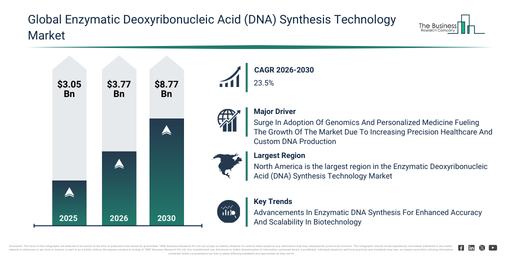
    The market for enzymatic deoxyribonucleic acid (dna) synthesis technology has experienced substantial expansion in recent years. This market is anticipated to expand from $3.05 billion in 2025 to $3.77 billion in 2026, demonstrating a compound annual growth rate (CAGR) of 23.3%. The historic growth in this sector can be attributed to a range of factors, including the rising adoption of synthetic biology in research, the inherent limitations of chemical dna synthesis methods, the expansion in genomics and gene editing research, increased funding for biotech research, and the broader availability of enzyme engineering technologies.

    The market for enzymatic deoxyribonucleic acid (DNA) synthesis technology is projected to experience substantial expansion in the coming years. This market is anticipated to reach $8.77 billion by 2030, exhibiting a compound annual growth rate (CAGR) of 23.5%. Factors driving this growth during the forecast period include a rising need for scalable DNA production, increased acceptance of DNA-based data storage methods, the broadening of biopharmaceutical development pipelines, escalating investments in environmentally friendly biotechnology processes, and the expanding utilization of automated and microfluidic synthesis platforms. Key trends observed throughout the forecast period encompass a wider embrace of enzymatic DNA synthesis platforms, a heightened requirement for extended and highly accurate DNA constructs, the proliferation of benchtop and cloud-based synthesis approaches, an elevated emphasis on eco-friendly DNA production, and improved incorporation into synthetic biology workflows.

    Access Your Free Sample Report For In-Depth Market Analysis:

    https://www.thebusinessresearchcompany.com/sample.aspx?id=33107&type=smp

    What Key Factors Are Affecting The Enzymatic Deoxyribonucleic Acid (DNA) Synthesis Technology Market Demand?

    The enzymatic DNA synthesis technology market is anticipated to expand due to the increasing integration of genomics and personalized medicine. Genomics and personalized medicine involve employing genetic data and precise healthcare methods to customize diagnostics, therapies, and preventative measures for unique genetic profiles. The uptake of genomics and personalized medicine is accelerating, driven by ongoing progress in sequencing technologies that have reduced expenses and processing times, resulting in improved clinical results and enhanced care effectiveness. This technology aids genomics and personalized medicine by facilitating the scalable and highly accurate production of DNA, which is crucial for generating custom genetic sequences and devising targeted treatments. An example highlighting this trend is the Food and Drug Administration’s approval of 16 novel personalized treatments for rare diseases in 2023, as reported by the US-based nonprofit Personalized Medicine Coalition in February 2024. This marks a significant rise from the 6 approvals seen in 2022. Consequently, the expanding use of genomics and personalized medicine is a key factor propelling the enzymatic DNA synthesis technology market forward.

    How Is The Enzymatic Deoxyribonucleic Acid (DNA) Synthesis Technology Market Segmented Across Different Segment Categories?

    The enzymatic deoxyribonucleic acid (dna) synthesis technology market covered in this report is segmented –

    1) By Technology: Polymerase Mediated Synthesis; Terminal Deoxynucleotidyl Transferase (TdT); Template Free Ligase Based Synthesis; Hybrid Chemical Enzymatic Workflows; Xeno Nucleic Acid (XNA) Synthesis Platforms

    2) By Fragment: Short Oligos; Gene Fragments; Long Constructs

    3) By Delivery Model: Benchtop Instrument; Outsourced Service; Cloud Based As A Service

    4) By Application: Synthetic Biology; Genomics And Gene Editing; Biopharmaceutical Development; Diagnostics And Research Tools; Biotechnology Research And Development

    5) By End-User Or Application: Academic And Government Research Institutes; Pharmaceutical And Biotechnology Companies; Diagnostic Companies; Agricultural Biotech Companies; Industrial Biotech And Chemical Companies

    Subsegments:

    1) By Polymerase Mediated Synthesis: Polymerase Chain Reaction Based Synthesis; Isothermal Amplification Based Synthesis; Rolling Circle Amplification Based Synthesis; Strand Displacement Amplification Based Synthesis; Primer Extension Based Synthesis

    2) By Terminal Deoxynucleotidyl Transferase (TdT): Single Nucleotide Addition Synthesis; Homopolymer Tail Synthesis; Random Oligonucleotide Tail Synthesis; Labeling And Tagging Synthesis; Enzyme Mediated Extension Synthesis

    3) By Template Free Ligase Based Synthesis: Enzymatic Ligation Synthesis; Oligonucleotide Assembly Synthesis; Fragment Ligation Synthesis; Cyclic Ligation Synthesis; Automated Ligase Synthesis

    4) By Hybrid Chemical Enzymatic Workflows: Phosphoramidite Enzymatic Integration Synthesis; Chemical Precursor Enzymatic Extension Synthesis; Stepwise Hybrid Synthesis; Enzyme Assisted Chemical Assembly Synthesis; Automated Hybrid Workflow Synthesis

    5) By Xeno Nucleic Acid (XNA) Synthesis Platforms: Peptide Nucleic Acid Synthesis; Locked Nucleic Acid Synthesis; Glycol Nucleic Acid Synthesis; Threose Nucleic Acid Synthesis; Cyclohexenyl Nucleic Acid Synthesis

    What Trends Are Influencing Changes In The Enzymatic Deoxyribonucleic Acid (DNA) Synthesis Technology Market?

    Major entities within the enzymatic deoxyribonucleic acid (DNA) synthesis technology market are concentrating on developing advanced solutions, such as algorithm-driven enzymatic DNA synthesis platforms, to facilitate the creation of longer, more intricate, and highly accurate synthetic DNA sequences. These algorithm-driven platforms utilize sophisticated computational models to guide enzyme-based, stepwise DNA synthesis in laboratory settings. Such systems enhance sequence fidelity, scalability, and output by continuously adjusting synthesis conditions through real-time error prediction and correction mechanisms. For example, in May 2025, Ribbon Bio, an Austria-based synthetic biology company, introduced its MiroSynth DNA molecules, specifically designed to enable a new generation of complex and lengthy synthetic DNA constructs. This algorithm-driven technology permits the assembly of DNA sequences that are considerably longer and more precise than those achievable with conventional approaches, thereby supporting advanced applications in fields like gene therapy, synthetic biology, and industrial biotechnology. The solution employs proprietary enzymatic processes to reduce error rates, improve scalability, and maintain high sequence accuracy, rendering it suitable for demanding downstream biological applications. It is engineered to meet the growing demand for complex DNA architectures while providing improved reliability, sustainability, and design flexibility compared to traditional DNA synthesis technologies.

    Which Organizations Play A Role In The Enzymatic Deoxyribonucleic Acid (DNA) Synthesis Technology Market Landscape?

    Major companies operating in the enzymatic deoxyribonucleic acid (dna) synthesis technology market are Thermo Fisher Scientific Inc, Almac Group Limited, Twist Bioscience Corporation, DNA Script SAS, Synbio Technologies, Telesis Bio Inc., Touchlight Genetics Limited, Yeasen Biotechnology, CD Genomics, Bioneer Corporation, Ansa Biotechnologies Inc., Elegen Corporation, Molecular Assemblies Inc., Moligo Technologies AB, Evonetix Ltd, Camena Bioscience Limited, Baseclick GmbH, Kern Systems, Ribbon Bio, and Helixworks.

    Get The Full Enzymatic Deoxyribonucleic Acid (DNA) Synthesis Technology Market Report:

    https://www.thebusinessresearchcompany.com/report/enzymatic-deoxyribonucleic-acid-dna-synthesis-technology-market-report

    Where Is The Enzymatic Deoxyribonucleic Acid (DNA) Synthesis Technology Market Primarily Concentrated By Region?

    North America was the largest region in the enzymatic deoxyribonucleic acid (DNA) synthesis technology market in 2025. Asia-Pacific is expected to be the fastest-growing region in the forecast period. The regions covered in the enzymatic deoxyribonucleic acid (dna) synthesis technology market report are Asia-Pacific, South East Asia, Western Europe, Eastern Europe, North America, South America, Middle East, Africa.

    Request A Customized Enzymatic Deoxyribonucleic Acid (DNA) Synthesis Technology Market Report For Competitive Insights:

    https://www.thebusinessresearchcompany.com/customise?id=33107&type=smp

    Browse Through More Reports Similar to the Global Enzymatic Deoxyribonucleic Acid (DNA) Synthesis Technology Market 2026, By The Business Research Company

    Oligonucleotide Synthesis Market Report 2026

    https://www.thebusinessresearchcompany.com/report/oligonucleotide-synthesis-global-market-report

    Recombinant Dna Technology Market Report 2026

    https://www.thebusinessresearchcompany.com/report/recombinant-dna-technology-global-market-report

    Nucleic Acid Based Gene Therapy Market Report 2026

    https://www.thebusinessresearchcompany.com/report/nucleic-acid-based-gene-therapy-global-market-report

    Get in touch with us:

    The Business Research Company: https://www.thebusinessresearchcompany.com/

    Americas +1 310-496-7795

    Asia +44 7882 955267 & +91 8897263534

    Europe +44 7882 955267

    Email us at info@tbrc.info

    Follow us on:

    LinkedIn: https://in.linkedin.com/company/the-business-research-company

    YouTube: https://www.youtube.com/channel/UC24_fI0rV8cR5DxlCpgmyFQ

    Global Market Model: https://www.thebusinessresearchcompany.com/global-market-model
  • Endothelial Dysfunction Market Revenue Projected To Hit $3.88 Billion By 2030 With 6% CAGR

    Endothelial Dysfunction Market Revenue Projected To Hit $3.88 Billion By 2030 With 6% CAGR

    The Business Research Company’s 2026 market reports feature enhanced tools like market attractiveness analysis, TAM assessment, and company scoring matrices, along with interactive dashboards, deeper supply chain insights, and startup coverage strengthening the depth, usability, and strategic value of insights.

    What Is The Anticipated Rise In Market Value Of The Endothelial Dysfunction Market During The Forecast Period?

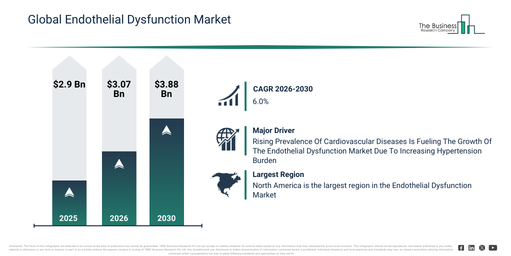
    The endothelial dysfunction market size has experienced significant expansion in recent years. This market is expected to increase from $2.9 billion in 2025 to $3.07 billion in 2026, exhibiting a compound annual growth rate (CAGR) of 5.8%. The historical growth of this market is attributable to the rising prevalence of cardiovascular diseases, an increased incidence of metabolic disorders, the spread of preventive healthcare screening, the existence of endothelial biomarkers, and a heightened clinical focus on vascular health.

    The market for endothelial dysfunction is projected to experience robust expansion over the coming years. This market is anticipated to reach a valuation of $3.88 billion by 2030, achieving a compound annual growth rate (CAGR) of 6.0%. The upward trend during the forecast period is attributable to factors such as the increasing embrace of precision medicine approaches, a growing need for remote patient monitoring, the expansion of AI-driven cardiovascular diagnostics, heightened investments in preventive cardiology, and a greater emphasis on personalized treatment pathways. Key trends expected during this period involve a rising utilization of advanced diagnostic methods for endothelial function, an increased uptake of biomarker-based screening, the expanding integration of digital health monitoring tools, the broadening of personalized vascular treatment strategies, and an intensified focus on the early detection of cardiovascular risks.

    Access Your Free Sample Report For In-Depth Market Analysis:

    https://www.thebusinessresearchcompany.com/sample.aspx?id=33102&type=smp

    Which Primary Drivers Are Impacting The Endothelial Dysfunction Market Growth?

    The increasing occurrence of cardiovascular diseases is projected to fuel the growth of the endothelial dysfunction market in the coming years. Cardiovascular diseases encompass a wide range of conditions impacting the heart and blood vessels, and their incidence continues to climb globally, influenced by demographic changes and lifestyle-related health concerns. The escalating burden of these diseases largely stems from an aging population, urbanization, unhealthy eating habits, lack of physical activity, and prolonged exposure to metabolic and vascular stress, all of which contribute to accelerated endothelial damage over time. Endothelial dysfunction is crucial in the development and progression of cardiovascular diseases, as impaired endothelial regulation leads to vascular inflammation, reduced nitric oxide bioavailability, abnormal vasodilation, and the formation of atherosclerotic plaque. For example, in January 2024, the American Heart Association, a US-based non-profit organization, reported that the age-adjusted death rate from cardiovascular disease rose to 233.3 per 100,000 in 2024, an increase of 4.0% from 224.4 per 100,000 in 2023. Consequently, the rising prevalence and impact of cardiovascular diseases are propelling the expansion of the endothelial dysfunction market. The escalating demand for precision medicine is anticipated to drive the growth of the endothelial dysfunction market moving forward. Precision medicine is a medical methodology that customizes prevention and treatment plans for individual patients, considering their genetic characteristics, environmental factors, and lifestyle. The heightened focus on precision medicine is driven by improved treatment efficacy, as therapies are specifically designed for an individual’s genetic and biological profile, resulting in superior outcomes and a reduced likelihood of adverse reactions. The growing need for precision medicine aids endothelial dysfunction treatment by utilizing genetic, molecular, and biomarker profiling to pinpoint the exact biological mechanisms causing endothelial damage in individual patients. This approach allows clinicians to select or develop targeted therapies that enhance therapeutic effectiveness while minimizing unnecessary or ineffective treatments. For instance, in February 2025, according to NHS England, a UK-based public healthcare body, the NHS Genomic Medicine Service delivered over 810,000 genomic tests for patients across various life stages in England in 2024. This figure has shown continuous year-on-year growth since the service’s establishment, increasing by 8% compared to 2023. Therefore, the rising demand for precision medicine is stimulating the growth of the endothelial dysfunction market.

    What Are The Main Segments Within The Endothelial Dysfunction Market Segment Structure?

    The endothelial dysfunction market covered in this report is segmented –

    1) By Product Type: Diagnostics; Therapeutics; Digital Health Solutions; Pharmacological Agents; Non-Pharmacological Interventions; Biological Therapies

    2) By Technology: Biotechnology; Nanotechnology; Genomics; Proteomics

    3) By Application: Cardiovascular Risk; Metabolic Syndrome; Chronic Kidney Disease; Other Application

    4) By End User: Hospitals; Diagnostic Laboratories; Specialty Clinics; Primary Care Providers

    Subsegments:

    1) By Diagnostics: Endothelial Function Assays; Vascular Imaging Tests; Biomarker Panels; Nitric Oxide Measurement Kits; Flow-Mediated Dilation Tests

    2) By Therapeutics: Pharmacological Treatments; Lifestyle Modification Programs; Physiotherapy Interventions; Surgical Procedures; Nutritional Interventions

    3) By Digital Health Solutions: Remote Patient Monitoring Platforms; Telehealth Consultation Systems; Mobile Health Applications; Wearable Health Devices; Cloud-Based Analytics Solutions

    4) By Pharmacological Agents: Statins; Angiotensin Converting Enzyme Inhibitors; Beta Blockers; Calcium Channel Blockers; Anti-Inflammatory Agents

    5) By Non-Pharmacological Interventions: Dietary Programs; Exercise Regimens; Stress Management Programs; Smoking Cessation Programs; Behavioral Therapy

    6) By Biological Therapies: Gene Therapy Treatments; Stem Cell Therapies; Monoclonal Antibody Treatments; Endothelial Progenitor Cell Therapy; Protein-Based Therapeutics

    Who Are The Companies Participating In The Endothelial Dysfunction Market?

    Major companies operating in the endothelial dysfunction market are F. Hoffmann-La Roche AG, Merck & Co. Inc., Pfizer Inc., Bayer Aktiengesellschaft, Sanofi S.A., Novartis Aktiengesellschaft, Bristol-Myers Squibb Company, Abbott Laboratories, GlaxoSmithKline plc, Eli Lilly and Company, Takeda Pharmaceutical Company Limited, Amgen Inc., Gilead Sciences Inc., Siemens Healthineers AG, Boehringer Ingelheim International GmbH, Teva Pharmaceutical Industries Limited, Boston Scientific Corporation, Astellas Pharma Inc., Daiichi Sankyo Company Limited, Biogen Inc., ChugAI Pharmaceutical Co. Ltd., ZOLL Medical Corporation, OrbusNeich Medical Group Holdings Limited, Stealth Peptides Inc., Perimed AB, and Glucox Biotech AB.

    Get The Full Endothelial Dysfunction Market Report:

    https://www.thebusinessresearchcompany.com/report/endothelial-dysfunction-market-report

    Which Region Has The Greatest Market Share In The Endothelial Dysfunction Market?

    North America was the largest region in the endothelial dysfunction market in 2025. Asia-Pacific is expected to be the fastest-growing region in the forecast period. The regions covered in the endothelial dysfunction market report are Asia-Pacific, South East Asia, Western Europe, Eastern Europe, North America, South America, Middle East, Africa.

    Request A Customized Endothelial Dysfunction Market Report For Competitive Insights:

    https://www.thebusinessresearchcompany.com/customise?id=33102&type=smp

    Browse Through More Reports Similar to the Global Endothelial Dysfunction Market 2026, By The Business Research Company

    Anti Vascular Endothelial Growth Factor Therapeutics Market Report 2026

    https://www.thebusinessresearchcompany.com/report/anti-vascular-endothelial-growth-factor-therapeutics-global-market-report

    Biopreservation Market Report 2026

    https://www.thebusinessresearchcompany.com/report/biopreservation-global-market-report

    Aortic Endograft Market Report 2026

    https://www.thebusinessresearchcompany.com/report/aortic-endograft-global-market-report

    Get in touch with us:

    The Business Research Company: https://www.thebusinessresearchcompany.com/

    Americas +1 310-496-7795

    Asia +44 7882 955267 & +91 8897263534

    Europe +44 7882 955267

    Email us at info@tbrc.info

    Follow us on:

    LinkedIn: https://in.linkedin.com/company/the-business-research-company

    YouTube: https://www.youtube.com/channel/UC24_fI0rV8cR5DxlCpgmyFQ

    Global Market Model: https://www.thebusinessresearchcompany.com/global-market-model
  • Global Electroencephalography (EEG) Cap Market Set To Expand To $17.62 Billion By 2030 At 7.9% CAGR

    Global Electroencephalography (EEG) Cap Market Set To Expand To $17.62 Billion By 2030 At 7.9% CAGR

    The Business Research Company’s 2026 market reports feature enhanced tools like market attractiveness analysis, TAM assessment, and company scoring matrices, along with interactive dashboards, deeper supply chain insights, and startup coverage strengthening the depth, usability, and strategic value of insights.

    How Is The Market Size Of The Electroencephalography (EEG) Cap Market Expected To Scale Between 2026 And 2030?

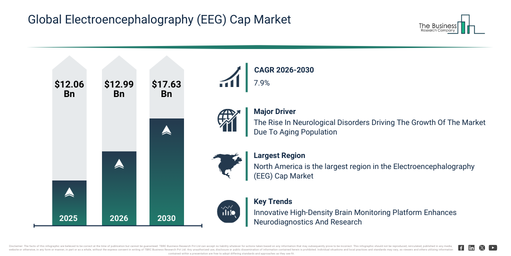
    The electroencephalography (eeg) cap market has shown robust growth in recent years. It is anticipated to expand from $12.06 billion in 2025 to $12.99 billion in 2026, achieving a compound annual growth rate (CAGR) of 7.7%. The historical progression can be attributed to several factors including the expansion of clinical neurology diagnostics, the rising prevalence of neurological disorders, the increased integration of eeg in sleep studies, burgeoning academic neuroscience research activity, and the availability of standardized electrode placement systems.

    The electroencephalography (eeg) cap market is projected to experience robust expansion over the coming years. This market is anticipated to reach a valuation of $17.63 billion by 2030, exhibiting a compound annual growth rate (CAGR) of 7.9%. Key drivers for this growth during the forecast period include the increasing adoption of brain–computer interface research, the rising demand for remote neurological monitoring, the expansion of digital health integration in diagnostics, escalating investments in neuroscience research, and the growing application of eeg in personalized medicine. Significant trends identified for the forecast period encompass the increasing adoption of wireless eeg caps, a rising demand for high-density electrode configurations, the growing utilization of dry and semi-dry electrode technologies, the expansion of portable and home-based eeg monitoring, and an enhanced focus on patient comfort and signal accuracy.

    Access Your Free Sample Report For In-Depth Market Analysis:

    https://www.thebusinessresearchcompany.com/sample.aspx?id=33100&type=smp

    What Significant Factors Are Influencing The Electroencephalography (EEG) Cap Market Expansion?

    The growing incidence of neurological conditions is anticipated to drive the expansion of the electroencephalography (EEG) cap market in the future. A neurological disorder refers to any illness or state that impacts the normal structure or function of the central nervous system (including the brain and spinal cord) or the peripheral nervous system. This increasing prevalence is primarily linked to aging populations, as the risk of conditions such as Alzheimer’s, Parkinson’s, and stroke rises with age, leading to a higher overall occurrence in older demographics. Electroencephalography (EEG) caps are instrumental in managing neurological disorders by enabling real-time monitoring of brain activity, thereby facilitating accurate diagnosis, effective treatment planning, and tracking of therapeutic progress. For example, in March 2023, the Alzheimer’s Association, a US-based nonprofit voluntary health organization, reported that approximately 6.7 million Americans aged 65 and older were living with Alzheimer’s dementia in 2023, a number projected to increase to 13.8 million by 2060. Thus, the escalating prevalence of neurological disorders is a key factor driving the growth of the electroencephalography (EEG) cap market.

    How Is Segmentation Applied In The Electroencephalography (EEG) Cap Market Segment Analysis?

    The electroencephalography (eeg) cap market covered in this report is segmented –

    1) By Type: Electroencephalography (EEG) Caps for Adults; Electroencephalography (EEG) Caps for Babies

    2) By Technology: Wireless Electroencephalography (EEG) Caps; High-Density Electroencephalography (EEG) Caps

    3) By Application: Clinical Diagnostics; Neurology; Epilepsy Monitoring; Sleep Studies; Brain–Computer Interface Research; Neuroscience Research

    4) By End-User: Hospitals; Diagnostic Centers; Clinics And Ambulatory Surgical Centers; Academic And Research Institutes; Home-Care Settings

    Subsegments:

    1) By Electroencephalography (EEG) Caps for Adults: Wet Electrode Caps; Dry Electrode Caps; Semi-Dry Electrode Caps; Wireless Electroencephalography Caps; High-Density Electrode Caps

    2) By Electroencephalography (EEG) Caps for Babies: Soft Fabric Caps; Stretchable Silicone Caps; Wireless Baby Electroencephalography Caps; High-Density Electrode Caps For Babies; Infant Sleep Monitoring Caps

    What Trends Are Affecting The Direction Of The Electroencephalography (EEG) Cap Market?

    Leading companies in the electroencephalography (EEG) cap market are concentrating on creating innovative solutions, including high-density electroencephalography platforms, to improve brain monitoring, neurodiagnostics, and research functionalities. These platforms represent advanced brain-monitoring systems, employing hundreds of tightly packed electrodes to record highly granular electrical brain activity for both research and clinical uses. As an example, Electrical Geodesics Inc., a US-based technology firm, introduced the Geodesic EEG System 500 (GES 500) in September 2025, aiming to further high-resolution brain monitoring and neuroscience studies. This system facilitates the capture of up to 256 channels of high-density EEG data, enabling accurate mapping of brain activity. It unifies hardware and software into a single ecosystem, compatible with both proprietary analytical tools and widely used open-source neuroscience software. Furthermore, the GES 500 supports integrated recording and stimulation processes, offering compatibility with transcranial magnetic stimulation (TMS) systems, thereby supporting advanced investigations into brain function, neurological conditions, and cognitive processes.

    Who Are The Companies Participating In The Electroencephalography (EEG) Cap Market Environment?

    Major companies operating in the electroencephalography (eeg) cap market are NeuroSky Inc., ADInstruments Pty Ltd, Inomed Medizintechnik GmbH, Brain Products GmbH, Emotiv Inc., ANT Neuro B.V., BioSemi B.V., Electrical Geodesics Inc., BIOPAC Systems Inc., Medical Computer Systems GmbH, Compumedics Neuroscan, Neuroelectrics SL, Electro-Cap International Inc., MAG & More GmbH, Mind Media B.V., NIRx Medizintechnik GmbH, NR Sign Ltd, TELEMEDX Inc., Tenocom Medical GmbH, Wearable Sensing LLC.

    Get The Full Electroencephalography (EEG) Cap Market Report:

    https://www.thebusinessresearchcompany.com/report/electroencephalography-eeg-cap-market-report

    Which Region Accounts For The Largest Portion Of The Electroencephalography (EEG) Cap Market?

    North America was the largest region in the EEG cap market in 2025. Asia-Pacific is expected to be the fastest-growing region in the forecast period. The regions covered in the electroencephalography (eeg) cap market report are Asia-Pacific, South East Asia, Western Europe, Eastern Europe, North America, South America, Middle East, Africa.

    Request A Customized Electroencephalography (EEG) Cap Market Report For Competitive Insights:

    https://www.thebusinessresearchcompany.com/customise?id=33100&type=smp

    Browse Through More Reports Similar to the Global Electroencephalography (EEG) Cap Market 2026, By The Business Research Company

    Electroencephalography Devices Market Report 2026

    https://www.thebusinessresearchcompany.com/report/electroencephalography-devices-global-market-report

    Wearable Electroencephalogram Eeg Headsets Market Report 2026

    https://www.thebusinessresearchcompany.com/report/wearable-electroencephalogram-eeg-headsets-global-market-report

    Electroencephalography Eeg And Electromyography Emg Equipment Market Report 2026

    https://www.thebusinessresearchcompany.com/report/electroencephalography-eeg-and-electromyography-emg-equipment-global-market-report

    Get in touch with us:

    The Business Research Company: https://www.thebusinessresearchcompany.com/

    Americas +1 310-496-7795

    Asia +44 7882 955267 & +91 8897263534

    Europe +44 7882 955267

    Email us at info@tbrc.info

    Follow us on:

    LinkedIn: https://in.linkedin.com/company/the-business-research-company

    YouTube: https://www.youtube.com/channel/UC24_fI0rV8cR5DxlCpgmyFQ

    Global Market Model: https://www.thebusinessresearchcompany.com/global-market-model
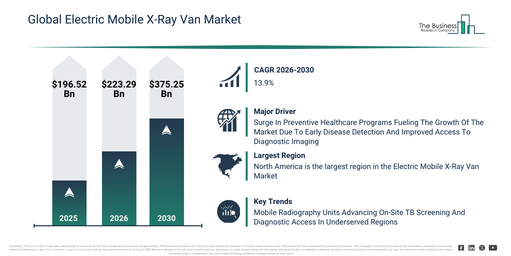
  • Electric Mobile X-Ray Van Market Growth Expected To Reach $375.25 Billion By 2030 At 13.9% CAGR

    Electric Mobile X-Ray Van Market Growth Expected To Reach $375.25 Billion By 2030 At 13.9% CAGR

    The Business Research Company’s 2026 market reports feature enhanced tools like market attractiveness analysis, TAM assessment, and company scoring matrices, along with interactive dashboards, deeper supply chain insights, and startup coverage strengthening the depth, usability, and strategic value of insights.

    What Level Of Market Value Growth Is Predicted For The Electric Mobile X-Ray Van Market From 2026 To 2030?

    The electric mobile x-ray van market size has experienced rapid growth in recent years. It is anticipated to expand from $196.52 billion in 2025 to $223.29 billion in 2026, demonstrating a compound annual growth rate (CAGR) of 13.6%. This historical growth can be attributed to the expansion of mobile healthcare programs, the increasing demand for diagnostic access in rural areas, advancements in digital imaging technologies, a rising focus on population health screening, and the availability of electric vehicle platforms for medical use.

    The electric mobile x-ray van market is projected to experience swift expansion over the coming years. By 2030, this market is anticipated to reach a valuation of $375.25 billion, demonstrating a compound annual growth rate (CAGR) of 13.9%. This projected growth is driven by several factors, including greater investments in electric healthcare mobility, the increasing uptake of diagnostics supported by telemedicine, the broadening scope of public health outreach initiatives, an intensified focus on sustainable medical transport, and the increasing incorporation of AI-assisted image analysis. Key trends expected during this period involve the wider deployment of electric mobile diagnostic units, a surge in the adoption of digital radiography systems within mobile vans, a rising demand for low-emission healthcare vehicles, the expansion of diagnostic services within communities, and a heightened emphasis on remote and preventive healthcare.

    Access Your Free Sample Report For In-Depth Market Analysis:

    https://www.thebusinessresearchcompany.com/sample.aspx?id=33099&type=smp

    Which Important Drivers Are Guiding The Electric Mobile X-Ray Van Market Growth?

    The increasing focus on preventive healthcare programs is anticipated to boost the expansion of the electric mobile X-ray van market in the future. Healthcare programs refer to structured initiatives or services aimed at fostering, preserving, or recovering health, frequently focusing on particular demographics, health issues, or preventive objectives. The rise in preventive healthcare programs stems from an amplified emphasis by governments and payers on identifying diseases early and lowering costs via proactive care measures. The electric mobile X-ray van supports these healthcare programs by delivering superior diagnostic imaging services directly to individuals in distant, neglected, or point-of-care environments, thereby enhancing accessibility, facilitating prompt diagnosis, and enabling timely medical interventions. As an illustration, data from May 2024, provided by the UK government’s Office for National Statistics, indicates that between 2022 and 2023, UK healthcare expenditure saw a 5.6% rise, a notable increase compared to the 0.9% growth recorded in 2022. By 2023, the total healthcare expenditure in the UK stood at approximately $317.63 billion (£292 billion). Consequently, the expansion of preventive healthcare programs is a key factor propelling the growth of the electric mobile X-ray van market.

    What Segment Categories Shape The Electric Mobile X-Ray Van Market Segment Landscape?

    The electric mobile x-ray van market covered in this report is segmented –

    1) By Vehicle Type: Light Duty; Medium Duty; Heavy Duty

    2) By Power Source: Battery Electric; Hybrid Electric

    3) By Technology: Digital Radiography Systems; Computed Radiography Systems; Battery-Electric Propulsion

    4) By Application: Hospitals; Diagnostic Centers; Emergency Services; Military And Defense; Other Applications

    5) By End-User: Public Sector; Private Sector

    Subsegments:

    1) By Light Duty: Passenger Van; Compact Utility Van; Small Box Van

    2) By Medium Duty: Step Van; Medium Box Truck; Chassis Cab Truck

    3) By Heavy Duty: Large Box Truck; Rigid Truck; Specialty Medical Truck

    What Trends Are Influencing The Evolution Of The Electric Mobile X-Ray Van Market?

    Major companies operating in the electric mobile X-ray van market are focusing on developing innovative technologies, such as mobile radiography units for TB screening, to facilitate rapid, on-site chest imaging, improve prompt disease detection, and expand diagnostic availability in remote and underserved regions. Mobile Radiography Units for TB Screening refer to self-contained, vehicle-mounted diagnostic systems equipped with digital chest X-ray technology that enable on-site tuberculosis screening and early identification in remote, rural, or underserved areas. For instance, in February 2024, the Philippine Business for Social Progress (PBSP), a Philippines-based non-profit organization, partnered with the Department of Health, a Philippines-based government agency, and launched a mobile TB X-ray van to enhance access to tuberculosis (TB) care. It features integrated TB screening and diagnostic facilities, enabling early detection and faster initiation of treatment directly within communities. The van supports decentralized service delivery by bringing testing, consultation, and follow-up closer to patients, reducing travel time and access barriers. In addition, it is configured to support awareness programs, patient monitoring, and coordination with local health systems, helping strengthen TB care outreach, continuity of treatment, and overall public health response.

    Who Are The Companies Operating Across The Electric Mobile X-Ray Van Market Value Chain?

    Major companies operating in the electric mobile x-ray van market are Siemens Healthineers AG, Royal Philips N.V., GE HealthCare Technologies Inc., Hologic Inc., Agfa HealthCare, Hubei Ruitu Technology Co. Ltd., Chengli Special Automobile Co. Ltd., Summit Bodyworks Inc., Shimadzu Medical Systems, Canon Medical Systems Corporation, Hubei Hengsheng Special Vehicle Co. Ltd., Fujifilm Medical Systems, MinXray Inc., Craftsmen Industries Inc.

    Get The Full Electric Mobile X-Ray Van Market Report:

    https://www.thebusinessresearchcompany.com/report/electric-mobile-x-ray-van-market-report

    Which Region Holds The Highest Market Share In The Electric Mobile X-Ray Van Market?

    North America was the largest region in the electric mobile X-ray van market in 2025. Asia-Pacific is expected to be the fastest-growing region in the forecast period. The regions covered in the electric mobile x-ray van market report are Asia-Pacific, South East Asia, Western Europe, Eastern Europe, North America, South America, Middle East, Africa.

    Request A Customized Electric Mobile X-Ray Van Market Report For Competitive Insights:

    https://www.thebusinessresearchcompany.com/customise?id=33099&type=smp

    Browse Through More Reports Similar to the Global Electric Mobile X-Ray Van Market 2026, By The Business Research Company

    X Ray Systems Devices And Equipment Market Report 2026

    https://www.thebusinessresearchcompany.com/report/x-ray-systems-devices-and-equipment-global-market-report

    Electric Van Market Report 2026

    https://www.thebusinessresearchcompany.com/report/electric-van-global-market-report

    Digital Xray Devices Market Report 2026

    https://www.thebusinessresearchcompany.com/report/digital-xray-devices-global-market-report

    Get in touch with us:

    The Business Research Company: https://www.thebusinessresearchcompany.com/

    Americas +1 310-496-7795

    Asia +44 7882 955267 & +91 8897263534

    Europe +44 7882 955267

    Email us at info@tbrc.info

    Follow us on:

    LinkedIn: https://in.linkedin.com/company/the-business-research-company

    YouTube: https://www.youtube.com/channel/UC24_fI0rV8cR5DxlCpgmyFQ

    Global Market Model: https://www.thebusinessresearchcompany.com/global-market-model