Month: May 2026

  • Nanocarriers Market Future Outlook Showing Growth Toward $3.85 Billion By 2030

    Nanocarriers Market Future Outlook Showing Growth Toward $3.85 Billion By 2030

    The Business Research Company’s 2026 market reports feature enhanced tools like market attractiveness analysis, TAM assessment, and company scoring matrices, along with interactive dashboards, deeper supply chain insights, and startup coverage strengthening the depth, usability, and strategic value of insights.

    How Much Growth In Market Value Is Expected For The Nanocarriers Market Between 2026 And 2030?

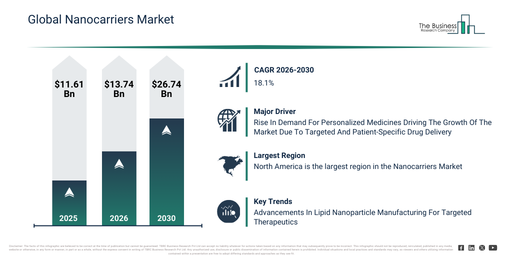
    The nanocarriers market has experienced rapid expansion in recent years. This market is projected to increase from $11.61 billion in 2025 to $13.74 billion in 2026, at a compound annual growth rate (CAGR) of 18.4%. The growth observed in the past can be attributed to developments in nanotechnology research, a rise in pharmaceutical R&D investments, the escalating requirement for enhanced drug bioavailability, the initial acceptance of nanoparticle-based therapeutics, and the broadening of academic and clinical research.

    The nanocarriers market size is anticipated to undergo rapid expansion in the coming years. It is projected to reach $26.74 billion by 2030, exhibiting a compound annual growth rate (CAGR) of 18.1%. This growth during the forecast period can be attributed to the rising demand for personalized therapeutics, increased investments in advanced drug delivery systems, the broadening of nanocarrier applications in oncology and gene therapy, a growing focus on reducing drug side effects, and continuous innovation in nanoscale engineering. Significant trends expected in the forecast period include the increasing development of targeted drug delivery platforms, the growing adoption of lipid and polymeric nanocarriers, an amplified focus on controlled and sustained release systems, the expansion of nanocarriers in gene and vaccine delivery, and enhanced integration with precision medicine approaches.

    Access Your Free Sample Report For In-Depth Market Analysis:

    https://www.thebusinessresearchcompany.com/sample.aspx?id=28275&type=smp

    Which Primary Drivers Are Impacting The Nanocarriers Market Growth?

    The nanocarriers market is anticipated to expand due to the escalating demand for personalized medicines. Personalized medicine involves customizing medical care for each patient based on their unique characteristics, especially genetic, biomarker, and molecular data. This approach is gaining prominence because it enables physicians to customize cancer therapies according to a patient’s genetic profile, thereby enhancing efficacy and minimizing unwanted side effects. Nanocarriers facilitate personalized medicine by precisely delivering drugs to specific targets within a patient, managing drug release, boosting bioavailability, and enabling combination therapies customized to individual biological profiles. An example highlighting this trend is that in February 2024, the Personalized Medicine Coalition, a US-based non-profit organization, reported that the United States Food and Drug Administration (FDA) approved 16 new personalized therapies for rare disease patients in 2023, a significant rise from only six approvals in 2022. Consequently, the increasing need for personalized medicines is a primary catalyst for the growth of the nanocarriers market.

    How Is Segmentation Applied In The Nanocarriers Market Segment Analysis?

    The nanocarriers market covered in this report is segmented –

    1) By Type: Polymeric Nanocarriers, Lipid-Based Nanocarriers, Inorganic Nanocarriers, Other Types

    2) By Application: Drug Delivery, Diagnostics, Vaccines, Gene Therapy, Other Applications

    3) By End-User: Pharmaceutical And Biotechnology Companies, Hospitals And Clinics, Research Institutes, Other End-Users

    Subsegments:

    1) By Polymeric Nanocarriers: Nanoparticles Of Poly Lactic Acid, Nanoparticles Of Poly Lactic-Co-Glycolic Acid, Nanoparticles Of Chitosan, Nanoparticles Of Gelatin, Nanoparticles Of Polycaprolactone

    2) By Lipid-Based Nanocarriers: Solid Lipid Nanoparticles, Nanostructured Lipid Carriers, Liposomes, Nanoemulsions, Self-Emulsifying Drug Delivery Systems

    3) By Inorganic Nanocarriers: Gold Nanoparticles, Silver Nanoparticles, Silica Nanoparticles, Magnetic Nanoparticles, Quantum Dots

    4) By Other Types: Dendrimers, Protein-Based Nanocarriers, Carbon Nanotubes, Nanocrystals, Exosomes

    Which Trends Are Contributing To Changes In The Nanocarriers Market?

    Leading companies in the nanocarriers market are increasingly focusing on developing advanced formulations, particularly lipid nanoparticle technologies, to improve targeted drug delivery and boost therapeutic effectiveness. Lipid nanoparticle technologies are microscopic, fat-based carriers created to safely and efficiently transport drugs or genetic therapies to specific cells or tissues. For example, in July 2023, Cytiva, a US-based biotechnology company, released the NanoAssemblr commercial formulation system. This fully automated, single-use platform is designed to enable complete clinical and commercial manufacturing of lipid nanoparticle (LNP) medicines. The system leverages Cytiva’s NxGen technology to deliver controlled, reproducible mixing, ensuring consistent quality from the research phase through to large-scale cGMP manufacturing. The platform’s single-use fluid path minimizes the risk of cross-contamination and supports efficient multi-product manufacturing within a single facility. It also includes intuitive, regulatory-compliant software that automates workflows and facilitates electronic batch records, thereby streamlining the production of genomic medicines such as mRNA vaccines, gene therapies, and cancer vaccines.

    Who Are The Companies Participating In The Nanocarriers Market Environment?

    Major companies operating in the nanocarriers market are F. Hoffmann-La Roche Ltd, Pfizer Inc., Sanofi S.A., Novartis AG, Bristol-Myers Squibb Company, Amgen Inc., Evonik Industries AG, Matinas BioPharma Holdings Inc., Luye Pharma Group Ltd., Ascendia Pharmaceuticals Inc., Arcturus Therapeutics Holdings Inc., Nanobiotix S.A., Polymun Scientific Immunbiologische Forschung GmbH, ReCode Therapeutics Inc., Celsion Corporation, Starpharma Holdings Limited, EnGeneIC Ltd., Acuitas Therapeutics Inc., Altamira Therapeutics Ltd., Nanexa AB

    Get The Full Nanocarriers Market Report:

    https://www.thebusinessresearchcompany.com/report/nanocarriers-global-market-report

    Which Region Is The Leading Market For The Nanocarriers Market?

    North America was the largest region in the nanocarriers market in 2025. The regions covered in the nanocarriers market report are Asia-Pacific, South East Asia, Western Europe, Eastern Europe, North America, South America, Middle East, Africa.

    Request A Customized Nanocarriers Market Report For Competitive Insights:

    https://www.thebusinessresearchcompany.com/report/nanocarriers-global-market-report

    Browse Through More Reports Similar to the Global Nanocarriers Market 2026, By The Business Research Company

    Microcarrier Market Report 2026

    https://www.thebusinessresearchcompany.com/report/microcarrier-global-market-report

    Nanomaterials Market Report 2026

    https://www.thebusinessresearchcompany.com/report/nanomaterials-global-market-report

    Nanofibers Market Report 2026

    https://www.thebusinessresearchcompany.com/report/nanofibers-global-market-report

    Get in touch with us:

    The Business Research Company: https://www.thebusinessresearchcompany.com/

    Americas +1 310-496-7795

    Asia +44 7882 955267 & +91 8897263534

    Europe +44 7882 955267

    Email us at: marketing@tbrc.info

    Follow us on:

    LinkedIn: https://in.linkedin.com/company/the-business-research-company

    YouTube: https://www.youtube.com/channel/UC24_fI0rV8cR5DxlCpgmyFQ

    Global Market Model: https://www.thebusinessresearchcompany.com/global-market-model
  • Naloxone Spray Market Revenue Growth Forecast To Reach $5.02 Billion By 2030 At 9.8% CAGR

    Naloxone Spray Market Revenue Growth Forecast To Reach $5.02 Billion By 2030 At 9.8% CAGR

    The Business Research Company’s 2026 market reports feature enhanced tools like market attractiveness analysis, TAM assessment, and company scoring matrices, along with interactive dashboards, deeper supply chain insights, and startup coverage strengthening the depth, usability, and strategic value of insights.

    What Is The Estimated Market Size Of The Naloxone Spray Market In 2026, And How Will Its Value Evolve By 2030?

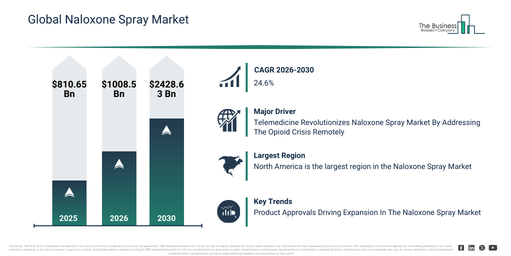
    The naloxone spray market has experienced substantial growth in recent years. It is projected to increase from $810.65 billion in 2025 to $1008.5 billion in 2026, demonstrating a compound annual growth rate (CAGR) of 24.4%. This historical expansion can be attributed to factors such as a rise in opioid abuse cases, limited emergency response alternatives, a reliance on intravenous naloxone, elevated hospitalization rates due to overdose, and various government initiatives aimed at tackling the opioid crisis.

    The naloxone spray market is poised for significant expansion in the coming years. Its value is projected to reach $2428.63 billion by 2030, advancing at a compound annual growth rate (CAGR) of 24.6%. This anticipated growth during the forecast period is fueled by heightened public awareness of naloxone nasal sprays, the increasing availability of over-the-counter (OTC) naloxone products, continuous technological improvements in spray delivery mechanisms, the expansion of emergency response networks, and supportive reimbursement policies. Noteworthy trends anticipated in this period include the swift embrace of intranasal administration, a broadening of over-the-counter accessibility, a surge in opioid overdose incidents propelling demand, the creation of user-friendly single-dose formats, and the integration of these products into existing emergency response protocols.

    Access Your Free Sample Report For In-Depth Market Analysis:

    https://www.thebusinessresearchcompany.com/sample.aspx?id=5339&type=smp

    What Significant Factors Are Influencing The Naloxone Spray Market Expansion?

    The increasing demand for telemedicine is anticipated to drive the expansion of the naloxone spray market moving forward. Telemedicine, also known as telehealth, represents a healthcare service delivery method that employs technology and telecommunications to deliver medical services and consultations remotely. This approach offers enhanced comprehensive, accessible, and immediate assistance to individuals susceptible to opioid overdose, potentially saving lives and more effectively addressing the opioid crisis. As an illustration, in April 2023, FAIR Health Inc., a US-based non-profit organization, noted that national telehealth utilization climbed by 7.3%, rising from 5.5% of medical claim lines in December 2022 to 5.9% in January 2023. Therefore, the escalating demand for telemedicine is stimulating the growth of the naloxone spray market.

    What Segment Categories Shape The Naloxone Spray Market Segment Landscape?

    The naloxone spray market covered in this report is segmented –

    1) By Product Type: Prescription Naloxone Spray, Over-The-Counter (OTC) Naloxone Spray

    2) By Dosage: 2 mg Or Actuation, 4 mg Or Actuation

    3) By Distribution Channel: Hospitals, Clinics, Retail Pharmacies, Online Pharmacies, Other distribution channels

    What Market Trends Are Affecting The Naloxone Spray Market?

    Leading companies within the naloxone spray market are channeling their efforts into developing innovative solutions, such as over-the-counter (OTC) naloxone hydrochloride (HCl) nasal sprays. These developments aim to meet the growing demand for broader community access, swift overdose reversal, and simplified administration. The naloxone nasal spray is a needle-free formulation designed for rapid intranasal delivery, providing ease of use and quicker deployment compared to traditional injectable naloxone, which requires trained healthcare professionals. For instance, in May 2024, Walgreens, a US-based company, unveiled the Walgreens Brand Naloxone HCl Nasal Spray. This over-the-counter offering is intended to quickly counteract the effects of opioid overdose, thereby serving as a crucial tool in addressing the opioid epidemic. Naloxone operates by blocking the impact of opioids on the brain, restoring normal breathing and preventing death when administered in a timely manner. Despite its proven effectiveness, the availability of naloxone remains limited in many areas, highlighting the importance of this launch in enhancing accessibility and public awareness.

    Who Are The Companies Operating Across The Naloxone Spray Market Value Chain?

    Major companies operating in the naloxone spray market are Emergent BioSolutions Inc., Amphastar Pharmaceuticals Inc., Hikma Pharmaceuticals plc, Indivior plc, Nasus Pharma LLC, Opiant Pharmaceuticals Inc., Pfizer Inc., Samarth Pharma Pvt. Ltd., Teva Pharmaceutical Industries Ltd., Adapt Pharma Inc., Cardinal Health Inc., Kaleo Inc., McKesson Corporation, Mundipharma International Limited, NextDistro Inc., Rite Aid Corporation, Novartis International AG, Sandoz International GmbH, Fresenius Kabi USA LLC, West-Ward Pharmaceuticals Corp., Lupin Ltd.

    Get The Full Naloxone Spray Market Report:

    https://www.thebusinessresearchcompany.com/report/naloxone-spray-global-market-report

    Where Is The Naloxone Spray Market Primarily Concentrated By Region?

    North America was the largest region in the naloxone spray market in 2025. The regions covered in the naloxone spray market report are Asia-Pacific, South East Asia, Western Europe, Eastern Europe, North America, South America, Middle East, Africa.

    Request A Customized Naloxone Spray Market Report For Competitive Insights:

    https://www.thebusinessresearchcompany.com/report/naloxone-spray-global-market-report

    Browse Through More Reports Similar to the Global Naloxone Spray Market 2026, By The Business Research Company

    Naloxone Spray Market Report 2026

    https://www.thebusinessresearchcompany.com/report/naloxone-spray-global-market-report

    Nasal Spray Bottle Market Report 2026

    https://www.thebusinessresearchcompany.com/report/nasal-spray-bottle-global-market-report

    Narcotic Drugs Market Report 2026

    https://www.thebusinessresearchcompany.com/report/narcotic-drugs-global-market-report

    Get in touch with us:

    The Business Research Company: https://www.thebusinessresearchcompany.com/

    Americas +1 310-496-7795

    Asia +44 7882 955267 & +91 8897263534

    Europe +44 7882 955267

    Email us at: marketing@tbrc.info

    Follow us on:

    LinkedIn: https://in.linkedin.com/company/the-business-research-company

    YouTube: https://www.youtube.com/channel/UC24_fI0rV8cR5DxlCpgmyFQ

    Global Market Model: https://www.thebusinessresearchcompany.com/global-market-model
  • The Rise Of Strategic Partnership Drive Progress In The Bioengineered Protein Drug Is Influencing The Melatonin Supplements Market

    The Rise Of Strategic Partnership Drive Progress In The Bioengineered Protein Drug Is Influencing The Melatonin Supplements Market

    The Business Research Company’s 2026 market reports feature enhanced tools like market attractiveness analysis, TAM assessment, and company scoring matrices, along with interactive dashboards, deeper supply chain insights, and startup coverage strengthening the depth, usability, and strategic value of insights.

    How Does The Market Size Of The Melatonin Supplements Market Compare Between 2026 And 2030?

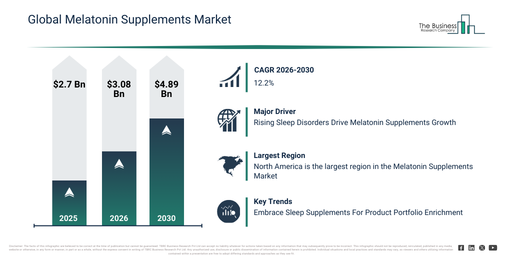
    The melatonin supplements market has experienced rapid expansion in its size recently. It is predicted to increase from $2.7 billion in 2025 to $3.08 billion in 2026, with a compound annual growth rate (CAGR) of 14.3%. This historical growth can be linked to factors such as the rising incidence of sleep disorders and insomnia, the broad accessibility of over-the-counter melatonin supplements, enhanced understanding of circadian rhythm regulation, a preference for sleep aids that are not habit-forming, and early uptake among individuals who travel frequently and those working shift patterns.

    The melatonin supplements market is anticipated to experience substantial growth in the coming years. It is forecast to reach a value of $4.89 billion by 2030, demonstrating a compound annual growth rate (CAGR) of 12.2%. This growth throughout the forecast period is primarily driven by increasing global stress and screen exposure impacting sleep quality, an expanding aging population dealing with sleep-related issues, a heightened focus on mental wellness and sleep optimization, the development of pediatric and geriatric melatonin formulations, and the growing penetration of online supplement retail platforms. Key trends during this period include a rising consumer adoption of sleep health supplements, an increasing demand for non-prescription sleep aids, the availability of melatonin products across multiple dosage forms, a greater use of melatonin for jet lag and shift work sleep disorders, and the growing popularity of clean-label and natural melatonin products.

    Access Your Free Sample Report For In-Depth Market Analysis:

    https://www.thebusinessresearchcompany.com/sample.aspx?id=15605&type=smp

    What Factors Are Contributing To The Growth Of The Melatonin Supplements Market?

    The increasing occurrence of sleep disorders is anticipated to boost the expansion of the melatonin supplements market moving forward. These conditions, which affect the quality, timing, or duration of sleep, result in impaired daytime functioning and reduced overall well-being. The rise in sleep disorders is attributed to lifestyle changes, extensive screen exposure, inadequate sleep hygiene, and an aging population. The melatonin supplements market supports individuals with sleep disorders by providing supplemental melatonin to regulate circadian rhythms, improve sleep patterns, and alleviate conditions such as jet lag and delayed sleep phase disorders. For instance, in November 2023, according to Sleep Care Online, a US-based telemedicine company, an estimated 50 to 70 million people experience chronic sleep problems, with the most common being insomnia, sleep apnea, and narcolepsy. Consequently, the growing prevalence of sleep disorders is fueling the growth of the melatonin supplements market.

    How Is The Melatonin Supplements Market Broken Down By Segment Categories?

    The melatonin supplements market covered in this report is segmented –

    1) By Type: Natural Melatonin, Synthetic Melatonin

    2) By Form: Tablets And Capsules, Liquid, Sublingual Pellets, Other Forms

    3) By Distribution Channel: Supermarkets And Hypermarkets, Drug Stores, Online Retail, Other Distribution Channels

    4) By Application: Alzheimer’s Disease, Weak Immune System, Osteoporosis, Nerve Pain, Other Applications

    5) By End User: Adults, Children

    Subsegments:

    1) By Natural Melatonin: Plant-Based Melatonin

    2) By Synthetic Melatonin: Tablet Or capsule Form, Liquid Form, Chewable Or softgel Form, Sublingual Melatonin

    Which Trends Are Impacting The Progress Of The Melatonin Supplements Market?

    Major companies operating in the melatonin supplements market are concentrating on developing innovative sleep aids to enhance sleep quality, promote relaxation, and address difficulties such as falling asleep or staying asleep. Sleep supplements refer to dietary products formulated with ingredients like melatonin to support healthy sleep cycles, encourage restful sleep, and decrease nighttime awakenings. For instance, in May 2024, Natrol LLC, a US-based dietary supplement manufacturer, launched time-release melatonin gummies featuring a dual-action delivery system that provides an immediate dose of melatonin to help users fall asleep quickly, followed by a controlled extended release that supports sustained sleep throughout the night. These gummies, available in multiple strengths, are formulated with clean ingredients free from artificial flavors, sweeteners, and dyes, offering a natural and effective solution for achieving uninterrupted, restorative sleep.

    Which Players Are Present In The Melatonin Supplements Market Space?

    Major companies operating in the melatonin supplements market are Walgreens Boots Alliance Inc., Swanson Health Products Incorporated, Vitacost.com Inc., Now Health Group Inc., The Himalaya Drug Company, Jarrow Industries Inc., Natrol Inc., Life Extension, Natural Factors Nutritional Products Inc., Robinson Pharma Inc., Country Life LLC, Pharmavite LLC, Pure Encapsulations LLC, Solgar Inc., Solaray Inc, Mason Vitamins Inc., The Nature’s Bounty Co., Optimum Nutrition Inc., Douglas Laboratories, Puritan’s Pride Inc., Nature Made, Amazing Nutrition Inc., Just Potent LLC, Source Naturals Inc., Bio-Tech Pharmacal Inc.

    Get The Full Melatonin Supplements Market Report:

    https://www.thebusinessresearchcompany.com/report/melatonin-supplements-global-market-report

    Where Is The Melatonin Supplements Market Primarily Concentrated By Region?

    North America was the largest region in the melatonin supplements market in 2025. The regions covered in the melatonin supplements market report are Asia-Pacific, South East Asia, Western Europe, Eastern Europe, North America, South America, Middle East, Africa.

    Request A Customized Melatonin Supplements Market Report For Competitive Insights:

    https://www.thebusinessresearchcompany.com/report/melatonin-supplements-global-market-report

    Browse Through More Reports Similar to the Global Melatonin Supplements Market 2026, By The Business Research Company

    Melatonin Supplements Market Report 2026

    https://www.thebusinessresearchcompany.com/report/melatonin-supplements-global-market-report

    Nutritional Supplements Market Report 2026

    https://www.thebusinessresearchcompany.com/report/nutritional-supplements-global-market-report

    Herbal Supplements Market Report 2026

    https://www.thebusinessresearchcompany.com/report/herbal-supplements-global-market-report

    Get in touch with us:

    The Business Research Company: https://www.thebusinessresearchcompany.com/

    Americas +1 310-496-7795

    Asia +44 7882 955267 & +91 8897263534

    Europe +44 7882 955267

    Email us at: marketing@tbrc.info

    Follow us on:

    LinkedIn: https://in.linkedin.com/company/the-business-research-company

    YouTube: https://www.youtube.com/channel/UC24_fI0rV8cR5DxlCpgmyFQ

    Global Market Model: https://www.thebusinessresearchcompany.com/global-market-model
  • Myeloproliferative Disorders Drugs Market Expected To Grow Steadily And Approach $13.78 Billion By 2030

    Myeloproliferative Disorders Drugs Market Expected To Grow Steadily And Approach $13.78 Billion By 2030

    The Business Research Company’s 2026 market reports feature enhanced tools like market attractiveness analysis, TAM assessment, and company scoring matrices, along with interactive dashboards, deeper supply chain insights, and startup coverage strengthening the depth, usability, and strategic value of insights.

    How Does The Market Size Of The Myeloproliferative Disorders Drugs Market Compare Between 2026 And 2030?

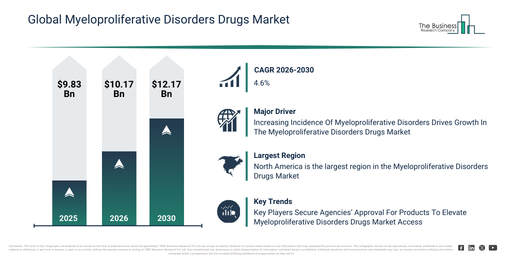
    The market for myeloproliferative disorders drugs has experienced consistent growth in recent times. This projection indicates an expansion from $9.83 billion in 2025 to $10.17 billion by 2026, demonstrating a compound annual growth rate (CAGR) of 3.5%. This historical expansion was driven by factors such as the significant occurrence of myeloproliferative disorders, progress in chemotherapy treatments, increasing public understanding of blood cancers, the widespread availability of generic medications, and enhancements in supportive patient care.

    The myeloproliferative disorders drugs market is projected to experience consistent expansion in the coming years. This market is anticipated to reach $12.17 billion by 2030, demonstrating a compound annual growth rate (CAGR) of 4.6%. Factors contributing to this growth during the forecast period include the rise of targeted therapies, increased investments in research and development, the embrace of precision medicine, the expansion of healthcare infrastructure in developing regions, and supportive regulatory approvals. Key trends expected over the forecast period encompass the development of personalized treatments, a greater emphasis on rare blood disorders, ongoing advancements in targeted therapies, the broadening of clinical trials, and growing investment in orphan drugs.

    Access Your Free Sample Report For In-Depth Market Analysis:

    https://www.thebusinessresearchcompany.com/sample.aspx?id=10681&type=smp

    Which Important Drivers Are Guiding The Myeloproliferative Disorders Drugs Market Growth?

    The increasing occurrence of myeloproliferative disorders is anticipated to drive the expansion of the myeloproliferative disorder’s drugs market in the future. These disorders encompass a varied group of illnesses, differing from acute leukemia due to the proliferation of one or more hematologic cell lines within the peripheral blood. The increase in myeloproliferative disorders is primarily fueled by factors such as genetic conditions, excessive exposure to radiation, electrical wiring, or chemicals, and the aging population. Medications for myeloproliferative diseases function by obstructing the BCR-ABL protein through attachment to the ATP pocket in its active site, thereby preventing the subsequent phosphorylation of the target protein, aiding in the management of the myeloproliferative disorder. As an illustration, data from the American Cancer Society, a US-based non-profit organization, for June 2025 indicates that chronic myeloid leukemia, accounting for about 15% of all new U.S. leukemia cases, leads to approximately 9,560 new diagnoses and 1,290 deaths each year. This condition impacts roughly 1 in 500 individuals during their lifetime and is generally identified around age 66, with 2% of cases appearing in those under 20. Consequently, the growing prevalence of myeloproliferative disorders is propelling the expansion of the myeloproliferative disorders drug market.

    Which Segment Types Are Examined In The Myeloproliferative Disorders Drugs Market Segment Study?

    The myeloproliferative disorders drugs market covered in this report is segmented –

    1) By Type: Primary Myelofibrosis, Polycythemia Vera (PV), Essential Thrombocythemia (ET), Chronic Eosinophilic Leukemia Or Hyper eosinophilic Syndrome (HES), Systemic Masto cytosis (SM)

    2) By Drug Type: JAK2 Inhibitors, Anti-Neoplastics, Demethylation Agents, Imatinib Mesylate, Other Drug Types

    3) By Route Of Administration: Oral, Parenteral, Other Routes Of Administration

    4) By Distribution Channel: Hospital Pharmacy, Retail Stores, Drug Stores

    Subsegments:

    1) By Primary Myelofibrosis: JAK Inhibitors, Immunomodulatory Agents, Supportive Care

    2) By Polycythemia Vera (PV): JAK Inhibitors, Hydroxyurea, Phlebotomy, Interferon-alpha

    3) By Essential Thrombocythemia (ET): JAK Inhibitors, Hydroxyurea, Anagrelide, Interferon-alpha

    4) By Chronic Eosinophilic Leukemia or Hyper Eosinophilic Syndrome (HES): Tyrosine Kinase Inhibitors, Corticosteroids, Interferon-alpha

    5) By Systemic Mastocytosis (SM): Tyrosine Kinase Inhibitors, Corticosteroids, Antihistamines, Immunotherapy

    Which Trends Are Influencing Demand In The Myeloproliferative Disorders Drugs Market?

    Companies involved in the myeloproliferative disorder drugs market are primarily concentrating on launching advanced medication solutions and securing their approval from national government agencies to gain a competitive advantage. The introduction and subsequent authorization of these novel drug solutions are expected to significantly enhance the availability of advanced therapies for individuals suffering from myeloproliferative disorders. For instance, in September 2023, Novartis AG, a pharmaceutical firm based in Switzerland, announced the National Institute for Health and Care Excellence’s (NICE) endorsement of Jakavi (ruxolitinib), a JAK 1/2 inhibitor approved for the treatment of polycythaemia vera (PV). Patients residing in England and Wales will now have access to Ruxolitinib, which addresses an unmet treatment need for eligible patients, considering that approximately 24% of those treated with hydroxycarbamide or hydroxyurea (HC or HU) develop either resistance or intolerance. PV, a specific subtype of myeloproliferative disorder, is a rare and severe blood cancer marked by an excessive production of red blood cells that, if not managed, can lead to a heart attack or stroke. Annually, approximately 1,130 new PV diagnoses are estimated in the UK.

    Which Players Are Part Of The Competitive Landscape Of The Myeloproliferative Disorders Drugs Market?

    Major companies operating in the myeloproliferative disorders drugs market are Novartis AG, Bristol-Myers Squibb Company, Pfizer Inc., Takeda Pharmaceutical Company Limited, Teva Pharmaceutical Industries Ltd., Incyte Corporation, Eli Lilly and Co, F Hoffmann-La Roche Ltd., Mylan NV, Hikma Pharmaceuticals plc, Bayer AG, Sun Pharmaceutical Industries Ltd., Boehringer Ingelheim International GmbH, Sanofi Aventis Inc., AstraZeneca AB, Apotex Inc, Celgene Co., Geron Co., Promedior Inc., Johnson & Johnson Private Limited, AbbVie Inc., Astellas Pharma Inc., Daiichi Sankyo Chemical Pharma Co. Ltd.

    Get The Full Myeloproliferative Disorders Drugs Market Report:

    https://www.thebusinessresearchcompany.com/report/myeloproliferative-disorders-drugs-global-market-report

    Which Region Has The Greatest Market Share In The Myeloproliferative Disorders Drugs Market?

    North America was the largest region in the myeloproliferative disorder drugs market in 2025. Asia-Pacific is expected to be the fastest-growing region in the global myeloproliferative disorder drugs market report during the forecast period. The regions covered in the myeloproliferative disorders drugs market report are Asia-Pacific, South East Asia, Western Europe, Eastern Europe, North America, South America, Middle East, Africa.

    Request A Customized Myeloproliferative Disorders Drugs Market Report For Competitive Insights:

    https://www.thebusinessresearchcompany.com/report/myeloproliferative-disorders-drugs-global-market-report

    Browse Through More Reports Similar to the Global Myeloproliferative Disorders Drugs Market 2026, By The Business Research Company

    Myeloproliferative Disorders Drugs Market Report 2026

    https://www.thebusinessresearchcompany.com/report/myeloproliferative-disorders-drugs-global-market-report

    Myelodysplastic Syndrome Drugs Market Report 2026

    https://www.thebusinessresearchcompany.com/report/myelodysplastic-syndrome-drugs-global-market-report

    Multiple Myeloma Drugs Market Report 2026

    https://www.thebusinessresearchcompany.com/report/multiple-myeloma-drugs-global-market-report

    Get in touch with us:

    The Business Research Company: https://www.thebusinessresearchcompany.com/

    Americas +1 310-496-7795

    Asia +44 7882 955267 & +91 8897263534

    Europe +44 7882 955267

    Email us at: marketing@tbrc.info

    Follow us on:

    LinkedIn: https://in.linkedin.com/company/the-business-research-company

    YouTube: https://www.youtube.com/channel/UC24_fI0rV8cR5DxlCpgmyFQ

    Global Market Model: https://www.thebusinessresearchcompany.com/global-market-model
  • Myelodysplastic Syndrome Drugs Market Expansion Forecast Reaching $14.93 Billion By 2030 At 13.7% CAGR

    Myelodysplastic Syndrome Drugs Market Expansion Forecast Reaching $14.93 Billion By 2030 At 13.7% CAGR

    The Business Research Company’s 2026 market reports feature enhanced tools like market attractiveness analysis, TAM assessment, and company scoring matrices, along with interactive dashboards, deeper supply chain insights, and startup coverage strengthening the depth, usability, and strategic value of insights.

    What Is The Forecasted Market Size Trajectory Of The Myelodysplastic Syndrome Drugs Market From 2026 To 2030?

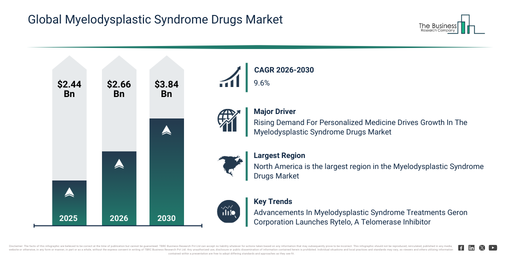
    The myelodysplastic syndrome drugs market size has experienced robust growth in recent years. It is projected to expand from $2.44 billion in 2025 to $2.66 billion in 2026, demonstrating a compound annual growth rate (CAGR) of 8.9%. This historical growth can be attributed to several factors including the limited availability of targeted MDS therapies, a reliance on blood transfusions, low awareness of MDS subtypes, restricted R&D investments, and high treatment costs in emerging markets.

    The myelodysplastic syndrome drugs market size is projected to experience robust expansion over the coming years. It is anticipated to reach $3.84 billion by 2030, exhibiting a compound annual growth rate (CAGR) of 9.6%. This projected growth during the forecast period stems from factors such as the increasing prevalence of MDS linked to aging demographics, greater financial commitment to precision medicine, breakthroughs in genomics-based treatments, the burgeoning healthcare infrastructure across APAC, and broadening reimbursement frameworks for MDS medications. Key developments expected in this period encompass tailored MDS treatments, a surge in the utilization of erythropoiesis-stimulating agents (ESAs), the proliferation of outpatient treatment facilities, a rising inclination towards parenteral drug delivery, and an intensifying emphasis on creating generic MDS drugs.

    Access Your Free Sample Report For In-Depth Market Analysis:

    https://www.thebusinessresearchcompany.com/sample.aspx?id=10675&type=smp

    What Major Factors Are Driving The Myelodysplastic Syndrome Drugs Market Forward?

    The increasing need for personalized medicine is projected to drive expansion in the myelodysplastic syndrome drugs market in the future. This medical strategy categorizes individuals into distinct groups, considering their medical history, genetic profile, and other relevant attributes. Specifically for myelodysplastic syndrome, personalized medicine customizes treatment according to each patient’s particular genetic and molecular features. Such an approach aims to enhance therapeutic outcomes and lessen undesirable side effects during the management of this diverse hematological disorder. An example highlighting this trend is seen in February 2024, where the Personalized Medicine Coalition, a US-based nonprofit organization, reported that the USFDA gave approval to 16 new personalized treatments for rare disease patients in 2023, which marks a substantial rise from the 6 personalized treatments approved in 2022. Consequently, the escalating demand for personalized medicine is acting as a primary catalyst for the growth of the myelodysplastic syndrome drugs market.

    How Are Different Segments Classified In The Myelodysplastic Syndrome Drugs Market Segment Analysis?

    The myelodysplastic syndrome drugs market covered in this report is segmented –

    1) By Therapeutic Class: Immunomodulatory Drugs, Hypomethylating Agents, Anti-anemics

    2) By Type of Syndrome: Refractory Cytopenia With Multilineage Dysplasia, Refractory Anemia, Refractory Anemia With Excess Blasts, Refractory Anemia With Ringed Sideroblasts

    3) By Route of Administration: Oral, Parenteral

    4) By Applications: Original, Generics

    5) By End-User: Hospitals, Clinics, Ambulatory Surgical Centers

    Subsegments:

    1) By Immunomodulatory Drugs: Thalidomide, Lenalidomide, Pomalidomide

    2) By Hypomethylating Agents: Azacitidine, Decitabine, Guadecitabine

    3) By Anti-anemics: Erythropoiesis-Stimulating Agents (ESAs), Iron Supplements, Blood Transfusion Products

    What Emerging Trends Are Seen In The Myelodysplastic Syndrome Drugs Market?

    Leading companies active in the myelodysplastic syndrome drugs market are developing telomerase inhibitors to target the enzyme telomerase, aiming to slow the advancement of the illness by restricting the uncontrolled division of abnormal cells. Telomerase inhibitors are advantageous in myelodysplastic syndrome drugs as their function involves impeding the telomerase enzyme, which in turn reduces the proliferation of abnormal cells, potentially improving patient outcomes. For instance, in June 2024, Geron Corporation, a US-based biotechnology company, launched rytelo (imetelstat), an FDA-approved intravenous telomerase inhibitor for adults with low to intermediate-1 risk myelodysplastic syndromes (LR-MDS) and transfusion dependent anemia unresponsive to and ineligible for ESA. Rytelo delivers durable transfusion independence, enhanced hemoglobin levels, and addresses a currently unmet need in the myelodysplastic syndrome drugs market with a manageable safety profile.

    Who Are The Companies Driving Activity In The Myelodysplastic Syndrome Drugs Market?

    Major companies operating in the myelodysplastic syndrome drugs market are Amgen Inc., Celgene Corporation, Otsuka Pharmaceutical Co. Ltd., Takeda Pharmaceutical Company Limited, Cipla Limited, Dr. Reddy’s Laboratories Ltd., Lupin Ltd., Onconova Therapeutics Inc., Sun Pharmaceutical Industries Limited, Aprea Therapeutics, Bayer AG, Bristol Myers Squibb, Celator Pharmaceuticals, AbbVie Inc., Geron Co., Hikma Pharmaceuticals plc, Jazz Pharmaceuticals Inc., Mylan NV, Novartis AG, Sandoz Inc., Teva Pharmaceutical Industries Ltd., Incyte Corporation, MEI Pharma Inc.

    Get The Full Myelodysplastic Syndrome Drugs Market Report:

    https://www.thebusinessresearchcompany.com/report/myelodysplastic-syndrome-drugs-global-market-report

    Which Region Accounts For The Largest Portion Of The Myelodysplastic Syndrome Drugs Market?

    North America was the largest region in the Myelodysplastic syndrome drugs market in 2025. Asia-Pacific is expected to be the fastest growing region in the global myelodysplastic syndrome drugs market report during the forecast period. The regions covered in the myelodysplastic syndrome drugs market report are Asia-Pacific, South East Asia, Western Europe, Eastern Europe, North America, South America, Middle East, Africa.

    Request A Customized Myelodysplastic Syndrome Drugs Market Report For Competitive Insights:

    https://www.thebusinessresearchcompany.com/report/myelodysplastic-syndrome-drugs-global-market-report

    Browse Through More Reports Similar to the Global Myelodysplastic Syndrome Drugs Market 2026, By The Business Research Company

    Myelodysplastic Syndrome Drugs Market Report 2026

    https://www.thebusinessresearchcompany.com/report/myelodysplastic-syndrome-drugs-global-market-report

    Myelodysplastic Syndrome Drugs Market Report 2026

    https://www.thebusinessresearchcompany.com/report/myelodysplastic-syndrome-drugs-global-market-report

    Myeloproliferative Disorders Drugs Market Report 2026

    https://www.thebusinessresearchcompany.com/report/myeloproliferative-disorders-drugs-global-market-report

    Get in touch with us:

    The Business Research Company: https://www.thebusinessresearchcompany.com/

    Americas +1 310-496-7795

    Asia +44 7882 955267 & +91 8897263534

    Europe +44 7882 955267

    Email us at: marketing@tbrc.info

    Follow us on:

    LinkedIn: https://in.linkedin.com/company/the-business-research-company

    YouTube: https://www.youtube.com/channel/UC24_fI0rV8cR5DxlCpgmyFQ

    Global Market Model: https://www.thebusinessresearchcompany.com/global-market-model
  • Adoption of Biopolymer Technologies Enhances Sustainability And Performance In Biodegradable Medical Polymers Is Playing A Role In Shaping The Melanoma Therapeutics Market

    Adoption of Biopolymer Technologies Enhances Sustainability And Performance In Biodegradable Medical Polymers Is Playing A Role In Shaping The Melanoma Therapeutics Market

    The Business Research Company’s 2026 market reports feature enhanced tools like market attractiveness analysis, TAM assessment, and company scoring matrices, along with interactive dashboards, deeper supply chain insights, and startup coverage strengthening the depth, usability, and strategic value of insights.

    What Is The Forecasted Market Size Trajectory Of The Melanoma Therapeutics Market From 2026 To 2030?

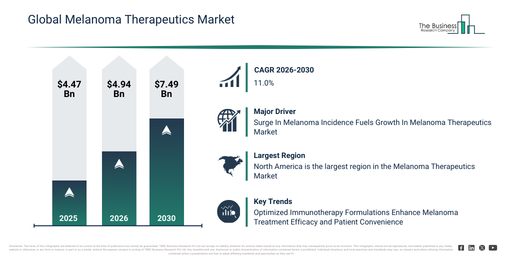
    The melanoma therapeutics market has seen rapid expansion in recent years. It is anticipated to expand from $4.47 billion in 2025 to $4.94 billion in 2026, demonstrating a compound annual growth rate (CAGR) of 10.4%. The historical increase can be linked to factors such as rising melanoma incidence, the development of monoclonal antibodies, greater awareness of skin cancer, advancements in radiation therapy, and the adoption of dermatoscopy.

    The melanoma therapeutics market size is anticipated to undergo significant expansion over the next few years. It is projected to climb to $7.49 billion by 2030, demonstrating a compound annual growth rate (CAGR) of 11.0%. This growth during the forecast period can be attributed to the advancement of precision medicine, the proliferation of immunotherapy treatments, novel developments in small molecule inhibitors, increasing healthcare expenditure, and the growing incorporation of AI in diagnostics. Prominent trends expected in this timeframe encompass the evolution of personalized melanoma therapies, increased acceptance of immunotherapy, breakthroughs in targeted therapy, the integration of sophisticated diagnostic techniques, and the implementation of combination treatment approaches.

    Access Your Free Sample Report For In-Depth Market Analysis:

    https://www.thebusinessresearchcompany.com/sample.aspx?id=10713&type=smp

    Which Strong Drivers Are Impacting The Melanoma Therapeutics Market Growth?

    The rising occurrence of melanoma is anticipated to drive expansion in the melanoma therapeutics market moving forward. Melanoma is a form of skin cancer that develops from melanocytes. Melanoma therapeutics encompass the treatments and medications employed to manage melanoma patients and relieve the disease. Consequently, the growing frequency of melanoma cases enhances the demand for melanoma therapeutics. For example, in August 2024, a report from the Australian Institute of Health and Welfare, Australia’s national agency for health and welfare data, indicated that by 2034, Australia is projected to face around 209,000 new cancer diagnoses, a notable rise from the approximately 169,000 cases estimated for 2024, illustrating the effects of demographic growth and increasing cancer rates. Furthermore, in 2024, cancer is expected to be responsible for approximately 3 out of every 10 deaths within the nation. Hence, the increasing prevalence of melanoma is fueling the expansion of the melanoma therapeutics drug market.

    What Are The Different Segment Types In The Melanoma Therapeutics Market Segment Breakdown?

    The melanoma therapeutics market covered in this report is segmented –

    1) By Drug Type: Monoclonal Antibodies, Small Molecule Inhibitors, Other Drug Types

    2) By Therapy: Surgery, Radiation Therapy, Immunotherapy, Targeted Therapy, Chemotherapy

    3) By Route of administration: Oral, Injectable

    4) By Cancer Type: Superficial Spreading Melanoma, Nodular Melanoma, Lentigo Maligna Melanoma, Acral Lentiginous Melanoma, Amelanotic Melanoma, Other Cancer Types

    5) By Diagnosis: Dermatoscopy, Sentinel Lymph Node Biopsy, Blood Test, X-ray, Ultrasound, CT Scan

    Subsegments:

    1) By Monoclonal Antibodies: Checkpoint Inhibitors, Targeted Monoclonal Antibodies, Conjugated Antibodies

    2) By Small Molecule Inhibitors: BRAF Inhibitors, MEK Inhibitors, Other Kinase Inhibitors

    3) By Other Drug Types: Chemotherapy Agents, Immunotherapy Agents, Adjuvant Therapies

    What Trends Are Transforming The Melanoma Therapeutics Market?

    Leading companies operating in the melanoma therapeutics market are prioritizing the development of innovative advancements, such as subcutaneous immunotherapy formulations, to enhance treatment convenience and improve patient adherence. This type of formulation is an injectable anticancer therapy designed to deliver immune-modulating agents beneath the skin, offering efficacy comparable to intravenous administration while simultaneously reducing treatment duration and procedural requirements. For instance, in December 2024, Bristol Myers Squibb, a U.S.-based global biopharmaceutical company, obtained U.S. Food and Drug Administration approval for Opdivo Qvantig. This subcutaneous co-formulation of nivolumab and hyaluronidase demonstrated non-inferior pharmacokinetics, comparable safety, and similar overall response rates when compared to the intravenous formulation in the Phase 3 CheckMate-67T trial. The approval signifies the introduction of the first subcutaneously administered programmed death protein 1 (PD-1) inhibitor, which provides a notably faster administration alternative and expands treatment flexibility for patients with solid tumors, including melanoma.

    Who Are The Well-Known Companies In The Melanoma Therapeutics Market?

    Major companies operating in the melanoma therapeutics market are AstraZeneca plc, Eli Lilly and Company, Merck & Co. Inc., Novartis AG, Amgen Inc., F. Hoffmann-La Roche Ltd., Pfizer Inc., Bristol-Myers Squibb Company, Oncolys BioPharma Inc., Iovance Biotherapeutics Inc., Eisai Co. Ltd., Seattle Genetics Inc., Regeneron Pharmaceuticals Inc., Takeda Pharmaceutical Company Limited, Daiichi Sankyo Company Limited, Nektar Therapeutics, Immutep Ltd., Partner Therapeutics Inc., Infinity Pharmaceuticals Inc., Spring Bank Pharmaceuticals Inc., AIM ImmunoTech Inc.

    Get The Full Melanoma Therapeutics Market Report:

    https://www.thebusinessresearchcompany.com/report/melanoma-therapeutics-global-market-report

    Which Region Has The Greatest Market Share In The Melanoma Therapeutics Market?

    North America was the largest region in the melanoma therapeutics market in 2025. The regions covered in the melanoma therapeutics market report are Asia-Pacific, South East Asia, Western Europe, Eastern Europe, North America, South America, Middle East, Africa.

    Request A Customized Melanoma Therapeutics Market Report For Competitive Insights:

    https://www.thebusinessresearchcompany.com/report/melanoma-therapeutics-global-market-report

    Browse Through More Reports Similar to the Global Melanoma Therapeutics Market 2026, By The Business Research Company

    Melanoma Therapeutics Market Report 2026

    https://www.thebusinessresearchcompany.com/report/melanoma-therapeutics-global-market-report

    Malignant Melanoma Treatment Market Report 2026

    https://www.thebusinessresearchcompany.com/report/malignant-melanoma-treatment-global-market-report

    Melanoma Drugs Market Report 2026

    https://www.thebusinessresearchcompany.com/report/melanoma-drugs-global-market-report

    Get in touch with us:

    The Business Research Company: https://www.thebusinessresearchcompany.com/

    Americas +1 310-496-7795

    Asia +44 7882 955267 & +91 8897263534

    Europe +44 7882 955267

    Email us at: marketing@tbrc.info

    Follow us on:

    LinkedIn: https://in.linkedin.com/company/the-business-research-company

    YouTube: https://www.youtube.com/channel/UC24_fI0rV8cR5DxlCpgmyFQ

    Global Market Model: https://www.thebusinessresearchcompany.com/global-market-model
  • Myelodysplastic Syndrome (MDS) Drugs Market Revenue Projected To Hit $10.25 Billion By 2030 With 8.3% CAGR

    Myelodysplastic Syndrome (MDS) Drugs Market Revenue Projected To Hit $10.25 Billion By 2030 With 8.3% CAGR

    The Business Research Company’s 2026 market reports feature enhanced tools like market attractiveness analysis, TAM assessment, and company scoring matrices, along with interactive dashboards, deeper supply chain insights, and startup coverage strengthening the depth, usability, and strategic value of insights.

    How Much Will The Market Value Of The Myelodysplastic Syndrome (MDS) Drugs Market Grow Between 2026 And 2030?

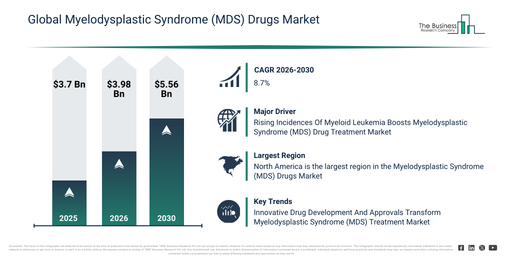
    The myelodysplastic syndrome (mds) drugs market has experienced robust expansion recently. This market is projected to expand from $3.7 billion in 2025 to $3.98 billion by 2026, exhibiting a compound annual growth rate (CAGR) of 7.6%. Historically, this growth was driven by factors such as a rise in bone marrow disorder diagnoses, the widespread availability of hypomethylating agents, the proliferation of oncology treatment facilities, the increased application of supportive transfusion therapies, and heightened awareness of the disease.

    The myelodysplastic syndrome (MDS) drugs market size is anticipated to undergo significant expansion in the coming years. It is projected to attain $5.56 billion by 2030, progressing at a compound annual growth rate (CAGR) of 8.7%. The market’s growth throughout the forecast period stems from the increasing development of novel immunomodulatory drugs, rising adoption of precision medicine in hematology, expansion of clinical trial pipelines, growing focus on improving patient quality of life, and increasing healthcare spending on rare diseases. Prominent patterns expected in this period encompass the increasing use of targeted therapeutic regimens, rising adoption of oral and parenteral combination therapies, growing focus on personalized treatment approaches, expansion of supportive care therapies, and enhanced monitoring of treatment outcomes.

    Access Your Free Sample Report For In-Depth Market Analysis:

    https://www.thebusinessresearchcompany.com/sample.aspx?id=13043&type=smp

    Which Key Drivers Are Affecting The Myelodysplastic Syndrome (MDS) Drugs Market Development?

    The anticipated rise in myeloid leukemia cases is projected to fuel expansion within the myelodysplastic syndrome (MDS) drug treatment market. Myeloid leukemia, a form of cancer, originates in the bone marrow and impacts cells vital for producing various blood cell types. Myelodysplastic syndrome (MDS) drugs are designed to enhance bone marrow function by addressing the underlying cause of leukemia, thereby minimizing the risk of complications from low blood cell counts, decreasing the necessity for chemotherapy and transplants, and boosting survival rates for individuals with myelodysplastic syndrome (MDS). For example, estimates from the American Cancer Society, a US-based voluntary health organization, indicated that in January 2023, approximately 20,380 cases and 11,310 deaths from acute myeloid leukemia (AML) were expected among adults in 2023. Consequently, the rising prevalence of myeloid leukemia is a key driver for the myelodysplastic syndrome (MDS) drug market.

    How Is The Myelodysplastic Syndrome (MDS) Drugs Market Categorized Across Its Segment Groups?

    The myelodysplastic syndrome (mds) drugs market covered in this report is segmented –

    1) By Drug Type: Chemotherapy, Immunomodulatory Drugs

    2) By Route Of Administration: Oral, Parenteral

    3) By Syndrome: Refractory Cytopenia With Multilineage Dysplasia, Refractory Anemia, Refractory Anemia With Ringed Sideroblasts

    4) By End User: Hospitals, Clinics, Ambulatory Surgical Centers

    Subsegments:

    1) By Chemotherapy: Hypomethylating Agents, Cytotoxic Agents

    2) By Immunomodulatory Drugs: Lenalidomide, Thalidomide, Pomalidomide

    Which Trends Are Guiding The Direction Of The Myelodysplastic Syndrome (MDS) Drugs Market?

    Leading companies in the myelodysplastic syndrome (MDS) drugs market are concentrating on developing novel products, such as targeted therapy, to enhance patient outcomes, fulfill specific customer needs, and integrate effectively into the healthcare ecosystem. This targeted therapy for myelodysplastic syndromes (MDS) involves the use of medications specifically designed to pinpoint and address genetic mutations or molecular irregularities in cancer cells, aiming to improve results by selectively attacking abnormal cells while minimizing harm to healthy tissue. For example, in October 2023, the U.S. Food and Drug Administration (FDA) sanctioned Tibsovo (ivosidenib) for treating adult patients with relapsed or refractory (R/R) myelodysplastic syndromes (MDS) who possess an isocitrate dehydrogenase-1 (IDH1) mutation. The effectiveness of Tibsovo for this particular new use was examined in an open-label, single-arm, multicenter study that included 18 adult patients suffering from relapsed or refractory MDS with an IDH1 mutation.

    Which Firms Are Influencing Competition In The Myelodysplastic Syndrome (MDS) Drugs Market?

    Major companies operating in the myelodysplastic syndrome (mds) drugs market are Bristol Myers Squibb, Otsuka Pharmaceutical Co. Ltd., Teva Pharmaceutical Industries Ltd., Dr. Reddy’s Laboratories Ltd., Mylan NV, Cipla Limited, Acceleron Pharma Inc., Aprea Therapeutics, Onconova Therapeutics Inc., Geron Corporation, Amgen Inc., Sandoz, Gilead Sciences Inc., Johnson And Johnson, Lupin Ltd. Corporation, Ono Pharmaceutical Co. Ltd., Eisai Co. Ltd., Nippon Shinyaku Co. Ltd., Lupin Ltd., Accord Healthcare Inc., Kite Pharma Inc., Karyopharm Therapeutics Inc., Aprea Therapeutics Inc., Acceleron Pharma Inc., Astex Pharmaceuticals Inc., Stemline Therapeutics Inc., Geron Corporation, Onconova Therapeutics Inc., Actinium Pharmaceuticals Inc., Millennium Pharmaceuticals Inc.

    Get The Full Myelodysplastic Syndrome (MDS) Drugs Market Report:

    https://www.thebusinessresearchcompany.com/report/myelodysplastic-syndrome-mds-drugs-global-market-report

    Which Region Holds The Highest Market Share In The Myelodysplastic Syndrome (MDS) Drugs Market?

    North America was the largest region in the myelodysplastic syndrome (MDS) drugs market in 2025. The regions covered in the myelodysplastic syndrome (mds) drugs market report are Asia-Pacific, South East Asia, Western Europe, Eastern Europe, North America, South America, Middle East, Africa.

    Request A Customized Myelodysplastic Syndrome (MDS) Drugs Market Report For Competitive Insights:

    https://www.thebusinessresearchcompany.com/report/myelodysplastic-syndrome-mds-drugs-global-market-report

    Browse Through More Reports Similar to the Global Myelodysplastic Syndrome (MDS) Drugs Market 2026, By The Business Research Company

    Bone Marrow Transplantation Market Report 2026

    https://www.thebusinessresearchcompany.com/report/bone-marrow-transplantation-global-market-report

    Blood Transfusion Diagnostics Market Report 2026

    https://www.thebusinessresearchcompany.com/report/blood-transfusion-diagnostics-global-market-report

    Patient Blood Management Market Report 2026

    https://www.thebusinessresearchcompany.com/report/patient-blood-management-global-market-report

    Get in touch with us:

    The Business Research Company: https://www.thebusinessresearchcompany.com/

    Americas +1 310-496-7795

    Asia +44 7882 955267 & +91 8897263534

    Europe +44 7882 955267

    Email us at: marketing@tbrc.info

    Follow us on:

    LinkedIn: https://in.linkedin.com/company/the-business-research-company

    YouTube: https://www.youtube.com/channel/UC24_fI0rV8cR5DxlCpgmyFQ

    Global Market Model: https://www.thebusinessresearchcompany.com/global-market-model
  • The Melanoma Drugs Market Is Witnessing Impact From Growing Emphasis On Personalized Medicine Fuelling The Growth Of The Due To Advancements In Genomic Technologies

    The Melanoma Drugs Market Is Witnessing Impact From Growing Emphasis On Personalized Medicine Fuelling The Growth Of The Due To Advancements In Genomic Technologies

    The Business Research Company’s 2026 market reports feature enhanced tools like market attractiveness analysis, TAM assessment, and company scoring matrices, along with interactive dashboards, deeper supply chain insights, and startup coverage strengthening the depth, usability, and strategic value of insights.

    How Much Will The Market Value Of The Melanoma Drugs Market Grow Between 2026 And 2030?

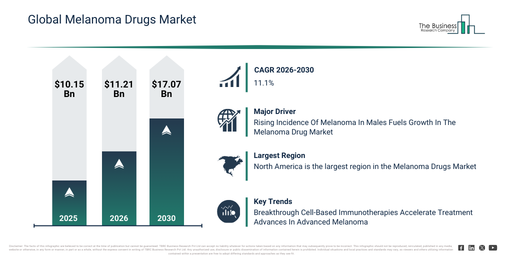
    The size of the melanoma drugs market has experienced swift expansion recently. This market is projected to expand from $10.15 billion in 2025 to $11.21 billion in 2026, demonstrating a compound annual growth rate (CAGR) of 10.4%. Factors contributing to its historical growth include the rising occurrence of melanoma, heightened public awareness regarding skin cancer, the introduction of early immunotherapy medications, increased uptake of targeted treatments, and the enlargement of oncology departments within hospitals.

    The melanoma drugs market size is forecast for rapid expansion over the next few years, with projections indicating it will reach $17.07 billion in 2030, growing at a compound annual growth rate (CAGR) of 11.1%. This growth during the forecast period is attributed to breakthroughs in precision medicine, the emergence of combination therapies, an aging global population, increased financial investment in melanoma research, and the incorporation of artificial intelligence in drug discovery. Significant trends for the forecast period include the development of personalized melanoma therapies, advancements in targeted immunotherapy, adoption of combination treatment approaches, innovations in early detection and diagnostics, and a dedicated focus on treatments for orphan and rare melanoma.

    Access Your Free Sample Report For In-Depth Market Analysis:

    https://www.thebusinessresearchcompany.com/sample.aspx?id=10783&type=smp

    What Key Factors Are Shaping The Melanoma Drugs Market Landscape?

    The rising occurrence of melanoma in males is anticipated to stimulate the expansion of the melanoma drug market in the coming years. Melanoma is a form of skin cancer that develops in melanocytes, the cells responsible for regulating skin pigment. Medications for melanoma are designed to target and suppress the growth and spread of melanoma cells throughout the body. Thus, the increasing frequency of melanoma will elevate the demand for the melanoma drug market. For instance, a 2023 report from the American Cancer Society, Inc., a US-based national voluntary health organization dedicated to eradicating cancer, revealed that new male cases of melanoma in the United States rose to 58,120 in 2023 from 57,180 in 2022. Consequently, the uptick in melanoma incidence among males is a key factor driving the growth of the melanoma drug market.

    Which Segment Classifications Are Used In The Melanoma Drugs Market Segment Analysis?

    The melanoma drugs market covered in this report is segmented –

    1) By Therapy: Chemotherapy, Immunotherapy, Targeted Therapy

    2) By Disease Type: Superficial Spreading Melanoma, Lentigo Maligna, Acral Lentiginous Melanoma, Nodular Melanoma

    3) By Application: Hospitals, Outpatient Oncologist Clinics, Other Applications

    Subsegments:

    1) By Chemotherapy: Alkylating Agents, Antimetabolites, Plant Alkaloids, Topoisomerase Inhibitors

    2) By Immunotherapy: Checkpoint Inhibitors, Interleukin Therapy, Oncolytic Virus Therapy, Cancer Vaccines

    3) By Targeted Therapy: BRAF Inhibitors, MEK Inhibitors, Immune Modulators, Other Targeted Agents

    What Trends Are Shaping The Future Of The Melanoma Drugs Market?

    Major companies within the melanoma drugs market are prioritizing the advancement of next-generation cell-based immunotherapies, such as tumor-infiltrating lymphocyte (TIL) therapies, with the aim of boosting treatment efficacy for individuals suffering from advanced or unresectable melanoma. TIL therapy functions by extracting and expanding a patient’s own tumor-infiltrating immune cells, then reinfusing them to enhance the body’s natural ability to recognize and eliminate cancer cells. This method offers a promising alternative for those who have responded poorly to existing systemic immunotherapies. For instance, in February 2024, Iovance Biotherapeutics, a U.S.-based biotechnology company, obtained FDA approval for AMTAGVI (lifileucel), which is the first-ever tumor-infiltrating lymphocyte (TIL) therapy sanctioned for advanced melanoma. The FDA indicated that this therapy showed an overall response rate (ORR) of 31.5%, encompassing 5.6% complete responses, in heavily pretreated patients with unresectable or metastatic melanoma. AMTAGVI, engineered as a personalized, one-time cellular immunotherapy, represents a significant therapeutic breakthrough and extends the available clinical options for melanoma patients who have limited treatment alternatives.

    Which Firms Are Contributing To The Melanoma Drugs Market Ecosystem?

    Major companies operating in the melanoma drugs market are Amgen Inc., Bristol-Myers Squibb Company, F. Hoffmann-La Roche AG, Novartis AG, Pfizer Inc., Merck & Co. Inc., Aduro Biotech Inc., Seagen Inc., OncoSec Medical Incorporated, Regeneron Pharmaceuticals Inc., Iovance Biotherapeutics, Takeda Pharmaceutical Company Limited, Eli Lilly and Company, Daiichi Sankyo Company Limited, Gilead Sciences, MacroGenics Inc., Kyowa Kirin Co. Ltd., Fortress Biotech Inc., OSE Immunotherapeutics, Vical Incorporated, Almirall S.A.

    Get The Full Melanoma Drugs Market Report:

    https://www.thebusinessresearchcompany.com/report/melanoma-drugs-global-market-report

    Which Region Accounts For The Largest Portion Of The Melanoma Drugs Market?

    North America was the largest region in the melanoma drugs market in 2025. The regions covered in the melanoma drugs market report are Asia-Pacific, South East Asia, Western Europe, Eastern Europe, North America, South America, Middle East, Africa.

    Request A Customized Melanoma Drugs Market Report For Competitive Insights:

    https://www.thebusinessresearchcompany.com/report/melanoma-drugs-global-market-report

    Browse Through More Reports Similar to the Global Melanoma Drugs Market 2026, By The Business Research Company

    Melanoma Drugs Market Report 2026

    https://www.thebusinessresearchcompany.com/report/melanoma-drugs-global-market-report

    Melanoma Therapeutics Market Report 2026

    https://www.thebusinessresearchcompany.com/report/melanoma-therapeutics-global-market-report

    Malignant Melanoma Treatment Market Report 2026

    https://www.thebusinessresearchcompany.com/report/malignant-melanoma-treatment-global-market-report

    Get in touch with us:

    The Business Research Company: https://www.thebusinessresearchcompany.com/

    Americas +1 310-496-7795

    Asia +44 7882 955267 & +91 8897263534

    Europe +44 7882 955267

    Email us at: marketing@tbrc.info

    Follow us on:

    LinkedIn: https://in.linkedin.com/company/the-business-research-company

    YouTube: https://www.youtube.com/channel/UC24_fI0rV8cR5DxlCpgmyFQ

    Global Market Model: https://www.thebusinessresearchcompany.com/global-market-model
  • Global Myc Proto Oncogene Protein Market Set To Expand To $13.72 Billion By 2030 At 6% CAGR

    Global Myc Proto Oncogene Protein Market Set To Expand To $13.72 Billion By 2030 At 6% CAGR

    The Business Research Company’s 2026 market reports feature enhanced tools like market attractiveness analysis, TAM assessment, and company scoring matrices, along with interactive dashboards, deeper supply chain insights, and startup coverage strengthening the depth, usability, and strategic value of insights.

    What Changes In Market Value Are Expected For The Myc Proto Oncogene Protein Market Over The 2026–2030 Period?

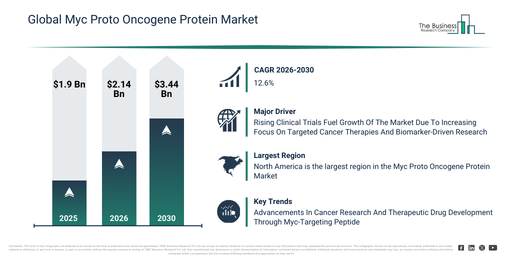
    The myc proto oncogene protein market has seen rapid expansion in recent years. It is projected to increase from $1.9 billion in 2025 to $2.14 billion in 2026, achieving a compound annual growth rate (CAGR) of 12.9%. Historically, this growth can be attributed to the limited availability of recombinant proteins, the reliance on conventional PCR and ELISA techniques, expanding cancer research initiatives, a growing demand for myc-targeted diagnostics, and the adoption of standard laboratory protocols.

    The market for myc proto oncogene protein is projected to experience swift expansion over the coming years. This market is set to reach $3.44 billion by 2030, driven by a compound annual growth rate (CAGR) of 12.6%. This anticipated growth during the forecast timeframe stems from advancements in next-generation sequencing and chip-seq technologies, increasing financial commitments to biomarker identification and therapeutic investigations, the broadening of pharmaceutical R&D endeavors, enhanced partnerships between academic and biotechnology organizations, and the incorporation of artificial intelligence (AI) and digital tools into research processes. Key trends anticipated within the forecast period encompass a growing utilization of monoclonal antibodies and recombinant proteins, a surge in the embrace of sophisticated gene expression and RNA interference methodologies, an expansion in both cancer research and biomarker identification efforts, an increase in diagnostic and treatment development applications, and augmented funding for academic and pharmaceutical research initiatives.

    Access Your Free Sample Report For In-Depth Market Analysis:

    https://www.thebusinessresearchcompany.com/sample.aspx?id=24613&type=smp

    What Factors Are Contributing To The Growth Of The Myc Proto Oncogene Protein Market?

    The rising number of clinical trials is anticipated to drive the expansion of the myc proto oncogene protein market in the coming period. Clinical trials are investigative studies performed with human participants to evaluate the safety and efficacy of novel medical treatments or interventions. The increase in clinical trials is attributed to researchers and companies striving to accelerate the creation of effective therapies, generate robust safety data, and deliver innovative treatments to patients more rapidly. These trials assist in assessing targeted therapies against myc proto-oncogene-driven cancers by evaluating their efficacy, safety, and resistance mechanisms, thereby guiding the formulation of MYC inhibitors and combination treatments. As an illustration, in June 2025, data from the National Center for Biotechnology Information, a US-based international scientific research resource, showed that registered studies grew from 437,497 in 2022 to 520,885 in 2024. Consequently, the increasing volume of clinical trials is a key factor propelling the growth of the myc proto oncogene protein market. The increasing incidence of cancer is expected to fuel the growth of the myc proto oncogene protein market going forward. Cancer is a condition characterized by uncontrolled cellular multiplication which may invade other bodily tissues. The growing count of cancer cases largely stems from an aging population, as older individuals are more susceptible to developing the disease. Cancer is intricately linked to the MYC protein, as its overexpression is frequently observed in tumors, positioning it as a promising target for the development of effective therapies. For instance, in February 2024, the World Health Organization, a Switzerland-based intergovernmental organization, projected over 35 million new cancer cases by 2050, marking a 77% increase compared to the estimated 20 million cases in 2022. Therefore, the rising prevalence of cancer is a primary driver for the expansion of the myc proto oncogene protein market.

    How Are Segments Identified Within The Myc Proto Oncogene Protein Market Segment Framework?

    The myc proto oncogene protein market covered in this report is segmented –

    1) By Product Type: Monoclonal Antibodies, Recombinant Proteins, Polymerase Chain Reaction (PCR) Kits, Enzyme-Linked Immunosorbent Assay (ELISA) Kits

    2) By Molecular Variant: BGA-003, ES-4000, Galarmin, Other Types

    3) By Technology: Gene Expression Profiling, Chromatin Immunoprecipitation Sequencing (ChIP-Seq), Next-Generation Sequencing (NGS), Ribonucleic Acid Interference Techniques

    4) By Application: Cancer Research, Diagnostics, Treatment Development, Biomarker Discovery

    5) By End-User: Academic And Research Institutions, Biotechnology Companies, Pharmaceutical Companies, Hospitals And Diagnostic Laboratories

    Subsegments:

    1) By Monoclonal Antibodies: Therapeutic Monoclonal Antibodies, Diagnostic Monoclonal Antibodies, Research-Grade Monoclonal Antibodies

    2) By Recombinant Proteins: Recombinant Myc Proteins, Recombinant Fusion Proteins, Recombinant Antibody Fragments

    3) By Polymerase Chain Reaction (PCR) Kits: Quantitative PCR (Qpcr) Kits, Reverse Transcription PCR (Rt-Pcr) Kits, Digital PCR Kits

    4) By Enzyme-Linked Immunosorbent Assay (ELISA) Kits: Sandwich ELISA Kits, Competitive ELISA Kits, Indirect ELISA Kits

    What Trends Are Affecting The Growth Of The Myc Proto Oncogene Protein Market?

    Companies operating in the myc proto oncogene protein market are increasingly focusing on advanced therapeutics, such as myc-targeting peptide therapeutics, to revolutionize cancer treatment. A myc-targeting peptide therapeutic is a new class of drug designed to inhibit the myc oncogene, which is abnormally activated in a majority of cancers and plays a central role in tumor growth and progression. For instance, in January 2025, Peptomyc S.L., a Spain-based biotechnology company, initiated a new Phase 2 clinical trial for its myc-inhibitor drug OMO-103 in patients with advanced osteosarcoma. OMO-103 is a first-in-class myc-targeting peptide designed to disrupt myc function in cancer cells, exhibiting a manageable safety profile and notable anti-tumor activity. This trial aims to assess the drug’s clinical efficacy, safety, and pharmacodynamics, marking a significant step forward in targeted therapies for difficult-to-treat cancers such as osteosarcoma.

    Who Are The Companies Competing Within The Myc Proto Oncogene Protein Market?

    Major companies operating in the myc proto oncogene protein market are Thermo Fisher Scientific Inc., Merck KGaA (Sigma-Aldrich), Abcam plc, Bio-Rad Laboratories Inc., Agilent Technologies Inc., RayBiotech Life Inc., Sino Biological Inc., GenScript Biotech Corporation, R&D Systems (Bio-Techne Corporation), Proteintech Group Inc., Cell Signaling Technology Inc., Santa Cruz Biotechnology Inc., Novus Biologicals (Bio-Techne), Creative Diagnostics Inc., Boster Biological Technology, OriGene Technologies Inc., Rockland Immunochemicals Inc., Elabscience Biotechnology Inc., MyBioSource Inc., ProSci Incorporated, LSBio (LifeSpan BioSciences Inc.), Cayman Chemical Company, Enzo Life Sciences Inc., BioLegend Inc., Atlas Antibodies AB, Abbexa Ltd., United States Biological (USBiological Life Sciences), Assay Genie Ltd., Wuhan Fine Biotech Co. Ltd., Aviva Systems Biology Corporation, Cloud-Clone Corp.

    Get The Full Myc Proto Oncogene Protein Market Report:

    https://www.thebusinessresearchcompany.com/report/myc-proto-oncogene-protein-global-market-report

    Where Is The Myc Proto Oncogene Protein Market Most Concentrated Geographically?

    North America was the largest region in the myc proto oncogene protein market in 2025. Asia-Pacific is expected to be the fastest-growing region in the forecast period. The regions covered in the myc proto oncogene protein market report are Asia-Pacific, South East Asia, Western Europe, Eastern Europe, North America, South America, Middle East, Africa.

    Request A Customized Myc Proto Oncogene Protein Market Report For Competitive Insights:

    https://www.thebusinessresearchcompany.com/report/myc-proto-oncogene-protein-global-market-report

    Browse Through More Reports Similar to the Global Myc Proto Oncogene Protein Market 2026, By The Business Research Company

    Protein Analyzer Market Report 2026

    https://www.thebusinessresearchcompany.com/report/protein-analyzer-global-market-report

    Protein Sequencing Market Report 2026

    https://www.thebusinessresearchcompany.com/report/protein-sequencing-global-market-report

    Recombinant Proteins Market Report 2026

    https://www.thebusinessresearchcompany.com/report/recombinant-proteins-global-market-report

    Get in touch with us:

    The Business Research Company: https://www.thebusinessresearchcompany.com/

    Americas +1 310-496-7795

    Asia +44 7882 955267 & +91 8897263534

    Europe +44 7882 955267

    Email us at: marketing@tbrc.info

    Follow us on:

    LinkedIn: https://in.linkedin.com/company/the-business-research-company

    YouTube: https://www.youtube.com/channel/UC24_fI0rV8cR5DxlCpgmyFQ

    Global Market Model: https://www.thebusinessresearchcompany.com/global-market-model
  • Growth In The Meganuclease Genome Editing Market Is Being Driven By Impact Of Chronic Kidney Disease On The Biobetters

    Growth In The Meganuclease Genome Editing Market Is Being Driven By Impact Of Chronic Kidney Disease On The Biobetters

    The Business Research Company’s 2026 market reports feature enhanced tools like market attractiveness analysis, TAM assessment, and company scoring matrices, along with interactive dashboards, deeper supply chain insights, and startup coverage strengthening the depth, usability, and strategic value of insights.

    What Changes In Market Value Are Expected For The Meganuclease Genome Editing Market Over The 2026–2030 Period?

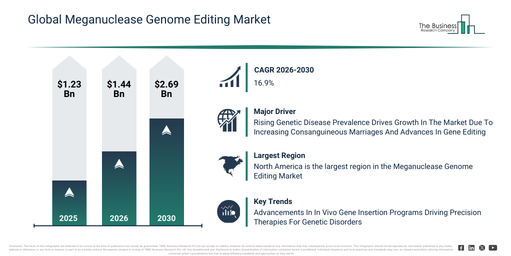
    The meganuclease genome editing market size has experienced rapid expansion in recent years. It is projected to increase from $1.23 billion in 2025 to $1.44 billion in 2026, demonstrating a compound annual growth rate (CAGR) of 17.2%. The historical growth in this market can be attributed to factors such as the emergence of meganuclease genome editing technology, the reliance on zinc finger nucleases and TALENs, growing research in genetic engineering, the limited precision of early genome editing tools, and an increase in academic research initiatives.

    The meganuclease genome editing market is projected for substantial expansion over the upcoming years. This market is anticipated to reach $2.69 billion by 2030, exhibiting a compound annual growth rate (CAGR) of 16.9%. The anticipated growth during this period stems from factors such as the creation of megaTALs and sophisticated meganuclease variants, an increase in clinical applications and therapeutic advancements, the uptake of both ex-vivo and in-vivo genome editing techniques, an uptick in government and private investment in gene editing, and the incorporation of diagnostic and precision medicine strategies. Key trends foreseen include broadening therapeutic uses of meganucleases, advancements in agricultural and plant genome engineering, a greater embrace of ex-vivo and in-vivo delivery techniques, enhanced partnerships between academic bodies and biopharmaceutical firms, and the evolution of homing endonuclease-driven precision treatments.

    Access Your Free Sample Report For In-Depth Market Analysis:

    https://www.thebusinessresearchcompany.com/sample.aspx?id=27342&type=smp

    Which Factors Are Influencing The Growth Of The Meganuclease Genome Editing Market?

    The anticipated expansion of the meganuclease genome editing market is significantly influenced by the rising occurrence of genetic diseases. These conditions stem from alterations or mutations within an individual’s DNA, disrupting typical bodily functions. The surge in genetic diseases is linked to the growing frequency of consanguineous marriages, which heightens the probability of inheriting such disorders. Meganuclease genome editing offers a solution by performing precise cuts in DNA to either rectify, remove, or substitute faulty genes, thereby facilitating targeted gene therapies that result in fewer unintended effects and offer potential remedies for inherited conditions. Illustratively, data from May 2024, provided by the National Health Service, a UK-based government department, indicated that in England, roughly 17,000 individuals are afflicted with sickle cell disease, an inherited blood disorder, with approximately 250 new diagnoses occurring annually. Consequently, the expanding incidence of genetic diseases is a primary catalyst for the growth of the meganuclease genome editing market.

    How Is The Meganuclease Genome Editing Market Organized By Segment Classification?

    The meganuclease genome editing market covered in this report is segmented –

    1) By Technology: Clustered Regularly Interspaced Short Palindromic Repeats (CRISPR) Or Cas9, Transcription Activator-Like Effector Nucleases (TALENs) Or Meganuclase-Transcription Activator-Like Effector Nucleases (MegaTALs), Zinc Finger Nucleases (ZFN), Meganuclease, Other Technologies

    2) By Mode: Contract, In-house

    3) By Delivery Method: Ex-Vivo, In-Vivo

    4) By Application: Genetic Engineering, Cell Line Engineering, Plant Genetic Engineering, Animal Genetic Engineering, Clinical Applications, Diagnostics Development, Therapy Development, Other Applications

    5) By End-User: Biotechnology And Pharmaceutical Companies, Academic And Government Research Institutes, Contract Research Organizations

    Subsegments:

    1) By Clustered Regularly Interspaced Short Palindromic Repeats (CRISPR) Or Cas9: Clustered Regularly Interspaced Short Palindromic Repeats (CRISPR)-Cas9 Gene Editing, Clustered Regularly Interspaced Short Palindromic Repeats (CRISPR)-Cas12, Clustered Regularly Interspaced Short Palindromic Repeats (CRISPR)-Cas13

    2) By Transcription Activator-Like Effector Nucleases (TALENs) Or Meganuclase-Transcription Activator-Like Effector Nucleases (MegaTALs): Genome Editing Applications, Therapeutic Applications, Agricultural Biotechnology

    3) By Zinc Finger Nucleases (ZFN): Zinc Finger Nucleases Gene Editing, Transcription Activator-Like Effector Nucleases

    4) By Meganuclease: Homing Endonucleases, Self Splicing Introns

    5) By Other Technologies: Base Editing, Prime Editing

    Which Trends Are Contributing To Changes In The Meganuclease Genome Editing Market?

    Leading companies operating in the meganuclease genome editing market are focusing on developing sophisticated solutions, such as in vivo gene insertion programs, to improve therapeutic applications and broaden the scope of genetic disease correction. These in vivo gene insertion programs deliver genetic material directly into living organisms to insert or correct specific genes within their natural cells, enabling precise therapeutic interventions for treating genetic disorders inside the body. For example, in May 2024, iECURE Inc., a US-based gene editing company, launched ECUR-506, an in vivo gene insertion program designed to treat neonatal onset ornithine transcarbamylase (OTC) deficiency, which received a fast track designation from the U.S. Food and Drug Administration (FDA). This gene editing therapy is specifically intended to address neonatal onset ornithine transcarbamylase (OTC) deficiency. It is designed for newborn males with severe neonatal-onset OTC deficiency and aims to restore functional OTC enzyme activity through a single intravenous infusion. A complete clinical response has been demonstrated in the first infant treated, facilitating the discontinuation of ammonia scavenger medications and a return to normal protein intake, with only manageable side effects reported.

    Who Are The Industry Participants Involved In The Meganuclease Genome Editing Market?

    Major companies operating in the meganuclease genome editing market are Thermo Fisher Scientific Inc., Danaher Corp., Merck KGaA, Lonza Group Ltd., Charles River Laboratories International Inc., Genscript, Takara Bio Inc., Applied StemCell Inc., Cellectis SA., New England Biolabs, Precision Biosciences Inc.

    Get The Full Meganuclease Genome Editing Market Report:

    https://www.thebusinessresearchcompany.com/report/meganuclease-genome-editing-global-market-report

    Which Region Holds The Highest Market Share In The Meganuclease Genome Editing Market?

    North America was the largest region in the meganuclease genome editing market in 2025. The regions covered in the meganuclease genome editing market report are Asia-Pacific, South East Asia, Western Europe, Eastern Europe, North America, South America, Middle East, Africa.

    Request A Customized Meganuclease Genome Editing Market Report For Competitive Insights:

    https://www.thebusinessresearchcompany.com/report/meganuclease-genome-editing-global-market-report

    Browse Through More Reports Similar to the Global Meganuclease Genome Editing Market 2026, By The Business Research Company

    Business Travel Accident Insurance Market Report 2026

    https://www.thebusinessresearchcompany.com/report/business-travel-accident-insurance-global-market-report

    Accidental Death Insurance Market Report 2026

    https://www.thebusinessresearchcompany.com/report/accidental-death-insurance-global-market-report

    Motor Insurance Market Report 2026

    https://www.thebusinessresearchcompany.com/report/motor-insurance-global-market-report

    Get in touch with us:

    The Business Research Company: https://www.thebusinessresearchcompany.com/

    Americas +1 310-496-7795

    Asia +44 7882 955267 & +91 8897263534

    Europe +44 7882 955267

    Email us at: marketing@tbrc.info

    Follow us on:

    LinkedIn: https://in.linkedin.com/company/the-business-research-company

    YouTube: https://www.youtube.com/channel/UC24_fI0rV8cR5DxlCpgmyFQ

    Global Market Model: https://www.thebusinessresearchcompany.com/global-market-model