Month: May 2026

  • Migraine Drugs Market Outlook Highlighting Key Drivers And Market Evolution

    Migraine Drugs Market Outlook Highlighting Key Drivers And Market Evolution

    The Business Research Company’s 2026 market reports feature enhanced tools like market attractiveness analysis, TAM assessment, and company scoring matrices, along with interactive dashboards, deeper supply chain insights, and startup coverage strengthening the depth, usability, and strategic value of insights.

    What Expansion In Market Value Is Forecasted For The Migraine Drugs Market Between 2026 And 2030?

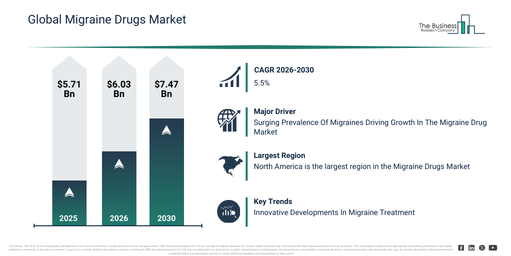
    The migraine drugs market has experienced substantial growth in recent years. This market is anticipated to expand from $5.71 billion in 2025 to reach $6.03 billion in 2026, exhibiting a compound annual growth rate (CAGR) of 5.5%. Its historical growth can be attributed to several factors, including the increasing global prevalence of migraine, the limited availability of targeted therapies, heightened awareness of migraine disorders, a rise in neuropharmacology research, and the expansion of hospital and pharmacy networks.

    The migraine drugs market is projected to experience substantial expansion over the upcoming years. This market is set to reach $7.47 billion by 2030, exhibiting a compound annual growth rate (CAGR) of 5.5%. This anticipated growth is driven by several factors, including innovations in biologics for migraine treatment, the uptake of digital health solutions and wearable technologies, intensified research and development into CGRP inhibitors, a growing need for personalized medicine, and an increase in online pharmacy sales. Key developments expected during this forecast period encompass tailored migraine therapies, the creation of CGRP antagonists, monitoring devices worn for headaches, the wider availability of over-the-counter migraine remedies, and the incorporation of telemedicine into migraine care.

    Access Your Free Sample Report For In-Depth Market Analysis:

    https://www.thebusinessresearchcompany.com/sample.aspx?id=13484&type=smp

    What Key Drivers Are Fueling The Growth Of The Migraine Drugs Market?

    The rising incidence of migraine is projected to fuel the expansion of the migraine drug market in the coming years. A migraine headache is characterized by recurrent episodes of pounding and pulsing pain, ranging from mild to severe, typically affecting one side of the brain. The increasing occurrence of migraines stimulates demand for related medications, encouraging innovation and growth in sales as pharmaceutical companies develop and deliver effective therapies to serve the expanding patient population. For instance, in March 2023, findings from the Migraine Australia 2022–23 Pre-Budget Submissions, a report published by the Australian Treasury, an Australia-based economic agency, indicated that Australia experienced one of the world’s highest migraine rates (28%). This condition impacts one in every four people, surpassing the combined prevalence of type 2 diabetes, epilepsy, and asthma. Consequently, the growing prevalence of migraine is a primary driver for the migraine drug market.

    What Are The Main Segments Within The Migraine Drugs Market Segment Structure?

    The migraine drugs market covered in this report is segmented –

    1) By Drug Class: Triptans, Betablockers, Angiotensin Blockers, Tricyclics, Anticonvulsants

    2) By Route of Administration: Oral, Injectable, Other Routes

    3) By End-User: Hospitals And Clinics, Retail Pharmacy, Online Pharmacy, Other End Users

    Subsegments:

    1) By Triptans: Sumatriptan, Rizatriptan, Zolmitriptan, Eletriptan

    2) By Beta Blockers: Propranolol, Metoprolol, Timolol

    3) By Angiotensin Blockers: Candesartan, Losartan

    4) By Tricyclics: Amitriptyline, Nortriptyline

    5) By Anticonvulsants: Topiramate, Valproate

    What Market Trends Are Affecting The Migraine Drugs Market?

    Leading companies within the migraine drugs market are concentrating on creating novel products, like Zavzpret, to more effectively assist patients and achieve a competitive advantage. Zavzpret is a pharmaceutical nasal spray formulated for the immediate management of migraines, regardless of the presence of aura, in adult individuals. An example of this is in March 2023, when Pfizer, a pharmaceutical firm based in the US, secured approval for Zavzpret from the Food and Drug Administration, a US federal agency. This product stands as the inaugural and sole approved zavegepant (CGRP receptor antagonist) nasal spray intended for the acute relief of migraine. Its mechanism involves targeting the calcitonin gene-related peptide (CGRP), specifically designed for the acute intervention of migraine. The authorization of Zavzpret introduces an additional therapeutic choice for people suffering from migraines, particularly beneficial for those experiencing nausea and vomiting during migraine episodes, and for those unable to utilize triptans due to existing cardiovascular risks.

    Who Are The Companies Participating In The Migraine Drugs Market?

    Major companies operating in the migraine drugs market are Pfizer Inc., Johnson & Johnson Services Inc., Bayer AG, Merck & Co. Inc., AbbVie Inc., Sanofi SA, Novartis AG, AstraZeneca, Abbott Laboratories, GlaxoSmithKline plc., Eli Lilly and Company, Amgen Inc., Otsuka Holdings Co. Ltd., Teva Pharmaceutical Industries Ltd., Bausch Health Companies Inc., Eisai Co. Ltd., Dr Reddys Laboratories Ltd., H. Lundbeck A/S, Amneal Pharmaceuticals Inc., Endo Pharmaceuticals Inc., Neurelis Inc., ALDER BIOPHARMACEUTICALS INC.

    Get The Full Migraine Drugs Market Report:

    https://www.thebusinessresearchcompany.com/report/migraine-drugs-global-market-report

    Which Region Accounts For The Largest Portion Of The Migraine Drugs Market?

    North America was the largest region in the migraine market in 2025. Asia-Pacific is expected to be the fastest-growing region in the forecast period. The regions covered in the migraine drugs market report are Asia-Pacific, South East Asia, Western Europe, Eastern Europe, North America, South America, Middle East, Africa.

    Request A Customized Migraine Drugs Market Report For Competitive Insights:

    https://www.thebusinessresearchcompany.com/report/migraine-drugs-global-market-report

    Browse Through More Reports Similar to the Global Migraine Drugs Market 2026, By The Business Research Company

    Migraine Drugs Market Report 2026

    https://www.thebusinessresearchcompany.com/report/migraine-drugs-global-market-report

    Migraine Treatment Market Report 2026

    https://www.thebusinessresearchcompany.com/report/migraine-treatment-global-market-report

    Migraine Market Report 2026

    https://www.thebusinessresearchcompany.com/report/migraine-global-market-report

    Get in touch with us:

    The Business Research Company: https://www.thebusinessresearchcompany.com/

    Americas +1 310-496-7795

    Asia +44 7882 955267 & +91 8897263534

    Europe +44 7882 955267

    Email us at: marketing@tbrc.info

    Follow us on:

    LinkedIn: https://in.linkedin.com/company/the-business-research-company

    YouTube: https://www.youtube.com/channel/UC24_fI0rV8cR5DxlCpgmyFQ

    Global Market Model: https://www.thebusinessresearchcompany.com/global-market-model
  • Live Cell Imaging Microscopes Market Outlook For 2026–2030 Covering Growth Drivers And Industry Trends

    Live Cell Imaging Microscopes Market Outlook For 2026–2030 Covering Growth Drivers And Industry Trends

    The Business Research Company’s 2026 market reports feature enhanced tools like market attractiveness analysis, TAM assessment, and company scoring matrices, along with interactive dashboards, deeper supply chain insights, and startup coverage strengthening the depth, usability, and strategic value of insights.

    From Its 2026 Market Size, What Value Is The Live Cell Imaging Microscopes Market Projected To Reach By 2030?

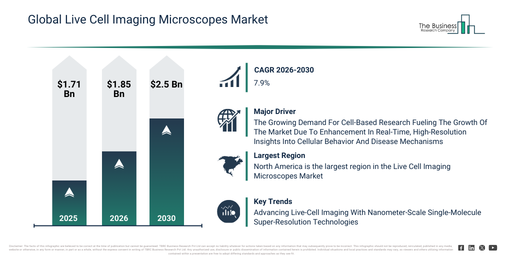
    The market size for live cell imaging microscopes has seen robust growth in recent years. It is anticipated to increase from $1.71 billion in 2025 to $1.85 billion in 2026, demonstrating a compound annual growth rate (CAGR) of 8.0%. The historical expansion of this market can be linked to the growth in cell biology research, advancements in optical microscopy technologies, the expansion of pharmaceutical R&D activities, increased funding for life sciences research, and the rising use of in vitro cell studies.

    The live cell imaging microscopes market is anticipated to experience substantial expansion in the coming years. This market is projected to reach $2.5 billion by 2030, exhibiting a compound annual growth rate (CAGR) of 7.9%. Factors contributing to this growth during the forecast period include an increase in stem cell and regenerative medicine research, the rising need for live cell analysis within precision medicine, the broadening of automated laboratory workflows, the growing embrace of AI-enabled image analysis, and an expansion of contract research services. Key trends emerging in the forecast period encompass a heightened demand for real-time cellular analysis, the increased incorporation of fluorescence and confocal microscopy, the expanding application of live cell imaging in drug discovery, the development of automated and high-content imaging systems, and the greater integration of imaging software and analytics.

    Access Your Free Sample Report For In-Depth Market Analysis:

    https://www.thebusinessresearchcompany.com/sample.aspx?id=24281&type=smp

    Which Key Drivers Are Affecting The Live Cell Imaging Microscopes Market Development?

    The increasing need for cell-based research is projected to fuel the expansion of the live cell imaging microscopes market in the future. This research involves studying living cells to understand biological processes, disease mechanisms, and to develop novel therapies. The field of cell-based research is expanding due to its potential in personalized medicine, enabling the development of treatments tailored to individual genetic profiles, which boosts efficacy and reduces adverse effects. Live cell imaging microscopes facilitate the real-time visualization of cellular activities without disturbing the cells, providing detailed insights into cell conduct, molecular interplay, and reactions to different environments. This capacity improves comprehension of disease mechanisms, drug impacts, and cellular functionalities. As an illustration, in May 2024, the National Institutes of Health (NIH), a US-based medical research agency, reported an allocation of $2.22 billion for stem cell research, an increase from $2.20 billion in 2022. Consequently, the rising demand for cell-based research is stimulating the growth of the live cell imaging microscopes market.

    What Are The Different Segment Types In The Live Cell Imaging Microscopes Market Segment Breakdown?

    The live cell imaging microscopes market covered in this report is segmented –

    1) By Type: Confocal Microscopy, Phase Contrast Microscopy, Fluorescent Microscopy, Quantitative Phase Contrast Microscopy

    2) By Application: Cell Biology, Developmental Biology, Stem Cell Research, Drug Discovery, Other Applications

    3) By End-User: Academic And Research Institutes, Pharmaceutical And Biotechnology Companies, Contract Research Organizations, Hospitals And Diagnostic Laboratories

    Subsegments:

    1) By Confocal Microscopy: Laser Scanning Confocal Microscopy (LSCM), Spinning Disk Confocal Microscopy, Multiphoton Confocal Microscopy

    2) By Phase Contrast Microscopy: Traditional Phase Contrast, Differential Interference Contrast (DIC), Enhanced Phase Contrast

    3) By Fluorescent Microscopy: Widefield Fluorescence Microscopy, Total Internal Reflection Fluorescence (TIRF) Microscopy, Super-Resolution Fluorescence Microscopy

    4) By Quantitative Phase Contrast Microscopy: Digital Holographic Microscopy (DHM), Optical Path Length (OPL) Mapping, Interferometric Phase Microscopy

    Which Trends Are Contributing To Changes In The Live Cell Imaging Microscopes Market?

    Leading companies in the live cell imaging microscopes market are concentrating on creating sophisticated products, such as single molecule super-resolution imaging systems, to enable a deeper understanding of dynamic cellular processes in real-time. This advanced microscopy technology allows researchers to visualize and monitor the position, movement, and interactions of individual molecules with nanometer-level accuracy. For instance, in January 2025, Oxford Nanoimaging (ONI), a UK-based company specializing in developing super-resolution microscopy, launched the Aplo Scope. This single-molecule super-resolution microscope is designed to observe and measure molecular interactions within cells and tissues with exceptional clarity. Developed as part of the Aplo Platform, the compact benchtop system integrates advanced imaging technology, automated workflows, and cloud-based software to streamline processes and achieve a nanoscale resolution of 20 nm. The Aplo Scope simplifies transitions between live-cell imaging and super-resolution microscopy, addressing challenges in drug delivery, biomarker discovery, and antibody therapeutics, while accelerating breakthroughs in biomedical research.

    Who Are The Well-Known Companies In The Live Cell Imaging Microscopes Market?

    Major companies operating in the live cell imaging microscopes market are Thermo Fisher Scientific Inc., ZEISS Group, Keyence Corporation of America, Agilent Technologies Inc., PerkinElmer Inc., Bruker Corporation, EVIDENT, Leica Microsystems A/S, Thorlabs Inc., Oxford Instruments India Pvt. Ltd., Axion BioSystems Inc, OPTIKA S.r.l., Discover Echo, Curiosis Inc., Quasmo, Nikon Instruments Inc., Nanolive, Live Cell Instrument (LCI), BestScope, Confocal.nl.

    Get The Full Live Cell Imaging Microscopes Market Report:

    https://www.thebusinessresearchcompany.com/report/live-cell-imaging-microscopes-global-market-report

    Which Region Dominates The Live Cell Imaging Microscopes Market By Market Share?

    North America was the largest region in the live cell imaging microscopes market in 2025. The regions covered in the live cell imaging microscopes market report are Asia-Pacific, South East Asia, Western Europe, Eastern Europe, North America, South America, Middle East, Africa.

    Request A Customized Live Cell Imaging Microscopes Market Report For Competitive Insights:

    https://www.thebusinessresearchcompany.com/report/live-cell-imaging-microscopes-global-market-report

    Browse Through More Reports Similar to the Global Live Cell Imaging Microscopes Market 2026, By The Business Research Company

    Live Cell Imaging Market Report 2026

    https://www.thebusinessresearchcompany.com/report/live-cell-imaging-global-market-report

    Biological Microscope Market Report 2026

    https://www.thebusinessresearchcompany.com/report/biological-microscope-global-market-report

    Optical Microscopes Market Report 2026

    https://www.thebusinessresearchcompany.com/report/optical-microscopes-global-market-report

    Get in touch with us:

    The Business Research Company: https://www.thebusinessresearchcompany.com/

    Americas +1 310-496-7795

    Asia +44 7882 955267 & +91 8897263534

    Europe +44 7882 955267

    Email us at: marketing@tbrc.info

    Follow us on:

    LinkedIn: https://in.linkedin.com/company/the-business-research-company

    YouTube: https://www.youtube.com/channel/UC24_fI0rV8cR5DxlCpgmyFQ

    Global Market Model: https://www.thebusinessresearchcompany.com/global-market-model
  • Mid-Size Pharmaceuticals Market Overview 2026–2030 With Insights On Industry Developments

    Mid-Size Pharmaceuticals Market Overview 2026–2030 With Insights On Industry Developments

    The Business Research Company’s 2026 market reports feature enhanced tools like market attractiveness analysis, TAM assessment, and company scoring matrices, along with interactive dashboards, deeper supply chain insights, and startup coverage strengthening the depth, usability, and strategic value of insights.

    How Large Will The Mid-Size Pharmaceuticals Market Be By 2030 Compared To Its 2026 Market Size?

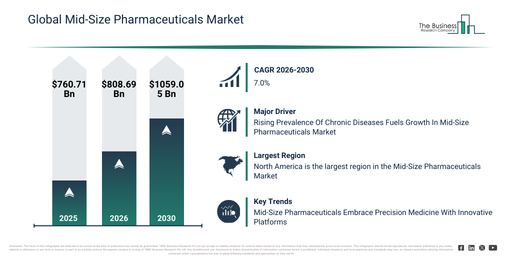
    The mid-size pharmaceuticals market has experienced robust expansion in recent times. This market is projected to expand from $760.71 billion in 2025 to reach $808.69 billion in 2026, exhibiting a compound annual growth rate (CAGR) of 6.3%. Historically, this growth can be ascribed to a combination of factors including heightened r&d investments, wider expansion into emerging markets, the adoption of generic drug production, an increase in regional partnerships, and the rising prevalence of chronic diseases.

    The mid-size pharmaceuticals market size is projected to experience substantial expansion over the upcoming years, with an expected growth to $1059.05 billion in 2030 at a compound annual growth rate (CAGR) of 7.0%. This anticipated growth during the forecast period is primarily driven by factors such as progress in personalized medicine, the rise in outsourcing for CROs & CMOs, the integration of AI in drug discovery, the expansion of digital health platforms, and an increase in specialty pharmaceuticals. Key trends expected within this period encompass a focus on niche drug development, the expansion into new regional markets, the formation of strategic partnerships and collaborations, an uptick in generic drug manufacturing, and the optimization of contract manufacturing processes.

    Access Your Free Sample Report For In-Depth Market Analysis:

    https://www.thebusinessresearchcompany.com/sample.aspx?id=12045&type=smp

    Which Drivers Are Supporting The Mid-Size Pharmaceuticals Market Growth?

    The rising incidence of long-term health conditions is projected to stimulate the expansion of the mid-size pharmaceuticals market moving ahead. These enduring medical conditions, also referred to as non-communicable diseases, necessitate continuous management and care, thereby generating a significant need for pharmaceuticals. Techniques involving mass spectrometry are utilized for identifying, quantifying, and analyzing biomarkers and metabolites linked to chronic illnesses. An increase in the occurrence of chronic diseases will further foster the development of the mid-size pharmaceuticals market. For example, in June 2024, data from the National Health Service, a government department based in the UK, indicated that 3,615,330 people registered with a general practitioner were diagnosed with non-diabetic hyperglycemia or pre-diabetes (a state with elevated blood sugar levels, not high enough to be classified as diabetes) in 2023, representing an 18% rise from 3,065,825 cases in 2022. Consequently, the expanding prevalence of chronic diseases is indeed propelling the growth of the mid-size pharmaceuticals market.

    How Is Segmentation Applied In The Mid-Size Pharmaceuticals Market Segment Analysis?

    The mid-size pharmaceuticals market covered in this report is segmented –

    1) By Drug Development Type: In-House, Outsource

    2) By Type: Prescription, Over The Counter

    3) By Formulation: Tablets, Capsules, Injectables, Sprays, Other Formulations

    4) By Application: Cardiovascular Diseases, Pain Management, Diabetes, Cancer, Other Conditions

    Subsegments:

    1) By In-House: Research And Development (R&D) Departments, Clinical Trials Management

    2) By Outsource: Contract Research Organizations (CROs), Contract Manufacturing Organizations (CMOs)

    Which Trends Are Influencing Demand In The Mid-Size Pharmaceuticals Market?

    Leading companies in mid-size pharmaceuticals are concentrating on developing and launching products, such as precision medicine platforms, to maintain their market position. A precision medicine platform is an advanced technological system designed to customize medical treatments and interventions for the specific characteristics of individual patients. For example, in February 2023, C4X Discovery Holdings PLC, a UK-based mid-size pharmaceutical company, introduced its innovative precision medicine platform, PatientSeek. This platform is intended to identify patients most likely to respond favorably to a particular medication, based on their genetic makeup. The unveiling of PatientSeek follows its successful validation in patient stratification, where a subgroup of patients who responded positively to treatment was identified during a retrospective analysis of a Phase 3 clinical trial for Parkinson’s disease. This development represents a significant stride in utilizing genetics for targeted and effective medication strategies, highlighting precision medicine’s potential to optimize treatment outcomes.

    Who Are The Companies Participating In The Mid-Size Pharmaceuticals Market Environment?

    Major companies operating in the mid-size pharmaceuticals market are Baxter International Inc., Teva Pharmaceutical Industries Ltd., Otsuka Pharmaceutical Co Ltd., Astellas Pharma Inc., Daiichi Sankyo Co. Ltd., Alexion Pharmaceuticals Inc., UCB S.A., Sun Pharmaceutical Industries Ltd., Eisai Co. Ltd., Les Laboratoires Servier S.A., Perrigo Co Plc, Aurobindo Pharma Limited., Cipla Limited, Hikma Pharmaceuticals, Endo International plc, Taisho Pharmaceutical Holdings Co. Ltd., BioMarin Pharmaceutical Inc., Mallinckrodt Plc, Exelixis Inc., Mylan Pharmaceuticals Inc., Neurocrine Biosciences Inc., Kyowa Kirin Co. Ltd., Emergent BioSolutions Inc.

    Get The Full Mid-Size Pharmaceuticals Market Report:

    https://www.thebusinessresearchcompany.com/report/mid-size-pharmaceuticals-global-market-report

    Which Region Holds The Highest Market Share In The Mid-Size Pharmaceuticals Market?

    North America was the largest region in the mid-size pharmaceutical market in 2025. Asia-Pacific is expected to be the fastest-growing region in the forecast period. The regions covered in the mid-size pharmaceuticals market report are Asia-Pacific, South East Asia, Western Europe, Eastern Europe, North America, South America, Middle East, Africa.

    Request A Customized Mid-Size Pharmaceuticals Market Report For Competitive Insights:

    https://www.thebusinessresearchcompany.com/report/mid-size-pharmaceuticals-global-market-report

    Browse Through More Reports Similar to the Global Mid-Size Pharmaceuticals Market 2026, By The Business Research Company

    Mid Size Pharmaceuticals Market Report 2026

    https://www.thebusinessresearchcompany.com/report/mid-size-pharmaceuticals-global-market-report

    Pharmaceuticals Market 2026

    https://www.thebusinessresearchcompany.com/report/pharmaceuticals-market

    Small Molecule Active Pharmaceutical Ingredient Market Report 2026

    https://www.thebusinessresearchcompany.com/report/small-molecule-active-pharmaceutical-ingredient-global-market-report

    Get in touch with us:

    The Business Research Company: https://www.thebusinessresearchcompany.com/

    Americas +1 310-496-7795

    Asia +44 7882 955267 & +91 8897263534

    Europe +44 7882 955267

    Email us at: marketing@tbrc.info

    Follow us on:

    LinkedIn: https://in.linkedin.com/company/the-business-research-company

    YouTube: https://www.youtube.com/channel/UC24_fI0rV8cR5DxlCpgmyFQ

    Global Market Model: https://www.thebusinessresearchcompany.com/global-market-model
  • Rising Prevalence Of Respiratory Disorders Driving Growth Of The Due To Air Pollution Is Supporting Expansion In The Live Attenuated Vaccines Market

    Rising Prevalence Of Respiratory Disorders Driving Growth Of The Due To Air Pollution Is Supporting Expansion In The Live Attenuated Vaccines Market

    The Business Research Company’s 2026 market reports feature enhanced tools like market attractiveness analysis, TAM assessment, and company scoring matrices, along with interactive dashboards, deeper supply chain insights, and startup coverage strengthening the depth, usability, and strategic value of insights.

    How Much Growth In Market Value Is Expected For The Live Attenuated Vaccines Market Between 2026 And 2030?

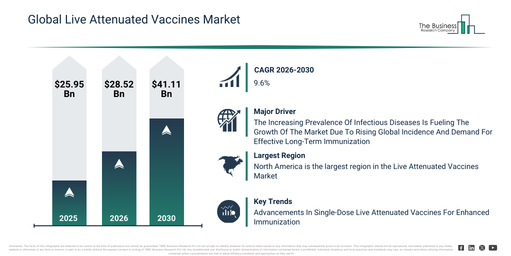
    The live attenuated vaccines market size has experienced significant growth in recent years. This market is anticipated to expand from $25.95 billion in 2025 to $28.52 billion in 2026, exhibiting a compound annual growth rate (CAGR) of 9.9%. The historical expansion can be attributed to factors such as the global infectious disease burden, government immunization initiatives, childhood vaccination policies, hospital-based vaccine delivery, and WHO vaccination programs.

    The live attenuated vaccines market is poised for significant expansion in the coming years, with its size anticipated to reach $41.11 billion by 2030, growing at a compound annual growth rate (CAGR) of 9.6%. This projected growth stems from several factors, including the rising demand for booster vaccinations, the risks posed by emerging infectious diseases, the expansion of cold chain infrastructure, increased global health funding, and the introduction of next-generation vaccine platforms. Notable trends expected during this period include the wider implementation of national immunization programs, an escalating demand for pediatric vaccinations, enhancements in vaccine stability and storage, a greater emphasis on pandemic preparedness, and the development of multivalent vaccines.

    Access Your Free Sample Report For In-Depth Market Analysis:

    https://www.thebusinessresearchcompany.com/sample.aspx?id=24590&type=smp

    What Factors Are Contributing To The Growth Of The Live Attenuated Vaccines Market?

    The expanding occurrence of infectious diseases is projected to drive the live attenuated vaccines market’s growth in the foreseeable future. These diseases are conditions resulting from detrimental microorganisms like bacteria, viruses, fungi, or parasites, which can be transmitted either directly or indirectly among individuals, animals, or from the environment. An increase in global travel intensifies the dissemination of infectious diseases, as it facilitates pathogens’ cross-border movement at a quicker rate than preventive measures can manage. Live attenuated vaccines are effective in preventing infectious diseases by eliciting a robust immune response through the use of attenuated pathogens, thereby providing enduring immunity and curtailing disease transmission. For example, the World Health Organization, an intergovernmental body based in Switzerland, reported in March 2025 that an estimated 10.8 million individuals contracted TB globally in 2023, comprising 6.0 million men, 3.6 million women, and 1.3 million children. Consequently, the heightened incidence of infectious diseases is fueling expansion in the live attenuated vaccines market.

    Which Segment Classifications Are Used In The Live Attenuated Vaccines Market Segment Analysis?

    The live attenuated vaccines market covered in this report is segmented –

    1) By Vaccine Type: Monovalent, Multivalent

    2) By Route Of Administration: Intramuscular, Subcutaneous, Oral Attenuated, Intranasal Attenuated

    3) By Indication: Influenza, Measles, Mumps and Rubella (MMR), Polio, Chickenpox, Shingles, Rotavirus, Other Indications

    4) By Distribution Channel: Hospital Pharmacies, Retail Pharmacies, Online Pharmacies

    5) By End-User: Hospitals, Clinics, Diagnostic Centers, Research Institute, Other End-Users

    Subsegments:

    1) By Monovalent: Single-Dose Vaccines, Multiple-Dose Vaccines

    2) By Multivalent: Bivalent Vaccines, Trivalent Vaccines, Quadrivalent Vaccines, Other Multivalent Vaccines

    What Market Trends Are Affecting The Live Attenuated Vaccines Market?

    Major companies operating within the live attenuated vaccines market are prioritizing the creation of advanced products, such as single-dose vaccines, to enhance immunization effectiveness and improve patient adherence. These single-dose vaccines provide enduring immunity from a solitary shot, thereby eliminating the requirement for multiple doses. This development simplifies vaccination procedures for both patients and healthcare providers, significantly enhancing convenience and accessibility. For instance, in November 2023, Valneva SE, a France-based biotech company that manufactures vaccines for infectious diseases, announced the introduction of IXCHIQ, which had received clearance from the U.S. Food and Drug Administration (FDA), a US-based health agency. IXCHIQ represents the world’s first live-attenuated chikungunya vaccine, specifically indicated for adults aged 18 and older. This approval is notably significant because IXCHIQ stands as the world’s first licensed vaccine for chikungunya, thereby fulfilling an unmet medical need for protection against this mosquito-borne viral disease, known for causing severe fever, joint and muscle pain, among other symptoms.

    Which Firms Are Contributing To The Live Attenuated Vaccines Market Ecosystem?

    Major companies operating in the live attenuated vaccines market are Merck & Co. Inc., Sanofi SA, AstraZeneca plc, Abbott Laboratories, GlaxoSmithKline plc, Takeda Pharmaceutical Company Limited, Boehringer Ingelheim International GmbH, CSL Limited, GC Biopharma, Serum Institute of India Pvt. Ltd., Bavarian Nordic, Valneva SE, Southern Research, BioFarma, Bharat Biotech International Limited, Meissa Vaccines Inc., BioDiem Ltd., Bio-Med Limited, Naobios, Lakshmi Pharmaceuticals

    Get The Full Live Attenuated Vaccines Market Report:

    https://www.thebusinessresearchcompany.com/report/live-attenuated-vaccines-global-market-report

    Which Region Is The Largest In The Live Attenuated Vaccines Market?

    North America was the largest region in the live attenuated vaccines market in 2025. Asia-Pacific is expected to be the fastest-growing region in the forecast period. The regions covered in the live attenuated vaccines market report are Asia-Pacific, South East Asia, Western Europe, Eastern Europe, North America, South America, Middle East, Africa.

    Request A Customized Live Attenuated Vaccines Market Report For Competitive Insights:

    https://www.thebusinessresearchcompany.com/report/live-attenuated-vaccines-global-market-report

    Browse Through More Reports Similar to the Global Live Attenuated Vaccines Market 2026, By The Business Research Company

    Inactivated Vaccines Market Report 2026

    https://www.thebusinessresearchcompany.com/report/inactivated-vaccines-global-market-report

    Vaccines Market Report 2026

    https://www.thebusinessresearchcompany.com/report/vaccines-global-market-report

    Veterinary Vaccines Market Report 2026

    https://www.thebusinessresearchcompany.com/report/veterinary-vaccines-global-market-report

    Get in touch with us:

    The Business Research Company: https://www.thebusinessresearchcompany.com/

    Americas +1 310-496-7795

    Asia +44 7882 955267 & +91 8897263534

    Europe +44 7882 955267

    Email us at: marketing@tbrc.info

    Follow us on:

    LinkedIn: https://in.linkedin.com/company/the-business-research-company

    YouTube: https://www.youtube.com/channel/UC24_fI0rV8cR5DxlCpgmyFQ

    Global Market Model: https://www.thebusinessresearchcompany.com/global-market-model
  • Microtubule Inhibitor Chemotherapy Drugs Market Forecast Highlighting Key Trends And Expansion Potential

    Microtubule Inhibitor Chemotherapy Drugs Market Forecast Highlighting Key Trends And Expansion Potential

    The Business Research Company’s 2026 market reports feature enhanced tools like market attractiveness analysis, TAM assessment, and company scoring matrices, along with interactive dashboards, deeper supply chain insights, and startup coverage strengthening the depth, usability, and strategic value of insights.

    What Is The Projected Increase In Market Value Of The Microtubule Inhibitor Chemotherapy Drugs Market During 2026–2030?

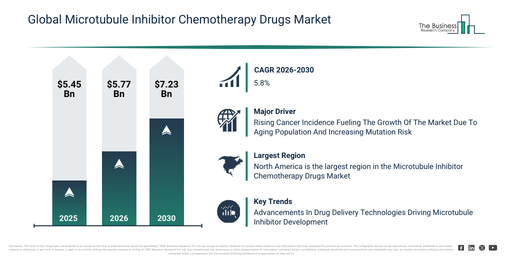
    The microtubule inhibitor chemotherapy drugs market size has demonstrated significant growth in recent years. It is anticipated to increase from $5.45 billion in 2025 to $5.77 billion in 2026, achieving a compound annual growth rate (CAGR) of 5.8%. The expansion observed in the historic period can be ascribed to the extensive adoption of taxanes and vinca alkaloids, the escalating global cancer incidence, the well-established effectiveness of microtubule inhibitors, the broadening of oncology treatment infrastructure, and augmented clinical oncology research.

    The microtubule inhibitor chemotherapy drugs market is projected to experience substantial expansion over the upcoming years. This market is anticipated to reach $7.23 billion by 2030, demonstrating a compound annual growth rate (CAGR) of 5.8%. This projected growth is driven by several factors, including the global rise in cancer prevalence, a growing need for combination oncology treatments, innovations in drug delivery methods, increasing capital allocation towards oncology drug creation, and the broader application of personalized cancer treatment approaches. Key trends foreseen during this period involve the expanded application of microtubule inhibitors within combination therapies, the ongoing creation of new synthetic microtubule inhibitors, a greater embrace of targeted chemotherapy protocols, the broadening of indications across various cancer types, and an increased emphasis on mitigating the adverse effects of chemotherapy.

    Access Your Free Sample Report For In-Depth Market Analysis:

    https://www.thebusinessresearchcompany.com/sample.aspx?id=24323&type=smp

    What Key Factors Are Affecting The Microtubule Inhibitor Chemotherapy Drugs Market Demand?

    The expanding occurrence of cancer is projected to propel the microtubule inhibitor chemotherapy drugs market’s growth into the future. Cancer is defined as a group of illnesses distinguished by uncontrolled cell proliferation, capable of infiltrating adjacent tissues or metastasizing throughout the body. An aging demographic contributes to this surge in cancer diagnoses, as elderly individuals are more prone to acquiring genetic mutations and prolonged exposure to carcinogens, thereby heightening their vulnerability to the disease. Microtubule inhibitor chemotherapy drugs function in cancer therapy by impeding cell division; they achieve this by targeting microtubules, which are vital for mitosis, consequently halting the swift multiplication of cancer cells. For instance, in February 2024, the World Health Organization, a Switzerland-based intergovernmental organization, projected a substantial increase in cancer cases, moving from 20 million in 2022 to an additional over 35 million by 2050. Consequently, the growing incidence of cancer is a key factor propelling the expansion of the microtubule inhibitor chemotherapy drugs market.

    What Segment Categories Shape The Microtubule Inhibitor Chemotherapy Drugs Market Segment Landscape?

    The microtubule inhibitor chemotherapy drugs market covered in this report is segmented –

    1) By Drug Type: Vinca Alkaloids, Taxanes, Epothilones, Other Drug Types

    2) By Mechanism Of Action: Spindle Poisoning Agents, Microtubule Stabilizers, Microtubule Destabilizers, Dual-Action Inhibitors

    3) By Administration Route: Intravenous (IV), Oral, Subcutaneous, Intraperitoneal

    4) By Patient Demographics: Pediatric Patients, Adult Patients, Geriatric Patients, Gender-Specific Considerations

    5) By Application Area: Breast Cancer, Lung Cancer, Ovarian Cancer, Lymphomas, Other Application Areas

    Subsegments:

    1) By Vinca Alkaloids: Vincristine, Vinblastine, Vinorelbine, Vindesine

    2) By Taxanes: Paclitaxel, Docetaxel, Cabazitaxel, Nab-paclitaxel

    3) By Epothilones: Ixabepilone, Epothilone B

    4) By Other Drug Types: Eribulin, Estramustine, Novel Synthetic Microtubule Inhibitors

    What Emerging Trends Are Seen In The Microtubule Inhibitor Chemotherapy Drugs Market?

    Major companies within the microtubule inhibitor chemotherapy drugs market are prioritizing the development of advanced solutions, such as albumin-bound formulations, aimed at improving drug delivery to tumors. These albumin-bound formulations represent drug preparations where the active pharmaceutical ingredient is coupled with albumin, a protein beneficial for enhancing drug solubility, stability, and targeted delivery to cancer cells. For example, in October 2024, Sandoz AG, a Switzerland-based pharmaceutical company, declared the U.S. introduction of its generic paclitaxel. The recently launched formulation is presented as a lyophilized powder for injection, provided in a single-dose 100 mg vial. Paclitaxel protein-bound particles for injectable suspension (albumin-bound), a microtubule inhibitor, is prescribed for treating metastatic breast cancer in patients who have not responded to combination chemotherapy for metastatic disease or who have experienced a relapse within six months after adjuvant chemotherapy.

    Who Are The Companies Operating Across The Microtubule Inhibitor Chemotherapy Drugs Market Value Chain?

    Major companies operating in the microtubule inhibitor chemotherapy drugs market are Pfizer Inc., Sanofi S.A., Bristol-Myers Squibb Company, Fresenius Kabi AG, Eli Lilly and Company, Teva Pharmaceutical Industries Ltd., Intas Pharmaceuticals Ltd., Sun Pharmaceutical Industries Limited, Eisai Co. Ltd., Aurobindo Pharma Limited, Dr. Reddy’s Laboratories Ltd., Cipla Limited, Hikma Pharmaceuticals PLC, Zydus Lifesciences Limited, Gland Pharma Limited, Natco Pharma Limited, Minakem, Selleck Chemicals LLC, Accord Healthcare Ltd., Focus Biomolecules LLC

    Get The Full Microtubule Inhibitor Chemotherapy Drugs Market Report:

    https://www.thebusinessresearchcompany.com/report/microtubule-inhibitor-chemotherapy-drugs-global-market-report

    Where Is The Microtubule Inhibitor Chemotherapy Drugs Market Most Concentrated Geographically?

    North America was the largest region in the microtubule inhibitor chemotherapy drugs market in 2025. Asia-Pacific is expected to be the fastest-growing region in the forecast period. The regions covered in the microtubule inhibitor chemotherapy drugs market report are Asia-Pacific, South East Asia, Western Europe, Eastern Europe, North America, South America, Middle East, Africa.

    Request A Customized Microtubule Inhibitor Chemotherapy Drugs Market Report For Competitive Insights:

    https://www.thebusinessresearchcompany.com/report/microtubule-inhibitor-chemotherapy-drugs-global-market-report

    Browse Through More Reports Similar to the Global Microtubule Inhibitor Chemotherapy Drugs Market 2026, By The Business Research Company

    Chemotherapy Market Report 2026

    https://www.thebusinessresearchcompany.com/report/chemotherapy-global-market-report

    Oncology Drugs Market 2026

    https://www.thebusinessresearchcompany.com/report/oncology-drugs-market

    Oncology Drugs Market 2026

    https://www.thebusinessresearchcompany.com/report/oncology-drugs-market

    Get in touch with us:

    The Business Research Company: https://www.thebusinessresearchcompany.com/

    Americas +1 310-496-7795

    Asia +44 7882 955267 & +91 8897263534

    Europe +44 7882 955267

    Email us at: marketing@tbrc.info

    Follow us on:

    LinkedIn: https://in.linkedin.com/company/the-business-research-company

    YouTube: https://www.youtube.com/channel/UC24_fI0rV8cR5DxlCpgmyFQ

    Global Market Model: https://www.thebusinessresearchcompany.com/global-market-model
  • Increasing Prevalence Of Smoking Is Fueling The Due To Rising Respiratory Health Complications Is Contributing To Changes In The Liraglutide Market

    Increasing Prevalence Of Smoking Is Fueling The Due To Rising Respiratory Health Complications Is Contributing To Changes In The Liraglutide Market

    The Business Research Company’s 2026 market reports feature enhanced tools like market attractiveness analysis, TAM assessment, and company scoring matrices, along with interactive dashboards, deeper supply chain insights, and startup coverage strengthening the depth, usability, and strategic value of insights.

    What Is The Estimated Market Size Of The Liraglutide Market In 2026, And How Will Its Value Evolve By 2030?

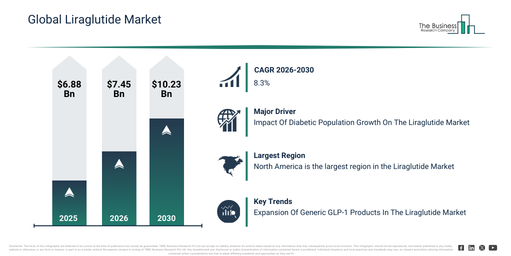
    The liraglutide market has demonstrated significant expansion in recent years. Its valuation is projected to increase from $6.88 billion in 2025 to $7.45 billion in 2026, with a compound annual growth rate (CAGR) of 8.2%. This historical growth can be ascribed to several factors, including the rising global prevalence of type 2 diabetes, the clinical success observed with glp-1 receptor agonists, the necessity for therapies that manage both glucose control and weight, the approval of liraglutide for both diabetes and obesity indications, and the increasing confidence among physicians in injectable incretin therapies.

    The liraglutide market is projected to experience robust expansion over the coming years. It is anticipated to reach a valuation of $10.23 billion by 2030, exhibiting a compound annual growth rate (CAGR) of 8.3%. This expansion during the projection period stems from factors such as the increasing global prevalence of obesity, a greater inclination towards diabetes treatments that prioritize weight management, the broadening scope of metabolic disorder screening initiatives, heightened patient desire for efficacious appetite-reducing treatments, and ongoing advancements and understanding in GLP-1 based therapies. Key trends anticipated during this period encompass the significant uptake of liraglutide in the management of type 2 diabetes, its increasing application for medical weight management, the expanding acceptance of injectable GLP-1 therapies, the growth of long-term metabolic disease management programs, and an amplified emphasis on the combined advantages of blood sugar regulation and weight reduction.

    Access Your Free Sample Report For In-Depth Market Analysis:

    https://www.thebusinessresearchcompany.com/sample.aspx?id=18659&type=smp

    Which Strong Drivers Are Impacting The Liraglutide Market Growth?

    The expanding diabetic population is projected to stimulate the growth of the liraglutide market moving forward. Diabetes is a chronic health condition where the body struggles to properly regulate blood sugar levels, either from insufficient insulin production or ineffective insulin utilization. The global incidence of diabetes is on the rise, attributed to factors such as sedentary lifestyles, unhealthy dietary patterns, and escalating obesity rates. Diabetes medications like liraglutide function by mimicking the hormone GLP-1, which in turn enhances insulin secretion, lowers blood sugar levels, and promotes weight loss, thereby assisting in the management of type 2 diabetes. For instance, in March 2024, a report from the Government of the United Kingdom, a UK-based information website, indicated that in March 2023, the proportion of people with type 1 diabetes in England who received all 8 care processes at GP practices involved in the NDA increased to 43.8%, up from 35.2% the preceding year. This demonstrates how the increasing diabetic population is driving the growth of the liraglutide market.

    How Is The Liraglutide Market Organized By Segment Classification?

    The liraglutide market covered in this report is segmented –

    1) By Brands: Victoza, Saxenda

    2) By Distribution Channel: Hospital Pharmacies, Retail Pharmacies And Drug Stores, Online Pharmacies

    3) By Type Of Application: Diabetes Treatment, Weight Management

    4) By End-Users: Hospitals And Clinics, Homecare Settings

    Subsegments:

    1) By Victoza: Type 2 Diabetes Treatment Or Weight Management

    2) By Saxenda: Weight Loss Treatment Or Obesity Management

    Which Trends Are Influencing Demand In The Liraglutide Market?

    Companies operating in the liraglutide market are engaged in developing new products, such as generic GLP-1, to broaden therapeutic options and fulfill the market’s need for more accessible alternatives. Generic GLP-1 drugs are versions of GLP-1 receptor agonists made available after the patent protection for their original branded counterparts expires, providing budget-friendly choices for managing conditions like type 2 diabetes and obesity. For example, Teva Pharmaceutical Industries Ltd., an Israel-based pharmaceutical company, launched the first generic GLP-1, comparable to Victoza, in the U.S. market in June 2024, thereby responding to the growing demand for these treatments. Liraglutide injections are prescribed to assist in blood sugar regulation for adults and children aged 10 and above with type 2 diabetes, and to decrease the potential for cardiovascular events in adults who have both type 2 diabetes and pre-existing cardiovascular conditions.

    Who Are The Industry Participants Involved In The Liraglutide Market?

    Major companies operating in the liraglutide market are Novo Nordisk A/S

    Get The Full Liraglutide Market Report:

    https://www.thebusinessresearchcompany.com/report/liraglutide-global-market-report

    Which Region Leads The Liraglutide Market In Terms Of Market Share?

    North America was the largest region in the liraglutide market in 2025. North America is expected to be the fastest-growing region in the forecast period. The regions covered in the liraglutide market report are Asia-Pacific, South East Asia, Western Europe, Eastern Europe, North America, South America, Middle East, Africa.

    Request A Customized Liraglutide Market Report For Competitive Insights:

    https://www.thebusinessresearchcompany.com/report/liraglutide-global-market-report

    Browse Through More Reports Similar to the Global Liraglutide Market 2026, By The Business Research Company

    Liraglutide Market Report 2026

    https://www.thebusinessresearchcompany.com/report/liraglutide-global-market-report

    Liraglutide And Semaglutide Market Report 2026

    https://www.thebusinessresearchcompany.com/report/liraglutide-and-semaglutide-global-market-report

    Lisinopril Market Report 2026

    https://www.thebusinessresearchcompany.com/report/lisinopril-global-market-report

    Get in touch with us:

    The Business Research Company: https://www.thebusinessresearchcompany.com/

    Americas +1 310-496-7795

    Asia +44 7882 955267 & +91 8897263534

    Europe +44 7882 955267

    Email us at: marketing@tbrc.info

    Follow us on:

    LinkedIn: https://in.linkedin.com/company/the-business-research-company

    YouTube: https://www.youtube.com/channel/UC24_fI0rV8cR5DxlCpgmyFQ

    Global Market Model: https://www.thebusinessresearchcompany.com/global-market-model
  • The Lipid Regulators Market Is Evolving Due To Rising Cardiovascular Disease Burden Propels Aspirin

    The Lipid Regulators Market Is Evolving Due To Rising Cardiovascular Disease Burden Propels Aspirin

    The Business Research Company’s 2026 market reports feature enhanced tools like market attractiveness analysis, TAM assessment, and company scoring matrices, along with interactive dashboards, deeper supply chain insights, and startup coverage strengthening the depth, usability, and strategic value of insights.

    How Does The Market Size Of The Lipid Regulators Market Compare Between 2026 And 2030?

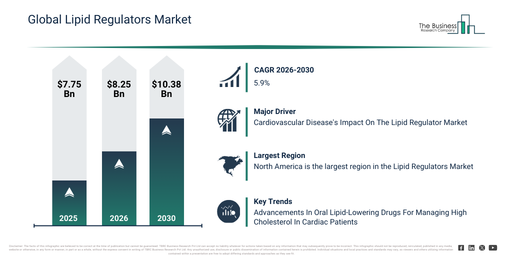
    The lipid regulators market has demonstrated robust growth over recent years. It is projected to expand from $7.75 billion in 2025 to $8.25 billion in 2026, exhibiting a compound annual growth rate (CAGR) of 6.5%. This historical growth can be attributed to several factors, including the widespread global occurrence of hypercholesterolemia, substantial clinical evidence affirming statin efficacy, increasing public awareness of cardiovascular disease risks, continuous guideline backing for lipid-lowering therapy, and the extensive availability of oral lipid regulators.

    The lipid regulators market size is anticipated to experience substantial growth over the upcoming years. It is projected to expand to $10.38 billion by 2030, achieving a compound annual growth rate (CAGR) of 5.9%. This expansion during the forecast period is propelled by factors such as the increasing occurrence of lifestyle-associated cardiovascular disorders, a heightened focus on proactive cardiovascular risk management, the growing uptake of combination and adjunct lipid therapies, the globally expanding aging population, and improved availability of lipid-lowering medications in developing markets. Significant trends expected in this period include the continued prevalence of statins in lipid management, the increasing adoption of combination lipid-lowering treatments, a rise in the use of omega-3 fatty acids for triglyceride regulation, an escalating emphasis on preventive cardiovascular care, and the extensive availability of generic lipid regulator drugs.

    Access Your Free Sample Report For In-Depth Market Analysis:

    https://www.thebusinessresearchcompany.com/sample.aspx?id=15848&type=smp

    What Key Factors Are Shaping The Lipid Regulators Market Landscape?

    The rising occurrence of cardiovascular diseases is anticipated to drive expansion in the angina pectoris drug market in the future. Cardiovascular diseases, abbreviated as CVDs, represent a wide array of conditions impacting the heart and its associated blood vessels, such as coronary artery disease, high blood pressure, heart failure, and stroke. The growing incidence of cardiovascular diseases stems from factors like an aging demographic, poor lifestyle choices, obesity, and elevated cholesterol levels. The angina pectoris drug market contributes significantly to cardiovascular care by enhancing cardiac blood flow, alleviating chest discomfort, and averting issues linked to insufficient oxygen delivery. As an illustration, in September 2024, the British Heart Foundation, a UK-based cardiovascular research charity, reported that around 7.6 million individuals in the UK suffered from heart and circulatory diseases, comprising 4 million males and 3.6 million females. These conditions were responsible for 27% of all fatalities, amounting to over 170,000 deaths yearly, which equates to roughly 480 deaths daily. Consequently, the expanding prevalence of cardiovascular diseases is a key factor propelling the growth of the angina pectoris drug market.

    Which Segments Define The Lipid Regulators Market Segment Structure?

    The lipid regulators market covered in this report is segmented –

    1) By Type: Statins, Fibrates, Cholesterol Absorption Inhibitors, PCSK9 Inhibitors, Omega-3 Fatty Acid Derivatives, Niacin (Nicotinic Acid) and Derivatives, Bile Acid Sequestrants, ATP-Citrate Lyase (ACL) Inhibitors, RNA-Based Lipid-Lowering Therapies

    2) By Indication: Hypercholesterolemia, Hypertriglyceridemia, Coronary Artery Disease, Other Indications

    3) By Administration: Oral, Injectable

    4) By Application: Pharmaceuticals, Vaccines And Drugs, Scientific Research, Nutrition And Supplements, Food And Beverages, Other Applications

    Subsegments:

    1) By Statins: Atorvastatin, Rosuvastatin, Simvastatin, Pravastatin, Lovastatin, Fluvastatin

    2) By Fibrates: Fenofibrate, Gemfibrozil, Bezafibrate

    3) By Cholesterol Absorption Inhibitors: Ezetimibe (Monotherapy), Ezetimibe + Simvastatin

    4) By PCSK9 Inhibitors: Alirocumab, Evolocumab

    5) By Omega-3 Fatty Acid Derivatives: Icosapent Ethyl, Omega-3 Acid Ethyl Esters

    6) By Niacin And Derivatives: Immediate-Release Niacin, Extended-Release Niacin

    7) By Bile Acid Sequestrants: Cholestyramine, Colestipol, Colesevelam

    8) By ATP-Citrate Lyase (ACL) Inhibitors: Bempedoic Acid + Ezetimibe, Bempedoic Acid + Statins

    9) By RNA-Based Lipid-Lowering Therapies: siRNA-Based Lipid Regulators, Antisense Oligonucleotide Therapies

    What Emerging Trends Are Seen In The Lipid Regulators Market?

    Leading companies in the lipid regulator market are concentrating on the development of innovative solutions, such as next-generation RNA-based lipid-lowering therapies, to expand treatment options, enhance lipid-control outcomes, and support broader patient access. These RNA-based lipid-lowering therapies refer to therapeutic modalities, including small interfering RNA (siRNA) or antisense oligonucleotides, designed to target specific genes involved in lipid metabolism (such as PCSK9 or ANGPTL3), thereby enabling potent reductions in LDL-cholesterol and triglycerides with less frequent dosing and a novel mechanism of action. For instance, in July 2023, Novartis AG, a Switzerland-based pharmaceutical company, received U.S. FDA approval for an expanded indication of Leqvio® (inclisiran), a PCSK9-targeting siRNA therapy, to include adults with elevated LDL-C who are at increased risk of heart disease, allowing earlier use alongside diet and statin therapy and offering twice-yearly dosing to support improved adherence and outcomes.

    Who Are The Established Players Within The Lipid Regulators Market?

    Major companies operating in the lipid regulators market are Pfizer Inc., Bayer AG, Sanofi SA, AstraZeneca plc, Bristol-Myers Squibb Company, Abbott Laboratories, Novartis AG, Amgen Inc., Merck KGaA, Regeneron Pharmaceuticals Inc., Daiichi Sankyo Company Limited, Hetero Drugs Limited, Dr. Reddy’s Laboratories Ltd., Biocon Ltd., Alnylam Pharmaceuticals Inc., Amarin Corporation plc, Arrowhead Pharmaceuticals Inc., Kowa Pharmaceuticals America Inc., Esperion Therapeutics Inc., Sun Pharmaceutical Industries Limited

    Get The Full Lipid Regulators Market Report:

    https://www.thebusinessresearchcompany.com/report/lipid-regulators-global-market-report

    Which Region Leads The Lipid Regulators Market In Overall Market Size?

    North America was the largest region in the lipid regulators market in 2025. Asia-Pacific is expected to be the fastest-growing region in the forecast period. The regions covered in the lipid regulators market report are Asia-Pacific, South East Asia, Western Europe, Eastern Europe, North America, South America, Middle East, Africa.

    Request A Customized Lipid Regulators Market Report For Competitive Insights:

    https://www.thebusinessresearchcompany.com/report/lipid-regulators-global-market-report

    Browse Through More Reports Similar to the Global Lipid Regulators Market 2026, By The Business Research Company

    Lipid Regulators Market Report 2026

    https://www.thebusinessresearchcompany.com/report/lipid-regulators-global-market-report

    Lipid Market Report 2026

    https://www.thebusinessresearchcompany.com/report/lipid-global-market-report

    Liposuction Surgery Devices Market Report 2026

    https://www.thebusinessresearchcompany.com/report/liposuction-surgery-devices-global-market-report

    Get in touch with us:

    The Business Research Company: https://www.thebusinessresearchcompany.com/

    Americas +1 310-496-7795

    Asia +44 7882 955267 & +91 8897263534

    Europe +44 7882 955267

    Email us at: marketing@tbrc.info

    Follow us on:

    LinkedIn: https://in.linkedin.com/company/the-business-research-company

    YouTube: https://www.youtube.com/channel/UC24_fI0rV8cR5DxlCpgmyFQ

    Global Market Model: https://www.thebusinessresearchcompany.com/global-market-model
  • Microcarrier Beads Market Analysis Covering Growth Drivers And Future Outlook

    Microcarrier Beads Market Analysis Covering Growth Drivers And Future Outlook

    The Business Research Company’s 2026 market reports feature enhanced tools like market attractiveness analysis, TAM assessment, and company scoring matrices, along with interactive dashboards, deeper supply chain insights, and startup coverage strengthening the depth, usability, and strategic value of insights.

    How Is The Market Size Of The Microcarrier Beads Market Expected To Change From 2026 To 2030?

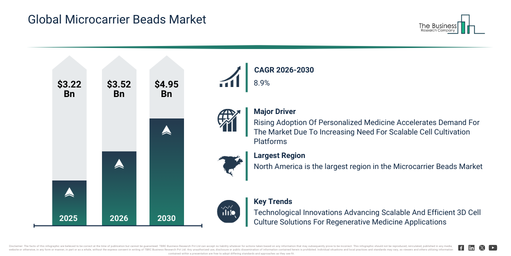
    The microcarrier beads market size has shown robust expansion in recent years. It is anticipated to increase from $3.22 billion in 2025 to $3.52 billion in 2026, demonstrating a compound annual growth rate (CAGR) of 9.2%. The historical growth can be attributed to the limited availability of standardized microcarriers, a reliance on small-scale cell culture techniques, the increasing demand for vaccine production, a rise in biopharmaceutical research and development, and the adoption of basic tissue engineering methods.

    The microcarrier beads market is projected to experience substantial expansion over the upcoming years. Its valuation is set to reach $4.95 billion by the year 2030, exhibiting a compound annual growth rate (CAGR) of 8.9%. This anticipated growth during the forecast period stems from factors such as the creation of advanced and modified microcarriers, the broadening scope of gene therapy and regenerative medicine, the growing integration of scalable bioreactor systems, increasing investments in biotechnology, and the advancement of personalized medicine and protein therapeutics. Key trends foreseen for the forecast period encompass a heightened need for large-scale cell culture expansion, an uptick in vaccine and gene therapy manufacturing, the wider application of microcarriers in tissue engineering and protein generation, the embrace of customized and altered microcarrier beads, and the broadening of academic and research uses for cell-based investigations.

    Access Your Free Sample Report For In-Depth Market Analysis:

    https://www.thebusinessresearchcompany.com/sample.aspx?id=27345&type=smp

    Which Primary Drivers Are Impacting The Microcarrier Beads Market Growth?

    The microcarrier beads market is anticipated to expand, driven by the increasing adoption of personalized medicine. This approach tailors healthcare decisions and treatments to each patient’s unique attributes, including their genetic makeup and biological indicators. Personalized medicine is gaining momentum due to advancements in genomic technologies, which enable rapid and cost-efficient analysis of individual genetic data to inform targeted therapies. Microcarrier beads support personalized medicine by providing a scalable system for cultivating patient-specific cells essential for customized treatments. For instance, in February 2024, the Personalized Medicine Coalition, a US-based non-profit organization, reported that the FDA approved 16 new personalized treatments for rare disease patients in 2023, an increase from 6 in 2022. The 2023 approvals also encompassed seven cancer therapies and three for other medical conditions. Therefore, the growing trend of personalized medicine is driving the growth of the microcarrier beads market.

    Which Segment Types Are Examined In The Microcarrier Beads Market Segment Study?

    The microcarrier beads market covered in this report is segmented –

    1) By Type: Cytodex Microcarriers, Cultispher Microcarriers, Microcarriers MC10, Microcarriers MC3T3, Microcarriers MC3T3-E1

    2) By Size: Small Microcarriers, Medium Microcarriers, Large Microcarriers

    3) By Distribution Channel: Direct Sales, Distributors Or Resellers, Online Platforms, Catalogs And Magazines

    4) By Application: Cell Culture Expansion, Vaccine Production, Gene Therapy, Tissue Engineering, Protein Production

    5) By End-User: Biotechnology Companies, Pharmaceutical Companies, Academic And Research Institutions, Contract Research Organizations (CROs), Other End Users

    Subsegments:

    1) By Cytodex Microcarriers: Cytodex 1, Cytodex 3, Cytodex 4

    2) By CultiSpher Microcarriers: CultiSpher-S, CultiSpher-G, CultiSpher-GM

    3) By Microcarriers MC10: MC10 Standard, MC10 Modified

    4) By Microcarriers MC3T3: MC3T3 Alpha, MC3T3 Beta

    5) By Microcarriers MC3T3-E1: MC3T3-E1 Standard, MC3T3-E1 Enhanced

    Which Trends Are Guiding The Direction Of The Microcarrier Beads Market?

    Leading companies in the microcarrier beads market are focusing on the development of advanced solutions, such as hydrophilic polymer-based beads, to enhance cell attachment, proliferation, and scalability within bioreactor-based cell culture systems. Hydrophilic polymer-based beads are microcarrier beads made from polymers that readily absorb water, creating a hydrated environment similar to natural cellular conditions, which thereby improves cell viability, proliferation, and functionality during large-scale cell culture processes. For example, in April 2024, Kuraray Co. Ltd., a Japan-based chemical manufacturing company, introduced PVA (polyvinyl alcohol) hydrogel microcarriers for cell culture applications, specifically aimed at regenerative medicine. These highly elastic, damage-resistant bead-like scaffolds facilitate efficient, large-scale 3D cell culture, offering easy cell recovery, improved proliferation, and enhanced safety for regenerative medicine. Their swelling characteristic increases the surface area, thus reducing the amount of microcarriers needed and enabling clear microscopic observation of cells during the culture process.

    Which Players Are Part Of The Competitive Landscape Of The Microcarrier Beads Market?

    Major companies operating in the microcarrier beads market are Thermo Fisher Scientific Inc., Merck KGaA, Asahi Kasei Corporation, Corning Incorporated, Lonza Corporation, Cytiva Life Sciences, KURARAY CO. LTD., Sartorius AG, Bio-Techne Corporation, Pall Corporation, Ilex Life Sciences Ltd., ReproCELL Inc., HiMedia Laboratories Pvt. Ltd., Synthecon Inc., Beaver Biomedical Engineering Co. Ltd., Percell Biolytica.

    Get The Full Microcarrier Beads Market Report:

    https://www.thebusinessresearchcompany.com/report/microcarrier-beads-global-market-report

    Which Region Dominates The Microcarrier Beads Market By Market Share?

    North America was the largest region in the microcarrier beads market in 2025. Asia-Pacific is expected to be the fastest-growing region in the forecast period. The regions covered in the microcarrier beads market report are Asia-Pacific, South East Asia, Western Europe, Eastern Europe, North America, South America, Middle East, Africa.

    Request A Customized Microcarrier Beads Market Report For Competitive Insights:

    https://www.thebusinessresearchcompany.com/report/microcarrier-beads-global-market-report

    Browse Through More Reports Similar to the Global Microcarrier Beads Market 2026, By The Business Research Company

    Payment Processor Market Report 2026

    https://www.thebusinessresearchcompany.com/report/payment-processor-global-market-report

    Payment As A Service Market Report 2026

    https://www.thebusinessresearchcompany.com/report/payment-as-a-service-global-market-report

    Payment Processing Solutions Market Report 2026

    https://www.thebusinessresearchcompany.com/report/payment-processing-solutions-global-market-report

    Get in touch with us:

    The Business Research Company: https://www.thebusinessresearchcompany.com/

    Americas +1 310-496-7795

    Asia +44 7882 955267 & +91 8897263534

    Europe +44 7882 955267

    Email us at: marketing@tbrc.info

    Follow us on:

    LinkedIn: https://in.linkedin.com/company/the-business-research-company

    YouTube: https://www.youtube.com/channel/UC24_fI0rV8cR5DxlCpgmyFQ

    Global Market Model: https://www.thebusinessresearchcompany.com/global-market-model
  • The Rise Of Technological Advancements Enhancing Treatment Options For Leukemia And Lymphoma Patients Is Influencing The Lifestyle-Related Disease Supplements Market

    The Rise Of Technological Advancements Enhancing Treatment Options For Leukemia And Lymphoma Patients Is Influencing The Lifestyle-Related Disease Supplements Market

    The Business Research Company’s 2026 market reports feature enhanced tools like market attractiveness analysis, TAM assessment, and company scoring matrices, along with interactive dashboards, deeper supply chain insights, and startup coverage strengthening the depth, usability, and strategic value of insights.

    What Is The Forecasted Market Size Trajectory Of The Lifestyle-Related Disease Supplements Market From 2026 To 2030?

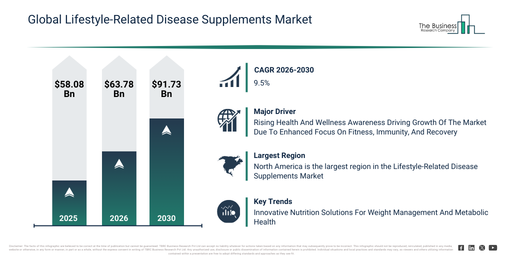
    The lifestyle-related disease supplements market has experienced robust expansion in recent times. This market is projected to expand from $58.08 billion in 2025 to $63.78 billion in 2026, exhibiting a compound annual growth rate (CAGR) of 9.8%. Historically, this expansion has been driven by factors such as an increasing prevalence of lifestyle-related chronic illnesses, greater consumer investment in health and wellness products, enhanced access to dietary supplements, the rise of urbanization coupled with sedentary habits, and the broadening of retail and pharmacy distribution channels.

    The lifestyle-related disease supplements market is anticipated to undergo substantial growth in the upcoming years, with its size projected to reach $91.73 billion by 2030, exhibiting a compound annual growth rate (CAGR) of 9.5%. This expansion during the forecast period is attributable to factors such as the growing embrace of personalized nutrition programs, the increased integration of digital health and supplement tracking technologies, a surging demand for clean-label and organic supplements, the ongoing proliferation of e-commerce health platforms, and an intensified focus on preventive healthcare models. Key trends expected over this period include a rising demand for preventive health supplements, the wider adoption of condition-specific nutritional formulations, the continuous expansion of personalized nutrition solutions, a greater emphasis on natural and plant-based ingredients, and enhanced consumer awareness regarding lifestyle disease management.

    Access Your Free Sample Report For In-Depth Market Analysis:

    https://www.thebusinessresearchcompany.com/sample.aspx?id=30313&type=smp

    Which Factors Are Influencing The Growth Of The Lifestyle-Related Disease Supplements Market?

    The increased understanding of health and wellness is anticipated to fuel the expansion of the lifestyle-related disease supplements market in the future. This concept encompasses a comprehensive way of life, prioritizing good physical condition, mental sharpness, and emotional stability to enhance overall life quality. With individuals experiencing longer lifespans and striving to preserve their quality of life, the emphasis on health and wellness is escalating. Supplements designed for lifestyle-related diseases contribute to health and wellness by assisting in the prevention and management of ailments like metabolic and cardiovascular issues, consequently boosting general physical well-being. For example, data from 2024 provided by the International Food Information Council, a US-based nonprofit organization, indicates a consistent rise in the proportion of consumers aiming to boost their protein consumption, increasing from 59% in 2022 to 67% in 2023 and reaching 71% in 2024, which demonstrates a heightened dedication to proactive health strategies. Consequently, the growing recognition of health and wellness is stimulating the expansion of the lifestyle-related disease supplements market.

    How Is The Lifestyle-Related Disease Supplements Market Segmented Across Different Segment Categories?

    The lifestyle-related disease supplements market covered in this report is segmented –

    1) By Product Type: Vitamins, Minerals, Herbal Supplements, Probiotics, Omega Fatty Acids

    2) By Formulation: Tablets, Capsules, Powders, Liquids, Softgels

    3) By Distribution Channel: Supermarkets, Health Stores, E-commerce, Pharmacies, Specialty Stores

    4) By Application: Cardiovascular Health, Diabetes Management, Obesity Control, Bone and Joint Health, Other Applications

    5) By End User: Adults, Geriatric Population, Pregnant Women, Children

    Subsegments:

    1) By Vitamins: Vitamin A, Vitamin B Complex, Vitamin C

    2) By Minerals: Calcium, Magnesium, Zinc

    3) By Herbal Supplements: Turmeric (Curcumin), Green Tea Extract, Ginseng

    4) By Probiotics: Lactobacillus, Bifidobacterium, Saccharomyces Boulardii

    5) By Omega Fatty Acids: Omega 3, Omega 6, Omega 9

    Which Trends Are Guiding The Direction Of The Lifestyle-Related Disease Supplements Market?

    Leading companies in the lifestyle-related disease supplements market are concentrating on developing innovative solutions such as meal-replacement optimization to enhance nutrient intake, support weight management, and improve overall metabolic health outcomes. Meal-replacement optimization refers to the formulation and enhancement of meal-replacement products to provide balanced nutrition, improve the bioavailability of nutrients, and support specific health goals, such as weight management, blood sugar control, or metabolic health. For instance, in February 2024, Herbalife Ltd., a US-based health and wellness company, launched a Herbalife GLP-1 nutrition companion, a new range of food and supplement product combos designed to support the nutritional needs of individuals taking GLP-1 and other weight-loss medications. These combos provide vital protein to help build and maintain lean muscle mass, along with fiber to promote digestive health. The Classic option delivers essential vitamins and minerals, while the Vegan option provides organic blends of fruits and vegetables for comprehensive nutrition. Overall, the product combos aim to promote sustainable weight loss, muscle health, and digestive well-being with the support of Herbalife’s coaching community.

    Which Organizations Play A Role In The Lifestyle-Related Disease Supplements Market Landscape?

    Major companies operating in the lifestyle-related disease supplements market are Nestlé SA, Bayer AG., Abbott Laboratories, Danone SA, Otsuka Holdings Co. Ltd., DSMFirmenich Group BV, Lonza Group Ltd., Amway Corp., Glanbia plc., Herbalife Nutrition Ltd., The Natures Bounty Co., GNC Holdings LLC, Pharmavite LLC, Jamieson Wellness Inc., NOW Health Group Inc., Blackmores Ltd., Nordic Naturals Inc., Mega Food, New Chapter Inc., Reckitt Benckiser Group plc.

    Get The Full Lifestyle-Related Disease Supplements Market Report:

    https://www.thebusinessresearchcompany.com/report/global-lifestyle-related-disease-supplements-market-report

    Which Region Is The Top Contributor To The Lifestyle-Related Disease Supplements Market By Share?

    North America was the largest region in the lifestyle-related disease supplements market in 2025. Asia-Pacific is expected to be the fastest-growing region in the forecast period. The regions covered in the lifestyle-related disease supplements market report are Asia-Pacific, South East Asia, Western Europe, Eastern Europe, North America, South America, Middle East, Africa.

    Request A Customized Lifestyle-Related Disease Supplements Market Report For Competitive Insights:

    https://www.thebusinessresearchcompany.com/report/global-lifestyle-related-disease-supplements-market-report

    Browse Through More Reports Similar to the Global Lifestyle-Related Disease Supplements Market 2026, By The Business Research Company

    Wellness Supplements Market Report 2026

    https://www.thebusinessresearchcompany.com/report/wellness-supplements-global-market-report

    Immune Health Supplements Market Report 2026

    https://www.thebusinessresearchcompany.com/report/immune-health-supplements-global-market-report

    Nutritional Supplements Market Report 2026

    https://www.thebusinessresearchcompany.com/report/nutritional-supplements-global-market-report

    Get in touch with us:

    The Business Research Company: https://www.thebusinessresearchcompany.com/

    Americas +1 310-496-7795

    Asia +44 7882 955267 & +91 8897263534

    Europe +44 7882 955267

    Email us at: marketing@tbrc.info

    Follow us on:

    LinkedIn: https://in.linkedin.com/company/the-business-research-company

    YouTube: https://www.youtube.com/channel/UC24_fI0rV8cR5DxlCpgmyFQ

    Global Market Model: https://www.thebusinessresearchcompany.com/global-market-model
  • Rising Prevalence Of Asbestosis Fueling The Growth Of The Due To Increase Occupational Exposure And Mortality Rates Is Playing A Role In Shaping The Lichen Nitidus Treatment Market

    Rising Prevalence Of Asbestosis Fueling The Growth Of The Due To Increase Occupational Exposure And Mortality Rates Is Playing A Role In Shaping The Lichen Nitidus Treatment Market

    The Business Research Company’s 2026 market reports feature enhanced tools like market attractiveness analysis, TAM assessment, and company scoring matrices, along with interactive dashboards, deeper supply chain insights, and startup coverage strengthening the depth, usability, and strategic value of insights.

    How Much Will The Market Value Of The Lichen Nitidus Treatment Market Grow Between 2026 And 2030?

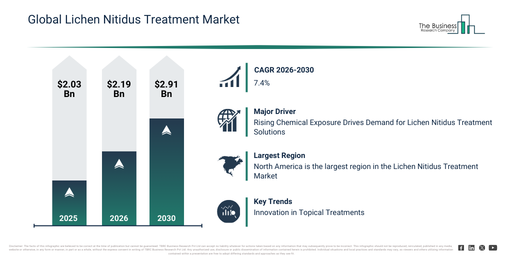
    The lichen nitidus treatment market has observed robust expansion in recent years. It is anticipated to increase from $2.03 billion in 2025 to $2.19 billion in 2026, exhibiting a compound annual growth rate (CAGR) of 7.7%. The growth observed in previous periods can be linked to heightened awareness of rare dermatological conditions, the growth of dermatology specialty clinics, the presence of corticosteroid and retinoid therapies, increasing diagnosis rates of skin disorders, and better access to dermatological care.

    The lichen nitidus treatment market size is projected to experience substantial growth over the next few years. Its valuation is anticipated to reach $2.91 billion by 2030, demonstrating a compound annual growth rate (CAGR) of 7.4%. This expansion during the forecast period is attributed to an increasing emphasis on non-invasive treatment approaches, a rising demand for targeted dermatology therapies, the expansion of specialty dermatology clinics, growing research into inflammatory skin conditions, and increasing patient awareness of treatment options. Major trends expected in the forecast period include a growing preference for topical treatment options, rising use of corticosteroid-based therapies, expanding adoption of phototherapy in dermatology, the development of patient-centric dermatology care, and an enhanced focus on symptom management.

    Access Your Free Sample Report For In-Depth Market Analysis:

    https://www.thebusinessresearchcompany.com/sample.aspx?id=20568&type=smp

    What Leading Drivers Are Supporting The Lichen Nitidus Treatment Market Expansion?

    The lichen nitidus treatment market is anticipated to experience expansion due to a notable increase in chemical exposure. This exposure involves direct interaction with detrimental substances via breathing them in, consuming them, or absorbing them through the skin, potentially resulting in health conditions like breathing difficulties or skin ailments. Such exposure often occurs in environmental settings, workplaces, or homes, posing various health risks. The development of lichen nitidus can be linked to chemical exposure, which might provoke an inflammatory reaction or irritate the skin, potentially unsettling the immune system and fostering the onset of this dermal ailment. An example is the report from Coming Clean Inc., a US nonprofit, in September 2025, indicating over 130 chemical incidents had already occurred in the US during 2025. Consequently, the substantial rise in chemical exposure is a key factor propelling the lichen nitidus treatment market. A driver for the Lichen Nitidus Treatment Market involves the elevated prevalence of skin infections, which also contributes to the growth of the Acute Bacterial Skin and Skin Structure Infections Market.

    What Are The Main Segments Within The Lichen Nitidus Treatment Market Segment Structure?

    The lichen nitidus treatment market covered in this report is segmented –

    1) By Type: Oral, Topical

    2) By Treatment: Corticosteroids, Retinoid, Antihistamines, Phototherapy

    3) By End User: Hospitals, Dermatology Clinics, Other End Users

    Subsegments:

    1) By Oral: Oral Medications (Steroids), Oral Medications (Immunosuppressants), Oral Antihistamines, Oral Retinoids

    2) By Topical: Topical Steroids, Topical Calcineurin Inhibitors, Topical Retinoids, Topical Antihistamines, Topical Phototherapy

    What Trends Are Affecting The Growth Of The Lichen Nitidus Treatment Market?

    Major companies operating in the lichen nitidus treatment market are actively developing innovative topical products. These products aim to provide targeted relief, reduce inflammation, and improve skin barrier function. The advanced topical formulations seek to offer more effective and convenient treatment options, thereby enhancing patient comfort and addressing the specific needs of individuals suffering from lichen nitidus. For instance, in August 2023, Glenmark Pharmaceuticals, an India-based pharmaceutical company, received sANDA approval for Tacrolimus Ointment, 0.03%. Tacrolimus ointment is recognized as an effective topical treatment for lichen nitidus, leveraging its immunosuppressive properties to alleviate symptoms and improve skin appearance. This ointment is a generic version of Protopic Ointment, 0.03%, manufactured by Leo Pharma AS, and is additionally indicated for treating moderate to severe atopic dermatitis.

    Who Are The Companies Participating In The Lichen Nitidus Treatment Market?

    Major companies operating in the lichen nitidus treatment market are Pfizer Inc., Johnson & Johnson Services Inc., Merck & Co Inc., AbbVie Inc., Novartis AG, Sanofi S.A., Bristol-Myers Squibb Co., AstraZeneca Plc, GlaxoSmithKline Plc, Roche Holding AG, Takeda Pharmaceutical Company Limited, Amgen Inc., Eli Lilly and Company, Regeneron Pharmaceuticals Inc., Biogen Inc., UCB Pharma Ltd., Sun Pharmaceutical Industries Ltd., Incyte Corporation, Kyowa Kirin Co. Ltd., Mallinckrodt Pharmaceuticals Plc, Glenmark Pharmaceuticals Ltd., Almirall S.A., Galderma Laboratories Lp, Leo Pharma A/S, Allergan Plc, Valeant Pharmaceuticals Australasia Pty Ltd

    Get The Full Lichen Nitidus Treatment Market Report:

    https://www.thebusinessresearchcompany.com/report/lichen-nitidus-treatment-global-market-report

    Which Region Represents The Largest Share Of The Lichen Nitidus Treatment Market?

    North America was the largest region in the lichen nitidus treatment market in 2025. The regions covered in the lichen nitidus treatment market report are Asia-Pacific, South East Asia, Western Europe, Eastern Europe, North America, South America, Middle East, Africa.

    Request A Customized Lichen Nitidus Treatment Market Report For Competitive Insights:

    https://www.thebusinessresearchcompany.com/report/lichen-nitidus-treatment-global-market-report

    Browse Through More Reports Similar to the Global Lichen Nitidus Treatment Market 2026, By The Business Research Company

    Corticosteroid Market Report 2026

    https://www.thebusinessresearchcompany.com/report/corticosteroid-global-market-report

    Point Of Use Water Treatment Systems Market Report 2026

    https://www.thebusinessresearchcompany.com/report/point-of-use-water-treatment-systems-global-market-report

    Macular Degeneration Treatment Market Report 2026

    https://www.thebusinessresearchcompany.com/report/macular-degeneration-treatment-global-market-report

    Get in touch with us:

    The Business Research Company: https://www.thebusinessresearchcompany.com/

    Americas +1 310-496-7795

    Asia +44 7882 955267 & +91 8897263534

    Europe +44 7882 955267

    Email us at: marketing@tbrc.info

    Follow us on:

    LinkedIn: https://in.linkedin.com/company/the-business-research-company

    YouTube: https://www.youtube.com/channel/UC24_fI0rV8cR5DxlCpgmyFQ

    Global Market Model: https://www.thebusinessresearchcompany.com/global-market-model