Month: May 2026

  • Congestive Heart Failure (CHF) Market Forecast Through 2030 Featuring Industry Drivers And Opportunities

    Congestive Heart Failure (CHF) Market Forecast Through 2030 Featuring Industry Drivers And Opportunities

    The Business Research Company’s 2026 market reports feature enhanced tools like market attractiveness analysis, TAM assessment, and company scoring matrices, along with interactive dashboards, deeper supply chain insights, and startup coverage strengthening the depth, usability, and strategic value of insights.

    How Will The Market Value Of The Congestive Heart Failure (CHF) Market Increase Between 2026 And 2030?

    The congestive heart failure (CHF) market has experienced significant expansion in recent years. This market is set to increase from $17.1 billion in 2025 to $18.31 billion in 2026, registering a compound annual growth rate (CAGR) of 7.1%. The growth observed in prior periods can be attributed to an increasing aging population, the widespread prevalence of cardiovascular disease, restricted options for outpatient monitoring, numerous hospital readmissions, and a reliance on hospital-based care.

    The congestive heart failure (CHF) market size is projected to experience substantial expansion in the coming years. By 2030, this market is anticipated to reach a valuation of $23.79 billion, advancing at a compound annual growth rate (CAGR) of 6.8%. Factors contributing to this growth during the forecast period include the escalating prevalence of heart failure, enhanced diagnostic precision, the expansion of homecare environments, a growing uptake of guideline-driven treatments, and efforts aimed at decreasing hospital readmissions. Key trends expected during the same period encompass the increased use of combination drug treatments, a move towards managing heart failure in home settings, a greater emphasis on early detection and continuous monitoring, the development of chronic disease management initiatives, and the broadening of post-discharge care routes.

    Download A Free Sample Report For Comprehensive Market Insights:

    https://www.thebusinessresearchcompany.com/sample.aspx?id=20730&type=smp

    What Are The Main Drivers Accelerating The Growth Of The Congestive Heart Failure (CHF) Market?

    A rising number of individuals with cardiovascular conditions is projected to fuel the expansion of the congestive heart failure (CHF) market in the future. Cardiovascular pertains to the heart and blood vessels, highlighting their function in blood circulation and preserving the body’s general health. The increase in cardiovascular patients stems from factors such as inactive lifestyles, poor dietary habits, an aging populace, and urban development, necessitating more advanced healthcare and therapeutic options. Congestive heart failure (CHF) offers advantages for cardiovascular patients through specific interventions that boost cardiac efficiency, alleviate symptoms, and avert complications, thereby improving patient care and their general welfare. For example, data from the American College of Cardiology, a US-based nonprofit medical society, indicated that by January 2023, cardiovascular disease instances had climbed to 19.8 million in 2022. Furthermore, Eastern Europe records the highest death rate, standing at 553 deaths per 100,000. Consequently, the growing number of cardiovascular patients is spurring expansion within the congestive heart failure (CHF) market.

    What Are The Core Segment Classifications In The Congestive Heart Failure (CHF) Market?

    The congestive heart failure (chf) market covered in this report is segmented –

    1) By Type: Systolic Heart Failure, Diastolic Heart Failure, Left-Sided Heart Failure, Right-Sided Heart Failure

    2) By Treatment: Medication, Surgery

    3) By Diagnosis: Electrocardiogram, Echocardiogram, Magnetic Resonance Imaging (MRI), Stress Test, Blood Tests, Cardiac Catheterization, Other Diagnosis

    4) By Distribution Channel: Hospital Pharmacy, Online Pharmacy, Retail Pharmacy

    5) By End-User: Hospitals, Specialty Clinics, Ambulatory Surgical Centers, Homecare Settings

    Subsegments:

    1) By Systolic Heart Failure: Reduced Ejection Fraction (HFrEF), Mild-to-moderate Reduced Ejection Fraction

    2) By Diastolic Heart Failure: Preserved Ejection Fraction (HFpEF), Borderline Ejection Fraction (HFpEF)

    3) By Left-Sided Heart Failure: Acute Left-Sided Heart Failure, Chronic Left-Sided Heart Failure

    4) By Right-Sided Heart Failure: Acute Right-Sided Heart Failure, Chronic Right-Sided Heart Failure

    Which Trends Are Supporting The Evolution Of The Congestive Heart Failure (CHF) Market?

    Leading companies in the congestive heart failure (CHF) market are concentrating on advanced innovations, such as single intracoronary infusion therapies, to deliver effective treatment options that improve heart function and enhance the quality of life for CHF patients. Single intracoronary infusion administers medication directly into the coronary artery, targeting the heart to provide precise treatment for conditions like congestive heart failure (CHF). For instance, in January 2024, Bayer AG, a Germany-based pharmaceutics company, and Asklepios Biopharmaceutical, Inc., a US-based biotechnology company, commenced the GenePHIT Phase II trial for AB-1002, an investigational gene therapy aimed at congestive heart failure (CHF). This innovation employs a gene therapy approach to target non-ischemic cardiomyopathy, potentially offering a breakthrough in the treatment of CHF through advanced genetic solutions. The trial is designed as adaptive, double-blind, and placebo-controlled, intending to enroll between 90 and 150 participants who have been medically stable for at least four weeks and have a left ventricular ejection fraction between 15% and 35%.

    Which Industry Players Are Present In The Congestive Heart Failure (CHF) Market?

    Major companies operating in the congestive heart failure (chf) market are Pfizer Inc., Johnson & Johnson Inc., Boehringer Ingelheim International GmbH, Merck & Co. Inc., Bayer AG, Sanofi S.A., Bristol‑Myers Squibb Company, Abbott Laboratories, Novartis AG, Medtronic Plc, Canon Medical Systems Corporation, Jarvik Heart Inc., Boston Scientific Corporation, Biotronik SE & Co. KG, LivaNova Plc, Edwards Lifesciences Corporation, Getinge AB, MicroPort Scientific Corporation, Lepu Medical Technology Co Ltd, OSCOR Inc., Shree Pacetronix Ltd.

    Access The Complete Congestive Heart Failure (CHF) Market Report:

    https://www.thebusinessresearchcompany.com/report/congestive-heart-failure-chf-global-market-report

    Which Region Holds The Largest Share In The Congestive Heart Failure (CHF) Market?

    North America was the largest region in the congestive heart failure (CHF) market in 2025. Asia Pacific is expected to be the fastest-growing region in the forecast period. The regions covered in the congestive heart failure (chf) market report are Asia-Pacific, South East Asia, Western Europe, Eastern Europe, North America, South America, Middle East, Africa.

    Access Congestive Heart Failure (CHF) Market Report for Deeper Competitive Insights

    https://www.thebusinessresearchcompany.com/customise?id=20730&type=smp

    Browse Through More Reports Similar to the Global Congestive Heart Failure (CHF) Market 2026, By The Business Research Company

    Congenital Heart Defect Devices Global Market Report 2026

    https://www.thebusinessresearchcompany.com/report/congenital-heart-defect-devices-global-market-report

    Cardiometabolic Diseases Global Market Report 2026

    https://www.thebusinessresearchcompany.com/report/cardiometabolic-diseases-global-market-report

    Pediatric Heart Valve Repair And Replacement Global Market Report 2026

    https://www.thebusinessresearchcompany.com/report/pediatric-heart-valve-repair-and-replacement-global-market-report

    Get in touch with us:

    The Business Research Company: https://www.thebusinessresearchcompany.com/

    Americas: +1 310-496-7795

    Asia: +44 7882 955267 & +91 8897263534

    Europe: +44 7882 955267

    Email us at: marketing@tbrc.info

    Follow us on:

    LinkedIn: https://in.linkedin.com/company/the-business-research-company

    YouTube: https://www.youtube.com/channel/UC24_fI0rV8cR5DxlCpgmyFQ

    Global Market Model: https://www.thebusinessresearchcompany.com/global-market-model

  • Maternal Diabetes Driving Congenital Heart Disease Market Growth Is Supporting Development Across The Congenital Heart Disease (CHD) Market

    Maternal Diabetes Driving Congenital Heart Disease Market Growth Is Supporting Development Across The Congenital Heart Disease (CHD) Market

    The Business Research Company’s 2026 market reports feature enhanced tools like market attractiveness analysis, TAM assessment, and company scoring matrices, along with interactive dashboards, deeper supply chain insights, and startup coverage strengthening the depth, usability, and strategic value of insights.

    What Will Be The Estimated Market Size Of The Congenital Heart Disease (CHD) Market By 2030?

    The market for congenital heart disease (chd) has experienced robust expansion in recent years. This market is projected to expand from $4.85 billion in 2025 to $5.32 billion by 2026, exhibiting a compound annual growth rate (CAGR) of 9.7%. Historically, this growth was driven by factors such as the significant occurrence of structural birth defects, insufficient early diagnostic tools, the necessity for open-heart surgery, elevated infant mortality rates, and the centralization of treatment within tertiary hospitals.

    The market for congenital heart disease (chd) is projected to experience substantial expansion in the coming years. This market is anticipated to reach $7.27 billion by 2030, exhibiting a compound annual growth rate (CAGR) of 8.1%. Several factors contribute to this projected increase, including progress in minimally invasive cardiology, enhanced imaging and diagnostic techniques, an expanding adult chd demographic, the proliferation of specialized cardiac facilities, and increased investments in healthcare. Key developments expected during this timeframe involve an uptick in early prenatal and neonatal screening, greater acceptance of catheter-based procedures, the broadening of both pediatric and adult chd care initiatives, improved survival rates fostering adult chd management, and comprehensive, long-term disease management approaches.

    Download A Free Sample Report For Comprehensive Market Insights:

    https://www.thebusinessresearchcompany.com/sample.aspx?id=15545&type=smp

    Which Growth Drivers Are Expected To Support The Congenital Heart Disease (CHD) Market Forward?

    The rising incidence of maternal diabetes is anticipated to propel the expansion of the congenital heart disease (CHD) market going forward. Maternal diabetes, also known as gestational diabetes mellitus (GDM), is defined as diabetes that develops in women during pregnancy who did not have the condition before conception. This type of diabetes is primarily caused by lifestyle changes, including sedentary behavior and unhealthy dietary habits, as well as a general increase in obesity rates among women of childbearing age. Maternal diabetes can lead to congenital heart disease (CHD) in infants because high blood sugar levels detrimentally affect fetal heart development. Specifically, elevated glucose concentrations in the mother’s blood can disrupt the normal formation of the baby’s heart, thereby increasing the risk of CHD. For instance, in November 2025, the Society For Maternal Fetal Medicine, a US-based organization, stated that gestational diabetes mellitus (GDM) affects approximately 15.6% of women worldwide, with an estimated 23.3 million live births impacted by hyperglycemia during pregnancy in 2024. Consequently, the increasing number of maternal diabetes cases is driving the growth of the congenital heart disease (CHD) market.

    How Is The Congenital Heart Disease (CHD) Market Structured Across Different Market Segments?

    The congenital heart disease (chd) market covered in this report is segmented –

    1) By Type: Heart Valve Defects, Heart Wall Defects, Blood Vessel Defects, Other Types

    2) By Diagnosis: Electrocardiogram, Chest X-ray, Echocardiogram, Transesophageal Echocardiogram, Pulse Oximetry, Exercise Stress Test, Cardiac Computed Tomography (CT) Scan Or Magnetic Resonance Imaging (MRI), Cardiac Catheterization, Other Diagnosis

    3) By Treatment: Interventional Cardiology, Cardiac Surgery, Telemedicine, Medication Management, Lifestyle Modifications

    4) By Age Group: Infants, Children, Adolescents, Adults

    5) By Application: Hospitals And Clinics, Diagnostic Centers, Ambulatory Surgical Centers, Research And Academic Institutions

    Subsegments:

    1) By Heart Valve Defects: Aortic Valve Stenosis, Pulmonary Valve Stenosis, Mitral Valve Prolapse, Tricuspid Valve Defects, Valve Regurgitation

    2) By Heart Wall Defects: Atrial Septal Defect (ASD), Ventricular Septal Defect (VSD), Atrioventricular Septal Defect (AVSD), Hypoplastic Left Heart Syndrome (HLHS), Tetralogy of Fallot (TOF)

    3) By Blood Vessel Defects: Coarctation Of The Aorta, Patent Ductus Arteriosus (PDA), Pulmonary Artery Stenosis, Transposition Of The Great Arteries (TGA), Truncus Arteriosus

    4) By Other Types: Single Ventricle Defects, Ebstein’s Anomaly, Total Anomalous Pulmonary Venous Return (TAPVR), Coronary Artery Anomalies, Pulmonary Venous Obstruction

    What Trends Are Affecting The Growth Of The Congenital Heart Disease (CHD) Market?

    Key companies within the congenital heart disease market are developing non-invasive heart valves to improve patient outcomes and overall quality of life. Non-surgical heart valves, also known as transcatheter valves, are medical devices that treat heart valve conditions without requiring traditional open-heart surgery. For example, in February 2023, Medtronic, a US-based medical technology firm, relaunched its Harmony Transcatheter Pulmonary Valve (TPV) System. This system provides an innovative, minimally invasive alternative to open-heart surgery for patients with congenital heart disease, specifically those with native or surgically repaired right ventricular outflow tract (RVOT) anomalies. This particular system stands as the first FDA-approved valve designed for the heart’s right side, offering a non-surgical option for individuals with severe pulmonary valve regurgitation. The Harmony TPV System originally received U.S. FDA approval in 2021. Its reintroduction followed a voluntary recall, highlighting Medtronic’s commitment to advancing solutions for those living with congenital heart disease.

    Which Organizations Are Involved In The Congenital Heart Disease (CHD) Market?

    Major companies operating in the congenital heart disease (chd) market are Abbott Laboratories, Medtronic, Siemens Healthineers, Philips Healthcare, Roche Diagnostics International Ltd., Boston Scientific Corp., Laboratory Corporation of America Holdings (LabCorp), Terumo Corporation, Mindray Medical International Limited, Canon Medical Systems Corporation, Masimo Corporation, Carestream Health, Schiller AG, BPL Medical Technologies, Bionet America Inc., Edwards Lifesciences Corporation, GE Healthcare, BIOTRONIK SE & Co KG, W L Gore & Associates Inc, Cook Medical, Lepu Medical Technology Co Ltd, Getinge AB, Merit Medical Systems Inc, Eurocor Tech GmbH, Braile Biomedica

    Access The Complete Congenital Heart Disease (CHD) Market Report:

    https://www.thebusinessresearchcompany.com/report/congenital-heart-disease-chd-global-market-report

    Which Region Is The Dominant Market In The Congenital Heart Disease (CHD) Market?

    North America was the largest region in the congenital heart disease (CHD) market in 2025. The regions covered in the congenital heart disease (chd) market report are Asia-Pacific, South East Asia, Western Europe, Eastern Europe, North America, South America, Middle East, Africa.

    Access Congenital Heart Disease (CHD) Market Report for Deeper Competitive Insights

    https://www.thebusinessresearchcompany.com/customise?id=15545&type=smp

    Browse Through More Reports Similar to the Global Congenital Heart Disease (CHD) Market 2026, By The Business Research Company

    Congenital Heart Disease Chd Global Market Report 2026

    https://www.thebusinessresearchcompany.com/report/congenital-heart-disease-chd-global-market-report

    Pheochromocytoma Global Market Report 2026

    https://www.thebusinessresearchcompany.com/report/pheochromocytoma-global-market-report

    Pituitary Dwarf Treatment Global Market Report 2026

    https://www.thebusinessresearchcompany.com/report/pituitary-dwarf-treatment-global-market-report

    Get in touch with us:

    The Business Research Company: https://www.thebusinessresearchcompany.com/

    Americas: +1 310-496-7795

    Asia: +44 7882 955267 & +91 8897263534

    Europe: +44 7882 955267

    Email us at: marketing@tbrc.info

    Follow us on:

    LinkedIn: https://in.linkedin.com/company/the-business-research-company

    YouTube: https://www.youtube.com/channel/UC24_fI0rV8cR5DxlCpgmyFQ

    Global Market Model: https://www.thebusinessresearchcompany.com/global-market-model

  • Innovative Treatments In The Market Is Affecting The Direction Of The Congenital Adrenal Hyperplasia Market

    Innovative Treatments In The Market Is Affecting The Direction Of The Congenital Adrenal Hyperplasia Market

    The Business Research Company’s 2026 market reports feature enhanced tools like market attractiveness analysis, TAM assessment, and company scoring matrices, along with interactive dashboards, deeper supply chain insights, and startup coverage strengthening the depth, usability, and strategic value of insights.

    What Is The Estimated Growth In Market Size Of The Congenital Adrenal Hyperplasia Market During 2026–2030?

    The congenital adrenal hyperplasia market size has seen strong growth in recent years. It is anticipated to expand from $0.5 billion in 2025 to $0.53 billion in 2026, registering a compound annual growth rate (CAGR) of 7.1%. This historical growth can be linked to factors including limited enzyme replacement therapies, a reliance on lifelong glucocorticoid treatment, low awareness in developing regions, delayed diagnosis due to a lack of screening, and dependence on hospital-based endocrinology care.

    The congenital adrenal hyperplasia market is projected to experience robust expansion in the coming years, anticipated to reach a valuation of $0.7 billion by 2030, exhibiting a compound annual growth rate (CAGR) of 6.8%. This growth over the forecast period is attributable to progress in precision medicine approaches, wider availability of genetic testing, rising healthcare spending, the proliferation of specialty clinics, and enhanced patient compliance due to novel formulations. Key trends expected during this period encompass broadened newborn screening programs, the development of long-acting and modified-release steroid therapies, more effective mineralocorticoid and androgen suppression regimens, a growing embrace of multidisciplinary care models, and an intensified emphasis on managing the disease throughout a patient’s life.

    Download A Free Sample Report For Comprehensive Market Insights:

    https://www.thebusinessresearchcompany.com/sample.aspx?id=21157&type=smp

    What Influential Factors Are Boosting The Congenital Adrenal Hyperplasia Market Demand?

    The increasing demand for gene therapy is projected to fuel the expansion of the congenital adrenal hyperplasia market in the future. Gene therapy is defined as a medical approach centered on altering or modifying an individual’s genes to address or prevent illnesses. This escalating demand for gene therapy stems from progress in genetic research and biotechnology, which has facilitated the development of more accurate and specific treatments for genetic conditions, cancers, and various chronic ailments. Congenital adrenal hyperplasia (CAH), a disorder resulting from gene mutations affecting adrenal hormone synthesis, is a crucial area for gene therapy, presenting chances for specific genetic interventions to rectify inherent genetic flaws and reinstate normal hormone function. For example, data from April 2024, released by the American Society of Gene and Cell Therapy (ASGCT), a US-based professional membership organization, indicated that among the 1,023 gene therapies under development for rare diseases, eight of the top 10 rare diseases were oncological. Furthermore, the second quarter of 2024 witnessed the start of 76 gene therapy trials, marking a 25% rise compared to the preceding quarter. Consequently, the heightened demand for gene therapy is stimulating growth within the congenital adrenal hyperplasia market.

    Which Segment-Based Categories Are Covered In The Congenital Adrenal Hyperplasia Market?

    The congenital adrenal hyperplasia market covered in this report is segmented –

    1) By Type: Classic Congenital Adrenal Hyperplasia, Non-Classic Congenital Adrenal Hyperplasia

    2) By Treatment And Diagnosis: Diagnosis, Treatment

    3) By End-Use: Hospitals, Specialty Clinics, Ambulatory Surgical Centers, Research Institutes

    Subsegments:

    1) By Classic Congenital Adrenal Hyperplasia: Salt-Wasting Classic Congenital Adrenal Hyperplasia, Simple Virilizing Classic Congenital Adrenal Hyperplasia

    2) By Non-Classic Congenital Adrenal Hyperplasia: Late-Onset Non-Classic Congenital Adrenal Hyperplasia, Mild Non-Classic Congenital Adrenal Hyperplasia

    Which Trends Are Influencing The Direction Of The Congenital Adrenal Hyperplasia Market?

    Leading companies in the congenital adrenal hyperplasia market are concentrating on developing innovative treatments, such as CRF1 receptor antagonists, to regulate cortisol production and decrease excess adrenal androgens. A CRF1 receptor antagonist is a medication that blocks the corticotropin-releasing factor 1 (CRF1) receptor to manage the body’s stress response and reduce excessive adrenal androgen production in conditions like congenital adrenal hyperplasia. For example, in December 2024, Neurocrine Biosciences, Inc., a US-based biopharmaceutical company, received FDA approval for crenessity (crinecerfont), representing the first new treatment for congenital adrenal hyperplasia (CAH) in 70 years. This oral medication acts as a selective antagonist of corticotropin-releasing factor type 1 receptors, assisting in the control of excess adrenocorticotropic hormone (ACTH) and adrenal androgens while allowing for reduced glucocorticoid doses. The approval was founded on data from the CAHtalyst Phase 3 studies, which demonstrated significant efficacy in lowering androgen levels. Crenessity is expected to be available soon, indicating a substantial advancement in CAH management.

    Who Are The Firms Contributing To The Congenital Adrenal Hyperplasia Market Ecosystem?

    Major companies operating in the congenital adrenal hyperplasia market are Pfizer Inc., Sanofi S.A., Thermo Fisher Scientific Inc., Takeda Pharmaceutical Company Limited, Eli Lilly and Company, Eton Pharmaceuticals Inc, Teva Pharmaceutical Industries, Macleods Pharmaceuticals, H. Lundbeck A/S, Neurocrine Biosciences Inc., BridgeBio Pharma Inc, Regenxbio Inc., Millendo Therapeutics Inc., Applied Therapeutics, Inc., OMass Therapeutics Limited, ViennaLab Diagnostics GmbH, EffRx Pharmaceuticals SA, Adrenas Therapeutics Inc, HBM Alpha Therapeutics, Spruce Biosciences Inc., Crinetics Pharmaceuticals Inc.

    Access The Complete Congenital Adrenal Hyperplasia Market Report:

    https://www.thebusinessresearchcompany.com/report/congenital-adrenal-hyperplasia-global-market-report

    Which Area Represents The Largest Portion Of The Congenital Adrenal Hyperplasia Market?

    North America was the largest region in the congenital adrenal hyperplasia market in 2025. Asia-Pacific is expected to be the fastest-growing region in the forecast period. The regions covered in the congenital adrenal hyperplasia market report are Asia-Pacific, South East Asia, Western Europe, Eastern Europe, North America, South America, Middle East, Africa.

    Access Congenital Adrenal Hyperplasia Market Report for Deeper Competitive Insights

    https://www.thebusinessresearchcompany.com/customise?id=21157&type=smp

    Browse Through More Reports Similar to the Global Congenital Adrenal Hyperplasia Market 2026, By The Business Research Company

    Conjunctivitis Treatment Global Market Report 2026

    https://www.thebusinessresearchcompany.com/report/conjunctivitis-treatment-global-market-report

    Aspergillosis Treatment Global Market Report 2026

    https://www.thebusinessresearchcompany.com/report/aspergillosis-treatment-global-market-report

    Alpers Disease Treatment Global Market Report 2026

    https://www.thebusinessresearchcompany.com/report/alpers-disease-treatment-global-market-report

    Get in touch with us:

    The Business Research Company: https://www.thebusinessresearchcompany.com/

    Americas: +1 310-496-7795

    Asia: +44 7882 955267 & +91 8897263534

    Europe: +44 7882 955267

    Email us at: marketing@tbrc.info

    Follow us on:

    LinkedIn: https://in.linkedin.com/company/the-business-research-company

    YouTube: https://www.youtube.com/channel/UC24_fI0rV8cR5DxlCpgmyFQ

    Global Market Model: https://www.thebusinessresearchcompany.com/global-market-model

  • The Condyloma Acuminata Treatment Market Is Advancing With Support From The Rising Prevalence Of Sexually Transmitted Infections Driving The Growth Of The Market Due To Increased Asymptomatic Transmission And Higher Diagnosis Rates

    The Condyloma Acuminata Treatment Market Is Advancing With Support From The Rising Prevalence Of Sexually Transmitted Infections Driving The Growth Of The Market Due To Increased Asymptomatic Transmission And Higher Diagnosis Rates

    The Business Research Company’s 2026 market reports feature enhanced tools like market attractiveness analysis, TAM assessment, and company scoring matrices, along with interactive dashboards, deeper supply chain insights, and startup coverage strengthening the depth, usability, and strategic value of insights.

    What Market Value Expansion Is Expected For The Condyloma Acuminata Treatment Market Over The Forecast Period?

    The condyloma acuminata treatment market has shown steady expansion in recent years. Its valuation is projected to rise from $1.87 billion in 2025 to $1.94 billion in 2026, achieving a compound annual growth rate (CAGR) of 3.9%. The market’s historical growth can be attributed to factors such as improvements in diagnostic capabilities, the expansion of endocrine specialty care, increasing awareness of rare genetic disorders, the availability of hormone replacement therapies, and the proliferation of specialty clinics.

    The condyloma acuminata treatment market is anticipated to observe consistent expansion over the next few years, with its size projected to reach $2.27 billion by 2030, demonstrating a compound annual growth rate (CAGR) of 4.0%. This growth during the forecast period can be ascribed to the increasing development of targeted therapies, a rising adoption of precision medicine approaches, the expansion of genetic counseling services, a growing emphasis on lifelong disease management, and increasing investments in rare disease research. Significant trends expected during this period include an increasing adoption of newborn screening programs, a rising utilization of personalized hormone therapies, the growing integration of genetic testing in diagnosis, the expansion of long-term disease management solutions, and an enhanced focus on early intervention strategies.

    Download A Free Sample Report For Comprehensive Market Insights:

    https://www.thebusinessresearchcompany.com/sample.aspx?id=13824&type=smp

    Which Drivers Are Advancing The Condyloma Acuminata Treatment Market Growth?

    The rising occurrence of sexually transmitted infections (STIs) is anticipated to drive the expansion of the condyloma acuminata treatment market in the coming years. Often referred to as STDs, these infections transmit between individuals through sexual contact. The growing spread of STIs is largely attributed to asymptomatic cases, where many people are unaware of their condition, leading to unintentional transmission. Condyloma acuminata treatment plays a crucial role in managing STIs by alleviating symptoms, lowering the risk of transmission, averting complications, and fostering overall health. For example, the UK Health Security Agency, a government body in the UK, reported in July 2024 that 2023 saw 401,800 new STI diagnoses, marking a 4.7% rise from the 383,789 recorded in 2022. Consequently, the increasing prevalence of sexually transmitted infections (STIs) is a key factor propelling the growth of the condyloma acuminata treatment market.

    What Are The Major Segment Categories Within The Condyloma Acuminata Treatment Market?

    The condyloma acuminata treatment market covered in this report is segmented –

    1) By Drug Type: Imiquimod, Podophyllin And Podofilox, Trichloroacetic Acid (TCA), Sine Catechins, Isotretinoin

    2) By Treatment Type: Physical Destruction, Chemical Destruction, Immunomodulation

    3) By Distribution Channel: Hospital Pharmacies, Retail Pharmacies, Online Pharmacies

    4) By End-User: Hospitals, Specialty Clinics, Other End Users

    Subsegments:

    1) By Imiquimod: Topical Imiquimod Cream, Immune Response Modifier Imiquimod

    2) By Podophyllin And Podophyllotoxin (Podofilox): Podophyllin Resin Solutions, Podophyllotoxin (Podofilox) Topical Preparations

    3) By Trichloroacetic Acid (TCA): High-Concentration Trichloroacetic Acid Applications, Physician-Applied Trichloroacetic Acid Treatments

    4) By Sinecatechins: Botanical Sinecatechins Ointments, Green Tea Extract–Based Sinecatechins

    5) By Isotretinoin: Oral Isotretinoin Therapy, Topical Isotretinoin Formulations

    What Trends Are Driving Changes In The Condyloma Acuminata Treatment Market?

    Leading companies within the condyloma acuminata treatment market are focused on creating novel medications, including podofilox gel, to enhance the affordability and availability of care for patients. Podofilox gel serves as a topical medicine specifically for managing external genital and perianal warts. A notable example occurred in December 2023 when Hyloris Pharmaceuticals SA, a specialty biopharma firm based in Belgium, and its partner Padagis US LLC, a US-based pharmaceutical manufacturer, secured approval from the U.S. Food and Drug Administration (FDA) for Podofilox Gel. This newly approved topical drug represents the inaugural generic equivalent of Condylox Gel 0.5% and is prescribed for treating external genital and perianal warts by promoting the breakdown of wart tissue. The approval for this product was granted via an abbreviated New Drug Application (ANDA) route, giving Padagis 180-day Competitive Generic Therapy exclusivity.

    Which Key Players Are Active In The Condyloma Acuminata Treatment Market?

    Major companies operating in the condyloma acuminata treatment market are Pfizer Inc., Merck & Co. Inc., Bayer AG, Sanofi S.A., GlaxoSmithKline plc, 3M Company, Medtronic plc, Teva Pharmaceutical Industries Ltd., IQVIA Holdings, AbbVie Inc., Astellas Pharma US Inc., Bausch Health, Shanghai Fosun Pharmaceutical (Group) Co. Ltd., Syneos Health Inc., Perrigo Company plc, Chiesi Farmaceutici S.p.A., Gedeon Richter Plc, Meda AB, Recordati Industria Chimica e Farmaceutica S.p.A., Zhejiang Hisun Pharmaceutical Co. Ltd. , Mylan N.V., Ferring Pharmaceuticals AS, Indivior PLC, Parthenon Therapeutics

    Access The Complete Condyloma Acuminata Treatment Market Report:

    https://www.thebusinessresearchcompany.com/report/condyloma-acuminata-treatment-global-market-report

    Which Region Commands The Largest Share Of The Condyloma Acuminata Treatment Market?

    North America was the largest region in the condyloma acuminata treatment market in 2025. Asia-Pacific is expected to be the fastest-growing region in the forecast period. The regions covered in the condyloma acuminata treatment market report are Asia-Pacific, South East Asia, Western Europe, Eastern Europe, North America, South America, Middle East, Africa.

    Access Condyloma Acuminata Treatment Market Report for Deeper Competitive Insights

    https://www.thebusinessresearchcompany.com/customise?id=13824&type=smp

    Browse Through More Reports Similar to the Global Condyloma Acuminata Treatment Market 2026, By The Business Research Company

    Traumatic Brain Injury Global Market Report 2026

    https://www.thebusinessresearchcompany.com/report/traumatic-brain-injury-global-market-report

    Traumatic Brain Injuries Assessment Global Market Report 2026

    https://www.thebusinessresearchcompany.com/report/traumatic-brain-injuries-assessment-global-market-report

    Migraine Global Market Report 2026

    https://www.thebusinessresearchcompany.com/report/migraine-global-market-report

    Get in touch with us:

    The Business Research Company: https://www.thebusinessresearchcompany.com/

    Americas: +1 310-496-7795

    Asia: +44 7882 955267 & +91 8897263534

    Europe: +44 7882 955267

    Email us at: marketing@tbrc.info

    Follow us on:

    LinkedIn: https://in.linkedin.com/company/the-business-research-company

    YouTube: https://www.youtube.com/channel/UC24_fI0rV8cR5DxlCpgmyFQ

    Global Market Model: https://www.thebusinessresearchcompany.com/global-market-model
  • Increasing Adoption Of Rise In Prevalence Of Neurological Diseases Is Influencing The Concussion Market

    Increasing Adoption Of Rise In Prevalence Of Neurological Diseases Is Influencing The Concussion Market

    The Business Research Company’s 2026 market reports feature enhanced tools like market attractiveness analysis, TAM assessment, and company scoring matrices, along with interactive dashboards, deeper supply chain insights, and startup coverage strengthening the depth, usability, and strategic value of insights.

    How Will The Market Value Of The Concussion Market Change Between 2026 And 2030?

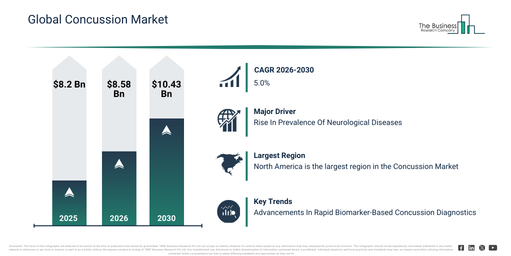
    The concussion market has demonstrated consistent expansion in recent times. It is projected to grow from $8.2 billion in 2025 to $8.58 billion in 2026, achieving a compound annual growth rate (CAGR) of 4.6%. The market’s historical development can be attributed to the rising occurrence of sports-related injuries, increased understanding of traumatic brain injuries, broader access to diagnostic imaging, the expansion of rehabilitation services, and advancements in clinical assessment protocols.

    The concussion market size is projected to undergo significant expansion in the coming years. By 2030, its valuation is expected to reach $10.43 billion, demonstrating a compound annual growth rate (CAGR) of 5.0%. This anticipated growth throughout the forecast period stems from factors such as the increasing integration of AI-assisted concussion diagnostics, a heightened focus on long-term brain health monitoring, the broadening of remote patient monitoring solutions, increasing investment in neurorehabilitation technologies, and the rising demand for personalized concussion management. Prominent trends for the forecast period include the wider adoption of advanced neuroimaging tools, the growing application of digital cognitive assessment platforms, the increasing incorporation of wearable monitoring devices, the expansion of multidisciplinary rehabilitation approaches, and an enhanced emphasis on early and accurate diagnosis.

    Download A Free Sample Report For Comprehensive Market Insights:

    https://www.thebusinessresearchcompany.com/sample.aspx?id=11888&type=smp

    What Primary Factors Are Fueling The Expansion Of The Concussion Market?

    The increasing occurrence of neurological conditions is anticipated to drive expansion in the concussion market moving ahead. These diseases encompass a wide range of medical ailments impacting the nervous system, comprising the brain, spinal cord, and peripheral nerves. Specifically, neurological diseases, especially those linked to traumatic brain injuries, frequently feature concussions either as a primary trigger or an intensifying factor. This contributes to the emergence, advancement, or complexities of conditions like chronic traumatic encephalopathy (CTE) or post-concussion syndrome. As an illustration, the World Health Organization (WHO), a US-based intergovernmental organization, reported in February 2023 that epilepsy, a neurological disease, impacts 5 million people across the globe. High-income nations record 49 cases per 100,000, whereas low- and middle-income nations observe up to 139 cases per 100,000. Consequently, the growing incidence of neurological diseases is fueling the expansion of the concussion market.

    How Is The Concussion Market Distributed Across Key Segments?

    The concussion market covered in this report is segmented –

    1) By Assessment: Diagnosis, Treatment

    2) By Device: Imaging Devices, Magnetic Resonance Imaging (MRI) Devices, X-Ray, Computed Tomography, Monitoring Devices, Other Devices

    3) By End User: Hospitals And Clinics, Diagnostic Centers, Medical Camps, Other End-Users

    Subsegments:

    1) By Diagnosis: Clinical Assessments, Imaging Techniques

    2) By Treatment: Pharmacological Treatments, Cognitive Rehabilitation, Physical Therapy

    Which Trends Are Shaping The Concussion Market Landscape?

    Major companies within the concussion market are concentrating on developing innovative solutions, such as rapid point-of-care biomarker blood tests, to fulfill increasing demand spurred by greater concussion awareness. These rapid point-of-care biomarker blood tests are quick diagnostic tools administered near the patient, which measure specific blood markers to detect or monitor a condition, aiding clinicians in making immediate decisions about diagnosis, treatment, or further testing. For instance, in April 2024, Abbott Laboratories, a US-based medical device and diagnostics firm, launched a whole blood rapid test for traumatic brain injury (TBI) on its portable i-STAT Alinity platform. This test enables clinicians to assess suspected concussions at the patient’s bedside, yielding lab-quality results in just 15 minutes. Previously, TBI tests required plasma or serum samples to be sent to a laboratory, but this new clearance allows for faster, on-site evaluation, potentially reducing the need for CT scans and improving timely decision-making across urgent care and other healthcare settings.

    Who Are The Leading Firms Participating In The Concussion Market?

    Major companies operating in the concussion market are Pfizer Inc., Novartis AG, Sanofi SA, Abbott Laboratories, Medtronic plc, Viatris Inc., Zydus Lifesciences Ltd., Integra LifeSciences Corporation, Nihon Kohden Corporation, Raumedic AG, Lupin Limited, NeuroPace Inc., Compumedics Limited, NeuroLogica Corporation, Neural Analytics Inc., NovaSignal Corp., Back Bay Life Science Advisors, BrainScope Company Inc., Neuro Kinetics Inc., ImPACT Applications Inc., NanoDx Inc., Neuren Pharmaceuticals Limited, Advanced Brain Monitoring Inc., ElMindA Ltd., NeurOptics Inc., InfraScan Inc., Neuro Assessment Systems Inc., NeuroTrauma Sciences LLC, SyncThink Inc., Oxeia Biopharmaceuticals Inc., Oculogica Inc., Banyan Biomarkers Inc., Emotiv Inc., BioDirection Inc.

    Access The Complete Concussion Market Report:

    https://www.thebusinessresearchcompany.com/report/concussion-global-market-report

    Which Region Accounts For The Highest Share Of The Concussion Market?

    North America was the largest region in the concussion market in 2025. Asia-Pacific is expected to be the fastest-growing region in the forecast period. The regions covered in the concussion market report are Asia-Pacific, South East Asia, Western Europe, Eastern Europe, North America, South America, Middle East, Africa.

    Access Concussion Market Report for Deeper Competitive Insights

    https://www.thebusinessresearchcompany.com/customise?id=11888&type=smp

    Browse Through More Reports Similar to the Global Concussion Market 2026, By The Business Research Company

    Computerized Maintenance Management System Global Market Report 2026

    https://www.thebusinessresearchcompany.com/report/computerized-maintenance-management-system-global-market-report

    Automotive Keyless Entry System Global Market Report 2026

    https://www.thebusinessresearchcompany.com/report/automotive-keyless-entry-system-global-market-report

    Point Of Entry Water Treatment Systems Global Market Report 2026

    https://www.thebusinessresearchcompany.com/report/point-of-entry-water-treatment-systems-global-market-report

    Get in touch with us:

    The Business Research Company: https://www.thebusinessresearchcompany.com/

    Americas: +1 310-496-7795

    Asia: +44 7882 955267 & +91 8897263534

    Europe: +44 7882 955267

    Email us at: marketing@tbrc.info

    Follow us on:

    LinkedIn: https://in.linkedin.com/company/the-business-research-company

    YouTube: https://www.youtube.com/channel/UC24_fI0rV8cR5DxlCpgmyFQ

    Global Market Model: https://www.thebusinessresearchcompany.com/global-market-model

  • Medication Errors Drive Growth In Computerized Physician Order Entry Market Continues To Impact The Growth Of The Computerized Physician Order Entry Market

    Medication Errors Drive Growth In Computerized Physician Order Entry Market Continues To Impact The Growth Of The Computerized Physician Order Entry Market

    The Business Research Company’s 2026 market reports feature enhanced tools like market attractiveness analysis, TAM assessment, and company scoring matrices, along with interactive dashboards, deeper supply chain insights, and startup coverage strengthening the depth, usability, and strategic value of insights.

    What Is The Forecasted Rise In Market Size Of The Computerized Physician Order Entry Market During The Forecast Period?

    The computerized physician order entry market size has shown substantial growth in recent years. This market is expected to expand from $2.27 billion in 2025 to $2.48 billion in 2026, achieving a compound annual growth rate (CAGR) of 9.4%. The expansion observed in the historic period is attributable to the increasing embrace of electronic health records, a stronger emphasis on patient safety regulations, rising awareness of medication errors, the broadening scope of hospital digitization initiatives, and the availability of essential healthcare IT infrastructure.

    The computerized physician order entry market size is projected for substantial expansion in the upcoming years. It is forecast to attain $3.52 billion by 2030, at a compound annual growth rate (CAGR) of 9.1%. This growth during the forecast period is primarily driven by increasing investments in smart hospital technologies, rising demand for real-time clinical decision support, the expansion of cloud-based healthcare solutions, a growing focus on interoperability standards, and the increasing adoption of AI-assisted prescribing tools. Key trends expected in the forecast period encompass increasing adoption of integrated CPOE systems, rising use of clinical decision support tools, growing deployment of cloud-based order entry platforms, expansion of interoperable healthcare IT systems, and an enhanced focus on medication error reduction.

    Download A Free Sample Report For Comprehensive Market Insights:

    https://www.thebusinessresearchcompany.com/sample.aspx?id=19380&type=smp

    Which Strategic Drivers Are Supporting The Computerized Physician Order Entry Market Development?

    The rising frequency of medication errors is projected to fuel the expansion of the computerized physician order entry market in the future. Medication errors encompass mistakes made during the prescribing, dispensing, or administration of drugs, which can result in patient harm. Numerous factors contribute to the occurrence of medication errors, including miscommunication among healthcare providers, inaccuracies in dosage calculations, instances of similar drug names, and insufficient patient information. Computerized physician order entry (CPOE) systems actively reduce medication errors by offering automated checks and alerts, thereby ensuring accurate drug prescriptions and minimizing errors arising from manual data entry. For instance, in April 2024, according to the Pennsylvania Patient Safety Authority (PA-PSRS), a US-based health-care oversight body, the proportion of medication error reports increased from 13.2% of total patient-safety reports in 2022 to 14.1% in 2023, while the absolute number of medication-error reports grew from 33,980 to 40,680 over the same period, indicating a substantial year-over-year rise in reported medication-error events. Consequently, the escalating incidences of medication errors are a driving force behind the growth of the computerized physician order entry market. The increasing adoption of electronic health records (EHR) is anticipated to propel the growth of the computerized physician order entry market going forward. Electronic health record adoption refers to healthcare providers’ implementation and use of digital systems for electronically storing, managing, and exchanging patient medical information, effectively replacing traditional paper-based record-keeping. The rising rate of EHR adoption is driven by government mandates and incentive programs promoting healthcare digitization, as regulatory requirements and financial incentives encourage medical facilities to transition from paper records to integrated digital systems that enhance care coordination and data accessibility. Growing EHR adoption directly supports the increased implementation of digital prescription and treatment order systems, which enable physicians to electronically enter, modify, and transmit medication orders and clinical instructions directly within the electronic medical record infrastructure. For instance, in July 2024, the European Commission, a Belgium-based organization, reported that Europe showed progress in eHealth maturity during 2024, with the EU27-average overall composite score rising to 79% from 72% in the previous year. Therefore, the expanding adoption of electronic health records is a primary driver for the growth of the computerized physician order entry market.

    How Does Segment Analysis Break Down The Computerized Physician Order Entry Market Structure?

    The computerized physician order entry market covered in this report is segmented –

    1) By Type: Standalone Computerized Physician Order Entry (CPOE), Integrated Computerized Physician Order Entry (CPOE)

    2) By Component: Hardware, Software, Services

    3) By Deployment: Web-Based, Cloud-Based, On-Premise

    4) By End User: Pharmacies, Hospitals, Emergency Healthcare Service Providers, Office-Based Physicians, Other End Users

    Subsegments:

    1) By Standalone Computerized Physician Order Entry (CPOE): Single-Function CPOE Systems, Specialty-Specific Standalone CPOE Solutions, Customizable Standalone CPOE Applications

    2) By Integrated Computerized Physician Order Entry (CPOE): Fully Integrated EHR (Electronic Health Record) CPOE Systems, CPOE with Decision Support Systems (DSS), Integrated CPOE with Laboratory and Pharmacy Management Systems, Comprehensive Healthcare Management Systems With CPOE Functionality

    What Trends Are Influencing The Computerized Physician Order Entry Market Outlook?

    Leading organizations operating in the computerized physician order entry market are adopting a strategic alliance approach to develop wireless and cloud technologies for managing high-volume workloads. Strategic partnerships describe a method where businesses utilize each other’s capabilities and resources to achieve shared advantages and success. For example, in August 2023, Microsoft Corporation, a US-based technology company, collaborated with Epic Systems Corporation, a US-based healthcare software company, to offer a cloud-based electronic health records (EHR) solution that substantially improved the functionalities of computerized physician order entry (CPOE) systems. This integration of Epic’s EHR with Microsoft Azure enables healthcare providers to efficiently manage extensive EHR database loads, thereby facilitating real-time access to patient data and optimizing clinical workflows.

    Which Companies Are Engaged In The Computerized Physician Order Entry Market Environment?

    Major companies operating in the computerized physician order entry market are UnitedHealth Group, McKesson Corporation, Kaiser Permanente, International Business Machines Corp (IBM), Siemens Healthineers, Philips Healthcare Inc., GE HealthCare Technologies Inc., Epic Systems Corporation, Athenahealth Inc., eClinicalWorks LLC, Allscripts Healthcare Solutions Inc., NextGen Healthcare, Medical Information Technology Inc. (Meditech), Computer Programs and Systems Inc, Greenway Health LLC, CareCloud Inc., Medhost, Picis Clinical Solutions, CliniComp International Inc., Zynx Health Inc.

    Access The Complete Computerized Physician Order Entry Market Report:

    https://www.thebusinessresearchcompany.com/report/computerized-physician-order-entry-global-market-report

    Which Region Is The Primary Market For The Computerized Physician Order Entry Market?

    North America was the largest region in the computerized physician order entry market in 2025. Asia-Pacific is expected to be the fastest-growing region in the forecast period. The regions covered in the computerized physician order entry market report are Asia-Pacific, South East Asia, Western Europe, Eastern Europe, North America, South America, Middle East, Africa.

    Access Computerized Physician Order Entry Market Report for Deeper Competitive Insights

    https://www.thebusinessresearchcompany.com/customise?id=19380&type=smp

    Browse Through More Reports Similar to the Global Computerized Physician Order Entry Market 2026, By The Business Research Company

    Computer Aided Oral And Maxillofacial Surgery Global Market Report 2026

    https://www.thebusinessresearchcompany.com/report/computer-aided-oral-and-maxillofacial-surgery-global-market-report

    Dental Flap Surgery Global Market Report 2026

    https://www.thebusinessresearchcompany.com/report/dental-flap-surgery-global-market-report

    Dental Surgical Devices And Equipment Global Market Report 2026

    https://www.thebusinessresearchcompany.com/report/dental-surgical-devices-and-equipment-global-market-report

    Get in touch with us:

    The Business Research Company: https://www.thebusinessresearchcompany.com/

    Americas: +1 310-496-7795

    Asia: +44 7882 955267 & +91 8897263534

    Europe: +44 7882 955267

    Email us at: marketing@tbrc.info

    Follow us on:

    LinkedIn: https://in.linkedin.com/company/the-business-research-company

    YouTube: https://www.youtube.com/channel/UC24_fI0rV8cR5DxlCpgmyFQ

    Global Market Model: https://www.thebusinessresearchcompany.com/global-market-model
  • Computer-Aided Oral And Maxillofacial Surgery Market Outlook Through 2030 With Analysis Of Industry Trends And Developments

    Computer-Aided Oral And Maxillofacial Surgery Market Outlook Through 2030 With Analysis Of Industry Trends And Developments

    The Business Research Company’s 2026 market reports feature enhanced tools like market attractiveness analysis, TAM assessment, and company scoring matrices, along with interactive dashboards, deeper supply chain insights, and startup coverage strengthening the depth, usability, and strategic value of insights.

    How Is The Computer-Aided Oral And Maxillofacial Surgery Market’s Market Value Anticipated To Evolve From 2026 To 2030?

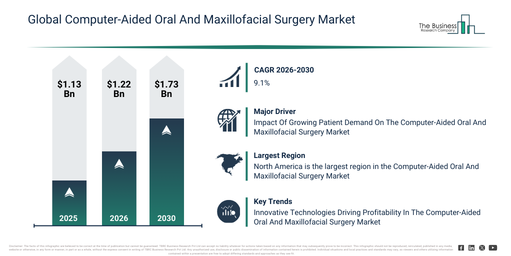
    The market size for computer-aided oral and maxillofacial surgery has demonstrated significant expansion in recent years. This market is anticipated to increase from $1.13 billion in 2025 to $1.22 billion in 2026, exhibiting a compound annual growth rate (CAGR) of 8.2%. The historical development in this sector can be attributed to a rise in complex craniofacial surgeries, increased integration of digital imaging technologies, the proliferation of specialized oral surgery centers, a growing necessity for surgical precision, and the accessibility of advanced surgical planning tools.

    The computer-aided oral and maxillofacial surgery market is projected for significant expansion in the coming years. Its size is anticipated to reach $1.73 billion by 2030, exhibiting a compound annual growth rate (CAGR) of 9.1%. This projected growth is driven by factors such as the increasing embrace of AI-assisted surgical simulation, greater investments in digital operating rooms, the development of personalized surgical solutions, wider application of 3D printed surgical guides, and a rising need for outcome-focused surgical planning. Key developments shaping the market during this period include the wider use of virtual surgical planning tools, increased reliance on 3D imaging and simulation software, the growing incorporation of CAD/CAM into surgical processes, the availability of patient-specific surgical guides, and an intensified emphasis on minimally invasive techniques.

    Download A Free Sample Report For Comprehensive Market Insights:

    https://www.thebusinessresearchcompany.com/sample.aspx?id=13289&type=smp

    What Major Growth Factors Are Impacting The Computer-Aided Oral And Maxillofacial Surgery Market?

    An anticipated increase in patent applications is projected to fuel the expansion of the computer-aided oral and maxillofacial surgery market in the future. Typically, patent demand refers to the request for patents, which are legal safeguards extended to innovators and creators for their original inventions, methodologies, or designs. Computer-aided oral and maxillofacial surgeries frequently incorporate 3D imaging, computer modeling, and virtual planning to customize surgical interventions for specific patient requirements. The desire of patients for tailored and effective medical solutions promotes the adoption of these technologies within clinical settings. For example, in September 2023, the British Medical Association, a UK-based registered trade union, reported that approximately 62.68 million patients, a new peak, were registered with GP offices in England during August 2023. Consequently, the average caseload for each full-time equivalent general practitioner presently stands at 2,301 patients. Therefore, the increasing patent demand is a key factor propelling the expansion of the computer-aided oral and maxillofacial surgery market.

    What Segment Types Are Included In The Computer-Aided Oral And Maxillofacial Surgery Market Analysis?

    The computer-aided oral and maxillofacial surgery market covered in this report is segmented –

    1) By Component: Dental Printers, Milling Machine, Scanners, Software, Other Components

    2) By Application: Dental Implantology, Orthognathic Surgery, Other Applications

    3) By End User: Neurosurgery, Orthognathic And Dental Surgery, Plastic Surgery, Dental Surgery, Oral Surgery

    Subsegments:

    1) By Dental Printers: 3D Printers For Surgical Models, Stereolithography Printers, Digital Light Processing Printers

    2) By Milling Machine: CAD Or CAM Milling Machines, In-Office Milling Machines, Industrial Milling Machines

    3) By Scanners: Intraoral Scanners, Extraoral Scanners, Cone Beam Computed Tomography (CBCT) Scanners

    4) By Software: Surgical Planning Software, Simulation Software, CAD Software For Prosthetics, Workflow Management Software

    5) By Other Components: Imaging Devices, Surgical Guides, Custom Implants

    Which Trends Are Expected To Shape The Computer-Aided Oral And Maxillofacial Surgery Market?

    Leading firms within the computer-aided oral and maxillofacial surgery market prioritize technological innovations, including surgical dynamic navigation systems, to enhance their market profitability. Such a system provides real-time visual access to anatomical features like bone and teeth throughout surgical procedures. For example, in March 2023, the Straumann Group, a Swiss manufacturer of dental implants and specialized technologies, launched its inaugural surgical dynamic navigation system, specifically engineered for implant treatments within a fully digital process. This computer-assisted tool assists surgeons in precisely guiding their instruments during dental operations. It helps avert unintentional contact with vital anatomical structures and ensures precise implant placement according to the treatment plan, by allowing clear visibility of the instrument’s exact position in the surgical area. The Straumann Group’s surgical dynamic navigation system is instrumental in the company’s achievements, delivering a more accurate and reliable method for implant surgeries.

    Who Are The Prominent Players Across The Computer-Aided Oral And Maxillofacial Surgery Market?

    Major companies operating in the computer-aided oral and maxillofacial surgery market are Dentsply Sirona Ltd., Align Technology Inc., Straumann Group, Planmeca Oy, Renishaw plc, Osstem Implant Co Ltd, Nobel Biocare Services AG, 3Shape A/S, KaVo Dental, Materialise NV, Geomagic, BioHorizons IPH Inc, Ivoclar Vivadent Marketing Pvt Ltd, Overjet, Orchestrate 3D, 3D Systems Corporation, Medacta International, Neocis Inc, Zygote3D, InVivo Surgical (DEXIS Invivo), Carestream Dental, Brainlab SE, Cybermed Inc.

    Access The Complete Computer-Aided Oral And Maxillofacial Surgery Market Report:

    https://www.thebusinessresearchcompany.com/report/computer-aided-oral-and-maxillofacial-surgery-global-market-report

    Which Geographic Region Represents The Largest Computer-Aided Oral And Maxillofacial Surgery Market Share?

    North America was the largest region in the computer-aided oral and maxillofacial surgery market in 2025. Asia-Pacific is expected to be the fastest-growing region in the forecast period. The regions covered in the computer-aided oral and maxillofacial surgery market report are Asia-Pacific, South East Asia, Western Europe, Eastern Europe, North America, South America, Middle East, Africa.

    Access Computer-Aided Oral And Maxillofacial Surgery Market Report for Deeper Competitive Insights

    https://www.thebusinessresearchcompany.com/customise?id=13289&type=smp

    Browse Through More Reports Similar to the Global Computer-Aided Oral And Maxillofacial Surgery Market 2026, By The Business Research Company

    Computer Aided Oral And Maxillofacial Surgery Global Market Report 2026

    https://www.thebusinessresearchcompany.com/report/computer-aided-oral-and-maxillofacial-surgery-global-market-report

    Drug Discovery Services Global Market Report 2026

    https://www.thebusinessresearchcompany.com/report/drug-discovery-services-global-market-report

    Drug Discovery Informatics Global Market Report 2026

    https://www.thebusinessresearchcompany.com/report/drug-discovery-informatics-global-market-report

    Get in touch with us:

    The Business Research Company: https://www.thebusinessresearchcompany.com/

    Americas: +1 310-496-7795

    Asia: +44 7882 955267 & +91 8897263534

    Europe: +44 7882 955267

    Email us at: marketing@tbrc.info

    Follow us on:

    LinkedIn: https://in.linkedin.com/company/the-business-research-company

    YouTube: https://www.youtube.com/channel/UC24_fI0rV8cR5DxlCpgmyFQ

    Global Market Model: https://www.thebusinessresearchcompany.com/global-market-model
  • Computer-Aided Drug Discovery Market Revenue Anticipated To Reach $13.69 Billion By 2030 With 12.5% CAGR

    Computer-Aided Drug Discovery Market Revenue Anticipated To Reach $13.69 Billion By 2030 With 12.5% CAGR

    The Business Research Company’s 2026 market reports feature enhanced tools like market attractiveness analysis, TAM assessment, and company scoring matrices, along with interactive dashboards, deeper supply chain insights, and startup coverage strengthening the depth, usability, and strategic value of insights.

    By 2030, How Much Growth In Market Size Is Expected For The Computer-Aided Drug Discovery Market?

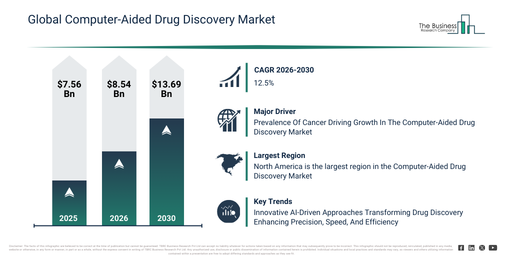
    The computer-aided drug discovery market has seen rapid expansion in recent years. It is projected to grow from $7.56 billion in 2025 to $8.54 billion by 2026, demonstrating a compound annual growth rate (CAGR) of 12.9%. Historically, this expansion has been driven by factors such as the increasing intricacy of drug development processes, greater investment in pharmaceutical research and development, the broadening scope of computational biology capabilities, the increasing volume of accessible biological data, and the incorporation of in silico modeling techniques.

    The computer-aided drug discovery market is anticipated to experience significant expansion in the near future. Its valuation is projected to reach $13.69 billion by 2030, progressing at a compound annual growth rate (CAGR) of 12.5%. The projected growth is driven by several factors, including greater investments in AI-enabled drug discovery, an increasing need for expedited drug development processes, the widening scope of personalized medicine research, the deeper integration of machine learning in pharmacology, and an expanded utilization of cloud computing for extensive simulations. Prominent developments expected throughout this period encompass a rise in the application of AI-driven virtual screening, increased adoption of molecular docking simulations, more extensive integration of genomic data into drug design, the growth of cloud-based drug discovery platforms, and a stronger emphasis on the accuracy of predictive modeling.

    Download A Free Sample Report For Comprehensive Market Insights:

    https://www.thebusinessresearchcompany.com/sample.aspx?id=19379&type=smp

    What Market Drivers Are Helping Shape The Computer-Aided Drug Discovery Market Expansion?

    The increasing incidence of cancer is anticipated to fuel the expansion of the computer-aided drug discovery market. Cancer, characterized by the unregulated proliferation and division of abnormal cells, sees its rising prevalence attributed to factors like lifestyle shifts, urbanization, environmental contamination, tobacco and alcohol use, and issues with healthcare accessibility and public awareness. Computer-aided drug discovery offers a means to develop drugs specifically targeting cancer cells with unique genetic mutations, thereby enabling more personalized and effective cancer treatments. For instance, data from July 2024, released by the Australian Institute of Health and Welfare, an Australia-based government agency, revealed approximately 165,000 new cancer cases were diagnosed in 2023. This figure is projected to rise to about 204,000 cases annually by 2033, contributing to an estimated total of 1.9 million cancer cases between 2024 and 2033. Thus, the escalating prevalence of cancer cases is a key driver for the computer-aided drug discovery market.

    Which Segment Divisions Form The Structure Of The Computer-Aided Drug Discovery Market?

    The computer-aided drug discovery market covered in this report is segmented –

    1) By Type: Structure Based Drug Design, Ligand-Based Drug Design, Sequence-Based Approaches

    2) By Therapeutic Area: Oncology, Neurology, Cardiovascular Disease, Respiratory Disease, Diabetes, Other Therapeutic Areas

    3) By End User: Pharmaceutical Companies, Biotechnology Companies, Research Laboratories

    Subsegments:

    1) By Structure Based Drug Design: X-ray Crystallography, Nuclear Magnetic Resonance (NMR) Spectroscopy, Molecular Docking Studies, Virtual Screening

    2) By Ligand-Based Drug Design: Quantitative Structure-Activity Relationship (QSAR) Models, Pharmacophore Modeling, Ligand Similarity Searching, Fragment-Based Drug Design

    3) By Sequence-Based Approaches: Protein Structure Prediction, Homology Modeling, Bioinformatics for Drug Target Identification, Genomic Data Analysis for Drug Discovery

    What Trends Are Affecting The Computer-Aided Drug Discovery Market Dynamics?

    Major companies in the computer-aided drug discovery (CADD) market are creating innovative solutions, including artificial intelligence in drug discovery, to boost the accuracy, speed, and efficiency of identifying potential drug candidates, refining lead compounds, and facilitating personalized medicine development. Artificial intelligence (AI) in drug discovery refers to the application of AI technologies like machine learning and deep learning, utilizing advanced algorithms to make the discovery and development of new drugs quicker, more efficient, and more exact. As an illustration, in December 2023, Merck KGaA, a Germany-based science and technology company, unveiled AIDDISONTM, the first software-as-a-service platform designed to integrate drug discovery and synthesis. By combining generative AI, machine learning, and computer-aided drug design, AIDDISONTM accelerates drug development through the virtual screening of compounds from over 60 billion chemical targets and the recommendation of optimal synthesis routes. The platform has been trained on two decades of pharmaceutical R&D data to identify drug-like candidates with desirable attributes such as non-toxicity and stability. Moreover, by incorporating Merck’s SynthiaTM retrosynthesis API, AIDDISONTM enhances drug manufacturing for improved efficiency and sustainability, with the objective of lowering the cost and time associated with drug discovery.

    Which Companies Form The Competitive Landscape Of The Computer-Aided Drug Discovery Market?

    Major companies operating in the computer-aided drug discovery market are Dassault Systèmes SE, PerkinElmer Inc., Roivant Sciences Ltd., Certara Inc., Schrödinger Inc., XtalPi Inc., Dotmatics Limited, Simulations Plus Inc., ChemAxon Ltd., Exscientia Ltd., Insilico Medicine Inc., Collaborative Drug Discovery Inc., OpenEye Scientific Software Inc., Nimbus Therapeutics LLC, Atomwise Inc., GNS Healthcare Inc., BenevolentAI Limited, EpiVax Inc., Numerate Inc., Cloud Pharmaceuticals Inc., Aris Pharmaceuticals Inc., Cyclica Inc., BioSolveIT GmbH, Chemical Computing Group ULC, InSilicoTrials Technologies S.p.A

    Access The Complete Computer-Aided Drug Discovery Market Report:

    https://www.thebusinessresearchcompany.com/report/computer-aided-drug-discovery-global-market-report

    Which Region Leads The Computer-Aided Drug Discovery Market By Size?

    North America was the largest region in the computer-aided drug discovery (CADD) market in 2025. The regions covered in the computer-aided drug discovery market report are Asia-Pacific, South East Asia, Western Europe, Eastern Europe, North America, South America, Middle East, Africa.

    Access Computer-Aided Drug Discovery Market Report for Deeper Competitive Insights

    https://www.thebusinessresearchcompany.com/customise?id=19379&type=smp

    Browse Through More Reports Similar to the Global Computer-Aided Drug Discovery Market 2026, By The Business Research Company

    Artificial Intelligence In Healthcare Diagnosis Global Market Report 2026

    https://www.thebusinessresearchcompany.com/report/artificial-intelligence-in-healthcare-diagnosis-global-market-report

    Diagnostic Contract Manufacturing Global Market Report 2026

    https://www.thebusinessresearchcompany.com/report/diagnostic-contract-manufacturing-global-market-report

    Ai In Medical Diagnostics Global Market Report 2026

    https://www.thebusinessresearchcompany.com/report/ai-in-medical-diagnostics-global-market-report

    Get in touch with us:

    The Business Research Company: https://www.thebusinessresearchcompany.com/

    Americas: +1 310-496-7795

    Asia: +44 7882 955267 & +91 8897263534

    Europe: +44 7882 955267

    Email us at: marketing@tbrc.info

    Follow us on:

    LinkedIn: https://in.linkedin.com/company/the-business-research-company

    YouTube: https://www.youtube.com/channel/UC24_fI0rV8cR5DxlCpgmyFQ

    Global Market Model: https://www.thebusinessresearchcompany.com/global-market-model

  • Computer-Aided Diagnosis Market Outlook Assessing Future Opportunities And Growth Prospects

    Computer-Aided Diagnosis Market Outlook Assessing Future Opportunities And Growth Prospects

    The Business Research Company’s 2026 market reports feature enhanced tools like market attractiveness analysis, TAM assessment, and company scoring matrices, along with interactive dashboards, deeper supply chain insights, and startup coverage strengthening the depth, usability, and strategic value of insights.

    What Market Value Trend Is Expected For The Computer-Aided Diagnosis Market From 2026 To 2030?

    The size of the computer-aided diagnosis market has demonstrated significant expansion in recent years. It is anticipated to increase from $1.03 billion in 2025 to $1.12 billion in 2026, reflecting a compound annual growth rate (CAGR) of 9.7%. The expansion observed in the past can be ascribed to the escalating complexity of medical imaging interpretation, a heightened demand for consistent diagnostic outcomes, the broader rollout of digital healthcare infrastructure, the wider adoption of imaging-based diagnostics, and advancements in computational power.

    The computer-aided diagnosis market is projected to experience substantial expansion over the upcoming years. It is anticipated to reach $1.61 billion by 2030, exhibiting a compound annual growth rate (CAGR) of 9.3%. This growth during the forecast period can be attributed to the increasing embrace of AI-assisted clinical workflows, a growing emphasis on value-based healthcare, the expansion of personalized diagnostics, the rising integration of cloud-based diagnostic platforms, and increased investments in healthcare analytics. Key trends expected in this period include the wider adoption of decision-support diagnostic software, an increase in the use of CAD in chronic disease management, greater integration with electronic health records, the development of multi-disease diagnostic algorithms, and an intensified focus on diagnostic accuracy and consistency.

    Download A Free Sample Report For Comprehensive Market Insights:

    https://www.thebusinessresearchcompany.com/sample.aspx?id=24508&type=smp

    Which Significant Factors Are Encouraging Growth In The Computer-Aided Diagnosis Market?

    The increasing occurrence of breast cancer is anticipated to drive expansion in the computer-aided diagnosis market in the future. This condition involves the cancerous development of atypical cells that begin in breast tissue, frequently within the milk ducts or lobules. An increase in obesity levels heightens the risk of breast cancer, as surplus fat leads to elevated estrogen, which encourages tumor proliferation. Computer-Aided Diagnosis (CAD) assists in combating breast cancer by improving the precision and speed of tumor identification in medical scans, thereby supporting radiologists in making quicker and more dependable diagnoses. To illustrate, in October 2025, data from Breastcancer.org, a US-based nonprofit focused on research and awareness, indicates that in 2025, an estimated 316,950 women in the United States are expected to be diagnosed with invasive breast cancer. Concurrently, there will be an estimated 59,080 new instances of ductal carcinoma in situ (DCIS), with around 42,170 women predicted to succumb to the illness. Furthermore, breast cancer consistently represents about 32% of all new cancer diagnoses among U.S. women each year. Consequently, the increasing incidence of breast cancer is fueling the expansion of the computer-aided diagnosis market.

    How Are Different Segment Groups Identified Within The Computer-Aided Diagnosis Market?

    The computer-aided diagnosis market covered in this report is segmented –

    1) By Imging Modalities: Mammography, Nuclear Imaging, Ultrasound Imaging, Magnetic Resonance Imaging, Other Imaging Modalities

    2) By Application: Breast Cancer, Lung Cancer, Prostate Cancer, Alzheimer’s Disease, Diabetic Retinopathy, Other Applications

    3) By End Use: Hospitals, Clinics, Medical Diagnstic Centers, Other End Uses

    Subsegments:

    1) By Mammography: Full-Field Digital Mammography (FFDM), Contrast-Enhanced Mammography, Digital Breast Tomosynthesis (DBT)

    2) By Nuclear Imaging: Positron Emission Tomography (PET), Single-Photon Emission Computed Tomography (SPECT)

    3) By Ultrasound Imaging: 2D Ultrasound, Doppler Ultrasound, 3D Or 4D Ultrasound

    4) By Magnetic Resonance Imaging: Brain Magnetic Resonance Imaging, Cardiac Magnetic Resonance Imaging, Breast Magnetic Resonance Imaging

    5) By Other Imaging Modalities: Computed Tomography (CT), Optical Imaging, X-ray Imaging

    Which Trends Are Influencing The Expansion Of The Computer-Aided Diagnosis Market?

    Leading companies active in the computer-aided diagnosis market are focusing on developing technologically advanced products, such as AI-powered computer-aided detection (CADe) software, to improve diagnostic accuracy and workflow efficiency. AI-powered computer-aided detection (CADe) software refers to intelligent systems that employ artificial intelligence and machine learning to automatically identify and highlight potential abnormalities or diseases in medical images, thereby assisting clinicians in achieving early and precise diagnoses. For instance, in March 2025, Align Technology Inc., a US-based manufacturing company, launched Align X-ray Insights, an AI-powered software-based computer-aided detection (CADe) solution. This solution leverages automated analysis of 2D dental radiographs to support clinicians in diagnosing dental and oral pathologies, while also promoting standardized assessments, optimized clinical workflows, and increased patient involvement. It enhances dental practice by automating radiographic analysis, standardizing diagnostics, streamlining workflows, and improving patient communication and treatment acceptance.

    Who Are The Key Market Participants In The Computer-Aided Diagnosis Market?

    Major companies operating in the computer-aided diagnosis market are Hitachi Ltd, International Business Machines Corporation (IBM), Median Technologies, Siemens Healthineers AG, Fujifilm Holdings Corporation, Koninklijke Philips N.V., GE Healthcare Technologies Inc., Nano-X Imaging Ltd, Hologic Inc., Agfa-Gevaert NV, ESAOTE S.p.A., Samsung Medison, Merge Healthcare Inc., Canon Medical Systems Corporation, iCAD Inc., THERAPIXEL S.A.S., Riverain Technologies LLC, Zebra Medical Vision Ltd, CureMetrix Inc., EDDA Technology Inc.

    Access The Complete Computer-Aided Diagnosis Market Report:

    https://www.thebusinessresearchcompany.com/report/computer-aided-diagnosis-global-market-report

    Which Region Has The Strongest Presence In The Computer-Aided Diagnosis Market?

    North America was the largest region in the computer-aided diagnosis market in 2025. The regions covered in the computer-aided diagnosis market report are Asia-Pacific, South East Asia, Western Europe, Eastern Europe, North America, South America, Middle East, Africa.

    Access Computer-Aided Diagnosis Market Report for Deeper Competitive Insights

    https://www.thebusinessresearchcompany.com/customise?id=24508&type=smp

    Browse Through More Reports Similar to the Global Computer-Aided Diagnosis Market 2026, By The Business Research Company

    Artificial Intelligence In Marketing Global Market Report 2026

    https://www.thebusinessresearchcompany.com/report/artificial-intelligence-in-marketing-global-market-report

    Product Analytics Global Market Report 2026

    https://www.thebusinessresearchcompany.com/report/product-analytics-global-market-report

    Financial Analytics Global Market Report 2026

    https://www.thebusinessresearchcompany.com/report/financial-analytics-global-market-report

    Get in touch with us:

    The Business Research Company: https://www.thebusinessresearchcompany.com/

    Americas: +1 310-496-7795

    Asia: +44 7882 955267 & +91 8897263534

    Europe: +44 7882 955267

    Email us at: marketing@tbrc.info

    Follow us on:

    LinkedIn: https://in.linkedin.com/company/the-business-research-company

    YouTube: https://www.youtube.com/channel/UC24_fI0rV8cR5DxlCpgmyFQ

    Global Market Model: https://www.thebusinessresearchcompany.com/global-market-model

  • Computer-Aided Detection Market Industry Forecast Reflecting Growth To $1.68 Billion By 2030

    Computer-Aided Detection Market Industry Forecast Reflecting Growth To $1.68 Billion By 2030

    The Business Research Company’s 2026 market reports feature enhanced tools like market attractiveness analysis, TAM assessment, and company scoring matrices, along with interactive dashboards, deeper supply chain insights, and startup coverage strengthening the depth, usability, and strategic value of insights.

    How Does The Forecasted Market Size Of The Computer-Aided Detection Market Compare Between 2026 And 2030?

    The computer-aided detection market has experienced robust expansion in recent years. It is projected to increase from $1.08 billion in 2025 to $1.18 billion in 2026, demonstrating a compound annual growth rate (CAGR) of 9.6%. This historic growth can be attributed to an increasing volume of medical imaging procedures, rising cancer screening programs, the expansion of radiology departments, improvements in digital imaging technologies, and the availability of large annotated imaging datasets.

    The computer-aided detection market is projected to witness significant expansion in the upcoming years. Its value is set to climb to $1.69 billion by 2030, demonstrating a compound annual growth rate (CAGR) of 9.3%. The forecasted growth can be attributed to a heightened demand for prompt and accurate diagnoses, the increasing integration of AI-driven clinical decision support, the widening scope of precision medicine initiatives, growing investments in healthcare AI solutions, and a rise in regulatory approvals for CAD systems. Key developments during this period include a greater reliance on AI-based image analysis tools, an increased adoption of CAD in oncology screening, enhanced integration of CAD with existing imaging modalities, the development of multi-modal diagnostic platforms, and a strengthened emphasis on the early detection of diseases.

    Download A Free Sample Report For Comprehensive Market Insights:

    https://www.thebusinessresearchcompany.com/sample.aspx?id=24507&type=smp

    What Core Drivers Are Transforming The Computer-Aided Detection Market?

    The increasing occurrence of breast cancer is projected to fuel the growth of the computer-aided detection market in the foreseeable future. Breast cancer refers to a malignant tumor that develops in the cells of the breast, predominantly originating in the ducts or lobules, and has the potential to spread to adjacent tissues or other body parts if not identified and treated early. The rise in breast cancer rates is mainly attributable to lifestyle changes, such as increasing obesity, which elevate estrogen levels and can promote cancer growth. Computer-aided detection (CAD) technology enhances breast cancer diagnosis by scanning medical images to pinpoint potential abnormalities, thereby enabling earlier and more precise detection. It assists radiologists in identifying tumors that might otherwise be overlooked, significantly improving the accuracy of screenings. For instance, in October 2024, according to the American Cancer Society, a US-based cancer organization, the number of new invasive breast cancer cases among US women increased to approximately 310,720. Likewise, diagnoses of ductal carcinoma in situ (DCIS) rose to 56,500. Furthermore, in October 2025, Breastcancer.org, a US-based nonprofit research and awareness organization, estimated that in 2025, approximately 316,950 women in the United States will be diagnosed with invasive breast cancer, with an additional 59,080 new cases of ductal carcinoma in situ (DCIS). Additionally, around 42,170 women are projected to die from the disease, and breast cancer continues to constitute about 32% of all new cancer cases among U.S. women annually. Therefore, the escalating prevalence of breast cancer is a significant driver for the expansion of the computer-aided detection market.

    What Segment Categories Are Evaluated In The Computer-Aided Detection Market Study?

    The computer-aided detection market covered in this report is segmented –

    1) By Product: Mammography, Ultrasound Imaging, Magnetic Resonance Imaging, Tomosynthesis, Computed Tomography, Other Products

    2) By Application: Tuberculosis, Breast Cancer, Lung Cancer, Colon Cancer, Prostate Cancer, Liver Cancer, Bone Cancer, Neurological Indications

    3) By End-User: Hospitals, Clinics, Diagnostic Centres, Other End-Users

    Subsegments:

    1) By Mammography: Full-Field Digital Mammography (FFDM), Screen-Film Mammography (SFM), Three-Dimensional (3D) Mammography

    2) By Ultrasound Imaging: Automated Breast Ultrasound (ABUS), Handheld Ultrasound, Doppler Ultrasound, Elastography

    3) By Magnetic Resonance Imaging: Breast Magnetic Resonance Imaging (MRI), Brain Magnetic Resonance Imaging (MRI), Abdominal Magnetic Resonance Imaging (MRI), Musculoskeletal Magnetic Resonance Imaging (MRI)

    4) By Tomosynthesis: Breast Tomosynthesis, Chest Tomosynthesis, Orthopedic Tomosynthesis

    5) By Computed Tomography: Chest Computed Tomography (CT), Abdominal Computed Tomography (CT), Brain Computed Tomography (CT), Cardiac Computed Tomography (CT)

    6) By Other Products: Nuclear Medicine, X-Ray Imaging, Optical Imaging, Thermography

    Which Trends Are Expected To Shape The Computer-Aided Detection Market?

    Leading companies in the computer-aided detection market are focusing on developing advanced solutions, such as artificial intelligence (AI)-powered computer-aided detection (CADe) software, to improve diagnostic accuracy, streamline image analysis, and support early disease detection. AI-powered computer-aided detection (CADe) software employs artificial intelligence to scan medical images for indications of abnormalities. It enhances diagnostic precision and assists in the early identification of conditions like cancer. For instance, in March 2025, Align Technology, Inc., a Switzerland-based provider of digital orthodontics and restorative dentistry, launched Align X-ray Insights for dental radiograph analysis. This system uses AI to enhance dental imaging analysis for more accurate diagnostics. It improves workflow efficiency by offering real-time insights directly within existing imaging systems. The software aims to support dental professionals in providing precise, timely patient care across the EU and UK.

    Which Organizations Are Operating Within The Computer-Aided Detection Market?

    Major companies operating in the computer-aided detection market are Hitachi Ltd., IBM, Fujifilm Holdings Corporation, Siemens Healthineers AG, Koninklijke Philips N.V., GE Healthcare Technologies Inc., Hologic Inc., Canon Medical Systems Corporation, Agfa‑Gevaert NV, Carestream Health Inc., ESAOTE S.p.A., Aidoc Medical Ltd., Median Technologies S.A., iCAD Inc., Riverain Technologies LLC, Zebra Medical Vision Ltd., CureMetrix Inc., THERAPIXEL S.A.S., ScreenPoint Medical B.V., Lunit Inc., Qure.ai, Delft Imaging, VinBrain

    Access The Complete Computer-Aided Detection Market Report:

    https://www.thebusinessresearchcompany.com/report/computer-aided-detection-global-market-report

    Which Region Stands As The Largest Contributor To The Computer-Aided Detection Market?

    North America was the largest region in the computer-aided detection market in 2025. Asia-Pacific is expected to be the fastest-growing region in the forecast period. The regions covered in the computer-aided detection market report are Asia-Pacific, South East Asia, Western Europe, Eastern Europe, North America, South America, Middle East, Africa.

    Access Computer-Aided Detection Market Report for Deeper Competitive Insights

    https://www.thebusinessresearchcompany.com/customise?id=24507&type=smp

    Browse Through More Reports Similar to the Global Computer-Aided Detection Market 2026, By The Business Research Company

    Dental Cad Or Cam Global Market Report 2026

    https://www.thebusinessresearchcompany.com/report/dental-cad-or-cam-global-market-report

    Computer Aided Design Cad Software Global Market Report 2026

    https://www.thebusinessresearchcompany.com/report/computer-aided-design-cad-software-global-market-report

    Machining Centres Global Market Report 2026

    https://www.thebusinessresearchcompany.com/report/machining-centres-global-market-report

    Get in touch with us:

    The Business Research Company: https://www.thebusinessresearchcompany.com/

    Americas: +1 310-496-7795

    Asia: +44 7882 955267 & +91 8897263534

    Europe: +44 7882 955267

    Email us at: marketing@tbrc.info

    Follow us on:

    LinkedIn: https://in.linkedin.com/company/the-business-research-company

    YouTube: https://www.youtube.com/channel/UC24_fI0rV8cR5DxlCpgmyFQ

    Global Market Model: https://www.thebusinessresearchcompany.com/global-market-model