Month: June 2026

  • Disseminated Intravascular Coagulation (DIC) Market Set To Grow From $0.5 Billion In 2026 To $0.61 Billion By 2030 At A CAGR Of 4.8%

    Disseminated Intravascular Coagulation (DIC) Market Set To Grow From $0.5 Billion In 2026 To $0.61 Billion By 2030 At A CAGR Of 4.8%

    Through market attractiveness analysis, total addressable market evaluation, company benchmarking matrices, interactive Excel dashboards, expanded supply chain intelligence, emerging startup coverage, and detailed product insights, The Business Research Company’s 2026 market reports provide more actionable and strategically valuable research.

    Disseminated Intravascular Coagulation (DIC) Market Size Outlook: How Fast Will Revenue Grow Through 2030?

    The global market for disseminated intravascular coagulation (DIC) treatments has demonstrated consistent expansion, projecting a rise from $0.49 billion in 2025 to $0.51 billion in 2026, reflecting a compound annual growth rate (CAGR) of 5.0%. This upward trend observed historically is largely influenced by factors such as elevated mortality rates in critical care settings, the scarcity of advanced diagnostic methods for early detection, the widespread incidence of sepsis, complications arising from traumatic injuries, and the absence of specialized therapeutic interventions.

    The global market for Disseminated Intravascular Coagulation (DIC) is projected to experience consistent expansion, reaching an estimated value of $0.61 billion by the year 2030, driven by a compound annual growth rate of 4.8%. This anticipated growth throughout the forecast period is underpinned by several key factors, including the development of sophisticated coagulation diagnostic tools, enhancements in critical care facilities, the implementation of early detection and intervention strategies, progress in clinical research, and increased public awareness initiatives. Furthermore, significant market trends are expected to shape this period, characterized by a heightened emphasis on the prompt identification of coagulation-related disorders, a greater utilization of blood component therapies, the broadening scope of hospital-based critical care services, growing recognition of DIC within high-risk patient populations, and the increasing adoption of cutting-edge diagnostic and monitoring technologies.

    Download A Free Sample Report For Comprehensive Market Insights:

    https://www.thebusinessresearchcompany.com/sample.aspx?id=21172&type=smp

    Disseminated Intravascular Coagulation (DIC) Market Growth Factors Supporting Long-Term Expansion

    A key factor propelling the expansion of the disseminated intravascular coagulation (DIC) market is the escalating incidence of cancer. This disease, marked by the aberrant proliferation and dissemination of cells throughout the body, possesses the capacity to infiltrate and damage healthy tissues. The surge in cancer diagnoses stems from a confluence of elements including an aging demographic, shifts in daily habits, environmental influences, infectious agents, and inherent genetic factors. Cancer can precipitate disseminated intravascular coagulation (DIC) by initiating an overactive response within the blood clotting system, often mediated by substances released from tumors that promote coagulation, ultimately resulting in pervasive clot formation and hemorrhage. Illustratively, data from the National Cancer Institute, a U.S. governmental body, indicated that in 2022, approximately 20 million new cancer diagnoses and 9.7 million fatalities linked to cancer were reported globally, with forecasts anticipating these figures to climb to 29.9 million new cases and 15.3 million deaths annually by 2040, underscoring the significant impact of rising cancer rates on the DIC market’s growth trajectory.

    Disseminated Intravascular Coagulation (DIC) Market Segments: Where Are The Largest Growth Opportunities?

    The disseminated intravascular coagulation (dic) market covered in this report is segmented –

    1) By Treatment: Medicines, Transfusions, Surgery, Other Treatments

    2) By Diagnosis: Complete Blood Count With Blood Smear Exam, Partial Thromboplastin Time (PTT), Fibrinogen Blood Test, D-dimer, Other Diagnosis

    3) By Route Of Administration: Oral, Parenteral, Other Routes Of Administration

    4) By Distribution Channel: Hospital Pharmacy, Retail Pharmacy, Online Pharmacy

    5) By End-Users: Hospitals, Specialty Clinics, Homecare, Other End-Users

    Subsegments:

    1) By Medicines: Anticoagulants, Antiplatelet Drugs, Fibrinolytics, Procoagulants, Antithrombin Therapy

    2) By Transfusions: Platelet Transfusion, Fresh Frozen Plasma (FFP), Cryoprecipitate Transfusion, Red Blood Cell Transfusion

    3) By Surgery: Surgical Removal Of Thrombus, Organ Surgery

    4) By Other Treatments: Plasma Exchange, Supportive Care, Steroid Therapy

    Disseminated Intravascular Coagulation (DIC) Market Industry Trends Shaping Future Revenue Growth

    Leading enterprises within the disseminated intravascular coagulation (DIC) market are prioritizing the adoption of sophisticated technologies, like continuous hemostasis evaluation, to improve the swiftness and precision of diagnoses, and to optimize interventions for severely ill individuals. This continuous hemostasis assessment involves the ongoing observation of blood clot development and coagulation indicators during laboratory analysis, thereby furnishing medical professionals with prompt understandings crucial for superior management of blood clotting disorders. Illustratively, in February of 2024, Roche Diagnostics, a diagnostics firm headquartered in Switzerland, introduced three novel coagulation tests designed for Factor Xa inhibitors, specifically apixaban, edoxaban, and rivaroxaban, compatible with their cobas t series of automated testing instruments. These particular tests utilize Roche’s cassette-based reagent delivery mechanism, which streamlines the preparation of testing substances, reduces the need for manual manipulation, and provides rapid, dependable quantification of anti-Xa activity, an essential metric for overseeing DIC patients undergoing anticoagulant therapy.

    Disseminated Intravascular Coagulation (DIC) Market Major Participants And Competitive Dynamics

    Major companies operating in the disseminated intravascular coagulation (dic) market are Nihon Kohden Corporation, Pfizer Inc., Johnson & Johnson, F. Hoffmann-La Roche Ltd., Merck & Co. Inc., Bayer AG, Sanofi S.A., Abbott Laboratories, Thermo Fisher Scientific Inc., Fresenius Kabi AG, Danaher Corporation, Siemens Healthineers, Grifols S.A., Beckman Coulter Inc., Sysmex Corporation, Bio-Rad Laboratories Inc., AstraZeneca plc, Teva Pharmaceutical Industries Ltd., Novartis AG, Eli Lilly and Company, GlaxoSmithKline plc

    Access The Complete Disseminated Intravascular Coagulation (DIC) Market Report:

    https://www.thebusinessresearchcompany.com/report/disseminated-intravascular-coagulation-dic-global-market-report

    Disseminated Intravascular Coagulation (DIC) Market Regional Distribution: Which Areas Drive Market Expansion?

    North Americawas the largest region in the disseminated intravascular coagulation (DIC) market in 2025. The regions covered in the disseminated intravascular coagulation (dic) market report are Asia-Pacific, South East Asia, Western Europe, Eastern Europe, North America, South America, Middle East, Africa.

    Get in touch with us:

    The Business Research Company: https://www.thebusinessresearchcompany.com/

    Americas: +1 310-496-7795

    Asia: +44 7882 955267 & +91 8897263534

    Europe: +44 7882 955267

    Email us at: marketing@tbrc.info

    Follow us on:

    LinkedIn: https://in.linkedin.com/company/the-business-research-company

    YouTube: https://www.youtube.com/channel/UC24_fI0rV8cR5DxlCpgmyFQ

    Global Market Model: https://www.thebusinessresearchcompany.com/global-market-model
  • Disintegration Tester Market Opportunities Are Emerging Beyond Traditional Growth Areas

    Disintegration Tester Market Opportunities Are Emerging Beyond Traditional Growth Areas

    Delivering more actionable and strategically valuable research, The Business Research Company’s 2026 market reports feature market attractiveness analysis, total addressable market evaluation, company benchmarking matrices, interactive Excel dashboards, expanded supply chain intelligence, emerging startup coverage, and detailed product insights.

    Disintegration Tester Market Size, Value And Growth Trends Through 2030

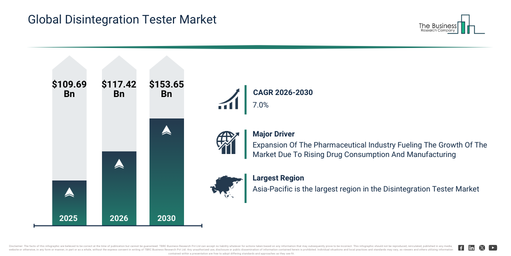
    The market for disintegration testers has experienced robust expansion lately, transitioning from a valuation of $109.69 billion in 2025 to an anticipated $117.42 billion in 2026, reflecting a compound annual growth rate of 7.0%. This historical growth trajectory has been propelled by factors such as stringent pharmacopoeial quality standards, the increasing prevalence of solid dosage pharmaceutical forms, the inherent limitations of manual testing methodologies, the imperative for regulatory compliance within the industry, and the overall growth in pharmaceutical manufacturing operations.

    The market for disintegration testers is poised for robust expansion in the foreseeable future, projecting an increase to $153.65 billion by 2030, driven by a compound annual growth rate of 7.0%. This upward trajectory during the projected period is underpinned by several key factors, including the increasing automation within quality control laboratories, the burgeoning pharmaceutical outsourcing sector, the widespread adoption of smart laboratory technologies, heightened regulatory demands, and a growing need for high-throughput testing solutions. Prominent trends anticipated within this timeframe involve a surge in the demand for automated disintegration testers, an escalating emphasis on adhering to pharmaceutical quality standards, the integration of digitally managed testing instruments, the proliferation of multi-station testing setups, and a rise in their utilization within contract manufacturing organizations.

    Download A Free Sample Report For Comprehensive Market Insights:

    https://www.thebusinessresearchcompany.com/sample.aspx?id=19030&type=smp

    #Disintegration Tester Market Demand Drivers Creating New Revenue Opportunities

    The burgeoning pharmaceutical sector is anticipated to spur advancements in the disintegration tester market. This industry encompasses the research, development, manufacturing, and distribution of medicinal products designed for disease prevention, diagnosis, treatment, and cure. Factors contributing to this expansion include an aging global population, a higher incidence of long-term illnesses, progress in medical technologies, broader access to healthcare, and a growing emphasis on health and well-being. A disintegration tester serves as a vital tool within pharmaceuticals, assessing the rapidity with which solid dosage forms like tablets and capsules deconstruct into smaller constituents when subjected to specific liquids under simulated physiological conditions. Illustratively, as reported in November 2025 by the OECD, a Paris-based intergovernmental organization offering comparative data and policy analysis, retail pharmaceutical spending constituted roughly 16.7% of overall health expenditures among its member nations in 2023. The same report indicated that the average per capita spending on retail pharmaceuticals, adjusted for purchasing power parity (PPP), reached USD 766 across OECD countries, with the United States exhibiting the highest expenditure at USD 1,713 per person. Consequently, the pharmaceutical industry’s growth trajectory is directly fueling the expansion of the disintegration tester market.

    An escalating rate of chronic illnesses is poised to stimulate growth within the disintegration tester market. These persistent health conditions necessitate continuous medical care and can impede daily functioning. The rise in chronic ailments is largely attributable to demographic shifts towards older populations, evolving lifestyle patterns, and increased risk factors such as obesity and inactivity. The disintegration tester sector supplies indispensable quality assurance apparatus crucial for guaranteeing uniform and efficacious drug release in treatments for chronic conditions. As an example, data from the CDC, a US public health agency, published in October 2024 indicated that chronic ailments are exceedingly common among adult age demographics in the United States. Specifically, more than 90% of adults aged 65 and above grapple with at least one chronic condition. Among those in middle adulthood, aged 35 to 64, a majority exceeding 75% are impacted by a minimum of one chronic condition. Even in the younger adult cohort, aged 18 to 34, approximately 60% manage at least one such condition, underscoring the pervasive reach of chronic diseases across all adult life stages. Therefore, the increasing burden of chronic diseases is a significant driver for the disintegration tester market.

    Disintegration Tester Market Segment Analysis: What Are The Major Market Categories?

    The disintegration tester market covered in this report is segmented –

    1) By Type: 2 Station Disintegration Tester, 4 Station Disintegration Tester, 6 Station Disintegration Tester, Other Types

    2) By Distribution Channel: Direct Sales, Distributors, Online Retail

    3) By Application: Pharmaceutical Industry, Cosmetics Industry, Food Industry, Other Applications

    Subsegments:

    1) By 2 Station Disintegration Tester: Manual 2 Station Tester, Automated 2 Station Tester

    2) By 4 Station Disintegration Tester: Manual 4 Station Tester, Automated 4 Station Tester

    3) By 6 Station Disintegration Tester: Manual 6 Station Tester, Automated 6 Station Tester

    4) By Other Types: Disintegration Tester with Temperature Control, Disintegration Tester With Optical Sensors, Multi-Station Disintegration Tester

    Disintegration Tester Market Leading Companies Driving Competitive Growth

    Major companies operating in the disintegration tester market are Agilent Technologies Inc., MRC Group, Veego Instruments, Sotax Corporation, Labindia Analytical Instruments Private Limited, Kerone Engineering Solutions Ltd., Torontech Inc., Distek Inc., Koehler Instrument Company, Inc., Veego Instrument Corporation, Saintyco, Kinesis Inc., Copley Scientific Limited, Pharma Test Apparatebau AG, Yatherm Scientific, Charles Ischi AG, Pharmatron LLC, ATS Scientific Inc., Electrolab Group, Vedor Group

    Access The Complete Disintegration Tester Market Report:

    https://www.thebusinessresearchcompany.com/report/disintegration-tester-global-market-report

    Disintegration Tester Market Leading Geography: Which Region Generates The Most Revenue?

    Asia-Pacificwas the largest region in the disintegration tester market in 2025. The regions covered in the disintegration tester market report are Asia-Pacific, South East Asia, Western Europe, Eastern Europe, North America, South America, Middle East, Africa.

    Get in touch with us:

    The Business Research Company: https://www.thebusinessresearchcompany.com/

    Americas: +1 310-496-7795

    Asia: +44 7882 955267 & +91 8897263534

    Europe: +44 7882 955267

    Email us at: marketing@tbrc.info

    Follow us on:

    LinkedIn: https://in.linkedin.com/company/the-business-research-company

    YouTube: https://www.youtube.com/channel/UC24_fI0rV8cR5DxlCpgmyFQ

    Global Market Model: https://www.thebusinessresearchcompany.com/global-market-model

  • Disease Registry Software Market Expansion Is Opening New Pathways For Strategic Investment

    Disease Registry Software Market Expansion Is Opening New Pathways For Strategic Investment

    Enhanced with market attractiveness analysis, total addressable market evaluation, company benchmarking matrices, interactive Excel dashboards, expanded supply chain intelligence, emerging startup coverage, and detailed product insights, The Business Research Company’s 2026 market reports deliver more actionable and strategically valuable research.

    Disease Registry Software Market CAGR Analysis And Future Market Development

    The marketplace for disease registry software has experienced a significant upswing. Projections indicate a substantial expansion, with the market value set to increase from $1.55 billion in 2025 to $1.73 billion in 2026, demonstrating a compound annual growth rate of 11.4%. Key factors fueling this growth during the past period include the widespread adoption of digital patient record-keeping, the proliferation of research initiatives focused on specific ailments, escalating demands for regulatory compliance reporting, the integration of electronic health records, and the increasing reliance on analytical tools to inform clinical choices.

    The market for disease registry software is poised for substantial expansion, projecting a reach of $2.64 billion by 2030, fueled by an 11.1% compound annual growth rate. This projected increase is largely driven by a heightened need for population health analytics, the growing incorporation of AI for clinical insights, a wider embrace of cloud-based registry solutions, an intensified focus on value-based healthcare, and the increasing utilization of real-world data in clinical studies. Key developments anticipated during this period include a greater adoption of unified disease registry platforms, expanded use of cloud-based patient data management systems, a stronger emphasis on reporting data in accordance with regulations, the proliferation of registry solutions integrated with electronic health records, and a more pronounced effort in gathering real-world evidence.

    Download A Free Sample Report For Comprehensive Market Insights:

    https://www.thebusinessresearchcompany.com/sample.aspx?id=28208&type=smp

    Disease Registry Software Market Expansion Supported By Key Demand Factors

    The trajectory of the disease registry software market is poised for expansion, largely fueled by the escalating utilization of personalized medicine. This approach to healthcare focuses on customizing treatment and preventative measures based on an individual’s distinct genetic profile, habits, and surroundings. The widespread embrace of personalized medicine stems primarily from breakthroughs in genomics, which facilitate the accurate detection of genetic differences and the development of individualized therapies. Disease registry software plays a pivotal role in enabling personalized medicine by efficiently gathering and organizing patient health information, thereby facilitating bespoke treatment regimens and more informed clinical choices. It simplifies the process of accessing and analyzing data, ultimately leading to better patient results and progress in precision medicine. A notable indicator of this trend is the U.S. Food and Drug Administration’s (FDA) approval of 26 new personalized medicines in 2023, a substantial rise from the 12 approvals in 2022, as reported in February 2024 by the Personalized Medicine Coalition (PMC), a non-profit entity based in the United States. Consequently, the expanding use of personalized medicine is a key impetus behind the growth observed in the disease registry software market.

    Disease Registry Software Market Segment Breakdown: Which Categories Generate The Most Revenue?

    The disease registry software market covered in this report is segmented –

    1) By Type: Standalone, Integrated

    2) By Database: Public, Commercial

    3) By Deployment Mode: On-Premises, Cloud-Based

    4) By End-User: Hospitals, Government Organizations, Research Centers, Pharmaceutical Companies, Other End-Users

    Subsegments:

    1) By Standalone: Patient Registry Software, Population Health Registry Software, Research Registry Software, Custom Or Single-Disease Registry Software

    2) By Integrated: Electronic Health Record (EHR)-Integrated Registry Software, Practice Management System-Integrated Registry Software, Clinical Decision Support (CDS)-Integrated Registry Software, Health Information Exchange (HIE)-Integrated Registry Software

    Disease Registry Software Market Growth Trends Influencing Competitive Dynamics

    Leading entities within the disease registry software sector are strategically prioritizing the creation of registries centered around the patient experience, incorporating digital solutions to monitor health results and facilitate tailored medical interventions. These digital registries are essentially electronic frameworks or software applications engineered for the organized acquisition, retention, and administration of patient health data, thereby superseding outdated paper-based record-keeping. As an illustration, in August 2025, the American College of Cardiology (ACC), a non-profit medical organization based in the United States, introduced the CONNECT-HCM Registry. This particular initiative represents a national digital registry developed with the aim of enhancing the comprehension and management of hypertrophic cardiomyopathy (HCM), which is recognized as the most prevalent inherited heart condition. The registry facilitates the direct inclusion of patients from a broader geographical scope than just individual medical facilities, effectively bridging persistent deficiencies in diagnosis and treatment. This system integrates registry information with electronic health records through the utilization of Arboretum’s Hugo Connect platform, empowering researchers to meticulously follow symptoms, diagnostic imagery, treatment modalities, and patient prognoses over extended periods.

    Disease Registry Software Market Key Players And Strategic Industry Positioning

    Major companies operating in the disease registry software market are Optum Inc., IQVIA Holdings Inc., Syneos Health Inc., Epic Systems Corporation, Premier Inc., MRO Corp., ImageTrend Inc., Anju Software Inc., BayaTree Inc., Medrio Inc., ArborMetrix Inc., Cedaron Medical Inc., Evado Pty. Ltd., OpenClinica LLC, Dacima Software Inc., Global Vision Technologies Inc., Ordinal Data Inc., Healthmonix LLC, Axis Clinical Software Inc., Vanderbilt University

    Access The Complete Disease Registry Software Market Report:

    https://www.thebusinessresearchcompany.com/report/disease-registry-software-global-market-report

    Disease Registry Software Market Regional Outlook: Where Are The Largest Opportunities Located?

    North Americawas the largest region in the disease registry software market in 2025. The regions covered in the disease registry software market report are Asia-Pacific, South East Asia, Western Europe, Eastern Europe, North America, South America, Middle East, Africa.

    Get in touch with us:

    The Business Research Company: https://www.thebusinessresearchcompany.com/

    Americas: +1 310-496-7795

    Asia: +44 7882 955267 & +91 8897263534

    Europe: +44 7882 955267

    Email us at: marketing@tbrc.info

    Follow us on:

    LinkedIn: https://in.linkedin.com/company/the-business-research-company

    YouTube: https://www.youtube.com/channel/UC24_fI0rV8cR5DxlCpgmyFQ

    Global Market Model: https://www.thebusinessresearchcompany.com/global-market-model

  • Disease Forecasting Platform Market Trends Are Creating New Opportunities For Industry Leaders

    Disease Forecasting Platform Market Trends Are Creating New Opportunities For Industry Leaders

    Through market attractiveness analysis, total addressable market evaluation, company benchmarking matrices, interactive Excel dashboards, expanded supply chain intelligence, emerging startup coverage, and detailed product insights, The Business Research Company’s 2026 market reports provide more actionable and strategically valuable research.

    Disease Forecasting Platform Market Expansion From $3.41 Billion In 2026 To $7.95 Billion In 2030

    The market for disease forecasting platforms has experienced substantial expansion recently, projected to increase from $2.76 billion in 2025 to $3.41 billion in 2026, reflecting a compound annual growth rate of 23.8%. This upward trend in the historical period has been fueled by factors such as the rising frequency of infectious disease outbreaks, enhancements in epidemiological research infrastructure, the increasing availability of extensive health data, a greater adoption of cloud-based analytical solutions, and the expansion of public health monitoring initiatives.

    Anticipate a period of considerable expansion for the disease forecasting platform market, projecting a surge to $7.96 billion by the year 2030, fueled by a robust compound annual growth rate (CAGR) of 23.6%. This upward trajectory over the upcoming forecast period is underpinned by several key drivers, including amplified financial commitments to predictive healthcare analytics, a heightened need for sophisticated tools facilitating the early identification of outbreaks, the broader implementation of artificial intelligence-enhanced public health solutions, the increasing incorporation of Internet of Things (IoT) technology for health monitoring, and a heightened emphasis on preemptive disease prevention strategies. Furthermore, significant trends shaping this market’s future include the escalating adoption of AI-powered disease prediction models, a greater incorporation of live health data feeds, the expanding utilization of environmental and demographic analytical tools, the development of more advanced early warning and alert mechanisms, and a more pronounced concentration on strategic, forward-looking public health planning.

    Download A Free Sample Report For Comprehensive Market Insights:

    https://www.thebusinessresearchcompany.com/sample.aspx?id=28207&type=smp

    #Disease Forecasting Platform Market Growth Drivers And Industry Catalysts

    The increasing incidence of chronic illnesses is anticipated to be a significant catalyst for the expansion of the disease forecasting platform market. These chronic conditions, which are not contagious and often stem from genetic predispositions, lifestyle choices, or environmental influences, encompass ailments like cardiovascular diseases, diabetes, and various cancers. Factors such as inadequate nutrition, tobacco use, and insufficient physical activity are contributing to the escalating rates of these ailments. Disease forecasting platforms play a crucial role in managing these non-communicable diseases by employing advanced analytics of large datasets, machine learning algorithms, and continuous health surveillance to anticipate disease patterns, pinpoint at-risk demographics, facilitate timely interventions, and inform tailored preventative measures, thereby enhancing overall public health and alleviating the strain of long-term health issues. Illustratively, a report from the Kenya National Bureau of Statistics indicated that in July 2025, non-communicable diseases represented 61.7% of the total disease burden in Kenya during 2024, an increase from 52.4% in the preceding year. Consequently, the growing prevalence of non-communicable diseases is a primary driver for the market’s growth in disease forecasting platforms.

    Disease Forecasting Platform Market Segmentation: How Is The Market Structured Across Key Categories?

    The disease forecasting platform market covered in this report is segmented –

    1) By Component: Software, Hardware, Services

    2) By Deployment Mode: Cloud-Based, On-Premises

    3) By Application: Infectious Disease Surveillance, Chronic Disease Management, Epidemiology, Public Health, Other Applications

    4) By End-User: Hospitals And Clinics, Government And Public Health Agencies, Research Institutes, Pharmaceutical Companies, Other End-Users

    Subsegments:

    1) By Software: Predictive Analytics Tools, Epidemiological Modeling Software, Artificial Intelligence And Machine Learning Algorithms, Data Visualization And Dashboard Tools, Cloud-Based Forecasting Platforms

    2) By Hardware: Internet of Things Enabled Medical Devices, Servers And Data Storage Systems, Networking And Connectivity Devices, Edge Computing Devices, Sensors And Monitoring Equipment

    3) By Services: Managed Services, Consulting And Integration Services, Training And Support Services, Data Management And Analytics Services, Public Health Advisory Or Forecasting Services

    #Disease Forecasting Platform Market Trends Influencing Long-Term Demand

    Key players within the disease forecasting platform sector are prioritizing the integration of cutting-edge advancements, specifically artificial intelligence-powered predictive analytics, to facilitate continuous disease monitoring and prompt public health initiatives. This AI-driven predictive analytics involves utilizing artificial intelligence, encompassing machine learning techniques and statistical methodologies, to anticipate forthcoming disease patterns, identify deviations at an early stage, and provide practical intelligence for timely countermeasures and efficient resource distribution. As an illustration, in July 2025, Seegene Inc., a biotechnology firm headquartered in South Korea, introduced its STAgora platform. This platform consolidates diagnostic information obtained through PCR with more than 40 sophisticated statistical and AI instruments, thereby providing an immediate, worldwide view of infectious disease trajectories. It facilitates the early identification of unusual pathogen behaviors, aids in the creation of predictive models for potential outbreaks, and bolsters understanding of the current situation from local to international scales. Its fundamental purpose is to serve as an active intelligence system for infectious diseases, promoting swift comprehension of circumstances and supporting preemptive public health actions.

    Disease Forecasting Platform Market Competitive Landscape And Leading Companies

    Major companies operating in the disease forecasting platform market are International Business Machines Corporation, Oracle Corporation, Metabiota Inc., SAS Institute Inc., Tempus AI Inc., HealthVerity Inc., Airfinity Ltd., Quantori LLC, ProMED-mail Inc., EcoHealth Alliance Inc., BlueDot Inc., Hyfe Inc., Biobot Analytics Inc., Cayaba Care Inc., EPIWATCH Pty Ltd, GIDEON Informatics Inc., Kinsa Inc., Epistemix, Epidemico Inc., EpiDetect AI Inc.

    Access The Complete Disease Forecasting Platform Market Report:

    https://www.thebusinessresearchcompany.com/report/disease-forecasting-platform-global-market-report

    Disease Forecasting Platform Market Geographic Landscape: Which Region Dominates Industry Growth?

    North Americawas the largest region in the disease forecasting platform market in 2025. Asia-Pacific is expected to be the fastest-growing region in the forecast period. The regions covered in the disease forecasting platform market report are Asia-Pacific, South East Asia, Western Europe, Eastern Europe, North America, South America, Middle East, Africa.

    Get in touch with us:

    The Business Research Company: https://www.thebusinessresearchcompany.com/

    Americas: +1 310-496-7795

    Asia: +44 7882 955267 & +91 8897263534

    Europe: +44 7882 955267

    Email us at: marketing@tbrc.info

    Follow us on:

    LinkedIn: https://in.linkedin.com/company/the-business-research-company

    YouTube: https://www.youtube.com/channel/UC24_fI0rV8cR5DxlCpgmyFQ

    Global Market Model: https://www.thebusinessresearchcompany.com/global-market-model
  • Direct-To-Patient Digitaling Market Growth Is Reshaping Competitive Advantage Across The Industry

    Direct-To-Patient Digitaling Market Growth Is Reshaping Competitive Advantage Across The Industry

    Delivering more actionable and strategically valuable research, The Business Research Company’s 2026 market reports feature market attractiveness analysis, total addressable market evaluation, company benchmarking matrices, interactive Excel dashboards, expanded supply chain intelligence, emerging startup coverage, and detailed product insights.

    Direct-To-Patient Digitaling Market Forecast Highlighting Growth From $4.66 Billion To $8.84 Billion

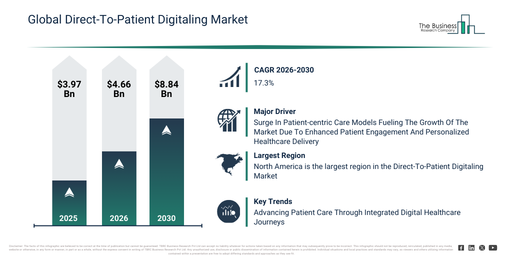
    The direct-to-patient digital health market experienced significant expansion recently, projecting a rise from $3.97 billion in 2025 to $4.66 billion in 2026, reflecting a compound annual growth rate of 17.6%. This surge during the past period is attributable to several key factors, including the increasing embrace of telemedicine, the proliferation of mobile health solutions, a heightened incidence of chronic diseases, enhanced internet connectivity within the healthcare sector, and the adoption of care models focused on the patient.

    The direct-to-patient digital health sector is poised for substantial expansion over the forthcoming years, with its market value projected to reach $8.84 billion by 2030, propelled by a compound annual growth rate (CAGR) of 17.3%. This anticipated surge in market size during the forecast period stems from several key drivers, including a heightened consumer demand for customized healthcare solutions, the escalating incorporation of artificial intelligence for tailored care suggestions, the broader implementation of remote strategies for managing chronic conditions, the increased utilization of tools designed to foster patient involvement through data insights, and a growing emphasis on proactive, digital approaches to health. Key developments shaping this market in the upcoming years encompass the widespread embrace of platforms facilitating direct patient interaction, the augmented utilization of telehealth and virtual care technologies, the greater integration of wearable devices for continuous health monitoring, the development of individualized digital care journeys, and a more pronounced focus on capturing and acting upon patient feedback in real-time.

    Download A Free Sample Report For Comprehensive Market Insights:

    https://www.thebusinessresearchcompany.com/sample.aspx?id=28206&type=smp

    Direct-To-Patient Digitaling Market Opportunity Drivers: What Is Creating New Revenue Potential?

    The increasing emphasis on embracing patient-centered healthcare strategies is poised to be a significant catalyst for the expansion of the direct-to-patient digital market in the future. Patient-centered care fundamentally involves healthcare methodologies that place a premium on the requirements, desires, and involved contributions of individuals in managing their well-being. This surge in patient-centric approaches is largely attributable to heightened patient involvement, stemming from the core principle of addressing individual needs, preferences, and fostering active participation in health-related decision-making. Direct-to-patient digital solutions serve to amplify these patient-centered models by facilitating healthcare services that are tailored, easily accessible, and delivered instantaneously to patients, thereby equipping them to proactively oversee their health and therapeutic regimens. An illustrative example comes from April 2025, where data from Intuition Labs, an American entity, indicated that a substantial 80% of the US population favors remote patient monitoring, with clinician uptake reaching 81% in 2023, marking an impressive 305% increase. Consequently, the escalating commitment to patient-centered care models is directly fueling the growth trajectory of the direct-to-patient digital market.

    Direct-To-Patient Digitaling Market Segmentation Trends And Revenue Drivers

    The direct-to-patient digitaling market covered in this report is segmented –

    1) By Health Status: Chronic Conditions, Preventive Health, Mental Health

    2) By Psychographic: Lifestyle, Values And Beliefs, Personality Traits

    3) By Technological: Device Preference, Technical Proficiency, Preferred Communication Channels

    4) By Behavioral: Usage Rate, Benefits Sought, Loyalty Status

    5) By Demographic: Age Groups, Gender, Income Levels

    Subsegments:

    1) By Chronic Conditions: Diabetes Management, Cardiovascular Care, Respiratory Care, Cancer Care, Arthritis Management

    2) By Preventive Health: Vaccination Tracking, Routine Screening, Wellness Monitoring, Nutritional Guidance, Fitness Tracking

    3) By Mental Health: Anxiety Management, Depression Support, Stress Management, Sleep Improvement, Behavioral Therapy

    Direct-To-Patient Digitaling Market Innovation Trends Driving Future Development

    In the direct-to-patient digital sector, leading enterprises are prioritizing substantial advancements, like holistic digital engagement, to refine effortless treatment pathways and bolster direct patient-provider relationships. A comprehensive digital journey signifies a cohesive, integrated online experience that bridges all patient interactions—from initial contact through care provision and subsequent monitoring—within a singular framework, thereby promoting ease, tailored care, and improved operations by consolidating technologies like virtual consultations, electronic prescriptions, and digital aid applications. As a case in point, in January of 2024, Eli Lilly and Company, a prominent pharmaceutical manufacturer based in the United States, launched LillyDirect, a fully integrated digital health solution. This platform serves as a direct conduit for patients to medical services, pharmaceuticals, and supportive resources, all accessible via a unified digital portal. Its purpose is to elevate both accessibility and convenience, while simultaneously delivering customized therapeutic plans, thereby simplifying medication acquisition, lowering obstacles to care, and ultimately striving for better patient results. Furthermore, continuous digital assistance cultivates lasting patient involvement and consistent adherence to prescribed treatments.

    #Direct-To-Patient Digitaling Market Industry Leaders: Which Organizations Are Driving Competition?

    Major companies operating in the direct-to-patient digitaling market are Google LLC, OMRON Healthcare Co. Ltd., 1Life Healthcare Inc. (One Medical), Hims & Hers Health Inc., Cerebral Inc., American Well Corporation, Lyra Health Inc., MDLIVE Inc., Ro Inc., Doctor On Demand Inc., Spring Care Inc., Withings Health Solutions, HealthJoy LLC, Zocdoc Inc., Calm.com Inc., Ada Health GmbH, K Health Inc., MeMD Inc., Sesame Inc., PlushCare Inc.

    Access The Complete Direct-To-Patient Digitaling Market Report:

    https://www.thebusinessresearchcompany.com/report/direct-to-patient-digitaling-global-market-report

    #Direct-To-Patient Digitaling Market Largest Region: Which Geography Holds The Highest Market Share?

    North Americawas the largest region in the direct-to-patient digitaling market in 2025. Asia-Pacific is expected to be the fastest-growing region in the forecast period. The regions covered in the direct-to-patient digitaling market report are Asia-Pacific, South East Asia, Western Europe, Eastern Europe, North America, South America, Middle East, Africa.

    Get in touch with us:

    The Business Research Company: https://www.thebusinessresearchcompany.com/

    Americas: +1 310-496-7795

    Asia: +44 7882 955267 & +91 8897263534

    Europe: +44 7882 955267

    Email us at: marketing@tbrc.info

    Follow us on:

    LinkedIn: https://in.linkedin.com/company/the-business-research-company

    YouTube: https://www.youtube.com/channel/UC24_fI0rV8cR5DxlCpgmyFQ

    Global Market Model: https://www.thebusinessresearchcompany.com/global-market-model
  • Direct-To-Consumer (DTC) Laboratory Testing Market Forecast Signals New Revenue Opportunities Through 2030

    Direct-To-Consumer (DTC) Laboratory Testing Market Forecast Signals New Revenue Opportunities Through 2030

    Enhanced with market attractiveness analysis, total addressable market evaluation, company benchmarking matrices, interactive Excel dashboards, expanded supply chain intelligence, emerging startup coverage, and detailed product insights, The Business Research Company’s 2026 market reports deliver more actionable and strategically valuable research.

    Direct-To-Consumer (DTC) Laboratory Testing Market Revenue Growth Supported By A CAGR Of 18.4% Through 2030

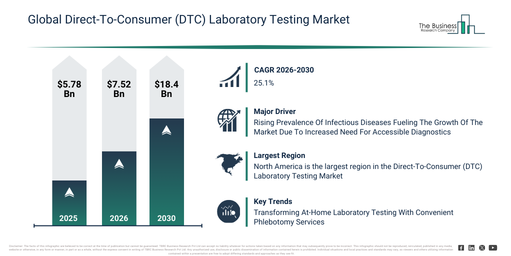
    The direct-to-consumer laboratory testing sector has experienced substantial growth lately, projecting a leap from $5.78 billion in 2025 to $7.52 billion in 2026, signifying a compound annual growth rate of 30.0%. Factors contributing to this expansion historically include restricted access to conventional clinical diagnostics, a surge in testing needs due to the pandemic, the early adoption of digital laboratory solutions, an increase in screening for chronic conditions, and a growing consumer preference for convenience.

    The direct-to-consumer laboratory testing sector is poised for substantial expansion, projecting a market valuation of $18.4 billion by 2030, with an anticipated compound annual growth rate of 25.1%. This anticipated surge is underpinned by several key drivers, including the increasing automation of laboratory processes, the burgeoning application of AI in diagnostics, the wider availability of convenient home sample collection options, growing regulatory endorsements, and a heightened focus on personalized health monitoring. Within this growth trajectory, prominent trends are expected to shape the market, such as a greater embrace of at-home diagnostic kits, the proliferation of online platforms for test ordering, an uplift in demand for preventive health screenings, a consumer desire for swift test outcome delivery, and the seamless integration of digital systems for reporting results.

    Download A Free Sample Report For Comprehensive Market Insights:

    https://www.thebusinessresearchcompany.com/sample.aspx?id=15556&type=smp

    Direct-To-Consumer (DTC) Laboratory Testing Market Growth Momentum: Which Factors Are Influencing Demand?

    The increasing incidence of infectious diseases is anticipated to be a significant catalyst for the expansion of the direct-to-consumer (DTC) laboratory testing market in the future, as these conditions, caused by disease-causing microorganisms like bacteria, viruses, parasitic organisms, or fungi that spread through direct or indirect contact or via carriers such as insects or animals, are affected by a multifaceted combination of biological, environmental, societal, and economic elements. DTC laboratory testing plays a crucial role in the prevention, identification, and handling of infectious diseases by improving accessibility to diagnostic procedures, facilitating prompt therapeutic actions, and bolstering public health initiatives through the accumulation of data and educational outreach; indeed, as an illustration, the World Health Organization, an international body focused on public health headquartered in Switzerland, indicated in October 2024 that an estimated 8.2 million individuals received new diagnoses for tuberculosis during 2023, a rise from the roughly 7.5 million cases documented in 2022, thus positioning tuberculosis as the foremost cause of mortality from infectious diseases. Consequently, the growing rate of infectious diseases is directly fueling the development of the direct-to-consumer (DTC) laboratory testing sector.

    Direct-To-Consumer (DTC) Laboratory Testing Market Segment Analysis Highlighting Growth Areas

    The direct-to-consumer (dtc) laboratory testing market covered in this report is segmented –

    1) By Sample Type: Blood, Urine, Saliva, Other Sample Types

    2) By Test Type: Genetic Testing, Disease Risk Assessment Testing, Complete Blood Count (CBC), Diabetes Testing, Thyroid-Stimulating Hormone (TSH) Testing, Other Test Types

    3) By Application: Diagnostics, Research And Development, Drug Discovery And Development

    4) By End User: Hospitals, Clinics, Specialty Labs, Diagnostic Centers

    Subsegments:

    1) By Blood: Blood Glucose, Cholesterol, Complete Blood Count (CBC), Blood Type, Vitamin and Mineral Levels, Hormone Levels, Liver And Kidney Function Tests

    2) By Urine: Pregnancy Tests, Urinalysis, Kidney Function Tests, Drug And Alcohol Testing, UTI (Urinary Tract Infection) Screening, Hormone Tests

    3) By Saliva: Hormone Testing, DNA Testing (Ancestry, Genetic Health Risks), Cortisol And Stress Level Tests, Food Sensitivity And Allergy Testing

    4) By Other Sample Types: Stool, Hair, Breath

    Direct-To-Consumer (DTC) Laboratory Testing Market Trends Reshaping Industry Growth

    In the direct-to-consumer (DTC) laboratory testing sector, leading enterprises are concentrating on pioneering advancements, including at-home phlebotomy, to elevate customer convenience and accessibility. This mobile phlebotomy entails bringing the service of blood collection directly to the individual’s setting, be it their residence or place of employment, thereby eliminating the necessity of travel to a healthcare establishment for blood sample acquisition. As a demonstration of this trend, in July of 2023, Quest Diagnostics Incorporated., a prominent American entity engaged in diagnostic testing, information, and associated services, introduced Quest Mobile, a novel offering engineered to simplify and optimize specimen collection procedures for laboratory analyses nationwide. Quest Mobile empowers individuals to conveniently book appointments for in-home sample collection facilitated by certified phlebotomists. This user-friendly alternative permits individuals to complete a broad spectrum of laboratory examinations without leaving their homes, thereby guaranteeing a hassle-free and readily available testing experience.

    Direct-To-Consumer (DTC) Laboratory Testing Market Leading Companies: Who Holds Significant Market Presence?

    Major companies operating in the direct-to-consumer (dtc) laboratory testing market are Laboratory Corporation of America Holdings (LabCorp), Quest Diagnostics Incorporated, PerkinElmer Inc, Genesis Healthcare Co., Natera Inc, Sonora Quest Laboratories, Ancestry.com LLC, 23andMe Holding Co, Thorne HealthTech Inc, Metropolis Healthcare Limited, Color Health Inc, LetsGetChecked Inc., MyHeritage Ltd, Everlywell Inc, Complete Genomics Incorporated, DanteLabs Inc, Gene by Gene Ltd., Veritas Intercontinental, DirectLabs LLC., WellnessFX Inc, Ulta Lab Tests LLC, Any Lab Test Now Inc, Vitagene Inc.

    Access The Complete Direct-To-Consumer (DTC) Laboratory Testing Market Report:

    https://www.thebusinessresearchcompany.com/report/direct-to-consumer-dtc-laboratory-testing-global-market-report

    Direct-To-Consumer (DTC) Laboratory Testing Market Regional Analysis: Which Region Leads By Revenue?

    North Americawas the largest region in the direct-to-consumer (DTC) laboratory testing market in 2025. Asia-Pacificis expected to be the fastest-growing region in the forecast period. The regions covered in the direct-to-consumer (dtc) laboratory testing market report are Asia-Pacific, South East Asia, Western Europe, Eastern Europe, North America, South America, Middle East, Africa.

    Get in touch with us:

    The Business Research Company: https://www.thebusinessresearchcompany.com/

    Americas: +1 310-496-7795

    Asia: +44 7882 955267 & +91 8897263534

    Europe: +44 7882 955267

    Email us at: marketing@tbrc.info

    Follow us on:

    LinkedIn: https://in.linkedin.com/company/the-business-research-company

    YouTube: https://www.youtube.com/channel/UC24_fI0rV8cR5DxlCpgmyFQ

    Global Market Model: https://www.thebusinessresearchcompany.com/global-market-model
  • Direct-To-Consumer (DTC) Genetic Testing Market Growth Is Accelerating As Industry Transformation Continues

    Direct-To-Consumer (DTC) Genetic Testing Market Growth Is Accelerating As Industry Transformation Continues

    Through market attractiveness analysis, total addressable market evaluation, company benchmarking matrices, interactive Excel dashboards, expanded supply chain intelligence, emerging startup coverage, and detailed product insights, The Business Research Company’s 2026 market reports provide more actionable and strategically valuable research.

    Direct-To-Consumer (DTC) Genetic Testing Market Value Expansion And Long-Term Growth Outlook

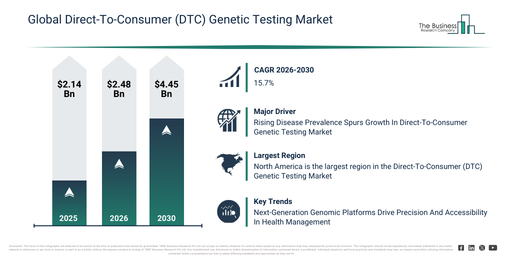
    The direct-to-consumer genetic testing sector has experienced substantial expansion lately, with projections indicating a rise from $2.14 billion in 2025 to $2.48 billion in 2026, reflecting a compound annual growth rate (CAGR) of 16.3%. Factors contributing to this expansion during the past period include reduced expenses for DNA sequencing, initial uptake of ancestry testing services, heightened public consciousness regarding health matters, greater accessibility through e-commerce, and inherent consumer interest in genetic information.

    The direct-to-consumer genetic testing market is poised for substantial expansion over the coming years, with projections indicating a rise to $4.45 billion by 2030, fueled by a compound annual growth rate of 15.7%. This anticipated surge is largely driven by advancements such as AI-powered genetic analysis, the broadening scope of precision medicine, evolving regulations governing genetic information, seamless integration with wellness applications, and a growing consumer appetite for tailored healthcare solutions. Key developments shaping this period include escalating consumer curiosity regarding genetic predispositions to health, a notable uptick in ancestry and relationship testing services, the proliferation of nutrigenomic and lifestyle-focused genetic assessments, increased reliance on online platforms for genetic testing, and a heightened emphasis on individualized health risk evaluations.

    Download A Free Sample Report For Comprehensive Market Insights:

    https://www.thebusinessresearchcompany.com/sample.aspx?id=8957&type=smp

    Direct-To-Consumer (DTC) Genetic Testing Market Expansion Drivers: What Is Shaping Future Growth?

    The expansion of the direct-to-consumer (DTC) genetic testing market is anticipated to be fueled by the increasing incidence of illnesses and conditions that are passed down genetically. A genetic disorder, stemming from alterations in an individual’s DNA, encompasses conditions affected by single genes, multiple factors, or chromosomal abnormalities. DTC genetic testing serves to elevate understanding of diverse genetic ailments, enabling health prognostication and delivering tailored insights into personal health, predispositions to illness, and other characteristics, thereby facilitating informed health and lifestyle choices to mitigate disease risk. To illustrate, data from the U.S. National Library of Medicine (NLM) in April 2023 indicated that approximately 6.7 million American adults aged 65 and over were projected to have Alzheimer’s dementia (AD) in 2023, a condition where genetic factors are notably influential; this figure could escalate to 13.8 million by 2060 without significant medical advancements for prevention, management, or treatment of AD. Consequently, the growing occurrence of genetically transmissible diseases and disorders is a primary driver for the burgeoning DTC genetic testing sector.

    Direct-To-Consumer (DTC) Genetic Testing Market Segment Performance And Strategic Opportunities

    The direct-to-consumer (dtc) genetic testing market covered in this report is segmented –

    1) By Type: Carrier Testing, Predictive Testing, Ancestry And Relationship Testing, Nutrigenomic Testing, Other Types

    2) By Sample: Saliva, Urine, Blood

    3) By Technology: Single Nucleotide Polymorphism Chips, Whole Genome Sequencing, Targeted Analysis

    4) By Business Model: Health Planning Model, Comprehensive Genome Tests Model, Medical Precision Tests Model, Restricted Trait Tests Mode

    5) By End User: Laboratories, Nursing Homes, Hospitals, Imaging Centers, Home Care, Cosmetics, Other End-User

    Subsegments:

    1) By Carrier Testing: Autosomal Recessive Disorders, X-Linked Disorders

    2) By Predictive Testing: Risk Assessment For Genetic Conditions, Adult-Onset Conditions

    3) By Ancestry And Relationship Testing: Ancestry Composition Analysis, DNA Matching For Relationships

    4) By Nutrigenomic Testing: Dietary Recommendations, Metabolism And Fitness Insights

    5) By Other Types: Pharmacogenomic Testing, Health Trait Testing

    Direct-To-Consumer (DTC) Genetic Testing Market Strategic Trends: What Is Defining The Next Phase Of Growth?

    Pioneering firms within the direct-to-consumer (DTC) genetic testing sector are dedicating their efforts toward creating cutting-edge offerings, specifically whole-genome sequencing (WGS) subscription models. These innovative platforms aim to deliver profound genetic understanding, facilitate bespoke health strategies, and foster greater user connection. Essentially, WGS subscription services involve sequencing almost the entirety of an individual’s genetic code, which unlocks detailed exploration of heritage, predisposition to illnesses, well-being characteristics, and how medications might be metabolized, vastly surpassing the scope of conventional SNP-chip tests that examine only curated genetic points. As a notable development in November 2024, ProPhase Labs, an American biotechnology and diagnostics enterprise, introduced DNA Complete, a distinct direct-to-consumer WGS service through its subsidiary, DNA Complete, Inc. This offering maps essentially the complete human genome for a client, features distinct subscription tiers (Essential, Pro, and Elite), provides continuous data enhancements, and incorporates access to genetic counselors for assistance in deciphering the findings. The service is built upon sophisticated bioinformatics and genealogical analysis capabilities, while also affording adaptability in sample handling, utilizing either ProPhase’s own Nebula Genomics laboratory or affiliated facilities. This integrated approach merges profound genomic knowledge with user-friendliness, ease of access, and sustained involvement from consumers.

    Direct-To-Consumer (DTC) Genetic Testing Market Key Players: Which Companies Shape Industry Competition?

    Major companies operating in the direct-to-consumer (dtc) genetic testing market are 23andMe, AncestryDNA, MyHeritage, FamilyTreeDNA, Living DNA, Vitagene, Orig3n, DNAfit, Helix, Color Genomics, Circle DNA, CRI Genetics, MapMyGenome, Invitae Corporation, TellmeGen, Pathway Genomics, Genebase Systems, EasyDNA, Nebula Genomics, Dante Labs, Veritas Genetics, Xcode Life, Genomic Express, Genomelink, Genomind, WellnessFX, LetsGetChecked, iGene, Dnadoc, OneOme

    Access The Complete Direct-To-Consumer (DTC) Genetic Testing Market Report:

    https://www.thebusinessresearchcompany.com/report/direct-to-consumer-dtc-genetic-testing-global-market-report

    Direct-To-Consumer (DTC) Genetic Testing Market Geographic Distribution And Regional Opportunities

    North Americawas the largest region in the direct-to-consumer (DTC) genetic testing market share in 2025. Asia-Pacificwas the second-largest region in the global direct-to-consumer (DTC) genetic testing market. The regions covered in the direct-to-consumer (dtc) genetic testing market report are Asia-Pacific, South East Asia, Western Europe, Eastern Europe, North America, South America, Middle East, Africa.

    Get in touch with us:

    The Business Research Company: https://www.thebusinessresearchcompany.com/

    Americas: +1 310-496-7795

    Asia: +44 7882 955267 & +91 8897263534

    Europe: +44 7882 955267

    Email us at: marketing@tbrc.info

    Follow us on:

    LinkedIn: https://in.linkedin.com/company/the-business-research-company

    YouTube: https://www.youtube.com/channel/UC24_fI0rV8cR5DxlCpgmyFQ

    Global Market Model: https://www.thebusinessresearchcompany.com/global-market-model
  • Direct To Consumer Testing Market Outlook Highlights The Next Major Growth Opportunities

    Direct To Consumer Testing Market Outlook Highlights The Next Major Growth Opportunities

    Delivering more actionable and strategically valuable research, The Business Research Company’s 2026 market reports feature market attractiveness analysis, total addressable market evaluation, company benchmarking matrices, interactive Excel dashboards, expanded supply chain intelligence, emerging startup coverage, and detailed product insights.

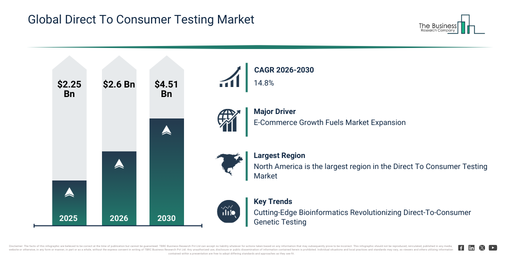
    Direct To Consumer Testing Market Expected To Reach $4.51 Billion By 2030 At 14.8% CAGR

    The market for direct-to-consumer testing has seen considerable expansion lately, projected to increase from $2.25 billion in 2025 to $2.6 billion in 2026, reflecting a compound annual growth rate of 15.2%. Factors driving this expansion during the previous period included restricted diagnostic availability, heightened public consciousness about health, the early embrace of genetic testing, the burgeoning e-commerce sector within healthcare, and prevailing trends of consumer empowerment.

    The direct-to-consumer testing sector is poised for significant expansion in the upcoming years, projecting a market valuation of $4.51 billion by 2030. This impressive trajectory is fueled by a compound annual growth rate (CAGR) of 14.8%, a surge driven by advancements in testing precision, increased regulatory understanding, sophisticated AI for interpreting results, tailored health information, and the broadening availability of home-based diagnostic tools. Key developments shaping this period include an escalating consumer preference for conducting health tests in the comfort of their homes, a rise in genetic and biomarker testing kits, the proliferation of digital health testing services, a heightened emphasis on proactive health assessments, and a growing openness to independently accessible health data.

    Download A Free Sample Report For Comprehensive Market Insights:

    https://www.thebusinessresearchcompany.com/sample.aspx?id=20753&type=smp

    Direct To Consumer Testing Market Development Factors: Which Trends Are Supporting Demand?

    The expansion of online marketplaces is anticipated to be a primary catalyst for the direct-to-consumer testing sector’s advancement. These e-commerce solutions, designed for the digital exchange of products and services, are experiencing a surge driven by broader internet access, a growing consumer demand for convenience, the proliferation of mobile shopping, and a favorable regulatory landscape. By facilitating immediate feedback and enabling data-informed strategies, direct-to-consumer testing equips e-commerce entities with crucial intelligence regarding consumer tastes, actions, and product effectiveness. This, in turn, leads to an improved customer journey, refined product selections, and ultimately, higher sales figures alongside augmented customer contentment. As an illustration, ECommerce Europe, a Belgian non-profit organization, projected in October 2024 that European business-to-consumer e-commerce transactions would experience an 8% increase in 2024, totaling $992.8 billion (€958 billion), an uptick from the $916.80 billion (€887 billion) recorded in 2023. Consequently, the burgeoning e-commerce sector is acting as a significant driver for this market’s growth.

    #Direct To Consumer Testing Market Segment Landscape And Growth Potential

    The direct to consumer testing market covered in this report is segmented –

    1) By Test Type: Genetic Direct To Consumer Tests, Biomarker-Based Direct To Consumer Tests, Microbiome Direct To Consumer Tests

    2) By Distribution Channel: Online Channel, Retail Channel

    3) By Application: Health And Wellness Testing, Ancestry And Genealogy Testing, Disease Risk Assessment, Carrier Screening, Pharmacogenetic Testing, Whole Genome Sequence-Based Direct To Consumer Testing, Other Direct To Consumer Tests

    Subsegments:

    1) By Genetic Direct To Consumer Tests: Ancestry Testing, Health Risk And Carrier Screening, DNA Paternity And Relationship Testing

    2) By Biomarker-Based Direct To Consumer Tests: Hormonal Level Testing, Cardiovascular Risk Testing, Metabolic And Nutritional Testing

    3) By Microbiome Direct To Consumer Tests: Gut Health And Digestive System Testing, Skin Microbiome Testing, Oral Microbiome Testing

    Direct To Consumer Testing Market Transformation Trends: Which Innovations Are Driving Change?

    In the direct-to-consumer testing arena, leading entities are prioritizing the creation of innovative technological solutions, including sophisticated bioinformatics, to elevate the precision of data interpretation, deliver tailored recommendations, and enrich the customer journey. Bioinformatics, in essence, employs advanced computational methodologies and algorithms to process intricate biological information, like DNA sequences or protein configurations. A pertinent example from November 2024 involves ProPhase Labs Inc., a diagnostics firm headquartered in the United States, introducing DNA Complete. This new direct-to-consumer genetic testing offering is designed with several distinguishing characteristics intended to redefine the landscape of health, well-being, and ancestral discoveries. The platform leverages state-of-the-art bioinformatics capabilities to scrutinize the extensive datasets produced by comprehensive genome sequencing, thereby facilitating a deeper understanding of genetic predispositions and ancestral origins, all managed through a recurring subscription model that fosters continuous customer involvement via consistent updates and novel findings.

    Direct To Consumer Testing Market Competitive Landscape: Who Are The Leading Companies?

    Major companies operating in the direct to consumer testing market are Ancestry LLC, 23andMe Holding Co., Color Genomics Inc., Helix Inc., Everlywell Inc., LetsGetChecked Inc., MyHeritage Ltd., Viome Lifesciences Inc., GenePlanet, Orig3n Inc., Mapmygenome India Limited, Family Tree DNA, Xcode Life Sciences Private Limited, Living DNA, EasyDNA, DNAfit, Pathway Genomics Corporation, Veritas Genetics, CircleDNA, Vitagene Inc., Nebula Genomics Inc., CRI Genetics, Full Genomes Corporation, FitnessGenes Ltd., Atlas Biomed, DayTwo, Imaware Inc, Privapath Diagnostics, Segterra Inc.

    Access The Complete Direct To Consumer Testing Market Report:

    https://www.thebusinessresearchcompany.com/report/direct-to-consumer-testing-global-market-report

    Direct To Consumer Testing Market Largest Region By Revenue And Market Share

    North Americawas the largest region in the direct to consumer testing market in 2025. Europeis expected to be the fastest-growing region in the forecast period. The regions covered in the direct to consumer testing market report are Asia-Pacific, South East Asia, Western Europe, Eastern Europe, North America, South America, Middle East, Africa.

    Get in touch with us:

    The Business Research Company: https://www.thebusinessresearchcompany.com/

    Americas: +1 310-496-7795

    Asia: +44 7882 955267 & +91 8897263534

    Europe: +44 7882 955267

    Email us at: marketing@tbrc.info

    Follow us on:

    LinkedIn: https://in.linkedin.com/company/the-business-research-company

    YouTube: https://www.youtube.com/channel/UC24_fI0rV8cR5DxlCpgmyFQ

    Global Market Model: https://www.thebusinessresearchcompany.com/global-market-model

  • Direct Primary Care Market Trends And Growth Drivers Point To Strong Future Potential

    Direct Primary Care Market Trends And Growth Drivers Point To Strong Future Potential

    Enhanced with market attractiveness analysis, total addressable market evaluation, company benchmarking matrices, interactive Excel dashboards, expanded supply chain intelligence, emerging startup coverage, and detailed product insights, The Business Research Company’s 2026 market reports deliver more actionable and strategically valuable research.

    #Direct Primary Care Market Size And Revenue Forecast Through 2030

    The direct primary care market has experienced robust expansion historically and is projected to continue its upward trajectory, expanding from \$70.17 billion in 2025 to \$75.11 billion in 2026, reflecting a compound annual growth rate (CAGR) of 7.0%. Factors contributing to this growth during the past period include elevated insurance administrative expenses, the phenomenon of physician burnout, a general sense of patient dissatisfaction with conventional healthcare models, difficulties in securing timely appointments, and an increasing scarcity of primary care providers.

    Anticipated robust expansion characterizes the direct primary care market, projecting a valuation of 95.43 billion dollars by 2030, fueled by a compound annual growth rate of 6.2%. This projected surge is underpinned by several key drivers including the increasing embrace of value-based care methodologies, the proliferation of employer-sponsored direct primary care initiatives, advancements in digital practice management solutions, a growing consumer demand for personalized healthcare experiences, and an environment of regulatory adaptability. Within this forecast horizon, significant market dynamics are expected to manifest, such as a greater uptake of subscription-based healthcare arrangements, a heightened insistence on clear and accessible pricing for medical services, the broader implementation of individualized primary care offerings, an elevated utilization of telemedicine within primary care settings, and concerted efforts to alleviate the administrative overhead associated with healthcare provision.

    Download A Free Sample Report For Comprehensive Market Insights:

    https://www.thebusinessresearchcompany.com/sample.aspx?id=16037&type=smp

    Direct Primary Care Market Industry Drivers: What Is Driving Revenue Growth?

    The increasing incidence of diabetes is poised to significantly boost the expansion of the direct primary care sector. This chronic condition, defined by elevated blood glucose, is becoming more common owing to a combination of factors including escalating obesity, lack of physical activity, unhealthy eating habits, an aging global demographic, and inherited tendencies. Direct primary care models provide unrestricted access to physician services for a consistent monthly subscription, enabling individuals managing diabetes to benefit from frequent health assessments, meticulous medication oversight, advice on lifestyle adjustments, and ongoing guidance from their healthcare professionals. For example, the International Diabetes Federation reported in April 2025 that approximately 589 million adults between 20 and 79 years old globally had diabetes, a figure anticipated to climb to 853 million by 2050, thus underscoring the impact of this escalating health issue on the direct primary care market’s growth trajectory.

    Direct Primary Care Market Categorization By Product Type And Application

    The direct primary care market covered in this report is segmented –

    1) By Type: Clinical Services, Laboratory Services, Consultative Services, Care Coordination, Comprehensive Care Management

    2) By Practice Setting: Solo Practices, Group Practices, Other Practice Settings

    3) By Application: Cardiology, Internal Medicine, Primary Care, Osteopathy, Psychiatry, Pediatrics

    Subsegments:

    1) By Clinical Services: Preventive Care, Chronic Disease Management, Acute Care, Pediatric Care, Geriatric Care

    2) By Laboratory Services: Diagnostic Testing, Blood Tests, Imaging Services, Genetic Testing

    3) By Consultative Services: Telemedicine Consultations, Health Coaching, Wellness Consultations, Second Opinion Services

    4) By Care Coordination: Referral Management, Patient Navigation Services, Medication Management, Care Plan Development

    5) By Comprehensive Care Management: Case Management, Disease Management Programs, Care Transitions Management, Patient Education And Support

    #Direct Primary Care Market Growth Trends: What Is Influencing The Future Outlook?

    In the direct primary care market, prominent entities are concentrating on integrating cutting-edge technologies, specifically LLM-powered artificial intelligence, to bolster clinical effectiveness, refine documentation precision, and optimize patient engagement pathways. This advanced AI facilitates real-time speech-to-text conversions, automatic generation of clinical records, and enhanced operational workflows. An illustration of this trend is Hint Health’s introduction in September of 2023 of Hint AI, a US-based company’s AI tool engineered to simplify DPC record-keeping and alleviate administrative tasks. This new offering utilizes OpenAI Whisper for automated transcription, generates draft clinical notes via LLM, and is seamlessly integrated into their comprehensive DPC practice management system, ultimately boosting care delivery speed, documentation efficiency, and overall practice output.

    Direct Primary Care Market Company Landscape And Strategic Competition

    Major companies operating in the direct primary care market are Oak Street Health Inc., One Medical Group, Crossover Health Medical Group APC, Everside Health Inc., Elation Health, Paladina Health, SignatureMD, PeakMed, DPC Frontier, MedLion, Salud Healthcare LLC, Turntable Health, Atlas.md, Freedom Healthworks LLC, R-Health, EverMed DPC, Boston Direct Health, Nextera Healthcare, Forward Family Healthcare, Hint Health, Qliance Medical Management

    Access The Complete Direct Primary Care Market Report:

    https://www.thebusinessresearchcompany.com/report/direct-primary-care-global-market-report

    Direct Primary Care Market Regional Analysis And Leading Geography

    North Americawas the largest region in the direct primary care market in 2025. Asia-Pacificis expected to be the fastest-growing region in the forecast period. The regions covered in the direct primary care market report are Asia-Pacific, South East Asia, Western Europe, Eastern Europe, North America, South America, Middle East, Africa.

    Get in touch with us:

    The Business Research Company: https://www.thebusinessresearchcompany.com/

    Americas: +1 310-496-7795

    Asia: +44 7882 955267 & +91 8897263534

    Europe: +44 7882 955267

    Email us at: marketing@tbrc.info

    Follow us on:

    LinkedIn: https://in.linkedin.com/company/the-business-research-company

    YouTube: https://www.youtube.com/channel/UC24_fI0rV8cR5DxlCpgmyFQ

    Global Market Model: https://www.thebusinessresearchcompany.com/global-market-model

  • Direct Coombs Test (DCT) Antibody Market Expansion Is Reshaping Competitive Dynamics Across The Industry

    Direct Coombs Test (DCT) Antibody Market Expansion Is Reshaping Competitive Dynamics Across The Industry

    Through market attractiveness analysis, total addressable market evaluation, company benchmarking matrices, interactive Excel dashboards, expanded supply chain intelligence, emerging startup coverage, and detailed product insights, The Business Research Company’s 2026 market reports provide more actionable and strategically valuable research.

    Direct Coombs Test (DCT) Antibody Market Growth From $7.3 Billion In 2026 To $11.17 Billion By 2030 At A CAGR Of 11.2%

    The direct Coombs test (DCT) antibody market experienced substantial expansion, projecting a rise from $6.55 billion in 2025 to $7.3 billion in 2026, reflecting a compound annual growth rate of 11.5%. This historical growth trajectory has been propelled by escalating investment in biomedical research, an increasing number of cancer research initiatives, the broadening of academic lab facilities, a greater reliance on antibodies for diagnostic purposes, and advancements in antibody engineering technologies.

    The direct Coombs test (DCT) antibody market is poised for substantial expansion over the coming years, projecting a rise to $11.17 billion by 2030, propelled by a compound annual growth rate of 11.2%. This anticipated expansion during the forecast period is largely driven by the proliferation of precision oncology research, a surge in the need for advanced antibody formats, increased capital infusion into biologics manufacturing, the burgeoning field of personalized medicine, and innovations in antibody discovery methodologies. Key developments shaping this market outlook include a greater reliance on recombinant antibody technologies, escalating demand for highly specific monoclonal antibodies, a broadening scope of antibody applications within oncology research, a growing preference for bispecific antibody formats, and a heightened emphasis on optimizing large-scale antibody production.

    Download A Free Sample Report For Comprehensive Market Insights:

    https://www.thebusinessresearchcompany.com/sample.aspx?id=30259&type=smp

    #Direct Coombs Test (DCT) Antibody Market Growth Factors: Which Forces Are Supporting Market Expansion?

    The increasing inclination towards personalized medical strategies is anticipated to champion the expansion of the direct coombs test (DCT) antibody market moving ahead. Personalized medicine, characterized by the customization of therapeutic regimens to individual patients leveraging their genetic makeup, environmental influences, and lifestyle choices for enhanced results and superior healthcare, is experiencing a surge in demand fueled by breakthroughs in genomic sciences. These scientific advancements facilitate the accurate pinpointing of genetic differences and the subsequent development of individualized treatment plans. Within this context, DCT antibodies play a crucial role in empowering personalized medicine by offering a precise method for identifying antibodies or complement components attached to red blood cells, thereby aiding in the diagnosis of immune-related hemolytic disorders and empowering healthcare providers to tailor interventions according to a patient’s unique immunological signature, which consequently elevates diagnostic precision and refines treatment efficacy. As an illustration, data from the Personalized Medicine Coalition (PMC), a non-profit entity based in the United States, indicated that in February 2024, the U.S. Food and Drug Administration (FDA) granted approval to 26 novel personalized medicines throughout 2023, marking a substantial rise compared to the 12 approvals recorded in 2022. Consequently, this escalating demand for personalized medicine is serving as a significant catalyst for the growth observed in the direct coombs test (DCT) antibody market.

    Direct Coombs Test (DCT) Antibody Market Segment Analysis And Revenue Opportunities

    The direct coombs test (dct) antibody market covered in this report is segmented –

    1) By Type: Monoclonal Antibodies, Polyclonal Antibodies, Recombinant Antibodies, Bispecific Antibodies

    2) By Source: Human, Mouse, Rabbit, Other Sources

    3) By Application: Cancer Treatment, Autoimmune Diseases, Infectious Diseases, Transplant Rejection, Other Applications

    4) By End-User: Pharmaceutical Companies, Biotechnology Firms, Contract Research Organizations (CROs), Academic And Research Institutes, Diagnostic Laboratories

    Subsegments:

    1) By Monoclonal Antibodies: Mouse Monoclonal Antibodies, Rabbit Monoclonal Antibodies, Humanized Monoclonal Antibodies, Chimeric Monoclonal Antibodies, Fully Human Monoclonal Antibodies

    2) By Polyclonal Antibodies: Rabbit Polyclonal Antibodies, Goat Polyclonal Antibodies, Sheep Polyclonal Antibodies, Chicken Polyclonal Antibodies, Donkey Polyclonal Antibodies

    3) By Recombinant Antibodies: Mammalian Expression Recombinant Antibodies, Bacterial Expression Recombinant Antibodies, Yeast Expression Recombinant Antibodies, Insect Expression Recombinant Antibodies, Plant Expression Recombinant Antibodies

    4) By Bispecific Antibodies: Immune Cell Engager Bispecific Antibodies, Dual Variable Domain Bispecific Antibodies, Cross Format Bispecific Antibodies, Knob And Hole Bispecific Antibodies, Fragment-Based Bispecific Antibodies

    Direct Coombs Test (DCT) Antibody Market Industry Trends: What Changes Are Reshaping Demand?

    Leading entities within the direct antiglobulin test (DCT) antibody sector are prioritizing the creation of sophisticated technologies, exemplified by gel-based immunoassays. These advancements aim to bolster testing accuracy, optimize laboratory efficiency, and uphold rigorous quality benchmarks in pre-transfusion assessments. Gel-based immunoassays involve laboratory procedures where antibodies and antigens react within a gel medium, facilitating the visual identification of responses like agglutination. Illustrating this trend, QuidelOrtho Corporation, a United States-based diagnostics firm, secured FDA approval in October 2025 for its MTS DAT Card, designed for gel-based direct antiglobulin testing with the ORTHO VISION platform. This innovative card integrates pre-prepared, monospecific anti-IgG and anti-C3d reagents within a gel matrix housed in distinct micro-tubes, enabling unambiguous, quantitative, and concurrent discrimination between IgG and complement sensitization. Consequently, this product streamlines the diagnostic process for immune-mediated hemolytic anemias and hemolytic disease of the fetus and newborn (HDFN). Fundamentally, its function is to identify immunoglobulin G or complement molecules attached to red blood cells, thereby aiding in the diagnosis of hemolysis and improving the safety of blood transfusions.

    Direct Coombs Test (DCT) Antibody Market Leading Players Shaping Industry Direction

    Major companies operating in the direct coombs test (dct) antibody market are Johnson & Johnson, F. Hoffmann-La Roche Ltd, Merck & Co. Inc., AbbVie Inc., Bio-Rad Laboratories Inc., Fortress Diagnostics Limited, Lab-Care Diagnostics (India) Pvt. Ltd., SIFIN Diagnostics GmbH, Hemo Bioscience Inc., Rapid Labs Ltd, AnaMol Laboratories Pvt. Ltd., Jiangyin Libo Biotechnology Co. Ltd., MicroSidd India Pvt. Ltd., Atlas Medical GmbH, Lorne Laboratories Ltd, Sanquin Reagents B.V., BAG Diagnostics GmbH, CE-Immundiagnostika GmbH, Biolab Diagnostics (India) Pvt. Ltd., Singapore Biosciences Pte. Ltd.

    Access The Complete Direct Coombs Test (DCT) Antibody Market Report:

    https://www.thebusinessresearchcompany.com/report/global-direct-coombs-test-dct-antibody-market-report

    Direct Coombs Test (DCT) Antibody Market Geographic Analysis: Where Is Demand Growing The Fastest?

    North Americawas the largest region in the direct coombs test (DCT) antibody market in 2025. Asia-Pacificis expected to be the fastest-growing region in the forecast period. The regions covered in the direct coombs test (dct) antibody market report are Asia-Pacific, South East Asia, Western Europe, Eastern Europe, North America, South America, Middle East, Africa.

    Get in touch with us:

    The Business Research Company: https://www.thebusinessresearchcompany.com/

    Americas: +1 310-496-7795

    Asia: +44 7882 955267 & +91 8897263534

    Europe: +44 7882 955267

    Email us at: marketing@tbrc.info

    Follow us on:

    LinkedIn: https://in.linkedin.com/company/the-business-research-company

    YouTube: https://www.youtube.com/channel/UC24_fI0rV8cR5DxlCpgmyFQ

    Global Market Model: https://www.thebusinessresearchcompany.com/global-market-model