Month: June 2026

  • Clinical Healthcare Analytics Services Market Size Projected To Increase From $19.85 Billion To $32.72 Billion During The Forecast Period

    Clinical Healthcare Analytics Services Market Size Projected To Increase From $19.85 Billion To $32.72 Billion During The Forecast Period

    Delivering more actionable and strategically valuable research, The Business Research Company’s 2026 market reports feature market attractiveness analysis, total addressable market evaluation, company benchmarking matrices, interactive Excel dashboards, expanded supply chain intelligence, emerging startup coverage, and detailed product insights.

    Clinical Healthcare Analytics Services Market Forecast: What Market Value Is Expected By 2030?

    The realm of clinical healthcare analytics services has experienced substantial expansion lately, with projections indicating its value will increase from $17.48 billion in 2025 to $19.86 billion in 2026, reflecting a compound annual growth rate of 13.6%. Factors fueling this expansion during the past period include the escalating digitization of medical documentation, the broad implementation of electronic health records, a heightened need for evidence-based medical choices, the augmentation of healthcare IT frameworks, and the increased utilization of analytical tools in managing hospital functions.

    The clinical healthcare analytics services market is poised for substantial expansion, projected to reach $32.72 billion by 2030, reflecting a compound annual growth rate of 13.3%. This upward trajectory is propelled by several key factors including a heightened need for tailored and value-driven patient care, increased financial commitments to AI-enhanced healthcare analytics, the proliferation of cloud-based healthcare solutions, a greater emphasis on proactive health management and population-level wellness strategies, and a growing regulatory push towards outcomes measured by data. Looking ahead, significant trends are expected to shape the market, such as broader adoption of predictive clinical analytics tools, increased utilization of continuous patient data monitoring, deeper integration of AI-driven diagnostic support systems, wider deployment of population health analysis tools, and a more concerted effort towards ensuring data compatibility and seamless integration across systems.

    Download A Free Sample Report For Comprehensive Market Insights:

    https://www.thebusinessresearchcompany.com/sample.aspx?id=27259&type=smp

    Clinical Healthcare Analytics Services Market Opportunity Drivers: What Is Creating New Revenue Potential?

    The expansion of the clinical healthcare analytics services sector is anticipated to be significantly boosted by the growing embrace of telehealth. Telehealth encompasses the utilization of digital tools for remote healthcare delivery, enabling patients to receive consultations from medical practitioners without the necessity of in-person visits to a clinic. This surge in telehealth is largely attributed to individuals favoring convenient and immediate access to medical care from their residences, bypassing travel burdens and mitigating contagion risks. Clinical healthcare analytics plays a crucial role in supporting telehealth by empowering providers to monitor patient information dynamically, facilitating informed choices, tailoring therapeutic approaches, and efficiently managing resources, all achieved without physical patient encounters. As an illustration, FAIR Health Inc., a US non-profit, reported that in January 2023, telehealth utilization nationwide saw an uptick to 5.9% of medical claim lines, climbing from 5.5% in December 2022, and further reaching 7.3% in April 2023. Consequently, the escalating preference for telehealth is a primary catalyst for the advancement of the clinical healthcare analytics services market.

    Clinical Healthcare Analytics Services Market Segment Landscape: Which Areas Lead Market Development?

    The clinical healthcare analytics services market covered in this report is segmented –

    1) By Component: Software, Services, Data Management Tools

    2) By Deployment Model: Cloud-Based, On-Premise, Hybrid

    3) By Technology: Artificial Intelligence (AI), Machine Learning (ML), Natural Language Processing (NLP), Big Data Analytics

    4) By Application: Patient Care Analytics, Operational Analytics, Financial Analytics, Population Health Management, Clinical Decision Support

    5) By End-User: Healthcare Providers, Healthcare Payers, Other End-Users

    Subsegments:

    1) By Software: Predictive Analytics, Descriptive Analytics, Prescriptive Analytics, Data Integration Tools, Reporting And Visualization Tools, Clinical Decision Support Systems (CDSS), Electronic Health Records (EHR) Analytics

    2) By Services: Implementation And Integration Services, Support And Maintenance Services, Consulting Services, Training And Education Services, Data Management And Governance Services, Outsourced Analytics Services

    3) By Data Management Tools: Data Warehousing Solutions, Master Data Management (MDM), Data Governance Tools, Data Quality Tools, Interoperability And Integration Tools

    Clinical Healthcare Analytics Services Market Innovation Trends Driving Future Development

    Within the clinical healthcare analytics services market, dominant players are increasingly emphasizing sophisticated tools like clinical predictive modeling as a means to elevate patient treatment standards, streamline operational workflows, and foster informed decision-making grounded in data. The essence of clinical predictive modeling lies in leveraging statistical methodologies, machine learning capabilities, and past healthcare information to anticipate upcoming clinical occurrences, results, or potential hazards for specific individuals or broader patient groups. As an illustration, in October 2024, Definitive Healthcare Corp., a commercial entity headquartered in the United States, introduced a predictive analytics platform designed to equip healthcare providers with the means to anticipate and strategize for forthcoming market dynamics. This advanced predictive analytics offering boasts distinctive functionalities, including the capacity for multi-year market demand forecasts spanning 3, 5, and 10-year horizons, AI-driven modeling that synthesizes historical claims data with demographic projections, and interactive instruments for scenario planning. Furthermore, it incorporates adaptable dashboards for continuous strategic assessment, detailed segmentation based on geographic location, service categories, and patient characteristics, alongside the capability to pinpoint burgeoning growth prospects ahead of their manifestation, thereby enabling healthcare organizations to adopt proactive, data-informed strategies for forward-looking planning and efficient resource allocation.

    Clinical Healthcare Analytics Services Market Industry Leaders And Market Competition

    Major companies operating in the clinical healthcare analytics services market are McKesson Corporation, Optum Inc., International Business Machines Corporation, Oracle Corporation, Siemens Healthineers AG, Cognizant Technology Solutions Corporation, Koninklijke Philips N.V., GE HealthCare Technologies Inc., RELX PLC, Epic Systems Corporation, SAS Institute Inc., athenahealth Inc., CitiusTech Inc., Inovalon Holdings Inc., NextGen Healthcare Inc., Veradigm Inc., Flatiron Health Inc., Health Catalyst Inc., MedeAnalytics Inc., Cerner Corporation, Allscripts Healthcare Solutions Inc., Change Healthcare Inc.

    Access The Complete Clinical Healthcare Analytics Services Market Report:

    https://www.thebusinessresearchcompany.com/report/clinical-healthcare-analytics-services-global-market-report

    Clinical Healthcare Analytics Services Market Regional Distribution: Which Areas Drive Market Expansion?

    North Americawas the largest region in the clinical healthcare analytics services market in 2025. Asia-Pacificis expected to be the fastest-growing region in the forecast period. The regions covered in the clinical healthcare analytics services market report are Asia-Pacific, South East Asia, Western Europe, Eastern Europe, North America, South America, Middle East, Africa.

    Get in touch with us:

    The Business Research Company: https://www.thebusinessresearchcompany.com/

    Americas: +1 310-496-7795

    Asia: +44 7882 955267 & +91 8897263534

    Europe: +44 7882 955267

    Email us at: marketing@tbrc.info

    Follow us on:

    LinkedIn: https://in.linkedin.com/company/the-business-research-company

    YouTube: https://www.youtube.com/channel/UC24_fI0rV8cR5DxlCpgmyFQ

    Global Market Model: https://www.thebusinessresearchcompany.com/global-market-model
  • Cell Transfection Market Trends And Growth Drivers Point To Strong Future Potential

    Cell Transfection Market Trends And Growth Drivers Point To Strong Future Potential

    Enhanced with market attractiveness analysis, total addressable market evaluation, company benchmarking matrices, interactive Excel dashboards, expanded supply chain intelligence, emerging startup coverage, and detailed product insights, The Business Research Company’s 2026 market reports deliver more actionable and strategically valuable research.

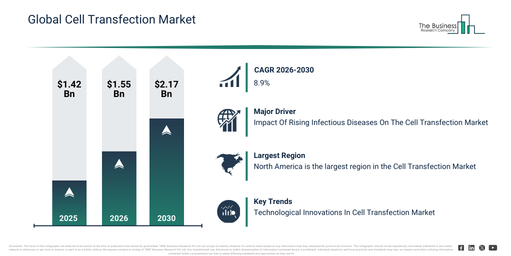
    Cell Transfection Market Expected To Reach $2.17 Billion By 2030 At 8.9% CAGR

    The market for cell transfection witnessed robust expansion recently, projected to climb from $1.42 billion in 2025 to $1.55 billion in 2026, reflecting a compound annual growth rate of 9.2%. This surge in demand during the past period is linked to several key factors, including the broadening scope of molecular biology research, a greater reliance on gene expression studies, advancements in recombinant protein production, the escalating application of in vitro genetic manipulation techniques, and the availability of a wide array of transfection methodologies.

    The cell transfection market is poised for substantial expansion over the coming years, projecting a valuation of $2.17 billion by 2030, driven by an 8.9% compound annual growth rate. This anticipated growth trajectory is fueled by several key factors, including the burgeoning development of gene and cell therapies, increased financial commitment to genetic engineering research, a heightened demand for high-throughput screening methodologies, the broadening scope of personalized medicine initiatives, and the expanding utilization of non-viral delivery systems. Several significant trends are expected to shape this market during the forecast period, such as a greater embrace of highly effective transfection reagents, a rise in the application of viral vector-based transfection techniques, burgeoning demand for transfection methods that can be scaled up, the proliferation of automated transfection platforms, and a heightened emphasis on ensuring the reproducibility of transfection processes.

    Download A Free Sample Report For Comprehensive Market Insights:

    https://www.thebusinessresearchcompany.com/sample.aspx?id=19361&type=smp

    Cell Transfection Market Industry Drivers: What Is Driving Revenue Growth?

    The rising incidence of infectious diseases is anticipated to significantly boost the cell transfection market’s expansion. Infectious diseases, characterized by their transmission through various means, have seen an upsurge due to factors like underdeveloped public health systems, vaccine reluctance, and the proliferation of false information, which collectively enable pathogen dissemination and mutation. Cell transfection serves as an invaluable method in combating infectious diseases by enabling researchers to introduce genetic material into cells for the purpose of understanding infection mechanisms and evaluating novel therapeutic strategies. For example, as reported by the World Health Organization, a global public health entity based in Switzerland, approximately 8.2 million new tuberculosis diagnoses occurred in 2023, an increase from the roughly 7.5 million cases identified in 2022, underscoring tuberculosis’s position as the foremost cause of infectious disease mortality. Consequently, the escalating prevalence of infectious diseases is a key driver for the cell transfection market.

    Cell Transfection Market Segmentation And Category Breakdown

    The cell transfection market covered in this report is segmented –

    1) By Method: Electroporation, Lipofection, Calcium Phosphate, Viral Transfection, Other Methods

    2) By Application: Biomedical Research, Therapeutic Delivery, Protein Production

    3) By End User: Academic And Research Institutes, Pharmaceutical And Biotechnology Companies, Contract Research Organizations, Other End Users

    Subsegments:

    1) By Electroporation: Square Wave Electroporation, Pulsed Electric Field Electroporation, Multielectrode Array Electroporation

    2) By Lipofection: Cationic Lipid-Based Transfection, Lipid Nanoparticle-Based Transfection, Liposomal Transfection

    3) By Calcium Phosphate: Calcium Phosphate Co-precipitation, Modified Calcium Phosphate Methods

    4) By Viral Transfection: Lentiviral Transduction, Adenoviral Transduction, AAV (Adeno-Associated Virus) Transduction

    5) By Other Methods: Microinjection, Nanoparticle-Mediated Transfection, Sonoporation, Magnetofection

    #Cell Transfection Market Growth Trends: What Is Influencing The Future Outlook?

    Leading entities within the cell transfection sector are actively incorporating novel advancements into their transfection methodologies to facilitate meticulous regulation of genetic expression. Essentially, a transfection system represents a method or apparatus developed for the purpose of inserting exogenous nucleic acids into cellular structures, thereby facilitating the investigation of gene roles, the synthesis of proteins, or the modification of gene activity. As an illustration, during July of 2024, STEMCELL Technologies, a prominent biotechnology firm headquartered in Canada, introduced its Cellpore transfection system. This innovative instrument is engineered to bolster research endeavors in cell engineering. Leveraging cutting-edge microfluidic technology, the system streamlines the intracellular introduction of a wide spectrum of macromolecules into cells, effectively overcoming the shortcomings inherent in conventional transfection approaches. Its capacity to transfect as many as ten million cells each second renders it highly advantageous for operations requiring significant throughput. Furthermore, the system demonstrates versatility across a range of cell populations, including but not limited to T cells and hematopoietic stem cells. It possesses the capability to deliver a variety of payload types, encompassing small molecules, Ribonucleic Acid (RNA), proteins, and antibodies.

    Cell Transfection Market Competitive Analysis Of Major Industry Participants

    Major companies operating in the cell transfection market are Thermo Fisher Scientific Inc., Merck KGaA, Agilent Technologies Inc., Lonza Group AG, Sartorius AG, Sigma-Aldrich Corporation, Bio-Rad Laboratories Inc., QIAGEN N.V., Stemcell Technologies Inc., GenScript Biotech Corporation, Promega Corporation, Takara Bio Inc., Molecular Devices LLC, New England Biolabs Inc., CureVac SE, OriGene Technologies Inc., Tocris Bioscience, Vector Biolabs, Mirus Bio LLC, Addgene Inc., Altogen Biosystems, Cell Biolabs Inc., Cellecta Inc., ExCell Bio Inc., GeneCopoeia Inc.

    Access The Complete Cell Transfection Market Report:

    https://www.thebusinessresearchcompany.com/report/cell-transfection-global-market-report

    Cell Transfection Market Global Footprint: Which Region Holds Market Leadership?

    North Americawas the largest region in the cell transfection market in 2025. Asia-Pacificis expected to be the fastest-growing region in the forecast period. The regions covered in the cell transfection market report are Asia-Pacific, South East Asia, Western Europe, Eastern Europe, North America, South America, Middle East, Africa.

    Get in touch with us:

    The Business Research Company: https://www.thebusinessresearchcompany.com/

    Americas: +1 310-496-7795

    Asia: +44 7882 955267 & +91 8897263534

    Europe: +44 7882 955267

    Email us at: marketing@tbrc.info

    Follow us on:

    LinkedIn: https://in.linkedin.com/company/the-business-research-company

    YouTube: https://www.youtube.com/channel/UC24_fI0rV8cR5DxlCpgmyFQ

    Global Market Model: https://www.thebusinessresearchcompany.com/global-market-model

  • Cell Therapy Technologies Market Expansion Is Reshaping Competitive Dynamics Across The Industry

    Cell Therapy Technologies Market Expansion Is Reshaping Competitive Dynamics Across The Industry

    Through market attractiveness analysis, total addressable market evaluation, company benchmarking matrices, interactive Excel dashboards, expanded supply chain intelligence, emerging startup coverage, and detailed product insights, The Business Research Company’s 2026 market reports provide more actionable and strategically valuable research.

    #Cell Therapy Technologies Market Size And Revenue Forecast Through 2030

    The cell therapy technologies market experienced significant expansion recently, with projections indicating a rise from $5.67 billion in 2025 to $6.52 billion in 2026, reflecting a compound annual growth rate of 15.0%. During the preceding period, this expansion was fueled by a surge in clinical investigations for cell-based treatments, a greater acceptance of stem cell therapies, the broadening of research cell repositories, the accessibility of sophisticated bioprocessing tools, and advancements in translational medicine initiatives.

    The cell therapy technologies market is poised for substantial expansion, projected to reach $11.35 billion by 2030, demonstrating a robust compound annual growth rate of 14.8%. This upward trajectory in the upcoming years is fueled by several key factors: the escalating commercial availability of cell-based treatments, increased financial backing for regenerative medicine research, the proliferation of localized cell therapy systems, a heightened need for automated production processes, and a stronger emphasis from regulatory bodies on maintaining consistent manufacturing standards. Within this forecast period, significant market currents include the growing embrace of enclosed cell processing systems, greater utilization of automated cell cultivation equipment, an expanding requirement for manufacturing processes that can be scaled up effectively for cell therapies, advancements in tools for monitoring processes and ensuring quality, and a greater concentration on uniform methods for handling cells.

    Download A Free Sample Report For Comprehensive Market Insights:

    https://www.thebusinessresearchcompany.com/sample.aspx?id=4122&type=smp

    #Cell Therapy Technologies Market Growth Factors: Which Forces Are Supporting Market Expansion?

    The escalating incidence of cancer is anticipated to be a primary catalyst for the expansion of the cell therapy technologies market throughout the projected period, as cell therapy itself leverages living cells as therapeutic agents for disease intervention, specifically harnessing the body’s immune system to identify and eliminate aberrant cells when applied to oncological treatments; for example, data from the American Cancer Society, a US non-profit organization dedicated to cancer advocacy, revealed a rise from 1,958,310 cases in 2023 to 2,001,140 in January 2024, signifying a 2.19% increase, thus, this upward trend in cancer diagnoses is poised to fuel the future growth of the cell therapy technologies sector.

    Cell Therapy Technologies Market Segment Outlook: Which Categories Are Expanding The Fastest?

    The cell therapy technologies market covered in this report is segmented –

    1) By Product: Consumables, Equipment, Systems And Software

    2) By Cell Type: T-Cells, Stem Cells, Other Cell Types

    3) By Process: Cell Processing, Cell Preservation, Distribution And Handling, Process Monitoring And Quality Control

    4) By End User: Life Science Companies, Research Institutes And Cell Banks

    Subsegments:

    1) By Consumables: Cell Culture Media, Bioreactors And Cell Culture Vessels, Cell Separation And Processing Kits, Cryopreservation Bags And Vials

    2) By Equipment: Cell Counters, Centrifuges, Cell Sorting Equipment, Incubators

    3) By Systems And Software: Closed-System Cell Processing Systems, Automated Cell Culture Systems, Point-Of-Care Cell Therapy Systems, Laboratory Information Management Systems (LIMS), Data Management Software For Cell Therapies, Process Optimization And Tracking Software

    Cell Therapy Technologies Market Industry Trends: What Changes Are Reshaping Demand?

    Leading entities within the cell therapy sector are dedicated to pioneering technological progress, including the implementation of automated manufacturing systems aimed at enhancing the capacity, consistency, and productivity of cell-based therapeutic creation. These automated cell therapy solutions incorporate sophisticated robotics, real-time process oversight, and contained production environments to optimize output while upholding the integrity of cellular material and adhering to regulatory standards. As an illustration, the year 2025 witnessed Limula, a United States firm specializing in cell therapies, introduce a novel automated platform engineered to expedite the manufacturing of cell therapies, minimize human involvement, and elevate the uniformity and dependability of therapeutic cell products. This platform’s introduction signifies a crucial advancement towards achieving commercial-scale cell therapy manufacturing, thereby facilitating a more rapid transition from experimental stages to practical medical use.

    Cell Therapy Technologies Market Key Companies And Competitive Benchmarking

    Major companies operating in the cell therapy technologies market are Lonza Group AG, Thermo Fisher Scientific Inc, Merck KGaA, Terumo Corporation, Danaher Corporation, Fujifilm Holdings Corporation, Sartorius AG, Becton Dickinson and Company, Avantor Inc., Cellular Biomedicine Group, CORESTEM, Astellas Pharma Inc, Anterogen Co. Ltd, Arce Therapeutics, CARsgen Therapeutics, Co.Don AG, Neogene Therapeutics, GammaDelta Therapeutics Limited, SOTIO, Genestack, Novartis AG, Celgene Corporation, Gilead Sciences, Juno Therapeutics, Allogene Therapeutics, Bluebird Bio, Amgen, Regen BioPharma, Bellicum, Biotchpharma, BrainStorm Cell Therapeutics, Pluristem, Next BioSciences, CryoSave, BioHeart, Stem Cell Technologies

    Access The Complete Cell Therapy Technologies Market Report:

    https://www.thebusinessresearchcompany.com/report/cell-therapy-technologies-global-market-report

    Cell Therapy Technologies Market Regional Distribution: Which Areas Drive Market Expansion?

    North Americawas the largest region in the cell therapy technologies market in 2025. Asia-Pacificis predicted to record the fastest growth over the forecast period. The regions covered in the cell therapy technologies market report are Asia-Pacific, South East Asia, Western Europe, Eastern Europe, North America, South America, Middle East, Africa.

    Get in touch with us:

    The Business Research Company: https://www.thebusinessresearchcompany.com/

    Americas: +1 310-496-7795

    Asia: +44 7882 955267 & +91 8897263534

    Europe: +44 7882 955267

    Email us at: marketing@tbrc.info

    Follow us on:

    LinkedIn: https://in.linkedin.com/company/the-business-research-company

    YouTube: https://www.youtube.com/channel/UC24_fI0rV8cR5DxlCpgmyFQ

    Global Market Model: https://www.thebusinessresearchcompany.com/global-market-model

  • Cell Therapy Processing Market Forecast Reveals Where Future Industry Value Will Be Created

    Cell Therapy Processing Market Forecast Reveals Where Future Industry Value Will Be Created

    Delivering more actionable and strategically valuable research, The Business Research Company’s 2026 market reports feature market attractiveness analysis, total addressable market evaluation, company benchmarking matrices, interactive Excel dashboards, expanded supply chain intelligence, emerging startup coverage, and detailed product insights.

    Cell Therapy Processing Market Growth From $5.92 Billion In 2026 To $9.93 Billion By 2030 At A CAGR Of 13.8%

    The cell therapy processing sector has experienced substantial expansion recently, with its market value projected to increase from $5.18 billion in 2025 to $5.92 billion in 2026, reflecting a compound annual growth rate of 14.3%. This upward trajectory in the preceding timeframe was driven by a confluence of factors including a surge in clinical trials for cell-based treatments, enhancements in biopharmaceutical production capabilities, the proliferation of dedicated processing infrastructures, a heightened level of proficiency in good manufacturing practice (GMP) adherence, and escalating investments in cutting-edge therapeutic modalities.

    The cell therapy processing market is poised for substantial expansion over the next several years, projecting a rise to $9.93 billion by 2030 with a compound annual growth rate (CAGR) of 13.8%. This projected increase is fueled by several key factors, including the escalating commercial availability of gene and cell therapies, a heightened need for contract manufacturing solutions, the proliferation of distributed manufacturing approaches, wider implementation of digital quality management systems, and an uptick in regulatory endorsements for cell-based therapeutic interventions. Key developments anticipated during this forecast period encompass the greater utilization of GMP-compliant processing platforms, a surge in the demand for adaptable cell therapy production capabilities, increased integration of automated workflow software, the broadening of contract processing services, and a reinforced emphasis on maintaining sterility and assuring quality throughout the manufacturing process.

    Download A Free Sample Report For Comprehensive Market Insights:

    https://www.thebusinessresearchcompany.com/sample.aspx?id=27244&type=smp

    Cell Therapy Processing Market Demand Drivers: What Is Fueling Industry Growth?

    The proliferation of research endeavors in the realm of cell therapy is anticipated to be a significant catalyst for the expansion of the cell therapy processing market. Cell therapy itself is defined as the production of medicinal products utilizing live cells, aimed at addressing or alleviating a spectrum of ailments such as cancers, autoimmune diseases, and inherited disorders. A key driver behind the escalating demand for cell-based therapeutics is the pressing requirement for manufacturing systems that are both adaptable and dependable, capable of sustaining substantial cell concentrations while preserving the integrity of the final product. The processing of cells plays a crucial role in advancing cell therapy research by facilitating uniform preparation, rigorous quality assurance, and the large-scale production of superior quality cells, thereby guaranteeing dependable and repeatable results for both investigative activities and clinical trials. As an illustration, by December 2024, the International Federation of Pharmaceutical Manufacturers and Associations, an organization headquartered in Switzerland, reported that six novel cell and gene therapies, representing first-in-class innovations, were launched in 2023, a noteworthy increase of 50% compared to the three such treatments launched in 2022. Consequently, the heightened volume of research activities in cell therapy is directly fueling the growth trajectory of the cell therapy processing market.

    Cell Therapy Processing Market Segment Landscape: Which Areas Lead Market Development?

    The cell therapy processing market covered in this report is segmented –

    1) By Offering Type: Products, Services, Software

    2) By Applications: Cardiovascular Diseases Or Cardiac Regenerative Therapies, Bone Repair, Neurological Disorders, Skeletal Muscle Repair, Cancer, Other Applications

    3) By End-User: Research Institutes, Biopharmaceutical Companies, Contract Research Organizations, Other End-Users

    Subsegments:

    1) By Products: Cell Processing Systems, Cell Separation Devices, Cell Culture Equipment, Cell Preservation Systems, Consumables And Reagents

    2) By Services: Contract Manufacturing Services, Process Development Services, Quality Control And Testing Services, Logistics And Supply Chain Services, Regulatory Compliance And Documentation Services

    3) By Software: Cell Processing Workflow Management Software, Data Analysis And Reporting Software, Quality Management Software, Laboratory Information Management Systems (LIMS), Compliance And Audit Management Software

    Cell Therapy Processing Market Innovation Trends: Which Developments Are Transforming The Industry?

    The leading enterprises within the cell therapy processing sector are dedicated to creating sophisticated technologies, for example, combined bioreactor-centrifuge apparatuses, which serve to optimize production sequences and enhance the reliability, adaptability, and aseptic conditions of treatments derived from cells. This integrated bioreactor-centrifuge unit represents a singular piece of equipment merging cell cultivation and centrifugation for separation into one contained module, facilitating uninterrupted, automated cell treatment processes without the necessity of moving cells between different stages. As an illustration, in March of 2025, Limula SA, a firm based in Switzerland specializing in the production of cell and gene therapies (CGT), introduced LimONE, a fully automated, enclosed platform designed for cell therapy production. This pioneering system assimilates physical components, disposable supplies, and software guided by predetermined protocols to simplify intricate cell processing stages, including incubation, centrifugation, and the management of chemical agents, all within a solitary, space-efficient assembly, thereby allowing for uniform, scalable output of therapies like CAR-T and genetically modified stem cells, from initial research phases up to Good Manufacturing Practice (GMP) compliant industrial levels, while circumventing the complexities associated with technology transfers.

    Cell Therapy Processing Market Industry Leaders And Market Competition

    Major companies operating in the cell therapy processing market are Johnson & Johnson Services Inc., Bristol-Myers Squibb Company, Thermo Fisher Scientific Inc., Novartis AG, Gilead Sciences Inc., Danaher Corporation, Lonza Group AG, Anterogen Co. Ltd., Terumo Corporation, Sartorius AG, Bio-Techne Corporation, STEMCELL Technologies Inc., Miltenyi Biotec GmbH, AGC Biologics S.p.A., MaxCyte Inc., Cellares Corporation, Cellectis S.A., JW Cayman Therapeutics Company Limited, Cell Therapies Pty Ltd., InGeneron Inc., WuXi Advanced Therapies, Catalent Inc.

    Access The Complete Cell Therapy Processing Market Report:

    https://www.thebusinessresearchcompany.com/report/cell-therapy-processing-global-market-report

    Cell Therapy Processing Market Leading Geography: Which Region Generates The Most Revenue?

    North Americawas the largest region in the cell therapy processing market in 2025. Asia-Pacificis expected to be the fastest-growing region in the forecast period. The regions covered in the cell therapy processing market report are Asia-Pacific, South East Asia, Western Europe, Eastern Europe, North America, South America, Middle East, Africa.

    Get in touch with us:

    The Business Research Company: https://www.thebusinessresearchcompany.com/

    Americas: +1 310-496-7795

    Asia: +44 7882 955267 & +91 8897263534

    Europe: +44 7882 955267

    Email us at: marketing@tbrc.info

    Follow us on:

    LinkedIn: https://in.linkedin.com/company/the-business-research-company

    YouTube: https://www.youtube.com/channel/UC24_fI0rV8cR5DxlCpgmyFQ

    Global Market Model: https://www.thebusinessresearchcompany.com/global-market-model
  • Cell Signaling Market Growth Through 2030 Creates New Strategic Opportunities

    Cell Signaling Market Growth Through 2030 Creates New Strategic Opportunities

    Enhanced with market attractiveness analysis, total addressable market evaluation, company benchmarking matrices, interactive Excel dashboards, expanded supply chain intelligence, emerging startup coverage, and detailed product insights, The Business Research Company’s 2026 market reports deliver more actionable and strategically valuable research.

    Cell Signaling Market Expansion Outlook: What Revenue Opportunities Lie Ahead?

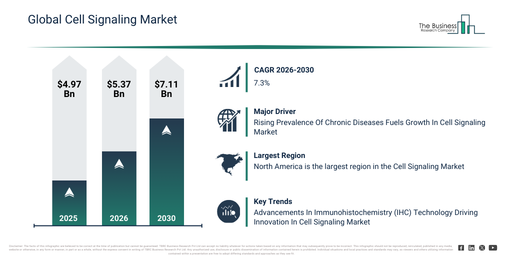
    The cell signaling market experienced robust expansion recently, projected to increase from $4.97 billion in 2025 to $5.37 billion in 2026, reflecting a compound annual growth rate (CAGR) of 8.2%. This upward trend in the historical period is fueled by advancements in molecular biology research, the escalating integration of immunoassays within research laboratories, burgeoning investigations into cancer signaling pathways, a greater reliance on western blotting methodologies, and the accessibility of sophisticated antibody products.

    The global cell signaling market is poised for significant expansion, projecting an impressive surge to $7.11 billion by 2030, driven by a compound annual growth rate of 7.3%. This anticipated increase over the forecast period is largely fueled by escalating investments in the research of targeted therapies, a heightened demand for precise signaling analysis, the broadening scope of translational research, the expanding utilization of high-throughput proteomics, and the growing incorporation of computational biology methodologies. Key developments shaping the market during this timeframe include a heightened emphasis on analyzing specific signaling pathways, a greater reliance on high-sensitivity detection reagents, increased adoption of multiplex signaling assays, advancements in quantitative cell communication studies, and the enhanced integration of sophisticated imaging techniques.

    Download A Free Sample Report For Comprehensive Market Insights:

    https://www.thebusinessresearchcompany.com/sample.aspx?id=15758&type=smp

    Cell Signaling Market Growth Drivers: What Factors Are Accelerating Expansion?

    The expanding occurrence of long-term illnesses is anticipated to fuel the cell signaling market’s expansion in the future. Such protracted health issues, which develop gradually and endure for considerable durations, frequently spanning years or even a lifetime, necessitate continuous attention and therapeutic interventions to manage symptoms, avert complications, and preserve well-being. Factors contributing to the rise in chronic conditions include an aging demographic, lifestyle choices detrimental to health, and the availability and systems within healthcare. Research into cell signaling offers crucial understanding and resources for comprehending, identifying, managing, and averting these persistent ailments, thereby presenting prospects for enhanced results and a better quality of life for those affected. Illustratively, data from January 2023, as reported by the National Library of Medicine, projects a substantial surge in individuals aged 50 and above experiencing at least one chronic malady, escalating from 71.522 million in 2020 to an estimated 142.66 million by 2050, marking a near doubling of cases. Consequently, this escalating trend in chronic diseases is a significant impetus for the cell signaling market’s growth.

    Cell Signaling Market Segments: Where Are The Largest Growth Opportunities?

    The cell signaling market covered in this report is segmented –

    1) By Product: Consumables, Instruments

    2) By Signaling Type: Endocrine Signaling, Paracrine Signaling, Autocrine Signaling, Synaptic Signaling Source, Other Signaling Types

    3) By Pathway: Akt Signaling Pathway, AMPK Signaling Pathway, ErbB Or HER Signaling Pathway, Other Signaling Pathways

    4) By Technology: Microscopy, Western Blotting, Flow Cytometry, Immunohistochemistry (IHC), Enzyme-Linked Immunosorbent Assay (ELISA), Mass Spectrometry, Other Technologies

    5) By Application: Research Applications, Medical Applications

    Subsegments:

    1) By Consumables: Reagents, Antibodies, Kits, Chemicals and Enzymes

    2) By Instruments: Flow Cytometers, Microplate Readers, Cell Counters, Western Blotting Systems, Real-Time PCR Systems

    Cell Signaling Market Trends: What Is Shaping Future Industry Growth?

    In the cell signaling market, leading enterprises are prioritizing the creation of cutting-edge solutions, exemplified by immunohistochemistry (IHC) assays, to enhance their market standing. These IHC assays represent sophisticated laboratory procedures designed for the identification and visual representation of particular proteins or antigens within biological tissue specimens. As an illustration, during September 2023, Cell Signaling Technology (CST), a prominent American firm specializing in life sciences discovery technologies, unveiled its SignalStar Multiplex IHC technology. This groundbreaking tool is specifically engineered for spatial biology investigations, facilitating high-throughput immunohistochemistry (IHC) assays that can analyze multiple targets. This advanced technology empowers scientists to simultaneously identify numerous targets within formalin-fixed, paraffin-embedded (FFPE) tissues, achieving remarkable sensitivity and precision. Its mechanism involves the synergistic application of antibodies, oligonucleotides, and fluorophores to amplify the antibody signal, thereby facilitating the detection of even low-expression targets, with the capability to analyze as many as eight proteins within a single tissue sample.

    Cell Signaling Market Major Participants And Competitive Dynamics

    Major companies operating in the cell signaling market are Johnson & Johnson, F. Hoffmann-La Roche Ltd., Pfizer Inc., Bayer AG, Bristol-Myers Squibb Company, Thermo Fisher Scientific Inc., Novartis AG, GlaxoSmithKline plc, Eli Lilly and Company, Gilead Sciences Inc., Danaher Corporation, Merck KGaA, Becton Dickinson and Company, Agilent Technologies Inc., PerkinElmer Inc., Beckman Coulter Inc., Bio-Rad Laboratories Inc., Qiagen N.V., Bio-Techne Corporation, Miltenyi Biotec, Promega Corporation, Janssen Pharmaceuticals Inc., Abcam plc, Horizon Discovery Ltd., Cell Signaling Technology Inc., Cisbio Bioassays, Rockland Immunochemicals Inc.

    Access The Complete Cell Signaling Market Report:

    https://www.thebusinessresearchcompany.com/report/cell-signaling-global-market-report

    Cell Signaling Market Regional Outlook: Where Are The Largest Opportunities Located?

    North Americawas the largest region in the cell signaling market in 2025. Asia-Pacificis expected to be the fastest-growing region in the forecast period. The regions covered in the cell signaling market report are Asia-Pacific, South East Asia, Western Europe, Eastern Europe, North America, South America, Middle East, Africa.

    Get in touch with us:

    The Business Research Company: https://www.thebusinessresearchcompany.com/

    Americas: +1 310-496-7795

    Asia: +44 7882 955267 & +91 8897263534

    Europe: +44 7882 955267

    Email us at: marketing@tbrc.info

    Follow us on:

    LinkedIn: https://in.linkedin.com/company/the-business-research-company

    YouTube: https://www.youtube.com/channel/UC24_fI0rV8cR5DxlCpgmyFQ

    Global Market Model: https://www.thebusinessresearchcompany.com/global-market-model

  • Cell Separation Technologies Market Size Projected To Increase From $13.11 Billion To $22.19 Billion During The Forecast Period

    Cell Separation Technologies Market Size Projected To Increase From $13.11 Billion To $22.19 Billion During The Forecast Period

    Through market attractiveness analysis, total addressable market evaluation, company benchmarking matrices, interactive Excel dashboards, expanded supply chain intelligence, emerging startup coverage, and detailed product insights, The Business Research Company’s 2026 market reports provide more actionable and strategically valuable research.

    Cell Separation Technologies Market Growth Potential: How Will Market Size Change Through 2030?

    Experiencing a swift expansion, the market for cell separation technologies registered a valuation of $11.5 billion in 2025, with projections indicating a rise to $13.11 billion by 2026, reflecting a compound annual growth rate of 14.0%. This dynamic growth trajectory observed in the past can be linked to several key factors, including burgeoning stem cell research initiatives, a greater reliance on cell-based assays, the proliferation of academic and biomedical research facilities, the escalating adoption of flow cytometry methods, and the widespread availability of sophisticated consumables for cell separation.

    The market for cell separation technologies is poised for substantial expansion over the upcoming years, projected to reach a value of $22.2 billion by 2030, driven by a compound annual growth rate of 14.1%. This anticipated growth throughout the forecast period is fueled by several key factors: a burgeoning need for personalized medicine research, escalating investments in cell-based therapies, the proliferation of automated laboratory processes, a heightened emphasis on consistency in cell analysis, and the increasing incorporation of AI-powered cell sorting instruments. Prominent trends anticipated within this timeframe include the wider embrace of high-purity cell isolation methods, a greater utilization of magnetic and fluorescence-based sorting systems, a sustained rise in demand for automated cell separation devices, the development and availability of separation kits tailored for specific applications, and an intensified focus on processing cells at high throughput.

    Download A Free Sample Report For Comprehensive Market Insights:

    https://www.thebusinessresearchcompany.com/sample.aspx?id=16013&type=smp

    Cell Separation Technologies Market Growth Factors Supporting Long-Term Expansion

    The increasing incidence of long-term health conditions is projected to be a significant factor driving the expansion of the cell separation technology sector. These chronic conditions, characterized by their duration of a year or more and requiring ongoing medical management or limiting daily life, encompass a range of ailments such as cancer, cardiovascular disease, stroke, diabetes, and arthritis. Contributing factors to the heightened occurrence of these conditions include evolving lifestyle habits, societal disparities, infectious agents, genetic predispositions, autoimmune responses, and mental health challenges. Cell separation technologies offer crucial support for developing enhanced treatments for chronic diseases by enabling the isolation of specific cell populations, including cancerous cells, immune cells, and other cell types critical for therapeutic research. To illustrate, data from the Centers for Disease Control and Prevention (CDC) indicated that in 2023, an estimated 194 million adults in the United States, representing 76.4% of the adult population, managed at least one chronic health issue, with prevalence rates at 59.5% for young adults, 78.4% for middle-aged adults, and 93.0% for older adults. Consequently, the widespread presence of chronic diseases is a key catalyst for the advancement of the cell separation technology market.

    Cell Separation Technologies Market Segment Analysis: What Are The Major Market Categories?

    The cell separation technologies market covered in this report is segmented –

    1) By Product: Instruments, Consumables And Reagents

    2) By Technology: Gradient Centrifugation, Surface Markers Separation, Fluorescence Activated Cell Sorting, Magnetic Cell Sorting, Filtration Based Separation

    3) By Application: Stem Cell Research, Immunology, Neuroscience, Cancer Research, Other Applications

    4) By End-User: Biotechnology And Pharmaceutical Companies, Hospitals And Diagnostic Laboratories, Academic And Research Institutes, Other End-Users

    Subsegments:

    1) By Instruments: Centrifuges, Magnetic Cell Sorters, Flow Cytometers, Laser Capture Microdissection Systems, Cell Sorters

    2) By Consumables And Reagents: Separation Columns, Cell Separation Kits, Filters, Microbeads

    Cell Separation Technologies Market Industry Trends Shaping Future Revenue Growth

    Within the cell separation technologies landscape, key players are prioritizing the creation of novel solutions, exemplified by automated systems for tissue dissociation under temperature control. These advancements aim to streamline and expedite the process of transforming solid tissues into usable single-cell suspensions, crucial for subsequent analyses. Instruments designed for automated, temperature-regulated tissue dissociation integrate controlled movement, thermal regulation, and enzymatic digestion techniques to achieve safe and consistent separation of tissues into individual cells. To illustrate, STEMCELL Technologies, a firm recognized for its contributions to cell culture media, separation reagents, and cell biology research instruments, introduced its STEMprep Tissue Dissociator System in June 2025. This system distinguishes itself through its accurate temperature management capabilities, spanning from 4 °C to 37 °C, which optimizes enzyme effectiveness while safeguarding cell integrity. Furthermore, its entirely automated processes minimize manual intervention and enhance reproducibility. The system’s adaptable architecture accommodates the processing of 4, 8, or 12 samples concurrently, and offers adaptable protocols, permitting the use of proprietary STEMCELL enzymes or custom user-defined procedures tailored to diverse tissue types. Consequently, this technology empowers researchers by reducing processing times, mitigating experimental variability, and ensuring elevated viability of primary cells, ultimately bolstering the dependability of downstream single-cell analysis, flow cytometry applications, and the progression of cell therapy initiatives.

    Cell Separation Technologies Market Leading Companies Driving Competitive Growth

    Major companies operating in the cell separation technologies market are Merck KGaA, Thermo Fisher Scientific Inc., Danaher Corporation, Becton Dickinson and Company, GE HealthCare Technologies, Corning Incorporated, Lonza Group, Sartorius AG, Bio-Rad Laboratories Inc., Pall Corporation, Eppendorf AG, Miltenyi Biotec B.V. & Co. KG, Stemcell Technologies Inc., 10X Genomics Inc., Cytena GmbH, Pluriselect GmbH, Akadeum Life Sciences Inc., Cellenion, NanoCellect Biomedical Inc., Agilent Technologies Inc, Cytek Biosciences Inc, Cell Microsystems Inc, Nexcelom Bioscience, ChemoMetec

    Access The Complete Cell Separation Technologies Market Report:

    https://www.thebusinessresearchcompany.com/report/cell-separation-technologies-global-market-report

    Cell Separation Technologies Market Geographic Landscape: Which Region Dominates Industry Growth?

    North Americawas the largest region in the cell separation technologies market in 2025. Asia-Pacificis expected to be the fastest-growing region in the forecast period. The regions covered in the cell separation technologies market report are Asia-Pacific, South East Asia, Western Europe, Eastern Europe, North America, South America, Middle East, Africa.

    Get in touch with us:

    The Business Research Company: https://www.thebusinessresearchcompany.com/

    Americas: +1 310-496-7795

    Asia: +44 7882 955267 & +91 8897263534

    Europe: +44 7882 955267

    Email us at: marketing@tbrc.info

    Follow us on:

    LinkedIn: https://in.linkedin.com/company/the-business-research-company

    YouTube: https://www.youtube.com/channel/UC24_fI0rV8cR5DxlCpgmyFQ

    Global Market Model: https://www.thebusinessresearchcompany.com/global-market-model
  • Cell Separation Market Growth Outlook Reveals A CAGR Of 18.4% And A Market Value Of $35.75 Billion By 2030

    Cell Separation Market Growth Outlook Reveals A CAGR Of 18.4% And A Market Value Of $35.75 Billion By 2030

    Delivering more actionable and strategically valuable research, The Business Research Company’s 2026 market reports feature market attractiveness analysis, total addressable market evaluation, company benchmarking matrices, interactive Excel dashboards, expanded supply chain intelligence, emerging startup coverage, and detailed product insights.

    Cell Separation Market Value Analysis: What Growth Is Expected Over The Forecast Period?

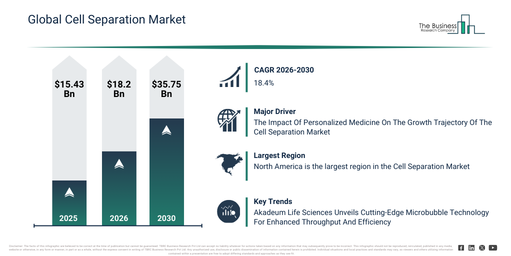
    The cell separation market experienced significant expansion recently, projecting a surge from $15.43 billion in 2025 to $18.2 billion in 2026, reflecting a compound annual growth rate (CAGR) of 18.0%. Historical growth drivers for this sector include the broadening scope of cancer research initiatives, advancements in stem cell investigations, a greater embrace of flow cytometry techniques, heightened demand for diagnostic cell isolation, and the increasing accessibility of consumables essential for cell separation processes.

    The global market for cell separation is projected for substantial expansion over the coming years, anticipating a reach of $35.75 billion by 2030, fueled by a compound annual growth rate of 18.4%. This anticipated surge is underpinned by a confluence of factors, including heightened investments in cell-based therapies, a burgeoning demand for precise diagnostic tools, the broadening scope of immunotherapy research, the increasing integration of automated systems within clinical laboratories, and the accelerating adoption of personalized medicine strategies. Key developments shaping this market during the forecast period involve a greater embrace of magnetic and fluorescence-based cell sorting methods, a rising need for cells of exceptional purity, the expanding utilization of automated cell separation equipment, the broadening applications of single-cell isolation technologies, and a sharpened emphasis on processing cells intended for clinical use.

    Download A Free Sample Report For Comprehensive Market Insights:

    https://www.thebusinessresearchcompany.com/sample.aspx?id=9928&type=smp

    #Cell Separation Market Demand Drivers Creating New Revenue Opportunities

    The cell separation market is poised for expansion, largely driven by the growing trend toward personalized medicine. This innovative healthcare strategy, often referred to as precision medicine, tailors treatments by accounting for individual genetic makeup, environmental factors, and lifestyle choices. By facilitating more precise and tailored methods in both biomedical research and therapy, personalized medicine significantly enhances cell separation processes. A notable demonstration of this trend occurred in February 2024 when the Personalized Medicine Coalition reported that the U.S. Food and Drug Administration (FDA) sanctioned seven new personalized cancer therapies in 2023. This figure, part of a larger group of twenty-six approvals for personalized treatments overall, represents a substantial leap from the twelve such treatments authorized in 2022, underscoring the burgeoning influence of personalized medicine on the advancement of the cell separation sector.

    Cell Separation Market Segment Breakdown: Which Categories Generate The Most Revenue?

    The cell separation market covered in this report is segmented –

    1) By Cell Type: Human Cells, Animal Cells

    2) By Method: Gradient Centrifugation, Surface Markers Separation, Fluorescence Activated Cell Sorting, Magnetic Cell Sorting

    3) By Product: Consumables, Instruments

    4) By Application: Biomolecule Isolation, Cancer Research, Stem Cell Research, Tissue Regeneration, In Vitro Diagnostics, Therapeutics

    Subsegments:

    1) By Human Cells: Blood Cells, Stem Cells, Tumor Cells

    2) By Animal Cells: Mammalian Cells, Avian Cells, Insect Cells

    Cell Separation Market Trends Driving Strategic Industry Expansion

    Leading entities within the cell separation sector are dedicating resources to pioneering technological innovations, including microfluidic rare cell enrichment techniques, with the aim of enhancing the processes of isolating, examining, and utilizing rare circulating tumor cells in cancer research and diagnostic endeavors. This approach of microfluidic rare cell enrichment involves the application of micro-scale fluidic systems designed to effectively isolate and concentrate scarce cells from intricate biological samples, thereby facilitating highly accurate analysis and diagnostic outcomes. As a pertinent illustration, in June of 2024, Bio-Rad Laboratories, a prominent life sciences firm headquartered in the United States, introduced its Celselect Slides 2.0 product, engineered to elevate the efficiency of capturing and isolating rare cells. These advanced slides are designed to facilitate a more effective enrichment of circulating tumor cells, consequently bolstering high-precision cancer research methodologies and expediting the creation of targeted therapeutic interventions. The introduction of Celselect Slides 2.0 underscores Bio-Rad’s steadfast dedication to pushing the boundaries of cell separation technology and providing robust support for pioneering cancer research initiatives.

    Cell Separation Market Key Players And Strategic Industry Positioning

    Major companies operating in the cell separation market are Becton Dickinson and Company, Merck KGaA, Thermo Fisher Scientific Inc., Bio-Rad Laboratories Inc., Terumo Corporation, Miltenyi Biotec GmbH, Beckman Coulter Inc., STEMCELL Technologies Inc., PluriSelect Life Science UG and Co. KG, GE HealthCare Technologies Inc., Life Technologies Inc., Danaher Corporation, Corning Incorporated, Sartorius AG, Bio-Techne Corp., Takara Bio Inc., Lonza Group Ltd., MagBio Genomics, Akadeum Life Sciences Inc., Invent Biotechnologies Inc.

    Access The Complete Cell Separation Market Report:

    https://www.thebusinessresearchcompany.com/report/cell-separation-global-market-report

    #Cell Separation Market Largest Region: Which Geography Holds The Highest Market Share?

    North Americawas the largest region in the cell separation market in 2025. Asia-Pacificis expected to be the fastest-growing region in the cell separation market report during the forecast period. The regions covered in the cell separation market report are Asia-Pacific, South East Asia, Western Europe, Eastern Europe, North America, South America, Middle East, Africa.

    Get in touch with us:

    The Business Research Company: https://www.thebusinessresearchcompany.com/

    Americas: +1 310-496-7795

    Asia: +44 7882 955267 & +91 8897263534

    Europe: +44 7882 955267

    Email us at: marketing@tbrc.info

    Follow us on:

    LinkedIn: https://in.linkedin.com/company/the-business-research-company

    YouTube: https://www.youtube.com/channel/UC24_fI0rV8cR5DxlCpgmyFQ

    Global Market Model: https://www.thebusinessresearchcompany.com/global-market-model
  • Cell Processing Technologies Market Forecast Highlights Expansion From $5.56 Billion To $9.24 Billion Through 2030

    Cell Processing Technologies Market Forecast Highlights Expansion From $5.56 Billion To $9.24 Billion Through 2030

    Enhanced with market attractiveness analysis, total addressable market evaluation, company benchmarking matrices, interactive Excel dashboards, expanded supply chain intelligence, emerging startup coverage, and detailed product insights, The Business Research Company’s 2026 market reports deliver more actionable and strategically valuable research.

    Cell Processing Technologies Market Size Forecast: How Large Could The Market Become By 2030?

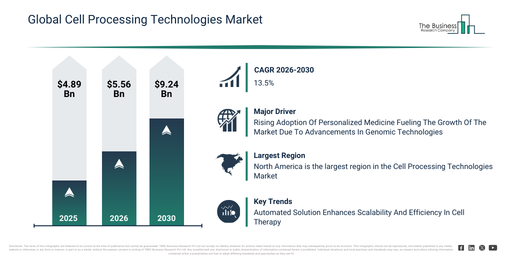
    The cell processing technologies market has experienced significant expansion lately, with projections indicating a rise from $4.89 billion in 2025 to $5.56 billion by 2026, reflecting a compound annual growth rate of 13.7%. This historical growth trajectory has been fueled by several key factors, including the broadening scope of cell-based research, greater adoption of cell culture methodologies, advancements in regenerative medicine investigations, the accessibility of sophisticated laboratory instrumentation, and augmented financial support for both academic and clinical studies.

    The market for cell processing technologies is poised for significant expansion in the upcoming years, anticipated to reach $9.24 billion by 2030 with a compound annual growth rate (CAGR) of 13.5%. This projected growth is fueled by several key factors including the escalating commercial adoption of cell therapies, a heightened need for efficient and scalable cell manufacturing solutions, the expanding utility of personalized medicine approaches, increased capital investment in bioprocess automation technologies, and a growing emphasis from regulatory bodies on establishing robust cell processing standards. Key developments expected to shape this market during the forecast period involve a greater uptake of automated cell processing systems, a surge in demand for closed-system cell handling solutions, more prevalent integration of digital tools for process oversight, the wider use of disposable consumables, and a strengthened concentration on maintaining cell viability and ensuring stringent quality control measures.

    Download A Free Sample Report For Comprehensive Market Insights:

    https://www.thebusinessresearchcompany.com/sample.aspx?id=27243&type=smp

    Cell Processing Technologies Market Expansion Supported By Key Demand Factors

    The increasing embrace of individualized medical treatments is poised to significantly boost the cell processing technologies sector. This personalized medicine strategy focuses on customizing therapies for each patient, taking into account their unique genetic makeup, surrounding environment, and daily habits, thereby enhancing treatment effectiveness and overall patient well-being. Escalating interest in personalized medicine stems from progress in genetic sequencing tools, which have made it possible to pinpoint specific genetic differences and design treatments accordingly. Cell processing technologies play a crucial role in advancing personalized medicine by facilitating the accurate handling and preparation of cells sourced from individual patients, rendering them indispensable for bespoke therapeutic solutions. These technologies contribute to better treatment results by guaranteeing the quality and vitality of cells, fostering the creation of precise and impactful medical advancements. Illustrating this trend, the Personalized Medicine Coalition (PMC) reported that in 2023, the U.S. Food and Drug Administration (FDA) granted approval for 26 novel personalized medicines, a notable jump from the 12 approvals seen in 2022. Consequently, the expanding application of personalized medical interventions is a key factor fueling the expansion of the cell processing technologies market.

    Cell Processing Technologies Market Segmentation: How Is The Market Structured Across Key Categories?

    The cell processing technologies market covered in this report is segmented –

    1) By Product Type: Equipment, Consumables, Software

    2) By Application: Oncology, Cardiovascular Disease, Bone Repair, Neurological Disorders, Skeletal Muscle Repair, Immune Diseases, Other Applications

    3) By End-User: Pharmaceutical and Biotechnology Companies, Academic Research Institutes, Other End-Users

    Subsegments:

    1) By Equipment: Bioreactors, Centrifuges, Cell Counters, Incubators, Cryopreservation Systems, Cell Washers, Cell Sorters, Microscopes

    2) By Consumables: Cell Culture Media, Reagents, Pipettes and Tips, Flasks and Plates, Cryovials, Filters, Disposable Bags, Tubes and Containers

    3) By Software: Process Monitoring Software, Data Management Software, Automation Control Software, Quality Control Software, Imaging and Analysis Software, Inventory Management Software

    Cell Processing Technologies Market Growth Trends Influencing Competitive Dynamics

    Leading entities within the cell processing technologies sector are prioritizing innovation, particularly in the creation of sophisticated automated platforms for cell therapy production. These advancements aim to significantly boost scalability, optimize operational workflows, ensure superior cell quality, and ultimately lower manufacturing expenditures. An automated cell therapy manufacturing platform is essentially a comprehensive, integrated system employing cutting-edge robotics, sensor technology, and intelligent software to execute the complete cell therapy production lifecycle, requiring very little manual input. As an illustration, in March 2025, Limula SA, a Swiss life sciences firm, unveiled LimONE, a fully automated cell therapy manufacturing platform developed to revolutionize the production of sophisticated therapies like CAR-T and gene-edited stem cells. This system simplifies intricate manufacturing steps by incorporating a bioreactor and centrifuge into a solitary, contained unit that utilizes a single set of consumables across all developmental phases. Through LimONE, healthcare institutions, biotechnology companies, and manufacturers can expedite the progression from initial research to clinical studies and large-scale commercial output, thereby increasing patient access to crucial, individualized cell and gene therapies.

    Cell Processing Technologies Market Competitive Landscape And Leading Companies

    Major companies operating in the cell processing technologies market are Thermo Fisher Scientific Inc., Danaher Corporation, Cryo-Cell International Inc., Merck KGaA, Becton Dickinson and Company, Lonza Group AG, Terumo Corporation, WuXi AppTec Co. Ltd., Charles River Laboratories International Inc., Bio-Rad Laboratories Inc., PHC Holdings Corporation, Bio-Techne Corporation, StemCell Technologies Inc., Shibuya Corporation, Repligen Corporation, Beckman Coulter Inc., ThermoGenesis Holdings Inc., Ori Biotech Ltd., Biospherix Ltd., Miltenyi Biotec B.V. & Co. KG, Sartorius Stedim Biotech, Cytiva

    Access The Complete Cell Processing Technologies Market Report:

    https://www.thebusinessresearchcompany.com/report/cell-processing-technologies-global-market-report

    Cell Processing Technologies Market Regional Analysis: Which Region Leads By Revenue?

    North Americawas the largest region in the cell processing technologies market in 2025. The regions covered in the cell processing technologies market report are Asia-Pacific, South East Asia, Western Europe, Eastern Europe, North America, South America, Middle East, Africa.

    Get in touch with us:

    The Business Research Company: https://www.thebusinessresearchcompany.com/

    Americas: +1 310-496-7795

    Asia: +44 7882 955267 & +91 8897263534

    Europe: +44 7882 955267

    Email us at: marketing@tbrc.info

    Follow us on:

    LinkedIn: https://in.linkedin.com/company/the-business-research-company

    YouTube: https://www.youtube.com/channel/UC24_fI0rV8cR5DxlCpgmyFQ

    Global Market Model: https://www.thebusinessresearchcompany.com/global-market-model
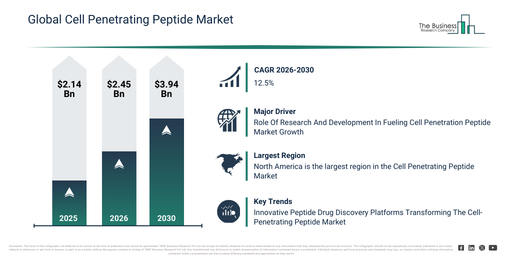
  • Cell Penetrating Peptide Market Expected To Reach $3.93 Billion By 2030 As Growth Accelerates At 12.5% CAGR

    Cell Penetrating Peptide Market Expected To Reach $3.93 Billion By 2030 As Growth Accelerates At 12.5% CAGR

    Through market attractiveness analysis, total addressable market evaluation, company benchmarking matrices, interactive Excel dashboards, expanded supply chain intelligence, emerging startup coverage, and detailed product insights, The Business Research Company’s 2026 market reports provide more actionable and strategically valuable research.

    Cell Penetrating Peptide Market Revenue Outlook: What CAGR Is Expected Through 2030?

    The market for cell-penetrating peptides has experienced substantial expansion recently, with projections indicating a continued upward trajectory. This market is anticipated to expand from $2.14 billion in 2025 to reach $2.45 billion by 2026, reflecting a compound annual growth rate of 14.8%. Factors contributing to this growth during the preceding period include heightened pharmaceutical investigation into drug delivery methodologies, advancements in peptide synthesis technologies, expanded utilization of molecular imaging techniques, a greater focus on peptide research within academic institutions, and the early incorporation of CPP (cell-penetrating peptide) technologies.

    The cell penetrating peptide market is poised for substantial expansion, projected to reach $3.94 billion by 2030 with a compound annual growth rate of 12.5%. This upward trajectory is fueled by several key factors, including heightened investment in precise therapeutic approaches, a surge in demand for gene delivery methods that avoid viral vectors, the accelerating development of personalized medicine, a greater emphasis on improving drug delivery efficacy inside cells, and the increasing clinical assessment of systems employing cell penetrating peptides. During this projected period, significant trends will emerge, such as the advancement of sophisticated drug delivery vehicles based on these peptides, their escalating application in gene delivery, the growing popularity of hybrid peptide designs, the broadening of platforms for targeted intracellular delivery, and a concentrated effort toward engineering peptides with reduced toxicity.

    Download A Free Sample Report For Comprehensive Market Insights:

    https://www.thebusinessresearchcompany.com/sample.aspx?id=15537&type=smp

    #Cell Penetrating Peptide Market Growth Drivers And Industry Catalysts

    Momentum for the cell penetration peptide market is anticipated to intensify due to amplified investment in health research and development, a process encompassing systematic investigation for scientific advancement and improved healthcare solutions. This uptick in R&D is fueled by escalating healthcare demands, technological evolution, global health imperatives, attractive investment incentives, and emerging economic prospects. Cell penetration peptides, by facilitating the effective delivery of biomolecules and therapeutics into cells, significantly contribute to progress across numerous R&D domains, such as drug delivery, gene therapy, vaccine creation, molecular imaging, and cellular studies. Illustratively, the UK government’s R&D expenditures saw an 8.2% increase in 2023, reaching £17.4 billion ($22.1 billion) from £16.1 billion ($20.45 billion) in 2022, as reported by the Office for National Statistics. Consequently, this heightened focus on research and development is a key driver for the expansion of the cell penetration peptide market.

    Cell Penetrating Peptide Market Segmentation Trends And Revenue Drivers

    The cell penetrating peptide market covered in this report is segmented –

    1) By Type: Synthetic Cell Penetrating Peptides, Protein-Derived Cell Penetrating Peptides, Chimeric Cell Penetrating Peptides

    2) By Application: Drug Delivery, Gene Delivery, Diagnostics, Molecular Imaging, Other Applications

    3) By End Use: Pharmaceutical And Biotechnology Companies, Contract Research Organization (CROs), Hospitals And Clinics, Other End Users

    Subsegments:

    1) By Synthetic Cell Penetrating Peptides: Linear Synthetic CPPs, Branched Synthetic CPPs, Peptide Conjugates, Lipid-Modified Synthetic CPPs

    2) By Protein-Derived Cell Penetrating Peptides: Tat Peptides (From HIV-1 TAT), Antennapedia Peptides, Homeodomain Peptides

    3) By Chimeric Cell Penetrating Peptides: Fusion Peptides, Hybrid Peptides

    #Cell Penetrating Peptide Market Trends Influencing Long-Term Demand

    Companies leading the charge in the cell-penetrating peptide sector are concentrating their efforts on pioneering new solutions, like peptide drug discovery platforms, as a means to enhance their market standing. Such a platform serves as an integrated suite of tools and methodologies designed to streamline the entire spectrum of peptide therapeutic development, from initial discovery through to optimization and assessment. Illustrating this trend, Fujitsu Limited, a technology firm headquartered in Japan, announced in May 2023 the introduction of its Biodrug Design Accelerator. This advanced platform is engineered to organize and accelerate the research workflow for discovering peptide-based drugs, specifically designed to support scientists in pharmaceutical companies by boosting the speed and effectiveness of the peptide drug development process, especially within the iterative ‘design, make, test, analyze’ (DMTA) framework. Furthermore, it promotes more efficient collaboration among researchers involved in synthesis and testing, while also maintaining compatibility with HELM, a recognized standard for representing intricate biomolecular structures.

    #Cell Penetrating Peptide Market Industry Leaders: Which Organizations Are Driving Competition?

    Major companies operating in the cell penetrating peptide market are Thermo Fisher Scientific Inc., Novo Nordisk A/S, Merck KGaA, Corden Pharma GmbH, Sarepta Therapeutics Inc., GenScript Biotech Corporation, Bachem Holding AG, R&D Systems Inc., PolyPeptide Laboratories AB, PeptiDream Inc., Revance Therapeutics Inc., CPC Scientific Inc., Tocris Bioscience, Bio-Synthesis Inc., AnaSpec Inc., Avidity Biosciences Inc., Iris Biotech GmbH, PEPperPRINT GmbH, Chemos GmbH & Co. KG, Creative Peptides GmbH, ProImmune Ltd., Pepscan Inc., The Cupid Peptide Company, AltaBioscience Ltd., Peptomyc

    Access The Complete Cell Penetrating Peptide Market Report:

    https://www.thebusinessresearchcompany.com/report/cell-penetrating-peptide-global-market-report

    Cell Penetrating Peptide Market Geographic Distribution And Regional Opportunities

    North Americawas the largest region in the cell penetrating peptide market in 2025. Asia-Pacificis expected to be the fastest-growing region in the forecast period. The regions covered in the cell penetrating peptide market report are Asia-Pacific, South East Asia, Western Europe, Eastern Europe, North America, South America, Middle East, Africa.

    Get in touch with us:

    The Business Research Company: https://www.thebusinessresearchcompany.com/

    Americas: +1 310-496-7795

    Asia: +44 7882 955267 & +91 8897263534

    Europe: +44 7882 955267

    Email us at: marketing@tbrc.info

    Follow us on:

    LinkedIn: https://in.linkedin.com/company/the-business-research-company

    YouTube: https://www.youtube.com/channel/UC24_fI0rV8cR5DxlCpgmyFQ

    Global Market Model: https://www.thebusinessresearchcompany.com/global-market-model

  • Cell Lysis And Fractionation Market Set To Grow From $3.95 Billion In 2026 To $5.16 Billion By 2030 At A CAGR Of 6.9%

    Cell Lysis And Fractionation Market Set To Grow From $3.95 Billion In 2026 To $5.16 Billion By 2030 At A CAGR Of 6.9%

    Delivering more actionable and strategically valuable research, The Business Research Company’s 2026 market reports feature market attractiveness analysis, total addressable market evaluation, company benchmarking matrices, interactive Excel dashboards, expanded supply chain intelligence, emerging startup coverage, and detailed product insights.

    Cell Lysis And Fractionation Market Growth Analysis: How Will Revenue Expand During The Forecast Period?

    The market for cell lysis and fractionation technologies experienced robust expansion recently, projected to climb from $3.69 billion in 2025 to $3.95 billion in 2026, reflecting a compound annual growth rate of 7.0%. This upward trend over the past period is linked to heightened engagement in molecular biology investigations, an increase in proteomics research, broader adoption of nucleic acid purification methods, the proliferation of life science research facilities, and a greater need for consistent sample preparation processes.

    The market for cell lysis and fractionation is poised for significant expansion, projected to reach $5.16 billion by 2030, reflecting a compound annual growth rate of 6.9%. This anticipated growth stems from several key drivers, including escalating investments in proteomics and genomics research, a greater embrace of automated sample preparation techniques, a heightened emphasis on high-throughput analysis, the broadening scope of biopharmaceutical research endeavors, and the increasing integration of laboratory systems. Furthermore, prominent trends shaping this market during the forecast period involve a rising preference for automated cell lysis systems, a burgeoning demand for highly effective protein extraction methods, the expanding utilization of both chemical and mechanical lysis approaches, an increase in fractionation-based sample preparation strategies, and a reinforced commitment to preserving sample integrity.

    Download A Free Sample Report For Comprehensive Market Insights:

    https://www.thebusinessresearchcompany.com/sample.aspx?id=14064&type=smp

    Cell Lysis And Fractionation Market Opportunity Drivers: What Is Creating New Revenue Potential?

    The increasing emphasis on personalized medicine is anticipated to significantly boost the cell lysis and fractionation sectors. This innovative medical approach leverages an individual’s genetic blueprint for disease diagnosis and therapeutic management, essentially customizing medical plans and interventions based on each patient’s distinct characteristics, particularly their genetic makeup. Cell lysis and fractionation are instrumental in this precision medicine paradigm, enabling the isolation and examination of specific subcellular components from patient specimens like proteins, organelles, and nucleic acids. Consequently, researchers and healthcare providers can delve into the molecular mechanisms underlying ailments and devise tailored treatments aligned with each patient’s unique molecular profile. A notable indicator of this trend, as reported in February 2024 by the Personalized Medicine Coalition, a US non-profit, is the FDA’s approval of 7 new personalized cancer treatments in 2023, contributing to a total of 26 personalized therapies, a substantial rise from the 12 approvals seen in 2022. Thus, the heightened focus on personalized medicine directly fuels the expansion of the cell lysis and fractionation markets.

    An escalating need within the biopharmaceutical sector is poised to stimulate expansion in the cell lysis and fractionation market. This industry, dedicated to the creation, manufacture, and marketing of medications and treatments derived from biological sources through biotechnology, is experiencing robust growth. This expansion is largely attributed to the increasing incidence of chronic and intricate diseases, which in turn fuels the demand for sophisticated, targeted therapeutics. Cell lysis and fractionation are vital to the biopharmaceutical industry’s operations, facilitating the disruption of cells to liberate and isolate crucial intracellular biomolecules, including proteins, enzymes, and nucleic acids, which are indispensable for the development of drugs, the production of biologics, and ongoing research endeavors. For illustration, IQVIA, a US-based entity offering biopharmaceutical development services, projected in January 2024 that global spending on biotechnology is slated to surpass $892 billion by the year 2028. Consequently, the amplified requirements from the biopharmaceutical industry are serving as a key driver for the growth of the cell lysis and fractionation market.

    Cell Lysis And Fractionation Market Segment Analysis Highlighting Growth Areas

    The cell lysis and fractionation market covered in this report is segmented –

    1) By Type: Mammalian Cells, Microbial Cells

    2) By Application: Nucleic Acid Purification And Isolation, Protein Purification And Isolation

    3) By End-User: Research Laboratories And Institutes, Biopharmaceutical, Biotechnology Companies

    Subsegments:

    1) By Mammalian Cells: Adherent Mammalian Cells, Suspension Mammalian Cells, Primary Cells, Cell Lines

    2) By Microbial Cells: Bacterial Cells, Yeast Cells, Fungal Cells, Algal Cells

    Cell Lysis And Fractionation Market Innovation Trends Driving Future Development

    Key players within the cell lysis and fractionation sector are concentrating their efforts on the development and dissemination of innovative offerings, including specialized lysis kits for cell and gene therapies (CGT) that leverage viral vectors, as a strategic maneuver to bolster their market standing. This advanced lysis kit technology streamlines the process of lysing Adeno-associated virus (AAV), thereby enhancing standard operating procedures, fortifying quality assurance measures, and elevating safety standards, all while promoting uniformity in bioprocessing operations. To illustrate this point, QIAGEN, a prominent German entity specializing in sample and assay technologies, introduced its new CGT Viral Vector Lysis Kit in July 2023. This product facilitates the precise and consistent determination of viral titers across various serotypes, commencing with the cellular lysate. This newly released CGT viral vector lysis kit serves as a valuable addition to QIAGEN’s continuously growing suite of digital PCR solutions tailored for the biopharmaceutical industry, which already encompasses three QIAcuity Residual DNA Quantification Kits designed to detect residual host cell DNA contamination and ten QIAcuity Cell and Gene Therapy (CGT) dPCR Assays aimed at quantifying Adeno-associated virus (AAV) titers.

    Cell Lysis And Fractionation Market Leading Companies: Who Holds Significant Market Presence?

    Major companies operating in the cell lysis and fractionation market are Hoffmann-La Roche Ltd, Merck & Co. Inc., Thermo Fisher Scientific Inc., Danaher Corporation, Becton, Dickinson and Company, Lonza Group AG, Illumina Inc., Beckman Coulter Inc., PerkinElmer Inc., IDEX Corporation, Bio-Rad Laboratories Inc., QIAGEN NV, Eppendorf AG, Miltenyi Biotec B.V. & Co. KG, Promega Corporation, Takara Bio Inc., Abcam plc, Cell Signaling Technology Inc., BioVision Inc., Diagenode LLC, Claremont BioSolutions LLC, Norgen Biotek Corp., Qsonica LLC, Labfreez Instruments Group Co. Ltd.

    Access The Complete Cell Lysis And Fractionation Market Report:

    https://www.thebusinessresearchcompany.com/report/cell-lysis-and-fractionation-global-market-report

    Cell Lysis And Fractionation Market Largest Region By Revenue And Market Share

    North Americawas the largest region in the cell lysis and fractionation market in 2025. The regions covered in the cell lysis and fractionation market report are Asia-Pacific, South East Asia, Western Europe, Eastern Europe, North America, South America, Middle East, Africa.

    Get in touch with us:

    The Business Research Company: https://www.thebusinessresearchcompany.com/

    Americas: +1 310-496-7795

    Asia: +44 7882 955267 & +91 8897263534

    Europe: +44 7882 955267

    Email us at: marketing@tbrc.info

    Follow us on:

    LinkedIn: https://in.linkedin.com/company/the-business-research-company

    YouTube: https://www.youtube.com/channel/UC24_fI0rV8cR5DxlCpgmyFQ

    Global Market Model: https://www.thebusinessresearchcompany.com/global-market-model