Month: June 2026

  • Antibody Contract Manufacturing Market Trends And Growth Drivers Point To Strong Future Potential

    Antibody Contract Manufacturing Market Trends And Growth Drivers Point To Strong Future Potential

    Through market attractiveness analysis, total addressable market evaluation, company benchmarking matrices, interactive Excel dashboards, expanded supply chain intelligence, emerging startup coverage, and detailed product insights, The Business Research Company’s 2026 market reports provide more actionable and strategically valuable research.

    Antibody Contract Manufacturing Market Revenue Growth Supported By A CAGR Of 34.71% Through 2030

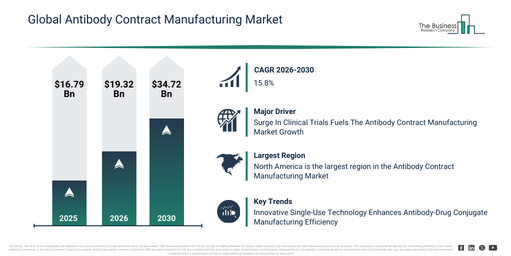
    The market for contract manufacturing of antibodies has experienced substantial expansion. Projections indicate a rise from $16.79 billion in 2025 to $19.32 billion by 2026, reflecting a compound annual growth rate of 15.0%. Factors contributing to this historic growth trajectory include an increasing number of biologics in development pipelines, a greater tendency for biopharmaceutical firms to outsource production, the advancement of mammalian cell culture technologies, an upswing in clinical trials for antibody-based therapies, and the widespread availability of specialized contract manufacturing organization (CMO) infrastructure.

    The market for antibody contract manufacturing is poised for significant expansion, with projections indicating a surge to $34.72 billion by the year 2030, driven by a robust compound annual growth rate (CAGR) of 15.8%. This accelerated growth trajectory is fueled by several key factors, including an escalating need for bulk antibody production, heightened investments in advanced biologic development, a growing emphasis on economical manufacturing approaches, the proliferation of personalized medicine initiatives, and an increase in regulatory endorsements for antibody-based treatments. During this projected period, prominent market trends encompass the scaling up of substantial antibody production facilities, a greater embrace of disposable bioprocessing technologies, a rising demand for both bispecific antibodies and antibody-drug conjugates (ADCs), a heightened focus on adaptable and scalable production methodologies, and an increased attention to adhering to stringent regulatory standards and quality assurance protocols.

    Download A Free Sample Report For Comprehensive Market Insights:

    https://www.thebusinessresearchcompany.com/sample.aspx?id=12665&type=smp

    Antibody Contract Manufacturing Market Growth Factors Supporting Long-Term Expansion

    The expansion in the quantity of clinical trials is anticipated to be a primary catalyst for the advancement of the antibody contract manufacturing sector. These trials, which are investigations involving human subjects to ascertain the safety and efficacy of novel medical approaches, treatments, or diagnostic methods, necessitate a consistent and compliant provision of high-grade antibodies as more of them focus on antibody-related therapies or diagnostics. Illustrating this trend, data from ClinicalTrials.gov, maintained by the U.S. National Institutes of Health, indicated a surge in registered studies globally, increasing from 399,499 in 2022 to 437,533 by May 2023, with a significant portion, approximately 241,498 or 53%, conducted outside the United States compared to 31% or 140,492 studies within the U.S. This escalating volume of clinical research directly fuels the demand and subsequent expansion within the antibody contract manufacturing market.

    Antibody Contract Manufacturing Market Segment Breakdown: Which Categories Generate The Most Revenue?

    The antibody contract manufacturing market covered in this report is segmented –

    1) By Product: Monoclonal Antibodies, Polyclonal Antibodies, Other Products

    2) By Source: Mammalian, Microbial

    3) By Scale Of Operation: Preclinical, Clinical, Commercial

    4) By End-User: Biopharmaceutical Companies, Research Laboratories, Other End Users

    Subsegments:

    1) By Monoclonal Antibodies: Therapeutic Monoclonal Antibodies, Diagnostic Monoclonal Antibodies

    2) By Polyclonal Antibodies: Research Polyclonal Antibodies, Therapeutic Polyclonal Antibodies

    3) By Other Products: Bispecific Antibodies, Antibody-Drug Conjugates (ADCs), Fusion Proteins

    Antibody Contract Manufacturing Market Industry Trends Shaping Future Revenue Growth

    A key trend observed among leading players in the antibody contract manufacturing sector involves the pursuit of advancements like single-use technology, which effectively mitigates concerns regarding cross-contamination and concurrently lowers operational expenditures. This single-use technology, or SUT, encompasses disposable elements and integrated systems integral to biopharmaceutical production workflows. Illustrating this, in September 2024, Merck & Co., a prominent American pharmaceutical firm, introduced the Mobius ADC Reactor, a product engineered to optimize the production of antibody-drug conjugates. This novel single-use reactor, specifically tailored for manufacturing antibody drug conjugates, boosts production output by an impressive 70% over conventional stainless steel or glass-based approaches. The inherent nature of its single-use design serves to reduce the likelihood of cross-contamination and cuts down on operational expenses, thereby facilitating quicker processing cycles. Furthermore, the incorporation of cutting-edge film technology bolsters the robustness of the bags and their resistance to leakage, thereby safeguarding the quality and stability of highly potent active pharmaceutical ingredients. Such pioneering developments empower biopharmaceutical organizations to manufacture essential therapeutic treatments with heightened safety and greater operational effectiveness.

    Antibody Contract Manufacturing Market Key Players And Strategic Industry Positioning

    Major companies operating in the antibody contract manufacturing market are Lonza Group AG, Catalent Inc, Samsung Biologics Co Ltd, Wuxi Biologics Cayman Inc, Thermo Fisher Scientific Inc, Boehringer Ingelheim BioXcellence, AGC Biologics, FUJIFILM Diosynth Biotechnologies, AbbVie Inc, Charles River Laboratories International Inc, mAbxience, KBI Biopharma Inc, Abzena Ltd, Just-Evotec Biologics, Northway Biotech, Cerbios-Pharma, Scorpius BioManufacturing, Lotte Biologics, Rentschler Biopharma SE, Cytiva (Life Sciences CDMO), Xcellon Biologics, Celonic AG, Syngene International Ltd

    Access The Complete Antibody Contract Manufacturing Market Report:

    https://www.thebusinessresearchcompany.com/report/antibody-contract-manufacturing-global-market-report

    Antibody Contract Manufacturing Market Geographic Distribution And Regional Opportunities

    North Americawas the largest region in the antibody contract manufacturing market in 2025. Asia-Pacificis expected to be the fastest-growing region in the forecast period. The regions covered in the antibody contract manufacturing market report are Asia-Pacific, South East Asia, Western Europe, Eastern Europe, North America, South America, Middle East, Africa.

    Get in touch with us:

    The Business Research Company: https://www.thebusinessresearchcompany.com/

    Americas: +1 310-496-7795

    Asia: +44 7882 955267 & +91 8897263534

    Europe: +44 7882 955267

    Email us at: marketing@tbrc.info

    Follow us on:

    LinkedIn: https://in.linkedin.com/company/the-business-research-company

    YouTube: https://www.youtube.com/channel/UC24_fI0rV8cR5DxlCpgmyFQ

    Global Market Model: https://www.thebusinessresearchcompany.com/global-market-model
  • Antibodies Market Expansion Is Reshaping Competitive Dynamics Across The Industry

    Antibodies Market Expansion Is Reshaping Competitive Dynamics Across The Industry

    Delivering more actionable and strategically valuable research, The Business Research Company’s 2026 market reports feature market attractiveness analysis, total addressable market evaluation, company benchmarking matrices, interactive Excel dashboards, expanded supply chain intelligence, emerging startup coverage, and detailed product insights.

    Antibodies Market Value Expansion And Long-Term Growth Outlook

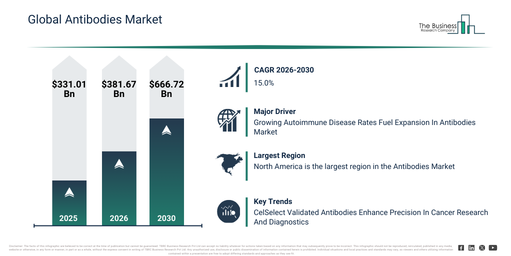
    Experiencing significant expansion, the antibodies market is projected to surge from $331.01 billion in 2025 to $381.67 billion by 2026, reflecting a robust compound annual growth rate of 15.3% over this period. This notable upward trajectory in recent times is underpinned by several key factors, including substantial progress made in immunological studies, a heightened level of financial commitment towards the creation of biological drugs, the broader implementation of cancer therapy initiatives, a rising incidence of conditions affecting the immune system, and the continuous refinement of methods for antibody manufacturing.

    The global antibodies market is poised for significant expansion, projecting a reach of $666.72 billion by 2030, fueled by an impressive compound annual growth rate of 15.0%. This upward trajectory is anticipated to be driven by several key factors: the increasing embrace of precision immunotherapies, a heightened need for advanced antibody formats, the burgeoning field of biosimilar antibody development, a greater emphasis on personalized medical approaches, and the consistent expansion of global biologics production capabilities. Throughout this forecast period, prominent trends expected to shape the market include the broadening development pipelines for monoclonal antibodies, escalating demand for antibody-drug conjugates, a sharpened focus on targeted immunotherapies, the growing application of antibodies in managing chronic conditions, and a strengthened commitment to scalable biomanufacturing processes.

    Download A Free Sample Report For Comprehensive Market Insights:

    https://www.thebusinessresearchcompany.com/sample.aspx?id=19292&type=smp

    #Antibodies Market Demand Drivers Creating New Revenue Opportunities

    The increasing incidence of autoimmune conditions is poised to be a significant driver for the expansion of the antibodies market in the future. Autoimmune diseases are characterized by the immune system mistakenly attacking and harming the body’s own healthy tissues, encompassing conditions like rheumatoid arthritis, lupus, and multiple sclerosis. This upward trend in autoimmune disorders is linked to a combination of environmental influences, inherent genetic predispositions, and shifts in lifestyle habits. Antibodies play a crucial role by identifying and neutralizing the specific immune cells or inflammatory substances that erroneously attack the body, which in turn helps to mitigate inflammation and ease associated symptoms. To illustrate this trend, data from the Multiple Sclerosis International Federation, a non-profit organization based in the UK, indicated in May 2024 that the worldwide count of individuals diagnosed with multiple sclerosis escalated from 2.8 million in 2020 to 2.9 million by 2023. Consequently, the escalating occurrence of autoimmune diseases is directly fueling the growth of the antibodies market.

    Antibodies Market Segmentation: How Is The Market Structured Across Key Categories?

    The antibodies market covered in this report is segmented –

    1) By Product Type: Monoclonal Antibodies, Polyclonal Antibodies, Antibody Drug Complexes

    2) By Disease Indication: Cardiovascular Diseases, Central Nervous System (CNS) Disorders, Cancer, Autoimmune Disorders, Other Indications

    3) By End User: Hospitals, Long Term Care Facilities, Research Institutes, Other End Users

    Subsegments:

    1) By Monoclonal Antibodies: IgG Monoclonal Antibodies, IgM Monoclonal Antibodies, IgA Monoclonal Antibodies, Other Isotypes

    2) By Polyclonal Antibodies: Serum-derived Polyclonal Antibodies, Purified Polyclonal Antibodies, Antibody Fractionation Products

    3) By Antibody Drug Complexes: Conjugated Antibodies, Bispecific Antibodies, Antibody-Drug Conjugates (ADCs)

    Antibodies Market Trends Driving Strategic Industry Expansion

    Leading entities within the antibodies sector are focused on creating rigorously tested antibodies to boost precision and deliver dependable outcomes in both diagnostic and therapeutic applications. These validated antibodies undergo thorough examination to confirm their accuracy and specificity in identifying target proteins, thereby bolstering the reliability of research findings and guaranteeing the quality and efficacy of products reliant on antibodies. As an illustration, in March of 2024, Bio-Rad Laboratories, a company situated in the US that manufactures products for life science research and clinical diagnostics, introduced Celselect slides with validated antibodies designed for the enumeration of rare cells and circulating tumor cells (CTCs), thereby improving the investigation of tumor diversity and the advancement of disease. This particular set of antibodies, which can be utilized with Bio-Rad’s Celselect Slides Enumeration Stain Kits, facilitates the exact identification of CTCs and represents a notable stride forward, supporting sophisticated cancer research and diagnostic endeavors.

    Antibodies Market Competitive Landscape And Leading Companies

    Major companies operating in the antibodies market are Pfizer Inc., Johnson & Johnson Services Inc., F. Hoffmann-La Roche Ltd., Merck & Co Inc., AbbVie Inc., Sanofi S.A., Bristol Myers Squibb Company, Novartis AG, GSK plc, Takeda Pharmaceutical Company Limited, Eli Lilly and Company, Amgen Inc., Regeneron Pharmaceuticals Inc., Biogen Inc., Alexion Pharmaceuticals Inc., Incyte Corporation, Kyowa Kirin Co Ltd, Ultragenyx Pharmaceutical Inc, Xencor Inc., MacroGenics Inc., ImmunoGen Inc., Sorrento Therapeutics Inc., Beam Therapeutics Inc., SAB Biotherapeutics Inc., bluebird bio Inc., Iovance Biotherapeutics Inc.

    Access The Complete Antibodies Market Report:

    https://www.thebusinessresearchcompany.com/report/antibodies-global-market-report

    Antibodies Market Largest Region By Revenue And Market Share

    North Americawas the largest region in the antibodies market in 2025. Asia-Pacificis expected to be the fastest-growing region in the forecast period. The regions covered in the antibodies market report are Asia-Pacific, South East Asia, Western Europe, Eastern Europe, North America, South America, Middle East, Africa.

    Get in touch with us:

    The Business Research Company: https://www.thebusinessresearchcompany.com/

    Americas: +1 310-496-7795

    Asia: +44 7882 955267 & +91 8897263534

    Europe: +44 7882 955267

    Email us at: marketing@tbrc.info

    Follow us on:

    LinkedIn: https://in.linkedin.com/company/the-business-research-company

    YouTube: https://www.youtube.com/channel/UC24_fI0rV8cR5DxlCpgmyFQ

    Global Market Model: https://www.thebusinessresearchcompany.com/global-market-model
  • Antibiotic Resistance Market Forecast Reveals Where Future Industry Value Will Be Created

    Antibiotic Resistance Market Forecast Reveals Where Future Industry Value Will Be Created

    Enhanced with market attractiveness analysis, total addressable market evaluation, company benchmarking matrices, interactive Excel dashboards, expanded supply chain intelligence, emerging startup coverage, and detailed product insights, The Business Research Company’s 2026 market reports deliver more actionable and strategically valuable research.

    Antibiotic Resistance Market Expected To Reach $18.21 Billion By 2030 At 7.3% CAGR

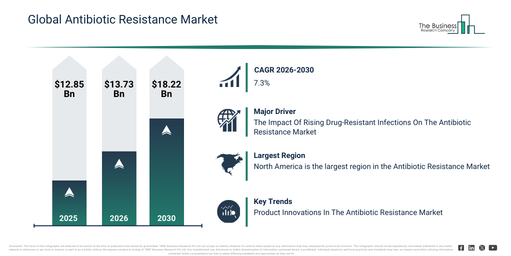
    The market for antibiotics that combat resistance has experienced robust expansion lately, projected to climb from $12.85 billion in 2025 to $13.73 billion in 2026, signifying a compound annual growth rate of 6.8%. This growth during the preceding period was fueled by factors such as the extensive overuse of antibiotics, a surge in hospital-acquired infections, the increased prescription of broad-spectrum antibiotics, a scarcity of new antibiotic development, and the escalating incidence of pathogens that have developed resistance.

    The global market for combating antibiotic resistance is on a trajectory for significant expansion, projected to reach a valuation of $18.22 billion by the year 2030, with a projected compound annual growth rate of 7.3%. This anticipated upswing during the forecast period stems from a confluence of factors including augmented investments channeled into research and development for antimicrobial agents, the increasing utilization of precise diagnostic tools, the broadening scope of international networks dedicated to monitoring resistance patterns, a heightened emphasis on alternative therapeutic approaches, and the proliferation of collaborations between public and private entities. Key developments anticipated within this timeframe involve a greater concentration on pioneering novel antibiotic discovery, a surge in the application of combination drug treatments, expanded implementation of rapid diagnostic testing, the enhancement of programs aimed at responsible antimicrobial use, and more robust monitoring of pathogens exhibiting resistance.

    Download A Free Sample Report For Comprehensive Market Insights:

    https://www.thebusinessresearchcompany.com/sample.aspx?id=12131&type=smp

    Antibiotic Resistance Market Expansion Supported By Key Demand Factors

    The increasing occurrence of infections that defy existing antibiotics is anticipated to be the primary catalyst for the expansion of the antibiotic resistance market. These infections stem from bacteria that have developed immunity to medications, rendering them exceedingly challenging or entirely untreatable. Antimicrobial resistance drugs offer a means to combat these resistant infections, providing enhanced therapeutic results by effectively addressing both the intended pathogens and other microorganisms, contingent upon the specifics of the resistance mechanisms and the interplay within the microbial community. To illustrate, data released in November 2025 by the UK Health Security Agency, the body overseeing health security in England, indicated a concerning rise in fatalities linked to antibiotic-resistant infections, climbing from 2,041 in 2023 to 2,379 in 2024, signifying a jump of 338 deaths within a twelve-month period. Consequently, the growing issue of drug-resistant infections is directly fueling the growth of the antibiotic resistance market.

    Antibiotic Resistance Market Segmentation Trends And Revenue Drivers

    The antibiotic resistance market covered in this report is segmented –

    1) By Drug Class: Beta Lactum Antibiotic, Cephalosporins, Quinolones Antibiotics, Macrolide Antibiotics, Tetracyclines, Oxazolidinones, Other Drug Classes

    2) By Pathogen: Staphylococcus Aureus, Staphylococcus Pneumonia, Neisseria Gonorrhoeae, Enterococcus Faecium, Escherichia Coli, Klebsiella Pneumonia, Shigella, Clostridium Difficile, Other Pathogens

    3) By Disease Type: Urinary Tract Infection, Intra-Abdominal Infection, Blood Stream infections, Clostridium Difficile Infections, Other Disease Types

    4) By Mechanism Of Action: Protein Synthesis Inhibitors, Cell Wall Synthesis Inhibitors, RNA Synthesis Inhibitors, DNA Synthesis Inhibitors, Other Mechanism Of Actions

    5) By End Users: Hospitals, Homecare, Specialty Clinics, Other End-users

    Subsegments:

    1) By Beta Lactam Antibiotics: Penicillins, Cephalosporins, Carbapenems, Monobactams

    2) By Cephalosporins: First-generation, Second-generation, Third-generation, Fourth-generation

    3) By Quinolones Antibiotics: Fluoroquinolones, Other Quinolones

    4) By Macrolide Antibiotics: Erythromycin, Azithromycin, Clarithromycin

    5) By Tetracyclines: Doxycycline, Minocycline, Tetracycline

    6) By Oxazolidinones: Linezolid, Tedizolid

    7) By Other Drug Classes: Glycopeptides, Lipopeptides, Streptogramins, Polymyxins

    Antibiotic Resistance Market Growth Trends Influencing Competitive Dynamics

    Leading corporations within the antibiotic resistance sector are concentrating their efforts on creating groundbreaking solutions aimed at improving therapeutic outcomes, safeguarding patient well-being, and tackling the escalating issue of infections resistant to multiple drugs (MDR). As an illustration, during January 2023, a pharmaceutical firm headquartered in India, Alkem Laboratories Limited, unveiled Zidavi, a pioneering antibiotic formulated to confront MDR infections, thereby enhancing its availability, cost-effectiveness, and reach, while simultaneously preserving the lives of individuals battling severe illnesses; this distinct formulation combines ceftazidime and avibactam, offering a means to combat infections stemming from MDR gram-negative microorganisms, and is supplied as a sterile powder intended for dissolution, with each individual dosage vial containing ceftazidime pentahydrate, corresponding to 2 grams of ceftazidime, alongside avibactam sodium, equivalent to 0.5 grams of avibactam, presenting a viable option for the management of hospital-acquired pneumonia (HAP) and serious intra-abdominal infections (IAIs) attributed to pathogens resistant to both meropenem and colistin.

    #Antibiotic Resistance Market Industry Leaders: Which Organizations Are Driving Competition?

    Major companies operating in the antibiotic resistance market are Pfizer Inc., Johnson and Johnson, F. Hoffmann-La Roche Ltd, AbbVie Inc., Novartis AG, Merck and Co. Inc., Bristol-Myers Squibb, Sanofi S.A., AstraZeneca, GlaxoSmithKline Plc, Eli Lilly and Company, Boehringer Ingelheim International GmbH, Astellas Pharma, Daiichi Sankyo, Chugai Pharmaceutical Co. Ltd., Teva Pharmaceutical Industries Ltd., Paratek Pharmaceuticals Inc., Basilea Pharmaceutica Ltd., Theravance Biopharma Inc., Nabriva Therapeutics Plc, Seres Therapeutics Inc., Armata Pharmaceuticals Inc.

    Access The Complete Antibiotic Resistance Market Report:

    https://www.thebusinessresearchcompany.com/report/antibiotic-resistance-global-market-report

    Antibiotic Resistance Market Regional Analysis And Leading Geography

    North America was the largest region in the antibiotic resistance market in 2025. Asia-Pacific is expected to be the fastest-growing region in the forecast period. The regions covered in the antibiotic resistance market report are Asia-Pacific, South East Asia, Western Europe, Eastern Europe, North America, South America, Middle East, Africa.

    Get in touch with us:

    The Business Research Company: https://www.thebusinessresearchcompany.com/

    Americas: +1 310-496-7795

    Asia: +44 7882 955267 & +91 8897263534

    Europe: +44 7882 955267

    Email us at: marketing@tbrc.info

    Follow us on:

    LinkedIn: https://in.linkedin.com/company/the-business-research-company

    YouTube: https://www.youtube.com/channel/UC24_fI0rV8cR5DxlCpgmyFQ

    Global Market Model: https://www.thebusinessresearchcompany.com/global-market-model

  • Anti-Acne Dermal Patch Market Growth Through 2030 Creates New Strategic Opportunities

    Anti-Acne Dermal Patch Market Growth Through 2030 Creates New Strategic Opportunities

    Through market attractiveness analysis, total addressable market evaluation, company benchmarking matrices, interactive Excel dashboards, expanded supply chain intelligence, emerging startup coverage, and detailed product insights, The Business Research Company’s 2026 market reports provide more actionable and strategically valuable research.

    #Anti-Acne Dermal Patch Market Size And Revenue Forecast Through 2030

    The market for anti-acne dermal patches has experienced robust expansion, projected to increase from $1.11 billion in 2025 to $1.22 billion in 2026, reflecting a compound annual growth rate of 9.9%. This upward trajectory in recent years can be ascribed to several factors, including the escalating incidence of acne, advancements in readily available skincare options, heightened consumer understanding of specialized acne therapies, broader accessibility to personal care items, and a growing inclination towards non-invasive skincare techniques.

    The market for anti-acne dermal patches is poised for substantial expansion, projecting a valuation of $1.76 billion by 2030, driven by a compound annual growth rate of 9.5% through the projected timeframe. This upward trajectory is fueled by several key factors, including a heightened consumer desire for tailored skincare regimes, an increasing emphasis on dermatological products with transparent ingredient lists, the burgeoning e-commerce landscape for beauty products, advancements in transdermal drug delivery systems, and a growing prevalence of adult acne sufferers seeking effective solutions. During this forecast period, key market dynamics will include the escalating popularity of hydrocolloid acne patches, a surge in demand for microneedle-enhanced treatments for precise acne targeting, the proliferation of acne patch options free from active pharmaceutical ingredients, a greater emphasis on developing adhesives that are gentle on the skin, and the emergence of more subtle and clear patch designs.

    Download A Free Sample Report For Comprehensive Market Insights:

    https://www.thebusinessresearchcompany.com/sample.aspx?id=24462&type=smp

    #Anti-Acne Dermal Patch Market Growth Drivers And Industry Catalysts

    The market for anti-acne dermal patches is anticipated to experience expansion, fueled by a heightened consumer interest in customized skincare regimens. This trend towards personalization, which involves adapting products and routines based on individual skin characteristics, concerns, and daily habits through data-driven insights, is gaining traction across a population increasingly informed about their specific dermatological needs. Anti-acne dermal patches significantly contribute to this personalized approach by offering precise, localized treatment for individual skin issues. They achieve this through carefully controlled release of ingredients, targeted application, and the ability to adapt to changing skin conditions, thereby reducing irritation and boosting treatment effectiveness, perfectly aligning with the desire for bespoke dermatological care. This consumer shift is underscored by recent economic data, where US consumer expenditure on personal care, as reported in December 2024 by the Bureau of Labor Statistics, climbed from $866 in 2022 to $950 in 2023, marking a substantial 9.7% annual growth following a 12.3% increase the previous year, thus confirming the growing market for personalized skincare and, consequently, the anti-acne dermal patch sector.

    Anti-Acne Dermal Patch Market Segment Analysis Highlighting Growth Areas

    The anti-acne dermal patch market covered in this report is segmented –

    1) By Product Type: Hydrocolloid, Microneedle, Other Product Types

    2) By Source: Bovine Collagen, Marine Collagen, Pork Collagen, Chicken Collagen

    3) By Application: Cosmetics And Personal Care, Food And Beverages, Health And Nutrition, Pharmaceuticals, Other Applications

    4) By End-User: Men, Women

    Subsegments:

    1) By Hydrocolloid: With Salicylic Acid, With Tea Tree Oil, Plain Hydrocolloid (Drug-Free), Tinted Hydrocolloid, Waterproof Hydrocolloid

    2) By Microneedle: Hyaluronic Acid-Based, Niacinamide-Based, Retinol-Based, Peptide-Infused, Multi-Ingredient

    3) By Other Product Types: Silicone-Based Patches, Charcoal-Infused Patches, Clay-Based Patches, Transparent Film Patches, Herbal Or Botanical Extract-Based Patches

    #Anti-Acne Dermal Patch Market Trends Influencing Long-Term Demand

    Leading players within the anti-acne dermal patch sector are concentrating their efforts on pioneering novel approaches, notably incorporating microdart delivery mechanisms, to elevate the accuracy and potency of acne remedies. These microdart delivery systems represent sophisticated advancements in skincare, employing minuscule, dissolvable microneedles designed for the precise infusion of active compounds deep beneath the skin’s surface. Their therapeutic benefit in managing acne stems from their ability to breach the epidermal layer and administer acne-combating agents directly to the compromised region, thereby mitigating inflammation and promoting expedited recovery. A prime illustration of this innovation occurred in January 2023 when Starface, a prominent American skincare brand, introduced its Micro-Cloud patches. These patches integrate microdart delivery technology, merging the protective qualities of hydrocolloid with carefully calibrated concentrations of salicylic acid, niacinamide, and hyaluronic acid to proactively combat nascent breakouts before they fully manifest. The embedded microdarts disintegrate following application, facilitating the profound delivery of acne-targeting ingredients to assuage inflammation, soothe irritation, and hasten the healing process. This groundbreaking methodology not only serves to preempt the emergence of blemishes but also furnishes a more exact and streamlined therapeutic option when contrasted with conventional spot treatments, underscoring the escalating inclination among major enterprises to embed cutting-edge delivery technologies into their anti-acne dermal patch offerings.

    Anti-Acne Dermal Patch Market Leading Companies: Who Holds Significant Market Presence?

    Major companies operating in the anti-acne dermal patch market are 3M Company, Neogen Dermalogy Co. Ltd., Neutrogena Corporation, Redcliffe Hygiene Private Limited, Plix Life Private Limited, Peace Out Skincare Inc., Julep Beauty Inc., Peach and Lily Inc., Dr. Jart+, Innisfree Corporation, Rael Inc., Clearsil LLC, Patchology LLC, Truly Organic LLC, Starface World Inc., The Inkey List Limited, Gush Beauty, Lely’s Acne Pimple Patches, COSRX, Avarelle, ZitSticka, DermaAngel, Peach Slices, Grace & Stella

    Access The Complete Anti-Acne Dermal Patch Market Report:

    https://www.thebusinessresearchcompany.com/report/anti-acne-dermal-patch-global-market-report

    Anti-Acne Dermal Patch Market Geographic Analysis: Where Is Demand Growing The Fastest?

    Asia-Pacificwas the largest region in the anti-acne dermal patch market in 2025. North Americais expected to be the fastest-growing region in the forecast period. The regions covered in the anti-acne dermal patch market report are Asia-Pacific, South East Asia, Western Europe, Eastern Europe, North America, South America, Middle East, Africa.

    Get in touch with us:

    The Business Research Company: https://www.thebusinessresearchcompany.com/

    Americas: +1 310-496-7795

    Asia: +44 7882 955267 & +91 8897263534

    Europe: +44 7882 955267

    Email us at: marketing@tbrc.info

    Follow us on:

    LinkedIn: https://in.linkedin.com/company/the-business-research-company

    YouTube: https://www.youtube.com/channel/UC24_fI0rV8cR5DxlCpgmyFQ

    Global Market Model: https://www.thebusinessresearchcompany.com/global-market-model

  • Anti Hemagglutinin (Ha) Antibody Market Size Projected To Increase From $1.82 Billion To $2.7 Billion During The Forecast Period

    Anti Hemagglutinin (Ha) Antibody Market Size Projected To Increase From $1.82 Billion To $2.7 Billion During The Forecast Period

    Delivering more actionable and strategically valuable research, The Business Research Company’s 2026 market reports feature market attractiveness analysis, total addressable market evaluation, company benchmarking matrices, interactive Excel dashboards, expanded supply chain intelligence, emerging startup coverage, and detailed product insights.

    Anti Hemagglutinin (Ha) Antibody Market Growth From $1.82 Billion In 2026 To $2.7 Billion By 2030 At A CAGR Of 10.2%

    The market for anti-hemagglutinin (HA) antibodies has experienced substantial expansion. Projections indicate a continuation of this growth, with the market value anticipated to ascend from $1.66 billion in 2025 to $1.83 billion in 2026, reflecting a compound annual growth rate (CAGR) of 10.5%. This upward trajectory observed during the historical period can be attributed to several key factors, including the heightened scope of influenza research initiatives, an increase in molecular biology investigations, the broader application of tagged protein systems, a greater need for diagnostic reagents, and significant progress in antibody engineering methodologies.

    The market for anti-hemagglutinin (HA) antibodies is poised for substantial expansion over the coming years, projecting a valuation of $2.7 billion by 2030, driven by a compound annual growth rate of 10.2%. This projected expansion is fueled by several key factors, including an escalation in investments dedicated to infectious disease research, a broader acceptance of recombinant protein expression systems, the advancement of diagnostic assay development, a heightened demand for antibodies that meet standardization criteria, and ongoing technological advancements in antibody production. Key trends anticipated within this forecast period encompass a growing requirement for research antibodies exhibiting exceptional specificity, a greater embrace of recombinant antibody formats, increased utilization in vaccine development and virology studies, the broadening scope of diagnostic testing applications, and a more pronounced emphasis on ensuring consistency across different production batches.

    Download A Free Sample Report For Comprehensive Market Insights:

    https://www.thebusinessresearchcompany.com/sample.aspx?id=30191&type=smp

    Anti Hemagglutinin (Ha) Antibody Market Opportunity Drivers: What Is Creating New Revenue Potential?

    The surge in influenza cases is poised to be a significant catalyst for the expansion of the anti-hemagglutinin (Ha) antibody market. Influenza, a notoriously contagious viral respiratory illness commonly known as the flu, manifests with symptoms like fever, coughing, a sore throat, and general body discomfort, with severity varying from mild to critical. The heightened incidence of influenza globally can be attributed to the rise in international travel, which facilitates swift transmission of this easily spread virus across borders. Anti-hemagglutinin (Ha) antibodies play a crucial role in managing influenza by specifically targeting the HA protein found on the surface of the virus, thus proving invaluable for diagnostic purposes, scientific investigation, and the creation of vaccines. These antibodies refine therapeutic approaches by allowing for precise identification and tracking of influenza infections, thereby bolstering efforts in disease management and prevention. To illustrate, data from February 2025, as reported by the World Health Organization, a global intergovernmental body headquartered in Switzerland, indicates that seasonal influenza impacts roughly one billion individuals worldwide each year, resulting in an estimated 290,000 to 650,000 annual fatalities due to respiratory complications and contributing to 3 to 5 million cases requiring significant medical intervention. Consequently, the growing prevalence of influenza directly fuels the advancement of the anti-hemagglutinin (Ha) antibody market.

    Anti Hemagglutinin (Ha) Antibody Market Segment Performance And Strategic Opportunities

    The anti hemagglutinin (ha) antibody market covered in this report is segmented –

    1) By Product Type: Monoclonal Antibodies, Polyclonal Antibodies, Recombinant Antibodies

    2) By Technology: Enzyme-Linked Immunosorbent Assay (ELISA)-Based Technologies, Flow Cytometry-Based Technologies, Immunohistochemistry Technologies, Western Blot-Based Technologies

    3) By Source: Mouse, Rabbit, Goat, Chicken

    4) By Application: Research, Diagnostics, Therapeutics

    5) By End-User: Academic Research Institutes, Biotechnology Companies, Pharmaceutical Companies, Diagnostic Laboratories

    Subsegments:

    1) By Monoclonal Antibodies: Human Monoclonal Antibodies, Humanized Monoclonal Antibodies, Chimeric Monoclonal Antibodies, Murine Monoclonal Antibodies

    2) By Polyclonal Antibodies: Rabbit Polyclonal Antibodies, Goat Polyclonal Antibodies, Sheep Polyclonal Antibodies, Donkey Polyclonal Antibodies

    3) By Recombinant Antibodies: Single Chain Variable Fragment Antibodies, Fragment Antigen Binding Antibodies, Bispecific Recombinant Antibodies, Synthetic Recombinant Antibodies

    Anti Hemagglutinin (Ha) Antibody Market Innovation Trends Driving Future Development

    Manufacturers within the anti hemagglutinin (Ha) antibody sector are prioritizing cutting-edge advancements, specifically employing authentic virus architecture, to create more secure and precise virus-like representations for assessing both vaccine effectiveness and the body’s antibody reactions. This authentic virus architecture involves a structural blueprint that very closely imitates the natural makeup and external proteins of a live virus, crucially without any of its genetic material. A prime example occurred in November 2023 when Integral Molecular, a biotechnology firm based in the United States, introduced TiterSafe influenza virus-like particles, offering a readily available and non-contagious substitute for live influenza viruses. This authentic virus architecture allows scientists to conduct hemagglutination inhibition (HAI) assays, which are recognized by the FDA as the benchmark for gauging the efficacy of influenza vaccines, in a secure and efficient manner. TiterSafe removes the necessity for cultivating infectious viruses and maintaining specialized biosafety environments, thus considerably lowering the inherent risks in laboratory settings. These particles faithfully reproduce the physical structure of live viruses, including key surface proteins like hemagglutinin (HA) and neuraminidase (NA), thereby ensuring the precision of experimental outcomes. This pioneering development facilitates high-volume and dependable testing of influenza antibodies while simultaneously bolstering laboratory safety protocols and streamlining operational processes.

    Anti Hemagglutinin (Ha) Antibody Market Key Players: Which Companies Shape Industry Competition?

    Major companies operating in the anti hemagglutinin (ha) antibody market are Johnson & Johnson, F. Hoffmann-La Roche AG, Pfizer Inc., AbbVie Inc., AstraZeneca plc, Bristol-Myers Squibb Company, Thermo Fisher Scientific Inc., Amgen Inc., Merck KGaA, Danaher Corporation, Bio-Rad Laboratories Inc., Bio-Techne Corporation, GenScript Biotech Corporation, Sino Biological Inc., Cell Signaling Technology Inc., Proteintech Group Inc., Santa Cruz Biotechnology Inc., Integral Molecular, Rockland Immunochemicals Inc., Biorbyt Ltd.

    Access The Complete Anti Hemagglutinin (Ha) Antibody Market Report:

    https://www.thebusinessresearchcompany.com/report/global-anti-hemagglutinin-ha-antibody-market-report

    Anti Hemagglutinin (Ha) Antibody Market Global Footprint: Which Region Holds Market Leadership?

    North Americawas the largest region in the anti hemagglutinin (Ha) antibody market in 2025. Asia-Pacificis expected to be the fastest-growing region in the forecast period. The regions covered in the anti hemagglutinin (ha) antibody market report are Asia-Pacific, South East Asia, Western Europe, Eastern Europe, North America, South America, Middle East, Africa.

    Get in touch with us:

    The Business Research Company: https://www.thebusinessresearchcompany.com/

    Americas: +1 310-496-7795

    Asia: +44 7882 955267 & +91 8897263534

    Europe: +44 7882 955267

    Email us at: marketing@tbrc.info

    Follow us on:

    LinkedIn: https://in.linkedin.com/company/the-business-research-company

    YouTube: https://www.youtube.com/channel/UC24_fI0rV8cR5DxlCpgmyFQ

    Global Market Model: https://www.thebusinessresearchcompany.com/global-market-model

  • Anterior Uveitis Market Growth Outlook Reveals A CAGR Of 11.2% And A Market Value Of $0.97 Billion By 2030

    Anterior Uveitis Market Growth Outlook Reveals A CAGR Of 11.2% And A Market Value Of $0.97 Billion By 2030

    Enhanced with market attractiveness analysis, total addressable market evaluation, company benchmarking matrices, interactive Excel dashboards, expanded supply chain intelligence, emerging startup coverage, and detailed product insights, The Business Research Company’s 2026 market reports deliver more actionable and strategically valuable research.

    Anterior Uveitis Market Expansion Outlook: What Revenue Opportunities Lie Ahead?

    The market for anterior uveitis experienced significant expansion lately, projected to climb from $0.57 billion in 2025 to $0.64 billion in 2026, reflecting an 11.6% compound annual growth rate. Factors contributing to this historical expansion include advancements in ocular diagnostic tools, a rising incidence of autoimmune conditions affecting the eyes, broader access to corticosteroid treatments, enhanced eye care facilities, and the proliferation of specialized ophthalmology practices.

    The market for anterior uveitis is projected for swift expansion over the coming years, reaching an estimated $0.98 billion by 2030 with a compound annual growth rate of 11.2%. This projected increase is fueled by several key factors, including a surge in the demand for biological treatments for ocular conditions, a greater incorporation of precise diagnostic tools, the development of sophisticated drug pipelines in ophthalmology, a heightened emphasis on preserving eyesight, and increased funding for research into inflammatory eye diseases. Significant trends anticipated during this forecast period involve a greater acceptance of biologic therapies, a rise in the utilization of advanced diagnostic biomarkers, a growing inclination towards personalized immunosuppressive therapies, an expansion of ambulatory eye care services, and an intensified focus on detecting the condition in its early stages.

    Download A Free Sample Report For Comprehensive Market Insights:

    https://www.thebusinessresearchcompany.com/sample.aspx?id=21099&type=smp

    Anterior Uveitis Market Growth Momentum: Which Factors Are Influencing Demand?

    The increasing incidence of conditions where the body’s own immune system erroneously targets healthy tissues is anticipated to fuel the expansion of the anterior uveitis market. These autoimmune disorders arise when the immune system identifies self-cells as foreign invaders, initiating inflammatory responses and causing damage throughout the body. Factors contributing to this escalating trend include genetic susceptibility, environmental influences, shifts in lifestyle habits, and enhanced diagnostic capabilities stemming from greater public awareness. Anterior uveitis, frequently observed in individuals with autoimmune conditions, involves inflammation in the front part of the eye and is often connected to ailments like rheumatoid arthritis and ankylosing spondylitis. Illustratively, as reported by Arthritis Australia in February 2024, a prominent Australian charity dedicated to assisting individuals with arthritis and related musculoskeletal issues, it is projected that by 2025, roughly 562,378 individuals in Australia will be affected by rheumatoid arthritis, representing 14% of the overall arthritis demographic. Consequently, the growing number of autoimmune disease cases serves as a significant impetus for the advancement of the anterior uveitis market.

    #Anterior Uveitis Market Segment Landscape And Growth Potential

    The anterior uveitis market covered in this report is segmented –

    1) By Treatment Type: Pharmacological Treatments, Surgical Treatments, Biologic Therapy

    2) By Diagnosis Method: Clinical Diagnosis, Diagnostic Imaging, Biomarkers

    3) By Cause: Infectious, Non-Infectious

    4) By End-User: Hospitals And Clinics, Ambulatory Surgical Centers

    Subsegments:

    1) By Pharmacological Treatments: Corticosteroids, Non-Steroidal Anti-Inflammatory Drugs (NSAIDs), Immunosuppressive Drugs

    2) By Surgical Treatments: Cataract Surgery, Glaucoma Surgery, Vitrectomy

    3) By Biologic Therapy: Tumor Necrosis Factor (TNF) Inhibitors, Interleukin-6 (IL-6) Inhibitors, Monoclonal Antibodies

    Anterior Uveitis Market Trends Reshaping Industry Growth

    Within the anterior uveitis market, key players are prioritizing the creation of sophisticated medication forms, particularly eye drops, with the objectives of boosting patient adherence, optimizing drug administration, and minimizing inflammation while lessening adverse reactions. Anterior uveitis treatments commonly involve eye drops to control inflammation, soothe discomfort, and avert potential issues. Illustrating this trend, Tarsier Pharma Ltd., an Israeli firm, secured U.S. FDA approval in January 2024 via a Special Protocol Assessment (SPA) for its Tarsier-04 Phase 3 trial’s study design and statistical approach. This clinical investigation is designed to assess the therapeutic benefits of TRS01 eye drops for non-infectious uveitis cases, encompassing uveitic glaucoma, and is being conducted across multiple sites in the U.S. The Tarsier-04 study, a randomized, double-masked, active-controlled trial involving up to 300 participants, seeks to establish the safety and efficacy of TRS01 in managing ocular inflammation without exacerbating glaucoma concerns.

    Anterior Uveitis Market Competitive Landscape: Who Are The Leading Companies?

    Major companies operating in the anterior uveitis market are AbbVie Inc, Novartis AG, Bausch Health Companies Inc, EyePoint Pharmaceuticals Inc, Santen Pharmaceutical Co Ltd, Alimera Sciences Inc, Clearside Biomedical Inc, Eyegate Pharmaceuticals Inc, Horizon Therapeutics Plc, Mylan NV, Sun Pharmaceutical Industries Ltd, Regeneron Pharmaceuticals Inc, Pfizer Inc, Amgen Inc, Sanofi, Galapagos NV, Tarsier Pharma Ltd, TopiVert Ltd, Ocular Therapeutix Inc, Ophthotech Corporation, Aciont Inc, Sirion Therapeutics Inc, Aldeyra Therapeutics Inc, Kiora Pharmaceuticals Inc, UCB SA, ANI Pharmaceuticals Inc, Priovant Therapeutics, Roivant Sciences Inc, Active Biotech

    Access The Complete Anterior Uveitis Market Report:

    https://www.thebusinessresearchcompany.com/report/anterior-uveitis-global-market-report

    Anterior Uveitis Market Regional Distribution: Which Areas Drive Market Expansion?

    North Americawas the largest region in the anterior uveitis market in 2025. The regions covered in the anterior uveitis market report are Asia-Pacific, South East Asia, Western Europe, Eastern Europe, North America, South America, Middle East, Africa.

    Get in touch with us:

    The Business Research Company: https://www.thebusinessresearchcompany.com/

    Americas: +1 310-496-7795

    Asia: +44 7882 955267 & +91 8897263534

    Europe: +44 7882 955267

    Email us at: marketing@tbrc.info

    Follow us on:

    LinkedIn: https://in.linkedin.com/company/the-business-research-company

    YouTube: https://www.youtube.com/channel/UC24_fI0rV8cR5DxlCpgmyFQ

    Global Market Model: https://www.thebusinessresearchcompany.com/global-market-model
  • Anosmia Market Forecast Highlights Expansion From $4.22 Billion To $6.06 Billion Through 2030

    Anosmia Market Forecast Highlights Expansion From $4.22 Billion To $6.06 Billion Through 2030

    Through market attractiveness analysis, total addressable market evaluation, company benchmarking matrices, interactive Excel dashboards, expanded supply chain intelligence, emerging startup coverage, and detailed product insights, The Business Research Company’s 2026 market reports provide more actionable and strategically valuable research.

    Anosmia Market Growth Potential: How Will Market Size Change Through 2030?

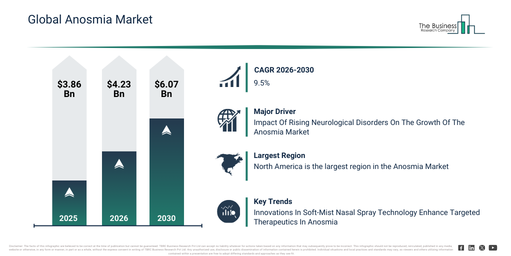
    The market for anosmia treatments has experienced significant expansion lately. Projections indicate a rise from $3.86 billion in 2025 to $4.23 billion in 2026, reflecting a compound annual growth rate (CAGR) of 9.4%. Factors contributing to this past growth include a higher prevalence of viral-induced anosmia, escalating public awareness regarding disorders of smell, enhanced accessibility of diagnostic methods, the broadening scope of ear, nose, and throat (ENT) specialized care, and an increased documentation of sensory impairments.

    The market for anosmia treatments is poised for substantial expansion over the upcoming years, projecting a growth to $6.07 billion by the year 2030, driven by a compound annual growth rate of 9.5%. This projected increase during the forecast period is largely fueled by escalating research efforts focused on regenerating the olfactory nerve, alongside a greater acceptance of innovative treatment approaches. Furthermore, the broadening scope of post-infectious care initiatives, a heightened demand for therapies that improve overall quality of life, and a surge in clinical trial endeavors are all contributing factors. Key developments anticipated within this timeframe encompass a greater emphasis on regenerative medicine, increased utilization of smell training programs, wider adoption of precisely targeted pharmaceutical interventions, advancements in diagnostic imaging and testing capabilities, and a reinforced focus on managing recovery after viral illnesses.

    Download A Free Sample Report For Comprehensive Market Insights:

    https://www.thebusinessresearchcompany.com/sample.aspx?id=18224&type=smp

    Anosmia Market Expansion Drivers: What Is Shaping Future Growth?

    The increasing prevalence of neurological conditions is set to be a key driver for the expansion of the anosmia market. These conditions, which impact the brain, spinal cord, and peripheral nerves, are becoming more common due to an expanding elderly demographic and a higher rate of chronic illnesses like diabetes and hypertension. Adverse effects on smell perception, or anosmia, can occur when these neurological disorders compromise the olfactory pathways or specific brain areas involved in smell processing. To illustrate, the Alzheimer’s Association reported in March 2023 that 6.7 million individuals in the U.S. over 65 had Alzheimer’s dementia, with estimates suggesting this number could climb to 13.8 million by 2060, thereby underscoring how the escalating occurrence of neurological disorders is fueling the anosmia market’s growth.

    Anosmia Market Categorization By Product Type And Application

    The anosmia market covered in this report is segmented –

    1) By Type: Idiopathic Anosmia, Congenital Anosmia

    2) By Treatment: Therapies, Medications

    3) By End User: Hospitals, Clinics, Other End Users

    Subsegments:

    1) By Idiopathic Anosmia: Partial Idiopathic Anosmia, Complete Idiopathic Anosmia

    2) By Congenital Anosmia: Isolated Congenital Anosmia, Syndromic Congenital Anosmia (Associated With Other Conditions Or Syndromes)

    Anosmia Market Strategic Trends: What Is Defining The Next Phase Of Growth?

    Within the anosmia market, leading organizations are prioritizing the creation of sophisticated delivery methods, notably soft-mist nasal sprays, to elevate treatment effectiveness, optimize drug uptake, and achieve more accurate targeting of the olfactory system. This soft-mist nasal spray technology leverages precisely controlled droplet dimensions and decreased spray velocity, which collectively maximize nasal deposition within the olfactory zone, consequently amplifying the therapeutic benefits. An illustrative example, occurring in April 2025, involved Cyrano Therapeutics, a U.S. clinical-stage regenerative medicine firm, concluding participant enrollment for the Phase 2 FLAVOR study. This trial evaluates CYR-064, their soft-mist nasal spray candidate, intended for treating smell loss that arises post-viral infection. The innovative product incorporates an intranasal formulation, secured by patent protection, which contains a comprehensive phosphodiesterase (PDE) inhibitor. This compound is engineered to augment the excitability of olfactory neurons. Furthermore, through the integration of the Ursatec 3K pump system alongside Resyca’s specialized soft-mist spray technology, the formulation ensures highly accurate and localized delivery to the olfactory region.

    Anosmia Market Company Landscape And Strategic Competition

    Major companies operating in the anosmia market are Cyrano Therapeutics, Regeneron Pharmaceuticals, Novartis AG, GlaxoSmithKline PLC, Otsuka Pharmaceutical Co Ltd, Bayer AG, AstraZeneca PLC, Eli Lilly and Company, Pfizer Inc, Sanofi SA, NeuroNascent Inc, Immunome Therapeutics, Olfactory Therapeutics Ltd, ENT Therapeutics Inc, NeuroSense Therapeutics LLC, SmellSense Bio, Olfactricity Therapeutics, Sensory Neurogenics Inc, Olfaxion Biotech, SmellGen Therapeutics, Post-Viral Sensory Recovery Inc, Hyposmia Therapeutics LLC

    Access The Complete Anosmia Market Report:

    https://www.thebusinessresearchcompany.com/report/anosmia-global-market-report

    Anosmia Market Leading Geography: Which Region Generates The Most Revenue?

    North Americawas the largest region in the anosmia market in 2025. Asia-Pacificis expected to be the fastest-growing region in the market going forward. The regions covered in the anosmia market report are Asia-Pacific, South East Asia, Western Europe, Eastern Europe, North America, South America, Middle East, Africa.

    Get in touch with us:

    The Business Research Company: https://www.thebusinessresearchcompany.com/

    Americas: +1 310-496-7795

    Asia: +44 7882 955267 & +91 8897263534

    Europe: +44 7882 955267

    Email us at: marketing@tbrc.info

    Follow us on:

    LinkedIn: https://in.linkedin.com/company/the-business-research-company

    YouTube: https://www.youtube.com/channel/UC24_fI0rV8cR5DxlCpgmyFQ

    Global Market Model: https://www.thebusinessresearchcompany.com/global-market-model

  • Anorectal Disorders Treatment Market Expected To Reach $6.21 Billion By 2030 As Growth Accelerates At 7.1% CAGR

    Anorectal Disorders Treatment Market Expected To Reach $6.21 Billion By 2030 As Growth Accelerates At 7.1% CAGR

    Delivering more actionable and strategically valuable research, The Business Research Company’s 2026 market reports feature market attractiveness analysis, total addressable market evaluation, company benchmarking matrices, interactive Excel dashboards, expanded supply chain intelligence, emerging startup coverage, and detailed product insights.

    Anorectal Disorders Treatment Market Value Analysis: What Growth Is Expected Over The Forecast Period?

    The market for treating anorectal disorders has experienced robust expansion recently, with projections indicating a rise from $4.46 billion in 2025 to $4.73 billion in 2026, reflecting a compound annual growth rate of 6.1%. Factors contributing to this growth during the past period include a heightened incidence of hemorrhoids and fistulas, enhanced availability of surgical options, the presence of topical medication treatments, improvements in healthcare facility infrastructure, and increased public consciousness regarding anorectal health.

    The market for treating anorectal disorders is poised for substantial expansion over the upcoming years, projecting a valuation of $6.22 billion by 2030 with a compound annual growth rate of 7.1%. This projected increase is fueled by several key factors, including a heightened demand for less invasive treatment options, greater utilization of combined drug therapies, the proliferation of specialized medical facilities, an increased emphasis on personalized patient care, and ongoing advancements in the methods for delivering medication rectally. Key trends anticipated during this forecast period encompass a wider embrace of minimally invasive surgical techniques, a surge in the use of topical and rectal medications, a growing inclination towards outpatient care, the expanded integration of lifestyle and dietary management strategies, and a more pronounced focus on early detection and effective symptom management.

    Download A Free Sample Report For Comprehensive Market Insights:

    https://www.thebusinessresearchcompany.com/sample.aspx?id=12986&type=smp

    Anorectal Disorders Treatment Market Development Factors: Which Trends Are Supporting Demand?

    The rising prevalence of colorectal cancer is poised to be a significant catalyst for the expansion of the market focused on treating anorectal disorders. Colorectal cancer is characterized by the development of cancerous growths within the colon, also known as the large intestine, or the rectum. The therapeutic approach for colorectal cancer within the scope of anorectal disorder treatment is aimed at alleviating symptoms like discomfort, the presence of fistulas, and gastrointestinal disturbances that may arise as a consequence of the disease or its medical interventions, thereby enhancing the well-being and overall quality of life for affected individuals. Illustrating this trend, the American Society of Clinical Oncology, a prominent professional organization based in the United States, reported in May 2023 that an estimated 153,020 individuals in the US were projected to receive a diagnosis of colorectal cancer, encompassing 106,970 new instances of colon cancer and 46,050 new instances of rectal cancer. Consequently, the escalating rate of colorectal cancer diagnoses is directly fueling the growth trajectory of the anorectal disorder treatment market.

    Anorectal Disorders Treatment Market Segment Analysis And Revenue Opportunities

    The anorectal disorders treatment market covered in this report is segmented –

    1) By Treatment: Drugs, Surgery, Other Treatment

    2) By Disease: Diarrhea, Hemorrhoid, Abscesse, Fistula, Itching, Other Disease

    3) By Route Of Administration: Oral, Parenteral, Rectal, Other Route of administration

    4) By End-Users: Hospitals, Specialty Clinics, Other End-Users

    Subsegments:

    1) By Drugs: Topical Agents, Oral Medications, Rectal Suppositories

    2) By Surgery: Hemorrhoidectomy, Fistulotomy, Sphincterotomy, Other Surgical Procedures

    3) By Other Treatment: Lifestyle Modifications, Dietary Changes, Physical Therapy, Minimally Invasive Procedures

    Anorectal Disorders Treatment Market Transformation Trends: Which Innovations Are Driving Change?

    Within the anorectal disorder treatment sector, key players are actively pursuing market enhancement through the introduction and subsequent approval of novel therapeutic agents. This emphasis on drug development broadens the spectrum of therapeutic interventions available for anorectal conditions, thereby furnishing individuals with more precise and efficacious treatment modalities, exemplified by Budesonide 2mg Rectal Foam. To illustrate, April 2023 saw Padagis US LLC, a pharmaceutical entity headquartered in the United States, introduce Budesonide 2mg Rectal Foam, a generic equivalent to Uceris, specifically for anorectal disorders, having secured approval from the Food and Drug Administration. Uceris itself is recognized as a corticosteroid medication requiring a prescription, utilized to effectively manage instances of active, mild to moderate ulcerative colitis, a type of chronic inflammatory bowel disease impacting both the rectum and the colon, extending from the former to the sigmoid portion.

    Anorectal Disorders Treatment Market Leading Players Shaping Industry Direction

    Major companies operating in the anorectal disorders treatment market are Boston Scientific Corporation, Medtronic plc, Johnson And Johnson, Cook Medical, Olympus Corporation, Becton Dickinson And Company, Smith And Nephew plc, Karl Storz SE And Co KG, Applied Medical Resources Corporation, Hologic Inc, Conmed Corporation, Privi Medical, Integra LifeSciences, Bayer AG, Boehringer Ingelheim GmbH, GlaxoSmithKline plc, Pfizer Inc, Takeda Pharmaceutical Company Limited, Ironwood Pharmaceuticals, Edesa Biotech

    Access The Complete Anorectal Disorders Treatment Market Report:

    https://www.thebusinessresearchcompany.com/report/anorectal-disorders-treatment-global-market-report

    Anorectal Disorders Treatment Market Regional Outlook: Where Are The Largest Opportunities Located?

    North Americawas the largest region in the anorectal disorders treatment market in 2025. North Americais expected to be the fastest-growing region in the forecast period. The regions covered in the anorectal disorders treatment market report are Asia-Pacific, South East Asia, Western Europe, Eastern Europe, North America, South America, Middle East, Africa.

    Get in touch with us:

    The Business Research Company: https://www.thebusinessresearchcompany.com/

    Americas: +1 310-496-7795

    Asia: +44 7882 955267 & +91 8897263534

    Europe: +44 7882 955267

    Email us at: marketing@tbrc.info

    Follow us on:

    LinkedIn: https://in.linkedin.com/company/the-business-research-company

    YouTube: https://www.youtube.com/channel/UC24_fI0rV8cR5DxlCpgmyFQ

    Global Market Model: https://www.thebusinessresearchcompany.com/global-market-model
  • Ankylosing Spondylitis Market Set To Grow From $6.84 Billion In 2026 To $9.42 Billion By 2030 At A CAGR Of 8.3%

    Ankylosing Spondylitis Market Set To Grow From $6.84 Billion In 2026 To $9.42 Billion By 2030 At A CAGR Of 8.3%

    Enhanced with market attractiveness analysis, total addressable market evaluation, company benchmarking matrices, interactive Excel dashboards, expanded supply chain intelligence, emerging startup coverage, and detailed product insights, The Business Research Company’s 2026 market reports deliver more actionable and strategically valuable research.

    Ankylosing Spondylitis Market Size Forecast: How Large Could The Market Become By 2030?

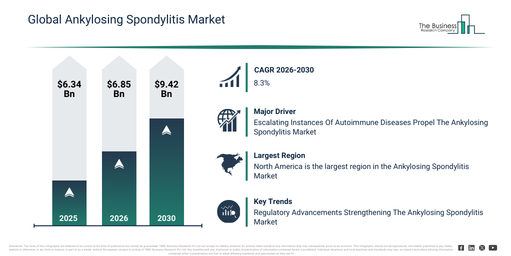
    The ankylosing spondylitis market demonstrated robust expansion recently, with projections indicating a rise from $6.34 billion in 2025 to $6.85 billion in 2026, reflecting a compound annual growth rate of 8.0%. This historical growth trajectory was underpinned by heightened diagnostic recognition, broader accessibility to non-steroidal anti-inflammatory drugs (NSAIDs) and disease-modifying antirheumatic drugs (DMARDs), enhanced provision of specialized rheumatology care, expanded access to hospital-based treatments, and the increasing utilization of diagnostic imaging for tracking disease progression.

    The ankylosing spondylitis market is poised for substantial expansion over the coming years, projecting a rise to $9.42 billion by 2030 with a compound annual growth rate of 8.3%. This anticipated increase during the forecast period is propelled by several key factors, including a greater acceptance of biologic and biosimilar treatments, an escalating emphasis on individualized medical care, the broadening of sophisticated biologic drug development, a growing need for sustained management of the condition, and increased funding allocated to autoimmune disease research. Prominent developments expected within this timeframe involve a heightened utilization of biologic treatments, a more frequent application of disease-modifying antirheumatic drugs (DMARDs) designed for specific targets, a greater commitment to identifying the disease in its early stages, the advancement of tailored therapeutic strategies, and a more comprehensive incorporation of physical therapy into patient care plans.

    Download A Free Sample Report For Comprehensive Market Insights:

    https://www.thebusinessresearchcompany.com/sample.aspx?id=11962&type=smp

    Ankylosing Spondylitis Market Industry Drivers: What Is Driving Revenue Growth?

    The projected expansion of the ankylosing spondylitis market is anticipated to be propelled by the rising occurrence of autoimmune conditions. These conditions encompass a wide array of disorders marked by an aberrant immune system response where the body’s own defenses erroneously attack and harm healthy cells, tissues, and organs. Ankylosing spondylitis, classified as an autoimmune disease, arises when the immune system incorrectly directs its activity towards the body’s own tissues, resulting in inflammation and subsequent damage. While a genetic susceptibility and environmental influences play a role in the pathogenesis of ankylosing spondylitis, a type of autoimmune arthritis predominantly impacting the spinal column and pelvic region, further data underscores this trend. Specifically, the Impact of IBD Report 2023, released in September 2023 by the IBD Clinical and Research Centre in Canada, highlighted that in 2023, inflammatory bowel disease (IBD) affected 825 individuals per 100,000, impacting over 320,000 Canadians. Moreover, with an anticipated annual prevalence increase of 2.44%, it is estimated that by 2035, 1.1% of the Canadian populace, equating to 470,000 individuals, will be managing IBD. Consequently, the escalating rates of autoimmune diseases are poised to fuel the forthcoming growth trajectory of the ankylosing spondylitis market.

    Ankylosing Spondylitis Market Segmentation And Category Breakdown

    The ankylosing spondylitis market covered in this report is segmented –

    1) By Treatment Type: Painkillers And Non-Steroidal Anti-Inflammatory Drugs (NSAIDs), Disease-Modifying Anti-Rheumatic Drugs (DMARDS), Biological Therapies, Steroids, Physical Therapies, Surgery

    2) By Molecule: Biologics, Biosimilar, Small Molecules

    3) By Route Of Administration: Parenteral, Oral, Other Routes

    4) By Application: Juveniles, Adults

    5) By End User: Hospitals, Clinics

    Subsegments:

    1) By Painkillers And Non-Steroidal Anti-Inflammatory Drugs (NSAIDs): Over-The-Counter NSAIDs, Prescription NSAIDs

    2) By Disease-Modifying Anti-Rheumatic Drugs (DMARDs): Conventional DMARDs, Targeted DMARDs

    3) By Biological Therapies: TNF Inhibitors, IL-17 Inhibitors

    4) By Steroids: Oral Steroids, Injectable Steroids

    5) By Physical Therapies: Physiotherapy, Exercise Programs

    6) By Surgery: Joint Replacement Surgery, Spinal Surgery

    #Ankylosing Spondylitis Market Growth Trends: What Is Influencing The Future Outlook?

    Within the ankylosing spondylitis market, leading corporations are concentrating their efforts on creating cutting-edge biologic treatments, including biosimilars, with the aims of improving patient accessibility, lowering healthcare expenditures, and offering established delivery methods. These biosimilars are medications that utilize the same active components as original biologic drugs but are designed to be just as effective and safe. To illustrate, in August 2025, Amgen Biotechnology Singapore, a biotechnology enterprise situated in Singapore, secured approval for its adalimumab biosimilar, known as Amgevita, available in both a 40 mg/0.4 mL autoinjector and a 20 mg/0.2 mL prefilled syringe. This treatment is prescribed to alleviate the signs and symptoms experienced by adult individuals suffering from active ankylosing spondylitis who have not responded adequately to standard treatments. This approach facilitates well-known administration pathways, capitalizes on a recognized active compound, and introduces a more economically viable choice within the biologics sector.

    Ankylosing Spondylitis Market Competitive Analysis Of Major Industry Participants

    Major companies operating in the ankylosing spondylitis market are Pfizer Inc., Johnson & Johnson Pvt. Ltd., Merck & Co. Inc., AbbVie Inc., Novartis AG, Bristol-Myers Squibb, Eli Lilly and Company, Gilead Sciences Inc., Boehringer Ingelheim International GmbH, Amgen Inc., Viatris Inc., Astellas Pharma Inc., AstraZeneca plc, UCB Inc., Cipla Inc., Zydus Lifesciences Limited, Celltrion Inc., Hetero Labs Ltd., Janssen Biotech Inc., Reliance Life Sciences Pvt. Ltd.

    Access The Complete Ankylosing Spondylitis Market Report:

    https://www.thebusinessresearchcompany.com/report/ankylosing-spondylitis-global-market-report

    Ankylosing Spondylitis Market Geographic Landscape: Which Region Dominates Industry Growth?

    North America was the largest region in the ankylosing spondylitis market in 2025. Asia-Pacific is expected to be the fastest-growing region in the forecast period. The regions covered in the ankylosing spondylitis market report are Asia-Pacific, South East Asia, Western Europe, Eastern Europe, North America, South America, Middle East, Africa.

    Get in touch with us:

    The Business Research Company: https://www.thebusinessresearchcompany.com/

    Americas: +1 310-496-7795

    Asia: +44 7882 955267 & +91 8897263534

    Europe: +44 7882 955267

    Email us at: marketing@tbrc.info

    Follow us on:

    LinkedIn: https://in.linkedin.com/company/the-business-research-company

    YouTube: https://www.youtube.com/channel/UC24_fI0rV8cR5DxlCpgmyFQ

    Global Market Model: https://www.thebusinessresearchcompany.com/global-market-model
  • Anhydrous Lactose Market Opportunities Are Emerging Beyond Traditional Growth Areas

    Anhydrous Lactose Market Opportunities Are Emerging Beyond Traditional Growth Areas

    Through market attractiveness analysis, total addressable market evaluation, company benchmarking matrices, interactive Excel dashboards, expanded supply chain intelligence, emerging startup coverage, and detailed product insights, The Business Research Company’s 2026 market reports provide more actionable and strategically valuable research.

    Anhydrous Lactose Market Revenue Outlook: What CAGR Is Expected Through 2030?

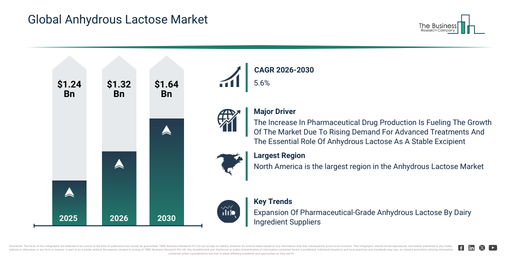
    The market for anhydrous lactose experienced robust expansion recently and is projected to continue its upward trajectory, moving from $1.24 billion in 2025 to $1.32 billion in 2026, reflecting a compound annual growth rate of 6.0%. This historical expansion was fueled by an increase in the production of solid oral dosage forms, the growing output of generic medications, a greater reliance on lactose as an excipient, expanding pharmaceutical manufacturing capabilities, and the establishment of uniform quality standards for excipients.

    The market for anhydrous lactose is poised for substantial expansion in the coming years, projected to reach $1.64 billion by 2030, exhibiting a compound annual growth rate of 5.6%. This anticipated growth is fueled by several key factors, including a heightened need for excipients offering superior stability, the burgeoning expansion of biopharmaceutical manufacturing operations, a concentrated effort towards implementing sophisticated drug formulation methodologies, the increasing prevalence of contract manufacturing organizations, and a growing regulatory imperative for enhanced traceability of excipients. Throughout the forecast period, significant trends are expected to shape the landscape, such as the escalating utilization of anhydrous lactose in drug formulations that are susceptible to moisture, a surge in demand for lactose suitable for direct compression processes, a heightened emphasis on refining powder flow characteristics, the broadening scope of applications for pharmaceutical-grade excipients, and advancements in the quality control measures employed during lactose production.

    Download A Free Sample Report For Comprehensive Market Insights:

    https://www.thebusinessresearchcompany.com/sample.aspx?id=24461&type=smp

    #Anhydrous Lactose Market Growth Factors: Which Forces Are Supporting Market Expansion?

    The expansion of the anhydrous lactose market is anticipated to be fueled by the escalating volume of pharmaceutical drug manufacturing. This process, concerning the methodical creation of medications under rigorous quality assurance, is on the rise due to an increasing elderly demographic requiring sophisticated interventions for chronic disease management. Anhydrous lactose, a crucial ingredient in this sector, functions effectively as a filler and binder, its desiccated form crucial for preserving tablet and capsule integrity and prolonging shelf life, thereby ensuring reliable medication efficacy. Evidence from the European Federation of Pharmaceutical Industries and Associations (EFPIA) in June 2023 indicated a rise in European pharmaceutical production from €363,300 million ($393,857 million) in 2022 to €390,000 million ($422,803 million) in 2023, underscoring the direct correlation between enhanced drug output and the heightened demand for anhydrous lactose.

    Anhydrous Lactose Market Segment Outlook: Which Categories Are Expanding The Fastest?

    The anhydrous lactose market covered in this report is segmented –

    1) By Product Type: Edible Lactose, Pharmaceutical Lactose, Technical Lactose

    2) By Form: Powder, Granules, Tablets

    3) By Distribution Channel: Online Retail, Supermarkets Or Hypermarkets, Specialty Stores, Pharmacies

    4) By Application: Pharmaceutical Excipients, Lyophilized Products, Formula For Baby Food, Other Applications

    5) By End-User: Food Industry, Pharmaceutical Industry, Animal Feed Industry, Cosmetic Industry, Other End-Users

    Subsegments:

    1) By Edible Lactose: Infant Formula, Baked Goods, Confectionery, Dairy Products, Dietary Supplements

    2) By Pharmaceutical Lactose: Direct Compression Grade, Inhalation Grade, Granulation Grade, Spray-Dried Lactose

    3) By Technical Lactose: Animal Feed, Industrial Fermentation, Bioplastics, Cosmetics And Personal Care Products

    Anhydrous Lactose Market Industry Trends: What Changes Are Reshaping Demand?

    In the anhydrous lactose market, leading enterprises are prioritizing the creation of novel offerings, specifically pharmaceutical-grade lactose designed for oral solid dosage forms, in response to the escalating needs within tablet and capsule manufacturing. This pharmaceutical-grade lactose represents a meticulously purified form, manufactured to meet stringent pharmacopeial benchmarks like those set by USP and Ph. Eur., distinguishing it from edible-grade lactose which falls short of the regulatory, purity, and particle-size specifications essential for pharmaceutical use. As an illustration, Lactalis Ingredients, a French dairy ingredient provider, inaugurated its Lactalis Ingredients Pharma division in October 2023, unveiling the Lactalpha collection of milled and sifted pharmaceutical-grade lactose monohydrate in 50, 100, and 150 mesh sizes; this Lactalpha lactose is engineered to deliver dependable flow properties, excellent compressibility, and uniform results in the production of tablets and capsules. The strategic expansion into the pharmaceutical lactose sector mirrors a broader industry movement where dairy ingredient producers are broadening their scope to include premium pharmaceutical excipients, thereby supplying materials that are not only stable and compliant with regulations but also exhibit superior performance characteristics.

    Anhydrous Lactose Market Key Companies And Competitive Benchmarking

    Major companies operating in the anhydrous lactose market are Kerry Group, Sigma-Aldrich, Fagron Group, Spectrum Chemical Mfg. Corp., DFE Pharma, Wako Pure Chemical Industries Ltd., Anshul Life Sciences, Salius Pharma Pvt. Ltd., SimSon Pharma Limited, MEGGLE GmbH & Co. KG, VIVAN Life Science, Aurora Industry Co. Ltd, Glentham Life Sciences Limited, Lactalis Ingredients, Colorchem Industries Ltd., Jiangsu Dawning Pharmaceutical Co. Ltd., International Ingredients & Excipients Pvt. Ltd., Fengchen Group Co. Ltd, Xi’an Harmonious Natural Biotechnology Co. Ltd., Hexon Laboratories Private Limited

    Access The Complete Anhydrous Lactose Market Report:

    https://www.thebusinessresearchcompany.com/report/anhydrous-lactose-global-market-report

    #Anhydrous Lactose Market Largest Region: Which Geography Holds The Highest Market Share?

    North Americawas the largest region in the anhydrous lactose market in 2025. Asia-Pacificis expected to be the fastest-growing region in the forecast period. The regions covered in the anhydrous lactose market report are Asia-Pacific, South East Asia, Western Europe, Eastern Europe, North America, South America, Middle East, Africa.

    Get in touch with us:

    The Business Research Company: https://www.thebusinessresearchcompany.com/

    Americas: +1 310-496-7795

    Asia: +44 7882 955267 & +91 8897263534

    Europe: +44 7882 955267

    Email us at: marketing@tbrc.info

    Follow us on:

    LinkedIn: https://in.linkedin.com/company/the-business-research-company

    YouTube: https://www.youtube.com/channel/UC24_fI0rV8cR5DxlCpgmyFQ

    Global Market Model: https://www.thebusinessresearchcompany.com/global-market-model