Month: June 2026

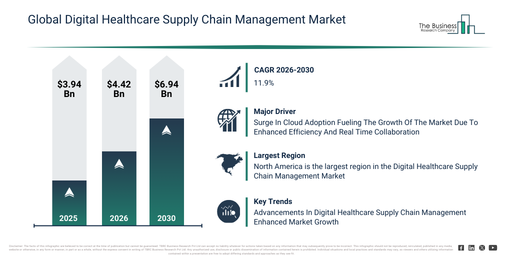
  • Digital Healthcare Supply Chain Management Market Growth Outlook Reveals A CAGR Of 11.9% And A Market Value Of $6.93 Billion By 2030

    Digital Healthcare Supply Chain Management Market Growth Outlook Reveals A CAGR Of 11.9% And A Market Value Of $6.93 Billion By 2030

    Enhanced with market attractiveness analysis, total addressable market evaluation, company benchmarking matrices, interactive Excel dashboards, expanded supply chain intelligence, emerging startup coverage, and detailed product insights, The Business Research Company’s 2026 market reports deliver more actionable and strategically valuable research.

    Digital Healthcare Supply Chain Management Market Value Analysis: What Growth Is Expected Over The Forecast Period?

    Fuelled by escalating demand and evolving industry dynamics, the digital healthcare supply chain management sector experienced considerable expansion. Projections indicate a continued upward trajectory, with the market value set to increase from $3.94 billion in 2025 to $4.42 billion in 2026, showcasing a robust compound annual growth rate of 12.2%. Factors contributing to this historical growth include the disjointed nature of existing healthcare supply chains, reliance on manual systems for inventory management, insufficient real-time oversight, increasing operational inefficiencies, and supply chain interruptions exacerbated by the global pandemic.

    The digital healthcare supply chain management sector is poised for substantial expansion in the upcoming years, projecting a market value of $6.94 billion by 2030, driven by a compound annual growth rate (CAGR) of 11.9%. This anticipated surge is fueled by several key factors, including the increasing implementation of AI-driven analytical tools, the development of intelligent hospital infrastructure, heightened regulatory emphasis on supply chain traceability, the overall trend toward healthcare digitization, and a growing imperative for robust and adaptable supply chain solutions. Key developments expected within this period involve a greater embrace of cloud-based supply chain management systems, expanded utilization of real-time inventory monitoring, advancements in data-centric demand prediction, a stronger commitment to supply chain visibility, and the establishment of comprehensive digital supply networks that span the entire process.

    Download A Free Sample Report For Comprehensive Market Insights:

    https://www.thebusinessresearchcompany.com/sample.aspx?id=20749&type=smp

    Digital Healthcare Supply Chain Management Market Growth Momentum: Which Factors Are Influencing Demand?

    The expanding utilization of cloud computing is anticipated to be a primary catalyst for the advancement of the digital healthcare supply chain management sector. Cloud computing, characterized by its provision of computing resources like servers, storage, and software over the internet, offers significant benefits such as scalability, reduced expenses, adaptability, improved teamwork, and ubiquitous access, all contributing to its growing popularity. This technology significantly aids digital healthcare supply chain management by simplifying data exchange, enhancing the precision of inventory oversight, and facilitating immediate data analysis, which collectively contribute to operational efficiencies and improved patient care. Illustrating this trend, data from Eurostat in December 2023 revealed that cloud computing services were employed by 45.2% of businesses within the European Union during 2023, with Finland leading the adoption at an impressive 78.3%. Consequently, the widespread embrace of cloud computing is a key factor fueling the growth trajectory of the digital healthcare supply chain management market.

    Digital Healthcare Supply Chain Management Market Segmentation: How Is The Market Structured Across Key Categories?

    The digital healthcare supply chain management market covered in this report is segmented –

    1) By Product: Software, Hardware, Services

    2) By Deployment: On-Premise, Cloud-Based, Web-Based

    3) By End-User: Pharmaceuticals, Medical Devices, Biotechnology And Vaccines, Clinical And Point Of Care Diagnostics

    Subsegments:

    1) By Software: Supply Chain Planning Software, Inventory Management Systems, Transportation Management Systems, Order Management Systems, Analytics And Reporting Software

    2) By Hardware: RFID Systems, Barcode Scanners, IoT-Enabled Devices, Storage And Networking Devices

    3) By Services: Implementation And Integration Services, Training And Support Services, Consulting Services, Managed Services

    Digital Healthcare Supply Chain Management Market Trends Reshaping Industry Growth

    Companies dominant in the digital healthcare supply chain management sector are concentrating their efforts on making sophisticated digitalization tools widely accessible by utilizing environments that require minimal technical know-how, exemplified by no-code network digitalization platforms, which serve to boost the operational efficiency and adaptability of supply chain activities. Such platforms are essentially software solutions empowering individuals to build, adjust, and oversee digital procedures and operational flows, obviating the necessity for conventional programming proficiencies. As a noteworthy illustration, in September 2024, TraceLink, a software enterprise headquartered in the United States, introduced its Opus platform, a pivotal development in supply chain oversight engineered to streamline the digitalization of comprehensive supply networks, boasting distinctive functionalities that include a no-code development space for configuring intricate supply chain processes without demanding profound technical acumen, real-time insights into supply chain effectiveness via embedded analytics and visual displays, and collaborative intelligence features that foster joint decision-making among diverse organizations to anticipate and mitigate supply chain interruptions.

    Digital Healthcare Supply Chain Management Market Competitive Landscape And Leading Companies

    Major companies operating in the digital healthcare supply chain management market are McKesson Corporation, Cardinal Health Inc., International Business Machines (IBM) Corporation, Oracle Corporation, SAP SE, Siemens Healthineers AG, Medline Industries Inc., Infosys Limited, Henry Schein Inc., Vizient Inc., Infor LLC, Veeva Systems Inc., Palantir Technologies Inc., Epicor Software Corporation, InterSystems Corporation, West Monroe Partners LLC, Global Healthcare Exchange LLC, Tecsys Inc., Rishabh Software Pvt Ltd., SYMPLR Inc., Terso Solutions Inc.

    Access The Complete Digital Healthcare Supply Chain Management Market Report:

    https://www.thebusinessresearchcompany.com/report/digital-healthcare-supply-chain-management-global-market-report

    Digital Healthcare Supply Chain Management Market Largest Region By Revenue And Market Share

    North Americawas the largest region in the digital healthcare supply chain management market in 2025. Asia-Pacificis expected to be the fastest-growing region in the forecast period. The regions covered in the digital healthcare supply chain management market report are Asia-Pacific, South East Asia, Western Europe, Eastern Europe, North America, South America, Middle East, Africa.

    Get in touch with us:

    The Business Research Company: https://www.thebusinessresearchcompany.com/

    Americas: +1 310-496-7795

    Asia: +44 7882 955267 & +91 8897263534

    Europe: +44 7882 955267

    Email us at: marketing@tbrc.info

    Follow us on:

    LinkedIn: https://in.linkedin.com/company/the-business-research-company

    YouTube: https://www.youtube.com/channel/UC24_fI0rV8cR5DxlCpgmyFQ

    Global Market Model: https://www.thebusinessresearchcompany.com/global-market-model
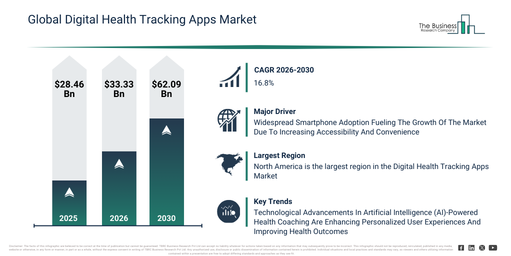
  • Digital Health Tracking Apps Market Forecast Highlights Expansion From $33.33 Billion To $62.09 Billion Through 2030

    Digital Health Tracking Apps Market Forecast Highlights Expansion From $33.33 Billion To $62.09 Billion Through 2030

    Through market attractiveness analysis, total addressable market evaluation, company benchmarking matrices, interactive Excel dashboards, expanded supply chain intelligence, emerging startup coverage, and detailed product insights, The Business Research Company’s 2026 market reports provide more actionable and strategically valuable research.

    Digital Health Tracking Apps Market Size Forecast: How Large Could The Market Become By 2030?

    The market for digital health tracking applications has experienced substantial expansion recently, moving from an estimated $28.46 billion in 2025 to $33.33 billion by 2026, reflecting a compound annual growth rate of 17.1%. This upward trajectory during the past period is largely a consequence of escalating smartphone adoption rates, heightened public consciousness regarding preventative healthcare, broader access to mobile internet services, the burgeoning popularity of fitness and wellness applications, and a greater willingness among individuals to monitor their own health.

    The domain of digital health tracking applications is poised for significant expansion over the coming years, projected to reach a valuation of $62.09 billion by the year 2030, driven by a 16.8% compound annual growth rate. This anticipated surge is fueled by a confluence of factors including a heightened consumer desire for bespoke digital healthcare options, the escalating incorporation of health applications with remote medical consultation platforms, a greater emphasis on preventative healthcare strategies informed by data, the proliferation of subscription models for well-being services, and an increasing uptake among older demographics. Key developments shaping the market during this projected timeframe encompass the growing utilization of artificial intelligence to deliver health-related insights, tighter integration with wearable health monitoring gadgets, a strengthened focus on individualized wellness tracking, the incorporation of game-like elements to boost user engagement with health activities, and a more robust commitment to safeguarding sensitive health information.

    Download A Free Sample Report For Comprehensive Market Insights:

    https://www.thebusinessresearchcompany.com/sample.aspx?id=28197&type=smp

    Digital Health Tracking Apps Market Expansion Drivers: What Is Shaping Future Growth?

    The expansion of the digital health tracking apps market is anticipated to be driven by the growing adoption of smartphones. Smartphones, which are sophisticated mobile devices combining communication capabilities with advanced computational functions, empower users to engage in a multitude of activities beyond basic calling. As these devices become more budget-friendly, their accessibility expands to a broader demographic, leading to a surge in smartphone ownership. This widespread utilization of smartphones, in turn, fuels the demand for digital health tracking applications, as they offer a readily available and convenient means for individuals to oversee and manage their well-being whenever and wherever they choose. To illustrate, data from Exploding Topics, a US-based platform for identifying emerging trends, indicated a jump in smartphone users from 6.974 billion in 2023 to 7.211 billion in 2024, marking an increase of 247 million users or approximately 3.4% year-over-year. Consequently, the escalating prevalence of smartphones is a key factor contributing to the market’s advancement.

    Digital Health Tracking Apps Market Segmentation Trends And Revenue Drivers

    The digital health tracking apps market covered in this report is segmented –

    1) By Type Of Health Tracking: Fitness Tracking Apps, Nutrition Tracking Apps, Chronic Condition Management Apps, Sleep Tracking Apps, General Wellness Apps

    2) By Features Offered: Data Tracking, Community Support, Customization Options, Gamification

    3) By Technology Integration: Wearable Devices, Mobile Apps, Telehealth Platforms, Artificial Intelligence

    4) By Application: Men, Women

    5) By End User: Individuals, Healthcare Professionals, Corporate Wellness Programs

    Subsegments:

    1) By Fitness Tracking Apps: Step Tracking, Heart Rate Monitoring, Workout Tracking, Calorie Burn Tracking, Activity Scheduling

    2) By Nutrition Tracking Apps: Calorie Intake Tracking, Meal Logging, Water Intake Tracking, Macronutrient Tracking, Personalized Diet Planning

    3) By Chronic Condition Management Apps: Diabetes Management, Hypertension Management, Asthma Management, Mental Health Management, Cardiovascular Disease Management

    4) By Sleep Tracking Apps: Sleep Duration Tracking, Sleep Cycle Analysis, Snoring Detection, Restlessness Monitoring, Smart Alarm Features

    5) By General Wellness Apps: Stress Management, Meditation And Mindfulness, Habit Formation And Tracking, Women Health And Wellness, Preventive Health Monitoring

    Digital Health Tracking Apps Market Strategic Trends: What Is Defining The Next Phase Of Growth?

    Leading entities within the digital health tracking applications sector are prioritizing the cultivation of sophisticated methodologies, including AI-driven health mentorship, with the objective of elevating individualized user engagement and fostering better overall health results. AI-powered health coaching entails the application of artificial intelligence to deliver customized fitness, sleep, and well-being advice derived from an individual’s personal data. As an illustration, in August of 2025, Google LLC, a prominent technology firm headquartered in the United States, unveiled an enhancement for its Fitbit platform. This release, showcased at the Made by Google event, features a revamped Fitbit application designed for seamless integration with Fitbit trackers, smartwatches, and Pixel Watches, thereby consolidating exercise regimens, sleep betterment strategies, and health counsel into a cohesive framework that capitalizes on continuous physiological data collection and Google’s integrated hardware capabilities to furnish users with adaptive and bespoke health administration.

    #Digital Health Tracking Apps Market Industry Leaders: Which Organizations Are Driving Competition?

    Major companies operating in the digital health tracking apps market are Apple Inc., Google LLC, Samsung Electronics Co. Ltd., Huawei Technologies Co. Ltd., Johnson & Johnson, Nike Inc., Abbott Laboratories, Xiaomi Corporation, Medtronic Plc, Koninklijke Philips N.V., Under Armour Inc., Garmin Ltd., Polar Electro Oy, Noom Inc., Headspace Inc., Omron Healthcare Inc., Strava Inc., Calm.com Inc., Ada Health GmbH, Azumio Inc.

    Access The Complete Digital Health Tracking Apps Market Report:

    https://www.thebusinessresearchcompany.com/report/digital-health-tracking-apps-global-market-report

    Digital Health Tracking Apps Market Regional Analysis And Leading Geography

    North Americawas the largest region in the digital health tracking apps market in 2025. Asia-Pacific is expected to be the fastest-growing region in the forecast period. The regions covered in the digital health tracking apps market report are Asia-Pacific, South East Asia, Western Europe, Eastern Europe, North America, South America, Middle East, Africa.

    Get in touch with us:

    The Business Research Company: https://www.thebusinessresearchcompany.com/

    Americas: +1 310-496-7795

    Asia: +44 7882 955267 & +91 8897263534

    Europe: +44 7882 955267

    Email us at: marketing@tbrc.info

    Follow us on:

    LinkedIn: https://in.linkedin.com/company/the-business-research-company

    YouTube: https://www.youtube.com/channel/UC24_fI0rV8cR5DxlCpgmyFQ

    Global Market Model: https://www.thebusinessresearchcompany.com/global-market-model
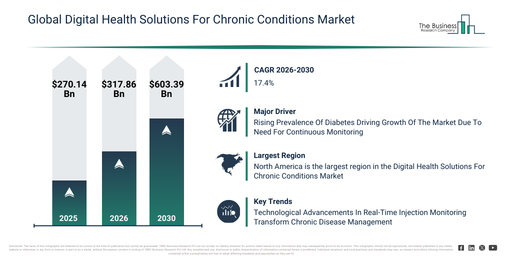
  • Digital Health Solutions For Chronic Conditions Market Expected To Reach $603.38 Billion By 2030 As Growth Accelerates At 17.4% CAGR

    Digital Health Solutions For Chronic Conditions Market Expected To Reach $603.38 Billion By 2030 As Growth Accelerates At 17.4% CAGR

    Delivering more actionable and strategically valuable research, The Business Research Company’s 2026 market reports feature market attractiveness analysis, total addressable market evaluation, company benchmarking matrices, interactive Excel dashboards, expanded supply chain intelligence, emerging startup coverage, and detailed product insights.

    Digital Health Solutions For Chronic Conditions Market Revenue Outlook: What CAGR Is Expected Through 2030?

    The market for digital health solutions targeting chronic conditions has experienced substantial expansion lately, projected to increase from $270.14 billion in 2025 to $317.86 billion in 2026, reflecting a compound annual growth rate of 17.7%. This upward trajectory over the historical period is fueled by factors such as the escalating incidence of chronic illnesses, the mounting financial burden of managing long-term health issues, the proliferation of mHealth applications, the increasing integration of connected medical devices, and the early embrace of telehealth platforms.

    The digital health solutions tailored for chronic conditions are poised for substantial expansion over the ensuing years. Projections indicate a market valuation of $603.39 billion by 2030, propelled by a compound annual growth rate (CAGR) of 17.4%. This anticipated surge is underpinned by several key drivers, including escalating demand for value-based chronic care approaches, increased capital flowing into AI-powered personalization of care, the broader embrace of healthcare delivery within home settings, a greater incorporation of digital therapeutic interventions, and a reinforced commitment to sustained patient involvement and positive health outcomes. Furthermore, prevailing trends expected to shape this market during the forecast period encompass a wider deployment of remote patient monitoring tools, an accelerated uptake of customized care platforms, more extensive utilization of predictive analytics for managing chronic illnesses, a heightened integration of wearable technology and interconnected devices, and an intensified emphasis on seamless, ongoing care management.

    Download A Free Sample Report For Comprehensive Market Insights:

    https://www.thebusinessresearchcompany.com/sample.aspx?id=28196&type=smp

    Digital Health Solutions For Chronic Conditions Market Development Factors: Which Trends Are Supporting Demand?

    The increasing incidence of diabetes is poised to significantly fuel the expansion of the digital health solutions market specifically designed for chronic conditions. Diabetes, a long-term metabolic ailment characterized by insufficient insulin production or ineffective insulin utilization, is experiencing a surge attributed to increasingly sedentary lifestyles that foster obesity and insulin resistance through diminished physical activity. Digital health technologies offer crucial support for diabetes management, facilitating continuous monitoring of blood glucose levels and empowering individuals to observe fluctuations, consequently allowing for prompt modifications to their dietary habits, medicinal regimens, or daily routines to achieve superior glycemic regulation. To illustrate, the International Diabetes Federation (IDF), an organization headquartered in Belgium, reported that 589 million individuals were diagnosed with diabetes in 2024, with projections indicating this figure will climb to 853 million by the year 2050, thereby underscoring the pivotal role of diabetes’ growing prevalence in driving the digital health solutions sector for chronic conditions.

    Digital Health Solutions For Chronic Conditions Market Segment Analysis Highlighting Growth Areas

    The digital health solutions for chronic conditions market covered in this report is segmented –

    1) By Type: Diabetes, Cardiovascular Diseases, Chronic Respiratory Diseases, Other Types

    2) By Application: Enterprise, Personal

    3) By End-User: Payers And Employers, Hospitals And Clinics, Pharma And Life Sciences Companies, Homecare Settings, Patients And Caregivers

    Subsegments:

    1) By Diabetes: Type 1 Diabetes, Type 2 Diabetes, Gestational Diabetes

    2) By Cardiovascular Diseases: Hypertension, Coronary Artery Disease, Heart Failure, Arrhythmia, Stroke

    3) By Chronic Respiratory Diseases: Chronic Obstructive Pulmonary Disease (COPD), Asthma, Pulmonary Hypertension, Cystic Fibrosis

    4) By Other Types: Chronic Kidney Disease, Arthritis, Cancer, Obesity

    Digital Health Solutions For Chronic Conditions Market Transformation Trends: Which Innovations Are Driving Change?

    In the realm of digital health solutions for chronic conditions, leading enterprises are dedicated to pioneering sophisticated methods, exemplified by real-time injection monitoring, with the ultimate goals of enhancing therapeutic precision, bolstering patient compliance, and refining comprehensive disease management strategies. This real-time injection monitoring entails sophisticated digital frameworks designed to meticulously document medication delivery as it happens, thereby furnishing patients and medical professionals with prompt intelligence crucial for optimizing dosages, confirming adherence, and mitigating potential health issues. Illustrating this trend, Ypsomed Holding AG of Switzerland, renowned for its injection and infusion systems, partnered with Sidekick Health, an Icelandic digital therapeutics innovator, in April 2025 to introduce a joint digital health offering specifically targeting obesity management. This innovative solution harmoniously integrates Ypsomed’s smart devices with Sidekick’s digital therapeutics ecosystem, facilitating personalized, evidence-based care for those affected by obesity. Key functionalities incorporated into this platform include constant surveillance, encouragement for behavioral modification, and guidance on lifestyle adjustments, all engineered to foster better treatment adherence and promote enduring improvements in health status. Through the synergistic fusion of connected medical hardware and digital therapeutic interventions, this partnership endeavors to elevate patient involvement and deliver holistic support throughout the entire process of managing obesity.

    Digital Health Solutions For Chronic Conditions Market Leading Companies: Who Holds Significant Market Presence?

    Major companies operating in the digital health solutions for chronic conditions market are ResMed Inc., Teladoc Health Inc., Noom Inc., Personify Health Inc., Biofourmis Inc., Vida Health Inc., Virta Health Inc., Omada Health Inc., Mahalo Health Inc., DarioHealth Corp., Sidekick Health Inc., WellDoc Inc., Lark Health Inc., Voluntis Inc., One Drop Inc., Kaia Health Software GmbH, CureApp Inc., Riva Health Inc., Sweetch-Health Ltd., Canary Health Inc.

    Access The Complete Digital Health Solutions For Chronic Conditions Market Report:

    https://www.thebusinessresearchcompany.com/report/digital-health-solutions-for-chronic-conditions-global-market-report

    Digital Health Solutions For Chronic Conditions Market Geographic Analysis: Where Is Demand Growing The Fastest?

    North Americawas the largest region in the digital health solutions for chronic conditions market in 2025. Asia-Pacific is expected to be the fastest-growing region in the forecast period. The regions covered in the digital health solutions for chronic conditions market report are Asia-Pacific, South East Asia, Western Europe, Eastern Europe, North America, South America, Middle East, Africa.

    Get in touch with us:

    The Business Research Company: https://www.thebusinessresearchcompany.com/

    Americas: +1 310-496-7795

    Asia: +44 7882 955267 & +91 8897263534

    Europe: +44 7882 955267

    Email us at: marketing@tbrc.info

    Follow us on:

    LinkedIn: https://in.linkedin.com/company/the-business-research-company

    YouTube: https://www.youtube.com/channel/UC24_fI0rV8cR5DxlCpgmyFQ

    Global Market Model: https://www.thebusinessresearchcompany.com/global-market-model
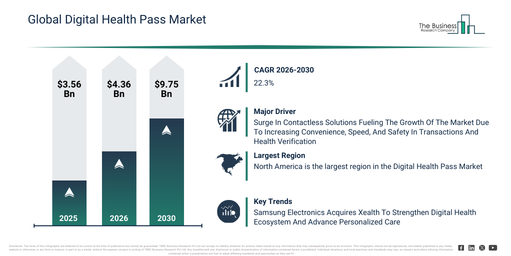
  • Digital Health Pass Market Set To Grow From $4.35 Billion In 2026 To $9.74 Billion By 2030 At A CAGR Of 22.3%

    Digital Health Pass Market Set To Grow From $4.35 Billion In 2026 To $9.74 Billion By 2030 At A CAGR Of 22.3%

    Enhanced with market attractiveness analysis, total addressable market evaluation, company benchmarking matrices, interactive Excel dashboards, expanded supply chain intelligence, emerging startup coverage, and detailed product insights, The Business Research Company’s 2026 market reports deliver more actionable and strategically valuable research.

    Digital Health Pass Market Growth Analysis: How Will Revenue Expand During The Forecast Period?

    The market for digital health passes has experienced substantial expansion. Projections indicate a rise from 3.56 billion dollars in 2025 to 4.36 billion dollars in 2026, reflecting a compound annual growth rate of 22.6%. Factors contributing to this growth during the earlier period included the expedited implementation of digital verification technologies amid health emergencies, the broader integration of QR code systems for access control, an increasing need for reliable methods to validate public entry, government support for digital health programs, and the proactive adoption of mobile credential solutions.

    The digital health pass market is poised for significant expansion, projected to reach a substantial $9.75 billion by the year 2030. This remarkable surge is underpinned by a compound annual growth rate (CAGR) of 22.3%, driven by several key factors. Over the projected timeframe, we anticipate a broader application of digital credentials beyond their initial pandemic-related uses, alongside increasing integration with smart mobility and travel ecosystems. Furthermore, the development of interoperable frameworks for verification, a rise in biometric-powered health passes, and more stringent regulatory guidance for digital health verification will all contribute to this market’s upward trajectory. Key developments to watch include the growth of secure health credential verification systems, the increasing popularity of blockchain technology for health passes, the deeper integration with travel and access management systems, a heightened need for immediate validation of health status, and an intensified emphasis on privacy-conscious verification methods.

    Download A Free Sample Report For Comprehensive Market Insights:

    https://www.thebusinessresearchcompany.com/sample.aspx?id=28195&type=smp

    Digital Health Pass Market Industry Drivers: What Is Driving Revenue Growth?

    The escalating need for contactless technologies is poised to advance the digital health pass market’s expansion. Contactless solutions encompass methods like NFC, RFID, or mobile devices facilitating swift and secure transactions without physical interaction, thus streamlining user interactions and enhancing security. This trend is fueled by the unparalleled convenience and speed these methods offer, allowing for rapid and safe transactions, ultimately improving user satisfaction. Digital health passes play a crucial role by facilitating these contactless interactions through the secure digital validation of health credentials, thereby enabling individuals to access services, travel, or enter venues without the need for physical documentation or direct contact, leading to heightened safety and efficiency. Illustrating this trend, UK Finance Limited reported that in 2023, the UK witnessed 18.3 billion contactless payments, a notable 7% increase from the 17.0 billion recorded in 2022. Consequently, the increasing preference for contactless solutions is a significant catalyst for the digital health pass market’s growth.

    The increasing uptake of telehealth services is a key factor anticipated to stimulate the digital health pass market’s advancement. Telehealth, which involves remote healthcare delivery and consultations via digital platforms, allows individuals to receive medical attention and advice from the comfort of their homes, bypassing the need for in-person visits. This surge in telehealth adoption stems from its enhanced accessibility, enabling patients to connect with healthcare professionals remotely, saving valuable travel time and ensuring prompt medical attention. Digital health passes contribute significantly to telehealth’s seamless integration by securely managing and authenticating users’ health records, vaccination histories, and test results, thus facilitating secure and reliable remote consultations. As an example, the National Health Service indicated in December 2023 that app usage reached 33.6 million users, with monthly logins experiencing a substantial 54% increase over the preceding year, climbing from 16.8 million in November 2022 to 25.8 million in November 2023. Therefore, the expanding adoption of telehealth is a primary driver behind the digital health pass market’s growth.

    Digital Health Pass Market Segment Performance And Strategic Opportunities

    The digital health pass market covered in this report is segmented –

    1) By Component: Software, Hardware, Services

    2) By Type Of Health Pass: Vaccination Passports, Testing Passes, Immunity Passes, Health Status Passes

    3) By Technology: Blockchain, Qr Code, Biometrics, Other Technologies

    4) By Application Area: Travel And Tourism, Corporate Events, Healthcare Services, Education And Training, Entertainment And Sports Events

    5) By End-User: Individuals, Enterprises, Government Bodies

    Subsegments:

    1) By Software: Mobile Applications, Web Applications, Cloud Platforms, Analytics And Reporting Tools, Identity Verification Software

    2) By Hardware: Smart Cards, Biometric Devices, Wearable Devices, Scanners, Sensors

    3) By Services: Implementation Services, Integration Services, Maintenance And Support, Consulting Services, Training Services

    #Digital Health Pass Market Growth Trends: What Is Influencing The Future Outlook?

    Leading players within the digital health pass sector are prioritizing cutting-edge advancements, including digital health passports designed to facilitate smoother access to health and social benefits, alongside customized, data-informed health management tools for consumers. This digital health passport concept streamlines engagement with healthcare systems, making it quicker and simpler for people to register for and benefit from equitable healthcare access and social support schemes. As an illustration, in July of 2025, AlgoBharat, an organization based in India, collaborated with Lok Swasthya SEWA, a blockchain-powered digital health entity also located in India, to introduce a digital health passport specifically for women. This venture harnesses blockchain technology to guarantee protected and verifiable information, equipping women to obtain essential services free from bureaucratic obstacles. The overarching goal is to improve the availability of medical care and safeguard personal data, concurrently fostering digital participation among marginalized female populations throughout India.

    Digital Health Pass Market Key Players: Which Companies Shape Industry Competition?

    Major companies operating in the digital health pass market are Microsoft Corporation, Deloitte Touche Tohmatsu Limited, IBM Corporation, Oracle Corporation, Veradigm Inc., Salesforce.com Inc., Thales Group, Epic Systems Corporation, IDEMIA Group, athenahealth Inc., Unisys Corporation, PricewaterhouseCoopers LLP, Entrust Corporation, Shufti Pro Limited, The Commons Project Foundation, Mvine Limited, Healthvana Inc., TECH5 SA, VST Enterprises Ltd, Clear Secure Inc.

    Access The Complete Digital Health Pass Market Report:

    https://www.thebusinessresearchcompany.com/report/digital-health-pass-global-market-report

    Digital Health Pass Market Global Footprint: Which Region Holds Market Leadership?

    North Americawas the largest region in the digital health pass market in 2025. Asia-Pacific is expected to be the fastest-growing region in the forecast period. The regions covered in the digital health pass market report are Asia-Pacific, South East Asia, Western Europe, Eastern Europe, North America, South America, Middle East, Africa.

    Get in touch with us:

    The Business Research Company: https://www.thebusinessresearchcompany.com/

    Americas: +1 310-496-7795

    Asia: +44 7882 955267 & +91 8897263534

    Europe: +44 7882 955267

    Email us at: marketing@tbrc.info

    Follow us on:

    LinkedIn: https://in.linkedin.com/company/the-business-research-company

    YouTube: https://www.youtube.com/channel/UC24_fI0rV8cR5DxlCpgmyFQ

    Global Market Model: https://www.thebusinessresearchcompany.com/global-market-model
  • Cognitive Diagnostics Market Outlook Highlights The Next Major Growth Opportunities

    Cognitive Diagnostics Market Outlook Highlights The Next Major Growth Opportunities

    Through market attractiveness analysis, total addressable market evaluation, company benchmarking matrices, interactive Excel dashboards, expanded supply chain intelligence, emerging startup coverage, and detailed product insights, The Business Research Company’s 2026 market reports provide more actionable and strategically valuable research.

    Cognitive Diagnostics Market Size Forecast: How Large Could The Market Become By 2030?

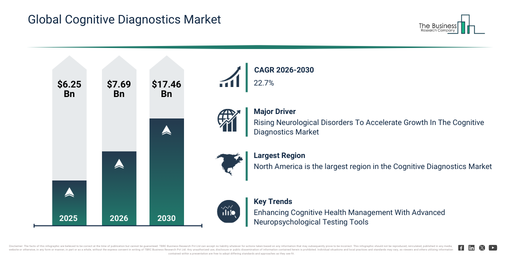
    The cognitive diagnostics market has experienced substantial expansion, with projections indicating a rise from a valuation of $6.25 billion in 2025 to $7.69 billion by 2026, reflecting a commanding compound annual growth rate of 23.1%. This remarkable growth trajectory has been propelled by several key factors, including the escalating incidence of neurodegenerative diseases, a heightened societal focus on maintaining cognitive well-being, advancements in diagnostic imaging technologies, the increasing utilization of uniform cognitive assessment tools, and the proliferation of specialized neurology clinics.

    In the realm of cognitive diagnostics, a period of substantial expansion is anticipated in the ensuing years, with the market poised to reach a valuation of $17.46 billion by the year 2030. This impressive trajectory is underpinned by a compound annual growth rate (CAGR) of 22.7%, propelled by several key factors including escalating investments directed towards digital diagnostic solutions, a heightened demand for the identification of cognitive disorders in their nascent stages, the proliferation of assessment tools designed for at-home use, the increasing incorporation of artificial intelligence into clinical decision-making processes, and a pronounced emphasis on tailored cognitive care strategies. Furthermore, prevailing trends shaping this forecast period encompass the growing utilization of AI-powered cognitive assessment instruments, the wider adoption of digital platforms for cognitive screening, a greater deployment of neuroimaging analytics, the expansion of remote cognitive testing capabilities, and an intensified focus on the early detection of diseases.

    Download A Free Sample Report For Comprehensive Market Insights:

    https://www.thebusinessresearchcompany.com/sample.aspx?id=19373&type=smp

    #Cognitive Diagnostics Market Growth Drivers And Industry Catalysts

    The burgeoning rates of neurological conditions are poised to act as a significant catalyst for the expansion of the cognitive diagnostics market. These neurological conditions, which impact the brain, spinal cord, and the broader nervous system, lead to functional impairments manifesting as cognitive deterioration, difficulties with motor control, and unusual sensory experiences. A primary factor fueling this increase is the higher occurrence of age-associated ailments, notably Alzheimer’s and Parkinson’s disease. In addition to genetic predispositions, environmental pollutants, elevated stress levels, poor dietary habits, and inactive lifestyles also play a role in the growing prevalence of these disorders. Within the realm of neurological diseases, cognitive diagnostics serve a crucial role in evaluating, identifying, and tracking impairments in cognitive function, thereby facilitating early detection and effective management of conditions such as Alzheimer’s and Parkinson’s. Illustratively, the Alzheimer’s Association, a U.S. nonprofit supporting Alzheimer’s care, assistance, and research, reported in May 2024 that the count of Americans aged 65 and over living with Alzheimer’s dementia climbed from 6.5 million in 2022 to an estimated 6.9 million in 2024. Consequently, the escalating incidence of neurological disorders is directly fostering the growth of the cognitive diagnostics market.

    Cognitive Diagnostics Market Segment Analysis: What Are The Major Market Categories?

    The cognitive diagnostics market covered in this report is segmented –

    1) By Diagnosis: Brain Imaging Tests, Laboratory Testing, Mental Status Testing, Rapid Home Screening Tests, Neuropsychological Testing, Electroencephalogram (EEG), Cognitive Function And Behavioral Tests, Neuropsychiatric Inventory Questionnaire (NPI-Q)

    2) By Indication: Alzheimer’s Disease, Attention Deficit Or Hyperactivity Disorder, Dementia, Epilepsy-Related Cognitive Dysfunction, Mild Cognitive Impairment, Parkinson’s Disease-Related Cognitive Dysfunction, Stroke-Related Cognitive Dysfunction, Traumatic Brain Injury, Other Indications

    3) By End User: Hospitals, Neurology Clinics, Cognitive Behavioral Therapy Centers, Rehabilitation Centers, Academic And Research Institutes, Diagnostic Imaging Centers, Home Care Settings

    Subsegments:

    1) By Brain Imaging Tests: Magnetic Resonance Imaging (MRI), Positron Emission Tomography (PET), Computed Tomography (CT) Scans, Functional MRI (fMRI), Single-Photon Emission Computed Tomography (SPECT), Magnetoencephalography (MEG)

    2) By Laboratory Testing: Blood Biomarkers for Cognitive Disorders, Genetic Testing for Cognitive Impairment, CSF (Cerebrospinal Fluid) Biomarker Tests, Hormonal and Metabolic Testing, Genetic Sequencing for Alzheimer’s Disease

    3) By Mental Status Testing: Mini-Mental State Examination (MMSE), Montreal Cognitive Assessment (MoCA), Saint Louis University Mental Status (SLUMS) Exam, Cognitive Assessment Screening Tools

    4) By Rapid Home Screening Tests: Self-Administered Cognitive Tests, Mobile App-Based Cognitive Screening, At-Home Memory and Mental Health Tests

    5) By Neuropsychological Testing: Cognitive and Behavioral Assessment Batteries, Attention and Memory Function Tests, Executive Function and Problem-Solving Tests, Verbal and Visual Learning Tests

    6) By Electroencephalogram (EEG): Resting-State EEG for Cognitive Disorders, Event-Related Potential (ERP) Testing, Quantitative EEG (QEEG) for Brain Mapping, Long-Term EEG Monitoring for Cognitive Disorders

    7) By Cognitive Function and Behavioral Tests: Memory Function Tests, Attention and Concentration Tests, Language and Communication Tests, Mood and Behavior Assessments

    8) By Neuropsychiatric Inventory Questionnaire (NPI-Q): NPI-Q for Dementia Screening, Behavioral and Psychological Symptoms of Dementia (BPSD) Assessment, NPI-Q for Alzheimer’s Disease and Other Cognitive Disorders, Shortened Versions of NPI-Q for Clinical Settings.

    #Cognitive Diagnostics Market Trends Influencing Long-Term Demand

    Leading entities within the cognitive diagnostics sector are prioritizing the delivery of immediate understandings of cognitive well-being, leveraging innovations in diagnostic instruments like neuropsychological testing platforms to elevate the precision, effectiveness, and completeness of cognitive evaluations. These advanced neuropsychological testing platforms serve as sophisticated digital instruments engineered for the appraisal of cognitive capabilities through established testing methodologies, encompassing memory functions, attentional processes, and problem-solving proficiencies. Illustratively, in April of 2024, BrainCheck Inc., a United States-headquartered digital health enterprise dedicated to fostering positive advancements in cognitive health, introduced its all-encompassing digital cognitive assessment framework at the American Academy of Neurology (AAN) Annual Meeting, thereby exhibiting its cutting-edge instruments designated for cognitive screening, thorough assessment, and strategic care design. This particular platform, comprising modules for Assessment, Screening, and Planning, provides healthcare professionals with a contemporary approach to optimizing the management of cognitive health, utilizing mobile technology that guarantees both accuracy and user-friendliness. Such groundbreaking developments are intended to bolster the operational efficiency and the caliber of healthcare services offered to both patients and practitioners by furnishing detailed, research-supported guidance and thorough strategies for patient care.

    Cognitive Diagnostics Market Leading Companies Driving Competitive Growth

    Major companies operating in the cognitive diagnostics market are Cogstate Ltd., Viz.ai, Redcliffe Labs, Mind Maze, Neurocare Group AG, Pathway Genomics, Diadem srl, Cambridge Cognition Ltd., Posit Science Corporation, Anderson Diagnostics & Labs. , Altoida AG, BrainScope Company Inc., Neurotrack Technologies Inc., Cognetivity Neurosciences Ltd., BrainCheck, Cyclops MedTech Pvt Ltd, Twill Inc., CN Diagnostics, Savonix Inc., Cognivue Inc., NeuroCog Trials, Pearson Clinical, Re:Cognition Health, CogniSense, The Neuropsychology Consultants

    Access The Complete Cognitive Diagnostics Market Report:

    https://www.thebusinessresearchcompany.com/report/cognitive-diagnostics-global-market-report

    Cognitive Diagnostics Market Largest Region By Revenue And Market Share

    North Americawas the largest region in the cognitive diagnostics market in 2025. Asia-Pacificis expected to be the fastest-growing region in the forecast period. The regions covered in the cognitive diagnostics market report are Asia-Pacific, South East Asia, Western Europe, Eastern Europe, North America, South America, Middle East, Africa.

    Get in touch with us:

    The Business Research Company: https://www.thebusinessresearchcompany.com/

    Americas: +1 310-496-7795

    Asia: +44 7882 955267 & +91 8897263534

    Europe: +44 7882 955267

    Email us at: marketing@tbrc.info

    Follow us on:

    LinkedIn: https://in.linkedin.com/company/the-business-research-company

    YouTube: https://www.youtube.com/channel/UC24_fI0rV8cR5DxlCpgmyFQ

    Global Market Model: https://www.thebusinessresearchcompany.com/global-market-model
  • Cognitive Behavioral Therapy Market Trends And Growth Drivers Point To Strong Future Potential

    Cognitive Behavioral Therapy Market Trends And Growth Drivers Point To Strong Future Potential

    Delivering more actionable and strategically valuable research, The Business Research Company’s 2026 market reports feature market attractiveness analysis, total addressable market evaluation, company benchmarking matrices, interactive Excel dashboards, expanded supply chain intelligence, emerging startup coverage, and detailed product insights.

    Cognitive Behavioral Therapy Market Revenue Outlook: What CAGR Is Expected Through 2030?

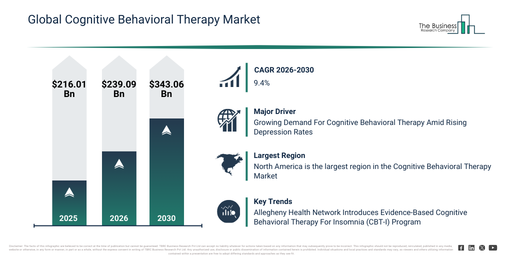
    The cognitive behavioral therapy market is poised for considerable expansion, projected to increase from its 2025 valuation of $216.01 billion to $239.09 billion by 2026, exhibiting a robust compound annual growth rate of 10.7%. This upward trajectory within the historical timeframe is largely a consequence of several key factors, including a heightened public understanding of mental health conditions, the broader availability of outpatient mental health care, growing public endorsement of psychotherapeutic interventions, an increase in the number of qualified mental health practitioners, and more comprehensive insurance provisions for behavioral therapies.

    The cognitive behavioral therapy market is poised for substantial expansion, projecting a reach of $343.06 billion by 2030, driven by a compound annual growth rate of 9.4%. This anticipated surge in the upcoming years is fueled by several key factors, including a heightened demand for accessible remote mental health services, the expanding utilization of digital therapeutic tools within psychiatric practices, the proliferation of programs dedicated to treating anxiety and depression, an intensified emphasis on proactive early intervention approaches, and the growing acceptance of blended or hybrid therapy models. During this forecast period, key market developments are expected to include a greater embrace of digital CBT platforms, an increased frequency of telehealth-facilitated therapy sessions, more widespread integration of virtual reality exposure therapy, the development of more structured, short-term therapeutic programs, and a heightened focus on tailored behavioral intervention strategies.

    Download A Free Sample Report For Comprehensive Market Insights:

    https://www.thebusinessresearchcompany.com/sample.aspx?id=16378&type=smp

    Cognitive Behavioral Therapy Market Opportunity Drivers: What Is Creating New Revenue Potential?

    The expanding prevalence of depression is poised to fuel the expansion of the cognitive behavioral therapy (CBT) market in the future. Depression, a mental health condition marked by enduring sentiments of sorrow, despair, and a diminished capacity for enjoyment or engagement in formerly pleasurable activities, frequently co-occurs with physical manifestations like alterations in eating habits or sleep cycles. A confluence of factors, including societal expectations, financial strains, hereditary vulnerabilities, traumatic experiences, and restricted access to mental health services, contributes to the rising incidence of depression. CBT proves to be a beneficial intervention for managing depression by equipping individuals with the tools to recognize and modify detrimental thought processes and actions. For illustration, in October 2024, data from the US-based Maternal and Child Health Bureau (MCHB) indicated that in 2023, over 5.3 million adolescents between the ages of 12 and 17, representing approximately 20.3% of that demographic, were identified as having a diagnosed mental or behavioral health issue, encompassing conditions like anxiety, depression, or problems with behavior and conduct. Anxiety emerged as the most widespread condition, impacting 16.1% of adolescents, with depression following at 8.4% and behavioral/conduct issues at 6.3%. Consequently, the escalating rates of depression act as a primary catalyst for the growth observed in the cognitive behavioral therapy market.

    Cognitive Behavioral Therapy Market Segment Breakdown: Which Categories Generate The Most Revenue?

    The cognitive behavioral therapy market covered in this report is segmented –

    1) By Type: Cognitive Behavioral Therapy, Cognitive Behavioral Play Therapy, Desensitization, Other Types

    2) By Age Group: Children, Adult, Geriatric

    3) By Applications: Anxiety Disorders, Depression, Substance Abuse, Post-Traumatic Stress Disorder (PTSD), Eating Disorders, Attention Deficit Hyperactivity Disorder (ADHD), Bipolar Disorders, Other Applications

    4) By Service Provider: Hospitals And Clinics, Specialty Hospitals, Rehabilitation Centers, Home Care, Other Service Providers

    Subsegments:

    1) By Cognitive Behavioral Therapy (CBT): Individual CBT, Group CBT, Online CBT, Telehealth CBT, Cognitive Behavioral Play Therapy

    2) By Cognitive Behavioral Play Therapy: Child-Focused Play Therapy, Parent-Child Play Therapy, Interactive Play Therapy

    3) By Desensitization: Systematic Desensitization, Exposure Therapy, Virtual Reality Exposure Therapy

    4) By Other Types: Dialectical Behavior Therapy (DBT), Mindfulness-Based Cognitive Therapy (MBCT), Acceptance and Commitment Therapy (ACT), Rational Emotive Behavior Therapy (REBT)

    Cognitive Behavioral Therapy Market Innovation Trends Driving Future Development

    Within the cognitive behavioral therapy market, leading entities are actively pursuing novel offerings, exemplified by the cognitive behavioral therapy for insomnia (CBT-I) program, as a strategic method to enhance their market standing. This CBT-I program functions as a systematic approach designed to alleviate insomnia by targeting the foundational cognitive and behavioral elements that perpetuate sleep disturbances, such as detrimental sleep routines and pessimistic thought processes. A pertinent illustration is the launch by Allegheny Health Network, a healthcare provider situated in the United States, in March 2024, of an innovative, research-backed CBT-I program intended to assist individuals in achieving better sleep. The implementation of this program, made possible through a grant from the Richard King Mellon Foundation, represents a synergistic endeavor involving the AHN Primary Care Institute, the AHN Psychiatry & Behavioral Health Institute, and Highmark Health.

    Cognitive Behavioral Therapy Market Key Players And Strategic Industry Positioning

    Major companies operating in the cognitive behavioral therapy market are Universal Health Services Inc., Magellan Health, Acadia Healthcare Company, Headspace Inc., American Addiction Centers Inc., Behavioral Health Group Inc., American Well Corp., Landmark Recovery, Haven Behavioural Healthcare Inc., Ieso Digital Health Ltd., Talkspace Inc., Springstone Inc., Unmind, TherapyNotes LLC, Woebot Health, Big Health, Pear Therapeutics Inc., SilverCloud Health Inc., eMindful Inc., Thrive Therapeutic Software Limited, Cognoa Inc., Therachat, Spring Care Inc., Minddistrict, Sanvello

    Access The Complete Cognitive Behavioral Therapy Market Report:

    https://www.thebusinessresearchcompany.com/report/cognitive-behavioral-therapy-global-market-report

    Cognitive Behavioral Therapy Market Regional Analysis And Leading Geography

    North Americawas the largest region in the cognitive behavioral therapy market in 2025. Asia-Pacificis expected to be the fastest-growing region in the forecast period. The regions covered in the cognitive behavioral therapy market report are Asia-Pacific, South East Asia, Western Europe, Eastern Europe, North America, South America, Middle East, Africa.

    Get in touch with us:

    The Business Research Company: https://www.thebusinessresearchcompany.com/

    Americas: +1 310-496-7795

    Asia: +44 7882 955267 & +91 8897263534

    Europe: +44 7882 955267

    Email us at: marketing@tbrc.info

    Follow us on:

    LinkedIn: https://in.linkedin.com/company/the-business-research-company

    YouTube: https://www.youtube.com/channel/UC24_fI0rV8cR5DxlCpgmyFQ

    Global Market Model: https://www.thebusinessresearchcompany.com/global-market-model
  • Cognitive Assessment And Training In Healthcare Market Expansion Is Reshaping Competitive Dynamics Across The Industry

    Cognitive Assessment And Training In Healthcare Market Expansion Is Reshaping Competitive Dynamics Across The Industry

    Enhanced with market attractiveness analysis, total addressable market evaluation, company benchmarking matrices, interactive Excel dashboards, expanded supply chain intelligence, emerging startup coverage, and detailed product insights, The Business Research Company’s 2026 market reports deliver more actionable and strategically valuable research.

    Cognitive Assessment And Training In Healthcare Market Growth Analysis: How Will Revenue Expand During The Forecast Period?

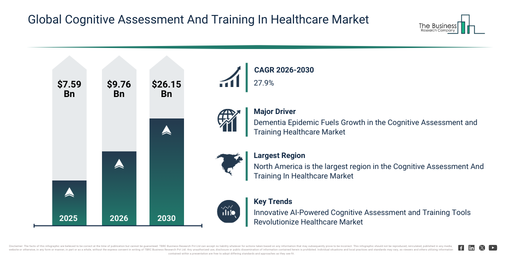
    The worldwide market for cognitive assessment and training within the healthcare sector has experienced remarkable expansion recently, projecting a surge from $7.59 billion in 2025 to $9.76 billion in 2026, demonstrating a formidable CAGR of 28.6%. This historical growth trajectory is largely a consequence of the escalating incidence of cognitive impairments, a greater reliance on neuropsychological evaluations, the proliferation of digital health solutions, a heightened uptake of mHealth applications, and an intensified emphasis on the prompt identification of cognitive deterioration.

    The global market for cognitive assessment and training in healthcare is poised for substantial expansion, projected to reach $26.15 billion by the year 2030, reflecting a significant compound annual growth rate of 27.9%. This anticipated surge is fueled by several key factors, including escalating investments in digital therapeutics, a growing demand for accessible remote cognitive care, the expansion of programs catering to an aging demographic, the increasing incorporation of artificial intelligence into mental health diagnostics, and a greater emphasis on individualized cognitive training methods. Furthermore, the prevailing trends expected to shape this market over the forecast period encompass the heightened adoption of AI-driven cognitive assessment technologies, the increased utilization of digital platforms for brain training, a broader implementation of remote cognitive monitoring systems, the proliferation of tailored cognitive training initiatives, and a more robust integration of data analytics within cognitive evaluation processes.

    Download A Free Sample Report For Comprehensive Market Insights:

    https://www.thebusinessresearchcompany.com/sample.aspx?id=13620&type=smp

    Cognitive Assessment And Training In Healthcare Market Growth Momentum: Which Factors Are Influencing Demand?

    The rising prevalence of dementia is anticipated to be a key driver for the expansion of the cognitive assessment and training sector within the healthcare market in the coming years. Dementia itself encompasses a group of neurological conditions marked by a deterioration in cognitive abilities, including memory, reasoning, decision-making, communication, and the capacity to engage in daily tasks. Tools for cognitive assessment are instrumental in identifying the earliest indicators of cognitive decline, which can signal the onset of dementia, and they also serve to observe the advancement of the condition and chart alterations in cognitive performance over time. This monitoring enables healthcare professionals to refine therapeutic strategies and offer suitable assistance as the illness progresses. As an illustration, a report from Alzheimer’s Research UK in June 2023 projected that by the year 2040, more than 1.2 million individuals in the United Kingdom will be affected by dementia, signifying a substantial escalation in its occurrence, a 30% surge compared to 2022 figures. Consequently, the growing number of dementia cases is set to fuel the growth of cognitive assessment and training services in the healthcare industry.

    Cognitive Assessment And Training In Healthcare Market Segmentation: How Is The Market Structured Across Key Categories?

    The cognitive assessment and training in healthcare market covered in this report is segmented –

    1) By Component: Solution, Services

    2) By Technology: Pen And Paper Based Assessment, Hosted Assessment And Training Tools, Biometrics

    3) By Application: Screening And Diagnostics, Clinical Trial, Brain Training, Other Applications

    Subsegments:

    1) By Solution: Cognitive Assessment Tools, Cognitive Training Software, Mobile Apps For Cognitive Training, Neuropsychological Assessment Solutions

    2) By Services: Consulting Services, Implementation And Integration Services, Training And Support Services, Custom Assessment And Training Programs

    Cognitive Assessment And Training In Healthcare Market Trends Reshaping Industry Growth

    Leading entities within the cognitive assessment and training sector of the healthcare market are concentrating their efforts on creating cutting-edge solutions incorporating sophisticated technologies like artificial intelligence (AI). This strategic focus aims to elevate the precision and individualized nature of cognitive evaluations, consequently fostering more potent and customized cognitive rehabilitation strategies for patients. AI-driven instruments for cognitive assessment and training in the medical field serve to offer bespoke feedback and facilitate personalized cognitive development plans for individuals, thereby optimizing their cognitive vitality and overall wellness. As an illustration, by February of 2023, Cognetivity Neurosciences Ltd., a medical technology firm based in the United Kingdom, unveiled CognICA, a platform designed for brain health screening that leverages the capabilities of artificial intelligence (AI) and machine learning (ML). This platform is engineered for the evaluation and surveillance of brain health, finding application across medical, corporate, and consumer settings. Its implementation facilitates the precocious identification of cognitive decline, paving the way for prompt therapeutic actions and effective long-term management of conditions.

    Cognitive Assessment And Training In Healthcare Market Competitive Landscape And Leading Companies

    Major companies operating in the cognitive assessment and training in healthcare market are Signant Health Private Limited, Clario Inc., Cognitivescale, Cogstate Ltd., Cognetivity Neurosciences Ltd., MedAvante Inc., CogniFit Inc., Akili Inc., BrainScope Company Inc., Cambridge Cognition Ltd., NeuroNation, Brain Resource Company, CNS Vital Signs LLC, Happify Inc., Pear Therapeutics Inc., Total Brain Ltd., Fit Brains Ltd., Posit Science Corporation, BrainCheck Inc., Lumosity (Lumos Labs Inc.), Neurotrack Technologies Inc., Linus Health, Beacon Health Options

    Access The Complete Cognitive Assessment And Training In Healthcare Market Report:

    https://www.thebusinessresearchcompany.com/report/cognitive-assessment-and-training-in-healthcare-global-market-report

    Cognitive Assessment And Training In Healthcare Market Geographic Analysis: Where Is Demand Growing The Fastest?

    North Americawas the largest region in the cognitive assessment and training in the healthcare market in 2025. Asia-Pacificis expected to be the fastest-growing region in the forecast period. The regions covered in the cognitive assessment and training in healthcare market report are Asia-Pacific, South East Asia, Western Europe, Eastern Europe, North America, South America, Middle East, Africa.

    Get in touch with us:

    The Business Research Company: https://www.thebusinessresearchcompany.com/

    Americas: +1 310-496-7795

    Asia: +44 7882 955267 & +91 8897263534

    Europe: +44 7882 955267

    Email us at: marketing@tbrc.info

    Follow us on:

    LinkedIn: https://in.linkedin.com/company/the-business-research-company

    YouTube: https://www.youtube.com/channel/UC24_fI0rV8cR5DxlCpgmyFQ

    Global Market Model: https://www.thebusinessresearchcompany.com/global-market-model
  • Coagulation Factor Deficiency Market Forecast Reveals Where Future Industry Value Will Be Created

    Coagulation Factor Deficiency Market Forecast Reveals Where Future Industry Value Will Be Created

    Through market attractiveness analysis, total addressable market evaluation, company benchmarking matrices, interactive Excel dashboards, expanded supply chain intelligence, emerging startup coverage, and detailed product insights, The Business Research Company’s 2026 market reports provide more actionable and strategically valuable research.

    Coagulation Factor Deficiency Market Forecast: What Market Value Is Expected By 2030?

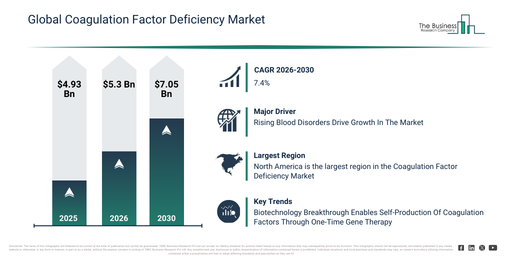
    The market for coagulation factor deficiencies has witnessed substantial expansion recently, projected to escalate from \$4.93 billion in 2025 to \$5.3 billion in 2026, reflecting a compound annual growth rate of 7.6%. Factors contributing to this growth during the preceding period included advancements in diagnosing bleeding disorders, a greater accessibility to therapies derived from plasma, the proliferation of hemophilia treatment facilities, enhanced patient education initiatives, and the overall development of specialized healthcare services.

    The market for coagulation factor deficiencies is poised for substantial expansion over the upcoming years, projecting a valuation of $7.05 billion by 2030, driven by a compound annual growth rate of 7.4%. This anticipated growth stems from significant progress in gene therapy research and development, an escalating need for tailored treatments for bleeding disorders, the broadening reach of home-based care strategies, a heightened emphasis on minimizing treatment intervals, and augmented financial backing for therapies targeting rare diseases. Key developments shaping this period prominently feature the increasing acceptance of recombinant coagulation factors, a surge in the application of gene therapy-driven interventions, a growing inclination towards preventative treatment plans, the wider availability of self-administered infusion therapies at home, and a concentrated effort on creating extended-duration clotting factor products, thereby improving patient convenience and adherence to treatment.

    Download A Free Sample Report For Comprehensive Market Insights:

    https://www.thebusinessresearchcompany.com/sample.aspx?id=21152&type=smp

    Coagulation Factor Deficiency Market Expansion Drivers: What Is Shaping Future Growth?

    The escalating prevalence of blood-related ailments is poised to be a significant catalyst for the expansion of the coagulation factor deficiency market. These blood disorders encompass a range of conditions impacting the generation, functionality, or makeup of blood cells, platelets, or plasma, consequently leading to complications such as anemia, impaired clotting, or compromised immunity. The rise in these conditions can be attributed to several factors, including an aging demographic, inherited tendencies, heightened public awareness, environmental influences, shifts in lifestyle habits, an increasing burden of chronic illnesses, and progress in diagnostic methods facilitating earlier identification. Coagulation factor deficiencies play a crucial role in addressing these blood-related disorders by supplying vital clotting components necessary for averting or mitigating excessive hemorrhaging in ailments like hemophilia, where the body’s innate capacity for clot formation is compromised. To illustrate, in September 2024, data from the Leukemia and Lymphoma Society indicated that every three minutes, an individual in the U.S. is diagnosed with leukemia, lymphoma, or myeloma, with an estimated 187,740 people facing these cancers in 2024, constituting 9.4% of the projected 2,001,140 new cancer diagnoses nationwide. Furthermore, in May 2024, the National Health Service (NHS) England reported that around 17,000 individuals in England live with sickle cell disease, a hereditary blood disorder, with approximately 250 new cases identified each year. Consequently, the growing incidence of blood-related disorders is directly fueling the market’s progression for coagulation factor deficiency treatments.

    Coagulation Factor Deficiency Market Segmentation Trends And Revenue Drivers

    The coagulation factor deficiency market covered in this report is segmented –

    1) By Product: Recombinant Coagulation Factor Concentrates, Plasma-Derived Coagulation Factor Concentrates, Biologics, Desmopressin, Other Product Types

    2) By Deficiency Type: Haemophilia A, Hemophilia B, Von Willebrand Disease, Factor XI Deficiency, Factor XIII Deficiency, Other Treatment Types

    3) By End Users: Hospitals, Clinics, Home Care, Other End Users

    Subsegments:

    1) By Recombinant Coagulation Factor Concentrates: Recombinant Factor VIII, Recombinant Factor IX, Recombinant Factor VIIa

    2) By Plasma-Derived Coagulation Factor Concentrates: Plasma-Derived Factor VIII, Plasma-Derived Factor IX, Plasma-Derived Factor VII

    3) By Biologics: Monoclonal Antibodies, Gene Therapy Products

    4) By Desmopressin: Intravenous Desmopressin, Intranasal Desmopressin

    5) By Other Product Types: Fresh Frozen Plasma (FFP), Prothrombin Complex Concentrates (PCC)

    Coagulation Factor Deficiency Market Strategic Trends: What Is Defining The Next Phase Of Growth?

    Leading entities within the coagulation factor deficiency market are prioritizing the creation of novel treatment approaches, exemplified by one-time gene therapies, aiming to offer enduring or curative outcomes for individuals suffering from bleeding conditions such as hemophilia, thereby diminishing the reliance on perpetual clotting factor infusions. This one-time gene therapy constitutes a medical intervention where genetic material is introduced or modified within a patient’s cells to address or eradicate a disease, with the objective of yielding sustained or permanent therapeutic benefits following a single application. Illustratively, in April 2024, Pfizer Inc., a prominent US-based pharmaceutical and biotechnology firm, disclosed that the U.S. Food and Drug Administration (FDA) granted approval for BEQVEZ (fidanacogene elaparvovec-dzkt) to manage hemophilia B in adult patients with moderate to severe cases who have been undergoing factor IX (FIX) prophylaxis. This therapy is characterized as a single-administration adeno-associated virus (AAV)-based gene therapy engineered to deliver a functional copy of the FIX gene, encoding a high-activity FIX variant, into the target cells, thereby empowering hemophilia B patients to generate their own FIX through this singular treatment, eliminating the necessity for repeated FIX infusions.

    #Coagulation Factor Deficiency Market Industry Leaders: Which Organizations Are Driving Competition?

    Major companies operating in the coagulation factor deficiency market are Pfizer Inc., Bayer HealthCare Pharmaceuticals, Sanofi Genzyme, Novo Nordisk A/S, Baxter International Inc., CSL Behring LLC, Grifols S.A., Octapharma AG, Takeda Pharmaceutical Company Limited, Swedish Orphan Biovitrum AB, Kedrion Biopharma Inc., Shanghai RAAS Blood Products Co. Ltd., LFB S.A., Biotest AG, BioMarin Pharmaceutical Inc., uniQure, Prothya Biosolutions, Bio Products Laboratory Ltd, Green Cross Corporation, Freeline Therapeutics, Aptevo Therapeutics, Hema Biologics LLC, Generation Bio Co, Intellia Therapeutics Inc.

    Access The Complete Coagulation Factor Deficiency Market Report:

    https://www.thebusinessresearchcompany.com/report/coagulation-factor-deficiency-global-market-report

    Coagulation Factor Deficiency Market Global Footprint: Which Region Holds Market Leadership?

    North Americawas the largest region in the coagulation factor deficiency market in 2025. Asia-Pacificis expected to be the fastest-growing region in the forecast period. The regions covered in the coagulation factor deficiency market report are Asia-Pacific, South East Asia, Western Europe, Eastern Europe, North America, South America, Middle East, Africa.

    Get in touch with us:

    The Business Research Company: https://www.thebusinessresearchcompany.com/

    Americas: +1 310-496-7795

    Asia: +44 7882 955267 & +91 8897263534

    Europe: +44 7882 955267

    Email us at: marketing@tbrc.info

    Follow us on:

    LinkedIn: https://in.linkedin.com/company/the-business-research-company

    YouTube: https://www.youtube.com/channel/UC24_fI0rV8cR5DxlCpgmyFQ

    Global Market Model: https://www.thebusinessresearchcompany.com/global-market-model
  • Cluster Of Differentiation 3 (CD3) Antibody Market Growth Through 2030 Creates New Strategic Opportunities

    Cluster Of Differentiation 3 (CD3) Antibody Market Growth Through 2030 Creates New Strategic Opportunities

    Delivering more actionable and strategically valuable research, The Business Research Company’s 2026 market reports feature market attractiveness analysis, total addressable market evaluation, company benchmarking matrices, interactive Excel dashboards, expanded supply chain intelligence, emerging startup coverage, and detailed product insights.

    Cluster Of Differentiation 3 (CD3) Antibody Market Size Outlook: How Fast Will Revenue Grow Through 2030?

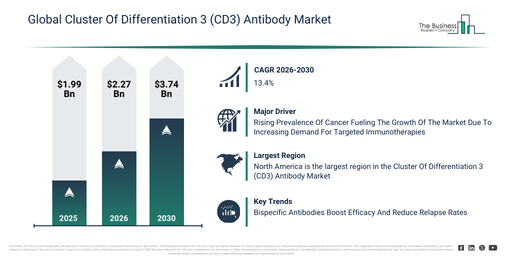
    The market for cluster of differentiation 3 (cd3) antibodies has experienced substantial expansion recently, with projections indicating a rise from $1.99 billion in 2025 to $2.27 billion in 2026, reflecting a compound annual growth rate (CAGR) of 13.7%. This historical growth trajectory has been propelled by significant progress in monoclonal antibody treatments, escalating investigations into T-cell biology, a growing incidence of oncological conditions, the widening scope of hospital-based immunotherapy initiatives, and the increasing involvement of contract research organizations.

    The market for Cluster of Differentiation 3 (CD3) antibodies is projected to experience substantial expansion over the upcoming years, reaching an estimated $3.74 billion by 2030 with a compound annual growth rate of 13.4%. This anticipated growth is fueled by several key factors, including an expanding pipeline of therapies designed to engage T-cells, a growing number of approved antibody-based immunotherapy treatments, escalating investment in cancer research, the advancement of personalized immune therapies, and a heightened emphasis on mitigating immune-related side effects. During this forecast period, significant trends anticipated to shape the market include the ongoing development of T-cell redirecting therapies, the increasing uptake of bispecific CD3 antibodies, the broader application of CD3 in cancer immunotherapy, the growth of FC-engineered antibody platforms, and a more refined approach to precision in immune modulation.

    Download A Free Sample Report For Comprehensive Market Insights:

    https://www.thebusinessresearchcompany.com/sample.aspx?id=30236&type=smp

    Cluster Of Differentiation 3 (CD3) Antibody Market Development Factors: Which Trends Are Supporting Demand?

    The escalating incidence of cancer is anticipated to be a primary catalyst for the expansion of the cluster of differentiation 3 (CD3) antibody market. Cancer prevalence, defined as the aggregate count of individuals, encompassing both recent and prior diagnoses, who are living with a cancer diagnosis at a given moment, is on the rise. Factors such as suboptimal dietary habits, tobacco use, excessive alcohol consumption, and exposure to environmental contaminants contribute to this increase, thereby heightening the susceptibility to diverse forms of cancer. CD3 antibodies play a crucial role in cancer therapy by empowering and redirecting T-cells to seek out and eliminate cancerous cells. They bolster the effectiveness of the immune system’s response, a characteristic that renders them valuable for treating both blood cancers and solid tumors, ultimately refining treatment accuracy and improving patient results. For example, data from Cancer Australia, a governmental body in Australia, indicated in February 2025 that there were 4,641 new cases of pancreatic cancer diagnosed in 2024, with males accounting for 2,414 cases and females for 2,227. Consequently, the increasing burden of cancer worldwide is fueling the growth trajectory of the CD3 antibody market.

    Cluster Of Differentiation 3 (CD3) Antibody Market Segment Analysis Highlighting Growth Areas

    The cluster of differentiation 3 (cd3) antibody market covered in this report is segmented –

    1) By Product Type: Monoclonal Antibodies, Bispecific Antibodies, Antibody-Drug Conjugates, Fragment Crystallizable (Fc) Engineering Products, Other Product Types

    2) By Molecular Weight: Low Molecular Weight, Medium Molecular Weight, High Molecular Weight

    3) By Formulation Type: Aqueous Formulations, Non-Aqueous Formulations

    4) By Therapeutic Application: Cancer Immunotherapy, Autoimmune Diseases, Transplant Rejection, Infectious Diseases, Other Applications

    5) By End-User: Hospitals, Research Institutes, Pharmaceutical Companies, Contract Research Organizations, Other End-Users

    Subsegments:

    1) By Monoclonal Antibodies: Humanized Monoclonal Antibodies, Fully Human Monoclonal Antibodies, Chimeric Monoclonal Antibodies, Murine Monoclonal Antibodies, Recombinant Monoclonal Antibodies

    2) By Bispecific Antibodies: T Cell Engager Bispecific Antibodies, Dual Immune Checkpoint Bispecific Antibodies, Cytokine Modulating Bispecific Antibodies, Tumor Associated Antigen Targeting Bispecific Antibodies

    3) By Antibody-Drug Conjugates: Payload Enhanced Conjugates, Linker Optimized Conjugates, Tumor Targeted Conjugates, Immune Stimulating Conjugates

    4) By Fragment Crystallizable (Fc) Engineering Products: Fragment Crystallizable (Fc) Glycoengineered Antibodies, Fragment Crystallizable (Fc) Mutant Antibodies, Fragment Crystallizable (Fc) Fused Therapeutic Proteins, Extended Half Life Fragment Crystallizable (Fc) Products

    5) By Other Product Types: Single Domain Antibodies, Polyclonal Antibodies, Receptor Fusion Proteins, Engineered Immune Activators

    Cluster Of Differentiation 3 (CD3) Antibody Market Transformation Trends: Which Innovations Are Driving Change?

    Within the cluster of differentiation 3 (CD3) antibody market, leading entities are channeling their efforts into pioneering sophisticated therapeutic modalities, notably bispecific antibodies, with the aims of augmenting treatment effectiveness, refining the precision of cancer cell targeting, and mitigating recurrence in individuals who have undergone extensive prior treatments. These innovative bispecific antibodies represent cutting-edge biological agents meticulously designed to establish connections with two distinct antigens concurrently, thereby leveraging the patient’s inherent immune system to identify and eradicate malignant cells. As an illustration, Johnson and Johnson, a prominent American pharmaceutical firm, secured approval from the U.S. Food and Drug Administration (FDA) in August 2023 for Talvey (talquetamab-tgvs), a therapeutic that harnesses bispecific T-cell engagement technology for those afflicted with relapsed or refractory multiple myeloma. This particular therapy functions by linking CD3 on T-cells to G protein-coupled receptor class C group 5 member D (GPRC5D) found on myeloma cells, offering advantages such as accurate T-cell redirection and immediate applicability without the complex requirement of personalized chimeric antigen receptor T-cell (CAR-T) manufacturing, ultimately enhancing treatment accessibility, facilitating immune-driven tumor destruction, and improving clinical results for patients with a history of intensive prior therapies.

    Cluster Of Differentiation 3 (CD3) Antibody Market Leading Companies: Who Holds Significant Market Presence?

    Major companies operating in the cluster of differentiation 3 (cd3) antibody market are Johnson and Johnson, Roche Holding AG, Pfizer Incorporated, AbbVie Inc., Novartis AG, Bristol-Myers Squibb Company, Thermo Fisher Scientific Incorporated, Eli Lilly and Company, Amgen Inc., Gilead Sciences Inc., Merck KGaA, Bio-Rad Laboratories Incorporated, Miltenyi Biotec B V and Co KG, Harbour BioMed Holding Limited, Zymeworks Inc., Adimab LLC, GeneTex Incorporated, Santa Cruz Biotechnology Incorporated, FabGennix Incorporated, EXBIO Praha spol s r o

    Access The Complete Cluster Of Differentiation 3 (CD3) Antibody Market Report:

    https://www.thebusinessresearchcompany.com/report/global-cluster-of-differentiation-3-cd3-antibody-market-report

    Cluster Of Differentiation 3 (CD3) Antibody Market Regional Distribution: Which Areas Drive Market Expansion?

    North Americawas the largest region in the cluster of differentiation 3 (CD3) antibody market in 2025. Asia-Pacificis expected to be the fastest-growing region in the forecast period. The regions covered in the cluster of differentiation 3 (cd3) antibody market report are Asia-Pacific, South East Asia, Western Europe, Eastern Europe, North America, South America, Middle East, Africa.

    Get in touch with us:

    The Business Research Company: https://www.thebusinessresearchcompany.com/

    Americas: +1 310-496-7795

    Asia: +44 7882 955267 & +91 8897263534

    Europe: +44 7882 955267

    Email us at: marketing@tbrc.info

    Follow us on:

    LinkedIn: https://in.linkedin.com/company/the-business-research-company

    YouTube: https://www.youtube.com/channel/UC24_fI0rV8cR5DxlCpgmyFQ

    Global Market Model: https://www.thebusinessresearchcompany.com/global-market-model
  • Cluster Of Differentiation (CD) 79a Antibody Market Size Projected To Increase From $1.35 Billion To $1.99 Billion During The Forecast Period

    Cluster Of Differentiation (CD) 79a Antibody Market Size Projected To Increase From $1.35 Billion To $1.99 Billion During The Forecast Period

    Enhanced with market attractiveness analysis, total addressable market evaluation, company benchmarking matrices, interactive Excel dashboards, expanded supply chain intelligence, emerging startup coverage, and detailed product insights, The Business Research Company’s 2026 market reports deliver more actionable and strategically valuable research.

    Cluster Of Differentiation (CD) 79a Antibody Market Size, Value And Growth Trends Through 2030

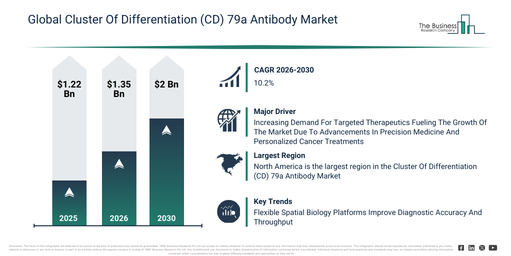
    The market for cluster of differentiation (CD) 79a antibodies has experienced swift expansion, projecting a rise from $1.22 billion in 2025 to $1.35 billion in 2026, demonstrating a compound annual growth rate of 10.5%. This past growth trajectory is underpinned by several key factors, including the broader application of immunohistochemistry within pathology practices, a mounting incidence of B-cell related cancers, an upsurge in academic research focused on immunology, enhanced accessibility to platforms for monoclonal antibody production, and a growing inclination towards employing flow cytometry methodologies.

    The market for Cluster of Differentiation (CD) 79a antibodies is projected for substantial expansion in the coming years, reaching an estimated $2 billion by 2030 with a compound annual growth rate of 10.2%. This projected increase is fueled by several key factors including an escalating need for highly accurate diagnostic tools, the broadening scope of personalized medicine research, increased financial backing for antibody development, the growing deployment of multi-analyte diagnostic tests, and the advancement of translational research efforts. Within this forecast period, significant trends are emerging, such as the greater acceptance of recombinant antibody forms, a heightened application of CD79a in identifying blood cancers, a surge in demand for B-cell markers offering superior precision, the proliferation of automated immunoassay systems, and a stronger emphasis on established standards for antibody verification.

    Download A Free Sample Report For Comprehensive Market Insights:

    https://www.thebusinessresearchcompany.com/sample.aspx?id=30235&type=smp

    Cluster Of Differentiation (CD) 79a Antibody Market Industry Drivers: What Is Driving Revenue Growth?

    The market for cluster of differentiation (CD) 79a antibodies is poised for expansion, largely fueled by the escalating need for highly specific therapeutic interventions. These advanced treatments are designed to precisely identify and block the molecular anomalies characteristic of cancers and other ailments, thereby enhancing treatment accuracy while simultaneously reducing collateral damage to healthy tissues. The growing emphasis on such targeted approaches is a direct consequence of progress in precision medicine, a field that facilitates tailored and more efficacious treatments by considering an individual’s unique genetic makeup. CD79a antibodies play a crucial role in enabling these targeted therapies, as their specific affinity for B-cell markers renders them exceptionally well-suited for precise treatment strategies in blood cancers. Their ability to facilitate the selective targeting of malignant B cells significantly boosts therapeutic efficacy, leading to improved patient results and a reduction in unintended side effects. A relevant example of this trend is the Food and Drug Administration’s (FDA) approval of six gene therapy products in 2023, an increase from the five approvals recorded in 2022, as noted by the American Society of Gene & Cell Therapy (ASGCT) in December 2024. Consequently, the expanding demand for specialized therapeutic options is a key driver behind the growth anticipated in the CD79a antibody market.

    Cluster Of Differentiation (CD) 79a Antibody Market Segment Performance And Strategic Opportunities

    The cluster of differentiation (cd) 79a antibody market covered in this report is segmented –

    1) By Product Type: Monoclonal Antibodies, Polyclonal Antibodies, Recombinant Antibodies

    2) By Technology: Western Blotting, Immunohistochemistry, Flow Cytometry, Enzyme-Linked Immunosorbent Assay (ELISA)

    3) By Distribution Channel: Direct Sales, Distributors, Online Sales

    4) By End Use: Biotechnology Companies, Pharmaceutical Companies, Academic And Research Institutes, Diagnostic Laboratories

    Subsegments:

    1) By Monoclonal Antibodies: Mouse Derived Antibodies, Rabbit Derived Antibodies, Human Derived Antibodies, Chimeric Antibodies, Humanized Antibodies

    2) By Polyclonal Antibodies: Goat Derived Antibodies, Rabbit Derived Antibodies, Sheep Derived Antibodies, Donkey Derived Antibodies, Horse Derived Antibodies

    3) By Recombinant Antibodies: Single Chain Variable Fragment Antibodies, Fragment Antigen Binding Antibodies, Bispecific Antibodies, Nanobodies, Engineered Full Length Antibodies

    #Cluster Of Differentiation (CD) 79a Antibody Market Growth Trends: What Is Influencing The Future Outlook?

    In the realm of the CD79a antibody market, key players are prioritizing the creation of sophisticated offerings, including adaptable multiplex immunohistochemistry (IHC) kits, with the aims of expediting scientific inquiry, elevating the caliber of research data, and simplifying intricate manual laboratory procedures. This advanced methodology, flexible multiplex IHC, facilitates the concurrent identification of numerous biological markers within a solitary tissue specimen while preserving their original arrangement. Illustrating this trend, in September of 2023, Cell Signaling Technology, a prominent biotechnology firm headquartered in the United States, introduced its SignalStar Multiplex IHC system. This particular spatial biology innovation functions as an adaptable, antibody-driven framework, engineered to support highly multiplexed investigations capable of detecting up to eight different targets across a tissue sample in a mere two-day timeframe. The platform further incorporates built-in assistance for designing experimental panels and refined protocols, thereby streamlining the process of biomarker identification and data acquisition without the need for substantial optimization efforts, ultimately boosting diagnostic precision, processing efficiency, and the level of detail observable in tissue examinations, representing a noteworthy stride forward within the 79a antibody market segment.

    Cluster Of Differentiation (CD) 79a Antibody Market Key Players: Which Companies Shape Industry Competition?

    Major companies operating in the cluster of differentiation (cd) 79a antibody market are Thermo Fisher Scientific Inc., Becton, Dickinson and Company, Bio-Rad Laboratories Inc., Bio-Techne Corporation, Miltenyi Biotec B.V. & Co. KG, GenScript Biotech Corporation, Cell Signaling Technology Inc., Sino Biological Inc., Proteintech Group Inc., Santa Cruz Biotechnology Inc., OriGene Technologies Inc., GeneTex Inc., Abnova Corporation, RayBiotech Life Inc., Wuhan Fine Biotech Co. Ltd. (commonly known as FineTest), Aviva Systems Biology Corporation, EXBIO Praha a.s., NSJ Bioreagents Inc., Boster Biological Technology Co. Ltd., Bioss Antibodies Inc.

    Access The Complete Cluster Of Differentiation (CD) 79a Antibody Market Report:

    https://www.thebusinessresearchcompany.com/report/global-cluster-of-differentiation-cd-79a-antibody-market-report

    Cluster Of Differentiation (CD) 79a Antibody Market Leading Geography: Which Region Generates The Most Revenue?

    North Americawas the largest region in the cluster of differentiation (CD) 79a antibody market in 2025. Asia-Pacificis expected to be the fastest-growing region in the forecast period. The regions covered in the cluster of differentiation (cd) 79a antibody market report are Asia-Pacific, South East Asia, Western Europe, Eastern Europe, North America, South America, Middle East, Africa.

    Get in touch with us:

    The Business Research Company: https://www.thebusinessresearchcompany.com/

    Americas: +1 310-496-7795

    Asia: +44 7882 955267 & +91 8897263534

    Europe: +44 7882 955267

    Email us at: marketing@tbrc.info

    Follow us on:

    LinkedIn: https://in.linkedin.com/company/the-business-research-company

    YouTube: https://www.youtube.com/channel/UC24_fI0rV8cR5DxlCpgmyFQ

    Global Market Model: https://www.thebusinessresearchcompany.com/global-market-model