Month: June 2026

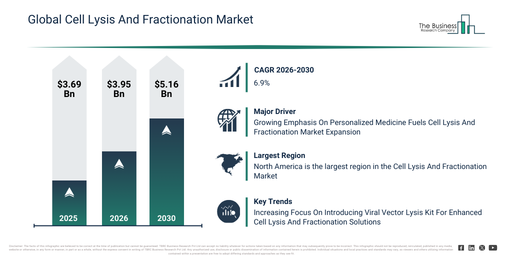
  • Cell Lysis And Fractionation Market Set To Grow From $3.95 Billion In 2026 To $5.16 Billion By 2030 At A CAGR Of 6.9%

    Cell Lysis And Fractionation Market Set To Grow From $3.95 Billion In 2026 To $5.16 Billion By 2030 At A CAGR Of 6.9%

    Delivering more actionable and strategically valuable research, The Business Research Company’s 2026 market reports feature market attractiveness analysis, total addressable market evaluation, company benchmarking matrices, interactive Excel dashboards, expanded supply chain intelligence, emerging startup coverage, and detailed product insights.

    Cell Lysis And Fractionation Market Growth Analysis: How Will Revenue Expand During The Forecast Period?

    The market for cell lysis and fractionation technologies experienced robust expansion recently, projected to climb from $3.69 billion in 2025 to $3.95 billion in 2026, reflecting a compound annual growth rate of 7.0%. This upward trend over the past period is linked to heightened engagement in molecular biology investigations, an increase in proteomics research, broader adoption of nucleic acid purification methods, the proliferation of life science research facilities, and a greater need for consistent sample preparation processes.

    The market for cell lysis and fractionation is poised for significant expansion, projected to reach $5.16 billion by 2030, reflecting a compound annual growth rate of 6.9%. This anticipated growth stems from several key drivers, including escalating investments in proteomics and genomics research, a greater embrace of automated sample preparation techniques, a heightened emphasis on high-throughput analysis, the broadening scope of biopharmaceutical research endeavors, and the increasing integration of laboratory systems. Furthermore, prominent trends shaping this market during the forecast period involve a rising preference for automated cell lysis systems, a burgeoning demand for highly effective protein extraction methods, the expanding utilization of both chemical and mechanical lysis approaches, an increase in fractionation-based sample preparation strategies, and a reinforced commitment to preserving sample integrity.

    Download A Free Sample Report For Comprehensive Market Insights:

    https://www.thebusinessresearchcompany.com/sample.aspx?id=14064&type=smp

    Cell Lysis And Fractionation Market Opportunity Drivers: What Is Creating New Revenue Potential?

    The increasing emphasis on personalized medicine is anticipated to significantly boost the cell lysis and fractionation sectors. This innovative medical approach leverages an individual’s genetic blueprint for disease diagnosis and therapeutic management, essentially customizing medical plans and interventions based on each patient’s distinct characteristics, particularly their genetic makeup. Cell lysis and fractionation are instrumental in this precision medicine paradigm, enabling the isolation and examination of specific subcellular components from patient specimens like proteins, organelles, and nucleic acids. Consequently, researchers and healthcare providers can delve into the molecular mechanisms underlying ailments and devise tailored treatments aligned with each patient’s unique molecular profile. A notable indicator of this trend, as reported in February 2024 by the Personalized Medicine Coalition, a US non-profit, is the FDA’s approval of 7 new personalized cancer treatments in 2023, contributing to a total of 26 personalized therapies, a substantial rise from the 12 approvals seen in 2022. Thus, the heightened focus on personalized medicine directly fuels the expansion of the cell lysis and fractionation markets.

    An escalating need within the biopharmaceutical sector is poised to stimulate expansion in the cell lysis and fractionation market. This industry, dedicated to the creation, manufacture, and marketing of medications and treatments derived from biological sources through biotechnology, is experiencing robust growth. This expansion is largely attributed to the increasing incidence of chronic and intricate diseases, which in turn fuels the demand for sophisticated, targeted therapeutics. Cell lysis and fractionation are vital to the biopharmaceutical industry’s operations, facilitating the disruption of cells to liberate and isolate crucial intracellular biomolecules, including proteins, enzymes, and nucleic acids, which are indispensable for the development of drugs, the production of biologics, and ongoing research endeavors. For illustration, IQVIA, a US-based entity offering biopharmaceutical development services, projected in January 2024 that global spending on biotechnology is slated to surpass $892 billion by the year 2028. Consequently, the amplified requirements from the biopharmaceutical industry are serving as a key driver for the growth of the cell lysis and fractionation market.

    Cell Lysis And Fractionation Market Segment Analysis Highlighting Growth Areas

    The cell lysis and fractionation market covered in this report is segmented –

    1) By Type: Mammalian Cells, Microbial Cells

    2) By Application: Nucleic Acid Purification And Isolation, Protein Purification And Isolation

    3) By End-User: Research Laboratories And Institutes, Biopharmaceutical, Biotechnology Companies

    Subsegments:

    1) By Mammalian Cells: Adherent Mammalian Cells, Suspension Mammalian Cells, Primary Cells, Cell Lines

    2) By Microbial Cells: Bacterial Cells, Yeast Cells, Fungal Cells, Algal Cells

    Cell Lysis And Fractionation Market Innovation Trends Driving Future Development

    Key players within the cell lysis and fractionation sector are concentrating their efforts on the development and dissemination of innovative offerings, including specialized lysis kits for cell and gene therapies (CGT) that leverage viral vectors, as a strategic maneuver to bolster their market standing. This advanced lysis kit technology streamlines the process of lysing Adeno-associated virus (AAV), thereby enhancing standard operating procedures, fortifying quality assurance measures, and elevating safety standards, all while promoting uniformity in bioprocessing operations. To illustrate this point, QIAGEN, a prominent German entity specializing in sample and assay technologies, introduced its new CGT Viral Vector Lysis Kit in July 2023. This product facilitates the precise and consistent determination of viral titers across various serotypes, commencing with the cellular lysate. This newly released CGT viral vector lysis kit serves as a valuable addition to QIAGEN’s continuously growing suite of digital PCR solutions tailored for the biopharmaceutical industry, which already encompasses three QIAcuity Residual DNA Quantification Kits designed to detect residual host cell DNA contamination and ten QIAcuity Cell and Gene Therapy (CGT) dPCR Assays aimed at quantifying Adeno-associated virus (AAV) titers.

    Cell Lysis And Fractionation Market Leading Companies: Who Holds Significant Market Presence?

    Major companies operating in the cell lysis and fractionation market are Hoffmann-La Roche Ltd, Merck & Co. Inc., Thermo Fisher Scientific Inc., Danaher Corporation, Becton, Dickinson and Company, Lonza Group AG, Illumina Inc., Beckman Coulter Inc., PerkinElmer Inc., IDEX Corporation, Bio-Rad Laboratories Inc., QIAGEN NV, Eppendorf AG, Miltenyi Biotec B.V. & Co. KG, Promega Corporation, Takara Bio Inc., Abcam plc, Cell Signaling Technology Inc., BioVision Inc., Diagenode LLC, Claremont BioSolutions LLC, Norgen Biotek Corp., Qsonica LLC, Labfreez Instruments Group Co. Ltd.

    Access The Complete Cell Lysis And Fractionation Market Report:

    https://www.thebusinessresearchcompany.com/report/cell-lysis-and-fractionation-global-market-report

    Cell Lysis And Fractionation Market Largest Region By Revenue And Market Share

    North Americawas the largest region in the cell lysis and fractionation market in 2025. The regions covered in the cell lysis and fractionation market report are Asia-Pacific, South East Asia, Western Europe, Eastern Europe, North America, South America, Middle East, Africa.

    Get in touch with us:

    The Business Research Company: https://www.thebusinessresearchcompany.com/

    Americas: +1 310-496-7795

    Asia: +44 7882 955267 & +91 8897263534

    Europe: +44 7882 955267

    Email us at: marketing@tbrc.info

    Follow us on:

    LinkedIn: https://in.linkedin.com/company/the-business-research-company

    YouTube: https://www.youtube.com/channel/UC24_fI0rV8cR5DxlCpgmyFQ

    Global Market Model: https://www.thebusinessresearchcompany.com/global-market-model
  • Cell Lysis And Disruption Market Opportunities Are Emerging Beyond Traditional Growth Areas

    Cell Lysis And Disruption Market Opportunities Are Emerging Beyond Traditional Growth Areas

    Enhanced with market attractiveness analysis, total addressable market evaluation, company benchmarking matrices, interactive Excel dashboards, expanded supply chain intelligence, emerging startup coverage, and detailed product insights, The Business Research Company’s 2026 market reports deliver more actionable and strategically valuable research.

    Cell Lysis And Disruption Market Forecast: What Market Value Is Expected By 2030?

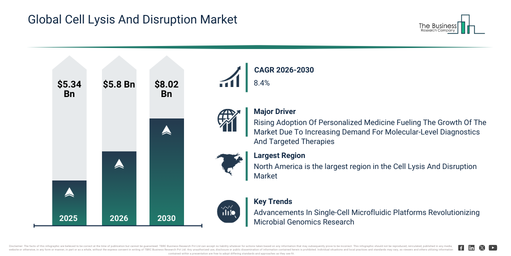
    The market for cell lysis and disruption technologies has experienced significant expansion lately, with projections indicating continued robust growth. It is estimated to increase from $5.34 billion in 2025 to $5.8 billion in 2026, reflecting a compound annual growth rate of 8.7%. This upward trajectory during the historical period has been fueled by several key factors, including the scaling up of molecular biology research initiatives, a greater reliance on recombinant protein production methods, the flourishing of life sciences research within academic settings, the increasing implementation of microbial fermentation techniques, and the widespread availability of sophisticated laboratory equipment.

    The cell breakup and release sector is projected for substantial expansion over the upcoming years, reaching an estimated $8.02 billion by 2030, driven by a compound annual growth rate of 8.4%. This anticipated expansion during the forecast period is largely fueled by a heightened need for biologics production, escalating investments in cell and gene therapy research initiatives, broader application of proteomics and genomics investigations, a greater emphasis on laboratory automation, and the increased utilization of high-throughput screening technologies. Key developments anticipated in this timeframe involve a greater embrace of mechanical cell disruption apparatus, a rise in the deployment of high-purity lysis compounds, elevated demand for cell processing solutions that can be scaled effectively, the continued development of automated sample preparation processes, and an intensified focus on achieving superior yields and consistent, repeatable outcomes.

    Download A Free Sample Report For Comprehensive Market Insights:

    https://www.thebusinessresearchcompany.com/sample.aspx?id=24498&type=smp

    Cell Lysis And Disruption Market Growth Momentum: Which Factors Are Influencing Demand?

    The expansion of the cell lysis and disruption sector is poised for acceleration due to the heightened emphasis on personalized medicine. This innovative healthcare strategy customizes patient treatment and care based on unique individual factors, including genetic makeup and lifestyle choices. Such a surge in personalized medicine is fueled by advancements in genomic technologies, which facilitate a more accurate pinpointing of genetic variations linked to diseases, thereby paving the way for treatments that are both specific and highly effective. The escalating need for personalized medicine, in turn, bolsters the cell lysis and disruption market, as these techniques are indispensable for isolating Deoxyribonucleic Acid (DNA), Ribonucleic Acid (RNA), and proteins from patient specimens, which are crucial for the molecular profiling needed to formulate bespoke therapies. Illustrating this trend, February 2024 data from the Personalized Medicine Coalition, a U.S.-based non-profit, and the U.S. Food and Drug Administration (USFDA) revealed that the approval of personalized treatments for individuals with rare diseases climbed to 16 in 2023, a substantial leap from the 6 approved in 2022. Consequently, the intensifying concentration on personalized medicine is set to propel the growth trajectory of the cell lysis and disruption market.

    Cell Lysis And Disruption Market Segment Performance And Strategic Opportunities

    The cell lysis and disruption market covered in this report is segmented –

    1) By Product: Reagents And Consumables, Instruments

    2) By Cell Type: Bacteria Cells, Mammalian Cells, Plant Cells, Yeast Or Fungi Or Algae

    3) By Application: Cell Organelle Isolation, Protein Isolation, Downstream Processing, Nucleic Acid Isolation

    4) By End-Use: Pharmaceutical And Biotechnology Companies, Academic And Research Institutes, Other End-Users

    Subsegments:

    1) By Reagents And Consumables: Enzymes, Detergent Solutions, Kits And Reagents

    2) By Instruments: Homogenizers, Sonicator, Microfluidizer, Other Instruments

    Cell Lysis And Disruption Market Trends Reshaping Industry Growth

    In the realm of cell lysis and disruption, prominent market players are actively engaged in creating sophisticated technologies, specifically single-cell microfluidic platforms, aimed at augmenting the efficacy and performance of single-cell investigations for scientists delving into microbial genomics. These microfluidic platforms represent sophisticated, small-scale instruments that meticulously separate, handle, and examine individual cells through the precise management of minuscule liquid quantities within microscopic channels, thereby facilitating automated, high-volume single-cell research. As an illustration, Atrandi Biosciences Inc., a biotechnology firm situated in Lithuania, introduced its Flux platform in conjunction with the Single-Microbe DNA Barcoding Kit in January 2024. Employing semi-permeable capsule (SPC) technology, these offerings facilitate the effective isolation and disruption of distinct microbial cells while safeguarding the integrity of subsequent analytical processes. This cutting-edge platform provides the capacity for high output, supporting accurate microbial genome measurement and DNA sequencing, which are indispensable for progress in microbial genomics and individual cell scrutiny. Ultimately, these advancements are engineered to optimize and refine research pipelines, rendering detailed, single-cell analysis more readily available and potent for professionals across diverse scientific fields.

    Cell Lysis And Disruption Market Key Players: Which Companies Shape Industry Competition?

    Major companies operating in the cell lysis and disruption market are F. Hoffmann-La Roche Ltd., Thermo Fisher Scientific Inc., Merck KGaA, Becton Dickinson and Company (BD), Agilent Technologies Inc., Bio-Rad Laboratories Inc., Qiagen N.V., Eppendorf AG, Miltenyi Biotec GmbH, Takara Bio Inc., Promega Corporation, New England Biolabs Inc., Covaris LLC, Microfluidics International Corp., Claremont BioSolutions LLC, Qsonica LLC, Zymo Research Corp., BioVision Inc., Beckman Coulter Inc., Sartorius AG, PerkinElmer Inc.

    Access The Complete Cell Lysis And Disruption Market Report:

    https://www.thebusinessresearchcompany.com/report/cell-lysis-and-disruption-global-market-report

    Cell Lysis And Disruption Market Regional Analysis And Leading Geography

    North Americawas the largest region in the cell lysis and disruption market in 2025. Asia-Pacificis expected to be the fastest-growing region in the forecast period. The regions covered in the cell lysis and disruption market report are Asia-Pacific, South East Asia, Western Europe, Eastern Europe, North America, South America, Middle East, Africa.

    Get in touch with us:

    The Business Research Company: https://www.thebusinessresearchcompany.com/

    Americas: +1 310-496-7795

    Asia: +44 7882 955267 & +91 8897263534

    Europe: +44 7882 955267

    Email us at: marketing@tbrc.info

    Follow us on:

    LinkedIn: https://in.linkedin.com/company/the-business-research-company

    YouTube: https://www.youtube.com/channel/UC24_fI0rV8cR5DxlCpgmyFQ

    Global Market Model: https://www.thebusinessresearchcompany.com/global-market-model
  • Cell Isolation Market Expansion Is Opening New Pathways For Strategic Investment

    Cell Isolation Market Expansion Is Opening New Pathways For Strategic Investment

    Through market attractiveness analysis, total addressable market evaluation, company benchmarking matrices, interactive Excel dashboards, expanded supply chain intelligence, emerging startup coverage, and detailed product insights, The Business Research Company’s 2026 market reports provide more actionable and strategically valuable research.

    Cell Isolation Market Size Outlook: How Fast Will Revenue Grow Through 2030?

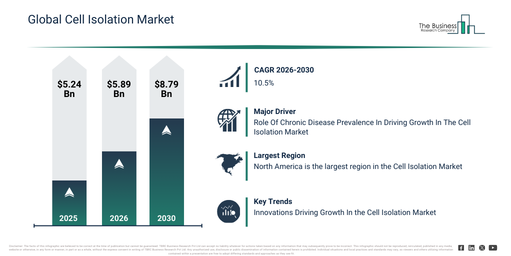
    The cell isolation market has experienced significant expansion lately, with projections indicating a rise from $5.24 billion in 2025 to $5.89 billion in 2026, demonstrating a compound annual growth rate of 12.5%. This past growth trajectory is largely attributable to the increasing scope of stem cell research endeavors, the advancement of oncology research initiatives, a greater reliance on flow cytometry techniques, escalating demand for biomolecule isolation, and the broader accessibility of isolation consumables.

    The cell isolation market is poised for significant expansion, projected to reach $8.79 billion by 2030, reflecting a compound annual growth rate of 10.5% during this period. This upward trajectory is driven by several key factors, including heightened investment in regenerative medicine, the increasing integration of precision diagnostics, a surge in the demand for single-cell analysis, the broadening scope of cell-based research, and the growing implementation of automated laboratory procedures. Within this forecast timeframe, prominent trends are expected to shape the market, such as a greater embrace of automated cell isolation instruments, heightened utilization of magnetic and microbead-based methodologies, a persistent demand for highly purified cell samples, the further development of microfluidic cell isolation technologies, and an intensified emphasis on ensuring both reproducibility and accuracy in research outcomes.

    Download A Free Sample Report For Comprehensive Market Insights:

    https://www.thebusinessresearchcompany.com/sample.aspx?id=14872&type=smp

    Cell Isolation Market Expansion Drivers: What Is Shaping Future Growth?

    The escalating burden of chronic illnesses is poised to stimulate the expansion of the cell isolation sector in the foreseeable future. Chronic ailments, characterized as enduring health issues that persist for prolonged durations, often spanning years or even an entire lifetime, necessitate comprehensive strategies involving public health initiatives, policies encouraging healthy living, enhancements to healthcare facilities, and heightened public understanding and education. This growing incidence of chronic conditions fuels progress in cell isolation techniques and scientific inquiry, opening avenues to leverage the capabilities of stem cells for regenerative therapies and the management of diverse medical challenges. Illustratively, as reported by the Centers for Disease Control and Prevention (CDC) in April 2025, about 76.4% of U.S. adults, equivalent to 194 million individuals, had at least one chronic condition in 2023, with prevalence rates of 59.5% among younger adults, 78.4% among middle-aged adults, and a significant 93.0% among older adults, underscoring how the increasing spread of these conditions is a key driver for the cell isolation market’s growth.

    #Cell Isolation Market Segment Landscape And Growth Potential

    The cell isolation market covered in this report is segmented –

    1) By Product: Consumables, Instruments

    2) By Cell Type: Human Cells, Animal Cells

    3) By Cell Source: Bone Marrow, Adipose Tissues, Cord Blood Or Embryonic Stem Cells, Other Cell Sources

    4) By Application: Biomolecule Isolation, Cancer Research, Stem Cell Research, Tissue Regeneration Or Regenerative Medicines, In-vitro Diagnostics, Other Applications

    5) By End-User: Pharmaceutical And Biotechnology Companies, Research And Academic Institutes, Hospitals And Diagnostic Laboratories, Other End-Users

    Subsegments:

    1) By Consumables: Reagents And Kits, Magnetic Beads And Microbeads, Cell Culture Media And Supplements, Antibodies And Enzymes

    2) By Instruments: Cell Separators, Flow Cytometers, Centrifuges, Microfluidic Devices, Automated Cell Isolation Systems

    Cell Isolation Market Strategic Trends: What Is Defining The Next Phase Of Growth?

    Within the cell isolation market, leading entities are prioritizing the creation of automated, high-volume systems to boost effectiveness, accuracy, and adaptability in both single-cell research and therapeutic uses. To illustrate, Sphere Fluidics, a life sciences firm situated in the UK, introduced Cyto-Mine Chroma in January 2025, a fully automated system designed for isolating and examining single cells. This technology facilitates the swift identification and isolation of cells with superior performance, benefiting drug discovery, the advancement of cell-based therapies, and the refinement of bioprocessing methods. Complementing this product release, Sphere Fluidics established an Early Access Program, offering researchers and biopharmaceutical organizations the opportunity to trial the instrument and expedite its integration into their workflows.

    Cell Isolation Market Competitive Landscape: Who Are The Leading Companies?

    Major companies operating in the cell isolation market are F. Hoffmann-La Roche Ltd., Thermo Fisher Scientific Inc., Danaher Corporation, Merk Co. & KGaA, GE Healthcare Company, Becton Dickinson & Company, Corning Inc., Lonza Inc., Agilent Technologies Inc., Alfa Laval AB, PerkinElmer Inc., Sartorius AG, Terumo Corporation, Beckman Coulter Inc., Bio-Rad Laboratories Inc., Qiagen NV, Bio-Techne Corporation, STEMCELL Technologies Inc., Cytek Biosciences Inc., Miltenyi Biotec Inc., Neogenomics Laboratories Inc., Promega Corporation, Takara Bio Inc., Molecular Devices LLC, NanoString Technologies Inc., Proteintech Group Inc., Sony Biotechnology Inc., PluriSelect Life Science UG & Co. KG, Invent Biotechnologies Inc., Akadeum Life Sciences Inc.

    Access The Complete Cell Isolation Market Report:

    https://www.thebusinessresearchcompany.com/report/cell-isolation-global-market-report

    Cell Isolation Market Geographic Analysis: Where Is Demand Growing The Fastest?

    North Americawas the largest region in the cell isolation market in 2025. Asia-Pacificis expected to be the fastest-growing region in the forecast period. The regions covered in the cell isolation market report are Asia-Pacific, South East Asia, Western Europe, Eastern Europe, North America, South America, Middle East, Africa.

    Get in touch with us:

    The Business Research Company: https://www.thebusinessresearchcompany.com/

    Americas: +1 310-496-7795

    Asia: +44 7882 955267 & +91 8897263534

    Europe: +44 7882 955267

    Email us at: marketing@tbrc.info

    Follow us on:

    LinkedIn: https://in.linkedin.com/company/the-business-research-company

    YouTube: https://www.youtube.com/channel/UC24_fI0rV8cR5DxlCpgmyFQ

    Global Market Model: https://www.thebusinessresearchcompany.com/global-market-model
  • Cell Harvesting Market Trends Are Creating New Opportunities For Industry Leaders

    Cell Harvesting Market Trends Are Creating New Opportunities For Industry Leaders

    Delivering more actionable and strategically valuable research, The Business Research Company’s 2026 market reports feature market attractiveness analysis, total addressable market evaluation, company benchmarking matrices, interactive Excel dashboards, expanded supply chain intelligence, emerging startup coverage, and detailed product insights.

    Cell Harvesting Market Size, Value And Growth Trends Through 2030

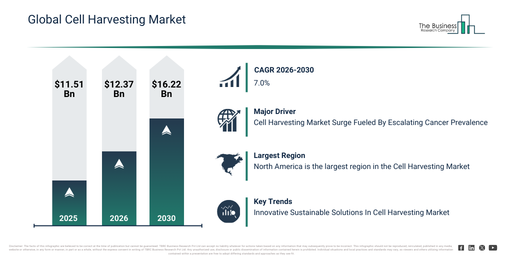
    In recent past, the cell harvesting market demonstrated robust expansion, projecting a growth from $11.51 billion in 2025 to $12.37 billion in 2026, reflecting a compound annual growth rate of 7.4%. This historical growth trajectory was fueled by several key factors, including a surge in monoclonal antibody production, the broadening of biopharmaceutical manufacturing infrastructure, an escalating embrace of cell-based therapeutic treatments, a heightened emphasis on optimizing downstream processing efficiency, and the increasing utilization of centrifugation methods for harvesting.

    The cell harvesting sector is projected for substantial expansion in the upcoming years, reaching an estimated $16.22 billion by 2030, driven by a compound annual growth rate of 7.0%. This anticipated surge is fueled by augmented investments in biologic production, a heightened need for adaptable cell processing methods, the increasing integration of continuous bioprocessing, wider utilization of disposable technologies, and the advancement of sophisticated cell therapy development. Key developments anticipated during this period involve a greater uptake of automated cell harvesting equipment, a growing requirement for rapid cell processing capabilities, increased deployment of closed-system harvesting techniques, the proliferation of microfluidic harvesting innovations, and a strengthened emphasis on achieving consistent processes and maximizing product yield.

    Download A Free Sample Report For Comprehensive Market Insights:

    https://www.thebusinessresearchcompany.com/sample.aspx?id=8761&type=smp

    Cell Harvesting Market Development Factors: Which Trends Are Supporting Demand?

    The escalating incidence of cancer is anticipated to be a significant catalyst for the expansion of the cell harvesting market in the foreseeable future. Cancer, a complex set of conditions defined by the unregulated proliferation and aberrant development of cells, frequently manifests as a tumorous growth. The amplified occurrence of cancer consequently fuels the need for cell harvesting, which is instrumental in research efforts, diagnostic procedures, the creation of treatments, and deepening our comprehension of cancer’s biological mechanisms, thus fostering the growth of the cell harvesting market as an indispensable element in various cancer-related research and clinical applications. As an illustration, the Australian Institute of Health and Welfare reported in July 2024 that approximately 165,000 Australians received new cancer diagnoses in 2023, averaging over 450 new cases daily, with males accounting for roughly 55% of these diagnoses. Consequently, the increasing burden of cancer is directly stimulating the market for cell harvesting technologies.

    Cell Harvesting Market Categorization By Product Type And Application

    The cell harvesting market covered in this report is segmented –

    1) By Type: Manual Cell Harvesters, Automated Cell Harvesters

    2) By Distribution Channel: Retail, Direct Tenders

    3) By End-Users: Biotechnology And Biopharmaceutical Companies, Research Institute, Other End-Users

    Subsegments:

    1) By Manual Cell Harvesters: Syringe-Based Harvesters, Centrifuge-Based Harvesters, Filtration Devices

    2) By Automated Cell Harvesters: Robotic Cell Harvesting Systems, Automated Centrifuges, Microfluidic Harvesting Devices

    Cell Harvesting Market Transformation Trends: Which Innovations Are Driving Change?

    Leading enterprises within the cell harvesting sector are prioritizing the creation of sophisticated automated systems designed to boost efficiency, increase output, and ensure consistent outcomes in the processes of isolating and examining individual cells. These automated cell processing solutions combine microfluidic technology, robotic mechanisms, and imaging capabilities to optimize the entire workflow, commencing with cell sorting and concluding with cell retrieval. Illustrating this trend, in March of 2025, Sphere Fluidics, a biotechnology firm based in the United Kingdom, introduced its Cyto-Mine Chroma platform, simultaneously initiating an Early Access Program. This newly released platform facilitates rapid, large-scale screening and harvesting of single cells with heightened precision and velocity, thereby underpinning critical research and biomanufacturing endeavors across fields such as drug discovery, the development of cell lines, and personalized medicine.

    Cell Harvesting Market Company Landscape And Strategic Competition

    Major companies operating in the cell harvesting market are Sartorius AG, Danaher Corporation, Merck & Co. Inc., Pall Corporation, Thermo Fisher Scientific Inc., GE Healthcare, Esco Lifesciences Group, CESCO Bioengineering Co. Ltd., Alfa Laval Corporate AB, GEA Group Aktiengesellschaft, SPX Flow Inc., Parker Hannifin Corporation, PBS Biotech Inc., Lonza Group AG, Becton Dickinson and Company, Bio-Rad Laboratories Inc., STEMCELL Technologies Inc., Corning Incorporated, Nikon Corporation (Healthcare Business Unit), PromoCell GmbH, Flottweg SE, Repligen Corporation

    Access The Complete Cell Harvesting Market Report:

    https://www.thebusinessresearchcompany.com/report/cell-harvesting-global-market-report

    Cell Harvesting Market Global Footprint: Which Region Holds Market Leadership?

    North Americawas the largest region in the cell harvesting market share in 2025. The regions covered in the cell harvesting market report are Asia-Pacific, South East Asia, Western Europe, Eastern Europe, North America, South America, Middle East, Africa.

    Get in touch with us:

    The Business Research Company: https://www.thebusinessresearchcompany.com/

    Americas: +1 310-496-7795

    Asia: +44 7882 955267 & +91 8897263534

    Europe: +44 7882 955267

    Email us at: marketing@tbrc.info

    Follow us on:

    LinkedIn: https://in.linkedin.com/company/the-business-research-company

    YouTube: https://www.youtube.com/channel/UC24_fI0rV8cR5DxlCpgmyFQ

    Global Market Model: https://www.thebusinessresearchcompany.com/global-market-model
  • Cell Freezing Media Market Growth Is Reshaping Competitive Advantage Across The Industry

    Cell Freezing Media Market Growth Is Reshaping Competitive Advantage Across The Industry

    Enhanced with market attractiveness analysis, total addressable market evaluation, company benchmarking matrices, interactive Excel dashboards, expanded supply chain intelligence, emerging startup coverage, and detailed product insights, The Business Research Company’s 2026 market reports deliver more actionable and strategically valuable research.

    Cell Freezing Media Market CAGR Analysis And Future Market Development

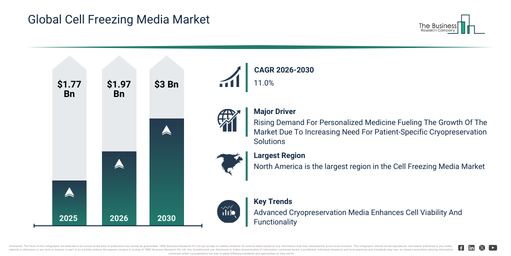
    The market for cell freezing media has experienced substantial expansion lately. Projections indicate a rise from $1.77 billion in 2025 to $1.97 billion in 2026, reflecting a compound annual growth rate (CAGR) of 11.3%. Key factors driving this forward momentum during the historical period included the broader proliferation of biobanking operations, a greater reliance on cryopreservation techniques within the research sphere, advancements in stem cell research initiatives, the increasing implementation of controlled-rate freezing methodologies, and enhanced access to liquid nitrogen storage infrastructure.

    The cell freezing media market is poised for substantial expansion, projecting a valuation of $3 billion by 2030, fueled by an 11.0% compound annual growth rate over the upcoming years. This anticipated surge is primarily driven by advancements in cell and gene therapies, a growing need for extensive cell cryopreservation facilities, the proliferation of personalized medicine initiatives, increasingly stringent regulations concerning cell storage quality, and the wider implementation of automated cryopreservation technologies. Key developments anticipated within this timeframe include a greater acceptance of pre-prepared cryopreservation solutions, augmented demand for serum-free freezing formulations, increased utilization of GMP-grade cryoprotective agents, broader adoption of long-term cell banking strategies, and a heightened emphasis on improving cell viability following thawing processes.

    Download A Free Sample Report For Comprehensive Market Insights:

    https://www.thebusinessresearchcompany.com/sample.aspx?id=30227&type=smp

    Cell Freezing Media Market Industry Drivers: What Is Driving Revenue Growth?

    The expansion of the cell freezing media market is anticipated to be significantly boosted by the increasing preference for personalized medicine. This approach to healthcare focuses on customizing treatments for each patient, considering their unique genetic makeup, environmental influences, and lifestyle choices to achieve better results and enhance overall care. The surge in personalized medicine is largely attributed to breakthroughs in genomic technologies, which facilitate the accurate detection of genetic differences and the subsequent development of customized interventions. Cell freezing media plays a crucial role in this field by offering dependable methods for cryopreserving patient-derived cells, tissues, and biological materials, thereby maintaining their viability and functional integrity after thawing. This capability is vital for advancing individualized therapies and improving patient treatment effectiveness. Notably, the Personalized Medicine Coalition reported that in February 2024, the U.S. Food and Drug Administration (FDA) authorized 26 novel personalized medicines in 2023, a substantial leap from the 12 authorizations granted in 2022, underscoring the accelerating adoption of personalized treatments and consequently fueling the demand for cell freezing media.

    Cell Freezing Media Market Segment Analysis And Revenue Opportunities

    The cell freezing media market covered in this report is segmented –

    1) By Type: Dimethyl Sulfoxide (DMSO), Glycerol, Sucrose, Ficoll, Serum-Based Media

    2) By Cell Culture Type: Suspension Cell Culture, 2D Cell Culture, 3D Cell Culture, Other Cell Culture Types

    3) By Distribution Channel: Direct Sales, Distributors, E-Commerce Platforms, Retail Outlets, Specialized Scientific Instrumentation Suppliers

    4) By Application: Stem Cell Research, Embryonic Cell Preservation, Hematopoietic Cell Preservation, Tissue Sample Storage, Gene Therapy Applications

    5) By End-User: Academic Research Institutions, Biotechnology Companies, Pharmaceutical Companies, Clinical Laboratories, Contract Research Organizations (CROs)

    Subsegments:

    1) By Dimethyl Sulfoxide (DMSO): Pharmaceutical Grade Dimethyl Sulfoxide, Laboratory Grade Dimethyl Sulfoxide, Industrial Grade Dimethyl Sulfoxide, High Purity Dimethyl Sulfoxide

    2) By Glycerol: Pharmaceutical Grade Glycerol, Analytical Grade Glycerol, Biological Grade Glycerol, Synthetic Grade Glycerol

    3) By Sucrose: Pharmaceutical Grade Sucrose, Analytical Grade Sucrose, Biological Grade Sucrose, Crystalline Sucrose

    4) By Ficoll: Ficoll 400, Ficoll 70, Ficoll PM 400 Solution, Low Viscosity Ficoll

    5) By Serum-Based Media: Fetal Bovine Serum Based Media, Human Serum Based Media, Horse Serum Based Media, Newborn Calf Serum Based Media

    #Cell Freezing Media Market Growth Trends: What Is Influencing The Future Outlook?

    The leading entities within the cell freezing media sector are directing their efforts toward pioneering sophisticated offerings, like bespoke cryopreservation solutions, with the objective of elevating operational effectiveness, safeguarding cellular integrity, and expediting the advancement of therapeutic interventions. These specialized cryopreservation media are essentially meticulously crafted formulations intended for the preservation of cells, tissues, or other biological specimens at exceedingly low temperatures, all while diligently preserving their vitality, intended purpose, and inherent structure. A pertinent illustration of this trend occurred in April 2024 when Pluristyx Inc., a biotechnology firm situated in the United States, introduced PluriFreeze. This particular product is a xeno-free and serum-free medium, manufactured under cGMP (current Good Manufacturing Practice) guidelines, and is specifically formulated to enhance both the recovery and functional capabilities of a broad spectrum of cell types post-thawing, encompassing crucial categories such as stem cells and immune cells. Its design is centered on delivering a resilient, immediately usable composition that guarantees superior cell viability and sustained functionality, thereby facilitating the crucial progression of therapies from early-stage research environments into practical clinical applications. Ultimately, PluriFreeze contributes to a significant improvement in post-thaw cell survival rates, streamlines manufacturing processes, and bolsters the consistency and reliability of stem cell and broader cell therapy development pipelines.

    Cell Freezing Media Market Leading Players Shaping Industry Direction

    Major companies operating in the cell freezing media market are Merck KGaA, Thermo Fisher Scientific Inc., Danaher Corporation, FUJIFILM Corporation, Lonza Group Ltd., Avantor Inc., Sartorius AG, BioRad Laboratories Inc., BioTechne Corporation, Miltenyi Biotec GmbH, Stemcell Technologies Inc., Vitrolife AB, American Type Culture Collection (ATCC), Bio-Life Solutions Inc., Nacalai Tesque Inc., PromoCell GmbH, Nippon Genetics Co. Ltd., Nippon Zenyaku Kogyo Co. Ltd., Quality Biological Inc., Corning Incorporated

    Access The Complete Cell Freezing Media Market Report:

    https://www.thebusinessresearchcompany.com/report/global-cell-freezing-media-market-report

    Cell Freezing Media Market Regional Distribution: Which Areas Drive Market Expansion?

    North Americawas the largest region in the cell freezing media market in 2025. Asia-Pacificis expected to be the fastest-growing region in the forecast period. The regions covered in the cell freezing media market report are Asia-Pacific, South East Asia, Western Europe, Eastern Europe, North America, South America, Middle East, Africa.

    Get in touch with us:

    The Business Research Company: https://www.thebusinessresearchcompany.com/

    Americas: +1 310-496-7795

    Asia: +44 7882 955267 & +91 8897263534

    Europe: +44 7882 955267

    Email us at: marketing@tbrc.info

    Follow us on:

    LinkedIn: https://in.linkedin.com/company/the-business-research-company

    YouTube: https://www.youtube.com/channel/UC24_fI0rV8cR5DxlCpgmyFQ

    Global Market Model: https://www.thebusinessresearchcompany.com/global-market-model
  • Cell Free DNA (cfDNA) Testing Market Forecast Signals New Revenue Opportunities Through 2030

    Cell Free DNA (cfDNA) Testing Market Forecast Signals New Revenue Opportunities Through 2030

    Through market attractiveness analysis, total addressable market evaluation, company benchmarking matrices, interactive Excel dashboards, expanded supply chain intelligence, emerging startup coverage, and detailed product insights, The Business Research Company’s 2026 market reports provide more actionable and strategically valuable research.

    Cell Free DNA (cfDNA) Testing Market Expansion From $13.42 Billion In 2026 To $28.8 Billion In 2030

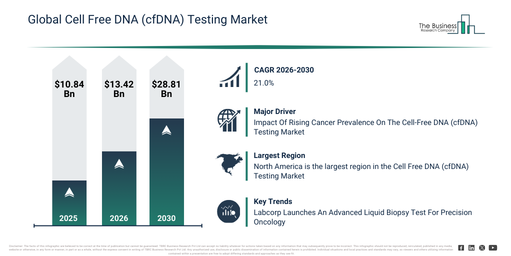
    The market for cell-free DNA (cfDNA) testing has experienced significant expansion recently, projected to increase from $10.84 billion in 2025 to $13.42 billion in 2026, reflecting a compound annual growth rate of 23.8%. This upward trend in the historical period is closely linked to several key factors, including the rising incidence of cancer diagnoses, the increasing embrace of less invasive diagnostic techniques, the broader implementation of prenatal screening initiatives, advancements in DNA sequencing technologies, and a growing acceptance within the clinical community for liquid biopsy procedures.

    The market for cell free DNA (cfDNA) testing is projected for substantial expansion over the upcoming years, anticipating a valuation of $28.81 billion by 2030, spurred by a compound annual growth rate (CAGR) of 21.0%. This projected trajectory is propelled by several key factors: escalating investments in precision oncology initiatives, a heightened demand for the early identification of cancer, the broadening use of cfDNA in monitoring transplant patients, a greater embrace of individualized medical approaches, and the increasing incorporation of artificial intelligence for genomic data analysis. Furthermore, the coming years are expected to witness significant trends such as the wider acceptance of liquid biopsy techniques, a surge in the application of next-generation sequencing (NGS) for cfDNA analysis, a growing need for non-invasive prenatal diagnostic tests, the expanded utility of cfDNA in cancer monitoring, and a more robust integration of bioinformatics tools.

    Download A Free Sample Report For Comprehensive Market Insights:

    https://www.thebusinessresearchcompany.com/sample.aspx?id=15757&type=smp

    #Cell Free DNA (cfDNA) Testing Market Growth Factors: Which Forces Are Supporting Market Expansion?

    The increasing incidence of cancer is anticipated to be a key catalyst for the expansion of the cell-free DNA (cfDNA) testing market. Cancer, a multifaceted illness defined by the uncontrolled proliferation and dissemination of aberrant cells, poses a significant threat as these cells can infiltrate and damage healthy tissues, leading to severe bodily harm if left unchecked. Contributing factors to the heightened prevalence of cancer include an aging global population, evolving lifestyle patterns, environmental exposures, and improvements in the methods used for early detection and diagnosis. cfDNA testing offers a method for identifying cancer-associated genetic alterations at an early juncture, frequently preceding the onset of recognizable symptoms. This early detection capability facilitates timely therapeutic interventions, thereby enhancing patient prognosis and survival rates by pinpointing the disease in its nascent phases. Illustratively, the World Health Organization (WHO), an international governmental body headquartered in Switzerland, projected in February 2024 that approximately 35 million new cancer diagnoses will occur in 2050, marking a substantial 77% surge compared to the estimated 20 million cases recorded in 2022. Consequently, the escalating frequency of cancer cases is directly fueling the growth trajectory of the cfDNA testing market.

    Cell Free DNA (cfDNA) Testing Market Segmentation And Category Breakdown

    The cell free dna (cfdna) testing market covered in this report is segmented –

    1) By Product: Donor-Derived Cell-Free DNA, Circulating Cell-Free Tumor DNA, Cell-Free Fetal DNA

    2) By Platforms: Next Generation Sequencing (NGS), rPCR And Multiplexed PCR, qPCR And dPCR, Other platforms

    3) By Application: Oncology, Non-Invasive Prenatal Test (NIPT), Gynecology, Transplantation, Other Applications

    Subsegments:

    1) By Donor-Derived Cell-Free DNA: Organ Transplant Monitoring, Graft Rejection Detection

    2) By Circulating Cell-Free Tumor DNA: Cancer Detection, Minimal Residual Disease Monitoring, Liquid Biopsy

    3) By Cell-Free Fetal DNA: Non-Invasive Prenatal Testing (NIPT), Fetal Genetic Disorder Screening

    Cell Free DNA (cfDNA) Testing Market Industry Trends: What Changes Are Reshaping Demand?

    Companies at the forefront of the cell-free DNA (cfDNA) testing sector are dedicated to advancing pioneering techniques, exemplified by the creation of liquid biopsy diagnostics engineered for superior sensitivity, specificity, and effectiveness in identifying cancer-associated mutations and other genetic anomalies. These liquid biopsy procedures enable medical professionals to analyze the cell-free DNA circulating in the bloodstream, originating from tumor cells, thereby paving the way for customized and precise therapeutic strategies. As an illustration, in May of 2023, Laboratory Corporation of America Holdings (Labcorp), a prominent American life sciences firm, introduced Labcorp Plasma Focus, a novel liquid biopsy assay intended for individuals diagnosed with advanced or metastatic solid tumors. This particular assay scrutinizes the cell-free DNA shed by cancerous cells obtained through a routine blood sample, ensuring a minimally invasive process and delivering swift outcomes. Its innovation lies in broadening the scope of precision oncology by pinpointing diagnostically relevant biomarkers for a range of prevalent cancers, including non-small cell lung, colorectal, breast, esophageal, gastric, gastroesophageal junction cancers, and melanoma.

    Cell Free DNA (cfDNA) Testing Market Competitive Analysis Of Major Industry Participants

    Major companies operating in the cell free dna (cfdna) testing market are F. Hoffmann-La Roche Ltd., Thermo Fisher Scientific Inc., Laboratory Corporation of America Holdings, Quest Diagnostics Incorporated, Agilent Technologies Inc., Illumina Inc., Qiagen N.V., Exact Sciences Corporation, Bio-Techne Corporation, Natera Inc., Myriad Genetics Inc., NeoGenomics Laboratories Inc., Invitae Corporation, Foundation Medicine Inc., Guardant Health Inc., Integrated DNA Technologies Inc., Caris Life Sciences Inc., Twist Bioscience Corporation, Adaptive Biotechnologies Corporation, Biodesix Inc., Biocept Inc., Personal Genome Diagnostics Inc., Agena Bioscience Inc., Menarini Silicon Biosystems Inc., Circulogene Theranostics LLC

    Access The Complete Cell Free DNA (cfDNA) Testing Market Report:

    https://www.thebusinessresearchcompany.com/report/cell-free-dna-cfdna-testing-global-market-report

    Cell Free DNA (cfDNA) Testing Market Leading Geography: Which Region Generates The Most Revenue?

    North Americawas the largest region in the cell-free DNA (cfDNA) testing market in 2025. Asia-Pacificis expected to be the fastest-growing region in the forecast period. The regions covered in the cell free dna (cfdna) testing market report are Asia-Pacific, South East Asia, Western Europe, Eastern Europe, North America, South America, Middle East, Africa.

    Get in touch with us:

    The Business Research Company: https://www.thebusinessresearchcompany.com/

    Americas: +1 310-496-7795

    Asia: +44 7882 955267 & +91 8897263534

    Europe: +44 7882 955267

    Email us at: marketing@tbrc.info

    Follow us on:

    LinkedIn: https://in.linkedin.com/company/the-business-research-company

    YouTube: https://www.youtube.com/channel/UC24_fI0rV8cR5DxlCpgmyFQ

    Global Market Model: https://www.thebusinessresearchcompany.com/global-market-model
  • Cell Expansion Market Growth Is Accelerating As Industry Transformation Continues

    Cell Expansion Market Growth Is Accelerating As Industry Transformation Continues

    Delivering more actionable and strategically valuable research, The Business Research Company’s 2026 market reports feature market attractiveness analysis, total addressable market evaluation, company benchmarking matrices, interactive Excel dashboards, expanded supply chain intelligence, emerging startup coverage, and detailed product insights.

    Cell Expansion Market Forecast Highlighting Growth From $37.54 Billion To $69.41 Billion

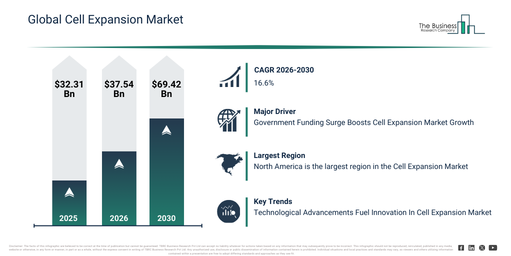
    The cell expansion market has experienced a significant surge, projected to expand from its 2025 valuation of $32.31 billion to $37.54 billion by 2026, reflecting a compound annual growth rate of 16.2%. This expansion during the earlier period was fueled by several key factors including the increased capacity in biopharmaceutical manufacturing, the growing reliance on mammalian cell cultures, the integration of cell expansion techniques into vaccine development, the proliferation of research-focused cell cultivation, and the increasing availability of disposable culture systems.

    The cell expansion market is poised for substantial expansion in the coming years, projected to reach $69.42 billion by 2030, demonstrating a compound annual growth rate of 16.6%. This upward trajectory during the forecast period is fueled by several key factors: the escalating demand for cell and gene therapies, augmented investments directed towards large-scale biopharmaceutical production, the broadening of regenerative medicine research and development, a heightened emphasis on developing cost-effective scaling solutions, and the increasing integration of closed-system expansion technologies. Furthermore, several significant trends are shaping this market, including a greater embrace of single-use cell expansion systems, a growing need for adaptable and scalable cell culture platforms, the expanding application of serum-free expansion media, the proliferation of automated bioreactor systems, and a stronger commitment to standardizing manufacturing processes.

    Download A Free Sample Report For Comprehensive Market Insights:

    https://www.thebusinessresearchcompany.com/sample.aspx?id=8264&type=smp

    Cell Expansion Market Demand Drivers: What Is Fueling Industry Growth?

    Enhanced government investment in research and development initiatives is anticipated to be a significant catalyst for the expansion of the cell expansion market. This government funding, defined as financial resources allocated by a governing body for specific objectives, is instrumental in nurturing novel ideas, propelling progress in cellular therapies, and expediting the evolution of regenerative medicine. As an illustration, the National Cancer Institute, a governmental entity in the United States, was allocated a budget of $7.3 billion for fiscal year 2023 by the U.S. Congress in September 2023, marking an augmentation of $408 million compared to the preceding year. Consequently, heightened government investment in R&D is acting as a key driver for the growth trajectory of the cell expansion market.

    Cell Expansion Market Segment Outlook: Which Categories Are Expanding The Fastest?

    The cell expansion market covered in this report is segmented –

    1) By Cell Type: Mammalian, Microbial, Other Cell Types

    2) By Product: Consumables, Reagents, Media, Serum, Disposables, Instruments

    3) By Application: Biopharmaceuticals, Tissue Culture And Engineering, Vaccine Production, Drug Development, Gene Therapy, Cancer Research, Stem Cell Research, Other Applications

    4) By End-User: Biopharmaceutical And Biotechnology Companies, Research Institutes, Cell Banks, Other End-Users

    Subsegments:

    1) By Mammalian: Adherent Cells, Suspension Cells, Stem Cells

    2) By Microbial: Bacterial Cells, Yeast Cells, Fungal Cells

    3) By Other Cell Types: Plant Cells, Insect Cells, Hybridoma Cells

    Cell Expansion Market Innovation Trends: Which Developments Are Transforming The Industry?

    Leading players within the cell expansion sector are focusing on enhancing bioprocessing methods, including sophisticated automated 3D bioreactor setups, to boost the effectiveness and expandability of cellular manufacturing for medical treatments; PluriCDMO, for example, specializes in high-volume, automated cell therapy production leveraging its proprietary 3D bioreactor technology, guaranteeing reliable, premium output from initial research phases right up to clinical evaluation, and as a demonstration of this commitment, Pluristem Therapeutics Inc., an Israeli biotech firm, introduced PluriCDMO in January 2024, a dedicated operational unit aimed at delivering cell therapy manufacturing services as a contract development and manufacturing organization, featuring a 47,000-square-foot facility compliant with good manufacturing practice (GMP) standards for cell therapy production, thereby enabling Pluri to deliver comprehensive support from preclinical research and development through to late-stage clinical trials and eventual market release.

    Cell Expansion Market Key Companies And Competitive Benchmarking

    Major companies operating in the cell expansion market are Thermo Fisher Scientific Inc., Becton Dickinson and Company, Lonza Group, Corning Inc., Merck KGaA, Sartorius Stedim Biotech SA, Terumo Corporation, Miltenyi Biotec GmbH, Danaher Corporation, Stemcell Technologies Inc., Beckman Coulter Inc., Takara Bio Inc., RepliCel Life Sciences, Neximmune Inc., Celltainer Biotech BV, GE HealthCare Technologies Inc., ReproCELL USA Inc., iXCells Biotechnologies Inc., Neuromics LLC, G&G Technologies Inc., Eppendorf AG, Avantor Inc., Bio-Techne Corporation, BioLife Solutions Inc., Cesca Therapeutics Inc., Core Dynamics Ltd., Lifeline Scientific Inc., Princeton Cryotech Inc., VWR International LLC, Azenta US Inc., MVE Biological Solutions LLC, BioCision LLC, BioSpherix Ltd.

    Access The Complete Cell Expansion Market Report:

    https://www.thebusinessresearchcompany.com/report/cell-expansion-global-market-report

    Cell Expansion Market Regional Outlook: Where Are The Largest Opportunities Located?

    North Americawas the largest region in the cell expansion market share in 2025. Asia-Pacificis expected to be the fastest-growing region in the forecast period. The regions covered in the cell expansion market report are Asia-Pacific, South East Asia, Western Europe, Eastern Europe, North America, South America, Middle East, Africa.

    Get in touch with us:

    The Business Research Company: https://www.thebusinessresearchcompany.com/

    Americas: +1 310-496-7795

    Asia: +44 7882 955267 & +91 8897263534

    Europe: +44 7882 955267

    Email us at: marketing@tbrc.info

    Follow us on:

    LinkedIn: https://in.linkedin.com/company/the-business-research-company

    YouTube: https://www.youtube.com/channel/UC24_fI0rV8cR5DxlCpgmyFQ

    Global Market Model: https://www.thebusinessresearchcompany.com/global-market-model
  • Cell Dissociation Market Outlook Highlights The Next Major Growth Opportunities

    Cell Dissociation Market Outlook Highlights The Next Major Growth Opportunities

    Enhanced with market attractiveness analysis, total addressable market evaluation, company benchmarking matrices, interactive Excel dashboards, expanded supply chain intelligence, emerging startup coverage, and detailed product insights, The Business Research Company’s 2026 market reports deliver more actionable and strategically valuable research.

    Cell Dissociation Market Revenue Growth Supported By A CAGR Of 0.77% Through 2030

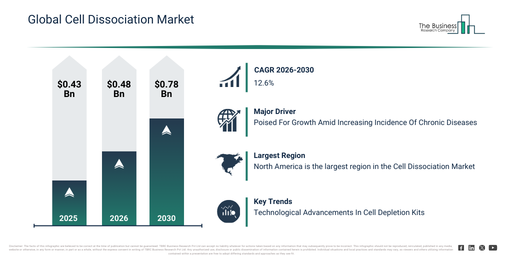
    The global cell dissociation market has experienced substantial expansion lately, exhibiting a projected increase from $0.43 billion in 2025 to $0.48 billion in 2026, driven by a compound annual growth rate of 12.9%. This historical growth trajectory is largely fueled by the proliferation of cell-based research endeavors, a heightened reliance on flow cytometry methods, an upswing in academic life sciences investigations, increased utilization of in vitro cell culture models, and the readily available commercial dissociation reagents.

    The market for cell dissociation techniques is projected for substantial expansion in the forthcoming years, anticipated to reach $0.78 billion by 2030, exhibiting a compounded annual growth rate of 12.6%. This projected increase over the forecast period is underpinned by several key drivers, including the escalating utilization of single-cell genomics, augmented investments directed towards cell therapy research, a heightened demand for reliable cell processing methodologies, the proliferation of precision medicine initiatives, and a greater reliance on automated laboratory instrumentation. Noteworthy trends expected to shape this market include a growing prevalence of standardized protocols for enzymatic dissociation, an increased need for methods that facilitate gentle cell separation, wider adoption of automated systems for tissue dissociation, the expansion of analytical workflows focused on single cells, and a pronounced emphasis on maintaining cell viability throughout dissociation processes.

    Download A Free Sample Report For Comprehensive Market Insights:

    https://www.thebusinessresearchcompany.com/sample.aspx?id=19360&type=smp

    Cell Dissociation Market Growth Drivers: What Factors Are Accelerating Expansion?

    The expanding prevalence of ongoing health conditions is anticipated to fuel the trajectory of the cell dissociation market. This rise in chronic ailments can be attributed to demographic shifts like an aging populace, alongside evolving lifestyles marked by increased obesity, reduced physical activity, and less healthy dietary patterns, all of which foster the onset and persistence of issues such as diabetes, cardiovascular diseases, and malignancies. Within the realm of chronic disease research, cell dissociation plays a vital role by facilitating the isolation and examination of individual cells, thereby contributing to a deeper comprehension of disease pathogenesis and the creation of precise therapeutic interventions. To illustrate, data from April 2025, as reported by the Centers for Disease Control and Prevention (CDC), indicated that in 2023, roughly 194 million adults in the United States (76.4%) managed at least one chronic condition, with approximately 130 million adults (51.4%) dealing with multiple such conditions. Consequently, the escalating occurrence of chronic diseases acts as a significant impetus for the cell dissociation market.

    Cell Dissociation Market Segment Landscape: Which Areas Lead Market Development?

    The cell dissociation market covered in this report is segmented –

    1) By Product: Enzymatic Dissociation, Non-enzymatic Dissociation, Instruments And Accessories

    2) By Tissue: Epithelial Tissue, Connective Tissue

    3) By Application: Tissue Dissociation, Cell Detachment

    4) By End-User: Pharmaceuticals And Biotechnology Companies, Research And Academic Institutes, Clinical Research Organizations (CRO), Other End-Users

    Subsegments:

    1) By Enzymatic Dissociation: Trypsin Solutions, Collagenase Solutions, Dispase Solutions, Other Enzymatic Dissociation Reagents

    2) By Non-Enzymatic Dissociation: Chemical Dissociation Solutions, Mechanical Dissociation Solutions, Hypotonic Solutions

    3) By Instruments and Accessories: Cell Dissociation Systems, Tissue Homogenizers, Centrifuges, Cell Culture Plates And Flasks

    Cell Dissociation Market Trends: What Is Shaping Future Industry Growth?

    Leading entities within the cell dissociation sector are prioritizing the creation of sophisticated product offerings, specifically cell depletion and enrichment kits, as a strategic move to enhance their market standing. The core design of these kits involves the targeted removal or isolation of particular cell groups, thereby boosting the overall effectiveness and reliability of subsequent procedures in both laboratory investigations and medical diagnostics. As an illustration, in February of 2023, LevitasBio, a biotechnology firm headquartered in the United States, introduced its LeviSelect Suite of Cell Depletion & Enrichment Kits. Characterized by distinctive capabilities such as rapid processing speeds and a negligible effect on cell survival rates, these kits elevate their applicability in delicate research contexts. Furthermore, the LeviSelect kits empower scientists with adaptable workflows, enabling the precise targeting of a broad spectrum of cellular entities.

    Cell Dissociation Market Industry Leaders And Market Competition

    Major companies operating in the cell dissociation market are Roche Holding AG, Danaher Corporation, Fujifilm Holdings Corporation, Becton Dickinson and Company, GE HealthCare Technologies Inc., Corning Incorporated, Lonza Group AG, Bio-Rad Laboratories Inc., Eppendorf AG, Bio-Techne Corporation, Miltenyi Biotec, BioLegend Inc., Cyagen Biosciences Inc., Cell Signaling Technology Inc., HiMedia Laboratories LLC, Gemini Bio-Products, Biological Industries USA Inc., BrainBits LLC, Biocompare Inc., AAT Bioquest Inc.

    Access The Complete Cell Dissociation Market Report:

    https://www.thebusinessresearchcompany.com/report/cell-dissociation-global-market-report

    Cell Dissociation Market Geographic Landscape: Which Region Dominates Industry Growth?

    North Americawas the largest region in the cell dissociation market in 2025. Asia-Pacificis expected to be the fastest-growing region in the forecast period. The regions covered in the cell dissociation market report are Asia-Pacific, South East Asia, Western Europe, Eastern Europe, North America, South America, Middle East, Africa.

    Get in touch with us:

    The Business Research Company: https://www.thebusinessresearchcompany.com/

    Americas: +1 310-496-7795

    Asia: +44 7882 955267 & +91 8897263534

    Europe: +44 7882 955267

    Email us at: marketing@tbrc.info

    Follow us on:

    LinkedIn: https://in.linkedin.com/company/the-business-research-company

    YouTube: https://www.youtube.com/channel/UC24_fI0rV8cR5DxlCpgmyFQ

    Global Market Model: https://www.thebusinessresearchcompany.com/global-market-model
  • Cell Cytometry Market Trends And Growth Drivers Point To Strong Future Potential

    Cell Cytometry Market Trends And Growth Drivers Point To Strong Future Potential

    Through market attractiveness analysis, total addressable market evaluation, company benchmarking matrices, interactive Excel dashboards, expanded supply chain intelligence, emerging startup coverage, and detailed product insights, The Business Research Company’s 2026 market reports provide more actionable and strategically valuable research.

    Cell Cytometry Market Value Expansion And Long-Term Growth Outlook

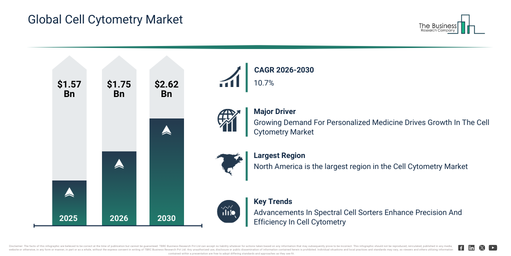
    The sector centered on cell cytometry has seen considerable expansion lately, projected to advance from a valuation of $1.57 billion in 2025 to $1.75 billion by 2026, reflecting a compound annual growth rate of 11.0%. This surge during the preceding period stems from heightened cancer research initiatives, a growing reliance on flow cytometry for diagnostic purposes, advancements in pharmaceutical drug discovery, greater integration of automated laboratory equipment, and the accessibility of sophisticated cytometry reagents.

    The market for cell cytometry is poised for substantial expansion over the coming years, projecting a valuation of $2.62 billion by 2030, underpinned by a compound annual growth rate of 10.7%. This anticipated growth trajectory is propelled by several key factors: the escalating integration of cell cytometry techniques within precision medicine initiatives, augmented investment in the field of immunotherapy research, the broadening scope of single-cell analysis applications, a surging demand for high-throughput cell analysis capabilities, and the increasing incorporation of digital analytics into cytometry platforms. Furthermore, prominent trends shaping the forecast period encompass a greater reliance on high-parameter flow cytometry, the burgeoning utilization of artificial intelligence-driven cell analysis software, a heightened demand for immune profiling applications, the development and expansion of automated cytometry workflows, and a reinforced emphasis on single-cell analysis methodologies.

    Download A Free Sample Report For Comprehensive Market Insights:

    https://www.thebusinessresearchcompany.com/sample.aspx?id=20527&type=smp

    Cell Cytometry Market Growth Factors Supporting Long-Term Expansion

    The increasing need for individualized medical care is anticipated to be a significant catalyst for the expansion of the cell cytometry treatment sector. This customized approach to healthcare, known as personalized medicine, involves adapting treatments and preventative measures to suit each person’s unique genetic makeup, lifestyle, and specific biological profile, thereby fostering more accurate and successful health interventions. Key drivers behind this surge in personalized medicine include its promise of delivering treatments that are not only more effective and precisely targeted but also associated with a reduction in adverse effects, ultimately leading to improved patient results. Cell cytometry plays an integral role within this framework by facilitating the examination of individual patient cells. This allows for the accurate detection of disease indicators, the tracking of immune system activity, and the fine-tuning of therapeutic strategies based on a patient’s distinct cellular attributes, thereby amplifying both the efficacy and the tailored nature of medical interventions. As a testament to this trend, data from February 2024, as reported by the Personalized Medicine Coalition, indicates a substantial rise in regulatory approvals, with the FDA greenlighting 16 new personalized therapies for individuals with rare conditions in 2023, a notable increase from the six approvals seen in 2022. Consequently, the escalating demand for personalized medicine is directly fueling the growth trajectory of the cell cytometry market.

    Cell Cytometry Market Segments: Where Are The Largest Growth Opportunities?

    The cell cytometry market covered in this report is segmented –

    1) By Product Type: Instrument, Kit And Reagent, Software And Services

    2) By Technology: Cell-Based Flow Cytometry, Bead-Based Flow Cytometry

    3) By Application: Oncology, Drug Discovery, Stem Cell Therapy, Organ Transplantation, Hematology, Other Applications

    4) By End-User: Hospitals And Clinics, Academia And Research Institutes, Pharmaceutical And Biotechnology Companies, Other End-Users

    Subsegments:

    1) By Instrument: Flow Cytometers, Imaging Cytometers, Mass Cytometers, Laser Scanning Cytometers

    2) By Kit and Reagent: Cell Staining Kits, Antibody Reagents, Isotype Controls, Cell Viability Assays

    3) By Software and Services: Data Analysis Software, Instrument Calibration Software, Consulting Services, Technical Support And Maintenance Services

    Cell Cytometry Market Industry Trends Shaping Future Revenue Growth

    Leading players within the cell cytometry sector are prioritizing the creation of novel technologies, exemplified by spectral cell sorters, with the aim of achieving objective outcomes and boosting workflow effectiveness. A spectral cell sorter represents a sophisticated cytometry instrument that segregates cells by analyzing the entire spectrum of light emitted, in contrast to relying on a limited set of specific wavelengths. To illustrate, Sony Corporation, a prominent Japanese electronics firm, introduced its FP7000 spectral cell sorter in October 2023. This device offers cutting-edge, full-spectrum analysis capabilities coupled with high-velocity sorting, facilitating the simultaneous identification of numerous fluorescent tags with enhanced precision. Incorporating Sony’s proprietary spectral technology, it enables the exact discernment of cells through comprehensive spectral capture and deconvolution, thereby augmenting both multiplexing capacity and resolution beyond that of conventional flow cytometers. The FP7000 has been engineered for user-friendliness, featuring intuitive software that renders it suitable for intricate research endeavors in fields such as immunology, oncology, and stem cell research.

    Cell Cytometry Market Major Participants And Competitive Dynamics

    Major companies operating in the cell cytometry market are Merck & Co. Inc., Thermo Fisher Scientific Inc., Danaher Corporation, Becton Dickinson and Company, Agilent Technologies Inc., Sartorius AG, Beckman Coulter Inc., Bio-Rad Laboratories Inc., Bruker Corporation, StemCell Technologies Canada Inc., PerkinElmer Inc., Molecular Devices LLC, Luminex Corporation, R&D Systems, Cytek Biosciences Inc., Cell Signaling Technology Inc., Sony Biotechnology Inc., Sysmex Partec GmbH, Nexcelom Bioscience, Vajra Biometrix Private Limited, Accellix, Amphasys

    Access The Complete Cell Cytometry Market Report:

    https://www.thebusinessresearchcompany.com/report/cell-cytometry-global-market-report

    #Cell Cytometry Market Largest Region: Which Geography Holds The Highest Market Share?

    North Americawas the largest region in the cell cytometry market in 2025. Asia-Pacificis expected to be the fastest-growing region in the forecast period. The regions covered in the cell cytometry market report are Asia-Pacific, South East Asia, Western Europe, Eastern Europe, North America, South America, Middle East, Africa.

    Get in touch with us:

    The Business Research Company: https://www.thebusinessresearchcompany.com/

    Americas: +1 310-496-7795

    Asia: +44 7882 955267 & +91 8897263534

    Europe: +44 7882 955267

    Email us at: marketing@tbrc.info

    Follow us on:

    LinkedIn: https://in.linkedin.com/company/the-business-research-company

    YouTube: https://www.youtube.com/channel/UC24_fI0rV8cR5DxlCpgmyFQ

    Global Market Model: https://www.thebusinessresearchcompany.com/global-market-model
  • Cell Culture Supplements Market Expansion Is Reshaping Competitive Dynamics Across The Industry

    Cell Culture Supplements Market Expansion Is Reshaping Competitive Dynamics Across The Industry

    Delivering more actionable and strategically valuable research, The Business Research Company’s 2026 market reports feature market attractiveness analysis, total addressable market evaluation, company benchmarking matrices, interactive Excel dashboards, expanded supply chain intelligence, emerging startup coverage, and detailed product insights.

    Cell Culture Supplements Market Expected To Reach $6.22 Billion By 2030 At 9.4% CAGR

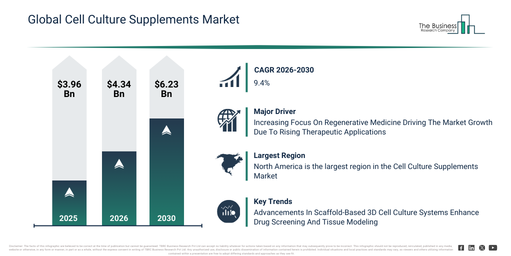
    The market for cell culture supplements has experienced robust expansion lately. Projections indicate a rise from $3.96 billion in 2025 to $4.34 billion in 2026, reflecting a compound annual growth rate of 9.7%. This historical growth trajectory was propelled by increased cell-based research initiatives, the burgeoning biopharmaceutical manufacturing sector, a greater incorporation of in vitro testing methodologies, amplified investments in life science research infrastructure, and a growing need for consistent cell culture results.

    The market for cell culture supplements is projected for substantial expansion over the upcoming years, anticipated to reach $6.23 billion by 2030 with a compound annual growth rate (CAGR) of 9.4%. This projected expansion is fueled by several key factors, including the escalating development of cell and gene therapies, a heightened emphasis on optimizing biologics production at scale, advancements in regenerative medicine research, a growing preference for xeno-free culture systems, and increasingly stringent regulatory requirements for quality-assured cell culture components. During this forecast period, prominent trends expected to shape the market include a greater uptake of serum-free and chemically defined supplements, a surge in the demand for high-purity growth factors, the expanding utilization of supplements free from animal origins, a wider offering of customized media formulations, and a more concentrated effort on ensuring consistent batch-to-batch quality.

    Download A Free Sample Report For Comprehensive Market Insights:

    https://www.thebusinessresearchcompany.com/sample.aspx?id=30226&type=smp

    #Cell Culture Supplements Market Demand Drivers Creating New Revenue Opportunities

    The cell culture supplements market is poised for expansion, largely driven by the advancing field of regenerative medicine. This specialized area extensively employs biological methods to mend, substitute, or regrow cellular tissues and organs, thereby reinstating proper bodily functions. The surge in interest surrounding regenerative medicine is fueled by increased funding from both public and private entities, dedicated to pushing forward research in stem cells, gene therapies, and tissue engineering to address previously untreatable ailments. Consequently, the heightened emphasis on regenerative medicine directly boosts the requirement for cell culture supplements, which are critical components for nurturing and preserving the diverse cell populations vital for creating regenerative treatments and conducting associated scientific investigations. A notable example, as reported by the American Society of Gene & Cell Therapy (ASGCT) in July 2023, indicates a substantial uptick in gene therapies, with the number of Phase II trials escalating from 247 at the close of Q1 2023 to 260 by the end of Q2 2023, marking a 5% increase. This upward trend in regenerative medicine initiatives underscores the robust growth trajectory for the cell culture supplements market.

    Cell Culture Supplements Market Segment Analysis: What Are The Major Market Categories?

    The cell culture supplements market covered in this report is segmented –

    1) By Product Type: Growth Factors And Cytokines, Amino Acids, Vitamins, Hormones, Attachment Factors, Other Product Types

    2) By Source: Animal-Based, Human-Based, Synthetic, Plant-Based

    3) By Application: Biopharmaceutical Production, Tissue Engineering And Regenerative Medicine, Diagnostics, Drug Development, Other Applications

    4) By End-User: Pharmaceutical And Biotechnology Companies, Academic And Research Institutes, Other End-Users

    Subsegments:

    1) By Growth Factors And Cytokines: Epidermal Growth Factor (EGF), Fibroblast Growth Factor (FGF), Vascular Endothelial Growth Factor (VEGF), Transforming Growth Factor Beta (TGF-ß), Interleukins (ILs)

    2) By Amino Acids: L-Glutamine, L-Arginine, L-Lysine, L-Leucine, L-Methionine

    3) By Vitamins: Vitamin A (Retinol), Vitamin B Complex, Vitamin C (Ascorbic Acid), Vitamin D, Vitamin E (Tocopherol), Vitamin K

    4) By Hormones: Insulin, Cortisol, Estrogen, Progesterone, Thyroid Hormones

    5) By Attachment Factors: Fibronectin, Laminin, Collagen, Vitronectin

    6) By Other Product Types: Trace Elements, Lipids, Nucleotides, Antioxidants

    Cell Culture Supplements Market Trends Driving Strategic Industry Expansion

    In the realm of cell culture supplements, leading enterprises are directing their efforts toward pioneering novel solutions, specifically scaffold-based 3D cell culture systems, with the objective of elevating drug screening precision and refining tissue modeling functionalities. These sophisticated 3D systems, by closely replicating native tissue structures, foster cell cultivation that is more attuned to physiological conditions, thereby facilitating superior disease simulation and more reliable forecasting of therapeutic agent efficacy. Illustratively, Bioserve India, a prominent biotechnology firm based in India, introduced an array of sophisticated stem cell products in July 2024. This comprehensive portfolio encompasses specialized culture mediums, growth factors, and essential instruments for the cultivation, differentiation, and disease modeling of induced pluripotent stem cells (iPSCs) and embryonic stem cells (ESCs). Furthermore, the product range includes convenient kits and meticulously designed small molecules instrumental in the efficient generation of iPSCs from somatic cells. It also features scaffold-based 3D cell culture systems tailored for drug efficacy and toxicity assessments, alongside cellular assays engineered to meticulously evaluate cell viability, proliferation rates, and metabolic functions. The company also provides preclinical services leveraging human tissue technology to accurately predict clinical outcomes. Beyond these, their global biorepository housing in excess of 600,000 biospecimens, coupled with research requisites such as antibodies, proteins, and genomic analysis kits, is designed to support a wide spectrum of scientific inquiry, ultimately aiming to accelerate progress in stem cell research and therapeutic advancements within the Indian context.

    Cell Culture Supplements Market Leading Companies Driving Competitive Growth

    Major companies operating in the cell culture supplements market are Thermo Fisher Scientific Inc., Danaher Corporation, Merck KGaA, Becton, Dickinson and Company, GE HealthCare, Corning Incorporated, Lonza Group AG, Sartorius AG, Bio-Techne Corporation, Repligen Corporation, Takara Bio Inc., HiMedia Laboratories, PromoCell GmbH, RoosterBio Inc., Capricorn Scientific GmbH, Genexis Biotech Pvt Ltd., PromoKine GmbH, BioProcess Technologies Ltd., Jin Kairui Biotechnology Co. Ltd., FUJIFILM Irvine Scientific, Athena Enzyme Systems.

    Access The Complete Cell Culture Supplements Market Report:

    https://www.thebusinessresearchcompany.com/report/global-cell-culture-supplements-market-report

    Cell Culture Supplements Market Regional Analysis: Which Region Leads By Revenue?

    North Americawas the largest region in the cell culture supplements market in 2025. Asia-Pacificis expected to be the fastest-growing region in the forecast period. The regions covered in the cell culture supplements market report are Asia-Pacific, South East Asia, Western Europe, Eastern Europe, North America, South America, Middle East, Africa.

    Get in touch with us:

    The Business Research Company: https://www.thebusinessresearchcompany.com/

    Americas: +1 310-496-7795

    Asia: +44 7882 955267 & +91 8897263534

    Europe: +44 7882 955267

    Email us at: marketing@tbrc.info

    Follow us on:

    LinkedIn: https://in.linkedin.com/company/the-business-research-company

    YouTube: https://www.youtube.com/channel/UC24_fI0rV8cR5DxlCpgmyFQ

    Global Market Model: https://www.thebusinessresearchcompany.com/global-market-model