Month: June 2026

  • Secrets Hygiene Management Market Analysis Through 2030 Focusing On Demand Trends And Growth Drivers

    Secrets Hygiene Management Market Analysis Through 2030 Focusing On Demand Trends And Growth Drivers

    The Business Research Company’s 2026 market reports feature advanced enhancements such as market attractiveness analysis, total addressable market evaluation, company benchmarking matrices, interactive Excel dashboards, expanded supply chain intelligence, emerging startup coverage, and detailed product insights, delivering more actionable and strategically valuable research.

    How Does The Forecasted Market Size Of The Secrets Hygiene Management Market Compare Between 2026 And 2030?

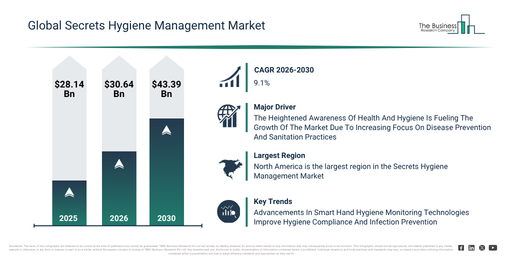
    The market for secrets hygiene management has experienced robust growth in recent years. This market is projected to expand from $28.14 billion in 2025 to $30.64 billion in 2026, exhibiting a compound annual growth rate (CAGR) of 8.9%. Historically, this expansion has been driven by increased awareness of feminine hygiene, the implementation of fundamental washroom hygiene solutions, a surge in demand for sanitary disposal systems, the proliferation of corporate hygiene initiatives, and the broadening of hygiene provisions within hospitals and other institutions.

    The secrets hygiene management market is anticipated to experience substantial expansion over the upcoming years. It is projected to reach $43.39 billion by 2030, exhibiting a compound annual growth rate (CAGR) of 9.1%. Factors contributing to this growth include the increasing uptake of intelligent hygiene monitoring systems, a surge in the need for environmentally friendly and biodegradable hygiene items, the expansion of automated vending and refilling options, a rise in corporate and workplace hygiene efforts, and the growing incorporation of IoT-powered hygiene management platforms. Key developments expected during this period encompass the greater adoption of sustainable menstrual hygiene products, an increasing call for automated washroom cleanliness solutions, the wider integration of smart IoT-enabled vending setups, the broadening of subscription-model hygiene services, and a heightened emphasis on hygiene programs within workplaces and institutions.

    Download A Free Sample Report For Comprehensive Market Insights:

    https://www.thebusinessresearchcompany.com/sample_request?id=40013433&type=smp&name=Secrets%20Hygiene%20Management%20Market%20Report%202026

    What Key Growth Drivers Are Influencing The Secrets Hygiene Management Market?

    The increasing focus on health and hygiene is projected to stimulate the expansion of the secret hygiene management market in the future. These terms encompass practices aimed at preserving cleanliness and inhibiting disease transmission to safeguard human health. The heightened consciousness regarding health and hygiene stems from growing worldwide focus on preventing illnesses and improving sanitation practices across various demographics and entities. Secret hygiene management facilitates this awareness by offering structured monitoring, systematic control over hygiene procedures, and enhanced accountability for upholding sanitation benchmarks throughout facilities. For example, as reported by the United Nations International Children’s Emergency Fund (UNICEF), a US-based humanitarian aid organization, in August 2025, data from 2024 indicated that 1.7 billion individuals continued to lack fundamental hygiene services, with 611 million of these having no access to handwashing facilities. In contrast, four nations had already attained universal access (>99%) to basic hygiene services, and an additional nine were projected to achieve this by 2030. Consequently, this elevated awareness of health and hygiene is a key impetus for the expansion of the secret hygiene management market.

    What Are The Core Segment Classifications In The Secrets Hygiene Management Market?

    The secrets hygiene management market covered in this report is segmented –

    1) By Service Type: Menstrual Hygiene Services, Washroom Hygiene Solutions, Sanitary Disposal Systems, Vending Solutions, Smart Hygiene Monitoring, Subscription-Based Services, Workplace Hygiene Programs, Institutional Hygiene, Eco-Friendly Products, Customized Hygiene Plans

    2) By Product Type: Sanitizers, Disinfectants, Hygiene Monitoring Systems, Odor Control Products, Other Product Types

    3) By Distribution Channel: Online Stores, Supermarkets/Hypermarkets, Specialty Stores, Other Distribution Channels

    4) By Application: Residential, Commercial, Industrial, Other Applications

    5) By End-User: Hospitals, Restaurants, Hotels, Households, Offices, Other End-Users

    Subsegments:

    1) By Menstrual Hygiene Services: Sanitary Pad Disposal Services, Tampon Disposal Services, Menstrual Cup Hygiene Services, Sanitary Product Vending And Replenishment, Menstrual Waste Collection And Treatment

    2) By Washroom Hygiene Solutions: Automated Air Freshening Systems, Hand Wash And Sanitizer Dispensers, Toilet Seat Sanitization Systems, Surface Disinfectant Dispensers, Restroom Cleaning And Maintenance Services

    3) By Sanitary Disposal Systems: Feminine Hygiene Disposal Bins, Medical And Sanitary Waste Bins, Touch-Free Sanitary Disposal Units, Biodegradable Sanitary Disposal Systems, Waste Collection And Incineration Units

    4) By Vending Solutions: Sanitary Napkin Vending Machines, Tampon Vending Machines, Hygiene Essentials Vending Machines, Smart IoT-Enabled Vending Machines, Contactless Vending Systems

    5) By Smart Hygiene Monitoring: IoT Restroom Usage Sensors, Hygiene Compliance Monitoring Software, Smart Refill Alert Systems, Occupancy And Traffic Monitoring Sensors, Remote Hygiene Management Dashboards

    6) By Subscription-Based Services: Hygiene Product Replenishment Subscriptions, Washroom Consumables Supply Subscriptions, Scheduled Sanitary Waste Collection Plans, Periodic Hygiene Maintenance Contracts, Automated Refill Subscription Services

    7) By Workplace Hygiene Programs: Corporate Washroom Hygiene Management, Employee Menstrual Wellness Programs, Workplace Sanitation Compliance Services, Office Hygiene Training And Awareness Programs, Hygiene Supply Management Services

    8) By Institutional Hygiene: Hospital Hygiene Management Solutions, School And University Hygiene Programs, Airport And Transport Hub Hygiene Services, Government Facility Hygiene Services, Hospitality Sector Hygiene Management

    9) By Eco-Friendly Products: Biodegradable Sanitary Pads, Compostable Disposal Bags, Recyclable Hygiene Dispensers, Plant-Based Cleaning Agents, Low-Carbon Hygiene Product Solutions

    10) By Customized Hygiene Plans: Site-Specific Hygiene Service Packages, Industry-Specific Hygiene Programs, Tailored Waste Disposal Management Plans, Customized Hygiene Monitoring Systems, Integrated Facility Hygiene Solutions

    Which Trends Are Guiding The Development Of The Secrets Hygiene Management Market?

    Major companies in the secret hygiene management market are concentrating on developing advanced solutions, such as automated hand hygiene tracking technologies, to elevate sanitation compliance, enhance hygiene monitoring, and diminish the risk of infection transmission in healthcare and institutional settings. Automated hand hygiene tracking refers to a technology-enabled system that oversees and records handwashing events, ensuring adherence to hygiene protocols and improving accountability. For example, in November 2024, BioVigil, a US-based healthcare technology company, initiated full production of its AccuWash technology after a successful pilot program demonstrated improved individual hand hygiene tracking. The AccuWash system is designed to automatically monitor and verify handwashing events, empowering healthcare facilities and organizations to track hygiene compliance in real time, strengthen infection prevention strategies, and cultivate safer sanitary environments across workplaces and institutions.

    Which Companies Are Influencing The Secrets Hygiene Management Market?

    Major companies operating in the secrets hygiene management market are Rentokil Initial plc, PHS Group, American Specialties Inc., Bradley Corporation, Hagleitner Hygiene International GmbH, Bobrick Washroom Equipment Inc., Vectair Systems Limited, Fine Air System Private Limited, Mediclinics S.A., PadCare Labs Private Limited, Dolphin Solutions Ltd, Aunt Flow Inc., HLL Lifecare Limited, Sparkle Hygiene Products Private Limited, Mayflower Washroom Solutions Limited, Aakar Innovations Private Limited, Saathi Eco Innovations India Private Limited, Naree Care Private Limited, Nevex Limited, Kallisto Hygiene Private Limited, Sanipod Limited.

    Access The Complete Secrets Hygiene Management Market Report:

    https://www.thebusinessresearchcompany.com/report/secrets-hygiene-management-market-report

    Which Area Represents The Largest Portion Of The Secrets Hygiene Management Market?

    North America was the largest region in the secrets hygiene management market in 2025. Asia-Pacific is expected to be the fastest-growing region in the forecast period. The regions covered in the secrets hygiene management market report are Asia-Pacific, South East Asia, Western Europe, Eastern Europe, North America, South America, Middle East, Africa.

    Get in touch with us:

    The Business Research Company: https://www.thebusinessresearchcompany.com/

    Americas: +1 310-496-7795

    Asia: +44 7882 955267 & +91 8897263534

    Europe: +44 7882 955267

    Email us at: marketing@tbrc.info

    Follow us on:

    LinkedIn: https://in.linkedin.com/company/the-business-research-company

    YouTube: https://www.youtube.com/channel/UC24_fI0rV8cR5DxlCpgmyFQ

    Global Market Model: https://www.thebusinessresearchcompany.com/global-market-model
  • Postbiotic Ferment Lysates Market Projected To Surpass $2.18 Billion By 2030 At 13.7% CAGR

    Postbiotic Ferment Lysates Market Projected To Surpass $2.18 Billion By 2030 At 13.7% CAGR

    The Business Research Company’s 2026 market reports feature advanced enhancements such as market attractiveness analysis, total addressable market evaluation, company benchmarking matrices, interactive Excel dashboards, expanded supply chain intelligence, emerging startup coverage, and detailed product insights, delivering more actionable and strategically valuable research.

    What Increase In Market Value Is Predicted For The Postbiotic Ferment Lysates Market During The 2026–2030 Period?

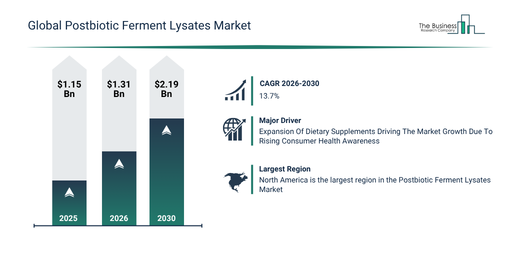
    The postbiotic ferment lysates market has witnessed rapid expansion in recent times. Its valuation is set to increase from $1.15 billion in 2025 to $1.31 billion in 2026, achieving a compound annual growth rate (CAGR) of 13.4%. This historical growth can be attributed to a heightened awareness of skin microbiome health, an increase in the application of probiotics within personal care products, the integration of postbiotic formulations into cosmetic items, a surging demand for natural and bioactive constituents, and the expansion of offerings in skincare and haircare portfolios.

    The postbiotic ferment lysates market is projected for significant expansion over the coming years. Its value is set to reach $2.19 billion by 2030, exhibiting a compound annual growth rate (CAGR) of 13.7%. This anticipated growth during the forecast timeframe is driven by a heightened emphasis on functional and medicinal postbiotics, increased research and development efforts in bacterial and yeast ferment lysates, a surge in demand across pharmaceutical and nutraceutical sectors, the broadening of online and specialized sales channels, and consumers’ growing inclination towards solutions for anti-aging and hydration. Key developments expected within this period involve the rising uptake of postbiotic products in liquid and serum formats, an escalating need for lysates derived from bacteria and yeast, their increasing incorporation into formulations for skincare and haircare, the proliferation of freeze-dried and spray-dried powder versions, and a concentrated focus on anti-aging and hydration advantages.

    Download A Free Sample Report For Comprehensive Market Insights:

    https://www.thebusinessresearchcompany.com/sample_request?id=56420289&type=smp&name=Postbiotic%20Ferment%20Lysates%20Market%20Report%202026

    Which Core Factors Are Supporting The Expansion Of The Postbiotic Ferment Lysates Market?

    The expansion of dietary supplements is expected to propel the growth of the postbiotic ferment lysates market going forward. Dietary supplements are manufactured products intended to complement a person’s diet by providing nutrients such as vitamins, minerals, amino acids, and other bioactive compounds that may be insufficient through regular food intake alone. The growing expansion of dietary supplements is largely driven by rising consumer focus on preventive healthcare, as individuals increasingly seek proactive, science-backed nutritional solutions to manage their long-term well-being rather than relying solely on conventional medical treatment. The surge in dietary supplement adoption directly accelerates demand for postbiotic ferment lysates, as these bioactive fermentation-derived compounds are increasingly incorporated into supplement formulations to deliver gut health, immune support, and microbiome-balancing benefits. For instance, in September 2024, according to HerbalGram, a US-based international nonprofit organization, the total annual sales of herbal dietary supplements in the US rose from $12.018 billion in 2022 to $12.551 billion in 2023, reflecting a growth of 4.4%. Therefore, the expansion of dietary supplements is driving the growth of the postbiotic ferment lysates market. The increasing cosmetic industry is expected to propel the growth of the postbiotic ferment lysates market going forward. The cosmetic industry encompasses the manufacturing, distribution, and sale of products intended to cleanse, beautify, and enhance the appearance of the human body, including skincare, haircare, makeup, and personal care formulations. The cosmetic industry is rising primarily due to growing consumer awareness around skin health and the widespread influence of social media, which has accelerated demand for innovative, science-backed beauty products among younger demographics. This surge in cosmetic activity directly intensifies demand for advanced bioactive ingredients such as postbiotic ferment lysates, which are increasingly incorporated into premium skincare formulations for their barrier-strengthening, anti-inflammatory, and microbiome-balancing properties. For instance, in July 2024, according to a report published by the British Beauty Council, a UK-based organization, in 2023, the personal care sector contributed £27.2 billion ($30.44 billion) to the GDP, marking an 11% rise compared to 2022. This growth is attributed to a 10% increase in household spending on personal care products and services in the UK. Therefore, the increasing cosmetic industry is driving the growth of the postbiotic ferment lysates market.

    How Is The Postbiotic Ferment Lysates Market Structured Across Different Market Segments?

    The postbiotic ferment lysates market covered in this report is segmented –

    1) By Product Type: Liquid, Powder, Cream, Serum, Other Product Types

    2) By Source: Bacterial, Yeast, Fungal, Other Sources

    3) By Distribution Channel: Online Stores, Supermarkets Or Hypermarkets, Specialty Stores, Other Distribution Channels

    4) By Application: Skincare, Haircare, Pharmaceuticals, Nutraceuticals, Other Applications

    5) By End-User: Cosmetic Industry, Pharmaceutical Industry, Personal Care, Other End-Users

    Subsegments:

    1) By Liquid: Water-Based, Oil-Based, Alcohol-Based, Glycerin-Based

    2) By Powder: Freeze-Dried, Spray-Dried, Granular, Micronized

    3) By Cream: Emulsion, Lotion, Balm, Gel-Cream

    4) By Serum: Hydrating, Anti-Aging, Brightening, Repairing

    5) By Other Product Types: Capsule, Tablet, Stick, Sheet Mask

    Who Are The Companies Shaping The Postbiotic Ferment Lysates Market Landscape?

    Major companies operating in the postbiotic ferment lysates market are The Procter & Gamble Company, DSM-Firmenich AG, International Flavors & Fragrances Inc., Lallemand Inc., Seppic SA, Mibelle AG, Lucas Meyer Cosmetics by IFF, Active Concepts LLC, Bloomage Biotechnology Corporation Limited, Codif Technologie Naturelle SAS, Greentech SA, Biocogent LLC, Vytrus Biotech S.A., Chemisches Laboratorium Dr. Kurt Richter GmbH, Codex Beauty Labs Inc., Lactobio A/S, Lipotrue S.L., Senyuan Biotechnology Co. Ltd., Active Cells Biotechnology S.r.l., Dermat India.

    Access The Complete Postbiotic Ferment Lysates Market Report:

    https://www.thebusinessresearchcompany.com/report/postbiotic-ferment-lysates-market-report

    Which Region Commands The Largest Share Of The Postbiotic Ferment Lysates Market?

    North America was the largest region in the postbiotic ferment lysates market in 2025. Asia-Pacific is expected to be the fastest-growing region in the forecast period. The regions covered in the postbiotic ferment lysates market report are Asia-Pacific, South East Asia, Western Europe, Eastern Europe, North America, South America, Middle East, Africa.

    Get in touch with us:

    The Business Research Company: https://www.thebusinessresearchcompany.com/

    Americas: +1 310-496-7795

    Asia: +44 7882 955267 & +91 8897263534

    Europe: +44 7882 955267

    Email us at: marketing@tbrc.info

    Follow us on:

    LinkedIn: https://in.linkedin.com/company/the-business-research-company

    YouTube: https://www.youtube.com/channel/UC24_fI0rV8cR5DxlCpgmyFQ

    Global Market Model: https://www.thebusinessresearchcompany.com/global-market-model
  • Pharmaceutical Depyrogenation Equipment Market Forecast Through 2030 Featuring Industry Drivers And Opportunities

    Pharmaceutical Depyrogenation Equipment Market Forecast Through 2030 Featuring Industry Drivers And Opportunities

    The Business Research Company’s 2026 market reports feature advanced enhancements such as market attractiveness analysis, total addressable market evaluation, company benchmarking matrices, interactive Excel dashboards, expanded supply chain intelligence, emerging startup coverage, and detailed product insights, delivering more actionable and strategically valuable research.

    How Will The Market Size Of The Pharmaceutical Depyrogenation Equipment Market Progress Through 2030?

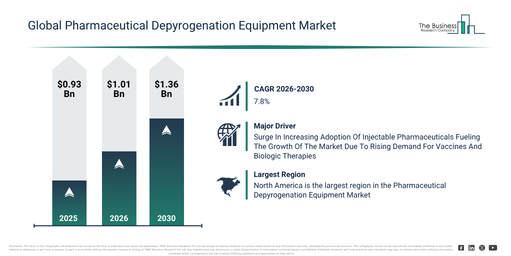
    The pharmaceutical depyrogenation equipment market size has experienced robust expansion in recent times. Projections indicate it will expand from $0.93 billion in 2025 to $1.01 billion in 2026, demonstrating a compound annual growth rate (CAGR) of 7.6%. This historical growth can be linked to factors such as increasing pharmaceutical production volumes, a rising incidence of injectable drug manufacturing, the demand for sterile glassware and containers, regulatory requirements for endotoxin-free products, and the adoption of conventional batch depyrogenation systems.

    The pharmaceutical depyrogenation equipment market size is projected to demonstrate robust expansion in the coming years, with expectations to reach $1.36 billion by 2030, driven by a compound annual growth rate (CAGR) of 7.8%. This growth throughout the forecast period is attributable to an increase in vaccine and biologics production, the widespread adoption of automated and high-throughput depyrogenation equipment, intensified R&D efforts in sterile manufacturing technologies, the integration of sophisticated monitoring and IoT-based control systems, and the worldwide growth of contract manufacturing organizations (CMOs). Significant developments anticipated during this period encompass a rising demand for automated depyrogenation systems, an increasing uptake of high-temperature dry heat sterilization methods, the broader application of depyrogenation equipment in vaccine and biologics manufacturing, a heightened focus on regulatory compliance and sterility standards, and the incorporation of real-time monitoring and process control systems.

    Download A Free Sample Report For Comprehensive Market Insights:

    https://www.thebusinessresearchcompany.com/sample_request?id=83716511&type=smp&name=Pharmaceutical%20Depyrogenation%20Equipment%20Market%20Report%202026

    What Are The Main Drivers Accelerating The Growth Of The Pharmaceutical Depyrogenation Equipment Market?

    The growing uptake of injectable drugs is anticipated to drive expansion in the pharmaceutical depyrogenation equipment market moving forward. Injectable medications are sterile drug preparations delivered straight into the body via syringe or infusion, bypassing the gastrointestinal tract. The prevalence of injectable drugs is rising due to the growing incidence of chronic conditions like diabetes and cancer, which demand swift and efficient drug administration. This equipment plays a crucial role in injectable pharmaceutical production by eliminating pyrogens and endotoxins from drug packaging, thereby guaranteeing sterility and patient well-being. For example, in July 2024, data from the United Nations Children’s Fund (UNICEF), a US-based international organization dedicated to providing humanitarian and developmental assistance globally, revealed that the worldwide percentage of adolescent girls who received at least one dose of the HPV vaccine increased from 20% in 2022 to 27% in 2023, representing a 7-percentage-point rise. Consequently, the expanding use of injectable pharmaceuticals is fueling the growth of the pharmaceutical depyrogenation equipment market. The growth of the biopharmaceutical and biotechnology sector is anticipated to drive the expansion of the pharmaceutical depyrogenation equipment market in the future. This industry focuses on creating medical treatments leveraging biological systems and fosters innovation in areas such as drug discovery, vaccine development, and therapies through methods like genetic engineering and molecular biology. The swift expansion of this sector is primarily fueled by rising investments in the research and development of new biologics, biosimilars, and advanced therapeutic approaches, all of which require extremely regulated and contamination-free production settings. The increasing volume of biopharmaceutical manufacturing heightens the demand for depyrogenation equipment, given its essential role in maintaining endotoxin-free environments crucial for the safe production of injectable medications, vaccines, and biological treatments. For instance, in January 2023, data from Cardinal Health Inc., a US-based healthcare firm, indicated that as of January 2022, 33 biosimilar products were FDA-approved in the US, with 21 being commercially accessible. By 2023, the number of FDA-approved biosimilars rose to 40, with 25 of them on the market. Consequently, the development of the biopharmaceutical and biotechnology industry is a significant driver for the growth of the pharmaceutical depyrogenation equipment market.

    Which Segment-Based Categories Are Covered In The Pharmaceutical Depyrogenation Equipment Market?

    The pharmaceutical depyrogenation equipment market covered in this report is segmented –

    1) By Equipment Type: Depyrogenation Tunnels, Dry Heat Sterilizers, Depyrogenation Ovens, Vial And Ampoule Depyrogenation Systems, Automated Depyrogenation Chambers

    2) By Technology: Conveyor-Based Systems, Batch Processing Ovens, Continuous Flow Tunnels, High-Temperature Plasma Systems

    3) By Application: Ampoules, Penicillin Bottles, Syringes

    4) By End-User: Pharmaceutical Manufacturers, Biotechnology Companies, Contract Manufacturing Organizations (CMOs), Research And Academic Institutes, Vaccine And Biologics Manufacturing Facilities

    Subsegments:

    1) By Depyrogenation Tunnels: Conveyor Depyrogenation Tunnels, Modular Depyrogenation Tunnels, High Throughput Depyrogenation Tunnels, Compact Depyrogenation Tunnels

    2) By Dry Heat Sterilizers: Horizontal Dry Heat Sterilizers, Vertical Dry Heat Sterilizers, Laboratory Dry Heat Sterilizers, Industrial Dry Heat Sterilizers

    3) By Depyrogenation Ovens: Bench Top Depyrogenation Ovens, Floor Standing Depyrogenation Ovens, High Capacity Depyrogenation Ovens, Programmable Depyrogenation Ovens

    4) By Vial And Ampoule Depyrogenation Systems: Glass Vial Depyrogenation Systems, Ampoule Depyrogenation Systems, Combined Vial And Ampoule Depyrogenation Systems, High Speed Container Depyrogenation Systems

    5) By Automated Depyrogenation Chambers: Fully Automated Depyrogenation Chambers, Semi Automated Depyrogenation Chambers, Programmable Depyrogenation Chambers, Large Capacity Depyrogenation Chambers

    Which Industry Players Are Present In The Pharmaceutical Depyrogenation Equipment Market?

    Major companies operating in the pharmaceutical depyrogenation equipment market are STERIS Public Limited Company, Getinge Aktiebolag, Azbil Telstar Sociedad Limitada Unipersonal, Syntegon Technology Gesellschaft mit beschränkter Haftung, Belimed Aktiengesellschaft, Shibuya Corporation (Kabushiki Kaisha Shibuya Kogyo), OPTIMA Packaging Group Gesellschaft mit beschränkter Haftung, Marchesini Group Società per Azioni, Bausch + Ströbel SE & Co. Kommanditgesellschaft, Shanghai Tofflon Science and Technology Group Co. Ltd., Zhangjiagang Tofflon Machinery Co. Ltd., Fedegari Autoclavi Società per Azioni, Pharmalab India Private Limited, Steriline Società a responsabilità limitata, De Lama Società per Azioni, Dara Pharmaceutical Packaging S.A., Neelam Industries Private Limited, Lodha International Limited Liability Partnership, Stericox India Private Limited, Steelco.

    Access The Complete Pharmaceutical Depyrogenation Equipment Market Report:

    https://www.thebusinessresearchcompany.com/report/pharmaceutical-depyrogenation-equipment-market-report

    Which Region Accounts For The Highest Share Of The Pharmaceutical Depyrogenation Equipment Market?

    North America was the largest region in the pharmaceutical depyrogenation equipment market in 2025. Asia-Pacific is expected to be the fastest-growing region in the forecast period. The regions covered in the pharmaceutical depyrogenation equipment market report are Asia-Pacific, South East Asia, Western Europe, Eastern Europe, North America, South America, Middle East, Africa.

    Get in touch with us:

    The Business Research Company: https://www.thebusinessresearchcompany.com/

    Americas: +1 310-496-7795

    Asia: +44 7882 955267 & +91 8897263534

    Europe: +44 7882 955267

    Email us at: marketing@tbrc.info

    Follow us on:

    LinkedIn: https://in.linkedin.com/company/the-business-research-company

    YouTube: https://www.youtube.com/channel/UC24_fI0rV8cR5DxlCpgmyFQ

    Global Market Model: https://www.thebusinessresearchcompany.com/global-market-model

  • Rising Prevalence Of Lifestyle-Related Diseases Fueling The Growth Of The Market Due To Increasing Sedentary Lifestyles And Poor Dietary Habits Is Supporting Development Across The On-The-Go Greens Sticks Market

    Rising Prevalence Of Lifestyle-Related Diseases Fueling The Growth Of The Market Due To Increasing Sedentary Lifestyles And Poor Dietary Habits Is Supporting Development Across The On-The-Go Greens Sticks Market

    The Business Research Company’s 2026 market reports feature advanced enhancements such as market attractiveness analysis, total addressable market evaluation, company benchmarking matrices, interactive Excel dashboards, expanded supply chain intelligence, emerging startup coverage, and detailed product insights, delivering more actionable and strategically valuable research.

    What Is The Expected Market Size Of The On-The-Go Greens Sticks Market In 2026 And How Much Will It Reach By 2030?

    The on-the-go greens sticks market size has expanded quickly over recent years. It is forecast to grow from $1.56 billion in 2025 to $1.74 billion in 2026, achieving a compound annual growth rate (CAGR) of 11.4%. This historical growth can be attributed to a rise in health consciousness among consumers, increasing awareness of nutritional deficiencies, a growing urban population with demanding lifestyles, the expansion of retail and e-commerce platforms, and the adoption of superfood and functional ingredients.

    The on-the-go greens sticks market is projected to experience substantial expansion in the coming years, reaching $2.7 billion by 2030, exhibiting a compound annual growth rate (CAGR) of 11.7%. This expansion during the forecast period is fueled by several factors, including the increasing adoption of plant-based and organic dietary habits, a greater need for customized nutritional products, the enhanced use of artificial intelligence and data analytics for product suggestions, the proliferation of online health and wellness platforms, and a heightened emphasis on immunity and digestive well-being. Key developments anticipated in this period encompass an escalating desire for convenient, portable nutritional options, an increasing inclination towards ingredients derived from plants and superfoods, the wider uptake of functional supplements particularly for digestive health, the growth of tailored nutrition and wellness offerings, and the surging appeal of powdered stick packs designed for active lifestyles.

    Download A Free Sample Report For Comprehensive Market Insights:

    https://www.thebusinessresearchcompany.com/sample_request?id=46549879&type=smp&name=On-The-Go%20Greens%20Sticks%20Market%20Report%202026

    Which Growth Drivers Are Expected To Support The On-The-Go Greens Sticks Market Forward?

    The increasing occurrence of health conditions linked to lifestyle choices is anticipated to drive the expansion of the on-the-go greens sticks market in the future. These diseases are long-term health issues that primarily emerge from detrimental daily habits, including inadequate nutrition, lack of exercise, consuming too many calories, and extended periods of inactivity. The rising incidence of these conditions is attributable to increasingly sedentary ways of living, given that more people dedicate considerable time to office jobs and digital pursuits with minimal physical activity. On-the-go greens sticks aid in addressing health risks associated with lifestyle by providing an accessible supply of plant-derived nutrients, vitamins, and minerals, thus facilitating balanced eating even when fresh food options are scarce. For example, data from March 2025 by the World Obesity Federation, a UK-based membership organization, projects that by 2030, approximately 3 billion adults, which constitutes about 50% of the global adult population, will be living with overweight or obesity. Consequently, the expanding occurrence of lifestyle-related diseases is fueling the expansion of the on-the-go greens sticks market.

    What Are The Major Segment Categories Within The On-The-Go Greens Sticks Market?

    The on-the-go greens sticks market covered in this report is segmented –

    1) By Product Type: Superfood Greens Sticks, Protein Greens Sticks, Detox Greens Sticks, Other Product Types

    2) By Distribution Channel: Online Stores, Supermarkets And Hypermarkets, Convenience Stores, Specialty Stores, Other Distribution Channels

    3) By Application: Nutritional Supplements, Meal Replacements, Sports Nutrition, Other Applications

    4) By End User: Adults, Children, Elderly, Other End Users

    Subsegments:

    1) By Superfood Greens Sticks: Organic Superfood Greens Sticks, Fruit And Greens Blend Sticks, Algae Based Greens Sticks, Herbal Superfood Greens Sticks, Vegetable Greens Blend Sticks

    2) By Protein Greens Sticks: Plant Protein Greens Sticks, Pea Protein Greens Sticks, Rice Protein Greens Sticks, Hemp Protein Greens Sticks, Mixed Plant Protein Greens Sticks

    3) By Detox Greens Sticks: Herbal Detox Greens Sticks, Fiber Enriched Detox Greens Sticks, Chlorophyll Detox Greens Sticks, Alkalizing Detox Greens Sticks, Liver Support Detox Greens Sticks

    4) By Other Product Types: Probiotic Greens Sticks, Vitamin Enriched Greens Sticks, Adaptogenic Greens Sticks, Energy Boost Greens Sticks, Immune Support Greens Sticks

    What Trends Are Shaping The On-The-Go Greens Sticks Market Structure?

    Leading businesses within the on-the-go greens sticks market are prioritizing the creation of practical and nutrient-rich products, such as portable tangerine-flavored drink mixes. These solutions are developed to support daily nutritional intake, enhance ease of transport, and cater to the fast-paced lives of consumers. A portable tangerine-flavored drink mix typically comes as a powdered or stick-pack beverage, which quickly dissolves in water, offering a revitalizing citrus drink that also provides hydration or additional nutritional advantages. For instance, in May 2025, Good Enough Brands, a health and wellness firm based in the US, introduced its Good Enough Greens Mix. This tangerine-flavored drink mix was specifically formulated to provide superior nutrition in a format that is both portable and simple to use. The product incorporates a mix of plant-derived components, including leafy greens, fruits, and specialized nutrients, all designed to promote energy, aid digestion, and boost general well-being, thereby helping consumers sustain healthy routines even when they are active.

    Which Organizations Are Involved In The On-The-Go Greens Sticks Market?

    Major companies operating in the on-the-go greens sticks market are Nestlé S.A., Glanbia plc, 1st Phorm LLC, Grove Collaborative Inc., Nutricost LLC, Athletic Greens International Inc., Life Extension Foundation Buyers Club Inc., Organifi LLC, Grüns LLC, Zeon Lifesciences Limited, Sunwarrior LLC, Organixx LLC, Bare Performance Nutrition LLC, Pines International Inc., Beam Organics Inc., WelleCo Pty Ltd, Axe & Sledge Supplements LLC, MuscleSport LLC, NutraChamps LLC, MacroLife Naturals Inc., Vimergy LLC, Codeage LLC, Ora Organic LLC, Rewind Greens LLC, Kuli Kuli Foods Inc.

    Access The Complete On-The-Go Greens Sticks Market Report:

    https://www.thebusinessresearchcompany.com/report/on-the-go-greens-sticks-market-report

    Which Region Is The Primary Market For The On-The-Go Greens Sticks Market?

    North America was the largest region in the on-the-go greens sticks market in 2025. Asia-Pacific is expected to be the fastest-growing region in the forecast period. The regions covered in the on-the-go greens sticks market report are Asia-Pacific, South East Asia, Western Europe, Eastern Europe, North America, South America, Middle East, Africa.

    Get in touch with us:

    The Business Research Company: https://www.thebusinessresearchcompany.com/

    Americas: +1 310-496-7795

    Asia: +44 7882 955267 & +91 8897263534

    Europe: +44 7882 955267

    Email us at: marketing@tbrc.info

    Follow us on:

    LinkedIn: https://in.linkedin.com/company/the-business-research-company

    YouTube: https://www.youtube.com/channel/UC24_fI0rV8cR5DxlCpgmyFQ

    Global Market Model: https://www.thebusinessresearchcompany.com/global-market-model
  • Surge In Stroke And Intracranial Stenosis Fueling The Growth Of The Market Due To Aging Populations And Increased Risk Of Cerebrovascular Events Is Affecting The Direction Of The Neurointerventional Balloon Dilatation Catheter Market

    Surge In Stroke And Intracranial Stenosis Fueling The Growth Of The Market Due To Aging Populations And Increased Risk Of Cerebrovascular Events Is Affecting The Direction Of The Neurointerventional Balloon Dilatation Catheter Market

    The Business Research Company’s 2026 market reports feature advanced enhancements such as market attractiveness analysis, total addressable market evaluation, company benchmarking matrices, interactive Excel dashboards, expanded supply chain intelligence, emerging startup coverage, and detailed product insights, delivering more actionable and strategically valuable research.

    What Market Size Is Forecasted For The Neurointerventional Balloon Dilatation Catheter Market By 2030 Based On Its 2026 Value?

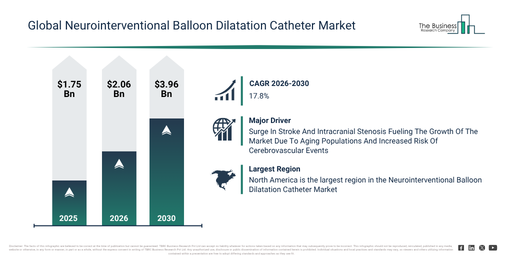
    The neurointerventional balloon dilatation catheter market size has seen rapid expansion in recent years. It is projected to grow from $1.75 billion in 2025 to $2.06 billion in 2026, achieving a compound annual growth rate (CAGR) of 17.5%. Historically, this growth can be attributed to the increasing prevalence of cerebrovascular diseases, progress in catheter design and materials, a rising volume of neurovascular surgeries, the expansion of hospital and specialty clinic infrastructure, and heightened awareness of minimally invasive procedures.

    The neurointerventional balloon dilatation catheter market size is projected for substantial expansion in the coming years, with expectations to achieve $3.96 billion by 2030, demonstrating a compound annual growth rate (CAGR) of 17.8%. This growth during the projected timeframe is driven by innovations in compliant and non-compliant balloon technologies, an increased adoption of drug-coated balloons, the expansion of ambulatory surgical centers, the integration with AI-assisted imaging systems, and the broadening of intracranial treatment applications. Prominent developments anticipated over this period encompass a rising embrace of neurointerventional procedures, an increasing application of drug-coated balloon technologies, a growing preference for steerable and tapered balloons, the extension of intracranial and extracranial uses, and the integration of imaging and navigation systems within balloon catheters.

    Download A Free Sample Report For Comprehensive Market Insights:

    https://www.thebusinessresearchcompany.com/sample_request?id=33674452&type=smp&name=Neurointerventional%20Balloon%20Dilatation%20Catheter%20Market%20Report%202026

    What Influential Factors Are Boosting The Neurointerventional Balloon Dilatation Catheter Market Demand?

    The **neurointerventional balloon dilatation catheter market** is anticipated to expand due to the increasing incidence of stroke and intracranial stenosis. Intracranial stenosis, a condition characterized by constricted brain arteries that elevate the likelihood of ischemic events, frequently accompanies stroke. The growing occurrence of both conditions is largely attributed to aging populations, given that elderly individuals are more prone to arterial constriction and cerebrovascular incidents. **Neurointerventional balloon dilatation catheters** offer a solution by expanding these narrowed brain arteries, thereby reinstating proper blood flow and diminishing the risk of ischemic events. For example, data from the **Stroke Foundation**, an Australia-based non-profit organization, indicated in December 2025 that stroke ranks among Australia’s leading five causes of death, accounting for **9,147 lives in 2024** and affecting **one person experiencing a stroke every 11 minutes**. Consequently, the escalating prevalence of stroke and intracranial stenosis is projected to fuel the expansion of the **neurointerventional balloon dilatation catheter market**. The increasing demand for minimally invasive procedures is expected to propel the growth of the **neurointerventional balloon dilatation catheter market**. These procedures involve medical or cosmetic treatments conducted with minimal cuts or tissue harm, often utilizing tools like needles, catheters, or small instruments. The appeal of minimally invasive procedures stems from their reduced risk of complications, as they require smaller incisions and lead to fewer chances of infection or bleeding. **Neurointerventional balloon dilatation catheters** facilitate such procedures by enabling accurate widening of constricted brain arteries through small vascular entry points, diminishing the necessity for open surgery and shortening recovery periods. For instance, in June 2024, the **American Society of Plastic Surgeons** reported that minimally invasive procedures reached **5.29 million in 2023**, marking an **8% increase over 2022**. Thus, the rising preference for minimally invasive procedures is anticipated to stimulate the expansion of the **neurointerventional balloon dilatation catheter market**.

    How Is The Neurointerventional Balloon Dilatation Catheter Market Distributed Across Key Segments?

    The neurointerventional balloon dilatation catheter market covered in this report is segmented –

    1) By Product Type: Compliant, Non Compliant, Semi Compliant

    2) By Balloon Shape: Standard, Steerable, Tapered

    3) By Coating Technology: Drug Coated, Plain

    4) By Application: Extracranial, Intracranial

    5) By End-User: Ambulatory Surgical Centers, Hospitals, Specialty Clinics

    Subsegments:

    1) By Compliant: Low Pressure Compliant Balloon, Medium Pressure Compliant Balloon, High Elasticity Compliant Balloon

    2) By Non Compliant: High Pressure Non Compliant Balloon, Ultra High Pressure Non Compliant Balloon, Controlled Diameter Non Compliant Balloon

    3) By Semi Compliant: Moderate Pressure Semi Compliant Balloon, Balanced Compliance Balloon, Flexible Semi Compliant Balloon

    Who Are The Firms Contributing To The Neurointerventional Balloon Dilatation Catheter Market Ecosystem?

    Major companies operating in the neurointerventional balloon dilatation catheter market are Johnson & Johnson, Medtronic plc, Stryker Corporation, Koninklijke Philips N.V., Boston Scientific Corporation, B. Braun Melsungen AG, Terumo Corporation, Kaneka Corporation, Nipro Corporation, Penumbra Inc., Lepu Medical Technology Co. Ltd., MicroPort Scientific Corporation, Asahi Intecc Co. Ltd., APT Medical Inc., Sino Medical Sciences Technology Inc., Peijia Medical Limited, Scientia Vascular Inc., Wallaby Medical Inc., Zylox-Tonbridge Medical Technology Co. Ltd., Acandis GmbH & Co. KG, Princeton Medical Scientific Inc., Cordis a Cardinal Health Company, DK MEDTECH Corporation.

    Access The Complete Neurointerventional Balloon Dilatation Catheter Market Report:

    https://www.thebusinessresearchcompany.com/report/neurointerventional-balloon-dilatation-catheter-market-report

    Which Geographic Region Represents The Largest Neurointerventional Balloon Dilatation Catheter Market Share?

    North America was the largest region in the neurointerventional balloon dilatation catheter market in 2025. Asia-Pacific is expected to be the fastest-growing region in the forecast period. The regions covered in the neurointerventional balloon dilatation catheter market report are Asia-Pacific, South East Asia, Western Europe, Eastern Europe, North America, South America, Middle East, Africa.

    Get in touch with us:

    The Business Research Company: https://www.thebusinessresearchcompany.com/

    Americas: +1 310-496-7795

    Asia: +44 7882 955267 & +91 8897263534

    Europe: +44 7882 955267

    Email us at: marketing@tbrc.info

    Follow us on:

    LinkedIn: https://in.linkedin.com/company/the-business-research-company

    YouTube: https://www.youtube.com/channel/UC24_fI0rV8cR5DxlCpgmyFQ

    Global Market Model: https://www.thebusinessresearchcompany.com/global-market-model
  • The Multi-Arm Polyethylene Glycol (PEG) Derivatives Market Is Advancing With Support From Rising Biopharmaceutical And Biotechnology Industry Expansion Fueling The Growth Of The Market Due To Increasing R&D Investment In Biological Therapeutics

    The Multi-Arm Polyethylene Glycol (PEG) Derivatives Market Is Advancing With Support From Rising Biopharmaceutical And Biotechnology Industry Expansion Fueling The Growth Of The Market Due To Increasing R&D Investment In Biological Therapeutics

    The Business Research Company’s 2026 market reports feature advanced enhancements such as market attractiveness analysis, total addressable market evaluation, company benchmarking matrices, interactive Excel dashboards, expanded supply chain intelligence, emerging startup coverage, and detailed product insights, delivering more actionable and strategically valuable research.

    How Is The Market Value Of The Multi-Arm Polyethylene Glycol (PEG) Derivatives Market Projected To Expand During 2026–2030?

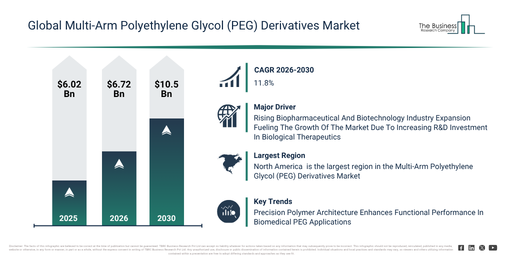
    The multi-arm polyethylene glycol (PEG) derivatives market has experienced rapid expansion in recent years. It is projected to grow from $6.02 billion in 2025 to $6.72 billion in 2026, exhibiting a compound annual growth rate (CAGR) of 11.6%. Historically, the market’s growth can be linked to advancements in polymer chemistry, an increase in pharmaceutical research and development, heightened biomedical research activities, a greater emphasis on drug formulation stability, and the widening scope of tissue engineering applications.

    The multi-arm polyethylene glycol (PEG) derivatives market is projected to experience substantial expansion in the coming years. This market is predicted to reach a valuation of $10.5 billion by 2030, exhibiting a compound annual growth rate (CAGR) of 11.8%. Several factors contribute to this anticipated growth during the forecast period, including the rising adoption of targeted drug delivery systems, advancements in regenerative medicine and tissue engineering, increasing demand for personalized medicine, innovations in functionalization techniques, and the broadening applications within cosmetics and biomaterials. Key trends anticipated over the forecast timeframe encompass a surge in demand for functionalized multi-arm PEG derivatives, expanding applications in drug delivery and tissue engineering, a heightened emphasis on bioconjugation and pegylation methods, wider utilization in diagnostics and medical devices, and increased integration into cosmetics, personal care, and surface coatings.

    Download A Free Sample Report For Comprehensive Market Insights:

    https://www.thebusinessresearchcompany.com/sample_request?id=96834366&type=smp&name=Multi-Arm%20Polyethylene%20Glycol%20%28PEG%29%20Derivatives%20Market%20Report%202026

    Which Drivers Are Advancing The Multi-Arm Polyethylene Glycol (PEG) Derivatives Market Growth?

    The advancement within the biopharmaceutical and biotechnology sectors is anticipated to fuel the expansion of the multi-arm polyethylene glycol (PEG) derivatives market moving forward. These industries encompass firms and research organizations engaged in creating biologics, vaccines, cell therapies, and gene-based treatments, leveraging biological procedures and molecular methods. The expansion of biopharmaceutical and biotechnology industries is accelerating, driven by increasing worldwide investment in R&D efforts centered on biological therapeutics. Multi-arm polyethylene glycol (PEG) derivatives facilitate biopharmaceutical progress by enhancing the solubility, stability, and bioavailability of therapeutic proteins, peptides, and antibodies, thereby allowing for effective drug formulation and administration. As an illustration, data from GOV.UK, a public sector information website in the UK, indicated that by October 2025, firms located in the South East reported the highest life sciences employment across all ITL 1 regions in the UK, reaching 84,800 employees during 2023/2024, accounting for 24% of the overall workforce. Consequently, the expansion of biopharmaceutical and biotechnology industries is fueling the growth observed in the multi-arm polyethylene glycol (PEG) derivatives market.

    How Does Segment Analysis Break Down The Multi-Arm Polyethylene Glycol (PEG) Derivatives Market Structure?

    The multi-arm polyethylene glycol (PEG) derivatives market covered in this report is segmented –

    1) By Type: 3-Arm Polyethylene Glycol (PEG) Derivatives, 4-Arm Polyethylene Glycol (PEG) Derivatives, 6-Arm Polyethylene Glycol (PEG) Derivatives, 8-Arm Polyethylene Glycol (PEG) Derivatives, Other Multi-Arm PEG Derivatives

    2) By Functional Group: Amine Polyethylene Glycol (PEG) Derivatives, N-Hydroxysuccinimide Ester Polyethylene Glycol (PEG) Derivatives, Maleimide Polyethylene Glycol (PEG) Derivatives, Thiol Polyethylene Glycol (PEG) Derivatives, Azide Polyethylene Glycol (PEG) Derivatives, Vinyl Sulfone Polyethylene Glycol (PEG) Derivatives

    3) By Purity Grade: Monodisperse (Uniform), Polydisperse

    4) By Application: Drug Delivery, Tissue Engineering, Medical Devices, Bioconjugation And PEGylation, Diagnostics, Cosmetics And Personal Care, Surface Coatings And Biomaterials

    5) By End User: Pharmaceutical Companies, Biotechnology Companies, Research And Academic Institutes, Medical Device Manufacturers, Cosmetics And Personal Care Manufacturers

    Subsegments:

    1) By 3-Arm Polyethylene Glycol Derivatives: 3-Arm Hydroxyl Functionalized Polyethylene Glycol Derivatives, 3-Arm Amine Functionalized Polyethylene Glycol Derivatives, 3-Arm Carboxyl Functionalized Polyethylene Glycol Derivatives, 3-Arm Maleimide Functionalized Polyethylene Glycol Derivatives, 3-Arm Succinimidyl Functionalized Polyethylene Glycol Derivatives

    2) By 4-Arm Polyethylene Glycol Derivatives: 4-Arm Hydroxyl Functionalized Polyethylene Glycol Derivatives, 4-Arm Amine Functionalized Polyethylene Glycol Derivatives, 4-Arm Carboxyl Functionalized Polyethylene Glycol Derivatives, 4-Arm Maleimide Functionalized Polyethylene Glycol Derivatives, 4-Arm Succinimidyl Functionalized Polyethylene Glycol Derivatives

    3) By 6-Arm Polyethylene Glycol Derivatives: 6-Arm Hydroxyl Functionalized Polyethylene Glycol Derivatives, 6-Arm Amine Functionalized Polyethylene Glycol Derivatives, 6-Arm Carboxyl Functionalized Polyethylene Glycol Derivatives, 6-Arm Maleimide Functionalized Polyethylene Glycol Derivatives, 6-Arm Succinimidyl Functionalized Polyethylene Glycol Derivatives

    4) By 8-Arm Polyethylene Glycol Derivatives: 8-Arm Hydroxyl Functionalized Polyethylene Glycol Derivatives, 8-Arm Amine Functionalized Polyethylene Glycol Derivatives, 8-Arm Carboxyl Functionalized Polyethylene Glycol Derivatives, 8-Arm Maleimide Functionalized Polyethylene Glycol Derivatives, 8-Arm Succinimidyl Functionalized Polyethylene Glycol Derivatives

    5) By Other Multi-Arm Polyethylene Glycol Derivatives: Multi Arm Thiol Functionalized Polyethylene Glycol Derivatives, Multi Arm Aldehyde Functionalized Polyethylene Glycol Derivatives, Multi Arm Vinyl Sulfone Functionalized Polyethylene Glycol Derivatives, Multi Arm Epoxy Functionalized Polyethylene Glycol Derivatives, Multi Arm Methacrylate Functionalized Polyethylene Glycol Derivatives

    What Trends Are Affecting The Growth Of The Multi-Arm Polyethylene Glycol (PEG) Derivatives Market?

    Leading companies in the multi-arm polyethylene glycol (PEG) derivatives market are prioritizing advancements in precision polymer architecture design, including the development of multi-functionalized star-shaped polyethylene glycol linkers. These innovations aim to facilitate controlled crosslinking, precise biomolecule attachment, and adaptable hydrogel formation for various biomedical applications. Multi-functionalized star-shaped polyethylene glycol linkers are defined as polymers where several polyethylene glycol chains originate from a central core and terminate with reactive functional groups, such as maleimide, thiol, or norbornene, which support exact molecular coupling and stable polymer network creation. For example, in August 2024, Biopharma PEG Scientific Inc., a US-based biotechnology company, expanded its Multi-Arm PEG Product Line. This move was intended to enhance its collection of high-purity PEG derivatives, specifically designed for advanced drug delivery, bioconjugation, and therapeutic development applications, thereby improving their functionality, stability, and customization for complex biopharmaceutical formulations. These derivatives enable effective hydrogel formation, boost cross-linking performance in drug delivery systems, and contribute to enhanced stability and functionality in regenerative medicine and three-dimensional cell culture research.

    Which Key Players Are Active In The Multi-Arm Polyethylene Glycol (PEG) Derivatives Market?

    Major companies operating in the multi-arm polyethylene glycol (PEG) derivatives market are Merck KGaA, NOF Corporation, Avanti Polar Lipids Inc., JenKem Technology Co. Ltd., Huateng Pharmaceuticals Co. Ltd., Biochempeg Scientific Inc., Nanocs Inc., PEGWorks, Iris Biotech GmbH, Biopharma PEG Scientific Inc., Laysan Bio Inc., BroadPharm, Quanta BioDesign Ltd., Polypure AS, SunBio Corporation, PurePEG, Rapp Polymere GmbH, Advanced Biochemicals LLC, CD Bioparticles, BOC Sciences, Xiamen Sinopeg Biotech Co. Ltd.

    Access The Complete Multi-Arm Polyethylene Glycol (PEG) Derivatives Market Report:

    https://www.thebusinessresearchcompany.com/report/multi-arm-polyethylene-glycol-peg-derivatives-market-report

    Which Region Leads The Multi-Arm Polyethylene Glycol (PEG) Derivatives Market By Size?

    North America was the largest region in the multi-arm polyethylene glycol (PEG) derivatives market in 2025. Asia-Pacific is expected to be the fastest-growing region in the forecast period. The regions covered in the multi-arm polyethylene glycol (PEG) derivatives market report are Asia-Pacific, South East Asia, Western Europe, Eastern Europe, North America, South America, Middle East, Africa.

    Get in touch with us:

    The Business Research Company: https://www.thebusinessresearchcompany.com/

    Americas: +1 310-496-7795

    Asia: +44 7882 955267 & +91 8897263534

    Europe: +44 7882 955267

    Email us at: marketing@tbrc.info

    Follow us on:

    LinkedIn: https://in.linkedin.com/company/the-business-research-company

    YouTube: https://www.youtube.com/channel/UC24_fI0rV8cR5DxlCpgmyFQ

    Global Market Model: https://www.thebusinessresearchcompany.com/global-market-model
  • Increasing Adoption Of Rising Manufacturing Activities Driving The Growth Of The Market Due To Increasing Demand For Cleaner And Higher-Quality Production Processes Is Influencing The Microfiber Glass Filter Media Market

    Increasing Adoption Of Rising Manufacturing Activities Driving The Growth Of The Market Due To Increasing Demand For Cleaner And Higher-Quality Production Processes Is Influencing The Microfiber Glass Filter Media Market

    The Business Research Company’s 2026 market reports feature advanced enhancements such as market attractiveness analysis, total addressable market evaluation, company benchmarking matrices, interactive Excel dashboards, expanded supply chain intelligence, emerging startup coverage, and detailed product insights, delivering more actionable and strategically valuable research.

    What Are The Forecasted Market Size Figures For The Microfiber Glass Filter Media Market In 2026 And 2030?

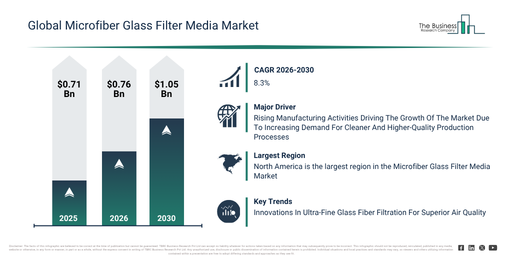
    The microfiber glass filter media market size has witnessed strong expansion in recent years. It is forecast to rise from $0.71 billion in 2025 to $0.76 billion in 2026, achieving a compound annual growth rate (CAGR) of 8.1%. The growth observed in the past can be attributed to an increased focus on indoor air quality, the development of the healthcare and pharmaceutical sectors, rising levels of industrial pollution, the adoption of cleanroom standards, and regulatory mandates for air filtration efficiency.

    The microfiber glass filter media market is projected to experience substantial expansion in the coming years, reaching $1.05 billion by 2030, exhibiting a compound annual growth rate (CAGR) of 8.3%. This anticipated growth during the forecast period is fueled by several factors, including the increasing number of cleanroom facilities, a rising need for energy-efficient filtration solutions, advancements in the technology for producing microfiber glass filters, greater investment in environmental monitoring, and the expanded application of filtration in research laboratories. Key trends observed in this period encompass a heightened demand for high-efficiency air filtration systems, increased uptake of HEPA and ULPA filter media, broader application of microfiber glass filters within the healthcare and pharmaceutical sectors, the diversification of industrial and laboratory filtration uses, and an emphasis on achieving low pressure drop along with high dust holding capacity.

    Download A Free Sample Report For Comprehensive Market Insights:

    https://www.thebusinessresearchcompany.com/sample_request?id=61393581&type=smp&name=Microfiber%20Glass%20Filter%20Media%20Market%20Report%202026

    What Primary Factors Are Fueling The Expansion Of The Microfiber Glass Filter Media Market?

    The expanding scope of manufacturing operations is projected to boost the microfiber glass filter media market in the future. These activities involve converting raw materials or parts into final products utilizing labor, equipment, and technological advancements. A surge in consumer demand for products is fueling this rise, prompting businesses to enlarge their production capabilities and implement advanced technologies to satisfy market requirements. Microfiber glass filter media improves manufacturing by trapping minute airborne or liquid particles, thereby ensuring cleaner production settings and consistently superior product quality. For example, in April 2026, the House of Commons Library, a UK-based information resource for the British Parliament’s lower house, reported that monthly manufacturing output increased by 0.1% in January 2026, with growth observed in five out of 13 subsectors. Furthermore, manufacturing output saw a 1.5% increase over the three months leading up to January 2026, relative to the prior quarter. Consequently, the expansion of manufacturing operations is anticipated to stimulate the growth of the microfiber glass filter media market.

    What Segment Types Are Included In The Microfiber Glass Filter Media Market Analysis?

    The microfiber glass filter media market covered in this report is segmented –

    1) By Product Type: Glass Microfiber Filter Paper, Glass Microfiber Filter Membranes, High Efficiency Particulate Air (HEPA) Filter Media Sheets, Ultra Low Penetration Air (ULPA) Filter Media Sheets, Glass Fiber Filter Pads, Glass Microfiber Filter Discs, Glass Microfiber Filter Rolls

    2) By Filtration Type: Air Filtration, Liquid Filtration

    3) By Distribution Channel: Direct Sales, Distributors And Wholesalers, Online Sales

    4) By Application: American Society Of Heating, Refrigerating And Air-Conditioning Engineers (ASHRAE), High Efficiency Particulate Air (HEPA), Ultra Low Penetration Air (ULPA)

    5) By End-User Industry: Healthcare Or Pharmaceuticals, Environmental Or Water Treatment, Manufacturing Or Industrial, Laboratories Or Research

    Subsegments:

    1) By Glass Microfiber Filter Paper: Quantitative Filter Paper, Qualitative Filter Paper, Binder Free Filter Paper, Binder Containing Filter Paper

    2) By Glass Microfiber Filter Membranes: Hydrophilic Glass Microfiber Membranes, Hydrophobic Glass Microfiber Membranes, Reinforced Glass Microfiber Membranes, Non Reinforced Glass Microfiber Membranes

    3) By High Efficiency Particulate Air (HEPA) Filter Media Sheets: Standard Efficiency High Efficiency Particulate Air (HEPA) Media Sheets, High Dust Holding High Efficiency Particulate Air (HEPA) Media Sheets, Low Pressure Drop High Efficiency Particulate Air (HEPA) Media Sheets, High Temperature Resistant High Efficiency Particulate Air (HEPA) Media Sheets

    4) By Ultra Low Penetration Air (ULPA) Filter Media Sheets: Ultra High Efficiency Filter Media Sheets, Cleanroom Grade Filter Media Sheets, Low Resistance Ultra Fine Filter Media Sheets, High Capacity Particle Retention Filter Media Sheets

    5) By Glass Fiber Filter Pads: Pre Filtration Glass Fiber Pads, High Efficiency Glass Fiber Pads, Coarse Particle Filtration Pads, Fine Particle Filtration Pads

    6) By Glass Microfiber Filter Discs: Sterile Filtration Discs, Analytical Filtration Discs, Laboratory Grade Filtration Discs, High Purity Filtration Discs

    7) By Glass Microfiber Filter Rolls: Industrial Filtration Rolls, Laboratory Filtration Rolls, High Efficiency Filtration Rolls, Continuous Process Filtration Rolls

    Which Trends Are Influencing The Direction Of The Microfiber Glass Filter Media Market?

    Leading companies operating in the microfiber glass filter media market are concentrating on developing technological advancements in ultra-fine glass fiber production, such as improved thermal stability, in addition to advanced microfiber glass filtration media, aiming to achieve higher particle capture efficiency, enhanced airflow performance, and increased durability for high-efficiency air filtration applications. Enhanced thermal stability refers to the ability of microfiber glass filtration media to maintain its structural integrity and filtration performance even under high-temperature operating conditions, ensuring reliability in demanding HVAC and industrial environments. For example, in November 2024, Johns Manville, a US-based manufacturer of insulation and engineered products, introduced a state-of-the-art micro fiberglass production line at its Wertheim, Germany facility to produce Evalith micro fiberglass nonwovens. These materials are engineered to capture particles as small as one micrometer, including viruses, bacteria, and dust, while simultaneously ensuring durability and consistent filtration performance. The solution also boosts energy efficiency, enabling filter manufacturers to attain higher ratings, decrease energy consumption, and promote environmentally sustainable indoor air solutions.

    Who Are The Leading Firms Participating In The Microfiber Glass Filter Media Market?

    Major companies operating in the microfiber glass filter media market are Parker-Hannifin Corporation, Johns Manville, Sinoma Science & Technology Co. Ltd., Ahlstrom-Munksjö Oyj, Alkegen LLC, Sogefi Group S.p.A, Camfil AB, Hollingsworth & Vose Company, Freudenberg Filtration Technologies GmbH & Co. KG, Chongqing Zaisheng Technology Co. Ltd., Macherey-Nagel GmbH & Co. KG, Hokuetsu Corporation, Spectrum Chemical Manufacturing Corp., Porvair Filtration Group Plc, MANN+HUMMEL Gruppe, Meissner Filtration Products Inc., Cobetter Filtration Co. Ltd., I.W. Tremont Corporation, Sterlitech Corporation, HI-Q Environmental Products Inc.

    Access The Complete Microfiber Glass Filter Media Market Report:

    https://www.thebusinessresearchcompany.com/report/microfiber-glass-filter-media-market-report

    Which Region Has The Strongest Presence In The Microfiber Glass Filter Media Market?

    North America was the largest region in the microfiber glass filter media market in 2025. Asia-Pacific is expected to be the fastest-growing region in the forecast period. The regions covered in the microfiber glass filter media market report are Asia-Pacific, South East Asia, Western Europe, Eastern Europe, North America, South America, Middle East, Africa.

    Get in touch with us:

    The Business Research Company: https://www.thebusinessresearchcompany.com/

    Americas: +1 310-496-7795

    Asia: +44 7882 955267 & +91 8897263534

    Europe: +44 7882 955267

    Email us at: marketing@tbrc.info

    Follow us on:

    LinkedIn: https://in.linkedin.com/company/the-business-research-company

    YouTube: https://www.youtube.com/channel/UC24_fI0rV8cR5DxlCpgmyFQ

    Global Market Model: https://www.thebusinessresearchcompany.com/global-market-model
  • Human Fibroblast Growth Factor Growth Due To Increasing Incidence Of Chronic Diseases Continues To Impact The Growth Of The Human Fibroblast Growth Factor Market

    Human Fibroblast Growth Factor Growth Due To Increasing Incidence Of Chronic Diseases Continues To Impact The Growth Of The Human Fibroblast Growth Factor Market

    The Business Research Company’s 2026 market reports feature advanced enhancements such as market attractiveness analysis, total addressable market evaluation, company benchmarking matrices, interactive Excel dashboards, expanded supply chain intelligence, emerging startup coverage, and detailed product insights, delivering more actionable and strategically valuable research.

    How Much Larger Will The Human Fibroblast Growth Factor Market Become By 2030 Compared To 2026?

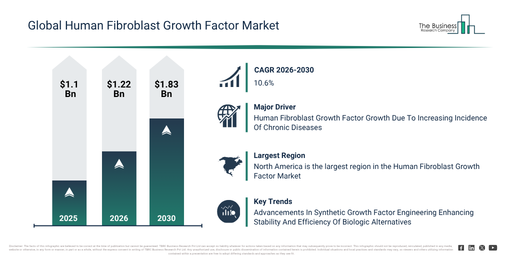
    The human fibroblast growth factor market size has seen significant growth in recent years. It is anticipated to expand from $1.1 billion in 2025 to $1.22 billion in 2026, at a compound annual growth rate (CAGR) of 10.4%. The historical expansion of this market can be attributed to factors such as the rise in regenerative medicine research, a surging demand for human tissue derived proteins, escalating investment in biotech research and development, the broadening of hospital and research institute networks, and the adoption of hfgf in diagnostic uses.

    The human fibroblast growth factor market size is anticipated to experience substantial expansion in the coming years, projected to reach $1.83 billion by 2030, exhibiting a compound annual growth rate (CAGR) of 10.6%. This growth over the forecast period is propelled by factors such as the increasing embrace of recombinant hfgf products, the flourishing tissue engineering and cell therapy markets, expanding applications in high-throughput drug screening, breakthroughs in protein stabilization technologies, and the widening reach of direct sales and e-commerce channels. Prominent trends for the forecast period include the rising development of recombinant hfgf variants, the escalating use of hfgf in tissue engineering, the broader availability of high-purity and lyophilized formulations, the growing integration of hfgf into drug screening platforms, and the incorporation of hfgf solutions into cell proliferation research.

    Download A Free Sample Report For Comprehensive Market Insights:

    https://www.thebusinessresearchcompany.com/sample_request?id=81928061&type=smp&name=Human%20Fibroblast%20Growth%20Factor%20Market%20Report%202026

    Which Strategic Drivers Are Supporting The Human Fibroblast Growth Factor Market Development?

    The escalating occurrence of chronic diseases is anticipated to drive the expansion of the human fibroblast growth factor market moving forward. Chronic diseases are defined as long-term health conditions that typically persist for three months or longer, often progressing slowly and generally not curable completely, though their symptoms can be managed. These conditions frequently necessitate ongoing medical attention or prolonged medication. The increase in chronic diseases results from lifestyle changes and environmental factors associated with modern living, which cumulatively contribute to long-term health problems. Human fibroblast growth factor aids in preventing chronic diseases by enabling the body to mend damaged tissues, create new blood vessels, and reduce chronic inflammation, thereby lowering the risk and progression of long-term health conditions. For instance, in 2025, according to The Northern Arizona Medical Group, a US-based healthcare provider, nearly three-quarters of the world’s population is projected to live with at least one chronic illness, and the prevalence of chronic illnesses continued to increase notably. In the United States, in 2023, about 76.4% of adults reported having at least one chronic condition, and 51.4% had two or more. Therefore, the rising incidence of chronic diseases is propelling the growth of the human fibroblast growth factor market.

    Which Segment Divisions Form The Structure Of The Human Fibroblast Growth Factor Market?

    The human fibroblast growth factor market covered in this report is segmented –

    1) By Product Type: Animal Derived, Natural, Recombinant

    2) By Form: Liquid, Lyophilized, Powder

    3) By Sales Channel: Direct Sales, Distributor, E Commerce

    4) By Application: Cell Proliferation, Diagnostics, Drug Screening, Tissue Engineering

    5) By End User: Biotech Companies, Hospitals, Pharmaceutical Companies, Research Institutes

    Subsegments:

    1) By Animal Derived: Bovine Derived Fibroblast Growth Factor, Porcine Derived Fibroblast Growth Factor, Other Animal Sources

    2) By Natural: Tissue Extracted Fibroblast Growth Factor, Plant Derived Fibroblast Growth Factor, Human Tissue Derived Fibroblast Growth Factor

    3) By Recombinant: Recombinant Human Fibroblast Growth Factor 1, Recombinant Human Fibroblast Growth Factor 2, Recombinant Human Fibroblast Growth Factor 7, Recombinant Human Fibroblast Growth Factor 10

    What Trends Are Driving Changes In The Human Fibroblast Growth Factor Market?

    Leading companies within the human fibroblast growth factor market are concentrating on technological advancements, such as synthetic growth factor engineering. This innovation enables the creation of engineered peptide or protein mimetics that emulate the biological activity of native FGFs, simultaneously providing improved stability, decreased degradation, enhanced receptor specificity, and reduced production costs. Synthetic growth factor engineering specifically involves the design and development of artificially crafted or modified molecules that replicate or boost the biological function of natural growth factors, while also improving attributes like stability, specificity, and manufacturability. For example, in October 2024, PeptiGrowth Inc, a Japan-based biotechnology company, introduced a new synthetic peptide growth factor that delivers superior biological performance by mirroring natural growth factor activity and enhancing both stability and efficiency. It ensures prolonged activity in cell culture systems, thereby reducing the need for frequent media replacement. These peptides exhibit greater resistance to degradation, thus ensuring consistent results across various experiments.

    Which Companies Are Engaged In The Human Fibroblast Growth Factor Market Environment?

    Major companies operating in the human fibroblast growth factor market are Thermo Fisher Scientific Inc., Merck KGaA, Lonza Group AG, Bio-Techne Corporation, STEMCELL Technologies Inc., GenScript Biotech Corporation, Promega Corporation, Sino Biological Inc., Cell Signaling Technology Inc, ACROBiosystems Co. Ltd., RayBiotech Inc., Proteintech Group Inc., PromoCell GmbH, Creative Biolabs Co. Ltd., BPS Bioscience Inc., MedChemExpress LLC, ProSpec-Tany Technogene Ltd., Novoprotein Scientific Inc., Elabscience Biotechnology Inc., Enzo Life Sciences Inc.

    Access The Complete Human Fibroblast Growth Factor Market Report:

    https://www.thebusinessresearchcompany.com/report/human-fibroblast-growth-factor-market-report

    Which Region Stands As The Largest Contributor To The Human Fibroblast Growth Factor Market?

    North America was the largest region in the human fibroblast growth factor market in 2025. Asia-Pacific is expected to be the fastest-growing region in the forecast period. The regions covered in the human fibroblast growth factor market report are Asia-Pacific, South East Asia, Western Europe, Eastern Europe, North America, South America, Middle East, Africa.

    Get in touch with us:

    The Business Research Company: https://www.thebusinessresearchcompany.com/

    Americas: +1 310-496-7795

    Asia: +44 7882 955267 & +91 8897263534

    Europe: +44 7882 955267

    Email us at: marketing@tbrc.info

    Follow us on:

    LinkedIn: https://in.linkedin.com/company/the-business-research-company

    YouTube: https://www.youtube.com/channel/UC24_fI0rV8cR5DxlCpgmyFQ

    Global Market Model: https://www.thebusinessresearchcompany.com/global-market-model

  • Hospital Cloud Platform System Market Outlook Through 2030 With Analysis Of Industry Trends And Developments

    Hospital Cloud Platform System Market Outlook Through 2030 With Analysis Of Industry Trends And Developments

    The Business Research Company’s 2026 market reports feature advanced enhancements such as market attractiveness analysis, total addressable market evaluation, company benchmarking matrices, interactive Excel dashboards, expanded supply chain intelligence, emerging startup coverage, and detailed product insights, delivering more actionable and strategically valuable research.

    What Growth In Market Value Is Anticipated For The Hospital Cloud Platform System Market Between 2026 And 2030?

    The hospital cloud platform system market has experienced swift expansion in recent years. This market is projected to grow from $14.38 billion in 2025 to $15.95 billion in 2026, demonstrating a compound annual growth rate (CAGR) of 10.9%. Historically, this growth has been driven by several factors, including the increasing adoption of electronic health records, a rise in hospital digital transformation initiatives, greater investments in healthcare IT infrastructure, regulatory mandates for data security and patient privacy, and the ongoing need for operational efficiency within hospitals.

    The hospital cloud platform system market is set to undergo significant expansion in the coming years. Its valuation is forecast to grow to $24.4 billion by 2030 at a compound annual growth rate (CAGR) of 11.2%. This anticipated growth over the forecast period stems from factors such as the increasing adoption of SaaS and PaaS models, a rising demand for hybrid and private cloud deployments, the burgeoning use of telehealth and remote monitoring services, the integration of AI and analytics into hospital workflows, and the broadening reach of connected medical devices and IoT-enabled equipment. Major trends for this period encompass the growing uptake of cloud-based hospital information systems, expanded implementation of telehealth and remote patient monitoring, an elevated demand for data analytics and reporting tools within hospitals, the continued expansion of patient management and billing automation solutions, and an amplified focus on interoperability and secure data sharing.

    Download A Free Sample Report For Comprehensive Market Insights:

    https://www.thebusinessresearchcompany.com/sample_request?id=43671204&type=smp&name=Hospital%20Cloud%20Platform%20System%20Market%20Report%202026

    What Major Growth Factors Are Impacting The Hospital Cloud Platform System Market?

    The rising implementation of electronic health records (EHRs) is anticipated to drive the expansion of the hospital cloud platform system market. Electronic Health Records (EHRs) represent digital versions of patients’ medical histories, which are systematically gathered, stored, and managed by healthcare providers to support clinical care, facilitate information sharing, and improve patient outcomes. This increased adoption of electronic health records is attributed to improved patient care and safety, as they enable accurate, real-time access to comprehensive medical information, reduce errors, and support better clinical decision-making. A hospital cloud platform system further enhances electronic health records by enabling secure, centralized storage, seamless data sharing, and real-time access for healthcare providers, thereby improving patient care and operational efficiency. For instance, in June 2022, the Department of Health and Social Care, a UK-based government department, announced that, by March 2025, 100% of NHS trusts are expected to have adopted electronic health records, an increase from the 90% that had implemented them by December 2023. Consequently, the expanding adoption of electronic health records is propelling the growth of the hospital cloud platform system market.

    How Are Different Segment Groups Identified Within The Hospital Cloud Platform System Market?

    The hospital cloud platform system market covered in this report is segmented –

    1) By Component: Software, Hardware, Services

    2) By Service Model: Software As A Service, Platform As A Service, Infrastructure As A Service

    3) By Deployment Mode: Public Cloud, Private Cloud, Hybrid Cloud

    4) By Application: Electronic Health Records, Telehealth, Medical Imaging, Patient Management, Other Applications

    5) By End User: Hospitals, Clinics, Ambulatory Surgical Centers, Other End Users

    Subsegments:

    1) By Software: Cloud Based Hospital Information System, Electronic Health Records Software, Patient Management Software, Billing And Revenue Cycle Management Software, Inventory Management Software, Laboratory Information Management Software, Radiology Information System, Pharmacy Management Software, Data Analytics And Reporting Software

    2) By Hardware: Servers, Storage Devices, Networking Equipment, Workstations, Medical Devices With Cloud Connectivity, Security Appliances

    3) By Services: Implementation And Integration Services, Training And Education Services, Support And Maintenance Services, Consulting Services, Managed Services, Data Migration Services, Cloud Hosting And Backup Services

    Which Trends Are Shaping The Hospital Cloud Platform System Market Landscape?

    Leading companies in the hospital cloud platform system market are concentrating on developing AI-powered, cloud-based solutions, such as connected care platforms, to improve data integration, operational efficiency, and clinical decision-making across various healthcare settings. A connected care platform is a cloud-based system designed to link medical devices, patient data, and healthcare applications, thereby enabling seamless communication, real-time monitoring, and coordinated care throughout healthcare environments. For example, in October 2025, Becton, Dickinson and Company, a US-based medication company, introduced the BD Incada™ Connected Care Platform. This scalable, AI-enabled solution is engineered to consolidate data from nearly 3 million connected BD devices into a single intelligent ecosystem. The platform intends to enhance operational efficiency and connectivity across healthcare settings, providing support for devices like infusion pumps, patient monitors, and pharmacy robotics. Built upon Amazon Web Services (AWS) infrastructure, it offers features such as natural-language analytics, customizable dashboards, and secure cloud storage to facilitate data-driven clinical and operational decisions.

    Who Are The Prominent Players Across The Hospital Cloud Platform System Market?

    Major companies operating in the hospital cloud platform system market are Epic Systems Corporation, Microsoft Corporation, Dell Technologies Inc. (Healthcare Cloud Solutions), Koninklijke Philips N.V., Siemens Healthineers AG, GE Healthcare Technologies Inc., MEDITECH (Medical Information Technology, Inc.), Athenahealth Inc., eClinicalWorks LLC, InterSystems Corporation, NextGen Healthcare Inc., Veradigm LLC, CitiusTech Healthcare Technology Private Limited, Infor Inc. (Healthcare Cloud Solutions), Health Catalyst Inc., CareCloud Inc., Netsmart Technologies Inc., AdvancedMD Inc., Vitera Healthcare Solutions LLC, Greenway Health LLC, Orion Health Group Limited, PracticeSuite Inc. , Practice Fusion Inc., DrChrono Inc., Medhost Inc., Azalea Health.

    Access The Complete Hospital Cloud Platform System Market Report:

    https://www.thebusinessresearchcompany.com/report/hospital-cloud-platform-system-market-report

    What Is The Largest Regional Market In The Hospital Cloud Platform System Market?

    North America was the largest region in the hospital cloud platform system market in 2025. Asia-Pacific is expected to be the fastest-growing region in the forecast period. The regions covered in the hospital cloud platform system market report are Asia-Pacific, South East Asia, Western Europe, Eastern Europe, North America, South America, Middle East, Africa.

    Get in touch with us:

    The Business Research Company: https://www.thebusinessresearchcompany.com/

    Americas: +1 310-496-7795

    Asia: +44 7882 955267 & +91 8897263534

    Europe: +44 7882 955267

    Email us at: marketing@tbrc.info

    Follow us on:

    LinkedIn: https://in.linkedin.com/company/the-business-research-company

    YouTube: https://www.youtube.com/channel/UC24_fI0rV8cR5DxlCpgmyFQ

    Global Market Model: https://www.thebusinessresearchcompany.com/global-market-model
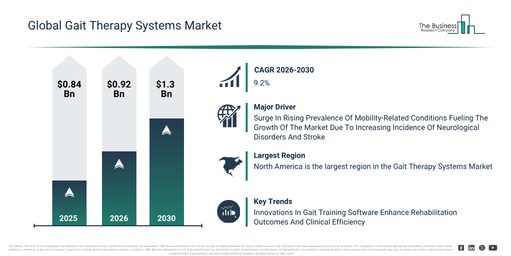
  • Gait Therapy Systems Market Revenue Anticipated To Reach $1.3 Billion By 2030 With 9.2% CAGR

    Gait Therapy Systems Market Revenue Anticipated To Reach $1.3 Billion By 2030 With 9.2% CAGR

    The Business Research Company’s 2026 market reports feature advanced enhancements such as market attractiveness analysis, total addressable market evaluation, company benchmarking matrices, interactive Excel dashboards, expanded supply chain intelligence, emerging startup coverage, and detailed product insights, delivering more actionable and strategically valuable research.

    What Is The Expected Market Value Outlook For The Gait Therapy Systems Market Through 2030?

    The gait therapy systems market has experienced significant growth recently. It is projected to expand from $0.84 billion in 2025 to $0.92 billion in 2026, showing a compound annual growth rate (CAGR) of 8.9%. The increase observed in previous periods is largely due to the rising occurrence of neurological disorders, a globally expanding elderly population, advancements in rehabilitation infrastructure, a greater incidence of sports and orthopedic injuries, and increased understanding of the advantages of physical therapy.

    The gait therapy systems market size is anticipated to undergo significant expansion over the next few years. It will grow to **$1.3 billion by 2030 at a compound annual growth rate (CAGR) of 9.2%.** This projected growth is driven by factors such as increased investment in advanced rehabilitation technologies, a rising need for home-based therapy solutions, a greater emphasis on patient-centric treatment approaches, wider access to healthcare in emerging markets, and the expanding integration of digital health platforms. Prominent trends expected during this forecast period include an escalating demand for advanced neurorehabilitation solutions, the broader adoption of personalized rehabilitation programs, a growing reliance on wearable devices for continuous gait monitoring, the expansion of rehabilitation services in home care environments, and an intensified focus on early mobility recovery post-surgery.

    Download A Free Sample Report For Comprehensive Market Insights:

    https://www.thebusinessresearchcompany.com/sample_request?id=51494194&type=smp&name=Gait%20Therapy%20Systems%20Market%20Report%202026

    What Market Drivers Are Helping Shape The Gait Therapy Systems Market Expansion?

    The escalating occurrence of mobility-related conditions is projected to drive the expansion of the gait therapy systems market going forward. These conditions refer to physical or neurological disorders that impede a person’s ability to move freely, affecting their walking, balance, coordination, or joint function. The increase in mobility-related conditions is primarily attributed to an aging population, as age-associated reductions in muscle strength, joint flexibility, and bone density diminish physical function. Gait therapy systems aid in mobility-related conditions by delivering structured rehabilitation designed to help patients relearn walking, enhance balance, and reinstate movement subsequent to neurological disorders, injuries, or surgeries. For instance, in January 2024, the Office for Health Improvement & Disparities, a UK-based government agency, reported that in 2023, 18.4% of individuals aged 16 and above disclosed having a long-term musculoskeletal (MSK) condition, a rise from 17.6% in 2022. Hence, the increasing prevalence of mobility-related conditions is a key driver for the growth of the gait therapy systems market.

    What Segment Categories Are Evaluated In The Gait Therapy Systems Market Study?

    The gait therapy systems market covered in this report is segmented –

    1) By Product Type: Treadmills, Exoskeletons, Gait Trainers, Wearable Sensors, Other Product Types

    2) By Technology: Robotic-Assisted Systems, Sensor-Based Systems, Motion Capture Systems, AI-Integrated Rehabilitation Systems, Virtual Reality-Based Therapy Systems

    3) By Application: Neurological Disorders, Orthopedic Disorders, Sports And Athletics, Other Applications

    4) By End-User: Hospitals, Rehabilitation Centers, Home Care Settings, Other End-Users

    Subsegments:

    1) By Treadmills: Body Weight Supported Treadmills, Medical Rehabilitation Treadmills, Incline Training Treadmills, Split Belt Treadmills

    2) By Exoskeletons: Lower Limb Exoskeletons, Full Body Exoskeletons, Powered Rehabilitation Exoskeletons, Passive Support Exoskeletons

    3) By Gait Trainers: Posterior Gait Trainers, Anterior Gait Trainers, Dynamic Gait Trainers, Pediatric Gait Trainers

    4) By Wearable Sensors: Pressure Sensor Devices, Motion Tracking Sensors, Inertial Measurement Sensors, Step Detection Sensors

    5) By Other Product Types: Balance Training Devices, Walking Support Frames, Rehabilitation Support Harness Systems, Mobility Training Platforms

    What Trends Are Influencing The Gait Therapy Systems Market Outlook?

    Leading firms within the gait therapy systems market are concentrating on introducing technological improvements in high-temperature dry heat depyrogenation systems, for example, adaptive robotic gait control algorithms, to facilitate real-time, tailored movement adjustments for patients and boost rehabilitation results via accurate, data-driven therapy. These adaptive robotic gait control algorithms represent smart software systems employed in robotic rehabilitation equipment to dynamically alter walking patterns according to a patient’s actual movement, strength, and input. As an illustration, in January 2024, Ekso Bionics Holdings, Inc., a US-based company specializing in medical devices and robotics, launched its GaitCoach software for the EksoNR robotic exoskeleton. This software is designed to facilitate adaptive gait training by providing real-time feedback and enabling customized step pattern adjustments, thereby enhancing patient involvement and the effectiveness of rehabilitation. The GaitCoach software provides distinct capabilities like real-time deviation detection and dynamic feedback, allowing therapists to observe patient gait patterns and gain practical insights throughout therapy sessions.

    Which Companies Form The Competitive Landscape Of The Gait Therapy Systems Market?

    Major companies operating in the gait therapy systems market are Ottobock SE & Co. KGaA, BTL Industries Inc., Fourier Intelligence Co. Ltd., Biodex Medical Systems Inc., Wandercraft SAS, Cyberdyne Inc., Ekso Bionics Holdings Inc., ReWalk Robotics Ltd., Woodway GmbH, Aretech LLC, Mobility Research Inc., Restorative Therapies Inc., Bionik Laboratories Corp., Rex Bionics Ltd., HMS Medical Systems Pvt. Ltd., Bharat Medical Systems, GaitBetter Ltd., Protokinetics LLC, DIH International Ltd., Genrobotics Medical.

    Access The Complete Gait Therapy Systems Market Report:

    https://www.thebusinessresearchcompany.com/report/gait-therapy-systems-market-report

    Which Region Contributes The Most To The Gait Therapy Systems Market?

    North America was the largest region in the gait therapy systems market in 2025. Asia-Pacific is expected to be the fastest-growing region in the forecast period. The regions covered in the gait therapy systems market report are Asia-Pacific, South East Asia, Western Europe, Eastern Europe, North America, South America, Middle East, Africa.

    Get in touch with us:

    The Business Research Company: https://www.thebusinessresearchcompany.com/

    Americas: +1 310-496-7795

    Asia: +44 7882 955267 & +91 8897263534

    Europe: +44 7882 955267

    Email us at: marketing@tbrc.info

    Follow us on:

    LinkedIn: https://in.linkedin.com/company/the-business-research-company

    YouTube: https://www.youtube.com/channel/UC24_fI0rV8cR5DxlCpgmyFQ

    Global Market Model: https://www.thebusinessresearchcompany.com/global-market-model