Month: June 2026

  • Swine Artificial Insemination Market Industry Outlook 2026–2030 Highlighting Growth Momentum And Market Trends

    Swine Artificial Insemination Market Industry Outlook 2026–2030 Highlighting Growth Momentum And Market Trends

    The Business Research Company’s 2026 market reports feature advanced enhancements such as market attractiveness analysis, total addressable market evaluation, company benchmarking matrices, interactive Excel dashboards, expanded supply chain intelligence, emerging startup coverage, and detailed product insights, delivering more actionable and strategically valuable research.

    What Growth In Market Value Is Anticipated For The Swine Artificial Insemination Market Between 2026 And 2030?

    The size of the swine artificial insemination market has seen robust expansion over recent years. This market is projected to expand from $2.01 billion in 2025 to $2.17 billion in 2026, achieving a compound annual growth rate (CAGR) of 7.8%. Several factors contributed to its historical growth, including traditional natural breeding methods, limited access to AI technology, a growing swine population, increasing demand for improved genetics, and a lack of reproductive management expertise.

    The swine artificial insemination market is projected to experience substantial expansion in the coming years. This market is forecast to reach a valuation of $2.89 billion by 2030, exhibiting a compound annual growth rate (CAGR) of 7.5%. Several factors are expected to fuel this growth during the projection period, including enhancements in AI equipment technology, the increasing uptake of post-cervical and deep intrauterine AI methods, the proliferation of swine breeding facilities, greater understanding of reproductive health care, and the incorporation of digital farm management with AI procedures. Key trends anticipated during this period involve the continued rise in the application of post-cervical and deep intrauterine AI techniques, an increased reliance on frozen and extended semen to enhance genetic quality, the expansion of AI training and reproductive consultancy offerings, the incorporation of semen analysis and reproductive health screening within farms, and a heightened emphasis on tools for heat detection and fertility monitoring.

    Download A Free Sample Report For Comprehensive Market Insights:

    https://www.thebusinessresearchcompany.com/sample.aspx?id=20657&type=smp

    Which Growth Factors Are Strengthening The Swine Artificial Insemination Market Landscape?

    The increasing consumption of pork meat is expected to propel the growth of the swine artificial insemination market going forward. Consumption of pork meat is the act of eating or using pork as food, reflecting how much pork people include in their diets over a certain period of time. The increasing consumption of pork meat is driven by its affordability, versatility, and high protein content, making it a popular choice in diverse cuisines worldwide. Swine artificial insemination is used to enhance pork meat production by improving genetic traits, increasing litter sizes, and optimizing herd health, leading to higher-quality and more efficient pork production. For instance, in July 2025, according to the Agriculture and Horticulture Development Board (AHDB), a UK-based farming, global pork consumption is projected to reach 131 Mt cwe by 2033, increasing at an average annual rate of 0.5%. Therefore, increasing consumption of pork meat is driving the growth of the swine artificial insemination market.

    How Does Segment Analysis Break Down The Swine Artificial Insemination Market Structure?

    The swine artificial insemination market covered in this report is segmented –

    1) By Product: Equipment, Semen, Reagent, Kit, Service

    2) By Technique: Post-cervical Artificial Insemination (PCAI), Intracervical Insemination (ICI), Deep Intrauterine Insemination (DIUI)

    3) By Distribution Channel: Private, Public

    4) By End Use: Swine Farms, Swine Breeding Centers, Veterinary Clinics And Hospitals

    Subsegments:

    1) By Equipment: Insemination Guns, Semen Storage Tanks, Heat Detection Devices

    2) By Semen: Fresh Semen, Frozen Semen, Extended Semen

    3) By Reagent: Extenders, Cryoprotectants, Media for Semen Analysis

    4) By Kit: Artificial Insemination Kits, Semen Collection Kits, Reproductive Health Testing Kits

    5) By Service: AI Training Services, Semen Analysis Services, Reproductive Management Consulting

    What Trends Are Shaping The Swine Artificial Insemination Market Structure?

    Major companies operating in the swine artificial insemination market are focusing on strategic partnership approaches to sustain their position in the market. Strategic partnership approaches involve collaborations between breeders, technology providers, and genetic companies to enhance AI practices. For instance, in June 2023, Fast Genetics, a Canada-based swine genetics company, partnered with Acuity, a US-based swine genetics company, to launch AcuFast, creating a new leader in the swine genetics industry. The new AcuFast brand brings together leaders in the swine genetics industry, allowing for a greater product offering, a superior technology platform, and combined technical expertise. The company is dedicated to creating a healthy and more efficient pork supply through the use of disruptive technologies and a commitment to respect, ethics, and accountability.

    Who Are The Businesses Driving Activity In The Swine Artificial Insemination Market?

    Asia-Pacific was the largest region in the swine artificial insemination market in 2025. The regions covered in the swine artificial insemination market report are Asia-Pacific, South East Asia, Western Europe, Eastern Europe, North America, South America, Middle East, Africa.

    Access The Complete Swine Artificial Insemination Market Report:

    https://www.thebusinessresearchcompany.com/report/swine-artificial-insemination-global-market-report

    Which Regional Market Leads The Swine Artificial Insemination Market?

    Asia-Pacific was the largest region in the swine artificial insemination market in 2025. The regions covered in the swine artificial insemination market report are Asia-Pacific, South East Asia, Western Europe, Eastern Europe, North America, South America, Middle East, Africa.

    Access a Customized Swine Artificial Insemination Market Report for Deeper Competitive Insights

    https://www.thebusinessresearchcompany.com/sample.aspx?id=20657&type=smp

    Get in touch with us:

    The Business Research Company: https://www.thebusinessresearchcompany.com/

    Americas: +1 310-496-7795

    Asia: +44 7882 955267 & +91 8897263534

    Europe: +44 7882 955267

    Email us at: marketing@tbrc.info

    Follow us on:

    LinkedIn: https://in.linkedin.com/company/the-business-research-company

    YouTube: https://www.youtube.com/channel/UC24_fI0rV8cR5DxlCpgmyFQ

    Global Market Model: https://www.thebusinessresearchcompany.com/global-market-model

  • Spay And Neuter Market Growth Forecast With Analysis Of Industry Progress Through 2030

    Spay And Neuter Market Growth Forecast With Analysis Of Industry Progress Through 2030

    The Business Research Company’s 2026 market reports feature advanced enhancements such as market attractiveness analysis, total addressable market evaluation, company benchmarking matrices, interactive Excel dashboards, expanded supply chain intelligence, emerging startup coverage, and detailed product insights, delivering more actionable and strategically valuable research.

    What Is The Expected Market Value Outlook For The Spay And Neuter Market Through 2030?

    The spay and neuter market has experienced consistent expansion in recent years. This market is projected to expand from $2.44 billion in 2025 to $2.55 billion in 2026, demonstrating a compound annual growth rate (CAGR) of 4.6%. Historically, factors contributing to this growth include a high stray animal population, increasing pet ownership, historically limited access to veterinary care, greater awareness of zoonotic disease prevention, and the emergence of animal welfare and advocacy organizations.

    The spay and neuter market size is anticipated to undergo significant growth in the upcoming years. Its value is projected to reach $3.15 billion in 2030, progressing at a compound annual growth rate (CAGR) of 5.4%. This expansion over the forecast period is attributable to government and NGO initiatives focused on pet population management, the increasing reach of mobile and community-based veterinary services, enhanced affordability of spay/neuter procedures, a growing emphasis on breed-specific health care, and collaborations between veterinary clinics and animal welfare groups. Key trends identified for the forecast timeframe include heightened awareness concerning pet population control, an increase in low-cost and subsidized spay/neuter programs, the expansion of mobile veterinary clinics offering spay/neuter services, a rise in the adoption of spay/neuter procedures by animal welfare organizations, and the development of specialized services for various breeds.

    Download A Free Sample Report For Comprehensive Market Insights:

    https://www.thebusinessresearchcompany.com/sample.aspx?id=9986&type=smp

    What Important Drivers Are Powering The Spay And Neuter Market Growth?

    The increasing number of stray dogs is expected to propel the growth of the spay and neuter market going forward. A stray dog, also known as a street dog or a free-ranging urban dog, is a dog that is not confined to a specific home or location and lives in public areas, including streets, parks, and other urban or rural environments. The number of stray dogs is rising due to lack of sterilization, as insufficient spaying and neutering allows uncontrolled breeding and steady population growth over time. Spay and neuter helps reduce the number of stray dogs by preventing uncontrolled reproduction, which gradually lowers the stray population over time. For instance, in March 2023, according to a survey conducted by Dogs Trust, a UK-based animal welfare charity and humane society that specializes in the well-being of dogs, there were 35,078 dogs in the 2022-2023 period, which is an increase of over 7,000 dogs compared to the previous year. Therefore, the increasing number of stray dogs is driving the growth of the spay and neuter market.

    What Segment Types Are Included In The Spay And Neuter Market Analysis?

    The spay and neuter market covered in this report is segmented –

    1) By Animal Type: Dogs, Cats, Other Animals

    2) By Provider Type: Veterinary Clinics And Hospitals, Other Providers

    3) By End-User: Animal Welfare Groups, Pet Owners

    Subsegments:

    1) By Dogs: Small Breeds, Medium Breeds, Large Breeds

    2) By Cats: Domestic Short Hair, Domestic Long Hair, Pure Breeds

    3) By Other Animals: Rabbits, Guinea Pigs, Ferrets

    Which Trends Are Affecting The Spay And Neuter Market Framework?

    Major companies and organizations operating in the spay and neuter market are focused on adopting strategic partnerships and collaborations to launch spay and neuter services and gain a competitive edge in the market. Such collaborations involve partnerships between various organizations, including veterinary clinics, animal welfare groups, and government agencies, to provide low-cost or free spaying and neutering services for pet owners. For instance, in October 2023, Santa Clarita, a US-based city, collaborated with the Los Angeles County Department of Animal Care and Control (DACC), a US-based animal care and control agency, and Simi Valley Non-Profit Clinic, a US-based volunteer-based community service organization, to initiate a low-cost mobile spay and neuter service aimed at the Newhall Community Center. With this project, the city aims to enhance the health and well-being of its animal population in compliance with Santa Clarita Municipal Code Chapter 8.20, which mandates that all dogs and cats older than four months must be spayed or neutered. The mobile clinic is going to be parked in the lot of the Newhall Community Center every Monday in an effort to provide individuals in need of financial assistance with access to reasonably priced pet care.

    Which Firms Are Competing In The Spay And Neuter Market?

    North America was the largest region in the spay and neuter market in 2025.Asia-Pacific is expected to be the fastest-growing region in the global spay and neuter market report during the forecast period. The regions covered in the spay and neuter market report are Asia-Pacific, South East Asia, Western Europe, Eastern Europe, North America, South America, Middle East, Africa.

    Access The Complete Spay And Neuter Market Report:

    https://www.thebusinessresearchcompany.com/report/spay-and-neuter-global-market-report

    Which Region Holds The Largest Share In The Spay And Neuter Market?

    North America was the largest region in the spay and neuter market in 2025.Asia-Pacific is expected to be the fastest-growing region in the global spay and neuter market report during the forecast period. The regions covered in the spay and neuter market report are Asia-Pacific, South East Asia, Western Europe, Eastern Europe, North America, South America, Middle East, Africa.

    Access a Customized Spay And Neuter Market Report for Deeper Competitive Insights

    https://www.thebusinessresearchcompany.com/sample.aspx?id=9986&type=smp

    Get in touch with us:

    The Business Research Company: https://www.thebusinessresearchcompany.com/

    Americas: +1 310-496-7795

    Asia: +44 7882 955267 & +91 8897263534

    Europe: +44 7882 955267

    Email us at: marketing@tbrc.info

    Follow us on:

    LinkedIn: https://in.linkedin.com/company/the-business-research-company

    YouTube: https://www.youtube.com/channel/UC24_fI0rV8cR5DxlCpgmyFQ

    Global Market Model: https://www.thebusinessresearchcompany.com/global-market-model

  • Global Sheep And Goat Pox Vaccines Market Forecast Highlighting Expansion And Competitive Dynamics

    Global Sheep And Goat Pox Vaccines Market Forecast Highlighting Expansion And Competitive Dynamics

    The Business Research Company’s 2026 market reports feature advanced enhancements such as market attractiveness analysis, total addressable market evaluation, company benchmarking matrices, interactive Excel dashboards, expanded supply chain intelligence, emerging startup coverage, and detailed product insights, delivering more actionable and strategically valuable research.

    How Will The Market Value Of The Sheep And Goat Pox Vaccines Market Increase Between 2026 And 2030?

    The market size for sheep and goat pox vaccines has shown consistent expansion over recent years. It is anticipated to increase from $60.43 billion in 2025 to $63.19 billion in 2026, achieving a compound annual growth rate (CAGR) of 4.6%. Historically, this market expansion has been fueled by factors such as frequent outbreaks of sheep and goat pox, the restricted availability of early vaccine alternatives, government-led vaccination programs, a rising livestock population in developing regions, and the adoption of traditional live attenuated vaccines.

    The market for sheep and goat pox vaccines is projected to experience consistent expansion over the upcoming years. By 2030, this market is anticipated to reach a value of $73.74 billion, expanding at a compound annual growth rate (CAGR) of 3.9%. Factors contributing to this growth during the projection period include progress in recombinant and DNA-based vaccine technologies, a heightened need for adjuvanted inactivated vaccines, the expansion of preventive veterinary healthcare initiatives, an increase in investments within livestock farming, and a greater understanding of biosecurity protocols in animal husbandry. Key trends anticipated during this forecast encompass the creation of multivalent vaccines to offer wider protection, a growing preference for injectable vaccines in livestock, an intensified emphasis on recombinant and DNA-based vaccines, an enhanced understanding of preventing diseases in sheep and goats, and the extension of veterinary vaccination schemes into rural areas.

    Download A Free Sample Report For Comprehensive Market Insights:

    https://www.thebusinessresearchcompany.com/sample.aspx?id=16533&type=smp

    Which Major Factors Are Contributing To The Development Of The Sheep And Goat Pox Vaccines Market?

    The growing demand for livestock products is expected to propel the growth of the sheep and goat pox vaccines market going forward. Livestock products refer to the various goods and materials derived from domesticated animals raised in agricultural settings. The increasing demand for livestock products is driven by several factors, including income and population growth, urbanization, health concerns, changing consumer preferences, globalization and trade, and economic development. Sheep and goat pox vaccines are essential for safeguarding livestock products by preventing disease outbreaks and ensuring the health and productivity of sheep and goat populations. For instance, in February 2024, according to the Department for Environment, Food, and Rural Affairs, a UK-based government department, red meat production saw an uptick, notably with mutton and lamb production showing the largest increase at 2.9%. Therefore, the growing demand for livestock products is expected to propel the growth of the sheep and goat pox vaccines market.

    Sheep And Goat Pox Vaccines Market Driver: Investment In Veterinary Research And Development Driving The Market Growth Due To Rising Focus On Animal Health Innovation

    The increasing investment in veterinary research and development (R&D) is expected to propel the growth of the sheep and goat pox vaccines market going forward. Investment in veterinary research and development (R&D) refers to the allocation of financial resources by governments, private institutions, and organizations toward studying, innovating, and creating new solutions to improve animal health, including the development of vaccines, treatments, diagnostic tools, and disease prevention strategies. Investment in veterinary R&D is rising due to increasing recognition of the need to innovate and improve animal health solutions in response to emerging and re emerging livestock diseases. Enhanced investment directly supports the development of more effective and safer vaccines for animal diseases. For instance, in May 2024, according to the Animal and Plant Health Inspection Service (APHIS), a U.S.-based government agency, the USDA awarded over $22.2 million to 81 new projects led by 48 states, universities, industry organizations, and veterinary diagnostic laboratories to strengthen prevention, preparedness, early detection, and rapid response to the most damaging diseases threatening U.S. livestock. Therefore, increasing investment in veterinary research and development (R&D) is driving the growth of the sheep and goat pox vaccines market.

    Which Segment Divisions Form The Structure Of The Sheep And Goat Pox Vaccines Market?

    The sheep and goat pox vaccines market covered in this report is segmented –

    1) By Type: Live Attenuated Vaccines, Inactivated Vaccines, Other Types

    2) By Route Of Administration: Injectable, Intranasal

    3) By Application: Sheep, Goat

    Subsegments:

    1) By Live Attenuated Vaccines: Monovalent Live Attenuated Vaccines, Multivalent Live Attenuated Vaccines

    2) By Inactivated Vaccines: Adjuvanted Inactivated Vaccines, Non-Adjuvanted Inactivated Vaccines

    3) By Other Types: Recombinant Vaccines, DNA-Based Vaccines

    What Trends Are Influencing The Sheep And Goat Pox Vaccines Market?

    Major companies operating in the sheep and goat pox vaccines market are adopting a strategic partnerships approach to develop innovative vaccines. Strategic partnerships help the sheep and goat pox vaccines market by combining resources and expertise, advancing research and development, expanding market reach, and accelerating commercialization. For instance, in February 2024, Hester Biosciences, an India-based biotechnology and vaccine company, launched a PPR-Goatpox combined vaccine, integrating protection against Peste des Petits Ruminants (PPR) and Goatpox in a single formulation. The combined vaccine simplifies vaccination schedules, reduces handling stress, lowers vaccination costs, and improves overall flock health. This development followed a strategic technology transfer from the Indian Council of Agricultural Research–Indian Veterinary Research Institute (ICAR-IVRI), enabling Hester to commercialize the indigenous vaccine by leveraging IVRI’s research expertise alongside Hester’s manufacturing and distribution capabilities, thereby enhancing preventive livestock healthcare and vaccine accessibility in endemic regions

    Who Are The Major Companies Operating In The Sheep And Goat Pox Vaccines Market?

    North America was the largest region in the sheep and goat pox vaccines market in 2025. The regions covered in the sheep and goat pox vaccines market report are Asia-Pacific, South East Asia, Western Europe, Eastern Europe, North America, South America, Middle East, Africa.

    Access The Complete Sheep And Goat Pox Vaccines Market Report:

    https://www.thebusinessresearchcompany.com/report/sheep-and-goat-pox-vaccines-global-market-report

    Which Region Is The Dominant Market In The Sheep And Goat Pox Vaccines Market?

    North America was the largest region in the sheep and goat pox vaccines market in 2025. The regions covered in the sheep and goat pox vaccines market report are Asia-Pacific, South East Asia, Western Europe, Eastern Europe, North America, South America, Middle East, Africa.

    Access a Customized Sheep And Goat Pox Vaccines Market Report for Deeper Competitive Insights

    https://www.thebusinessresearchcompany.com/sample.aspx?id=16533&type=smp

    Get in touch with us:

    The Business Research Company: https://www.thebusinessresearchcompany.com/

    Americas: +1 310-496-7795

    Asia: +44 7882 955267 & +91 8897263534

    Europe: +44 7882 955267

    Email us at: marketing@tbrc.info

    Follow us on:

    LinkedIn: https://in.linkedin.com/company/the-business-research-company

    YouTube: https://www.youtube.com/channel/UC24_fI0rV8cR5DxlCpgmyFQ

    Global Market Model: https://www.thebusinessresearchcompany.com/global-market-model
  • Ruminant Vaccines Market Analysis Through 2030 Focusing On Demand Trends And Growth Drivers

    Ruminant Vaccines Market Analysis Through 2030 Focusing On Demand Trends And Growth Drivers

    The Business Research Company’s 2026 market reports feature advanced enhancements such as market attractiveness analysis, total addressable market evaluation, company benchmarking matrices, interactive Excel dashboards, expanded supply chain intelligence, emerging startup coverage, and detailed product insights, delivering more actionable and strategically valuable research.

    What Will Be The Estimated Market Size Of The Ruminant Vaccines Market By 2030?

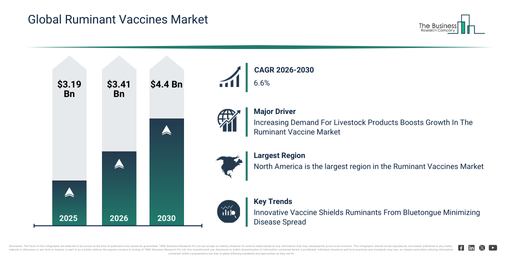
    The ruminant vaccines market has experienced significant growth over recent years. It is projected to expand from $3.19 billion in 2025 to $3.41 billion in 2026, progressing at a compound annual growth rate (CAGR) of 6.9%. The historical expansion of this market can be ascribed to frequent outbreaks of bovine diseases, limited access to modern vaccines, a growing cattle and sheep population, rising awareness about livestock health, and the expansion of veterinary healthcare infrastructure.

    The ruminant vaccines market is anticipated to experience robust expansion over the coming years. This market is projected to reach $4.4 billion by 2030, demonstrating a compound annual growth rate (CAGR) of 6.6%. Several factors will drive this growth during the forecast period, including advancements in vaccine technologies, the increasing uptake of recombinant and mRNA vaccines, the expansion of preventive livestock healthcare initiatives, growing investment in veterinary research, and the incorporation of digital vaccination monitoring systems. Key trends anticipated for the forecast period encompass an escalating demand for foot-and-mouth disease (fmd) vaccines, a greater embrace of mRNA and DNA-based ruminant vaccines, a rise in subcutaneous and intramuscular vaccine administration methods, the broadening of livestock vaccination programs across various farms, and the seamless integration of vaccination tracking systems with existing farm management software.

    Download A Free Sample Report For Comprehensive Market Insights:

    https://www.thebusinessresearchcompany.com/sample.aspx?id=20619&type=smp

    What Key Growth Drivers Are Influencing The Ruminant Vaccines Market?

    The rising demand for livestock products is expected to propel the growth of the ruminant vaccines market going forward. Livestock products are goods derived from domesticated animals, including meat, milk, eggs, wool, leather, and by-products such as gelatin and animal fats. The demand for livestock products is fueled by factors such as changing dietary preferences, increased consumer access, greater affordability, economic development, and evolving lifestyle patterns. Ruminant vaccines enhance livestock production by improving animal health, preventing disease outbreaks, increasing productivity, enhancing feed efficiency, and ensuring a stable and sustainable supply of meat, milk, and other by-products. For instance, in October 2025, according to the Department for Environment Food and Rural Affairs, a UK-based government department, in England in 2024, grazing livestock farms were the most common in lowland areas, accounting for 30% of all farms, while cereal farms occupied the largest share of agricultural land, covering 33% of the total farmed area. Therefore, the rising demand for livestock products drives the ruminant vaccines market.

    How Are Different Segment Groups Identified Within The Ruminant Vaccines Market?

    The ruminant vaccines market covered in this report is segmented –

    1) By Vaccine Type: Inactivated Vaccines, Attenuated Or Modified Live Vaccines, Other Vaccine Types

    2) By Indication: Bovine Respiratory Diseases (BRD), Diarrhea Or Scours, Foot-and-Mouth Disease (FMD), Clostridial Diseases, Leptospirosis, Bovine Viral Diarrhea (BVD) Infection, Other Indications

    3) By Route Of Administration: Intramuscular, Subcutaneous, Intranasal, Oral

    4) By Application: Cattle, Sheep, Other Applications

    5) By End-User: Veterinary Hospitals And Clinics, Livestock Farms, Research Institutes

    Subsegments:

    1) By Inactivated Vaccines: Killed Virus Vaccines, Bacterial Inactivated Vaccines, Subunit Vaccines

    2) By Attenuated Or Modified Live Vaccines: Live Attenuated Virus Vaccines, Live Bacterial Vaccines, Recombinant Live Vaccines

    3) By Other Vaccine Types: DNA Vaccines, mRNA Vaccines, Viral Vector Vaccines

    Which Trends Are Guiding The Development Of The Ruminant Vaccines Market?

    Major companies operating in the ruminant vaccines market are focusing on developing innovative products, such as the bluetongue virus (BTV) serotype 3 vaccine, to provide effective protection against bluetongue virus serotype 3, reducing mortality, clinical signs, and virus transmission in livestock. The bluetongue virus (BTV) Serotype 3 vaccine is a preventive immunization used to protect ruminants, such as cattle and sheep, from bluetongue disease caused by serotype 3 of the bluetongue virus. For instance, in May 2024, Boehringer Ingelheim International GmbH, a Germany-based biopharmaceutical company, launched Bultavo 3 to its ruminant vaccine portfolio. This vaccine is inactivated and offers protection against bluetongue virus serotype 3, significantly reducing virus circulation in the blood and preventing both mortality and clinical signs. Its introduction addresses the urgent need for a BTV-3 vaccine due to recent outbreaks, helping to mitigate the impact on livestock health and reducing economic losses for farmers.

    Which Companies Are Influencing The Ruminant Vaccines Market?

    North America was the largest region in the ruminant vaccines market in 2025. Asia-Pacific is expected to be the fastest-growing region in the forecast period. The regions covered in the ruminant vaccines market report are Asia-Pacific, South East Asia, Western Europe, Eastern Europe, North America, South America, Middle East, Africa.

    Access The Complete Ruminant Vaccines Market Report:

    https://www.thebusinessresearchcompany.com/report/ruminant-vaccines-global-market-report

    Which Area Represents The Largest Portion Of The Ruminant Vaccines Market?

    North America was the largest region in the ruminant vaccines market in 2025. Asia-Pacific is expected to be the fastest-growing region in the forecast period. The regions covered in the ruminant vaccines market report are Asia-Pacific, South East Asia, Western Europe, Eastern Europe, North America, South America, Middle East, Africa.

    Access a Customized Ruminant Vaccines Market Report for Deeper Competitive Insights

    https://www.thebusinessresearchcompany.com/sample.aspx?id=20619&type=smp

    Get in touch with us:

    The Business Research Company: https://www.thebusinessresearchcompany.com/

    Americas: +1 310-496-7795

    Asia: +44 7882 955267 & +91 8897263534

    Europe: +44 7882 955267

    Email us at: marketing@tbrc.info

    Follow us on:

    LinkedIn: https://in.linkedin.com/company/the-business-research-company

    YouTube: https://www.youtube.com/channel/UC24_fI0rV8cR5DxlCpgmyFQ

    Global Market Model: https://www.thebusinessresearchcompany.com/global-market-model

  • Ruminant Feed Antibiotics Market Projected To Surpass $9.2 Billion By 2030 At 9.3% CAGR

    Ruminant Feed Antibiotics Market Projected To Surpass $9.2 Billion By 2030 At 9.3% CAGR

    The Business Research Company’s 2026 market reports feature advanced enhancements such as market attractiveness analysis, total addressable market evaluation, company benchmarking matrices, interactive Excel dashboards, expanded supply chain intelligence, emerging startup coverage, and detailed product insights, delivering more actionable and strategically valuable research.

    What Is The Estimated Growth In Market Size Of The Ruminant Feed Antibiotics Market During 2026–2030?

    The ruminant feed antibiotics market has experienced significant expansion in its size over recent years. Projections indicate it will increase from $5.95 billion in 2025 to $6.5 billion in 2026, achieving a compound annual growth rate (CAGR) of 9.3%. The historical growth for this market can be attributed to several factors, including a rising incidence of livestock diseases, the expansion of dairy and beef cattle farming, a heightened awareness of animal health, the development of broad-spectrum antibiotics, and the wider availability of veterinary healthcare services.

    The ruminant feed antibiotics market is projected to experience robust expansion over the coming years. This market is predicted to reach $9.28 billion by 2030, exhibiting a compound annual growth rate (CAGR) of 9.3%. Factors contributing to this anticipated growth during the forecast period include the uptake of precision feed antibiotics, governmental backing for secure antibiotic application, an increase in preventative livestock health measures, growing consumer demand for dairy and beef items, and the incorporation of AI and data analytics into feed management practices. Key trends anticipated within this forecast timeframe encompass specific antibiotic feed formulations, the expansion of preventative animal healthcare, an uptick in prophylactic antibiotic application, improved livestock growth outcomes, and the merging of nutritional supplements with antibiotics.

    Download A Free Sample Report For Comprehensive Market Insights:

    https://www.thebusinessresearchcompany.com/sample.aspx?id=9280&type=smp

    Which Core Factors Are Supporting The Expansion Of The Ruminant Feed Antibiotics Market?

    Rising demand for dairy products is expected to propel the growth of the ruminant feed antibiotics market going forward. Dairy products are milk and any of the foods made from milk, such as butter, cheese, ice cream, yogurt and condensed and dried milk. Antibiotics in ruminant feed can improve animal performance, as antibiotics allow farmers to produce more milk with less feed input. Ruminant feed antibiotics are used to promote milk production in dairy cows. Some antibiotics cause the rumen bacteria colony (one of four stomachs in ruminant cattle) to produce more of the compounds required by cattle for growth. For instance, in May 2024, according to the Food and Agriculture Organization (FAO), a US-based food authority, in 2023, global milk production reached about 965.7 million tonnes, up approximately 1.5 % from 2022, reflecting expanding consumption and production demand. Therefore, the rising demand for dairy products is expected to propel the growth of the ruminant feed antibiotics market.

    Ruminant Feed Antibiotics Market Driver: Soaring Meat Consumption Drives Chicken Bucket Market Growth

    Growing demand for meat and meat products is expected to propel the ruminant feed antibiotics market going forward. Meat refers to the flesh of animals, typically mammals or poultry, consumed as food. Meat products are processed or prepared items made from meat. Meat and meat products are rising because changing dietary preferences favor higher protein intake, which increases consumption as consumers seek more filling and nutritionally dense food options. Ruminant feed antibiotics are used to promote growth and prevent diseases in livestock, contributing to increased efficiency in meat production. For instance, in July 2024, according to Carlisle Technology, a US-based company providing software and hardware solutions for the food industry, chicken consumption, currently at 98.90 pounds per person, is projected to increase to 107.50 pounds by 2033, driven by its affordability and health benefits. In 2022, Americans consumed 98.90 pounds of broiler chicken per capita, with this figure set to rise significantly by 2033. Therefore, the growing demand for meat and meat products is driving the ruminant feed antibiotics market.

    What Segment Categories Are Evaluated In The Ruminant Feed Antibiotics Market Study?

    The ruminant feed antibiotics market covered in this report is segmented –

    1) By Type: Tetracycline, Penicillin, Sulphonamides, Macrolides, Aminoglycosides, Cephalosporin, Other Types

    2) By Animal Type: Dairy Cattle, Beef Cattle, Other Animal Types

    3) By End-User: Dairy Farm, Veterinary Hospitals, Other End-Users

    Subsegments:

    1) By Tetracycline: Oxytetracycline, Chlortetracycline, Doxycycline

    2) By Penicillin: Benzylpenicillin, Procaine Penicillin

    3) By Sulphonamides: Sulfadimidine, Sulfaguanidine, Sulfamethazine

    4) By Macrolides: Tylosin, Erythromycin

    5) By Aminoglycosides: Gentamicin, Neomycin, Streptomycin

    6) By Cephalosporin: Cephalexin, Cefapirin

    7) By Other Types: Quinolones, Lincosamides, Nitrofurans

    Who Are The Companies Shaping The Ruminant Feed Antibiotics Market Landscape?

    Asia-Pacific was the largest region in the ruminant feed antibiotics market in 2025. The regions covered in the ruminant feed antibiotics market report are Asia-Pacific, South East Asia, Western Europe, Eastern Europe, North America, South America, Middle East, Africa.

    Access The Complete Ruminant Feed Antibiotics Market Report:

    https://www.thebusinessresearchcompany.com/report/ruminant-feed-antibiotics-global-market-report

    Which Region Commands The Largest Share Of The Ruminant Feed Antibiotics Market?

    Asia-Pacific was the largest region in the ruminant feed antibiotics market in 2025. The regions covered in the ruminant feed antibiotics market report are Asia-Pacific, South East Asia, Western Europe, Eastern Europe, North America, South America, Middle East, Africa.

    Access a Customized Ruminant Feed Antibiotics Market Report for Deeper Competitive Insights

    https://www.thebusinessresearchcompany.com/sample.aspx?id=9280&type=smp

    Get in touch with us:

    The Business Research Company: https://www.thebusinessresearchcompany.com/

    Americas: +1 310-496-7795

    Asia: +44 7882 955267 & +91 8897263534

    Europe: +44 7882 955267

    Email us at: marketing@tbrc.info

    Follow us on:

    LinkedIn: https://in.linkedin.com/company/the-business-research-company

    YouTube: https://www.youtube.com/channel/UC24_fI0rV8cR5DxlCpgmyFQ

    Global Market Model: https://www.thebusinessresearchcompany.com/global-market-model
  • Rabies Diagnostics Market Forecast Through 2030 Featuring Industry Drivers And Opportunities

    Rabies Diagnostics Market Forecast Through 2030 Featuring Industry Drivers And Opportunities

    The Business Research Company’s 2026 market reports feature advanced enhancements such as market attractiveness analysis, total addressable market evaluation, company benchmarking matrices, interactive Excel dashboards, expanded supply chain intelligence, emerging startup coverage, and detailed product insights, delivering more actionable and strategically valuable research.

    What Market Value Expansion Is Expected For The Rabies Diagnostics Market Over The Forecast Period?

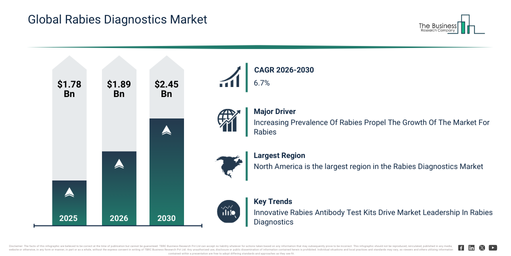
    The rabies diagnostics market has shown robust growth in recent years. Its value is anticipated to rise from $1.78 billion in 2025 to $1.89 billion in 2026, achieving a compound annual growth rate (CAGR) of 6.6%. The expansion witnessed in previous periods is attributable to the extensive occurrence of rabies in animals, greater public knowledge about rabies prevention, an increase in veterinary diagnostic laboratories, governmental programs aimed at rabies control, and improvements in diagnostic reagents and kits.

    The rabies diagnostics market is poised for significant expansion in the coming years. Its size is expected to swell to $2.45 billion by 2030, achieving a compound annual growth rate (CAGR) of 6.7%. This projected growth stems from several factors, including the increasing adoption of AI-powered diagnostic tools, a rising demand for rapid point-of-care tests, the widespread expansion of mobile-based disease surveillance, continuous innovation in molecular and serology techniques, and a surge in public-private collaborations aimed at rabies eradication. Foremost trends anticipated during this period feature rapid point-of-care rabies testing, advanced molecular diagnostic techniques, the integration of AI into rabies detection processes, mobile-based rabies surveillance solutions, and high-sensitivity serology testing.

    Download A Free Sample Report For Comprehensive Market Insights:

    https://www.thebusinessresearchcompany.com/sample.aspx?id=8476&type=smp

    What Are The Main Drivers Accelerating The Growth Of The Rabies Diagnostics Market?

    The increasing prevalence of rabies is expected to propel the growth of the market for rabies diagnostics. Rabies is a preventable viral illness that is most commonly spread via a rabid animal’s bite. The rabies virus attacks mammals’ central nervous systems, eventually causing brain damage and leading to death. Rabies diagnosis is used to detect the rabies virus in humans and animals using a variety of diagnostic tests and techniques. Additionally, the rising cases of infectious animal-transmitted diseases have favored the demand for rabies diagnostics. For instance, in April 2024, according to the South Dakota Department of Health (SD DOH), a US-based government administration, in 2023, South Dakota reported 20 animals testing positive for rabies (Table 1), representing a 122% increase compared with 2022, when 9 cases were identified. Of the rabid animals, one was a domestic animal (a cow) and the remaining 19 were wild animals, including 18 bats and 1 skunk. Therefore, the increasing prevalence of rabies will drive the rabies diagnostics market.

    How Is The Rabies Diagnostics Market Examined Through Segment Analysis?

    The rabies diagnostics market covered in this report is segmented –

    1) By Diagnostic Method: Fluorescent Antibody Test, Immunohistochemical Test, Amplification Methods, Histologic Examination, Serology Tests

    2) By Technology: ELISA Or Immunohistochemistry, Chromatography Techniques, PCR, Other Technologies

    3) By End-User: Hospital, Diagnostic Centers, Cancer Palliative Care Clinics, Other End-Users

    Subsegments:

    1) By Fluorescent Antibody Test: Direct Fluorescent Antibody Test (DFA)

    2) By Immunohistochemical: Enzyme-Linked Immunosorbent Assay (ELISA), Western Blotting

    3) By Amplification Methods: Polymerase Chain Reaction (PCR), Reverse Transcription PCR (RT-PCR)

    4) By Histologic Examination: Microscopic Examination, Tissue Staining Techniques

    5) By Serology Tests: Virus Neutralization Test (VNT), Enzyme-Linked Immunosorbent Assay (ELISA)

    Which Trends Are Contributing To Changes In The Rabies Diagnostics Market?

    Major companies operating in the rabies diagnostic market are developing innovative products, such as rabies antibody test kits, to sustain their position in the market. A rabies antibody test kit is a diagnostic tool used to detect antibodies in the blood to assess immunity or the need for additional rabies vaccination. For instance, in February 2024, BioStone Animal Health, a US-based diagnostic company, launched AsurDx. The rabies antibody test kit detects antibodies specific to the rabies virus in mammalian serum samples using a rapid and sensitive ELISA method. It provides a cost-effective solution for assessing rabies immunity, suitable for both vaccinated animals and those at risk. The kit is designed for simple use and delivers reliable results. It helps ensure animals meet the standard of 0.5 international units (UL) per ml for immune activity against rabies.

    Which Industry Players Are Present In The Rabies Diagnostics Market?

    North America was the largest region in the rabies diagnostics market in 2025. The regions covered in the rabies diagnostics market report are Asia-Pacific, South East Asia, Western Europe, Eastern Europe, North America, South America, Middle East, Africa.

    Access The Complete Rabies Diagnostics Market Report:

    https://www.thebusinessresearchcompany.com/report/rabies-diagnostics-global-market-report

    Which Region Accounts For The Highest Share Of The Rabies Diagnostics Market?

    North America was the largest region in the rabies diagnostics market in 2025. The regions covered in the rabies diagnostics market report are Asia-Pacific, South East Asia, Western Europe, Eastern Europe, North America, South America, Middle East, Africa.

    Access a Customized Rabies Diagnostics Market Report for Deeper Competitive Insights

    https://www.thebusinessresearchcompany.com/sample.aspx?id=8476&type=smp

    Get in touch with us:

    The Business Research Company: https://www.thebusinessresearchcompany.com/

    Americas: +1 310-496-7795

    Asia: +44 7882 955267 & +91 8897263534

    Europe: +44 7882 955267

    Email us at: marketing@tbrc.info

    Follow us on:

    LinkedIn: https://in.linkedin.com/company/the-business-research-company

    YouTube: https://www.youtube.com/channel/UC24_fI0rV8cR5DxlCpgmyFQ

    Global Market Model: https://www.thebusinessresearchcompany.com/global-market-model
  • Rising Zoonotic Disease Threats Drive Surging Demand For Poultry Vaccines In Global Markets Is Supporting Development Across The Poultry Vaccines Market

    Rising Zoonotic Disease Threats Drive Surging Demand For Poultry Vaccines In Global Markets Is Supporting Development Across The Poultry Vaccines Market

    The Business Research Company’s 2026 market reports feature advanced enhancements such as market attractiveness analysis, total addressable market evaluation, company benchmarking matrices, interactive Excel dashboards, expanded supply chain intelligence, emerging startup coverage, and detailed product insights, delivering more actionable and strategically valuable research.

    How Will The Market Value Of The Poultry Vaccines Market Change Between 2026 And 2030?

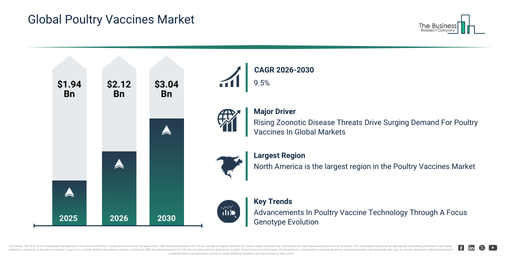
    The poultry vaccines market size has experienced robust growth in recent years. This market is projected to expand from $1.94 billion in 2025 to $2.12 billion in 2026, demonstrating a compound annual growth rate (CAGR) of 9.4%. Historically, this expansion has been driven by factors such as outbreaks of avian diseases, an increase in poultry consumption, the advancement of traditional vaccines, heightened veterinary awareness at the farm level, and the growth of commercial poultry farming.

    The poultry vaccines market is projected to experience substantial expansion in the coming years. It is anticipated to reach $3.04 billion by 2030, exhibiting a compound annual growth rate (CAGR) of 9.5%. This projected growth during the forecast period can be primarily attributed to factors such as the rise of recombinant and DNA vaccines, the implementation of precision poultry vaccination programs, ongoing technological progress in vaccine delivery mechanisms, governmental efforts to promote poultry health, and a heightened emphasis on biosecurity practices within poultry farms. Key trends expected during this period involve the increased uptake of live and inactivated poultry vaccines, a concentrated effort on preventing diseases in broilers and layers, the broader application of recombinant and DNA vaccines, the incorporation of vaccination schedules into overall farm management strategies, and the establishment of robust cold chain infrastructure for distributing poultry vaccines.

    Download A Free Sample Report For Comprehensive Market Insights:

    https://www.thebusinessresearchcompany.com/sample.aspx?id=8622&type=smp

    Which Growth Drivers Are Expected To Support The Poultry Vaccines Market Forward?

    The increasing prevalence of zoonotic diseases is expected to propel the growth of the poultry vaccine market going forward. Zoonotic diseases are a group of common diseases caused by pathogenic germs such as viruses, bacteria, parasites, and fungi. The increasing prevalence of zoonotic diseases is rising due to increased human–animal interaction, as expanding urbanization and livestock farming bring people and animals into closer contact. The poultry vaccine market supports the increasing prevalence of zoonotic diseases, as rising disease risks drive the need for vaccination to prevent the spread of infections from poultry to humans and ensure flock health. For instance, in December 2025, according to European Centre for Disease Prevention and Control, a Sweden-based government agency, in 2024, the five most reported zoonoses in humans were campylobacteriosis, with 168,396 cases (55.3 cases per 100,000 people), salmonellosis, with 79,703 cases (18.6 cases per 100,000 people), Shiga toxin-producing Escherichia coli (STEC) infections, with 11,738 cases (3.5 cases per 100,000 people) and echinococcosis, with 984 cases (0.22 cases per 100,000 people). Therefore, the increasing prevalence of zoonotic diseases is expected to drive the growth of poultry vaccines.

    Which Segment Groups Define The Poultry Vaccines Market Landscape?

    The poultry vaccines market covered in this report is segmented –

    1) By Type: Porcine Vaccines, Poultry Vaccine, Livestock Vaccine, Companion Animal Vaccine, Aquaculture Vaccines, Other Animal Vaccines

    2) By Disease Type: Avain Influenza, Infectious Bronchitis

    3) By Dosage Form: Liquid Vaccine, Freeze Dried Vaccine, Duct

    4) By Technology: Toxoid, Live Attenuated Vaccines, Recombinant Vaccines, Inactivated Vaccines

    5) By Application: Broiler, Layer, Breeder

    Subsegments:

    1) By Porcine Vaccines: Inactivated Vaccines, Live Attenuated Vaccines, DNA Vaccines, Recombinant Vaccines, Toxoid Vaccines

    2) By Poultry Vaccines: Live Vaccines, Inactivated Vaccines, Recombinant Vaccines, Subunit Vaccines, DNA Vaccines

    3) By Livestock Vaccines: Bovine Vaccines, Swine Vaccines, Ovine Vaccines

    4) By Companion Animal Vaccines: Canine Vaccines, Feline Vaccines, Ferret Vaccines

    5) By Aquaculture Vaccines: Fish Vaccines, Shrimp Vaccines

    6) By Other Animal Vaccines: Wildlife Vaccines, Exotic Animal Vaccines

    What Trends Are Shaping The Poultry Vaccines Market Structure?

    Major companies operating in the poultry vaccine market are focused on developing new technological solutions to strengthen their position. New technological solutions refer to advanced vaccine formulations, delivery systems, and diagnostic tools designed to enhance disease prevention, efficacy, and poultry health management. For instance, in October 2023, Zoetis Inc., a US-based animal health company launched Circomax. The porcine circovirus type 2 (PCV2) vaccine comes in two genotypes a and b. The goal of the vaccination is to defend against PCV2 risks, such as the three genotypes seen in the UK pig herd, and to offer broader coverage. The only PCV2 vaccination that is licensed to protect against all three genotypes is this one, which has shown protection against PCV2a, PCV2b, and PCV2d. With the introduction of CircoMax, Zoetis is attempting to keep ahead of the PCV2 genotype evolution and offer healthy piglets high levels of efficacy, convenience, and proven safety.

    Which Organizations Are Involved In The Poultry Vaccines Market?

    North America was the largest region in the poultry vaccines market in 2025. The regions covered in the poultry vaccines market report are Asia-Pacific, South East Asia, Western Europe, Eastern Europe, North America, South America, Middle East, Africa.

    Access The Complete Poultry Vaccines Market Report:

    https://www.thebusinessresearchcompany.com/report/poultry-vaccines-global-market-report

    Which Region Is The Primary Market For The Poultry Vaccines Market?

    North America was the largest region in the poultry vaccines market in 2025. The regions covered in the poultry vaccines market report are Asia-Pacific, South East Asia, Western Europe, Eastern Europe, North America, South America, Middle East, Africa.

    Access a Customized Poultry Vaccines Market Report for Deeper Competitive Insights

    https://www.thebusinessresearchcompany.com/sample.aspx?id=8622&type=smp

    Get in touch with us:

    The Business Research Company: https://www.thebusinessresearchcompany.com/

    Americas: +1 310-496-7795

    Asia: +44 7882 955267 & +91 8897263534

    Europe: +44 7882 955267

    Email us at: marketing@tbrc.info

    Follow us on:

    LinkedIn: https://in.linkedin.com/company/the-business-research-company

    YouTube: https://www.youtube.com/channel/UC24_fI0rV8cR5DxlCpgmyFQ

    Global Market Model: https://www.thebusinessresearchcompany.com/global-market-model
  • Creative Diagnostics Launches Rapid Robenidine Test Reagents for Poultry Health Monitoring and Food Safety Is Affecting The Direction Of The Poultry Healthcare Market

    Creative Diagnostics Launches Rapid Robenidine Test Reagents for Poultry Health Monitoring and Food Safety Is Affecting The Direction Of The Poultry Healthcare Market

    The Business Research Company’s 2026 market reports feature advanced enhancements such as market attractiveness analysis, total addressable market evaluation, company benchmarking matrices, interactive Excel dashboards, expanded supply chain intelligence, emerging startup coverage, and detailed product insights, delivering more actionable and strategically valuable research.

    What Is The Forecasted Rise In Market Size Of The Poultry Healthcare Market During The Forecast Period?

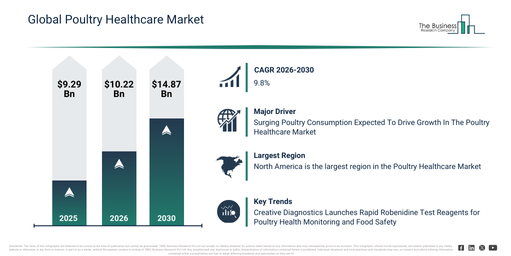
    The poultry healthcare market has experienced rapid expansion in its size over recent years. This market is projected to expand from $9.29 billion in 2025 to $10.22 billion by 2026, demonstrating a compound annual growth rate (CAGR) of 10.0%. Historically, this growth can be ascribed to several factors, including an increase in poultry production, the widespread occurrence of bacterial and viral infections affecting poultry, the conventional application of antibiotics for growth enhancement, insufficient understanding of biosecurity measures, and the growing uptake of laboratory testing for poultry ailments.

    The poultry healthcare market is anticipated to experience robust expansion in the coming years. Projections indicate it will reach $14.87 billion by 2030, demonstrating a compound annual growth rate (CAGR) of 9.8%. This expansion during the forecast period is primarily driven by factors such as the rising demand for antibiotic-free poultry items, the greater utilization of precision medicine and vaccines, the integration of nutritional supplements and feed additives, the broadening scope of molecular diagnostics and ELISA testing, and increased capital outlay in poultry healthcare infrastructure and biosecurity measures. Key trends expected over the forecast horizon encompass the growing uptake of live attenuated and recombinant vaccines, an escalating need for probiotics and prebiotics in poultry feed, the expanding application of molecular diagnostic tests for identifying diseases, enhanced farm hygiene and biosecurity protocols, and a heightened understanding of alternatives to antibiotic growth promoters (AGP).

    Download A Free Sample Report For Comprehensive Market Insights:

    https://www.thebusinessresearchcompany.com/sample.aspx?id=5734&type=smp

    What Influential Factors Are Boosting The Poultry Healthcare Market Demand?

    The increasing poultry consumption is expected to propel the growth of the poultry healthcare market going forward. Poultry encompasses domesticated birds such as chickens, turkeys, ducks, geese, quail, and others, which are raised for both meat and egg production. With the growing demand for poultry products, larger flocks are being raised, creating higher disease risks due to crowded conditions. Therefore, it becomes increasingly important to prioritize poultry healthcare to prevent, control, and manage diseases effectively. For instance, in July 2024, according to The Poultry Site, an Australia-based agricultural industry platform, in 2023, poultry meat consumption in Bulgaria rose by 8.2% compared with 2022, reflecting stronger consumer demand for poultry products. Therefore, increasing poultry consumption is expected to propel the growth of the poultry healthcare market.

    What Key Segment Areas Are Included In The Poultry Healthcare Market Assessment?

    The poultry healthcare market covered in this report is segmented –

    1) By Product: Vaccines, Parasiticides, Anti Infectives, Medical Feed Additives

    2) By Test: ELISA, PCR, Molecular Diagnostic test, Laboratory Test

    3) By Application: Farm, House

    Subsegments:

    1) By Vaccines: Live Attenuated Vaccines, Inactivated Vaccines, Recombinant Vaccines

    2) By Parasiticides: Endoparasiticides, Ectoparasiticides, Broad-Spectrum Parasiticides

    3) By Anti-Infectives: Antibiotics, Antifungals, Antivirals

    4) By Medical Feed Additives: Antibiotic Growth Promoters (AGPs), Probiotics, Prebiotics, Nutritional Supplements

    Which Trends Are Supporting The Evolution Of The Poultry Healthcare Market?

    Major companies operating in the poultry diagnostics market are developing Rapid Robenidine Test Reagents to enhance the efficiency and accuracy of diagnosing and monitoring poultry health, specifically for detecting the presence of robenidine, an anticoccidial agent used to prevent coccidiosis in poultry. Robenidine Test Reagents are specialized diagnostic tools developed for the detection of robenidine residues in poultry meat and organs. These reagents are essential for ensuring food safety and regulatory compliance regarding the use of robenidine, an antibiotic commonly used in veterinary medicine to treat coccidiosis in poultry. For instance in October 2024, Creative Diagnostics, a US-based company, launched Rapid Robenidine Test Reagents for the analysis of anticoccidial residues. These reagents are designed to quickly and accurately detect the presence of robenidine, an anticoccidial agent, in poultry and other samples to ensure compliance with safety and quality standards.

    Who Are The Firms Contributing To The Poultry Healthcare Market Ecosystem?

    North America was the largest region in the poultry healthcare market in 2025.Asia-Pacific is expected to be the fastest-growing region in the forecast period. The regions covered in the poultry healthcare market report are Asia-Pacific, South East Asia, Western Europe, Eastern Europe, North America, South America, Middle East, Africa.

    Access The Complete Poultry Healthcare Market Report:

    https://www.thebusinessresearchcompany.com/report/poultry-healthcare-global-market-report

    Which Geographic Region Represents The Largest Poultry Healthcare Market Share?

    North America was the largest region in the poultry healthcare market in 2025.Asia-Pacific is expected to be the fastest-growing region in the forecast period. The regions covered in the poultry healthcare market report are Asia-Pacific, South East Asia, Western Europe, Eastern Europe, North America, South America, Middle East, Africa.

    Access a Customized Poultry Healthcare Market Report for Deeper Competitive Insights

    https://www.thebusinessresearchcompany.com/sample.aspx?id=5734&type=smp

    Get in touch with us:

    The Business Research Company: https://www.thebusinessresearchcompany.com/

    Americas: +1 310-496-7795

    Asia: +44 7882 955267 & +91 8897263534

    Europe: +44 7882 955267

    Email us at: marketing@tbrc.info

    Follow us on:

    LinkedIn: https://in.linkedin.com/company/the-business-research-company

    YouTube: https://www.youtube.com/channel/UC24_fI0rV8cR5DxlCpgmyFQ

    Global Market Model: https://www.thebusinessresearchcompany.com/global-market-model

  • The Poultry Feed Mycotoxin Binders And Modifiers Market Is Advancing With Support From Surge In Meat Consumption Fueling Growth In Poultry Feed Mycotoxin Binders Market

    The Poultry Feed Mycotoxin Binders And Modifiers Market Is Advancing With Support From Surge In Meat Consumption Fueling Growth In Poultry Feed Mycotoxin Binders Market

    The Business Research Company’s 2026 market reports feature advanced enhancements such as market attractiveness analysis, total addressable market evaluation, company benchmarking matrices, interactive Excel dashboards, expanded supply chain intelligence, emerging startup coverage, and detailed product insights, delivering more actionable and strategically valuable research.

    How Is The Poultry Feed Mycotoxin Binders And Modifiers Market’s Market Value Anticipated To Evolve From 2026 To 2030?

    The poultry feed mycotoxin binders and modifiers market size has experienced consistent expansion in recent years. It is anticipated to increase from $3.22 billion in 2025 to $3.35 billion in 2026, achieving a compound annual growth rate (CAGR) of 4.1%. This historical growth can be attributed to several factors, including the widespread occurrence of mycotoxin contamination in poultry feed, the expanding poultry industry and its production, the historical scarcity of effective feed additives, rigorous food safety and feed regulations in Europe and North America, and heightened awareness among poultry farmers concerning animal health.

    The poultry feed mycotoxin binders and modifiers market is projected for consistent expansion in the coming years, with its size expected to reach $4.07 billion by 2030, exhibiting a compound annual growth rate (CAGR) of 4.9%. This growth over the forecast period is fueled by advancements in enzyme and biological modifier technologies, a rising demand for organic and natural feed additives, the increasing scale of poultry farming in Asia-Pacific, the growing adoption of precision feeding techniques, and collaborative efforts between feed additive manufacturers and poultry integrators. Significant trends identified for this period include the increased application of enzyme-based mycotoxin modifiers, a rise in the use of clay and silicate-based binders, the development of both liquid and dry feed additive solutions, enhanced awareness of mycotoxin risks in poultry feed, and the broadening availability of customized feed additive solutions.

    Download A Free Sample Report For Comprehensive Market Insights:

    https://www.thebusinessresearchcompany.com/sample.aspx?id=10385&type=smp

    Which Drivers Are Advancing The Poultry Feed Mycotoxin Binders And Modifiers Market Growth?

    Rising meat consumption is expected to propel the growth of the poultry feed mycotoxin binders and modifiers market going forward. Meat refers to the flesh or edible parts of an animal. Meat consumption is rising due to rising incomes, as higher purchasing power allows consumers to afford meat more frequently and include it as a regular part of their diet. Poultry feed mycotoxin binders and modifiers help in mitigating the effects of toxic substances that can be absorbed by poultry, making it safer to consume. For instance, in 2024, according to the Food and Agriculture Organization (FAO), an Italy-based specialized agency of the United Nations, poultry meat consumption will reach 91 million tons by 2032 i.e. It is estimated to grow by 15% in the next decade. Therefore, rising meat consumption will drive the poultry feed mycotoxin binders and modifiers market.

    How Is Segment Classification Applied In The Poultry Feed Mycotoxin Binders And Modifiers Market?

    The poultry feed mycotoxin binders and modifiers market covered in this report is segmented –

    1) By Product Type: Mycotoxin Binders, Mycotoxin Modifiers

    2) By Source: Organic, Inorganic

    3) By Form: Liquid, Dry

    Subsegments:

    1) By Mycotoxin Binders: Clay-Based Binders, Silicate-Based Binders, Activated Charcoal Binders

    2) By Mycotoxin Modifiers: Enzyme-Based Modifiers, Chemical Modifiers, Biological Modifiers

    What Trends Are Affecting The Growth Of The Poultry Feed Mycotoxin Binders And Modifiers Market?

    Major companies in the poultry feed mycotoxin binders and modifiers market have launched new and innovative technologies to strengthen their position in the market. New and innovative technologies refer to advanced mycotoxin-binding and detoxification solutions using improved adsorbents, enzymes, or biological modifiers to enhance toxin control and feed safety. For instance, in August 2024, DSM-Firmenich Animal Nutrition and Health, Netherlands-based company focused on nutrition, health and sustainable living, announced that Canadian Food Inspection Agency (CFIA) approval of a novel enzyme, fumonisin esterase, to help swine and poultry producers manage mycotoxins in feed. Firm will offer a new product which includes the fumonisin esterase called Mycofix®FUMzyme for use in swine and poultry diets in Canada.

    Which Key Players Are Active In The Poultry Feed Mycotoxin Binders And Modifiers Market?

    North America was the largest region in the poultry feed mycotoxin binders and modifiers market in 2025. The regions covered in the poultry feed mycotoxin binders and modifiers market report are Asia-Pacific, South East Asia, Western Europe, Eastern Europe, North America, South America, Middle East, Africa.

    Access The Complete Poultry Feed Mycotoxin Binders And Modifiers Market Report:

    https://www.thebusinessresearchcompany.com/report/poultry-feed-mycotoxin-binders-and-modifiers-global-market-report

    Which Region Leads The Poultry Feed Mycotoxin Binders And Modifiers Market By Size?

    North America was the largest region in the poultry feed mycotoxin binders and modifiers market in 2025. The regions covered in the poultry feed mycotoxin binders and modifiers market report are Asia-Pacific, South East Asia, Western Europe, Eastern Europe, North America, South America, Middle East, Africa.

    Access a Customized Poultry Feed Mycotoxin Binders And Modifiers Market Report for Deeper Competitive Insights

    https://www.thebusinessresearchcompany.com/sample.aspx?id=10385&type=smp

    Get in touch with us:

    The Business Research Company: https://www.thebusinessresearchcompany.com/

    Americas: +1 310-496-7795

    Asia: +44 7882 955267 & +91 8897263534

    Europe: +44 7882 955267

    Email us at: marketing@tbrc.info

    Follow us on:

    LinkedIn: https://in.linkedin.com/company/the-business-research-company

    YouTube: https://www.youtube.com/channel/UC24_fI0rV8cR5DxlCpgmyFQ

    Global Market Model: https://www.thebusinessresearchcompany.com/global-market-model
  • Increasing Adoption Of Impact Of Rising Poultry Diseases On The Growth Of The Poultry Diagnostics Market Is Influencing The Poultry Diagnostics Market

    Increasing Adoption Of Impact Of Rising Poultry Diseases On The Growth Of The Poultry Diagnostics Market Is Influencing The Poultry Diagnostics Market

    The Business Research Company’s 2026 market reports feature advanced enhancements such as market attractiveness analysis, total addressable market evaluation, company benchmarking matrices, interactive Excel dashboards, expanded supply chain intelligence, emerging startup coverage, and detailed product insights, delivering more actionable and strategically valuable research.

    By 2030, How Much Growth In Market Size Is Expected For The Poultry Diagnostics Market?

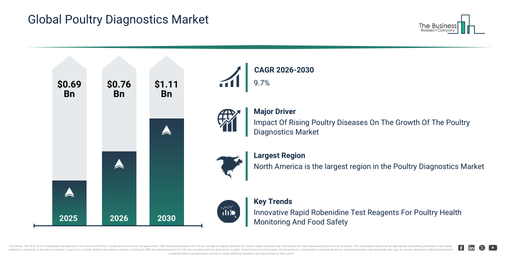
    The poultry diagnostics market size has experienced rapid expansion in recent years. Its value is projected to climb from $0.69 billion in 2025 to $0.76 billion in 2026, exhibiting a compound annual growth rate (CAGR) of 10.1%. This historical growth can be ascribed to factors such as frequent outbreaks of avian diseases, a rising poultry population, limited access to advanced diagnostics, increasing demand for poultry products, and the expansion of veterinary healthcare infrastructure.

    The poultry diagnostics market is projected to experience substantial growth over the next few years, reaching a size of $1.11 billion by 2030, at a compound annual growth rate (CAGR) of 9.7%. This expansion during the forecast period is attributed to several factors, including advancements in poultry diagnostic technology, the wider uptake of automated diagnostic instruments, heightened awareness regarding preventive poultry healthcare, the integration of digital farm management with diagnostic tools, and the expansion of rapid and point-of-care testing solutions. Key trends anticipated in this period encompass the increased adoption of PCR and ELISA-based diagnostic technologies, a rise in the use of rapid test kits for early disease detection, the expansion of poultry disease surveillance programs, a heightened emphasis on biosecurity and preventive healthcare in poultry, and the integration of veterinary diagnostic services into farm management systems.

    Download A Free Sample Report For Comprehensive Market Insights:

    https://www.thebusinessresearchcompany.com/sample.aspx?id=20591&type=smp

    What Primary Factors Are Fueling The Expansion Of The Poultry Diagnostics Market?

    The rising incidence of poultry diseases is expected to propel the growth of the poultry diagnostics market going forward. Poultry diseases refer to various health issues that affect domesticated birds raised for meat, eggs, or feathers. These diseases can significantly impact the health and productivity of poultry, leading to economic losses in the poultry industry. The rising incidence of poultry diseases is due to several factors, such as intensive farming practices, nutritional deficiencies, environmental stressors, and emerging pathogens. Poultry diagnostics is instrumental in combating the rise of poultry diseases by enabling early detection, ensuring product safety, supporting research, and fostering a comprehensive understanding of flock health, diagnostics significantly contribute to the sustainability and productivity of the poultry industry. For instance, in April 2025, according to the World Organisation for Animal Health (WOAH), a France-based intergovernmental animal health body, 949 outbreaks of highly pathogenic avian influenza (HPAI) in poultry were reported globally between October 2024 and February 2025, surpassing the total number of outbreaks recorded during the previous season, and reflecting an intensifying global trend in poultry disease incidence. Therefore, the rising incidence of poultry diseases is driving the growth of the poultry diagnostics market.

    What Are The Core Segment Classifications In The Poultry Diagnostics Market?

    The poultry diagnostics market covered in this report is segmented –

    1) By Product: Instruments, Consumables, Kits

    2) By Technology: Enzyme-linked Immunosorbent Assay (ELISA), Polymerase Chain Reaction (PCR), Immunofluorescent Assay, Hemagglutination Assay, Other Technologies

    3) By Disease Indication: Avian Salmonellosis, Avian Influenza, Newcastle Disease, Mycoplasma, Infectious Bursal Disease, Other Disease Indications

    4) By End-User: Veterinary Hospitals And Clinics, Veterinary Diagnostics Laboratories, Other End-Users

    Subsegments:

    1) By Instruments: PCR Machines, Microbiological Analyzers, Immunoassay Analyzers, Hematology Analyzers, Spectrophotometers, Diagnostic Imaging Equipment, Electrolyte Analyzers

    2) By Consumables: Test Reagents, Diagnostic Kits, Culture Media, Antibodies And Antigens, PCR Kits, Disposable Pipettes And Tips, Blood Collection Tubes

    3) By Kits: PCR Diagnostic Kits, ELISA Kits, Rapid Test Kits, Serological Test Kits, Antibody Detection Kits, PCR-Based Poultry Disease Kits, Disease-Specific Diagnostic Kits

    Which Trends Are Influencing The Direction Of The Poultry Diagnostics Market?

    Major companies operating in the poultry diagnostics market are focused on developing innovative products such as test reagents to enhance the efficiency and accuracy of diagnosing and monitoring poultry health, specifically for detecting the presence of robenidine, an anticoccidial agent used to prevent coccidiosis in poultry. Test reagents are specialized diagnostic tools for detecting robenidine residues in poultry meat and organs. These reagents are essential for ensuring food safety and regulatory compliance regarding using robenidine, an antibiotic commonly used in veterinary medicine to treat coccidiosis in poultry. For instance, in October 2024, Creative Diagnostics, a US-based company, launched Rapid Robenidine Test Reagents to analyze anticoccidial residues. These reagents are designed to quickly and accurately detect the presence of robenidine, an anticoccidial agent, in poultry and other samples to ensure compliance with safety and quality standards.

    Who Are The Leading Firms Participating In The Poultry Diagnostics Market?

    North America was the largest region in the poultry diagnostics market in 2025. The regions covered in the poultry diagnostics market report are Asia-Pacific, South East Asia, Western Europe, Eastern Europe, North America, South America, Middle East, Africa.

    Access The Complete Poultry Diagnostics Market Report:

    https://www.thebusinessresearchcompany.com/report/poultry-diagnostics-global-market-report

    Which Region Has The Strongest Presence In The Poultry Diagnostics Market?

    North America was the largest region in the poultry diagnostics market in 2025. The regions covered in the poultry diagnostics market report are Asia-Pacific, South East Asia, Western Europe, Eastern Europe, North America, South America, Middle East, Africa.

    Access a Customized Poultry Diagnostics Market Report for Deeper Competitive Insights

    https://www.thebusinessresearchcompany.com/sample.aspx?id=20591&type=smp

    Get in touch with us:

    The Business Research Company: https://www.thebusinessresearchcompany.com/

    Americas: +1 310-496-7795

    Asia: +44 7882 955267 & +91 8897263534

    Europe: +44 7882 955267

    Email us at: marketing@tbrc.info

    Follow us on:

    LinkedIn: https://in.linkedin.com/company/the-business-research-company

    YouTube: https://www.youtube.com/channel/UC24_fI0rV8cR5DxlCpgmyFQ

    Global Market Model: https://www.thebusinessresearchcompany.com/global-market-model