Month: June 2026

  • Telehealth Software Market Forecast Analysis Through 2030 With Insights On Industry Expansion

    Telehealth Software Market Forecast Analysis Through 2030 With Insights On Industry Expansion

    The Business Research Company’s 2026 market reports feature enhanced tools like market attractiveness analysis, TAM assessment, and company scoring matrices, along with interactive dashboards, deeper supply chain insights, and startup coverage strengthening the depth, usability, and strategic value of insights.

    What Increase In Market Value Is Predicted For The Telehealth Software Market During The 2026–2030 Period?

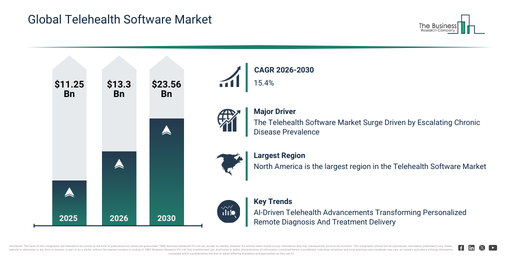
    The telehealth software market has seen significant expansion in recent years. Projections show it will increase from $11.25 billion in 2025 to $13.3 billion in 2026, achieving a compound annual growth rate (CAGR) of 18.2%. The historical growth of this market can be attributed to factors such as the increasing digitization of healthcare workflows, the growing use of electronic prescribing systems, the broader adoption of cloud computing in healthcare, an escalating need for care coordination tools, and improvements in healthcare data interoperability.

    The telehealth software market size is anticipated to undergo significant growth in the upcoming years, expanding to $23.56 billion by 2030, driven by a compound annual growth rate (CAGR) of 15.4%. This projected growth can be attributed to several factors such as increasing investments in AI-powered healthcare software, a rising demand for remote management of chronic diseases, the expansion of value-based care models, a growing focus on cybersecurity compliance, and the increasing integration of telehealth software with clinical systems. Major trends anticipated during this forecast period include the increasing adoption of integrated telehealth software platforms, a rising utilization of AI-based clinical decision support tools, a growing demand for solutions that monitor medication adherence, the expansion of cloud-based telehealth applications, and an enhanced focus on secure health data management.

    Download A Free Sample Report For Comprehensive Market Insights:

    https://www.thebusinessresearchcompany.com/sample.aspx?id=14809&type=smp

    Which Growth Factors Are Strengthening The Telehealth Software Market Landscape?

    The increasing occurrence of chronic illnesses is projected to fuel the expansion of the telehealth software market moving forward. Chronic diseases are long-term medical conditions characterized by continuous or recurring symptoms that typically necessitate ongoing management and treatment. The rise in chronic diseases is attributed to factors like aging populations, the use of tobacco and alcohol, and insufficient access to healthcare. Telehealth software supports the management of chronic diseases by providing remote access to healthcare services, enabling patients to obtain regular monitoring and consultations without requiring in-person visits. This enhanced accessibility fosters early detection, continuous care, and patient empowerment, ultimately contributing to improved management and outcomes for individuals dealing with chronic conditions. For instance, in June 2023, the Institute for Health Metrics and Evaluation, a US-based public health research institute, reported that over half a billion people globally were living with diabetes. This number is expected to more than double, reaching 1.3 billion people by 2050. Consequently, the expanding prevalence of chronic diseases is a key driver for the growth of the telehealth software market.

    How Is The Telehealth Software Market Examined Through Segment Analysis?

    The telehealth software market covered in this report is segmented –

    1) By Component: Software, Services

    2) By Deployment: Cloud-Based, On-Premises

    3) By End User: Healthcare Providers, Healthcare Payers And Patients

    Subsegments:

    1) By Software: Telemedicine Software, Remote Patient Monitoring Software, Video Conferencing Software, Electronic Health Record (EHR) Integration Software, Clinical Decision Support Software, mHealth Applications, Patient Portals, Appointment Scheduling Software

    2) By Services: Telehealth Consulting Services, Telehealth Integration Services, Managed Services, Training And Support Services, Maintenance Services

    Which Trends Are Affecting The Telehealth Software Market Framework?

    Major companies active in the telehealth and telemedicine market are prioritizing the development of technologically advanced solutions, such as online platforms, to enhance the delivery of virtual care, streamline interactions between patients and providers, and expand remote access to healthcare services. An online platform in telehealth and telemedicine serves as a digital interface, enabling patients and healthcare providers to connect remotely for consultations, diagnoses, treatment, and health monitoring via the internet. For instance, in August 2024, Pfizer Inc., a US-based biopharmaceutical company, introduced PfizerForAll. This platform is a free digital health online service designed to connect patients with telehealth providers, facilitate the delivery of prescribed medications, and assist with scheduling vaccinations and diagnostic tests.

    Who Are The Businesses Driving Activity In The Telehealth Software Market?

    Major companies operating in the telehealth software market are Teladoc Health Inc, American Well Corporation, Cerner Corporation, Allscripts Healthcare LLC, Oracle Corporation, Koninklijke Philips N.V, Zoom Video Communications Inc, Zocdoc Inc, CureMD Healthcare, Vocera Communications Inc, Care Innovations LLC, GlobalMedia Group LLC, Updox LLC, Capsule Technologies Inc, Biotricity Inc, BioTelemetry, Medtronic Inc, Masimo Corporation, Aerotel Medical Systems Ltd, PatientSafe Solutions Inc

    Access The Complete Telehealth Software Market Report:

    https://www.thebusinessresearchcompany.com/report/telehealth-software-global-market-report

    What Is The Largest Regional Market In The Telehealth Software Market?

    North America was the largest region in the telehealth software market in 2025. Asia-Pacific is expected to be the fastest-growing region in the forecast period. The regions covered in the telehealth software market report are Asia-Pacific, South East Asia, Western Europe, Eastern Europe, North America, South America, Middle East, Africa.

    Access Telehealth Software Market Report for Deeper Competitive Insights

    https://www.thebusinessresearchcompany.com/customise?id=14809&type=smp

    Browse Through More Reports Similar to the Global Telehealth Software Market 2026, By The Business Research Company

    Telehealth Global Market Report 2026

    https://www.thebusinessresearchcompany.com/report/telehealth-global-market-report

    Telemetry Global Market Report 2026

    https://www.thebusinessresearchcompany.com/report/telemetry-global-market-report

    Telemedicine Equipment Global Market Report 2026

    https://www.thebusinessresearchcompany.com/report/telemedicine-equipment-global-market-report

    Get in touch with us:

    The Business Research Company: https://www.thebusinessresearchcompany.com/

    Americas: +1 310-496-7795

    Asia: +44 7882 955267 & +91 8897263534

    Europe: +44 7882 955267

    Email us at: marketing@tbrc.info

    Follow us on:

    LinkedIn: https://in.linkedin.com/company/the-business-research-company

    YouTube: https://www.youtube.com/channel/UC24_fI0rV8cR5DxlCpgmyFQ

    Global Market Model: https://www.thebusinessresearchcompany.com/global-market-model

  • Telehealth And Telemedicine Market Growth Outlook Indicating Expansion To $392 Billion By 2030

    Telehealth And Telemedicine Market Growth Outlook Indicating Expansion To $392 Billion By 2030

    The Business Research Company’s 2026 market reports feature enhanced tools like market attractiveness analysis, TAM assessment, and company scoring matrices, along with interactive dashboards, deeper supply chain insights, and startup coverage strengthening the depth, usability, and strategic value of insights.

    How Will The Market Size Of The Telehealth And Telemedicine Market Progress Through 2030?

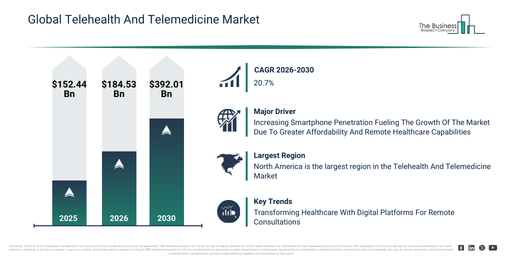
    The telehealth and telemedicine market size has experienced significant expansion in recent years. It is forecast to grow from $152.44 billion in 2025 to $184.53 billion in 2026, achieving a compound annual growth rate (CAGR) of 21.1%. The market’s historical growth can be attributed to several factors, including the expansion of digital healthcare infrastructure, increased smartphone and internet penetration, a rising demand for remote care access, the growth of teleconsultation platforms, and supportive regulatory frameworks.

    The telehealth and telemedicine market is projected to experience substantial expansion in the coming years. By 2030, this market is anticipated to reach a valuation of $392.01 billion, demonstrating a compound annual growth rate (CAGR) of 20.7%. This projected growth is driven by several factors, including the rising demand for hybrid care solutions, greater incorporation of AI diagnostics within telehealth, the expansion of tele-ICU and telepsychiatry offerings, increasing adoption of employer-provided telehealth, and a heightened emphasis on value-based care provision. Key trends for the forecast duration encompass the broadening of virtual care and remote consultations, the increasing integration of remote patient monitoring tools, wider adoption of cloud-based healthcare platforms, a stronger focus on data-informed clinical decision support, and the expanding utilization of multi-specialty telemedicine services.

    Download A Free Sample Report For Comprehensive Market Insights:

    https://www.thebusinessresearchcompany.com/sample.aspx?id=24719&type=smp

    What Important Drivers Are Powering The Telehealth And Telemedicine Market Growth?

    The rising smartphone penetration is expected to propel the growth of the telehealth and telemedicine market going forward. Smartphone penetration denotes the percentage of the population that owns and uses smartphones, illustrating the widespread adoption and integration of mobile technology into daily life. This increase in smartphone penetration is primarily due to more affordable prices and greater accessibility, making smartphones available to a wider range of consumers. Smartphones enhance telehealth and telemedicine by providing straightforward remote access to healthcare services, enabling real-time consultations, monitoring, and medical advice. They improve healthcare convenience and accessibility, especially for individuals in remote areas or with limited mobility. For instance, in October 2023, according to the GSM Association, a UK-based non-profit organization, nearly 4.3 billion people (53% of the global population) were using their smartphones to access the internet, and approximately 80% of mobile internet users are now using 4G or 5G smartphones, reflecting an increase of 330 million people from 2022 to 2023. Therefore, the increasing smartphone penetration is driving the growth of the telehealth and telemedicine market.

    Which Segment Groups Define The Telehealth And Telemedicine Market Landscape?

    The telehealth and telemedicine market covered in this report is segmented –

    1) By Component: Hardware, Software, Services

    2) By Mode of Delivery: Cloud-Based, On-Premise, Web-Based

    3) By Application: Teleconsultation, Tele Intensive Care Unit (TeleICU), Telestroke, Teleradiology, Telepsychiatry, Teledermatology

    4) By End-User: Healthcare Providers, Patients, Payers, Employers, Other End Users

    Subsegments:

    1) By Hardware: Telemedicine Carts, Diagnostic Devices, Digital Imaging Devices, Wearable Devices, Video Conferencing Equipment, Peripheral Devices

    2) By Software: Real-time Communication Software, Remote Patient Monitoring (RRM) Software, Electronic Health Record (EHR) Integration Software, Scheduling And Billing Software, Diagnostic Software, Mobile Health Apps

    3) By Services: Teleconsultation Services, Telemonitoring Services, Store-and-forward Services, Support And Maintenance Services, Training And Education Services, Managed Services

    What Trends Are Influencing The Telehealth And Telemedicine Market?

    Leading companies operating within the telehealth market are prioritizing the integration of advanced technologies, such as remote patient monitoring and AI-driven diagnostics and disease management solutions, to improve healthcare accessibility and enhance patient outcomes across a range of medical conditions. Disease management resources comprise tools and support services crafted to help patients effectively manage their chronic conditions, including educational content, treatment protocols, medication oversight, and connections to healthcare professionals. For instance, in January 2024, Eli Lilly and Company, a US-based pharmaceutical firm, launched LillyDirect. This digital healthcare experience is designed to assist patients in the U.S. living with obesity, migraine, and diabetes. The platform provides disease management resources, access to independent healthcare providers, and direct home delivery of specific Lilly medicines through third-party pharmacy services.

    Which Firms Are Competing In The Telehealth And Telemedicine Market?

    Major companies operating in the telehealth and telemedicine market are Cisco Systems Inc, Oracle Corporation, Medtronic plc, Koninklijke Philips NV, Teladoc Health Inc, Monogram Health Inc, GoodRx Holdings Inc, Doximity Inc, Modernizing Medicine Inc, Doctor On Demand Inc, MDLIVE Inc, Azalea Health Innovations Inc, Sesame Inc, Apollo TeleHealth Services, TytoCare Ltd, Azova Inc, Push Doctor Ltd, Avel eCare LLC, CureCompanion Inc, CareClix Inc, Curve Health Inc, Amwell Corporation

    Access The Complete Telehealth And Telemedicine Market Report:

    https://www.thebusinessresearchcompany.com/report/telehealth-and-telemedicine-global-market-report

    Which Region Contributes The Most To The Telehealth And Telemedicine Market?

    North America was the largest region in the telehealth and telemedicine market in 2025. Asia-Pacific is expected to be the fastest-growing region in the forecast period. The regions covered in the telehealth and telemedicine market report are Asia-Pacific, South East Asia, Western Europe, Eastern Europe, North America, South America, Middle East, Africa.

    Access Telehealth And Telemedicine Market Report for Deeper Competitive Insights

    https://www.thebusinessresearchcompany.com/customise?id=24719&type=smp

    Browse Through More Reports Similar to the Global Telehealth And Telemedicine Market 2026, By The Business Research Company

    Veterinary Telehealth Global Market Report 2026

    https://www.thebusinessresearchcompany.com/report/veterinary-telehealth-global-market-report

    Telemedicine Services Global Market Report 2026

    https://www.thebusinessresearchcompany.com/report/telemedicine-services-global-market-report

    Video Telemedicine Global Market Report 2026

    https://www.thebusinessresearchcompany.com/report/video-telemedicine-global-market-report

    Get in touch with us:

    The Business Research Company: https://www.thebusinessresearchcompany.com/

    Americas: +1 310-496-7795

    Asia: +44 7882 955267 & +91 8897263534

    Europe: +44 7882 955267

    Email us at: marketing@tbrc.info

    Follow us on:

    LinkedIn: https://in.linkedin.com/company/the-business-research-company

    YouTube: https://www.youtube.com/channel/UC24_fI0rV8cR5DxlCpgmyFQ

    Global Market Model: https://www.thebusinessresearchcompany.com/global-market-model
  • Global Telehealth Market Anticipated To Grow To $680.56 Billion By 2030 At 24.3% CAGR

    Global Telehealth Market Anticipated To Grow To $680.56 Billion By 2030 At 24.3% CAGR

    The Business Research Company’s 2026 market reports feature enhanced tools like market attractiveness analysis, TAM assessment, and company scoring matrices, along with interactive dashboards, deeper supply chain insights, and startup coverage strengthening the depth, usability, and strategic value of insights.

    What Is The Expected Market Size Of The Telehealth Market In 2026 And How Much Will It Reach By 2030?

    The telehealth market has seen its size expand significantly in recent years. It is projected to grow from $226.63 billion in 2025 to $284.99 billion in 2026, exhibiting a compound annual growth rate (CAGR) of 25.8%. Historically, this market’s expansion has been driven by increasing healthcare digitization initiatives, rising demand for remote care access, expansion of broadband connectivity, growing use of electronic health records, and improvements in telecommunication infrastructure.

    The telehealth market size is projected to experience substantial growth in the coming years. By 2030, it is anticipated to reach $680.56 billion, achieving a compound annual growth rate (CAGR) of 24.3%. This projected growth during the forecast period stems from factors such as the increasing embrace of hybrid care models, greater investments in digital health ecosystems, the broadening of tele-specialty services, an intensified focus on population health management, and enhanced regulatory backing for telehealth reimbursement. Key trends identified for the forecast period encompass a surge in virtual medical consultations, increased deployment of remote patient monitoring solutions, improved integration of telehealth platforms with EHR systems, an expansion of cloud-based telehealth services, and a stronger emphasis on maintaining virtual care continuity.

    Download A Free Sample Report For Comprehensive Market Insights:

    https://www.thebusinessresearchcompany.com/sample.aspx?id=3954&type=smp

    Which Major Factors Are Contributing To The Development Of The Telehealth Market?

    An increasing occurrence of chronic conditions such as cancer, diabetes, and hypertension is anticipated to be a primary catalyst for the telehealth market. Extended working hours, insufficient physical activity, and unhealthy dietary and drinking habits contribute to the widespread nature of chronic diseases, making those affected more susceptible to these conditions and thereby increasing the demand for telehealth services platforms. For example, in September 2023, the World Health Organization, a Switzerland-based specialized agency of the United Nations, reported 41 million deaths globally each year, with 74% of these attributed to non-communicable diseases (NCDs) or chronic diseases. Among these, 17.9 million deaths resulted from cardiovascular diseases, 9.3 million deaths from cancer, 4.1 million deaths from chronic respiratory diseases, and 2.0 million deaths from diabetes. Consequently, the escalating prevalence of chronic diseases is projected to drive the market’s expansion.

    What Key Segment Areas Are Included In The Telehealth Market Assessment?

    The telehealth market covered in this report is segmented –

    1) By Offering: Software, Services, Hardware

    2) By Mode Of Delivery: Cloud-based, On-Premise

    3) By Application: Teleradiology, Telepathology, Teledermatology, Telecardiology, Others

    4) By End-User: Healthcare Providers, Patients, Payers, Other End-Users

    Subsegments:

    1) By Software: Telemedicine Software, Remote Patient Monitoring Software, Practice Management Software, Electronic Health Record (EHR) Integration Software

    2) By Services: Telehealth Consultation Services, Remote Monitoring Services, Education and Training Services, Support And Maintenance Services

    3) By Hardware: Mobile Health Devices, Telemedicine Carts, Digital Stethoscopes, Diagnostic And Imaging Devices

    Which Trends Are Guiding The Development Of The Telehealth Market?

    Who Are The Major Companies Operating In The Telehealth Market?

    Major companies operating in the telehealth market are Teladoc Health, Amwell (American Well), MDLIVE, Doctor On Demand, 1Life Healthcare, HealthTap, Babylon Health, PlushCare, MeMD, Pager, Lemonaid Health, SteadyMD, InTouch Health, SnapMD, Zipnosis, SOC Telemed, Vsee Lab, Maven Clinic, HeyDoctor, Kareo, Medici, OnCall Health, Qure4u, Spruce Health, GlobalMed, MDBox, Doxy.me, Vida Health

    Access The Complete Telehealth Market Report:

    https://www.thebusinessresearchcompany.com/report/telehealth-global-market-report

    Which Regional Market Leads The Telehealth Market?

    North America was the largest region in the telehealth market in 2025. The regions covered in the telehealth market report are Asia-Pacific, South East Asia, Western Europe, Eastern Europe, North America, South America, Middle East, Africa.

    Access Telehealth Market Report for Deeper Competitive Insights

    https://www.thebusinessresearchcompany.com/customise?id=3954&type=smp

    Browse Through More Reports Similar to the Global Telehealth Market 2026, By The Business Research Company

    Telehealth Software Global Market Report 2026

    https://www.thebusinessresearchcompany.com/report/telehealth-software-global-market-report

    Veterinary Telehealth Global Market Report 2026

    https://www.thebusinessresearchcompany.com/report/veterinary-telehealth-global-market-report

    Teledentistry Global Market Report 2026

    https://www.thebusinessresearchcompany.com/report/teledentistry-global-market-report

    Get in touch with us:

    The Business Research Company: https://www.thebusinessresearchcompany.com/

    Americas: +1 310-496-7795

    Asia: +44 7882 955267 & +91 8897263534

    Europe: +44 7882 955267

    Email us at: marketing@tbrc.info

    Follow us on:

    LinkedIn: https://in.linkedin.com/company/the-business-research-company

    YouTube: https://www.youtube.com/channel/UC24_fI0rV8cR5DxlCpgmyFQ

    Global Market Model: https://www.thebusinessresearchcompany.com/global-market-model

  • Tele-Dermatology Prescription Market Future Analysis Covering Industry Shifts And Growth Potential

    Tele-Dermatology Prescription Market Future Analysis Covering Industry Shifts And Growth Potential

    The Business Research Company’s 2026 market reports feature enhanced tools like market attractiveness analysis, TAM assessment, and company scoring matrices, along with interactive dashboards, deeper supply chain insights, and startup coverage strengthening the depth, usability, and strategic value of insights.

    What Market Size Is Forecasted For The Tele-Dermatology Prescription Market By 2030 Based On Its 2026 Value?

    The tele-dermatology prescription market size has expanded significantly in recent years. This market is expected to increase from $2.33 billion in 2025 to $2.85 billion in 2026, demonstrating a compound annual growth rate (CAGR) of 22.2%. Historically, this growth can be ascribed to several factors, including the heightened adoption of telehealth during healthcare disruptions, a rising prevalence of chronic skin conditions, the scarcity of dermatologists in rural areas, increased smartphone-based access to healthcare, and the growing embrace of virtual consultations.

    The tele-dermatology prescription market size is projected to undergo significant expansion in the coming years. It is forecast to achieve a value of $6.3 billion by 2030, demonstrating a compound annual growth rate (CAGR) of 21.9%. This anticipated growth is influenced by the increasing demand for remote specialist care, escalating investments in digital dermatology platforms, the broadened deployment of AI-powered diagnostic support, improving regulatory clarity for tele-prescriptions, and continuous advancements in image analysis technologies. Prominent trends throughout this period encompass the growing adoption of AI-assisted remote skin diagnosis, the increased utilization of store-and-forward consultation models, wider integration of e-prescription platforms, the proliferation of mobile dermatology applications, and a heightened focus on secure patient data exchange.

    Download A Free Sample Report For Comprehensive Market Insights:

    https://www.thebusinessresearchcompany.com/sample.aspx?id=28338&type=smp

    What Key Growth Drivers Are Influencing The Tele-Dermatology Prescription Market?

    The increasing occurrence of skin conditions is anticipated to fuel the expansion of the tele-dermatology prescription market in the future. These conditions are medical issues impacting the skin’s structure, function, or appearance, leading to symptoms such as redness, itching, inflammation, or lesions. The growing prevalence of skin disorders is primarily due to rising environmental pollution, which exposes the skin to detrimental chemicals and irritants that trigger or worsen various conditions. Tele-dermatology prescription aids in the more effective management of skin disorders by enabling quicker diagnoses, prompt treatment, and ongoing remote follow-up care. For instance, in August 2023, Skin Health Institute Inc., an Australia-based non-profit organization, reported that in Australia, psoriasis affects an estimated 2–3% of the population, highlighting it as a fairly common skin condition. Consequently, the rising prevalence of skin disorders is driving the tele-dermatology prescription market. The increasing demand for remote patient monitoring (RPM) is expected to boost the growth of the tele-dermatology prescription market going forward. Remote patient monitoring is a healthcare technology that allows providers to collect and oversee patient health data electronically from distant locations using connected medical devices. The demand for RPM is rising due to a greater emphasis on continuous patient care management, as healthcare systems aim to reduce hospital readmissions and offer more convenient care options for patients with chronic conditions. Tele-dermatology prescription supports this demand by enabling dermatologists to digitally assess, diagnose, and prescribe treatments for skin conditions through secure platforms that track patient progress and treatment responses without requiring in-person visits. For instance, in August 2025, according to the Office of Inspector General a US-based Department of Health Human Services (OIG), in 2024 Medicare payments for remote patient monitoring exceeded US $536 million (a 31 % increase from 2023), nearly 1 million enrollees received RPM services (a 27 % increase from 2023), and about 4,600 medical practices routinely billed RPM. Therefore, the increasing demand for remote patient monitoring is propelling the growth of the tele-dermatology prescription market.

    How Is Segment Classification Applied In The Tele-Dermatology Prescription Market?

    The tele-dermatology prescription market covered in this report is segmented –

    1) By Service Type: Real-Time Tele-Dermatology, Store-And-Forward Tele-Dermatology, Hybrid Tele-Dermatology

    2) By Delivery Mode: Web-Based, Cloud-Based, On-Premises

    3) By Application: Skin Cancer, Psoriasis, Acne, Eczema, Other Applications

    4) By End User: Hospitals And Clinics, Homecare, Pharmacies, Other End-Users

    Subsegments:

    1) By Real-Time Tele-Dermatology: Video Consultation, Live Chat Consultation, Remote Monitoring

    2) By Store-And-Forward Tele-Dermatology: Image-Based Consultation, Asynchronous Messaging, Medical Record Sharing

    3) By Hybrid Tele-Dermatology: Combined Live And Image Consultation, Integrated Remote Monitoring And Messaging, Synchronous And Asynchronous Follow-Up

    Which Companies Are Influencing The Tele-Dermatology Prescription Market?

    Major companies operating in the tele-dermatology prescription market are Teladoc Health Inc., PharmEasy Online Services Private Limited, American Well Corporation (Amwell), Hims & Hers Health Inc., Curology Inc., Doctor On Demand Inc., Zocdoc Inc., HealthTap Inc., Maple Corporation, Sesame Care Inc., Medweb Inc., SkyMD Inc., Dermatica Limited, CureSkin Technologies Pvt. Ltd., Nurx Inc., DermatologistOnCall Inc., Clinikally Ltd., MapleDerm Inc., MDLive Inc., eDermConsult GmbH, First Derm ApS, iCliniq Technologies Private Limited, Practo Technologies Private Limited, Babylon Health Services Limited, Push Health Inc., PlushCare Inc., HeyDoctor by GoodRx Inc., K Health Inc.

    Access The Complete Tele-Dermatology Prescription Market Report:

    https://www.thebusinessresearchcompany.com/report/tele-dermatology-prescription-global-market-report

    Which Region Holds The Largest Share In The Tele-Dermatology Prescription Market?

    North America was the largest region in the tele-dermatology prescription market in 2025. Asia-Pacific is expected to be the fastest-growing region in the forecast period. The regions covered in the tele-dermatology prescription market report are Asia-Pacific, South East Asia, Western Europe, Eastern Europe, North America, South America, Middle East, Africa.

    Access Tele-Dermatology Prescription Market Report for Deeper Competitive Insights

    https://www.thebusinessresearchcompany.com/customise?id=28338&type=smp

    Browse Through More Reports Similar to the Global Tele-Dermatology Prescription Market 2026, By The Business Research Company

    Tele Intensive Care Global Market Report 2026

    https://www.thebusinessresearchcompany.com/report/tele-intensive-care-global-market-report

    Tele Radiology Global Market Report 2026

    https://www.thebusinessresearchcompany.com/report/tele-radiology-global-market-report

    Teleradiology Global Market Report 2026

    https://www.thebusinessresearchcompany.com/report/teleradiology-global-market-report

    Get in touch with us:

    The Business Research Company: https://www.thebusinessresearchcompany.com/

    Americas: +1 310-496-7795

    Asia: +44 7882 955267 & +91 8897263534

    Europe: +44 7882 955267

    Email us at: marketing@tbrc.info

    Follow us on:

    LinkedIn: https://in.linkedin.com/company/the-business-research-company

    YouTube: https://www.youtube.com/channel/UC24_fI0rV8cR5DxlCpgmyFQ

    Global Market Model: https://www.thebusinessresearchcompany.com/global-market-model
  • Tele-Derm Robot Camera Arm Market Analysis Reflecting Expansion Drivers And Industry Performance

    Tele-Derm Robot Camera Arm Market Analysis Reflecting Expansion Drivers And Industry Performance

    The Business Research Company’s 2026 market reports feature enhanced tools like market attractiveness analysis, TAM assessment, and company scoring matrices, along with interactive dashboards, deeper supply chain insights, and startup coverage strengthening the depth, usability, and strategic value of insights.

    How Is The Market Value Of The Tele-Derm Robot Camera Arm Market Projected To Expand During 2026–2030?

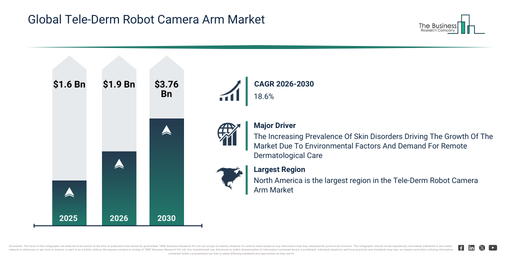
    The tele-derm robot camera arm market has expanded rapidly in recent years. It is anticipated to grow from $1.6 billion in 2025 to $1.9 billion in 2026, at a compound annual growth rate (CAGR) of 18.9%. The market’s past growth can be attributed to the increased adoption of telemedicine, the growing scarcity of dermatology specialists, the expansion of remote clinical consultation services, advancements in robotic camera hardware, and the rising acceptance of digital diagnostics.

    The tele-derm robot camera arm market is anticipated to experience substantial growth in the upcoming years. It is projected to reach $3.76 billion by 2030, demonstrating a compound annual growth rate (CAGR) of 18.6%. This expansion during the forecast period is propelled by increasing investments in telehealth robotics, a growing need for remote specialty care, the proliferation of wireless medical imaging technologies, the increasing incorporation of AI diagnostics, and wider deployment in outpatient and ambulatory environments. Key trends for the forecast period encompass the rising adoption of robotic-assisted teledermatology devices, an increasing demand for high-precision remote imaging systems, the expanding integration of AI-enhanced skin analysis, the broadening of portable and flexible camera arm solutions, and a heightened emphasis on remote diagnostic accuracy.

    Download A Free Sample Report For Comprehensive Market Insights:

    https://www.thebusinessresearchcompany.com/sample.aspx?id=29225&type=smp

    Which Core Factors Are Supporting The Expansion Of The Tele-Derm Robot Camera Arm Market?

    The growing occurrence of skin ailments is projected to boost the expansion of the tele-derm robot camera arm market forward. Skin disorders encompass various medical issues that impact the skin’s structure, performance, or look, leading to symptoms such as rashes, sores, inflammation, or alterations in color or texture. This increase in skin disorders stems from environmental influences like exposure to contamination, ultraviolet radiation, shifting climates, and detrimental chemicals, all of which can harm the skin and trigger diverse dermatological conditions. The tele-derm robot camera arm offers accurate remote skin checks, enhancing the early identification, diagnosis, and tracking of numerous skin conditions, while simultaneously broadening access to dermatological services. For instance, in August 2023, according to Skin Health Institute Inc., an Australia-based non-profit organization, in Australia, psoriasis affects an estimated 2–3% of the population, underscoring its commonality. Consequently, the rising incidence of skin disorders is fueling the tele-derm robot camera arm market. The escalation in healthcare spending is anticipated to propel the tele-derm robot camera arm market forward. Healthcare expenditure refers to the aggregate spending on medical treatments, equipment, and technological advancements aimed at enhancing health outcomes. This growth in healthcare spending is attributed to the surging demand for sophisticated medical technologies, as hospitals and clinics increasingly invest in cutting-edge equipment and digital solutions to elevate patient care and results. Increased healthcare spending facilitates the adoption of tele-derm robot camera arms by allowing healthcare providers to invest in advanced diagnostic tools that improve remote dermatological services and enhance patient well-being. For instance, in June 2025, according to the Centers for Medicare & Medicaid Services, a US-based government agency, in 2023, national health expenditures (NHE) grew by 7.5%, reaching $4.9 trillion, which averages $14,570 per person and represents 17.6% of the Gross Domestic Product (GDP). Spending on Medicare increased by 8.1% to $1,029.8 billion, making up 21% of total NHE. Therefore, the expansion of healthcare expenditure is a key factor in the growth of the tele-derm robot camera arm market.

    What Are The Core Segment Classifications In The Tele-Derm Robot Camera Arm Market?

    The tele-derm robot camera arm market covered in this report is segmented –

    1) By Product Type: Fixed Camera Arm, Articulated Camera Arm, Portable Camera Arm, Other Product Types

    2) By Technology: Wired, Wireless

    3) By Application: Teledermatology, Remote Patient Monitoring, Clinical Diagnostics, Other Applications

    4) By End-User: Hospitals, Clinics, Ambulatory Surgical Centers, Other End-Users

    Subsegments:

    1) By Fixed Camera Arm: Wall Mounted, Ceiling Mounted, Tripod Mounted, Desk Mounted

    2) By Articulated Camera Arm: Single Joint, Double Joint, Multi Joint, Telescopic

    3) By Portable Camera Arm: Handheld, Foldable, Collapsible, Lightweight

    4) By Other Product Types: Robotic, Motorized, Pneumatic, Hydraulic

    Leading companies within the teledentistry market are prioritizing technological innovations, including AI-powered diagnostic instruments and online consultation systems, with the goal of broadening patient access and elevating the standard of dental services, thus promoting superior oral health results and greater patient contentment. Artificial intelligence (AI) applied to photo analysis employs algorithms to process and understand visual information from pictures, facilitating precise evaluations and diagnoses across numerous sectors, notably in healthcare. As an illustration, during June 2023, Virtual Dental Care, Inc., a US entity offering teledentistry software and services, introduced Teledentistry 3.0. The objective of Teledentistry 3.0 is to improve patient reach to dental services through a full spectrum of virtual offerings available remotely. This version of teledentistry expands beyond conventional services focused on specific issues, now encompassing wellness-oriented provisions like preventative care and continuous oral health surveillance. This groundbreaking platform leverages sophisticated technologies, such as artificial intelligence, to refine diagnostics and customize treatment plans, thereby enhancing the availability of dental care.

    Who Are The Companies Shaping The Tele-Derm Robot Camera Arm Market Landscape?

    Major companies operating in the tele-derm robot camera arm market are Olympus Corporation, KUKA Systems GmbH, Comau S.p.A., Universal Robots AS, FotoFinder Systems Inc., Canfield Scientific Inc., Mecademic Robotics, Blackcam Robotics, Dermavision Solutions S.L., Elephant Robotics, Fourth Arrow Camera Arms, Shenzhen Wisonic Medical Technology Co. Ltd, Adept Technology Inc., Kinova Robotics, Staubli Robotics, Denso Robotics, Robotiq Inc., iRobot Medical Systems, Yaskawa Motoman, ABB Robotics

    Access The Complete Tele-Derm Robot Camera Arm Market Report:

    https://www.thebusinessresearchcompany.com/report/tele-derm-robot-camera-arm-global-market-report

    Which Region Is The Dominant Market In The Tele-Derm Robot Camera Arm Market?

    North America was the largest region in the tele-derm robot camera arm market in 2025. Asia-Pacific is expected to be the fastest-growing region in the forecast period. The regions covered in the tele-derm robot camera arm market report are Asia-Pacific, South East Asia, Western Europe, Eastern Europe, North America, South America, Middle East, Africa.

    Access Tele-Derm Robot Camera Arm Market Report for Deeper Competitive Insights

    https://www.thebusinessresearchcompany.com/customise?id=29225&type=smp

    Browse Through More Reports Similar to the Global Tele-Derm Robot Camera Arm Market 2026, By The Business Research Company

    Tele Intensive Care Unit Global Market Report 2026

    https://www.thebusinessresearchcompany.com/report/tele-intensive-care-unit-global-market-report

    Tele Radiology Global Market Report 2026

    https://www.thebusinessresearchcompany.com/report/tele-radiology-global-market-report

    Telehealth Global Market Report 2026

    https://www.thebusinessresearchcompany.com/report/telehealth-global-market-report

    Get in touch with us:

    The Business Research Company: https://www.thebusinessresearchcompany.com/

    Americas: +1 310-496-7795

    Asia: +44 7882 955267 & +91 8897263534

    Europe: +44 7882 955267

    Email us at: marketing@tbrc.info

    Follow us on:

    LinkedIn: https://in.linkedin.com/company/the-business-research-company

    YouTube: https://www.youtube.com/channel/UC24_fI0rV8cR5DxlCpgmyFQ

    Global Market Model: https://www.thebusinessresearchcompany.com/global-market-model
  • Global Teledentistry Market Revenue Expected To Reach $5.81 Billion By 2030

    Global Teledentistry Market Revenue Expected To Reach $5.81 Billion By 2030

    The Business Research Company’s 2026 market reports feature enhanced tools like market attractiveness analysis, TAM assessment, and company scoring matrices, along with interactive dashboards, deeper supply chain insights, and startup coverage strengthening the depth, usability, and strategic value of insights.

    What Are The Forecasted Market Size Figures For The Teledentistry Market In 2026 And 2030?

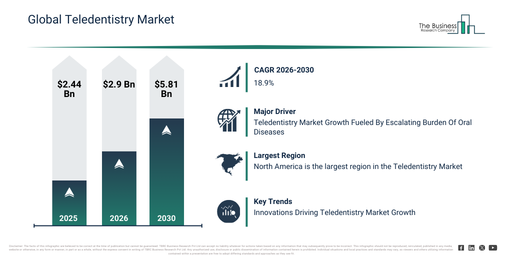
    The teledentistry market’s scale has significantly increased recently. Projections suggest it will expand from $2.44 billion in 2025 to $2.9 billion by 2026, achieving a compound annual growth rate (CAGR) of 19.0%. This historical growth can be attributed to several factors, including increasing internet penetration in healthcare, a rising shortage of dental professionals in rural areas, the growing acceptance of remote healthcare services, the expansion of digital dental records, and advancements in video conferencing technologies.

    The teledentistry market is projected for significant expansion over the coming years. This sector is anticipated to reach a valuation of $5.81 billion by 2030, exhibiting a compound annual growth rate (CAGR) of 18.9%. This projected increase during the forecast period is driven by factors such as a greater need for remote access to oral healthcare, increasing capital flowing into digital dental platforms, a heightened emphasis on preventive dental practices, the proliferation of AI-assisted dental diagnostics, and the deeper embedding of teledentistry into standard dental procedures. Key developments anticipated in this period encompass a surge in the embrace of virtual dental appointments, wider utilization of digital imaging and remote diagnostic tools, increased incorporation of practice management systems, the spread of cloud-based dental communication solutions, and an intensified focus on engaging patients remotely.

    Download A Free Sample Report For Comprehensive Market Insights:

    https://www.thebusinessresearchcompany.com/sample.aspx?id=8311&type=smp

    What Are The Main Drivers Accelerating The Growth Of The Teledentistry Market?

    The growing burden of oral diseases is anticipated to propel the expansion of the teledentistry market in the future. Oral diseases are conditions related to the mouth and its components like teeth, gums, and tongue. Teledentistry facilitates broader access to oral health services and improves the management of these diseases. For instance, in March 2025, data from the World Health Organization, a Switzerland-based intergovernmental organization, revealed that in 2022, an estimated 389,846 new cases of lip and oral cavity cancers were reported globally, leading to approximately 188,438 deaths. Consequently, the increasing prevalence of oral diseases is a primary driver for the growth of the teledentistry market.

    How Is The Teledentistry Market Structured Across Different Market Segments?

    The teledentistry market covered in this report is segmented –

    1) By Component: Hardware, Software

    2) By Delivery Mode: On-premise, Cloud-based

    3) By Application: Tele-consultation, Remote patient monitoring, Education and training

    4) By End User: Healthcare providers, Patients, Other End-Users

    Subsegments:

    1) By Hardware: Intraoral Cameras, X-Ray Scanners, Mobile Devices, Computer Systems

    2) By Software: Practice Management Software, Appointment Scheduling Software, Image Analysis and Diagnosis Software, Communication And Video Conferencing Software

    What Trends Are Shaping The Teledentistry Market Structure?

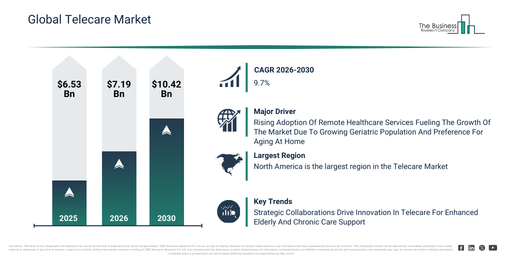
    Prominent companies operating in the telecare market are prioritizing the introduction of groundbreaking solutions through strategic alliances to strengthen remote monitoring capabilities and expand their service offerings. This initiative aims to address the rising demand for support in elderly and chronic care. Strategic collaborations are defined as partnerships between organizations that merge their resources and specialized knowledge to develop innovative solutions, improve service delivery, and achieve shared objectives more efficiently. For example, in December 2024, Skyresponse AB, a Sweden-based technology company, and OneCo Technologies AS, a Norway-based company specializing in health technology solutions, forged a strategic partnership. This collaboration seeks to deliver innovative, fully digital, and cloud-based telecare solutions intended to enhance independent living, care homes, institutions, and hospitals within both private and public sectors. This alliance unifies Skyresponse’s advanced alarm management platform with OneCo’s expertise in electronics, automation, and telecommunications, thereby enabling the provision of flexible, cost-effective, and user-friendly telecare services. Initially, the partnership is focusing on a remote night check-in solution that integrates KeplerVision and the Skyresponse Responder App, with Norway’s largest private care home operator among the earliest to implement it.

    Which Industry Players Are Present In The Teledentistry Market?

    Major companies operating in the teledentistry market are The TeleDentists, Dentulu Inc, Toothpic, Virtudent Inc, SmileMate, DentalChat, Denteractive, DigiDentista, Odonto Virtual, Odontología Virtual, Dentaly.org, Teladent, Zahnarzt-Hotline, Dentist.cz, DentistulTau, Dentaltap, Dentalink, Odontovida, Smileneo, Teledentistry

    Access The Complete Teledentistry Market Report:

    https://www.thebusinessresearchcompany.com/report/teledentistry-global-market-report

    Which Area Represents The Largest Portion Of The Teledentistry Market?

    North America was the largest region in the teledentistry market in 2025. The regions covered in the teledentistry market report are Asia-Pacific, South East Asia, Western Europe, Eastern Europe, North America, South America, Middle East, Africa.

    Access Teledentistry Market Report for Deeper Competitive Insights

    https://www.thebusinessresearchcompany.com/customise?id=8311&type=smp

    Browse Through More Reports Similar to the Global Teledentistry Market 2026, By The Business Research Company

    Dermatology Drugs Global Market Report 2026

    https://www.thebusinessresearchcompany.com/report/dermatology-drugs-global-market-report

    Online Dermatology Consultation Global Market Report 2026

    https://www.thebusinessresearchcompany.com/report/online-dermatology-consultation-global-market-report

    Dermatology Global Market Report 2026

    https://www.thebusinessresearchcompany.com/report/dermatology-global-market-report

    Get in touch with us:

    The Business Research Company: https://www.thebusinessresearchcompany.com/

    Americas: +1 310-496-7795

    Asia: +44 7882 955267 & +91 8897263534

    Europe: +44 7882 955267

    Email us at: marketing@tbrc.info

    Follow us on:

    LinkedIn: https://in.linkedin.com/company/the-business-research-company

    YouTube: https://www.youtube.com/channel/UC24_fI0rV8cR5DxlCpgmyFQ

    Global Market Model: https://www.thebusinessresearchcompany.com/global-market-model
  • Telecare Market Insights Exploring Expansion Opportunities Through 2030

    Telecare Market Insights Exploring Expansion Opportunities Through 2030

    The Business Research Company’s 2026 market reports feature enhanced tools like market attractiveness analysis, TAM assessment, and company scoring matrices, along with interactive dashboards, deeper supply chain insights, and startup coverage strengthening the depth, usability, and strategic value of insights.

    How Much Larger Will The Telecare Market Become By 2030 Compared To 2026?

    The telecare market has experienced significant expansion in recent years. It is forecast to grow from $6.53 billion in 2025 to $7.19 billion in 2026, achieving a compound annual growth rate (CAGR) of 10.1%. The historical growth can be linked to an increasing elderly population, the rising occurrence of chronic conditions, the development of home healthcare provisions, improved connectivity networks, and a growing embrace of remote care frameworks.

    The telecare market size is anticipated to experience substantial growth in the coming years. It is projected to reach $10.42 billion by 2030, exhibiting a compound annual growth rate (CAGR) of 9.7%. This expansion during the forecast period is propelled by increased investment in digital health platforms, the rising adoption of AI-powered telecare analytics, the proliferation of smart home healthcare ecosystems, a greater emphasis on preventive care, and the growing demand for cost-effective care solutions. Prominent trends expected during this period involve the expanding use of remote patient monitoring solutions, the growing deployment of wearable telecare devices, enhanced integration of emergency alert systems, the development of home-based chronic care models, and a heightened focus on aging-in-place strategies.

    Download A Free Sample Report For Comprehensive Market Insights:

    https://www.thebusinessresearchcompany.com/sample.aspx?id=25921&type=smp

    Which Growth Drivers Are Expected To Support The Telecare Market Forward?

    The expanding uptake of remote healthcare services is anticipated to fuel the expansion of the telecare market in the future. These services involve providing medical care utilizing telecommunication technologies, allowing patients to receive attention from a distance, thereby eliminating the need for in-person visits to medical facilities. The surge in remote healthcare is driven by the growing elderly population, as a greater number of older individuals choose to age in place, leading to a heightened need for ongoing remote supervision and support. Telecare facilitates remote healthcare by offering capabilities such as real-time monitoring, prompt emergency response, and communication via interconnected devices, ensuring that care is delivered without requiring physical attendance. For example, in June 2024, Telehealth Access for America, a US-based non-profit advocacy organization, reported that in Q1 2024, approximately 3 million Medicare beneficiaries (2,751,044) utilized telehealth services, highlighting a consistent national dependence on remote healthcare provision. Consequently, the increasing adoption of remote healthcare service solutions is a key factor propelling the telecare market’s growth.

    Which Segment-Based Categories Are Covered In The Telecare Market?

    The telecare market covered in this report is segmented –

    1) By Type: Activity Monitoring, Remote Medication Management

    2) By Technology: Non Wearable, Wearable

    3) By End Use: Healthcare Consumers, Healthcare Providers, Payers

    Subsegments:

    1) By Activity Monitoring: Motion Sensors, Bed And Chair Occupancy Sensors, Door And Window Sensors, Wearable Activity Trackers, Fall Detection Devices

    2) By Remote Medication Management: Smart Pill Dispensers, Automated Medication Reminders, Mobile Medication Management Apps, Connected Inhalers, Remote Dose Monitoring Platforms

    Which Trends Are Supporting The Evolution Of The Telecare Market?

    Leading firms within the tele-intensive care unit market are intensifying efforts to launch tele-ICU platforms, aiming to secure a competitive advantage. Such a platform constitutes a technology-powered system that facilitates distant supervision, expert advice, and assistance for intensive care units. Illustratively, in October 2023, HealthNet Global (HNG), an India-based healthcare firm, initiated a tele-ICU program at Apollo Spectra Hospitals in India. This initiative links Apollo Spectra’s ICU facility with the Apollo Command Center via HNG’s advanced Tele-ICU platform, ensuring the provision of critical care services with exceptional accuracy. It supplies off-site intensive care physicians and nurses who contribute to patient care in ICUs utilizing sophisticated telehealth technology.

    Which Organizations Are Involved In The Telecare Market?

    Major companies operating in the telecare market are Philips Healthcare, The Access Group Limited, Tunstall Healthcare Group Limited, ConnectAmerica.com LLC, Ascom Holding AG, Resideo Technologies Inc., Cera Care Limited, Enovation Group B.V., iHealth Labs Inc., Vivify Health Inc., Careium AB, Essence SmartCare Ltd., Helios Telecare Inc., Rest Assured LLC, Tyto Care Ltd., Alarm.com, Legrand Care, Essence Group, Everon Group, AT Technology Services, Doro Care, Televic Healthcare

    Access The Complete Telecare Market Report:

    https://www.thebusinessresearchcompany.com/report/telecare-global-market-report

    Which Region Commands The Largest Share Of The Telecare Market?

    North America was the largest region in the telecare market in 2025. Asia-Pacific is expected to be the fastest-growing region in the forecast period. The regions covered in the telecare market report are Asia-Pacific, South East Asia, Western Europe, Eastern Europe, North America, South America, Middle East, Africa.

    Access Telecare Market Report for Deeper Competitive Insights

    https://www.thebusinessresearchcompany.com/customise?id=25921&type=smp

    Browse Through More Reports Similar to the Global Telecare Market 2026, By The Business Research Company

    Teleradiology Global Market Report 2026

    https://www.thebusinessresearchcompany.com/report/teleradiology-global-market-report

    Telehealth Global Market Report 2026

    https://www.thebusinessresearchcompany.com/report/telehealth-global-market-report

    Commercial Telematics Global Market Report 2026

    https://www.thebusinessresearchcompany.com/report/commercial-telematics-global-market-report

    Get in touch with us:

    The Business Research Company: https://www.thebusinessresearchcompany.com/

    Americas: +1 310-496-7795

    Asia: +44 7882 955267 & +91 8897263534

    Europe: +44 7882 955267

    Email us at: marketing@tbrc.info

    Follow us on:

    LinkedIn: https://in.linkedin.com/company/the-business-research-company

    YouTube: https://www.youtube.com/channel/UC24_fI0rV8cR5DxlCpgmyFQ

    Global Market Model: https://www.thebusinessresearchcompany.com/global-market-model

  • Tele Intensive Care Unit Market Developments Influencing Industry Expansion Through 2030

    Tele Intensive Care Unit Market Developments Influencing Industry Expansion Through 2030

    The Business Research Company’s 2026 market reports feature enhanced tools like market attractiveness analysis, TAM assessment, and company scoring matrices, along with interactive dashboards, deeper supply chain insights, and startup coverage strengthening the depth, usability, and strategic value of insights.

    What Growth In Market Value Is Anticipated For The Tele Intensive Care Unit Market Between 2026 And 2030?

    The tele intensive care unit market has seen substantial expansion in recent years. Its value is projected to increase from $6.32 billion in 2025 to $7.59 billion in 2026, advancing at a compound annual growth rate (CAGR) of 20.0%. The market’s past growth can be attributed to several factors including the expansion of critical care capacity in hospitals, a rising shortage of intensivists, the increased adoption of telemedicine platforms, advancements in digital health infrastructure, and the demand for continuous patient monitoring.

    The tele intensive care unit market is projected to experience substantial expansion in the coming years. Its valuation is anticipated to reach $15.65 billion by 2030, exhibiting a compound annual growth rate (CAGR) of 19.8%. This projected growth is driven by factors such as greater capital expenditure in intelligent hospital frameworks, increased uptake of cloud-powered healthcare solutions, wider availability of remote critical care offerings, a surge in the application of predictive analytics within icu care, and an intensified emphasis on economically efficient healthcare provision. Key developments expected during this period involve the wider implementation of remote icu monitoring systems, the proliferation of centralized tele-icu approaches, the increasing incorporation of AI-driven clinical decision support, a heightened need for real-time patient data analytics, and a stronger commitment to optimizing the critical care workforce.

    Download A Free Sample Report For Comprehensive Market Insights:

    https://www.thebusinessresearchcompany.com/sample.aspx?id=8164&type=smp

    What Influential Factors Are Boosting The Tele Intensive Care Unit Market Demand?

    The growing geriatric population is anticipated to drive the expansion of the tele-intensive care unit market moving forward. This demographic comprises older adults, typically defined as individuals aged 65 or more. Tele-Intensive Care Units (Tele-ICUs) ensure timely interventions and improved patient outcomes for the elderly. These systems deliver care to critically ill individuals and support on-site staff in the intensive care unit (ICU) utilizing secure audio-video and electronic connections. For instance, in October 2025, according to the World Health Organization, a US-based specialized health agency, globally, 1 in 6 individuals will be 60 or older by 2030, and this figure is projected to reach 2.1 billion elderly people by 2050. Hence, the increasing geriatric population is propelling the growth of the tele-intensive care unit market.

    What Are The Major Segment Categories Within The Tele Intensive Care Unit Market?

    The tele intensive care unit market covered in this report is segmented –

    1) By Type: Centralized Models, Decentralized Models, Other Types

    2) By Type Of Management: Intensivist, Open, Co-Managed, Open With Consultants, Other Types Of Management

    3) By Component: Hardware, Software

    4) By End User: Hospitals, Clinics, Other End Users

    Subsegments:

    1) By Centralized Models: Single Hub With Multiple Remote ICUs, Centralized Monitoring Systems, Integrated Care Coordination Platforms

    2) By Decentralized Models: Distributed Care Teams Across Multiple Locations, Localized Monitoring With Remote Support, Hybrid Care Models

    3) By Other Types: Mobile Tele-ICU Units, Cloud-Based Tele-ICU Solutions, Specialized Tele-ICU Applications

    What Trends Are Affecting The Growth Of The Tele Intensive Care Unit Market?

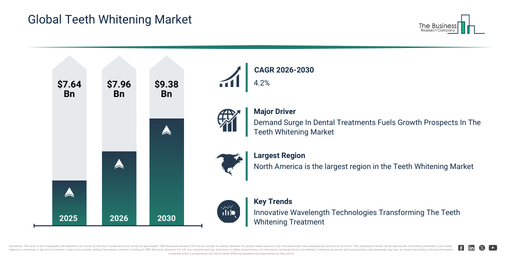
    Leading companies in the teeth whitening market are actively developing technologically advanced oral care products incorporating wavelength technology to secure a competitive edge. These sophisticated oral care products leveraging wavelength technology employ specific light frequencies to enhance dental treatments and improve overall oral hygiene outcomes. For instance, in February 2023, Colgate-Palmolive Company, a US-based dental and personal-care product firm, introduced the Colgate Optic White ComfortFit LED Teeth Whitening Kit, featuring wavelength technology. This kit utilizes specific wavelengths of light, such as the blue or violet spectrum, to boost the effectiveness of teeth whitening treatments. The kit is specifically engineered to improve the user experience by prioritizing comfort, achieving uniform whitening, ensuring ease of use, delivering efficacy, and providing speed. It employs wavelength technology to apply a thin layer of whitening serum to the teeth, using the provided LED device for 10 minutes daily over a 10-day period, which rapidly removes stains. This kit comes with a flexible LED whitening light and a teeth whitening pen, and it can be conveniently powered by a smartphone, compatible with both iPhone and Android devices.

    Who Are The Firms Contributing To The Tele Intensive Care Unit Market Ecosystem?

    Major companies operating in the tele intensive care unit market are Hicuity Health LLC, Banner Health System, Teladoc Health Inc., Koninklijke Philips NV, University of Pittsburgh Medical Center, Inova Health System, Apollo TeleHealth Services Limited, Eagle Telemedicine LLC, iMDsoft Ltd., CLEW Medical Ltd., General Electric Company, Cloudphysician Healthcare Company, GlobalMed Inc., Mercy Virtual Inc., SynsorMed Inc., TeleICU by eCatalyst Healthcare Solutions LLC, Vidyo Inc., Vituity Telehealth Services Inc., CyberMed Inc., Dignity Health Telemedicine

    Access The Complete Tele Intensive Care Unit Market Report:

    https://www.thebusinessresearchcompany.com/report/tele-intensive-care-unit-global-market-report

    Which Region Accounts For The Highest Share Of The Tele Intensive Care Unit Market?

    North America was the largest region in the tele intensive care unit market in 2025. The regions covered in the tele intensive care unit market report are Asia-Pacific, South East Asia, Western Europe, Eastern Europe, North America, South America, Middle East, Africa.

    Access Tele Intensive Care Unit Market Report for Deeper Competitive Insights

    https://www.thebusinessresearchcompany.com/customise?id=8164&type=smp

    Browse Through More Reports Similar to the Global Tele Intensive Care Unit Market 2026, By The Business Research Company

    Tele Intensive Care Global Market Report 2026

    https://www.thebusinessresearchcompany.com/report/tele-intensive-care-global-market-report

    Tele Radiology Global Market Report 2026

    https://www.thebusinessresearchcompany.com/report/tele-radiology-global-market-report

    Teleradiology Global Market Report 2026

    https://www.thebusinessresearchcompany.com/report/teleradiology-global-market-report

    Get in touch with us:

    The Business Research Company: https://www.thebusinessresearchcompany.com/

    Americas: +1 310-496-7795

    Asia: +44 7882 955267 & +91 8897263534

    Europe: +44 7882 955267

    Email us at: marketing@tbrc.info

    Follow us on:

    LinkedIn: https://in.linkedin.com/company/the-business-research-company

    YouTube: https://www.youtube.com/channel/UC24_fI0rV8cR5DxlCpgmyFQ

    Global Market Model: https://www.thebusinessresearchcompany.com/global-market-model
  • Teeth Whitening Market Size Forecast To Achieve $9.37 Billion By 2030 With 4.2% CAGR

    Teeth Whitening Market Size Forecast To Achieve $9.37 Billion By 2030 With 4.2% CAGR

    The Business Research Company’s 2026 market reports feature enhanced tools like market attractiveness analysis, TAM assessment, and company scoring matrices, along with interactive dashboards, deeper supply chain insights, and startup coverage strengthening the depth, usability, and strategic value of insights.

    What Is The Expected Market Value Outlook For The Teeth Whitening Market Through 2030?

    The teeth whitening market size has demonstrated consistent growth over recent years. Future growth for the market is projected from $7.64 billion in 2025 to $7.96 billion in 2026, with a compound annual growth rate (CAGR) of 4.3%. Factors contributing to its historical growth include an increase in cosmetic dentistry awareness, a greater emphasis among consumers on personal aesthetics, the broadened range of retail oral care products, elevated disposable income levels, and the provision of professional whitening treatments.

    The teeth whitening market size is anticipated to experience consistent expansion over the upcoming years. It is projected to reach $9.38 billion by 2030, exhibiting a compound annual growth rate (CAGR) of 4.2%. This forecasted growth is primarily driven by factors such as the increasing integration of digital dental solutions, a heightened demand for premium oral care items, the proliferation of cosmetic dental clinics, the expanding impact of social media aesthetics, and ongoing advancements in whitening product formulations. Key developments expected during this period encompass a surge in demand for at-home whitening options, the growing embrace of LED-based whitening devices, a rising preference for non-invasive cosmetic dental procedures, the broadening scope of professional whitening services, and a greater emphasis on formulations that protect enamel.

    Download A Free Sample Report For Comprehensive Market Insights:

    https://www.thebusinessresearchcompany.com/sample.aspx?id=13543&type=smp

    Which Drivers Are Advancing The Teeth Whitening Market Growth?

    The teeth whitening market is expected to grow, driven by an increased demand for dental treatments. Dental treatments are defined as medical procedures and interventions carried out by dental professionals to resolve oral health issues and conditions. Dentists provide teeth whitening as a dental treatment to improve the color and look of teeth, thereby enhancing patients’ aesthetic appeal. For instance, in April 2025, Align Technology, Inc., a US-based medical device company, reported that clear aligner volumes reached 642.3 thousand cases in Q1 2025, showing a 2.2% sequential increase and a 6.2% growth compared to the same period last year. Consequently, the rising demand for dental treatments will propel the growth of the teeth whitening market.

    How Is The Teeth Whitening Market Distributed Across Key Segments?

    The teeth whitening market covered in this report is segmented –

    1) By Product Type: Whitening Toothpaste, Whitening Gels And Strips, Light Teeth Whitening Device, Other Product Types

    2) By Distribution Channel: Institutional Sales, Retail Sales

    3) By Application Type: In-Office, At-Home

    Subsegments:

    1) By Whitening Toothpaste: Abrasive Whitening Toothpaste, Enzyme-Based Whitening Toothpaste

    2) By Whitening Gels And Strips: Gel-Based Whitening Products, Whitening Strips

    3) By Light Teeth Whitening Device: LED Teeth Whitening Devices, UV Teeth Whitening Devices

    4) By Other Product Types: Whitening Mouthwashes, Whitening Pens, Professional Teeth Whitening Kits

    Which Trends Are Influencing The Direction Of The Teeth Whitening Market?

    Major companies in the technology sector that spend on core administration within the healthcare market are focusing on developing advanced solutions, such as prebuilt artificial intelligence tools designed for healthcare, to automate administrative tasks and improve the precision of decision-making. Prebuilt artificial intelligence tools are ready-to-use AI solutions that remove the need for extensive custom development, enabling quick adoption of advanced capabilities like automation, data analysis, and prediction for more streamlined workflows. For instance, in February 2025, Salesforce Inc., a US-based cloud-based software company, introduced Agentforce for Health. This is a library of prebuilt agentic AI tools created to automate time-consuming administrative, clinical, and public health tasks across the healthcare sector. The platform offers features such as patient appointment scheduling, eligibility checks with insurers, and support for care coordination. It also assists with disease surveillance and clinical trial matching by collecting data from various registries. This initiative aims to lessen administrative burdens, address workforce burnout, and boost operational efficiency for both providers and payers.

    Which Key Players Are Active In The Teeth Whitening Market?

    Major companies operating in the teeth whitening market are Johnson And Johnson, Procter And Gamble, Unilever PLC, GlaxoSmithKline Plc, 3M Company, Koninklijke Philips N.V., Colgate-Palmolive Company, Church And Dwight Co, DENTSPLY International, Ivoclar Vivadent AG, Kerr Corp, Ultradent Products Inc., Dr. Fresh LLC, Onuge Personal Care (Guangzhou) Co. Ltd., TECNO-GAZ SpA, Pearl Smile GmbH, Beaming White LLC, WHITEsmile GmbH, WSD Labs USA INC., DentMate Technology Co. Ltd., Mavrik Dental Systems Ltd., GLO Science LLC, Cosmolab Manufacturing Ltd

    Access The Complete Teeth Whitening Market Report:

    https://www.thebusinessresearchcompany.com/report/teeth-whitening-global-market-report

    Which Region Is The Primary Market For The Teeth Whitening Market?

    North America was the largest region in the teeth whitening market in 2025. Asia-Pacific is expected to be the fastest-growing region in the forecast period. The regions covered in the teeth whitening market report are Asia-Pacific, South East Asia, Western Europe, Eastern Europe, North America, South America, Middle East, Africa.

    Access Teeth Whitening Market Report for Deeper Competitive Insights

    https://www.thebusinessresearchcompany.com/customise?id=13543&type=smp

    Browse Through More Reports Similar to the Global Teeth Whitening Market 2026, By The Business Research Company

    Endodontics Global Market Report 2026

    https://www.thebusinessresearchcompany.com/report/endodontics-global-market-report

    Cosmetic Dentistry Global Market Report 2026

    https://www.thebusinessresearchcompany.com/report/cosmetic-dentistry-global-market-report

    Mouthwash Global Market Report 2026

    https://www.thebusinessresearchcompany.com/report/mouthwash-global-market-report

    Get in touch with us:

    The Business Research Company: https://www.thebusinessresearchcompany.com/

    Americas: +1 310-496-7795

    Asia: +44 7882 955267 & +91 8897263534

    Europe: +44 7882 955267

    Email us at: marketing@tbrc.info

    Follow us on:

    LinkedIn: https://in.linkedin.com/company/the-business-research-company

    YouTube: https://www.youtube.com/channel/UC24_fI0rV8cR5DxlCpgmyFQ

    Global Market Model: https://www.thebusinessresearchcompany.com/global-market-model

  • Technology Spending On Core Administration In Healthcare Market Forecast Covering Industry Demand And Market Evolution

    Technology Spending On Core Administration In Healthcare Market Forecast Covering Industry Demand And Market Evolution

    The Business Research Company’s 2026 market reports feature enhanced tools like market attractiveness analysis, TAM assessment, and company scoring matrices, along with interactive dashboards, deeper supply chain insights, and startup coverage strengthening the depth, usability, and strategic value of insights.

    How Will The Market Value Of The Technology Spending On Core Administration In Healthcare Market Increase Between 2026 And 2030?

    The healthcare market has witnessed robust growth in technology spending for core administration over recent years. This expenditure is forecast to increase from $44.26 billion in 2025 to $47.87 billion in 2026, achieving a compound annual growth rate (CAGR) of 8.2%. Historically, this expansion has been driven by the rising administrative burden in healthcare systems, the adoption of electronic records for billing and enrollment, increasing healthcare operational complexity, expansion of insurance coverage programs, and the need for efficient revenue cycle management.

    Anticipated substantial expansion is projected for the technology expenditure within the core administration sector of the healthcare market over the upcoming years. This market is set to reach $64.77 billion by 2030, exhibiting a compound annual growth rate (CAGR) of 7.9%. Factors driving this projected growth include escalated investments in intelligent automation tools, a heightened need for real-time financial analytics, the broadening of digital payer-provider ecosystems, an intensified emphasis on automating regulatory compliance, and the incorporation of sophisticated data management platforms. Key trends anticipated during this period encompass augmented automation of healthcare administrative processes, increased uptake of cloud-based core administration platforms, the proliferation of AI-driven claims and billing systems, a concentrated effort on data accuracy and interoperability, and a stronger focus on optimizing costs in healthcare operations.

    Download A Free Sample Report For Comprehensive Market Insights:

    https://www.thebusinessresearchcompany.com/sample.aspx?id=27432&type=smp

    What Primary Factors Are Fueling The Expansion Of The Technology Spending On Core Administration In Healthcare Market?

    The increasing need for telemedicine is projected to boost healthcare market technology expenditure on core administration going forward. Telemedicine involves delivering medical services remotely via digital tools such as video conferencing, messaging, or mobile applications for diagnosing, treating, and monitoring patients. Its growing adoption enables patients to access healthcare remotely, thereby cutting down travel requirements and enhancing convenience, especially for individuals in rural or underserved regions. Investing in core administrative technology in healthcare further supports telemedicine by automating patient registration, scheduling, billing, and claims processing, which improves efficiency, reduces delays, and allows providers to concentrate on delivering timely virtual care. For example, in November 2025, according to the Australian Bureau of Statistics (ABS), an Australia-based government statistical agency, 22.5% of Australians utilized telehealth services in 2024–25. Among those who had a telehealth consultation, 90.3% reported they would use telehealth again if offered, an increase from 89.2% in 2023–24. Consequently, the rising demand for telemedicine is a significant factor driving the growth of technology spending on core administration within the healthcare market.

    How Does Segment Analysis Break Down The Technology Spending On Core Administration In Healthcare Market Structure?

    The technology spending on core administration in healthcare market covered in this report is segmented –

    1) By Type: Software, Hardware, Services

    2) By Technology: Electronic Health Records (EHRs), Patient Management Systems, Financial Management Systems, Supply Chain Management Systems, Revenue Cycle Management System

    3) By Deployment Mode: On-Premise, Cloud-Based, Hybrid

    4) By Application: Patient Management, Staff Management, Inventory Management, Other Applications

    5) By End-User: Hospitals, Clinics, Insurance Providers, Other End-Users

    Subsegments:

    1) By Software: Electronic Health Record (EHR) Systems, Practice Management Software, Revenue Cycle Management (RCM) Software, Patient Scheduling Software, Claims Management Software

    2) By Hardware: Servers and Storage Devices, Workstations and Desktops, Networking Equipment, Scanners And Imaging Devices, Administrative Endpoints And Secure Access Devices

    3) By Services: Information Technology Consulting and Support, System Integration Services, Managed Services, Training and Education Services, Maintenance and Upgrades

    What Trends Are Driving Changes In The Technology Spending On Core Administration In Healthcare Market?

    Leading companies within the tay-sachs disease treatment market are concentrating on developing innovative treatments, which includes initiating clinical trials to investigate advanced therapies such as gene therapy, enzyme replacement, and small-molecule drugs, all aimed at improving patient outcomes. A clinical trial, by definition, is a research study that assesses the safety, efficacy, and potential side effects of medical treatments, drugs, or procedures in human subjects. For example, in July 2024, IntraBio Inc., a US-based biopharmaceutical company, announced it had secured US Food and Drug Administration (FDA) approval for its Investigational New Drug (IND) Application to commence a clinical trial (IB1001-202) for IB1001, targeting GM2 Gangliosidosis (Tay-Sachs and Sandhoff Disease). This trial is being conducted across the U.S., UK, Germany, and Spain, with the goal of addressing these fatal neurodegenerative disorders that currently lack approved treatments. IntraBio’s chairman underscored the critical need for developing effective therapies for these debilitating diseases.

    Who Are The Leading Firms Participating In The Technology Spending On Core Administration In Healthcare Market?

    Major companies operating in the technology spending on core administration in healthcare market are Microsoft Corporation, Siemens AG, International Business Machines Corporation, Oracle Corporation, Tata Consultancy Services Limited, Cognizant Technology Solutions Corporation, GE Healthcare Technologies Inc., Infosys Limited, Conduent Incorporated, Evolent Health Inc., Veradigm Inc., Tebra Inc., 314e Corporation, Qventus Inc., Meditab Software Inc., CodaMetrix Inc., Raintree Systems Inc., ReLi Med Solutions Inc., Cerner Corporation, Epic Systems Corporation, Allscripts Healthcare Solutions Inc., McKesson Corporation

    Access The Complete Technology Spending On Core Administration In Healthcare Market Report:

    https://www.thebusinessresearchcompany.com/report/technology-spending-on-core-administration-in-healthcare-global-market-report

    Which Geographic Region Represents The Largest Technology Spending On Core Administration In Healthcare Market Share?

    North America was the largest region in the technology spending on core administration in healthcare market in 2025. Asia-Pacific is expected to be the fastest-growing region in the forecast period. The regions covered in the technology spending on core administration in healthcare market report are Asia-Pacific, South East Asia, Western Europe, Eastern Europe, North America, South America, Middle East, Africa.

    Access Technology Spending On Core Administration In Healthcare Market Report for Deeper Competitive Insights

    https://www.thebusinessresearchcompany.com/customise?id=27432&type=smp

    Browse Through More Reports Similar to the Global Technology Spending On Core Administration In Healthcare Market 2026, By The Business Research Company

    Smart Stadium Global Market Report 2026

    https://www.thebusinessresearchcompany.com/report/smart-stadium-global-market-report

    Hospitality Global Market Report 2026

    https://www.thebusinessresearchcompany.com/report/hospitality-global-market-report

    Casino Global Market Report 2026

    https://www.thebusinessresearchcompany.com/report/casino-global-market-report

    Get in touch with us:

    The Business Research Company: https://www.thebusinessresearchcompany.com/

    Americas: +1 310-496-7795

    Asia: +44 7882 955267 & +91 8897263534

    Europe: +44 7882 955267

    Email us at: marketing@tbrc.info

    Follow us on:

    LinkedIn: https://in.linkedin.com/company/the-business-research-company

    YouTube: https://www.youtube.com/channel/UC24_fI0rV8cR5DxlCpgmyFQ

    Global Market Model: https://www.thebusinessresearchcompany.com/global-market-model