Month: June 2026

  • Uncomplicated Urinary Tract Infection Market Forecast Through 2030 Featuring Industry Drivers And Opportunities

    Uncomplicated Urinary Tract Infection Market Forecast Through 2030 Featuring Industry Drivers And Opportunities

    The Business Research Company’s 2026 market reports feature enhanced tools like market attractiveness analysis, TAM assessment, and company scoring matrices, along with interactive dashboards, deeper supply chain insights, and startup coverage strengthening the depth, usability, and strategic value of insights.

    How Much Larger Will The Uncomplicated Urinary Tract Infection Market Become By 2030 Compared To 2026?

    The uncomplicated urinary tract infection market has experienced substantial growth in recent years. It is projected to expand from $10.95 billion in 2025 to $11.69 billion in 2026, exhibiting a compound annual growth rate (CAGR) of 6.8%. This historical growth can be attributed to factors such as the increasing occurrence of urinary tract infections, the extensive use of laboratory-based diagnostic methods, the availability of broad-spectrum antibiotics, the expansion of hospital diagnostic infrastructure, and heightened awareness concerning infection management.

    The uncomplicated urinary tract infection market size is anticipated to experience robust expansion in the coming years, projected to grow to $15.03 billion by 2030, at a compound annual growth rate (CAGR) of 6.5%. The increase during the forecast period is attributed to the escalating demand for rapid and accurate diagnostics, a heightened focus on mitigating antibiotic resistance, the expansion of molecular diagnostic techniques, the increasing adoption of point-of-care testing solutions, and rising investments in laboratory automation. Key trends expected in the forecast period include the increasing utilization of rapid diagnostic testing methods, a rising adoption of automated urinalysis systems, an intensified focus on antimicrobial stewardship programs, the broadening of point-of-care UTI diagnostics, and an enhanced emphasis on early infection detection.

    Download A Free Sample Report For Comprehensive Market Insights:

    https://www.thebusinessresearchcompany.com/sample.aspx?id=23550&type=smp

    What Are The Main Drivers Accelerating The Growth Of The Uncomplicated Urinary Tract Infection Market?

    The rising occurrence of chronic kidney diseases is anticipated to boost the uncomplicated urinary tract infection market moving ahead. Chronic kidney disease (CKD) is defined as a persistent ailment where kidneys progressively lose functionality, resulting in the accumulation of waste and fluids within the body. This surge in chronic kidney disease cases stems from the escalating prevalence of diabetes. Sustained high blood sugar levels can impair kidney function over time, diminishing their capacity for effective waste filtration. Furthermore, CKD compromises the immune system, increasing vulnerability to urinary tract infections, as impaired kidney function can cause urine retention, fostering bacterial proliferation. For example, a report from June 2023 by Kidney Research UK, a non-profit organization based in the UK, indicated that roughly 7.2 million people in the UK currently suffer from chronic kidney disease, accounting for more than 10% of the populace. Among these, 3.25 million individuals are in advanced stages of the condition, while another 3.9 million are in early stages. Projections suggest that by 2033, the population affected by chronic kidney disease will increase to 7.61 million. Consequently, the rising instances of chronic kidney diseases are set to drive the uncomplicated urinary tract infection market.

    How Is The Uncomplicated Urinary Tract Infection Market Examined Through Segment Analysis?

    The uncomplicated urinary tract infection market covered in this report is segmented –

    1) By Test Type: Urinalysis, Urine Cultures, Susceptibility Testing

    2) By Drug: Penicillin And Combinations, Quinolones, Cephalosporin, Azoles And Amphotericin B, Nitrofurans, Other Drugs

    3) By End-Users: Hospitals, Diagnostic Labs, Research Institutes

    Subsegments:

    1) By Urinalysis: Dipstick Tests, Microscopic Examination, Automated Urinalysis

    2) By Urine Cultures: Agar Plate Culture, Broth Culture, Chromogenic Media

    3) By Susceptibility Testing: Disk Diffusion Method, Automated Susceptibility Testing, Molecular Susceptibility Testing

    Which Trends Are Shaping The Uncomplicated Urinary Tract Infection Market Landscape?

    Major companies operating in the ultrasonic technology market are concentrating on developing innovative diagnostic ultrasound system solutions to improve imaging quality, enhance patient safety, and optimize workflow efficiency. These diagnostic ultrasound system solutions are medical imaging technologies that use high-frequency sound waves to produce images of internal body structures. For example, in February 2024, FUJIFILM, a Japan-based imaging and information technology company, introduced the ALOKA ARIETTA 850 Diagnostic Ultrasound System, which is a cutting-edge endoscopic ultrasound technology, made available at Fortis Hospital in Bengaluru. This system significantly improves diagnostic accuracy for gastrointestinal diseases, providing high-definition imaging and supporting minimally invasive procedures for treatments such as pancreatic cyst drainage. The release emphasizes FUJIFILM’s dedication to advancing healthcare outcomes with innovative medical technologies, particularly in areas like cancer staging and critical diagnoses.

    Which Industry Players Are Present In The Uncomplicated Urinary Tract Infection Market?

    Major companies operating in the uncomplicated urinary tract infection market are Pfizer Inc., Bayer AG, GSK plc, Shionogi & Co. Ltd., Cipla Inc., Orchid Pharma Limited, Iterum Therapeutics PLC, UTILITY Therapeutics Ltd., Siemens AG, Sysmex Corporation, Bio-Rad Laboratories Inc., ACON Labs, Novartis AG, Sanofi SA, AbbVie Inc., Takeda Pharmaceutical Company Limited, Astellas Pharma Inc., Boehringer Ingelheim International GmbH, Roche Holding AG, F. Hoffmann-La Roche Ltd, Johnson & Johnson, Teva Pharmaceutical Industries Ltd

    Access The Complete Uncomplicated Urinary Tract Infection Market Report:

    https://www.thebusinessresearchcompany.com/report/uncomplicated-urinary-tract-infection-global-market-report

    Which Region Is The Primary Market For The Uncomplicated Urinary Tract Infection Market?

    North America was the largest region in the uncomplicated urinary tract infection market in 2025. The regions covered in the uncomplicated urinary tract infection market report are Asia-Pacific, South East Asia, Western Europe, Eastern Europe, North America, South America, Middle East, Africa.

    Access Uncomplicated Urinary Tract Infection Market Report for Deeper Competitive Insights

    https://www.thebusinessresearchcompany.com/customise?id=23550&type=smp

    Browse Through More Reports Similar to the Global Uncomplicated Urinary Tract Infection Market 2026, By The Business Research Company

    Urinary Tract Infection Treatment Global Market Report 2026

    https://www.thebusinessresearchcompany.com/report/urinary-tract-infection-treatment-global-market-report

    Urinary Tract Cancer Global Market Report 2026

    https://www.thebusinessresearchcompany.com/report/urinary-tract-cancer-global-market-report

    Urinary Incontinence Global Market Report 2026

    https://www.thebusinessresearchcompany.com/report/urinary-incontinence-global-market-report

    Get in touch with us:

    The Business Research Company: https://www.thebusinessresearchcompany.com/

    Americas: +1 310-496-7795

    Asia: +44 7882 955267 & +91 8897263534

    Europe: +44 7882 955267

    Email us at: marketing@tbrc.info

    Follow us on:

    LinkedIn: https://in.linkedin.com/company/the-business-research-company

    YouTube: https://www.youtube.com/channel/UC24_fI0rV8cR5DxlCpgmyFQ

    Global Market Model: https://www.thebusinessresearchcompany.com/global-market-model
  • Growing Demand From The Medical Sector Fuels Ultrasonic Technology Market Growth Is Supporting Development Across The Ultrasonic Technology Market

    Growing Demand From The Medical Sector Fuels Ultrasonic Technology Market Growth Is Supporting Development Across The Ultrasonic Technology Market

    The Business Research Company’s 2026 market reports feature enhanced tools like market attractiveness analysis, TAM assessment, and company scoring matrices, along with interactive dashboards, deeper supply chain insights, and startup coverage strengthening the depth, usability, and strategic value of insights.

    What Growth In Market Value Is Anticipated For The Ultrasonic Technology Market Between 2026 And 2030?

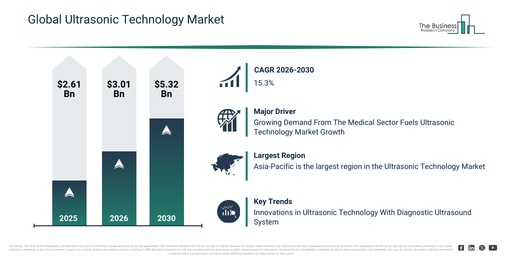
    The ultrasonic technology market has seen substantial expansion in its size recently. It is anticipated to increase from $2.61 billion in 2025 to $3.01 billion in 2026, progressing at a compound annual growth rate (CAGR) of 15.3%. This past growth can be ascribed to several factors: the increased integration of industrial automation, a rising need for non-invasive diagnostic instruments, the broadening of automotive safety systems, the expanded application of ultrasonic inspection methods, and the accessibility of cost-effective sensor technologies.

    The ultrasonic technology market is anticipated to experience substantial growth in the coming years, with its size projected to reach $5.32 billion by 2030, demonstrating a compound annual growth rate (CAGR) of 15.3%. This expansion during the forecast period is primarily driven by factors such as the increasing implementation of smart manufacturing systems, the escalating demand for advanced medical imaging solutions, the broadening of autonomous vehicle sensing applications, the growing integration of ultrasonic sensors with IoT platforms, and a heightened focus on precision monitoring solutions. Noteworthy trends expected in this period include the wider adoption of ultrasonic sensors in industrial automation, the increasing application of ultrasonic technology in non-contact measurement, the expanding integration of ultrasonic systems in medical diagnostics, the broader utilization of ultrasonic applications in quality inspection, and an enhanced emphasis on high-precision distance sensing.

    Download A Free Sample Report For Comprehensive Market Insights:

    https://www.thebusinessresearchcompany.com/sample.aspx?id=6063&type=smp

    Which Growth Drivers Are Expected To Support The Ultrasonic Technology Market Forward?

    Future expansion of the ultrasonic technology market is anticipated, fueled by increasing demand from the medical sector. This sector encompasses entities involved in healthcare service provision, medical device production, pharmaceutical distribution, and patient-care infrastructure support. Factors contributing to this heightened demand in the medical field include greater healthcare utilization, a rise in chronic illnesses, and an increasing dependence on sophisticated diagnostic tools. The ultrasonic technology market facilitates this growth by offering capabilities such as high-precision imaging, assistance during surgery, and non-destructive assessment, which are crucial for contemporary clinical procedures. A notable example illustrates this trend: data from December 2024, provided by the Centers for Medicare & Medicaid Services, a US-based agency managing the Medicare and Medicaid programs, indicates that in 2023, U.S. health care expenditures grew by 7.5%, reaching $4.9 trillion, which translates to approximately $14,570 per person. Consequently, the expanding requirements of the medical sector are propelling the expansion of the ultrasonic technology market.

    Which Segment Groups Define The Ultrasonic Technology Market Landscape?

    The ultrasonic technology market covered in this report is segmented –

    1) By Type: Ultrasonic Proximity Sensor, Ultrasonic Retro-Reflective Sensor, Ultrasonic Through-Beam Sensor, Other Types

    2) By Technology: Ultrasonic Medical Technology, Ultrasonic Processing Technology, Ultrasonic Testing Technology, Other Technologies

    3) By Application: Welding, Cleaning, Inspections, Other Applications

    4) By End User: Automotive, Food and beverage, Medical and healthcare, Aerospace and defense, Industrial, Other End Users

    Subsegments:

    1) By Ultrasonic Proximity Sensor: Non-Contact Ultrasonic Proximity Sensors, Short-Range Ultrasonic Proximity Sensors

    2) By Ultrasonic Retro-Reflective Sensor: Fixed Ultrasonic Retro-Reflective Sensors, Adjustable Ultrasonic Retro-Reflective Sensors

    3) By Ultrasonic Through-Beam Sensor: Transmitter-Receiver Through-Beam Sensors, Reflective Through-Beam Sensors

    4) By Other Types: Ultrasonic Flow Meters, Ultrasonic Cleaning Equipment, Ultrasonic Thickness Gauges

    What Trends Are Influencing The Ultrasonic Technology Market Outlook?

    Major companies active in the ulcerative colitis market are concentrating on forging collaborative strategies, such as crucial co-development alliances, to speed up late-stage biologic advancements and broaden global commercialization capacities. Crucial co-development alliances involve arrangements where two pharmaceutical entities integrate their scientific assets, clinical trial proficiency, and commercial frameworks to jointly progress and market a therapeutic option, sharing both financial and operational responsibilities. For instance, in 2023, Sanofi S.A., a France-based healthcare and pharmaceutical company, initiated a strategic collaboration with Teva Pharmaceuticals, a US-based subsidiary of Teva Pharmaceutical Industries Ltd., to jointly develop and commercialize TEV’574, a Phase 2b biologic contender for Crohn’s disease and ulcerative colitis. This agreement featured an upfront payment of €0.469 billion (USD 0.50 billion), potential eligibility for up to €0.94 billion (USD 1.0 billion) in developmental and commercialization milestones, and a cost- and profit-sharing framework. Within this model, Sanofi leads commercialization in North America, Japan, and Asia, while Teva takes the lead in Europe, Israel, and select regions.

    Which Organizations Are Involved In The Ultrasonic Technology Market?

    Major companies operating in the ultrasonic technology market are Emerson Electric, Siemens AG, Olympus Corporation, General Electric Company, Crest Ultrasonics Corp., Honeywell International Inc., Rockwell Automation Inc., Pepperl+Fuchs AG, Omron Corporation, Telsonic AG, Sonotec, Contrinex, Canon Medical Systems Corporation, Fujifilm Holdings Corporation, Mindray Medical International Limited, Balluff, Baumer, Sick AG, ifm electronic, Leuze electronic, Migatron, Banner Engineering, KEYENCE, Waycon Positionsmesstechnik, Massa Products

    Access The Complete Ultrasonic Technology Market Report:

    https://www.thebusinessresearchcompany.com/report/ultrasonic-technology-global-market-report

    Which Geographic Region Represents The Largest Ultrasonic Technology Market Share?

    Asia-Pacific was the largest region in the ultrasonic technology market in 2025. The regions covered in the ultrasonic technology market report are Asia-Pacific, South East Asia, Western Europe, Eastern Europe, North America, South America, Middle East, Africa.

    Access Ultrasonic Technology Market Report for Deeper Competitive Insights

    https://www.thebusinessresearchcompany.com/customise?id=6063&type=smp

    Browse Through More Reports Similar to the Global Ultrasonic Technology Market 2026, By The Business Research Company

    Ultrasonic Sensors Global Market Report 2026

    https://www.thebusinessresearchcompany.com/report/ultrasonic-sensors-global-market-report

    Ultrasound Systems Devices And Equipment Global Market Report 2026

    https://www.thebusinessresearchcompany.com/report/ultrasound-systems-devices-and-equipment-global-market-report

    Ultrasonic Scalpel Global Market Report 2026

    https://www.thebusinessresearchcompany.com/report/ultrasonic-scalpel-global-market-report

    Get in touch with us:

    The Business Research Company: https://www.thebusinessresearchcompany.com/

    Americas: +1 310-496-7795

    Asia: +44 7882 955267 & +91 8897263534

    Europe: +44 7882 955267

    Email us at: marketing@tbrc.info

    Follow us on:

    LinkedIn: https://in.linkedin.com/company/the-business-research-company

    YouTube: https://www.youtube.com/channel/UC24_fI0rV8cR5DxlCpgmyFQ

    Global Market Model: https://www.thebusinessresearchcompany.com/global-market-model
  • The Rise In Healthcare Expenditure The Growth Of The Ulcerative Colitis Market Due To Increased Access To Advanced Medical Care And Therapies Is Affecting The Direction Of The Ulcerative Colitis Market

    The Rise In Healthcare Expenditure The Growth Of The Ulcerative Colitis Market Due To Increased Access To Advanced Medical Care And Therapies Is Affecting The Direction Of The Ulcerative Colitis Market

    The Business Research Company’s 2026 market reports feature enhanced tools like market attractiveness analysis, TAM assessment, and company scoring matrices, along with interactive dashboards, deeper supply chain insights, and startup coverage strengthening the depth, usability, and strategic value of insights.

    What Is The Expected Market Value Outlook For The Ulcerative Colitis Market Through 2030?

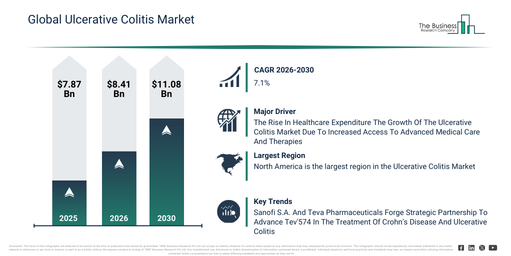
    The ulcerative colitis market size has experienced robust growth over recent years. Projections indicate it will expand from $7.87 billion in 2025 to $8.41 billion in 2026, demonstrating a compound annual growth rate (CAGR) of 6.9%. This historical expansion can be linked to factors such as improved availability of anti-inflammatory medications, increased diagnosis of inflammatory bowel diseases, expansion of gastroenterology specialty care, rising awareness of autoimmune disorders, and advancements in endoscopic diagnostics.

    The ulcerative colitis market is anticipated to experience substantial expansion in the coming years, projected to reach $11.08 billion by 2030, exhibiting a compound annual growth rate (CAGR) of 7.1%. This growth throughout the forecast period is fueled by several factors, including the escalating development of advanced biologics, a heightened emphasis on therapies that reduce steroid dependency, the broadening availability of targeted immune modulation treatments, the increasing adoption of digital tools for patient monitoring, and intensified investments in IBD research and innovation. Key trends anticipated during this period involve the greater uptake of biologic therapies, the increasing application of small molecule treatments, an intensified commitment to personalized treatment approaches, the broadening of strategies for long-term disease management, and a stronger focus on achieving early and precise diagnoses.

    Download A Free Sample Report For Comprehensive Market Insights:

    https://www.thebusinessresearchcompany.com/sample.aspx?id=10328&type=smp

    What Influential Factors Are Boosting The Ulcerative Colitis Market Demand?

    Rising healthcare spending is projected to stimulate the expansion of the ulcerative colitis market in the coming years. This expenditure encompasses all outlays for health-related services, family planning initiatives, nutritional programs, and urgent assistance, specifically excluding costs associated with potable water and sanitation. The escalation in healthcare expenditure stems from progress in medical technology, given that novel diagnostic instruments, treatments, and groundbreaking therapies frequently entail elevated expenses, thereby contributing to an overall rise in healthcare outlays. Enhanced healthcare spending provides advantages to individuals suffering from ulcerative colitis by facilitating greater access to medical care and therapeutic options. For example, as reported by the Centers for Medicare & Medicaid Services in December 2024, the agency responsible for administering US Medicare and Medicaid programs, U.S. health care expenditures saw a 7.5% increase in 2023, reaching $4.9 trillion, which translates to approximately $14,570 per individual. Consequently, the growing healthcare expenditures are propelling the development of the ulcerative colitis industry.

    What Key Segment Areas Are Included In The Ulcerative Colitis Market Assessment?

    The ulcerative colitis market covered in this report is segmented –

    1) By Drug Type: Anti-Inflammatory Drugs, Anti-TNF Biologics, Immunosuppressant, Calcineurin Inhibitors, Other Drug Types

    2) By Disease Type: Ulcerative Proctitis, Proctosigmoiditis, Left-sided Colitis, Pancolitis or Universal Colitis, Fulminant Colitis

    3) By Molecule Type: Biologics, Small Molecules

    4) By Route Of Administration: Oral, Injectables

    5) By End-User: Hospital Pharmacies, Retail Pharmacies, Drug Stores, Other End-User

    Subsegments:

    1) By Anti-Inflammatory Drugs: Aminosalicylates, Corticosteroids

    2) By Anti-TNF Biologics: Infliximab, Adalimumab, Golimumab

    3) By Immunosuppressant: Azathioprine, Mercaptopurine

    4) By Calcineurin Inhibitors: Tacrolimus, Cyclosporine

    5) By Other Drug Types: JAK Inhibitors, Monoclonal Antibodies, Other Novel Therapies

    Which Trends Are Expected To Shape The Ulcerative Colitis Market?

    Major companies operating in the typhoid Vi polysaccharide vaccine market are enhancing their market standing by making strategic investments, including establishing funding partnerships for innovative vaccine delivery platforms, to accelerate development and expand global immunization coverage. These funding collaborations for next-generation vaccine delivery platforms involve joint investment efforts aimed at creating improved typhoid vaccination technologies, specifically needle-free, thermostable, and easy-to-administer formats, to boost accessibility, reach, and compliance in settings with limited resources. As an example, in August 2023, SK Bioscience, a South Korea-based biotech company, in conjunction with Vaxxas, an Australia-based biotechnology company focused on needle-free vaccine delivery, secured AUD 0.0054 billion (USD 0.00367 billion) in funding from Wellcome, a UK-based charitable foundation. This funding is for the development of a typhoid conjugate vaccine to be administered using a needle-free high-density microarray patch (HD-MAP). This particular innovation features a micro-projection patch that eliminates the need for traditional needles, offers thermostability that supports distribution in regions with low infrastructure, and has the potential for simplified, pain-free administration, aiming to improve global uptake of typhoid vaccination.

    Who Are The Firms Contributing To The Ulcerative Colitis Market Ecosystem?

    Major companies operating in the ulcerative colitis market are AbbVie Inc., AstraZeneca plc, Bausch Health Companies Inc., Eli Lilly and Co., Johnson & Johnson, GlaxoSmithKline plc, Merck & Co. Inc., Novartis AG, Pfizer Inc., Sanofi S.A., Allergan plc, Bayer AG, Celgene Corporation, Bristol Myers Squibb Company, Takeda Pharmaceutical Company Limited, Genentech Inc., UCB S.A., Shire plc, Ferring Pharmaceuticals Inc., Salix Pharmaceuticals Inc., Dr. Falk Pharma GmbH, Tillotts Pharma AG, Cosmo Pharmaceuticals

    Access The Complete Ulcerative Colitis Market Report:

    https://www.thebusinessresearchcompany.com/report/ulcerative-colitis-global-market-report

    Which Region Leads The Ulcerative Colitis Market By Size?

    North America was the largest region in the ulcerative colitis market in 2025. The regions covered in the ulcerative colitis market report are Asia-Pacific, South East Asia, Western Europe, Eastern Europe, North America, South America, Middle East, Africa.

    Access Ulcerative Colitis Market Report for Deeper Competitive Insights

    https://www.thebusinessresearchcompany.com/customise?id=10328&type=smp

    Browse Through More Reports Similar to the Global Ulcerative Colitis Market 2026, By The Business Research Company

    Inflammatory Bowel Disease Treatment Global Market Report 2026

    https://www.thebusinessresearchcompany.com/report/inflammatory-bowel-disease-treatment-global-market-report

    Gastric Ulcers Global Market Report 2026

    https://www.thebusinessresearchcompany.com/report/gastric-ulcers-global-market-report

    Peptic Ulcer Global Market Report 2026

    https://www.thebusinessresearchcompany.com/report/peptic-ulcer-global-market-report

    Get in touch with us:

    The Business Research Company: https://www.thebusinessresearchcompany.com/

    Americas: +1 310-496-7795

    Asia: +44 7882 955267 & +91 8897263534

    Europe: +44 7882 955267

    Email us at: marketing@tbrc.info

    Follow us on:

    LinkedIn: https://in.linkedin.com/company/the-business-research-company

    YouTube: https://www.youtube.com/channel/UC24_fI0rV8cR5DxlCpgmyFQ

    Global Market Model: https://www.thebusinessresearchcompany.com/global-market-model
  • The Typhoid Vi Polysaccharide Vaccine Market Is Advancing With Support From Escalating Typhoid Prevalence Fuels Expansion In The Typhoid Vi Polysaccharide Vaccine Market

    The Typhoid Vi Polysaccharide Vaccine Market Is Advancing With Support From Escalating Typhoid Prevalence Fuels Expansion In The Typhoid Vi Polysaccharide Vaccine Market

    The Business Research Company’s 2026 market reports feature enhanced tools like market attractiveness analysis, TAM assessment, and company scoring matrices, along with interactive dashboards, deeper supply chain insights, and startup coverage strengthening the depth, usability, and strategic value of insights.

    How Will The Market Value Of The Typhoid Vi Polysaccharide Vaccine Market Increase Between 2026 And 2030?

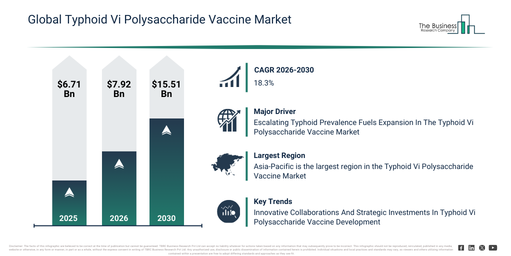
    The typhoid Vi polysaccharide vaccine market size has experienced rapid growth in recent years. It is projected to expand from $6.71 billion in 2025 to $7.92 billion in 2026, achieving a compound annual growth rate (CAGR) of 18.1%. The historical increase can be attributed to the expansion of national immunization schedules, increased awareness regarding typhoid prevention, the availability of polysaccharide vaccine formulations, the growth of public vaccination campaigns, and support from global health organizations.

    The typhoid Vi polysaccharide vaccine market is projected for rapid expansion over the coming years, forecast to reach $15.51 billion by 2030, exhibiting a compound annual growth rate (CAGR) of 18.3%. This projected growth stems from several factors, including an intensified focus on mass immunization in endemic areas, increased investments in vaccine manufacturing capacity, the expansion of adult vaccination initiatives, a greater emphasis on travel-related immunization, and the adoption of enhanced vaccine storage technologies. Key trends during this period are expected to encompass a rise in government-backed immunization schemes, surging demand for pediatric vaccination coverage, a heightened focus on preventive healthcare measures, the broadening of public-private vaccine distribution frameworks, and an amplified emphasis on optimizing the cold chain.

    Download A Free Sample Report For Comprehensive Market Insights:

    https://www.thebusinessresearchcompany.com/sample.aspx?id=8313&type=smp

    Which Drivers Are Advancing The Typhoid Vi Polysaccharide Vaccine Market Growth?

    The rising prevalence of typhoid is anticipated to stimulate the growth of the typhoid Vi polysaccharide vaccine market in the future. Typhoid, a potentially fatal infection caused by the bacteria Salmonella Typhi, typically spreads through contaminated food or drink. The increase in typhoid cases is attributed to poor sanitation, unsafe water sources, rapid urbanization, and greater exposure to tainted food and water. The typhoid Vi polysaccharide vaccine market supports this trend by offering immunization for adults and children aged 2 years and older, providing protective immunity against Salmonella enterica serovar Typhi and reducing the burden of typhoid fever in endemic regions. For instance, in August 2024, data released by the UK Health Security Agency indicated a rise in laboratory-confirmed symptomatic enteric fever cases in England, Wales, and Northern Ireland, with S. Typhi reaching 313 cases, S. Paratyphi A reaching 135 cases, and S. Paratyphi B reaching 18 cases. Thus, the increasing incidence of typhoid is driving the expansion of the typhoid Vi polysaccharide vaccine market.

    How Is Segment Classification Applied In The Typhoid Vi Polysaccharide Vaccine Market?

    The typhoid vi polysaccharide vaccine market covered in this report is segmented –

    1) By Type: Child, Adult

    2) By Route Of Administration: Oral, Parenteral

    3) By Application: Government Institution, Private Sector, Other Applications

    Subsegments:

    1) By Child: Pediatric Formulations, Age-Specific Dosages

    2) By Adult: Standard Adult Formulations, High-Risk Population Formulations

    What Trends Are Affecting The Typhoid Vi Polysaccharide Vaccine Market Dynamics?

    Prominent companies active in the typhoid antibody testing market are prioritizing the creation of advanced products, including molecular diagnostic tests, to boost the precision and speed of typhoid fever diagnosis. Molecular diagnostic tests exhibit high sensitivity and specificity, facilitating the accurate and quick identification of pathogens like Salmonella Typhi in instances of typhoid fever. For example, in April 2023, Vanguard Diagnostics, a diagnostic reagent developer based in India, unveiled the VANSCAN typhoid RT PCR test, a molecular diagnostic solution utilizing its patented technology. This test is designed to detect and diagnose typhoid fever through a real-time PCR (RT-PCR) testing method, which provides enhanced accuracy and sensitivity over conventional serological tests. The VANSCAN Typhoid RT PCR Test signifies a major progression in typhoid diagnostics, setting a new gold standard for prompt, accurate, and dependable disease detection within India and globally.

    Which Key Players Are Active In The Typhoid Vi Polysaccharide Vaccine Market?

    Major companies operating in the typhoid vi polysaccharide vaccine market are Sanofi S.A., Merck & Co. Inc., PT Bio Farma, Bharat Biotech International Limited, Bio-Med Pvt. Ltd., Hualan Biological Engineering Inc., Indian Immunologicals Limited, Serum Institute of India Limited, Biological E Limited, Panacea Biotec Limited, Zydus Lifesciences Limited, Beijing Minhai Biotechnology Co. Ltd., Lanzhou Institute of Biological Products Co. Ltd., Chengdu Institute of Biological Products Co. Ltd., Wuhan Institute of Biological Products Co. Ltd., Eubiologics Co. Ltd., Incepta Vaccine Limited, GC Pharma, KM Biologics Inc., Bharat Immunologicals and Biologicals Corporation Limited, Sinovac Biotech Ltd., Bio Farma Indonesia

    Access The Complete Typhoid Vi Polysaccharide Vaccine Market Report:

    https://www.thebusinessresearchcompany.com/report/typhoid-vi-polysaccharide-vaccine-global-market-report

    Which Region Has The Strongest Presence In The Typhoid Vi Polysaccharide Vaccine Market?

    Asia-Pacific was the largest region in the typhoid Vi polysaccharide vaccine market share in 2025. The regions covered in the typhoid vi polysaccharide vaccine market report are Asia-Pacific, South East Asia, Western Europe, Eastern Europe, North America, South America, Middle East, Africa.

    Access Typhoid Vi Polysaccharide Vaccine Market Report for Deeper Competitive Insights

    https://www.thebusinessresearchcompany.com/customise?id=8313&type=smp

    Browse Through More Reports Similar to the Global Typhoid Vi Polysaccharide Vaccine Market 2026, By The Business Research Company

    Preventive Vaccines Global Market Report 2026

    https://www.thebusinessresearchcompany.com/report/preventive-vaccines-global-market-report

    Vaccines Global Market Report 2026

    https://www.thebusinessresearchcompany.com/report/vaccines-global-market-report

    Chickenpox Vaccine Global Market Report 2026

    https://www.thebusinessresearchcompany.com/report/chickenpox-vaccine-global-market-report

    Get in touch with us:

    The Business Research Company: https://www.thebusinessresearchcompany.com/

    Americas: +1 310-496-7795

    Asia: +44 7882 955267 & +91 8897263534

    Europe: +44 7882 955267

    Email us at: marketing@tbrc.info

    Follow us on:

    LinkedIn: https://in.linkedin.com/company/the-business-research-company

    YouTube: https://www.youtube.com/channel/UC24_fI0rV8cR5DxlCpgmyFQ

    Global Market Model: https://www.thebusinessresearchcompany.com/global-market-model

  • Increasing Adoption Of Increase In Waterborne Diseases Driving Typhoid Antibody Testing Market Growth Is Influencing The Typhoid Antibody Testing Market

    Increasing Adoption Of Increase In Waterborne Diseases Driving Typhoid Antibody Testing Market Growth Is Influencing The Typhoid Antibody Testing Market

    The Business Research Company’s 2026 market reports feature enhanced tools like market attractiveness analysis, TAM assessment, and company scoring matrices, along with interactive dashboards, deeper supply chain insights, and startup coverage strengthening the depth, usability, and strategic value of insights.

    What Will Be The Estimated Market Size Of The Typhoid Antibody Testing Market By 2030?

    The typhoid antibody testing market has experienced robust expansion over recent years. It is anticipated to expand from $8.45 billion in 2025 to reach $9.1 billion in 2026, with a compound annual growth rate (CAGR) of 7.8%. Historically, this increase can be attributed to several factors including the rising incidence of typhoid fever in affected regions, the proliferation of public health screening initiatives, enhanced accessibility of serological testing modalities, the expansion of diagnostic laboratory networks, and an elevated awareness regarding the management of infectious diseases.

    The typhoid antibody testing market is projected to experience robust expansion over the coming years. Its size is anticipated to reach $11.87 billion by 2030, exhibiting a compound annual growth rate (CAGR) of 6.9%. This projected growth throughout the forecast period stems from several factors, including a heightened demand for swift and precise diagnostic methods, the proliferation of decentralized testing facilities, escalating investments in sophisticated immunoassay technologies, a sharpened emphasis on preparing for outbreaks, and the wider integration of digital laboratory systems. Key trends expected during this period involve the increasing uptake of rapid diagnostic test kits, a surging need for point-of-care typhoid testing, the expanding application of ELISA-based assays, greater automation in diagnostic laboratories, and an intensified focus on identifying diseases at an early stage.

    Download A Free Sample Report For Comprehensive Market Insights:

    https://www.thebusinessresearchcompany.com/sample.aspx?id=16815&type=smp

    What Primary Factors Are Fueling The Expansion Of The Typhoid Antibody Testing Market?

    The escalation in waterborne diseases is expected to stimulate the expansion of the typhoid antibody testing market moving forward. Waterborne diseases are defined as illnesses resulting from pathogenic microorganisms spread via contaminated water. The increase in waterborne diseases is primarily fueled by poor sanitation and hygiene, limited access to clean drinking water, rapid urbanization, climate change, and agricultural runoff. Typhoid antibody testing supports this growth by enabling early diagnosis, confirming cases, and monitoring the efficacy of treatments, thereby assisting in the identification of typhoid fever carriers and facilitating preventative actions for waterborne infections. For instance, in May 2023, according to the Coalition against Typhoid (a US-based organization dedicated to preventing typhoid and other invasive salmonellosis), the Philippines registered 4,440 typhoid cases from January 1 to April 15 2023, marking a 77 % rise compared to the same timeframe in 2022. Therefore, the increase in waterborne diseases is driving the growth of the typhoid antibody testing market.

    What Are The Core Segment Classifications In The Typhoid Antibody Testing Market?

    The typhoid antibody testing market covered in this report is segmented –

    1) By Product Type: Rapid Serological Tests, Hem-agglutination And Co-agglutination, Counter Immunoelectrophoresis, Typhidot Test, Widal Test

    2) By Paratyphi Type: Paratyphi A, Paratyphi B, Paratyphi C

    3) By End-User: Hospitals, Serological Testing Centers, Clinics, Diagnostic Centers, Other End Users

    Subsegments:

    1) By Rapid Serological Tests: Lateral Flow Immunoassays (LFIA), Immunochromatographic Tests (ICT), Enzyme-Linked Immunosorbent Assays (ELISA)

    2) By Hem-agglutination And Co-agglutination: Hemagglutination Assay, Co-agglutination Assay

    3) By Counter Immunoelectrophoresis: Gel-Based Counter Immunoelectrophoresis, Paper-Based Counter Immunoelectrophoresis

    4) By Typhidot Test: Typhidot-M (IgM) Test, Typhidot-G (IgG) Test

    5) By Widal Test: Tube Widal Test, Slide Widal Test

    Which Trends Are Influencing The Expansion Of The Typhoid Antibody Testing Market?

    Key companies operating in the type 2 diabetes market are prioritizing the creation of advanced interventions, including extended-indication SGLT2/GLP-1 combination therapies, to achieve better glycemic regulation, diminish associated health issues, and enhance patient adherence. Extended-indication SGLT2/GLP-1 combination therapies refer to medicinal protocols that integrate sodium-glucose co-transporter-2 (SGLT2) inhibitors and glucagon-like peptide-1 (GLP-1) receptor agonists (or their pre-combined forms) to concurrently target blood glucose management, obesity, and cardiovascular and renal outcomes in individuals with type 2 diabetes. For instance, in June 2024, AstraZeneca, a UK-based pharmaceutical company, obtained U.S. FDA approval for Farxiga (dapagliflozin) for the paediatric type 2 diabetes indication (age 10 years and older), thereby expanding its use beyond adult populations and signifying a strategy to reach a broader patient base. This innovation offers a once-daily oral dose for younger patients, incorporates data on cardiometabolic and renal protection, and facilitates market penetration into the paediatric and early-stage type 2 diabetes segments, consequently boosting growth in the global type 2 diabetes market.

    Who Are The Leading Firms Participating In The Typhoid Antibody Testing Market?

    Major companies operating in the typhoid antibody testing market are Thermo Fisher Scientific Inc., Abbott Laboratories, Siemens Healthineers AG, Quest Diagnostics Inc., bioMerieux SA, Bio-Rad Laboratories Inc., DiaSorin S.p.A., Meridian Bioscience Inc., Sekisui Diagnostics, CTK Biotech Inc., Creative Diagnostics, Fortress Diagnostics Ltd., CerTest Biotec S.L, InBios International Inc., J. Mitra & Co. Pvt. Ltd, AccuBioTech Co. Ltd, Vanguard Diagnostics Pvt. Ltd., Suburban Diagnostics India Private Limited, Biorex Diagnostics, Genebio Healthcare Private Limited, ICT Diagnostics

    Access The Complete Typhoid Antibody Testing Market Report:

    https://www.thebusinessresearchcompany.com/report/typhoid-antibody-testing-global-market-report

    Which Region Stands As The Largest Contributor To The Typhoid Antibody Testing Market?

    Asia-Pacific was the largest region in the typhoid antibody testing market in 2025. The regions covered in the typhoid antibody testing market report are Asia-Pacific, South East Asia, Western Europe, Eastern Europe, North America, South America, Middle East, Africa.

    Access Typhoid Antibody Testing Market Report for Deeper Competitive Insights

    https://www.thebusinessresearchcompany.com/customise?id=16815&type=smp

    Browse Through More Reports Similar to the Global Typhoid Antibody Testing Market 2026, By The Business Research Company

    Preventive Vaccines Global Market Report 2026

    https://www.thebusinessresearchcompany.com/report/preventive-vaccines-global-market-report

    Typhoid Vi Polysaccharide Vaccine Global Market Report 2026

    https://www.thebusinessresearchcompany.com/report/typhoid-vi-polysaccharide-vaccine-global-market-report

    Infectious Disease Diagnostics Testing Global Market Report 2026

    https://www.thebusinessresearchcompany.com/report/infectious-disease-diagnostics-testing-global-market-report

    Get in touch with us:

    The Business Research Company: https://www.thebusinessresearchcompany.com/

    Americas: +1 310-496-7795

    Asia: +44 7882 955267 & +91 8897263534

    Europe: +44 7882 955267

    Email us at: marketing@tbrc.info

    Follow us on:

    LinkedIn: https://in.linkedin.com/company/the-business-research-company

    YouTube: https://www.youtube.com/channel/UC24_fI0rV8cR5DxlCpgmyFQ

    Global Market Model: https://www.thebusinessresearchcompany.com/global-market-model

  • Elevated Rates Of Obesity And Heart Disease Fuel Expansion Of The Type 2 Diabetes Market Continues To Impact The Growth Of The Type 2 Diabetes Market

    Elevated Rates Of Obesity And Heart Disease Fuel Expansion Of The Type 2 Diabetes Market Continues To Impact The Growth Of The Type 2 Diabetes Market

    The Business Research Company’s 2026 market reports feature enhanced tools like market attractiveness analysis, TAM assessment, and company scoring matrices, along with interactive dashboards, deeper supply chain insights, and startup coverage strengthening the depth, usability, and strategic value of insights.

    What Is The Estimated Growth In Market Size Of The Type 2 Diabetes Market During 2026–2030?

    The type 2 diabetes market has shown significant expansion in recent years. It is anticipated to increase from $51.47 billion in 2025 to $55.53 billion in 2026, demonstrating a compound annual growth rate (CAGR) of 7.9%. Historically, this market’s growth can be linked to factors like the escalating global obesity rates, the rise in sedentary behaviors, broader access to oral antidiabetic drugs, increased screening for metabolic disorders, and improved provision of primary diabetes care.

    The type 2 diabetes market is projected to experience substantial expansion in the coming years, anticipated to reach $78.67 billion by 2030, exhibiting a compound annual growth rate (CAGR) of 9.1%. This growth during the forecast period is primarily driven by factors such as a heightened demand for therapies centered on weight management, a surge in the adoption of individualized diabetes treatment strategies, the broadening of digital therapeutic platforms, an intensified focus on proactive diabetes prevention, and increased capital flow into innovative antidiabetic medications. Key trends emerging in this period encompass the growing uptake of GLP-1 receptor agonists, an increased emphasis on managing cardiometabolic risks, the expanding utilization of multi-drug therapies, the development of treatment methods that integrate lifestyle changes, and a stronger commitment to achieving sustained glycemic control.

    Download A Free Sample Report For Comprehensive Market Insights:

    https://www.thebusinessresearchcompany.com/sample.aspx?id=13050&type=smp

    Which Strategic Drivers Are Supporting The Type 2 Diabetes Market Development?

    The forward trajectory of the type 2 diabetes market is anticipated to be driven by escalating incidences of obesity and heart disease. Obesity is defined as a medical state where an unhealthy accumulation of excess body fat occurs, whereas heart disease encompasses various ailments impacting the heart and its associated blood vessels. Elevated body weight raises the likelihood of insulin resistance, which in turn results in elevated blood sugar and the onset of type 2 diabetes. Conversely, high blood glucose concentrations can harm the blood vessels and nerves vital for cardiac and circulatory function, culminating in heart disease. As an illustration, in March 2024, the World Health Organization (WHO), an intergovernmental entity situated in Switzerland, disclosed that roughly one in eight individuals globally contended with obesity. This figure comprised 2.5 billion adults (18 years and older) who were categorized as overweight, with 890 million of these individuals experiencing obesity. Among the adult demographic, 43% were overweight, and 16% were identified as obese. Furthermore, the population of overweight children under the age of 5 reached 37 million. Consequently, the escalating prevalence of obesity and heart disease is fueling the expansion of the type 2 diabetes market.

    How Is The Type 2 Diabetes Market Structured Across Different Market Segments?

    The type 2 diabetes market covered in this report is segmented –

    1) By Drug Class: Dipeptidyl Peptidase-4 (DPP-4) Inhibitors, Glucagon-Like Peptide-1 (GLP-1) Receptor Agonists, Thiazolidinediones, Alpha-Glucosidase Inhibitors, Sulfonylureas And Insulin Secretagogues, Biguanides, SodiumGlucose Cotransporter 2 Inhibitors, Other Drug Classes

    2) By Application: Glycemic Control, Cardiovascular Safety, Hypoglycemia Avoidance, Other Applications

    3) By End-User: Children, Adults

    Subsegments:

    1) By Dipeptidyl Peptidase-4 (DPP-4) Inhibitors: Sitagliptin, Saxagliptin, Linagliptin, Alogliptin

    2) By Glucagon-Like Peptide-1 (GLP-1) Receptor Agonists: Liraglutide, Semaglutide, Dulaglutide, Exenatide

    3) By Thiazolidinediones: Pioglitazone, Rosiglitazone

    4) By Alpha-Glucosidase Inhibitors: Acarbose, Miglitol

    5) By Sulfonylureas And Insulin Secretagogues: Glimepiride, Glipizide, Glyburide

    6) By Biguanides: Metformin, Buformin, Phenformin

    7) By Sodium-Glucose Cotransporter 2 Inhibitors: Canagliflozin, Dapagliflozin, Empagliflozin

    8) By Other Drug Classes: Amylin Analogues, Bile Acid Sequestrants, Dopamine Agonists

    Which Trends Are Expected To Shape The Type 2 Diabetes Market?

    Leading companies within the type 1 diabetes market are prioritizing the creation of advanced therapeutic solutions, such as allogeneic islet cell transplantation, aiming to provide functional beta-cell replacement and diminish insulin reliance for type 1 diabetes patients. Allogeneic islet cell transplantation is defined as the introduction of donor pancreatic islet cells into a patient’s hepatic portal vein, with the goal of re-establishing internal insulin production and decreasing the occurrence of hypoglycemic incidents and insulin injections. For example, in June 2023, CellTrans Inc., a US-based biotechnology firm, obtained clearance from the U.S. Food and Drug Administration (FDA) for Lantidra (donislecel), marking it as the first cellular therapy specifically for type 1 diabetes patients. This approval signifies a major breakthrough in regenerative medicine, presenting a possible enduring treatment alternative for individuals with type 1 diabetes who contend with insulin dependence. Lantidra operates by substituting the insulin-producing cells eradicated by the immune system, thereby striving to reinstate the body’s inherent capacity to manage blood glucose levels.

    Which Companies Are Engaged In The Type 2 Diabetes Market Environment?

    Major companies operating in the type 2 diabetes market are F. Hoffmann-La Roche AG, Merck and Co. Inc, Novartis AG, AstraZeneca plc, Abbott Laboratories, Sanofi SA, Medtronic plc, Takeda Pharmaceutical Company, GlaxoSmithKline plc, Eli Lilly and Company, Novo Nordisk A/S, Johnson And Johnson Private Limited, Daiichi Sankyo Co. Ltd, Boehringer Ingelheim International GmbH, Dexcom Inc, Amgen Inc., Insulet Corporation, Ascensia Diabetes Care, Beta Bionics, Onduo LLC, DarioHealth, One Drop, Bigfoot Biomedical Inc., Digbi Health, MySugr GmbH, Senseonics Holdings Inc., Provention Bio Inc., Vida Health Inc., Diathrive Health

    Access The Complete Type 2 Diabetes Market Report:

    https://www.thebusinessresearchcompany.com/report/type-2-diabetes-global-market-report

    What Is The Largest Regional Market In The Type 2 Diabetes Market?

    North America was the largest region in the type 2 diabetes market in 2025. Europe is expected to be the fastest-growing region in the forecast period. The regions covered in the type 2 diabetes market report are Asia-Pacific, South East Asia, Western Europe, Eastern Europe, North America, South America, Middle East, Africa.

    Access Type 2 Diabetes Market Report for Deeper Competitive Insights

    https://www.thebusinessresearchcompany.com/customise?id=13050&type=smp

    Browse Through More Reports Similar to the Global Type 2 Diabetes Market 2026, By The Business Research Company

    Type 1 Diabetes Global Market Report 2026

    https://www.thebusinessresearchcompany.com/report/type-1-diabetes-global-market-report

    Antidiabetics Global Market Report 2026

    https://www.thebusinessresearchcompany.com/report/antidiabetics-global-market-report

    Diabetes Care Devices Market 2026

    https://www.thebusinessresearchcompany.com/report/diabetes-care-devices-market

    Get in touch with us:

    The Business Research Company: https://www.thebusinessresearchcompany.com/

    Americas: +1 310-496-7795

    Asia: +44 7882 955267 & +91 8897263534

    Europe: +44 7882 955267

    Email us at: marketing@tbrc.info

    Follow us on:

    LinkedIn: https://in.linkedin.com/company/the-business-research-company

    YouTube: https://www.youtube.com/channel/UC24_fI0rV8cR5DxlCpgmyFQ

    Global Market Model: https://www.thebusinessresearchcompany.com/global-market-model
  • Type 1 Diabetes Market Outlook Through 2030 With Analysis Of Industry Trends And Developments

    Type 1 Diabetes Market Outlook Through 2030 With Analysis Of Industry Trends And Developments

    The Business Research Company’s 2026 market reports feature enhanced tools like market attractiveness analysis, TAM assessment, and company scoring matrices, along with interactive dashboards, deeper supply chain insights, and startup coverage strengthening the depth, usability, and strategic value of insights.

    What Market Value Expansion Is Expected For The Type 1 Diabetes Market Over The Forecast Period?

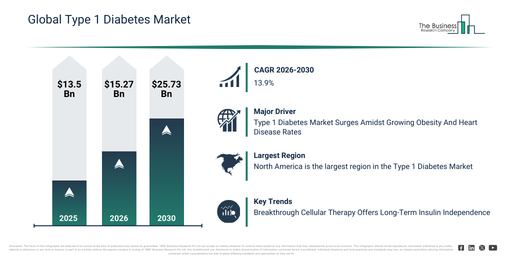
    The type 1 diabetes market has experienced substantial growth in recent years. This market is expected to expand from $13.5 billion in 2025 to $15.27 billion in 2026, achieving a compound annual growth rate (CAGR) of 13.1%. Historically, this growth has been fueled by factors including better accessibility to insulin analogs, an uptick in diagnosis rates among pediatric patients, the proliferation of diabetes specialty care centers, heightened awareness of autoimmune diabetes, and innovations in glucose monitoring technologies.

    The type 1 diabetes market is projected to experience swift expansion over the coming years. This market is set to reach $25.73 billion by 2030, exhibiting a compound annual growth rate (CAGR) of 13.9%. This anticipated growth during the forecast period is due to factors such as the increasing uptake of closed-loop insulin delivery systems, greater investments in immunotherapy research, an intensifying focus on disease-modifying therapies, the widening reach of digital diabetes management platforms, and an escalating demand for patient-centric care approaches. Key trends during this period encompass the increased acceptance of continuous glucose monitoring systems, the growing deployment of insulin pump technologies, an evolving emphasis on personalized insulin therapy, the broadening of combination therapy strategies, and a heightened importance placed on early diagnosis and comprehensive disease management.

    Download A Free Sample Report For Comprehensive Market Insights:

    https://www.thebusinessresearchcompany.com/sample.aspx?id=12872&type=smp

    What Major Growth Factors Are Impacting The Type 1 Diabetes Market?

    The expanding female population is anticipated to drive the future growth of the Turner syndrome market. This demographic, defined as the total count of females residing in a particular area or worldwide at a specific moment, is growing due to longer female life expectancy, bolstered by better healthcare provisions and shifts in demographics. The Turner syndrome market provides essential support to the female population through various offerings such as growth hormone therapy, estrogen replacement, and comprehensive multidisciplinary care, all of which contribute to improved physical development, reproductive health, and overall long-term well-being. For example, data from the U.S. Census Bureau, a federal government agency based in the U.S., indicated that the United States had 0.168 billion females as of July 2022, as reported in March 2024. Furthermore, Statistics Canada, a national statistics agency from Canada, noted an increase in the number of females aged 15–64 to 0.01304 billion in 2023. Consequently, the rising female population serves as a key driver for the expansion of the Turner syndrome market.

    Which Segment-Based Categories Are Covered In The Type 1 Diabetes Market?

    The type 1 diabetes market covered in this report is segmented –

    1) By Product Type: Rapid Acting Insulin Analogs, Long-Acting Insulin Analogs, Premix Insulin Analogs, Others Product Types

    2) By Device: Insulin Pump, Insulin Pen, Blood Glucose Meter

    3) By Application: Childrens, Adults

    4) By End-User: Hospital, Research Institutes, Home Care

    Subsegments:

    1) By Rapid Acting Insulin Analogs: Insulin Lispro, Insulin Aspart, Insulin Glulisine

    2) By Long-Acting Insulin Analogs: Insulin Detemir, Insulin Glargine, Insulin Degludec

    3) By Premix Insulin Analogs: Premixed Insulin Lispro, Premixed Insulin Aspart, Premixed Insulin Glargine

    4) By Other Product Types: Insulin Pumps, Continuous Glucose Monitoring Systems, Non-Insulin Medications, Combination Therapies

    Which Trends Are Affecting The Type 1 Diabetes Market Framework?

    Leading companies in the twin-twin transfusion syndrome treatment market are emphasizing strategic partnerships to expedite the creation and market launch of innovative therapeutic solutions. A strategic partnership involves a sustained alliance between independent organizations that aims to achieve shared business objectives. It facilitates each party utilizing combined strengths, resources, or market reach for mutual advantage. For instance, in January 2023, CHA Hollywood Presbyterian Medical Center, a US-based provider of a comprehensive range of dynamic healthcare services, collaborated with Los Angeles Fetal Surgery, a US-based medical clinic, to inaugurate a pioneering life-saving fetal surgery program. This initiative, one of the limited number available in the U.S., delivers minimally invasive treatments for unborn babies diagnosed with severe conditions such as spina bifida and twin-twin transfusion syndrome.

    Who Are The Prominent Players Across The Type 1 Diabetes Market?

    Major companies operating in the type 1 diabetes market are Johnson and Johnson Limited, Merck and Co. Inc., Sanofi-Aventis LLC, Abbott Laboratories, Medtronic Plc, Eli Lilly and Co Ltd, Novo Nordisk A/S, Dexcom Inc, Insulet Corporation, Tandem Diabetes Care Inc, Adaptive Biotechnologies Corporation, Xeris Pharmaceuticals Inc, MannKind Corporation, Biocon Ltd, Virta Health Corp, Bigfoot Biomedical Inc, ViaCyte Inc, Beta Bionics Inc, Adocia SA, Senseonics Holdings Inc, Zealand Pharmaceuticals A/S, Provention Bio Inc

    Access The Complete Type 1 Diabetes Market Report:

    https://www.thebusinessresearchcompany.com/report/type-1-diabetes-global-market-report

    Which Region Contributes The Most To The Type 1 Diabetes Market?

    North America was the largest region in the type 1 diabetes market in 2025. The regions covered in the type 1 diabetes market report are Asia-Pacific, South East Asia, Western Europe, Eastern Europe, North America, South America, Middle East, Africa.

    Access Type 1 Diabetes Market Report for Deeper Competitive Insights

    https://www.thebusinessresearchcompany.com/customise?id=12872&type=smp

    Browse Through More Reports Similar to the Global Type 1 Diabetes Market 2026, By The Business Research Company

    Type 2 Diabetes Global Market Report 2026

    https://www.thebusinessresearchcompany.com/report/type-2-diabetes-global-market-report

    Diabetes Care Devices Market 2026

    https://www.thebusinessresearchcompany.com/report/diabetes-care-devices-market

    Digital Diabetes Management Global Market Report 2026

    https://www.thebusinessresearchcompany.com/report/digital-diabetes-management-global-market-report

    Get in touch with us:

    The Business Research Company: https://www.thebusinessresearchcompany.com/

    Americas: +1 310-496-7795

    Asia: +44 7882 955267 & +91 8897263534

    Europe: +44 7882 955267

    Email us at: marketing@tbrc.info

    Follow us on:

    LinkedIn: https://in.linkedin.com/company/the-business-research-company

    YouTube: https://www.youtube.com/channel/UC24_fI0rV8cR5DxlCpgmyFQ

    Global Market Model: https://www.thebusinessresearchcompany.com/global-market-model
  • Twin-Twin Transfusion Syndrome Treatment Market Revenue Anticipated To Reach $1.05 Billion By 2030 With 6.6% CAGR

    Twin-Twin Transfusion Syndrome Treatment Market Revenue Anticipated To Reach $1.05 Billion By 2030 With 6.6% CAGR

    The Business Research Company’s 2026 market reports feature enhanced tools like market attractiveness analysis, TAM assessment, and company scoring matrices, along with interactive dashboards, deeper supply chain insights, and startup coverage strengthening the depth, usability, and strategic value of insights.

    How Will The Market Value Of The Twin-Twin Transfusion Syndrome Treatment Market Change Between 2026 And 2030?

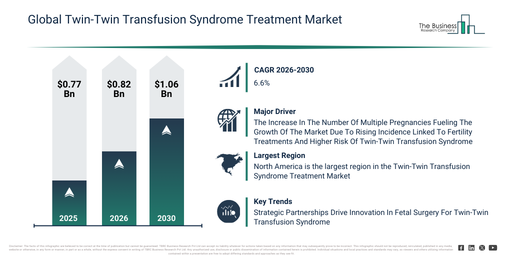
    The twin-twin transfusion syndrome treatment market size has demonstrated significant growth in recent years. This market is set to expand from $0.77 billion in 2025 to $0.82 billion in 2026, achieving a compound annual growth rate (CAGR) of 6.8%. The historical growth can be attributed to several factors including the increased application of prenatal ultrasound screening, progress in fetal medicine techniques, rising awareness of monochorionic twin risks, the availability of laser photocoagulation procedures, and the expansion of maternal healthcare services.

    The twin-twin transfusion syndrome treatment market is projected to experience substantial expansion in the coming years, reaching $1.06 billion by 2030 with a compound annual growth rate (CAGR) of 6.6%. This anticipated growth during the forecast period stems from advancements in minimally invasive fetal surgery, increased investments in maternal-fetal medicine, the expansion of specialized prenatal care centers, a growing demand for early intervention therapies, and improved survival outcomes for affected twins. Notable trends expected in this period include the increasing adoption of fetoscopic laser therapies, a rising utilization of advanced prenatal imaging, a heightened emphasis on early TTTS diagnosis, the establishment of more specialized fetal surgery centers, and enhanced multidisciplinary maternal-fetal care.

    Download A Free Sample Report For Comprehensive Market Insights:

    https://www.thebusinessresearchcompany.com/sample.aspx?id=23549&type=smp

    What Market Drivers Are Helping Shape The Twin-Twin Transfusion Syndrome Treatment Market Expansion?

    The twin-twin transfusion syndrome treatment market is anticipated to expand due to the projected rise in multiple pregnancies. Multiple pregnancies occur when a woman carries more than one fetus simultaneously, such as twins, triplets, or higher-order multiples. This increase in multiple pregnancies is largely attributed to fertility treatments that encourage the ovaries to release multiple eggs. Treatment for twin-twin transfusion syndrome in multiple pregnancies targets abnormal blood vessel connections in the shared placenta, aiming to restore balanced blood flow between the fetuses. This intervention significantly enhances survival chances and lowers the risk of complications for both twins. As an illustration, in September 2023, Twins Research Australia reported that Australia had 4,118 multiple births, comprising 1.5% of the country’s total 286,998 births. Within this figure, twins accounted for the vast majority with 4,073 cases (approximately 99 %), while only 45 births (1 %) involved triplets or higher-order multiples. Thus, the growing number of multiple pregnancies is a key driver for the twin-twin transfusion syndrome treatment market.

    What Are The Major Segment Categories Within The Twin-Twin Transfusion Syndrome Treatment Market?

    The twin-twin transfusion syndrome treatment market covered in this report is segmented –

    1) By Treatment Type: Laser Therapy, Surgery, Blood Transfusion, Medication

    2) By Diagnosis Method: Ultrasound, Blood Tests, Amniocentesis

    3) By Mode Of Administration: Injectable, Oral, Other Modes Of Administration

    4) By Symptoms: Breathlessness, Tightness In The Abdomen, Rapid Expansion Of Abdomen, Rapid Weight Gain, Pressure On The Stomach, Premature Contractions

    5) By End-User: Hospitals, Homecare, Specialty Clinics, Other End-Users

    Subsegments:-

    1) By Laser Therapy: Fetoscopic Laser Photocoagulation, Selective Laser Ablation, Solomon Technique

    2) By Surgery: Amnioreduction Surgery, Septostomy, Fetoscopic Cord Coagulation

    3) By Blood Transfusion: Intrauterine Transfusion (IUT), Intraperitoneal Transfusion, Intravascular Transfusion

    4) By Medication: Tocolytics, Corticosteroids, Anti-Inflammatory Drugs, Antibiotics

    What Trends Are Influencing The Twin-Twin Transfusion Syndrome Treatment Market?

    Companies operating within the turner syndrome market are heavily invested in clinical trials to develop innovative solutions, such as pediatric growth hormone medications, designed to effectively stimulate growth, enhance height outcomes, and support the overall development of children experiencing growth hormone deficiencies or related growth disorders. Pediatric growth hormone medications themselves are synthetic or recombinant hormone therapies utilized to foster growth and development in children afflicted with growth hormone deficiency (GHD) or other medical conditions impacting height and growth. For example, in December 2024, Ascendis Pharma A/S, a biopharmaceutical company based in Denmark, revealed positive results from its Phase 2 New InsiGHTS trial concerning TransCon hGH (lonapegsomatropin) in young patients with Turner syndrome. This particular trial included 49 prepubertal children, aged 1 to 10 years, diagnosed with Turner syndrome. TransCon hGH exhibited improved growth across all three starting dose cohorts, performing on par with daily somatropin. The outcomes from this trial lend support to the potential market expansion of TransCon hGH into the Turner syndrome treatment landscape, showcasing a safety profile and efficacy comparable to daily treatment regimens.

    Which Companies Form The Competitive Landscape Of The Twin-Twin Transfusion Syndrome Treatment Market?

    Major companies operating in the twin-twin transfusion syndrome treatment market are Mayo Foundation for Medical Education and Research, USF Health, Johns Hopkins Medicine, University Hospitals, Seattle Children’s Hospital, Texas Children’s Hospital, Cincinnati Children’s Hospital Medical Center, Apollo Hospitals, Tampa General Hospital, Children’s Hospital Colorado, UCSF Health, King’s College Hospital, The Children’s Hospital of Philadelphia, Riley Children’s Health, Yale School of Medicine, Lurie Children’s Hospital, Rainbow Children’s Hospital, UNC Department of Obstetrics & Gynecology, UC Davis Fetal Care and Treatment Center, SJD Barcelona Children’s Hospital, Children’s Minnesota Midwest Fetal Care Center, Boston Children’s Hospital, Nationwide Children’s Hospital Fetal Center

    Access The Complete Twin-Twin Transfusion Syndrome Treatment Market Report:

    https://www.thebusinessresearchcompany.com/report/twin-twin-transfusion-syndrome-treatment-global-market-report

    Which Regional Market Leads The Twin-Twin Transfusion Syndrome Treatment Market?

    North America was the largest region in the twin-twin transfusion syndrome treatment market in 2025. The regions covered in the twin-twin transfusion syndrome treatment market report are Asia-Pacific, South East Asia, Western Europe, Eastern Europe, North America, South America, Middle East, Africa.

    Access Twin-Twin Transfusion Syndrome Treatment Market Report for Deeper Competitive Insights

    https://www.thebusinessresearchcompany.com/customise?id=23549&type=smp

    Browse Through More Reports Similar to the Global Twin-Twin Transfusion Syndrome Treatment Market 2026, By The Business Research Company

    Pediatric Perfusion Global Market Report 2026

    https://www.thebusinessresearchcompany.com/report/pediatric-perfusion-global-market-report

    Bleeding Disorders Treatment Global Market Report 2026

    https://www.thebusinessresearchcompany.com/report/bleeding-disorders-treatment-global-market-report

    Infusion Pump Global Market Report 2026

    https://www.thebusinessresearchcompany.com/report/infusion-pump-global-market-report

    Get in touch with us:

    The Business Research Company: https://www.thebusinessresearchcompany.com/

    Americas: +1 310-496-7795

    Asia: +44 7882 955267 & +91 8897263534

    Europe: +44 7882 955267

    Email us at: marketing@tbrc.info

    Follow us on:

    LinkedIn: https://in.linkedin.com/company/the-business-research-company

    YouTube: https://www.youtube.com/channel/UC24_fI0rV8cR5DxlCpgmyFQ

    Global Market Model: https://www.thebusinessresearchcompany.com/global-market-model
  • Turner Syndrome Market Outlook Assessing Future Opportunities And Growth Prospects

    Turner Syndrome Market Outlook Assessing Future Opportunities And Growth Prospects

    The Business Research Company’s 2026 market reports feature enhanced tools like market attractiveness analysis, TAM assessment, and company scoring matrices, along with interactive dashboards, deeper supply chain insights, and startup coverage strengthening the depth, usability, and strategic value of insights.

    What Is The Forecasted Rise In Market Size Of The Turner Syndrome Market During The Forecast Period?

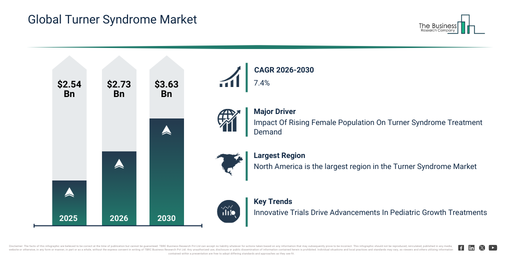
    The market size for Turner syndrome has demonstrated substantial growth in recent years. It is anticipated to expand from $2.54 billion in 2025 to $2.73 billion in 2026, experiencing a compound annual growth rate (CAGR) of 7.6%. The expansion witnessed in the past can be attributed to heightened awareness of genetic disorders, the provision of recombinant growth hormones, the broadening of pediatric endocrinology services, refinements in diagnostic karyotyping techniques, and a surge in patient advocacy initiatives.

    The market size for Turner Syndrome is poised for significant expansion in the coming years. It is projected to reach $3.63 billion by 2030, exhibiting a compound annual growth rate (CAGR) of 7.4%. This anticipated growth can be attributed to advancements in genetic screening technologies, the increasing adoption of personalized hormone therapies, the broadening of home-based care models, a rise in investment for rare disease research, and improved long-term patient outcomes. Prominent trends throughout the forecast period include an intensified focus on early genetic diagnosis, the increasing use of growth hormone therapies, a growing emphasis on lifelong disease management, the expansion of multidisciplinary care models, and enhanced patient monitoring programs.

    Download A Free Sample Report For Comprehensive Market Insights:

    https://www.thebusinessresearchcompany.com/sample.aspx?id=21310&type=smp

    Which Significant Factors Are Encouraging Growth In The Turner Syndrome Market?

    The Turner syndrome market is projected to expand in the future due to the rising female population. This term denotes the overall count of women residing in a particular area or worldwide at a given moment. The growth in the female population stems from extended female life expectancy, facilitated by advancements in healthcare and shifts in demographics. The Turner syndrome market assists the female population through the provision of growth hormone therapy, estrogen replacement, and comprehensive multidisciplinary care, thereby boosting physical development, reproductive health, and overall long-term wellness. As an illustration, data from the U.S. Census Bureau, a U.S.-based federal government agency, indicated in March 2024 that there were 0.168 billion females in the United States as of July 2022. Furthermore, Statistics Canada, a Canada-based national statistics agency, reported in 2023 that the female population aged 15–64 grew to 0.01304 billion in 2023, up from 0.01296 billion in 2022. Consequently, the expanding female population is fueling the development of the Turner syndrome market.

    How Is The Turner Syndrome Market Distributed Across Key Segments?

    The turner syndrome market covered in this report is segmented –

    1) By Type: Classical Turner Syndrome, Mosaic Turner syndrome

    2) By Therapy Type: Growth Hormone Therapy, Estrogen And Progesteron, Replacement Therapy, Other Therapy Types

    3) By Drug Type: Norditropin, Oxandrolone, Humatrope, Somatropin, Oxandrin, Genotropin, Nutropin, Zomacton

    4) By End-User: Hospitals, Homecare, Specialty Clinics, Surgical Centres, Other End-Users

    Subsegments:

    1) By Classical Turner Syndrome: Complete Monosomy X, X Chromosome Deletion

    2) By Mosaic Turner Syndrome: Mosaicism With 45,X/46,XX Karyotype, Mosaicism With 45,X/46,XY Karyotype

    Which Trends Are Guiding The Development Of The Turner Syndrome Market?

    Major companies within the tumor profiling market are actively developing advanced solutions, such as artificial intelligence (AI)-powered diagnostic tools, to boost accuracy and efficiency in cancer therapy. Artificial intelligence (AI) utilizes sophisticated computational techniques to analyze intricate genomic, proteomic, and clinical data, leading to quicker diagnoses, tailored treatment plans, and enhanced monitoring of disease progression. For example, in January 2025, Panakeia Technologies LTD, a UK-based firm specializing in AI-driven software for cancer diagnosis and treatment, unveiled PANProfiler Colon. This AI-driven software solution is specifically crafted to profile crucial molecular biomarkers like microsatellite instability (MSI) and mismatch repair deficiency (dMMR) from H and E-stained images of colon cancer tissue samples. This digital instrument facilitates rapid and precise molecular profiling of tumors, which is vital for diagnosing colorectal cancer, identifying cases of Lynch syndrome, and guiding personalized treatment choices.

    Who Are The Key Market Participants In The Turner Syndrome Market?

    Major companies operating in the turner syndrome market are Pfizer Inc., Novartis AG, Eli Lilly and Company, Novo Nordisk, Merck KGaA, Teva Pharmaceutical Industries Ltd., Sandoz International GmbH, Genentech Inc., Ipsen Pharma, Ferring Pharmaceutical, BioMarin Pharmaceutical Inc., Ascendis Pharma, CRISPR Therapeutics AG, Alnylam Pharmaceuticals Inc., Sangamo Therapeutics Inc., Ultragenyx Pharmaceutical Inc., BridgeBio Pharma Inc., Travere Therapeutics Inc., REGENXBIO Inc., Avalo Therapeutics Inc., Taysha Gene Therapies Inc., Asklepion Therapeutics Inc.

    Access The Complete Turner Syndrome Market Report:

    https://www.thebusinessresearchcompany.com/report/turner-syndrome-global-market-report

    Which Region Holds The Largest Share In The Turner Syndrome Market?

    North America was the largest region in the turner syndrome market in 2025. Asia-Pacific is expected to be the fastest-growing region in the forecast period. The regions covered in the turner syndrome market report are Asia-Pacific, South East Asia, Western Europe, Eastern Europe, North America, South America, Middle East, Africa.

    Access Turner Syndrome Market Report for Deeper Competitive Insights

    https://www.thebusinessresearchcompany.com/customise?id=21310&type=smp

    Browse Through More Reports Similar to the Global Turner Syndrome Market 2026, By The Business Research Company

    Progressive Ataxia And Weakness Disorders Global Market Report 2026

    https://www.thebusinessresearchcompany.com/report/progressive-ataxia-and-weakness-disorders-global-market-report

    Tourette Syndrome Treatment Global Market Report 2026

    https://www.thebusinessresearchcompany.com/report/tourette-syndrome-treatment-global-market-report

    Lysosomal Disease Treatment Global Market Report 2026

    https://www.thebusinessresearchcompany.com/report/lysosomal-disease-treatment-global-market-report

    Get in touch with us:

    The Business Research Company: https://www.thebusinessresearchcompany.com/

    Americas: +1 310-496-7795

    Asia: +44 7882 955267 & +91 8897263534

    Europe: +44 7882 955267

    Email us at: marketing@tbrc.info

    Follow us on:

    LinkedIn: https://in.linkedin.com/company/the-business-research-company

    YouTube: https://www.youtube.com/channel/UC24_fI0rV8cR5DxlCpgmyFQ

    Global Market Model: https://www.thebusinessresearchcompany.com/global-market-model

  • Tumor Profiling Market Industry Forecast Reflecting Growth To $17.95 Billion By 2030

    Tumor Profiling Market Industry Forecast Reflecting Growth To $17.95 Billion By 2030

    The Business Research Company’s 2026 market reports feature enhanced tools like market attractiveness analysis, TAM assessment, and company scoring matrices, along with interactive dashboards, deeper supply chain insights, and startup coverage strengthening the depth, usability, and strategic value of insights.

    How Is The Tumor Profiling Market’s Market Value Anticipated To Evolve From 2026 To 2030?

    The size of the tumor profiling market has experienced swift expansion in recent years. Its value is anticipated to rise from $11.18 billion in 2025 to $12.31 billion in 2026, exhibiting a compound annual growth rate (CAGR) of 10.1%. The growth observed in prior periods is attributable to increasing cancer incidence rates, the expansion of molecular diagnostics laboratories, the rising application of targeted cancer therapies, breakthroughs in sequencing technologies, and an increase in oncology research funding.

    The tumor profiling market is anticipated to experience robust expansion over the coming years, with projections indicating it will reach $17.96 billion by 2030, exhibiting a compound annual growth rate (CAGR) of 9.9%. Factors driving this growth during the forecast period include the rising acceptance of precision oncology, a heightened need for individualized cancer therapies, developments in bioinformatics platforms, the wider availability of companion diagnostics, and increased funding for translational cancer research. Key trends anticipated for the forecast period encompass a greater uptake of next-generation sequencing, an increase in multi-omics profiling methods, the growing incorporation of AI-powered data analysis, the broadening scope of personalized oncology applications, and an intensified focus on identifying new biomarkers.

    Download A Free Sample Report For Comprehensive Market Insights:

    https://www.thebusinessresearchcompany.com/sample.aspx?id=24420&type=smp

    What Core Drivers Are Transforming The Tumor Profiling Market?

    The increasing demand for personalized medicine is expected to fuel the expansion of the tumor profiling market moving forward. Personalized medicine is an approach that customizes healthcare treatments based on the unique characteristics of each patient. This rise is attributed to patients seeking more precise therapies that offer improved outcomes and fewer side effects compared to traditional treatments. Tumor profiling aids personalized medicine by identifying specific genetic mutations and biomarkers in a patient’s tumor, enabling targeted treatments and reducing adverse effects. For example, in February 2024, a report released by the Personalized Medicine Coalition, a US-based organization focused on advancing personalized medicine, showed that personalized medicines comprised more than one-third of all new drug approvals in 2023, marking the fourth consecutive year of this trend. Therefore, the growing demand for personalized medicine is driving growth in the tumor profiling market.

    How Does Segment Analysis Break Down The Tumor Profiling Market Structure?

    The tumor profiling market covered in this report is segmented –

    1) By Technique: Genomics, Proteomics, Epigenetics, Metabolomics

    2) By Technology: Sequencing Techniques, Quantitative Polymerase Chain Reaction (qPCR), Immunohistochemistry, In Situ Hybridization (ISH), Microarray

    3) By Application: Personalized Cancer Medicine, Oncological Diagnostics, Research

    Subsegments:

    1) By Genomics: Next-Generation Sequencing (NGS), Polymerase Chain Reaction (PCR), Microarrays, Sanger sequencing

    2) By Proteomics: Mass Spectrometry (MS), Protein Microarrays, Immunohistochemistry (IHC), Western Blotting

    3) By Epigenetics: DNA Methylation Analysis, Chromatin Immunoprecipitation Sequencing (ChIP-seq), Histone Modification Profiling, Non-Coding RNA Analysis

    4) By Metabolomics: Nuclear Magnetic Resonance (NMR) Spectroscopy, Gas Chromatography-Mass Spectrometry (GC-MS), Liquid Chromatography-Mass Spectrometry (LC-MS), Capillary Electrophoresis-Mass Spectrometry (CE-MS)

    What Trends Are Influencing The Future Of The Tumor Profiling Market?

    Leading companies active in the tumor microenvironment market are concentrating on developing advanced treatment methods, such as precision therapies, to improve effectiveness and tackle resistance mechanisms. Precision therapies are treatments specifically formulated to pinpoint and attack cancer cells using distinct molecular markers, largely leaving most normal cells unharmed. For example, in April 2024, Aubex Therapeutics Inc., a US-based biotechnology firm, introduced a new category of compounds designed to revolutionize cancer treatment by directly engaging the tumor microenvironment (TME). These innovative compounds are engineered to interact with the intricate network within the TME, which comprises cancer cells, immune cells, blood vessels, and stromal components. By influencing these interactions, Aubex’s strategy boosts the immune system’s capacity to fight tumors and disrupts processes that enable tumor growth and metastasis. This approach is intended to overcome resistance to standard therapies, providing a promising option for patients who have not responded to existing treatments.

    Which Organizations Are Operating Within The Tumor Profiling Market?

    Major companies operating in the tumor profiling market are F. Hoffmann-La Roche AG, Thermo Fisher Scientific Inc., Agilent Technologies Inc., Hologic Inc., Illumina Inc., Sysmex Corporation, QIAGEN N.V., Exact Sciences Corporation, Guardant Health Inc., GenScript Biotech Corporation, NeoGenomics Inc., Caris Life Sciences Inc., Tempus Inc., Foundation Medicine Inc., NanoString Technologies Inc., Personalis Inc., Boreal Genomics Inc., Strand Life Sciences Pvt. Ltd., HTG Molecular Diagnostics Inc., Lucence Health Inc., Predictive Oncology Inc.

    Access The Complete Tumor Profiling Market Report:

    https://www.thebusinessresearchcompany.com/report/tumor-profiling-global-market-report

    Which Region Is The Dominant Market In The Tumor Profiling Market?

    North America was the largest region in the tumor profiling market in 2025. Asia-Pacific is expected to be the fastest-growing region in the forecast period. The regions covered in the tumor profiling market report are Asia-Pacific, South East Asia, Western Europe, Eastern Europe, North America, South America, Middle East, Africa.

    Access Tumor Profiling Market Report for Deeper Competitive Insights

    https://www.thebusinessresearchcompany.com/customise?id=24420&type=smp

    Browse Through More Reports Similar to the Global Tumor Profiling Market 2026, By The Business Research Company

    Cancer Profiling Global Market Report 2026

    https://www.thebusinessresearchcompany.com/report/cancer-profiling-global-market-report

    Cancer Diagnostics Global Market Report 2026

    https://www.thebusinessresearchcompany.com/report/cancer-diagnostics-global-market-report

    Cancer Biomarker Global Market Report 2026

    https://www.thebusinessresearchcompany.com/report/cancer-biomarker-global-market-report

    Get in touch with us:

    The Business Research Company: https://www.thebusinessresearchcompany.com/

    Americas: +1 310-496-7795

    Asia: +44 7882 955267 & +91 8897263534

    Europe: +44 7882 955267

    Email us at: marketing@tbrc.info

    Follow us on:

    LinkedIn: https://in.linkedin.com/company/the-business-research-company

    YouTube: https://www.youtube.com/channel/UC24_fI0rV8cR5DxlCpgmyFQ

    Global Market Model: https://www.thebusinessresearchcompany.com/global-market-model