Month: June 2026

  • Medical Device Testing Market Trends Are Creating New Opportunities For Industry Leaders

    Medical Device Testing Market Trends Are Creating New Opportunities For Industry Leaders

    Enhanced with market attractiveness analysis, total addressable market evaluation, company benchmarking matrices, interactive Excel dashboards, expanded supply chain intelligence, emerging startup coverage, and detailed product insights, The Business Research Company’s 2026 market reports deliver more actionable and strategically valuable research.

    Medical Device Testing Market Size And Revenue Forecast Through 2030

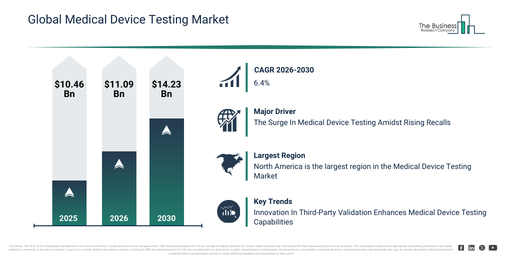
    The medical device testing market has experienced robust expansion in recent years. Projections indicate it will expand from $10.46 billion in 2025 to $11.09 billion in 2026, demonstrating a compound annual growth rate (CAGR) of 6.1%. Historically, this growth has been driven by several factors, including an increase in medical device approvals, heightened regulatory scrutiny, the growing embrace of implantable devices, the early stages of globalization in medical device manufacturing, and a demand for standardized quality assurance.

    The medical device testing market is projected to experience substantial expansion in the coming years, reaching $14.23 billion by 2030, exhibiting a compound annual growth rate (CAGR) of 6.4%. This growth during the forecast period is fueled by several factors, including the proliferation of connected medical devices, the increasing intricacy of class III devices, a heightened emphasis on patient safety outcomes, the broadening scope of outsourced testing services, and evolving global regulatory frameworks. Key trends anticipated during this period encompass a surging demand for thorough regulatory compliance testing, an intensified focus on device safety and risk mitigation, the expansion of outsourced testing and certification services, an increased concentration on cybersecurity and software validation testing, and greater integration of advanced testing methodologies for high-risk medical devices.

    Download A Free Sample Report For Comprehensive Market Insights:

    https://www.thebusinessresearchcompany.com/sample.aspx?id=9981&type=smp

    Medical Device Testing Market Growth Drivers And Industry Catalysts

    The medical device testing market is being propelled forward by an increase in medical device recalls. A device recall is a procedure where the device’s manufacturer or distributor takes corrective action to resolve or fix an issue within the medical device. Medical device manufacturers use medical device testing to pinpoint potential safety concerns associated with devices, which helps determine if a medical recall is necessary to ensure patient safety and device effectiveness, thereby improving product quality and preventing future medical recalls. For instance, in March 2024, according to Sedgwick, a UK-based risk management and brand protection company, there were 3,306 medical device recalls in Europe (EU + UK) in 2023, representing a 20% increase over 2022. Consequently, the rising number of medical device recalls is driving the medical device testing market.

    Medical Device Testing Market Segmentation: How Is The Market Structured Across Key Categories?

    The medical device testing market covered in this report is segmented –

    1) By Testing Type: Physical Testing, Chemical Or Biological Testing, Cybersecurity Testing, Microbiology And Sterility Testing, Other Testing Type

    2) By Device Class: Class I, Class II, Class III

    3) By Sourcing Type: In-House, Outsourced

    4) By Service Type: Testing Services, Inspection Services, Certification Services

    5) By End-User: Hospital, Research Center, Homecare Clinics, Other End-User

    Subsegments:

    1) By Physical Testing: Mechanical Testing, Environmental Testing, Electrical Testing

    2) By Chemical Or Biological Testing: Chemical Composition Analysis, Biocompatibility Testing, Toxicological Assessment

    3) By Cybersecurity Testing: Vulnerability Assessment, Penetration Testing, Risk Assessment

    4) By Microbiology And Sterility Testing: Microbial Contamination Testing, Sterility Assurance Testing, Endotoxin Testing

    5) By Other Testing Types: Performance Testing, Usability Testing, Regulatory Compliance Testing

    #Medical Device Testing Market Trends Influencing Long-Term Demand

    Leading firms within the medical device testing market are prioritizing advancements in testing and verification processes. A key aspect of this focus is advanced third-party validation, which aims to guarantee the safety, usability, and adherence to regulations for medical devices. This type of advanced third-party validation involves independent assessments performed by expert laboratories. Its purpose is to verify that medical devices satisfy all specified performance and regulatory criteria. As an illustration, in October 2023, UL Solutions, a US-based entity known for its medical testing, inspection, and certification offerings, introduced enhanced medical device testing functions at its Rochester Hills laboratory. These new innovations encompass verification and validation services, usability evaluations, cybersecurity reviews, and environmental stress tests. Ultimately, these additions assist manufacturers in enhancing device safety, ensuring reliability, and maintaining regulatory adherence.

    Medical Device Testing Market Competitive Landscape And Leading Companies

    Major companies operating in the medical device testing market are Intertek Group plc., SGS SA, Bureau Veritas Group, TUV SUD AG, TUV Rheinland Group, Pace Analytical Services LLC., Charles River Laboratories Inc., UL Solutions, North American Science Associates LLC, Medistri SA, WuXi AppTec Inc., Cordant Health Solutions, GE Healthcare Technologies Inc., Thermo Fisher Scientific Inc., Biomedical Device Labs, NSF International, Analytical Lab Group LLC, Boston Analytical, DDL Inc., Element Materials Technology, Empirical Testing Corp., Eurofins Scientific, Gateway Analytical LLC, iuvo BioScience, Laboratory Corporation of America Holdings, Microtest Laboratories Inc., Nelson Laboratories LLC, National Technical Systems Inc., Pacific Biolabs Inc., Sterigenics International LLC, Toxikon Corporation, WCG Imaging, Westpak Inc.

    Access The Complete Medical Device Testing Market Report:

    https://www.thebusinessresearchcompany.com/report/medical-device-testing-global-market-report

    Medical Device Testing Market Geographic Distribution And Regional Opportunities

    North Americawas the largest region in the medical device testing market in 2025. Asia-Pacificis expected to be the fastest-growing region in the medical testing device market report during the forecast period. The regions covered in the medical device testing market report are Asia-Pacific, South East Asia, Western Europe, Eastern Europe, North America, South America, Middle East, Africa.

    Get in touch with us:

    The Business Research Company: https://www.thebusinessresearchcompany.com/

    Americas: +1 310-496-7795

    Asia: +44 7882 955267 & +91 8897263534

    Europe: +44 7882 955267

    Email us at: marketing@tbrc.info

    Follow us on:

    LinkedIn: https://in.linkedin.com/company/the-business-research-company

    YouTube: https://www.youtube.com/channel/UC24_fI0rV8cR5DxlCpgmyFQ

    Global Market Model: https://www.thebusinessresearchcompany.com/global-market-model
  • Medical Device Technologies Market Growth Is Reshaping Competitive Advantage Across The Industry

    Medical Device Technologies Market Growth Is Reshaping Competitive Advantage Across The Industry

    Through market attractiveness analysis, total addressable market evaluation, company benchmarking matrices, interactive Excel dashboards, expanded supply chain intelligence, emerging startup coverage, and detailed product insights, The Business Research Company’s 2026 market reports provide more actionable and strategically valuable research.

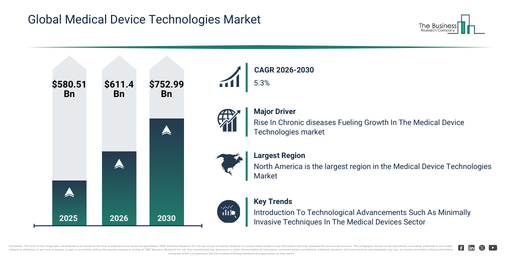
    Medical Device Technologies Market Growth From $611.39 Billion In 2026 To $752.98 Billion By 2030 At A CAGR Of 5.3%

    The medical device technologies market has experienced robust expansion over recent years. Its projected growth will see it increase from $580.51 billion in 2025 to $611.4 billion in 2026, exhibiting a compound annual growth rate (CAGR) of 5.3%. This historical growth can be linked to several factors, including developments in diagnostic imaging technologies, the increasing incidence of chronic diseases, greater investment in healthcare infrastructure, the early integration of implantable medical devices, and the expanding utilization of electronic medical records.

    The medical device technologies market is anticipated to experience substantial expansion over the coming years. Projections indicate it will reach $752.99 billion by 2030, exhibiting a compound annual growth rate (CAGR) of 5.3%. Factors contributing to this growth during the forecast period include an aging worldwide population, the expansion of telemedicine and remote monitoring services, an escalating need for prompt disease diagnosis, growing healthcare digitization efforts, and ongoing advancements in medical device engineering. Key trends for the forecast period encompass a rising uptake of non-invasive and minimally invasive techniques, increasing incorporation of connected and intelligent medical devices, a heightened preference for home-based and remote care solutions, the development of personalized and precision medical devices, and an intensified emphasis on seamless interoperability across diverse medical systems.

    Download A Free Sample Report For Comprehensive Market Insights:

    https://www.thebusinessresearchcompany.com/sample.aspx?id=13877&type=smp

    Medical Device Technologies Market Opportunity Drivers: What Is Creating New Revenue Potential?

    The rising prevalence of chronic conditions is anticipated to fuel expansion in the medical device technologies market moving ahead. These are defined as enduring health issues that last for a prolonged duration, frequently exhibiting gradual progression. Within the context of chronic illnesses, medical device technologies offer timely and tailored interventions, leading to better patient results and an improved comprehensive healthcare journey. An illustrative example comes from February 2024, when the Centers for Disease Control and Prevention (CDC), a federal public health body based in the US, reported approximately 129 million individuals in the United States suffering from at least one significant chronic disease, encompassing ailments like heart disease, cancer, diabetes, obesity, and hypertension. Consequently, the growing incidence of chronic diseases serves as a key impetus for the medical device technologies market.

    Medical Device Technologies Market Segmentation Trends And Revenue Drivers

    The medical device technologies market covered in this report is segmented –

    1) By Type: Molecular Diagnostics, Diagnostic Imaging, Non-Invasive Monitoring, Drug Delivery, Mobility Aid Technologies, Micro Fluids And MEMS, Bio-Implants, Biomaterials, Minimal Or Non-Invasive Surgery, Telemedicine

    2) By Application: Cardiology, Orthopedics, Oncology, Neurology, Respiratory, Other Applications

    3) By End-User: Hospitals, Clinics, Ambulatory Surgical Centers, Diagnostics Centers, Research Organizations, Other End Users

    Subsegments:

    1) By Molecular Diagnostics: PCR-Based Diagnostics, DNA Microarrays, Next-Generation Sequencing (NGS), Isothermal Nucleic Acid Amplification

    2) By Diagnostic Imaging: X-Ray Imaging, MRI Systems, Ultrasound Imaging, CT Scanners, Nuclear Imaging (PET, SPECT)

    3) By Non-Invasive Monitoring: Blood Glucose Monitors, Cardiac Monitoring Devices, Blood Pressure Monitors, Pulse Oximeters

    4) By Drug Delivery: Infusion Pumps, Nebulizers, Inhalers, Transdermal Drug Delivery Patches

    5) By Mobility Aid Technologies: Wheelchairs, Walkers and Canes, Prosthetics, Exoskeletons

    6) By Micro Fluids and MEMS: Lab-On-A-Chip Devices, Microfluidic Pumps, Microarrays, MEMS Sensors

    7) By Bio-Implants: Orthopedic Implants, Cardiovascular Implants, Neurostimulators, Dental Implants

    8) By Biomaterials: Polymers, Ceramics, Metals, Composite Biomaterials

    9) By Minimal or Non-Invasive Surgery: Laparoscopic Devices, Endoscopic Tools, Laser-Assisted Surgery Devices, Robotic Surgical Systems

    10) By Telemedicine: Remote Patient Monitoring Systems, Telehealth Platforms, Video Consultation Systems, Wearable Health Tracking Devices

    Medical Device Technologies Market Innovation Trends Driving Future Development

    Leading companies in the medical device technologies market are engaged in the development of medical devices employing minimally invasive techniques to achieve a competitive advantage. Minimally invasive techniques are defined as medical procedures executed with reduced bodily harm compared to conventional open surgeries. For example, in November 2023, Medtronic plc, a medical device company based in the US, launched the Symplicity Spyral RDN system, which offers a minimally invasive treatment for hypertension. The Symplicity Spyral RDN system is utilized during the Symplicity blood pressure procedure, which stands as the first catheter-based methodology using radiofrequency (RF) energy to supplement medications and lifestyle adjustments in reducing blood pressure. This system has secured approval from the FDA and is commercially accessible in over 70 countries worldwide.

    Medical Device Technologies Market Industry Leaders: Which Organizations Are Driving Competition?

    Major companies operating in the medical device technologies market are Cardinal Health Inc., Johnson & Johnson, Siemens AG, F. Hoffmann-La Roche Ltd., Novartis AG, Thermo Fischer Scientific Inc., Abbott Laboratories Inc., Zenith Healthcare, 3M Company, Medtronic plc, Becton Dickinson and Company, KONINKLIJKE PHILIPS N.V., Stryker Corporation, GE HealthCare Technologies Inc., Baxter International Inc., Boston Scientific Corporation, Zimmer Biomet Holdings Inc., Agilent Technologies Inc., Olympus Corporation, Intutive Surgical Inc., Terumo Corporation, Edwards Lifesciences Corporation, Smith & Nephew plc, Hologic Inc., BioMerieux Inc., Align Technology Inc., ResMed Inc., Dexcom Inc.

    Access The Complete Medical Device Technologies Market Report:

    https://www.thebusinessresearchcompany.com/report/medical-device-technologies-global-market-report

    Medical Device Technologies Market Largest Region By Revenue And Market Share

    North Americawas the largest region in the medical device technologies market in 2025. The regions covered in the medical device technologies market report are Asia-Pacific, South East Asia, Western Europe, Eastern Europe, North America, South America, Middle East, Africa.

    Get in touch with us:

    The Business Research Company: https://www.thebusinessresearchcompany.com/

    Americas: +1 310-496-7795

    Asia: +44 7882 955267 & +91 8897263534

    Europe: +44 7882 955267

    Email us at: marketing@tbrc.info

    Follow us on:

    LinkedIn: https://in.linkedin.com/company/the-business-research-company

    YouTube: https://www.youtube.com/channel/UC24_fI0rV8cR5DxlCpgmyFQ

    Global Market Model: https://www.thebusinessresearchcompany.com/global-market-model
  • Medical Device Security Market Forecast Signals New Revenue Opportunities Through 2030

    Medical Device Security Market Forecast Signals New Revenue Opportunities Through 2030

    Delivering more actionable and strategically valuable research, The Business Research Company’s 2026 market reports feature market attractiveness analysis, total addressable market evaluation, company benchmarking matrices, interactive Excel dashboards, expanded supply chain intelligence, emerging startup coverage, and detailed product insights.

    Medical Device Security Market Expansion Outlook: What Revenue Opportunities Lie Ahead?

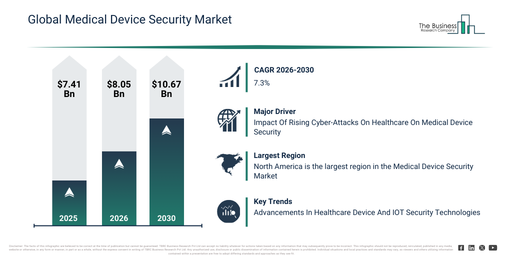
    The medical device security market has recently shown strong expansion. It is anticipated to increase from $7.41 billion in 2025 to $8.05 billion in 2026, exhibiting a compound annual growth rate (CAGR) of 8.7%. The reasons for this past growth include the early digitalization of medical devices, the rising implementation of networked hospital systems, initial cybersecurity incidents affecting healthcare, the development of connected diagnostic equipment, and increased regulatory oversight regarding patient data.

    The medical device security market is projected to experience substantial growth in the coming years. It is anticipated to expand to $10.67 billion by 2030, achieving a compound annual growth rate (CAGR) of 7.3%. This projected growth can be attributed to several factors, including the rapid proliferation of IoT-enabled medical devices, an increase in the frequency of cyberattacks within healthcare, the implementation of more stringent data protection regulations, a rise in cloud deployment of medical systems, and greater investment in cybersecurity by device manufacturers. Prominent trends for the forecast period include an elevated focus on securing connected medical devices, the increasing adoption of cloud-based device security solutions, a growing integration of security by design within medical devices, the expansion of managed security services tailored for healthcare, and a higher demand for regulatory-compliant security frameworks.

    Download A Free Sample Report For Comprehensive Market Insights:

    https://www.thebusinessresearchcompany.com/sample.aspx?id=15604&type=smp

    Medical Device Security Market Growth Momentum: Which Factors Are Influencing Demand?

    The increasing frequency of healthcare cyberattacks is anticipated to fuel the expansion of the medical device security market. Healthcare cyberattacks involve malicious actions targeting healthcare organizations, their systems, networks, and devices, with the aim of disrupting services, stealing sensitive information, or causing harm. These escalating attacks highlight the necessity for sustained investment in cybersecurity infrastructure, staff training, regular risk assessments, and collaborative efforts within the industry to exchange threat intelligence and best practices. Medical device security serves to counteract cyber-attacks in healthcare by safeguarding devices, data, and networks, ensuring regulatory adherence, and improving cybersecurity understanding among professionals. For instance, in October 2023, according to the U.S. Department of Health and Human Services, a US-based government department, an average of nearly two healthcare data breaches involving 500 or more records took place each day, leading to an average daily compromise of over 364,000 healthcare records. Consequently, the uptick in cyberattacks against healthcare entities is stimulating the growth of medical device security.

    Medical Device Security Market Segment Analysis Highlighting Growth Areas

    The medical device security market covered in this report is segmented –

    1) By Component: Solutions, Services

    2) By Security Type: Endpoint Security, Network Security, Application Security, Cloud Security, Other Security Types

    3) By Deployment Mode: On-Premise, Cloud-Based

    4) By End User: Healthcare Institutions, Medical Device Manufacturers, Other End Users

    Subsegments:

    1) By Solutions: Security Software (Antivirus, Firewalls, Encryption), Network Security Solutions ( Intrusion Detection Systems, Vpns), Authentication And Access Control Solutions ( Multi-Factor Authentication), Risk And Compliance Management Solutions, Endpoint Security Solutions ( Device Monitoring, Patch Management)

    2) By Services: Managed Security Services, Security Consulting Services, Vulnerability Assessment And Penetration Testing Services, Incident Response And Forensic Services, Training And Awareness Services

    Medical Device Security Market Trends Reshaping Industry Growth

    Major companies in the medical device security market are concentrating on developing innovative solutions, such as clinically-aware anomaly-threat detection modules designed for healthcare device and IoT protection. This effort addresses the increasing demand for ongoing device visibility, more rapid threat prioritization, regulatory alignment, and reduced interruption to patient care. Clinically-aware anomaly-threat detection capabilities combine agentless device discovery, behavioral analytics engines, and clinical-context enrichment to identify unusual device communications, align devices with clinical workflows, and highlight high-risk incidents with actionable context. Unlike traditional network IDS/IPS tools that generate generic alerts without specific device-level clinical meaning, these modules minimize false positives and accelerate remediation by linking telemetry to device function and patient impact. As an example, in March 2024, Claroty Ltd., a US-based company specializing in cyber-physical systems protection, launched its Advanced Anomaly Threat Detection (ATD) Module within the Medigate Platform during HIMSS24. This offering provides agentless and clinically aware threat detection, featuring signature-based alerts, notifications for device changes, and MITRE ATT&CK mapping. The module continually monitors device communications even beyond firewall boundaries to bolster hardening and compliance controls, furnishes clinically contextualized alerts to assist security teams in prioritizing their responses, and empowers healthcare organizations, encompassing hospitals and extensive clinic networks, to decrease investigation time, mitigate operational risks, and support adherence to emerging cybersecurity performance requirements.

    Medical Device Security Market Leading Companies: Who Holds Significant Market Presence?

    Major companies operating in the medical device security market are General Electric Company, International Business Machines Corporation, Cisco Systems Inc., Koninklijke Philips N.V., DXC Technology Company, Palo Alto Networks, Synopsys Inc., Fortinet Inc., Check Point Software Technologies Ltd., McAfee LLC, Trend Micro Inc., Zscaler Inc., FireEye, Sophos Ltd., Irdeto B.V., Imperva Inc., Armis Inc., Protegrity USA Inc., Silex Technology America Inc., ClearData, Cynerio Ltd., Zingbox Inc., CloudPassage Inc., Cylera Inc., Bayshore Networks Inc.

    Access The Complete Medical Device Security Market Report:

    https://www.thebusinessresearchcompany.com/report/medical-device-security-global-market-report

    Medical Device Security Market Regional Analysis And Leading Geography

    North Americawas the largest region in the medical device security market in 2025. Asia-Pacificis expected to be the fastest-growing region in the forecast period. The regions covered in the medical device security market report are Asia-Pacific, South East Asia, Western Europe, Eastern Europe, North America, South America, Middle East, Africa.

    Get in touch with us:

    The Business Research Company: https://www.thebusinessresearchcompany.com/

    Americas: +1 310-496-7795

    Asia: +44 7882 955267 & +91 8897263534

    Europe: +44 7882 955267

    Email us at: marketing@tbrc.info

    Follow us on:

    LinkedIn: https://in.linkedin.com/company/the-business-research-company

    YouTube: https://www.youtube.com/channel/UC24_fI0rV8cR5DxlCpgmyFQ

    Global Market Model: https://www.thebusinessresearchcompany.com/global-market-model
  • Medical Device Sales Software Market Growth Is Accelerating As Industry Transformation Continues

    Medical Device Sales Software Market Growth Is Accelerating As Industry Transformation Continues

    Enhanced with market attractiveness analysis, total addressable market evaluation, company benchmarking matrices, interactive Excel dashboards, expanded supply chain intelligence, emerging startup coverage, and detailed product insights, The Business Research Company’s 2026 market reports deliver more actionable and strategically valuable research.

    Medical Device Sales Software Market Growth Potential: How Will Market Size Change Through 2030?

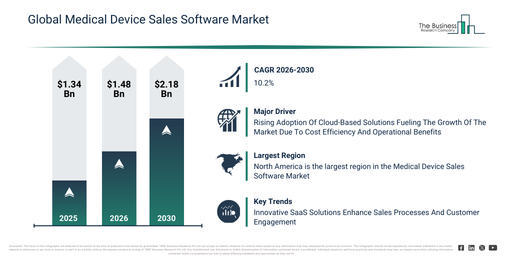
    The medical device sales software market has experienced substantial expansion recently. This market is projected to expand from $1.34 billion in 2025 to $1.48 billion in 2026, exhibiting a compound annual growth rate (CAGR) of 10.4%. Historically, this growth can be ascribed to several factors, including the expansion of the medical device manufacturing industry, the early integration of CRM systems within healthcare sales, the escalating intricacy of distributor networks, the demand for standardized sales processes, and a heightened emphasis on customer relationship management.

    The medical device sales software market size is projected to experience considerable expansion in the upcoming years. It is anticipated to reach $2.18 billion by 2030, demonstrating a compound annual growth rate (CAGR) of 10.2%. This growth throughout the forecast period is fueled by elements such as the increasing digital transformation of healthcare sales, the rising integration of AI-driven sales analytics, the broadening of remote and virtual sales models, the escalating requirements for regulatory compliance, and the demand for real-time sales visibility and forecasting. Prominent trends for the forecast period include a movement towards cloud-based sales platforms, a growing need for compliance-integrated sales tools, an increasing utilization of data-driven sales decision making, the expansion of omnichannel medical device sales, and the rising adoption of mobile sales enablement solutions.

    Download A Free Sample Report For Comprehensive Market Insights:

    https://www.thebusinessresearchcompany.com/sample.aspx?id=24297&type=smp

    Medical Device Sales Software Market Expansion Drivers: What Is Shaping Future Growth?

    The increasing use of cloud-based solutions is anticipated to boost the expansion of the medical device sales software market in the future. Cloud computing, an online service, offers on-demand access via the internet to diverse computing resources like storage, servers, and software, thereby supporting scalability, flexibility, and cost efficiency. Demand for cloud computing is growing primarily due to its cost-effectiveness, as it lowers infrastructure expenses and offers flexible, subscription-based pricing models. Medical device sales software improves cloud-based solutions through effortless integration with sales and customer data, which facilitates teams’ access to real-time information. This software enhances operational efficiency by automating functions like order management, customer engagement, and analytics, thereby optimizing workflows for medical device companies. As an illustration, in April 2025, data from the American Bar Association, a professional organization based in the U.S., showed that about 75% of attorneys utilized cloud computing for professional tasks, an increase from 69% in 2023 and roughly 70% in 2022. Consequently, the increasing adoption of cloud-based solutions is fueling the expansion of the medical device sales software market.

    Medical Device Sales Software Market Segment Performance And Strategic Opportunities

    The medical device sales software market covered in this report is segmented –

    1) By Product Type: Customer Relationship Management (CRM) Software, Sales Analytics Tools, Order Management Systems, E-Commerce Platforms, Email Marketing Software

    2) By Enterprise Size: Small And Medium Enterprises, Large Enterprises

    3) By Deployment Type: Cloud-based Solutions, On-Premises Solutions, Hybrid Solutions

    4) By End User: Medical Device Manufacturers, Distributors And Wholesalers, Healthcare Providers, Pharmaceutical Companies, Research And Development Institutions

    Subsegments:

    1) By Customer Relationship Management (CRM) Software: Cloud-Based Customer Relationship Management (CRM), On-Premise Customer Relationship Management (CRM), Mobile Customer Relationship Management (CRM), Artificial Intelligence (AI)-Enabled Mobile Customer Relationship Management (CRM), Specialty Mobile Customer Relationship Management (CRM) For Medical Device Representatives

    2) By Sales Analytics Tools: Predictive Sales Analytics, Real-Time Sales Dashboards, Territory And Quota Management Tools, Lead Scoring And Pipeline Analysis, Competitor Benchmarking Analytics

    3) By Order Management Systems: Inventory And Fulfillment Management, Multi-Channel Order Processing, Automated Reordering Systems, Integration With Enterprise Resource Planning (ERP) And Customer Relationship Management (CRM), Order Tracking And Status Alerts

    4) By E-Commerce Platforms: Business-To-Business (B2B) Medical Device Portals, Customizable Online Catalogs, Secure Payment Gateways, Integrated Logistics And Shipping Modules, Mobile-Optimized Commerce Solutions

    5) By Email Marketing Software: Campaign Automation Tools, Personalization And Segmentation Features, Compliance-Ready Email Templates, Performance Tracking And A Or B Testing, Integration With Customer Relationship Management (CRM) And Sales Tools

    Medical Device Sales Software Market Strategic Trends: What Is Defining The Next Phase Of Growth?

    Major entities within the medical device sales software market are prioritizing the creation of technologically advanced solutions, notably software-as-a-service (SaaS) platforms, aimed at streamlining sales procedures and fostering improved customer interaction. These Software-as-a-service (SaaS) platforms are defined as cloud-based software delivery frameworks that allow users to access applications over the internet, thereby negating the necessity for internal infrastructure or hardware. For instance, during May 2023, MedShift, a US-based medical technology manufacturer, introduced Velocity Technology Suite, a robust software-as-a-service (SaaS) platform engineered to simplify sales and automate business functions for aesthetic and medical device enterprises. This platform offers capabilities such as digital order entry, e-commerce functionality, sales territory mapping, and commission reporting tools, while also automating payment processing, subscription management, and shipping integration.

    Medical Device Sales Software Market Key Players: Which Companies Shape Industry Competition?

    Major companies operating in the medical device sales software market are McKesson Corporation, Microsoft Corporation, Oracle Corporation, SAP SE, Medtronic Public Limited Company, Salesforce Inc., Siemens Healthineers AG, Stryker Corporation, Koninklijke Philips N.V., GE HealthCare Technologies Inc., Zoho Corporation Pvt. Ltd, Veeva Systems Inc., Valsoft Corporation Inc., Sales Mantra CRM, AcuityMD Inc., NetApp, ChannelTrace Inc., RepMove Inc., Verb Technology Company Inc., IQVIA, Cerner Corporation, Epic Systems Corporation, McKesson Medical-Surgical, Medidata Solutions Inc

    Access The Complete Medical Device Sales Software Market Report:

    https://www.thebusinessresearchcompany.com/report/medical-device-sales-software-global-market-report

    Medical Device Sales Software Market Geographic Analysis: Where Is Demand Growing The Fastest?

    North Americawas the largest region in the medical device sales software market in 2025. Asia-Pacificis expected to be the fastest-growing region in the forecast period. The regions covered in the medical device sales software market report are Asia-Pacific, South East Asia, Western Europe, Eastern Europe, North America, South America, Middle East, Africa.

    Get in touch with us:

    The Business Research Company: https://www.thebusinessresearchcompany.com/

    Americas: +1 310-496-7795

    Asia: +44 7882 955267 & +91 8897263534

    Europe: +44 7882 955267

    Email us at: marketing@tbrc.info

    Follow us on:

    LinkedIn: https://in.linkedin.com/company/the-business-research-company

    YouTube: https://www.youtube.com/channel/UC24_fI0rV8cR5DxlCpgmyFQ

    Global Market Model: https://www.thebusinessresearchcompany.com/global-market-model
  • Medical Device Safety Testing Market Outlook Highlights The Next Major Growth Opportunities

    Medical Device Safety Testing Market Outlook Highlights The Next Major Growth Opportunities

    Through market attractiveness analysis, total addressable market evaluation, company benchmarking matrices, interactive Excel dashboards, expanded supply chain intelligence, emerging startup coverage, and detailed product insights, The Business Research Company’s 2026 market reports provide more actionable and strategically valuable research.

    Medical Device Safety Testing Market Value Analysis: What Growth Is Expected Over The Forecast Period?

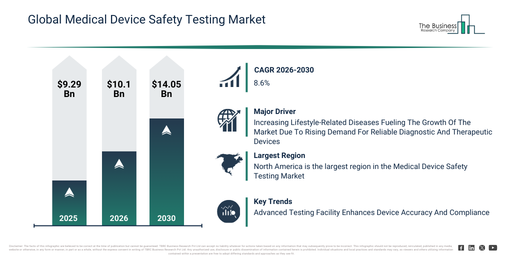
    The medical device safety testing market has shown robust expansion in recent years. It is anticipated to increase from $9.29 billion in 2025 to $10.1 billion in 2026, exhibiting a compound annual growth rate (CAGR) of 8.8%. This historical growth can be ascribed to factors such as an uptick in medical device recalls, the early implementation of international safety standards, an increase in medical device manufacturing, a heightened focus on patient safety, and regulatory actions enforced by health authorities.

    The medical device safety testing market size is projected to experience substantial expansion in the coming years. By 2030, this market is anticipated to reach $14.05 billion, expanding at a compound annual growth rate (CAGR) of 8.6%. Key factors contributing to this growth during the forecast period include the proliferation of connected and software-driven devices, stricter global regulatory requirements, increased investment in medical device R&D, a greater need for expedited market approvals, and the expanding scope of testing required for innovative device technologies. Significant trends characterizing this period involve a heightened demand for regulatory compliance testing, the broadening scope of software and cybersecurity testing, the increasing complexity of connected and smart medical devices, an uptick in outsourcing of safety testing services, and the alignment of global medical device safety standards.

    Download A Free Sample Report For Comprehensive Market Insights:

    https://www.thebusinessresearchcompany.com/sample.aspx?id=24296&type=smp

    Medical Device Safety Testing Market Development Factors: Which Trends Are Supporting Demand?

    The rising prevalence of lifestyle-related illnesses is anticipated to drive the expansion of the medical device safety testing market in the future. These diseases are defined as health conditions predominantly stemming from an individual’s daily routines and decisions, encompassing ailments such as heart disease, type 2 diabetes, obesity, hypertension, specific cancers, and various mental health conditions. Their increase is attributed to insufficient physical activity, which contributes to weight gain, cardiovascular issues, and diminished insulin sensitivity, thereby elevating the likelihood of developing chronic conditions. Medical device safety testing plays a crucial role in managing lifestyle-related diseases by guaranteeing the dependability and effectiveness of both diagnostic and therapeutic equipment. This testing improves patient safety and treatment results by confirming that devices adhere to required regulatory benchmarks, thus boosting confidence and operational effectiveness in contemporary healthcare systems. As an illustration, the National Health Service, a UK-based government body, reported in June 2024 that 3,615,330 individuals registered with a general practitioner (GP) had received a diagnosis of non-diabetic hyperglycemia or pre-diabetes in 2023. This represented an 18% rise from the 3,065,825 cases recorded in 2022. Consequently, the growing incidence of lifestyle-related diseases is propelling the expansion of the medical device safety testing market.

    Medical Device Safety Testing Market Segment Landscape And Growth Potential

    The medical device safety testing market covered in this report is segmented –

    1) By Service Type: Testing, Inspection, Certification

    2) By Testing Phase: Preclinical Testing, Clinical Testing

    3) By Technology: Active Implantable Devices, In Vitro Diagnostic Devices, Diagnostic Imaging Devices, Ophthalmic Devices

    4) By Application: Cardiovascular Devices, Orthopedic Devices, Neurological Devices, Ophthalmic Devices, Dental Devices

    5) By End User: Hospitals, Clinics, Research Laboratories, Medical Device Manufacturers, Regulatory Bodies

    Subsegments:

    1) By Testing: Electrical Safety Testing, Electromagnetic Compatibility (EMC) Testing, Biocompatibility Testing, Environmental Testing, Mechanical Safety Testing, Performance Testing, Software Validation Testing, Chemical Characterization Testing

    2) By Inspection: Pre-Market Inspection, In-Process Inspection, Final Product Inspection, Supplier Audit and Evaluation, Manufacturing Site Inspection, Quality System Inspection

    3) By Certification: International Organization for Standardization (ISO) 13485 Certification, Conformité Européenne (CE) Marking, Food and Drug Administration (FDA) Premarket Approval (PMA) Support, Medical Device Single Audit Program (MDSAP) Certification, International Electrotechnical Commission (IEC) 60601 Certification, European Union (EU) Medical Device Regulation (MDR) Compliance Certification, Product Safety Certification

    Medical Device Safety Testing Market Transformation Trends: Which Innovations Are Driving Change?

    Major companies within the medical device safety testing market are increasingly focused on expanding their capabilities with technologically advanced solutions, such as enhanced medical device testing facilities, to improve testing accuracy, shorten time-to-market, and ensure adherence to evolving global regulatory standards. An advanced medical device testing facility is defined as a specialized center or laboratory equipped with state-of-the-art technology and expertise for conducting thorough testing and evaluation of medical devices. For instance, in December 2023, Impelsys, an India-based technology company, introduced an advanced medical device testing lab in Mangalore, India. This testing facility harnesses AI-driven analytics and cloud-based platforms to accelerate the development of diagnostic and therapeutic devices through advanced testing, simulations, and regulatory support, emphasizing its dedication to data-driven healthcare innovation.

    Medical Device Safety Testing Market Competitive Landscape: Who Are The Leading Companies?

    Major companies operating in the medical device safety testing market are Thermo Fisher Scientific, Medtronic plc, Baxter International, SGS SA, Eurofins Scientific SE, Bureau Veritas SA, Bausch & Lomb, Intertek Group plc, TÜV SÜD AG, Underwriters Laboratories LLC, Applus+ Group, BSI Group , NSF International , NEMKO AS, Smithers Group Inc., Laboratory Testing Inc., JPen Medical Inc., ArchiMed, F2 Labs Inc., Medistri SA

    Access The Complete Medical Device Safety Testing Market Report:

    https://www.thebusinessresearchcompany.com/report/medical-device-safety-testing-global-market-report

    Medical Device Safety Testing Market Global Footprint: Which Region Holds Market Leadership?

    North Americawas the largest region in the medical device safety testing market in 2025. Asia-Pacificis expected to be the highest-growing region in the forecast period. The regions covered in the medical device safety testing market report are Asia-Pacific, South East Asia, Western Europe, Eastern Europe, North America, South America, Middle East, Africa.

    Get in touch with us:

    The Business Research Company: https://www.thebusinessresearchcompany.com/

    Americas: +1 310-496-7795

    Asia: +44 7882 955267 & +91 8897263534

    Europe: +44 7882 955267

    Email us at: marketing@tbrc.info

    Follow us on:

    LinkedIn: https://in.linkedin.com/company/the-business-research-company

    YouTube: https://www.youtube.com/channel/UC24_fI0rV8cR5DxlCpgmyFQ

    Global Market Model: https://www.thebusinessresearchcompany.com/global-market-model
  • Medical Device Reprocessing Market Trends And Growth Drivers Point To Strong Future Potential

    Medical Device Reprocessing Market Trends And Growth Drivers Point To Strong Future Potential

    Delivering more actionable and strategically valuable research, The Business Research Company’s 2026 market reports feature market attractiveness analysis, total addressable market evaluation, company benchmarking matrices, interactive Excel dashboards, expanded supply chain intelligence, emerging startup coverage, and detailed product insights.

    Medical Device Reprocessing Market Size Forecast: How Large Could The Market Become By 2030?

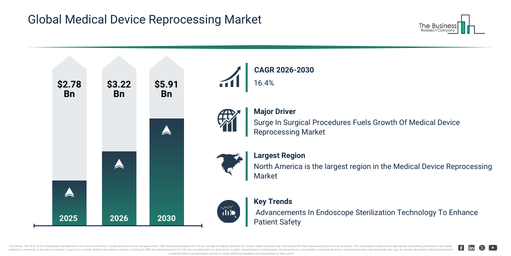
    The medical device reprocessing market has experienced substantial expansion recently. Projections indicate its value will escalate from $2.78 billion in 2025 to $3.22 billion by 2026, demonstrating a compound annual growth rate (CAGR) of 15.9%. This historical growth is largely due to factors such as increasing healthcare operational expenses, the prompt acceptance of reusable surgical tools, efforts by hospitals to minimize medical waste, official approvals for reprocessed instruments, and a heightened need for sterilization services.

    The medical device reprocessing market size is projected to experience rapid growth in the coming years, with expectations to reach $5.91 billion by 2030, demonstrating a compound annual growth rate (CAGR) of 16.4%. This anticipated growth during the forecast period can be attributed to several factors, including the expansion of sustainable healthcare practices, an increase in outpatient and ambulatory centers, greater regulatory clarity for reprocessed devices, a rising demand for more affordable medical procedures, and technological improvements in sterilization and validation processes. Significant trends expected during this period include a growing adoption of reusable medical devices, an increasing focus on cost reduction within hospitals, heightened attention to infection control and patient safety, the expansion of third-party reprocessing service providers, and the standardization of reprocessing protocols and quality assurance measures.

    Download A Free Sample Report For Comprehensive Market Insights:

    https://www.thebusinessresearchcompany.com/sample.aspx?id=12228&type=smp

    Medical Device Reprocessing Market Industry Drivers: What Is Driving Revenue Growth?

    The medical device reprocessing market is expected to expand due to an increase in surgical procedures. These procedures are medical treatments involving an incision and the use of tools to cure or repair disease in a living body. Reprocessing consists of removing blood, tissue, and other biological waste from equipment and inactivating infectious microorganisms to ensure it is clean and safe for the next patient. For instance, in June 2024, the American Society of Plastic Surgeons, a US-based non-profit organization management, indicated that minimally invasive procedures experienced a 7 percent growth in 2023, which exceeded the growth rate of surgical procedures by 2 percent. Therefore, the rise in surgical procedures is driving the growth of the medical device reprocessing market.

    Medical Device Reprocessing Market Categorization By Product Type And Application

    The medical device reprocessing market covered in this report is segmented –

    1) By Type: Reprocessing Support And Services, Reprocessing Medical Devices

    2) By Device Category: Critical Devices, Semi-Critical Devices, Non-Critical Devices

    3) By Application: Cardiology, Gastroenterology, Gynecology, Orthopedic, General Surgery, Other Applications

    4) By End-Use: Hospital, Ambulatory Service Centers, Home Healthcare

    Subsegments:

    1) By Reprocessing Support And Services: Consulting Services, Training And Education, Validation Services, Quality Assurance Services

    2) By Reprocessing Medical Devices: Surgical Instruments, Endoscopes, Imaging Equipment, Other Reusable Devices

    #Medical Device Reprocessing Market Growth Trends: What Is Influencing The Future Outlook?

    Companies operating in the medical device reprocessing market are focusing on technological advancements, including GI endoscopes compatible with hydrogen peroxide gas plasma sterilization, to mitigate cross-contamination and enhance patient safety. GI endoscopes designed for hydrogen peroxide gas plasma sterilization are specifically built to tolerate sterilization using hydrogen peroxide vapor and low-temperature plasma, thereby ensuring the elimination of bacteria, viruses, and spores. For example, in August 2024, Pentax Medical, a Japan-based medical device company, in partnership with Advanced Sterilization Products (ASP), a US-based sterilization solutions company, obtained U.S. Food and Drug Administration (FDA) clearance for a duodenoscope equipped with new sterilization technology. This device incorporates redesigned distal ends and detachable components to enable comprehensive cleaning, allowing sterilization to reach previously difficult-to-clean areas and minimize microbial retention. Its unique design ensures compatibility with high-level disinfectants and complies with updated FDA reprocessing guidelines. Intended for ERCP procedures in hospitals and clinics, it contributes to improved patient safety, reduced infection risk, and a more efficient reprocessing workflow.

    Medical Device Reprocessing Market Company Landscape And Strategic Competition

    Major companies operating in the medical device reprocessing market are Cardinal Health, Johnson & Johnson Services Inc., Abbott Laboratories, Medtronic PLC, Danaher Corporation, Fresenius Medical Care, Medline Industries Inc., Stryker Corporation, GE Healthcare, Boston Scientific, Fujifilm Medical Systems, Zimmer Biomet, Olympus Corporation, Intuitive Surgical, Hologic, STERIS Healthcare, Getinge AB, Teleflex Inc., Centurion Medical Inc., Vanguard AG, SteriPro, Medivators Inc., Hygia Healthcare LLC, Innovative Health, LUMITOS AG, SureTek Medical, 3M Health Care, ArjoHuntleigh, Northeast Scientific

    Access The Complete Medical Device Reprocessing Market Report:

    https://www.thebusinessresearchcompany.com/report/medical-device-reprocessing-global-market-report

    Medical Device Reprocessing Market Regional Distribution: Which Areas Drive Market Expansion?

    North Americawas the largest region in the medical device reprocessing market in 2025. Europeis expected to be the fastest-growing region in the medical device reprocessing market report during the forecast period. The regions covered in the medical device reprocessing market report are Asia-Pacific, South East Asia, Western Europe, Eastern Europe, North America, South America, Middle East, Africa.

    Get in touch with us:

    The Business Research Company: https://www.thebusinessresearchcompany.com/

    Americas: +1 310-496-7795

    Asia: +44 7882 955267 & +91 8897263534

    Europe: +44 7882 955267

    Email us at: marketing@tbrc.info

    Follow us on:

    LinkedIn: https://in.linkedin.com/company/the-business-research-company

    YouTube: https://www.youtube.com/channel/UC24_fI0rV8cR5DxlCpgmyFQ

    Global Market Model: https://www.thebusinessresearchcompany.com/global-market-model
  • Medical Device Distribution Services Market Expansion Is Reshaping Competitive Dynamics Across The Industry

    Medical Device Distribution Services Market Expansion Is Reshaping Competitive Dynamics Across The Industry

    Enhanced with market attractiveness analysis, total addressable market evaluation, company benchmarking matrices, interactive Excel dashboards, expanded supply chain intelligence, emerging startup coverage, and detailed product insights, The Business Research Company’s 2026 market reports deliver more actionable and strategically valuable research.

    Medical Device Distribution Services Market Revenue Outlook: What CAGR Is Expected Through 2030?

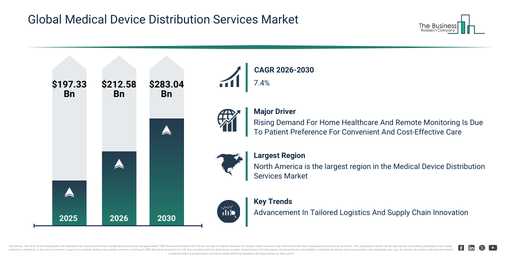
    The medical device distribution services market has experienced robust growth in recent years. This market is projected to expand from $197.33 billion in 2025 to $212.58 billion in 2026, demonstrating a compound annual growth rate (CAGR) of 7.7%. Historically, this expansion has been driven by factors such as the growth in healthcare infrastructure, the proliferation of medical device manufacturing, a heightened need for prompt device availability, the establishment of centralized distribution networks, and an increase in healthcare service utilization.

    The medical device distribution services market is poised for significant expansion over the next few years. It is forecast to grow to $283.04 billion by 2030, demonstrating a compound annual growth rate (CAGR) of 7.4%. This projected growth during the forecast period is propelled by factors such as the increasing integration of blockchain-based traceability, the rising adoption of automated warehousing systems, the expansion of home healthcare device distribution, a growing emphasis on optimizing regulatory compliance, and an increasing demand for resilient medical supply chains. Prominent trends expected in this period include the wider adoption of digital inventory management systems, a rising demand for cold chain logistics services, the growing utilization of e-commerce medical marketplaces, the expansion of traceability and compliance solutions, and an enhanced focus on transparency across supply chains.

    Download A Free Sample Report For Comprehensive Market Insights:

    https://www.thebusinessresearchcompany.com/sample.aspx?id=25822&type=smp

    Medical Device Distribution Services Market Growth Factors: Which Forces Are Supporting Market Expansion?

    The growing need for at-home medical care and health tracking from afar is anticipated to boost the medical device distribution services market in the future. Home healthcare involves providing medical assistance directly within patients’ residences, whereas remote monitoring facilitates ongoing observation of health statuses through digital tools. This heightened demand stems from patients’ desire for convenient and economical care options that support constant health oversight and prompt medical attention without leaving their homes. Medical device distribution services facilitate both home healthcare and remote monitoring by ensuring the swift delivery of necessary medical apparatus to patients’ homes, thus enabling uninterrupted and effective care. For instance, a survey reported in August 2023 by Vivalink, a US-based digital healthcare company, indicated that 81% of clinicians currently utilize remote patient monitoring (RPM), marking a substantial increase from only 20% in 2021, which translates to a 305% growth. Additionally, 84% of existing remote patient monitoring (RPM) users plan to broaden their application of this technology in 2024. Consequently, the escalating need for home healthcare and remote monitoring is propelling the expansion of the medical device distribution services market.

    Medical Device Distribution Services Market Segment Analysis And Revenue Opportunities

    The medical device distribution services market covered in this report is segmented –

    1) By Product Type: Diagnostic Devices, Therapeutic Devices, Patient Monitoring Devices, Home Healthcare Devices, Other Product Types

    2) By Distribution Channel: Direct Distribution, Third-Party Logistics Providers, Distributors Or Wholesalers, E-Commerce Or Online Medical Marketplaces

    3) By End Use: Hospitals And Clinics, Diagnostic Centers, Ambulatory Surgical Centers, Long-Term Care Facilities, Homecare Settings

    Subsegments:

    1) By Diagnostic Devices: Imaging Devices, In Vitro Diagnostic Devices, Molecular Diagnostics, Point Of Care Testing Devices, Laboratory Equipment

    2) By Therapeutic Devices: Surgical Instruments, Infusion Pumps, Respiratory Therapy Devices, Orthopedic Devices, Wound Care Devices

    3) By Patient Monitoring Devices: Cardiac Monitors, Vital Signs Monitors, Remote Patient Monitoring Devices, Wearable Health Devices, Neonatal Monitors

    4) By Home Healthcare Devices: Mobility Aids, Home Diagnostic Devices, Respiratory Care Devices, Personal Care Devices, Medication Management Devices

    5) By Other Product Types: Sterilization Equipment, Medical Consumables, Medical Furniture, Hospital Supplies, Infection Control Devices

    Medical Device Distribution Services Market Industry Trends: What Changes Are Reshaping Demand?

    Prominent companies within the medical device distribution services market are prioritizing the development of specialized logistics innovations, such as medtech-dedicated cross-docks, to guarantee the secure, effective, and high-quality movement of sensitive medical technologies. MedTech-dedicated cross-docks represent specialized logistics facilities designed to manage, transfer, and consolidate medical technology shipments, incorporating enhanced safety, temperature regulation, and handling protocols specifically adapted to the delicate nature of medical devices. As an illustration, in May 2024, Kuehne + Nagel International AG, a Switzerland-based transport and logistics company, introduced a bespoke road freight service across key European countries to facilitate the transport of high-value and sensitive medical technology devices. This service provides customized handling, centralized customer support, and white glove delivery options, even for groupage shipments. Its purpose is to meet the elevated safety and quality requirements of the MedTech industry without mandating full GxP compliance, thereby ensuring efficient, secure, and visible logistics for medical devices.

    Medical Device Distribution Services Market Leading Players Shaping Industry Direction

    Major companies operating in the medical device distribution services market are McKesson Corporation, AmerisourceBergen Corporation, Cencora Inc, Cardinal Health Inc, Henry Schein Inc, Owens And Minor Inc, B Braun Melsungen AG, Nipro Corporation, Southmedic Inc, Medline Industries LP, Avante Health Solutions, Medisave UK Ltd, Meditek Inc, Soquelec Limited, Stat Medical Inc, The Stevens Company Limited, Clock Medical Supply Inc, Merit Pharmaceutical Company Inc, Multi Medical Equipment And Supplies Inc, Concordance Healthcare Solutions LLC, Bound Tree Medical LLC

    Access The Complete Medical Device Distribution Services Market Report:

    https://www.thebusinessresearchcompany.com/report/medical-device-distribution-services-global-market-report

    Medical Device Distribution Services Market Leading Geography: Which Region Generates The Most Revenue?

    North Americawas the largest region in the medical device distribution services market in 2025. The regions covered in the medical device distribution services market report are Asia-Pacific, South East Asia, Western Europe, Eastern Europe, North America, South America, Middle East, Africa.

    Get in touch with us:

    The Business Research Company: https://www.thebusinessresearchcompany.com/

    Americas: +1 310-496-7795

    Asia: +44 7882 955267 & +91 8897263534

    Europe: +44 7882 955267

    Email us at: marketing@tbrc.info

    Follow us on:

    LinkedIn: https://in.linkedin.com/company/the-business-research-company

    YouTube: https://www.youtube.com/channel/UC24_fI0rV8cR5DxlCpgmyFQ

    Global Market Model: https://www.thebusinessresearchcompany.com/global-market-model
  • Medical Device Cybersecurity Solutions Market Forecast Reveals Where Future Industry Value Will Be Created

    Medical Device Cybersecurity Solutions Market Forecast Reveals Where Future Industry Value Will Be Created

    Through market attractiveness analysis, total addressable market evaluation, company benchmarking matrices, interactive Excel dashboards, expanded supply chain intelligence, emerging startup coverage, and detailed product insights, The Business Research Company’s 2026 market reports provide more actionable and strategically valuable research.

    Medical Device Cybersecurity Solutions Market Growth Analysis: How Will Revenue Expand During The Forecast Period?

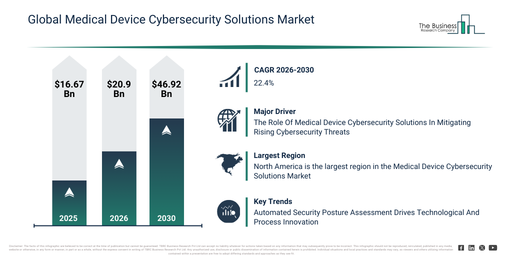
    The medical device cybersecurity solutions market size has observed exponential expansion in recent years. It is forecasted to grow from $16.67 billion in 2025 to $20.9 billion in 2026, achieving a compound annual growth rate (CAGR) of 25.3%. This historical growth can be linked to factors such as an increase in network-connected medical devices, early cybersecurity breaches experienced in healthcare, the progressive digitization of hospital infrastructure, the issuance of initial regulatory guidance on device security, and the rising uptake of software-based medical devices.

    The medical device cybersecurity solutions market is expected to demonstrate significant growth in the upcoming years, with projections indicating it will reach $46.92 billion in 2030 at a compound annual growth rate (CAGR) of 22.4%. This anticipated expansion during the forecast period can be attributed to the increasing deployment of IoT-enabled medical devices, the implementation of stricter cybersecurity regulations for medical devices, the growing sophistication of cyberattacks, the wider adoption of cloud-based healthcare systems, and rising investments in healthcare cybersecurity solutions. Major trends for this period include the escalating cybersecurity risks inherent in connected medical devices, an increasing need for regulatory-compliant security solutions, a heightened focus on secure software updates and patch management, the extension of cybersecurity services across the entire device lifecycle, and greater adoption of proactive threat detection and monitoring strategies.

    Download A Free Sample Report For Comprehensive Market Insights:

    https://www.thebusinessresearchcompany.com/sample.aspx?id=16474&type=smp

    Medical Device Cybersecurity Solutions Market Demand Drivers: What Is Fueling Industry Growth?

    The increasing occurrence of cybersecurity threats is anticipated to fuel the expansion of the medical device cybersecurity solutions market in the future. A cybersecurity threat can be defined as any harmful malicious act leading to data damage, unauthorized entry to data, or the disruption of digital systems and processes. This escalation in cybersecurity threats is due to the increasing sophistication of cyberattacks, the widespread adoption of connected devices, the rising worth of healthcare data in illicit markets, and the continually changing strategies employed by cybercriminals. Medical device cybersecurity solutions mitigate these threats through the deployment of measures such as access control, encryption, patch management, intrusion detection and prevention, endpoint security, secure configuration, and ongoing monitoring. For example, data from the Federal Bureau of Investigation (FBI), a US-based government agency, indicated in April 2025 that cybercrime complaints climbed to 859,532 in 2024, with total reported losses surpassing $16.6 billion, which represented a 33% surge in losses compared to 2023. Consequently, the escalating cybersecurity threats are propelling the expansion of the medical device cybersecurity solutions market.

    Medical Device Cybersecurity Solutions Market Segmentation And Category Breakdown

    The medical device cybersecurity solutions market covered in this report is segmented –

    1) By Type: Network Security, Endpoint Security, Application Security, Cloud Security, Other Types

    2) By Solution: Identity And Access Management Solutions, Antivirus Or Antimalware Solutions, Encryption Solutions, Data Loss Prevention Solutions, Risk And Compliance Management, Intrusion Detection Systems Or Intrusion Prevention Systems, Disaster Recovery Solutions, Distributed Denial Of Service Solutions, Other Solutions

    3) By Device Type: Hospital Medical Devices, Wearable And External Medical Devices, Internally Embedded Medical Devices

    4) By End-User: Healthcare Providers, Medical Device Manufacturers, Healthcare Payers

    Subsegments:

    1) By Network Security: Firewalls, Intrusion Detection And Prevention Systems (IDPS), Virtual Private Networks (VPNs), Network Access Control (NAC)

    2) By Endpoint Security: Antivirus Or Antimalware, Endpoint Detection And Response (EDR), Device Authentication, Mobile Device Security

    3) By Application Security: Application Vulnerability Management, Secure Code Review, Patch Management, Web Application Firewalls (WAFs)

    4) By Cloud Security: Cloud Access Security Brokers (CASB), Encryption Solutions, Identity And Access Management (IAM), Cloud Workload Protection

    5) By Other Types: Risk And Compliance Management, Security Information And Event Management (SIEM), Incident Response

    Medical Device Cybersecurity Solutions Market Innovation Trends: Which Developments Are Transforming The Industry?

    Major companies within the medical device cybersecurity market are concentrating on innovations in technology and processes, exemplified by automatically assessing device security posture to quickly identify risks, prioritize corrective actions, and ensure compliance with regulations. Automatically assessing device security posture means utilizing a dedicated platform to evaluate medical devices, detect vulnerabilities, quantify associated risks, and provide actionable insights without manual intervention. For instance, in May 2025, Medcrypt Inc., a U.S.-based medical device company specializing in proactive cybersecurity solutions for medical devices, launched its Medical Device Product Security Intelligence Platform. This platform aids manufacturers in evaluating security weaknesses, quantifying cybersecurity risk in monetary terms, developing remediation plans, and aligning security strategy with regulatory mandates, enabling cross-functional teams to efficiently manage cybersecurity across the entire product lifecycle.

    Medical Device Cybersecurity Solutions Market Competitive Analysis Of Major Industry Participants

    Major companies operating in the medical device cybersecurity solutions market are International Business Machines Corporation, Cisco Systems Inc., NTT DATA Corporation, Koninklijke Philips N.V., GE HealthCare, DXC Technology Company, Battelle Memorial Institute, Palo Alto Networks, Synopsys Inc., Fortinet Inc., Trend Micro Incorporated, Zscaler Inc., Ivanti, Sophos Ltd., Rapid7, Netskope, Imperva, FORESCOUT, Claroty, MCRA, ClearDATA, Fortified Health Security Inc., Meditology Services LLC, MedSec LLC, GreyCastle Security, Qualysec.com

    Access The Complete Medical Device Cybersecurity Solutions Market Report:

    https://www.thebusinessresearchcompany.com/report/medical-device-cybersecurity-solutions-global-market-report

    Medical Device Cybersecurity Solutions Market Regional Outlook: Where Are The Largest Opportunities Located?

    North Americawas the largest region in the medical device cybersecurity solutions market in 2025. Asia-Pacificis expected to be the fastest-growing region in the forecast period. The regions covered in the medical device cybersecurity solutions market report are Asia-Pacific, South East Asia, Western Europe, Eastern Europe, North America, South America, Middle East, Africa.

    Get in touch with us:

    The Business Research Company: https://www.thebusinessresearchcompany.com/

    Americas: +1 310-496-7795

    Asia: +44 7882 955267 & +91 8897263534

    Europe: +44 7882 955267

    Email us at: marketing@tbrc.info

    Follow us on:

    LinkedIn: https://in.linkedin.com/company/the-business-research-company

    YouTube: https://www.youtube.com/channel/UC24_fI0rV8cR5DxlCpgmyFQ

    Global Market Model: https://www.thebusinessresearchcompany.com/global-market-model
  • Medical Device Contract Research Organization Market Growth Through 2030 Creates New Strategic Opportunities

    Medical Device Contract Research Organization Market Growth Through 2030 Creates New Strategic Opportunities

    Delivering more actionable and strategically valuable research, The Business Research Company’s 2026 market reports feature market attractiveness analysis, total addressable market evaluation, company benchmarking matrices, interactive Excel dashboards, expanded supply chain intelligence, emerging startup coverage, and detailed product insights.

    Medical Device Contract Research Organization Market Forecast: What Market Value Is Expected By 2030?

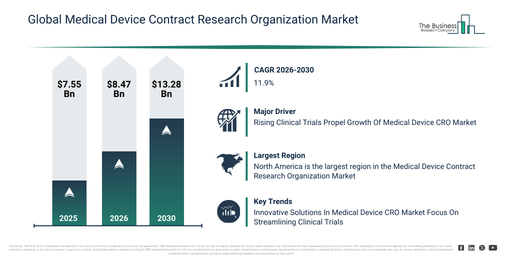
    The medical device contract research organization market size has experienced rapid growth in recent years. It is anticipated to expand from $7.55 billion in 2025 to $8.47 billion in 2026, achieving a compound annual growth rate (CAGR) of 12.1%. The expansion observed in the past can be attributed to factors such as increasing medical device innovation, the growing complexity of clinical trials, stricter regulatory requirements, the initial adoption of outsourced research services, and the broader development of global healthcare infrastructure.

    The medical device contract research organization market size is anticipated to experience substantial expansion over the upcoming years. This market is projected to reach $13.28 billion by 2030, exhibiting a compound annual growth rate (CAGR) of 11.9%. This predicted growth is driven by several factors including an uptick in the development of Class III medical devices, a heightened need for quicker device approvals, increased capital flowing into medical technology startups, the broader scope of clinical research in developing economies, and a greater necessity for post-market surveillance studies. Key trends anticipated during this period involve the growing tendency to outsource clinical trials for medical devices, a surging requirement for specialized knowledge in regulation and compliance, an increase in preclinical research services at early stages, the wider provision of CRO support for high-risk Class III devices, and an escalation in partnerships between device manufacturers and CROs.

    Download A Free Sample Report For Comprehensive Market Insights:

    https://www.thebusinessresearchcompany.com/sample.aspx?id=18406&type=smp

    Medical Device Contract Research Organization Market Growth Drivers: What Factors Are Accelerating Expansion?

    The anticipated expansion of the medical device contract research organization market is linked to the rising volume of clinical trials. These trials are research studies conducted on human participants to evaluate medical treatments, aiming to assess their safety and effectiveness prior to widespread clinical use. The increase in the number of clinical trials can be attributed to advancements in medical technology, the growing prevalence of chronic diseases, and heightened R&D investment. Medical device contract research organizations facilitate clinical trials by offering specialized expertise, infrastructure, and regulatory knowledge, thereby streamlining research processes and accelerating trial timelines. For instance, in December 2024, the Association of the British Pharmaceutical Industry, a UK-based trade association, reported that industry-sponsored clinical trials initiated in the UK increased from 411 in 2022 to 426 in 2023, with Phase III trials growing by 16.5%. Concurrently, overall participant recruitment across commercial and non-commercial studies surged from 44,564 in 2022/23 to 150,191 in 2023/24. Therefore, the escalating number of clinical trials is a key driver for the growth of the medical device contract research organization market.

    Medical Device Contract Research Organization Market Segment Outlook: Which Categories Are Expanding The Fastest?

    The medical device contract research organization market covered in this report is segmented –

    1) By Type: Finished Medical Devices, Medical Device Semi Finished Products, Medical Device Raw Materials

    2) By Device Class: Class 1, Class 2, Class 3

    3) By Phase: Preclinical, Clinical

    4) By Application: Cardiology, Diagnostic Imaging, Orthopedic, In Vitro Diagnostic (IVD), Ophthalmic, General And Plastic Surgery, Drug Delivery

    Subsegments:

    1) By Finished Medical Devices: Class I Medical Devices, Class II Medical Devices, Class III Medical Devices

    2) By Medical Device Semi-Finished Products: Medical Device Components, Medical Device Subassemblies, Medical Device Kits

    3) By Medical Device Raw Materials: Metals And Alloys, Polymers And Plastics, Ceramics And Composites, Biomaterials

    Medical Device Contract Research Organization Market Trends: What Is Shaping Future Industry Growth?

    Leading companies within the medical device contract research organization market are concentrating on developing innovative solutions, such as comprehensive contract research organization (CRO) services, to enhance efficiency in clinical trials and streamline regulatory compliance. These extensive CRO services involve a broad spectrum of support activities, encompassing regulatory compliance and submissions, clinical trial design and management, patient recruitment and retention, data collection and analysis, monitoring and quality assurance, and post-market surveillance. For example, in June 2024, Lindus Health Limited, a UK-based contract research organization, introduced a new comprehensive all-in-one medical device CRO offering. This offering combines traditional CRO services with Lindus Health’s specialized knowledge in medical device clinical trials, covering regulatory pathways, participant recruitment, and virtual or hybrid trial capabilities. The all-in-one medical device CRO equips medical device companies with a wide array of features, including end-to-end CRO and study management, inventive recruitment methods, study-specific eClinical software, medical device and regulatory expertise, and dedicated site services.

    Medical Device Contract Research Organization Market Key Companies And Competitive Benchmarking

    Major companies operating in the medical device contract research organization market are Laboratory Corporation of America Holdings, ICON Public Limited Company, Eurofins Scientific Societas Europaea, Pharmaceutical Product Development LLC, WuXi AppTec Co. Ltd., Syneos Health Inc., Charles River Laboratories International Inc., Medpace Holdings Inc., Tigermed Consulting Co. Ltd., Novotech (Australia) Pty Ltd, NAMSA LLC, Promedica International, Excelya, Avania UK Ltd, OSMUNDA MEDICAL DEVICE SERVICE GROUP, CROMSOURCE, Musculoskeletal Clinical Regulatory Advisers LLC, BIO Agile Therapeutics Pvt Ltd, Vial, Qserve Group, CSSi LifeSciences, Medidee Services SA, Eclevar Medtech, Scandinavian CRO, Archer Research, Parexel International Corporation, Clinitude, Geneticist Inc.

    Access The Complete Medical Device Contract Research Organization Market Report:

    https://www.thebusinessresearchcompany.com/report/medical-device-contract-research-organization-global-market-report

    Medical Device Contract Research Organization Market Geographic Landscape: Which Region Dominates Industry Growth?

    North Americawas the largest region in the medical device contract research organization market in 2025. Asia-Pacificis expected to be the fastest-growing region in the forecast period. The regions covered in the medical device contract research organization market report are Asia-Pacific, South East Asia, Western Europe, Eastern Europe, North America, South America, Middle East, Africa.

    Get in touch with us:

    The Business Research Company: https://www.thebusinessresearchcompany.com/

    Americas: +1 310-496-7795

    Asia: +44 7882 955267 & +91 8897263534

    Europe: +44 7882 955267

    Email us at: marketing@tbrc.info

    Follow us on:

    LinkedIn: https://in.linkedin.com/company/the-business-research-company

    YouTube: https://www.youtube.com/channel/UC24_fI0rV8cR5DxlCpgmyFQ

    Global Market Model: https://www.thebusinessresearchcompany.com/global-market-model
  • Medical Courier Market Size Projected To Increase From $7.6 Billion To $9.43 Billion During The Forecast Period

    Medical Courier Market Size Projected To Increase From $7.6 Billion To $9.43 Billion During The Forecast Period

    Enhanced with market attractiveness analysis, total addressable market evaluation, company benchmarking matrices, interactive Excel dashboards, expanded supply chain intelligence, emerging startup coverage, and detailed product insights, The Business Research Company’s 2026 market reports deliver more actionable and strategically valuable research.

    Medical Courier Market Size Outlook: How Fast Will Revenue Grow Through 2030?

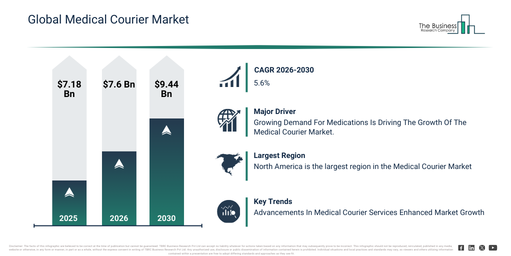
    The medical courier market size has shown substantial growth in recent years. It is anticipated to expand from $7.18 billion in 2025 to $7.6 billion in 2026, achieving a compound annual growth rate (CAGR) of 5.9%. This historical growth can be linked to several factors, including an increase in diagnostic testing volumes, the expansion of hospital networks, escalating pharmaceutical distribution needs, the rising adoption of centralized laboratories, and the demand for time-sensitive medical transport.

    The medical courier market is anticipated to show significant growth in the coming years, with its size projected to reach $9.44 billion by 2030, expanding at a compound annual growth rate (CAGR) of 5.6%. This expansion over the forecast period is driven by various factors, such as the increasing necessity for same-day medical deliveries, a rising trend in adopting electric medical courier fleets, the ongoing expansion of home healthcare services, a growing requirement for secure data-integrated logistics solutions, and heightened regulatory scrutiny on medical transport operations. Prominent trends expected during this period include a greater adoption of temperature-controlled logistics, an increasing demand for on-demand medical deliveries, more widespread use of real-time tracking systems, the extension of specialized bio-specimen transport services, and a reinforced emphasis on handling that complies with regulations.

    Download A Free Sample Report For Comprehensive Market Insights:

    https://www.thebusinessresearchcompany.com/sample.aspx?id=19570&type=smp

    Medical Courier Market Growth Factors Supporting Long-Term Expansion

    The escalating need for pharmaceutical products is anticipated to drive the expansion of the medical courier market in the coming years. This heightened demand for medications is attributable to factors such as an increased prevalence of chronic illnesses and enhanced public health awareness, alongside the influence of direct-to-consumer advertising and physician prescribing habits. Medical couriers are crucial for the timely and secure transportation of prescription and specialty drugs to healthcare institutions and patients. For example, in July 2024, data from a report by the Australian Institute of Health and Welfare, an Australia-based governmental organization, showed that total expenditure on the pharmaceutical benefits scheme (PBS) and repatriation pharmaceutical benefits scheme (RPBS) medicines surged by 3.9%, reaching $20.4 billion during the 2022–23 period. This increase corresponded with the dispensing of 335.8 million prescriptions. Consumer contributions also saw an uplift, totaling $3.4 billion, which constituted 17% of the entire spending. Thus, the rising demand for medications is a key accelerator for the medical courier market’s growth.

    Medical Courier Market Segment Landscape: Which Areas Lead Market Development?

    The medical courier market covered in this report is segmented –

    1) By Product Type: Medical Supplies And Equipment, Blood And Organs, Lab Specimens, Medical Notes, Other Product Types

    2) By Service Type: Standard Courier Service, International Services, Rush And On-Demand, Pallet Shipping, Other Service Types

    3) By Destination: Domestic, International

    4) By End Users: Hospital And Clinics, Diagnostic Labs, Blood And Tissue Banks, Pharmacy, In Home Support, Pharmaceutical And Biotechnology Companies, Other End Users

    Subsegments:

    1) By Medical Supplies and Equipment: Pharmaceuticals and Prescription Drugs, Surgical Instruments, Medical Devices, Diagnostic Tools, Personal Protective Equipment (PPE)

    2) By Blood and Organs: Blood Samples and Units, Human Organs for Transplant, Plasma and Platelets, Stem Cells and Bone Marrow

    3) By Lab Specimens: Blood Samples, Tissue Samples, Urine and Fecal Samples, Biopsy Specimens, Genetic Samples

    4) By Medical Notes: Patient Records, Medical Documentation, Confidential Health Information, Prescription Notes

    5) By Other Product Types: Medical Waste and Hazardous Materials, Vaccine Shipments, Medical Research Materials, Laboratory Chemicals

    Medical Courier Market Industry Trends Shaping Future Revenue Growth

    Leading companies in the medical courier market are concentrating on developing advanced solutions, such as same-day medicine delivery, to improve the efficiency and precision of medical supply shipments. This service, same-day medicine delivery, guarantees that prescription medications and other pharmaceutical items are delivered to patients or healthcare facilities on the same day they are ordered, providing timely access to necessary treatments. For example, in June 2023, Uber Technologies Inc., a US-based transportation company, expanded its healthcare offerings by launching a new medical delivery service. This service, which is part of Uber Health, now includes same-day delivery of prescription drugs, over-the-counter medications, and even food-as-medicine prescriptions. The new medical delivery service utilizes Uber’s existing delivery platform and expertise to facilitate the direct delivery of essential medications to people’s homes.

    Medical Courier Market Industry Leaders And Market Competition

    Major companies operating in the medical courier market are United Parcel Service of America Inc., FedEx Corporation, DHL International GmbH, World Courier Management Inc., Apollo Medical Logistics LLC, CitySprint (UK) Ltd., MNX Global Logistics Inc., Speedy Freight, ERS Transition Ltd., Network Global Logistics Inc., Velox Expres S.A., Medspeed LLC, Matternet Inc., Senpex Logistics Inc., Medical Couriers Inc., Americord Registry LLC, Reliable Couriers Inc., Affordable Courier Solutions Inc, Blaze Express Courier Service, MedLine Express Services Inc., Reliant Couriers & Haulage Ltd., RTD Logistics Inc., IntelliQuick Delivery Inc., California Courier Services Inc.

    Access The Complete Medical Courier Market Report:

    https://www.thebusinessresearchcompany.com/report/medical-courier-global-market-report

    Medical Courier Market Largest Region: Which Geography Holds The Highest Market Share?

    North Americawas the largest region in the medical courier market in 2025. Asia-Pacificis expected to be the fastest-growing region in the forecast period. The regions covered in the medical courier market report are Asia-Pacific, South East Asia, Western Europe, Eastern Europe, North America, South America, Middle East, Africa.

    Get in touch with us:

    The Business Research Company: https://www.thebusinessresearchcompany.com/

    Americas: +1 310-496-7795

    Asia: +44 7882 955267 & +91 8897263534

    Europe: +44 7882 955267

    Email us at: marketing@tbrc.info

    Follow us on:

    LinkedIn: https://in.linkedin.com/company/the-business-research-company

    YouTube: https://www.youtube.com/channel/UC24_fI0rV8cR5DxlCpgmyFQ

    Global Market Model: https://www.thebusinessresearchcompany.com/global-market-model