Month: July 2026

  • Vitamin A Supplements Market Expansion Is Reshaping Competitive Dynamics Across The Industry

    Vitamin A Supplements Market Expansion Is Reshaping Competitive Dynamics Across The Industry

    Enhanced with market attractiveness analysis, total addressable market evaluation, company benchmarking matrices, interactive Excel dashboards, expanded supply chain intelligence, emerging startup coverage, and detailed product insights, The Business Research Company’s 2026 market reports deliver more actionable and strategically valuable research.

    Vitamin A Supplements Market Value Expansion And Long-Term Growth Outlook

    In recent years, the market for vitamin A supplements has experienced robust expansion. Its value is projected to rise from $6.58 billion in 2025 to $7.21 billion in 2026, reflecting a compound annual growth rate (CAGR) of 9.5%. This historical growth has been driven by heightened awareness of disorders caused by vitamin deficiencies, the integration of vitamin A into public health initiatives, a steady increase in dietary supplement usage, an uptick in the manufacturing of pharmaceutical-grade vitamins, and enhanced availability of nutritional goods.

    The market for vitamin A supplements is projected to experience robust expansion over the coming years. By 2030, it is anticipated to reach a value of $10.27 billion, driven by a compound annual growth rate (CAGR) of 9.3%. This forecasted growth is fueled by a greater emphasis on preventive healthcare, a heightened preference for clean-label vitamin products, the widening scope of personalized nutrition, the increasing incorporation of fortified foods, and stronger regulatory backing for nutritional supplementation. Key developments shaping the future landscape include the surging demand for supplements that support immune function and vision, a heightened application of vitamin A in preventive nutrition strategies, the proliferation of fortified and blended supplement offerings, a stronger push toward programs addressing nutritional deficiencies, and the rising adoption of these supplements in pediatric and maternal health contexts.

    Download A Free Sample Report For Comprehensive Market Insights:

    https://www.thebusinessresearchcompany.com/sample.aspx?id=30434&type=smp&utm_source=BlogsPR&utm_medium=Paid&utm_campaign=Jul_PR

    Vitamin A Supplements Market Growth Momentum: Which Factors Are Influencing Demand?

    The vitamin A supplements market is anticipated to experience growth driven by an increasing focus on health and wellness. This heightened awareness stems from greater access to health information via digital platforms and social media, which inform consumers about the significance of preventive nutrition and immune support. As health consciousness grows, people are motivated to regularly incorporate key nutrients into their daily lives to boost immune function, maintain eye health, and enhance overall energy levels. In June 2024, for example, data from the International Food Information Council (IFIC), a nonprofit based in the US, revealed that 54% of Americans continued to follow a specific diet or eating pattern over the previous year. Additionally, the percentage of individuals aiming to boost their protein intake rose from 59% in 2022 to 67% in 2023, reaching 71% in 2024. Consequently, the upward trend in health and wellness consciousness is fueling expansion in the vitamin A supplements market.

    Vitamin A Supplements Market Segment Landscape And Growth Potential

    The vitamin a supplements market covered in this report is segmented –

    1) By Product Type: Capsules, Tablets, Softgels, Gummies, Liquids, Other Product Types

    2) By Source Of Vitamin A: Natural Sources, Synthetic Sources

    3) By Distribution Channel: Online Stores, Supermarkets Or Hypermarkets, Pharmacies, Specialty Stores, Other Distribution Channels

    4) By Application: Nutritional Supplements, Pharmaceuticals, Animal Feed, Other Applications

    5) By End-User: Adults, Children, Pregnant Women, Athletes, Elderly

    Subsegments:

    1) By Capsules: Standard Vitamin A Capsules, High-Potency Vitamin A Capsules, Multivitamin A Capsules, Sustained-Release Vitamin A Capsules

    2) By Tablets: Chewable Vitamin A Tablets, Effervescent Vitamin A Tablets, Film-Coated Vitamin A Tablets, Time-Release Vitamin A Tablets

    3) By Softgels: Oil-Based Vitamin A Softgels, Gelatin-Free Vitamin A Softgels, High-Absorption Vitamin A Softgels, Combination Nutrient Softgels

    4) By Gummies: Fruit-Flavored Vitamin A Gummies, Sugar-Free Vitamin A Gummies, Vegan Vitamin A Gummies, Children’s Vitamin A Gummies

    5) By Liquids: Oral Vitamin A Drops, Emulsified Vitamin A Liquids, High-Concentration Vitamin A Liquids, Flavor-Enhanced Vitamin A Liquids

    6) By Other Product Types: Vitamin A Sprays, Vitamin A Powders, Vitamin A Lozenges, Vitamin A Fortified Foods

    Vitamin A Supplements Market Trends Reshaping Industry Growth

    Major players within the vitamin A supplements sector are concentrating on creating novel products, including nature-identical formulations, to address consumer preferences for sustainable, high-quality nutrients. These nature-identical versions are synthetic vitamins that are chemically equivalent to their natural counterparts, offering identical biological advantages while ensuring uniform quality, stability, and eco-friendly production practices. As an example, in October 2024, DSM-Firmenich N.V., a health and nutrition firm headquartered in the Netherlands, introduced Dry Vit A Palmitate designed for Early Life Nutrition—a revolutionary clean-label vitamin A ingredient aimed at boosting the nutritional content of infant formulas. This formulation resolves stability issues associated with conventional vitamin A, delivering an extended shelf life, a fine particle size ideal for infant formula enrichment, and a profile that is vegan, allergen-free, GMO-free, halal, and kosher. It facilitates effective nutrient supply for formula-fed babies while catering to the rising consumer demand for clean-label, dependable ingredients. Considering that vitamin A deficiency continues to impact millions of children globally, this launch underscores DSM-Firmenich N.V.’s dedication to enhancing early life nutrition via innovative approaches that merge science, safety, and sustainability.

    Vitamin A Supplements Market Competitive Landscape: Who Are The Leading Companies?

    Major companies operating in the vitamin a supplements market are BASF SE, DSM-firmenich AG, Lifevision Healthcare, International Vitamin Corporation (IVC), Captek Softgel International Inc., Nordic Naturals Inc., Botanic Healthcare LLC, Gemini Pharmaceuticals Inc., Reliance Vitamin Company Inc., Makers Nutrition LLC, Carlson Laboratories Inc., Parchem Fine & Specialty Chemicals Inc., Ofichem Group B.V., Divis Laboratories Limited, Vital Therapeutics & Formulations Pvt. Ltd., Supplement Manufacturing Partner Inc., Devlife Corporation Pvt. Ltd., Beeline Healthcare, Provitas LLC, Gummi World Inc., RAJVI Enterprise, Across Biotech Pvt. Ltd.

    Access The Complete Vitamin A Supplements Market Report:

    https://www.thebusinessresearchcompany.com/report/global-vitamin-a-supplements-market-report?utm_source=BlogsPR&utm_medium=Paid&utm_campaign=Jul_PR

    Vitamin A Supplements Market Regional Analysis And Leading Geography

    North America was the largest region in the vitamin A supplements market in 2025. Asia-Pacific is expected to be the fastest-growing region in the forecast period. The regions covered in the vitamin a supplements market report are Asia-Pacific, South East Asia, Western Europe, Eastern Europe, North America, South America, Middle East, Africa.

    Get in touch with us:

    The Business Research Company: https://www.thebusinessresearchcompany.com/?utm_source=BlogsPR&utm_medium=Paid&utm_campaign=home_page_test

    Americas: +1 310-496-7795

    Asia: +44 7882 955267 & +91 8897263534

    Europe: +44 7882 955267

    Email us at: marketing@tbrc.info

    Follow us on:

    LinkedIn: https://in.linkedin.com/company/the-business-research-company

    YouTube: https://www.youtube.com/channel/UC24_fI0rV8cR5DxlCpgmyFQ

    Global Market Model: https://www.thebusinessresearchcompany.com/global-market-model
  • Viscosupplementation Market Forecast Reveals Where Future Industry Value Will Be Created

    Viscosupplementation Market Forecast Reveals Where Future Industry Value Will Be Created

    Through market attractiveness analysis, total addressable market evaluation, company benchmarking matrices, interactive Excel dashboards, expanded supply chain intelligence, emerging startup coverage, and detailed product insights, The Business Research Company’s 2026 market reports provide more actionable and strategically valuable research.

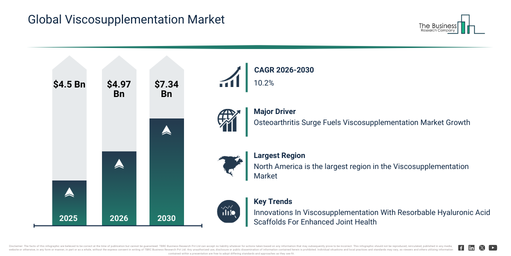
    Viscosupplementation Market Expected To Reach $7.34 Billion By 2030 At 10.2% CAGR

    The viscosupplementation market has experienced rapid expansion in recent years, with projections indicating an increase from $4.5 billion in 2025 to $4.97 billion in 2026, reflecting a compound annual growth rate (CAGR) of 10.4%. This historical growth has been driven by factors such as the increasing prevalence of osteoarthritis, a growing elderly demographic, progress in joint care treatments, heightened public knowledge about viscosupplementation, and an expanded orthopedic healthcare framework.

    The viscosupplementation market is anticipated to experience rapid expansion over the coming years. By 2030, it is projected to reach $7.34 billion, reflecting a compound annual growth rate (CAGR) of 10.2%. This forecast growth can be attributed to several factors, including the adoption of regenerative medicine, the integration of digital health monitoring, the development of novel hyaluronic acid formulations, the expansion of ambulatory surgical centers, and rising investments in outpatient orthopedic procedures. Key developments shaping the market during this period encompass minimally invasive joint therapies, regenerative medicine integration, personalized osteoarthritis treatment, injectable hyaluronic acid innovations, and outpatient orthopedic procedures.

    Download A Free Sample Report For Comprehensive Market Insights:

    https://www.thebusinessresearchcompany.com/sample.aspx?id=9836&type=smp&utm_source=BlogsPR&utm_medium=Paid&utm_campaign=Jul_PR

    Viscosupplementation Market Expansion Drivers: What Is Shaping Future Growth?

    The growing incidence of osteoarthritis is anticipated to drive the expansion of the viscosupplementation market in the coming period. Osteoarthritis is a degenerative joint condition, commonly referred to as a prevalent type of arthritis, where joints, particularly in the hips, knees, and hands, begin to deteriorate. Viscosupplementation therapy alleviates pain and promotes smooth joint movement by delivering hyaluronic acid directly into the joint spaces, thereby reducing discomfort and enhancing joint function. For example, in August 2023, the Institute for Health Metrics and Evaluation (IHME), a US-based nonprofit global health research organization, projected that by 2050, knee osteoarthritis cases will rise by 75%, and hand osteoarthritis cases by 50%. Consequently, the increasing prevalence of osteoarthritis is fueling the growth of the viscosupplementation market moving forward.

    Viscosupplementation Market Categorization By Product Type And Application

    The viscosupplementation market covered in this report is segmented –

    1) By Type: Single Injection Viscosupplementation, Three Injection Viscosupplementation, Five Injection Viscosupplementation

    2) By Source: Avian Origin, Non-Avian Origin

    3) By Hyaluronic Acids: Standard Hyaluronic Acid, Stabilized Hyaluronic Acid

    4) By Application: Knee Osteoarthritis, Hip Osteoarthritis, Hand Osteoarthritis

    5) By End-User: Hospitals, Ambulatory Surgical Centers, Other End-Users

    Subsegments:

    1) By Single Injection Viscosupplementation: Hyaluronic Acid-Based Products, Non-Hyaluronic Acid Products

    2) By Three Injection Viscosupplementation: Hyaluronic Acid-Based Products, Combination Products

    3) By Five Injection Viscosupplementation: Hyaluronic Acid-Based Products, Combination Products

    Viscosupplementation Market Strategic Trends: What Is Defining The Next Phase Of Growth?

    Major companies in the viscosupplementation market are concentrating their efforts on creating advanced products like resorbable hyaluronic acid scaffolds, which are designed to improve joint lubrication, support tissue regeneration, and deliver sustained relief for osteoarthritis symptoms, ultimately enhancing patient outcomes and broadening the range of available therapies. A resorbable hyaluronic acid scaffold is constructed from a biocompatible and biodegradable material primarily composed of hyaluronic acid (HA), a naturally occurring polysaccharide that is present in connective tissues throughout the body. In May 2023, for example, Anika Therapeutics, Inc., a company based in the United States that specializes in orthopedic solutions, launched Hyalofast, a ready-to-use, single-stage, resorbable hyaluronic acid scaffold specifically intended for cartilage repair. This product provides a hyaluronic acid-based approach aimed at preserving joint health, potentially serving as a less invasive option compared to more traditional surgical methods.

    Viscosupplementation Market Company Landscape And Strategic Competition

    Major companies operating in the viscosupplementation market are Seikagaku Corporation, Anika Therapeutics Inc., Bioventus LLC, Zimmer Biomet, Johnson & Johnson Services Inc., Aptissen S.A., Smith & Nephew Plc., Flexion Therapeutics Inc., Regen Lab SA, OrthogenRx Inc., Fidia Farmaceutici S.P.A, Ferring Pharmaceuticals, Laboratoires VIVACY, Allergan, Hyalgan, Synvisc, Euflexxa, Sanofi S.A., Wellchem Pharmaceuticals Pte Ltd, Medtronic Inc.

    Access The Complete Viscosupplementation Market Report:

    https://www.thebusinessresearchcompany.com/report/viscosupplementation-global-market-report?utm_source=BlogsPR&utm_medium=Paid&utm_campaign=Jul_PR

    Viscosupplementation Market Geographic Analysis: Where Is Demand Growing The Fastest?

    North America was the largest region in the viscosupplementation market in 2025. The regions covered in the viscosupplementation market report are Asia-Pacific, South East Asia, Western Europe, Eastern Europe, North America, South America, Middle East, Africa.

    Get in touch with us:

    The Business Research Company: https://www.thebusinessresearchcompany.com/?utm_source=BlogsPR&utm_medium=Paid&utm_campaign=home_page_test

    Americas: +1 310-496-7795

    Asia: +44 7882 955267 & +91 8897263534

    Europe: +44 7882 955267

    Email us at: marketing@tbrc.info

    Follow us on:

    LinkedIn: https://in.linkedin.com/company/the-business-research-company

    YouTube: https://www.youtube.com/channel/UC24_fI0rV8cR5DxlCpgmyFQ

    Global Market Model: https://www.thebusinessresearchcompany.com/global-market-model
  • Viral Vectors And Plasmid DNA Market Growth Through 2030 Creates New Strategic Opportunities

    Viral Vectors And Plasmid DNA Market Growth Through 2030 Creates New Strategic Opportunities

    Delivering more actionable and strategically valuable research, The Business Research Company’s 2026 market reports feature market attractiveness analysis, total addressable market evaluation, company benchmarking matrices, interactive Excel dashboards, expanded supply chain intelligence, emerging startup coverage, and detailed product insights.

    Viral Vectors And Plasmid DNA Market Size And Revenue Forecast Through 2030

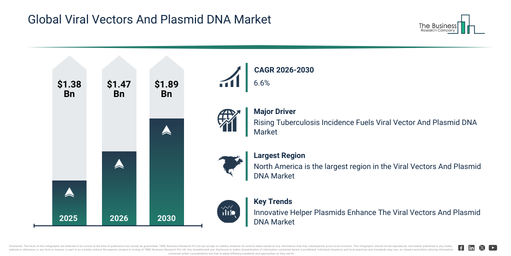
    The viral vectors and plasmid DNA market has experienced notable expansion in recent years. Projections indicate an increase from $1.38 billion in 2025 to $1.47 billion in 2026, reflecting a compound annual growth rate (CAGR) of 6.2%. This historic growth has been driven by factors such as the constrained supply of viral vectors, a dependence on research-grade plasmid DNA, a rising number of gene therapy development programs, heightened research and development efforts within the biopharmaceutical sector, and the widespread use of established viral vector platforms.

    The market for viral vectors and plasmid DNA is forecast to experience significant growth in the coming years, with projections indicating a rise to $1.89 billion by 2030, reflecting a compound annual growth rate (CAGR) of 6.6%. This expansion during the forecast period is driven by factors including the creation of clinical-grade and GMP-compliant plasmid DNA, the broadening of viral vector uses in oncology and infectious diseases, heightened investment in gene therapy, an increasing need for immunotherapeutic approaches, and the uptake of innovative vector systems like adeno-associated and lentiviral vectors. Key developments expected in this period encompass the growing utilization of plasmid DNA and viral vectors within gene therapy, the proliferation of viral vector platforms tailored for cancer and genetic disorder management, a surge in GMP-grade plasmid DNA output for clinical purposes, intensified investigation into novel adeno-associated and lentiviral vector technologies, and the incorporation of these elements into immunotherapy and vaccine development.

    Download A Free Sample Report For Comprehensive Market Insights:

    https://www.thebusinessresearchcompany.com/sample.aspx?id=3245&type=smp&utm_source=BlogsPR&utm_medium=Paid&utm_campaign=Jul_PR

    Viral Vectors And Plasmid DNA Market Development Factors: Which Trends Are Supporting Demand?

    The viral vector and plasmid DNA market is expected to be driven forward by the rising number of tuberculosis cases. Tuberculosis (TB) is a contagious, severe infectious illness brought on by bacteria, mainly attacking the lungs but also capable of affecting other body parts. Plasmid DNA vaccines have been utilized to deliver genes coding for microbial antigens specific to TB. These vaccines can be tailored to express particular antigens from Mycobacterium tuberculosis, the pathogen responsible for the disease, and are typically given via intramuscular injection. For example, data from GOV.UK in February 2024, a UK government entity, revealed that TB cases in England climbed by 10.7% in 2023, increasing from 4,380 in 2022 to 4,850. Consequently, the growing TB incidence is fueling expansion in the viral vector and plasmid DNA market.

    Viral Vectors And Plasmid DNA Market Segment Analysis And Revenue Opportunities

    The viral vectors and plasmid dna market covered in this report is segmented –

    1) By Product: Plasmid DNA, Viral Vectors

    2) By Disease: Infectious Diseases, Genetic Disorders, Cancer, Other Diseases

    3) By Application: Gene And Cancer Therapies, Viral Infections, Immunotherapy, Formulation Development, Other Applications

    4) By End User: Research Institutes, Biopharmaceutical And Pharmaceutical Companies

    Subsegments:

    1) By Plasmid DNA: Research-Grade Plasmid DNA, Clinical-Grade Plasmid DNA, GMP (Good Manufacturing Practice) Plasmid DNA

    2) By Viral Vectors: Adenoviral Vectors, Lentiviral Vectors, AAV (Adeno-Associated Virus) Vectors, Retroviral Vectors, Vesicular Stomatitis Virus (VSV) Vectors

    Viral Vectors And Plasmid DNA Market Transformation Trends: Which Innovations Are Driving Change?

    Key players in the viral vectors and plasmid DNA market are increasingly focusing on developing innovative solutions, such as helper plasmids, to strengthen their competitive position. A helper plasmid represents a type of plasmid DNA used in producing viral vectors like adeno-associated viral vectors (AAV), commonly applied in gene therapy. For example, in March 2023, Charles River Laboratories International Inc., a US-based pharmaceutical firm, introduced its off-the-shelf pHelper helper plasmid, designed to accelerate processes from early discovery through commercial production of AAV-based gene therapy programs while ensuring supply security. As part of an expanding range of contract development and manufacturing organization (CDMO) offerings, these helper plasmids aim to protect viral vector packaging in cell and gene therapy operations and simplify complex supply chains. The production of adeno-associated viral vectors (AAV), frequently used in gene therapy, relies on helper plasmids to facilitate their creation.

    Viral Vectors And Plasmid DNA Market Leading Players Shaping Industry Direction

    Major companies operating in the viral vectors and plasmid dna market are FUJIFILM Diosynth Biotechnologies, FinVector Vision Therapies, Lonza Group AG, Cobra Biologics and Pharmaceutical Services, Brammer Bio, ??n?k? ??r??r?t??n, Cell and Gene Therapy Catapult, VGXI Inc., MassBiologics, Sanofi, Spark Therapeutics, UniQure NV, Thermo Fisher Scientific, VIROVEK, SIRION Biotech GmbH, ALDEVRON, Oxford BioMedica, PlasmidFactory GmbH & Co. KG, Biovian Oy, BioReliance Corporation, 4D Molecular Therapeutics, Renova Therapeutics, Shenzhen SiBiono GeneTech Co., Vigene Biosciences Inc., Novasep, Genzyme Corporation, Oxford Gene Technology, Richter-Helm, MolMed, Merck KGaA Inc., Catalent Inc., WuXi AppTec, GenScript Biotech Corporation, Eurogentec, Creative Biogene

    Access The Complete Viral Vectors And Plasmid DNA Market Report:

    https://www.thebusinessresearchcompany.com/report/viral-vectors-and-plasmid-dna-global-market-report?utm_source=BlogsPR&utm_medium=Paid&utm_campaign=Jul_PR

    Viral Vectors And Plasmid DNA Market Global Footprint: Which Region Holds Market Leadership?

    North America was the largest region in the viral vectors and plasmid DNA market in 2025. The Middle East is expected to be the fastest-growing region in the global viral vectors & plasmid DNA market analysis. The regions covered in the viral vectors and plasmid dna market report are Asia-Pacific, South East Asia, Western Europe, Eastern Europe, North America, South America, Middle East, Africa.

    Get in touch with us:

    The Business Research Company: https://www.thebusinessresearchcompany.com/?utm_source=BlogsPR&utm_medium=Paid&utm_campaign=home_page_test

    Americas: +1 310-496-7795

    Asia: +44 7882 955267 & +91 8897263534

    Europe: +44 7882 955267

    Email us at: marketing@tbrc.info

    Follow us on:

    LinkedIn: https://in.linkedin.com/company/the-business-research-company

    YouTube: https://www.youtube.com/channel/UC24_fI0rV8cR5DxlCpgmyFQ

    Global Market Model: https://www.thebusinessresearchcompany.com/global-market-model

  • Viral Vector Production (Research-Use) Market Size Projected To Increase From $2.04 Billion To $3.56 Billion During The Forecast Period

    Viral Vector Production (Research-Use) Market Size Projected To Increase From $2.04 Billion To $3.56 Billion During The Forecast Period

    Enhanced with market attractiveness analysis, total addressable market evaluation, company benchmarking matrices, interactive Excel dashboards, expanded supply chain intelligence, emerging startup coverage, and detailed product insights, The Business Research Company’s 2026 market reports deliver more actionable and strategically valuable research.

    Viral Vector Production (Research-Use) Market Growth From $2.04 Billion In 2026 To $3.56 Billion By 2030 At A CAGR Of 14.9%

    The market for viral vector production intended for research applications has experienced notable expansion in recent times. Projected to rise from $1.77 billion in 2025 to $2.04 billion in 2026, this reflects a compound annual growth rate (CAGR) of 15.2%. This historical growth has been driven by heightened funding for gene therapy research, the broadening of academic and translational research initiatives, the accessibility of sophisticated cell culture methods, an increased application of viral vectors in oncology investigations, and a surge in contract research operations.

    The market size for viral vector production (research-use) is anticipated to expand rapidly over the coming years. By 2030, it is projected to reach $3.56 billion, driven by a compound annual growth rate (CAGR) of 14.9%. This growth in the forecast period is largely fueled by a rising need for advanced gene delivery tools, greater adoption of automation within research labs, expanded research into CRISPR and gene editing, increased partnerships between academic institutions and biopharmaceutical companies, and a heightened emphasis on reproducibility and standardization. Key trends shaping the forecast period include a growing preference for scalable manufacturing platforms for viral vectors, an increased demand for high-purity research-grade vectors, wider use of suspension cell culture systems, expansion of automated upstream and downstream processes, and a stronger focus on vector characterization and quality assurance.

    Download A Free Sample Report For Comprehensive Market Insights:

    https://www.thebusinessresearchcompany.com/sample.aspx?id=28350&type=smp&utm_source=BlogsPR&utm_medium=Paid&utm_campaign=Jul_PR

    Viral Vector Production (Research-Use) Market Industry Drivers: What Is Driving Revenue Growth?

    The anticipated expansion of the viral vector production market for research purposes is being driven by the increasing prevalence of genetic disorders. These disorders arise from abnormalities in an individual’s deoxyribonucleic acid, which may be inherited from either parent or emerge from new genetic mutations. Their rising frequency is linked to advanced parental age, which heightens the risk of passing genetic mutations to children. This growing incidence fuels demand for sophisticated gene delivery tools essential for studying disease mechanisms and creating potential therapies, thereby supporting market growth. For example, in November 2024, the Centers for Disease Control and Prevention (CDC), a US governmental public health body, reported that Trisomy 21 (Down syndrome) affects roughly 1 in 643 births, leading to about 5,713 new cases each year, while Trisomy 18 occurs in around 1 in 3,336 births, or approximately 1,101 annual cases. Consequently, the rising frequency of genetic disorders is poised to advance the viral vector production (research-use) market.

    Viral Vector Production (Research-Use) Market Segmentation And Category Breakdown

    The viral vector production (research-use) market covered in this report is segmented –

    1) By Type: Adeno-Associated Virus (AAV), Lentivirus, Adenovirus, Retrovirus, Other Types

    2) By Production: Transient Transfection, Stable Cell Line, Viral Packaging System, Other Production Methods

    3) By Workflow: Upstream Processing, Downstream Processing

    4) By Application: Gene Therapy, Vaccines, Oncology, Infectious Diseases, Other Applications

    5) By End-Use: Pharmaceutical And Biopharmaceutical Companies, Research Institutes

    Subsegments:

    1) By Adeno-Associated Virus: Single-Stranded Adeno-Associated Virus, Self-Complementary Adeno-Associated Virus, Hybrid Adeno-Associated Virus

    2) By Lentivirus: Human Immunodeficiency Virus-Based Lentivirus, Feline Immunodeficiency Virus-Based Lentivirus, Equine Infectious Anemia Virus-Based Lentivirus

    3) By Adenovirus: Replication-Competent Adenovirus, Replication-Deficient Adenovirus, Helper-Dependent Adenovirus

    4) By Retrovirus: Gamma Retrovirus, Spumavirus (Foamy Virus), Alpha Retrovirus

    5) By Other Types: Herpes Simplex Virus Vectors, Baculovirus Vectors, Sendai Virus Vectors

    Viral Vector Production (Research-Use) Market Growth Trends: What Is Influencing The Future Outlook?

    Key players in the viral vector production industry are increasingly investing in the creation of innovative tools, particularly customized cell culture media, aimed at enhancing transfection efficiency, maximizing viral vector output, and maintaining reliable quality for research purposes. Cell culture media consist of nutrient-dense formulations that facilitate the cultivation and preservation of cells outside their native environment, incorporating critical components such as amino acids, vitamins, and growth factors tailored to specific cell varieties and uses. A notable example occurred in January 2023, when FUJIFILM Irvine Scientific, a life sciences company headquartered in the United States, unveiled BalanCD HEK293 Viral Feed, the first chemically defined nutrient supplement specifically engineered for HEK293 suspension cultures utilized in AAV viral vector production. With this product, the company intends to achieve substantial increases in adeno-associated virus (AAV) yields, demonstrating up to a 67% improvement in viral packaging efficiency compared to basal media. This feed is designed to support scalable gene therapy and biotechnological operations, delivering consistent performance across different formats and ensuring compatibility with a variety of media systems.

    Viral Vector Production (Research-Use) Market Competitive Analysis Of Major Industry Participants

    Major companies operating in the viral vector production (research-use) market are Sanofi S.A., Thermo Fisher Scientific Inc., Merck KGaA, Becton Dickinson and Company, Lonza Group AG, Sartorius AG, Charles River Laboratories International Inc., FUJIFILM Diosynth Biotechnologies U.S.A. Inc., Curia Inc., AGC Biologics GmbH, SK pharmteco Inc., Oxford Biomedica Plc, Waisman Biomanufacturing, Voyager Therapeutics Inc., FinVector Oy, Batavia Biosciences BV., GENEZEN LABORATORIES, BioNTech IMFS GmbH, VGXI Inc., Tonix Pharmaceuticals, Cell and Gene Therapy Catapult, Mustang Bio Inc.

    Access The Complete Viral Vector Production (Research-Use) Market Report:

    https://www.thebusinessresearchcompany.com/report/viral-vector-production-research-use-global-market-report?utm_source=BlogsPR&utm_medium=Paid&utm_campaign=Jul_PR

    Viral Vector Production (Research-Use) Market Regional Distribution: Which Areas Drive Market Expansion?

    North America was the largest region in the virtual vector production (research-use) market in 2025. Asia-Pacific is expected to be the fastest-growing region in the forecast period. The regions covered in the viral vector production (research-use) market report are Asia-Pacific, South East Asia, Western Europe, Eastern Europe, North America, South America, Middle East, Africa.

    Get in touch with us:

    The Business Research Company: https://www.thebusinessresearchcompany.com/?utm_source=BlogsPR&utm_medium=Paid&utm_campaign=home_page_test

    Americas: +1 310-496-7795

    Asia: +44 7882 955267 & +91 8897263534

    Europe: +44 7882 955267

    Email us at: marketing@tbrc.info

    Follow us on:

    LinkedIn: https://in.linkedin.com/company/the-business-research-company

    YouTube: https://www.youtube.com/channel/UC24_fI0rV8cR5DxlCpgmyFQ

    Global Market Model: https://www.thebusinessresearchcompany.com/global-market-model
  • Viral Vector Manufacturing Market Growth Outlook Reveals A CAGR Of 21.1% And A Market Value Of $21.3 Billion By 2030

    Viral Vector Manufacturing Market Growth Outlook Reveals A CAGR Of 21.1% And A Market Value Of $21.3 Billion By 2030

    Through market attractiveness analysis, total addressable market evaluation, company benchmarking matrices, interactive Excel dashboards, expanded supply chain intelligence, emerging startup coverage, and detailed product insights, The Business Research Company’s 2026 market reports provide more actionable and strategically valuable research.

    Viral Vector Manufacturing Market Expansion Outlook: What Revenue Opportunities Lie Ahead?

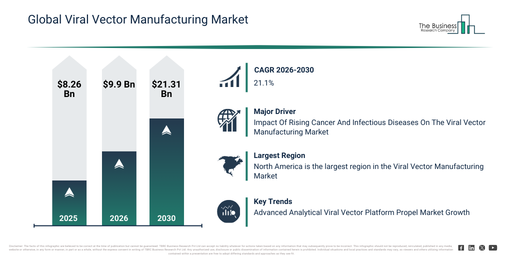
    The viral vector manufacturing market has experienced swift expansion in the past several years. Its value is projected to increase from $8.26 billion in 2025 to $9.9 billion in 2026, achieving a compound annual growth rate (CAGR) of 19.9%. This historical growth has been driven by factors such as constrained manufacturing capabilities, elevated production expenses, dependence on conventional gene delivery techniques, regulatory obstacles, and supply chains that are not well-integrated.

    The market for viral vector manufacturing is projected to experience rapid expansion over the coming years, with an anticipated value of $21.31 billion by 2030, reflecting a compound annual growth rate (CAGR) of 21.1%. This forecasted growth is driven by several key factors, including the increasing demand for gene and cell therapies, technological progress in viral vector development, heightened investment in research and development, the growth of contract manufacturing organizations, and a rising emphasis on personalized medicine. Significant developments shaping the market during this period include innovations in gene therapy, improvements in viral vector safety, the implementation of scalable production methods, enhancements in regulatory compliance, and progress in both upstream and downstream processing techniques.

    Download A Free Sample Report For Comprehensive Market Insights:

    https://www.thebusinessresearchcompany.com/sample.aspx?id=12398&type=smp&utm_source=BlogsPR&utm_medium=Paid&utm_campaign=Jul_PR

    #Viral Vector Manufacturing Market Growth Factors: Which Forces Are Supporting Market Expansion?

    The rising occurrence of cancer and infectious diseases is anticipated to drive expansion in the viral vector manufacturing market in the coming years. An infectious disease is caused by a virus or its toxic byproducts, spreading to a susceptible host through contact with infected individuals, animals, or objects, while cancer encompasses a broad category of conditions where abnormal cells grow uncontrollably, invade neighboring tissues, and metastasize to other organs. Viral vectors are utilized to produce tumor antigens, which are proteins found on tumor cells, and these trigger the body’s anti-cancer immune response. In both preclinical and clinical studies, viral vectors have been employed as vaccines against a variety of infectious diseases. For example, in July 2024, the Australian Institute of Health and Welfare, a government agency based in Australia, reported that the number of diagnosed cancer cases in Australia rose from 160,570 in 2022 to 164,694 in 2023, indicating a significant annual increase, which underscores the growing burden of cancer in the country. Additionally, in August 2024, data from the UK Health Security Agency, an executive agency in the UK, showed 368 measles cases in England in 2023, a nearly sevenfold jump from the 53 cases recorded in 2022, with the West Midlands and London contributing 44% and 33% of cases, respectively. Consequently, the growing prevalence of both cancer and infectious diseases is fueling the growth of the viral vector manufacturing market.

    Viral Vector Manufacturing Market Segment Outlook: Which Categories Are Expanding The Fastest?

    The viral vector manufacturing market covered in this report is segmented –

    1) By Type: Adenoviral Vectors, Adeno-Associated Viral Vectors, Lentiviral Vectors, Retroviral Vectors, Other Types

    2) By Disease: Cancer, Genetic Disorders, Infectious Diseases, Other Diseases

    3) By Workflow: Upstream Processing, Downstream Processing

    4) By Application: Gene And Cell Therapy Development, Vaccine Development, Biopharmaceutical And Pharmaceutical Discovery, Biomedical Research

    5) By End-User: Research Organizations, Biotech And Pharmaceutical Companies, Other End Users

    Subsegments:

    1) By Adenoviral Vectors: Serotype 5, Serotype 2, Serotype 26

    2) By Adeno-Associated Viral Vectors: AAV2, AAV5, AAV8, AAV9, Others

    3) By Lentiviral Vectors: HIV-1-Based Lentiviral Vectors, SIV-Based Lentiviral Vectors, Others

    4) By Retroviral Vectors: Moloney Murine Leukemia Virus (MoMLV), Gammaretroviral Vectors, Others

    5) By Other Types: Sendai Viral Vectors, Vesicular Stomatitis Virus (VSV)-Based Vectors, Measles Virus Vectors, Others

    Viral Vector Manufacturing Market Industry Trends: What Changes Are Reshaping Demand?

    Key players in the viral vector manufacturing market are increasingly prioritizing the creation of cutting-edge solutions, particularly viral vector platforms tailored for production and manufacturing processes. These platforms constitute integrated systems optimized for the effective generation and handling of viral vectors, which are essential for gene therapy and vaccine development. A notable example occurred in May 2023 when AGC Biologics, a US-based global biopharmaceutical contract development and manufacturing organization (CDMO), unveiled the BravoAAV and ProntoLVV platforms. These systems are engineered to provide adaptable and rapid vector development and manufacturing for cell and gene therapy programs, achieving GMP product delivery within nine months, leveraging a worldwide regulatory and supply infrastructure along with in-house plasmid DNA services. By incorporating customized processes, templated material strategies, and prequalified analytical techniques, these platforms play a pivotal role in the projected expansion of the viral vector manufacturing market to $5.5 billion by 2035, as they address the growing need for efficient production and delivery of impactful gene therapies and vaccines.

    Viral Vector Manufacturing Market Key Companies And Competitive Benchmarking

    Major companies operating in the viral vector manufacturing market are Sanofi S.A., Merck Group, FUJIFILM Holdings Corporation, Lonza Group, Catalent Inc., AGC Biologics, Ultragenyx Pharmaceutical Inc., Novasep Holding SAS, Aldevron LLC, Oxford Biomedica plc, LakePharma Inc., Voyager Therapeutics Inc., Mustang Bio Inc., Regenxbio Inc., VGXI Inc., BioNTech IMFS GmbH, FinVector Oy, Vigene Biosciences Inc., Univercells Technologies, Sirion-Biotech GmbH, Cevec Pharmaceuticals GmbH, Batavia Biosciences BV

    Access The Complete Viral Vector Manufacturing Market Report:

    https://www.thebusinessresearchcompany.com/report/viral-vector-manufacturing-global-market-report?utm_source=BlogsPR&utm_medium=Paid&utm_campaign=Jul_PR

    Viral Vector Manufacturing Market Leading Geography: Which Region Generates The Most Revenue?

    North America was the largest region in the viral vector manufacturing market in 2025. Asia-Pacific is expected to be the fastest-growing region in the forecast period. The regions covered in the viral vector manufacturing market report are Asia-Pacific, South East Asia, Western Europe, Eastern Europe, North America, South America, Middle East, Africa.

    Get in touch with us:

    The Business Research Company: https://www.thebusinessresearchcompany.com/?utm_source=BlogsPR&utm_medium=Paid&utm_campaign=home_page_test

    Americas: +1 310-496-7795

    Asia: +44 7882 955267 & +91 8897263534

    Europe: +44 7882 955267

    Email us at: marketing@tbrc.info

    Follow us on:

    LinkedIn: https://in.linkedin.com/company/the-business-research-company

    YouTube: https://www.youtube.com/channel/UC24_fI0rV8cR5DxlCpgmyFQ

    Global Market Model: https://www.thebusinessresearchcompany.com/global-market-model
  • Viral Vector Contract Development And Manufacturing Organization (CDMO) Market Forecast Highlights Expansion From $1.69 Billion To $3 Billion Through 2030

    Viral Vector Contract Development And Manufacturing Organization (CDMO) Market Forecast Highlights Expansion From $1.69 Billion To $3 Billion Through 2030

    Delivering more actionable and strategically valuable research, The Business Research Company’s 2026 market reports feature market attractiveness analysis, total addressable market evaluation, company benchmarking matrices, interactive Excel dashboards, expanded supply chain intelligence, emerging startup coverage, and detailed product insights.

    Viral Vector Contract Development And Manufacturing Organization (CDMO) Market Growth Potential: How Will Market Size Change Through 2030?

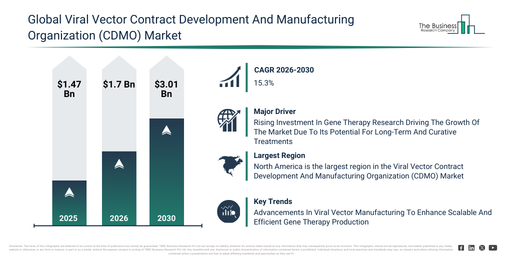
    The market for viral vector contract development and manufacturing organizations (CDMOs) has experienced swift expansion in recent years. Projected to rise from $1.47 billion in 2025 to $1.7 billion in 2026, this growth reflects a compound annual rate (CAGR) of 15.6%. Several factors drove this historical period’s expansion, including a growing clinical pipeline for gene therapies, early-stage outsourcing of viral vector production, the broadening of academic research partnerships, the constrained internal manufacturing capacities of biotechnology companies, and a rising number of regulatory approvals granted for viral vectors.

    The viral vector contract development and manufacturing organization (CDMO) market is anticipated to experience substantial expansion over the coming years. By 2030, its value is projected to reach $3.01 billion, reflecting a compound annual growth rate (CAGR) of 15.3%. This projected growth during the forecast period is driven by several factors, including the increased commercialization of gene and cell therapies, heightened investment in specialized viral vector facilities, a rising need for scalable manufacturing platforms, the broadening of global CDMO collaborations, and progress in high-yield vector production technologies. Key trends anticipated in the forecast period encompass the scaling up of capacity for large-scale viral vector production, a growing preference for single-use manufacturing technologies, an increased need for comprehensive end-to-end CDMO services, a stronger emphasis on cGMP-compliant facilities meeting regulatory standards, and the deeper incorporation of advanced analytics into vector manufacturing processes.

    Download A Free Sample Report For Comprehensive Market Insights:

    https://www.thebusinessresearchcompany.com/sample.aspx?id=29238&type=smp&utm_source=BlogsPR&utm_medium=Paid&utm_campaign=Jul_PR

    Viral Vector Contract Development And Manufacturing Organization (CDMO) Market Demand Drivers: What Is Fueling Industry Growth?

    The anticipated expansion of the viral vector contract development and manufacturing organization (CDMO) market is being driven by increasing financial commitments to gene therapy research. This area of study involves investigating methods for modifying or regulating genes within human cells to correct inherited disorders or fight a variety of diseases. The growing volume of investment in gene therapy research stems from its capacity to deliver durable or permanent cures for genetic conditions that were previously untreatable, which has attracted considerable interest from healthcare innovators and investors alike. Viral vector CDMOs play a crucial role in supporting gene therapy research by providing specialized expertise and state-of-the-art manufacturing infrastructure to produce high-quality viral vectors—essential tools for the secure and effective delivery of therapeutic genes. As an example, in July 2025, the Office for Life Sciences, a UK government agency, announced a government pledge of up to $800 million (£600 million) to create one of the world’s most sophisticated, secure, and AI-compatible health data platforms. This platform will integrate genomic, diagnostic, and clinical data at a population level, transforming NHS and broader healthcare information into a central hub for global research trials and AI investment. Consequently, the rising investment in gene therapy research is fueling the growth of the viral vector contract development and manufacturing organization (CDMO) market.

    Viral Vector Contract Development And Manufacturing Organization (CDMO) Market Segment Landscape: Which Areas Lead Market Development?

    The viral vector contract development and manufacturing organization (cdmo) market covered in this report is segmented –

    1) By Service Type: Process Development, Manufacturing, Analytical Testing, Fill-Finish, Other Service Types

    2) By Vector Type: Adenoviral Vectors, Lentiviral Vectors, Adeno-Associated Viral Vectors, Retroviral Vectors, Other Vector Types

    3) By Workflow: Upstream Manufacturing, Downstream Manufacturing

    4) By Application: Gene Therapy, Vaccines, Cell Therapy, Other Applications

    5) By End-User: Pharmaceutical And Biotechnology Companies, Academic And Research Institutes, Other End-Users

    Subsegments:

    1) By Process Development: Upstream Process Development, Downstream Process Development, Analytical Development, Process Characterization

    2) By Manufacturing: Clinical Manufacturing, Commercial Manufacturing, cGMP Manufacturing, Cell Bank Production, Fill-Finish Services

    3) By Analytical Testing: Release Testing, Stability Testing, Bioassays, Characterization Studies, Regulatory Compliance Testing

    4) By Fill-Finish: Aseptic Filling, Lyophilization, Final Packaging, Cold Chain Management, Labeling And Serialization

    5) By Other Service Types: Regulatory Support, Supply Chain Management, Technology Transfer, Clinical Trial Support, Cold Chain Logistics

    Viral Vector Contract Development And Manufacturing Organization (CDMO) Market Innovation Trends: Which Developments Are Transforming The Industry?

    Key industry players in the viral vector contract development and manufacturing organization (CDMO) market are concentrating on creating sophisticated offerings like AAV manufacturing solutions to enable scalable and reliable production. These AAV manufacturing solutions encompass methods and systems developed to generate safe and effective adeno-associated virus vectors for gene therapy efficiently. For example, in August 2025, ProBio, a U.S.-based CDMO, introduced cGMP Adeno-Associated Virus (AAV) manufacturing services at its state-of-the-art 128,000 sq. ft. facility in Hopewell, New Jersey. This growth is intended to address the rising demand for premium viral vector production, underscoring ProBio’s commitment to advancing innovative gene therapies. The Hopewell site is specifically designed to deliver comprehensive AAV manufacturing solutions that align with global regulatory and quality benchmarks. ProBio’s expanded capabilities now cover fully integrated services, including GMP plasmid DNA production, AAV vector manufacturing, and final drug product formulation with aseptic fill/finish, all consolidated in one U.S. location. Such integration enhances coordination, minimizes process transitions, and accelerates timelines throughout the drug development cycle.

    Viral Vector Contract Development And Manufacturing Organization (CDMO) Market Industry Leaders And Market Competition

    Major companies operating in the viral vector contract development and manufacturing organization (cdmo) market are Thermo Fisher Scientific Inc., Merck KGaA, Lonza Group AG, WuXi AppTec, Samsung Biologics Co. Ltd., FUJIFILM Biotechnologies, Oxford Biomedica Plc, Hillgene, Takara Bio Inc., SkyPharma Production SAS, GeneScript ProBio, Obio Technology Corp. Ltd., VectorBuilder, Charles River Laboratories Pvt. Ltd., Creative Biogene, Esco Aster Pte. Ltd., Genesail Biotech Co. Ltd., CEVEC Pharmaceuticals, Cell and Gene Therapy Catapult, CoJourney, Applied Biological Laboratories Inc.

    Access The Complete Viral Vector Contract Development And Manufacturing Organization (CDMO) Market Report:

    https://www.thebusinessresearchcompany.com/report/viral-vector-contract-development-and-manufacturing-organization-cdmo-global-market-report?utm_source=BlogsPR&utm_medium=Paid&utm_campaign=Jul_PR

    Viral Vector Contract Development And Manufacturing Organization (CDMO) Market Regional Outlook: Where Are The Largest Opportunities Located?

    North America was the largest region in the viral vector contract development and manufacturing organization (CDMO) market in 2025. Asia-Pacific is expected to be the fastest-growing region in the forecast period. The regions covered in the viral vector contract development and manufacturing organization (cdmo) market report are Asia-Pacific, South East Asia, Western Europe, Eastern Europe, North America, South America, Middle East, Africa.

    Get in touch with us:

    The Business Research Company: https://www.thebusinessresearchcompany.com/?utm_source=BlogsPR&utm_medium=Paid&utm_campaign=home_page_test

    Americas: +1 310-496-7795

    Asia: +44 7882 955267 & +91 8897263534

    Europe: +44 7882 955267

    Email us at: marketing@tbrc.info

    Follow us on:

    LinkedIn: https://in.linkedin.com/company/the-business-research-company

    YouTube: https://www.youtube.com/channel/UC24_fI0rV8cR5DxlCpgmyFQ

    Global Market Model: https://www.thebusinessresearchcompany.com/global-market-model
  • Viral Clearance Market Expected To Reach $2.05 Billion By 2030 As Growth Accelerates At 16.4% CAGR

    Viral Clearance Market Expected To Reach $2.05 Billion By 2030 As Growth Accelerates At 16.4% CAGR

    Enhanced with market attractiveness analysis, total addressable market evaluation, company benchmarking matrices, interactive Excel dashboards, expanded supply chain intelligence, emerging startup coverage, and detailed product insights, The Business Research Company’s 2026 market reports deliver more actionable and strategically valuable research.

    Viral Clearance Market Value Analysis: What Growth Is Expected Over The Forecast Period?

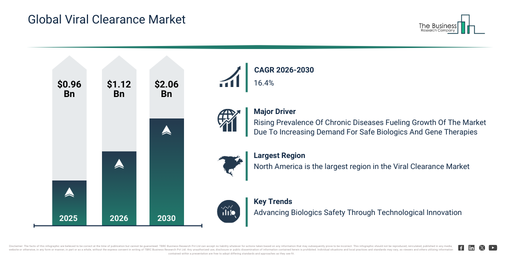
    The viral clearance market has experienced swift expansion over recent years. Between 2025 and 2026, its valuation is projected to rise from $0.96 billion to $1.12 billion, reflecting a compound annual growth rate (CAGR) of 16.7%. This historic growth was driven by factors such as the limited availability of viral clearance technologies, heightened concerns over viral contamination in biologics, reliance on traditional filtration approaches, increased regulatory oversight, and the broadening of pharmaceutical and biotechnology manufacturing pipelines.

    The market for viral clearance is projected to experience strong expansion in the coming years, reaching a value of $2.06 billion by 2030, with a compound annual growth rate (CAGR) of 16.4%. This upward trajectory is fueled by the development of next-generation viral inactivation techniques, a growing reliance on nanofiltration and membrane chromatography, increased production of biologics and gene therapies, the incorporation of automation into viral clearance processes, and heightened investment in the creation of viral detection assays. Key trends shaping the future include a shift toward more sophisticated viral detection and inactivation strategies, a heightened need for safe, virus-free vaccines and therapeutics, the growth of cell and gene therapy products that demand rigorous viral clearance, the adoption of high-efficiency filtration and nanofiltration systems, and a rise in outsourcing to contract research organizations for specialized viral clearance services.

    Download A Free Sample Report For Comprehensive Market Insights:

    https://www.thebusinessresearchcompany.com/sample.aspx?id=27444&type=smp&utm_source=BlogsPR&utm_medium=Paid&utm_campaign=Jul_PR

    Viral Clearance Market Growth Drivers: What Factors Are Accelerating Expansion?

    The anticipated increase in the viral clearance market is set to be fueled by the growing incidence of chronic diseases. These conditions are long-term medical issues that evolve over time and persist for months or years, frequently demanding ongoing treatment or supervision. Worldwide, the frequency of chronic diseases is climbing, and this is mainly attributed to aging populations, as advancements in healthcare and living standards allow people to live longer, thereby elevating the rate of age-linked ailments like cardiovascular diseases, diabetes, arthritis, and cancer. The process of viral clearance plays a vital role in creating biologics and gene therapies that are employed to address chronic diseases, safeguarding their safety and efficacy. As an example, in June 2023, the Institute for Health Metrics and Evaluation—a public health research organization based in the US—disclosed that over 500 million individuals across the globe were suffering from diabetes. This figure is predicted to surge past the 1.3 billion mark by 2050. Hence, the expansion of the viral clearance market is being propelled by the escalating prevalence of chronic diseases.

    Viral Clearance Market Segments: Where Are The Largest Growth Opportunities?

    The viral clearance market covered in this report is segmented –

    1) By Method: Viral Clearance Method, Viral Removal Method, Viral Inactivation Method, Viral Detection Method

    2) By Application: Vaccines And Therapeutics, Blood And Blood Products, Cellular And Gene Therapy Products, Tissue And Tissue Products, Other Applications

    3) By End-User: Pharmaceutical And Biotechnology Companies, Contract Research Organizations, Academic Research Institutes, Other End Users

    Subsegments:

    1) By Viral Clearance Method: Downstream Processing, Filtration, Chromatography, Precipitation, Nanofiltration

    2) By Viral Removal Method: Membrane Chromatography, Depth Filtration, Nanofiltration, Ultrafiltration, Protein A Affinity Chromatography

    3) By Viral Inactivation Method: Solvent Detergent Method, Low pH Treatment, Heat Treatment (Pasteurization), UV-C Irradiation, Caprylate Treatment

    4) By Viral Detection Method: PCR (Polymerase Chain Reaction), ELISA (Enzyme-Linked Immunosorbent Assay), Nucleic Acid Testing (NAT), Cell-Based Assays, Transmission Electron Microscopy (TEM)

    Viral Clearance Market Trends: What Is Shaping Future Industry Growth?

    Leading players in the viral clearance market are concentrating their efforts on creating next-generation virus removal filters, which represent a significant advancement in filtration technology designed to boost viral safety and streamline biopharmaceutical production. These enhanced filters are specialized devices engineered to effectively extract viruses from biopharmaceutical products, thereby guaranteeing product integrity, accelerating filtration processes, and facilitating greater output in drug manufacturing operations. In a notable example from October 2024, Asahi Kasei Medical Co., Ltd., a bioprocess and medical solutions firm headquartered in Japan, unveiled its new Planova FG1 virus-removal filter. This filter achieves approximately seven times higher flux compared to the Planova BioEX model, resulting in shortened filtration durations, diminished virus breakthrough possibilities, and consistent performance in protein and virus elimination without needing a prefilter. Additionally, the FG1 is engineered for compatibility with standard CIP/SIP procedures and was put into mass production initially in smaller sizes, with larger versions in development to accommodate scaling needs, offering biomanufacturers higher throughput and quicker cycle times.

    Viral Clearance Market Major Participants And Competitive Dynamics

    Major companies operating in the viral clearance market are Merck Group, Thermo Fisher Scientific Inc., Asahi Kasei Corporation, SGS SA, Eurofins Scientific Inc., Lonza Group AG, WuXi AppTec, Catalent Biologics, Charles River Laboratories, Nelson Labs, Pall Corporation, Sartorius AG, Creative Biolabs, Texcell SA, Vironova AB.

    Access The Complete Viral Clearance Market Report:

    https://www.thebusinessresearchcompany.com/report/viral-clearance-global-market-report?utm_source=BlogsPR&utm_medium=Paid&utm_campaign=Jul_PR

    Viral Clearance Market Geographic Landscape: Which Region Dominates Industry Growth?

    North America was the largest region in the viral clearance market in 2025. Asia-Pacific is expected to be the fastest-growing region in the forecast period. The regions covered in the viral clearance market report are Asia-Pacific, South East Asia, Western Europe, Eastern Europe, North America, South America, Middle East, Africa.

    Get in touch with us:

    The Business Research Company: https://www.thebusinessresearchcompany.com/?utm_source=BlogsPR&utm_medium=Paid&utm_campaign=home_page_test

    Americas: +1 310-496-7795

    Asia: +44 7882 955267 & +91 8897263534

    Europe: +44 7882 955267

    Email us at: marketing@tbrc.info

    Follow us on:

    LinkedIn: https://in.linkedin.com/company/the-business-research-company

    YouTube: https://www.youtube.com/channel/UC24_fI0rV8cR5DxlCpgmyFQ

    Global Market Model: https://www.thebusinessresearchcompany.com/global-market-model
  • Vinpocetine Market Set To Grow From $14.63 Billion In 2026 To $20.93 Billion By 2030 At A CAGR Of 9.4%

    Vinpocetine Market Set To Grow From $14.63 Billion In 2026 To $20.93 Billion By 2030 At A CAGR Of 9.4%

    Through market attractiveness analysis, total addressable market evaluation, company benchmarking matrices, interactive Excel dashboards, expanded supply chain intelligence, emerging startup coverage, and detailed product insights, The Business Research Company’s 2026 market reports provide more actionable and strategically valuable research.

    Vinpocetine Market Size Forecast: How Large Could The Market Become By 2030?

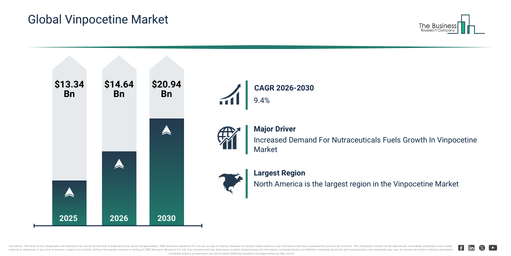
    The vinpocetine market has experienced significant expansion over recent years, with projections indicating an increase from $13.34 billion in 2025 to $14.64 billion in 2026, reflecting a compound annual growth rate (CAGR) of 9.7%. This historic growth has been fueled by a rising consumer focus on cognitive health, the availability of synthetic vincamine derivatives, broader adoption in both supplement and prescription applications, advances in neurological research, and a growing elderly demographic.

    The market for vinpocetine is anticipated to experience considerable expansion over the coming years. By 2030, its value is projected to reach $20.94 billion, achieving a compound annual growth rate (CAGR) of 9.4%. This projected growth during the forecast period is driven by several factors, including a higher demand for products aimed at promoting brain health, a broadening market for neuroprotective supplements, a growing focus on preventive neurological care, increased research into substances that enhance cerebral blood flow, and improved regulatory transparency within the supplement sector. Key trends shaping this period encompass a greater reliance on cognitive-enhancing supplements, a rising appetite for neuroprotective agents, wider use of both tablet and injectable forms of vinpocetine, an expansion of its applications in brain health products, and a heightened emphasis on therapies that support circulatory function.

    Download A Free Sample Report For Comprehensive Market Insights:

    https://www.thebusinessresearchcompany.com/sample.aspx?id=20689&type=smp&utm_source=BlogsPR&utm_medium=Paid&utm_campaign=Jul_PR

    Vinpocetine Market Growth Factors Supporting Long-Term Expansion

    The vinpocetine market is anticipated to expand due to the growing demand for nutraceuticals. A nutraceutical refers to a substance obtained from food sources that offers health advantages, such as disease prevention and treatment. This rising demand is fueled by heightened health consciousness, an aging population, and the increasing occurrence of chronic illnesses. As a cognitive enhancer, vinpocetine supports this trend by meeting the growing consumer interest in brain health and cognitive function products. For example, a survey conducted by the Council for Responsible Nutrition in October 2023, involving 3,192 U.S. adults aged 18 and over, revealed that 74% of American adults consumed dietary supplements, with 55% being regular users. Furthermore, 92% of these users considered supplements essential for health maintenance. Perceptions of safety and quality for sports nutrition supplements increased by 5% to 66%, and for weight management products, they rose by 4% to 56%. Consequently, the rising demand for nutraceuticals is fueling growth in the vinpocetine market.

    Vinpocetine Market Segment Analysis: What Are The Major Market Categories?

    The vinpocetine market covered in this report is segmented –

    1) By Type: Tablet, Injection

    2) By Distribution Channel: Retail Pharmacies, Hospital Pharmacies, Online Pharmacies

    3) By Application: Household, Hospital

    Subsegments:

    1) By Tablet: Standard Tablets, Sustained-Release Tablets, Chewable Tablets, Enteric-Coated Tablets

    2) By Injection: Intravenous (IV) Injection, Intramuscular Injection, Subcutaneous Injection, Pre-filled Syringes

    Vinpocetine Market Leading Companies Driving Competitive Growth

    Major companies operating in the vinpocetine market are Merck KGaA, Northeast Pharma, Sun Pharma, Gedeon Richter, Micro Labs, India Glycols, PUDE, Alchem International Private Ltd, Linnea SA, Olympian Labs Inc, Osmopharm, Hangzhou Longshine Bio-Tech Co. Ltd., SALVAVIDAS PHARMACEUTICAL PVT. LTD, Vital Laboratories Private Limited, Sarv Biolabs Pvt Ltd, Aspire Lifesciences Pvt Ltd, Taj Pharmaceuticals Limited, ZhiTong, Healthquest Vitamins

    Access The Complete Vinpocetine Market Report:

    https://www.thebusinessresearchcompany.com/report/vinpocetine-global-market-report?utm_source=BlogsPR&utm_medium=Paid&utm_campaign=Jul_PR

    Vinpocetine Market Largest Region: Which Geography Holds The Highest Market Share?

    North America was the largest region in the vinpocetine market in 2025. Asia-Pacific is expected to be the fastest-growing region in the forecast period. The regions covered in the vinpocetine market report are Asia-Pacific, South East Asia, Western Europe, Eastern Europe, North America, South America, Middle East, Africa.

    Get in touch with us:

    The Business Research Company: https://www.thebusinessresearchcompany.com/?utm_source=BlogsPR&utm_medium=Paid&utm_campaign=home_page_test

    Americas: +1 310-496-7795

    Asia: +44 7882 955267 & +91 8897263534

    Europe: +44 7882 955267

    Email us at: marketing@tbrc.info

    Follow us on:

    LinkedIn: https://in.linkedin.com/company/the-business-research-company

    YouTube: https://www.youtube.com/channel/UC24_fI0rV8cR5DxlCpgmyFQ

    Global Market Model: https://www.thebusinessresearchcompany.com/global-market-model
  • Vinca Alkaloid Active Pharmaceutical Ingredient (API) Market Opportunities Are Emerging Beyond Traditional Growth Areas

    Vinca Alkaloid Active Pharmaceutical Ingredient (API) Market Opportunities Are Emerging Beyond Traditional Growth Areas

    Delivering more actionable and strategically valuable research, The Business Research Company’s 2026 market reports feature market attractiveness analysis, total addressable market evaluation, company benchmarking matrices, interactive Excel dashboards, expanded supply chain intelligence, emerging startup coverage, and detailed product insights.

    Vinca Alkaloid Active Pharmaceutical Ingredient (API) Market Revenue Outlook: What CAGR Is Expected Through 2030?

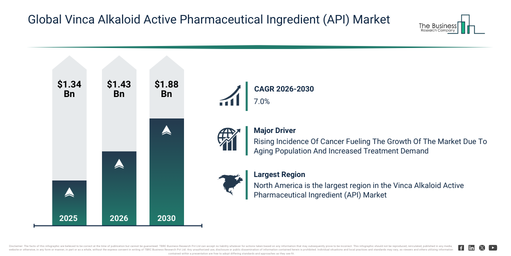
    The market for vinca alkaloid active pharmaceutical ingredients (APIs) has seen robust expansion in recent times. Projections indicate an increase from $1.34 billion in 2025 to $1.43 billion in 2026, reflecting a compound annual growth rate (CAGR) of 7.0%. This historical growth is driven by factors such as the rising global cancer burden, the prevalence of plant-derived oncology drugs, standard chemotherapy protocols, growth in API manufacturing, and increasing demand from hospital oncology departments.

    The market for vinca alkaloid active pharmaceutical ingredients (APIs) is anticipated to experience robust expansion over the coming years. By 2030, it is projected to reach $1.88 billion, reflecting a compound annual growth rate (CAGR) of 7.0%. Several factors are driving this forecasted growth, including the advancement of oncology drug pipelines, the proliferation of biosimilars, increased reliance on contract development and manufacturing organizations (CDMOs), rising demand for cost-effective cancer treatments, and greater regulatory harmonization. Key developments expected to shape this period encompass the sustained application of these APIs in chemotherapy protocols, a surge in outsourcing for oncology API production, a heightened need for high-purity injectable formulations, the broadening availability of generic cancer medications, and an intensified emphasis on manufacturing that meets regulatory standards.

    Download A Free Sample Report For Comprehensive Market Insights:

    https://www.thebusinessresearchcompany.com/sample.aspx?id=24423&type=smp&utm_source=BlogsPR&utm_medium=Paid&utm_campaign=Jul_PR

    Vinca Alkaloid Active Pharmaceutical Ingredient (API) Market Demand Drivers Creating New Revenue Opportunities

    The growing occurrence of cancer is anticipated to drive the expansion of the vinca alkaloid active pharmaceutical ingredient (API) market in the coming period. Cancer encompasses a range of diseases defined by the unregulated growth and dissemination of abnormal cells within the body. This increase in cancer cases stems from an aging population, since older individuals face a greater likelihood of developing cancer as a result of accumulated genetic alterations and declining immune function over time. By disrupting cell division, vinca alkaloid active pharmaceutical ingredients (APIs) assist in treating cancer, proving particularly effective against fast-growing tumors. These compounds improve chemotherapy protocols by targeting microtubules, thereby enhancing treatment results for cancer patients. For example, the World Health Organization (WHO), a Switzerland-based international public health body, reported in February 2024 that over 35 million new cancer cases are expected by 2050, marking a 77% rise compared to the estimated 20 million cases recorded globally in 2022. Consequently, the rising incidence of cancer is fueling growth in the vinca alkaloid active pharmaceutical ingredient (API) market.

    Growing healthcare expenditure is set to accelerate the expansion of the vinca alkaloid active pharmaceutical ingredient (API) market moving forward. Healthcare expenditure denotes the total funds allocated to medical services, treatments, facilities, research, and public health efforts aimed at preserving or enhancing health outcomes. This increasing expenditure is driven by the mounting burden of chronic illnesses like cancer, which necessitate prolonged and costly treatments and care. Investment in healthcare underpins the production of vinca alkaloid active pharmaceutical ingredients (APIs) by financing research and development, thereby securing access to essential cancer therapies. It fosters innovation in drug formulation, leading to better therapeutic results and supporting progress in personalized medicine. As an illustration, the Centers for Medicare & Medicaid Services (CMS), a US-based federal agency, reported in December 2024 that national health expenditures (NHE) rose by 7.5% to $4.9 trillion in 2023, representing 17.6% of gross domestic product (GDP). Furthermore, from 2023 to 2032, average national health expenditures (NHE) are forecasted to increase at an average yearly rate of 5.6%, boosting the health spending share of GDP from 17.3% in 2022 to 19.7% in 2032. Thus, rising healthcare expenditure is propelling growth in the vinca alkaloid active pharmaceutical ingredient (API) market.

    An expanding aging population is expected to stimulate growth in the vinca alkaloid active pharmaceutical ingredient (API) market going forward. The aging population describes the growing number and share of individuals aged 65 years and older within a country’s demographic profile. This demographic shift is occurring due to extended life expectancy and decreased birth rates, collectively raising the proportion of older adults relative to younger age groups. A rising aging population fuels higher demand for cancer therapies, which in turn boosts the necessity for vinca alkaloid active pharmaceutical ingredients (APIs), as these compounds remain crucial chemotherapeutic agents extensively employed in managing age-related cancers. For instance, in July 2024, the UK Parliament’s House of Commons Library, a UK-based government body, noted that in 2022, there were 12.7 million people aged 65 or older in the UK, equating to 19% of the total population. This figure is predicted to climb to 22.1 million by 2072, accounting for 27% of the population. Therefore, the rising aging population is driving growth in the vinca alkaloid active pharmaceutical ingredient (API) market.

    Vinca Alkaloid Active Pharmaceutical Ingredient (API) Market Segment Breakdown: Which Categories Generate The Most Revenue?

    The vinca alkaloid active pharmaceutical ingredient (api) market covered in this report is segmented –

    1) By Type Of Vinca Alkaloid: Vincristine, Vinblastine, Vindesine, Vinorelbine, Other Types Of Vinca Alkaloid

    2) By Formulation Type: Sterile Formulations, Non-Sterile Formulations

    3) By Application: Lung Cancer, Breast Cancer, Lymphoma, Other Applications

    4) By End User: Pharmaceutical Companies, Research Institutions, Contract Development And Manufacturing Organizations (CDMOs), Oncology Clinics

    Vinca Alkaloid Active Pharmaceutical Ingredient (API) Market Key Players And Strategic Industry Positioning

    Major companies operating in the vinca alkaloid active pharmaceutical ingredient (api) market are Zhejiang Hisun Pharmaceutical Co. Ltd., Qilu Pharmaceutical Co. Ltd., Guangzhou Hanfang Pharmaceutical Co. Ltd., Hubei Honch Pharmaceutical Co. Ltd., Hainan Periwinkle Pharmaceutical Co. Ltd., Hetero Drugs Limited, Aurobindo Pharma Limited, Laurus Labs Limited, Cipla Limited, Dr. Reddy’s Laboratories Limited, MSN Laboratories Private Limited, Sun Pharmaceutical Industries Limited, Cadila Pharmaceuticals Limited, Lupin Limited, Alkem Laboratories Limited, Emcure Pharmaceuticals Limited, Intas Pharmaceuticals Limited, Glenmark Pharmaceuticals Limited, Zydus Lifesciences Limited, Alembic Pharmaceuticals Limited, Apotex Inc., Hikma Pharmaceuticals PLC, Fresenius Kabi AG, Pfizer CentreOne, Teva Active Pharmaceutical Ingredients Ltd.

    Access The Complete Vinca Alkaloid Active Pharmaceutical Ingredient (API) Market Report:

    https://www.thebusinessresearchcompany.com/report/vinca-alkaloid-active-pharmaceutical-ingredient-api-global-market-report?utm_source=BlogsPR&utm_medium=Paid&utm_campaign=Jul_PR

    Vinca Alkaloid Active Pharmaceutical Ingredient (API) Market Regional Analysis: Which Region Leads By Revenue?

    North America was the largest region in the vinca alkaloid active pharmaceutical ingredient (API) market in 2025. Asia-Pacific is expected to be the fastest-growing region in the forecast period. The regions covered in the vinca alkaloid active pharmaceutical ingredient (api) market report are Asia-Pacific, South East Asia, Western Europe, Eastern Europe, North America, South America, Middle East, Africa.

    Get in touch with us:

    The Business Research Company: https://www.thebusinessresearchcompany.com/?utm_source=BlogsPR&utm_medium=Paid&utm_campaign=home_page_test

    Americas: +1 310-496-7795

    Asia: +44 7882 955267 & +91 8897263534

    Europe: +44 7882 955267

    Email us at: marketing@tbrc.info

    Follow us on:

    LinkedIn: https://in.linkedin.com/company/the-business-research-company

    YouTube: https://www.youtube.com/channel/UC24_fI0rV8cR5DxlCpgmyFQ

    Global Market Model: https://www.thebusinessresearchcompany.com/global-market-model

  • Vesicular Monoamine Transporter 2 (VMAT2) Inhibitor Market Expansion Is Opening New Pathways For Strategic Investment

    Vesicular Monoamine Transporter 2 (VMAT2) Inhibitor Market Expansion Is Opening New Pathways For Strategic Investment

    Enhanced with market attractiveness analysis, total addressable market evaluation, company benchmarking matrices, interactive Excel dashboards, expanded supply chain intelligence, emerging startup coverage, and detailed product insights, The Business Research Company’s 2026 market reports deliver more actionable and strategically valuable research.

    Vesicular Monoamine Transporter 2 (VMAT2) Inhibitor Market Growth Analysis: How Will Revenue Expand During The Forecast Period?

    Over the past few years, the vesicular monoamine transporter 2 (vmat2) inhibitor market has expanded at a brisk pace. Projections indicate an increase from $1.25 billion in 2025 to $1.37 billion in 2026, which equates to a compound annual growth rate (CAGR) of 10.2%. The reasons behind the earlier growth include the greenlighting of tetrabenazine, a rise in antipsychotic medication use, an uptick in movement disorder diagnoses, neurology care delivered via hospitals, and a lack of numerous alternative therapies.

    The vesicular monoamine transporter 2 (VMAT2) inhibitor market is anticipated to experience significant growth over the coming years, reaching a valuation of $2.01 billion by 2030, with a compound annual growth rate (CAGR) of 9.9%. This expansion during the forecast period is driven by factors such as the rising incidence of tardive dyskinesia, the broadening application of deutetrabenazine, increased awareness of neurological disorders, the expansion of specialized neurology clinics, and a greater preference for oral medications. Key trends shaping this period include the growing utilization of targeted neurotransmitter modulation, an increasing emphasis on treating tardive dyskinesia, the development of oral neurological therapies, heightened focus on managing movement disorders, and the broader adoption of long-term neurological drug therapies.

    Download A Free Sample Report For Comprehensive Market Insights:

    https://www.thebusinessresearchcompany.com/sample.aspx?id=21317&type=smp&utm_source=BlogsPR&utm_medium=Paid&utm_campaign=Jul_PR

    Vesicular Monoamine Transporter 2 (VMAT2) Inhibitor Market Expansion Supported By Key Demand Factors

    The rising incidence of Parkinson’s disease is anticipated to drive forward the vesicular monoamine transporter 2 (VMAT2) inhibitor market. Parkinson’s disease is defined as a progressive neurological condition characterized by movement impairments resulting from the depletion of dopamine-generating neurons in the brain. This increase in Parkinson’s cases is largely attributed to an aging population, enhanced diagnostic capabilities, exposure to environmental toxins, hereditary factors, and heightened public awareness of the disorder. VMAT2 inhibitors are utilized to alleviate Parkinson’s symptoms by regulating dopamine release, thereby reducing tremors and dyskinesia. As an example, in October 2025, Parkinson’s UK, a research and support charity based in the United Kingdom, projected that by 2030, the number of Parkinson’s cases in the UK would reach 173,000, with approximately 28,000 individuals expected to be diagnosed in 2025, equating to a new diagnosis every 20 minutes as the population grows and ages. Consequently, the growing prevalence of Parkinson’s disease is fueling expansion in the VMAT2 inhibitor market.

    Vesicular Monoamine Transporter 2 (VMAT2) Inhibitor Market Segmentation: How Is The Market Structured Across Key Categories?

    The vesicular monoamine transporter 2 (vmat2) inhibitor market covered in this report is segmented –

    1) By Drugs: Tetrabenazine, Deutetrabenazine, Valbenazine, Other Drugs

    2) By Route Of Administration: Oral, Other Administrations

    3) By Distribution Channel: Hospital Pharmacy, Online Pharmacy, Retail Pharmacy

    4) By Application: Huntington’s Disease, Tardive Dyskinesia, Other Applications

    5) By End User: Hospitals, Homecare, Specialty Clinics, Other End Users

    Subsegments:

    1) By Tetrabenazine: Huntington’s Disease Treatment, Tardive Dyskinesia Management, Tourette Syndrome Treatment

    2) By Deutetrabenazine: Huntington’s Disease Chorea, Tardive Dyskinesia Treatment, Off-Label Movement Disorders

    3) By Valbenazine: Tardive Dyskinesia Treatment, Tourette Syndrome Research, Other Hyperkinetic Movement Disorders

    4) By Other Drugs: Investigational VMAT2 Inhibitors, Emerging Therapies For Movement Disorders, Off-Label Use In Neurological Conditions

    Vesicular Monoamine Transporter 2 (VMAT2) Inhibitor Market Growth Trends Influencing Competitive Dynamics

    Key players in the vesicular monoamine transporter 2 (VMAT2) inhibitors market are concentrating on creating novel formulations, specifically capsules, to boost patient adherence, enhance drug stability, and maximize therapeutic effectiveness. Capsules, which are solid dosage forms encased in either gelatin or an HPMC shell, assist VMAT2 inhibitors by improving product stability, enabling accurate dosage, and increasing patient compliance. As an example, in July 2024, Neurocrine Biosciences Inc., a US-based biopharmaceutical firm, introduced Ingrezza Sprinkle (valbenazine) capsules, a fresh formulation of the VMAT2 inhibitor Ingrezza, intended to simplify administration for adults with tardive dyskinesia and chorea linked to Huntington’s disease who have trouble swallowing or experience dysphagia. This product, Ingrezza Sprinkle, maintains the same effective dosing options as the original Ingrezza and can be taken either by sprinkling the capsule contents onto soft food or by swallowing the capsule whole.

    Vesicular Monoamine Transporter 2 (VMAT2) Inhibitor Market Competitive Landscape And Leading Companies

    Major companies operating in the vesicular monoamine transporter 2 (vmat2) inhibitor market are Neurocrine Biosciences Inc., H. Lundbeck A/S, Teva Pharmaceutical Industries Ltd., Sun Pharmaceutical Industries Limited, Bausch Health Companies Inc., Luye Pharma Group Ltd., Mitsubishi Tanabe Pharma Corporation, Sumitomo Dainippon Pharma, Dr. Reddy’s Laboratories Ltd., Hikma Pharmaceuticals plc, Lupin Limited, Otsuka Pharmaceutical Co. Ltd., Astellas Pharma Inc., Eli Lilly and Company, Merck KGaA, Johnson & Johnson, Pfizer Inc., AbbVie Inc., Takeda Pharmaceutical Company Limited, Biogen Inc

    Access The Complete Vesicular Monoamine Transporter 2 (VMAT2) Inhibitor Market Report:

    https://www.thebusinessresearchcompany.com/report/vesicular-monoamine-transporter-2-vmat2-inhibitor-global-market-report?utm_source=BlogsPR&utm_medium=Paid&utm_campaign=Jul_PR

    Vesicular Monoamine Transporter 2 (VMAT2) Inhibitor Market Geographic Distribution And Regional Opportunities

    North America was the largest region in the vesicular monoamine transporter 2 (VMAT2) inhibitor market in 2025. The regions covered in the vesicular monoamine transporter 2 (vmat2) inhibitor market report are Asia-Pacific, South East Asia, Western Europe, Eastern Europe, North America, South America, Middle East, Africa.

    Get in touch with us:

    The Business Research Company: https://www.thebusinessresearchcompany.com/?utm_source=BlogsPR&utm_medium=Paid&utm_campaign=home_page_test

    Americas: +1 310-496-7795

    Asia: +44 7882 955267 & +91 8897263534

    Europe: +44 7882 955267

    Email us at: marketing@tbrc.info

    Follow us on:

    LinkedIn: https://in.linkedin.com/company/the-business-research-company

    YouTube: https://www.youtube.com/channel/UC24_fI0rV8cR5DxlCpgmyFQ

    Global Market Model: https://www.thebusinessresearchcompany.com/global-market-model