Month: July 2026

  • Cardiovascular Microcatheter  Market Expansion Is Reshaping Competitive Dynamics Across The Industry

    Cardiovascular Microcatheter Market Expansion Is Reshaping Competitive Dynamics Across The Industry

    Through market attractiveness analysis, total addressable market evaluation, company benchmarking matrices, interactive Excel dashboards, expanded supply chain intelligence, emerging startup coverage, and detailed product insights, The Business Research Company’s 2026 market reports provide more actionable and strategically valuable research.

    Cardiovascular Microcatheter Market Size, Value And Growth Trends Through 2030

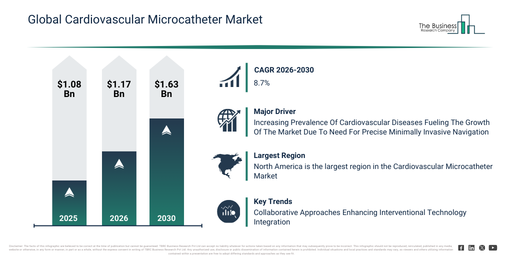
    The cardiovascular microcatheter market size has experienced robust growth in recent years. This market is projected to expand from $1.08 billion in 2025 to $1.17 billion in 2026, demonstrating a compound annual growth rate (CAGR) of 8.5%. The historical growth of the market can be attributed to the rising prevalence of cardiovascular diseases, the expansion of minimally invasive interventional procedures, advancements in catheter material engineering, the growing adoption of catheter-based diagnostics, and the proliferation of cardiac catheterization laboratories.

    The cardiovascular microcatheter market size is anticipated to undergo substantial growth over the next few years. It is projected to expand to $1.63 billion by 2030, demonstrating a compound annual growth rate (CAGR) of 8.7%. This expansion during the forecast period is fueled by the escalating demand for intricate endovascular interventions, an increasing aging population experiencing vascular disorders, a rise in neurovascular procedure volumes, continuous innovation in microcatheter design, and the broader acceptance of minimally invasive cardiology treatments. Significant trends during the forecast period encompass the growing adoption of steerable and braided microcatheters, a surging demand for neurovascular and complex coronary procedures, the expanding utilization of balloon-assisted and infusion microcatheters, the development of guidewire-compatible precision devices, and an intensified focus on trackability and torque control.

    Download A Free Sample Report For Comprehensive Market Insights:

    https://www.thebusinessresearchcompany.com/sample.aspx?id=33055&type=smp&utm_source=Blogs&utm_medium=Paid&utm_campaign=Jul_PR

    #Cardiovascular Microcatheter Market Growth Factors: Which Forces Are Supporting Market Expansion?

    The escalating occurrence of cardiovascular diseases is projected to drive the expansion of the cardiovascular microcatheter market in the future. These conditions, collectively known as CVDs, encompass various heart and blood vessel disorders such as heart attacks, strokes, and high blood pressure. The heightened incidence of CVDs is largely attributable to increasingly inactive lifestyles linked to urban living, fostering obesity, hypertension, and metabolic imbalances. Cardiovascular microcatheters play a crucial role in treating these diseases by facilitating precise maneuvering through small, intricate blood vessels to accurately deliver guidewires, contrast agents, or therapeutic instruments to the intended lesion while minimizing damage. As an illustration, in January 2024, the American Heart Association, a US-based non-profit entity, reported an increase in the age-adjusted death rate from cardiovascular disease to 233.3 per 100,000 in 2024, marking a 4.0% rise from 224.4 per 100,000 recorded in 2023. Consequently, the growing occurrence of cardiovascular disease is stimulating expansion within the cardiovascular microcatheter market.

    Cardiovascular Microcatheter Market Segment Analysis Highlighting Growth Areas

    The cardiovascular microcatheter market covered in this report is segmented –

    1) By Product Type: Guiding Catheters; Diagnostic Catheters; Therapeutic Catheters; Balloon Catheters; Ablation Catheters

    2) By Material Type: Polyurethane; Polyvinyl Chloride (PVC); Silicone; Other Specialty Polymers

    3) By Application: Coronary Intervention; Peripheral Intervention; Neurovascular Intervention; Pediatric Cardiology Applications

    4) By End-User: Hospitals; Cardiac Catheterization Labs; Ambulatory Surgical Centers; Research; Academic Institutions

    Subsegments:

    1) By Guiding Catheters: Judkins Left Guiding Catheters; Judkins Right Guiding Catheters; Amplatz Left Guiding Catheters; Amplatz Right Guiding Catheters; Multipurpose Guiding Catheters

    2) By Diagnostic Catheters: Coronary Angiography Catheters; Left Heart Diagnostic Catheters; Right Heart Diagnostic Catheters; Pigtail Diagnostic Catheters; Multipurpose Diagnostic Catheters

    3) By Therapeutic Catheters: Drug Delivery Catheters; Thrombectomy Catheters; Embolic Protection Catheters; Aspiration Catheters; Infusion Catheters

    4) By Balloon Catheters: Percutaneous Transluminal Coronary Angioplasty Balloon Catheters; Cutting Balloon Catheters; Scoring Balloon Catheters; Drug Coated Balloon Catheters; High Pressure Balloon Catheters

    5) By Ablation Catheters: Radiofrequency Ablation Catheters; Cryoablation Catheters; Laser Ablation Catheters; Microwave Ablation Catheters; Ultrasound Ablation Catheters

    Cardiovascular Microcatheter Market Industry Trends: What Changes Are Reshaping Demand?

    Leading companies in the cardiovascular microcatheter market are adopting a strategic partnership approach to improve technology integration and expand their market reach. A strategic partnership typically refers to a collaborative relationship between two or more organizations where they combine resources, expertise, and efforts to achieve common goals or objectives. For instance, in February 2024, BIOTRONIK, a Germany-based medical technology company, introduced the Micro Rx catheter, a rapid exchange microcatheter designed to enhance guidewire support during percutaneous coronary interventions (PCI). Exclusively distributed by BIOTRONIK and manufactured by Interventional Medical Device Solutions (IMDS), this device expands BIOTRONIK’s U.S. portfolio of IMDS-developed products, which also includes the NHancer Rx, TrapIT, and ReCross catheters. The Micro Rx catheter incorporates a reinforced distal shaft with a core wire positioned between dual braided layers to optimize pushability and support, alongside a tapered tip featuring an ultra-small leading edge to facilitate high penetration capability. It also includes a proximal-end-stop design that enables smooth integration with guide extension catheters to provide additional procedural support.

    Cardiovascular Microcatheter Market Leading Companies: Who Holds Significant Market Presence?

    Major companies operating in the cardiovascular microcatheter market are Medtronic Plc, Stryker Corporation, Becton Dickinson and Company (BD), Boston Scientific Corporation, Terumo Corporation, Teleflex Incorporated, Cook Medical LLC, Integer Holdings Corporation, Merit Medical Systems Inc., Lepu Medical Technology Co. Ltd., Asahi Intecc Co. Ltd., Baylis Medical Company Inc., ACIST Medical Systems Inc., Acandis GmbH, BrosMed Medical Co. Ltd., Relisys Medical Devices Limited, Sahajanand Medical Technologies Ltd. (SMT), Reflow Medical Inc., Acrostak AG, and ShanghAI Kindly Medical Instruments Co. Ltd.

    Access The Complete Cardiovascular Microcatheter Market Report:

    https://www.thebusinessresearchcompany.com/report/cardiovascular-microcatheter-market-report?utm_source=Blogs&utm_medium=Paid&utm_campaign=Jul_PR

    Cardiovascular Microcatheter Market Global Footprint: Which Region Holds Market Leadership?

    North America was the largest region in the cardiovascular microcatheter market in 2025. Asia-Pacific is expected to be the fastest-growing region in the forecast period. The regions covered in the cardiovascular microcatheter market report are Asia-Pacific, South East Asia, Western Europe, Eastern Europe, North America, South America, Middle East, Africa.

    Get in touch with us:

    The Business Research Company: https://www.thebusinessresearchcompany.com/

    Americas: +1 310-496-7795

    Asia: +44 7882 955267 & +91 8897263534

    Europe: +44 7882 955267

    Email us at: marketing@tbrc.info

    Follow us on:

    LinkedIn: https://in.linkedin.com/company/the-business-research-company

    YouTube: https://www.youtube.com/channel/UC24_fI0rV8cR5DxlCpgmyFQ

    Global Market Model: https://www.thebusinessresearchcompany.com/global-market-model
  • Cardiovascular Genetic Testing  Market Forecast Reveals Where Future Industry Value Will Be Created

    Cardiovascular Genetic Testing Market Forecast Reveals Where Future Industry Value Will Be Created

    Delivering more actionable and strategically valuable research, The Business Research Company’s 2026 market reports feature market attractiveness analysis, total addressable market evaluation, company benchmarking matrices, interactive Excel dashboards, expanded supply chain intelligence, emerging startup coverage, and detailed product insights.

    Cardiovascular Genetic Testing Market CAGR Analysis And Future Market Development

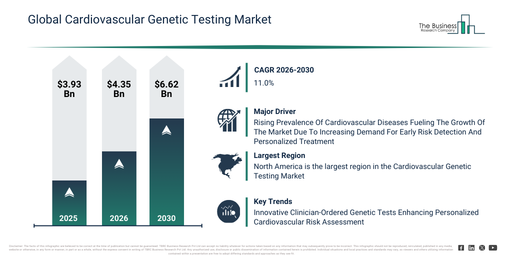
    The cardiovascular genetic testing market has seen rapid expansion in recent years. Its size is expected to increase from $3.93 billion in 2025 to $4.35 billion in 2026, achieving a compound annual growth rate (CAGR) of 10.8%. The historical growth of this market can be attributed to several factors, including a rise in awareness regarding inherited cardiovascular disorders, the development of molecular diagnostic capabilities, a reduction in the costs associated with genetic sequencing, an increase in the adoption of genetic counseling services, and enhanced research into cardiovascular genomics.

    The cardiovascular genetic testing market is projected for substantial expansion in the coming years, reaching a valuation of $6.62 billion by 2030, driven by a compound annual growth rate (CAGR) of 11.0%. This anticipated growth during the forecast period stems from factors such as the escalating demand for precision medicine, the growing embrace of population-based genetic screening, the broadening scope of AI-driven variant interpretation, the deeper integration of genomics into clinical decision-making, and a heightened emphasis on preventive cardiovascular healthcare. Key trends expected over this period encompass a greater uptake of predictive genetic risk assessment, increased utilization of multigene panel testing, the advancing integration of bioinformatics and AI analytics, the widening application of pharmacogenomic testing, and a stronger commitment to personalized cardiovascular care.

    Download A Free Sample Report For Comprehensive Market Insights:

    https://www.thebusinessresearchcompany.com/sample.aspx?id=33054&type=smp&utm_source=Blogs&utm_medium=Paid&utm_campaign=Jul_PR

    Cardiovascular Genetic Testing Market Demand Drivers: What Is Fueling Industry Growth?

    The rising occurrence of cardiovascular diseases is projected to drive the expansion of the cardiovascular genetic testing market moving forward. Cardiovascular diseases, or CVDs, refer to a collection of conditions impacting the heart and blood vessels, including ailments like heart attacks, strokes, and high blood pressure. The growing prevalence of these conditions is mainly due to an increase in sedentary lifestyles connected with urbanization, which contribute to obesity, hypertension, and metabolic disorders. The increasing incidence of cardiovascular diseases fuels the demand for cardiovascular genetic testing, as early detection of genetic risks allows for personalized prevention and treatment strategies to diminish the chance of severe heart complications. For instance, in January 2024, the American Heart Association, a US-based non-profit organization, stated that the age-adjusted death rate from cardiovascular disease rose to 233.3 per 100,000 in 2024, marking a 4.0% increase from 224.4 per 100,000 in 2023. Consequently, the escalating prevalence of cardiovascular disease is propelling the growth of the cardiovascular genetic testing market.

    Cardiovascular Genetic Testing Market Segment Performance And Strategic Opportunities

    The cardiovascular genetic testing market covered in this report is segmented –

    1) By Testing Type: Predictive Testing; Carrier Testing; Prenatal And Newborn Testing; Diagnostic Testing; Pharmacogenomic Testing; Other Testing Types

    2) By Disease: Inherited Cardiomyopathies; Hypertrophic Cardiomyopathy (HCM); Dilated Cardiomyopathy (DCM); Arrhythmia; Aortopathies; Other Diseases

    3) By Technology: Cytogenetic Testing; Biochemical Testing; Molecular Testing

    4) By Application: Chromosome Analysis; Genetic Disease Diagnosis; Cardiovascular Disease Diagnosis; Other Applications

    5) By End User: Hospitals And Clinics; Diagnostic Laboratories; Research Institutions; Genetic Counseling Centers; Pharmaceutical Companies; Direct-To-Consumer Testing

    Subsegments:

    1) By Predictive Testing: Presymptomatic Risk Assessment; Familial Variant Screening; Polygenic Risk Evaluation; Late Onset Disease Prediction; Susceptibility Gene Testing

    2) By Carrier Testing: Autosomal Recessive Carrier Screening; Linked Carrier Screening; Expanded Carrier Screening Panels; Single Gene Carrier Screening; Family History Based Carrier Testing

    3) By Prenatal And Newborn Testing: Non Invasive Prenatal Genetic Testing; Invasive Prenatal Diagnostic Testing; Newborn Metabolic Screening; Congenital Heart Disease Genetic Screening; Neonatal Gene Panel Testing

    4) By Diagnostic Testing: Single Gene Diagnostic Testing; Multigene Panel Diagnostic Testing; Whole Exome Diagnostic Testing; Whole Genome Diagnostic Testing; Variant Confirmation Testing

    5) By Pharmacogenomic Testing: Drug Response Gene Testing; Adverse Drug Reaction Risk Testing; Dose Optimization Genetic Testing; Anticoagulant Response Testing; Cardiovascular Drug Metabolism Testing

    6) By Other Testing Types: Cascade Family Testing; Population Based Genetic Screening; Research Use Genetic Testing; Confirmatory Follow Up Testing; Clinical Trial Genetic Testing

    Cardiovascular Genetic Testing Market Innovation Trends: Which Developments Are Transforming The Industry?

    Major companies within the cardiovascular genetic testing market are prioritizing the development of innovative solutions, such as tests initiated by clinicians. These solutions aim to guarantee the medical necessity of tests and customize them to a patient’s specific health profile, thereby decreasing unnecessary testing and associated costs. A clinician-ordered test is defined as a medical examination or diagnostic procedure requested by a healthcare professional to assess, monitor, or guide the management of an individual’s health condition. For example, in September 2025, Mass General Brigham, a US-based not-for-profit integrated academic healthcare system, in partnership with Broad Clinical Labs, a US-based genomic data generation laboratory, and Mass General Brigham Laboratory for Molecular Medicine, a US-based molecular diagnostic laboratory, introduced a genetic test designed to evaluate inherited risk for eight cardiovascular conditions. This clinician-ordered test is provided on a self-pay basis and assesses genetic predisposition to the eight specified conditions: atrial fibrillation, coronary artery disease, type 2 diabetes, elevated lipoprotein(a), hypercholesterolemia, hypertension, thoracic aortic aneurysm, and venous thromboembolism. Its creation leveraged genotype and clinical data from 236,393 participants in the NIH’s All of Us Research Program. Publicly available polygenic risk scores for each condition were integrated utilizing PRSmix, an elastic-net modeling approach that combines multiple component scores into a single, comprehensive risk score per disease. High-resolution genetic data is obtained through a clinical blended genome-exome assay at Broad Clinical Labs, with the CLIA-certified Mass General Brigham Laboratory for Molecular Medicine then interpreting the results and generating accessible reports for patients.

    Cardiovascular Genetic Testing Market Key Players: Which Companies Shape Industry Competition?

    Major companies operating in the cardiovascular genetic testing market are Labcorp Holdings Inc., Quest Diagnostics Inc., ICON plc, Illumina Inc., Apollo Hospitals, OPKO Health Inc., Revvity Inc., ARUP Laboratories Inc., Mayo Clinic Laboratories, Fulgent Genetics Inc., MedGenome Inc., Genome Medical, PreventionGenetics, Eurofins Genomics LLC, Blueprint Genetics Inc., MapmyGenome, GENinCode, Allelica Srl, Rocket Pharma Inc., and Health in Code SL.

    Access The Complete Cardiovascular Genetic Testing Market Report:

    https://www.thebusinessresearchcompany.com/report/cardiovascular-genetic-testing-market-report?utm_source=Blogs&utm_medium=Paid&utm_campaign=Jul_PR

    Cardiovascular Genetic Testing Market Regional Distribution: Which Areas Drive Market Expansion?

    North America was the largest region in the cardiovascular genetic testing market in 2025. Asia-Pacific is expected to be the fastest-growing region in the forecast period. The regions covered in the cardiovascular genetic testing market report are Asia-Pacific, South East Asia, Western Europe, Eastern Europe, North America, South America, Middle East, Africa.

    Get in touch with us:

    The Business Research Company: https://www.thebusinessresearchcompany.com/

    Americas: +1 310-496-7795

    Asia: +44 7882 955267 & +91 8897263534

    Europe: +44 7882 955267

    Email us at: marketing@tbrc.info

    Follow us on:

    LinkedIn: https://in.linkedin.com/company/the-business-research-company

    YouTube: https://www.youtube.com/channel/UC24_fI0rV8cR5DxlCpgmyFQ

    Global Market Model: https://www.thebusinessresearchcompany.com/global-market-model
  • Cardiovascular Calcification  Market Growth Through 2030 Creates New Strategic Opportunities

    Cardiovascular Calcification Market Growth Through 2030 Creates New Strategic Opportunities

    Enhanced with market attractiveness analysis, total addressable market evaluation, company benchmarking matrices, interactive Excel dashboards, expanded supply chain intelligence, emerging startup coverage, and detailed product insights, The Business Research Company’s 2026 market reports deliver more actionable and strategically valuable research.

    Cardiovascular Calcification Market Expansion From $2.05 Billion In 2026 To $2.78 Billion In 2030

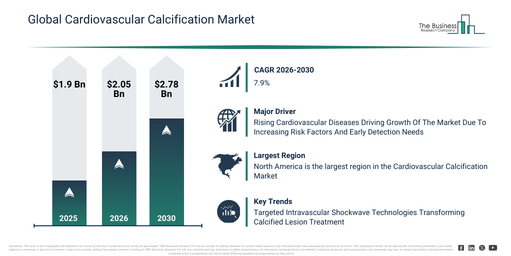
    The cardiovascular calcification market has experienced robust expansion in recent years. This market is projected to grow from $1.9 billion in 2025 to $2.05 billion in 2026, at a compound annual growth rate (CAGR) of 7.7%. Historically, its growth has been fueled by an aging population, the rising prevalence of cardiovascular diseases, the development of diagnostic imaging infrastructure, increased adoption of CT and MRI systems, and greater awareness of vascular calcification risks.

    The cardiovascular calcification market size is anticipated to experience substantial expansion in the coming years. It is projected to reach a valuation of $2.78 billion by 2030, exhibiting a compound annual growth rate (CAGR) of 7.9%. This projected growth during the forecast period is driven by several factors, including the escalating need for precise cardiovascular diagnostic tools, the increasing implementation of AI-supported imaging analysis, the broadening availability of minimally invasive diagnostic methods, rising financial commitments to preventive cardiology, and a heightened emphasis on early intervention approaches. Key trends characterizing this period encompass the wider embrace of sophisticated cardiovascular imaging techniques, the growing application of calcium scoring and risk assessment instruments, the expanding incorporation of artificial intelligence into diagnostic imaging, the spread of catheter-based diagnostic innovations, and a stronger emphasis on identifying diseases at early stages.

    Download A Free Sample Report For Comprehensive Market Insights:

    https://www.thebusinessresearchcompany.com/sample.aspx?id=33053&type=smp&utm_source=Blogs&utm_medium=Paid&utm_campaign=Jul_PR

    Cardiovascular Calcification Market Growth Drivers: What Factors Are Accelerating Expansion?

    The increasing incidence of cardiovascular diseases is projected to stimulate the growth of the cardiovascular calcification market going forward. These conditions involve impairments to the heart and blood vessels, resulting in issues like heart disease, stroke, and elevated blood pressure. The rise in cardiovascular diseases is fueled by sedentary lifestyles and unhealthy dietary practices, which elevate risks such as hypertension, obesity, and arterial damage. Cardiovascular calcification contributes to addressing cardiovascular diseases by serving as an indicator of atherosclerosis and plaque buildup, thereby allowing for the early identification of heart and vessel damage and directing preventive or therapeutic interventions. As an illustration, in August 2025, the National Institutes of Health, a US-based government agency, predicted that from 2025 to 2050, cardiovascular prevalence is expected to climb by 90%, mortality by 73%, and DALYs by 55%, with deaths increasing from 20.5 million to 35.6 million. Consequently, the escalating number of cardiovascular diseases is propelling the expansion of the cardiovascular calcification market.

    #Cardiovascular Calcification Market Segment Landscape And Growth Potential

    The cardiovascular calcification market covered in this report is segmented –

    1) By Product Type: Imaging Systems; Atherectomy Devices; Stents; Transcatheter Valves

    2) By Diagnosis: Computed Tomography (CT) Calcium Scoring; Echocardiography; Intravascular Ultrasound; Biomarkers

    3) By Application: Coronary Artery Disease; Aortic Valve Stenosis; Peripheral Artery Disease; Chronic Kidney Disease (CKD) Related Vascular Calcification

    4) By End User: Hospitals; Ambulatory Surgical Centers; Cardiac Clinics; Dialysis And Nephrology Centers

    Subsegments:

    1) By Imaging Systems: Magnetic Resonance Imaging; Computed Tomography Imaging; Ultrasound Imaging; Nuclear Imaging

    2) By Atherectomy Devices: Rotational Atherectomy Devices; Directional Atherectomy Devices; Orbital Atherectomy Devices; Laser Atherectomy Devices

    3) By Stents: Drug Eluting Stents; Bare Metal Stents; Bioabsorbable Stents; Balloon Expandable Stents

    4) By Transcatheter Valves: Transcatheter Aortic Valves; Transcatheter Mitral Valves; Transcatheter Pulmonary Valves; Transcatheter Tricuspid Valves

    Cardiovascular Calcification Market Trends: What Is Shaping Future Industry Growth?

    Major companies within the cardiovascular calcification market are concentrating on developing innovative solutions, such as targeted intravascular shockwave energy delivery technology, with the aim of enhancing the treatment of severely calcified lesions by improving lesion crossing, vessel compliance, and success rates for procedures. This targeted intravascular shockwave energy delivery technology constitutes a catheter-based approach that emits controlled acoustic pressure waves within blood vessels to fragment calcified plaque, all while safeguarding adjacent soft tissue and maintaining vessel integrity. For instance, in March 2025, Shockwave Medical Inc., a US-based medical device firm, introduced a novel forward intravascular lithotripsy platform in the US to revolutionize the management of challenging-to-cross calcified lesions. It operates by utilizing forward sonic pressure waves to fracture calcium in difficult-to-cross calcified peripheral artery lesions without the need for balloon inflation. Its primary aim is to facilitate safe catheter progression and vascular modification in intricate PAD cases, including CLTI, thereby yielding superior outcomes compared to conventional instruments. Data from the FORWARD PAD trial demonstrated key benefits, including 99% technical success, a low rate of major complications at 1.1%, diminished risks of perforation or embolization, and improved efficiency for treatments below the knee.

    Cardiovascular Calcification Market Competitive Landscape: Who Are The Leading Companies?

    Major companies operating in the cardiovascular calcification market are Abbott Laboratories, Medtronic plc, Siemens Healthineers AG, Fujifilm Holdings Corporation, Royal Philips Healthcare, GE HealthCare Technologies Inc., Boston Scientific Corporation, Shimadzu Corporation, HeartFlow Inc., Aidoc Ltd., Neusoft Medical Systems Co. Ltd., Medis Medical Imaging Systems B.V., Pie Medical Imaging B.V., Canon Medical Systems Corporation, Keya Medical Technology Co. Ltd., Coreline Soft Co. Ltd., FastWave Medical Inc., Cleerly Inc., United Imaging Healthcare Co. Ltd., Zebra Medical Vision Ltd., Circle Cardiovascular Imaging Inc

    Access The Complete Cardiovascular Calcification Market Report:

    https://www.thebusinessresearchcompany.com/report/cardiovascular-calcification-market-report?utm_source=Blogs&utm_medium=Paid&utm_campaign=Jul_PR

    Cardiovascular Calcification Market Leading Geography: Which Region Generates The Most Revenue?

    North America was the largest region in the cardiovascular calcification market in 2025. Asia-Pacific is expected to be the fastest-growing region in the forecast period. The regions covered in the cardiovascular calcification market report are Asia-Pacific, South East Asia, Western Europe, Eastern Europe, North America, South America, Middle East, Africa.

    Get in touch with us:

    The Business Research Company: https://www.thebusinessresearchcompany.com/

    Americas: +1 310-496-7795

    Asia: +44 7882 955267 & +91 8897263534

    Europe: +44 7882 955267

    Email us at: marketing@tbrc.info

    Follow us on:

    LinkedIn: https://in.linkedin.com/company/the-business-research-company

    YouTube: https://www.youtube.com/channel/UC24_fI0rV8cR5DxlCpgmyFQ

    Global Market Model: https://www.thebusinessresearchcompany.com/global-market-model
  • Carboxy Therapy  Market Size Projected To Increase From $13.4 Billion To $20.57 Billion During The Forecast Period

    Carboxy Therapy Market Size Projected To Increase From $13.4 Billion To $20.57 Billion During The Forecast Period

    Through market attractiveness analysis, total addressable market evaluation, company benchmarking matrices, interactive Excel dashboards, expanded supply chain intelligence, emerging startup coverage, and detailed product insights, The Business Research Company’s 2026 market reports provide more actionable and strategically valuable research.

    Carboxy Therapy Market Forecast Highlighting Growth From $13.4 Billion To $20.57 Billion

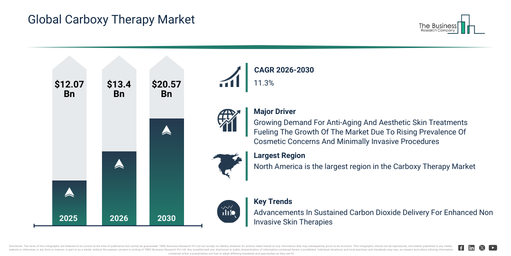
    The carboxy therapy market has experienced rapid expansion in its size over recent years. The market is anticipated to expand from $12.07 billion in 2025 to $13.4 billion in 2026, exhibiting a compound annual growth rate (CAGR) of 11.1%. During the historic period, this expansion was driven by several key factors, including growth in aesthetic medicine procedures, rising consumer awareness of minimally invasive treatments, increased availability of professional aesthetic devices, expansion of dermatology and cosmetic clinics, and growing acceptance of aesthetic therapies.

    The carboxy therapy market is set to experience substantial expansion in the upcoming years, with projections indicating it will reach a value of $20.57 billion by 2030, driven by a compound annual growth rate (CAGR) of 11.3%. This projected increase is largely due to factors such as the rising consumer demand for customized cosmetic treatments, the growing acceptance of regenerative medicine techniques, the expanding availability of wellness and preventive care services, a greater emphasis on aesthetic outcomes supported by evidence, and increased investments in advanced therapeutic devices. Significant trends for this period involve the increasing use of personalized aesthetic treatment protocols, a rise in the integration of combination therapy approaches, the proliferation of non-invasive skin rejuvenation procedures, a heightened focus on therapies aimed at stimulating collagen, and an enhanced requirement for monitoring clinical results.

    Download A Free Sample Report For Comprehensive Market Insights:

    https://www.thebusinessresearchcompany.com/sample.aspx?id=33052&type=smp&utm_source=Blogs&utm_medium=Paid&utm_campaign=Jul_PR

    Carboxy Therapy Market Growth Factors Supporting Long-Term Expansion

    The increasing occurrence of skin aging issues and aesthetic worries is anticipated to boost the expansion of the carboxy therapy market moving ahead. These concerns encompass observable indicators like wrinkles, fine lines, loose skin, dark circles, cellulite, and irregular skin texture, affecting both older and younger individuals worldwide. The rising incidence of skin aging and cosmetic issues stems from extended exposure to UV radiation, environmental pollutants, and lifestyle choices that hasten collagen deterioration and skin degradation. Carboxy therapy addresses these prevalent skin aging and cosmetic concerns by improving microcirculation, boosting oxygen supply, and promoting collagen renewal, thus tackling various aesthetic conditions via a minimally invasive method. As an illustration, in June 2024, data from the International Society of Aesthetic Plastic Surgery, a US-based professional organization, indicated that facial and head aesthetic procedures saw substantial growth compared to the prior year in 2023, amounting to over 6.5 million interventions and showing a 19.6% increase. Consequently, the increasing occurrence of skin aging and cosmetic issues is propelling the expansion of the carboxy therapy market.

    Carboxy Therapy Market Categorization By Product Type And Application

    The carboxy therapy market covered in this report is segmented –

    1) By Service Category: Aesthetic Rejuvenation Services; Therapeutic Medical Treatments; Rehabilitative And Sports Medicine; Post Surgical Recovery Programs

    2) By Product Type: Professional Devices; At-Home Kits

    3) By Gas Type: Carbon Dioxide; Oxygen

    4) By Application: Stretch Marks; Cellulite; Alopecia; Psoriasis; Dark Circles

    5) By End User: Aesthetic Clinics And Dermatology Centers; Hospitals And Medical Centers; Wellness And Spa Centers

    Subsegments:

    1) By Aesthetic Rejuvenation Services: Facial Skin Tightening Treatments; Body Contouring Treatments; Cellulite Reduction Treatments; Stretch Mark Reduction Treatments; Scar Appearance Improvement Treatments; Skin Texture And Tone Enhancement Treatments

    2) By Therapeutic Medical Treatments: Chronic Wound Management Treatments; Peripheral Vascular Disorder Treatments; Dermatological Condition Treatments; Pain Management Treatments; Circulatory Disorder Treatments

    3) By Rehabilitative And Sports Medicine: Muscle Injury Recovery Treatments; Joint Pain Relief Treatments; Soft Tissue Rehabilitation Treatments; Sports Injury Recovery Treatments; Inflammation Reduction Treatments

    4) By Post Surgical Recovery Programs: Postoperative Scar Management Treatments; Edema Reduction Treatments; Tissue Healing Support Treatments; Fibrosis Reduction Treatments; Circulation Improvement Treatments

    Carboxy Therapy Market Industry Trends Shaping Future Revenue Growth

    Major companies operating in the carboxy therapy market are focusing on developing innovative solutions, such as patented sustained carbon dioxide delivery systems for professional-grade carboxytherapy treatments, to meet the rising demand for safer, more effective non-invasive aesthetic and regenerative skin therapies. These proprietary sustained carbon dioxide delivery systems are advanced formulations and device technologies that gradually release carbon dioxide over an extended period, enabling deeper skin absorption and enhanced circulation compared with traditional fast-acting gels and packs that dissipate quickly on contact. For instance, in August 2025, Lumisque Skincare, a US-based clinical skincare and biomedical company, announced advancements in its CO2Lift carboxytherapy treatment, featuring a patented lactone hydrolysis system that steadily releases carbon dioxide for more than an hour to support deeper tissue absorption and broader therapeutic use. The CO2Lift system is being integrated by physicians and aesthetic practitioners for non-invasive skin regeneration, wound healing support, and enhanced microcirculation, offering a professional-grade alternative to traditional consumer-grade CO2 products. Lumisque’s clinical validation and physician adoption underscore the technology’s capability to elevate carboxy therapy beyond basic cosmetic applications, reflecting continued innovation in the market.

    Carboxy Therapy Market Company Landscape And Strategic Competition

    Major companies operating in the carboxy therapy market are Cynosure Inc., Alma Lasers Ltd., Cosmopro Srl, Cocoon Medical Ltd., MBE Medical Divisions GmbH, Carbossiterapia Italiana Srl, DTA Medical GmbH, Alvi Prague Co., Kastner-Praxisbedarf GmbH, MEDAiON Plasma GmbH, Beijing Jontelaser Technologies Co. Ltd., HyaCorp GmbH, Sublime Skin Ltd., Hyaluronic GmbH, Aesthetic Solutions Ltd., RevitaLaze GmbH, Medcos GmbH, Mezopharma GmbH, Advon Technologies Pvt. Ltd., and Solana Beauty Technology Co. Ltd.

    Access The Complete Carboxy Therapy Market Report:

    https://www.thebusinessresearchcompany.com/report/carboxy-therapy-market-report?utm_source=Blogs&utm_medium=Paid&utm_campaign=Jul_PR

    Carboxy Therapy Market Regional Outlook: Where Are The Largest Opportunities Located?

    North America was the largest region in the carboxy therapy market in 2025. Asia-Pacific is expected to be the fastest-growing region in the forecast period. The regions covered in the carboxy therapy market report are Asia-Pacific, South East Asia, Western Europe, Eastern Europe, North America, South America, Middle East, Africa.

    Get in touch with us:

    The Business Research Company: https://www.thebusinessresearchcompany.com/

    Americas: +1 310-496-7795

    Asia: +44 7882 955267 & +91 8897263534

    Europe: +44 7882 955267

    Email us at: marketing@tbrc.info

    Follow us on:

    LinkedIn: https://in.linkedin.com/company/the-business-research-company

    YouTube: https://www.youtube.com/channel/UC24_fI0rV8cR5DxlCpgmyFQ

    Global Market Model: https://www.thebusinessresearchcompany.com/global-market-model
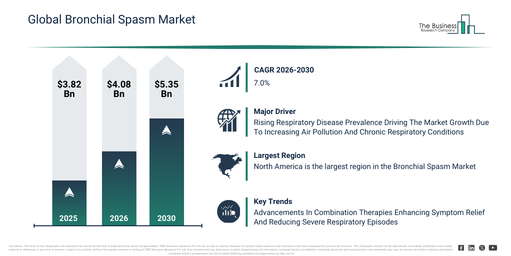
  • Bronchial Spasm  Market Expected To Reach $5.35 Billion By 2030 As Growth Accelerates At 7% CAGR

    Bronchial Spasm Market Expected To Reach $5.35 Billion By 2030 As Growth Accelerates At 7% CAGR

    Through market attractiveness analysis, total addressable market evaluation, company benchmarking matrices, interactive Excel dashboards, expanded supply chain intelligence, emerging startup coverage, and detailed product insights, The Business Research Company’s 2026 market reports provide more actionable and strategically valuable research.

    Bronchial Spasm Market Expected To Reach $5.35 Billion By 2030 At 7% CAGR

    The bronchial spasm market has observed robust growth in recent years. It is anticipated to expand from $3.82 billion in 2025 to reach $4.08 billion in 2026, demonstrating a compound annual growth rate (CAGR) of 6.8%. The expansion seen in previous periods can be linked to the increasing prevalence of asthma and copd, the widespread use of bronchodilator medications, the expansion of inhalation drug delivery systems, a growing awareness of respiratory health, and the availability of generic inhaler formulations.

    The bronchial spasm market is set to experience robust expansion in the coming years, with projections indicating a rise to $5.35 billion by 2030, achieving a compound annual growth rate (CAGR) of 7.0%. This projected growth throughout the forecast period stems from factors such as an increasing need for customized respiratory therapies, greater integration of digital tools for inhaler monitoring, the expansion of homecare respiratory management solutions, a growing emphasis on preventive pulmonary care, and the ongoing development of novel bronchodilator formulations. Significant trends anticipated during this period include a rising uptake of combination inhaler therapies, an increased demand for fast-acting rescue medications, wider adoption of smart inhaler devices, the broader availability of home-based respiratory care options, and a sharpened focus on personalized respiratory treatment approaches.

    Download A Free Sample Report For Comprehensive Market Insights:

    https://www.thebusinessresearchcompany.com/sample.aspx?id=33049&type=smp&utm_source=Blogs&utm_medium=Paid&utm_campaign=Jul_PR

    #Bronchial Spasm Market Growth Drivers And Industry Catalysts

    The increasing occurrence of respiratory illnesses is anticipated to fuel the expansion of the bronchial spasm market. These conditions are characterized by impacts on the respiratory system, resulting in impaired breathing and diminished oxygen delivery to the body. The growing incidence of respiratory ailments is linked to escalating air pollution levels, which heighten prolonged exposure to detrimental particulate matter and various pollutants. Bronchial spasm aids in the diagnosis and understanding of respiratory diseases by revealing the constriction of airway muscles responsible for breathing challenges, making it a crucial clinical marker for conditions like asthma and chronic obstructive pulmonary disease. For instance, as reported in December 2023 by the National Center for Biotechnology Information, a US-based government agency, the count of COPD cases was projected to climb by 112 million, reaching an overall sum of 592 million by 2050, encompassing 9.5% of the eligible demographic. Consequently, the increasing occurrence of respiratory illnesses is stimulating the growth of the bronchial spasm market.

    Bronchial Spasm Market Segment Outlook: Which Categories Are Expanding The Fastest?

    The bronchial spasm market covered in this report is segmented –

    1) By Drug Type: Bronchodilators; Anti Inflammatory Agents; Combination Therapies

    2) By Route Of Administration: Inhalation; Oral; Injectable

    3) By Diagnosis Type: Imaging Test; Spirometry Test; Other Diagnosis Types

    4) By Distribution Channel: Hospital Pharmacies; Retail Pharmacies; Online Pharmacies

    5) By End User: Hospitals; Specialty Clinics; Homecare Settings

    Subsegments:

    1) By Bronchodilators: Short Acting Beta Agonists; Long Acting Beta Agonists; Anticholinergic Agents; Methylxanthine Agents

    2) By Anti Inflammatory Agents: Corticosteroid Agents; Leukotriene Modifier Agents; Mast Cell Stabilizer Agents; Nonsteroidal Anti Inflammatory Agents

    3) By Combination Therapies: Beta Agonist And Corticosteroid Combinations; Anticholinergic And Beta Agonist Combinations; Anti Inflammatory And Bronchodilator Combinations; Dual Mechanism Respiratory Combinations

    #Bronchial Spasm Market Trends Influencing Long-Term Demand

    Leading companies in the bronchial spasm market are focused on developing innovative solutions, such as rescue combination inhalers, to offer rapid symptom relief while simultaneously managing underlying airway inflammation, thereby improving patient outcomes and adherence. A rescue combination inhaler is designed to deliver both a fast-acting bronchodilator for immediate symptom alleviation and an anti-inflammatory drug to address underlying airway inflammation. For instance, in January 2024, AstraZeneca plc, a US-based biopharmaceutical company, secured approval from the FDA for AIRSUPRA (albuterol or budesonide), an anti-inflammatory rescue inhaler for asthma in adults aged 18 and older. This therapy provides quick relief from bronchial spasms, diminishes the risk of acute exacerbations, and aligns with updated asthma management guidelines that recommend combined symptom and inflammation control. Clinical trial data revealed that patients employing this approach experienced faster bronchodilation, a reduced frequency of severe respiratory episodes, and enhanced overall disease management, supporting better outcomes for individuals with chronic airway conditions.

    Bronchial Spasm Market Key Companies And Competitive Benchmarking

    Major companies operating in the bronchial spasm market are Merck & Co. Inc., Pfizer Inc., Sanofi S.A., Novartis AG, AstraZeneca plc, GlaxoSmithKline plc, Boehringer Ingelheim International GmbH, Teva Pharmaceutical Industries Ltd., Viatris Inc., Menarini Group, Sandoz AG, Chiesi Farmaceutici S.p.A., Cipla Ltd., Lupin Pharmaceuticals Inc., Glenmark Pharmaceuticals Ltd., Amphastar Pharmaceuticals Inc., Nephron Pharmaceuticals Corporation, Beximco Pharmaceuticals Ltd., Circassia Group, Sunovion Pharmaceuticals Inc., PARI Medical Holding GmbH.

    Access The Complete Bronchial Spasm Market Report:

    https://www.thebusinessresearchcompany.com/report/bronchial-spasm-market-report?utm_source=Blogs&utm_medium=Paid&utm_campaign=Jul_PR

    Bronchial Spasm Market Regional Analysis: Which Region Leads By Revenue?

    North America was the largest region in the bronchial spasm market in 2025. Asia-Pacific is expected to be the fastest-growing region in the forecast period. The regions covered in the bronchial spasm market report are Asia-Pacific, South East Asia, Western Europe, Eastern Europe, North America, South America, Middle East, Africa.

    Get in touch with us:

    The Business Research Company: https://www.thebusinessresearchcompany.com/

    Americas: +1 310-496-7795

    Asia: +44 7882 955267 & +91 8897263534

    Europe: +44 7882 955267

    Email us at: marketing@tbrc.info

    Follow us on:

    LinkedIn: https://in.linkedin.com/company/the-business-research-company

    YouTube: https://www.youtube.com/channel/UC24_fI0rV8cR5DxlCpgmyFQ

    Global Market Model: https://www.thebusinessresearchcompany.com/global-market-model
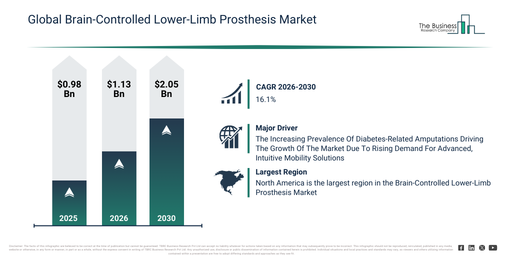
  • Brain-Controlled Lower-Limb Prosthesis  Market Expansion Is Opening New Pathways For Strategic Investment

    Brain-Controlled Lower-Limb Prosthesis Market Expansion Is Opening New Pathways For Strategic Investment

    Through market attractiveness analysis, total addressable market evaluation, company benchmarking matrices, interactive Excel dashboards, expanded supply chain intelligence, emerging startup coverage, and detailed product insights, The Business Research Company’s 2026 market reports provide more actionable and strategically valuable research.

    Brain-Controlled Lower-Limb Prosthesis Market Expansion Outlook: What Revenue Opportunities Lie Ahead?

    The market size for brain-controlled lower-limb prostheses has experienced substantial expansion in recent years. This market is anticipated to expand from $0.98 billion in 2025 to $1.13 billion in 2026, achieving a compound annual growth rate (CAGR) of 15.8%. The expansion observed in prior periods is due to factors such as progress in myoelectric prosthetics, a higher incidence of limb loss, the early incorporation of microprocessor-controlled limbs, the growth of rehabilitation infrastructure, and advancements in prosthetic material science.

    The brain-controlled lower-limb prosthesis market is projected to experience swift expansion in the coming years, with its size anticipated to reach $2.05 billion by 2030, demonstrating a compound annual growth rate (CAGR) of 16.1%. This projected growth during the forecast period is driven by factors such as the increasing demand for brain-controlled mobility solutions, a rising integration of artificial intelligence and machine learning in prosthetics, the expansion of personalized prosthetic fitting technologies, the growing adoption of smart rehabilitation platforms, and increasing insurance coverage for advanced prosthetic systems. Major trends expected within this forecast period include the expanding adoption of AI-controlled prosthetic gait systems, a rising utilization of multi-modal neural signal integration, an increasing demand for adaptive and self-learning prosthetic limbs, the broader expansion of sensory feedback-enabled prostheses, and an enhanced focus on restoring natural mobility.

    Download A Free Sample Report For Comprehensive Market Insights:

    https://www.thebusinessresearchcompany.com/sample.aspx?id=33046&type=smp&utm_source=Blogs&utm_medium=Paid&utm_campaign=Jul_PR

    Brain-Controlled Lower-Limb Prosthesis Market Expansion Drivers: What Is Shaping Future Growth?

    The growing occurrence of diabetes-related amputations is anticipated to fuel the expansion of the brain-controlled lower-limb prosthesis market in the future. These amputations involve surgical removal of a lower limb segment, necessitated by complications arising from long-term, inadequately managed diabetes. The rise in diabetes-related amputations stems from insufficient glycemic control, which hastens vascular harm, nerve damage, and persistent foot ulcers that frequently lead to severe infections and tissue loss. For individuals undergoing such amputations, a brain-controlled lower-limb prosthesis offers restored intuitive movement and stability via direct neural input, fostering a more secure gait, diminishing the likelihood of subsequent issues, and enhancing lasting autonomy. As an illustration, in March 2025, the Office for Health Improvement and Disparities, a UK-based government agency, reported that in 2024, the GP-recorded adult prevalence of type 2 diabetes in England rose to 7.0% among those aged 17 and above, an increase from 6.8% in March 2023. Consequently, the rising incidence of diabetes-related amputations is propelling the growth of the brain-controlled lower-limb prosthesis market.

    Brain-Controlled Lower-Limb Prosthesis Market Segment Analysis: What Are The Major Market Categories?

    The brain-controlled lower-limb prosthesis market covered in this report is segmented –

    1) By Product Type: Myoelectric Prosthesis; Bionic Prosthesis; Hybrid Prosthesis; Other Product Types

    2) By Technology: Electroencephalography-Based; Electromyography-Based; Electrocorticography-Based; Other Technologies

    3) By Application: Hospitals; Rehabilitation Centers; Prosthetic Clinics; Other Applications

    4) By End-User: Adults; Pediatrics; Elderly

    Subsegments:

    1) By Myoelectric Prosthesis: Surface Electrode Controlled Prosthesis; Implanted Electrode Controlled Prosthesis; Pattern Recognition Based Prosthesis; Adaptive Control Myoelectric Prosthesis; Multi Signal Input Myoelectric Prosthesis

    2) By Bionic Prosthesis: Neural Interface Controlled Prosthesis; Sensory Feedback Enabled Prosthesis; Artificial Intelligence Integrated Prosthesis; Fully Integrated Bionic Limb Systems; Smart Actuator Based Bionic Prosthesis

    3) By Hybrid Prosthesis: Myoelectric And Mechanical Combined Prosthesis; Neural And Myoelectric Integrated Prosthesis; Sensor Assisted Hybrid Prosthesis; Adaptive Hybrid Control Prosthesis; Multi Modal Control Hybrid Prosthesis

    4) By Other Product Types: Mechanically Controlled Prosthesis; Microprocessor Assisted Prosthesis; Externally Powered Prosthesis; Custom Designed Prosthetic Systems; Experimental Prototype Prosthesis

    Brain-Controlled Lower-Limb Prosthesis Market Leading Companies Driving Competitive Growth

    Major companies operating in the brain-controlled lower-limb prosthesis market are Ottobock SE And Co. KGaA, Össur hf., Blatchford Limited, Fillauer Companies Inc., College Park Industries Inc., Exiii Inc., Advanced Arm Dynamics Inc., Open Bionics Ltd., BrainRobotics Inc., Blackrock Neurotech Inc., Coapt LLC, Hi-Tech Artificial Limbs Pvt. Ltd., Integrum AB, Liberating Technologies Inc., Limbitless Solutions Inc., Symbionic Inc., Unlimited Tomorrow Inc., Vincent Systems GmbH, Bionik Laboratories Corp., Credence Prosthetic Pvt. Ltd.

    Access The Complete Brain-Controlled Lower-Limb Prosthesis Market Report:

    https://www.thebusinessresearchcompany.com/report/brain-controlled-lower-limb-prosthesis-market-report?utm_source=Blogs&utm_medium=Paid&utm_campaign=Jul_PR

    Brain-Controlled Lower-Limb Prosthesis Market Regional Analysis And Leading Geography

    North America was the largest region in the brain-controlled lower-limb prosthesis market in 2025. Asia-Pacific is expected to be the fastest-growing region in the forecast period. The regions covered in the brain-controlled lower-limb prosthesis market report are Asia-Pacific, South East Asia, Western Europe, Eastern Europe, North America, South America, Middle East, Africa.

    Get in touch with us:

    The Business Research Company: https://www.thebusinessresearchcompany.com/

    Americas: +1 310-496-7795

    Asia: +44 7882 955267 & +91 8897263534

    Europe: +44 7882 955267

    Email us at: marketing@tbrc.info

    Follow us on:

    LinkedIn: https://in.linkedin.com/company/the-business-research-company

    YouTube: https://www.youtube.com/channel/UC24_fI0rV8cR5DxlCpgmyFQ

    Global Market Model: https://www.thebusinessresearchcompany.com/global-market-model
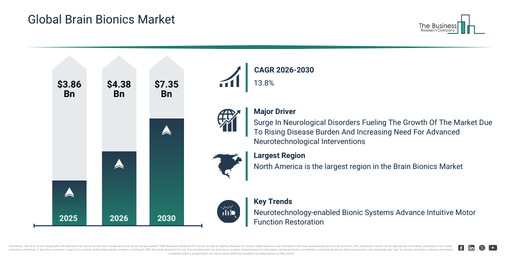
  • Brain Bionics  Market Trends Are Creating New Opportunities For Industry Leaders

    Brain Bionics Market Trends Are Creating New Opportunities For Industry Leaders

    Delivering more actionable and strategically valuable research, The Business Research Company’s 2026 market reports feature market attractiveness analysis, total addressable market evaluation, company benchmarking matrices, interactive Excel dashboards, expanded supply chain intelligence, emerging startup coverage, and detailed product insights.

    Brain Bionics Market Growth Potential: How Will Market Size Change Through 2030?

    The brain bionics market has experienced rapid expansion in its size during recent years. Projections indicate it will grow from $3.86 billion in 2025 to $4.38 billion in 2026, at a compound annual growth rate (CAGR) of 13.6%. The market’s historical growth can be attributed to advancements in neuroscience research, the increasing prevalence of neurological disorders, the early clinical adoption of deep brain stimulation, the growth in academic neurotechnology programs, and rising investments in medical device innovation.

    The brain bionics market is projected to experience substantial growth in the upcoming years, with its size expected to reach $7.35 billion by 2030, demonstrating a compound annual growth rate (CAGR) of 13.8%. This expansion during the forecast period is attributed to several factors, including a heightened demand for personalized neurotherapies, the broadening scope of brain-computer interface clinical trials, increased integration of cloud-based neural data platforms, rising uptake of home-based neurofeedback systems, and a growing number of regulatory approvals for implantable neurodevices. Significant developments anticipated in this period encompass the increasing adoption of implantable neural interfaces, a rising integration of AI-driven neural signal processing, wider utilization of non-invasive brain-computer interfaces, the expansion of closed-loop neuromodulation systems, and a greater emphasis on personalized neurotherapy solutions.

    Download A Free Sample Report For Comprehensive Market Insights:

    https://www.thebusinessresearchcompany.com/sample.aspx?id=33045&type=smp&utm_source=Blogs&utm_medium=Paid&utm_campaign=Jul_PR

    Brain Bionics Market Development Factors: Which Trends Are Supporting Demand?

    The increasing occurrence of neurological disorders is anticipated to fuel the expansion of the brain bionics market in the future. These disorders encompass illnesses and conditions impacting the brain, spinal cord, and nerves, resulting in deficits in movement, thought processes, sensation, or conduct. The growth in the incidence of neurological disorders is mainly attributed to the aging global population, which elevates the likelihood of conditions such as Parkinson’s disease, epilepsy, stroke, and dementia. Brain bionics assists in managing and treating neurological disorders by facilitating direct communication between neural pathways and artificial devices to restore lost capabilities, regulate irregular brain activity, and improve rehabilitation results. As an illustration, in December 2025, the Medical Republic, an Australia-based media company, stated that neurological conditions accounted for more than 350,000 hospital admissions and 130,000 emergency department visits throughout 2023–24. Consequently, the rising prevalence of neurological disorders is propelling the growth of the brain bionics market.

    Brain Bionics Market Segment Breakdown: Which Categories Generate The Most Revenue?

    The brain bionics market covered in this report is segmented –

    1) By Product Type: Neuroprosthetics; Brain-Machine Interfaces (BMIs); Neuromodulation Devices; Transcranial Magnetic Stimulation Devices

    2) By Technology: Electrodes And Sensors; Software And Algorithms; Cloud-Based Platforms; Wearable Devices

    3) By User Demographics: Adults; Pediatrics; Elderly

    4) By Application: Neurorehabilitation; Cognitive Enhancement; Pain Management; Neurodegenerative Disorders; Acute Interstitial Nephritis Disorders

    5) By End User: Hospitals; Academic And Research Institutes; Home Care Settings; Pharmaceutical And Biotech Companies

    Subsegments:

    1) By Neuroprosthetics: Cochlear Implants; Retinal Implants; Deep Brain Stimulation Implants; Spinal Cord Stimulation Implants; Peripheral Nerve Stimulation Implants

    2) By Brain-Machine Interfaces (BMIs): Invasive Brain-Machine Interfaces; Partially Invasive Brain-Machine Interfaces; Non-Invasive Brain-Machine Interfaces; Assistive Communication Brain-Machine Interfaces; Motor Control Brain-Machine Interfaces

    3) By Neuromodulation Devices: Deep Brain Stimulation Devices; Spinal Cord Stimulation Devices; Vagus Nerve Stimulation Devices; Sacral Nerve Stimulation Devices; Peripheral Nerve Stimulation Devices

    4) By Transcranial Magnetic Stimulation Devices: Repetitive Transcranial Magnetic Stimulation Devices; Deep Transcranial Magnetic Stimulation Devices; Single-Pulse Transcranial Magnetic Stimulation Devices; Paired-Pulse Transcranial Magnetic Stimulation Devices; Portable Transcranial Magnetic Stimulation Devices

    Brain Bionics Market Transformation Trends: Which Innovations Are Driving Change?

    Major companies active within the brain bionics market are channeling their efforts into developing advanced solutions, including brain-controlled bionic prosthetics. These developments are geared towards enhancing motor function restoration, refining user control accuracy, and fostering more natural human-machine interactions. Brain-controlled bionic systems are defined as neurotechnology-enabled prosthetic devices that utilize brain-computer interface (BCI) signals to translate neural activity into precise mechanical actions, thereby allowing users to manipulate artificial limbs through thought rather than physical input. For example, in October 2025, BrainCo Inc., a US-based neurotechnology company, introduced a brain-controlled bionic hand designed to help amputees recover functional hand movements by interpreting real-time brain signals. This bionic hand integrates non-invasive brain-sensing technology with sophisticated AI algorithms to decipher user intent and transform it into smooth, responsive motion. This approach boosts control precision, shortens user learning curves, and enables more intuitive interaction when compared with traditional myoelectric prosthetics. By merging neuroscience, artificial intelligence, and robotics, this solution supports improved rehabilitation outcomes and greater independence for users, reflecting a broader market demand for intelligent, brain-driven bionic technologies.

    Brain Bionics Market Key Players And Strategic Industry Positioning

    Major companies operating in the brain bionics market are NeuroPace Inc., Medtronic plc, BrainsWay Ltd., Boston Scientific Corporation, Kernel Labs Inc., LivaNova plc, Neuronetics Inc., Neuralink Corporation, Synchron Inc., Cala Health Inc., MindMaze SA, Emotiv Inc., Abbott Neuromodulation, MagVenture A/S, Paradromics Inc., Axoft LLC, Neuroelectrics Barcelona S.L.U., Blackrock Neurotech Inc., Soterix Medical Inc., Neurable Inc., Bitbrain Technologies S.L., BrainGate Consortium.

    Access The Complete Brain Bionics Market Report:

    https://www.thebusinessresearchcompany.com/report/brain-bionics-market-report?utm_source=Blogs&utm_medium=Paid&utm_campaign=Jul_PR

    Brain Bionics Market Geographic Analysis: Where Is Demand Growing The Fastest?

    North America was the largest region in the brain bionics market in 2025. Asia-Pacific is expected to be the fastest-growing region in the forecast period. The regions covered in the brain bionics market report are Asia-Pacific, South East Asia, Western Europe, Eastern Europe, North America, South America, Middle East, Africa.

    Get in touch with us:

    The Business Research Company: https://www.thebusinessresearchcompany.com/

    Americas: +1 310-496-7795

    Asia: +44 7882 955267 & +91 8897263534

    Europe: +44 7882 955267

    Email us at: marketing@tbrc.info

    Follow us on:

    LinkedIn: https://in.linkedin.com/company/the-business-research-company

    YouTube: https://www.youtube.com/channel/UC24_fI0rV8cR5DxlCpgmyFQ

    Global Market Model: https://www.thebusinessresearchcompany.com/global-market-model
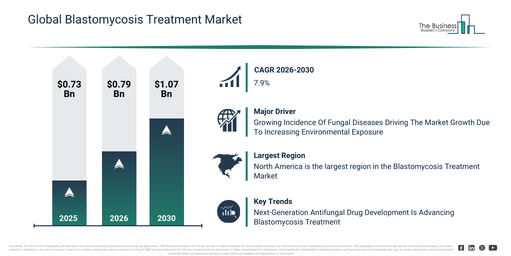
  • Blastomycosis Treatment  Market Growth Is Reshaping Competitive Advantage Across The Industry

    Blastomycosis Treatment Market Growth Is Reshaping Competitive Advantage Across The Industry

    Enhanced with market attractiveness analysis, total addressable market evaluation, company benchmarking matrices, interactive Excel dashboards, expanded supply chain intelligence, emerging startup coverage, and detailed product insights, The Business Research Company’s 2026 market reports deliver more actionable and strategically valuable research.

    Blastomycosis Treatment Market Value Analysis: What Growth Is Expected Over The Forecast Period?

    The blastomycosis treatment market size has seen strong growth in recent years. It is anticipated to increase from $0.73 billion in 2025 to $0.79 billion in 2026, exhibiting a compound annual growth rate (CAGR) of 7.6%. This historical expansion can be attributed to factors such as improved awareness of systemic fungal infections, the availability of antifungal drug therapies, the expansion of diagnostic laboratory services, an increased clinical recognition of blastomycosis cases, and the growth of infectious disease treatment programs.

    The blastomycosis treatment market size is anticipated to undergo significant expansion in the coming years. Projections indicate it will reach $1.07 billion by 2030, exhibiting a compound annual growth rate (CAGR) of 7.9%. This expansion during the forecast period is primarily driven by an increased emphasis on early and accurate diagnosis, the ongoing development of enhanced antifungal formulations, the establishment of more specialized infectious disease care centers, the rising adoption of personalized treatment approaches, and greater investment in fungal disease research. Furthermore, prominent trends anticipated during this period encompass the increasing integration of advanced diagnostic protocols, a growing reliance on targeted antifungal therapies, the wider implementation of therapeutic drug monitoring practices, a heightened focus on early disease detection, and improved integration of clinical decision support tools.

    Download A Free Sample Report For Comprehensive Market Insights:

    https://www.thebusinessresearchcompany.com/sample.aspx?id=33044&type=smp&utm_source=Blogs&utm_medium=Paid&utm_campaign=Jul_PR

    Blastomycosis Treatment Market Industry Drivers: What Is Driving Revenue Growth?

    The blastomycosis treatment market is set to expand due to the increasing incidence of fungal diseases, which are infections resulting from pathogenic fungi entering the body through inhalation, direct contact, or environmental exposure. This rise in fungal diseases is largely attributed to climate-related environmental shifts, where increased rainfall and flooding create damp, organic soil conditions conducive to fungal spore proliferation and subsequent human contact. Consequently, the growing occurrence of these infections fuels demand for effective treatment solutions, with timely diagnosis and appropriate antifungal therapy being crucial for preventing severe complications and reducing mortality. For example, the UK Health Security Agency, a UK-based government body, reported in May 2025 that bloodstream infections caused by yeast increased by 4% in 2024 compared to 2023, rising from 2,170 to 2,247 recorded cases. Thus, the growing prevalence of fungal diseases is a key driver for the blastomycosis treatment market. The blastomycosis treatment market is projected to grow as the global immunocompromised population expands. This population consists of individuals with weakened immune defenses due to pre-existing conditions, genetic factors, or medical interventions like chemotherapy, immunosuppressive drugs, or organ transplants. The rise in immunocompromised individuals stems from improved survival rates for chronic illnesses and the broader application of immunosuppressive and immunomodulating therapies for autoimmune and inflammatory disorders. Blastomycosis treatment offers vital support to this vulnerable group by delivering effective antifungal therapy, which helps manage severe and disseminated infections, reduces fungal load, and averts life-threatening complications in patients with compromised immune systems. For instance, according to Infection & Chemotherapy (IC), a South Korea–based journal, an update in September 2024 indicated that by December 2023, South Korea recorded a cumulative total of 19,001 individuals diagnosed with HIV, of whom 1,219 (6.4%) were women. In 2022 alone, 1,066 new HIV cases were identified, including 82 women (7.7%), comprising 35 Korean nationals and 47 foreign nationals. During that same year, the total number of Korean nationals living with HIV in the country reached 15,880, with women accounting for 998 cases. Therefore, the expanding immunocompromised population is a significant driver for the blastomycosis treatment market.

    Blastomycosis Treatment Market Segmentation: How Is The Market Structured Across Key Categories?

    The blastomycosis treatment market covered in this report is segmented –

    1) By Treatment Type: Antifungal Drugs; Surgical Intervention

    2) By Anatomy: Lung; Bones; Central Nervous System; Other Anatomy

    3) By Dosage: Tablet; Injection; Capsule; Other Dosage forms

    4) By Route Of Administration: Intravenous; Oral; Other Route Of Administrations

    5) By End-User: Hospitals; Outpatient Clinics; Diagnostic Laboratories

    Subsegments:

    1) By Antifungal Drugs: Azole Antifungal Agents; Polyene Antifungal Agents; Echinocandin Antifungal Agents; Oral Antifungal Formulations; Intravenous Antifungal Formulations

    2) By Surgical Intervention: Lesion Debridement Procedures; Abscess Drainage Procedures; Lung Resection Procedures; Soft Tissue Excision Procedures

    #Blastomycosis Treatment Market Growth Trends: What Is Influencing The Future Outlook?

    Leading firms within the blastomycosis treatment market are prioritizing the creation of cutting-edge solutions, particularly through antifungal drug development, aiming to achieve better treatment effectiveness, improved safety characteristics, and a more robust position in fulfilling critical requirements for severe systemic fungal infections. The process of antifungal drug development involves creating new therapies intended to advance current treatments by boosting their effectiveness, minimizing harmful side effects, combating drug resistance, and providing superior options for administration, composition, or delivery. As an illustration, in June 2024, Elion Therapeutics, a US biotechnology firm, disclosed that their product, SF001, represents a next-generation polyene antifungal and a new variant of amphotericin B, which has been recognized for a long time as a primary therapy for severe systemic fungal infections, blastomycosis among them. Although the official statement specifically cites invasive fungal infections like aspergillosis, SF001’s operational principle as an amphotericin B derivative—crafted to maintain extensive antifungal capabilities while decreasing toxicity—also makes it pertinent for blastomycosis therapy. Essentially, given that amphotericin B effectively targets Blastomyces dermatitidis, a medication developed from its structural and functional basis, such as SF001, bears a clear logical link to blastomycosis treatment.

    Blastomycosis Treatment Market Competitive Landscape And Leading Companies

    Major companies operating in the blastomycosis treatment market are Johnson & Johnson, Pfizer Inc., AbbVie Inc., Merck & Co. Inc., Bayer AG, Sanofi S.A., Novartis AG, AstraZeneca plc, Bristol-Myers Squibb Company, Thermo Fisher Scientific Inc., GlaxoSmithKline plc, Eli Lilly and Company, Takeda Pharmaceutical Company Limited, Gilead Sciences Inc., Teva Pharmaceutical Industries Ltd., Viatris Inc., Astellas Pharma Inc., bioMérieux SA, Cipla Ltd., Lupin Limited, SCYNEXIS Inc., and F2G Ltd.

    Access The Complete Blastomycosis Treatment Market Report:

    https://www.thebusinessresearchcompany.com/report/blastomycosis-treatment-market-report?utm_source=Blogs&utm_medium=Paid&utm_campaign=Jul_PR

    Blastomycosis Treatment Market Global Footprint: Which Region Holds Market Leadership?

    North America was the largest region in the blastomycosis treatment market in 2025. Asia-Pacific is expected to be the fastest-growing region in the forecast period. The regions covered in the blastomycosis treatment market report are Asia-Pacific, South East Asia, Western Europe, Eastern Europe, North America, South America, Middle East, Africa.

    Get in touch with us:

    The Business Research Company: https://www.thebusinessresearchcompany.com/

    Americas: +1 310-496-7795

    Asia: +44 7882 955267 & +91 8897263534

    Europe: +44 7882 955267

    Email us at: marketing@tbrc.info

    Follow us on:

    LinkedIn: https://in.linkedin.com/company/the-business-research-company

    YouTube: https://www.youtube.com/channel/UC24_fI0rV8cR5DxlCpgmyFQ

    Global Market Model: https://www.thebusinessresearchcompany.com/global-market-model
  • Biothreat Detection Systems  Market Forecast Signals New Revenue Opportunities Through 2030

    Biothreat Detection Systems Market Forecast Signals New Revenue Opportunities Through 2030

    Through market attractiveness analysis, total addressable market evaluation, company benchmarking matrices, interactive Excel dashboards, expanded supply chain intelligence, emerging startup coverage, and detailed product insights, The Business Research Company’s 2026 market reports provide more actionable and strategically valuable research.

    Biothreat Detection Systems Market Size Forecast: How Large Could The Market Become By 2030?

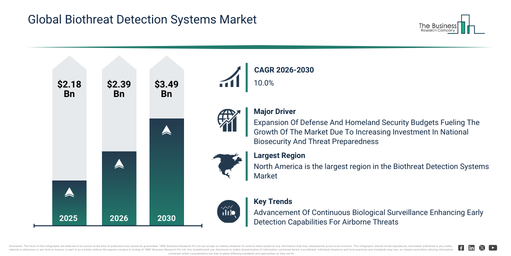
    The biothreat detection systems market size has shown significant growth in recent years. It is forecast to increase from $2.18 billion in 2025 to $2.39 billion in 2026, achieving a compound annual growth rate (CAGR) of 9.7%. This historic expansion can be linked to several factors including increasing public health surveillance initiatives, rising investment in biodefense programs, the expansion of laboratory diagnostic capabilities, growing awareness of pandemic preparedness, and the adoption of molecular detection platforms.

    The biothreat detection systems market is projected to experience robust expansion over the coming years, reaching a valuation of $3.49 billion by 2030, demonstrating a compound annual growth rate (CAGR) of 10.0%. This anticipated growth throughout the forecast period stems from factors such as a heightened demand for biothreat early-warning systems, the increasing incorporation of AI-powered analytics, the broadening of environmental monitoring networks, a sharpened emphasis on national biosecurity initiatives, and the greater uptake of portable, field-deployable systems. Key developments expected during this period involve the rising implementation of automated bioaerosol monitoring solutions, an increase in the adoption of rapid molecular detection technologies, the enlargement of integrated surveillance networks, a growing utilization of portable detection kits, and a more pronounced focus on real-time threat analysis.

    Download A Free Sample Report For Comprehensive Market Insights:

    https://www.thebusinessresearchcompany.com/sample.aspx?id=33043&type=smp&utm_source=Blogs&utm_medium=Paid&utm_campaign=Jul_PR

    #Biothreat Detection Systems Market Growth Factors: Which Forces Are Supporting Market Expansion?

    The expansion of defense and homeland security budgets is anticipated to drive the future growth of the biothreat detection systems market. These budgets refer to government-allocated financial resources dedicated to national defense, military operations, intelligence, border protection, counterterrorism, emergency preparedness, and the protection of critical infrastructure and public safety. The increase in defense and homeland security budgets is attributed to rising geopolitical tensions, which necessitate greater investment in national security and threat preparedness. Biothreat detection systems contribute to defense and homeland security efforts by enabling early identification and rapid response to biological threats, thereby reducing the cost and impact of large-scale outbreaks, emergency interventions, and national security incidents. For instance, in April 2025, according to the Stockholm International Peace Research Institute (SIPRI), a Sweden-based independent international institute, in 2024 United Kingdom raised its military spending by 2.8% to $81.8 billion, positioning it as the world’s sixth-largest defense spender. Therefore, the expansion of defense and homeland security budgets is a key driver for the biothreat detection systems market.

    Biothreat Detection Systems Market Segmentation Trends And Revenue Drivers

    The biothreat detection systems market covered in this report is segmented –

    1. By Technology: Polymerase Chain Reaction Based Detection; Immunological Detection; Biosensors; Microarrays; Other Technologies

    2. By Detection Type: Biological Agents; Chemical Agents; Radiological Agents

    3. By Application: Military And Defense; Public Health; Environmental Monitoring; Agriculture; Other Applications

    4. By End-User: Government Agencies; Hospitals And Healthcare Facilities; Research Laboratories; Commercial And Industrial; Other End-Users

    Subsegments:

    1. By Polymerase Chain Reaction Based Detection: Real Time Polymerase Chain Reaction; Digital Polymerase Chain Reaction; Multiplex Polymerase Chain Reaction; Reverse Transcription Polymerase Chain Reaction; Quantitative Polymerase Chain Reaction

    2. By Immunological Detection: Enzyme Linked Immunosorbent Assay; Lateral Flow Assay; Agglutination Assay; Western Blot Assay; Immunofluorescence Assay

    3. By Biosensors: Electrochemical Biosensors; Optical Biosensors; Piezoelectric Biosensors; Thermal Biosensors; Magnetic Biosensors

    4. By Microarrays: DNA Microarrays; Protein Microarrays; Antibody Microarrays; Peptide Microarrays; Cell Microarrays

    5. By Other Technologies: Next Generation Sequencing; Flow Cytometry; Mass Spectrometry; Microfluidics Platforms; Lab On A Chip Systems

    Biothreat Detection Systems Market Industry Trends: What Changes Are Reshaping Demand?

    Major companies within the biothreat detection systems market are concentrating their efforts on enhancing continuous biological surveillance technologies, such as real-time aerosol-based pathogen monitoring systems. These advancements aim to facilitate the early detection of airborne biological threats in public and critical infrastructure settings. Real-time aerosol-based pathogen monitoring systems continuously gather and examine air samples to pinpoint biological agents, allowing authorities to identify emerging health threats or deliberate releases before widespread exposure takes place. For example, in August 2023, BioFlyte Inc., a US-based biodefense technology company, initiated a first-of-its-kind biothreat surveillance pilot program at Pittsburgh International Airport. This pilot involves placing autonomous air-sampling and pathogen detection units across airport facilities, enabling near real-time identification of airborne biological threats, and integrating alerting capabilities to support swift responses from public health and security teams, thereby bolstering early-warning preparedness for high-traffic transportation hubs.

    #Biothreat Detection Systems Market Industry Leaders: Which Organizations Are Driving Competition?

    Major companies operating in the biothreat detection systems market are Roche Diagnostics AG, Thermo Fisher Scientific Inc., Abbott Laboratories, Eurofins Scientific SE, Agilent Technologies Inc., Battelle Memorial Institute, Illumina Inc., Smiths Group, Shimadzu Corporation, Bruker Corporation, Bio Rad Laboratories Inc., QIAGEN NV, Tecan Group Ltd., DiaSorin S.p.A., Emergent BioSolutions Inc., Physical Sciences Inc, DetectaChem Inc., PositiveID Corporation, AdVnt Biotechnologies, Alexeter Technologies LLC.

    Access The Complete Biothreat Detection Systems Market Report:

    https://www.thebusinessresearchcompany.com/report/biothreat-detection-systems-market-report?utm_source=Blogs&utm_medium=Paid&utm_campaign=Jul_PR

    Biothreat Detection Systems Market Regional Distribution: Which Areas Drive Market Expansion?

    North America was the largest region in the biothreat detection systems market in 2025. Asia-Pacific is expected to be the fastest-growing region in the forecast period. The regions covered in the biothreat detection systems market report are Asia-Pacific, South East Asia, Western Europe, Eastern Europe, North America, South America, Middle East, Africa.

    Get in touch with us:

    The Business Research Company: https://www.thebusinessresearchcompany.com/

    Americas: +1 310-496-7795

    Asia: +44 7882 955267 & +91 8897263534

    Europe: +44 7882 955267

    Email us at: marketing@tbrc.info

    Follow us on:

    LinkedIn: https://in.linkedin.com/company/the-business-research-company

    YouTube: https://www.youtube.com/channel/UC24_fI0rV8cR5DxlCpgmyFQ

    Global Market Model: https://www.thebusinessresearchcompany.com/global-market-model
  • Bioprocess Digital Twin  Market Growth Is Accelerating As Industry Transformation Continues

    Bioprocess Digital Twin Market Growth Is Accelerating As Industry Transformation Continues

    Delivering more actionable and strategically valuable research, The Business Research Company’s 2026 market reports feature market attractiveness analysis, total addressable market evaluation, company benchmarking matrices, interactive Excel dashboards, expanded supply chain intelligence, emerging startup coverage, and detailed product insights.

    Bioprocess Digital Twin Market Revenue Outlook: What CAGR Is Expected Through 2030?

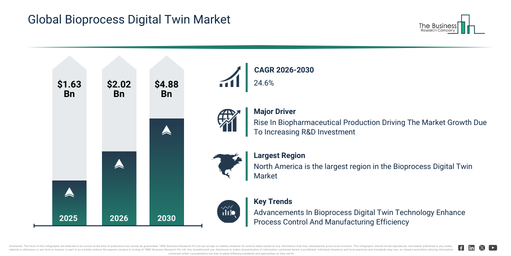
    The bioprocess digital twin market has witnessed significant growth in recent years. This market is expected to expand from $1.63 billion in 2025 to $2.02 billion in 2026, achieving a compound annual growth rate (CAGR) of 24.4%. The historical increase in market size can be attributed to several factors, including the increasing complexity of biologics manufacturing processes, the growing availability of process sensor data, the rising adoption of advanced bioprocess control systems, an increasing focus on yield optimization, and the expansion of digital manufacturing initiatives.

    The bioprocess digital twin market is projected for significant expansion in the coming years. Its valuation is anticipated to reach $4.88 billion by 2030, demonstrating a compound annual growth rate (CAGR) of 24.6%. This anticipated growth during the forecast period stems from factors such as heightened investments in intelligent biomanufacturing platforms, a greater need for real-time decision support utilities, the broadening scope of digital quality management systems, increasing regulatory approval for digital twins, and a sharpened emphasis on reducing expenses and risks. Key trends expected during this period involve the wider uptake of real-time bioprocess simulation, greater incorporation of predictive analytics into manufacturing processes, the development of closed-loop process optimization, increased utilization of virtual commissioning instruments, and a stronger commitment to digitally validated processes that adhere to regulations.

    Download A Free Sample Report For Comprehensive Market Insights:

    https://www.thebusinessresearchcompany.com/sample.aspx?id=33042&type=smp&utm_source=Blogs&utm_medium=Paid&utm_campaign=Jul_PR

    Bioprocess Digital Twin Market Demand Drivers: What Is Fueling Industry Growth?

    The anticipated increase in biopharmaceutical production is set to boost the growth of the bioprocess digital twin market in the coming period. Biopharmaceutical production entails the manufacturing and development of therapeutic products derived from biological sources, such as living cells, proteins, and nucleic acids. The expansion in biopharmaceutical production is fueled by growing investments in research and development, as pharmaceutical companies commit significant resources to discover and produce innovative biological therapies for chronic and rare diseases. Higher volumes of biopharmaceutical production create an increased demand for digital twin technologies, which enable real-time monitoring, optimization, and predictive modeling of complex bioprocessing systems. For instance, in June 2023, according to the European Federation of Pharmaceutical Industries and Associations (EFPIA), a Belgium-based trade association that represents the pharmaceutical industry in Europe, the total pharmaceutical production in Europe amounted to €390,000 million ($422,803 million) in 2023, an increase from €363,300 million ($393,857 million) in 2022. Thus, the expansion of biopharmaceutical production is a key driver for the bioprocess digital twin market’s growth.

    Bioprocess Digital Twin Market Segment Analysis Highlighting Growth Areas

    The bioprocess digital twin market covered in this report is segmented –

    1) By Component: Software; Hardware; Services

    2) By Deployment Mode: On-Premises; Cloud

    3) By Application: Process Optimization; Predictive Maintenance; Quality Management; Performance Monitoring; Other Applications

    4) By End-User: Pharmaceutical And Biotechnology Companies; Contract Manufacturing Organizations; Academic And Research Institutes; Other End-Users

    Subsegments:

    1) By Software: Modeling Platforms; Simulation Engines; Analytics Software

    2) By Hardware: Sensors; Internet Of Things Devices; Computing Infrastructure

    3) By Services: Consulting Services; System Integration Services; Maintenance Services; Training Services

    Bioprocess Digital Twin Market Innovation Trends: Which Developments Are Transforming The Industry?

    Major companies in the bioprocess digital twin market are concentrating on technological advancements in process simulation, particularly digital twin-based bioprocess development platforms, to improve process predictability, elevate product quality, and shorten development timelines. A digital twin–based bioprocess development platform generates a virtual model of an actual bioprocess by utilizing real-time data, advanced modeling, and simulation to accurately predict process performance and enhance product quality, allowing process scenarios to be digitally evaluated before physical execution. For instance, in January 2026, WuXi Biologics, a China-based contract research, development, and manufacturing organization, launched PatroLabTM, a cutting-edge bioprocess digital twin platform intended to support advanced bioprocess development and manufacturing. It integrates real-time process monitoring with Raman-based Process Analytical Technology (PAT) and predictive in-silico modeling. The platform continually incorporates live process data into virtual models, facilitating real-time analytics and proactive process control. PatroLab helps identify process deviations early, reduce operational risks, and improve process consistency.

    Bioprocess Digital Twin Market Leading Companies: Who Holds Significant Market Presence?

    Major companies operating in the bioprocess digital twin market are Siemens Aktiengesellschaft, General Electric Company, Schneider Electric SE, Honeywell International Inc., ABB Ltd, Emerson Electric Co., Rockwell Automation Inc., Dassault Systèmes SE, Cytiva Sweden AB, Mettler Toledo International Inc., Sartorius Aktiengesellschaft, WuXi Biologics Cayman Inc., ANSYS Inc., PTC Inc., AVEVA Group plc, Aspen Technology Inc., Aizon Ltd, TwinThread Inc., Intelligen Inc., and Novasign GmbH.

    Access The Complete Bioprocess Digital Twin Market Report:

    https://www.thebusinessresearchcompany.com/report/bioprocess-digital-twin-market-report?utm_source=Blogs&utm_medium=Paid&utm_campaign=Jul_PR

    Bioprocess Digital Twin Market Leading Geography: Which Region Generates The Most Revenue?

    North America was the largest region in the bioprocess digital twin market in 2025. Asia-Pacific is expected to be the fastest-growing region in the forecast period. The regions covered in the bioprocess digital twin market report are Asia-Pacific, South East Asia, Western Europe, Eastern Europe, North America, South America, Middle East, Africa.

    Get in touch with us:

    The Business Research Company: https://www.thebusinessresearchcompany.com/

    Americas: +1 310-496-7795

    Asia: +44 7882 955267 & +91 8897263534

    Europe: +44 7882 955267

    Email us at: marketing@tbrc.info

    Follow us on:

    LinkedIn: https://in.linkedin.com/company/the-business-research-company

    YouTube: https://www.youtube.com/channel/UC24_fI0rV8cR5DxlCpgmyFQ

    Global Market Model: https://www.thebusinessresearchcompany.com/global-market-model