Month: July 2026

  • Data Center Access Control Market Growth Through 2030 Creates New Strategic Opportunities

    Data Center Access Control Market Growth Through 2030 Creates New Strategic Opportunities

    Enhanced with market attractiveness analysis, total addressable market evaluation, company benchmarking matrices, interactive Excel dashboards, expanded supply chain intelligence, emerging startup coverage, and detailed product insights, The Business Research Company’s 2026 market reports deliver more actionable and strategically valuable research.

    #Data Center Access Control Market Value Expansion And Long-Term Growth Outlook#_x000D_

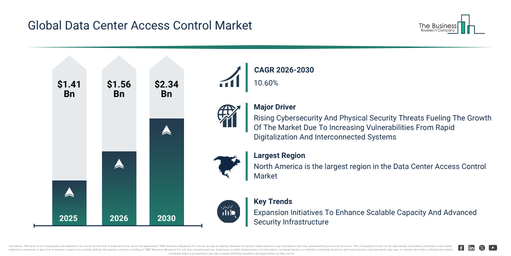
    The data center access control market size has experienced swift expansion in recent years. It is anticipated to expand from $1.41 billion in 2025 to $1.56 billion in 2026, demonstrating a compound annual growth rate (CAGR) of 10.4%. Historically, this growth can be attributed to factors such as increasing data center construction worldwide, escalating cyber and physical security threats, the implementation of keycard-based access systems, the expansion of enterprise IT infrastructure, and the initial deployment of biometric authentication in secure facilities._x000D_

    _x000D_

    The data center access control market size is projected to experience substantial expansion over the upcoming years. It is anticipated to reach a valuation of $2.34 billion by the year 2030, exhibiting a compound annual growth rate (CAGR) of 10.6%. This projected growth during the forecast period stems from factors such as the proliferation of hyperscale data centers, an increasing need for zero-trust security protocols, the incorporation of AI-driven threat detection into access solutions, the rise in edge data center implementations, and stricter regulatory demands concerning data security. Key trends anticipated during this period encompass AI-powered intelligent access control solutions utilizing behavioral analytics, IoT-supported real-time monitoring and tracking of facility access, the integration of biometric authentication with multi-layered identity verification, cloud-native centralized access management platforms designed for distributed data centers, and the implementation of zero-trust security architectures within physical data center security infrastructures._x000D_

    _x000D_

    #Download A Free Sample Report For Comprehensive Market Insights:#_x000D_

    https://www.thebusinessresearchcompany.com/sample_request?id=50985378&type=smp_x000D_

    _x000D_

    #Data Center Access Control Market Growth Drivers: What Factors Are Accelerating Expansion?#_x000D_

    The increasing dangers stemming from cybersecurity and physical security are projected to propel the expansion of the data center access control market moving forward. Cybersecurity threats encompass risks targeting digital systems and data, such as hacking or malware, while physical security threats involve harm to tangible assets and infrastructure, including theft, damage, or unauthorized physical entry. These cybersecurity and physical security threats are escalating due to rapid digitalization and interconnected systems, which broaden the spectrum of potential vulnerabilities and attack points. Data center access control serves to mitigate these threats by restricting and monitoring both digital and physical access, ensuring that only authorized users can enter systems or facilities. For instance, in November 2024, the Australian Cyber Security Centre, an Australia-based government agency, stated that in the financial year 2023–24, the Australian Cybersecurity Hotline operated by ASD received more than 36,700 calls, indicating a 12% rise compared to the previous year, and ASD addressed over 1,100 cybersecurity incidents during the same period. Therefore, the escalating cybersecurity and physical security threats are driving the growth of the data center access control market._x000D_

    _x000D_

    #Data Center Access Control Market Segment Outlook: Which Categories Are Expanding The Fastest?#_x000D_

    The data center access control market covered in this report is segmented – _x000D_

    _x000D_

    1) By Offering: Hardware, Software, Services_x000D_

    2) By Data Center Type: Hyperscale Data Center, Colocation Data Center, Enterprise Data Center_x000D_

    3) By Authentication Method: Biometric Authentication, Card-Based Authentication, PIN-Based Authentication, Multi-Factor Authentication_x000D_

    4) By Deployment Mode: On-Premises, Cloud-Based_x000D_

    5) By End-User: Colocation Data Centers, Enterprise Data Centers, Cloud Data Centers, Other End Users_x000D_

    _x000D_

    Subsegments:_x000D_

    1) By Hardware: Biometric Authentication Devices, Smart Card And Card Reader Devices, Keypad And PIN Entry Devices, Door Controllers And Control Panels, Electronic Locks And Door Strikes_x000D_

    2) By Software: Access Management Software, Identity And Credential Management Software, Visitor Management Software, Monitoring And Alert Management Software, Integration And Security Management Software_x000D_

    3) By Services: Installation And Deployment Services, Maintenance And Support Services, Consulting And Security Assessment Services, System Integration Services, Training And Technical Support Services_x000D_

    _x000D_

    #Data Center Access Control Market Trends: What Is Shaping Future Industry Growth?#_x000D_

    Major companies engaged in the data center access control market are prioritizing the expansion of data centers to accommodate the escalating demand from hyperscale cloud service providers and large enterprise organizations. This expansion of data centers refers to the process of enhancing the capacity, infrastructure, or geographical reach of facilities to meet growing requirements for data storage, processing, and connectivity. For instance, in September 2023, Colt Data Centre Services (DCS), a UK-based developer of hyperscale data centers, launched a new data center in Navi Mumbai, India. This facility is designed to provide high flexibility and scalability, supported by a substantial land parcel equipped to deliver up to 120MW of IT power to address the evolving demands from AI, HPC, and cloud applications. Its design facilitates efficient management of high-density workloads through advanced cooling and adaptable infrastructure. A crucial distinguishing feature is its multi-layered security framework, which integrates robust physical infrastructure with sophisticated access control systems and round-the-clock 24×7 surveillance to guarantee secure operations. Additionally, the facility benefits from a resilient 220kV GIS substation and holds a low-risk rating from a comprehensive TVRA assessment, reinforcing its reliability for mission-critical environments._x000D_

    _x000D_

    #Data Center Access Control Market Key Companies And Competitive Benchmarking#_x000D_

    Major companies operating in the data center access control market are Siemens AG, Schneider Electric SE, Honeywell International Inc., Thales Group, NEC Corporation, Johnson Controls International plc, Allegion plc, dormakaba Holding AG, HID Global Corporation, Axis Communications AB, Genetec Inc., Salto Systems S. L., Gallagher Group Limited, Napco Security Technologies Inc., ASSA ABLOY AB, Matrix Comsec Private Limited, Identiv Inc., Suprema Inc., Kisi Inc., Swiftlane Inc. _x000D_

    _x000D_

    #Access The Complete Data Center Access Control Market Report:#_x000D_

    https://www.thebusinessresearchcompany.com/report/data-center-access-control-market-report_x000D_

    _x000D_

    #Data Center Access Control Market Regional Analysis And Leading Geography#_x000D_

    North America was the largest region in the data center access control market in 2025. Asia-Pacific is expected to be the fastest-growing region in the forecast period. The regions covered in the data center access control market report are Asia-Pacific, South East Asia, Western Europe, Eastern Europe, North America, South America, Middle East and Africa. _x000D_

    _x000D_

    _x000D_

    _x000D_

    _x000D_

    #Get in touch with us:#_x000D_

    _x000D_

    The Business Research Company: https://www.thebusinessresearchcompany.com/_x000D_

    Americas: +1 310-496-7795_x000D_

    Asia: +44 7882 955267 & +91 8897263534_x000D_

    Europe: +44 7882 955267_x000D_

    Email us at: marketing@tbrc.info_x000D_

    _x000D_

    #Follow us on:#_x000D_

    _x000D_

    LinkedIn: https://in.linkedin.com/company/the-business-research-company_x000D_

    YouTube: https://www.youtube.com/channel/UC24_fI0rV8cR5DxlCpgmyFQ_x000D_

    Global Market Model: https://www.thebusinessresearchcompany.com/global-market-model
  • Cylindrical Cell Battery Energy Storage System (BESS) Market Size Projected To Increase From $5.33 Billion To $10.92 Billion During The Forecast Period

    Cylindrical Cell Battery Energy Storage System (BESS) Market Size Projected To Increase From $5.33 Billion To $10.92 Billion During The Forecast Period

    Through market attractiveness analysis, total addressable market evaluation, company benchmarking matrices, interactive Excel dashboards, expanded supply chain intelligence, emerging startup coverage, and detailed product insights, The Business Research Company’s 2026 market reports provide more actionable and strategically valuable research.

    #Cylindrical Cell Battery Energy Storage System (BESS) Market Expected To Reach $10.92 Billion By 2030 At 19.7% CAGR#_x000D_

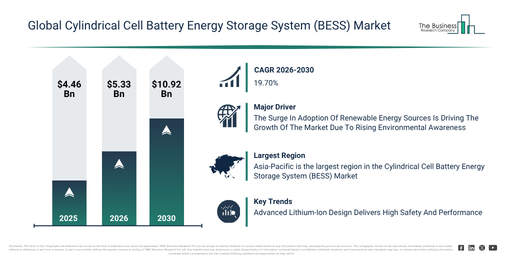
    The market size for cylindrical cell battery energy storage systems (BESS) has experienced swift expansion in recent years. This market is projected to expand from $4.46 billion in 2025 to reach $5.33 billion by 2026, demonstrating a compound annual growth rate (CAGR) of 19.4%. The surge observed in the past can be ascribed to several factors, including the increasing adoption of lithium-ion batteries, the growing demand for electric vehicles, enhanced integration of renewable energy, the decreasing expense of battery manufacturing, and improvements in cell manufacturing technologies._x000D_

    _x000D_

    The market for cylindrical cell battery energy storage systems (BESS) is projected to experience substantial growth in the upcoming years. This sector is forecast to expand to $10.92 billion by 2030, achieving a compound annual growth rate (CAGR) of 19.7%. Several factors contribute to this anticipated expansion, including the increasing deployment of grid-scale energy storage, a heightened demand for long-duration storage solutions, the continuous expansion of smart grid infrastructure, ongoing improvements in battery recycling and second-life applications, and the proliferation of decentralized energy systems. Significant trends expected during this period encompass the optimization of energy density in advanced cylindrical cells, enhancements in thermal runaway prevention for cylindrical battery architectures, the development of modular battery pack scalability suited for grid-level storage, improvements in high cycle life and fast charge-discharge performance, and the standardization of cylindrical lithium-ion cell formats for BESS applications._x000D_

    _x000D_

    #Download A Free Sample Report For Comprehensive Market Insights:#_x000D_

    https://www.thebusinessresearchcompany.com/sample_request?id=20216424&type=smp_x000D_

    _x000D_

    #Cylindrical Cell Battery Energy Storage System (BESS) Market Growth Factors Supporting Long-Term Expansion#_x000D_

    The expanding utilization of renewable energy sources is projected to drive the future expansion of the cylindrical cell BESS market. These sources represent sustainable energy systems, including solar, wind, and hydro power, which either substitute or complement traditional fossil fuels, leading to a reduction in greenhouse gas emissions. The uptake of renewable energy is escalating, primarily fueled by supportive governmental policies and incentives that stimulate investments, diminish dependence on fossil fuels, and hasten the deployment of clean energy. Cylindrical cell BESS facilitates the integration of renewable energy by effectively storing surplus energy and ensuring a consistent power supply during periods of low generation or high demand, thus guaranteeing grid stability and uninterrupted power access. As an illustration, in June 2025, data from the Department of Climate Change, Energy, the Environment, and Water, an Australia-based government agency, indicated that renewable energy sources produced roughly 102,403 GWh, contributing 36% of Australia’s total electricity output, which marked an increase of one percentage point from 2023. Consequently, the rising adoption of renewable energy sources is a key factor propelling the expansion of the cylindrical cell BESS market._x000D_

    _x000D_

    #Cylindrical Cell Battery Energy Storage System (BESS) Market Segment Landscape: Which Areas Lead Market Development?#_x000D_

    The cylindrical cell battery energy storage system (bess) market covered in this report is segmented – _x000D_

    _x000D_

    1) By Battery Type: Lithium-ion, Nickel-cadmium, Nickel-metal hydride, Other Battery Types_x000D_

    2) By Installation Type: On-Grid Systems, Off-Grid Systems, Hybrid Systems_x000D_

    3) By Capacity: Below 2,500 mAh, 2,500–5,000 mAh, Above 5,000 mAh_x000D_

    4) By Distribution Channel: Original Equipment Manufacturers (OEMs), Aftermarket_x000D_

    5) By Application: Energy storage, Industrial, Automotive, Consumer electronics, Medical devices, Other Applications_x000D_

    _x000D_

    Subsegments:_x000D_

    1) By Lithium-ion: Lithium Iron Phosphate Batteries, Lithium Nickel Manganese Cobalt Batteries, Lithium Nickel Cobalt Aluminum Batteries, Lithium Titanate Batteries, Lithium Cobalt Oxide Batteries_x000D_

    2) By Nickel-cadmium: Vented Nickel Cadmium Batteries, Sealed Nickel Cadmium Batteries, Industrial Grade Nickel Cadmium Batteries, High Temperature Nickel Cadmium Batteries, Low Maintenance Nickel Cadmium Batteries_x000D_

    3) By Nickel-metal Hydride: Standard Nickel Metal Hydride Batteries, High Capacity Nickel Metal Hydride Batteries, Low Self Discharge Nickel Metal Hydride Batteries, High Power Nickel Metal Hydride Batteries, Rechargeable Nickel Metal Hydride Batteries_x000D_

    4) By Other Battery Types: Solid State Batteries, Sodium Ion Batteries, Zinc Air Batteries, Lead Acid Batteries, Flow Batteries_x000D_

    _x000D_

    #Cylindrical Cell Battery Energy Storage System (BESS) Market Industry Trends Shaping Future Revenue Growth#_x000D_

    Prominent companies active in the cylindrical cell battery energy storage system (BESS) market are prioritizing the creation of sophisticated solutions, specifically large-format cylindrical batteries, to elevate energy density, improve safety performance, and allow for ultra-fast charging functionalities. These large cylindrical batteries denote advanced lithium-ion cells with expanded dimensions (such as 46-series formats), engineered to deliver increased energy output, superior thermal management, and scalable manufacturing efficiency for uses like electric vehicles and stationary energy storage systems. For example, in September 2025, EVE Energy Co., Ltd., a China-based battery manufacturer, launched its innovative large cylindrical battery at IAA Mobility 2025. This particular solution boasts high energy density, a prolonged cycle life, and rapid charging capability, making it a vital breakthrough for future energy storage and electric mobility applications, while also addressing the increasing requirement for efficient and scalable BESS infrastructure._x000D_

    _x000D_

    #Cylindrical Cell Battery Energy Storage System (BESS) Market Industry Leaders And Market Competition#_x000D_

    Major companies operating in the cylindrical cell battery energy storage system (bess) market are Tesla Inc, Panasonic Energy Co Ltd, LG Energy Solution Ltd, Samsung SDI Co Ltd, Murata Manufacturing Co Ltd, EVE Energy Co Ltd, Gotion High-Tech Co Ltd, Energizer Holdings Inc, Northvolt AB, Saft Groupe SA, Duracell Inc, A123 Systems LLC, Shenzhen Redway Power Co Ltd, E-One Moli Energy Corp, Lithium Werks BV, Envision AESC Group Ltd, Farasis Energy Inc, Tianjin Lishen Battery Joint-Stock Co Ltd, BAK Battery Co Ltd, Tianjin BAK Power Battery Co Ltd _x000D_

    _x000D_

    #Access The Complete Cylindrical Cell Battery Energy Storage System (BESS) Market Report:#_x000D_

    https://www.thebusinessresearchcompany.com/report/cylindrical-cell-battery-energy-storage-system-bess-market-report_x000D_

    _x000D_

    #Cylindrical Cell Battery Energy Storage System (BESS) Market Geographic Analysis: Where Is Demand Growing The Fastest?#_x000D_

    Asia-Pacific was the largest region in the cylindrical cell battery energy storage system (BESS) market in 2025. North America is expected to be the fastest-growing region in the forecast period. The regions covered in the cylindrical cell battery energy storage system (BESS) market report are Asia-Pacific, South East Asia, Western Europe, Eastern Europe, North America, South America, Middle East and Africa. _x000D_

    _x000D_

    _x000D_

    _x000D_

    _x000D_

    #Get in touch with us:#_x000D_

    _x000D_

    The Business Research Company: https://www.thebusinessresearchcompany.com/_x000D_

    Americas: +1 310-496-7795_x000D_

    Asia: +44 7882 955267 & +91 8897263534_x000D_

    Europe: +44 7882 955267_x000D_

    Email us at: marketing@tbrc.info_x000D_

    _x000D_

    #Follow us on:#_x000D_

    _x000D_

    LinkedIn: https://in.linkedin.com/company/the-business-research-company_x000D_

    YouTube: https://www.youtube.com/channel/UC24_fI0rV8cR5DxlCpgmyFQ_x000D_

    Global Market Model: https://www.thebusinessresearchcompany.com/global-market-model
  • Crypto Insurance Market Growth Outlook Reveals A CAGR Of 38% And A Market Value Of $18.13 Billion By 2030

    Crypto Insurance Market Growth Outlook Reveals A CAGR Of 38% And A Market Value Of $18.13 Billion By 2030

    Delivering more actionable and strategically valuable research, The Business Research Company’s 2026 market reports feature market attractiveness analysis, total addressable market evaluation, company benchmarking matrices, interactive Excel dashboards, expanded supply chain intelligence, emerging startup coverage, and detailed product insights.

    #Crypto Insurance Market Size And Revenue Forecast Through 2030_x000D_

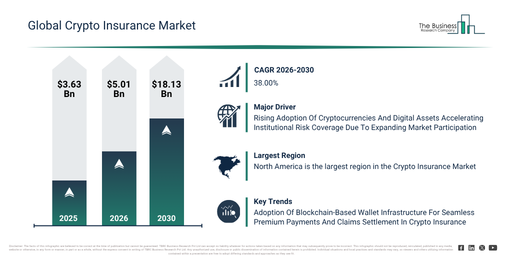
    The crypto insurance market has demonstrated exponential growth in its size over recent years. This market is projected to expand from $3.63 billion in 2025 to $5.01 billion in 2026, exhibiting a compound annual growth rate (CAGR) of 37.7%. This historical growth can be attributed to factors such as the rise in cryptocurrency exchange hacking incidents, increasing adoption of digital asset trading platforms, early institutional entry into crypto markets, growth of custodial wallet usage, and the emergence of basic cyber insurance products for digital assets._x000D_

    _x000D_

    The crypto insurance market is anticipated to undergo significant growth over the next few years, with its size projected to reach $18.13 billion by 2030, demonstrating a compound annual growth rate (CAGR) of 38.0%. This expansion during the forecast period is fueled by several factors, including the increasing institutional crypto investments, a heightened demand for decentralized finance risk protection, the adoption of AI-based fraud detection systems, regulatory mandates for digital asset insurance coverage, and the development of tokenized asset ecosystems and custody infrastructure. Prominent trends for this period encompass AI-driven crypto risk assessment and underwriting models, blockchain-based automated systems for verifying insurance claims, continuous cyber threat monitoring for safeguarding digital assets, parametric crypto insurance policies designed for instant payouts, and institutional-grade custodial insurance solutions catering to large digital asset holdings._x000D_

    _x000D_

    #Download A Free Sample Report For Comprehensive Market Insights:#_x000D_

    https://www.thebusinessresearchcompany.com/sample_request?id=74206394&type=smp_x000D_

    _x000D_

    #Crypto Insurance Market Demand Drivers Creating New Revenue Opportunities_x000D_

    The increasing integration and use of cryptocurrencies and digital assets are projected to fuel the expansion of the crypto insurance market over the next few years. This adoption signifies a growing trend in the ownership, exchange, and institutional incorporation of digital assets by individual users, businesses, and financial entities. Key drivers for this trend include greater institutional involvement, wider acceptance of blockchain-powered payment methods, and the more extensive integration of digital assets into conventional financial offerings. With heightened adoption, the total value of digital assets exposed to risk escalates, consequently increasing susceptibility to cyberattacks, larceny, deceit, and system malfunctions. Moreover, the availability of insurance products boosts confidence and lessens ambiguity, thereby forging a reciprocal relationship where increased crypto adoption fuels insurance demand. For example, data from Security. org, a US-based review platform focused on home security, digital safety tools, and personal protection, indicates that roughly 30% of American adults, totaling 70. 4 million individuals, held cryptocurrency in 2025, a rise from 27% in 2024. Consequently, the escalating adoption of cryptocurrencies and digital assets is a primary impetus for the expansion of the crypto insurance market._x000D_

    _x000D_

    #Crypto Insurance Market Segments: Where Are The Largest Growth Opportunities?#_x000D_

    The crypto insurance market covered in this report is segmented – _x000D_

    _x000D_

    1) By Type: Protocol Or Decentralized Finance Risk Insurance, Smart Contract Failure Insurance, Stablecoin De-Peg And Liquidity Risk, Custodial Asset Theft And Hacking, Wallet Insurance_x000D_

    2) By Distribution: Digital Marketplaces Or Embedded Insurance, Platform Partnerships, Direct Sales, Brokers And Specialty Risk Advisors_x000D_

    3) By Application: Cold Storage (Offline), Hot Wallet (Online), Cross-Chain Transactions_x000D_

    4) By End User: DeFi Protocols And Web3 Platforms, Institutional Investors And Asset Managers, Custodians And Wallet Providers, Crypto Exchanges And Trading Platforms, Retail Investors And SMEs_x000D_

    _x000D_

    Subsegments:_x000D_

    1) By Protocol Or Decentralized Finance Risk Insurance: Liquidity Pool Loss Coverage, Governance Attack Risk Coverage, Protocol Exploit Loss Coverage, Flash Loan Attack Coverage, Protocol Operational Failure Coverage_x000D_

    2) By Smart Contract Failure Insurance: Smart Contract Code Vulnerability Coverage, Smart Contract Execution Failure Coverage, Smart Contract Exploit Loss Coverage, Smart Contract Logic Error Coverage, Smart Contract Deployment Risk Coverage_x000D_

    3) By Stablecoin De Peg And Liquidity Risk: Stablecoin Price Instability Coverage, Collateral Backing Failure Coverage, Liquidity Pool Imbalance Coverage, Stablecoin Redemption Failure Coverage, Algorithmic Stablecoin Failure Coverage_x000D_

    4) By Custodial Asset Theft And Hacking: Exchange Platform Breach Coverage, Custodial Wallet Theft Protection, Insider Theft Risk Coverage, Cyber Attack Loss Coverage, Digital Asset Storage Breach Coverage_x000D_

    5) By Wallet Insurance: Hot Wallet Security Coverage, Cold Storage Wallet Protection, Multi Signature Wallet Risk Coverage, Private Key Loss Protection, Unauthorized Wallet Access Coverage_x000D_

    _x000D_

    #Crypto Insurance Market Trends Driving Strategic Industry Expansion#_x000D_

    Leading firms within the crypto insurance sector are increasingly prioritizing the incorporation of blockchain-based financial frameworks to facilitate effortless digital asset transactions and improve the customer journey. The uptake of payment and settlement systems that support cryptocurrencies is growing, as insurers seek to assist policyholders active in the digital asset environment. As an illustration, in January 2026, Dubai Insurance, an insurer based in the UAE, collaborated with Zodia Custody, a UK-based institutional digital asset custodian specializing in the secure storage and management of cryptocurrencies, to introduce a digital wallet capable of handling crypto. This wallet was developed to streamline insurance premium payments and claims settlements through the use of digital assets. This solution utilizes secure custody infrastructure, ensuring cryptocurrencies are handled safely, while also allowing for real-time transactions throughout the insurance process. This advancement boosts operational efficiency, increases accessibility for clients accustomed to cryptocurrencies, and highlights the increasing integration of conventional insurance services with blockchain technology._x000D_

    _x000D_

    #Crypto Insurance Market Major Participants And Competitive Dynamics#_x000D_

    Major companies operating in the crypto insurance market are Chubb Limited, Munich Re, Evertas, Marsh & McLennan Companies Inc, Arch Insurance Group Inc, Aon Plc, Canopius Group, Beazley Group, Neptune Mutual, Bridge Mutual, Nexus Mutual, InsurAce, Coincover, Relm Insurance, Etherisc, Re (Reinsurance Protocol), OpenCover, Nayms, Amulet, Tidal Finance, FairSide Network _x000D_

    _x000D_

    #Access The Complete Crypto Insurance Market Report:#_x000D_

    https://www.thebusinessresearchcompany.com/report/crypto-insurance-market-report_x000D_

    _x000D_

    #Crypto Insurance Market Global Footprint: Which Region Holds Market Leadership?#_x000D_

    North America was the largest region in the crypto insurance market in 2025. Asia-Pacific is expected to be the fastest-growing region in the forecast period. The regions covered in the crypto insurance market report are Asia-Pacific, South East Asia, Western Europe, Eastern Europe, North America, South America, Middle East and Africa. _x000D_

    _x000D_

    _x000D_

    _x000D_

    _x000D_

    #Get in touch with us:#_x000D_

    _x000D_

    The Business Research Company: https://www.thebusinessresearchcompany.com/_x000D_

    Americas: +1 310-496-7795_x000D_

    Asia: +44 7882 955267 & +91 8897263534_x000D_

    Europe: +44 7882 955267_x000D_

    Email us at: marketing@tbrc.info_x000D_

    _x000D_

    #Follow us on:#_x000D_

    _x000D_

    LinkedIn: https://in.linkedin.com/company/the-business-research-company_x000D_

    YouTube: https://www.youtube.com/channel/UC24_fI0rV8cR5DxlCpgmyFQ_x000D_

    Global Market Model: https://www.thebusinessresearchcompany.com/global-market-model
  • Cow Collar Global Positioning System (GPS) Geofence Market Forecast Highlights Expansion From $1.21 Billion To $2.12 Billion Through 2030

    Enhanced with market attractiveness analysis, total addressable market evaluation, company benchmarking matrices, interactive Excel dashboards, expanded supply chain intelligence, emerging startup coverage, and detailed product insights, The Business Research Company’s 2026 market reports deliver more actionable and strategically valuable research.

    #Cow Collar Global Positioning System (GPS) Geofence Market Growth From $1.21 Billion In 2026 To $2.12 Billion By 2030 At A CAGR Of 14.9%#_x000D_

    The cow collar global positioning system (GPS) geofence market has seen substantial growth in recent years. This market is expected to expand from $1.06 billion in 2025 to $1.21 billion in 2026, achieving a compound annual growth rate (CAGR) of 14.7%. Historically, its growth can be attributed to factors such as traditional manual livestock tracking, the infrequent adoption of GPS-enabled cattle collars, a reliance on physical fencing systems, low uptake of digital farm management tools, and fundamental herd monitoring without access to real-time data._x000D_

    _x000D_

    The cow collar global positioning system (GPS) geofence market is projected for significant expansion over the coming years. This market is set to reach $2.12 billion by 2030, demonstrating a compound annual growth rate (CAGR) of 14.9%._x000D_

    _x000D_

    The anticipated growth during this period can be attributed to several factors, including the increasing adoption of precision livestock farming technologies, a rising demand for real-time cattle location tracking, the broadening implementation of virtual fencing and geofencing systems, growing investment in smart dairy and cattle farm automation, and a heightened focus on optimizing livestock productivity and security._x000D_

    _x000D_

    Key trends expected in the forecast period include the expansion of virtual fencing systems as replacements for traditional farm boundaries, a growing preference for solar-powered GPS livestock collars in remote farming operations, the increasing application of behavioral analytics for optimizing grazing, the emergence of subscription-based platforms for livestock tracking and monitoring, and the integration of geofence alerts with mobile farm management applications._x000D_

    _x000D_

    #Download A Free Sample Report For Comprehensive Market Insights:#_x000D_

    https://www.thebusinessresearchcompany.com/sample_request?id=38623691&type=smp_x000D_

    _x000D_

    #Cow Collar Global Positioning System (GPS) Geofence Market Expansion Supported By Key Demand Factors#_x000D_

    The increasing adoption of precision livestock farming is anticipated to drive the growth of the cow collar global positioning system (GPS) geofence market moving forward. Precision livestock farming involves leveraging technology and data analytics to continuously monitor and improve the health, welfare, and productivity of livestock. Its growing popularity stems from the fact that real-time monitoring and data-driven management enhance animal health and productivity while simultaneously reducing losses. Cow collar GPS geofencing supports precision livestock farming by tracking cows’ locations in real time, observing grazing patterns, and notifying when animals cross into or out of defined zones, which helps optimize herd management and productivity. For example, in January 2024, the Government Accountability Office, a US-based nonpartisan government agency, reported that roughly 27% of U. S. farms and ranches implemented precision agriculture practices, including livestock monitoring, in 2023. This demonstrates how the expanding use of precision livestock farming is fueling the development of the cow collar global positioning system (GPS) geofence market._x000D_

    _x000D_

    #Cow Collar Global Positioning System (GPS) Geofence Market Segment Analysis: What Are The Major Market Categories?#_x000D_

    The cow collar global positioning system (gps) geofence market covered in this report is segmented – _x000D_

    _x000D_

    1) By Product Type: Smart Collars, Basic Global Positioning System Collars, Hybrid Collars_x000D_

    2) By Technology: Global Positioning System, Radio Frequency Identification, Bluetooth, LoRaWAN, Other Technologies_x000D_

    3) By Distribution Channel: Online, Offline_x000D_

    4) By Application: Livestock Tracking, Health Monitoring, Geofencing, Activity Monitoring, Other Applications_x000D_

    5) By End User: Dairy Farms, Cattle Ranches, Research Institutes, Other End-Users_x000D_

    _x000D_

    Subsegments:_x000D_

    1) By Smart Collars: Real Time Tracking Collars, Health Monitoring Collars, Activity Tracking Collars, Behavior Analysis Collars, Solar Powered Collars_x000D_

    2) By Basic Global Positioning System Collars: Location Tracking Collars, Low Power Consumption Collars, Manual Data Sync Collars, Entry Level Tracking Collars_x000D_

    3) By Hybrid Collars: Multi Sensor Integrated Collars, Global Positioning System And Radio Frequency Collars, Satellite And Cellular Network Collars, Adaptive Tracking Collars, Energy Efficient Hybrid Collars_x000D_

    _x000D_

    #Cow Collar Global Positioning System (GPS) Geofence Market Growth Trends Influencing Competitive Dynamics#_x000D_

    Leading companies in the cow collar global positioning system (GPS) geofence market are prioritizing the creation of advanced solutions like virtual fencing. These innovations are designed to enhance precision livestock management, optimize grazing patterns, and improve animal health alongside farm productivity. Virtual fencing functions as a GPS-driven system that uses wearable devices to guide livestock within predetermined boundaries without the need for physical barriers. For instance, in March 2026, Halter, an agricultural technology firm based in New Zealand, successfully raised $220 million in a Series E round. This funding is dedicated to advancing AI-powered collars for cows, which facilitate virtual fencing, health monitoring, and remote herd management via a mobile application. These solar-powered collars incorporate GPS, sound cues, vibrations, and their proprietary Cowgorithm AI to direct cattle without physical fences, while also tracking location, digestion, heat cycles, and other key health metrics._x000D_

    _x000D_

    #Cow Collar Global Positioning System (GPS) Geofence Market Leading Companies Driving Competitive Growth#_x000D_

    Major companies operating in the cow collar global positioning system (gps) geofence market are Nofence AS, Halter Limited, Actility Group, Globalsat WorldCom Corporation, Smarter Technologies Group Ltd., Digital Matter Ltd., Agersens Pty Ltd., CERES TAG Pty Ltd., Digitanimal S. L., FarmRanger Inc., Hunan HKT Technology Co. Ltd., Micodus Technology Co. Ltd., Moovement Pty Ltd., Tracki Inc., Trackster IT Solution, AnTraker, FitCows Pvt. Ltd., Monil Pty Ltd., RanchFlow Inc., UniGuard Technology Ltd., VerdantTrace Ltd. _x000D_

    _x000D_

    #Access The Complete Cow Collar Global Positioning System (GPS) Geofence Market Report:#_x000D_

    https://www.thebusinessresearchcompany.com/report/cow-collar-global-positioning-system-gps-geofence-market-report_x000D_

    _x000D_

    #Cow Collar Global Positioning System (GPS) Geofence Market Regional Distribution: Which Areas Drive Market Expansion?#_x000D_

    North America was the largest region in the cow collar global positioning system (GPS) geofence market in 2025. Asia-Pacific is expected to be the fastest-growing region in the forecast period. The regions covered in the cow collar global positioning system (GPS) geofence market report are Asia-Pacific, South East Asia, Western Europe, Eastern Europe, North America, South America, Middle East and Africa. _x000D_

    _x000D_

    _x000D_

    _x000D_

    _x000D_

    #Get in touch with us:#_x000D_

    _x000D_

    The Business Research Company: https://www.thebusinessresearchcompany.com/_x000D_

    Americas: +1 310-496-7795_x000D_

    Asia: +44 7882 955267 & +91 8897263534_x000D_

    Europe: +44 7882 955267_x000D_

    Email us at: marketing@tbrc.info_x000D_

    _x000D_

    #Follow us on:#_x000D_

    _x000D_

    LinkedIn: https://in.linkedin.com/company/the-business-research-company_x000D_

    YouTube: https://www.youtube.com/channel/UC24_fI0rV8cR5DxlCpgmyFQ_x000D_

    Global Market Model: https://www.thebusinessresearchcompany.com/global-market-model
  • Cow Activity Monitoring Market Expected To Reach $2.64 Billion By 2030 As Growth Accelerates At 12.7% CAGR

    Cow Activity Monitoring Market Expected To Reach $2.64 Billion By 2030 As Growth Accelerates At 12.7% CAGR

    Through market attractiveness analysis, total addressable market evaluation, company benchmarking matrices, interactive Excel dashboards, expanded supply chain intelligence, emerging startup coverage, and detailed product insights, The Business Research Company’s 2026 market reports provide more actionable and strategically valuable research.

    #Cow Activity Monitoring Market Expansion Outlook: What Revenue Opportunities Lie Ahead?#_x000D_

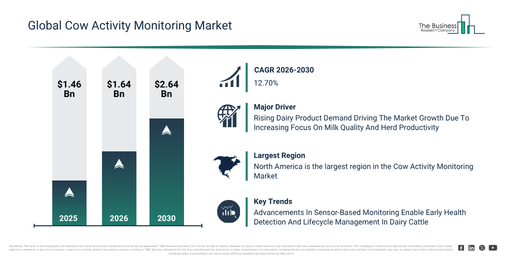
    The cow activity monitoring market has experienced swift expansion over recent years. It is projected to expand from $1.46 billion in 2025 to $1.64 billion in 2026, achieving a compound annual growth rate (CAGR) of 12.4%. Historically, this growth was primarily influenced by manual herd monitoring practices, restricted adoption of wearable livestock sensors, a heavy reliance on visual heat detection methods, insufficient automation in dairy farm management, and fundamental record keeping of cattle health and behavior._x000D_

    _x000D_

    The cow activity monitoring market size is projected to experience significant expansion over the coming years. This market is anticipated to reach $2. 64 billion by 2030, demonstrating a compound annual growth rate (CAGR) of 12. 7%. Several factors are contributing to this growth during the forecast period, including an increased demand for precision dairy farming solutions, the growing integration of wearable cow tracking devices, the expansion of automated systems for disease prediction, a heightened emphasis on optimizing milk yield and herd productivity, and increasing investments in intelligent livestock management infrastructure. Key trends expected over this period encompass the wider deployment of wearable-based estrus detection systems within dairy herds, a surge in the uptake of automated grazing and pasture management solutions, a sharpened focus on reducing antibiotic use via early disease detection in cattle, the emergence of subscription-based livestock monitoring service models, and the reinforcement of animal welfare compliance and traceability standards across dairy supply chains._x000D_

    _x000D_

    #Download A Free Sample Report For Comprehensive Market Insights:#_x000D_

    https://www.thebusinessresearchcompany.com/sample_request?id=44893183&type=smp_x000D_

    _x000D_

    #Cow Activity Monitoring Market Growth Drivers And Industry Catalysts_x000D_

    The increasing need for dairy items is projected to drive expansion within the cow activity monitoring market in the future. Dairy products, which encompass milk, cheese, butter, and yogurt, are foods derived from the milk of mammals. The uptake of dairy items is rising, fueled by greater health consciousness regarding their advantageous protein, calcium, and vitamin content essential for bone health and general well-being. Cow activity monitoring supports the enhancement of dairy products by overseeing the health, behavior, and reproductive status of cows, allowing for prompt interventions that improve milk quality, output, and the total productivity of the herd. As an example, the United States Department of Agriculture, a US-based government agency, reported in April 2025 that the total production of cheese, excluding cottage cheeses, reached 14.2 billion pounds, representing a 0.7 percent increase over 2023 production. Consequently, the escalating demand for dairy products is propelling the growth of the cow activity monitoring market._x000D_

    _x000D_

    #Cow Activity Monitoring Market Segment Breakdown: Which Categories Generate The Most Revenue?#_x000D_

    The cow activity monitoring market covered in this report is segmented – _x000D_

    _x000D_

    1) By Component: Hardware, Software, Services_x000D_

    2) By System Type: Wearable, Non-Wearable_x000D_

    3) By Farm Size: Small And Medium Farms, Large Farms_x000D_

    4) By Application: Health Monitoring, Reproductive Management, Feeding Management, Behavior Monitoring, Other Applications_x000D_

    5) By End-User: Dairy Farms, Research Institutes, Other End-Users_x000D_

    _x000D_

    Subsegments:_x000D_

    1) By Hardware: Sensors, Collars, Ear Tags, Leg Bands, Base Stations, Receivers_x000D_

    2) By Software: Data Analytics Software, Herd Management Software, Health Monitoring Software, Behavior Analysis Software, Cloud Based Platforms_x000D_

    3) By Services: Installation Services, Maintenance And Support Services, Consulting Services, Training Services, Data Management Services_x000D_

    _x000D_

    #Cow Activity Monitoring Market Trends Influencing Long-Term Demand_x000D_

    Companies operating in the cow activity monitoring market are increasingly focusing on developing technological advancements, such as calf health monitoring systems, to improve livestock health management, boost productivity, and facilitate real-time, data-driven decision-making. A calf health monitoring system utilizes sensors to continuously track the health, activity, and behavior of calves, enabling early detection of illnesses and enhancing animal welfare and productivity. For example, in December 2024, CowManager B. V., an agriculture technology company based in the Netherlands, introduced their Youngstock Monitor, a calf health monitoring system that employs lightweight ear sensors and AI-driven alerts. This solution tracks calf behavior from birth through adulthood using a single lifetime sensor per animal, delivering real-time notifications for prompt disease identification, including suspicious, sick, or very sick conditions. Its AI algorithms adapt to individual farm settings and calf development stages, allowing for targeted interventions that reduce antibiotic consumption, treatment expenditures, and mortality, while simultaneously increasing future milk production._x000D_

    _x000D_

    #Cow Activity Monitoring Market Key Players And Strategic Industry Positioning#_x000D_

    Major companies operating in the cow activity monitoring market are GEA Group AG, Nedap N. V., Nofence AS, Halter Limited, CowManager B. V., Afimilk Agricultural Cooperative Ltd., Globalsat WorldCom Corporation, AllyNav Inc., Cowlar Inc., UniGuard , Digitanimal S. L., FarmRanger Inc., HerdDogg Inc., Moovement Pty Ltd., Prompt Equipments Pvt. Ltd., FitCows Pvt. Ltd., Monil Pty Ltd., RanchFlow Inc., ConnectedCow Technologies Pvt. Ltd., Cattlescan Monitoring Systems Inc. _x000D_

    _x000D_

    #Access The Complete Cow Activity Monitoring Market Report:#_x000D_

    https://www.thebusinessresearchcompany.com/report/cow-activity-monitoring-market-report_x000D_

    _x000D_

    #Cow Activity Monitoring Market Leading Geography: Which Region Generates The Most Revenue?#_x000D_

    North America was the largest region in the cow activity monitoring market in 2025. Asia-Pacific is expected to be the fastest-growing region in the forecast period. The regions covered in the cow activity monitoring market report are Asia-Pacific, South East Asia, Western Europe, Eastern Europe, North America, South America, Middle East and Africa. _x000D_

    _x000D_

    _x000D_

    _x000D_

    _x000D_

    #Get in touch with us:#_x000D_

    _x000D_

    The Business Research Company: https://www.thebusinessresearchcompany.com/_x000D_

    Americas: +1 310-496-7795_x000D_

    Asia: +44 7882 955267 & +91 8897263534_x000D_

    Europe: +44 7882 955267_x000D_

    Email us at: marketing@tbrc.info_x000D_

    _x000D_

    #Follow us on:#_x000D_

    _x000D_

    LinkedIn: https://in.linkedin.com/company/the-business-research-company_x000D_

    YouTube: https://www.youtube.com/channel/UC24_fI0rV8cR5DxlCpgmyFQ_x000D_

    Global Market Model: https://www.thebusinessresearchcompany.com/global-market-model
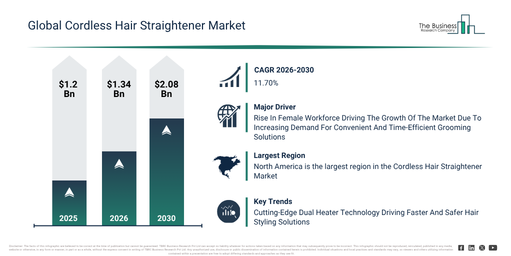
  • Cordless Hair Straightener Market Set To Grow From $1.34 Billion In 2026 To $2.08 Billion By 2030 At A CAGR Of 11.7%

    Cordless Hair Straightener Market Set To Grow From $1.34 Billion In 2026 To $2.08 Billion By 2030 At A CAGR Of 11.7%

    Delivering more actionable and strategically valuable research, The Business Research Company’s 2026 market reports feature market attractiveness analysis, total addressable market evaluation, company benchmarking matrices, interactive Excel dashboards, expanded supply chain intelligence, emerging startup coverage, and detailed product insights.

    #Cordless Hair Straightener Market Growth Potential: How Will Market Size Change Through 2030?#_x000D_

    The cordless hair straightener market has experienced significant expansion recently. Projections indicate its expansion from $1.2 billion in 2025 to $1.34 billion in 2026, reflecting a compound annual growth rate (CAGR) of 11.4%. This historical increase is primarily due to factors such as a surge in demand for salon-quality hair styling products, increased involvement of women in the workforce, the growing adoption of urban lifestyles, the expansion of the personal grooming electronics sector, and advancements in rechargeable battery technology._x000D_

    _x000D_

    The cordless hair straightener market is projected to experience swift expansion in the coming years. This market is anticipated to reach $2.08 billion by 2030, exhibiting a compound annual growth rate (CAGR) of 11.7%. This projected growth is driven by several factors, including AI-driven personalized haircare devices, the increasing need for cordless and portable styling solutions, the expansion of the premium beauty technology sector, the incorporation of smart sensors into styling devices, and a sustainability-focused move towards eco-friendly materials. Key developments expected during this period encompass AI-powered personalized heat and styling control, smart cordless beauty devices featuring IoT and app connectivity, advancements in sustainable rechargeable lithium batteries for longer runtime, lightweight and ergonomically compact designs enhancing travel convenience, and improvements in the efficiency of rapid heat-up ceramic and titanium plates._x000D_

    _x000D_

    #Download A Free Sample Report For Comprehensive Market Insights:#_x000D_

    https://www.thebusinessresearchcompany.com/sample_request?id=11989955&type=smp_x000D_

    _x000D_

    #Cordless Hair Straightener Market Opportunity Drivers: What Is Creating New Revenue Potential?#_x000D_

    The cordless hair straightener market is anticipated to expand due to the rising participation of women in the workforce. This segment comprises working-age women engaged in employment or economic activities across various sectors, with their involvement growing primarily because of enhanced access to education, which improves their skills and career prospects, encouraging more women to enter and remain in the job market. This increase in female workforce participation fuels the demand for cordless hair straighteners, as working women seek portable and efficient grooming devices that offer convenience without reliance on fixed power sources. For instance, data from August 2025, provided by the National Association of Home Builders, a US-based trade association, showed that prime working-age women (25–54) constituted nearly 30% of the U. S. civilian labor force, compared to approximately 34% for men in 2024. By March 2025, women accounted for about 47% of the overall labor force, maintaining a participation rate of 57.5%, which underscores their increasing presence over time. Consequently, the growing female workforce participation is a key driver for the cordless hair straightener market’s expansion._x000D_

    _x000D_

    #Cordless Hair Straightener Market Segmentation: How Is The Market Structured Across Key Categories?#_x000D_

    The cordless hair straightener market covered in this report is segmented – _x000D_

    _x000D_

    1) By Product: Ceramic, Titanium, Tourmaline, Other Products_x000D_

    2) By Distribution Channel: Online Stores, Supermarkets Or Hypermarkets, Specialty Stores, Other Distribution Channels_x000D_

    3) By Application: Personal Use, Professional Use_x000D_

    _x000D_

    Subsegments:_x000D_

    1) By Ceramic: Infrared Ceramic Plate Straighteners, Floating Ceramic Plate Straighteners, Ionic Ceramic Straighteners, Wide Plate Ceramic Straighteners_x000D_

    2) By Titanium: Professional Titanium Plate Straighteners, Floating Titanium Plate Straighteners, Ultra Smooth Titanium Plate Straighteners, Fast Heating Titanium Straighteners_x000D_

    3) By Tourmaline: Tourmaline Coated Plate Straighteners, Ionic Tourmaline Straighteners, Infrared Tourmaline Straighteners, Anti Frizz Tourmaline Straighteners_x000D_

    4) By Other Products: Glass Plate Hair Straighteners, Hybrid Material Plate Straighteners, Steam Based Hair Straighteners, Wet To Dry Hair Straighteners_x000D_

    _x000D_

    #Cordless Hair Straightener Market Innovation Trends Driving Future Development#_x000D_

    Major companies in the cordless hair straightener market are concentrating on developing advanced products, such as devices that incorporate dual heater technology for quicker and safer hair styling. Dual heater technology operates as a mechanism that rapidly generates heat while precisely regulating temperature through multiple thermal sensors, ensuring effective styling without causing excessive damage to hair. For instance, in January 2023, Mangoslab, a technology company based in Korea, unveiled a cordless hair straightener that earned a CES Innovation Award for its design and functionality. This device is notable for its hidden hinge design, which prevents hair snagging during use, and a hybrid mode that allows it to be plugged in while styling, conserving battery for cordless operation. Its 4-cell battery can reach temperatures up to 410°F and fully charges in just 60 minutes. The straightener is designed to be lightweight, portable, and user-friendly, offering secure, efficient, and convenient styling for individuals on the go._x000D_

    _x000D_

    #Cordless Hair Straightener Market Competitive Landscape And Leading Companies#_x000D_

    Major companies operating in the cordless hair straightener market are Dyson Ltd., Revlon Inc., Conair Corporation, KISS Products Inc., Good Hair Day (GHD), Dongguan Bidisco Electric Co. Ltd., BaByliss SARL, T3 Micro Inc., Good Seller Co. Ltd., Cloud Nine Hair Ltd., Lunata Beauty Inc., TYMO Beauty, Revamp Professional, Balmain Hair Couture, Remington Products Company, Guangzhou Shiya Electric Co. Ltd., Wenzhou Boyo Electric Co. Ltd., Qingtian Minghui Electric Technology Co. Ltd., Guangzhou Xinyang Electrical Appliance Co. Ltd., Webeauty _x000D_

    _x000D_

    #Access The Complete Cordless Hair Straightener Market Report:#_x000D_

    https://www.thebusinessresearchcompany.com/report/cordless-hair-straightener-market-report_x000D_

    _x000D_

    #Cordless Hair Straightener Market Regional Outlook: Where Are The Largest Opportunities Located?#_x000D_

    North America was the largest region in the cordless hair straightener market in 2025. Asia-Pacific is expected to be the fastest-growing region in the forecast period. The regions covered in the cordless hair straightener market report are Asia-Pacific, South East Asia, Western Europe, Eastern Europe, North America, South America, Middle East and Africa. _x000D_

    _x000D_

    _x000D_

    _x000D_

    _x000D_

    #Get in touch with us:#_x000D_

    _x000D_

    The Business Research Company: https://www.thebusinessresearchcompany.com/_x000D_

    Americas: +1 310-496-7795_x000D_

    Asia: +44 7882 955267 & +91 8897263534_x000D_

    Europe: +44 7882 955267_x000D_

    Email us at: marketing@tbrc.info_x000D_

    _x000D_

    #Follow us on:#_x000D_

    _x000D_

    LinkedIn: https://in.linkedin.com/company/the-business-research-company_x000D_

    YouTube: https://www.youtube.com/channel/UC24_fI0rV8cR5DxlCpgmyFQ_x000D_

    Global Market Model: https://www.thebusinessresearchcompany.com/global-market-model

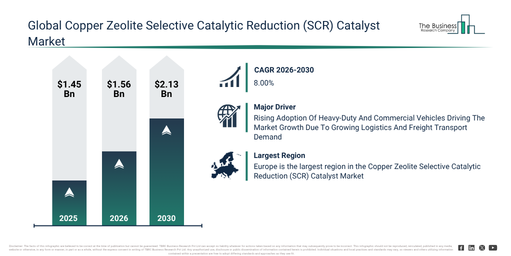
  • Copper Zeolite Selective Catalytic Reduction (SCR) Catalyst Market Opportunities Are Emerging Beyond Traditional Growth Areas

    Copper Zeolite Selective Catalytic Reduction (SCR) Catalyst Market Opportunities Are Emerging Beyond Traditional Growth Areas

    Enhanced with market attractiveness analysis, total addressable market evaluation, company benchmarking matrices, interactive Excel dashboards, expanded supply chain intelligence, emerging startup coverage, and detailed product insights, The Business Research Company’s 2026 market reports deliver more actionable and strategically valuable research.

    #Copper Zeolite Selective Catalytic Reduction (SCR) Catalyst Market Value Analysis: What Growth Is Expected Over The Forecast Period?#_x000D_

    The market size for copper zeolite selective catalytic reduction (SCR) catalysts has experienced significant expansion in recent years. This market is forecasted to increase from $1. 45 billion in 2025 to $1. 56 billion in 2026, achieving a compound annual growth rate (CAGR) of 7. 8%. The substantial growth observed in the past can be credited to implementation of stringent vehicle emission regulations worldwide, growing production of diesel powered commercial vehicles, increasing adoption of SCR systems in automotive exhaust treatment, rising awareness regarding air pollution control technologies, and expansion of industrial emission reduction initiatives._x000D_

    _x000D_

    The market for copper zeolite selective catalytic reduction (SCR) catalysts is anticipated to experience substantial expansion in the coming years. This market is projected to reach $2.13 billion by 2030, demonstrating an 8.0% compound annual growth rate (CAGR). Several factors contribute to this growth during the forecast period, including the rising need for ultra-low emission diesel engines, increased investment in advanced catalyst material research and development, wider implementation of emission control systems in marine and off-highway vehicles, the broadening of industrial NOx reduction applications, and a heightened emphasis on transportation technologies that are both fuel-efficient and environmentally compliant. Key trends expected during this period involve the greater integration of high-efficiency NOx reduction catalyst technologies, an increasing need for robust, high-temperature SCR catalyst formulations, the expanded utilization of advanced zeolite structures to improve emission control effectiveness, the development of low-temperature active catalyst solutions for diesel exhaust systems, and the increased incorporation of compact and lightweight emission control parts._x000D_

    _x000D_

    #Download A Free Sample Report For Comprehensive Market Insights:#_x000D_

    https://www.thebusinessresearchcompany.com/sample_request?id=64605850&type=smp_x000D_

    _x000D_

    #Copper Zeolite Selective Catalytic Reduction (SCR) Catalyst Market Growth Momentum: Which Factors Are Influencing Demand?#_x000D_

    The increasing adoption of heavy-duty and commercial vehicles is anticipated to drive the future expansion of the copper zeolite selective catalytic reduction (SCR) catalyst market. These substantial transport vehicles are essential for logistics, construction, and carrying heavy loads or many passengers for commercial purposes. Their prevalence is primarily increasing due to the rapid growth in logistics and e-commerce, which has significantly boosted the need for efficient long-distance transportation of goods. Copper zeolite selective catalytic reduction (SCR) catalysts assist heavy-duty and commercial vehicles by reducing harmful nitrogen oxide (NOx) emissions from diesel engines, ensuring compliance with strict emission regulations while maintaining engine efficiency and fuel performance. For example, in January 2024, the European Automobile Manufacturers Association (ACEA) reported that in 2023, new truck registrations in the EU surged by 16.3%, reaching 346,986 units, up from 298,407 in 2022. Similarly, new bus registrations in the EU saw an impressive 19.4% rise compared to the prior year, totaling 32,593 units. Thus, the growing adoption of heavy-duty and commercial vehicles is stimulating the growth of the copper zeolite selective catalytic reduction (SCR) catalyst market. The expanding industrialization is expected to propel the growth of the copper zeolite selective catalytic reduction (SCR) catalyst market going forward. Industrialization is defined as the transformation of an economy from agricultural activities to large-scale manufacturing and factory-based production utilizing machines and technology. This trend is escalating due to the rising global demand for manufactured goods, which encourages industries to boost their production capacity. A copper zeolite selective catalytic reduction (Cu-zeolite SCR) catalyst supports industrialization by enabling factories and power plants to efficiently reduce harmful nitrogen oxide (NO?) emissions, allowing for higher industrial output while still adhering to environmental regulations. For instance, in July 2025, Eurostat, the statistical office of the European Union, stated that in May 2025, industrial production increased by 3.7% in the euro area and by 3.4% across the European Union (EU) compared with May 2024. Therefore, growing industrialization is a key driver for the growth of the copper zeolite selective catalytic reduction (SCR) catalyst market._x000D_

    _x000D_

    #Copper Zeolite Selective Catalytic Reduction (SCR) Catalyst Market Segmentation Trends And Revenue Drivers#_x000D_

    The copper zeolite selective catalytic reduction (scr) catalyst market covered in this report is segmented – _x000D_

    _x000D_

    1) By Type: Hydrothermal, Thermal, Chemical_x000D_

    2) By Substrate Type: Honeycomb Monolith, Plate Type, Foam Substrate_x000D_

    3) By Distribution Channel: Original Equipment Manufacturers, Aftermarket_x000D_

    4) By Application: Automotive, Industrial, Power Plants, Marine, Other Applications_x000D_

    5) By End-Use: Passenger Vehicles, Commercial Vehicles, Off-Highway Vehicles, Other End-Uses_x000D_

    _x000D_

    Subsegments:_x000D_

    1) By Hydrothermal: High Temperature Hydrothermal Treatment, Low Temperature Hydrothermal Treatment, Steam Assisted Hydrothermal Processing, Controlled Atmosphere Hydrothermal Processing, Aqueous Phase Hydrothermal Treatment_x000D_

    2) By Thermal: High Temperature Thermal Treatment, Low Temperature Thermal Activation, Calcination Based Thermal Processing, Rapid Thermal Processing, Controlled Atmosphere Thermal Treatment_x000D_

    3) By Chemical: Ion Exchange Chemical Treatment, Acid Treatment Processing, Alkaline Treatment Processing, Surface Functionalization Chemical Treatment, Impregnation Based Chemical Processing_x000D_

    _x000D_

    _x000D_

    _x000D_

    _x000D_

    #Copper Zeolite Selective Catalytic Reduction (SCR) Catalyst Market Industry Leaders: Which Organizations Are Driving Competition?_x000D_

    Major companies operating in the copper zeolite selective catalytic reduction (scr) catalyst market are Sinopec Corporation, Shell plc, BASF SE, Cummins Inc., Mitsubishi Chemical Group Corporation, Umicore SA, Johnson Matthey Plc, Hanlan Environment Co. Ltd., Corning Incorporated, Clariant AG, NGK Insulators Ltd., Hitachi Zosen Corporation, Topsoe A/S, Cataler Corporation, DCL International Inc., Alfa Chemistry, Zeolyst International, Dinex A/S, Heraeus Precious Metals GmbH & Co. KG, Sinocat Environmental Technology Co. Ltd. _x000D_

    _x000D_

    #Access The Complete Copper Zeolite Selective Catalytic Reduction (SCR) Catalyst Market Report:#_x000D_

    https://www.thebusinessresearchcompany.com/report/copper-zeolite-selective-catalytic-reduction-scr-catalyst-market-report_x000D_

    _x000D_

    #Copper Zeolite Selective Catalytic Reduction (SCR) Catalyst Market Geographic Landscape: Which Region Dominates Industry Growth?#_x000D_

    Europe was the largest region in the copper zeolite selective catalytic reduction (SCR) catalyst market in 2025. Asia-Pacific is expected to be the fastest-growing region in the forecast period. The regions covered in the copper zeolite selective catalytic reduction (SCR) catalyst market report are Asia-Pacific, South East Asia, Western Europe, Eastern Europe, North America, South America, Middle East and Africa. _x000D_

    _x000D_

    _x000D_

    _x000D_

    _x000D_

    #Get in touch with us:#_x000D_

    _x000D_

    The Business Research Company: https://www.thebusinessresearchcompany.com/_x000D_

    Americas: +1 310-496-7795_x000D_

    Asia: +44 7882 955267 & +91 8897263534_x000D_

    Europe: +44 7882 955267_x000D_

    Email us at: marketing@tbrc.info_x000D_

    _x000D_

    #Follow us on:#_x000D_

    _x000D_

    LinkedIn: https://in.linkedin.com/company/the-business-research-company_x000D_

    YouTube: https://www.youtube.com/channel/UC24_fI0rV8cR5DxlCpgmyFQ_x000D_

    Global Market Model: https://www.thebusinessresearchcompany.com/global-market-model
  • Coolant Corrosion Inhibitor Market Expansion Is Opening New Pathways For Strategic Investment

    Coolant Corrosion Inhibitor Market Expansion Is Opening New Pathways For Strategic Investment

    Through market attractiveness analysis, total addressable market evaluation, company benchmarking matrices, interactive Excel dashboards, expanded supply chain intelligence, emerging startup coverage, and detailed product insights, The Business Research Company’s 2026 market reports provide more actionable and strategically valuable research.

    #Coolant Corrosion Inhibitor Market Size Forecast: How Large Could The Market Become By 2030?#_x000D_

    The market for coolant corrosion inhibitors has shown strong growth in recent years. Its size is expected to increase from $3.39 billion in 2025 to $3.58 billion in 2026, exhibiting a compound annual growth rate (CAGR) of 5.6%. Historically, this expansion has been driven by several factors, including the rising production of automobiles and the expansion of the vehicle parc, the increased adoption of aluminum and mixed metal engine components, a growing demand for the durability of engine cooling systems, the proliferation of industrial equipment requiring advanced cooling systems, and the integration of extended life coolant technologies._x000D_

    _x000D_

    The coolant corrosion inhibitor market is projected to experience substantial expansion over the upcoming years. Its valuation is set to reach $4. 48 billion by 2030 , driven by a compound annual growth rate ( CAGR ) of 5. 8% . This anticipated growth is primarily a result of several factors, including the surging need for thermal management solutions in electric vehicles, the increasing acceptance of environmentally friendly and bio-based coolant additives, escalating investments in industrial automation cooling systems, the enlargement of heavy-duty commercial vehicle fleets, and an intensified emphasis on preventive maintenance and enhancing cooling efficiency. Key developments anticipated during this timeframe involve the wider integration of long-life corrosion protection coolant formulations, a heightened demand for multi-metal compatible coolant corrosion inhibitors, the expanding application of scale and deposit prevention additives within cooling systems, the proliferation of high-performance coolants designed for extreme temperature environments, and a growing inclination towards cooling system solutions that offer extended drain intervals._x000D_

    _x000D_

    #Download A Free Sample Report For Comprehensive Market Insights:#_x000D_

    https://www.thebusinessresearchcompany.com/sample_request?id=53604517&type=smp_x000D_

    _x000D_

    #Coolant Corrosion Inhibitor Market Expansion Drivers: What Is Shaping Future Growth?#_x000D_

    The expansion in automotive manufacturing is anticipated to boost the growth of the coolant corrosion inhibitor market moving forward. Automotive production refers to the process of creating and assembling vehicles like cars, trucks, and buses in factories, utilizing raw materials and components. This production is currently rising due to increasing demand for vehicles, influenced by higher incomes and rapid urbanization. Coolant corrosion inhibitors assist automotive production by safeguarding engine cooling systems and metal components from rust, scaling, and general corrosion, consequently improving vehicle durability and reliability during both manufacturing and extended use. For instance, in January 2025, according to the China Association of Automobile Manufacturers (CAAM), a China-based nonprofit industry association, China’s vehicle production in 2024 reached approximately 31.282 million units, which signified a 3.7% increase compared to 2023. As a result, the increase in automotive production is propelling the growth of the coolant corrosion inhibitor market._x000D_

    _x000D_

    #Coolant Corrosion Inhibitor Market Segment Analysis Highlighting Growth Areas#_x000D_

    The coolant corrosion inhibitor market covered in this report is segmented – _x000D_

    _x000D_

    1) By Product Type: Organic Acid Technology, Hybrid Organic Acid Technology, Inorganic Additive Technology, Other Product Types_x000D_

    2) By Form: Liquid, Powder, Tablet_x000D_

    3) By Distribution Channel: Original Equipment Manufacturers, Aftermarket, Online Retail, Other Distribution Channels_x000D_

    4) By Application: Automotive, Industrial, Marine, Aerospace, Other Applications_x000D_

    5) By End-User: Passenger Vehicles, Commercial Vehicles, Industrial Equipment, Other End-Users_x000D_

    _x000D_

    Subsegments:_x000D_

    1) By Organic Acid Technology: Carboxylate Based Corrosion Inhibitors, Long Life Organic Acid Formulations, Silicate Free Organic Coolant Additives, Phosphate Free Organic Corrosion Inhibitors, Extended Drain Organic Coolant Solutions_x000D_

    2) By Hybrid Organic Acid Technology: Silicate Containing Hybrid Formulations, Phosphate Containing Hybrid Coolants, Low Silicate Hybrid Corrosion Inhibitors, Nitrite Enhanced Hybrid Coolant Additives, Multi Metal Protection Hybrid Formulations_x000D_

    3) By Inorganic Additive Technology: Silicate Based Corrosion Inhibitors, Phosphate Based Coolant Additives, Borate Based Corrosion Protection Solutions, Nitrite Based Cooling System Inhibitors, Molybdate Based Corrosion Inhibitors_x000D_

    4) By Other Product Types: Bio Based Corrosion Inhibitors, Nanotechnology Based Coolant Additives, Multi Functional Corrosion Protection Fluids, Custom Formulated Coolant Additives, Specialty Application Corrosion Inhibitors_x000D_

    _x000D_

    #Coolant Corrosion Inhibitor Market Strategic Trends: What Is Defining The Next Phase Of Growth?#_x000D_

    Leading companies in the coolant corrosion inhibitor market are actively pursuing technological advancements, notably phosphated organic acid technology, to enhance corrosion protection, extend coolant lifespan, improve metal compatibility, and comply with more stringent environmental and performance standards. Phosphated organic acid technology operates as a coolant corrosion prevention system, utilizing organic acids and phosphates to establish a protective layer on metallic surfaces, thereby guarding against corrosion in engine cooling systems. Illustrating this trend, in June 2025, FUCHS LUBRICANTES, a Germany-based manufacturing company, introduced FRICOFIN AV, a novel multifunctional coolant based on P-OAT (phosphated organic acid) technology, specifically formulated for modern automotive cooling systems. This high-quality coolant concentrate, derived from monoethylene glycol, is engineered to deliver enduring protection for light, heavy-duty, hybrid, and electric vehicles (where special electrical conductivity needs are absent). Importantly, it is free of silicates, borates, nitrites, amines, and 2-EHA, which aids in mitigating deposits and compatibility challenges within mixed-material engine cooling systems._x000D_

    _x000D_

    #Coolant Corrosion Inhibitor Market Leading Companies: Who Holds Significant Market Presence?#_x000D_

    Major companies operating in the coolant corrosion inhibitor market are Sinopec Corporation, ExxonMobil Corporation, Shell plc, TotalEnergies SE, Chevron Corporation, BASF SE, Dow Inc., LyondellBasell Industries N. V., Cummins Inc., The Lubrizol Corporation, Huntsman Corporation, Clariant AG, Ashland Global Holdings Inc., Quaker Houghton, Afton Chemical Corporation, Valvoline Inc., Old World Industries LLC, PETRONAS Lubricants International (PLI), Gulf Oil International, Recochem Inc., KOST USA Inc., Motul S. A., Lukoil, Millers Oils Ltd., Prestone Products Corporation, Arteco NV _x000D_

    _x000D_

    #Access The Complete Coolant Corrosion Inhibitor Market Report:#_x000D_

    https://www.thebusinessresearchcompany.com/report/coolant-corrosion-inhibitor-market-report_x000D_

    _x000D_

    #Coolant Corrosion Inhibitor Market Largest Region: Which Geography Holds The Highest Market Share?_x000D_

    North America was the largest region in the coolant corrosion inhibitor market in 2025. Asia-Pacific is expected to be the fastest-growing region in the forecast period. The regions covered in the coolant corrosion inhibitor market report are Asia-Pacific, South East Asia, Western Europe, Eastern Europe, North America, South America, Middle East and Africa. _x000D_

    _x000D_

    _x000D_

    _x000D_

    _x000D_

    #Get in touch with us:#_x000D_

    _x000D_

    The Business Research Company: https://www.thebusinessresearchcompany.com/_x000D_

    Americas: +1 310-496-7795_x000D_

    Asia: +44 7882 955267 & +91 8897263534_x000D_

    Europe: +44 7882 955267_x000D_

    Email us at: marketing@tbrc.info_x000D_

    _x000D_

    #Follow us on:#_x000D_

    _x000D_

    LinkedIn: https://in.linkedin.com/company/the-business-research-company_x000D_

    YouTube: https://www.youtube.com/channel/UC24_fI0rV8cR5DxlCpgmyFQ_x000D_

    Global Market Model: https://www.thebusinessresearchcompany.com/global-market-model
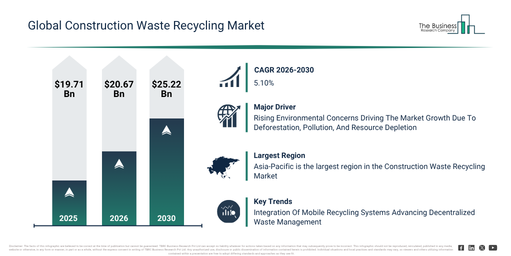
  • Construction Waste Recycling Market Growth Is Reshaping Competitive Advantage Across The Industry

    Construction Waste Recycling Market Growth Is Reshaping Competitive Advantage Across The Industry

    Enhanced with market attractiveness analysis, total addressable market evaluation, company benchmarking matrices, interactive Excel dashboards, expanded supply chain intelligence, emerging startup coverage, and detailed product insights, The Business Research Company’s 2026 market reports deliver more actionable and strategically valuable research.

    #Construction Waste Recycling Market Growth Analysis: How Will Revenue Expand During The Forecast Period?#_x000D_

    The construction waste recycling market has seen consistent expansion over recent years. Its valuation is projected to rise from $19.71 billion in 2025 to $20.67 billion in 2026, progressing at a compound annual growth rate (CAGR) of 4.9%. This historical development can be primarily attributed to factors such as increasing urbanization and infrastructure development, a rise in construction and demolition waste generation, stricter environmental regulations concerning landfill disposal, the early adoption of recycling practices in developed economies, and a growing awareness of resource conservation within the construction sector._x000D_

    _x000D_

    The construction waste recycling market is projected for significant expansion over the coming years, set to reach $25.22 billion by 2030 with a compound annual growth rate (CAGR) of 5.1%. This anticipated growth during the forecast period is fueled by stricter global sustainability and zero-waste regulations, the growing embrace of circular economy construction models, increasing demand for green building materials, the expansion of smart waste management infrastructure, and rising investments in automated recycling and material recovery technologies. Key trends anticipated during this period encompass the wider adoption of circular construction methods aimed at reducing landfill waste and maximizing material reuse, a surge in demand for recycled aggregates within sustainable infrastructure projects, the expanded utilization of advanced material recovery facilities for effective sorting of construction debris, the broadening of deconstruction techniques over traditional demolition to enhance material recovery rates, and the increasing incorporation of sustainable building certifications promoting the uptake of construction waste recycling._x000D_

    _x000D_

    #Download A Free Sample Report For Comprehensive Market Insights:#_x000D_

    https://www.thebusinessresearchcompany.com/sample_request?id=91884077&type=smp_x000D_

    _x000D_

    #Construction Waste Recycling Market Industry Drivers: What Is Driving Revenue Growth?#_x000D_

    Growing environmental concerns are projected to drive the expansion of the construction waste recycling market in the future. These concerns refer to problems stemming from human actions that negatively impact the natural environment, encompassing pollution, climate change, and the depletion of resources. The increase in environmental issues is attributable to deforestation for urban development and farming, leading to a reduction in forest areas, ecological disruptions, and elevated atmospheric carbon dioxide levels. Construction waste recycling offers a solution to environmental concerns by decreasing the volume of construction refuse directed to landfills, preserving natural resources via the reuse of materials like concrete, metal, and wood, and diminishing pollution and carbon emissions linked to the extraction and disposal of raw materials. As an illustration, in September 2024, the European Court of Auditors, a government body based in Luxembourg, reported that the commission targeted 25% of the EU’s agricultural land for organic farming by 2030, a significant rise from 10.5% in 2022. Consequently, the escalating environmental concerns are propelling the expansion of the construction waste recycling market._x000D_

    _x000D_

    #Construction Waste Recycling Market Segment Landscape And Growth Potential_x000D_

    The construction waste recycling market covered in this report is segmented – _x000D_

    _x000D_

    1) By Material: Wood, Metal, Bricks, Concrete, Other Materials_x000D_

    2) By Recycling Method: On-Site Recycling, Off-Site Recycling_x000D_

    3) By Organization Size: Small And Medium Enterprises, Large Enterprises_x000D_

    4) By Application: Recycled Aggregates Production, Road Base And Pavement Materials, Metal Reuse And Manufacturing Feedstock, Wood Products And Biomass Fuel, Land Reclamation Or Fill Material, New Building Materials Production_x000D_

    5) By End User: Residential Construction, Commercial Construction, Industrial Construction, Infrastructure And Public Works_x000D_

    _x000D_

    Subsegments:_x000D_

    1) By Wood: Untreated Construction Wood Waste, Treated Timber Waste, Engineered Wood Waste, Pallet And Packaging Wood Waste, Demolition Wood Waste, Wood Chips And Sawdust Recovery_x000D_

    2) By Metal: Ferrous Metal Scrap, Non Ferrous Metal Scrap, Steel Reinforcement Waste, Aluminum Construction Scrap, Copper Wiring And Piping Waste, Mixed Metal Construction Debris_x000D_

    3) By Bricks: Clay Brick Waste, Concrete Bricks Waste, Silicate Bricks Waste, Demolition Brick Rubble, Broken Brick Aggregates, Reusable Brick Recovery_x000D_

    4) By Concrete: Reinforced Concrete Waste, Plain Concrete Waste, Precast Concrete Waste, Concrete Rubble, Crushed Concrete Aggregates, High Strength Concrete Waste_x000D_

    5) By Other Materials: Asphalt Waste, Glass Construction Waste, Plastic Construction Waste, Gypsum And Drywall Waste, Insulation Material Waste, Composite Material Waste_x000D_

    _x000D_

    #Construction Waste Recycling Market Growth Trends: What Is Influencing The Future Outlook?_x000D_

    Major companies active in the construction waste recycling market are concentrating on developing groundbreaking solutions, such as on-site material processing equipment, to directly process demolition waste at project sites. This approach aims to lower transportation costs, boost efficiency, and hasten material reuse. This on-site equipment refers to portable machinery specifically designed to crush, screen, and separate construction waste into reusable aggregates right at the source. For instance, in October 2025, Eggersmann GmbH, a Germany-based manufacturer and engineering firm, introduced the ROKTEC IC 1000 mobile impact crusher. This crusher is engineered for transforming mineral construction waste into high-quality substitute building materials. It features a substantial infeed capacity of up to 800 mm, includes integrated screening and magnetic separation, and incorporates a closed-loop crushing circuit with a return conveyor to ensure consistent output. By facilitating the creation of precisely graded materials from concrete, asphalt, and bricks, this solution supports immediate reuse in applications like road substructures, improves operational efficiency, minimizes equipment wear through pre-screening mechanisms, and promotes sustainable construction practices via decentralized, high-quality material recovery._x000D_

    _x000D_

    #Construction Waste Recycling Market Competitive Landscape: Who Are The Leading Companies?#_x000D_

    Major companies operating in the construction waste recycling market are Waste Management Inc., Veolia Environnement S. A., Republic Services Inc., Waste Connections Inc., SUEZ Recycling and Recovery Holdings, Remondis SE & Co. KG, Clean Harbors Inc., GFL Environmental Inc., FCC Environment LLC, Renewi plc, Biffa Group Limited, Casella Waste Systems Inc., Paprec Group, ALBA Group, Holcim Group, Heidelberg Materials, TOMRA Systems ASA, CDE Global, Vulcan Materials Company, Rubicon Technologies, Cement Roadstone Holdings, Clean Earth Inc., Dulsco Group LLC _x000D_

    _x000D_

    #Access The Complete Construction Waste Recycling Market Report:#_x000D_

    https://www.thebusinessresearchcompany.com/report/construction-waste-recycling-market-report_x000D_

    _x000D_

    #Construction Waste Recycling Market Geographic Distribution And Regional Opportunities#_x000D_

    Asia-Pacific was the largest region in the construction waste recycling market in 2025 and is expected to be the fastest-growing region in the forecast period. The regions covered in the construction waste recycling market report are Asia-Pacific, South East Asia, Western Europe, Eastern Europe, North America, South America, Middle East and Africa. _x000D_

    _x000D_

    _x000D_

    _x000D_

    _x000D_

    #Get in touch with us:#_x000D_

    _x000D_

    The Business Research Company: https://www.thebusinessresearchcompany.com/_x000D_

    Americas: +1 310-496-7795_x000D_

    Asia: +44 7882 955267 & +91 8897263534_x000D_

    Europe: +44 7882 955267_x000D_

    Email us at: marketing@tbrc.info_x000D_

    _x000D_

    #Follow us on:#_x000D_

    _x000D_

    LinkedIn: https://in.linkedin.com/company/the-business-research-company_x000D_

    YouTube: https://www.youtube.com/channel/UC24_fI0rV8cR5DxlCpgmyFQ_x000D_

    Global Market Model: https://www.thebusinessresearchcompany.com/global-market-model

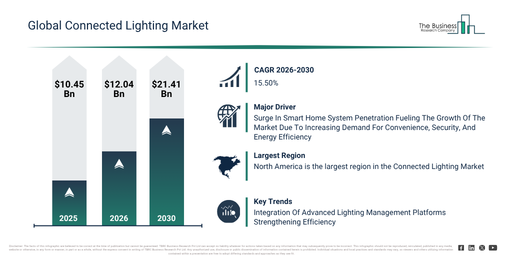
  • Connected Lighting Market Forecast Signals New Revenue Opportunities Through 2030

    Connected Lighting Market Forecast Signals New Revenue Opportunities Through 2030

    Through market attractiveness analysis, total addressable market evaluation, company benchmarking matrices, interactive Excel dashboards, expanded supply chain intelligence, emerging startup coverage, and detailed product insights, The Business Research Company’s 2026 market reports provide more actionable and strategically valuable research.

    #Connected Lighting Market Forecast: What Market Value Is Expected By 2030?#_x000D_

    The connected lighting market has experienced rapid expansion in recent years. Its valuation is set to rise from $10.45 billion in 2025 to $12.04 billion in 2026, demonstrating a compound annual growth rate (CAGR) of 15.2%. The historical increase can be attributed to several factors including the rising adoption of energy-efficient lighting technologies, increasing urbanization and smart city development, a surge in commercial construction activities, the declining cost of LED lighting systems, and the early implementation of building automation systems in developed regions._x000D_

    _x000D_

    The connected lighting market is projected to experience substantial expansion in the coming years, reaching a valuation of $21. 41 billion by 2030, driven by a compound annual growth rate (CAGR) of 15. 5%. This anticipated growth is primarily due to several factors: a rising need for net zero and green building solutions, the proliferation of smart city infrastructure projects, enhanced integration of IoT-enabled building systems, a stronger emphasis on energy efficiency and carbon reduction goals, and the increasing implementation of AI-driven facility management tools. Key trends during this period are expected to involve the wider adoption of human-centric lighting for improved occupant well-being and productivity, the growing use of energy-efficient smart lighting in commercial settings to lower operational expenses, increased integration of lighting with building automation platforms for unified control, the expansion of wireless connected lighting solutions facilitating adaptable retrofitting in existing structures, and the greater utilization of occupancy and daylight sensors for optimized adaptive lighting._x000D_

    _x000D_

    #Download A Free Sample Report For Comprehensive Market Insights:#_x000D_

    https://www.thebusinessresearchcompany.com/sample_request?id=32890014&type=smp_x000D_

    _x000D_

    #Connected Lighting Market Growth Factors: Which Forces Are Supporting Market Expansion?_x000D_

    The expanding adoption of smart home systems is anticipated to drive the advancement of the connected lighting market. A smart home system represents an interconnected network of devices and appliances capable of remote management and automation, enhancing convenience, bolstering security, and optimizing energy use. The rise in smart home systems primarily stems from their enhanced convenience, enabling remote control and automation of household devices, thus conserving time and streamlining daily activities. Connected lighting complements smart home systems through its integration with sensors and voice assistants, facilitating automatic light adjustments according to occupancy, time of day, or user instructions, thereby boosting comfort and energy efficiency. For example, data from August 2024, provided by GreenMatch, a UK-based online services provider, indicated that in 2023, approximately 5.3 million households in the UK, accounting for about 19.7% of all residences, used smart home products. This figure is forecast to rise dramatically, with almost all homes, 98.8%, predicted to integrate smart devices by 2027. Consequently, the expanding penetration of smart home systems is fueling the growth within the connected lighting market._x000D_

    _x000D_

    #Connected Lighting Market Categorization By Product Type And Application#_x000D_

    The connected lighting market covered in this report is segmented – _x000D_

    _x000D_

    1) By Component: Hardware, Software, Services_x000D_

    2) By Sales Channel: Direct Sales, Distributors Or Wholesalers, Online Retail, Electrical Contractors Or Integrators, Original Equipment Manufacturer Channels_x000D_

    3) By Deployment Type: Wired Connected Lighting, Wireless Connected Lighting_x000D_

    4) By Application: Indoor Lighting, Outdoor Lighting_x000D_

    5) By End User Industry: Commercial And Enterprise, Industrial And Manufacturing, Residential, Municipal And Public Infrastructure, Healthcare, Education, Transportation And Logistics, Utilities And Energy_x000D_

    _x000D_

    Subsegments:_x000D_

    1) By Hardware: Smart Bulbs And Lamps, Control Modules And Switches, Gateways And Hubs_x000D_

    2) By Software: Lighting Control Platforms, Energy Management Software, Building Management Integration Software_x000D_

    3) By Services: Installation And Commissioning Services, Maintenance And Support Services, Consulting And System Design Services_x000D_

    _x000D_

    #Connected Lighting Market Industry Trends: What Changes Are Reshaping Demand?#_x000D_

    Leading companies in the connected lighting market are concentrating on creating advanced solutions, including cloud-based lighting management, to facilitate central command, observation, and automation of lighting systems, thereby enhancing operational effectiveness, safety, and regulatory adherence. This system leverages cloud computing technology to remotely supervise, manage, and optimize lighting networks using internet-connected devices and dedicated software platforms. As an illustration, in June 2025, Signify N. V., a lighting firm based in the Netherlands, introduced the Interact emergency lighting system. This wireless offering allows building managers to oversee, track, and test emergency lighting via a secure cloud-based dashboard. Integrated with the Interact building manager platform, the system performs automated function and duration tests, provides health status alerts, produces comprehensive compliance reports, and supports various testing schedules. These features empower building operators to decrease manual effort, lower operational expenses, boost system reliability, guarantee compliance with safety regulations, and facilitate integrated management of both general and emergency lighting within a single connected infrastructure._x000D_

    _x000D_

    #Connected Lighting Market Company Landscape And Strategic Competition#_x000D_

    Major companies operating in the connected lighting market are Signify N. V., Schneider Electric SE, Acuity Inc., Legrand SA, Eaton Corporation plc, Lutron Electronics Co. Inc., Honeywell International Inc., Samsung Electronics Co. Ltd., Panasonic Holdings Corporation, Hubbell Incorporated, Delta Electronics Inc., Zumtobel Group AG, Fagerhult Group AB, Helvar Oy Ab, Trilliant Networks Inc., Bajaj Electricals Limited, Leviton Manufacturing Co. Inc., Havells India Limited, Wipro Lighting Limited, Syska LED Lights Pvt. Ltd., Ubicquia Inc., Enlighted Inc., Schréder S. A., Dimonoff Inc., Flashnet S. A., CIMCON Lighting Inc. _x000D_

    _x000D_

    #Access The Complete Connected Lighting Market Report:#_x000D_

    https://www.thebusinessresearchcompany.com/report/connected-lighting-market-report_x000D_

    _x000D_

    #Connected Lighting Market Largest Region By Revenue And Market Share#_x000D_

    North America was the largest region in the connected lighting market in 2025. Asia-Pacific is expected to be the fastest-growing region in the forecast period. The regions covered in the connected lighting market report are Asia-Pacific, South East Asia, Western Europe, Eastern Europe, North America, South America, Middle East and Africa. _x000D_

    _x000D_

    _x000D_

    _x000D_

    _x000D_

    #Get in touch with us:#_x000D_

    _x000D_

    The Business Research Company: https://www.thebusinessresearchcompany.com/_x000D_

    Americas: +1 310-496-7795_x000D_

    Asia: +44 7882 955267 & +91 8897263534_x000D_

    Europe: +44 7882 955267_x000D_

    Email us at: marketing@tbrc.info_x000D_

    _x000D_

    #Follow us on:#_x000D_

    _x000D_

    LinkedIn: https://in.linkedin.com/company/the-business-research-company_x000D_

    YouTube: https://www.youtube.com/channel/UC24_fI0rV8cR5DxlCpgmyFQ_x000D_

    Global Market Model: https://www.thebusinessresearchcompany.com/global-market-model