Month: October 2026

  • Intranasal Corticosteroids Market Size Forecast From 2026 To 2030: Key Industry Trends

    Intranasal Corticosteroids Market Size Forecast From 2026 To 2030: Key Industry Trends

    Built to provide research that’s more actionable and strategically valuable, The Business Research Company’s 2026 market reports include market attractiveness analysis, total addressable market sizing, company benchmarking matrices, interactive Excel dashboards, broader supply chain intelligence, emerging startup tracking, and in-depth product insights.

    Intranasal Corticosteroids Market Revenue Outlook: What CAGR Lies Ahead Through 2030?

    The intranasal corticosteroids market size has experienced robust expansion in recent years. Projections indicate an increase from $6.78 billion in 2025 to $7.31 billion in 2026, demonstrating a compound annual growth rate (CAGR) of 7.8%. Factors contributing to this historical growth include limited knowledge of intranasal corticosteroids, a dependence on hospital pharmacies for drug dissemination, a rising occurrence of nasal allergies, a preference for traditional treatment approaches, and restricted availability of online pharmacies.

    The intranasal corticosteroids market is projected to experience substantial expansion in the coming years, with its size reaching $9.74 billion in 2030, demonstrating a compound annual growth rate (CAGR) of 7.4%. This anticipated growth during the forecast period is attributed to heightened healthcare awareness, the proliferation of retail and online pharmacies, an increasing incidence of chronic rhinitis and nasal polyps, the adoption of combination therapies, and the development of patient-friendly spray devices. Key trends for the forecast period include a rising prevalence of allergic rhinitis and nasal disorders, an increase in the adoption of prescription intranasal corticosteroids, a surge in over-the-counter intranasal corticosteroid use, the expansion of hospital and homecare distribution channels, and an emphasis on patient-centric treatment and ease of administration.

    Get A Free Sample Report With In-Depth Market Insights:

    https://thebusinessresearchcompany.com/sample_request?id=38182478&type=smp&name=Intranasal%20Corticosteroids%20Market%20Report%202026&utm_source=Blogs&utm_medium=Paid&utm_campaign=Oct_PR

    Intranasal Corticosteroids Market Opportunity Drivers: What’s Unlocking New Revenue Potential?

    The rising occurrence of allergic rhinitis is anticipated to stimulate future expansion within the intranasal corticosteroids market. This condition constitutes an allergic response leading to inflammation within the nasal passages, frequently initiated by airborne irritants like pollen, dust mites, mold, or pet dander. Its growing prevalence largely stems from escalating environmental pollution, which exposes people to airborne allergens and irritants, thus prompting allergic reactions in their nasal passages. Intranasal corticosteroids assist in managing allergic rhinitis through the reduction of nasal passage inflammation, thereby alleviating symptoms including sneezing, congestion, and a runny nose. For example, data from October 2023, provided by the National Library of Medicine, a US-based biomedical library, indicates that allergic rhinitis impacts more than 400 million individuals globally, with estimated prevalence rates of 10% to 30% in adults and exceeding 40% in children. Consequently, the increasing prevalence of allergic rhinitis acts as a significant driver for the intranasal corticosteroid market.

    Intranasal Corticosteroids Market Segment Analysis Spotlighting Growth Areas

    The intranasal corticosteroids market covered in this report is segmented –

    1) By Drug Types: Prescribed Drugs, Over-The-Counter Drugs

    2) By Application: Allergic Rhinitis, Nasal Polyps, Sinusitis, Other Applications

    3) By Distribution Channel: Hospital Pharmacies, Retail Pharmacies, Online Pharmacies, Other Distribution Channel

    4) By End User: Hospitals, Clinics, Homecare, Healthcare Providers

    Subsegments:

    1) By Prescribed Drugs: Fluticasone Propionate, Mometasone Furoate, Budesonide, Beclomethasone Dipropionate, Ciclesonide

    2) By Over-The-Counter Drugs: Triamcinolone Acetonide, Fluticasone Furoate, Budesonide Over-The-Counter Drugs

    Intranasal Corticosteroids Market Innovation Trends Shaping Future Development

    Leading companies within the intranasal corticosteroids market are prioritizing the development of innovative formulations, such as nasal sprays, to optimize targeted drug delivery and improve patient adherence. These liquid medications are administered directly into the nose via a spray nozzle to address conditions including allergies, congestion, or inflammation. They facilitate rapid drug absorption through the nasal mucosa, offering quick relief with minimal systemic effects. For instance, in March 2024, OptiNose Inc., a US-based pharmaceutical company, obtained approval from the U.S. Food and Drug Administration (FDA) for XHANCE, which is the first and only treatment specifically indicated for adults suffering from chronic rhinosinusitis (CRS) without nasal polyps. This nasal spray incorporates a unique exhalation delivery system, allowing the medication to reach deep into the nasal cavity, thereby effectively treating CRS in adults, with or without nasal polyps. Each spray dispenses 93 mcg of fluticasone propionate, and the device operates by requiring the user to blow into a mouthpiece while simultaneously releasing the spray into the nostril, ensuring precise delivery and enhanced symptom relief.

    Intranasal Corticosteroids Market Leading Companies: Who Holds The Strongest Market Presence?

    Major companies operating in the intranasal corticosteroids market are GlaxoSmithKline plc, Teva Pharmaceutical Industries Ltd., Sandoz Group AG, Haleon plc, Intas Pharmaceuticals Limited, Organon Pharma (UK) Limited, Sun Pharmaceutical Industries Ltd., Apotex Inc., Perrigo Company plc, Aurobindo Pharma Limited, Cipla Ltd., Hikma Pharmaceuticals plc, Zydus Lifesciences Ltd., Glenmark Pharmaceuticals Limited, OptiNose US Inc., Taro Pharmaceutical Industries Ltd., Maya Biotech Private Limited, AdvaCare Pharma USA, Lupin Ltd., Xenone Healthcare Private Limited.

    View The Full Intranasal Corticosteroids Market Report:

    https://thebusinessresearchcompany.com/report/intranasal-corticosteroids-global-market-report?utm_source=Blogs&utm_medium=Paid&utm_campaign=Oct_PR

    Intranasal Corticosteroids Market Geographic Spread And Regional Opportunities

    North America was the largest region in the intranasal corticosteroids market in 2025. Asia-Pacific is expected to be the fastest-growing region in the forecast period. The regions covered in the intranasal corticosteroids market report are Asia-Pacific, South East Asia, Western Europe, Eastern Europe, North America, South America, Middle East, Africa.

    Reach Out To Our Team:

    The Business Research Company: https://www.thebusinessresearchcompany.com/

    Americas: +1 310-496-7795

    Asia: +44 7882 955267 & +91 8897263534

    Europe: +44 7882 955267

    Email us at: marketing@tbrc.info

    Follow us on:

    LinkedIn: https://in.linkedin.com/company/the-business-research-company

    YouTube: https://www.youtube.com/channel/UC24_fI0rV8cR5DxlCpgmyFQ

    Global Market Model: https://www.thebusinessresearchcompany.com/global-market-model

  • Interventional Lung Solutions Market 2026: Market Size, Growth Drivers And Emerging Opportunities

    Interventional Lung Solutions Market 2026: Market Size, Growth Drivers And Emerging Opportunities

    Backed by market attractiveness analysis, total addressable market sizing, company benchmarking matrices, interactive Excel dashboards, wider supply chain intelligence, emerging startup coverage, and detailed product-level insights, The Business Research Company’s 2026 market reports are designed to offer research that is more actionable and strategically valuable than ever.

    Interventional Lung Solutions Market Growth Analysis: How Will Revenue Trend Over The Forecast Period?

    The interventional lung solutions market has experienced significant expansion in recent years. It is anticipated to grow from $2.47 billion in 2025 to $2.68 billion in 2026, achieving a compound annual growth rate (CAGR) of 8.3%. This historical growth can be attributed to factors such as the increasing prevalence of COPD and lung cancer, the limitations of surgical lung interventions, ongoing advancements in bronchoscopy technology, the growing adoption of minimally invasive procedures by hospitals, and rising healthcare expenditure.

    The interventional lung solutions market is anticipated to exhibit substantial growth in the coming years. It is projected to attain a size of $3.66 billion by 2030, advancing at a compound annual growth rate (CAGR) of 8.1%. This expansion during the forecast period can be attributed to several factors, including an increase in the aging population suffering from respiratory diseases, the rising adoption of robotic-assisted interventions, the broadening scope of outpatient pulmonary procedures, a heightened focus on early lung cancer diagnosis, and technological advancements in navigation bronchoscopy. Key trends expected over the forecast period encompass the increasing embrace of minimally invasive pulmonary procedures, greater utilization of robotic bronchoscopy systems, escalating demand for lung volume reduction devices, the expansion of image-guided interventional lung therapies, and a growing preference for disposable bronchoscopes.

    Get A Free Sample Report With In-Depth Market Insights:

    https://thebusinessresearchcompany.com/sample_request?id=39220697&type=smp&name=Interventional%20Lung%20Solutions%20Market%20Report%202026&utm_source=Blogs&utm_medium=Paid&utm_campaign=Oct_PR

    Interventional Lung Solutions Market Growth Momentum: What Factors Are Shaping Demand?

    The growing incidence of respiratory illnesses is anticipated to fuel the expansion of the interventional lung solutions market moving ahead. These conditions encompass various medical ailments impacting the lungs and airways, leading to impaired breathing and disrupted respiratory function. The escalating occurrence of respiratory diseases stems from higher levels of air pollution, which cause continuous exposure to detrimental airborne particles and irritants. Interventional lung solutions aid in managing these diseases through minimally invasive procedures designed to enhance lung function and alleviate symptoms for individuals with chronic pulmonary conditions. For example, as reported by BioMed Central Ltd, a UK-based journal website, in May 2025, the worldwide prevalence of chronic obstructive pulmonary disease is estimated at 10.3%, with projections indicating 600 million individuals will be affected by 2050. Furthermore, approximately 262 million people globally are currently impacted by asthma. Consequently, the rising prevalence of respiratory diseases acts as a key driver for the interventional lung solutions market.

    Interventional Lung Solutions Market Segment Performance And Emerging Opportunities

    The interventional lung solutions market covered in this report is segmented –

    1) By Product Type: Bronchoscopes, Endobronchial Ultrasound Needles, Pleuroscopes, Airway Stents, Other Product Types

    2) By Technology: Robotic Surgery, Laser Therapy, Electromagnetic Navigation Bronchoscopy

    3) By Procedure: Bronchoscopy, Thoracoscopy, Pleuroscopy, Other Procedures

    4) By Application: Lung Cancer Treatment, Chronic Obstructive Pulmonary Disease

    5) By End-User: Hospitals, Ambulatory Surgical Centers, Specialty Clinics, Other End-Users

    Subsegments:

    1) BY Bronchoscopes: Flexible Bronchoscopes, Rigid Bronchoscopes, Disposable Bronchoscopes

    2) By Endobronchial Ultrasound Needles: Transbronchial Aspiration Needles, Biopsy Needles

    3) By Pleuroscopes: Flexible Pleuroscopes, Semi-Rigid Pleuroscopes

    4) By Airway Stents: Metallic Stents, Silicone Stents, Hybrid Stents

    5) By Other Product Types: Bronchial Thermoplasty Devices, Lung Volume Reduction Devices, Electromagnetic Navigation Systems, Cryotherapy And Ablation Devices

    Interventional Lung Solutions Market Trends Redefining Industry Growth

    Major companies operating in the interventional lung solutions market are concentrating on developing innovative technologies, such as the Ion Endoluminal System, to enhance the accuracy of lung cancer diagnostics, enable less invasive procedures, and improve patient outcomes through advanced navigation and biopsy capabilities. The Ion Endoluminal System is a robotic-assisted platform built for minimally invasive lung procedures, allowing precise airway navigation to reach small or hard-to-access lung nodules. As an example, in April 2024, H. Lee Moffitt Cancer Center and Research Institute Foundation Inc., a US-based non-profit institution, launched a new Ion Robotic Bronchoscopy platform, which strengthened their interventional pulmonology program with advanced fiber-optic technology and a minimally invasive catheter system. This technology employs fiber optics and the smallest catheter on the market to access all regions of the lung. This platform features an ultra-thin, highly flexible catheter with 180° articulation, integrated real-time vision, and shape-sensing technology, facilitating precise navigation and biopsy of hard-to-reach peripheral lung nodules. This system offers unprecedented stability and accuracy for tissue sampling, enabling physicians to reach all 18 lung segments and enhancing early lung cancer detection.

    Interventional Lung Solutions Market Key Players: Which Companies Lead Industry Competition?

    Major companies operating in the interventional lung solutions market are Johnson and Johnson, Siemens AG, Medtronic plc, FUJIFILM Holdings Corporation, GE Healthcare Technologies Inc., Boston Scientific Corporation, Olympus Corporation, Intuitive Surgical Inc., Smiths Medical Inc., Cook Medical Inc., Merit Medical Systems Inc., Penumbra Inc., Vygon SA, AngioDynamics Inc., Vapotherm Inc., Pulmonx Corporation, Broncus Medical Inc., Thirona B.V., Body Vision Medical Ltd., EndoMed Systems GmbH

    View The Full Interventional Lung Solutions Market Report:

    https://thebusinessresearchcompany.com/report/interventional-lung-solutions-global-market-report?utm_source=Blogs&utm_medium=Paid&utm_campaign=Oct_PR

    Interventional Lung Solutions Market Top Region By Revenue And Market Share

    North America was the largest region in the interventional lung solutions market in 2025. Asia-Pacific is expected to be the fastest-growing region in the forecast period. The regions covered in the interventional lung solutions market report are Asia-Pacific, South East Asia, Western Europe, Eastern Europe, North America, South America, Middle East, Africa.

    Reach Out To Our Team:

    The Business Research Company: https://www.thebusinessresearchcompany.com/

    Americas: +1 310-496-7795

    Asia: +44 7882 955267 & +91 8897263534

    Europe: +44 7882 955267

    Email us at: marketing@tbrc.info

    Follow us on:

    LinkedIn: https://in.linkedin.com/company/the-business-research-company

    YouTube: https://www.youtube.com/channel/UC24_fI0rV8cR5DxlCpgmyFQ

    Global Market Model: https://www.thebusinessresearchcompany.com/global-market-model
  • Interstitial Cystitis Drugs Market Set To Expand From $1.81 Billion In 2026: Growth Outlook Through 2030

    Interstitial Cystitis Drugs Market Set To Expand From $1.81 Billion In 2026: Growth Outlook Through 2030

    Featuring market attractiveness scoring, total addressable market sizing, company benchmarking matrices, interactive Excel dashboards, deeper supply chain intelligence, emerging startup tracking, and granular product-level insights, The Business Research Company’s 2026 market reports are built to deliver research that is both more actionable and more strategically valuable.

    Interstitial Cystitis Drugs Market Forecast: What Value Will The Market Reach By 2030?

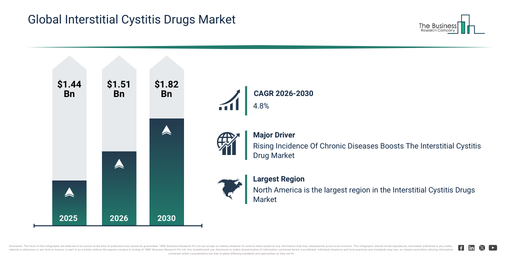
    The interstitial cystitis drugs market size has experienced consistent growth in recent years. This market is projected to expand from $1.44 billion in 2025 to $1.51 billion in 2026, exhibiting a compound annual growth rate (CAGR) of 4.8%. Historically, the market’s expansion was influenced by factors such as limited awareness of ic, reliance on conventional therapies, high prevalence of misdiagnosis, restricted r&d funding, and low adoption of intravesical therapy.

    The interstitial cystitis drugs market is projected to experience consistent expansion over the upcoming years. Its valuation is anticipated to reach $1.82 billion in 2030, exhibiting a compound annual growth rate (CAGR) of 4.8%. This expansion during the projection period stems from factors such as the increasing embrace of targeted therapies, greater investment in IC research, a rise in bladder disorder prevalence, innovations in drug delivery technology, and the development of healthcare infrastructure. Key trends anticipated during this period encompass individualized treatment methods, non-invasive drug delivery solutions, the evolution of combination therapies, improved bladder lining repair interventions, and a heightened emphasis on symptom control.

    Get A Free Sample Report With In-Depth Market Insights:

    https://thebusinessresearchcompany.com/sample_request?id=51888144&type=smp&name=Interstitial%20Cystitis%20Drugs%20Market%20Report%202026&utm_source=Blogs&utm_medium=Paid&utm_campaign=Oct_PR

    Interstitial Cystitis Drugs Market Expansion Drivers: What’s Shaping Future Growth?

    The interstitial cystitis drug market is anticipated to expand due to the increasing prevalence of chronic diseases. These long-term health conditions typically last for a person’s entire life. Medications for cystitis work by identifying and eradicating the bacteria that cause urinary tract infections. These treatments resolve the core infection in the urinary tract, thereby easing symptoms like painful urination, frequent urination, and urgency, which are often associated with various chronic conditions such as urinary tract infections (UTIs). As an illustration, data from the National Institute of Health, a US-based public health research agency, revealed that in January 2023, urinary tract infections led to over 1 million emergency department visits in the US, ranking as the seventh most frequent cause. Among these, 22% (220,000) were classified as complicated urinary tract infections (UTIs), with approximately 100,000 patients requiring annual hospital admissions. Consequently, the increasing occurrence of chronic diseases is fueling the expansion of the interstitial cystitis drug market. Increased pharmaceutical drug production is projected to boost the interstitial cystitis drug market in the future. This production involves the entire manufacturing journey of pharmaceutical items, including the creation, formulation, and packaging of medicines intended for therapeutic use. Various elements contribute to the heightened demand for drug manufacturing within the pharmaceutical sector, such as an aging demographic, ongoing research and development, public health campaigns, and the need for generic drugs. Enhanced drug production improves treatment choices for interstitial cystitis by fostering the creation of new therapies that address the rising demand for effective medications, spurred by greater understanding and detection of the condition. Better manufacturing capacities allow for quick adjustments to market requirements, ensuring patients can access the most current treatments. For instance, in June 2023, the European Federation of Pharmaceutical Industries and Associations (EFPIA), a Belgium-based trade association representing the European pharmaceutical industry, reported that Europe’s overall pharmaceutical output was €390,000 million ($422,803 million) in 2023, an increase from €363,300 million ($393,857 million) in 2022. Therefore, the rising incidence of chronic diseases is driving the growth of the interstitial cystitis drug market.

    Interstitial Cystitis Drugs Market Segment Landscape And Growth Outlook

    The interstitial cystitis drugs market covered in this report is segmented –

    1) By Drugs: Pentosan Polysulfate Sodium, Dimethyl Sulfoxide, Other Drugs

    2) By Type: Oral Therapy, Intravesical Therapy

    3) By Distribution Channel: Hospital Pharmacies, Retail Pharmacies, Online Pharmacies

    Subsegments:

    1) By Pentosan Polysulfate Sodium: Oral Pentosan Polysulfate Sodium, Injectable Pentosan Polysulfate Sodium

    2) By Dimethyl Sulfoxide (DMSO): Intravesical DMSO (Bladder Instillation)

    3) By Other Drugs: Amitriptyline, Hydroxyzine, Cimetidine, Gabapentin

    Interstitial Cystitis Drugs Market Competitive Landscape: Who Leads The Industry?

    Major companies operating in the interstitial cystitis drugs market are Pfizer Inc., Johnson & Johnson , Merck & Co. Inc., AbbVie Inc., Bayer AG, Novartis AG, Sanofi SA, GlaxoSmithKline PLC, Eli Lilly and Company, Amgen Inc., Viatris Inc., Teva Pharmaceutical Industries Ltd., Astellas Pharma Inc., Boehringer Ingelheim International GmbH, UCB S.A., Sun Pharmaceutical Industries Ltd., Perrigo Company PLC, Cipla Limited, Ferring B.V., Grunenthal Pharma, Kyorin Pharmaceutical Co. Ltd, Seikagaku Corporation, UroGen Pharma, Alivio Therapeutics, Lipella Pharmaceuticals, GlycoMira Therapeutics Inc.

    View The Full Interstitial Cystitis Drugs Market Report:

    https://thebusinessresearchcompany.com/report/interstitial-cystitis-drugs-global-market-report?utm_source=Blogs&utm_medium=Paid&utm_campaign=Oct_PR

    Interstitial Cystitis Drugs Market Regional Analysis And Top Geography

    North America was the largest region in the interstitial cystitis drugs market in 2025. Asia-Pacific is expected to be the fastest-growing region in the forecast period. The regions covered in the interstitial cystitis drugs market report are Asia-Pacific, South East Asia, Western Europe, Eastern Europe, North America, South America, Middle East, Africa.

    Reach Out To Our Team:

    The Business Research Company: https://www.thebusinessresearchcompany.com/

    Americas: +1 310-496-7795

    Asia: +44 7882 955267 & +91 8897263534

    Europe: +44 7882 955267

    Email us at: marketing@tbrc.info

    Follow us on:

    LinkedIn: https://in.linkedin.com/company/the-business-research-company

    YouTube: https://www.youtube.com/channel/UC24_fI0rV8cR5DxlCpgmyFQ

    Global Market Model: https://www.thebusinessresearchcompany.com/global-market-model

  • InterLeukin6 IL6 Inhibitor Market Size And Growth In 2026: Key Factors Shaping Future Demand

    InterLeukin6 IL6 Inhibitor Market Size And Growth In 2026: Key Factors Shaping Future Demand

    Built to provide research that’s more actionable and strategically valuable, The Business Research Company’s 2026 market reports include market attractiveness analysis, total addressable market sizing, company benchmarking matrices, interactive Excel dashboards, broader supply chain intelligence, emerging startup tracking, and in-depth product insights.

    InterLeukin6 IL6 Inhibitor Market Size Outlook: How Quickly Will Revenue Expand Through 2030?

    The interleukin6 il6 inhibitor market has experienced swift expansion in recent years. This market is projected to expand from $35.77 billion in 2025 to $39.44 billion in 2026, exhibiting a compound annual growth rate (CAGR) of 10.3%. Factors contributing to its historical growth include an increase in rheumatoid arthritis prevalence, advancements in monoclonal antibody development, expansion of biologics manufacturing, improved diagnosis of inflammatory diseases, and the growth of specialty pharmacies.

    The interleukin6 (IL-6) inhibitor market is anticipated to experience substantial growth over the coming years, with projections indicating it will reach a value of $58.33 billion by 2030, exhibiting a compound annual growth rate (CAGR) of 10.3%. This expansion during the forecast period is primarily driven by the increasing occurrence of autoimmune disorders, broader applications within oncology, a rise in biologics approvals, augmented healthcare spending, and the adoption of personalized immunotherapy. Key trends influencing this period include the rising acceptance of targeted immunotherapies, an increased utilization of IL-6 inhibitors in autoimmune conditions, the expansion of biologic drug development pipelines, growing clinical applications in inflammatory and cytokine-driven conditions, and an elevated demand for advanced injectable biologics.

    Get A Free Sample Report With In-Depth Market Insights:

    https://thebusinessresearchcompany.com/sample_request?id=52658888&type=smp&name=InterLeukin6%20IL6%20Inhibitor%20Market%20Report%202026&utm_source=Blogs&utm_medium=Paid&utm_campaign=Oct_PR

    InterLeukin6 IL6 Inhibitor Market Development Factors: What’s Supporting Demand?

    An anticipated expansion of the interleukin-6 (IL-6) inhibitor market is linked to the growing occurrence of neurological disorders. These disorders encompass conditions impacting the brain, spinal cord, and peripheral nerves, thereby affecting cognitive, motor, and sensory capabilities. Factors contributing to this increase include an aging demographic, advancements in diagnostic methods, and lifestyle elements like persistent stress and inactive habits. The interleukin-6 (IL-6) inhibitor market aids neurological patient care through its ability to diminish inflammation and irregular immune responses within the central nervous system, which assists in relieving symptoms and impeding disease progression. For example, data from March 2023, sourced from the US-based National Library of Medicine, indicated approximately 0.0067 billion Americans aged 65 and older had Alzheimer’s dementia in 2023, with projections suggesting a potential increase to 0.0138 billion by 2060. Consequently, the expanding incidence of neurological conditions is fueling the expansion of the interleukin-6 (IL-6) inhibitor market.

    InterLeukin6 IL6 Inhibitor Market Breakdown By Product Type And Application

    The interleukin6 il6 inhibitor market covered in this report is segmented –

    1) By Drug Type: Tocilizumab, Siltuximab, Sylvant

    2) By Route Of Administration: Intravenous (IV), Subcutaneous (SC), Other Route Of Administration

    3) By Indication: Rheumatoid Arthritis, Oncology, Systemic Juvenile Idiopathic Arthritis, Giant Cell Arteritis, COVID-19-Related Cytokine Storm, Other Indications

    4) By Distribution Channel: Retail Pharmacies, Hospital Pharmacies, Specialty Pharmacies, Online Pharmacies, Other Distribution Channels

    Subsegments:

    1) By Tocilizumab: Injectable Tocilizumab, Intravenous Tocilizumab, Subcutaneous Tocilizumab

    2) By Siltuximab: Injectable Siltuximab, Monotherapy Siltuximab, Combination Therapy Siltuximab

    3) By Sylvant: Injectable Sylvant, Sylvant For Multicentric Castleman Disease, Sylvant In Combination Treatments

    InterLeukin6 IL6 Inhibitor Market Transformation Trends: What Innovations Are Driving Change?

    Major companies in the interleukin-6 (IL-6) inhibitor market are concentrating on developing advanced solutions, such as the first approved tocilizumab biosimilar, to expand treatment options, improve accessibility, and enhance patient outcomes. This initial approved tocilizumab biosimilar is a highly similar version of the reference biologic Actemra, engineered to block the IL-6 receptor and reduce inflammation in conditions like rheumatoid arthritis and juvenile idiopathic arthritis, while providing comparable safety, efficacy, and quality at a more affordable cost. For instance, in November 2023, Fresenius Kabi, a Germany-based healthcare company, launched Tyenne, a tocilizumab biosimilar for various inflammatory and immune-mediated conditions. It features flexible administration options, including subcutaneous delivery through prefilled syringes and autoinjectors, as well as intravenous administration via vials, offering clinicians customizable treatment choices and providing European patients with a high-quality, accessible alternative to the originator therapy.

    InterLeukin6 IL6 Inhibitor Market Company Landscape And Competitive Strategy

    Major companies operating in the interleukin6 il6 inhibitor market are F. Hoffmann-La Roche Ltd, Genentech Inc., Chugai Pharmaceutical Co. Ltd., Johnson & Johnson, Regeneron Pharmaceuticals Inc., Sanofi S.A., Celltrion Inc., Novartis AG, GlaxoSmithKline plc, Amgen Inc., Merck KGaA, Astellas Pharma Inc., Galapagos N.V., AbbVie Inc., Bristol Myers Squibb Company, Eli Lilly and Company, Pfizer Inc., AstraZeneca PLC, Takeda Pharmaceutical Company Limited, Kyowa Kirin Co. Ltd.

    View The Full InterLeukin6 IL6 Inhibitor Market Report:

    https://thebusinessresearchcompany.com/report/interleukin6-il6-inhibitor-global-market-report?utm_source=Blogs&utm_medium=Paid&utm_campaign=Oct_PR

    InterLeukin6 IL6 Inhibitor Market Geographic Analysis: Where Is Demand Rising Fastest?

    Asia-Pacific was the largest region in the interleukin6 IL6 inhibitor market in 2025. North America is expected to be the fastest-growing region in the forecast period. The regions covered in the interleukin6 il6 inhibitor market report are Asia-Pacific, South East Asia, Western Europe, Eastern Europe, North America, South America, Middle East, Africa.

    Reach Out To Our Team:

    The Business Research Company: https://www.thebusinessresearchcompany.com/

    Americas: +1 310-496-7795

    Asia: +44 7882 955267 & +91 8897263534

    Europe: +44 7882 955267

    Email us at: marketing@tbrc.info

    Follow us on:

    LinkedIn: https://in.linkedin.com/company/the-business-research-company

    YouTube: https://www.youtube.com/channel/UC24_fI0rV8cR5DxlCpgmyFQ

    Global Market Model: https://www.thebusinessresearchcompany.com/global-market-model

  • Ketone Supplements Market Size In 2026: Regional Growth, Key Segments And Future Outlook

    Built to provide research that’s more actionable and strategically valuable, The Business Research Company’s 2026 market reports include market attractiveness analysis, total addressable market sizing, company benchmarking matrices, interactive Excel dashboards, broader supply chain intelligence, emerging startup tracking, and in-depth product insights.

    Ketone Supplements Market Forecast: What Value Will The Market Reach By 2030?

    The ketone supplements market size has demonstrated robust growth in recent years. It is anticipated to expand from $6.42 billion in 2025 to $7.05 billion in 2026, exhibiting a compound annual growth rate (CAGR) of 9.8%. The expansion observed in the past can be linked to the rise in low-carb dietary trends, increasing consumption of sports nutrition, the broader reach of e-commerce for supplement sales, growing consumer focus on metabolic health, and the increased availability of exogenous ketone products.

    The ketone supplements market is anticipated to experience robust expansion over the coming years. This market is projected to reach $10.23 billion by 2030, demonstrating a compound annual growth rate (CAGR) of 9.8%. Key factors driving this expansion during the forecast period include the increased adoption of functional nutrition, growing recognition of the advantages of ketosis, the proliferation of personalized nutrition offerings, greater penetration of online retail channels, and novel developments in ketone delivery methods. Significant trends identified for the forecast timeframe encompass the expanding embrace of ketogenic lifestyles, an escalating need for supplements that boost performance, heightened consumer interest in products for cognitive energy, the wider availability of clean-label and sugar-free options, and the rise of direct-to-consumer nutrition brands.

    Get A Free Sample Report With In-Depth Market Insights:

    https://thebusinessresearchcompany.com/sample_request?id=14647118&type=smp&name=Ketone%20Supplements%20Market%20Report%202026&utm_source=Blogs&utm_medium=Paid&utm_campaign=Oct_PR

    Ketone Supplements Market Demand Drivers Opening New Revenue Streams

    The expanding health-conscious demographic is projected to boost the growth of the ketone supplements market moving forward. This health-aware group comprises individuals who actively choose lifestyle practices that prioritize their well-being, such as consuming nutritious foods, exercising consistently, and avoiding harmful substances. The growth of this population can be attributed to increasing awareness about the importance of lifestyle choices, the rising influence of social media, and the greater availability of health-related information. Ketone supplements offer a valuable resource for health-conscious individuals to assist with weight management, enhance physical performance, improve cognitive function, and accelerate recovery after exercise. For instance, in April 2023, according to the International Food Information Council, a US-based non-profit organization, the percentage of Americans following a specific eating pattern or diet in the past year increased to 52% in 2023, up from 48% in 2022. Therefore, the growing health-conscious population is a key driver for the ketone supplements market’s expansion.

    Ketone Supplements Market Segmentation: How Does The Market Break Down By Category?

    The ketone supplements market covered in this report is segmented –

    1) By Product Type: Tablets Or Capsules, Powder, Gummies, Liquid

    2) By Application: Supplements, Food And Beverages

    3) By Distribution Channel: Hypermarkets or Supermarkets, Convenience Stores, Specialist Stores, Online Retail, Other Distribution Channels

    Subsegments:

    1) By Tablets or Capsules: Exogenous Ketone Capsules, Ketone Ester Tablets, BHB (Beta-Hydroxybutyrate) Salt Capsules, Multi-Nutrient Ketone Blends

    2) By Powder: Pure BHB Powder, Ketone Ester Powder, Ketogenic Meal Replacement Powder, Flavored Ketone Powders

    3) By Gummies: BHB Gummies, MCT (Medium-Chain Triglyceride) Gummies, Multi-Vitamin Infused Ketone Gummies, Sugar-Free Ketone Gummies

    4) By Liquid: Ready-to-Drink Ketone Beverages, Liquid Ketone Esters, Ketone Energy Shots, Electrolyte-Infused Ketone Drinks

    Ketone Supplements Market Trends Powering Strategic Industry Growth

    Leading companies in the ketone supplements market are prioritizing the development of innovative formulations, such as sugar-free ketone blends, to enhance energy and metabolic support. A sugar-free ketone blend is a product designed to combine exogenous ketones (like beta-hydroxybutyrate or BHB salts) with other ingredients while omitting added sugars. These blends are intended to facilitate ketosis, a metabolic condition where the body uses fat for energy instead of carbohydrates. For example, in October 2024, KEY, a US-based ketone supplement brand, announced its nationwide distribution at Sprouts Farmers Market stores, broadening access to its all-natural, sugar-free ketone beverage. KEY differentiates itself with a zero-sugar formula and 80 mg of caffeine derived from green tea, providing sustained energy without the common energy decline. It offers a natural fuel option through ketones, thereby supporting metabolic efficiency and prolonged performance.

    Ketone Supplements Market Competitive Overview And Top Companies

    Major companies operating in the ketone supplements market are HVMN Inc., Perfect Keto LLC, KetoneAid Inc., Ketologic LLC, BPI Sports LLC, Ancient Nutrition LLC, Zhou Nutrition LLC, Finaflex LLC, Apex International LLC, SMP Nutra LLC, Nutra Business LLC, Redrose Manufacturing Limited, BL Bio Lab LLC, Zenwise Health LLC, Winergy Inc., Fermentis Life Sciences Inc., TdeltaS Global Inc., Green Healthcare Solutions LLC, Savant Science Inc., Sapien Labs Nutrition Products Ltd

    View The Full Ketone Supplements Market Report:

    https://thebusinessresearchcompany.com/report/ketone-supplements-global-market-report?utm_source=Blogs&utm_medium=Paid&utm_campaign=Oct_PR

    Ketone Supplements Market Regional Breakdown: Where Is Demand Concentrated?

    North America was the largest region in the ketone supplements market in 2025. Asia-Pacific is expected to be the fastest-growing region in the forecast period. The regions covered in the ketone supplements market report are Asia-Pacific, South East Asia, Western Europe, Eastern Europe, North America, South America, Middle East, Africa.

    Reach Out To Our Team:

    The Business Research Company: https://www.thebusinessresearchcompany.com/

    Americas: +1 310-496-7795

    Asia: +44 7882 955267 & +91 8897263534

    Europe: +44 7882 955267

    Email us at: marketing@tbrc.info

    Follow us on:

    LinkedIn: https://in.linkedin.com/company/the-business-research-company

    YouTube: https://www.youtube.com/channel/UC24_fI0rV8cR5DxlCpgmyFQ

    Global Market Model: https://www.thebusinessresearchcompany.com/global-market-model

  • Ketolides Market Growth Forecast Through 2030: Market Size And Trends In 2026

    Backed by market attractiveness analysis, total addressable market sizing, company benchmarking matrices, interactive Excel dashboards, wider supply chain intelligence, emerging startup coverage, and detailed product-level insights, The Business Research Company’s 2026 market reports are designed to offer research that is more actionable and strategically valuable than ever.

    Ketolides Market Size Outlook: How Quickly Will Revenue Expand Through 2030?

    The ketolides market size has demonstrated consistent expansion over recent years. It is projected to grow from $3.32 billion in 2025 to $3.46 billion in 2026, achieving a compound annual growth rate (CAGR) of 4.1%. Historically, this growth can be attributed to factors such as the increasing prevalence of bacterial infections, a rise in respiratory tract infections, the expanding geriatric population, the demand for alternatives to macrolide-resistant antibiotics, and advancements in antibiotic research.

    The ketolides market is projected to experience substantial expansion over the upcoming years, with its valuation anticipated to reach $4.24 billion by 2030, progressing at a compound annual growth rate (CAGR) of 5.2%. This anticipated growth during the forecast period is largely driven by factors such as the broadening of precision medicine applications, the creation of next-generation ketolides, rising acceptance in developing economies, increased funding for antibiotic resistance research, and the expansion of hospital and retail pharmacy infrastructures. Key trends identified for the same period involve the innovation of new ketolide derivatives, effective strategies for antibiotic resistance management, an increase in antibiotic utilization within hospitals and retail settings, the advancement of personalized antibiotic therapy, and improvements in drug formulation and delivery mechanisms.

    Get A Free Sample Report With In-Depth Market Insights:

    https://thebusinessresearchcompany.com/sample_request?id=95838889&type=smp&name=Ketolides%20Market%20Report%202026&utm_source=Blogs&utm_medium=Paid&utm_campaign=Oct_PR

    Ketolides Market Growth Backed By Core Demand Fundamentals

    The rising incidence of infectious diseases is projected to drive expansion within the ketolides market in the future. These illnesses, caused by pathogens like bacteria, viruses, fungi, or parasites, are transmissible among individuals, leading to diverse symptoms and health complications. Tuberculosis represents one such infectious condition. Ketolides, already utilized for treating infectious diseases, have been evaluated for their potential in managing tuberculosis, largely due to their strong intracellular activity, which plays a significant role in its treatment. For example, according to GOV.UK, a UK-based government department, in February 2024, cases of tuberculosis (TB) in England increased by 10.7% in 2023, rising from 4,380 in 2022 to 4,850. Therefore, the growing occurrence of infectious diseases is stimulating the expansion of the ketolides market.

    Ketolides Market Segment Trends And Revenue Contributors

    The ketolides market covered in this report is segmented –

    1) By Drug Type: Telithromycin, Cethromycin, Solithromycin

    2) By Indication: Bronchitis, Pneumonia, Sinusitis, Tonsillitis Or Pharyngitis

    3) By Microorganism: Streptococcus Pneumoniae, Haemophilus Influenzae, Moraxella Catarrhalis, Chlamydophila Pneumoniae, Mycoplasma Pneumoniae

    4) By Distribution Channel: Hospital Pharmacies, Retail Pharmacies, Online Pharmacies, Other Distribution Channels

    Ketolides Market Growth Trends Reshaping The Competitive Landscape

    Leading firms within the ketolides market are concentrating on creating novel medications and therapies to secure competitive benefits and maintain their market standing. As an illustration, in June 2023, AliquantumRx Inc., a US-based biotechnological research firm, declared that the United States Patent and Trademark Office (USPTO), a US-based agency under the Department of Commerce, had granted approval for its patent titled ‘salts and polymorphs of cethromycin for the treatment of bacterial and protozoan disease.’ Cethromycin, categorized as a ketolide antibiotic, demonstrates efficacy against numerous infectious conditions resulting from bacteria and protozoa, including malaria, babesiosis, toxoplasmosis, diarrhea, among others. This recent patent is expected to enhance the company’s prospects and mitigate risks associated with cethromycin’s commercialization, by broadening its potential application beyond malaria.

    Ketolides Market Competitive Landscape: Which Companies Lead The Industry?

    Major companies operating in the ketolides market are Pfizer Inc., F. Merck & Co. Inc., Novartis AG, Sanofi S.A., AstraZeneca PLC, Abbott Laboratories, GSK PLC, Takeda Pharmaceutical Company Limited, Eli Lilly and Company, Teva Pharmaceutical Industries Ltd., Astellas Pharma Inc., Daiichi Sankyo Company Limited, Shionogi & Company Limited, Dr. Reddys Laboratories Ltd., Glenmark Pharmaceuticals Ltd., Corden Pharma GmbH, Optimer Pharmaceuticals Inc., Vivimed Labs Limited, Wockhardt Ltd., Advanced Life Sciences Holdings Inc

    View The Full Ketolides Market Report:

    https://thebusinessresearchcompany.com/report/ketolides-global-market-report?utm_source=Blogs&utm_medium=Paid&utm_campaign=Oct_PR

    Ketolides Market Geographic Landscape: Which Region Dominates Industry Growth?

    North America was the largest region in the ketolides market in 2025. The regions covered in the ketolides market report are Asia-Pacific, South East Asia, Western Europe, Eastern Europe, North America, South America, Middle East, Africa.

    Reach Out To Our Team:

    The Business Research Company: https://www.thebusinessresearchcompany.com/

    Americas: +1 310-496-7795

    Asia: +44 7882 955267 & +91 8897263534

    Europe: +44 7882 955267

    Email us at: marketing@tbrc.info

    Follow us on:

    LinkedIn: https://in.linkedin.com/company/the-business-research-company

    YouTube: https://www.youtube.com/channel/UC24_fI0rV8cR5DxlCpgmyFQ

    Global Market Model: https://www.thebusinessresearchcompany.com/global-market-model

  • Janus Kinases (JAKs) Inhibitor Drug Market Analysis: $7.17 Billion Market Size In 2026 And Future Growth Prospects

    Featuring market attractiveness scoring, total addressable market sizing, company benchmarking matrices, interactive Excel dashboards, deeper supply chain intelligence, emerging startup tracking, and granular product-level insights, The Business Research Company’s 2026 market reports are built to deliver research that is both more actionable and more strategically valuable.

    Janus Kinases (JAKs) Inhibitor Drug Market Size, Value And Growth Trajectory Through 2030

    The janus kinases (jaks) inhibitor drug market has seen rapid expansion in recent years. This market is projected to increase from $6.42 billion in 2025 to $7.18 billion in 2026, exhibiting a compound annual growth rate (CAGR) of 11.7%. The historical growth can be attributed to an uptick in autoimmune disease prevalence, the constraints of biologic therapies, the role of hospital-based immunology treatments, the initial clinical success of JAK inhibitors, and the ongoing demand for oral anti-inflammatory drugs.

    The janus kinases (jaks) inhibitor drug market is poised for significant expansion in the coming years. Projections indicate its value will reach $11.04 billion by 2030, demonstrating a compound annual growth rate (CAGR) of 11.4%. This anticipated growth is driven by several factors, including the expanding pipeline of selective JAK inhibitors, wider applications across dermatology and gastroenterology, increasing demand for precision immune modulation, improved management of autoimmune diseases in outpatient settings, and supportive regulatory pathways for small molecules. Key trends for the period ahead involve the increased application of JAK inhibitors in autoimmune conditions, a growing preference for oral small molecule immunotherapies, greater adoption of selective JAK1 inhibitors, an intensified focus on long-term safety profiles, and the extension of JAK inhibitor use beyond rheumatology.

    Get A Free Sample Report With In-Depth Market Insights:

    https://thebusinessresearchcompany.com/sample_request?id=82680502&type=smp&name=Janus%20Kinases%20%28JAKs%29%20Inhibitor%20Drug%20Market%20Report%202026&utm_source=Blogs&utm_medium=Paid&utm_campaign=Oct_PR

    Janus Kinases (JAKs) Inhibitor Drug Market Growth Catalysts And Demand Drivers

    The increasing occurrence of autoimmune conditions is anticipated to drive expansion in the janus kinases JAKs inhibitor drug market in the future. These diseases involve the immune system erroneously attacking the body’s own healthy cells and tissues. The growing frequency of autoimmune diseases is linked to genetic elements, with specific genetic predispositions rendering individuals more prone to immune system malfunctions. Janus kinase (JAK) inhibitors prove effective for autoimmune diseases by targeting and impeding particular enzymes central to the immune response, thereby diminishing inflammation and hindering the immune system’s assault on bodily tissues. For instance, in February 2024, according to the Arthritis Australia, an Australia-based non-profit organization, in 2025, it is estimated that 562,378 people in Australia will have rheumatoid arthritis (RA), accounting for 14% of the total arthritis population. By 2040, the number of Australians with RA is projected to rise by 33%, reaching 748,721 individuals. This represents an increase of 186,343 people living with RA compared to 2025. Consequently, the increasing incidence of autoimmune conditions is a key factor propelling the expansion of the janus kinases JAKs inhibitor drug market.

    Janus Kinases (JAKs) Inhibitor Drug Market Segment Analysis Spotlighting Growth Areas

    The janus kinases (jaks) inhibitor drug market covered in this report is segmented –

    1) By Type: JAK1 Inhibitor, JAK2 Inhibitor, JAK3 Inhibitor, Other Types

    2) By Drug Type: Selective JAK Inhibitors, Non-Selective JAK Inhibitors, Oral JAK Inhibitors, Other Drug Types

    3) By Route of Administration: Oral, Injectable, Topical

    4) By Application: Rheumatoid Arthritis, Psoriatic Arthritis, Inflammatory Bowel Disease, Atopic Dermatitis, Ulcerative Colitis

    5) By End User: Hospitals, Homecare, Specialty Clinics, Other End Users

    Subsegments:

    1) By JAK1 Inhibitor: Filgotinib, Upadacitinib, Itacitinib, Abrocitinib, Brepocitinib

    2) By JAK2 Inhibitor: Fedratinib, Pacritinib, Momelotinib, Gandotinib, NS-018

    3) By JAK3 Inhibitor: Tofacitinib, PF-06651600, Ritlecitinib

    4) By Other Types: Baricitinib, Ruxolitinib, Oclacitinib, Delgocitinib, Peficitinib

    Janus Kinases (JAKs) Inhibitor Drug Market Trends Shaping Long-Term Demand

    Leading companies in the janus kinases (JAKs) inhibitor drug market are prioritizing the acquisition of regulatory approvals to expand their therapeutic applications, accelerate market entry, and secure a competitive edge. Regulatory approvals denote official authorizations issued by health authorities, permitting pharmaceutical firms to commercialize and distribute a drug after its safety and efficacy for specific medical conditions have been demonstrated. For instance, in April 2025, AbbVie Inc., a US-based biopharmaceutical corporation, secured Food and Drug Administration (FDA) approval for RINVOQ (upadacitinib), an oral Janus kinase (JAK) inhibitor, intended for the treatment of adults with giant cell arteritis (GCA). This medication targets JAK1 and upadacitinib, disrupting the JAK-STAT signaling pathway, which is essential for transmitting signals from pro-inflammatory cytokines involved in immune-mediated and inflammatory diseases. This approval presents a valuable new treatment option that can help diminish reliance on glucocorticoids, which are associated with significant side effects, thereby fulfilling a critical unmet need in GCA management and improving patient outcomes.

    Janus Kinases (JAKs) Inhibitor Drug Market Leading Companies: Who Holds The Strongest Market Presence?

    Major companies operating in the janus kinases (jaks) inhibitor drug market are Novartis AG, Roche Holding AG, LEO Pharma A/S, Mitsubishi Tanabe Pharma Corporation, Sun Pharmaceutical Industries Ltd., Dr. Reddy’s Laboratories Ltd., Cipla Ltd., Glenmark Pharmaceuticals Ltd., Lupin Limited, Torrent Pharmaceuticals Ltd., Zydus Lifesciences Ltd., Almirall S.A., Kyowa Kirin Co. Ltd., Chugai Pharmaceutical Co. Ltd., Abbisko Therapeutics Co. Ltd., Concert Pharmaceuticals Inc., Jiangsu Hengrui Pharmaceuticals Co. Ltd., BioCryst Pharmaceuticals Inc., Priovant Therapeutics Ltd., Aclaris Therapeutics Inc.

    View The Full Janus Kinases (JAKs) Inhibitor Drug Market Report:

    https://thebusinessresearchcompany.com/report/janus-kinases-jaks-inhibitor-drug-global-market-report?utm_source=Blogs&utm_medium=Paid&utm_campaign=Oct_PR

    Janus Kinases (JAKs) Inhibitor Drug Market Largest Region: Which Geography Holds The Highest Market Share?

    North America was the largest region in the janus kinases (JAKs) inhibitor market in 2025. The regions covered in the janus kinases (jaks) inhibitor drug market report are Asia-Pacific, South East Asia, Western Europe, Eastern Europe, North America, South America, Middle East, Africa.

    Reach Out To Our Team:

    The Business Research Company: https://www.thebusinessresearchcompany.com/

    Americas: +1 310-496-7795

    Asia: +44 7882 955267 & +91 8897263534

    Europe: +44 7882 955267

    Email us at: marketing@tbrc.info

    Follow us on:

    LinkedIn: https://in.linkedin.com/company/the-business-research-company

    YouTube: https://www.youtube.com/channel/UC24_fI0rV8cR5DxlCpgmyFQ

    Global Market Model: https://www.thebusinessresearchcompany.com/global-market-model

  • Janus Kinase (JAK) Inhibitors Market 2026 Market Size And Growth Forecast: Key Trends To Watch

    Built to provide research that’s more actionable and strategically valuable, The Business Research Company’s 2026 market reports include market attractiveness analysis, total addressable market sizing, company benchmarking matrices, interactive Excel dashboards, broader supply chain intelligence, emerging startup tracking, and in-depth product insights.

    Janus Kinase (JAK) Inhibitors Market CAGR Outlook And Future Development

    The janus kinase (jak) inhibitors market size has experienced rapid expansion in recent years. Its valuation is predicted to increase from $23.56 billion in 2025 to $27.88 billion in 2026, driven by a compound annual growth rate (CAGR) of 18.4%. The factors contributing to this historical growth include the rising prevalence of autoimmune disorders, the approval of first-generation jak inhibitors, increased r&d investments, growing awareness among physicians, and a strong clinical trial pipeline.

    The janus kinase (jak) inhibitors market size is expected to undergo substantial growth in the upcoming years. It is projected to reach $56.78 billion in 2030, showing a compound annual growth rate (CAGR) of 19.5%. The expansion foreseen in this period stems from the introduction of next-generation JAK inhibitors, their application in new therapeutic indications, advancements in drug delivery systems technology, collaborations and partnerships for pipeline progression, and the rising embrace of precision medicine approaches. Noteworthy trends during the forecast period include individualized medicine strategies, the creation of combination therapies, an expansion of their uses beyond rheumatology, an increased focus on pediatric applications, and the development of non-oral formulations.

    Get A Free Sample Report With In-Depth Market Insights:

    https://thebusinessresearchcompany.com/sample_request?id=64486286&type=smp&name=Janus%20Kinase%20%28JAK%29%20Inhibitors%20Market%20Report%202026&utm_source=Blogs&utm_medium=Paid&utm_campaign=Oct_PR

    Janus Kinase (JAK) Inhibitors Market Opportunity Drivers: What’s Unlocking New Revenue Potential?

    The rising occurrence of autoimmune conditions is anticipated to fuel the expansion of the Janus kinase (JAK) inhibitors market. These disorders encompass a wide range of conditions where the immune system exhibits an aberrant response, erroneously targeting and harming healthy cells, tissues, and organs. Janus Kinase (JAK) inhibitors offer therapeutic advantages for autoimmune diseases by moderating the immune system, decreasing inflammation, and relieving symptoms like rheumatoid arthritis. For example, data from September 2023, sourced from the Impact of IBD Report 2023 by the Inflammatory Bowel Disease (IBD) Clinical and Research Centre—a Canada-based entity dedicated to enhancing the lives of individuals with Crohn’s disease and ulcerative colitis—indicates that in 2023, over 320,000 people in Canada are affected by inflammatory bowel disease (IBD), with a prevalence of 825 per 100,000. Given that its prevalence is projected to rise by 2.44% annually, it is anticipated that 1.1% of the population, equating to 470,000 Canadians, will be living with IBD by 2035. Consequently, the growing number of autoimmune disease cases is a key factor propelling the expansion of the Janus kinase (JAK) inhibitors market.

    Janus Kinase (JAK) Inhibitors Market Segment Performance And Emerging Opportunities

    The janus kinase (jak) inhibitors market covered in this report is segmented –

    1) By Inhibitors Type: Ruxolitinib, Tofacitinib, Oclacitinib, Baricitinib, Peficitinib, Other Inhibitor Types

    2) By Mode Of Administration: Injectable, Oral, Other Modes Of Administration

    3) By Distribution Channel: Hospital Pharmacies, Retail Pharmacies, Online Pharmacies

    4) By Application: Autoimmune Disorders, Oncology, Inflammatory Disorders, Metabolic Disorders

    Subsegments:

    1) By Ruxolitinib: Ruxolitinib Tablets, Ruxolitinib Cream, Ruxolitinib Oral Solution

    2) By Tofacitinib: Tofacitinib Tablets, Tofacitinib Extended-Release Tablets, Tofacitinib Oral Solution

    3) By Oclacitinib: Oclacitinib Tablets, Oclacitinib for Veterinary Use

    4) By Baricitinib: Baricitinib Tablets, Baricitinib Extended-Release Formulations

    5) By Peficitinib: Peficitinib Tablets, Peficitinib Oral Formulations

    6) By Other Inhibitor Types: Emerging JAK Inhibitors, Combination JAK Inhibitor Therapies, Non-Oral JAK Inhibitor Formulations

    Janus Kinase (JAK) Inhibitors Market Innovation Trends Shaping Future Development

    Leading companies in the Janus kinase (JAK) inhibitors market are increasingly prioritizing the development of innovative localized formulations, such as topical JAK inhibitor creams. This strategy aims to enhance targeted treatment, minimize systemic exposure, and broaden therapeutic applications. Localized formulations enable the direct application of JAK inhibition to affected tissues, offering improved safety and efficacy for inflammatory skin conditions. For instance, in July 2024, LEO Pharma, a Denmark-based dermatology-focused pharmaceutical company, received a positive opinion from the European Medicines Agency’s (EMA) CHMP for Anzupgo (delgocitinib) cream. This topical pan-JAK inhibitor targets JAK1, JAK2, JAK3, and TYK2, and is intended for the treatment of moderate-to-severe chronic hand eczema (CHE). Subsequently, in November 2024, Swissmedic approved Anzupgo, making it the first topical pan-JAK inhibitor authorized for CHE in Switzerland. These regulatory achievements signify a growing industry emphasis on next-generation topical JAK therapies, which are designed to deliver more precise, localized inflammation control and expand the clinical use of JAK inhibitors beyond systemic indications.

    Janus Kinase (JAK) Inhibitors Market Key Players: Which Companies Lead Industry Competition?

    Major companies operating in the janus kinase (jak) inhibitors market are Pfizer Inc., Merck & Co. Inc., AbbVie Inc., Novartis AG, Sanofi SA, Bristol Myers Squibb Company, GSK Plc., Takeda Pharmaceutical Company Ltd., Eli Lilly and Company, Incyte Corporation, Kyowa Hakko Kirin Co. Ltd., Galapagos NV, Sierra Oncology Inc., Theravance Biopharma Inc., Aclaris Therapeutics Inc., AstraZeneca PLC, Janssen Pharmaceuticals, Boehringer Ingelheim International GmbH, Pfizer Oncology, Regeneron Pharmaceuticals Inc.

    View The Full Janus Kinase (JAK) Inhibitors Market Report:

    https://thebusinessresearchcompany.com/report/janus-kinase-JAK-inhibitors-global-market-report?utm_source=Blogs&utm_medium=Paid&utm_campaign=Oct_PR

    Janus Kinase (JAK) Inhibitors Market Regional Analysis: Which Region Leads By Revenue?

    North America was the largest region in the Janus kinase (JAK) inhibitors market in 2025. Asia-Pacific is expected to be the fastest-growing region in the forecast period. The regions covered in the janus kinase (jak) inhibitors market report are Asia-Pacific, South East Asia, Western Europe, Eastern Europe, North America, South America, Middle East, Africa.

    Reach Out To Our Team:

    The Business Research Company: https://www.thebusinessresearchcompany.com/

    Americas: +1 310-496-7795

    Asia: +44 7882 955267 & +91 8897263534

    Europe: +44 7882 955267

    Email us at: marketing@tbrc.info

    Follow us on:

    LinkedIn: https://in.linkedin.com/company/the-business-research-company

    YouTube: https://www.youtube.com/channel/UC24_fI0rV8cR5DxlCpgmyFQ

    Global Market Model: https://www.thebusinessresearchcompany.com/global-market-model

  • Isovaleric Acidemia (IVA) Treatment Market Size Forecast: How The Industry Is Expected To Grow From 2026 To 2030

    Backed by market attractiveness analysis, total addressable market sizing, company benchmarking matrices, interactive Excel dashboards, wider supply chain intelligence, emerging startup coverage, and detailed product-level insights, The Business Research Company’s 2026 market reports are designed to offer research that is more actionable and strategically valuable than ever.

    Isovaleric Acidemia (IVA) Treatment Market Set To Climb From $0.66 Billion In 2026 To $0.83 Billion By 2030

    The isovaleric acidemia (IVA) treatment market size has experienced significant growth in recent years. It is projected to expand from $0.63 billion in 2025 to $0.67 billion in 2026, at a compound annual growth rate (CAGR) of 5.8%. The historical growth can be attributed to enhancements in newborn screening programs, greater awareness of rare metabolic disorders, the availability of dietary and supplement-based management solutions, the expansion of pediatric metabolic clinics, and improved survival rates for IVA patients.

    The market size for isovaleric acidemia (IVA) treatment is projected to experience substantial expansion over the upcoming years. This market is set to reach $0.83 billion by 2030, exhibiting a compound annual growth rate (CAGR) of 5.7%. Factors contributing to this anticipated growth include progress in rare disease treatments, the broadening of genetic counseling availability, a heightened emphasis on preventive metabolic care, an increase in gene therapy clinical trials, and growing investments in orphan drug development. Key trends during this period are expected to encompass the wider implementation of early genetic screening and diagnosis, an increasing reliance on carnitine and glycine supplementation, an intensified focus on customized dietary management plans, the expansion of home-based long-term IVA care, and augmented research into gene therapy methods.

    Get A Free Sample Report With In-Depth Market Insights:

    https://thebusinessresearchcompany.com/sample_request?id=30382219&type=smp&name=Isovaleric%20Acidemia%20%28IVA%29%20Treatment%20Market%20Report%202026&utm_source=Blogs&utm_medium=Paid&utm_campaign=Oct_PR

    Isovaleric Acidemia (IVA) Treatment Market Growth Momentum: What Factors Are Shaping Demand?

    The growing incidence of metabolic disorders is anticipated to fuel the expansion of the isovaleric acidemia (IVA) treatment market in the future. These conditions interfere with the body’s standard metabolic functions, impacting its ability to convert sustenance into energy. Examples of such disorders encompass diabetes mellitus, hypothyroidism, hyperthyroidism, phenylketonuria (PKU), galactosemia, maple syrup urine disease (MSUD), isovaleric acidemia (IVA), Gaucher disease, Fabry disease, Wilson’s disease, and numerous lysosomal storage disorders. Their widespread occurrence is linked to lifestyle factors like inadequate diet and lack of physical activity, leading to issues such as obesity and insulin resistance. Treatment for isovaleric acidemia aids in controlling these conditions by targeting the accumulation of harmful substances, re-establishing proper metabolic activity, and averting issues such as neurological impairment. As an illustration, the World Health Organization, a Switzerland-based specialized agency of the United Nations, reported 2.0 million deaths from diabetes in September 2023. Consequently, the rising incidence of metabolic disorders serves as a key driver for the expansion of the isovaleric acidemia (IVA) treatment market.

    Isovaleric Acidemia (IVA) Treatment Market Segment Landscape And Growth Outlook

    The isovaleric acidemia (iva) treatment market covered in this report is segmented –

    1) By Type: Classical Isovaleric Acidemia, Non-classical Isovaleric Acidemia, Moderate Isovaleric Acidemia

    2) By Treatment: Dietary Management, Enzyme Replacement Therapy, Gene Therapy, Pharmacological Treatment

    3) By Route of Administration: Oral, Injectable

    4) By End-user: Hospitals, Clinics, Homecare Settings

    Subsegments:

    1) By Classical Isovaleric Acidemia: Dietary Management, Carnitine Supplementation, Glycine Supplementation, Emergency Management, Gene Therapy (Investigational)

    2) By Non-classical Isovaleric Acidemia: Observation and Preventive Care, Mild Dietary Modifications, Occasional Supplementation, Genetic Counseling and Monitoring

    3) By Moderate Isovaleric Acidemia: Protein-restricted Diet, Intermittent Carnitine/Glycine Therapy, Periodic Monitoring and Supportive Care, Acute Episode Management

    Isovaleric Acidemia (IVA) Treatment Market Trends Redefining Industry Growth

    Leading companies in the isovaleric acidemia (IVA) treatment market are increasingly adopting precision-medicine strategies, particularly those informed by sophisticated structural biology. An example of this is the development of high-resolution cryo-EM–guided small-molecule stabilizers for isovaleryl-CoA dehydrogenase (IVD). These stabilizers aim to improve the remaining activity of the IVD enzyme, decrease the accumulation of harmful metabolites, and provide more sustained metabolic correction for individuals with IVA. Specifically, these cryo-electron microscopy-guided small-molecule stabilizers of IVD are precisely engineered compounds developed through detailed cryo-EM structures to attach to and stabilize the impaired IVD enzyme, thereby assisting in the restoration of its typical metabolic function in isovaleric acidemia. For example, in June 2025, a research team released the cryo-EM structure of human IVD. This research demonstrated that IVD forms a tetramer with a unique U-shaped channel for substrate binding and pinpointed critical residues such as E411, T200, and R312 involved in coordinating FAD and substrate interactions. These discoveries shed light on how mutations causing disease interfere with FAD binding, identified new binding sites that could be targeted by stabilizing agents, and established the foundation for the logical development of small-molecule “molecular chaperones” capable of restoring the function of mutated IVD, representing a hopeful future therapeutic approach within the IVA treatment market.

    Isovaleric Acidemia (IVA) Treatment Market Competitive Landscape: Who Leads The Industry?

    Major companies operating in the isovaleric acidemia (iva) treatment market are Nestlé Health Science S.A., Nutricia Advanced Medical Nutrition, Nutricia Metabolics, Vitaflo International Ltd., Abbott Nutrition, Cambrooke Therapeutics Inc., Solace Nutrition LLC, Recordati Rare Diseases Inc., Targeted Medical Pharma Inc., Mead Johnson Nutrition, Ajinomoto Co. Inc., Danone S.A., Orchard Therapeutics plc, Rocket Pharmaceuticals Inc., REGENXBIO Inc., uniQure N.V., Abeona Therapeutics Inc., Bluebird Bio Inc., Editas Medicine Inc., CRISPR Therapeutics AG

    View The Full Isovaleric Acidemia (IVA) Treatment Market Report:

    https://thebusinessresearchcompany.com/report/isovaleric-acidemia-iva-treatment-global-market-report?utm_source=Blogs&utm_medium=Paid&utm_campaign=Oct_PR

    Isovaleric Acidemia (IVA) Treatment Market Geographic Distribution And Regional Opportunities

    North America was the largest region in the isovaleric acidemia (IVA) treatment market in 2025. Asia-Pacific is expected to be the fastest-growing region in the forecast period. The regions covered in the isovaleric acidemia (iva) treatment market report are Asia-Pacific, South East Asia, Western Europe, Eastern Europe, North America, South America, Middle East, Africa.

    Reach Out To Our Team:

    The Business Research Company: https://www.thebusinessresearchcompany.com/

    Americas: +1 310-496-7795

    Asia: +44 7882 955267 & +91 8897263534

    Europe: +44 7882 955267

    Email us at: marketing@tbrc.info

    Follow us on:

    LinkedIn: https://in.linkedin.com/company/the-business-research-company

    YouTube: https://www.youtube.com/channel/UC24_fI0rV8cR5DxlCpgmyFQ

    Global Market Model: https://www.thebusinessresearchcompany.com/global-market-model

  • Isotretinoin Drugs Market Reaches $1.7 Billion In 2026: Forecast And Growth Opportunities

    Featuring market attractiveness scoring, total addressable market sizing, company benchmarking matrices, interactive Excel dashboards, deeper supply chain intelligence, emerging startup tracking, and granular product-level insights, The Business Research Company’s 2026 market reports are built to deliver research that is both more actionable and more strategically valuable.

    Isotretinoin Drugs Market Forecast: Value Set To Climb From $1.41 Billion To $1.7 Billion

    The isotretinoin drugs market size has experienced robust growth in recent years. It is projected to expand from $1.35 billion in 2025 to $1.42 billion in 2026, reflecting a compound annual growth rate (CAGR) of 5.2%. Historically, this expansion can be attributed to the high prevalence of severe and treatment-resistant acne, the established clinical efficacy of isotretinoin, the limited effectiveness of alternative acne therapies, widespread dermatologist adoption, and the availability of capsule-based oral formulations.

    The isotretinoin drugs market is projected to experience consistent expansion over the coming years, set to reach a valuation of $1.7 billion in 2030, exhibiting a compound annual growth rate (CAGR) of 4.7%. This growth during the forecast period is propelled by factors such as the increasing occurrence of adult acne, improved access to dermatological services, a rising need for potent, lasting acne remedies, the proliferation of generic drug production, and enhanced patient oversight along with safety adherence initiatives. Key developments anticipated in this period include the continued establishment of isotretinoin as the leading treatment for severe acne, a heightened focus on risk management and regulated prescription schemes, the broader availability of generic isotretinoin products, increased understanding among adolescents and adults regarding ongoing acne care, and the expanded application of isotretinoin for uncommon dermatological and oncological conditions.

    Get A Free Sample Report With In-Depth Market Insights:

    https://thebusinessresearchcompany.com/sample_request?id=33646245&type=smp&name=Isotretinoin%20Drugs%20Market%20Report%202026&utm_source=Blogs&utm_medium=Paid&utm_campaign=Oct_PR

    Isotretinoin Drugs Market Expansion Drivers: What’s Shaping Future Growth?

    The isotretinoin drugs market is anticipated to grow, propelled by the increasing incidence of skin cancer. Skin cancer, defined as the uncontrolled multiplication of atypical skin cells, primarily results from extended exposure to ultraviolet (UV) radiation from the sun or tanning beds. The rise in cases is mainly attributed to elevated UV exposure, alongside ozone layer depletion and lifestyle modifications leading to more outdoor activities without adequate sun protection. Isotretinoin drugs are utilized for the prevention and treatment of specific skin cancer types due to their effectiveness in reducing the spread of abnormal skin cells. As an illustration, in January 2024, the American Cancer Society, a US-based non-profit organization dedicated to eliminating cancer, reported 108,270 skin cancer cases, indicating a 3.2% increase from the 104,930 cases documented in 2023. Consequently, the growing number of skin cancer cases will drive the expansion of the isotretinoin drugs market.

    Isotretinoin Drugs Market Breakdown By Product Type And Application

    The isotretinoin drugs market covered in this report is segmented –

    1) By Form: Capsules, Injection

    2) By Indication Type: Severe Acne, Neuroblastoma, Cutaneous T-Cell Lymphoma, Harlequin Ichthyosis, Xeroderma Pigmentosum, Fibrodysplasia Ossificans Progressiva, Squamous Cell Skin Cancers, Other Indication Types

    3) By Distribution Channel: Hospitals Pharmacies, Retail Pharmacies, Online Pharmacies

    Subsegments:

    1) By Capsules: Soft Gel Capsules, Hard Gel Capsules, Liquid-Filled Capsules

    2) By Injection: Intravenous Injection, Intramuscular Injection

    Isotretinoin Drugs Market Strategic Trends: What Defines The Next Growth Phase?

    Companies within the isotretinoin drugs market are prioritizing improvements in drug formulations, particularly isotretinoin capsules, aiming to broaden treatment possibilities and make them more readily available to patients. These isotretinoin capsules are indicated for serious forms of acne, such as nodular or cystic acne, and require strict adherence to usage guidelines because of notable side effects, notably the considerable danger of birth defects. An illustrative example occurred in July 2023 when Upsher-Smith Laboratories, LLC, a pharmaceutical firm based in the US, introduced its initial Isotretinoin Capsules USP. These capsules come in dosages of 10 mg, 20 mg, 30 mg, and 40 mg. The capsules hold therapeutic equivalency (TE code AB1) to the established brand Accutane. This medication is prescribed for addressing severe acne, presenting a validated option for challenging instances.

    Isotretinoin Drugs Market Company Landscape And Competitive Strategy

    Major companies operating in the isotretinoin drugs market are F. Hoffmann-La Roche Ltd., Viatris Inc., Teva Pharmaceutical Industries Ltd., Bausch Health Companies Inc., Hetero Drugs Ltd., Sun Pharmaceuticals Industries Limited, Intas Pharmaceuticals Ltd., Aurobindo Pharma, Dr. Reddy’s Laboratories Ltd., Cipla Limited, Amneal Pharmaceuticals LLC, Lupin Pharmaceuticals Inc, Zydus Lifesciences Limited, Glenmark Pharmaceuticals, Alkem Laboratories, Torrent Pharmaceuticals Ltd, Alembic Pharmaceuticals Ltd, Ajanta Pharma Ltd, Strides Pharma Science Limited, Wockhardt Ltd., Douglas Pharmaceuticals Limited, Chongqing Huapont Pharm Co. Ltd., Cipher Pharmaceuticals Inc.

    View The Full Isotretinoin Drugs Market Report:

    https://thebusinessresearchcompany.com/report/isotretinoin-drugs-global-market-report?utm_source=Blogs&utm_medium=Paid&utm_campaign=Oct_PR

    Isotretinoin Drugs Market Largest Region By Revenue And Market Share

    North America was the largest region in the isotretinoin drugs market in 2025. The regions covered in the isotretinoin drugs market report are Asia-Pacific, South East Asia, Western Europe, Eastern Europe, North America, South America, Middle East, Africa.

    Reach Out To Our Team:

    The Business Research Company: https://www.thebusinessresearchcompany.com/

    Americas: +1 310-496-7795

    Asia: +44 7882 955267 & +91 8897263534

    Europe: +44 7882 955267

    Email us at: marketing@tbrc.info

    Follow us on:

    LinkedIn: https://in.linkedin.com/company/the-business-research-company

    YouTube: https://www.youtube.com/channel/UC24_fI0rV8cR5DxlCpgmyFQ

    Global Market Model: https://www.thebusinessresearchcompany.com/global-market-model