Month: October 2026

  • Humanoid Healthcare Assistive Robot Market Size In 2026: Growth Outlook And Forecast Through 2030

    Humanoid Healthcare Assistive Robot Market Size In 2026: Growth Outlook And Forecast Through 2030

    Built to provide research that’s more actionable and strategically valuable, The Business Research Company’s 2026 market reports include market attractiveness analysis, total addressable market sizing, company benchmarking matrices, interactive Excel dashboards, broader supply chain intelligence, emerging startup tracking, and in-depth product insights.

    Humanoid Healthcare Assistive Robot Market Set To Climb From $1.7 Billion In 2026 To $4.4 Billion By 2030

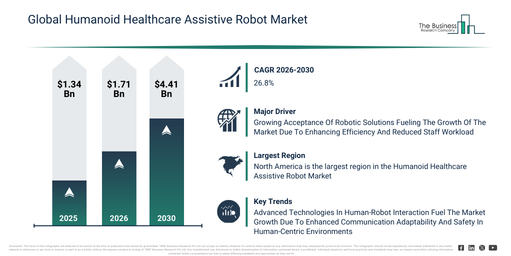
    The humanoid healthcare assistive robot market size has witnessed substantial expansion in recent years. This market is projected to grow from $1.34 billion in 2025 to $1.71 billion in 2026, achieving a compound annual growth rate (CAGR) of 27.1%. The historical increase can be attributed to several factors, including a shortage of healthcare professionals, an aging global population, advancements in robotics technology, increased automation in hospitals, and a rising demand for patient monitoring solutions.

    The humanoid healthcare assistive robot market size is anticipated to experience substantial growth over the next few years. It is forecast to achieve a valuation of $4.41 billion by 2030, demonstrating a compound annual growth rate (CAGR) of 26.8%. This expansion during the projection period stems from several factors, including the development of smart hospitals, increasing investments in healthcare robotics, a growing need for homecare automation, improvements in human-robot interaction, and the wider application of AI-based clinical assistance. Significant trends for the forecast duration involve the increased utilization of robots in elderly and assisted care, the rising adoption of AI-enabled patient interaction robots, the broadened scope of robotic support in hospital operations, a heightened demand for contactless healthcare assistance, and the integration of sophisticated sensors and computer vision.

    Get A Free Sample Report With In-Depth Market Insights:

    https://thebusinessresearchcompany.com/sample_request?id=32081730&type=smp&name=Humanoid%20Healthcare%20Assistive%20Robot%20Market%20Report%202026&utm_source=Blogs&utm_medium=Paid&utm_campaign=Oct_PR

    Humanoid Healthcare Assistive Robot Market Demand Drivers Opening New Revenue Streams

    The increased adoption of robotic technologies is anticipated to fuel expansion within the humanoid healthcare assistive robot market in the future. Robotic solutions encompass the deployment of robotic systems and related technologies to automate processes, improve operational efficiency, and address intricate challenges across diverse sectors and uses. This rising acceptance stems from their capability to ease the workload on healthcare personnel by effectively managing routine tasks, thereby enabling professionals to dedicate more attention to essential patient care. Humanoid healthcare assistive robots augment these robotic solutions by delivering tailored support in areas like caregiving, rehabilitation, and patient engagement, utilizing their human-like attributes and adaptable assistance. As an illustration, in September 2023, data from the International Federation of Robotics (IFR), a Germany-based non-profit organization focused on robotics industry research, indicated that 553,052 industrial robot installations took place in factories globally, representing a 5% growth rate in 2022, year-on-year. Consequently, the expanding adoption of robotic solutions is a significant factor propelling the expansion of the humanoid healthcare assistive robot market.

    Humanoid Healthcare Assistive Robot Market Segmentation And Category Overview

    The humanoid healthcare assistive robot market covered in this report is segmented –

    1) By Type: Surveillance Healthcare Assistive Robot, Security Healthcare Assistive Robot

    2) By Component: Hardware, Software, Services

    3) By Technology: Artificial Intelligence, Machine learning, Natural Language Processing, Robotic Process Automation, Computer Vision

    4) By Application: Elderly Care, Rehabilitation, Surgery Assistance, Patient Monitoring, Other Applications

    5) By End-User: Hospitals, Clinics, Home Care Settings, Rehabilitation Centers, Other End-Users

    Subsegments:

    1) By Surveillance Healthcare Assistive Robot: Remote Monitoring Robots, Diagnostic Assistance Robots, Patient Interaction Robots, Vital Signs Monitoring Robots, Surveillance And Security Monitoring Robots

    2) By Security Healthcare Assistive Robot: Patient Safety Robots, Emergency Response Robots, Intruder Detection Robots

    Humanoid Healthcare Assistive Robot Market Trends Powering Strategic Industry Growth

    Leading companies operating within the humanoid healthcare assistive robot market are concentrating on developing advanced solutions, such as human-robot interaction, to facilitate more impactful and empathetic engagements with individuals. Human-robot interaction (HRI) pertains to the discipline dedicated to the study and creation of systems that enable robots to communicate, collaborate, and interact with humans in an organic and intuitive manner. This involves comprehending how people perceive, manage, and cooperate with robots, with the goal of establishing fluid and efficient interactions. For instance, in March 2024, Toyota Research Institute, a US-based company specializing in artificial intelligence-driven research and robotics innovation, introduced its Punyo robots. These robots feature a distinct legless design, emphasizing adaptability, gentleness, and security for routine human activities. They incorporate tactile sensors that conform to objects, airbags in their limbs for regulating pressure to control firmness and pliancy, and sophisticated learning methodologies. By merging compliant materials with internal structural components, Punyo is engineered to observe and replicate human behaviors, allowing it to execute diverse household chores and enhance its utility in everyday settings.

    Humanoid Healthcare Assistive Robot Market Competitive Analysis Of Leading Industry Participants

    Major companies operating in the humanoid healthcare assistive robot market are Ubtech Robotics Inc., SoftBank Robotics Corp, Fourier Intelligence Co. Ltd., Hanson Robotics Limited, PAL Robotics, F&P Robotics AG, Diligent Robotics Inc., Neura Robotics GmbH, Apptronik, 1X Technologies, Kinova Robotics Inc., Hocoma AG, Ekso Bionics, ReWalk Robotics, Agility Robotics, Rainbow Robotics, Engineered Arts, Focal Meditech, Toyota Motor Corporation, Honda Motor Co. Ltd.

    View The Full Humanoid Healthcare Assistive Robot Market Report:

    https://thebusinessresearchcompany.com/report/humanoid-healthcare-assistive-robot-global-market-report?utm_source=Blogs&utm_medium=Paid&utm_campaign=Oct_PR

    Humanoid Healthcare Assistive Robot Market Regional Analysis And Leading Geography

    North America was the largest region in the humanoid healthcare assistive robot market in 2025. Asia-Pacific is expected to be the fastest-growing region in the forecast period. The regions covered in the humanoid healthcare assistive robot market report are Asia-Pacific, South East Asia, Western Europe, Eastern Europe, North America, South America, Middle East, Africa.

    Reach Out To Our Team:

    The Business Research Company: https://www.thebusinessresearchcompany.com/

    Americas: +1 310-496-7795

    Asia: +44 7882 955267 & +91 8897263534

    Europe: +44 7882 955267

    Email us at: marketing@tbrc.info

    Follow us on:

    LinkedIn: https://in.linkedin.com/company/the-business-research-company

    YouTube: https://www.youtube.com/channel/UC24_fI0rV8cR5DxlCpgmyFQ

    Global Market Model: https://www.thebusinessresearchcompany.com/global-market-model
  • Human Serum Albumin Market Trends Supporting 7% CAGR Growth Through 2030

    Human Serum Albumin Market Trends Supporting 7% CAGR Growth Through 2030

    Backed by market attractiveness analysis, total addressable market sizing, company benchmarking matrices, interactive Excel dashboards, wider supply chain intelligence, emerging startup coverage, and detailed product-level insights, The Business Research Company’s 2026 market reports are designed to offer research that is more actionable and strategically valuable than ever.

    Human Serum Albumin Market Forecast: Value Set To Climb From $6.21 Billion To $8.15 Billion

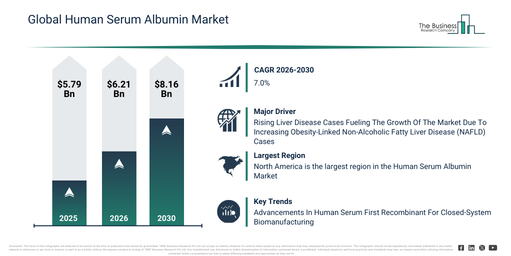
    The human serum albumin market size has experienced robust expansion in recent years. It is projected to increase from $5.79 billion in 2025 to $6.21 billion in 2026, at a compound annual growth rate (CAGR) of 7.3%. The market’s historical growth can be attributed to the limited availability of recombinant hsa, reliance on plasma-derived hsa, growing hospital and clinical demand, increasing use in diagnostic and therapeutic applications, and the adoption of standard injection solutions.

    The human serum albumin market size is anticipated to experience robust expansion in the coming years. It is projected to reach $8.16 billion in 2030, exhibiting a compound annual growth rate (CAGR) of 7.0%. This predicted growth is primarily driven by factors such as the advancements in yeast, bacterial, and plant-based recombinant hsa development, an increasing need for fatty acid-free formulations, the broadening scope of drug delivery and nutrition enhancement uses, greater investments in research laboratories, and increased procurement by hospitals and blood banks. Key trends anticipated during this period encompass a heightened demand for both plasma-derived and recombinant human serum albumin, an expanded application of hsa in volume expanders and drug delivery systems, the growing preference for lyophilized powder and injection solutions, wider use in hospital and research laboratory settings, and a particular emphasis on fatty acid-free and specialized hsa preparations.

    Get A Free Sample Report With In-Depth Market Insights:

    https://thebusinessresearchcompany.com/sample_request?id=27310&type=smp&name=Human%20Serum%20Albumin%20Market%20Report%202026&utm_source=Blogs&utm_medium=Paid&utm_campaign=Oct_PR

    Human Serum Albumin Market Growth Backed By Core Demand Fundamentals

    The human serum albumin market is anticipated to expand due to the rising occurrence of liver ailments. These conditions encompass a range of issues that compromise liver function, such as hepatitis, fatty liver disease, cirrhosis, and liver cancer. A key contributor to the surge in liver diseases is the growing rate of obesity, with surplus abdominal fat often resulting in non-alcoholic fatty liver disease (NAFLD), which involves fat buildup, inflammation, and can potentially lead to liver failure. Human serum albumin offers therapeutic benefits for liver disease patients by restoring blood volume, mitigating fluid accumulation, safeguarding kidney function, and enhancing prognoses for complications like ascites and hepatorenal syndrome. As an illustration, a report issued by the Office for Health Improvement and Disparities, a UK-based government body, indicated in December 2024 that premature fatalities from alcoholic liver disease saw a 3.6% rise in 2023, totaling 5,984 cases, up from 5,776 in 2022. Consequently, the expanding incidence of liver diseases is a significant impetus behind the growth of the human serum albumin market.

    Human Serum Albumin Market Segment Outlook: Which Categories Are Growing Fastest?

    The human serum albumin market covered in this report is segmented –

    1) By Type Of Preparation: Recombinant Human Serum Albumin, Plasma-Derived Human Serum Albumin

    2) By Formulation Type: Injection Solutions, Lyophilized Powder

    3) By Distribution Channel: Direct Sales, Online Pharmacies, Third-party Distributors, Hospital Pharmacies

    4) By Application: Volume Expanders, Drug Delivery Systems, Nutrition Enhancement, Diagnostic Agents

    5) By End-User: Hospitals, Research Laboratories, Pharmaceutical Companies, Blood Banks

    Subsegments:

    1) By Recombinant Human Serum Albumin: Yeast-Based Recombinant Human Serum Albumin, Bacterial-Based Recombinant Human Serum Albumin, Plant-Based Recombinant Human Serum Albumin, Mammalian Cell-Based Recombinant Human Serum Albumin, Insect Cell-Based Recombinant Human Serum Albumin

    2) By Plasma-Derived Human Serum Albumin: 5% Human Serum Albumin Solution, 20% Human Serum Albumin Solution, 25% Human Serum Albumin Solution, Lyophilized Human Serum Albumin, Fatty Acid-Free Human Serum Albumin

    Human Serum Albumin Market Growth Trends Reshaping The Competitive Landscape

    Leading companies within the human serum albumin market are prioritizing the development of innovative solutions, such as animal-free recombinant excipients. This focus aims to bolster product safety, enhance scalability, and ensure compliance with regulatory standards across biomanufacturing applications. An animal-free recombinant excipient is defined as a biologically engineered inactive substance, synthesized using recombinant DNA technology, that is entirely free from animal or human-derived components, thereby guaranteeing high purity and safety in both pharmaceutical and biomanufacturing contexts. As an example, in April 2025, InVitri Inc., a US-based provider specializing in animal-free recombinant proteins and excipients, introduced Optibumin 25. This product marks the first recombinant 25% human serum albumin specifically formulated for closed-system biomanufacturing. It has been optimized for various workflows including downstream processing, formulation, and cryopreservation, and is currently supplied in 100 mL single-use bags. Its chemically defined and animal-origin-free composition assures superior purity, consistency, and reduced risks of contamination. Furthermore, it is GMP-ready, capable of scaling to commercial production volumes, and delivers a stable, sterile solution that seamlessly integrates into critical applications such as viral vector manufacturing, stem cell preservation, vaccine formulation, and regenerative medicine.

    Human Serum Albumin Market Leading Companies And Competitive Benchmarking

    Major companies operating in the human serum albumin market are Thermo Fisher Scientific Inc., Takeda Pharmaceutical Company Limited, Merck KGaA, CSL Behring (CSL), Baxter International Inc., Grifols SA, Sartorius AG, Octapharma AG, Kedrion Biopharma, Shanghai RAAS Blood Products Co Ltd., Biotest Aktiengesellschaft, LFB Group, Hualan Biological Engineering Inc., Taibang Biologic Group, Kamada Ltd., InVitria Inc., Reliance Life Sciences, Bio Products Laboratory, Mitsubishi Tanabe Pharma, Sichuan Yuanda Shuyang Pharmaceutical Co Ltd.

    View The Full Human Serum Albumin Market Report:

    https://thebusinessresearchcompany.com/report/human-serum-albumin-global-market-report?utm_source=Blogs&utm_medium=Paid&utm_campaign=Oct_PR

    Human Serum Albumin Market Geographic Analysis: Where Is Demand Accelerating Fastest?

    North America was the largest region in the human serum albumin market in 2025. Asia-Pacific is expected to be the fastest-growing region in the forecast period. The regions covered in the human serum albumin market report are Asia-Pacific, South East Asia, Western Europe, Eastern Europe, North America, South America, Middle East, Africa.

    Reach Out To Our Team:

    The Business Research Company: https://www.thebusinessresearchcompany.com/

    Americas: +1 310-496-7795

    Asia: +44 7882 955267 & +91 8897263534

    Europe: +44 7882 955267

    Email us at: marketing@tbrc.info

    Follow us on:

    LinkedIn: https://in.linkedin.com/company/the-business-research-company

    YouTube: https://www.youtube.com/channel/UC24_fI0rV8cR5DxlCpgmyFQ

    Global Market Model: https://www.thebusinessresearchcompany.com/global-market-model
  • Human Papillomavirus (HPV) Vaccine Market Forecast Highlights A $12.17 Billion Opportunity For Industry Participants

    Human Papillomavirus (HPV) Vaccine Market Forecast Highlights A $12.17 Billion Opportunity For Industry Participants

    Featuring market attractiveness scoring, total addressable market sizing, company benchmarking matrices, interactive Excel dashboards, deeper supply chain intelligence, emerging startup tracking, and granular product-level insights, The Business Research Company’s 2026 market reports are built to deliver research that is both more actionable and more strategically valuable.

    Human Papillomavirus (HPV) Vaccine Market Revenue Growth On Track For A 13.2% CAGR Through 2030

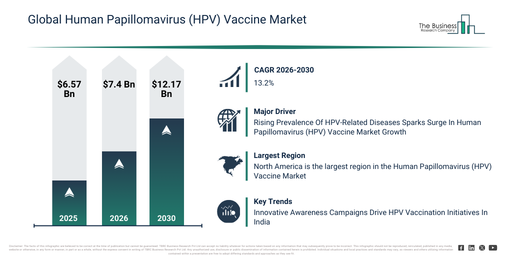
    Recent years have witnessed substantial growth in the human papillomavirus (hpv) vaccine market size. The market is expected to increase from $6.57 billion in 2025 to $7.4 billion in 2026, achieving a compound annual growth rate (CAGR) of 12.7%. The increase witnessed in the past can be linked to the high prevalence of cervical cancer, a lack of awareness regarding hpv vaccination, government funding for immunization, the presence of tetravalent and bivalent vaccines, and growing healthcare infrastructure in developed regions.

    The human papillomavirus (HPV) vaccine market size is set for significant expansion in the upcoming years. It is forecast to reach $12.17 billion by 2030, demonstrating a compound annual growth rate (CAGR) of 13.2%. This anticipated growth during the forecast period can be attributed to the rising adoption of nonavalent vaccines, an increase in public-private healthcare partnerships, the proliferation of awareness campaigns, advancements in vaccine delivery technology, and growing investments in preventive healthcare. Significant trends expected in this period include heightened awareness of HPV vaccination, government-led immunization initiatives, market expansion into emerging regions, the development of next-generation HPV vaccines, and collaborations between pharmaceutical companies and healthcare providers.

    Get A Free Sample Report With In-Depth Market Insights:

    https://thebusinessresearchcompany.com/sample_request?id=80497915&type=smp&name=Human%20Papillomavirus%20%28HPV%29%20Vaccine%20Market%20Report%202026&utm_source=Blogs&utm_medium=Paid&utm_campaign=Oct_PR

    Human Papillomavirus (HPV) Vaccine Market Growth Catalysts And Demand Drivers

    The rising occurrence of HPV-related diseases is anticipated to drive the future expansion of the human papillomavirus (HPV) vaccine market. These conditions are viral infections often leading to the formation of warts on the skin or mucous membranes. The HPV vaccine specifically targets the HPV subtypes and aids in managing the risk of HPV infection and subsequent recurrent diseases. For example, data from the National Cancer Institute, a US-based Department of Health and Human Services, indicated in February 2023 that approximately 13,960 American women were projected to receive an aggressive cervical cancer diagnosis, with 4,310 fatalities from this illness expected in 2023 in the US. Additionally, new cases of cervical cancer were diagnosed at a rate of 7.7 per 100,000 women per year, alongside an annual mortality rate of 2.2 per 100,000 females. Consequently, the increased prevalence of HPV-related diseases is fueling the growth of the human papillomavirus (HPV) vaccine market.

    Human Papillomavirus (HPV) Vaccine Market Segment Landscape: Which Areas Lead Development?

    The human papillomavirus (hpv) vaccine market covered in this report is segmented –

    1) By Type: Tetravalent, Nonavalent, Bivalent

    2) By Disease Indication: Cervical Cancer, Anal Cancer, Vulvar And Vaginal Cancer, Penile Cancer, Oropharyngeal Cancer, Other Indications

    3) By Distribution Channel: Hospital And Retail Pharmacies, Government Suppliers, Other Channels

    4) By Industry Vertical: Public And Private Alliance, Government Entities, Physicians, Other Industries

    Human Papillomavirus (HPV) Vaccine Market Trends Shaping Long-Term Demand

    Leading entities within the human papillomavirus (HPV) vaccine market are prioritizing innovative strategies, including public awareness initiatives, to inform communities regarding the advantages of vaccination. These campaigns represent deliberate actions crafted to instruct and enlighten either a targeted demographic or the broader populace concerning a specific subject, purpose, offering, or utility. An illustrative example occurred in January 2023 when the Family Planning Association of India, an Indian charitable organization, commenced a vaccination program aimed at combating cervical cancer, specifically for girls between 9 and 14 years old. Currently, a national HPV immunization effort is in progress across the country, intending to safeguard girls and women from cervical cancer. This particular initiative will utilize a quadrivalent vaccine designed to address the primary strains of the virus. With a goal of immunizing approximately 50 million girls, this undertaking emphasizes increasing public understanding and enhancing availability in both urban and rural regions.

    Human Papillomavirus (HPV) Vaccine Market Industry Leaders And Competitive Landscape

    Major companies operating in the human papillomavirus (hpv) vaccine market are Merck & Co Inc, GlaxoSmithKline plc, Serum Institute of India Pvt Ltd, Walvax Biotechnology Co Ltd, Beijing Wantai Biological Pharmacy Enterprise Co Ltd, Xiamen Innovax Biotech Co Ltd, Bharat Biotech International Ltd, Shanghai Zerun Biotech Co Ltd, Recbio Biotech, Yuxi Zerun Biotechnology Co Ltd, Innovax, Biofarma Co, Incepta Pharmaceuticals, PT Bio Farma, Instituto Butantan, Sinergium Biotech, BioMed Vaccine Technologies, Vaxart Inc., GeoVax, Recbio

    View The Full Human Papillomavirus (HPV) Vaccine Market Report:

    https://thebusinessresearchcompany.com/report/human-papillomavirus-HPV-vaccine-global-market-report?utm_source=Blogs&utm_medium=Paid&utm_campaign=Oct_PR

    Human Papillomavirus (HPV) Vaccine Market Global Footprint: Which Region Leads The Industry?

    North America was the largest region in the human papillomavirus (HPV) vaccine market in 2025. The regions covered in the human papillomavirus (hpv) vaccine market report are Asia-Pacific, South East Asia, Western Europe, Eastern Europe, North America, South America, Middle East, Africa.

    Reach Out To Our Team:

    The Business Research Company: https://www.thebusinessresearchcompany.com/

    Americas: +1 310-496-7795

    Asia: +44 7882 955267 & +91 8897263534

    Europe: +44 7882 955267

    Email us at: marketing@tbrc.info

    Follow us on:

    LinkedIn: https://in.linkedin.com/company/the-business-research-company

    YouTube: https://www.youtube.com/channel/UC24_fI0rV8cR5DxlCpgmyFQ

    Global Market Model: https://www.thebusinessresearchcompany.com/global-market-model
  • Human Epidermal Growth Factor Receptor 2 (HER2)-Positive Gastric Cancer Market Analysis: How The Industry Is Evolving Toward A $1.64 Billion Future

    Human Epidermal Growth Factor Receptor 2 (HER2)-Positive Gastric Cancer Market Analysis: How The Industry Is Evolving Toward A $1.64 Billion Future

    Built to provide research that’s more actionable and strategically valuable, The Business Research Company’s 2026 market reports include market attractiveness analysis, total addressable market sizing, company benchmarking matrices, interactive Excel dashboards, broader supply chain intelligence, emerging startup tracking, and in-depth product insights.

    Human Epidermal Growth Factor Receptor 2 (HER2)-Positive Gastric Cancer Market Value Growth And Long-Term Outlook

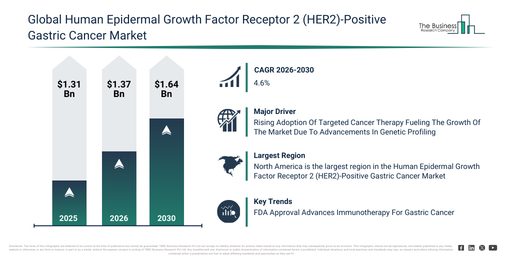
    The human epidermal growth factor receptor 2 (her2)-positive gastric cancer market has experienced consistent expansion in recent years. Its value is projected to increase from $1.31 billion in 2025 to $1.37 billion in 2026, exhibiting a compound annual growth rate (CAGR) of 4.6%. Historically, this growth has stemmed from factors such as a scarcity of targeted treatments, a dependence on traditional chemotherapy and radiation, insufficient knowledge of her2-positive gastric cancer, limited access to specialized medical facilities, and the gradual integration of immunotherapy.

    The market size for human epidermal growth factor receptor 2 (her2)-positive gastric cancer is anticipated to show steady growth over the next few years. It is projected to expand to $1.64 billion in 2030, achieving a compound annual growth rate (CAGR) of 4.6%. This growth during the forecast period can be linked to the creation of new antibody-drug conjugates, a rise in clinical trials for her2-targeted therapies, improvements in healthcare infrastructure in developing markets, an increase in precision medicine and biomarker testing, and the proliferation of ambulatory surgery centers and specialized oncology clinics. Noteworthy trends for the forecast period include a greater embrace of her2-targeted therapies, increasing knowledge of gastric cancer subtypes, the wider use of immunotherapy and monoclonal antibodies, an expansion of personalized treatment methods, and a sharpened focus on early detection and diagnostic testing.

    Get A Free Sample Report With In-Depth Market Insights:

    https://thebusinessresearchcompany.com/sample_request?id=99475165&type=smp&name=Human%20Epidermal%20Growth%20Factor%20Receptor%202%20%28HER2%29-Positive%20Gastric%20Cancer%20Market%20Report%202026&utm_source=Blogs&utm_medium=Paid&utm_campaign=Oct_PR

    Human Epidermal Growth Factor Receptor 2 (HER2)-Positive Gastric Cancer Market Opportunity Drivers: What’s Unlocking New Revenue Potential?

    Increased utilization of targeted cancer treatment is anticipated to drive expansion in the human epidermal growth factor receptor 2 (HER2)-positive gastric cancer market in the coming years. This therapy, also referred to as personalized medicine, involves a treatment strategy employing specific medications or agents to inhibit cancer cell proliferation by targeting distinct molecules crucial for tumor progression. Its increased application stems primarily from progress in genetic profiling, enabling more accurate treatments tailored to a patient’s unique tumor characteristics, thereby enhancing efficacy and reducing adverse effects. Specifically for HER2-positive gastric cancer, targeted therapy functions by directly assailing the HER2 protein, which is excessively present in these tumors, thereby decelerating disease advancement and improving patient results. As an illustration, in February 2024, the Personalized Medicine Coalition, a US-based professional membership body, reported that the Food and Drug Administration (FDA) sanctioned 16 novel personalized medicines in 2023, comprising 7 cancer drugs and 3 for diverse other ailments and conditions, marking a rise from 6 approvals in 2022. Consequently, the growing acceptance of targeted cancer therapy is fueling the expansion of the human epidermal growth factor receptor 2 (HER2)-positive gastric cancer market.

    Human Epidermal Growth Factor Receptor 2 (HER2)-Positive Gastric Cancer Market Segments: Where Is Growth Concentrated?

    The human epidermal growth factor receptor 2 (her2)-positive gastric cancer market covered in this report is segmented –

    1) By Therapy: Chemotherapy, Immunotherapy, Radiation Therapy, Targeted Therapy

    2) By Stage: Stage I, Stage II, Stage III, Stage IV

    3) By End-User: Ambulatory Surgery Centers, Hospitals And Specialty Clinics, Other End-Users

    Subsegments:

    1) By Chemotherapy: Fluoropyrimidines, Platinum-Based Agents, Taxanes, Irinotecan, Anthracyclines

    2) By Immunotherapy: Immune Checkpoint Inhibitors, Monoclonal Antibodies, Cancer Vaccines, Cytokine-Based Therapies

    3) By Radiation Therapy: External Beam Radiation Therapy, Intensity-Modulated Radiation Therapy, Stereotactic Body Radiation Therapy, 3D Conformal Radiation Therapy

    4) By Targeted Therapy: HER2-Targeted Therapies, Tyrosine Kinase Inhibitors, Antibody-Drug Conjugates, mTOR Inhibitors, PI3K/AKT/mTOR Pathway Inhibitors

    Human Epidermal Growth Factor Receptor 2 (HER2)-Positive Gastric Cancer Market Innovation Trends Shaping Future Development

    Leading companies within the human epidermal growth factor receptor 2 (HER2)-positive gastric cancer market are concentrating on securing regulatory approvals for novel treatments, such as sophisticated immunotherapy-enhanced combination regimens, which integrate immune checkpoint inhibitors with targeted therapy and chemotherapy, aiming to significantly enhance patient outcomes in initial treatment settings. This advanced immunotherapy-enhanced combination strategy utilizes the body’s immune system by disrupting programmed death (PD)-1 or programmed death (PD)-L1 interaction, concurrently targeting HER2 receptors, and employing chemotherapeutic agents, thereby boosting anti-tumor activity and improving survival rates. A notable example occurred in March 2025, when Merck & Co., Inc., a US-based biopharmaceutical company, gained approval from the U.S. Food and Drug Administration (FDA) for pembrolizumab (Keytruda), combined with trastuzumab and chemotherapy, for the first-line treatment of adults facing HER2-positive unresectable or metastatic gastric or gastroesophageal junction (GEJ) adenocarcinoma where tumors express programmed death (PD)-L1. This recently approved combination regimen showed substantial improvements in both median progression-free survival and overall survival when benchmarked against conventional treatments. Achieving a superior overall response rate of 73% and a prolonged median duration of response, this therapy signifies a fundamental shift in the management of advanced HER2-positive gastric cancers.

    Human Epidermal Growth Factor Receptor 2 (HER2)-Positive Gastric Cancer Market Key Participants And Competitive Landscape

    Major companies operating in the human epidermal growth factor receptor 2 (her2)-positive gastric cancer market are Pfizer Inc., Roche Holding AG, Merck & Co Inc., Bayer Aktiengesellschaft, Eli Lilly and Company, Bristol-Myers Squibb Company, AstraZeneca PLC, Novartis AG, Amgen Inc., Astellas Pharma Inc., Daiichi Sankyo Company Limited, Genentech Inc., Ono Pharmaceutical Co Ltd., Shanghai Henlius Biotech Inc., MacroGenics Inc., Hutchison Medipharma Limited , ALX Oncology Holdings Inc., Taiho Pharmaceutical Co Ltd., Ambrx Biopharma Inc., LintonPharm Co Ltd.

    View The Full Human Epidermal Growth Factor Receptor 2 (HER2)-Positive Gastric Cancer Market Report:

    https://thebusinessresearchcompany.com/report/human-epidermal-growth-factor-receptor-2-her2-positive-gastric-cancer-global-market-report?utm_source=Blogs&utm_medium=Paid&utm_campaign=Oct_PR

    Human Epidermal Growth Factor Receptor 2 (HER2)-Positive Gastric Cancer Market Regional Distribution: Which Areas Power Market Growth?

    North America was the largest region in the human epidermal growth factor receptor 2 (HER2)-positive gastric cancer market in 2025. Asia-Pacific is expected to be the fastest-growing region in the forecast period. The regions covered in the human epidermal growth factor receptor 2 (her2)-positive gastric cancer market report are Asia-Pacific, South East Asia, Western Europe, Eastern Europe, North America, South America, Middle East, Africa.

    Reach Out To Our Team:

    The Business Research Company: https://www.thebusinessresearchcompany.com/

    Americas: +1 310-496-7795

    Asia: +44 7882 955267 & +91 8897263534

    Europe: +44 7882 955267

    Email us at: marketing@tbrc.info

    Follow us on:

    LinkedIn: https://in.linkedin.com/company/the-business-research-company

    YouTube: https://www.youtube.com/channel/UC24_fI0rV8cR5DxlCpgmyFQ

    Global Market Model: https://www.thebusinessresearchcompany.com/global-market-model
  • HPV Associated Disorders Market Outlook Through 2030: Understanding The Growth Opportunity

    HPV Associated Disorders Market Outlook Through 2030: Understanding The Growth Opportunity

    Backed by market attractiveness analysis, total addressable market sizing, company benchmarking matrices, interactive Excel dashboards, wider supply chain intelligence, emerging startup coverage, and detailed product-level insights, The Business Research Company’s 2026 market reports are designed to offer research that is more actionable and strategically valuable than ever.

    HPV Associated Disorders Market Poised To Hit $30.97 Billion By 2030 With A 6.9% CAGR

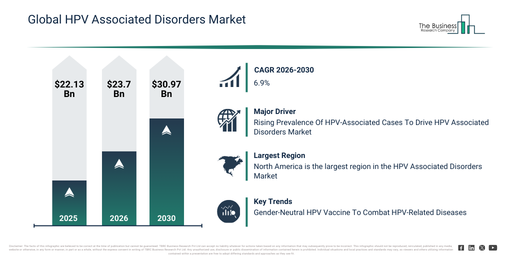
    The hpv associated disorders market size has experienced robust growth in recent years. This market is anticipated to expand from $22.13 billion in 2025 to $23.7 billion in 2026, demonstrating a compound annual growth rate (CAGR) of 7.1%. The historical growth of the market can be ascribed to several factors, including the high prevalence of hpv infections, the introduction of prophylactic hpv vaccines, the expansion of cervical cancer screening programs, increasing healthcare expenditure in oncology, and rising public health awareness campaigns.

    The hpv associated disorders market size is anticipated to experience substantial growth in the forthcoming years. It is projected to expand to $30.97 billion in 2030, demonstrating a compound annual growth rate (CAGR) of 6.9%. This expansion during the forecast period can be attributed to several factors such as the broadening of gender-neutral vaccination policies, advancements in molecular diagnostics, a rising incidence of hpv-linked oropharyngeal cancers, enhanced access to healthcare services in emerging economies, and the development of therapeutic hpv vaccines in the pipeline. Significant trends expected during this period include the expansion of hpv vaccination programs, an increasing adoption of early screening and diagnostic methods, a heightened focus on non-invasive treatment alternatives, greater public awareness of hpv-related cancers, and a shift towards integrated prevention and treatment strategies.

    Get A Free Sample Report With In-Depth Market Insights:

    https://thebusinessresearchcompany.com/sample_request?id=60744200&type=smp&name=HPV%20Associated%20Disorders%20Market%20Report%202026&utm_source=Blogs&utm_medium=Paid&utm_campaign=Oct_PR

    HPV Associated Disorders Market Growth Momentum: What Factors Are Shaping Demand?

    The rising occurrence of HPV instances is projected to drive expansion within the HPV-associated disorders market moving ahead. These disorders encompass conditions such as benign verrucae vulgates, condylomas acuminata, and cancers affecting the cervix, vulva, anus, and penis, alongside anogenital warts, recurrent respiratory papillomatosis, and both anogenital and oropharyngeal cancers. HPV infection demonstrates substantial global prevalence, particularly prominent among females. As an illustration, in June 2025, data from the Centers for Disease Control and Prevention, a government agency located in the US, indicated that annually in the United States, roughly 13,000 women receive a diagnosis of cervical cancer, with approximately 4,000 fatalities from the condition occurring each year. Consequently, the escalation in HPV cases is fueling the expansion of the HPV-associated disorders market.

    HPV Associated Disorders Market Segment Analysis: What Are The Core Market Categories?

    The hpv associated disorders market covered in this report is segmented –

    1) By Indication: Cervical Intraepithelial Neoplasia (CIN), Cervical Cancer, Anal Intraepithelial Neoplasia (AIN), Anal Cancer, Genital Warts, Other Indications

    2) By Therapy: Prevention, Treatment

    3) By Distribution Channel: Hospital Pharmacies, Retail Pharmacies, Online Pharmacies

    Subsegments:

    1) By Cervical Intraepithelial Neoplasia (CIN): CIN 1, CIN 2, CIN 3

    2) By Cervical Cancer: Squamous Cell Carcinoma, Adenocarcinoma

    3) By Anal Intraepithelial Neoplasia (AIN): AIN 1, AIN 2, AIN 3

    4) By Anal Cancer: Squamous Cell Carcinoma, Other Types

    5) By Genital Warts: Condylomata Acuminata

    6) By Other Indications: Oropharyngeal Cancer, Vulvar and Vaginal Cancers, Other HPV-Related Conditions

    HPV Associated Disorders Market Trends Redefining Industry Growth

    Prominent companies within the HPV associated disorders market are introducing HPV vaccines to tackle HPV-related illnesses. These vaccines are crucial for public health, as they lower the incidence of HPV-related diseases and bolster efforts in cervical cancer screening and prevention. For example, in January 2023, the Serum Institute of India, an India-based institute, launched CERVAVAC, the first indigenously developed human papillomavirus (HPV) vaccine specifically designed to prevent cervical cancer in women. This vaccine employs L1 virus-like particles (VLPs) to trigger an immune response without causing an infection. This mechanism efficiently readies the immune system to identify and counter HPV if future exposure occurs.

    HPV Associated Disorders Market Top Companies Driving Competitive Growth

    Major companies operating in the hpv associated disorders market are AstraZeneca plc, F. Hoffmann-La Roche Ltd, Biocon Ltd, GlaxoSmithKline plc, Merck & Co Inc., Pfizer Inc., Sanofi S. A., Novartis AG, Bristol-Myers Squibb Company, Johnson & Johnson Inc., Takeda Pharmaceutical Company Limited, Amgen Inc., Bayer AG, Eisai Co. Ltd., Genentech Inc., MSD Pharmaceuticals, Seqirus, Bavarian Nordic, Serum Institute of India, Moderna Inc

    View The Full HPV Associated Disorders Market Report:

    https://thebusinessresearchcompany.com/report/HPV-associated-disorders-global-market-report?utm_source=Blogs&utm_medium=Paid&utm_campaign=Oct_PR

    HPV Associated Disorders Market Leading Geography: Which Region Contributes The Most Revenue?

    North America was the largest region in the HPV associated disorders market in 2025. Asia-Pacific is expected to be the fastest-growing region in the forecast period. The regions covered in the hpv associated disorders market report are Asia-Pacific, South East Asia, Western Europe, Eastern Europe, North America, South America, Middle East, Africa.

    Reach Out To Our Team:

    The Business Research Company: https://www.thebusinessresearchcompany.com/

    Americas: +1 310-496-7795

    Asia: +44 7882 955267 & +91 8897263534

    Europe: +44 7882 955267

    Email us at: marketing@tbrc.info

    Follow us on:

    LinkedIn: https://in.linkedin.com/company/the-business-research-company

    YouTube: https://www.youtube.com/channel/UC24_fI0rV8cR5DxlCpgmyFQ

    Global Market Model: https://www.thebusinessresearchcompany.com/global-market-model
  • HP (High Potency) APIs Market Growth Potential: What The Latest Forecast Reveals

    HP (High Potency) APIs Market Growth Potential: What The Latest Forecast Reveals

    Featuring market attractiveness scoring, total addressable market sizing, company benchmarking matrices, interactive Excel dashboards, deeper supply chain intelligence, emerging startup tracking, and granular product-level insights, The Business Research Company’s 2026 market reports are built to deliver research that is both more actionable and more strategically valuable.

    HP (High Potency) APIs Market Size And Revenue Outlook Through 2030

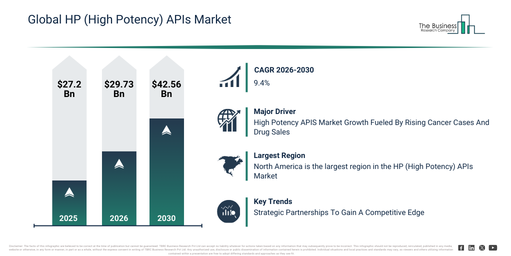
    The hp (high potency) apis market has demonstrated strong growth in recent years. It is projected to expand from $27.2 billion in 2025 to $29.73 billion by 2026, registering a compound annual growth rate (CAGR) of 9.3%. This historical expansion can be attributed to the rising prevalence of cancer and hormonal disorders, the growth of the generic hpapis market, advancements in synthetic hpapi manufacturing, an increasing focus on drug efficacy at low doses, and the early adoption of biotech hpapis in developed regions.

    The hp (high potency) apis market size is forecast to show significant growth in the coming years. It is anticipated to reach $42.56 billion in 2030, demonstrating a compound annual growth rate (CAGR) of 9.4%. This expansion during the forecast period stems from factors such as the broadening scope of oncology and hormonal therapeutic uses, increased funding in precision medicine, the growing embrace of automated production methods, an uptick in contract manufacturing outsourcing, and breakthroughs in hpapi delivery systems technology. Key trends anticipated for this period encompass improved safety procedures for managing hpapis, sophisticated formulation technologies, a surging need for oncology and hormonal treatments, a rise in contract manufacturing collaborations, and adherence to regulatory requirements alongside quality standardization.

    Get A Free Sample Report With In-Depth Market Insights:

    https://thebusinessresearchcompany.com/sample_request?id=32167961&type=smp&name=HP%20%28High%20Potency%29%20APIs%20Market%20Report%202026&utm_source=Blogs&utm_medium=Paid&utm_campaign=Oct_PR

    HP (High Potency) APIs Market Expansion Drivers: What’s Shaping Future Growth?

    The expansion of the HP (high potency) APIs market has been fueled by the increasing prevalence of cancer and the corresponding rise in sales of oncology medications. Cancer, a disease where abnormal cells grow uncontrollably and can spread to other parts of the body, is spurring increased research and development efforts for anticancer drugs, consequently boosting demand for the market. High Potency (HP) APIs play a crucial role in cancer therapy by delivering potent active pharmaceutical ingredients in precise, low concentrations, enabling effective targeting of malignant cells while reducing harm to healthy tissues. For example, the American Cancer Society, a professional US organization, projected approximately 313,780 new cases of prostate cancer in the United States in 2025, as reported in September 2025. The likelihood of developing prostate cancer significantly escalates with age, moving from 0.2% in men younger than 50 to 6.5% for those between 70 and 79 years old. Consequently, the increasing occurrence of cancer cases is anticipated to drive a substantial increase in revenues for the HP (high potency) APIs market.

    HP (High Potency) APIs Market Segment Breakdown: Which Categories Lead On Revenue?

    The hp (high potency) apis market covered in this report is segmented –

    1) By Type: Innovative HPAPI, Generic HPAPI

    2) By Synthesis Type: Synthetic HPAPI, Biotech HPAPI

    3) By Therapeutic Application: Oncology, Hormonal Disorder, Glaucoma, Other Therapeutic Applications

    Subsegments:

    1) By Innovative HPAPI: Branded High Potency APIs, Newly Developed, Patented APIs

    2) By Generic HPAPI: Off-Patent High Potency APIs, Generic Versions Of Innovative HPAPIs

    HP (High Potency) APIs Market Strategic Trends: What Defines The Next Growth Phase?

    Leading entities operating in the HP (high potency) APIS market are prioritizing the formation of strategic alliances to enhance their market revenues. Corporate collaborations yield multiple advantages, including improved access to novel technologies, expanded choices for customers, enhanced global service capacity, the establishment of a unified global platform, and the consolidation of services. For example, in March 2023, CatSci Ltd., a UK-based firm providing innovative process research and development services, entered into a partnership with AGC Pharma Chemicals Europe S.L.U. This alliance will provide customers with availability to an extensive array of manufacturing technologies, encompassing fluorination, bromination, and others. The collaboration will also allow AGC Pharma Chemicals’ customers to utilize specialized expertise in advanced chemical development, analytical development, and more.

    HP (High Potency) APIs Market Leading Players And Competitive Positioning

    Major companies operating in the hp (high potency) apis market are Merck KGaA, Pfizer Inc, Thermo Fisher Scientific Inc, Teva Pharmaceuticals, Lonza Group AG, Sanofi (EUROAPI), Corden Pharma International, Dr. Reddy’s Laboratories Ltd., Siegfried Holding AG, Novartis, Roche India, Cstone Pharma (China), Beigene (China), Takeda Pharmaceuticals (Japan), Astellas Pharma Inc (Japan), Otsuka Pharmaceutical Co Ltd (Japan), Abbott Laboratories, Eli Lilly And Company, Bristol-Myers Squibb Company, Apotex, Gilead Sciences, Abbvie Inc, GlaxoSmithKline, Ferring Pharmaceuticals, Cipla, Bayer, Johnson & Johnson, AstraZeneca Pharmaceutical (Pty) Ltd

    View The Full HP (High Potency) APIs Market Report:

    https://thebusinessresearchcompany.com/report/hp-high-potency-api-global-market-report?utm_source=Blogs&utm_medium=Paid&utm_campaign=Oct_PR

    HP (High Potency) APIs Market Regional Outlook: Where Is Opportunity Concentrated?

    North America was the largest region in the global HP (high potency) APIS market in 2025. Middle East is expected to be the fastest growing region in the HP (high potency) APIS market report during the forecast period. The regions covered in the hp (high potency) apis market report are Asia-Pacific, South East Asia, Western Europe, Eastern Europe, North America, South America, Middle East, Africa.

    Reach Out To Our Team:

    The Business Research Company: https://www.thebusinessresearchcompany.com/

    Americas: +1 310-496-7795

    Asia: +44 7882 955267 & +91 8897263534

    Europe: +44 7882 955267

    Email us at: marketing@tbrc.info

    Follow us on:

    LinkedIn: https://in.linkedin.com/company/the-business-research-company

    YouTube: https://www.youtube.com/channel/UC24_fI0rV8cR5DxlCpgmyFQ

    Global Market Model: https://www.thebusinessresearchcompany.com/global-market-model
  • Hormone Therapy Market Growth Outlook: Why Analysts Expect Continued Expansion

    Hormone Therapy Market Growth Outlook: Why Analysts Expect Continued Expansion

    Built to provide research that’s more actionable and strategically valuable, The Business Research Company’s 2026 market reports include market attractiveness analysis, total addressable market sizing, company benchmarking matrices, interactive Excel dashboards, broader supply chain intelligence, emerging startup tracking, and in-depth product insights.

    Hormone Therapy Market Growth From $22.44 Billion In 2026 To $29.93 Billion By 2030 At A CAGR Of 7.5%

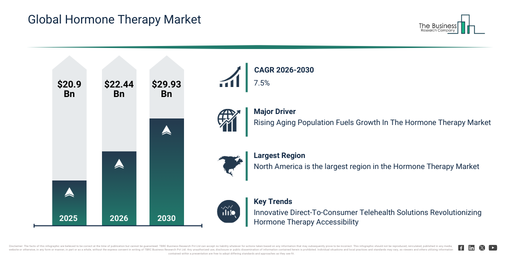
    The hormone therapy market has experienced significant expansion in recent years. This market is projected to grow from $20.9 billion in 2025 to $22.44 billion in 2026, achieving a compound annual growth rate (CAGR) of 7.4%. Historically, the market’s growth can be attributed to the rising prevalence of hormonal disorders, increased awareness of hormone replacement therapy, higher rates of hypothyroidism diagnosis, the expansion of hospital pharmacy networks, and the availability of low-cost generic hormones.

    The hormone therapy market is projected to experience substantial expansion in the coming years. This market is predicted to reach $29.93 billion by 2030, exhibiting a compound annual growth rate (CAGR) of 7.5%. Key factors driving this growth during the projected timeframe include the global aging demographic, an increase in treatments related to menopause, a heightened emphasis on therapies aimed at improving quality of life, the expanding reach of online pharmacies, and continuous advancements in hormone delivery methods. Significant trends anticipated for the forecast period encompass a greater acceptance of personalized hormone treatment plans, an escalating need for bioidentical hormones, the broader application of hormone therapy among older demographics, a rise in the utilization of combined hormone therapies, and a move towards more user-friendly and extended-release formulations.

    Get A Free Sample Report With In-Depth Market Insights:

    https://thebusinessresearchcompany.com/sample_request?id=97399399&type=smp&name=Hormone%20Therapy%20Market%20Report%202026&utm_source=Blogs&utm_medium=Paid&utm_campaign=Oct_PR

    Hormone Therapy Market Development Factors: What’s Supporting Demand?

    The rising population of older people is anticipated to boost the expansion of the hormone therapy market over the next few years. Elderly individuals are those in advanced stages of life, commonly referred to as older persons or the senior demographic. For older adults, especially concerning health issues linked to aging, hormone treatment seeks to rectify hormonal disparities and address particular age-related conditions. An illustration of this trend is found in the UK: in July 2024, the UK Parliament, a governmental organization, projected the UK’s population to hit 70 million by 2026. Furthermore, the country’s population is experiencing an aging trend, with 19% of individuals being 65 years or older in 2022. This percentage is forecast to increase to 27% by 2072. Consequently, the growing demographic of elderly individuals is fueling the hormone therapy market.

    Hormone Therapy Market Segmentation: How Does The Market Break Down By Category?

    The hormone therapy market covered in this report is segmented –

    1) By Therapy: Estrogen Hormone Replacement, Growth Hormone Replacement, Thyroid Hormone Replacement, Testosterone Replacement

    2) By Route Of Administration: Oral, Parenteral, Other Routes Of Administration

    3) By Indication: Menopause, Hypothyroidism, Growth Hormone Deficiency, Other Indications

    4) By Distribution Channel: Hospitals Pharmacies, Retail Pharmacies And Stores, Online Pharmacies

    Subsegments:

    1) By Estrogen Hormone Replacement: Systemic Estrogen Therapy, Local Estrogen Therapy, Combination Estrogen-Progestin Therapy

    2) By Growth Hormone Replacement: Recombinant Growth Hormones, Synthetic Growth Hormones

    3) By Thyroid Hormone Replacement: Levothyroxine, Liothyronine, Natural Desiccated Thyroid

    4) By Testosterone Replacement: Injectable Testosterone, Transdermal Testosterone, Oral Testosterone, Pellets

    Hormone Therapy Market Transformation Trends: What Innovations Are Driving Change?

    Leading firms within the hormone therapy market are concentrating on creating novel approaches, including direct-to-consumer telehealth systems for hormone therapy, with the aim of improving patient access and ease of use. This direct-to-consumer telehealth paradigm for hormone therapy describes a healthcare service delivery method where individuals can obtain hormone therapy remotely, bypassing conventional in-person doctor visits. As an illustration, in September 2023, LifeMD, a US-based telehealth provider, collaborated with ASCEND Therapeutics, a US-based pharmaceutical entity, to introduce a unified direct-to-consumer telehealth framework for hormone therapy, specifically utilizing EstroGel (estradiol gel) to ease menopausal discomfort. Through this alliance, patients can directly engage with LifeMD’s telehealth offerings via the EstroGel website, enabling virtual consultations with certified healthcare professionals who can issue prescriptions and organize direct home delivery of the medicine. This endeavor seeks to improve health results for women pursuing menopause treatment by simplifying accessibility and overcoming obstacles like extended waiting periods.

    Hormone Therapy Market Competitive Overview And Top Companies

    Major companies operating in the hormone therapy market are Abbott Laboratories, Bayer AG, Eli Lilly and Company, F. Hoffmann-La Roche, Merck KGaA, Mylan NV, Novartis AG, Novo Nordisk AS, Pfizer Inc., Abbvie Inc., Teva Pharmaceutical Industries Ltd., Perrigo Company Plc., Cipla Inc., Lupin Limited, Sun Pharmaceuticals Industries Ltd., Hikma Pharmaceuticals PLC., Johnsons & Johnsons Services Inc., Boehringer Ingelheim International GmbH, Sanofi S.A., AstraZeneca plc, TherapeuticsMD Inc., Amgen Inc., Genentech Inc., Dr. Reddy’s Laboratories Ltd, Allergan PLC, GlaxoSmithKline plc, Bristol-Myers Squibb Company, Takeda Pharmaceutical Company Limited, Astellas Pharma Inc., Daiichi Sankyo Company Limited

    View The Full Hormone Therapy Market Report:

    https://thebusinessresearchcompany.com/report/hormone-therapy-global-market-report?utm_source=Blogs&utm_medium=Paid&utm_campaign=Oct_PR

    Hormone Therapy Market Geographic Landscape: Which Region Leads Industry Growth?

    North America was the largest region in the hormone therapy market in 2025. The regions covered in the hormone therapy market report are Asia-Pacific, South East Asia, Western Europe, Eastern Europe, North America, South America, Middle East, Africa.

    Reach Out To Our Team:

    The Business Research Company: https://www.thebusinessresearchcompany.com/

    Americas: +1 310-496-7795

    Asia: +44 7882 955267 & +91 8897263534

    Europe: +44 7882 955267

    Email us at: marketing@tbrc.info

    Follow us on:

    LinkedIn: https://in.linkedin.com/company/the-business-research-company

    YouTube: https://www.youtube.com/channel/UC24_fI0rV8cR5DxlCpgmyFQ

    Global Market Model: https://www.thebusinessresearchcompany.com/global-market-model
  • Hormone Replacement Therapy Market Forecast Insights: The Road To $41.05 Billion By 2030

    Hormone Replacement Therapy Market Forecast Insights: The Road To $41.05 Billion By 2030

    Backed by market attractiveness analysis, total addressable market sizing, company benchmarking matrices, interactive Excel dashboards, wider supply chain intelligence, emerging startup coverage, and detailed product-level insights, The Business Research Company’s 2026 market reports are designed to offer research that is more actionable and strategically valuable than ever.

    Hormone Replacement Therapy Market Expansion Outlook: What Revenue Opportunities Are Ahead?

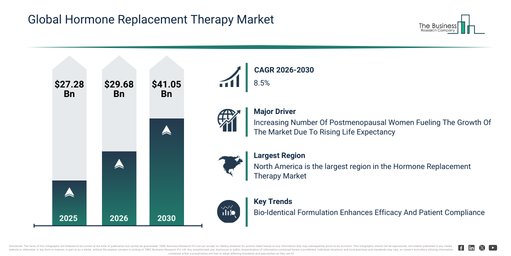
    The hormone replacement therapy market has experienced robust expansion over recent years. It is projected to expand from $27.28 billion in 2025 to $29.68 billion in 2026, demonstrating a compound annual growth rate (CAGR) of 8.8%. Factors contributing to this historical growth include the management of menopause symptoms, an expanding aging demographic, the rising prevalence of thyroid disorders, improved diagnosis of endocrine conditions, and the widespread use of hospital-based hormone therapy.

    The hormone replacement therapy market is projected to experience robust expansion over the coming years. It is anticipated to reach a valuation of $41.05 billion by 2030, demonstrating a compound annual growth rate (CAGR) of 8.5%. Factors contributing to this growth during the forecast period include the increasing adoption of personalized hormone therapy, an aging global demographic, hormonal imbalances linked to lifestyle choices, the integration of telemedicine, and the rising demand for long-term hormone management. Key trends expected throughout this period encompass the growing uptake of menopause management solutions, a heightened demand for bioidentical hormones, expanded application of transdermal hormone delivery methods, the broadening of male hormone replacement therapies, and enhanced patient awareness alongside improved diagnosis rates.

    Get A Free Sample Report With In-Depth Market Insights:

    https://thebusinessresearchcompany.com/sample_request?id=25047982&type=smp&name=Hormone%20Replacement%20Therapy%20Market%20Report%202026&utm_source=Blogs&utm_medium=Paid&utm_campaign=Oct_PR

    Hormone Replacement Therapy Market Industry Drivers: What’s Behind The Revenue Growth?

    An anticipated rise in the population of postmenopausal women is projected to fuel the expansion of the hormone replacement therapy market. These are women who have ceased menstruation permanently, a condition resulting from the natural reduction of reproductive hormones, usually observed 12 months following their final menstrual period. This increase in postmenopausal women is attributable to longer female life expectancy, leading to a greater elderly female demographic undergoing menopause. Hormone replacement therapy offers support to postmenopausal women by mitigating typical symptoms like hot flashes and night sweats, thereby enhancing their quality of life. It aids in maintaining hormonal equilibrium via customized treatments, lessening discomfort and fostering general well-being. As an illustration, figures from November 2023, provided by the National Menopause Foundation (NMF), a US-based nonprofit, indicate that around 1.3 million women in the United States enter menopause annually. Furthermore, projections suggest that the global population of postmenopausal women will hit 1.1 billion by 2025. Consequently, the expanding demographic of postmenopausal women serves as a significant impetus for the growth of the hormone replacement therapy market.

    Hormone Replacement Therapy Market Segment Trends And Revenue Contributors

    The hormone replacement therapy market covered in this report is segmented –

    1) By Therapy Type: Estrogen Replacement Therapy, Human Growth Hormone Replacement Therapy, Thyroid Hormone Replacement Therapy, Testosterone Replacement Therapy, Other Therapy Types

    2) By Indication: Menopause, Hypothyroidism, Male Hypogonadism, Growth Hormone Deficiency, Other Indications

    3) By Route Of Administration: Oral, Transdermal, Injectable, Other Routes Of Administration

    4) By Distribution Channel: Hospital Pharmacies, Retail Pharmacies, Online Pharmacies, Other Distribution Channels

    Subsegments:

    1) By Estrogen Replacement Therapy: Oral Estrogen, Transdermal Estrogen, Topical Estrogen, Vaginal Estrogen, Injectable Estrogen

    2) By Human Growth Hormone (hGH) Replacement Therap: Somatropin, Somatrem, Recombinant Human Growth Hormone (rhGH), Pegylated hGH, Other Human Growth Hormone (hGH) Replacement Therapies

    3) By Thyroid Hormone Replacement Therapy: Levothyroxine (T4), Liothyronine (T3), Natural Desiccated Thyroid (NDT), Combination T3 Or T4 Therapy

    4) By Testosterone Replacement Therapy: Gels And Creams, Injections, Patches, Oral Testosterone, Pellets

    5) By Other Therapy Types: Progesterone Replacement Therapy, Combined Estrogen-Progesterone Therapy, Dehydroepiandrosterone Therapy, Melatonin Replacement Therapy

    #Hormone Replacement Therapy Market Growth Trends: What’s Shaping The Future Outlook?

    Companies prominent in the hormone replacement therapy market are dedicating efforts to developing advanced formulations, such as bio-identical hormone formulations, with the aim of enhancing treatment efficacy and patient compliance. Bio-identical hormone formulations are therapeutic options that employ hormones chemically identical to those naturally occurring in the human body, intending to deliver more natural and effective relief from symptoms with reduced side effects. As an illustration, in May 2024, Jagsonpal Pharmaceuticals Ltd., an India-based pharmaceutical company, rolled out MemUp, a bio-identical hormone replacement therapy (HRT). This cutting-edge therapy integrates estradiol and progesterone into a single, once-daily oral capsule. MemUp is specifically formulated to efficiently mitigate common menopausal symptoms like hot flashes and night sweats, simultaneously streamlining the treatment protocol to foster greater patient convenience and adherence.

    Hormone Replacement Therapy Market Competitive Landscape: Which Companies Lead The Industry?

    Major companies operating in the hormone replacement therapy market are Viatris Inc., Organon & Co., Endo International plc, Ferring Pharmaceuticals, Besins Healthcare, Ascendis Pharma A/S, Astellas Pharma Inc., Kyowa Kirin Co. Ltd., Sun Pharmaceutical Industries Ltd., Dr. Reddy’s Laboratories Ltd., Zydus Lifesciences Ltd., Torrent Pharmaceuticals Ltd., Alvogen Pharma, Perrigo Company plc, Hikma Pharmaceuticals PLC, Accord Healthcare Ltd., Glenmark Pharmaceuticals Ltd., Intas Pharmaceuticals Ltd., Alkem Laboratories Ltd., Piramal Pharma Ltd.

    View The Full Hormone Replacement Therapy Market Report:

    https://thebusinessresearchcompany.com/report/hormone-replacement-therapy-global-market-report?utm_source=Blogs&utm_medium=Paid&utm_campaign=Oct_PR

    Hormone Replacement Therapy Market Largest Region: Which Geography Holds The Biggest Share?

    North America was the largest region in the hormone replacement therapy market in 2025. Asia-Pacific is expected to be the fastest-growing region in the forecast period. The regions covered in the hormone replacement therapy market report are Asia-Pacific, South East Asia, Western Europe, Eastern Europe, North America, South America, Middle East, Africa.

    Reach Out To Our Team:

    The Business Research Company: https://www.thebusinessresearchcompany.com/

    Americas: +1 310-496-7795

    Asia: +44 7882 955267 & +91 8897263534

    Europe: +44 7882 955267

    Email us at: marketing@tbrc.info

    Follow us on:

    LinkedIn: https://in.linkedin.com/company/the-business-research-company

    YouTube: https://www.youtube.com/channel/UC24_fI0rV8cR5DxlCpgmyFQ

    Global Market Model: https://www.thebusinessresearchcompany.com/global-market-model
  • Hormonal Contraceptives Market Explained: What Is Fueling Growth To $15.82 Billion By 2030?

    Hormonal Contraceptives Market Explained: What Is Fueling Growth To $15.82 Billion By 2030?

    Featuring market attractiveness scoring, total addressable market sizing, company benchmarking matrices, interactive Excel dashboards, deeper supply chain intelligence, emerging startup tracking, and granular product-level insights, The Business Research Company’s 2026 market reports are built to deliver research that is both more actionable and more strategically valuable.

    Hormonal Contraceptives Market Growth Potential: How Will Market Size Shift Through 2030?

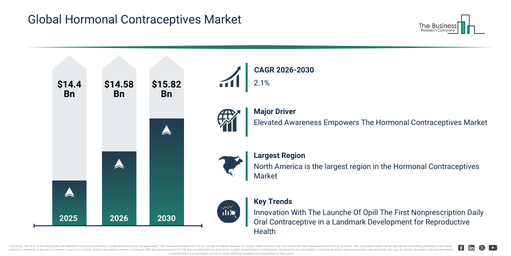
    The hormonal contraceptives market has observed a slight increase in its size in recent years. This market is set to expand from $14.4 billion in 2025 to $14.58 billion in 2026, exhibiting a compound annual growth rate (CAGR) of 1.2%. Historically, this growth has been driven by increased awareness of family planning, the introduction of combined oral contraceptives, government programs supporting reproductive health, growing urbanization, and the expansion of gynecology clinics.

    The hormonal contraceptives market is anticipated to show steady expansion in the upcoming period, with its size projected to reach $15.82 billion by 2030, demonstrating a compound annual growth rate (CAGR) of 2.1%. This expected growth can be attributed to advancements in personalized hormone therapies, the introduction of male contraceptive products, the broadening of e-commerce platforms for contraceptives, the integration of digital health solutions, and a growing emphasis on preventing sexually transmitted diseases. Significant trends during this forecast period include the rise of individualized hormone-based contraceptives, increased awareness of reversible and non-reversible birth control methods, the expansion of telemedicine and online contraceptive services, the development of male contraceptive options, and a focus on contraceptives that offer dual protection against STDs.

    Get A Free Sample Report With In-Depth Market Insights:

    https://thebusinessresearchcompany.com/sample_request?id=54938558&type=smp&name=Hormonal%20Contraceptives%20Market%20Report%202026&utm_source=Blogs&utm_medium=Paid&utm_campaign=Oct_PR

    Hormonal Contraceptives Market Growth Factors: What’s Supporting Expansion?

    The increasing public understanding of hormonal contraceptives has led to a more informed and empowered populace, enabling individuals to select options that align with their reproductive objectives and lifestyles. As people gain greater knowledge about contraceptive choices, they are better equipped to make decisions about their reproductive health, which, in turn, boosts the adoption of hormonal contraceptives that suit their family planning and lifestyle preferences. For instance, in July 2025, the World Health Organization (WHO), a Switzerland-based specialized agency of the United Nations focusing on international public health, indicated that 874 million women now use modern contraceptives. This access to family planning enhances public health, promotes gender equality, strengthens health systems, and fosters economic development, with an additional 70 million women anticipated to gain access by 2030. Therefore, heightened awareness regarding the benefits and application of contraceptives significantly drives the hormonal contraceptives market. The rising healthcare expenditure is projected to fuel the expansion of the hormonal contraceptives market. Healthcare expenditure refers to the overall financial resources allocated by individuals, organizations, or governments for the prevention, treatment, and management of health conditions. This spending is increasing due to advancements in medical technology, as new diagnostic tools, treatments, and innovative therapies often carry higher costs, leading to greater overall healthcare spending. Increased healthcare expenditure promotes the use of hormonal contraceptives by improving access, affordability, awareness, and by supporting research and development as well as family planning initiatives. For example, in December 2024, the Centers for Medicare & Medicaid Services, a US-based agency responsible for administering Medicare and Medicaid programs, reported that in 2023, U.S. health care expenditures rose by 7.5%, reaching $4.9 trillion, which is approximately $14,570 per individual. Consequently, the growing healthcare expenditure is propelling the growth of the hormonal contraceptives market.

    Hormonal Contraceptives Market Segment Analysis Spotlighting Growth Areas

    The hormonal contraceptives market covered in this report is segmented –

    1) By Product: Pills, Injectable Birth Control, Vaginal Rings, Others

    2) By End User: Hospitals, Homecare Settings, Gynecology Centers, Clinics, Ambulatory Surgical Centers

    3) By Hormones: Progestin-Only, Combined Hormones

    4) By Distribution Channel: Drug Stores, Gynecology Or Fertility Clinics, E-Commerce, Other Distribution Channels

    Subsegments:

    1) By Pills: Combined Oral Contraceptives (COCs), Progestin-Only Pills (POPs), Emergency Contraceptive Pills

    2) By Injectable Birth Control: Depot Medroxyprogesterone Acetate (DMPA), Combination Injectable Contraceptives, Subdermal Implants

    3) By Vaginal Rings: NuvaRing, Annovera, Other Hormonal Vaginal Rings

    4) By Others: Transdermal Patches, Intrauterine Devices (IUDs) with Hormones, Hormonal Implants, Contraceptive Tablets For Men

    Hormonal Contraceptives Market Industry Trends: What’s Reshaping Demand?

    Leading companies within the hormonal contraceptives market are developing advanced products, such as nonprescription daily oral contraceptives, to improve accessibility and convenience for users. This type of birth control pill can be purchased without a prescription from a healthcare provider. For instance, in July 2023, Perrigo Company PLC, a US-based manufacturer of private label over-the-counter pharmaceuticals, secured approval from the Food and Drug Administration (FDA), a US-based federal agency for protecting the public health, for Opill. Opill is the first nonprescription daily oral contraceptive, which will be available to consumers without a prescription. The introduction of Opill marks a pivotal moment in reproductive health, as it allows individuals to access effective birth control without the barriers of needing a prescription or a healthcare appointment.

    Hormonal Contraceptives Market Leading Companies: Who Holds The Strongest Market Presence?

    Major companies operating in the hormonal contraceptives market are Bayer AG, Merck & Co. Inc, Viatris, Gedeon Richter, AbbVie, Pfizer, Teva Pharmaceuticals, Mayne Pharma Group Limited, Lupin Limited, HLL Lifecare Limited, Amneal Pharmaceuticals, DKT International, Piramal Pharma Limited, Allergan, Afaxys Inc., Agile Therapeutic, Cipla Limited, Glenmark Pharmaceuticals, Novartis AG, Sun Pharmaceutical Industries Ltd., Apothecus Pharmaceutical Corporation, Famy Care, Mylan Laboratories

    View The Full Hormonal Contraceptives Market Report:

    https://thebusinessresearchcompany.com/report/Hormonal-Contraceptives-Global-Market-Report?utm_source=Blogs&utm_medium=Paid&utm_campaign=Oct_PR

    Hormonal Contraceptives Market Regional Analysis: Which Geography Leads On Revenue?

    North America was the largest region in the hormonal contraceptives market share in 2025. Middle East is expected to be the fastest-growing region in the global hormonal contraceptives market analysis during the forecast period. The regions covered in the hormonal contraceptives market report are Asia-Pacific, South East Asia, Western Europe, Eastern Europe, North America, South America, Middle East, Africa.

    Reach Out To Our Team:

    The Business Research Company: https://www.thebusinessresearchcompany.com/

    Americas: +1 310-496-7795

    Asia: +44 7882 955267 & +91 8897263534

    Europe: +44 7882 955267

    Email us at: marketing@tbrc.info

    Follow us on:

    LinkedIn: https://in.linkedin.com/company/the-business-research-company

    YouTube: https://www.youtube.com/channel/UC24_fI0rV8cR5DxlCpgmyFQ

    Global Market Model: https://www.thebusinessresearchcompany.com/global-market-model
  • Homeopathy Market Forecast To Reach $21.25 Billion By 2030: Key Trends Explained

    Homeopathy Market Forecast To Reach $21.25 Billion By 2030: Key Trends Explained

    Built to provide research that’s more actionable and strategically valuable, The Business Research Company’s 2026 market reports include market attractiveness analysis, total addressable market sizing, company benchmarking matrices, interactive Excel dashboards, broader supply chain intelligence, emerging startup tracking, and in-depth product insights.

    Homeopathy Market Value Analysis: What Growth Lies Ahead Over The Forecast Period?

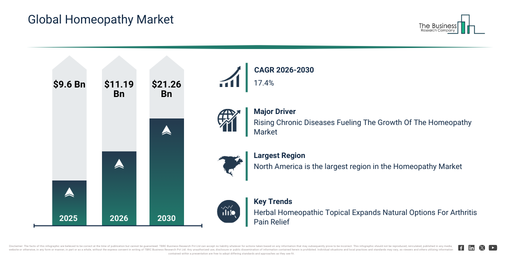
    The homeopathy market has experienced substantial expansion in recent times. It is projected to advance from $9.6 billion in 2025 to $11.19 billion in 2026, demonstrating a compound annual growth rate (CAGR) of 16.5%. Historically, this growth can be attributed to a growing awareness of natural remedies, an increasing prevalence of chronic diseases, the expansion of homeopathic clinics, a rising consumer preference for non-invasive therapies, and the impact of traditional knowledge and cultural acceptance.

    The homeopathy market is projected to experience substantial expansion in the coming years. Its valuation is anticipated to reach $21.26 billion by 2030, demonstrating a compound annual growth rate (CAGR) of 17.4%. This anticipated growth during the forecast period is fueled by several factors, including the incorporation of digital health platforms, the rise of personalized medicine approaches, the broadening of e-commerce distribution networks, increasing investments dedicated to research and development, and the growing acceptance within emerging markets. Key trends for the forecast period encompass tailored homeopathic treatment strategies, a greater embrace of preventive and holistic healthcare practices, the proliferation of homeopathic e-commerce platforms, increasing public consciousness regarding natural and non-toxic remedies, and the incorporation of mobile health applications specifically for homeopathy.

    Get A Free Sample Report With In-Depth Market Insights:

    https://thebusinessresearchcompany.com/sample_request?id=97861068&type=smp&name=Homeopathy%20Market%20Report%202026&utm_source=Blogs&utm_medium=Paid&utm_campaign=Oct_PR

    Homeopathy Market Demand Drivers: What’s Powering Industry Growth?

    The increasing prevalence of chronic diseases is projected to drive the homeopathy market’s growth going forward. Chronic illnesses are defined as health conditions that persist for an extended duration, typically three months or more. Homeopathy is utilized for these long-term conditions due to its holistic approach and the belief that it can stimulate the body’s natural healing response to ailments. For instance, in April 2024, data from Allergy UK, a national charity based in the UK, revealed that over 21 million people in the UK are affected by allergies, which became the most commonly reported chronic health condition in 2022, with projections indicating that by 2026, half of Europe’s population will experience at least one allergy. Consequently, the escalating incidence of chronic diseases is propelling the growth of the homeopathy market.

    Homeopathy Market Segment Performance And Emerging Opportunities

    The homeopathy market covered in this report is segmented –

    1) By Type: Dilutions, Tinctures, Biochemics, Ointments, Tablets, Other Types

    2) By Source: Plants, Animals, Minerals

    3) By Distribution Channel: Homeopathic Clinics, Retailers, E-Retailers, Other Distribution Channels

    4) By Application: Analgesic And Antipyretic, Respiratory, Neurology, Immunology, Gastroenterology, Dermatology, Other Applications

    Subsegments:

    1) By Dilutions: Low Potency Dilutions, High Potency Dilutions

    2) By Tinctures: Mother Tinctures, Herbal Tinctures

    3) By Biochemics: Tissue Salts, Cell Salts

    4) By Ointments: Skin Ointments, Pain Relief Ointments

    5) By Tablets: Sugar-Based Tablets, Lactose-Free Tablets

    6) By Other Types: Drops, Powders

    Homeopathy Market Innovation Trends: What Developments Are Reshaping The Industry?

    Within the homeopathy market, leading companies are concentrating on creating innovative solutions, including herbal-enhanced topicals, to improve relief from joint pain and stiffness linked to arthritis. These herbal-enhanced topicals merge conventional homeopathic components with plant-derived ingredients to offer more precise symptom alleviation. An illustrative example occurred in July 2023, when Boiron USA, a homeopathic medicine manufacturer based in the U.S., introduced its Arnicare Arthritis Cream, which incorporates plant-based elements like Arnica montana and Harpagophytum (devil’s claw). This cream offers temporary relief for mild joint and muscle discomfort and stiffness caused by arthritis in individuals from 12 years of age upwards. Its fast-absorbing, scent-free formulation is designed for use on various joints such as the hands, knees, hips, feet, and lower back, deliberately excluding counterirritants like camphor or menthol that could lead to burning or stinging sensations. Available in a 2.5 oz tube, this product broadens the range of homeopathic over-the-counter choices for managing arthritis pain with a natural feel.

    Homeopathy Market Key Players: Which Companies Lead Industry Competition?

    Major companies operating in the homeopathy market are Boiron Group, Dr. Reckeweg and Co. GmbH, Hyland’s Inc., Hahnemann Laboratories Inc., Dr. Willmar Schwabe GmbH and Co. KG, Bombay Homeolab, JNSON LABORATORIES PVT. LTD., Hapdco Herbals Pvt. Ltd., Fourrts Laboratories Pvt. Ltd., Bjain Pharmaceuticals Pvt. Ltd., Ainsworths London Limited, Powell Laboratories Pvt. Ltd., Similasan Corp., PEKANA Naturheilmittel GmbH, GMP Laboratories of America Inc., Allen Healthcare Co. Ltd., Nelson Pharmacies Limited, DHU-Arzneimittel GmbH & Co. KG, Weleda UK, A Nelson & Co Ltd., Doliosis Homoeo Pharma Pvt. Ltd., Standard Homeopathic Co., Homeocan Inc., R. S. Bhargava Pharmacy Pvt. Ltd., Bakson Drugs & Pharmaceuticals Pvt. Ltd., Bhandari Homoeopathic Laboratories, Bioforce AG, Biologische Heilmittel Heel GmbH, Blackmores Limited, SBL Pvt. Ltd., Natural Health Supply, Hevert – Arzneimittel GmbH & Co. KG, Lord’s Homoeopathic Laboratory, Medilife Impex Pvt. Ltd., Medisynth Chemicals Pvt. Ltd.

    View The Full Homeopathy Market Report:

    https://thebusinessresearchcompany.com/report/homeopathy-global-market-report?utm_source=Blogs&utm_medium=Paid&utm_campaign=Oct_PR

    Homeopathy Market Geographic Spread And Regional Opportunities

    North America was the largest region in the homeopathy market in 2025. Asia-Pacific is expected to be the fastest-growing region in the global homeopathy market report during the forecast period. The regions covered in the homeopathy market report are Asia-Pacific, South East Asia, Western Europe, Eastern Europe, North America, South America, Middle East, Africa.

    Reach Out To Our Team:

    The Business Research Company: https://www.thebusinessresearchcompany.com/

    Americas: +1 310-496-7795

    Asia: +44 7882 955267 & +91 8897263534

    Europe: +44 7882 955267

    Email us at: marketing@tbrc.info

    Follow us on:

    LinkedIn: https://in.linkedin.com/company/the-business-research-company

    YouTube: https://www.youtube.com/channel/UC24_fI0rV8cR5DxlCpgmyFQ

    Global Market Model: https://www.thebusinessresearchcompany.com/global-market-model