Month: October 2026

  • Clindamycin Phosphate Topical Market Reaches $2.38 Billion In 2026: Forecast And Growth Opportunities

    Clindamycin Phosphate Topical Market Reaches $2.38 Billion In 2026: Forecast And Growth Opportunities

    Backed by market attractiveness analysis, total addressable market sizing, company benchmarking matrices, interactive Excel dashboards, wider supply chain intelligence, emerging startup coverage, and detailed product-level insights, The Business Research Company’s 2026 market reports are designed to offer research that is more actionable and strategically valuable than ever.

    Clindamycin Phosphate Topical Market Revenue Outlook: What CAGR Lies Ahead Through 2030?

    The clindamycin phosphate topical market size has experienced rapid growth in recent years. Its expansion is projected to continue, reaching $1.22 billion in 2025 and $1.4 billion in 2026, demonstrating a compound annual growth rate (CAGR) of 14.3%. This historical growth can be linked to the widespread occurrence of acne vulgaris, the demonstrated effectiveness of clindamycin in addressing acne, prescribing habits guided by dermatologists, the availability of various topical formulations, and patients’ preference for non-oral therapeutic approaches.

    The market for clindamycin phosphate topical is projected to experience swift expansion in the coming years. By 2030, its value is forecast to reach $2.38 billion, expanding at a compound annual growth rate (CAGR) of 14.3%. This projected expansion is driven by several factors, such as the increasing incidence of acne in adolescents and adults, a surge in dermatology outpatient consultations, heightened recognition of skin health importance, the need for targeted topical interventions, and the widening availability of at-home acne treatments. Notable trends for the upcoming period encompass a higher occurrence of acne in adolescent and adult demographics, an increasing favoritism for topical antibiotic treatments, the expanded adoption of combination acne remedies, the proliferation of dermatology clinics and the uptake of home care practices, and a heightened requirement for diverse topical formulations.

    Get A Free Sample Report With In-Depth Market Insights:

    https://thebusinessresearchcompany.com/sample_request?id=52376794&type=smp&name=Clindamycin%20Phosphate%20Topical%20Market%20Report%202026&utm_source=Blogs&utm_medium=Paid&utm_campaign=Oct_PR

    Clindamycin Phosphate Topical Market Industry Drivers: What’s Behind The Revenue Growth?

    The escalating occurrence of skin infections is projected to fuel the expansion of the clindamycin phosphate topical market in the coming years. Skin infections encompass bacterial, viral, or fungal conditions affecting the skin, often triggered by environmental exposure, weakened immunity, or compromised skin barriers. The surge in these infections is largely propelled by poor hygiene conditions and increasing antibiotic resistance. The clindamycin phosphate topical market aids in treating bacterial skin infections by inhibiting bacterial growth and reducing inflammation, thereby promoting more rapid healing. For instance, in April 2024, the American Academy of Dermatology (AAD), a US-based professional dermatology organization, reported that over 1 million Americans were living with melanoma, and approximately 200,340 new cases were anticipated in 2024, consisting of 99,700 noninvasive and 100,640 invasive cases, which underscores a growing load of skin-related issues. Thus, the rising incidence of skin infections is propelling the growth of the clindamycin phosphate topical market.

    Clindamycin Phosphate Topical Market Segment Landscape And Growth Outlook

    The clindamycin phosphate topical market covered in this report is segmented –

    1) By Formulation Type: Gel, Lotion, Solution, Foam

    2) By Packaging Type: Tube, Bottle, Pump, Canister

    3) By End User: Dermatology Clinics, Home Care Settings, Other End-Users

    Subsegments:

    1) By Gel: Clear Gel, Tinted Gel

    2) By Lotion: Oil-Based Lotion, Water-Based Lotion

    3) By Solution: Aqueous Solution, Alcohol-Based Solution

    4) By Foam: Aerosol Foam, Pump Foam

    #Clindamycin Phosphate Topical Market Growth Trends: What’s Shaping The Future Outlook?

    Leading companies active in the Clindamycin Phosphate Topical market are prioritizing the creation of innovative treatment methods, specifically triple-combination topical treatments, to boost therapeutic effectiveness, streamline regimens, and enhance patient adherence. These triple-combination topical treatments denote formulations that integrate three active components—generally an antibiotic, a retinoid, and an antibacterial agent—to concurrently address multiple acne-related pathways, including inflammation, bacterial proliferation, and irregular skin cell turnover. As an example, in January 2024, Bausch Health, a US-based pharmaceutical company, introduced CABTREO. This triple-combination topical gel, which contains clindamycin, adapalene, and benzoyl peroxide, offers a once-daily application developed for acne vulgaris, showcasing attributes such as a multi-mechanism action that substantially reduces inflammatory and non-inflammatory lesions within 12 weeks, a unified treatment approach that improves adherence, and a formulation that supports thorough acne management with a single therapy.

    Clindamycin Phosphate Topical Market Competitive Landscape: Who Leads The Industry?

    Major companies operating in the clindamycin phosphate topical market are Pfizer Inc., Abbott Laboratories, Viatris Inc., Teva Pharmaceutical Industries Ltd., Sandoz International GmbH, Bausch Health Companies Inc., Hetero Drugs Limited, Sun Pharmaceutical Industries Ltd., Aurobindo Pharma Limited, Cipla Limited, Dr. Reddy’s Laboratories Ltd., Apotex Inc., Amneal Pharmaceuticals, Lupin Limited, Zydus Lifesciences Ltd., Glenmark Pharmaceuticals Ltd., Alkem Laboratories Ltd., Torrent Pharmaceuticals Ltd., Taro Pharmaceutical Industries Ltd., Encube Ethicals Private Limited

    View The Full Clindamycin Phosphate Topical Market Report:

    https://thebusinessresearchcompany.com/report/clindamycin-phosphate-topical-global-market-report?utm_source=Blogs&utm_medium=Paid&utm_campaign=Oct_PR

    Clindamycin Phosphate Topical Market Regional Analysis: Which Region Leads By Revenue?

    North America was the largest region in the clindamycin phosphate topical market in 2025. The regions covered in the clindamycin phosphate topical market report are Asia-Pacific, South East Asia, Western Europe, Eastern Europe, North America, South America, Middle East, Africa.

    Reach Out To Our Team:

    The Business Research Company: https://www.thebusinessresearchcompany.com/

    Americas: +1 310-496-7795

    Asia: +44 7882 955267 & +91 8897263534

    Europe: +44 7882 955267

    Email us at: marketing@tbrc.info

    Follow us on:

    LinkedIn: https://in.linkedin.com/company/the-business-research-company

    YouTube: https://www.youtube.com/channel/UC24_fI0rV8cR5DxlCpgmyFQ

    Global Market Model: https://www.thebusinessresearchcompany.com/global-market-model
  • Climate Adaptation Market Growth In 2026: Market Size, Key Drivers And Future Outlook

    Climate Adaptation Market Growth In 2026: Market Size, Key Drivers And Future Outlook

    Featuring market attractiveness scoring, total addressable market sizing, company benchmarking matrices, interactive Excel dashboards, deeper supply chain intelligence, emerging startup tracking, and granular product-level insights, The Business Research Company’s 2026 market reports are built to deliver research that is both more actionable and more strategically valuable.

    Climate Adaptation Market Growth Analysis: How Will Revenue Trend Over The Forecast Period?

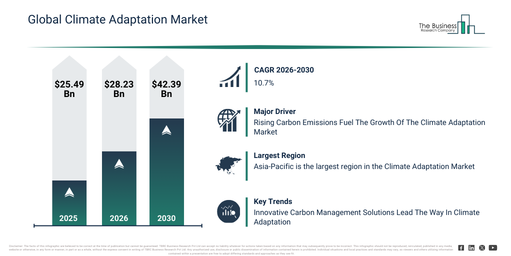
    The market size for climate adaptation has expanded significantly in recent years. It is forecast to rise from $25.49 billion in 2025 to $28.23 billion in 2026, with a compound annual growth rate (CAGR) of 10.8%. This growth observed in past periods can be attributed to the increasing prevalence of extreme weather phenomena, economic damages linked to climate change, early environmental legislation, the vulnerability of public infrastructure, and the advancement of scientific climate research.

    The climate adaptation market is projected to experience substantial expansion in the coming years. This sector is anticipated to reach a valuation of $42.39 billion by 2030, exhibiting a compound annual growth rate (CAGR) of 10.7%. This projected increase is largely driven by factors such as global climate policy commitments, strategic urban resilience planning, an increase in adaptation funding, advancements in monitoring technology, and private sector investments in climate initiatives. Key developments expected during this period involve a surge in spending on climate resilience solutions, the broadening of early warning and monitoring networks, increased utilization of nature-based strategies, an uptick in governmental climate adaptation schemes, and the incorporation of technology-driven adaptation instruments.

    Get A Free Sample Report With In-Depth Market Insights:

    https://thebusinessresearchcompany.com/sample_request?id=50219924&type=smp&name=Climate%20Adaptation%20Market%20Report%202026&utm_source=Blogs&utm_medium=Paid&utm_campaign=Oct_PR

    Climate Adaptation Market Growth Factors: What’s Supporting Expansion?

    Rising carbon emissions are anticipated to stimulate the expansion of the climate adaptation market in the future. These emissions signify the discharge of carbon dioxide (CO₂) and various other greenhouse gases into the atmosphere, mainly stemming from the burning of fossil fuels and industrial operations. The escalation in carbon emissions is fueled by the escalating worldwide demand for energy and the ongoing reliance on fossil fuels. The climate adaptation market addresses increasing emission pressures by providing solutions, including sophisticated monitoring systems, robust infrastructure, and technologies for carbon management. For example, in March 2024, data from the International Energy Agency (IEA), an intergovernmental body based in Paris, indicated that global energy-related CO₂ emissions reached 37.4 billion tonnes in 2023, an increase from 37.0 billion tonnes in 2022, marking a year-on-year growth of 0.4 billion tonnes. Consequently, the expanding carbon emissions are acting as a catalyst for the growth of the climate adaptation market.

    Climate Adaptation Market Breakdown By Product Type And Application

    The climate adaptation market covered in this report is segmented –

    1) By Solution: Natural-Based Solutions, Enhanced Natural Process Solutions, Technology-Based Solutions, Early Climate Warning And Environment Monitoring Solutions

    2) By Enterprise Size: Small And Medium-Sized Enterprises, Large Enterprises

    3) By Industry: Oil And Gas, Power Generation, Chemical And Petrochemical, Government, Education, Other Industries

    Subsegments:

    1) By Natural-Based Solutions: Mangrove And Wetland Restoration, Urban Green Infrastructure, Coastal And Riverine Ecosystem Restoration, Forest And Biodiversity Conservation

    2) By Enhanced Natural Process Solutions: Climate-Resilient Agriculture Practices, Soil And Land Regeneration Techniques, Integrated Water Resource Management, Nature-Integrated Flood Control Systems

    3) By Technology-Based Solutions: Climate-Resilient Infrastructure Technologies, Smart Water And Energy Management Systems, Climate Risk Modeling And Analytics Platforms, Disaster-Resilient Urban Systems

    4) By Early Climate Warning And Environment Monitoring Solutions: Flood And Storm Early Warning Systems, Drought And Heatwave Monitoring Systems, Air And Water Quality Monitoring Systems, Satellite And Remote Sensing Solutions

    Climate Adaptation Market Industry Trends: What’s Reshaping Demand?

    Leading companies in the climate adaptation market are focusing on creating advanced products like carbon management technologies to boost efficiency, lower emissions, and address the increasing need for effective climate solutions across various industries. Carbon management technologies refer to innovative systems crafted to capture, store, monitor, or reduce carbon emissions from industrial and energy-intensive processes, thereby allowing organizations to achieve sustainability targets, comply with regulations, and enhance climate resilience. For instance, in September 2024, Baker Hughes, a US-based energy technology company, introduced CarbonEdge, an advanced carbon management solution tailored for multiple industries. It offers real-time emission monitoring using sophisticated sensor arrays, data analytics for operational optimization, and smooth integration with industrial control systems to help companies decrease their carbon footprint and foster sustainable performance.

    Climate Adaptation Market Company Landscape And Competitive Strategy

    Major companies operating in the climate adaptation market are Exxon Mobil, Accenture plc, International Business Machines Corporation, PricewaterhouseCoopers International Limited, Baker Hughes, Jacobs Engineering, WSP Global, Xylem Inc., Mott MacDonald, Tetra Tech, Ramboll, Dewberry, Esri, RPS Group plc, Vaisala, Sierra Club, Campbell Scientific Inc., The Carbon Trust, Carbon Engineering ULC, DNV GL, ClimeCo LLC, AquaBounty Technologies, BARANI DESIGN Technologies, EcoMetrix Solutions Group, Arup Group Limited

    View The Full Climate Adaptation Market Report:

    https://thebusinessresearchcompany.com/report/climate-adaptation-global-market-report?utm_source=Blogs&utm_medium=Paid&utm_campaign=Oct_PR

    Climate Adaptation Market Geographic Distribution And Regional Opportunities

    Asia-Pacific was the largest region in the climate adaptation market in 2025. The regions covered in the climate adaptation market report are Asia-Pacific, South East Asia, Western Europe, Eastern Europe, North America, South America, Middle East, Africa.

    Reach Out To Our Team:

    The Business Research Company: https://www.thebusinessresearchcompany.com/

    Americas: +1 310-496-7795

    Asia: +44 7882 955267 & +91 8897263534

    Europe: +44 7882 955267

    Email us at: marketing@tbrc.info

    Follow us on:

    LinkedIn: https://in.linkedin.com/company/the-business-research-company

    YouTube: https://www.youtube.com/channel/UC24_fI0rV8cR5DxlCpgmyFQ

    Global Market Model: https://www.thebusinessresearchcompany.com/global-market-model
  • Clean Beauty Market Size And Forecast 2026–2030: Trends Driving Industry Expansion

    Clean Beauty Market Size And Forecast 2026–2030: Trends Driving Industry Expansion

    Built to provide research that’s more actionable and strategically valuable, The Business Research Company’s 2026 market reports include market attractiveness analysis, total addressable market sizing, company benchmarking matrices, interactive Excel dashboards, broader supply chain intelligence, emerging startup tracking, and in-depth product insights.

    Clean Beauty Market Forecast: What Value Will The Market Reach By 2030?

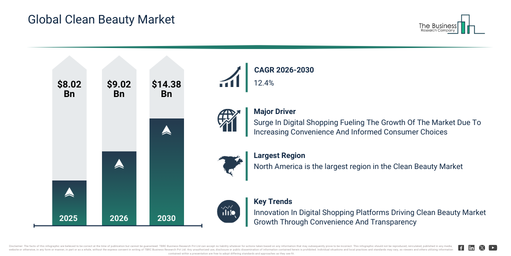
    The clean beauty market size has experienced rapid expansion in recent years. It is anticipated to increase from $8.02 billion in 2025 to $9.02 billion in 2026, exhibiting a compound annual growth rate (CAGR) of 12.5%. The growth observed in the past can be attributed to factors such as consumer apprehension regarding harmful chemicals, a heightened awareness of skin health, the impact of wellness and lifestyle movements, a rising demand for eco-friendly products, and more stringent regulatory scrutiny on cosmetic ingredients.

    The clean beauty market is projected to experience substantial expansion in the coming years. Its valuation is anticipated to reach $14.38 billion by 2030, demonstrating a compound annual growth rate (CAGR) of 12.4%. This projected growth can be linked to factors such as increased adoption of sustainable packaging, a surge in demand for vegan formulations, the expansion of online beauty retail channels, the increasing impact of conscious consumerism, and advancements in plant-based cosmetic ingredients. Throughout this forecast period, key trends observed include a heightened demand for ingredient transparency, a growing inclination towards natural and organic formulations, an amplified focus on ethical and cruelty-free products, the broader availability of clean label personal care products, and the robust rise of direct-to-consumer clean beauty brands.

    Get A Free Sample Report With In-Depth Market Insights:

    https://thebusinessresearchcompany.com/sample_request?id=32888110&type=smp&name=Clean%20Beauty%20Market%20Report%202026&utm_source=Blogs&utm_medium=Paid&utm_campaign=Oct_PR

    Clean Beauty Market Demand Drivers: What’s Powering Industry Growth?

    The rising trend of digital shopping is projected to stimulate the growth of the clean beauty market in the upcoming years. Digital shopping encompasses the act of discovering, evaluating, and acquiring products or services via internet-connected devices across diverse online platforms. This method of shopping is expanding due to its inherent convenience, allowing consumers to explore, compare, and make purchases irrespective of time or physical location constraints. Digital shopping supports the clean beauty sector by facilitating straightforward access to product information, including brand principles, ingredient lists, and ethical practices, thereby assisting consumers in making knowledgeable, conscious purchasing choices. For example, in February 2025, a report issued by the Census Bureau, a US-based government agency, indicated that e-commerce sales in the fourth quarter of 2024 saw an increase of 9.4% (±1.1) when compared to the corresponding period in 2023, while total retail sales experienced a growth of 3.8% (±0.5). Therefore, the expanding prevalence of digital shopping will propel the expansion of the clean beauty market.

    Clean Beauty Market Segment Analysis And Revenue Potential

    The clean beauty market covered in this report is segmented –

    1) By Product Type: Hair Care, Oral Care, Skin Care, Cosmetics, Other Products

    2) By Ingredients: Natural, Organic, Vegan, Non-Toxic

    3) By Form: Powder, Liquid, Gel

    4) By Distribution Channel: Online, Offline

    5) By End User: Men, Women, Children

    Subsegments:

    1) By Hair Care: Shampoo, Conditioner, Hair Oil, Hair Mask, Hair Serum, Styling Products

    2) By Oral Care: Toothpaste, Mouthwash, Dental Floss, Teeth Whitening Products, Breath Fresheners

    3) By Skin Care: Face Creams And Moisturizers, Cleansers, Serums And Oils, Sunscreens, Toners, Face Masks And Peels, Eye Creams

    4) By Cosmetics: Face Makeup, Eye Makeup, Lip Products, Nail Products, Makeup Removers

    5) By Other Products: Deodorants, Fragrances, Bath And Body Products, Baby Care Products, Men’s Grooming Product

    Clean Beauty Market Innovation Trends: What Developments Are Reshaping The Industry?

    Key companies operating within the clean beauty market are concentrating on developing innovative solutions, such as online shops, to provide greater convenience. Online shops are digital platforms or websites where consumers can browse, choose, and purchase products or services via the internet. For instance, in March 2023, Walmart, a US-based retail company, launched Clean Beauty, an online shop offering beauty products devoid of unwanted ingredients. This undertaking follows the rigorous creation of their Made Without List (MWL), which includes more than 1,200 ingredients, developed through consultations with experts and suppliers and by reviewing existing regulations. This effort is primarily driven by customer demand for cleaner products and enhanced transparency. Walmart’s Clean Beauty products are consistent with their commitment to offering safe, sustainable options. This platform ensures customers have easy access to beauty items that meet high clean standards.

    Clean Beauty Market Key Players Shaping Industry Direction

    Major companies operating in the clean beauty market are The Honest Company, MERIT Beauty, Mamaearth, Vegamour Inc., Glamnetic, Juice Beauty Inc., 100% Pure, ILIA Beauty, Gen See Inc., Pacifica Beauty Salon, Wonderskin LLC, Branch Basics LLC, Dae Hair, Viori Beauty, LYS Beauty, Haus Labs, Nøie Skincare, Humankind Inc., Axiology Beauty, Ere Perez Natural Cosmetics, Kjaer Weis LLC, Sallve, OneSkin Technologies, Shampora.

    View The Full Clean Beauty Market Report:

    https://thebusinessresearchcompany.com/report/clean-beauty-global-market-report?utm_source=Blogs&utm_medium=Paid&utm_campaign=Oct_PR

    Clean Beauty Market Largest Region By Revenue And Market Share

    North America was the largest region in the clean beauty market in 2025. The regions covered in the clean beauty market report are Asia-Pacific, South East Asia, Western Europe, Eastern Europe, North America, South America, Middle East, Africa.

    Reach Out To Our Team:

    The Business Research Company: https://www.thebusinessresearchcompany.com/

    Americas: +1 310-496-7795

    Asia: +44 7882 955267 & +91 8897263534

    Europe: +44 7882 955267

    Email us at: marketing@tbrc.info

    Follow us on:

    LinkedIn: https://in.linkedin.com/company/the-business-research-company

    YouTube: https://www.youtube.com/channel/UC24_fI0rV8cR5DxlCpgmyFQ

    Global Market Model: https://www.thebusinessresearchcompany.com/global-market-model

  • Claudin 18.2 Targeted Therapy Market 2026 Outlook: Market Size, CAGR And Key Growth Opportunities

    Claudin 18.2 Targeted Therapy Market 2026 Outlook: Market Size, CAGR And Key Growth Opportunities

    Backed by market attractiveness analysis, total addressable market sizing, company benchmarking matrices, interactive Excel dashboards, wider supply chain intelligence, emerging startup coverage, and detailed product-level insights, The Business Research Company’s 2026 market reports are designed to offer research that is more actionable and strategically valuable than ever.

    Claudin 18.2 Targeted Therapy Market Size Outlook: How Quickly Will Revenue Expand Through 2030?

    The claudin 18.2 targeted therapy market has experienced rapid expansion over the past few years. Forecasts indicate a rise from $1.6 billion in 2025 to $1.98 billion in 2026, demonstrating a compound annual growth rate (CAGR) of 23.7%. Historically, this market’s expansion has been driven by factors such as the increasing incidence of gastric and gastrointestinal cancers, progress in antibody engineering technologies, an increase in oncology-focused clinical trials, greater investments in targeted cancer treatments, and enhanced comprehension of claudin protein biology.

    The claudin 18.2 targeted therapy market is anticipated to experience substantial expansion in the coming years. It is projected to reach $4.61 billion in 2030, exhibiting a compound annual growth rate (CAGR) of 23.5%. This growth during the forecast period is propelled by factors such as increasing regulatory approvals for targeted oncology drugs, a rising demand for personalized cancer treatment, the broadening of combination therapy approaches, growing investments in the oncology pipeline, and the increased adoption of precision diagnostics. Prominent trends expected over the forecast period include a heightened focus on biomarker-driven oncology therapies, the rising development of claudin 18.2 monoclonal antibodies, an expanding range of indication-specific targeted treatments, enhanced integration of companion diagnostics, and an increase in strategic collaborations within precision oncology.

    Get A Free Sample Report With In-Depth Market Insights:

    https://thebusinessresearchcompany.com/sample_request?id=53222914&type=smp&name=Claudin%2018.2%20Targeted%20Therapy%20Market%20Report%202026&utm_source=Blogs&utm_medium=Paid&utm_campaign=Oct_PR

    Claudin 18.2 Targeted Therapy Market Growth Drivers: What’s Behind The Acceleration?

    The escalating occurrence of gastrointestinal cancers is anticipated to boost the claudin 18.2 targeted therapy market’s growth. Gastrointestinal (GI) cancers are defined as malignant tumors forming in any part of the digestive tract, from the esophagus to the rectum. This increase in GI cancers is largely attributed to unhealthy diets, particularly those high in processed foods and low in fiber, which promote gut inflammation and raise cancer risk. Claudin 18.2 targeted therapy addresses gastrointestinal cancers by specifically targeting the Claudin 18.2 protein, which is overexpressed on cancer cells. This allows therapeutic agents like drugs or antibodies to destroy cancer cells while leaving healthy tissue intact, thereby improving treatment outcomes. For instance, data from the Centers for Disease Control and Prevention (CDC), a US-based public health agency, indicated that 147,931 new colorectal cancer cases were reported in 2022, and 53,779 deaths from colorectal cancer were recorded in 2023. Thus, the growing incidence of gastrointestinal cancers is a primary driver for the expansion of the Claudin 18.2 targeted therapy market.

    Claudin 18.2 Targeted Therapy Market Segmentation And Category Overview

    The claudin 18.2 targeted therapy market covered in this report is segmented –

    1) By Therapy Type: Monoclonal Antibodies, Bispecific Antibodies, Antibody-Drug Conjugates, Other Therapy Types

    2) By Indication: Gastric Cancer, Pancreatic Cancer, Esophageal Cancer, Other Indications

    3) By Route Of Administration: Intravenous, Oral, Other Route Of Administrations

    4) By End-User: Hospitals, Oncology Centers, Research Institutes, Other End-Users

    Subsegments:

    1) By Monoclonal Antibodies: Chimeric Monoclonal Antibodies, Humanized Monoclonal Antibodies, Fully Human Monoclonal Antibodies

    2) By Bispecific Antibodies: Igg-Like Bispecific Antibodies, Non-Igg-Like Bispecific Antibodies

    3) By Antibody-Drug Conjugates: Microtubule Inhibitor-Based Antibody-Drug Conjugates, Dna Damaging Agent-Based Antibody-Drug Conjugates, Topoisomerase Inhibitor-Based Antibody-Drug Conjugates

    4) By Other Therapy Types: Car-T Cell Therapy, Vaccines, Small Molecule Inhibitors

    Claudin 18.2 Targeted Therapy Market Trends: What’s Defining The Industry’s Next Phase?

    Leading companies operating within the claudin 18.2 targeted therapy market are concentrating on developing innovative solutions, such as monoclonal antibodies, with the aim of specifically targeting claudin 18.2-expressing cancer cells and enhancing treatment results. A monoclonal antibody is a protein engineered in a laboratory to bind precisely to a single target, such as a protein on the surface of cancer cells, thereby assisting the immune system in recognizing and attacking these cells. For instance, in March 2024, Astellas Pharma Inc., a Japan-based pharmaceutical company, received approval from Japan’s Ministry of Health, Labour and Welfare for VYLOY (zolbetuximab) for the treatment of patients with CLDN18.2-positive cancer. This targeted therapy for advanced gastric and gastroesophageal junction cancer selectively attaches to the CLDN18.2 protein on tumor cells, activating the immune system to destroy them. Clinical trials indicated that it significantly improves progression-free and overall survival when administered with chemotherapy compared to chemotherapy alone. This innovative therapy thus provides a new, effective option for patients with HER2-negative, CLDN18.2-positive tumors, addressing an unmet need in aggressive gastric cancer.

    Claudin 18.2 Targeted Therapy Market Competitive Analysis Of Leading Industry Participants

    Major companies operating in the claudin 18.2 targeted therapy market are Bristol Myers Squibb Company, Amgen Inc., Astellas Pharma Inc., Jiangsu Hengrui Medicine Co. Ltd., Shanghai Henlius Biotech Inc., Legend Biotech Corporation, Zai Lab Limited, Harbour Biomed Ltd., CARsgen Therapeutics Holdings Limited, Genor Biopharma Co. Ltd., Phanes Therapeutics Inc., Suzhou Zelgen Biopharmaceuticals Co. Ltd., Triumvira Immunologics Inc., SOTIO Biotech a.s., Leap Therapeutics, Allogene Therapeutics, AskGene Pharma Inc., Elpiscience Biopharmaceutical Co. Ltd., I-Mab Biopharma Co. Ltd., Antegene Biopharma Co. Ltd.

    View The Full Claudin 18.2 Targeted Therapy Market Report:

    https://thebusinessresearchcompany.com/report/claudin-182-targeted-therapy-global-market-report?utm_source=Blogs&utm_medium=Paid&utm_campaign=Oct_PR

    Claudin 18.2 Targeted Therapy Market Regional Analysis And Leading Geography

    Asia-Pacific was the largest region in the claudin 18.2 targeted therapy market in 2025. The regions covered in the claudin 18.2 targeted therapy market report are Asia-Pacific, South East Asia, Western Europe, Eastern Europe, North America, South America, Middle East, Africa.

    Reach Out To Our Team:

    The Business Research Company: https://www.thebusinessresearchcompany.com/

    Americas: +1 310-496-7795

    Asia: +44 7882 955267 & +91 8897263534

    Europe: +44 7882 955267

    Email us at: marketing@tbrc.info

    Follow us on:

    LinkedIn: https://in.linkedin.com/company/the-business-research-company

    YouTube: https://www.youtube.com/channel/UC24_fI0rV8cR5DxlCpgmyFQ

    Global Market Model: https://www.thebusinessresearchcompany.com/global-market-model
  • Chronic Traumatic Encephalopathy Market Size Growth: From $1.64 Billion In 2026 To $2.27 Billion By 2030

    Chronic Traumatic Encephalopathy Market Size Growth: From $1.64 Billion In 2026 To $2.27 Billion By 2030

    Featuring market attractiveness scoring, total addressable market sizing, company benchmarking matrices, interactive Excel dashboards, deeper supply chain intelligence, emerging startup tracking, and granular product-level insights, The Business Research Company’s 2026 market reports are built to deliver research that is both more actionable and more strategically valuable.

    Chronic Traumatic Encephalopathy Market Size, Value And Growth Trajectory Through 2030

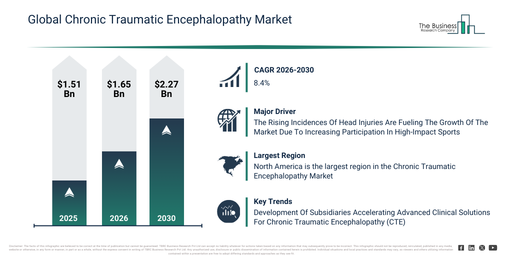
    The chronic traumatic encephalopathy market has shown considerable expansion in recent years. It is projected to increase from $1.51 billion in 2025 to $1.65 billion in 2026, with a compound annual growth rate (CAGR) of 8.7%. Historically, this growth can be ascribed to factors like contact sports participation, heightened awareness of head injuries, advancements in neurology research, the specific healthcare needs of veterans, and improvements in imaging technologies.

    The market for chronic traumatic encephalopathy is projected to experience substantial expansion over the upcoming years. This market is anticipated to reach a valuation of $2.27 billion by 2030, exhibiting a compound annual growth rate (CAGR) of 8.4%. This projected growth during the forecast period is primarily driven by factors such as the discovery of new biomarkers, the implementation of early intervention programs, enhanced sports safety regulations, increased funding for neurodegenerative research, and a heightened emphasis on preventive care. Key trends expected within this period involve a stronger focus on early diagnosis, advancements and expansion in neuroimaging and biomarker research, a greater emphasis on rehabilitation treatments, increased public awareness regarding brain injuries associated with sports, and the development of multidisciplinary approaches to treatment.

    Get A Free Sample Report With In-Depth Market Insights:

    https://thebusinessresearchcompany.com/sample_request?id=24505&type=smp&name=Chronic%20Traumatic%20Encephalopathy%20Market%20Report%202026&utm_source=Blogs&utm_medium=Paid&utm_campaign=Oct_PR

    Chronic Traumatic Encephalopathy Market Growth Factors Behind Sustained Expansion

    Increased occurrences of head injuries are anticipated to boost the chronic traumatic encephalopathy market in the future. Head injuries are defined as physical harm to the scalp, skull, or brain, often caused by an external impact or force. This surge in head injuries largely stems from greater participation in high-impact sports, elevating the risk of traumatic brain injuries from impacts and mishaps. Chronic traumatic encephalopathy (CTE) arises from recurring head trauma, leading to an atypical accumulation of tau protein within the brain. Such buildup progressively damages brain cells, resulting in impaired cognition and mood issues. As an illustration, in November 2024, the Tennessee Department of Health, a US-based government agency, reported that in 2023, a total of 8,196 patients met the criteria for reporting to the traumatic brain injury (TBI) registry, indicating a 2.4% increase compared to the patient count in 2022. Consequently, the increasing frequency of head injuries is fueling the expansion of the chronic traumatic encephalopathy market.

    Chronic Traumatic Encephalopathy Market Segment Outlook: Which Categories Are Growing Fastest?

    The chronic traumatic encephalopathy market covered in this report is segmented –

    1) By Treatment: Pharmacological Treatments, Rehabilitation Therapies, Psychological Support, Surgical Interventions, Alternative Therapies

    2) By Diagnosis Type: Imaging Tests, Neurological Exams, Biomarker Tests, Other Diagnosis Types

    3) By Disease Type: Early Stage Chronic Traumatic Encephalopathy (CTE), Advanced Stage Chronic Traumatic Encephalopathy (CTE)

    4) By End-User: Hospitals, Clinics, Research Institutes, Other End-Users

    Subsegments:

    1) By Pharmacological Treatments: Anti-Inflammatory Drugs, Neuroprotective Agents, Antidepressants, Antipsychotics, Cognitive Enhancers

    2) By Rehabilitation Therapies: Physical Therapy, Occupational Therapy, Speech Therapy, Cognitive Rehabilitation, Vestibular Therapy

    3) By Psychological Support: Cognitive Behavioral Therapy (CBT), Support Groups, Counseling Services, Stress Management Programs, Psychiatric Care

    4) By Surgical Interventions: Decompressive Surgery, Ventriculoperitoneal Shunt, Deep Brain Stimulation (DBS), Neuroendoscopy

    5) By Alternative Therapies: Acupuncture, Herbal Medicine, Meditation And Mindfulness, Nutritional Therapy, Chiropractic Treatment

    Chronic Traumatic Encephalopathy Market Industry Trends Fueling Future Revenue Growth

    Leading companies operating within the chronic traumatic encephalopathy market are increasingly adopting sophisticated strategies, such as establishing subsidiary companies, to accelerate clinical trials and enhance the delivery of innovative diagnostic and therapeutic solutions. A subsidiary company is defined as a distinct legal entity that is either owned or controlled by a parent company, which typically holds more than 50% of its voting stock. This organizational framework enables the parent company to expand into new markets, mitigate various risks, and concentrate its efforts on specialized areas like research and development (R&D) or focused regional growth. For example, in May 2023, Therapeutic Solutions International, a US-based biotechnology company, inaugurated CTE Biologics Inc., a facility dedicated to commercializing its clinical data and investigational new drug (IND) application for the treatment of chronic traumatic encephalopathy (CTE) utilizing JadiCell universal adult stem cells. The subsidiary’s goal is to advance JadiCell-based therapies for CTE, a neurodegenerative condition often affecting athletes and military veterans, by leveraging existing clinical data and ongoing regulatory interactions with the FDA to potentially initiate formal clinical trials for this condition, which currently lacks a definitive treatment.

    Chronic Traumatic Encephalopathy Market Leading Companies And Competitive Benchmarking

    Major companies operating in the chronic traumatic encephalopathy market are Abbott Laboratories, Roche Diagnostics, GE HealthCare, Siemens Healthineers, Fujirebio, BioLegend, Thermo Fisher Scientific, Eisai Co. Ltd., Biogen Inc., Johnson & Johnson (Janssen Neuroscience), Eli Lilly and Company, Bristol Myers Squibb, AbbVie Inc., AC Immune SA, TauRx Therapeutics Ltd., Ionis Pharmaceuticals, Alector Inc., Cortexyme Inc., BrainScope Company Inc., BrainCheck Inc., NeuroTrax Corporation, Banyan Biomarkers Inc., ImPACT Applications Inc., CNS Vital Signs LLC, Neural Analytics Inc., MindMaze SA, ReWalk Robotics Ltd., Neuronetics Inc., Abbott Neuromodulation, Medtronic plc, Abbott Laboratories Diagnostics, Philips Healthcare, Canon Medical Systems, Bruker Corporation, PerkinElmer Inc., Sutter Health Neuroscience Institute, Cleveland Clinic, Johns Hopkins Medicine, Mount Sinai Health System, Barrow Neurological Institute, Shepherd Center, Spaulding Rehabilitation Network, Kessler Foundation, Shirley Ryan AbilityLab, TBI Care Foundation.

    View The Full Chronic Traumatic Encephalopathy Market Report:

    https://thebusinessresearchcompany.com/report/chronic-traumatic-encephalopathy-global-market-report?utm_source=Blogs&utm_medium=Paid&utm_campaign=Oct_PR

    Chronic Traumatic Encephalopathy Market Geographic Analysis: Where Is Demand Accelerating Fastest?

    North America was the largest region in the chronic traumatic encephalopathy market in 2025. Asia-Pacific is expected to be the fastest-growing region in the forecast period. The regions covered in the chronic traumatic encephalopathy market report are Asia-Pacific, South East Asia, Western Europe, Eastern Europe, North America, South America, Middle East, Africa.

    Reach Out To Our Team:

    The Business Research Company: https://www.thebusinessresearchcompany.com/

    Americas: +1 310-496-7795

    Asia: +44 7882 955267 & +91 8897263534

    Europe: +44 7882 955267

    Email us at: marketing@tbrc.info

    Follow us on:

    LinkedIn: https://in.linkedin.com/company/the-business-research-company

    YouTube: https://www.youtube.com/channel/UC24_fI0rV8cR5DxlCpgmyFQ

    Global Market Model: https://www.thebusinessresearchcompany.com/global-market-model
  • Chronic Pain Treatment Market Analysis 2026: Market Size, Growth Trends And Industry Outlook

    Chronic Pain Treatment Market Analysis 2026: Market Size, Growth Trends And Industry Outlook

    Built to provide research that’s more actionable and strategically valuable, The Business Research Company’s 2026 market reports include market attractiveness analysis, total addressable market sizing, company benchmarking matrices, interactive Excel dashboards, broader supply chain intelligence, emerging startup tracking, and in-depth product insights.

    Chronic Pain Treatment Market CAGR Outlook And Future Development

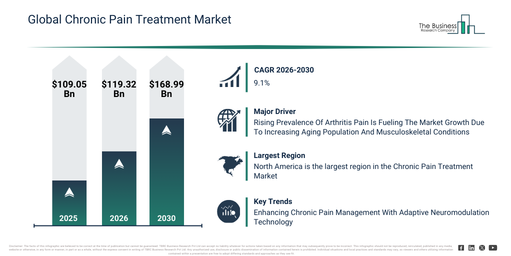
    The chronic pain treatment market has demonstrated substantial expansion in recent years. This sector is anticipated to increase from $109.05 billion in 2025 to $119.32 billion in 2026, achieving a compound annual growth rate (CAGR) of 9.4%. Historically, this growth has been fueled by factors such as opioid usage, musculoskeletal disorders, an aging population, the establishment of hospital pain clinics, and advancements in post-surgical pain management.

    The chronic pain treatment market is projected to experience substantial expansion in the coming years. Its valuation is anticipated to reach $168.99 billion by 2030, exhibiting a compound annual growth rate (CAGR) of 9.1%. This projected growth during the forecast period is fueled by factors such as opioid regulation, the development of device-based therapies, the rising prevalence of chronic diseases, increased integration of mental health services, and the expansion of outpatient pain care. Significant developments expected over this period encompass a move towards non-opioid pain treatments, the rise of neuromodulation devices, broadening multidisciplinary pain management approaches, a heightened emphasis on individualized pain care, and the incorporation of psychological support strategies.

    Get A Free Sample Report With In-Depth Market Insights:

    https://thebusinessresearchcompany.com/sample_request?id=59949987&type=smp&name=Chronic%20Pain%20Treatment%20Market%20Report%202026&utm_source=Blogs&utm_medium=Paid&utm_campaign=Oct_PR

    Chronic Pain Treatment Market Demand Drivers Opening New Revenue Streams

    The increasing occurrence of arthritis pain is projected to drive the expansion of the chronic pain treatment market in the future. Arthritis pain describes discomfort, aching, or soreness within the joints, resulting from inflammation or degeneration caused by arthritis. The growing prevalence of arthritis pain is primarily influenced by the aging population, as the natural wear and tear on joints intensifies with age, leading to a higher incidence of arthritis-related conditions. Chronic pain treatment aids arthritis pain by targeting inflammation and nerve sensitivity to lessen discomfort, enhance joint function, and improve the overall quality of life for individuals managing persistent arthritis symptoms. For example, in July 2024, the Centers for Disease Control and Prevention, a US-based government agency, reported that an estimated 21.2% of adults aged 18 and older in the US were diagnosed with arthritis in 2023. Therefore, the rising prevalence of arthritis pain is a significant factor propelling the growth of the chronic pain treatment market.

    Chronic Pain Treatment Market Segment Landscape: Which Areas Lead Development?

    The chronic pain treatment market covered in this report is segmented –

    1) By Product Type: Drugs, Devices

    2) By Indication: Neuropathic Pain, Arthritis Pain, Chronic Back Pain, Cancer Pain, Migraine, Fibromyalgia, Other Indications

    3) By Distribution channels: Direct, Indirect

    4) By End-User: Hospitals, Clinics, Nursing Homes, Research Centers And Universities, Other End-Users

    Subsegments:

    1) By Drugs: Non-Steroidal Anti-Inflammatory Drugs (NSAIDs), Opioids, Antidepressants, Anticonvulsants, Muscle Relaxants, Topical Analgesics, Other Pain Relief Medications

    2) By Devices: Neuromodulation Devices, Transcutaneous Electrical Nerve Stimulation (TENS) Devices, Spinal Cord Stimulators, Peripheral Nerve Stimulators, Radiofrequency Ablation Devices, Implantable Drug Delivery Devices

    Chronic Pain Treatment Market Trends Powering Strategic Industry Growth

    Major companies operating in the chronic pain treatment market are prioritizing the development of innovative solutions, such as closed-loop spinal cord stimulation (SCS) systems. This focus is driven by the increasing demand for advanced non-opioid therapies, improved long-term pain management, and enhanced patient quality of life. Closed-loop SCS systems are implantable, rechargeable neurostimulators that continuously detect neural signals and automatically modify electrical stimulation in real time, unlike traditional open-loop SCS devices which deliver predetermined and non-responsive output. For instance, in April 2024, Medtronic plc, an Ireland-based medical device company, received U.S. Food and Drug Administration (FDA) approval for the Inceptiv Neurostimulation System. This device is a compact rechargeable implant that uses sensing electrodes to monitor evoked neural responses and automatically adjust stimulation. It provides full-body 1.5T and 3T MRI access with impedance-independent sensing and is indicated for chronic, intractable trunk or limb pain. Its design aims to deliver more consistent pain relief, better responder outcomes, and improved comfort compared with traditional fixed-output SCS systems.

    Chronic Pain Treatment Market Industry Leaders And Competitive Landscape

    Major companies operating in the chronic pain treatment market are Pfizer Inc., Merck & Co. Inc., AbbVie Inc., Bayer AG, Sanofi S.A., Bristol-Myers Squibb Company, AstraZeneca plc, Abbott Laboratories, Novartis AG, GlaxoSmithKline plc, Medtronic plc, Eli Lilly and Company, Teva Pharmaceutical Industries Ltd., Boehringer Ingelheim International GmbH, Boston Scientific Corporation, Bausch Health Companies Inc., Sun Pharmaceutical Industries Ltd., Amneal Pharmaceuticals LLC, Mallinckrodt plc, Nevro Corp.

    View The Full Chronic Pain Treatment Market Report:

    https://thebusinessresearchcompany.com/report/chronic-pain-treatment-global-market-report?utm_source=Blogs&utm_medium=Paid&utm_campaign=Oct_PR

    Chronic Pain Treatment Market Global Footprint: Which Region Leads The Industry?

    North America was the largest region in the chronic pain treatment market in 2025. Asia-Pacific is expected to be the fastest-growing region in the forecast period. The regions covered in the chronic pain treatment market report are Asia-Pacific, South East Asia, Western Europe, Eastern Europe, North America, South America, Middle East, Africa.

    Reach Out To Our Team:

    The Business Research Company: https://www.thebusinessresearchcompany.com/

    Americas: +1 310-496-7795

    Asia: +44 7882 955267 & +91 8897263534

    Europe: +44 7882 955267

    Email us at: marketing@tbrc.info

    Follow us on:

    LinkedIn: https://in.linkedin.com/company/the-business-research-company

    YouTube: https://www.youtube.com/channel/UC24_fI0rV8cR5DxlCpgmyFQ

    Global Market Model: https://www.thebusinessresearchcompany.com/global-market-model

  • Chronic Obstructive Pulmonary Disease (COPD) Treatment Market Forecast To 2030: Starting From $29.13 Billion In 2026

    Chronic Obstructive Pulmonary Disease (COPD) Treatment Market Forecast To 2030: Starting From $29.13 Billion In 2026

    Backed by market attractiveness analysis, total addressable market sizing, company benchmarking matrices, interactive Excel dashboards, wider supply chain intelligence, emerging startup coverage, and detailed product-level insights, The Business Research Company’s 2026 market reports are designed to offer research that is more actionable and strategically valuable than ever.

    Chronic Obstructive Pulmonary Disease (COPD) Treatment Market Set To Climb From $22.9 Billion In 2026 To $29.13 Billion By 2030

    The chronic obstructive pulmonary disease (copd) treatment market has seen robust growth in recent years. It is anticipated to increase from $21.73 billion in 2025 to $22.9 billion in 2026, at a compound annual growth rate (CAGR) of 5.4%. This historical growth can be attributed to several factors, including a high prevalence of smoking, an aging population, elevated air pollution levels, increased occupational dust exposure, and improved awareness of copd.

    The chronic obstructive pulmonary disease (copd) treatment market size is anticipated to experience robust expansion over the next few years, reaching $29.13 billion by 2030, demonstrating a compound annual growth rate (CAGR) of 6.2%. This projected growth during the forecast period is driven by factors such as the increasing adoption of combination therapies, the spread of homecare treatment models, rising healthcare expenditure, an increase in copd diagnosis rates, and innovations in inhalation drug delivery. Prominent trends expected in this period encompass the growing acceptance of triple combination inhaler therapies, a notable shift towards managing copd from home, a heightened focus on early diagnosis and disease screening, the expansion of generic and cost-effective copd medications, and an increased use of non-pharmacological pulmonary rehabilitation.

    Get A Free Sample Report With In-Depth Market Insights:

    https://thebusinessresearchcompany.com/sample_request?id=90892599&type=smp&name=Chronic%20Obstructive%20Pulmonary%20Disease%20%28COPD%29%20Treatment%20Market%20Report%202026&utm_source=Blogs&utm_medium=Paid&utm_campaign=Oct_PR

    Chronic Obstructive Pulmonary Disease (COPD) Treatment Market Growth Backed By Core Demand Fundamentals

    The expanding incidence of smoking is projected to drive the future expansion of the chronic obstructive pulmonary disease (COPD) treatment market. Smoking is defined as the act of drawing in smoke, usually from ignited materials like tobacco, orally. For individuals who smoke, COPD treatment is favored to achieve better respiration, a higher quality of life, fewer flare-ups, greater exercise capacity, extended lifespan, and enhanced psychological well-being. As an illustration, the World Health Organization, an intergovernmental body located in Switzerland, reported in July 2023 that tobacco annually causes over 8 million deaths, a figure that includes 1.3 million non-smokers exposed to second-hand smoke. Consequently, the rising occurrence of smoking is fueling the expansion of the chronic obstructive pulmonary disease (COPD) treatment market.

    Chronic Obstructive Pulmonary Disease (COPD) Treatment Market Segments: Where Is Growth Concentrated?

    The chronic obstructive pulmonary disease (copd) treatment market covered in this report is segmented –

    1) By Drug Class: Combination Therapy, Bronchodilators, Corticosteroids, Phosphodiesterase Type 4 Inhibitor, Mucokinetics, Other Drug Classes

    2) By Type: Chronic Bronchitis, Emphysema

    3) By End-User: Hospitals, Clinics, Homecare Settings

    Subsegments:

    1) By Combination Therapy: Long-Acting Beta-Agonists (LABA) + Inhaled Corticosteroids (ICS), Long-Acting Muscarinic Antagonists (LAMA) + LABA, Triple Therapy (LAMA + LABA + ICS)

    2) By Bronchodilators: Short-Acting Beta-Agonists (SABA), Long-Acting Beta-Agonists (LABA), Long-Acting Muscarinic Antagonists (LAMA)

    3) By Corticosteroids: Inhaled Corticosteroids (ICS), Oral Corticosteroids, Injectable Corticosteroids

    4) By Phosphodiesterase Type 4 Inhibitor: Roflumilast, Other PDE4 Inhibitors

    5) By Mucokinetics: Expectorants, Mucolytics

    6) By Other Drug Classes: Antibiotics, Antivirals, Antifungal Agents

    Chronic Obstructive Pulmonary Disease (COPD) Treatment Market Growth Trends Reshaping The Competitive Landscape

    Leading companies in the chronic obstructive pulmonary disease (COPD) treatment market are prioritizing innovative products like Vilfuro-G to boost their market revenues. Vilfuro-G stands as the world’s first fixed-dose triple combination medication (FDC) specifically developed for the effective management of chronic obstructive pulmonary disease (COPD. For example, in November 2023, Lupin Limited, an India-based pharmaceutical company, introduced Vilfuro-G. The product is available in a fixed dose of one strength, with a recommended once daily dosage. The introduction of Vilfuro-G is expected to considerably enhance the lives of COPD patients and expand Lupin’s respiratory product portfolio, showcasing the company’s commitment to delivering advanced treatment choices to patients and medical professionals. Vilfuro-G is the unique fixed-dose combination (FDC) expressly formulated to combine glycopyrronium bromide, vilanterol, and fluticasone furoate for the long-term treatment and management of moderate to severe COPD.

    Chronic Obstructive Pulmonary Disease (COPD) Treatment Market Key Participants And Competitive Landscape

    Major companies operating in the chronic obstructive pulmonary disease (copd) treatment market are Almirall S.A., AstraZeneca plc, Boehringer Ingelheim International GmbH, F. Hoffmann-La Roche Ltd., GlaxoSmithKline plc, Novartis AG, Teva Pharmaceutical Industries Ltd., Chiesi Farmaceutici S.p.A, Sunovion Pharmaceuticals Inc., Dr. Reddy’s Laboratories Ltd., Sanofi S.A, Theravance Biopharma Inc., Verona Pharmaceuticals plc, Pfizer Inc., Mylan N.V., Orion Corporation, Cipla Limited, Glenmark Pharmaceuticals Limited, Biocon Limited, Lupin Limited, Mundipharma International Limited

    View The Full Chronic Obstructive Pulmonary Disease (COPD) Treatment Market Report:

    https://thebusinessresearchcompany.com/report/chronic-obstructive-pulmonary-disease-COPD-treatment-global-market-report?utm_source=Blogs&utm_medium=Paid&utm_campaign=Oct_PR

    Chronic Obstructive Pulmonary Disease (COPD) Treatment Market Regional Distribution: Which Areas Power Market Growth?

    North America was the largest region in the chronic obstructive pulmonary disease (COPD) treatment market in 2025. Asia-Pacific is expected to be the global chronic obstructive pulmonary disease (COPD) treatment market report during the fastest-growing region in the forecast period. The regions covered in the chronic obstructive pulmonary disease (copd) treatment market report are Asia-Pacific, South East Asia, Western Europe, Eastern Europe, North America, South America, Middle East, Africa.

    Reach Out To Our Team:

    The Business Research Company: https://www.thebusinessresearchcompany.com/

    Americas: +1 310-496-7795

    Asia: +44 7882 955267 & +91 8897263534

    Europe: +44 7882 955267

    Email us at: marketing@tbrc.info

    Follow us on:

    LinkedIn: https://in.linkedin.com/company/the-business-research-company

    YouTube: https://www.youtube.com/channel/UC24_fI0rV8cR5DxlCpgmyFQ

    Global Market Model: https://www.thebusinessresearchcompany.com/global-market-model
  • Chronic Lymphocytic Leukemia Treatment Market Size In 2026 And Beyond: Understanding Future Growth Potential

    Chronic Lymphocytic Leukemia Treatment Market Size In 2026 And Beyond: Understanding Future Growth Potential

    Featuring market attractiveness scoring, total addressable market sizing, company benchmarking matrices, interactive Excel dashboards, deeper supply chain intelligence, emerging startup tracking, and granular product-level insights, The Business Research Company’s 2026 market reports are built to deliver research that is both more actionable and more strategically valuable.

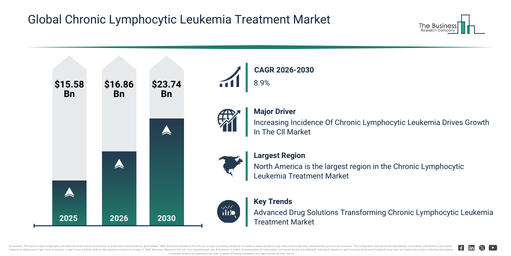
    Chronic Lymphocytic Leukemia Treatment Market Forecast: Value Set To Climb From $16.86 Billion To $23.74 Billion

    The chronic lymphocytic leukemia treatment market size has seen significant growth in recent years. Its expansion is projected to take it from $15.58 billion in 2025 to $16.86 billion in 2026, achieving a compound annual growth rate (CAGR) of 8.2%. Throughout the historical period, this growth can be ascribed to factors such as the increasing prevalence of hematological malignancies, improved diagnostic accuracy for leukemia, the widespread use of chemotherapy regimens, the expansion of hospital oncology infrastructure, and rising healthcare expenditure.

    The chronic lymphocytic leukemia treatment market is projected to experience substantial expansion over the upcoming years. This market is forecast to reach a value of $23.74 billion by 2030, exhibiting a compound annual growth rate (CAGR) of 8.9%. Factors contributing to this growth during the forecast period include the increasing uptake of targeted drug therapies, the broadening of precision medicine strategies, the enhanced accessibility of oral CLL medications, growing investments in oncology research and development, and better patient survival outcomes. Key trends anticipated for this period encompass the escalating embrace of targeted therapies, a move towards oral administration methods, greater utilization of combined therapy protocols, advancements in early detection and risk assessment, and an increase in clinical trials for innovative CLL medications.

    Get A Free Sample Report With In-Depth Market Insights:

    https://thebusinessresearchcompany.com/sample_request?id=20806901&type=smp&name=Chronic%20Lymphocytic%20Leukemia%20Treatment%20Market%20Report%202026&utm_source=Blogs&utm_medium=Paid&utm_campaign=Oct_PR

    Chronic Lymphocytic Leukemia Treatment Market Growth Catalysts And Demand Drivers

    The increasing occurrence of chronic lymphocytic leukemia is anticipated to fuel expansion in the chronic lymphocytic leukemia market. Chronic lymphocytic leukemia (CLL) is defined as a cancer originating in the bone marrow from a specific type of white blood cell known as lymphocytes. This condition is recognized as a blood cancer that typically progresses more gradually compared to other forms of leukemia. Treatment options for chronic lymphocytic leukemia (CLL) depend on several elements, such as the cancer stage, whether symptoms are present, the patient’s overall health, and their individual preferences. The rising incidence of chronic lymphocytic leukemia is contributing to the growth of the chronic lymphocytic leukemia market. For example, in January 2023, the American Cancer Society, a US-based non-profit organization focused on cancer eradication, projected approximately 6,540 new cases of acute lymphocytic leukemia, or ALL, in the United States (comprising 3,660 in males and 2,880 in females). Additionally, an estimated 1,390 deaths are attributed to ALL (with 700 occurring in males and 690 in females). Consequently, the increased prevalence of chronic lymphocytic leukemia is expected to drive progress in the chronic lymphocytic leukemia treatment market.

    Chronic Lymphocytic Leukemia Treatment Market Segment Analysis: What Are The Core Market Categories?

    The chronic lymphocytic leukemia treatment market covered in this report is segmented –

    1) By Type: Aggressive CLL, Indolent CLL, Other Types

    2) By Treatment: Targeted Drug Therapy, Chemotherapy, Bone Marrow Transplant, Immunotherapy

    3) By Route of Administration: Oral, Parental, Other Route of Administration

    4) By End-Users: Hospital, Diagnostic Laboratories, Other End-Users

    Subsegments:

    1) By Aggressive CLL: High-Risk CLL, Symptomatic CLL, Transformation To Richter’s Syndrome

    2) By Indolent CLL: Early-Stage CLL, Asymptomatic CLL, Low-Risk CLL

    3) By Other Types: Mixed CLL, Secondary CLL, Rare Variants Of CLL

    Chronic Lymphocytic Leukemia Treatment Market Trends Shaping Long-Term Demand

    Companies operating within the chronic lymphocytic leukemia treatment market are concentrating on developing advanced drug solutions and securing their approval from federal agencies to achieve a competitive advantage. These organizations leverage sophisticated technologies to advance and refine drug delivery systems and treatments for CLL and other diseases. For instance, in January 2023, BeiGene, a Switzerland-based biotechnology company, announced the U.S. Food and Drug Administration (FDA) approval of BRUKINSA (zanubrutinib) for treating adult patients with chronic lymphocytic leukemia (CLL) or small lymphocytic lymphoma (SLL). BRUKINSA is unique as the only BTKi (Bruton’s tyrosine kinase inhibitor) to demonstrate superior PFS (progression-free survival) compared to IMBRUVICA (ibrutinib). Brukinsa is administered as monotherapy in specific patient groups, including those who have not been previously treated and those who have received at least one prior therapy. It is supplied as capsules for oral intake, with a recommended daily dose of 320 mg. The superior efficacy of BRUKINSA (zanubrutinib) in both first-line and relapsed or refractory therapy situations was established through two global Phase 3 trials involving adult patients with CLL.

    Chronic Lymphocytic Leukemia Treatment Market Top Companies Driving Competitive Growth

    Major companies operating in the chronic lymphocytic leukemia treatment market are AbbVie Inc., F. Hoffmann-La Roche AG, Novartis AG, AstraZeneca plc, Gilead Sciences Inc., Johnson and Johnson, ZIOPHARM Oncology Inc., TG Therapeutics Inc., Pfizer Inc., Genmab A/S, Teva Pharmaceutical Industries Ltd., Genentech Inc., Ariad Pharmaceuticals, Merck & Co. Inc., Celgene Corporation, Amgen Inc., Incyte Corporation, Acerta Pharma, Eisai Co. Ltd., Regeneron Pharmaceuticals Inc., Verastem Inc., MEI Pharma Inc., Ono Pharmaceutical Co. Ltd.

    View The Full Chronic Lymphocytic Leukemia Treatment Market Report:

    https://thebusinessresearchcompany.com/report/chronic-lymphocytic-leukemia-treatment-global-market-report?utm_source=Blogs&utm_medium=Paid&utm_campaign=Oct_PR

    Chronic Lymphocytic Leukemia Treatment Market Leading Geography: Which Region Contributes The Most Revenue?

    North America was the largest region in the chronic lymphocytic leukemia treatment market in 2025. Asia-Pacific is expected to be the fastest-growing region in the global chronic lymphocytic leukemia treatment market report during the forecast period. The regions covered in the chronic lymphocytic leukemia treatment market report are Asia-Pacific, South East Asia, Western Europe, Eastern Europe, North America, South America, Middle East, Africa.

    Reach Out To Our Team:

    The Business Research Company: https://www.thebusinessresearchcompany.com/

    Americas: +1 310-496-7795

    Asia: +44 7882 955267 & +91 8897263534

    Europe: +44 7882 955267

    Email us at: marketing@tbrc.info

    Follow us on:

    LinkedIn: https://in.linkedin.com/company/the-business-research-company

    YouTube: https://www.youtube.com/channel/UC24_fI0rV8cR5DxlCpgmyFQ

    Global Market Model: https://www.thebusinessresearchcompany.com/global-market-model
  • Cholinesterase (ChE) Inhibitors Market Reaches $5.98 Billion In 2026: Key Developments Shaping Expansion

    Cholinesterase (ChE) Inhibitors Market Reaches $5.98 Billion In 2026: Key Developments Shaping Expansion

    Built to provide research that’s more actionable and strategically valuable, The Business Research Company’s 2026 market reports include market attractiveness analysis, total addressable market sizing, company benchmarking matrices, interactive Excel dashboards, broader supply chain intelligence, emerging startup tracking, and in-depth product insights.

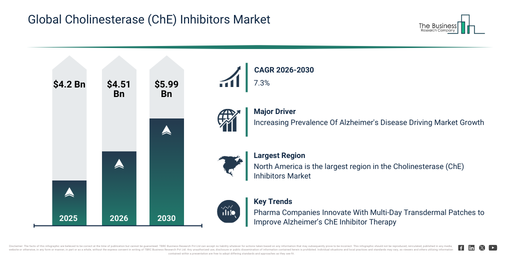
    Cholinesterase (ChE) Inhibitors Market Revenue Growth On Track For A 7.3% CAGR Through 2030

    The cholinesterase (che) inhibitors market has shown substantial expansion in recent years. Its valuation is set to ascend from $4.2 billion in 2025 to $4.51 billion in 2026, reflecting a compound annual growth rate (CAGR) of 7.4%. This growth observed in the preceding period is attributable to an expanding aging population, an increase in dementia prevalence, the widespread use of donepezil, the proliferation of neurology clinics, and advancements in the diagnosis of cognitive disorders.

    The cholinesterase (che) inhibitors market size is anticipated to experience robust expansion in the coming years. Its valuation is projected to reach $5.99 billion in 2030, exhibiting a compound annual growth rate (CAGR) of 7.3%. Factors contributing to this growth during the forecast period include the rise in neurodegenerative conditions, an expanding elderly demographic, the proliferation of cognitive health initiatives, escalating healthcare spending, and heightened understanding of early detection. Key developments anticipated over this period encompass a surge in their application for Alzheimer’s disease management, greater uptake of sustained cognitive therapies, escalating need for reversible cholinesterase inhibitors, broader provision of geriatric neurology services, and enhanced accessibility to generic medications.

    Get A Free Sample Report With In-Depth Market Insights:

    https://thebusinessresearchcompany.com/sample_request?id=85852201&type=smp&name=Cholinesterase%20%28ChE%29%20Inhibitors%20Market%20Report%202026&utm_source=Blogs&utm_medium=Paid&utm_campaign=Oct_PR

    Cholinesterase (ChE) Inhibitors Market Opportunity Drivers: What’s Unlocking New Revenue Potential?

    The cholinesterase (ChE) inhibitors market is projected to expand due to the increasing incidence of Alzheimer’s disease. This condition is characterized as a progressive neurological disorder that gradually impairs memory and cognitive abilities, ultimately resulting in reduced self-sufficiency. The growing occurrence of Alzheimer’s can be attributed to several factors, including an older demographic, longer lifespans, genetic susceptibilities, lifestyle choices, and greater exposure to various neurological risk elements. Cholinesterase (ChE) inhibitors assist individuals with Alzheimer’s by inhibiting the degradation of acetylcholine, an essential neurotransmitter vital for memory and thought processes. This action improves neural signaling, decelerates the progression of symptoms, and enhances everyday performance, thereby aiding in the management of the cognitive deterioration linked with the illness. For example, data from the Alzheimer’s Association, a US-based nonprofit organization, indicated that in April 2025, the population of Americans aged 65 and older afflicted with Alzheimer’s disease reached 7.2 million, an increase from 6.9 million in 2024. Consequently, the increasing prevalence of Alzheimer’s disease is driving the growth of the cholinesterase (ChE) inhibitors market.

    Cholinesterase (ChE) Inhibitors Market Segment Breakdown: Which Categories Lead On Revenue?

    The cholinesterase (che) inhibitors market covered in this report is segmented –

    1) By Drug Class: Reversible Cholinesterase Inhibitors, Irreversible Cholinesterase Inhibitors, Acetylcholinesterase Inhibitors

    2) By Indication: Alzheimer’s Disease, Myasthenia Gravis, Glaucoma, Pediatric Urinary Incontinence

    3) By Distribution Channel: Hospital Pharmacies, Retail Pharmacies, Online Pharmacies

    Subsegments:

    1) By Reversible Cholinesterase Inhibitors: Donepezil, Rivastigmine, Galantamine

    2) By Irreversible Cholinesterase Inhibitors: Organophosphates, Carbamates

    3) By Acetylcholinesterase Inhibitors: Tacrine, Huperzine A

    Cholinesterase (ChE) Inhibitors Market Innovation Trends Shaping Future Development

    Companies operating within the cholinesterase (ChE) inhibitors market are prioritizing the development of multi-day transdermal patch systems, like twice-weekly rivastigmine patches, to boost patient compliance and lessen the burden of application. A twice-weekly rivastigmine patch is a medicated skin application that administers a regulated dosage of rivastigmine over several days, thereby necessitating fewer patch replacements than daily or weekly options. For instance, in March 2025, Luye Pharma, a biopharmaceutical firm based in China, secured marketing authorization from Japan’s Ministry of Health, Labour and Welfare for its Rivaluen LA Patch (rivastigmine twice-weekly transdermal patch). This product is engineered to ensure sustained and steady drug release, helping to maintain stable therapeutic concentrations for patients suffering from dementia. Its twice-weekly dosing regimen decreases the frequency of administration compared to daily patches, consequently improving treatment adherence and convenience for those providing care. Additionally, the patch features an advanced formulation designed to enhance skin tolerability, presenting a more comfortable and user-friendly solution for the long-term management of cognitive disorders.

    Cholinesterase (ChE) Inhibitors Market Leading Players And Competitive Positioning

    Major companies operating in the cholinesterase (che) inhibitors market are Pfizer Inc., F. Hoffmann-La Roche Ltd., Sanofi S.A., Novartis International AG, Takeda Pharmaceutical Company Limited, Merck KGaA, Viatris Inc., Teva Pharmaceutical Industries Ltd., C.H. Boehringer Sohn AG & Co. KG, Eisai Co. Ltd., Apotex Inc., Dr. Reddy’s Laboratories Ltd., Hikma Pharmaceuticals plc, Amneal Pharmaceuticals Inc., Lupin Pharmaceuticals Inc., Torrent Pharmaceuticals Ltd., Essential Pharma Group, Tocris Bioscience, Sparsha Pharma, Janssen Pharmaceuticals

    View The Full Cholinesterase (ChE) Inhibitors Market Report:

    https://thebusinessresearchcompany.com/report/cholinesterase-che-inhibitors-global-market-report?utm_source=Blogs&utm_medium=Paid&utm_campaign=Oct_PR

    Cholinesterase (ChE) Inhibitors Market Regional Outlook: Where Is Opportunity Concentrated?

    North America was the largest region in the cholinesterase (ChE) inhibitors market in 2025. Asia-Pacific is expected to be the fastest-growing region in the forecast period. The regions covered in the cholinesterase (che) inhibitors market report are Asia-Pacific, South East Asia, Western Europe, Eastern Europe, North America, South America, Middle East, Africa.

    Reach Out To Our Team:

    The Business Research Company: https://www.thebusinessresearchcompany.com/

    Americas: +1 310-496-7795

    Asia: +44 7882 955267 & +91 8897263534

    Europe: +44 7882 955267

    Email us at: marketing@tbrc.info

    Follow us on:

    LinkedIn: https://in.linkedin.com/company/the-business-research-company

    YouTube: https://www.youtube.com/channel/UC24_fI0rV8cR5DxlCpgmyFQ

    Global Market Model: https://www.thebusinessresearchcompany.com/global-market-model
  • Cholinergic Drugs Market Growth Outlook For 2026: Drivers, Trends And Future Opportunities

    Cholinergic Drugs Market Growth Outlook For 2026: Drivers, Trends And Future Opportunities

    Backed by market attractiveness analysis, total addressable market sizing, company benchmarking matrices, interactive Excel dashboards, wider supply chain intelligence, emerging startup coverage, and detailed product-level insights, The Business Research Company’s 2026 market reports are designed to offer research that is more actionable and strategically valuable than ever.

    Cholinergic Drugs Market Value Growth And Long-Term Outlook

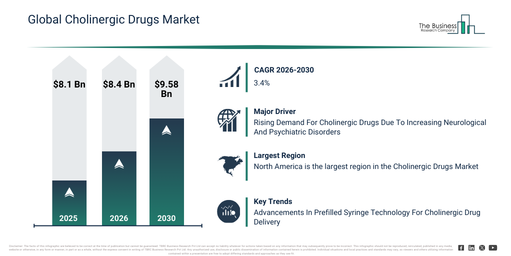
    The cholinergic drugs market has experienced consistent expansion over recent years. Its value is projected to rise from $8.1 billion in 2025 to $8.4 billion in 2026, demonstrating a compound annual growth rate (CAGR) of 3.7%. The historical development of this market is attributable to factors such as the enduring application in Alzheimer’s disease management, its recognized clinical significance in myasthenia gravis treatment, broad utilization in glaucoma therapy, the presence of well-defined active components, and the expanding reach of hospital and retail pharmacy chains.

    The cholinergic drugs market is projected to experience consistent expansion over the upcoming years. It is anticipated to reach $9.58 billion by 2030, demonstrating a compound annual growth rate (CAGR) of 3.4%. This growth during the forecast period is primarily driven by factors such as the increasing occurrence of neurodegenerative conditions, the global rise in the elderly population, higher diagnosis rates for overactive bladder, the need for enhanced cognitive disorder therapies, and the expansion of generic drug production. Key trends anticipated for the forecast period encompass the escalating application of cholinergic drugs in neurodegenerative conditions, a rising preference for extended-release oral formulations, an intensified emphasis on enhancing drug tolerability and safety, the broadening of cholinergic treatments into urology and ophthalmology, and consistent demand for generic cholinergic medications.

    Get A Free Sample Report With In-Depth Market Insights:

    https://thebusinessresearchcompany.com/sample_request?id=58165548&type=smp&name=Cholinergic%20Drugs%20Market%20Report%202026&utm_source=Blogs&utm_medium=Paid&utm_campaign=Oct_PR

    Cholinergic Drugs Market Growth Momentum: What Factors Are Shaping Demand?

    The expanding occurrence of neurological and psychiatric conditions is projected to boost the cholinergic drugs market’s expansion in the future. These include health issues impacting the nervous system, such as the brain, spinal cord, and nerves, while psychiatric disorders encompass mental health problems influencing an individual’s mood, thought processes, and conduct. The widespread nature of these disorders stems from a blend of genetic, biological, environmental, and psychological elements that interfere with typical brain function and mental operations. Cholinergic medications offer treatment for neurological and psychiatric conditions by amplifying or imitating acetylcholine’s effects, thereby enhancing neurotransmission and easing symptoms of ailments like Alzheimer’s disease, myasthenia gravis, and various mood and anxiety disorders. As an example, the National Center for Biotechnology Information, a U.S. Library of Medicine, reported in May 2024 that the projected count of Americans aged 65 and above suffering from Alzheimer’s disease is set to climb from 6.9 million in 2024 to almost 13 million by 2050. Additionally, data from the National Alliance On Mental Illness, a U.S. organization, revealed in 2024 that psychosis spectrum and mood disorders among individuals aged 18-44 in the U.S. lead to approximately 600,000 hospitalizations annually. Consequently, the growing frequency of neurological and psychiatric ailments is fueling the expansion of the anticholinergic drugs market.

    Cholinergic Drugs Market Segmentation: How Does The Market Break Down By Category?

    The cholinergic drugs market covered in this report is segmented –

    1) By Type: Powder, Tablet, Capsule

    2) By Drug Type: Muscarinic Agonists, Nicotinic Agonists, Acetylcholinesterase Inhibitors

    3) By Indication: Alzheimer’s Disease, Myasthenia Gravis, Glaucoma, Overactive Bladder

    4) By Application: Hospital Pharmacy, Retail Pharmacy

    Subsegments:

    1) By Powder: Oral Powder, Injectable Powder

    2) By Tablet: Immediate-Release Tablets, Extended-Release Tablets

    3) By Capsule: Soft Gelatin Capsules, Hard Gelatin Capsules

    Cholinergic Drugs Market Trends Redefining Industry Growth

    Major companies in the cholinergic drugs market are creating innovative products, such as neostigmine methyl sulfate injection, to uphold their market standing. Neostigmine methyl sulfate injection operates as a cholinesterase inhibitor, increasing cholinergic activity by preventing acetylcholine breakdown. For instance, in June 2023, Hikma Pharmaceuticals plc, a UK-based pharmaceutical company, introduced a Neostigmine Methyl sulfate Injection USP in a prefilled syringe. This 3mg/3mL prefilled syringe (PFS) was launched in the United States and acts as a cholinesterase inhibitor. It is specifically employed to reverse the effects of nondepolarizing neuromuscular blocking agents (NMBAs) subsequent to surgical procedures. This advanced product provides numerous distinct features crafted to boost the efficiency, accuracy, and safety of administering neostigmine methyl sulfate. Prefilled syringes deliver unmatched convenience by removing the necessity for manual filling, thereby shortening preparation time for healthcare professionals and reducing the potential for dosage inaccuracies.

    Cholinergic Drugs Market Competitive Overview And Top Companies

    Major companies operating in the cholinergic drugs market are Pfizer Inc., Johnson & Johnson Services Inc., Sanofi S.A., Novartis AG, GlaxoSmithKline plc, Boehringer Ingelheim GmbH, Daiichi Sankyo Company Limited, UCB S.A., Eisai Pharmaceutical Co. Ltd., H. Lundbeck A/S, Sun Pharmaceutical Industries Ltd., Aurobindo Pharma Limited, Hikma Pharmaceuticals plc, Lupin Limited, Alvogen Inc., Mylan N.V., Allergan India Private Limited, AbbVie Inc., Otsuka Pharmaceutical Co. Ltd., Takeda Pharmaceutical Company Limited

    View The Full Cholinergic Drugs Market Report:

    https://thebusinessresearchcompany.com/report/cholinergic-drugs-global-market-report?utm_source=Blogs&utm_medium=Paid&utm_campaign=Oct_PR

    Cholinergic Drugs Market Geographic Landscape: Which Region Leads Industry Growth?

    North America was the largest region in the cholinergic drugs market in 2025. The regions covered in the cholinergic drugs market report are Asia-Pacific, South East Asia, Western Europe, Eastern Europe, North America, South America, Middle East, Africa.

    Reach Out To Our Team:

    The Business Research Company: https://www.thebusinessresearchcompany.com/

    Americas: +1 310-496-7795

    Asia: +44 7882 955267 & +91 8897263534

    Europe: +44 7882 955267

    Email us at: marketing@tbrc.info

    Follow us on:

    LinkedIn: https://in.linkedin.com/company/the-business-research-company

    YouTube: https://www.youtube.com/channel/UC24_fI0rV8cR5DxlCpgmyFQ

    Global Market Model: https://www.thebusinessresearchcompany.com/global-market-model