Month: October 2026

  • Blood Cancer Drugs Market 2026 Market Size And Growth Forecast: Key Trends To Watch

    Blood Cancer Drugs Market 2026 Market Size And Growth Forecast: Key Trends To Watch

    Built to provide research that’s more actionable and strategically valuable, The Business Research Company’s 2026 market reports include market attractiveness analysis, total addressable market sizing, company benchmarking matrices, interactive Excel dashboards, broader supply chain intelligence, emerging startup tracking, and in-depth product insights.

    Blood Cancer Drugs Market Expansion Outlook: What Revenue Opportunities Are Ahead?

    The blood cancer drugs market has experienced substantial growth over recent years. It is anticipated to expand from $79.6 billion in 2025 to $84.59 billion in 2026, demonstrating a compound annual growth rate (CAGR) of 6.3%. This historical expansion can be attributed to a higher incidence of leukemia and lymphoma, the sustained use of chemotherapy, an increase in oncology hospitals, the introduction of monoclonal antibodies, and enhanced diagnostic capabilities.

    The blood cancer drugs market is projected to experience substantial expansion over the upcoming years. Its size is forecast to reach $111.86 billion by 2030, exhibiting a compound annual growth rate (CAGR) of 7.2%. This anticipated growth during the forecast period stems from factors such as advancements in precision oncology, wider acceptance of stem cell therapies, breakthroughs in biologics, increasing healthcare spending, and the proliferation of cancer screening initiatives. Key developments expected during this timeframe involve the increasing uptake of targeted blood cancer treatments, broader application of immunotherapy for hematologic malignancies, the growth of combined treatment strategies, a heightened emphasis on individualized cancer care, and enhanced survival rates for patients with blood cancer.

    Get A Free Sample Report With In-Depth Market Insights:

    https://www.thebusinessresearchcompany.com/sample.aspx?id=2587&type=smp&utm_source=Blogs&utm_medium=Paid&utm_campaign=Oct_PR

    Blood Cancer Drugs Market Demand Drivers: What’s Powering Industry Growth?

    A growing global occurrence of blood cancer cases is anticipated to drive the future expansion of the blood cancer drug market. Blood cancer encompasses a range of malignant disorders, including leukemia, lymphoma, and myeloma, which affect the blood and bone marrow, requiring comprehensive, long-term treatments such as chemotherapy, immunotherapy, targeted drugs, and stem cell transplantation. This rise in disease prevalence is attributed to factors like aging populations, genetic mutations, environmental exposures, and various lifestyle-related risks. The increasing number of blood cancer diagnoses is consequently boosting the demand for innovative blood cancer drugs that promise improved survival rates, fewer adverse effects, enhanced patient quality of life, and personalized treatment approaches. For instance, in October 2025, as reported by Blood Cancer United, a US-based blood cancer information and advocacy organization, an estimated 66,890 individuals were expected to be diagnosed with leukemia, while about 475,323 people were projected to be living with or in remission from the disease in the United States, and approximately 23,540 deaths were anticipated to be due to leukemia in 2025. Therefore, the escalating global incidence of blood cancer cases is a significant driver for the growth of the blood cancer drug market.

    Blood Cancer Drugs Market Segment Analysis: What Are The Core Market Categories?

    The blood cancer drugs market covered in this report is segmented –

    1) By Blood Cancer Type: Leukemia, Lymphoma

    2) By Drugs: Rituxan Or Mabthera (Rituximab), Gleevec Or Glivec (Imatinib), Revlimid (Lenalidomide), Velcade (Bortezomib), Tasigna (Nilotinib), Pomalyst (Pomalidomide), Vidaza (Azacitidine), Kyprolis (Carfilzomib), Adcetris (Brentuximab Vedotin), Other Drugs

    3) By Treatment Approaches: Chemotherapeutic, MAbs/Targeted Therapies, Immunotherapeutic

    Subsegments:

    1) By Leukemia: Acute Lymphoblastic Leukemia (ALL), Chronic Lymphocytic Leukemia (CLL), Acute Myeloid Leukemia (AML), Chronic Myeloid Leukemia (CML), Other Types of Leukemia

    2) By Lymphoma: Hodgkin Lymphoma, Non-Hodgkin Lymphoma (NHL), Burkitt Lymphoma, Follicular Lymphoma, Mantle Cell Lymphoma, Other Types of Lymphoma

    Blood Cancer Drugs Market Innovation Trends: What Developments Are Reshaping The Industry?

    Leading companies within the blood cancer drugs market are prioritizing the development of novel medications and pursuing FDA authorization to achieve a competitive edge. This FDA approval for drugs constitutes the formal permission granted by the United States Food and Drug Administration, enabling a pharmaceutical product to be legally marketed and sold in the United States. For example, in March 2024, Bristol Myers Squibb, a pharmaceutical company based in the US, secured FDA approval for its initial and sole CAR T-cell therapy designed for adults with relapsed or refractory chronic lymphocytic leukemia (CLL) or small lymphocytic lymphoma (SLL). This expedited approval facilitates its use in patients who have previously undergone at least two treatments, including both a Bruton tyrosine kinase inhibitor and a B-cell lymphoma 2 inhibitor. According to findings from the TRANSCEND CLL 004 trial, Breyanzi exhibited a 20% complete response rate and a median duration of response of 35.3 months among individuals who responded.

    Blood Cancer Drugs Market Top Companies Driving Competitive Growth

    Major companies operating in the blood cancer drugs market are Amgen Inc., AstraZeneca PLC, Bayer AG, Eli Lilly and Company Inc., Johnson & Johnson, Novartis AG, Pfizer Inc., AbbVie Inc., Takeda Pharmaceutical Company Limited, F. Hoffmann-La Roche Ltd., Bristol-Myers Squibb Company, Astellas Pharma Inc., Merck & Co. Inc., Gilead Sciences Inc., Sanofi S.A., Eisai Co. Ltd., Jazz Pharmaceuticals plc, Kyowa Kirin Co. Ltd., Menarini Group, Millennium Pharmaceuticals Inc., Mundipharma International Limited, Mylan N.V., Ono Pharmaceutical Co. Ltd., Otsuka Pharmaceutical Co. Ltd., Pharmacyclics LLC, Seattle Genetics Inc., Servier Laboratories, Shire plc, Spectrum Pharmaceuticals Inc., Taiho Pharmaceutical Co. Ltd., Teva Pharmaceutical Industries Ltd., Tolero Pharmaceuticals Inc., UCB S.A.

    View The Full Blood Cancer Drugs Market Report:

    https://www.thebusinessresearchcompany.com/report/blood-cancer-drugs-global-market-report?utm_source=Blogs&utm_medium=Paid&utm_campaign=Oct_PR

    Blood Cancer Drugs Market Largest Region: Which Geography Holds The Biggest Share?

    North America was the largest region in the blood cancer drugs market in 2025. Middle East is expected to be the fastest-growing region in the blood cancer drugs market during the forecast period. The regions covered in the blood cancer drugs market report are Asia-Pacific, South East Asia, Western Europe, Eastern Europe, North America, South America, Middle East, Africa.

    Reach Out To Our Team:

    The Business Research Company: https://www.thebusinessresearchcompany.com/

    Americas: +1 310-496-7795

    Asia: +44 7882 955267 & +91 8897263534

    Europe: +44 7882 955267

    Email us at: marketing@tbrc.info

    Follow us on:

    LinkedIn: https://in.linkedin.com/company/the-business-research-company

    YouTube: https://www.youtube.com/channel/UC24_fI0rV8cR5DxlCpgmyFQ

    Global Market Model: https://www.thebusinessresearchcompany.com/global-market-model

  • Blood Based Biomarkers Market Size Forecast: How The Industry Is Expected To Grow From 2026 To 2030

    Blood Based Biomarkers Market Size Forecast: How The Industry Is Expected To Grow From 2026 To 2030

    Backed by market attractiveness analysis, total addressable market sizing, company benchmarking matrices, interactive Excel dashboards, wider supply chain intelligence, emerging startup coverage, and detailed product-level insights, The Business Research Company’s 2026 market reports are designed to offer research that is more actionable and strategically valuable than ever.

    Blood Based Biomarkers Market Growth Potential: How Will Market Size Shift Through 2030?

    The blood based biomarkers market size has experienced significant expansion in recent years. This market is projected to increase from $25.83 billion in 2025 to $28.94 billion in 2026, achieving a compound annual growth rate (CAGR) of 12.0%. The historical growth of this market is largely attributable to advancements in molecular diagnostics, the development of cancer screening programs, comprehensive biomarker validation studies, enhancements in hospital diagnostic infrastructure, and a rise in research funding.

    The blood based biomarkers market is projected to experience substantial expansion in the coming years, reaching $45.5 billion in 2030 with a compound annual growth rate (CAGR) of 12.0%. This anticipated growth during the forecast period is driven by factors such as the increasing use of liquid biopsy, advancements in AI-powered biomarker analytics, the rising need for chronic disease monitoring, the uptake of personalized medicine, and the proliferation of point-of-care testing. Key developments anticipated over the forecast period encompass a wider embrace of non-invasive diagnostics, the broadening of precision oncology applications, an elevated role in early disease detection, a heightened requirement for personalized treatment monitoring, and greater integration with clinical decision support systems.

    Get A Free Sample Report With In-Depth Market Insights:

    https://www.thebusinessresearchcompany.com/sample.aspx?id=24176&type=smp&utm_source=Blogs&utm_medium=Paid&utm_campaign=Oct_PR

    Blood Based Biomarkers Market Growth Drivers: What’s Behind The Acceleration?

    An anticipated increase in cardiovascular disease incidents is set to boost the expansion of the blood-based biomarkers market. Cardiovascular diseases encompass various ailments impacting the heart and blood vessels, such as coronary artery disease, heart failure, and stroke. This surge in cardiovascular diseases can primarily be attributed to escalating risk factors like unhealthy diets and growing obesity levels. Blood-based biomarkers assist in the diagnosis and monitoring of these conditions by offering insights into how the disease advances, assessing risks, and evaluating treatment effectiveness, all through measurable substances found in the blood. For example, the National Center for Biotechnology Information, a US government agency, issued a global health research report in September 2024. Its forecasts projected a 90% increase in cardiovascular disease prevalence from 2025 to 2050, with cardiovascular deaths estimated to reach 35.6 million by 2050. Consequently, the expanding occurrence of cardiovascular diseases is a key factor propelling the growth of blood-based biomarkers.

    Blood Based Biomarkers Market Segment Breakdown: Which Categories Lead On Revenue?

    The blood based biomarkers market covered in this report is segmented –

    1) By Type: Genetic Biomarkers, Protein Biomarkers, Metabolic Biomarkers, Cell-Based Biomarkers, Epigenetic Biomarkers

    2) By Technology: Next-Generation Sequencing, Polymerase Chain Reaction, Immunoassays, Mass Spectrometry, Other Technologies

    3) By Application: Cancer, Cardiovascular Diseases, Neurological Diseases, Immunological Diseases, Other Applications

    4) By End Users: Hospitals And Clinics, Diagnostic Laboratories, Research And Academic Institutes, Other End Users

    Subsegments:

    1) By Genetic Biomarkers: Deoxyribonucleic Acid (DNA) Mutations, Ribonucleic Acid (RNA) Expression Profiles, Single Nucleotide Polymorphisms (SNPs), Copy Number Variations (CNVs), Gene Fusions

    2) By Protein Biomarkers: Enzymes, Hormones, Cytokines, Tumor Markers, Acute Phase Proteins

    3) By Metabolic Biomarkers: Lipid Profiles, Amino Acid Levels, Glucose And Lactate Levels, Organic Acids, Metabolite Panels

    4) By Cell-Based Biomarkers: Circulating Tumor Cells (CTCs), Immune Cell Profiling, Stem Cells, Platelets, Endothelial Cells

    5) By Epigenetic Biomarkers: Deoxyribonucleic Acid (DNA) Methylation Patterns, Histone Modifications, Non-Coding Ribonucleic Acid (RNA), Chromatin Accessibility, Epigenetic Enzyme Activity

    Blood Based Biomarkers Market Trends: What’s Defining The Industry’s Next Phase?

    Companies operating in the blood-based biomarkers market are emphasizing technological advancements, such as high-accuracy blood biomarker tests, to aid physicians in diagnosing Alzheimer’s disease. A high-accuracy blood biomarker test functions as a diagnostic instrument that utilizes particular biomarkers in the blood to detect conditions or monitor health with a significant level of precision and reliability. For example, in October 2023, Quanterix, a US-based life sciences company, launched the LucentAD p-Tau 217, a high-accuracy blood biomarker test designed to assist physicians in diagnosing Alzheimer’s disease (AD) in adults exhibiting cognitive impairment. This test measures phosphorylated tau protein at threonine 217 (p-Tau 217), a biomarker closely linked to AD pathology, particularly amyloid buildup in the brain. The LucentAD p-Tau 217 test achieves over 90% accuracy, meeting strict diagnostic criteria, and is meant to be used alongside other diagnostic tools rather than as a standalone examination.

    Blood Based Biomarkers Market Leading Players And Competitive Positioning

    Major companies operating in the blood based biomarkers market are Siemens Healthineers AG, Agilent Technologies Inc, Eisai Co Ltd, Sysmex Corporation, Exact Sciences Corporation, Guardant Health, Quanterix Corporation, Illumina Inc, QIAGEN NV, GENFIT, Foundation Medicine Inc, Adaptive Biotechnologies Corporation, GRAIL LLC, Biodesix Inc, Cleveland Diagnostics Inc, Creative Diagnostics, Epigenomics AG, C2N Diagnostics, Diadem srl, Proteomedix AG

    View The Full Blood Based Biomarkers Market Report:

    https://www.thebusinessresearchcompany.com/report/blood-based-biomarkers-global-market-report?utm_source=Blogs&utm_medium=Paid&utm_campaign=Oct_PR

    Blood Based Biomarkers Market Regional Analysis: Which Geography Leads On Revenue?

    North America was the largest region in the blood-based biomarkers market in 2025. Asia-Pacific is expected to be the fastest-growing region in the forecast period. The regions covered in the blood based biomarkers market report are Asia-Pacific, South East Asia, Western Europe, Eastern Europe, North America, South America, Middle East, Africa.

    Reach Out To Our Team:

    The Business Research Company: https://www.thebusinessresearchcompany.com/

    Americas: +1 310-496-7795

    Asia: +44 7882 955267 & +91 8897263534

    Europe: +44 7882 955267

    Email us at: marketing@tbrc.info

    Follow us on:

    LinkedIn: https://in.linkedin.com/company/the-business-research-company

    YouTube: https://www.youtube.com/channel/UC24_fI0rV8cR5DxlCpgmyFQ

    Global Market Model: https://www.thebusinessresearchcompany.com/global-market-model
  • Blepharitis Market Reaches $1.72 Billion In 2026: Forecast And Growth Opportunities

    Blepharitis Market Reaches $1.72 Billion In 2026: Forecast And Growth Opportunities

    Featuring market attractiveness scoring, total addressable market sizing, company benchmarking matrices, interactive Excel dashboards, deeper supply chain intelligence, emerging startup tracking, and granular product-level insights, The Business Research Company’s 2026 market reports are built to deliver research that is both more actionable and more strategically valuable.

    Blepharitis Market Value Analysis: What Growth Lies Ahead Over The Forecast Period?

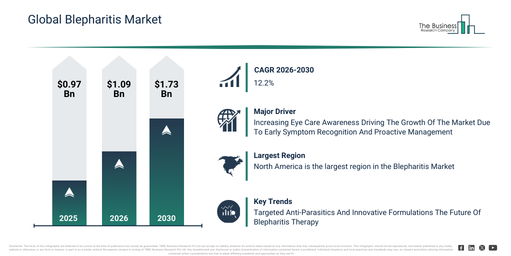
    The blepharitis market’s size has seen swift expansion in recent years. It is projected to increase from $0.97 billion in 2025 to $1.09 billion in 2026, demonstrating a compound annual growth rate (CAGR) of 12.5%. The historical growth of this market can be attributed to elements such as poor eyelid hygiene, bacterial infections, ophthalmology clinic visits, an aging population, and chronic eye irritation.

    The blepharitis market is projected to experience swift expansion in the upcoming years. It is anticipated to grow to $1.73 billion in 2030, demonstrating a compound annual growth rate (CAGR) of 12.2%. This anticipated growth can be linked to factors like increased screen time, digital eye strain, rising awareness of preventive eye care, improved management of chronic conditions, and the development of outpatient ophthalmology. Key developments expected during this forecast period encompass heightened awareness of chronic eye conditions, an increase in lid hygiene and eye cleanser products, a rise in the diagnosis of meibomian gland dysfunction, an expansion of long-term symptom management, and a focus on non-invasive treatment options.

    Get A Free Sample Report With In-Depth Market Insights:

    https://www.thebusinessresearchcompany.com/sample.aspx?id=24484&type=smp&utm_source=Blogs&utm_medium=Paid&utm_campaign=Oct_PR

    Blepharitis Market Growth Factors Behind Sustained Expansion

    The burgeoning understanding of eye health is poised to boost the growth of the blepharitis market in the future. Eye care involves a spectrum of services, treatments, and practices aimed at preserving and improving ocular health and sight. Heightened awareness regarding eye care is essential, as good vision forms the bedrock of an individual’s independence, education, productivity, and overall well-being; uncorrected vision problems invariably impact daily activities, academic performance, and professional output. Blepharitis contributes to effective eye care by supporting the early identification of symptoms, promoting consistent eyelid hygiene, and assisting in preventing complications such as dry eye and styes through appropriate and timely treatment. For instance, in October 2024, a report published by the Association of Optometrists (AOP), a UK-based association, projected that the number of people living with sight loss in the UK will reach an estimated 2.8 million by 2035, representing a 27% increase compared to 2022. Therefore, the expanding recognition of eye care is driving the expansion of the blepharitis market.

    Blepharitis Market Segmentation: How Does The Market Break Down By Category?

    The blepharitis market covered in this report is segmented –

    1) By Type: Anterior Blepharitis, Posterior Blepharitis, Mixed Blepharitis

    2) By Treatment: Eye Cleansers, Artificial Tears, Antibiotic Therapy

    3) By Diagnosis: Physical Examination, Comprehensive Eye Examination, Other Diagnosis

    4) By Application: Acute Blepharitis Management, Chronic Blepharitis Long-Term Care, Bacterial Blepharitis Treatment

    Subsegments:

    1) By Anterior Blepharitis: Staphylococcal Blepharitis, Seborrheic Blepharitis

    2) By Posterior Blepharitis: Meibomian Gland Dysfunction (MGD), Rosacea-Associated Blepharitis

    3) By Mixed Blepharitis: Combination Of Anterior And Posterior Features, Chronic Mixed Blepharitis

    Blepharitis Market Industry Trends Fueling Future Revenue Growth

    Major companies in the blepharitis market are concentrating on developing innovative therapies, such as targeted anti-parasitic agents and advanced ophthalmic formulations, to gain a competitive advantage. Innovative ophthalmic formulations refer to sophisticated and novel drug delivery systems and compositions designed to enhance the effectiveness, safety, and patient experience of treatments for eye conditions. For example, in July 2023, Tarsus Pharmaceuticals Inc., a US-based biopharmaceutical company, received approval for XDEMVY (lotilaner ophthalmic solution) 0.25% for treating demodex blepharitis. XDEMVY, previously known as TP-03, is the first and only FDA-approved treatment that directly targets Demodex mites, identified as the primary cause of Demodex blepharitis. Its approval was supported by robust clinical data from two pivotal trials, Saturn-1 and Saturn-2, involving 833 patients, which showed significant symptom improvement and a higher rate of complete collarette cure compared to a placebo. The recommended dosage is one drop in each eye twice daily for six weeks. XDEMVY is generally well-tolerated, with the most common side effects reported as mild stinging or burning upon instillation.

    Blepharitis Market Competitive Overview And Top Companies

    Major companies operating in the blepharitis market are OcuSept Ltd., Alcon Inc., Théa Pharmaceuticals Ltd., Bausch Health Companies Inc., Tarsus Pharmaceuticals Inc., URSAPHARM Arzneimittel GmbH, Scope Ophthalmic Ltd., Santen Pharmaceutical Co. Ltd., NovaBay Pharmaceuticals Inc., Harrow Inc., MiBo Medical Group, Nicox SA, Visufarma S.p.A., OCuSOFT Inc., Lumenis Ltd., Bruder Healthcare Company, I-MED Pharma Inc., KALA Pharmaceuticals Inc., Aerie Pharmaceuticals Inc., Oyster Point Pharma Inc., Dompé Farmaceutici S.p.A., Laboratoires Théa S.A., Ophtecs Corporation, Sentiss Pharma Pvt. Ltd., Ajanta Pharma Ltd.

    View The Full Blepharitis Market Report:

    https://www.thebusinessresearchcompany.com/report/blepharitis-global-market-report?utm_source=Blogs&utm_medium=Paid&utm_campaign=Oct_PR

    Blepharitis Market Geographic Spread And Regional Opportunities

    North America was the largest region in the blepharitis market in 2025. Asia-Pacific is expected to be the fastest-growing region in the forecast period. The regions covered in the blepharitis market report are Asia-Pacific, South East Asia, Western Europe, Eastern Europe, North America, South America, Middle East, Africa.

    Reach Out To Our Team:

    The Business Research Company: https://www.thebusinessresearchcompany.com/

    Americas: +1 310-496-7795

    Asia: +44 7882 955267 & +91 8897263534

    Europe: +44 7882 955267

    Email us at: marketing@tbrc.info

    Follow us on:

    LinkedIn: https://in.linkedin.com/company/the-business-research-company

    YouTube: https://www.youtube.com/channel/UC24_fI0rV8cR5DxlCpgmyFQ

    Global Market Model: https://www.thebusinessresearchcompany.com/global-market-model
  • Bladder Cancer Drugs Market Growth In 2026: Market Size, Key Drivers And Future Outlook

    Bladder Cancer Drugs Market Growth In 2026: Market Size, Key Drivers And Future Outlook

    Built to provide research that’s more actionable and strategically valuable, The Business Research Company’s 2026 market reports include market attractiveness analysis, total addressable market sizing, company benchmarking matrices, interactive Excel dashboards, broader supply chain intelligence, emerging startup tracking, and in-depth product insights.

    Bladder Cancer Drugs Market Size Forecast: How Big Could The Market Get By 2030?

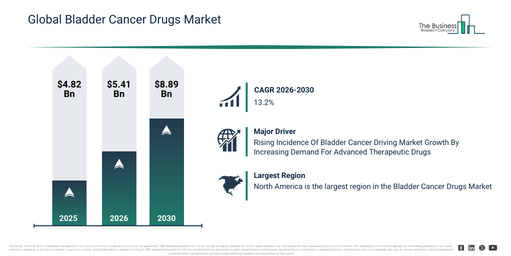
    The bladder cancer drugs market has seen rapid expansion in recent years. It is projected to increase from $4.82 billion in 2025 to $5.41 billion in 2026, exhibiting a compound annual growth rate (CAGR) of 12.2%. The growth observed in prior periods can be attributed to factors such as increasing bladder cancer incidence, established chemotherapy protocols, hospital-based oncology care, the use of bcg therapy, and improved cancer diagnosis rates.

    The bladder cancer drugs market is projected to experience substantial expansion over the upcoming years. Its valuation is anticipated to reach $8.89 billion by 2030, exhibiting a compound annual growth rate (CAGR) of 13.2%. This growth throughout the projected timeframe stems from advancements in personalized oncology treatments, breakthroughs in immuno-oncology, the broadening of healthcare infrastructure, an increase in cancer screening initiatives, and the demand for less invasive therapies. Key developments expected during this period involve the increasing embrace of immunotherapy drugs, a rise in the application of targeted bladder cancer treatments, the broadening scope of intravesical therapies, a greater emphasis on addressing early-stage cancer, and the creation of combined treatment approaches.

    Get A Free Sample Report With In-Depth Market Insights:

    https://www.thebusinessresearchcompany.com/sample.aspx?id=2586&type=smp&utm_source=Blogs&utm_medium=Paid&utm_campaign=Oct_PR

    Bladder Cancer Drugs Market Demand Drivers Opening New Revenue Streams

    The escalating number of bladder cancer cases is projected to fuel the demand for bladder cancer medications in the coming years. This malignant condition necessitates prompt diagnosis and effective therapeutic interventions to control tumor progression, prevent recurrence, and manage metastasis. The increase in bladder cancer diagnoses primarily stems from advanced age and accumulated environmental exposures, such as tobacco smoking and occupational carcinogens. This rising burden of bladder cancer bolsters the expansion of bladder cancer drugs by driving the need for sophisticated treatments that can enhance survival rates, diminish recurrence, and provide individualized care solutions. For example, in June 2023, the American Cancer Society, a US-based non-profit organization dedicated to eradicating cancer, estimated there would be 82,290 new bladder cancer cases in the United States in 2023, comprising approximately 62,420 cases in men and 19,870 cases in women. Consequently, the increasing prevalence of bladder cancer is propelling the expansion of the bladder cancer drugs market. The expanding pharmaceutical industry is anticipated to boost the growth of the bladder cancer drugs market moving forward. This industry encompasses the exploration, development, and manufacturing of drugs and medical products by both government and private entities. The growth of the pharmaceutical sector can be attributed to heightened investment in oncology research, broadened production capabilities, and an escalating global demand for advanced treatment options. An expanding pharmaceutical industry supports the bladder cancer drugs sector by stimulating research, development, and funding into innovative therapies, ultimately enhancing patient outcomes through a wider array of effective and targeted treatment choices. For instance, in April 2025, Eurostat, the EU’s statistical office in Luxembourg, reported that in 2024 compared to 2023, imports of medicinal and pharmaceutical products rose by 0.5 percent, while exports increased by 13.5 percent, leading to an increase in the trade surplus from $210 billion (€157 billion) to $260 billion (€194 billion). Therefore, the expanding pharmaceutical industry is a key driver for the bladder cancer drugs market’s growth.

    Bladder Cancer Drugs Market Segment Trends And Revenue Contributors

    The bladder cancer drugs market covered in this report is segmented –

    1) By Type: Non-Muscle-Invasive Bladder Cancer, Muscle-Invasive Bladder Cancer

    2) By Application: Low-Grade Tumors, High-Grade Tumors

    3) By Distribution Channel: Hospital Pharmacy, Retail Pharmacy, Other Distribution Channels

    Subsegments:

    1) By Non-Muscle-Invasive Bladder Cancer: Intravesical Therapy, Immunotherapy Drugs, Chemotherapy Drugs, Bacillus Calmette–Guérin (BCG) Therapy

    2) By Muscle-Invasive Bladder Cancer: Chemotherapy Drugs, Immunotherapy Drugs, Targeted Therapy Drugs, Neoadjuvant and Adjuvant Therapy

    Bladder Cancer Drugs Market Competitive Landscape: Which Companies Lead The Industry?

    Major companies operating in the bladder cancer drugs market are Eli Lilly and Company, Bristol-Myers Squibb Company, Pfizer Inc., Celgene Corporation (a subsidiary of Bristol-Myers Squibb Company), AstraZeneca PLC, Sanofi S.A., F. Hoffmann-La Roche Ltd., Novartis International AG, Johnson & Johnson, Merck & Co. Inc., Boehringer Ingelheim International GmbH, Bayer AG, Asieris Pharmaceuticals Co. Ltd., Asana BioSciences LLC, Array BioPharma Inc., Amgen Inc., Adaptimmune Therapeutics plc, UroGen Pharma Ltd., Seagen Inc., Incyte Corporation, AbbVie Inc., Eisai Co. Ltd., Ipsen S.A., Janssen Pharmaceutica NV, Kyowa Kirin Co. Ltd., Ono Pharmaceutical Co. Ltd., Pierre Fabre S.A., Taiho Pharmaceutical Co. Ltd.

    View The Full Bladder Cancer Drugs Market Report:

    https://www.thebusinessresearchcompany.com/report/bladder-cancer-drugs-global-market-report?utm_source=Blogs&utm_medium=Paid&utm_campaign=Oct_PR

    Bladder Cancer Drugs Market Top Region By Revenue And Market Share

    North America was the largest region in the bladder cancer drugs market in 2025. The Middle East is expected to be the fastest-growing region in the bladder cancer drugs market during the forecast period. The regions covered in the bladder cancer drugs market report are Asia-Pacific, South East Asia, Western Europe, Eastern Europe, North America, South America, Middle East, Africa.

    Reach Out To Our Team:

    The Business Research Company: https://www.thebusinessresearchcompany.com/

    Americas: +1 310-496-7795

    Asia: +44 7882 955267 & +91 8897263534

    Europe: +44 7882 955267

    Email us at: marketing@tbrc.info

    Follow us on:

    LinkedIn: https://in.linkedin.com/company/the-business-research-company

    YouTube: https://www.youtube.com/channel/UC24_fI0rV8cR5DxlCpgmyFQ

    Global Market Model: https://www.thebusinessresearchcompany.com/global-market-model
  • Bisphosphonates Market Size And Forecast 2026–2030: Trends Driving Industry Expansion

    Bisphosphonates Market Size And Forecast 2026–2030: Trends Driving Industry Expansion

    Backed by market attractiveness analysis, total addressable market sizing, company benchmarking matrices, interactive Excel dashboards, wider supply chain intelligence, emerging startup coverage, and detailed product-level insights, The Business Research Company’s 2026 market reports are designed to offer research that is more actionable and strategically valuable than ever.

    Bisphosphonates Market Revenue Outlook: What CAGR Lies Ahead Through 2030?

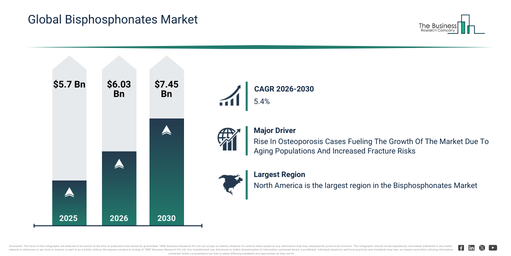
    The bisphosphonates market size has experienced strong expansion in recent years. It is anticipated to grow from $5.7 billion in 2025 to $6.03 billion in 2026, at a compound annual growth rate (CAGR) of 5.8%. Historically, this growth can be attributed to factors such as an increasing aging population, the prevalence of postmenopausal osteoporosis, physician-led bone density screening initiatives, hospital-based osteoporosis management strategies, and the adoption of injectable bisphosphonates.

    The bisphosphonates market is projected to experience robust expansion over the coming years. Its valuation is set to reach $7.45 billion by 2030, demonstrating a compound annual growth rate (CAGR) of 5.4%. Factors contributing to this growth during the projection period include a rising elderly population, the availability of home-based osteoporosis care, a preference for long-acting dosages, heightened bone health awareness, and increased penetration of generic drugs. Key trends anticipated in this period encompass a surging demand for osteoporosis treatments, a greater uptake of long-acting injectable therapies, the proliferation of generic bisphosphonate medications, an intensified focus on preventing fractures, and the incorporation of combination bone health treatments.

    Get A Free Sample Report With In-Depth Market Insights:

    https://www.thebusinessresearchcompany.com/sample.aspx?id=24483&type=smp&utm_source=Blogs&utm_medium=Paid&utm_campaign=Oct_PR

    Bisphosphonates Market Growth Backed By Core Demand Fundamentals

    The bisphosphonates market is anticipated to expand due to the growing occurrence of osteoporosis. This medical condition involves bones becoming weak and brittle, making them susceptible to fractures. The rise in osteoporosis cases is primarily attributed to the global population aging, which naturally diminishes bone density, alongside contributing lifestyle elements and inadequate preventative measures. Bisphosphonates aid in managing osteoporosis by retarding bone degradation, thereby enhancing bone strength and lowering fracture susceptibility. For example, Healthy Bones Australia, an organization focused on bone health in Australia, reported in August 2024 that approximately 193,482 fractures linked to osteoporosis and osteopenia occurred in 2023, a figure expected to climb by 34% to 237,632 fractures by 2033. Consequently, the increasing prevalence of osteoporosis is a significant factor in the expansion of the bisphosphonates market.

    Bisphosphonates Market Segment Analysis Spotlighting Growth Areas

    The bisphosphonates market covered in this report is segmented –

    1) By Type: Alendronate, Ibandronate, Risedronate, Zoledronic Acid

    2) By Route Of Administration: Oral, Intravenous

    3) By Distribution Channel: Hospital Pharmacies, Retail Pharmacies, Online Pharmacies, Other Distribution Channels

    4) By Application: Osteoporosis, Paget’s Disease, Bone Metastasis, Other Application

    5) By End-User: Hospitals, Clinics, Homecare Settings, Pharmaceutical Retail

    Subsegments:

    1) By Alendronate: Oral Tablets, Once-Weekly Formulation, Combination With Vitamin D, Generic Alendronate

    2) By Ibandronate: Oral Tablets, Monthly Oral Formulation, Intravenous Injection, Generic Ibandronate

    3) By Risedronate: Immediate-Release Tablets, Delayed-Release Tablets, Weekly And Monthly Dosing, Combination With Calcium

    4) By Zoledronic Acid: Intravenous Infusion, Annual Dosing, Oncology Use, Osteoporosis Use, Generic Zoledronic Acid

    Bisphosphonates Market Leading Companies: Who Holds The Strongest Market Presence?

    Major companies operating in the bisphosphonates market are Merck & Co. Inc., Novartis AG, Teva Pharmaceutical Industries Ltd., Sun Pharmaceutical Industries Ltd., Apotex Inc., Aurobindo Pharma Ltd., Dr. Reddy’s Laboratories Ltd., Cipla Ltd., Alkem Laboratories, Strides Pharma Science Limited, GSK plc, Viatris Inc., Sandoz, Lupin Limited, Zydus Lifesciences Ltd., Torrent Pharmaceuticals Ltd., Glenmark Pharmaceuticals Ltd., Hikma Pharmaceuticals PLC, Fresenius Kabi, Alembic Pharmaceuticals Ltd.

    View The Full Bisphosphonates Market Report:

    https://www.thebusinessresearchcompany.com/report/bisphosphonates-global-market-report?utm_source=Blogs&utm_medium=Paid&utm_campaign=Oct_PR

    Bisphosphonates Market Regional Analysis And Top Geography

    North America was the largest region in the bisphosphonates market in 2025. Asia-Pacific is expected to be the fastest-growing region in the forecast period. The regions covered in the bisphosphonates market report are Asia-Pacific, South East Asia, Western Europe, Eastern Europe, North America, South America, Middle East, Africa.

    Reach Out To Our Team:

    The Business Research Company: https://www.thebusinessresearchcompany.com/

    Americas: +1 310-496-7795

    Asia: +44 7882 955267 & +91 8897263534

    Europe: +44 7882 955267

    Email us at: marketing@tbrc.info

    Follow us on:

    LinkedIn: https://in.linkedin.com/company/the-business-research-company

    YouTube: https://www.youtube.com/channel/UC24_fI0rV8cR5DxlCpgmyFQ

    Global Market Model: https://www.thebusinessresearchcompany.com/global-market-model
  • Bisphosphonate Drug Market 2026 Outlook: Market Size, CAGR And Key Growth Opportunities

    Bisphosphonate Drug Market 2026 Outlook: Market Size, CAGR And Key Growth Opportunities

    Featuring market attractiveness scoring, total addressable market sizing, company benchmarking matrices, interactive Excel dashboards, deeper supply chain intelligence, emerging startup tracking, and granular product-level insights, The Business Research Company’s 2026 market reports are built to deliver research that is both more actionable and more strategically valuable.

    Bisphosphonate Drug Market Growth Analysis: How Will Revenue Trend Over The Forecast Period?

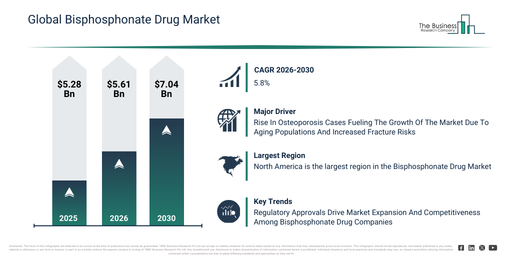
    The bisphosphonate drug market size has seen robust growth over the past few years. It is anticipated to expand from $5.28 billion in 2025 to $5.61 billion in 2026, achieving a compound annual growth rate (CAGR) of 6.2%. Historically, this expansion has been driven by factors such as the prevalence of osteoporosis, an aging global population, the implementation of hospital bone care protocols, various fracture prevention programs, and the adoption of oral bisphosphonates.

    The bisphosphonate drug market is projected to experience substantial expansion over the upcoming years. This market is forecast to reach $7.04 billion by 2030, exhibiting a compound annual growth rate (CAGR) of 5.8%. The expansion anticipated during this period is largely driven by factors such as an aging demographic, the increasing acceptance of injectable therapies, advancements in oncology supportive care, the proliferation of generic drugs, and a heightened emphasis on proactive bone health. Key developments expected within the forecast timeframe encompass the rising application in postmenopausal osteoporosis, a move towards long-acting injectable formulations, the rise of generic bisphosphonate medications, the broadening scope of treatments for cancer-related bone loss, and an increased focus on lowering fracture risk.

    Get A Free Sample Report With In-Depth Market Insights:

    https://www.thebusinessresearchcompany.com/sample.aspx?id=24482&type=smp&utm_source=Blogs&utm_medium=Paid&utm_campaign=Oct_PR

    Bisphosphonate Drug Market Growth Catalysts And Demand Drivers

    The increasing incidence of osteoporosis is anticipated to fuel expansion in the bisphosphonates drug market. Osteoporosis is marked by enfeebled bones more susceptible to breaks due to diminished bone density. Its rising occurrence stems mainly from the aging global populace, as bone density naturally diminishes with age, alongside lifestyle influences and inadequate preventative measures. Bisphosphonate medications manage osteoporosis by decelerating bone degradation, thereby fortifying bones and lowering fracture susceptibility. For example, in August 2024, as per Healthy Bones Australia, an Australia-based organization focused on bone health research and advocacy, approximately 193,482 fractures were attributed to osteoporosis and osteopenia in 2023, with projections indicating a 34% increase to 237,632 fractures by 2033. Consequently, the growing prevalence of osteoporosis is propelling the bisphosphonates drug market’s expansion.

    Bisphosphonate Drug Market Segment Performance And Emerging Opportunities

    The bisphosphonate drug market covered in this report is segmented –

    1) By Type: Alendronate, Risedronate, Zoledronic Acid

    2) By Mode Of Delivery: Oral, Intravenous

    3) By Distribution Channel: Hospital Pharmacies, Retail Pharmacies, Online Pharmacies, Other Distribution Channels

    4) By Application: Postmenopausal Osteoporosis, Men With Osteoporosis, Paget’s Disease, Bone Loss Caused By Cancer Treatment, Glucocorticoid Induced Osteoporosis, Other Applications

    5) By End User: Hospitals, Clinics, Homecare Settings, Other End Users

    Subsegments:

    1) By Alendronate: Oral Alendronate Tablets, Effervescent Alendronate Tablets, Alendronate Combination Drugs, Generic Alendronate, Branded Alendronate

    2) By Risedronate: Immediate-Release Risedronate Tablets, Delayed-Release Risedronate Tablets, Risedronate Combination Drugs, Generic Risedronate, Branded Risedronate

    3) By Zoledronic Acid: Intravenous Zoledronic Acid, Single-Dose Infusion, Multiple-Dose Regimens, Generic Zoledronic Acid, Branded Zoledronic Acid

    4) By Other Types: Ibandronate (Oral And IV Forms), Etidronate, Pamidronate, Tiludronate, Experimental Or Pipeline Bisphosphonates

    Bisphosphonate Drug Market Trends Shaping Long-Term Demand

    Leading corporations operating within the bisphosphonate drug market are concentrating on securing regulatory clearances to expand their product reach, enhance market competitiveness, and ensure adherence to evolving safety and efficacy benchmarks. Regulatory approvals represent formal authorizations issued by government health agencies, enabling companies to legally sell and market their medications once their safety and effectiveness have been substantiated. For instance, in March 2025, Celltrion, Inc., a South Korea-based biopharmaceutical company, obtained U.S. FDA approval for its biosimilars STOBOCLO (denosumab-bmwo) and OSENVELT (denosumab-bmwo). STOBOCLO is prescribed for conditions related to osteoporosis, encompassing the management of osteoporosis in postmenopausal women and men, glucocorticoid-induced osteoporosis, and bone density loss in patients undergoing specific cancer treatments. Meanwhile, OSENVELT is sanctioned for cancer-associated skeletal events, such as preventing bone complications in individuals with multiple myeloma or bone metastases, treating giant cell tumor of bone, and managing hypercalcemia of malignancy.

    Bisphosphonate Drug Market Key Players: Which Companies Lead Industry Competition?

    Major companies operating in the bisphosphonate drug market are Mylan N.V., Sandoz International GmbH, Fresenius Kabi AG, Lupin Limited, Glenmark Pharmaceuticals Ltd., Torrent Pharmaceuticals Ltd., Cadila Pharmaceuticals Ltd., Alembic Pharmaceuticals Ltd., Micro Labs Ltd., Wockhardt Ltd., Macleods Pharmaceuticals Ltd., Emcure Pharmaceuticals Ltd., Intas Pharmaceuticals Ltd., Granules India Ltd., IPCA Laboratories Ltd., Jubilant Pharmova Ltd., Accord Healthcare Ltd., Aarti Drugs Ltd., Shilpa Medicare Ltd., Indoco Remedies Ltd., Unichem Laboratories Ltd., Alvogen Inc., Perrigo Company plc, ANI Pharmaceuticals Inc., Endo International plc

    View The Full Bisphosphonate Drug Market Report:

    https://www.thebusinessresearchcompany.com/report/bisphosphonate-drug-global-market-report?utm_source=Blogs&utm_medium=Paid&utm_campaign=Oct_PR

    Bisphosphonate Drug Market Geographic Analysis: Where Is Demand Rising Fastest?

    North America was the largest region in the bisphosphonate drug market in 2025. Asia-Pacific is expected to be the fastest-growing region in the forecast period. The regions covered in the bisphosphonate drug market report are Asia-Pacific, South East Asia, Western Europe, Eastern Europe, North America, South America, Middle East, Africa.

    Reach Out To Our Team:

    The Business Research Company: https://www.thebusinessresearchcompany.com/

    Americas: +1 310-496-7795

    Asia: +44 7882 955267 & +91 8897263534

    Europe: +44 7882 955267

    Email us at: marketing@tbrc.info

    Follow us on:

    LinkedIn: https://in.linkedin.com/company/the-business-research-company

    YouTube: https://www.youtube.com/channel/UC24_fI0rV8cR5DxlCpgmyFQ

    Global Market Model: https://www.thebusinessresearchcompany.com/global-market-model
  • Bispecific T-Cell Engagers Market Size Growth: From $1.94 Billion In 2026 To $4.18 Billion By 2030

    Bispecific T-Cell Engagers Market Size Growth: From $1.94 Billion In 2026 To $4.18 Billion By 2030

    Built to provide research that’s more actionable and strategically valuable, The Business Research Company’s 2026 market reports include market attractiveness analysis, total addressable market sizing, company benchmarking matrices, interactive Excel dashboards, broader supply chain intelligence, emerging startup tracking, and in-depth product insights.

    Bispecific T-Cell Engagers Market Forecast: What Value Will The Market Reach By 2030?

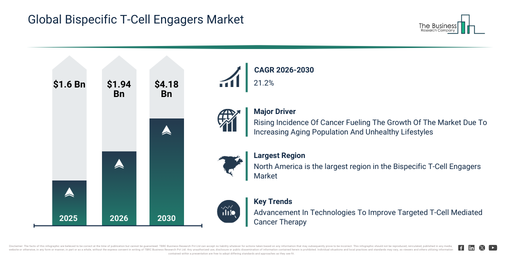
    The bispecific t-cell engagers market has witnessed substantial expansion in recent years. It is anticipated to grow from $1.6 billion in 2025 to $1.94 billion in 2026, demonstrating a compound annual growth rate (CAGR) of 21.3%. The historical increase in market size is due to factors such as the limited efficacy of conventional cancer therapies, an escalating incidence of hematologic malignancies, an evolving comprehension of immune-oncology mechanisms, swift regulatory approvals for bispecific antibodies, and increased investment in oncology research.

    The bispecific t-cell engagers market is projected to experience substantial expansion over the next few years. Its valuation is set to reach $4.18 billion in 2030 at a compound annual growth rate (CAGR) of 21.2%. This projected growth during the forecast period can be attributed to factors like the broadening of solid tumor indications, advancements in antibody engineering platforms, increasing clinical success rates of t-cell engagers, rising healthcare expenditure on cancer immunotherapy, and an increase in strategic partnerships and licensing deals. Prominent trends for the forecast period encompass the growing adoption of bispecific t-cell engagers in hematologic malignancies, an escalating focus on targeted immunotherapy and precision oncology, the expansion of clinical trials for solid tumor applications, increasing investment in antibody engineering and novel formats, and a rise in collaborations between biotech firms and research institutes.

    Get A Free Sample Report With In-Depth Market Insights:

    https://www.thebusinessresearchcompany.com/sample.aspx?id=27226&type=smp&utm_source=Blogs&utm_medium=Paid&utm_campaign=Oct_PR

    Bispecific T-Cell Engagers Market Opportunity Drivers: What’s Unlocking New Revenue Potential?

    The increasing occurrence of cancer is projected to drive expansion within the bispecific T-cell engagers market in the future. Cancer is defined as a collection of illnesses marked by the unregulated proliferation and dissemination of atypical cells, capable of infiltrating and harming bodily tissues. This surge in cancer cases stems from elements like demographic aging and detrimental lifestyle choices, given that advancing age leads to a greater buildup of mutations, and habits like smoking, inadequate nutrition, and a sedentary lifestyle heighten the chances of developing cancer. Bispecific T-cell engagers facilitate cancer therapy by concurrently attaching to T cells and cancer cells, thereby forming a link between the immune system and tumor sites. This process stimulates the patient’s own T cells to identify, target, and eliminate cancerous cells with considerable precision. For example, data from February 2024, released by the World Health Organization (WHO), a Switzerland-based intergovernmental body, indicated an estimated 20 million new cancer diagnoses in 2022, a number anticipated to climb by 77% to exceed 35 million cases by 2050. Consequently, the growing prevalence of cancer is propelling the expansion of the bispecific T-cell engagers market.

    Bispecific T-Cell Engagers Market Segment Landscape And Growth Outlook

    The bispecific t-cell engagers market covered in this report is segmented –

    1) By Product Type: Monoclonal Antibodies, Bispecific Antibodies, Other Product Types

    2) By Application: Hematologic Malignancies, Solid Tumors, Other Applications

    3) By End-User: Hospitals, Specialty Clinics, Research Institutes, Other End-Users

    Subsegments:

    1) By Monoclonal Antibodies: IgG1 Monoclonal Antibodies, IgG2 Monoclonal Antibodies, IgG4 Monoclonal Antibodies, Chimeric Monoclonal Antibodies, Humanized Monoclonal Antibodies

    2) By Bispecific Antibodies: T Cell Engagers, Dual Specific Antibodies, Trispecific Antibodies, Bispecific IgG Antibodies, Tandem Single Chain Variable Fragment Antibodies

    3) By Other Product Types: Fusion Proteins, Recombinant Proteins, Peptide Therapeutics

    Bispecific T-Cell Engagers Market Innovation Trends Shaping Future Development

    Companies within the bispecific T-cell engagers market are concentrating on innovative strategies, including the optimization of cytolytic synapse formation, to enhance the precision of cancer cell elimination. This process, cytolytic synapse formation, involves a T cell establishing a specific point of contact with a target tumor cell to transmit destructive signals, leading to the tumor cell’s demise. As an illustration, Amgen Inc., a biopharmaceutical firm from the US, introduced IMDELLTRA (tarlatamab-dlle) in May 2024. This therapy represents the first and only Food and Drug Administration (FDA), a US-based government agency, approved DLL3-targeting bispecific T-cell engager treatment for extensive-stage small cell lung cancer (ES-SCLC). This treatment functions by stimulating the patient’s own T cells to target tumor cells that express DLL3, thereby providing a new targeted immunotherapy alternative for individuals whose disease has advanced following platinum-based chemotherapy.

    Bispecific T-Cell Engagers Market Competitive Landscape: Who Leads The Industry?

    Major companies operating in the bispecific t-cell engagers market are Pfizer Incorporated, Johnson & Johnson, F. Hoffmann-La Roche AG, AbbVie Incorporated, Sanofi S.A., Amgen Incorporated, Regeneron Pharmaceuticals Incorporated, Ipsen S.A., Genmab A/S, Evotec SE, Akeso Inc., Immunocore Holdings Public Limited Company, MacroGenics Incorporated, Zymeworks Inc., Zenas BioPharma Limited, Candid Therapeutics Inc., BPS Bioscience Inc., Alloy Therapeutics Inc., AP Biosciences Inc., Medigene AG.

    View The Full Bispecific T-Cell Engagers Market Report:

    https://www.thebusinessresearchcompany.com/report/bispecific-t-cell-engagers-global-market-report?utm_source=Blogs&utm_medium=Paid&utm_campaign=Oct_PR

    Bispecific T-Cell Engagers Market Global Footprint: Which Region Leads The Market?

    North America was the largest region in the bispecific T-cell engagers market in 2025. Asia-Pacific is expected to be the fastest-growing region in the forecast period. The regions covered in the bispecific t-cell engagers market report are Asia-Pacific, South East Asia, Western Europe, Eastern Europe, North America, South America, Middle East, Africa.

    Reach Out To Our Team:

    The Business Research Company: https://www.thebusinessresearchcompany.com/

    Americas: +1 310-496-7795

    Asia: +44 7882 955267 & +91 8897263534

    Europe: +44 7882 955267

    Email us at: marketing@tbrc.info

    Follow us on:

    LinkedIn: https://in.linkedin.com/company/the-business-research-company

    YouTube: https://www.youtube.com/channel/UC24_fI0rV8cR5DxlCpgmyFQ

    Global Market Model: https://www.thebusinessresearchcompany.com/global-market-model
  • Bi-Specific MAbS Market Analysis 2026: Market Size, Growth Trends And Industry Outlook

    Bi-Specific MAbS Market Analysis 2026: Market Size, Growth Trends And Industry Outlook

    Backed by market attractiveness analysis, total addressable market sizing, company benchmarking matrices, interactive Excel dashboards, wider supply chain intelligence, emerging startup coverage, and detailed product-level insights, The Business Research Company’s 2026 market reports are designed to offer research that is more actionable and strategically valuable than ever.

    Bi-Specific MAbS Market Size Outlook: How Quickly Will Revenue Expand Through 2030?

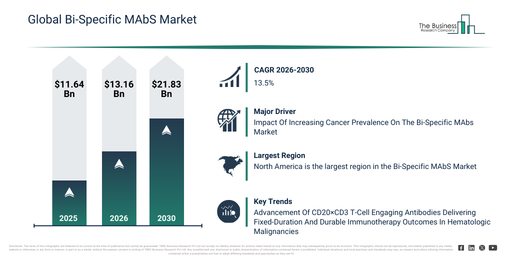
    The bi-specific mabs market has experienced significant expansion in recent years. It is projected to grow from $11.64 billion in 2025 to $13.16 billion in 2026, reflecting a compound annual growth rate (CAGR) of 13.0%. The historical growth of this market can be attributed to factors such as the approval of initial bsabs therapies, an increasing incidence of hematological cancers, the early adoption of monoclonal antibodies, augmented investment in oncology research and development, and a rise in hospital-based clinical trials.

    The bi-specific mabs market is expected to experience significant growth in the coming years, with its size projected to reach $21.83 billion in 2030, exhibiting a compound annual growth rate (CAGR) of 13.5%. This expansion during the forecast period can be attributed to advancements in the integration of gene and cell therapies, the expanding pipeline of bsAbs, increased research and development funding for rare diseases, the growing adoption of precision medicine, and the emergence of novel bsAbs delivery platforms. Major trends anticipated in this period include the broadening applications of tumor immunotherapy, the development of multi-targeted bi-specific antibodies, a rise in treatments for hemophilia and other rare diseases, progress in both in vitro and in vivo platforms, and an increase in collaborations between pharmaceutical and biotechnology firms.

    Get A Free Sample Report With In-Depth Market Insights:

    https://www.thebusinessresearchcompany.com/sample.aspx?id=3390&type=smp&utm_source=Blogs&utm_medium=Paid&utm_campaign=Oct_PR

    Bi-Specific MAbS Market Growth Momentum: What Factors Are Shaping Demand?

    The increasing incidence of cancer and other long-term illnesses is expected to drive the growth of the bispecific monoclonal antibodies market throughout the forecast period. Bispecific monoclonal antibodies are developed for the treatment of various cancers, infectious diseases, central nervous system disorders, and autoimmune disorders. These antibodies are considered more effective than monoclonal antibodies (moAbs) as they target two or more tumor antigens on cells to disrupt cancer progression. For instance, in 2023, according to the Cancer Facts & Figures 2023 report published by the American Cancer Society (ACS), a US-based voluntary health organization, there will be an estimated 609,820 cancer-related deaths in the USA. Therefore, an increasing number of chronic diseases, including cancer, is anticipated to boost the demand for bi-specific MAbs to treat these diseases effectively.

    Bi-Specific MAbS Market Breakdown By Product Type And Application

    The bi-specific mabs market covered in this report is segmented –

    1) By Drug: Catumaxomab (Removab), Blinatumomab, Duligotumab, Emicizumab, Amivantamab, Faricimab, Teclistamab

    2) By Product Type: In Vivo, In Vitro

    3) By Indication: Cancer, Haemophilia A, Ophthalmic

    4) By End Use: Hospitals, Research Institutes, Other End-Users

    Subsegments:

    1) By Catumaxomab (Removab): Cancer Therapy, Targeting EpCAM and CD3

    2) By Blinatumomab: Acute Lymphoblastic Leukemia (ALL) Treatment, Targeting CD19 and CD3

    3) By Duligotumab: Oncology Treatments, Targeting Epidermal Growth Factor Receptor (EGFR)

    4) By Emicizumab: Hemophilia A Treatment, Targeting Factor IXa and Factor X

    5) By Amivantamab: Non-Small Cell Lung Cancer (NSCLC) Therapy, Targeting EGFR And MET

    6) By Faricimab: Ophthalmology Treatment (Wet Age-related Macular Degeneration, Diabetic Macular Edema), Targeting Angiopoietin-2 And VEGF-A

    7) By Teclistamab: Multiple Myeloma Treatment, Targeting BCMA and CD3

    Bi-Specific MAbS Market Trends Redefining Industry Growth

    Leading companies operating within the bi-specific mAbs market are concentrating on technological advancements, including CD20 x CD3 T-cell engaging bispecific antibodies, to address the increasing demand for more effective, off-the-shelf immunotherapies for hematological malignancies that offer specific treatment durations. A CD20 x CD3 bispecific antibody is engineered to facilitate close contact between T cells and B cells by simultaneously attaching to CD3 on T cells and CD20 on B cells, thus activating T-cell–mediated destruction of malignant B cells. Unlike traditional monoclonal antibodies that exclusively target B cells or T-cell checkpoints, this design leverages immune effector function in a highly directed manner. For instance, in June 2023, Roche AG, a biopharmaceutical company based in Switzerland, launched Columvi (glofitamab-gxbm), which is a CD20xCD3 bispecific T-cell engager. Columvi possesses a novel 2:1 structural format, incorporating two CD20-binding domains and one CD3-binding domain, and is administered as a fixed-duration therapy lasting approximately 8.5 months, aiming to provide durable responses for patients with relapsed or refractory diffuse large B-cell lymphoma (DLBCL). Its fixed-duration regimen presents the possibility of a treatment-free interval following therapy, distinguishing it from continuous treatment strategies, and it has exhibited strong efficacy in clinical trials along with manageable safety.

    Bi-Specific MAbS Market Company Landscape And Competitive Strategy

    Major companies operating in the bi-specific mabs market are F. Hoffmann-La Roche AG, Amgen Inc, Johnson & Johnson, Kyowa Kirin, Zai Lab, Alphamab Oncology, Celldex Therapeutics, Biocon, EpimAb Biotherapeutics, ABL Bio, Takeda Pharmaceuticals, Innovent Biologics, Merck & Co Inc, Eli Lilly Company Inc., AbbVie Inc, Bayer AG, Pfizer Inc, Novartis AG, GlaxoSmithKline, AstraZeneca, Cytiva, Bristol Myers Squibb, AbCellera, BioMarin Pharmaceuticals, Sanofi S.A., Novo Nordisk A/S, Aspen Pharmacare, Baxter International

    View The Full Bi-Specific MAbS Market Report:

    https://www.thebusinessresearchcompany.com/report/bi-specific-mab-global-market-report?utm_source=Blogs&utm_medium=Paid&utm_campaign=Oct_PR

    Bi-Specific MAbS Market Regional Split: Which Areas Are Fueling Growth?

    North America was the largest region in the bi-specific MAbs market in 2025. The regions covered in the bi-specific mabs market report are Asia-Pacific, South East Asia, Western Europe, Eastern Europe, North America, South America, Middle East, Africa.

    Reach Out To Our Team:

    The Business Research Company: https://www.thebusinessresearchcompany.com/

    Americas: +1 310-496-7795

    Asia: +44 7882 955267 & +91 8897263534

    Europe: +44 7882 955267

    Email us at: marketing@tbrc.info

    Follow us on:

    LinkedIn: https://in.linkedin.com/company/the-business-research-company

    YouTube: https://www.youtube.com/channel/UC24_fI0rV8cR5DxlCpgmyFQ

    Global Market Model: https://www.thebusinessresearchcompany.com/global-market-model
  • Bisoprolol Market Forecast To 2030: Starting From $3.25 Billion In 2026

    Bisoprolol Market Forecast To 2030: Starting From $3.25 Billion In 2026

    Featuring market attractiveness scoring, total addressable market sizing, company benchmarking matrices, interactive Excel dashboards, deeper supply chain intelligence, emerging startup tracking, and granular product-level insights, The Business Research Company’s 2026 market reports are built to deliver research that is both more actionable and more strategically valuable.

    Bisoprolol Market Size, Value And Growth Trajectory Through 2030

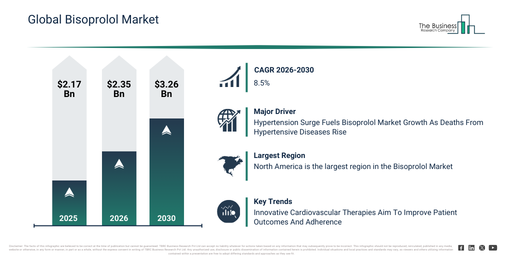
    The bisoprolol market has experienced robust expansion in recent years. It is anticipated to increase from $2.17 billion in 2025 to $2.35 billion in 2026, exhibiting a compound annual growth rate (CAGR) of 8.5%. This market’s historical development can be ascribed to factors such as the high occurrence of hypertension, the recognized clinical effectiveness of beta-blockers, an aging demographic, the expansion of hospital-centric cardiac care, and extensive prescription by physicians.

    The bisoprolol market size is projected to demonstrate substantial growth in the upcoming years. It is expected to expand to $3.26 billion in 2030, achieving a compound annual growth rate (CAGR) of 8.5%. This anticipated growth over the forecast period can be attributed to the escalating burden of cardiovascular diseases, improved access to generic medications, the rise of outpatient cardiac management, the broadening of pharmacy networks, and more effective treatment adherence programs. Significant trends identified for this period include the increasing incidence of cardiovascular disorders, the expanding application of beta-blockers in chronic care, greater adoption of generic cardiovascular drugs, the growth of retail and hospital pharmacies, and a heightened emphasis on long-term blood pressure management.

    Get A Free Sample Report With In-Depth Market Insights:

    https://www.thebusinessresearchcompany.com/sample.aspx?id=18977&type=smp&utm_source=Blogs&utm_medium=Paid&utm_campaign=Oct_PR

    Bisoprolol Market Expansion Drivers: What’s Shaping Future Growth?

    The expanding occurrence of hypertension is anticipated to fuel the expansion of the bisoprolol market going forward. Hypertension is defined as a medical state where blood pressure levels are persistently elevated beyond the typical physiological range. This rise in hypertension cases is linked to more sedentary lifestyles and growing rates of obesity. The bisoprolol market aids in managing hypertension by helping to reduce blood pressure, decrease the heart’s workload, and enhance blood circulation. As an illustration, in February 2024, data from the Singapore Ministry of Health, a government health authority located in Singapore, revealed that the prevalence of hypertension among adults reached 36.1% in 2023, an increase from 33.0% in 2022, signifying a notable year-on-year rise. Consequently, the escalating prevalence of hypertension is stimulating the growth of the bisoprolol market.

    Bisoprolol Market Segment Analysis And Revenue Potential

    The bisoprolol market covered in this report is segmented –

    1) By Type: Tablet, Capsule

    2) By Distribution Channels: Hospital Pharmacies, Retail Pharmacies, Other Distribution Channels

    3) By Application: High Blood Pressure, Coronary Heart Disease, Angina Pectoris, Other Applications

    Subsegments:

    1) By Tablet: Immediate-Release Tablets, Extended-Release Tablets

    2) By Capsule: Immediate-Release Capsules, Extended-Release Capsules, Hard Gelatin Capsules

    Bisoprolol Market Strategic Trends: What Defines The Next Growth Phase?

    Leading companies in the bisoprolol market are concentrating on developing innovative solutions, such as fixed-dose combinations and extended-release formulations, to enhance patient adherence, improve cardiovascular outcomes, and address the limitations of conventional therapies. Fixed-dose combinations are medicines that combine two or more active substances into a single pill to simplify treatment, while extended-release formulations are designed to release the drug slowly over time, providing longer-lasting effects and reducing the frequency of dosing. For instance, in June 2025, Cadila Pharmaceuticals Limited, an India-based pharmaceutical company, launched Biscado (Bisoprolol) in India, thereby entering the beta-blocker therapy segment for managing cardiovascular diseases. It is a highly cardioselective beta-1 adrenergic blocker indicated for the treatment of high blood pressure, angina, and chronic heart failure by decreasing heart rate and blood pressure to lessen the strain on the heart. Clinical studies support its efficacy, showing significant reductions in mortality, sudden cardiac death, and hospitalizations due to heart failure. Biscado is available in once-daily dosing and in fixed-dose combinations with other antihypertensive agents, aligning with global cardiovascular treatment guidelines and improving patient adherence in India.

    Bisoprolol Market Key Players Shaping Industry Direction

    Major companies operating in the bisoprolol market are Merck & Co. Inc., Abbott Healthcare Pvt Ltd, Novartis AG, Teva Pharmaceutical Industries Ltd, Aurobindo Pharma Limited, Intas Pharmaceuticals Limited, Cipla Limited, Hikma Pharmaceuticals, Lupin Limited, Dr. Reddy’s Laboratories Limited, Glenmark Pharmaceuticals Limited, Alkem Laboratories Limited, Ipca Laboratories Limited, Medreich Limited, Alembic Pharmaceuticals Limited, Accord Healthcare Limited, Zydus Lifesciences Limited, Zentiva Group, Taj Pharmaceuticals Limited, Torrent Pharmaceuticals Limited, Suanfarma, Rusan Healthcare Limited, VHB Lifesciences Limited, Synnat Pharmaceuticals, Vidakem Lifesciences Pvt Ltd, Pluviaendo Pharmaceuticals

    View The Full Bisoprolol Market Report:

    https://www.thebusinessresearchcompany.com/report/bisoprolol-global-market-report?utm_source=Blogs&utm_medium=Paid&utm_campaign=Oct_PR

    Bisoprolol Market Top Region: Where Does Most Revenue Come From?

    North America was the largest region in the bisoprolol market in 2025. The regions covered in the bisoprolol market report are Asia-Pacific, South East Asia, Western Europe, Eastern Europe, North America, South America, Middle East, Africa.

    Reach Out To Our Team:

    The Business Research Company: https://www.thebusinessresearchcompany.com/

    Americas: +1 310-496-7795

    Asia: +44 7882 955267 & +91 8897263534

    Europe: +44 7882 955267

    Email us at: marketing@tbrc.info

    Follow us on:

    LinkedIn: https://in.linkedin.com/company/the-business-research-company

    YouTube: https://www.youtube.com/channel/UC24_fI0rV8cR5DxlCpgmyFQ

    Global Market Model: https://www.thebusinessresearchcompany.com/global-market-model
  • Bismuth Subsalicylate Market Size In 2026 And Beyond: Understanding Future Growth Potential

    Bismuth Subsalicylate Market Size In 2026 And Beyond: Understanding Future Growth Potential

    Built to provide research that’s more actionable and strategically valuable, The Business Research Company’s 2026 market reports include market attractiveness analysis, total addressable market sizing, company benchmarking matrices, interactive Excel dashboards, broader supply chain intelligence, emerging startup tracking, and in-depth product insights.

    Bismuth Subsalicylate Market CAGR Outlook And Future Development

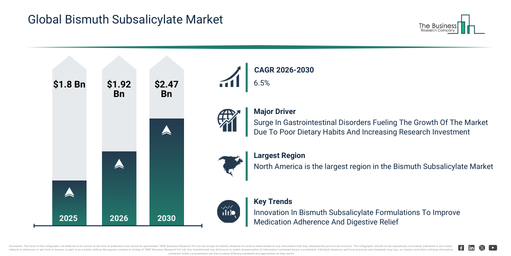
    The bismuth subsalicylate market has shown significant growth over the past few years. It is anticipated to expand from $1.8 billion in 2025 to $1.92 billion in 2026, achieving a compound annual growth rate (CAGR) of 6.6%. This historical expansion was influenced by the prevalence of gastrointestinal disorders, the ease of access to over-the-counter (OTC) drugs, the expansion of retail pharmacies, consumer self-medication tendencies, and heightened awareness of digestive health.

    The bismuth subsalicylate market is anticipated to experience significant expansion in the coming years. It is projected to reach $2.47 billion by 2030, exhibiting a compound annual growth rate (CAGR) of 6.5%. The expansion during this forecast period can be attributed to several factors, including the increasing adoption of preventive healthcare, the demand for safe over-the-counter (OTC) therapies, advancements in pediatric digestive care, penetration into emerging markets, and innovations in liquid formulations. Concurrently, major trends expected in the forecast period include a rising demand for OTC gastrointestinal relief, the development of more pediatric-friendly formulations, an increase in the usage of preventive digestive care, greater availability through various retail channels, and a specific focus on producing alcohol-free and sugar-free products.

    Get A Free Sample Report With In-Depth Market Insights:

    https://www.thebusinessresearchcompany.com/sample.aspx?id=24173&type=smp&utm_source=Blogs&utm_medium=Paid&utm_campaign=Oct_PR

    Bismuth Subsalicylate Market Development Factors: What’s Supporting Demand?

    The increasing occurrence of gastrointestinal (GI) disorders is expected to fuel the expansion of the bismuth subsalicylate market in the foreseeable future. These conditions impact the digestive system, encompassing the stomach, intestines, and related organs, leading to symptoms like discomfort, bloating, and changes in bowel function. The increase in GI disorders largely stems from unhealthy eating habits, where excessive consumption of processed foods and insufficient fiber disturb gut microbiota equilibrium and hinder digestion. Bismuth subsalicylate offers relief for diarrhea associated with GI disorders by calming gut inflammation and impeding the proliferation of specific bacteria that contribute to digestive distress. For example, forecasts from population-based registry data released by Nature, a UK-based scientific journal, indicated in April 2025 that the prevalence of inflammatory bowel disease (IBD) in Canada is projected to rise from 0.83% in 2025 to 0.96% in 2035 and further to 1.05% by 2043, assuming consistent incidence rates. This means approximately 321,000 Canadians would be living with IBD in 2025, climbing to 372,000 in 2035 and 407,000 by 2043. Consequently, the rising incidence of gastrointestinal disorders is poised to enhance the growth of the bismuth subsalicylate market.

    Bismuth Subsalicylate Market Driver: Expansion Of The Pharmaceutical Industry Fueling The Growth Of The Market Due To Increasing Demand For Innovative Treatments And Improved Access To Medications

    The growth of the bismuth subsalicylate market is anticipated to be propelled by the expanding pharmaceutical industry in the coming period. This industry primarily concentrates on the research, development, production, and promotion of medicines and therapeutic items aimed at enhancing health and managing diverse medical ailments. The growth of the pharmaceutical sector is stimulated by the rising global incidence of chronic illnesses, which necessitates a continuous demand for novel and enhanced therapies to manage these enduring health issues. The broadening pharmaceutical industry aids bismuth subsalicylate by enhancing the provision of advanced formulations and broadening distribution networks, thereby ensuring greater global availability of this effective remedy for gastrointestinal conditions. For instance, as per the FDA’s Fiscal Year 2023 Report, a US-based government publication, released in June 2024, the CDER Product Catalog contained 13,572 Abbreviated New Drug Applications by the conclusion of fiscal year 2023, marking an increase from previous years. New Drug Applications reached 3,593, a 1.5% increase, and Biologics License Applications totaled 354, a 9% increase. In total, the quantity of listed products grew by 6% to 148,886 in fiscal year 2023. Thus, the expansion of the pharmaceutical industry will drive the bismuth subsalicylate market’s growth.

    Bismuth Subsalicylate Market Segmentation And Category Overview

    The bismuth subsalicylate market covered in this report is segmented –

    1) By Product: Bismuth Subsalicylate Tablets, Bismuth Subsalicylate Suspension, Bismuth Subsalicylate Chewable Tablets

    2) By Distribution Channel: Online Pharmacies, Retail Pharmacies, Supermarkets Or Hypermarkets, Health And Wellness Stores

    3) By Application: Gastrointestinal Disorders, Diarrhea, Nausea, Heartburn, Indigestion

    4) By End-User: Adult Consumers, Pediatric Consumers, Healthcare Professionals, Caretakers And Guardians

    Subsegments:

    1) By Bismuth Subsalicylate Tablets: Prescription Tablets, Over-The-Counter (OTC) Tablets, Coated Tablets, Uncoated Tablets

    2) By Bismuth Subsalicylate Suspension: Flavored Suspension, Unflavored Suspension, Alcohol-Free Suspension, Sugar-Free Suspension

    3) By Bismuth Subsalicylate Chewable Tablets: Adult Chewable Tablets, Pediatric Chewable Tablets, Mint-Flavored Chewable Tablets, Fruit-Flavored Chewable Tablets

    Bismuth Subsalicylate Market Transformation Trends: What Innovations Are Driving Change?

    Companies operating within the bismuth subsalicylate market are prioritizing the development of advanced products, such as chewable tablets, to enhance patient adherence to medication or supplement regimens. Chewable tablets are solid oral medications or supplements intended for chewing before swallowing, which simplifies consumption and permits quicker absorption. For instance, in May 2025, Wonderbelly, a US-based pharmaceutical company, launched the Dye-Free Alternative to Pepto-Bismol (Bismuth Subsalicylate). These multi-symptom relief chewable tablets effectively address upset stomach, diarrhea, indigestion, and nausea. They contain the same active ingredient as Pepto-Bismol (bismuth subsalicylate) but are formulated without dyes or talc.

    Bismuth Subsalicylate Market Competitive Analysis Of Leading Industry Participants

    Major companies operating in the bismuth subsalicylate market are Procter & Gamble, GlaxoSmithKline Plc, Perrigo Company Plc, Siegfried AG, Laboratorios Imperiales S.A. de C.V., Shandong Xinhua Pharmaceutical Co. Ltd., Alpha Chemika, JQC (Huayin) Pharmaceutical Co. Ltd., Chr. Olesen Group, Vital Materials Co. Ltd., Shanpar Industries Pvt. Ltd., OCB Pharmaceutical, Muby Chemicals, A. B. Enterprises, Samuh Laxmi, Lumax Pharmaceutical Labs Pvt. Ltd., GB Nitrochem Pvt. Ltd., Indian Platinum Private Limited, Organs Bio Lab Private Limited, Maan Medex Private Limited

    View The Full Bismuth Subsalicylate Market Report:

    https://www.thebusinessresearchcompany.com/report/bismuth-subsalicylate-global-market-report?utm_source=Blogs&utm_medium=Paid&utm_campaign=Oct_PR

    Bismuth Subsalicylate Market Regional Breakdown: Where Is Demand Concentrated?

    North America was the largest region in the bismuth subsalicylate market in 2025. Asia-Pacific is expected to be the fastest-growing region in the forecast period. The regions covered in the bismuth subsalicylate market report are Asia-Pacific, South East Asia, Western Europe, Eastern Europe, North America, South America, Middle East, Africa.

    Reach Out To Our Team:

    The Business Research Company: https://www.thebusinessresearchcompany.com/

    Americas: +1 310-496-7795

    Asia: +44 7882 955267 & +91 8897263534

    Europe: +44 7882 955267

    Email us at: marketing@tbrc.info

    Follow us on:

    LinkedIn: https://in.linkedin.com/company/the-business-research-company

    YouTube: https://www.youtube.com/channel/UC24_fI0rV8cR5DxlCpgmyFQ

    Global Market Model: https://www.thebusinessresearchcompany.com/global-market-model