Month: October 2026

  • Feed Mycotoxin Binders And Modifiers Market Forecast: Breaking Down The Numbers Behind Future Expansion

    Feed Mycotoxin Binders And Modifiers Market Forecast: Breaking Down The Numbers Behind Future Expansion

    Featuring market attractiveness scoring, total addressable market sizing, company benchmarking matrices, interactive Excel dashboards, deeper supply chain intelligence, emerging startup tracking, and granular product-level insights, The Business Research Company’s 2026 market reports are built to deliver research that is both more actionable and more strategically valuable.

    Feed Mycotoxin Binders And Modifiers Market Growth From $3.03 Billion In 2026 To $3.97 Billion By 2030 At A CAGR Of 7%

    The feed mycotoxin binders and modifiers market has seen robust expansion in recent years. It is anticipated to increase from $2.84 billion in 2025 to $3.03 billion in 2026, achieving a compound annual growth rate (CAGR) of 6.8%. The previous period’s growth can be attributed to several factors including a higher frequency of fungal contamination in grains, the expansion of commercial livestock farming, a heightened awareness regarding animal diseases caused by mycotoxins, the growth in compound feed manufacturing, and the accessibility of clay-based toxin binders.

    The feed mycotoxin binders and modifiers market is projected to experience robust expansion over the coming years. This market is set to reach $3.97 billion by 2030, exhibiting a compound annual growth rate (CAGR) of 7.0%. The anticipated growth during this period is primarily driven by an intensified focus on feed safety and quality standards, a growing preference for organic mycotoxin modifiers, increased production in the poultry and swine sectors, stricter regulatory mandates concerning toxin levels in animal feed, and advancements in enzymatic and probiotic modifier technologies. Key developments expected during the forecast timeframe involve a higher occurrence of mycotoxin contamination in feed, a greater embrace of proactive feed safety measures, increasing demand for products that bind multiple mycotoxins, a transition towards organic and naturally derived mycotoxin control methods, and the broadening of mycotoxin management practices within aquaculture feed.

    Get A Free Sample Report With In-Depth Market Insights:

    https://thebusinessresearchcompany.com/sample_request?id=7523&type=smp&name=Feed%20Mycotoxin%20Binders%20And%20Modifiers%20Market%20Report%202026&utm_source=Blogs&utm_medium=Paid&utm_campaign=Oct_PR

    Feed Mycotoxin Binders And Modifiers Market Demand Drivers Opening New Revenue Streams

    The projected expansion of the livestock sector is anticipated to drive the future growth of the feed mycotoxin binder and modifier market. This industry encompasses the agricultural domain focused on animal rearing and reproduction for multiple uses, predominantly human food and associated animal goods. The livestock industry is experiencing growth, fueled by the escalating demand for animal proteins, as an expanding global population and evolving dietary habits lead to greater consumption of meat and dairy items. These feed additives aid the livestock sector by mitigating toxins present in animal feed, thereby enhancing animal well-being, boosting productivity, and ensuring the overall safety of products derived from livestock. A notable example is provided by the Department for Environment, Food & Rural Affairs, a UK-based government body, which reported in July 2025 that in 2024, the total output from livestock increased by £1.1 ($1.29) billion, marking a 5.6% rise compared to 2023, and reaching a total of £20.1 ($23.56) billion. Consequently, the expansion within the livestock industry is propelling the growth of the market for feed mycotoxin binders and modifiers.

    Feed Mycotoxin Binders And Modifiers Market Segment Performance And Emerging Opportunities

    The feed mycotoxin binders and modifiers market covered in this report is segmented –

    1) By Type: Feed Mycotoxin Binders, Feed Mycotoxin Modifiers

    2) By Source: Inorganic , Organic

    3) By Livestock: Poultry, Swine, Ruminants, Aquatic Animals, Other Livestocks

    Subsegments:

    1) By Feed Mycotoxin Binders: Clay-Based Binders, Silicate-Based Binders, Activated Charcoal, Natural Adsorbents

    2) By Feed Mycotoxin Modifiers: Enzymatic Modifiers, Chemical Modifiers, Probiotic And Prebiotic Modifiers

    Feed Mycotoxin Binders And Modifiers Market Trends Powering Strategic Industry Growth

    Major companies within the feed mycotoxin binders and modifiers market are concentrating on developing innovative solutions, such as next-generation mycotoxin binders, to improve feed safety, enhance livestock health, and boost overall production efficiency. Next-generation mycotoxin binders are advanced feed additives formulated to more effectively shield livestock from a wide array of harmful fungal toxins (mycotoxins) present in animal feed. For instance, in October 2025, Alltech Inc., a US-based animal health and nutrition company, introduced Mycosorb A+ Evo and Mycosorb Evo, which are next-generation mycotoxin binders that incorporate advanced technologies to improve binding capacity and provide broad-spectrum toxin protection. These products feature refined formulations that target a wider range of mycotoxins, optimize nutrient absorption, and support overall animal health and performance. They are suitable for various livestock feeds, including poultry, swine, and ruminants, offering a reliable solution to reduce feed contamination risks.

    Feed Mycotoxin Binders And Modifiers Market Leading Companies And Competitive Benchmarking

    Major companies operating in the feed mycotoxin binders and modifiers market are Cargill Inc., BASF SE, The Archer-Daniels-Midland Company, Bayer AG, Perstorp AB, Novus International Inc., Biomin Pte Ltd., Impextraco NV, Nutreco NV, Kemin Industries Inc., Bluestar Adisseo Company, Global Nutritech, Alltech, Amlan International, Olmix Group, Selko B. V., Micron Bio Systems Ltd., SibbiopharM Ltd., Anfotal Nutritions Private Limited, FF Chemicals B. V., Visscher Holding B. V., Bentoli Inc., Bonaventure Animal Nutrition, Nutriad Ltd., Chr. Hansen A/S, NOREL S. A, Trouw Nutrition LLC, Anpario plc, NutriQuest, Pancosma SA

    View The Full Feed Mycotoxin Binders And Modifiers Market Report:

    https://thebusinessresearchcompany.com/report/feed-mycotoxin-binders-and-modifiers-global-market-report?utm_source=Blogs&utm_medium=Paid&utm_campaign=Oct_PR

    Feed Mycotoxin Binders And Modifiers Market Top Region By Revenue And Market Share

    North America was the largest region in the feed mycotoxin binders and modifiers market in 2025.Asia-Pacific is expected to be the fastest-growing region in the forecast period. The regions covered in the feed mycotoxin binders and modifiers market report are Asia-Pacific, South East Asia, Western Europe, Eastern Europe, North America, South America, Middle East, Africa.

    Reach Out To Our Team:

    The Business Research Company: https://www.thebusinessresearchcompany.com/

    Americas: +1 310-496-7795

    Asia: +44 7882 955267 & +91 8897263534

    Europe: +44 7882 955267

    Email us at: marketing@tbrc.info

    Follow us on:

    LinkedIn: https://in.linkedin.com/company/the-business-research-company

    YouTube: https://www.youtube.com/channel/UC24_fI0rV8cR5DxlCpgmyFQ

    Global Market Model: https://www.thebusinessresearchcompany.com/global-market-model
  • Feed Micronutrients Market Expected To Grow At 6.1% CAGR Through 2030: What Businesses Need To Know

    Feed Micronutrients Market Expected To Grow At 6.1% CAGR Through 2030: What Businesses Need To Know

    Backed by market attractiveness analysis, total addressable market sizing, company benchmarking matrices, interactive Excel dashboards, wider supply chain intelligence, emerging startup coverage, and detailed product-level insights, The Business Research Company’s 2026 market reports are designed to offer research that is more actionable and strategically valuable than ever.

    Feed Micronutrients Market Expansion Outlook: What Revenue Opportunities Are Ahead?

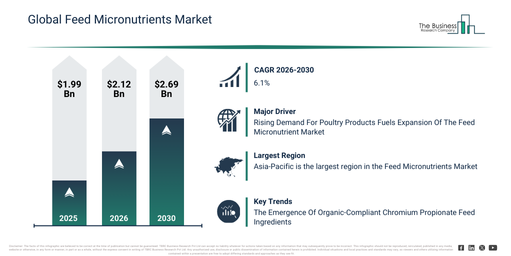
    The feed micronutrients market size has experienced strong growth in recent years. It is projected to increase from $1.99 billion in 2025 to $2.12 billion in 2026, at a compound annual growth rate (CAGR) of 7.0%. This historical growth can be attributed to factors such as increasing awareness regarding animal health and nutrition, the expansion of livestock farming, growth within the aquaculture and poultry industries, advancements in feed micronutrient formulations, and the rising demand for animal-derived food products.

    The feed micronutrients market size is projected to experience robust expansion over the coming years. This market is anticipated to reach $2.69 billion by 2030, exhibiting a compound annual growth rate (CAGR) of 6.1%. Factors contributing to this expansion during the projected period include the embrace of precision nutrition and customized feed formulations, the growing application of functional micronutrients, an increasing emphasis on environmentally friendly and natural feed supplements, the development of the aquaculture and poultry industries, and advancements in chelated and highly bioavailable micronutrients. Key developments expected within the forecast timeframe involve the increasing uptake of both trace and macro minerals to enhance animal well-being, a greater utilization of both fat-soluble and water-soluble vitamins, the incorporation of more carotenoids for their coloring and antioxidant properties, an increase in chelated minerals and readily available micronutrients, and the creation of synthetic vitamins alongside organic micronutrient mixtures.

    Get A Free Sample Report With In-Depth Market Insights:

    https://thebusinessresearchcompany.com/sample_request?id=16053&type=smp&name=Feed%20Micronutrients%20Market%20Report%202026&utm_source=Blogs&utm_medium=Paid&utm_campaign=Oct_PR

    Feed Micronutrients Market Growth Backed By Core Demand Fundamentals

    The expanding requirement for poultry items is projected to propel the advancement of the feed micronutrient sector. These products encompass diverse goods sourced from domesticated avian species like chickens, turkeys, ducks, geese, and quails. The appeal of poultry products stems from their nutritional content, adaptability in cooking, and cultural importance across numerous societies. Essential for poultry diets, feed micronutrients foster prime health, high productivity, and superior product quality, guaranteeing birds acquire vital nutrients for success in diverse farming settings. For example, in December 2023, data from a report by the Food and Agriculture Organization of the United Nations (FAO), a US-based governmental body, indicated that worldwide poultry meat production achieved 142 million metric tons in 2023, showing a 1% rise from the prior year. Likewise, global ovine meat production stood at 17.0 million metric tons in 2023, marking a 1.7% year-over-year increment. Consequently, the increasing need for poultry goods fuels the expansion within the feed micronutrient market.

    Feed Micronutrients Market Segment Landscape And Growth Outlook

    The feed micronutrients market covered in this report is segmented –

    1) By Product Type: Minerals, Vitamins, Carotenoids, Other Product Types

    2) By Form Type: Non-Chelated, Chelated

    3) By Livestock: Poultry, Aquaculture, Swine, Equine, Other Livestocks

    Subsegments:

    1) By Minerals: Trace Minerals, Macro Minerals, Chelated Minerals

    2) By Vitamins: Fat-Soluble Vitamins, Water-Soluble Vitamins, Pro-Vitamins And Synthetic Vitamins

    3) By Carotenoids: Beta-Carotene, Lutein, Zeaxanthin, Astaxanthin

    4) By Other Product Types: Amino Acids, Antioxidants, Enzymes, Organic Micronutrients

    Feed Micronutrients Market Growth Trends Reshaping The Competitive Landscape

    Leading entities within the feed micronutrient sector are concentrating their efforts on creating novel products, for example, organic-compliant chromium propionate feed ingredients, in response to the increasing need for sustainable and efficient animal nutrition options. Such an ingredient serves as a dietary additive in animal feed, adhering to the established norms and rules for organic agricultural practices. A notable example is Kemin Industries Inc., a US-based specialty ingredients firm, which disclosed in January 2024 that the FDA had greenlighted chromium propionate for inclusion in diets for growing turkeys, representing a substantial step forward in animal nutrition. This authorization permits the application of chromium propionate, particularly Kemin’s KemTRACE Chromium, beyond turkeys to also encompass swine, broiler chickens, cattle, and horses.

    Feed Micronutrients Market Industry Leaders And Competitive Landscape

    Major companies operating in the feed micronutrients market are Cargill Incorporated, Archer Daniels Midland Company, BASF SE, Evonik Industries AG, Nutreco N.V., Alltech Inc., Lallemand Inc., Kemin Industries Inc., Godrej Agrovet Ltd., Phibro Animal Health Corporation, Ridley Inc., Purina Animal Nutrition LLC, Zinpro Corporation, Novus International Inc., Biochem GmbH, Pancosma SA., Pancosma S.A., Procare Solutions, QualiTech LLC, Mercer Milling Company Inc.

    View The Full Feed Micronutrients Market Report:

    https://thebusinessresearchcompany.com/report/feed-micronutrients-global-market-report?utm_source=Blogs&utm_medium=Paid&utm_campaign=Oct_PR

    Feed Micronutrients Market Regional Analysis And Top Geography

    Asia-Pacific was the largest region in the feed micronutrients market in 2025. North America is expected to be the fastest growing region in the market. The regions covered in the feed micronutrients market report are Asia-Pacific, South East Asia, Western Europe, Eastern Europe, North America, South America, Middle East, Africa.

    Reach Out To Our Team:

    The Business Research Company: https://www.thebusinessresearchcompany.com/

    Americas: +1 310-496-7795

    Asia: +44 7882 955267 & +91 8897263534

    Europe: +44 7882 955267

    Email us at: marketing@tbrc.info

    Follow us on:

    LinkedIn: https://in.linkedin.com/company/the-business-research-company

    YouTube: https://www.youtube.com/channel/UC24_fI0rV8cR5DxlCpgmyFQ

    Global Market Model: https://www.thebusinessresearchcompany.com/global-market-model
  • Feed Carbohydrase Market Forecast To Reach $5.52 Billion By 2030: Key Trends Explained

    Feed Carbohydrase Market Forecast To Reach $5.52 Billion By 2030: Key Trends Explained

    Featuring market attractiveness scoring, total addressable market sizing, company benchmarking matrices, interactive Excel dashboards, deeper supply chain intelligence, emerging startup tracking, and granular product-level insights, The Business Research Company’s 2026 market reports are built to deliver research that is both more actionable and more strategically valuable.

    Feed Carbohydrase Market Growth Potential: How Will Market Size Shift Through 2030?

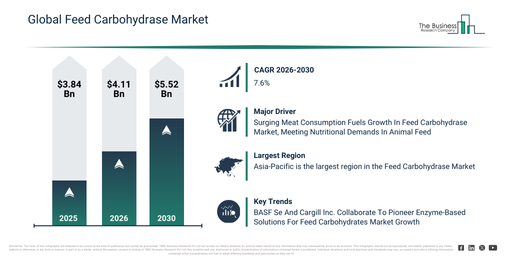
    The feed carbohydrase market size has experienced significant expansion in recent years. This market is set to expand from $3.84 billion in 2025 to $4.11 billion in 2026, achieving a compound annual growth rate (CAGR) of 7.0%. The historical growth of the market can be linked to factors such as increased commercial livestock production, the rising adoption of compound feed, a greater understanding of feed efficiency, the availability of microbial enzyme technologies, and the demand for enhanced animal productivity.

    The feed carbohydrase market is projected for significant expansion over the coming years, reaching a valuation of $5.52 billion by 2030, driven by a compound annual growth rate (CAGR) of 7.6%. This anticipated growth during the forecast period is fueled by factors such as intensified efforts to decrease antibiotic reliance, a surging need for environmentally friendly animal nutrition solutions, advancements in multi-enzyme products, the expansion of poultry and swine farming, and an emphasis on optimizing feed expenses. Key developments expected in this period encompass a wider embrace of enzyme-fortified animal feed, an escalating requirement for better feed digestibility, an uptick in the application of feed enzymes to lower production costs, broader implementation of carbohydrase in poultry diets, and an enhanced focus on maintaining gut health and enhancing nutrient uptake.

    Get A Free Sample Report With In-Depth Market Insights:

    https://thebusinessresearchcompany.com/sample_request?id=10514&type=smp&name=Feed%20Carbohydrase%20Market%20Report%202026&utm_source=Blogs&utm_medium=Paid&utm_campaign=Oct_PR

    Feed Carbohydrase Market Growth Catalysts And Demand Drivers

    The future expansion of the feed carbohydrase market is anticipated to be fueled by an increase in meat consumption. This refers to the quantity of meat, encompassing beef, pork, poultry, and fish, consumed by people. The surge in meat consumption is driven by a heightened demand for protein, as consumers increasingly opt for protein-rich diets for their perceived health and strength benefits. Feed carbohydrases play a crucial role in enhancing the nutritional content and digestibility of animal feed used in meat production. They achieve this by breaking down intricate carbohydrates into simpler sugars, which animals can then absorb and digest more easily. These improvements collectively stimulate the feed carbohydrase market. For example, reports from April 2024, citing the US-based Department of Agriculture, indicated that the combined production of cattle, calves, hogs, and pigs totaled 86.6 billion pounds in 2023, showing a modest rise from 2022 figures. Consequently, the growing trend in meat consumption is a key factor propelling the feed carbohydrase market.

    Feed Carbohydrase Market Breakdown By Product Type And Application

    The feed carbohydrase market covered in this report is segmented –

    1) By Enzyme Type: Amylase, Cellulose, Pectinase, Lactase

    2) By Type: Liquid, Dry

    3) By Source: Micro-Organisms, Animals, Plants

    4) By Application: Poultry, Ruminants, Swine, Other Applications

    Subsegments:

    1) By Amylase: Alpha-Amylase, Beta-Amylase, Glucoamylase

    2) By Cellulose: Endo-Cellulase, Exo-Cellulase, Cellobiohydrolase

    3) By Pectinase: Polygalacturonase, Pectin Lyase, Pectinase Enzyme Mixtures

    4) By Lactase: Beta-Galactosidase, Lactose Hydrolyzing Enzymes

    Feed Carbohydrase Market Trends Shaping Long-Term Demand

    Major companies involved in the feed carbohydrates market are implementing a strategic partnership strategy to advance research and development and expand their market presence. Strategic partnerships entail a process where companies leverage each other’s strengths and resources to achieve mutual benefits and success. For instance, in June 2023, BASF SE, a chemical manufacturer based in Germany, collaborated with Cargill Inc., a US-based food corporation. Through this alliance, they aim to introduce innovative enzyme-based solutions to the market, creating distinctive value for customers in animal feed. These enzyme solutions are intended to address productivity, sustainability, and cost issues for US customers, which are significant aspects of feed carbohydrates. The companies will jointly develop, produce, market, and sell customer-centric enzyme products and solutions, with a focus on improving feed efficiency and boosting animal performance.

    Feed Carbohydrase Market Key Participants And Competitive Landscape

    Major companies operating in the feed carbohydrase market are DuPont de Nemours, Koninklijke DSM N.V., Novozymes A/S, Amano Enzyme Inc., Associated British Foods plc, Badische Anilin- und Sodafabrik, Specialty Enzymes & Probiotics, BIO-CAT Inc., Chr. Hansen Holdings A/S, Advanced Enzyme Technologies, AB Enzymes GmbH, Amorvet, BEC Feed Solutions Pty Ltd., Novus International Inc., Biovet Joint Stock Company, Biocatalysts Ltd., Enzyme Development Corporation, Kerry Group, Jiangsu Boli Bioproducts, Aumgene Biosciences, Brenntag, BioResource International Inc., Lesaffre, Canadian Bio-Systems, Cargill Incorporated, Kemin Industries Inc., Bluestar Adisseo Company, Roal Oy, Shandong Longda Bio-Products Co. Ltd.

    View The Full Feed Carbohydrase Market Report:

    https://thebusinessresearchcompany.com/report/feed-carbohydrase-global-market-report?utm_source=Blogs&utm_medium=Paid&utm_campaign=Oct_PR

    Feed Carbohydrase Market Geographic Analysis: Where Is Demand Rising Fastest?

    Asia-Pacific was the largest region in the feed carbohydrase market in 2025. The regions covered in the feed carbohydrase market report are Asia-Pacific, South East Asia, Western Europe, Eastern Europe, North America, South America, Middle East, Africa.

    Reach Out To Our Team:

    The Business Research Company: https://www.thebusinessresearchcompany.com/

    Americas: +1 310-496-7795

    Asia: +44 7882 955267 & +91 8897263534

    Europe: +44 7882 955267

    Email us at: marketing@tbrc.info

    Follow us on:

    LinkedIn: https://in.linkedin.com/company/the-business-research-company

    YouTube: https://www.youtube.com/channel/UC24_fI0rV8cR5DxlCpgmyFQ

    Global Market Model: https://www.thebusinessresearchcompany.com/global-market-model
  • Feed Binders Market Size Forecast From 2026 To 2030: Key Industry Trends

    Feed Binders Market Size Forecast From 2026 To 2030: Key Industry Trends

    Built to provide research that’s more actionable and strategically valuable, The Business Research Company’s 2026 market reports include market attractiveness analysis, total addressable market sizing, company benchmarking matrices, interactive Excel dashboards, broader supply chain intelligence, emerging startup tracking, and in-depth product insights.

    Feed Binders Market Value Analysis: What Growth Lies Ahead Over The Forecast Period?

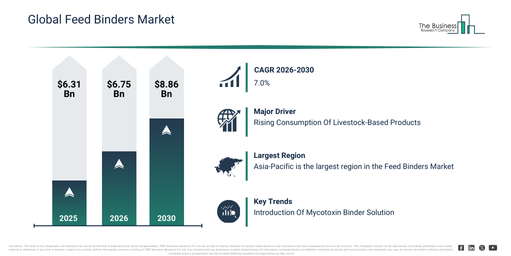
    The feed binders market has experienced robust expansion in recent times. Projections indicate its value will increase from $6.31 billion in 2025 to $6.75 billion in 2026, demonstrating a compound annual growth rate (CAGR) of 7.0%. Historically, this expansion has been driven by factors such as the rise in industrial livestock farming, greater production of compound feed, a surge in demand for pelletized feed formats, the availability of lignosulfonates and molasses as binders, and the overall enlargement of the global animal feed sector.

    The feed binders market size is anticipated to undergo significant growth in the coming years. It is projected to reach $8.86 billion in 2030, growing at a compound annual growth rate (CAGR) of 7.0%. This expansion during the forecast period stems from factors such as increasing demand for high-quality animal nutrition, a rising preference for natural feed additives, an uptick in the consumption of pelleted and extruded feeds, more stringent regulations on feed quality standards, and innovations in multifunctional feed binder formulations. Prominent trends expected in this period include an increased demand for enhanced feed pellet durability, the growing adoption of natural and plant-based binders, a focus on ensuring feed stability during storage and transportation, the expanding use of binders to improve livestock health, and the growth of compound and formulated feed production.

    Get A Free Sample Report With In-Depth Market Insights:

    https://thebusinessresearchcompany.com/sample_request?id=7369&type=smp&name=Feed%20Binders%20Market%20Report%202026&utm_source=Blogs&utm_medium=Paid&utm_campaign=Oct_PR

    Feed Binders Market Opportunity Drivers: What’s Unlocking New Revenue Potential?

    The growing intake of products derived from livestock is projected to boost the expansion of the feed binders market in the future. These animal-derived goods encompass items such as meat and various meat products, poultry (including both meat and eggs), fish, shellfish, and dairy items like milk and cheese. The increase in livestock-based products is attributed to rising worldwide food demand, with population growth leading to greater consumption of meat, milk, and other animal-sourced foods. Feed binders are incorporated into livestock feed to sequester mycotoxins, thereby preventing their absorption into the bloodstream, where they could inflict severe harm on animals. As an illustration, the Department for Environment, Food & Rural Affairs, a government agency in the UK, reported in July 2025 that the total livestock output in 2024 saw an increase of £1.1 ($1.29) billion, representing a 5.6% rise compared to 2023, and reaching a total of £20.1 ($23.56) billion. This expansion was largely fueled by increased valuations in eggs (+35%), beef (+9.3%), and milk (+5.5%). Consequently, the growing intake of livestock-based products is propelling the feed binders market.

    Feed Binders Market Segment Analysis And Revenue Potential

    The feed binders market covered in this report is segmented –

    1) By Type: Lignosulfonates, Plant Gums And Starches, Gelatin And Other Hydrocolloids, Molasses, Clay

    2) By Source: Natural, Synthetic

    3) By Application: Moists, Pellets, Crumbles

    Subsegments:

    1) By Lignosulfonates: Sodium Lignosulfonate, Calcium Lignosulfonate

    2) By Plant Gums And Starches: Guar Gum, Xanthan Gum, Agar, Starch-Based Binders

    3) By Gelatin And Other Hydrocolloids: Gelatin, Carrageenan, Pectin

    4) By Molasses: Sugarcane Molasses, Sugar Beet Molasses

    5) By Clay: Bentonite, Kaolin

    Feed Binders Market Innovation Trends Shaping Future Development

    Major companies within the feed binders market are prioritizing technological advancements, such as the development of natural and sustainable binders. Their objective is to supply livestock producers with premium solutions that enhance feed stability, safety, and nutritional value, simultaneously addressing the growing consumer demand for clean, non-genetically modified feed items. Natural and sustainable binders refer to eco-friendly and safe components utilized in animal feed to improve consistency, nutritional content, and overall quality, devoid of harmful chemicals or genetically modified ingredients. For example, Kemin Industries Inc., a US-based ingredient manufacturing firm, unveiled FORMYL in June 2024. This innovative feed additive is specifically engineered to boost swine health and productivity. Serving as an effective feed acidifier, it targets pathogens and promotes a healthy gut, with its non-antibiotic formic acid solution helping to minimize issues from Enterobacteriaceae and Escherichia coli. Furthermore, its encapsulation technology ensures safer handling and maximal efficacy in animals.

    Feed Binders Market Top Companies Driving Competitive Growth

    Major companies operating in the feed binders market are The Emsland Group, DuPont de Nemours Inc., Darling Ingredients Inc., Roquette Frères, Borregaard ASA, CP Kelco Inc., Beneo GmbH, Kemin Industries Inc., Alltech, Visco Starch, BASF SE, Bentoli AgriNutrition Pvt. Ltd., The Cooperative Royal Avebe U.A., Archer Daniels Midland Company, Gelita AG, Ingredion Incorporated, Kerry Group plc, Novozymes A/S, Nutreco NV, Phibro Animal Health Corporation, Trouw Nutrition LLC

    View The Full Feed Binders Market Report:

    https://thebusinessresearchcompany.com/report/feed-binders-global-market-report?utm_source=Blogs&utm_medium=Paid&utm_campaign=Oct_PR

    Feed Binders Market Global Footprint: Which Region Leads The Market?

    Asia-Pacific was the largest region in the feed binders market in 2025. North America is expected to be the fastest-growing region in the forecast period. The regions covered in the feed binders market report are Asia-Pacific, South East Asia, Western Europe, Eastern Europe, North America, South America, Middle East, Africa.

    Reach Out To Our Team:

    The Business Research Company: https://www.thebusinessresearchcompany.com/

    Americas: +1 310-496-7795

    Asia: +44 7882 955267 & +91 8897263534

    Europe: +44 7882 955267

    Email us at: marketing@tbrc.info

    Follow us on:

    LinkedIn: https://in.linkedin.com/company/the-business-research-company

    YouTube: https://www.youtube.com/channel/UC24_fI0rV8cR5DxlCpgmyFQ

    Global Market Model: https://www.thebusinessresearchcompany.com/global-market-model
  • Feed And Animal Nutrition Market 2026: Market Size, Growth Drivers And Emerging Opportunities

    Feed And Animal Nutrition Market 2026: Market Size, Growth Drivers And Emerging Opportunities

    Backed by market attractiveness analysis, total addressable market sizing, company benchmarking matrices, interactive Excel dashboards, wider supply chain intelligence, emerging startup coverage, and detailed product-level insights, The Business Research Company’s 2026 market reports are designed to offer research that is more actionable and strategically valuable than ever.

    Feed And Animal Nutrition Market Size Forecast: How Big Could The Market Get By 2030?

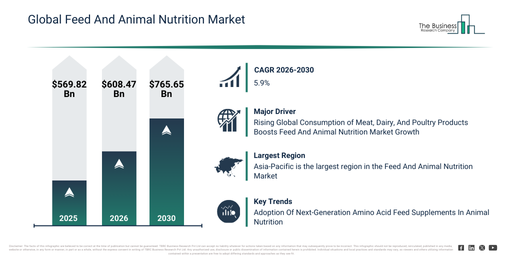
    The feed and animal nutrition market size has demonstrated significant expansion in recent years. Projections indicate a rise from $569.82 billion in 2025 to $608.47 billion in 2026, achieving a compound annual growth rate (CAGR) of 6.8%. This historical growth can be attributed to various factors such as an increasing global livestock population, a greater need for animal-derived protein, innovations in animal nutrition science, the broadening of commercial feed manufacturing, and heightened awareness of animal health and productivity.

    The feed and animal nutrition market is anticipated to undergo significant expansion in the next few years. It is projected to reach $765.65 billion by 2030, exhibiting a compound annual growth rate (CAGR) of 5.9%. This growth in the forecast period is driven by factors such as the advancement of precision nutrition solutions, a greater adoption of sustainable and plant-based feed ingredients, the implementation of digital feed management systems, an increasing demand for specialty feed additives, and a heightened focus on pet nutrition and functional foods. Prominent trends for the forecast period include an expanded use of probiotics and prebiotics in animal feed, a rising requirement for omega-3 and omega-6 fatty acids, the incorporation of amino acids and enzyme supplements to enhance animal development, the integration of vitamins and minerals for optimized animal health, and an emphasis on specialty feed additives like carotenoids and functional proteins.

    Get A Free Sample Report With In-Depth Market Insights:

    https://thebusinessresearchcompany.com/sample_request?id=15810&type=smp&name=Feed%20And%20Animal%20Nutrition%20Market%20Report%202026&utm_source=Blogs&utm_medium=Paid&utm_campaign=Oct_PR

    Feed And Animal Nutrition Market Growth Momentum: What Factors Are Shaping Demand?

    The escalating intake of meat, dairy, and poultry products is projected to boost the growth of the feed and animal nutrition market. These animal-derived food items, which include beef, pork, chicken, eggs, milk, and cheese, are seeing increased consumption due to higher income levels and evolving dietary habits. Feed and animal nutrition contribute significantly by enhancing animal growth rates, feed efficiency, reproductive performance, and disease resistance. These improvements collectively lead to superior product quality, ensure a steady supply, reduce production costs, and allow producers to fulfill the expanding consumer demand for safe, nutritious, and affordable animal-derived foods. For example, the INAPORC (Interprofession Nationale Porcine), a France-based national pork association, stated in July 2024 that in 2023, pork remained the most consumed meat in France, with about 30.6 kg per person per year. Thus, the rising consumption of meat, dairy, and poultry products is a key driver for the feed and animal nutrition market.

    Feed And Animal Nutrition Market Segmentation And Category Overview

    The feed and animal nutrition market covered in this report is segmented –

    1) By Product Type: Amino Acids, Vitamins, Minerals, Enzymes, Fish Oils And Nutrition Lipids, Eubiotics, Carotenoids, Other Product Types

    2) By Species: Poultry, Swine, Ruminants, Pets, Other Species

    3) By Administrative Method: Oral, Topical, Injection

    4) By Application: Veterinarians, Animal Feed Manufacturers, Households, Farms, Other Applications

    Subsegments:

    1) By Amino Acids: Lysine, Methionine, Threonine, Tryptophan

    2) By Vitamins: Vitamin A, Vitamin D, Vitamin E, Vitamin K, B Vitamins

    3) By Minerals: Macro Minerals, Micro Minerals

    4) By Enzymes: Protease, Amylase, Phytase, Lipase

    5) By Fish Oils and Nutrition Lipids: Omega-3 Fatty Acids, Omega-6 Fatty Acids, Marine Fish Oils, Plant-Based Lipids

    6) By Eubiotics: Probiotics, Prebiotics, Organic Acids, Symbiotics

    7) By Carotenoids: Beta-carotene, Lutein, Astaxanthin, Canthaxanthin

    8) By Other Product Types: Fiber Supplements, Proteins and Hydrolysates, Flavoring Agents, Trace Elements

    Feed And Animal Nutrition Market Trends Redefining Industry Growth

    Major companies operating in the feed and animal nutrition market are concentrating on developing innovative products like next-generation amino acid feed supplements to support efficient protein utilization, sustainable livestock production, and improved feed efficiency. These advanced amino acid feed supplements are nutritional additives created using fermentation or biochemical processes, designed to deliver precise concentrations of essential amino acids with high bioavailability, enhanced stability, and a lower environmental footprint compared to conventional protein-rich feed ingredients such as soybean meal. For instance, in June 2023, Evonik Industries AG, a Germany-based specialty chemicals and animal nutrition company, introduced an updated version of its Biolys product, a widely recognized lysine supplement for animal feed. The updated Biolys contains L-lysine sulfate produced through fermentation, alongside naturally occurring co-products that provide additional nutritional advantages. This formulation aids in optimizing amino acid balance in animal diets, improving growth performance, feed conversion efficiency, and nitrogen utilization in poultry and swine, and allows feed formulators to reduce crude protein levels. Additionally, the enhanced product offers greater consistency, simpler handling, and increased formulation flexibility, aligning with precision nutrition and sustainability objectives in modern animal production systems.

    Feed And Animal Nutrition Market Leading Players And Competitive Positioning

    Major companies operating in the feed and animal nutrition market are Cargill Incorporated, Archer Daniels Midland Company, BASF SE, Tyson Foods Inc., Evonik Industries AG, Charoen Pokphand Foods Public Company Limited, Land O’Lakes Inc., Koninklijke DSM N.V., De Heus Animal Nutrition B.V., Nutreco N.V., Elanco Animal Health Incorporated, Wilbur-Ellis Company LLC, Alltech Inc., Royal Agrifirm Group B.V., ForFarmers N.V., Trouw Nutrition USA LLC, Kemin Industries Inc., Lallemand Inc., Phibro Animal Health Corporation, Balchem Corporation, Ridley Corporation Limited, Kent Nutrition Group Inc., Novus International Inc., Manna Pro Products LLC, Zinpro Corporation, Diamond V Mills Inc., Vita Plus Corporation, BIOMIN Holding GmbH, Hi-Pro Feeds LP

    View The Full Feed And Animal Nutrition Market Report:

    https://thebusinessresearchcompany.com/report/feed-and-animal-nutrition-global-market-report?utm_source=Blogs&utm_medium=Paid&utm_campaign=Oct_PR

    Feed And Animal Nutrition Market Regional Split: Which Areas Are Fueling Growth?

    Asia-Pacific was the largest region in the feed and animal nutrition market in 2025. The regions covered in the feed and animal nutrition market report are Asia-Pacific, South East Asia, Western Europe, Eastern Europe, North America, South America, Middle East, Africa.

    Reach Out To Our Team:

    The Business Research Company: https://www.thebusinessresearchcompany.com/

    Americas: +1 310-496-7795

    Asia: +44 7882 955267 & +91 8897263534

    Europe: +44 7882 955267

    Email us at: marketing@tbrc.info

    Follow us on:

    LinkedIn: https://in.linkedin.com/company/the-business-research-company

    YouTube: https://www.youtube.com/channel/UC24_fI0rV8cR5DxlCpgmyFQ

    Global Market Model: https://www.thebusinessresearchcompany.com/global-market-model
  • Feed Additives Market Set To Expand From $26.46 Billion In 2026: Growth Outlook Through 2030

    Feed Additives Market Set To Expand From $26.46 Billion In 2026: Growth Outlook Through 2030

    Featuring market attractiveness scoring, total addressable market sizing, company benchmarking matrices, interactive Excel dashboards, deeper supply chain intelligence, emerging startup tracking, and granular product-level insights, The Business Research Company’s 2026 market reports are built to deliver research that is both more actionable and more strategically valuable.

    Feed Additives Market Revenue Outlook: What CAGR Lies Ahead Through 2030?

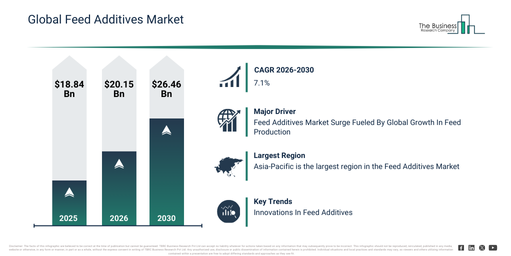
    The feed additives market has experienced robust expansion over recent years. It is forecast to grow from $18.84 billion in 2025 to $20.15 billion in 2026, achieving a compound annual growth rate (CAGR) of 7.0%. The past growth can be attributed to an increasing worldwide demand for animal protein, a rising livestock population, the introduction of enhanced feed products, the proliferation of intensive farming methods, and innovations in feed formulation technologies.

    The feed additives market is projected to experience substantial expansion over the coming years. It is forecast to reach $26.46 billion in 2030, exhibiting a compound annual growth rate (CAGR) of 7.1%. This anticipated growth during the forecast period is driven by several factors, including an increased emphasis on animal gut health and immunity, greater investment in eco-friendly feed solutions, the expanding aquaculture sector, advancements in enzyme and probiotic feed additives, and the implementation of precision nutrition and feed optimization techniques. Key trends expected over this period involve the increasing integration of probiotics and prebiotics into animal feed, a shift towards natural feed additives instead of synthetic options, a heightened need for improved livestock performance, the growth of aquaculture and specialized livestock feed markets, and the creation of versatile feed additives that offer both health and nutritional advantages.

    Get A Free Sample Report With In-Depth Market Insights:

    https://thebusinessresearchcompany.com/sample_request?id=9605&type=smp&name=Feed%20Additives%20Market%20Report%202026&utm_source=Blogs&utm_medium=Paid&utm_campaign=Oct_PR

    Feed Additives Market Expansion Drivers: What’s Shaping Future Growth?

    The expansion of the feed additives market is anticipated to be fueled by the increasing growth in feed production in the coming years. In agriculture or animal husbandry, ‘feed’ refers to specially prepared food given to domesticated animals, particularly cattle, formulated to meet their diverse nutritional needs and support their health, development, and overall well-being. Feed additives are substances incorporated into animal feed to enhance its quality and nutritional content, as well as to improve the well-being and performance of the animals consuming it. For instance, in March 2024, data from the Agriculture and Horticulture Development Board, a UK-based levy board funded by farmers and growers, indicated that the total GB animal feed production for the current season-to-date (July to January), including integrated poultry units (IPU), amounted to 7.81 million tonnes (Mt). This marked a 1.3% increase compared to the same period last year, when production stood at 7.71 Mt. Therefore, the consistent growth in feed production is a significant driver for the feed additives market.

    Feed Additives Market Segment Outlook: Which Categories Are Growing Fastest?

    The feed additives market covered in this report is segmented –

    1) By Product Type: Amino Acids, Phosphates, Vitamins, Acidifiers, Carotenoids, Enzymes, Mycotoxin Detoxifiers, Flavors And Sweeteners, Antibiotics, Other Products

    2) By Livestock: Poultry, Ruminants, Swine, Aquatic Animals, Other Livestocks

    3) By On Source Type: Synthetic, Natural

    4) By Form: Liquid, Dry

    Subsegments:

    1) By Amino Acids: L-Lysine, L-Threonine, L-Tryptophan, Methionine

    2) By Phosphates: Dicalcium Phosphate, Monocalcium Phosphate, Tricalcium Phosphate

    3) By Vitamins: Vitamin A, Vitamin D, Vitamin E, B-Vitamins

    4) By Acidifiers: Organic Acidifiers, Inorganic Acidifiers, Blend Of Acidifiers

    5) By Carotenoids: Beta-Carotene, Lutein, Astaxanthin

    6) By Enzymes: Proteases, Amylases, Phytases, Cellulases

    7) By Mycotoxin Detoxifiers: Adsorbents, Biochemical Detoxifiers

    8) By Flavors And Sweeteners: Natural Flavors, Artificial Flavors, Sweeteners

    9) By Antibiotics: Tetracyclines, Penicillins, Macrolides

    10) By Other Products: Probiotics, Prebiotics, Phytogenics

    Feed Additives Market Strategic Trends: What Defines The Next Growth Phase?

    Leading companies in the feed additives sector are concentrating on developing innovative products, such as plant-based feed additives, to enhance animal health, improve feed efficiency, and promote sustainable farming practices. These plant-derived additives have the potential to elevate the overall quality of animal products, including meat and dairy, by boosting their flavor and nutritional value. For instance, in February 2023, Evonik, a Germany-based chemicals company, introduced the PhytriCare IM feed additive. This product features carefully selected plant extracts rich in flavonoids, which are recognized for their anti-inflammatory properties. PhytriCare IM is formulated to prevent excessive inflammatory responses in sows, laying hens, and dairy cows. It is widely available throughout the EU.

    Feed Additives Market Competitive Overview And Top Companies

    Major companies operating in the feed additives market are Cargill Incorporated, Archer-Daniels-Midland Company, DuPont de Nemours Inc., Evonik Industries AG, BASF SE, Koninklijke DSM N.V., Novozymes A/S, Chr. Hansen A/S, Nutreco N.V., Kemin Industries Inc., Alltech Inc., Ajinomoto Co.Inc., Adisseo Co. Ltd., Tegasa, Palital Feed Additives B.V., Solvay S.A., Anpario plc, Biomin Holding GmbH, BioResource International Inc., Biovet JSC, Calysta Inc., Danisco Animal Nutrition, Devenish Nutrition, DSM Nutritional Products AG, Elanco Animal Health Inc., Enzyme Innovation, Feedworks USA Ltd., Global Animal Products Inc., Kalsec Inc., Lesaffre Group, Novus International Inc., Phibro Animal Health Corporation, QualiTech Inc., Wacker Chemie AG

    View The Full Feed Additives Market Report:

    https://thebusinessresearchcompany.com/report/feed-additives-global-market-report?utm_source=Blogs&utm_medium=Paid&utm_campaign=Oct_PR

    Feed Additives Market Top Region: Where Does Most Revenue Come From?

    Asia-Pacific was the largest region in the feed additives market in 2025. The regions covered in the feed additives market report are Asia-Pacific, South East Asia, Western Europe, Eastern Europe, North America, South America, Middle East, Africa.

    Reach Out To Our Team:

    The Business Research Company: https://www.thebusinessresearchcompany.com/

    Americas: +1 310-496-7795

    Asia: +44 7882 955267 & +91 8897263534

    Europe: +44 7882 955267

    Email us at: marketing@tbrc.info

    Follow us on:

    LinkedIn: https://in.linkedin.com/company/the-business-research-company

    YouTube: https://www.youtube.com/channel/UC24_fI0rV8cR5DxlCpgmyFQ

    Global Market Model: https://www.thebusinessresearchcompany.com/global-market-model

  • Farm Animal Healthcare Market Size And Growth In 2026: Key Factors Shaping Future Demand

    Farm Animal Healthcare Market Size And Growth In 2026: Key Factors Shaping Future Demand

    Built to provide research that’s more actionable and strategically valuable, The Business Research Company’s 2026 market reports include market attractiveness analysis, total addressable market sizing, company benchmarking matrices, interactive Excel dashboards, broader supply chain intelligence, emerging startup tracking, and in-depth product insights.

    Farm Animal Healthcare Market Growth Analysis: How Will Revenue Trend Over The Forecast Period?

    The farm animal healthcare market has experienced robust growth in recent years. It is projected to increase from $22.33 billion in 2025 to $23.97 billion in 2026, advancing at a compound annual growth rate (CAGR) of 7.4%. The expansion observed in the historical period stems from factors such as the rise in commercial livestock farming, a greater incidence of animal disease outbreaks, the escalating demand for meat and dairy products, the broadening of veterinary service networks, and the availability of conventional animal health drugs.

    The farm animal healthcare market size is projected to experience substantial expansion over the coming years. Its value is anticipated to reach $31.96 billion by 2030, exhibiting a compound annual growth rate (CAGR) of 7.4%. This growth during the forecast period is fueled by several factors, including an escalating demand for animal products high in protein, an amplified emphasis on biosecurity protocols, increased uptake of sophisticated vaccines, a heightened understanding of antimicrobial resistance, and advancements in diagnostic tools and medicated feed additives. Key developments expected during this timeframe encompass a growing emphasis on proactive animal health care, broader implementation of vaccination initiatives, an increase in medicated feeds and nutritional supplements, a strong focus on monitoring diseases and diagnosing them early, and the spread of comprehensive farm health management approaches.

    Get A Free Sample Report With In-Depth Market Insights:

    https://thebusinessresearchcompany.com/sample_request?id=7816&type=smp&name=Farm%20Animal%20Healthcare%20Market%20Report%202026&utm_source=Blogs&utm_medium=Paid&utm_campaign=Oct_PR

    Farm Animal Healthcare Market Development Factors: What’s Supporting Demand?

    The projected expansion of livestock populations is anticipated to propel the farm animal healthcare market’s growth. Livestock encompasses agricultural animals like cows, horses, and pigs, which are kept, raised, and utilized by humans. As livestock numbers rise, so does the demand for farm animal healthcare services, crucial for safeguarding animals against diseases such as swine flu and avian flu, which pose a risk to humans, workers, and veterinarians alike. For example, The United States Department of Agriculture, a US federal agency dedicated to regulations concerning farming, forestry, rural economic development, and food, reported in September 2023 that cattle production is set to rise by 1% in 2023. Projections indicate an increase in cattle slaughter rates during 2023 and 2024. Beef production is also predicted to see an eight per cent rise in 2023 and a two per cent increase in 2024. Brazil is expected to retain its position as the leading global beef exporter, with exports reaching 3.35 MMT CWE in 2023 and 3.40 MMT CWE in 2024, representing 30% of the country’s total production. Consequently, the expanding livestock populations are a key driver for the growth of the farm animal healthcare market.

    Farm Animal Healthcare Market Segment Landscape: Which Areas Lead Development?

    The farm animal healthcare market covered in this report is segmented –

    1) By Product: Vaccines, Parasiticides, Anti-Infectives, Medical Feed Additives, Other Products

    2) By Application: Cattle, Swine, Poultry, Fish, Sheep

    3) By End User: Reference Laboratories, Point-Of-Care Testing Or In-House Testing, Veterinary Hospitals And Clinics, Other End Users

    Subsegments:

    1) By Vaccines: Live Attenuated Vaccines, Inactivated Vaccines, Subunit Vaccines, Recombinant Vaccines

    2) By Parasiticides: Endoparasiticides, Ectoparasiticides, Combination Products

    3) By Anti-Infectives: Antibiotics, Antifungals, Antivirals

    4) By Medical Feed Additives: Probiotics, Prebiotics, Nutraceuticals, Enzymes

    5) By Other Products: Hormones, Pain Management Products, Diagnostic Products

    Farm Animal Healthcare Market Transformation Trends: What Innovations Are Driving Change?

    Leading entities within the farm animal healthcare sector are concentrating on creating innovative technologies to address customer needs and fortify their market standing. These cutting-edge technologies encompass sophisticated offerings like better vaccines, advanced diagnostic methods, and digital health instruments, all intended to boost disease prevention, optimize treatment effectiveness, and promote animal well-being. An example of this is Merck & Co., Inc.’s introduction of INNOVAX-ILT-IBD in June 2023, a dual-construct HVT vaccine for poultry, which provides lasting protection against infectious bursal disease (IBD), infectious laryngotracheitis (ILT), and Marek’s disease (MD). Notably, INNOVAX-ILT-IBD features two ILT glycoprotein inserts, differing from single-insert alternatives. Furthermore, clinical study outcomes demonstrate that immunity from INNOVAX-ILT-IBD establishes quickly and persists over an extended period. This vaccine can be administered either subcutaneously (at day-old) or in Ovo (after around 18 days of incubation) to layers, breeder flocks, and broiler chickens within the hatchery environment, thereby enhancing early-life immunity.

    Farm Animal Healthcare Market Competitive Landscape: Which Companies Lead The Industry?

    Major companies operating in the farm animal healthcare market are Bayer AG, C. H. Boehringer Sohn AG & Co. KG, Ceva Santé Animale, Merck & Co. Inc., Virbac Corporation, Zoetis Inc., Vetoquinol Animal Health Pvt. Ltd., Norbrook Laboratories, Alivira Animal Health Limited, Phibro Animal Health, Intas Pharmaceuticals Limited, Hester Biosciences Limited, Elanco Animal Health Incorporated, Biogenesis Bago SA, Animalcare Limited, Bimeda Inc., Eco Animal Health Pvt. Ltd., Dechra Pharmaceuticals PLC, Hipra, Huvepharma Inc., Indian Immunologicals Limited, Jurox Pty Ltd., Kyoritsu Seiyaku Corporation, Neogen Corporation, Phytobiotics Futterzusatzstoffe GmbH, Vaxxinova International BV, Orion Pharma Animal Health

    View The Full Farm Animal Healthcare Market Report:

    https://thebusinessresearchcompany.com/report/farm-animal-healthcare-global-market-report?utm_source=Blogs&utm_medium=Paid&utm_campaign=Oct_PR

    Farm Animal Healthcare Market Regional Breakdown: Where Is Demand Concentrated?

    North America was the largest region in the farm animal healthcare market in 2025 .Asia-Pacific is expected to be the fastest-growing region in the forecast period. The regions covered in the farm animal healthcare market report are Asia-Pacific, South East Asia, Western Europe, Eastern Europe, North America, South America, Middle East, Africa.

    Reach Out To Our Team:

    The Business Research Company: https://www.thebusinessresearchcompany.com/

    Americas: +1 310-496-7795

    Asia: +44 7882 955267 & +91 8897263534

    Europe: +44 7882 955267

    Email us at: marketing@tbrc.info

    Follow us on:

    LinkedIn: https://in.linkedin.com/company/the-business-research-company

    YouTube: https://www.youtube.com/channel/UC24_fI0rV8cR5DxlCpgmyFQ

    Global Market Model: https://www.thebusinessresearchcompany.com/global-market-model

  • Farm Animal Drugs Market Forecast 2026–2030: Market Size, Trends And Growth Opportunities

    Farm Animal Drugs Market Forecast 2026–2030: Market Size, Trends And Growth Opportunities

    Backed by market attractiveness analysis, total addressable market sizing, company benchmarking matrices, interactive Excel dashboards, wider supply chain intelligence, emerging startup coverage, and detailed product-level insights, The Business Research Company’s 2026 market reports are designed to offer research that is more actionable and strategically valuable than ever.

    Farm Animal Drugs Market Forecast: What Value Will The Market Reach By 2030?

    The farm animal drugs market has shown robust growth over recent years. Its value is projected to increase from $20.66 billion in 2025 to $21.96 billion in 2026, achieving a compound annual growth rate (CAGR) of 6.3%. This historical expansion can be attributed to factors such as the growth in global livestock population, the increasing prevalence of infectious animal diseases, the rising demand for animal-derived food products, the expansion of commercial farming operations, and the availability of established veterinary drug classes.

    The farm animal drugs market is anticipated to experience substantial growth over the next few years, with its size projected to reach $28.88 billion in 2030, exhibiting a compound annual growth rate (CAGR) of 7.1%. This expansion during the forecast period is primarily driven by an increased emphasis on antimicrobial stewardship, a rising demand for high-quality animal protein, the development of veterinary healthcare infrastructure, more rigorous food safety and animal welfare regulations, and innovations in drug formulations tailored for livestock. Significant trends expected during this period include a growing demand for preventive veterinary medications, a greater adoption of combination drug therapies, an intensified focus on food safety and residue compliance, the broadening of therapeutic options for intensive livestock farming, and the increasing uptake of prescription-based veterinary drugs.

    Get A Free Sample Report With In-Depth Market Insights:

    https://thebusinessresearchcompany.com/sample_request?id=12159&type=smp&name=Farm%20Animal%20Drugs%20Market%20Report%202026&utm_source=Blogs&utm_medium=Paid&utm_campaign=Oct_PR

    Farm Animal Drugs Market Industry Drivers: What’s Behind The Revenue Growth?

    The rising consumption of meat is projected to drive the expansion of the farm animal drug market moving forward. Meat consumption denotes the intake of animal flesh as a dietary source, commonly sourced from livestock like chickens, pigs, or cattle. Farm animal drugs expedite animal development and refine the process by which food transforms into meat. The increase in meat consumption stems from a growing global population and urbanization, resulting in a heightened demand for protein-rich foods as individuals gain improved access to and preference for meat in their diets. The farm animal drug market facilitates this growing meat consumption, since the escalating demand for meat necessitates veterinary pharmaceuticals to maintain livestock health and productivity, thereby enhancing meat quality and supply. For instance, in July 2025, according to the Department for Environment, Food and Rural Affairs (Defra), a UK-based government department, total UK meat production in 2024 was 4,166 thousand tonnes, up from 4,059 thousand tonnes in 2023. Consequently, the increasing meat consumption is a key driver for the growth of the farm animal drug market.

    Farm Animal Drugs Market Segments: Where Is Growth Concentrated?

    The farm animal drugs market covered in this report is segmented –

    1) By Product: Anti-Infective, Parasiticides, Anti-Inflammatory, Anesthetics, Analgesics, Hormones And Related Product, Other Products

    2) By Route Of Administration: Oral, Parenteral, Topical, Other Route Of Administrations

    3) By Distribution Channel: Veterinary Hospitals, Veterinary Clinics, Pharmacies And Drug Stores, Other Distribution Channels

    4) By Animal: Livestock Animals, Equine

    Subsegments:

    1) By Anti-Infective: Antibiotics, Antivirals, Antifungals

    2) By Parasiticides: Endectocides, Anthelmintics, Ectoparasiticides

    3) By Anti-Inflammatory: Non-Steroidal Anti-Inflammatory Drugs (NSAIDs), Corticosteroids

    4) By Anesthetics: Local Anesthetics, General Anesthetics

    5) By Analgesics: Opioids, Non-Opioid Analgesics

    6) By Hormones And Related Products: Reproductive Hormones, Growth Promoters, Thyroid Hormones

    7) By Other Products: Vaccines, Nutraceuticals, Diagnostic Products

    #Farm Animal Drugs Market Growth Trends: What’s Shaping The Future Outlook?

    Leading entities within the farm animal drugs market are concentrating on creating cutting-edge remedies, including moxidectin injectable solutions, to manage cattle parasites and enhance their market earnings. This moxidectin injectable solution functions as an antiparasitic medication, administered as a liquid, designed for addressing and preventing both internal and external parasitic infestations in cattle. As an illustration, during March 2023, Norbrook Laboratories Ltd., a pharmaceutical firm based in the UK, secured FDA authorization for Tauramox. This product stands as the inaugural generic moxidectin injectable solution intended for the management and prevention of internal and external parasites in beef and non-lactating dairy cattle. Tauramox maintains an identical concentration to moxidectin. Accessible without a prescription, Tauramox is provided in a 10 mg/ml concentration, available in 250-ml and 500-mL containers, with a suggested dosage of 1 mL per 110 lb of body weight.

    Farm Animal Drugs Market Competitive Landscape: Who Leads The Industry?

    Major companies operating in the farm animal drugs market are Eli Lilly and Company, Boehringer Ingelheim GmbH, Zoetis Inc., Elanco Animal Health Incorporated, Hester Biosciences Limited, Ceva Santé Animale SA, Virbac SA, Huvepharma Inc, Phibro Animal Health Corporation, Dechra Pharmaceuticals plc, Laboratorios Hipra S.A., Norbrook Laboratories Ltd., Neogen Corporation, Ouro Fino Saude Animal Participacoes SA, Eco Animal Health Ltd, Biogenesis Bago SA, Laboratorios Calier S.A., Laboratorios Syva S.A., Jurox Pty Ltd, Kepro B.V., Kyoritsu Seiyaku Corp., Merck Animal Health, Vetoquinol SA, Nippon Zenyaku Kogyo Co. Ltd., SeQuent Scientific Limited, Agrovet Market Animal Health, Orion Pharma Animal Health, Zydus Animal Health and Investments Limited

    View The Full Farm Animal Drugs Market Report:

    https://thebusinessresearchcompany.com/report/farm-animal-drugs-global-market-report?utm_source=Blogs&utm_medium=Paid&utm_campaign=Oct_PR

    Farm Animal Drugs Market Geographic Landscape: Which Region Dominates Industry Growth?

    Asia-Pacific was the largest region in the farm animal drugs market in 2025. The regions covered in the farm animal drugs market report are Asia-Pacific, South East Asia, Western Europe, Eastern Europe, North America, South America, Middle East, Africa.

    Reach Out To Our Team:

    The Business Research Company: https://www.thebusinessresearchcompany.com/

    Americas: +1 310-496-7795

    Asia: +44 7882 955267 & +91 8897263534

    Europe: +44 7882 955267

    Email us at: marketing@tbrc.info

    Follow us on:

    LinkedIn: https://in.linkedin.com/company/the-business-research-company

    YouTube: https://www.youtube.com/channel/UC24_fI0rV8cR5DxlCpgmyFQ

    Global Market Model: https://www.thebusinessresearchcompany.com/global-market-model

  • Equine Healthcare Market Size Reaches $1.58 Billion In 2026: What Is Driving Growth?

    Equine Healthcare Market Size Reaches $1.58 Billion In 2026: What Is Driving Growth?

    Featuring market attractiveness scoring, total addressable market sizing, company benchmarking matrices, interactive Excel dashboards, deeper supply chain intelligence, emerging startup tracking, and granular product-level insights, The Business Research Company’s 2026 market reports are built to deliver research that is both more actionable and more strategically valuable.

    Equine Healthcare Market Size Outlook: How Quickly Will Revenue Expand Through 2030?

    The equine healthcare market has experienced robust expansion in recent years. Its valuation is projected to increase from $1.48 billion in 2025 to $1.58 billion in 2026, exhibiting a compound annual growth rate (CAGR) of 6.3%. Historically, this expansion has been driven by factors such as a growing equine population, increased engagement in horse racing and competitive riding, enhanced understanding of equine health and nutritional needs, innovations in veterinary pharmaceuticals and vaccines, and the proliferation of equine healthcare establishments.

    The equine healthcare market is projected to experience significant expansion in the coming years, reaching a valuation of $2.02 billion by 2030, with a compound annual growth rate (CAGR) of 6.4%. This anticipated growth is attributable to factors such as the adoption of precision medicine and genomics in equine care, a heightened emphasis on improving performance and preventing diseases, advancements in equine diagnostic technologies, the expansion of online distribution channels for equine medicines, and increased investment in veterinary services for both leisure and competitive horses. Key trends anticipated during this period encompass the growing acceptance of preventive healthcare and regular veterinary services, an increasing application of vaccines for essential and risk-specific equine ailments, a surge in the need for anti-inflammatory medications, antibiotics, and pain relief drugs, the broadening availability of nutritional supplements, probiotics, and performance-enhancing products, and the expansion of veterinary hospitals, retail pharmacies, and online distribution networks.

    Get A Free Sample Report With In-Depth Market Insights:

    https://thebusinessresearchcompany.com/sample_request?id=5602&type=smp&name=Equine%20Healthcare%20Market%20Report%202026&utm_source=Blogs&utm_medium=Paid&utm_campaign=Oct_PR

    Equine Healthcare Market Growth Factors: What’s Supporting Expansion?

    The increasing occurrence of zoonotic diseases is projected to stimulate the expansion of the equine healthcare market moving forward. Zoonotic diseases are infectious conditions caused by pathogens such as viruses, bacteria, parasites, or fungi, which can be transmitted between animals and humans. The rise in zoonotic disease incidences is attributed to closer human-animal interactions, as urbanization, deforestation, and intensive farming practices lead to more frequent contact between people and animals. The equine healthcare market plays a crucial role in addressing the rising incidences of zoonotic diseases, as the heightened risk of these diseases drives demand for preventive care, diagnostic services, and treatments to protect both animal and human health. For instance, in December 2025, a report published by the European Centre for Disease Prevention and Control, a Sweden-based government agency, indicated that in 2024, the five most reported zoonoses in humans included campylobacteriosis, with 168,396 cases (55.3 cases per 100,000 people). Therefore, the escalating instances of zoonotic diseases are propelling the growth of the equine healthcare market.

    Equine Healthcare Market Segment Analysis: What Are The Core Market Categories?

    The equine healthcare market covered in this report is segmented –

    1) By Product Type: Drugs, Vaccines, Medical Feed Additives

    2) By Disease: Equine Influenza, Equine Herpes Virus, Equine Encephalomyelitis, West Nile Virus, Equine Rabies, Potomac Horse Fever, Tetanus

    3) By Distribution: Veterinary Hospitals And Clinics, Retail Pharmacy, Online Pharmacies

    Subsegments:

    1) By Drugs: Anti-Inflammatories, Antibiotics, Pain Management Medications, Anesthetics, Hormonal Therapies

    2) By Vaccines: Core Vaccines, Risk-Based Vaccines, Combination Vaccines

    3) By Medical Feed Additives: Nutritional Supplements, Probiotics And Prebiotics, Performance Enhancers, Medicated Feeds

    Equine Healthcare Market Industry Trends: What’s Reshaping Demand?

    Leading companies in the equine healthcare market are focusing on introducing preventative health care schemes that offer predictable expenditures and prioritize early intervention. These programs aim to assist horse owners in managing costs and encourage prompt identification of health problems, thereby fostering better overall equine well-being. For instance, in September 2024, Hook Norton Veterinary Group (HNVG Ltd) initiated the Equiplan Gold Health Care Scheme, designed to improve veterinary services for equines. This scheme places a strong emphasis on preventative health care, specifically targeting horse owners to ensure foreseeable veterinary costs and to promote the early management of minor conditions before they escalate into emergencies. By encouraging a proactive approach to care, this initiative endeavors to enhance the general welfare of horses while simultaneously reducing financial strain for their owners.

    Equine Healthcare Market Company Landscape And Competitive Strategy

    Major companies operating in the equine healthcare market are Merck & Co. Inc., Boehringer Ingelheim, Zoetis Inc., Patterson Companies Inc., Elanco, Idexx Laboratories Inc., Covetrus, Ceva Sante Animale, Virbac, Dechra Pharmaceuticals plc, Vetoquinol, Purina Animal Nutrition LLC, Hilltop BioSciences Inc., Applied Biologics, Addison Biological Laboratory Inc., Hallmarq Veterinary Imaging, Ethos Veterinary Health LLC, Animart LLC, Prisma Imaging, Equine Therapy Solutions, Bayer Animal Health, Heska Corporation, Norbrook Laboratories, Neogen Corporation, Equine Products UK Ltd.

    View The Full Equine Healthcare Market Report:

    https://thebusinessresearchcompany.com/report/equine-healthcare-global-market-report?utm_source=Blogs&utm_medium=Paid&utm_campaign=Oct_PR

    Equine Healthcare Market Largest Region: Which Geography Holds The Highest Market Share?

    North America was the largest region in the equine healthcare market in 2025. The regions covered in the equine healthcare market report are Asia-Pacific, South East Asia, Western Europe, Eastern Europe, North America, South America, Middle East, Africa.

    Reach Out To Our Team:

    The Business Research Company: https://www.thebusinessresearchcompany.com/

    Americas: +1 310-496-7795

    Asia: +44 7882 955267 & +91 8897263534

    Europe: +44 7882 955267

    Email us at: marketing@tbrc.info

    Follow us on:

    LinkedIn: https://in.linkedin.com/company/the-business-research-company

    YouTube: https://www.youtube.com/channel/UC24_fI0rV8cR5DxlCpgmyFQ

    Global Market Model: https://www.thebusinessresearchcompany.com/global-market-model
  • Duchenne Muscular Dystrophy Drugs Market Valued At $6.01 Billion In 2026: Key Trends And Growth Drivers

    Duchenne Muscular Dystrophy Drugs Market Valued At $6.01 Billion In 2026: Key Trends And Growth Drivers

    Built to provide research that’s more actionable and strategically valuable, The Business Research Company’s 2026 market reports include market attractiveness analysis, total addressable market sizing, company benchmarking matrices, interactive Excel dashboards, broader supply chain intelligence, emerging startup tracking, and in-depth product insights.

    Duchenne Muscular Dystrophy Drugs Market Size, Value And Growth Trajectory Through 2030

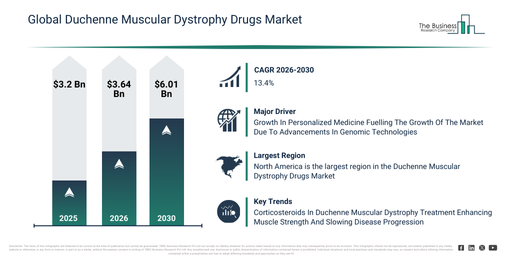
    The duchenne muscular dystrophy drugs market size has experienced swift growth recently. It is forecast to grow from $3.2 billion in 2025 to $3.64 billion in 2026, achieving a compound annual growth rate (CAGR) of 13.5%. The expansion witnessed historically is attributable to factors such as limited treatment options, increasing awareness of DMD, a growing pediatric patient population, the adoption of corticosteroids, and early-stage research and development in gene therapy.

    The duchenne muscular dystrophy drugs market size is anticipated to experience substantial expansion over the upcoming years. This market is projected to reach $6.01 billion in 2030 at a compound annual growth rate (CAGR) of 13.4%. The projected growth is attributable to progress in exon skipping drugs, breakthroughs in gene editing technologies, enhanced governmental and regulatory backing, increased funding for rare disease treatments, and the enlargement of specialized care and hospital infrastructures. Key trends anticipated during this period encompass a greater uptake of exon skipping therapies, more widespread application of gene therapy methods for DMD, a rising inclination towards injectable and targeted drug administration, the broadening of online and hospital pharmacy distribution networks, and the creation of complementary treatments like myostatin inhibitors and utrophin modulators.

    Get A Free Sample Report With In-Depth Market Insights:

    https://thebusinessresearchcompany.com/sample_request?id=24213&type=smp&name=Duchenne%20Muscular%20Dystrophy%20Drugs%20Market%20Report%202026&utm_source=Blogs&utm_medium=Paid&utm_campaign=Oct_PR

    Duchenne Muscular Dystrophy Drugs Market Demand Drivers: What’s Powering Industry Growth?

    The expansion of personalized medicine is anticipated to significantly advance the Duchenne muscular dystrophy (DMD) drugs market moving forward. This medical approach involves customizing treatments for individual patients based on their unique genetic, environmental, and lifestyle elements to maximize positive outcomes and enhance care. The demand for personalized medicine is on the rise, driven by breakthroughs in genomic technologies that facilitate precise identification of genetic variations and the development of tailored treatments. Personalized medicine supports Duchenne muscular dystrophy (DMD) drugs by offering targeted therapies specifically designed for individual genetic profiles, thereby increasing treatment efficacy for patients. It also improves drug development by concentrating on specific genetic mutations, which leads to better treatment results and overall patient well-being. For example, in February 2024, data from the Personalized Medicine Coalition (PMC), a US-based nonprofit organization, showed that the U.S. Food and Drug Administration (FDA) approved 26 new personalized medicines in 2023, a notable increase from the 12 approved in 2022. Thus, the progress in personalized medicine is a significant driver for the Duchenne muscular dystrophy (DMD) drugs market.

    Duchenne Muscular Dystrophy Drugs Market Segment Breakdown: Which Categories Lead On Revenue?

    The duchenne muscular dystrophy drugs market covered in this report is segmented –

    1) By Drug Type: Exon Skipping Drugs, Corticosteroids, Gene Therapy, Other Drug Types

    2) By Route Of Administration: Oral, Injectable

    3) By Distribution Channel: Hospital Pharmacies, Retail Pharmacies, Online Pharmacies

    Subsegments:

    1) By Exon Skipping Drugs: Eteplirsen, Golodirsen, Viltolarsen, Casimersen, Other Exon Skipping Therapies

    2) By Corticosteroids: Prednisone, Deflazacort, Other Corticosteroids

    3) By Gene Therapy: Micro-dystrophin Gene Therapy, CRISPR/Cas9-Based Gene Editing, Stem Cell-Based Gene Therapy, Other Gene Therapies

    4) By Other Drug Types: Utrophin Modulators, Anti-Inflammatory Agents, Antisense Oligonucleotides, Myostatin Inhibitors, Other Supportive Therapies

    Duchenne Muscular Dystrophy Drugs Market Innovation Trends: What Developments Are Reshaping The Industry?

    Major companies in the Duchenne muscular dystrophy (DMD) drugs market are prioritizing the development of innovative treatments, such as corticosteroids, to enhance muscle strength, decelerate disease progression, and improve patient outcomes. Corticosteroids are a category of steroid hormones, either naturally occurring in adrenal glands or synthetically manufactured as medications, used to diminish inflammation and suppress immune responses. For instance, in March 2024, Catalyst Pharmaceuticals, a US-based biopharmaceutical company, introduced AGAMREE (vamorolone) oral suspension 40 mg/mL, an FDA-approved treatment for Duchenne muscular dystrophy in patients two years of age and older. AGAMREE operates as a corticosteroid by reducing inflammation and stabilizing muscle cell membranes, thereby contributing to slowing the disease’s progression.

    Duchenne Muscular Dystrophy Drugs Market Key Players Shaping Industry Direction

    Major companies operating in the duchenne muscular dystrophy drugs market are Pfizer Inc, Sanofi S.A, Novartis AG, Italfarmaco S.p.A, Sarepta Therapeutics Inc, PTC Therapeutics Inc, FibroGen Inc, Wave Life Sciences Ltd, Solid Biosciences Inc, NS Pharma, Capricor Therapeutics Inc, Santhera Pharmaceuticals, ReveraGen BioPharma, Antisense Therapeutics Limited, Catalyst Pharmaceuticals Inc, EspeRare Foundation, Cure Rare Disease, Akashi Therapeutics Inc, BioMarin Pharmaceutical Inc, Daiichi Sankyo Co Ltd, Nippon Shinyaku Co Ltd, Regenxbio Inc, Ultragenyx Pharmaceutical Inc, Dyne Therapeutics Inc, Entrada Therapeutics Inc.

    View The Full Duchenne Muscular Dystrophy Drugs Market Report:

    https://thebusinessresearchcompany.com/report/duchenne-muscular-dystrophy-drugs-global-market-report?utm_source=Blogs&utm_medium=Paid&utm_campaign=Oct_PR

    Duchenne Muscular Dystrophy Drugs Market Regional Analysis: Which Region Leads By Revenue?

    North America was the largest region in the duchenne muscular dystrophy (DMD) drugs market in 2025. Asia-Pacific is expected to be the fastest-growing region in the forecast period. The regions covered in the duchenne muscular dystrophy drugs market report are Asia-Pacific, South East Asia, Western Europe, Eastern Europe, North America, South America, Middle East, Africa.

    Reach Out To Our Team:

    The Business Research Company: https://www.thebusinessresearchcompany.com/

    Americas: +1 310-496-7795

    Asia: +44 7882 955267 & +91 8897263534

    Europe: +44 7882 955267

    Email us at: marketing@tbrc.info

    Follow us on:

    LinkedIn: https://in.linkedin.com/company/the-business-research-company

    YouTube: https://www.youtube.com/channel/UC24_fI0rV8cR5DxlCpgmyFQ

    Global Market Model: https://www.thebusinessresearchcompany.com/global-market-model