Month: October 2026

  • Quantitative Polymerase Chain Reaction (qPCR) Instruments Market Reaches $2.69 Billion In 2026: Forecast And Growth Opportunities

    Quantitative Polymerase Chain Reaction (qPCR) Instruments Market Reaches $2.69 Billion In 2026: Forecast And Growth Opportunities

    Featuring market attractiveness scoring, total addressable market sizing, company benchmarking matrices, interactive Excel dashboards, deeper supply chain intelligence, emerging startup tracking, and granular product-level insights, The Business Research Company’s 2026 market reports are built to deliver research that is both more actionable and more strategically valuable.

    Quantitative Polymerase Chain Reaction (qPCR) Instruments Market Size, Value And Growth Trajectory Through 2030

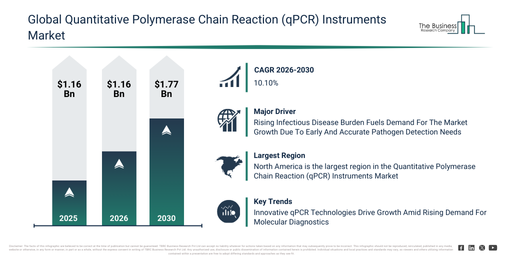
    The quantitative polymerase chain reaction (qpcr) instruments market size has experienced rapid expansion over recent years. Projections indicate it will grow from $1.66 billion in 2025 to $1.83 billion in 2026, achieving a compound annual growth rate (CAGR) of 10.2%. This market’s historical growth can be linked to factors including a rising demand for genetic research, an increasing prevalence of infectious diseases, advancements in molecular diagnostics, the expansion of biotech and pharma research, and the availability of a skilled laboratory workforce.

    The quantitative polymerase chain reaction (qpcr) instruments market is forecast to experience significant expansion in the upcoming years. It is projected to reach $2.69 billion by 2030, exhibiting a compound annual growth rate (CAGR) of 10.1%. This expected growth can be attributed to several factors, including the increasing uptake of point-of-care diagnostics, the expansion of molecular testing into emerging markets, the integration of AI and cloud-based analytics, a growing demand for rapid pathogen detection, and increased government funding for genomics research. Noteworthy trends during this period are expected to encompass the widespread adoption of high-throughput testing, the incorporation of automation within qPCR workflows, the miniaturization of qPCR instruments, a rising demand for multiplexing capabilities, and the development of point-of-care qPCR solutions.

    Get A Free Sample Report With In-Depth Market Insights:

    https://thebusinessresearchcompany.com/sample_request?id=97837656&type=smp&name=Quantitative%20Polymerase%20Chain%20Reaction%20%28qPCR%29%20Instruments%20Market%20Report%202026&utm_source=Blogs&utm_medium=Paid&utm_campaign=Oct_PR

    Quantitative Polymerase Chain Reaction (qPCR) Instruments Market Growth Backed By Core Demand Fundamentals

    The rising occurrence of infectious diseases is anticipated to boost the expansion of the quantitative polymerase chain reaction (qPCR) instruments market moving ahead. These diseases are conditions stemming from detrimental microorganisms like bacteria, viruses, fungi, or parasites, which can be transmitted between people either directly or indirectly. The uptick in infectious diseases is attributable to heightened global travel, enabling swift dissemination of pathogens across different regions. Quantitative polymerase chain reaction (qPCR) instruments play a crucial role in combating infectious diseases by facilitating quick, sensitive, and accurate pathogen detection, thereby supporting prompt diagnosis and efficient disease control. For example, data from February 2024, provided by GOV.UK, a UK-based government department, indicated that tuberculosis (TB) cases in England rose from 4,380 in 2022 to 4,850 in 2023. Consequently, the growing prevalence of infectious diseases is fueling the development of the quantitative polymerase chain reaction (qPCR) instruments market.

    Quantitative Polymerase Chain Reaction (qPCR) Instruments Market Segmentation And Category Overview

    The quantitative polymerase chain reaction (qpcr) instruments market covered in this report is segmented –

    1) By Product Type: Quantitative Polymerase Chain Reaction Systems, Reagents And Consumables, Software

    2) By Instrument: 7500, Viia 7 Dx, Cobas 4800, Cfx96, Smartcycler, Genexpert, Rotor-Gene Q, Rotor-Gene Q 5plex Hrm System, Biofire Filmarray Systems, Other Instruments

    3) By Application: Gene Expression, Genotyping, Pathogen Detection, Diagnostics, Other Applications

    4) By End-Users: Diagnostic Laboratories, Hospitals And Clinics, Pharma And Biotech Companies, Other End-Users

    Subsegments:

    1) By Quantitative Polymerase Chain Reaction (qPCR) Systems: Real-Time Polymerase Chain Reaction Systems, Portable Or Compact qPCR Devices, Digital Polymerase Chain Reaction Systems

    2) By Reagents And Consumables: Master Mixes, Buffers And Enzymes, Primers

    3) By Software: Data Analysis Software, Cloud-Based Analytics Platforms, Instrument Control Software

    Quantitative Polymerase Chain Reaction (qPCR) Instruments Market Growth Trends Reshaping The Competitive Landscape

    Leading companies within the Quantitative Polymerase Chain Reaction (qPCR) Instruments market are concentrating on developing innovative solutions, including next-generation real-time qPCR systems that combine clinical-grade workflows with research flexibility. This effort aims to address the increasing demand for quicker, higher-throughput molecular diagnostics, enhanced assay sensitivity crucial for personalized medicine and oncology, and improved preparedness for infectious disease testing. A next-generation qPCR system is a real-time PCR instrument that upholds the core principle of qPCR—simultaneous amplification and fluorescent detection of nucleic acids—while incorporating additional features such as improved thermal uniformity, advanced signal-processing algorithms, ergonomic user interfaces, and regulatory-compliant IVD workflows. For example, in November 2023, Roche Holding AG, a Switzerland-based diagnostics and biotechnology company, launched the LightCycler PRO System, an innovative next-generation qPCR platform. Building on Roche’s LightCycler heritage, the LightCycler PRO System is designed for both research and IVD applications. It incorporates a new vapor chamber to enhance temperature uniformity across the block, boasts updated software and a user interface with refined algorithms for signal analysis, and offers the flexibility to run user-developed assays alongside a wide array of validated LightMix research and CE-IVD assays.

    Quantitative Polymerase Chain Reaction (qPCR) Instruments Market Leading Players And Competitive Positioning

    Major companies operating in the quantitative polymerase chain reaction (qpcr) instruments market are F Hoffmann La Roche AG, Thermo Fisher Scientific Inc, Danaher Corporation, Becton Dickinson and Company, Agilent Technologies Inc, Bio Rad Laboratories Inc, QIAGEN N V, Eppendorf SE, Cepheid Inc, Takara Bio Inc, bioMerieux SA, Analytik Jena GmbH, Standard BioTools Inc, Hangzhou Bioer Technology Co Ltd, BioTeke Corporation, GeneReach Biotechnology Corp, Anitoa Systems LLC, Blue Ray Biotech Corp, Chai Biotechnologies, Bio Molecular Systems Pty Ltd, Azure Biosystems Inc

    View The Full Quantitative Polymerase Chain Reaction (qPCR) Instruments Market Report:

    https://thebusinessresearchcompany.com/report/quantitative-polymerase-chain-reaction-qpcr-instruments-global-market-report?utm_source=Blogs&utm_medium=Paid&utm_campaign=Oct_PR

    Quantitative Polymerase Chain Reaction (qPCR) Instruments Market Regional Distribution: Which Areas Power Market Growth?

    North America was the largest region in the quantitative polymerase chain reaction (qPCR) instruments market in 2025. Asia-Pacific is expected to be the fastest-growing region in the forecast period. The regions covered in the quantitative polymerase chain reaction (qpcr) instruments market report are Asia-Pacific, South East Asia, Western Europe, Eastern Europe, North America, South America, Middle East, Africa.

    Reach Out To Our Team:

    The Business Research Company: https://www.thebusinessresearchcompany.com/

    Americas: +1 310-496-7795

    Asia: +44 7882 955267 & +91 8897263534

    Europe: +44 7882 955267

    Email us at: marketing@tbrc.info

    Follow us on:

    LinkedIn: https://in.linkedin.com/company/the-business-research-company

    YouTube: https://www.youtube.com/channel/UC24_fI0rV8cR5DxlCpgmyFQ

    Global Market Model: https://www.thebusinessresearchcompany.com/global-market-model
  • Pulsed Field Ablation Market Growth In 2026: Market Size, Key Drivers And Future Outlook

    Pulsed Field Ablation Market Growth In 2026: Market Size, Key Drivers And Future Outlook

    Built to provide research that’s more actionable and strategically valuable, The Business Research Company’s 2026 market reports include market attractiveness analysis, total addressable market sizing, company benchmarking matrices, interactive Excel dashboards, broader supply chain intelligence, emerging startup tracking, and in-depth product insights.

    Pulsed Field Ablation Market CAGR Outlook And Future Development

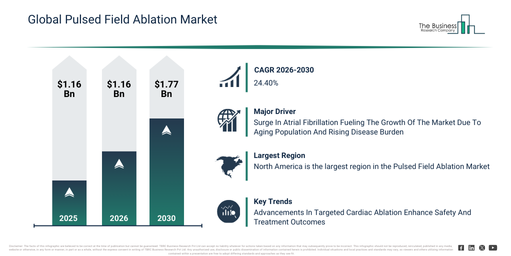
    The pulsed field ablation market has experienced significant expansion in recent years. It is projected to grow from $0.8 billion in 2025 to $0.99 billion in 2026, exhibiting a compound annual growth rate (CAGR) of 23.8%. This historical growth can be linked to the increasing occurrence of atrial fibrillation, the widespread use of catheter-based ablation techniques, progress in cardiac mapping systems, greater public knowledge about cardiovascular conditions, and continuous technological advancements in pulsed field devices.

    The pulsed field ablation market is projected to experience substantial expansion in the coming years. It is set to reach a value of $2.37 billion by 2030, demonstrating a compound annual growth rate (CAGR) of 24.4%. This expansion during the forecast timeframe is primarily driven by factors such as the expanding elderly population, advancements in healthcare infrastructure across developing economies, the incorporation of artificial intelligence into ablation techniques, a growing inclination towards less invasive therapeutic options, and the creation of hybrid ablation energy sources. Key developments anticipated in the same period encompass minimally invasive approaches for cardiac interventions, customized ablation strategies for patients, improvements in safety and minimized tissue harm, the incorporation of imaging and mapping systems, and swift integration within electrophysiology laboratories.

    Get A Free Sample Report With In-Depth Market Insights:

    https://thebusinessresearchcompany.com/sample_request?id=41890260&type=smp&name=Pulsed%20Field%20Ablation%20Market%20Report%202026&utm_source=Blogs&utm_medium=Paid&utm_campaign=Oct_PR

    Pulsed Field Ablation Market Growth Catalysts And Demand Drivers

    The expanding incidence of atrial fibrillation is anticipated to fuel the expansion of the pulsed field ablation market in the coming years. Atrial fibrillation describes an irregular and frequently fast heart rhythm, elevating the danger of stroke and various heart complications. This increase in atrial fibrillation prevalence is linked to the aging demographic, given that advanced age significantly raises the likelihood of developing this cardiac rhythm disorder. Pulsed field ablation addresses atrial fibrillation through the application of precise electrical pulses to specifically eliminate irregular heart tissue responsible for abnormal rhythms, thereby presenting a quicker, safer, and more accurate option compared to conventional ablation techniques. For example, in September 2024, the American Journal of Managed Care, a US-based peer-reviewed publication, reported recent estimations showing that approximately 10.5 million U.S. adults, accounting for about 5% of the population, are currently living with atrial fibrillation (AF). Consequently, the increasing occurrence of atrial fibrillation is propelling the growth of the pulsed field ablation market.

    Pulsed Field Ablation Market Segment Outlook: Which Categories Are Growing Fastest?

    The pulsed field ablation market covered in this report is segmented –

    1) By Components: Catheters, Generators

    2) By Indication: Atrial Fibrillation, Non-Atrial Fibrillation

    3) By Source Of Ablation: Pulsed Field Energy, Pulsed Field And Radiofrequency Energy, Pulsed Field And Cryoablation Energy

    4) By Application Area: Ablation, Ablation And Mapping

    5) By End Use: Hospitals, Cardiac Catheterization Labs, Ambulatory Surgical Centers, Other End Uses

    Subsegments:

    1) By Catheters: Single-use Catheters, Reusable Catheters, Diagnostic Catheters, Therapeutic Catheters, Balloon Catheters, Mapping Catheters

    2) By Generators: Monopolar Generators, Bipolar Generators, Pulsed Power Generators, Radiofrequency Generators With Pulsed Field Ablation Capability, Portable Generators, Fixed Or Stationary Generators

    Pulsed Field Ablation Market Trends Shaping Long-Term Demand

    Leading companies in the pulsed field ablation (PFA) market are prioritizing technological advancements, such as selective tissue ablation, to boost procedural safety and effectiveness. This focus aims to minimize damage to surrounding healthy tissues, shorten recovery times, and improve long-term treatment results for patients experiencing cardiac arrhythmias. Selective tissue ablation refers to the precise destruction of specific diseased cells or tissues while safeguarding adjacent healthy structures. For instance, in March 2025, Abbott, a US-based healthcare company, received CE Mark approval for its Volt Pulsed Field Ablation System, which is intended for treating abnormal heart rhythms. This advanced system integrates effortlessly with Abbott’s EnSite X electrophysiology platform, thereby enhancing procedural visualization and navigation. The introduction of the Volt system marks a significant development in electrophysiology technology. It provides superior procedural efficiency, sharper imaging, and more accurate ablation for atrial fibrillation treatment. This next-generation device is anticipated to improve patient outcomes and streamline cardiac care.

    Pulsed Field Ablation Market Competitive Overview And Top Companies

    Major companies operating in the pulsed field ablation market are Johnson & Johnson, Abbott Laboratories, Medtronic plc, Boston Scientific Corporation, AtriCure Inc., CardioFocus Inc., Galvanize Therapeutics Inc., Kardium Inc., Acutus Medical Inc., AtriAN Medical Ltd., Field Medical Inc., Thermedical Inc., Adagio Medical Inc., Arga Medtech Inc., Mirai Medical, Pulse Biosciences Inc., AccuPulse Medical Inc., Farapulse Inc., Biosense Webster Inc., CathRx Ltd., EP Solutions SA

    View The Full Pulsed Field Ablation Market Report:

    https://thebusinessresearchcompany.com/report/pulsed-field-ablation-global-market-report?utm_source=Blogs&utm_medium=Paid&utm_campaign=Oct_PR

    Pulsed Field Ablation Market Leading Geography: Which Region Contributes The Most Revenue?

    North America was the largest region in the pulsed field ablation market in 2025. Asia-Pacific is expected to be the fastest-growing region in the forecast period. The regions covered in the pulsed field ablation market report are Asia-Pacific, South East Asia, Western Europe, Eastern Europe, North America, South America, Middle East, Africa.

    Reach Out To Our Team:

    The Business Research Company: https://www.thebusinessresearchcompany.com/

    Americas: +1 310-496-7795

    Asia: +44 7882 955267 & +91 8897263534

    Europe: +44 7882 955267

    Email us at: marketing@tbrc.info

    Follow us on:

    LinkedIn: https://in.linkedin.com/company/the-business-research-company

    YouTube: https://www.youtube.com/channel/UC24_fI0rV8cR5DxlCpgmyFQ

    Global Market Model: https://www.thebusinessresearchcompany.com/global-market-model
  • Pulse Oximeters, Spirometers Market Size And Forecast 2026–2030: Trends Driving Industry Expansion

    Pulse Oximeters, Spirometers Market Size And Forecast 2026–2030: Trends Driving Industry Expansion

    Backed by market attractiveness analysis, total addressable market sizing, company benchmarking matrices, interactive Excel dashboards, wider supply chain intelligence, emerging startup coverage, and detailed product-level insights, The Business Research Company’s 2026 market reports are designed to offer research that is more actionable and strategically valuable than ever.

    Pulse Oximeters, Spirometers Market Set To Climb From $4.73 Billion In 2026 To $6.37 Billion By 2030

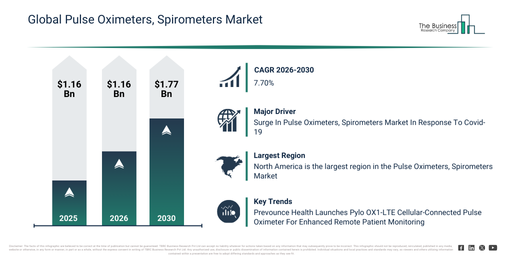
    The market size for pulse oximeters and spirometers has experienced significant growth in recent years. It is anticipated to expand from $4.37 billion in 2025 to $4.73 billion by 2026, progressing at a compound annual growth rate (CAGR) of 8.2%. Historically, this expansion has been propelled by factors including the increasing prevalence of respiratory conditions, a heightened awareness of pulmonary health, the broadening of hospital respiratory monitoring services, the rising acceptance of non-invasive diagnostic instruments, and the greater incorporation of spirometry in clinical practice.

    The pulse oximeters and spirometers market is poised for significant expansion in the foreseeable future. Its size is expected to reach $6.37 billion in 2030, exhibiting a compound annual growth rate (CAGR) of 7.7%. This anticipated growth over the forecast period stems from factors such as increasing demand for remote respiratory monitoring, a rising adoption of telehealth-enabled devices, the expansion of home healthcare services, a growing emphasis on preventive respiratory diagnostics, and the increasing integration of AI-driven respiratory analytics. Major trends predicted for this period include the increasing use of portable respiratory monitoring devices, a rising need for home-based oxygen monitoring, the growing integration of connected spirometry platforms, the expansion of multiparameter respiratory monitoring, and an enhanced focus on early disease detection.

    Get A Free Sample Report With In-Depth Market Insights:

    https://thebusinessresearchcompany.com/sample_request?id=19105372&type=smp&name=Pulse%20Oximeters%2C%20Spirometers%20Market%20Report%202026&utm_source=Blogs&utm_medium=Paid&utm_campaign=Oct_PR

    Pulse Oximeters, Spirometers Market Opportunity Drivers: What’s Unlocking New Revenue Potential?

    Given that COVID-19 infection manifests as a respiratory illness, a surge in demand has been observed for respiratory devices such as pulse oximeters and spirometers. Oxygen therapy serves as a critical intervention for individuals experiencing severe COVID-19, necessitating that healthcare providers ensure a ready supply of pulse oximeters and other medical oxygen systems. These devices, specifically pulse oximeters and spirometers, prove invaluable for monitoring and managing COVID-19, assisting in the evaluation of oxygen levels and lung function. To illustrate, as reported in October 2023 by the World Health Organization, which is a Switzerland-based agency of the United Nations responsible for international public health, the pandemic had accounted for 771,191,203 confirmed cases of COVID-19 and 6,961,014 reported deaths globally. Consequently, the market for these particular devices is projected to expand significantly, driven by their utility in facilitating early detection and remote patient monitoring.

    Pulse Oximeters, Spirometers Market Segment Landscape: Which Areas Lead Development?

    The pulse oximeters, spirometers market covered in this report is segmented –

    1) By Product Type: Pulse Oximeters, Spirometers

    2) By Application: Diagnostic, Treatment Monitoring

    3) By End User: Hospitals, Clinics, Home Care Settings, Ambulatory Surgical Centers, Diagnostic Centers

    Subsegments:

    1) By Pulse Oximeters: Fingertip Pulse Oximeters, Handheld Pulse Oximeters, Wrist-Worn Pulse Oximeters, Tabletop Pulse Oximeters, Pediatric Pulse Oximeters, Multiparameter Oximeters

    2) By Spirometers: Desktop Spirometers, Portable Spirometers, Handheld Spirometers, Tabletop Spirometers

    Pulse Oximeters, Spirometers Market Innovation Trends Shaping Future Development

    Major companies in the pulse oximeters and spirometers market are developing cellular-connected pulse oximeters with the goal of enabling real-time monitoring, improving patient management through remote healthcare solutions, and enhancing the accuracy and accessibility of oxygen level tracking for individuals with respiratory conditions. Cellular-connected pulse oximeters are devices featuring cellular connectivity, allowing them to transmit real-time data on blood oxygen levels (SpO2) and heart rate to healthcare providers or remote monitoring platforms. For instance, in August 2024, Prevounce Health, a US-based wellness and fitness services company, introduced Pylo OX1-LTE, a cellular-connected pulse oximeter specifically designed for remote patient monitoring (RPM). This device delivers accurate blood oxygen saturation (SpO2) readings and pulse rates, with an accuracy of ±2% for SpO2 and ±2 bpm for pulse rates. It is user-friendly, boasts a bright OLED screen, and requires no configuration. Supporting multiple cellular networks, it ensures reliable data transmission even in areas with low signal. The Pylo OX1-LTE is integrated with Prevounce’s RPM platform and can connect with third-party health software via the Pylo cloud API.

    Pulse Oximeters, Spirometers Market Competitive Landscape: Which Companies Lead The Industry?

    Major companies operating in the pulse oximeters, spirometers market are Smiths Medical Inc., Koninklijke Philips N.V., Vyaire Medical Inc., Schiller AG, General Electric Company, Masimo Corporation, Medtronic plc, Opto Circuits (India) Ltd., Fukuda Denshi Co. Ltd., Hill-Rom Holdings Inc., MGC Diagnostics Corporation, Omron Healthcare Inc., Nonin Medical Inc., Drägerwerk AG & Co. KGaA, Spacelabs Healthcare Inc., Halma plc, SDI Diagnostics Inc., nSpire Health Inc., SIBELMED, Labtech Ltd., CareFusion Corporation, NDD Medical Technologies Inc., Vitalograph Ltd., COSMED srl, Philips Benelux, Contec Medical System Co. Ltd., Smiths Group plc, TytoCare Ltd.,

    View The Full Pulse Oximeters, Spirometers Market Report:

    https://thebusinessresearchcompany.com/report/pulse-oximeters-spirometers-global-market-report?utm_source=Blogs&utm_medium=Paid&utm_campaign=Oct_PR

    Pulse Oximeters, Spirometers Market Regional Outlook: Where Is Opportunity Concentrated?

    North America was the largest region in the pulse oximeters, spirometers market in 2025. Asia-Pacific was the second largest region in the pulse oximeters, spirometers market. The regions covered in the pulse oximeters, spirometers market report are Asia-Pacific, South East Asia, Western Europe, Eastern Europe, North America, South America, Middle East, Africa.

    Reach Out To Our Team:

    The Business Research Company: https://www.thebusinessresearchcompany.com/

    Americas: +1 310-496-7795

    Asia: +44 7882 955267 & +91 8897263534

    Europe: +44 7882 955267

    Email us at: marketing@tbrc.info

    Follow us on:

    LinkedIn: https://in.linkedin.com/company/the-business-research-company

    YouTube: https://www.youtube.com/channel/UC24_fI0rV8cR5DxlCpgmyFQ

    Global Market Model: https://www.thebusinessresearchcompany.com/global-market-model
  • Pulse Oximeter Market 2026 Outlook: Market Size, CAGR And Key Growth Opportunities

    Pulse Oximeter Market 2026 Outlook: Market Size, CAGR And Key Growth Opportunities

    Featuring market attractiveness scoring, total addressable market sizing, company benchmarking matrices, interactive Excel dashboards, deeper supply chain intelligence, emerging startup tracking, and granular product-level insights, The Business Research Company’s 2026 market reports are built to deliver research that is both more actionable and more strategically valuable.

    Pulse Oximeter Market Forecast: Value Set To Climb From $2.9 Billion To $3.73 Billion

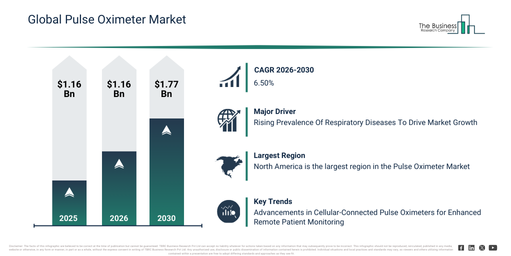
    The pulse oximeter market has experienced significant growth in recent years. Its size is expected to increase from $2.73 billion in 2025 to $2.9 billion in 2026, at a compound annual growth rate (CAGR) of 6.0%. The expansion observed historically can be linked to the growing prevalence of respiratory ailments, the enhancement of hospital monitoring infrastructure, the increasing use of non-invasive diagnostic tools, the development of emergency and critical care services, and the widespread availability of affordable fingertip oximeters.

    The pulse oximeter market is projected to experience robust expansion over the coming years. This market is anticipated to reach a valuation of $3.73 billion by 2030, exhibiting a compound annual growth rate (CAGR) of 6.5%. Factors driving this expansion during the forecast period include the increasing uptake of telehealth services, a heightened need for remote monitoring of chronic conditions, the broadening of connected healthcare ecosystems, an increased emphasis on detecting hypoxemia early, and greater integration with digital health platforms. Key trends identified for this period encompass the growing adoption of connected pulse oximeters, an increased requirement for monitoring devices used at home, wider utilization of wearable oximetry solutions, the expansion of remote patient monitoring initiatives, and a stronger focus on ongoing oxygen monitoring.

    Get A Free Sample Report With In-Depth Market Insights:

    https://thebusinessresearchcompany.com/sample_request?id=34533854&type=smp&name=Pulse%20Oximeter%20Market%20Report%202026&utm_source=Blogs&utm_medium=Paid&utm_campaign=Oct_PR

    Pulse Oximeter Market Growth Momentum: What Factors Are Shaping Demand?

    The growing incidence of respiratory illnesses is projected to stimulate the expansion of the pulse oximeter market moving forward. Respiratory diseases are conditions affecting the airways and lungs, which interfere with human breathing. The increasing prevalence of these diseases is primarily fueled by factors such as rising air pollution, exposure to dust, an aging population, and smoking habits, enabling pulse oximeters to detect changes in oxygen saturation levels before symptoms manifest. For instance, in December 2023, according to the National Center for Biotechnology Information, a US-based government agency, the number of COPD cases was expected to rise by 112 million, totaling 592 million by 2050, which would represent 9.5% of the eligible population. Therefore, the escalating prevalence of respiratory diseases is a significant driver for the growth of the pulse oximeter market.

    Pulse Oximeter Market Segments: Where Is Growth Concentrated?

    The pulse oximeter market covered in this report is segmented –

    1) By Product Type: Fingertip, Handheld, Wrist-worn, Table-Top And Bedside

    2) By Technology: Conventional, Connected

    3) By Age Group: Adult, Pediatric

    4) By End-User: Hospitals And Clinics, Ambulatory Surgical Centers, Home Healthcare

    Subsegments:

    1) By Fingertip: Adult Fingertip Oximeters, Pediatric Fingertip Oximeters

    2) By Handheld: Single-Patient Handheld Oximeters, Multi-Patient Handheld Oximeters

    3) By Wrist-Worn: Continuous Monitoring Wrist Oximeters, Spot-Check Wrist Oximeters

    4) By Table-Top And Bedside: Portable Table-Top Oximeters, Stationary Bedside Oximeters

    Pulse Oximeter Market Trends Redefining Industry Growth

    Leading companies in the pulse oximeter market are prioritizing technologically advanced solutions, such as cellular-connected pulse oximeters, to improve patient oversight and data collection. A cellular-connected pulse oximeter is a device equipped with cellular connectivity features, enabling it to wirelessly transmit data over cellular networks (like 4G or 5G) to healthcare providers or cloud-based health platforms. For example, in August 2024, Prevounce Health LLC, a US-based developer of a remote monitoring platform, launched the Pylo OX1-LTE, a cellular-connected pulse oximeter specifically designed for remote patient monitoring (RPM). This device targets patients with chronic respiratory conditions such as COPD and asthma, along with those affected by COVID-19, offering reliable cellular connectivity, accurate SpO2 and pulse rate readings, and a user-friendly design featuring a bright OLED screen. It seamlessly integrates with Prevounce’s remote care management platform and can also connect to third-party health software using the Pylo cloud API.

    Pulse Oximeter Market Competitive Landscape: Who Leads The Industry?

    Major companies operating in the pulse oximeter market are Medtronic Plc, GE Healthcare, Masimo Corporation, Nonin Medical Inc., Nihon Kohden Corporation, Koninklijke Philips NV, Philips Healthcare, Contec Medical Systems Co. Ltd., Omron Corporation, Carefusion Corp., CAS Medical Systems Inc., Opto Circuits India Ltd., Welch Allyn Inc., Spacelabs Healthcare, Meditech Equipment Co. Ltd., Vyaire Medical Inc., Beurer GmbH, Drägerwerk AG & Co. KGaA, ICU Medical Inc., Smiths Medical, Mindray Medical International Limited, Criticare Systems Inc., BPL Medical Technologies, ChoiceMMed America Co. Ltd., Beijing Choice Electronic Technology Co. Ltd., Creative Medical, Edan Instruments Inc., Heal Force Bio-Meditech Holdings Limited, Mediana Co. Ltd., Medlab Clinical Ltd.

    View The Full Pulse Oximeter Market Report:

    https://thebusinessresearchcompany.com/report/pulse-oximeter-global-market-report?utm_source=Blogs&utm_medium=Paid&utm_campaign=Oct_PR

    Pulse Oximeter Market Geographic Landscape: Which Region Leads Industry Growth?

    North America was the largest region in the pulse oximeter market in 2025. The regions covered in the pulse oximeter market report are Asia-Pacific, South East Asia, Western Europe, Eastern Europe, North America, South America, Middle East, Africa.

    Reach Out To Our Team:

    The Business Research Company: https://www.thebusinessresearchcompany.com/

    Americas: +1 310-496-7795

    Asia: +44 7882 955267 & +91 8897263534

    Europe: +44 7882 955267

    Email us at: marketing@tbrc.info

    Follow us on:

    LinkedIn: https://in.linkedin.com/company/the-business-research-company

    YouTube: https://www.youtube.com/channel/UC24_fI0rV8cR5DxlCpgmyFQ

    Global Market Model: https://www.thebusinessresearchcompany.com/global-market-model
  • Pulmonology Lasers Market Size Growth: From $6.04 Billion In 2026 To $8.36 Billion By 2030

    Pulmonology Lasers Market Size Growth: From $6.04 Billion In 2026 To $8.36 Billion By 2030

    Built to provide research that’s more actionable and strategically valuable, The Business Research Company’s 2026 market reports include market attractiveness analysis, total addressable market sizing, company benchmarking matrices, interactive Excel dashboards, broader supply chain intelligence, emerging startup tracking, and in-depth product insights.

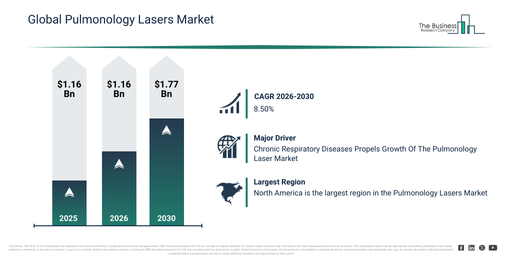
    Pulmonology Lasers Market Revenue Growth On Track For A 8.5% CAGR Through 2030

    The pulmonology lasers market has experienced robust growth in recent years. This market is projected to expand from $5.52 billion in 2025 to reach $6.04 billion in 2026, demonstrating a compound annual growth rate (CAGR) of 9.5%. Historically, this expansion has been driven by factors such as a rise in lung cancer and airway tumor cases, the broadening of interventional pulmonology procedures, an increase in hospitals equipped with laser technology, greater clinical adoption of laser therapies, and ongoing advancements in medical laser technology.

    The pulmonology lasers market is anticipated to show significant expansion in the upcoming years. It is forecast to reach $8.36 billion in 2030, driven by a compound annual growth rate (CAGR) of 8.5%. This growth during the prediction period stems from an increased preference for non-invasive respiratory treatments, augmented investments in sophisticated interventional pulmonology instruments, the rising adoption of laser-based methods for tumor management, the enlargement of specialized respiratory care centers, and technological enhancements in laser precision and control. Prominent patterns expected over the forecast horizon involve a growing acceptance of minimally invasive laser therapies, an increased deployment of nd-yag lasers in airway procedures, a heightened demand for accurate tissue ablation, the extension of photodynamic laser applications, and a strengthened focus on the safety and exactness of procedures.

    Get A Free Sample Report With In-Depth Market Insights:

    https://thebusinessresearchcompany.com/sample_request?id=73433529&type=smp&name=Pulmonology%20Lasers%20Market%20Report%202026&utm_source=Blogs&utm_medium=Paid&utm_campaign=Oct_PR

    Pulmonology Lasers Market Expansion Drivers: What’s Shaping Future Growth?

    The future expansion of the pulmonology laser market is anticipated to be driven by an increase in chronic respiratory conditions. These long-term conditions, which impact the airways and lung structures, cause breathing difficulties and significantly diminish the quality of life for affected individuals. Contributing factors to this rise include air pollution, smoking, an aging demographic, swift urbanization, and shifts in climate. Pulmonology lasers find application in managing chronic respiratory diseases, aiding in diagnostic bronchoscopy and therapeutic procedures like addressing airway blockages or growths. For example, a research study from December 2023, featured in JAMA Network Open, a medical journal from the American Medical Association, estimated that the worldwide prevalence of chronic obstructive pulmonary disease (COPD) could reach almost 600 million cases by 2050, representing a 23% rise in its occurrence. Consequently, the increased incidence of chronic respiratory conditions is fueling the expansion of the pulmonology laser market.

    Pulmonology Lasers Market Segment Analysis: What Are The Core Market Categories?

    The pulmonology lasers market covered in this report is segmented –

    1) By Type: Neodymium-Doped Yttrium Aluminum Garnet (Nd-YAG Laser), Photodynamic Laser

    2) By Indication: Bronchogenic Carcinoma, Malignant Lesions, Benign Tumors, Neoplasms, Hemorrhage, Tracheal Stenosis

    3) By End-Users: Specialty Care Centers, Hospitals, Academic Centers, Research Organizations

    Subsegments:

    1) By Nd-YAG Laser: Continuous Wave Nd-YAG Laser, Pulsed Nd-YAG Laser

    2) By Photodynamic Laser: Low-Level Photodynamic Laser, High-Intensity Photodynamic Laser

    Pulmonology Lasers Market Strategic Trends: What Defines The Next Growth Phase?

    The first discernible trend is identified.

    Pulmonology Lasers Market Company Landscape And Competitive Strategy

    Major companies operating in the pulmonology lasers market are Coherent Corp., IPG Photonics Corporation, Han’s Laser Technology Industry Group, Lumenis Ltd, Biolitec AG, Ellex Medical Pty Ltd, Fotona LLC, Spectra-Physics Inc., Lumibird SA, EKSPLA Co, Optotek Medical, Optogama UAB, Beijing Hoplaser Lead-Edge Laser Techno. Ltd, Amada Miyachi, Richard Wolf GmbH, Karl Storz SE And Co. KG, Olympus Medical Systems Corp., Boston Scientific Corporation, Dornier MedTech, Asclepion Laser Technologies GmbH

    View The Full Pulmonology Lasers Market Report:

    https://thebusinessresearchcompany.com/report/pulmonology-lasers-global-market-report?utm_source=Blogs&utm_medium=Paid&utm_campaign=Oct_PR

    Pulmonology Lasers Market Largest Region: Which Geography Holds The Biggest Share?

    North America was the largest region in the pulmonology lasers market in 2025. The regions covered in the pulmonology lasers market report are Asia-Pacific, South East Asia, Western Europe, Eastern Europe, North America, South America, Middle East, Africa.

    Reach Out To Our Team:

    The Business Research Company: https://www.thebusinessresearchcompany.com/

    Americas: +1 310-496-7795

    Asia: +44 7882 955267 & +91 8897263534

    Europe: +44 7882 955267

    Email us at: marketing@tbrc.info

    Follow us on:

    LinkedIn: https://in.linkedin.com/company/the-business-research-company

    YouTube: https://www.youtube.com/channel/UC24_fI0rV8cR5DxlCpgmyFQ

    Global Market Model: https://www.thebusinessresearchcompany.com/global-market-model
  • Pulmonology Devices Market Analysis 2026: Market Size, Growth Trends And Industry Outlook

    Pulmonology Devices Market Analysis 2026: Market Size, Growth Trends And Industry Outlook

    Backed by market attractiveness analysis, total addressable market sizing, company benchmarking matrices, interactive Excel dashboards, wider supply chain intelligence, emerging startup coverage, and detailed product-level insights, The Business Research Company’s 2026 market reports are designed to offer research that is more actionable and strategically valuable than ever.

    Pulmonology Devices Market Value Growth And Long-Term Outlook

    The pulmonology devices market has seen rapid growth in recent years. Projections indicate it will expand from $1.5 billion in 2025 to $1.66 billion in 2026, at a compound annual growth rate (CAGR) of 10.4%. The historical increase in the market size is attributable to factors such as the rising incidence of respiratory diseases, an increase in hospital-based pulmonary procedures, the growing adoption of diagnostic bronchoscopy, the expansion of pulmonology specialty clinics, and the enhanced availability of advanced airway management devices.

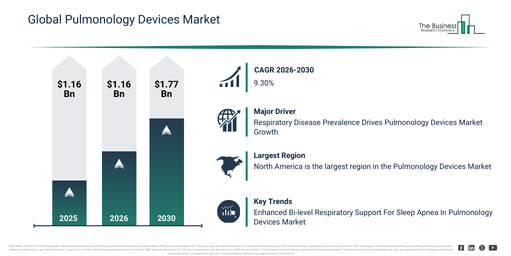
    The pulmonology devices market size is projected to undergo substantial growth in the forthcoming years, with an expected increase to $2.36 billion in 2030, at a compound annual growth rate (CAGR) of 9.3%. This anticipated expansion during the forecast period is primarily driven by an aging population with a rising incidence of respiratory disorders, an escalating demand for early lung cancer detection, the increasing adoption of disposable medical devices, the broadening scope of outpatient pulmonary care, and significant technological advancements in pulmonary diagnostics. Major trends identified for the forecast period include the growing acceptance of single-use bronchoscopes, a heightened demand for minimally invasive pulmonary diagnostics, the expanding integration of advanced imaging-guided biopsy devices, the proliferation of portable pulmonary function testing equipment, and an intensified focus on infection control and patient safety.

    Get A Free Sample Report With In-Depth Market Insights:

    https://thebusinessresearchcompany.com/sample_request?id=90330392&type=smp&name=Pulmonology%20Devices%20Market%20Report%202026&utm_source=Blogs&utm_medium=Paid&utm_campaign=Oct_PR

    Pulmonology Devices Market Development Factors: What’s Supporting Demand?

    The increasing incidence of respiratory illnesses is anticipated to boost the expansion of the pulmonology devices market. These conditions, which impact breathing-related organs and tissues such as airways, lungs, and respiratory muscles, are on the rise due to increasing air pollution, smoking habits, and various occupational hazards. Pulmonology devices play a crucial role in managing these diseases by facilitating precise diagnosis, ongoing monitoring, and efficient treatment via instruments like spirometers, inhalers, pulse oximeters, and ventilators, thereby enhancing patient health outcomes and overall quality of life. As an illustration, a research study from JAMA Network Open, a medical journal of the American Medical Association, published in December 2023, forecasted that the global prevalence of chronic obstructive pulmonary disease (COPD) could affect nearly 600 million individuals worldwide by 2050, representing a 23% surge in cases. Consequently, the growing prevalence of respiratory diseases is a significant driver for the pulmonology devices market.

    Pulmonology Devices Market Segment Breakdown: Which Categories Lead On Revenue?

    The pulmonology devices market covered in this report is segmented –

    1) By Product Type: Endobronchial Ultrasound (EBUS) Needles, Pulmonary Biopsy Devices, Airway Stents, Single-Use Bronchoscopes, Other Product Types

    2) By Indication: Chronic Obstructive Pulmonary Disease (COPD), Lung Cancer, Tracheal And Bronchial Stenosis, Foreign Body Extraction, Other Indications

    3) By End-User: Pulmonology Clinics, Hospitals, Ambulatory Surgical Centers

    Subsegments:

    1) By Endobronchial Ultrasound (EBUS) Needles: Radial EBUS Needles, Linear EBUS Needles, Biopsy EBUS Needles, EBUS Needles With Safety Features, EBUS Needles For Peripheral Lung Lesions

    2) By Pulmonary Biopsy Devices: Core Biopsy Needles, Fine Needle Aspiration (FNA) Biopsy Devices, Vacuum-Assisted Biopsy Devices, Transthoracic Biopsy Devices, Endoscopic Pulmonary Biopsy Devices

    3) By Airway Stents: Self-Expanding Airway Stents, Balloon-Expandable Airway Stents, Silicone Airway Stents, Metal Airway Stents, Hybrid Airway Stents (Silicone + Metal)

    4) By Single-Use Bronchoscopes: Single-Use Flexible Bronchoscopes, Single-Use Rigid Bronchoscopes, Single-Use Pediatric Bronchoscopes, Single-Use Disposable Video Bronchoscopes, Single-Use Bronchoscopes With Integrated Suction

    5) By Other Product Types: Pulmonary Function Testing Devices, Nebulizers For Pulmonary Disease Treatment, Spirometers, Pulmonary Inhalation Devices, Non-Invasive Ventilation (NIV) Devices

    Pulmonology Devices Market Transformation Trends: What Innovations Are Driving Change?

    Leading companies in the pulmonology devices market are developing innovative products utilizing advanced technologies, such as bilevel positive airway pressure (BiPAP) technology, to enhance patient comfort, improve treatment efficacy, and address various respiratory conditions. This BiPAP technology offers two distinct pressure settings—one for inhalation (IPAP) and another for exhalation (EPAP)—which can provide greater comfort to users compared to continuous pressure systems. For instance, in February 2024, ResMed, a US-based provider of cloud-connected devices, launched AirCurve 11 bilevel sleep apnea devices. This is a new line of sophisticated bilevel positive airway pressure (BiPAP) machines created to improve comfort and compliance for individuals with sleep apnea and other respiratory disorders. The AirCurve 11 VAuto model delivers higher and lower pressure during exhalation, designed to better align with the patient’s natural breathing patterns. Additionally, the AirCurve 11 ASV is an adaptive servo-ventilation (ASV) device that tracks 13 specific points on each breath cycle 50 times per second to stabilize the patient’s ventilation.

    Pulmonology Devices Market Key Players Shaping Industry Direction

    Major companies operating in the pulmonology devices market are Medtronic, Koninklijke Philips N.V., GE Healthcare, Boston Scientific Corporation, Medline Industries LP, Olympus Corporation, Omron Healthcare, ResMed, Getinge, Fisher And Paykel Healthcare Limited, Ambu A/S, Vyaire Medical Inc., Drive DeVilbiss Healthcare, PENTAX Medical, Hamilton Medical, Nonin Medical, CAIRE Inc., Pulmonx Corporation, Verathon Inc., Draegerwerk AG And Co. KGaA, NIOX

    View The Full Pulmonology Devices Market Report:

    https://thebusinessresearchcompany.com/report/pulmonology-devices-global-market-report?utm_source=Blogs&utm_medium=Paid&utm_campaign=Oct_PR

    Pulmonology Devices Market Regional Analysis: Which Geography Leads On Revenue?

    North America was the largest region in the pulmonology devices market in 2025. The regions covered in the pulmonology devices market report are Asia-Pacific, South East Asia, Western Europe, Eastern Europe, North America, South America, Middle East, Africa.

    Reach Out To Our Team:

    The Business Research Company: https://www.thebusinessresearchcompany.com/

    Americas: +1 310-496-7795

    Asia: +44 7882 955267 & +91 8897263534

    Europe: +44 7882 955267

    Email us at: marketing@tbrc.info

    Follow us on:

    LinkedIn: https://in.linkedin.com/company/the-business-research-company

    YouTube: https://www.youtube.com/channel/UC24_fI0rV8cR5DxlCpgmyFQ

    Global Market Model: https://www.thebusinessresearchcompany.com/global-market-model
  • Pulmonary Drug Delivery Devices Market Forecast To 2030: Starting From $71.9 Billion In 2026

    Pulmonary Drug Delivery Devices Market Forecast To 2030: Starting From $71.9 Billion In 2026

    Featuring market attractiveness scoring, total addressable market sizing, company benchmarking matrices, interactive Excel dashboards, deeper supply chain intelligence, emerging startup tracking, and granular product-level insights, The Business Research Company’s 2026 market reports are built to deliver research that is both more actionable and more strategically valuable.

    Pulmonary Drug Delivery Devices Market Poised To Hit $71.9 Billion By 2030 With A 6.2% CAGR

    The market size for pulmonary drug delivery devices has experienced substantial growth in recent years. The market is projected to expand from $52.8 billion in 2025 to $56.49 billion in 2026, demonstrating a compound annual growth rate (CAGR) of 7.0%. Factors contributing to this historical expansion include the increasing prevalence of respiratory diseases, a rising adoption of inhalation therapies, the expansion of asthma and COPD treatment programs, ongoing improvements in inhaler design technologies, and growing awareness regarding pulmonary drug delivery.

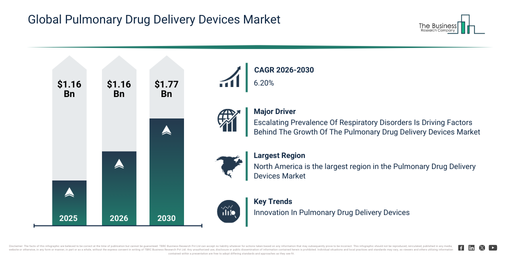
    The pulmonary drug delivery devices market is set for robust expansion in the foreseeable future. It is anticipated to achieve a valuation of $71.9 billion in 2030, demonstrating a compound annual growth rate (CAGR) of 6.2%. This growth during the projection period stems from factors such as increasing demand for personalized respiratory therapies, the growing uptake of digital health-integrated inhalers, the broadening scope of home-based respiratory care, an increased emphasis on non-invasive drug delivery, and continuous innovation in inhalation technologies. Significant trends for this period encompass the rising adoption of smart and connected inhaler devices, an escalating demand for targeted pulmonary drug delivery, the expanded utilization of mesh and ultrasonic nebulizers, the development of more combination drug-device products, and a stronger focus on patient adherence.

    Get A Free Sample Report With In-Depth Market Insights:

    https://thebusinessresearchcompany.com/sample_request?id=38850531&type=smp&name=Pulmonary%20Drug%20Delivery%20Devices%20Market%20Report%202026&utm_source=Blogs&utm_medium=Paid&utm_campaign=Oct_PR

    Pulmonary Drug Delivery Devices Market Industry Drivers: What’s Behind The Revenue Growth?

    The increasing occurrence of respiratory conditions is anticipated to drive the expansion of the pulmonary drug delivery devices market in the future. These disorders encompass illnesses or states that impact the lungs and airways, thereby affecting a person’s breathing. The growing incidence of respiratory ailments stems from multiple causes, including elevated air pollution, higher smoking percentages, urbanization, changes in climate, and an older demographic. Crucially, pulmonary drug delivery devices are vital in managing respiratory disorders as they enable direct administration of medicines to the lungs. To illustrate, a research study featured in JAMA Network Open, a medical journal from the American Medical Association, indicated in December 2023 that the worldwide prevalence of chronic obstructive pulmonary disease (COPD) is projected to reach almost 600 million cases by 2050, representing a 23% rise in its occurrence. Consequently, this increasing prevalence of COPD is serving as a catalyst for the expansion of the pulmonary drug delivery devices market.

    Pulmonary Drug Delivery Devices Market Segmentation: How Does The Market Break Down By Category?

    The pulmonary drug delivery devices market covered in this report is segmented –

    1) By Product Type: Dry Powder Inhalers, Metered Dose Inhalers, Nebulizers

    2) By Application: Asthma, Cystic Fibrosis, Chronic Obstructive Pulmonary Disease, Other Applications

    3) By Distribution Channel: Retail Pharmacies, Hospital Pharmacies, E-Commerce

    Subsegments:

    1) By Dry Powder Inhalers (DPIs): Single-Dose DPIs, Multi-Dose DPIs

    2) By Metered Dose Inhalers (MDIs): CFC-Based MDIs, HFA-Based MDIs

    3) By Nebulizers: Jet Nebulizers, Ultrasonic Nebulizers, Mesh Nebulizers

    #Pulmonary Drug Delivery Devices Market Growth Trends: What’s Shaping The Future Outlook?

    Major companies in the pulmonary drug delivery devices market are developing innovative products, such as small-volume nebulizers, to offer customers enhanced features. A small-volume nebulizer (SVN) is a medical apparatus used to administer liquid medication as an aerosolized mist to patients with respiratory ailments like asthma, chronic obstructive pulmonary disease (COPD), or cystic fibrosis. For instance, in May 2024, Medline Industries LP, a US-based healthcare company, launched the Hudson RCI TurboMist small-volume nebulizer. This pioneering device is designed to deliver medication treatments quickly, in as little as three minutes. The advanced nebulizer can dispense 2.5 times more medication per minute compared to standard nebulizers, reducing treatment times by about 70%. This increased medication delivery substantially shortens treatment durations, benefiting healthcare providers by optimizing patient throughput and enhancing the patient experience by shortening the duration of therapy sessions.

    Pulmonary Drug Delivery Devices Market Competitive Analysis Of Leading Industry Participants

    Major companies operating in the pulmonary drug delivery devices market are Medtronic plc, Air Liquide S.A., Becton Dickinson And Company, Koninklijke Philips N.V., Medline Industries Inc., ResMed Inc., Drägerwerk AG And Co. KGaA, Smiths Group plc, AptarGroup Inc., Chiesi Farmaceutici S.p.A., Teleflex Incorporated, Fisher And Paykel Healthcare Limited, Invacare Corporation, Vyaire Medical Inc., Inogen Inc., Drive DeVilbiss Healthcare Inc., Hovione, Hamilton Medical AG, GaleMed Corporation, Allied Healthcare Products Inc., Precision Medical Inc., Salter Labs Inc.

    View The Full Pulmonary Drug Delivery Devices Market Report:

    https://thebusinessresearchcompany.com/report/pulmonary-drug-delivery-devices-global-market-report?utm_source=Blogs&utm_medium=Paid&utm_campaign=Oct_PR

    Pulmonary Drug Delivery Devices Market Geographic Spread And Regional Opportunities

    North America was the largest region in the pulmonary drug delivery devices market in 2025. The regions covered in the pulmonary drug delivery devices market report are Asia-Pacific, South East Asia, Western Europe, Eastern Europe, North America, South America, Middle East, Africa.

    Reach Out To Our Team:

    The Business Research Company: https://www.thebusinessresearchcompany.com/

    Americas: +1 310-496-7795

    Asia: +44 7882 955267 & +91 8897263534

    Europe: +44 7882 955267

    Email us at: marketing@tbrc.info

    Follow us on:

    LinkedIn: https://in.linkedin.com/company/the-business-research-company

    YouTube: https://www.youtube.com/channel/UC24_fI0rV8cR5DxlCpgmyFQ

    Global Market Model: https://www.thebusinessresearchcompany.com/global-market-model
  • Pulmonary Artery Catheter Market Size In 2026 And Beyond: Understanding Future Growth Potential

    Pulmonary Artery Catheter Market Size In 2026 And Beyond: Understanding Future Growth Potential

    Built to provide research that’s more actionable and strategically valuable, The Business Research Company’s 2026 market reports include market attractiveness analysis, total addressable market sizing, company benchmarking matrices, interactive Excel dashboards, broader supply chain intelligence, emerging startup tracking, and in-depth product insights.

    Pulmonary Artery Catheter Market Size And Revenue Outlook Through 2030

    The pulmonary artery catheter market has experienced consistent expansion in recent years. It is anticipated to expand from $1.26 billion in 2025 to $1.32 billion in 2026, showing a compound annual growth rate (CAGR) of 4.8%. The reasons for this historical growth include an uptick in critical care admissions, wider adoption in cardiac surgeries, continuous improvements in ICU monitoring, greater familiarity among clinicians with PACs, and the rising prevalence of cardiovascular diseases.

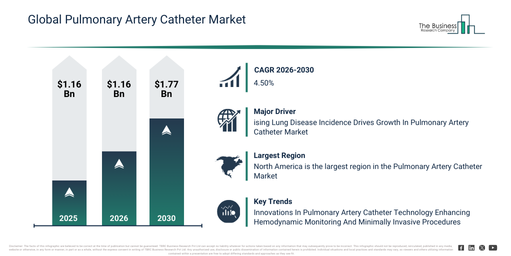
    The pulmonary artery catheter market is projected to experience consistent expansion over the upcoming years. This market is anticipated to reach a valuation of $1.58 billion by 2030, exhibiting a compound annual growth rate (CAGR) of 4.5%. Several factors will contribute to this growth throughout the forecast period, including an increased need for sophisticated hemodynamic data, a rise in complicated intensive care unit (ICU) scenarios, advancements in catheter design technology, the development of critical care infrastructure, and the expansion of healthcare services in emerging economies. Key trends observed during this period will involve a move towards less invasive hemodynamic monitoring techniques, broader application in high-risk cardiac interventions, a growing inclination for single-use catheters, an emphasis on improving precision and safety, and a reduction in standard usage among patients with low risk.

    Get A Free Sample Report With In-Depth Market Insights:

    https://thebusinessresearchcompany.com/sample_request?id=34381387&type=smp&name=Pulmonary%20Artery%20Catheter%20Market%20Report%202026&utm_source=Blogs&utm_medium=Paid&utm_campaign=Oct_PR

    Pulmonary Artery Catheter Market Growth Factors: What’s Supporting Expansion?

    The rising occurrence of lung conditions is anticipated to drive expansion in the pulmonary artery catheter market. Lung diseases are health issues impacting the lungs and the breathing system, hindering their capacity to absorb oxygen and expel carbon dioxide. The growing prevalence of lung ailments stems from increased air pollution, since extended contact with contaminants harms lung tissue and instigates long-term breathing problems. A pulmonary artery catheter assesses cardiac and pulmonary function by tracking pressures inside the pulmonary artery, assisting in the diagnosis and management of heart and lung conditions. For instance, in May 2025, according to the Centers for Disease Control and Prevention, a US-based government agency, the age-adjusted prevalence of diagnosed chronic obstructive pulmonary disease (COPD) among adults aged 18 and older was 3.8%, with a higher prevalence in women (4.1%) compared to men (3.4%). Consequently, the expanding occurrence of lung diseases is fueling the development of the pulmonary artery catheter market.

    Pulmonary Artery Catheter Market Segment Trends And Revenue Contributors

    The pulmonary artery catheter market covered in this report is segmented –

    1) By Product: Four Lumen Artery Catheter, Five Lumen Artery Catheter, Six Lumen Artery Catheter, Other Product Types

    2) By Application: Intensive Care Units (ICUs), Non-Intensive Care Units (ICUs), Other Applications

    3) By Model Of Delivery: Hospitals, Long Term Care Facilities, Other End Users

    Subsegments:

    1) By Four Lumen Artery Catheter: Standard Four Lumen Catheter, Thermodilution Four Lumen Catheter, Specialty Four Lumen Catheter

    2) By Five Lumen Artery Catheter: Standard Five Lumen Catheter, Thermodilution Five Lumen Catheter, Specialty Five Lumen Catheter

    3) By Six Lumen Artery Catheter: Standard Six Lumen Catheter, Thermodilution Six Lumen Catheter, Specialty Six Lumen Catheter

    4) By Other Product Types: Introducer Sheath Catheters, Pressure Monitoring Catheters, Specialty Catheters, Disposable Pulmonary Artery Catheters

    Pulmonary Artery Catheter Market Industry Trends: What’s Reshaping Demand?

    Companies operating within the pulmonary artery catheter market are concentrating on creating innovative solutions, such as endovascular catheters, to improve the accuracy of hemodynamic monitoring, elevate patient safety, and facilitate minimally invasive methods for assessing cardiac function and pulmonary pressures. The endovascular catheter itself is a specialized instrument utilized for precise catheterization and surveillance of the pulmonary artery. For instance, in January 2024, Thrombolex Inc., a US-based medical device company, introduced the BASHIR.035 and BASHIR S-B endovascular catheters specifically for addressing acute pulmonary embolism (PE). These catheters are designed to function with a 0.035 guidewire and incorporate a distinctive mechanism featuring an expandable infusion basket, which allows for targeted thrombolysis by delivering thrombolytic agents directly into the clot. This strategy aims to rapidly restore blood flow, thereby enhancing patient safety and reducing the overall procedure duration.

    Pulmonary Artery Catheter Market Leading Companies And Competitive Benchmarking

    Major companies operating in the pulmonary artery catheter market are Cardinal Health Corp, Medtronic Inc, Becton Dickinson And Company, Philips Healthcare Corp, Boston Scientific Corporation, Medline Industries Inc, B Braun Melsungen AG, Terumo Corporation, Edwards Lifesciences Corporation, Nipro Corporation, Smiths Medical Group, Teleflex Incorporated, Merit Medical Systems Inc, Vygon SA, ICU Medical Inc, Argon Medical Devices Inc, Biosensors International Group Ltd, Getinge AB, Osypka Medical GmbH, Pulsion Medical Systems SE, Cook Medical

    View The Full Pulmonary Artery Catheter Market Report:

    https://thebusinessresearchcompany.com/report/pulmonary-artery-catheter-global-market-report?utm_source=Blogs&utm_medium=Paid&utm_campaign=Oct_PR

    Pulmonary Artery Catheter Market Top Region By Revenue And Market Share

    North America was the largest region in the pulmonary artery catheter market in 2025. The regions covered in the pulmonary artery catheter market report are Asia-Pacific, South East Asia, Western Europe, Eastern Europe, North America, South America, Middle East, Africa.

    Reach Out To Our Team:

    The Business Research Company: https://www.thebusinessresearchcompany.com/

    Americas: +1 310-496-7795

    Asia: +44 7882 955267 & +91 8897263534

    Europe: +44 7882 955267

    Email us at: marketing@tbrc.info

    Follow us on:

    LinkedIn: https://in.linkedin.com/company/the-business-research-company

    YouTube: https://www.youtube.com/channel/UC24_fI0rV8cR5DxlCpgmyFQ

    Global Market Model: https://www.thebusinessresearchcompany.com/global-market-model
  • PTA Balloon Catheter Market Reaches $4.31 Billion In 2026: Key Developments Shaping Expansion

    PTA Balloon Catheter Market Reaches $4.31 Billion In 2026: Key Developments Shaping Expansion

    Backed by market attractiveness analysis, total addressable market sizing, company benchmarking matrices, interactive Excel dashboards, wider supply chain intelligence, emerging startup coverage, and detailed product-level insights, The Business Research Company’s 2026 market reports are designed to offer research that is more actionable and strategically valuable than ever.

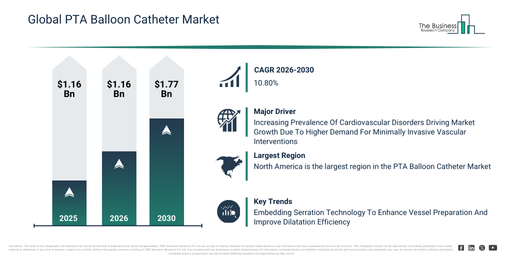
    PTA Balloon Catheter Market Growth From $2.85 Billion In 2026 To $4.31 Billion By 2030 At A CAGR Of 10.8%

    The pta balloon catheter market has demonstrated significant expansion in its size during recent years. It is forecast to increase from $2.56 billion in 2025 to $2.85 billion in 2026, achieving a compound annual growth rate (CAGR) of 11.4%. This historical development can be ascribed to a rising prevalence of cardiovascular diseases, the wider adoption of catheter-based treatment methods, advancements in angioplasty techniques, enhanced accessibility to interventional cardiology services, and an enlarging elderly population.

    The pta balloon catheter market is anticipated to experience substantial growth over the next few years. It is forecast to grow to $4.31 billion in 2030, achieving a compound annual growth rate (CAGR) of 10.8%. This expansion during the forecast period can be attributed to the increasing uptake of advanced endovascular therapies, a rising emphasis on outpatient vascular procedures, the broadening scope of peripheral artery disease treatment, growing investments in catheter innovation, and an increasing preference for minimally invasive solutions. Key trends expected within this period include the increasing adoption of drug-coated balloon technologies, a rising use of minimally invasive vascular procedures, growing demand for high-precision balloon catheters, the expansion of peripheral vascular interventions, and an enhanced focus on biocompatible catheter materials.

    Get A Free Sample Report With In-Depth Market Insights:

    https://thebusinessresearchcompany.com/sample_request?id=96760691&type=smp&name=PTA%20Balloon%20Catheter%20Market%20Report%202026&utm_source=Blogs&utm_medium=Paid&utm_campaign=Oct_PR

    PTA Balloon Catheter Market Demand Drivers: What’s Powering Industry Growth?

    The rising occurrence of cardiovascular disorders is anticipated to propel the expansion of the percutaneous transluminal angioplasty (PTA) balloon catheter market in the foreseeable future. These disorders encompass conditions such as peripheral artery disease (PAD), atherosclerosis, and coronary artery disease, which involve narrowed or blocked blood vessels that restrict blood flow. This increase in cardiovascular cases stems from factors like aging populations, sedentary lifestyles, obesity, and risk factors such as hypertension and diabetes. The escalating prevalence of cardiovascular disorders supports the PTA balloon catheter market by enhancing the requirement for minimally invasive procedures that restore vessel patency, improve circulation, and reduce the risk of severe complications. For instance, in January 2024, the American Heart Association, a US-based non-profit organization, reported that the age-adjusted death rate from cardiovascular disease increased to 233.3 per 100,000 in 2024, reflecting a 4.0% rise from 224.4 per 100,000 in 2023. Thus, the increasing prevalence of cardiovascular disorders is a key driver for the growth of the PTA balloon catheter market.

    PTA Balloon Catheter Market Segment Analysis Spotlighting Growth Areas

    The pta balloon catheter market covered in this report is segmented –

    1) By Type: Polyurethane, Nylon

    2) By Application: Coronary Artery Disease, Peripheral Vascular Disease

    3) By End User: Hospitals, Ambulatory Surgical Centers, Other End Users

    Subsegments:

    1) By Polyurethane: Non-compliant Balloons, Compliant Balloons

    2) By Nylon: Non-compliant Balloons, Compliant Balloons

    PTA Balloon Catheter Market Innovation Trends: What Developments Are Reshaping The Industry?

    Leading firms within the percutaneous transluminal angioplasty (PTA) balloon catheter market are concentrating on technological advancements, notably serration technology, to enhance lesion negotiation, facilitate precise dilatation, and elevate procedural success in intricate peripheral artery disease situations. This serration technology involves embedding accurately engineered serrated components on the balloon’s exterior, which produce minute incisions in the vessel wall upon inflation, yielding a more consistent increase in luminal diameter with less injury than traditional high-pressure balloons. An example of this is the introduction of the Serranator SL Pro by Cagent Vascular, a US-based endovascular device manufacturer, in February 2025. This advanced serration-enhanced PTA balloon catheter is designed for individuals suffering from chronic limb-threatening ischemia (CLTI) and pedal artery disease. The product leverages the company’s proprietary Serration Technology to address diffuse, calcified, and extremely resistant lesions by creating controlled, lengthwise micro-serrations, thereby enabling efficient vessel widening at diminished inflation pressures. The introduction of this device intends to offer superior vessel preparation in interventions below-the-ankle, simultaneously diminishing the likelihood of dissection and lessening the requirement for supplemental high-pressure treatments.

    PTA Balloon Catheter Market Industry Leaders And Competitive Landscape

    Major companies operating in the pta balloon catheter market are Abbott Laboratories, Medtronic PLC, Boston Scientific Corporation, Lepu Medical, B. Braun Corporation, Terumo, Nipro Medical, Teleflex, Cook Medical, Biotronik, Merit Medical, Microport Scientific, Cardiovascular Systems, Well Lead Medical, Cardionovum, JOTEC, Creagh Medical, Natec Medical, TriReme Medical, Andratec, Acotec Scientific, Kaneka Corporation

    View The Full PTA Balloon Catheter Market Report:

    https://thebusinessresearchcompany.com/report/PTA-balloon-catheter-global-market-report?utm_source=Blogs&utm_medium=Paid&utm_campaign=Oct_PR

    PTA Balloon Catheter Market Regional Analysis And Top Geography

    North America was the largest region in the PTA balloon catheter market share in 2025. Asia-Pacific is expected to be the fastest-growing region in the forecast period. The regions covered in the pta balloon catheter market report are Asia-Pacific, South East Asia, Western Europe, Eastern Europe, North America, South America, Middle East, Africa.

    Reach Out To Our Team:

    The Business Research Company: https://www.thebusinessresearchcompany.com/

    Americas: +1 310-496-7795

    Asia: +44 7882 955267 & +91 8897263534

    Europe: +44 7882 955267

    Email us at: marketing@tbrc.info

    Follow us on:

    LinkedIn: https://in.linkedin.com/company/the-business-research-company

    YouTube: https://www.youtube.com/channel/UC24_fI0rV8cR5DxlCpgmyFQ

    Global Market Model: https://www.thebusinessresearchcompany.com/global-market-model
  • Proton Therapy Systems Market Growth Outlook For 2026: Drivers, Trends And Future Opportunities

    Proton Therapy Systems Market Growth Outlook For 2026: Drivers, Trends And Future Opportunities

    Featuring market attractiveness scoring, total addressable market sizing, company benchmarking matrices, interactive Excel dashboards, deeper supply chain intelligence, emerging startup tracking, and granular product-level insights, The Business Research Company’s 2026 market reports are built to deliver research that is both more actionable and more strategically valuable.

    Proton Therapy Systems Market Expansion Outlook: What Revenue Opportunities Are Ahead?

    The proton therapy systems market size has experienced rapid growth in recent years. It is projected to expand from $1.43 billion in 2025 to $1.58 billion in 2026, exhibiting a compound annual growth rate (CAGR) of 10.5%. Historically, this expansion has been driven by factors such as the increasing incidence of cancer requiring sophisticated radiation therapy options, the rising installation of multi-room proton therapy facilities in hospitals, early clinical validation of proton beam delivery for pediatric and critical tumor sites, the expansion of oncology infrastructure and dedicated proton therapy centers, and growing awareness of its reduced toxicity and side effects compared to conventional radiation.

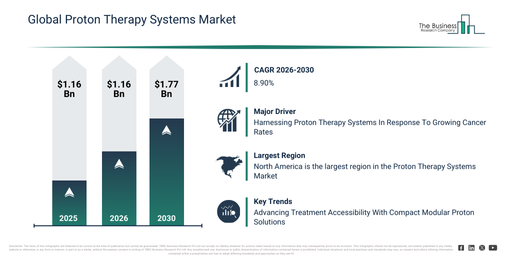
    The proton therapy systems market size is anticipated to experience substantial expansion over the upcoming years, reaching $2.22 billion by 2030, demonstrating a compound annual growth rate (CAGR) of 8.9%. This projected growth is driven by several factors, including a heightened demand for adaptive and image-guided proton therapy solutions, the increasing embrace of compact and single-room proton therapy systems, expanding treatment numbers for lung, breast, and gastrointestinal cancer indications, broadening availability of proton therapy in developing healthcare sectors, and increasing financial commitments to precision oncology and cutting-edge radiotherapy technologies. Key trends anticipated during this period encompass the growing acceptance of proton therapy for highly precise cancer treatment, enhanced use of image-guided proton therapy featuring integrated CT and PET scanners, a developing preference for installing single-room and compact proton therapy systems, a broadening of proton therapy applications to include brain, head and neck, and prostate cancers, and the increasing establishment of proton therapy centers within hospitals and specialized medical facilities.

    Get A Free Sample Report With In-Depth Market Insights:

    https://thebusinessresearchcompany.com/sample_request?id=87925229&type=smp&name=Proton%20Therapy%20Systems%20Market%20Report%202026&utm_source=Blogs&utm_medium=Paid&utm_campaign=Oct_PR

    Proton Therapy Systems Market Growth Drivers: What’s Behind The Acceleration?

    The growing occurrence of cancer is projected to accelerate the development of the proton therapy systems market in the future. Cancer refers to a group of disorders defined by abnormal cell proliferation that can invade and spread throughout the body. The rise in cancer rates stems from various factors, including an aging global populace, evolving lifestyle habits, environmental influences, and advancements in diagnostic techniques. Proton therapy systems find application in oncology due to their capability to precisely target tumors with high doses of radiation while minimizing harm to surrounding healthy tissue, potentially reducing side effects, and improving treatment outcomes. As an illustration, in January 2023, according to the American Cancer Society, a US-based nonprofit cancer advocacy organization, the number of cancer cases climbed to 1,958,310 in 2023, marking a 3.16% increase from the 1,898,160 recorded in 2022. Consequently, the escalating incidence of cancer is propelling the advancement of the proton therapy systems market.

    Proton Therapy Systems Market Segment Performance And Emerging Opportunities

    The proton therapy systems market covered in this report is segmented –

    1) By Type: Proton Therapy Systems With Robotized Positioning Table, Proton Therapy Systems With Integrated CT Scanner, Proton Therapy Systems With Integrated PET Scanner

    2) By Setup Type: Single Room, Multi Room

    3) By Application: Brain And Central Nervous System Cancer, Head And Neck Cancer, Prostate Cancer, Breast Cancer, Lung Cancer, Gastrointestinal Cancer, Other Applications

    4) By End-User: Hospitals, Proton Therapy Center, Other End-Users

    Subsegments:

    1) By Proton Therapy Systems With Robotized Positioning Table: Fixed Position Robotized Table Systems, Movable Position Robotized Table Systems

    2) By Proton Therapy Systems With Integrated CT Scanner: Conventional CT Scanner Integrated Systems, High-Resolution CT Scanner Integrated Systems

    3) By Proton Therapy Systems With Integrated PET Scanner: Low-Dose PET Scanner Integrated Systems, High-Resolution PET Scanner Integrated Systems

    Proton Therapy Systems Market Trends: What’s Defining The Industry’s Next Phase?

    Leading companies in the proton therapy systems market are concentrating on developing more compact and accessible solutions, such as self-shielded proton accelerators, to tackle issues like facility space constraints and complex installation processes. These self-shielded accelerators improve safety and simplify setup by minimizing the external shielding structures typically needed for conventional proton therapy systems. For example, in September 2024, ProTom International, a US-based medical equipment company, launched its latest innovation, the Radiance 330 C proton therapy system. This compact and modular fixed-beam system is engineered for installation inside or next to existing LINAC vaults. It incorporates advanced pencil beam scanning technology, provides upright patient positioning capabilities, and includes integrated diagnostic-quality CT imaging at the treatment isocentre. The Radiance 330 C aims to enhance the flexibility and accessibility of proton therapy by reducing facility requirements and supporting future adaptive and image-guided treatment workflows.

    Proton Therapy Systems Market Key Participants And Competitive Landscape

    Major companies operating in the proton therapy systems market are Hitachi Ltd, Ion Beam Applications SA, Sumitomo Heavy Industries Ltd, Mevion Medical Systems, ProNova Solutions LLC, Advanced Oncotherapy plc, Optivus Proton Therapy Inc, ProTom International, P‑Cure Ltd, Mitsubishi Electric Corporation, SHI Group, Aipuqiang Shanghai Aipuqiang Particle Equipment Co Ltd, Maisheng Medical Group, Hefei Zhongke Ionic Medicine Technology Equipment Co Ltd, Elekta AB, B dot Medical Inc, HIL Applied Medical Ltd, Provision Healthcare LLC, Siemens Healthineers AG

    View The Full Proton Therapy Systems Market Report:

    https://thebusinessresearchcompany.com/report/proton-therapy-systems-global-market-report?utm_source=Blogs&utm_medium=Paid&utm_campaign=Oct_PR

    Proton Therapy Systems Market Geographic Analysis: Where Is Demand Rising Fastest?

    North America was the largest region in the proton therapy systems market in 2025. Asia-Pacific is expected to be the fastest-growing region in the forecast period. The regions covered in the proton therapy systems market report are Asia-Pacific, South East Asia, Western Europe, Eastern Europe, North America, South America, Middle East, Africa.

    Reach Out To Our Team:

    The Business Research Company: https://www.thebusinessresearchcompany.com/

    Americas: +1 310-496-7795

    Asia: +44 7882 955267 & +91 8897263534

    Europe: +44 7882 955267

    Email us at: marketing@tbrc.info

    Follow us on:

    LinkedIn: https://in.linkedin.com/company/the-business-research-company

    YouTube: https://www.youtube.com/channel/UC24_fI0rV8cR5DxlCpgmyFQ

    Global Market Model: https://www.thebusinessresearchcompany.com/global-market-model