Month: October 2026

  • Digital Twin Cardiac Cath Lab Market Research 2026: Market Size, Trends, Segments And Growth Forecast

    Digital Twin Cardiac Cath Lab Market Research 2026: Market Size, Trends, Segments And Growth Forecast

    Backed by market attractiveness analysis, total addressable market sizing, company benchmarking matrices, interactive Excel dashboards, wider supply chain intelligence, emerging startup coverage, and detailed product-level insights, The Business Research Company’s 2026 market reports are designed to offer research that is more actionable and strategically valuable than ever.

    Digital Twin Cardiac Cath Lab Market Growth Potential: How Will Market Size Shift Through 2030?

    The digital twin cardiac cath lab market size has experienced significant expansion in recent years. It will grow from $1.7 billion in 2025 to $2.13 billion in 2026 at a compound annual growth rate (CAGR) of 25.5%. This historical growth can be attributed to factors such as the early adoption of digital twins in healthcare, the advancement of sophisticated imaging systems, the integration of cath lab data analytics, an increasing demand for minimally invasive procedures, and rising investments in healthcare IT infrastructure.

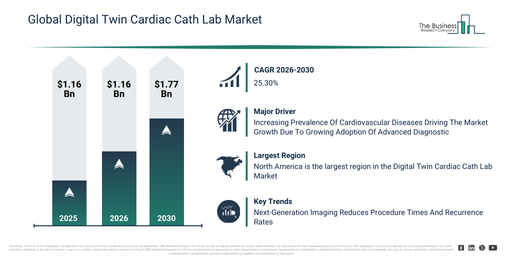
    The digital twin cardiac cath lab market size is expected to experience significant growth in the coming years. It is projected to reach $5.24 billion in 2030, with a compound annual growth rate (CAGR) of 25.3%. This anticipated expansion can be attributed to elements such as AI-enabled predictive modeling, the expansion of remote training programs, integration with hospital ERP systems, the adoption of immersive AR/VR simulations, and an increasing demand for real-time procedure optimization. Prominent trends throughout the forecast period include real-time procedure simulation, AI-based workflow optimization, predictive maintenance for equipment, virtual training and education, and enhanced clinical decision support.

    Get A Free Sample Report With In-Depth Market Insights:

    https://thebusinessresearchcompany.com/sample_request?id=13264715&type=smp&name=Digital%20Twin%20Cardiac%20Cath%20Lab%20Market%20Report%202026&utm_source=Blogs&utm_medium=Paid&utm_campaign=Oct_PR

    Digital Twin Cardiac Cath Lab Market Growth Momentum: What Factors Are Shaping Demand?

    The escalating occurrence of cardiovascular diseases is anticipated to fuel the expansion of the digital twin cardiac cath lab market in the foreseeable future. These conditions, affecting the heart and blood vessels, encompass ailments like coronary artery disease, heart attacks, and strokes. Their increasing prevalence stems from factors such as sedentary lifestyles, physical inactivity, and inadequate dietary habits, which, alongside extended life expectancy, contribute to a greater population vulnerable to cardiac issues. Digital twin cardiac cath lab systems aid in managing cardiovascular diseases by generating virtual models of patients’ hearts and blood vessels. This technology empowers cardiologists to simulate and refine intricate interventional procedures prior to execution, leading to enhanced treatment accuracy, fewer complications during procedures, and better patient results in cardiac catheterization laboratories. For example, data from October 2024, provided by the Centers for Disease Control and Prevention, a US-based government agency, revealed that in 2023, cardiovascular disease was responsible for 919,032 deaths, representing one in every three fatalities. Coronary heart disease continued to be the most widespread type of heart ailment, with approximately one in six cardiovascular disease-related deaths affecting individuals younger than 65 years. Consequently, the rising incidence of cardiovascular diseases is a key factor propelling the expansion of the digital twin cardiac cath lab market.

    Digital Twin Cardiac Cath Lab Market Breakdown By Product Type And Application

    The digital twin cardiac cath lab market covered in this report is segmented –

    1) By Component: Software, Hardware, Services

    2) By Deployment Mode: On-Premises, Cloud-Based

    3) By Application: Cardiac Diagnostics, Interventional Cardiology, Training And Education, Research And Development, Other Applications

    4) By End User: Hospitals, Specialty Clinics, Academic And Research Institutes, Other End Users

    Subsegments:

    1) By Software: Cardiac Simulation Software, Imaging And Visualization Software, Data Integration And Analytics Platforms, Procedure Planning And Optimization Tools

    2) By Hardware: Imaging Systems, Catheterization Equipment, Sensors And Monitoring Devices, Computing And Storage Systems

    3) By Services: Implementation And Integration Services, Training And Education Services, Maintenance And Support Services, Consulting Services

    Digital Twin Cardiac Cath Lab Market Trends Redefining Industry Growth

    Leading firms within the digital twin cardiac cath lab market are primarily using innovative technologies, such as artificial intelligence (AI)-driven imaging, to boost procedural accuracy, shorten operational durations, and achieve superior patient results. Artificial intelligence (AI)-driven imaging involves the application of AI algorithms to analyze medical scans, facilitating automatic detection and interpretation of anatomical features; this process delivers quicker, more precise insights, supports customized treatment plans, and enhances both procedural efficiency and patient outcomes. An example of this advancement occurred in March 2024, when inHEART, a US-based artificial intelligence medical technology firm, obtained U.S. Food and Drug Administration (FDA) 510(k) clearance for its AI-powered software module, which automates the segmentation of CT images to generate comprehensive 3D cardiac models. This innovation empowers physicians to refine treatment approaches, streamline procedure planning, and decrease ventricular tachycardia (VT) procedure times by up to 60%, concurrently diminishing recurrence rates. The software utilizes AI algorithms to examine pre-procedural imaging data, generating exceptionally precise, patient-tailored cardiac models that are readily compatible with prominent electroanatomic mapping (EAM) systems employed in cardiac catheterization labs.

    Digital Twin Cardiac Cath Lab Market Leading Companies And Competitive Benchmarking

    Major companies operating in the digital twin cardiac cath lab market are Tata Consultancy Services Limited, Siemens Healthineers AG, Koninklijke Philips N.V., GE HealthCare Technologies Inc., Dassault Systèmes SE, Materialise NV, HeartFlow Inc., Stereotaxis Inc., Imricor Medical Systems Inc., Circle Cardiovascular Imaging Inc., Medis Medical Imaging Systems BV, VirtaMed AG, Volta Medical SAS, DASI Simulations Inc., inHEART SAS, PrediSurge Inc., InSilicoTrials Technologies SA, Canon Medical Systems Corporation, Abbott Laboratories, Boston Scientific Corporation, Johnson & Johnson MedTech

    View The Full Digital Twin Cardiac Cath Lab Market Report:

    https://thebusinessresearchcompany.com/report/digital-twin-cardiac-cath-lab-global-market-report?utm_source=Blogs&utm_medium=Paid&utm_campaign=Oct_PR

    Digital Twin Cardiac Cath Lab Market Top Region By Revenue And Market Share

    North America was the largest region in the digital twin cardiac cath lab market in 2025. Asia-Pacific is expected to be the fastest-growing region in the forecast period. The regions covered in the digital twin cardiac cath lab market report are Asia-Pacific, South East Asia, Western Europe, Eastern Europe, North America, South America, Middle East, Africa.

    Reach Out To Our Team:

    The Business Research Company: https://www.thebusinessresearchcompany.com/

    Americas: +1 310-496-7795

    Asia: +44 7882 955267 & +91 8897263534

    Europe: +44 7882 955267

    Email us at: marketing@tbrc.info

    Follow us on:

    LinkedIn: https://in.linkedin.com/company/the-business-research-company

    YouTube: https://www.youtube.com/channel/UC24_fI0rV8cR5DxlCpgmyFQ

    Global Market Model: https://www.thebusinessresearchcompany.com/global-market-model
  • Digital Twin Cardiac Ablation Suite Market Forecast 2026: Market Size, Competitive Landscape And Growth Drivers

    Digital Twin Cardiac Ablation Suite Market Forecast 2026: Market Size, Competitive Landscape And Growth Drivers

    Featuring market attractiveness scoring, total addressable market sizing, company benchmarking matrices, interactive Excel dashboards, deeper supply chain intelligence, emerging startup tracking, and granular product-level insights, The Business Research Company’s 2026 market reports are built to deliver research that is both more actionable and more strategically valuable.

    Digital Twin Cardiac Ablation Suite Market Value Analysis: What Growth Lies Ahead Over The Forecast Period?

    The digital twin cardiac ablation suite market has recently experienced substantial expansion. It is projected to grow from $0.99 billion in 2025 to $1.21 billion in 2026, achieving a compound annual growth rate (CAGR) of 22.9%. Historically, this growth was largely due to factors including the high cost of traditional ablation tools, limited access to patient-specific modeling, reliance on manual planning, fragmented healthcare data systems, and the slow adoption of advanced simulation technologies.

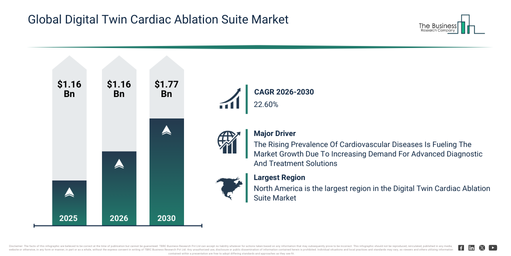
    The market for digital twin cardiac ablation suites is projected to experience substantial expansion over the upcoming years. This market is forecast to reach $2.73 billion in 2030, exhibiting a compound annual growth rate (CAGR) of 22.6%. Key drivers for this expansion during the projection period include an increasing need for accurate cardiac interventions, greater uptake of digital twin innovations, the incorporation of AI into procedure formulation, escalating spending on healthcare IT infrastructure, and the broader availability of telecardiology and distant monitoring services. Significant developments anticipated within this timeframe encompass tailored procedure enhancements, continuous patient oversight, proactive equipment servicing, practical surgical instruction through simulations, and seamless integration with electronic health records.

    Get A Free Sample Report With In-Depth Market Insights:

    https://thebusinessresearchcompany.com/sample_request?id=69352415&type=smp&name=Digital%20Twin%20Cardiac%20Ablation%20Suite%20Market%20Report%202026&utm_source=Blogs&utm_medium=Paid&utm_campaign=Oct_PR

    Digital Twin Cardiac Ablation Suite Market Expansion Drivers: What’s Shaping Future Growth?

    The expanding occurrence of heart and blood vessel disorders is projected to fuel the expansion of the digital twin cardiac ablation suite market. These conditions, affecting the heart and blood vessels, can lead to serious events like heart attacks and strokes. Their incidence is growing, particularly among older populations in developed nations, as advanced age significantly heightens the risk of such health issues. Digital Twin Cardiac Ablation Suites play a crucial role in managing cardiovascular diseases by creating virtual models of patient hearts, allowing doctors to simulate and refine ablation procedures before actual treatment. This approach improves patient outcomes and reduces complications for those with irregular heart rhythms. For instance, data from October 2024, provided by the US-based government agency, the Centers for Disease Control and Prevention, showed that cardiovascular disease caused 919,032 fatalities, representing one-third of all deaths. Coronary heart disease was the most common form, and notably, approximately one in six cardiovascular disease deaths occurred in adults under 65 years. Consequently, the increasing prevalence of cardiovascular diseases is a key factor driving the growth of the digital twin cardiac ablation suite market. A heightened focus on precision medicine is anticipated to propel the future expansion of the digital twin cardiac ablation suite market. This medical strategy customizes treatments and healthcare decisions for individual patients, taking into account their unique genetic makeup, lifestyle, and environmental factors. The increasing importance of precision medicine stems from advancements in genomic sequencing technologies and data analytics, which enable healthcare providers to identify specific biological markers and develop therapies precisely targeted to individual patients, thereby enhancing treatment effectiveness. Digital Twin Cardiac Ablation Suites facilitate precision medicine by generating personalized virtual heart models. These models allow physicians to simulate and optimize ablation strategies specifically adapted to each patient’s distinct cardiac anatomy and arrhythmia patterns before undertaking any actual procedures. As an illustration, in February 2024, the US-based non-profit organization, Personalized Medicine Coalition, reported that in 2023, the FDA sanctioned 16 novel personalized treatments for patients with rare diseases, a significant rise from the six approvals seen in 2022. Therefore, the increasing emphasis on precision medicine is a significant catalyst for the growth of the digital twin cardiac ablation suite market.

    Digital Twin Cardiac Ablation Suite Market Segment Analysis And Revenue Potential

    The digital twin cardiac ablation suite market covered in this report is segmented –

    1) By Component: Software, Hardware, Services

    2) By Deployment Mode: On-Premises, Cloud-Based

    3) By Application: Preoperative Planning, Intraoperative Guidance, Postoperative Assessment, Training And Education, Other Applications

    4) By End-Users: Hospitals, Specialty Clinics, Research Institutes, Other End-Users

    Subsegments:

    1) By Software: Virtual Heart Modeling, Cardiac Simulation Software, Electrophysiology Simulation Tools, Patient Specific Cardiac Modeling, Three Dimensional Cardiac Mapping

    2) By Hardware: Imaging Devices, Computing Systems, Data Storage Devices

    3) By Services: Installation And Integration Services, Maintenance And Support Services, Training And Education Services, Consulting Services, Remote Monitoring Services

    Digital Twin Cardiac Ablation Suite Market Industry Leaders And Competitive Landscape

    Major companies operating in the digital twin cardiac ablation suite market are Siemens Healthineers AG, Koninklijke Philips N.V., GE HealthCare Technologies Inc., Boston Scientific Corporation, Medtronic Public Limited Company, Abbott Laboratories, Dassault Systèmes SE, Stereotaxis Inc., Johnson & Johnson, Kardium Inc., CathWorks Ltd., inHEART SAS, Volta Medical SAS, Circle Cardiovascular Imaging Inc., Imricor Medical Systems Inc., CardioFocus Inc., CathVision ApS, HeartFlow Inc., Lepu Medical Technology Beijing Co. Ltd., Ortus Solutions Ltd., Biosense Webster Inc.

    View The Full Digital Twin Cardiac Ablation Suite Market Report:

    https://thebusinessresearchcompany.com/report/digital-twin-cardiac-ablation-suite-global-market-report?utm_source=Blogs&utm_medium=Paid&utm_campaign=Oct_PR

    Digital Twin Cardiac Ablation Suite Market Regional Analysis And Top Geography

    North America was the largest region in the digital twin cardiac ablation suite market in 2025. Asia-Pacific is expected to be the fastest-growing region in the forecast period. The regions covered in the digital twin cardiac ablation suite market report are Asia-Pacific, South East Asia, Western Europe, Eastern Europe, North America, South America, Middle East, Africa.

    Reach Out To Our Team:

    The Business Research Company: https://www.thebusinessresearchcompany.com/

    Americas: +1 310-496-7795

    Asia: +44 7882 955267 & +91 8897263534

    Europe: +44 7882 955267

    Email us at: marketing@tbrc.info

    Follow us on:

    LinkedIn: https://in.linkedin.com/company/the-business-research-company

    YouTube: https://www.youtube.com/channel/UC24_fI0rV8cR5DxlCpgmyFQ

    Global Market Model: https://www.thebusinessresearchcompany.com/global-market-model
  • Digital Therapeutics Market Size In 2026: Regional Growth, Key Segments And Future Outlook

    Digital Therapeutics Market Size In 2026: Regional Growth, Key Segments And Future Outlook

    Built to provide research that’s more actionable and strategically valuable, The Business Research Company’s 2026 market reports include market attractiveness analysis, total addressable market sizing, company benchmarking matrices, interactive Excel dashboards, broader supply chain intelligence, emerging startup tracking, and in-depth product insights.

    Digital Therapeutics Market Size Forecast: How Big Could The Market Get By 2030?

    The digital therapeutics market has seen remarkable growth in recent years. It is anticipated to expand from $10.93 billion in 2025 to $14.02 billion in 2026, achieving a compound annual growth rate (CAGR) of 28.3%. This historical expansion can be attributed to several factors including the rising adoption of smartphones in healthcare, enhanced acceptance of digital health solutions, the widening scope of telemedicine services, early regulatory endorsements for digital therapeutics, and an increasing prevalence of chronic diseases.

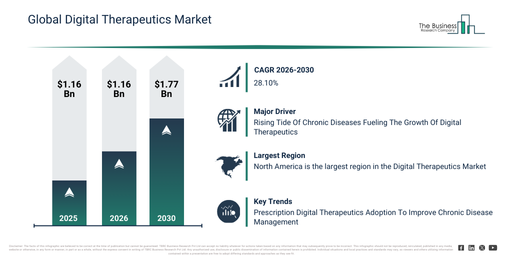
    The digital therapeutics market is projected to experience substantial expansion in the coming years. Its valuation is anticipated to reach $37.82 billion in 2030, demonstrating a compound annual growth rate (CAGR) of 28.1%. This projected market acceleration stems from factors such as enhanced reimbursement avenues for digital therapeutics, a greater need for tailored digital healthcare, the proliferation of AI-powered treatment platforms, an increase in collaborations between healthcare providers and technology companies, and a heightened emphasis on proactive digital health strategies. Key developments anticipated during this period include a greater uptake of software-based therapeutic tools, the growing incorporation of wearable health devices, expanded utilization of remote patient monitoring systems, the development of more evidence-backed digital care initiatives, and a stronger concentration on individualized treatment approaches.

    Get A Free Sample Report With In-Depth Market Insights:

    https://thebusinessresearchcompany.com/sample_request?id=72156698&type=smp&name=Digital%20Therapeutics%20Market%20Report%202026&utm_source=Blogs&utm_medium=Paid&utm_campaign=Oct_PR

    Digital Therapeutics Market Development Factors: What’s Supporting Demand?

    The increasing occurrence of chronic illnesses is anticipated to drive the expansion of the digital therapeutics market in the future. Chronic diseases are persistent conditions typically lasting a year or longer, necessitating continuous medical care or restricting daily activities, or both. Digital therapeutics involve software-based interventions that provide evidence-backed therapeutic solutions to patients, improving chronic disease management and offering more treatment alternatives. For instance, in March 2025, the Office for Health Improvement & Disparities (OHID), a UK-based unit of the Department of Health and Social Care, reported that the prevalence of type 2 diabetes recorded by GPs in adults aged 17 and over in England was 7.0% in March 2024, an increase from 6.8% in March 2023. Consequently, the rising prevalence of chronic diseases fuels the growth of the digital therapeutics market.

    Digital Therapeutics Market Segmentation And Category Overview

    The digital therapeutics market covered in this report is segmented –

    1) By Product: Software, Devices

    2) By Sales Channel: Business-To-Business (B2B), Business-To-Consumers (B2C)

    3) By Application: Preventive Applications, Treatment Or Care-Related Applications

    Subsegments:

    1) By Software: Mobile Applications, Web-Based Platforms, Digital Therapeutics Software

    2) By Devices: Wearable Devices, Biosensors, Digital Therapeutic Devices

    Digital Therapeutics Market Transformation Trends: What Innovations Are Driving Change?

    Key players within the digital therapeutics market are focusing on developing technological advancements, notably prescription-only digital behavioral therapy platforms, to enhance treatment accessibility, improve patient engagement, and provide clinically validated outcomes. A prescription-only digital behavioral therapy platform employs software-based interventions provided through devices like smartphones or tablets. It integrates evidence-based modules such as cognitive behavioral therapy (CBT), remote monitoring, and interactive goal tracking, thereby facilitating scalable, drug-free disease management and personalized patient support. For instance, in July 2023, Better Therapeutics, a US-based prescription digital therapeutics company, launched AspyreRx (formerly BT-001), a digital therapeutic for type 2 diabetes. The product delivers a 90-day self-paced program through a smartphone app, featuring weekly CBT lessons, personalized goal-setting, and tracking of blood glucose and lifestyle data; clinical trials demonstrated sustained reductions in HbA1c, weight improvement, and better quality-of-life outcomes.

    Digital Therapeutics Market Key Participants And Competitive Landscape

    Major companies operating in the digital therapeutics market are Omada Health Inc., WellDoc Inc., 2Morrow Inc., Propeller Health, Pear Therapeutics, Canary Health Inc., Noom Health Inc., Akili Interactive Labs, Better Therapeutics, Happify Health, Kaia Health, Medtronic plc, Teladoc Health Inc., Fitbit Health Solutions, EMulate Therapeutics, BigHealth, DarioHealth, IQVIA, JOGO Health, SilverCloud Health, Biofourmis Inc., Prosoma, Virta Health Corp., One Drop Inc., Lark Health, Xealth, CogniFit Ltd.

    View The Full Digital Therapeutics Market Report:

    https://thebusinessresearchcompany.com/report/digital-therapeutics-global-market-report?utm_source=Blogs&utm_medium=Paid&utm_campaign=Oct_PR

    Digital Therapeutics Market Geographic Analysis: Where Is Demand Rising Fastest?

    North America was the largest region in the digital therapeutics market in 2025. Asia-Pacific is expected to be the fastest-growing region in the forecast period. The regions covered in the digital therapeutics market report are Asia-Pacific, South East Asia, Western Europe, Eastern Europe, North America, South America, Middle East, Africa.

    Reach Out To Our Team:

    The Business Research Company: https://www.thebusinessresearchcompany.com/

    Americas: +1 310-496-7795

    Asia: +44 7882 955267 & +91 8897263534

    Europe: +44 7882 955267

    Email us at: marketing@tbrc.info

    Follow us on:

    LinkedIn: https://in.linkedin.com/company/the-business-research-company

    YouTube: https://www.youtube.com/channel/UC24_fI0rV8cR5DxlCpgmyFQ

    Global Market Model: https://www.thebusinessresearchcompany.com/global-market-model
  • Digital Radiography Market Growth Forecast Through 2030: Market Size And Trends In 2026

    Digital Radiography Market Growth Forecast Through 2030: Market Size And Trends In 2026

    Backed by market attractiveness analysis, total addressable market sizing, company benchmarking matrices, interactive Excel dashboards, wider supply chain intelligence, emerging startup coverage, and detailed product-level insights, The Business Research Company’s 2026 market reports are designed to offer research that is more actionable and strategically valuable than ever.

    Digital Radiography Market Revenue Outlook: What CAGR Lies Ahead Through 2030?

    The digital radiography market has experienced significant expansion in recent years. Its value is set to rise from $8.38 billion in 2025 to $9.22 billion in 2026, growing at a compound annual growth rate (CAGR) of 10.1%. Factors contributing to its historical growth include the enlargement of hospital imaging departments, the phasing out of analog x-ray systems, an uptick in diagnostic imaging volumes, enhancements in detector technology, and the development of outpatient diagnostic centers.

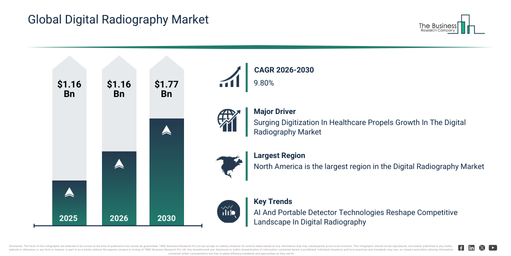
    The digital radiography market is projected to experience substantial expansion over the upcoming years. It is anticipated to reach $13.42 billion by 2030, exhibiting a compound annual growth rate (CAGR) of 9.8%. This market’s growth is driven by various factors including the increasing demand for point-of-care imaging solutions, greater investments in smart hospital initiatives, the broadening of teleradiology services, wider implementation of cloud-based imaging platforms, and an elevated emphasis on operational efficiency. Key developments expected during this period encompass the rising integration of direct radiography systems, the expanding application of AI-powered image analysis, a heightened demand for portable imaging devices, the advancement of digital imaging infrastructure, and a stronger focus on improving diagnostic accuracy.

    Get A Free Sample Report With In-Depth Market Insights:

    https://thebusinessresearchcompany.com/sample_request?id=43162775&type=smp&name=Digital%20Radiography%20Market%20Report%202026&utm_source=Blogs&utm_medium=Paid&utm_campaign=Oct_PR

    Digital Radiography Market Industry Drivers: What’s Behind The Revenue Growth?

    Future expansion of the digital radiography market is anticipated, driven by the expanding digitization within the healthcare sector. Digitization, or digital enablement, involves transforming information into a digital format. This surge in digitization stems from businesses and services adopting digital platforms to enhance efficiency through the reduction of manual operations and by facilitating quicker, more accessible user interactions. Digital radiography contributes to this digitization by streamlining the capture, storage, and distribution of images via electronic systems, leading to accelerated workflows and better access to diagnostic data. As an illustration, in November 2024, a report from the Brookings Institution, a U.S.-based research body, indicated that in 2023, 26% of the U.S. workforce held positions demanding advanced digital proficiencies. Consequently, the growing prevalence of digitization in healthcare fuels the expansion of the digital radiography market.

    Digital Radiography Market Segment Outlook: Which Categories Are Growing Fastest?

    The digital radiography market covered in this report is segmented –

    1) By Product Type: Computed Radiography, Direct Radiography

    2) By Equipment: Detectors, Sensors, Photoconductor, Retrofit Radiography System, Scintillator, Phosphor Imaging Plate (IP), Other Equipment

    3) By Portability: Fixed, Mobile

    4) By Application: Dentistry, Orthopedics, General Surgery, Mammography, Pulmonary Imaging

    5) By End Use Industry: Hospitals, Clinics, Ambulatory Surgical Centers

    Subsegments:

    1) By Computed Radiography (CR): CR Systems, CR Detectors, CR Software

    2) By Direct Radiography (DR): DR Systems, DR Detectors, DR Software

    #Digital Radiography Market Growth Trends: What’s Shaping The Future Outlook?

    Leading firms within the digital radiography market are concentrating on creating cutting-edge solutions, including mobile digital radiography systems that are battery-powered, feature wireless flat-panel detectors, and incorporate AI-driven image processing. These mobile systems function as portable X-ray devices, combining lightweight wireless flat-panel detectors, integrated batteries, and touch-screen interfaces, allowing technologists to conduct superior radiographs directly at the patient’s bedside. A notable illustration is the launch of the DRX-Rise Mobile X-ray System in May 2023 by Carestream Health Inc., a medical imaging systems provider based in the US. The DRX-Rise features an advanced lithium battery and in-bin detector charging, enabling radiographers to cover more ground and perform additional examinations per charge. It also incorporates dual touchscreen displays for distinct workzones to boost productivity, alongside enhanced drive functionalities for accurate and silent bedside positioning. This system comes equipped with Carestream’s ImageView software, which leverages the Eclipse processing engine and artificial intelligence to enhance image quality, minimize errors, and optimize dose efficiency. The DRX-Rise highlights its affordability and minimal capital investment, providing an accessible route for facilities to upgrade or enlarge their digital radiography fleets without substantial costs. Its silent operation and ease of movement further render it appropriate for busy or delicate environments like the ICU and NICU.

    Digital Radiography Market Top Companies Driving Competitive Growth

    Major companies operating in the digital radiography market are Agfa-Gevaert Group, Carestream Health Inc., Canon Inc., Fujifilm Holdings Corporation, Koninklijke Philips N.V., Siemens Aktiengesellschaft, GE Healthcare, Hitachi Ltd., Konica Minolta Inc., Varian Medical Systems Inc., North Star Imaging Inc., Shimadzu Corporation, Toshiba Medical Systems Corporation, Bosello High Technology SRL, Detection Technology Oyj, COMET Group, Hologic Inc., Samsung Medison Co. Ltd., Esaote SpA, Mindray Medical International Limited, Analogic Corporation, Varex Imaging Corporation, Ziehm Imaging GmbH, Planmeca Oy, Dentsply Sirona Inc., Villa Sistemi Medicali S.p.A.

    View The Full Digital Radiography Market Report:

    https://thebusinessresearchcompany.com/report/digital-radiography-global-market-report?utm_source=Blogs&utm_medium=Paid&utm_campaign=Oct_PR

    Digital Radiography Market Global Footprint: Which Region Leads The Market?

    North America was the largest region in the digital radiography market in 2025. Asia-Pacific is expected to be the fastest-growing region in the digital radiography market report during the forecast period. The regions covered in the digital radiography market report are Asia-Pacific, South East Asia, Western Europe, Eastern Europe, North America, South America, Middle East, Africa.

    Reach Out To Our Team:

    The Business Research Company: https://www.thebusinessresearchcompany.com/

    Americas: +1 310-496-7795

    Asia: +44 7882 955267 & +91 8897263534

    Europe: +44 7882 955267

    Email us at: marketing@tbrc.info

    Follow us on:

    LinkedIn: https://in.linkedin.com/company/the-business-research-company

    YouTube: https://www.youtube.com/channel/UC24_fI0rV8cR5DxlCpgmyFQ

    Global Market Model: https://www.thebusinessresearchcompany.com/global-market-model
  • Digital Pathology Market Analysis: $1.68 Billion Market Size In 2026 And Future Growth Prospects

    Digital Pathology Market Analysis: $1.68 Billion Market Size In 2026 And Future Growth Prospects

    Featuring market attractiveness scoring, total addressable market sizing, company benchmarking matrices, interactive Excel dashboards, deeper supply chain intelligence, emerging startup tracking, and granular product-level insights, The Business Research Company’s 2026 market reports are built to deliver research that is both more actionable and more strategically valuable.

    Digital Pathology Market Growth Analysis: How Will Revenue Trend Over The Forecast Period?

    The digital pathology market has seen significant expansion in recent years. Its value is expected to increase from $1.42 billion in 2025 to $1.68 billion in 2026, demonstrating a compound annual growth rate (CAGR) of 18.5%. This historical growth can be attributed to several factors, including the increasing digitization of pathology laboratories, the expansion of cancer diagnostics, the growing adoption of telepathology, the rising demand for standardized pathology workflows, and the improved availability of digital scanners.

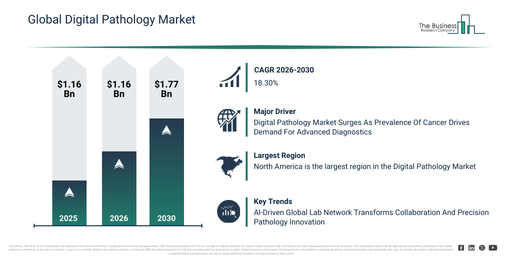
    The digital pathology market is expected to experience substantial expansion over the next few years, with its size projected to reach $3.29 billion in 2030, demonstrating a compound annual growth rate (CAGR) of 18.3%. This growth during the forecast period is driven by increasing investments in computational pathology, a rising demand for precision diagnostics, the expansion of digital pathology within drug discovery, the growing integration of artificial intelligence in disease diagnosis, and an intensified focus on interoperability and data sharing. Significant trends anticipated during this period encompass the increasing adoption of whole slide imaging systems, the rising utilization of AI-based image analysis software, the broadening availability of remote pathology services, the integration of cloud-based pathology platforms, and an enhanced emphasis on workflow automation.

    Get A Free Sample Report With In-Depth Market Insights:

    https://thebusinessresearchcompany.com/sample_request?id=68216864&type=smp&name=Digital%20Pathology%20Market%20Report%202026&utm_source=Blogs&utm_medium=Paid&utm_campaign=Oct_PR

    Digital Pathology Market Growth Factors: What’s Supporting Expansion?

    The expanding occurrence of cancer is a primary catalyst for the growth of the digital pathology market. As populations advance in age, the probability of developing cancer increases due to inherent cellular changes and extended exposure to various risk factors. Moreover, lifestyle aspects such as smoking, poor dietary habits, lack of physical activity, and excessive alcohol consumption are significant contributors to cancer risk. Digital pathology enables patients to achieve faster cancer diagnosis and treatment, and consequently, the escalating number of cancer cases is fueling the market’s expansion. For instance, in January 2024, according to the American Cancer Society, a US-based nonprofit cancer advocacy organization, the count of cancer cases climbed to 2,001,140 compared to 1,958,310 in 2023, indicating a growth of 2.19%. Therefore, the increasing prevalence of cancer is set to propel the digital pathology market forward.

    Digital Pathology Market Segment Landscape: Which Areas Lead Development?

    The digital pathology market covered in this report is segmented –

    1) By Product: Scanners, Software, Storage And Communication Systems

    2) By Pathology Discipline: Human Pathology, Veterinary Pathology

    3) By Application: Drug Discovery, Disease Diagnosis, Teleconsultation, Training And Education

    4) By End-User: Pharmaceutical And Biotechnology Companies, Hospitals And Reference Laboratories, Academic And Research Institutes

    Subsegments:

    1) By Scanners: Whole Slide Scanners, Tissue Microarray Scanners, Digital Imaging Systems

    2) By Software: Image Analysis Software, Workflow Management Software, Diagnostic Software

    3) By Storage And Communication Systems: Data Storage Solutions, Cloud-Based Platforms, Network And Communication Systems

    Digital Pathology Market Industry Trends: What’s Reshaping Demand?

    Leading companies in the digital pathology market are prioritizing the creation of advanced solutions like collaborative AI-powered lab networks to improve data sharing and clinical innovation. These collaborative AI-powered lab networks consist of interconnected pathology laboratories that leverage shared AI systems and data platforms to foster standardization, accelerate turnaround times, and generate real-world evidence. For instance, in July 2025, PathAI, a US-based provider of digital pathology and AI solutions, introduced its Precision Pathology Network, which is driven by its AISight image management system. This network links anatomic pathology labs with biopharmaceutical partners, granting early access to AI algorithms and establishing secure frameworks for sharing de-identified pathology data essential for translational research. Participating laboratories benefit from access to PathAI’s advanced algorithms, such as MET-Predict, and have the opportunity to monetize real-world pathology data, while biopharma companies receive a consistent flow of clinical and molecular information for biomarker studies and the development of precision drugs.

    Digital Pathology Market Leading Players And Competitive Positioning

    Major companies operating in the digital pathology market are Danaher Corporation, Hoffmann-La Roche Ltd, Koninklijke Philips N.V, Hamamatsu Photonics K.K, 3DHISTECH Ltd, Olympus Corporation, Nikon Corporation, Leica Biosystems, Ventana Medical Systems, Sectra AB, Visiopharm A/S, Indica Labs Inc, PathAI, Paige.ai, Ibex Medical Analytics, Aiforia Technologies, Proscia, Inspirata Inc, Huron Digital Pathology, Akoya Biosciences, Aperio Digital Pathology, PerkinElmer, Definiens AG, Digipath, Apollo Enterprise Imaging Corp

    View The Full Digital Pathology Market Report:

    https://thebusinessresearchcompany.com/report/digital-pathology-global-market-report?utm_source=Blogs&utm_medium=Paid&utm_campaign=Oct_PR

    Digital Pathology Market Regional Split: Which Areas Are Fueling Growth?

    North America was the largest region in the digital pathology market in 2025. Asia-Pacific was the second-largest region in the digital pathology market. The regions covered in the digital pathology market report are Asia-Pacific, South East Asia, Western Europe, Eastern Europe, North America, South America, Middle East, Africa.

    Reach Out To Our Team:

    The Business Research Company: https://www.thebusinessresearchcompany.com/

    Americas: +1 310-496-7795

    Asia: +44 7882 955267 & +91 8897263534

    Europe: +44 7882 955267

    Email us at: marketing@tbrc.info

    Follow us on:

    LinkedIn: https://in.linkedin.com/company/the-business-research-company

    YouTube: https://www.youtube.com/channel/UC24_fI0rV8cR5DxlCpgmyFQ

    Global Market Model: https://www.thebusinessresearchcompany.com/global-market-model
  • Digital Or Electrical Sphygmomanometer Market 2026 Market Size And Growth Forecast: Key Trends To Watch

    Digital Or Electrical Sphygmomanometer Market 2026 Market Size And Growth Forecast: Key Trends To Watch

    Built to provide research that’s more actionable and strategically valuable, The Business Research Company’s 2026 market reports include market attractiveness analysis, total addressable market sizing, company benchmarking matrices, interactive Excel dashboards, broader supply chain intelligence, emerging startup tracking, and in-depth product insights.

    Digital Or Electrical Sphygmomanometer Market Forecast: What Value Will The Market Reach By 2030?

    The market for digital or electrical sphygmomanometers has seen significant growth in recent years. It is forecast to expand from $1.28 billion in 2025 to $1.43 billion in 2026, achieving a compound annual growth rate (CAGR) of 12.0%. The historical growth can be attributed to the increasing prevalence of hypertension, a rise in lifestyle-related diseases, the expansion of primary healthcare services, heightened awareness of blood pressure monitoring, and improved access to digital medical devices.

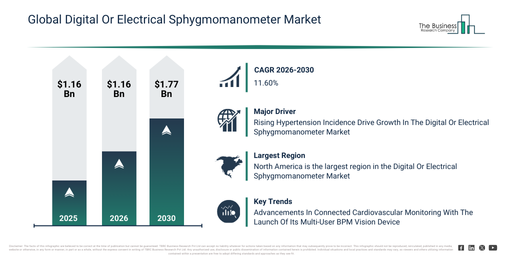
    The digital or electrical sphygmomanometer market is set to experience significant expansion in the coming years. It is predicted to reach $2.22 billion by 2030, demonstrating a compound annual growth rate (CAGR) of 11.6%. This anticipated growth can be linked to factors such as an expanding aging population, a surge in demand for home-based health monitoring, increased attention on the early detection of cardiovascular conditions, the broadening of ambulatory care services, and greater healthcare spending on chronic disease management. Noteworthy trends during this period include the increased adoption of home blood pressure monitoring, a growing preference for fully automatic devices, a rising need for upper arm sphygmomanometers, a shift towards portable and compact monitors, and an enhanced focus on regular preventive health checkups.

    Get A Free Sample Report With In-Depth Market Insights:

    https://thebusinessresearchcompany.com/sample_request?id=66784641&type=smp&name=Digital%20Or%20Electrical%20Sphygmomanometer%20Market%20Report%202026&utm_source=Blogs&utm_medium=Paid&utm_campaign=Oct_PR

    Digital Or Electrical Sphygmomanometer Market Demand Drivers: What’s Powering Industry Growth?

    The increasing prevalence of hypertension is anticipated to fuel the expansion of the digital or electrical sphygmomanometer market in the coming years. Hypertension is characterized by persistently elevated blood pressure against artery walls, which can result in various health issues. A diet high in sodium, frequently found in processed foods, contributes to elevated blood pressure by promoting water retention, thereby increasing blood volume and placing stress on the heart and blood vessels. Digital sphygmomanometers enhance the precision, ease, and efficiency of hypertension management through their consistent measurement capabilities, options for home monitoring, and data logging functions. For example, in January 2025, the Center for Disease Control and Prevention, a US-based government agency, stated that in 2023, high blood pressure was a primary or contributing factor in 664,470 deaths in the United States. Consequently, the growing incidence of hypertension is a significant factor driving the demand within the digital or electrical sphygmomanometer market.

    Digital Or Electrical Sphygmomanometer Market Segments: Where Is Growth Concentrated?

    The digital or electrical sphygmomanometer market covered in this report is segmented –

    1) By Product Type: Upper Arm, Wrist Type

    2) By Technology: Full Automatic, Semi Automatic

    3) By Portability: Portable, Non-Portable

    4) By End-User: Hospitals And Clinics, Ambulatory Care Centers, Home Care Settings, Other End-Users

    Subsegments:

    1) By Upper Arm: Fully Automatic Upper Arm Sphygmomanometers, Semi-Automatic Upper Arm Sphygmomanometers

    2) By Wrist Type: Fully Automatic Wrist Sphygmomanometers, Semi-Automatic Wrist Sphygmomanometers

    Digital Or Electrical Sphygmomanometer Market Innovation Trends: What Developments Are Reshaping The Industry?

    Leading companies in the digital or electrical sphygmomanometer market are concentrating on developing innovative products, such as multi-user profile connectivity, to enable seamless and personalized cardiovascular monitoring for multiple individuals using a single device. This multi-user profile connectivity allows a blood pressure monitor to store and differentiate readings for several users, ensuring accurate tracking of individual health trends. For instance, in January 2025, Withings, a France-based provider of connected health and medical-grade consumer wellness devices, launched the BPM Vision, a home blood pressure monitor. This product features a large color display with measurement guidance, supports up to eight unique user profiles, and includes interchangeable cuffs suited for various arm sizes. It offers Wi-Fi connectivity for automatic data syncing with the Withings app and includes a long-lasting battery designed to operate for up to 12 months on a single charge. This launch reflects the growing industry focus on integrating smart, user-friendly, and multi-person monitoring capabilities into digital blood pressure devices to enhance home-based cardiovascular care.

    Digital Or Electrical Sphygmomanometer Market Competitive Overview And Top Companies

    Major companies operating in the digital or electrical sphygmomanometer market are Omron Healthcare Inc., Welch Allyn Inc., Contec Medical Systems Co.Ltd., Beurer GmbH, SCHILLER AG, BPL Medical Technologies, Microlife Corporation, SunTech Medical Inc., Rossmax International Ltd., Rudolf Riester GmbH, iHealth Labs Inc., Citizen Systems Japan Co. Ltd., American Diagnostic Corporation, GPC Medical Ltd., A&D Company Limited, Bremed Ltd., Nissei Co. Ltd., Timesco Healthcare Ltd., ChoiceMMed, Ozeri, Panasonic Healthcare Co. Ltd., Zewa Medical Technology

    View The Full Digital Or Electrical Sphygmomanometer Market Report:

    https://thebusinessresearchcompany.com/report/digital-or-electrical-sphygmomanometer-global-market-report?utm_source=Blogs&utm_medium=Paid&utm_campaign=Oct_PR

    Digital Or Electrical Sphygmomanometer Market Top Region: Where Does Most Revenue Come From?

    North America was the largest region in the digital or electrical sphygmomanometer market in 2025. The regions covered in the digital or electrical sphygmomanometer market report are Asia-Pacific, South East Asia, Western Europe, Eastern Europe, North America, South America, Middle East, Africa.

    Reach Out To Our Team:

    The Business Research Company: https://www.thebusinessresearchcompany.com/

    Americas: +1 310-496-7795

    Asia: +44 7882 955267 & +91 8897263534

    Europe: +44 7882 955267

    Email us at: marketing@tbrc.info

    Follow us on:

    LinkedIn: https://in.linkedin.com/company/the-business-research-company

    YouTube: https://www.youtube.com/channel/UC24_fI0rV8cR5DxlCpgmyFQ

    Global Market Model: https://www.thebusinessresearchcompany.com/global-market-model
  • Digital Laparoscopy Market Size Forecast: How The Industry Is Expected To Grow From 2026 To 2030

    Digital Laparoscopy Market Size Forecast: How The Industry Is Expected To Grow From 2026 To 2030

    Backed by market attractiveness analysis, total addressable market sizing, company benchmarking matrices, interactive Excel dashboards, wider supply chain intelligence, emerging startup coverage, and detailed product-level insights, The Business Research Company’s 2026 market reports are designed to offer research that is more actionable and strategically valuable than ever.

    Digital Laparoscopy Market Size Outlook: How Quickly Will Revenue Expand Through 2030?

    The digital laparoscopy market has shown substantial growth in recent years. It is forecast to increase from $3.09 billion in 2025 to $3.36 billion in 2026, exhibiting a compound annual growth rate (CAGR) of 8.7%. Historically, the market’s expansion can be linked to factors like the reliance on conventional open surgeries, limited access to digital imaging systems, the high cost of laparoscopic equipment, low adoption rates of robotic-assisted procedures, and a lack of standardized training programs.

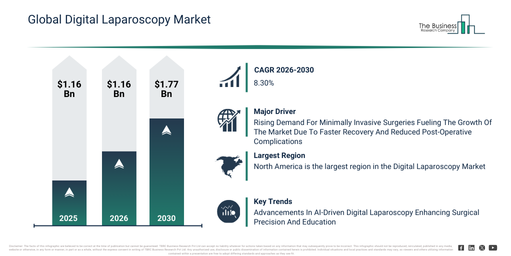
    The digital laparoscopy market is projected to experience substantial expansion in the coming years, with its size expected to reach $4.62 billion by 2030, driven by a compound annual growth rate (CAGR) of 8.3%. This anticipated growth is primarily fueled by several factors, including advancements in 3D and wireless camera technologies, a rising inclination towards minimally invasive surgical techniques, heightened investment in robotic laparoscopy, the integration of AR/VR-assisted surgical systems, and the broadening application of laparoscopic procedures in developing markets. Key trends expected during this period encompass the growing acceptance of minimally invasive surgeries, an increased need for high-definition and 3D laparoscopy cameras, the incorporation of augmented and virtual reality into surgical practices, the extension of laparoscopic procedures into various medical specialties, and a concentrated effort on enhancing workflow efficiency and real-time imaging within operating environments.

    Get A Free Sample Report With In-Depth Market Insights:

    https://thebusinessresearchcompany.com/sample_request?id=56847540&type=smp&name=Digital%20Laparoscopy%20Market%20Report%202026&utm_source=Blogs&utm_medium=Paid&utm_campaign=Oct_PR

    Digital Laparoscopy Market Growth Drivers: What’s Behind The Acceleration?

    The increasing need for minimally invasive surgical techniques is anticipated to drive the expansion of the digital laparoscopy market in the future. These surgeries involve operating through small cuts with specialized instruments, aiming to lessen pain, shorten recovery periods, and minimize scars compared to conventional open operations. Their growing popularity stems from causing less damage to tissues, which leads to quicker healing, less discomfort, and shorter hospital stays. Digital laparoscopy improves minimally invasive operations by offering accurate, live visual feedback and surgical guidance powered by AI, which in turn boosts precision, reduces complications, and accelerates patient healing. An example is data from June 2024 by the US-based American Society of Plastic Surgeons (ASPS), indicating that among approximately 1.6 million cosmetic surgeries done in 2023, liposuction represented 347,782 procedures, showing a 7 percent rise from 2022. Consequently, the increasing preference for minimally invasive procedures is a key factor boosting the expansion of the digital laparoscopy market.

    Digital Laparoscopy Market Segment Analysis: What Are The Core Market Categories?

    The digital laparoscopy market covered in this report is segmented –

    1) By Product: Digital Laparoscopy Cameras, Digital Laparoscopy Instruments, Visualization Systems, Light Sources, Insufflators, Other Products

    2) By Procedure Type: Diagnostic Laparoscopy, Therapeutic Laparoscopy, Minimally Invasive Laparoscopic Surgery

    3) By Technology: Robotic Laparoscopy, Advanced Imaging Systems, Miniaturized Endoscopic Equipment, Augmented Reality (AR) And Virtual Reality (VR) Systems

    4) By Application: Gynecological Surgery, Gastrointestinal Surgery, Urological Surgery, Bariatric Surgery, Oncological Surgery, Orthopedic Surgery

    5) By End-User: Hospitals, Ambulatory Surgical Centers, Specialty Clinics, Research Institutions, Medical Device Manufacturers

    Subsegments:

    1) By Digital Laparoscopy Cameras: High-Definition Cameras, Three-Dimensional Cameras, Single-Use Cameras, Wireless Cameras

    2) By Digital Laparoscopy Instruments: Graspers, Scissors, Dissectors, Electrocautery Instruments, Suturing Devices

    3) By Visualization Systems: Monitors, Recording Systems, Image Processing Units, Display Units

    4) By Light Sources: Xenon Light Sources, Led Light Sources, Halogen Light Sources

    5) By Insufflators: Carbon Dioxide Insufflators, Gas Insufflators

    6) By Other Products: Camera Holders, Suction Irrigation Devices, Trocars, Cable Connectors

    Digital Laparoscopy Market Trends: What’s Defining The Industry’s Next Phase?

    Major companies operating in the digital laparoscopy market are focusing on developing advanced solutions, such as AI-powered laparoscopic and robotic-assisted surgeries, to enhance surgical precision and improve patient outcomes. These surgeries refer to minimally invasive operations where artificial intelligence guides robotic instruments to improve precision, control, and real-time decision-making. For instance, in April 2024, Medtronic plc, an Ireland-based healthcare technology company, introduced two major advancements with Touch Surgery Live Stream, which securely broadcasts laparoscopic and robotic-assisted surgeries in real-time to over 20 countries, allowing for remote surgical training and collaboration. Additionally, the upgraded Touch Surgery Performance Insights platform uses 14 AI-driven algorithms to analyze surgical videos after procedures, providing valuable insights on workflow, instrument use, and anatomy identification.

    Digital Laparoscopy Market Competitive Landscape: Which Companies Lead The Industry?

    Major companies operating in the digital laparoscopy market are Medtronic plc, Fujifilm Holdings Corporation, Stryker Corporation, Boston Scientific Corporation, Olympus Corporation, Intuitive Surgical Operations Inc., Arthrex Inc., Teleflex Incorporated, KARL STORZ SE & Co. KG, Cook Medical, Smith & Nephew plc, CONMED Corporation, Richard Wolf GmbH, Ethicon Inc., B. Braun SE, Distalmotion SA, Erbe Elektromedizin GmbH, Momentis Surgical Ltd., Moon Surgical SAS, Medtronic Surgical Technologies, Olympus Endoscopy Solutions

    View The Full Digital Laparoscopy Market Report:

    https://thebusinessresearchcompany.com/report/digital-laparoscopy-global-market-report?utm_source=Blogs&utm_medium=Paid&utm_campaign=Oct_PR

    Digital Laparoscopy Market Regional Breakdown: Where Is Demand Concentrated?

    North America was the largest region in the digital laparoscopy market in 2025. Asia-Pacific is expected to be the fastest-growing region in the forecast period. The regions covered in the digital laparoscopy market report are Asia-Pacific, South East Asia, Western Europe, Eastern Europe, North America, South America, Middle East, Africa.

    Reach Out To Our Team:

    The Business Research Company: https://www.thebusinessresearchcompany.com/

    Americas: +1 310-496-7795

    Asia: +44 7882 955267 & +91 8897263534

    Europe: +44 7882 955267

    Email us at: marketing@tbrc.info

    Follow us on:

    LinkedIn: https://in.linkedin.com/company/the-business-research-company

    YouTube: https://www.youtube.com/channel/UC24_fI0rV8cR5DxlCpgmyFQ

    Global Market Model: https://www.thebusinessresearchcompany.com/global-market-model
  • Digital Karyotyping Market Reaches $2.09 Billion In 2026: Forecast And Growth Opportunities

    Digital Karyotyping Market Reaches $2.09 Billion In 2026: Forecast And Growth Opportunities

    Featuring market attractiveness scoring, total addressable market sizing, company benchmarking matrices, interactive Excel dashboards, deeper supply chain intelligence, emerging startup tracking, and granular product-level insights, The Business Research Company’s 2026 market reports are built to deliver research that is both more actionable and more strategically valuable.

    Digital Karyotyping Market Size, Value And Growth Trajectory Through 2030

    The digital karyotyping market size has demonstrated rapid expansion in recent years. It is projected to increase from $1.29 billion in 2025 to $1.42 billion in 2026, reflecting a compound annual growth rate (CAGR) of 10.3%. This historic growth is attributable to the rising use of genomic techniques in cancer research, advancements in dna sequencing technologies, increased funding for genetic disorder research, the adoption of digital genomic analysis tools, and the expansion of molecular diagnostics laboratories.

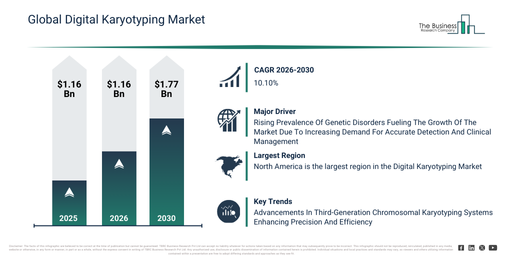
    The digital karyotyping market is projected to experience swift expansion over the coming years. It is anticipated to reach $2.09 billion in 2030 at a compound annual growth rate (CAGR) of 10.1%. This anticipated growth during the forecast period stems from factors such as increasing demand for precision oncology, the incorporation of AI-based genomic interpretation, broader applications in prenatal and rare disease screening, the expansion of clinical genomics services, and the development of high-throughput digital karyotyping platforms. Key developments expected during this period encompass high-resolution copy number analysis, sequence-based chromosomal mapping, enhanced identification of genomic alterations, the integration with sophisticated bioinformatics tools, and a wider application scope within cancer genomics.

    Get A Free Sample Report With In-Depth Market Insights:

    https://thebusinessresearchcompany.com/sample_request?id=61491997&type=smp&name=Digital%20Karyotyping%20Market%20Report%202026&utm_source=Blogs&utm_medium=Paid&utm_campaign=Oct_PR

    Digital Karyotyping Market Growth Factors Behind Sustained Expansion

    A growing occurrence of genetic disorders is anticipated to stimulate the expansion of the digital karyotyping market in the future. These disorders refer to health issues stemming from alterations or irregularities within an individual’s genes or chromosomes. The widespread presence of genetic disorders results from a rise in inherited and chromosomal abnormalities, thereby increasing the chance of transmitting genetic variations through generations. Digital karyotyping addresses the growing requirement for managing genetic disorders by allowing accurate identification of chromosomal abnormalities, enhancing diagnostic precision, and directing specific treatment choices, rather than depending exclusively on conventional cytogenetic approaches. For example, in May 2024, data from the National Health Service, a UK-based government body, indicated that 17,000 individuals are affected by sickle cell disease, an inherited genetic blood disorder, and approximately 250 new diagnoses are made annually. Consequently, the rising occurrence of genetic disorders is projected to fuel the expansion of the digital karyotyping market.

    Digital Karyotyping Market Segment Breakdown: Which Categories Lead On Revenue?

    The digital karyotyping market covered in this report is segmented –

    1) By Product Type: Instruments, Software, Consumables

    2) By Application: Cancer Diagnostics, Genetic Disease Research, Prenatal Screening

    3) By End-User: Hospitals And Clinics, Diagnostic Laboratories, Research Institutes

    Subsegments:

    1) By Instruments: Automated Karyotyping Systems, Microscopes And Imaging Platforms, Scanners And Analyzers, Hybridization And Sequencing Equipment

    2) By Software: Image Analysis Software, Chromosome Classification And Detection Tools, Data Management And Integration Platforms, AI Or Ml-Based Interpretation Software

    3) By Consumables: Reagents And Kits, Probes And Stains, Slides And Coverslips, Sample Preparation Materials

    Digital Karyotyping Market Industry Trends Fueling Future Revenue Growth

    Leading companies in the digital karyotyping market are focusing on technological advancements, particularly on third-generation chromosomal karyotyping systems to enhance their competitive position. These sophisticated platforms utilize high-resolution imaging, automated scanning, and digital analysis, enabling them to detect and classify chromosomal abnormalities with increased accuracy, speed, and reduced manual intervention, consequently improving diagnostic reliability and throughput in genetic testing. For instance, in April 2023, Hangzhou Diagens, a China-based biotechnology company, unveiled the MetaSight G200, a system engineered to capture intelligent metaphase images and complete a slide scan in just four minutes. This system is outfitted with the world’s inaugural chromosome defect recognition module, which automatically labels abnormalities, along with a contactless magnetic levitation motor and a zigzag electric scanning platform to ensure stability.

    Digital Karyotyping Market Competitive Landscape: Who Leads The Industry?

    Major companies operating in the digital karyotyping market are Thermo Fisher Scientific, Corewell Health Laboratory, Eurofins Scientific, Agilent Technologies, Bio-Rad Laboratories Inc., Natera Inc., BGI Genomics Co. Ltd., PerkinElmer Inc., Oxford Nanopore Technologies, Genasis, Personal Genome Diagnostics Inc., DSS Imagetech, MetaSystems, Applied Spectral Imaging (ASI), Bioview, ArgusSoft, Ibex Medical Analytics, KaryoLogic Inc., Cyto Vision, Beijing Abaco Biotechnology

    View The Full Digital Karyotyping Market Report:

    https://thebusinessresearchcompany.com/report/digital-karyotyping-global-market-report?utm_source=Blogs&utm_medium=Paid&utm_campaign=Oct_PR

    Digital Karyotyping Market Geographic Landscape: Which Region Dominates Industry Growth?

    North America was the largest region in the digital karyotyping market in 2025. Asia-Pacific is expected to be the fastest-growing region in the forecast period. The regions covered in the digital karyotyping market report are Asia-Pacific, South East Asia, Western Europe, Eastern Europe, North America, South America, Middle East, Africa.

    Reach Out To Our Team:

    The Business Research Company: https://www.thebusinessresearchcompany.com/

    Americas: +1 310-496-7795

    Asia: +44 7882 955267 & +91 8897263534

    Europe: +44 7882 955267

    Email us at: marketing@tbrc.info

    Follow us on:

    LinkedIn: https://in.linkedin.com/company/the-business-research-company

    YouTube: https://www.youtube.com/channel/UC24_fI0rV8cR5DxlCpgmyFQ

    Global Market Model: https://www.thebusinessresearchcompany.com/global-market-model
  • Digital Hydration Reminder Urinalysis Strip Market Growth In 2026: Market Size, Key Drivers And Future Outlook

    Digital Hydration Reminder Urinalysis Strip Market Growth In 2026: Market Size, Key Drivers And Future Outlook

    Built to provide research that’s more actionable and strategically valuable, The Business Research Company’s 2026 market reports include market attractiveness analysis, total addressable market sizing, company benchmarking matrices, interactive Excel dashboards, broader supply chain intelligence, emerging startup tracking, and in-depth product insights.

    Digital Hydration Reminder Urinalysis Strip Market CAGR Outlook And Future Development

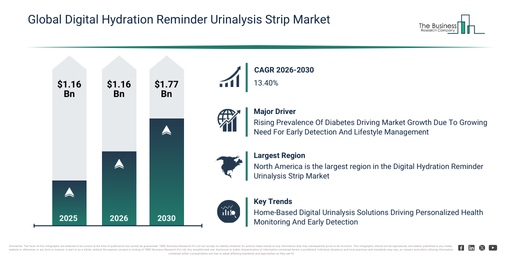
    The digital hydration reminder urinalysis strip market size has experienced rapid growth in recent years. It is projected to increase from $1.53 billion in 2025 to $1.74 billion in 2026, reflecting a compound annual growth rate (CAGR) of 13.7%. The historical expansion of this market can be attributed to a growing awareness of hydration and overall wellness, the adoption of home-based diagnostic testing, increasing smartphone penetration, advancements in urinalysis strip technology, and a rise in preventive healthcare practices.

    The digital hydration reminder urinalysis strip market size is anticipated to undergo significant expansion over the coming years. It is projected to achieve a value of $2.88 billion by 2030, growing at a compound annual growth rate (CAGR) of 13.4%. This projected growth stems from factors such as the expansion of digital health ecosystems, the integration with wearable health devices, a rising demand for personalized health monitoring, increased adoption in sports and fitness applications, and a greater emphasis on chronic disease management. Key trends expected in this forecast period include smart hydration level tracking, app-connected urinalysis strips, real-time hydration feedback, personalized hydration recommendations, and integration with wellness platforms.

    Get A Free Sample Report With In-Depth Market Insights:

    https://thebusinessresearchcompany.com/sample_request?id=83242287&type=smp&name=Digital%20Hydration%20Reminder%20Urinalysis%20Strip%20Market%20Report%202026&utm_source=Blogs&utm_medium=Paid&utm_campaign=Oct_PR

    Digital Hydration Reminder Urinalysis Strip Market Demand Drivers Opening New Revenue Streams

    The escalating occurrence of diabetes is anticipated to drive the expansion of the digital hydration reminder urinalysis strip market in the coming years. Diabetes is a persistent medical state where the body either fails to produce adequate insulin or cannot utilize it effectively, leading to elevated glucose levels in the bloodstream. The increase in diabetes cases is attributed to rising obesity rates, primarily stemming from unhealthy eating habits and inactive lifestyles. Digital hydration reminder urinalysis strips aid in monitoring hydration levels and urine biomarkers linked to diabetes risks, promoting better lifestyle management, enabling the early detection of complications, and enhancing the overall health for individuals living with diabetes. For example, according to the International Diabetes Federation (IDF), a Belgium-based health organization focused on diabetes awareness and advocacy, diabetes was responsible for 3.4 million deaths worldwide in 2024, which equates to one death every nine seconds. Consequently, the increasing prevalence of diabetes is fueling the growth of the digital hydration reminder urinalysis strip market.

    Digital Hydration Reminder Urinalysis Strip Market Segmentation: How Does The Market Break Down By Category?

    The digital hydration reminder urinalysis strip market covered in this report is segmented –

    1) By Product Type: Single-Use Strips, Multi-Use Strips, Smart Strips

    2) By Distribution Channel: Online Retail, Pharmacies, Specialty Stores, Other Distribution Channels

    3) By Application: Home Care, Hospitals And Clinics, Sports And Fitness, Occupational Health, Other Applications

    4) By End-User: Individuals, Healthcare Professionals, Athletes, Other End Users

    Subsegments:

    1) By Single-Use Strips: Colorimetric Strips, Enzymatic Strips, Electrochemical Strips

    2) By Multi-Use Strips: Reusable Sensor Strips, Washable Strips, Modular Test Strips

    3) By Smart Strips: Bluetooth-Enabled Strips, App-Integrated Strips, Internet of Things-Connected Strips

    Digital Hydration Reminder Urinalysis Strip Market Trends Powering Strategic Industry Growth

    Leading companies within the digital hydration reminder urinalysis strip market are concentrating their efforts on creating home-based healthcare solutions, facilitating convenient and real-time observation of hydration levels and various health biomarkers. These at-home healthcare offerings aim to furnish users with personalized insights, enable early identification of potential health issues, and enhance overall wellness management. For example, in January 2024, Vivoo, a US-based health-tech firm specializing in at-home wellness diagnostics, unveiled its innovative at-home digital Urinary Tract Infection (UTI) testing product at CES 2024. The accompanying kit allows individuals to perform tests in minutes by scanning a urine strip with the Vivoo app, which employs AI to deliver accurate results and enable data sharing with healthcare providers. This particular innovation supports convenient monitoring from home, thereby contributing to early detection and improved access to healthcare services.

    Digital Hydration Reminder Urinalysis Strip Market Company Landscape And Competitive Strategy

    Major companies operating in the digital hydration reminder urinalysis strip market are Healthy.io, Vivoo, UroQR, Med2AI, Spark Diagnostics, Scanwell Health, Ribbon Checkup, Starling Medical, Withings, Kamleon, Minuteful Kidney, Inui Health, Urinostics, BioSens Diagnostics, HydroSense Health, AI‑Urinalysis Labs, HydraView Medical, UrineInsight Tech, SmartDip Diagnostics, HomeUrine Tech, AIHydration Health, BioStrip Analytics, DipScan Solutions, QR‑Urinalysis Systems

    View The Full Digital Hydration Reminder Urinalysis Strip Market Report:

    https://thebusinessresearchcompany.com/report/digital-hydration-reminder-urinalysis-strip-global-market-report?utm_source=Blogs&utm_medium=Paid&utm_campaign=Oct_PR

    Digital Hydration Reminder Urinalysis Strip Market Largest Region: Which Geography Holds The Highest Market Share?

    North America was the largest region in the digital hydration reminder urinalysis strip market in 2025. Asia-Pacific is expected to be the fastest-growing region in the forecast period. The regions covered in the digital hydration reminder urinalysis strip market report are Asia-Pacific, South East Asia, Western Europe, Eastern Europe, North America, South America, Middle East, Africa.

    Reach Out To Our Team:

    The Business Research Company: https://www.thebusinessresearchcompany.com/

    Americas: +1 310-496-7795

    Asia: +44 7882 955267 & +91 8897263534

    Europe: +44 7882 955267

    Email us at: marketing@tbrc.info

    Follow us on:

    LinkedIn: https://in.linkedin.com/company/the-business-research-company

    YouTube: https://www.youtube.com/channel/UC24_fI0rV8cR5DxlCpgmyFQ

    Global Market Model: https://www.thebusinessresearchcompany.com/global-market-model
  • Digital Health For Obesity Market Size And Forecast 2026–2030: Trends Driving Industry Expansion

    Digital Health For Obesity Market Size And Forecast 2026–2030: Trends Driving Industry Expansion

    Backed by market attractiveness analysis, total addressable market sizing, company benchmarking matrices, interactive Excel dashboards, wider supply chain intelligence, emerging startup coverage, and detailed product-level insights, The Business Research Company’s 2026 market reports are designed to offer research that is more actionable and strategically valuable than ever.

    Digital Health For Obesity Market Set To Climb From $99.36 Billion In 2026 To $247.33 Billion By 2030

    The market size for digital health solutions addressing obesity has seen substantial growth in recent years. It is anticipated to expand from $78.91 billion in 2025 to $99.36 billion in 2026, exhibiting a compound annual growth rate (CAGR) of 25.9%. The historical expansion of this market can be attributed to factors such as restricted access to digital tools for managing obesity, the increasing occurrence of obesity, a reliance on conventional methods for weight management, insufficient integration between healthcare providers and digital platforms, and the rising adoption of smartphones and internet services.

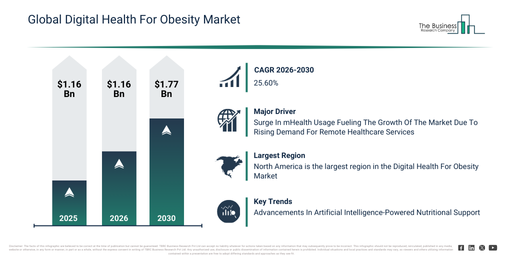
    The digital health for obesity market size is expected to experience significant growth over the next few years. It is projected to reach $247.33 billion by 2030, demonstrating a compound annual growth rate (CAGR) of 25.6%. This anticipated growth is driven by advancements in AI-powered coaching and predictive analytics, the increasing adoption of connected wearable devices, the expansion of telemedicine infrastructure, a growing awareness of personalized obesity care, and rising investment in digital health platforms. Major trends influencing this period include the wider acceptance of mobile and web-based health applications, a surge in the use of wearable fitness and health tracking devices, an increasing demand for personalized weight management programs, the broadening of telehealth and remote patient monitoring services, and the integration of behavioral therapy and lifestyle coaching into digital platforms.

    Get A Free Sample Report With In-Depth Market Insights:

    https://thebusinessresearchcompany.com/sample_request?id=67948293&type=smp&name=Digital%20Health%20For%20Obesity%20Market%20Report%202026&utm_source=Blogs&utm_medium=Paid&utm_campaign=Oct_PR

    Digital Health For Obesity Market Growth Backed By Core Demand Fundamentals

    The expanding embrace of mHealth is projected to propel the digital health for obesity market’s advancement in the coming period. mHealth, or mobile health, involves leveraging mobile devices like smartphones and tablets, alongside health applications and wireless technology, to provide medical and public health services, thus facilitating remote oversight, patient instruction, and dynamic health administration. This surge in mHealth stems from the pervasive ownership of smartphones, which grants convenient access to health applications and digital utilities for tracking, governing, and enhancing individual well-being instantaneously. Furthermore, mHealth supports digital health solutions designed for obesity through mobile-centric interventions such as monitoring dietary intake, tracking physical activity, offering virtual guidance, and providing tailored feedback – all crucial for successful weight control and behavioral adjustments. As an illustration, the National Health Service (NHS), a UK-based publicly funded healthcare provider, reported in December 2023 that appointments accessed or managed via its app increased to 4.1 million in November 2023, a significant rise from 1.95 million in November 2022. Consequently, the growing integration of mHealth is propelling the expansion of the digital health for obesity market.

    Digital Health For Obesity Market Segment Trends And Revenue Contributors

    The digital health for obesity market covered in this report is segmented –

    1) By Component: Software, Hardware, Services

    2) By Functionality: Weight Monitoring, Diet And Nutrition Management, Physical Activity Tracking, Behavioral Therapy Or Computer Based Test, Remote Patient Monitoring

    3) By End-Use: Patients, Providers, Payers, Other Users

    Subsegments:

    1) By Software: Mobile Applications, Web-Based Platforms, Artificial Intelligence-Powered Coaching Tools, Diet And Nutrition Tracking Software, Fitness And Activity Monitoring Software, Behavioral Modification Programs, Telehealth Software, Electronic Health Record (EHR) Integration Tools

    2) By Hardware: Wearable Fitness Trackers, Smart Scales, Smartwatches, Body Composition Analyzers, Connected Glucometers, Blood Pressure Monitors, Sleep Trackers, Internet of Things-Enabled Health Devices

    3) By Services: Remote Patient Monitoring, Teleconsultation Services, Weight Management Counseling, Subscription-Based Wellness Programs, Personalized Coaching Services, Behavioral Therapy Sessions, Data Analytics And Reporting Services, Clinical Support And Follow-Up

    Digital Health For Obesity Market Growth Trends Reshaping The Competitive Landscape

    Major companies operating within the digital health for obesity market are prioritizing technological advancements, particularly in artificial intelligence-powered nutritional support. This strategic focus is aimed at enhancing personalized care, elevating patient engagement, and fostering sustainable behavior changes in the management of weight and related chronic conditions. Artificial intelligence-powered nutritional support involves the application of artificial intelligence algorithms and virtual agents to provide tailored dietary guidance, real-time feedback, and behavioral coaching, assisting individuals in making healthier food choices and sustaining long-term lifestyle modifications. For instance, in May 2025, Omada Health Inc., a US-based digital healthcare company dedicated to chronic disease prevention and management, introduced OmadaSpark Inc. This AI-powered virtual agent was launched as part of its nutritional intelligence initiative, designed to bolster personalized nutrition support. It offers instant educational guidance, motivation, and tools for building healthy habits. This innovation endeavors to transform individuals’ relationships with food by integrating advanced technology with clinical care, representing a crucial step in expanding Omada’s digital platform for managing chronic conditions and obesity.

    Digital Health For Obesity Market Key Players Shaping Industry Direction

    Major companies operating in the digital health for obesity market are Teladoc Health Inc., WW International Inc., Hims & Hers Inc., Noom Inc., Vida Health Inc., Twin Health Inc., Allurion Technologies Inc., Virta Health Corp., Omada Health Inc., DarioHealth Corp., WellDoc Inc., Sidekick Health, Qardio Inc., Fitterfly Pvt. Ltd., Form Health, Lark Health Inc., Knownwell Inc., Ilant Health Inc., MyNetDiary Inc., Rimidi Inc

    View The Full Digital Health For Obesity Market Report:

    https://thebusinessresearchcompany.com/report/digital-health-for-obesity-global-market-report?utm_source=Blogs&utm_medium=Paid&utm_campaign=Oct_PR

    Digital Health For Obesity Market Regional Analysis: Which Region Leads By Revenue?

    North America was the largest region in the digital health for obesity market in 2025. Asia-Pacific is expected to be the fastest-growing region in the forecast period. The regions covered in the digital health for obesity market report are Asia-Pacific, South East Asia, Western Europe, Eastern Europe, North America, South America, Middle East, Africa.

    Reach Out To Our Team:

    The Business Research Company: https://www.thebusinessresearchcompany.com/

    Americas: +1 310-496-7795

    Asia: +44 7882 955267 & +91 8897263534

    Europe: +44 7882 955267

    Email us at: marketing@tbrc.info

    Follow us on:

    LinkedIn: https://in.linkedin.com/company/the-business-research-company

    YouTube: https://www.youtube.com/channel/UC24_fI0rV8cR5DxlCpgmyFQ

    Global Market Model: https://www.thebusinessresearchcompany.com/global-market-model