Month: October 2026

  • Diabetes Care Devices Market Growth Outlook: Why Analysts Expect Continued Expansion

    Diabetes Care Devices Market Growth Outlook: Why Analysts Expect Continued Expansion

    Backed by market attractiveness analysis, total addressable market sizing, company benchmarking matrices, interactive Excel dashboards, wider supply chain intelligence, emerging startup coverage, and detailed product-level insights, The Business Research Company’s 2026 market reports are designed to offer research that is more actionable and strategically valuable than ever.

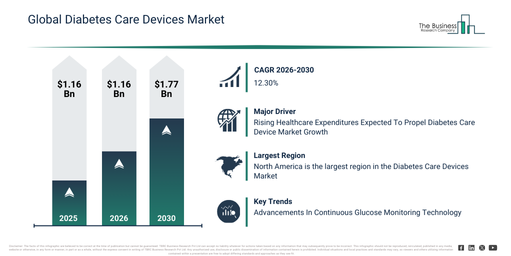
    Diabetes Care Devices Market Poised To Hit $130.76 Billion By 2030 With A 12.3% CAGR

    The diabetes care devices market size has seen significant rapid expansion in recent years. This market is expected to expand from $73.91 billion in 2025 to $82.22 billion in 2026, demonstrating a compound annual growth rate (CAGR) of 11.3%. Several factors contributed to this historical growth, including the increasing global prevalence of diabetes, enhanced access to glucose monitoring devices, the expansion of outpatient diabetes care services, greater awareness of self-monitoring practices, and the rising availability of disposable testing supplies.

    The diabetes care devices market is projected to experience substantial expansion in the coming years, anticipated to reach a valuation of $130.76 billion by 2030, exhibiting a compound annual growth rate (CAGR) of 12.3%. This projected growth can be attributed to a heightened demand for real-time glucose monitoring, the increasing uptake of closed-loop insulin systems, the broadening reach of digital diabetes management platforms, a sharpened emphasis on individualized diabetes care, and increased healthcare investments dedicated to chronic disease management. Key trends during this period are expected to encompass the growing acceptance of continuous glucose monitoring devices, an increase in the utilization of smart insulin delivery systems, the deeper integration of mobile health platforms, the broadening of connected diabetes management ecosystems, and a greater concentration on patient-focused monitoring solutions.

    Get A Free Sample Report With In-Depth Market Insights:

    https://thebusinessresearchcompany.com/sample_request?id=39718479&type=smp&name=Diabetes%20Care%20Devices%20Market%20Report%202026&utm_source=Blogs&utm_medium=Paid&utm_campaign=Oct_PR

    Diabetes Care Devices Market Growth Drivers: What’s Behind The Acceleration?

    The diabetes care device market is projected to expand in the future, driven by increasing healthcare expenditures. Healthcare expenditures encompass the total amount spent on health-related services, products, and activities over a specific period, typically at an individual, community, national, or global level. This rise in healthcare spending, combined with enhanced access to healthcare services and a growing number of diabetes diagnoses, stimulates increased investments in research and development. This ultimately leads to advancements in diabetes care devices, such as improved glucose monitoring systems, insulin delivery mechanisms, and digital health solutions. For example, in June 2025, the Centers for Medicare & Medicaid Services (CMS), a U.S. federal agency, reported that National Health Expenditure (NHE) grew by 7.5% to $4.9 trillion in 2023, amounting to $14,570 per person, and accounted for 17.6% of Gross Domestic Product (GDP). Hospital expenditures also rose by 10.4% to $1,519.7 billion in 2023, a faster rate than the 3.2% growth recorded in 2022. Therefore, the continuous increase in healthcare expenditure is anticipated to fuel the growth of the diabetes care device market going forward.

    Diabetes Care Devices Market Segment Landscape: Which Areas Lead Development?

    The diabetes care devices market covered in this report is segmented –

    1) By Type: Blood Glucose Test Strips, Insulin Pens, Syringes, Pumps And Injectors, Lancing Devices And Equipment, Continuous Glucose Monitoring Devices And Equipment, Blood Glucose Meters

    2) By Type of Expenditure: Public, Private

    3) By Consumable Type: Instruments Or Equipment, Disposables

    4) By Type Of Testing: Point Of Care (POC) Testing, Non-Point Of Care (POC) Testing

    5) By End User: Hospitals And Clinics, Diagnostic Laboratories, Other End Users

    Subsegments:

    1) By Blood Glucose Test Strips: Standard Blood Glucose Test Strips, Test Strips for Continuous Glucose Monitors

    2) By Insulin Pens: Pre-filled Insulin Pens, Reusable Insulin Pens, Smart Insulin Pens

    3) By Syringes: Insulin Syringes (various capacities), Disposable Syringes, Safety Syringes

    4) By Pumps and Injectors: Insulin Pumps, Insulin Jet Injectors, Patch Pumps

    5) By Lancing Devices and Equipment: Manual Lancing Devices, Automatic Lancing Devices, Lancets (various gauges)

    6) By Continuous Glucose Monitoring Devices and Equipment: Real-Time CGM Systems, Flash Glucose Monitoring Systems, CGM Sensors and Transmitters

    7) By Blood Glucose Meters: Standard Blood Glucose Meters, Smart Blood Glucose Meters, Meters with Integrated Data Management

    Diabetes Care Devices Market Trends: What’s Defining The Industry’s Next Phase?

    Leading firms within the diabetes care devices market are prioritizing the creation of sophisticated solutions, including real-time glucose monitoring technology, to elevate precision, user convenience, and proactive disease control. This real-time glucose monitoring system delivers automated, ongoing glucose readings and notifications, empowering individuals with diabetes to make prompt choices and mitigate potential health hazards. An illustrative example is seen in August 2025, when Abbott Laboratories, a healthcare company based in the US, introduced the FreeStyle Libre 2 Plus. This innovation provides continuous, minute-by-minute glucose data transmitted directly to a compatible smartphone, alongside customizable alerts for instances of low or high glucose levels. The device facilitates assured self-management of diabetes by supplying automated alerts, insights into historical trends, and directional indicators, thereby eliminating the need for regular fingerstick tests. Utilizing near-field communication and Bluetooth connectivity, it functions effectively and is designed for wear for a duration of up to 15 days. Furthermore, it permits caregivers to obtain glucose status updates via integrated digital health platforms. This device contributes to enhanced patient safety through facilitating rapid interventions and boosts user engagement by offering real-time data that informs everyday health decisions.

    Diabetes Care Devices Market Company Landscape And Competitive Strategy

    Major companies operating in the diabetes care devices market are Abbott Laboratories, Becton Dickinson and Company, Roche Holding AG, Medtronic plc, Dexcom Inc., Novo Nordisk A/S, Eli Lilly and Company, LifeScan Inc., Ascensia Diabetes Care, Tandem Diabetes Care Inc., Insulet Corporation, Ypsomed AG, Terumo Corporation, Nipro Corporation, Owen Mumford Ltd., ARKRAY Inc., AgaMatrix Inc., Acon Laboratories Inc., HTL-STREFA S.A., Sanofi India Limited

    View The Full Diabetes Care Devices Market Report:

    https://thebusinessresearchcompany.com/report/diabetes-care-devices-global-market-report?utm_source=Blogs&utm_medium=Paid&utm_campaign=Oct_PR

    Diabetes Care Devices Market Largest Region: Which Geography Holds The Highest Market Share?

    North America was the largest region in the global diabetes care devices market in 2025. Western Europe was the second largest region in the global diabetes care devices market. The regions covered in the diabetes care devices market report are Asia-Pacific, South East Asia, Western Europe, Eastern Europe, North America, South America, Middle East, Africa.

    Reach Out To Our Team:

    The Business Research Company: https://www.thebusinessresearchcompany.com/

    Americas: +1 310-496-7795

    Asia: +44 7882 955267 & +91 8897263534

    Europe: +44 7882 955267

    Email us at: marketing@tbrc.info

    Follow us on:

    LinkedIn: https://in.linkedin.com/company/the-business-research-company

    YouTube: https://www.youtube.com/channel/UC24_fI0rV8cR5DxlCpgmyFQ

    Global Market Model: https://www.thebusinessresearchcompany.com/global-market-model
  • Desmoplastic Small Round Cell Tumor Treatment Market Forecast Insights: The Road To $5.92 Billion By 2030

    Desmoplastic Small Round Cell Tumor Treatment Market Forecast Insights: The Road To $5.92 Billion By 2030

    Featuring market attractiveness scoring, total addressable market sizing, company benchmarking matrices, interactive Excel dashboards, deeper supply chain intelligence, emerging startup tracking, and granular product-level insights, The Business Research Company’s 2026 market reports are built to deliver research that is both more actionable and more strategically valuable.

    Desmoplastic Small Round Cell Tumor Treatment Market Size And Revenue Outlook Through 2030

    The desmoplastic small round cell tumor treatment market has experienced robust expansion recently. Projections indicate its value will increase from $4.01 billion in 2025 to $4.35 billion in 2026, demonstrating a compound annual growth rate (CAGR) of 8.3%. Historically, this growth was influenced by factors such as a scarcity of treatment modalities for dsrct, the dependence on traditional chemotherapy and surgical interventions, insufficient public understanding of rare tumors, underdeveloped specialized oncology facilities, and prolonged dsrct diagnosis times.

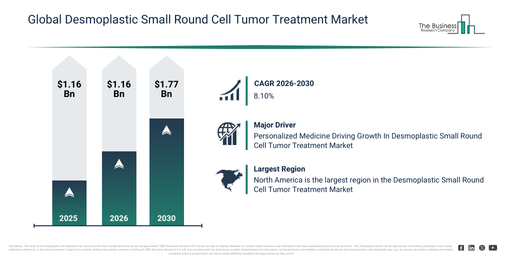
    The desmoplastic small round cell tumor treatment market size is anticipated to experience robust expansion over the next few years. It is projected to reach $5.92 billion in 2030, demonstrating a compound annual growth rate (CAGR) of 8.1%. This growth throughout the forecast period can be attributed to the development of targeted therapies and immunotherapies, the integration of AI-driven diagnostics, an increase in clinical trials for DSRCT, the expansion of oncology clinics and ambulatory surgical centers, and rising healthcare funding for rare cancers. Major trends expected during this period include the increasing adoption of multimodal cancer treatments, a heightened focus on rare cancer research and clinical trials, growing investment in targeted therapies and immunotherapy, the expansion of specialized oncology centers, and enhanced patient support programs and post-treatment care.

    Get A Free Sample Report With In-Depth Market Insights:

    https://thebusinessresearchcompany.com/sample_request?id=65902504&type=smp&name=Desmoplastic%20Small%20Round%20Cell%20Tumor%20Treatment%20Market%20Report%202026&utm_source=Blogs&utm_medium=Paid&utm_campaign=Oct_PR

    Desmoplastic Small Round Cell Tumor Treatment Market Growth Factors Behind Sustained Expansion

    The heightened emphasis on personalized medicine is projected to stimulate expansion in the desmoplastic small round cell tumor treatment market. Personalized medicine offers tailored healthcare solutions, taking into account a patient’s individual genetic makeup, lifestyle, and surroundings, encompassing strategies like pharmacogenomics, targeted therapies, and gene editing for more accurate and potent treatments. This growing focus stems from progress in genomics, better patient results, and the possibility of more precise and effective therapies. For desmoplastic small round cell tumor (DSRCT) treatment, personalized medicine customizes therapies according to the tumor’s specific genetic and molecular profile, leading to targeted interventions that boost effectiveness and lessen side effects. As an illustration, in February 2024, the Personalized Medicine Coalition, a US non-profit organization, highlighted that in 2023, the FDA cleared 16 new personalized treatments for rare disease patients, a substantial rise from the six approved in 2022. Consequently, the intensified attention on personalized medicine is propelling the desmoplastic small round cell tumor treatment market. Increased funding for oncology research is anticipated to drive forward the desmoplastic small round cell tumor treatment market. This surge in oncology research investment is a response to the rising global occurrence of cancer, breakthroughs in precision medicine, and the escalating demand for novel treatments and therapies designed to better patient results. Oncology research contributes significantly to managing desmoplastic small round cell tumors by deepening insights into the tumor’s biological characteristics, thereby facilitating the creation of targeted therapies and enhanced treatment guidelines that improve patient recovery. For example, in 2023, the Office for National Statistics, a UK government body, reported that the UK government’s net expenditure on research and development (R&D) reached £17.4 ($22.1 billion) billion in 2023, an increase from £16.1 billion ($20.45 billion) in 2022, signifying an 8.2% growth. Hence, expanding investment in oncology research is a key driver for the desmoplastic small round cell tumor treatment market.

    Desmoplastic Small Round Cell Tumor Treatment Market Segments: Where Is Growth Concentrated?

    The desmoplastic small round cell tumor treatment market covered in this report is segmented –

    1) By Type: Immunotherapy, Surgical Operation, Chemotherapy, Radiotherapy

    2) By Drug Class: Cytotoxic Agents, Targeted Therapies, Immunomodulators

    3) By End User: Hospitals, Oncology Clinics, Ambulatory Surgical Centers

    Subsegments:

    1) By Immunotherapy: Checkpoint Inhibitors, CAR T-Cell Therapy, Monoclonal Antibodies, Immune Modulators

    2) By Surgical Operation: Tumor Resection, Debulking Surgery, Laparoscopic Surgery

    3) By Chemotherapy: Neoadjuvant Chemotherapy, Adjuvant Chemotherapy, Targeted Therapy Agents

    4) By Radiotherapy: External Beam Radiation Therapy (EBRT), Brachytherapy, Stereotactic Radiosurgery (SRS)

    Desmoplastic Small Round Cell Tumor Treatment Market Key Players Shaping Industry Direction

    Major companies operating in the desmoplastic small round cell tumor treatment market are Pfizer Inc., Johnson & Johnson Services Inc., F. Hoffmann-La Roche AG, Merck & Co. Inc., AbbVie Inc., Bayer AG, Sanofi S.A., Bristol-Myers Squibb Company, AstraZeneca PLC, Novartis AG, Fresenius Kabi AG, Takeda Pharmaceutical Company Limited, Eli Lilly and Company, Boehringer Ingelheim International GmbH, Gilead Sciences Inc., Amgen Inc., GlaxoSmithKline plc (GSK), Teva Pharmaceutical Industries Ltd., Regeneron Pharmaceuticals Inc., Aurobindo Pharma Limited, Hikma Pharmaceuticals PLC, Zymeworks Inc., Blueprint Medicines Corporation, MacroGenics Inc., Exelixis Inc

    View The Full Desmoplastic Small Round Cell Tumor Treatment Market Report:

    https://thebusinessresearchcompany.com/report/desmoplastic-small-round-cell-tumor-treatment-global-market-report?utm_source=Blogs&utm_medium=Paid&utm_campaign=Oct_PR

    Desmoplastic Small Round Cell Tumor Treatment Market Regional Analysis: Which Region Leads By Revenue?

    North America was the largest region in the desmoplastic small round cell tumor treatment market in 2025. The regions covered in the desmoplastic small round cell tumor treatment market report are Asia-Pacific, South East Asia, Western Europe, Eastern Europe, North America, South America, Middle East, Africa.

    Reach Out To Our Team:

    The Business Research Company: https://www.thebusinessresearchcompany.com/

    Americas: +1 310-496-7795

    Asia: +44 7882 955267 & +91 8897263534

    Europe: +44 7882 955267

    Email us at: marketing@tbrc.info

    Follow us on:

    LinkedIn: https://in.linkedin.com/company/the-business-research-company

    YouTube: https://www.youtube.com/channel/UC24_fI0rV8cR5DxlCpgmyFQ

    Global Market Model: https://www.thebusinessresearchcompany.com/global-market-model
  • Dermatoscopes Market Explained: What Is Fueling Growth To $2.73 Billion By 2030?

    Dermatoscopes Market Explained: What Is Fueling Growth To $2.73 Billion By 2030?

    Built to provide research that’s more actionable and strategically valuable, The Business Research Company’s 2026 market reports include market attractiveness analysis, total addressable market sizing, company benchmarking matrices, interactive Excel dashboards, broader supply chain intelligence, emerging startup tracking, and in-depth product insights.

    Dermatoscopes Market Growth From $1.72 Billion In 2026 To $2.73 Billion By 2030 At A CAGR Of 12.2%

    The dermatoscopes market size has shown substantial growth in recent years. It is projected to expand from $1.53 billion in 2025 to $1.72 billion in 2026, reflecting a compound annual growth rate (CAGR) of 12.4%. This historical growth can be linked to factors such as increased awareness of skin cancer screening, the wider availability of handheld diagnostic tools, a rise in outpatient dermatology visits, the growing integration of dermoscopy in primary care, and advancements in optical magnification technologies.

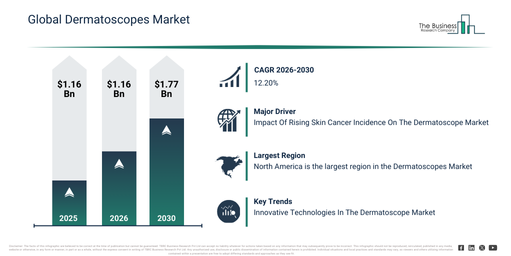
    The dermatoscopes market is anticipated to undergo significant expansion over the next few years. It is projected to reach $2.73 billion by 2030, exhibiting a compound annual growth rate (CAGR) of 12.2%. This growth within the forecast period can be attributed to several factors, including the increasing demand for connected diagnostic instruments, the rising adoption of AI-assisted clinical decision support systems, the expansion of remote dermatology consultations, a growing emphasis on rapid point-of-care diagnostics, and the increasing integration of dermatoscopes with mobile platforms. Notable trends expected during this period encompass the greater adoption of digital and hybrid dermatoscopes, the increasing use of AI-based lesion analysis, an escalating demand for portable diagnostic tools, the proliferation of teledermatology-compatible devices, and an enhanced focus on the early detection of melanoma.

    Get A Free Sample Report With In-Depth Market Insights:

    https://thebusinessresearchcompany.com/sample_request?id=51472464&type=smp&name=Dermatoscopes%20Market%20Report%202026&utm_source=Blogs&utm_medium=Paid&utm_campaign=Oct_PR

    Dermatoscopes Market Demand Drivers Opening New Revenue Streams

    The anticipated increase in skin cancer cases is poised to boost the expansion of the dermatoscope market. Defined by the uncontrolled growth of skin cells, skin cancer typically results from damage to these cells, frequently due to ultraviolet radiation exposure from the sun. A dermatoscope serves to magnify and light up the skin’s exterior, aiding in the visualization of skin lesions and distinguishing between benign and cancerous lesions. To illustrate, Cancer Australia, an Australia-based public governance body for cancer, forecasts that approximately 17,443 new melanoma cases will be diagnosed in 2025 (comprising 10,187 males and 7,256 females). Furthermore, the lifetime probability of a melanoma diagnosis by age 85 is anticipated to be 1 in 19 (5.4%) across the population, specifically 1 in 16 (6.4%) for males and 1 in 23 (4.4%) for females. Consequently, the growing occurrence of skin cancer is a key driver for the dermatoscope market.

    Dermatoscopes Market Segment Analysis: What Are The Core Market Categories?

    The dermatoscopes market covered in this report is segmented –

    1) By Product: Contact Dermatoscope, Hybrid Dermatoscope, Non-Contact Dermatoscope

    2) By Technology: Light-Emitting Diode (LED), Xenon, Halogen

    3) By Application: Skin Tumors, Scabies, Warts, Fungal Infections, Other Applications

    4) By End-User: Hospitals, Dermatology Clinics

    Subsegments:

    1) By Contact Dermatoscope: Handheld Contact Dermatoscope, Tabletop Contact Dermatoscope

    2) By Hybrid Dermatoscope: Digital Hybrid Dermatoscope, Analog Hybrid Dermatoscope

    3) By Non-Contact Dermatoscope: Handheld Non-Contact Dermatoscope, Stationary Non-Contact Dermatoscope

    Dermatoscopes Market Trends Powering Strategic Industry Growth

    Major companies within the dermatoscope sector are concentrating on developing innovative lenses, such as optional conversion lenses, and on providing reliable services to their clientele. An optional conversion lens is a type of lens that can be affixed to a scope to extend its focal length, allowing it to achieve closer proximity to a subject without requiring physical movement. For instance, in June 2023, DeepX, a South Korea-based company specializing in advanced teledermatology solutions, unveiled the DermoSight. DermoSight is presently approved for capturing images of skin lesions for teledermatology assessments, akin to other digital dermatoscopes. It is also designed to operate with an AI algorithm utilizing proprietary optical transfer diagnosis (OTD) technology, although the FDA has not yet sanctioned this technology for commercial use with DermoSight. OTD enables the examination of lesions beneath the skin by analyzing their light-transmitting characteristics. This technology aims to establish dermatoscopic assessments as a powerful, non-invasive, and straightforward AI instrument, thus aiding in the acceleration and enhancement of skin cancer diagnosis.

    Dermatoscopes Market Competitive Analysis Of Leading Industry Participants

    Major companies operating in the dermatoscopes market are Welch Allyn Inc., HEINE Optotechnik GmbH, DermLite LLC, FotoFinder Systems GmbH, Canfield Scientific Inc., Optomed Oy, Rudolf Riester GmbH, American Diagnostic Corporation, Firefly Global, MetaOptima Technology Inc., Pixience, Dino-Lite Company, DermoScan GmbH, Derma Medical Systems, AMD Global Telemedicine Inc., Caliber Imaging & Diagnostics Inc., Optilia Medical, Illuco Corporation Ltd., Nidek Co Ltd., KIRCHNER & WILHELM GmbH + Co. KG

    View The Full Dermatoscopes Market Report:

    https://thebusinessresearchcompany.com/report/dermatoscopes-global-market-report?utm_source=Blogs&utm_medium=Paid&utm_campaign=Oct_PR

    Dermatoscopes Market Geographic Distribution And Regional Opportunities

    North America was the largest region in the dermatoscopes market in 2025. The regions covered in the dermatoscopes market report are Asia-Pacific, South East Asia, Western Europe, Eastern Europe, North America, South America, Middle East, Africa.

    Reach Out To Our Team:

    The Business Research Company: https://www.thebusinessresearchcompany.com/

    Americas: +1 310-496-7795

    Asia: +44 7882 955267 & +91 8897263534

    Europe: +44 7882 955267

    Email us at: marketing@tbrc.info

    Follow us on:

    LinkedIn: https://in.linkedin.com/company/the-business-research-company

    YouTube: https://www.youtube.com/channel/UC24_fI0rV8cR5DxlCpgmyFQ

    Global Market Model: https://www.thebusinessresearchcompany.com/global-market-model
  • Dermatology Medical Lasers Market Forecast To Reach $10.8 Billion By 2030: Key Trends Explained

    Dermatology Medical Lasers Market Forecast To Reach $10.8 Billion By 2030: Key Trends Explained

    Backed by market attractiveness analysis, total addressable market sizing, company benchmarking matrices, interactive Excel dashboards, wider supply chain intelligence, emerging startup coverage, and detailed product-level insights, The Business Research Company’s 2026 market reports are designed to offer research that is more actionable and strategically valuable than ever.

    Dermatology Medical Lasers Market Expansion Outlook: What Revenue Opportunities Are Ahead?

    The market size for dermatology medical lasers has experienced rapid expansion in recent years. It is projected to grow from $4.84 billion in 2025 to $5.71 billion in 2026, at a compound annual growth rate (CAGR) of 18.0%. The growth observed in the past can be attributed to factors such as the increasing prevalence of skin disorders, the rising popularity of cosmetic dermatology procedures, an expanding number of dermatology clinics, growing demand for tattoo removal services, and technological advancements in laser devices.

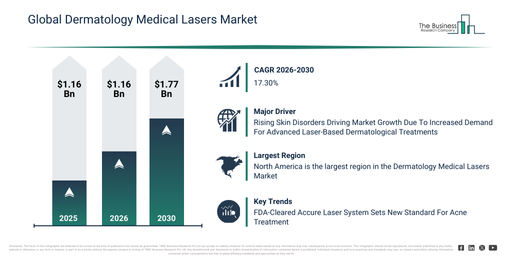
    The dermatology medical lasers market size is expected to experience substantial growth over the next few years. It is projected to expand to $10.8 billion in 2030, at a compound annual growth rate (CAGR) of 17.3%. This anticipated growth during the forecast period can be attributed to an increasing demand for minimally invasive cosmetic procedures, rising investments in aesthetic clinics, the growing adoption of advanced laser platforms, the expansion of dermatology services into emerging markets, and an increasing focus on personalized skin treatments. Major trends identified for the forecast period include the increasing uptake of non-invasive aesthetic laser treatments, a rising demand for multi-application dermatology lasers, the growing utilization of fractional and pulsed laser technologies, the expansion of tattoo and scar removal procedures, and an enhanced focus on skin rejuvenation solutions.

    Get A Free Sample Report With In-Depth Market Insights:

    https://thebusinessresearchcompany.com/sample_request?id=37181692&type=smp&name=Dermatology%20Medical%20Lasers%20Market%20Report%202026&utm_source=Blogs&utm_medium=Paid&utm_campaign=Oct_PR

    Dermatology Medical Lasers Market Growth Backed By Core Demand Fundamentals

    The dermatology medical laser market is anticipated to expand due to an increase in skin disorders. These disorders encompass a range of conditions like acne, psoriasis, eczema, hyperpigmentation, and scars, which affect the skin’s appearance, function, and overall health. The primary reason for the rise in skin disorders is heightened exposure to environmental pollutants and climatic factors, which exacerbate inflammatory and infectious skin conditions globally. Dermatology medical lasers provide numerous applications for treating skin disorders, offering patients effective, targeted, and frequently minimally invasive solutions for various dermatological problems. For instance, in January 2023, the American Cancer Society, a US-based voluntary health organization for cancer, stated that melanoma constitutes only about 1% of skin cancers but causes the vast majority of skin cancer deaths, with a total of 97,610 new cases of melanomas identified in 2023 (58,120 in men and 39,490 in women), and 7,990 people are anticipated to pass away from the disease. Consequently, the increasing prevalence of skin disorders is driving the growth of the dermatology medical laser market.

    Dermatology Medical Lasers Market Segment Breakdown: Which Categories Lead On Revenue?

    The dermatology medical lasers market covered in this report is segmented –

    1) By Device: Surgical Lasers, Vascular Lasers

    2) By Application: Cancer, Hair Removal, Tattoo Removal, Resurfacing, Other Applications

    3) By End-users: Hospitals, Skin Care Clinics, Cosmetic Surgical Centres

    Subsegments:

    1) By Surgical Lasers: CO2 Lasers, Erbium Lasers, Diode Lasers, Nd:YAG Lasers, Alexandrite Lasers, Fractional Lasers, Other Surgical Lasers

    2) By Vascular Lasers: Pulsed Dye Lasers (PDL), KTP Lasers, Nd:YAG Lasers, Diode Lasers, Alexandrite Lasers, Other Vascular Lasers

    Dermatology Medical Lasers Market Growth Trends Reshaping The Competitive Landscape

    Leading companies in the dermatology medical lasers market are focusing on developing innovative products such as the Accure Laser System. Their aim is to enhance treatment precision, improve patient outcomes, and more effectively address specific skin conditions like acne, scars, and pigmentation disorders. The Accure Laser System is an advanced dermatological laser technology designed for highly precise targeting of specific skin conditions. For instance, in October 2024, AccureAcne Inc., a US-based company that offers dermatology treatments, announced that the U.S. Food and Drug Administration (FDA) had granted clearance for its Accure Laser System for the long-term treatment of mild to severe inflammatory acne vulgaris. This innovative approach is designed to effectively reduce sebum production across various skin types and severities of acne.

    Dermatology Medical Lasers Market Leading Companies And Competitive Benchmarking

    Major companies operating in the dermatology medical lasers market are Cynosure Inc., Syneron, Shenzhen GSD, Sincoheren, Fotona, Alma Lasers Ltd., Cutera Inc., Asclepion Laser Technologies GmbH, Biolitec AG, Candela Medical Corporation, DEKA Research & Development Corporation, DermaQuip, DermaSweep, Dominion Aesthetic Technologies, Lumenis Ltd., Milesman, Quanta System S.p.A., Sciton Inc., Sharplight Technologies, Solta Medical Inc., Thermi, Venus Concept Ltd., Viora Ltd., Zimmer MedizinSysteme GmbH, Zeltiq Aesthetics Inc.

    View The Full Dermatology Medical Lasers Market Report:

    https://thebusinessresearchcompany.com/report/dermatology-medical-lasers-global-market-report?utm_source=Blogs&utm_medium=Paid&utm_campaign=Oct_PR

    Dermatology Medical Lasers Market Largest Region By Revenue And Market Share

    North America was the largest region in the dermatology medical lasers market in 2025. Asia-Pacific was the second-largest region in the dermatology medical lasers market report. The regions covered in the dermatology medical lasers market report are Asia-Pacific, South East Asia, Western Europe, Eastern Europe, North America, South America, Middle East, Africa.

    Reach Out To Our Team:

    The Business Research Company: https://www.thebusinessresearchcompany.com/

    Americas: +1 310-496-7795

    Asia: +44 7882 955267 & +91 8897263534

    Europe: +44 7882 955267

    Email us at: marketing@tbrc.info

    Follow us on:

    LinkedIn: https://in.linkedin.com/company/the-business-research-company

    YouTube: https://www.youtube.com/channel/UC24_fI0rV8cR5DxlCpgmyFQ

    Global Market Model: https://www.thebusinessresearchcompany.com/global-market-model
  • Dermatology Lasers Market Analysis: Understanding The Drivers Behind 8.1% CAGR Through 2030 Growth

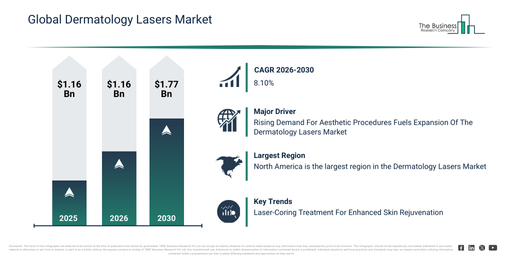
    Dermatology Lasers Market Analysis: Understanding The Drivers Behind 8.1% CAGR Through 2030 Growth

    Featuring market attractiveness scoring, total addressable market sizing, company benchmarking matrices, interactive Excel dashboards, deeper supply chain intelligence, emerging startup tracking, and granular product-level insights, The Business Research Company’s 2026 market reports are built to deliver research that is both more actionable and more strategically valuable.

    Dermatology Lasers Market Growth Potential: How Will Market Size Shift Through 2030?

    The dermatology lasers market size has experienced significant expansion in recent years. This market is projected to increase from $2.25 billion in 2025 to $2.43 billion in 2026, exhibiting a compound annual growth rate (CAGR) of 7.9%. Historically, this growth was propelled by factors such as the increasing prevalence of skin disorders, the proliferation of cosmetic dermatology practices, advancements in laser platform technology, a growing patient preference for non-surgical procedures, and the emergence of specialized dermatology clinics.

    The dermatology lasers market is projected to experience substantial expansion over the coming years. This market is forecast to reach $3.33 billion in 2030, exhibiting a compound annual growth rate (CAGR) of 8.1%. Factors contributing to this anticipated growth include a surge in demand for aesthetic procedures, increased investments in advanced laser platforms, the expansion of dermatology services in emerging markets, the rising adoption of AI-guided laser treatments, and a heightened emphasis on personalized skin therapies. Key trends anticipated during this period encompass the wider adoption of multi-wavelength laser systems, a growing preference for minimally invasive skin treatments, increased utilization of fractional and pulsed lasers, the broadening scope of aesthetic dermatology procedures, and a stronger emphasis on the accuracy of treatments.

    Get A Free Sample Report With In-Depth Market Insights:

    https://thebusinessresearchcompany.com/sample_request?id=24381650&type=smp&name=Dermatology%20Lasers%20Market%20Report%202026&utm_source=Blogs&utm_medium=Paid&utm_campaign=Oct_PR

    Dermatology Lasers Market Growth Catalysts And Demand Drivers

    The increasing requirement for aesthetic procedures is projected to spur the expansion of the dermatology lasers market in the future. Aesthetic procedures encompass medical treatments involving incisions and tissue manipulation, which are aimed at enhancing an individual’s physical appearance. Dermatology lasers are utilized across a broad spectrum of aesthetic procedures to improve skin appearance, such as minimizing wrinkles and eliminating pigmented lesions. For instance, in January 2023, the International Society of Aesthetic Plastic Surgery (ISAPS), a US-based organization for board-certified aesthetic plastic surgeons, reported that the total global aesthetic procedures performed by plastic surgeons saw an increase of 19.3%, including over 12.8 million surgical and 17.5 million non-surgical procedures. Thus, the escalating demand for aesthetic procedures is fueling the growth of the dermatology lasers market.

    Dermatology Lasers Market Segmentation: How Does The Market Break Down By Category?

    The dermatology lasers market covered in this report is segmented –

    1) By Type: Gas Laser Machine, Semiconductor Laser Machine, Gem Laser Machine

    2) By Technology: Ablative Dermatology Lasers, Non-Ablative Dermatology Lasers

    3) By Application: Therapeutic, Aesthetic

    4) By End Users: Hospitals, Skin Care Clinics, Cosmetic Surgical Centers

    Subsegments:

    1) By Gas Laser Machine: CO2 Laser, Argon Laser

    2) By Semiconductor Laser Machine: Diode Laser, Solid-State Laser

    3) By Gem Laser Machine: Alexandrite Laser, Ruby Laser

    Dermatology Lasers Market Trends Shaping Long-Term Demand

    Leading companies within the dermatology lasers market are advancing technologies, including laser-coring treatment, to deliver non-invasive, highly accurate skin procedures that enhance aesthetic results with reduced recovery periods. This laser-coring method aims to boost collagen generation and address skin imperfections, providing patients with improved outcomes for skin revitalization and resurfacing. For example, in August 2023, Acclaro Medical, a US-based provider of non-invasive and aesthetic medical devices, introduced the UltraClear Laser-Coring Treatment, an advanced dermatological procedure that utilizes a 2910 nm fiber laser to form microscopic ablation channels within the skin. This technique targets deep wrinkles, scars, and other indicators of aging by prompting the synthesis of collagen and elastin, which are crucial for skin rejuvenation. The treatment is engineered to be minimally invasive, combining tissue coring and laser rejuvenation effects that can be customized to individual patient requirements.

    Dermatology Lasers Market Industry Leaders And Competitive Landscape

    Major companies operating in the dermatology lasers market are Alma Lasers Ltd., Lumenis Be Ltd., Quanta System SpA, Candela Corporation, Beijing Sincoheren S&T Development Co. Ltd., Cutera Inc., Biolitec AG, IRIDEX Corporation, Syneron Medical Ltd., Zimmer Medizin Systeme GmbH, Fotona d.o.o., Limmer Laser GmbH, Asclepion Laser Technologies GmbH, Hologic Inc., DEKA Research & Development Corporation, Sciton Inc., Canfield Scientific Inc., Focus Technology Co. Ltd., Sincoheren Ltd., Shenzhen GSD Tech Co. Ltd.

    View The Full Dermatology Lasers Market Report:

    https://thebusinessresearchcompany.com/report/dermatology-lasers-global-market-report?utm_source=Blogs&utm_medium=Paid&utm_campaign=Oct_PR

    Dermatology Lasers Market Regional Analysis And Leading Geography

    North America was the largest region in the dermatology lasers market in 2025. The regions covered in the dermatology lasers market report are Asia-Pacific, South East Asia, Western Europe, Eastern Europe, North America, South America, Middle East, Africa.

    Reach Out To Our Team:

    The Business Research Company: https://www.thebusinessresearchcompany.com/

    Americas: +1 310-496-7795

    Asia: +44 7882 955267 & +91 8897263534

    Europe: +44 7882 955267

    Email us at: marketing@tbrc.info

    Follow us on:

    LinkedIn: https://in.linkedin.com/company/the-business-research-company

    YouTube: https://www.youtube.com/channel/UC24_fI0rV8cR5DxlCpgmyFQ

    Global Market Model: https://www.thebusinessresearchcompany.com/global-market-model
  • Dermatology Imaging Devices Market Growth To $3.97 Billion By 2030: What’s Driving The Expansion?

    Dermatology Imaging Devices Market Growth To $3.97 Billion By 2030: What’s Driving The Expansion?

    Built to provide research that’s more actionable and strategically valuable, The Business Research Company’s 2026 market reports include market attractiveness analysis, total addressable market sizing, company benchmarking matrices, interactive Excel dashboards, broader supply chain intelligence, emerging startup tracking, and in-depth product insights.

    Dermatology Imaging Devices Market Value Analysis: What Growth Lies Ahead Over The Forecast Period?

    The dermatology imaging devices market has experienced significant expansion in recent years. Its size is projected to rise from $2.43 billion in 2025 to $2.71 billion in 2026, achieving a compound annual growth rate (CAGR) of 11.7%. The growth observed in prior periods can be attributed to several factors, including the increasing prevalence of skin cancer cases, heightened awareness of dermatological disorders, the expansion of dermatology specialty clinics, the growing adoption of digital diagnostic tools, and advancements in optical imaging technologies.

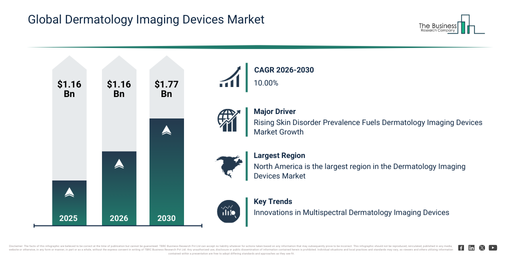
    The dermatology imaging devices market is projected to experience robust expansion over the coming years. It is anticipated to reach a valuation of $3.97 billion by 2030, demonstrating a compound annual growth rate (CAGR) of 10.0%. This anticipated growth throughout the forecast period stems from factors such as the increasing incorporation of AI-based diagnostic algorithms, a heightened demand for solutions facilitating early disease detection, the broadening of teledermatology services, an uptick in investments within precision dermatology, and a greater emphasis on customized skin treatment strategies. Key trends observed during this period encompass the growing acceptance of AI-assisted skin image analysis, an increased utilization of high-resolution multimodal imaging systems, the expanding integration of digital dermoscopy platforms, the proliferation of non-invasive skin diagnostics, and a sharpened focus on the early detection of skin cancer.

    Get A Free Sample Report With In-Depth Market Insights:

    https://thebusinessresearchcompany.com/sample_request?id=37144363&type=smp&name=Dermatology%20Imaging%20Devices%20Market%20Report%202026&utm_source=Blogs&utm_medium=Paid&utm_campaign=Oct_PR

    Dermatology Imaging Devices Market Opportunity Drivers: What’s Unlocking New Revenue Potential?

    The projected expansion of the dermatology imaging devices market is significantly influenced by the rising occurrence of skin conditions. These disorders encompass various medical conditions that impact the skin’s look, feel, and performance, such as dermatitis, acne, eczema, psoriasis, and skin cancer. The increasing incidence of skin disorders is attributed to multiple elements, among them the disturbance of the skin microbiome, which is the intricate microbial community living on the skin. To visualize and diagnose diverse skin disorders, dermatology imaging devices are employed, capturing high-resolution images of the skin’s surface to assist dermatologists in precise evaluation and therapy strategizing. For example, data from May 2023, provided by the City of Hope, a US-based National Cancer Institute (NCI), indicates that melanoma presently constitutes 5.5% of all annual cancer diagnoses, amounting to roughly 97,000 cases. Projections suggest that by 2030, this percentage will climb to 7.1%, representing approximately 151,000 cases per year. Consequently, the growing frequency of skin disorders is propelling the expansion of the dermatology imaging devices market.

    Dermatology Imaging Devices Market Segment Trends And Revenue Contributors

    The dermatology imaging devices market covered in this report is segmented –

    1) By Modality: Digital Photographic Imaging, Optical Coherence Tomography (OCT), Dermatoscope, High Frequency Ultrasound, Other Modalities

    2) By Application: Skin Cancers, Inflammatory Dermatoses, Plastic and Reconstructive Surgery, Other Applications

    3) By End-Use: Hospitals, Dermatology Centers, Specialty Clinics

    Subsegments:

    1) By Digital Photographic Imaging: High-Resolution Digital Cameras, 3D Imaging Systems

    2) By Optical Coherence Tomography (OCT): Time-Domain OCT, Spectral-Domain OCT, Swept-Source OCT

    3) By Dermatoscope: Handheld Dermatoscopes, Desktop Dermatoscopes

    4) By High Frequency Ultrasound: Skin Ultrasound Systems, Multi-Frequency Ultrasound Devices

    5) By Other Modalities: Confocal Microscopy, Magnetic Resonance Imaging (MRI) For Dermatology, Raman Spectroscopy

    Dermatology Imaging Devices Market Innovation Trends Shaping Future Development

    Key players in the dermatology imaging devices market are concentrating on developing sophisticated technologies, including multispectral dermoscopy platforms, to identify early indicators of skin conditions and differentiate between malignant and benign lesions. A multispectral dermoscopy platform serves as an imaging system that captures skin images across various light spectrums in a single shot, facilitating detailed spectral analysis and providing contrast for melanin and hemoglobin. For example, in April 2024, Enspectra Health, a US‑based health‑tech company, obtained FDA 510(k) clearance for its VIO Skin Platform. This next-generation multispectral skin imaging device combines reflectance confocal imaging with various wavelength illuminations to generate real-time, high-resolution spectral maps of skin lesions. The VIO, designed to be compact and handheld, records cellular-level features, such as vascular plexuses and pigment patterns, allowing dermatologists to non-invasively assess lesions and integrate smoothly into diagnostic workflows for clinical decision-making.

    Dermatology Imaging Devices Market Key Participants And Competitive Landscape

    Major companies operating in the dermatology imaging devices market are Canfield Scientific Inc., Fujifilm VisualSonics Inc., Clarius Mobile Health Corp, FotoFinder Systems GmbH, Quantificare SA, Courage+Khazaka electronic GmbH, Cortex Technology ApS, DRAMINSKI S. A., Michelson Diagnostics Ltd, Caliber Imaging and Diagnosis Inc., Emage Medical LLC, MetaOptima Technology Inc., 3dMD LLC, DermaSensor Inc., DermLite LLC, ATYS MEDICAL S.A.S, Dermspectra LLC, Taberna Pro Medicum GmbH, Macquarie Medical Systems Pty Limited, Bomtech Electronics Co. Ltd

    View The Full Dermatology Imaging Devices Market Report:

    https://thebusinessresearchcompany.com/report/dermatology-imaging-devices-global-market-report?utm_source=Blogs&utm_medium=Paid&utm_campaign=Oct_PR

    Dermatology Imaging Devices Market Geographic Analysis: Where Is Demand Accelerating Fastest?

    North America was the largest region in the dermatology imaging devices market in 2025. Asia-Pacific is expected to be the fastest-growing region in the forecast period. The regions covered in the dermatology imaging devices market report are Asia-Pacific, South East Asia, Western Europe, Eastern Europe, North America, South America, Middle East, Africa.

    Reach Out To Our Team:

    The Business Research Company: https://www.thebusinessresearchcompany.com/

    Americas: +1 310-496-7795

    Asia: +44 7882 955267 & +91 8897263534

    Europe: +44 7882 955267

    Email us at: marketing@tbrc.info

    Follow us on:

    LinkedIn: https://in.linkedin.com/company/the-business-research-company

    YouTube: https://www.youtube.com/channel/UC24_fI0rV8cR5DxlCpgmyFQ

    Global Market Model: https://www.thebusinessresearchcompany.com/global-market-model
  • Dermatology Excimer Laser Market Trends Reshaping Industry Growth Through 2030

    Dermatology Excimer Laser Market Trends Reshaping Industry Growth Through 2030

    Backed by market attractiveness analysis, total addressable market sizing, company benchmarking matrices, interactive Excel dashboards, wider supply chain intelligence, emerging startup coverage, and detailed product-level insights, The Business Research Company’s 2026 market reports are designed to offer research that is more actionable and strategically valuable than ever.

    Dermatology Excimer Laser Market Size Forecast: How Big Could The Market Get By 2030?

    The dermatology excimer laser market has experienced strong expansion in recent years. It is projected to rise from $0.67 billion in 2025 to $0.73 billion in 2026, at a compound annual growth rate (CAGR) of 9.0%. The growth observed in the past can be linked to factors such as the limited availability of excimer laser devices, the high cost of early phototherapy equipment, a growing incidence of dermatological disorders, a reliance on hospital-based stationary units, and an increasing awareness of skin-targeted therapies.

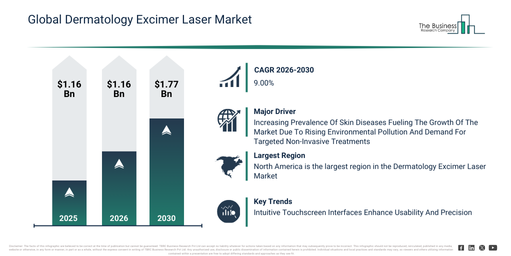
    The dermatology excimer laser market is projected to experience substantial growth over the upcoming years. This market is set to reach $1.03 billion by 2030, demonstrating a compound annual growth rate (CAGR) of 9.0%. This expansion during the forecast period is driven by factors such as the development of compact and portable excimer laser systems, an increase in demand for both home-use and clinical treatments, progress in high-precision UVB laser technology, the proliferation of dermatology clinics and plastic surgery centers, and the growing incorporation of integrated cooling and navigation systems. Key trends anticipated in the same period involve a rising uptake of targeted phototherapy treatments, a growing inclination towards portable and handheld excimer lasers, the expansion of dermatology clinics and specialized skin care facilities, the increasing application of excimer lasers for managing psoriasis and vitiligo, and a focus on minimally invasive and patient-friendly treatment approaches.

    Get A Free Sample Report With In-Depth Market Insights:

    https://thebusinessresearchcompany.com/sample_request?id=49286031&type=smp&name=Dermatology%20Excimer%20Laser%20Market%20Report%202026&utm_source=Blogs&utm_medium=Paid&utm_campaign=Oct_PR

    Dermatology Excimer Laser Market Growth Momentum: What Factors Are Shaping Demand?

    The increasing preference for minimally invasive treatments is anticipated to drive the expansion of the dermatology excimer laser market in the coming years. These procedures involve medical interventions carried out via minor cuts or apertures, significantly lowering patient discomfort and speeding up recuperation. Patient desire for quicker healing and reduced hospitalization durations, as opposed to conventional surgical methods, is fueling this rise in demand. Dermatology excimer lasers contribute to these procedures by emitting accurate, focused ultraviolet light for addressing skin conditions without harming adjacent areas. These lasers lead to better patient results through accelerated recovery, fewer adverse reactions, and successful treatment of specific lesions. For example, data from November 2024, provided by the American Society of Plastic Surgeons, a US-based non-profit organization, indicates that cosmetic minimally invasive procedures totaled 25,442,640 in 2023, representing a 7% growth from 23,672,269 in 2022. Consequently, the increasing call for minimally invasive procedures is a key factor propelling the dermatology excimer laser market forward.

    Dermatology Excimer Laser Market Segment Analysis Spotlighting Growth Areas

    The dermatology excimer laser market covered in this report is segmented –

    1) By Type: Table Top Excimer Laser, Hand Held Excimer Laser, Trolley Mounted Excimer Laser

    2) By Application: Psoriasis, Vitiligo, Atopic Dermatitis, Allergic Rhinitis, Alopecia Areata, Other Applications

    3) By End-Use: Hospitals, Dermatology Clinics, Plastic Surgery Centers

    Subsegments:

    1) By Table Top Excimer Laser: Compact Dermatology Units, Clinic-Based Stationary Systems, Multi-Patient Treatment Consoles

    2) By Hand Held Excimer Laser: Portable Spot Treatment Devices, Battery-Operated Excimer Units, Home-Use Excimer Laser Devices

    3) By Trolley Mounted Excimer Laser: Hospital-Based Mobile Units, High-Energy Output Systems, Integrated Cooling And Navigation Systems

    Dermatology Excimer Laser Market Trends Redefining Industry Growth

    Key companies engaged in the dermatology excimer laser market are prioritizing the development of technologically advanced products and securing necessary regulatory approvals, particularly for features like modernized user interfaces, to enhance usability, precision, and overall treatment efficiency. A modernized user interface is characterized as an intuitive, touchscreen-based control system designed to simplify operation and improve treatment accuracy. For example, in July 2024, Strata Skin Sciences, a US-based medical device enterprise, received approval from the Ministry of Health, Labor, and Welfare of Japan for its XTRAC Momentum 1.0 device. This is an advanced excimer laser system crafted to deliver targeted UVB light therapy for managing skin conditions such as psoriasis, eczema, and vitiligo in both adult and pediatric patients. This next-generation device delivers a higher power output and a faster repetition rate than earlier models, thereby enabling more efficient therapeutic sessions. Additionally, it features a modernized user interface and a slim, ergonomic design, which collectively improve ease of use for clinicians and enhance patient comfort.

    Dermatology Excimer Laser Market Top Companies Driving Competitive Growth

    Major companies operating in the dermatology excimer laser market are Koninklijke Philips N.V., Coherent Corp., Carl Zeiss AG, Lumenis Ltd., Cynosure LLC, Cutera Inc., Sciton Inc., Lutronic Corporation, DEKA Research & Development Corporation, Solta Medical Inc., Quanta System S.p.A., Strata Skin Sciences Inc., The Daavlin Company, Asclepion Laser Technologies GmbH, Aerolase Corporation, Kernel Medical Equipment Co. Ltd., Zimmer MedizinSysteme GmbH, Candela Corporation, Ra Medical Systems Inc., KOMACHINE Co. Ltd., PhotoMedex Inc., iVis Technologies S.r.l., Fotona d.o.o., Wuhan Dimed Laser Technology Co. Ltd.

    View The Full Dermatology Excimer Laser Market Report:

    https://thebusinessresearchcompany.com/report/dermatology-excimer-laser-global-market-report?utm_source=Blogs&utm_medium=Paid&utm_campaign=Oct_PR

    Dermatology Excimer Laser Market Global Footprint: Which Region Leads The Industry?

    North America was the largest region in the dermatology excimer laser market in 2025. Asia-Pacific is expected to be the fastest-growing region in the forecast period. The regions covered in the dermatology excimer laser market report are Asia-Pacific, South East Asia, Western Europe, Eastern Europe, North America, South America, Middle East, Africa.

    Reach Out To Our Team:

    The Business Research Company: https://www.thebusinessresearchcompany.com/

    Americas: +1 310-496-7795

    Asia: +44 7882 955267 & +91 8897263534

    Europe: +44 7882 955267

    Email us at: marketing@tbrc.info

    Follow us on:

    LinkedIn: https://in.linkedin.com/company/the-business-research-company

    YouTube: https://www.youtube.com/channel/UC24_fI0rV8cR5DxlCpgmyFQ

    Global Market Model: https://www.thebusinessresearchcompany.com/global-market-model
  • Dermatology Endoscopy Devices Market Growth To $3.61 Billion Creates New Opportunities Across The Industry

    Dermatology Endoscopy Devices Market Growth To $3.61 Billion Creates New Opportunities Across The Industry

    Featuring market attractiveness scoring, total addressable market sizing, company benchmarking matrices, interactive Excel dashboards, deeper supply chain intelligence, emerging startup tracking, and granular product-level insights, The Business Research Company’s 2026 market reports are built to deliver research that is both more actionable and more strategically valuable.

    Dermatology Endoscopy Devices Market Revenue Outlook: What CAGR Lies Ahead Through 2030?

    The dermatology endoscopy devices market has experienced robust expansion in recent years. It is anticipated to grow from $2.39 billion in 2025 to $2.59 billion in 2026, exhibiting a compound annual growth rate (CAGR) of 8.4%. The historical expansion can be attributed to factors such as the increasing prevalence of skin disorders, greater awareness regarding early skin cancer detection, the integration of dermatoscopy into clinical practice, the development of outpatient dermatology services, and the availability of portable diagnostic tools.

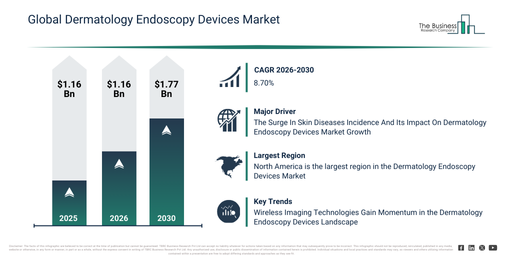
    The market size for dermatology endoscopy devices is projected to experience substantial growth over the upcoming years. By 2030, this market is anticipated to reach a valuation of $3.61 billion, expanding at a compound annual growth rate (CAGR) of 8.7%. This expansion during the forecast period is primarily driven by factors such as the rising demand for AI-powered skin analysis, the increasing embrace of telemedicine, the broadening of dermatology services into new and emerging markets, the expanding application of portable diagnostic tools, and a heightened emphasis on the early detection of diseases. Key trends anticipated during this period encompass the wider adoption of digital dermatoscopes, the growing utilization of smartphone-integrated devices, a surging demand for non-invasive methods of skin diagnosis, the proliferation of teledermatology applications, and a stronger emphasis on high-resolution imaging capabilities.

    Get A Free Sample Report With In-Depth Market Insights:

    https://thebusinessresearchcompany.com/sample_request?id=66112950&type=smp&name=Dermatology%20Endoscopy%20Devices%20Market%20Report%202026&utm_source=Blogs&utm_medium=Paid&utm_campaign=Oct_PR

    Dermatology Endoscopy Devices Market Expansion Drivers: What’s Shaping Future Growth?

    The increasing occurrence of skin conditions is anticipated to fuel the expansion of the dermatology endoscopy devices market in the future. Skin diseases encompass diverse afflictions of the skin, such as infections brought on by bacteria, viruses, fungi, allergens, and parasites, along with skin cancer and other dermatological ailments. These specialized devices, dermatology endoscopy devices, serve the purpose of examining various skin conditions, including the evaluation of pigmented and non-pigmented skin lesions, scabies splinters, psoriasis, eczema, and other issues, enabling effective therapeutic interventions for skin diseases. As an illustration, in 2023, data from Cancer Australia, an Australia-based government agency, revealed that around 8,257 new cases of melanoma of the skin were identified, which constituted 2.6% of all fatalities from cancer. Consequently, the growing frequency of skin diseases is a primary driver for the expansion of the dermatology endoscopy devices market.

    Dermatology Endoscopy Devices Market Segment Performance And Emerging Opportunities

    The dermatology endoscopy devices market covered in this report is segmented –

    1) By Device Type: Traditional Or Analogue Dermatoscopes, Digital Dermatoscopes

    2) By Light Source: LED (Light Emitting Diode), Halogen

    3) By Application: Skin Cancer, Warts

    Subsegments:

    1) By Traditional Or Analogue Dermatoscopes: Hand-held Dermatoscopes, Table-Top Dermatoscopes

    2) By Digital Dermatoscopes: USB-Connected Digital Dermatoscopes, Wireless Digital Dermatoscopes, Smartphone-Compatible Dermatoscopes

    Dermatology Endoscopy Devices Market Strategic Trends: What Defines The Next Growth Phase?

    Major companies operating in the dermatology endoscopy devices market are increasingly concentrating on developing advanced solutions, including wireless AI-powered digital dermatoscopes and cloud-integrated skin-imaging platforms. A wireless AI-powered digital dermatoscope is a handheld imaging instrument designed to capture high-resolution polarized and non-polarized dermoscopic and trichoscopic images independently, without requiring connection to a smartphone. For instance, in March 2024, FotoFinder Systems GmbH, a Germany-based manufacturer of skin imaging systems, launched skeen, a digital dermatoscope that is wireless and AI-enabled. Skeen integrates a razor-sharp, high-resolution camera with a magnetically attached optical unit, offering 20x and 40x magnification to visualize dermoscopic and trichoscopic structures, and supports both polarized and non-polarized, contact and non-contact imaging. The device facilitates a completely wireless workflow through secure cloud integration (FotoFinder Hub), ensuring images and patient data are stored compliantly without the use of personal smartphones or adapters. Furthermore, Skeen incorporates FotoFinder’s AIMEE AI assistant, which produces an AI score to aid clinicians in lesion evaluation, thereby speeding decision-making and enhancing diagnostic consistency.

    Dermatology Endoscopy Devices Market Leading Players And Competitive Positioning

    Major companies operating in the dermatology endoscopy devices market are Canfield Scientific Inc., DermLite LLC, HEINE Optotechnik GmbH and Co. KG, FotoFinder Systems GmbH, DermoScan GmbH, MetaOptima Technology Inc., Optilia Instruments AB, Pixience Healthcare Technology Solutions, Firefly Global LLP, Rudolf Riester GmbH, 3Gen Inc., Caliber Imaging and Diagnostics Inc., Illuco Corporation Ltd., AMD Global Telemedicine Inc., Adamo Srl, BioOptics World, Dinolite Europe, Microcaya, Welch Allyn Inc., ATMOS MedizinTechnik GmbH and Co. KG

    View The Full Dermatology Endoscopy Devices Market Report:

    https://thebusinessresearchcompany.com/report/dermatology-endoscopy-devices-global-market-report?utm_source=Blogs&utm_medium=Paid&utm_campaign=Oct_PR

    Dermatology Endoscopy Devices Market Regional Distribution: Which Areas Power Market Growth?

    North America was the largest region in the dermatology endoscopy devices market in 2025. Asia-Pacific is expected to be the fastest-growing region in the dermatology endoscopy devices market report during the forecast period. The regions covered in the dermatology endoscopy devices market report are Asia-Pacific, South East Asia, Western Europe, Eastern Europe, North America, South America, Middle East, Africa.

    Reach Out To Our Team:

    The Business Research Company: https://www.thebusinessresearchcompany.com/

    Americas: +1 310-496-7795

    Asia: +44 7882 955267 & +91 8897263534

    Europe: +44 7882 955267

    Email us at: marketing@tbrc.info

    Follow us on:

    LinkedIn: https://in.linkedin.com/company/the-business-research-company

    YouTube: https://www.youtube.com/channel/UC24_fI0rV8cR5DxlCpgmyFQ

    Global Market Model: https://www.thebusinessresearchcompany.com/global-market-model
  • Dermatology Devices Market Forecast: Breaking Down The Numbers Behind Future Expansion

    Dermatology Devices Market Forecast: Breaking Down The Numbers Behind Future Expansion

    Built to provide research that’s more actionable and strategically valuable, The Business Research Company’s 2026 market reports include market attractiveness analysis, total addressable market sizing, company benchmarking matrices, interactive Excel dashboards, broader supply chain intelligence, emerging startup tracking, and in-depth product insights.

    Dermatology Devices Market Growth Analysis: How Will Revenue Trend Over The Forecast Period?

    The dermatology devices market has experienced significant expansion in recent years. It is projected to grow from $18.25 billion in 2025 to $21.14 billion in 2026, demonstrating a compound annual growth rate (CAGR) of 15.9%. Historically, this growth has been influenced by factors such as the increasing prevalence of skin disorders, a growing demand for cosmetic dermatology procedures, the expansion of dermatology clinics and hospitals, enhanced awareness of skin health, and the availability of advanced treatment devices.

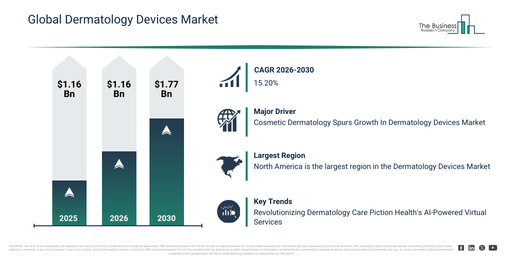
    The dermatology devices market size is projected to experience substantial expansion over the upcoming years. This market is set to reach a valuation of $37.25 billion by 2030, demonstrating a compound annual growth rate (CAGR) of 15.2%. Key factors contributing to this anticipated growth include the increasing integration of AI-assisted skin diagnostics, a surge in demand for minimally invasive aesthetic procedures, the broadened availability of personalized skincare solutions, intensified funding into dermatology technology advancements, and a greater emphasis on preventive skin care. Prominent trends observed during this period are the wider uptake of sophisticated laser treatment devices, the increasing utilization of non-invasive skin rejuvenation techniques, a heightened need for accurate diagnostic dermatology instruments, the proliferation of energy-based aesthetic equipment, and an elevated concentration on customized dermatology treatments.

    Get A Free Sample Report With In-Depth Market Insights:

    https://thebusinessresearchcompany.com/sample_request?id=45411924&type=smp&name=Dermatology%20Devices%20Market%20Report%202026&utm_source=Blogs&utm_medium=Paid&utm_campaign=Oct_PR

    Dermatology Devices Market Development Factors: What’s Supporting Demand?

    The growing need for cosmetic dermatology procedures is anticipated to fuel the expansion of the dermatology devices market. Cosmetic dermatology, a specific field within dermatology, concentrates on improving an individual’s appearance using diverse non-surgical treatments and methods. The increasing appeal of cosmetic dermatology procedures, including laser treatments, dermal fillers, and skin rejuvenation, generates a heightened requirement for sophisticated dermatology devices capable of delivering secure and efficient outcomes. As an illustration, in January 2023, the International Society of Aesthetic Plastic Surgery, a professional body focused on advancing aesthetic (cosmetic) plastic surgery, reported that more than 12.8 million surgical and 17.5 million non-surgical operations were performed globally, indicating a 19.3% increase in overall procedures compared to the prior reporting period. Consequently, the surge in cosmetic dermatology procedures is stimulating the growth of the dermatology devices market.

    Dermatology Devices Market Segment Landscape And Growth Outlook

    The dermatology devices market covered in this report is segmented –

    1) By Product Type: Diagnostic Devices, Treatment Devices, Other Product Types

    2) By Application: Skin Cancer Diagnosis, Psoriasis, Skin Rejuvenation, Warts, Other Applications

    3) By End User: Hospitals: Clinics, Other End Users

    Subsegments:

    1) By Diagnostic Devices: Dermatoscopes, Skin Biopsy Devices, Imaging Devices, Laboratory Testing Devices

    2) By Treatment Devices: Laser Devices, Cryotherapy Devices, Light Therapy Devices, Radiofrequency Devices, Electrosurgical Devices

    3) By Other Product Types: Microneedling Devices, Chemical Peeling Devices, Acne Treatment Devices, Skin Rejuvenation Devices

    Dermatology Devices Market Transformation Trends: What Innovations Are Driving Change?

    Leading firms within the dermatology devices market are developing novel technologies to boost their market profitability. Artificial intelligence (AI) finds application in dermatology devices to enhance patient treatment and refine the precision of skin condition detection. Specifically, AI is employed for screening skin conditions, aiding dermatology tools, and within computer-assisted dermatology AI systems. An example is Piction Health Inc., a US-based dermatology practice delivering virtual services powered by AI, which commenced operations in Massachusetts in August 2023, addressing extraordinary demand. This pioneering service leverages cutting-edge technology developed at MIT to deliver optimal dermatological care straight to patients, thereby removing typical clinic visit issues such as long waits and out-of-pocket costs. The clinic enhances its service efficiency and care standard by utilizing its extensive database of over 500,000 photographs.

    Dermatology Devices Market Competitive Overview And Top Companies

    Major companies operating in the dermatology devices market are Cutera Inc., Lumenis Ltd., Alma Lasers Ltd., Solta Medical Inc., Image Derm Inc., Johnson & Johnson Private Limited, Cortex Technology ApS, HEINE Optotechnik GmbH & Co. KG, Michelson Diagnostics Ltd., Bruker Corporation, Bovie Medical Corporation, Photomedex Inc., Candela Medical Corporation, STRATA Skin Sciences Inc., WON TECH Co. Ltd., DermLite LLC, Cynosure LLC, Canfield Scientific Inc., Bausch Health Companies Inc., Sun Pharmaceutical Industries Limited, Galderma S.A., Merz Pharma GmbH & Co. KGaA, Allergan plc, Syneron Medical Ltd., Bio-Therapeutic Inc., Sciton Inc., Viora Ltd.

    View The Full Dermatology Devices Market Report:

    https://thebusinessresearchcompany.com/report/dermatology-devices-global-market-report?utm_source=Blogs&utm_medium=Paid&utm_campaign=Oct_PR

    Dermatology Devices Market Leading Geography: Which Region Contributes The Most Revenue?

    North America was the largest region in the dermatology devices market in 2025. Asia-Pacific is the second largest region in the dermatology devices market. The regions covered in the dermatology devices market report are Asia-Pacific, South East Asia, Western Europe, Eastern Europe, North America, South America, Middle East, Africa.

    Reach Out To Our Team:

    The Business Research Company: https://www.thebusinessresearchcompany.com/

    Americas: +1 310-496-7795

    Asia: +44 7882 955267 & +91 8897263534

    Europe: +44 7882 955267

    Email us at: marketing@tbrc.info

    Follow us on:

    LinkedIn: https://in.linkedin.com/company/the-business-research-company

    YouTube: https://www.youtube.com/channel/UC24_fI0rV8cR5DxlCpgmyFQ

    Global Market Model: https://www.thebusinessresearchcompany.com/global-market-model
  • Depyrogenated Sterile Empty Vials Market Expected To Grow At 7.9% CAGR Through 2030: What Businesses Need To Know

    Depyrogenated Sterile Empty Vials Market Expected To Grow At 7.9% CAGR Through 2030: What Businesses Need To Know

    Backed by market attractiveness analysis, total addressable market sizing, company benchmarking matrices, interactive Excel dashboards, wider supply chain intelligence, emerging startup coverage, and detailed product-level insights, The Business Research Company’s 2026 market reports are designed to offer research that is more actionable and strategically valuable than ever.

    Depyrogenated Sterile Empty Vials Market Forecast: What Value Will The Market Reach By 2030?

    The depyrogenated sterile empty vials market has experienced robust expansion over recent years. This market is expected to increase from $3.79 billion in 2025 to $4.09 billion in 2026, at a compound annual growth rate (CAGR) of 7.9%. The growth observed in previous periods is largely due to factors such as increasing volumes of injectable drug production, the expansion of sterile pharmaceutical manufacturing processes, stricter regulatory examination of injectable product safety, the rise of biologics and vaccines, and the preference for borosilicate glass in packaging.

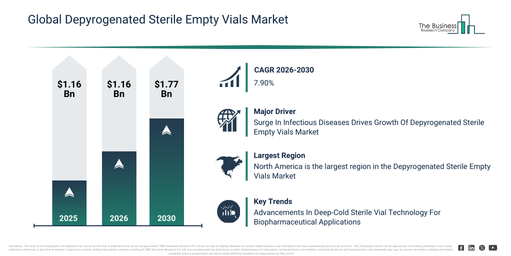
    The depyrogenated sterile empty vials market is anticipated to experience robust expansion over the coming years. This market is projected to reach $5.55 billion by 2030, demonstrating a compound annual growth rate (CAGR) of 7.9%. Factors contributing to this growth during the forecast period include the escalating demand for biologics and biosimilars, increased investments in aseptic fill-finish facilities, the broadening scope of contract manufacturing services, a heightened emphasis on contamination control, and the wider uptake of pre-sterilized packaging solutions. Key trends anticipated during the forecast period encompass the increasing integration of high-purity injectable packaging, a surge in demand for ready-to-fill vials, a stronger focus on endotoxin-free packaging standards, the scaling up of automated depyrogenation processes, and an elevated prioritization of regulatory-compliant primary packaging.

    Get A Free Sample Report With In-Depth Market Insights:

    https://thebusinessresearchcompany.com/sample_request?id=53911953&type=smp&name=Depyrogenated%20Sterile%20Empty%20Vials%20Market%20Report%202026&utm_source=Blogs&utm_medium=Paid&utm_campaign=Oct_PR

    Depyrogenated Sterile Empty Vials Market Industry Drivers: What’s Behind The Revenue Growth?

    The global rise in infectious disease cases is anticipated to drive expansion in the depyrogenated sterile empty vials market. These diseases originate from pathogenic microorganisms, including bacteria, viruses, parasites, and fungi. Depyrogenated sterile vials serve as containers for injectable medications utilized in addressing infectious diseases. Furthermore, these depyrogenated sterile empty vials also find application in gathering laboratory specimens. As an illustration, the Health Security Agency, a UK-based government body, reported in February 2024 that tuberculosis (TB) instances in England experienced a 10.7% rise in 2023 when contrasted with 2022. The total number of cases went up from 4,380 in 2022 to 4,850 in 2023. Consequently, the growing global occurrence of infectious diseases will stimulate the growth of the depyrogenated sterile empty vials market.

    Depyrogenated Sterile Empty Vials Market Breakdown By Product Type And Application

    The depyrogenated sterile empty vials market covered in this report is segmented –

    1) By Product: 2 ML, 5 ML, 10 ML, 20 ML, >20 ML

    2) By Packaging: Glass, Plastic

    3) By End User: Clinical Labs, Compounding Labs, Pharmaceutical Companies, Contract Manufacturing Organization, Distributors

    #Depyrogenated Sterile Empty Vials Market Growth Trends: What’s Shaping The Future Outlook?

    Leading firms within the depyrogenated sterile empty vials market are concentrating on creating novel items, including deep-cold freeze vials, to address the increasing need for enhanced safety and dependability in biopharmaceutical storage and transportation. These deep-cold freeze vials represent specialized sterile receptacles engineered for the secure containment of biological substances at exceptionally low temperatures, ranging from –80°C to –150°C. Their function is to safeguard delicate drugs, vaccines, and specimens against degradation, preserve their sterility, and guarantee product stability throughout extended storage and transportation periods. As an example, in January 2024, SCHOTT Pharma AG & Co. KGaA, a specialized glass manufacturer from Germany, introduced EVERIC freeze vials, a new series of vials specifically designed for mRNA and gene-therapy items demanding deep-cold storage and superior container integrity. These EVERIC freeze vials are Type I borosilicate glass containers produced and certified for ultralow temperature applications; they incorporate reinforced glass geometry and precise process controls to minimize breakage during freeze-thaw cycles, are compatible with standard lyophilization and cryogenic transport methods, provide exact dimensional accuracy for automated filling and capping processes, and aim to lower delamination/particulate dangers and enhance drug stability versus traditional vials, rendering them appropriate for vaccines, gene-therapy vectors, and other biologics sensitive to temperature.

    Depyrogenated Sterile Empty Vials Market Competitive Landscape: Which Companies Lead The Industry?

    Major companies operating in the depyrogenated sterile empty vials market are APG Pharma, Corning Inc., DWK Life Sciences, Nipro PharmaPackaging, Schott AG, Thermo Fisher Scientific, Gerresheimer AG, Stevanato Group, SGD Pharma, Merck KGaA, SiO2 Materials Science, Shandong Pharmaceutical Glass Co. Ltd., West Pharmaceutical Services Inc., Ompi Srl, Pacific Vial Manufacturing Inc., Adelphi Healthcare Packaging Limited, Acme Vial and Glass Company LLC, Amposan S.A., BMT Corporation, Cangzhou Four Stars Glass Co. Ltd., Zhejiang Pharmaceutical-Packaging Co. Ltd.

    View The Full Depyrogenated Sterile Empty Vials Market Report:

    https://thebusinessresearchcompany.com/report/depyrogenated-sterile-empty-vials-global-market-report?utm_source=Blogs&utm_medium=Paid&utm_campaign=Oct_PR

    Depyrogenated Sterile Empty Vials Market Regional Outlook: Where Is Opportunity Concentrated?

    North America was the largest region in the depyrogenated sterile empty vials market in 2025. The regions covered in the depyrogenated sterile empty vials market report are Asia-Pacific, South East Asia, Western Europe, Eastern Europe, North America, South America, Middle East, Africa.

    Reach Out To Our Team:

    The Business Research Company: https://www.thebusinessresearchcompany.com/

    Americas: +1 310-496-7795

    Asia: +44 7882 955267 & +91 8897263534

    Europe: +44 7882 955267

    Email us at: marketing@tbrc.info

    Follow us on:

    LinkedIn: https://in.linkedin.com/company/the-business-research-company

    YouTube: https://www.youtube.com/channel/UC24_fI0rV8cR5DxlCpgmyFQ

    Global Market Model: https://www.thebusinessresearchcompany.com/global-market-model