Month: October 2026

  • Dental Adhesives And Sealants Market Growth Outlook: Why Analysts Expect Continued Expansion

    Dental Adhesives And Sealants Market Growth Outlook: Why Analysts Expect Continued Expansion

    Backed by market attractiveness analysis, total addressable market sizing, company benchmarking matrices, interactive Excel dashboards, wider supply chain intelligence, emerging startup coverage, and detailed product-level insights, The Business Research Company’s 2026 market reports are designed to offer research that is more actionable and strategically valuable than ever.

    Dental Adhesives And Sealants Market Value Growth And Long-Term Outlook

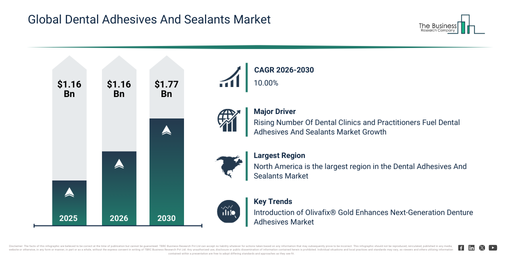
    The dental adhesives and sealants market size has seen rapid expansion in recent years. It is anticipated to increase from $6.47 billion in 2025 to $7.13 billion in 2026, with a compound annual growth rate (CAGR) of 10.2%. Historically, this growth can be attributed to factors such as the increasing prevalence of dental caries, the expansion of preventive dentistry practices, a rise in restorative dental procedures, advancements in polymer chemistry, and the wider availability of dental care services.

    The dental adhesives and sealants market size is projected to witness significant expansion in the coming years. It is forecast to grow to $10.44 billion in 2030 at a compound annual growth rate (CAGR) of 10.0%. This anticipated growth during the forecast period stems from factors such as the rising demand for bioactive and fluoride-releasing materials, an increasing focus on esthetic dentistry, the expansion of minimally invasive treatment protocols, the growing adoption of advanced adhesive systems, and heightened awareness of oral preventive care. Significant trends for the forecast period include the increasing uptake of universal dental adhesives, a rising need for minimally invasive restorative materials, the growing application of bioactive sealants, the development of moisture-tolerant adhesive formulations, and an enhanced emphasis on long-lasting bond strength.

    Get A Free Sample Report With In-Depth Market Insights:

    https://thebusinessresearchcompany.com/sample_request?id=64326575&type=smp&name=Dental%20Adhesives%20And%20Sealants%20Market%20Report%202026&utm_source=Blogs&utm_medium=Paid&utm_campaign=Oct_PR

    Dental Adhesives And Sealants Market Demand Drivers Opening New Revenue Streams

    The rising count of dental clinics and practitioners is anticipated to stimulate expansion in the dental adhesives and sealants market in the future. Dental clinics serve as facilities where oral health problems are addressed and various dental procedures are carried out by practitioners. Within these clinics, dental professionals utilize dental adhesives and sealants to combat tooth decay, promote overall oral well-being, and reduce the necessity for more extensive dental interventions later on. As an illustration, in October 2024, data from the Australian Institute of Health and Welfare, an Australia-based government agency, indicated approximately 87,400 hospital admissions in 2022–23 due to dental issues preventable with prompt care. The highest incidence of these avoidable hospitalizations was observed in children aged 5–9 years, reaching 12.3 per 1,000 population. Consequently, the expanding presence of dental clinics and practitioners is expected to propel the growth of the dental adhesives and sealants market.

    Dental Adhesives And Sealants Market Segmentation And Category Overview

    The dental adhesives and sealants market covered in this report is segmented –

    1) By Product: Adhesives, Sealants

    2) By Etching Type: Self-Etching Adhesive, Total Etching Adhesive, Other Etching Types

    3) By Formulation: Water-Based, Solvent-Based, Hot-Melt Based, Radiation Cured, Other Formulations

    4) By Application: Pit And Fissure Sealants, Denture Bonding Agents, Restorative Adhesives, Other Applications

    Subsegments:

    1) By Adhesives: Self-Etch Adhesives, Total-Etch Adhesives, Universal Adhesives

    2) By Sealants: Pit And Fissure Sealants, Dental Bonding Agents

    Dental Adhesives And Sealants Market Trends Powering Strategic Industry Growth

    Major companies in the dental adhesives and sealants market are developing new products, such as denture adhesives, to reach broader customer bases and increase revenue. Olivafix Gold is a next-generation denture adhesive that is zinc-free, avoids petroleum derivatives and Vaseline, and is crafted with 30% organic extra virgin olive oil to secure dentures firmly, offering up to 24 hours of retention. For instance, in July 2024, Bonyf NV, an oral-care company based in Belgium, introduced Olivafix Gold, a denture adhesive cream suitable for both full and partial dentures. Olivafix Gold provides a long-lasting grip, hydrates the mouth, and enhances comfort for denture wearers, all while being free from synthetic additives, thereby presenting a safer and more natural alternative to traditional denture adhesives.

    Dental Adhesives And Sealants Market Top Companies Driving Competitive Growth

    Major companies operating in the dental adhesives and sealants market are Johnson & Johnson, 3M Company, Henkel AG & Co. KGaA, Mitsui Chemicals Inc., Kuraray Co. Ltd., Dentsply Sirona Inc., Ivoclar Vivadent AG, Ultradent Products Inc., Septodont Inc., BISCO Inc., Kerr Corporation, VOCO GmbH, Sybron Dental Specialties Inc., SDI Limited, Coltene Whaledent Inc., Premier Dental Products Co, Parkell Inc., DMG America LLC, DETAX GmbH & Co. KG, Cosmedent Inc., Dr. B Dental Solutions LLC, Sino-dentex Co. Ltd., Tokuyama Dental America Inc.

    View The Full Dental Adhesives And Sealants Market Report:

    https://thebusinessresearchcompany.com/report/dental-adhesives-and-sealants-global-market-report?utm_source=Blogs&utm_medium=Paid&utm_campaign=Oct_PR

    Dental Adhesives And Sealants Market Global Footprint: Which Region Leads The Industry?

    North America was the largest region in the dental adhesives and sealants market in 2025. Asia-Pacific is expected to be the fastest-growing region in the forecast period. The regions covered in the dental adhesives and sealants market report are Asia-Pacific, South East Asia, Western Europe, Eastern Europe, North America, South America, Middle East, Africa.

    Reach Out To Our Team:

    The Business Research Company: https://www.thebusinessresearchcompany.com/

    Americas: +1 310-496-7795

    Asia: +44 7882 955267 & +91 8897263534

    Europe: +44 7882 955267

    Email us at: marketing@tbrc.info

    Follow us on:

    LinkedIn: https://in.linkedin.com/company/the-business-research-company

    YouTube: https://www.youtube.com/channel/UC24_fI0rV8cR5DxlCpgmyFQ

    Global Market Model: https://www.thebusinessresearchcompany.com/global-market-model
  • Dental 3D Scanners Market Forecast Insights: The Road To $1.26 Billion By 2030

    Dental 3D Scanners Market Forecast Insights: The Road To $1.26 Billion By 2030

    Featuring market attractiveness scoring, total addressable market sizing, company benchmarking matrices, interactive Excel dashboards, deeper supply chain intelligence, emerging startup tracking, and granular product-level insights, The Business Research Company’s 2026 market reports are built to deliver research that is both more actionable and more strategically valuable.

    Dental 3D Scanners Market Poised To Hit $1.26 Billion By 2030 With A 7.9% CAGR

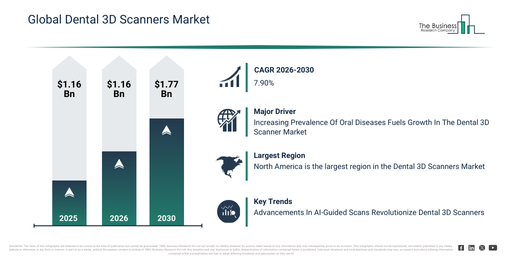
    The dental 3D scanners market has experienced substantial growth in recent years. It is projected to increase from $0.85 billion in 2025 to $0.93 billion in 2026, with a compound annual growth rate (CAGR) of 9.3%. The market’s expansion historically stems from the growing adoption of digital dentistry practices, the rise in restorative and cosmetic dentistry, the expansion of dental laboratories, an increasing demand for precise dental prosthetics, and ongoing technological improvements in optical scanning.

    The dental 3D scanners market is projected to demonstrate significant expansion in the coming years, with its size expected to reach $1.26 billion in 2030, growing at a compound annual growth rate (CAGR) of 7.9%. This expansion during the forecast period is primarily due to increasing investments in entirely digital dental clinics, a rising demand for same-day restorations, the broadening availability of teledentistry solutions, the growing implementation of AI-assisted scan analysis, and an increasing embrace of these technologies in emerging dental markets. Key developments anticipated over this period include a greater adoption of chairside intraoral scanners, enhanced integration with CAD/CAM workflows, an escalating demand for highly accurate digital impressions, the proliferation of wireless and portable scanner designs, and a heightened emphasis on quicker scan processing.

    Get A Free Sample Report With In-Depth Market Insights:

    https://thebusinessresearchcompany.com/sample_request?id=15288804&type=smp&name=Dental%203D%20Scanners%20Market%20Report%202026&utm_source=Blogs&utm_medium=Paid&utm_campaign=Oct_PR

    Dental 3D Scanners Market Growth Backed By Core Demand Fundamentals

    A projected rise in oral disease cases is anticipated to boost the expansion of the dental 3D scanners market in the future. These conditions encompass various ailments impacting the mouth, teeth, and surrounding facial structures. The increase in oral disease frequency is attributed to factors like prevalent unhealthy dietary habits, tobacco consumption, inadequate oral hygiene, and the growing elderly demographic. Dental 3D scanners aid in the early identification and accurate treatment formulation for oral diseases by offering precise measurements and comprehensive anatomical data. For example, projections from April 2025, cited by the Mint Dental Centre, a UK-based intergovernmental organization, indicate that the proportion of individuals in the UK suffering from gum disease is expected to climb from 42% of the current population to 54% by the year 2050. Consequently, the expanding incidence of oral diseases is stimulating the growth within the dental 3D scanners market.

    Dental 3D Scanners Market Segment Outlook: Which Categories Are Growing Fastest?

    The dental 3D scanners market covered in this report is segmented –

    1) By Type: 3D Dental Light Scanner, 3D Dental Laser Scanner

    2) By Application: Medical, Other Applications

    3) By End User: Hospitals And Dental Clinics, Dental Laboratories, Academic And Research Institute

    Subsegments:

    1) By 3D Dental Light Scanner: Contact-Based 3D Dental Light Scanners, Non-Contact 3D Dental Light Scanners

    2) By 3D Dental Laser Scanner: Contact-Based 3D Dental Laser Scanners, Non-Contact 3D Dental Laser Scanners

    Dental 3D Scanners Market Growth Trends Reshaping The Competitive Landscape

    Key companies in the dental 3D scanner industry are prioritizing the creation of novel products, such as AI-powered scans, to enhance their market revenue. AI-assisted scans in dental 3D scanners deliver multiple advantages, including improved accuracy and precision, greater speed and efficiency, superior dental imaging, and enhanced patient comfort. For example, in June 2023, Dental Monitoring SAS, a France-based software development company, introduced ScanAssist123, an AI-guided scan specifically for orthodontics. This device incorporates AI-driven instructions and real-time feedback to guide patients through their scans, making the procedure engaging and enjoyable. The integrated app system presents a 3D model of the mouth that tracks patients as they scan, thereby ensuring high-quality images and thorough analysis of treatment progress and oral health. ScanAssist functions as an innovative feature within the DentalMonitoring app, which utilizes software and AI to identify over 130 intraoral observations for braces and aligner treatments.

    Dental 3D Scanners Market Leading Players And Competitive Positioning

    Major companies operating in the dental 3d scanners market are Dentsply Sirona Inc., Align Technology Inc., Envista Holdings Corporation, Institut Straumann AG, Carestream Health Inc., Planmeca Oy, Vatech Co. Ltd., Carestream Dental Limited, Amann Girrbach AG, 3Shape AS, Smart Optics Sensortechnik GmbH, Nobel Biocare, Structo Pte. Ltd., Shining 3D Tech Co. Ltd., Taisite Instrument Co. Ltd., E4D Technologies, Dental Wings, Zfx GmbH, Owandy Radiology

    View The Full Dental 3D Scanners Market Report:

    https://thebusinessresearchcompany.com/report/dental-3D-scanners-global-market-report?utm_source=Blogs&utm_medium=Paid&utm_campaign=Oct_PR

    Dental 3D Scanners Market Regional Distribution: Which Areas Power Market Growth?

    North America was the largest region in the dental 3D scanners market in 2025. Asia-Pacific is expected to be the fastest-growing region in the forecast period. The regions covered in the dental 3D scanners market report are Asia-Pacific, South East Asia, Western Europe, Eastern Europe, North America, South America, Middle East, Africa.

    Reach Out To Our Team:

    The Business Research Company: https://www.thebusinessresearchcompany.com/

    Americas: +1 310-496-7795

    Asia: +44 7882 955267 & +91 8897263534

    Europe: +44 7882 955267

    Email us at: marketing@tbrc.info

    Follow us on:

    LinkedIn: https://in.linkedin.com/company/the-business-research-company

    YouTube: https://www.youtube.com/channel/UC24_fI0rV8cR5DxlCpgmyFQ

    Global Market Model: https://www.thebusinessresearchcompany.com/global-market-model
  • Dental 3D Printing Devices Market Explained: What Is Fueling Growth To $13.42 Billion By 2030?

    Dental 3D Printing Devices Market Explained: What Is Fueling Growth To $13.42 Billion By 2030?

    Built to provide research that’s more actionable and strategically valuable, The Business Research Company’s 2026 market reports include market attractiveness analysis, total addressable market sizing, company benchmarking matrices, interactive Excel dashboards, broader supply chain intelligence, emerging startup tracking, and in-depth product insights.

    Dental 3D Printing Devices Market Size And Revenue Outlook Through 2030

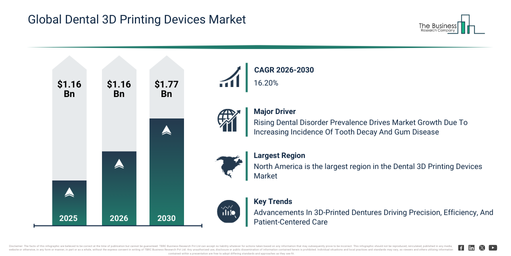
    The dental 3D printing devices market size has experienced rapid expansion in recent years. It is projected to grow from $6.33 billion in 2025 to $7.37 billion in 2026, at a compound annual growth rate (CAGR) of 16.4%. This historical growth can be attributed to the high cost of traditional dental manufacturing, limited access to advanced 3D printing technologies, reliance on manual dental prosthetics fabrication, the proliferation of dental clinics and laboratories, and the early adoption of stereolithography and DLP technologies.

    The dental 3D printing devices market size is anticipated to undergo rapid expansion in the coming years, reaching $13.42 billion by 2030, exhibiting a compound annual growth rate (CAGR) of 16.2%. This expected growth can be credited to the increasing availability of dental-specific 3D printers, the advancement of multi-material and high-precision printing technologies, a rise in investment within dental education and research institutions, a growing need for personalized orthodontic and prosthodontic solutions, and the incorporation of AI and digital workflows into dental laboratories. Significant trends for the forecast period include the greater adoption of customized dental devices, enhanced usage of biocompatible resins and materials, quicker fabrication times for dental products, the integration of 3D printing with digital dental scanning, and an expansion in orthodontics and prosthodontics applications.

    Get A Free Sample Report With In-Depth Market Insights:

    https://thebusinessresearchcompany.com/sample_request?id=85340007&type=smp&name=Dental%203D%20Printing%20Devices%20Market%20Report%202026&utm_source=Blogs&utm_medium=Paid&utm_campaign=Oct_PR

    Dental 3D Printing Devices Market Growth Catalysts And Demand Drivers

    The increasing incidence of dental disorders is anticipated to drive the expansion of the dental 3D printing devices market in the future. These dental disorders encompass various conditions that negatively affect the well-being, functionality, or structure of teeth and surrounding oral tissues. The rise in dental disorders is largely attributed to poor eating habits, particularly high consumption of sugar and acids, which contribute to tooth decay and gum disease. Dental 3D printing devices aid in addressing dental disorders by enabling the swift, precise, and economical production of customized dental solutions such as crowns, bridges, aligners, dentures, and surgical guides, thus enhancing treatment accuracy and patient outcomes. For instance, in January 2024, a report released by the American Cancer Society, a US-based nonprofit cancer advocacy organization, projected that an estimated 58,450 adults in the United States, including 41,510 men and 16,940 women, are expected to be diagnosed with oral or oropharyngeal cancer in 2024, an increase from 54,000 adults in 2022. Consequently, the growing prevalence of dental disorders is fueling the growth of the dental 3D printing devices market.

    Dental 3D Printing Devices Market Segment Landscape: Which Areas Lead Development?

    The dental 3D printing devices market covered in this report is segmented –

    1) By Device Type: Desktop 3D Printers, Industrial 3D Printers, Dental Specific 3D Printers

    2) By Technology Type: Stereolithography (SLA), Digital Light Processing (DLP), Selective Laser Sintering (SLS), Material Jetting

    3) By Material Type: Resins, Biocompatible Materials, Thermoplastics, Wax

    4) By Application Area: Orthodontics, Prosthodontics, Implantology, Maxillofacial Surgery, Custom Dental Devices

    5) By End-User: Dental Laboratories, Dental Clinics, Educational Institutions, Research Organizations

    Subsegments:

    1) By Desktop 3D Printers: Resin-Based Desktop Printers, Fused Deposition Modeling (FDM) Desktop Printers, Multi-Material Desktop Printers

    2) By Industrial 3D Printers: Selective Laser Sintering (SLS) Industrial Printers, Multi-Jet Fusion (MJF) Printers, Binder Jetting Printers, Polyjet Printers

    3) By Dental Specific 3D Printers: Crown And Bridge Printers, Denture Printers, Orthodontic Appliance Printers, Surgical Guide Printers

    Dental 3D Printing Devices Market Trends Shaping Long-Term Demand

    Key players in the dental 3D printing devices market are concentrating on developing advanced technologies, such as 3D-printed dentures, to heighten treatment accuracy, decrease turnaround times, and refine patient-specific customization. 3D-printed dentures are dental prosthetics that are digitally conceptualized and produced utilizing 3D printing technology, facilitating precise, customizable, and efficient replacement of lost teeth. For example, in February 2024, 3D Systems Corporation, a US-based computer manufacturing company, introduced the industry’s premier multi-material, jetted, monolithic dentures, aiming to streamline production and elevate denture quality. This product integrates custom materials for teeth and gums into a single component, providing superior durability, resistance to breakage, and realistic esthetics, which considerably reduces production time and labor for dental labs. This breakthrough delivers faster, more comfortable, and longer-lasting dentures to patients, thereby improving both clinical outcomes and satisfaction.

    Dental 3D Printing Devices Market Competitive Overview And Top Companies

    Major companies operating in the dental 3d printing devices market are Renishaw, Stratasys Ltd, 3D Systems Corporation, Roland DG Corporation, Formlabs Inc, Materialise NV, Desktop Metal Inc, Carbon Inc, EnvisionTEC GmbH, SprintRay Inc, Prodways Group SA, UnionTech, Structo Pte Ltd, Kulzer GmbH, BEGO GmbH And Co KG, Sisma SpA, Asiga Pty Ltd, Rapid Shape GmbH, Shining 3D Dental, DWS Systems, Ackuretta Technologies, Planmeca Group

    View The Full Dental 3D Printing Devices Market Report:

    https://thebusinessresearchcompany.com/report/dental-3d-printing-devices-global-market-report?utm_source=Blogs&utm_medium=Paid&utm_campaign=Oct_PR

    Dental 3D Printing Devices Market Leading Geography: Which Region Contributes The Most Revenue?

    North America was the largest region in the dental 3D printing devices market in 2025. Asia-Pacific is expected to be the fastest-growing region in the forecast period. The regions covered in the dental 3D printing devices market report are Asia-Pacific, South East Asia, Western Europe, Eastern Europe, North America, South America, Middle East, Africa.

    Reach Out To Our Team:

    The Business Research Company: https://www.thebusinessresearchcompany.com/

    Americas: +1 310-496-7795

    Asia: +44 7882 955267 & +91 8897263534

    Europe: +44 7882 955267

    Email us at: marketing@tbrc.info

    Follow us on:

    LinkedIn: https://in.linkedin.com/company/the-business-research-company

    YouTube: https://www.youtube.com/channel/UC24_fI0rV8cR5DxlCpgmyFQ

    Global Market Model: https://www.thebusinessresearchcompany.com/global-market-model
  • Dental 3D Printing Market Forecast To Reach $9.04 Billion By 2030: Key Trends Explained

    Dental 3D Printing Market Forecast To Reach $9.04 Billion By 2030: Key Trends Explained

    Backed by market attractiveness analysis, total addressable market sizing, company benchmarking matrices, interactive Excel dashboards, wider supply chain intelligence, emerging startup coverage, and detailed product-level insights, The Business Research Company’s 2026 market reports are designed to offer research that is more actionable and strategically valuable than ever.

    Dental 3D Printing Market Growth From $4.31 Billion In 2026 To $9.04 Billion By 2030 At A CAGR Of 20.3%

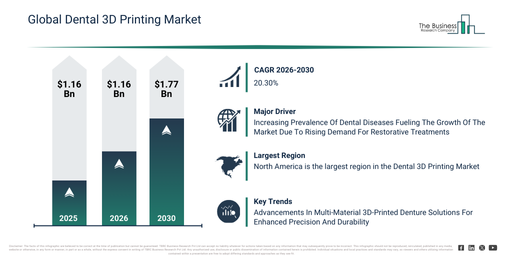
    The dental 3D printing market size has experienced significant growth in recent years. It is anticipated to expand from $3.57 billion in 2025 to $4.31 billion in 2026, achieving a compound annual growth rate (CAGR) of 20.6%. This historical growth can be ascribed to several factors, including the increasing demand for cosmetic dentistry, the expansion of dental laboratory digitization, the rising adoption of CAD/CAM technologies, the availability of digital dental scanners, and the growth in restorative dental procedures.

    The dental 3D printing market is poised for significant expansion in the coming years, with projections indicating a rise to $9.04 billion in 2030, demonstrating a compound annual growth rate (CAGR) of 20.3%. This anticipated growth during the forecast period is fueled by several factors, including the increasing adoption of digital dentistry, greater investments in dental technology infrastructure, a heightened demand for customized dental devices, the expansion of in-house printing capabilities within clinics, and ongoing innovations in dental printing materials. Key trends expected over the forecast period encompass the growing uptake of chairside 3D printing solutions, an increasing need for personalized dental restorations, the broader utilization of sophisticated dental printing materials, further integration of digital workflows, and a stronger emphasis on achieving swift turnaround times.

    Get A Free Sample Report With In-Depth Market Insights:

    https://thebusinessresearchcompany.com/sample_request?id=77787254&type=smp&name=Dental%203D%20Printing%20Market%20Report%202026&utm_source=Blogs&utm_medium=Paid&utm_campaign=Oct_PR

    Dental 3D Printing Market Opportunity Drivers: What’s Unlocking New Revenue Potential?

    The dental 3D printing market is anticipated to grow, driven by the escalating incidence of dental diseases. These conditions include problems like tooth decay, gum disease, tooth loss, oral cancer, and other disorders that compromise the health and functionality of teeth and surrounding tissues. The increasing prevalence of dental diseases is largely attributable to poor oral hygiene, as many individuals overlook consistent brushing and flossing, allowing plaque to build up and cause gum disease and tooth decay. Dental 3D printing offers significant benefits to patients with these conditions by providing personalized implants and prosthetics that conform more accurately to individual requirements, thereby enhancing comfort and functionality. Furthermore, it accelerates the production of dental devices, reducing overall treatment durations. For instance, in November 2024, according to the National Health Service, a UK-based government department, England saw 34 million dental treatment courses delivered during 2023-24, indicating a 4.3% increase compared to 2022-23. Hence, the rising occurrence of dental diseases is a key factor boosting the dental 3D printing market’s expansion.

    Dental 3D Printing Market Segments: Where Is Growth Concentrated?

    The dental 3D printing market covered in this report is segmented –

    1) By Product And Service Type: Equipment, Materials, Services

    2) By Technology Type: Vat PhotopolymerizatIon, Selective Laser Sintering, Other Technology Types

    3) By Application Type: Orthodontics, Prosthodontics, Implantology

    4) By End-User: Dental Laboratories, Dental Clinics, Hospitals And Clinics, Academic and Research Institute, Other End Users

    Subsegments:

    1) By Equipment: 3D Printers, Post-Processing Equipment, Scanning Devices

    2) By Materials: Dental Resins, Metals, Ceramics, Polymers

    3) By Services: Design And Prototyping Services, Customization And Consultation Services, Printing And Production Services, Post-Processing And Finishing Services

    Dental 3D Printing Market Innovation Trends Shaping Future Development

    Leading companies in the dental 3D printing market are prioritizing the creation of advanced multi-material 3D-printed denture solutions to boost precision, enhance durability, and broaden the spectrum of personalized dental offerings. This multi-material 3D-printed denture solution refers to a dental 3D printing technique where various materials are simultaneously jetted and solidified layer by layer to construct a unified, single denture. For instance, in February 2024, 3D Systems Inc., a US-based supplier of 3D printing solutions, unveiled the Nextdent Jetted Denture Solution, a sophisticated 3D-printed denture. This innovation presents a revolutionary approach to dental prosthetics, blending superior durability (featuring break-resistant gum materials and wear-resistant teeth) with authentic aesthetics (incorporating rigid, stain-resistant teeth and lifelike gum textures) to elevate patient comfort and contentment. Its cohesive workflow optimizes production for dental laboratories, allowing for substantial output with fewer manual steps, quicker delivery, and diminished operating expenditures.

    Dental 3D Printing Market Competitive Landscape: Which Companies Lead The Industry?

    Major companies operating in the dental 3d printing market are Renishaw plc, Stratasys Ltd., 3D Systems Corporation, Kulzer GmbH, Formlabs Inc., Desktop Metal Inc., Carbon Inc., Prodways Group SA, Voco GmbH, Keystone Industries Limited, Shanghai Union Technology Corporation, Roland DGA, SprintRay Inc., BEGO GmbH & Co. KG, Rapid Shape GmbH, Nexa3D Inc, Eplus3D Tech Co Ltd., MiiCraft, Dentona AG, Micron Dental Technologies.

    View The Full Dental 3D Printing Market Report:

    https://thebusinessresearchcompany.com/report/dental-3d-printing-global-market-report?utm_source=Blogs&utm_medium=Paid&utm_campaign=Oct_PR

    Dental 3D Printing Market Regional Outlook: Where Is Opportunity Concentrated?

    North America was the largest region in the dental 3D printing market in 2025. Asia-Pacific is expected to be the fastest-growing region in the forecast period. The regions covered in the dental 3D printing market report are Asia-Pacific, South East Asia, Western Europe, Eastern Europe, North America, South America, Middle East, Africa.

    Reach Out To Our Team:

    The Business Research Company: https://www.thebusinessresearchcompany.com/

    Americas: +1 310-496-7795

    Asia: +44 7882 955267 & +91 8897263534

    Europe: +44 7882 955267

    Email us at: marketing@tbrc.info

    Follow us on:

    LinkedIn: https://in.linkedin.com/company/the-business-research-company

    YouTube: https://www.youtube.com/channel/UC24_fI0rV8cR5DxlCpgmyFQ

    Global Market Model: https://www.thebusinessresearchcompany.com/global-market-model
  • Demineralized Bone Matrix Market Analysis: Understanding The Drivers Behind 6.3% CAGR Through 2030 Growth

    Demineralized Bone Matrix Market Analysis: Understanding The Drivers Behind 6.3% CAGR Through 2030 Growth

    Featuring market attractiveness scoring, total addressable market sizing, company benchmarking matrices, interactive Excel dashboards, deeper supply chain intelligence, emerging startup tracking, and granular product-level insights, The Business Research Company’s 2026 market reports are built to deliver research that is both more actionable and more strategically valuable.

    Demineralized Bone Matrix Market Expansion Outlook: What Revenue Opportunities Are Ahead?

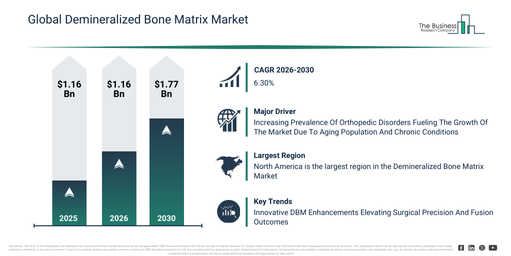
    The demineralized bone matrix market has experienced robust expansion in its size over recent years. Projections show it is set to expand from $1.12 billion in 2025 to $1.2 billion in 2026, achieving a compound annual growth rate (CAGR) of 6.6%. The expansion observed in the historic period stems from factors such as the limited supply of allograft bone materials, continued reliance on conventional bone grafts, an increase in orthopedic and dental procedures, heightened awareness regarding bone healing solutions, and the adoption of standard surgical practices.

    The demineralized bone matrix market is projected for substantial expansion in the coming years. It will grow to $1.52 billion in 2030 at a compound annual growth rate (CAGR) of 6.3%. This anticipated growth stems from advancements in bioactive gels and collagen matrices, an increase in spinal fusion and joint reconstruction procedures, the proliferation of specialty clinics and ambulatory surgical centers, enhanced regulatory approvals and quality certifications, and the adoption of minimally invasive surgical methods. Key trends foreseen for this period involve a greater acceptance of demineralized bone matrix in orthopedic operations, expanded application in dental and craniomaxillofacial interventions, increased utilization in spinal fusion and long bone reconstruction, the creation of injectable and thermosensitive gel formulations, and an emphasis on collagen-based and biologically active materials for bone regeneration.

    Get A Free Sample Report With In-Depth Market Insights:

    https://thebusinessresearchcompany.com/sample_request?id=89953861&type=smp&name=Demineralized%20Bone%20Matrix%20Market%20Report%202026&utm_source=Blogs&utm_medium=Paid&utm_campaign=Oct_PR

    Demineralized Bone Matrix Market Growth Momentum: What Factors Are Shaping Demand?

    The rising occurrence of orthopedic disorders is anticipated to propel the growth of the demineralized bone matrix (DBM) market going forward. Orthopedic disorders are conditions impacting the musculoskeletal system, including bones, joints, muscles, ligaments, tendons, and nerves. The demand for orthopedic treatments is increasing due to the global aging population, as older individuals are more susceptible to musculoskeletal ailments such as osteoarthritis, osteoporosis, and fractures. Demineralized bone matrix is crucial in managing orthopedic disorders by fostering bone regeneration and healing, making it an essential material for procedures like spinal fusion, joint reconstruction, and fracture repair. It aids in recovery by providing an osteoinductive scaffold that supports natural bone growth and improves surgical outcomes. For instance, in August 2023, a survey study conducted by the Institute for Health Metrics and Evaluation, a US-based public health research institute, revealed that 15% of individuals aged 30 and older had osteoarthritis in 2023, and the number of affected individuals is projected to reach around 1 billion by 2050. Therefore, the increasing prevalence of orthopedic disorders is a key driver for the expansion of the demineralized bone matrix market.

    Demineralized Bone Matrix Market Segment Analysis: What Are The Core Market Categories?

    The demineralized bone matrix market covered in this report is segmented –

    1) By Product Type: Gel, Putty, Sponge, Fiber, Paste, Other Product Types

    2) By Tissue Source: Allograft, Synthetic Bone Graft Substitutes

    3) By Application: Dental, Craniomaxillofacial, Spinal Fusion, Long Bone Procedures, Joint Reconstruction, Other Applications

    4) By End-Use: Hospitals, Ambulatory Surgical Centers, Specialty Clinics, Other End-Uses

    Subsegments:

    1) By Gel: Injectable Gel, Bioactive Gel, Thermosensitive Gel

    2) By Putty: Moldable Putty, Radiopaque Putty, Self-Setting Putty

    3) By Sponge: Resorbable Sponge, Collagen-Based Sponge, Porous Sponge

    4) By Fiber: Mineralized Fiber, Non-Mineralized Fiber, Collagen Fiber Matrix

    5) By Paste: Flowable Paste, Adhesive Paste, Viscous Paste

    6) By Other Product Types: Sheet Matrix, Strip Matrix, Granules

    Demineralized Bone Matrix Market Trends Redefining Industry Growth

    Leading companies in the demineralized bone matrix market are concentrating on developing advanced innovations, such as flowable demineralized fibers, to improve graft handling, osteoinductive capability, and surgical effectiveness. These flowable demineralized fibers constitute a moldable demineralized bone matrix, comprising cortical bone fibers within a carrier, engineered for simple application and natural bone regrowth. For example, in January 2025, LifeNet Health, Inc., a U.S.-based non-profit organization, introduced PliaFX Flo, aimed at enhancing bone graft manipulation, placement accuracy, and overall fusion results. PliaFX Flo features a flowable, carrier-free demineralized fiber technology that betters graft moldability and positioning during bone fusion operations. It offers a dense fiber network created to maximize inherent osteoinductive potential and optimize handling in challenging anatomical regions.

    Demineralized Bone Matrix Market Competitive Landscape: Who Leads The Industry?

    Major companies operating in the demineralized bone matrix market are Johnson and Johnson, Medtronic plc, Stryker Corporation, Zimmer Biomet Holdings Inc, Arthrex Inc, Straumann AG, Globus Medical Inc, Integra LifeSciences Corporation, MTF Biologics, Exactech Inc, RTI Surgical, AlloSource, Cerapedics Inc, Keystone Dental Inc, Xtant Medical Holdings Inc, Hans Biomed Co Ltd, Bone Biologics Corp, SeaSpine Holdings Corporation, Orthofix Medical Inc, LifeNet Health

    View The Full Demineralized Bone Matrix Market Report:

    https://thebusinessresearchcompany.com/report/demineralized-bone-matrix-global-market-report?utm_source=Blogs&utm_medium=Paid&utm_campaign=Oct_PR

    Demineralized Bone Matrix Market Geographic Landscape: Which Region Leads Industry Growth?

    North America was the largest region in the demineralized bone matrix market in 2025. Asia-Pacific is expected to be the fastest-growing region in the forecast period. The regions covered in the demineralized bone matrix market report are Asia-Pacific, South East Asia, Western Europe, Eastern Europe, North America, South America, Middle East, Africa.

    Reach Out To Our Team:

    The Business Research Company: https://www.thebusinessresearchcompany.com/

    Americas: +1 310-496-7795

    Asia: +44 7882 955267 & +91 8897263534

    Europe: +44 7882 955267

    Email us at: marketing@tbrc.info

    Follow us on:

    LinkedIn: https://in.linkedin.com/company/the-business-research-company

    YouTube: https://www.youtube.com/channel/UC24_fI0rV8cR5DxlCpgmyFQ

    Global Market Model: https://www.thebusinessresearchcompany.com/global-market-model
  • Demineralized Bone Fiber Technology Market Growth To $1.97 Billion By 2030: What’s Driving The Expansion?

    Demineralized Bone Fiber Technology Market Growth To $1.97 Billion By 2030: What’s Driving The Expansion?

    Built to provide research that’s more actionable and strategically valuable, The Business Research Company’s 2026 market reports include market attractiveness analysis, total addressable market sizing, company benchmarking matrices, interactive Excel dashboards, broader supply chain intelligence, emerging startup tracking, and in-depth product insights.

    Demineralized Bone Fiber Technology Market Growth Potential: How Will Market Size Shift Through 2030?

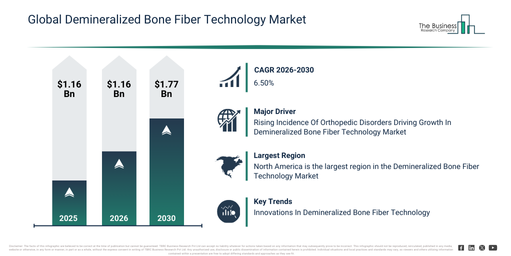
    The demineralized bone fiber technology market has experienced substantial expansion in recent years. It is projected to expand from $1.43 billion in 2025 to $1.53 billion in 2026, demonstrating a compound annual growth rate (CAGR) of 6.5%. The historical growth of this market can be attributed to an increase in orthopedic surgical procedures, a rising incidence of traumatic bone injuries, an uptick in dental implant procedures, improved clinical acceptance of allografts, and the expansion of hospital-based orthopedic departments.

    The demineralized bone fiber technology market is projected to experience robust expansion over the coming years, with its size expected to reach $1.97 billion in 2030, demonstrating a compound annual growth rate (CAGR) of 6.5%. This anticipated growth is driven by several factors, including an increasing aging population, a rising demand for minimally invasive bone repair, an uptick in spinal fusion surgeries, the expansion of dental restoration procedures, and a growing preference for biologic graft alternatives. Furthermore, key trends in the forecast period include the rising adoption of osteoinductive bone graft materials, their growing use in spinal fusion procedures, an increasing inclination towards flexible bone graft formats, the widening scope of dental bone regeneration applications, and an escalating demand for off-the-shelf grafting solutions.

    Get A Free Sample Report With In-Depth Market Insights:

    https://thebusinessresearchcompany.com/sample_request?id=81253733&type=smp&name=Demineralized%20Bone%20Fiber%20Technology%20Market%20Report%202026&utm_source=Blogs&utm_medium=Paid&utm_campaign=Oct_PR

    Demineralized Bone Fiber Technology Market Expansion Drivers: What’s Shaping Future Growth?

    A rise in orthopedic disorder cases is anticipated to drive the expansion of the demineralized bone fiber technology market moving forward. Orthopedic conditions encompass various health issues impacting bones, joints, muscles, and adjacent tissues, thereby hindering mobility and functionality. The growing occurrence of orthopedic disorders stems from multiple causes, such as an aging demographic, inactive routines, and increasing obesity levels, all contributing to more frequent joint and bone problems. Demineralized bone fiber technology facilitates the regrowth of bone in individuals suffering from orthopedic disorders by offering a natural framework that stimulates the formation of new bone tissue. As an illustration, data from January 2024, released by the Office for Health Improvement and Disparities, a UK-based government agency, indicated that the proportion of self-reported long-term MSK conditions among individuals aged 16 and over was 18.4% in 2023, representing an increase from 17.6% in 2022. Consequently, the escalating frequency of orthopedic disorders is fueling the expansion of the demineralized bone fiber technology market.

    Demineralized Bone Fiber Technology Market Segment Breakdown: Which Categories Lead On Revenue?

    The demineralized bone fiber technology market covered in this report is segmented –

    1) By Product Type: Allograft, Demineralized Bone Matrix (DBM), Synthetic, Xenograft

    2) By Material Type: Collagen, Hydroxyapatite, Polymers, Tricalcium Phosphate

    3) By Application: Dental, Joint Reconstruction, Spinal Fusion, Trauma

    4) By End-User: Ambulatory Surgical Centers, Hospitals, Specialty Clinics

    Subsegments:

    1) By Allograft: Fresh Frozen Allograft, Freeze-Dried Allograft, Processed Allograft

    2) By Demineralized Bone Matrix (DBM): Injectable DBM, DBM Bone Grafts, DBM Putty, DBM Sponge

    3) By Synthetic: Synthetic Bone Grafts, Synthetic Bone Substitutes, Synthetic Bone Fillers

    4) By Xenograft: Bovine Xenograft, Porcine Xenograft, Processed Xenograft

    Demineralized Bone Fiber Technology Market Strategic Trends: What Defines The Next Growth Phase?

    Major companies within the demineralized bone fiber technology market are prioritizing the creation of innovative products, including proprietary demineralized cortical bone fiber technology, to advance applications in both medical and dental fields. This specialized proprietary demineralized cortical bone fiber technology involves a unique processing method that removes the mineral content from cortical bone to produce bone fibers with distinct properties. Its primary purpose is to enhance the biological and mechanical performance of bone grafts and scaffolds used in various medical and dental applications. As an illustration, in February 2024, Tetrous Inc., a US-based regenerative medicine company, launched the EnFix TAC, a novel demineralized bone allograft implant designed to improve the healing of the enthesis, the area connecting bone and tendon, after rotator cuff surgery. This product utilizes cutting-edge demineralized bone fiber technology to enhance the integration and regeneration of bone and tendon tissues. The EnFix TACTM provides a supportive framework that promotes efficient bone-to-tendon integration, effectively addressing the issue of scar tissue formation, which frequently obstructs proper enthesis healing. Furthermore, its design offers increased flexibility for surgical operations, allowing compatibility with various suture anchor systems to optimize healing results.

    Demineralized Bone Fiber Technology Market Company Landscape And Competitive Strategy

    Major companies operating in the demineralized bone fiber technology market are Johnson & Johnson, Medtronic Plc, Stryker Corporation, Zimmer Biomet, Arthrex Inc., Globus Medical Inc., Integra LifeSciences Corporation, NuVasive Inc., Wright Medical Group N.V., Bioventus LLC, Alphatec Holdings Inc., MTF Biologics, RTI Surgical Holdings Inc., LifeNet Health, SeaSpine Holdings Corporation, AlloSource, Xtant Medical Holdings Inc., Orthofix Medical Inc., Kuros Biosciences AG, Spine Wave Inc., Orthogen LLC

    View The Full Demineralized Bone Fiber Technology Market Report:

    https://thebusinessresearchcompany.com/report/demineralized-bone-fiber-technology-global-market-report?utm_source=Blogs&utm_medium=Paid&utm_campaign=Oct_PR

    Demineralized Bone Fiber Technology Market Largest Region: Which Geography Holds The Biggest Share?

    North America was the largest region in the demineralized bone fiber technology market in 2025. Asia-Pacific is expected to be the fastest-growing region in the forecast period. The regions covered in the demineralized bone fiber technology market report are Asia-Pacific, South East Asia, Western Europe, Eastern Europe, North America, South America, Middle East, Africa.

    Reach Out To Our Team:

    The Business Research Company: https://www.thebusinessresearchcompany.com/

    Americas: +1 310-496-7795

    Asia: +44 7882 955267 & +91 8897263534

    Europe: +44 7882 955267

    Email us at: marketing@tbrc.info

    Follow us on:

    LinkedIn: https://in.linkedin.com/company/the-business-research-company

    YouTube: https://www.youtube.com/channel/UC24_fI0rV8cR5DxlCpgmyFQ

    Global Market Model: https://www.thebusinessresearchcompany.com/global-market-model
  • Degenerative Disc Disease Treatment Market Trends Reshaping Industry Growth Through 2030

    Degenerative Disc Disease Treatment Market Trends Reshaping Industry Growth Through 2030

    Backed by market attractiveness analysis, total addressable market sizing, company benchmarking matrices, interactive Excel dashboards, wider supply chain intelligence, emerging startup coverage, and detailed product-level insights, The Business Research Company’s 2026 market reports are designed to offer research that is more actionable and strategically valuable than ever.

    Degenerative Disc Disease Treatment Market Value Analysis: What Growth Lies Ahead Over The Forecast Period?

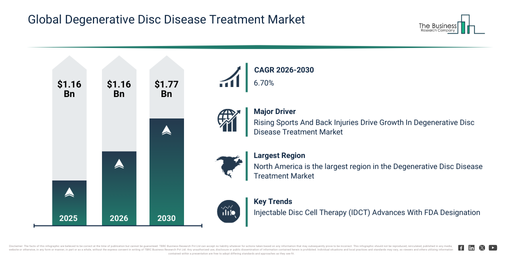
    The degenerative disc disease treatment market size has demonstrated substantial growth in recent years. This market is anticipated to expand from $28.79 billion in 2025 to $30.75 billion in 2026, achieving a compound annual growth rate (CAGR) of 6.8%. Historically, this growth can be ascribed to factors such as the increasing occurrence of lower back pain, the rise in sedentary lifestyles, an aging global population, improved accessibility to pain management therapies, and the expansion of orthopedic care facilities.

    The degenerative disc disease treatment market size is anticipated to undergo significant expansion in the coming years. It is projected to reach $39.89 billion in 2030, displaying a compound annual growth rate (CAGR) of 6.7%. This growth over the forecast period can be attributed to several factors, including an increasing demand for enduring pain relief solutions, heightened awareness of spinal health, rising diagnosis rates of degenerative spine disorders, the expansion of ambulatory surgical centers, and increasing healthcare expenditure on musculoskeletal disorders. Major trends expected during this forecast timeframe encompass a growing preference for non-surgical pain management, an increased utilization of combination drug therapies, a stronger emphasis on early-stage conservative treatment, a shift towards outpatient spine care, and a rising adoption of minimally invasive spine procedures.

    Get A Free Sample Report With In-Depth Market Insights:

    https://thebusinessresearchcompany.com/sample_request?id=18784&type=smp&name=Degenerative%20Disc%20Disease%20Treatment%20Market%20Report%202026&utm_source=Blogs&utm_medium=Paid&utm_campaign=Oct_PR

    Degenerative Disc Disease Treatment Market Development Factors: What’s Supporting Demand?

    The anticipated increase in sports injuries is projected to propel the expansion of the degenerative disc disease treatment market. These injuries involve physical harm or trauma experienced by athletes or individuals engaging in physical activities, frequently stemming from sudden impacts, repetitive strain, or incorrect methods. The rise in sports-related harm is often attributed to factors such as higher participation rates, more intense training regimens, and a stronger focus on competitive results. Degenerative disc disease treatment is utilized in sports injuries to manage chronic spinal pain and restore function when disc degeneration affects athletes’ performance and mobility. For instance, in November 2023, Howden Group Holdings Ltd, a UK-based insurance intermediary company, reported that in October 2022, recorded injuries resulted in players being sidelined for an average of 11.35 days before tournaments, which subsequently rose to 19.41 days by January 2023. Consequently, the growing incidence of sports injuries is stimulating the growth of the degenerative disc disease treatment market.

    Degenerative Disc Disease Treatment Market Segmentation: How Does The Market Break Down By Category?

    The degenerative disc disease treatment market covered in this report is segmented –

    1) By Type: Conventional Drugs, Novel Therapies

    2) By Route Of Administration: Oral, Injectable

    3) By End User: Hospitals, Ambulatory Surgical Centers, Orthopedic Center

    Subsegments:

    1) By Conventional Drugs: Non-Steroidal Anti-Inflammatory Drugs (NSAIDs), Opioids, Muscle Relaxants, Corticosteroids, Antidepressants

    2) By Novel Therapies: Gene Therapy, Stem Cell Therapy, Platelet-Rich Plasma (PRP) Therapy, Biologic Agents, Regenerative Medicine, Cell-Based Therapies, Growth Factor Therapies

    Degenerative Disc Disease Treatment Market Transformation Trends: What Innovations Are Driving Change?

    Leading companies in the degenerative disc disease treatment market are focusing on creating novel therapies, including injectable disc cell therapy (IDCT), to improve patient outcomes by enhancing disc volume, alleviating low back pain, and reducing reliance on pain medications. This regenerative treatment, injectable disc cell therapy (IDCT), specifically targets symptomatic lumbar degenerative disc disease. For example, in February 2023, DiscGenics Inc., a US-based biopharmaceutical company, received FDA regenerative medicine advanced therapy designation for its injectable disc cell therapy (IDCT), aimed at addressing symptomatic lumbar degenerative disc disease. This innovative therapy utilizes a live progenitor cell population derived from donated adult human intervertebral disc tissue. IDCT has the capacity to increase disc volume, relieve low back pain, and lessen the requirement for pain medication in affected patients.

    Degenerative Disc Disease Treatment Market Key Players Shaping Industry Direction

    Major companies operating in the degenerative disc disease treatment market are Pfizer Inc., Johnson And Johnson, Sanofi S.A., Novartis AG, GlaxoSmithKline PLC, Medtronic plc, Amgen Inc., Zimmer Biomet Holdings Inc., Arthrex Inc., Biocon Limited, Integra LifeSciences Holdings Corporation, NuVasive Inc., Globus Medical Inc., Orthofix Medical Inc., RTI Surgical Holdings Inc., LifeNet Health, Stryker Corporation, K2M Group Holdings Inc., SeaSpine Holdings Corporation, Amedica Corporation, Camber Spine Inc.

    View The Full Degenerative Disc Disease Treatment Market Report:

    https://thebusinessresearchcompany.com/report/degenerative-disc-disease-treatment-global-market-report?utm_source=Blogs&utm_medium=Paid&utm_campaign=Oct_PR

    Degenerative Disc Disease Treatment Market Regional Analysis: Which Geography Leads On Revenue?

    North America was the largest region in the degenerative disc disease treatment market in 2025. The regions covered in the degenerative disc disease treatment market report are Asia-Pacific, South East Asia, Western Europe, Eastern Europe, North America, South America, Middle East, Africa.

    Reach Out To Our Team:

    The Business Research Company: https://www.thebusinessresearchcompany.com/

    Americas: +1 310-496-7795

    Asia: +44 7882 955267 & +91 8897263534

    Europe: +44 7882 955267

    Email us at: marketing@tbrc.info

    Follow us on:

    LinkedIn: https://in.linkedin.com/company/the-business-research-company

    YouTube: https://www.youtube.com/channel/UC24_fI0rV8cR5DxlCpgmyFQ

    Global Market Model: https://www.thebusinessresearchcompany.com/global-market-model
  • Deflectable Catheters Market Growth To $2.5 Billion Creates New Opportunities Across The Industry

    Deflectable Catheters Market Growth To $2.5 Billion Creates New Opportunities Across The Industry

    Featuring market attractiveness scoring, total addressable market sizing, company benchmarking matrices, interactive Excel dashboards, deeper supply chain intelligence, emerging startup tracking, and granular product-level insights, The Business Research Company’s 2026 market reports are built to deliver research that is both more actionable and more strategically valuable.

    Deflectable Catheters Market Size Forecast: How Big Could The Market Get By 2030?

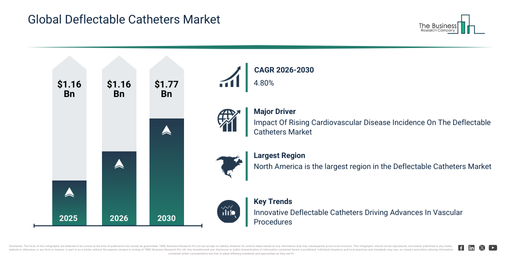
    The deflectable catheters market size has demonstrated steady expansion in recent years. It is anticipated to reach $2.07 billion in 2026 from $1.98 billion in 2025, progressing at a compound annual growth rate (CAGR) of 4.9%. Historically, this growth can be ascribed to a rise in cardiac catheterization procedures, the increasing prevalence of cardiovascular diseases, the expansion of hospital-based interventional labs, a stronger clinician preference for minimally invasive procedures, and improved reimbursement for interventional cardiology.

    The deflectable catheters market is expected to show continuous expansion over the coming years. It is predicted to attain a value of $2.5 billion by 2030, exhibiting a compound annual growth rate (CAGR) of 4.8%. This projected growth can be attributed to an increasingly aging global population, a heightened demand for precision-guided medical procedures, the expansion of ambulatory surgical centers, an intensified focus on procedural efficiency and patient safety, and greater investments in advanced interventional devices. Significant trends for the forecast period include enhanced steerability for complex anatomies, a rising adoption of these devices in electrophysiology procedures, the ongoing miniaturization of catheter designs, a discernible shift toward single-use sterile catheters, and an increasing need for peripheral interventions.

    Get A Free Sample Report With In-Depth Market Insights:

    https://thebusinessresearchcompany.com/sample_request?id=27348235&type=smp&name=Deflectable%20Catheters%20Market%20Report%202026&utm_source=Blogs&utm_medium=Paid&utm_campaign=Oct_PR

    Deflectable Catheters Market Industry Drivers: What’s Behind The Revenue Growth?

    The increasing occurrence of cardiovascular diseases is anticipated to boost the expansion of the deflectable catheters market moving forward. The rising prevalence of cardiovascular diseases (CVDs) poses a significant global health challenge, influenced by elements such as an aging demographic, poor lifestyle decisions, and the effects of rapid urbanization. Deflectable catheters are employed in cardiovascular disease procedures to accurately maneuver and address heart arrhythmias, conduct ablations, and reach difficult-to-access regions within the heart or blood vessels. For instance, in October 2024, the Centers for Disease Control and Prevention, a US-based government agency, stated that in 2023, cardiovascular disease was responsible for 919,032 fatalities, making up approximately one in every three deaths. Consequently, the escalating incidence of cardiovascular diseases is propelling the deflectable catheters market.

    Deflectable Catheters Market Segment Trends And Revenue Contributors

    The deflectable catheters market covered in this report is segmented –

    1) By Product: Uni-Directional Deflectable Catheters, Bi-Directional Deflectable Catheters, Multi-Directional Deflectable Catheters

    2) By Application: Coronary Interventions, Electrophysiology, Diagnostics Imaging, Peripheral Interventions

    3) By End-User: Hospitals And Clinics, Ambulatory Surgery Center, Other End Users

    Subsegments:

    1) By Uni-Directional Deflectable Catheters: Standard Uni-Directional Deflectable Catheters, High-Performance Uni-Directional Deflectable Catheters

    2) By Bi-Directional Deflectable Catheters: Standard Bi-Directional Deflectable Catheters, High-Precision Bi-Directional Deflectable Catheters

    3) By Multi-Directional Deflectable Catheters: Flexible Multi-Directional Deflectable Catheters, Rigid Multi-Directional Deflectable Catheters

    #Deflectable Catheters Market Growth Trends: What’s Shaping The Future Outlook?

    Leading firms within the deflectable catheter market are concentrating on creating advanced products, like crossing catheters, to achieve a competitive advantage. A crossing catheter is a unique medical instrument crafted to assist in maneuvering through obstructed or constricted blood vessels, frequently employed in interventions like angioplasty. An example of this is when Bentley InnoMed GmbH, a healthcare firm based in Germany, introduced its BeBack crossing catheter in the United States during May 2023. This BeBack catheter is engineered to navigate chronic total occlusions (CTOs) and manage severely calcified lesions. It comes in lengths of 80 cm and 120 cm, and in sizes of 2.9Fr and 4Fr. The device incorporates a steerable and adaptable nitinol needle for crossing and precise re-entry, accompanied by a radiopaque marker that shows the orientation of the curved needle close to the catheter’s tip. This instrument facilitates various treatment methods, encompassing antegrade, retrograde, and crossover strategies for both intraluminal and subintimal lesions.

    Deflectable Catheters Market Competitive Analysis Of Leading Industry Participants

    Major companies operating in the deflectable catheters market are Johnson & Johnson, Abbott Laboratories, Medtronic plc, Boston Scientific Corporation, B. Braun Melsungen AG, Terumo Corporation, Nipro Corporation, Cook Medical, Teleflex Incorporated, Biotronik, Smiths Medical, Merit Medical Systems, Biomerics, Asahi Intecc Co Ltd, Atricure Inc., AngioDynamics, Oscor Inc., Baylis Medical Company Inc., Vascular Solutions Inc., EndoMed Systems GmbH, BioSig Technologies

    View The Full Deflectable Catheters Market Report:

    https://thebusinessresearchcompany.com/report/deflectable-catheters-global-market-report?utm_source=Blogs&utm_medium=Paid&utm_campaign=Oct_PR

    Deflectable Catheters Market Geographic Spread And Regional Opportunities

    North America was the largest region in the deflectable catheters market in 2025. Asia-Pacific is expected to be the fastest-growing region in the forecast period. The regions covered in the deflectable catheters market report are Asia-Pacific, South East Asia, Western Europe, Eastern Europe, North America, South America, Middle East, Africa.

    Reach Out To Our Team:

    The Business Research Company: https://www.thebusinessresearchcompany.com/

    Americas: +1 310-496-7795

    Asia: +44 7882 955267 & +91 8897263534

    Europe: +44 7882 955267

    Email us at: marketing@tbrc.info

    Follow us on:

    LinkedIn: https://in.linkedin.com/company/the-business-research-company

    YouTube: https://www.youtube.com/channel/UC24_fI0rV8cR5DxlCpgmyFQ

    Global Market Model: https://www.thebusinessresearchcompany.com/global-market-model
  • Defibrillator Devices And Equipment Market Forecast: Breaking Down The Numbers Behind Future Expansion

    Defibrillator Devices And Equipment Market Forecast: Breaking Down The Numbers Behind Future Expansion

    Built to provide research that’s more actionable and strategically valuable, The Business Research Company’s 2026 market reports include market attractiveness analysis, total addressable market sizing, company benchmarking matrices, interactive Excel dashboards, broader supply chain intelligence, emerging startup tracking, and in-depth product insights.

    Defibrillator Devices And Equipment Market Revenue Outlook: What CAGR Lies Ahead Through 2030?

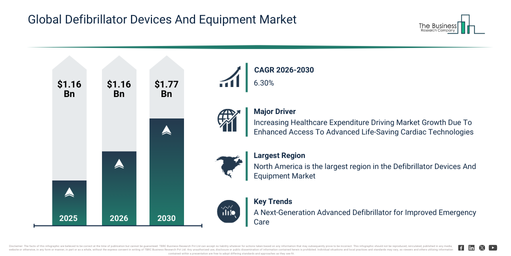
    The defibrillator devices and equipment market size has observed consistent growth in recent years. This market is projected to expand from $11.97 billion in 2025 to $12.43 billion in 2026, achieving a compound annual growth rate (CAGR) of 3.9%. The market’s historical growth can be attributed to the rising incidence of sudden cardiac arrest, the expansion of emergency medical services, increased awareness regarding cardiac emergency response, advancements in battery and capacitor technologies, and the broader hospital adoption of implantable defibrillators.

    The defibrillator devices and equipment market is projected to experience substantial growth over the coming years. This market is anticipated to reach $15.89 billion by 2030, exhibiting a compound annual growth rate (CAGR) of 6.3%. The anticipated expansion during this period can be ascribed to several factors, including the proliferation of public access defibrillation initiatives, the increasing uptake of connected cardiac monitoring systems, a rising need for cardiac care delivered at home, the broadening of telecardiology services, and breakthroughs in miniaturized defibrillation technologies. Key developments expected in the forecast timeframe encompass the wider deployment of automated external defibrillators in public areas, the increasing use of wearable cardioverter defibrillators, a greater integration of remote monitoring capabilities, the development of more compact and portable defibrillator designs, and an intensified focus on rapid response innovations.

    Get A Free Sample Report With In-Depth Market Insights:

    https://thebusinessresearchcompany.com/sample_request?id=70048155&type=smp&name=Defibrillator%20Devices%20And%20Equipment%20Market%20Report%202026&utm_source=Blogs&utm_medium=Paid&utm_campaign=Oct_PR

    Defibrillator Devices And Equipment Market Growth Factors: What’s Supporting Expansion?

    The projected expansion of the defibrillator devices and equipment market is anticipated to be fueled by a rise in healthcare spending. Healthcare expenditure encompasses the financial outlay on healthcare goods and services, covering aspects like individual health care, public health initiatives, medical research, and health insurance schemes. This increase in healthcare spending stems from the growing incidence of chronic diseases, which necessitate prolonged, intricate, and intensive treatment, thereby substantially elevating expenses. Greater healthcare spending benefits the defibrillator market by empowering hospitals, outpatient surgical centers, and government bodies to acquire sophisticated defibrillation systems. For example, as reported by the American Medical Association, a professional medical organization based in the US, in April 2025, health spending within the United States saw a 7.5 percent increase in 2023, reaching a total of 4.9 trillion dollars or 14,570 dollars per capita. This represented a significant uptick when contrasted with the 4.6 percent growth observed in 2022. Consequently, improvements in healthcare infrastructure are stimulating the expansion of the defibrillator devices and equipment market.

    Defibrillator Devices And Equipment Market Segment Analysis Spotlighting Growth Areas

    The defibrillator devices and equipment market covered in this report is segmented –

    1) By Type: Implantable Defibrillators, External Defibrillators

    2) By Implantable Defibrillators: Transvenous Implantable Cardioverter Defibrillator (T-ICDs), Subcutaneous Implantable Cardioverter Defibrillator (S-ICDs), Cardiac Resynchronization Therapy- Defibrillator (CRT-D), Single And Dual Chamber

    3) By External defibrillators: Manual External Defibrillator (MEDs), Automated External Defibrillator (AEDs), Wearable Cardioverter Defibrillator (WCDs)

    4) By End User: Hospitals, Pre-Hospitals, Public Access Market, Alternate Care Market, Home Healthcare

    Subsegments:

    1) By Implantable Defibrillators: Implantable Cardioverter Defibrillators (ICD), Subcutaneous Implantable Defibrillators (S-ICD), Dual-Chamber Implantable Defibrillators, Single-Chamber Implantable Defibrillators

    2) By External Defibrillators: Automated External Defibrillators (AED), Manual External Defibrillators, Wearable Cardioverter Defibrillators (WCD), Other External Defibrillators

    Defibrillator Devices And Equipment Market Industry Trends: What’s Reshaping Demand?

    Leading companies in the defibrillator devices and equipment market are innovating products, such as advanced defibrillators, to enhance patient outcomes and improve device functionality. An advanced defibrillator is a medical apparatus designed to administer an electric shock to the heart during critical arrhythmias, including ventricular fibrillation or sudden cardiac arrest. For example, in June 2024, Strykar Healthcare, a US-based medical technology company, unveiled the LIFEPAK 35 monitor/defibrillator. This device is engineered to elevate emergency medical care through its intuitive, lightweight design and large touch screen, enabling customizable clinical experiences. Equipped with connected features for continuous patient data monitoring, the device aims to assist healthcare providers dealing with challenges like staff shortages and mental health issues. Developed through over a decade of research and feedback from professionals, the LIFEPAK 35 underscores Stryker’s commitment to furnishing dependable tools for first responders and essential healthcare workers, ensuring high-quality care from roadside incidents to hospital visits.

    Defibrillator Devices And Equipment Market Leading Companies And Competitive Benchmarking

    Major companies operating in the defibrillator devices and equipment market are Medtronic plc, Abbott Laboratories, Boston Scientific Corporation, Koninklijke Philips N.V., ZOLL Medical Corporation, Cardiac Science Corporation, Physio-Control Inc., Nihon Kohden Corporation, Defibtech LLC, Schiller AG, Biotronik Inc., LivaNova plc, HeartSine Technologies LLC, Mindray Medical International Limited, Metrax Engineering Ltd., CU Medical Systems Inc., Fukuda Denshi Co. Ltd., Innomed Technologies Inc., Progetti Srl, Weinmann Emergency Medical Technology GmbH + Co. KG, Bexen Cardio, Lepu Medical Technology (Beijing) Co. Ltd., Shenzhen XFT Medical Limited, Zhejiang Medtec Medical Devices Co. Ltd.

    View The Full Defibrillator Devices And Equipment Market Report:

    https://thebusinessresearchcompany.com/report/defibrillator-devices-and-equipment-global-market-report?utm_source=Blogs&utm_medium=Paid&utm_campaign=Oct_PR

    Defibrillator Devices And Equipment Market Top Region By Revenue And Market Share

    North America was the largest region in the global defibrillator devices and equipment market in 2025. Western Europe was the second-largest region in the defibrillator devices and equipment market. The regions covered in the defibrillator devices and equipment market report are Asia-Pacific, South East Asia, Western Europe, Eastern Europe, North America, South America, Middle East, Africa.

    Reach Out To Our Team:

    The Business Research Company: https://www.thebusinessresearchcompany.com/

    Americas: +1 310-496-7795

    Asia: +44 7882 955267 & +91 8897263534

    Europe: +44 7882 955267

    Email us at: marketing@tbrc.info

    Follow us on:

    LinkedIn: https://in.linkedin.com/company/the-business-research-company

    YouTube: https://www.youtube.com/channel/UC24_fI0rV8cR5DxlCpgmyFQ

    Global Market Model: https://www.thebusinessresearchcompany.com/global-market-model
  • Deep Brain Stimulation Systems Market Expected To Grow At 10.3% CAGR Through 2030: What Businesses Need To Know

    Deep Brain Stimulation Systems Market Expected To Grow At 10.3% CAGR Through 2030: What Businesses Need To Know

    Backed by market attractiveness analysis, total addressable market sizing, company benchmarking matrices, interactive Excel dashboards, wider supply chain intelligence, emerging startup coverage, and detailed product-level insights, The Business Research Company’s 2026 market reports are designed to offer research that is more actionable and strategically valuable than ever.

    Deep Brain Stimulation Systems Market Growth Analysis: How Will Revenue Trend Over The Forecast Period?

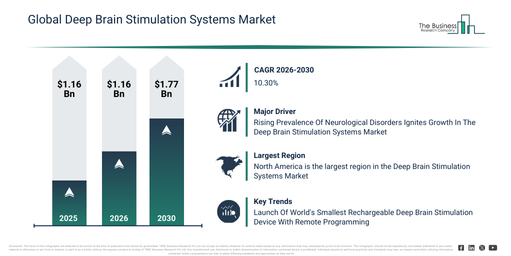
    The deep brain stimulation systems market size has shown significant growth in recent years. It is anticipated to increase from $2.77 billion in 2025 to $3.05 billion in 2026, exhibiting a compound annual growth rate (CAGR) of 10.2%. This historical expansion can be attributed to factors such as the rising prevalence of neurological disorders, enhanced clinical acceptance of neuromodulation therapies, ongoing advancements in implantable medical device technology, the proliferation of neurology specialty centers, and improved long-term patient outcomes.

    The deep brain stimulation systems market is projected to experience substantial expansion in the coming years. It is anticipated to reach a value of $4.52 billion by 2030, demonstrating a compound annual growth rate (CAGR) of 10.3%. This growth during the forecast period stems from factors such as heightened investments in advanced neurostimulation devices, an escalating demand for individualized neurological therapies, the broadening of DBS indications beyond mere movement disorders, the increasing incorporation of AI-driven programming, and a greater emphasis on remote patient monitoring. Key trends anticipated during the forecast timeframe encompass the expanding embrace of adaptive DBS systems, a growing reliance on image-guided electrode placement, increasing consumer demand for rechargeable neurostimulators, the proliferation of personalized neuromodulation therapies, and an intensified focus on minimally invasive implantation methods.

    Get A Free Sample Report With In-Depth Market Insights:

    https://thebusinessresearchcompany.com/sample_request?id=97934634&type=smp&name=Deep%20Brain%20Stimulation%20Systems%20Market%20Report%202026&utm_source=Blogs&utm_medium=Paid&utm_campaign=Oct_PR

    Deep Brain Stimulation Systems Market Demand Drivers: What’s Powering Industry Growth?

    The rising occurrence of neurological disorders is projected to boost the deep brain stimulation systems market moving forward. Neurological disorders are defined as a diverse range of conditions impacting the central, peripheral, and autonomic nervous systems within the body. Deep brain stimulation systems are employed in neurosurgical interventions to deliver electrical stimulation to a targeted region, aiming to modify or regulate neural activity and achieve a reversible, adjustable, and therapeutic outcome. For instance, in October 2023, the World Federation of Neurology, a UK-based association of national neurological societies, reported that more than 40% of the world’s population is currently affected by a neurological condition, and this prevalence is anticipated to almost double by 2050. Thus, the growing incidence of neurological disorders is propelling the deep brain stimulation systems market’s expansion.

    Deep Brain Stimulation Systems Market Segment Performance And Emerging Opportunities

    The deep brain stimulation systems market covered in this report is segmented –

    1) By Product: Single Channel, Dual Channel

    2) By Application: Parkinson’s Disease, Essential Tremor, Obsessive Compulsive Disorder, Epilepsy, Dystonia, Other Applications

    3) By End-user: Hospitals, Ambulatory Surgical Centers, Neurological Clinics, Other End Users

    Subsegments:

    1) By Single Channel: Unilateral Deep Brain Stimulation (DBS) Systems, Single Lead Deep Brain Stimulation (DBS) Systems, Targeted Single Nucleus DBS Systems, Standard Single Channel Neurostimulation Systems

    2) By Dual Channel: Bilateral Deep Brain Stimulation (DBS) Systems, Dual Lead Deep Brain Stimulation (DBS) Systems, Multi-Nucleus Targeted DBS Systems, Advanced Dual Channel Neurostimulation Systems

    Deep Brain Stimulation Systems Market Innovation Trends: What Developments Are Reshaping The Industry?

    Major corporations operating within the deep brain stimulation systems market are creating advanced technology, such as deep brain stimulation (DBS) systems, aimed at treating individuals afflicted with movement disorders. Deep Brain Stimulation (DBS) is defined as a medical intervention that involves an implanted device responsible for delivering an electrical current directly to specific regions of the brain. For instance, in January 2024, Abbott Laboratories, a US-based company specializing in medical devices and healthcare, unveiled the Liberta RC DBS system. This system is recognized as the world’s smallest rechargeable deep brain stimulation (DBS) device, featuring remote programming, designed to assist people living with movement disorders. The Liberta RC DBS system is unique as the only rechargeable, groundbreaking connected care technology in the U.S., empowering patients to remain connected with their physicians, guarantee optimal setup and functionality, and acquire updated treatment settings remotely when necessary, thereby negating the requirement for an in-person visit to a physician’s office.

    Deep Brain Stimulation Systems Market Industry Leaders And Competitive Landscape

    Major companies operating in the deep brain stimulation systems market are Medtronic plc, Abbott Laboratories, Boston Scientific Corporation, Aleva Neurotherapeutics SA, Beijing PINS Medical Co Ltd, SceneRay Corporation Ltd, NeuroPace Inc, LivaNova PLC, NeuroSigma Inc, Functional Neuromodulation Ltd, Synapse Biomedical Inc, Soterix Medical Inc, FHC Inc, Newronika S.p.A, Renishaw plc, Deep Brain Innovations LLC, BlueWind Medical Ltd, Magstim Company Ltd, Sapiens Steering Brain Stimulation, Bioinduction Ltd, Alpha Omega Engineering

    View The Full Deep Brain Stimulation Systems Market Report:

    https://thebusinessresearchcompany.com/report/deep-brain-stimulation-systems-global-market-report?utm_source=Blogs&utm_medium=Paid&utm_campaign=Oct_PR

    Deep Brain Stimulation Systems Market Regional Analysis And Top Geography

    North America was the largest region in the deep brain stimulation systems market in 2025. Asia-Pacific is expected to be the fastest-growing region in the forecast period. The regions covered in the deep brain stimulation systems market report are Asia-Pacific, South East Asia, Western Europe, Eastern Europe, North America, South America, Middle East, Africa.

    Reach Out To Our Team:

    The Business Research Company: https://www.thebusinessresearchcompany.com/

    Americas: +1 310-496-7795

    Asia: +44 7882 955267 & +91 8897263534

    Europe: +44 7882 955267

    Email us at: marketing@tbrc.info

    Follow us on:

    LinkedIn: https://in.linkedin.com/company/the-business-research-company

    YouTube: https://www.youtube.com/channel/UC24_fI0rV8cR5DxlCpgmyFQ

    Global Market Model: https://www.thebusinessresearchcompany.com/global-market-model