Month: October 2026

  • Nerve Patch Market Reaches $0.91 Billion In 2026: Forecast And Growth Opportunities

    Nerve Patch Market Reaches $0.91 Billion In 2026: Forecast And Growth Opportunities

    Featuring market attractiveness scoring, total addressable market sizing, company benchmarking matrices, interactive Excel dashboards, deeper supply chain intelligence, emerging startup tracking, and granular product-level insights, The Business Research Company’s 2026 market reports are built to deliver research that is both more actionable and more strategically valuable.

    Nerve Patch Market Value Analysis: What Growth Lies Ahead Over The Forecast Period?

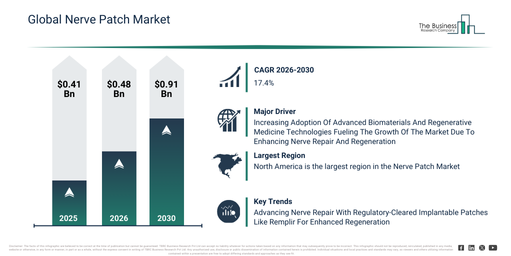
    The nerve patch market size has experienced swift growth in recent years. It is forecast to grow from $0.41 billion in 2025 to $0.48 billion in 2026, showing a compound annual growth rate (CAGR) of 17.7%. The market’s expansion in the past can be attributed to a rising frequency of traumatic nerve injuries, the increasing use of biomaterial-based implants, a greater need for peripheral nerve repair procedures, the development of neurosurgical infrastructure, and the improved clinical success rates of regenerative therapies.

    The nerve patch market is anticipated to experience substantial growth over the coming years. Its valuation is projected to reach $0.91 billion by 2030, at a compound annual growth rate (CAGR) of 17.4%. This expansion during the forecast period can be attributed to several factors, including an increasing preference for minimally invasive nerve repair techniques, rising investment in regenerative medicine research, escalating demand for advanced biologics in nerve regeneration, expanding healthcare expenditure in developing regions, and a growing emphasis on improving sensory and motor function recovery outcomes. Significant trends expected in the forecast period involve technological advancements in bioengineered scaffolds, innovations in stem cell-integrated nerve patches, developments in regenerative materials utilizing nanotechnology, research and development efforts in three-dimensional bioprinted implants, and progress in nerve regeneration systems enriched with growth factors.

    Get A Free Sample Report With In-Depth Market Insights:

    https://thebusinessresearchcompany.com/sample_request?id=40260709&type=smp&name=Nerve%20Patch%20Market%20Report%202026&utm_source=Blogs&utm_medium=Paid&utm_campaign=Oct_PR

    Nerve Patch Market Growth Factors Behind Sustained Expansion

    The increasing acceptance of advanced biomaterials and regenerative medicine technologies is anticipated to drive the future expansion of the nerve patch market. Biomaterials and regenerative medicine technologies refer to an interdisciplinary field dedicated to creating and utilizing engineered materials and biological strategies to repair, replace, restore, or regenerate damaged tissues and organs by engaging with the body’s biological systems. This rise in adoption is attributed to advancements in material science, such as biodegradable polymers and bioactive scaffolds, as well as a growing clinical confidence in regenerative approaches that decrease the need for autografts and reduce surgical complications. The nerve patch supports this trend by offering next-generation biomaterial-based patches that provide structural support, promote nerve regeneration, and enhance surgical precision in nerve repair procedures. For instance, in July 2024, data published by the European Medicines Agency (EMA), a European Union–based regulatory authority, showed that the quantity of bioengineered nerve repair products undergoing clinical evaluation or holding market authorization in the EU increased from 18 products in 2021 to 29 products in 2024, demonstrating growth of more than 60% over three years. Therefore, the growing adoption of advanced biomaterials and regenerative medicine technologies is a key driver for the growth of the nerve patch market.

    Nerve Patch Market Segmentation: How Does The Market Break Down By Category?

    The nerve patch market covered in this report is segmented –

    1) By Product Type: Biological Nerve Patches, Synthetic Nerve Patches, Hybrid Composite Nerve Patches, Collagen Based Nerve Patches, Polymer Based Nerve Patches, Biologic Growth Factor Integrated Nerve Patches

    2) By Distribution Channel: Direct Hospital And Clinic Sales, Medical Device Distributors, Online Medical Procurement Platforms, Tender Based Government Or Defense Supply

    3) By Application: Peripheral Nerve Repair, Central Nerve Repair, Brachial Plexus Injury, Spinal Cord Injury, Cranial Nerve Injury, Nerve Damage Due To Trauma Or Surgical Complications, Diabetic Neuropathy Intervention

    4) By End User: Hospitals, Specialized Surgical Centers, Ambulatory Surgical Centers, Research Institutes And Universities

    Subsegments:

    1) By Biological Nerve Patches: Autologous Nerve Graft, Allogenic Nerve Graft, Xenogeneic Nerve Graft, Extracellular Matrix Derived Patch, Decellularized Nerve Scaffold

    2) By Synthetic Nerve Patches: Polylactic Acid Patch, Polyglycolic Acid Patch, Polycaprolactone Patch, Polyurethane Based Patch, Synthetic Polymer Composite Patch

    3) By Hybrid Composite Nerve Patches: Polymer And Collagen Composite Patch, Polymer And Extracellular Matrix Composite Patch, Biologic And Synthetic Composite Patch, Growth Factor Loaded Composite Patch, Nanofiber Reinforced Composite Patch

    4) By Collagen Based Nerve Patches: Type I Collagen Patch, Type III Collagen Patch, Crosslinked Collagen Patch, Freeze Dried Collagen Patch, Collagen Hydrogel Patch

    5) By Polymer Based Nerve Patches: Polylactic Acid Based Patch, Polyglycolic Acid Based Patch, Polycaprolactone Based Patch, Polyethylene Glycol Based Patch, Biodegradable Polymer Blend

    6) By Biologic Growth Factor Integrated Nerve Patches: Nerve Growth Factor Loaded Patch, Brain Derived Neurotrophic Factor Loaded Patch, Glial Cell Line Derived Neurotrophic Factor Patch, Vascular Endothelial Growth Factor Patch, Fibroblast Growth Factor Loaded Patch

    Nerve Patch Market Industry Trends Fueling Future Revenue Growth

    Leading firms within the nerve patch market are concentrating on implantable repair substances that have received regulatory approval, like Remplir, with the aim of aiding nerve regeneration, bridging compromised peripheral nerves, and enhancing surgical results. Remplir itself is a biocompatible collagen wrap, specifically engineered to offer structural stability for injured nerve tissue, encourage axonal development, and progressively dissolve as the nerve recovers, thereby establishing an ideal setting for nerve restoration. As an example, in April 2025, Orthocell Ltd., a regenerative medicine enterprise situated in Australia, secured 510(k) clearance from the United States Food and Drug Administration (FDA) for Remplir, which is their primary nerve repair offering. This product, intended for clinical application in peripheral nerve damage, is characterized by a sterile, single-use, implantable collagen wrap supplied in various sizes, which retains its mechanical integrity when moist, and stimulates axonal regrowth to regain nerve functionality subsequent to an injury.

    Nerve Patch Market Competitive Analysis Of Leading Industry Participants

    Major companies operating in the nerve patch market are Applied Biological Materials Inc., Baxter International Inc., Polyganics B.V., Shanghai P&P Biotech Co. Ltd., Jiangsu Ruier Medical Devices Co. Ltd., MicroPort NeuroTech, AxoGen Europe GmbH, Renerva LLC, BioWave Corporation, Neural Repair Technologies Inc., Tissium S.A., Collagen Matrix Inc., CheckPoint Surgical Inc., BMT Medizintechnik GmbH, Synovis Micro Companies Alliance Inc., Neuraptive Therapeutics Inc., Alafair Biosciences Inc., BioAxone BioSciences Inc., Shanghai Kindly Medical Instruments, NerveGen Pharma Corp.

    View The Full Nerve Patch Market Report:

    https://thebusinessresearchcompany.com/report/nerve-patch-market-report?utm_source=Blogs&utm_medium=Paid&utm_campaign=Oct_PR

    Nerve Patch Market Geographic Spread And Regional Opportunities

    North America was the largest region in the nerve patch market in 2025. Asia-Pacific is expected to be the fastest-growing region in the forecast period. The regions covered in the nerve patch market report are Asia-Pacific, South East Asia, Western Europe, Eastern Europe, North America, South America, Middle East, Africa.

    Reach Out To Our Team:

    The Business Research Company: https://www.thebusinessresearchcompany.com/

    Americas: +1 310-496-7795

    Asia: +44 7882 955267 & +91 8897263534

    Europe: +44 7882 955267

    Email us at: marketing@tbrc.info

    Follow us on:

    LinkedIn: https://in.linkedin.com/company/the-business-research-company

    YouTube: https://www.youtube.com/channel/UC24_fI0rV8cR5DxlCpgmyFQ

    Global Market Model: https://www.thebusinessresearchcompany.com/global-market-model
  • Vivotif Market Outlook From 2026 To 2030: Key Growth Factors And Future Opportunities

    Vivotif Market Outlook From 2026 To 2030: Key Growth Factors And Future Opportunities

    Built to provide research that’s more actionable and strategically valuable, The Business Research Company’s 2026 market reports include market attractiveness analysis, total addressable market sizing, company benchmarking matrices, interactive Excel dashboards, broader supply chain intelligence, emerging startup tracking, and in-depth product insights.

    Vivotif Market Growth Potential: How Will Market Size Shift Through 2030?

    During the historical timeframe, growth was propelled by a heightened occurrence of typhoid in regions where it is prevalent, an expansion of international journeys to zones with elevated risk, immunization programs initiated by governments, the accessibility of vaccine formulations taken orally, and an increased understanding of public health.

    Growth during the projected period is expected due to increasing investments in proactive healthcare, a rising demand for travel-related immunizations, the expansion of immunization coverage for children, a growing emphasis on preventing antimicrobial resistance, and enhanced access to vaccines in developing economies.

    Significant developments anticipated in the forecast timeframe include the wider adoption of oral vaccination programs, an increasing need for vaccines for travelers, a greater focus on managing infectious diseases through preventive measures, the expansion of vaccine distribution systems optimized for cold chain, and improved public awareness regarding typhoid prevention.

    Get A Free Sample Report With In-Depth Market Insights:

    https://thebusinessresearchcompany.com/sample_request?id=11371703&type=smp&name=Vivotif%20Market%20Report%202026&utm_source=Blogs&utm_medium=Paid&utm_campaign=Oct_PR

    Vivotif Market Development Factors: What’s Supporting Demand?

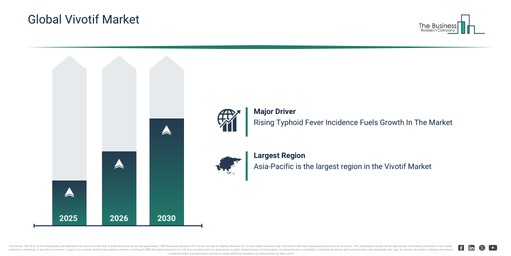
    The rising prevalence of typhoid fever is anticipated to boost the vivotif market’s expansion going forward. This condition, a bacterial infection caused by Salmonella Typhi, transmits via tainted food or water, leading to symptoms such as fever, stomach pain, and exhaustion. Its heightened occurrence is linked to inadequate sanitation, insufficient clean water access, and increasing antimicrobial resistance, especially in less affluent areas. Vivotif contributes to lowering typhoid fever rates by offering a protective oral vaccine targeting Salmonella Typhi, particularly beneficial where sanitation is subpar. For example, GOV.UK, a UK-based government platform, reported in August 2024 that in 2023, around 645 cases of typhoid fever were recorded in England, Wales, and Northern Ireland, an increase from 470 cases in 2022, signaling a consistent year-on-year rise in the disease’s incidence. Consequently, the growing frequency of typhoid fever is stimulating the vivotif market’s expansion.

    Vivotif Market Segment Outlook: Which Categories Are Growing Fastest?

    The vivotif market covered in this report is segmented –

    1) By Clinical Indication: Typhoid, Other Indications

    2) By Distribution Channel: Direct Sales, Online Pharmacies, Retail Pharmacies

    3) By End-User: Adults, Pediatric

    Vivotif Market Leading Companies And Competitive Benchmarking

    Major companies operating in the vivotif market are Bavarian Nordic A/S

    View The Full Vivotif Market Report:

    https://thebusinessresearchcompany.com/report/vivotif-global-market-report?utm_source=Blogs&utm_medium=Paid&utm_campaign=Oct_PR

    Vivotif Market Geographic Landscape: Which Region Leads Industry Growth?

    Asia-Pacific was the largest region in the vivotif market in 2025. The regions covered in the vivotif market report are Asia-Pacific, Western Europe, Eastern Europe, North America, South America, Middle East, Africa.

    Reach Out To Our Team:

    The Business Research Company: https://www.thebusinessresearchcompany.com/

    Americas: +1 310-496-7795

    Asia: +44 7882 955267 & +91 8897263534

    Europe: +44 7882 955267

    Email us at: marketing@tbrc.info

    Follow us on:

    LinkedIn: https://in.linkedin.com/company/the-business-research-company

    YouTube: https://www.youtube.com/channel/UC24_fI0rV8cR5DxlCpgmyFQ

    Global Market Model: https://www.thebusinessresearchcompany.com/global-market-model
  • Neonatal Radiant Warmer Market Growth In 2026: Market Size, Key Drivers And Future Outlook

    Neonatal Radiant Warmer Market Growth In 2026: Market Size, Key Drivers And Future Outlook

    Built to provide research that’s more actionable and strategically valuable, The Business Research Company’s 2026 market reports include market attractiveness analysis, total addressable market sizing, company benchmarking matrices, interactive Excel dashboards, broader supply chain intelligence, emerging startup tracking, and in-depth product insights.

    Neonatal Radiant Warmer Market Size Forecast: How Big Could The Market Get By 2030?

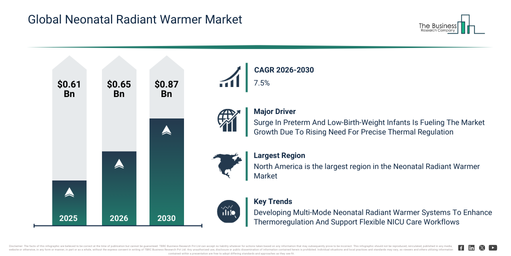
    The neonatal radiant warmer market has shown significant expansion in recent years. This market is set to increase from $0.61 billion in 2025 to $0.65 billion in 2026, achieving a compound annual growth rate (CAGR) of 7.7%. The historical growth can be attributed to several factors including rising neonatal mortality rates, an increasing prevalence of preterm births, growing awareness of neonatal hypothermia management, the expansion of maternal and child healthcare programs, and an increase in hospital births in urban areas.

    The market size for neonatal radiant warmers is projected to experience substantial expansion over the upcoming years. Its valuation is anticipated to reach $0.87 billion by 2030, exhibiting a compound annual growth rate (CAGR) of 7.5%. This anticipated growth during the forecast period stems from factors such as a global rise in preterm birth rates, increasing investments directed towards neonatal intensive care units, a surge in healthcare spending within developing economies, the expansion of hospital facilities and birthing centers, and a heightened understanding of advanced neonatal thermal care. Key trends expected within this period encompass technological improvements in the temperature control of radiant warmers, new developments in integrated monitoring and sensor technologies, the creation of energy-efficient neonatal warming devices, ongoing research and development into intelligent and automated warming solutions, and progress in the design of portable and smaller radiant warmers.

    Get A Free Sample Report With In-Depth Market Insights:

    https://thebusinessresearchcompany.com/sample_request?id=65403803&type=smp&name=Neonatal%20Radiant%20Warmer%20Market%20Report%202026&utm_source=Blogs&utm_medium=Paid&utm_campaign=Oct_PR

    Neonatal Radiant Warmer Market Demand Drivers Opening New Revenue Streams

    The growing need for accurate thermal management in infants born prematurely or with low birth weight is anticipated to fuel the expansion of the neonatal radiant warmer market. This critical need for precise thermal regulation involves ensuring newborns maintain a stable body temperature within a safe spectrum, particularly for those lacking adequate natural thermoregulation due to prematurity or low birth weight. The increasing occurrence of preterm births, often linked to maternal health issues, older maternal age, and a rise in multiple pregnancies, is behind this heightened demand. Neonatal radiant warmers facilitate exact thermal control for these vulnerable infants by delivering regulated, steady warmth to sustain consistent body temperature, thereby enhancing neonatal health outcomes by averting hypothermia and aiding crucial physiological processes during their initial care. For example, data from the Centers for Disease Control and Prevention, a national public health agency in the US, indicated in August 2024 that the proportion of preterm births stayed almost constant, rising slightly from 10.38% in 2022 to 10.41% in 2023, while infants born early term saw a 2% increase, from 29.31% in 2022 to 29.84% in 2023. Consequently, the increasing requirement for precise thermal management in premature and low-birth-weight infants is a key factor propelling the growth of the neonatal radiant warmer market.

    Neonatal Radiant Warmer Market Segment Trends And Revenue Contributors

    The neonatal radiant warmer market covered in this report is segmented –

    1) By Product Type: Conventional Radiant Warmers, Intensive Care Radiant Warmers, Transportable Radiant Warmers, Phototherapy Radiant Warmers

    2) By Component: Heating Units, Control Panels, Ultraviolet Lamps, Temperature Sensors

    3) By Technology: Infrared Technology, Contact Heating Systems, Integrated Heating Systems, Smart Technologies For Temperature Control

    4) By End-User: Hospitals, Clinics, Ambulatory Surgical Centers, Other End-Users

    Subsegments:

    1) By Conventional Radiant Warmers: Basic Radiant Warmers, Servo-Controlled Warmers, Open-Bed Warmers, Height-Adjustable Warmers, Standard Hospital-Grade Warmers

    2) By Intensive Care Radiant Warmers: Advanced neonatal ICU warmers, Integrated monitoring warmers, Warmers with ventilator compatibility, High-acuity thermal management warmers, Warmers with built-in resuscitation units

    3) By Transportable Radiant Warmers: Portable Emergency Transport Warmers, Ambulance-Compatible Warmers, Battery-Powered Mobile Warmers, Lightweight Intra-Hospital Transport Warmers, Foldable Or Compact Transport Warmers

    4) By Phototherapy Radiant Warmers: LED Phototherapy Warmers, Dual-Function Radiant Warmer And Phototherapy Units, UV-Based Phototherapy Warmers, Fiber-Optic Phototherapy Warmers, Jaundice Treatment Phototherapy Warmers

    Neonatal Radiant Warmer Market Trends Powering Strategic Industry Growth

    Key companies within the neonatal radiant warmer market are prioritizing the creation of advanced systems, such as multi-mode radiant warmer systems, to accommodate open care, closed care, and transport, by synchronizing various heat sources to sustain optimal neonatal temperatures. Multi-mode radiant warmer systems are crucial technologies that ensure stable thermoregulation, facilitate swift clinical access, and support the safe handling of newborns across diverse care environments. For example, in March 2024, Drägerwerk AG, a Germany-based supplier of acute care and neonatal equipment, unveiled the Babyleo TN500 IncuWarmer. This sophisticated thermoregulation system incorporates convective heating, multi-mode radiant warming, and a heated mattress to maintain consistent body temperature, while simultaneously enabling quick access for clinical staff across various NICU workflows. This product launch signifies a substantial technological progression through its integration of multi-mode warming and incubator functionalities, thereby connecting conventional neonatal care with adaptable, workflow-efficient solutions and providing clinicians with a scalable, effective system for better neonatal outcomes.

    Neonatal Radiant Warmer Market Leading Companies And Competitive Benchmarking

    Major companies operating in the neonatal radiant warmer market are Koninklijke Philips N.V., General Electric (GE) Healthcare, Drägerwerk AG & Co. KGaA (Dräger), Natus Medical Incorporated, Heal Force Bio-Medical Engineering, Shenzhen Comen Medical Instruments Co. Ltd., Comen Medical Instruments Co. Ltd., Advent International LP, Okuman Medikal Sistemler Anonim Sirketi, Ningbo David Medical Device Co. Ltd., Fanem Indústria e Comércio Ltd., IndoSurgicals Private Limited, Löwenstein Medical GmbH & Co. KG, Zhengzhou Dison Instrument and Meter Co. Ltd., Phoenix Medical Systems Pvt. Ltd., Procare Medical Furnishings, Atom Medical International Co. Ltd., Weyer GmbH, Western Surgical, Anhui Weemed Medical Co. Ltd.

    View The Full Neonatal Radiant Warmer Market Report:

    https://thebusinessresearchcompany.com/report/neonatal-radiant-warmer-market-report?utm_source=Blogs&utm_medium=Paid&utm_campaign=Oct_PR

    Neonatal Radiant Warmer Market Top Region By Revenue And Market Share

    North America was the largest region in the neonatal radiant warmer market in 2025. Asia-Pacific is expected to be the fastest-growing region in the forecast period. The regions covered in the neonatal radiant warmer market report are Asia-Pacific, South East Asia, Western Europe, Eastern Europe, North America, South America, Middle East, Africa.

    Reach Out To Our Team:

    The Business Research Company: https://www.thebusinessresearchcompany.com/

    Americas: +1 310-496-7795

    Asia: +44 7882 955267 & +91 8897263534

    Europe: +44 7882 955267

    Email us at: marketing@tbrc.info

    Follow us on:

    LinkedIn: https://in.linkedin.com/company/the-business-research-company

    YouTube: https://www.youtube.com/channel/UC24_fI0rV8cR5DxlCpgmyFQ

    Global Market Model: https://www.thebusinessresearchcompany.com/global-market-model
  • Vivaglobin Market Growth Forecast: Market Size, Key Trends And Emerging Opportunities Through 2030

    Vivaglobin Market Growth Forecast: Market Size, Key Trends And Emerging Opportunities Through 2030

    Backed by market attractiveness analysis, total addressable market sizing, company benchmarking matrices, interactive Excel dashboards, wider supply chain intelligence, emerging startup coverage, and detailed product-level insights, The Business Research Company’s 2026 market reports are designed to offer research that is more actionable and strategically valuable than ever.

    Vivaglobin Market Value Analysis: What Growth Lies Ahead Over The Forecast Period?

    The expansion observed in the historic period resulted from enhanced diagnosis rates of primary immunodeficiency disorders, greater clinical acceptance of SCIg therapies, the expansion of specialty pharmacy networks, increased availability of plasma-derived therapeutics, and a rising awareness among physicians regarding immune disorders.

    The projected growth during the forecast period stems from several factors, including an increasing need for self-administered immunoglobulin treatments, the broadening application of personalized immunotherapy strategies, and greater investment in the development of therapies for rare diseases. Furthermore, the expanding elderly population suffering from immune disorders and continuous improvements in plasma fractionation technologies are significant contributors to this growth.

    Notable trends expected throughout the forecast period involve a rising adoption of subcutaneous immunoglobulin therapies, a growing inclination towards administering treatments at home, and an intensified focus on long-term immune replacement solutions. Additionally, the expansion of dosing options centered around patient needs and an increased emphasis on the safety and tolerability of treatments are key developments.

    Get A Free Sample Report With In-Depth Market Insights:

    https://thebusinessresearchcompany.com/sample_request?id=53895404&type=smp&name=Vivaglobin%20Market%20Report%202026&utm_source=Blogs&utm_medium=Paid&utm_campaign=Oct_PR

    Vivaglobin Market Industry Drivers: What’s Behind The Revenue Growth?

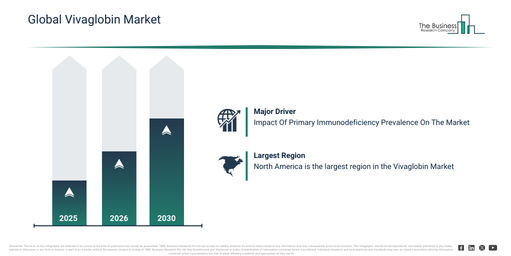
    The future expansion of the vivaglobin market is significantly influenced by the rising occurrence of primary immunodeficiency diseases (PI). These conditions involve an immune system that is deficient or absent, hindering the body’s defense against infections and increasing susceptibility to various illnesses. The growing prevalence of PI stems from advancements in diagnostic tools, increased public awareness and recognition of these disorders, improved genetic screening, and better identification of cases that were previously undiagnosed. Vivaglobin aids in managing primary immunodeficiency diseases by delivering a consistent supply of antibodies through subcutaneous administration, thereby boosting the immune system’s capacity to fight infections and lessening the frequency and intensity of recurring illnesses in affected individuals. For example, a report from August 2023 by Thermo Fisher, a US-based life science and clinical research company, indicated that an estimated 6 million people globally suffer from PID, with approximately 5,000 individuals in the UK affected by this disorder. Consequently, the increasing prevalence of Primary Immunodeficiency Diseases (PI) is anticipated to fuel the vivaglobin market’s growth. The vivaglobin market is expected to expand with increasing investments in research and development. Medical R&D encompasses the methodical exploration of novel drugs, therapies, or healthcare technologies to advance healthcare, involving clinical studies, laboratory experiments, and regulatory procedures to confirm safety and effectiveness. Heightened R&D in medicine leads to the discovery of innovative treatments, better patient outcomes, and solutions for evolving health challenges. For vivaglobin, increased research and development facilitates advancements in immunoglobulin formulations, optimizes administration techniques, and improves the efficacy and availability of treatment for patients suffering from primary immunodeficiency diseases. As an illustration, The Office for National Statistics (ONS), a UK-based producer of official statistics, reported in April 2025 that the UK government’s net R&D expenditure grew by 8.2% year-on-year, increasing from £16.1 billion in 2022 to £17.4 billion in 2023. Thus, greater investment in research and development is stimulating the growth of the vivaglobin market.

    Vivaglobin Market Segment Landscape: Which Areas Lead Development?

    The vivaglobin market covered in this report is segmented –

    1) By Indication: Primary Immune Deficiency (PID), Secondary Immune Deficiency (SID), Chronic Inflammatory Demyelinating Polyneuropathy (CIDP), Other Indications

    2) By Distribution Channel: Hospital Pharmacies, Retail Pharmacies, Online Pharmacies, Specialty Pharmacies

    3) By End User: Adult, Geriatric, Pediatric

    Vivaglobin Market Industry Leaders And Competitive Landscape

    Major companies operating in the vivaglobin market are CSL Behring GmbH

    View The Full Vivaglobin Market Report:

    https://thebusinessresearchcompany.com/report/vivaglobin-global-market-report?utm_source=Blogs&utm_medium=Paid&utm_campaign=Oct_PR

    Vivaglobin Market Largest Region: Which Geography Holds The Biggest Share?

    North America was the largest region in the vivaglobin market in 2025. Asia-Pacific is expected to be the fastest-growing region in the forecast period. The regions covered in the vivaglobin market report are Asia-Pacific, Western Europe, Eastern Europe, North America, South America, Middle East, Africa.

    Reach Out To Our Team:

    The Business Research Company: https://www.thebusinessresearchcompany.com/

    Americas: +1 310-496-7795

    Asia: +44 7882 955267 & +91 8897263534

    Europe: +44 7882 955267

    Email us at: marketing@tbrc.info

    Follow us on:

    LinkedIn: https://in.linkedin.com/company/the-business-research-company

    YouTube: https://www.youtube.com/channel/UC24_fI0rV8cR5DxlCpgmyFQ

    Global Market Model: https://www.thebusinessresearchcompany.com/global-market-model

  • Neonatal Intensive Care Respiratory Devices Market Size And Forecast 2026–2030: Trends Driving Industry Expansion

    Neonatal Intensive Care Respiratory Devices Market Size And Forecast 2026–2030: Trends Driving Industry Expansion

    Backed by market attractiveness analysis, total addressable market sizing, company benchmarking matrices, interactive Excel dashboards, wider supply chain intelligence, emerging startup coverage, and detailed product-level insights, The Business Research Company’s 2026 market reports are designed to offer research that is more actionable and strategically valuable than ever.

    Neonatal Intensive Care Respiratory Devices Market Revenue Outlook: What CAGR Lies Ahead Through 2030?

    The neonatal intensive care respiratory devices market size has experienced significant growth in recent years. It will grow from $2.61 billion in 2025 to $2.89 billion in 2026 at a compound annual growth rate (CAGR) of 11.0%. This historical expansion can be linked to a higher incidence of preterm births, an escalating demand for sophisticated neonatal respiratory support, increased awareness regarding neonatal health complications, broader adoption of ventilators in NICUs, a global increase in the number of neonatal intensive care units, expanding utilization of non-invasive respiratory assistance, greater investments in neonatal healthcare infrastructure, a rise in the prevalence of neonatal respiratory disorders, the growing availability of technologically advanced devices, and an intensified focus on enhancing neonatal survival rates.

    The market for neonatal intensive care respiratory devices is anticipated to experience substantial expansion in the coming years, projected to reach $4.35 billion by 2030, exhibiting a compound annual growth rate (CAGR) of 10.7%. This expansion over the forecast period is propelled by several factors, including the wider acceptance of non-invasive respiratory technologies, a heightened demand for sophisticated NICU respiratory apparatus, increased investments in critical care for neonates, a greater imperative for enhanced neonatal survival rates, growing understanding of complications associated with preterm birth, increased healthcare expenditure on infant care, the expanded application of automated respiratory monitoring, ongoing technological advancements in neonatal equipment, a stronger emphasis on early intervention for respiratory assistance, and a growing inclination towards secure and efficient ventilation solutions. Key trends foreseen during this period encompass progress in non-invasive neonatal ventilation, developments in compact and portable respiratory equipment, enhancements in automated respiratory monitoring, novelties in neonatal oxygen delivery systems, advancements in AI-assisted ventilation tools, new designs for high-flow nasal cannula devices, the incorporation of intelligent monitoring sensors, connectivity with real-time NICU data platforms, the inclusion of tele-neonatology functionalities, and improvements in hybrid ventilation technologies.

    Get A Free Sample Report With In-Depth Market Insights:

    https://thebusinessresearchcompany.com/sample_request?id=61883445&type=smp&name=Neonatal%20Intensive%20Care%20Respiratory%20Devices%20Market%20Report%202026&utm_source=Blogs&utm_medium=Paid&utm_campaign=Oct_PR

    Neonatal Intensive Care Respiratory Devices Market Growth Backed By Core Demand Fundamentals

    The rising occurrence of neonatal respiratory complications is anticipated to drive the expansion of the neonatal intensive care respiratory devices market in the future. These complications involve breathing issues in newborns, including conditions like respiratory distress syndrome and transient tachypnea, which hinder lung function soon after birth and are a primary factor in neonatal illness and death. This increase in neonatal respiratory complications stems from elevated rates of prematurity and more complex medical conditions at birth, resulting in a greater number of infants needing significant respiratory assistance. Neonatal intensive care respiratory devices address these complications by facilitating assisted ventilation, accurate oxygen provision, and ongoing respiratory monitoring, which aids medical professionals in stabilizing infants and enhancing their chances of survival. For example, data from October 2024, provided by the Royal College of Paediatrics and Child Health, a UK professional medical organization, indicated that the percentage of infants experiencing bronchopulmonary dysplasia or mortality showed regional variations, from 32.6% in the East of England to 46.8% in the Northern Operational Delivery Network, with individual neonatal units reporting rates from 0% to 61.7% for those with at least 10 eligible babies. Consequently, the rising occurrence of neonatal respiratory complications is propelling the expansion of the neonatal intensive care respiratory devices market. Elevated spending on neonatal care equipment is projected to stimulate the expansion of the neonatal intensive care respiratory devices market in the coming years. This investment involves governments and public health systems dedicating financial assets to procure and improve medical devices and infrastructure specifically for newborn health services, encompassing neonatal intensive care devices. The increase in investment in neonatal care equipment stems from the escalating demand for precise thermal regulation, given that preterm and low-birth-weight infants often have difficulty maintaining a stable body temperature independently. Increased investment in neonatal care equipment boosts neonatal intensive care respiratory devices by facilitating the creation and integration of sophisticated technologies, which offer accurate and dependable respiratory support for premature and critically ill infants. This leads to improved survival rates, fewer complications, and superior overall neonatal health outcomes. For instance, in November 2025, the OECD, an international economic organization based in Paris, reported that the average annual capital expenditure on health in its member countries grew from 0.60% of GDP in 2024 to 0.62% of GDP in 2025, with a significant portion directed towards medical equipment, reflecting a year-on-year rise in public sector investment in health infrastructure and devices, including neonatal care equipment. Consequently, the increased investment in neonatal care equipment is fueling the expansion of the neonatal intensive care respiratory devices market.

    Neonatal Intensive Care Respiratory Devices Market Segment Analysis Spotlighting Growth Areas

    The neonatal intensive care respiratory devices market covered in this report is segmented –

    1) By Product Type: Ventilators, Continuous Positive Airway Pressure (CPAP) Devices, Oxygen Delivery Devices, Inhalers, Humidifiers, Others Product Types

    2) By Modality: Invasive Ventilation, Non-Invasive Ventilation, Combined Or Hybrid Systems

    3) By Gestational Age: Extremely Preterm (<28 Weeks), Very Preterm (28–32 Weeks), Moderate To Late Preterm (32–37 Weeks), Full Term With Respiratory Conditions

    4) By End User: Hospitals, Neonatal Clinics, Ambulatory Surgical Centers, Others End User

    Subsegments:

    1) By Ventilators: Invasive Mechanical Ventilators, Non-Invasive Ventilators, Portable Ventilators, Intensive Care Unit (ICU) Ventilators, Emergency Or Transport Ventilators

    2) By Continuous Positive Airway Pressure (CPAP) Devices: Fixed-Pressure CPAP Devices, Auto-Adjusting (APAP) CPAP Devices, Bi-Level Positive Airway Pressure (BiPAP) Devices, Portable Or Home CPAP Devices, Hospital Or Clinical CPAP Devices

    3) By Oxygen Delivery Devices: Oxygen Concentrators, Oxygen Cylinders Or Tanks, Oxygen Masks, Nasal Cannulas, Portable Oxygen Systems

    4) By Inhalers: Metered Dose Inhalers (MDI), Dry Powder Inhalers (DPI), Soft Mist Inhalers (SMI), Nebulizer Inhalers, Combination Drug Inhalers

    5) By Humidifiers: Ultrasonic Humidifiers, Evaporative Humidifiers, Steam Vaporizers, Impeller Humidifiers, Hospital-Grade Respiratory Humidifiers

    6) By Others Product Types: Nebulizers (Standalone), Suction Devices, Respiratory Monitors, Airway Clearance Devices, Tracheostomy Care Devices

    Neonatal Intensive Care Respiratory Devices Market Industry Leaders And Competitive Landscape

    Major companies operating in the neonatal intensive care respiratory devices market are Medtronic plc, Koninklijke Philips N.V., GE Healthcare Technologies Inc., Becton, Dickinson and Company (BD), ResMed Inc., Drägerwerk AG & Co. KGaA, Getinge AB, Smiths Group plc, Teleflex Incorporated, Masimo Corporation, Fisher & Paykel Healthcare Limited, Comen Medical, Hamilton Medical AG, GaleMed Corporation, Heyer Medical AG, Inspiration Healthcare Group plc, Mercury Medical, Trudell Medical International Co., Atom Medical International Co. Ltd., Airon Corporation, Lowenstein Medical Technology GmbH

    View The Full Neonatal Intensive Care Respiratory Devices Market Report:

    https://thebusinessresearchcompany.com/report/neonatal-intensive-care-respiratory-devices-market-report?utm_source=Blogs&utm_medium=Paid&utm_campaign=Oct_PR

    Neonatal Intensive Care Respiratory Devices Market Regional Analysis And Top Geography

    North America was the largest region in the neonatal intensive care respiratory devices market in 2025. Asia-Pacific is expected to be the fastest-growing region in the forecast period. The regions covered in the neonatal intensive care respiratory devices market report are Asia-Pacific, South East Asia, Western Europe, Eastern Europe, North America, South America, Middle East, Africa.

    Reach Out To Our Team:

    The Business Research Company: https://www.thebusinessresearchcompany.com/

    Americas: +1 310-496-7795

    Asia: +44 7882 955267 & +91 8897263534

    Europe: +44 7882 955267

    Email us at: marketing@tbrc.info

    Follow us on:

    LinkedIn: https://in.linkedin.com/company/the-business-research-company

    YouTube: https://www.youtube.com/channel/UC24_fI0rV8cR5DxlCpgmyFQ

    Global Market Model: https://www.thebusinessresearchcompany.com/global-market-model
  • Vitrase Market CAGR Forecast Through 2030: Key Trends Shaping Industry Expansion

    Vitrase Market CAGR Forecast Through 2030: Key Trends Shaping Industry Expansion

    Featuring market attractiveness scoring, total addressable market sizing, company benchmarking matrices, interactive Excel dashboards, deeper supply chain intelligence, emerging startup tracking, and granular product-level insights, The Business Research Company’s 2026 market reports are built to deliver research that is both more actionable and more strategically valuable.

    Vitrase Market Expansion Outlook: What Revenue Opportunities Are Ahead?

    The historical expansion can be attributed to the wider reach of injectable drug treatments, an uptick in the utilization of subcutaneous and intramuscular injections, progress in enzyme purification techniques, a rising incorporation into clinical practices, and enhanced comprehension of connective tissue regulation.

    The upward trajectory in the forecast period is fueled by an escalating need for advanced drug delivery systems, a wider application of injectable biologics, a heightened emphasis on patient comfort during injections, increased deployment in specialized medical procedures, and continuous breakthroughs in enzyme-assisted delivery mechanisms.

    Key developments anticipated in the forecast period involve the growing application of hyaluronidase-enhanced injections, an increasing requirement for superior drug dispersion agents, broader integration into oncology and ophthalmology treatments, the proliferation of combination injection therapies, and a stronger commitment to optimizing injection effectiveness.

    Get A Free Sample Report With In-Depth Market Insights:

    https://thebusinessresearchcompany.com/sample_request?id=32530300&type=smp&name=Vitrase%20Market%20Report%202026&utm_source=Blogs&utm_medium=Paid&utm_campaign=Oct_PR

    Vitrase Market Growth Factors: What’s Supporting Expansion?

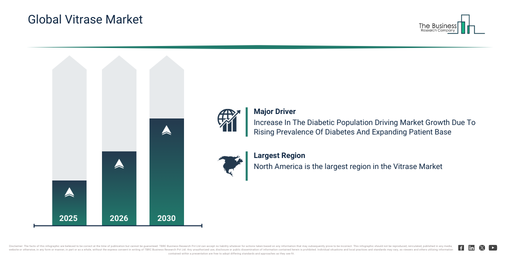
    The expanding diabetic population is anticipated to fuel the vitrase market’s growth. This demographic consists of people diagnosed with diabetes, a persistent ailment marked by high blood sugar levels stemming from inadequate insulin production or poor insulin utilization. The rise in this population segment can be attributed to several factors, including inactive lifestyles, poor dietary choices, growing rates of obesity, demographic aging, genetic predispositions, and enhanced detection and diagnosis of the condition. Vitrase supports individuals with diabetes by assisting in the clearing of vitreous hemorrhages and enhancing the uptake of administered medications. This is particularly advantageous for diabetic patients experiencing diabetic retinopathy and other related ocular conditions, leading to better visual results and overall eye well-being. For example, as reported in March 2024 by the Office for Health Improvement & Disparities, a UK-based government department, the period between March 2022 and March 2023 saw a 22% increase in the proportion of individuals with type 1 diabetes receiving all eight recommended care processes, and a 21% increase for those with type 2 diabetes. Concurrently, the percentage reaching target HbA1c levels climbed to 37.9%, representing the highest figure ever recorded by the National Diabetes Audit (NDA). Consequently, the expanding diabetic population is fueling the advancement of the vitrase market.

    Vitrase Market Segments: Where Is Growth Concentrated?

    The vitrase market covered in this report is segmented –

    1) By Indication: Dermatology, Oncology, Ophthalmology

    2) By Distribution: Hospitals, Clinics, Online Pharmacies

    3) By End User: Adult, Geriatric

    Vitrase Market Key Participants And Competitive Landscape

    Major companies operating in the vitrase market are Bausch And Lomb Inc.

    View The Full Vitrase Market Report:

    https://thebusinessresearchcompany.com/report/vitrase-global-market-report?utm_source=Blogs&utm_medium=Paid&utm_campaign=Oct_PR

    Vitrase Market Regional Analysis: Which Geography Leads On Revenue?

    North America was the largest region in the vitrase market in 2025. The regions covered in the vitrase market report are Asia-Pacific, Western Europe, Eastern Europe, North America, South America, Middle East, Africa.

    Reach Out To Our Team:

    The Business Research Company: https://www.thebusinessresearchcompany.com/

    Americas: +1 310-496-7795

    Asia: +44 7882 955267 & +91 8897263534

    Europe: +44 7882 955267

    Email us at: marketing@tbrc.info

    Follow us on:

    LinkedIn: https://in.linkedin.com/company/the-business-research-company

    YouTube: https://www.youtube.com/channel/UC24_fI0rV8cR5DxlCpgmyFQ

    Global Market Model: https://www.thebusinessresearchcompany.com/global-market-model
  • Nano Bioreactor Market Analysis 2026: Market Size, Growth Trends And Industry Outlook

    Nano Bioreactor Market Analysis 2026: Market Size, Growth Trends And Industry Outlook

    Backed by market attractiveness analysis, total addressable market sizing, company benchmarking matrices, interactive Excel dashboards, wider supply chain intelligence, emerging startup coverage, and detailed product-level insights, The Business Research Company’s 2026 market reports are designed to offer research that is more actionable and strategically valuable than ever.

    Nano Bioreactor Market Size Outlook: How Quickly Will Revenue Expand Through 2030?

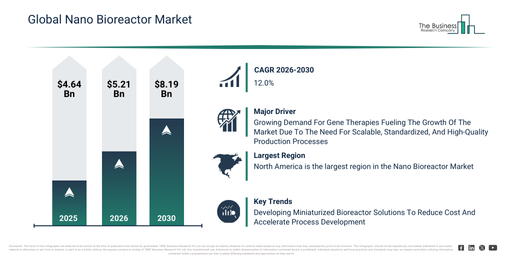
    The nano bioreactor market size has experienced substantial growth in recent years. It is forecast to expand from $4.64 billion in 2025 to $5.21 billion in 2026, at a compound annual growth rate (CAGR) of 12.3%. The growth observed in the past period can be attributed to the increasing demand for nanoscale biological research, the growing adoption of microfluidic bioprocessing, a rising focus on high-precision biomolecule production, the expansion of advanced biotechnology studies, and the increasing utilization of miniaturized cell culture systems.

    The nano bioreactor market is poised for significant expansion in the coming years. It is projected to reach $8.19 billion in 2030, driven by a compound annual growth rate (CAGR) of 12.0%. This growth during the forecast period is fueled by factors such as the increasing demand for nanoscale biological research, the growing adoption of microfluidic bioprocessing, a rising focus on high-precision biomolecule production, the expansion of advanced biotechnology studies, and the increasing utilization of miniaturized cell culture systems. Key trends anticipated in this period include technological advancements in nanobioprocessing, innovations in microfluidic lab-on-chip platforms, developments in nanoscale cell culture engineering, ongoing research and developments in automated nanosystems, and progress in nanoscale enzymatic reaction technologies.

    Get A Free Sample Report With In-Depth Market Insights:

    https://thebusinessresearchcompany.com/sample_request?id=72555754&type=smp&name=Nano%20Bioreactor%20Market%20Report%202026&utm_source=Blogs&utm_medium=Paid&utm_campaign=Oct_PR

    Nano Bioreactor Market Growth Momentum: What Factors Are Shaping Demand?

    An increasing need for gene therapies is projected to fuel the expansion of the nano bioreactor market in the future. Gene therapy is a medical method focused on altering or replacing faulty genes to address or prevent illnesses. The heightened demand for gene therapy stems from progress in genetic sequencing and diagnostic tools, which allow for the accurate identification of disease-causing genes, enabling specific treatments. Nano bioreactors aid gene therapy by offering precise management of cell culture environments, essential for effective gene delivery and expression. They bolster therapeutic efficacy through enhancements in cell viability, scalability, and consistency during gene therapy creation. For example, in December 2024, the American Society of Gene & Cell Therapy (ASGCT), a US-based non-profit medical and scientific organization, reported that the Food and Drug Administration (FDA) cleared six gene therapy products in 2023, an increase from five approvals in 2022. Consequently, the rising demand for gene therapies is a primary driver for the growth of the nano bioreactor market.

    Nano Bioreactor Market Breakdown By Product Type And Application

    The nano bioreactor market covered in this report is segmented –

    1) By Product Type: Nano-Scale Bioreactor Units, Microfluidic Bioreactors, Nano Fermentation Systems, Nanoscale Cell Culture Devices, Nano Enzymatic Reaction Modules, Nano Bioprocessing Chips, Lab-On-A-Chip Bioreactors

    2) By Molecule: Monoclonal Antibodies, Vaccines, Recombinant Proteins, Stem Cells, Gene Therapy

    3) By Technology: Microfluidics Technology, Nanotechnology-Enabled Bioprocessing, Lab-On-Chip Technology, Automated Miniaturized Bioreactor Technology, High-Precision Reaction Monitoring Technology

    4) By Application: Drug Discovery And Development, Tissue Engineering And Regenerative Medicine, Synthetic Biology And Biofuel Research, Biocatalysis And Enzyme Engineering, Environmental Monitoring And Bioremediation, Diagnostics And Biosensing, Basic Life Science Research

    5) By End User: Pharmaceutical And Biotechnology Companies, Academic And Research Institutes, Diagnostic Laboratories, Contract Research And Manufacturing Organizations, Food And Agriculture Industries, Environmental Testing Agencies

    Subsegments:

    1) By Nano-Scale Bioreactor Units: Disposable Nano Reactor Modules, Pre-Sterilized Nano Cartridges, Compact Single-Cycle Units, High-Density Nano Culture Chambers, Plug-And-Play Nano Systems

    2) By Microfluidic Bioreactors: Integrated Channel Microfluidic Units, Perfusion-Based Microfluidic Systems, Droplet-Based Microfluidic Modules, High-Throughput Microfluidic Arrays, Automated Microfluidic Platforms

    3) By Nano Fermentation Systems: Continuous Nano Fermentation Units, Batch Nano Fermentation Chambers, Modular Nano Fermentation Platforms, High-Efficiency Nano Fermenters, Temperature-Controlled Nano Fermentation Units

    4) By Nanoscale Cell Culture Devices: Micro-Well Nanoscale Culture Plates, Three-Dimensional Nano Culture Scaffolds, Perfused Nanoscale Culture Modules, High-Density Nano Culture Chambers, Disposable Nanoscale Culture Units

    5) By Nano Enzymatic Reaction Modules: Flow-Through Nano Enzyme Reactors, Batch Nano Enzymatic Reaction Units, Temperature-Regulated Nano Enzymatic Modules, High-Surface Area Nano Reaction Chambers, Integrated Nano Enzyme Platforms

    6) By Nano Bioprocessing Chips: Lab-Integrated Nano Processing Chips, Micro-Channel Nano Bioprocessing Modules, High-Throughput Nano Chip Platforms, Disposable Nano Bioprocessing Units, Automated Nano Chip Systems

    7) By Lab-On-A-Chip Bioreactors: Microfluidic Lab-On-A-Chip Units, Integrated Nano Reaction Chip Platforms, Disposable Lab-On-A-Chip Modules, High-Throughput Lab-On-A-Chip Systems, Automated Lab-On-A-Chip Platforms

    Nano Bioreactor Market Trends Redefining Industry Growth

    Leading companies in the nano bioreactor market are concentrating on creating sophisticated products, such as compact fixed-bed bioreactor solutions, to facilitate economical and scalable cell culture process advancement. A compact fixed-bed bioreactor is defined as a small bioreactor system containing a stationary support matrix within a limited growth area, enabling regulated cell culture with decreased volumes and minimal reagent consumption. For example, in October 2024, Univercells Technologies by Donaldson, a biotechnology firm based in Belgium, introduced the scale-X nexo bioreactor. This miniaturized, fixed-bed bioreactor provides a 0.5 m² growth surface, specifically designed for effective cell culture process development across various applications, including cell and gene therapies and vaccines. It offers direct scalability to larger systems within the scale-X product line, ensuring a smooth transition from laboratory-scale development to commercial manufacturing without requiring expensive process redesign. Furthermore, it employs a low-volume, low-surface-area methodology and will be compatible with vision application software for non-invasive cell counting, thereby considerably lowering media consumption, seed train demands, and operational expenditures for researchers and biopharma enterprises.

    Nano Bioreactor Market Leading Players And Competitive Positioning

    Major companies operating in the nano bioreactor market are Thermo Fisher Scientific Inc., Danaher Corp., GE Healthcare Technologies Inc., Lonza Group, Cytiva Sweden AB, Sartorius AG, Getinge AB, Eppendorf SE, Pall Corporation, PBS Biotech Inc., Applikon Biotechnology B.V. (Getinge AB), Bioengineering AG, PARR Instrument Company, Infors AG, LAVAL LAB Inc., Cellec Biotek AG, Sysbiotech GmbH, HiTec Zang GmbH, CerCell Co., m2p-labs GmbH

    View The Full Nano Bioreactor Market Report:

    https://thebusinessresearchcompany.com/report/nano-bioreactor-market-report?utm_source=Blogs&utm_medium=Paid&utm_campaign=Oct_PR

    Nano Bioreactor Market Regional Split: Which Areas Are Fueling Growth?

    North America was the largest region in the nano bioreactor market in 2025. Asia-Pacific is expected to be the fastest-growing region in the forecast period. The regions covered in the nano bioreactor market report are Asia-Pacific, South East Asia, Western Europe, Eastern Europe, North America, South America, Middle East, Africa.

    Reach Out To Our Team:

    The Business Research Company: https://www.thebusinessresearchcompany.com/

    Americas: +1 310-496-7795

    Asia: +44 7882 955267 & +91 8897263534

    Europe: +44 7882 955267

    Email us at: marketing@tbrc.info

    Follow us on:

    LinkedIn: https://in.linkedin.com/company/the-business-research-company

    YouTube: https://www.youtube.com/channel/UC24_fI0rV8cR5DxlCpgmyFQ

    Global Market Model: https://www.thebusinessresearchcompany.com/global-market-model

  • Molecular Biology Service Market Size In 2026 And Beyond: Understanding Future Growth Potential

    Molecular Biology Service Market Size In 2026 And Beyond: Understanding Future Growth Potential

    Built to provide research that’s more actionable and strategically valuable, The Business Research Company’s 2026 market reports include market attractiveness analysis, total addressable market sizing, company benchmarking matrices, interactive Excel dashboards, broader supply chain intelligence, emerging startup tracking, and in-depth product insights.

    Molecular Biology Service Market CAGR Outlook And Future Development

    The molecular biology service market size has demonstrated significant expansion in recent years. This market is set to increase from $5.05 billion in 2025 to $5.46 billion in 2026, at a compound annual growth rate (CAGR) of 8.0%. Historically, this growth can be attributed to several factors including the rising adoption of PCR-based testing, the increasing utilization of sequencing services in research, a surge in academic and clinical R&D activities, the broadening of molecular diagnostics applications, and the growing outsourcing of laboratory services.

    The molecular biology service market is projected to experience substantial expansion over the upcoming years. It is anticipated to reach $7.36 billion by 2030, exhibiting a compound annual growth rate (CAGR) of 7.7%. The expansion during this period stems from factors such as increasing demand for precision medicine services, greater investment in genomic research, a surge in the adoption of automated molecular workflows, an increase in clinical diagnostic testing volumes, and more widespread use of next-generation sequencing services. Key trends expected in the forecast period encompass technological advancements in sequencing platforms, novel developments in automated molecular workflows, progress in bioinformatics and data analytics, ongoing research and development in precision diagnostics, and improvements in high-throughput molecular testing systems.

    Get A Free Sample Report With In-Depth Market Insights:

    https://thebusinessresearchcompany.com/sample_request?id=99593939&type=smp&name=Molecular%20Biology%20Service%20Market%20Report%202026&utm_source=Blogs&utm_medium=Paid&utm_campaign=Oct_PR

    Molecular Biology Service Market Development Factors: What’s Supporting Demand?

    The molecular biology service market is anticipated to expand as the prevalence of infectious diseases continues to rise. Infectious diseases are health conditions caused by the invasion and multiplication of detrimental microorganisms such as bacteria, viruses, fungi, or parasites within the body, leading to symptoms and various health complications. A primary factor contributing to this surge in infectious diseases is the increase in global travel, which accelerates the dissemination of pathogens across different regions and populations. Molecular biology services are instrumental in diagnosing infectious diseases by offering specialized testing, thorough analysis, and expert interpretation of genetic and molecular data. These services improve patient care through precise and prompt identification of pathogens, thus supporting informed treatment decisions. For example, in February 2024, the UK Health Security Agency, a UK-based government body, reported that tuberculosis, a contagious bacterial infection primarily affecting the lungs, saw its cases in England reach 4,850 in 2023, marking a 10.7% increase from 4,380 cases in 2022. Consequently, the growing incidence of infectious diseases is a significant catalyst for the expansion of the molecular biology service market.

    Molecular Biology Service Market Segmentation And Category Overview

    The molecular biology service market covered in this report is segmented –

    1) By Type of Service: Deoxyribonucleic Acid And Ribonucleic Acid Extraction Services, PCR And QPCR Services, Deoxyribonucleic Acid Sequencing Services, Gene Synthesis Services, Cloning Services, Genotyping And Sequencing Services, Proteomics Services, Cell Line Development Services, Other Molecular Biology Services

    2) By Application: Diagnostics, Drug Discovery And Development, Agriculture And Plant Research, Environmental Studies, Forensic Science, Other Applications

    3) By End-User: Academic And Research Institutes, Pharmaceutical And Biotechnology Companies, Hospitals And Diagnostic Laboratories, Contract Research Organizations, Other End-Users

    Subsegments:

    1) By Deoxyribonucleic Acid And Ribonucleic Acid Extraction Services: Manual Extraction Methods, Automated Extraction Systems, Magnetic Bead Based Extraction, Column Based Purification, High Throughput Extraction Solutions

    2) By PCR And QPCR Services: Conventional Polymerase Chain Reaction, Quantitative Polymerase Chain Reaction, Digital Polymerase Chain Reaction, Multiplex Polymerase Chain Reaction, Endpoint Polymerase Chain Reaction

    3) By Deoxyribonucleic Acid Sequencing Services: Sanger Sequencing, Short Read Sequencing, Long Read Sequencing, Targeted Sequencing Panels, Whole Genome Sequencing

    4) By Gene Synthesis Services: Custom Gene Synthesis, Codon Optimization Synthesis, Gene Fragment Synthesis, Error Free Gene Synthesis, Synthetic Construct Design

    5) By Cloning Services: Molecular Cloning, Vector Construction, Plasmid Cloning, Expression Cloning, Custom Insert Cloning

    6) By Genotyping And Sequencing Services: Single Nucleotide Polymorphism Genotyping, Microsatellite Genotyping, Targeted Variant Detection, Whole Exome Sequencing, Genome Wide Genotyping Panels

    7) By Proteomics Services: Protein Identification, Protein Quantification, Mass Spectrometry Analysis, Protein Expression Profiling, Post Translational Modification Analysis

    8) By Cell Line Development Services: Stable Cell Line Development, Transient Cell Line Development, Monoclonal Cell Line Screening, Recombinant Protein Cell Line Development, Custom Cell Engineering Services

    9) By Other Molecular Biology Services: Library Preparation Services, Hybridization Based Assays, Nucleic Acid Labeling Services, Functional Genomics Tools, Customized Molecular Analysis Services

    Molecular Biology Service Market Transformation Trends: What Innovations Are Driving Change?

    Leading firms within the Molecular Biology Service market are concentrating on evolving sophisticated molecular biology methodologies, including CRISPR-based microbial genome editing, to address the increasing need for exact molecular alterations and examination. This CRISPR-based microbial gene-editing involves specialized service provisions that empower researchers to precisely edit, modify, and functionally analyze DNA sequences utilizing CRISPR/Cas systems, thereby bolstering capacities for experimental structuring, corroboration, and assessment in molecular processes. An illustration of this trend is Creative Diagnostics, a US-based molecular services provider, which introduced advanced microbial genome-editing services in June 2025, offering high-precision CRISPR editing, optimized sgRNA design, multigene editing capabilities, and thorough validation via RT-PCR and Western blot quality assurance, all aimed at expediting biological research. Such refined services equip research institutions and biotechnology companies to undertake effective genome manipulation and comprehensive molecular studies.

    Molecular Biology Service Market Competitive Landscape: Which Companies Lead The Industry?

    Major companies operating in the molecular biology service market are Thermo Fisher Scientific Inc., Illumina Inc., Labcorp Drug Development, PerkinElmer Inc., Eurofins Scientific SE, Charles River Laboratories International Inc., QIAGEN N.V., Roche Diagnostics International Ltd., WuXi AppTec Co. Ltd., Sangon Biotech Co. Ltd., Azenta Life Sciences, BGI Genomics Co. Ltd., BGI Americas Corporation, Promega Corporation, Macrogen Inc., MedGenome Labs Ltd., Genscript ProBio, Biomarker Technologies Corporation, CeGaT GmbH, Veritas Genetics Inc., LC Sciences LLC, Arraystar Inc.

    View The Full Molecular Biology Service Market Report:

    https://thebusinessresearchcompany.com/report/molecular-biology-service-market-report?utm_source=Blogs&utm_medium=Paid&utm_campaign=Oct_PR

    Molecular Biology Service Market Regional Breakdown: Where Is Demand Concentrated?

    North America was the largest region in the molecular biology service market in 2025. Asia-Pacific is expected to be the fastest-growing region in the forecast period. The regions covered in the molecular biology service market report are Asia-Pacific, South East Asia, Western Europe, Eastern Europe, North America, South America, Middle East, Africa.

    Reach Out To Our Team:

    The Business Research Company: https://www.thebusinessresearchcompany.com/

    Americas: +1 310-496-7795

    Asia: +44 7882 955267 & +91 8897263534

    Europe: +44 7882 955267

    Email us at: marketing@tbrc.info

    Follow us on:

    LinkedIn: https://in.linkedin.com/company/the-business-research-company

    YouTube: https://www.youtube.com/channel/UC24_fI0rV8cR5DxlCpgmyFQ

    Global Market Model: https://www.thebusinessresearchcompany.com/global-market-model
  • Viokace Market To Witness % CAGR Growth Through 2030: Key Industry Drivers

    Viokace Market To Witness % CAGR Growth Through 2030: Key Industry Drivers

    Built to provide research that’s more actionable and strategically valuable, The Business Research Company’s 2026 market reports include market attractiveness analysis, total addressable market sizing, company benchmarking matrices, interactive Excel dashboards, broader supply chain intelligence, emerging startup tracking, and in-depth product insights.

    Viokace Market Growth Potential: How Will Market Size Shift Through 2030?

    The historical growth can be linked to a rise in exocrine pancreatic insufficiency diagnoses, an increasing occurrence of chronic pancreatitis, improvements in the stability of enzyme formulations, greater clinician understanding of malabsorption disorders, and the widespread availability of prescription enzyme therapies.

    The projected growth throughout the forecast period is driven by several factors, including the escalating demand for enduring digestive support solutions, the expansion of tailored dosing strategies, an increasing elderly demographic experiencing digestive issues, a heightened emphasis on optimizing nutritional intake, and improved accessibility to specialized gastrointestinal treatments. Prominent trends expected in this period involve the increasing application of enzyme replacement therapies, an intensified focus on managing digestive disorders, the growing adoption of pancreatic enzyme supplements, the broadening of treatment protocols for chronic pancreatitis, and enhanced support for patient adherence.

    Get A Free Sample Report With In-Depth Market Insights:

    https://thebusinessresearchcompany.com/sample_request?id=67810855&type=smp&name=Viokace%20Market%20Report%202026&utm_source=Blogs&utm_medium=Paid&utm_campaign=Oct_PR

    Viokace Market Demand Drivers: What’s Powering Industry Growth?

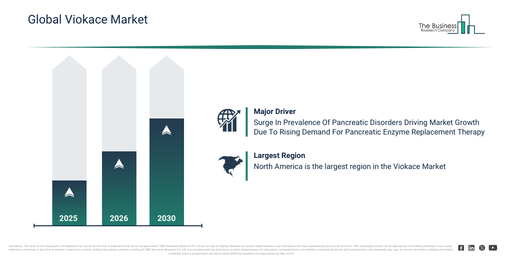
    The expanding occurrence of pancreatic conditions is anticipated to fuel the expansion of the viokace market in the future. Pancreatic disorders encompass various medical issues impacting the pancreas, an organ vital for creating digestive enzymes and hormones like insulin. This upward trend in pancreatic disorder prevalence stems from factors including an aging demographic, poor lifestyle decisions, rising obesity rates, and the increasing occurrence of diseases such as diabetes that can impair pancreatic function. Viokace aids in managing pancreatic disorders by supplying digestive enzymes that facilitate the digestion of fats, proteins, and carbohydrates, a crucial function for individuals with conditions such as chronic pancreatitis or cystic fibrosis, where the pancreas does not produce enough enzymes for adequate digestion and nutrient uptake. For example, Cancer Research UK, a UK-based independent cancer research organization, reported in February 2023 that pancreatic cancer incidence rates in the UK are projected to rise by 5% between the periods of 2023-2025 and 2038-2040, reaching an average of 19 cases per 100,000 people annually by 2038-2040. Consequently, the expanding occurrence of pancreatic disorders is propelling the growth of the viokace market.

    Viokace Market Driver: Increasing Geriatric Population Driving Market Growth Due To Rising Incidence Of Pancreatic Disorders Among Elderly

    Viokace Market Segment Analysis: What Are The Core Market Categories?

    The viokace market covered in this report is segmented –

    1) By Indication: Exocrine Pancreatic Insufficiency, Chronic Pancreatitis, Other Pancreatic Disorders

    2) By Distribution Channel: Hospital Pharmacies, Retail Pharmacies, Online Pharmacies

    3) By End User: Adult, Geriatric

    Viokace Market Top Companies Driving Competitive Growth

    Major companies operating in the viokace market are AbbVie Inc.

    View The Full Viokace Market Report:

    https://thebusinessresearchcompany.com/report/viokace-global-market-report?utm_source=Blogs&utm_medium=Paid&utm_campaign=Oct_PR

    Viokace Market Geographic Spread And Regional Opportunities

    North America was the largest region in the viokace market in 2025. The regions covered in the viokace market report are Asia-Pacific, Western Europe, Eastern Europe, North America, South America, Middle East, Africa.

    Reach Out To Our Team:

    The Business Research Company: https://www.thebusinessresearchcompany.com/

    Americas: +1 310-496-7795

    Asia: +44 7882 955267 & +91 8897263534

    Europe: +44 7882 955267

    Email us at: marketing@tbrc.info

    Follow us on:

    LinkedIn: https://in.linkedin.com/company/the-business-research-company

    YouTube: https://www.youtube.com/channel/UC24_fI0rV8cR5DxlCpgmyFQ

    Global Market Model: https://www.thebusinessresearchcompany.com/global-market-model

  • Molecular Biology Automatic Analyzer Market Reaches $3.91 Billion In 2026: Key Developments Shaping Expansion

    Molecular Biology Automatic Analyzer Market Reaches $3.91 Billion In 2026: Key Developments Shaping Expansion

    Backed by market attractiveness analysis, total addressable market sizing, company benchmarking matrices, interactive Excel dashboards, wider supply chain intelligence, emerging startup coverage, and detailed product-level insights, The Business Research Company’s 2026 market reports are designed to offer research that is more actionable and strategically valuable than ever.

    Molecular Biology Automatic Analyzer Market Set To Climb From $2.79 Billion In 2026 To $3.91 Billion By 2030

    The molecular biology automatic analyzer market has witnessed significant growth in recent years. It is forecast to expand from $2.56 billion in 2025 to $2.79 billion in 2026, demonstrating a compound annual growth rate (CAGR) of 9.1%. This historical expansion can be primarily attributed to the increasing adoption of automated lab equipment, the growing demand for molecular diagnostics, rising investment in genomic research, the expansion of biotechnology research centers, and the increasing prevalence of chronic and infectious diseases.

    The molecular biology automatic analyzer market is projected to expand significantly in the near future, with its value expected to reach $3.91 billion by 2030, demonstrating a compound annual growth rate (CAGR) of 8.8%. This growth over the forecast period stems from a heightened focus on personalized medicine, the increasing adoption of artificial intelligence and robotics in laboratory environments, a growing need for high-throughput sequencing, the expansion of molecular diagnostics into emerging markets, and rising investments in cell and gene therapy development. Key trends anticipated during this period include continuous technological advancements in automation and AI, innovations in high-throughput molecular analysis, progress in multi-omics research, ongoing research and development in gene editing technologies, and enhancements in sample preparation and assay accuracy.

    Get A Free Sample Report With In-Depth Market Insights:

    https://thebusinessresearchcompany.com/sample_request?id=67834328&type=smp&name=Molecular%20Biology%20Automatic%20Analyzer%20Market%20Report%202026&utm_source=Blogs&utm_medium=Paid&utm_campaign=Oct_PR

    Molecular Biology Automatic Analyzer Market Industry Drivers: What’s Behind The Revenue Growth?

    The increasing prevalence of infectious diseases is anticipated to drive the expansion of the molecular biology automatic analyzer market in the future. Infectious diseases are defined as ailments caused by harmful microorganisms like bacteria, viruses, fungi, or parasites that invade and proliferate within the body, leading to various symptoms and health problems. The surge in these diseases is attributed to increased global travel, which accelerates the cross-border and cross-population spread of pathogens. Molecular biology automatic analyzers assist in the diagnosis of infectious diseases by quickly detecting and quantifying pathogens at the genetic level with high accuracy. They enhance patient outcomes by enabling early, precise, and efficient identification of infections, thus facilitating timely treatment. For instance, in February 2024, according to the UK Health Security Agency, a UK-based government agency, tuberculosis (a contagious bacterial infection that primarily affects the lungs) cases in England rose to 4,850 in 2023, an increase of 10.7% from 4,380 cases in 2022. Therefore, the rising occurrence of infectious diseases is a key factor propelling the growth of the molecular biology automatic analyzer market.

    Molecular Biology Automatic Analyzer Market Segment Outlook: Which Categories Are Growing Fastest?

    The molecular biology automatic analyzer market covered in this report is segmented –

    1) By Product Type: Real-Time PCR Systems, Next-Generation Sequencing Systems, Automated Nucleic Acid Extraction Systems, Microarray Analysis Systems, Integrated Sample-To-Answer Molecular Analyzers

    2) By Technology: Optical Technologies, Mass Spectrometry, Microfluidics Technology, Isothermal Nucleic Acid Amplification, Digital PCR Technology

    3) By Throughput And Scale: High-Throughput Systems, Mid-Throughput Systems, Low-Throughput Systems

    4) By Application: Genetic Research, Clinical Diagnostics, Infectious Disease Testing, Oncology And Precision Medicine, Pharmacogenomics, Forensic And Environmental Testing

    5) By End-User: Hospitals And Diagnostic Laboratories, Academic And Research Institutions, Biotechnology And Pharmaceutical Companies, Contract Research Organizations, Public Health Laboratories

    Subsegments:

    1) By Real-Time PCR Systems: Quantitative Polymerase Chain Reaction Instruments, Digital Polymerase Chain Reaction Instruments, High Throughput Polymerase Chain Reaction Platforms, Portable Polymerase Chain Reaction Devices, Multiplex Polymerase Chain Reaction Systems

    2) By Next-Generation Sequencing Systems: Whole Genome Sequencing Platforms, Whole Exome Sequencing Platforms, Targeted Gene Sequencing Platforms, Single Cell Sequencing Systems, Long Read Sequencing Instruments

    3) By Automated Nucleic Acid Extraction Systems: Magnetic Bead Based Extraction Instruments, Cartridge Based Extraction Systems, Automated Liquid Handling Extraction Platforms, High Throughput Extraction Workstations, Portable Nucleic Acid Extraction Devices

    4) By Microarray Analysis Systems: Deoxyribonucleic Acid Microarray Platforms, Ribonucleic Acid Expression Microarray Systems, Protein Microarray Platforms, Single Nucleotide Polymorphism Genotyping Microarrays, High Density Microarray Scanners

    5) By Integrated Sample-To-Answer Molecular Analyzers: Cartridge Based Sample To Result Systems, Fully Automated Point Of Care Molecular Platforms, Closed Tube Integrated Analysis Systems, High Throughput Sample To Answer Workstations, Portable Integrated Molecular Diagnostic Devices

    #Molecular Biology Automatic Analyzer Market Growth Trends: What’s Shaping The Future Outlook?

    Leading companies in the molecular biology automatic analyzer market are concentrating on developing advanced diagnostic technologies, such as efficient digital PCR platforms, to enhance sensitivity, accuracy, and throughput in nucleic acid quantification for clinical and research applications. An efficient digital PCR platform is an automated system that divides samples into thousands of microreactions, enabling precise, absolute quantification of target DNA or RNA sequences with minimal bias, supporting reliable detection of low-abundance biomarkers and improving diagnostic confidence. For instance, in September 2024, QIAGEN N.V., a Netherlands-based molecular diagnostics and life science tools company, launched the QIAcuity Dx digital PCR system for clinical testing in oncology. This platform integrates digital PCR technology with an automated workflow, allowing laboratories to perform high-precision quantification of genetic targets relevant to cancer diagnostics and therapy monitoring. The system’s efficient digital PCR capabilities contribute to robust data quality, simplified operation, and rapid turnaround times for clinical test results.

    Molecular Biology Automatic Analyzer Market Competitive Landscape: Who Leads The Industry?

    Major companies operating in the molecular biology automatic analyzer market are Thermo Fisher Scientific Inc., Becton Dickinson and Company, Siemens Healthineers AG, Agilent Technologies Inc., Illumina Inc., Hologic Inc., PerkinElmer Inc., bioMérieux SA, Sysmex Corporation, QIAGEN N.V., Bio-Rad Laboratories Inc., Roche Diagnostics, Hamilton Robotics, Tecan Group Ltd., Eppendorf SE, Takara Bio Inc., BGI Genomics Co. Ltd., Analytik Jena AG, Seegene Inc., Abbott Molecular Inc.

    View The Full Molecular Biology Automatic Analyzer Market Report:

    https://thebusinessresearchcompany.com/report/molecular-biology-automatic-analyzer-market-report?utm_source=Blogs&utm_medium=Paid&utm_campaign=Oct_PR

    Molecular Biology Automatic Analyzer Market Geographic Landscape: Which Region Dominates Industry Growth?

    North America was the largest region in the molecular biology automatic analyzer market in 2025. Asia-Pacific is expected to be the fastest-growing region in the forecast period. The regions covered in the molecular biology automatic analyzer market report are Asia-Pacific, South East Asia, Western Europe, Eastern Europe, North America, South America, Middle East, Africa.

    Reach Out To Our Team:

    The Business Research Company: https://www.thebusinessresearchcompany.com/

    Americas: +1 310-496-7795

    Asia: +44 7882 955267 & +91 8897263534

    Europe: +44 7882 955267

    Email us at: marketing@tbrc.info

    Follow us on:

    LinkedIn: https://in.linkedin.com/company/the-business-research-company

    YouTube: https://www.youtube.com/channel/UC24_fI0rV8cR5DxlCpgmyFQ

    Global Market Model: https://www.thebusinessresearchcompany.com/global-market-model