Author: Marketing Posting

  • Human Papillomavirus (HPV) Cytomegalovirus (CMV) Therapeutic Market Size And Forecast 2026–2030: Trends Driving Industry Expansion

    Human Papillomavirus (HPV) Cytomegalovirus (CMV) Therapeutic Market Size And Forecast 2026–2030: Trends Driving Industry Expansion

    Featuring market attractiveness scoring, total addressable market sizing, company benchmarking matrices, interactive Excel dashboards, deeper supply chain intelligence, emerging startup tracking, and granular product-level insights, The Business Research Company’s 2026 market reports are built to deliver research that is both more actionable and more strategically valuable.

    Human Papillomavirus (HPV) Cytomegalovirus (CMV) Therapeutic Market Expansion Outlook: What Revenue Opportunities Are Ahead?

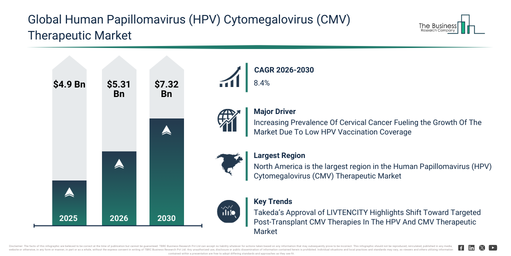
    The human papillomavirus (hpv) cytomegalovirus (cmv) therapeutic market size has experienced significant expansion recently. It is projected to increase from $4.9 billion in 2025 to $5.31 billion in 2026, registering a compound annual growth rate (CAGR) of 8.3%. This historical growth can be attributed to factors such as the high global prevalence of hpv and cmv infections, a rising incidence of cancers linked to viruses, widespread adoption of prophylactic hpv vaccination programs, the increasing burden of cmv infections in immunocompromised patients, and advancements in antiviral drug development.

    The human papillomavirus (hpv) cytomegalovirus (cmv) therapeutic market size is projected to experience robust expansion over the coming years. This market is anticipated to reach $7.32 billion by 2030, exhibiting a compound annual growth rate (CAGR) of 8.4%. Factors contributing to this growth during the forecast period include the escalating demand for therapeutic vaccines, a heightened emphasis on cancer immunotherapy, increased investments in antiviral research and development, the expansion of screening and early intervention initiatives, and a greater understanding of congenital and persistent viral infections. Key trends anticipated during the forecast timeframe involve the intensified development of therapeutic vaccines for hpv and cmv, the wider embrace of immunotherapy-driven antiviral treatments, a growing emphasis on combination approaches for managing viral infections, the broadening of targeted therapies for cancers linked to viruses, and an increase in clinical investigations for advanced antiviral medications.

    Get A Free Sample Report With In-Depth Market Insights:

    https://thebusinessresearchcompany.com/sample_request?id=68759333&type=smp&name=Human%20Papillomavirus%20%28HPV%29%20Cytomegalovirus%20%28CMV%29%20Therapeutic%20Market%20Report%202026&utm_source=Blogs&utm_medium=Paid&utm_campaign=Oct_PR

    Human Papillomavirus (HPV) Cytomegalovirus (CMV) Therapeutic Market Growth Factors Behind Sustained Expansion

    The expanding occurrence of cervical cancer is anticipated to boost the growth of the human papillomavirus (HPV) and cytomegalovirus (CMV) therapeutic market. Cervical cancer, defined as a malignant tumor in the cervix, is primarily escalating due to ongoing infections with high-risk human papillomavirus (HPV) strains, which induce atypical cervical cell changes that can become cancerous if left untreated. Human papillomavirus (HPV) cytomegalovirus (CMV) therapeutics aid in cervical cancer management by targeting the viral progression of the disease and enhancing patient results. These therapies diminish the likelihood of cancer development through antiviral treatments and immunotherapies, thereby improving long-term health and quality of life. For example, the American Cancer Society reported in April 2024 that around 20 million new cervical cancer cases were diagnosed globally in 2022, a figure expected to increase to 35 million by 2050. Consequently, the rising incidence of cervical cancer is a key driver for the human papillomavirus (HPV) and cytomegalovirus (CMV) therapeutic market. The growth of the human papillomavirus (HPV) cytomegalovirus (CMV) therapeutic market is also anticipated to be driven by increasing healthcare expenditure. This expenditure represents the collective spending on medical services, treatments, and health resources, financed by governments, insurers, and individuals to guarantee accessible and high-quality care. Human papillomavirus (HPV) and cytomegalovirus (CMV) therapeutics gain from this rise in spending, as it facilitates wider availability of sophisticated antiviral treatments and preventive measures. For illustration, the Office for National Statistics, a UK government body, stated in May 2024 that total healthcare expenditure experienced a 5.6% nominal increase between 2022 and 2023, which signifies a substantial acceleration compared to the 0.9% growth noted in 2022. Thus, the escalating healthcare expenditure is a significant factor in the expansion of the human papillomavirus (HPV) cytomegalovirus (CMV) therapeutic market.

    Human Papillomavirus (HPV) Cytomegalovirus (CMV) Therapeutic Market Segment Breakdown: Which Categories Lead On Revenue?

    The human papillomavirus (hpv) cytomegalovirus (cmv) therapeutic market covered in this report is segmented –

    1) By Therapeutic Type: Vaccines, Antiviral Drugs, Immunotherapy

    2) By Route of Administration: Intramuscular, Oral

    3) By Indications: Cervical Cancer, Genital Warts, Head And Neck Cancer, Anal Cancer

    4) By Distribution Channel: Hospitals, Retail Pharmacies, Specialty Clinics

    Subsegments:

    1) By Vaccines: Prophylactic Vaccines, Therapeutic Vaccines, Recombinant Vaccines, Virus-Like Particle (VLP) Based Vaccines

    2) By Antiviral Drugs: Nucleoside Analogues, Deoxyribonucleic Acid Polymerase Inhibitors

    3) By Immunotherapy: Monoclonal Antibodies, Immune Checkpoint Inhibitors, Adoptive T-cell Therapy

    Human Papillomavirus (HPV) Cytomegalovirus (CMV) Therapeutic Market Industry Trends Fueling Future Revenue Growth

    Leading companies within the human papillomavirus (HPV) and cytomegalovirus (CMV) therapeutics market are concentrating on advancing novel technologies, such as post-transplant anti-cytomegalovirus (CMV) treatment, with the aim of addressing previously unmet medical demands, boosting treatment effectiveness, lessening resistance to current therapies, and enhancing patient outcomes for those who are immunocompromised. This post-transplant anti-cytomegalovirus (CMV) treatment refers to therapeutic interventions designed to either prevent or manage cytomegalovirus (CMV) infections in individuals who have received organ or stem cell transplants and are considered high-risk because of their immunosuppressed state. As an illustration, in June 2024, Takeda Pharmaceutical Company Limited, a pharmaceutical firm based in Japan, secured approval from the Japanese Ministry of Health, Labour, and Welfare (MHLW) for LIVTENCITY (maribavir) specifically for treating post-transplant cytomegalovirus (CMV) infection or disease that has shown resistance to existing anti-CMV medications. This cutting-edge antiviral agent stands as the sole treatment available in Japan that specifically targets and suppresses the cytomegalovirus (CMV)-specific UL97 protein kinase, thereby providing a unique action mechanism distinct from conventional treatments.

    Human Papillomavirus (HPV) Cytomegalovirus (CMV) Therapeutic Market Leading Players And Competitive Positioning

    Major companies operating in the human papillomavirus (hpv) cytomegalovirus (cmv) therapeutic market are Merck & Co. Inc., Pfizer Inc., GlaxoSmithKline plc, Moderna Inc., BioNTech SE, Gilead Sciences Inc., F. Hoffmann-La Roche AG, Sanofi S.A., AstraZeneca plc, Novartis AG, AbbVie Inc., Bristol Myers Squibb Company, Takeda Pharmaceutical Company Limited, Amgen Inc., Vir Biotechnology Inc., Inovio Pharmaceuticals Inc., Dynavax Technologies Corporation, Hookipa Pharma Inc., Vaxart Inc., Bavarian Nordic A/S

    View The Full Human Papillomavirus (HPV) Cytomegalovirus (CMV) Therapeutic Market Report:

    https://thebusinessresearchcompany.com/report/human-papillomavirus-hpv-cytomegalovirus-cmv-therapeutic-global-market-report?utm_source=Blogs&utm_medium=Paid&utm_campaign=Oct_PR

    Human Papillomavirus (HPV) Cytomegalovirus (CMV) Therapeutic Market Geographic Analysis: Where Is Demand Rising Fastest?

    North America was the largest region in the human papillomavirus (HPV) cytomegalovirus (CMV) therapeutic market in 2025. Asia-Pacific is expected to be the fastest-growing region in the forecast period. The regions covered in the human papillomavirus (hpv) cytomegalovirus (cmv) therapeutic market report are Asia-Pacific, South East Asia, Western Europe, Eastern Europe, North America, South America, Middle East, Africa.

    Reach Out To Our Team:

    The Business Research Company: https://www.thebusinessresearchcompany.com/

    Americas: +1 310-496-7795

    Asia: +44 7882 955267 & +91 8897263534

    Europe: +44 7882 955267

    Email us at: marketing@tbrc.info

    Follow us on:

    LinkedIn: https://in.linkedin.com/company/the-business-research-company

    YouTube: https://www.youtube.com/channel/UC24_fI0rV8cR5DxlCpgmyFQ

    Global Market Model: https://www.thebusinessresearchcompany.com/global-market-model
  • Human Organoids Market 2026 Outlook: Market Size, CAGR And Key Growth Opportunities

    Human Organoids Market 2026 Outlook: Market Size, CAGR And Key Growth Opportunities

    Built to provide research that’s more actionable and strategically valuable, The Business Research Company’s 2026 market reports include market attractiveness analysis, total addressable market sizing, company benchmarking matrices, interactive Excel dashboards, broader supply chain intelligence, emerging startup tracking, and in-depth product insights.

    Human Organoids Market Growth Potential: How Will Market Size Shift Through 2030?

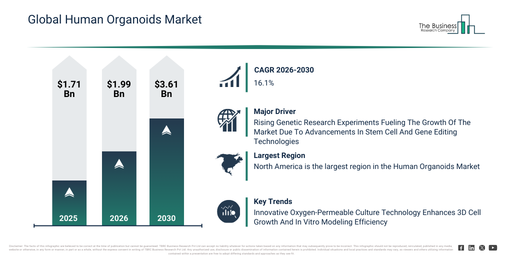
    The human organoids market has experienced rapid growth in recent years. It is projected to expand from $1.71 billion in 2025 to $1.99 billion in 2026, achieving a compound annual growth rate (CAGR) of 16.6%. This historical expansion is primarily due to advancements in stem cell research, the limitations of traditional 2D cell cultures, a rising demand for predictive preclinical models, increased investment in biomedical research, and a growing focus on reducing animal testing.

    The market for human organoids is anticipated to experience significant expansion in the coming years. This market is projected to reach $3.61 billion by 2030, demonstrating a compound annual growth rate (CAGR) of 16.1%. Several factors contribute to this growth during the projected period, including the greater uptake of precision medicine approaches, growing pharmaceutical r&d spending, broader applications of organoids in regenerative medicine, advancements in 3D cell culture systems, and a rising need for human-relevant disease models. Key developments anticipated for the forecast timeframe encompass the expanding utilization of organoids in drug discovery and toxicity assessments, their increased deployment for disease modeling and pathophysiology investigations, the growing requirement for personalized medicine based on patient-derived organoids, the wider application of organoids in oncology and neurology studies, and enhanced partnerships between academic institutions and pharmaceutical companies for organoid-focused research.

    Get A Free Sample Report With In-Depth Market Insights:

    https://thebusinessresearchcompany.com/sample_request?id=81565366&type=smp&name=Human%20Organoids%20Market%20Report%202026&utm_source=Blogs&utm_medium=Paid&utm_campaign=Oct_PR

    Human Organoids Market Demand Drivers Opening New Revenue Streams

    The expanding volume of experiments in genetic science is projected to propel the advancement of the human organoids market in the future. Genetic science, a biological field, investigates how characteristics are passed down via genes and how genetic data shapes the growth and function of living entities. The surge in genetic science experiments stems from technological innovations enhancing gene editing speed and accuracy, thereby facilitating more profound investigations into diseases and the creation of focused therapies. This scientific discipline aids human organoids by enabling precise gene manipulation to create models for particular diseases and observe their progression. It assists scientists in comprehending genetic conditions, evaluating novel medications, and devising personalized treatment approaches more efficiently. As an illustration, in April 2024, the American Society of Gene & Cell Therapy, a US-based non-profit medical and scientific organization, communicated that in Q4 2023, phase III gene therapy clinical trials saw a 10% increase, representing the first quarterly rise since Q3 2022. Consequently, the growing number of experiments in genetic science will fuel the human organoids market.

    Human Organoids Market Segmentation: How Does The Market Break Down By Category?

    The human organoids market covered in this report is segmented –

    1) By Type: Brain Organoids, Heart Organoids, Intestinal Organoids, Kidney Organoids, Liver Organoids, Lung Organoids, Pancreatic Organoids

    2) By Technology: 3D Bioprinting, Cell Culture Technology, Hydrogels And Scaffold-Based Technology

    3) By Application: Drug Discovery, Infectious Disease Research, Neurology Studies, Oncology Research, Personalized Medicine

    4) By End User: Pharma And Biotech Companies, Contract Research Organizations, Academic And Research Institutes

    Subsegments:

    1) By Brain Organoids: Cerebral Organoids, Midbrain Organoids, Hypothalamic Organoids, Spinal Cord Organoids

    2) By Heart Organoids: Cardiac Muscle Organoids, Vascularized Heart Organoids, Chamber-Specific Heart Organoids

    3) By Intestinal Organoids: Small Intestine Organoids, Colon Organoids, Duodenal Organoids

    4) By Kidney Organoids: Nephron Organoids, Glomerular Organoids, Proximal Tubule Organoids

    5) By Liver Organoids: Hepatic Organoids, Bile Duct Organoids, Cholangiocyte Organoids

    6) By Lung Organoids: Airway Organoids, Alveolar Organoids, Bronchial Organoids

    7) By Pancreatic Organoids: Islet Organoids, Ductal Pancreatic Organoids, Acinar Pancreatic Organoids

    Human Organoids Market Trends Powering Strategic Industry Growth

    Major companies in the human organoids market are concentrating on developing advanced culture platforms and materials designed to boost cell viability and oxygen delivery. This focus aims to improve the accuracy and scalability of in vitro models for applications in drug discovery, regenerative medicine, and personalized therapy. For instance, in June 2025, Mitsui Chemicals Group, a Japan-based chemical manufacturing company, introduced its InnoCell oxygen-permeable cell culture microplates. These innovative microplates integrate the company’s specialized materials and precision cutting techniques to enhance oxygen supply to cells, proving especially useful in 3D spheroid and organoid cultures by reducing cell death and improving long-term viability. They are offered in both non-treated (N-type) and collagen-coated (C-type) versions to accommodate various cell types. The plates also boast low drug adsorption and excellent fluorescence imaging properties. With these advancements, the product is positioned to support drug discovery, personalized medicine, regenerative therapies, and advanced in vitro modeling in pharmaceutical research.

    Human Organoids Market Competitive Overview And Top Companies

    Major companies operating in the human organoids market are Organovo Holdings Inc., Emulate Inc., MIMETAS B.V., InSphero AG, DefiniGEN Limited, CN Bio Innovations Limited, CELLINK AB, Hubrecht Organoid Technology, Stemcell Technologies Inc., Crown Bioscience Inc., Synthego Corporation, Altis Biosystems Inc., Molecular Devices LLC, TissUse GmbH, Nortis Inc., Hesperos Inc., Vivodyne Inc., Curi Bio Inc., Axol Bioscience Ltd.

    View The Full Human Organoids Market Report:

    https://thebusinessresearchcompany.com/report/human-organoids-global-market-report?utm_source=Blogs&utm_medium=Paid&utm_campaign=Oct_PR

    Human Organoids Market Global Footprint: Which Region Leads The Market?

    North America was the largest region in the human organoids market in 2025. Asia-Pacific is expected to be the fastest-growing region in the forecast period. The regions covered in the human organoids market report are Asia-Pacific, South East Asia, Western Europe, Eastern Europe, North America, South America, Middle East, Africa.

    Reach Out To Our Team:

    The Business Research Company: https://www.thebusinessresearchcompany.com/

    Americas: +1 310-496-7795

    Asia: +44 7882 955267 & +91 8897263534

    Europe: +44 7882 955267

    Email us at: marketing@tbrc.info

    Follow us on:

    LinkedIn: https://in.linkedin.com/company/the-business-research-company

    YouTube: https://www.youtube.com/channel/UC24_fI0rV8cR5DxlCpgmyFQ

    Global Market Model: https://www.thebusinessresearchcompany.com/global-market-model
  • Human Metapneumovirus Diagnostics Market Size Growth: From $0.59 Billion In 2026 To $0.86 Billion By 2030

    Human Metapneumovirus Diagnostics Market Size Growth: From $0.59 Billion In 2026 To $0.86 Billion By 2030

    Backed by market attractiveness analysis, total addressable market sizing, company benchmarking matrices, interactive Excel dashboards, wider supply chain intelligence, emerging startup coverage, and detailed product-level insights, The Business Research Company’s 2026 market reports are designed to offer research that is more actionable and strategically valuable than ever.

    Human Metapneumovirus Diagnostics Market Value Analysis: What Growth Lies Ahead Over The Forecast Period?

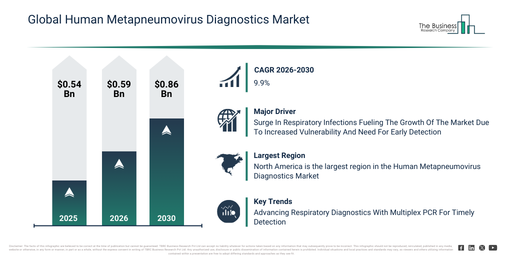
    The human metapneumovirus diagnostics market size has experienced rapid growth in recent years. It is projected to increase from $0.54 billion in 2025 to $0.59 billion in 2026, at a compound annual growth rate (CAGR) of 10.1%. Historically, this expansion has been driven by factors such as the rising incidence of respiratory tract infections, increased hospitalization of infants and elderly patients, expansion of pcr-based diagnostic capabilities, growing awareness of non-influenza respiratory viruses, and improved access to diagnostic laboratories.

    The human metapneumovirus diagnostics market is projected to experience substantial expansion in the coming years. Its valuation is anticipated to reach $0.86 billion by 2030, demonstrating a compound annual growth rate (CAGR) of 9.9%. This projected growth is driven by factors such as a heightened need for swift respiratory diagnostic solutions, the broadening scope of multiplex and syndromic testing, increased capital allocation towards molecular diagnostic innovations, a sharper emphasis on prompt and precise viral identification, and enhanced readiness for recurring respiratory epidemics. Key developments expected during this timeframe involve the wider acceptance of molecular diagnostics for respiratory viruses, a surging need for quick and accessible hmpv testing, a greater focus on early diagnosis particularly for children and the elderly, the proliferation of comprehensive multiplex panels for respiratory pathogens, and the tighter incorporation of diagnostic findings into medical treatment planning.

    Get A Free Sample Report With In-Depth Market Insights:

    https://thebusinessresearchcompany.com/sample_request?id=33709531&type=smp&name=Human%20Metapneumovirus%20Diagnostics%20Market%20Report%202026&utm_source=Blogs&utm_medium=Paid&utm_campaign=Oct_PR

    Human Metapneumovirus Diagnostics Market Growth Backed By Core Demand Fundamentals

    The escalating prevalence of respiratory infections is projected to stimulate growth within the human metapneumovirus diagnostics market moving forward. These infections are illnesses caused by viruses, bacteria, or other pathogens that impact the respiratory system, including the sinuses, throat, airways, and lungs. The increased occurrence of respiratory infections is linked to their tendency to expose individuals to detrimental pollutants, which irritate and weaken the respiratory tract, thereby heightening its vulnerability to infections. Human metapneumovirus diagnostics play a crucial role in identifying hMPV as the underlying cause of respiratory infections, enabling precise treatment and enhanced patient management. For example, in January 2025, the UK Health Security Agency, a UK-based government body, documented that during the 2023–2024 season, respiratory infection rates in England peaked at 8.0 per 100,000 in weeks 50 and 52 of 2023, further escalating to 10.2 per 100,000 in week 4 of 2024, while acute respiratory infection (ARI) incidents in closed settings amounted to a total of 2,051, with most cases reported in care homes and hospitals. Therefore, the growing prevalence of respiratory infections is actively propelling the expansion of the human metapneumovirus diagnostics market.

    Human Metapneumovirus Diagnostics Market Segment Trends And Revenue Contributors

    The human metapneumovirus diagnostics market covered in this report is segmented –

    1) By Product Type: Reagents And Kits, Instruments

    2) By Test Type: Molecular Diagnostics, Immunodiagnostics

    3) By Technology: PCR-Based Diagnostics, Immunofluorescence Assays, Lateral Flow Assays

    4) By End-Use: Hospitals And Clinics, Diagnostic And Reference Laboratories, Academic And Research Institutions, Other End Users

    Subsegments:

    1) By Reagents And Kits: Sample Collection Kits, Nucleic Acid Extraction Kits, Viral Transport Media, Control Reagents

    2) By Instruments: Thermal Cyclers, Automated Analyzers, Nucleic Acid Extractors, Fluorescence Readers

    Human Metapneumovirus Diagnostics Market Growth Trends Reshaping The Competitive Landscape

    Companies operating within the human metapneumovirus diagnostics market are prioritizing the development of innovative offerings, such as respiratory polymerase chain reaction (PCR) diagnostic solutions, to enhance their molecular diagnostic capabilities for identifying a wide array of respiratory pathogens. A respiratory polymerase chain reaction (PCR) diagnostic solution functions as a molecular testing method designed to detect and identify respiratory pathogens through the amplification of their genetic material, providing high levels of sensitivity and specificity. For example, in March 2023, Jiangsu BioPerfectus Technologies Co., Ltd., a China-based molecular diagnostic company, launched its respiratory pathogen multiplex real-time polymerase chain reaction (PCR) diagnostic kit. This solution is engineered for the simultaneous detection of multiple respiratory pathogens with high accuracy and a quick turnaround time, thereby boosting diagnostic efficiency in clinical and point-of-care settings. Its broad coverage and precise operation are instrumental in supporting timely clinical decision-making, particularly when managing respiratory infections that exhibit similar symptoms.

    Human Metapneumovirus Diagnostics Market Competitive Landscape: Which Companies Lead The Industry?

    Major companies operating in the human metapneumovirus diagnostics market are F. Hoffmann-La Roche Ltd., Thermo Fisher Scientific Inc., Abbott Laboratories, Quest Diagnostics, Hologic Inc., QuidelOrtho Corporation, Bio-Rad Laboratories Inc., ARUP Laboratories, Qiagen NV, Diasorin, Luminex Corporation, bioMérieux, Seegene Inc., Cepheid, R-Biopharm AG, Certest Biotec, ZeptoMetrix, Xi’an Tianlong Science and Technology Co. Ltd, The Native Antigen Company, Hangzhou Testsea Biotechnology Co. Ltd., Attogene.

    View The Full Human Metapneumovirus Diagnostics Market Report:

    https://thebusinessresearchcompany.com/report/human-metapneumovirus-diagnostics-global-market-report?utm_source=Blogs&utm_medium=Paid&utm_campaign=Oct_PR

    Human Metapneumovirus Diagnostics Market Regional Split: Which Areas Are Fueling Growth?

    North America was the largest region in the human metapneumovirus diagnostics market in 2025. Asia-Pacific is expected to be the fastest-growing region in the forecast period. The regions covered in the human metapneumovirus diagnostics market report are Asia-Pacific, South East Asia, Western Europe, Eastern Europe, North America, South America, Middle East, Africa.

    Reach Out To Our Team:

    The Business Research Company: https://www.thebusinessresearchcompany.com/

    Americas: +1 310-496-7795

    Asia: +44 7882 955267 & +91 8897263534

    Europe: +44 7882 955267

    Email us at: marketing@tbrc.info

    Follow us on:

    LinkedIn: https://in.linkedin.com/company/the-business-research-company

    YouTube: https://www.youtube.com/channel/UC24_fI0rV8cR5DxlCpgmyFQ

    Global Market Model: https://www.thebusinessresearchcompany.com/global-market-model

  • Tissue Diagnostic Market 2026 Outlook: Market Size, CAGR And Key Growth Opportunities

    Featuring market attractiveness scoring, total addressable market sizing, company benchmarking matrices, interactive Excel dashboards, deeper supply chain intelligence, emerging startup tracking, and granular product-level insights, The Business Research Company’s 2026 market reports are built to deliver research that is both more actionable and more strategically valuable.

    Tissue Diagnostic Market Growth From $7.25 Billion In 2026 To $11.97 Billion By 2030 At A CAGR Of 13.4%

    The tissue diagnostic market has demonstrated substantial growth in its size over recent years. Forecasts indicate that its value will escalate from $6.38 billion in 2025 to $7.25 billion in 2026, exhibiting a compound annual growth rate (CAGR) of 13.6%. This historical expansion is attributable to several factors, including a rise in cancer diagnostic volumes, the expansion of hospital pathology laboratories, the increasing embrace of immunohistochemistry techniques, greater utilization of automated diagnostic instruments, and enhanced availability of sophisticated reagents.

    The tissue diagnostic market size is projected to experience substantial expansion in the coming years. Its valuation is anticipated to reach $11.97 billion in 2030, exhibiting a compound annual growth rate (CAGR) of 13.4%. This growth during the projection period stems from factors such as heightened demand for precise diagnostic methods, the increasing embrace of AI-powered pathology instruments, the broadening scope of personalized medicine efforts, expanding capital allocation in digital health systems, and a sharpened emphasis on diagnostic precision and processing speed. Key developments expected within this period involve the greater uptake of digital pathology solutions, a surge in the application of automated tissue staining mechanisms, the increasing incorporation of AI-driven image analysis, the widening availability of multiplex tissue assessments, and a heightened commitment to optimizing workflow consistency.

    Get A Free Sample Report With In-Depth Market Insights:

    https://thebusinessresearchcompany.com/sample_request?id=52825754&type=smp&name=Tissue%20Diagnostic%20Market%20Report%202026&utm_source=Blogs&utm_medium=Paid&utm_campaign=Oct_PR

    Tissue Diagnostic Market Development Factors: What’s Supporting Demand?

    The increasing prevalence of cancer is set to drive the expansion of the tissue diagnostic market throughout the forecast period. This disease originates when genetic alterations disrupt normal cellular processes, leading to uncontrolled cell proliferation that damages bodily tissues and forms a mass known as a tumor, which can be either malignant or non-cancerous. Various factors contribute to cancer development, including genetic mutations, exposure to carcinogens (cancer-causing chemicals), smoking, excessive weight, radiation, hormonal influences, among others. With a growing number of cancer cases, there arises a crucial demand for diagnostic methods like tissue diagnostics to accurately identify the disease state. For example, in February 2024, the World Health Organization, a Switzerland-based United Nations agency, projected more than 35 million new cancer cases in 2050, representing a 77% increase from the approximately 20 million cases recorded in 2022. Consequently, the escalating incidence of cancer fuels the growth of the tissue diagnostic market.

    Tissue Diagnostic Market Segmentation And Category Overview

    The tissue diagnostic market covered in this report is segmented –

    1) By Product: Consumables, Antibodies, Kits, Reagents, Probes, Instruments, Slide Staining System, Scanner, Tissue Processing system

    2) By Technology: Immunohistochemistry (IHC), In Situ Hybridization (ISH), Digital Pathology And Workflow Management, Special Staining

    3) By Disease: Breast Cancer, Gastric Cancer, Lymphoma, Prostate Cancer, Non-Small Cell Lung Cancer (NSCLC)

    4) By End User: Hospitals, Research Laboratories, Pharmaceutical Companies, Contract Research Organizations

    Subsegments:

    1) By Consumables: Biopsy Needles, Slides And Cover Slips, Tissue Embedding Materials

    2) By Antibodies: Primary Antibodies, Secondary Antibodies, Monoclonal Antibodies, Polyclonal Antibodies

    3) By Kits: Diagnostic Kits, Assay Kits, Staining Kits

    4) By Reagents: Fixatives, Staining Reagents, Antigen Retrieval Solutions

    5) By Probes: Fluorescent Probes, Molecular Probes, Hybridization Probes

    6) By Instruments: Microscopes, Tissue Microarray Instruments, Laser Capture Microdissection Instruments

    7) By Slide Staining System: Automated Stainers, Manual Staining Systems

    8) By Scanner: Digital Slide Scanners, Whole Slide Imaging Systems

    9) By Tissue Processing System: Tissue Processors, Embedding Centers, Microtomes

    Tissue Diagnostic Market Transformation Trends: What Innovations Are Driving Change?

    Leading companies in the tissue diagnostic market are prioritizing technological innovations, particularly the incorporation of artificial intelligence, to improve the accuracy and efficacy of prostate cancer diagnosis and treatment. This integration of AI in tissue diagnostics involves leveraging artificial intelligence algorithms to analyze and interpret medical images and pathological data, thereby enhancing the precision and speed of disease detection and classification. For instance, in March 2023, Qritive, a Singapore-based healthcare firm, introduced the Qai Prostate, an advanced artificial intelligence (AI)-powered tool designed to aid pathologists in detecting prostate cancer. The QAi prostate cancer diagnosis tool is utilized to pinpoint prostatic adenocarcinoma regions and categorize malignant and benign tumor locations within biopsy tissue samples. Subsequent to identification and classification, the program provides a comprehensive report that includes tumor size and the percentage for each slide or region of interest (ROI) specifically for adenocarcinoma screening.

    Tissue Diagnostic Market Competitive Analysis Of Leading Industry Participants

    Major companies operating in the tissue diagnostic market are F. Hoffmann-La Roche Ltd., Danaher Corporation, Thermo Fisher Scientific Inc., Abbott Laboratories, Agilent Technologies Inc., Merck KGaA, BioGenex Laboratories, Sakura Finetek Co. Ltd., Philips Healthcare NV, Bio-Rad Laboratories, Ventana Medical Systems Inc., Hologic Inc., Becton Dickinson and Company, Sysmex Corporation, Cell Signaling Technology Inc., Enzo Life Sciences Inc., Leica Microsystems GmbH, Menarini Diagnostics S.r.l, PerkinElmer Inc., QIAGEN N.V., Siemens Healthineers AG, Zeiss Group AG

    View The Full Tissue Diagnostic Market Report:

    https://thebusinessresearchcompany.com/report/tissue-diagnostic-global-market-report?utm_source=Blogs&utm_medium=Paid&utm_campaign=Oct_PR

    Tissue Diagnostic Market Geographic Distribution And Regional Opportunities

    North America was the largest region in the tissue diagnostic market in 2025. The regions covered in the tissue diagnostic market report are Asia-Pacific, South East Asia, Western Europe, Eastern Europe, North America, South America, Middle East, Africa.

    Reach Out To Our Team:

    The Business Research Company: https://www.thebusinessresearchcompany.com/

    Americas: +1 310-496-7795

    Asia: +44 7882 955267 & +91 8897263534

    Europe: +44 7882 955267

    Email us at: marketing@tbrc.info

    Follow us on:

    LinkedIn: https://in.linkedin.com/company/the-business-research-company

    YouTube: https://www.youtube.com/channel/UC24_fI0rV8cR5DxlCpgmyFQ

    Global Market Model: https://www.thebusinessresearchcompany.com/global-market-model

  • Tinnitus Medical Devices Market Size Growth: From $1.98 Billion In 2026 To $2.32 Billion By 2030

    Built to provide research that’s more actionable and strategically valuable, The Business Research Company’s 2026 market reports include market attractiveness analysis, total addressable market sizing, company benchmarking matrices, interactive Excel dashboards, broader supply chain intelligence, emerging startup tracking, and in-depth product insights.

    Tinnitus Medical Devices Market Expansion Outlook: What Revenue Opportunities Are Ahead?

    The market for tinnitus medical devices has observed consistent expansion over recent years. This market is projected to expand from $1.9 billion in 2025 to $1.98 billion in 2026, exhibiting a compound annual growth rate (CAGR) of 4.1%. Historically, this expansion has been driven by the increasing incidence of hearing conditions, an aging global population, the broader accessibility of hearing aid technologies, greater public knowledge concerning tinnitus treatment avenues, and the establishment of more audiology clinics.

    The tinnitus medical devices market is projected to experience consistent expansion over the upcoming years, reaching $2.32 billion in 2030 at a compound annual growth rate (CAGR) of 4.0%. This anticipated growth during the forecast period is driven by factors such as a heightened demand for personalized tinnitus therapies, the growing uptake of digital health solutions, the broadening of home-based treatment options, escalating investments in neuromodulation research, and the expanded utilization of wearable medical devices. Key developments expected during this period involve the wider implementation of AI-enabled sound therapy devices, the enhanced application of wearable neuromodulation solutions, the expanding incorporation of digital therapeutics for tinnitus, the proliferation of smartphone-based management tools, and a greater emphasis on personalized hearing solutions.

    Get A Free Sample Report With In-Depth Market Insights:

    https://thebusinessresearchcompany.com/sample_request?id=82419504&type=smp&name=Tinnitus%20Medical%20Devices%20Market%20Report%202026&utm_source=Blogs&utm_medium=Paid&utm_campaign=Oct_PR

    Tinnitus Medical Devices Market Industry Drivers: What’s Behind The Revenue Growth?

    The rising prevalence of road accidents is expected to stimulate the future expansion of the tinnitus medical devices market. Accidents are unexpected occurrences that cause injury or damage without prior intent. The escalating number of road accidents is attributed to reckless driving behaviors, including speeding, distracted driving, driving under the influence, and ignoring traffic signals, all of which substantially heighten the risk of collisions and injuries. Tinnitus medical devices provide efficient relief and management for persistent ringing or noise in the ears, frequently initiated by trauma from road accidents and associated injuries, thereby improving auditory health, reducing psychological distress, and aiding the comprehensive recovery process for accident victims. For instance, in October 2025, as per the Road Safety Data Hub, an Australia-based government initiative designed to be a central repository for road safety data, the national road fatality rate for the 12 months concluding in October 2025 was 4.9 deaths per 100,000 population, indicating a 5.2% year-on-year increase compared to the previous comparable period. Therefore, the growing incidence of accidents is fueling the growth of the tinnitus medical devices market.

    Tinnitus Medical Devices Market Segment Outlook: Which Categories Are Growing Fastest?

    The tinnitus medical devices market covered in this report is segmented –

    1) By Product Type: Sound Masking Devices, Notched- Music Devices, Hearing Aids, Other Product Types

    2) By Technology: Wearable Devices, Tabletop Sound Generators, Mobile Apps & Digital Therapeutics

    3) By Distribution Channels: Hospital And Retail Pharmacy, Specialty Clinics, Other Distribution Channels

    4) By End-User: Hospitals And Clinics, Home Healthcare, Specialized Audiology Centers

    Subsegments:

    1) By Sound Masking Devices: White Noise Generators, Tabletop Maskers, Wearable Maskers

    2) By Notched-Music Devices: Standalone Notched Music Players, Integrated Smartphone Applications

    3) By Hearing Aids: Behind-The-Ear (BTE) Hearing Aids, In-The-Ear (ITE) Hearing Aids, Completely-In-Canal (CIC) Hearing Aids, Receiver-In-Canal (RIC) Hearing Aids

    4) By Other Product Types: Tinnitus Retraining Therapy Devices, Neuromodulation Devices

    #Tinnitus Medical Devices Market Growth Trends: What’s Shaping The Future Outlook?

    Key players within the tinnitus medical devices market are concentrating on creating sophisticated products, including cost-effective and mobile diagnostic tools, with the aim of boosting diagnostic precision, customizing treatment approaches, and enhancing patient well-being. An accessible tinnitus diagnosis and management device is a novel system that facilitates exact tinnitus matching, adaptable multimodal management strategies, and tracking of disease advancement, thereby improving diagnostic effectiveness and refining patient support. For instance, in December 2024, the Indian Institute of Technology (IIT) Bombay, an India-based research and technology institution, created an economical device for diagnosing and managing tinnitus. This locally developed device, alongside its intuitive application software, offers a comprehensive solution by accurately determining the nature and frequency of tinnitus, suggesting personalized treatment programs, and enabling healthcare providers to monitor disease progression over time. This affordable and precise diagnostic instrument seeks to render tinnitus management more attainable and impactful, especially in economically disadvantaged areas.

    Tinnitus Medical Devices Market Leading Companies And Competitive Benchmarking

    Major companies operating in the tinnitus medical devices market are Demant A/S, GN Store Nord A/S, WS Audiology A/S, KIND GmbH & Co. KG, RION Co. Ltd., Elkon Pvt. Ltd., Eargo Inc., Guangzhou Melison Medical Instrument Co. Ltd., Neuromod Devices Ltd., Puretone Ltd., Arphi Electronics Private Limited, Foshan Vohom Technology Co. Ltd., Sonova Holding AG, Starkey Laboratories Inc., Widex A/S, Cochlear Ltd., Sivantos Group, Audina Hearing Instruments Inc., Microson S.A., Amplifon S.p.A.

    View The Full Tinnitus Medical Devices Market Report:

    https://thebusinessresearchcompany.com/report/tinnitus-medical-devices-global-market-report?utm_source=Blogs&utm_medium=Paid&utm_campaign=Oct_PR

    Tinnitus Medical Devices Market Largest Region By Revenue And Market Share

    North America was the largest region in the tinnitus medical devices market in 2025. The regions covered in the tinnitus medical devices market report are Asia-Pacific, South East Asia, Western Europe, Eastern Europe, North America, South America, Middle East, Africa.

    Reach Out To Our Team:

    The Business Research Company: https://www.thebusinessresearchcompany.com/

    Americas: +1 310-496-7795

    Asia: +44 7882 955267 & +91 8897263534

    Europe: +44 7882 955267

    Email us at: marketing@tbrc.info

    Follow us on:

    LinkedIn: https://in.linkedin.com/company/the-business-research-company

    YouTube: https://www.youtube.com/channel/UC24_fI0rV8cR5DxlCpgmyFQ

    Global Market Model: https://www.thebusinessresearchcompany.com/global-market-model

  • Tibial Bearings Market Analysis 2026: Market Size, Growth Trends And Industry Outlook

    Backed by market attractiveness analysis, total addressable market sizing, company benchmarking matrices, interactive Excel dashboards, wider supply chain intelligence, emerging startup coverage, and detailed product-level insights, The Business Research Company’s 2026 market reports are designed to offer research that is more actionable and strategically valuable than ever.

    Tibial Bearings Market Growth Potential: How Will Market Size Shift Through 2030?

    The tibial bearings market has witnessed substantial growth in recent years. Its value is projected to increase from $1.29 billion in 2025 to $1.4 billion in 2026, exhibiting a compound annual growth rate (CAGR) of 8.2%. Historically, this expansion has been driven by factors such as the rise in knee osteoarthritis cases, the growth of the aging population, the expansion of joint replacement procedures, improved surgical techniques, and the demand for mobility restoration.

    The tibial bearings market is projected to witness significant growth over the next few years, with its size expanding to $1.91 billion by 2030, demonstrating a compound annual growth rate (CAGR) of 8.2%. This anticipated increase during the forecast period stems from factors such as the demand for customized knee implants, the rise in robotic-assisted knee replacement procedures, the common occurrence of sports injuries, advancements in bearing materials, and wider healthcare access. Noteworthy trends in the forecast period include the increasing use of highly cross-linked polyethylene, a growing preference for mobile bearing systems, the development of high-flex knee implants, a heightened focus on implant durability, and an uptick in revision knee surgeries.

    Get A Free Sample Report With In-Depth Market Insights:

    https://thebusinessresearchcompany.com/sample_request?id=58956475&type=smp&name=Tibial%20Bearings%20Market%20Report%202026&utm_source=Blogs&utm_medium=Paid&utm_campaign=Oct_PR

    Tibial Bearings Market Growth Factors: What’s Supporting Expansion?

    The rising volume of total knee replacement (TKR) procedures is projected to stimulate the growth of the tibial bearings market moving forward. Total knee replacement (TKR) is a surgical operation where damaged knee joint surfaces are substituted with artificial implants to reinstate function and relieve pain. The count of TKR procedures is increasing due to the escalating prevalence of osteoarthritis, driven by an aging demographic and specific lifestyle factors. Tibial bearings enhance the longevity and performance of total knee replacement (TKR), reducing wear and improving patient outcomes, which in turn supports the increasing demand for these procedures. For instance, in September 2024, information from the Australian Orthopedic Association National Joint Replacement Registry, an Australia-based database that compiles and analyzes data on joint replacement surgeries, showed that the number of total knee replacements (TKRs) grew by 19.2% from 2022 to 2023, indicating a substantial increase in procedures performed during this period. Therefore, the growing number of total knee replacement (TKR) procedures is a key driver for the tibial bearings market’s expansion.

    Tibial Bearings Market Segment Landscape: Which Areas Lead Development?

    The tibial bearings market covered in this report is segmented –

    1) By Type Of Bearing System: Fixed Bearing Systems, Mobile Bearing Systems, Conventional Bearing Systems, Hybrid Systems

    2) By Material Type: Polyethylene, Ceramic, Metallic Alloys, Composite Materials

    3) By Distribution Channel: Direct Sales, Authorized Medical Device Distributors, Third-Party Distributors, Medical Supply Stores

    4) By Application: Orthopedic Implants, Primary And Revision Knee Arthroplasty, Knee Reconstruction Surgery, Reconstructive Surgery

    5) By End-User: Hospitals, Orthopedic Clinics, Ambulatory Surgical Centers, Other End-Users

    Subsegments:

    1) By Fixed Bearing Systems: Polyethylene Bearings, Metal-Backed Bearings, Highly Cross-Linked Polyethylene Bearings

    2) By Mobile Bearing Systems: Rotating Platform Bearings, Medial-Pivot Bearings, High-Flex Bearings

    3) By Conventional Bearing Systems: Standard Polyethylene Bearings, Cemented Bearings, Uncemented Bearings

    4) By Hybrid Systems: Metal-Polyethylene Hybrid Bearings, Ceramic-Polyethylene Hybrid Bearings, Advanced Composite Bearings

    Tibial Bearings Market Industry Trends: What’s Reshaping Demand?

    Companies that are prominent in the tibial bearings market are focused on developing tibial cones to enhance the stability of implants, improve bone integration, and address severe bone loss in revision total knee arthroplasty (TKA) procedures. Tibial cones are medical devices implanted during revision total knee arthroplasty (TKA) to manage metaphyseal bone loss in the tibia. For example, in September 2024, MicroPort Orthopaedics, a medical device company based in the US, launched its Evolution Tibial Cones across North America to tackle metaphyseal bone loss in revision total knee arthroplasty (TKA). These cones are made from OsteoSync Ti, a highly porous titanium material that improves structural support, initial fixation, and bone integration. With a superior coefficient of friction compared to competitors, they enhance implant stability and ensure early rigid fixation, which is vital for successful knee revision surgeries.

    Tibial Bearings Market Industry Leaders And Competitive Landscape

    Major companies operating in the tibial bearings market are Stryker Corporation, Zimmer Biomet Holdings Inc., Smith & Nephew plc, DePuy Synthes, Medacta International, Limacorporate SpA, Exactech Inc., Corin Group, MicroPort Orthopedics Inc., Waldemar Link GmbH & Co KG, Conformis Inc., Implantcast GmbH, FH Orthopedics, United Orthopedic Corporation, Jiangsu Gather Biotech Co Ltd, DJO Global, AK Medical Holdings Limited, Mathys Ltd Bettlach, Beijing Chunli Medical Instruments Co. Ltd., Beijing AKEC Medical Co. Ltd., Kyocera Medical Corporation, B. Braun Aesculap

    View The Full Tibial Bearings Market Report:

    https://thebusinessresearchcompany.com/report/tibial-bearings-global-market-report?utm_source=Blogs&utm_medium=Paid&utm_campaign=Oct_PR

    Tibial Bearings Market Regional Analysis And Leading Geography

    North America was the largest region in the tibial bearings market in 2025. Asia-Pacific is expected to be the fastest-growing region in the forecast period. The regions covered in the tibial bearings market report are Asia-Pacific, South East Asia, Western Europe, Eastern Europe, North America, South America, Middle East, Africa.

    Reach Out To Our Team:

    The Business Research Company: https://www.thebusinessresearchcompany.com/

    Americas: +1 310-496-7795

    Asia: +44 7882 955267 & +91 8897263534

    Europe: +44 7882 955267

    Email us at: marketing@tbrc.info

    Follow us on:

    LinkedIn: https://in.linkedin.com/company/the-business-research-company

    YouTube: https://www.youtube.com/channel/UC24_fI0rV8cR5DxlCpgmyFQ

    Global Market Model: https://www.thebusinessresearchcompany.com/global-market-model

  • Thrombectomy Devices Market Forecast To 2030: Starting From $2.48 Billion In 2026

    Featuring market attractiveness scoring, total addressable market sizing, company benchmarking matrices, interactive Excel dashboards, deeper supply chain intelligence, emerging startup tracking, and granular product-level insights, The Business Research Company’s 2026 market reports are built to deliver research that is both more actionable and more strategically valuable.

    Thrombectomy Devices Market Value Analysis: What Growth Lies Ahead Over The Forecast Period?

    The thrombectomy devices market size has shown strong growth in recent years. It is projected to increase from $1.64 billion in 2025 to $1.78 billion in 2026, demonstrating a compound annual growth rate (CAGR) of 8.3%. This expansion observed in the past can be linked to a rising frequency of ischemic stroke cases, more available specialized stroke centers, enhancements in catheter-based intervention techniques, greater clinician understanding of thrombectomy benefits, and the broadening of neurointerventional training programs.

    The thrombectomy devices market is projected to experience robust expansion over the coming years. Its valuation is anticipated to reach $2.48 billion by 2030, exhibiting a compound annual growth rate (CAGR) of 8.7%. This projected growth is attributable to several factors, including the rising implementation of thrombectomy across broader patient demographics, an increasing need for quicker reperfusion results, the development of sophisticated neurovascular infrastructure, heightened investments in cutting-edge thrombectomy devices, and a greater emphasis on integrated therapy methods. Key trends defining this period encompass the wider acceptance of aspiration-based thrombectomy methods, the increased deployment of stent retriever devices, a heightened focus on swift stroke intervention protocols, the proliferation of minimally invasive neurovascular operations, and improvements in device precision and navigability.

    Get A Free Sample Report With In-Depth Market Insights:

    https://thebusinessresearchcompany.com/sample_request?id=67577207&type=smp&name=Thrombectomy%20Devices%20Market%20Report%202026&utm_source=Blogs&utm_medium=Paid&utm_campaign=Oct_PR

    Thrombectomy Devices Market Demand Drivers: What’s Powering Industry Growth?

    The anticipated expansion of the thrombectomy devices market going forward is closely linked to the rising aging population. An aging population refers to a demographic shift characterized by an increasing proportion of elderly individuals within a society over time. Thrombectomy devices play a crucial role in addressing various health concerns in the aging population such as stroke, coronary artery disease, aortic thrombosis, deep vein thrombosis (DVT), and others. For instance, in October 2025, according to the World Health Organization (WHO), a Switzerland-based United Nations (UN) organization, by 2030, one in six people globally will be aged 60 or older, with the population of individuals in this age group projected to double to 2.1 billion by 2050. Therefore, the rising aging population is driving the foot orthotic insoles market.

    Thrombectomy Devices Market Segments: Where Is Growth Concentrated?

    The thrombectomy devices market covered in this report is segmented –

    1) By Product Type: Aspiration Thrombectomy Devices, Mechanical Thrombectomy Devices

    2) By Application: Neurovascular Applications, Peripheral Vascular Applications, Cardiovascular Applications

    3) By End-User: Hospitals, Comprehensive Stroke Centers, Tertiary Care Centers

    Subsegments:

    1) By Aspiration Thrombectomy Devices: Manual Aspiration Devices, Powered Aspiration Devices

    2) By Mechanical Thrombectomy Devices: Stent Retriever Devices, Balloon Thrombectomy Devices

    Thrombectomy Devices Market Innovation Trends: What Developments Are Reshaping The Industry?

    Leading companies within the thrombectomy devices market are concentrating on developing innovative solutions, such as arterial thrombectomy systems. An arterial thrombectomy system is a medical device specifically engineered for the extraction of blood clots (thrombi) from arteries. For instance, in June 2023, Penumbra, Inc., a US-based healthcare company, announced the introduction of ‘Lightning Bolt 7’. Lightning Bolt 7 is the latest arterial thrombectomy system designed to remove blood clots from arteries. This system is equipped with pressure sensors paired with an algorithm to facilitate the removal of large and fibrous blood clots in the arteries with minimal blood loss. It is employed to manage conditions where a blockage restricts blood flow to the intestines, spleen, limbs, and liver. The integration of computer-aided components not only boosts safety but, when combined with its rapid and efficient clot removal, encourages the adoption of an endovascular-first approach in a broader spectrum of cases, prioritizing it over open surgery.

    Thrombectomy Devices Market Key Participants And Competitive Landscape

    Major companies operating in the thrombectomy devices market are Stryker Corporation, Medtronic plc, Boston Scientific Corporation, Terumo Corporation, Penumbra Inc., Abbott Laboratories, Inari Medical Inc., BTG International Ltd., Phenox GmbH, Acandis GmbH & Co. KG, Straub Medical AG, MicroVention Inc., Rapid Medical, Neuravi Limited, Arteria Therapeutics Inc., Johnson and Johnson, Edwards Lifesciences Corporation, Argon Medical Devices Inc., Teleflex Incorporated, AngioDynamics, Koninklijke Philips NV, Spectranetics Corporation, C. R. Bard Inc., Walk Vascular LLC, Kaneka Corporation, Baxter International

    View The Full Thrombectomy Devices Market Report:

    https://thebusinessresearchcompany.com/report/thrombectomy-devices-global-market-report?utm_source=Blogs&utm_medium=Paid&utm_campaign=Oct_PR

    Thrombectomy Devices Market Geographic Analysis: Where Is Demand Accelerating Fastest?

    North America was the largest region in the thrombectomy devices market in 2025. Asia-Pacific is expected to be the fastest-growing region in the global thrombectomy devices market report during the forecast period. The regions covered in the thrombectomy devices market report are Asia-Pacific, South East Asia, Western Europe, Eastern Europe, North America, South America, Middle East, Africa.

    Reach Out To Our Team:

    The Business Research Company: https://www.thebusinessresearchcompany.com/

    Americas: +1 310-496-7795

    Asia: +44 7882 955267 & +91 8897263534

    Europe: +44 7882 955267

    Email us at: marketing@tbrc.info

    Follow us on:

    LinkedIn: https://in.linkedin.com/company/the-business-research-company

    YouTube: https://www.youtube.com/channel/UC24_fI0rV8cR5DxlCpgmyFQ

    Global Market Model: https://www.thebusinessresearchcompany.com/global-market-model

  • Thoracic Surgery Devices Market Size In 2026 And Beyond: Understanding Future Growth Potential

    Built to provide research that’s more actionable and strategically valuable, The Business Research Company’s 2026 market reports include market attractiveness analysis, total addressable market sizing, company benchmarking matrices, interactive Excel dashboards, broader supply chain intelligence, emerging startup tracking, and in-depth product insights.

    Thoracic Surgery Devices Market Size Forecast: How Big Could The Market Get By 2030?

    The thoracic surgery devices market has experienced strong growth in recent years and is projected to expand from $9.67 billion in 2025 to $10.47 billion in 2026, at a compound annual growth rate (CAGR) of 8.2%. This historical growth can be attributed to an increasing prevalence of thoracic and pulmonary disorders requiring surgical intervention, the rising utilization of specialized clamps, staplers, and spreaders in both open and minimally invasive procedures, the expansion of hospital thoracic surgery programs and related surgical infrastructure, a growing clinical emphasis on operative precision and complication reduction, and the availability of diverse thoracic instrument configurations and sizes.

    The thoracic surgery devices market is projected to experience substantial expansion over the coming years. It is anticipated to reach a valuation of $14.34 billion by 2030, exhibiting a compound annual growth rate (CAGR) of 8.2%. This anticipated growth during the forecast period is fueled by several factors, including a heightened demand for sophisticated instrument sets specifically designed for intricate chest operations, the increasing integration of ergonomic and user-friendly device designs for surgeons, the broadening of ambulatory thoracic surgery capabilities for specific procedures, an increase in procedural volumes due to an aging population and prevalent chronic respiratory conditions, and an intensified focus on enhancing patient outcomes and optimizing post-operative recovery. Key trends expected within the forecast timeframe encompass the expanded use of specialized thoracic forceps, graspers, clamps, staplers, and spreaders to facilitate complex chest and lung operations, a rising adoption of precision surgical instruments to improve visualization, control, and accuracy throughout thoracic procedures, increasing procedural volumes for lobectomy, wedge resection, and pneumonectomy, thereby boosting the need for multi-functional instrument sets, the wider expansion of thoracic surgery capabilities across hospitals and ambulatory surgical centers to enhance patient accessibility and results, and a growing inclination towards ergonomically designed needle holders, scissors, and retraction devices to bolster surgeon efficiency.

    Get A Free Sample Report With In-Depth Market Insights:

    https://thebusinessresearchcompany.com/sample_request?id=92099157&type=smp&name=Thoracic%20Surgery%20Devices%20Market%20Report%202026&utm_source=Blogs&utm_medium=Paid&utm_campaign=Oct_PR

    Thoracic Surgery Devices Market Growth Drivers: What’s Behind The Acceleration?

    The increasing occurrence of thoracic diseases is projected to propel the expansion of the thoracic surgery device market in the future. These diseases cover diverse medical issues affecting organs and structures in the chest cavity, such as the heart, lungs, esophagus, trachea, diaphragm, and major blood vessels. Thoracic surgery devices assist surgeons in operations within the chest, ensuring accuracy, effectiveness, and safety. For example, in June 2023, the Australian Institute of Health and Welfare, an Australia-based government agency, reported that chronic obstructive pulmonary disease (COPD) made up 3.6% of the overall disease burden and represented 50% of the total burden of disease linked to respiratory conditions in 2023. Consequently, the growing incidence of thoracic diseases is boosting the thoracic diseases market.

    Thoracic Surgery Devices Market Segment Analysis: What Are The Core Market Categories?

    The thoracic surgery devices market covered in this report is segmented –

    1) By Product: Forceps, Graspers, Clamps And Staplers, Scissors, Spreaders, Needle Holders, Other Products

    2) By Surgery Type: Lobectomy, Wedge Resection, Pneumonectomy, Other Surgery Types

    3) By End-User: Hospitals, Ambulatory Surgical Centers, Other End-Users

    Subsegments:

    1) By Forceps: Straight Forceps, Curved Forceps

    2) By Graspers: Tissue Graspers, Vessel Graspers

    3) By Clamps and Staplers: Surgical Clamps, Stapling Devices

    4) By Scissors: Surgical Scissors, Dissecting Scissors

    5) By Spreaders: Rib Spreaders, Tissue Spreaders

    6) By Needle Holders: Standard Needle Holders, Fine Tip Needle Holders

    7) By Other Products: Electrosurgical Instruments, Surgical Retractors

    Thoracic Surgery Devices Market Trends: What’s Defining The Industry’s Next Phase?

    Leading companies in the thoracic surgery devices market are actively developing advanced plate and screw fixation systems, such as the Rigid internal sternal fixation system, to improve sternal stability and promote optimal bone healing after sternotomy procedures. A Rigid internal sternal fixation system is a surgical device specifically designed to stabilize and support the sternum with plates and screws, ensuring proper alignment and aiding bone recovery following sternotomy or other thoracic surgeries. For example, in August 2024, DePuy Synthes, a US-based medical device company, launched its MatrixSTERNUM fixation system, a plate and screw solution created to stabilize the chest wall after open-heart and various chest surgeries. This innovative system significantly improves patient care in the operating room by providing superior locking strength, faster chest fixation, and thinner, low-profile plates compared to other competitive products. The MatrixSTERNUM system features three times greater locking strength than the leading product, which ensures enhanced sternum fixation throughout the recovery period. Additionally, its multi-hole screw guides allow for rapid and precise plate fixation, substantially reducing the procedure time, while the 1.5 mm low-profile plates are both thin and highly contourable, thereby minimizing their visibility beneath the skin.

    Thoracic Surgery Devices Market Top Companies Driving Competitive Growth

    Major companies operating in the thoracic surgery devices market are Medtronic plc, Danaher Corporation, Stryker Corporation, B. Braun Melsungen AG, Olympus Corporation, Intuitive Surgical, Getinge AB, Teleflex Inc., Richard Wolf GmbH, Scanlan International, OmniGuide Holdings Inc., KLS Martin Group, Sklar Surgical Instruments, Dextera Surgical Inc., Biolitec AG, Johnson & Johnson, Cardio medical GmbH, LivaNova plc, Sinapi Biomedical, Medacta International SA, Aesculap AG, Medline Industries Inc

    View The Full Thoracic Surgery Devices Market Report:

    https://thebusinessresearchcompany.com/report/thoracic-surgery-devices-global-market-report?utm_source=Blogs&utm_medium=Paid&utm_campaign=Oct_PR

    Thoracic Surgery Devices Market Global Footprint: Which Region Leads The Industry?

    North America was the largest region in the thoracic surgery devices market in 2025. The regions covered in the thoracic surgery devices market report are Asia-Pacific, South East Asia, Western Europe, Eastern Europe, North America, South America, Middle East, Africa.

    Reach Out To Our Team:

    The Business Research Company: https://www.thebusinessresearchcompany.com/

    Americas: +1 310-496-7795

    Asia: +44 7882 955267 & +91 8897263534

    Europe: +44 7882 955267

    Email us at: marketing@tbrc.info

    Follow us on:

    LinkedIn: https://in.linkedin.com/company/the-business-research-company

    YouTube: https://www.youtube.com/channel/UC24_fI0rV8cR5DxlCpgmyFQ

    Global Market Model: https://www.thebusinessresearchcompany.com/global-market-model

  • Thoracic Drainage Devices Market Reaches $1.44 Billion In 2026: Key Developments Shaping Expansion

    Backed by market attractiveness analysis, total addressable market sizing, company benchmarking matrices, interactive Excel dashboards, wider supply chain intelligence, emerging startup coverage, and detailed product-level insights, The Business Research Company’s 2026 market reports are designed to offer research that is more actionable and strategically valuable than ever.

    Thoracic Drainage Devices Market Revenue Outlook: What CAGR Lies Ahead Through 2030?

    The thoracic drainage devices market has demonstrated significant growth in recent years. This market is expected to expand from $0.96 billion in 2025 to $1.04 billion in 2026, achieving a compound annual growth rate (CAGR) of 8.4%. Key factors contributing to its past growth include an increase in thoracic surgeries, heightened demand for pneumothorax treatment, the expansion of intensive care units (ICUs), improved management of post-operative complications, and a rise in chest trauma cases.

    The market for thoracic drainage devices is projected to experience substantial expansion over the upcoming years. This market is anticipated to reach a valuation of $1.44 billion by 2030, demonstrating a compound annual growth rate (CAGR) of 8.3%. This expansion during the forecast period is primarily driven by factors such as the increasing adoption of smart drainage systems, the integration of remote patient monitoring, initiatives aimed at reducing hospital stays, the incorporation of advanced sensors, and efforts to optimize surgical outcomes. Key developments expected in this period encompass digital chest drainage systems, capabilities for real-time fluid monitoring, the emergence of minimally invasive drainage solutions, automated pressure regulation mechanisms, and the development of portable thoracic drainage units.

    Get A Free Sample Report With In-Depth Market Insights:

    https://thebusinessresearchcompany.com/sample_request?id=20979&type=smp&name=Thoracic%20Drainage%20Devices%20Market%20Report%202026&utm_source=Blogs&utm_medium=Paid&utm_campaign=Oct_PR

    Thoracic Drainage Devices Market Growth Factors Behind Sustained Expansion

    The expanding occurrence of cardiovascular and pulmonary conditions is anticipated to fuel the expansion of the thoracic drainage devices market. These conditions encompass various ailments affecting the heart, blood vessels, and lungs, which in turn influence overall cardiovascular and respiratory well-being. The rise in cardiovascular and pulmonary disorders stems from inactive lifestyles, poor eating habits, smoking, and insufficient health monitoring, prompting a greater need for specialized treatments and preventative healthcare. Thoracic drainage devices are instrumental in addressing these disorders by efficiently clearing surplus fluid, air, or blood from the pleural or thoracic cavity, thereby ensuring proper lung inflation and cardiovascular operation. As an illustration, in October 2024, data from the Centers for Disease Control and Prevention, a US-based public health institute, indicated that in 2023, approximately 1 out of every 6 deaths resulting from cardiovascular diseases occurred in adults younger than 65 years old, with 919,032 people dying from cardiovascular disease, which accounted for 1 in every 3 deaths. Consequently, the increasing prevalence of cardiovascular and pulmonary disorders is a significant factor driving the growth of the thoracic drainage devices market.

    Thoracic Drainage Devices Market Segment Breakdown: Which Categories Lead On Revenue?

    The thoracic drainage devices market covered in this report is segmented –

    1) By Technology Type: Digital, Traditional

    2) By Product: Thoracic Drainage Systems, Thoracic Drainage Kits, Pleural Drainage Catheters, Other Products

    3) By Application: Cardiac Surgery, Thoracic And Pulmonary Surgery, Other Applications

    4) By End-Users: Hospitals, Ambulatory Surgical Centers, Other End-Users

    Subsegments:

    1) By Digital: Electronic Monitoring Systems, Digital Drainage Units With Real-Time Pressure Measurement, Automated Fluid Monitoring Devices

    2) By Traditional: Suction Drainage Systems, Gravity Drainage Systems, Water-Seal Chest Drains

    Thoracic Drainage Devices Market Industry Trends Fueling Future Revenue Growth

    Key companies operating in the thoracic drainage devices market are concentrating on introducing innovative products, such as evacuated drainage bottles, to enhance operational efficiency and minimize the risk of infection during medical procedures. An evacuated drainage bottle is a medical apparatus employed to collect and store fluid drained from a wound or surgical site, typically under vacuum pressure, to facilitate healing and avert infection. For instance, in September 2023, Merit Medical Systems Inc., a US-based manufacturer of disposable medical devices, introduced the Aspira evacuated drainage bottle. This device is specifically engineered for draining pleural effusions and malignant ascites, offering patients the convenience of self-treatment at home with improved comfort and control over the drainage speed, while also requiring 23% less storage space compared to traditional drainage bottles.

    Thoracic Drainage Devices Market Leading Players And Competitive Positioning

    Major companies operating in the thoracic drainage devices market are Medtronic plc, Terumo Corporation, Smiths Group plc, Teleflex Incorporated, Cook Group Incorporated, Merit Medical Systems, Vygon SA, Poly Medicure Ltd., B. Braun Melsungen AG, Medela AG, Utah Medical Products Inc., Angiplast Private Limited, Sterimed Medical Devices Private Limited, Eurosets s.r.l., Redax S.p.a., Sinapi Biomedical (Pty) Ltd., Rocket Medical plc, ATMOS MedizinTechnik GmbH & Co. KG, Argon Medical Devices Inc., Sterimed Medical Devices Pvt. Ltd.

    View The Full Thoracic Drainage Devices Market Report:

    https://thebusinessresearchcompany.com/report/thoracic-drainage-devices-global-market-report?utm_source=Blogs&utm_medium=Paid&utm_campaign=Oct_PR

    Thoracic Drainage Devices Market Regional Distribution: Which Areas Power Market Growth?

    North America was the largest region in the thoracic drainage devices market in 2025. The regions covered in the thoracic drainage devices market report are Asia-Pacific, South East Asia, Western Europe, Eastern Europe, North America, South America, Middle East, Africa.

    Reach Out To Our Team:

    The Business Research Company: https://www.thebusinessresearchcompany.com/

    Americas: +1 310-496-7795

    Asia: +44 7882 955267 & +91 8897263534

    Europe: +44 7882 955267

    Email us at: marketing@tbrc.info

    Follow us on:

    LinkedIn: https://in.linkedin.com/company/the-business-research-company

    YouTube: https://www.youtube.com/channel/UC24_fI0rV8cR5DxlCpgmyFQ

    Global Market Model: https://www.thebusinessresearchcompany.com/global-market-model

  • Third-Generation Sequencing Technology Market Growth Outlook For 2026: Drivers, Trends And Future Opportunities

    Featuring market attractiveness scoring, total addressable market sizing, company benchmarking matrices, interactive Excel dashboards, deeper supply chain intelligence, emerging startup tracking, and granular product-level insights, The Business Research Company’s 2026 market reports are built to deliver research that is both more actionable and more strategically valuable.

    Third-Generation Sequencing Technology Market Growth Analysis: How Will Revenue Trend Over The Forecast Period?

    The market size for third-generation sequencing technology has experienced significant expansion recently. Projections indicate it will expand from $14 billion in 2025 to $15.96 billion in 2026, exhibiting a compound annual growth rate (CAGR) of 14.0%. This historical increase is primarily due to factors such as genomics research funding, the constraints of short-read sequencing, increased adoption in academic research, the proliferation of rare disease studies, and advancements in technology.

    The third-generation sequencing technology market is set for considerable expansion over the next few years, with projections indicating it will reach $26.71 billion in 2030, growing at a compound annual growth rate (CAGR) of 13.7%. This anticipated rise can be attributed to several factors such as the increasing reach of precision medicine, wider acceptance of clinical diagnostics, ongoing reductions in sequencing costs, enhanced integration with AI analytics, and various population genomics initiatives. Key trends characterizing this forecast period include advancements in long-read sequencing technologies, the development of real-time DNA sequencing, broader clinical genomics adoption, single-molecule sequencing, and the emergence of portable sequencing platforms.

    Get A Free Sample Report With In-Depth Market Insights:

    https://thebusinessresearchcompany.com/sample_request?id=28340&type=smp&name=Third-Generation%20Sequencing%20Technology%20Market%20Report%202026&utm_source=Blogs&utm_medium=Paid&utm_campaign=Oct_PR

    Third-Generation Sequencing Technology Market Demand Drivers Opening New Revenue Streams

    The growing acceptance of personalized medicine is anticipated to fuel the expansion of the third-generation sequencing technology market in the future. Personalized medicine defines a medical approach that customizes treatment and prevention plans to align with an individual’s specific genetic makeup, lifestyle, and environmental factors. The increased adoption of personalized medicine is largely driven by advancements in genomics, which enable the precise identification of genetic variations and the development of personalized treatments. Third-generation sequencing technology enhances personalized medicine by providing long-read, high-accuracy genomic data, facilitating the accurate detection of genetic variations. It supports customized treatment strategies by offering comprehensive insights into individual genomes, leading to improved clinical outcomes and the progression of precision healthcare. For instance, in February 2024, the Personalized Medicine Coalition (PMC), a US-based nonprofit organization, indicated that the U.S. Food and Drug Administration (FDA) approved 26 new personalized medicines in 2023, a notable increase from the 12 approved in 2022. Therefore, the rising adoption of personalized medicine is stimulating the growth of the third-generation sequencing technology market.

    Third-Generation Sequencing Technology Market Segmentation: How Does The Market Break Down By Category?

    The third-generation sequencing technology market covered in this report is segmented –

    1) By Technology Type: Single-Molecule Real-Time Sequencing (SMRT), Nanopore Sequencing

    2) By Workflow: Sample Preparation, Sequencing, Data Analysis, Data Interpretation, Data Storage And Management

    3) By Application: Genomics, Transcriptomics, Epigenomics, Metagenomics, Personalized Medicine, Synthetic Biology

    4) By End-User: Academic Institutions, Clinical Laboratories, Pharmaceutical And Biotechnology Companies, Research Organizations, Government And Non-Profit Organizations

    Subsegments:

    1) By Single-Molecule Real-Time Sequencing (SMRT): Zero-Mode Waveguides (ZMWs), Circular Consensus Sequencing (CCS), High-Fidelity (HiFi) Reads

    2) By Nanopore Sequencing: Portable Nanopore Sequencers, Benchtop Nanopore Sequencers, High-Throughput Nanopore Platforms

    Third-Generation Sequencing Technology Market Trends Powering Strategic Industry Growth

    Leading companies in the third-generation sequencing technology market are concentrating on creating advanced sequencing platforms, such as ultra-rapid and scalable sequencing systems, with the goal of increasing research efficiency, improving clinical relevance, and decreasing both processing times and expenses. Ultra-rapid and scalable sequencing systems denote inventive technologies that allow high-throughput, real-time genomic analysis with exceptional speed and precision, thus enabling thorough genomic profiling across various applications. For example, in February 2025, Roche Holding AG, a Switzerland-based pharmaceutical company, introduced its Sequencing by Expansion (SBX) technology. This is a fully integrated, next-generation sequencing system that utilizes a patented biochemical method to convert DNA or RNA sequences into quantifiable surrogate polymers called Xpandomers, thereby enabling highly accurate single-molecule nanopore sequencing. The SBX platform incorporates ultra-rapid, scalable sequencing functionalities and automated data analysis, yielding whole-genome sequencing results within hours rather than days, without significant manual involvement.

    Third-Generation Sequencing Technology Market Competitive Overview And Top Companies

    Major companies operating in the third-generation sequencing technology market are Oxford Nanopore Technologies, Pacific Biosciences, Quantapore, Ultima Genomics, BGI Genomics, MGI Tech, Complete Genomics, Stratos Genomics, VisiGen Biotechnologies, Helicos Biosciences, Genia Technologies, Electronic Bio Sciences, Quantum Biosystems, Base4 Innovation, Nabsys, Chronix Biomedical, Roche, Nanopore Diagnostics, GenapSys, SomaLogic

    View The Full Third-Generation Sequencing Technology Market Report:

    https://thebusinessresearchcompany.com/report/third-generation-sequencing-technology-global-market-report?utm_source=Blogs&utm_medium=Paid&utm_campaign=Oct_PR

    Third-Generation Sequencing Technology Market Leading Geography: Which Region Contributes The Most Revenue?

    North America was the largest region in the third-generation sequencing technology market in 2025. The regions covered in the third-generation sequencing technology market report are Asia-Pacific, South East Asia, Western Europe, Eastern Europe, North America, South America, Middle East, Africa.

    Reach Out To Our Team:

    The Business Research Company: https://www.thebusinessresearchcompany.com/

    Americas: +1 310-496-7795

    Asia: +44 7882 955267 & +91 8897263534

    Europe: +44 7882 955267

    Email us at: marketing@tbrc.info

    Follow us on:

    LinkedIn: https://in.linkedin.com/company/the-business-research-company

    YouTube: https://www.youtube.com/channel/UC24_fI0rV8cR5DxlCpgmyFQ

    Global Market Model: https://www.thebusinessresearchcompany.com/global-market-model