Author: Marketing Posting

  • Single-Use Duodenoscope Market Outlook Through 2030: Understanding The Growth Opportunity

    Single-Use Duodenoscope Market Outlook Through 2030: Understanding The Growth Opportunity

    Featuring market attractiveness scoring, total addressable market sizing, company benchmarking matrices, interactive Excel dashboards, deeper supply chain intelligence, emerging startup tracking, and granular product-level insights, The Business Research Company’s 2026 market reports are built to deliver research that is both more actionable and more strategically valuable.

    Single-Use Duodenoscope Market Size Outlook: How Quickly Will Revenue Expand Through 2030?

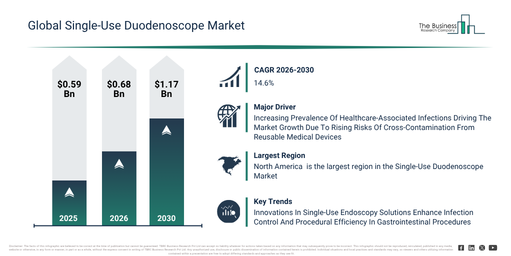
    The market size for single-use duodenoscopes has experienced rapid growth in recent years. It is forecast to increase from $0.59 billion in 2025 to $0.68 billion in 2026, achieving a compound annual growth rate (CAGR) of 14.3%. The historical expansion of this market can be attributed to several factors, including the rising incidence of bile duct and pancreatic disorders, increasing concerns over hospital-acquired infections associated with reusable scopes, the expansion of endoscopic retrograde cholangiopancreatography procedures, greater adoption of minimally invasive surgical techniques, and enhancements in hospital endoscopy infrastructure.

    The single-use duodenoscope market is projected for significant expansion in the coming years, reaching $1.17 billion by 2030 with a compound annual growth rate (CAGR) of 14.6%. This anticipated growth is driven by a greater move towards single-use medical devices to prevent infections, increasing spending on healthcare and higher procedure rates in gastroenterology, improvements in the imaging technology of disposable endoscopes, the expansion of ambulatory surgery centers and outpatient care, and more stringent global regulations for controlling cross-contamination. Key trends during this period involve a growing acceptance of single-use duodenoscopes to lower hospital-acquired infection rates, a stronger preference for sterile disposable endoscopy devices in ERCP procedures, an increased need for accurate minimally invasive gastrointestinal diagnostic tools, the broadening of outpatient and ambulatory endoscopy services, and increased regulatory scrutiny concerning infection control in alternatives to reusable endoscopes.

    Get A Free Sample Report With In-Depth Market Insights:

    https://thebusinessresearchcompany.com/sample_request?id=29948798&type=smp&name=Single-Use%20Duodenoscope%20Market%20Report%202026&utm_source=Blogs&utm_medium=Paid&utm_campaign=Oct_PR

    Single-Use Duodenoscope Market Development Factors: What’s Supporting Demand?

    The escalating occurrence of healthcare-acquired infections is anticipated to boost the expansion of the single-use duodenoscope market in the future. Healthcare-associated infections (HAIs) refer to infections contracted by patients while receiving medical care in a facility, which were not present upon their admission. These infections are primarily on the rise due to the increased application of invasive medical devices, which can introduce pathogens if not sterilized or managed correctly. Single-use duodenoscopes contribute to reducing HAIs by removing the necessity for reprocessing and sterilization procedures between patients, thereby eliminating the potential for cross-contamination from inadequately disinfected reusable instruments. For instance, in September 2024, according to the UK Health Security Agency, a UK-based government agency, in the fiscal year 2022–2023, the total count of hospital-onset healthcare-associated (HOHA) E. coli infections increased from 6,525 to 7,881 cases. Consequently, the growing incidence of healthcare-acquired infections is fueling the growth of the single-use duodenoscope market.

    Single-Use Duodenoscope Market Segments: Where Is Growth Concentrated?

    The single-use duodenoscope market covered in this report is segmented –

    1) By Product Type: Standard Duodenoscope, Specialized Duodenoscope, Flexible Duodenoscope

    2) By Material: Polymer, Metal, Composite

    3) By Application: Endoscopic Retrograde Cholangiopancreatography Diagnosis, Therapeutic Procedures

    4) By End User: Hospitals And Tertiary Care Centers, Ambulatory Surgery Centers And Outpatient Endoscopy Centers, Small Clinics And Rural Hospitals, Specialty Reference Centers

    Subsegments:

    1) By Standard Duodenoscope: Single Use Standard Imaging Duodenoscope, Single Use Basic Channel Duodenoscope, Single Use Conventional Visualization Duodenoscope

    2) By Specialized Duodenoscope: Single Use Therapeutic Duodenoscope, Single Use Advanced Imaging Duodenoscope, Single Use Narrow Band Imaging Duodenoscope, Single Use Artificial Intelligence Assisted Duodenoscope

    3) By Flexible Duodenoscope: Single Use High Flexibility Duodenoscope, Single Use Enhanced Maneuverability Duodenoscope, Single Use Lightweight Flexible Duodenoscope

    Single-Use Duodenoscope Market Transformation Trends: What Innovations Are Driving Change?

    Leading companies in the single-use duodenoscope market are concentrating on developing innovative solutions, such as new-generation duodenoscopy systems, with the aim of enhancing patient safety by eliminating cross-contamination risks, reducing healthcare-associated infections, and improving the efficiency of endoscopic procedures. A new-generation duodenoscopy system constitutes advanced endoscopy technology crafted to improve visualization, safety, and infection control during duodenal procedures, frequently integrating single-use or enhanced reprocessing functionalities. For instance, in April 2024, Ambu A/S, a Denmark-based medical technology company, obtained a 510(k) clearance from the US FDA for its new-generation duodenoscopy solution, the aScope Duodeno 2 and aBox 2, which is specifically designed for endoscopic retrograde cholangiopancreatography (ERCP) procedures. This sterile, single-use system addresses crucial challenges in ERCP, including high-performance requirements and the complexities of reprocessing reusable duodenoscopes.

    Single-Use Duodenoscope Market Top Companies Driving Competitive Growth

    Major companies operating in the single-use duodenoscope market are Medtronic Plc, Fujifilm Holdings Corporation, Boston Scientific Corporation, Olympus Corporation, Hoya Corporation, Karl Storz SE & Co. KG, PENTAX Medical, Ambu A/S, Shenzhen Hugemed Medical Technology Development Co. Ltd., Ottomed Medical Technologies Pvt. Ltd., EndoFresh, Micro-Tech (Nanjing) Co. Ltd.

    View The Full Single-Use Duodenoscope Market Report:

    https://thebusinessresearchcompany.com/report/single-use-duodenoscope-market-report?utm_source=Blogs&utm_medium=Paid&utm_campaign=Oct_PR

    Single-Use Duodenoscope Market Global Footprint: Which Region Leads The Industry?

    North America was the largest region in the single-use duodenoscope market in 2025. Europe is expected to be the fastest-growing region in the forecast period. The regions covered in the single-use duodenoscope market report are Asia-Pacific, South East Asia, Western Europe, Eastern Europe, North America, South America, Middle East, Africa.

    Reach Out To Our Team:

    The Business Research Company: https://www.thebusinessresearchcompany.com/

    Americas: +1 310-496-7795

    Asia: +44 7882 955267 & +91 8897263534

    Europe: +44 7882 955267

    Email us at: marketing@tbrc.info

    Follow us on:

    LinkedIn: https://in.linkedin.com/company/the-business-research-company

    YouTube: https://www.youtube.com/channel/UC24_fI0rV8cR5DxlCpgmyFQ

    Global Market Model: https://www.thebusinessresearchcompany.com/global-market-model
  • Rare Disease Contract Research Organization (CRO) Market Forecast 2026: Market Size, Competitive Landscape And Growth Drivers

    Rare Disease Contract Research Organization (CRO) Market Forecast 2026: Market Size, Competitive Landscape And Growth Drivers

    Featuring market attractiveness scoring, total addressable market sizing, company benchmarking matrices, interactive Excel dashboards, deeper supply chain intelligence, emerging startup tracking, and granular product-level insights, The Business Research Company’s 2026 market reports are built to deliver research that is both more actionable and more strategically valuable.

    Rare Disease Contract Research Organization (CRO) Market Value Growth And Long-Term Outlook

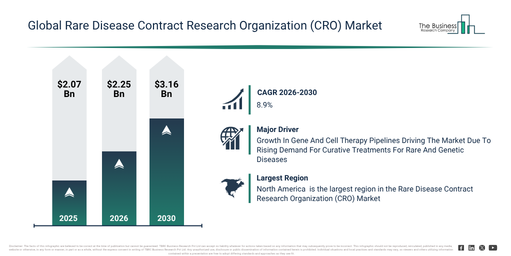
    The rare disease contract research organization (CRO) market size has experienced significant expansion in recent years. This market is set to increase from $2.07 billion in 2025 to $2.25 billion in 2026, achieving a compound annual growth rate (CAGR) of 8.6%. Historically, this growth can be ascribed to elements such as limited rare disease awareness hindering patient identification, fragmented clinical data systems impairing trial recruitment efficiency, the high expense of orphan drug development reducing the scale of trial outsourcing, a reliance on traditional site-based clinical research models, and the absence of standardized global rare disease regulatory frameworks.

    The rare disease contract research organization (CRO) market is set to experience robust expansion in the upcoming years. It is forecast to reach $3.16 billion in 2030, progressing at a compound annual growth rate (CAGR) of 8.9%. This growth throughout the forecast period can be attributed to advancements in genomic sequencing, which enable earlier detection of rare diseases; an increase in orphan drug approvals, thereby driving demand for CRO outsourcing; the expansion of precision medicine, accelerating niche clinical research; the rising adoption of decentralized trials, improving global patient access; and growing biotech investments in rare disease therapeutics. Notable trends during the forecast period include adaptive, patient-centric trial designs for ultra-rare disease cohorts, the expansion of global rare disease patient registry ecosystems, a greater embrace of decentralized and hybrid rare disease clinical trials, the development of specialized orphan drug regulatory consulting services, and the increasing integration of real-world evidence in rare disease clinical validation.

    Get A Free Sample Report With In-Depth Market Insights:

    https://thebusinessresearchcompany.com/sample_request?id=95686361&type=smp&name=Rare%20Disease%20Contract%20Research%20Organization%20%28CRO%29%20Market%20Report%202026&utm_source=Blogs&utm_medium=Paid&utm_campaign=Oct_PR

    Rare Disease Contract Research Organization (CRO) Market Expansion Drivers: What’s Shaping Future Growth?

    The expansion of gene and cell therapy pipelines is anticipated to fuel the future growth of the rare disease contract research organization market. These sophisticated treatments work by modifying genes or utilizing engineered cells to address the fundamental cause of illnesses. The increasing prevalence of chronic and rare genetic diseases primarily drives the rise in gene and cell therapies, as they provide focused, potentially curative solutions by targeting the underlying genetic or cellular issues rather than merely alleviating symptoms. Rare disease contract research organizations (CROs) aid gene and cell therapy by developing and overseeing highly specialized clinical studies, facilitating effective patient identification and enrollment for uncommon genetic conditions, ensuring adherence to regulations, and managing the intricate data and logistical demands of these cutting-edge, precision-based treatments. For instance, in March 2024, IQVIA Holdings Inc., a US-based provider of advanced analytics, technology solutions, and clinical research services for the life sciences and healthcare industries, noted that global expenditure on cell and gene therapies escalated to $5.9 billion in 2023, marking a 38% rise from 2022. Consequently, the development in gene and cell therapy pipelines is propelling the expansion of the rare disease contract research organization market. An anticipated increase in research and development (R&D) activities is set to boost the rare disease contract research organization (CRO) market in the coming years. R&D encompasses efforts aimed at generating novel knowledge and applying it to create or enhance products, services, or technologies. The surge in R&D endeavors stems from the escalating requirement for ongoing innovation to maintain a competitive edge in rapidly evolving markets, motivating companies to invest in advanced products and technologies that cater to shifting consumer demands and industry patterns. Rare disease contract research organizations (CROs) assist research and development by offering specialized knowledge, facilities, and patient sourcing abilities that help expedite the planning, execution, and oversight of intricate clinical trials and drug development initiatives for rare diseases. For example, in 2023, the Office for National Statistics, a UK-based government agency, stated that the UK government’s net expenditure on research and development (R&D) grew to £17.4 ($22.1 billion) in 2023, an increase from £16.1 billion ($20.45 billion) in 2022, signifying an 8.2% surge. Thus, the expansion of research and development activities is stimulating the growth of the rare disease contract research organization market.

    Rare Disease Contract Research Organization (CRO) Market Segmentation And Category Overview

    The rare disease contract research organization (CRO) market covered in this report is segmented –

    1) By Service Type: Drug Development Strategy, Clinical Trial Management, Patient Recruitment And Retention Services, Data Management And Biostatistics, Regulatory Affairs And Consulting, Pharmacovigilance Services, Medical Writing And Documentation, Decentralized Clinical Trial Services, Other Service Types

    2) By Phase: Pre Clinical, Phase One, Phase Two, Phase Three, Phase Four

    3) By Therapeutic Area: Oncology, Neurology, Cardiovascular Disorders, Metabolic Disorders, Genetic Disorders, Hematology, Immunology, Rare Infectious Diseases, Other Rare Indications

    4) By Delivery Model: On Site Clinical Trials, Decentralized Clinical Trials, Hybrid Clinical Trials

    5) By End User: Pharmaceutical And Biotechnology Companies, Non Profit And Government Organizations, Academic And Research Institutes, Other End Users

    Subsegments:

    1) By Drug Development Strategy: Preclinical Development Planning, Clinical Development Planning, Target Identification And Validation, Portfolio Strategy Optimization

    2) By Clinical Trial Management: Phase One Trial Management, Phase Two Trial Management, Phase Three Trial Management, Site Monitoring And Coordination

    3) By Patient Recruitment And Retention Services: Patient Identification Services, Patient Enrollment Support, Patient Engagement Programs, Patient Retention Strategies

    4) By Data Management And Biostatistics: Clinical Data Collection And Processing, Statistical Analysis And Modeling, Database Design And Management, Data Quality Assurance

    5) By Regulatory Affairs And Consulting: Regulatory Strategy Development, Submission Preparation And Filing, Compliance And Audit Support, Regulatory Advisory Services

    6) By Pharmacovigilance Services: Adverse Event Monitoring, Safety Data Analysis, Risk Management Planning, Signal Detection And Reporting

    7) By Medical Writing And Documentation: Clinical Study Report Writing, Protocol Development Documentation, Regulatory Writing Services, Scientific Publication Writing

    8) By Decentralized Clinical Trial Services: Remote Patient Monitoring, Virtual Trial Management, Home Healthcare Services, Digital Data Collection Solutions

    9) By Other Service Types: Rare Disease Consulting Services, Genetic Research Support, Biomarker Development Services, Translational Research Services

    Rare Disease Contract Research Organization (CRO) Market Leading Players And Competitive Positioning

    Major companies operating in the rare disease contract research organization (cro) market are Thermo Fisher Scientific Inc., IQVIA Holdings Inc., Laboratory Corporation of America Holdings, ICON plc, SGS SA, Charles River Laboratories International Inc., Fortrea Holdings Inc., Medpace Holdings Inc., ALS Limited, PSI CRO AG, Ratos AB, Precision for Medicine Inc., Allucent, QPS Holdings LLC, Alira Health SAS, Rho Inc., Veristat LLC, Quanticate Ltd., Cromos Pharma LLC, Frontage Laboratories Inc., ProTrials Research Inc., PROMETRIKA LLC, Machaon Diagnostics Inc., Sofpromed GmbH

    View The Full Rare Disease Contract Research Organization (CRO) Market Report:

    https://thebusinessresearchcompany.com/report/rare-disease-contract-research-organization-cro-market-report?utm_source=Blogs&utm_medium=Paid&utm_campaign=Oct_PR

    Rare Disease Contract Research Organization (CRO) Market Regional Distribution: Which Areas Power Market Growth?

    North America was the largest region in the rare disease contract research organization (CRO) market in 2025. Asia-Pacific is expected to be the fastest-growing region in the forecast period. The regions covered in the rare disease contract research organization (CRO) market report are Asia-Pacific, South East Asia, Western Europe, Eastern Europe, North America, South America, Middle East, Africa.

    Reach Out To Our Team:

    The Business Research Company: https://www.thebusinessresearchcompany.com/

    Americas: +1 310-496-7795

    Asia: +44 7882 955267 & +91 8897263534

    Europe: +44 7882 955267

    Email us at: marketing@tbrc.info

    Follow us on:

    LinkedIn: https://in.linkedin.com/company/the-business-research-company

    YouTube: https://www.youtube.com/channel/UC24_fI0rV8cR5DxlCpgmyFQ

    Global Market Model: https://www.thebusinessresearchcompany.com/global-market-model
  • Non-Wearable Sleep Tracker Market Expected To Grow At 11% CAGR Through 2030: What Businesses Need To Know

    Non-Wearable Sleep Tracker Market Expected To Grow At 11% CAGR Through 2030: What Businesses Need To Know

    Backed by market attractiveness analysis, total addressable market sizing, company benchmarking matrices, interactive Excel dashboards, wider supply chain intelligence, emerging startup coverage, and detailed product-level insights, The Business Research Company’s 2026 market reports are designed to offer research that is more actionable and strategically valuable than ever.

    Non-Wearable Sleep Tracker Market Expansion Outlook: What Revenue Opportunities Are Ahead?

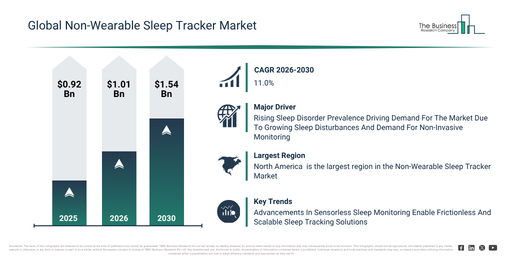
    The non-wearable sleep tracker market has experienced substantial growth in recent years. This market is set to expand from $0.92 billion in 2025 to $1.01 billion in 2026, demonstrating a compound annual growth rate (CAGR) of 10.8%. Several factors contributed to its historical development, including the increasing occurrence of sleep disorders and insomnia, a heightened public awareness regarding sleep health and wellness monitoring, the early uptake of rudimentary under-mattress sleep sensing devices, a rise in consumer demand for both wearable and non-wearable health monitoring, and the evolution of basic biometric sensing technologies for sleep analysis.

    The non-wearable sleep tracker market is anticipated to expand significantly in the near future. It is forecasted to achieve a value of $1.54 billion by 2030, growing at a compound annual growth rate (CAGR) of 11.0%. This expansion during the forecast period can be attributed to the broadening of digital health and remote patient monitoring ecosystems, an increasing demand for contactless health monitoring solutions within homecare settings, the enhanced integration of AI-powered sleep diagnostics and recommendations, a rise in preventive healthcare and wellness-oriented consumer behavior, and technological advancements in radar and acoustic sleep sensing systems. Noteworthy trends for the forecast period include AI-driven sleep analytics aimed at improving personalized sleep quality, the integration of IoT-enabled smart home ecosystems with sleep monitoring systems, a growing adoption of contactless radar-based sleep tracking technologies, increased utilization of cloud-based sleep health data platforms for remote monitoring, and the development of non-invasive multi-sensor devices designed for optimizing sleep environments.

    Get A Free Sample Report With In-Depth Market Insights:

    https://thebusinessresearchcompany.com/sample_request?id=41438033&type=smp&name=Non-Wearable%20Sleep%20Tracker%20Market%20Report%202026&utm_source=Blogs&utm_medium=Paid&utm_campaign=Oct_PR

    Non-Wearable Sleep Tracker Market Industry Drivers: What’s Behind The Revenue Growth?

    The increasing occurrence of sleep disturbances is anticipated to fuel the expansion of the non-wearable sleep tracker market in the future. These disorders are conditions that disrupt typical sleep patterns or cycles, leading to subpar sleep quality and diminished daytime alertness. The primary reason for the rise in sleep disorders is excessive screen exposure prior to sleep, which interferes with melatonin synthesis and postpones the body’s natural sleep rhythm. Non-wearable sleep trackers assist in addressing sleep disorders through ongoing observation of sleep patterns, respiration, and physical activity, all without the need for a user to wear a device. This allows for prompt identification of anomalies and offers insights based on data to enhance sleep quality. For example, data from November 2023, released by the National Health Service, a UK-based government health statistics body, indicated a slight increase in the percentage of young individuals aged 17 to 23 years reporting sleep issues three or more times weekly, reaching 64.9% from 64.0% in 2022. Consequently, the growing incidence of sleep disorders is stimulating the expansion of the non-wearable sleep tracker market.

    Non-Wearable Sleep Tracker Market Segment Analysis And Revenue Potential

    The non-wearable sleep tracker market covered in this report is segmented –

    1) By Product Type: Under Mattress Sleep Trackers, Smart Mattresses Sleep Trackers, Bedside Sleep Trackers, Other Product Types

    2) By Technology: Acoustic Analysis, Ballistocardiography, Infrared Sensors

    3) By Distribution Channel: Online Sales, Pharmacy And Retail Stores, Sleep Centres And Fitness Centres, Hypermarkets And Supermarkets, Other Distribution Channels

    4) By Application: Insomnia, Obstructive Sleep Apnoea, Other Applications

    5) By End Use: Homecare, Institutional

    Subsegments:

    1) By Under Mattress Sleep Trackers: Pressure Sensor Based Trackers, Piezoelectric Sensor Based Trackers, Ballistocardiography Based Trackers, Wireless Connectivity Based Trackers

    2) By Smart Mattresses Sleep Trackers: Integrated Sensor Mattresses, Temperature Regulating Smart Mattresses, Adjustable Smart Mattresses, Health Monitoring Smart Mattresses

    3) By Bedside Sleep Trackers: Radar Based Sleep Trackers, Infrared Sensor Based Trackers, Acoustic Sound Based Trackers, Camera Based Sleep Trackers

    4) By Other Product Types: Sleep Monitoring Pillows, Sleep Environment Monitoring Devices, Multi Functional Sleep Tracking Systems, Portable Non Wearable Sleep Devices

    #Non-Wearable Sleep Tracker Market Growth Trends: What’s Shaping The Future Outlook?

    Leading companies in the non-wearable sleep tracker market are concentrating on developing innovative solutions, such as frictionless sleep monitoring technology, to facilitate the non-invasive tracking of sleep behavior and provide personalized insights for enhancing sleep health and overall well-being. This frictionless technology involves non-intrusive systems that observe sleep patterns without requiring wearable devices, utilizing embedded or nearby sensors to continuously monitor movement, breathing, and heart rate during sleep. For example, in December 2025, Sleep.ai, a US-based digital health technology company, introduced Sleep Sense, a frictionless sleep monitoring solution that converts any smartphone into a passive sleep sensor. This enables nearly 100 percent population-level coverage without needing wearables, extra hardware, or daily user input. The solution includes AI boundary detection for precise identification of sleep and wake states, multimodal contextual modeling based on motion and environmental data, and a privacy-preserving architecture that does not use audio recording, thereby enabling accurate and scalable sleep tracking across extensive populations.

    Non-Wearable Sleep Tracker Market Key Players Shaping Industry Direction

    Major companies operating in the non-wearable sleep tracker market are ResMed Inc., Sleep Number Corporation, iFIT Health & Fitness Inc., Wakefit Innovations Private Limited, Withings S.A.S., Happiest Baby Inc., Sleepiz AG, Fullpower Technologies Inc., Sleepace RestOn, Sleepace Technology Co. Ltd., Emfit Ltd., Sleep.me, Somnox B.V., Tochtech Technologies Ltd., Infocusp, Beddit Oy, OXI Sleep Systems, EarlySense Ltd., Rest Devices Inc., Sleep.ai

    View The Full Non-Wearable Sleep Tracker Market Report:

    https://thebusinessresearchcompany.com/report/non-wearable-sleep-tracker-market-report?utm_source=Blogs&utm_medium=Paid&utm_campaign=Oct_PR

    Non-Wearable Sleep Tracker Market Regional Analysis: Which Region Leads By Revenue?

    North America was the largest region in the non-wearable sleep tracker market in 2025. Asia-Pacific is expected to be the fastest-growing region in the forecast period. The regions covered in the non-wearable sleep tracker market report are Asia-Pacific, South East Asia, Western Europe, Eastern Europe, North America, South America, Middle East, Africa.

    Reach Out To Our Team:

    The Business Research Company: https://www.thebusinessresearchcompany.com/

    Americas: +1 310-496-7795

    Asia: +44 7882 955267 & +91 8897263534

    Europe: +44 7882 955267

    Email us at: marketing@tbrc.info

    Follow us on:

    LinkedIn: https://in.linkedin.com/company/the-business-research-company

    YouTube: https://www.youtube.com/channel/UC24_fI0rV8cR5DxlCpgmyFQ

    Global Market Model: https://www.thebusinessresearchcompany.com/global-market-model
  • Neutral Displacement Needleless Connectors Market Growth Forecast: Market Size, Key Trends And Emerging Opportunities Through 2030

    Neutral Displacement Needleless Connectors Market Growth Forecast: Market Size, Key Trends And Emerging Opportunities Through 2030

    Built to provide research that’s more actionable and strategically valuable, The Business Research Company’s 2026 market reports include market attractiveness analysis, total addressable market sizing, company benchmarking matrices, interactive Excel dashboards, broader supply chain intelligence, emerging startup tracking, and in-depth product insights.

    Neutral Displacement Needleless Connectors Market Revenue Outlook: What CAGR Lies Ahead Through 2030?

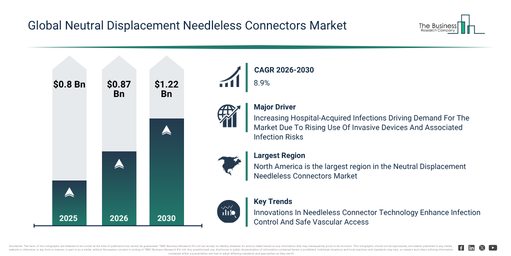
    The neutral displacement needleless connectors market size has experienced robust expansion in recent times. This market is projected to expand from $0.8 billion in 2025 to $0.87 billion in 2026, exhibiting a compound annual growth rate (CAGR) of 8.6%. The market’s expansion during the past period stemmed from factors such as the increasing occurrence of catheter-related bloodstream infections, the wider implementation of intravenous drug delivery systems, the emergence of initial needleless access technologies, the enhancement of hospital infection control protocols, and greater recognition of risks associated with healthcare-acquired infections.

    The market for neutral displacement needleless connectors is projected to experience substantial expansion over the coming years. This market is set to reach a valuation of $1.22 billion by 2030, exhibiting a compound annual growth rate (CAGR) of 8.9%. Factors contributing to this anticipated growth during the forecast period include the expanding hospital infrastructure and critical care units, a growing need for home-based intravenous therapy, stricter regulatory norms for infection control in IV systems, an increase in treatments for chronic diseases necessitating prolonged IV access, and advancements in anti-reflux valve connector systems. Key developments expected during this period involve the broader implementation of closed system IV access solutions to prevent infections, greater uptake of anti-reflux connector technologies aimed at reducing catheter-related complications, the creation of needleless IV systems to enhance the safety of healthcare workers, increasing demand for single-use sterile IV connectors in hospital environments, and the incorporation of advanced valve-based mechanisms for better IV flow regulation and safety.

    Get A Free Sample Report With In-Depth Market Insights:

    https://thebusinessresearchcompany.com/sample_request?id=37602254&type=smp&name=Neutral%20Displacement%20Needleless%20Connectors%20Market%20Report%202026&utm_source=Blogs&utm_medium=Paid&utm_campaign=Oct_PR

    Neutral Displacement Needleless Connectors Market Growth Factors Behind Sustained Expansion

    The escalating occurrence of hospital-acquired infections is anticipated to boost the neutral displacement needleless connectors market in the future. These infections are conditions patients acquire while admitted to a hospital or healthcare setting, distinct from any present upon entry. The primary reason for the rise in hospital-acquired infections stems from the greater reliance on invasive medical equipment like catheters and ventilators, which can introduce pathogens into the body if not adequately sterilized or managed. Neutral displacement needleless connectors play a crucial role in mitigating hospital-acquired infections by preventing blood from flowing back into IV lines when access devices are disconnected, thereby decreasing the likelihood of microbial contamination and bloodstream infections. For instance, in January 2024, the Centers for Disease Control and Prevention, a US-based government agency, reported an approximate 4% rise in the standardized infection ratio (SIR) for surgical site infections (SSI) across all NHSN operative procedure categories combined compared to the previous year. Consequently, the increasing incidence of hospital-acquired infections is projected to fuel the expansion of the neutral displacement needleless connectors market.

    Neutral Displacement Needleless Connectors Market Segments: Where Is Growth Concentrated?

    The neutral displacement needleless connectors market covered in this report is segmented –

    1) By Product Type: Neutral Displacement Connectors, Negative Displacement Connectors, Positive Displacement Connectors

    2) By Usage Frequency: Single Use, Multiple Use

    3) By Distribution Channel: Direct Sales, Distributors, Online Retail, Healthcare Supplier

    4) By Application: Intravenous Therapy, Drug Delivery, Blood Collection, Hemodialysis

    5) By End-User: Hospitals, Clinics, Ambulatory Surgical Centers, Home Healthcare Setting

    Subsegments:

    1) By Neutral Displacement Connectors: Split Septum Connectors, Mechanical Valve Connectors, Luer Activated Valve Connectors, Double Septum Connectors, Anti Reflux Connectors

    2) By Negative Displacement Connectors: Single Septum Negative Connectors, Double Septum Negative Connectors, Mechanical Negative Valve Connectors, Open Fluid Path Negative Connectors, Backflow Permissive Connectors

    3) By Positive Displacement Connectors: Spring Activated Positive Connectors, Piston Driven Positive Connectors, Diaphragm Based Positive Connectors, Automatic Flush Positive Connectors, Anti Reflux Positive Connectors

    Neutral Displacement Needleless Connectors Market Industry Trends Fueling Future Revenue Growth

    Leading companies operating in the neutral displacement needleless connectors market are concentrating on developing sophisticated solutions, such as drug-resistant needleless connectors, to enhance compatibility with a wide array of medications and improve patient safety. These drug-resistant needleless connectors are IV access devices engineered with materials that prevent chemical interaction, adsorption, or degradation from various medications, ensuring drug stability and safe, contamination-free fluid transfer while reducing the risks of connector damage or dosing inconsistencies. For instance, in December 2023, B. Braun, a Germany-based medical technology company, launched the CARESITE Micro Luer Access Device and Extension Sets, which feature a compact micro Luer design for easier handling and integration into IV systems and support drug-resistant needleless access to help reduce needlestick injuries among healthcare professionals. The devices are designed to maintain a closed IV system, minimizing contamination and infection risk, and are compatible with extension sets to improve flexibility in infusion therapy setups. They also facilitate safe and efficient drug administration and fluid management in clinical settings.

    Neutral Displacement Needleless Connectors Market Key Participants And Competitive Landscape

    Major companies operating in the neutral displacement needleless connectors market are Cardinal Health Inc., Lily Medical Corporation, Medline Industries LP, Fresenius Kabi AG, Becton Dickinson and Company, Baxter International Inc., B. Braun Melsungen AG, Teleflex Incorporated, ICU Medical Inc., Merit Medical Systems Inc., Adler Medical Systems LLC, Vygon SAS, Vygon Group, Qosina Corporation, Poly Medicure Limited, Dynarex Corporation, MedSource Labs LLC, GBUK Group Limited, NP Medical Inc., RyMed Technologies LLC

    View The Full Neutral Displacement Needleless Connectors Market Report:

    https://thebusinessresearchcompany.com/report/neutral-displacement-needleless-connectors-market-report?utm_source=Blogs&utm_medium=Paid&utm_campaign=Oct_PR

    Neutral Displacement Needleless Connectors Market Geographic Analysis: Where Is Demand Accelerating Fastest?

    North America was the largest region in the neutral displacement needleless connectors market in 2025. Asia-Pacific is expected to be the fastest-growing region in the forecast period. The regions covered in the neutral displacement needleless connectors market report are Asia-Pacific, South East Asia, Western Europe, Eastern Europe, North America, South America, Middle East, Africa.

    Reach Out To Our Team:

    The Business Research Company: https://www.thebusinessresearchcompany.com/

    Americas: +1 310-496-7795

    Asia: +44 7882 955267 & +91 8897263534

    Europe: +44 7882 955267

    Email us at: marketing@tbrc.info

    Follow us on:

    LinkedIn: https://in.linkedin.com/company/the-business-research-company

    YouTube: https://www.youtube.com/channel/UC24_fI0rV8cR5DxlCpgmyFQ

    Global Market Model: https://www.thebusinessresearchcompany.com/global-market-model
  • Needle Coke For Anode Market CAGR Forecast Through 2030: Key Trends Shaping Industry Expansion

    Needle Coke For Anode Market CAGR Forecast Through 2030: Key Trends Shaping Industry Expansion

    Backed by market attractiveness analysis, total addressable market sizing, company benchmarking matrices, interactive Excel dashboards, wider supply chain intelligence, emerging startup coverage, and detailed product-level insights, The Business Research Company’s 2026 market reports are designed to offer research that is more actionable and strategically valuable than ever.

    Needle Safety Systems Market Growth Analysis: How Will Revenue Trend Over The Forecast Period?

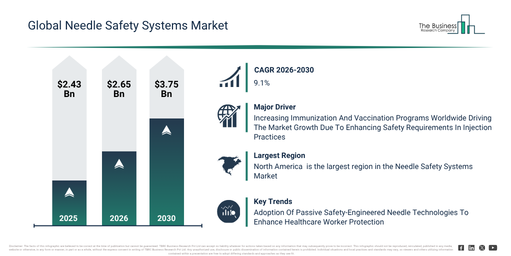
    The needle safety systems market has shown robust expansion in recent years. It is projected to increase from $2.43 billion in 2025 to $2.65 billion in 2026, recording a compound annual growth rate (CAGR) of 8.9%. The market’s historical growth can be attributed to heightened awareness of healthcare worker safety standards, a rise in the incidence of needlestick injuries in clinical environments, the introduction of initial safety-engineered syringe designs, advancements in hospital infection control protocols, and regulatory drives for more secure medical injection practices.

    The needle safety systems market size is projected to experience robust expansion in the coming years. Its valuation is anticipated to reach $3.75 billion by 2030, demonstrating a compound annual growth rate (CAGR) of 9.1%. This growth over the forecast period stems from factors such as the broadening scope of global vaccination and immunization initiatives, a rise in regulatory requirements for safeguarding healthcare professionals, increased uptake of automated safety medical devices within hospital settings, the expansion of home healthcare and self-injection treatments, and advancements in affordable safety needle technologies. Key trends anticipated during this period encompass the growing acceptance of retractable needle technologies to mitigate needlestick injuries, the increasing incorporation of automatic safety locking features into syringes and infusion devices, the creation of economical passive safety needle systems for widespread immunization efforts, an escalating preference in hospitals for single-use, safety-engineered injection devices, and the expansion of safety compliance-focused medical device acquisition within healthcare facilities.

    Get A Free Sample Report With In-Depth Market Insights:

    https://thebusinessresearchcompany.com/sample_request?id=18035370&type=smp&name=Needle%20Safety%20Systems%20Market%20Report%202026&utm_source=Blogs&utm_medium=Paid&utm_campaign=Oct_PR

    Needle Safety Systems Market Demand Drivers Opening New Revenue Streams

    The global rise in immunization and vaccination programs is anticipated to drive the growth of the needle safety systems market moving forward. These programs are structured public health initiatives focused on preventing infectious diseases by administering vaccines to populations. The expansion of these initiatives is primarily fueled by government-led efforts to broaden disease prevention coverage, particularly through national immunization campaigns. Needle safety systems enhance immunization and vaccination programs by reducing needlestick injuries and cross-contamination, thereby ensuring safer administration for both healthcare workers and patients. They also improve compliance and support large-scale vaccination through reliable, user-friendly designs that minimize infection and medical waste risks. For instance, data from the United Nations Children’s Fund (UNICEF) in July 2024 indicated that the global proportion of adolescent girls receiving at least one dose of the HPV vaccine increased from 20% in 2022 to 27% in 2023, marking a 7-percentage-point increase. Consequently, the increasing number of immunization and vaccination programs worldwide is a significant factor driving the needle safety systems market.

    Needle Safety Systems Market Segment Analysis: What Are The Core Market Categories?

    The needle safety systems market covered in this report is segmented –

    1) By Product Type: Active Needle Safety Systems, Passive Needle Safety Systems

    2) By Distribution Channel: Direct Sales, Distributors, Online Sales, Other Distribution Channels

    3) By Application: Hospital, Clinics, Ambulatory Surgical Centers, Home Healthcare, Other Applications

    4) By End-User: Healthcare Providers, Research Laboratories, Other End Users

    Subsegments:

    1) By Active Needle Safety Systems: Manual Sliding Shield Safety Needles, Push Button Retractable Safety Syringes, Hinged Cap Safety Needles, Spring Activated Retractable Safety Needles, Lever Activated Safety Syringes

    2) By Passive Needle Safety Systems: Automatic Retractable Safety Syringes, Self Blunting Safety Needles, Pressure Activated Safety Needles, Automatic Needle Shielding Devices, Passive Needle Guard Safety Syringes

    Needle Safety Systems Market Trends Powering Strategic Industry Growth

    Leading companies within the needle safety systems market are increasingly concentrating on implementing advanced passive safety-engineered technologies, such as retractable needle mechanisms and shielded syringe designs. This strategic focus aims to minimize needlestick injuries, elevate healthcare worker protection, and boost adherence to occupational safety standards in various medical environments, including hospitals, clinics, and surgical settings. Retractable needle mechanisms and shielded syringe designs specifically refer to safety features designed to automatically retract or cover the needle after use, thereby preventing accidental needlestick injuries. For example, in January 2026, Terumo Medical Corporation, a US-based medical technology company, launched the SurTract Safety Syringe in the United States, which incorporates Roncadelle Operations’ SafeR passive safety technology. This particular innovation is crafted to automatically activate a safety mechanism post-injection, contributing to a reduction in accidental needlestick injuries and enhancing user safety without requiring additional steps from healthcare professionals. Such advancements bolster the expanding adoption of passive needle safety systems, fostering improved clinical workflow efficiency, superior infection control practices, and increased demand across hospitals, emergency care units, and outpatient care settings.

    Needle Safety Systems Market Top Companies Driving Competitive Growth

    Major companies operating in the needle safety systems market are Becton Dickinson and Company, Shandong Weigao Group Medical Polymer Company Limited, B. Braun Melsungen AG, Terumo Corporation, Nipro Corporation, Kindly Medical Group, Vygon S.A., Sarstedt AG & Co. KG, Improve Medical Instruments Co. Ltd., Lifelong Meditech Private Limited, SOL-Millennium Medical Group, Numedico Technologies Pty Ltd, Sharps Technology Inc., DMC Medical Limited, Retractable Technologies Inc., Jiangsu Jichun Medical Devices Co. Ltd., Hindustan Syringes & Medical Devices Limited, West Pharmaceutical Services Inc., Revolutions Medical Corporation, AdvaCare Pharma, Gerresheimer AG

    View The Full Needle Safety Systems Market Report:

    https://thebusinessresearchcompany.com/report/needle-safety-systems-market-report?utm_source=Blogs&utm_medium=Paid&utm_campaign=Oct_PR

    Needle Safety Systems Market Global Footprint: Which Region Leads The Industry?

    North America was the largest region in the needle safety systems market in 2025. Asia-Pacific is expected to be the fastest-growing region in the forecast period. The regions covered in the needle safety systems market report are Asia-Pacific, South East Asia, Western Europe, Eastern Europe, North America, South America, Middle East, Africa.

    Reach Out To Our Team:

    The Business Research Company: https://www.thebusinessresearchcompany.com/

    Americas: +1 310-496-7795

    Asia: +44 7882 955267 & +91 8897263534

    Europe: +44 7882 955267

    Email us at: marketing@tbrc.info

    Follow us on:

    LinkedIn: https://in.linkedin.com/company/the-business-research-company

    YouTube: https://www.youtube.com/channel/UC24_fI0rV8cR5DxlCpgmyFQ

    Global Market Model: https://www.thebusinessresearchcompany.com/global-market-model
  • High Flow Oxygen Therapy Devices Market Growth To $1.8 Billion Creates New Opportunities Across The Industry

    High Flow Oxygen Therapy Devices Market Growth To $1.8 Billion Creates New Opportunities Across The Industry

    Featuring market attractiveness scoring, total addressable market sizing, company benchmarking matrices, interactive Excel dashboards, deeper supply chain intelligence, emerging startup tracking, and granular product-level insights, The Business Research Company’s 2026 market reports are built to deliver research that is both more actionable and more strategically valuable.

    High Flow Oxygen Therapy Devices Market Poised To Hit $1.8 Billion By 2030 With A 3.7% CAGR

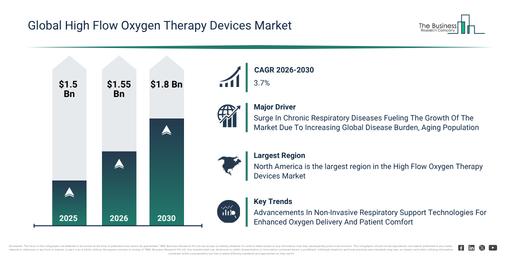
    The high flow oxygen therapy devices market size has experienced consistent growth in recent years. The market is projected to expand from $1.5 billion in 2025 to $1.55 billion in 2026, demonstrating a compound annual growth rate (CAGR) of 3.5%. This historical growth can be linked to several factors, including an increase in the prevalence of chronic respiratory diseases, the expansion of intensive care infrastructure within hospitals, the wider adoption of traditional oxygen therapy systems, advancements in respiratory care technologies, and a heightened need for emergency respiratory support.

    The high flow oxygen therapy devices market size is anticipated to show consistent expansion over the next few years. It is projected to achieve a value of $1.8 billion by 2030, progressing at a compound annual growth rate (CAGR) of 3.7%. This expected growth during the forecast period can be attributed to several factors, including AI-enabled predictive respiratory monitoring, the increasing prevalence of home healthcare and remote patient monitoring, advancements in portable oxygen therapy systems, the enlargement of critical care infrastructure in developing economies, and the incorporation of smart sensors into respiratory devices. Prominent trends for this period encompass AI-driven optimization of respiratory support, the integration of smart monitoring into high flow oxygen devices, the expansion of portable high flow oxygen therapy systems, an uptick in the adoption of humidified oxygen delivery systems, and the broadening of home-based respiratory care solutions.

    Get A Free Sample Report With In-Depth Market Insights:

    https://thebusinessresearchcompany.com/sample_request?id=21508605&type=smp&name=High%20Flow%20Oxygen%20Therapy%20Devices%20Market%20Report%202026&utm_source=Blogs&utm_medium=Paid&utm_campaign=Oct_PR

    High Flow Oxygen Therapy Devices Market Industry Drivers: What’s Behind The Revenue Growth?

    The expanding occurrence of chronic respiratory ailments is projected to boost the High Flow Oxygen Therapy Devices market’s growth in the future. These conditions are enduring lung issues, including chronic obstructive pulmonary disease (COPD) and asthma, which hinder regular respiration and necessitate ongoing respiratory support. The rising incidence of chronic respiratory illnesses stems from factors like aging populations, extended exposure to atmospheric pollutants, and persistent tobacco smoke intake, all contributing to diminishing pulmonary well-being. High flow oxygen therapy devices aid in addressing chronic respiratory diseases through the provision of heated and humidified oxygen at elevated flow rates, thereby enhancing oxygen delivery, decreasing the work of breathing, and reducing the requirement for invasive ventilation or numerous hospitalizations. For example, in May 2023, the World Health Organization, a specialized agency of the United Nations situated in Switzerland, reported that chronic obstructive pulmonary disease was responsible for about 3.5 million deaths globally, indicating a significant rise in the disease’s impact. Consequently, the expanding occurrence of chronic respiratory diseases is propelling the growth of the High Flow Oxygen Therapy Devices market.

    High Flow Oxygen Therapy Devices Market Segment Analysis Spotlighting Growth Areas

    The high flow oxygen therapy devices market covered in this report is segmented –

    1) By Product Type: High Flow Nasal Cannula Systems, Oxygen Masks, Single Heated Tubes, Humidifiers, Other Product Types

    2) By Age Group: Adult High Flow Oxygen Therapy Devices, Pediatric High Flow Oxygen Therapy Devices, Neonatal Or Infant High Flow Oxygen Therapy Devices

    3) By Application: Acute Respiratory Failure, Chronic Obstructive Pulmonary Disease, Post Operative Respiratory Support, Respiratory Distress Syndrome, Other Applications

    4) By End User: Hospitals, Ambulatory Care Centers, Home Care Settings, Specialty Clinics, Other End Users

    Subsegments:

    1) By High Flow Nasal Cannula Systems: Adult High Flow Nasal Cannula Systems, Pediatric High Flow Nasal Cannula Systems, Neonatal High Flow Nasal Cannula Systems, Portable High Flow Nasal Cannula Systems, Integrated Monitoring High Flow Nasal Cannula Systems

    2) By Oxygen Masks: Venturi Oxygen Masks, Non Rebreather Oxygen Masks, Simple Oxygen Masks, Partial Rebreather Oxygen Masks, High Concentration Oxygen Masks

    3) By Single Heated Tubes: Adult Single Heated Tubes, Pediatric Single Heated Tubes, Neonatal Single Heated Tubes, Dual Lumen Heated Tubes, Temperature Controlled Heated Tubes

    4) By Humidifiers: Active Heated Humidifiers, Passive Humidifiers, Bubble Humidifiers, Integrated Humidification Systems, Standalone Humidifiers

    5) By Other Product Types: Oxygen Blenders, Flow Generators, Breathing Circuits, Air Oxygen Mixers, Respiratory Accessories

    #High Flow Oxygen Therapy Devices Market Growth Trends: What’s Shaping The Future Outlook?

    Leading companies in the high flow oxygen therapy devices market are concentrating on creating advanced solutions, including high flow nasal cannulas, which are designed to generate a slight positive airway pressure that aids in keeping airways open and improving alveolar ventilation. A high flow nasal cannula functions as a respiratory support interface, delivering warmed and humidified air along with oxygen at elevated flow rates through nasal prongs to assist breathing and enhance gas exchange. As an illustration, in September 2023, Intersurgical Ltd., a US-based medical devices manufacturer, introduced the Intersurgical i-flo high flow nasal cannula. This product serves as a single-use interface for adult patients, crafted for administering high flow oxygen therapy within hospital environments. It boasts an unobtrusive design that prioritizes both efficient performance and patient comfort, while its specialized construction facilitates the optimal delivery of high flow oxygen therapy, making it well-suited for respiratory support in patients experiencing hypoxemic respiratory failure.

    High Flow Oxygen Therapy Devices Market Key Participants And Competitive Landscape

    Major companies operating in the high flow oxygen therapy devices market are Medtronic plc, Koninklijke Philips N.V., GE HealthCare Technologies Inc., Shenzhen Mindray Bio-Medical Electronics Co. Ltd., ResMed Inc., Drägerwerk AG & Co. KGaA, Teleflex Incorporated, Allied Healthcare Products Inc., Nihon Kohden Corporation, Fisher & Paykel Healthcare Corporation Limited, Jiangsu Yuyue Medical Equipment & Supply Co. Ltd., Inspired Medical Limited, Vyaire Medical Inc., Hamilton Medical AG, Intersurgical Limited, Armstrong Medical Limited, BMC Medical Co. Ltd., Micomme Medical Technology Co. Ltd., Flexicare (Group) Limited, Peak Medical Limited, Great Group Medical Co. Ltd.

    View The Full High Flow Oxygen Therapy Devices Market Report:

    https://thebusinessresearchcompany.com/report/high-flow-oxygen-therapy-devices-market-report?utm_source=Blogs&utm_medium=Paid&utm_campaign=Oct_PR

    High Flow Oxygen Therapy Devices Market Geographic Analysis: Where Is Demand Accelerating Fastest?

    North America was the largest region in the high flow oxygen therapy devices market in 2025. Asia-Pacific is expected to be the fastest-growing region in the forecast period. The regions covered in the high flow oxygen therapy devices market report are Asia-Pacific, South East Asia, Western Europe, Eastern Europe, North America, South America, Middle East, Africa.

    Reach Out To Our Team:

    The Business Research Company: https://www.thebusinessresearchcompany.com/

    Americas: +1 310-496-7795

    Asia: +44 7882 955267 & +91 8897263534

    Europe: +44 7882 955267

    Email us at: marketing@tbrc.info

    Follow us on:

    LinkedIn: https://in.linkedin.com/company/the-business-research-company

    YouTube: https://www.youtube.com/channel/UC24_fI0rV8cR5DxlCpgmyFQ

    Global Market Model: https://www.thebusinessresearchcompany.com/global-market-model
  • Dementia Care Products Market Growth To $14.4 Billion By 2030: What’s Driving The Expansion?

    Dementia Care Products Market Growth To $14.4 Billion By 2030: What’s Driving The Expansion?

    Built to provide research that’s more actionable and strategically valuable, The Business Research Company’s 2026 market reports include market attractiveness analysis, total addressable market sizing, company benchmarking matrices, interactive Excel dashboards, broader supply chain intelligence, emerging startup tracking, and in-depth product insights.

    Dementia Care Products Market Forecast: Value Set To Climb From $9.2 Billion To $14.4 Billion

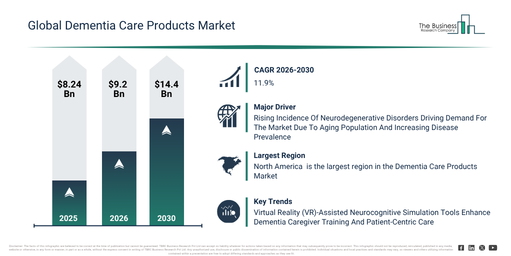
    The dementia care products market has experienced significant expansion recently. This market is projected to expand from $8.24 billion in 2025 to $9.2 billion in 2026, demonstrating a compound annual growth rate (CAGR) of 11.6%. Historically, factors contributing to this growth include a traditional dependence on caregiver-based supervision, a restricted supply of specialized dementia care products, insufficient public knowledge of cognitive assistive technologies, an increasing elderly demographic, and a reliance on institutional facilities for individuals with dementia.

    The dementia care products market size is projected to experience substantial expansion in the coming years. It will grow to $14.4 billion in 2030 at a compound annual growth rate (CAGR) of 11.9%. This projected increase during the forecast period is primarily driven by factors such as a burgeoning global elderly population and an escalation in dementia cases, alongside a greater embrace of home-based care solutions. Further contributions come from the expanding integration of digital health and remote monitoring technologies, enhanced government assistance for elderly care infrastructure, and a rising imperative for devices that improve patient safety and foster independence. Key developments expected during this period involve a surge in the adoption of AI-powered systems for dementia monitoring and cognitive assistance, increased deployment of IoT-enabled wearable safety devices for continuous patient tracking, and the integration of smart home technologies to ensure the safety and supervision of dementia patients. Additionally, the proliferation of digital cognitive training applications designed to boost memory and the wider implementation of cloud-based platforms for caregiver support and remote oversight are significant trends.

    Get A Free Sample Report With In-Depth Market Insights:

    https://thebusinessresearchcompany.com/sample_request?id=76315801&type=smp&name=Dementia%20Care%20Products%20Market%20Report%202026&utm_source=Blogs&utm_medium=Paid&utm_campaign=Oct_PR

    Dementia Care Products Market Industry Drivers: What’s Behind The Revenue Growth?

    The dementia care products market is projected to grow due to the increasing occurrence of neurodegenerative disorders. These disorders are characterized by the gradual loss of nervous system function caused by the progressive damage and death of neurons. The rising frequency of neurodegenerative disorders is fueled by the rapidly aging population, as extended life expectancy means more individuals are reaching age groups where these conditions are more common. Dementia care products support individuals with neurodegenerative disorders by assisting with memory, ensuring safety, and facilitating daily living activities, thereby boosting independence and alleviating caregiver burden. For instance, in March 2023, the Alzheimer’s Association, a US-based nonprofit voluntary health organization, reported that approximately 6.7 million Americans aged 65 and older were living with Alzheimer’s dementia (a type of neurodegenerative disorder), and this figure is expected to reach 13.8 million by 2060. Thus, the escalating incidence of neurodegenerative disorders is a key driver for the growth of the dementia care products market.

    Dementia Care Products Market Segment Analysis: What Are The Core Market Categories?

    The dementia care products market covered in this report is segmented –

    1) By Product Type: Memory Exercise And Activity Products, Daily Reminder Products, Bathroom Safety Products, Dining Aids, Communication Products, Personal Safety Products, Other Product Types

    2) By Dementia Stage: Early Stage Dementia, Middle Stage Dementia, Late Stage Dementia

    3) By Care Setting: Home Care, Assisted Living Facilities, Nursing Homes, Memory Care Units

    4) By Distribution Channel: Online Channels, Hospital Pharmacy, Retail Pharmacy, Direct Sales, Other Distribution Channels

    5) By Application: Alzheimer Disease, Vascular Dementia, Lewy Body Dementia, Frontotemporal Dementia, Mixed Dementia, Other Applications

    Subsegments:

    1) By Memory Exercise And Activity Products: Cognitive Training Games, Puzzle And Brain Teaser Kits, Memory Card Games, Digital Brain Training Applications, Sensory Stimulation Kits, Reminiscence Therapy Materials

    2) By Daily Reminder Products: Medication Reminder Devices, Electronic Reminder Clocks, Voice Prompt Systems, Smartphone Reminder Applications, Calendar And Planner Tools, Wearable Reminder Devices

    3) By Bathroom Safety Products: Grab Bars And Handrails, Non Slip Mats And Stickers, Shower Chairs And Benches, Raised Toilet Seats, Toilet Safety Frames, Bath Lifts

    4) By Dining Aids: Adaptive Utensils, Non Spill Cups And Mugs, Plate Guards And Food Bumpers, Weighted Cutlery, Easy Grip Tableware, Nosey Cups

    5) By Communication Products: Picture Communication Boards, Speech Assistance Devices, Voice Amplifiers, Communication Cards, Tablet Based Communication Applications, Hearing Assistance Devices

    6) By Personal Safety Products: Fall Detection Devices, Emergency Alert Systems, Global Positioning System Tracking Devices, Door And Window Alarms, Bed Exit Alarms, Personal Alarm Buttons

    7) By Other Product Types: Mobility Assistance Devices, Sleep Support Products, Clothing Adaptations, Environmental Monitoring Systems, Caregiver Support Tools, Behavioral Management Products

    #Dementia Care Products Market Growth Trends: What’s Shaping The Future Outlook?

    Companies operating within the dementia care products market are concentrating on developing innovative solutions, such as VR-assisted neurocognitive caregiving simulation tools, to enhance caregiver training, improve empathy-driven patient care, and support better management of dementia-related behavioral and cognitive symptoms. A VR-assisted neurocognitive caregiving simulation tool is a virtual reality system designed to simulate dementia-related cognitive and behavioral challenges, enabling caregivers to practice and refine patient care skills. For instance, in September 2024, Otsuka Pharmaceutical Co., Ltd., a Japan-based healthcare company, collaborated with Jolly Good Inc., a Japan-based medical technology company, to launch a FACEDUO Dementia Care Support VR. This VR training tool assists caregivers, including both family members and professionals, in understanding the emotions and behaviors of dementia patients by allowing users to experience scenarios from the patient’s perspective. It thereby promotes empathetic interactions, aiming to reduce caregiver stress and support improved dementia care.

    Dementia Care Products Market Competitive Landscape: Which Companies Lead The Industry?

    Major companies operating in the dementia care products market are Koninklijke Philips N.V., GE HealthCare Technologies Inc., Essity Aktiebolag, Arjo AB, Abena Holding A/S, Tunstall Healthcare Group Limited, NRS Healthcare Limited, Invacare Corporation, Vayyar Imaging Ltd., SafelyYou Inc., Buddi Limited, Smartivity Labs Pvt. Ltd., CogniFit Ltd., CarePredict Inc., Eugeria Ltd., Xplora Technologies AS, Parentgiving Inc., Find Memory Care LLC, Brain+ A/S, Relish Care Ltd.

    View The Full Dementia Care Products Market Report:

    https://thebusinessresearchcompany.com/report/dementia-care-products-market-report?utm_source=Blogs&utm_medium=Paid&utm_campaign=Oct_PR

    Dementia Care Products Market Regional Outlook: Where Is Opportunity Concentrated?

    North America was the largest region in the dementia care products market in 2025. Europe is expected to be the fastest-growing region in the forecast period. The regions covered in the dementia care products market report are Asia-Pacific, South East Asia, Western Europe, Eastern Europe, North America, South America, Middle East, Africa.

    Reach Out To Our Team:

    The Business Research Company: https://www.thebusinessresearchcompany.com/

    Americas: +1 310-496-7795

    Asia: +44 7882 955267 & +91 8897263534

    Europe: +44 7882 955267

    Email us at: marketing@tbrc.info

    Follow us on:

    LinkedIn: https://in.linkedin.com/company/the-business-research-company

    YouTube: https://www.youtube.com/channel/UC24_fI0rV8cR5DxlCpgmyFQ

    Global Market Model: https://www.thebusinessresearchcompany.com/global-market-model
  • Companion Diagnostic Technologies Market Forecast To Reach $7.89 Billion By 2030: Key Trends Explained

    Companion Diagnostic Technologies Market Forecast To Reach $7.89 Billion By 2030: Key Trends Explained

    Featuring market attractiveness scoring, total addressable market sizing, company benchmarking matrices, interactive Excel dashboards, deeper supply chain intelligence, emerging startup tracking, and granular product-level insights, The Business Research Company’s 2026 market reports are built to deliver research that is both more actionable and more strategically valuable.

    Companion Diagnostic Technologies Market Growth From $4.97 Billion In 2026 To $7.89 Billion By 2030 At A CAGR Of 12.2%

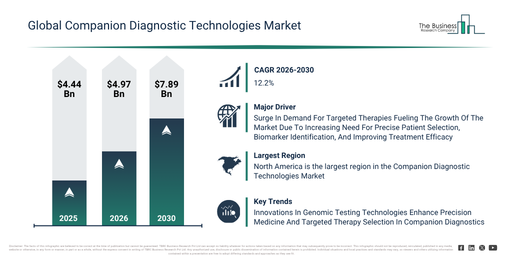
    The companion diagnostic technologies market has seen rapid expansion in recent years. It is anticipated to grow from $4.44 billion in 2025 to $4.97 billion in 2026, exhibiting a compound annual growth rate (CAGR) of 12.0%. The historical growth of this market stems from increased adoption of precision medicine, the rising prevalence of cancer and chronic diseases, a greater demand for targeted therapeutic solutions, the expansion of molecular diagnostics research, and growing investment in biomarker discovery programs.

    The companion diagnostic technologies market is projected to experience substantial expansion over the coming years, reaching $7.89 billion in 2030, driven by a compound annual growth rate (CAGR) of 12.2%. This anticipated growth during the forecast period is fueled by several factors, including the increasing creation of personalized treatment strategies, the wider acceptance of AI-powered diagnostic interpretation platforms, a rising need for non-invasive liquid biopsy diagnostics, an expansion of partnerships between pharmaceutical and diagnostic firms, and a rise in regulatory clearances for companion diagnostic assays. Key developments expected throughout this period encompass the greater embrace of biomarker-driven targeted therapy selection, a heightened demand for next-generation sequencing companion diagnostics, the expanded application of liquid biopsy testing solutions, broader personalized oncology treatment methodologies, and increased incorporation of multiplex molecular diagnostic testing.

    Get A Free Sample Report With In-Depth Market Insights:

    https://thebusinessresearchcompany.com/sample_request?id=35383919&type=smp&name=Companion%20Diagnostic%20Technologies%20Market%20Report%202026&utm_source=Blogs&utm_medium=Paid&utm_campaign=Oct_PR

    Companion Diagnostic Technologies Market Demand Drivers Opening New Revenue Streams

    The increasing demand for targeted therapies is anticipated to drive the future expansion of the companion diagnostic technologies market. Targeted therapies represent a medical approach that utilizes drugs or other substances to precisely identify and attack specific cancer cells or molecular targets, thereby minimizing harm to healthy cells. The need for targeted therapies is growing because of their capacity to accurately target disease-specific pathways, leading to enhanced efficacy with fewer adverse effects. Companion diagnostic technologies support targeted therapies by enabling the identification of specific genetic mutations, biomarkers, and molecular profiles, which in turn assists in selecting the most effective targeted treatment for individual patients, improving treatment accuracy, and enhancing clinical decision-making in oncology and other disease areas. For instance, in July 2023, a report from the American Society of Gene & Cell Therapy (ASGCT), a US-based professional membership organization, stated that at the close of the first quarter (Q1) 2023, there were 247 gene therapies in Phase II, a number that subsequently grew by 5% to reach 260 by the end of the second quarter (Q2). Consequently, the rising demand for targeted therapies is propelling the growth of the companion diagnostic technologies market.

    Companion Diagnostic Technologies Market Segment Performance And Emerging Opportunities

    The companion diagnostic technologies market covered in this report is segmented –

    1) By Type: Immunohistochemistry, Molecular Diagnostics

    2) By Sample Type: Tissue, Blood, Saliva, Other Sample Types

    3) By Technology: Polymerase Chain Reaction, Next Generation Sequencing, Immunohistochemistry, In Situ Hybridization, Microarrays, Liquid Biopsy

    4) By Distribution Channel: Direct Sales, Distributors

    5) By Application: Oncology, Cardiovascular, Central Nervous System, Autoimmune And Inflammation, Virology, Other Applications

    Subsegments:

    1) By Immunohistochemistry: Antibody Based Staining Techniques, Chromogenic Detection Methods, Fluorescent Detection Methods

    2) By Molecular Diagnostics: Deoxyribonucleic Acid Based Testing, Ribonucleic Acid Based Testing, Protein Biomarker Analysis

    Companion Diagnostic Technologies Market Trends Powering Strategic Industry Growth

    Leading companies in the companion diagnostic technologies market are concentrating on developing advanced genomic testing solutions, particularly liquid biopsy-based companion diagnostics. This strategic focus aims to elevate precision medicine, refine targeted therapy selection, and enable more accurate decision-making for cancer treatments. Liquid biopsy-based companion diagnostics are defined as blood or fluid-based tests utilized to identify specific biomarkers that guide patients towards suitable targeted therapies. As an illustration, in October 2024, Foundation Medicine, Inc., a US-based molecular information company, declared that the Food and Drug Administration (FDA) had approved its Liquid CDx test when used with Itovebi, solidifying its position in precision oncology diagnostics. This solution is engineered to support physicians in choosing superior treatments and making clinical determinations by employing a comprehensive blood test that examines a broad spectrum of genes, thereby assisting in the identification of crucial mutations and more effective direction of cancer therapies.

    Companion Diagnostic Technologies Market Leading Companies And Competitive Benchmarking

    Major companies operating in the companion diagnostic technologies market are F. Hoffmann-La Roche AG, Thermo Fisher Scientific Inc., Abbott Laboratories, Siemens Healthineers AG, Danaher Corporation, Becton Dickinson and Company, BioGenex Laboratories Inc., Quest Diagnostics Incorporated, Agilent Technologies Inc., Illumina Inc., bioMérieux S.A., Shimadzu Corporation, Sysmex Corporation, Bio-Rad Laboratories Inc., QIAGEN N.V., DiaSorin S.p.A., Caris Life Sciences Inc., Myriad Genetics Inc., Servier Laboratories, Pillar Biosciences Inc., EntroGen Inc.

    View The Full Companion Diagnostic Technologies Market Report:

    https://thebusinessresearchcompany.com/report/companion-diagnostic-technologies-market-report?utm_source=Blogs&utm_medium=Paid&utm_campaign=Oct_PR

    Companion Diagnostic Technologies Market Top Region By Revenue And Market Share

    North America was the largest region in the companion diagnostic technologies market in 2025. Asia-Pacific is expected to be the fastest-growing region in the forecast period. The regions covered in the companion diagnostic technologies market report are Asia-Pacific, South East Asia, Western Europe, Eastern Europe, North America, South America, Middle East, Africa.

    Reach Out To Our Team:

    The Business Research Company: https://www.thebusinessresearchcompany.com/

    Americas: +1 310-496-7795

    Asia: +44 7882 955267 & +91 8897263534

    Europe: +44 7882 955267

    Email us at: marketing@tbrc.info

    Follow us on:

    LinkedIn: https://in.linkedin.com/company/the-business-research-company

    YouTube: https://www.youtube.com/channel/UC24_fI0rV8cR5DxlCpgmyFQ

    Global Market Model: https://www.thebusinessresearchcompany.com/global-market-model
  • Betulinic Acid Market Size And Forecast 2026–2030: Trends Driving Industry Expansion

    Betulinic Acid Market Size And Forecast 2026–2030: Trends Driving Industry Expansion

    Backed by market attractiveness analysis, total addressable market sizing, company benchmarking matrices, interactive Excel dashboards, wider supply chain intelligence, emerging startup coverage, and detailed product-level insights, The Business Research Company’s 2026 market reports are designed to offer research that is more actionable and strategically valuable than ever.

    Betulinic Acid Market Growth Potential: How Will Market Size Shift Through 2030?

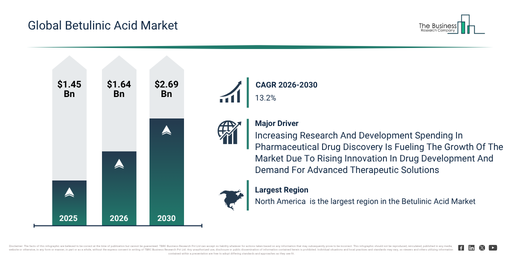
    The betulinic acid market has seen considerable growth recently. Its value is expected to rise from $1.45 billion in 2025 to $1.64 billion in 2026, demonstrating a compound annual growth rate (CAGR) of 12.9%. The historical growth of this market can be attributed to the traditional application of plant-derived compounds in herbal medicine systems, a burgeoning pharmaceutical interest in screening natural products, the increasing prevalence of chronic diseases driving drug discovery research, advancements in botanical extraction technologies, and a surge in academic research focusing on triterpenoid chemistry.

    The betulinic acid market is anticipated to experience substantial growth in the coming years, with its size projected to reach $2.69 billion in 2030, demonstrating a compound annual growth rate (CAGR) of 13.2%. This expansion during the forecast period can be attributed to the broadening scope of precision medicine and targeted cancer therapies, increasing financial commitments to the development of drugs based on natural compounds, advancements in antiviral and immunotherapy research, a growing demand for bioactive nutraceutical ingredients, and progress in synthetic biology and compound optimization techniques. Significant trends during this period include intensified research into betulinic acid as a potential therapeutic agent against cancer and viruses, the increasing integration of plant-derived triterpenoids into pharmaceutical drug discovery processes, a wider application of natural bioactive compounds in nutraceutical formulations, rising adoption of botanical extracts in dermatological and cosmetic anti-inflammatory products, and an elevated focus on semi-synthetic modifications of betulinic acid to enhance its bioavailability and efficacy.

    Get A Free Sample Report With In-Depth Market Insights:

    https://thebusinessresearchcompany.com/sample_request?id=90591879&type=smp&name=Betulinic%20Acid%20Market%20Report%202026&utm_source=Blogs&utm_medium=Paid&utm_campaign=Oct_PR

    Betulinic Acid Market Industry Drivers: What’s Behind The Revenue Growth?

    The betulinic acid market is projected to expand due to increased investment in pharmaceutical drug discovery research and development. These financial outlays by organizations and companies aim to create novel drugs, treatments, and therapeutic solutions. The escalating demand for sophisticated and targeted therapies fuels this rise in R&D spending, fostering innovation in drug creation. For betulinic acid, such investments are directed at enhancing its chemical attributes, boosting its bioavailability, and confirming its safety and effectiveness for uses like anticancer and antiviral treatments. As an illustration, the Food and Drug Administration, a US government body, reported in January 2024 that 55 new drugs received approval in 2023, an increase from 37 in 2022; among these, 36% were deemed first-in-class, and over 50% addressed rare diseases. This surge in pharmaceutical drug discovery R&D spending is consequently a key factor driving the growth of the betulinic acid market. The rising incidence of cancer is anticipated to boost the expansion of the betulinic acid market. Cancer encompasses various diseases marked by uncontrolled cellular proliferation that may metastasize and necessitate medical intervention. The growing elderly population contributes to this increased cancer prevalence, leading to higher global incidence rates. Betulinic acid addresses this need by exhibiting potential anticancer qualities, which aid in the research and development of innovative therapeutic options. For example, Cancer Research UK, an independent cancer research body in the UK, indicated in October 2025 that cancer cases in the UK are expected to rise by about 2% from 2024–2026 to 2038–2040, with annual new cases exceeding 505,000 by the conclusion of this period. Hence, the increasing prevalence of cancer is stimulating the growth of the betulinic acid market.

    Betulinic Acid Market Segment Landscape: Which Areas Lead Development?

    The betulinic acid market covered in this report is segmented –

    1) By Type: Natural Extracted Betulinic Acid, Synthetic Betulinic Acid

    2) By Purity: Up To 95 Percent, Above 95 Percent

    3) By Application: Pharmaceutical, Cosmetics And Personal Care, Nutraceuticals, Other Applications

    4) By End-User: Pharmaceutical Companies, Cosmetic Companies

    Subsegments:

    1) By Natural Extracted Betulinic Acid: Plant Derived Betulinic Acid, Bark Extracted Betulinic Acid, Leaf Extracted Betulinic Acid, Herbal Source Betulinic Acid

    2) By Synthetic Betulinic Acid: Chemically Synthesized Betulinic Acid, Semi Synthetic Betulinic Acid, High Purity Laboratory Synthesized Betulinic Acid, Industrial Grade Synthetic Betulinic Acid, Pharmaceutical Grade Synthetic Betulinic Acid

    Betulinic Acid Market Company Landscape And Competitive Strategy

    Major companies operating in the betulinic acid market are Symrise BioActives GmbH, Purestar Chem Enterprise Co. Ltd., Cayman Chemical, Tokyo Chemical Industry Co. Ltd., Santa Cruz Biotechnology Inc., MedChemExpress, Leap Chem Co. Ltd., H&Z Industry Co. Ltd., Finetech Industry Limited, Aktin Chemicals Inc., BOC Sciences, Manus Aktteva Biopharma LLP, Hangzhou Lingrui Chemical Co. Ltd., Capot Chemical Co. Ltd., Kono Chem Co. Ltd., Glentham Life Sciences Ltd., Xiamen Hisunny Chemical Co. Ltd., Dayang Chem (Hangzhou) Co. Ltd., BIOZOL Diagnostica Vertrieb GmbH, Wuhan PharmChem Co. Ltd., Betulin Lab, Shanghai Tauto Biotech Co. Ltd., DaXingAnLing Lingonberry Boreal Biotech, Simagchem Corporation, Sancai Industry Co. Ltd.

    View The Full Betulinic Acid Market Report:

    https://thebusinessresearchcompany.com/report/betulinic-acid-market-report?utm_source=Blogs&utm_medium=Paid&utm_campaign=Oct_PR

    Betulinic Acid Market Largest Region: Which Geography Holds The Biggest Share?

    North America was the largest region in the betulinic acid market in 2025. Asia-Pacific is expected to be the fastest-growing region in the forecast period. The regions covered in the betulinic acid market report are Asia-Pacific, South East Asia, Western Europe, Eastern Europe, North America, South America, Middle East, Africa.

    Reach Out To Our Team:

    The Business Research Company: https://www.thebusinessresearchcompany.com/

    Americas: +1 310-496-7795

    Asia: +44 7882 955267 & +91 8897263534

    Europe: +44 7882 955267

    Email us at: marketing@tbrc.info

    Follow us on:

    LinkedIn: https://in.linkedin.com/company/the-business-research-company

    YouTube: https://www.youtube.com/channel/UC24_fI0rV8cR5DxlCpgmyFQ

    Global Market Model: https://www.thebusinessresearchcompany.com/global-market-model
  • Bedsores Pressure Sores Market Forecast To 2030: Starting From $8.11 Billion In 2026

    Bedsores Pressure Sores Market Forecast To 2030: Starting From $8.11 Billion In 2026

    Featuring market attractiveness scoring, total addressable market sizing, company benchmarking matrices, interactive Excel dashboards, deeper supply chain intelligence, emerging startup tracking, and granular product-level insights, The Business Research Company’s 2026 market reports are built to deliver research that is both more actionable and more strategically valuable.

    Bedsores Pressure Sores Market Growth Analysis: How Will Revenue Trend Over The Forecast Period?

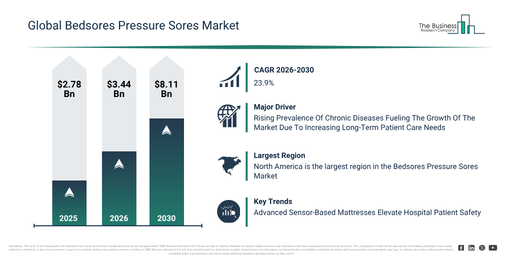
    The bedsores pressure sores market has experienced substantial growth in recent years. It is projected to increase from $2.78 billion in 2025 to $3.44 billion in 2026, demonstrating a compound annual growth rate (CAGR) of 23.7%. This historic expansion can be attributed to an expanding aging population requiring long-term care, a rising prevalence of chronic illnesses and immobility, an increase in hospital admissions and surgical procedures, heightened awareness regarding pressure ulcer prevention, and the development of healthcare infrastructure and rehabilitation centers.

    The bedsores pressure sores market is projected to experience substantial expansion in the coming years. Its valuation is anticipated to reach $8.11 billion in 2030, exhibiting a compound annual growth rate (CAGR) of 23.9%. This forecasted growth is largely driven by factors such as the wider uptake of smart patient monitoring systems, increased funding for advanced wound care technologies, the expansion of home healthcare services, a surge in demand for pressure redistribution mattresses and cushions, and progress in personalized wound treatment options. Key trends influencing this period encompass a growing need for sophisticated pressure ulcer prevention solutions, a greater acceptance of specialized wound care dressings, an enhanced emphasis on early detection and ongoing patient monitoring, the proliferation of home care-based bedsore management solutions, and a heightened preference for supportive surfaces that offer comfort and redistribute pressure effectively.

    Get A Free Sample Report With In-Depth Market Insights:

    https://thebusinessresearchcompany.com/sample_request?id=63784102&type=smp&name=Bedsores%20Pressure%20Sores%20Market%20Report%202026&utm_source=Blogs&utm_medium=Paid&utm_campaign=Oct_PR

    Bedsores Pressure Sores Market Growth Factors Behind Sustained Expansion

    The increasing occurrence of chronic diseases is anticipated to boost the expansion of the bedsores and pressure sores market in the future. These conditions are long-term health issues demanding ongoing medical care, with diabetes mellitus being one such metabolic ailment marked by elevated blood sugar, which can impede circulation and wound recovery. The surge in chronic diseases globally is attributed to an aging demographic, inactive lifestyles, poor dietary choices, and escalating obesity figures. Products for bedsores and pressure sores assist individuals suffering from chronic diseases by preventing skin damage, mitigating pressure-induced injuries, and facilitating quicker wound healing via innovative dressings, specialized mattresses, and pressure-relieving equipment. As an illustration, in April 2025, data from the Centers for Disease Control and Prevention, a USA-based government agency, indicated that in 2023, 76.4% (equating to 194 million) of American adults reported having at least one chronic condition. This included 59.5%, 78.4%, and 93.0% of young, midlife, and older adults, respectively. Consequently, the increasing prevalence of chronic conditions like diabetes mellitus is fueling the expansion of the bedsores and pressure sores market.

    Bedsores Pressure Sores Market Segmentation: How Does The Market Break Down By Category?

    The bedsores pressure sores market covered in this report is segmented –

    1) By Product Type: Mattresses, Cushions, Overlays, Dressings

    2) By Treatment: Prevention, Treatment

    3) By Distribution Channel: Direct Sales, Online Sales, Retail Pharmacies, Hospital Pharmacies, Medical Supply Stores

    4) By Application: Wound Care, Surgical Care, Palliative Care, Rehabilitation, Home Care

    5) By End Use: Hospitals, Long Term Care Facilities, Home Care

    Subsegments:

    1) By Mattresses: Foam Mattresses, Air Filled Mattresses, Alternating Pressure Mattresses, Gel Based Mattresses, Hybrid Mattresses

    2) By Cushions: Foam Cushions, Gel Cushions, Air Cushions, Combination Cushions, Contoured Cushions

    3) By Overlays: Foam Overlays, Air Overlays, Gel Overlays, Water Filled Overlays, Alternating Pressure Overlays

    4) By Dressings: Foam Dressings, Hydrocolloid Dressings, Alginate Dressings, Film Dressings, Hydrogel Dressings

    Bedsores Pressure Sores Market Industry Trends Fueling Future Revenue Growth

    Companies operating within the bedsores pressure sores market are concentrating on creating advanced solutions, notably AI-powered pressure redistribution mattresses, to more effectively prevent pressure injuries, facilitate real-time patient monitoring, and enhance clinical outcomes while decreasing the incidence of hospital-acquired pressure ulcers. These AI-enabled pressure redistribution mattresses are intelligent medical support surfaces that leverage artificial intelligence to automatically modify pressure distribution based on a patient’s body position and risk factors, thereby aiding in the prevention of bedsores and pressure injuries. For instance, in June 2024, Care of Sweden, a medical technology firm based in Sweden, introduced CuroCell iA, an innovative mattress system designed for pressure ulcer prevention in healthcare facilities. This product incorporates a two-layer dynamic air mattress construction where air layers shift in relation to one another to decrease peak pressure and alleviate shear forces on delicate skin areas. It also features an AI-driven control unit that makes real-time automatic adjustments according to patient movements, helping ensure consistent therapeutic support. The system operates quietly with minimal vibration, promoting better sleep quality and recovery, and simultaneously lessens the manual repositioning workload for caregivers. CuroCell iA is intended for use in hospitals, long-term care centers, and other clinical environments aiming for enhanced patient safety, comfort, and resource efficiency in preventing pressure injuries.

    Bedsores Pressure Sores Market Industry Leaders And Competitive Landscape

    Major companies operating in the bedsores pressure sores market are Cardinal Health Inc., Medtronic plc, Medline Industries LP, 3M Company, Stryker Corporation, Essity AB, B. Braun Melsungen AG, Smith & Nephew plc, Coloplast A/S, ConvaTec Group plc, Mölnlycke Health Care AB, Integra LifeSciences Holdings Corporation, Arjo AB, Invacare Corporation, Organogenesis Holdings Inc., Urgo Medical, Permobil AB, Drive DeVilbiss Healthcare LLC, Joerns Healthcare LLC, GF Health Products Inc., EHOB Inc., Advancis Medical, Paul Hartmann AG

    View The Full Bedsores Pressure Sores Market Report:

    https://thebusinessresearchcompany.com/report/bedsores-pressure-sores-market-report?utm_source=Blogs&utm_medium=Paid&utm_campaign=Oct_PR

    Bedsores Pressure Sores Market Regional Analysis And Top Geography

    North America was the largest region in the bedsores pressure sores market in 2025. Asia-Pacific is expected to be the fastest-growing region in the forecast period. The regions covered in the bedsores pressure sores market report are Asia-Pacific, South East Asia, Western Europe, Eastern Europe, North America, South America, Middle East, Africa.

    Reach Out To Our Team:

    The Business Research Company: https://www.thebusinessresearchcompany.com/

    Americas: +1 310-496-7795

    Asia: +44 7882 955267 & +91 8897263534

    Europe: +44 7882 955267

    Email us at: marketing@tbrc.info

    Follow us on:

    LinkedIn: https://in.linkedin.com/company/the-business-research-company

    YouTube: https://www.youtube.com/channel/UC24_fI0rV8cR5DxlCpgmyFQ

    Global Market Model: https://www.thebusinessresearchcompany.com/global-market-model