Author: Marketing Posting

  • 4D Printing In Healthcare Market Explained: What Is Fueling Growth To $13.45 Billion By 2030?

    4D Printing In Healthcare Market Explained: What Is Fueling Growth To $13.45 Billion By 2030?

    Built to provide research that’s more actionable and strategically valuable, The Business Research Company’s 2026 market reports include market attractiveness analysis, total addressable market sizing, company benchmarking matrices, interactive Excel dashboards, broader supply chain intelligence, emerging startup tracking, and in-depth product insights.

    4D Printing In Healthcare Market Size Outlook: How Quickly Will Revenue Expand Through 2030?

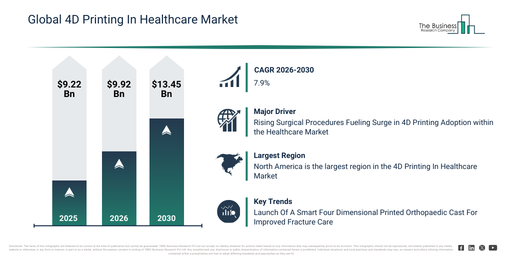
    The 4d printing in healthcare market size has experienced robust expansion in recent years. This market is projected to expand from $9.22 billion in 2025 to $9.92 billion in 2026, exhibiting a compound annual growth rate (CAGR) of 7.7%. Historically, this growth was fueled by factors such as the early adoption of 3d printing in healthcare, the increasing demand for customized medical devices, progress in material science, the rising need for intricate implant geometries, and increased research funding in additive manufacturing.

    The 4d printing in healthcare market is projected to experience robust expansion over the coming years, anticipated to reach $13.45 billion by 2030, exhibiting a compound annual growth rate (CAGR) of 7.9%. This projected growth is driven by several factors, including the advancement of programmable and shape-memory materials, the rise of personalized medicine approaches, increased partnerships between healthcare providers and technology companies, escalating investments in bioprinting technologies, and the broadening of regulatory support for advanced manufacturing. Key trends influencing this period encompass the wider integration of smart and shape-memory materials into medical devices, a surging need for customized and patient-specific implants, a greater emphasis on minimally invasive and adaptable medical solutions, the extended application of 4d printed implants in orthopedic and dental fields, and the increasing incorporation of self-transforming structures within regenerative medicine.

    Get A Free Sample Report With In-Depth Market Insights:

    https://thebusinessresearchcompany.com/sample_request?id=33941962&type=smp&name=4D%20Printing%20In%20Healthcare%20Market%20Report%202026&utm_source=Blogs&utm_medium=Paid&utm_campaign=Oct_PR

    4D Printing In Healthcare Market Development Factors: What’s Supporting Demand?

    The rising number of surgical procedures is projected to spur the growth of 4D printing in the healthcare market going forward. This technology allows for the development of bespoke medical implants and devices precisely adapted to individual patient anatomy. As surgeries become more frequent, there is an escalating demand for personalized medical solutions to optimize surgical results and patient recovery. 4D printing facilitates the creation of elaborate structures that can conform to specific patient needs, thereby enhancing treatment effectiveness and patient satisfaction. For instance, in May 2023, according to Austin Publishing Group, a US-based publishing company, the global healthcare system handled more than 300 million major surgical procedures each year. Therefore, the expanding volume of surgeries is a key driver for the advancement of 4D printing in the healthcare market.

    4D Printing In Healthcare Market Segment Analysis And Revenue Potential

    The 4d printing in healthcare market covered in this report is segmented –

    1) By Type: Fused Deposition Modeling (FDM), PolyJet, Stereolithography

    2) By Component: Equipment, 3D Bioprinters, Programmable Materials, Shape-Memory Materials, Hydrogels, Living Cells, Software And Services

    3) By End-User: Hospitals And Clinics, Dental Laboratories, Other End-Users

    Subsegments:

    1) By Fused Deposition Modeling (FDM): Biodegradable Polymers, Composite Materials

    2) By PolyJet: Rigid Materials, Flexible Materials, Biocompatible Materials

    3) By Stereolithography: Photopolymer Resins, Dental Resins, Bio-Resins

    4D Printing In Healthcare Market Transformation Trends: What Innovations Are Driving Change?

    Companies operating within the 4D printing in healthcare market are primarily focused on creating sophisticated solutions, such as smart 4D-printed orthopedic casts, to replace conventional plaster and fiberglass casting methods. A 4D-printed solution signifies an innovative medical technology that employs intelligent, stimuli-responsive materials capable of altering their form or characteristics over time to enhance patient comfort, expedite recovery, and improve clinical outcomes. For instance, in June 2025, Uni-Pharma, a Taiwan-based pharmaceutical and medical solutions provider, unveiled the innovative CASTOMIZE Smart Thermoplastic Cast for fracture support. This advanced solution supersedes conventional casting by presenting a lightweight, breathable, and customizable thermoplastic structure that can be rapidly molded to the patient’s limb using safe, controlled heating. It offers superior ventilation, minimizes skin irritation, and allows for more straightforward hygiene compared to traditional casts. Integrated with CASTOMIZE’s 4D-printing technology, the smart cast provides precise anatomical fitting, enhanced durability, and greater patient mobility, while simultaneously helping clinicians streamline treatment procedures. The introduction of this 4D-printed cast significantly improves patient experience, simplifies orthopedic care workflows, and supports enhanced therapeutic efficiency.

    4D Printing In Healthcare Market Key Players Shaping Industry Direction

    Major companies operating in the 4d printing in healthcare market are Stratasys Ltd, 3D Systems Inc., EOS GmbH Electro Optical Systems, Materialise NV, Desktop Metal Inc., Carbon Inc., HP Inc., Nanoscribe GmbH, RegenHU Ltd, Aspect Biosystems Ltd, Poietis SAS, Organovo Holdings Inc., T&R Biofab Co. Ltd, Rokit Healthcare Inc., Prellis Biologics Inc., Volumetric Biotechnologies Inc., Fluicell AB, CollPlant Biotechnologies Ltd, United Therapeutics Corporation, BICO Group AB

    View The Full 4D Printing In Healthcare Market Report:

    https://thebusinessresearchcompany.com/report/4d-printing-in-healthcare-global-market-report?utm_source=Blogs&utm_medium=Paid&utm_campaign=Oct_PR

    4D Printing In Healthcare Market Regional Analysis: Which Geography Leads On Revenue?

    North America was the largest region in the 4D printing in healthcare market in 2025. Asia-Pacific is expected to be the fastest-growing region in the forecast period. The regions covered in the 4d printing in healthcare market report are Asia-Pacific, South East Asia, Western Europe, Eastern Europe, North America, South America, Middle East, Africa.

    Reach Out To Our Team:

    The Business Research Company: https://www.thebusinessresearchcompany.com/

    Americas: +1 310-496-7795

    Asia: +44 7882 955267 & +91 8897263534

    Europe: +44 7882 955267

    Email us at: marketing@tbrc.info

    Follow us on:

    LinkedIn: https://in.linkedin.com/company/the-business-research-company

    YouTube: https://www.youtube.com/channel/UC24_fI0rV8cR5DxlCpgmyFQ

    Global Market Model: https://www.thebusinessresearchcompany.com/global-market-model
  • 3-in-1 Oral Cone Beam Computed Tomography (CBCT) Market Forecast To Reach $1.74 Billion By 2030: Key Trends Explained

    3-in-1 Oral Cone Beam Computed Tomography (CBCT) Market Forecast To Reach $1.74 Billion By 2030: Key Trends Explained

    Backed by market attractiveness analysis, total addressable market sizing, company benchmarking matrices, interactive Excel dashboards, wider supply chain intelligence, emerging startup coverage, and detailed product-level insights, The Business Research Company’s 2026 market reports are designed to offer research that is more actionable and strategically valuable than ever.

    3-in-1 Oral Cone Beam Computed Tomography (CBCT) Market Size, Value And Growth Trajectory Through 2030

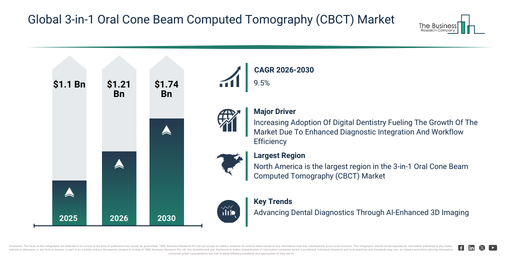
    The 3-in-1 oral cone beam computed tomography (cbct) market size has witnessed substantial expansion in recent years. This market is expected to increase from $1.1 billion in 2025 to $1.21 billion in 2026, achieving a compound annual growth rate (CAGR) of 9.7%. Historically, this growth can be ascribed to the escalating integration of digital dentistry, a rising necessity for dental implant procedures, the broadening scope of orthodontic treatments, an increase in private dental clinics, and breakthroughs in imaging sensor technology.

    The market for 3-in-1 oral cone beam computed tomography (CBCT) is anticipated to experience robust expansion over the coming years. This sector is projected to reach $1.74 billion by 2030, exhibiting a compound annual growth rate (CAGR) of 9.5%. The projected increase can be attributed to the rising integration of AI-based diagnostic tools, a growing need for chairside imaging solutions, the wider adoption of minimally invasive dental procedures, an increasing emphasis on radiation safety standards, and expanding investments in advanced dental imaging infrastructure. Significant trends during the forecast period include the increasing incorporation of AI-assisted image reconstruction, a rising demand for low-dose imaging systems, the growing integration of multi-modal dental imaging, the expansion of compact and integrated CBCT platforms, and an enhanced focus on workflow efficiency.

    Get A Free Sample Report With In-Depth Market Insights:

    https://thebusinessresearchcompany.com/sample_request?id=57769147&type=smp&name=3-in-1%20Oral%20Cone%20Beam%20Computed%20Tomography%20%28CBCT%29%20Market%20Report%202026&utm_source=Blogs&utm_medium=Paid&utm_campaign=Oct_PR

    3-in-1 Oral Cone Beam Computed Tomography (CBCT) Market Industry Drivers: What’s Behind The Revenue Growth?

    The anticipated growth of the 3-in-1 oral cone beam computed tomography (CBCT) market in upcoming years is linked to the expanding use of digital dentistry. This field incorporates advanced technologies like computer-aided design and manufacturing (CAD/CAM), intraoral scanners, 3D printing, and digital imaging systems to improve diagnostic precision, treatment strategies, and patient results. The increasing preference for digital solutions stems from their capacity to boost clinical efficiency, shorten treatment durations, and enhance accuracy in dental work, which translates to greater patient satisfaction and superior care. 3-in-1 oral CBCT systems facilitate this transition by consolidating several imaging types—namely, panoramic, cephalometric, and 3D CBCT—into one unit, enabling dental professionals to conduct extensive diagnostics and treatment planning smoothly within digital processes. As an illustration, in September 2023, the American Dental Association (ADA) Clinical Evaluators Panel, a U.S.-based professional organization, noted that roughly one in three dentists (30%) in the United States employed teledentistry in their clinics, with half of these users (50%) being recent adopters. Consequently, the growing acceptance of digital dentistry is a significant force propelling the global expansion of the 3-in-1 oral CBCT market.

    3-in-1 Oral Cone Beam Computed Tomography (CBCT) Market Segmentation And Category Overview

    The 3-in-1 oral cone beam computed tomography (cbct) market covered in this report is segmented –

    1) By Product Type: Standalone CBCT, Integrated CBCT

    2) By Modality: Computed Tomography (CT), X-Ray, Ultrasound

    3) By Imaging Technique: High-Resolution CBCT, Low Radiation Dose CBCT, Dynamic Imaging Techniques

    4) By Application: Dental Implants, Orthodontics, Endodontics, Oral Surgery, Other Applications

    5) By End-User: Hospitals, Dental Clinics, Research Institutes

    Subsegments:

    1) By Standalone CBCT: Cephalometric Imaging System, Panoramic Imaging System, Cone Beam Computed Tomography System

    2) By Integrated CBCT: Cephalometric And Panoramic Integrated System, Panoramic And Cone Beam Integrated System, Cephalometric, Panoramic, And Cone Beam Combined System

    #3-in-1 Oral Cone Beam Computed Tomography (CBCT) Market Growth Trends: What’s Shaping The Future Outlook?

    Companies operating in the 3-in-1 oral cone beam computed tomography (CBCT) market are primarily focused on fostering innovation in dental imaging workflow optimization, including the adoption of AI-enhanced 3D imaging to facilitate accurate, data-driven insights for diagnosis and treatment planning. AI-enhanced 3D imaging refers to the ability of a 3-in-1 oral CBCT system to analyze volumetric dental scans in real time and provide immediate feedback to the dentist or dental team. For instance, in October 2023, PreXion, Inc., a US-based company specializing in dental imaging solutions, launched its PreXion3D Evolve CBCT system. This innovative system integrates cone-beam computed tomography (CBCT), panoramic, and cephalometric imaging capabilities into a single device, presenting a comprehensive dental imaging solution. The PreXion3D Evolve system offers high-resolution 3D imaging, supporting accurate diagnosis and treatment planning. By combining advanced imaging technologies, the system enhances workflow efficiency and reduces radiation exposure when compared to traditional imaging methods.

    3-in-1 Oral Cone Beam Computed Tomography (CBCT) Market Competitive Analysis Of Leading Industry Participants

    Major companies operating in the 3-in-1 oral cone beam computed tomography (cbct) market are Dentsply Sirona, Planmeca, Castellini, Carestream Health, J. Morita Mfg. Corp., DEXIS, Dentium, Acteon Group, Vatech, Ziehm Imaging, Air Techniques, Rayence Inc, Villa Sistemi Medicali S.p.A., Perlove Medical, Fussen Technology, Genoray, NewTom, PreXion Corporation, Bondent GmbH, Trident Dental

    View The Full 3-in-1 Oral Cone Beam Computed Tomography (CBCT) Market Report:

    https://thebusinessresearchcompany.com/report/global-3-in-1-oral-cone-beam-computed-tomography-cbct-market-report?utm_source=Blogs&utm_medium=Paid&utm_campaign=Oct_PR

    3-in-1 Oral Cone Beam Computed Tomography (CBCT) Market Geographic Spread And Regional Opportunities

    North America was the largest region in the 3-in-1 oral cone beam computed tomography (CBCT) market in 2025. Asia-Pacific is expected to be the fastest-growing region in the forecast period. The regions covered in the 3-in-1 oral cone beam computed tomography (cbct) market report are Asia-Pacific, South East Asia, Western Europe, Eastern Europe, North America, South America, Middle East, Africa.

    Reach Out To Our Team:

    The Business Research Company: https://www.thebusinessresearchcompany.com/

    Americas: +1 310-496-7795

    Asia: +44 7882 955267 & +91 8897263534

    Europe: +44 7882 955267

    Email us at: marketing@tbrc.info

    Follow us on:

    LinkedIn: https://in.linkedin.com/company/the-business-research-company

    YouTube: https://www.youtube.com/channel/UC24_fI0rV8cR5DxlCpgmyFQ

    Global Market Model: https://www.thebusinessresearchcompany.com/global-market-model

  • 3D Printed Wearables Market Analysis: Understanding The Drivers Behind 6.9% CAGR Through 2030 Growth

    3D Printed Wearables Market Analysis: Understanding The Drivers Behind 6.9% CAGR Through 2030 Growth

    Featuring market attractiveness scoring, total addressable market sizing, company benchmarking matrices, interactive Excel dashboards, deeper supply chain intelligence, emerging startup tracking, and granular product-level insights, The Business Research Company’s 2026 market reports are built to deliver research that is both more actionable and more strategically valuable.

    3D Printed Wearables Market CAGR Outlook And Future Development

    The market size for 3D printed wearables has shown strong expansion in recent years. It is projected to increase from $4.37 billion in 2025 to $4.72 billion in 2026, demonstrating a compound annual growth rate (CAGR) of 8.0%. This historical growth can be attributed to the early adoption of additive manufacturing technologies, rising consumer interest in wearable devices, the development of fitness and health monitoring trends, the expansion of prosthetics and orthopedic solutions, and advancements in 3D printing materials.

    The 3D printed wearables market is anticipated to show significant expansion over the coming years. Its valuation is projected to reach $6.17 billion by 2030, expanding at a compound annual growth rate (CAGR) of 6.9%. The projected increase during this period can be attributed to advancements in multi-material 3D printing, the increasing integration of sensors and electronics, a rising need for patient-specific medical devices, the development of digital customization platforms, and the broadening of smart healthcare ecosystems. Key trends during the forecast period include a growing preference for customized and personalized wearables, the increasing adoption of lightweight and ergonomic designs, more widespread use of 3D printing for rapid prototyping, the expansion of medical and healthcare wearable applications, and enhanced aesthetic and design flexibility in wearables.

    Get A Free Sample Report With In-Depth Market Insights:

    https://thebusinessresearchcompany.com/sample_request?id=86447898&type=smp&name=3D%20Printed%20Wearables%20Market%20Report%202026&utm_source=Blogs&utm_medium=Paid&utm_campaign=Oct_PR

    3D Printed Wearables Market Growth Factors: What’s Supporting Expansion?

    An increasing incidence of diabetes is projected to fuel the expansion of the 3D-printed wearables market in the future. Diabetes is a persistent medical condition marked by elevated blood sugar levels, typically resulting from insufficient insulin production or inefficient insulin utilization. The increase in diabetes cases is primarily fueled by rising obesity, which interferes with insulin’s proper functioning and raises blood glucose, thereby heightening the risk of developing the illness. For diabetes management, 3D-printed wearables are custom-made devices leveraging 3D printing to track and regulate blood glucose, administer insulin, and provide immediate health information to individuals with diabetes. As an illustration, global data from April 2025, provided by the International Diabetes Federation (IDF), a non-profit entity based in Belgium, indicates that around 589 million adults between 20 and 79 years old are currently living with diabetes, constituting 11.1% of the worldwide population within this age bracket. This figure is anticipated to climb to 853 million (13%) by the year 2050. Furthermore, an estimated 252 million adults affected by diabetes are believed to be undiagnosed. Consequently, the expanding occurrence of diabetes is propelling the development of the 3D-printed wearables market.

    3D Printed Wearables Market Segment Outlook: Which Categories Are Growing Fastest?

    The 3D printed wearables market covered in this report is segmented –

    1) By Product Type: Prosthetics, Orthotics and Braces, Smart Wearable Housings and Structures, Fitness and Health Monitoring Wearables, Other Product Types

    2) By Technology: Polymer-Based 3D Printing, Metal-Based 3D Printing, Multi-Material 3D Printing, Flexible and Elastomeric 3D Printing, Other Technologies

    3) By Sales Channel: Online Retail Platforms, Offline Retail and Specialty Stores, Direct-to-Customer (DTC) Sales, Healthcare Provider Channels, Customization and Digital Design Platforms

    4) By End User: Individual Consumers, Hospitals and Clinics, Rehabilitation Centers and Prosthetic Clinics, Academic and Research Institutes, Other End Users

    Subsegments:

    1) By Prosthetics: Upper Limb Prosthetics, Lower Limb Prosthetics, Customized and Personalized Prosthetics, Lightweight and Modular Prosthetics

    2) By Orthotics and Braces: Foot Orthotics and Insoles, Knee Ankle and Limb Braces, Spinal and Posture Support Devices, Customized Orthotic Wearables

    3) By Smart Wearable Housings and Structures: Smartwatch Casings and Bands, Medical-Grade Wearable Enclosures, Modular and Customizable Wearable Frames

    4) By Fitness and Health Monitoring Wearables: Fitness Bands and Activity Trackers, Health Monitoring Wearables, Customized Fitness Wearables

    5) By Other Product Types: Fashion and Lifestyle Wearables, Protective and Ergonomic Wearables, Customized Sports Wearables

    3D Printed Wearables Market Industry Trends: What’s Reshaping Demand?

    Leading companies in the 3D printed wearables market are concentrating on developing advanced solutions, such as additive manufacturing with recycled metals, to improve product design, minimize material waste, and enhance production scalability. Additive manufacturing with recycled metals refers to a 3D printing technique that utilizes high-quality recycled metal powders to produce wearable device components, reducing raw material consumption while maintaining structural strength. For example, in November 2025, Apple Inc., a US-based technology company, unveiled 3D-printed titanium cases for the Apple Watch Ultra 3 and Apple Watch Series 11, representing the company’s first extensive use of additive manufacturing for millions of wearable device enclosures. This new process employs aerospace-grade recycled titanium powder, decreasing material usage by 50% compared to traditional subtractive machining. This innovation not only boosts durability and design flexibility but also aligns with Apple’s sustainability objectives by saving over 400 metric tons of raw titanium in 2025 alone.

    3D Printed Wearables Market Leading Companies And Competitive Benchmarking

    Major companies operating in the 3D printed wearables market are Open Bionics Ltd., UNYQ Design Inc., Ottobock SE & Co. KGaA, Össur hf., LIM Innovations Pty Ltd., WillowWood Global LLC, Myomo Inc., Ekso Bionics Holdings Inc., ReWalk Robotics Ltd., Materialise NV, 3D Systems Corporation, Stratasys Ltd., EOS GmbH Electro Optical Systems, Carbon Inc., Desktop Metal Inc., Markforged Inc., Formlabs Inc., Cyfuse Biomedical K.K., Align Technology Inc., Limb-Art LLC, Alleles Design Studio Ltd., Aqua-Leg Inc.

    View The Full 3D Printed Wearables Market Report:

    https://thebusinessresearchcompany.com/report/3d-printed-wearables-global-market-report?utm_source=Blogs&utm_medium=Paid&utm_campaign=Oct_PR

    3D Printed Wearables Market Top Region By Revenue And Market Share

    North America was the largest region in the 3D printed wearables market in 2025. Asia-Pacific is expected to be the fastest-growing region in the forecast period. The regions covered in the 3D printed wearables market report are Asia-Pacific, South East Asia, Western Europe, Eastern Europe, North America, South America, Middle East, Africa.

    Reach Out To Our Team:

    The Business Research Company: https://www.thebusinessresearchcompany.com/

    Americas: +1 310-496-7795

    Asia: +44 7882 955267 & +91 8897263534

    Europe: +44 7882 955267

    Email us at: marketing@tbrc.info

    Follow us on:

    LinkedIn: https://in.linkedin.com/company/the-business-research-company

    YouTube: https://www.youtube.com/channel/UC24_fI0rV8cR5DxlCpgmyFQ

    Global Market Model: https://www.thebusinessresearchcompany.com/global-market-model
  • 3D Printed Crownplace Market Growth To $3.23 Billion By 2030: What’s Driving The Expansion?

    3D Printed Crownplace Market Growth To $3.23 Billion By 2030: What’s Driving The Expansion?

    Built to provide research that’s more actionable and strategically valuable, The Business Research Company’s 2026 market reports include market attractiveness analysis, total addressable market sizing, company benchmarking matrices, interactive Excel dashboards, broader supply chain intelligence, emerging startup tracking, and in-depth product insights.

    3D Printed Crownplace Market Set To Climb From $1.74 Billion In 2026 To $3.23 Billion By 2030

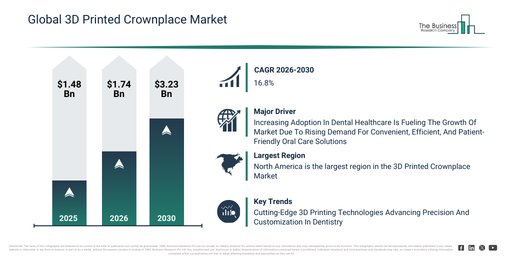
    The 3D printed crownplace market has experienced significant growth in recent years. It is projected to expand from $1.48 billion in 2025 to $1.74 billion in 2026, achieving a compound annual growth rate (CAGR) of 17.1%. This historical growth can be attributed to several factors, including the widespread adoption of CAD/CAM dentistry systems, a rising demand for aesthetic dental restorations, the ongoing digitization of dental laboratories, the initial availability of dental 3D printers, and an increasing patient preference for faster treatments.

    The 3D printed crownplace market is projected to experience substantial expansion in the coming years. By 2030, its value is anticipated to reach $3.23 billion, demonstrating a compound annual growth rate (CAGR) of 16.8%. This projected growth stems from factors such as the expanding embrace of completely digital dentistry, increasing financial commitments towards advanced dental materials, the spread of in-clinic additive manufacturing, a rising need for customized dental prosthetics, and a greater emphasis on economical dental restoration techniques. Key trends anticipated during this period encompass the wider implementation of chairside 3D printing, an uptick in the utilization of biocompatible printing substances, deeper integration of digital workflows in dentistry, the broadening of services for same-day dental restorations, and a heightened emphasis on accuracy and personalization.

    Get A Free Sample Report With In-Depth Market Insights:

    https://thebusinessresearchcompany.com/sample_request?id=73591776&type=smp&name=3D%20Printed%20Crownplace%20Market%20Report%202026&utm_source=Blogs&utm_medium=Paid&utm_campaign=Oct_PR

    3D Printed Crownplace Market Demand Drivers: What’s Powering Industry Growth?

    The rising integration of 3D printed crownplace technology within dental healthcare is projected to spur the growth of the 3D printed crownplace market moving forward. Dental healthcare encompasses the practices aimed at preserving and enhancing oral health through the prevention, diagnosis, and treatment of teeth, gums, and associated anatomical structures. This increased uptake in dental healthcare stems from patients’ demand for convenient, accessible, and effective oral care solutions that minimize treatment duration, boost comfort, and achieve superior overall oral health outcomes. 3D printed crownplace advancements significantly benefit dental healthcare by supplying precise, custom-fitted crowns that conserve time, elevate comfort, and streamline restorative procedures. For example, in 2024, the American Dental Association, a US-based professional organization supporting the dental profession, indicated that dental spending in the US saw an increase of $4 billion, or 2.5%, between 2022 and 2023. Thus, the growing adoption in dental healthcare is propelling the expansion of the 3D printed crownplace market.

    3D Printed Crownplace Market Segment Landscape: Which Areas Lead Development?

    The 3D printed crownplace market covered in this report is segmented –

    1) By Product Type: Metal 3D Printed Crownplace, Ceramic 3D Printed Crownplace, Resin 3D Printed Crownplace

    2) By Technology: Stereolithography, Selective Laser Sintering, Fused Deposition Modeling, Other Technologies

    3) By Application: Dental Clinics, Hospitals, Dental Laboratories, Other Applications

    4) By End-User: Adults, Pediatrics, Geriatrics

    Subsegments:

    1) By Metal 3D Printed Crownplace: Titanium, Cobalt-Chromium, Stainless Steel, Gold

    2) By Ceramic 3D Printed Crownplace: Zirconia, Alumina, Lithium Disilicate, Porcelain

    3) By Resin 3D Printed Crownplace: Photopolymer Resin, Biocompatible Resin, Composite Resin, Flexible Resin

    3D Printed Crownplace Market Innovation Trends: What Developments Are Reshaping The Industry?

    Major companies in the 3D printed crownplace market are prioritizing the development of sophisticated techniques, such as multi-material printing, to produce elaborate, patient-specific restorations with heightened precision, efficiency, and aesthetic quality. Multi-material printing is a 3D printing method that allows for the simultaneous creation of objects using two or more different materials, enabling complex, functional, and customized designs in a single print. For instance, in July 2024, Stratasys Ltd., a US-based manufacturer of industrial-grade 3D printers, materials, and software, introduced the DentaJet XL. This high-speed PolyJet 3D printer is specifically engineered for digital dental labs. It features a large print tray and 4 kg hot-swap resin cartridges, facilitating uninterrupted printing of up to 102 crown and bridge models concurrently. Its super high-speed mode enhances production efficiency by as much as 50%, while dual-material printing allows for complex, multi-component dental restorations to be completed in a single job. Integrated software for automatic part nesting and streamlined large-batch post-processing workflows reduces manual intervention, labor, and costs. Ultimately, the DentaJet XL significantly improves precision, productivity, and safety in high-volume dental manufacturing.

    3D Printed Crownplace Market Industry Leaders And Competitive Landscape

    Major companies operating in the 3D printed crownplace market are 3M Company, Dentsply Sirona Inc., Align Technology Incorporated, DMG Dental-Material Gesellschaft mbH, Straumann Group AG, Planmeca Oy, Ivoclar Vivadent AG, Renishaw pPlc, Stratasys Ltd., 3D Systems Corporation, Formlabs Inc., Prodways Group S.A., GC Corporation, SprintRay Inc., BEGO GmbH & Co. KG, Shining 3D Tech Co. Ltd., ZORTRAX Sp. z o.o., Asiga Pty Ltd., 3DRESYNS S.r.l, Sinterex Co. Ltd., Micron Dental Services LLC.

    View The Full 3D Printed Crownplace Market Report:

    https://thebusinessresearchcompany.com/report/3d-printed-crownplace-global-market-report?utm_source=Blogs&utm_medium=Paid&utm_campaign=Oct_PR

    3D Printed Crownplace Market Regional Analysis And Top Geography

    North America was the largest region in the 3D printed crownplace market in 2025. Asia-Pacific is expected to be the fastest-growing region in the forecast period. The regions covered in the 3D printed crownplace market report are Asia-Pacific, South East Asia, Western Europe, Eastern Europe, North America, South America, Middle East, Africa.

    Reach Out To Our Team:

    The Business Research Company: https://www.thebusinessresearchcompany.com/

    Americas: +1 310-496-7795

    Asia: +44 7882 955267 & +91 8897263534

    Europe: +44 7882 955267

    Email us at: marketing@tbrc.info

    Follow us on:

    LinkedIn: https://in.linkedin.com/company/the-business-research-company

    YouTube: https://www.youtube.com/channel/UC24_fI0rV8cR5DxlCpgmyFQ

    Global Market Model: https://www.thebusinessresearchcompany.com/global-market-model
  • 3D Imaging Market Trends Reshaping Industry Growth Through 2030

    3D Imaging Market Trends Reshaping Industry Growth Through 2030

    Backed by market attractiveness analysis, total addressable market sizing, company benchmarking matrices, interactive Excel dashboards, wider supply chain intelligence, emerging startup coverage, and detailed product-level insights, The Business Research Company’s 2026 market reports are designed to offer research that is more actionable and strategically valuable than ever.

    3D Imaging Market Forecast: Value Set To Climb From $52.39 Billion To $126.1 Billion

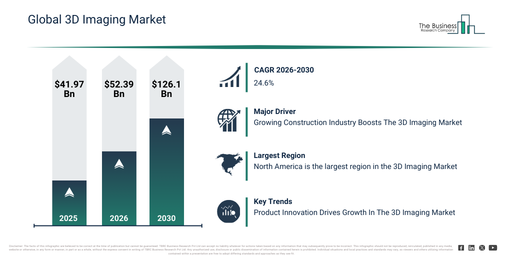
    The 3D imaging market has experienced substantial expansion in its size over recent years. Forecasts show its value will climb from $41.97 billion in 2025 to $52.39 billion in 2026, reflecting a compound annual growth rate (CAGR) of 24.8%. This historical growth can be linked to several key drivers, including the increasing adoption of digital imaging technologies, the expanded use of imaging in manufacturing inspection, a rising demand for visualization tools across media and entertainment sectors, the broadening reach of industrial automation, and the greater availability of advanced imaging hardware.

    The 3D imaging market is projected to experience substantial expansion over the coming years, with its valuation set to reach $126.1 billion by 2030, demonstrating a compound annual growth rate (CAGR) of 24.6%. This anticipated growth during the forecast period stems from several factors, including breakthroughs in AI-based image reconstruction, the increasing use of cloud-based 3D imaging solutions, escalating needs within healthcare and life sciences, the rise of smart manufacturing initiatives, and broader applications across the aerospace and automotive sectors. Key trends identified for the forecast timeframe encompass the increasing integration of 3D imaging for quality control, its greater deployment in industrial inspection, the escalating requirement for high-precision visualization tools, the expansion of 3D imaging into non-contact measurement, and its enhanced incorporation into design and prototyping processes.

    Get A Free Sample Report With In-Depth Market Insights:

    https://thebusinessresearchcompany.com/sample_request?id=94084488&type=smp&name=3D%20Imaging%20Market%20Report%202026&utm_source=Blogs&utm_medium=Paid&utm_campaign=Oct_PR

    3D Imaging Market Growth Drivers: What’s Behind The Acceleration?

    The expanding construction industry is projected to boost the growth of the 3D imaging market going forward. This sector refers to the commercial manufacturing and trade segment focused on developing, preserving, and repairing infrastructure. 3D imaging is increasingly utilized to generate precise and detailed 3D models of structures, which can subsequently be compared against initial designs to identify any flaws. For instance, in July 2024, according to the US Census Bureau, a US-based government agency, the value of construction operations rose from $2.01 trillion in May 2023 to $2.14 trillion in May 2024. Therefore, the consistent growth in the construction industry is driving the growth of the 3D imaging market.

    3D Imaging Market Segments: Where Is Growth Concentrated?

    The 3D imaging market covered in this report is segmented –

    1) By Component: Solutions, Hardware, Services

    2) By Deployment Mode: Cloud, On-premises

    3) By Application: 3D Modeling, 3D Scanning, Layout And Animation, 3D Rendering, Image Reconstruction

    4) By Vertical: Aerospace And Defense, Automotive And Transportation, Manufacturing, Healthcare And Life Sciences, Architecture And Construction, Media And Entertainment, Retail And Consumer Goods, Other Verticals

    Subsegments:

    1) By Solutions: Software (3D Modeling), Cloud-Based Solutions, Application-Specific Solutions

    2) By Hardware: 3D Scanners, Cameras, Display Systems (3D Monitors, Projectors), Sensors

    3) By Services: Consulting Services, Integration Services, Support And Maintenance, Training And Education

    3D Imaging Market Trends: What’s Defining The Industry’s Next Phase?

    Leading companies in the 3D imaging market are developing innovative offerings, such as 3D mapping tools, to attract a broader customer base, increase sales, and grow revenue. 3D mapping tools encompass various sensors, software, and techniques used to create three-dimensional representations of items, surfaces, and environments. For instance, in April 2023, Newsight Imaging Ltd., an Israel-based supplier of image sensor chips, launched the MT LiDAR 3.1. Utilizing the NSI9000 image sensor, which features an on-chip peak detection capability and a 1024 x 480-pixel resolution, the MT LiDAR 3.1 demonstrates Newsight’s multi-triangulation technology, specifically engineered for applications demanding ultra-high accuracy in short-distance measurement. This new reference design is well-suited for continuous production and oversight of structural inspections, as it enables full 3D mapping with just one scan and 480 depth points, supporting a depth resolution of 20um – 1mm while achieving hundreds of frames per second.

    3D Imaging Market Key Participants And Competitive Landscape

    Major companies operating in the 3D imaging market are Able Software Corporation, Tomtec Imaging Systems GmbH, FARO Technologies Inc., Koninklijke Philips N.V., Panasonic Corporation, Konica Minolta Inc., Trimble Inc., Bentley Systems Incorporated, Siemens AG, Dassault Systèmes SE, Visage Imaging Inc., Topcon Corporation, Autodesk Inc., Adobe Inc., Ametek Inc., Matterport Inc., Artec 3D Inc., 3D Systems Corporation, Zebra Imaging, Leica Geosystems, Planmeca Group, GOM GmbH, EON Reality Inc., Fuel3D Technologies, Basis Software Inc., RealD Inc., Euclideon Pty Ltd, Lightform Inc.

    View The Full 3D Imaging Market Report:

    https://thebusinessresearchcompany.com/report/3D-imaging-global-market-report?utm_source=Blogs&utm_medium=Paid&utm_campaign=Oct_PR

    3D Imaging Market Geographic Analysis: Where Is Demand Rising Fastest?

    North America was the largest region in the 3D imaging market in 2025. Asia-Pacific is expected to be the fastest-growing region in the 3D imaging market report forecast period. The regions covered in the 3D imaging market report are Asia-Pacific, South East Asia, Western Europe, Eastern Europe, North America, South America, Middle East, Africa.

    Reach Out To Our Team:

    The Business Research Company: https://www.thebusinessresearchcompany.com/

    Americas: +1 310-496-7795

    Asia: +44 7882 955267 & +91 8897263534

    Europe: +44 7882 955267

    Email us at: marketing@tbrc.info

    Follow us on:

    LinkedIn: https://in.linkedin.com/company/the-business-research-company

    YouTube: https://www.youtube.com/channel/UC24_fI0rV8cR5DxlCpgmyFQ

    Global Market Model: https://www.thebusinessresearchcompany.com/global-market-model
  • 3D Hydrogel Culture Market Growth To $4.91 Billion Creates New Opportunities Across The Industry

    3D Hydrogel Culture Market Growth To $4.91 Billion Creates New Opportunities Across The Industry

    Featuring market attractiveness scoring, total addressable market sizing, company benchmarking matrices, interactive Excel dashboards, deeper supply chain intelligence, emerging startup tracking, and granular product-level insights, The Business Research Company’s 2026 market reports are built to deliver research that is both more actionable and more strategically valuable.

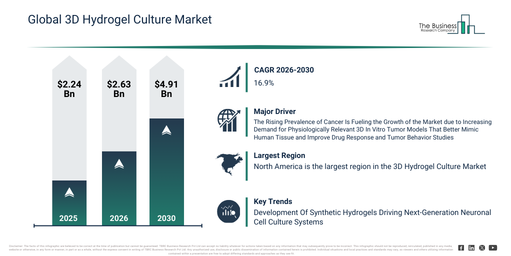
    3D Hydrogel Culture Market Revenue Growth On Track For A 16.9% CAGR Through 2030

    The 3D hydrogel culture market has seen substantial expansion in recent years. It is projected to increase from $2.24 billion in 2025 to $2.63 billion in 2026, achieving a compound annual growth rate (CAGR) of 17.2%. This historical growth is attributable to advancements in cell culture techniques, the growing application of in vitro disease models, the expansion of pharmaceutical research and development activities, the escalating demand for predictive drug testing models, and the increasing adoption of tissue engineering tools.

    The 3D hydrogel culture market is poised for significant expansion over the coming years. This market is projected to reach $4.91 billion by 2030, exhibiting a compound annual growth rate (CAGR) of 16.9%. Several factors will drive this anticipated growth, including escalating investments in regenerative medicine research, a wider embrace of personalized medicine approaches, the broader implementation of organ-on-chip technologies, an increasing need for advanced toxicology testing platforms, and ongoing breakthroughs in hydrogel material science. During the forecast period, key trends observed will involve the increasing uptake of organoid and spheroid culture models, a growing utilization of biomimetic hydrogel matrices, the expanding integration of microfluidic 3D culture platforms, the proliferation of bioprinting-based cell culture systems, and a heightened emphasis on physiologically relevant drug screening.

    Get A Free Sample Report With In-Depth Market Insights:

    https://thebusinessresearchcompany.com/sample_request?id=95125360&type=smp&name=3D%20Hydrogel%20Culture%20Market%20Report%202026&utm_source=Blogs&utm_medium=Paid&utm_campaign=Oct_PR

    3D Hydrogel Culture Market Growth Factors Behind Sustained Expansion

    The growing occurrence of cancer is projected to drive the expansion of the 3D hydrogel culture market in the future. Cancer constitutes a range of illnesses defined by unchecked cellular proliferation and the capacity to infiltrate or disseminate throughout the body, presenting intricate obstacles for investigation and pharmaceutical innovation. The escalation in cancer diagnoses is fueling the need for sophisticated in vitro models capable of accurately replicating human tissue environments, thereby facilitating more precise examinations of tumor characteristics and treatment efficacy. 3D hydrogel culture aids cancer research by offering three-dimensional scaffolds that emulate the extracellular matrix, which permits investigators to examine cell-cell interactions, tumor advancement, and drug effectiveness within a physiologically pertinent setting. As an illustration, in October 2025, the Australian Institute of Health and Welfare, an Australia-based government agency, forecasts that approximately 969,000 individuals will be living after having been diagnosed with cancer over the preceding 10 years, and about 170,000 new cancer cases will be identified in Australia. This signifies a growth of about 93% over 25 years, with the age-standardized cancer incidence projected at 614 cases per 100,000 people and mortality rates anticipated to decline to 194 deaths per 100,000 people. Consequently, the growing frequency of cancer is propelling the 3D hydrogel culture market.

    3D Hydrogel Culture Market Segment Analysis: What Are The Core Market Categories?

    The 3D hydrogel culture market covered in this report is segmented –

    1) By Product: Scaffold Based, Scaffold Free, Bioreactors, Microfluidic, Bioprinting

    2) By Application: Cancer Research, Stem Cell Research And Tissue Engineering, Drug Discovery And Toxicology Testing, Other Applications

    3) By End-User: Pharmaceutical And Biotechnology Companies, Academic And Research Institutes, Hospitals, Other End-Users

    Subsegments:

    1) By Scaffold Based: Natural Polymer Hydrogels, Synthetic Polymer Hydrogels, Composite Hydrogels, Functionalized Hydrogels, Thermoresponsive Hydrogels

    2) By Scaffold Free: Multicellular Spheroids, Patient Derived Organoids, Cell Sheets, Low Attachment Plate Aggregates, Magnetic Levitation Microtissues

    3) By Bioreactors: Spinner Flask Bioreactors, Rotating Wall Vessel Bioreactors, Perfusion Bioreactors, Wave Bag Bioreactors, Stirred Tank Bioreactors

    4) By Microfluidic: Organ On A Chip Platforms, Perfusion Microfluidic Chips, Droplet Microfluidic Systems, Gradient Generation Chips, Barrier Model Chips

    5) By Bioprinting: Inkjet Bioprinting, Extrusion Bioprinting, Laser Assisted Bioprinting, Microvalve Bioprinting, Stereolithography Bioprinting

    3D Hydrogel Culture Market Industry Trends Fueling Future Revenue Growth

    Leading companies in the 3D hydrogel culture market are concentrating on innovations in tissue engineering, specifically the development of synthetic and xeno-free hydrogels. This focus aims to create more physiologically relevant, accurate, and reproducible three-dimensional neuronal cell culture systems. Synthetic and xeno-free hydrogel development involves crafting hydrogel formulations that exclude animal-derived components, yet effectively support robust cell-cell and cell matrix interactions, thereby improving in vitro modeling and enabling potential in vivo applications. For example, in September 2025, TheWell Bioscience Inc., a US-based company recognized for its advanced 3D cell culture platforms in precision medicine, cell therapy, and biomanufacturing, commercially launched its VitroGel NEURON. This innovative synthetic and xeno-free hydrogel delivers a defined, reproducible, and scalable environment conducive to neuronal growth, differentiation, and network formation. The product effectively overcomes the limitations associated with animal-derived matrices by efficiently supporting both 3D and 2D neuronal cultures and functioning as an injectable carrier for in vivo delivery. The hydrogel is specifically engineered to foster strong cell-cell and cell-matrix interactions, allowing researchers to construct more physiologically relevant neuronal models for studies pertaining to neurodevelopment and neurodegeneration.

    3D Hydrogel Culture Market Top Companies Driving Competitive Growth

    Major companies operating in the 3D hydrogel culture market are Merck KGaA, Thermo Fisher Scientific Inc., Corning Incorporated, Lonza Group AG, Sartorius, Bio-Techne Corporation, PromoCell GmbH, Cosmo Bio, AIM Biotech, AMSBIO (AMS Biotechnology), TheWell Bioscience, Cell Guidance Systems (CellGS), Cellendes GmbH, CD Bioparticles, Ferentis (Ferentis AG), Gelomics, TissueLabs, CELLINK (BICO), PepGel LLC, 3D Biotek Inc.

    View The Full 3D Hydrogel Culture Market Report:

    https://thebusinessresearchcompany.com/report/global-3d-hydrogel-culture-market-report?utm_source=Blogs&utm_medium=Paid&utm_campaign=Oct_PR

    3D Hydrogel Culture Market Global Footprint: Which Region Leads The Market?

    North America was the largest region in the 3D hydrogel culture market in 2025. Asia-Pacific is expected to be the fastest-growing region in the forecast period. The regions covered in the 3D hydrogel culture market report are Asia-Pacific, South East Asia, Western Europe, Eastern Europe, North America, South America, Middle East, Africa.

    Reach Out To Our Team:

    The Business Research Company: https://www.thebusinessresearchcompany.com/

    Americas: +1 310-496-7795

    Asia: +44 7882 955267 & +91 8897263534

    Europe: +44 7882 955267

    Email us at: marketing@tbrc.info

    Follow us on:

    LinkedIn: https://in.linkedin.com/company/the-business-research-company

    YouTube: https://www.youtube.com/channel/UC24_fI0rV8cR5DxlCpgmyFQ

    Global Market Model: https://www.thebusinessresearchcompany.com/global-market-model
  • 3D Diagnostic Imaging Services Market Forecast: Breaking Down The Numbers Behind Future Expansion

    3D Diagnostic Imaging Services Market Forecast: Breaking Down The Numbers Behind Future Expansion

    Built to provide research that’s more actionable and strategically valuable, The Business Research Company’s 2026 market reports include market attractiveness analysis, total addressable market sizing, company benchmarking matrices, interactive Excel dashboards, broader supply chain intelligence, emerging startup tracking, and in-depth product insights.

    3D Diagnostic Imaging Services Market Value Growth And Long-Term Outlook

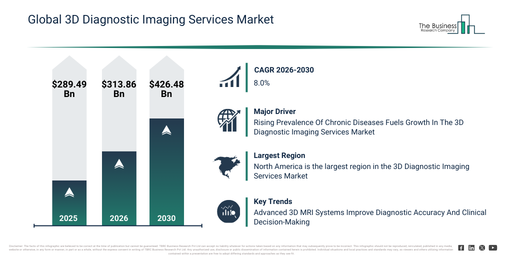
    The 3D diagnostic imaging services market has shown robust expansion in recent years. Its size is expected to grow from $289.49 billion in 2025 to $313.86 billion in 2026, demonstrating a compound annual growth rate (CAGR) of 8.4%. This growth in the past can be attributed to the increasing burden of chronic diseases, a growing demand for accurate diagnostic tools, the expansion of hospital imaging infrastructure, rising awareness of early disease diagnosis, and the adoption of conventional mri and ct imaging systems.

    The 3D diagnostic imaging services market is anticipated to experience substantial expansion over the upcoming years. This market is projected to reach $426.48 billion by 2030, exhibiting a compound annual growth rate (CAGR) of 8.0%. Factors contributing to this anticipated growth include progress in AI-powered 3D imaging analysis, increased capital allocation towards sophisticated diagnostic technologies, a heightened need for tailored and precise diagnostic approaches, the broadening availability of diagnostic imaging services within developing economies, and the greater incorporation of multi-modal imaging methodologies. Key developments expected during this period encompass the increased use of 3D imaging for detecting diseases early, a surge in the requirement for high-definition diagnostic imaging, a growing inclination towards non-surgical diagnostic methods, the broadening scope of advanced imaging facilities in diagnostic centers, and the expanding application of 3D imaging within the fields of oncology and cardiology.

    Get A Free Sample Report With In-Depth Market Insights:

    https://thebusinessresearchcompany.com/sample_request?id=69723375&type=smp&name=3D%20Diagnostic%20Imaging%20Services%20Market%20Report%202026&utm_source=Blogs&utm_medium=Paid&utm_campaign=Oct_PR

    3D Diagnostic Imaging Services Market Demand Drivers Opening New Revenue Streams

    The widespread occurrence of chronic illnesses is anticipated to propel the 3D diagnostic imaging services market. These conditions are defined as enduring health issues that require continuous management and treatment over prolonged durations. 3D diagnostic imaging services offer vital support in managing chronic diseases through intricate visualization of affected organs and tissues. This capability facilitates more accurate tracking of disease advancement and the effectiveness of treatments, ultimately leading to enhanced patient care and better clinical outcomes. For instance, in January 2023, the National Center for Biotechnology Information (NCBI), a US-based National Library of Medicine, projected that by 2050, the population of individuals 50 years and older suffering from at least one chronic ailment is expected to increase by 99.5%, amounting to 142.66 million people. Therefore, the prevalence of chronic diseases is predicted to fuel the expansion of the 3D diagnostic imaging services market.

    3D Diagnostic Imaging Services Market Segment Breakdown: Which Categories Lead On Revenue?

    The 3D diagnostic imaging services market covered in this report is segmented –

    1) By Technique: Ultrasound, MRI, Computed Tomography, Other Techniques

    2) By Application: Oncology, Cardiology, Orthopedic, Other Applications

    3) By End User: Diagnostic Centers, Hospitals

    Subsegments:

    1) By Ultrasound: 3D Or 4D Ultrasound, Contrast-Enhanced Ultrasound

    2) By MRI (Magnetic Resonance Imaging): Functional MRI (FMRI), Magnetic Resonance Spectroscopy (MRS), Cardiac MRI, Whole-Body MRI

    3) By Computed Tomography (CT): Spiral Or Helical CT, Cone Beam CT (CBCT), Positron Emission Tomography-Computed Tomography (PET-CT)

    4) By Other Techniques: Positron Emission Tomography (PET), Single Photon Emission Computed Tomography (SPECT), Optical Imaging

    3D Diagnostic Imaging Services Market Trends Powering Strategic Industry Growth

    Leading companies operating in the 3D diagnostic imaging services market are concentrating on developing advanced solutions, notably high-resolution 3D MRI systems, with the aim of enhancing image quality, improving diagnostic accuracy, and supporting efficient clinical decision-making. These high-resolution 3D MRI systems enable the detailed visualization of complex anatomical structures, thereby facilitating the early detection and precise diagnosis of various medical conditions. For instance, in November 2024, House of Diagnostics (HOD), an India-based diagnostics and pathology services provider, launched the uMR 780, a state-of-the-art digital 3T MRI system, at its Karkardooma center in Delhi. This system is designed to deliver superior image quality and redefine the diagnosis of complex medical conditions. The advanced 3T MRI offers high-resolution 3D imaging capabilities, supporting more accurate and efficient clinical decision-making.

    3D Diagnostic Imaging Services Market Leading Players And Competitive Positioning

    Major companies operating in the 3D diagnostic imaging services market are RadNet Inc, Quest Diagnostics Inc, Laboratory Corporation of America Holdings, Sonic Healthcare Limited, SYNLAB International GmbH InHealth Group Ltd, Cobalt Health Pty Ltd, Accurate Imaging Inc, Atlantic Medical Imaging Inc, Front Range Mobile Imaging Inc, TridentCare LLC, Digirad Corporation, Teleradiology Solutions, Spectra Laboratories Inc, Akumin Inc, Alliance Medical Group, Capitol Imaging Services, Medica Group Plc, Prenuvo Inc, Nox Medical Imaging

    View The Full 3D Diagnostic Imaging Services Market Report:

    https://thebusinessresearchcompany.com/report/3D-Diagnostic-Imaging-Services-Global-Market-Report?utm_source=Blogs&utm_medium=Paid&utm_campaign=Oct_PR

    3D Diagnostic Imaging Services Market Regional Split: Which Areas Are Fueling Growth?

    North America was the largest region in the 3D diagnostic imaging services market in 2025. Western Europe was the second largest region in the 3D diagnostic imaging services market. The regions covered in the 3D diagnostic imaging services market report are Asia-Pacific, South East Asia, Western Europe, Eastern Europe, North America, South America, Middle East, Africa.

    Reach Out To Our Team:

    The Business Research Company: https://www.thebusinessresearchcompany.com/

    Americas: +1 310-496-7795

    Asia: +44 7882 955267 & +91 8897263534

    Europe: +44 7882 955267

    Email us at: marketing@tbrc.info

    Follow us on:

    LinkedIn: https://in.linkedin.com/company/the-business-research-company

    YouTube: https://www.youtube.com/channel/UC24_fI0rV8cR5DxlCpgmyFQ

    Global Market Model: https://www.thebusinessresearchcompany.com/global-market-model
  • 3D Cell Culture Technologies Market Expected To Grow At 19.9% CAGR Through 2030: What Businesses Need To Know

    3D Cell Culture Technologies Market Expected To Grow At 19.9% CAGR Through 2030: What Businesses Need To Know

    Backed by market attractiveness analysis, total addressable market sizing, company benchmarking matrices, interactive Excel dashboards, wider supply chain intelligence, emerging startup coverage, and detailed product-level insights, The Business Research Company’s 2026 market reports are designed to offer research that is more actionable and strategically valuable than ever.

    3D Cell Culture Technologies Market Poised To Hit $9.8 Billion By 2030 With A 19.9% CAGR

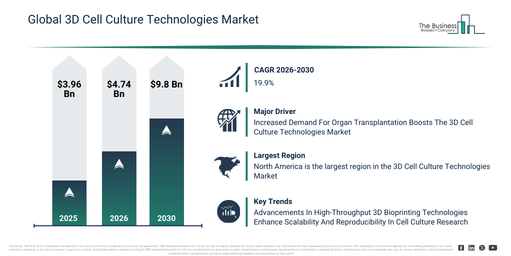
    The 3D cell culture technologies market has experienced significant expansion in recent years. This market is projected to expand from $3.96 billion in 2025 to $4.74 billion in 2026, demonstrating a compound annual growth rate (CAGR) of 19.7%. This historical growth can be linked to several factors, including the increasing application of cell culture in vaccine manufacturing, heightened cancer research efforts, the inherent limitations of 2D cell culture models, an increase in academic research funding, and the development of biotechnology research infrastructure.

    The 3D cell culture technologies market size is anticipated to undergo significant expansion over the next few years. It is projected to reach $9.8 billion by 2030, exhibiting a compound annual growth rate (CAGR) of 19.9%. This expansion during the forecast period is primarily attributed to advancements in 3D bioreactor technologies, increased investment in regenerative medicine, a growing number of pharmaceutical drug discovery pipelines, the rising adoption of personalized medicine, and technological improvements in scaffold materials. Prominent trends expected in this period include the wider integration of 3D cell culture in cancer research, an uptick in the use of organoids and spheroids for disease modeling, an escalating demand for advanced drug screening platforms, the broadening scope of stem cell and regenerative medicine research, and a heightened preference for in vitro models over animal testing.

    Get A Free Sample Report With In-Depth Market Insights:

    https://thebusinessresearchcompany.com/sample_request?id=57756938&type=smp&name=3D%20Cell%20Culture%20Technologies%20Market%20Report%202026&utm_source=Blogs&utm_medium=Paid&utm_campaign=Oct_PR

    3D Cell Culture Technologies Market Growth Backed By Core Demand Fundamentals

    The growing need for organ transplantation is projected to boost the expansion of the 3D cell culture technologies market in the coming years. This technology entails creating three-dimensional cellular arrangements that closely replicate the design and operation of actual tissues or organs, thereby facilitating tissue and organ regrowth and enabling comprehensive drug toxicology evaluations. The surge in organ transplantation stems from a rising prevalence of organ failure coupled with ongoing progress in medical science, which renders these procedures increasingly viable. 3D cell culture advancements contribute to this upward trajectory by supplying critical models for developing organs, advancing regenerative treatments, and conducting preclinical assessments. To illustrate, the United Network for Organ Sharing (UNOS), a US-based nonprofit organization, reported in January 2024 that the United States successfully completed an unprecedented 46,632 organ transplants in 2023. This figure not only exceeded all prior annual records but also signified sustained nationwide growth in transplant operations. Consequently, the heightened demand for organ transplantation is a key impetus behind the growth observed in the 3D cell culture technologies market.

    3D Cell Culture Technologies Market Segmentation: How Does The Market Break Down By Category?

    The 3D cell culture technologies market covered in this report is segmented –

    1) By Type: Scaffold-Based, Scaffold-Free, 3D Bioreactors

    2) By Application: Cancer Research, Stem Cell Research, Drug Discovery, Regenerative Medicine

    3) By End Users: Research Laboratories and Institutes, Biotechnology and Pharmaceutical Companies, Other End Users

    Subsegments:

    1) By Scaffold-Based: Natural Scaffolds, Synthetic Scaffolds, Hybrid Scaffolds

    2) By Scaffold-Free: Spheroid-Based, Organoid-Based

    3) By 3D Bioreactors: Spinner Flask Bioreactors, Rotating Wall Bioreactors, Microcarrier-Based Bioreactors, Hollow Fiber Bioreactors

    3D Cell Culture Technologies Market Growth Trends Reshaping The Competitive Landscape

    Companies active in the 3D cell culture technologies market are prioritizing the development of sophisticated high-throughput scalability systems to boost both efficiency and reproducibility. High-throughput scalability refers to platforms that can rapidly produce a large number of 3D cell models with consistent quality, thereby reducing both variation and the cost per sample. For instance, Inventia Life Science, an Australia-based company specializing in 3D cell culture technologies, introduced RASTRUM Allegro in January 2025, which incorporates drop-on-demand bioprinting and precision robotics. This system can generate a 96-well plate in approximately 6 minutes and a 384-well plate in 9 minutes, allowing for a throughput exceeding 35 plates daily. It achieves post-print intra- and inter-plate coefficient of variation (CV) of under 10 percent and downstream assay CVs under 19 percent, ensuring highly reproducible results. The platform is specifically designed for patient-derived samples, enabling the creation of up to 3.5× more 3D models from limited cell numbers, which reduces the cost per well and improves accessibility for translational research.

    3D Cell Culture Technologies Market Competitive Overview And Top Companies

    Major companies operating in the 3D cell culture technologies market are Becton Dickinson and Company, Corning Incorporated, Eppendorf AG, Merck KGaA, Thermo Fisher Scientific Inc., Lonza Group AG, HiMedia Laboratories Pvt. Ltd., PromoCell GmbH, CellGenix GmbH, Greiner Bio-One International GmbH, Irvine Scientific Sales Company Inc., American Type Culture Collection (ATCC), Miltenyi Biotec B.V. & Co. KG, Sartorius AG, CN Bio Innovations, Nortis Inc., Kiyatec, Nanofiber Solutions, Known Medicine, Synthecon Inc., 3D Biotek LLC, 3D Cell Culture Innovations LLC, 3D Matrix Inc., Allevi Inc., BioSpherix Ltd., Emulate Inc., MicroTissues Inc., Sumitomo Bakelite

    View The Full 3D Cell Culture Technologies Market Report:

    https://thebusinessresearchcompany.com/report/3D-Cell-Culture-Technologies-Global-Market-Report?utm_source=Blogs&utm_medium=Paid&utm_campaign=Oct_PR

    3D Cell Culture Technologies Market Top Region: Where Does Most Revenue Come From?

    North America was the largest region in the 3D cell culture technologies market in 2025. Western Europe was the second largest region in the 3D cell culture technologies market. The regions covered in the 3D cell culture technologies market report are Asia-Pacific, South East Asia, Western Europe, Eastern Europe, North America, South America, Middle East, Africa.

    Reach Out To Our Team:

    The Business Research Company: https://www.thebusinessresearchcompany.com/

    Americas: +1 310-496-7795

    Asia: +44 7882 955267 & +91 8897263534

    Europe: +44 7882 955267

    Email us at: marketing@tbrc.info

    Follow us on:

    LinkedIn: https://in.linkedin.com/company/the-business-research-company

    YouTube: https://www.youtube.com/channel/UC24_fI0rV8cR5DxlCpgmyFQ

    Global Market Model: https://www.thebusinessresearchcompany.com/global-market-model
  • 3D Cardiac Mapping System Market Forecast To Reach $2.97 Billion By 2030: Key Trends Explained

    3D Cardiac Mapping System Market Forecast To Reach $2.97 Billion By 2030: Key Trends Explained

    Featuring market attractiveness scoring, total addressable market sizing, company benchmarking matrices, interactive Excel dashboards, deeper supply chain intelligence, emerging startup tracking, and granular product-level insights, The Business Research Company’s 2026 market reports are built to deliver research that is both more actionable and more strategically valuable.

    3D Cardiac Mapping System Market Size And Revenue Outlook Through 2030

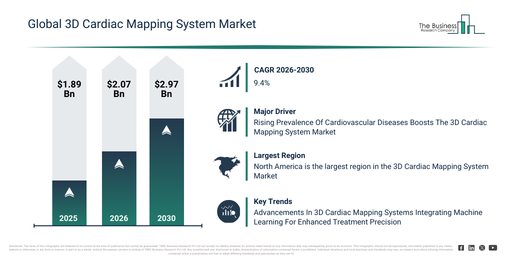
    The 3D cardiac mapping system market size has experienced significant growth over recent years. It is projected to expand from $1.89 billion in 2025 to $2.07 billion in 2026, showing a compound annual growth rate (CAGR) of 9.6%. The historical growth of this market can be attributed to factors such as the increasing prevalence of cardiac arrhythmias, the wider adoption of catheter ablation procedures, rising investment in cardiac care infrastructure, technological advancements in electrophysiology devices, and increased awareness for early arrhythmia diagnosis.

    The 3D cardiac mapping system market is projected to experience substantial expansion over the upcoming years. This market is anticipated to reach a valuation of $2.97 billion by 2030, exhibiting a compound annual growth rate (CAGR) of 9.4%. Drivers for this projected growth include the incorporation of AI-based cardiac mapping algorithms, an increasing need for precision-guided ablation therapies, the proliferation of ambulatory surgical centers, heightened healthcare spending on cardiovascular ailments, and ongoing advancements in mapping software and visualization tools. Key trends anticipated during this period encompass the growing acceptance of 3D mapping in intricate arrhythmia procedures, a surge in the requirement for high-resolution cardiac mapping, an increase in minimally invasive electrophysiology interventions, improvements in catheter design and electrode density, and the worldwide proliferation of cardiac electrophysiology laboratories.

    Get A Free Sample Report With In-Depth Market Insights:

    https://thebusinessresearchcompany.com/sample_request?id=29208867&type=smp&name=3D%20Cardiac%20Mapping%20System%20Market%20Report%202026&utm_source=Blogs&utm_medium=Paid&utm_campaign=Oct_PR

    3D Cardiac Mapping System Market Growth Catalysts And Demand Drivers

    The increasing occurrence of cardiovascular diseases is projected to drive the expansion of the 3D cardiac mapping system market moving forward. This escalation in heart conditions is fueled by factors such as aging, unhealthy lifestyles, obesity, diabetes, high blood pressure, stress, genetic predispositions, environmental pollution, limited access to healthcare, and socioeconomic disparities. A 3D Cardiac Mapping System provides crucial assistance to patients with cardiovascular diseases by offering detailed, real-time visual representations of heart activity, thereby guiding precise diagnosis and treatment for arrhythmias and other related conditions. For instance, in January 2024, data published by the British Heart Foundation, a UK-based cardiovascular research charity, indicated that approximately 7.6 million people in the UK are affected by heart and circulatory diseases, with around 4 million males and 3.6 million females living with these conditions. These ailments are responsible for about 27% of all deaths in the UK, amounting to over 170,000 deaths annually, or roughly 480 deaths each day, which translates to one death every three minutes. Consequently, the rising prevalence of cardiovascular diseases is stimulating the growth of the 3D cardiac mapping system market.

    3D Cardiac Mapping System Market Segment Trends And Revenue Contributors

    The 3D cardiac mapping system market covered in this report is segmented –

    1) By Product: Mapping Systems, Mapping Catheters, Mapping Accessories, Mapping Software

    2) By Application: Atrial Fibrillation, Ventricular Tachycardia, Atrial Flutter, Supraventricular Tachycardia, Other Applications

    3) By End Users: Hospitals, Cardiac Catheterization Laboratories, Ambulatory Surgical Centers, Academic And Research Institutes, Other End Users

    Subsegments:

    1) By Mapping Systems: Electroanatomical Mapping Systems, Contact Mapping Systems, Non-Contact Mapping Systems

    2) By Mapping Catheters: High-Density Mapping Catheters, Single-Point Mapping Catheters, Multi-Electrode Mapping Catheters

    3) By Mapping Accessories: Introducers, Sheaths, Electrodes

    4) By Mapping Software: Signal Analysis Software, 3D Visualization Software, Real-Time Mapping Software

    3D Cardiac Mapping System Market Trends Shaping Long-Term Demand

    Major companies operating in the 3D cardiac mapping system market are prioritizing the development of technologically advanced solutions, such as 3D cardiac mapping systems equipped with machine learning capabilities, to boost diagnostic accuracy and improve treatment outcomes. 3D cardiac mapping systems with machine learning refer to sophisticated medical technologies used in cardiology that combine three-dimensional mapping of the heart’s electrical activity with artificial intelligence algorithms. For instance, in May 2024, Biosense Webster Inc., a US-based cardiac arrhythmia treatment solutions company, introduced CARTO 3 System Version 8, a new 3D cardiac mapping system. This software integrates machine learning capabilities through innovative modules like the CARTO ELEVATE Module and the CARTOSOUND FAM Module. These modules were specifically engineered to improve efficiency, consistency, and precision during catheter ablation procedures performed by electrophysiologists. The CARTO 3 mapping and ablation system enhances signal analysis, refines substrate characterization, and incorporates ultrasound technology for a superior procedure experience.

    3D Cardiac Mapping System Market Competitive Landscape: Which Companies Lead The Industry?

    Major companies operating in the 3D cardiac mapping system market are Abbott Laboratories, Medtronic PLC, Boston Scientific Corporation, Biotronik SE & Co. KG, MicroPort Scientific Corporation, Stereotaxis Inc., Kardium Inc., Acutus Medical Inc., Catheter Precision Inc., BioSig Technologies Inc., Volta Medical, Osypka Medical, CoreMap Inc., APN Health LLC, Japan Lifeline Co. Ltd., Lepu Medical Technology, CathRx Ltd., Adagio Medical Inc., Nihon Kohden Corporation, EP Solutions SA, Sino Medical Sciences Technology

    View The Full 3D Cardiac Mapping System Market Report:

    https://thebusinessresearchcompany.com/report/3d-cardiac-mapping-system-global-market-report?utm_source=Blogs&utm_medium=Paid&utm_campaign=Oct_PR

    3D Cardiac Mapping System Market Regional Breakdown: Where Is Demand Concentrated?

    North America was the largest region in the 3D cardiac mapping system market in 2025. Asia-Pacific is expected to be the fastest-growing region in the forecast period. The regions covered in the 3D cardiac mapping system market report are Asia-Pacific, South East Asia, Western Europe, Eastern Europe, North America, South America, Middle East, Africa.

    Reach Out To Our Team:

    The Business Research Company: https://www.thebusinessresearchcompany.com/

    Americas: +1 310-496-7795

    Asia: +44 7882 955267 & +91 8897263534

    Europe: +44 7882 955267

    Email us at: marketing@tbrc.info

    Follow us on:

    LinkedIn: https://in.linkedin.com/company/the-business-research-company

    YouTube: https://www.youtube.com/channel/UC24_fI0rV8cR5DxlCpgmyFQ

    Global Market Model: https://www.thebusinessresearchcompany.com/global-market-model
  • Wearable Healthcare Devices Market Projected For Strong Expansion Through 2030: Key Trends And Future Outlook

    Wearable Healthcare Devices Market Projected For Strong Expansion Through 2030: Key Trends And Future Outlook

    Built to provide research that’s more actionable and strategically valuable, The Business Research Company’s 2026 market reports include market attractiveness analysis, total addressable market sizing, company benchmarking matrices, interactive Excel dashboards, broader supply chain intelligence, emerging startup tracking, and in-depth product insights.

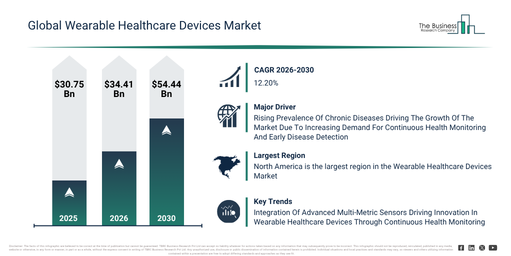
    Wearable Healthcare Devices Market Poised To Hit $54.44 Billion By 2030 With A 12.2% CAGR

    The wearable healthcare devices market has experienced rapid growth in recent years. This market is projected to expand from $30.75 billion in 2025 to reach $34.41 billion in 2026, reflecting a compound annual growth rate (CAGR) of 11.9%. Its historical expansion can be attributed to several factors, including increasing consumer awareness of personal health and fitness tracking, the quick adoption of smartphones that enable wearable connectivity, a rising prevalence of lifestyle-related diseases, the broadening of digital health and telemedicine platforms, and the declining cost of sensor and wearable technology components.

    The wearable healthcare devices sector is projected to experience substantial expansion in the coming years. Its valuation is anticipated to reach $54. 44 billion by 2030, exhibiting a compound annual growth rate (CAGR) of 12. 2%. This projected increase is largely due to factors such as the increasing incorporation of AI-driven personalized health data into wearables, the growing implementation of remote patient monitoring within healthcare frameworks, the proliferation of interoperable cloud-based health data systems, the rising need for continuous, non-invasive health tracking tools, and developments in miniature biosensors and power-efficient wearable technologies. Key developments expected during this period involve the greater embedding of AI-powered predictive health analysis in wearable technology, the increasing deployment of ongoing remote patient monitoring via connected wearables, the expansion of cloud-based health data environments for live health tracking, the expanded application of wearable devices for proactive health management and early disease identification, and a surge in demand for multi-parameter biosensor wearables for customized health insights.

    Get A Free Sample Report With In-Depth Market Insights:

    https://thebusinessresearchcompany.com/sample_request?id=30866769&type=smp&name=Wearable%20Healthcare%20Devices%20Market%20Report%202026&utm_source=Blogs&utm_medium=Paid&utm_campaign=Oct_PR

    Wearable Healthcare Devices Market Demand Drivers Opening New Revenue Streams

    The rising incidence of chronic illnesses is anticipated to drive expansion in the wearable healthcare devices market. These conditions, which include cardiovascular diseases, diabetes, cancer, and chronic respiratory disorders, are enduring health issues that evolve over time, necessitating continuous care and impacting an increasing segment of the worldwide populace in both advanced and emerging economies. A sedentary lifestyle and poor eating habits are key contributors to the widespread occurrence of chronic diseases, leading to enduring metabolic and cardiovascular complications. Wearable healthcare devices bolster this trend by providing continuous monitoring of physiological parameters, aiding in the prompt identification of health deviations, and enhancing patient compliance with treatments via immediate health data. As an example, UnitedHealth Group, a U. S. -based health organization, reported in December 2023 that the incidence of eight significant chronic conditions hit unprecedented levels in 2023, with diabetes alone impacting roughly 11. 5% of adults (approximately 31. 9 million people). Consequently, the expanding occurrence of chronic diseases is fueling the development of the wearable healthcare devices market.

    Wearable Healthcare Devices Market Segment Trends And Revenue Contributors

    The wearable healthcare devices market covered in this report is segmented –

    1) By Type: Wearable Fitness Trackers, Smart Health Watches, Wearable Electrocardiogram Monitor, Wearable Blood Pressure Monitors

    2) By Distribution Channel: Retail Pharmacies, Online Channels, Other Distribution Channels

    3) By Application: Sports And Fitness, Home Healthcare, Remote Patient Monitoring

    4) By End User: Individuals, Healthcare Providers, Fitness And Wellness Centers, Insurance Companies, Corporate Wellness Programs, Research Institutions

    Subsegments:

    1) By Wearable Fitness Trackers: Activity Tracking Devices, Sleep Monitoring Devices, Heart Rate Tracking Devices, Calorie Tracking Devices, Multi Sport Tracking Devices

    2) By Smart Health Watches: Advanced Health Monitoring Watches, Lifestyle And Wellness Tracking Watches, Sports Performance Monitoring Watches, Connected Medical Alert Watches, Hybrid Analog Digital Health Watches

    3) By Wearable Electrocardiogram Monitor: Continuous Cardiac Monitoring Devices, On Demand Cardiac Recording Devices, Patch Based Cardiac Monitoring Devices, Chest Strap Cardiac Monitoring Devices, Portable Personal Cardiac Monitoring Devices

    4) By Wearable Blood Pressure Monitors: Wrist Based Blood Pressure Monitoring Devices, Upper Arm Blood Pressure Monitoring Devices, Continuous Blood Pressure Tracking Devices, Cuffless Blood Pressure Monitoring Devices, Ambulatory Blood Pressure Monitoring Devices

    Wearable Healthcare Devices Market Trends Powering Strategic Industry Growth

    Leading companies in the wearable healthcare devices market are prioritizing the integration of sophisticated multi-metric sensor technologies to enhance health understanding and support preventive care. Advanced multi-metric sensors are integrated sensing systems capable of simultaneously monitoring diverse physiological parameters, including heart rate variability, body temperature fluctuations, respiratory rate, and activity levels, thereby enabling comprehensive real-time health observation. For example, in August 2023, Withings, a digital health company from France, unveiled its new ScanWatch 2 and ScanWatch Light. These devices come with improved sensors that facilitate 24/7 monitoring of additional health metrics beyond standard tracking, such as baseline body temperature variation, heart-rate variability, respiratory rate, and female cycle tracking. The devices also incorporate advanced MultiWave PPG sensors and high dynamic range accelerometers to automatically identify over 40 activities, delivering deeper health insights and enhancing personalized health management.

    Wearable Healthcare Devices Market Competitive Landscape: Who Leads The Industry?

    Major companies operating in the wearable healthcare devices market are Apple Inc., Samsung Electronics Company Limited, Huawei Technologies Company Limited, Abbott Laboratories Inc., Medtronic PLC, Senseonics Holdings Incorporated, Koninklijke Philips Naamloze Vennootschap, GE HealthCare Technologies Inc., Garmin Limited, Omron Corporation, Dexcom Incorporated, Insulet Corporation, Sotera Wireless Incorporated, Tandem Diabetes Care Incorporated, Ypsomed Holding Aktiengesellschaft, Withings Société par Actions Simplifiée, Owlet Incorporated, AliveCor Incorporated, Qardio Incorporated, ForaCare Suisse AG, Corsano Health Besloten Vennootschap, Movano Health Incorporated, NeuroMetrix Incorporated, Shenzhen Viatom Technology Company Limited

    View The Full Wearable Healthcare Devices Market Report:

    https://thebusinessresearchcompany.com/report/wearable-healthcare-devices-market-report?utm_source=Blogs&utm_medium=Paid&utm_campaign=Oct_PR

    Wearable Healthcare Devices Market Geographic Landscape: Which Region Leads Industry Growth?

    North America was the largest region in the wearable healthcare devices market in 2025. Asia-Pacific is expected to be the fastest-growing region in the forecast period. The regions covered in the wearable healthcare devices market report are Asia-Pacific, South East Asia, Western Europe, Eastern Europe, North America, South America, Middle East and Africa.

    Reach Out To Our Team:

    The Business Research Company: https://www.thebusinessresearchcompany.com/

    Americas: +1 310-496-7795

    Asia: +44 7882 955267 & +91 8897263534

    Europe: +44 7882 955267

    Email us at: marketing@tbrc.info

    Follow us on:

    LinkedIn: https://in.linkedin.com/company/the-business-research-company

    YouTube: https://www.youtube.com/channel/UC24_fI0rV8cR5DxlCpgmyFQ

    Global Market Model: https://www.thebusinessresearchcompany.com/global-market-model