Author: Marketing Posting

  • Laceration Closure Devices Market Size And Growth In 2026: Key Factors Shaping Future Demand

    Laceration Closure Devices Market Size And Growth In 2026: Key Factors Shaping Future Demand

    Built to provide research that’s more actionable and strategically valuable, The Business Research Company’s 2026 market reports include market attractiveness analysis, total addressable market sizing, company benchmarking matrices, interactive Excel dashboards, broader supply chain intelligence, emerging startup tracking, and in-depth product insights.

    Laceration Closure Devices Market Revenue Growth On Track For A 6.4% CAGR Through 2030

    The laceration closure devices market size has experienced strong growth in recent years. It is anticipated to increase from $10.31 billion in 2025 to $11.05 billion in 2026, at a compound annual growth rate (CAGR) of 7.2%. Historically, this expansion has been propelled by a rising incidence of traumatic injuries, an increasing number of emergency department visits, the widespread use of sutures and staples in wound care, growing surgical procedure volumes, and heightened awareness of proper wound management.

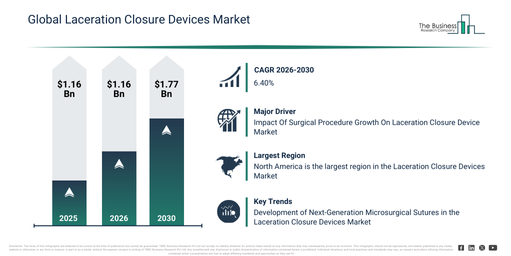
    The laceration closure devices market is expected to experience substantial growth over the coming years. This market is projected to reach $14.17 billion by 2030, showing a compound annual growth rate (CAGR) of 6.4%. The expansion during this forecast period is driven by factors such as increasing demand for minimally invasive wound closure techniques, a heightened focus on outpatient and ambulatory care, a growing preference for solutions that facilitate faster healing, broader access to advanced wound care products, and an intensified emphasis on patient comfort and aesthetic results. Significant trends anticipated in this period include the rising adoption of non-invasive wound closure options, a clear preference for skin adhesives and closure strips over sutures, the expanded application of laceration closure devices in emergency care settings, the growth of rapid wound management in outpatient environments, and a concentrated effort towards achieving reduced scarring and quicker healing outcomes.

    Get A Free Sample Report With In-Depth Market Insights:

    https://thebusinessresearchcompany.com/sample_request?id=37249859&type=smp&name=Laceration%20Closure%20Devices%20Market%20Report%202026&utm_source=Blogs&utm_medium=Paid&utm_campaign=Oct_PR

    Laceration Closure Devices Market Growth Factors: What’s Supporting Expansion?

    The projected expansion of the laceration closure device market is anticipated to be fueled by a rise in surgical procedures. These procedures are medical interventions utilizing invasive methods for diagnosing, treating, or managing various injuries, diseases, or conditions. Factors contributing to this increase include an aging global demographic, progress in medical technology, and a growing demand for elective surgical interventions. In surgical contexts, laceration closure devices offer advantages by efficiently sealing wounds, shortening operational durations, mitigating tissue damage, and accelerating recovery relative to conventional sutures. As an illustration, data from June 2024 by the International Society of Aesthetic Plastic Surgery (ISAPS), a US-based nonprofit professional entity, indicated a 3.4% overall increase in surgical and non-surgical procedures in 2023, totaling 34.9 million. This particular expansion was predominantly due to a 5.5% surge in surgical procedures. Plastic surgeons conducted more than 15.8 million surgical procedures and 19.1 million non-surgical procedures, signifying a 40% cumulative rise in procedures over the past four years. Consequently, the escalating volume of surgical procedures is a key impetus for the expansion of the laceration closure device market.

    Laceration Closure Devices Market Segment Analysis Spotlighting Growth Areas

    The laceration closure devices market covered in this report is segmented –

    1) By Product: Staples, Adhesives, Sutures, Strips, Wound Strips, Mechanical Wound Closure Devices

    2) By Wound Type: Acute, Surgical Wounds

    3) By End-User: Hospitals, Ambulatory Surgery Centers, Other End-Users

    Subsegments:

    1) By Staples: Stainless Steel Staples, Titanium Staples

    2) By Adhesives: Tissue Adhesives, Surgical Adhesives

    3) By Sutures: Absorbable Sutures, Non-Absorbable Sutures

    4) By Strips: Steri-Strips, Wound Closure Strips

    5) By Wound Strips: Paper Wound Strips, Fabric Wound Strips

    6) By Mechanical Wound Closure Devices: Skin Closures, Wound Closure Clips

    Laceration Closure Devices Market Industry Trends: What’s Reshaping Demand?

    Major companies within the laceration closure devices market are prioritizing the development of innovative solutions, such as next-generation microsurgical sutures, to enhance precision, reduce recovery time, and improve patient outcomes. These advanced, ultra-fine sutures are specifically designed for precise, minimally invasive surgical procedures, offering improved biocompatibility, strength, and reduced tissue trauma for more effective healing and faster recovery. For instance, in October 2024, Corza Medical GmbH, a US-based manufacturing company, unveiled Onatec Ophthalmic Microsurgical Sutures at the American Academy of Ophthalmology Conference. The Onatec ophthalmic microsurgical sutures are meticulously crafted from highly tempered stainless steel, ensuring durability and precision, and are engineered to improve tissue penetration and minimize trauma during eye surgeries. Their sophisticated manufacturing process ensures optimal geometries for stitching in delicate and small anatomical spaces.

    Laceration Closure Devices Market Competitive Overview And Top Companies

    Major companies operating in the laceration closure devices market are Johnson & Johnson, 3M Company, Medtronic plc, Becton Dickinson and Company, B. Braun Melsungen AG, Smith & Nephew plc, Teleflex Incorporated, Integra LifeSciences Corporation, Mölnlycke Health Care AB, Aspen Surgical Products, BSN medical GmbH, Stryker Corporation, Baxter International Inc, Terumo Corporation, Arthrex Inc, Zimmer Biomet Holdings Inc, Meril Life Sciences Pvt Ltd, Healthium Medtech, Medline Industries, Peters Surgical

    View The Full Laceration Closure Devices Market Report:

    https://thebusinessresearchcompany.com/report/laceration-closure-devices-global-market-report?utm_source=Blogs&utm_medium=Paid&utm_campaign=Oct_PR

    Laceration Closure Devices Market Leading Geography: Which Region Contributes The Most Revenue?

    North America was the largest region in the laceration closure devices market in 2025. Asia-Pacific is expected to be the fastest-growing region in the forecast period. The regions covered in the laceration closure devices market report are Asia-Pacific, South East Asia, Western Europe, Eastern Europe, North America, South America, Middle East, Africa.

    Reach Out To Our Team:

    The Business Research Company: https://www.thebusinessresearchcompany.com/

    Americas: +1 310-496-7795

    Asia: +44 7882 955267 & +91 8897263534

    Europe: +44 7882 955267

    Email us at: marketing@tbrc.info

    Follow us on:

    LinkedIn: https://in.linkedin.com/company/the-business-research-company

    YouTube: https://www.youtube.com/channel/UC24_fI0rV8cR5DxlCpgmyFQ

    Global Market Model: https://www.thebusinessresearchcompany.com/global-market-model
  • Laboratory Robotics Market Forecast 2026–2030: Market Size, Trends And Growth Opportunities

    Laboratory Robotics Market Forecast 2026–2030: Market Size, Trends And Growth Opportunities

    Backed by market attractiveness analysis, total addressable market sizing, company benchmarking matrices, interactive Excel dashboards, wider supply chain intelligence, emerging startup coverage, and detailed product-level insights, The Business Research Company’s 2026 market reports are designed to offer research that is more actionable and strategically valuable than ever.

    Laboratory Robotics Market Value Growth And Long-Term Outlook

    The laboratory robotics market has demonstrated robust growth in recent years. It is anticipated to expand from $2.93 billion in 2025 to $3.22 billion in 2026, showing a compound annual growth rate (CAGR) of 9.9%. This historical expansion can be traced to various factors including widespread manual sample handling practices, the limited extent of automation in laboratories, a significant dependency on labor, the increasing establishment of research laboratory infrastructure, and a heightened demand for precision and reproducibility.

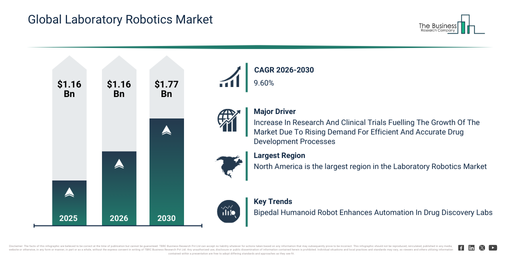
    The laboratory robotics market size is projected to experience robust expansion over the coming years. By 2030, it is anticipated to reach $4.64 billion, exhibiting a compound annual growth rate (CAGR) of 9.6%. This growth during the forecast period can be attributed to several factors, including the advancement of sophisticated robotic arms and automated workstations, the incorporation of AI-driven workflow enhancements, increasing investments in genomics and proteomics studies, the proliferation of clinical diagnostics facilities, and the uptake of cloud-based platforms for data analysis and visualization. Key trends during this period encompass the greater adoption of automated liquid handling systems, the growing integration of laboratory information management systems (LIMS), an increase in high-throughput screening and sample processing, the broader application of robotics in drug discovery and clinical diagnostics, and an emphasis on minimizing human error and improving workflow efficiency.

    Get A Free Sample Report With In-Depth Market Insights:

    https://thebusinessresearchcompany.com/sample_request?id=36024360&type=smp&name=Laboratory%20Robotics%20Market%20Report%202026&utm_source=Blogs&utm_medium=Paid&utm_campaign=Oct_PR

    Laboratory Robotics Market Demand Drivers: What’s Powering Industry Growth?

    Anticipated expansion of the laboratory robotics market is linked to the growing volume of research and clinical trials. These trials encompass methodical investigations aimed at finding, assessing, and confirming the safety, effectiveness, and best application of novel drugs, treatments, or medical technologies involving human participants. The surge in these studies is a consequence of the rising incidence of intricate and long-term illnesses, which fuels the need for innovative and more potent therapeutic solutions. Laboratory robotics significantly improves research and clinical trials through task automation, boosting operational efficiency, and minimizing human errors. They expedite experimental processes, enhance the precision of data, and facilitate high-throughput screening, thereby accelerating the speed and improving the caliber of scientific discoveries. A notable example is provided by the Association of the British Pharmaceutical Industry (ABPI), a UK-based organization, which reported in December 2024 that the number of pharmaceutical industry trials initiated in the UK grew for the second successive year, climbing from 411 in 2022 to 426 in 2023. Consequently, the uptick in research and clinical trials is propelling the expansion of the laboratory robotics market.

    Laboratory Robotics Market Segment Performance And Emerging Opportunities

    The laboratory robotics market covered in this report is segmented –

    1) By Component: Hardware, Software, Services

    2) By Product Type: Automated Liquid Handling Robots, Automated Plate Handlers, Robotic Arms, Lab Automation Workstations, Microplate Readers And Washers

    3) By Application: Drug Discovery, Clinical Diagnosis, Microbiology Solutions, Genomics Solutions, Proteomics Solutions

    4) By End User: Clinical Laboratory, Research Laboratory

    Subsegments:

    1) By Hardware: Robotic Arms, Automated Liquid Handlers, Microplate Movers, Sample Storage Systems, Sensors And Cameras, Lab-On-A-Chip Devices, Pipetting Robots, Workstations

    2) By Software: Workflow Management Software, Data Analysis And Visualization Tools, Robotic Control Software, Laboratory Information Management Systems (LIMS), Scheduling Software, Integration And Interface Software

    3) By Services: Installation And Commissioning, Maintenance And Repair, Calibration Services, Training And Support, Software Upgrades And System Integration, Validation And Compliance Services

    Laboratory Robotics Market Innovation Trends: What Developments Are Reshaping The Industry?

    Major companies operating in the laboratory robotics market are focusing on developing technologically advanced solutions, such as bipedal humanoid robotic lab assistants, to enhance automation, improve precision, and increase operational efficiency in laboratory workflows. A bipedal humanoid robotic lab assistant refers to a robot designed with two legs and a human-like structure, capable of performing laboratory tasks that typically require human movement and dexterity. For instance, in March 2025, Insilico Medicine, a US-based biotechnology company, launched a bipedal humanoid robot within its fully robotic, AI-powered drug discovery laboratory. This humanoid robot is designed to operate equipment traditionally meant for humans, helping to bridge the gap in automation by handling tasks such as data acquisition, experiment tracking, reagent handling, and lab supervision. The goal is to create a truly autonomous research facility where AI and robotics collaborate seamlessly, reducing the need for human intervention in mundane yet essential lab processes. This development marks a significant advancement toward fully autonomous drug discovery, with the humanoid enhancing efficiency and enabling advanced workflows in both pharmaceutical and broader scientific research.

    Laboratory Robotics Market Competitive Landscape: Which Companies Lead The Industry?

    Major companies operating in the laboratory robotics market are Thermo Fisher Scientific Inc., Agilent Technologies Inc., Sartorius AG, PerkinElmer Inc., Beckman Coulter Life Sciences, Tecan Group Ltd., Hamilton Company, Hudson Robotics Inc., Peak Analysis & Automation (PAA), Opentrons Labworks Inc., HighRes Biosolutions Inc., Aurora Biomed Inc., AutoGen Inc., Robotic Automation Inc., Staubli Robotics, KUKA AG, FANUC Corporation, DENSO Robotics, Precise Automation Inc., Labman Automation Ltd., Biosero Inc., Chemspeed Technologies AG, Synchron Lab Automation, SPT Labtech Ltd.

    View The Full Laboratory Robotics Market Report:

    https://thebusinessresearchcompany.com/report/laboratory-robotics-global-market-report?utm_source=Blogs&utm_medium=Paid&utm_campaign=Oct_PR

    Laboratory Robotics Market Regional Outlook: Where Is Opportunity Concentrated?

    North America was the largest region in the laboratory robotics market in 2025. Asia-Pacific is expected to be the fastest-growing region in the forecast period. The regions covered in the laboratory robotics market report are Asia-Pacific, South East Asia, Western Europe, Eastern Europe, North America, South America, Middle East, Africa.

    Reach Out To Our Team:

    The Business Research Company: https://www.thebusinessresearchcompany.com/

    Americas: +1 310-496-7795

    Asia: +44 7882 955267 & +91 8897263534

    Europe: +44 7882 955267

    Email us at: marketing@tbrc.info

    Follow us on:

    LinkedIn: https://in.linkedin.com/company/the-business-research-company

    YouTube: https://www.youtube.com/channel/UC24_fI0rV8cR5DxlCpgmyFQ

    Global Market Model: https://www.thebusinessresearchcompany.com/global-market-model
  • Epilepsy Drugs Market Size Forecast: How The Industry Is Expected To Grow From 2026 To 2030

    Epilepsy Drugs Market Size Forecast: How The Industry Is Expected To Grow From 2026 To 2030

    Built to provide research that’s more actionable and strategically valuable, The Business Research Company’s 2026 market reports include market attractiveness analysis, total addressable market sizing, company benchmarking matrices, interactive Excel dashboards, broader supply chain intelligence, emerging startup tracking, and in-depth product insights.

    Epilepsy Drugs Market Forecast: What Value Will The Market Reach By 2030?

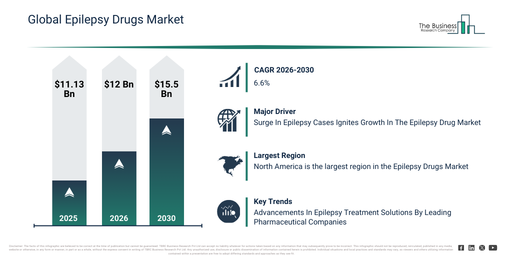
    The epilepsy drugs market has demonstrated robust expansion in recent years. Looking ahead, it is projected to expand from $11.13 billion in 2025 to $12 billion in 2026, exhibiting a compound annual growth rate (CAGR) of 7.8%. The historical growth can be linked to several factors, including the enduring prevalence of epilepsy across all age groups, the established clinical adoption of first-generation antiepileptic medications, the expansion of neurology care provisions, the accessibility of affordable generic antiseizure drugs, and an elevated rate of seizure disorder diagnoses.

    The epilepsy drugs market size is projected to experience substantial expansion over the upcoming years, reaching $15.5 billion by 2030, driven by a compound annual growth rate (CAGR) of 6.6%. This anticipated growth during the forecast period can be attributed to several factors, including the increasing global prevalence of epilepsy, the wider uptake of more recent antiepileptic medications, enhanced understanding and management of epilepsy, broadened availability of neurological care in developing regions, and the desire for drugs with better safety and tolerability characteristics. Key trends anticipated during this period involve a consistent need for broad-spectrum antiepileptic drugs, the expanding utilization of second and third-generation anti-epileptics, a heightened emphasis on treatments providing long-term seizure management, an increasing preference for oral antiepileptic forms, and ongoing dependence on combination drug regimens for epilepsy that is resistant to treatment.

    Get A Free Sample Report With In-Depth Market Insights:

    https://thebusinessresearchcompany.com/sample_request?id=91714732&type=smp&name=Epilepsy%20Drugs%20Market%20Report%202026&utm_source=Blogs&utm_medium=Paid&utm_campaign=Oct_PR

    Epilepsy Drugs Market Demand Drivers Opening New Revenue Streams

    The increasing incidence of individuals affected by epilepsy is anticipated to drive the expansion of the epilepsy drug market in the foreseeable future. Epilepsy is characterized as a neurological disorder marked by recurrent seizures, which can vary in intensity and their impact on daily life. This condition is more prevalent among older age groups, and individuals who are survivors of traumatic brain injuries (TBIs), strokes, brain tumors, and other neurological conditions face a higher risk of developing epilepsy. Epilepsy drugs function by stabilizing electrical activity in the brain, thereby reducing the likelihood and severity of seizures, which helps in the management and control of epilepsy. For instance, in February 2024, according to the world health organization, a US-based national agency, worldwide, approximately 5 million individuals receive an epilepsy diagnosis annually, with high-income countries reporting an estimated 49 cases per 100,000 people annually, while in low- and middle-income nations, this rate can soar to 139 cases per 100,000. Consequently, the rising in number of people affected with epilepsy is fueling the growth of the epilepsy drug market.

    Epilepsy Drugs Market Segment Landscape: Which Areas Lead Development?

    The epilepsy drugs market covered in this report is segmented –

    1) By Seizure Type: Focal Seizures, Generalized Seizures

    2) By Generation Type: First Generation Anti-Epileptics, Second Generation Anti-Epileptics, Third Generation Anti-Epileptics

    3) By Route Of Administration: Oral, Intravenous, Intra-Muscular

    4) By Distribution Channel: Drug Stores And Retail Pharmacies, Hospital Pharmacies

    Subsegments:

    1) By Focal Seizures: Simple Focal Seizures, Complex Focal Seizures

    2) By Generalized Seizures: Tonic-Clonic Seizures (Grand Mal), Absence Seizures (Petit Mal), Myoclonic Seizures, Tonic Seizures, Atonic Seizures

    Epilepsy Drugs Market Trends Powering Strategic Industry Growth

    Leading companies active in the epilepsy drug market are concentrating on developing innovative treatments to enhance seizure control and improve the quality of life for patients. These innovative epilepsy treatments may involve new drug formulations, advanced neurostimulation techniques, individualized precision medicine approaches, gene therapies, and emerging technologies such as closed-loop systems for seizure detection and intervention. For example, in January 2024, Akumentis Healthcare, an India-based pharmaceutical company, launched Clasepi, a prescription cannabidiol (CBD) drug specifically formulated to treat seizures associated with Lennox-Gastaut Syndrome (LGS), Dravet Syndrome, or Tuberous Sclerosis Complex (TSC) in patients aged 1 year and older. It has received approval from the Drug Controller General of India (DCGI) and has demonstrated effectiveness in reducing seizures, particularly in cases where conventional anti-seizure medications have proven unsuccessful.

    Epilepsy Drugs Market Industry Leaders And Competitive Landscape

    Major companies operating in the epilepsy drugs market are Pfizer Inc, SK Biopharmaceuticals, Sanofi, Abbott Laboratories, Novartis AG, GlaxoSmithKline plc, H. Lundbeck, Viatris, Otsuka America Pharmaceutical Inc, Bausch Health Companies Inc, UCB S.A, Sun Pharmaceutical Industries Ltd, Eisai Co Ltd, Sumitomo Pharma Co Ltd, Jazz Pharmaceuticals plc, Dr. Reddy’s Laboratories Ltd, Angelini S.p.a, Amneal Pharmaceuticals, Alkem Laboratories, Sunovion Pharmaceuticals Inc, Upsher-Smith, Zogenix, Neurelis Inc

    View The Full Epilepsy Drugs Market Report:

    https://thebusinessresearchcompany.com/report/epilepsy-drugs-global-market-report?utm_source=Blogs&utm_medium=Paid&utm_campaign=Oct_PR

    Epilepsy Drugs Market Regional Analysis And Leading Geography

    North America was the largest region in the epilepsy drugs market in 2025. The regions covered in the epilepsy drugs market report are Asia-Pacific, South East Asia, Western Europe, Eastern Europe, North America, South America, Middle East, Africa.

    Reach Out To Our Team:

    The Business Research Company: https://www.thebusinessresearchcompany.com/

    Americas: +1 310-496-7795

    Asia: +44 7882 955267 & +91 8897263534

    Europe: +44 7882 955267

    Email us at: marketing@tbrc.info

    Follow us on:

    LinkedIn: https://in.linkedin.com/company/the-business-research-company

    YouTube: https://www.youtube.com/channel/UC24_fI0rV8cR5DxlCpgmyFQ

    Global Market Model: https://www.thebusinessresearchcompany.com/global-market-model
  • Laboratory Mixer Market Size Reaches $2.13 Billion In 2026: What Is Driving Growth?

    Laboratory Mixer Market Size Reaches $2.13 Billion In 2026: What Is Driving Growth?

    Featuring market attractiveness scoring, total addressable market sizing, company benchmarking matrices, interactive Excel dashboards, deeper supply chain intelligence, emerging startup tracking, and granular product-level insights, The Business Research Company’s 2026 market reports are built to deliver research that is both more actionable and more strategically valuable.

    Laboratory Mixer Market Poised To Hit $2.96 Billion By 2030 With A 8.6% CAGR

    The laboratory mixer market size has experienced robust expansion in recent years. This market is projected to expand from $1.95 billion in 2025 to $2.13 billion in 2026, demonstrating a compound annual growth rate (CAGR) of 9.2%. Historically, this growth was driven by factors such as the rise in pharmaceutical research endeavors, the proliferation of biotechnology laboratories, increased adoption of laboratory automation, the growing need for standardized sample preparation, and the availability of sophisticated laboratory instruments.

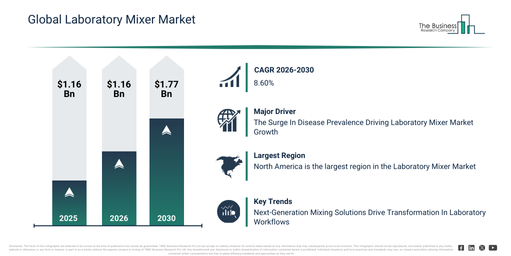
    The laboratory mixer market is projected to experience substantial expansion over the coming years. Its valuation is anticipated to reach $2.96 billion by 2030, with a compound annual growth rate (CAGR) of 8.6%. This anticipated growth during the forecast timeframe is attributable to heightened investments in life sciences research, the growing uptake of automated laboratory processes, the expansion of personalized medicine studies, an increasing emphasis on data-centric experimentation, and a rising need for high-throughput laboratory instruments. Key trends foreseen in this period encompass the wider acceptance of digital laboratory mixing devices, an escalating requirement for precise sample preparation, the broader implementation of automated mixing solutions, the development of laboratory mixers suitable for multiple applications, and a strengthened commitment to ensuring reproducibility and accuracy.

    Get A Free Sample Report With In-Depth Market Insights:

    https://thebusinessresearchcompany.com/sample_request?id=74293431&type=smp&name=Laboratory%20Mixer%20Market%20Report%202026&utm_source=Blogs&utm_medium=Paid&utm_campaign=Oct_PR

    Laboratory Mixer Market Growth Drivers: What’s Behind The Acceleration?

    The rising prevalence of diseases is a significant factor contributing to the laboratory mixer’s market growth. This increase in disease prevalence leads to heightened laboratory diagnostic testing, along with research and development activities. A laboratory mixer is an indispensable common tool in all laboratories, performing essential tasks such as mixing, dissolving, and emulsifying materials. For instance, in September 2023, the World Health Organization, a Switzerland-based specialized agency of the United Nations, reported 41 million annual global fatalities due to non-communicable diseases (NCDs) or chronic conditions, representing 74% of total deaths. These deaths specifically included 17.9 million from cardiovascular diseases, 9.3 million from cancer, 4.1 million from chronic respiratory diseases, and 2.0 million from diabetes. Therefore, the growing prevalence of diseases is anticipated to propel the growth of the laboratory mixer market in the coming years.

    Laboratory Mixer Market Segment Landscape And Growth Outlook

    The laboratory mixer market covered in this report is segmented –

    1) By Product: Shakers, Magnetic Stirrers, Vortex Mixers, Overhead Stirrers, Accessories

    2) By Platform: Digital Devices, Analog Devices

    3) By Operability: Gyratory Movement, Linear Movement, Rocking Or Tilting Movement, Orbital Movement

    4) By End-User: Research Laboratories And Institutes, Pharmaceutical And Biotechnology Companies, Other End-Users

    Subsegments:

    1) By Shakers: Orbital Shakers, Rocking Shakers, Incubator Shakers

    2) By Magnetic Stirrers: Hot Plate Magnetic Stirrers, Digital Magnetic Stirrers, Multi-Position Magnetic Stirrers

    3) By Vortex Mixers: Mini Vortex Mixers, High-Speed Vortex Mixers

    4) By Overhead Stirrers: Single-Speed Overhead Stirrers, Variable-Speed Overhead Stirrers

    5) By Accessories: Mixing Barrels, Stirring Rods

    Laboratory Mixer Market Trends: What’s Defining The Industry’s Next Phase?

    Major companies in the laboratory mixers market are concentrating on developing advanced products, such as touch-screen vortex mixers, to improve precision, enhance user comfort, and meet the rising demand for efficient, contamination-free sample mixing in modern laboratories. A touch-screen vortex mixer is a lab apparatus that uses orbital motion for rapid sample agitation, featuring a digital, glove-compatible touchscreen for precise speed and time control, which helps researchers achieve more consistent, sterile, and user-friendly sample preparation. For instance, in February 2024, Starlab International GmbH, a Germany-based laboratory-instrument manufacturing company, launched the Starlab Vortex Mixer, an innovative device created for next-generation labs. This mixer showcases a sleek curved industrial design, a glove-friendly touchscreen, and a speed range from 300 to 3,500 rpm with two operational modes (touch and continuous). It also incorporates one-touch preset options for speed and timing, a power-saving sleep mode, anti-slip feet for stability, and optional adapters for microplates or up to 15 microcentrifuge tubes (running up to 1,500 rpm), allowing for gentle to vigorous mixing across various types of vessels. This design facilitates the seamless resuspension of cells or chemical pellets while maintaining a low noise level for an undisturbed lab environment.

    Laboratory Mixer Market Competitive Landscape: Who Leads The Industry?

    Major companies operating in the laboratory mixer market are Thermo Fisher Scientific Inc., Eppendorf AG, IKA Works Inc., Heidolph Instruments GmbH & Co. KG, Bio-Rad Laboratories Inc., Remi Elektrotechnik Limited, Benchmark Scientific Inc., Grant Instruments Ltd., VELP Scientifica Srl, OHAUS Corporation, Scilogex LLC, Boekel Scientific, Cleaver Scientific Ltd., Major Science, Jeio Tech Co. Ltd., Labconco Corporation, Sheldon Manufacturing Inc., Ratek Instruments Pty Ltd., Nickel-Electro Ltd., Sainty International Group Co. Ltd.

    View The Full Laboratory Mixer Market Report:

    https://thebusinessresearchcompany.com/report/laboratory-mixer-global-market-report?utm_source=Blogs&utm_medium=Paid&utm_campaign=Oct_PR

    Laboratory Mixer Market Geographic Landscape: Which Region Leads Industry Growth?

    North America was the largest region in the laboratory mixer market in 2025. Asia-Pacific is expected to be the fastest region in the laboratory mixer market share during forecast period. The regions covered in the laboratory mixer market report are Asia-Pacific, South East Asia, Western Europe, Eastern Europe, North America, South America, Middle East, Africa.

    Reach Out To Our Team:

    The Business Research Company: https://www.thebusinessresearchcompany.com/

    Americas: +1 310-496-7795

    Asia: +44 7882 955267 & +91 8897263534

    Europe: +44 7882 955267

    Email us at: marketing@tbrc.info

    Follow us on:

    LinkedIn: https://in.linkedin.com/company/the-business-research-company

    YouTube: https://www.youtube.com/channel/UC24_fI0rV8cR5DxlCpgmyFQ

    Global Market Model: https://www.thebusinessresearchcompany.com/global-market-model
  • Laboratory Centrifuge Market Valued At $2.22 Billion In 2026: Key Trends And Growth Drivers

    Laboratory Centrifuge Market Valued At $2.22 Billion In 2026: Key Trends And Growth Drivers

    Built to provide research that’s more actionable and strategically valuable, The Business Research Company’s 2026 market reports include market attractiveness analysis, total addressable market sizing, company benchmarking matrices, interactive Excel dashboards, broader supply chain intelligence, emerging startup tracking, and in-depth product insights.

    Laboratory Centrifuge Market Size And Revenue Outlook Through 2030

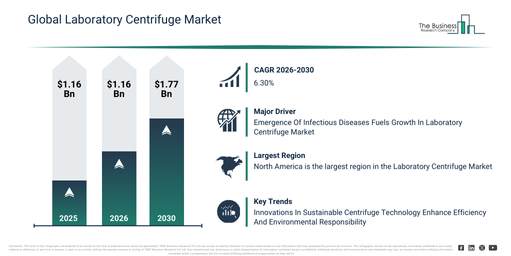
    The laboratory centrifuge market has shown significant expansion in recent years. It is anticipated to increase from $1.64 billion in 2025 to $1.74 billion in 2026, exhibiting a compound annual growth rate (CAGR) of 6.0%. This historic growth is largely attributable to the rise in biomedical research activities, the broadening of hospital diagnostic testing, the expanded application of centrifugation in genomics workflows, the availability of modern laboratory infrastructure, and an increase in clinical sample processing volumes.

    The laboratory centrifuge market size is anticipated to experience substantial growth in the coming years. It is projected to expand to $2.22 billion by 2030, achieving a compound annual growth rate (CAGR) of 6.3%. This growth during the forecast period is attributed to the increasing demand for automated centrifuge systems, the expansion of molecular diagnostics, the growing adoption of precision medicine, rising investments in life sciences research, and an increased focus on optimizing laboratory efficiency. Key trends for the forecast period include the increasing adoption of high-speed centrifugation systems, a rising demand for refrigerated and ultracentrifuges, the growing integration of digital control interfaces, the expansion of compact benchtop centrifuges, and an enhanced focus on sample integrity.

    Get A Free Sample Report With In-Depth Market Insights:

    https://thebusinessresearchcompany.com/sample_request?id=64703608&type=smp&name=Laboratory%20Centrifuge%20Market%20Report%202026&utm_source=Blogs&utm_medium=Paid&utm_campaign=Oct_PR

    Laboratory Centrifuge Market Growth Factors Behind Sustained Expansion

    The laboratory centrifuge market is experiencing growth due to the rise of infectious diseases. A growing global disease burden stems from widespread infections caused by illnesses like SARS, the Zika virus, Ebola, and COVID-19 across different regions globally. Zoonotic infectious agents, which are animal diseases that adapt to infect humans, are estimated to account for approximately 60% of identified human pathogens and up to 75% of new human pathogens. Significant shifts in the epidemiology of infectious diseases are anticipated with climate change, altering the geographical distribution of microbes and vectors. As microbes can adapt to elevated temperatures, there’s increasing worry that global warming will favor heat-tolerant microbes capable of overcoming human endothermy defenses, consequently introducing novel infectious diseases and modifying the epidemiology of numerous current ailments. Laboratory centrifuge systems find application in the purification of cells, organelles, viruses, proteins, and nucleic acids. For example, data released by the UK Health Security Agency in August 2024 revealed that England recorded 368 measles cases in 2023, a substantial increase of nearly sevenfold compared to the 53 cases reported in 2022. The West Midlands contributed 44% of these cases, while London accounted for 33%. Consequently, the appearance of infectious diseases fuels the need for laboratory testing solutions, thereby stimulating the laboratory centrifuge market.

    Laboratory Centrifuge Market Breakdown By Product Type And Application

    The laboratory centrifuge market covered in this report is segmented –

    1) By Product: Equipment, Accessories

    2) By Model Type: Benchtop Centrifuges, Floor-Standing Centrifuges

    3) By Rotor Design: Fixed-Angle Rotors, Swinging-Bucket Rotors, Vertical Rotors, Other Rotors

    4) By Application: Diagnostics, Microbiology, Cellomics, Genomics, Proteomics, Blood Component Separation, Other Applications

    5) By End User: Hospitals, Biotechnology And Pharmaceutical Companies, Academic And Research Institutions

    Subsegments:

    1) By Equipment: Floor Model Centrifuges, Bench-Top Centrifuges, Ultracentrifuges, Microcentrifuges, High-Speed Centrifuges, Refrigerated Centrifuges, Clinical Centrifuges, Continuous Flow Centrifuges

    2) By Accessories: Rotors, Buckets, Adapters, Tubes And Containers, Cleaning And Maintenance Kits

    Laboratory Centrifuge Market Industry Trends Fueling Future Revenue Growth

    Leading companies in the laboratory centrifuge market are concentrating on developing advanced products, such as centrifuges incorporating natural refrigerant cooling systems, with the aim of reducing environmental impact and boosting performance for high-throughput applications. Natural refrigerant cooling system-based centrifuges are devices that utilize environmentally friendly coolants to maintain samples at low temperatures while spinning them rapidly for effective material separation and protection of temperature-sensitive items. For instance, in March 2025, Thermo Fisher Scientific, a US-based life sciences company, introduced its first more sustainable large-capacity and superspeed centrifuges, which are equipped with a next-generation natural refrigerant cooling system. This system is designed to support high-speed and high-volume laboratory workflows. These centrifuges offer precise temperature control, improved energy efficiency, and a reduced environmental footprint, thereby assisting laboratories in achieving both operational excellence and sustainability goals.

    Laboratory Centrifuge Market Company Landscape And Competitive Strategy

    Major companies operating in the laboratory centrifuge market are Thermo Fisher Scientific Inc., Danaher Corporation, Agilent Technologies Inc., Sartorius AG, PerkinElmer Inc., Shimadzu Corporation, Bio-Rad Laboratories Inc., Hettich Holding GmbH & Co KG, Eppendorf AG, Haier Biomedical Co Ltd., Heal Force Bio-Medical Engineering Co Ltd., Harvard Bioscience Inc., REMI GROUP, VISION Scientific Co Ltd., LW Scientific, Sigma Laborzentrifugen GmbH, Benchmark Scientific Inc., Neuation Technologies Pvt Ltd., Laby Instruments Industry, HERMLE Labortechnik GmbH, Antylia Scientific Instrument Co Ltd., Meditech Technologies India Private Limited, Andreas Hettich GmbH & Co KG

    View The Full Laboratory Centrifuge Market Report:

    https://thebusinessresearchcompany.com/report/laboratory-centrifuge-global-market-report?utm_source=Blogs&utm_medium=Paid&utm_campaign=Oct_PR

    Laboratory Centrifuge Market Largest Region: Which Geography Holds The Biggest Share?

    North America was the largest region in the laboratory centrifuge market in 2025. The regions covered in the laboratory centrifuge market report are Asia-Pacific, South East Asia, Western Europe, Eastern Europe, North America, South America, Middle East, Africa.

    Reach Out To Our Team:

    The Business Research Company: https://www.thebusinessresearchcompany.com/

    Americas: +1 310-496-7795

    Asia: +44 7882 955267 & +91 8897263534

    Europe: +44 7882 955267

    Email us at: marketing@tbrc.info

    Follow us on:

    LinkedIn: https://in.linkedin.com/company/the-business-research-company

    YouTube: https://www.youtube.com/channel/UC24_fI0rV8cR5DxlCpgmyFQ

    Global Market Model: https://www.thebusinessresearchcompany.com/global-market-model
  • Epigenetics Drugs And Diagnostic Technologies Market Reaches $49.78 Billion In 2026: Forecast And Growth Opportunities

    Epigenetics Drugs And Diagnostic Technologies Market Reaches $49.78 Billion In 2026: Forecast And Growth Opportunities

    Backed by market attractiveness analysis, total addressable market sizing, company benchmarking matrices, interactive Excel dashboards, wider supply chain intelligence, emerging startup coverage, and detailed product-level insights, The Business Research Company’s 2026 market reports are designed to offer research that is more actionable and strategically valuable than ever.

    Epigenetics Drugs And Diagnostic Technologies Market Size Outlook: How Quickly Will Revenue Expand Through 2030?

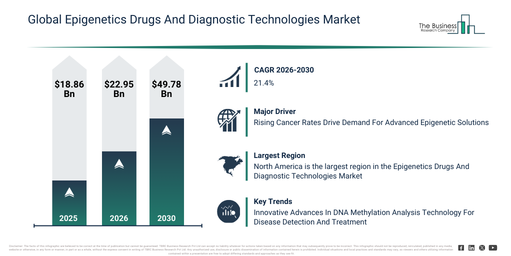
    The epigenetics drugs and diagnostic technologies market size has experienced significant growth in recent years. This market is projected to expand from $18.86 billion in 2025 to $22.95 billion in 2026, exhibiting a compound annual growth rate (CAGR) of 21.7%. The growth observed in the historical period can be attributed to factors such as the restricted access to epigenetic diagnostic technologies, a dependence on traditional genetic testing, the rising incidence of oncology and inflammatory conditions, increasing recognition of epigenetic therapies, and the implementation of fundamental methylation and acetylation assays.

    The epigenetics drugs and diagnostic technologies market size is anticipated to undergo significant growth in the coming years, projected to reach $49.78 billion in 2030, demonstrating a compound annual growth rate (CAGR) of 21.4%. This expansion during the forecast period is attributed to several factors, including the development of advanced microRNA and lncRNA therapeutics, the broadening of high-throughput chromatin profiling platforms, increasing investment in personalized epigenetic medicine, the greater adoption of bioinformatics tools for epigenetic analysis, and the integration of epigenetic diagnostics into routine clinical workflows. Major trends expected in this period include the wider availability of epigenetic biomarker-based diagnostics, the growing use of histone modification inhibitors for therapy, the continued development of microRNA and lncRNA-based therapeutics, a heightened focus on personalized epigenetic medicine, and the incorporation of high-throughput epigenetic profiling in clinical research.

    Get A Free Sample Report With In-Depth Market Insights:

    https://thebusinessresearchcompany.com/sample_request?id=11717258&type=smp&name=Epigenetics%20Drugs%20And%20Diagnostic%20Technologies%20Market%20Report%202026&utm_source=Blogs&utm_medium=Paid&utm_campaign=Oct_PR

    Epigenetics Drugs And Diagnostic Technologies Market Growth Backed By Core Demand Fundamentals

    The epigenetics drugs and diagnostic technologies market is projected to expand due to the rising incidence of cancer. Cancer refers to a range of illnesses characterized by uncontrolled cell division that can spread or invade other body parts. The widespread occurrence of cancer is attributable to factors such as aging populations, changes in lifestyle, environmental pollutants, genetic predispositions, and advancements in diagnostic techniques. Epigenetic drugs and diagnostic technologies are instrumental in addressing the growing cancer challenge by targeting and altering gene expression, thereby enabling early detection and customized treatment strategies. For illustration, the World Health Organization, a Switzerland-based international organization dedicated to global health policy and public health initiatives, reported in February 2024 that more than 35 million new cancer cases are anticipated by 2050. This signifies a 77% surge from the estimated 20 million cases in 2022. Thus, the increasing prevalence of cancer is a key driver for the growth of the epigenetics drugs and diagnostic technologies market.

    Epigenetics Drugs And Diagnostic Technologies Market Segments: Where Is Growth Concentrated?

    The epigenetics drugs and diagnostic technologies market covered in this report is segmented –

    1) By Technology: Deoxyribonucleic Acid (DNA) Methylation, Histone Methylation, Histone Acetylation, Large Non Coding Ribonucleic Acid (RNA), MicroRNA Modification, Chromatin Structures

    2) By Application: Oncology, Solid Tumors, Liquid Tumors, Non Oncology, Inflammatory Diseases, Metabolic Diseases, Infectious Diseases, Cardiovascular Diseases, Other Applications

    3) By End-User: Hospitals And Clinics, Diagnostic Centers, Other End Users

    Subsegments:

    1) By Deoxyribonucleic Acid (DNA) Methylation: Methylation Inhibitors, Methylation Detection Kits, Methylation Profiling Technologies, Bisulfite Sequencing

    2) By Histone Methylation: Histone Methyltransferase Inhibitors, Histone Demethylase Inhibitors, Histone Methylation Assays, Chromatin Immunoprecipitation (ChIP) Techniques

    3) By Histone Acetylation: Histone Acetyltransferase Inhibitors, Histone Deacetylase Inhibitors (HDACi), Acetylation Detection Kits, Western Blotting for Acetylation

    4) By Large Non-Coding Ribonucleic Acid (RNA): lncRNA Expression Profiling, lncRNA Modulation Technologies, lncRNA Detection Kits, Bioinformatics Tools for lncRNA Analysis

    5) By MicroRNA Modification: MicroRNA Mimics, MicroRNA Inhibitors, MicroRNA Expression Analysis, MicroRNA Detection Assays

    6) By Chromatin Structures: Chromatin Remodeling Agents, Chromatin Accessibility Assays, 3D Chromatin Architecture Technologies, Nuclear Imaging Techniques

    Epigenetics Drugs And Diagnostic Technologies Market Growth Trends Reshaping The Competitive Landscape

    Leading firms within the epigenetics drugs and diagnostic technologies market prioritize creating cutting-edge solutions, including DNA methylation analysis technology, to boost the accuracy and impact of identifying illnesses, refine tailored treatment approaches, and deepen knowledge of gene control across different conditions. This DNA methylation analysis technology encompasses various methods designed to examine DNA methylation patterns, a chemical alteration to DNA where a methyl group is attached to the cytosine base. As an illustration, in August 2023, Watchmaker Genomics Inc., a biotechnology firm located in the US, collaborated with Exact Sciences Corp., a US-based company specializing in molecular diagnostics, to create and market a new DNA methylation analysis technology called TET-assisted pyridine borane sequencing (TAPS). The partnership seeks to improve cancer screening and diagnostic abilities by utilizing Watchmaker’s proficiency in designing DNA-modifying enzymes to refine the TAPS chemistry. This is crucial for detecting cancer early and for tracking minimal residual disease (MRD) via liquid biopsies, as DNA methylation patterns function as indicators of health status.

    Epigenetics Drugs And Diagnostic Technologies Market Key Participants And Competitive Landscape

    Major companies operating in the epigenetics drugs and diagnostic technologies market are Pfizer Inc., F. Hoffmann-La Roche Ltd., Merck & Co Inc., Novartis AG, Bristol-Myers Squibb Company, Thermo Fisher Scientific Inc., AstraZeneca PLC, Illumina Inc., QIAGEN NV, Exact Sciences Corporation, Abcam PLC, Syndax Pharmaceuticals Inc., Astex Pharmaceuticals Inc., Diagenode LLC, Cisbio Bioassays, 4SC AG, Verogen Inc., Watchmaker Genomics Inc., Oryzon Genomics SA, Cell Centric Ltd., Epiaxis Therapeutics

    View The Full Epigenetics Drugs And Diagnostic Technologies Market Report:

    https://thebusinessresearchcompany.com/report/epigenetics-drugs-and-diagnostic-technologies-global-market-report?utm_source=Blogs&utm_medium=Paid&utm_campaign=Oct_PR

    Epigenetics Drugs And Diagnostic Technologies Market Geographic Analysis: Where Is Demand Accelerating Fastest?

    North America was the largest region in the epigenetics drugs and diagnostic technologies market in 2025. Asia-Pacific is expected to be the fastest-growing region in the forecast period. The regions covered in the epigenetics drugs and diagnostic technologies market report are Asia-Pacific, South East Asia, Western Europe, Eastern Europe, North America, South America, Middle East, Africa.

    Reach Out To Our Team:

    The Business Research Company: https://www.thebusinessresearchcompany.com/

    Americas: +1 310-496-7795

    Asia: +44 7882 955267 & +91 8897263534

    Europe: +44 7882 955267

    Email us at: marketing@tbrc.info

    Follow us on:

    LinkedIn: https://in.linkedin.com/company/the-business-research-company

    YouTube: https://www.youtube.com/channel/UC24_fI0rV8cR5DxlCpgmyFQ

    Global Market Model: https://www.thebusinessresearchcompany.com/global-market-model
  • Laboratory Bunsen Burner Market Size In 2026: Growth Outlook And Forecast Through 2030

    Laboratory Bunsen Burner Market Size In 2026: Growth Outlook And Forecast Through 2030

    Backed by market attractiveness analysis, total addressable market sizing, company benchmarking matrices, interactive Excel dashboards, wider supply chain intelligence, emerging startup coverage, and detailed product-level insights, The Business Research Company’s 2026 market reports are designed to offer research that is more actionable and strategically valuable than ever.

    Laboratory Bunsen Burner Market Growth From $9.96 Billion In 2026 To $13.16 Billion By 2030 At A CAGR Of 7.2%

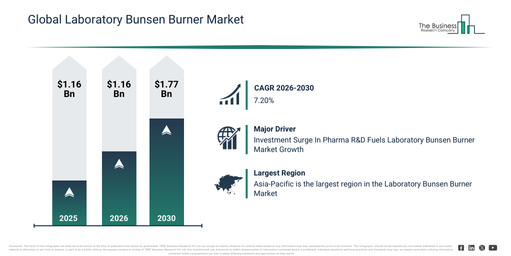
    The laboratory bunsen burner market size has exhibited robust expansion in recent years. It is anticipated to grow from $9.28 billion in 2025 to $9.96 billion in 2026, achieving a compound annual growth rate (CAGR) of 7.3%. The market’s past growth can be ascribed to several factors, including the expansion of academic and teaching laboratories, the widespread adoption of gas-based heating equipment, the increase in laboratory-based education, heightened laboratory safety awareness, and an escalating demand for basic laboratory heating tools.

    The laboratory bunsen burner market is projected to experience substantial expansion over the next few years. It is expected to reach a value of $13.16 billion in 2030, exhibiting a compound annual growth rate (CAGR) of 7.2%. This growth during the forecast period is driven by several factors, including the increasing integration of electric laboratory equipment, a heightened emphasis on fire safety within laboratories, the expansion of research infrastructure in developing economies, rising financial commitments to science education, and a growing need for portable laboratory heating solutions. Significant trends anticipated in the forecast period encompass a rising preference for safer, controlled-flame laboratory equipment, the increasing adoption of electric bunsen burners in educational laboratories, a surging demand for precise and adjustable flame control, the expansion of laboratory infrastructure across academic and research institutions, and an intensified focus on laboratory safety and standardization.

    Get A Free Sample Report With In-Depth Market Insights:

    https://thebusinessresearchcompany.com/sample_request?id=87229860&type=smp&name=Laboratory%20Bunsen%20Burner%20Market%20Report%202026&utm_source=Blogs&utm_medium=Paid&utm_campaign=Oct_PR

    Laboratory Bunsen Burner Market Demand Drivers Opening New Revenue Streams

    Increased financial commitment to pharmaceutical research and development is anticipated to boost the expansion of the laboratory bunsen burner market in the future. This rise in investment stems from the increasing occurrence of chronic and infectious illnesses, heightening the demand for novel treatments and remedies. Furthermore, the push for targeted therapies and personalized medicine stimulates research, with government incentives and grants providing additional encouragement for funding. Within pharmaceutical research and development, laboratory bunsen burners serve to sterilize instruments, carry out chemical reactions, and prepare specimens for analytical processes. For example, IQVIA, a US-based healthcare intelligence and life sciences firm, reported in January 2024 that worldwide medicine consumption has risen by 14% over the last five years and is forecast to climb an additional 12% by 2028, achieving 3.8 trillion defined daily doses each year. Consequently, the increasing investment in pharmaceutical research and development will drive the growth of the laboratory bunsen burner market. The expansion of educational facilities is anticipated to stimulate the growth of the laboratory bunsen burner market in the upcoming period. This increase in educational infrastructure is fueled by expanding student numbers, elevated birth rates, and higher enrollment figures. Moreover, a stronger emphasis on educational quality and accessibility, coupled with increased public and private financial support, propels the development of schools and institutions of higher learning. In educational settings, laboratory bunsen burners are employed for heating, sterilization, and carrying out experiments necessitating a regulated flame. For instance, data from March 2024 by the Chinese Ministry of Education, a China-based International Education organization, indicated that China possessed 3,074 higher-educational institutions in 2023, marking an increase of 61 institutions from the 3,013 institutions reported in 2022, signifying a growth rate of approximately 2%. Hence, the growing number of educational facilities will boost the growth of the laboratory bunsen burner market.

    Laboratory Bunsen Burner Market Segment Analysis And Revenue Potential

    The laboratory bunsen burner market covered in this report is segmented –

    1) By Type: Electric Powered, Gas Fired

    2) By Parts: Stand Or Base, Barrel Or Chimney, Collar, Air Holes, Gas Valve, Gas Intake

    3) By Application: Universities And Colleges, Research Institute, Other Applications

    Subsegments:

    1) By Electric Powered: Flame-Simulation Electric Laboratory Burners, Infrared-Based Electric Laboratory Burners, Hot-Element Electric Laboratory Burners

    2) By Gas Fired: Single-Outlet Gas Bunsen Burners, Double-Outlet Gas Bunsen Burners, Micro Gas Bunsen Burners, Adjustable Flame Gas Bunsen Burners

    Laboratory Bunsen Burner Market Key Players Shaping Industry Direction

    Major companies operating in the laboratory bunsen burner market are Carl Friedrich Usbeck, Eisco Scientific, Glassco Laboratory Equipment, Borosil Glass Works Ltd, Narang Medical Ltd., Scilabware Limited, REMI Elektrotechnik Ltd, Khera Instruments Pvt Ltd, Jainco Lab Products, JSGW Laboratory Glassware, Polylab Scientific, Sun LabTek Equipments, Humboldt Mfg Co, United Scientific Supplies, Yamato Scientific Co Ltd, Electrothermal Engineering Ltd, Jeio Tech Co Ltd, Faithful Instrument Co Ltd, Laboid International, Sico Research Laboratories

    View The Full Laboratory Bunsen Burner Market Report:

    https://thebusinessresearchcompany.com/report/laboratory-bunsen-burner-global-market-report?utm_source=Blogs&utm_medium=Paid&utm_campaign=Oct_PR

    Laboratory Bunsen Burner Market Regional Analysis: Which Geography Leads On Revenue?

    Asia-Pacific was the largest region in the laboratory bunsen burner market in 2025. The regions covered in the laboratory bunsen burner market report are Asia-Pacific, South East Asia, Western Europe, Eastern Europe, North America, South America, Middle East, Africa.

    Reach Out To Our Team:

    The Business Research Company: https://www.thebusinessresearchcompany.com/

    Americas: +1 310-496-7795

    Asia: +44 7882 955267 & +91 8897263534

    Europe: +44 7882 955267

    Email us at: marketing@tbrc.info

    Follow us on:

    LinkedIn: https://in.linkedin.com/company/the-business-research-company

    YouTube: https://www.youtube.com/channel/UC24_fI0rV8cR5DxlCpgmyFQ

    Global Market Model: https://www.thebusinessresearchcompany.com/global-market-model
  • Epidermal Growth Factor Patch Market Growth In 2026: Market Size, Key Drivers And Future Outlook

    Epidermal Growth Factor Patch Market Growth In 2026: Market Size, Key Drivers And Future Outlook

    Featuring market attractiveness scoring, total addressable market sizing, company benchmarking matrices, interactive Excel dashboards, deeper supply chain intelligence, emerging startup tracking, and granular product-level insights, The Business Research Company’s 2026 market reports are built to deliver research that is both more actionable and more strategically valuable.

    Epidermal Growth Factor Patch Market Size, Value And Growth Trajectory Through 2030

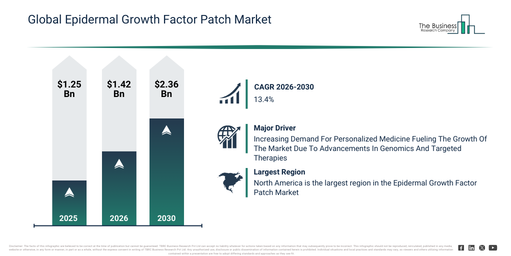
    The epidermal growth factor patch market size has experienced swift expansion in recent years. It is anticipated to grow from $1.25 billion in 2025 to $1.42 billion in 2026, achieving a compound annual growth rate (CAGR) of 13.8%. This historical growth stems from factors such as the increasing utilization of growth factors in dermatology, the wider adoption of wound care products, a heightened demand for aesthetic skin treatments, the progressive availability of advanced transdermal technologies, and the rising acceptance of patch-based therapies.

    The epidermal growth factor patch market is projected to experience swift expansion in the coming years. It is anticipated to reach $2.36 billion by 2030, exhibiting a compound annual growth rate (CAGR) of 13.4%. This growth during the projection period stems from factors such as the increasing acceptance of regenerative skincare solutions, a rising need for scar and anti-aging remedies, the broadening scope of home-based dermatological care, increased investment in sophisticated biomaterial research, and a greater emphasis on patient-friendly delivery methods. Key trends expected over the forecast horizon encompass the growing uptake of transdermal growth factor application, wider utilization of microneedle patch technologies, an increasing call for non-invasive wound healing options, the spread of advanced skincare patch uses, and a sharpened focus on the engineering of controlled-release patches.

    Get A Free Sample Report With In-Depth Market Insights:

    https://thebusinessresearchcompany.com/sample_request?id=72874637&type=smp&name=Epidermal%20Growth%20Factor%20Patch%20Market%20Report%202026&utm_source=Blogs&utm_medium=Paid&utm_campaign=Oct_PR

    Epidermal Growth Factor Patch Market Growth Catalysts And Demand Drivers

    The rising demand for personalized medicine is projected to drive the expansion of the epidermal growth factor patch market in the coming years. Personalized medicine is defined as a healthcare strategy that customizes treatment and prevention plans to suit an individual’s unique genetic profile, lifestyle, and environment. The increasing adoption of personalized medicine is predominantly attributed to advancements in genomics, which enable precise detection of genetic variations and the creation of tailored treatments for individuals. Epidermal Growth Factor (EGF) patches enhance personalized medicine by offering targeted and localized delivery of growth factors, making them highly effective for wound healing and skin regeneration. They expedite recovery by promoting cell proliferation and tissue repair, leading to improved patient-specific treatment outcomes. For example, in February 2024, as reported by the Personalized Medicine Coalition (PMC), a US-based nonprofit organization, the U.S. Food and Drug Administration (FDA) approved 26 new personalized medicines in 2023, a significant rise from the 12 approvals in 2022. Therefore, the growing demand for personalized medicine is a key factor propelling the growth of the epidermal growth factor patch market.

    Epidermal Growth Factor Patch Market Segment Analysis: What Are The Core Market Categories?

    The epidermal growth factor patch market covered in this report is segmented –

    1) By Product Type: Hydrogel Patches, Microneedle Patches, Film Patches, Other Product Types

    2) By Application: Wound Healing, Anti-Aging, Scar Treatment, Skin Rejuvenation, Other Applications

    3) By Distribution Channel: Online Pharmacies, Retail Pharmacies, Hospital Pharmacies, Other Distribution Channels

    4) By End-User: Hospitals And Clinics, Dermatology Centers, Home Care, Other End-Users

    Subsegments:

    1) By Hydrogel Patches: Moisturizing Repair, Anti Aging, Scar Reduction, Wound Healing

    2) By Microneedle Patches: Epidermal Growth Factor Delivery, Vaccine Delivery, Pain Management, Cosmetic Treatment

    3) By Film Patches: Skin Brightening, Anti Wrinkle, Acne Treatment, Hydration Boost

    4) By Other Product Types: Cooling Soothing, Anti Inflammatory, Detoxifying, Skin Firming

    Epidermal Growth Factor Patch Market Top Companies Driving Competitive Growth

    Major companies operating in the epidermal growth factor patch market are Nissha Co. Ltd., Daewoong Pharmaceutical Co. Ltd., Kindeva Drug Delivery L.L.C., LTS Lohmann Therapie-Systeme AG, Teikoku Seiyaku Co. Ltd., Katecho Inc., QuadMedicine Inc., DermaJect AB, Micropoint Technologies Ltd., CD Bioparticles Inc., CosMED Pharmaceutical Co. Ltd., Alliqua BioMedical Inc., NEXGEL Inc., Pocono Pharma Inc., Micron Biomedical Inc., Raphas Co. Ltd., Heber Biotech S.A., Zosano Pharma Corporation, Hebei Feifan Biotechnology Co. Ltd., QuadMedicine Inc.

    View The Full Epidermal Growth Factor Patch Market Report:

    https://thebusinessresearchcompany.com/report/epidermal-growth-factor-patch-global-market-report?utm_source=Blogs&utm_medium=Paid&utm_campaign=Oct_PR

    Epidermal Growth Factor Patch Market Global Footprint: Which Region Leads The Industry?

    North America was the largest region in the epidermal growth factor patch market in 2025. Asia-Pacific is expected to be the fastest-growing region in the forecast period. The regions covered in the epidermal growth factor patch market report are Asia-Pacific, South East Asia, Western Europe, Eastern Europe, North America, South America, Middle East, Africa.

    Reach Out To Our Team:

    The Business Research Company: https://www.thebusinessresearchcompany.com/

    Americas: +1 310-496-7795

    Asia: +44 7882 955267 & +91 8897263534

    Europe: +44 7882 955267

    Email us at: marketing@tbrc.info

    Follow us on:

    LinkedIn: https://in.linkedin.com/company/the-business-research-company

    YouTube: https://www.youtube.com/channel/UC24_fI0rV8cR5DxlCpgmyFQ

    Global Market Model: https://www.thebusinessresearchcompany.com/global-market-model
  • Laboratory Automation Systems Market Trends Supporting 7.4% CAGR Growth Through 2030

    Laboratory Automation Systems Market Trends Supporting 7.4% CAGR Growth Through 2030

    Featuring market attractiveness scoring, total addressable market sizing, company benchmarking matrices, interactive Excel dashboards, deeper supply chain intelligence, emerging startup tracking, and granular product-level insights, The Business Research Company’s 2026 market reports are built to deliver research that is both more actionable and more strategically valuable.

    Laboratory Automation Systems Market Expansion Outlook: What Revenue Opportunities Are Ahead?

    The market for laboratory automation systems has shown significant expansion in recent years. It is anticipated to increase from $5.85 billion in 2025 to $6.31 billion in 2026, achieving a compound annual growth rate (CAGR) of 7.9%. This past growth can be ascribed to several factors, including an increase in test volumes within clinical laboratories, a growing requirement for standardized diagnostics, the broadening of pharmaceutical research activities, a deficit of skilled laboratory personnel, and the increasing complexity inherent in laboratory workflows.

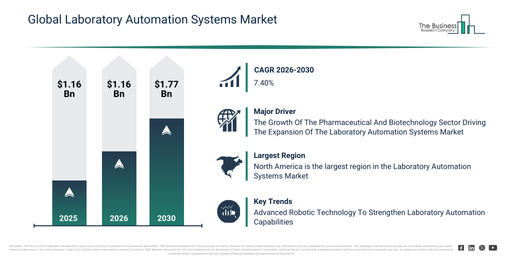
    The laboratory automation systems market is anticipated to undergo significant expansion over the next few years. It is projected to reach $8.4 billion in 2030, achieving a compound annual growth rate (CAGR) of 7.4%. The growth observed throughout the forecast period stems from factors such as the increasing uptake of AI-driven lab automation, rising investments in smart laboratories, a growing demand for high-throughput testing, the expansion of genomics and proteomics research, and a heightened focus on reducing errors and improving efficiency. Prominent trends for the forecast period include the increasing adoption of end-to-end laboratory automation, the rising deployment of robotic sample handling systems, the growing integration of data management platforms, the expansion of modular automation solutions, and an enhanced focus on workflow standardization.

    Get A Free Sample Report With In-Depth Market Insights:

    https://thebusinessresearchcompany.com/sample_request?id=2560&type=smp&name=Laboratory%20Automation%20Systems%20Market%20Report%202026&utm_source=Blogs&utm_medium=Paid&utm_campaign=Oct_PR

    Laboratory Automation Systems Market Growth Backed By Core Demand Fundamentals

    The expanding pharmaceutical and biotechnology sector is projected to boost the growth of the laboratory automation systems market in the future. This sector encompasses businesses involved in discovering and developing drugs, manufacturing biologics, and conducting advanced therapeutic research, marked by significant R&D efforts and swift innovation. Increased R&D investments fuel the sector’s expansion, creating a demand for automation systems like robotic liquid handlers, automated sample preparation, and high-throughput screening to improve efficiency, minimize errors, and quicken discovery processes. For example, in June 2023, data from the European Federation of Pharmaceutical Industries and Associations (EFPIA), a Belgium-based trade group representing Europe’s pharmaceutical industry, showed that total pharmaceutical production in Europe reached €390,000 million ($422,803 million) in 2023, an increase from €363,300 million ($393,857 million) in 2022. Consequently, the development of the pharmaceutical and biotechnology sectors is accelerating the expansion of the laboratory automation systems market.

    Laboratory Automation Systems Market Segmentation And Category Overview

    The laboratory automation systems market covered in this report is segmented –

    1) By Type: Modular Automation, Total Lab Automation

    2) By Equipment And Software: Automated Liquid Handling, Microplate Readers, Standalone Robots, Automated Storage, Retrieval

    3) By Application: Drug Discovery, Clinical Diagnostics, Genomics Solutions, Proteomics Solutions, Others

    4) By End User: Biotechnology And Pharmaceutical Industries, Research Institutes, Hospitals And Private Labs, Academic Institutes

    Subsegments:

    1) By Modular Automation: Robotic Systems for Sample Handling, Automated Liquid Handling Systems, Modular Sample Storage Systems

    2) By Total Lab Automation: Integrated Workflow Systems, Fully Automated Laboratory Analyzers, Comprehensive Data Management Solutions

    Laboratory Automation Systems Market Growth Trends Reshaping The Competitive Landscape

    Key players in the laboratory automation market are rolling out advanced technologies, such as the Flex Robot, to gain a competitive edge. This Flex robot is specifically engineered to deliver a sophisticated yet affordable automation platform for life scientists. For instance, in May 2023, Opentrons, a US-based lab automation company, released its latest innovation, the Flex robot, with the objective of making advanced lab automation solutions more accessible to life scientists. The robot is capable of conducting a wide range of experiments, including those developed by large language models (LLMs) like ChatGPT.

    Laboratory Automation Systems Market Competitive Analysis Of Leading Industry Participants

    Major companies operating in the laboratory automation systems market are Abbott Laboratories, Danaher Corporation, Thermo Fisher Scientific, Agilent Technologies Inc., Tecan Group Ltd., PerkinElmer Inc., QIAGEN N.V., Becton Dickinson and Company, Siemens AG, Brooks Automation Inc., Hamilton Company, Eppendorf AG, Biotek Instruments Inc., Bee Robotics Ltd, Gilson Inc., Biomerieux, Sysmex Corporation, Formulatrix, Beckman Coulter, Roche Diagnostics

    View The Full Laboratory Automation Systems Market Report:

    https://thebusinessresearchcompany.com/report/laboratory-automation-systems-global-market-report?utm_source=Blogs&utm_medium=Paid&utm_campaign=Oct_PR

    Laboratory Automation Systems Market Geographic Spread And Regional Opportunities

    North America was the largest region in the laboratory automation systems market in 2025. Asia-Pacific is expected to be the fastest-growing region in the forecast period. The regions covered in the laboratory automation systems market report are Asia-Pacific, South East Asia, Western Europe, Eastern Europe, North America, South America, Middle East, Africa.

    Reach Out To Our Team:

    The Business Research Company: https://www.thebusinessresearchcompany.com/

    Americas: +1 310-496-7795

    Asia: +44 7882 955267 & +91 8897263534

    Europe: +44 7882 955267

    Email us at: marketing@tbrc.info

    Follow us on:

    LinkedIn: https://in.linkedin.com/company/the-business-research-company

    YouTube: https://www.youtube.com/channel/UC24_fI0rV8cR5DxlCpgmyFQ

    Global Market Model: https://www.thebusinessresearchcompany.com/global-market-model
  • Laboratory Accessories Market Forecast Highlights A $971.55 Billion Opportunity For Industry Participants

    Laboratory Accessories Market Forecast Highlights A $971.55 Billion Opportunity For Industry Participants

    Built to provide research that’s more actionable and strategically valuable, The Business Research Company’s 2026 market reports include market attractiveness analysis, total addressable market sizing, company benchmarking matrices, interactive Excel dashboards, broader supply chain intelligence, emerging startup tracking, and in-depth product insights.

    Laboratory Accessories Market Growth Potential: How Will Market Size Shift Through 2030?

    The laboratory accessories market size has experienced robust expansion in recent years. Looking ahead, it is projected to grow from $660.04 billion in 2025 to $713.28 billion in 2026, demonstrating a compound annual growth rate (CAGR) of 8.1%. This historical growth can be largely attributed to the expansion of clinical and diagnostic laboratories, the growth in academic and research institutions, increasing laboratory testing volumes, a rising focus on laboratory safety standards, and growing investments in scientific research.

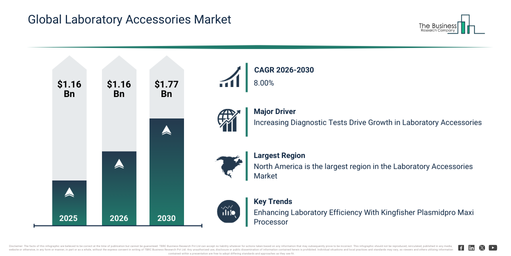
    The laboratory accessories market size is set to experience robust expansion in the upcoming years. It is projected to grow to $971.55 billion in 2030 at a compound annual growth rate (CAGR) of 8.0%. This anticipated growth during the forecast period is fueled by factors such as the increasing demand for products that support laboratory automation, intensified research and development activities in the pharmaceutical and biotechnology industries, the rising necessity for healthcare diagnostic testing, the development of laboratory infrastructure in emerging markets, and a heightened focus on achieving efficiency and accuracy in laboratory operations. Major trends influencing this period include a growing requirement for durable and high-quality laboratory consumables, a greater emphasis on safety and compliance accessories for laboratories, an increase in the standardization of laboratory workflows and equipment, the expansion of laboratory infrastructure across healthcare and research sectors, and a preference for ergonomically designed and space-optimized lab furniture.

    Get A Free Sample Report With In-Depth Market Insights:

    https://thebusinessresearchcompany.com/sample_request?id=22434714&type=smp&name=Laboratory%20Accessories%20Market%20Report%202026&utm_source=Blogs&utm_medium=Paid&utm_campaign=Oct_PR

    Laboratory Accessories Market Growth Catalysts And Demand Drivers

    The expanding volume of diagnostic tests is projected to stimulate the growth of the laboratory accessories market moving forward. Diagnostic tests refer to medical procedures designed to ascertain the presence, nature, or origin of a disease or condition in patients. This increase in diagnostic tests is attributed to improved healthcare access, the imperative for chronic disease management, heightened patient expectations, and the availability of genetic testing. Laboratory accessories are indispensable at every phase of the diagnostic testing process, from collecting and preparing samples to analyzing and documenting results. They ensure the accuracy, efficiency, and safety of diagnostic tests, ultimately providing reliable and actionable results for patient care. For instance, in November 2023, the Diagnostic Imaging Dataset Annual Statistical, a UK-based government organization, reported that England performed 45.0 million imaging tests in March 2023, an increase from 44.0 million in the previous year, signifying a growth of 2.2%. Therefore, the rising number of diagnostic tests drives the laboratory accessories market.

    Laboratory Accessories Market Segment Outlook: Which Categories Are Growing Fastest?

    The laboratory accessories market covered in this report is segmented –

    1) By Product Type: Instruments, Glassware, Lab Tables, Consumables, Other Product Types

    2) By Laboratory Type: Clinical And Diagnostics Labs, Pharma, Biotech, And Medical Device Companies, Academic And Research Labs

    3) By Application: Academic, Hospitals, Private Laboratories, Biotechnology, Other Applications

    Subsegments:

    1) By Instruments: Laboratory Analyzers, Centrifuges, Microscopes, Spectrophotometers, Ph Meters

    2) By Glassware: Beakers, Flasks, Test Tubes, Pipettes, Burettes, Petri Dishes

    3) By Lab Tables: Workbenches, Laboratory Island Tables, Height-Adjustable Lab Tables, Chemical-Resistant Tables

    4) By Consumables: Gloves And Lab Coats, Filters And Membranes, Test Strips, Disposable Pipettes, Culture Media

    5) By Other Product Types: Lab Safety Equipment, Storage Solutions, Lab Cleanliness Product

    Laboratory Accessories Market Trends Shaping Long-Term Demand

    Leading firms within the laboratory accessories market prioritize the creation of novel products, like automated plasmid purification systems. These systems aim to deliver high-throughput capabilities, enhance experimental consistency, and facilitate advanced uses in molecular biology, clinical diagnostics, and pharmaceutical development. Specifically, an automated plasmid purification system represents a sophisticated laboratory instrument engineered to simplify the isolation of plasmid DNA (pDNA) from bacterial cultures, eliminating the need for manual steps. As an illustration, in June 2024, Thermo Fisher Scientific, a US-based life science and clinical research company, introduced the Thermo Scientific KingFisher PlasmidPro Maxi Processor. This is a completely automated maxi-scale system for purifying plasmid DNA (pDNA). The design of this particular system aims to optimize the purification workflow, consequently boosting the efficiency of laboratory operations crucial for the discovery and advancement of therapeutic solutions. This groundbreaking development seeks to minimize manual inaccuracies and augment throughput, primarily benefiting molecular biology and genetic research.

    Laboratory Accessories Market Leading Companies And Competitive Benchmarking

    Major companies operating in the laboratory accessories market are Thermo Fisher Scientific Inc., The Merck Group, Agilent Technologies Inc., Sartorius AG, PerkinElmer Inc., Mettler-Toledo International Inc., Endress+Hauser Group Services AG, Shimadzu Corporation, Waters Corporation, Bio-Rad Laboratories Inc., Bruker Corporation, Horiba Ltd., Eppendorf AG, Metrohm AG, Hamilton Company, Analytik Jena AG, Labconco Corporation, Rigaku Corporation, Biotix Inc., SP Industries Inc, Corning Incorporated, Tecan Group Ltd.

    View The Full Laboratory Accessories Market Report:

    https://thebusinessresearchcompany.com/report/laboratory-accessories-global-market-report?utm_source=Blogs&utm_medium=Paid&utm_campaign=Oct_PR

    Laboratory Accessories Market Top Region By Revenue And Market Share

    North America was the largest region in the laboratory accessories market in 2025. Asia-Pacific is expected to be the fastest-growing region in the forecast period. The regions covered in the laboratory accessories market report are Asia-Pacific, South East Asia, Western Europe, Eastern Europe, North America, South America, Middle East, Africa.

    Reach Out To Our Team:

    The Business Research Company: https://www.thebusinessresearchcompany.com/

    Americas: +1 310-496-7795

    Asia: +44 7882 955267 & +91 8897263534

    Europe: +44 7882 955267

    Email us at: marketing@tbrc.info

    Follow us on:

    LinkedIn: https://in.linkedin.com/company/the-business-research-company

    YouTube: https://www.youtube.com/channel/UC24_fI0rV8cR5DxlCpgmyFQ

    Global Market Model: https://www.thebusinessresearchcompany.com/global-market-model