Author: Marketing Posting

  • Irradiation Apparatus Market Expected To Grow At 4.5% CAGR Through 2030: What Businesses Need To Know

    Irradiation Apparatus Market Expected To Grow At 4.5% CAGR Through 2030: What Businesses Need To Know

    Backed by market attractiveness analysis, total addressable market sizing, company benchmarking matrices, interactive Excel dashboards, wider supply chain intelligence, emerging startup coverage, and detailed product-level insights, The Business Research Company’s 2026 market reports are designed to offer research that is more actionable and strategically valuable than ever.

    Irradiation Apparatus Market Poised To Hit $7.83 Billion By 2030 With A 4.5% CAGR

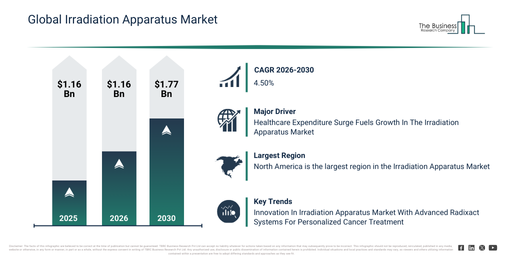
    The irradiation apparatus market has experienced consistent growth in recent times. The market is set to expand from $6.3 billion in 2025 to $6.58 billion in 2026, at a compound annual growth rate (CAGR) of 4.5%. Contributing to this market’s historical development are the expansion of diagnostic imaging infrastructure, the increasing use of radiation in cancer treatment, the growth in medical equipment sterilization needs, the adoption of irradiation in food preservation, and the expansion of research laboratories.

    The irradiation apparatus market is anticipated to show consistent expansion over the next few years. It is projected to reach $7.83 billion in 2030, with a compound annual growth rate (CAGR) of 4.5%. This growth in the forecast period stems from the increasing demand for advanced cancer therapies, rising investments in medical imaging technologies, the expansion of industrial irradiation applications, a growing emphasis on radiation safety systems, and technological advancements in beam control and monitoring. Prominent trends for the forecast period include the increasing deployment of advanced radiation therapy systems, rising adoption of sterilization and medical irradiation equipment, the growing use of industrial irradiation technologies, the expansion of portable and compact irradiation devices, and an enhanced focus on precision radiation control.

    Get A Free Sample Report With In-Depth Market Insights:

    https://thebusinessresearchcompany.com/sample_request?id=96148452&type=smp&name=Irradiation%20Apparatus%20Market%20Report%202026&utm_source=Blogs&utm_medium=Paid&utm_campaign=Oct_PR

    Irradiation Apparatus Market Opportunity Drivers: What’s Unlocking New Revenue Potential?

    The future expansion of the irradiation apparatus market is projected to be propelled by the growing expenditure on healthcare. Healthcare expenditure represents the total financial outlay on health-related goods and services within a specified period, including costs for medical treatment, medications, hospital care, preventative measures, and the overall enhancement of healthcare infrastructure. High healthcare spending plays a crucial role for irradiation apparatus given that radiation treatment is intensive in terms of resources, capital, and technology, particularly concerning the establishment and ongoing maintenance of radiation therapy facilities. As an illustration, in December 2024, data from the Centers for Medicare & Medicaid Services, a US government body, showed that total health-care spending in the nation had climbed to $4.9 trillion in 2023, an increase from $4.6 trillion in 2022. Therefore, the increasing expenditure on healthcare is a key driver for the growth of the irradiation apparatus market.

    Irradiation Apparatus Market Segment Outlook: Which Categories Are Growing Fastest?

    The irradiation apparatus market covered in this report is segmented –

    1) By Type: X-Rays, High Speed Neutrons, Electrons, Gamma Rays, Alphabeta Particles

    2) By Usage: Diagnostic Purposes, Therapeutic Purposes, Dental Purposes, Chiropractic Diagnostic Purposes, Industrial And Research Applications

    3) By Application: Hospital, Industry, Laboratory, Other Applications

    Subsegments:

    1) By X-Rays: Diagnostic X-Ray Machines, Therapeutic X-Ray Systems, Portable X-Ray Devices, Fluoroscopy Systems

    2) By High Speed Neutrons: Neutron Generators, Neutron Radiography Systems, Neutron Activation Analysis Systems

    3) By Electrons: Electron Beam Accelerators, Electron Therapy Systems, Industrial Electron Beam Processors

    4) By Gamma Rays: Gamma Irradiators, Gamma Cameras, Gamma Ray Spectroscopy Systems

    5) By Alphabeta Particles: Alpha Particle Irradiators, Beta Particle Irradiators, Combined Alpha-Beta Radiation Sources

    Irradiation Apparatus Market Innovation Trends Shaping Future Development

    Leading companies within the irradiation apparatus market are developing innovative products utilizing advanced technologies, such as advanced Radixact Systems, to gain a competitive advantage. The Radixact System, an irradiation apparatus and sophisticated TomoTherapy platform, delivers precise and customized radiation therapy for cancer treatment. For example, in October 2023, Koninklijke Philips N.V., a Netherlands-based medical device company, showcased its recent progress in MR-guided radiotherapy and the Spectral CT 7500 scanner at the ASTRO 2023 conference. These advancements are designed to assist radiation oncologists in achieving more accurate tumor targeting for radiation therapy, especially for head-and-neck cancer. The Spectral CT 7500 delivers unique incremental spectral information in a single scan, improving the visibility of tumor boundaries and internal physiology. This enhancement facilitates better dose calculation and tumor targeting, ultimately reducing the number of scans or modalities required for effective radiation therapy planning.

    Irradiation Apparatus Market Key Participants And Competitive Landscape

    Major companies operating in the irradiation apparatus market are Hitachi Ltd., Siemens Healthcare Private Ltd., Fujifilm Holdings Corporation, GE Healthcare, Philips Healthcare, Ametek Inc., Shimadzu Corporation, Varian Medical Systems Inc., Agfa-Gevaert, Carestream Health Inc., Toshiba America Medical Systems Inc., Steris PLC, Comet Yxlon GmbH, KaVo Dental, PROTEC GmbH & Co. KG, Canon Medical Systems Corporation, Ziehm Imaging Inc., Techno-Aide, Allengers Infotech, Narang Medical Limited, Xoran Technologies Inc., Control-X Medical Ltd.

    View The Full Irradiation Apparatus Market Report:

    https://thebusinessresearchcompany.com/report/irradiation-apparatus-global-market-report?utm_source=Blogs&utm_medium=Paid&utm_campaign=Oct_PR

    Irradiation Apparatus Market Geographic Analysis: Where Is Demand Accelerating Fastest?

    North America was the largest region in the irradiation apparatus market in 2025. Asia-Pacific is expected to be the fastest-growing region in the forecast period. The regions covered in the irradiation apparatus market report are Asia-Pacific, South East Asia, Western Europe, Eastern Europe, North America, South America, Middle East, Africa.

    Reach Out To Our Team:

    The Business Research Company: https://www.thebusinessresearchcompany.com/

    Americas: +1 310-496-7795

    Asia: +44 7882 955267 & +91 8897263534

    Europe: +44 7882 955267

    Email us at: marketing@tbrc.info

    Follow us on:

    LinkedIn: https://in.linkedin.com/company/the-business-research-company

    YouTube: https://www.youtube.com/channel/UC24_fI0rV8cR5DxlCpgmyFQ

    Global Market Model: https://www.thebusinessresearchcompany.com/global-market-model
  • Iron Oxide Nanopowders Market Forecast To Reach $2.77 Billion By 2030: Key Trends Explained

    Iron Oxide Nanopowders Market Forecast To Reach $2.77 Billion By 2030: Key Trends Explained

    Featuring market attractiveness scoring, total addressable market sizing, company benchmarking matrices, interactive Excel dashboards, deeper supply chain intelligence, emerging startup tracking, and granular product-level insights, The Business Research Company’s 2026 market reports are built to deliver research that is both more actionable and more strategically valuable.

    Iron Oxide Nanopowders Market Size And Revenue Outlook Through 2030

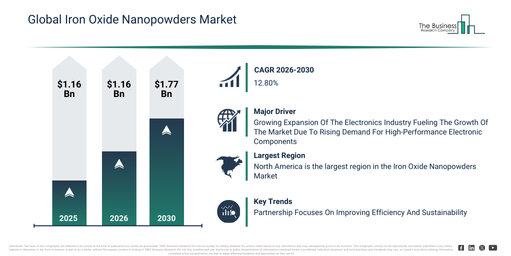
    The market for iron oxide nanopowders has expanded considerably in recent years. It is forecast to grow from $1.51 billion in 2025 to $1.71 billion in 2026, at a compound annual growth rate (CAGR) of 13.1%. This historic growth can be linked to factors including restricted large-scale nanopowder production technologies, the elevated cost of early-stage synthesis methods, initial adoption in specialized biomedical applications, a dependence on conventional iron oxide pigments, and inadequate regulatory standards for nanomaterials.

    The iron oxide nanopowders market size is anticipated to experience substantial growth in the upcoming years. Its value is projected to reach $2.77 billion in 2030, at a compound annual growth rate (CAGR) of 12.8%. This expansion during the forecast period can be attributed to developments in scalable synthesis techniques, increasing demand in healthcare and biomedical applications, greater industrial integration in energy and electronics sectors, expanding environmental and catalytic uses, and intensified research and development in multifunctional nanomaterials. Key trends expected throughout the forecast horizon involve the growing application of iron oxide nanopowders in biomedical imaging and drug delivery, the broadening scope of catalysts and energy storage solutions, heightened demand in paints, coatings, and anti-corrosion uses, their implementation in environmental remediation and wastewater treatment, and the creation of advanced nanostructured materials for electronics and sensor technologies.

    Get A Free Sample Report With In-Depth Market Insights:

    https://thebusinessresearchcompany.com/sample_request?id=42984255&type=smp&name=Iron%20Oxide%20Nanopowders%20Market%20Report%202026&utm_source=Blogs&utm_medium=Paid&utm_campaign=Oct_PR

    Iron Oxide Nanopowders Market Growth Momentum: What Factors Are Shaping Demand?

    The anticipated expansion of the electronics industry is projected to drive the growth of the iron oxide nanopowders market in the future. This sector encompasses the design, production, and distribution of electronic components and devices for consumer, industrial, and communication applications. Its growth is fueled by the rising demand for consumer electronics, which in turn stems from increasing digitalization and wider adoption of smart devices. Iron oxide nanopowders are crucial for the electronics industry, providing distinct magnetic and conductive characteristics that are vital for sensors, data storage, and various electronic components. They contribute to enhanced device performance through miniaturization and improved energy efficiency, thereby stimulating innovation in contemporary electronics. A relevant example is the global semiconductor industry sales, which, as reported by the US-based trade association, the Semiconductor Industry Association, reached $49.1 billion in May 2024. This represented a 19.3% increase from $41.2 billion in May 2023, as noted in July 2024. Consequently, the ongoing expansion of the electronics industry serves as a key driver for the iron oxide nanopowders market’s growth.

    Iron Oxide Nanopowders Market Segment Landscape: Which Areas Lead Development?

    The iron oxide nanopowders market covered in this report is segmented –

    1) By Product Type: Magnetite, Hematite, Wüstite, Other Product Types

    2) By Form: Dry Form, Wet Form

    3) By Size: Below 50 Nanometer (NM), 50-100 Nanometer (NM), Above 100 Nanometer (NM)

    4) By Application: Electronics, Catalysts, Paints And Coatings, Energy Storage, Environmental Remediation, Biomedical, Agriculture

    5) By End-User Industry: Construction, Automotive, Aerospace, Healthcare, Consumer Goods

    Subsegments:

    1) By Magnetite: Magnetic Resonance Imaging Contrast Agents, Targeted Drug Delivery Systems, Magnetic Data Storage Devices, Ferrofluids For Cooling Applications, Wastewater Treatment Adsorbents

    2) By Hematite: Photocatalysts For Water Splitting, Anti-Corrosion Pigment Coatings, Gas Sensor Components, Lithium Ion Battery Electrodes, Ceramic And Glass Colorants

    3) By Wüstite: Steel Manufacturing Additives, High Temperature Catalysts, Fuel Cell Electrode Materials, Iron-Based Nanocomposites, Ceramic Sintering Aids

    4) By Other Product Types: Maghemite For Magnetic Imaging, Iron Oxide Nanorods, Coated Iron Nanoparticles, Iron Oxide Quantum Dots, Doped Iron Oxide Nanoparticles

    Iron Oxide Nanopowders Market Trends Redefining Industry Growth

    Leading companies in the iron oxide nanopowders market are concentrating on employing a strategic partnership approach to improve technology integration and broaden market reach, with such collaborations typically involving two or more organizations combining their resources and expertise to achieve shared goals. For instance, in January 2024, LANXESS AG, a Germany-based specialty chemicals company, joined forces with IBU-tec advanced materials AG, a Germany-based specialty materials manufacturing company, to develop innovative iron oxides aimed at optimizing the performance of lithium iron phosphate (LFP) battery cathode materials. This collaboration seeks to leverage LANXESS’s expertise in high-performance iron oxide production and IBU-tec’s advanced material processing technologies to enhance the efficiency, sustainability, and scalability of LFP battery materials. The partnership also focuses on optimizing iron oxide nanopowders to improve battery performance, including energy density, cycle life, and cost-effectiveness, catering to the growing demand for next-generation energy storage solutions.

    Iron Oxide Nanopowders Market Top Companies Driving Competitive Growth

    Major companies operating in the iron oxide nanopowders market are American Elements Corporation, Inframat Corporation, NN-LABS LLC, PlasmaChem GmbH, CDH Fine Chemical, Nanoshel LLC, Skyspring Nanomaterials Inc., Nano Research Elements Inc., Nanostructured & Amorphous Materials Inc., MKNano Inc., US Research Nanomaterials Inc., BASF SE, Evonik Industries AG, Merck KGaA, Toda Kogyo Corporation, Nanoiron s.r.o., Nanophase Technologies Corporation, Promethean Particles Ltd, Magnacol Ltd, FerroTec Corporation, Materials and Electrochemical Research Corporation

    View The Full Iron Oxide Nanopowders Market Report:

    https://thebusinessresearchcompany.com/report/iron-oxide-nanopowders-global-market-report?utm_source=Blogs&utm_medium=Paid&utm_campaign=Oct_PR

    Iron Oxide Nanopowders Market Global Footprint: Which Region Leads The Industry?

    North America was the largest region in the iron oxide nanopowders market in 2025. Asia-Pacific is expected to be the fastest-growing region in the forecast period. The regions covered in the iron oxide nanopowders market report are Asia-Pacific, South East Asia, Western Europe, Eastern Europe, North America, South America, Middle East, Africa.

    Reach Out To Our Team:

    The Business Research Company: https://www.thebusinessresearchcompany.com/

    Americas: +1 310-496-7795

    Asia: +44 7882 955267 & +91 8897263534

    Europe: +44 7882 955267

    Email us at: marketing@tbrc.info

    Follow us on:

    LinkedIn: https://in.linkedin.com/company/the-business-research-company

    YouTube: https://www.youtube.com/channel/UC24_fI0rV8cR5DxlCpgmyFQ

    Global Market Model: https://www.thebusinessresearchcompany.com/global-market-model
  • Endometrial Cancer Treatment Market Size Forecast From 2026 To 2030: Key Industry Trends

    Endometrial Cancer Treatment Market Size Forecast From 2026 To 2030: Key Industry Trends

    Featuring market attractiveness scoring, total addressable market sizing, company benchmarking matrices, interactive Excel dashboards, deeper supply chain intelligence, emerging startup tracking, and granular product-level insights, The Business Research Company’s 2026 market reports are built to deliver research that is both more actionable and more strategically valuable.

    Endometrial Cancer Treatment Market Expansion Outlook: What Revenue Opportunities Are Ahead?

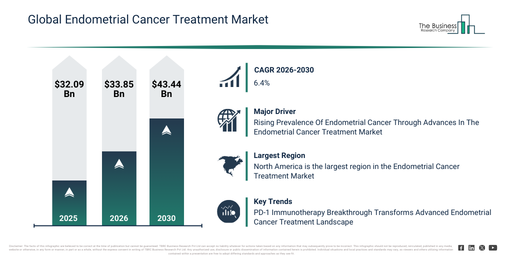
    The endometrial cancer treatment market has experienced significant expansion in recent years. It is projected to expand from $32.09 billion in 2025 to $33.85 billion in 2026, achieving a compound annual growth rate (CAGR) of 5.5%. This historical expansion is due to several factors including an increasing incidence of endometrial cancer, the scarcity of effective early diagnostic instruments, a prevailing preference for conventional chemotherapy approaches, a shortage of targeted therapeutic options, and insufficient public knowledge regarding preventive measures.

    The endometrial cancer treatment market is projected to experience robust expansion over the coming years. This market is set to reach a value of $43.44 billion by 2030, exhibiting a compound annual growth rate (CAGR) of 6.4%. This anticipated growth is primarily driven by progress in genomics and precision medicine, greater acceptance of AI-powered diagnostics, an increase in targeted and immunotherapy drug development, a growing elderly demographic, and better healthcare facilities. Key trends expected during this period encompass individualized treatment methods, less invasive surgical procedures, the advancement of targeted therapies, combination treatment plans, and improved patient observation and aftercare.

    Get A Free Sample Report With In-Depth Market Insights:

    https://thebusinessresearchcompany.com/sample_request?id=43175987&type=smp&name=Endometrial%20Cancer%20Treatment%20Market%20Report%202026&utm_source=Blogs&utm_medium=Paid&utm_campaign=Oct_PR

    Endometrial Cancer Treatment Market Growth Factors Behind Sustained Expansion

    The increasing occurrence of endometrial cancer is anticipated to drive expansion in the endometrial cancer treatment market in the future. This prevalence signifies a rise in new endometrial cancer cases within a defined population or timeframe. This increase stems from evolving risk factors, enhanced detection and diagnostic techniques, heightened public awareness, and an older demographic. Treatments for endometrial cancer aid in early identification, offer specific therapeutic approaches, prevent disease return, and involve clinical trials and research to refine options. Consequently, with the ongoing increase in endometrial cancer prevalence and the development of more advanced treatment alternatives, the endometrial cancer treatment market is projected to expand. For example, Cancer.Net, an online resource with oncologist-approved cancer data, projected that approximately 66,200 individuals in the United States would receive a diagnosis of uterine or endometrial cancer in 2023. Thus, the escalating prevalence of endometrial cancer acts as a key driver for the expansion of the endometrial cancer treatment market.

    Endometrial Cancer Treatment Market Segmentation And Category Overview

    The endometrial cancer treatment market covered in this report is segmented –

    1) By Type: Adenocarcinoma, Uterine Carcinosarcoma, Squamous Cell Carcinoma, Small Cell Carcinoma, Transitional Carcinoma, Serous Carcinoma, Other Types

    2) By Diagnosis Method: Biopsy, Pelvic Ultrasound, Hysteroscopy, CT Scan, Other Diagnosis Methods

    3) By Route Of Administration: Oral, Intravenous

    4) By Distribution Channel: Hospital Pharmacies, Retail Pharmacies, Online Pharmacies

    Subsegments:

    1) By Adenocarcinoma: Endometrioid Adenocarcinoma, Non-Endometrioid Adenocarcinoma

    2) By Uterine Carcinosarcoma: High-Grade Uterine Carcinosarcoma, Low-Grade Uterine Carcinosarcoma

    3) By Squamous Cell Carcinoma: Keratinizing Squamous Cell Carcinoma, Non-Keratinizing Squamous Cell Carcinoma

    4) By Small Cell Carcinoma: Small Cell Neuroendocrine Carcinoma

    5) By Transitional Carcinoma: Transitional Cell Carcinoma Of The Uterus

    6) By Serous Carcinoma: High-Grade Serous Carcinoma, Low-Grade Serous Carcinoma

    7) By Other Types: Mixed Cell Type Carcinomas, Undifferentiated Carcinoma, Other Rare Histological Types

    Endometrial Cancer Treatment Market Industry Trends Fueling Future Revenue Growth

    Companies operating within the endometrial cancer treatment market are concentrating on creating sophisticated therapies, such as PD-1 pathway blocking immunotherapy, to improve treatment efficacy and the durability of patient responses. This specific immunotherapy functions by stopping cancer cells from utilizing the PD-1 mechanism to escape detection by the immune system, thereby enabling immune cells to more accurately identify and attack tumors. Such an approach offers a targeted therapeutic alternative for advanced or recurrent disease where traditional chemotherapy has frequently yielded only limited long-term advantages. A notable example is the launch of Jemperli by GSK Plc, a biopharma company from the UK, in August 2025, which incorporates a PD-1 blocking mechanism. This treatment marks India’s inaugural approved immunotherapy for the second-line management of advanced endometrial cancer characterized by mismatch repair deficiency or high microsatellite instability, demonstrating an objective response rate of 45.5 percent in the GARNET trial. Furthermore, it exhibits a strong likelihood of maintaining a sustained response at 12 and 24 months, coupled with a manageable safety profile. Its introduction addresses a significant gap in treatment options within India, especially for numerous patients who present with advanced stages of the disease and require more efficacious and reliable therapies.

    Endometrial Cancer Treatment Market Competitive Analysis Of Leading Industry Participants

    Major companies operating in the endometrial cancer treatment market are Novartis AG, GlaxoSmithKline plc, F. Hoffmann-La Roche AG, Merck & Co. Inc., Sanofi-Aventis, Teva Pharmaceutical Industries Limited, AstraZeneca plc, Pfizer Inc., Bristol-Myers Squibb Company, Eisai Co. Ltd., AbbVie Inc., Roche Holding AG, Janssen Biotech Inc., Takeda Pharmaceutical Company Limited, Amgen Inc., Bayer AG, Eli Lilly and Company, Varian Medical Systems Inc., Seattle Genetics Inc., Spectrum Pharmaceuticals Inc., Stemline Therapeutics Inc.

    View The Full Endometrial Cancer Treatment Market Report:

    https://thebusinessresearchcompany.com/report/endometrial-cancer-treatment-global-market-report?utm_source=Blogs&utm_medium=Paid&utm_campaign=Oct_PR

    Endometrial Cancer Treatment Market Regional Analysis And Top Geography

    North America was the largest region in the endometrial cancer treatment market in 2025. Asia-Pacific is expected to be the fastest-growing region in the global endometrial cancer treatment market report during the forecast period. The regions covered in the endometrial cancer treatment market report are Asia-Pacific, South East Asia, Western Europe, Eastern Europe, North America, South America, Middle East, Africa.

    Reach Out To Our Team:

    The Business Research Company: https://www.thebusinessresearchcompany.com/

    Americas: +1 310-496-7795

    Asia: +44 7882 955267 & +91 8897263534

    Europe: +44 7882 955267

    Email us at: marketing@tbrc.info

    Follow us on:

    LinkedIn: https://in.linkedin.com/company/the-business-research-company

    YouTube: https://www.youtube.com/channel/UC24_fI0rV8cR5DxlCpgmyFQ

    Global Market Model: https://www.thebusinessresearchcompany.com/global-market-model
  • Iron Fortified Infant Formula Market Analysis Through 2030: Market Size, Growth Trends And Industry Outlook

    Iron Fortified Infant Formula Market Analysis Through 2030: Market Size, Growth Trends And Industry Outlook

    Backed by market attractiveness analysis, total addressable market sizing, company benchmarking matrices, interactive Excel dashboards, wider supply chain intelligence, emerging startup coverage, and detailed product-level insights, The Business Research Company’s 2026 market reports are designed to offer research that is more actionable and strategically valuable than ever.

    Iron Fortified Infant Formula Market Growth From $2.61 Billion In 2026 To $3.34 Billion By 2030 At A CAGR Of 6.3%

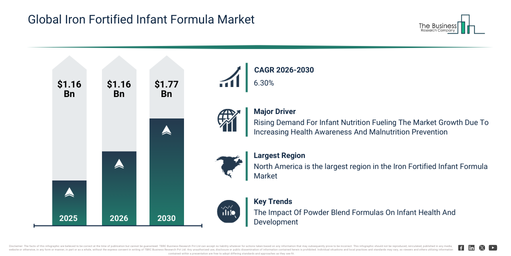
    The iron fortified infant formula market has experienced strong growth in recent years. It is projected to increase from $2.45 billion in 2025 to $2.61 billion in 2026, demonstrating a compound annual growth rate (CAGR) of 6.5%. The historical expansion in this market can be linked to heightened awareness of infant nutrition, the growing number of urban working parents, an increase in packaged infant food consumption, better access to pediatric healthcare guidance, and the rising occurrence of infant iron deficiency.

    The iron fortified infant formula market is projected to experience substantial expansion in the coming years, reaching a valuation of $3.34 billion by 2030, driven by a compound annual growth rate (CAGR) of 6.3%. This anticipated growth during the forecast period is largely due to factors such as a heightened demand for premium infant nutrition items, a growing inclination towards convenient feeding solutions, the expansion of infant nutrition sales channels online, an increased regulatory emphasis on nutrient standards, and continuous innovation in fortified formula formulations. Key trends expected over the forecast horizon encompass a surge in demand for organic and clean-label infant formulas, greater adoption of optimized iron fortification blends, the proliferation of ready-to-use infant formula formats, a more pronounced focus on digestibility and nutrient absorption, and elevated investments in ensuring quality and safety.

    Get A Free Sample Report With In-Depth Market Insights:

    https://thebusinessresearchcompany.com/sample_request?id=90101055&type=smp&name=Iron%20Fortified%20Infant%20Formula%20Market%20Report%202026&utm_source=Blogs&utm_medium=Paid&utm_campaign=Oct_PR

    Iron Fortified Infant Formula Market Expansion Drivers: What’s Shaping Future Growth?

    The escalating demand for infant nutrition is anticipated to drive the expansion of the iron-fortified infant formula market. Infant nutrition focuses on supplying appropriate nutrients to newborns and young children, from birth up to two years of age, to support healthy physical growth, brain development, immune system function, and overall well-being. The rising need for infant nutrition primarily results from heightened awareness among parents regarding the critical importance of early childhood nutrition for healthy growth and development. Iron-fortified infant formula is crucial for infant nutrition, providing key nutrients that encourage healthy growth and development, especially when breastfeeding is not feasible or sufficient. For example, in 2023, the United Nations International Children’s Emergency Fund (UNICEF), a US-based humanitarian aid organization, according to its report, distributed nearly 480 million vitamin A capsules to 71 countries, enabling over 320 million children to receive two doses of Vitamin A Supplementation (VAS), indicating a 26% increase compared to previous years. Thus, the increasing demand for infant nutrition is fueling the growth of the iron-fortified infant formula market.

    Iron Fortified Infant Formula Market Segments: Where Is Growth Concentrated?

    The iron fortified infant formula market covered in this report is segmented –

    1) By Product Type: Powdered Iron-Fortified Infant Formula, Liquid Concentrates, Ready-To-Use Liquids

    2) By Feeding Method: Breastfeeding Supplement, Exclusive Formula Feeding, Combination Feeding

    3) By Packaging Type: Tin Cans, Plastic Containers, Pouches, Single-Serve Sachets

    4) By Age Group: Newborn, Infants (1-6 Months), Crawlers (6-12 Months), Toddlers (12+ Months)

    5) By Distribution Channel: Online Retail, Supermarkets Or Hypermarkets, Pharmacies, Specialty Stores

    Subsegments:

    1) By Powdered Iron-Fortified Infant Formula: Cow Milk-Based Powder, Soy-Based Powder, Specialty Powder, Organic Powder

    2) By Liquid Concentrates: Cow Milk-Based Concentrate, Soy-Based Concentrate, Specialty Concentrate, Organic Concentrate

    3) By Ready-To-Use Liquids: Cow Milk-Based Ready-To-Use, Soy-Based Ready-To-Use, Specialty Ready-To-Use, Organic Ready-To-Use

    Iron Fortified Infant Formula Market Strategic Trends: What Defines The Next Growth Phase?

    Leading companies in the iron-fortified infant formula market are prioritizing the creation of innovative products, such as powder blends, to improve nutrient absorption and promote better infant health. A powder blend, defined as a homogenous mixture of powdered ingredients, assists iron-fortified infant formula by ensuring the uniform distribution of iron and other nutrients, thereby enhancing stability, absorption, and consistent nutritional value in each serving. For example, in July 2023, Danone S.A., a France-based food company, launched Danone’s dairy and plant milk powder blend for infants, which combines 60% dairy protein derived from whey and casein with 40% non-genetically modified organism (GMO) soy protein. This innovative formulation was designed to address the growing demand for plant-based offerings while guaranteeing comprehensive nutritional support for young children. The product is fortified with crucial micronutrients, including zinc, iron, folate, and vitamins A, B6, B12, C, and D, to aid immune system function. The formula meets parents’ increasing desire for plant-based diets for their children without compromising the essential nutrients required for infant and toddler development.

    Iron Fortified Infant Formula Market Leading Players And Competitive Positioning

    Major companies operating in the iron fortified infant formula market are Nestlé S.A., Abbott Nutrition Manufacturing Inc., Groupe Danone, FrieslandCampina, Meiji Holdings Co. Ltd., Perrigo Company plc, Morinaga Milk Industry Co. Ltd., The a2 Milk Company, HiPP GmbH & Co. Vertrieb KG, Synutra International Inc., ByHeart, Bubs Australia Limited, Bellamy’s Organic, Bobbie Baby Inc., Arla Foods amba, Kendamil, Holle Baby Food GmbH, Beingmate Baby & Child Food Co. Ltd., Hero AG, Reckitt Benckiser Group plc, Feihe International Inc., Ausnutria Dairy Corporation Ltd., Yili Group, Danone Nutricia

    View The Full Iron Fortified Infant Formula Market Report:

    https://thebusinessresearchcompany.com/report/iron-fortified-infant-formula-global-market-report?utm_source=Blogs&utm_medium=Paid&utm_campaign=Oct_PR

    Iron Fortified Infant Formula Market Regional Distribution: Which Areas Power Market Growth?

    North America was the largest region in the iron fortified infant formula market in 2025. Asia-Pacific is expected to be the fastest-growing region in the forecast period. The regions covered in the iron fortified infant formula market report are Asia-Pacific, South East Asia, Western Europe, Eastern Europe, North America, South America, Middle East, Africa.

    Reach Out To Our Team:

    The Business Research Company: https://www.thebusinessresearchcompany.com/

    Americas: +1 310-496-7795

    Asia: +44 7882 955267 & +91 8897263534

    Europe: +44 7882 955267

    Email us at: marketing@tbrc.info

    Follow us on:

    LinkedIn: https://in.linkedin.com/company/the-business-research-company

    YouTube: https://www.youtube.com/channel/UC24_fI0rV8cR5DxlCpgmyFQ

    Global Market Model: https://www.thebusinessresearchcompany.com/global-market-model
  • Iron Deficiency Anemia Treatment Market Outlook From 2026 To 2030: Key Growth Factors And Future Opportunities

    Iron Deficiency Anemia Treatment Market Outlook From 2026 To 2030: Key Growth Factors And Future Opportunities

    Featuring market attractiveness scoring, total addressable market sizing, company benchmarking matrices, interactive Excel dashboards, deeper supply chain intelligence, emerging startup tracking, and granular product-level insights, The Business Research Company’s 2026 market reports are built to deliver research that is both more actionable and more strategically valuable.

    Iron Deficiency Anemia Treatment Market Expansion Outlook: What Revenue Opportunities Are Ahead?

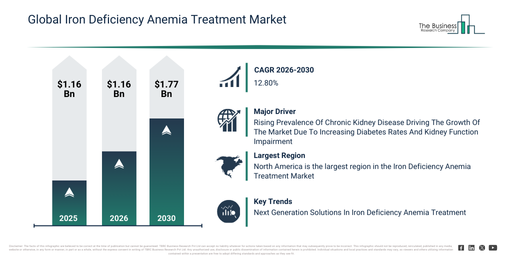
    The iron deficiency anemia treatment market has witnessed substantial growth in recent years. The market is projected to expand from $8.83 billion in 2025 to $9.98 billion in 2026, demonstrating a compound annual growth rate (CAGR) of 13.0%. This historical growth can be attributed to several factors, including the increasing incidence of iron deficiency disorders, improved diagnosis of anemia in the context of chronic diseases, the broader implementation of hospital-based treatment protocols, the widespread availability of oral iron supplements, and a heightened awareness regarding anemia management.

    The iron deficiency anemia treatment market is projected for significant expansion over the coming years. This market is set to reach a value of $16.17 billion by 2030, exhibiting a compound annual growth rate (CAGR) of 12.8%. This expansion during the forecast period is driven by factors such as the increasing vulnerability of the elderly population, a heightened need for swift iron replenishment methods, the broader application of injectable iron, a growing emphasis on patient-focused care models, and innovations in iron formulation technologies. Key developments anticipated in this period encompass the greater embrace of intravenous iron treatments, increased utilization of highly bioavailable iron preparations, a stronger focus on individualized anemia management strategies, the wider availability of outpatient and at-home iron therapy, and enhanced tools for patient tracking and adherence.

    Get A Free Sample Report With In-Depth Market Insights:

    https://thebusinessresearchcompany.com/sample_request?id=47552563&type=smp&name=Iron%20Deficiency%20Anemia%20Treatment%20Market%20Report%202026&utm_source=Blogs&utm_medium=Paid&utm_campaign=Oct_PR

    Iron Deficiency Anemia Treatment Market Development Factors: What’s Supporting Demand?

    The increasing prevalence of chronic kidney disease is anticipated to fuel the expansion of the iron deficiency anemia treatment market in the future. Chronic kidney disease (CKD) is characterized by a gradual decline in kidney function over time. This rise in CKD can be attributed to escalating rates of diabetes, as prolonged high blood sugar levels damage the blood vessels in the kidneys, thereby impairing their ability to filter waste. Iron deficiency anemia treatment assists individuals with CKD by enhancing oxygen delivery to tissues, reducing fatigue, and improving their quality of life. It also has the potential to boost kidney function by addressing the anemia that frequently arises from reduced erythropoietin production in CKD. For example, a report published by AstraZeneca, a UK-based pharmaceutical company, in April 2024, projects that by 2032, up to 16.5% of the population across eight countries, including the United States, Brazil, the United Kingdom, Spain, Germany, the Netherlands, China, and Australia, will be impacted by chronic kidney disease (CKD), with advanced-stage cases increasing significantly by up to 59.3%. Thus, the growth in chronic kidney disease is propelling the iron deficiency anemia treatment market forward.

    Iron Deficiency Anemia Treatment Market Segment Analysis: What Are The Core Market Categories?

    The iron deficiency anemia treatment market covered in this report is segmented –

    1) By Treatment Type: Medications, Blood Transfusions, Other Treatment Types

    2) By Drug Type: Ferrous Sulfate, Iron Carbohydrates, Other Drug Types

    3) By Therapy Areas: Inflammatory Bowel Disease, Oncology, Other Therapy Areas

    4) By Route Of Administration: Oral, Injectable

    5) By End User: Hospitals, Clinics, Home Care Settings, Pharmacies

    Subsegments:

    1) By Medications: Oral Iron Supplements, Intravenous Iron Therapy, Iron-Based Injections, Erythropoiesis-Stimulating Agents

    2) By Blood Transfusions: Packed Red Blood Cells Transfusion, Whole Blood Transfusion

    3) By Other Treatment Types: Dietary Modifications, Iron Infusion Therapy, Long-Term Maintenance Iron Therapy

    Iron Deficiency Anemia Treatment Market Transformation Trends: What Innovations Are Driving Change?

    Companies operating in the iron deficiency anemia treatment market are directing their efforts toward developing advanced solutions, such as iron injections, to boost treatment effectiveness, safety, and patient convenience. An iron injection is considered a new or substantially improved injectable iron therapy, representing a significant stride in the management of iron deficiency or iron deficiency anemia. For example, in March 2024, Cadila Pharmaceuticals, an Indian pharmaceutical company, launched Redshot FCM, an intravenous iron therapy employing ferric carboxymaltose to address iron deficiency anemia (IDA). This therapy comes with specific benefits, including an advanced ferric carboxymaltose formulation for swift iron replenishment, minimal risk of anaphylaxis, high-dose single-infusion administration for rapid correction, and suitability for pediatric use (1+ years) in addition to adult application. It accelerates hemoglobin recovery and is intended for high-risk groups, including pregnant women and cancer patients, exhibiting superior tolerability.

    Iron Deficiency Anemia Treatment Market Competitive Overview And Top Companies

    Major companies operating in the iron deficiency anemia treatment market are Sanofi SA, Fresenius SE & Co. KGaA, Amgen Inc., Teva Pharmaceutical Industries Ltd., Sandoz Group AG, Daiichi Sankyo Company Limited, Lupin Limited, Zydus Lifesciences Limited, Alkem Laboratories Ltd., Pharmascience Inc., American Regent Inc., PharmaNutra S.p.A., Rockwell Medical Inc., Keryx Biopharmaceuticals Inc., Pharmacosmos A/S, AdvaCare Pharma USA LLC, Apotex Inc., Shield Therapeutics plc, CSL Vifor AG, Abbott Laboratories, Bayer AG, Pfizer Inc., Cipla Limited, Dr. Reddy’s Laboratories Ltd.

    View The Full Iron Deficiency Anemia Treatment Market Report:

    https://thebusinessresearchcompany.com/report/iron-deficiency-anemia-treatment-global-market-report?utm_source=Blogs&utm_medium=Paid&utm_campaign=Oct_PR

    Iron Deficiency Anemia Treatment Market Leading Geography: Which Region Contributes The Most Revenue?

    North America was the largest region in the iron deficiency anemia treatment market in 2025. Asia-Pacific is expected to be the fastest-growing region in the forecast period. The regions covered in the iron deficiency anemia treatment market report are Asia-Pacific, South East Asia, Western Europe, Eastern Europe, North America, South America, Middle East, Africa.

    Reach Out To Our Team:

    The Business Research Company: https://www.thebusinessresearchcompany.com/

    Americas: +1 310-496-7795

    Asia: +44 7882 955267 & +91 8897263534

    Europe: +44 7882 955267

    Email us at: marketing@tbrc.info

    Follow us on:

    LinkedIn: https://in.linkedin.com/company/the-business-research-company

    YouTube: https://www.youtube.com/channel/UC24_fI0rV8cR5DxlCpgmyFQ

    Global Market Model: https://www.thebusinessresearchcompany.com/global-market-model
  • Endocrinology Drugs Market 2026: Market Size, Growth Drivers And Emerging Opportunities

    Endocrinology Drugs Market 2026: Market Size, Growth Drivers And Emerging Opportunities

    Built to provide research that’s more actionable and strategically valuable, The Business Research Company’s 2026 market reports include market attractiveness analysis, total addressable market sizing, company benchmarking matrices, interactive Excel dashboards, broader supply chain intelligence, emerging startup tracking, and in-depth product insights.

    Endocrinology Drugs Market Growth Potential: How Will Market Size Shift Through 2030?

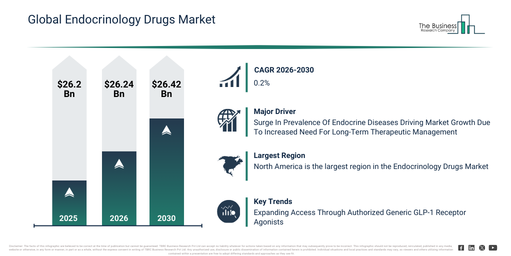
    The endocrinology drugs market has seen a slight expansion in recent years. Its valuation is anticipated to rise from $26.2 billion in 2025 to $26.24 billion in 2026, advancing at a compound annual growth rate (CAGR) of 0.1%. The growth observed in the past can be ascribed to an increase in diabetes prevalence, a higher rate of thyroid disorder diagnosis, expanded use of hormone replacement, the growth of hospital pharmacies, and heightened awareness of endocrine conditions.

    The endocrinology drugs market is projected to experience modest growth in the coming years. It is anticipated to expand to $26.42 billion in 2030, achieving a compound annual growth rate (CAGR) of 0.2%. This expansion during the forecast period is attributable to an aging population, a rise in lifestyle-related disorders, advancements in diabetes medication innovation, the proliferation of online pharmacies, and increasing rates of endocrine screening. Significant trends expected during this period include the rising long-term management of chronic endocrine conditions, a greater adoption of combination hormonal therapies, an increasing demand for diabetes and thyroid disorder drugs, the broadening of outpatient endocrine care, and a heightened focus on hormone replacement therapies.

    Get A Free Sample Report With In-Depth Market Insights:

    https://thebusinessresearchcompany.com/sample_request?id=17447418&type=smp&name=Endocrinology%20Drugs%20Market%20Report%202026&utm_source=Blogs&utm_medium=Paid&utm_campaign=Oct_PR

    Endocrinology Drugs Market Demand Drivers Opening New Revenue Streams

    The increasing occurrence of endocrine disorders is anticipated to fuel the expansion of the endocrinology drugs market in the coming years. These conditions are illnesses affecting the endocrine system, leading to hormone production or regulation imbalances that can disrupt normal physiological processes. The growing incidence of endocrine diseases stems from various factors, such as shifts in lifestyle, an aging global demographic, and enhanced diagnostic capabilities, all of which have contributed to their greater identification and occurrence. Medications for endocrinology are crucial in handling endocrine disorders by adjusting hormone levels, treating glandular dysfunctions, and re-establishing hormonal equilibrium to ease symptoms and enhance overall patient health. As an illustration, in February 2025, the World Health Organization, a United Nations agency in Switzerland dedicated to global public health, reported that polycystic ovary syndrome (PCOS) impacts approximately 6 to 13% of women of reproductive age, with as many as 70% of those affected globally remaining undiagnosed. Consequently, the heightened prevalence of endocrine diseases is stimulating growth within the endocrinology drugs market.

    Endocrinology Drugs Market Segment Outlook: Which Categories Are Growing Fastest?

    The endocrinology drugs market covered in this report is segmented –

    1) By Indication: Hyperthyroidism, Hypothyroidism, Diabetes, Polycystic Ovarian Syndrome, Growth Hormone Disorders, Pituitary Gland Disorders, Other Indications

    2) By Therapy Area: Diabetes Drugs, Thyroid Hormone Disorder Drugs, Human Growth Hormone, Testosterone Replacement Therapy, Other Therapy Areas

    3) By Distribution Channel: Hospital pharmacies, Online Pharmacies, Retail pharmacies

    4) By End User: Hospitals, Ambulatory Surgical Centers, Other End Users

    Subsegments:

    1) By Hyperthyroidism: Antithyroid Medications, Radioactive Iodine Therapy, Beta Blockers

    2) By Hypothyroidism: Levothyroxine-based Medications, Liothyronine-based Medications, Combination Hormonal Therapies

    3) By Diabetes: Insulin Therapies, Oral Antidiabetic Drugs (OADs), GLP-1 Receptor Agonists, SGLT-2 Inhibitors, DPP-4 Inhibitors

    4) By Polycystic Ovarian Syndrome (PCOS): Oral Contraceptives, Metformin, Clomiphene Citrate, Anti-Androgens

    5) By Growth Hormone Disorders: Recombinant Human Growth Hormone (rhGH), Growth Hormone Secretagogues, Growth Hormone Receptor Antagonists

    6) By Pituitary Gland Disorders: Somatostatin Analogs, Gonadotropins, Dopamine Agonists

    7) By Other Indications: Adrenal Gland Disorders, Osteoporosis, Parathyroid Disorders, Male Hormonal Imbalances

    Endocrinology Drugs Market Trends Powering Strategic Industry Growth

    Leading companies in the endocrinology drugs market are emphasizing product innovation and formulation, such as authorized generics of GLP-1 receptor agonists, to improve patient access, decrease treatment costs, and enhance market competitiveness while preserving safety and efficacy profiles. These strategies ensure wider availability of essential diabetes and obesity therapies and support adherence to chronic treatment regimens. For instance, in June 2024, Teva Pharmaceuticals, a US-based pharmaceutical company, announced the launch of an authorized generic of Victoza (liraglutide) injection 1.8 mg in the United States. This authorized generic provides the same formulation and therapeutic profile as the branded product, offering clinicians and patients a cost-effective choice for managing type 2 diabetes and obesity. This launch illustrates a broader market trend towards increasing access to vital endocrinology therapies through generic and authorized generic formulations, helping to address the growing global demand for diabetes management solutions.

    Endocrinology Drugs Market Leading Companies And Competitive Benchmarking

    Major companies operating in the endocrinology drugs market are Johnson & Johnson Inc., Merck & Co. Inc., AbbVie Inc., Bayer Aktiengesellschaft, Novartis International AG, Sanofi S.A., AstraZeneca plc, Abbott Laboratories, GlaxoSmithKline plc, Takeda Pharmaceutical Company Limited, Eli Lilly and Company, Amgen Inc., Novo Nordisk A/S, Biocon Limited, Boehringer Ingelheim International GmbH, Mylan N.V., Sandoz International GmbH, Ipsen Pharma, Ferring Pharmaceuticals Inc., Endocrine Pharma Private Limited

    View The Full Endocrinology Drugs Market Report:

    https://thebusinessresearchcompany.com/report/endocrinology-drugs-global-market-report?utm_source=Blogs&utm_medium=Paid&utm_campaign=Oct_PR

    Endocrinology Drugs Market Geographic Analysis: Where Is Demand Rising Fastest?

    North America was the largest region in the endocrinology drugs market in 2025. Asia-Pacific is expected to be the fastest-growing region in the forecast period. The regions covered in the endocrinology drugs market report are Asia-Pacific, South East Asia, Western Europe, Eastern Europe, North America, South America, Middle East, Africa.

    Reach Out To Our Team:

    The Business Research Company: https://www.thebusinessresearchcompany.com/

    Americas: +1 310-496-7795

    Asia: +44 7882 955267 & +91 8897263534

    Europe: +44 7882 955267

    Email us at: marketing@tbrc.info

    Follow us on:

    LinkedIn: https://in.linkedin.com/company/the-business-research-company

    YouTube: https://www.youtube.com/channel/UC24_fI0rV8cR5DxlCpgmyFQ

    Global Market Model: https://www.thebusinessresearchcompany.com/global-market-model
  • Iron Deficiency Anemia Therapy Market Growth Forecast: Market Size, Key Trends And Emerging Opportunities Through 2030

    Iron Deficiency Anemia Therapy Market Growth Forecast: Market Size, Key Trends And Emerging Opportunities Through 2030

    Built to provide research that’s more actionable and strategically valuable, The Business Research Company’s 2026 market reports include market attractiveness analysis, total addressable market sizing, company benchmarking matrices, interactive Excel dashboards, broader supply chain intelligence, emerging startup tracking, and in-depth product insights.

    Iron Deficiency Anemia Therapy Market Growth Potential: How Will Market Size Shift Through 2030?

    The iron deficiency anemia therapy market size has demonstrated significant expansion in recent years. It is forecast to grow from $4.78 billion in 2025 to $5.15 billion in 2026, achieving a compound annual growth rate (CAGR) of 7.8%. The historic period’s growth drivers include the increasing prevalence of iron deficiency anemia, rising awareness of anemia management, expansion of hospital-based treatment protocols, growing use of oral iron supplements, and improved diagnostic screening for anemia.

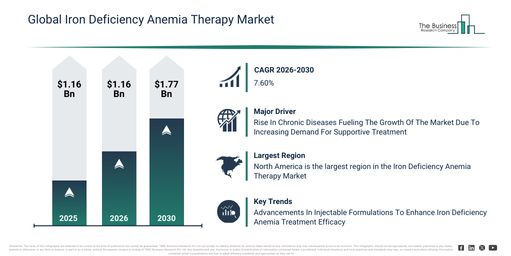
    The iron deficiency anemia therapy market size is anticipated to experience substantial expansion over the upcoming years. It is projected to reach $6.92 billion by 2030, exhibiting a compound annual growth rate (CAGR) of 7.6%. This projected growth during the forecast period can be linked to factors such as the increasing need for quicker anemia correction, the growing occurrence of chronic illnesses that lead to anemia, the proliferation of specialized anemia clinics, a heightened focus on maternal and pediatric anemia care, and improvements in iron formulation technologies. Key developments expected during this period involve a rise in the adoption of intravenous iron therapies, an increasing demand for targeted anemia treatments, a greater emphasis on personalized patient therapy regimens, the development of combined oral and parenteral therapies, and an enhanced focus on ensuring treatment effectiveness and safety.

    Get A Free Sample Report With In-Depth Market Insights:

    https://thebusinessresearchcompany.com/sample_request?id=29773912&type=smp&name=Iron%20Deficiency%20Anemia%20Therapy%20Market%20Report%202026&utm_source=Blogs&utm_medium=Paid&utm_campaign=Oct_PR

    Iron Deficiency Anemia Therapy Market Industry Drivers: What’s Behind The Revenue Growth?

    The iron deficiency anemia therapy market is projected to expand due to the escalating number of chronic disease cases. Chronic diseases are long-term medical conditions typically persisting for at least a year. The rise in these conditions is linked to an increased prevalence of unhealthy lifestyle choices, including poor diet, lack of physical activity, and smoking, which contribute to ailments such as obesity, diabetes, and heart disease, leading to lasting health complications. Chronic conditions can heighten the demand for iron deficiency anemia therapy by impairing the body’s ability to absorb iron effectively, thereby increasing the risk of iron deficiency and necessitating supplementation or treatment to restore iron levels. For instance, in June 2024, the National Health Service, a UK-based government department, reported that 3,615,330 individuals registered with a GP were diagnosed with non-diabetic hyperglycemia, or pre-diabetes, in 2023. This marked an 18% increase from 3,065,825 cases recorded in 2022. Thus, the increasing incidence of chronic diseases is propelling growth within the iron deficiency anemia therapy market.

    Iron Deficiency Anemia Therapy Market Segment Breakdown: Which Categories Lead On Revenue?

    The iron deficiency anemia therapy market covered in this report is segmented –

    1) By Product Type: Ferrous Sulphate, Ferrous Gluconate, Ferrous Fumerate, Ferric Hydroxide

    2) By Therapy Type: Parenteral Iron Therapy, Oral Iron Therapy, Red Blood Cell Transfusion, Other Therapy Types

    3) By Therapy Areas: Inflammatory Bowel Diseases, Renal Diseases, Obstetrics and Gynecology, Congestive Heart Failure, Oncology

    4) By Distribution channel: Hospital Pharmacy, Drug Stores And Retail Pharmacies, Online Pharmacies

    5) By End User: Hospitals, Speciality Clinics, Home Care Setting, Other End Users

    Subsegments:

    1) By Ferrous Sulphate: Oral Ferrous Sulphate Tablets, Oral Liquid Ferrous Sulphate, Intravenous Ferrous Sulphate, Extended Or Delayed Release Formulations

    2) By Ferrous Gluconate: Oral Tablets, Chewable Tablets, Liquid Solutions, Pediatric Formulations

    3) By Ferrous Fumarate: Oral Tablets Or Capsules, Prenatal Supplements, Multivitamin with Iron Formulations, Pediatric Drops Or Syrups

    4) By Ferric Hydroxide: Intravenous Iron Therapy, Ferric Hydroxide Polymaltose Complex, Dialysis-Specific Iron Therapy, Hospital-Based Injectable Formulations

    #Iron Deficiency Anemia Therapy Market Growth Trends: What’s Shaping The Future Outlook?

    Major companies within the iron deficiency anemia therapy market are concentrating on creating improved treatment alternatives, such as injectable formulations, to enhance both treatment effectiveness and ease of access. An injectable formulation refers to a recently developed or modified drug version administered via injection. For example, in May 2023, Emcure Pharmaceuticals Ltd., an Indian pharmaceutical firm, introduced Orofer FCM 750, a ferric carboxymaltose (FCM) formulation designed for treating iron deficiency and iron deficiency anemia (IDA). This product offers advantages like enhanced patient adherence due to less frequent dosing compared to oral supplements. Its primary goal is to effectively manage iron deficiency anemia, particularly in individuals unable to tolerate oral iron supplements. This 750 mg/15 ml injectable ferric carboxymaltose received approval from India’s DCGI for iron deficiency anemia (IDA) in patients who do not respond to oral iron, especially pregnant women with hemoglobin <10 g/dl and weighing 35–70 kg, providing a 15-minute infusion (when diluted in saline) and adhering to Anemia Mukt Bharat guidelines as a preferred initial treatment for severe conditions.

    Iron Deficiency Anemia Therapy Market Competitive Landscape: Which Companies Lead The Industry?

    Major companies operating in the iron deficiency anemia therapy market are Sanofi SA, Fresenius SE & Co. KGaA, GlaxoSmithKline plc, Sun Pharmaceutical Industries Ltd, CSL Vifor AG, Zydus Lifesciences Limited, Alkem Laboratories Ltd., Luitpold Pharmaceuticals Inc., Covis Pharma GmbH, Pharmacosmos Therapeutics Inc., AFT Pharmaceuticals Ltd., Rockwell Medical Inc., Otsuka Pharmaceutical Co. Ltd., AdvaCare Pharma USA LLC, Apotex Inc., KYE Pharmaceuticals Inc., Emcure Pharmaceuticals Limited, Shield Therapeutics plc, Abbott Laboratories, Bayer AG, Pfizer Inc., Lupin Limited, Cipla Limited, Dr. Reddy’s Laboratories Ltd.

    View The Full Iron Deficiency Anemia Therapy Market Report:

    https://thebusinessresearchcompany.com/report/iron-deficiency-anemia-therapy-global-market-report?utm_source=Blogs&utm_medium=Paid&utm_campaign=Oct_PR

    Iron Deficiency Anemia Therapy Market Regional Outlook: Where Is Opportunity Concentrated?

    North America was the largest region in the iron deficiency anemia therapy market in 2025. Asia-Pacific is expected to be the fastest-growing region in the forecast period. The regions covered in the iron deficiency anemia therapy market report are Asia-Pacific, South East Asia, Western Europe, Eastern Europe, North America, South America, Middle East, Africa.

    Reach Out To Our Team:

    The Business Research Company: https://www.thebusinessresearchcompany.com/

    Americas: +1 310-496-7795

    Asia: +44 7882 955267 & +91 8897263534

    Europe: +44 7882 955267

    Email us at: marketing@tbrc.info

    Follow us on:

    LinkedIn: https://in.linkedin.com/company/the-business-research-company

    YouTube: https://www.youtube.com/channel/UC24_fI0rV8cR5DxlCpgmyFQ

    Global Market Model: https://www.thebusinessresearchcompany.com/global-market-model

  • End Stage Renal Disease (ESRD) Drug Market Set To Expand From $304.06 Billion In 2026: Growth Outlook Through 2030

    End Stage Renal Disease (ESRD) Drug Market Set To Expand From $304.06 Billion In 2026: Growth Outlook Through 2030

    Backed by market attractiveness analysis, total addressable market sizing, company benchmarking matrices, interactive Excel dashboards, wider supply chain intelligence, emerging startup coverage, and detailed product-level insights, The Business Research Company’s 2026 market reports are designed to offer research that is more actionable and strategically valuable than ever.

    End Stage Renal Disease (ESRD) Drug Market Value Analysis: What Growth Lies Ahead Over The Forecast Period?

    The market size for end stage renal disease (esrd) drugs has expanded quickly in recent years. It is forecast to increase from $148.55 billion in 2025 to $171.12 billion in 2026, exhibiting a compound annual growth rate (CAGR) of 15.2%. The historical growth can be linked to the rising prevalence of ckd, heightened awareness of esrd, an increase in dialysis centers, breakthroughs in renal therapeutics, and government healthcare initiatives.

    The end stage renal disease (esrd) drug market is anticipated to undergo significant expansion in the upcoming years. It is forecast to reach $304.07 billion by 2030, demonstrating a compound annual growth rate (CAGR) of 15.5%. This growth in the forecast period stems from the progress in precision medicine, the increased availability of homecare dialysis, the incorporation of AI into patient monitoring, heightened investments in esrd research and development, and the rising use of combination therapies. Notable trends for this period include tailored esrd drug therapy, home-based dialysis solutions, the integration of telemedicine in ckd management, advanced drug formulations for addressing secondary complications, and a growing adoption of combination therapies.

    Get A Free Sample Report With In-Depth Market Insights:

    https://thebusinessresearchcompany.com/sample_request?id=96056166&type=smp&name=End%20Stage%20Renal%20Disease%20%28ESRD%29%20Drug%20Market%20Report%202026&utm_source=Blogs&utm_medium=Paid&utm_campaign=Oct_PR

    End Stage Renal Disease (ESRD) Drug Market Growth Backed By Core Demand Fundamentals

    The growing prevalence of obesity and diabetes is anticipated to fuel the expansion of the end-stage renal disease (ESRD) drug market. Obesity is characterized by an excessive or unhealthy accumulation of body fat, presenting significant health risks. Conversely, diabetes refers to a long-term condition where the pancreas either fails to produce adequate insulin or the body struggles to effectively use the insulin it produces. For individuals suffering from renal disease, interventions like dialysis that manage fluid and electrolyte balance, blood pressure, and waste removal can enhance overall health, potentially leading to weight loss and better regulation of blood sugar. To illustrate this, in 2023, the World Obesity Federation, a non-profit membership organization, estimated that by 2035, the yearly economic burden of overweight and obesity will hit US$ 4.32 trillion, which is roughly 3% of global GDP. Additionally, in June 2024, data from the National Health Service, a UK-based government department, revealed that 3,615,330 individuals registered with a general practitioner (GP) were diagnosed with non-diabetic hyperglycemia or pre-diabetes (a condition with elevated blood sugar levels, not high enough to be classified as diabetes) in 2023, representing an 18% rise from 3,065,825 cases recorded in 2022. Consequently, the increasing incidence of obesity and diabetes will stimulate the market for end-stage renal disease (ESRD) drugs.

    End Stage Renal Disease (ESRD) Drug Market Segment Landscape: Which Areas Lead Development?

    The end stage renal disease (esrd) drug market covered in this report is segmented –

    1) By Product Type: Calcimimetics, Vitamin D, Sterols, Potassium Binders, Calcium-Based Phosphate Binders, Other Products

    2) By Indication: End Stage Renal Disease (ESRD) Induced Hyperparathyroidism, End Stage Renal Disease (ESRD) Induced Hyperphosphatemia, End Stage Renal Disease (ESRD) Induced Hyperkaliemia

    3) By Distribution Channel: Hospital Pharmacy, Online Pharmacy, Retail Pharmacy

    4) By End User: Hospitals, Homecare, Specialty Clinics, Other End Users

    Subsegments:

    1) By Calcimimetics: Cinacalcet, Etelcalcetide

    2) By Vitamin D: Calcitriol, Doxercalciferol, Paricalcitol

    3) By Sterols: Ergocalciferol, Cholecalciferol

    4) By Potassium Binders: Sodium Polystyrene Sulfonate, Patiromer, Sodium Zirconium Cyclosilicate

    5) By Calcium-Based Phosphate Binders: Calcium Acetate, Calcium Carbonate

    6) By Other Products: Iron Supplements, Erythropoiesis-Stimulating Agents

    End Stage Renal Disease (ESRD) Drug Market Growth Trends Reshaping The Competitive Landscape

    Leading companies active in the end-stage renal disease (ESRD) drug market are concentrating on product approvals, such as for Jardiance, to boost their revenues within this sector. Empagliflozin is a medication formulated to assist individuals with type 2 diabetes and to reduce the likelihood of cardiovascular complications in those with type 2 diabetes who also have heart failure or cardiovascular disease. For example, in September 2023, Boehringer Ingelheim Pharmaceuticals Inc., a US-based pharmaceutical company, secured FDA approval for Jardiance. Jardiance has been sanctioned for various indications, including lowering the risk of end-stage kidney disease, cardiovascular death, and hospitalization in adults with chronic kidney disease who are at risk of progression, as well as reducing the risk of a sustained decline in estimated glomerular filtration rate (eGFR) in adults with heart failure. Jardiance functions as a sodium-glucose cotransporter 2 (SGLT2) inhibitor and is contraindicated in patients diagnosed with type 1 diabetes and those exhibiting an eGFR less than 20 ml/min/1.73 m.

    End Stage Renal Disease (ESRD) Drug Market Industry Leaders And Competitive Landscape

    Major companies operating in the end stage renal disease (esrd) drug market are Pfizer Inc., AstraZeneca plc, Sanofi SA, Astellas Pharma Inc., Novartis AG, Fresenius SE & Co. KGaA, Takeda Pharmaceutical Company Limited, F. Hoffmann-La Roche Ltd., Kissei Pharmaceutical Co. Ltd., Baxter International Inc., AbbVie Inc., Amgen Inc., Akebia Drugs Inc., Bayer AG, Bristol-Myers Squibb Company, B. Braun SE, Asahi Kasei Medical Co. Ltd., Nikkiso Co. Ltd., Abbott Laboratories, Merck Co. & KGaA

    View The Full End Stage Renal Disease (ESRD) Drug Market Report:

    https://thebusinessresearchcompany.com/report/end-stage-renal-disease-ESRD-drug-global-market-report?utm_source=Blogs&utm_medium=Paid&utm_campaign=Oct_PR

    End Stage Renal Disease (ESRD) Drug Market Global Footprint: Which Region Leads The Market?

    North America was the largest region in the end stage renal disease (ESRD) drug market in 2025. The regions covered in the end stage renal disease (esrd) drug market report are Asia-Pacific, South East Asia, Western Europe, Eastern Europe, North America, South America, Middle East, Africa.

    Reach Out To Our Team:

    The Business Research Company: https://www.thebusinessresearchcompany.com/

    Americas: +1 310-496-7795

    Asia: +44 7882 955267 & +91 8897263534

    Europe: +44 7882 955267

    Email us at: marketing@tbrc.info

    Follow us on:

    LinkedIn: https://in.linkedin.com/company/the-business-research-company

    YouTube: https://www.youtube.com/channel/UC24_fI0rV8cR5DxlCpgmyFQ

    Global Market Model: https://www.thebusinessresearchcompany.com/global-market-model
  • In-Vivo Prime Editing Platform Analysis Through 2030: Market Size, Growth Trends And Industry Outlook

    In-Vivo Prime Editing Platform Analysis Through 2030: Market Size, Growth Trends And Industry Outlook

    Backed by market attractiveness analysis, total addressable market sizing, company benchmarking matrices, interactive Excel dashboards, wider supply chain intelligence, emerging startup coverage, and detailed product-level insights, The Business Research Company’s 2026 market reports are designed to offer research that is more actionable and strategically valuable than ever.

    In-vivo Prime Editing Platform Market Value Analysis: What Growth Lies Ahead Over The Forecast Period?

    The market size for in-vivo prime editing platforms has expanded significantly in recent years. Its value is anticipated to climb from $1.26 billion in 2025 to $1.63 billion in 2026, reflecting a compound annual growth rate (CAGR) of 29.4%. Historically, this expansion has been driven by the emergence of CRISPR technologies, an increase in genetic disorder research, enhanced biotechnology funding, academic studies in genome editing, and the initial positive results from gene therapies.

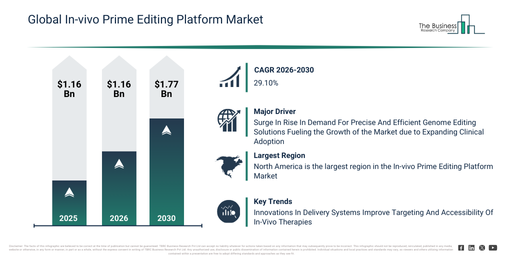
    The in-vivo prime editing platform market size is projected to experience substantial expansion over the coming years. It is anticipated to reach $4.52 billion in 2030, exhibiting a compound annual growth rate (CAGR) of 29.1%. This projected growth during the forecast period can be linked to factors such as the clinical application of prime editing, the increasing scope of in-vivo gene therapies, governmental backing for genetic treatments, collaborations between biotechnology and pharmaceutical companies, and advancements in delivery vectors. Key trends anticipated during the forecast period encompass progress in precision genome editing, a broader scope of gene therapy research, heightened attention on treating rare diseases, the creation of enhanced delivery mechanisms, and a rise in preclinical and clinical investigations.

    Get A Free Sample Report With In-Depth Market Insights:

    https://thebusinessresearchcompany.com/sample_request?id=61565725&type=smp&name=In-vivo%20Prime%20Editing%20Platform%20Market%20Report%202026&utm_source=Blogs&utm_medium=Paid&utm_campaign=Oct_PR

    In-vivo Prime Editing Platform Market Growth Factors: What’s Supporting Expansion?

    The in-vivo prime editing platform market is projected to expand in the future, driven by a growing demand for exact and effective genome editing solutions. This type of genome editing involves making highly accurate, focused alterations to DNA (deoxyribonucleic acid), the molecule responsible for storing genetic information in cells, while minimizing unintended edits and adverse outcomes. The increased requirement for precise and efficient genome-editing solutions stems from the rising need for targeted therapies that reduce errors and achieve lasting clinical results. The in-vivo prime editing platform supports this demand by enabling very accurate, targeted DNA modifications within living tissues, which leads to fewer off-target effects and the potential for long-term therapeutic advantages. For instance, according to the World Economic Forum, a Switzerland-based international non-profit organization, there were over 2,000 gene therapies in development worldwide, which was double the number from just three years earlier. Therefore, the heightened demand for precise and efficient genome editing solutions is a primary factor fueling the growth of the in-vivo prime editing platform market.

    In-vivo Prime Editing Platform Market Segmentation: How Does The Market Break Down By Category?

    The in-vivo prime editing platform market covered in this report is segmented –

    1) By Product Type: Prime Editing Enzymes, Guide Ribonucleic Acids, Delivery Systems, Other Product Types

    2) By Application: Genetic Disease Treatment, Oncology, Rare Diseases, Research And Development

    3) By Delivery Method: Viral Vectors, Non-Viral Methods, Lipid Nanoparticles, Other Delivery Method Types

    4) By End-User: Pharmaceutical And Biotechnology Companies, Academic And Research Institutes, Contract Research Organizations, Other End-Users

    Subsegments:

    1) By Prime Editing Enzymes: Cas9 Nickeas, Reverse Transcriptase, Engineered Variants

    2) By Guide Ribonucleic Acids: pegRNA (Prime Editing Guide RNA), sgRNA (Single Guide RNA), Optimized Synthetic RNAs

    3) By Delivery Systems: Viral Vectors (AAV, Lentivirus), Non-Viral Vectors (Lipid Nanoparticles, Electroporation, Physical Methods), Exosomes

    4) By Other Product Types: Screening Tools, Assay Kits, Supporting Reagents

    In-vivo Prime Editing Platform Market Industry Trends: What’s Reshaping Demand?

    Major companies and research institutions operating in the in-vivo prime editing platform market are concentrating on developing novel delivery mechanisms, including lipid nanoparticles, viral vectors, and engineered extracellular vesicles, to secure a competitive advantage. These advanced carriers, like lipid nanoparticles, encase crucial prime editing elements such as Cas9 nickase, reverse transcriptase, and pegRNAs. This encapsulation shields them from breakdown and facilitates their effective transport into target cells, simultaneously enhancing absorption and tissue-specific targeting. An illustrative example is Moderna, a US-based biotechnology company, which in September 2023, showcased that refined lipid nanoparticle formulations can accurately transport prime editing machinery to liver and muscle tissues in animal models, leading to precise genome alterations with reduced unintended effects. These breakthroughs highlight the way advancements in delivery methods boost the effectiveness, accuracy, and prospective therapeutic utility of in-vivo prime editing treatments.

    In-vivo Prime Editing Platform Market Competitive Landscape: Who Leads The Industry?

    Major companies operating in the in-vivo prime editing platform market are AstraZeneca PLC, Danaher Corporation, Regeneron Pharmaceuticals Inc., Moderna Inc., Integrated DNA Technologies Inc., Beam Therapeutics Inc., CRISPR Therapeutics AG, Maravai LifeSciences Holdings Inc., Sangamo Therapeutics Inc., Editas Medicine Inc., Precision BioSciences Inc., Metagenomi Inc., Tessera Therapeutics Inc., Mammoth Biosciences Inc., Arbor Biotechnologies Inc., Intellia Therapeutics Inc. (NTLA), Caribou Biosciences Inc., Scribe Therapeutics Inc., EGENESIS INC., Prime Medicine Inc., Cellectis S.A.

    View The Full In-vivo Prime Editing Platform Market Report:

    https://thebusinessresearchcompany.com/report/in-vivo-prime-editing-platform-global-market-report?utm_source=Blogs&utm_medium=Paid&utm_campaign=Oct_PR

    In-vivo Prime Editing Platform Market Geographic Landscape: Which Region Leads Industry Growth?

    North America was the largest region in the in-vivo prime editing platform market in 2025. Asia-Pacific is expected to be the fastest-growing region in the forecast period. The regions covered in the in-vivo prime editing platform market report are Asia-Pacific, South East Asia, Western Europe, Eastern Europe, North America, South America, Middle East, Africa.

    Reach Out To Our Team:

    The Business Research Company: https://www.thebusinessresearchcompany.com/

    Americas: +1 310-496-7795

    Asia: +44 7882 955267 & +91 8897263534

    Europe: +44 7882 955267

    Email us at: marketing@tbrc.info

    Follow us on:

    LinkedIn: https://in.linkedin.com/company/the-business-research-company

    YouTube: https://www.youtube.com/channel/UC24_fI0rV8cR5DxlCpgmyFQ

    Global Market Model: https://www.thebusinessresearchcompany.com/global-market-model
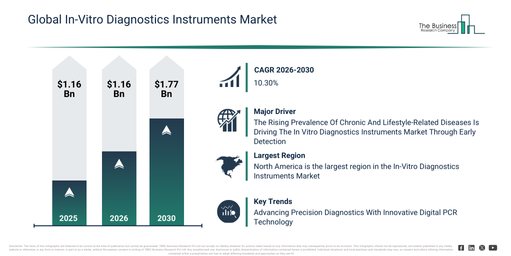
  • In-Vitro Diagnostics Instruments Market To Witness 10.3% CAGR Growth Through 2030: Key Industry Drivers

    In-Vitro Diagnostics Instruments Market To Witness 10.3% CAGR Growth Through 2030: Key Industry Drivers

    Featuring market attractiveness scoring, total addressable market sizing, company benchmarking matrices, interactive Excel dashboards, deeper supply chain intelligence, emerging startup tracking, and granular product-level insights, The Business Research Company’s 2026 market reports are built to deliver research that is both more actionable and more strategically valuable.

    In-Vitro Diagnostics Instruments Market Size Forecast: How Big Could The Market Get By 2030?

    The in-vitro diagnostics instruments market has experienced substantial growth recently. Its projected expansion shows an increase from $61.09 billion in 2025 to $67.18 billion in 2026, reflecting a compound annual growth rate (CAGR) of 10.0%. Historically, this growth can be attributed to factors such as the increasing prevalence of chronic diseases, expanding hospital laboratory infrastructure, advancements in diagnostic reagents, heightened awareness for early disease detection, and various government healthcare initiatives.

    The in-vitro diagnostics instruments market size is anticipated to experience substantial growth in the upcoming years. It is projected to expand to $99.44 billion in 2030, achieving a compound annual growth rate (CAGR) of 10.3%. This expansion during the forecast period can be attributed to technological advancements in molecular diagnostics, the increasing prevalence of personalized medicine, the incorporation of AI in diagnostics, the development of healthcare in emerging markets, and the rising demand for home-based diagnostic devices. Significant trends over the forecast period include the proliferation of point-of-care testing, the evolution of personalized diagnostics, the widespread adoption of rapid molecular testing, the integration of remote patient monitoring, and the emergence of miniaturized lab instruments.

    Get A Free Sample Report With In-Depth Market Insights:

    https://thebusinessresearchcompany.com/sample_request?id=29107&type=smp&name=In-Vitro%20Diagnostics%20Instruments%20Market%20Report%202026&utm_source=Blogs&utm_medium=Paid&utm_campaign=Oct_PR

    In-Vitro Diagnostics Instruments Market Demand Drivers: What’s Powering Industry Growth?

    The growing incidence of chronic and lifestyle-related diseases is anticipated to accelerate the expansion of the in vitro diagnostics instruments market in the future. These conditions are defined as long-term health issues primarily influenced by daily habits, behaviors, and environmental factors, encompassing ailments such as heart disease, diabetes, obesity, and certain cancers. The increase in chronic and lifestyle-related diseases is attributed to sedentary lifestyles and unhealthy dietary habits. Consequently, there is a heightened demand for in vitro diagnostics instruments solutions, as the rapid spread of these diseases prompts companies to adopt early detection and monitoring tools for improved disease management. For instance, in 2024, the American Action Forum, a US-based non-profit, center-right think tank, reported that chronic diseases remain a significant public health concern in the U.S., with nearly 60 percent of adults living with at least one condition, 40 percent managing multiple conditions, and their prevalence is expected to nearly double by 2050. Furthermore, the market for chronic disease treatment is projected to reach approximately USD 38.02 billion by 2034, representing a substantial increase from USD 9.74 billion in 2025. Therefore, the rising prevalence of chronic and lifestyle-related diseases is driving the demand for the in vitro diagnostics instruments market.

    In-Vitro Diagnostics Instruments Market Segment Trends And Revenue Contributors

    The in-vitro diagnostics instruments market covered in this report is segmented –

    1) By Product Type: Clinical Chemistry, Immunoassay, Molecular Diagnostics, Hematology, Microbiology, Coagulation, Other Product Types

    2) By Application: Infectious Diseases, Cancer, Cardiology, Nephrology, Autoimmune Diseases, Other Applications

    3) By End User: Hospitals And Diagnostic Laboratories, Academic And Research Institutes, Point-Of-Care Settings, Blood Banks, Pharmaceutical And Biotechnology Companies, Other Healthcare Facilities

    Subsegments:

    1) By Clinical Chemistry: Automated Clinical Chemistry Analyzers, Semi-Automated Clinical Chemistry Analyzers, Point-Of-Care Clinical Chemistry Devices

    2) By Immunoassay: Enzyme-Linked Immunosorbent Assay (ELISA) Systems, Chemiluminescence Immunoassay (CLIA) Analyzers, Radioimmunoassay (RIA) Systems

    3) By Molecular Diagnostics: Polymerase Chain Reaction (PCR) Systems, Next-Generation Sequencing (NGS) Platforms, Deoxyribonucleic Acid Microarrays, Isothermal Amplification Devices

    4) By Hematology: Automated Hematology Analyzers, Manual Hematology Analyzers, Hemostasis Analyzers, Coagulation Analyzers

    5) By Microbiology: Microbial Identification Systems, Antibiotic Susceptibility Testing (AST) Systems, Blood Culture Systems, Automated Microbial Analyzers.

    6) By Coagulation: Coagulometers, Platelet Function Analyzers, Thromboelastography (TEG) Systems, Point-Of-Care Coagulation Devices

    7) By Other Product Types: Point-Of-Care Diagnostic Devices, Miscellaneous Laboratory Instruments

    In-Vitro Diagnostics Instruments Market Innovation Trends: What Developments Are Reshaping The Industry?

    Leading firms within the in-vitro diagnostics instruments market are concentrating on creating sophisticated products, for example, digital polymerase chain reaction (dPCR) systems, to facilitate highly accurate and sensitive quantification of nucleic acids for improved diagnostics. These dPCR systems serve as advanced diagnostic instruments capable of precise DNA or RNA molecule quantification by dividing samples into thousands of distinct reactions, ensuring highly accurate and sensitive detection. As an illustration, in September 2024, QIAGEN N.V., a biotechnology company based in the Netherlands, introduced the QIAcuityDx Digital PCR System, thereby extending its digital PCR offerings into clinical diagnostics, with a particular emphasis on oncology testing. This system is fully integrated and automated, specifically engineered for oncology clinical testing, incorporating a cartridge-based workflow to reduce manual labor. The QIAcuityDx comes equipped with automated analysis and reporting software, facilitating the swift and precise identification of genetic biomarkers for cancer diagnosis and therapy monitoring, requiring minimal operator involvement.

    In-Vitro Diagnostics Instruments Market Company Landscape And Competitive Strategy

    Major companies operating in the in-vitro diagnostics instruments market are F. Hoffmann-La Roche Ltd, Danaher Corporation, Abbott Laboratories, Thermo Fisher Scientific, Siemens Healthineers AG, Becton Dickinson and Company, Sysmex Corporation, Bio-Rad Laboratories Inc, Agilent Technologies, Hologic Inc, Qiagen N.V., Illumina Inc, Ortho Clinical Diagnostics, Beckman Coulter Inc, Mindray Medical International Limited, Horiba Ltd, Randox Laboratories Ltd, DiaSorin S.p.A., Werfen S.A., Trinity Biotech plc

    View The Full In-Vitro Diagnostics Instruments Market Report:

    https://thebusinessresearchcompany.com/report/in-vitro-diagnostics-instruments-global-market-report?utm_source=Blogs&utm_medium=Paid&utm_campaign=Oct_PR

    In-Vitro Diagnostics Instruments Market Largest Region: Which Geography Holds The Biggest Share?

    North America was the largest region in the in-vitro diagnostics instruments market in 2025. Asia-Pacific is expected to be the fastest-growing region in the forecast period. The regions covered in the in-vitro diagnostics instruments market report are Asia-Pacific, South East Asia, Western Europe, Eastern Europe, North America, South America, Middle East, Africa.

    Reach Out To Our Team:

    The Business Research Company: https://www.thebusinessresearchcompany.com/

    Americas: +1 310-496-7795

    Asia: +44 7882 955267 & +91 8897263534

    Europe: +44 7882 955267

    Email us at: marketing@tbrc.info

    Follow us on:

    LinkedIn: https://in.linkedin.com/company/the-business-research-company

    YouTube: https://www.youtube.com/channel/UC24_fI0rV8cR5DxlCpgmyFQ

    Global Market Model: https://www.thebusinessresearchcompany.com/global-market-model