Author: Marketing Posting

  • Neurointerventional Balloon Dilatation Catheter Market Size In 2026 And Beyond: Understanding Future Growth Potential

    Neurointerventional Balloon Dilatation Catheter Market Size In 2026 And Beyond: Understanding Future Growth Potential

    Built to provide research that’s more actionable and strategically valuable, The Business Research Company’s 2026 market reports include market attractiveness analysis, total addressable market sizing, company benchmarking matrices, interactive Excel dashboards, broader supply chain intelligence, emerging startup tracking, and in-depth product insights.

    Neurointerventional Balloon Dilatation Catheter Market Forecast: Value Set To Climb From $2.06 Billion To $3.96 Billion

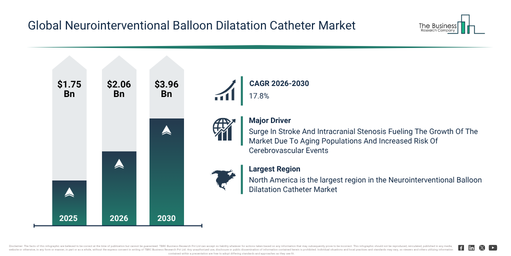
    The size of the neurointerventional balloon dilatation catheter market has experienced rapid expansion in recent years. It will grow from $1.75 billion in 2025 to $2.06 billion in 2026 at a compound annual growth rate (CAGR) of 17.5%. The expansion observed in the historic period can be attributed to increasing prevalence of cerebrovascular diseases, advancements in catheter design and materials, rising number of neurovascular surgeries, growth of hospital and specialty clinic infrastructure, and increasing awareness of minimally invasive procedures.

    The neurointerventional balloon dilatation catheter market size is projected for significant expansion in the coming years. This market is forecasted to attain a value of $3.96 billion by 2030, demonstrating a compound annual growth rate (CAGR) of 17.8%. Factors contributing to this growth during the forecast period include advancements in compliant and non-compliant balloon technologies, the rising use of drug-coated balloons, an increase in ambulatory surgical centers, the incorporation of AI-assisted imaging systems, and the broadening of intracranial treatment applications. Key trends observed within the forecast timeframe involve the increasing implementation of neurointerventional procedures, a surge in the application of drug-coated balloon technologies, an escalating demand for steerable and tapered balloons, the widening scope of both intracranial and extracranial applications, and the integration of imaging and navigation systems into balloon catheters.

    Get A Free Sample Report With In-Depth Market Insights:

    https://thebusinessresearchcompany.com/sample_request?id=14797178&type=smp&name=Neurointerventional%20Balloon%20Dilatation%20Catheter%20Market%20Report%202026&utm_source=Blogs&utm_medium=Paid&utm_campaign=Oct_PR

    Neurointerventional Balloon Dilatation Catheter Market Growth Catalysts And Demand Drivers

    The increasing occurrence of stroke and intracranial stenosis is projected to boost the expansion of the neurointerventional balloon dilatation catheter market. Intracranial stenosis, a condition characterized by the narrowing of brain arteries, is frequently linked to stroke and heightens the likelihood of ischemic events. The growing rates of stroke and intracranial stenosis are fueled by demographic shifts towards older populations, who are more prone to arterial constriction and cerebrovascular incidents. Neurointerventional balloon dilatation catheters address these conditions by expanding constricted brain arteries, thereby re-establishing blood flow and diminishing the danger of ischemic events. For example, in December 2025, the Stroke Foundation, an Australia-based Non-profit organization, reported that stroke remains one of Australia’s leading causes of death, accounting for 9,147 lives in 2024, with a stroke occurring every 11 minutes. Consequently, the rising incidence of stroke and intracranial stenosis is anticipated to stimulate the growth of the neurointerventional balloon dilatation catheter market. The increasing demand for minimally invasive medical techniques is set to drive the expansion of the neurointerventional balloon dilatation catheter market. Minimally invasive procedures are defined as medical or cosmetic interventions carried out with minimal cuts or tissue harm, frequently employing tools such as needles, catheters, or small instruments. This growing preference is largely due to the decreased risk of complications associated with them, as they require smaller incisions and present lower probabilities of infection or hemorrhage. The neurointerventional balloon dilatation catheter facilitates these minimally invasive approaches by enabling accurate expansion of constricted brain arteries via small vascular entry points, thereby diminishing the necessity for open surgery and accelerating recovery periods. For example, in June 2024, data from the American Society of Plastic Surgeons, a US-based non-profit organization, revealed that minimally invasive procedures reached 5.29 million in 2023, marking an 8% rise compared to 2022. As a result, the growing preference for minimally invasive procedures is projected to fuel the growth of the neurointerventional balloon dilatation catheter market.

    Neurointerventional Balloon Dilatation Catheter Market Segment Analysis: What Are The Core Market Categories?

    The neurointerventional balloon dilatation catheter market covered in this report is segmented –

    1) By Product Type: Compliant, Non Compliant, Semi Compliant

    2) By Balloon Shape: Standard, Steerable, Tapered

    3) By Coating Technology: Drug Coated, Plain

    4) By Application: Extracranial, Intracranial

    5) By End-User: Ambulatory Surgical Centers, Hospitals, Specialty Clinics

    Subsegments:

    1) By Compliant: Low Pressure Compliant Balloon, Medium Pressure Compliant Balloon, High Elasticity Compliant Balloon

    2) By Non Compliant: High Pressure Non Compliant Balloon, Ultra High Pressure Non Compliant Balloon, Controlled Diameter Non Compliant Balloon

    3) By Semi Compliant: Moderate Pressure Semi Compliant Balloon, Balanced Compliance Balloon, Flexible Semi Compliant Balloon

    Neurointerventional Balloon Dilatation Catheter Market Competitive Overview And Top Companies

    Major companies operating in the neurointerventional balloon dilatation catheter market are Johnson & Johnson, Medtronic plc, Stryker Corporation, Koninklijke Philips N.V., Boston Scientific Corporation, B. Braun Melsungen AG, Terumo Corporation, Kaneka Corporation, Nipro Corporation, Penumbra Inc., Lepu Medical Technology Co. Ltd., MicroPort Scientific Corporation, Asahi Intecc Co. Ltd., APT Medical Inc., Sino Medical Sciences Technology Inc., Peijia Medical Limited, Scientia Vascular Inc., Wallaby Medical Inc., Zylox-Tonbridge Medical Technology Co. Ltd., Acandis GmbH & Co. KG, Princeton Medical Scientific Inc., Cordis a Cardinal Health Company, DK MEDTECH Corporation.

    View The Full Neurointerventional Balloon Dilatation Catheter Market Report:

    https://thebusinessresearchcompany.com/report/neurointerventional-balloon-dilatation-catheter-market-report?utm_source=Blogs&utm_medium=Paid&utm_campaign=Oct_PR

    Neurointerventional Balloon Dilatation Catheter Market Leading Geography: Which Region Contributes The Most Revenue?

    North America was the largest region in the neurointerventional balloon dilatation catheter market in 2025. Asia-Pacific is expected to be the fastest-growing region in the forecast period. The regions covered in the neurointerventional balloon dilatation catheter market report are Asia-Pacific, South East Asia, Western Europe, Eastern Europe, North America, South America, Middle East, Africa.

    Reach Out To Our Team:

    The Business Research Company: https://www.thebusinessresearchcompany.com/

    Americas: +1 310-496-7795

    Asia: +44 7882 955267 & +91 8897263534

    Europe: +44 7882 955267

    Email us at: marketing@tbrc.info

    Follow us on:

    LinkedIn: https://in.linkedin.com/company/the-business-research-company

    YouTube: https://www.youtube.com/channel/UC24_fI0rV8cR5DxlCpgmyFQ

    Global Market Model: https://www.thebusinessresearchcompany.com/global-market-model

  • Multi-Arm Polyethylene Glycol (PEG) Derivatives Market Size And Growth In 2026: Key Factors Shaping Future Demand

    Multi-Arm Polyethylene Glycol (PEG) Derivatives Market Size And Growth In 2026: Key Factors Shaping Future Demand

    Built to provide research that’s more actionable and strategically valuable, The Business Research Company’s 2026 market reports include market attractiveness analysis, total addressable market sizing, company benchmarking matrices, interactive Excel dashboards, broader supply chain intelligence, emerging startup tracking, and in-depth product insights.

    Multi-Arm Polyethylene Glycol (PEG) Derivatives Market Expansion Outlook: What Revenue Opportunities Are Ahead?

    The multi-arm polyethylene glycol (PEG) derivatives market has experienced swift expansion in recent years. This market is projected to expand from $6.02 billion in 2025 to $6.72 billion in 2026, exhibiting a compound annual growth rate (CAGR) of 11.6%. Historically, this expansion has been driven by factors such as progress in polymer chemistry, increased pharmaceutical research and development, a rise in biomedical research endeavors, a heightened emphasis on drug formulation stability, and the broadening of tissue engineering applications.

    The multi-arm polyethylene glycol (PEG) derivatives market size is anticipated to experience substantial growth in the upcoming years. It is projected to expand to $10.5 billion by 2030, achieving a compound annual growth rate (CAGR) of 11.8%. This expansion during the forecast period is primarily driven by the increasing integration of targeted drug delivery systems, advancements in regenerative medicine and tissue engineering, a growing need for personalized medicine, technological innovations in functionalization methods, and the expanding use in cosmetics and biomaterials applications. Significant trends anticipated for this period include a heightened demand for functionalized multi-arm PEG derivatives, expanding applications in drug delivery and tissue engineering, an increased focus on bioconjugation and pegylation techniques, broadening usage in diagnostics and medical devices, and greater adoption across cosmetics, personal care, and surface coatings.

    Get A Free Sample Report With In-Depth Market Insights:

    https://thebusinessresearchcompany.com/sample_request?id=35063442&type=smp&name=Multi-Arm%20Polyethylene%20Glycol%20%28PEG%29%20Derivatives%20Market%20Report%202026&utm_source=Blogs&utm_medium=Paid&utm_campaign=Oct_PR

    Multi-Arm Polyethylene Glycol (PEG) Derivatives Market Growth Factors: What’s Supporting Expansion?

    The expanding biopharmaceutical and biotechnology sectors are projected to fuel the expansion of the multi-arm polyethylene glycol (PEG) derivatives market in the foreseeable future. These industries encompass businesses and research facilities focused on creating biologics, vaccines, cell therapies, and gene-based treatments through biological processes and molecular techniques. Their growth is accelerating because of increased global investment in research and development initiatives for biological therapeutics. Multi-arm polyethylene glycol (PEG) derivatives aid biopharmaceutical advancements by enhancing the solubility, stability, and bioavailability of therapeutic proteins, peptides, and antibodies, thus facilitating effective drug formulation and delivery. For example, GOV.UK, a public sector information website from the UK, reported in October 2025 that the South East region had the highest life sciences employment across all UK ITL 1 regions, with 84,800 employees in 2023/2024, making up 24% of the total workforce. Consequently, the expansion of the biopharmaceutical and biotechnology industries is a key factor propelling the multi-arm polyethylene glycol (PEG) derivatives market forward.

    Multi-Arm Polyethylene Glycol (PEG) Derivatives Market Segment Landscape And Growth Outlook

    The multi-arm polyethylene glycol (PEG) derivatives market covered in this report is segmented –

    1) By Type: 3-Arm Polyethylene Glycol (PEG) Derivatives, 4-Arm Polyethylene Glycol (PEG) Derivatives, 6-Arm Polyethylene Glycol (PEG) Derivatives, 8-Arm Polyethylene Glycol (PEG) Derivatives, Other Multi-Arm PEG Derivatives

    2) By Functional Group: Amine Polyethylene Glycol (PEG) Derivatives, N-Hydroxysuccinimide Ester Polyethylene Glycol (PEG) Derivatives, Maleimide Polyethylene Glycol (PEG) Derivatives, Thiol Polyethylene Glycol (PEG) Derivatives, Azide Polyethylene Glycol (PEG) Derivatives, Vinyl Sulfone Polyethylene Glycol (PEG) Derivatives

    3) By Purity Grade: Monodisperse (Uniform), Polydisperse

    4) By Application: Drug Delivery, Tissue Engineering, Medical Devices, Bioconjugation And PEGylation, Diagnostics, Cosmetics And Personal Care, Surface Coatings And Biomaterials

    5) By End User: Pharmaceutical Companies, Biotechnology Companies, Research And Academic Institutes, Medical Device Manufacturers, Cosmetics And Personal Care Manufacturers

    Subsegments:

    1) By 3-Arm Polyethylene Glycol Derivatives: 3-Arm Hydroxyl Functionalized Polyethylene Glycol Derivatives, 3-Arm Amine Functionalized Polyethylene Glycol Derivatives, 3-Arm Carboxyl Functionalized Polyethylene Glycol Derivatives, 3-Arm Maleimide Functionalized Polyethylene Glycol Derivatives, 3-Arm Succinimidyl Functionalized Polyethylene Glycol Derivatives

    2) By 4-Arm Polyethylene Glycol Derivatives: 4-Arm Hydroxyl Functionalized Polyethylene Glycol Derivatives, 4-Arm Amine Functionalized Polyethylene Glycol Derivatives, 4-Arm Carboxyl Functionalized Polyethylene Glycol Derivatives, 4-Arm Maleimide Functionalized Polyethylene Glycol Derivatives, 4-Arm Succinimidyl Functionalized Polyethylene Glycol Derivatives

    3) By 6-Arm Polyethylene Glycol Derivatives: 6-Arm Hydroxyl Functionalized Polyethylene Glycol Derivatives, 6-Arm Amine Functionalized Polyethylene Glycol Derivatives, 6-Arm Carboxyl Functionalized Polyethylene Glycol Derivatives, 6-Arm Maleimide Functionalized Polyethylene Glycol Derivatives, 6-Arm Succinimidyl Functionalized Polyethylene Glycol Derivatives

    4) By 8-Arm Polyethylene Glycol Derivatives: 8-Arm Hydroxyl Functionalized Polyethylene Glycol Derivatives, 8-Arm Amine Functionalized Polyethylene Glycol Derivatives, 8-Arm Carboxyl Functionalized Polyethylene Glycol Derivatives, 8-Arm Maleimide Functionalized Polyethylene Glycol Derivatives, 8-Arm Succinimidyl Functionalized Polyethylene Glycol Derivatives

    5) By Other Multi-Arm Polyethylene Glycol Derivatives: Multi Arm Thiol Functionalized Polyethylene Glycol Derivatives, Multi Arm Aldehyde Functionalized Polyethylene Glycol Derivatives, Multi Arm Vinyl Sulfone Functionalized Polyethylene Glycol Derivatives, Multi Arm Epoxy Functionalized Polyethylene Glycol Derivatives, Multi Arm Methacrylate Functionalized Polyethylene Glycol Derivatives

    Multi-Arm Polyethylene Glycol (PEG) Derivatives Market Industry Trends: What’s Reshaping Demand?

    Leading companies in the multi-arm polyethylene glycol (PEG) derivatives market are concentrating on advancing precision polymer architecture design, including the development of multi-functionalized star-shaped polyethylene glycol linkers. These linkers are crucial for enabling controlled crosslinking, targeted attachment of biomolecules, and the formation of tunable hydrogels for various biomedical applications. Multi-functionalized star-shaped polyethylene glycol linkers are polymers where multiple polyethylene glycol chains emanate from a central core and conclude with reactive functional groups, such as maleimide, thiol, or norbornene, which facilitate accurate molecular coupling and the creation of stable polymer networks. For instance, in August 2024, Biopharma PEG Scientific Inc., a US-based biotechnology company, expanded its Multi-Arm PEG Product Line. This initiative was undertaken to bolster its range of high-purity PEG derivatives, specifically designed for advanced drug delivery, bioconjugation, and therapeutic development, thereby enhancing functionality, stability, and customization for intricate biopharmaceutical formulations. These derivatives are instrumental in efficient hydrogel formation, boosting cross-linking performance in drug delivery systems, and supporting improved stability and function in regenerative medicine and three-dimensional cell culture research.

    Multi-Arm Polyethylene Glycol (PEG) Derivatives Market Leading Companies And Competitive Benchmarking

    Major companies operating in the multi-arm polyethylene glycol (PEG) derivatives market are Merck KGaA, NOF Corporation, Avanti Polar Lipids Inc., JenKem Technology Co. Ltd., Huateng Pharmaceuticals Co. Ltd., Biochempeg Scientific Inc., Nanocs Inc., PEGWorks, Iris Biotech GmbH, Biopharma PEG Scientific Inc., Laysan Bio Inc., BroadPharm, Quanta BioDesign Ltd., Polypure AS, SunBio Corporation, PurePEG, Rapp Polymere GmbH, Advanced Biochemicals LLC, CD Bioparticles, BOC Sciences, Xiamen Sinopeg Biotech Co. Ltd.

    View The Full Multi-Arm Polyethylene Glycol (PEG) Derivatives Market Report:

    https://thebusinessresearchcompany.com/report/multi-arm-polyethylene-glycol-peg-derivatives-market-report?utm_source=Blogs&utm_medium=Paid&utm_campaign=Oct_PR

    Multi-Arm Polyethylene Glycol (PEG) Derivatives Market Top Region By Revenue And Market Share

    North America was the largest region in the multi-arm polyethylene glycol (PEG) derivatives market in 2025. Asia-Pacific is expected to be the fastest-growing region in the forecast period. The regions covered in the multi-arm polyethylene glycol (PEG) derivatives market report are Asia-Pacific, South East Asia, Western Europe, Eastern Europe, North America, South America, Middle East, Africa.

    Reach Out To Our Team:

    The Business Research Company: https://www.thebusinessresearchcompany.com/

    Americas: +1 310-496-7795

    Asia: +44 7882 955267 & +91 8897263534

    Europe: +44 7882 955267

    Email us at: marketing@tbrc.info

    Follow us on:

    LinkedIn: https://in.linkedin.com/company/the-business-research-company

    YouTube: https://www.youtube.com/channel/UC24_fI0rV8cR5DxlCpgmyFQ

    Global Market Model: https://www.thebusinessresearchcompany.com/global-market-model
  • Microfiber Glass Filter Media Market Growth Outlook: Why Analysts Expect Continued Expansion

    Microfiber Glass Filter Media Market Growth Outlook: Why Analysts Expect Continued Expansion

    Backed by market attractiveness analysis, total addressable market sizing, company benchmarking matrices, interactive Excel dashboards, wider supply chain intelligence, emerging startup coverage, and detailed product-level insights, The Business Research Company’s 2026 market reports are designed to offer research that is more actionable and strategically valuable than ever.

    Microfiber Glass Filter Media Market Set To Climb From $0.76 Billion In 2026 To $1.05 Billion By 2030

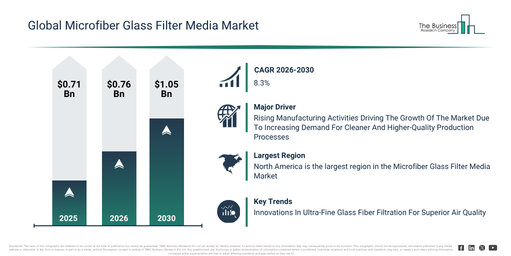
    The microfiber glass filter media market has demonstrated strong growth in recent years. It is projected to expand from $0.71 billion in 2025 to $0.76 billion in 2026, at a compound annual growth rate (CAGR) of 8.1%. The market’s past growth can be ascribed to increased awareness of indoor air quality, the expansion of healthcare and pharmaceutical sectors, escalating industrial pollution, the implementation of cleanroom standards, and regulatory requirements for air filtration efficiency.

    The microfiber glass filter media market is projected to experience substantial growth in the coming years, anticipated to reach $1.05 billion by 2030, at a compound annual growth rate (CAGR) of 8.3%. This expansion during the forecast period is attributed to factors such as the increasing number of cleanroom facilities, the rising demand for energy-efficient filtration media, ongoing technological advancements in microfiber glass filter production, growing investments in environmental monitoring, and the expanding use of filtration in research laboratories. Key trends expected throughout the forecast period involve an escalating demand for high-efficiency air filtration systems, the broader adoption of HEPA and ULPA filter media, increased application of microfiber glass filters within the healthcare and pharmaceutical sectors, the expansion of industrial and laboratory filtration applications, and a strong focus on achieving low pressure drop combined with high dust holding capacity.

    Get A Free Sample Report With In-Depth Market Insights:

    https://thebusinessresearchcompany.com/sample_request?id=61346872&type=smp&name=Microfiber%20Glass%20Filter%20Media%20Market%20Report%202026&utm_source=Blogs&utm_medium=Paid&utm_campaign=Oct_PR

    Microfiber Glass Filter Media Market Development Factors: What’s Supporting Demand?

    The rise in manufacturing activities is projected to propel the expansion of the microfiber glass filter media market. These activities encompass processes that convert raw materials or components into finished products through labor, machinery, and technology. Manufacturing activities are increasing due to escalating consumer demand for goods, which encourages companies to expand their production capabilities and adopt more efficient technologies to fulfill market needs. Microfiber glass filter media enhances manufacturing processes by effectively capturing minute airborne or liquid-borne particles, ensuring cleaner production environments and consistently superior product quality. For example, as reported by the House of Commons Library, a UK-based information resource, in April 2026, monthly manufacturing output saw a 0.1% increase in January 2026, with growth evident in five out of 13 subsectors. Over the three months leading up to January 2026, manufacturing output grew by 1.5% compared to the preceding quarter. Therefore, the expansion in manufacturing activities is anticipated to drive growth in the microfiber glass filter media market.

    Microfiber Glass Filter Media Market Segment Trends And Revenue Contributors

    The microfiber glass filter media market covered in this report is segmented –

    1) By Product Type: Glass Microfiber Filter Paper, Glass Microfiber Filter Membranes, High Efficiency Particulate Air (HEPA) Filter Media Sheets, Ultra Low Penetration Air (ULPA) Filter Media Sheets, Glass Fiber Filter Pads, Glass Microfiber Filter Discs, Glass Microfiber Filter Rolls

    2) By Filtration Type: Air Filtration, Liquid Filtration

    3) By Distribution Channel: Direct Sales, Distributors And Wholesalers, Online Sales

    4) By Application: American Society Of Heating, Refrigerating And Air-Conditioning Engineers (ASHRAE), High Efficiency Particulate Air (HEPA), Ultra Low Penetration Air (ULPA)

    5) By End-User Industry: Healthcare Or Pharmaceuticals, Environmental Or Water Treatment, Manufacturing Or Industrial, Laboratories Or Research

    Subsegments:

    1) By Glass Microfiber Filter Paper: Quantitative Filter Paper, Qualitative Filter Paper, Binder Free Filter Paper, Binder Containing Filter Paper

    2) By Glass Microfiber Filter Membranes: Hydrophilic Glass Microfiber Membranes, Hydrophobic Glass Microfiber Membranes, Reinforced Glass Microfiber Membranes, Non Reinforced Glass Microfiber Membranes

    3) By High Efficiency Particulate Air (HEPA) Filter Media Sheets: Standard Efficiency High Efficiency Particulate Air (HEPA) Media Sheets, High Dust Holding High Efficiency Particulate Air (HEPA) Media Sheets, Low Pressure Drop High Efficiency Particulate Air (HEPA) Media Sheets, High Temperature Resistant High Efficiency Particulate Air (HEPA) Media Sheets

    4) By Ultra Low Penetration Air (ULPA) Filter Media Sheets: Ultra High Efficiency Filter Media Sheets, Cleanroom Grade Filter Media Sheets, Low Resistance Ultra Fine Filter Media Sheets, High Capacity Particle Retention Filter Media Sheets

    5) By Glass Fiber Filter Pads: Pre Filtration Glass Fiber Pads, High Efficiency Glass Fiber Pads, Coarse Particle Filtration Pads, Fine Particle Filtration Pads

    6) By Glass Microfiber Filter Discs: Sterile Filtration Discs, Analytical Filtration Discs, Laboratory Grade Filtration Discs, High Purity Filtration Discs

    7) By Glass Microfiber Filter Rolls: Industrial Filtration Rolls, Laboratory Filtration Rolls, High Efficiency Filtration Rolls, Continuous Process Filtration Rolls

    Microfiber Glass Filter Media Market Transformation Trends: What Innovations Are Driving Change?

    Leading companies within the microfiber glass filter media market are concentrating on advancements in ultra-fine glass fiber manufacturing, including improved thermal stability and sophisticated microfiber glass filtration media. These efforts aim to achieve superior particle capture efficiency, better airflow performance, and increased durability for high-efficiency air filtration applications. Enhanced thermal stability signifies the media’s capacity to retain its structural integrity and filtration capabilities even in high-temperature settings, thereby guaranteeing reliability in challenging HVAC and industrial environments. For instance, in November 2024, US-based Johns Manville, an insulation and engineered products manufacturer, inaugurated a cutting-edge micro fiberglass production line at its Wertheim, Germany facility to produce Evalith micro fiberglass nonwovens. These materials are engineered to trap particles as tiny as one micrometer, encompassing viruses, bacteria, and dust, while guaranteeing long-lasting and steady filtration efficacy. This innovation also boosts energy efficiency, assisting filter producers in attaining better ratings, decreasing energy use, and promoting environmentally friendly indoor air solutions.

    Microfiber Glass Filter Media Market Competitive Analysis Of Leading Industry Participants

    Major companies operating in the microfiber glass filter media market are Parker-Hannifin Corporation, Johns Manville, Sinoma Science & Technology Co. Ltd., Ahlstrom-Munksjö Oyj, Alkegen LLC, Sogefi Group S.p.A, Camfil AB, Hollingsworth & Vose Company, Freudenberg Filtration Technologies GmbH & Co. KG, Chongqing Zaisheng Technology Co. Ltd., Macherey-Nagel GmbH & Co. KG, Hokuetsu Corporation, Spectrum Chemical Manufacturing Corp., Porvair Filtration Group Plc, MANN+HUMMEL Gruppe, Meissner Filtration Products Inc., Cobetter Filtration Co. Ltd., I.W. Tremont Corporation, Sterlitech Corporation, HI-Q Environmental Products Inc.

    View The Full Microfiber Glass Filter Media Market Report:

    https://thebusinessresearchcompany.com/report/microfiber-glass-filter-media-market-report?utm_source=Blogs&utm_medium=Paid&utm_campaign=Oct_PR

    Microfiber Glass Filter Media Market Geographic Distribution And Regional Opportunities

    North America was the largest region in the microfiber glass filter media market in 2025. Asia-Pacific is expected to be the fastest-growing region in the forecast period. The regions covered in the microfiber glass filter media market report are Asia-Pacific, South East Asia, Western Europe, Eastern Europe, North America, South America, Middle East, Africa.

    Reach Out To Our Team:

    The Business Research Company: https://www.thebusinessresearchcompany.com/

    Americas: +1 310-496-7795

    Asia: +44 7882 955267 & +91 8897263534

    Europe: +44 7882 955267

    Email us at: marketing@tbrc.info

    Follow us on:

    LinkedIn: https://in.linkedin.com/company/the-business-research-company

    YouTube: https://www.youtube.com/channel/UC24_fI0rV8cR5DxlCpgmyFQ

    Global Market Model: https://www.thebusinessresearchcompany.com/global-market-model
  • Human Fibroblast Growth Factor Market Growth Forecast: Market Size, Key Trends And Emerging Opportunities Through 2030

    Human Fibroblast Growth Factor Market Growth Forecast: Market Size, Key Trends And Emerging Opportunities Through 2030

    Built to provide research that’s more actionable and strategically valuable, The Business Research Company’s 2026 market reports include market attractiveness analysis, total addressable market sizing, company benchmarking matrices, interactive Excel dashboards, broader supply chain intelligence, emerging startup tracking, and in-depth product insights.

    Human Fibroblast Growth Factor Market Growth Analysis: How Will Revenue Trend Over The Forecast Period?

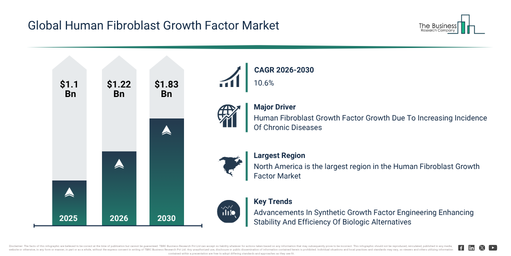
    The human fibroblast growth factor market has experienced rapid expansion in recent years. It is anticipated to grow from $1.1 billion in 2025 to $1.22 billion in 2026, registering a compound annual growth rate (CAGR) of 10.4%. The significant increase observed in prior periods can be attributed to developments in regenerative medicine research, a growing demand for human tissue derived proteins, increased investment in biotech R&D, the broadening of hospital and research institute networks, and the incorporation of hfgf into diagnostic applications.

    The human fibroblast growth factor market is projected for substantial expansion over the coming years. Its value is anticipated to reach $1.83 billion by 2030, exhibiting a compound annual growth rate (CAGR) of 10.6%. This projected increase is driven by factors such as the rising acceptance of recombinant hfgf products, the expansion of tissue engineering and cell therapy sectors, growing utilization in high-throughput drug screening, innovations in protein stabilization technologies, and the broadening reach of direct sales and e-commerce platforms. Key developments expected during this period involve a greater focus on developing recombinant hfgf variants, increased application of hfgf in tissue engineering, the wider availability of high-purity and lyophilized formulations, expanded adoption of hfgf in drug screening systems, and the incorporation of hfgf solutions into cell proliferation research.

    Get A Free Sample Report With In-Depth Market Insights:

    https://thebusinessresearchcompany.com/sample_request?id=81358654&type=smp&name=Human%20Fibroblast%20Growth%20Factor%20Market%20Report%202026&utm_source=Blogs&utm_medium=Paid&utm_campaign=Oct_PR

    Human Fibroblast Growth Factor Market Demand Drivers: What’s Powering Industry Growth?

    A rising prevalence of chronic diseases is anticipated to drive expansion in the human fibroblast growth factor market moving ahead. These are defined as enduring health conditions, typically lasting at least three months, which frequently advance gradually and are not generally curable, though their symptoms can be controlled, and they often necessitate continuous medical care or prolonged medication. The surge in chronic diseases stems from lifestyle modifications and environmental elements linked to contemporary living, which gradually accumulate to precipitate extended health issues. Human fibroblast growth factor assists in preventing chronic illnesses by enabling tissue repair, new blood vessel formation, and the reduction of persistent inflammation within the body, thereby diminishing the risk and advancement of prolonged health conditions. For example, reports from The Northern Arizona Medical Group, a US-based healthcare provider, indicated that by 2025, nearly three-quarters of the global population is expected to be living with at least one chronic illness, with the prevalence consistently rising. Specifically, in the United States, about 76.4% of adults in 2023 stated they had at least one chronic condition, and 51.4% reported having two or more. Consequently, the escalating occurrence of chronic diseases is propelling the expansion of the human fibroblast growth factor market.

    Human Fibroblast Growth Factor Market Segment Breakdown: Which Categories Lead On Revenue?

    The human fibroblast growth factor market covered in this report is segmented –

    1) By Product Type: Animal Derived, Natural, Recombinant

    2) By Form: Liquid, Lyophilized, Powder

    3) By Sales Channel: Direct Sales, Distributor, E Commerce

    4) By Application: Cell Proliferation, Diagnostics, Drug Screening, Tissue Engineering

    5) By End User: Biotech Companies, Hospitals, Pharmaceutical Companies, Research Institutes

    Subsegments:

    1) By Animal Derived: Bovine Derived Fibroblast Growth Factor, Porcine Derived Fibroblast Growth Factor, Other Animal Sources

    2) By Natural: Tissue Extracted Fibroblast Growth Factor, Plant Derived Fibroblast Growth Factor, Human Tissue Derived Fibroblast Growth Factor

    3) By Recombinant: Recombinant Human Fibroblast Growth Factor 1, Recombinant Human Fibroblast Growth Factor 2, Recombinant Human Fibroblast Growth Factor 7, Recombinant Human Fibroblast Growth Factor 10

    Human Fibroblast Growth Factor Market Innovation Trends: What Developments Are Reshaping The Industry?

    Companies operating in the human fibroblast growth factor market are increasingly concentrating on technological advancements, such as synthetic growth factor engineering. This allows for the development of engineered peptide or protein mimetics that replicate the biological activity of native FGFs, while providing enhanced stability, reduced degradation, improved receptor specificity, and lower production costs. Synthetic growth factor engineering involves the design and development of artificially created or modified molecules that mimic or enhance the biological activity of natural growth factors, concurrently improving properties like stability, specificity, and manufacturability. For instance, in October 2024, PeptiGrowth Inc, a Japan-based biotechnology company, launched a novel synthetic peptide growth factor. This factor offers enhanced biological performance by mimicking natural growth factor activity while also improving stability and efficiency. It delivers prolonged activity in cell culture systems, reducing the need for frequent media replacement. Additionally, these peptides exhibit greater resistance to degradation, ensuring consistent results across experiments.

    Human Fibroblast Growth Factor Market Competitive Landscape: Who Leads The Industry?

    Major companies operating in the human fibroblast growth factor market are Thermo Fisher Scientific Inc., Merck KGaA, Lonza Group AG, Bio-Techne Corporation, STEMCELL Technologies Inc., GenScript Biotech Corporation, Promega Corporation, Sino Biological Inc., Cell Signaling Technology Inc, ACROBiosystems Co. Ltd., RayBiotech Inc., Proteintech Group Inc., PromoCell GmbH, Creative Biolabs Co. Ltd., BPS Bioscience Inc., MedChemExpress LLC, ProSpec-Tany Technogene Ltd., Novoprotein Scientific Inc., Elabscience Biotechnology Inc., Enzo Life Sciences Inc.

    View The Full Human Fibroblast Growth Factor Market Report:

    https://thebusinessresearchcompany.com/report/human-fibroblast-growth-factor-market-report?utm_source=Blogs&utm_medium=Paid&utm_campaign=Oct_PR

    Human Fibroblast Growth Factor Market Geographic Landscape: Which Region Dominates Industry Growth?

    North America was the largest region in the human fibroblast growth factor market in 2025. Asia-Pacific is expected to be the fastest-growing region in the forecast period. The regions covered in the human fibroblast growth factor market report are Asia-Pacific, South East Asia, Western Europe, Eastern Europe, North America, South America, Middle East, Africa.

    Reach Out To Our Team:

    The Business Research Company: https://www.thebusinessresearchcompany.com/

    Americas: +1 310-496-7795

    Asia: +44 7882 955267 & +91 8897263534

    Europe: +44 7882 955267

    Email us at: marketing@tbrc.info

    Follow us on:

    LinkedIn: https://in.linkedin.com/company/the-business-research-company

    YouTube: https://www.youtube.com/channel/UC24_fI0rV8cR5DxlCpgmyFQ

    Global Market Model: https://www.thebusinessresearchcompany.com/global-market-model
  • Hospital Cloud Platform System Market To Witness 11.2% CAGR Growth Through 2030: Key Industry Drivers

    Hospital Cloud Platform System Market To Witness 11.2% CAGR Growth Through 2030: Key Industry Drivers

    Featuring market attractiveness scoring, total addressable market sizing, company benchmarking matrices, interactive Excel dashboards, deeper supply chain intelligence, emerging startup tracking, and granular product-level insights, The Business Research Company’s 2026 market reports are built to deliver research that is both more actionable and more strategically valuable.

    Hospital Cloud Platform System Market Size Outlook: How Quickly Will Revenue Expand Through 2030?

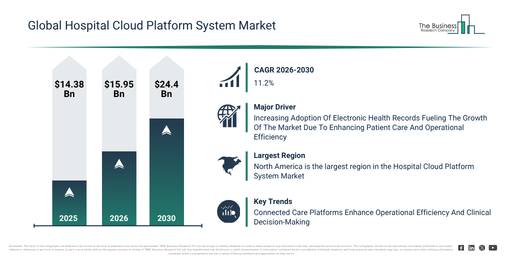
    The hospital cloud platform system market has seen substantial growth in recent years. Its size is anticipated to expand from $14.38 billion in 2025 to $15.95 billion in 2026, achieving a compound annual growth rate (CAGR) of 10.9%. This historical expansion can be attributed to several factors, including the increasing adoption of electronic health records, a rise in hospital digital transformation initiatives, augmented investments in healthcare IT infrastructure, regulatory mandates for data security and patient privacy, and the demand for enhanced operational efficiency in hospitals.

    The hospital cloud platform system market is expected to demonstrate significant expansion in the coming years. It is predicted to reach $24.4 billion by 2030, growing at a compound annual growth rate (CAGR) of 11.2%. This projected growth is driven by the increasing adoption of SaaS and PaaS models, rising demand for hybrid and private cloud deployments, the expansion of telehealth and remote monitoring services, the integration of AI and analytics into hospital workflows, and the proliferation of connected medical devices and IoT-enabled equipment. Major trends anticipated during this period include the wider embrace of cloud-based hospital information systems, the growing implementation of telehealth and remote patient monitoring, an increasing need for data analytics and reporting tools in hospitals, the broadened use of patient management and billing automation solutions, and a heightened focus on interoperability and secure data sharing.

    Get A Free Sample Report With In-Depth Market Insights:

    https://thebusinessresearchcompany.com/sample_request?id=23906949&type=smp&name=Hospital%20Cloud%20Platform%20System%20Market%20Report%202026&utm_source=Blogs&utm_medium=Paid&utm_campaign=Oct_PR

    Hospital Cloud Platform System Market Growth Factors Behind Sustained Expansion

    The hospital cloud platform system market is anticipated to expand due to the rising implementation of electronic health records (EHRs). EHRs are digital records of patient medical histories, systematically gathered, stored, and managed by healthcare providers to assist clinical care, promote information exchange, and enhance patient outcomes. This rise in EHR adoption stems from better patient care and safety, as they provide precise, real-time access to complete medical data, minimize mistakes, and support improved clinical choices. Hospital cloud platform systems improve electronic health records by offering secure, central storage, smooth data sharing, and immediate access for healthcare professionals, thereby enhancing patient care and operational effectiveness. As an illustration, in June 2022, the Department of Health and Social Care, a UK-based government department, declared that by March 2025, 100% of NHS trusts are projected to have implemented electronic health records, an increase from the 90% that had done so by December 2023. Consequently, the growing integration of electronic health records is fueling the expansion of the hospital cloud platform system market.

    Hospital Cloud Platform System Market Segment Trends And Revenue Contributors

    The hospital cloud platform system market covered in this report is segmented –

    1) By Component: Software, Hardware, Services

    2) By Service Model: Software As A Service, Platform As A Service, Infrastructure As A Service

    3) By Deployment Mode: Public Cloud, Private Cloud, Hybrid Cloud

    4) By Application: Electronic Health Records, Telehealth, Medical Imaging, Patient Management, Other Applications

    5) By End User: Hospitals, Clinics, Ambulatory Surgical Centers, Other End Users

    Subsegments:

    1) By Software: Cloud Based Hospital Information System, Electronic Health Records Software, Patient Management Software, Billing And Revenue Cycle Management Software, Inventory Management Software, Laboratory Information Management Software, Radiology Information System, Pharmacy Management Software, Data Analytics And Reporting Software

    2) By Hardware: Servers, Storage Devices, Networking Equipment, Workstations, Medical Devices With Cloud Connectivity, Security Appliances

    3) By Services: Implementation And Integration Services, Training And Education Services, Support And Maintenance Services, Consulting Services, Managed Services, Data Migration Services, Cloud Hosting And Backup Services

    Hospital Cloud Platform System Market Industry Trends Fueling Future Revenue Growth

    Leading companies operating in the hospital cloud platform system market are concentrating on developing AI-enabled, cloud-based solutions, including connected care platforms, to enhance data integration, operational efficiency, and clinical decision-making across healthcare settings. A connected care platform is a cloud-based system that interlinks medical devices, patient data, and healthcare applications, enabling seamless communication, real-time monitoring, and coordinated care throughout healthcare environments. For instance, in October 2025, Becton, Dickinson and Company, a US-based medication company, introduced the BD Incada™ Connected Care Platform. This scalable AI-enabled solution is designed to unify data from nearly 3 million connected BD devices into a single intelligent ecosystem. The platform aims to improve operational efficiency and connectivity across healthcare settings, supporting devices such as infusion pumps, patient monitors, and pharmacy robotics. Built on Amazon Web Services (AWS) infrastructure, it offers features like natural-language analytics, customizable dashboards, and secure cloud storage to facilitate data-driven clinical and operational decisions.

    Hospital Cloud Platform System Market Key Players Shaping Industry Direction

    Major companies operating in the hospital cloud platform system market are Epic Systems Corporation, Microsoft Corporation, Dell Technologies Inc. (Healthcare Cloud Solutions), Koninklijke Philips N.V., Siemens Healthineers AG, GE Healthcare Technologies Inc., MEDITECH (Medical Information Technology, Inc.), Athenahealth Inc., eClinicalWorks LLC, InterSystems Corporation, NextGen Healthcare Inc., Veradigm LLC, CitiusTech Healthcare Technology Private Limited, Infor Inc. (Healthcare Cloud Solutions), Health Catalyst Inc., CareCloud Inc., Netsmart Technologies Inc., AdvancedMD Inc., Vitera Healthcare Solutions LLC, Greenway Health LLC, Orion Health Group Limited, PracticeSuite Inc. , Practice Fusion Inc., DrChrono Inc., Medhost Inc., Azalea Health.

    View The Full Hospital Cloud Platform System Market Report:

    https://thebusinessresearchcompany.com/report/hospital-cloud-platform-system-market-report?utm_source=Blogs&utm_medium=Paid&utm_campaign=Oct_PR

    Hospital Cloud Platform System Market Regional Analysis: Which Region Leads By Revenue?

    North America was the largest region in the hospital cloud platform system market in 2025. Asia-Pacific is expected to be the fastest-growing region in the forecast period. The regions covered in the hospital cloud platform system market report are Asia-Pacific, South East Asia, Western Europe, Eastern Europe, North America, South America, Middle East, Africa.

    Reach Out To Our Team:

    The Business Research Company: https://www.thebusinessresearchcompany.com/

    Americas: +1 310-496-7795

    Asia: +44 7882 955267 & +91 8897263534

    Europe: +44 7882 955267

    Email us at: marketing@tbrc.info

    Follow us on:

    LinkedIn: https://in.linkedin.com/company/the-business-research-company

    YouTube: https://www.youtube.com/channel/UC24_fI0rV8cR5DxlCpgmyFQ

    Global Market Model: https://www.thebusinessresearchcompany.com/global-market-model
  • Gait Therapy Systems Market Size In 2026: Growth Outlook And Forecast Through 2030

    Gait Therapy Systems Market Size In 2026: Growth Outlook And Forecast Through 2030

    Backed by market attractiveness analysis, total addressable market sizing, company benchmarking matrices, interactive Excel dashboards, wider supply chain intelligence, emerging startup coverage, and detailed product-level insights, The Business Research Company’s 2026 market reports are designed to offer research that is more actionable and strategically valuable than ever.

    Gait Therapy Systems Market Value Analysis: What Growth Lies Ahead Over The Forecast Period?

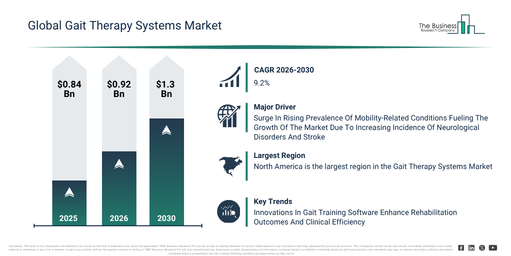
    The gait therapy systems market size has demonstrated substantial growth in recent years. Its valuation is expected to increase from $0.84 billion in 2025 to $0.92 billion by 2026, achieving an 8.9% compound annual growth rate (CAGR). Several factors contributed to its historical growth, including the rising prevalence of neurological disorders, an expanding global geriatric population, improvements in rehabilitation infrastructure, a higher incidence of sports and orthopedic injuries, and increased awareness of physical therapy’s advantages.

    The gait therapy systems market is anticipated to show significant expansion over the next few years, with its size projected to reach $1.3 billion by 2030, growing at a compound annual growth rate (CAGR) of 9.2%. This growth during the forecast period stems from various factors, including an increase in investment towards advanced rehabilitation technologies, a rising demand for therapy solutions delivered at home, a greater emphasis on patient-centric treatment approaches, the broadening of healthcare access in emerging markets, and the increasing integration of digital health platforms. Prominent trends expected in this period involve an escalating demand for sophisticated neurorehabilitation solutions, the increasing adoption of personalized rehabilitation programs, a growing utilization of wearable devices for continuous gait monitoring, the expansion of rehabilitation services within home care settings, and an intensified focus on achieving early mobility recovery following surgery.

    Get A Free Sample Report With In-Depth Market Insights:

    https://thebusinessresearchcompany.com/sample_request?id=64144425&type=smp&name=Gait%20Therapy%20Systems%20Market%20Report%202026&utm_source=Blogs&utm_medium=Paid&utm_campaign=Oct_PR

    Gait Therapy Systems Market Growth Momentum: What Factors Are Shaping Demand?

    The increasing occurrence of mobility-impairing conditions is anticipated to drive expansion in the gait therapy systems market in the coming years. These conditions encompass physical or neurological ailments that hinder an individual’s free movement, impacting aspects like locomotion, equilibrium, motor skills, or joint mobility. A primary cause for the rise in mobility issues is an aging global demographic, where age-related reductions in muscle strength, joint elasticity, and bone mass diminish overall physical capabilities. Gait therapy systems offer crucial support for these conditions through structured rehabilitation programs designed to assist patients in re-acquiring walking skills, enhancing stability, and recovering mobility following neurological ailments, trauma, or surgical interventions. For example, data from January 2024, published by the Office for Health Improvement & Disparities, a UK-based government agency, revealed that in 2023, 18.4% of individuals aged 16 and above reported experiencing a long-term musculoskeletal (MSK) condition, which marked an increase from 17.6% in 2022. Consequently, the growing frequency of mobility-impairing conditions is a key factor propelling the expansion of the gait therapy systems market.

    Gait Therapy Systems Market Segment Landscape And Growth Outlook

    The gait therapy systems market covered in this report is segmented –

    1) By Product Type: Treadmills, Exoskeletons, Gait Trainers, Wearable Sensors, Other Product Types

    2) By Technology: Robotic-Assisted Systems, Sensor-Based Systems, Motion Capture Systems, AI-Integrated Rehabilitation Systems, Virtual Reality-Based Therapy Systems

    3) By Application: Neurological Disorders, Orthopedic Disorders, Sports And Athletics, Other Applications

    4) By End-User: Hospitals, Rehabilitation Centers, Home Care Settings, Other End-Users

    Subsegments:

    1) By Treadmills: Body Weight Supported Treadmills, Medical Rehabilitation Treadmills, Incline Training Treadmills, Split Belt Treadmills

    2) By Exoskeletons: Lower Limb Exoskeletons, Full Body Exoskeletons, Powered Rehabilitation Exoskeletons, Passive Support Exoskeletons

    3) By Gait Trainers: Posterior Gait Trainers, Anterior Gait Trainers, Dynamic Gait Trainers, Pediatric Gait Trainers

    4) By Wearable Sensors: Pressure Sensor Devices, Motion Tracking Sensors, Inertial Measurement Sensors, Step Detection Sensors

    5) By Other Product Types: Balance Training Devices, Walking Support Frames, Rehabilitation Support Harness Systems, Mobility Training Platforms

    Gait Therapy Systems Market Trends Redefining Industry Growth

    Leading companies within the gait therapy systems market are prioritizing technological advancements, particularly in developing adaptive robotic gait control algorithms. These innovations aim to facilitate real-time, patient-specific movement adjustments and enhance rehabilitation outcomes through precise, data-driven therapy. Adaptive robotic gait control algorithms are intelligent software systems integrated into robotic rehabilitation devices, designed to dynamically modify walking patterns based on a patient’s live movement, strength, and feedback. For example, in January 2024, Ekso Bionics Holdings, Inc., a US-based medical device and robotics company, launched its GaitCoach software for the EksoNR robotic exoskeleton. This software enables adaptive gait training by providing real-time feedback and personalized step pattern adjustments, ultimately improving patient engagement and the efficiency of rehabilitation. The GaitCoach software offers distinct features such as real-time deviation detection and dynamic feedback, allowing therapists to closely monitor patient gait patterns and receive actionable insights throughout therapy sessions.

    Gait Therapy Systems Market Competitive Overview And Top Companies

    Major companies operating in the gait therapy systems market are Ottobock SE & Co. KGaA, BTL Industries Inc., Fourier Intelligence Co. Ltd., Biodex Medical Systems Inc., Wandercraft SAS, Cyberdyne Inc., Ekso Bionics Holdings Inc., ReWalk Robotics Ltd., Woodway GmbH, Aretech LLC, Mobility Research Inc., Restorative Therapies Inc., Bionik Laboratories Corp., Rex Bionics Ltd., HMS Medical Systems Pvt. Ltd., Bharat Medical Systems, GaitBetter Ltd., Protokinetics LLC, DIH International Ltd., Genrobotics Medical.

    View The Full Gait Therapy Systems Market Report:

    https://thebusinessresearchcompany.com/report/gait-therapy-systems-market-report?utm_source=Blogs&utm_medium=Paid&utm_campaign=Oct_PR

    Gait Therapy Systems Market Leading Geography: Which Region Contributes The Most Revenue?

    North America was the largest region in the gait therapy systems market in 2025. Asia-Pacific is expected to be the fastest-growing region in the forecast period. The regions covered in the gait therapy systems market report are Asia-Pacific, South East Asia, Western Europe, Eastern Europe, North America, South America, Middle East, Africa.

    Reach Out To Our Team:

    The Business Research Company: https://www.thebusinessresearchcompany.com/

    Americas: +1 310-496-7795

    Asia: +44 7882 955267 & +91 8897263534

    Europe: +44 7882 955267

    Email us at: marketing@tbrc.info

    Follow us on:

    LinkedIn: https://in.linkedin.com/company/the-business-research-company

    YouTube: https://www.youtube.com/channel/UC24_fI0rV8cR5DxlCpgmyFQ

    Global Market Model: https://www.thebusinessresearchcompany.com/global-market-model
  • Digital Breast Tomosynthesis Market Growth To $5.31 Billion By 2030: What’s Driving The Expansion?

    Digital Breast Tomosynthesis Market Growth To $5.31 Billion By 2030: What’s Driving The Expansion?

    Built to provide research that’s more actionable and strategically valuable, The Business Research Company’s 2026 market reports include market attractiveness analysis, total addressable market sizing, company benchmarking matrices, interactive Excel dashboards, broader supply chain intelligence, emerging startup tracking, and in-depth product insights.

    Digital Breast Tomosynthesis Market Revenue Growth On Track For A 14.2% CAGR Through 2030

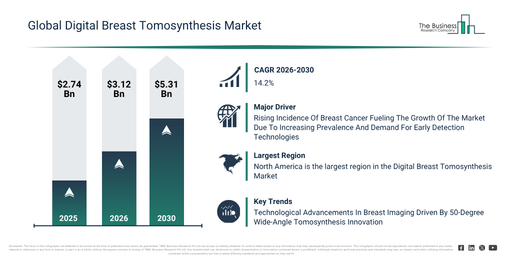
    The digital breast tomosynthesis market has seen rapid expansion in recent years. Its valuation is set to climb from $2.74 billion in 2025 to $3.12 billion in 2026, achieving a compound annual growth rate (CAGR) of 14.0%. This historical growth can be linked to the rising prevalence of breast cancer cases, the increasing adoption of digital mammography systems, greater awareness of early cancer detection, the expansion of hospital diagnostic infrastructure, and the increase in government screening programs.

    The digital breast tomosynthesis market is projected for significant expansion over the coming years, reaching $5.31 billion by 2030 with a compound annual growth rate (CAGR) of 14.2%. This anticipated growth throughout the forecast period stems from factors such as the increasing demand for precision oncology diagnostics, greater integration of AI in medical imaging, the growing adoption of 3D imaging technologies within healthcare, broader breast cancer screening coverage in emerging economies, and increased investment in advanced radiology systems. Key trends shaping the forecast period encompass the increasing uptake of AI-assisted image reconstruction in digital breast tomosynthesis systems, a rising demand for low-dose breast imaging technologies, the growing integration of advanced radiology workstations for 3D visualization, the expansion of hybrid 2D/3D mammography systems in diagnostic centers, and the growing deployment of portable and mobile tomosynthesis units in screening programs.

    Get A Free Sample Report With In-Depth Market Insights:

    https://thebusinessresearchcompany.com/sample_request?id=21547872&type=smp&name=Digital%20Breast%20Tomosynthesis%20Market%20Report%202026&utm_source=Blogs&utm_medium=Paid&utm_campaign=Oct_PR

    Digital Breast Tomosynthesis Market Expansion Drivers: What’s Shaping Future Growth?

    The increasing occurrence of breast cancer is projected to fuel the expansion of the digital breast tomosynthesis market in the coming years. Breast cancer is characterized by the uncontrolled proliferation of abnormal cells within the breast, leading to tumor formation. The rise in breast cancer cases is primarily attributed to shifts in lifestyle, particularly later childbearing and decreased rates of breastfeeding. Digital breast tomosynthesis assists in combating breast cancer by offering sophisticated three-dimensional breast imaging, which enhances detection precision, especially in dense breast tissue, thereby facilitating quicker and more dependable diagnoses as the need for screening grows. As an illustration, data from October 2023, released by NHS East Genomics, a public-sector healthcare partnership located in the UK, indicates that approximately 55,900 new cases of breast cancer are identified annually in the UK. Consequently, the escalating prevalence of breast cancer is serving as a catalyst for the expansion of the digital breast tomosynthesis market.

    Digital Breast Tomosynthesis Market Segmentation: How Does The Market Break Down By Category?

    The digital breast tomosynthesis market covered in this report is segmented –

    1) By Product Type: Standalone Three-Dimensional (3D) Systems, Two-Dimensional (2D) Or Three-Dimensional (3D) Combination Systems, Three-Dimensional (3D) Imaging Detectors, Image Reconstruction Software, Radiology Workstations, Imaging Accessories

    2) By Technology: X-Ray Based Tomosynthesis, Artificial Intelligence (AI)-Assisted Tomosynthesis Imaging

    3) By Service Category: Installation And Integration Services, Imaging System Maintenance, Radiology Analysis Services, Training And Support Services

    4) By Application: Breast Cancer Screening, Diagnostic Applications

    5) By End User: Hospitals, Diagnostic Centers, Specialty Cancer Clinics, Ambulatory Surgical Centers, Academic And Research Institutes

    Subsegments:

    1) By Standalone Three-Dimensional (3D) Systems: Fixed Breast Imaging Systems, Mobile Breast Imaging Systems, High Resolution Tomosynthesis Systems, Low Dose Radiation Imaging Systems

    2) By Two-Dimensional (2D) Or Three-Dimensional (3D) Combination Systems: Integrated Dual Mode Mammography Systems, Hybrid Breast Imaging Platforms, Digital Mammography With Three Dimensional Imaging Systems, Multi-Mode Breast Imaging Systems

    3) By Three-Dimensional (3D) Imaging Detectors: Flat Panel Digital Detectors, Amorphous Selenium Detectors, Complementary Metal Oxide Semiconductor Detectors, High Sensitivity Digital Detectors

    4) By Image Reconstruction Software: Iterative Reconstruction Software, Model Based Reconstruction Software, Deep Learning Image Reconstruction Software, Real Time Image Processing Software

    5) By Radiology Workstations: Diagnostic Imaging Workstations, Advanced Visualization Workstations, Three Dimensional Image Review Workstations, Clinical Reporting Workstations

    6) By Imaging Accessories: Breast Compression Devices, Patient Positioning Devices, Calibration And Quality Control Tools, Protective Imaging Shields

    Digital Breast Tomosynthesis Market Strategic Trends: What Defines The Next Growth Phase?

    Companies active in the digital breast tomosynthesis market are prioritizing the development of breast imaging analysis, including 50-degree wide-angle digital breast tomosynthesis acquisition, to uplift image resolution, heighten lesion detectability, and enable faster, more accurate breast cancer diagnoses. A 50-degree wide-angle digital breast tomosynthesis acquisition represents an advanced breast imaging method in which X-ray projections are obtained over a broad 50-degree arc surrounding the breast, allowing the equipment to create highly detailed three-dimensional images with superior depth resolution and lesion visibility. For example, in May 2025, Siemens Healthineers AG, a Germany-based medical technology company, unveiled the MAMMOMAT B.brilliant, an advanced digital breast imaging system engineered to boost diagnostic accuracy and workflow efficiency. The MAMMOMAT B.brilliant from Siemens Healthineers AG incorporates cutting-edge 50-degree wide-angle digital breast tomosynthesis, which improves lesion detection and diagnostic confidence, alongside providing optimized low-dose technology for safer screenings while sustaining high image quality.

    Digital Breast Tomosynthesis Market Leading Companies And Competitive Benchmarking

    Major companies operating in the digital breast tomosynthesis market are Siemens Healthineers AG, FUJIFILM Holdings Corporation, Koninklijke Philips N.V., GE HealthCare Technologies Inc., Konica Minolta Inc., Hologic Inc., Shimadzu Corporation, Agfa-Gevaert N.V., Varex Imaging Corporation, Analogic Corporation, Trivitron Healthcare Private Limited, Anke Medical Equipment Co. Ltd., Allengers Medical Systems Limited, Planmed Oy, Novarad Corporation, Genoray Co. Ltd., General Medical Merate S.p.A., Guangzhou Ysenmed Equipment Co. Ltd., Metaltronica S.p.A., Internazionale Medico Scientifica S.r.l.

    View The Full Digital Breast Tomosynthesis Market Report:

    https://thebusinessresearchcompany.com/report/digital-breast-tomosynthesis-market-report?utm_source=Blogs&utm_medium=Paid&utm_campaign=Oct_PR

    Digital Breast Tomosynthesis Market Largest Region By Revenue And Market Share

    North America was the largest region in the digital breast tomosynthesis market in 2025. Asia-Pacific is expected to be the fastest-growing region in the forecast period. The regions covered in the digital breast tomosynthesis market report are Asia-Pacific, South East Asia, Western Europe, Eastern Europe, North America, South America, Middle East, Africa.

    Reach Out To Our Team:

    The Business Research Company: https://www.thebusinessresearchcompany.com/

    Americas: +1 310-496-7795

    Asia: +44 7882 955267 & +91 8897263534

    Europe: +44 7882 955267

    Email us at: marketing@tbrc.info

    Follow us on:

    LinkedIn: https://in.linkedin.com/company/the-business-research-company

    YouTube: https://www.youtube.com/channel/UC24_fI0rV8cR5DxlCpgmyFQ

    Global Market Model: https://www.thebusinessresearchcompany.com/global-market-model
  • Boron Neutron Capture Therapy Market Outlook From 2026 To 2030: Key Growth Factors And Future Opportunities

    Boron Neutron Capture Therapy Market Outlook From 2026 To 2030: Key Growth Factors And Future Opportunities

    Featuring market attractiveness scoring, total addressable market sizing, company benchmarking matrices, interactive Excel dashboards, deeper supply chain intelligence, emerging startup tracking, and granular product-level insights, The Business Research Company’s 2026 market reports are built to deliver research that is both more actionable and more strategically valuable.

    Boron Neutron Capture Therapy Market Growth Potential: How Will Market Size Shift Through 2030?

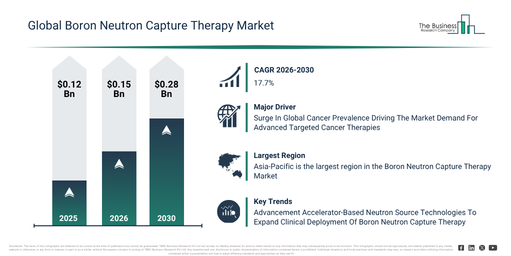
    The boron neutron capture therapy market has experienced rapid expansion in recent years. It is projected to expand from $0.12 billion in 2025 to $0.15 billion in 2026 at a compound annual growth rate (CAGR) of 17.5%. Historically, this growth can be ascribed to increasing prevalence of cancer cases, early development of neutron capture research, adoption of reactor-based radiation therapies, growth in oncology clinical research, and rising government funding for cancer treatment studies.

    The boron neutron capture therapy market size is anticipated to expand substantially over the next few years. It is projected to reach $0.28 billion by 2030, demonstrating a compound annual growth rate (CAGR) of 17.7%. This expansion during the forecast period is primarily driven by the increasing integration of precision medicine approaches, a growing shift towards targeted cancer therapies, the proliferation of accelerator-based BNCT systems, escalating investment in oncology research and development infrastructure, and more frequent regulatory approvals for advanced radiotherapy techniques. Noteworthy trends expected in this period include the wider acceptance of accelerator-based BNCT systems, the expanding utilization of next-generation boron delivery agents, an intensified focus on precision oncology treatment methods, advancements in neutron beam optimization technologies, and a surge in clinical trials for both brain and extracranial tumor applications.

    Get A Free Sample Report With In-Depth Market Insights:

    https://thebusinessresearchcompany.com/sample_request?id=15379704&type=smp&name=Boron%20Neutron%20Capture%20Therapy%20Market%20Report%202026&utm_source=Blogs&utm_medium=Paid&utm_campaign=Oct_PR

    Boron Neutron Capture Therapy Market Growth Catalysts And Demand Drivers

    The increasing global prevalence of cancer is expected to propel the growth of the boron neutron capture therapy market going forward. Cancer is a condition where abnormal cells grow uncontrollably and spread within the body, disrupting and damaging normal tissues. The growing incidence of cancer is driven by lifestyle risk factors such as tobacco use, poor diet, and physical inactivity, which cause chronic inflammation and genetic mutations that increase cancer risk over time. Boron neutron capture therapy supports cancer treatment by providing a targeted radiation approach that selectively destroys tumor cells while minimizing damage to surrounding healthy tissues, making it suitable for difficult or recurrent cancers. For instance, in February 2024, according to the World Health Organization, a Switzerland-based global health agency, over 35 million new cancer cases are predicted in 2050, a 77% increase from the estimated 20 million cases in 2022. Therefore, the increasing global prevalence of cancer is driving the growth of the boron neutron capture therapy market.

    Boron Neutron Capture Therapy Market Breakdown By Product Type And Application

    The boron neutron capture therapy market covered in this report is segmented –

    1) By Type: Thermal Beam, Epithermal Beam

    2) By Boron Agent Type: Boronophenylalanine (BPA), Sodium Borocaptate ( BSH), Next-Generation Boron Delivery Agents

    3) By Technology: Reactor-Based Boron Neutron Capture Therapy, Accelerator-Based Boron Neutron Capture Therapy

    4) By Application: Brain Tumor, Extracranial Tumor, Other Applications

    5) By End-User: Hospitals, Cancer Research Institutes, Specialty Clinics, Other End-Users

    Subsegments:

    1) By Thermal Beam: Thermal Neutron Beam Delivery Systems, Thermal Neutron Treatment Platforms

    2) By Epithermal Beam: Epithermal Neutron Beam Delivery Systems, Epithermal Neutron Treatment Platforms

    Boron Neutron Capture Therapy Market Trends Shaping Long-Term Demand

    Major companies operating in the boron neutron capture therapy market are prioritizing the advancement of novel boron delivery agents to enhance tumor targeting, improve imaging accuracy, and support effective therapeutic outcomes. These innovative boron delivery agents are specialized compounds engineered to selectively deliver and concentrate boron in tumor cells, thereby boosting the precision and therapeutic effectiveness in boron neutron capture therapy. For instance, in January 2025, Neuboron Medtech Ltd., a China -based R&D-oriented medical technology company, achieved IND approval for ¹8F-BPA, marking a key regulatory milestone in BNCT development. This highlights a rare combination of regulatory progress and clinical advancement, accelerating the translation of BNCT from research to real-world oncology applications.

    Boron Neutron Capture Therapy Market Key Participants And Competitive Landscape

    Major companies operating in the boron neutron capture therapy market are Hitachi Ltd., Mitsubishi Heavy Industries Ltd., Sumitomo Heavy Industries Ltd., RaySearch Laboratories AB, Toshiba Energy Systems & Solutions Corporation, Cancer Intelligence Care Systems Inc., Neuboron Medtech Ltd., TAE Life Sciences LLC, Neutron Therapeutics Inc., Katchem Ltd., Stella Pharma Corporation, Fukushima SiC Applied Engineering Inc., International Particle Therapy Inc., Aviko Radiopharmaceuticals Sp. z o.o., Helsinki University Hospital, University of Wisconsin–Madison.

    View The Full Boron Neutron Capture Therapy Market Report:

    https://thebusinessresearchcompany.com/report/boron-neutron-capture-therapy-market-report?utm_source=Blogs&utm_medium=Paid&utm_campaign=Oct_PR

    Boron Neutron Capture Therapy Market Geographic Analysis: Where Is Demand Rising Fastest?

    Asia-Pacific was the largest region in the boron neutron capture therapy market in 2025. Asia-Pacific is expected to be the fastest-growing region in the forecast period. The regions covered in the boron neutron capture therapy market report are Asia-Pacific, South East Asia, Western Europe, Eastern Europe, North America, South America, Middle East, Africa.

    Reach Out To Our Team:

    The Business Research Company: https://www.thebusinessresearchcompany.com/

    Americas: +1 310-496-7795

    Asia: +44 7882 955267 & +91 8897263534

    Europe: +44 7882 955267

    Email us at: marketing@tbrc.info

    Follow us on:

    LinkedIn: https://in.linkedin.com/company/the-business-research-company

    YouTube: https://www.youtube.com/channel/UC24_fI0rV8cR5DxlCpgmyFQ

    Global Market Model: https://www.thebusinessresearchcompany.com/global-market-model
  • Air Wave Pressure Circulation Therapy Apparatus Market Forecast Highlights A $1.63 Billion Opportunity For Industry Participants

    Air Wave Pressure Circulation Therapy Apparatus Market Forecast Highlights A $1.63 Billion Opportunity For Industry Participants

    Built to provide research that’s more actionable and strategically valuable, The Business Research Company’s 2026 market reports include market attractiveness analysis, total addressable market sizing, company benchmarking matrices, interactive Excel dashboards, broader supply chain intelligence, emerging startup tracking, and in-depth product insights.

    Air Wave Pressure Circulation Therapy Apparatus Market Growth Potential: How Will Market Size Shift Through 2030?

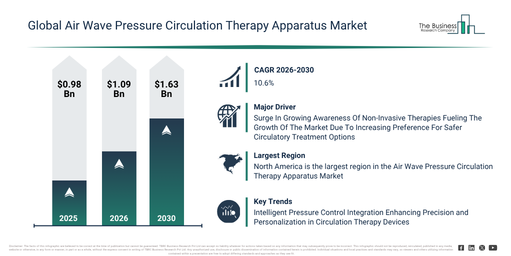
    The air wave pressure circulation therapy apparatus market size has observed substantial growth in recent years. It is anticipated to expand from $0.98 billion in 2025 to $1.09 billion in 2026, at a compound annual growth rate (CAGR) of 10.4%. The historical market expansion can be credited to the increasing prevalence of vascular disorders, rising incidence of deep vein thrombosis cases, growth in post-surgical care demand, expansion of hospital infrastructure, and increasing awareness of lymphatic diseases.

    The air wave pressure circulation therapy apparatus market size is projected to experience substantial expansion over the coming years. It is anticipated to reach $1.63 billion by 2030 at a compound annual growth rate (CAGR) of 10.6%. This anticipated expansion during the forecast period stems from factors such as the increasing uptake of home healthcare options, a globally expanding elderly demographic, a heightened need for non-invasive treatment tools, advancements in wearable medical technology, and the broadening scope of physiotherapy and rehabilitation offerings. Key developments expected during this period involve a rise in the use of portable compression therapy units, a growing inclination towards rehabilitation solutions provided at home, increased deployment of multi-chamber sequential compression systems, broader applications in post-surgical recovery, and a greater emphasis on patient comfort alongside adjustable pressure settings.

    Get A Free Sample Report With In-Depth Market Insights:

    https://thebusinessresearchcompany.com/sample_request?id=36276324&type=smp&name=Air%20Wave%20Pressure%20Circulation%20Therapy%20Apparatus%20Market%20Report%202026&utm_source=Blogs&utm_medium=Paid&utm_campaign=Oct_PR

    Air Wave Pressure Circulation Therapy Apparatus Market Demand Drivers Opening New Revenue Streams

    Increasing public understanding of non-invasive treatments is anticipated to stimulate the expansion of the airwave pressure circulation therapy apparatus market in the future. Non-invasive therapies refer to the rising societal comprehension and acceptance of medical approaches that address health issues without the need for surgery or intrusive procedures. The surge in non-invasive therapies results from patients’ increasing preference for safer options, the rising occurrence of circulatory and vascular conditions, the greater adoption of outpatient and home-based care, expanded health education campaigns by healthcare organizations, and a stronger emphasis on faster recovery and shorter hospital stays. Airwave pressure circulation therapy apparatuses support non-invasive therapies by offering external pneumatic compression treatment that enhances blood and lymphatic circulation without surgical operations, injections, or drug-based interventions. For instance, in April 2025, according to the British Association of Aesthetic Plastic Surgeons, a UK-based surgical organization, cosmetic surgical procedures saw a 5% increase between 2023 and 2024, reaching a total of 27,462 procedures performed in 2024. Thus, the growing awareness of non-invasive therapies is propelling the growth of the airwave pressure circulation therapy apparatus market.

    Air Wave Pressure Circulation Therapy Apparatus Market Segmentation: How Does The Market Break Down By Category?

    The air wave pressure circulation therapy apparatus market covered in this report is segmented –

    1) By Product Type: Sequential Compression Devices, Intermittent Pneumatic Compression Devices, Segmented Pneumatic Compression Pumps, Portable And Wearable Circulation Systems

    2) By Application: Lymphedema Treatment, Deep Vein Thrombosis (DVT) Prevention, Edema Management, Post-Surgical Rehabilitation

    3) By End-User: Hospitals, Rehabilitation Centers And Physiotherapy Clinics, Home Healthcare Settings, Specialty Clinics

    Subsegments:

    1) By Sequential Compression Devices: Single Chamber Sequential Compression Devices, Multi Chamber Sequential Compression Devices, Programmable Sequential Compression Devices, Hospital Grade Sequential Compression Devices

    2) By Intermittent Pneumatic Compression Devices: Single Chamber Pneumatic Compression Devices, Dual Chamber Pneumatic Compression Devices, Multi Chamber Pneumatic Compression Devices, Adjustable Pressure Pneumatic Compression Devices

    3) By Segmented Pneumatic Compression Pumps: Four Segment Pneumatic Compression Pumps, Six Segment Pneumatic Compression Pumps, Eight Segment Pneumatic Compression Pumps, Programmable Segmented Pneumatic Compression Pumps

    4) By Portable And Wearable Circulation Systems: Battery Powered Portable Circulation Systems, Wearable Leg Circulation Systems, Wearable Arm Circulation Systems, Compact Home Use Circulation Systems

    Air Wave Pressure Circulation Therapy Apparatus Market Trends Powering Strategic Industry Growth

    Major companies in the airwave pressure circulation therapy apparatus market are concentrating on integrating intelligent pressure control technologies, such as adaptive pneumatic compression control algorithms, to achieve a competitive advantage. These adaptive pneumatic compression control algorithms automatically adjust air pressure, the sequence of compression, and the duration of therapy based on the patient’s condition, leading to enhanced treatment precision, greater comfort, and improved clinical outcomes while minimizing manual adjustments required from healthcare providers. For instance, in October 2024, Tactile Medical, a US-based medical technology company, introduced the Nimbl Pneumatic Compression Platform, designed to improve patient mobility and adherence to therapy through its compact, user-friendly nature. This platform incorporates advanced pneumatic compression technology alongside digital connectivity, allowing for personalized treatment, remote oversight, and better management of lymphedema and venous conditions.

    Air Wave Pressure Circulation Therapy Apparatus Market Top Companies Driving Competitive Growth

    Major companies operating in the air wave pressure circulation therapy apparatus market are Cardinal Health Inc., Medline Industries LP, Arjo AB, Hyperice Inc., Therabody Inc., Longest Science & Technology Co. Ltd., DS MAREF Co. Ltd., Zimmer MedizinSysteme GmbH, Currie Medical Specialties Inc., Bio Compression Systems Inc., Mego Afek Ltd., ManaMed Inc., Xiamen Senyang Co. Ltd., Air Relax Inc., Lympha Press USA Inc., Vive Health LLC, Recovery Systems Sport LLC, Rapid Reboot Recovery LLC, Tactile Systems Technology Inc., Devon Medical Products Inc., Wonjin Mulsan Co. Ltd.

    View The Full Air Wave Pressure Circulation Therapy Apparatus Market Report:

    https://thebusinessresearchcompany.com/report/air-wave-pressure-circulation-therapy-apparatus-market-report?utm_source=Blogs&utm_medium=Paid&utm_campaign=Oct_PR

    Air Wave Pressure Circulation Therapy Apparatus Market Global Footprint: Which Region Leads The Industry?

    North America was the largest region in the air wave pressure circulation therapy apparatus market in 2025. Asia-Pacific is expected to be the fastest-growing region in the forecast period. The regions covered in the air wave pressure circulation therapy apparatus market report are Asia-Pacific, South East Asia, Western Europe, Eastern Europe, North America, South America, Middle East, Africa.

    Reach Out To Our Team:

    The Business Research Company: https://www.thebusinessresearchcompany.com/

    Americas: +1 310-496-7795

    Asia: +44 7882 955267 & +91 8897263534

    Europe: +44 7882 955267

    Email us at: marketing@tbrc.info

    Follow us on:

    LinkedIn: https://in.linkedin.com/company/the-business-research-company

    YouTube: https://www.youtube.com/channel/UC24_fI0rV8cR5DxlCpgmyFQ

    Global Market Model: https://www.thebusinessresearchcompany.com/global-market-model
  • Polydioxanone Thread Lift Suture Systems Market Growth Outlook: Why Analysts Expect Continued Expansion

    Polydioxanone Thread Lift Suture Systems Market Growth Outlook: Why Analysts Expect Continued Expansion

    Backed by market attractiveness analysis, total addressable market sizing, company benchmarking matrices, interactive Excel dashboards, wider supply chain intelligence, emerging startup coverage, and detailed product-level insights, The Business Research Company’s 2026 market reports are designed to offer research that is more actionable and strategically valuable than ever.

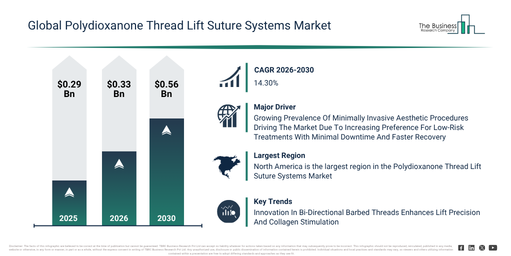
    Polydioxanone Thread Lift Suture Systems Market Forecast: Value Set To Climb From $0.33 Billion To $0.56 Billion

    The polydioxanone thread lift suture systems market has seen substantial growth in recent years. This market is set to expand from $0.29 billion in 2025 to $0.33 billion in 2026, achieving a compound annual growth rate (CAGR) of 14.0%. Historically, this expansion has been propelled by factors including the increasing demand for non-surgical cosmetic procedures, greater public awareness of aesthetic treatments, improvements in dermatology clinic infrastructure, advancements in suture-based lifting techniques, and a wider acceptance of cosmetic surgery.

    The polydioxanone thread lift suture systems market is set for significant expansion over the next few years, with projections indicating a growth to $0.56 billion by 2030, demonstrating a compound annual growth rate (CAGR) of 14.3%. This anticipated growth is largely due to factors such as an escalating preference for aesthetic procedures that are minimally invasive, a growing older demographic seeking facial rejuvenation, an increase in male patients opting for aesthetic treatments, the expansion of aesthetic medical tourism, and continuous innovation in biocompatible absorbable materials. Key trends expected in the forecast period include the increasing popularity of minimally invasive facial rejuvenation methods, a greater adoption of collagen-stimulating absorbable sutures, the rise of combined aesthetic treatments utilizing fillers and toxins, a heightened demand for non-surgical facelift options, and advancements in the engineering of biodegradable suture materials.

    Get A Free Sample Report With In-Depth Market Insights:

    https://thebusinessresearchcompany.com/sample_request?id=39343238&type=smp&name=Polydioxanone%20Thread%20Lift%20Suture%20Systems%20Market%20Report%202026&utm_source=Blogs&utm_medium=Paid&utm_campaign=Oct_PR

    Polydioxanone Thread Lift Suture Systems Market Growth Momentum: What Factors Are Shaping Demand?

    The increasing popularity of minimally invasive aesthetic procedures is anticipated to fuel the expansion of the polydioxanone thread lift suture systems market moving forward. These aesthetic procedures are cosmetic interventions that utilize non-surgical or minor techniques to enhance appearance, offering advantages such as minimal downtime, reduced risks, and quicker recovery compared to traditional surgical approaches. This momentum stems from a rising consumer preference for cosmetic treatments that provide shorter recovery times, faster healing, and lower procedural risks, alongside growing aesthetic awareness and advancements in non-surgical technologies. Polydioxanone thread lift suture systems align perfectly with this trend by enabling non-surgical skin lifting and tightening, which minimizes tissue trauma and recovery periods while stimulating natural collagen production for gradual yet enduring results. For example, in June 2024, according to the American Society of Plastic Surgeons, a US-based organization of board-certified plastic surgeons, approximately 25.4 million minimally invasive cosmetic procedures were performed in 2023, marking a 7% increase compared to 2022 and indicating sustained growth in demand. Thus, the widespread adoption of minimally invasive aesthetic procedures is driving the growth of the polydioxanone thread lift suture systems market.

    Polydioxanone Thread Lift Suture Systems Market Segment Performance And Emerging Opportunities

    The polydioxanone thread lift suture systems market covered in this report is segmented –

    1) By Product Type: Polydioxanone Threads, Cannula Needles, Insertion Needles, Guide Cannulas, Pre-Loaded Syringes, Thread Lift Kits

    2) By Thread Type: Mono Threads, Cog Threads, Screw Threads, Combination Threads

    3) By Distribution Channel: Direct Sales, Distributors, Electronic Commerce, Original Equipment Manufacturer Bundles With Training

    4) By Application: Facial Rejuvenation And Face Lift, Neck And Submental Tightening, Jawline Contouring And Definition, Eyebrow And Cat-Eye Lift, Nose Reshaping And Rhinoplasty, Body Contouring

    5) By End User: Aesthetic Clinics Or Medical Spas, Dermatology And Plastic Surgery Clinics, Hospitals And Ambulatory Surgical Centers, Distributors

    Subsegments:

    1) By Polydioxanone Threads: Smooth Threads, Barbed Threads, Twisted Threads, Molded Threads

    2) By Cannula Needles: Blunt Tip Cannula Needles, Flexible Cannula Needles, Micro Cannula Needles, Long Length Cannula Needles

    3) By Insertion Needles: Sharp Tip Insertion Needles, Ultra Fine Insertion Needles, Single Use Insertion Needles, Precision Guided Insertion Needles

    4) By Guide Cannulas: Flexible Guide Cannulas, Rigid Guide Cannulas, Micro Guide Cannulas, Long Length Guide Cannulas

    5) By Pre-Loaded Syringes: Single Thread Pre-Loaded Syringes, Multiple Thread Pre-Loaded Syringes, Sterile Pre-Loaded Syringes, Disposable Pre-Loaded Syringes

    6) By Thread Lift Kits: Basic Thread Lift Kits, Advanced Thread Lift Kits, Professional Use Thread Lift Kits, Training And Starter Thread Lift Kits

    Polydioxanone Thread Lift Suture Systems Market Trends Redefining Industry Growth

    Companies operating within the polydioxanone thread lift suture systems market are concentrating their efforts on innovations in thread engineering, including bi-directional barbed threads, to enhance the precision of lifts, improve anchoring stability, stimulate collagen production, and provide natural-looking, long-lasting facial rejuvenation results. Bi-directional barbed threads are a type of polydioxanone thread featuring opposing barbs along their length, engineered to securely anchor in tissue, lift and contour facial features, and stimulate collagen production for outcomes that appear natural and endure. For example, in August 2023, PDO Max, a U. S. -based, woman-owned aesthetics medical device company, announced the introduction of its Molded Levo Max, representing its latest innovation in polydioxanone (PDO) threads tailored for non-invasive facial rejuvenation. The bi-directional, barbed Molded Levo Max threads are specifically designed for contouring the lower face, jawline, and submentum area, effectively lifting and repositioning submental fat along the natural facial contours to restore a youthful, chiseled silhouette. These threads work in conjunction with PDO Max’s Smuth™ threads and Levo Lock to enable comprehensive in-office facial rejuvenation procedures, which can be completed in under an hour.

    Polydioxanone Thread Lift Suture Systems Market Leading Players And Competitive Positioning

    Major companies operating in the polydioxanone thread lift suture systems market are Corza Medical, Aptos International, V Soft Line AB, Assut Europe, Dermax Co. Ltd., EWELL Medical, Medico, Thread & Lift, MINT PDO, Aesthetic Experts Labs, Diamond Biotechnology Co. Ltd., Healux Corporation, Sutura Medical Technology LLC, Croma-Pharma GmbH, Oreon Life Science, Ultra V, Dongbang Medical, PDO Max Inc., Shijiazhuang Marss Technology Ltd., N-Finders Co. Ltd.

    View The Full Polydioxanone Thread Lift Suture Systems Market Report:

    https://thebusinessresearchcompany.com/report/polydioxanone-thread-lift-suture-systems-market-report?utm_source=Blogs&utm_medium=Paid&utm_campaign=Oct_PR

    Polydioxanone Thread Lift Suture Systems Market Regional Split: Which Areas Are Fueling Growth?

    North America was the largest region in the polydioxanone thread lift suture systems market in 2025. Asia-Pacific is expected to be the fastest-growing region in the forecast period. The regions covered in the polydioxanone thread lift suture systems market report are Asia-Pacific, South East Asia, Western Europe, Eastern Europe, North America, South America, Middle East and Africa.

    Reach Out To Our Team:

    The Business Research Company: https://www.thebusinessresearchcompany.com/

    Americas: +1 310-496-7795

    Asia: +44 7882 955267 & +91 8897263534

    Europe: +44 7882 955267

    Email us at: marketing@tbrc.info

    Follow us on:

    LinkedIn: https://in.linkedin.com/company/the-business-research-company

    YouTube: https://www.youtube.com/channel/UC24_fI0rV8cR5DxlCpgmyFQ

    Global Market Model: https://www.thebusinessresearchcompany.com/global-market-model