
Author: Marketing Posting

  • Sterile Isolator Market Size And Forecast 2026–2030: Trends Driving Industry Expansion

    Sterile Isolator Market Size And Forecast 2026–2030: Trends Driving Industry Expansion

    Backed by market attractiveness analysis, total addressable market sizing, company benchmarking matrices, interactive Excel dashboards, wider supply chain intelligence, emerging startup coverage, and detailed product-level insights, The Business Research Company’s 2026 market reports are designed to offer research that is more actionable and strategically valuable than ever.

    Sterile Isolator Market Expansion Outlook: What Revenue Opportunities Are Ahead?

    The sterile isolator market has seen swift growth in recent years. It is forecast to expand from $0.68 billion in 2025 to $0.76 billion in 2026, exhibiting a compound annual growth rate (CAGR) of 11.2%. Key contributors to this historic growth include the rising output of sterile pharmaceuticals, the expansion of vaccine manufacturing sites, more stringent regulatory enforcement for aseptic processing, the increased adoption of isolators over cleanrooms, and the overall growth in biopharmaceutical manufacturing.

    The sterile isolator market is anticipated to experience substantial growth in the upcoming years. It is set to expand to $1.15 billion by 2030, achieving a compound annual growth rate (CAGR) of 11.0%. This growth during the forecast period is propelled by factors such as the increasing demand for biologics and cell therapies, rising investments in aseptic manufacturing infrastructure, a growing emphasis on automated sterile processing, the expansion of pharmaceutical production capacity in emerging markets, and the increasing replacement of traditional cleanroom systems. Prominent trends expected in this period include the increasing adoption of closed-system aseptic processing, a rising demand for multi-chamber isolator configurations, the growing integration of advanced monitoring and control systems, an expansion of sterile fill-finish applications, and an enhanced focus on regulatory compliance and contamination control.

    Get A Free Sample Report With In-Depth Market Insights:

    https://thebusinessresearchcompany.com/sample_request?id=13564437&type=smp&name=Sterile%20Isolator%20Market%20Report%202026&utm_source=Blogs&utm_medium=Paid&utm_campaign=Nov_PR

    Sterile Isolator Market Growth Backed By Core Demand Fundamentals

    The expanding emphasis on drug safety is projected to fuel the advancement of the sterile isolators market moving forward. Drug safety encompasses the evaluation, monitoring, and management of potential medication risks and adverse effects to guarantee their safe use by patients. This heightened focus on drug safety is propelled by more stringent regulatory frameworks, increasing public awareness of negative drug reactions, and the necessity to avert medication errors, compelling pharmaceutical firms to invest in robust safety tracking, quality assurance, and post-market oversight. Sterile isolators support this focus on drug safety by providing a controlled, contaminant-free environment crucial for aseptic processing, thereby preventing microbial contamination, minimizing the likelihood of medication errors, and ensuring pharmaceutical products adhere to strict regulatory quality standards. The intensified focus on drug safety is spurring the growth of the sterile isolators market.

    Sterile Isolator Market Segment Breakdown: Which Categories Lead On Revenue?

    The sterile isolator market covered in this report is segmented –

    1) By Product Type: Closed Isolators, Open Isolators

    2) By Component: Hepa Filters, Gas Decontamination Systems, Pressure Control Systems, Monitoring Systems, Lighting Systems, Other Components

    3) By Application: Hospitals And Diagnostics Labs, Pharmaceutical And Biotechnological Industries, Research And Academics

    4) By End Use: Biotechnology, Pharmaceutical Manufacturing, Other End Uses

    Subsegments:

    1) By Closed Isolators: Single Chamber Closed Isolators, Multi Chamber Closed Isolators, Glove Box Style Closed Isolators, Positive Pressure Closed Isolators, Negative Pressure Closed Isolators, Closed Isolators For Pharmaceutical Manufacturing Or Fill Finish, Closed Isolators For Sterile Product Testing

    2) By Open Isolators: Single Chamber Open Isolators, Multi Chamber Open Isolators, Laminar Flow Open Isolators, Low Pressure Open Isolators, Open Isolators For Sterile Compounding, Open Isolators For Cell Culture Or Research Applications, Open Isolators With Frequent Ingress Or Egress Ports

    #Sterile Isolator Market Growth Trends: What’s Shaping The Future Outlook?

    Leading firms within the sterile isolator market are prioritizing advanced advancements, including economical rigid wall isolators that incorporate bio-decontamination and digital traceability. This focus aims to enhance control over contamination, elevate operational safety, increase productivity, and facilitate uninterrupted aseptic processing in both pharmaceutical and biomanufacturing environments. These isolator systems function as protective barriers, segregating personnel from products, while simultaneously offering real-time monitoring, data collection, and fine-tuned airflow management, all at economical prices.

    Sterile Isolator Market Leading Players And Competitive Positioning

    Major companies operating in the sterile isolator market are Cytiva, Steris plc, Getinge AB, Azbil Corporation, Syntegon Technology GmbH, Shibuya Corporation, Hosokawa Micron Corporation, ILC Dover LP, Skan AG, NuAire Inc, M Braun Inertgas-Systeme GmbH, Bioquell Limited, Germfree Laboratories Inc, Dec Group, Tema Sinergie SpA, Fedegari Autoclavi SpA, IsoTech Design LLC, Lancs Industries Inc, Reinraumtechnik GmbH, Tailin BioEngineering Co Ltd.

    View The Full Sterile Isolator Market Report:

    https://thebusinessresearchcompany.com/report/global-sterile-isolator-market-report?utm_source=Blogs&utm_medium=Paid&utm_campaign=Nov_PR

    Sterile Isolator Market Top Region By Revenue And Market Share

    North America was the largest region in the sterile isolator market in 2025. The regions covered in the sterile isolator market report are Asia-Pacific, South East Asia, Western Europe, Eastern Europe, North America, South America, Middle East, Africa.

    Reach Out To Our Team:

    The Business Research Company: https://www.thebusinessresearchcompany.com/

    Americas: +1 310-496-7795

    Asia: +44 7882 955267 & +91 8897263534

    Europe: +44 7882 955267

    Email us at: marketing@tbrc.info

    Follow us on:

    LinkedIn: https://in.linkedin.com/company/the-business-research-company

    YouTube: https://www.youtube.com/channel/UC24_fI0rV8cR5DxlCpgmyFQ

    Global Market Model: https://www.thebusinessresearchcompany.com/global-market-model

  • Sterile Endotracheal Tube Market 2026 Outlook: Market Size, CAGR And Key Growth Opportunities

    Sterile Endotracheal Tube Market 2026 Outlook: Market Size, CAGR And Key Growth Opportunities

    Featuring market attractiveness scoring, total addressable market sizing, company benchmarking matrices, interactive Excel dashboards, deeper supply chain intelligence, emerging startup tracking, and granular product-level insights, The Business Research Company’s 2026 market reports are built to deliver research that is both more actionable and more strategically valuable.

    Sterile Endotracheal Tube Market Growth Potential: How Will Market Size Shift Through 2030?

    The sterile endotracheal tube market has shown robust expansion in recent years. Projections indicate its size will increase from $2.29 billion in 2025 to $2.44 billion in 2026, achieving a compound annual growth rate (CAGR) of 6.6%. This historical development is primarily due to the expansion of hospital and ICU capacity, the increasing incidence of respiratory disorders, greater utilization of mechanical ventilation, the rise in surgical procedures, and the adoption of sterile disposable medical devices.

    The sterile endotracheal tube market is projected to undergo significant expansion in the foreseeable future. It is forecast to attain a value of $3.11 billion by 2030, demonstrating a compound annual growth rate (CAGR) of 6.3%. This projected growth over the forecast period stems from increased demand in emergency and critical care settings, a heightened focus on preventing hospital-acquired infections, the expansion of healthcare infrastructure in emerging markets, the rising adoption of advanced airway management products, and the implementation of stricter regulatory standards for medical devices. Prominent trends anticipated during this period include a growing demand for single-use sterile airway devices, increased acceptance of infection-control focused medical supplies, the broader application of advanced tube designs for enhanced patient safety, further development of emergency and critical care infrastructure, and an intensified commitment to regulatory compliance and quality assurance.

    Get A Free Sample Report With In-Depth Market Insights:

    https://thebusinessresearchcompany.com/sample_request?id=52045560&type=smp&name=Sterile%20Endotracheal%20Tube%20Market%20Report%202026&utm_source=Blogs&utm_medium=Paid&utm_campaign=Nov_PR

    Sterile Endotracheal Tube Market Growth Catalysts And Demand Drivers

    The increasing occurrence of chronic respiratory conditions is anticipated to fuel the expansion of the sterile endotracheal tube market in the future. These conditions are characterized as long-term diseases affecting the lungs and other respiratory system components, leading to persistent breathing difficulties. The escalation in chronic respiratory conditions stems from factors such as elevated environmental pollution, higher rates of smoking, an aging population, sedentary lifestyles, climate change, occupational exposures, and socioeconomic disparities. Sterile endotracheal tubes are utilized in cases of chronic respiratory conditions to maintain a clean airway for mechanical ventilation and to minimize infection risk. The increasing incidence of chronic respiratory conditions is a significant driver for the growth of the sterile endotracheal tube market.

    Sterile Endotracheal Tube Market Segmentation: How Does The Market Break Down By Category?

    The sterile endotracheal tube market covered in this report is segmented –

    1) By Type: No Capsules, Olive Sac, Columnar Sac

    2) By Application: Emergency Treatment, Therapy, Other Applications

    3) By End Users: Clinics, Hospitals, Ambulatory Surgical Centers, Other End Users

    Subsegments:

    1) By No Capsules: Standard Endotracheal Tubes, Cuffed Endotracheal Tubes, Uncuffed Endotracheal Tubes

    2) By Olive Sac: Olive Sac Endotracheal Tubes With Cuffs, Olive Sac Endotracheal Tubes Without Cuffs, Pediatric Olive Sac Endotracheal Tubes

    3) By Columnar Sac: Columnar Sac Endotracheal Tubes With Cuffs, Columnar Sac Endotracheal Tubes Without Cuffs, High-Volume, Low-Pressure Columnar Sac Tubes

    Sterile Endotracheal Tube Market Industry Trends: What’s Reshaping Demand?

    Leading companies in the sterile endotracheal tube market are focusing on developing innovative products, such as suction-enabled endotracheal tubes, to address the increasing demand for improved airway management, reduced infection risks, and enhanced patient safety during ventilation. Suction-enabled endotracheal tubes are equipped with integrated suction channels that continuously remove secretions from the subglottic space, thereby offering greater protection against aspiration and ventilator-associated pneumonia compared to traditional endotracheal tubes that lack secretion evacuation capabilities.

    Sterile Endotracheal Tube Market Competitive Overview And Top Companies

    Major companies operating in the sterile endotracheal tube market are Medtronic plc, Cook Medical Incorporated, Teleflex Incorporated, Zoll Medical Corporation, Hollister Incorporated, Avanos Medical Inc., Ambu A/S, Intersurgical Inc., Vyaire Medical Inc., Angiplast Pvt Ltd., Amsino International Inc., Inovet, GPC Medical Ltd., C. R. Bard Inc., Steroplast Healthcare Limited, Hitec Medical Co Ltd., Sterimed Group, Neurovision Medical Products Inc., Novo Klinik-Service GmbH, Well Lead Medical Co Ltd.

    View The Full Sterile Endotracheal Tube Market Report:

    https://thebusinessresearchcompany.com/report/sterile-endotracheal-tube-global-market-report?utm_source=Blogs&utm_medium=Paid&utm_campaign=Nov_PR

    Sterile Endotracheal Tube Market Regional Analysis And Top Geography

    North America was the largest region in the sterile endotracheal tube market in 2025. Asia-Pacific is expected to be the fastest-growing region in the forecast period. The regions covered in the sterile endotracheal tube market report are Asia-Pacific, South East Asia, Western Europe, Eastern Europe, North America, South America, Middle East, Africa.

    Reach Out To Our Team:

    The Business Research Company: https://www.thebusinessresearchcompany.com/

    Americas: +1 310-496-7795

    Asia: +44 7882 955267 & +91 8897263534

    Europe: +44 7882 955267

    Email us at: marketing@tbrc.info

    Follow us on:

    LinkedIn: https://in.linkedin.com/company/the-business-research-company

    YouTube: https://www.youtube.com/channel/UC24_fI0rV8cR5DxlCpgmyFQ

    Global Market Model: https://www.thebusinessresearchcompany.com/global-market-model

  • Sterile Compounding Pharmacies Market Size Growth: From $5.98 Billion In 2026 To $7.78 Billion By 2030

    Sterile Compounding Pharmacies Market Size Growth: From $5.98 Billion In 2026 To $7.78 Billion By 2030

    Built to provide research that’s more actionable and strategically valuable, The Business Research Company’s 2026 market reports include market attractiveness analysis, total addressable market sizing, company benchmarking matrices, interactive Excel dashboards, broader supply chain intelligence, emerging startup tracking, and in-depth product insights.

    Sterile Compounding Pharmacies Market Value Analysis: What Growth Lies Ahead Over The Forecast Period?

    The sterile compounding pharmacies market has experienced strong expansion in recent years. It is projected to expand from $5.62 billion in 2025 to $5.98 billion in 2026, achieving a compound annual growth rate (CAGR) of 6.5%. Historically, this growth has been driven by the increase in injectable therapies, demand from hospital pharmacies, regulatory enforcement, developments in oncology drug compounding, and the requirements for specialty medication.

    The sterile compounding pharmacies market is set for significant expansion over the next few years. It is projected to increase to $7.78 billion by 2030, demonstrating a compound annual growth rate (CAGR) of 6.8%. This growth during the forecast period is driven by factors such as the expansion of biologic drugs, the development of personalized injectable therapies, existing hospital capacity constraints, the increased adoption of automation, and the evolution of regulatory standards. Prominent trends expected in the forecast period include the outsourcing of sterile compounding services, the emergence of advanced cleanroom technologies, greater automation in compounding processes, the implementation of batch-level traceability, and investments spurred by compliance requirements.

    Get A Free Sample Report With In-Depth Market Insights:

    https://thebusinessresearchcompany.com/sample_request?id=11903174&type=smp&name=Sterile%20Compounding%20Pharmacies%20Market%20Report%202026&utm_source=Blogs&utm_medium=Paid&utm_campaign=Nov_PR

    Sterile Compounding Pharmacies Market Opportunity Drivers: What’s Unlocking New Revenue Potential?

    The sterile compounding pharmacies market is projected to expand in the future due to the increasing demand for personalized medicine. This form of medicine focuses on preventing, diagnosing, or treating diseases by utilizing information specific to a person’s genes or proteins. Sterile compounding pharmacies play a vital role in providing customized medications to patients within a sterile environment, tailoring drugs to individual needs and avoiding potential intolerance to specific doses or compounds. This approach leads to improved treatment results, greater patient satisfaction, and enhanced adherence to therapy. The growing demand for personalized medicine is a key driving force for the sterile compounding pharmacies market.

    Sterile Compounding Pharmacies Market Segment Trends And Revenue Contributors

    The sterile compounding pharmacies market covered in this report is segmented –

    1) By Product: Injectables, Nasal, Ocular, Otic

    2) By Therapeutic Area: Hormone Replacement Therapy, Pain Management, Dermatology, Oncology, Hematology, Dental, Other Therapeutic Areas

    3) By Route Of Administrations: Intravenous, Intramuscular, Subcutaneous

    4) By End-Users: Adults, Pediatrics, Geriatrics, Veterinary

    Subsegments:

    1) By Injectables: Sterile Solutions, Sterile Suspensions, Sterile Powders For Reconstitution

    2) By Nasal: Nasal Sprays, Nasal Solutions, Nasal Gels

    3) By Ocular: Ophthalmic Solutions, Ophthalmic Suspensions, Ocular Inserts

    4) By Otic: Otic Solutions, Otic Suspensions, Otic Gels

    Sterile Compounding Pharmacies Market Innovation Trends: What Developments Are Reshaping The Industry?

    Major companies in the sterile compounding pharmacies market are concentrating on technological advancements, such as robotic automation, to enhance the safety, efficiency, and scalability of sterile compounding processes. Robotic automation systems integrate sophisticated monitoring, verification, and labeling technologies to ensure adherence to strict regulatory standards and maintain product quality.

    Sterile Compounding Pharmacies Market Competitive Landscape: Which Companies Lead The Industry?

    Major companies operating in the sterile compounding pharmacies market are B. Braun SE, PharMerica Corporation, Fagron Group BV, QuVa Pharma Inc., NewCo Pharma GmbH, Medisca, PharMEDium Healthcare Holdings Inc., Central Admixture Pharmacy Services (CAPS), SandsRx LLC, LeeSar Inc., Avella Specialty Pharmacy, Stokes Pharmacy Inc., Imprimis Pharmaceuticals Inc., Wells Pharmacy Network LLC, McGuff Compounding Pharmacy Services Inc., Potter’s House Apothecary Inc., Pharos Innovations LLC, Triangle Compounding Pharmacy Inc., Valor Compounding Pharmacy Inc., Pace Pharmacy, PenCol Specialty Pharmacy LLC, Pavilion Compounding Pharmacy LLC, Olympia Pharmacy, MedisourceRx, Stat RX Pharmacy, Rx3 Compounding Pharmacy, Atlas Pharmaceuticals Co. Ltd., ReNue Rx, Premier Pharmacy Labs Inc., Absolute Pharmacy Inc.

    View The Full Sterile Compounding Pharmacies Market Report:

    https://thebusinessresearchcompany.com/report/sterile-compounding-pharmacies-global-market-report?utm_source=Blogs&utm_medium=Paid&utm_campaign=Nov_PR

    Sterile Compounding Pharmacies Market Geographic Analysis: Where Is Demand Rising Fastest?

    North America was the dominant region in the sterile compounding pharmacies market in 2025. Asia-Pacific is expected to be the fastest-growing region in the forecast period. The regions covered in the sterile compounding pharmacies market report are Asia-Pacific, South East Asia, Western Europe, Eastern Europe, North America, South America, Middle East, Africa.

    Reach Out To Our Team:

    The Business Research Company: https://www.thebusinessresearchcompany.com/

    Americas: +1 310-496-7795

    Asia: +44 7882 955267 & +91 8897263534

    Europe: +44 7882 955267

    Email us at: marketing@tbrc.info

    Follow us on:

    LinkedIn: https://in.linkedin.com/company/the-business-research-company

    YouTube: https://www.youtube.com/channel/UC24_fI0rV8cR5DxlCpgmyFQ

    Global Market Model: https://www.thebusinessresearchcompany.com/global-market-model
  • Virtual Reality (VR) Stroke Rehabilitation Market Analysis 2026: Market Size, Growth Trends And Industry Outlook

    Virtual Reality (VR) Stroke Rehabilitation Market Analysis 2026: Market Size, Growth Trends And Industry Outlook

    Featuring market attractiveness scoring, total addressable market sizing, company benchmarking matrices, interactive Excel dashboards, deeper supply chain intelligence, emerging startup tracking, and granular product-level insights, The Business Research Company’s 2026 market reports are built to deliver research that is both more actionable and more strategically valuable.

    Virtual Reality (VR) Stroke Rehabilitation Market Revenue Outlook: What CAGR Lies Ahead Through 2030?

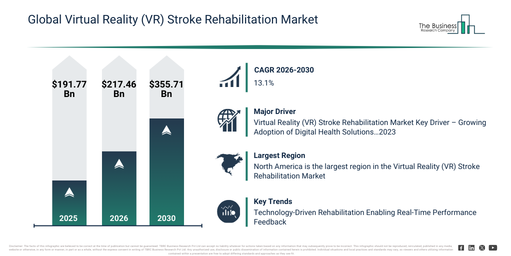
    The virtual reality (vr) stroke rehabilitation market has experienced rapid expansion in its size during recent years. This market is projected to expand from $191.77 billion in 2025 to reach $217.46 billion by 2026, demonstrating a compound annual growth rate (CAGR) of 13.4%. Historically, this growth can be attributed to factors such as increasing global stroke prevalence, the expansion of rehabilitation infrastructure, the adoption of technology-assisted therapy methods, a growing emphasis on repetitive task-based rehabilitation, and the availability of VR platforms for clinical use.

    The virtual reality (vr) stroke rehabilitation market size is projected to experience rapid expansion over the coming years, with its value expected to reach $355.71 billion by 2030, progressing at a compound annual growth rate (CAGR) of 13.1%. This anticipated growth during the forecast period can be attributed to several factors, including a heightened demand for personalized stroke rehabilitation programs, increasing investments in digital neurorehabilitation, the expansion of remote rehabilitation services, rising integration of AI-based therapy analytics, and the growing acceptance of VR within clinical protocols. Prominent trends for this period involve the increasing adoption of VR-based neuroplasticity training, a rising utilization of task-specific motor recovery simulations, the growing integration of cognitive and physical rehabilitation modules, the expansion of home-based VR stroke therapy solutions, and an enhanced focus on data-driven therapy progress tracking.

    Get A Free Sample Report With In-Depth Market Insights:

    https://thebusinessresearchcompany.com/sample_request?id=63928835&type=smp&name=Virtual%20Reality%20%28VR%29%20Stroke%20Rehabilitation%20Market%20Report%202026&utm_source=Blogs&utm_medium=Paid&utm_campaign=Nov_PR

    Virtual Reality (VR) Stroke Rehabilitation Market Growth Catalysts And Demand Drivers

    The virtual reality (VR) stroke rehabilitation market is anticipated to expand due to the increasing integration of digital health solutions. Digital health solutions encompass digital technologies, platforms, and interconnected tools designed to improve healthcare delivery, patient results, and health management efficiency. Their rising acceptance stems from the convenience of remote access to care, enabling patients to obtain medical assistance and oversight without needing frequent physical appointments. Virtual reality (VR) stroke rehabilitation complements this trend by offering immersive, technology-enabled therapy that includes personalized exercises and remote monitoring, facilitating more effective and accessible recovery for stroke patients. The increased use of digital health solutions is fueling the expansion of the virtual reality (VR) stroke rehabilitation market.

    Virtual Reality (VR) Stroke Rehabilitation Market Segment Landscape: Which Areas Lead Development?

    The virtual reality (vr) stroke rehabilitation market covered in this report is segmented –

    1) By Rehabilitation Type: Physical Rehabilitation, Cognitive Rehabilitation

    2) By Technology Type: Hardware, Software Platforms, Therapeutic Content

    3) By Patient Type: Short Term Patients, Long Term Patients

    4) By Virtual Reality (VR) Application: Motor Skills Training, Cognitive Skills Training, Sensory Training, Pain Management

    5) By End-User: Hospitals, Rehabilitation Centers, Clinics, Home-Based Rehabilitation

    Subsegments:

    1) By Physical Rehabilitation: Upper Limb Rehabilitation, Lower Limb Rehabilitation, Balance And Gait Training, Motor Function Recovery

    2) By Cognitive Rehabilitation: Memory Training, Attention And Concentration Training, Problem-Solving And Executive Function Training, Visual And Spatial Perception Training

    Virtual Reality (VR) Stroke Rehabilitation Market Trends Shaping Long-Term Demand

    Leading companies in the global virtual reality (VR) stroke rehabilitation market are concentrating on developing sophisticated solutions, such as advanced immersive VR-based upper-limb rehabilitation systems, with the goal of improving motor recovery, boosting functional independence, and increasing patient engagement during post-stroke therapy. Immersive VR-based upper-limb rehabilitation systems are defined as virtual reality platforms that employ head-mounted displays and interactive, gamified settings to deliver intense, task-specific arm and hand exercises, while simultaneously monitoring real-time performance data to guide personalized rehabilitation.

    Virtual Reality (VR) Stroke Rehabilitation Market Industry Leaders And Competitive Landscape

    Major companies operating in the virtual reality (vr) stroke rehabilitation market are Penumbra Inc., Shepherd Center Inc., Evolv Rehabilitation Technologies S.L., DIH Technology Co. Ltd., Tyromotion GmbH, BTS Bioengineering S.p.A., Floreo Inc., Saebo Inc., Motus Nova LLC, Immergo Labs Inc., Kinestica d.o.o., Cognihab Private Limited, Evolv Solutions LLC, Rehametrics S.L., RecoveryVR Pty Ltd, Neuro Rehab VR Inc., PhysioFunction Limited, XRHealth USA Inc., Bended S.r.l., Jintronix Inc.

    View The Full Virtual Reality (VR) Stroke Rehabilitation Market Report:

    https://thebusinessresearchcompany.com/report/virtual-reality-vr-stroke-rehabilitation-global-market-report?utm_source=Blogs&utm_medium=Paid&utm_campaign=Nov_PR

    Virtual Reality (VR) Stroke Rehabilitation Market Regional Analysis: Which Geography Leads On Revenue?

    North America was the largest region in the virtual reality (VR) stroke rehabilitation market in 2025. Asia Pacific is expected to be the fastest-growing region in the forecast period. The regions covered in the virtual reality (vr) stroke rehabilitation market report are Asia-Pacific, South East Asia, Western Europe, Eastern Europe, North America, South America, Middle East, Africa.

    Reach Out To Our Team:

    The Business Research Company: https://www.thebusinessresearchcompany.com/

    Americas: +1 310-496-7795

    Asia: +44 7882 955267 & +91 8897263534

    Europe: +44 7882 955267

    Email us at: marketing@tbrc.info

    Follow us on:

    LinkedIn: https://in.linkedin.com/company/the-business-research-company

    YouTube: https://www.youtube.com/channel/UC24_fI0rV8cR5DxlCpgmyFQ

    Global Market Model: https://www.thebusinessresearchcompany.com/global-market-model
  • Virtual Reality (VR) Metaverse Concussion Rehabilitation Market Growth To $6.02 Billion Creates New Opportunities Across The Industry

    Virtual Reality (VR) Metaverse Concussion Rehabilitation Market Growth To $6.02 Billion Creates New Opportunities Across The Industry

    Built to provide research that’s more actionable and strategically valuable, The Business Research Company’s 2026 market reports include market attractiveness analysis, total addressable market sizing, company benchmarking matrices, interactive Excel dashboards, broader supply chain intelligence, emerging startup tracking, and in-depth product insights.

    Virtual Reality (VR) Metaverse Concussion Rehabilitation Market Growth Analysis: How Will Revenue Trend Over The Forecast Period?

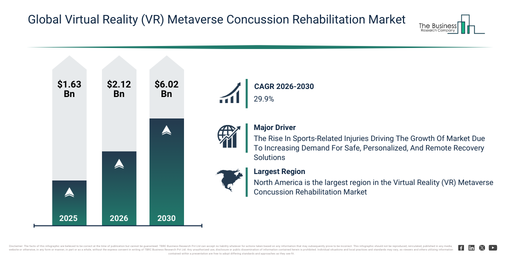
    The virtual reality (vr) metaverse concussion rehabilitation market has demonstrated substantial growth in recent years. It is projected to expand from $1.63 billion in 2025 to $2.12 billion in 2026, reflecting a compound annual growth rate (CAGR) of 30.2%. This historical growth can be attributed to several factors, including the increasing occurrence of sports-related concussions, a rising awareness of digital rehabilitation solutions, the integration of VR into neurological therapy, the growing accessibility of VR hardware within healthcare, and the expansion of outpatient rehabilitation services.

    The virtual reality (vr) metaverse concussion rehabilitation market is poised for significant expansion over the next few years. Its valuation is predicted to climb to $6.02 billion by 2030, demonstrating a compound annual growth rate (CAGR) of 29.9%. This anticipated growth during the forecast period can be attributed to several factors, including heightened investments in metaverse-based healthcare platforms, an increasing demand for home-based concussion rehabilitation, the growing incorporation of AI-driven therapy personalization, the expansion of remote patient monitoring solutions, and the rising acceptance of digital therapeutics. Prominent trends expected in this period encompass the increasing adoption of immersive VR-based rehabilitation programs, a rise in the use of personalized cognitive recovery modules, the growing integration of remote tele-rehabilitation platforms, the expansion of motion tracking and sensory feedback systems, and an enhanced focus on patient engagement and therapy adherence.

    Get A Free Sample Report With In-Depth Market Insights:

    https://thebusinessresearchcompany.com/sample_request?id=64114408&type=smp&name=Virtual%20Reality%20%28VR%29%20Metaverse%20Concussion%20Rehabilitation%20Market%20Report%202026&utm_source=Blogs&utm_medium=Paid&utm_campaign=Nov_PR

    Virtual Reality (VR) Metaverse Concussion Rehabilitation Market Opportunity Drivers: What’s Unlocking New Revenue Potential?

    The virtual reality (VR) metaverse concussion rehabilitation market is projected to expand going forward, driven by the increasing occurrence of sports-related injuries. These injuries are defined as physical harm sustained during athletic or exercise activities, frequently impacting muscles, bones, joints, and the head. The rise in such injuries stems from increased engagement in high-intensity, competitive, and recreational sports in the post-pandemic era. Virtual reality (VR) metaverse concussion rehabilitation aids this trend by delivering immersive and regulated cognitive-physical therapy settings, facilitating safer recovery, individualized rehabilitation, and remote monitoring for returning to play. The rising incidence of sports-related injuries is a key force propelling the virtual reality (VR) metaverse concussion rehabilitation market.

    Virtual Reality (VR) Metaverse Concussion Rehabilitation Market Segments: Where Is Growth Concentrated?

    The virtual reality (vr) metaverse concussion rehabilitation market covered in this report is segmented –

    1) By Component: Hardware, Software, Services

    2) By Deployment Mode: On-Premises, Cloud-Based

    3) By Therapy Type: Physical Therapy, Cognitive Therapy, Occupational Therapy, Speech Therapy, Other Therapy Types

    4) By End-User: Hospitals And Clinics, Rehabilitation Centers, Homecare Settings, Other End-Users

    Subsegments:

    1) By Hardware: Virtual Reality (VR) Headsets, Motion Sensors And Trackers, Controllers And Haptics Devices, Cameras And Wearables, Computing Devices

    2) By Software: Therapy And Rehabilitation Software, Cognitive Training Programs, Balance And Motor Skills Training Software, Speech And Occupational Therapy Software, Cloud-Based Virtual Reality (VR) Platforms

    3) By Services: Deployment And Integration Services, Training And Education Services, Support And Maintenance Services, Tele-rehabilitation And Remote Monitoring Services, Customization And Consulting Services

    Virtual Reality (VR) Metaverse Concussion Rehabilitation Market Key Participants And Competitive Landscape

    Major companies operating in the virtual reality (vr) metaverse concussion rehabilitation market are MindMaze SA, Oculus Health Inc., XRHealth Inc., Cureosity GmbH, AppliedVR Inc., Takeaway Reality Ltd., Mieron VR Inc., Virtualis Sàrl, Rehametrics S.L., TechVillage Technologies Pvt. Ltd., Neuromersiv Pty Ltd., Cognihab, ORamaVR SA, BehaVR Inc., Neuro Rehab VR Inc., Eye-Sync Inc., HeadRehab VR Inc., Kinesim S.r.l., MindMotion SA, Corpus VR B.V.

    View The Full Virtual Reality (VR) Metaverse Concussion Rehabilitation Market Report:

    https://thebusinessresearchcompany.com/report/virtual-reality-vr-metaverse-concussion-rehabilitation-global-market-report?utm_source=Blogs&utm_medium=Paid&utm_campaign=Nov_PR

    Virtual Reality (VR) Metaverse Concussion Rehabilitation Market Geographic Spread And Regional Opportunities

    North America was the largest region in the virtual reality (VR) metaverse concussion rehabilitation market in 2025. The regions covered in the virtual reality (vr) metaverse concussion rehabilitation market report are Asia-Pacific, South East Asia, Western Europe, Eastern Europe, North America, South America, Middle East, Africa.

    Reach Out To Our Team:

    The Business Research Company: https://www.thebusinessresearchcompany.com/

    Americas: +1 310-496-7795

    Asia: +44 7882 955267 & +91 8897263534

    Europe: +44 7882 955267

    Email us at: marketing@tbrc.info

    Follow us on:

    LinkedIn: https://in.linkedin.com/company/the-business-research-company

    YouTube: https://www.youtube.com/channel/UC24_fI0rV8cR5DxlCpgmyFQ

    Global Market Model: https://www.thebusinessresearchcompany.com/global-market-model
  • Virtual Reality (VR) In Telerehabilitation Market Forecast: Breaking Down The Numbers Behind Future Expansion

    Virtual Reality (VR) In Telerehabilitation Market Forecast: Breaking Down The Numbers Behind Future Expansion

    Backed by market attractiveness analysis, total addressable market sizing, company benchmarking matrices, interactive Excel dashboards, wider supply chain intelligence, emerging startup coverage, and detailed product-level insights, The Business Research Company’s 2026 market reports are designed to offer research that is more actionable and strategically valuable than ever.

    Virtual Reality (VR) In Telerehabilitation Market Forecast: What Value Will The Market Reach By 2030?

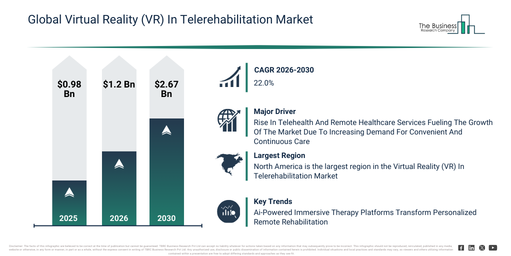
    The virtual reality (vr) in telerehabilitation market has experienced significant growth in its size over recent years. This market is expected to expand from $0.98 billion in 2025 to $1.2 billion in 2026, with a compound annual growth rate (CAGR) of 22.3%. The historic period’s growth is attributable to the expansion of telerehabilitation services, the rising adoption of digital therapeutics, an increasing focus on patient-centered care, the availability of consumer vr hardware, and the growth of remote healthcare delivery.

    The virtual reality (VR) in telerehabilitation market is anticipated to experience substantial growth over the next few years. It is forecast to reach $2.67 billion by 2030, growing at a compound annual growth rate (CAGR) of 22.0%. This projected growth during the forecast period is attributed to increasing investment in immersive healthcare technologies, rising demand for home-based rehabilitation solutions, the expansion of AI-enabled therapy platforms, growing integration with wearable devices, and an increasing focus on outcome-based rehabilitation models. Major trends expected in the forecast period include the increasing adoption of immersive remote rehabilitation programs, the growing use of gamified therapy environments, rising integration of AI-based progress tracking, the expansion of home-based VR therapy solutions, and an enhanced focus on patient engagement and adherence.

    Get A Free Sample Report With In-Depth Market Insights:

    https://thebusinessresearchcompany.com/sample_request?id=63668035&type=smp&name=Virtual%20Reality%20%28VR%29%20In%20Telerehabilitation%20Market%20Report%202026&utm_source=Blogs&utm_medium=Paid&utm_campaign=Nov_PR

    Virtual Reality (VR) In Telerehabilitation Market Growth Momentum: What Factors Are Shaping Demand?

    The increasing uptake of telehealth and remote healthcare services is projected to drive the expansion of the virtual reality (VR) in telerehabilitation market in the future. These services involve providing medical care to patients utilizing digital and telecommunication platforms, eliminating the need for physical attendance. Telehealth’s popularity is growing because patients desire convenient consultations from home and ongoing supervision, which minimizes travel, delays, and breaks in treatment. The virtual reality (VR) in telerehabilitation market facilitates this trend by improving remote rehabilitation therapy using engaging, interactive, and medically supervised VR settings that lead to better recovery results. The increased use of telehealth and remote healthcare services is fueling the growth of the virtual reality (VR) in telerehabilitation market.

    Virtual Reality (VR) In Telerehabilitation Market Segment Analysis: What Are The Core Market Categories?

    The virtual reality (vr) in telerehabilitation market covered in this report is segmented –

    1) By Component: Hardware, Software, Services

    2) By Rehabilitation: In-Person Rehabilitation, Remote Rehabilitation

    3) By Application: Physical Rehabilitation, Neurological Rehabilitation, Cardiac Rehabilitation, Psychological Rehabilitation, Orthopedic Rehabilitation

    4) By End-User: Healthcare Providers, Rehabilitation Centers, Homecare Settings, Fitness And Wellness Centers, Corporates

    Subsegments:

    1) By Hardware: Head-Mounted Displays (HMDs), Motion Tracking Sensors, Haptic Feedback Devices, Virtual Reality (VR) Gloves, Virtual Reality (VR) Treadmills, Eye-Tracking Devices, Cameras And Depth Sensors, Computing And Graphics Processing Units (GPUs)

    2) By Software: Immersive Virtual Reality (VR) Therapy Applications, Non-Immersive Virtual Reality (VR) Therapy Applications, Mixed Reality Therapy Applications, Artificial Intelligence (AI)-Based Therapy Modules, Gamified Rehabilitation Software, Patient Data Management And Analytics Platforms, Cloud-Based Therapy Software

    3) By Services: Clinical Implementation Services, Remote Patient Monitoring Services, Maintenance And Support Services, Training And Education Services, Consultation And Integration Services

    Virtual Reality (VR) In Telerehabilitation Market Trends Redefining Industry Growth

    Major companies operating in the virtual reality (VR) telerehabilitation market are concentrating on developing advanced solutions, such as AI-powered immersive therapy platforms, to provide personalized, remote rehabilitation and cognitive care. AI-powered immersive therapy platforms are digital systems that combine virtual reality (VR) environments with artificial intelligence to create customized, interactive therapy experiences for rehabilitation, mental health, or cognitive training.

    Virtual Reality (VR) In Telerehabilitation Market Top Companies Driving Competitive Growth

    Major companies operating in the virtual reality (vr) in telerehabilitation market are Penumbra Inc., DIH Holding US Inc., MindMaze, Reflexion Interactive Technologies Inc., Saebo, VR Rehab Inc., CUREosity GmbH, InfiVR, SyncVR Medical, Rehametrics, GestureTek Health, Doctor Kinetic, Cognihab Inc., Neuro Rehab VR, Virtualware, Mice Labs, Evolv Rehabilitation Technologies, XR4REHAB, MIRA Rehab Limited, LiteGait.

    View The Full Virtual Reality (VR) In Telerehabilitation Market Report:

    https://thebusinessresearchcompany.com/report/virtual-reality-vr-in-telerehabilitation-global-market-report?utm_source=Blogs&utm_medium=Paid&utm_campaign=Nov_PR

    Virtual Reality (VR) In Telerehabilitation Market Top Region By Revenue And Market Share

    North America was the largest region in the virtual reality (VR) in telerehabilitation market in 2025. Asia-Pacific is expected to be the fastest-growing region in the forecast period. The regions covered in the virtual reality (vr) in telerehabilitation market report are Asia-Pacific, South East Asia, Western Europe, Eastern Europe, North America, South America, Middle East, Africa.

    Reach Out To Our Team:

    The Business Research Company: https://www.thebusinessresearchcompany.com/

    Americas: +1 310-496-7795

    Asia: +44 7882 955267 & +91 8897263534

    Europe: +44 7882 955267

    Email us at: marketing@tbrc.info

    Follow us on:

    LinkedIn: https://in.linkedin.com/company/the-business-research-company

    YouTube: https://www.youtube.com/channel/UC24_fI0rV8cR5DxlCpgmyFQ

    Global Market Model: https://www.thebusinessresearchcompany.com/global-market-model
  • Virtual Reality (VR) In Medical Simulation Market Expected To Grow At 30.2% CAGR Through 2030: What Businesses Need To Know

    Virtual Reality (VR) In Medical Simulation Market Expected To Grow At 30.2% CAGR Through 2030: What Businesses Need To Know

    Featuring market attractiveness scoring, total addressable market sizing, company benchmarking matrices, interactive Excel dashboards, deeper supply chain intelligence, emerging startup tracking, and granular product-level insights, The Business Research Company’s 2026 market reports are built to deliver research that is both more actionable and more strategically valuable.

    Virtual Reality (VR) In Medical Simulation Market Size Outlook: How Quickly Will Revenue Expand Through 2030?

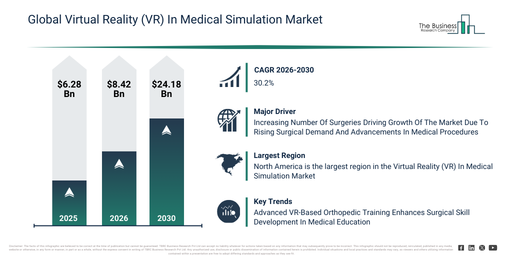
    The virtual reality (VR) in medical simulation market has seen significant expansion over recent years. It is anticipated to increase from $6.28 billion in 2025 to $8.42 billion in 2026, achieving a compound annual growth rate (CAGR) of 34.2%. The historical growth of this market can be attributed to the expansion of medical education infrastructure, a rising need for standardized clinical training, the growing integration of simulation-based learning, increased investments in medical training technologies, and enhanced accessibility of VR hardware.

    The virtual reality (vr) in medical simulation market size is projected to experience substantial growth in the upcoming years. It is forecast to reach $24.18 billion by 2030, exhibiting a compound annual growth rate (CAGR) of 30.2%. This expansion during the forecast period can be attributed to several factors, including escalating investments in immersive medical education, a growing need for remote and scalable training solutions, the expanding application of VR in clinical assessment, the increasing incorporation of AI-driven feedback systems, and wider adoption across healthcare institutions. Key trends anticipated in the forecast period encompass the increasing embrace of VR-based medical training simulations, the expanding utilization of virtual surgical practice platforms, the growing integration of AI-assisted clinical scenarios, the broadening of remote medical education programs, and a heightened emphasis on risk-free skill development.

    Get A Free Sample Report With In-Depth Market Insights:

    https://thebusinessresearchcompany.com/sample_request?id=91035185&type=smp&name=Virtual%20Reality%20%28VR%29%20In%20Medical%20Simulation%20Market%20Report%202026&utm_source=Blogs&utm_medium=Paid&utm_campaign=Nov_PR

    Virtual Reality (VR) In Medical Simulation Market Expansion Drivers: What’s Shaping Future Growth?

    A rising volume of surgical procedures is anticipated to fuel the expansion of virtual reality (VR) within the medical simulation market moving ahead. Surgeries involve medical interventions carried out by surgeons to identify, manage, or avert illnesses or injuries, frequently requiring cuts to reach tissues or internal organs. This increase in surgical frequency stems from advancements in medical technology, enhanced surgical methods, and wider criteria for surgical treatment across various specializations. VR in medical simulation facilitates this trend by providing immersive, extremely realistic training environments that precisely mimic intricate anatomy and surgical situations, allowing surgeons to hone their abilities in a safe setting prior to operating on patients. The expanding volume of surgeries is propelling the development of virtual reality (VR) in the medical simulation market.

    Virtual Reality (VR) In Medical Simulation Market Segment Breakdown: Which Categories Lead On Revenue?

    The virtual reality (vr) in medical simulation market covered in this report is segmented –

    1) By Age Group: Adult, Children, Infant

    2) By Application: Medical Education, Virtual Reality In Diagnostics, Pain Management, Mental Illness Treatment, Physical Fitness And Therapy, Virtual Reality In Surgery, Human Simulation Techniques, Virtual Reality In Dentistry, Virtual Reality In Nursing, Other Applications

    3) By End-User: Hospitals, Physician Clinics, Ambulatory Surgical Centers, Medical Institutes, Research Laboratory, Pharmaceutical Industry, Other End-Users

    Subsegments:

    1) By Adult: Vr Medical Simulations For Surgical Training, Vr Simulations For Clinical Diagnosis And Procedures, Vr For Pain Management And Physical Rehabilitation, Vr For Emergency And Trauma Care Training, Vr For Mental Health Therapy (Anxiety, Ptsd)

    2) By Children: Pediatric Vr Simulations For Medical Procedures, Vr For Pediatric Pain Management And Relaxation, Vr For Children’s Health Education (Explaining Procedures), Vr For Pediatric Physical Therapy And Rehabilitation, Vr For Cognitive And Emotional Development

    3) By Infant: Neonatal Vr Simulations For Caregivers And Healthcare Providers, Vr For Infant Care Training (Resuscitation Techniques), Vr For Monitoring Infant Vital Signs And Development, Vr For Early Developmental Therapy (Sensory Stimulation)

    Virtual Reality (VR) In Medical Simulation Market Strategic Trends: What Defines The Next Growth Phase?

    Companies operating within the virtual reality (VR) in the medical simulation market are concentrating on creating sophisticated solutions, such as immersive arthroscopic training modules. These innovations aim to enhance surgical proficiency, minimize training hazards, and offer learners anatomically precise, reproducible environments for practice. Arthroscopic VR training modules are instructional tools powered by virtual reality that simulate minimally invasive orthopedic procedures. They enable trainees to hone skills like instrument handling, triangulation, arm positioning, and repair techniques within a controlled, lifelike setting, moving far beyond the limitations of traditional cadaver labs or theoretical textbook learning.

    Virtual Reality (VR) In Medical Simulation Market Leading Players And Competitive Positioning

    Major companies operating in the virtual reality (vr) in medical simulation market are CAE Healthcare Inc, Brainlab AG, Surgical Science Sweden AB, Osso VR Inc, Mentice AB, Augmedics, Virtalis Holdings Ltd, VirtaMed AG, Oxford Medical Simulation Ltd, Health Scholars Inc, AppliedVR Inc, Medisim Ltd, Fundamental Surgery, ImmersiveTouch Inc, SimforHealth, SimX, PrecisionOS Technologies Inc, Body Interact, XRHealth, Oxford Medical Simulation Ltd, Psious, Surgical Theater, MedVR Education, Medical Realities

    View The Full Virtual Reality (VR) In Medical Simulation Market Report:

    https://thebusinessresearchcompany.com/report/virtual-reality-VR-in-medical-simulation-global-market-report?utm_source=Blogs&utm_medium=Paid&utm_campaign=Nov_PR

    Virtual Reality (VR) In Medical Simulation Market Regional Analysis And Top Geography

    North America was the largest region in the virtual reality (VR) in medical simulation market in 2025. Asia-Pacific is expected to be the fastest-growing region in the forecast period. The regions covered in the virtual reality (vr) in medical simulation market report are Asia-Pacific, South East Asia, Western Europe, Eastern Europe, North America, South America, Middle East, Africa.

    Reach Out To Our Team:

    The Business Research Company: https://www.thebusinessresearchcompany.com/

    Americas: +1 310-496-7795

    Asia: +44 7882 955267 & +91 8897263534

    Europe: +44 7882 955267

    Email us at: marketing@tbrc.info

    Follow us on:

    LinkedIn: https://in.linkedin.com/company/the-business-research-company

    YouTube: https://www.youtube.com/channel/UC24_fI0rV8cR5DxlCpgmyFQ

    Global Market Model: https://www.thebusinessresearchcompany.com/global-market-model
  • Virtual Nutrition Coach App Market Forecast To Reach $898.4 Billion By 2030: Key Trends Explained

    Virtual Nutrition Coach App Market Forecast To Reach $898.4 Billion By 2030: Key Trends Explained

    Built to provide research that’s more actionable and strategically valuable, The Business Research Company’s 2026 market reports include market attractiveness analysis, total addressable market sizing, company benchmarking matrices, interactive Excel dashboards, broader supply chain intelligence, emerging startup tracking, and in-depth product insights.

    Virtual Nutrition Coach App Market Size, Value And Growth Trajectory Through 2030

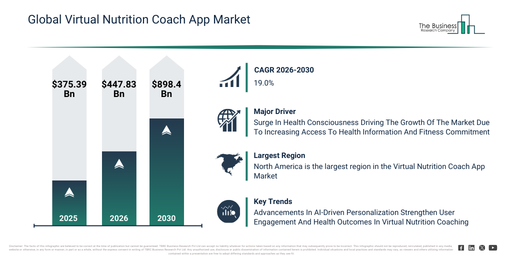
    The market size for virtual nutrition coach apps has seen rapid development over recent years. It is anticipated to expand from $375.39 billion in 2025 to $447.83 billion in 2026, achieving a compound annual growth rate (CAGR) of 19.3%. Historically, this expansion has been driven by elements like growth in smartphone penetration, increasing consumer awareness of healthy lifestyles, expansion of digital health applications, rising availability of health data analytics tools, and growing acceptance of remote wellness solutions.

    The virtual nutrition coach app market is projected to experience substantial expansion in the coming years, anticipated to reach $898.4 billion by 2030, exhibiting a compound annual growth rate (CAGR) of 19.0%. This growth is primarily fueled by a heightened demand for personalized healthcare solutions, the growing incorporation of AI into consumer health applications, the broadening of data-driven nutrition coaching, an intensified emphasis on preventing chronic diseases, and the wider acceptance of subscription-based digital health services. Furthermore, key trends within this period involve the rising uptake of AI-powered personalized nutrition plans, enhanced connectivity with wearable health devices, an increasing application of real-time dietary tracking functionalities, the growth of subscription-based nutrition platforms, and a strengthened commitment to preventive health and overall wellness.

    Get A Free Sample Report With In-Depth Market Insights:

    https://thebusinessresearchcompany.com/sample_request?id=45680450&type=smp&name=Virtual%20Nutrition%20Coach%20App%20Market%20Report%202026&utm_source=Blogs&utm_medium=Paid&utm_campaign=Nov_PR

    Virtual Nutrition Coach App Market Development Factors: What’s Supporting Demand?

    The growing health awareness among consumers is anticipated to drive the future expansion of the virtual nutrition coach app market. Health consciousness denotes an individual’s understanding and proactive approach toward maintaining and enhancing their overall health and well-being. This heightened consumer health consciousness is increasing due to improved access to health information through social media, empowering individuals to make more knowledgeable decisions about their well-being. A virtual nutrition coach app aids health-conscious consumers by offering personalized dietary guidance, tracking nutritional goals, providing real-time feedback, and helping users make informed food choices, thereby encouraging healthier eating habits and general well-being. For instance, in February 2025, according to Experian Information Solutions, Inc., a US-based information services company, gym membership spending rose by 11% during Christmas and 4% in January, signaling an early commitment to fitness in 2025. Furthermore, those aged 35-44 also experienced a 7% increase in fitness spending, underscoring their prioritization of health and well-being. Thus, the escalating health consciousness among consumers is propelling the growth of the virtual nutrition coach app market.

    Virtual Nutrition Coach App Market Segmentation: How Does The Market Break Down By Category?

    The virtual nutrition coach app market covered in this report is segmented –

    1) By Product Type: Live Streaming, On-Demand Streaming

    2) By Device Type: Smart TVs, Smartphones, Laptops Desktops, Other Device Types

    3) By Revenue Model: Subscription, Advertisement

    Subsegments:

    1) By Live Streaming: One-On-One Coaching Sessions, Group Coaching Sessions, Interactive Q&A Sessions, Real-Time Meal Planning, Live Fitness and Nutrition Integration

    2) By On-Demand Streaming: Pre-Recorded Nutrition Courses, Diet-Specific Modules, Meal Prep Tutorials, Habit-Building Video Series, Expert-Led Educational Content

    Virtual Nutrition Coach App Market Transformation Trends: What Innovations Are Driving Change?

    Leading companies in the virtual nutrition coach app market are increasingly focusing on utilizing advanced solutions, such as artificial intelligence (AI)-powered personalized nutrition planning platforms, to boost user engagement, assist in preventing chronic diseases, and improve health outcomes. These AI-driven personalized nutrition planning platforms leverage machine learning algorithms to analyze user data, including dietary habits, health metrics, lifestyle behaviors, and wellness objectives, thereby delivering customized meal guidance, real-time dietary feedback, and adaptive coaching that evolves with individual progress, offering a more precise alternative to traditional generic diet plans.

    Virtual Nutrition Coach App Market Competitive Overview And Top Companies

    Major companies operating in the virtual nutrition coach app market are Noom Inc., GOQii Inc., MyFitnessPal Inc., HealthifyMe Inc., Lark Health Inc., Zoe Global Ltd., 8fit Inc., Lifesum AB., Fooducate Inc., DayTwo Ltd., Asken Diet Inc., GB HealthWatch Inc., Yazio GmbH., Nourishly Inc., Eat This Much Inc., MacroFactor, Cronometer, Fitia, FoodNoms, CalBye, RP Strength (RP Diet Coach App), Fastic, Lose It!, My Macros Plus, Nutrium

    View The Full Virtual Nutrition Coach App Market Report:

    https://thebusinessresearchcompany.com/report/virtual-nutrition-coach-app-global-market-report?utm_source=Blogs&utm_medium=Paid&utm_campaign=Nov_PR

    Virtual Nutrition Coach App Market Geographic Analysis: Where Is Demand Rising Fastest?

    North America was the largest region in the virtual nutrition coach app market in 2025. Asia-Pacific is expected to be the fastest-growing region in the forecast period. The regions covered in the virtual nutrition coach app market report are Asia-Pacific, South East Asia, Western Europe, Eastern Europe, North America, South America, Middle East, Africa.

    Reach Out To Our Team:

    The Business Research Company: https://www.thebusinessresearchcompany.com/

    Americas: +1 310-496-7795

    Asia: +44 7882 955267 & +91 8897263534

    Europe: +44 7882 955267

    Email us at: marketing@tbrc.info

    Follow us on:

    LinkedIn: https://in.linkedin.com/company/the-business-research-company

    YouTube: https://www.youtube.com/channel/UC24_fI0rV8cR5DxlCpgmyFQ

    Global Market Model: https://www.thebusinessresearchcompany.com/global-market-model
  • Virtual Intensive Care Unit (ICU) Market Size Forecast From 2026 To 2030: Key Industry Trends

    Virtual Intensive Care Unit (ICU) Market Size Forecast From 2026 To 2030: Key Industry Trends

    Backed by market attractiveness analysis, total addressable market sizing, company benchmarking matrices, interactive Excel dashboards, wider supply chain intelligence, emerging startup coverage, and detailed product-level insights, The Business Research Company’s 2026 market reports are designed to offer research that is more actionable and strategically valuable than ever.

    Virtual Intensive Care Unit (ICU) Market CAGR Outlook And Future Development

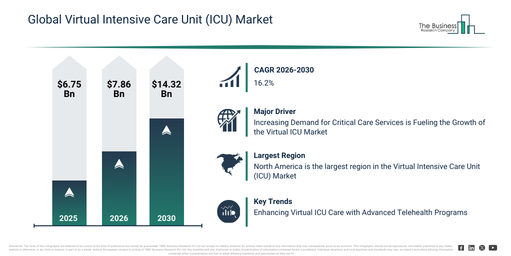
    The virtual intensive care unit (icu) market has seen substantial growth in recent years. It is expected to expand from $6.75 billion in 2025 to $7.86 billion by 2026, achieving a compound annual growth rate (CAGR) of 16.5%. This historical growth can be linked to factors such as an increasing shortage of on-site intensivists, the expansion of telemedicine infrastructure, rising icu patient volumes, the adoption of electronic health records, and the necessity for centralized critical care management.

    The virtual intensive care unit (icu) market size is anticipated to undergo significant expansion in the coming years. It is projected to achieve a value of $14.32 billion by 2030, exhibiting a compound annual growth rate (CAGR) of 16.2%. This growth during the forecast period can be attributed to factors such as an escalating demand for scalable critical care delivery, increasing investments in digital health platforms, the expansion of AI-assisted clinical monitoring, a growing emphasis on value-based care models, and the rising adoption of virtual hospital solutions. Major trends expected within this period include the increasing deployment of remote icu monitoring platforms, a rising integration of real-time patient data analytics, the expansion of tele-intensivist coverage models, a growing utilization of predictive clinical decision support tools, and an enhanced focus on continuous critical care oversight.

    Get A Free Sample Report With In-Depth Market Insights:

    https://thebusinessresearchcompany.com/sample_request?id=24317120&type=smp&name=Virtual%20Intensive%20Care%20Unit%20%28ICU%29%20Market%20Report%202026&utm_source=Blogs&utm_medium=Paid&utm_campaign=Nov_PR

    Virtual Intensive Care Unit (ICU) Market Industry Drivers: What’s Behind The Revenue Growth?

    The increasing need for critical medical care is projected to drive the expansion of the virtual intensive care unit (ICU) market in the future. These services involve specialized medical attention for individuals with critical, life-threatening conditions that necessitate continuous monitoring and rigorous treatment. The heightened demand for critical care stems from the increasing occurrence of chronic illnesses, an older demographic, and the evolving complexity of medical ailments. Virtual ICUs augment essential care through real-time distant monitoring and guidance from expert intensivists, thereby improving patient results and optimizing resource use, particularly in rural or underserved regions where immediate access to specialists is often restricted. The expanding requirement for critical care services is propelling the development of the virtual intensive care unit (ICU) market.

    Virtual Intensive Care Unit (ICU) Market Segment Trends And Revenue Contributors

    The virtual intensive care unit (icu) market covered in this report is segmented –

    1) By Type: Traditional Medical Intensive Care Unit (ICU), Cardiac Care Unit, Neonatal Intensive Care Unit (ICU), Pediatric Intensive Care Unit (ICU), Trauma Intensive Care Unit (ICU), Psychiatric Intensive Care Unit (ICU), High-Dependency Unit, Other Types

    2) By Component: Software, Hardware

    3) By Technology: Machine Learning, Deep Learning, Artificial Intelligence, Other Technologies

    4) By End User: Payer, Patient, Provider

    Subsegments:

    1) By Traditional Medical Intensive Care Unit (ICU): General Medical ICU, Surgical ICU, Respiratory ICU

    2) By Cardiac Care Unit: Coronary Care Unit, Cardiac Surgery ICU

    3) By Neonatal Intensive Care Unit (ICU): Level I Neonatal ICU, Level II Neonatal ICU, Level III Neonatal ICU

    4) By Pediatric Intensive Care Unit (ICU): General Pediatric ICU, Cardiac Pediatric ICU, Neuro Pediatric ICU

    5) By Trauma Intensive Care Unit (ICU): Surgical Trauma ICU, Medical Trauma ICU

    6) By Psychiatric Intensive Care Unit (ICU): Adult Psychiatric ICU, Adolescent Psychiatric ICU

    7) By High-Dependency Unit: Step-Down Unit, Intermediate Care Unit

    8) By Other Types: Burn Unit, Post-Anesthesia Care Unit, Stroke Unit

    #Virtual Intensive Care Unit (ICU) Market Growth Trends: What’s Shaping The Future Outlook?

    Major companies operating in the virtual intensive care unit (ICU) market are concentrating on developing advanced solutions, such as telehealth programs, to enhance ICU care by enabling real-time monitoring, expert consultations, and improved patient outcomes. Telehealth programs utilize digital communication technologies to deliver medical care and services remotely, allowing healthcare professionals to monitor patients, conduct consultations, and provide treatment advice without requiring in-person visits.

    Virtual Intensive Care Unit (ICU) Market Competitive Landscape: Which Companies Lead The Industry?

    Major companies operating in the virtual intensive care unit (icu) market are Cisco Systems Inc., Oracle Corporation, Medtronic plc, Siemens Healthineers AG, Koninklijke Philips N.V., GE HealthCare Technologies Inc., ResMed Inc., Hill-Rom Holdings Inc., Teladoc Health Inc., Masimo Corporation, Nihon Kohden Corporation, American Well Corporation, Caregility Corporation, Hicuity Health Inc., Eagle Telemedicine, HealthNet Global, Apollo TeleHealth Services Private Limited, Philips Healthcare, Medsphere Systems Corporation, eCareManager

    View The Full Virtual Intensive Care Unit (ICU) Market Report:

    https://thebusinessresearchcompany.com/report/virtual-intensive-care-unit-icu-global-market-report?utm_source=Blogs&utm_medium=Paid&utm_campaign=Nov_PR

    Virtual Intensive Care Unit (ICU) Market Global Footprint: Which Region Leads The Market?

    North America was the largest region in the virtual intensive care unit (ICU) market in 2025. Asia-Pacific is expected to be the fastest-growing region in the forecast period. The regions covered in the virtual intensive care unit (icu) market report are Asia-Pacific, South East Asia, Western Europe, Eastern Europe, North America, South America, Middle East, Africa.

    Reach Out To Our Team:

    The Business Research Company: https://www.thebusinessresearchcompany.com/

    Americas: +1 310-496-7795

    Asia: +44 7882 955267 & +91 8897263534

    Europe: +44 7882 955267

    Email us at: marketing@tbrc.info

    Follow us on:

    LinkedIn: https://in.linkedin.com/company/the-business-research-company

    YouTube: https://www.youtube.com/channel/UC24_fI0rV8cR5DxlCpgmyFQ

    Global Market Model: https://www.thebusinessresearchcompany.com/global-market-model
  • Virtual Human Anatomy Software Market 2026: Market Size, Growth Drivers And Emerging Opportunities

    Virtual Human Anatomy Software Market 2026: Market Size, Growth Drivers And Emerging Opportunities

    Featuring market attractiveness scoring, total addressable market sizing, company benchmarking matrices, interactive Excel dashboards, deeper supply chain intelligence, emerging startup tracking, and granular product-level insights, The Business Research Company’s 2026 market reports are built to deliver research that is both more actionable and more strategically valuable.

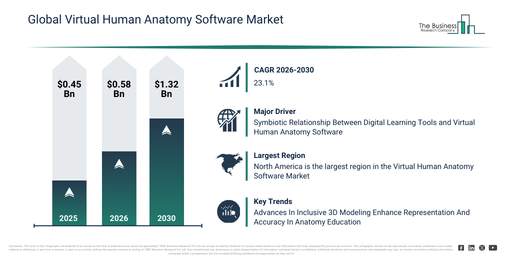
    Virtual Human Anatomy Software Market Set To Climb From $0.58 Billion In 2026 To $1.32 Billion By 2030

    The virtual human anatomy software market has experienced rapid expansion in recent years. It is anticipated to increase from $0.45 billion in 2025 to $0.58 billion in 2026, showing a compound annual growth rate (CAGR) of 27.5%. This historical growth can be attributed to the increasing digitization of medical education, the growing use of 3d visualization in healthcare training, the expansion of anatomy software adoption in institutions, rising investments in medical simulation tools, and improved availability of high-performance computing systems.

    The virtual human anatomy software market size is projected to experience substantial growth over the coming years, anticipated to reach $1.32 billion by 2030, with a compound annual growth rate (CAGR) of 23.1%. This expansion is primarily driven by factors such as the increasing adoption of immersive learning technologies, a rising demand for remote medical education solutions, the broader integration of VR and AR into healthcare training, a growing emphasis on personalized learning platforms, and the expanding use of cloud-based medical software. Significant trends for the period ahead include the increasing acceptance of interactive 3D anatomy visualization, a rise in the utilization of VR-based anatomy learning platforms, the growing integration of cloud-based anatomy software, the expansion of simulation-driven medical education tools, and an enhanced focus on realistic anatomical modeling.

    Get A Free Sample Report With In-Depth Market Insights:

    https://thebusinessresearchcompany.com/sample_request?id=40731264&type=smp&name=Virtual%20Human%20Anatomy%20Software%20Market%20Report%202026&utm_source=Blogs&utm_medium=Paid&utm_campaign=Nov_PR

    Virtual Human Anatomy Software Market Growth Factors: What’s Supporting Expansion?

    The escalating adoption of online education is anticipated to drive expansion in the virtual human anatomy software market. Online education, defined as a learning approach leveraging the internet and digital technologies for remote content delivery, has seen increased prevalence owing to its accessibility, flexibility, affordability, technological progress, and alignment with evolving societal and economic developments. Virtual human anatomy software significantly enriches online educational experiences by delivering immersive, interactive, and readily available learning that deepens students’ understanding and appreciation of human anatomy. The rising uptake of online education will foster growth in the virtual human anatomy software market.

    Virtual Human Anatomy Software Market Segment Analysis Spotlighting Growth Areas

    The virtual human anatomy software market covered in this report is segmented –

    1) By Type: 3D Anatomy Software, VR Anatomy Software

    2) By Technology: Cloud-Based, On-Premise

    3) By Application: Educational Institution, Hospitals And Clinics, Other Applications

    Subsegments:

    1) By 3D Anatomy Software: Interactive 3D Visualization, 3D Rendering And Simulation, Anatomical Modeling Tools

    2) By VR Anatomy Software: Virtual Reality-Based Anatomy Exploration, VR Simulation For Medical Training, Immersive 3D Anatomy Visualization

    Virtual Human Anatomy Software Market Industry Trends: What’s Reshaping Demand?

    Leading companies in the virtual human anatomy software market are concentrating on developing advanced solutions, such as diversity-enhanced 3D anatomical modeling. This focus aims to address long-standing gaps in racial representation and elevate the accuracy and inclusivity of medical education. Diversity-enhanced 3D modeling incorporates multiple skin tones, facial characteristics, and anatomically precise variations into virtual anatomy platforms, enabling students to learn from representations that more closely mirror real patient populations.

    Virtual Human Anatomy Software Market Leading Companies: Who Holds The Strongest Market Presence?

    Major companies operating in the virtual human anatomy software market are VirtaMed AG, Wolters Kluwer Health, Inc., Anatomage Inc., Biomax Informatics AG, Visible Body, BioDigital Inc., 3D4Medical Ltd., Primal Pictures Ltd., BodyViz LLC, Kenhub GmbH, Zygote Media Group Inc., Medicalholodeck GmbH, Lifeliqe, s.r.o., 3D Organon Ltd., Vrtual Medicine, 4D Interactive Anatomy, Anatomy 3D Atlas, Elsevier B.V., Anatronica, Anomalous Medical, LLC, Cyber-Anatomy, Inc., Brain Science Tools B.V., BodyParts3D/Anatomography, BodyMaps, Digiscope Ltd., Human Anatomy VR

    View The Full Virtual Human Anatomy Software Market Report:

    https://thebusinessresearchcompany.com/report/virtual-human-anatomy-software-global-market-report?utm_source=Blogs&utm_medium=Paid&utm_campaign=Nov_PR

    Virtual Human Anatomy Software Market Regional Split: Which Areas Are Fueling Growth?

    North America was the largest region in the virtual human anatomy market in 2025. The regions covered in the virtual human anatomy software market report are Asia-Pacific, South East Asia, Western Europe, Eastern Europe, North America, South America, Middle East, Africa.

    Reach Out To Our Team:

    The Business Research Company: https://www.thebusinessresearchcompany.com/

    Americas: +1 310-496-7795

    Asia: +44 7882 955267 & +91 8897263534

    Europe: +44 7882 955267

    Email us at: marketing@tbrc.info

    Follow us on:

    LinkedIn: https://in.linkedin.com/company/the-business-research-company

    YouTube: https://www.youtube.com/channel/UC24_fI0rV8cR5DxlCpgmyFQ

    Global Market Model: https://www.thebusinessresearchcompany.com/global-market-model