Author: Marketing Posting

  • In-Situ Hybridization Industry Valued at $2.53 Billion by 2029 With CAGR of 9.2% | Size and Share Insights

    In-Situ Hybridization Industry Valued at $2.53 Billion by 2029 With CAGR of 9.2% | Size and Share Insights

    Claim your 30% discount on Global Market Reports with code ONLINE30. Limited time only.

    What Is the Forecast for the In-Situ Hybridization Market from 2024 to 2025?

    The market size for in-situ hybridization has seen a robust increase in the past few years. The market, which was valued at $1.62 billion in 2024, is projected to reach $1.78 billion in 2025, marking an annual growth rate of 9.5%. The significant growth experienced in the past is a direct result of an upsurge in research and development efforts, widespread expansion of biopharmaceutical research, increased government funding directed towards genomic research, a surge in the demand for precision-based medical treatments, and a rise in the number of clinical trials that employ ISH.

    What Is the Projected Market Size of the In-Situ Hybridization Market?

    The market for in-situ hybridization is projected to see robust growth in the coming years. It’s expected to reach a value of $2.53 billion by 2029, with a compound annual growth rate (CAGR) of 9.2%. Factors such as the increasing prevalence of cancer, higher instances of genetic disorders, the rise in demand for personalized medicine, greater use of companion diagnostics, and heightened awareness of early disease detection are thought to be driving this growth. Trends that will characterize the forecast period involve improvements in molecular diagnostics, technological progress in ISH techniques, the availability of enhanced ISH kits and reagents, the preference for non-invasive diagnostic methods, and advancements in fluorescence in-situ hybridization (FISH) technologies.

    Download The Free Sample Report Here:

    https://www.thebusinessresearchcompany.com/sample.aspx?id=24571&type=smp

    Who are the Major Competitors in the In-Situ Hybridization Market Outlook?

    Major companies operating in the in-situ hybridization market are F. Hoffmann-La Roche Ltd., Thermo Fisher Scientific Inc., Abbott Laboratories Inc., Danaher Corporation, Merck KGaA, Agilent Technologies Inc., PerkinElmer Inc., Bio-Rad Laboratories Inc., Qiagen NV, Bio-Techne Corporation, Leica Biosystems Nussloch GmbH, Biocare Medical LLC, BioGenex Srl, Oxford Gene Technology Inc., BioDot Inc., Creative Biolabs, West Medica Produktions- und Handels GmbH, Empire Genomics LLC, Abnova Corporation, BioView Ltd., Advanced Cell Diagnostics Inc., BioCat GmbH, VERMICON AG, Bio SB Inc., Genemed Biotechnologies Inc.

    What Is Fueling Growth in the In-Situ Hybridization Market?

    The escalating prevalence of cancer is expected to drive the expansion of the in-situ hybridization market in the forthcoming years. Cancer refers to a disease characterized by unregulated growth of abnormal cells that can infiltrate and metastasize to other organs of the body. The surge in cancer cases can be attributed to longer life expectancy which provides ample time for genetic deviations to accumulate and individuals to encounter carcinogenic elements. In-situ hybridization (ISH) is instrumental in cancer care as it facilitates the identification of specific genetic anomalies in cancer cells. ISH aids in precise diagnosis, prognosis, and in making informed decisions related to targeted therapies. For example, the World Health Organization, an intergovernmental agency based in Switzerland, projected that in February 2024, the incidence of new cancer cases will skyrocket to over 35 million by 2050, demonstrating a 77% surge from an estimated 20 million cases in 2022. Hence, the escalating prevalence of cancer is likely to propel the growth of the in-situ hybridization market.

    Request For A Customized Report:

    https://www.thebusinessresearchcompany.com/customise?id=24571&type=smp

    Which In-Situ Hybridization Market Segments Are Growing the Fastest?

    The in-situ hybridization market covered in this report is segmented –

    1) By Product: Analytical Instruments, Kits And Reagents, Software And Services, Other Products

    2) By Technology: Fluorescence In Situ Hybridization, Chromogenic In Situ Hybridization, Dual-Color In Situ Hybridization

    3) By Application: Cancer Diagnosis, Cytogenetics, Developmental Biology, Infectious Diseases, Immunology, Other Applications

    4) By End User: Hospitals And Diagnostic Laboratories, Academic And Research Institutes, Contract Research Organizations, Pharmaceutical And Biotechnology Companies

    Subsegments:

    1) By Analytical Instruments: Fluorescence Microscopes, Brightfield Microscopes, Automated Slide Scanners, Hybridization Systems

    2) By Kits And Reagents: DNA Probes, RNA Probes, Labeling Kits, Detection Reagents, Pretreatment Reagents

    3) By Software And Services: Image Analysis Software, Data Management Software, Custom Probe Design Services, Sample Preparation Services

    4) By Other Products: Slides And Coverslips, Storage Reagents, Hybridization Buffers, Control Probes

    Which Industry Trends Are Shaping the Future of the In-Situ Hybridization Market?

    Top firms in the in-situ hybridization market are prioritizing the development of cutting-edge solutions, such as HER2 testing solutions, designed to anticipate a patient’s response to targeted treatments. HER2 testing solutions serve as diagnostic implements for determining the existence and amount of the HER2 protein in cancer cells, thus informing targeted treatment choices. For example, in December 2023, an India-based company known as Cytelabs, that specializes in cancer diagnostics, introduced a dual in situ hybridization (DISH) test for patients with breast cancer. This DISH technology, which has received US FDA approval, constitutes a notable progression in precise HER2 testing, indispensable for tailored breast cancer treatment. It significantly reduces the waiting period by delivering HER2 status results within 24 to 48 hours, thereby alleviating the stress felt by patients and their loved ones. Through the rapid provision of reliable results, DISH enables timely treatment planning and commencement. Since the HER2 status is pivotal in determining the prognosis and treatment, it’s imperative to carry out accurate and efficient testing for the thorough evaluation of all invasive breast cancers.

    Access The Full Report Here:

    https://www.thebusinessresearchcompany.com/report/in-situ-hybridization-global-market-report

    Which Countries Are Leading the In-Situ Hybridization Market?

    North America was the largest region in the in-situ hybridization market in 2024. Asia-Pacific is expected to be the fastest-growing region in the forecast period. The regions covered in the in-situ hybridization market report are Asia-Pacific, Western Europe, Eastern Europe, North America, South America, Middle East, Africa.

    Purchase The Full Report Today:

    https://www.thebusinessresearchcompany.com/purchaseoptions.aspx?id=24571

    This Report Delivers Insight On:

    1. How big is the in-situ hybridization market, and how is it changing globally?

    2. Who are the major companies in the in-situ hybridization market, and how are they performing?

    3. What are the key opportunities and risks in the in-situ hybridization market right now?

    4. Which products or customer segments are growing the most in the in-situ hybridization market?

    5. What factors are helping or slowing down the growth of the in-situ hybridization market?

    About The Business Research Company:

    With over 15000+ reports from 27 industries covering 60+ geographies, The Business Research Company has built a reputation for offering comprehensive, data-rich research and insights. Armed with 1,500,000 datasets, the optimistic contribution of in-depth secondary research, and unique insights from industry leaders, you can get the information you need to stay ahead in the game.

    Get in touch with us:

    The Business Research Company: https://www.thebusinessresearchcompany.com/

    Americas +1 3156230293

    Asia +44 2071930708

    Europe +44 2071930708

    Email us at info@tbrc.info

    Follow us on:

    LinkedIn: https://in.linkedin.com/company/the-business-research-company

    YouTube: https://www.youtube.com/channel/UC24_fI0rV8cR5DxlCpgmyFQ

    Global Market Model: https://www.thebusinessresearchcompany.com/global-market-model

  • Norovirus Treatment Market Size to Exceed $2.91 Billion by 2029 | Growth and Industry Trends

    Norovirus Treatment Market Size to Exceed $2.91 Billion by 2029 | Growth and Industry Trends

    Claim your 30% discount on Global Market Reports with code ONLINE30. Limited time only.

    How Has the Norovirus Treatment Market Grown from 2024 to 2025?

    The market size for treatment of norovirus has seen a notable expansion in the past few years. It is forecasted to increase from $1.75 billion in 2024 to $1.94 billion in 2025, exhibiting a compound annual growth rate (CAGR) of 11.0%. The accelerated growth observed during the historical period can be linked to several factors including increased worldwide incidents of norovirus outbreaks, enhanced public consciousness, a rising emphasis on supportive care measures, investment in the research for a vaccine, advancements in healthcare infrastructure, and a surge in the demand for efficient measures to control infection.

    What Growth Rate Is Anticipated for the Norovirus Treatment Market in the Coming Years?

    The market for norovirus treatment is projected to experience swift expansion in the years ahead, with a valuation expected to reach $2.91 billion by 2029 at a compound annual growth rate (CAGR) of 10.7%. The projected growth during this period can be attributed to factors such as enhanced funding for the development of antiviral drugs, increased use of quick diagnostic tools, growing understanding of the implications of norovirus on public health, expanding healthcare availability in developing economies, and introduction of new supportive therapies aimed at reducing symptom severity. Key trends expected during the forecast period include progress in vaccine development, innovative antiviral treatments, advancement in molecular diagnostic technologies, utilization of AI-based diagnostic tools, amplified public health awareness campaigns, and the creation of cost-effective treatment solutions at the point of care.

    Download The Free Sample Report Here:

    https://www.thebusinessresearchcompany.com/sample.aspx?id=24629&type=smp

    Who Are the Leading Companies in the Norovirus Treatment Market?

    Major companies operating in the norovirus treatment market are Pfizer Inc., Johnson and Johnson, F. Hoffmann-La Roche Ltd., Merck and Co. Inc., AbbVie Inc., Bayer AG, Sanofi S.A., Bristol-Myers Squibb Company, Abbott Laboratories, Novartis AG, AstraZeneca plc, GSK plc, Eli Lilly and Company, Teva Pharmaceutical Industries Ltd., Reckitt Benckiser Group plc, Sun Pharmaceutical Industries Ltd., Lupin Ltd., Aurobindo Pharma Limited, Cipla Inc., Endo International plc.

    What Are the Key Drivers of the Norovirus Treatment Market?

    The escalation in the incidence of infectious diseases is projected to spur the expansion of the norovirus treatment market in the near future. Infectious diseases, notably influenza, tuberculosis, HIV/AIDS, malaria, and norovirus, are conditions triggered by bacteria, viruses, fungi, or parasites which can rapidly spread among individuals. The rise in such diseases is often due to high-density urban living conditions that allow the swift transmission of pathogens. Treatments for norovirus play a significant role in subduing the effects of these infectious ailments by managing symptoms adequately and controlling spread with suitable hydration, hygiene, and isolation measures. To illustrate, the World Health Organization, headquartered in Switzerland, noted in March 2025 that an estimated 10.8 million people worldwide, breaking down to 6.0 million men, 3.6 million women, and 1.3 million children, were afflicted with tuberculosis in 2023. Thus, the escalating incidence of infectious diseases serves as a primary catalyst for the growth of the norovirus treatment market.

    Request For A Customized Report:

    https://www.thebusinessresearchcompany.com/customise?id=24629&type=smp

    What Are the Key Market Segments in the Norovirus Treatment Industry?

    The norovirus treatment market covered in this report is segmented –

    1) By Treatment: Electrolytes, Intravenous Fluids, Antipyretics, Analgesics, Anti-Diarrheal, Other Treatments

    2) By Diagnosis: Bacteria Culture Test, Stool Tests, Other Diagnosis

    3) By Route Of Administration: Oral, Intravenous, Subcutaneous

    4) By End User: Hospitals, Clinics, Homecare Settings

    Subsegments:

    1) By Electrolytes: Oral Rehydration Salts (ORS), Sports Drinks, Pediatric Electrolyte Solutions

    2) By Intravenous Fluids: Crystalloids, Colloids, Lactated Ringer’s Solution

    3) By Antipyretics: Acetaminophen (Paracetamol), Ibuprofen, Aspirin

    4) By Analgesics: Nonsteroidal Anti-Inflammatory Drugs (NSAIDs), Opioid Analgesics, Acetaminophen-Based Analgesics

    5) By Anti-Diarrheal: Loperamide, Bismuth Subsalicylate, Diphenoxylate-Atropine

    6) By Other Treatments: Antiemetics, Probiotics, Zinc Supplements

    What Are the Latest Trends in the Norovirus Treatment Market?

    In an effort to reduce worldwide illness related to norovirus, key industry players in the norovirus treatment industry are focusing their efforts on the creation of advanced solutions, such as highly developed mRNA vaccines. These next-generation vaccines employ specifically crafted messenger RNA, instructing cells to generate particular proteins and promote a precise immune response. This results in improved stability, efficacy, and adaptability in the face of a variety of infectious diseases. In a notable example, Moderna Inc., a biotechnology enterprise based in the US, joined forces with UK Health Security Agency (UKHSA), a UK-governed entity, in October 2024. Together, they initiated the world’s initial Phase 3 trial of mRNA-1403, an mRNA norovirus vaccine, in the UK. This trial features a vaccine specifically engineered to combat the highly infectious norovirus by commanding the body to generate viral proteins, thus eliciting a powerful immune response, without requiring the live virus. The launch is characterized by the use of stable mRNA for increased longevity, swift development potential in reaction to mutating strains, and the capacity to provoke both antibody and T-cell responses.

    Access The Full Report Here:

    https://www.thebusinessresearchcompany.com/report/norovirus-treatment-global-market-report

    What Are the Key Regional Markets in the Norovirus Treatment Industry?

    North America was the largest region in the norovirus treatment market in 2024. The regions covered in the norovirus treatment market report are Asia-Pacific, Western Europe, Eastern Europe, North America, South America, Middle East, Africa.

    Purchase The Full Report Today:

    https://www.thebusinessresearchcompany.com/purchaseoptions.aspx?id=24629

    This Report Delivers Insight On:

    1. How big is the norovirus treatment market, and how is it changing globally?

    2. Who are the major companies in the norovirus treatment market, and how are they performing?

    3. What are the key opportunities and risks in the norovirus treatment market right now?

    4. Which products or customer segments are growing the most in the norovirus treatment market?

    5. What factors are helping or slowing down the growth of the norovirus treatment market?

    About The Business Research Company:

    With over 15000+ reports from 27 industries covering 60+ geographies, The Business Research Company has built a reputation for offering comprehensive, data-rich research and insights. Armed with 1,500,000 datasets, the optimistic contribution of in-depth secondary research, and unique insights from industry leaders, you can get the information you need to stay ahead in the game.

    Get in touch with us:

    The Business Research Company: https://www.thebusinessresearchcompany.com/

    Americas +1 3156230293

    Asia +44 2071930708

    Europe +44 2071930708

    Email us at info@tbrc.info

    Follow us on:

    LinkedIn: https://in.linkedin.com/company/the-business-research-company

    YouTube: https://www.youtube.com/channel/UC24_fI0rV8cR5DxlCpgmyFQ

    Global Market Model: https://www.thebusinessresearchcompany.com/global-market-model

  • Incretin-Based Drugs Market to Reach $36.7 Billion by 2029 | Key Drivers and Future Outlook

    Incretin-Based Drugs Market to Reach $36.7 Billion by 2029 | Key Drivers and Future Outlook

    Claim your 30% discount on Global Market Reports with code ONLINE30. Limited time only.

    What Is the Growth Rate of the Incretin-Based Drugs Market?

    In recent times, the market size of incretin-based drugs has seen sturdy growth. With a compound annual growth rate (CAGR) of 7.5%, it’s projected to escalate from $25.89 billion in 2024 to $27.83 billion in 2025. This substantial growth during the historical phase is credited to the worldwide increase in type 2 diabetes instances, the launch of GLP-1 receptor agonists such as exenatide and liraglutide, substantial investments in research and development, favorable regulatory green lights for DPP-4 and GLP-1 drugs, a transition from insulin and sulfonylureas to newer categories of drugs, and the availability of once-weekly injectable formulations.

    What Growth Rate Is Forecasted for the Incretin-Based Drugs Market by 2029?

    In the forthcoming years, the market for incretin-based drugs is predicted to experience significant growth, with a projected value of $36.7 billion in 2029, corresponding to a compound annual growth rate (CAGR) of 7.2%. This anticipated growth during the forecast period is primarily due to factors such as the increased preference for fixed-dose combination therapies, a growing emphasis on weight management and obesity-related diabetes, advancement in personalized medicine and companion diagnostics, rising demand for minimally invasive drug delivery technologies, and an aging population with a greater comorbidity burden. During this forecast period, key trends that are expected to emerge include the incorporation of incretin medications into obesity control protocols, development of dual and triple agonists to boost metabolic outcomes, digital healthcare integration with incretin treatments for personalized supervision, dominance of combination therapy over monotherapy in the management of advanced diabetes, and increased attention towards long-lasting weekly injections to minimize the dosing load.

    Download The Free Sample Report Here:

    https://www.thebusinessresearchcompany.com/sample.aspx?id=24570&type=smp

    Which Key Companies Are Shaping the Future of the Incretin-Based Drugs Market?

    Major companies operating in the incretin-based drugs market are Pfizer Inc., Johnson & Johnson, Roche Holding AG, AbbVie Inc., Bristol-Myers Squibb Company, AstraZeneca PLC, Novartis AG, GlaxoSmithKline plc, Eli Lilly and Company, Takeda Pharmaceutical Company Limited, Amgen Inc., Novo Nordisk A/S, Viatris, Boehringer Ingelheim GmbH, Astellas Pharma Inc., Daiichi Sankyo Company Limited, Sun Pharmaceutical Industries Ltd., Sumitomo Dainippon Pharma Co. Ltd., Hikma Pharmaceuticals PLC, Lupin Limited, Mitsubishi Tanabe Pharma Corporation

    Which Factors Are Driving Demand in the Incretin-Based Drugs Industry?

    An increasing number of type 2 diabetes mellitus cases is predicted to fuel the expansion of the market for incretin-based drugs. Characterized by insulin resistance and failing insulin secretion, type 2 diabetes mellitus is a chronic metabolic disorder that results in increased blood glucose levels. The rise in Type 2 diabetes cases can be attributed to poor dietary habits and lack of physical activity, which lead to insulin resistance and hinder the body’s capacity to control blood sugar levels. Incretin-based medications offer a remedy by amplifying insulin release post meals, reducing the production of glucagon, and assisting in decreasing blood sugar levels. These drugs also slow down digestion, suppress appetite, and by doing so aid in glucose regulation and weight loss. For example, the National Health Service, a UK government department, stated in June 2024 that approximately 549,000 more individuals in England were at risk of developing type 2 diabetes in 2023. This spiked the total number of people with pre-diabetes to over 3.6 million, marking nearly a 20% increase from 2022. Due to these reasons, the increasing occurrence of type 2 diabetes mellitus is contributing to the growth of the incretin-based drugs market.

    Request For A Customized Report:

    https://www.thebusinessresearchcompany.com/customise?id=24570&type=smp

    How Is the Incretin-Based Drugs Market Segmented by Several Divisions?

    The incretin-based drugs market covered in this report is segmented –

    1) By Type: Glucagon-Like Peptide-1 Receptor (GLP-1) Agonists, Dipeptidyl Peptidase-4 (DPP-4) Inhibitors

    2) By Route Of Administration: Oral, Injectable

    3) By Distribution Channel: Hospital Pharmacies, Retail Pharmacies, Online Pharmacies

    4) By Application: Type 2 Diabetes, Obesity, Other Applications

    Subsegments:

    1) By Glucagon-Like Peptide-1 Receptor (GLP-1) Agonists: Exenatide, Liraglutide, Dulaglutide, Semaglutide, Lixisenatide, Albiglutide

    2) By Dipeptidyl Peptidase-4 (DPP-4) Inhibitors: Sitagliptin, Saxagliptin, Linagliptin, Alogliptin, Vildagliptin

    What are the Emerging Market Trends Driving the Growth of the Incretin-Based Drugs Industry?

    Key players in the incretin-based drugs market are striving to create generic versions of drugs, aiming to deliver more efficient and patient-centric treatments for type 2 diabetes. A generic drug bears the same active ingredients, strength, method of administration, and dosage form as its branded counterpart, but is marketed by its chemical name instead of a brand. For example, in December 2024, the UK-based Hikma Pharmaceuticals PLC introduced the first generic version of Victoza (liraglutide) injection, 6 mg/mL, in the US, following FDA approval. This marked it as a supplementary treatment, along with diet and exercise, to better regulate blood sugar levels in adults and children above 10 years dealing with type 2 diabetes, thereby presenting a cost-effective alternative amidst the ongoing scarcity of GLP-1 medications.

    Access The Full Report Here:

    https://www.thebusinessresearchcompany.com/report/incretin-based-drugs-global-market-report

    Which Regions Are Driving Growth in the Incretin-Based Drugs Market?

    North America was the largest region in the incretin-based drugs market in 2024. Asia-Pacific is expected to be the fastest-growing region in the forecast period. The regions covered in the incretin-based drugs market report are Asia-Pacific, Western Europe, Eastern Europe, North America, South America, Middle East, Africa.

    Purchase The Full Report Today:

    https://www.thebusinessresearchcompany.com/purchaseoptions.aspx?id=24570

    This Report Delivers Insight On:

    1. How big is the incretin-based drugs market, and how is it changing globally?

    2. Who are the major companies in the incretin-based drugs market, and how are they performing?

    3. What are the key opportunities and risks in the incretin-based drugs market right now?

    4. Which products or customer segments are growing the most in the incretin-based drugs market?

    5. What factors are helping or slowing down the growth of the incretin-based drugs market?

    About The Business Research Company:

    With over 15000+ reports from 27 industries covering 60+ geographies, The Business Research Company has built a reputation for offering comprehensive, data-rich research and insights. Armed with 1,500,000 datasets, the optimistic contribution of in-depth secondary research, and unique insights from industry leaders, you can get the information you need to stay ahead in the game.

    Get in touch with us:

    The Business Research Company: https://www.thebusinessresearchcompany.com/

    Americas +1 3156230293

    Asia +44 2071930708

    Europe +44 2071930708

    Email us at info@tbrc.info

    Follow us on:

    LinkedIn: https://in.linkedin.com/company/the-business-research-company

    YouTube: https://www.youtube.com/channel/UC24_fI0rV8cR5DxlCpgmyFQ

    Global Market Model: https://www.thebusinessresearchcompany.com/global-market-model

  • Non-Viral Drug Delivery Systems Industry Insights 2025 – Market Forecast for Executives and Planners

    Non-Viral Drug Delivery Systems Industry Insights 2025 – Market Forecast for Executives and Planners

    Claim your 30% discount on Global Market Reports with code ONLINE30. Limited time only.

    How Has the Non-Viral Drug Delivery Systems Market Size Changed, over the years?

    The market size of non-viral drug delivery systems has witnessed a rapid expansion in the past few years. There is an anticipation of its growth from $8.6 billion in 2024 to $9.84 billion in 2025, exhibiting a compound annual growth rate (CAGR) of 14.4%. Factors that have contributed to the historical growth of this market encompass the escalating demand for more secure gene therapies, the progressive advancements in the field of nanotechnology, an upsurge in the instances of chronic illnesses, a growing interest in personalized medication, and an increase in regulatory backing for non-viral mechanisms.

    How Much Will the Non-Viral Drug Delivery Systems Market Be Worth in 2029?

    Expectations are high for the non-viral drug delivery systems market to experience fast expansion in the upcoming years. It’s predicted to escalate to a value of $16.72 billion by 2029, showcasing a compound annual growth rate (CAGR) of 14.2%. Multiple factors fueling growth during this projected period include the rising preference for targeted therapies, continuous investments in drug delivery research, increased favorability towards non-invasive treatments, the growing amalgamation of artificial intelligence and a surge in demand for sustained-release formulations. Noteworthy trends expected to define this period encompass the progress in nanocarrier technology, enhancement in biomaterials for superior delivery, evolution in mRNA delivery platforms, the adoption of smart drug delivery devices, and improvements in gene editing delivery methods.

    Download The Free Sample Report Here:

    https://www.thebusinessresearchcompany.com/sample.aspx?id=24628&type=smp

    Which is the Largest Company in the Non-Viral Drug Delivery Systems Market?

    Major companies operating in the non-viral drug delivery systems market are Evonik Industries AG, Cytiva, Arcturus Therapeutics Holdings Inc., CureVac N.V., PolyPid Ltd, Ethris GmbH, Entos Pharmaceuticals Inc., Liquidia Technologies Inc., ReCode Therapeutics Inc., Enable Injections Inc., GenEdit Inc., N4 Pharma Plc, Hopewell Therapeutics Inc., Tiba Biotech LLC, Vesigen Therapeutics Inc., Carmine Therapeutics Inc., Evox Therapeutics Ltd, InnoCore Pharmaceuticals BV, Nanomerics Ltd, DelSiTech Ltd, Curapath Inc.

    What Are the Main Market Drivers in the Non-Viral Drug Delivery Systems Industry?

    The surge in the need for tailored medications is set to stimulate expansion in the non-viral drug delivery systems market. Customized medical treatment, informed by a person’s genetics, lifestyle, and environment is what characterizes personalized medicine. Its popularity is growing due to its effectiveness in addressing the unique disease triggers in each individual. Non-viral systems are instrumental in this field as they facilitate safe drug or gene transport to cells, minimize risks, and enhance treatment accuracy. For example, the Personalized Medicine Coalition, a non-profit entity based in the United States, reported that in 2023, the FDA greenlit 16 new customized treatments for patients with rare ailments, a significant rise from the six approvals in 2022. Hence, the escalating need for tailored medications is catalyzing the non-viral drug delivery systems market’s progression.

    Request For A Customized Report:

    https://www.thebusinessresearchcompany.com/customise?id=24628&type=smp

    How Is the Non-Viral Drug Delivery Systems Market Segments Structured?

    The non-viral drug delivery systems market covered in this report is segmented –

    1) By Type Of Molecule Delivered: Biologics, Small Molecules

    2) By Type Of Biologics Delivered: Ribonucleic Acid (RNA), Deoxyribonucleic Acid (DNA), Proteins or Peptides, Antibodies

    3) By End User: Pharmaceutical And Biotechnology Companies, Academic And Research Institutes, Contract Development And Manufacturing Organizations (CDMOs), Hospitals And Clinics

    Subsegments:

    1) By Biologics: Peptides, Proteins, Monoclonal Antibodies, RNA-based Therapeutics, DNA-based Therapies

    2) By Small Molecules: Chemotherapeutics, Anti-inflammatories, Antivirals, Antibiotics, Hormonal Drugs

    What Strategic Trends Are Transforming the Non-Viral Drug Delivery Systems Market?

    Leading firms in the non-viral drug delivery system market are honing in on advanced innovations like pre-optimized ionizable lipid mix systems, which improve the creation and distribution of RNA-based therapies. This particular methodology allows efficient encapsulation of RNA molecules into lipid nanoparticles, which guarantees robust stability, payload safety, and targeted delivery for gene-based drug application scenarios. In context, Cytiva, a biotech firm based in the US, rolled out an RNA delivery LNP tool in September 2024. This tool is matched with its NanoAssemblr Ignite and Ignite+ platforms and features a ready-made ionizable lipid mix that accelerates the screening process of RNA payloads and certifies their effective delivery, primarily in relation to the advancement of infectious disease vaccines. The system synchronizes well with automated microfluidic platforms, supports expansion of production via GMP-grade elements, and comes with guidelines and concept evidence data to steer users from initial discovery through to clinical assessment.

    Access The Full Report Here:

    https://www.thebusinessresearchcompany.com/report/non-viral-drug-delivery-systems-global-market-report

    Which Global Regions Offer the Highest Growth in the Non-Viral Drug Delivery Systems Market?

    North America was the largest region in the non-viral drug delivery systems market in 2024. Asia-Pacific is expected to be the fastest-growing region in the forecast period. The regions covered in the non-viral drug delivery systems market report are Asia-Pacific, Western Europe, Eastern Europe, North America, South America, Middle East, Africa.

    Purchase The Full Report Today:

    https://www.thebusinessresearchcompany.com/purchaseoptions.aspx?id=24628

    This Report Delivers Insight On:

    1. How big is the non-viral drug delivery systems market, and how is it changing globally?

    2. Who are the major companies in the non-viral drug delivery systems market, and how are they performing?

    3. What are the key opportunities and risks in the non-viral drug delivery systems market right now?

    4. Which products or customer segments are growing the most in the non-viral drug delivery systems market?

    5. What factors are helping or slowing down the growth of the non-viral drug delivery systems market?

    About The Business Research Company:

    With over 15000+ reports from 27 industries covering 60+ geographies, The Business Research Company has built a reputation for offering comprehensive, data-rich research and insights. Armed with 1,500,000 datasets, the optimistic contribution of in-depth secondary research, and unique insights from industry leaders, you can get the information you need to stay ahead in the game.

    Get in touch with us:

    The Business Research Company: https://www.thebusinessresearchcompany.com/

    Americas +1 3156230293

    Asia +44 2071930708

    Europe +44 2071930708

    Email us at info@tbrc.info

    Follow us on:

    LinkedIn: https://in.linkedin.com/company/the-business-research-company

    YouTube: https://www.youtube.com/channel/UC24_fI0rV8cR5DxlCpgmyFQ

    Global Market Model: https://www.thebusinessresearchcompany.com/global-market-model

  • Implantable Medical Devices Market Size to Exceed $140.36 Billion by 2029 | Growth and Industry Trends

    Implantable Medical Devices Market Size to Exceed $140.36 Billion by 2029 | Growth and Industry Trends

    Claim your 30% discount on Global Market Reports with code ONLINE30. Limited time only.

    How Has the Implantable Medical Devices Market Grown from 2024 to 2025?

    In recent times, there has been significant growth in the market size for implantable medical devices. The market is projected to expand from $103.16 billion in 2024 to $109.97 billion in 2025, with a Compound Annual Growth Rate (CAGR) of 6.6%. Factors contributing to this growth in the historic period include the rising prevalence of chronic diseases, an increasing elderly population, a surge in demand for minimally invasive surgeries, the development of healthcare infrastructure in emerging areas, and overall higher spending on healthcare.

    What Growth Rate Is Anticipated for the Implantable Medical Devices Market in the Coming Years?

    In the next few years, the implantable medical devices market is predicted to experience robust growth, reaching a value of $140.36 billion in 2029, with a compound annual growth rate (CAGR) of 6.3%. This projected growth during the forecast period may be due to an increase in the occurrences of disorders linked to lifestyle, the growing need for customized treatments, the broadening of outpatient surgical procedure possibilities, and the rising acceptance of bio-compatible materials. Notable trends that may be observed in this period include advancements in implantable device technologies, a flourishing focus on research and development for bioengineered implants, the evolution of smart and connected implants, impressive advancements in the miniaturization of electronics for implants, and a heightened focus on 3D printing and tailored implant design.

    Download The Free Sample Report Here:

    https://www.thebusinessresearchcompany.com/sample.aspx?id=24569&type=smp

    Who Are the Leading Companies in the Implantable Medical Devices Market?

    Major companies operating in the implantable medical devices market are Cardinal Health Inc., Johnson & Johnson, Abbott Laboratories, Medtronic plc, Koninklijke Philips N.V., Stryker Corporation, Boston Scientific Corporation, Henry Schein Inc., Alcon Inc., Zimmer Biomet Holdings Inc., Terumo Corporation, Terumo Medical Corporation, Smith & Nephew plc, W. L. Gore & Associates Inc., Edwards Lifesciences Corporation, Dentsply Sirona Inc., Demant A/S, Institut Straumann AG, Biotronik SE & Co. KG, Integra LifeSciences Holdings Corporation, Conmed Corporation, Globus Medical Inc., LivaNova Public Limited Company, MicroPort Scientific Corporation, B. Braun Melsungen Aktiengesellschaft

    What Are the Key Drivers of the Implantable Medical Devices Market?

    Expectations are high for the implantable medical devices market to experience growth in the coming years, spurred by the rising demand for minimally invasive surgical procedures. These procedures, which involve minimal incisions or openings, enable reduced recovery times and patient trauma. Patients are increasingly favoring these procedures due to their advantages of faster recovery, fewer complications, lesser pain, and minor scarring. Implantable medical devices amplify the benefits of minimally invasive procedures, as they offer precision treatments while allowing for real-time monitoring. They contribute to speedy recovery, decrease the chances of complications, and boost patient outcomes in the long run. For example, the American Society of Plastic Surgeons, a US-based non-profit body, recorded a total of 25,442,640 cosmetic minimally invasive procedures in 2023, showing a 7% rise from 23,672,269 in 2022. The growing demand for minimally invasive surgical procedures is thus fueling the expansion of the implantable medical devices market.

    Request For A Customized Report:

    https://www.thebusinessresearchcompany.com/customise?id=24569&type=smp

    What Are the Key Market Segments in the Implantable Medical Devices Industry?

    The implantable medical devices market covered in this report is segmented –

    1) By Product Type: Cardiovascular Implants, Orthopedic Implants, Ophthalmology Implants, Dental Implants, Cochlear Implants, Microchip Implants, Other Product Types

    2) By Biomaterial: Ceramic, Metallic, Polymers, Natural

    3) By End Use: Hospitals, Ambulatory Surgical Centers, Multi-Specialty Centers, Clinics, Other End Uses

    Subsegments:

    1) By Cardiovascular Implants: Pacemakers, Implantable Cardioverter Defibrillators, Stents, Heart Valves, Cardiac Resynchronization Therapy Devices

    2) By Orthopedic Implants: Hip Implants, Knee Implants, Spinal Implants, Shoulder Implants, Trauma Implants

    3) By Ophthalmology Implants: Intraocular Lenses, Glaucoma Drainage Implants, Corneal Implants, Retinal Implants

    4) By Dental Implants: Endosteal Implants, Subperiosteal Implants, Zygomatic Implants, Mini Dental Implants

    5) By Cochlear Implants: Unilateral Cochlear Implants, Bilateral Cochlear Implants

    6) By Microchip Implants: Radiofrequency Identification Implants, Biosensor Microchips, Neural Interface Microchips

    7) By Other Product Types: Neurostimulators, Contraceptive Implants, Drug Delivery Implants, Breast Implants, Penile Implants

    What Are the Latest Trends in the Implantable Medical Devices Market?

    Leading businesses in the implantable medical devices market are concentrating on creating products with advanced technology and securing approvals, such as bioelectric medicine, to boost treatment effectiveness, mitigate side effects, and provide personalized, less intrusive treatment alternatives. Bioelectric medicine is a domain that harnesses electric signals for diagnosis, therapy, or stimulation of the body’s nervous system, promoting health and disease management. For example, Boston Scientific Corporation, a biotechnology firm based in the United States, secured approval from the U.S. Food and Drug Administration (FDA) in July 2023 for their Vercise Neural Navigator 5 Software. When integrated with the Vercise Genus deep brain stimulation (DBS) systems, it offers clinicians easy to interpret data for efficient programming in treating individuals with Parkinson’s disease or essential tremor. The system provides increased programming flexibility, enabling the development of customized treatment strategies that adjust to each patient’s distinctive symptoms and requirements.

    Access The Full Report Here:

    https://www.thebusinessresearchcompany.com/report/implantable-medical-devices-global-market-report

    What Are the Key Regional Markets in the Implantable Medical Devices Industry?

    North America was the largest region in the implantable medical devices market in 2024. Asia-Pacific is expected to be the fastest-growing region in the forecast period. The regions covered in the implantable medical devices market report are Asia-Pacific, Western Europe, Eastern Europe, North America, South America, Middle East, Africa.

    Purchase The Full Report Today:

    https://www.thebusinessresearchcompany.com/purchaseoptions.aspx?id=24569

    This Report Delivers Insight On:

    1. How big is the implantable medical devices market, and how is it changing globally?

    2. Who are the major companies in the implantable medical devices market, and how are they performing?

    3. What are the key opportunities and risks in the implantable medical devices market right now?

    4. Which products or customer segments are growing the most in the implantable medical devices market?

    5. What factors are helping or slowing down the growth of the implantable medical devices market?

    About The Business Research Company:

    With over 15000+ reports from 27 industries covering 60+ geographies, The Business Research Company has built a reputation for offering comprehensive, data-rich research and insights. Armed with 1,500,000 datasets, the optimistic contribution of in-depth secondary research, and unique insights from industry leaders, you can get the information you need to stay ahead in the game.

    Get in touch with us:

    The Business Research Company: https://www.thebusinessresearchcompany.com/

    Americas +1 3156230293

    Asia +44 2071930708

    Europe +44 2071930708

    Email us at info@tbrc.info

    Follow us on:

    LinkedIn: https://in.linkedin.com/company/the-business-research-company

    YouTube: https://www.youtube.com/channel/UC24_fI0rV8cR5DxlCpgmyFQ

    Global Market Model: https://www.thebusinessresearchcompany.com/global-market-model
  • Non-Radiographic Axial Spondyloarthritis Therapeutic Market Trends Report 2025 – For Business Development and Strategy Teams

    Non-Radiographic Axial Spondyloarthritis Therapeutic Market Trends Report 2025 – For Business Development and Strategy Teams

    Claim your 30% discount on Global Market Reports with code ONLINE30. Limited time only.

    What Is the Forecast for the Non-Radiographic Axial Spondyloarthritis Therapeutic Market Growth in 2025?

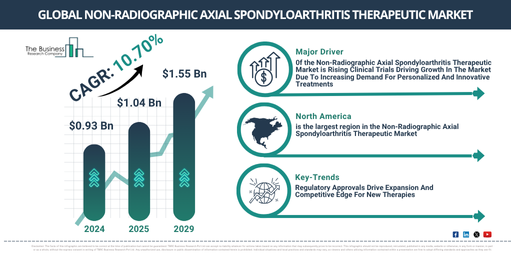
    The therapeutic market for non-radiographic axial spondyloarthritis has seen significant expansion in recent times. Its growth is projected to increase from a worth of $0.93 billion in 2024, to $1.04 billion in 2025, displaying a compound annual growth rate (CAGR) of 10.9%. The surge in growth observed in the historic period can be attributed to a rise in the incidence of axial spondyloarthritis, better awareness and an enlarged patient pool, enhanced understanding of the disease spurring market growth, increasing research and development operations, and a surge in embraced biologic therapies.

    What Is the Forecast for the Non-Radiographic Axial Spondyloarthritis Therapeutic Market Size Through 2029?

    The market size for therapeutic solutions in non-radiographic axial spondyloarthritis is set to experience a quick surge in the coming years. It is projected to soar up to $1.55 billion by 2029 with a compound annual growth rate (CAGR) standing at 10.7%. The jump in growth during the projected phase is ascribed to the escalation in awareness and preliminary diagnosis, proliferation of biosimilars, continuous progression in biologics and emerging therapeutic alternatives in the pipeline. Additionally, the perpetual increase in research and development activities, the burgeoning use of targeted and personalized therapies and the enhancement in healthcare infrastructure also contribute to the growth. The forecast period will witness a prevalence of trends like personalized treatment plans, the incorporation of digital tools in diagnosis and a move toward treat-to-target (T2T) strategies. Furthermore, value-oriented pricing models and the acceptance of multidisciplinary management are also expected to take center stage.

    Download The Free Sample Report Here:

    https://www.thebusinessresearchcompany.com/sample.aspx?id=24627&type=smp

    What are the Key Market Players in Non-Radiographic Axial Spondyloarthritis Therapeutic Market and How They’re Evolving?

    Major companies operating in the non-radiographic axial spondyloarthritis therapeutic market are Pfizer Inc., Johnson & Johnson, Allergan plc, AbbVie Inc., Sanofi S.A., Bristol-Myers Squibb Company, AstraZeneca PLC, Abbott Laboratories, Novartis AG, Eli Lilly and Company, Gilead Sciences Inc., Amgen Inc., Novo Nordisk A/S, Biogen Inc., Daiichi Sankyo Company Limited, UCB S.A., Mochida Pharmaceutical Co. Ltd., Mereo BioPharma Group plc, Suzhou Zelgen Biopharmaceuticals Co. Ltd., Qyuns Therapeutics Co. Ltd.

    What Are the Primary Growth Drivers in the Non-Radiographic Axial Spondyloarthritis Therapeutic Market?

    The surge in clinical trials is predicted to stimulate the expansion of the non-radiographic axial spondyloarthritis therapeutic market. These trials are studies carried out on humans to gauge the safety, efficacy, and possible side effects of new medical treatments or interventions. The escalation in clinical trials stems from the escalating need for innovative, tailored treatments that necessitate extensive safety and efficacy checks. These trials bolster non-radiographic axial spondyloarthritis therapeutics by yielding proof-driven validation of the effectiveness and safety in early-stage disease, which in turn influences regulatory sanctions and clinical acceptance. For instance, the Association of the British Pharmaceutical Industry, a UK-based trade body, reported in November 2023 that there had been a 15% spike in the annual enlistment to industry clinical trials in the UK, soaring from 36,722 participants in 2021-22 to 42,088 in 2022-23. Hence, the surge in clinical trials is boosting the growth of the non-radiographic axial spondyloarthritis therapeutic market.

    Request For A Customized Report:

    https://www.thebusinessresearchcompany.com/customise?id=24627&type=smp

    What Are the Leading Segments in the Global Non-Radiographic Axial Spondyloarthritis Therapeutic Industry?

    The non-radiographic axial spondyloarthritis therapeutic market covered in this report is segmented –

    1) By Type: Non-Steroidal Anti-Inflammatory Drugs, Biologics, Small Molecule Therapies, Corticosteroids

    2) By Application: Oral, Injectable, Topical

    3) By End User: Hospitals, Ambulatory Surgical Centers, Homecare Settings

    Subsegments:

    1) By Non-Steroidal Anti-Inflammatory Drugs: COX-2 Inhibitors, Non-Selective NSAIDs

    2) By Biologics: Tumor Necrosis Factor (TNF) Inhibitors, Interleukin-17 (IL-17) Inhibitors

    3) By Small Molecule Therapies: Janus Kinase (JAK) Inhibitors, Phosphodiesterase-4 (PDE4) Inhibitors

    4) By Corticosteroids: Oral Corticosteroids, Intra-Articular Corticosteroid Injections

    What Are the Key Market Trends in the Non-Radiographic Axial Spondyloarthritis Therapeutic Industry?

    Key players in the non-radiographic axial spondyloarthritis (nr-axSpA) treatment market are prioritizing gaining regulatory permissions. These permissions are critical as it helps enhances business expansion, hasten the launch of innovative treatments, and achieve a competitive edge. These authorizations are comprised of official permissions from government bodies, which allows the legal marketing and prescription of a drug after its safety, effectiveness, and standard compliance have been demonstrated. Consider the case of AbbVie Inc., a US biopharmaceutical enterprise, which got an FDA green light in October 2022 for Rinvoq (upadacitinib). The approval is for treating adult patients with active nr-axSpA demonstrating inflammation indications and those who have not adequately reacted to TNF inhibitors. This approval signifies the sixth US sanction for Rinvoq and positions it as the first of its kind oral JAK inhibitor approved for nr-axSpA. This approval was based on the SELECT-AXIS 2 clinical trial findings, where nearly fifty percent of Rinvoq receivers registered substantial disease activity reduction compared to placebo within 14 weeks. Thus, it presents a novel once-a-day oral treatment choice for patients grappling with this intricate condition.

    Access The Full Report Here:

    https://www.thebusinessresearchcompany.com/report/non-radiographic-axial-spondyloarthritis-therapeutic-global-market-report

    What Is the Regional Outlook for the Non-Radiographic Axial Spondyloarthritis Therapeutic Market?

    North America was the largest region in the non-radiographic axial spondyloarthritis therapeutics market in 2024. The regions covered in the non-radiographic axial spondyloarthritis therapeutic market report are Asia-Pacific, Western Europe, Eastern Europe, North America, South America, Middle East, Africa.

    Purchase The Full Report Today:

    https://www.thebusinessresearchcompany.com/purchaseoptions.aspx?id=24627

    This Report Delivers Insight On:

    1. How big is the non-radiographic axial spondyloarthritis therapeutic market, and how is it changing globally?

    2. Who are the major companies in the non-radiographic axial spondyloarthritis therapeutic market, and how are they performing?

    3. What are the key opportunities and risks in the non-radiographic axial spondyloarthritis therapeutic market right now?

    4. Which products or customer segments are growing the most in the non-radiographic axial spondyloarthritis therapeutic market?

    5. What factors are helping or slowing down the growth of the non-radiographic axial spondyloarthritis therapeutic market?

    About The Business Research Company:

    With over 15000+ reports from 27 industries covering 60+ geographies, The Business Research Company has built a reputation for offering comprehensive, data-rich research and insights. Armed with 1,500,000 datasets, the optimistic contribution of in-depth secondary research, and unique insights from industry leaders, you can get the information you need to stay ahead in the game.

    Get in touch with us:

    The Business Research Company: https://www.thebusinessresearchcompany.com/

    Americas +1 3156230293

    Asia +44 2071930708

    Europe +44 2071930708

    Email us at info@tbrc.info

    Follow us on:

    LinkedIn: https://in.linkedin.com/company/the-business-research-company

    YouTube: https://www.youtube.com/channel/UC24_fI0rV8cR5DxlCpgmyFQ

    Global Market Model: https://www.thebusinessresearchcompany.com/global-market-model
  • Market Analysis on Non-Absorbable Mesh Industry – Insights for Corporate Strategy and R&D

    Claim your 30% discount on Global Market Reports with code ONLINE30. Limited time only.

    What Is the Forecast for the Non-Absorbable Mesh Market from 2024 to 2025?

    In recent years, the non-absorbable mesh market has experienced robust growth. The market, which was worth $1.23 billion in 2024, is projected to increase to $1.32 billion in 2025, with a compound annual growth rate (CAGR) of 8.0%. Factors contributing to this historic growth include an increase in healthcare spending, a growing demand for long-lasting implant materials, expanded availability of specialized surgical mesh products, a rise in the number of hospitals and surgical facilities, and a heightened emphasis on enhancing patient results.

    What Is the Projected Market Size of the Non-Absorbable Mesh Market?

    Significant expansion is anticipated in the non-absorbable mesh market in the coming years, with its size set to reach $1.78 billion by 2029, reflecting a compound annual growth rate (CAGR) of 7.7%. This projected growth for the forecast period is linked to the escalating demand for persistent surgical implants, increased funding in healthcare infrastructure, a rise in chronic conditions necessitating surgical treatment, a sharpened focus on minimizing surgical complications, as well as a growing preference for outpatient surgical procedures. Key trends for the period include advancements in mesh technology for improved biocompatibility, advanced manufacturing methods for tailored mesh creation, innovation in antimicrobial coatings to decrease infection risk, the incorporation of 3D printing for individualized implants, and progress in minimally invasive surgical instruments.

    Download The Free Sample Report Here:

    https://www.thebusinessresearchcompany.com/sample.aspx?id=24626&type=smp

    Who are the Major Competitors in the Non-Absorbable Mesh Market Outlook?

    Major companies operating in the non-absorbable mesh market are Johnson and Johnson, Medtronic plc, Medline Industries Inc., Becton Dickinson And Company, MedStar Health Inc., Coloplast Group, Integra LifeSciences Corporation, Meril Life Sciences Pvt. Ltd., B. Braun Melsungen AG, W. L. Gore And Associates Inc., Demetech Corporation, Universal Suture Ltd., Lotus Surgicals Pvt. Ltd., Altaylar Medical Ltd., Betatech Medical, DIPROMED Srl, Orion Sutures India Pvt. Ltd., ProVi Swiss GmbH, Vinculum Sutures, Lizen Surgicare Private Limited

    What Is Fueling Growth in the Non-Absorbable Mesh Market?

    The non-absorbable mesh market’s expansion is anticipated to be spurred by the increasing occurrence of hernias. A hernia is a condition where an organ or tissue unnaturally bulges through a weak area in the surrounding muscle or tissue. The rising rate of obesity is leading to a surge in hernias as it exerts more strain on the abdominal muscles and weakens the abdominal wall. Non-absorbable mesh comes to the rescue in hernia treatment by offering enduring structural assistance to the weakened or impaired tissues, thus minimizing the possibility of relapses. For example, data from Eurostat, a government agency based in Luxembourg, shows that in July 2024, hernia repairs were generally conducted at rates varying from 142 to 231 per 100,000 residents in most countries in 2022. Austria was a notable exception with a substantially higher rate of 273.2 operations per 100,000 residents. As a result, the escalating incidence of hernias is propelling the non-absorbable mesh market’s progress.

    Request For A Customized Report:

    https://www.thebusinessresearchcompany.com/customise?id=24626&type=smp

    Which Non-Absorbable Mesh Market Segments Are Growing the Fastest?

    The non-absorbable mesh market covered in this report is segmented –

    1) By Product Type: Prosthetic Mesh, Composite Mesh, Monofilament Mesh, Multifilament Mesh

    2) By Material: Polypropylene, Polyester, Polyethylene, Other Biocompatible Materials

    3) By Application: Hernia Repair, Pelvic Floor Reconstruction, Other Surgical Applications

    4) By End-User: Hospitals, Ambulatory Surgical Centers, Clinics, Other End-Users

    Subsegments

    1) By Prosthetic Mesh: Polypropylene Mesh, Polyester Mesh, Expanded Polytetrafluoroethylene (ePTFE) Mesh, Polytetrafluoroethylene (PTFE) Mesh

    2) By Composite Mesh: Polypropylene + ePTFE Composite Mesh, Polyester + Collagen Composite Mesh, Polypropylene + Polyurethane Composite Mesh, Composite Mesh With Absorbable Barrier

    3) By Monofilament Mesh: Polypropylene Monofilament Mesh, Polyester Monofilament Mesh, Nylon Monofilament Mesh

    4) By Multifilament Mesh: Polyester Multifilament Mesh, Polyethylene Terephthalate (PET) Multifilament Mesh, Polyamide Multifilament Mesh

    Which Industry Trends Are Shaping the Future of the Non-Absorbable Mesh Market?

    Major firms in the non-absorbable mesh market are prioritizing the development of superior innovations like coated composite mesh, aiming to boost biocompatibility while decreasing post-operative issues. This surgical mesh possesses a protective coating that diminishes tissue adhesion and inflammation, enhancing safety once inserted into the body. For instance, in April 2024, Deep Blue Medical Advances Inc., a medical device company based in the US, unveiled the T-Line Hernia Mesh. This provides surgeons a novel solution for hernia repair, addressing frequent concerns such as tissue failure and adhesion. This upgraded mesh features integrated extensions, offering 15 times more fixation surface area than conventional sutures, and as a result, it delivers anchoring strength that is 275% more formidable. The mesh comprises a medium-weight, macroporous polypropylene structure promoting ideal tissue fusion while diminishing stress by evenly spreading tension throughout the repair site. The mesh is facile to maneuver, conforms to anatomical variations, and eradicates the necessity for additional fixation apparatus, thereby enhancing both security and operational efficiency.

    Access The Full Report Here:

    https://www.thebusinessresearchcompany.com/report/non-absorbable-mesh-global-market-report

    Which Countries Are Leading the Non-Absorbable Mesh Market?

    North America was the largest region in the non-absorbable mesh market in 2024. The regions covered in the non-absorbable mesh market report are Asia-Pacific, Western Europe, Eastern Europe, North America, South America, Middle East, Africa.

    Purchase The Full Report Today:

    https://www.thebusinessresearchcompany.com/purchaseoptions.aspx?id=24626

    This Report Delivers Insight On:

    1. How big is the non-absorbable mesh market, and how is it changing globally?

    2. Who are the major companies in the non-absorbable mesh market, and how are they performing?

    3. What are the key opportunities and risks in the non-absorbable mesh market right now?

    4. Which products or customer segments are growing the most in the non-absorbable mesh market?

    5. What factors are helping or slowing down the growth of the non-absorbable mesh market?

    About The Business Research Company:

    With over 15000+ reports from 27 industries covering 60+ geographies, The Business Research Company has built a reputation for offering comprehensive, data-rich research and insights. Armed with 1,500,000 datasets, the optimistic contribution of in-depth secondary research, and unique insights from industry leaders, you can get the information you need to stay ahead in the game.

    Get in touch with us:

    The Business Research Company: https://www.thebusinessresearchcompany.com/

    Americas +1 3156230293

    Asia +44 2071930708

    Europe +44 2071930708

    Email us at info@tbrc.info

    Follow us on:

    LinkedIn: https://in.linkedin.com/company/the-business-research-company

    YouTube: https://www.youtube.com/channel/UC24_fI0rV8cR5DxlCpgmyFQ

    Global Market Model: https://www.thebusinessresearchcompany.com/global-market-model
  • Non Invasive Neurostimulation Devices Forecast Report – Designed for Decision Makers and Product Teams

    Non Invasive Neurostimulation Devices Forecast Report – Designed for Decision Makers and Product Teams

    Claim your 30% discount on Global Market Reports with code ONLINE30. Limited time only.

    What Is the Growth Rate of the Non Invasive Neurostimulation Devices Market?

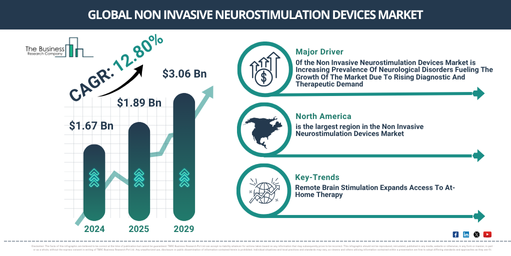
    The market size for non-invasive neurostimulation devices has seen a significant expansion in past years. The market is set to scale up from $1.67 billion in 2024 to $1.89 billion in 2025, growing at a compound annual growth rate (CAGR) of 13.1%. Factors contributing to this growth during the historical period include a rise in neurological disorder cases, growing recognition of neurostimulation therapies, increased demand for non-invasive treatment options, developments in healthcare infrastructure, and heightened neuromodulation research.

    What Growth Rate Is Forecasted for the Non Invasive Neurostimulation Devices Market by 2029?

    Over the next several years, the market for non-invasive neurostimulation devices is projected to experience a significant increase, reaching $3.06 billion in 2029 with a compound annual growth rate (CAGR) of 12.8%. This projected growth during the forecast period can be linked to factors such as the increasing geriatric population, the widening acceptance of wearable neurostimulation devices, escalating healthcare costs, favorable governmental policies, and the growing use of these devices in mental health treatment. For the forecast period, key trends include a transition towards less invasive neurostimulation, the introduction of wireless neurostimulation devices, an expansion in telehealth applications, the advent of closed-loop neurostimulation systems, and a stronger emphasis on individualized neurostimulation treatments.

    Download The Free Sample Report Here:

    https://www.thebusinessresearchcompany.com/sample.aspx?id=24625&type=smp

    Which Key Companies Are Shaping the Future of the Non Invasive Neurostimulation Devices Market?

    Major companies operating in the non invasive neurostimulation devices market are Boston Scientific Corporation, Alpha-Stim, Neurosoft Bioelectronics SA, Neuronetics Inc., BrainsWay Ltd., eNeura Inc., MagVenture A/S, Nexstim Plc, Neuroelectrics Barcelona S.L.U., Cefaly Technology, ElectroCore Inc., Brainbox India Private Limited, Flow Neuroscience AB, Fisher Wallace Laboratories Inc., Sooma Medical, Aleva Neurotherapeutics SA, NeuroSigma Inc., Mind Alive Inc., TheBrainDriver LLC, Caputron Medical Products LLC.

    Which Factors Are Driving Demand in the Non Invasive Neurostimulation Devices Industry?

    The escalating occurrence of neurological conditions is anticipated to catalyze the expansion of the non-invasive neurostimulation devices market. Neurological disorders, which impact the brain, spinal cord, and nerves and can result in cognitive, motor, and perceptual deficiencies, are becoming increasingly common, particularly among the aging population. This is because the aging process progressively weakens neuronal function, diminishes brain flexibility, and increases oxidative stress, all of which contribute to the onset and progression of these disorders. Non-invasive neurostimulation devices provide invaluable assistance in the diagnosis of neurological disorders by delivering focused stimulation to measure neural responses, offering non-surgical, real-time assessment techniques that enhance diagnostic precision and improve patient care in both clinical and home environments. For example, the National Health Service, a UK government agency, reported that as of June 30, 2024, there were 487,432 patients diagnosed with dementia (a progressive brain disorder affecting memory, cognition, and daily activities), marking an increase of 3,155 cases from May 31, 2024. As such, the growing rate of neurological disorders is fueling the expansion of the non-invasive neurostimulation devices market.

    Request For A Customized Report:

    https://www.thebusinessresearchcompany.com/customise?id=24625&type=smp

    How Is the Non Invasive Neurostimulation Devices Market Segmented by Several Divisions?

    The non invasive neurostimulation devices market covered in this report is segmented –

    1) By Type Of Stimulation Technology: Transcutaneous Electrical Nerve Stimulation (TENS), Transcranial Magnetic Stimulation (TMS), Electromagnetic Stimulation (EMS), Other Types Of Stimulation Technologies

    2) By Target Indication: Pain Management, Neurological Disorders, Psychological Disorder, Other Target Indications

    3) By End User: Hospitals And Clinics, Homecare Settings, Research And Academic Institutes

    Subsegments:

    1) By Transcutaneous Electrical Nerve Stimulation (TENS): Conventional Transcutaneous Electrical Nerve Stimulation (TENS), Acupuncture-Like Transcutaneous Electrical Nerve Stimulation (TENS), Brief-Intense Transcutaneous Electrical Nerve Stimulation (TENS), Burst Mode Transcutaneous Electrical Nerve Stimulation (TENS)

    2) By Transcranial Magnetic Stimulation (TMS): Repetitive Transcranial Magnetic Stimulation (rTMS), Deep Transcranial Magnetic Stimulation (dTMS), Single-Pulse Transcranial Magnetic Stimulation, Paired-Pulse Transcranial Magnetic Stimulation

    3) By Electromagnetic Stimulation (EMS): Functional Electromagnetic Stimulation (EMS), Neuromuscular Electromagnetic Stimulation (EMS), High-Frequency Electromagnetic Stimulation (EMS), Low-Frequency Electromagnetic Stimulation (EMS)

    4) By Other Types Of Stimulation Technology: Transcranial Direct Current Stimulation (tDCS), Vagus Nerve Stimulation, Cranial Electrotherapy Stimulation (CES), Peripheral Nerve Stimulation (PNS)

    What are the Emerging Market Trends Driving the Growth of the Non Invasive Neurostimulation Devices Industry?

    Leading businesses in the non-invasive neurostimulation devices market are concentrating on the creation of innovative products like personalized stimulation protocols. These protocols aim to elevate and optimize treatment efficacy and patient outcomes by being adapted specifically to a patient’s unique medical background, neural reaction and therapeutic objectives. The idea is to strike a balance between improving therapeutic effectiveness and reducing adverse effects. For example, Sooma Medical, a medical tech firm based in Finland, introduced a remotely supervised brain stimulation system for home usage in October 2023. The device utilizes non-invasive transcranial direct current stimulation (tDCS) and provides healthcare professionals the opportunity to remotely supervise therapy sessions. This is particularly beneficial for patients with neurological disorders and mental health issues, including depression and chronic pain, as it enhances treatment adherence and accessibility.

    Access The Full Report Here:

    https://www.thebusinessresearchcompany.com/report/non-invasive-neurostimulation-devices-global-market-report

    Which Regions Are Driving Growth in the Non Invasive Neurostimulation Devices Market?

    North America was the largest region in the non invasive neurostimulation devices market in 2024. The regions covered in the non invasive neurostimulation devices market report are Asia-Pacific, Western Europe, Eastern Europe, North America, South America, Middle East, Africa.

    Purchase The Full Report Today:

    https://www.thebusinessresearchcompany.com/purchaseoptions.aspx?id=24625

    This Report Delivers Insight On:

    1. How big is the non invasive neurostimulation devices market, and how is it changing globally?

    2. Who are the major companies in the non invasive neurostimulation devices market, and how are they performing?

    3. What are the key opportunities and risks in the non invasive neurostimulation devices market right now?

    4. Which products or customer segments are growing the most in the non invasive neurostimulation devices market?

    5. What factors are helping or slowing down the growth of the non invasive neurostimulation devices market?

    About The Business Research Company:

    With over 15000+ reports from 27 industries covering 60+ geographies, The Business Research Company has built a reputation for offering comprehensive, data-rich research and insights. Armed with 1,500,000 datasets, the optimistic contribution of in-depth secondary research, and unique insights from industry leaders, you can get the information you need to stay ahead in the game.

    Get in touch with us:

    The Business Research Company: https://www.thebusinessresearchcompany.com/

    Americas +1 3156230293

    Asia +44 2071930708

    Europe +44 2071930708

    Email us at info@tbrc.info

    Follow us on:

    LinkedIn: https://in.linkedin.com/company/the-business-research-company

    YouTube: https://www.youtube.com/channel/UC24_fI0rV8cR5DxlCpgmyFQ

    Global Market Model: https://www.thebusinessresearchcompany.com/global-market-model
  • Nodular Prurigo Market Outlook 2025 – Insights for Executive and Strategic Planning

    Nodular Prurigo Market Outlook 2025 – Insights for Executive and Strategic Planning

    Claim your 30% discount on Global Market Reports with code ONLINE30. Limited time only.

    How Has the Nodular Prurigo Market Grown from 2024 to 2025?

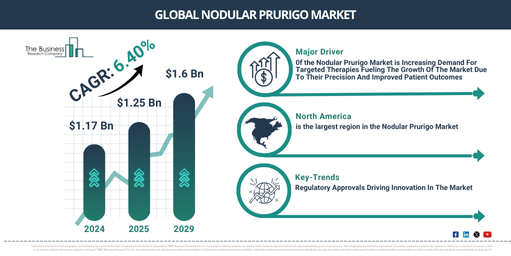
    The market for nodular prurigo has seen a robust expansion in the past few years. The market value is predicted to increase from $1.17 billion in 2024 to $1.25 billion in 2025, boasting a compound annual growth rate (CAGR) of 6.8%. The growth experienced in past years is due to factors such as an increase in dermatology consultations, greater awareness among dermatologists, unsatisfied medical requirements, concentration on academic research, and advancements in diagnostic methodologies.

    What Growth Rate Is Anticipated for the Nodular Prurigo Market in the Coming Years?

    The market for nodular prurigo is anticipated to experience considerable growth in the forthcoming years, predicted to reach $1.6 billion by 2029 with a compound annual growth rate (CAGR) of 6.4%. Factors contributing to this projected growth during the forecast period include the green light for targeted therapies, an escalation in research and development funding for uncommon skin conditions, enhanced patient advocacy and awareness drives, the extension of health insurance and reimbursements, and progress in companion diagnostics and biomarkers. Key trends during this period are anticipated to encompass diagnostics powered by artificial intelligence, modifications at the genetic level, nanotechnology-based drug delivery, innovation in biologics, and the rise of wearable devices for monitoring health.

    Download The Free Sample Report Here:

    https://www.thebusinessresearchcompany.com/sample.aspx?id=24624&type=smp

    Who Are the Leading Companies in the Nodular Prurigo Market?

    Major companies operating in the nodular prurigo market are Merck & Co Inc., Sanofi S.A., GlaxoSmithKline plc, Amgen Inc., Regeneron Pharmaceuticals Inc., Astellas Pharma Inc., Sun Pharmaceutical Industries Limited, Galderma S.A., Galderma Laboratories L.P. , Incyte Corporation, Kyowa Kirin Co Ltd., LEO Pharma A/S, Maruho Co Ltd., Kiniksa Pharmaceuticals Ltd., Keymed Biosciences Co Ltd., Trevi Therapeutics Inc., Fierce Pharma, Menlo Therapeutics Inc., VYNE Therapeutics Inc., Celldex Therapeutics Inc.

    What Are the Key Drivers of the Nodular Prurigo Market?

    The surge in demand for precision medicine, such as targeted therapies, is set to drive the expansion of the nodular prurigo market. Targeted treatments have gained popularity as they concentrate on interrupting specific molecular processes inherent in the proliferation and spread of various diseases. Their appeal stems from their potential to offer more accurate treatments with fewer side effects, facilitating better patient results and offering a substitute for traditional, indiscriminate treatments. The stimulation for the creation of targeted therapies is provided by nodular prurigo due to unmet medical needs relating to distinct immune pathways such as IL-4, IL-13, and IL-31. This permits the application of biologics that accurately inhibit these inflammation signals for more efficient remedies. For example, NHS England, a UK government agency, revealed that in England in October 2023, 11 million hormone replacement therapy (HRT) items were dispensed, representing a 47% rise from 2021–22. Furthermore, approximately 2.3 million patients were given prescriptions, which represents a 29% yearly increase. Consequently, the mounting demand for targeted therapies is catalyzing growth in the nodular prurigo market.

    Request For A Customized Report:

    https://www.thebusinessresearchcompany.com/customise?id=24624&type=smp

    What Are the Key Market Segments in the Nodular Prurigo Industry?

    The nodular prurigo market covered in this report is segmented –

    1) By Type: Chronic Nodular Prurigo, Acute Nodular Prurigo, Subacute Nodular Prurigo

    2) By Treatment Type: Topical Treatments, Systemic Treatments, Phototherapy, Immunosuppressants

    3) By Patient Demographics: Adults, Children, Elderly

    4) By End-User: Hospitals, Homecare, Specialty Clinics, Other End-Users

    Subsegments:

    1) By Chronic Nodular Prurigo: Idiopathic Chronic Nodular Prurigo, Secondary To Dermatologic Conditions, Neuropathic Causes, Systemic Disease-Associated, Psychogenic Prurigo

    2) By Acute Nodular Prurigo: Insect Bite-Induced, Allergic Reactions, Drug-Induced Prurigo, Infectious Triggers

    3) By Subacute Nodular Prurigo: Healing Phase Of Chronic Prurigo, Post-Inflammatory Prurigo, Transient Dermatoses, Reaction To Environmental Irritants

    What Are the Latest Trends in the Nodular Prurigo Market?

    Key market players in the nodular prurigo industry are concentrating on obtaining regulatory nods to broaden their market presence and enhance patient outcomes. This term refers to the official permission given by government or regulatory authorities for the marketing and public use of a particular medical drug, device, or treatment. Take for example, Regeneron Pharmaceuticals Inc., a biotechnology firm based in the US, which was granted FDA approval in September 2022 for Dupixent (dupilumab). This is the sole treatment specifically designated for prurigo nodularis in adults. This endorsement was given following data sourced from two crucial Phase 3 studies (PRIME and PRIME2), showing that Dupixent notably brought down itch and skin lesions compared to placebo. As a result, Dupixent has turned out to be the only drug in the U.S with an approved use for treating prurigo nodularis, thus meeting a significant unfulfilled medical requirement for approximately 75,000 American adults suffering from this condition.

    Access The Full Report Here:

    https://www.thebusinessresearchcompany.com/report/nodular-prurigo-global-market-report

    What Are the Key Regional Markets in the Nodular Prurigo Industry?

    North America was the largest region in the nodular prurigo market in 2024. Asia-Pacific is expected to be the fastest-growing region in the forecast period. The regions covered in the nodular prurigo market report are Asia-Pacific, Western Europe, Eastern Europe, North America, South America, Middle East, Africa.

    Purchase The Full Report Today:

    https://www.thebusinessresearchcompany.com/purchaseoptions.aspx?id=24624

    This Report Delivers Insight On:

    1. How big is the nodular prurigo market, and how is it changing globally?

    2. Who are the major companies in the nodular prurigo market, and how are they performing?

    3. What are the key opportunities and risks in the nodular prurigo market right now?

    4. Which products or customer segments are growing the most in the nodular prurigo market?

    5. What factors are helping or slowing down the growth of the nodular prurigo market?

    About The Business Research Company:

    With over 15000+ reports from 27 industries covering 60+ geographies, The Business Research Company has built a reputation for offering comprehensive, data-rich research and insights. Armed with 1,500,000 datasets, the optimistic contribution of in-depth secondary research, and unique insights from industry leaders, you can get the information you need to stay ahead in the game.

    Get in touch with us:

    The Business Research Company: https://www.thebusinessresearchcompany.com/

    Americas +1 3156230293

    Asia +44 2071930708

    Europe +44 2071930708

    Email us at info@tbrc.info

    Follow us on:

    LinkedIn: https://in.linkedin.com/company/the-business-research-company

    YouTube: https://www.youtube.com/channel/UC24_fI0rV8cR5DxlCpgmyFQ

    Global Market Model: https://www.thebusinessresearchcompany.com/global-market-model

  • Nitrogen Mustards Industry Growth Expected to Reach $4.4 Billion by 2029 at a CAGR of 5.8% | Segmentation and Growth Opportunities

    Nitrogen Mustards Industry Growth Expected to Reach $4.4 Billion by 2029 at a CAGR of 5.8% | Segmentation and Growth Opportunities

    Claim your 30% discount on Global Market Reports with code ONLINE30. Limited time only.

    What Is the Forecast for the Nitrogen Mustards Market Growth in 2025?

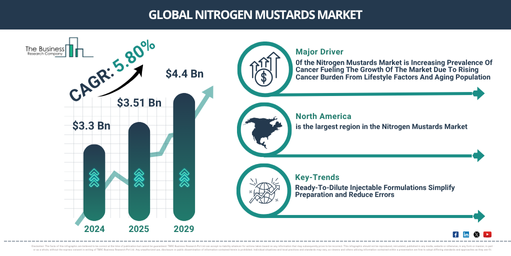
    The market for nitrogen mustards has seen a robust expansion in recent times. It is anticipated to escalate from a value of $3.3 billion in 2024 to $3.51 billion in 2025, with a compound annual growth rate (CAGR) of 6.2%. The historic growth can be credited to the growing incidence of cancer, escalating demand for chemotherapy agents, increased knowledge about cancer treatments, greater spending on healthcare, and the increasing utilization of combination therapies.

    What Is the Forecast for the Nitrogen Mustards Market Size Through 2029?

    The market for nitrogen mustards is predicted to expand significantly in the upcoming years, reaching $4.4 billion in 2029 at a CAGR of 5.8%. This projected growth within the forecast period can be credited to an increased emphasis on targeted cancer therapies, augmented funding for research and development in oncology, approving novel formulations of nitrogen mustards, expanded availability of cancer treatment in emerging markets, and a higher adoption of personalized medicine methodologies. Key prediction trends for the forecast period comprise advancements in medication delivery systems, enhanced formulation methods for improved efficiency, innovative developments in combined chemotherapy protocols, the integration of nitrogen mustards with immunotherapy, and creative strides in pro-drug developmental strategies.

    Download The Free Sample Report Here:

    https://www.thebusinessresearchcompany.com/sample.aspx?id=24622&type=smp

    What are the Key Market Players in Nitrogen Mustards Market and How They’re Evolving?

    Major companies operating in the nitrogen mustards market are Pfizer Inc., Bristol-Myers Squibb Company, Merck & Co. Inc., Baxter International Inc., Fresenius Kabi AG, Jiangsu Hengrui Medicine Co. Ltd., Aurobindo Pharma Limited, Dr. Reddy’s Laboratories Limited, Amneal Pharmaceuticals LLC, Zydus Cadila Healthcare Limited, Zhejiang Hisun Pharmaceutical Co. Ltd., Shilpa Medicare Limited, Spectrum Chemical Manufacturing Corporation, Healthcare Advanced Synthesis, Apexbio Technology LLC, MSN Laboratories Private Limited, Actiza Pharmaceutical Private Limited, Emcure Pharmaceuticals Limited, InvivoChem LLC, NorthStar Rx LLC, ChemNet Group Limited, Saintroy Lifescience

    What Are the Primary Growth Drivers in the Nitrogen Mustards Market?

    The escalating incidence of cancer is anticipated to boost the expansion of the nitrogen mustards market in the future. Cancer refers to a range of illnesses marked by unregulated growth and distribution of abnormal body cells. Contributing lifestyle factors include poor eating habits, smoking, sedentary behavior, and excessive alcohol intake. Nitrogen mustards play an instrumental role in cancer treatment by disrupting the DNA of cancer cells, thus inhibiting their duplication. They amplify the efficacy of treatment through targeted chemotherapy, aiding in the control and reduction of tumor growth. For example, as per the Australian Institute of Health and Welfare, an Australian government body, the count of diagnosed cancer cases in Australia stood at 160,570 in 2022, exhibiting an increase of 3,789 cases from 156,781 in 2021. Consequently, the escalating prevalence of cancer underpins the expansion of the nitrogen mustards market.

    Request For A Customized Report:

    https://www.thebusinessresearchcompany.com/customise?id=24622&type=smp

    What Are the Leading Segments in the Global Nitrogen Mustards Industry?

    The nitrogen mustards market covered in this report is segmented –

    1) By Product Type: Mechlorethamine, Cyclophosphamide, Ifosfamide, Chlorambucil, Melphalan, Other Product Types

    2) By Application: Cancer Treatment, Autoimmune Diseases, Other Applications

    3) By Distribution Channel: Hospitals, Specialty Clinics, Online Pharmacies, Other Distribution Channels

    Subsegments:

    1) By Mechlorethamine: Injectable Formulation, Topical Formulation, Oral Formulation

    2) By Cyclophosphamide: Intravenous (IV) Formulation, Oral Tablets, Extended Release Formulation

    3) By Ifosfamide: Intravenous Formulation, Combination Therapy Formulation

    4) By Chlorambucil: Oral Tablets, Injectable Formulation

    5) By Melphalan: Oral Formulation, Intravenous Formulation, Powder for Injection

    6) By Other Product Types: Oral Formulation, Injectable Formulation, Combination Therapy Formulation

    What Are the Key Market Trends in the Nitrogen Mustards Industry?

    Major players in the nitrogen mustards market are directing their efforts toward inventing sophisticated drug delivery systems, such as ready-to-dilute injectable formulations. These novel developments aim to improve safety and accessibility during treatment. Ready-to-dilute injectable formulations are pre-made liquid medications that can be directly diluted and administered, thereby simplifying the preparation process and minimizing dosage mishaps. An example is the launch, in May 2025, by Apotex Corp. – a pharmaceutical firm based in Canada – of their IVRA (Melphalan) hydrochloride injection of 90 mg/ml in a multidose vial. This ready-to-dilute liquid formulation of Melphalan injection, which got approved via a 505(b)(2) new drug application (NDA) in the US, is an alkylating component purposed for the palliative care of multiple myeloma patients who are unable to receive oral therapy. IVRA controls tumor growth by attaching alkyl groups to the DNA of cancer cells, thereby interrupting their replication and causing cell death.

    Access The Full Report Here:

    https://www.thebusinessresearchcompany.com/report/nitrogen-mustards-global-market-report

    What Is the Regional Outlook for the Nitrogen Mustards Market?

    North America was the largest region in the nitrogen mustards market in 2024. The regions covered in the nitrogen mustards market report are Asia-Pacific, Western Europe, Eastern Europe, North America, South America, Middle East, Africa.

    Purchase The Full Report Today:

    https://www.thebusinessresearchcompany.com/purchaseoptions.aspx?id=24622

    This Report Delivers Insight On:

    1. How big is the nitrogen mustards market, and how is it changing globally?

    2. Who are the major companies in the nitrogen mustards market, and how are they performing?

    3. What are the key opportunities and risks in the nitrogen mustards market right now?

    4. Which products or customer segments are growing the most in the nitrogen mustards market?

    5. What factors are helping or slowing down the growth of the nitrogen mustards market?

    About The Business Research Company:

    With over 15000+ reports from 27 industries covering 60+ geographies, The Business Research Company has built a reputation for offering comprehensive, data-rich research and insights. Armed with 1,500,000 datasets, the optimistic contribution of in-depth secondary research, and unique insights from industry leaders, you can get the information you need to stay ahead in the game.

    Get in touch with us:

    The Business Research Company: https://www.thebusinessresearchcompany.com/

    Americas +1 3156230293

    Asia +44 2071930708

    Europe +44 2071930708

    Email us at info@tbrc.info

    Follow us on:

    LinkedIn: https://in.linkedin.com/company/the-business-research-company

    YouTube: https://www.youtube.com/channel/UC24_fI0rV8cR5DxlCpgmyFQ

    Global Market Model: https://www.thebusinessresearchcompany.com/global-market-model