Author: Marketing Posting

  • Next-Gen Breast Milk Substitutes : Market Forecast, Transformation, and Long-Term Trajectories

    Next-Gen Breast Milk Substitutes : Market Forecast, Transformation, and Long-Term Trajectories

    Get 30% off on our Global Market Reports with code ONLINE30 – Hurry, limited time offer!

    How Has The Breast Milk Substitutes Market Growth Evolved From 2024 To 2025, And What’s Ahead?

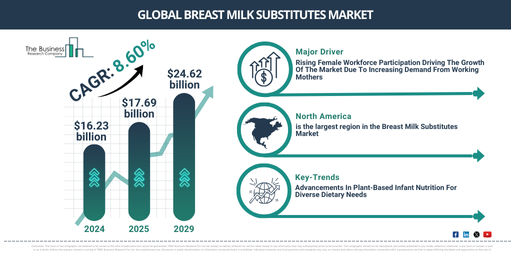
    The market size for substitutions for breast milk has seen significant expansion in past years. It is projected to increase from $16.23 billion in 2024 to $17.69 billion in 2025, with a compound annual growth rate (CAGR) of 9.0%. The escalation in the historical period can be linked to the surge in requirement for organic and clean-label alternatives, intensified health care suggestions, mounting concerns relating to challenges in breastfeeding, broadening of e-commerce distribution channels, and favorable governmental guidelines concerning infant nutrition.

    In the coming years, a robust growth is projected for the breast milk substitutes market, which is expected to skyrocket to $24.62 billion in 2029 with an 8.6% compound annual growth rate (CAGR). The forecast period’s upturn can be credited to heightened awareness about infant malnutrition, a surge in women workforce participation, accelerated urbanisation, proactive manufacturer marketing strategies, and lifestyle pattern alterations. In the same forecast span, the market is set to witness trends like rising popularity of plant-based alternatives, preference for hydrolyzed formulas, breakthroughs in formula nutrition, growth of probiotic-infused formulas, and broader acceptance of tailored nutrition solutions.

    Download a free sample to assess the report’s scope and structure:

    https://www.thebusinessresearchcompany.com/sample.aspx?id=23331&type=smp

    Which Major Market Drivers Are Expected to Boost the Growth Potential of the Breast Milk Substitutes Market?

    The anticipated growth of the breast milk substitutes market is linked to the escalating participation of women in the workforce. The term female workforce participation signifies the fraction of women who are employed or are vigorously pursuing employment in the labor sector. With enhanced access to education, more women are acquiring essential skills and qualifications, leading to increased job opportunities and financial autonomy. Breast milk substitutes are vital for working women as they offer an easy-to-use and nutritionally balanced feeding alternative for their babies when these women are unable to breastfeed due to impediments such as lack of time, workplace constraints, or absence of maternity breaks. This ensures their infants receive the necessary nutrients while they continue to fulfill their professional responsibilities. For instance, in February 2023, the Center for American Progress, a US-based think tank, reported that the labor force involvement rate for prime-age women hit 77.0%, outdoing the rates from the previous three years and setting a new benchmark for the percentage of women employed or in active job search. Consequently, increased female workforce participation is fueling the expansion of the breast milk substitutes market.

    Which Key Market Segments Comprise the Breast Milk Substitutes Market and Drive Its Revenue Growth?

    The breast milk substitutes market covered in this report is segmented –

    1) By Product Type: Ready-To-Use, Powdered, Concentrated Liquid

    2) By Substitute Type: Milk-Based Formula, Soy-Based Formula, Hypoallergenic Formula, Other Substitute Types

    3) By Consumer Age: Below 6 Months, 6-23 Months

    4) By Distribution Channel: Super markets Or Hyper markets, Pharmacies, Online Retail

    5) By End Users: Hospitals And Clinics, Specialty Clinics, Other End Users

    Subsegments:

    1) By Ready-To-Use: Standard Infant Formula, Specialized Infant Formula, Organic Infant Formula

    2) By Powdered: Standard Powdered Formula, Hypoallergenic Powdered Formula, Organic Powdered Formula

    3) By Concentrated Liquid: Standard Concentrated Formula, Lactose-Free Concentrated Formula, Organic Concentrated Formula

    Request customized data on this market:

    https://www.thebusinessresearchcompany.com/customise?id=23331&type=smp

    Which Areas Are Leading Regions in the Breast Milk Substitutes Market Expansion Across the Globe?

    North America was the largest region in the breast milk substitutes market in 2024. Asia-Pacific is expected to be the fastest-growing region in the forecast period. The regions covered in the breast milk substitutes market report are Asia-Pacific, Western Europe, Eastern Europe, North America, South America, Middle East, Africa.

    What Are the Key Market Trends in the Breast Milk Substitutes Market Over the Coming Years?

    Major corporations in the breast milk substitute industry are prioritizing the creation of cutting-edge products such as plant-based infant formulas, aimed at providing a non-dairy solution for infants allergic to cow’s milk, those suffering from lactose intolerance, or households adhering to vegan or plant-based diets. The plant-based infant formula is a lactose-free choice that incorporates plant-based components designed to fulfill the nutritional requisites for a growing infant. For example, in July 2022, the French food company, Danone S.A., introduced the Dairy and Plants Blend infant formula, expanding the feeding choices for parents. This formula is specifically tailored for a vegetarian diet and it is the first mixed formula for healthy babies that gains over half of the necessary protein from soy. Using a well-recognized plant-based protein source, soy, this Dairy and Plants Blend formula is comprised of 60% top-grade, non-GMO soy protein and 40% dairy-sourced proteins, consisting of casein and whey. Moreover, it incorporates lactose – an essential carbohydrate found in breast milk and a crucial dairy component – that ensures comprehensive nutrition for an infant’s growth and development.

    View the full report here:

    https://www.thebusinessresearchcompany.com/report/breast-milk-substitutes-global-market-report

    How Is the Breast Milk Substitutes Market Conceptually Defined?

    Breast milk substitutes are commercially formulated products designed to provide essential nutrients for infants who are not breastfed, either partially or entirely. These substitutes include infant formulas made from cow’s milk, soy, or hydrolyzed proteins, fortified with vitamins, minerals, and essential fatty acids to support growth and development. They serve as an alternative when breastfeeding is not possible due to medical, personal, or logistical reasons.

    Purchase the full report and get a swift delivery:

    https://www.thebusinessresearchcompany.com/purchaseoptions.aspx?id=23331

    About The Business Research Company:

    With over 15000+ reports from 27 industries covering 60+ geographies, The Business Research Company has built a reputation for offering comprehensive, data-rich research and insights. Armed with 1,500,000 datasets, the optimistic contribution of in-depth secondary research, and unique insights from industry leaders, you can get the information you need to stay ahead in the game.

    Get in touch with us:

    The Business Research Company: https://www.thebusinessresearchcompany.com/

    Americas +1 3156230293

    Asia +44 2071930708

    Europe +44 2071930708

    Email us at info@tbrc.info

    Follow us on:

    LinkedIn: https://in.linkedin.com/company/the-business-research-company

    YouTube: https://www.youtube.com/channel/UC24_fI0rV8cR5DxlCpgmyFQ

    Global Market Model: https://www.thebusinessresearchcompany.com/global-market-model

  • From Insight to Impact: Strategic Growth Mapping in the Prostate Health Market

    From Insight to Impact: Strategic Growth Mapping in the Prostate Health Market

    Our market reports now include the latest updates on global tariffs, trade impacts, and evolving supply chain dynamics.

    #How Has the Prostate Health Market Growth Performance Trended Historically, And What Lies Ahead?#_x000D_

    The market for prostate health has seen considerable growth in the past few years. There is a projection that it will escalate from its worth of $34.07 billion in 2024 to a higher value of $37.34 billion in 2025. This progression corresponds to a compound annual growth rate (CAGR) of 9.6%. The key factors fuelling this growth in the prior years include the aging demographic, expanded PSA screenings, escalating awareness initiatives, innovations in hormone therapy, and rising incidence rates._x000D_

    _x000D_

    Anticipated to experience significant growth in the coming years, the prostate health market is estimated to expand to $53.25 billion by 2029, with a compound annual growth rate (CAGR) of 9.3%. This surge during the forecasted time frame is credited to the increased implementation of precision medicine, the rapid uptake in AI-driven diagnostics, the broadening of targeted radiotherapies, the growing request for less invasive therapies, and big strides in genetic profiling for risk measurement. The forecast period is expected to observe trends such as AI-enabled risk evaluations, liquid biopsy advancements, next-level radiotheranostics, breakthroughs in immunotherapy, and real-time monitoring of biomarkers._x000D_

    _x000D_

    #Download a free sample to assess the report’s scope and structure:#_x000D_

    https://www.thebusinessresearchcompany.com/sample.aspx?id=21265&type=smp_x000D_

    _x000D_

    #What are the Fundamental Drivers and Innovations Shaping the Prostate Health Market?#_x000D_

    The increase in prostate cancer instances is anticipated to spur the development of the prostate health market. Prostate cancer, a disease that originates in the prostate gland when cells proliferate without control, generally reveals itself as adenocarcinomas, the most frequently occurring variant of this disease in males. The escalation in prostate cancer instances is predominantly attributable to an aging population, enhanced screening procedures, and lifestyle determinants like obesity and lack of physical activity. Maintaining prostate health is crucial for the proactive prevention, timely detection, and effective treatment of prostate cancer. For instance, the American Cancer Society (ACS), a non-profit organization based in the U.S., reported in January 2023 that approximately 288,300 new instances of prostate cancer were predicted to be identified in the U.S. during 2023, with a projected 34,700 deaths caused by the disease. Hence, the climbing incidence of prostate cancer will fuel the expansion of the prostate health market._x000D_

    _x000D_

    #How Is the Prostate Health Market Segmented?#_x000D_

    The prostate health market covered in this report is segmented –_x000D_

    _x000D_

    1) By Disease Indication: Prostate Cancer, Benign Prostate Hyperplasia, Prostatitis_x000D_

    2) By Treatment: Hormonal Therapy, Chemotherapy, Surgical Treatments, Other Treatments_x000D_

    3) By Distribution Channel: E-Commerce Stores, Pharmacies, Other Distribution Channels_x000D_

    _x000D_

    Subsegments:_x000D_

    1) By Prostate Cancer: Localized Prostate Cancer, Metastatic Prostate Cancer_x000D_

    2) By Benign Prostate Hyperplasia: Mild BPH, Moderate BPH, Severe BPH_x000D_

    3) By Prostatitis: Acute Bacterial Prostatitis, Chronic Bacterial Prostatitis, Chronic Prostatitis (Non-Bacterial)_x000D_

    _x000D_

    #Request customized data on this market:#_x000D_

    https://www.thebusinessresearchcompany.com/customise?id=21265&type=smp_x000D_

    _x000D_

    #Which Regions Are Driving the Next Phase of the Prostate Health Market Growth?#_x000D_

    North America was the largest region in the prostate health market in 2024. Asia-Pacific is expected to be the fastest-growing region in the forecast period. The regions covered in the prostate health market report are Asia-Pacific, Western Europe, Eastern Europe, North America, South America, Middle East, Africa._x000D_

    _x000D_

    #What Key Trends Are Shaping the Future of the Prostate Health Market?#_x000D_

    Leading firms in the prostate health market are harnessing the power of technological innovations, like AI-powered risk assessment, to gain a strategic advantage. These AI risk assessments apply artificial intelligence technology to identify and foresee potential threats by interpreting data, thereby allowing for sound judgment calls and better results. For example, Nanostics Inc., a clinical stage biopharmaceutical company in Canada, formed a collaboration with US-based Protean BioDiagnostics in September 2024. The partnership led to the creation of CDX Prostate, a diagnostic tool specifically designed for those at risk of severe prostate cancer. This tool employs artificial intelligence and real patient data to produce a risk evaluation for serious prostate cancer. By using state-of-the-art machine learning processes, CDX Prostate analyzes numerous biological and clinical data, hence giving a more precise risk score for aggressive prostate cancer compared to conventional techniques. This test assists healthcare professionals and the patients in determining whether to proceed with a biopsy following a high prostate-specific antigen (PSA) test result or an unusual digital rectal exam (DRE)._x000D_

    _x000D_

    #View the full report here:#_x000D_

    https://www.thebusinessresearchcompany.com/report/prostate-health-global-market-report_x000D_

    _x000D_

    #How Is the Prostate Health Market Defined and What Are Its Core Parameters?#_x000D_

    Prostate health refers to the overall well-being and proper functioning of the prostate gland, a small organ in men that produces seminal fluid. Maintaining prostate health is essential for urinary function, reproductive health, and preventing conditions such as prostatitis, benign prostatic hyperplasia (BPH), and prostate cancer. Factors influencing prostate health include age, genetics, diet, lifestyle, and regular medical screenings._x000D_

    _x000D_

    #Purchase the full report and get a swift delivery:#_x000D_

    https://www.thebusinessresearchcompany.com/purchaseoptions.aspx?id=21265_x000D_

    _x000D_

    #About The Business Research Company:#_x000D_

    With over 15000+ reports from 27 industries covering 60+ geographies, The Business Research Company has built a reputation for offering comprehensive, data-rich research and insights. Armed with 1,500,000 datasets, the optimistic contribution of in-depth secondary research, and unique insights from industry leaders, you can get the information you need to stay ahead in the game._x000D_

    _x000D_

    #Get in touch with us:#_x000D_

    The Business Research Company: https://www.thebusinessresearchcompany.com/_x000D_

    Americas +1 3156230293_x000D_

    Asia +44 2071930708_x000D_

    Europe +44 2071930708_x000D_

    Email us at info@tbrc.info_x000D_

    _x000D_

    #Follow us on:#_x000D_

    _x000D_

    LinkedIn: https://in.linkedin.com/company/the-business-research-company_x000D_

    YouTube: https://www.youtube.com/channel/UC24_fI0rV8cR5DxlCpgmyFQ_x000D_

    Global Market Model: https://www.thebusinessresearchcompany.com/global-market-model

  • Blood Platelets Market Overview 2025: Competitive Shifts, Forecast Models, and Emerging Opportunities

    Blood Platelets Market Overview 2025: Competitive Shifts, Forecast Models, and Emerging Opportunities

    Get 30% off on our Global Market Reports with code ONLINE30 – Hurry, limited time offer!

    What is the Projected CAGR for the Blood Platelets Market Size from 2025 to 2034?

    In recent times, the market size for blood platelets has been expanding steadily. It is projected to rise from a valuation of $6.27 billion in 2024 to around $6.72 billion in 2025, reflecting a compound annual growth rate (CAGR) of 7.2%. The historical growth of this market is primarily due to the increase in surgeries, a higher rate of traumatic injuries, the 6.27 prevalence rate of autoimmune diseases, a surge in chronic diseases, and an increased incidence of thrombocytopenia.

    Over the next few years, the blood platelets industry is anticipated to witness strong growth, ballooning to a value of $8.79 billion in 2029 with a CAGR of 6.9%. Numerous factors, such as growing trauma cases, a surge in blood bank numbers, a rising preference for allogeneic blood transfusion therapies, an increase in the aging population, and heightened demand for platelets for wound healing, are expediting this growth during the forecast period. The period also marks the emergence of key trends including automated platelet apheresis systems, cutting-edge platelet storage technologies, platelet-rich plasma (PRP) therapies, a switch to leukoreduced platelets, synthetic platelet substitutes, and gene editing for platelet disorders, as well as automated donor screening.

    Download a free sample to assess the report’s scope and structure:

    https://www.thebusinessresearchcompany.com/sample.aspx?id=23330&type=smp

    What Are the Core Growth Drivers Propelling the Blood Platelets Market Forward?

    The blood platelets market is predicted to grow due to the escalating occurrence of blood disorders. Conditions affecting the production or function of blood components, including red and white blood cells, platelets, and plasma, are considered blood disorders. These can lead to complications such as anemia, clotting disorders, or immune system deficiencies. One reason for the growing occurrence of these disorders is the aging population. Elderly people are more vulnerable to conditions like anemia, thrombocytopenia, and clotting disorders due to declining bone marrow function. Blood platelets play a critical role in treating blood disorders by controlling blood clotting, making them indispensable for preventing excessive bleeding and promoting wound healing. The Perth Blood Institute, a non-profit organization based in Australia, reported in April 2024 that the number of people diagnosed with hemophilia rose to 257,146 in 2022, up from 233,577 in 2021. Hemophilia is a rare genetic disorder where the blood doesn’t clot adequately due to the absence of a clotting factor, causing prolonged bleeding. As a result, the blood platelets market is poised for growth due to the rising occurrence of blood disorders.

    What Segment Types Define the Blood Platelets Market Structure?

    The blood platelets market covered in this report is segmented –

    1) By Platelet Type: Whole Blood Derived Platelets, Apheresis Derived Platelets

    2) By Application: Platelet Function Disorder, Hemophilia, Thrombocytopenia, Perioperative Indication

    3) By End-Users: Hospitals, Ambulatory Surgical Centers, Blood Banks, Research Laboratories, Specialty Clinics, Cancer Treatment Center, Trauma Center, Other End Users

    Subsegments:

    1) By Whole Blood Derived Platelets: Leukocyte-Reduced Whole Blood Platelets, Non-Leukocyte-Reduced Whole Blood Platelets, Pathogen-Reduced Whole Blood Platelets

    2) By Apheresis Derived Platelets: Single-Donor Apheresis Platelets, Leukocyte-Reduced Apheresis Platelets, Pathogen-Reduced Apheresis Platelets

    Request customized data on this market:

    https://www.thebusinessresearchcompany.com/customise?id=23330&type=smp

    Which Geographic Areas Hold the Strongest Growth Potential in the Blood Platelets Market?

    North America was the largest region in the blood platelets market in 2024. Asia-Pacific is expected to be the fastest-growing region in the forecast period. The regions covered in the blood platelets market report are Asia-Pacific, Western Europe, Eastern Europe, North America, South America, Middle East, Africa.

    Which Emerging Trends that Are Influencing the Blood Platelets Industry Evolution?

    The core focus of leading firms in the blood platelet sector is on the creation of novel solutions like platelet pooling, a method aimed at prolonging shelf life, improving accessibility, and assisting blood centers in meeting escalating transfusion requirements. Platelet pooling involves amalgamating platelets from various whole blood donations to generate a unified platelet unit for transfusion. This improves the efficiency, availability, and resource management in blood supply. For example, in February 2023, Terumo Blood and Cell Technologies, an American medical technology firm, introduced their IMUGARD WB platelet pooling set with U.S. Food and Drug Administration (FDA) approval. This breakthrough extends the shelf life of whole blood-derived platelets from five to seven days, increasing platelet availability for transfusion. Additionally, it offers an alternative source of platelet supplies to deal with growing demand and donor scarcity, facilitating better inventory control and reduction of waste in blood centers.

    View the full report here:

    https://www.thebusinessresearchcompany.com/report/blood-platelets-global-market-report

    What Is the Definition of the Blood Platelets Market?

    Blood platelets, also known as thrombocytes are small, disc-shaped cell fragments in the blood that help in clot formation and wound healing. They prevent excessive bleeding adhering to damaged blood vessel walls, aggregating with other platelets, and releasing clotting factors to stabilize the clot and prevent excessive blood loss. They are produced in the bone marrow and are essential for hemostasis and blood vessel repair.

    Purchase the full report and get a swift delivery:

    https://www.thebusinessresearchcompany.com/purchaseoptions.aspx?id=23330

    About The Business Research Company:

    With over 15000+ reports from 27 industries covering 60+ geographies, The Business Research Company has built a reputation for offering comprehensive, data-rich research and insights. Armed with 1,500,000 datasets, the optimistic contribution of in-depth secondary research, and unique insights from industry leaders, you can get the information you need to stay ahead in the game.

    Get in touch with us:

    The Business Research Company: https://www.thebusinessresearchcompany.com/

    Americas +1 3156230293

    Asia +44 2071930708

    Europe +44 2071930708

    Email us at info@tbrc.info

    Follow us on:

    LinkedIn: https://in.linkedin.com/company/the-business-research-company

    YouTube: https://www.youtube.com/channel/UC24_fI0rV8cR5DxlCpgmyFQ

    Global Market Model: https://www.thebusinessresearchcompany.com/global-market-model

  • Biological Stains Market Outlook 2025: Mapping Growth, Innovation, and Regional Shifts

    Biological Stains Market Outlook 2025: Mapping Growth, Innovation, and Regional Shifts

    Get 30% off on our Global Market Reports with code ONLINE30 – Hurry, limited time offer!

    How Has the Biological Stains Market Growth Performance Trended Historically, And What Lies Ahead?

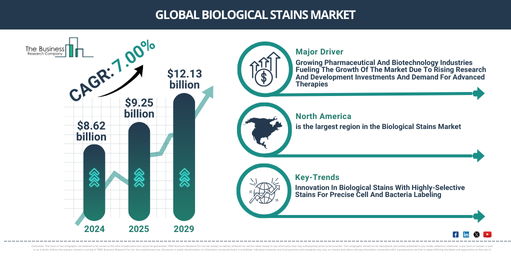
    The market size of biological stains has seen substantial growth in the past years. It is projected to increase from $8.62 billion in 2024 to $9.25 billion in 2025, with a compound annual growth rate (CAGR) of 7.2%. The historical growth has been driven primarily by enhancements in microscopy methods, an upsurge demand for disease diagnosis, increased studies in histopathology and cytology, a larger scale research in microbiology and bacteriology, and an expansion in pharmaceutical and biotech research and development.

    The market for biological stains is set to experience robust growth in the coming years, with a projected rise to $12.13 billion by 2029 at a 7.0% compound annual growth rate (CAGR). This projected surge over the forecast period can be attributed to factors such as the increasing adoption of automated staining systems, a surge in chronic and infectious diseases, burgeoning demand for personalized medicine and biomarker research, advancements in fluorescent and molecular staining techniques, and broader applications in digital pathology and AI-driven diagnostics. Major trends forecasted for this period encompass AI integration in image analysis, the evolution of multiplex staining techniques, breakthroughs in fluorescent and nanoparticle-based stains, enhanced automation of staining processes in pathology labs, and strides in digital and virtual staining technologies.

    Download a free sample to assess the report’s scope and structure:

    https://www.thebusinessresearchcompany.com/sample.aspx?id=23325&type=smp

    What External and Internal Drivers Are Contributing to the Growth of the Biological Stains Market?

    The expansion of the pharmaceutical and biotech sectors is predicted to stimulate the growth of the biological stains market in the future. This pertains to enterprises involved in pioneering, developing, producing, and commercializing medicines, biologics, and medical treatment strategies aimed at disease prevention, diagnosis, and treatment. The growth of these industries can be credited to advancements in biologics like mRNA vaccines, which have revolutionized disease prevention and management. Biological stains contribute to these burgeoning industries by providing sharp representation and scrutiny of cell and tissue structures, facilitating drug discovery and quality inspection procedures. For example, the BioIndustry Association (BIA), a British trade association for the innovative life science and biotech sector, reported in June 2024 that UK biotech firms drew in £622 million ($670.29 million) in venture capital in the second quarter of 2024. This represents an astounding 259% surge from the earlier quarter and a 48% rise compared to the same period the previous year. Hence, the growth of the pharmaceutical and biotech industries is fuelling the expansion of the biological stains market.

    What Segment Types Define the Biological Stains Market Structure?

    The biological stains market covered in this report is segmented –

    1) By Nature: Acidic Stains, Basic Stains, Neutral Stains

    2) By Product Type: Acid Fuchsin, Congo Red, Crystal Violet, Eosin, Other Product Types

    3) By Application: Histology And Cytology, Microbiology, Bacteriology, Deoxyribonucleic Acid Staining, Protein Staining, Gram Staining, Other Applications

    4) By End-User: Diagnostic Laboratories, Academic And Research Institutes, Pharmaceutical And Biotechnology Companies, Other End-Users

    Subsegments:

    1) By Acidic Stains: Eosin, Picric Acid, Acid Fuchsin, Congo Red, Nigrosin

    2) By Basic Stains: Methylene Blue, Crystal Violet, Safranin, Basic Fuchsin, Malachite Green

    3) By Neutral Stains: Leishman Stain, Giemsa Stain, Romanowsky Stain, Wright’s Stain, Jenner’s Stain

    Request customized data on this market:

    https://www.thebusinessresearchcompany.com/customise?id=23325&type=smp

    Which Geographic Areas Hold the Strongest Growth Potential in the Biological Stains Market?

    North America was the largest region in the biological stains market in 2024. Asia-Pacific is expected to be the fastest-growing region in the forecast period. The regions covered in the biological stains market report are Asia-Pacific, Western Europe, Eastern Europe, North America, South America, Middle East, Africa.

    What Long-Term Trends Are Transforming the Competitive Landscape of the Biological Stains Market?

    The focus of leading corporations in the biological stains market is on the creation of ground-breaking products like highly selective stains, which are essential for cutting-edge research in microbiology and pathology. These specialised dyes, known as highly selective stains, are specifically designed to label and differentiate target cells or components, limiting background interference and allowing for accurate analysis. In 2023, for example, Biotium, Inc., an American biotech firm, introduced BactoView Dead Stains and BactoView Viability Kits. These pioneering stains provide precise selectivity for both gram-positive and gram-negative bacteria, reducing background interference to a minimum. With a streamlined process using just a single 30-minute staining step, it does away with the need for more wash steps, hence making the bacterial analysis easier.

    View the full report here:

    https://www.thebusinessresearchcompany.com/report/biological-stains-global-market-report

    What Is the Definition of the Biological Stains Market?

    Biological stains are dyes or chemicals used to highlight and differentiate cellular structures, tissues, or biomolecules in microscopy and laboratory analysis. They enhance contrast, making it easier to observe microscopic details in biological specimens. These stains interact with specific cell components based on their chemical properties, aiding in identification and diagnosis.

    Purchase the full report and get a swift delivery:

    https://www.thebusinessresearchcompany.com/purchaseoptions.aspx?id=23325

    About The Business Research Company:

    With over 15000+ reports from 27 industries covering 60+ geographies, The Business Research Company has built a reputation for offering comprehensive, data-rich research and insights. Armed with 1,500,000 datasets, the optimistic contribution of in-depth secondary research, and unique insights from industry leaders, you can get the information you need to stay ahead in the game.

    Get in touch with us:

    The Business Research Company: https://www.thebusinessresearchcompany.com/

    Americas +1 3156230293

    Asia +44 2071930708

    Europe +44 2071930708

    Email us at info@tbrc.info

    Follow us on:

    LinkedIn: https://in.linkedin.com/company/the-business-research-company

    YouTube: https://www.youtube.com/channel/UC24_fI0rV8cR5DxlCpgmyFQ

    Global Market Model: https://www.thebusinessresearchcompany.com/global-market-model
  • Behavioral Health Market in Focus: Forecasting Growth Drivers, Scaling Potential, and Global Opportunities

    Behavioral Health Market in Focus: Forecasting Growth Drivers, Scaling Potential, and Global Opportunities

    Get 30% off on our Global Market Reports with code ONLINE30 – Hurry, limited time offer!

    What Are the Projected Market Size and Growth Rates for the Behavioral Health Market From 2025 To 2029?

    The size of the behavioral health market has witnessed robust expansion in the past few years. The market, which is predicted to progress from $143.74 billion in 2024 to $152.32 billion in 2025, is expected to grow at a compound annual growth rate (CAGR) of 6.0%. This growth during the historical period is due to factors like the increased incidence of mental health disorders, growth in awareness and reduction in stigma, escalation in the requirement for substance abuse treatment, elevated adoption of digital mental health platforms, and the burgeoning services in virtual mental health.

    The scale of the behavioral health market is predicted to witness robust expansion in the forthcoming years. By 2029, it is projected to reach a value of $189.51 billion, with a compound annual growth rate (CAGR) of 5.6%. The progression during the predicted period is due to factors such as the increasing demand for custom-made mental health services, soaring focus on value-oriented care, escalating investments in startups centered on behavioral health, augmenting employer-led mental health initiatives, and a burgeoning elderly demographic necessitating mental health care. Dominant trends during the predicted period encompass the amalgamation of behavioral health into primary health care, evolutions in psychiatric medication, innovative advancements in AI-powered diagnostics in mental health, improvements in predictive analytical tools for mental health, and the creation of AI-enabled mental health assessment models.

    Download a free sample to assess the report’s scope and structure:

    https://www.thebusinessresearchcompany.com/sample.aspx?id=23324&type=smp

    What Are the Core Market Drivers Propelling Growth in the Behavioral Health Industry?

    Growth in the behavioral health market is anticipated to accelerate due to the expanding use of telehealth. Telehealth pertains to the deployment of digital communication tools like video calls, mobile applications, and remote patient monitoring to deliver health services and consultations without necessitating face-to-face interactions. The appeal of telehealth lies in its capacity to offer quick and easy access to healthcare, particularly for remote and inadequately served areas. It improves behavioral health by broadening access to mental health resources, facilitating remote treatment options, and enhancing patient participation via digital channels. For instance, Rock Health, a U.S. digital health firm, disclosed in its 2022 survey that 80% of survey participants utilized telehealth at least once, marking an 8% rise from 72% in the previous year. This leap in telehealth use contributes to the expansion of the behavioral health market. Consequently, the growing embrace of telehealth is a key driver for the behavioral health market’s development.

    How Is the Behavioral Health Market Segmented?

    The behavioral health market covered in this report is segmented –

    1) By Service Type: Outpatient Counselling, Intensive Care Management, Home-Based Treatment Services, Inpatient Hospitals Management, Emergency Mental Health Service, Other Services

    2) By Disorder Type: Anxiety Disorder, Attention Deficit Hyperactivity Disorder (ADHD), Bipolar Disorder, Depression, Eating Disorder, Post-Traumatic Stress Disorder (PTSD), Substance Abuse Disorder, Psychosis, Schizoaffective Disorder, Other Disorders

    3) By End-User: Outpatient Clinics, Hospitals, Rehabilitation Centers, Homecare Setting

    Subsegments:

    1) By Outpatient Counseling: Individual Therapy, Group Therapy, Family Therapy, Cognitive Behavioral Therapy (CBT), Dialectical Behavior Therapy (DBT)

    2) By Intensive Care Management: Case Management Services, Assertive Community Treatment (ACT), Medication-Assisted Treatment (MAT), Behavioral Rehabilitation Programs

    3) By Home-Based Treatment Services: Home Visits By Psychiatrists, Telepsychiatry Services, Crisis Intervention At Home, Community-Based Mental Health Programs

    4) By Inpatient Hospitals Management: Psychiatric Hospitals, Substance Abuse Rehabilitation Centers, Dual Diagnosis Treatment Programs, Acute Mental Health Crisis Units

    5) By Emergency Mental Health Service: Suicide Prevention Hotlines, Mobile Crisis Teams, Psychiatric Emergency Rooms, Walk-In Crisis Centers

    6) By Other Services: Peer Support Programs, School-Based Mental Health Services, Workplace Mental Health Programs, Behavioral Health Digital Apps

    Request customized data on this market:

    https://www.thebusinessresearchcompany.com/customise?id=23324&type=smp

    Which Regions Are Driving the Next Phase of the Behavioral Health Market Growth?

    North America was the largest region in the behavioral health market in 2024. Asia-Pacific is expected to be the fastest-growing region in the forecast period. The regions covered in the behavioral health market report are Asia-Pacific, Western Europe, Eastern Europe, North America, South America, Middle East, Africa.

    What Key Market Trends and Innovations Are Shaping the Future of the Behavioral Health Industry?

    Leading companies within the behavioral health market are intensifying efforts to broaden their digital mental health solutions, including 24/7 mental health emergency response services which aim to offer immediate assistance, increase access, and yield better patient results. A 24/7 mental health emergency response service is an all-hours support network offering instant help for individuals facing mental health emergencies via helpline assistance, digital channels, or actual hands-on interventions. Highligting this, in December 2024, Sukoon Healthcare Services Private Limited, an NGO from India, instigated MERA Sukoon, a 24/7 mental health emergency service designed to offer instant help to distressed individuals as well as their families. This project combats issues like poor awareness and deficient mental healthcare framework by ensuring constant access to expert-guided care. MERA Sukoon insists on timely, safe, and efficient solutions, whilst complying with clinical and legal norms mentioned in the Mental Healthcare Act, with a strict regard for high-risk situations and patient welfare.

    View the full report here:

    https://www.thebusinessresearchcompany.com/report/behavioral-health-global-market-report

    How Is the Behavioral Health Market Defined and What Are Its Core Parameters?

    Behavioral health refers to the relationship between an individual’s behaviors and overall well-being, encompassing mental health, substance use, and lifestyle choices that influence physical and emotional health. It involves the prevention, diagnosis, and treatment of mental illnesses, substance use disorders, and other behavioral conditions that affect daily life. The goal is to enhance emotional resilience, improve quality of life, and promote mental and physical wellness through therapy, counseling, and behavioral interventions.

    Purchase the full report and get a swift delivery:

    https://www.thebusinessresearchcompany.com/purchaseoptions.aspx?id=23324

    About The Business Research Company:

    With over 15000+ reports from 27 industries covering 60+ geographies, The Business Research Company has built a reputation for offering comprehensive, data-rich research and insights. Armed with 1,500,000 datasets, the optimistic contribution of in-depth secondary research, and unique insights from industry leaders, you can get the information you need to stay ahead in the game.

    Get in touch with us:

    The Business Research Company: https://www.thebusinessresearchcompany.com/

    Americas +1 3156230293

    Asia +44 2071930708

    Europe +44 2071930708

    Email us at info@tbrc.info

    Follow us on:

    LinkedIn: https://in.linkedin.com/company/the-business-research-company

    YouTube: https://www.youtube.com/channel/UC24_fI0rV8cR5DxlCpgmyFQ

    Global Market Model: https://www.thebusinessresearchcompany.com/global-market-model

  • Global Asparaginase For Injection  Market Projected to Reach $2.71 Billion by 2029 at a CAGR of 5.5%

    Global Asparaginase For Injection Market Projected to Reach $2.71 Billion by 2029 at a CAGR of 5.5%

    Get 30% off on our Global Market Reports with code ONLINE30 – Hurry, limited time offer!

    What is the Projected CAGR for the Asparaginase For Injection Market Size from 2025 to 2034?

    The market size for asparaginase injections has experienced robust growth lately. It was projected to expand from $2.07 billion in 2024 to $2.18 billion in 2025, indicating a compound annual growth rate (CAGR) of 5.6%. The surge in growth during the historic period can be attributed to factors such as increasing healthcare expenditure, amplified emphasis on pediatric cancer therapies, high unmet medical demands, the presence of reimbursement options, heightened prevalence of cancer, improved healthcare infrastructure, and increased awareness of uncommon diseases.

    Expectations are high for the asparaginase injection market, with robust growth predicted in the upcoming years. The market is estimated to reach a value of $2.71 billion by 2029, growing at a compound annual growth rate (CAGR) of 5.5%. This growth during the forecast period is likely due to multiple factors such as the escalating demand for specific cancer treatments, increased expenditures in the healthcare field, the rise of partnerships in the pharmaceutical sector, an aging population, a surge in clinical trials, and the need for precision medicine. Forecast period trends include an emphasis on customised medicine, the integration of chemotherapy with other therapies, progress in biotechnology and drug delivery systems, a leaning towards intravenous formulations, a focus on care tailored to the patient, and a growth in alternative cancer treatments.

    Download a free sample to assess the report’s scope and structure:

    https://www.thebusinessresearchcompany.com/sample.aspx?id=23319&type=smp

    What are the Fundamental Drivers and Innovations Shaping the Asparaginase For Injection Market?

    The asparaginase for injection market’s expansion is projected to be fueled by a growing prevalence of leukemia in the future. Known as a cancer originating in the body’s blood-forming tissues, leukemia results in the unchecked production of aberrant white blood cells. The number of leukemia cases worldwide is on the rise, with the disease being diagnosed more frequently across all ages. The use of asparaginase for injection to treat leukemia works by depleting asparagine, a vital amino acid for the survival of leukemia cells. According to a projection by the American Cancer Society in March 2025, for example, approximately 22,010 people are expected to be diagnosed with acute myeloid leukemia, predominantly affecting adults, in the United States. A predicted 11,090 deaths from the disease are also expected primarily among adults. Consequently, the rising prevalence of leukemia is anticipated to drive the growth of the asparaginase for injection market. An ever-increasing demand for personalized medicine is also expected to bolster the asparaginase for injection market’s growth. Personalized medicine offers a healthcare model that customizes treatment plans and healthcare choices to the unique needs of individual patients. As it allows highly accurate, efficient treatment plans and better overall patient results, the demand for personalized medicine is growing. The surge in demand directly impacts the asparaginase for injection market as it spurs the creation of customized formulations such as recombinant versions. These tailor-made alternatives can effectively address individual patient sensitivities and allergies to E. coli-derived enzymes, thus making the treatment plan more effective and safe in treating leukemia. According to a report by the Personalized Medicine Coalition, in February 2024, the FDA approved 16 new personalized treatments for patients with rare diseases in 2023, a sharp rise from the six approvals granted in 2022. Therefore, it is expected that the growing inclination toward personalized medicine will drive the growth of the asparaginase for injection market.

    How Is the Asparaginase For Injection Market Segmented?

    The asparaginase for injection market covered in this report is segmented –

    1) By Therapeutic Area: Oncology, Hematology, Neurology, Autoimmune Disorders

    2) By Formulation Type: Lyophilized Powder, Solution For Injection, Concentrated Solution

    3) By Route Of Administration: Intravenous, Intramuscular, Subcutaneous

    4) By Distribution Channel: Hospital Pharmacies, Retail Pharmacies, Online Pharmacies

    5) By Application: Lymphoblastic Leukemia, Acute Myeloid Leukemia, Non-Hodgkin’s Lymphoma

    Subsegments:

    1) By Oncology: Breast Cancer, Lung Cancer, Prostate Cancer, Colorectal Cancer, Leukemia (including ALL), Lymphoma, Melanoma, Ovarian Cancer

    2) By Hematology: Acute Lymphoblastic Leukemia (ALL), Chronic Lymphocytic Leukemia (CLL), Anemia, Thrombocytopenia, Sickle Cell Disease

    3) By Neurology: Alzheimer’s Disease, Parkinson’s Disease, Multiple Sclerosis, Epilepsy, Migraine, Amyotrophic Lateral Sclerosis (ALS)

    4) By Autoimmune Disorders: Rheumatoid Arthritis, Systemic Lupus Erythematosus (SLE), Multiple Sclerosis, Crohn’s Disease, Psoriasis, Type 1 Diabetes, Inflammatory Bowel Disease (IBD)

    Request customized data on this market:

    https://www.thebusinessresearchcompany.com/customise?id=23319&type=smp

    Which Regions Are Driving the Next Phase of the Asparaginase For Injection Market Growth?

    North America was the largest region in the asparaginase for injection market in 2024. Asia-Pacific is expected to be the fastest-growing region in the forecast period. The regions covered in the asparaginase for injection market report are Asia-Pacific, Western Europe, Eastern Europe, North America, South America, Middle East, Africa.

    What Key Trends Are Shaping the Future of the Asparaginase For Injection Market?

    Industry leaders in the asparaginase for injection market are setting their sights on the creation of technologically advanced products like recombinant medicines. These are designed to provide treatment for acute lymphoblastic leukemia (ALL) and lymphoblastic lymphoma (LBL) patients. Recombinant medicines are formulated by genetically modifying organisms to create therapeutic proteins or hormones that emulate naturally occurring human substances. For example, Jazz Pharmaceuticals, a biopharmaceutical firm based in Ireland, obtained approval for JZP458 (aka recombinant Erwinia asparaginase, or crisantaspase) from the European Medicines Agency’s Committee for Medicinal Products for Human Use (CHMP) in July 2023. The approval of this therapy is seen as part of a collective chemotherapy regimen for ALL patients allergic to E. coli-derived asparaginase, offering a new treatment avenue for approximately 30% of patients finding conventional therapies challenging. Clinical assessments have indicated that JZP458 sustains essential serum asparaginase activity, underlining its crucial role in treatment.

    View the full report here:

    https://www.thebusinessresearchcompany.com/report/asparaginase-for-injection-global-market-report

    How Is the Asparaginase For Injection Market Defined and What Are Its Core Parameters?

    Asparaginase for injection is an enzyme-based medication used primarily in the treatment of acute lymphoblastic leukemia (ALL) and other cancers. It functions by depleting asparagine, an amino acid crucial for the growth and survival of cancer cells, thereby preventing their proliferation. The drug is typically derived from bacteria such as escherichia coli or erwinia chrysanthemi and is administered through injection.

    Purchase the full report and get a swift delivery:

    https://www.thebusinessresearchcompany.com/purchaseoptions.aspx?id=23319

    About The Business Research Company:

    With over 15000+ reports from 27 industries covering 60+ geographies, The Business Research Company has built a reputation for offering comprehensive, data-rich research and insights. Armed with 1,500,000 datasets, the optimistic contribution of in-depth secondary research, and unique insights from industry leaders, you can get the information you need to stay ahead in the game.

    Get in touch with us:

    The Business Research Company: https://www.thebusinessresearchcompany.com/

    Americas +1 3156230293

    Asia +44 2071930708

    Europe +44 2071930708

    Email us at info@tbrc.info

    Follow us on:

    LinkedIn: https://in.linkedin.com/company/the-business-research-company

    YouTube: https://www.youtube.com/channel/UC24_fI0rV8cR5DxlCpgmyFQ

    Global Market Model: https://www.thebusinessresearchcompany.com/global-market-model

  • Major Drivers Propelling the Growth oh theArtificial Eye Market Forward: Rising Cases Of Complete Or Partial Blindness Driving The Market Due To Increasing Vision Loss From Diabetes And Other Factors

    Major Drivers Propelling the Growth oh theArtificial Eye Market Forward: Rising Cases Of Complete Or Partial Blindness Driving The Market Due To Increasing Vision Loss From Diabetes And Other Factors

    Get 30% off on our Global Market Reports with code ONLINE30 – Hurry, limited time offer!

    How Fast Is The Artificial Eye Market Expected to Grow Between 2025 And 2029?

    In recent years, the artificial eye industry has seen robust expansion. The market’s value is predicted to increase from $2.01 billion in 2024 to $2.18 billion in 2025, exhibiting a compound annual growth rate (CAGR) of 8.3%. The historical period’s growth can be linked to factors such as a rise in cases of eye strain, an aging population, growing demand for artificial eye solutions, heightened awareness of eye health, and an increase in occurrences of eye diseases.

    The market for artificial eyes is projected to experience significant expansion in the upcoming years, reaching a valuation of $2.97 billion by 2029, with an 8.1% CAGR. The accelerated growth during this forecast period can be linked to an uptick in research and development investments, growing awareness regarding eye prosthetics, increased demand for personalized ocular prosthetics, governmental aid, and the implementation of cost-effective manufacturing methods. Prevailing trends within this forecast period encompass technological advancements, innovative eye prostheses, AI-driven prosthetics, novel ocular instruments, and the incorporation of advanced technologies.

    Download a free sample to assess the report’s scope and structure:

    https://www.thebusinessresearchcompany.com/sample.aspx?id=23311&type=smp

    Which Major Market Drivers Are Expected to Boost the Growth Potential of the Artificial Eye Market?

    The artificial eye market is predicted to flourish due to an increasing number of individuals experiencing either complete or partial loss of sight. This type of blindness, characterized by a severe or total vision loss which inhibits the perception of light, shapes, or immediate surroundings, significantly affects routine tasks and overall lifestyle. This escalating count of visually impaired people can be attributed to the growing occurrence of retinal degenerative diseases which gradually destroy photoreceptor cells, leading to an irreversible loss of sight. Innovations in artificial eye technology, such as bioengineered retinal implants, offer the potential to recover or augment vision, thereby substantially improving life quality for afflicted individuals. For instance, the East Sussex Joint Strategic Needs Assessment, a public health assessment organization in the UK, released a report in May 2024 revealing that approximately 2 million people in the UK presently cope with some degree of sight impairment, a figure projected to escalate to 2.7 million by 2030. Thus, the increasing prevalence of complete or partial blindness serves as a key catalyst for the advancement of the artificial eye market.

    Which Key Market Segments Comprise the Artificial Eye Market and Drive Its Revenue Growth?

    The artificial eye market covered in this report is segmented –

    1) By Product: Integrated, Semi-Integrated, Non-Integrated

    2) By Technology: Electronic, Mechanical

    3) By Distribution Channel: Direct Sales, Online Sales, Third Party Distributors, Retail Pharmacies

    4) By Application: Vision Correction, Cosmetic Enhancement, Medical Treatment, Reconstructive Surgery

    5) By End User: Hospitals, Ambulatory Surgical Centers, Other End Users

    Subsegments:

    1) Integrated: Hydroxyapatite (HA), Porous Polyethylene (Medpor), Bioceramic

    2) Semi-Integrated: Acrylic-Based, Silicone-Based, Polymer Composite

    3) Non-Integrated: Glass Prosthetic Eye, Acrylic Prosthetic Eye, Digital-Printed Prosthetic Eye

    Request customized data on this market:

    https://www.thebusinessresearchcompany.com/customise?id=23311&type=smp

    Which Areas Are Leading Regions in the Artificial Eye Market Expansion Across the Globe?

    North America was the largest region in the artificial eye market in 2024. Asia-Pacific is expected to be the fastest-growing region in the forecast period. The regions covered in the artificial eye market report are Asia-Pacific, Western Europe, Eastern Europe, North America, South America, Middle East, Africa.

    What Are the Key Market Trends in the Artificial Eye Market Over the Coming Years?

    Leading firms in the artificial eye industry are making strides in the development of innovations such as bioengineered retinal prosthetics to help recover vision for patients suffering from retinal degenerative disorders. A bioengineered retinal prosthetic is a lab-crafted device that substitutes or amplifies compromised retinal tissue to repair or enhance sight. It aims to return vision to individuals affected by retinal degenerative diseases by replacing or augmenting impaired retinal operation. For example, in May 2024, LambdaVision Inc., a biotech company from the US, publicized the successful initial closure of its seed funding round to forward preclinical research of its protein-oriented artificial retina. This state-of-the-art bioengineered retinal prosthetic uses bacteriorhodopsin, a photosensitive protein, to recreate the natural photoreceptor role in the human eye, providing an ostensibly more integrated vision restoration method than conventional electronic implants. Additionally, the firm is spearheading microgravity-centered manufacturing on the International Space Station, potentially enhancing the precision and productivity of fabrication, establishing a novel benchmark for preciseness in retinal prosthetics.

    View the full report here:

    https://www.thebusinessresearchcompany.com/report/artificial-eye-global-market-report

    How Is the Artificial Eye Market Conceptually Defined?

    An artificial eye, also known as a prosthetic eye or ocular prosthesis, is a custom-made medical device designed to replace a missing or damaged natural eye, providing a lifelike appearance and, in some cases, limited functional benefits such as eyelid support and tear distribution. It is primarily used to restore facial aesthetics, enhance psychological well-being, support eyelid movement, maintain orbital structure, and protect the eye socket after enucleation (surgical removal of the eye) or trauma.

    Purchase the full report and get a swift delivery:

    https://www.thebusinessresearchcompany.com/purchaseoptions.aspx?id=23311

    About The Business Research Company:

    With over 15000+ reports from 27 industries covering 60+ geographies, The Business Research Company has built a reputation for offering comprehensive, data-rich research and insights. Armed with 1,500,000 datasets, the optimistic contribution of in-depth secondary research, and unique insights from industry leaders, you can get the information you need to stay ahead in the game.

    Get in touch with us:

    The Business Research Company: https://www.thebusinessresearchcompany.com/

    Americas +1 3156230293

    Asia +44 2071930708

    Europe +44 2071930708

    Email us at info@tbrc.info

    Follow us on:

    LinkedIn: https://in.linkedin.com/company/the-business-research-company

    YouTube: https://www.youtube.com/channel/UC24_fI0rV8cR5DxlCpgmyFQ

    Global Market Model: https://www.thebusinessresearchcompany.com/global-market-model

  • Promacta Market Overview 2025–2034: CAGR Trends, Long-Term Growth Paths, and Business Implications

    Promacta Market Overview 2025–2034: CAGR Trends, Long-Term Growth Paths, and Business Implications

    Our market reports now include the latest updates on global tariffs, trade impacts, and evolving supply chain dynamics.

    #What Are the Projected Market Size and Growth Rates for the Promacta Market From 2025 To 2029?#_x000D_

    In the previous years, the size of the promacta market has experienced robust growth. This growth is projected to continue, increasing from $3.79 billion in 2024 to $4.12 billion in 2025, with a compound annual growth rate (CAGR) of 8.8%. The progress in the historic period can be primarily attributed to the growing incidence of immune thrombocytopenic purpura (ITP), a condition characterized by a decrease in platelet count, a surge in medical conditions like aplastic anemia, and immune thrombocytopenia. Other contributing factors include the drive to improve patient education and elevated healthcare expenditures._x000D_

    _x000D_

    Expectations for the promacta market size predict substantial growth in the coming years, with projections reaching $5.69 billion in 2029 and a CAGR of 8.4%. This anticipated growth during the forecast period can be credited to factors such as escalating research and development activities, increased government initiatives, the rising global elderly population, efforts to boost patient education, the focus on patient assistance programs, expanding healthcare infrastructure, and rising disposable incomes. Noteworthy trends in this period include the development of generic alternatives and biosimilars, a heightened emphasis on care tailored to the patient, advancements in both biotechnology and pharmaceuticals, the rise of telemedicine and remote patient monitoring, as well as ongoing clinical trials and research projects._x000D_

    _x000D_

    #Download a free sample to assess the report’s scope and structure:#_x000D_

    https://www.thebusinessresearchcompany.com/sample.aspx?id=21264&type=smp_x000D_

    _x000D_

    #What Are the Primary Drivers Supporting the Market Growth of the Promacta Market?#_x000D_

    The promacta market is projected to witness growth due to the increasing incidents of aplastic anemia, a rare disorder where the bone marrow fails at producing enough blood cells, leading to fatigue, infections, and a heightened risk of bleeding. Exposure to toxic chemicals, some medicines, viral infections, autoimmune diseases, and genetic predisposition contribute to the prevalence of aplastic anemia. Promacta counters this by stimulating the bone marrow stem cells to generate blood cells, lessening the need for transfusions and reducing the risk of bleeding and infections. As reported by the Anthony Nolan, a UK charity organization focused on leukemia and hematopoietic stem cell transplantation, around 100 to 150 individuals are diagnosed with aplastic anemia yearly in the UK as of April 2024. The growth of the promacta market is thereby driven by aplastic anemia’s increasing prevalence. Market growth is also driven by the escalating healthcare expenditure. This expenditure accounts for the total cost incurred towards medical services, treatment, and infrastructure aimed at maintaining and improving health. Factors such as an aging population, medical advancements, and healthcare insurance coverage expansion contribute to the rise in healthcare expenditure. It facilitates access to advanced treatment for thrombocytopenia and other blood conditions and improves diagnosis capabilities, promoting early detection and increased use of PROMACTA. The Centers for Medicare & Medicaid Services, a US federal agency, reported healthcare spending in the U.S. to have risen by 4.1% in 2022, reaching $4.5 trillion._x000D_

    _x000D_

    #Which Primary Segments of the Promacta Market Are Driving Growth and Industry Transformations?#_x000D_

    The promacta market covered in this report is segmented –_x000D_

    _x000D_

    1) By Indication: Chronic Immune Thrombocytopenia, Severe Aplastic Anemia, Hepatitis C-associated Thrombocytopenia, Other Indications_x000D_

    2) By Dosage Form: Tablets, Oral Suspension_x000D_

    3) By Distribution Channel: Hospital Pharmacies, Retail Pharmacies, Online Pharmacies_x000D_

    _x000D_

    Subsegments:_x000D_

    1) By Chronic Immune Thrombocytopenia (ITP): Primary Immune Thrombocytopenia, Secondary Immune Thrombocytopenia_x000D_

    2) By Severe Aplastic Anemia: Adult Severe Aplastic Anemia, Pediatric Severe Aplastic Anemia_x000D_

    3) By Hepatitis C-associated Thrombocytopenia: Genotype 1 Hepatitis C-associated Thrombocytopenia, Genotype 2 Hepatitis C-associated Thrombocytopenia, Genotype 3 Hepatitis C-associated Thrombocytopenia_x000D_

    4) By Other Indications: Myelodysplastic Syndromes (MDS), Bone Marrow Disorders, Radiation-Induced Thrombocytopenia_x000D_

    _x000D_

    #Request customized data on this market:#_x000D_

    https://www.thebusinessresearchcompany.com/customise?id=21264&type=smp_x000D_

    _x000D_

    #Which Regions Are Key Players in the Growth of the #What Are the Primary Drivers Supporting the Market Growth of the Promacta Market?# Market?#_x000D_

    North America was the largest region in the promacta market in 2024. Asia-Pacific is expected to be the fastest-growing region in the forecast period. The regions covered in the promacta market report are Asia-Pacific, Western Europe, Eastern Europe, North America, South America, Middle East, Africa._x000D_

    _x000D_

    _x000D_

    _x000D_

    _x000D_

    #View the full report here:#_x000D_

    https://www.thebusinessresearchcompany.com/report/promacta-global-market-report_x000D_

    _x000D_

    #What Parameters Are Used to Define the Promacta Market?#_x000D_

    Promacta (eltrombopag) is an oral thrombopoietin receptor agonist (TPO-RA) used to increase platelet production in patients with certain blood disorders. It is primarily prescribed for conditions where the body does not produce enough platelets, increasing the risk of bleeding. Promacta helps reduce the risk of bleeding in patients with low platelet counts._x000D_

    _x000D_

    #Purchase the full report and get a swift delivery:#_x000D_

    https://www.thebusinessresearchcompany.com/purchaseoptions.aspx?id=21264_x000D_

    _x000D_

    #About The Business Research Company:#_x000D_

    With over 15000+ reports from 27 industries covering 60+ geographies, The Business Research Company has built a reputation for offering comprehensive, data-rich research and insights. Armed with 1,500,000 datasets, the optimistic contribution of in-depth secondary research, and unique insights from industry leaders, you can get the information you need to stay ahead in the game._x000D_

    _x000D_

    #Get in touch with us:#_x000D_

    The Business Research Company: https://www.thebusinessresearchcompany.com/_x000D_

    Americas +1 3156230293_x000D_

    Asia +44 2071930708_x000D_

    Europe +44 2071930708_x000D_

    Email us at info@tbrc.info_x000D_

    _x000D_

    #Follow us on:#_x000D_

    _x000D_

    LinkedIn: https://in.linkedin.com/company/the-business-research-company_x000D_

    YouTube: https://www.youtube.com/channel/UC24_fI0rV8cR5DxlCpgmyFQ_x000D_

    Global Market Model: https://www.thebusinessresearchcompany.com/global-market-model

  • Critical Market Drivers Shaping the Outlook for Anti-Snoring Treatment Market from 2025-2034: Increase In Sleep Disorders Driving The Growth Of The Market Due To Rising Stress Levels And Poor Sleep Quality

    Critical Market Drivers Shaping the Outlook for Anti-Snoring Treatment Market from 2025-2034: Increase In Sleep Disorders Driving The Growth Of The Market Due To Rising Stress Levels And Poor Sleep Quality

    Get 30% off on our Global Market Reports with code ONLINE30 – Hurry, limited time offer!

    What Are the Key Projections for the CAGR of the Anti-Snoring Treatment Market Size From 2025 to 2034?

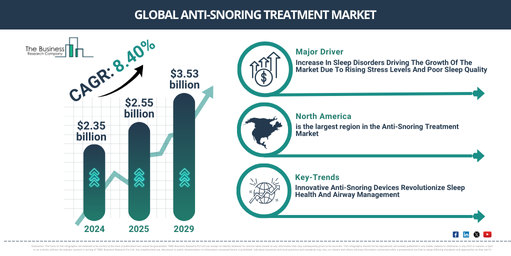
    In the past few years, the size of the anti-snoring treatment market has seen considerable growth. An expansion from $2.35 billion in 2024 to $2.55 billion in 2025 at a compound annual growth rate (CAGR) of 8.7% is expected. Factors including an increase in sleep disorders, rising obesity levels, an aging population, enhanced awareness initiatives, and heightened stress levels can be credited for the growth witnessed during the historic period.

    The market size of anti-snoring treatments is anticipated to experience robust growth in the forthcoming years, ballooning to $3.53 billion in 2029, which corresponds to a CAGR of 8.4%. Factors that can be credited for this projected growth span from the surge in sleep apnea incidents, to increased consumption of cigarettes and alcohol, adoption of detrimental lifestyle habits, rapid urbanization, and a rising elderly population. Noteworthy trends for this period feature advancements in anti-snoring apps, AI-powered sleep monitoring innovation, cutting-edge wearable technologies, developments in 3D-printed therapy apparatus, along with the incorporation of IoT solutions.

    Download a free sample to assess the report’s scope and structure:

    https://www.thebusinessresearchcompany.com/sample.aspx?id=23310&type=smp

    What Are the Core Growth Drivers Propelling the Anti-Snoring Treatment Market Forward?

    The surge in sleep disorder cases is anticipated to fuel the expansion of the anti-snoring treatment market. Sleep disorders are conditions that interfere with regular sleep patterns, impacting the quality, duration, or timing of sleep and resulting in impaired daily functioning. The climb in sleep disorder cases is linked to escalating stress levels, which heighten the body’s stress hormones and hinder the ability to fall into and maintain sleep. Anti-snoring treatments aid in augmenting sleep quality by decreasing breathing disruptions, thereby mitigating sleep disorders like sleep apnea and averting associated health complications. For example, in September 2022, Medscape UK, an online resource for UK-based doctors, found that 74% of UK adults witnessed a drop in sleep quality over the previous year, with one in ten only sleeping between 2 to 4 hours per night. As a result, the escalating presence of sleep disorders is spurring the expansion of the anti-snoring treatment market.

    What Segment Types Define the Anti-Snoring Treatment Market Structure?

    The anti-snoring treatment market covered in this report is segmented –

    1) By Device: Mandible Advancement Devices, Tongue Stabilizing Devices, Nasal Devices, Continuous Positive Airway Pressure Devices, Chin Straps, Other Devices

    2) By Distribution Channel: Hospital Pharmacies, Retail Pharmacies, Online, Other Distribution Channels

    3) By Application: Somnoplasty, Maxillo-Mandibular And Genioglossus Advancement Surgeries, Radiofrequency Ablation Surgery, Other Applications

    4) By End-User: Hospital And Clinics, Ambulatory Surgical Centers, Day Care Centers, Other End-Users

    Subsegments:

    1) By Mandible Advancement Devices: Custom-Fitted Mandibular Advancement Devices, Semi-Custom Mandibular Advancement Devices, Over-The-Counter Mandibular Advancement Devices

    2) By Tongue Stabilizing Devices: Standard Tongue Stabilizing Devices, Custom-Fitted Tongue Stabilizing Devices

    3) By Nasal Devices: Nasal Strips, Nasal Dilators (Internal & External), Nasal Sprays

    4) By Continuous Positive Airway Pressure (CPAP) Devices: Auto-Adjusting CPAP Devices, Fixed Pressure CPAP Devices, Bi-Level Positive Airway Pressure (BiPAP) Devices

    5) By Chin Straps: Adjustable Chin Straps, Non-Adjustable Chin Straps

    6) By Other Devices: Positional Therapy Devices, Smart Wearable Anti-Snoring Devices, Vestibular Shields

    Request customized data on this market:

    https://www.thebusinessresearchcompany.com/customise?id=23310&type=smp

    Which Geographic Areas Hold the Strongest Growth Potential in the Anti-Snoring Treatment Market?

    North America was the largest region in the anti-snoring treatment market in 2024. The regions covered in the anti-snoring treatment market report are Asia-Pacific, Western Europe, Eastern Europe, North America, South America, Middle East, Africa.

    Which Emerging Trends that Are Influencing the Anti-Snoring Treatment Industry Evolution?

    Leading organizations in the anti-snoring treatment market are concentrating on developing pioneering solutions, like anti-snoring appliances, to enhance airway openness, minimize snoring severity, and improve overall sleep quality for patients. Anti-snoring appliances are instruments engineered to decrease or eradicate snoring by bettering airflow through the airways while asleep. As an example, in May 2022, Illusion Aligners, an aligner business based in India, introduced a product called Anti-Snoring Device (ASD), specifically designed to tackle snoring and mild to moderate obstructive sleep apnea (OSA). This particular EMA device, custom-made and elastic, gradually progresses the lower jaw forward to sustain an open airway during sleep. The design of the device enables movement of the jaw sideways and avoids airway collapse by stimulating muscles and ligaments. Additionally, it minimizes teeth clenching and is apt for individuals who breathe through their mouth, providing a comfortable and effective solution for undisturbed, relaxing sleep.

    View the full report here:

    https://www.thebusinessresearchcompany.com/report/anti-snoring-treatment-global-market-report

    What Is the Definition of the Anti-Snoring Treatment Market?

    Anti-snoring treatment refers to various methods aimed at reducing or eliminating snoring, which is caused by the vibration of tissues in the upper respiratory tract during sleep. These treatments target issues like airway obstruction, muscle relaxation, or nasal congestion to improve sleep quality and prevent related health problems.

    Purchase the full report and get a swift delivery:

    https://www.thebusinessresearchcompany.com/purchaseoptions.aspx?id=23310

    About The Business Research Company:

    With over 15000+ reports from 27 industries covering 60+ geographies, The Business Research Company has built a reputation for offering comprehensive, data-rich research and insights. Armed with 1,500,000 datasets, the optimistic contribution of in-depth secondary research, and unique insights from industry leaders, you can get the information you need to stay ahead in the game.

    Get in touch with us:

    The Business Research Company: https://www.thebusinessresearchcompany.com/

    Americas +1 3156230293

    Asia +44 2071930708

    Europe +44 2071930708

    Email us at info@tbrc.info

    Follow us on:

    LinkedIn: https://in.linkedin.com/company/the-business-research-company

    YouTube: https://www.youtube.com/channel/UC24_fI0rV8cR5DxlCpgmyFQ

    Global Market Model: https://www.thebusinessresearchcompany.com/global-market-model

  • Key Factors Fueling the Growth of the Antineutrophil Cytoplasmic Antibody (ANCA) Associated Vasculitis Market in 2025: Rising Autoimmune Disease Cases Fuels The Market Growth Due To Demand In Advanced Treatments And Early Diagnostics

    Key Factors Fueling the Growth of the Antineutrophil Cytoplasmic Antibody (ANCA) Associated Vasculitis Market in 2025: Rising Autoimmune Disease Cases Fuels The Market Growth Due To Demand In Advanced Treatments And Early Diagnostics

    Get 30% off on our Global Market Reports with code ONLINE30 – Hurry, limited time offer!

    How Has The Antineutrophil Cytoplasmic Antibody (ANCA) Associated Vasculitis Market Growth Evolved From 2024 To 2025, And What’s Ahead?

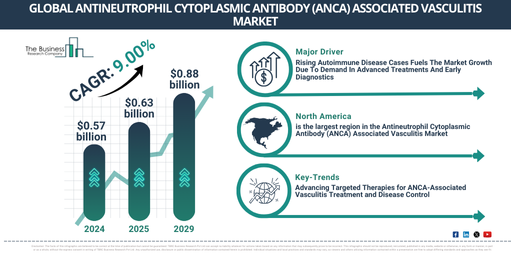
    In the recent past, there has been significant growth in the market size of antineutrophil cytoplasmic antibody (ANCA) associated vasculitis. This growth is set to continue, with the market expected to expand from $0.57 billion in 2024 to $0.63 billion in 2025, indicating a compound annual growth rate (CAGR) of 9.2%. Factors contributing to this growth during the historic period include increased health spending, improved disposable income, a focus on patient-focused care, a rise in the middle-class population, growing use of telemedicine, and an expanding elderly population.

    Rapid expansion is anticipated in the antineutrophil cytoplasmic antibody (ANCA) associated vasculitis market in the upcoming years, with predictions of it escalating to $0.88 billion by 2029 at a compound annual growth rate (CAGR) of 9.0%. This anticipated surge over the forecasted period can be credited to factors such as amplified research and clinical trials, escalating research and development pursuits, an increased rate of autoimmune maladies, multiplying instances of immune system malfunctions, and a growing number of corresponding risk factors. The forecast period is expected to see major trends like personalised medical treatments, strategic partnerships, progress in diagnostic tests, increased adoption of telemedicine, and the creation of combination therapies.

    Download a free sample to assess the report’s scope and structure:

    https://www.thebusinessresearchcompany.com/sample.aspx?id=23309&type=smp

    What are the Fundamental Drivers and Innovations Shaping the Antineutrophil Cytoplasmic Antibody (ANCA) Associated Vasculitis Market?

    The escalating occurrence of autoimmune diseases is projected to spur the expansion of the ANCA-associated vasculitis industry. Autoimmune diseases are conditions where the immune system erroneously targets the body’s healthy cells and tissues, misconstruing them as foreign threats such as bacteria or viruses. The increased occurrence of these diseases is linked to environmental factors and lifestyle habits, with a significant association found with exposure to infections and pollutants, leading to disruption in immune tolerance and the onset of abnormal immune responses. Antineutrophil cytoplasmic antibody (ANCA)-associated vasculitis has a crucial role in propelling the research and treatments for autoimmune diseases by promoting the production of target-specific immunosuppressive therapies, bolstering early diagnosis methods, and enhancing overall disease control tactics. This consequently results in better patient prognoses and a profound comprehension of immune system regulation. For example, as stated in the Impact of IBD Report 2023 released in September 2023 by the Inflammatory Bowel Disease (IBD) Clinical and Research Centre, a Canada-based institution aiming to enhance the quality of life for patients suffering from Crohn’s disease and ulcerative colitis, the prevalence of inflammatory bowel disease (an autoimmune disease) in Canada in 2023 was 825 in every 100,000 individuals, impacting over 320,000 people. With an estimated yearly increment of 2.44% in prevalence, it is anticipates that by 2035, around 470,000 Canadians, making up 1.1% of the population, would be afflicted with IBD. Hence, the escalating occurrence of autoimmune diseases is set to stimulate the ANCA-associated vasculitis industry.

    How Is the Antineutrophil Cytoplasmic Antibody (ANCA) Associated Vasculitis Market Segmented?

    The antineutrophil cytoplasmic antibody (ANCA) associated vasculitis market covered in this report is segmented –

    1) By Type: Granulomatosis With Polyangiitis (GPA Or Wegener’s), Microscopic Polyangiitis (MPA), Eosinophilic Granulomatosis With Polyangiitis (EGPA Or Churg-Strauss), Other Types

    2) By Treatment: Immunosuppressants, Corticosteroids, Biologics, Other Treatments

    3) By Diagnosis: Blood Tests, Biopsy, Imaging, Other Diagnosis

    Subsegments:

    1) By Granulomatosis With Polyangiitis (GPA or Wegener’s): Limited Granulomatosis With Polyangiitis, Severe Granulomatosis With Polyangiitis, Refractory Granulomatosis With Polyangiitis

    2) By Microscopic Polyangiitis (MPA): Renal Microscopic Polyangiitis, Pulmonary Microscopic Polyangiitis, Neurological Microscopic Polyangiitis

    3) By Eosinophilic Granulomatosis With Polyangiitis (EGPA or Churg-Strauss): Cardiac Eosinophilic Granulomatosis With Polyangiitis, Pulmonary Eosinophilic Granulomatosis With Polyangiitis, Neurological Eosinophilic Granulomatosis With Polyangiitis

    4) By Other Types: Drug-Induced ANCA-Associated Vasculitis, Infection-Related ANCA-Associated Vasculitis, Overlap Syndrome ANCA-Associated Vasculitis

    Request customized data on this market:

    https://www.thebusinessresearchcompany.com/customise?id=23309&type=smp

    Which Regions Are Driving the Next Phase of the Antineutrophil Cytoplasmic Antibody (ANCA) Associated Vasculitis Market Growth?

    North America was the largest region in the antineutrophil cytoplasmic antibody (ANCA) associated vasculitis market in 2024. Asia-Pacific is expected to be the fastest-growing region in the forecast period. The regions covered in the antineutrophil cytoplasmic antibody (ANCA) associated vasculitis market report are Asia-Pacific, Western Europe, Eastern Europe, North America, South America, Middle East, Africa.

    What Key Trends Are Shaping the Future of the Antineutrophil Cytoplasmic Antibody (ANCA) Associated Vasculitis Market?

    Leading firms in the ANCA-associated vasculitis market are concentrating on creating novel solutions, like targeted treatments, offering a fresh therapeutic alternative for those suffering from a rare and severe condition. Specialized biologic agents are used in the targeted therapy for ANCA-associated vasculitis to selectively restrict the parts of the immune system that cause inflammation and vascular harm, subsequently decreasing disease progression and minimizing toxicity related to treatment. In February 2023, the Switzerland-based Vifor Fresenius Medical Care Renal Pharma (VFMCRP) had approval from The Therapeutic Goods Administration (TGA), an Australian government regulatory agency, for Tavneos (avacopan) to treat anti-neutrophil cytoplasmic autoantibody (ANCA)-associated vasculitis (AAV), in combination with a rituximab or cyclophosphamide-based regimen. The approval of Tavneos marks a crucial milestone as it is the first targeted treatment specifically for granulomatosis with polyangiitis (GPA) and microscopic polyangiitis (MPA), the main types of ANCA-associated vasculitis. The therapy controls inflammation and disease progression by selectively inhibiting the complement C5a receptor (C5aR1), while minimizing the dependency on high-dose glucocorticoids (steroids), known for severe long-term side effects.

    View the full report here:

    https://www.thebusinessresearchcompany.com/report/antineutrophil-cytoplasmic-antibody-anca-associated-vasculitis-global-market-report

    How Is the Antineutrophil Cytoplasmic Antibody (ANCA) Associated Vasculitis Market Defined and What Are Its Core Parameters?

    Antineutrophil cytoplasmic antibody (ANCA) associated vasculitis is a rare, autoimmune disorder characterized by inflammation and damage to small and medium-sized blood vessels, primarily affecting organs such as the kidneys, lungs, and respiratory tract, often leading to severe complications if left untreated. This condition is closely linked to nephrology, pulmonology, and rheumatology, requiring multidisciplinary management involving immunosuppressive therapies, corticosteroids, and advanced treatment strategies to prevent organ failure and improve long-term patient outcomes.

    Purchase the full report and get a swift delivery:

    https://www.thebusinessresearchcompany.com/purchaseoptions.aspx?id=23309

    About The Business Research Company:

    With over 15000+ reports from 27 industries covering 60+ geographies, The Business Research Company has built a reputation for offering comprehensive, data-rich research and insights. Armed with 1,500,000 datasets, the optimistic contribution of in-depth secondary research, and unique insights from industry leaders, you can get the information you need to stay ahead in the game.

    Get in touch with us:

    The Business Research Company: https://www.thebusinessresearchcompany.com/

    Americas +1 3156230293

    Asia +44 2071930708

    Europe +44 2071930708

    Email us at info@tbrc.info

    Follow us on:

    LinkedIn: https://in.linkedin.com/company/the-business-research-company

    YouTube: https://www.youtube.com/channel/UC24_fI0rV8cR5DxlCpgmyFQ

    Global Market Model: https://www.thebusinessresearchcompany.com/global-market-model