Author: Marketing Posting

  • Next-Gen Ovine And Caprine Artificial Insemination: Market Forecast, Transformation, and Long-Term Trajectories

    Next-Gen Ovine And Caprine Artificial Insemination: Market Forecast, Transformation, and Long-Term Trajectories

    Discover trends, market shifts, and competitive outlooks for the ovine and caprine artificial insemination industry through 2025-2034 with The Business Research Company’s reliable data and in-depth research

    How Fast Is The Ovine And Caprine Artificial Insemination Market Expected to Grow Between 2025 And 2029?

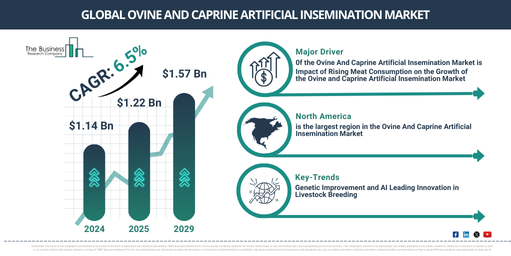
    The artificial insemination market for sheep and goats has seen significant growth over the past few years. The market is projected to increase from $1.14 billion in 2024 to $1.22 billion in 2025, with a compound annual growth rate (CAGR) of 6.8%. Factors contributing to this growth during the historical period include advancements in genetic selection, a surge in demand for superior livestock, government initiatives aimed at increasing animal productivity, growing consciousness about herd management effectiveness, improved veterinary services, and an increase in the adoption of artificial insemination methods.

    The market for artificial insemination in ovine and caprine is projected to experience robust growth in the forthcoming years, poised to reach $1.57 billion in 2029 with a compound annual growth rate of 6.5%. The growth anticipated during the forecast period can be tied to factors such as rising demand for elite breed genetics, heightened consciousness regarding livestock productivity, increased government backing for artificial insemination initiatives, surging uptake of precision livestock farming, growth in dairy and meat output, as well as improvements in veterinary services and infrastructure. The major trends projected for this period include breakthroughs in reproductive technologies, increased adoption of artificial insemination and elective breeding procedure, innovations in the field of semen preservation and transportation technologies, the fusion of AI with biotechnology for genetic mapping, and progress in assisted reproductive technology tools.

    Download a free sample to assess the report’s scope and structure:

    https://www.thebusinessresearchcompany.com/sample.aspx?id=20586&type=smp

    Which Major Market Drivers Are Expected to Boost the Growth Potential of the Ovine And Caprine Artificial Insemination Market?

    The uptick in meat intake is anticipated to fuel the expansion of the ovine and caprine artificial insemination market. The escalating cognizance about the crucial role of protein in a balanced diet, along with a shift towards high-protein regimes (like ketogenic and paleo diets), has amplified the demand for meat as a primary protein resource. The method of artificial insemination in sheep and goats boosts their genetic quality and output, resulting in increased meat production, enhanced disease immunity, and more efficient meat production to satiate the growing global meat requirement. For instance, an amended report on red meat and poultry production issued by the United States Department of Agriculture, a US federal agency, showed that red meat and poultry production went up from 31419.8 (million pounds) in January-July 2023 to 31775.4 (million pounds) in January-July 2024. Consequently, the surge in meat intake is bolstering the growth of the ovine and caprine artificial insemination market.

    Which Key Market Segments Comprise the Ovine And Caprine Artificial Insemination Market and Drive Its Revenue Growth?

    The ovine and caprine artificial insemination market covered in this report is segmented –

    1) By Type: Equipment, Semen, Reagents And Kits, Services

    2) By Technique: Intrauterine, Vaginal, Cervical

    3) By Animal Type: Ovine Or Sheep, Caprine Or Goat

    4) By Distribution Channel: Private, Public

    5) By End-Use: Veterinary Hospitals, Veterinary Clinics, Other End-Users

    Subsegments:

    1) By Equipment: Insemination Guns, Straws And Tubes, Semen Storage Containers, Automatic Insemination Devices, Cryopreservation Equipment, Sterilization And Disinfection Equipment, Hormone Injection Equipment

    2) By Semen: Fresh Semen, Frozen Semen, Sexed Semen, Donor Semen

    3) By Reagents And Kits: Semen Analysis Kits, Ovulation Induction Kits, Hormonal Reagents For Synchronization, Pregnancy Detection Kits, Insemination Media

    4) By Services: Artificial Insemination Services, Semen Collection and Processing Services, Breeding Consultancy, Semen Storage And Distribution Services, Reproductive Health Monitoring And Management Services

    Request customized data on this market:

    https://www.thebusinessresearchcompany.com/customise?id=20586&type=smp

    Which Areas Are Leading Regions in the Ovine And Caprine Artificial Insemination Market Expansion Across the Globe?

    North America was the largest region in the ovine and caprine artificial insemination market in 2024. The regions covered in the ovine and caprine artificial insemination market report are Asia-Pacific, Western Europe, Eastern Europe, North America, South America, Middle East, Africa.

    Which Emerging Trends that Are Influencing the Ovine And Caprine Artificial Insemination Industry Evolution?

    Leading firms in the ovine and caprine artificial insemination (AI) market are concentrating on modern technologies such as genetic advancement techniques and AI to bolster food security. Genetic enhancement technique entails selective breeding of animals with favorable traits such as optimal fertility, milk production, or growth rate, to enhance the genetic quality of upcoming generations. AI is a technology employed in reproduction where semen from a chosen male goat is physically inserted into a female to boost genetic quality. For instance, in June 2024, the Lebanon-based International Center for Agricultural Research in the Dry Areas (ICARDA) initiated Mali’s maiden Community-Based Breeding Program (CBBP) for goats. The objective of this program is to enhance the genetic capability of minor ruminants in Mali, focusing on meat and milk productivity, while improving the way of life for small-scale livestock farmers. The initiative includes developing cost-effective AI technologies to enhance reproductive efficiency in goats.

    View the full report here:

    https://www.thebusinessresearchcompany.com/report/ovine-and-caprine-artificial-insemination-global-market-report

    How Is the Ovine And Caprine Artificial Insemination Market Conceptually Defined?

    Ovine and caprine artificial insemination is a method of breeding sheep and goats by inserting semen into the female without natural mating, aimed at improving genetics and productivity. Artificial insemination enables farmers to selectively breed sheep and goats for improved traits such as better wool or higher milk production.

    Purchase the full report and get a swift delivery:

    https://www.thebusinessresearchcompany.com/purchaseoptions.aspx?id=20586

    About The Business Research Company:

    With over 15000+ reports from 27 industries covering 60+ geographies, The Business Research Company has built a reputation for offering comprehensive, data-rich research and insights. Armed with 1,500,000 datasets, the optimistic contribution of in-depth secondary research, and unique insights from industry leaders, you can get the information you need to stay ahead in the game.

    Get in touch with us:

    The Business Research Company: https://www.thebusinessresearchcompany.com/

    Americas +1 3156230293

    Asia +44 2071930708

    Europe +44 2071930708

    Email us at info@tbrc.info

    Follow us on:

    LinkedIn: https://in.linkedin.com/company/the-business-research-company

    YouTube: https://www.youtube.com/channel/UC24_fI0rV8cR5DxlCpgmyFQ

    Global Market Model: https://www.thebusinessresearchcompany.com/global-market-model
  • Over-The-Counter (OTC) Hearing Aids Market Overview 2025: Competitive Shifts, Forecast Models, and Emerging Opportunities

    Over-The-Counter (OTC) Hearing Aids Market Overview 2025: Competitive Shifts, Forecast Models, and Emerging Opportunities

    Discover trends, market shifts, and competitive outlooks for the over-the-counter (otc) hearing aids industry through 2025-2034 with The Business Research Company’s reliable data and in-depth research

    What Are the Key Projections for the CAGR of the Over-The-Counter (OTC) Hearing Aids Market Size From 2025 to 2034?

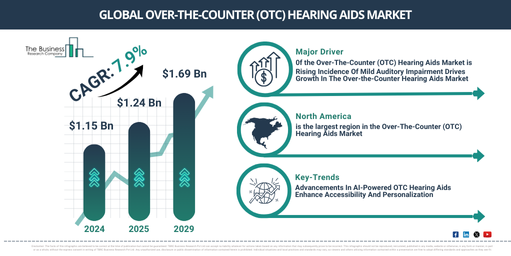
    The market size for over-the-counter (OTC) hearing aids has seen considerable escalation in the past recent years. The size is projected to increase from $1.15 billion in 2024 to $1.24 billion in 2025, growing at a compound annual growth rate (CAGR) of 8.3%. This past growth can be associated with the growing demand for more affordable options, expansion of the OTC hearing aids’ widespread distribution channel, increase in the middle-class populace, increased disposable incomes in developing nations, and the increased occurrence of noise-induced hearing impairment.

    There is an anticipation of robust expansion in the over-the-counter (OTC) hearing aids market in the upcoming years. The market is projected to reach $1.69 billion in 2029, with a compound annual growth rate (CAGR) of 7.9%. Factors contributing to the growth during the projected period include the rising popularity of e-commerce platforms, an inclination towards self-care, escalating healthcare costs, consumer awareness initiatives by manufacturers, and a shift towards empowering patients within the healthcare sector. The key trends for the forecast period include advancements in digital signal processing, breakthroughs in battery technology, the incorporation of telehealth services with OTC hearing aids, the merging of OTC hearing aids with smartphones, and hybrid care models.

    Download a free sample to assess the report’s scope and structure:

    https://www.thebusinessresearchcompany.com/sample.aspx?id=20585&type=smp

    What Are the Core Growth Drivers Propelling the Over-The-Counter (OTC) Hearing Aids Market Forward?

    The significant occurrence of mild hearing loss is anticipated to accelerate the over-the-counter (OTC) hearing aids market expansion. This form of hearing impairment involves a minimal decline in hearing ability, where an individual might struggle to hear faint or distant noises but typically comprehends speech in quiet settings. Relevant factors such as age-related hearing loss, loud noise exposure, and certain medical conditions contribute to mild hearing loss. OTC hearing aids help correct minor hearing deficiencies by amplifying sounds and enhancing speech clarity. These aids offer customizable settings for volume enhancement and sound augmentation, which aid in clearer daily noises and conversations. For example, the Australian Government Department of Health and Aged Care reported in May 2024 that roughly 3.6 million people in Australia have some level of hearing loss. This figure is predicted to double to an estimated 7.8 million by 2060. Consequently, the substantial occurrence of mild hearing loss is fueling the growth of the over-the-counter (OTC) hearing aids market.

    What Segment Types Define the Over-The-Counter (OTC) Hearing Aids Market Structure?

    The over-the-counter (OTC) hearing aids market covered in this report is segmented –

    1) By Product Type: In-The-Ear Hearing Aids, Receiver-In-The-Ear Hearing Aids, Behind-The-Ear Hearing Aids, Canal Hearing Aids

    2) By Technology Type: Digital Hearing Aids, Analog Hearing Aids

    3) By Distribution Channel: Retail Stores, Online, Audiology Offices

    Subsegments:

    1) By In-The-Ear Hearing Aids: Full Shell In-The-Ear (ITE), Half Shell In-The-Ear (ITE), Completely-In-The-Canal (CIC), Invisible-In-The-Canal (IIC)

    2) By Receiver-In-The-Ear Hearing Aids: Open Fit Receiver-In-The-Ear (RITE), Standard Receiver-In-The-Ear (RITE), Mini Receiver-In-The-Ear (RITE)

    3) By Behind-The-Ear Hearing Aids: Standard Behind-The-Ear (BTE), Mini Behind-The-Ear (BTE), Power Behind-The-Ear (BTE)

    4) By Canal Hearing Aids: Completely-In-The-Canal (CIC), Invisible-In-The-Canal (IIC), Extended Wear Canal Hearing Aids

    Request customized data on this market:

    https://www.thebusinessresearchcompany.com/customise?id=20585&type=smp

    Which Geographic Areas Hold the Strongest Growth Potential in the Over-The-Counter (OTC) Hearing Aids Market?

    North America was the largest region in the over-the-counter (OTC) hearing aids market in 2024. Asia-Pacific is expected to be the fastest-growing region in the forecast period. The regions covered in the over-the-counter (OTC) hearing aids market report are Asia-Pacific, Western Europe, Eastern Europe, North America, South America, Middle East, Africa.

    What Key Trends Are Shaping the Future of the Over-The-Counter (OTC) Hearing Aids Market?

    Major players in the over-the-counter (OTC) hearing aids market are shifting their focus to the creation of next-gen AI-enabled OTC hearing aids. This move is aimed at providing more sophisticated and easily accessible hearing solutions to a wider demographic of consumers. These AI-enabled OTC hearing aids use artificial intelligence to seamlessly match sound settings to the individual’s surroundings and specific hearing necessities. These high-tech devices offer a fully customized experience through real-time noise reduction and compatibility with mobile apps for greater control. For instance, Elehear, an American manufacturer of AI-driven hearing aids and audio products rolled out ELEHEAR Alpha and ELEHEAR Alpha Pro in September 2023. The ELEHEAR Alpha, an affordable OTC hearing aid featuring a behind-the-ear style and rechargeable batteries, is appreciated for its excellent music streaming abilities. On the other hand, the ELEHEAR Alpha Pro, a higher-end model, harnesses AI to efficiently differentiate human speech from ambient noise, thereby enhancing clarity and reducing distortion. It has Bluetooth, making it easy to link with smartphones, enabling it to manage both phone calls and music seamlessly. Apart from its lightweight and unobtrusive design, the Alpha Pro offers comfort for continuous use and boasts a 20-hour battery life, complete with wireless charging.

    View the full report here:

    https://www.thebusinessresearchcompany.com/report/over-the-counter-otc-hearing-aids-global-market-report

    What Is the Definition of the Over-The-Counter (OTC) Hearing Aids Market?

    Over-the-counter (OTC) hearing aids are hearing devices that consumers can purchase directly from a retail store or online without needing a prescription or professional fitting. These devices are designed for adults with mild to moderate hearing loss and offer a more accessible and affordable alternative to traditional hearing aids, which typically require a visit to an audiologist.

    Purchase the full report and get a swift delivery:

    https://www.thebusinessresearchcompany.com/purchaseoptions.aspx?id=20585

    About The Business Research Company:

    With over 15000+ reports from 27 industries covering 60+ geographies, The Business Research Company has built a reputation for offering comprehensive, data-rich research and insights. Armed with 1,500,000 datasets, the optimistic contribution of in-depth secondary research, and unique insights from industry leaders, you can get the information you need to stay ahead in the game.

    Get in touch with us:

    The Business Research Company: https://www.thebusinessresearchcompany.com/

    Americas +1 3156230293

    Asia +44 2071930708

    Europe +44 2071930708

    Email us at info@tbrc.info

    Follow us on:

    LinkedIn: https://in.linkedin.com/company/the-business-research-company

    YouTube: https://www.youtube.com/channel/UC24_fI0rV8cR5DxlCpgmyFQ

    Global Market Model: https://www.thebusinessresearchcompany.com/global-market-model
  • From Insight to Impact: Strategic Growth Mapping in the Occlusion Devices Market

    From Insight to Impact: Strategic Growth Mapping in the Occlusion Devices Market

    Discover trends, market shifts, and competitive outlooks for the occlusion devices industry through 2025-2034 with The Business Research Company’s reliable data and in-depth research

    How Has The Occlusion Devices Market Growth Evolved From 2024 To 2025, And What’s Ahead?

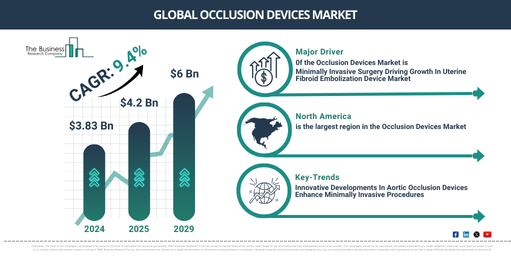
    The market size for occlusion devices has seen impressive growth lately. The market is anticipated to rise from $3.83 billion in 2024 to $4.2 billion in 2025, showcasing a compound annual growth rate (CAGR) of 9.6%. The growth observed in the past can be linked to the escalating demand for minimal medical device facilities, a surge in diagnostic services accessibility, an increase in healthcare infrastructure investment, high incidence of chronic disorders, and a rise in spending on research and development.

    The market for occlusion devices is projected to undergo robust growth in the upcoming years, with its size estimated to reach $6 billion in 2029. This growth equates to a compound annual growth rate (CAGR) of 9.4%. The expansion projected for the forecast timeframe is primarily ascribed to various factors such as an aging population, growing number of obese individuals, rise in heart-related ailments, increasing incidence of hypertension, and a higher number of stroke cases. Key trends discerned for the forecast period include evolving technology and innovation, technological progress, the creation of more accurate and efficient occlusion devices, product innovation, and the incorporation of 3D printing.

    Download a free sample to assess the report’s scope and structure:

    https://www.thebusinessresearchcompany.com/sample.aspx?id=20584&type=smp

    What are the Fundamental Drivers and Innovations Shaping the Occlusion Devices Market?

    The increasing preference for less invasive medical approaches is predicted to fuel the expansion of the occlusion devices market. These minimally invasive surgeries are operations that employ minor incisions or natural body openings to diagnose and treat internal organs, tissues or structures with the least possible damage to the patient. These techniques offer numerous health, economic, and aesthetic advantages, attracting patients and healthcare providers alike, thus sparking a surge in the demand in countless medical fields. Occlusion devices, which are medical instruments utilized in minimally invasive procedures to seal blood vessels, ducts, or other channels in the body, play an instrumental role in these processes. They are frequently employed in areas such as interventional cardiology, radiology among others to alleviate conditions like aneurysms, abnormal blood circulation, or congenital heart defects. For example, Intuitive Surgical Inc., an American tech company specializing in minimally invasive healthcare products, reported in January 2023 that approximately 1,875,000 surgeries were conducted using vinci surgical systems in 2022, marking an approximately 18% rise from about 1,594,000 surgeries performed in 2021. Consequently, this heightened demand for minimally invasive methods is spurring the growth of the occlusion devices market.

    How Is the Occlusion Devices Market Segmented?

    The occlusion devices market covered in this report is segmented –

    1) By Product: Occlusion Removal Devices, Embolization Devices, Tubal Occlusion Devices, Support Devices

    2) By Application: Neurology, Cardiology, Peripheral Vascular Diseases, Urology, Oncology, Gynecology

    3) By End User: Hospitals Diagnostic Centers And Surgical Centers, Ambulatory Care Centers, Research Laboratories And Academic Institutes

    Subsegments:

    1) By Occlusion Removal Devices: Thrombectomy Devices, Catheter-Based Occlusion Removal Devices, Aspiration Systems, Mechanical Clot Retrieval Systems

    2) By Embolization Devices: Coil Embolization Devices, Particle Embolization Devices, Balloon Embolization Devices, Gel Embolic Agents, Liquid Embolic Agents, Stent-Assisted Embolization Devices

    3) By Tubal Occlusion Devices: Essure Devices, Hysteroscopic Sterilization Systems, Fallopian Tube Clips, Tubal Ligation Devices

    4) By Support Devices: Occlusion Catheters, Guidewires For Occlusion, Supportive Sheaths, Stent-Grafts For Occlusion Support

    Request customized data on this market:

    https://www.thebusinessresearchcompany.com/customise?id=20584&type=smp

    Which Regions Are Driving the Next Phase of the Occlusion Devices Market Growth?

    North America was the largest region in the occlusion devices market in 2024. Asia-Pacific is expected to be the fastest-growing region in the forecast period. The regions covered in the occlusion devices market report are Asia-Pacific, Western Europe, Eastern Europe, North America, South America, Middle East, Africa.

    What Are the Most Significant Market Trends in the Occlusion Devices Market?

    Leading businesses in the occlusion devices market, such as those manufacturing aortic occlusion devices, are concentrating on innovative product development to promote minimally invasive methods and improve patient results. Aortic occlusion devices, which are medical instruments engineered to hinder or limit aortic blood flow, are normally employed in aortic surgeries or for managing certain aneurysms or emergencies. For example, in February 2022, Front Line Medical Technologies Inc, a medical device firm based in the USA, debuted COBRA-OS, an aortic occlusion device designed for critical medical situations, particularly for use in resuscitative endovascular balloon occlusion of the aorta (REBOA) procedures. The COBRA-OS, with its substantial smaller 4 F size, minimizes procedure duration and complication risks. This device provides full, intermittent or partial occlusion according to the patient’s needs, and features a specialized safety shoulder reservoir that safeguards against aortic rupture during inflation. The COBRA-OS has garnered approval from Health Canada and clearance from the FDA for usage in the United States.

    View the full report here:

    https://www.thebusinessresearchcompany.com/report/occlusion-devices-global-market-report

    How Is the Occlusion Devices Market Defined and What Are Its Core Parameters?

    Occlusion devices refer to medical instruments designed to block or restrict the flow of blood or other fluids within the body. They are commonly used in procedures such as embolization to treat conditions such as aneurysms, vascular malformations, or to control bleeding. These devices include products such coils, stents, and balloons and are crucial in minimally invasive surgeries.

    Purchase the full report and get a swift delivery:

    https://www.thebusinessresearchcompany.com/purchaseoptions.aspx?id=20584

    About The Business Research Company:

    With over 15000+ reports from 27 industries covering 60+ geographies, The Business Research Company has built a reputation for offering comprehensive, data-rich research and insights. Armed with 1,500,000 datasets, the optimistic contribution of in-depth secondary research, and unique insights from industry leaders, you can get the information you need to stay ahead in the game.

    Get in touch with us:

    The Business Research Company: https://www.thebusinessresearchcompany.com/

    Americas +1 3156230293

    Asia +44 2071930708

    Europe +44 2071930708

    Email us at info@tbrc.info

    Follow us on:

    LinkedIn: https://in.linkedin.com/company/the-business-research-company

    YouTube: https://www.youtube.com/channel/UC24_fI0rV8cR5DxlCpgmyFQ

    Global Market Model: https://www.thebusinessresearchcompany.com/global-market-model
  • Nursing Resource AllocationMarket Overview 2025–2034: CAGR Trends, Long-Term Growth Paths, and Business Implications

    Nursing Resource AllocationMarket Overview 2025–2034: CAGR Trends, Long-Term Growth Paths, and Business Implications

    Discover trends, market shifts, and competitive outlooks for the nursing resource allocation industry through 2025-2034 with The Business Research Company’s reliable data and in-depth research

    What is the Projected CAGR for the Nursing Resource Allocation Market Size from 2025 to 2034?

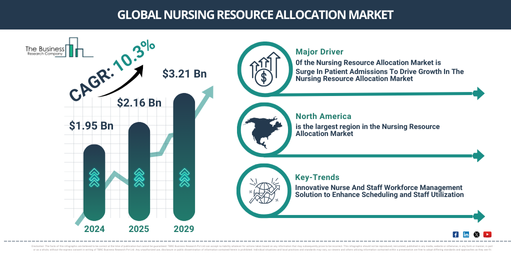
    The market size of nursing resource allocation has witnessed substantial expansion in the preceding years. An escalation from $1.95 billion in 2024 to $2.16 billion in 2025 is predicted, reflecting a compound annual growth rate (CAGR) of 10.7%. The past growth pattern can be credited to factors such as increasing patient acuity, rising incidence of chronic diseases, a considerable expansion of the elderly demographic, an increase in electronic health records (EHR), and the surge in nurse-to-patient ratios.

    A considerable expansion is anticipated for the nursing resource allocation market in the forthcoming years, with the projection of a surge to $3.21 billion by 2029 at a compound annual growth rate (CAGR) of 10.3%. Factors contributing to this growth within the projected period comprise of significant alterations in healthcare policies, escalating assessments of community health needs, the growing acceptance of evidence-based practices, remarkable expansion in nursing leadership initiatives, and an increased demand for patient education. Key trends during this period are expected to be the rising application of artificial intelligence, expansion of telehealth facilities, enhanced emphasis on patient-focused care, incorporation of data analysis, and advancements in electronic health record systems.

    Download a free sample to assess the report’s scope and structure:

    https://www.thebusinessresearchcompany.com/sample.aspx?id=20583&type=smp

    What Are the Primary Drivers Supporting the Market Growth of the Nursing Resource Allocation Market?

    The nursing resource allocation market is projected to expand due to an increase in patient admissions. Patient admission, which is the authorized entry of a patient into a healthcare institution for treatment or observation, is on the rise. This is due to numerous factors including an aging demographic, advancements in medical technologies, increased patient anticipations, and broader access to healthcare services. Effective distribution of nursing resources enhances patient treatment by matching nursing staff to the needs and severity of the patients, thereby improving outcomes and decreasing complications. It also helps in streamlining processes and reducing exhaustion, leading to improved patient care and lower staff attrition. For example, a report from the National Health Service (NHS), a government department in the UK, indicated that there were 408,700 hospital admissions in 2022-2023, indicating a 5% surge from 389,800 hospital admissions in 2021-2022 in England. Consequently, the rise in patient admissions is expected to further boost the growth of the nursing resource allocation market.

    Which Primary Segments of the Nursing Resource Allocation Market Are Driving Growth and Industry Transformations?

    The nursing resource allocation market covered in this report is segmented –

    1) By Product Type: Software, Services

    2) By Deployment: On-Premise, Cloud-Based

    3) By Application: Emergency Departments, Perioperative Services, Inpatient Care Management, Workflow Automation

    4) By End-User: Hospitals, Clinics, Ambulatory Care Centers, Nursing Homes, Other End-Users

    Subsegments:

    1) By Software: Nurse Staffing Software, Workforce Management Software, Scheduling and Shift Management Software, Nurse Call System Software, Clinical Workflow Management Software, Patient Flow Management Software, AI-Based Resource Allocation Software

    2) By Services: Consulting Services, Implementation Services, Training and Support Services, Managed Services, Data Analytics and Reporting Services

    Request customized data on this market:

    https://www.thebusinessresearchcompany.com/customise?id=20583&type=smp

    Which Regions Are Key Players in the Growth of the Nursing Resource Allocation Market?

    North America was the largest region in the nursing resource allocation market in 2024. Asia-Pacific is expected to be the fastest-growing region in the forecast period. The regions covered in the nursing resource allocation market report are Asia-Pacific, Western Europe, Eastern Europe, North America, South America, Middle East, Africa.

    What Are the Current Market Growth and Trends in the Nursing Resource Allocation Industry?

    Key businesses in the nursing resource allocation market are formulating nursing and staff workforce management solutions to enhance scheduling and boost staff usage. These solutions pertain to systems and instruments geared towards simplifying the arrangement, allocation and governance of the healthcare and nursing personnel. For instance, QGenda LLC, a US software establishment released QGenda nurse and staff workforce management in December 2022. The mobile-centric solution aims to fulfill the specific necessities of healthcare organizations in the supervision of their nursing personnel. The solution facilitates the formation and administration of adaptable schedules bespoke to the needs of nurses and staff, ensuring satisfactory coverage anchored on patient care needs. It allows nurses to arrange their own schedules and modify their preferences, encouraging involvement and contentment by allowing more control over their working hours.

    View the full report here:

    https://www.thebusinessresearchcompany.com/report/nursing-resource-allocation-global-market-report

    What Parameters Are Used to Define the Nursing Resource Allocation Market?

    Nursing resource allocation involves distributing nursing staff and resources efficiently across healthcare units to ensure optimal patient care. It aims to match nurse competencies with patient needs, balancing workload to enhance patient outcomes and reduce staff burnout. This process supports healthcare services by optimizing resource utilization.

    Purchase the full report and get a swift delivery:

    https://www.thebusinessresearchcompany.com/purchaseoptions.aspx?id=20583

    About The Business Research Company:

    With over 15000+ reports from 27 industries covering 60+ geographies, The Business Research Company has built a reputation for offering comprehensive, data-rich research and insights. Armed with 1,500,000 datasets, the optimistic contribution of in-depth secondary research, and unique insights from industry leaders, you can get the information you need to stay ahead in the game.

    Get in touch with us:

    The Business Research Company: https://www.thebusinessresearchcompany.com/

    Americas +1 3156230293

    Asia +44 2071930708

    Europe +44 2071930708

    Email us at info@tbrc.info

    Follow us on:

    LinkedIn: https://in.linkedin.com/company/the-business-research-company

    YouTube: https://www.youtube.com/channel/UC24_fI0rV8cR5DxlCpgmyFQ

    Global Market Model: https://www.thebusinessresearchcompany.com/global-market-model
  • Nuclear Medicine Equipment Outlook 2034: Key Drivers, Trends, and Market Frontiers

    Nuclear Medicine Equipment Outlook 2034: Key Drivers, Trends, and Market Frontiers

    Discover trends, market shifts, and competitive outlooks for the nuclear medicine equipment industry through 2025-2034 with The Business Research Company’s reliable data and in-depth research

    What Is the Current and Projected Market Size of the Nuclear Medicine Equipment Market Through 2034?

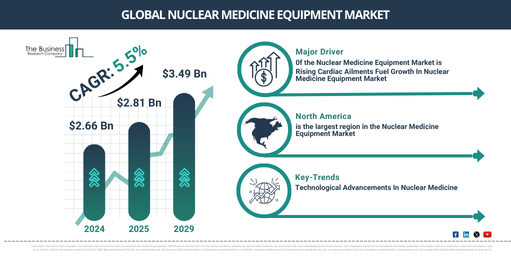
    The market size of nuclear medicine equipment has seen consistent growth in the past few years. The market is expected to expand from $2.66 billion in 2024 to $2.81 billion in 2025 with a compound annual growth rate (CAGR) of 5.8%. The growth in the previous years has been due to the increased need for early detection of diseases, rise in the elderly population, expansion in healthcare infrastructure, increased funds for research and development, and a surge in the demand for functional imaging.

    In the coming years, the nuclear medicine equipment market is projected to exhibit robust growth. The market value is forecasted to reach $3.49 billion in 2029, growing at a compound annual growth rate (CAGR) of 5.5%. Factors propelling this growth during the forecast period include an increase in cancer cases, the escalating cost of nuclear imaging systems, a heightened emphasis on personalized medicine, the rising adoption of hybrid imaging systems, and growing demand for treatment and diagnostics of Alzheimer’s and Parkinson’s disease. Notable trends for the forecast period consist of technological progress, artificial intelligence integration, hybrid imaging systems, telemedicine, and the advent of compact devices.

    Download a free sample to assess the report’s scope and structure:

    https://www.thebusinessresearchcompany.com/sample.aspx?id=20582&type=smp

    How Are Key Drivers in the Industry Acting as Catalysts for the Growth of the Nuclear Medicine Equipment Market?

    The escalating occurrence of heart disorders is predicted to boost the nuclear medicine equipment market’s evolution in the future. Heart disorders, also referred to as heart or cardiovascular diseases, encompass a wide array of conditions impacting the heart and the circulatory system. These diseases can influence the function and structure of the heart, as well as the blood circulation within. The rising incidence of heart disorders is primarily accredited to aspects like aging population, lifestyle decisions including unhealthy dietary habits and sedentarism, environmental exposure, and enhancements in detection technologies. Nuclear medicine devices play a pivotal role in managing heart disorders by providing precise imaging and diagnostic data facilitating early detection, accurate assessment, and efficient tracking of these illnesses. For instance, the data from the British Heart Foundation, a UK-based heart research charity, revealed that around 7.6 million people in the UK suffered from heart and blood circulation diseases in January 2024, comprising approximately 4 million males and 3.6 million female patients. These diseases accounted for nearly 27% of the total deaths in the UK, equivalent to over 170,000 deaths per year or approximately 480 fatalities daily, i.e., one death in every three minutes. Consequently, this amplified incidence of heart disorders propels the growth of the nuclear medicine equipment market.

    Which Segments in the Nuclear Medicine Equipment Offer the Most Growth?

    The nuclear medicine equipment market covered in this report is segmented –

    1) By Product: Single Photon Emission Computed Tomography, Hybrid Positron Emission Tomography, Planar Scintigraphy

    2) By Application: Oncology, Cardiology, Neurology, Other Applications

    3) By End User: Hospitals, Imaging Centers, Academic And Research Institutes, Other End Users

    Subsegments:

    1) By Single Photon Emission Computed Tomography (SPECT): Standalone SPECT Systems, Hybrid SPECT/CT Systems

    2) By Hybrid Positron Emission Tomography (PET): PET/CT Systems, PET/MRI Systems

    3) By Planar Scintigraphy: Cardiac Imaging Systems, Bone Scintigraphy Systems, Thyroid Imaging Systems

    Request customized data on this market:

    https://www.thebusinessresearchcompany.com/customise?id=20582&type=smp

    What Are the Fastest-Growing Geographies in the Nuclear Medicine Equipment Market?

    North America was the largest region in the nuclear medicine equipment market in 2024. Asia-Pacific is expected to be the fastest-growing region in the forecast period. The regions covered in the nuclear medicine equipment market report are Asia-Pacific, Western Europe, Eastern Europe, North America, South America, Middle East, Africa.

    What Are the Strategic Trends Steering the Nuclear Medicine Equipment Market Direction?

    Leading entities in the nuclear medicine equipment sector are concentrating their efforts on the creation of sophisticated products like PET/CT scanners, aimed at delivering in-depth, functional snapshots of the body’s metabolic functions. The PET/CT scanner is a state-of-the-art imaging machine utilized in nuclear medicine that merges two techniques: positron emission tomography (PET) and computed tomography (CT). This dual-function scanner provides both functional and anatomical imaging in a single session, enhancing the accuracy of detection and diagnosis of various conditions by doctors. For example, in June 2024, Siemens Healthineers, a healthcare corporation based in Germany, introduced the Biograph Trinion PET/CT scanner. This PET scanner presents a unique, scalable axial field-of-view design, enabling technological upgrades on-site without the need for expensive room renovations or interruptions to the workflow. It includes a lutetium oxyorthosilicate (LSO) crystal detector providing high spatial resolution and a highly rapid time-of-flight performance of 239 picoseconds, thus improving small lesion detection and ensuring sufficient sensitivity up to 128 cps/kBq. Consequently, it allows for faster scans while lowering patient radiation exposure. Moreover, the Biograph Trinion incorporates a new air-cooled digital detector, making installation simpler compared to the conventional water-cooled mechanisms.

    View the full report here:

    https://www.thebusinessresearchcompany.com/report/nuclear-medicine-equipment-global-market-report

    What Are the Key Elements That Define the Nuclear Medicine Equipment Market?

    Nuclear medicine equipment refers to specialized medical devices used in nuclear medicine to diagnose and treat diseases using radioactive substances. These devices capture images of organs and tissues or deliver targeted radiation therapy. Nuclear medicine equipment allows for early diagnosis, treatment planning, and monitoring of various diseases, particularly cancers and cardiovascular disorders.

    Purchase the full report and get a swift delivery:

    https://www.thebusinessresearchcompany.com/purchaseoptions.aspx?id=20582

    About The Business Research Company:

    With over 15000+ reports from 27 industries covering 60+ geographies, The Business Research Company has built a reputation for offering comprehensive, data-rich research and insights. Armed with 1,500,000 datasets, the optimistic contribution of in-depth secondary research, and unique insights from industry leaders, you can get the information you need to stay ahead in the game.

    Get in touch with us:

    The Business Research Company: https://www.thebusinessresearchcompany.com/

    Americas +1 3156230293

    Asia +44 2071930708

    Europe +44 2071930708

    Email us at info@tbrc.info

    Follow us on:

    LinkedIn: https://in.linkedin.com/company/the-business-research-company

    YouTube: https://www.youtube.com/channel/UC24_fI0rV8cR5DxlCpgmyFQ

    Global Market Model: https://www.thebusinessresearchcompany.com/global-market-model
  • Global Non-Surgical Cosmetic Procedures Market Trends: Regional Breakdowns and Strategic Insights

    Global Non-Surgical Cosmetic Procedures Market Trends: Regional Breakdowns and Strategic Insights

    Discover trends, market shifts, and competitive outlooks for the non-surgical cosmetic procedures industry through 2025-2034 with The Business Research Company’s reliable data and in-depth research

    What is the Anticipated CAGR of the Non-Surgical Cosmetic Procedures Market, and What Factors Will Drive It?

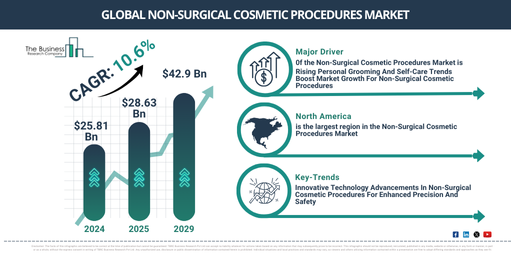
    The market for non-surgical cosmetic procedures has seen a swift escalation in its size over the recent years. It is projected to expand from $25.81 billion in 2024 to $28.63 billion in 2025, marking an impressive compound annual growth rate (CAGR) of 10.9%. This surge during the historic phase is credited to factors such as escalating demand for aesthetic improvements, an increasing senior population, a heightened focus on health, expansion of distribution networks, and an increasingly influential role of social media.

    Anticipated to experience swift expansion in the upcoming years, the non-surgical cosmetic procedures market is projected to reach a worth of $42.9 billion by 2029, showcasing a compound annual growth rate (CAGR) of 10.6%. The prediction for rising growth during the projection period can be linked to a higher desire for non-invasive methods, preventive aging therapies coming into focus, heightened uptake of combination treatments, increased interest in personalized, tailor-made treatments, a growing male customer base, and an emphasis on skin health preservation. The key tendencies anticipated during this forecast phase involve the integration of new laser technologies, progress in cosmetic treatment methods, product advancements, improvement in injection methods, together with overall technological progress.

    Download a free sample to assess the report’s scope and structure:

    https://www.thebusinessresearchcompany.com/sample.aspx?id=20581&type=smp

    What Are the Major Market Drivers Behind the Rising Adoption of Non-Surgical Cosmetic Procedures Market?

    The expansion of the non-surgical cosmetic procedures market is set to be fuelled by the escalating trends in personal grooming and self-care. These trends encompass the various strategies and routines that people utilize to upkeep their physical attractiveness, cleanliness, and overall health. Aspects such as a heightened awareness of beauty, the role of social media, and a focus on wellness and self-confidence contribute to the surge in personal grooming and self-care. Non-surgical cosmetic procedures support this trend by providing viable options for swift, minimally disruptive aesthetic enhancements, thus fostering self-confidence. A July 2024 report from the British Beauty Council, a UK organization, indicated that in 2023, the personal care industry injected £27.2 billion ($30.44 billion) into the GDP, an increase of 11% from 2022. The report linked this growth to an augmentation in household expenditure on personal care goods and services in the UK by 10%. Therefore, the mounting interest in personal grooming and self-care is propelling the development of the non-surgical cosmetic procedures market.

    Which Key Market Segments Comprise the Non-Surgical Cosmetic Procedures Market and Drive Its Revenue Growth?

    The non-surgical cosmetic procedures market covered in this report is segmented –

    1) By Technique: Botulinum Toxins, Hyaluronic Acid-Based Derma Fillers, Hair Removal, Other Techniques

    2) By Gender: Women, Men

    3) By End User: Hospitals Or Surgery Centers, MedSpas, Traditional Spas, Healthcare Professionals-Owned Clinics

    Subsegments:

    1) By Botulinum Toxins: Botox, Dysport, Xeomin, Jeuveau

    2) By Hyaluronic Acid-Based Derma Fillers: Juvederm, Restylane, Belotero, Teosyal, Captique

    3) By Hair Removal: Laser Hair Removal, Intense Pulsed Light (IPL) Hair Removal, Radiofrequency-Based Hair Removal, Electrolysis

    4) By Other Techniques: Chemical Peels, Microdermabrasion, Non-Surgical Fat Reduction, Skin Tightening, Non-Surgical Facelift, Lip Augmentation, Cellulite Treatment, Dermal Micro-Needling

    Request customized data on this market:

    https://www.thebusinessresearchcompany.com/customise?id=20581&type=smp

    Which Areas Are Leading Regions in the Non-Surgical Cosmetic Procedures Market Expansion Across the Globe?

    North America was the largest region in the non-surgical cosmetic procedures market in 2024. The regions covered in the non-surgical cosmetic procedures market report are Asia-Pacific, Western Europe, Eastern Europe, North America, South America, Middle East, Africa.

    What Long-Term Trends Are Transforming the Competitive Landscape of the Non-Surgical Cosmetic Procedures Market?

    Top-tier businesses engaged in the non-surgical cosmetic procedures sector are concentrating on the creation of pioneering products such as the advanced platinum focus lens array technology. This technology aims to boost precision and efficiency in cosmetic treatments. It defines an avant-garde system utilized in cosmetic devices to refine the focus and accuracy of energy-based therapies like lasers or light treatments. For example, Cynosure LLC, a manufacturer of light-based cosmetics and medical treatments in the United States, rolled out the PicoSure Pro device in June 2022 – a sophisticated upgrade of its original PicoSure system. It’s the primary and only FDA-approved 755nm picosecond laser specifically crafted to handle multiple pigmentary conditions such as melasma, Ota’s nevus, and Hori’s nevus. This gadget features a distinct delivery means that releases energy in a trillionth of a second, relying on pressure rather than heat to decrease thermal damage. As a result, it makes treatments safer and more efficient for all skin types. Platinum focus lenses play an important role by increasing collagen and elastin production which helps in treating wrinkles, acne scars, and enlarged pores.

    View the full report here:

    https://www.thebusinessresearchcompany.com/report/non-surgical-cosmetic-procedures-global-market-report

    How Is the Non-Surgical Cosmetic Procedures Market Conceptually Defined?

    Non-surgical cosmetic procedures are minimally invasive treatments that enhance appearance without the need for surgery. They are designed to reduce wrinkles, improve skin texture, and contour the body with little to no downtime. Non-surgical cosmetic treatments are popular for their quick recovery time and lower risk compared to surgical options. They are typically performed in outpatient settings by licensed professionals.

    Purchase the full report and get a swift delivery:

    https://www.thebusinessresearchcompany.com/purchaseoptions.aspx?id=20581

    About The Business Research Company:

    With over 15000+ reports from 27 industries covering 60+ geographies, The Business Research Company has built a reputation for offering comprehensive, data-rich research and insights. Armed with 1,500,000 datasets, the optimistic contribution of in-depth secondary research, and unique insights from industry leaders, you can get the information you need to stay ahead in the game.

    Get in touch with us:

    The Business Research Company: https://www.thebusinessresearchcompany.com/

    Americas +1 3156230293

    Asia +44 2071930708

    Europe +44 2071930708

    Email us at info@tbrc.info

    Follow us on:

    LinkedIn: https://in.linkedin.com/company/the-business-research-company

    YouTube: https://www.youtube.com/channel/UC24_fI0rV8cR5DxlCpgmyFQ

    Global Market Model: https://www.thebusinessresearchcompany.com/global-market-model
  • Next Generation Sequencing (NGS) Sample Preparation Market Outlook 2025: Mapping Growth, Innovation, and Regional Shifts

    Discover trends, market shifts, and competitive outlooks for the next generation sequencing (ngs) sample preparation industry through 2025-2034 with The Business Research Company’s reliable data and in-depth research

    What Are the Key Milestones in the Next Generation Sequencing (NGS) Sample Preparation Market’s Growth Trajectory From 2025 To 2034?

    The market size for next generation sequencing (NGS) sample preparation has seen swift expansion in the last few years. The sector is projected to expand from its value of $3.13 billion in 2024 to an estimated $3.6 billion in 2025, witnessing a compound annual growth rate (CAGR) of 14.7%. The escalation observed in the historic timeframe can be linked to factors such as a surge in demand for high-throughput sequencing, a reduction in sequencing expenses, a growth in genomic studies, an increase in the occurrence of genetic disorders, and advancements in sample preparation technology.

    Expectations for the next generation sequencing (NGS) sample preparation market project a swift increase in its size in the coming years, expanding to a worth of $6.2 billion by 2029 at a compound annual growth rate (CAGR) of 14.6%. Factors driving this anticipated growth during the forecasted period include the rising utilization of NGS in diagnostics, the broadening scope of research in precision medicine, an increasing demand for nucleic acid sequencing, improved reimbursement policies for NGS-based tests, and continuous advancement in NGS technologies. The forecast period will also witness key trends such as the integration of Artificial Intelligence and sophisticated data analysis tools, advancements in reagent technology, non-invasive prenatal testing (NIPT), and the incorporation of automation in sample preparation processes.

    Download a free sample to assess the report’s scope and structure:

    https://www.thebusinessresearchcompany.com/sample.aspx?id=20580&type=smp

    What External and Internal Drivers Are Contributing to the Growth of the Next Generation Sequencing (NGS) Sample Preparation Market?

    The rise in the prevalence of infectious diseases is set to fuel the expansion of the next-generation sequencing (NGS) sample preparation market. Pathogens such as bacteria, viruses, fungi, or parasites cause these diseases, which can be transmitted directly or indirectly between people. Increased worldwide travel, urbanization, climate change, resistance to antimicrobials, and the emergence of new pathogens contribute to the rising prevalence of infectious diseases. Next-generation sequencing sample preparation plays an essential role in this scenario, as it aids in the quick and precise identification of pathogens, thereby managing outbreaks, tracing transmission, and advising effective treatment methods. For example, as per GOV.UK, a UK-based public sector information provider, tuberculosis (TB) cases in England surged by 7% in the first half of 2023 compared to the same timeframe in 2022, with figures rising from 2,251 to 2,408. As a result, the increasing number of infectious diseases instances is anticipated to boost the next-generation sequencing (NGS) sample preparation market.

    What Segment Types Define the Next Generation Sequencing (NGS) Sample Preparation Market Structure?

    The next generation sequencing (NGS) sample preparation market covered in this report is segmented –

    1) By Products And Services: Workstations Or instruments, Reagents And Consumables, Services

    2) By Workflow: Library Preparation, Target Enrichment, Sample ExtractionOrisolation, Fragmentation, Sample Quantification, Library Quantification, Quality Control (Qc), Pooling

    3) By Technology: Nanopore Sequencing, Sequencing By Synthesis (Sbs), Single Molecule Real-time (SMRT) Sequencing, Ion Semiconductor Sequencing

    4) By Application: Diagnostics, Drug Discovery, Biomarker Discovery, Precision Medicine, Agriculture And Animal Research, Other Applications

    5) By End User: Academic Institutes And Research Centers, Hospitals And Clinics, Pharma And Biotech Companies, Other End Users

    Subsegments:

    1) By Workstations or Instruments: Automated Sample Preparation Systems, Manual Workstations, Integrated NGS Platforms

    2) By Reagents and Consumables: Library Preparation Kits, DNA/RNA Extraction Kits, Amplification Kits, Quality Control Reagents, Consumables

    3) By Services: Sample Preparation Services, NGS Workflow Consultation, Training and Support Services, Data Analysis Services

    Request customized data on this market:

    https://www.thebusinessresearchcompany.com/customise?id=20580&type=smp

    Which Geographic Areas Hold the Strongest Growth Potential in the Next Generation Sequencing (NGS) Sample Preparation Market?

    North America was the largest region in the next generation sequencing (NGS) sample preparation market in 2024. Asia-Pacific is expected to be the fastest-growing region in the forecast period The regions covered in the next generation sequencing (NGS) sample preparation market report are Asia-Pacific, Western Europe, Eastern Europe, North America, South America, Middle East, Africa.

    What Key Market Trends and Innovations Are Shaping the Future of the Next Generation Sequencing (NGS) Sample Preparation Industry?

    Key industry players in the next-generation sequencing (NGS) sample preparation market are leveraging automation in sample preparation including the use of digital microfluidics platforms to boost efficiency, decrease manual mistakes, and expedite the processing of samples for prompt and precise genomic analysis. Digital microfluidics platforms are cutting-edge tech that control minute fluid volumes on a microchip via electrical fields, facilitating accurate and automated sample handling for functions like NGS sample preparation. As an example, in September 2023, INTEGRA Biosciences, a Swiss company offering user-friendly solutions for liquid handling and media preparation applications, launched the MIRO CANVAS. This is a small digital microfluidics platform fabricated for completely automated NGS sample preparation. This pioneering system boosts precision and efficiency by automating processes, reduces active involvement to just 15 minutes per run, and enables the immediate processing of clinical samples. The MIRO CANVAS is aimed at simplifying NGS procedures and backing advanced genomic research by preserving DNA integrity and limiting the use of reagents.

    View the full report here:

    https://www.thebusinessresearchcompany.com/report/next-generation-sequencing-ngs-sample-preparation-global-market-report

    What Is the Definition of the Next Generation Sequencing (NGS) Sample Preparation Market?

    Next-generation sequencing (NGS) sample preparation refers to the process of preparing DNA or RNA samples for sequencing using Next-Generation Sequencing (NGS) technologies. It involves multiple steps such as extraction, quantification, library preparation, and enrichment to ensure the samples are suitable for high-throughput sequencing and accurate genomic analysis.

    Purchase the full report and get a swift delivery:

    https://www.thebusinessresearchcompany.com/purchaseoptions.aspx?id=20580

    About The Business Research Company:

    With over 15000+ reports from 27 industries covering 60+ geographies, The Business Research Company has built a reputation for offering comprehensive, data-rich research and insights. Armed with 1,500,000 datasets, the optimistic contribution of in-depth secondary research, and unique insights from industry leaders, you can get the information you need to stay ahead in the game.

    Get in touch with us:

    The Business Research Company: https://www.thebusinessresearchcompany.com/

    Americas +1 3156230293

    Asia +44 2071930708

    Europe +44 2071930708

    Email us at info@tbrc.info

    Follow us on:

    LinkedIn: https://in.linkedin.com/company/the-business-research-company

    YouTube: https://www.youtube.com/channel/UC24_fI0rV8cR5DxlCpgmyFQ

    Global Market Model: https://www.thebusinessresearchcompany.com/global-market-model
  • Neurorehabilitation Devices Market in Focus: Forecasting Growth Drivers, Scaling Potential, and Global Opportunities

    Neurorehabilitation Devices Market in Focus: Forecasting Growth Drivers, Scaling Potential, and Global Opportunities

    Discover trends, market shifts, and competitive outlooks for the neurorehabilitation devices industry through 2025-2034 with The Business Research Company’s reliable data and in-depth research

    How Has The Neurorehabilitation Devices Market Size Shifted, And What Is the Outlook Through 2034?

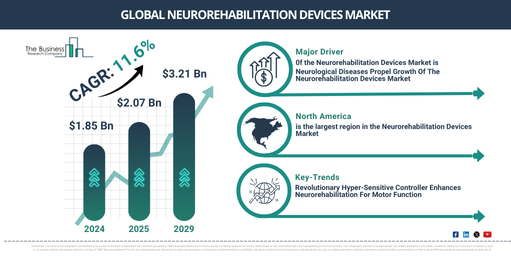
    In recent times, there has seen a swift expansion in the neurorehabilitation devices market. The market, which was valued at $1.85 billion in 2024, is forecasted to reach $2.07 billion in 2025, projecting a compound annual growth rate (CAGR) of 11.9%. Factors such as an increase in the aging population, the widespread nature of neurodegenerative diseases, rising public awareness, regulatory sanctions, and advancements in research and development are credited with this growth observed in the past period.

    In the coming few years, significant expansion is predicted for the neurorehabilitation devices market. Its value is expected to escalate to $3.21 billion by 2029, with an 11.6% compound annual growth rate (CAGR). The anticipated expansion during the forecast period is traced back to factors like burgeoning healthcare expenditure, enhanced educational levels among healthcare workers, development in telemedicine, proliferation of specialty clinics, and improved patient results. Key trends to watch during this forecast period encompass technological evolution, incorporation of robotics and artificial intelligence in neurorehabilitation devices, the emergence of wearable neurorehabilitation gadgets, as well as real-time data that enables ongoing monitoring.

    Download a free sample to assess the report’s scope and structure:

    https://www.thebusinessresearchcompany.com/sample.aspx?id=20579&type=smp

    What Are the Core Market Drivers Propelling Growth in the Neurorehabilitation Devices Industry?

    The neurorehabilitation devices market is foreseen to expand due to the escalating occurrence of neurological disorders. Various factors contribute to the surging cases of these diseases such as growing older population, enhanced diagnostic procedures, heightened awareness and concerns pertaining to stress and mental health. Neurorehabilitation devices provide a helping hand in treating these diseases by recovering motor, cognitive, and sensory functions via specific therapies and stimulation. The World Federation of Neurology, a UK-based representatives of global neurology and neurologists, reported in October 2023 that above 40% of the global population are presently dealing with some sort of neurological problems, with an expectation that this figure will almost double by 2050. Furthermore, as per the UK Parliament’s statistics from September 2021, about one in six people in the UK suffer from a minimum of one neurological disorder, with approximately 600,000 people diagnosed each year. Hence, the accelerating occurrence of neurological diseases is fueling the expansion of the neurorehabilitation devices market.

    How Is the Neurorehabilitation Devices Market Segmented?

    The neurorehabilitation devices market covered in this report is segmented –

    1) By Product: Neurorobotics, Brain-Computer Interface, Wearable Devices, Non-Invasive Stimulators, Other Products

    2) By Application: Stroke, Parkinson’s Disease, Brain And Spinal Cord Injury, Cerebral Palsy, Multiple Sclerosis, Other Applications

    3) By End User: Rehabilitation Centers, Hospitals And Clinics, Home Care, Other End Users

    Subsegments:

    1) By Neurorobotics: Robotic Exoskeletons, Robotic Rehabilitation Devices, Assistive Robots For Gait Training

    2) By Brain-Computer Interface: Invasive Brain-Computer Interfaces, Non-Invasive Brain-Computer Interfaces, Hybrid Brain-Computer Interfaces

    3) By Wearable Devices: Smart Gloves, Smart Sensors, Exosuits and Wearable Robotics

    4) By Non-Invasive Stimulators: Transcranial Magnetic Stimulation (TMS) Devices, Transcranial Direct Current Stimulation (tDCS) Devices, Functional Electrical Stimulation (FES) Devices

    5) By Other Products: Virtual Reality Rehabilitation Systems, Software Platforms For Neurorehabilitation, Cognitive Training Devices

    Request customized data on this market:

    https://www.thebusinessresearchcompany.com/customise?id=20579&type=smp

    Which Regions Are Driving the Next Phase of the Neurorehabilitation Devices Market Growth?

    North America was the largest region in the neurorehabilitation devices market in 2024. The regions covered in the neurorehabilitation devices market report are Asia-Pacific, Western Europe, Eastern Europe, North America, South America, Middle East, Africa.

    Which Technological Trends Are Reshaping the Neurorehabilitation Devices Industry Dynamics?

    Leading firms in the neurorehabilitation devices market are prioritizing the creation of novel products, including hyper-sensitive controllers that increase exactness and patient engagement during rehabilitation therapies. In this context, a hyper-sensitive controller is a component or system constructed to react highly sensitively to movements, intentions or neural signals of a user. For example, in February 2023, MindMaze, a Swiss firm focused on digital neurotherapeutic (DTx) solutions, introduced Izar, a cutting-edge smart peripheral device specifically designed to improve hand motor functionalities in patients with neurological disorders like stroke and Parkinson’s disease. This advanced, mobile device augments hand flexibility and power by precisely recognizing fine grasp forces and wrist maneuvers, fostering exact training and assessment. Izar meets a crucial requirement in neurological rehabilitation by offering both in-clinic and personal home-based training.

    View the full report here:

    https://www.thebusinessresearchcompany.com/report/neurorehabilitation-devices-global-market-report

    How Is the Neurorehabilitation Devices Market Defined and What Are Its Core Parameters?

    Neurorehabilitation devices refer to specialized tools and equipment designed to assist in the rehabilitation of individuals with neurological disorders or injuries. These devices aim to restore or improve functions that have been impaired due to conditions such as stroke, traumatic brain injury, spinal cord injury, multiple sclerosis, or other neurological diseases.

    Purchase the full report and get a swift delivery:

    https://www.thebusinessresearchcompany.com/purchaseoptions.aspx?id=20579

    About The Business Research Company:

    With over 15000+ reports from 27 industries covering 60+ geographies, The Business Research Company has built a reputation for offering comprehensive, data-rich research and insights. Armed with 1,500,000 datasets, the optimistic contribution of in-depth secondary research, and unique insights from industry leaders, you can get the information you need to stay ahead in the game.

    Get in touch with us:

    The Business Research Company: https://www.thebusinessresearchcompany.com/

    Americas +1 3156230293

    Asia +44 2071930708

    Europe +44 2071930708

    Email us at info@tbrc.info

    Follow us on:

    LinkedIn: https://in.linkedin.com/company/the-business-research-company

    YouTube: https://www.youtube.com/channel/UC24_fI0rV8cR5DxlCpgmyFQ

    Global Market Model: https://www.thebusinessresearchcompany.com/global-market-model
  • Strong CAGR to Propel in the Neurology Diagnostic And Monitoring Devices Market and Beyond upto $13.21 Billion by 2029

    Strong CAGR to Propel in the Neurology Diagnostic And Monitoring Devices Market and Beyond upto $13.21 Billion by 2029

    Discover trends, market shifts, and competitive outlooks for the neurology diagnostic and monitoring devices industry through 2025-2034 with The Business Research Company’s reliable data and in-depth research

    How Has the Neurology Diagnostic And Monitoring Devices Market Growth Performance Trended Historically, And What Lies Ahead?

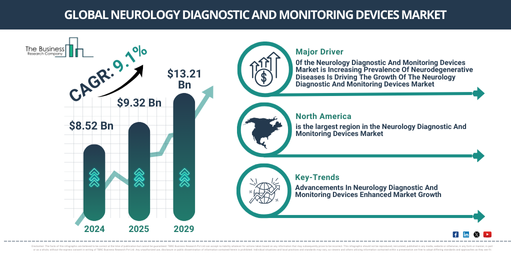
    There has been a robust growth in the size of the neurology diagnostic and monitoring devices market in the past few years. The market, which stands at $8.52 billion in 2024, is expected to rise to $9.32 billion in 2025, showing a compound annual growth rate (CAGR) of 9.4%. The historical growth of the market can be credited to several factors, including escalated healthcare expenditure, a surge in EEG procedures, increased expenditure on healthcare, more investment funnelled into research and development, as well as advancements in diagnostic precision.

    In the upcoming years, the market for neurology diagnostic and monitoring devices is predicted to witness robust growth. The market value is projected to reach $13.21 billion in 2029 with a compound annual growth rate (CAGR) of 9.1%. This anticipated growth in the market during the projected period can be ascribed to activities initiated by the government and healthcare sector, the advent of personalized medicine, the progression of telemedicine, upgrading healthcare infrastructure, and ratifications and standards set by regulatory bodies. The expansion of telehealth, progress in neurostimulation devices, breakthroughs in biomarker discovery and integration, advances in neuroinformatics and data integration, and developments in nanotechnology are some of the major trends expected during the forecast period.

    Download a free sample to assess the report’s scope and structure:

    https://www.thebusinessresearchcompany.com/sample.aspx?id=20578&type=smp

    Which Primay Drivers Are Accelerating Growth in the Neurology Diagnostic And Monitoring Devices Market?

    The neurology diagnostic and monitoring devices market is predicted to benefit from the rise in neurodegenerative diseases. These diseases, which involve progressive nerve cell deterioration or death in the brain and spinal cord, are becoming more common due to factors like an aging population, longer life spans, and increased exposure to environmental and genetic risks. Neurology diagnostic and monitoring devices offer accurate, real-time analysis of brain function and disease progression, making early diagnosis, personalized treatment plans, and effective therapeutic response monitoring possible. For example, National Records of Scotland reported in September 2023, that Alzheimer’s disease and other forms of dementia accounted for 6,277 deaths in Scotland in 2022, a 4% increase from the preceding year, with a rise of 231 deaths. Consequently, the escalating prevalence of neurodegenerative diseases is the driving force behind the growth of the neurology diagnostic and monitoring devices market.

    Which Primary Segments of the Neurology Diagnostic And Monitoring Devices Market Are Driving Growth and Industry Transformations?

    The neurology diagnostic and monitoring devices market covered in this report is segmented –

    1) By Device Type: Electroencephalogram (EEG) Systems, Magnetic Resonance Imaging (MRI) Systems, Computed Tomography (CT) Scanner, Position Emission Tomography (PET) System, Ultrasound Imaging Systems, Other Device Types

    2) By Indication: Neurodegenerative Disease, Epilepsy, Stroke, Other Indications

    3) By End-User: Hospitals And Surgery Centers, Neurology Centers, Ambulatory Care Centers, Diagnostic Laboratories And Imaging Centers, Research Laboratories And Academic Institutes

    Subsegments:

    1) By Electroencephalogram (EEG) Systems: Portable EEG Systems, Clinical EEG Systems, Wireless EEG Systems

    2) By Magnetic Resonance Imaging (MRI) Systems: Closed MRI Systems, Open MRI Systems, Functional MRI (fMRI) Systems

    3) By Computed Tomography (CT) Scanner: Standard CT Scanners, High-Definition CT Scanners, 3D CT Scanners

    4) By Position Emission Tomography (PET) System: PET-CT Scanners, PET-MRI Scanners

    5) By Ultrasound Imaging Systems: Diagnostic Ultrasound Systems, 3D and 4D Ultrasound Systems, Portable Ultrasound Systems

    6) By Other Device Types: Nerve Conduction Study (NCS) Devices, Evoked Potential (EP) Systems, Brain Implants and Neurostimulators

    Request customized data on this market:

    https://www.thebusinessresearchcompany.com/customise?id=20578&type=smp

    Which Regions Are Key Players in the Growth of the Neurology Diagnostic And Monitoring Devices Market?

    North America was the largest region in the neurology diagnostic and monitoring devices market in 2024. Asia-Pacific is expected to be the fastest-growing region in the forecast period. The regions covered in the neurology diagnostic and monitoring devices market report are Asia-Pacific, Western Europe, Eastern Europe, North America, South America, Middle East, Africa.

    Which Cutting-Edge Market Trends Are Expected to Drive the Neurology Diagnostic And Monitoring Devices Market’s Growth?

    Leading firms in the neurology diagnostic and monitoring devices market are concentrating their efforts on creating innovative solutions like image-guided therapy systems to increase accuracy in neurovascular procedures. This type of medical technology is often used for assistance during the planning, performing and navigating of different therapeutic procedures, typically in real-time. For example, Koninklijke Philips N.V., a health technology company headquartered in The Netherlands, in February 2024, launched an innovative Azurion neuro biplane system designed to quicken and improve the non-invasive diagnostic process as well as treatment for neurovascular patients. This system includes distinctive features like improved C-arm rotation and angulation for superior imaging flexibility, swift shifts from 2D to 3D imaging for a streamlined workflow, extensive table-side control for a sterile working field, auto rotating beam for precise image positioning, a new head immobilizer to aid in stroke patient care, and integration of AI and machine learning for performance monitoring and service issue prediction.

    View the full report here:

    https://www.thebusinessresearchcompany.com/report/neurology-diagnostic-and-monitoring-devices-global-market-report

    What Parameters Are Used to Define the Neurology Diagnostic And Monitoring Devices Market?

    Neurology diagnostic and monitoring devices are medical tools used to diagnose and monitor disorders of the nervous system, including the brain, spinal cord, and peripheral nerves. These devices assess neurological functions and help detect conditions such as epilepsy, stroke, Alzheimer’s disease, and multiple sclerosis.

    Purchase the full report and get a swift delivery:

    https://www.thebusinessresearchcompany.com/purchaseoptions.aspx?id=20578

    About The Business Research Company:

    With over 15000+ reports from 27 industries covering 60+ geographies, The Business Research Company has built a reputation for offering comprehensive, data-rich research and insights. Armed with 1,500,000 datasets, the optimistic contribution of in-depth secondary research, and unique insights from industry leaders, you can get the information you need to stay ahead in the game.

    Get in touch with us:

    The Business Research Company: https://www.thebusinessresearchcompany.com/

    Americas +1 3156230293

    Asia +44 2071930708

    Europe +44 2071930708

    Email us at info@tbrc.info

    Follow us on:

    LinkedIn: https://in.linkedin.com/company/the-business-research-company

    YouTube: https://www.youtube.com/channel/UC24_fI0rV8cR5DxlCpgmyFQ

    Global Market Model: https://www.thebusinessresearchcompany.com/global-market-model

  • Neurofeedback Market Valuation Expected To Reach $2.35 Billion By 2029, Growing At A Rate Of 10.6%

    Neurofeedback Market Valuation Expected To Reach $2.35 Billion By 2029, Growing At A Rate Of 10.6%

    Discover trends, market shifts, and competitive outlooks for the neurofeedback industry through 2025-2034 with The Business Research Company’s reliable data and in-depth research

    What Are the Projected Market Size and Growth Rates for the Neurofeedback Market From 2025 To 2029?

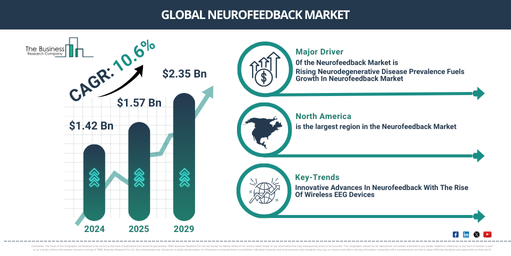
    In recent times, the neurofeedback market has experienced fast-paced expansion. Anticipated to increase from $1.42 billion in 2024 to $1.57 billion in 2025, this market anticipates a compound annual growth rate (CAGR) of 10.7%. The significant growth during the historical period could be associated with the widespread incidence of insomnia and anxiety disorders, amplified consciousness of mental health, mounting demand stimulated by amplified research and clinical confirmation, rising need for non-invasive treatments, and augmented healthcare spending.

    In the coming years, the neurofeedback market size is projected to experience substantial growth, increasing to $2.35 billion by 2029 with a 10.6% compound annual growth rate (CAGR). Factors contributing to this anticipated growth are the rising prevalence of mental disorders, the increase in traumatic brain injuries, higher demand for non-pharmacological treatments, a surge in cognitive enhancement applications, and more people opting for home-based therapy. Future trends include advancements in technology, such as innovative assessment technology, the development of cloud-based clinical assessment, the miniaturization of electroencephalography (EEG) hardware, and enhanced signal processing.

    Download a free sample to assess the report’s scope and structure:

    https://www.thebusinessresearchcompany.com/sample.aspx?id=20577&type=smp

    Which Factors and External Forces Are Driving Demand in the Neurofeedback Market?

    The escalating incidence of neurodegenerative illnesses is poised to boost the expansion of the neurofeedback market in the future. These diseases gradually diminish the function of the brain and nervous system, resulting in cognitive, movement and memory issues. The rise in neurodegenerative diseases can be attributed mostly to the aging populace, enhanced diagnostic techniques, increased awareness, and lifestyle factors. Neurofeedback proves to be a beneficial instrument in managing Parkinson’s disease, by aiding in enhancing motor control, cognitive capability, emotional control, and general brain wellness. This method can be used to enhance the quality of sleep which is frequently hindered in patients with Parkinson’s. By enhancing the brainwave patterns which encourage restful sleep, patients can achieve better overall health and manage their symptoms more effectively. For example, in December 2022, the Parkinson Foundation, based in the US, revealed that the annual incidence of Parkinson’s disease (PD) among the elderly is 50% higher than the previously estimated 60,000 cases. Furthermore, it is projected that by 2030, an additional 1.2 million Americans will be suffering from Parkinson’s disease. Therefore, the escalating incidence of neurodegenerative diseases is propelling the growth of the neurofeedback market.

    Which Segments in the Neurofeedback Offer the Most Growth?

    The neurofeedback market covered in this report is segmented –

    1) By Product: Amplifiers, Electrodes or Sensors, Computer Software

    2) By System: Frequency Or Power Neurofeedback System, Slow Cortical Potential Neurofeedback (SCP-NF) System, Low-Energy Neurofeedback System (LENS), Hemoencephalographic (HEG) Neurofeedback System, Live Z-Score Neurofeedback System, Low-Resolution Electromagnetic Tomography (LORE-TA), Functional Magnetic Resonance Imaging (fMRI)

    3) By Application: Attention Deficit Hyperactivity Disorder (ADHD), Anxiety, Depression, Epilepsy, Insomnia, Drug Addiction, Schizophrenia, Other Applications

    4) By End User: Hospitals, Physician Offices, Ambulatory Surgical Center

    Subsegments:

    1) By Amplifiers: EEG Amplifiers, Wireless Amplifiers, Portable Amplifiers

    2) By Electrodes or Sensors: EEG Electrodes, Disposable Electrodes, Dry Electrodes, Conductive Gel Electrodes

    3) By Computer Software: Neurofeedback Training Software, Data Analysis Software, Visualization Software, Biofeedback Software

    Request customized data on this market:

    https://www.thebusinessresearchcompany.com/customise?id=20577&type=smp

    What Are the Fastest-Growing Geographies in the Neurofeedback Market?

    North America was the largest region in the neurofeedback market in 2024. The regions covered in the neurofeedback market report are Asia-Pacific, Western Europe, Eastern Europe, North America, South America, Middle East, Africa.

    What Are the Key Market Trends in the Neurofeedback Market Over the Coming Years?

    Top companies in the neurofeedback market are prioritizing the development of state-of-the-art devices like wireless EEG equipment, which are designed to transmit data thus improving mobility and flexibility in a variety of environments. An EEG (Electroencephalogram) device is typically employed in the study and treatment of neurodegenerative diseases, enabling the monitoring of brainwave activity and the assessment of neurological function. By deploying sensors on the scalp, this device captures brain’s electrical activity which is crucial in uncovering abnormal brainwave patterns associated with cognitive problems, motor malfunctions and other signs of neurodegenerative diseases such as Alzheimer’s, Parkinson’s, and ALS. For example, BrainBit, a US electronics manufacturer, launched the BrainBit Flex, a novel wireless EEG device in September 2022. This groundbreaking equipment permits the placement of four sensors anywhere on the 10-20 system while preserving a robust signal quality. The Flex device enhances practicality and versatility, equipping therapists with the capability to construct a range of customized neurofeedback protocols. This development paves the way for extensive opportunities for neurofeedback treatment and training at home, rendering it a crucial tool for practitioners and their clients.

    View the full report here:

    https://www.thebusinessresearchcompany.com/report/neurofeedback-global-market-report

    What Are the Key Elements That Define the Neurofeedback Market?

    Neurofeedback is a type of biofeedback that involves training individuals to regulate their brain activity. It uses real-time monitoring of brainwaves (usually through electroencephalography or EEG) to provide feedback to the individual about their brain function. The goal is to teach the brain to improve its activity regulation, leading to better cognitive, emotional, and physiological functioning.

    Purchase the full report and get a swift delivery:

    https://www.thebusinessresearchcompany.com/purchaseoptions.aspx?id=20577

    About The Business Research Company:

    With over 15000+ reports from 27 industries covering 60+ geographies, The Business Research Company has built a reputation for offering comprehensive, data-rich research and insights. Armed with 1,500,000 datasets, the optimistic contribution of in-depth secondary research, and unique insights from industry leaders, you can get the information you need to stay ahead in the game.

    Get in touch with us:

    The Business Research Company: https://www.thebusinessresearchcompany.com/

    Americas +1 3156230293

    Asia +44 2071930708

    Europe +44 2071930708

    Email us at info@tbrc.info

    Follow us on:

    LinkedIn: https://in.linkedin.com/company/the-business-research-company

    YouTube: https://www.youtube.com/channel/UC24_fI0rV8cR5DxlCpgmyFQ

    Global Market Model: https://www.thebusinessresearchcompany.com/global-market-model