Author: Marketing Posting

  • Market Trends Influencing Strategic Decisions in the High End Cellomics Industry: Advancements In High-Content Analysis Systems For Precision Medicine And Drug Discovery

    Market Trends Influencing Strategic Decisions in the High End Cellomics Industry: Advancements In High-Content Analysis Systems For Precision Medicine And Drug Discovery

    We’ve updated all our reports with current data on tariff changes, trade developments, and supply chain shifts affecting key industries.

    #What is the Projected CAGR for the High End Cellomics Market Size from 2025 to 2034?#_x000D_

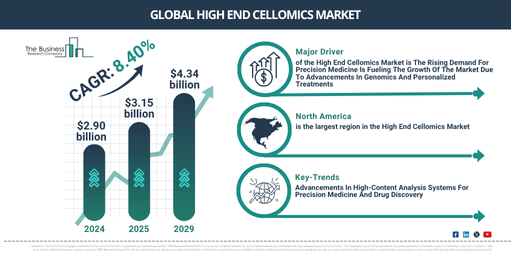
    The upscale cellomics market has witnessed robust growth in the past few years. The market size is projected to increase from $2.90 billion in 2024 to $3.15 billion in 2025, exhibiting a compound annual growth rate (CAGR) of 8.6%. This significant growth during the historic period is due to an increased need for high-content screening in drug discovery, advancements in imaging systems, a surge in personalized medicine research, a rise in investment for academic and pharmaceutical research and development, and a broadening of stem cell and cancer research applications._x000D_

    _x000D_

    The size of the high-end cellomics market is anticipated to experience substantial growth in the forthcoming years, with the value projected to reach $4.34 billion by 2029, representing a compound annual growth rate (CAGR) of 8.4%. This growth during the prediction period may be credited to factors such as the implementation of AI and machine learning in cell analysis, increased acceptance of 3D cell culture models, a growing demand for automated and high-throughput systems, an intensified focus on regenerative medicine and gene therapy, and market expansion into areas with enhanced healthcare infrastructure. Among the significant trends forecasted for this period are AI-led image analysis, integration of high-content screening with CRISPR technologies, progression in 3D cell culture and organoid models, the automation and downsizing of cell-based assays, along with cloud-based data management and analytical platforms._x000D_

    _x000D_

    #Download a free sample to assess the report’s scope and structure:#_x000D_

    https://www.thebusinessresearchcompany.com/sample.aspx?id=24237&type=smp_x000D_

    _x000D_

    #What Are the Major Market Drivers Behind the Rising Adoption of High End Cellomics Market?#_x000D_

    There is an expectation for the high-end cellomics market to expand due to the growing need for precision medicine. Precision medicine is an approach in healthcare that customizes treatments for patients based on their genetic information, environmental factors, and lifestyle. The expansion of precision medicine can be credited to advancements in genomics, paving the way for personalized treatments that are tied to an individual’s genetic composition. This not only boosts their effectiveness but also reduces their side effects. High-end cellomics makes use of sophisticated imaging to provide live observations of cellular activities, thus assisting in the recognition of biomarkers and monitoring of disease progress. Precision medicine is thereby enhanced, with boosted personal treatment strategies and increased accuracy in diagnosis. For example, as reported by the Personalized Medicine Coalition, a healthcare institution based in the US, the FDA gave approval to 16 fresh personalized treatments in 2023 specially designed for patients with rare diseases, a significant increase from only six in 2022. As such, the intensifying need for precision medicine is propelling the high-end cellomics market._x000D_

    _x000D_

    #Which Key Market Segments Comprise the High End Cellomics Market and Drive Its Revenue Growth?#_x000D_

    The high end cellomics market covered in this report is segmented –_x000D_

    _x000D_

    1) By Product Type: Instruments, Reagents And Consumables, Software And Services_x000D_

    2) By Technology: Microscopy, Flow Cytometry, Single-Cell Genomics, Mass Spectrometry, Next Generation Sequencing, Other Technologies_x000D_

    3) By Application: Drug Discovery, Cancer Research, Neuroscience, Stem Cell Research And Regenerative Medicine, Personalized Medicine, Other Applications_x000D_

    4) By End-User: Biotechnology And Pharmaceutical Companies, Hospitals And Diagnostic Laboratories, Contract Research Organizations, Other End-Users_x000D_

    _x000D_

    Subsegments:_x000D_

    1) By Instruments: High-Content Screening Systems, Flow Cytometers, Confocal Microscopes, Automated Microscopy Systems, Image Analysis Workstations, Robotic Cell Handling Systems_x000D_

    2) By Reagents And Consumables: Fluorescent Dyes And Probes, Cell Staining Kits, Cell Culture Reagents, Assay Kits, Microplates, Slide And Cover Glasses, Fixatives And Buffers_x000D_

    3) By Software And Services: Image Analysis Software, Data Management And Integration Tools, Artificial Intelligence (AI)-Based Predictive Analytics Software, Cloud-Based Data Storage Solutions, Technical Support And Maintenance Services, Custom Assay Development Services, Training And User Support Programs_x000D_

    _x000D_

    #Request customized data on this market:#_x000D_

    https://www.thebusinessresearchcompany.com/sample.aspx?id=24237&type=smp_x000D_

    _x000D_

    #Which Areas Are Leading Regions in the High End Cellomics Market Expansion Across the Globe?#_x000D_

    North America was the largest region in the high-end cellomics market in 2024. Asia-Pacific is expected to be the fastest-growing region in the forecast period. The regions covered in the high end cellomics market report are Asia-Pacific, Western Europe, Eastern Europe, North America, South America, Middle East, Africa._x000D_

    _x000D_

    #What Are the Strategic Trends Steering the High End Cellomics Market Direction?#_x000D_

    Leaders in the high-end cellomics market are honing their focus on the production of cutting-edge items such as the high-content analysis system. This is aimed at promoting precision medicine through comprehensive phenotypic analysis. The high-content analysis (HCA) system, a sophisticated imaging technology, offers multiple measurements of cellular parameters under high-throughput circumstances. This allows for detailed exploration of intricate biological processes at a cellular level. This provides valuable data relevant for drug discovery, toxicity assessments, and personalized medicine applications. For example, Yokogawa Electric Corporation, a Tokyo-based electrical engineering and software firm, launched the CellVoyager CQ3000 in February 2024. This benchtop high-content analysis system is designed to rapidly capture high-resolution 3D images of live cellular cultures, thus allowing for a thorough and efficient assessment of cellular responses and the impacts of drugs. Its features include Yokogawa’s unique confocal scanner unit with dual spinning-disk technology for low phototoxicity, precise temperature control for consistent long-term live cell imaging, among other options. Paired with the CellPathfinder image analysis software, it aids in complex data analysis, including deep learning, which advances drug discovery, regenerative medicine research, and fundamental biological studies._x000D_

    _x000D_

    #View the full report here:#_x000D_

    https://www.thebusinessresearchcompany.com/report/high-end-cellomics-global-market-report_x000D_

    _x000D_

    #How Is the High End Cellomics Market Conceptually Defined?#_x000D_

    High-end cellomics involves cutting-edge, automated technologies that integrate high-content imaging with advanced data analytics to examine cellular behavior at the single-cell level. These platforms support high-throughput screening and provide quantitative insights into cell morphology, molecular expression, and functional responses. They are particularly useful for detecting subtle cellular changes in response to drugs or environmental stimuli._x000D_

    _x000D_

    #Purchase the full report and get a swift delivery:#_x000D_

    https://www.thebusinessresearchcompany.com/customise?id=24237&type=smp_x000D_

    _x000D_

    #About The Business Research Company:#_x000D_

    With over 15000+ reports from 27 industries covering 60+ geographies, The Business Research Company has built a reputation for offering comprehensive, data-rich research and insights. Armed with 1,500,000 datasets, the optimistic contribution of in-depth secondary research, and unique insights from industry leaders, you can get the information you need to stay ahead in the game._x000D_

    _x000D_

    #Get in touch with us:#_x000D_

    The Business Research Company: https://www.thebusinessresearchcompany.com/_x000D_

    Americas +1 3156230293_x000D_

    Asia +44 2071930708_x000D_

    Europe +44 2071930708_x000D_

    Email us at info@tbrc.info_x000D_

    _x000D_

    #Follow us on:#_x000D_

    _x000D_

    LinkedIn: https://in.linkedin.com/company/the-business-research-company_x000D_

    YouTube: https://www.youtube.com/channel/UC24_fI0rV8cR5DxlCpgmyFQ_x000D_

    Global Market Model: https://www.thebusinessresearchcompany.com/global-market-model
  • Top Trends Driving Innovation and Change in the Herceptin Market: Advanced Technologies In Innovative Biosimilar Products Fuels The Market Growth Due To Cost-Effective Treatment And Increasing Patient Access

    Top Trends Driving Innovation and Change in the Herceptin Market: Advanced Technologies In Innovative Biosimilar Products Fuels The Market Growth Due To Cost-Effective Treatment And Increasing Patient Access

    We’ve updated all our reports with current data on tariff changes, trade developments, and supply chain shifts affecting key industries.

    #What Is the Current and Projected Market Size of the Herceptin Market Through 2034?#_x000D_

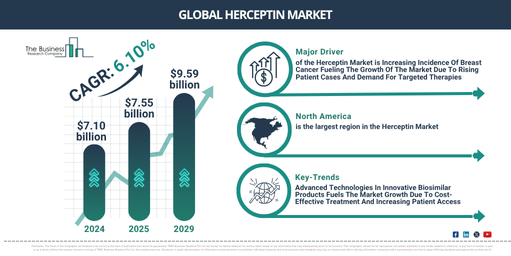
    In the past few years, the herceptin market has experienced significant expansion. The market is expected to increase from $7.10 billion in 2024 to $7.55 billion in 2025, boasting a compound annual growth rate (CAGR) of 6.4%. Various factors contributed to this growth during the historic period including regulatory approvals, a rise in breast cancer cases, progress in monoclonal antibody technology, positive results from clinical trials, and an uptick in healthcare spending._x000D_

    _x000D_

    The market size for herceptin is anticipated to experience significant growth in the forthcoming years. It is projected to expand to $9.59 billion by 2029, with a compound annual growth rate (CAGR) of 6.1%. Factors contributing to this growth in the prediction period include the proliferation of biosimilars, the escalating acceptance of target-based treatments, the growth of healthcare accessibility in emerging markets, continuing research and development in the oncology field, and the upward trend of HER2-positive cancer cases. The forecast period is also expected to see notable trends such as the progression of antibody-drug conjugates, advancements in biosimilar formulations, the incorporation of AI in drug discovery, the deployment of personalized medicine strategies and enhancements in drug delivery systems._x000D_

    _x000D_

    #Download a free sample to assess the report’s scope and structure:#_x000D_

    https://www.thebusinessresearchcompany.com/sample.aspx?id=24236&type=smp_x000D_

    _x000D_

    #What External and Internal Drivers Are Contributing to the Growth of the Herceptin Market?#_x000D_

    The continued upward trajectory of breast cancer rates is poised to drive the growth of the herceptin market. Breast cancer takes root in the cells of the breast, typically originating in milk ducts or lobules, and encompasses invasive ductal carcinoma (IDC), invasive lobular carcinoma (ILC), and HER2-positive breast cancer. Lifestyle choices including enhanced alcohol intake, poor dietary habits, and insufficient physical activity are partially to blame for the surge in breast cancer, as they heighten the risk of developing the disease. With an increasing number of breast cancer diagnoses, especially those of the HER2-positive type, the call for potent targeted treatments like herceptin intensifies. For example, the American Cancer Society, a US-based cancer organization, estimates that in January 2025, around 319,750 new breast cancer cases will be recorded, leading to an approximation of 42,680 deaths resulting from the illness. Consequently, the growing occurrence of breast cancer facilitates the growth of the herceptin market._x000D_

    _x000D_

    #What Segment Types Define the Herceptin Market Structure?#_x000D_

    The herceptin market covered in this report is segmented –_x000D_

    _x000D_

    1) By Product: Biologic, Biosimilar_x000D_

    2) By Application: Breast Cancer, Gastric Cancer_x000D_

    3) By Payer: Commercial And Private, Public_x000D_

    4) By Distribution Channel: Hospital Pharmacy, Specialty Pharmacy_x000D_

    _x000D_

    Subsegments:_x000D_

    1) By Biologic: Intravenous (IV) Biologics, Subcutaneous (SC) Biologic_x000D_

    2) By Biosimilar: Intravenous (IV) Biosimilars, Subcutaneous (SC) Biosimilars_x000D_

    _x000D_

    #Request customized data on this market:#_x000D_

    https://www.thebusinessresearchcompany.com/sample.aspx?id=24236&type=smp_x000D_

    _x000D_

    #Which Geographic Areas Hold the Strongest Growth Potential in the Herceptin Market?#_x000D_

    North America was the largest region in the herceptin market in 2024. Asia-Pacific is expected to be the fastest-growing region in the forecast period. The regions covered in the herceptin market report are Asia-Pacific, Western Europe, Eastern Europe, North America, South America, Middle East, Africa._x000D_

    _x000D_

    #What Long-Term Trends Are Transforming the Competitive Landscape of the Herceptin Market?#_x000D_

    Key companies in the herceptin market are striving to develop innovative solutions, such as cutting-edge biosimilar products, to increase patient accessibility as well as enhance therapeutic results for HER2-positive cancers. Innovative biosimilar products parallel approved biologic drugs closely and are manufactured using sophisticated biotechnology to guarantee similar safety, efficacy, and quality. For example, Accord BioPharma Inc., a pharmaceutical firm based in the US, gained approval for HERCESSI (trastuzumab-strf), a herceptin (trastuzumab) biosimilar, from the U.S. Food and Drug Administration in April 2024 for the treatment of breast and gastric cancers that overexpress HER2. Biosimilars like HERCESSI offer comparable safety and efficacy to their reference biologics while possibly presenting a more economical treatment choice._x000D_

    _x000D_

    #View the full report here:#_x000D_

    https://www.thebusinessresearchcompany.com/report/herceptin-global-market-report_x000D_

    _x000D_

    #What Is the Definition of the Herceptin Market?#_x000D_

    Herceptin, also known as trastuzumab, is a monoclonal antibody used to treat HER2-positive breast and gastric cancers. It specifically targets the HER2/neu receptor, which promotes the growth of cancer cells. By binding to this receptor, herceptin inhibits tumor cell proliferation and flags them for destruction by the immune system._x000D_

    _x000D_

    #Purchase the full report and get a swift delivery:#_x000D_

    https://www.thebusinessresearchcompany.com/customise?id=24236&type=smp_x000D_

    _x000D_

    #About The Business Research Company:#_x000D_

    With over 15000+ reports from 27 industries covering 60+ geographies, The Business Research Company has built a reputation for offering comprehensive, data-rich research and insights. Armed with 1,500,000 datasets, the optimistic contribution of in-depth secondary research, and unique insights from industry leaders, you can get the information you need to stay ahead in the game._x000D_

    _x000D_

    #Get in touch with us:#_x000D_

    The Business Research Company: https://www.thebusinessresearchcompany.com/_x000D_

    Americas +1 3156230293_x000D_

    Asia +44 2071930708_x000D_

    Europe +44 2071930708_x000D_

    Email us at info@tbrc.info_x000D_

    _x000D_

    #Follow us on:#_x000D_

    _x000D_

    LinkedIn: https://in.linkedin.com/company/the-business-research-company_x000D_

    YouTube: https://www.youtube.com/channel/UC24_fI0rV8cR5DxlCpgmyFQ_x000D_

    Global Market Model: https://www.thebusinessresearchcompany.com/global-market-model
  • Acquired Autoimmune Hemolytic Anemia Market Forecast Reaching $2.88 Billion by 2029 at 7.4% CAGR

    Acquired Autoimmune Hemolytic Anemia Market Forecast Reaching $2.88 Billion by 2029 at 7.4% CAGR

    We’ve updated all our reports with current data on tariff changes, trade developments, and supply chain shifts affecting key industries.

    What Are the Projected Market Size and Growth Rates for the Acquired Autoimmune Hemolytic Anemia Market From 2025 To 2029?

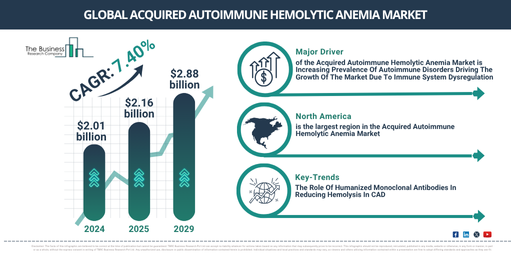
    The market size for acquired autoimmune hemolytic anemia has been expanding remarkably in the past few years. Its growth is predicted to elevate from $2.01 billion in 2024 to $2.16 billion in 2025, reflecting a compound annual growth rate (CAGR) of 7.5%. The growth observed in the precedent period can be credited to factors such as rising diagnosis rates, increasing instances of secondary AIHA, the development of hospital hematology units, governmental and regulatory backing, and escalated investments in hematology.

    In the next few years, the market size for acquired autoimmune hemolytic anemia is projected to experience significant growth, expected to reach $2.88 billion by 2029, with a compound annual growth rate (CAGR) of 7.4%. Factors contributing to this growth during the forecast period comprise an increase in the prevalence of autoimmune diseases, enhanced understanding of the complement system’s function, escalating collaboration between biopharma and academia, a rise in the application of personalized medicine, and an aging population. Emerging trends in the forecast period involve the adoption of targeted biologic therapies, progress in complement pathway inhibitors, the use of AI and data analytics in managing disease, the introduction of AI in designing clinical trials, and advancements in orphan drug development.

    Download a free sample to assess the report’s scope and structure:

    https://www.thebusinessresearchcompany.com/sample.aspx?id=24132&type=smp

    Which Major Market Drivers Are Expected to Boost the Growth Potential of the Acquired Autoimmune Hemolytic Anemia Market?

    The growth of the acquired autoimmune hemolytic anemia market is predicted to be fueled by the rising occurrence of autoimmune disorders. Autoimmune disorders occur when the immune system erroneously attacks the body’s own healthy cells and tissues, mistaking them for harmful invaders. This increasing prevalence is largely due to the impact of environmental triggers and lifestyle alterations that may interfere with the immune system’s regulation. This surge in autoimmune disorders results in a greater incidence of acquired autoimmune hemolytic anemia since individuals with autoimmune conditions have a higher likelihood of developing secondary AIHA due to the misregulation of the immune system. For example, the autoimmune registry, a US-based organization that collects and assesses information about autoimmune disorders, reported in 2022 that the percentage of patients diagnosed with multiple autoimmune conditions increased from 52% in 2021 to 55% in 2022. Hence, as autoimmune disorders become more prevalent, they are likely to influence the acquired autoimmune hemolytic anemia market’s growth.

    Which Key Market Segments Comprise the Acquired Autoimmune Hemolytic Anemia Market and Drive Its Revenue Growth?

    The acquired autoimmune hemolytic anemia market covered in this report is segmented –

    1) By Diagnosis Method: Complete Blood Count, Peripheral Blood Smear, Direct Coombs Test, Indirect Coombs Test

    2) By Treatment Type: Corticosteroids, Immunosuppressive Agents, Intravenous Immunoglobulin, Rituximab

    3) By Severity: Mild, Moderate, Severe

    4) By End User: Hospitals, Specialty Clinics, Research Institutions

    Subsegment:

    1) By Complete Blood Count: Hemoglobin Level, Hematocrit (HCT), Reticulocyte Count, White Blood Cell Count, Platelet Count

    2) By Peripheral Blood Smear: Spherocytes, Polychromasia, Schistocytes, Increased Reticulocyte Count

    3) By Direct Coombs Test: Immunoglobulin G Coombs Test, Immunoglobulin M Coombs Test, Complement Coombs Test

    4) By Indirect Coombs Test: Screening For Alloantibodies, Detection Of Sensitizing Antibodies, Crossmatch Testing

    Request customized data on this market:

    https://www.thebusinessresearchcompany.com/sample.aspx?id=24132&type=smp

    Which Areas Are Leading Regions in the Acquired Autoimmune Hemolytic Anemia Market Expansion Across the Globe?

    North America was the largest region in the acquired autoimmune hemolytic anemia market in 2024. Europe is expected to be the fastest-growing region in the forecast period. The regions covered in the acquired autoimmune hemolytic anemia market report are Asia-Pacific, Western Europe, Eastern Europe, North America, South America, Middle East, Africa.

    What Are the Key Market Trends in the Acquired Autoimmune Hemolytic Anemia Market Over the Coming Years?

    Major businesses that dominate the acquired autoimmune hemolytic anemia market are focusing on enhancing targeted treatments like humanized monoclonal antibodies. The goal is to increase the efficacy of therapies, minimize side effects, and offer more customized treatment alternatives for those dealing with autoimmune hemolytic anemia. A humanized monoclonal antibody is a lab-created protein made to replicate human antibodies and include small sections of non-human (usually mouse) antibodies to boost its targeted antigen interaction and lower immune system rejection. As an example, in February 2022, Sanofi, healthcare firm from France, gained approval from the U.S. Food and Drug Administration (FDA) for Enjaymo (sutimlimab-jome), making it the first exclusive treatment for cold agglutinin disease (CAD), a rare type of autoimmune hemolytic anemia. It inhibits C1s in the classical complement pathway, reducing the immune system’s premature destruction of healthy red blood cells thus lessening the necessity of red blood cell transfusions in CAD patients. Enjaymo has a specific selectivity for C1-activated hemolysis without interfering with the lectin or alternative complement pathways.

    View the full report here:

    https://www.thebusinessresearchcompany.com/report/acquired-autoimmune-hemolytic-anemia-global-market-report

    How Is the Acquired Autoimmune Hemolytic Anemia Market Conceptually Defined?

    Acquired autoimmune hemolytic anemia (AIHA) is a rare disorder that causes anemia when the body’s immune system unintentionally targets and kills its own red blood cells it is frequently brought on by infections, autoimmune disorders, malignancies, or specific drugs, and it can appear suddenly or gradually. This happens as a result of the body producing antibodies that attack its own red blood cells, causing hemolysis, or the premature breakdown of those cells.

    Purchase the full report and get a swift delivery:

    https://www.thebusinessresearchcompany.com/customise?id=24132&type=smp

    About The Business Research Company:

    With over 15000+ reports from 27 industries covering 60+ geographies, The Business Research Company has built a reputation for offering comprehensive, data-rich research and insights. Armed with 1,500,000 datasets, the optimistic contribution of in-depth secondary research, and unique insights from industry leaders, you can get the information you need to stay ahead in the game.

    Get in touch with us:

    The Business Research Company: https://www.thebusinessresearchcompany.com/

    Americas +1 3156230293

    Asia +44 2071930708

    Europe +44 2071930708

    Email us at info@tbrc.info

    Follow us on:

    LinkedIn: https://in.linkedin.com/company/the-business-research-company

    YouTube: https://www.youtube.com/channel/UC24_fI0rV8cR5DxlCpgmyFQ

    Global Market Model: https://www.thebusinessresearchcompany.com/global-market-model
  • $9.1 Billion Forecast for Acne Treatment Devices Market by 2029, Backed by Demand and Innovation

    $9.1 Billion Forecast for Acne Treatment Devices Market by 2029, Backed by Demand and Innovation

    We’ve updated all our reports with current data on tariff changes, trade developments, and supply chain shifts affecting key industries.

    What Is the Estimated Market Size of the Acne Treatment Devices Market In 2029?

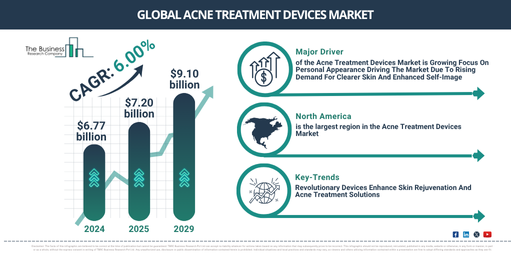
    The market for acne treatment devices has seen significant expansion in the last few years. The market is set to rise from $6.77 billion in 2024 to $7.20 billion in 2025, registering a compound annual growth rate (CAGR) of 6.3%. The historical growth is mainly due to factors such as a higher incidence of acne in teenagers, a growing understanding of skin health, increased disposable income, the proliferation of aesthetic clinics, and the media’s impact on the awareness of appearance.

    In the upcoming years, a robust growth is anticipated in the acne treatment devices market, which is projected to reach $9.10 billion by 2029, with a Compound Annual Growth Rate (CAGR) of 6.0%. This growth during the forecast period can be tied to factors such as the rising demand for acne treatment devices intended for home use, the expansion of teledermatology, an increasing preference for self-care and beauty tools, escalating healthcare expenditure, and the heightened accessibility of these devices through online shopping. Key trends during this period encompass the incorporation of artificial intelligence into acne devices, the creation of multifunction skincare equipment, the emergence of subscription-based device schemes, a growing consumer shift towards natural and phototherapy treatments, and the downsizing and portability of devices.

    Download a free sample to assess the report’s scope and structure:

    https://www.thebusinessresearchcompany.com/sample.aspx?id=24131&type=smp

    What Are the Core Growth Drivers Propelling the Acne Treatment Devices Market Forward?

    The burgeoning emphasis on individual aesthetics is anticipated to fuel the expansion of the acne treatment devices market in the future. Personal aesthetics is the external perception one portrays through personal grooming, attire, cleanliness, and overall visual representation. The increase in attention towards personal aesthetics is sparked by the image-centric culture of social media and the heightened interest in self-representation and personal brand portrayal. Acne treatment devices significantly contribute to personal aesthetics by offering effective solutions for healthier skin, thus enhancing personal assurance and promoting a refined and well-groomed image. For instance, in August 2024, the Bureau of Labor Statistics, a US federal agency, projected that employment in personal care and service sectors would grow faster than the average from 2023 to 2033, with roughly 794,500 yearly opportunities arising from growth and workforce substitution needs. Consequently, the heightened emphasis on personal aesthetics is accelerating the expansion of the acne treatment devices market.

    What Segment Types Define the Acne Treatment Devices Market Structure?

    The acne treatment devices market covered in this report is segmented –

    1) By Type: Light Therapy Devices, Microneedling Devices, Laser Therapy Devices, High-Frequency Devices, LED Acne Treatment Devices

    2) By Technology: Blue Light Therapy, Red Light Therapy, Fractional Laser, Radio Frequency Technology, Microcurrent Technology

    3) By Distribution Channel: Online Sales, Retail Pharmacies, Direct Sales, Beauty And Wellness Stores, Hyper markets And Super markets

    4) By Application: Home Use, Dermatology Clinics, Beauty Clinics, Other Applications

    Subsegments:

    1) By Light Therapy Devices: Infrared Light Therapy, Yellow Light Therapy, Green Light Therapy, Pulsed Light Therapy

    2) By Microneedling Devices: Manual Dermarollers, Automated Microneedling Pens, Microneedling RF Devices, Microneedling Cartridges

    3) By Laser Therapy Devices: Carbon Dioxide (CO2) Lasers, Erbium YAG Lasers, Diode Lasers, Pulsed Dye Lasers (PDL)

    4) By High-Frequency Devices: Argon Gas Electrodes, Neon Gas Electrodes, Portable High-Frequency Wands, Salon-Grade High-Frequency Machines

    5) By LED Acne Treatment Devices: Multispectrum LED Devices, Wearable LED Masks, Handheld LED Devices, Professional LED Panels

    Request customized data on this market:

    https://www.thebusinessresearchcompany.com/sample.aspx?id=24131&type=smp

    Which Geographic Areas Hold the Strongest Growth Potential in the Acne Treatment Devices Market?

    North America was the largest region in the acne treatment devices market in 2024. Asia-Pacific is expected to be the fastest-growing region in the forecast period. The regions covered in the acne treatment devices market report are Asia-Pacific, Western Europe, Eastern Europe, North America, South America, Middle East, Africa.

    Which Emerging Trends that Are Influencing the Acne Treatment Devices Industry Evolution?

    Key players in the acne treatment devices market are channelizing their efforts towards the development of innovative products like advanced skin treatment devices. These are aimed at introducing state-of-the-art skincare technologies that cater to a variety of skin issues and boost the effectiveness of treatments. These advanced skin treatment devices, which are electronic or mechanical in nature, employ technologies such as light therapy, radiofrequency, lasers, and ultrasound to address skin problems like acne, wrinkles, and pigmentation, offering skin rejuvenation and care solutions that are non-invasive. For instance, Skinnovation Pvt. Ltd., a dermatological company based in India, launched two cutting-edge medical devices – Meta Cell Technology (MCT) and MIRApeel – in October 2024. The MCT device uses photothermal energy to enhance the efficiency of regenerative therapies such as platelet-rich plasma (PRP) and exosomes, thereby aiding in skin rejuvenation and tissue repair. On the other hand, MIRApeel is a medi-facial device that combines hydrodermabrasion with serum-infused microchanneling to provide customized treatments for issues like pigmentation, acne scars, and uneven skin texture, offering a comprehensive solution for healthier skin.

    View the full report here:

    https://www.thebusinessresearchcompany.com/report/acne-treatment-devices-global-market-report

    What Is the Definition of the Acne Treatment Devices Market?

    Acne treatment devices are medical-grade tools designed to help reduce or eliminate acne by using various technologies such as light therapy, radiofrequency, and microdermabrasion to target the root causes of acne, including excess oil production, clogged pores, and bacterial growth. These devices are primarily used to reduce inflammation, prevent new acne breakouts, promote skin healing, and enhance the overall appearance of the skin by stimulating collagen production and improving skin texture.

    Purchase the full report and get a swift delivery:

    https://www.thebusinessresearchcompany.com/customise?id=24131&type=smp

    About The Business Research Company:

    With over 15000+ reports from 27 industries covering 60+ geographies, The Business Research Company has built a reputation for offering comprehensive, data-rich research and insights. Armed with 1,500,000 datasets, the optimistic contribution of in-depth secondary research, and unique insights from industry leaders, you can get the information you need to stay ahead in the game.

    Get in touch with us:

    The Business Research Company: https://www.thebusinessresearchcompany.com/

    Americas +1 3156230293

    Asia +44 2071930708

    Europe +44 2071930708

    Email us at info@tbrc.info

    Follow us on:

    LinkedIn: https://in.linkedin.com/company/the-business-research-company

    YouTube: https://www.youtube.com/channel/UC24_fI0rV8cR5DxlCpgmyFQ

    Global Market Model: https://www.thebusinessresearchcompany.com/global-market-model
  • Global Acellular Dermal Matrices Market Projected to Reach $2.36 Billion by 2029 at a CAGR of 9.8%

    Global Acellular Dermal Matrices Market Projected to Reach $2.36 Billion by 2029 at a CAGR of 9.8%

    We’ve updated all our reports with current data on tariff changes, trade developments, and supply chain shifts affecting key industries.

    How Fast Is The Acellular Dermal Matrices Market Expected to Grow Between 2025 And 2029?

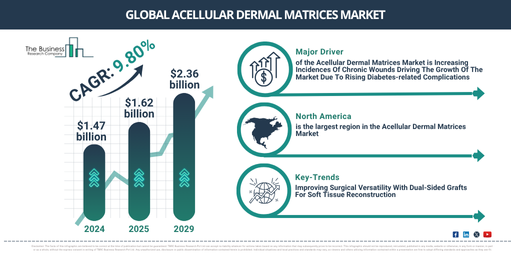
    In recent times, the market size for acellular dermal matrices has seen substantial growth. The market value is projected to rise from $1.47 billion in 2024 to $1.62 billion in 2025, signaling a compound annual growth rate (CAGR) of 10.1%. The notable growth in the previous years can be associated with a rise in breast cancer incidence and mastectomies, an increase in reconstructive and cosmetic surgeries, expanding uses in hernia and orthopedic repairs, burgeoning recognition and acceptance of biologic grafts, coupled with a spike in trauma and accident cases.

    In the coming years, the acellular dermal matrices market is poised for considerable growth, reaching an estimated $2.36 billion by 2029 with a compound annual growth rate (CAGR) of 9.8%. This projected growth can be attributed to various factors such as increasing demand for less invasive procedures, the rise in the elderly population, growing emphasis on patient-specific and customizable ADM solutions, an escalating number of reconstruction surgeries, and a rise in chronic conditions incidence. During the forecast period, key trends like the integration of minimally invasive surgeries, advancements in tissue engineering, integration with stem cell therapies, the development of synthetic and hybrid ADMs, and new designs for dual-sided and meshed ADMs are expected to influence the market.

    Download a free sample to assess the report’s scope and structure:

    https://www.thebusinessresearchcompany.com/sample.aspx?id=24130&type=smp

    What are the Fundamental Drivers and Innovations Shaping the Acellular Dermal Matrices Market?

    The growth of the acellular dermal matrices market is expected to be driven by the escalating instances of chronic wounds. Chronic wounds are defined as lacerations or sores that take an extended period to heal, if they heal at all. They often recur and may require specialized treatment to improve. The prevalence of chronic wounds is on the rise, mainly due to an increase in diabetic patients. Diabetes can lead to reduced blood circulation and nerve damage, thereby impairing the body’s ability to heal wounds. Consequently, even minor cuts can evolve into serious, persistent wounds. Acellular dermal matrices contribute to reducing the occurrence of chronic wounds by delivering a supportive layer that promotes natural skin regeneration and expedited healing. For example, OSF HealthCare, a US-based nonprofit healthcare organization, reported in July 2023 that 6.7 million people in the US are currently dealing with chronic wounds, a number expected to surge by 2% annually over the forthcoming ten years. Therefore, the escalation in chronic wounds cases is the primary growth factor for the acellular dermal matrices market.

    How Is the Acellular Dermal Matrices Market Segmented?

    The acellular dermal matrices market covered in this report is segmented –

    1) By Product Type: Human Acellular Dermal Matrices, Porcine Acellular Dermal Matrices, Other Source Acellular Dermal Matrices

    2) By Distribution Channel: Direct Sales, Online Sales, Distributor Sales

    3) By Application: Breast Reconstruction, Dental Surgery, Orthopedic Surgery, Wound Care, Other Applications

    4) By End-User: Hospitals, Ambulatory Surgical Centers, Specialty Clinics, Research Laboratories

    Subsegments:

    1) By Human Acellular Dermal Matrices: Cryopreserved Human Acellular Dermal Matrices, Freeze-dried Human Acellular Dermal Matrices, Ready-to-use Human Acellular Dermal Matrices

    2) By Porcine Acellular Dermal Matrices: Cross-linked Porcine Dermis, Non-cross-linked Porcine Dermis, Gamma-irradiated Porcine Matrices

    3) By Other Source Acellular Dermal Matrices: Bovine-derived Dermal Matrices, Fish-derived Dermal Matrices, Synthetic Or acellular Composite Matrices

    Request customized data on this market:

    https://www.thebusinessresearchcompany.com/sample.aspx?id=24130&type=smp

    Which Regions Are Driving the Next Phase of the Acellular Dermal Matrices Market Growth?

    North America was the largest region in the acellular dermal matrices market in 2024. Asia-Pacific is expected to be the fastest-growing region in the forecast period. The regions covered in the acellular dermal matrices market report are Asia-Pacific, Western Europe, Eastern Europe, North America, South America, Middle East, Africa.

    What Key Trends Are Shaping the Future of the Acellular Dermal Matrices Market?

    Key players in the acellular dermal matrices market are prioritizing the development of innovative products like dual-sided acellular dermal matrices. These revolutionize surgical versatility and integration efficiency. The designed grafts of dual-sided acellular dermal matrices have surfaces appropriate for implantation in multiple directions, simplifying the handling process and enhancing surgical results. For instance, in May 2023, AlloSource, a non-profit organization based in the US that specializes in supplying allografts from human tissue for medical procedures, unveiled the AlloMend Duo Acellular Dermal Matrix (ADM). This creative solution is used in soft tissue reconstruction, providing surgeons with a dependable tool for the repair and reconstruction of soft tissue defects with enduring structural support. The deep reticular dermal allograft blends effortlessly with the surrounding tissue, establishing a scaffold that encourages cell repopulation and the regeneration of organic host tissues.

    View the full report here:

    https://www.thebusinessresearchcompany.com/report/acellular-dermal-matrices-global-market-report

    How Is the Acellular Dermal Matrices Market Defined and What Are Its Core Parameters?

    Acellular dermal matrices (ADMs) are natural materials made from skin tissue that have been processed to remove all cells. These materials are used in surgeries to help repair or replace damaged tissue. They act as a scaffold that encourages new tissue to grow and heal. ADMs are commonly used in procedures such as breast reconstruction or wound healing to support and regenerate the skin and soft tissues.

    Purchase the full report and get a swift delivery:

    https://www.thebusinessresearchcompany.com/customise?id=24130&type=smp

    About The Business Research Company:

    With over 15000+ reports from 27 industries covering 60+ geographies, The Business Research Company has built a reputation for offering comprehensive, data-rich research and insights. Armed with 1,500,000 datasets, the optimistic contribution of in-depth secondary research, and unique insights from industry leaders, you can get the information you need to stay ahead in the game.

    Get in touch with us:

    The Business Research Company: https://www.thebusinessresearchcompany.com/

    Americas +1 3156230293

    Asia +44 2071930708

    Europe +44 2071930708

    Email us at info@tbrc.info

    Follow us on:

    LinkedIn: https://in.linkedin.com/company/the-business-research-company

    YouTube: https://www.youtube.com/channel/UC24_fI0rV8cR5DxlCpgmyFQ

    Global Market Model: https://www.thebusinessresearchcompany.com/global-market-model
  • Emerging Growth Drivers in the Poly ADP-Ribose Polymerase (PARP) Inhibitor Market Landscape: Surging Prevalence Of Ovarian Cancer Fuels Growth In The Poly ADP-Ribose Polymerase (PARP) Inhibitor Market

    Emerging Growth Drivers in the Poly ADP-Ribose Polymerase (PARP) Inhibitor Market Landscape: Surging Prevalence Of Ovarian Cancer Fuels Growth In The Poly ADP-Ribose Polymerase (PARP) Inhibitor Market

    Discover trends, market shifts, and competitive outlooks for the poly adp-ribose polymerase (parp) inhibitor industry through 2025-2034 with The Business Research Company’s reliable data and in-depth research

    #How Has the Poly ADP-Ribose Polymerase (PARP) Inhibitor Market Growth Performance Trended Historically, And What Lies Ahead?3

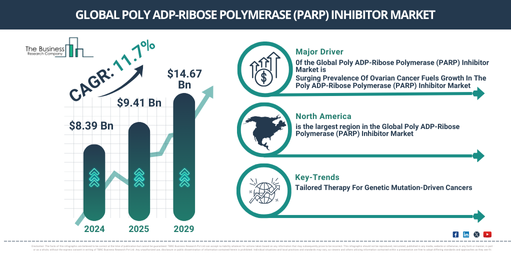
    The market size of the Poly ADP-ribose polymerase (PARP) inhibitor has witnessed a swift expansion in the last few years. Its progression from $8.39 billion in 2024 to an anticipated $9.41 billion in 2025, with a compound annual growth rate (CAGR) of 12.1% illustrates this trend. Clinical research, regulatory green lights, market rivalry, drug amalgams, and patient support can all account for the growth observed during this historical period.

    Expectations indicate a brisk expansion in the market size of the poly ADP-ribose polymerase (PARP) inhibitor in the forthcoming years. The market is set to surge to a value of $14.67 billion by 2029, with a compound annual growth rate (CAGR) of 11.7%. Factors contributing to this predicted growth include the enlargement of indications, bespoke medicine, the establishment of biomarkers, healthcare economics, and budding markets. The period of prediction also displays significant trends such as precision medicine, advancements in immunotherapy, targeted treatment options, the application of artificial intelligence in drug discovery, and a patient-focused approach to healthcare.

    Download a free sample to assess the report’s scope and structure:

    https://www.thebusinessresearchcompany.com/sample.aspx?id=15637&type=smp

    Which Factors and External Forces Are Driving Demand in the Poly ADP-Ribose Polymerase (PARP) Inhibitor Market?

    The rising occurrence of ovarian cancer is anticipated to fuel the expansion of the poly ADP-ribose polymerase (PARP) inhibitor market in the future. Ovarian cancer, a malignant tumor that forms in one or both of a woman’s ovaries, is part of the female reproductive system that is responsible for the production of eggs and female hormones. Factors such as genetic predisposition, an aging demographic, environmental exposures, and hormonal imbalances contribute to the growth of ovarian cancer. Poly ADP-Ribose Polymerase (PARP) Inhibitors, which target DNA repair mechanisms, particularly in patients with BRCA mutations that result in synthetic lethality and enhanced tumor cell death, are employed in ovarian cancer treatment. For example, the World Ovarian Cancer Coalition, a non-profit organization based in Canada, projected in February 2024 that the annual number of women dying from ovarian cancer will increase to 350,956, a surge of nearly 70% from 2022. Thus, the escalating occurrence of ovarian cancer is driving the expansion of the poly ADP-ribose polymerase (PARP) inhibitor market.

    Which Primary Segments of the Poly ADP-Ribose Polymerase (PARP) Inhibitor Market Are Driving Growth and Industry Transformations?

    The poly ADP-ribose polymerase (PARP) inhibitor market covered in this report is segmented –

    1) By Drug Type: Talazoparib, Veliparib, Olaparib, Other Drug Types

    2) By Distribution Channel: Hospital Pharmacy, Online Pharmacy, Retail Pharmacy, Other Distribution Channels

    3) By Application: Ovarian Cancer, Breast Cancer, Other Applications

    4) By End Users: Hospitals, Homecare, Specialty Clinics, Other End Users

    Subsegments:

    1) By Talazoparib: Talazoparib For Breast Cancer, Talazoparib For Ovarian Cancer, Talazoparib For Prostate Cancer, Talazoparib For Other Cancers

    2) By Veliparib: Veliparib For Breast Cancer, Veliparib For Ovarian Cancer, Veliparib For Non-Small Cell Lung Cancer (Nsclc), Veliparib For Other Cancers

    3) By Olaparib: Olaparib For Breast Cancer (Her2-negative), Olaparib For Ovarian Cancer (Brca-mutated), Olaparib For Prostate Cancer (Brca-Mutated), Olaparib For Pancreatic Cancer (Brca-Mutated), Olaparib For Other Cancers

    4) By Other Drug Types: Niraparib, Rucaparib, Pembrolizumab (Combination Therapy With Parp Inhibitors), Other Parp Inhibitors (Emerging Drugs In Clinical Trials)

    Request customized data on this market:

    https://www.thebusinessresearchcompany.com/customise?id=15637&type=smp

    What Are the Fastest-Growing Geographies in the Poly ADP-Ribose Polymerase (PARP) Inhibitor Market?

    North America was the largest region in the poly ADP-ribose polymerase (PARP) inhibitor market in 2023. Asia-Pacific is expected to be the fastest-growing region in the forecast period. The regions covered in the Poly ADP-ribose polymerase (PARP) inhibitor market report are Asia-Pacific, Western Europe, Eastern Europe, North America, South America, Middle East, Africa.

    What Key Market Trends and Innovations Are Shaping the Future of the Poly ADP-Ribose Polymerase (PARP) Inhibitor Industry?

    Leading businesses in the poly ADP-ribose polymerase (PARP) inhibitor market are creating generic PARP inhibitors to provide a customized treatment method for cancer patients with particular genetic mutations. These medications impede the function of the enzyme poly ADP-ribose polymerase (PARP). For example, in March 2024, Zydus Lifesciences Limited, a pharmaceutical firm headquartered in India, launched Olaparib, a PARP inhibitor under the IBYRA brand, with the goal of improving access to sophisticated cancer therapy. IBYRA is designed to target distinct genetic mutations found in breast, ovarian, prostate, and pancreatic cancers, thereby giving a precise and effective treatment strategy. This drug is especially advantageous for patients with HRD-positive or BRACA mutations, as it aids in slowing the progression of the disease.

    View the full report here:

    https://www.thebusinessresearchcompany.com/report/poly-adp-ribose-polymerase-parp-inhibitor-global-market-report

    What Parameters Are Used to Define the Poly ADP-Ribose Polymerase (PARP) Inhibitor Market?

    Poly ADP-ribose polymerase (PARP) inhibitors are a class of pharmacological inhibitors that block the enzyme PARP, which is involved in deoxyribonucleic acid (DNA) repair. These inhibitors treat cancers with defects in other DNA repair pathways, preventing cancer cells from repairing damaged DNA and leading to their death.

    Purchase the full report and get a swift delivery:

    https://www.thebusinessresearchcompany.com/purchaseoptions.aspx?id=15637

    About The Business Research Company:

    With over 15000+ reports from 27 industries covering 60+ geographies, The Business Research Company has built a reputation for offering comprehensive, data-rich research and insights. Armed with 1,500,000 datasets, the optimistic contribution of in-depth secondary research, and unique insights from industry leaders, you can get the information you need to stay ahead in the game.

    Get in touch with us:

    The Business Research Company: https://www.thebusinessresearchcompany.com/

    Americas +1 3156230293

    Asia +44 2071930708

    Europe +44 2071930708

    Email us at info@tbrc.info

    Follow us on:

    LinkedIn: https://in.linkedin.com/company/the-business-research-company

    YouTube: https://www.youtube.com/channel/UC24_fI0rV8cR5DxlCpgmyFQ

    Global Market Model: https://www.thebusinessresearchcompany.com/global-market-model
  • Strategic Growth Drivers Shaping the Point-of-Care (POC) Coagulation Testing Devices Market Outlook 2025- 2034:Rising Prevalence of Blood Clotting Disorders Drives Growth of Point-of-Care (POC) Coagulation Testing Devices Market

    Strategic Growth Drivers Shaping the Point-of-Care (POC) Coagulation Testing Devices Market Outlook 2025- 2034:Rising Prevalence of Blood Clotting Disorders Drives Growth of Point-of-Care (POC) Coagulation Testing Devices Market

    Discover trends, market shifts, and competitive outlooks for the point-of-care (poc) coagulation testing devices industry through 2025-2034 with The Business Research Company’s reliable data and in-depth research

    What Are the Projected Market Size and Growth Rates for the Point-of-Care (POC) Coagulation Testing Devices Market From 2025 To 2029?

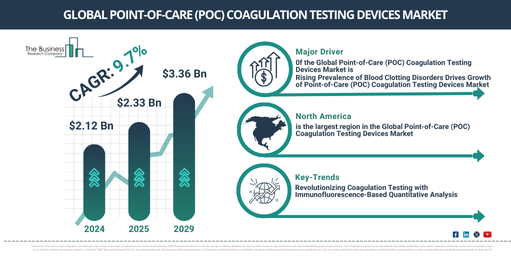
    There has been a significant expansion of the point-of-care (POC) coagulation testing devices market in recent years. The market size is predicted to rise from $2.12 billion in 2024 to $2.33 billion in 2025, with a compound annual growth rate (CAGR) of 9.9%. The growth recorded in the previous period can be linked to the escalating incidence of infectious and chronic diseases, a growing geriatric population, increased utilization of compact portable instruments, a surge in biomarker profiling, and rising demand for personalized healthcare.

    The market size for point-of-care (POC) coagulation testing devices is predicted to experience a substantial increase in the years to come. The market is anticipated to reach $3.36 billion by 2029 with a compound annual growth rate (CAGR) of 9.7%. This growth during the predicted period is due to an increased requirement for fast and precise disease diagnosis, growing focus on wellness and preventive healthcare, increased need for rapid and on-site diagnostic tests, the surge in infectious disease outbreaks, and the emerging field of telemedicine. The key trends in this period will cover areas like integration of next-generation sequencing (NGS), the detection and analysis of RNA, single-cell PCR analysis, the use of bioinformatics software and data analysis tools, the adoption of microfluidic technologies and lab-on-a-chip systems, point-of-care testing (POCT), and the application of artificial intelligence (AI) and data analytics.

    Download a free sample to assess the report’s scope and structure:

    https://www.thebusinessresearchcompany.com/sample.aspx?id=15636&type=smp

    Which Major Market Drivers Are Expected to Boost the Growth Potential of the Point-of-Care (POC) Coagulation Testing Devices Market?

    The increase in blood clotting disorders is anticipated to boost the expansion of the point-of-care (POC) coagulation testing devices market. Blood clotting disorders interfere with the ability of the blood to clot effectively, with lifestyle factors such as smoking, excessive alcohol consumption, and a sedentary lifestyle playing contributory roles. These habits can negatively impact the health of blood vessels, levels of clotting factors, and blood flow, making it more likely for abnormal clot formation to occur. POC coagulation testing devices help healthcare professionals to swiftly evaluate a patient’s coagulation status, enabling speedy modifications to medication dosages and treatment strategies. For instance, the annual global survey conducted by the Canada-based international non-profit organization, the World Federation of Hemophilia, revealed that in 2022, 427,685 individuals had bleeding disorders, including 257,146 with hemophilia, and 70,034 with other bleeding disorders. Of those with hemophilia, 208,957 have Hemophilia A, 42,203 have Hemophilia B, and 5,986 have an undetermined type. Consequently, the growth of POC coagulation testing devices market is fueled by the increasing occurrence of blood clotting disorders.

    Which Segments in the Point-of-Care (POC) Coagulation Testing Devices Offer the Most Growth?

    The point-of-care (POC) coagulation testing devices market covered in this report is segmented –

    1) By Product Type: Coagulation Monitors, Consumables, Coagulation Analyzers

    2) By Technology: Optical Technology, Mechanical Technology, Electrochemical Technology

    3) By Method: Prothrombin Time And International Normalized Ratio, Viscoelastic Coagulation Monitoring, Other Methods

    4) By Application: Blood Glucose Testing, Infectious Diseases Testing, Cardiac Markers Testing, Coagulation Testing, Blood Gas And Electrolyte Testing, Other Applications

    5) By End-User: Hospitals, Diagnostic Laboratories, Clinics, Other End-Users

    Subsegments:

    1) By Coagulation Monitors: Prothrombin Time (Pt) Monitors, International Normalized Ratio (Inr) Monitors, Activated Partial Thromboplastin Time (Aptt) Monitors, Whole Blood Coagulation Monitors, Clotting Time Monitors

    2) By Consumables: Test Strips, Reagents, Control Solutions, Calibration Kits, Lancets And Needles

    3) By Coagulation Analyzers: Portable Coagulation Analyzers, Benchtop Coagulation Analyzers, Fully Automated Coagulation Analyzers, Semi-Automated Coagulation Analyzers, Coagulation Testing Kits (For Home Use)

    Request customized data on this market:

    https://www.thebusinessresearchcompany.com/customise?id=15636&type=smp

    Which Areas Are Leading Regions in the Point-of-Care (POC) Coagulation Testing Devices Market Expansion Across the Globe?

    North America was the largest region in the point-of-care (POC) coagulation testing devices market in 2024. The regions covered in the point-of-care (POC) coagulation testing devices market report are Asia-Pacific, Western Europe, Eastern Europe, North America, South America, Middle East, Africa.

    Which Technological Trends Are Reshaping the Point-of-Care (POC) Coagulation Testing Devices Industry Dynamics?

    Leading businesses in the point-of-care (POC) coagulation testing apparatus sector are focusing on creating immunofluorescence-based quantitative analyzers to provide more accurate diagnoses and better management of coagulation conditions. These quantitative analyzers, backed by immunofluorescence, are laboratory tools designed to gauge and quantify certain proteins or molecules that play a part in the coagulation process, thus assisting in identifying and handling blood coagulation irregularities. In particular, the pharmaceutical company Cipla Limited, based in India, introduced Cippoint in January 2023. Utilizing immunofluorescence technology, this quantitative analyzer gives swift and precise testing results within a 3 to 15 minute time frame, helping to speed up clinical decision-making. Thanks to its user-friendly design, rapid response rate, and extensive testing features, Cippoint is a significant asset in augmenting diagnostic proficiency, supporting timely clinical conclusions, and enhancing the end results of patient care.

    View the full report here:

    https://www.thebusinessresearchcompany.com/report/point-of-care-poc-coagulation-testing-devices-global-market-report

    What Are the Key Elements That Define the Point-of-Care (POC) Coagulation Testing Devices Market?

    Point-of-care (POC) coagulation testing devices are portable, easy-to-use medical devices used to assess the clotting ability of blood outside of a traditional laboratory setting. They are designed to provide rapid and accurate results, allowing healthcare providers to make immediate treatment decisions for patients with coagulation disorders or those at risk of abnormal bleeding or clotting.

    Purchase the full report and get a swift delivery:

    https://www.thebusinessresearchcompany.com/purchaseoptions.aspx?id=15636

    About The Business Research Company:

    With over 15000+ reports from 27 industries covering 60+ geographies, The Business Research Company has built a reputation for offering comprehensive, data-rich research and insights. Armed with 1,500,000 datasets, the optimistic contribution of in-depth secondary research, and unique insights from industry leaders, you can get the information you need to stay ahead in the game.

    Get in touch with us:

    The Business Research Company: https://www.thebusinessresearchcompany.com/

    Americas +1 3156230293

    Asia +44 2071930708

    Europe +44 2071930708

    Email us at info@tbrc.info

    Follow us on:

    LinkedIn: https://in.linkedin.com/company/the-business-research-company

    YouTube: https://www.youtube.com/channel/UC24_fI0rV8cR5DxlCpgmyFQ

    Global Market Model: https://www.thebusinessresearchcompany.com/global-market-model
  • Key Developments and Trends Steering the Platysmaplasty Treatment Market Forward: Renuvion Technology And The Apyx One Consoledures

    Discover trends, market shifts, and competitive outlooks for the platysmaplasty treatment industry through 2025-2034 with The Business Research Company’s reliable data and in-depth research

    What is the Projected CAGR for the Platysmaplasty Treatment Market Size from 2025 to 2034?

    In the past few years, the market size for platysmaplasty treatments has experienced significant growth. Projections show that it is set to rise from $1.08 billion in 2024 to $1.17 billion in 2025, representing a compound annual growth rate (CAGR) of 8.3%. Factors such as the aging demographic, growing awareness around cosmetic procedures, advances in surgical technology, increased disposable income, and the impact of celebrity culture contributed to the growth observed in the historical period.

    The market for platysmaplasty treatment is anticipated to experience robust growth in the upcoming years, with its worth estimated at $1.59 billion in 2029 while growing at a compound annual growth rate (CAGR) of 8.1%. Multiple factors contribute to this expected growth during the respective projection period, including the surge in minimally invasive anesthesia demands, advancements in non-surgical alternatives, expansion in the medical tourism sector, changes in regulations impacting safety norms, and the changing societal views on aging and physical looks. Forecasted trends in this period will include an intensifying demand for minimally invasive operations, the integration of cutting-edge technology like robot-assisted surgeries, growing fondness for outpatient treatments, the increase in the older age demographic, and the advancement of custom treatment plans designed to cater to specific patient necessities.

    Download a free sample to assess the report’s scope and structure:

    https://www.thebusinessresearchcompany.com/sample.aspx?id=15897&type=smp

    What Are the Major Market Drivers Behind the Rising Adoption of Platysmaplasty Treatment Market?

    An upward surge in requests for cosmetic procedures is anticipated to fuel the expansion of the platysmaplasty treatment market. These procedures cover a gamut of surgical and non-surgical procedures developed to modify or improve an individual’s physical looks for aesthetic reasons. This growing need for cosmetic procedures is influenced by societal focus on physical looks, advancements in medical science, and a widespread acceptance of aesthetic enhancements to foster self-assurance and boost overall well-being. Platysmaplasty treatment, utilized in these procedures, targets loosened or aged skin in the neck region, giving patients a refreshed and youthful look. For example, a report from the International Society of Aesthetic Plastic Surgery, a US-based organization for board-certified plastic surgeons, published in September 2023 cited an 11.2% overall escalation in procedures conducted by these surgeons in 2022, totalling more than 14.9 million surgical procedures globally. Over the preceding four years, there’s been a sustained upswing in aesthetic surgery, displaying a 41.3% boost. As a result, the expanding requirement for cosmetic procedures will push the development of the platysmaplasty treatment market.

    Which Segments in the Platysmaplasty Treatment Offer the Most Growth?

    The platysmaplasty treatment market covered in this report is segmented –

    1) By Procedure: Surgical Procedure, Non Surgical Procedure

    2) By Gender: Male, Female

    3) By End-Use: Cosmetic Surgery Clinics, Hospitals

    Subsegments:

    1) By Surgical Procedure: Traditional Neck Lift Surgery, Laser-Assisted Platysmaplasty, Endoscopic Platysmaplasty

    2) By Non-Surgical Procedure: Botox Or Dysport Injections, Thread Lifting, Ultherapy

    Request customized data on this market:

    https://www.thebusinessresearchcompany.com/customise?id=15897&type=smp

    Which Areas Are Leading Regions in the Platysmaplasty Treatment Market Expansion Across the Globe?

    North America was the largest region in the platysmaplasty treatment market in 2023. The regions covered in the platysmaplasty treatment market report are Asia-Pacific, Western Europe, Eastern Europe, North America, South America, Middle East and Africa.

    What Are the Most Significant Market Trends in the Platysmaplasty Treatment Market?

    Leading businesses in the platysmaplasty treatment market pay close attention to advancing technology such as Renuvion to improve surgical results, lessen recovery periods, and boost patient contentment by providing minimally invasive strategies for skin tightening and sculpting. The Renuvion system fuses helium plasma with radiofrequency energy to produce a controlled warming effect on the skin, encouraging tightening and revitalisation. For instance, in January 2023, Apyx Medical Corporation, a medical device producer from the US, introduced their new venture, Apyx One Console, a significant leap in the cosmetic surgery market. This console utilizes both helium plasma and radiofrequency energy, essential elements for incision, coagulation, and soft tissue removal in surgical operations. The Apyx One Console is more than just a cutting-edge device, it’s a vital resource within the platysmaplasty treatment market, magnifying surgical efficiency and patient satisfaction with its pioneering technology.

    View the full report here:

    https://www.thebusinessresearchcompany.com/report/platysmaplasty-treatment-global-market-report

    What Are the Key Elements That Define the Platysmaplasty Treatment Market?

    Platysmaplasty treatment is a surgical procedure aimed at improving the appearance of the neck by tightening the muscles and reducing excess skin. It specifically targets the platysma muscle, which can become lax over time due to aging or weight loss, leading to the development of neck bands or a turkey-wattle appearance.

    Purchase the full report and get a swift delivery:

    https://www.thebusinessresearchcompany.com/purchaseoptions.aspx?id=15897

    About The Business Research Company:

    With over 15000+ reports from 27 industries covering 60+ geographies, The Business Research Company has built a reputation for offering comprehensive, data-rich research and insights. Armed with 1,500,000 datasets, the optimistic contribution of in-depth secondary research, and unique insights from industry leaders, you can get the information you need to stay ahead in the game.

    Get in touch with us:

    The Business Research Company: https://www.thebusinessresearchcompany.com/

    Americas +1 3156230293

    Asia +44 2071930708

    Europe +44 2071930708

    Email us at info@tbrc.info

    Follow us on:

    LinkedIn: https://in.linkedin.com/company/the-business-research-company

    YouTube: https://www.youtube.com/channel/UC24_fI0rV8cR5DxlCpgmyFQ

    Global Market Model: https://www.thebusinessresearchcompany.com/global-market-model

  • Market Trends Influencing Strategic Decisions in the Platelet Rich Plasma Industry: Increasing Focus On Technological Advancements In Platelet Rich Plasma

    Discover trends, market shifts, and competitive outlooks for the platelet rich plasma industry through 2025-2034 with The Business Research Company’s reliable data and in-depth research

    What Is the Current and Projected Market Size of the Platelet Rich Plasma Market Through 2034?

    The market size of platelet rich plasma has experienced a significant surge over the recent years. It is projected to go up from $0.71 billion in 2024 to $0.83 billion in 2025, showing a compound annual growth rate (CAGR) of 17.4%. This growth witnessed in the historic period can be traced back to factors like the escalating demand for procedures that are minimally invasive, rising occurrence of long-term diseases like arthritis, a mounting emphasis on managing pain and recuperating from injuries, an upsurge in the acceptance of PRP in veterinary medicine, along with an increase in disposable income and spending on healthcare.

    Anticipation surrounds the expected fast-paced expansion of the platelet rich plasma market in the upcoming years. The market size is projected to increase to $1.57 billion in 2029, with a compound annual growth rate (CAGR) of 17.2%. The increase during this forecast period can be linked to the rise in sports-related injuries, a surge in orthopedic disorders, escalating demand for cosmetic and aesthetic procedures, an aged demographic and corresponding rise in age-linked diseases, and an upsurge in clinical trials backing the effectiveness of PRP. The forecast period is also predicted to see emerging trends such as technological progression in PRP processing systems, recent developments, the introduction of new applications for PRP therapy, continuous research and innovation, and heightened investments.

    Download a free sample to assess the report’s scope and structure:

    https://www.thebusinessresearchcompany.com/sample.aspx?id=16150&type=smp

    What External and Internal Drivers Are Contributing to the Growth of the Platelet Rich Plasma Market?

    The escalating occurrence of sports-related injuries is poised to boost the expansion of the platelet-rich plasma market in the future. This increase in sports injuries is attributed to growing participation in sports activities, increased enrollment in youth sporting programs, age-associated factors, and lack of adequate coaching and supervision. Platelet-rich plasma (PRP) therapy contributes to the healing of sports injuries by facilitating the restoration and regeneration of tissues, mitigating inflammation, and improving the repair of tendons and ligaments. This offers sportspeople a less invasive therapeutic alternative, potentially leading to quicker recovery times. For instance, Howden Group Holdings Ltd, a UK-based insurance intermediary company, reported that 88 injuries were recorded in October 2022, sidelining players for an approximate 11.35 days prior to the tournament. This increased to 19.41 days after the tournament in January 2023. It is noteworthy that over this period, the seriousness of ankle, calf/shin, and hamstring injuries increased dramatically, with increases of 170%, 200%, and 130% respectively. Thus, the escalating occurrence of sports injuries is encouraging the growth of the platelet-rich plasma market.

    Which Key Market Segments Comprise the Platelet Rich Plasma Market and Drive Its Revenue Growth?

    The platelet rich plasma market covered in this report is segmented –

    1) By Type: Pure Platelet Rich Plasma, Leukocyte-Rich Platelet Rich Plasma, Leukocyte-Rich Fibrin, Other Types

    2) By Origin: Allogeneic Platelet Rich Plasma, Autologous Platelet Rich Plasma, Homologous Platelet Rich Plasma

    3) By Application: Cosmetic Surgery And Aesthetics, General Surgery, Neurosurgery, Orthopedic And Spinal Surgery, Other Applications

    4) By End User: Hospitals And Clinics, Research Institutes, Other End-Users

    Subsegments:

    1) By Pure Platelet Rich Plasma: Low Concentration PRP, High Concentration PRP

    2) By Leukocyte-Rich Platelet Rich Plasma: Autologous LR-PRP, Allogeneic LR-PRP

    3) By Leukocyte-Rich Fibrin: Injectable Leukocyte-Rich Fibrin, Membrane Leukocyte-Rich Fibrin

    4) By Other Types: Platelet Rich Fibrin (PRF), Concentrated Platelet-Rich Plasma (cPRP), Platelet-Poor Plasma (PPP)

    Request customized data on this market:

    https://www.thebusinessresearchcompany.com/customise?id=16150&type=smp

    Which Geographic Areas Hold the Strongest Growth Potential in the Platelet Rich Plasma Market?

    North America was the largest region in the platelet-rich plasma market in 2024. North America is expected to be the fastest-growing region in the forecast period. The regions covered in the platelet rich plasma market report are Asia-Pacific, Western Europe, Eastern Europe, North America, South America, Middle East, Africa.

    What Are the Current Market Growth and Trends in the Platelet Rich Plasma Industry?

    Leading enterprises in the platelet-rich plasma market are innovating to produce ready-to-use plasma products to deliver superior quality products of great value in response to the increasing demand for PRP therapies in the aesthetics industry. A platelet-rich plasma (PRP) product that’s off-the-shelf offers a convenient therapeutic solution, guaranteeing a constant dose and efficacy of platelets without the need for individualized preparation. For example, in July 2023, 4T Medical, a company specialized in cosmeceuticals and medical aesthetic products in the UK, introduced a platelet-rich plasma (PRP) kit under its label. This kit, a CE 2195-registered medical device, is structured to create autologous PRP effectively to support skin rejuvenation and healing. It consists of two 10-ml test tubes with sodium citrate anticoagulant and the necessary items for drawing blood. Following centrifugation, PRP is easily identified and administered to boost healing, improve collagen production, tighten skin, and promote hair growth.

    View the full report here:

    https://www.thebusinessresearchcompany.com/report/platelet-rich-plasma-global-market-report

    How Is the Platelet Rich Plasma Market Conceptually Defined?

    Platelet-rich plasma (PRP) refers to a concentrated form of plasma that is enriched with platelets, growth factors, and other bioactive proteins. It is derived from the patient’s own blood through a process of centrifugation, which separates the platelets from other components of the blood. Platelet-rich plasma (PRP) is used in various medical and cosmetic applications due to its ability to promote healing and tissue regeneration.

    Purchase the full report and get a swift delivery:

    https://www.thebusinessresearchcompany.com/purchaseoptions.aspx?id=16150

    About The Business Research Company:

    With over 15000+ reports from 27 industries covering 60+ geographies, The Business Research Company has built a reputation for offering comprehensive, data-rich research and insights. Armed with 1,500,000 datasets, the optimistic contribution of in-depth secondary research, and unique insights from industry leaders, you can get the information you need to stay ahead in the game.

    Get in touch with us:

    The Business Research Company: https://www.thebusinessresearchcompany.com/

    Americas +1 3156230293

    Asia +44 2071930708

    Europe +44 2071930708

    Email us at info@tbrc.info

    Follow us on:

    LinkedIn: https://in.linkedin.com/company/the-business-research-company

    YouTube: https://www.youtube.com/channel/UC24_fI0rV8cR5DxlCpgmyFQ

    Global Market Model: https://www.thebusinessresearchcompany.com/global-market-model

  • Top Trends Driving Innovation and Change in the Platelet Aggregation Devices Market: Innovative Platelet Pooling Set In The Platelet Aggregation Devices Market

    Top Trends Driving Innovation and Change in the Platelet Aggregation Devices Market: Innovative Platelet Pooling Set In The Platelet Aggregation Devices Market

    Discover trends, market shifts, and competitive outlooks for the platelet aggregation devices industry through 2025-2034 with The Business Research Company’s reliable data and in-depth research

    What is the Anticipated CAGR of the Platelet Aggregation Devices Market, and What Factors Will Drive It?

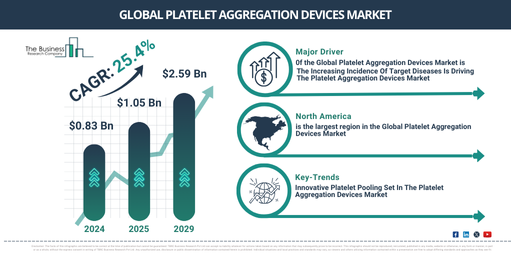
    The market size of platelet aggregation devices has seen exponential growth in recent years. It is forecasted to rise from $0.83 billion in 2024 to $1.05 billion in 2025, representing a compound annual growth rate (CAGR) of 25.8%. The noteworthy growth in the previous period is accredited to the escalating prevalence of cardiovascular diseases, the upward trend in bleeding disorder cases, the enhanced awareness about health diagnostics, a rise in surgical procedures, and enhanced diagnostic accuracy.

    The market for platelet aggregation devices is set to experience significant expansion in the coming years, predicted to reach a value of $2.59 billion by 2029, representing a compound annual growth rate (CAGR) of 25.4%. This growth trajectory through the forecast period is primarily driven by factors such as an ageing population, escalating demands for point-of-care testing, the surge in personalized medicine, and regulatory approvals and support, alongside the rise in chronic diseases. Key market trends expected during the forecast period features artificial intelligence’s inclusion in diagnostics, the emergence of portable platelet aggregation devices, heightened collaboration between biotech companies and healthcare service providers, the growing significance of data analytics in healthcare, and a shift towards diagnostics at home.

    Download a free sample to assess the report’s scope and structure:

    https://www.thebusinessresearchcompany.com/sample.aspx?id=15896&type=smp

    What Are the Core Market Drivers Propelling Growth in the Platelet Aggregation Devices Industry?

    The escalation in the prevalence of specific diseases of concern, called target diseases, is set to propel the growth of the platelet aggregation devices market. These target diseases – including cancer, cardiovascular diseases, and diabetes – carry a hefty weight on global health and are therefore prioritized in prevention, diagnosis, and treatment strategies. With their ability to early identify and effectively manage thrombotic risks, platelet aggregation devices play a crucial role in reducing the incidence of target diseases and forestalling severe complications such as heart attacks and strokes in susceptible individuals. For example, information released in February 2024 by the International Agency for Research on Cancer (IARC), a France-based cancer specialty agency under the World Health Organization (WHO), stated around 20 million new cancer incidences and 9.7 million related fatalities in 2022. Further projections anticipate a 77% surge to more than 35 million new cases by 2050. Lung cancer registered as the most common worldwide with 2.5 million new cases (12.4%), trailed by breast cancer in women (2.3 million cases, 11.6%), colorectal cancer (1.9 million cases, 9.6%), prostate cancer (1.5 million, 7.3%), and stomach cancer (970,000, 4.9%). Hence, the rising prevalence of these target diseases is fostering the expansion of the platelet aggregation devices market.

    What Segment Types Define the Platelet Aggregation Devices Market Structure?

    The platelet aggregation devices market covered in this report is segmented –

    1) By Product: Reagents, Systems, Consumables And Accessories

    2) By Type: Four Channel, Dual Channel, Eight Channel

    3) By Technology: Optical, Impedance, Other Technologies

    4) By Application: Clinical Applications, Research Applications, Cardiovascular Applications, Orthopedic Applications, Other Applications

    5) By End-User: Standalone Hospitals, Diagnostic Laboratories, Research And Academic Institutes, Other End Users

    Subsegments:

    1) By Reagents: Platelet Aggregation Assay Reagents, Coagulation And Anticoagulation Reagents

    2) By Systems: Platelet Aggregation Testing Systems, Automated Platelet Aggregation Systems

    3) By Consumables And Accessories: Sample Collection Kits, Testing Plates And Cuvettes, Calibration Kits

    Request customized data on this market:

    https://www.thebusinessresearchcompany.com/customise?id=15896&type=smp

    Which Regions Are Driving the Next Phase of the Platelet Aggregation Devices Market Growth?

    North America was the largest region in the platelet aggregation devices market in 2023. Asia-Pacific is expected to be the fastest-growing region in the forecast period. The regions covered in the platelet aggregation devices market report are Asia-Pacific, Western Europe, Eastern Europe, North America, South America, Middle East, Africa.

    What Are the Strategic Trends Steering the Platelet Aggregation Devices Market Direction?

    Key players in the platelet aggregation devices market are intensifying their efforts towards developing state-of-the-art solutions by introducing unique products such as the initial platelet pooling set aimed at stabilising the platelet supply in the U.S. and accommodating rising demands. A platelet pooling set is a sophisticated medical device used in plateletpheresis processes to aggregate and fortify platelets from numerous donors into a single unit for transfusion treatment. For instance, in February 2023, US-based TERUMO BCT INC., a firm specialising in blood components and cell technology, declared the endorsement of the IMUGARD WB Platelet Pooling Set by the US-based Food and Drug Administration (FDA). This product boasts an extended platelet shelf-life, a seven-day storage approval from the FDA, and facilitates the re-collection of platelets from whole blood donations—boosting adaptability and accessibility in the platelet aggregation devices market. This product launch symbolises a major technological progression by catering to the demand for enhanced platelet availability, effective supply management, and assisting the stretched U.S. platelet supply in meeting the growing need in critical medical practices such as chemotherapy and organ transplantation.

    View the full report here:

    https://www.thebusinessresearchcompany.com/report/platelet-aggregation-devices-global-market-report

    What Is the Definition of the Platelet Aggregation Devices Market?

    Platelet aggregation devices are specialized instruments used to measure the rate and extent to which platelets clump together, which is crucial for diagnosing and managing disorders related to blood clotting. These devices are used to assess the effectiveness of antiplatelet therapies, diagnose bleeding disorders, and evaluate platelet function in various clinical and research settings.

    Purchase the full report and get a swift delivery:

    https://www.thebusinessresearchcompany.com/purchaseoptions.aspx?id=15896

    About The Business Research Company:

    With over 15000+ reports from 27 industries covering 60+ geographies, The Business Research Company has built a reputation for offering comprehensive, data-rich research and insights. Armed with 1,500,000 datasets, the optimistic contribution of in-depth secondary research, and unique insights from industry leaders, you can get the information you need to stay ahead in the game.

    Get in touch with us:

    The Business Research Company: https://www.thebusinessresearchcompany.com/

    Americas +1 3156230293

    Asia +44 2071930708

    Europe +44 2071930708

    Email us at info@tbrc.info

    Follow us on:

    LinkedIn: https://in.linkedin.com/company/the-business-research-company

    YouTube: https://www.youtube.com/channel/UC24_fI0rV8cR5DxlCpgmyFQ

    Global Market Model: https://www.thebusinessresearchcompany.com/global-market-model