Author: Marketing Posting

  • Virtual Ward  Market Forecast Highlights Expansion From $2.84 Billion To $5 Billion Through 2030

    Virtual Ward Market Forecast Highlights Expansion From $2.84 Billion To $5 Billion Through 2030

    Delivering more actionable and strategically valuable research, The Business Research Company’s 2026 market reports feature market attractiveness analysis, total addressable market evaluation, company benchmarking matrices, interactive Excel dashboards, expanded supply chain intelligence, emerging startup coverage, and detailed product insights.

    #Virtual Ward Market Size And Revenue Forecast Through 2030

    The virtual ward market has experienced significant expansion in recent years. Its valuation is projected to increase from $2.47 billion in 2025 to $2.84 billion in 2026, demonstrating a compound annual growth rate (CAGR) of 14.9%. This historical progression can be linked to factors such as limitations in hospital capacity, the emergence of remote monitoring pilot programs, an uptick in telehealth services, a rise in admissions for chronic diseases, and the early adoption of digital solutions in home care.

    The virtual ward market is projected to experience substantial expansion over the upcoming years, reaching $5 billion by 2030, demonstrating a compound annual growth rate (CAGR) of 15.2%. This anticipated growth during the forecast period is driven by factors such as escalating healthcare cost pressures, an expanding aging population, broader reimbursement policies for home care, increased uptake of connected medical devices, and enhanced government backing for home-based treatment approaches. Key developments expected during this period involve a rise in hospital at home models, greater utilization of continuous remote patient monitoring, the evolution of virtual nursing services, more extensive integration of clinical decision support tools, and increased implementation of home-based acute care programs.

    Download A Free Sample Report For Comprehensive Market Insights:

    https://www.thebusinessresearchcompany.com/sample.aspx?id=33354&type=smp&utm_source=Blogs&utm_medium=Paid&utm_campaign=Jul_PR

    Virtual Ward Market Demand Drivers: What Is Fueling Industry Growth?

    The expansion of the virtual ward market is anticipated to be fueled by increasing hospital capacity limitations and a lack of available beds in the coming years. Hospital capacity issues arise when healthcare infrastructure, including beds, staff, and facilities, is insufficient to meet patient requirements. An aging demographic, needing more extended hospital stays and intricate care, is a primary factor behind these pressures, leading to slower bed turnover and a heightened need for inpatient services. Virtual wards offer a solution to these challenges by allowing patients to receive hospital-level treatment in their homes, which in turn frees up physical beds, enhances patient movement, and eases the burden on hospital resources. For instance, in January 2026, according to the Australian Institute of Health and Welfare (AIHW), an Australian-based government agency, an average of 67,300 public hospital beds were available in 2023–24, representing 2.5 beds per 1,000 people. This scarcity of beds, coupled with increasing demand for healthcare, underscores the persistent capacity challenges within the hospital system. Consequently, the growing constraints on hospital capacity and bed availability are projected to stimulate the growth of the virtual ward market.

    Virtual Ward Market Segment Analysis Highlighting Growth Areas

    The virtual ward market covered in this report is segmented –

    1) By Component: Hardware; Software; Services

    2) By Service Type: Chronic Disease Management; Post-Operative Care; Preventive Care; Acute Care at Home; Virtual Nursing Services; Care Coordination Services

    3) By Patient Demographics: Children; Adults; Senior Citizens

    4) By Application: Cardiology; Neurology; Pulmonology; Oncology; Orthopedics; General Medicine; Geriatric Care

    5) By End User: Patients; Hospitals; Clinics; Home Healthcare Providers; Insurance Companies; Government Healthcare Agencies

    Subsegments:

    1) By Hardware: Remote Patient Monitoring Devices; Wearable Health Sensors; Vital Sign Monitoring Equipment; Mobile Medical Tablets; Home Diagnostic Devices

    2) By Software: Virtual Ward Management Platforms; Remote Monitoring Software; Patient Data Management Systems; Clinical Decision Support Software; Telehealth Integration Software

    3) By Services: Remote Patient Monitoring Services; Virtual Clinical Care Services; Technical Support Services; Data Management Services; Care Coordination Services

    Virtual Ward Market Innovation Trends: Which Developments Are Transforming The Industry?

    Major companies within the virtual ward market are concentrating on developing advanced products, such as digital platforms, to enhance remote patient monitoring, facilitate real-time clinical decision-making, improve care coordination among healthcare teams, and decrease hospital admissions by delivering continuous, hospital-level care in home settings. A digital platform functions as a technology-based system, typically provided over the internet, that enables interactions, transactions, or the exchange of value between two or more interconnected groups, including users, businesses, developers, or service providers. For example, in June 2025, Medway NHS Foundation Trust, a public healthcare provider based in the UK, launched a new digital platform in collaboration with health tech firm Feebris to expand its virtual hospital and virtual ward services, extending digital care beyond pilot programmes. This platform incorporates configurable technology that supports virtual monitoring and hospital-at-home services across all clinical specialties, allows for the remote capture of patient data, and significantly lowers hospital bed days and costs by enabling recovery at home; it also supports the submission of pseudonymised data to national health data systems, aiding in broader adoption and evidence generation for virtual care models. This solution improves traditional models by moving care delivery from physical wards into digitally enabled patient environments, enhancing efficiency and patient experience.

    Virtual Ward Market Leading Companies: Who Holds Significant Market Presence?

    Major companies operating in the virtual ward market are Amazon.com Inc., UnitedHealth Group Incorporated, CVS Health Corporation, The Cigna Group Inc., Elevance Health Inc., Siemens AG, Roche Holding AG, HCA Healthcare Inc., Best Buy Co. Inc., Abbott Laboratories, Medtronic plc, Stryker Corporation, Koninklijke Philips N.V, GE Healthcare Technologies Inc., Boston Scientific Corporation, Baxter International Inc., ResMed Inc., DexCom Inc., Teladoc Health Inc., Masimo Corporation, iRhythm Technologies Inc.

    Access The Complete Virtual Ward Market Report:

    https://www.thebusinessresearchcompany.com/report/virtual-ward-market-report?utm_source=Blogs&utm_medium=Paid&utm_campaign=Jul_PR

    Virtual Ward Market Regional Analysis And Leading Geography

    North America was the largest region in the virtual ward market in 2025. Asia-Pacific is expected to be the fastest-growing region in the forecast period. The regions covered in the virtual ward market report are Asia-Pacific, South East Asia, Western Europe, Eastern Europe, North America, South America, Middle East, Africa.

    Get in touch with us:

    The Business Research Company: https://www.thebusinessresearchcompany.com/

    Americas: +1 310-496-7795

    Asia: +44 7882 955267 & +91 8897263534

    Europe: +44 7882 955267

    Email us at: marketing@tbrc.info

    Follow us on:

    LinkedIn: https://in.linkedin.com/company/the-business-research-company

    YouTube: https://www.youtube.com/channel/UC24_fI0rV8cR5DxlCpgmyFQ

    Global Market Model: https://www.thebusinessresearchcompany.com/global-market-model
  • Virtual Clinics  Market Opportunities Are Emerging Beyond Traditional Growth Areas

    Virtual Clinics Market Opportunities Are Emerging Beyond Traditional Growth Areas

    Delivering more actionable and strategically valuable research, The Business Research Company’s 2026 market reports feature market attractiveness analysis, total addressable market evaluation, company benchmarking matrices, interactive Excel dashboards, expanded supply chain intelligence, emerging startup coverage, and detailed product insights.

    Virtual Clinics Market Growth Potential: How Will Market Size Change Through 2030?

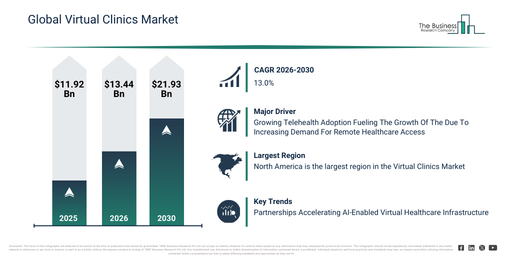
    The virtual clinics market size has seen rapid growth over recent years. It is anticipated to expand from $11.92 billion in 2025 to $13.44 billion in 2026, exhibiting a compound annual growth rate (CAGR) of 12.8%. This historical expansion can be linked to an increase in telemedicine usage, the growth of broadband access, the proliferation of digital health apps, a rising demand for patient convenience, and virtual visits initially driven by the pandemic.

    The virtual clinics market size is projected to experience swift expansion over the coming years. This market is set to reach $21.93 billion by 2030, advancing at a compound annual growth rate (CAGR) of 13.0%. The anticipated growth during this period stems from several factors, such as the increasing prevalence of hybrid care models, the emergence of digital-first healthcare policies, the broadening scope of remote diagnostics, enhanced insurer coverage for virtual appointments, and the rise in cross-border teleconsultations. Key developments projected for the forecast period encompass a greater uptake of video consultation platforms, an increase in the utilization of virtual follow-up services, the widespread integration of EHR teleclinic systems, a surge in the deployment of remote diagnostic kiosks, and a higher preference for mobile-first virtual clinics.

    Download A Free Sample Report For Comprehensive Market Insights:

    https://www.thebusinessresearchcompany.com/sample.aspx?id=33351&type=smp&utm_source=Blogs&utm_medium=Paid&utm_campaign=Jul_PR

    #Virtual Clinics Market Demand Drivers Creating New Revenue Opportunities

    The increasing integration of telehealth is anticipated to spur the expansion of the virtual clinics market moving forward. Telehealth adoption refers to the degree to which patients, providers, and healthcare systems implement and regularly utilize digital technologies for the remote delivery of clinical care and health services. This rise in telehealth adoption is largely due to the growing demand for convenient access to healthcare, eliminating the need for in-person visits. Virtual clinics, serving as a primary delivery model within telehealth, furnish structured platforms that enable patients to access consultations, diagnoses, and follow-up care entirely online. For instance, in July 2025, the International Trade Administration (ITA) reported that digital treatment penetration in the U.S. was 18.1% in 2024 and is expected to grow to 28.08% by 2029, demonstrating the widening use of digital and remote healthcare services. Thus, the escalating adoption of telehealth is propelling the growth of the virtual clinics market.

    Virtual Clinics Market Categorization By Product Type And Application

    The virtual clinics market covered in this report is segmented –

    1) By Type: Teleconsultation Platforms; Virtual Primary Care; Specialty E-Clinics; Artificial Intelligence-Based Symptom Checkers; Mobile Health Services

    2) By Application: Primary Care; Mental Health; Dermatology; Pediatrics; Chronic Care

    3) By End Users: Healthcare Providers; Patients; Pharmaceutical Companies; Insurance Companies; Employers

    Subsegments:

    1) By Teleconsultation Platforms: Video Consultation Platforms; Audio Consultation Platforms; Chat-Based Consultation Platforms; Integrated Scheduling and Consultation Platforms

    2) By Virtual Primary Care: Preventive Care Platforms; Routine Checkup Platforms; Family Medicine Virtual Platforms; General Practice Virtual Platforms

    3) By Specialty E-Clinics: Cardiology Virtual Clinics; Dermatology Virtual Clinics; Endocrinology Virtual Clinics; Orthopedic Virtual Clinics; Neurology Virtual Clinics

    4) By Artificial Intelligence-Based Symptom Checkers: Rule Based Symptom Assessment Tools; Machine Learning Driven Symptom Analysis Tools; Natural Language Processing Based Triage Tools; Predictive Diagnostic Support Tools

    5) By Mobile Health Services: Mobile Consultation Applications; Remote Health Monitoring Applications; Medication Management Applications; Wellness and Preventive Care Applications

    Virtual Clinics Market Trends Driving Strategic Industry Expansion

    Major companies active in the virtual clinics market are adopting a strategic partnership approach to enhance the integration of technology and expand their market reach. A strategic partnership typically describes a collaborative relationship between two or more organizations, where they combine their resources, expertise, and efforts to achieve common goals or objectives. For instance, in January 2026, VSee Health, Inc., a US-based telehealth technology company, forged a strategic partnership with DocBox, a US-based augmented intelligence platform for critical care, aimed at developing a next-generation virtual ICU operating system for hospitals globally. This collaboration integrates VSee’s telehealth and AI-driven workflows with DocBox’s vendor-agnostic bedside data infrastructure, enabling hospitals to leverage real-time, structured clinical data from ICU devices and monitoring systems. This integrated solution functions as an AI-native, reimbursement-compliant virtual ICU platform. It is built to facilitate scalable remote critical care, improve revenue generation via automated billing, permit the use of AI decision-support tools on live physiological data, guarantee hospital ownership of clinical data, and integrate VSee’s functionalities into essential clinical operations.

    Virtual Clinics Market Company Landscape And Strategic Competition

    Major companies operating in the virtual clinics market are Optum Inc., The Cigna Group, Siemens Healthineers AG, Koninklijke Philips N.V., SSM Health Care Group, Teladoc Health Inc., Babylon Healthcare Services Limited, Hims & Hers Health Inc., Ping An Healthcare and Technology Company Limited, Kry International AB, American Well Corporation, MDLIVE Inc., Doctor On Demand Inc., CallHealth Services Private Limited, HealthTap Inc., Ada Health GmbH, Virinchi Hospitals Private Limited, Practo Technologies Private Limited, 98point6 Inc., PlushCare Inc.

    Access The Complete Virtual Clinics Market Report:

    https://www.thebusinessresearchcompany.com/report/virtual-clinics-market-report?utm_source=Blogs&utm_medium=Paid&utm_campaign=Jul_PR

    Virtual Clinics Market Regional Distribution: Which Areas Drive Market Expansion?

    North America was the largest region in the virtual clinics market in 2025. Asia-Pacific is expected to be the fastest-growing region in the forecast period. The regions covered in the virtual clinics market report are Asia-Pacific, South East Asia, Western Europe, Eastern Europe, North America, South America, Middle East, Africa.

    Get in touch with us:

    The Business Research Company: https://www.thebusinessresearchcompany.com/

    Americas: +1 310-496-7795

    Asia: +44 7882 955267 & +91 8897263534

    Europe: +44 7882 955267

    Email us at: marketing@tbrc.info

    Follow us on:

    LinkedIn: https://in.linkedin.com/company/the-business-research-company

    YouTube: https://www.youtube.com/channel/UC24_fI0rV8cR5DxlCpgmyFQ

    Global Market Model: https://www.thebusinessresearchcompany.com/global-market-model
  • Virtual Care Management  Market Expansion Is Opening New Pathways For Strategic Investment

    Virtual Care Management Market Expansion Is Opening New Pathways For Strategic Investment

    Enhanced with market attractiveness analysis, total addressable market evaluation, company benchmarking matrices, interactive Excel dashboards, expanded supply chain intelligence, emerging startup coverage, and detailed product insights, The Business Research Company’s 2026 market reports deliver more actionable and strategically valuable research.

    Virtual Care Management Market Value Analysis: What Growth Is Expected Over The Forecast Period?

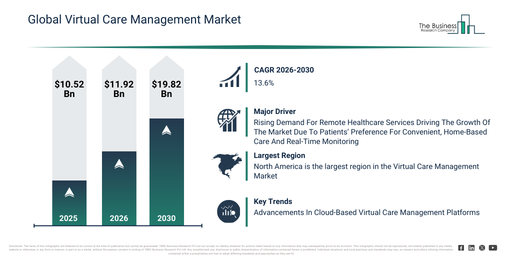
    The virtual care management market has witnessed rapid growth in recent years. It is projected to expand from $10.52 billion in 2025 to $11.92 billion in 2026, achieving a compound annual growth rate (CAGR) of 13.3%. The historical development of this market is attributable to increased telehealth adoption, a growing burden of chronic diseases, the expansion of digital health records, a rise in remote monitoring pilot initiatives, and early support for virtual care from insurers.

    The virtual care management market is anticipated to experience substantial expansion in the coming years, projected to reach $19.82 billion by 2030, exhibiting a compound annual growth rate (CAGR) of 13.6%. This growth throughout the forecast period is attributable to factors such as the rise in value-based care models, an expanding aging population, the broadening of home-based monitoring programs, increased payer reimbursement for virtual services, and larger digital transformation budgets for providers. Significant trends during this period include the growing adoption of remote care coordination platforms, the increasing utilization of continuous chronic care monitoring, the wider implementation of digital care plan management tools, enhanced integration of patient engagement platforms, and a higher deployment of virtual care analytics solutions.

    Download A Free Sample Report For Comprehensive Market Insights:

    https://www.thebusinessresearchcompany.com/sample.aspx?id=33350&type=smp&utm_source=Blogs&utm_medium=Paid&utm_campaign=Jul_PR

    Virtual Care Management Market Expansion Supported By Key Demand Factors

    The increasing desire for remote healthcare services is projected to stimulate the expansion of the virtual care management market in the upcoming years. Remote healthcare involves providing medical attention, consultations, and patient oversight from a distance using digital platforms and telecommunication technologies. This escalating demand is largely driven by patients’ preference for convenient and easily accessible care, allowing them to receive medical services at home while reducing travel time, wait times, and related expenses. Virtual care management facilitates remote healthcare delivery by enabling synchronized, real-time monitoring, communication, and care planning among providers and patients. These functionalities enhance continuity of care, improve patient participation, and boost overall healthcare system efficiency. Evidence of this growing demand is visible in telehealth adoption trends. For instance, according to the U.S. Department of Health and Human Services (HHS), a US-based national health policy, roughly 25% of medicare fee-for-service beneficiaries utilized a telehealth service, which is a significant 7 percentage point increase compared to 18% in March 2023, reflecting a notable year-over-year rise. Thus, the growing demand for remote healthcare services is a key factor driving the growth of the virtual care management market.

    Virtual Care Management Market Segment Analysis And Revenue Opportunities

    The virtual care management market covered in this report is segmented –

    1) By Component: Software; Hardware; Services

    2) By Deployment Mode: On-Premises; Cloud

    3) By Application: Telehealth; Remote Patient Monitoring; Chronic Disease Management; Behavioral Health; Other Applications

    4) By End-Users: Hospitals; Clinics; Home Care Settings; Other End-Users

    Subsegments:

    1) By Software: Care Coordination Platforms; Patient Engagement Applications; Clinical Decision Support Systems; Population Health Management Tools

    2) By Hardware: Remote Monitoring Devices; Wearable Health Tracking Devices; Connected Diagnostic Equipment; Home Care Medical Devices

    3) By Services: Remote Care Coordination Services; Chronic Care Management Services; Virtual Patient Monitoring Services

    Virtual Care Management Market Growth Trends Influencing Competitive Dynamics

    Major companies within the virtual care management market are prioritizing enhancements in cloud and teleconferencing technologies, such as virtual care management (VCM) platforms, to boost remote patient engagement, facilitate real-time clinician–patient interactions, improve care coordination, and support the scalable, secure delivery of healthcare services across diverse settings. Virtual care management (VCM) refers to the systematic provision, monitoring, and administration of patient care utilizing digital and remote healthcare technologies, rather than requiring in-person visits. For instance, in march 2023, Royal Philips, a Netherlands-based health technology company, launched Philips virtual care management, which includes condition-specific protocols (such as diabetes and hypertension), connected devices, and engagement tools on a secure interoperable cloud-based platform, along with licensed clinical professional monitoring providing personalized health coaching.

    Virtual Care Management Market Leading Players Shaping Industry Direction

    Major companies operating in the virtual care management market are Amazon.web service Inc., UnitedHealth Group Incorporated, CVS Health Corporation, The Cigna Group Inc., Elevance Health Inc., Centene Corporation, Humana Inc., HCA Healthcare Inc., Best Buy Co. Inc., Koninklijke Philips N.V., Boston Scientific Corporation, ResMed Inc., Agilon Health Inc., DexCom Inc., Teladoc Health Inc., Masimo Corporation, Evolent Health Inc., Privia Health Group Inc., Hims & Hers Health Inc., Doximity Inc., American Well Corporation, LifeMD Inc., Talkspace Inc.

    Access The Complete Virtual Care Management Market Report:

    https://www.thebusinessresearchcompany.com/report/virtual-care-management-market-report?utm_source=Blogs&utm_medium=Paid&utm_campaign=Jul_PR

    Virtual Care Management Market Leading Geography: Which Region Generates The Most Revenue?

    North America was the largest region in the virtual care management market in 2025. Asia-Pacific is expected to be the fastest-growing region in the forecast period. The regions covered in the virtual care management market report are Asia-Pacific, South East Asia, Western Europe, Eastern Europe, North America, South America, Middle East, Africa.

    Get in touch with us:

    The Business Research Company: https://www.thebusinessresearchcompany.com/

    Americas: +1 310-496-7795

    Asia: +44 7882 955267 & +91 8897263534

    Europe: +44 7882 955267

    Email us at: marketing@tbrc.info

    Follow us on:

    LinkedIn: https://in.linkedin.com/company/the-business-research-company

    YouTube: https://www.youtube.com/channel/UC24_fI0rV8cR5DxlCpgmyFQ

    Global Market Model: https://www.thebusinessresearchcompany.com/global-market-model

  • Viral Arthritis Vaccine  Market Trends Are Creating New Opportunities For Industry Leaders

    Viral Arthritis Vaccine Market Trends Are Creating New Opportunities For Industry Leaders

    Through market attractiveness analysis, total addressable market evaluation, company benchmarking matrices, interactive Excel dashboards, expanded supply chain intelligence, emerging startup coverage, and detailed product insights, The Business Research Company’s 2026 market reports provide more actionable and strategically valuable research.

    Viral Arthritis Vaccine Market Size Forecast: How Large Could The Market Become By 2030?

    The viral arthritis vaccine market has expanded significantly in recent years. This market is projected to expand from $6.66 billion in 2025 to $7.36 billion in 2026, driven by a compound annual growth rate (CAGR) of 10.6%. Its historical expansion can be attributed to several factors, including the history of chikungunya outbreaks, advancements in vaccine platforms, global immunization programs, research into zoonotic viruses, and public health preparedness efforts.

    The viral arthritis vaccine market size is anticipated to expand rapidly over the next few years, reaching $11.09 billion by 2030, at a compound annual growth rate (CAGR) of 10.8%. The projected increase in this period can be linked to the development of next generation vaccine platforms, the growing danger posed by arboviruses, swifter clinical trials, increased exposure due to global travel, and the wider adoption of preventive immunization. Significant trends during the forecast period involve mrna based viral arthritis vaccines, the use of recombinant vector vaccine platforms, multivalent arthritogenic virus vaccines, innovative rapid response vaccine design, and adjuvanted immunogenic formulations.

    Download A Free Sample Report For Comprehensive Market Insights:

    https://www.thebusinessresearchcompany.com/sample.aspx?id=33349&type=smp&utm_source=Blogs&utm_medium=Paid&utm_campaign=Jul_PR

    #Viral Arthritis Vaccine Market Growth Drivers And Industry Catalysts

    The increasing prevalence of mosquito-borne viral infections is projected to drive the expansion of the viral arthritis vaccine market in the coming years. These infections involve diseases transmitted to humans through the bite of infected mosquitoes, including chikungunya, Zika, and dengue viruses, which can manifest as symptoms like fever, joint pain, rash, and, in some instances, enduring complications such as viral arthritis. The rise in mosquito-borne viral infections is attributed to climate change, leading to warmer temperatures and altered rainfall patterns that extend mosquito habitats and breeding cycles. A viral arthritis vaccine assists in mitigating mosquito-borne viral infections by preventing initial infection and the progression of diseases caused by viruses that induce joint inflammation, thereby reducing transmission risk and the overall disease burden in affected populations. For instance, in 2024, the World Health Organization (WHO), a Switzerland-based intergovernmental organization, reported over 7.6 million cases globally by April, which is triple the number recorded during the same period in 2023, with transmission continuing to spread across more than 90 countries. Therefore, the escalating incidence of mosquito-borne viral infections is propelling growth in the viral arthritis vaccine market.

    Viral Arthritis Vaccine Market Segmentation And Category Breakdown

    The viral arthritis vaccine market covered in this report is segmented –

    1) By Type: Viral Arthritis Vaccine, Live; Viral Arthritis Vaccine, Inactivated

    2) By Virus Targeted: Chikungunya Virus; Rubella Virus; Parvovirus; Other Viral Arthritis-Causing Viruses

    3) By Application: Farms; Individual

    4) By End-User: Hospitals And Clinics; Vaccination Centers; Homecare; Government Programs

    Subsegments:

    1) By Viral Arthritis Vaccine, Live: Single Dose; Combination Dose; Recombinant Live Vaccine

    2) By Viral Arthritis Vaccine, Inactivated: Whole Virus Inactivated Vaccine; Split Virus Inactivated Vaccine; Adjuvanted Inactivated Vaccine

    #Viral Arthritis Vaccine Market Trends Influencing Long-Term Demand

    Leading companies in the viral arthritis vaccine market are prioritizing the development of innovative vaccine candidates, such as live-attenuated and next-generation chikungunya vaccines. This initiative aims to address the growing necessity for effective prevention against viral-induced joint pain and long-term arthritic complications, particularly for vulnerable populations. Live-attenuated and next-generation chikungunya vaccines represent advanced formulations engineered to prevent chikungunya virus infection by eliciting strong and enduring immune responses. Live-attenuated vaccines achieve this by employing weakened forms of the virus to closely mimic natural infection and provide durable protection, while next-generation vaccines utilize modern platforms like viral vectors, recombinant proteins, or novel attenuation technologies to enhance safety, immunogenicity, and broader applicability across populations. For instance, in June 2025, Bavarian Nordic A/S, a Denmark-based biotechnology company, initiated a Phase 3 clinical study of its chikungunya vaccine specifically for children. This move is designed to extend protection to pediatric populations in endemic regions, where early-life exposure can result in a significant disease burden. The progression to late-stage clinical evaluation demonstrates increasing confidence in the vaccine’s safety and immunogenicity profile and highlights continuous efforts to broaden age indications, strengthen population-level immunity, and diminish the global long-term impact of chikungunya-associated viral arthritis.

    Viral Arthritis Vaccine Market Competitive Analysis Of Major Industry Participants

    Major companies operating in the viral arthritis vaccine market are Bavarian Nordic A/S, Serum Institute of India Private Limited, Valneva SE, Bharat Biotech International Limited, Panacea Biotec Ltd., The Biologicals and Vaccines Institute of Southern Africa (Pty) Ltd.

    Access The Complete Viral Arthritis Vaccine Market Report:

    https://www.thebusinessresearchcompany.com/report/viral-arthritis-vaccine-market-report?utm_source=Blogs&utm_medium=Paid&utm_campaign=Jul_PR

    Viral Arthritis Vaccine Market Regional Outlook: Where Are The Largest Opportunities Located?

    North America was the largest region in the viral arthritis vaccine market in 2025. Asia-Pacific is expected to be the fastest-growing region in the forecast period. The regions covered in the viral arthritis vaccine market report are Asia-Pacific, South East Asia, Western Europe, Eastern Europe, North America, South America, Middle East, Africa.

    Get in touch with us:

    The Business Research Company: https://www.thebusinessresearchcompany.com/

    Americas: +1 310-496-7795

    Asia: +44 7882 955267 & +91 8897263534

    Europe: +44 7882 955267

    Email us at: marketing@tbrc.info

    Follow us on:

    LinkedIn: https://in.linkedin.com/company/the-business-research-company

    YouTube: https://www.youtube.com/channel/UC24_fI0rV8cR5DxlCpgmyFQ

    Global Market Model: https://www.thebusinessresearchcompany.com/global-market-model
  • Vibrating Mesh Nebulizer  Market Growth Is Reshaping Competitive Advantage Across The Industry

    Vibrating Mesh Nebulizer Market Growth Is Reshaping Competitive Advantage Across The Industry

    Delivering more actionable and strategically valuable research, The Business Research Company’s 2026 market reports feature market attractiveness analysis, total addressable market evaluation, company benchmarking matrices, interactive Excel dashboards, expanded supply chain intelligence, emerging startup coverage, and detailed product insights.

    Vibrating Mesh Nebulizer Market Revenue Outlook: What CAGR Is Expected Through 2030?

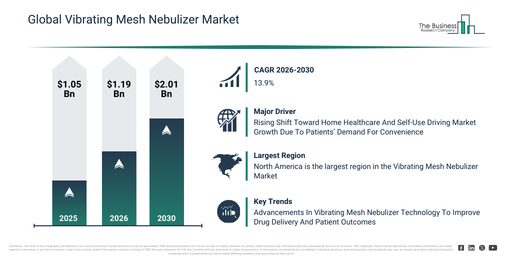
    The vibrating mesh nebulizer market size has experienced rapid expansion recently. It is projected to grow from $1.05 billion in 2025 to $1.19 billion in 2026, achieving a compound annual growth rate (CAGR) of 13.7%. The market’s historical growth can be attributed to factors such as a rise in asthma prevalence, COPD patient growth, the demand for home respiratory care, portable device innovation, and pediatric inhalation therapy needs.

    The vibrating mesh nebulizer market size is projected to experience significant expansion in the coming years. It is forecast to reach $2.01 billion by 2030, growing at a compound annual growth rate (CAGR) of 13.9%. This anticipated growth during the forecast period is driven by factors such as the increasing adoption of connected respiratory devices, the rise in home-based chronic care, advancements in wearable inhalation monitoring, the demand for personalized drug delivery, and the growing need for respiratory care for an aging population. Key trends expected in the forecast period include the development of portable handheld mesh nebulizers, ultra quiet nebulization devices, smart connected inhalation systems, high efficiency aerosol delivery, and rechargeable mesh nebulizer units.

    Download A Free Sample Report For Comprehensive Market Insights:

    https://www.thebusinessresearchcompany.com/sample.aspx?id=33348&type=smp&utm_source=Blogs&utm_medium=Paid&utm_campaign=Jul_PR

    Vibrating Mesh Nebulizer Market Opportunity Drivers: What Is Creating New Revenue Potential?

    The increasing adoption of home healthcare and self-administered treatments is anticipated to fuel the expansion of the vibrating mesh nebulizer market in the coming years. This trend encompasses medical care and equipment enabling individuals to manage their health autonomously outside traditional clinical environments. Patient preference for accessible and economical care primarily fuels this movement, given that home-based treatment minimizes hospital visits, decreases overall healthcare expenses, and enhances patient comfort and adherence to prescribed therapies. Vibrating mesh nebulizers are especially fitting for home healthcare and self-application because of their compact design, silent functioning, ease of transport, and capacity for effective and accurate delivery of respiratory medications. For instance, in July 2025, the Department of Health and Social Care (DHSC), a UK-based government body, reported that approximately 489,000 individuals in England received community-based support in 2024, which equates to 1,070 per 100,000 adults, signifying a year-on-year rise in home-based care utilization. Consequently, the escalating adoption of home healthcare and self-use is propelling the expansion of the vibrating mesh nebulizer market.

    Vibrating Mesh Nebulizer Market Segment Outlook: Which Categories Are Expanding The Fastest?

    The vibrating mesh nebulizer market covered in this report is segmented –

    1) By Product Type: Active Mesh Nebulizer; Passive Mesh Nebulizer

    2) By Age Group: Adults; Paediatrics

    3) By Distribution Channel: Online; Offline

    4) By Application: Chronic Obstructive Pulmonary Disease; Asthma; Cystic Fibrosis; Other Applications

    5) By End User: Hospitals; Clinics; Home Healthcare; Emergency Medical Centres; Other End Users

    Subsegments:

    1) By Active Mesh Nebulizer: Portable Active Mesh Nebulizers; Handheld Active Mesh Nebulizers; Battery Operated Active Mesh Nebulizers; Rechargeable Active Mesh Nebulizers; High Frequency Vibration Active Mesh Nebulizers

    2) By Passive Mesh Nebulizer: Compact Passive Mesh Nebulizers; Tabletop Passive Mesh Nebulizers; Low Noise Passive Mesh Nebulizers; Single Patient Use Passive Mesh Nebulizers; Continuous Use Passive Mesh Nebulizers

    Vibrating Mesh Nebulizer Market Innovation Trends Driving Future Development

    Leading firms in the vibrating mesh nebulizer market are prioritizing technological advancements to boost the effectiveness of drug delivery, improve patient adherence, and achieve better overall treatment results. A vibrating mesh nebulizer is a medical device that delivers medication as a fine aerosol directly to the lungs. For example, in March 2025, Loxim, a China-based medical technology company, introduced the LX8201-0B chip, a specialized drive solution for vibrating mesh nebulizers designed to enhance device performance. The LX8201-0B chip optimizes vibration frequency and amplitude, guaranteeing consistent aerosol particle size, facilitates low power consumption for portable use, and ensures seamless integration with current nebulizer systems. Its primary advantages include enhanced efficiency in medication delivery, extended device longevity, and adaptability for a range of therapeutic applications, such as for asthma, COPD, and other respiratory treatments. This launch underscores the industry’s drive towards developing miniaturized, energy-efficient, and highly accurate nebulizer solutions.

    Vibrating Mesh Nebulizer Market Key Companies And Competitive Benchmarking

    Major companies operating in the vibrating mesh nebulizer market are McKesson Corporation, Medtronic plc, Koninklijke Philips N.V, Henry Schein Inc., OMRON Corporation, Jiangsu Yuyue Medical Equipment & Supply Co. Ltd., Beurer GmbH, Drive DeVilbiss Healthcare, AptarGroup Inc., Aerogen Ltd., PARI GmbH, BPL Medical Technologies Private Limited, GF Health Products Inc., Rossmax International Ltd., Shenzhen Feellife Health Technology Co. Ltd., Labtron Equipment Ltd., Honsun (Nantong) Co. Ltd., Well Lead Medical Co. Ltd., Medline Industries LP

    Access The Complete Vibrating Mesh Nebulizer Market Report:

    https://www.thebusinessresearchcompany.com/report/vibrating-mesh-nebulizer-market-report?utm_source=Blogs&utm_medium=Paid&utm_campaign=Jul_PR

    Vibrating Mesh Nebulizer Market Geographic Landscape: Which Region Dominates Industry Growth?

    North America was the largest region in the vibrating mesh nebulizer market in 2025. Asia-Pacific is expected to be the fastest-growing region in the forecast period. The regions covered in the vibrating mesh nebulizer market report are Asia-Pacific, South East Asia, Western Europe, Eastern Europe, North America, South America, Middle East, Africa.

    Get in touch with us:

    The Business Research Company: https://www.thebusinessresearchcompany.com/

    Americas: +1 310-496-7795

    Asia: +44 7882 955267 & +91 8897263534

    Europe: +44 7882 955267

    Email us at: marketing@tbrc.info

    Follow us on:

    LinkedIn: https://in.linkedin.com/company/the-business-research-company

    YouTube: https://www.youtube.com/channel/UC24_fI0rV8cR5DxlCpgmyFQ

    Global Market Model: https://www.thebusinessresearchcompany.com/global-market-model
  • Thermal Cyclers  Market Growth Through 2030 Creates New Strategic Opportunities

    Thermal Cyclers Market Growth Through 2030 Creates New Strategic Opportunities

    Enhanced with market attractiveness analysis, total addressable market evaluation, company benchmarking matrices, interactive Excel dashboards, expanded supply chain intelligence, emerging startup coverage, and detailed product insights, The Business Research Company’s 2026 market reports deliver more actionable and strategically valuable research.

    Thermal Cyclers Market Forecast Highlighting Growth From $1.4 Billion To $1.98 Billion

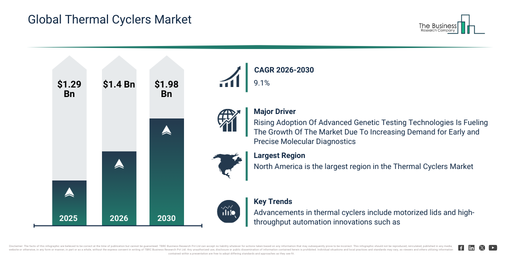
    The thermal cyclers market size has experienced significant expansion in recent years. The market is projected to increase from $1.29 billion in 2025 to $1.4 billion in 2026, registering a compound annual growth rate (CAGR) of 8.9%. This past growth can be attributed to the advancement of molecular diagnostics, the broadening of genomics research, an uptick in infectious disease testing, an increase in forensic analysis, and the growth of academic research laboratories.

    The thermal cyclers market is projected for robust expansion over the coming years, with its size forecast to reach $1.98 billion by 2030, driven by a compound annual growth rate (CAGR) of 9.1%. This anticipated growth during the forecast period is primarily due to factors such as the expansion of point of care testing, advancements in precision medicine, an increasing need for rapid diagnostics, a rise in biotech research funding, and the broader integration of digital PCR. Key trends expected within this period encompass high throughput pcr cycler systems, portable field deployable cyclers, AI assisted temperature optimization, cloud connected pcr platforms, and rapid cycling thermal blocks.

    Download A Free Sample Report For Comprehensive Market Insights:

    https://www.thebusinessresearchcompany.com/sample.aspx?id=33341&type=smp&utm_source=Blogs&utm_medium=Paid&utm_campaign=Jul_PR

    Thermal Cyclers Market Growth Drivers: What Factors Are Accelerating Expansion?

    The increasing integration of cutting-edge genetic testing methods is anticipated to fuel the expansion of the thermal cyclers market in the coming years. Molecular diagnostics involves intricate laboratory procedures designed to accurately detect and examine genetic material (DNA and RNA) to pinpoint illnesses, infections, and genetic conditions. This growth in molecular diagnostics stems from a growing need for prompt and accurate disease identification, promoting the use of advanced genetic testing for quicker, more dependable clinical results. Thermal cyclers play a crucial role in molecular diagnostics by facilitating exact DNA amplification through regulated temperature cycles, thereby guaranteeing precise, swift, and trustworthy molecular assays. For example, in May 2025, Ellume, an Australia-based innovator of rapid digital diagnostic tests, reported that more than 96,215 molecular diagnostic tests were performed weekly in the US in 2023, showcasing the extensive clinical application and sustained significance of molecular diagnostics in tracking diseases and guiding clinical choices. Consequently, the expanding use of advanced genetic testing technologies is propelling the growth of the thermal cyclers market.

    Thermal Cyclers Market Segment Analysis Highlighting Growth Areas

    The thermal cyclers market covered in this report is segmented –

    1) By Product Type: Standard Polymerase Chain Reaction (PCR) Thermal Cyclers; Real-Time Polymerase Chain Reaction (PCR) (qPCR) Systems; Digital Polymerase Chain Reaction (dPCR) Systems; High-Throughput Thermal Cyclers; Portable Or Compact Thermal Cyclers

    2) By Technology: Gradient Polymerase Chain Reaction (PCR); Touchdown Polymerase Chain Reaction (PCR); Fast Polymerase Chain Reaction (PCR); Reverse Transcription Polymerase Chain Reaction (RT-PCR); Other Technologies

    3) By Application: Clinical Diagnostics; Research And Academic Use; Forensic Applications; Agricultural Biotechnology; Environmental Testing

    4) By Distribution Channel: Direct Sales; Distributors Or Resellers; Online Sales

    5) By End User: Hospitals And Diagnostic Centers; Academic And Research Institutions; Biotechnology And Pharmaceutical Companies; Forensic Laboratories; Contract Research Organizations (CROs)

    Subsegments:

    1) By Standard Polymerase Chain Reaction (PCR) Thermal Cyclers: Conventional Block Thermal Cyclers; Gradient Thermal Cyclers; Touchscreen Controlled Thermal Cyclers; Multi Block Thermal Cyclers

    2) By Real-Time Polymerase Chain Reaction (PCR) (qPCR) Systems: Dye Based Detection Systems; Probe Based Detection Systems; Multiplex Real Time Systems; Fast Cycling Real Time Systems

    3) By Digital Polymerase Chain Reaction (dPCR) Systems: Droplet Based Digital Systems; Chip Based Digital Systems; Microfluidic Digital Systems; High Precision Quantification Systems

    4) By High-Throughput Thermal Cyclers: Ninety Six Well Thermal Cyclers; Three Hundred Eighty Four Well Thermal Cyclers; Automated High Capacity Thermal Cyclers; Parallel Processing Thermal Cyclers

    5) By Portable Or Compact Thermal Cyclers: Battery Operated Thermal Cyclers; Handheld Thermal Cyclers; Field Deployable Thermal Cyclers; Point Of Care Thermal Cyclers

    Thermal Cyclers Market Trends: What Is Shaping Future Industry Growth?

    Leading firms within the thermal cyclers market are prioritizing advanced innovations, including deep-well thermal cyclers, to enhance their competitive standing. These specialized laboratory instruments facilitate temperature-controlled reactions like PCR on samples in deep-well plates, which accommodate greater volumes compared to standard PCR tubes or plates. An example is the March 2025 introduction by Bio-Rad Laboratories, a US-based research firm, of the PTC Tempo 384 Thermal Cycler, the newest addition to its PTC Tempo series. This cutting-edge instrument is specifically engineered for high-throughput PCR tasks across basic research, translational studies, process development, and quality control. The PTC Tempo 384 incorporates a 384-well reaction module featuring a motorized lid, enabling smooth automation and integration with robotics. It offers excellent thermal uniformity (±0.3°C at 95°C), rapid ramp rates up to 5°C per second, and multizone gradient programming, thus providing greater efficiency than alternatives like the dual-block PTC Tempo 48/48 for intricate, scalable workflows. Constructed on the dependable C1000 Touch platform, the PTC Tempo 384 includes an updated intuitive user interface, adaptable connectivity options such as BR.io cloud monitoring, and the recent software update v3.0.0.8, which improves API support. Consequently, the PTC Tempo 384 stands as an outstanding option for academic, commercial, and biopharma laboratories, delivering unparalleled reproducibility and usability.

    Thermal Cyclers Market Leading Companies: Who Holds Significant Market Presence?

    Major companies operating in the thermal cyclers market are Roche Diagnostics, Thermo Fisher Scientific Inc., Agilent Technologies, Bio-Rad Laboratories, QIAGEN, Eppendorf, Cepheid, Bio-Techne, Hamilton Company, Heal Force Bio-Meditech, Takara Bio, Hangzhou Bioer Technology, Analytik Jena, Esco Lifesciences, ELITechGroup, Benchmark Scientific, Cole-Parmer Instrument Company, Biomeme, GNA Biosolutions, Cleaver Scientific, Starlab International, and Scilogex.

    Access The Complete Thermal Cyclers Market Report:

    https://www.thebusinessresearchcompany.com/report/thermal-cyclers-market-report?utm_source=Blogs&utm_medium=Paid&utm_campaign=Jul_PR

    Thermal Cyclers Market Global Footprint: Which Region Holds Market Leadership?

    North America was the largest region in the thermal cyclers market in 2025. Asia-Pacific is expected to be the fastest-growing region in the forecast period. The regions covered in the thermal cyclers market report are Asia-Pacific, South East Asia, Western Europe, Eastern Europe, North America, South America, Middle East, Africa.

    Get in touch with us:

    The Business Research Company: https://www.thebusinessresearchcompany.com/

    Americas: +1 310-496-7795

    Asia: +44 7882 955267 & +91 8897263534

    Europe: +44 7882 955267

    Email us at: marketing@tbrc.info

    Follow us on:

    LinkedIn: https://in.linkedin.com/company/the-business-research-company

    YouTube: https://www.youtube.com/channel/UC24_fI0rV8cR5DxlCpgmyFQ

    Global Market Model: https://www.thebusinessresearchcompany.com/global-market-model
  • Teleultrasound System  Market Growth Outlook Reveals A CAGR Of 10.4% And A Market Value Of $9.11 Billion By 2030

    Teleultrasound System Market Growth Outlook Reveals A CAGR Of 10.4% And A Market Value Of $9.11 Billion By 2030

    Delivering more actionable and strategically valuable research, The Business Research Company’s 2026 market reports feature market attractiveness analysis, total addressable market evaluation, company benchmarking matrices, interactive Excel dashboards, expanded supply chain intelligence, emerging startup coverage, and detailed product insights.

    Teleultrasound System Market Value Expansion And Long-Term Growth Outlook

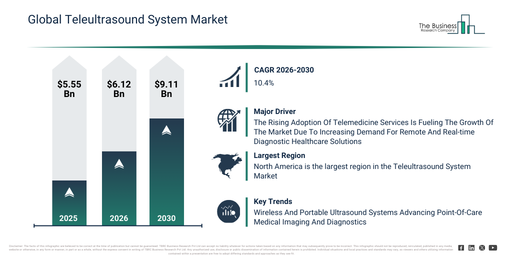
    The teleultrasound system market has experienced rapid expansion in recent years. It is projected to increase from $5.55 billion in 2025 to $6.12 billion in 2026, at a compound annual growth rate (CAGR) of 10.2%. The historical growth can be attributed to factors such as the rise in telemedicine adoption, a shortage of imaging specialists, the expansion of rural healthcare programs, an increase in portable ultrasound devices, and the need for faster diagnosis.

    The teleultrasound system market is projected to experience substantial expansion in the coming years, with its size predicted to reach $9.11 billion by 2030, exhibiting a compound annual growth rate (CAGR) of 10.4%. This anticipated growth during the forecast period stems from factors such as the increasing reach of remote diagnostics, the proliferation of connected medical devices, a growing need for point-of-care imaging, enhanced healthcare digitization, and more extensive reimbursement policies for telehealth services. Significant trends expected over the forecast horizon encompass AI-powered remote ultrasound guidance, cloud-based image sharing platforms, mobile connected ultrasound devices, real-time specialist cooperation tools, and secure tele-imaging operational processes.

    Download A Free Sample Report For Comprehensive Market Insights:

    https://www.thebusinessresearchcompany.com/sample.aspx?id=33339&type=smp&utm_source=Blogs&utm_medium=Paid&utm_campaign=Jul_PR

    #Teleultrasound System Market Demand Drivers Creating New Revenue Opportunities

    The increasing use of telemedicine services is projected to propel the teleultrasound system market forward. Telemedicine services encompass the provision of healthcare consultations, diagnoses, and monitoring via digital communication technologies, removing the necessity for in-person visits. These services are gaining momentum due to the escalating need for convenient and remote healthcare access, particularly in regions that are underserved or geographically distant. The teleultrasound system contributes to expanding diagnostic imaging access by enabling real-time remote guidance, image acquisition, and interpretation by specialists, especially in remote or underserved healthcare settings. For example, in June 2025, data from Harmony Healthcare IT, a US-based data management firm, revealed that 62% of Americans had used telehealth services for their medical needs, with more than 77% viewing telehealth as the future of healthcare, indicating strong consumer confidence and sustained growth in usage. Thus, the escalating adoption of telemedicine services is fueling the expansion of the teleultrasound system market.

    #Teleultrasound System Market Segment Landscape And Growth Potential

    The teleultrasound system market covered in this report is segmented –

    1) By Component: Hardware; Software; Services

    2) By Technology: Two-Dimensional (2D) Ultrasound; Three-Dimensional (3D) Or Four Dimensional (4D) Ultrasound; Artificial Intelligence-Enabled Ultrasound; Cloud-Based Imaging Platforms

    3) By Product Type: Portable Teleultrasound Systems; Handheld Teleultrasound Systems; Cart-Based Teleultrasound Systems

    4) By Application: Cardiology; Obstetrics Or Gynecology; Radiology; Vascular; Musculoskeletal; Other Applications

    5) By End-User: Hospitals; Diagnostic Centers; Ambulatory Surgical Centers; Other End-Users

    Subsegments:

    1) By Hardware: Ultrasound Imaging Devices; Ultrasound Probes And Transducers; Communication And Transmission Modules; Display And Control Units; Peripheral And Accessory Equipment

    2) By Software: Image Processing Software; Real Time Image Transmission Software; Remote Collaboration And Guidance Software; Data Storage And Management Software; Integration And Workflow Management Software

    3) By Services: Installation And System Integration Services; Maintenance And Technical Support Services; Training And Education Services; Calibration And Quality Assurance Services; Operational And Consulting Services

    Teleultrasound System Market Trends Driving Strategic Industry Expansion

    Major companies in the medical imaging and diagnostic ultrasound market are dedicated to developing innovative solutions, such as wireless and portable ultrasound systems, with the goal of improving point-of-care diagnostics, enhancing the efficiency of clinical workflows, and expanding access to imaging in various care settings. Wireless ultrasound systems are defined as compact, cable-free imaging devices that transmit ultrasound data wirelessly to smartphones, tablets, or workstations, offering increased mobility, ease of use, and quick deployment across hospitals, clinics, emergency care, and remote locations. For example, in November 2025, Mindray Bio-Medical Electronics Co. Ltd., a China-based medical device manufacturer, unveiled a new wireless ultrasound system designed to provide high-quality imaging with flexible, handheld operation. This system supports real-time imaging, seamless wireless connectivity, and compatibility with diverse clinical applications, enabling healthcare professionals to perform swift and accurate assessments either at the bedside or in the field. This launch emphasizes the increasing importance of portable, user-friendly diagnostic technologies that enhance clinical decision-making while boosting efficiency and accessibility across healthcare environments.

    Teleultrasound System Market Competitive Landscape: Who Are The Leading Companies?

    Major companies operating in the teleultrasound system market are Siemens Healthineers AG, FUJIFILM Holdings Corporation, Koninklijke Philips N.V., GE HealthCare Technologies Inc., Mindray Medical International Limited, Canon Medical Systems Corporation, DeepEcho Inc., Esaote S.p.A., TELSONIC AG, Butterfly Network Inc., EchoNous Inc., Clarius Mobile Health Corp., Telemed Medical Systems S.r.l., Healcerion Co. Ltd., Interson Corporation, Remote Medical Technologies LLC, Pulsenmore Ltd., e-Medical Systems Pty Ltd, Alpinion Medical Systems Co. Ltd., TeleGuidance Systems Inc.

    Access The Complete Teleultrasound System Market Report:

    https://www.thebusinessresearchcompany.com/report/teleultrasound-system-market-report?utm_source=Blogs&utm_medium=Paid&utm_campaign=Jul_PR

    Teleultrasound System Market Leading Geography: Which Region Generates The Most Revenue?

    North America was the largest region in the teleultrasound system market in 2025. Asia-Pacific is expected to be the fastest-growing region in the forecast period. The regions covered in the teleultrasound system market report are Asia-Pacific, South East Asia, Western Europe, Eastern Europe, North America, South America, Middle East, Africa.

    Get in touch with us:

    The Business Research Company: https://www.thebusinessresearchcompany.com/

    Americas: +1 310-496-7795

    Asia: +44 7882 955267 & +91 8897263534

    Europe: +44 7882 955267

    Email us at: marketing@tbrc.info

    Follow us on:

    LinkedIn: https://in.linkedin.com/company/the-business-research-company

    YouTube: https://www.youtube.com/channel/UC24_fI0rV8cR5DxlCpgmyFQ

    Global Market Model: https://www.thebusinessresearchcompany.com/global-market-model

  • Targeted LNPs For Extrahepatic Delivery  Market Forecast Highlights Expansion From $2.19 Billion To $4.68 Billion Through 2030

    Targeted LNPs For Extrahepatic Delivery Market Forecast Highlights Expansion From $2.19 Billion To $4.68 Billion Through 2030

    Enhanced with market attractiveness analysis, total addressable market evaluation, company benchmarking matrices, interactive Excel dashboards, expanded supply chain intelligence, emerging startup coverage, and detailed product insights, The Business Research Company’s 2026 market reports deliver more actionable and strategically valuable research.

    Targeted LNPs For Extrahepatic Delivery Market Expected To Reach $4.68 Billion By 2030 At 20.9% CAGR

    The targeted lnps for extrahepatic delivery market size has experienced significant expansion recently. This market is set to increase from $1.81 billion in 2025 to $2.19 billion in 2026, with a compound annual growth rate (CAGR) of 20.7%. Factors contributing to its historical growth include the achievements of hepatic LNP delivery systems, the proliferation of mRNA vaccine platforms, the widening scope of nanomedicine research, an uptick in gene therapy trials, and the increasing complexities associated with biologic drug delivery.

    The targeted lnps for extrahepatic delivery market is poised for substantial expansion over the next few years. This market is forecast to ascend to $4.68 billion by 2030, demonstrating a compound annual growth rate (CAGR) of 20.9%. The projected increase during the forecast period is propelled by factors such as a burgeoning pipeline of RNA therapeutics, an escalating need for tissue-targeted delivery, the proliferation of precision drug delivery platforms, heightened research into oncology nanoparticles, and an uptick in biotech delivery partnerships. Prominent trends anticipated in the forecast timeframe involve extrahepatic targeted LNP formulations, ligand-directed nanoparticle delivery, RNA delivery systems tailored for specific tissues, sophisticated ionizable lipid designs, and modular targeted nanocarrier platforms.

    Download A Free Sample Report For Comprehensive Market Insights:

    https://www.thebusinessresearchcompany.com/sample.aspx?id=33338&type=smp&utm_source=Blogs&utm_medium=Paid&utm_campaign=Jul_PR

    Targeted LNPs For Extrahepatic Delivery Market Expansion Supported By Key Demand Factors

    The expanding need for personalized medicine (PM) is anticipated to fuel the expansion of the market for targeted lipid nanoparticles (LNPs) used in extrahepatic delivery in the future. Personalized medicine (PM) involves medical treatments designed specifically for an individual’s genetic makeup, disease attributes, or biological markers to optimize treatment effectiveness and reduce adverse reactions. Developments in molecular diagnostics, the discovery of biomarkers, and drug development based on precision are speeding up the embrace of personalized treatments. Targeted lipid nanoparticles are essential for facilitating personalized medicine by enabling the exact delivery of therapeutic agents to particular tissues or cell types, including those outside the liver, thus improving therapeutic efficacy and safety. As an illustration, the U.S. Food and Drug Administration, according to the Personalized Medicine Coalition, a US-based hospital and health care organization, sanctioned 16 new personalized treatments for rare disease patients in 2023, an increase from six in 2022. Consequently, the increasing demand for personalized medicine (PM) is propelling the growth of the targeted lipid nanoparticles (LNPs) for extrahepatic delivery market.

    Targeted LNPs For Extrahepatic Delivery Market Categorization By Product Type And Application

    The targeted lnps for extrahepatic delivery market covered in this report is segmented –

    1) By Product Type: Ionizable Lipid-Based Lipid Nanoparticles; Cationic Lipid-Based Lipid Nanoparticles; Polyethylene Glycol-Coated Lipid Nanoparticles; Other Lipid Nanoparticle Formulations

    2) By Therapeutic Area: Oncology; Infectious Diseases; Genetic Disorders; Metabolic Diseases; Other Therapeutic Area

    3) By Application: Gene Therapy; Messenger Ribonucleic Acid Vaccines; Small Interfering Ribonucleic Acid Delivery; Protein Delivery; Other Application

    4) By End-User: Pharmaceutical Companies; Biotechnology Companies; Academic and Research Institutes; Other End-Users

    Subsegments:

    1) By Ionizable Lipid-Based Lipid Nanoparticles: Single Chain Ionizable Lipids; Multi-Chain Ionizable Lipids; Functionalized Ionizable Lipids

    2) By Cationic Lipid-Based Lipid Nanoparticles: Quaternary Ammonium Cationic Lipids; Permanent Cationic Lipids; Helper Lipids in Cationic Formulations

    3) By Polyethylene Glycol-Coated Lipid Nanoparticles: Polyethylene Glycolylated Lipids with Different Chain Lengths; Polyethylene Glycol-Lipid Conjugates with Targeting Ligands; Polyethylene Glycolylated Lipid Combinations for Stability

    4) By Other Lipid Nanoparticle Formulations: Sphingomyelin-Based Lipid Nanoparticles; Biodegradable Lipid Nanoparticles; Modular or Hybrid Lipid Nanoparticles; Stimulus-Responsive Lipid Nanoparticles

    Targeted LNPs For Extrahepatic Delivery Market Growth Trends Influencing Competitive Dynamics

    Leading companies in the targeted lipid nanoparticles (LNPs) for extrahepatic delivery market are concentrating on technological breakthroughs in targeted LNP platforms, including DARPin-conjugated systems, to enhance the precise delivery of substances to immune and tissue-specific cells. DARPin-conjugated lipid nanoparticles are characterized as LNPs functionalized with Designed Ankyrin Repeat Proteins (DARPins), which are engineered binding proteins capable of highly specific interactions with selected cell surface receptors. This specific targeting ability facilitates improved cellular uptake by particular cell types, supporting extrahepatic applications such as immune cell modulation and tissue-specific gene delivery. For example, in November 2025, Acuitas Therapeutics Inc., a Canada-based biotechnology company, unveiled next-generation LNP technologies designed for extrahepatic targeting. These included platforms for T-lymphocyte delivery, mucous-penetrant formulations targeting airway epithelial cells, and a pre-formed vesicle manufacturing method intended to improve scalability, cost efficiency, and storage stability. These innovations expand the potential applications of mRNA-LNP therapeutics beyond the liver, supporting broader use cases in gene editing, vaccines, and personalized medicine.

    Targeted LNPs For Extrahepatic Delivery Market Company Landscape And Strategic Competition

    Major companies operating in the targeted lnps for extrahepatic delivery market are Pfizer Inc., Sanofi S.A., Merck KGaA, FUJIFILM Pharmaceuticals U.S.A. Inc., Evonik Industries AG, Recipharm, CordenPharma International GmbH, Ardena Nanomedicines, Arcturus Therapeutics Holdings Inc., BIOVECTRA Inc., Ascendia Pharmaceuticals Inc., ABITEC Corporation, Creative Biolabs, Genevant Sciences GmbH, Polymun Scientific Immunbiologische Forschung GmbH, ST Pharm, eTheRNA immunotherapies NV, NanoVation Therapeutics, DIANT Pharma, Curapath, Phosphorex Inc.

    Access The Complete Targeted LNPs For Extrahepatic Delivery Market Report:

    https://www.thebusinessresearchcompany.com/report/targeted-lnps-for-extrahepatic-delivery-market-report?utm_source=Blogs&utm_medium=Paid&utm_campaign=Jul_PR

    Targeted LNPs For Extrahepatic Delivery Market Regional Outlook: Where Are The Largest Opportunities Located?

    North America was the largest region in the targeted lipid nanoparticles (LNPs) for extrahepatic delivery market in 2025. Asia-Pacific is expected to be the fastest-growing region in the forecast period. The regions covered in the targeted lnps for extrahepatic delivery market report are Asia-Pacific, South East Asia, Western Europe, Eastern Europe, North America, South America, Middle East, Africa.

    Get in touch with us:

    The Business Research Company: https://www.thebusinessresearchcompany.com/

    Americas: +1 310-496-7795

    Asia: +44 7882 955267 & +91 8897263534

    Europe: +44 7882 955267

    Email us at: marketing@tbrc.info

    Follow us on:

    LinkedIn: https://in.linkedin.com/company/the-business-research-company

    YouTube: https://www.youtube.com/channel/UC24_fI0rV8cR5DxlCpgmyFQ

    Global Market Model: https://www.thebusinessresearchcompany.com/global-market-model
  • Systemic Amyloidosis Therapeutic  Market Expected To Reach $8.88 Billion By 2030 As Growth Accelerates At 9.4% CAGR

    Systemic Amyloidosis Therapeutic Market Expected To Reach $8.88 Billion By 2030 As Growth Accelerates At 9.4% CAGR

    Through market attractiveness analysis, total addressable market evaluation, company benchmarking matrices, interactive Excel dashboards, expanded supply chain intelligence, emerging startup coverage, and detailed product insights, The Business Research Company’s 2026 market reports provide more actionable and strategically valuable research.

    #Systemic Amyloidosis Therapeutic Market Size And Revenue Forecast Through 2030

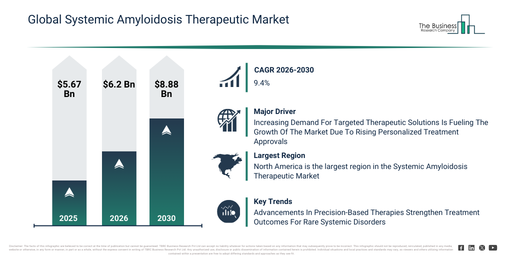
    The systemic amyloidosis therapeutic market size has shown strong expansion in recent years. It is projected to increase from $5.67 billion in 2025 to $6.2 billion in 2026, achieving a compound annual growth rate (CAGR) of 9.2%. The historical growth of this market was driven by factors such as the past underdiagnosis of amyloidosis, the reliance on chemotherapy regimens, the expansion of hematology treatment centers, heightened rare disease awareness, and the early incorporation of proteasome inhibitors.

    The therapeutic market for systemic amyloidosis is projected to experience robust expansion over the coming years. This market is set to reach $8.88 billion by 2030, demonstrating a compound annual growth rate (CAGR) of 9.4%. This anticipated growth during the forecast period stems from several factors, including an increase in rare disease diagnosis rates, the proliferation of targeted biologic medications, a rise in approvals for gene silencing therapies, the expansion of specialized clinic networks, and more robust incentives for orphan drugs. Key trends anticipated within this period encompass targeted amyloid protein stabilizer drugs, gene silencing therapies for amyloidosis, treatments based on monoclonal antibodies, combination regimen protocols, and organ-specific supportive drug strategies.

    Download A Free Sample Report For Comprehensive Market Insights:

    https://www.thebusinessresearchcompany.com/sample.aspx?id=33337&type=smp&utm_source=Blogs&utm_medium=Paid&utm_campaign=Jul_PR

    #Systemic Amyloidosis Therapeutic Market Growth Drivers And Industry Catalysts

    The increasing application of personalized medicine methodologies is projected to stimulate the growth of the systemic amyloidosis therapeutic market in the coming years. Personalized medicine represents a medical strategy that customizes treatment and prevention plans based on an individual’s genetic makeup, biomarkers, and distinct disease characteristics. Demand for personalized medicine is escalating due to advancements in genomic and biomarker technologies, which allow clinicians to precisely identify disease drivers and tailor treatments, thereby enhancing efficacy and reducing adverse effects for individual patients. The integration of personalized medicine heightens the need for systemic amyloidosis therapeutics, as patients with systemic amyloidosis exhibit diverse amyloid subtypes (e.g., AL, ATTR) and genetic variations. Therefore, effective treatment necessitates therapies specifically formulated to target the patient’s unique disease profile, ensuring maximum efficacy and minimal side effects. For instance, in April 2025, the US-based nonprofit advocacy and educational organization, Personalized Medicine Coalition (PMC), reported that in 2023, the FDA approved 16 new personalized treatments for rare disease patients, an increase from six in 2022. Consequently, the expanding adoption of personalized medicine approaches is fueling the growth of the systemic amyloidosis therapeutic market.

    Systemic Amyloidosis Therapeutic Market Segment Analysis And Revenue Opportunities

    The systemic amyloidosis therapeutic market covered in this report is segmented –

    1) By Product Type: Small Molecule Drugs; Biologic Therapies; Monoclonal Antibodies; Chemotherapy Based Regimens; Targeted Therapies; Supportive Treatments

    2) By Formulation: Tablets; Capsules; Injection

    3) By Route of Administration: Oral; Intravenous; Subcutaneous

    4) By Distribution Channel: Hospital Pharmacies; Retail Pharmacies; Online Pharmacies

    5) By End User: Hospitals; Specialty Clinics; Specialty Pharmacies; Research and Academic Institutes; Other End Users

    Subsegments:

    1) By Small Molecule Drugs: Proteasome Inhibitors; Stabilizers of Transthyretin Protein; Amyloid Fibril Disruptors; Immunomodulatory Small Molecules

    2) By Biologic Therapies: Recombinant Protein Therapies; Gene Silencing Biologic Agents; Plasma Derived Biologic Products

    3) By Monoclonal Antibodies: Anti Amyloid Fibril Antibodies; Anti Light Chain Antibodies; Targeted Clearance Antibodies

    4) By Chemotherapy Based Regimens: Alkylating Agent Based Regimens; Proteasome Inhibitor Based Chemotherapy; Combination Chemotherapy Protocols

    5) By Targeted Therapies: Targeted Light Chain Suppression Therapies; Targeted Transthyretin Reduction Therapies; Organ Specific Targeted Treatments

    6) By Supportive Treatments: Cardiac Supportive Therapies; Renal Supportive Therapies; Neurological Symptom Management Therapies; Nutritional and Palliative Care Therapies

    #Systemic Amyloidosis Therapeutic Market Trends Influencing Long-Term Demand

    Major companies operating in the systemic amyloidosis therapeutic market are concentrating on creating advanced targeted treatment approaches, including RNA interference-based therapies, to address the underlying genetic causes of protein misfolding disorders, curb disease progression, and improve long-term patient outcomes. RNA interference-based therapies function by selectively silencing disease-causing genes, thereby diminishing the production of harmful proteins responsible for systemic organ damage. For instance, in March 2025, Alnylam Pharmaceuticals, a US-based biotechnology company, launched AMVUTTRA. AMVUTTRA provides a targeted, disease-modifying treatment for adults with transthyretin amyloidosis with cardiomyopathy (ATTR-CM). Developed by Alnylam Pharmaceuticals, it is the first RNAI therapeutic shown to reduce cardiovascular death, hospitalizations, and urgent heart failure visits in this patient population. AMVUTTRA works by rapidly suppressing transthyretin production at the source, directly addressing the underlying cause of amyloid deposition. It demonstrates consistent benefits across cardiovascular outcomes, functional capacity, and quality of life.

    Systemic Amyloidosis Therapeutic Market Leading Players Shaping Industry Direction

    Major companies operating in the systemic amyloidosis therapeutic market are Johnson & Johnson Services Inc., Sanofi SA, Novartis Plc, AstraZeneca Plc, GSK Plc, Novo Nordisk A/S, Takeda Pharmaceutical Company Limited, Regeneron Pharmaceuticals Inc., Alnylam Pharmaceuticals Inc., Ionis Pharmaceuticals, Arcturus Therapeutics Inc, Prothena Biosciences, Fortress Biotech Inc., Intellia Therapeutics Inc., Zentalis Pharmaceuticals Inc., BridgeBio Pharma Inc., Neurimmune AG, HaemaLogix Pty Ltd., Attralus Inc., and Oncopeptides AB.

    Access The Complete Systemic Amyloidosis Therapeutic Market Report:

    https://www.thebusinessresearchcompany.com/report/systemic-amyloidosis-therapeutic-market-report?utm_source=Blogs&utm_medium=Paid&utm_campaign=Jul_PR

    Systemic Amyloidosis Therapeutic Market Geographic Landscape: Which Region Dominates Industry Growth?

    North America was the largest region in the systemic amyloidosis therapeutic market in 2025. Asia-Pacific is expected to be the fastest-growing region in the forecast period. The regions covered in the systemic amyloidosis therapeutic market report are Asia-Pacific, South East Asia, Western Europe, Eastern Europe, North America, South America, Middle East, Africa.

    Get in touch with us:

    The Business Research Company: https://www.thebusinessresearchcompany.com/

    Americas: +1 310-496-7795

    Asia: +44 7882 955267 & +91 8897263534

    Europe: +44 7882 955267

    Email us at: marketing@tbrc.info

    Follow us on:

    LinkedIn: https://in.linkedin.com/company/the-business-research-company

    YouTube: https://www.youtube.com/channel/UC24_fI0rV8cR5DxlCpgmyFQ

    Global Market Model: https://www.thebusinessresearchcompany.com/global-market-model
  • Surgical Robotics for Gynecology  Market Growth Is Reshaping Competitive Advantage Across The Industry

    Surgical Robotics for Gynecology Market Growth Is Reshaping Competitive Advantage Across The Industry

    Enhanced with market attractiveness analysis, total addressable market evaluation, company benchmarking matrices, interactive Excel dashboards, expanded supply chain intelligence, emerging startup coverage, and detailed product insights, The Business Research Company’s 2026 market reports deliver more actionable and strategically valuable research.

    Surgical Robotics for Gynecology Market Size Forecast: How Large Could The Market Become By 2030?

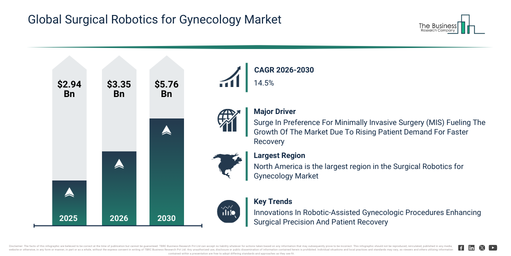
    The surgical robotics for gynecology market size has experienced rapid expansion in recent years. It is projected to increase from $2.94 billion in 2025 to $3.35 billion in 2026, demonstrating a compound annual growth rate (CAGR) of 14.2%. This growth in the historic period can be attributed to the rise in minimally invasive gynecology, growing women health procedure volumes, the proliferation of robotic surgery centers, enhanced laparoscopic outcomes, and the demand for improved surgeon ergonomics.

    The surgical robotics for gynecology market is predicted to undergo swift expansion over the upcoming years, reaching a valuation of $5.76 billion by 2030, with a compound annual growth rate (CAGR) of 14.5%. This anticipated increase during the forecast period stems from factors such as elevated hospital investment in robotic suites, an uptick in complex gynecologic procedures, a growing patient preference for minimally invasive surgical methods, the broadening of robotic training initiatives, and enhanced reimbursement provisions. Key trends projected for this period involve the increasing uptake of robotic hysterectomy systems, the development of minimally invasive gynecologic robotics, the expansion of robotic single-port procedures, a greater application of advanced surgical visualization, and the integration of procedure planning software.

    Download A Free Sample Report For Comprehensive Market Insights:

    https://www.thebusinessresearchcompany.com/sample.aspx?id=33332&type=smp&utm_source=Blogs&utm_medium=Paid&utm_campaign=Jul_PR

    Surgical Robotics for Gynecology Market Industry Drivers: What Is Driving Revenue Growth?

    The increasing demand for minimally invasive surgery is projected to boost the expansion of the surgical robotics for gynecology market in the future. This surgical approach entails executing gynecological operations like hysterectomies and myomectomies via small incisions, employing laparoscopic or robot-assisted methods, which leads to reduced tissue damage. The adoption of minimally invasive surgery is on the rise, attributed to improvements in surgical tools and imaging innovations that allow for enhanced accuracy, decreased patient trauma, and quicker recuperation periods. Surgical robotics designed for gynecology improves minimally invasive procedures by providing superior precision, three-dimensional vision, better maneuverability, and tremor suppression, empowering surgeons to execute intricate operations with greater efficacy. As an illustration, in November 2025, Intuitive Surgical Inc., a medical device company based in the US, reported that in 2023, around 2,286,000 surgical procedures globally utilized da Vinci robotic surgical systems, representing an approximate 22% increase from 2022, and the total experience on da Vinci platforms surpassed 14 million procedures. Consequently, the increasing inclination towards minimally invasive surgery is fueling the growth of the surgical robotics for gynecology market.

    Surgical Robotics for Gynecology Market Segment Analysis: What Are The Major Market Categories?

    The surgical robotics for gynecology market covered in this report is segmented –

    1) By Product Type: Robotic Systems; Instruments And Accessories; Services

    2) By Technology: Telerobotics; Minimally Invasive Robotics; Autonomous Robotics

    3) By Application: Hysterectomy; Myomectomy; Oophorectomy; Sacrocolpopexy; Other Applications

    4) By End-User: Hospitals; Ambulatory Surgical Centers; Specialty Clinics; Other End-Users

    Subsegments:

    1) By Robotic Systems: Robotic Surgical Platforms; Robotic Laparoscopy Systems; Robotic Hysterectomy Systems; Robotic Myomectomy Systems; Single Port Robotic Systems

    2) By Instruments And Accessories: Robotic Surgical Instruments; Endoscopic Staplers; Energy Devices; Needle Holders; Trocars And Cannulas

    3) By Services: Installation Services; Maintenance Services; Training And Education Services; Software Upgradation Services; Technical Support Services

    #Surgical Robotics for Gynecology Market Growth Trends: What Is Influencing The Future Outlook?

    Leading companies within the surgical robotics for gynecology market are prioritizing the development of innovative solutions, including minimally invasive gynecologic surgery platforms, to elevate surgical accuracy, mitigate patient trauma, and enhance clinical outcomes. Minimally invasive gynecologic surgery platforms represent robotic systems that empower surgeons to execute complex gynecological procedures through small incisions, offering superior precision, clearer visualization, and greater dexterity. This approach helps to lessen blood loss, reduce postoperative discomfort, and shorten recovery periods when compared to traditional surgery. As an illustration, in September 2025, the Royal Free Hospital, a UK-based public healthcare provider, inaugurated a robotic gynaecology surgery programme designed to expand availability of advanced robotic-assisted procedures for women’s health. This programme leverages cutting-edge surgical robotics to enable intricate gynecological procedures, such as hysterectomies and cancer-related surgeries, to be performed with increased precision and command. The robotic platform facilitates surgeons in making delicate movements through small incisions, thereby improving the visibility of anatomical structures and decreasing blood loss compared to conventional methods. Key benefits encompass quicker recovery times, a lower probability of infection, reduced pain following surgery, and improved clinical results for patients. Furthermore, this initiative supports surgeon training and promotes the broader adoption of robotic gynecology across the UK healthcare system.

    Surgical Robotics for Gynecology Market Leading Companies Driving Competitive Growth

    Major companies operating in the surgical robotics for gynecology market are Johnson & Johnson, Medtronic plc, Intuitive Surgical Inc., Meere Company, Avateramedical GmbH, CMR Surgical Ltd., DistalMotion SA, Distalmotion SA, Ronovo Surgical Inc., OmniGuide Holdings, SS Innovations International Inc., Titan Medical Inc., MicroPort MedBot, Virtual Incision Corporation, Asensus Surgical, Moon Surgical SAS, Virtuoso Surgical Inc., Edge Medical Robotics Corporation, Momentis Surgical Ltd., Medicaroid Corporation.

    Access The Complete Surgical Robotics for Gynecology Market Report:

    https://www.thebusinessresearchcompany.com/report/surgical-robotics-for-gynecology-market-report?utm_source=Blogs&utm_medium=Paid&utm_campaign=Jul_PR

    Surgical Robotics for Gynecology Market Regional Analysis And Leading Geography

    North America was the largest region in the surgical robotics for gynecology market in 2025. Asia-Pacific is expected to be the fastest-growing region in the forecast period. The regions covered in the surgical robotics for gynecology market report are Asia-Pacific, South East Asia, Western Europe, Eastern Europe, North America, South America, Middle East, Africa.

    Get in touch with us:

    The Business Research Company: https://www.thebusinessresearchcompany.com/

    Americas: +1 310-496-7795

    Asia: +44 7882 955267 & +91 8897263534

    Europe: +44 7882 955267

    Email us at: marketing@tbrc.info

    Follow us on:

    LinkedIn: https://in.linkedin.com/company/the-business-research-company

    YouTube: https://www.youtube.com/channel/UC24_fI0rV8cR5DxlCpgmyFQ

    Global Market Model: https://www.thebusinessresearchcompany.com/global-market-model