Author: Marketing Posting

  • Predictive And Presymptomatic Testing Market Forecast To Reach $9.31 Billion By 2030: Key Growth Drivers And Industry Trends

    Predictive And Presymptomatic Testing Market Forecast To Reach $9.31 Billion By 2030: Key Growth Drivers And Industry Trends

    Built to provide research that’s more actionable and strategically valuable, The Business Research Company’s 2026 market reports include market attractiveness analysis, total addressable market sizing, company benchmarking matrices, interactive Excel dashboards, broader supply chain intelligence, emerging startup tracking, and in-depth product insights.

    Predictive And Presymptomatic Testing Market Growth Potential: How Will Market Size Shift Through 2030?

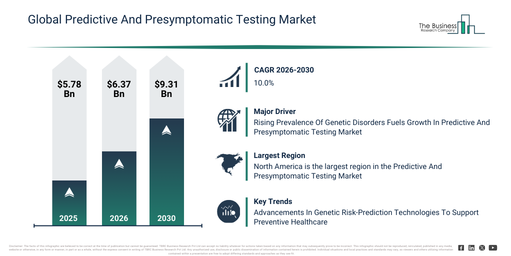
    The predictive and presymptomatic testing market size has experienced significant expansion over recent years. This market is expected to increase from $5.78 billion in 2025 to $6.37 billion in 2026, achieving a compound annual growth rate (CAGR) of 10.3%. The growth observed in the historical period is primarily due to breakthroughs in genetic sequencing technologies, a heightened awareness of inherited disease risks, the proliferation of clinical genetic testing services, the expansion of oncology and neurology testing programs, and a decrease in genetic testing costs.

    The predictive and presymptomatic testing market size is projected to experience substantial expansion over the upcoming years. This market is anticipated to reach a valuation of $9.31 billion by 2030, exhibiting a compound annual growth rate (CAGR) of 10.0%. Several factors contribute to this forecasted growth, including an escalated demand for personalized medicine, the growing incorporation of artificial intelligence into genomic analysis, the enlargement of population-wide screening initiatives, a heightened emphasis on strategies for preventive healthcare, and strengthened regulatory backing for genetic diagnostics. Key trends expected during this period encompass the increasing acceptance of preventive genetic screening, the expanding utilization of risk-based models for disease prediction, the broadening availability of genetic counseling services, a sharpened focus on the early identification of diseases, and the incorporation of genomic information into clinical decision-making processes.

    Get A Free Sample Report With In-Depth Market Insights:

    https://thebusinessresearchcompany.com/sample_request?id=32564591&type=smp&name=Predictive%20And%20Presymptomatic%20Testing%20Market%20Report%202026&utm_source=Blogs&utm_medium=Paid&utm_campaign=Nov_PR

    Predictive And Presymptomatic Testing Market Opportunity Drivers: What’s Unlocking New Revenue Potential?

    The increasing incidence of genetic conditions is anticipated to drive the expansion of the predictive and presymptomatic testing market in the future. These disorders are illnesses stemming from irregularities in deoxyribonucleic acid (DNA), encompassing alterations like gene mutations and chromosomal shifts, exemplified by conditions such as cystic fibrosis and Down syndrome. The growing occurrence of genetic disorders can be linked to elements like older maternal age, environmental influences, and improved diagnostic techniques. Predictive and presymptomatic testing is vital in lowering the frequency of genetic disorders through the early identification of at-risk individuals prior to symptom onset. This proactive strategy facilitates timely interventions or changes in lifestyle that can aid in preventing or lessening the intensity of these conditions.

    Predictive And Presymptomatic Testing Market Segment Performance And Emerging Opportunities

    The predictive and presymptomatic testing market covered in this report is segmented –

    1) By Test Type: Predictive Testing, Presymptomatic Testing

    2) By Application: Cancer Genetic Testing, Cardiovascular Genetic Testing, Neurological Genetic Testing, Other Applications

    3) By End User: Hospitals And Clinics, Diagnostic Laboratories

    Subsegments:

    1) By Predictive Testing: Genetic Testing for Inherited Conditions, Cancer Risk Prediction, Cardiovascular Disease Prediction, Neurodegenerative Disease Risk Prediction, Genetic Screening for Autosomal Dominant Disorders

    2) By Presymptomatic Testing: Huntington’s Disease Testing, Hereditary Cancer Risk Testing, Cystic Fibrosis Presymptomatic Testing, Early-Onset Alzheimer’s Disease Testing, Presymptomatic Genetic Testing for Familial Diseases

    Predictive And Presymptomatic Testing Market Innovation Trends: What Developments Are Reshaping The Industry?

    Leading companies in the predictive and presymptomatic testing market are concentrating on developing innovative multi-gene testing solutions featuring enhanced genetic risk-scoring capabilities. Their aim is to enable earlier disease prediction and improve personalized prevention strategies. Polygenic-enabled panels integrate the sequencing of clinically relevant hereditary-risk genes with the analysis of multiple common variants, offering a more comprehensive and individualized assessment of future disease likelihood compared to traditional single-gene tests. For instance, in November 2025, Myriad Genetics Inc., a U.S.-based molecular diagnostics company, expanded its MyRisk Hereditary Cancer Test to include 63 clinically actionable genes across more than 11 cancer types. This expanded panel integrates next-generation sequencing with personalized lifetime and five-year cancer-risk estimates, allowing physicians to guide proactive clinical decision-making. The product enhances risk detection even in individuals without strong family histories and supports targeted surveillance, earlier screening initiation, and preventive care planning.

    Predictive And Presymptomatic Testing Market Key Players: Which Companies Lead Industry Competition?

    Major companies operating in the predictive and presymptomatic testing market are F. Hoffmann-La Roche AG, Thermo Fisher Scientific Inc., Mayo Clinic, Quest Diagnostics Inc., Illumina Inc., Bio-Rad Laboratories Inc., Qiagen N.V., Peter MacCallum Cancer Centre, Myriad Genetics Inc., SomaLogic Inc., Siteman Cancer Center, Dante Labs S.R.L., Mapmygenome, Manipal Health Enterprises, Gene Vision, Reliance Diagnostic, GenepoweRx, Personal Genomics, Apollo Hospitals Enterprise Limited, Cardio Diagnostics Inc.

    View The Full Predictive And Presymptomatic Testing Market Report:

    https://thebusinessresearchcompany.com/report/predictive-and-presymptomatic-testing-global-market-report?utm_source=Blogs&utm_medium=Paid&utm_campaign=Nov_PR

    Predictive And Presymptomatic Testing Market Regional Split: Which Areas Are Fueling Growth?

    North America was the largest region in the predictive and presymptomatic testing market in 2025. Asia-Pacific is expected to be the fastest-growing region in the forecast period. The regions covered in the predictive and presymptomatic testing market report are Asia-Pacific, South East Asia, Western Europe, Eastern Europe, North America, South America, Middle East, Africa.

    Reach Out To Our Team:

    The Business Research Company: https://www.thebusinessresearchcompany.com/

    Americas: +1 310-496-7795

    Asia: +44 7882 955267 & +91 8897263534

    Europe: +44 7882 955267

    Email us at: marketing@tbrc.info

    Follow us on:

    LinkedIn: https://in.linkedin.com/company/the-business-research-company

    YouTube: https://www.youtube.com/channel/UC24_fI0rV8cR5DxlCpgmyFQ

    Global Market Model: https://www.thebusinessresearchcompany.com/global-market-model
  • Precocious Puberty Treatment Market Research 2026: Market Size, Trends, Segments And Growth Forecast

    Precocious Puberty Treatment Market Research 2026: Market Size, Trends, Segments And Growth Forecast

    Backed by market attractiveness analysis, total addressable market sizing, company benchmarking matrices, interactive Excel dashboards, wider supply chain intelligence, emerging startup coverage, and detailed product-level insights, The Business Research Company’s 2026 market reports are designed to offer research that is more actionable and strategically valuable than ever.

    Precocious Puberty Treatment Market Value Analysis: What Growth Lies Ahead Over The Forecast Period?

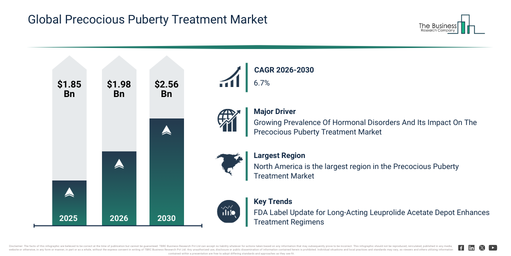
    The precocious puberty treatment market size has demonstrated robust growth in recent years. This market is projected to expand from $1.85 billion in 2025 to $1.98 billion in 2026, exhibiting a compound annual growth rate (CAGR) of 6.8%. Historically, this growth can be attributed to several factors including enhanced diagnostic capabilities for hormonal disorders, a heightened awareness of early puberty conditions, the widespread availability of gonadotropin-releasing hormone analogs, the expansion of pediatric healthcare services, and increasing physician education initiatives.

    The precocious puberty treatment market is projected to experience robust expansion over the next few years. It is expected to achieve a size of $2.56 billion by 2030, demonstrating a compound annual growth rate (CAGR) of 6.7%. This anticipated growth during the forecast period can be attributed to a heightened focus on individualized endocrine care, increasing financial commitments to pediatric rare disease treatments, the wider availability of long-acting injectable formulations, the growing application of digital patient monitoring tools, and improved access to specialized healthcare services. Significant trends identified for the forecast period include the increasing adoption of long-acting hormonal therapies, an amplified emphasis on early diagnosis and intervention, the expanding utilization of personalized treatment protocols, the enlargement of pediatric endocrinology services, and an enhanced understanding of outcomes related to growth preservation.

    Get A Free Sample Report With In-Depth Market Insights:

    https://thebusinessresearchcompany.com/sample_request?id=75126664&type=smp&name=Precocious%20Puberty%20Treatment%20Market%20Report%202026&utm_source=Blogs&utm_medium=Paid&utm_campaign=Nov_PR

    Precocious Puberty Treatment Market Growth Momentum: What Factors Are Shaping Demand?

    The increasing occurrence of hormonal disorders is anticipated to fuel expansion in the precocious puberty treatment market going forward. Hormonal disorders are defined as health conditions characterized by malfunctions or irregularities within the endocrine system, responsible for hormone production and regulation. These disorders can lead to precocious puberty when the normal control of sex hormones is disturbed, resulting in the premature activation of the hypothalamic-pituitary-gonadal (HPG) axis, which governs the start of puberty.

    Precocious Puberty Treatment Market Segment Landscape And Growth Outlook

    The precocious puberty treatment market covered in this report is segmented –

    1) By Drug Class: Leuprorelin, Histrelin, Triptorelin, Nafarelin

    2) By Application: Hospitals, Clinics, Other Applications

    3) By End-User: Pediatric Patients, Adolescent Patients, Other End-Users

    Subsegments:

    1) By Leuprorelin: Leuprorelin Acetate Injection, Leuprorelin For Depot Administration, Leuprorelin For Subcutaneous Administration

    2) By Histrelin: Histrelin Acetate Implant, Histrelin For Depot Injection, Histrelin For Subcutaneous Administration

    3) By Triptorelin: Triptorelin Acetate Injection, Triptorelin For Long-Acting Depot Injection, Triptorelin For Subcutaneous Implantation

    4) By Nafarelin: Nafarelin Acetate Nasal Spray, Nafarelin For Injectable Administration

    Precocious Puberty Treatment Market Trends: What’s Defining The Industry’s Next Phase?

    Leading companies in the precocious puberty treatment market are concentrating on enhancing drug formulations, such as extended-duration leuprolide acetate depot therapies, to boost treatment convenience, safety, and clinical outcomes. Long-acting leuprolide acetate therapies are designed to offer sustained suppression of gonadotropin-releasing hormone (GnRH), thereby delaying premature sexual development and lessening the frequency of dosing.

    Precocious Puberty Treatment Market Competitive Landscape: Who Leads The Industry?

    Major companies operating in the precocious puberty treatment market are Pfizer Inc., AbbVie Inc., Sanofi SA, Abbott Laboratories, Eli Lilly And Company, Glenmark Pharmaceuticals Ltd, Sun Pharmaceutical Industries Ltd, Ipsen Ltd, Ferring Pharmaceuticals Private Limited, Endo Pharmaceuticals Inc, Livzon Pharmaceutical Group Inc, Actiza Pharmaceutical Private Limited, Biocon Limited, Mallinckrodt plc, Arbor Pharmaceuticals LLC, Tolmar Pharmaceuticals Inc, Debiopharm Group, Emcure Pharmaceuticals Ltd, Cadila Pharmaceuticals Limited, Sandoz International GmbH, Foresee Pharmaceuticals Co Ltd, Verity Pharmaceuticals Inc, Aurobindo Pharma Ltd

    View The Full Precocious Puberty Treatment Market Report:

    https://thebusinessresearchcompany.com/report/precocious-puberty-treatment-global-market-report?utm_source=Blogs&utm_medium=Paid&utm_campaign=Nov_PR

    Precocious Puberty Treatment Market Top Region: Where Does Most Revenue Come From?

    North America was the largest region in the precocious puberty treatment market in 2025. Asia-Pacific is expected to be the fastest-growing region in the forecast period. The regions covered in the precocious puberty treatment market report are Asia-Pacific, South East Asia, Western Europe, Eastern Europe, North America, South America, Middle East, Africa.

    Reach Out To Our Team:

    The Business Research Company: https://www.thebusinessresearchcompany.com/

    Americas: +1 310-496-7795

    Asia: +44 7882 955267 & +91 8897263534

    Europe: +44 7882 955267

    Email us at: marketing@tbrc.info

    Follow us on:

    LinkedIn: https://in.linkedin.com/company/the-business-research-company

    YouTube: https://www.youtube.com/channel/UC24_fI0rV8cR5DxlCpgmyFQ

    Global Market Model: https://www.thebusinessresearchcompany.com/global-market-model
  • Preclinical Imaging Market Forecast 2026: Market Size, Competitive Landscape And Growth Drivers

    Preclinical Imaging Market Forecast 2026: Market Size, Competitive Landscape And Growth Drivers

    Featuring market attractiveness scoring, total addressable market sizing, company benchmarking matrices, interactive Excel dashboards, deeper supply chain intelligence, emerging startup tracking, and granular product-level insights, The Business Research Company’s 2026 market reports are built to deliver research that is both more actionable and more strategically valuable.

    Preclinical Imaging Market Size Forecast: How Big Could The Market Get By 2030?

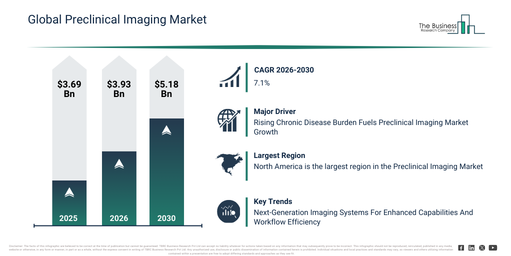
    The preclinical imaging market has demonstrated robust expansion in recent years. Projections indicate its growth from $3.69 billion in 2025 to $3.93 billion by 2026, achieving a compound annual growth rate (CAGR) of 6.7%. This historical expansion is attributable to factors such as the greater utilization of animal models in biomedical studies, the enlargement of oncology and neurology investigations, the growing acceptance of non-invasive imaging methods, increased preclinical drug testing, and the emergence of sophisticated imaging reagents.

    The preclinical imaging market size is anticipated to demonstrate robust expansion in the forthcoming years. It is projected to climb to $5.18 billion by 2030, registering a compound annual growth rate (CAGR) of 7.1%. This growth throughout the forecast period can be attributed to several factors, including an escalating demand for real-time disease visualization, increasing financial commitments to translational research, the broadening scope of precision medicine studies, the rising application of AI-assisted image analysis, and the growing deployment of sophisticated contrast agents. Prominent trends for the forecast duration involve the increasing uptake of multi-modal imaging platforms, a greater reliance on high-resolution imaging systems, the expanding integration of imaging with data analytics, the proliferation of longitudinal disease monitoring studies, and an intensified focus on the precision of translational imaging.

    Get A Free Sample Report With In-Depth Market Insights:

    https://thebusinessresearchcompany.com/sample_request?id=60555847&type=smp&name=Preclinical%20Imaging%20Market%20Report%202026&utm_source=Blogs&utm_medium=Paid&utm_campaign=Nov_PR

    Preclinical Imaging Market Expansion Drivers: What’s Shaping Future Growth?

    The expanding prevalence of chronic diseases is anticipated to drive the future expansion of the preclinical imaging market. Chronic diseases are defined as long-duration health conditions that endure for a prolonged time, usually for at least three months. Such conditions frequently necessitate continuous medical care and can considerably affect an individual’s well-being. Preclinical imaging instruments are employed to identify chronic diseases by visualizing bone structure and lung function. These tools also serve to study chronic diseases, enabling visualization of disease progression and enhancing comprehension.

    Preclinical Imaging Market Breakdown By Product Type And Application

    The preclinical imaging market covered in this report is segmented –

    1) By Modality: Optical Imaging Systems, Preclinical Nuclear Imaging Systems, Micro-Magnetic Resonance Imaging Systems, Micro-Ultrasound Systems, Micro-Computed Tomography Systems, Preclinical Photoacoustic Imaging Systems, Preclinical Magnetic Particle Imaging (MPI) Systems

    2) By Reagents: Preclinical Optical Imaging Reagents, Preclinical Nuclear Imaging Reagents, Preclinical MRI Contrast Agents, Preclinical Ultrasound Contrast Agents, Preclinical CT Contrast Agents

    3) By End User: Hospital, Diagnostics Center, Other End-User

    Subsegments:

    1) By Optical Imaging Systems: Bioluminescence Imaging, Fluorescence Imaging

    2) By Preclinical Nuclear Imaging Systems: Positron Emission Tomography (PET), Single-Photon Emission Computed Tomography (SPECT)

    3) By Micro-Magnetic Resonance Imaging (Micro-MRI) Systems: High-Resolution Micro-MRI Systems, Functional Micro-MRI Systems

    4) By Micro-Ultrasound Systems: High-Frequency Ultrasound Imaging, Real-Time Micro-Ultrasound Systems

    5) By Micro-Computed Tomography (Micro-CT) Systems: In Vivo Micro-CT Systems, Ex Vivo Micro-CT Systems

    6) By Preclinical Photoacoustic Imaging Systems: Multi-Wavelength Photoacoustic Imaging, Hybrid Photoacoustic Imaging Systems

    7) By Preclinical Magnetic Particle Imaging (MPI) Systems: MPI For Cell Tracking, MPI For Vascular Imaging

    Preclinical Imaging Market Industry Trends Fueling Future Revenue Growth

    Leading firms within the preclinical imaging market are intensifying efforts to introduce advanced imaging systems, aiming for a competitive advantage. These advanced systems denote sophisticated and groundbreaking technologies, surpassing existing capabilities by integrating state-of-the-art functionalities.

    Preclinical Imaging Market Company Landscape And Competitive Strategy

    Major companies operating in the preclinical imaging market are Thermo Fisher Scientific Inc, FUJIFILM Visualsonics Inc, Agilent Technologies Inc, PerkinElmer Inc, Bruker Corporation, Miltenyi Biotech, Sofie Biosciences Inc, Ion Beam Applications SA, Piramal Enterprises Ltd, LI COR Biosciences Inc, Aspect Imaging Ltd, Capintec Inc, Spectral Instruments Inc, Mediso Ltd, MR Solutions Ltd, Biospace Lab SA, Scintica Instrumentation Inc, Trifoil Imaging, Bioscan Inc, Inviscan SAS, Kubtec X Ray, MILabs BV, SCANCO Medical AG, Fujifilm Holdings Corporation

    View The Full Preclinical Imaging Market Report:

    https://thebusinessresearchcompany.com/report/preclinical-imaging-global-market-report?utm_source=Blogs&utm_medium=Paid&utm_campaign=Nov_PR

    Preclinical Imaging Market Regional Breakdown: Where Is Demand Concentrated?

    North America was the largest region in the preclinical imaging market in 2025. The regions covered in the preclinical imaging market report are Asia-Pacific, South East Asia, Western Europe, Eastern Europe, North America, South America, Middle East, Africa.

    Reach Out To Our Team:

    The Business Research Company: https://www.thebusinessresearchcompany.com/

    Americas: +1 310-496-7795

    Asia: +44 7882 955267 & +91 8897263534

    Europe: +44 7882 955267

    Email us at: marketing@tbrc.info

    Follow us on:

    LinkedIn: https://in.linkedin.com/company/the-business-research-company

    YouTube: https://www.youtube.com/channel/UC24_fI0rV8cR5DxlCpgmyFQ

    Global Market Model: https://www.thebusinessresearchcompany.com/global-market-model
  • Preclinical CRO Market Size In 2026: Regional Growth, Key Segments And Future Outlook

    Preclinical CRO Market Size In 2026: Regional Growth, Key Segments And Future Outlook

    Built to provide research that’s more actionable and strategically valuable, The Business Research Company’s 2026 market reports include market attractiveness analysis, total addressable market sizing, company benchmarking matrices, interactive Excel dashboards, broader supply chain intelligence, emerging startup tracking, and in-depth product insights.

    Preclinical CRO Market Revenue Outlook: What CAGR Lies Ahead Through 2030?

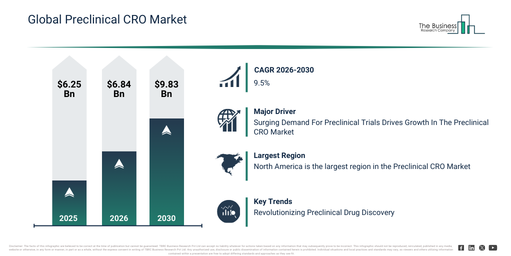
    The preclinical CRO market has experienced robust growth recently. Projections indicate its expansion from $6.25 billion in 2025 to $6.84 billion in 2026, achieving a compound annual growth rate (CAGR) of 9.6%. Historically, this growth was driven by factors such as increased pharmaceutical R&D investments, the escalating complexity of drug development pipelines, a greater dependence on animal testing for safety validation, the broadening scope of biotechnology research, and enhanced regulatory scrutiny concerning preclinical data.

    The preclinical cro market is projected to experience substantial expansion over the coming years. This market is set to reach $9.83 billion by 2030, exhibiting a compound annual growth rate (CAGR) of 9.5%. This anticipated growth during the forecast period stems from several factors, including the escalating demand for precision medicine research, a heightened emphasis on drug development for rare diseases, the broadening of biologics and cell therapy pipelines, the increasing embrace of digital preclinical platforms, and a rise in collaborations between pharmaceutical companies and CROs. Key developments expected within this period involve the greater uptake of integrated preclinical study services, an expanding need for advanced expertise in animal models, increased outsourcing of early-stage drug development, an enlargement of regulatory-compliant toxicology capabilities, and a stronger emphasis on designing studies based on data.

    Get A Free Sample Report With In-Depth Market Insights:

    https://thebusinessresearchcompany.com/sample_request?id=57097379&type=smp&name=Preclinical%20CRO%20Market%20Report%202026&utm_source=Blogs&utm_medium=Paid&utm_campaign=Nov_PR

    Preclinical CRO Market Development Factors: What’s Supporting Demand?

    The preclinical CRO market is anticipated to expand due to the rising need for preclinical trials. Preclinical trials refer to any investigations into medical treatments or conditions conducted prior to human participation. These studies frequently involve new medical devices, prescribed drugs, and diagnostic tools, with their main aims being to determine an initial safe dosage for human trials and assess the product’s potential for toxicity. They are crucial in drug development, and their significance is growing as the safety and efficacy of new drugs become paramount.

    Preclinical CRO Market Segment Analysis And Revenue Potential

    The preclinical cro market covered in this report is segmented –

    1) By Service: Bioanalysis And DMPK Studies, Toxicology Testing, Compound Management, Chemistry, Safety Pharmacology, Others Services

    2) By Type: Patient Derived Organoid (PDO) Model, Patient Derived Xenograft Model

    3) By Animal Model: Small Animal Model, Large Animal Model

    4) By Model System: In Vivo, In Vitro

    5) By End User: Biopharmaceutical Companies, Government And Academic Institutes, Medical Device Companies, Other End-users

    Subsegments:

    1) By Bioanalysis And DMPK Studies: Pharmacokinetics Studies, Pharmacodynamics Studies, Drug Metabolism Studies

    2) By Toxicology Testing: Acute Toxicity Testing, Chronic Toxicity Testing, Reproductive Toxicity Testing

    3) By Compound Management: Sample Management, Inventory Management, Formulation Services

    4) By Chemistry: Medicinal Chemistry, Analytical Chemistry, Synthetic Chemistry

    5) By Safety Pharmacology: Cardiovascular Safety Studies, Central Nervous System Safety Studies, Respiratory Safety Studies

    6) By Other Services: Regulatory Consulting, Project Management, Data Management Services

    Preclinical CRO Market Trends Powering Strategic Industry Growth

    Major companies within the preclinical CRO market are adopting novel technologies to sustain their competitive standing. One such innovation is the disease biology knowledge graph, designed to improve target identification and drug discovery within pharmaceutical research. This knowledge graph functions as a structured and extensive representation of the connections among genes, proteins, pathways, and disease phenotypes, effectively integrating various biological data streams. It empowers researchers to systematically investigate disease mechanisms, pinpoint potential therapeutic targets, and accelerate the drug discovery process by offering a comprehensive overview of disease biology.

    Preclinical CRO Market Key Players Shaping Industry Direction

    Major companies operating in the preclinical cro market are Eurofins Scientific SE, WuXi AppTec Co Ltd, Medpace Holdings Inc, Charles River Laboratories International Inc, Laboratory Corporation Of America Holdings, Intertek Group plc, Crown Bioscience International, Cynbiose, AmplifyBio LLC, Vivotecnia SL, Altasciences Company Inc, Pharmaceutical Product Development LLC, Parexel International Corporation, Envigo RMS Holding Corporation, Veeda Clinical Research Ltd, ICON plc, Kunming Biomed International Ltd, PharmaLegacy Laboratories, NorthEast BioAnalytical Laboratories LLC, MDS Pharma Services, MPI Research, Toxikon Corporation, BioReliance Corporation, Covance Inc, Syngene International Limited

    View The Full Preclinical CRO Market Report:

    https://thebusinessresearchcompany.com/report/preclinical-CRO-global-market-report?utm_source=Blogs&utm_medium=Paid&utm_campaign=Nov_PR

    Preclinical CRO Market Geographic Landscape: Which Region Leads Industry Growth?

    North America was the largest region in the preclinical CRO market in 2025. Asia-Pacific is expected to be the fastest-growing region in the global preclinical CRO market during the forecast period. The regions covered in the preclinical cro market report are Asia-Pacific, South East Asia, Western Europe, Eastern Europe, North America, South America, Middle East, Africa.

    Reach Out To Our Team:

    The Business Research Company: https://www.thebusinessresearchcompany.com/

    Americas: +1 310-496-7795

    Asia: +44 7882 955267 & +91 8897263534

    Europe: +44 7882 955267

    Email us at: marketing@tbrc.info

    Follow us on:

    LinkedIn: https://in.linkedin.com/company/the-business-research-company

    YouTube: https://www.youtube.com/channel/UC24_fI0rV8cR5DxlCpgmyFQ

    Global Market Model: https://www.thebusinessresearchcompany.com/global-market-model
  • Preclinical Assets Market Growth Forecast Through 2030: Market Size And Trends In 2026

    Preclinical Assets Market Growth Forecast Through 2030: Market Size And Trends In 2026

    Backed by market attractiveness analysis, total addressable market sizing, company benchmarking matrices, interactive Excel dashboards, wider supply chain intelligence, emerging startup coverage, and detailed product-level insights, The Business Research Company’s 2026 market reports are designed to offer research that is more actionable and strategically valuable than ever.

    Preclinical Assets Market Growth Analysis: How Will Revenue Trend Over The Forecast Period?

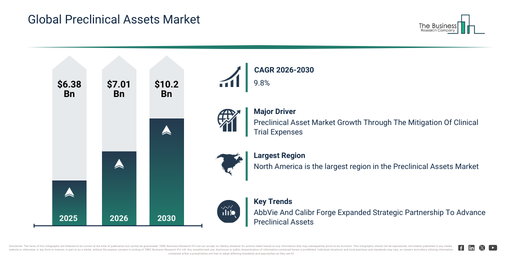
    The preclinical assets market size has demonstrated robust growth over recent years. This market is projected to expand from $6.38 billion in 2025 to $7.01 billion in 2026, achieving a compound annual growth rate (CAGR) of 9.8%. Historically, this growth can be ascribed to several factors, including heightened pharmaceutical R&D investments, the broadening of early-stage drug discovery initiatives, an increasing dependence on animal testing, a surge in demand for generating safety data, and a rise in the outsourcing of preclinical studies.

    The market for preclinical assets anticipates robust expansion in the coming years. This market is projected to reach $10.2 billion by 2030, exhibiting a compound annual growth rate (CAGR) of 9.8%. The projected growth can be ascribed to several factors, including the greater uptake of human-relevant preclinical models, a surge in demand for expedited drug development timelines, the broadening of personalized medicine pipelines, the increasing incorporation of AI into preclinical research, and a heightened regulatory focus on data robustness. Key trends anticipated during this period encompass the expanded utilization of advanced preclinical models, a growing embrace of patient-derived xenograft and organoid models, an increasing need for integrated preclinical services, the widening scope of safety and toxicology studies, and a more pronounced emphasis on translational research.

    Get A Free Sample Report With In-Depth Market Insights:

    https://thebusinessresearchcompany.com/sample_request?id=29689111&type=smp&name=Preclinical%20Assets%20Market%20Report%202026&utm_source=Blogs&utm_medium=Paid&utm_campaign=Nov_PR

    Preclinical Assets Market Industry Drivers: What’s Behind The Revenue Growth?

    The expansion of the preclinical asset market is anticipated to be fueled by the increasing imperative to control clinical trial expenditures. These costs encompass the financial outlay for the planning, execution, and oversight of clinical trials, which assess the safety, effectiveness, and prospective advantages of novel medical interventions like drugs, devices, or treatment protocols. Such trials offer crucial data on the safety, efficacy, and possible adverse reactions of preclinical assets, thereby aiding in the verification of their therapeutic capabilities in human subjects.

    Preclinical Assets Market Segmentation And Category Overview

    The preclinical assets market covered in this report is segmented –

    1) By Service: Bioanalysis And DMPK (Drug Metabolism And Pharmacokinetic) Studies, Toxicology Testing, Compound Management, Safety Pharmacology, Other Services

    2) By Model Type: Patient Derived Organoid (PDO) Model, Patient Derived Xenograft Model

    3) By End User: Biopharmaceutical Companies, Government Institutes, Other End-Users

    Subsegments:

    1) By Bioanalysis And DMPK (Drug Metabolism And Pharmacokinetic) Studies: Pharmacokinetics (PK) Studies, Pharmacodynamics (PD) Studies, Bioanalytical Method Development

    2) By Toxicology Testing: Acute Toxicity Testing, Chronic Toxicity Testing, Genotoxicity Testing, Carcinogenicity Testing

    3) By Compound Management: Compound Library Management, Sample Storage And Retrieval, High-Throughput Screening Support

    4) By Safety Pharmacology: Cardiovascular Safety Assessments, Neurotoxicity Evaluations, Respiratory Safety Evaluations

    5) By Other Services: Regulatory Support, Preclinical Study Design And Consulting, Custom Assay Development

    Preclinical Assets Market Growth Trends Reshaping The Competitive Landscape

    Leading firms in the preclinical assets sector are concentrating on forging strategic partnerships to expedite the identification and progression of groundbreaking drug candidates. Such collaborations facilitate the exchange of research knowledge, provide access to new targets, and promote the advancement of preclinical assets in their initial stages.

    Preclinical Assets Market Competitive Analysis Of Leading Industry Participants

    Major companies operating in the preclinical assets market are Laboratory Corporation of America, IQVIA Inc., ICON PLC, Eurofins Scientific SE, PPD Inc., SGS SA, WuXi AppTec Co. Ltd., Intertrek Group PLC, Charles River Laboratories International Inc., Medpace Inc., Pharmaron Beijing Co. Ltd., Evotec SE, GenScript Biotech Corporation, Inotiv Inc., SRI International Inc., Shanghai Medicilon Inc., Biocytogen Pharmaceuticals Beijing Co. Ltd., AmplifyBio LLC, BioReliance Corporation, Pharmalegacy Laboratories Co. Ltd., ReproCELL Incorporated, InSphero AG, Crown Bioscience Inc., Comparative Biosciences Inc., TCG Lifesciences Pvt. Ltd., InVivo Biosystems, Pharmatest Services Ltd, Domainex Limited, Viroclinics Xplore

    View The Full Preclinical Assets Market Report:

    https://thebusinessresearchcompany.com/report/preclinical-assets-global-market-report?utm_source=Blogs&utm_medium=Paid&utm_campaign=Nov_PR

    Preclinical Assets Market Largest Region: Which Geography Holds The Biggest Share?

    North America was the largest region in the preclinical assets market in 2025. Asia-Pacific is expected to be the fastest-growing region in the forecast period. The regions covered in the preclinical assets market report are Asia-Pacific, South East Asia, Western Europe, Eastern Europe, North America, South America, Middle East, Africa.

    Reach Out To Our Team:

    The Business Research Company: https://www.thebusinessresearchcompany.com/

    Americas: +1 310-496-7795

    Asia: +44 7882 955267 & +91 8897263534

    Europe: +44 7882 955267

    Email us at: marketing@tbrc.info

    Follow us on:

    LinkedIn: https://in.linkedin.com/company/the-business-research-company

    YouTube: https://www.youtube.com/channel/UC24_fI0rV8cR5DxlCpgmyFQ

    Global Market Model: https://www.thebusinessresearchcompany.com/global-market-model
  • Precision Psychiatry Market Analysis: $5.72 Billion Market Size In 2026 And Future Growth Prospects

    Precision Psychiatry Market Analysis: $5.72 Billion Market Size In 2026 And Future Growth Prospects

    Featuring market attractiveness scoring, total addressable market sizing, company benchmarking matrices, interactive Excel dashboards, deeper supply chain intelligence, emerging startup tracking, and granular product-level insights, The Business Research Company’s 2026 market reports are built to deliver research that is both more actionable and more strategically valuable.

    Precision Psychiatry Market Forecast: What Value Will The Market Reach By 2030?

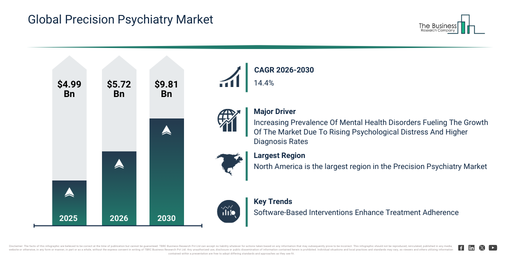
    The precision psychiatry market size has seen swift expansion in recent years. It is anticipated to grow from $4.99 billion in 2025 to $5.72 billion in 2026, achieving a compound annual growth rate (CAGR) of 14.7%. The surge witnessed in the past can be attributed to factors such as the rising incidence of mental health disorders, increasing limitations of trial-and-error prescribing, the expansion of psychiatric research efforts, greater availability of neuroimaging technologies, and the initial integration of pharmacogenomics in psychiatry.

    The precision psychiatry market is projected for substantial expansion over the coming years, with its valuation expected to reach $9.81 billion by 2030, demonstrating a compound annual growth rate (CAGR) of 14.4%. This anticipated growth during the forecast period is primarily driven by greater funding into precision medicine platforms, the widespread embrace of AI-enabled diagnostics, the broadening availability of digital mental health solutions, an escalating need for personalized psychiatric care, and a heightened emphasis on preventive mental health strategies. Concurrently, key developments expected during this period involve the growing implementation of biomarker-guided treatment pathways, expanded utilization of digital phenotyping tools, the enhanced merging of genetic and neuroimaging data, a broadening of AI-driven clinical decision support systems, and an increased concentration on personalized mental health monitoring.

    Get A Free Sample Report With In-Depth Market Insights:

    https://thebusinessresearchcompany.com/sample_request?id=99494277&type=smp&name=Precision%20Psychiatry%20Market%20Report%202026&utm_source=Blogs&utm_medium=Paid&utm_campaign=Nov_PR

    Precision Psychiatry Market Growth Factors: What’s Supporting Expansion?

    The rising occurrence of mental health conditions is anticipated to fuel the expansion of the precision psychiatry market in the coming years. These disorders encompass various conditions, including depression, anxiety, and bipolar disorder, which impact an individual’s mood, thought processes, and behavior. The increase in mental health disorders stems from a greater number of people facing psychological distress because of social, economic, and environmental factors, alongside enhanced screening methods and increased public awareness leading to more diagnoses. Precision psychiatry tackles mental health conditions by facilitating tailored, data-driven treatment plans, thereby enhancing diagnostic accuracy and treatment results.

    Precision Psychiatry Market Segment Outlook: Which Categories Are Growing Fastest?

    The precision psychiatry market covered in this report is segmented –

    1) By Therapeutic Approaches: Pharmacotherapy, Psychotherapy, Neurostimulation, Digital Therapeutics, Combination Therapies

    2) By Technology: Genetic Testing, Biomarker Analysis, Brain Imaging Techniques, Wearable Devices, Artificial Intelligence And Machine Learning Solutions

    3) By Disorders: Depression, Anxiety Disorders, Bipolar Disorder, Schizophrenia, Post-Traumatic Stress Disorder (PTSD)

    4) By Application: Diagnosis, Treatment, Research

    5) By End User: Clinics, Hospitals, Research Institutes, Pharmaceutical Companies, Home Care Settings

    Subsegments:

    1) By Pharmacotherapy: Antidepressant Medications, Antipsychotic Medications, Mood Stabilizers, Anxiolytic Medications, Stimulant Medications

    2) By Psychotherapy: Cognitive Behavioral Therapy, Interpersonal Therapy, Psychodynamic Therapy, Dialectical Behavior Therapy, Mindfulness-Based Therapy

    3) By Neurostimulation: Transcranial Magnetic Stimulation, Electroconvulsive Therapy, Vagus Nerve Stimulation, Deep Brain Stimulation, Transcranial Direct Current Stimulation

    4) By Digital Therapeutics: Mobile Application-Based Therapy, Virtual Reality Therapy, Web-Based Cognitive Behavioral Programs, Remote Patient Monitoring Tools, Artificial Intelligence-Guided Interventions

    5) By Combination Therapies: Pharmacotherapy And Psychotherapy Combination, Pharmacotherapy And Neurostimulation Combination, Pharmacotherapy And Digital Therapeutics Combination, Psychotherapy And Neurostimulation Combination, Multimodal Precision Treatment Programs

    Precision Psychiatry Market Trends Shaping Long-Term Demand

    Major companies within the precision psychiatry market are concentrating on developing novel therapies, including prescription digital therapeutics, to enable personalized and data-driven approaches for psychiatric disorders. A prescription digital therapeutic is defined as a clinician-prescribed, software-based medical intervention designed to deliver evidence-based behavioral therapy modules through a mobile device, thereby improving symptom reduction and treatment adherence.

    Precision Psychiatry Market Leading Companies And Competitive Benchmarking

    Major companies operating in the precision psychiatry market are Johnson & Johnson, F. Hoffmann-La Roche Ltd, Pfizer Inc., AbbVie Inc., AstraZeneca plc, Novartis AG, Bristol-Myers Squibb Company, Eli Lilly and Company, Otsuka Pharmaceutical Company Limited, Thermo Fisher Scientific Inc., Laboratory Corporation of America Holdings, Quest Diagnostics Incorporated, Illumina Inc., ARUP Laboratories Inc., Sumitomo Dainippon Pharma Company Limited, QIAGEN N.V., Neurocrine Biosciences Inc., Tempus Labs Inc., Myriad Genetics Inc., MedGenome Labs Ltd., Genomind Inc.

    View The Full Precision Psychiatry Market Report:

    https://thebusinessresearchcompany.com/report/global-precision-psychiatry-market-report?utm_source=Blogs&utm_medium=Paid&utm_campaign=Nov_PR

    Precision Psychiatry Market Regional Analysis: Which Geography Leads On Revenue?

    North America was the largest region in the precision psychiatry market in 2025. Asia-Pacific is expected to be the fastest-growing region in the forecast period. The regions covered in the precision psychiatry market report are Asia-Pacific, South East Asia, Western Europe, Eastern Europe, North America, South America, Middle East, Africa.

    Reach Out To Our Team:

    The Business Research Company: https://www.thebusinessresearchcompany.com/

    Americas: +1 310-496-7795

    Asia: +44 7882 955267 & +91 8897263534

    Europe: +44 7882 955267

    Email us at: marketing@tbrc.info

    Follow us on:

    LinkedIn: https://in.linkedin.com/company/the-business-research-company

    YouTube: https://www.youtube.com/channel/UC24_fI0rV8cR5DxlCpgmyFQ

    Global Market Model: https://www.thebusinessresearchcompany.com/global-market-model
  • Precision Medicine Software Market 2026 Market Size And Growth Forecast: Key Trends To Watch

    Precision Medicine Software Market 2026 Market Size And Growth Forecast: Key Trends To Watch

    Built to provide research that’s more actionable and strategically valuable, The Business Research Company’s 2026 market reports include market attractiveness analysis, total addressable market sizing, company benchmarking matrices, interactive Excel dashboards, broader supply chain intelligence, emerging startup tracking, and in-depth product insights.

    Precision Medicine Software Market Size Outlook: How Quickly Will Revenue Expand Through 2030?

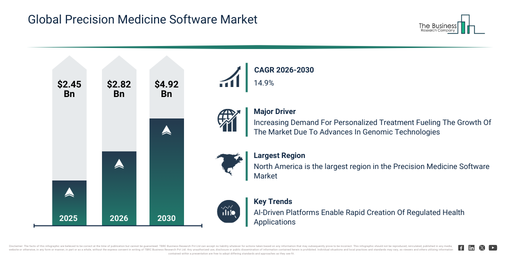
    The precision medicine software market has experienced considerable growth in recent years. It is projected to expand from $2.45 billion in 2025 to $2.82 billion in 2026, achieving a compound annual growth rate (CAGR) of 15.1%. This historical expansion can be attributed to advancements in genomic sequencing technologies, the increased adoption of electronic health records, a rising utilization of data-driven clinical workflows, the emergence of oncology-focused precision treatments, and the expanding availability of bioinformatics platforms.

    The precision medicine software market is anticipated to experience significant expansion in the coming years. This market is projected to reach $4.92 billion by 2030, demonstrating a compound annual growth rate (CAGR) of 14.9%. Key drivers for this growth over the forecast period include the escalating demand for personalized therapeutics, increasing investments in precision oncology programs, the widening application of AI-enabled healthcare analytics, the rising uptake of cloud-based clinical platforms, and an intensifying focus on outcome-based healthcare models. Significant trends anticipated during this period encompass the increasing integration of AI-driven clinical decision support, the growing convergence of genomic and clinical data platforms, the expanding utilization of cloud-based precision medicine software, the broadening scope of real-time patient data analytics, and a heightened emphasis on interoperable healthcare systems.

    Get A Free Sample Report With In-Depth Market Insights:

    https://thebusinessresearchcompany.com/sample_request?id=83560176&type=smp&name=Precision%20Medicine%20Software%20Market%20Report%202026&utm_source=Blogs&utm_medium=Paid&utm_campaign=Nov_PR

    Precision Medicine Software Market Demand Drivers: What’s Powering Industry Growth?

    The future expansion of the precision medicine software market is anticipated to be significantly propelled by the increasing requirement for personalized treatment. Personalized treatment involves adapting medical care to an individual’s unique genetic makeup, lifestyle, and health history to achieve more effective outcomes. The heightened demand for individualized treatment arises from advancements in genomic technologies, which enable the precise identification of genetic variations and the development of tailored therapies for patients. Precision medicine software supports personalized treatment by analyzing genetic, clinical, and lifestyle data to customize healthcare decisions. It enhances both diagnostic accuracy and treatment effectiveness, thus facilitating more targeted and efficient patient management.

    Precision Medicine Software Market Segment Landscape: Which Areas Lead Development?

    The precision medicine software market covered in this report is segmented –

    1) By Software Type: Clinical Decision Support Systems (CDSS), Genomic Data Analysis Tools, Data Integration And Management Software, Patient Management Software, Bioinformatics Tools

    2) By Technology: Artificial Intelligence And Machine Learning, Big Data Analytics, Blockchain Technology, Internet of Medical Things (IoMT), Clustered Regularly Interspaced Short Palindromic Repeats (CRISPR) And Gene Editing Tools

    3) By Deployment: Cloud, On-Premise

    4) By Application: Oncology, Central Nervous System, Immunology, Cardiovascular, Other Applications

    5) By End User: Healthcare Providers, Research Centers And Government Institutes, Pharmaceutical And Biotechnology Companies, Other End Users

    Subsegments:

    1) By Clinical Decision Support Systems (CDSS): Diagnostic Decision Support, Therapeutic Decision Support, Clinical Guidelines And Protocols, Drug-Drug Interaction Alerts, Risk Assessment Modules

    2) By Genomic Data Analysis Tools: Variant Calling And Annotation Tools, Genome Alignment Software, Gene Expression Analysis, Next-Generation Sequencing (NGS) Data Analysis, Pathway Analysis Tools

    3) By Data Integration And Management Software: Electronic Health Record (EHR) Integration, Laboratory Information Management Systems (LIMS), Clinical Data Warehousing, Data Cleaning And Normalization, Metadata Management

    4) By Patient Management Software: Appointment Scheduling, Patient Registry Software, Care Coordination Tools, Patient Engagement Platforms, Remote Monitoring Systems

    5) By Bioinformatics Tools: Sequence Analysis Software, Structural Bioinformatics Tools, Functional Genomics Platforms, Molecular Modeling And Simulation, Proteomics And Metabolomics Tools

    Precision Medicine Software Market Innovation Trends Shaping Future Development

    Leading companies within the precision medicine software market are concentrating on developing advanced solutions, such as digital healthcare, to streamline the creation of digital health products, thereby reducing both development time and expenses. Digital healthcare involves the utilization of digital technologies and tools to deliver, manage, and improve healthcare services and outcomes.

    Precision Medicine Software Market Industry Leaders And Competitive Landscape

    Major companies operating in the precision medicine software market are Koninklijke Philips N.V., Palantir Technologies Inc., Tempus Labs Inc., Myriad Genetics Inc., Foundation Medicine Inc., Guardant Health Inc., Color Genomics Inc., NantHealth Inc., SOPHiA GENETICS SA, Aignostics GmbH, MVision AI Oy, Fabric Genomics Inc., QUIBIM S.L., Syapse Inc., PierianDx Inc., 2bPrecise LLC, SimBioSys Inc., Navignostics AG, xCures Inc., LifeOmic Holdings LLC

    View The Full Precision Medicine Software Market Report:

    https://thebusinessresearchcompany.com/report/precision-medicine-software-global-market-report?utm_source=Blogs&utm_medium=Paid&utm_campaign=Nov_PR

    Precision Medicine Software Market Geographic Spread And Regional Opportunities

    North America was the largest region in the precision medicine software market in 2025. The regions covered in the precision medicine software market report are Asia-Pacific, South East Asia, Western Europe, Eastern Europe, North America, South America, Middle East, Africa.

    Reach Out To Our Team:

    The Business Research Company: https://www.thebusinessresearchcompany.com/

    Americas: +1 310-496-7795

    Asia: +44 7882 955267 & +91 8897263534

    Europe: +44 7882 955267

    Email us at: marketing@tbrc.info

    Follow us on:

    LinkedIn: https://in.linkedin.com/company/the-business-research-company

    YouTube: https://www.youtube.com/channel/UC24_fI0rV8cR5DxlCpgmyFQ

    Global Market Model: https://www.thebusinessresearchcompany.com/global-market-model
  • Precision Genomic Testing Market Size Forecast: How The Industry Is Expected To Grow From 2026 To 2030

    Precision Genomic Testing Market Size Forecast: How The Industry Is Expected To Grow From 2026 To 2030

    Backed by market attractiveness analysis, total addressable market sizing, company benchmarking matrices, interactive Excel dashboards, wider supply chain intelligence, emerging startup coverage, and detailed product-level insights, The Business Research Company’s 2026 market reports are designed to offer research that is more actionable and strategically valuable than ever.

    Precision Genomic Testing Market Size, Value And Growth Trajectory Through 2030

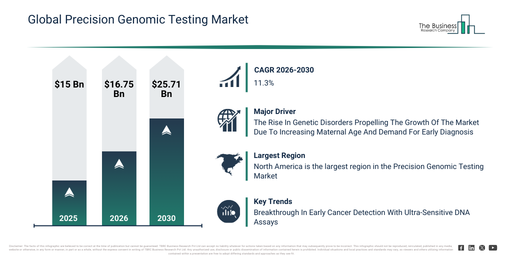
    The precision genomic testing market size has experienced rapid growth in recent years. It is projected to expand from $15 billion in 2025 to $16.75 billion in 2026, registering a compound annual growth rate (CAGR) of 11.7%. The growth observed in the historic period can be attributed to advancements in sequencing technologies, the expansion of precision oncology programs, increasing availability of genomic databases, growth in clinical research funding, and rising awareness of genetic disorders.

    The precision genomic testing market is projected to experience substantial expansion over the upcoming years. Its valuation is anticipated to reach $25.71 billion by 2030, exhibiting a compound annual growth rate (CAGR) of 11.3%. This projected increase during the forecast period stems from several factors, including the rising acceptance of precision medicine, heightened investments in genomic research, the broadening of population-scale genomic programs, an escalating need for companion diagnostics, and the greater incorporation of genomics into standard clinical procedures. Key developments anticipated during this period encompass the growing implementation of next-generation sequencing, increased reliance on AI-driven genomic interpretation, a burgeoning need for individualized treatment strategies, the wider availability of clinical genomic testing, and improved integration of bioinformatics platforms.

    Get A Free Sample Report With In-Depth Market Insights:

    https://thebusinessresearchcompany.com/sample_request?id=20847080&type=smp&name=Precision%20Genomic%20Testing%20Market%20Report%202026&utm_source=Blogs&utm_medium=Paid&utm_campaign=Nov_PR

    Precision Genomic Testing Market Growth Drivers: What’s Behind The Acceleration?

    The increasing incidence of genetic disorders is projected to boost the expansion of the precision genomic testing market. Genetic disorders are defined as health conditions stemming from irregularities in an individual’s DNA, such as mutations in a single gene, multiple genes, or alterations in chromosome structure or count. The growing occurrence of these disorders is primarily due to advanced maternal age, as older mothers are at a higher risk of transmitting chromosomal abnormalities, including Down syndrome, to their offspring. Precision genomic testing facilitates the early identification and precise diagnosis of genetic disorders by pinpointing specific genetic mutations, thus enabling targeted interventions and personalized treatment strategies. For instance, in May 2025, Gene People, a UK-based registered charity, stated that genetic conditions impact an estimated 1 in 25 children, affecting over 2.4 million children and adults in the UK. Additionally, approximately 30,000 newborns and children in the UK are diagnosed with a genetic condition each year. Therefore, the rising prevalence of genetic disorders is a key driver for the growth of the precision genomic testing market.

    Precision Genomic Testing Market Segments: Where Is Growth Concentrated?

    The precision genomic testing market covered in this report is segmented –

    1) By Product And Service: Consumables, Equipment, Services

    2) By Technology: Next-Generation Sequencing, Polymerase Chain Reaction, Microarray Technology, Sanger Sequencing, Clustered Regularly Interspaced Short Palindromic Repeats Or Clustered Regularly Interspaced Short Palindromic Repeats-Associated Systems, Other Technologies

    3) By Application: Oncology, Cardiovascular Diseases, Neurological Disorders, Reproductive Health, Rare Diseases, Other Applications

    4) By End-Users: Hospitals And Clinics, Diagnostic Laboratories, Research And Academic Institutes, Other End-Users

    Subsegments:

    1) By Consumables: Reagents And Kits, Deoxyribonucleic Acid Or Ribonucleic Acid Extraction Kits, Library Preparation Kits, Sequencing Reagents, Polymerase Chain Reaction Assay Kits, Buffers And Enzymes

    2) By Equipment: Next-Generation Sequencing Systems, Polymerase Chain Reaction Machines, Microarray Instruments, Deoxyribonucleic Acid Analyzers, Bioinformatics Workstations, Laboratory Automation Systems

    3) By Services: Genomic Data Analysis Services, Laboratory Testing Services, Genetic Counseling Services, Clinical Interpretation Services, Contract Research Services, Custom Assay Development Services

    Precision Genomic Testing Market Trends Redefining Industry Growth

    Key companies operating within the precision genomic testing market are primarily focused on developing innovative solutions, such as ultra-sensitive circulating tumor deoxyribonucleic acid assays, to facilitate earlier and more accurate cancer detection. These ultra-sensitive circulating tumor deoxyribonucleic acid assays are advanced diagnostic tools designed to identify minute fragments of tumor-derived deoxyribonucleic acid in the bloodstream, thereby enabling the precise and early identification of genetic mutations associated with cancer. For example, in April 2025, Natera Inc., a US-based clinical genetic testing company, introduced its ultra-sensitive Signatera genome molecular residual disease test. This particular test utilizes whole genome sequencing of a patient’s tumor and matched normal deoxyribonucleic acid to create a personalized assay, allowing for the detection of circulating tumor deoxyribonucleic acid at exceptionally low concentrations, even down to 1 part per million. This outstanding level of sensitivity supports the earlier and more precise detection of cancer recurrence, ultimately leading to improved treatment planning and patient management across a range of cancer types.

    Precision Genomic Testing Market Key Participants And Competitive Landscape

    Major companies operating in the precision genomic testing market are Roche Diagnostics International AG, Thermo Fisher Scientific Inc., Danaher Corporation, Agilent Technologies Inc., Illumina Inc., Revvity Inc., QIAGEN N.V., Exact Sciences Corporation, Natera Inc., Myriad Genetics Inc., GenScript Biotech Corporation, Fulgent Genetics Inc., Invitae Corporation, NeoGenomics Laboratories Inc., Guardant Health Inc., Ambry Genetics Corporation, Color Health Inc., Pacific Biosciences, Eurofins Genomics LLC, BGI Genomics Co. Ltd.

    View The Full Precision Genomic Testing Market Report:

    https://thebusinessresearchcompany.com/report/precision-genomic-testing-global-market-report?utm_source=Blogs&utm_medium=Paid&utm_campaign=Nov_PR

    Precision Genomic Testing Market Top Region By Revenue And Market Share

    North America was the largest region in the precision genomic testing market in 2025. Asia-Pacific is expected to be the fastest-growing region in the forecast period. The regions covered in the precision genomic testing market report are Asia-Pacific, South East Asia, Western Europe, Eastern Europe, North America, South America, Middle East, Africa.

    Reach Out To Our Team:

    The Business Research Company: https://www.thebusinessresearchcompany.com/

    Americas: +1 310-496-7795

    Asia: +44 7882 955267 & +91 8897263534

    Europe: +44 7882 955267

    Email us at: marketing@tbrc.info

    Follow us on:

    LinkedIn: https://in.linkedin.com/company/the-business-research-company

    YouTube: https://www.youtube.com/channel/UC24_fI0rV8cR5DxlCpgmyFQ

    Global Market Model: https://www.thebusinessresearchcompany.com/global-market-model
  • Precision Diagnostics Market Reaches $220.51 Billion In 2026: Forecast And Growth Opportunities

    Precision Diagnostics Market Reaches $220.51 Billion In 2026: Forecast And Growth Opportunities

    Featuring market attractiveness scoring, total addressable market sizing, company benchmarking matrices, interactive Excel dashboards, deeper supply chain intelligence, emerging startup tracking, and granular product-level insights, The Business Research Company’s 2026 market reports are built to deliver research that is both more actionable and more strategically valuable.

    Precision Diagnostics Market CAGR Outlook And Future Development

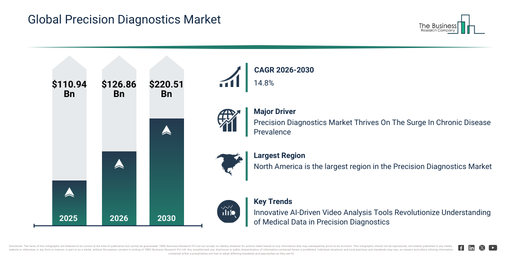
    The precision diagnostics market has witnessed rapid expansion in recent years. It is projected to grow from $110.94 billion in 2025 to $126.86 billion in 2026, showing a compound annual growth rate (CAGR) of 14.3%. The market’s historical growth can be attributed to advancements in genomic research technologies, an increasing prevalence of chronic diseases, the growing use of biomarker-based testing, the expansion of diagnostic laboratory infrastructure, and the rising adoption of personalized medicine.

    The precision diagnostics market is set to undergo significant expansion in the upcoming years, with its size projected to reach $220.51 billion by 2030, exhibiting a compound annual growth rate (CAGR) of 14.8%. This growth throughout the forecast period is primarily fueled by the increasing demand for tailored treatment strategies, rising investments in genomic diagnostics, the widening application of liquid biopsy techniques, the growing incorporation of AI-driven diagnostic tools, and an enhanced emphasis on preventive healthcare. Noteworthy trends anticipated during this period include a greater adoption of genetic and molecular testing, an increase in the use of companion diagnostics, a deeper integration of AI in interpreting diagnostics, the expansion of precision oncology applications, and an intensified focus on the early detection of diseases.

    Get A Free Sample Report With In-Depth Market Insights:

    https://thebusinessresearchcompany.com/sample_request?id=33550842&type=smp&name=Precision%20Diagnostics%20Market%20Report%202026&utm_source=Blogs&utm_medium=Paid&utm_campaign=Nov_PR

    Precision Diagnostics Market Growth Factors Behind Sustained Expansion

    The increasing occurrence of long-term illnesses is anticipated to drive the expansion of the precision diagnostics market in the future. These are health conditions enduring for at least three months, often worsening over time. Precision diagnostics offer support to individuals with chronic ailments like cancer and cardiovascular diseases through precise healthcare management and accurate disease identification.

    Precision Diagnostics Market Segment Analysis: What Are The Core Market Categories?

    The precision diagnostics market covered in this report is segmented –

    1) By Type: Genetic Tests, Esoteric tests, Other Types

    2) By Technology: Next Generation Sequencing (NGS), Polymerase Chain Reaction (PCR), In Situ Hybridization (ISH), Mass Spectrometry, Immunohistochemistry (IHC), Other Technologies

    3) By Application: Oncology, Infectious Diseases, Cardiovascular, Neurology, Genetic Disorders, Other Applications

    4) By End-User: Hospitals And Clinics, Diagnostic Laboratories, Research Institutes, Pharmaceutical And Biotechnology Companies, Other End-Users

    Subsegments:

    1) By Genetic Tests: Next-Generation Sequencing (NGS), Polymerase Chain Reaction (PCR) Tests, Whole Exome Sequencing (WES), Single Nucleotide Polymorphism (SNP) Testing

    2) By Esoteric Tests: Proteomics, Metabolomics, Specialized Infectious Disease Testing, Rare Disease Testing

    3) By Other Types: Biomarker Testing, Liquid Biopsies, Companion Diagnostics, Pharmacogenomic Testing

    Precision Diagnostics Market Strategic Trends: What Defines The Next Growth Phase?

    Leading companies operating in the precision diagnostics market are directing their efforts towards innovative therapy. Introductions like AI-driven video analysis tools aim to heighten patient engagement and improve the comprehension of complex medical data, ultimately empowering individuals to take control of their health. An AI-driven video analysis tool utilizes artificial intelligence to process video content, simplifying intricate information such as health reports by highlighting key parameters, thereby providing clear insights for better understanding and informed decision-making.

    Precision Diagnostics Market Top Companies Driving Competitive Growth

    Major companies operating in the precision diagnostics market are F Hoffmann La Roche Ltd, Abbott Laboratories, Danaher Corporation, Becton Dickinson And Company, Thermo Fisher Scientific Inc, Quest Diagnostics Inc, Siemens Healthineers AG, Agilent Technologies Inc, PerkinElmer Inc, Beckman Coulter Inc, Charles River Laboratories International Inc, Sysmex America Inc, Waters Corporation, Bio Rad Laboratories Inc, Bruker Corporation, Qiagen NV, Bio Techne Corporation, Illumina Inc, Luminex Corporation, BioFire Diagnostics LLC, Genomic Health Inc, Guardant Health Inc, Natera Inc, Exact Sciences Corporation

    View The Full Precision Diagnostics Market Report:

    https://thebusinessresearchcompany.com/report/precision-diagnostics-global-market-report?utm_source=Blogs&utm_medium=Paid&utm_campaign=Nov_PR

    Precision Diagnostics Market Regional Analysis And Top Geography

    North America was the largest region in the precision diagnostics market in 2025. Asia Pacific is expected to be the fastest-growing region in the forecast period. The regions covered in the precision diagnostics market report are Asia-Pacific, South East Asia, Western Europe, Eastern Europe, North America, South America, Middle East, Africa.

    Reach Out To Our Team:

    The Business Research Company: https://www.thebusinessresearchcompany.com/

    Americas: +1 310-496-7795

    Asia: +44 7882 955267 & +91 8897263534

    Europe: +44 7882 955267

    Email us at: marketing@tbrc.info

    Follow us on:

    LinkedIn: https://in.linkedin.com/company/the-business-research-company

    YouTube: https://www.youtube.com/channel/UC24_fI0rV8cR5DxlCpgmyFQ

    Global Market Model: https://www.thebusinessresearchcompany.com/global-market-model
  • Prebiotics Market Growth In 2026: Market Size, Key Drivers And Future Outlook

    Prebiotics Market Growth In 2026: Market Size, Key Drivers And Future Outlook

    Built to provide research that’s more actionable and strategically valuable, The Business Research Company’s 2026 market reports include market attractiveness analysis, total addressable market sizing, company benchmarking matrices, interactive Excel dashboards, broader supply chain intelligence, emerging startup tracking, and in-depth product insights.

    Prebiotics Market Set To Climb From $12.4 Billion In 2026 To $23.37 Billion By 2030

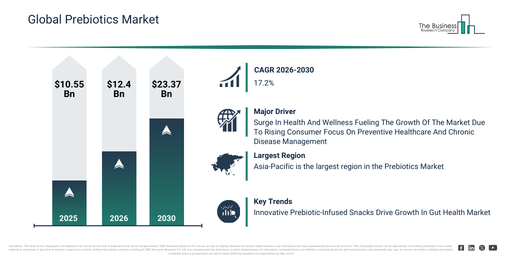
    The prebiotics market size has shown substantial growth over recent years. It is anticipated to expand from $10.55 billion in 2025 to $12.4 billion in 2026, achieving a compound annual growth rate (CAGR) of 17.5%. The expansion witnessed in the past can be ascribed to several factors, including rising consumer recognition of digestive well-being, the proliferation of functional food products, the presence of various oligosaccharide sources, an increase in dietary supplement consumption, and augmented application in animal feed.

    The prebiotics market is projected to experience substantial expansion in the coming years. Its valuation is set to reach $23.37 billion by 2030, demonstrating a compound annual growth rate (CAGR) of 17.2%. This projected growth is driven by several factors, including the increasing acceptance of personalized nutrition, greater investment in microbiome-centric products, the broadening application of prebiotics in clinical nutrition, a surging demand for sustainable food components, and their growing incorporation into pharmaceutical formulations. Key trends anticipated during this period encompass the increased inclusion of prebiotics in functional foods, a heightened demand for gut health supplements, the expanding utilization of prebiotics in animal nutrition, the proliferation of clean-label and natural ingredients, and an intensified focus on microbiome research.

    Get A Free Sample Report With In-Depth Market Insights:

    https://thebusinessresearchcompany.com/sample_request?id=85073980&type=smp&name=Prebiotics%20Market%20Report%202026&utm_source=Blogs&utm_medium=Paid&utm_campaign=Nov_PR

    Prebiotics Market Demand Drivers Opening New Revenue Streams

    The prebiotics market is anticipated to expand due to increasing consumer consciousness regarding health and well-being. This awareness pertains to a comprehensive state of physical, mental, and emotional well-being attained via balanced lifestyle decisions and proactive health management. The heightened focus on health and wellness stems from a transition towards preventive healthcare, motivated by the wish to prevent lifestyle-associated illnesses and decrease future medical expenses. Prebiotics play a role in supporting this health consciousness by fostering a balanced gut microbiome, which is progressively acknowledged as vital for general well-being and informed lifestyle decisions.

    Prebiotics Market Segment Breakdown: Which Categories Lead On Revenue?

    The prebiotics market covered in this report is segmented –

    1) By Prebiotic Ingredient Type: Fructo-Oligosaccharides, Galacto-Oligosaccharides, Inulin, Mannan-Oligosaccharides

    2) By Product: Capsules, Drinks, Powder

    3) By Demography: Pediatric, Adult, Geriatric

    4) By Distribution Channel: Hypermarkets Or Supermarkets, Pharmacies And Drug Stores, Specialty Stores, Online Sales

    5) By End-User: Foods And Beverages, Pharmaceutical, Animal Feed, Other End-Users

    Subsegments:

    1) By Fructo-Oligosaccharides: Short-Chain Fructo-Oligosaccharides, Long-Chain Fructo-Oligosaccharides, Enzymatically Synthesized Fructo-Oligosaccharides

    2) By Galacto-Oligosaccharides: High-Purity Galacto-Oligosaccharides, Liquid Galacto-Oligosaccharides, Powder Galacto-Oligosaccharides

    3) By Inulin: High Performance Inulin, Standard Inulin, Short-Chain Inulin

    4) By Mannan-Oligosaccharides: Feed Grade Mannan-Oligosaccharides, Food Grade Mannan-Oligosaccharides, Functional Mannan-Oligosaccharides

    Prebiotics Market Transformation Trends: What Innovations Are Driving Change?

    Leading firms in the prebiotics sector are prioritizing the creation of novel products, like snacks enhanced with prebiotics, to meet the increasing consumer desire for improved gut health and digestive well-being. These prebiotic-enriched snack items represent convenient food choices fortified with components that encourage the proliferation of beneficial gut microorganisms, thereby aiding digestive function. As an illustration, in March 2025, Beech-Nut Nutrition Corporation, an American baby food manufacturer, launched a fresh collection of baby and toddler meals and snacks that incorporate prebiotics, whole milk yogurt, fruits, and vegetables, specifically formulated to promote digestive health and comprehensive nutrition. This launch encompasses Organic Fruit & Yogurt Jars with Prebiotics, Smoothies with Prebiotics, Jammin’ Waffles with fruit filling, and Fruti Bites with Hidden Veggies, all produced using non-GMO constituents and devoid of artificial additions. Available at prominent retailers including Walmart, these offerings provide parents with practical, tasty, and wholesome choices for children aged 6 months and older.

    Prebiotics Market Leading Players And Competitive Positioning

    Major companies operating in the prebiotics market are Cargill Inc, Archer Daniels Midland Company, Nestle SA, Bayer AG, Abbott Laboratories, Danone SA, FrieslandCampina, Haleon Group, DuPont de Nemours Inc, Amway Corp, Herbalife Nutrition Ltd, Royal Cosun, Roquette Freres, Natures Bounty, Natures Sunshine Products Inc, Good Health New Zealand, NOW Foods, Jarrow Formulas Inc, Ingredion Incorporated, Tate and Lyle PLC, BENEO GmbH, Yakult Honsha Co Ltd

    View The Full Prebiotics Market Report:

    https://thebusinessresearchcompany.com/report/prebiotics-global-market-report?utm_source=Blogs&utm_medium=Paid&utm_campaign=Nov_PR

    Prebiotics Market Geographic Analysis: Where Is Demand Rising Fastest?

    Asia-Pacific was the largest region in the prebiotics market in 2025. Asia-Pacific is expected to be the fastest-growing region in the forecast period. The regions covered in the prebiotics market report are Asia-Pacific, South East Asia, Western Europe, Eastern Europe, North America, South America, Middle East, Africa.

    Reach Out To Our Team:

    The Business Research Company: https://www.thebusinessresearchcompany.com/

    Americas: +1 310-496-7795

    Asia: +44 7882 955267 & +91 8897263534

    Europe: +44 7882 955267

    Email us at: marketing@tbrc.info

    Follow us on:

    LinkedIn: https://in.linkedin.com/company/the-business-research-company

    YouTube: https://www.youtube.com/channel/UC24_fI0rV8cR5DxlCpgmyFQ

    Global Market Model: https://www.thebusinessresearchcompany.com/global-market-model