Author: The Business Research Company

  • Global Colorectal Cancer Molecular Diagnostics Market Trends: Regional Breakdowns and Strategic Insights

    Global Colorectal Cancer Molecular Diagnostics Market Trends: Regional Breakdowns and Strategic Insights

    Discover trends, market shifts, and competitive outlooks for the colorectal cancer molecular diagnostics industry through 2025-2034 with The Business Research Company’s reliable data and in-depth research

    How Fast Is The Colorectal Cancer Molecular Diagnostics Market Expected to Grow Between 2025 And 2029?

    In recent times, the colorectal cancer molecular diagnostics market has exhibited significant growth. Projected expansion from $2.56 billion in 2024 to $2.77 billion in 2025, indicates a compound annual growth rate (CAGR) of 8.1%. The notable increase during the historical period is a result of the rising incidence of colorectal cancer, heightened awareness and screening initiatives, a growing focus on personalized medicine, and government efforts aimed at cancer control.

    There is an anticipation of robust growth in the colorectal cancer molecular diagnostics market in the upcoming years. The market is projected to escalate to a value of $3.79 billion by 2029, with a compound annual growth rate (CAGR) of 8.1%. This estimated growth during the forecast period can be associated with factors such as an aging population and heightened risk factors, incorporation of genomic data into clinical proceedings, the surge in precision medicine methodologies, and worldwide cooperation in cancer research. Foreseeable trends during this period include a growing emphasis on early detection biomarkers, the integration of artificial intelligence (AI) into data interpretation, the rise in circulating tumor DNA (CTDNA) analysis, broadening of companion diagnostics for targeted therapies, and the concentration on immunotherapy biomarkers.

    Download a free sample to assess the report’s scope and structure:

    https://www.thebusinessresearchcompany.com/sample.aspx?id=13120&type=smp

    What Are the Major Market Drivers Behind the Rising Adoption of Colorectal Cancer Molecular Diagnostics Market?

    The escalation in inflammatory bowel diseases (IBD) prevalence is anticipated to catalyze the expansion of the colorectal cancer molecular diagnostic market. IBD, chronic gastrointestinal disorders marked by inflammation in the digestive system, primarily affects the colon and rectum. Symptoms include abdominal discomfort, diarrhea, and weight reduction, which are dealt with through medications, lifestyle modifications, and sometimes surgery. Elevated cases of IBD increase the need for precise, effective, and advanced diagnostic systems, as colorectal cancer (CRC) systemic therapy’s decision largely hinge on the tumor’s molecular evaluation outcome. For instance, research conducted by Crohn’s & Colitis UK in April 2024 identified that 500,000 UK residents live with IBD, almost twice the previous estimates. Thus, the rising number of IBD cases will stimulate the colorectal cancer molecular diagnostic market’s growth. The escalating cases of colorectal cancer are predicted to fuel the growth of the colorectal cancer molecular diagnostics market. It’s a disease affecting the colon or rectum, parts of the digestive system, formed when cells in these areas uncontrollably multiply to form a tumor. An uptick in colorectal cancer boosts demand for molecular diagnostics to detect and treat cancer. As per the American Cancer Society, a leading voluntary health organization in the US with a goal to eradicate cancer, roughly 153,020 individuals are expected to be diagnosed with CRC (colorectal cancer) in March 2023. Out of this, approximately 52,550 are projected to lose their life to the disease, with 19,550 cases and 3,750 deaths affecting individuals under 50. Therefore, the surging colorectal cancer cases are propelling the colorectal cancer molecular diagnostics market’s growth.

    Which Key Market Segments Comprise the Colorectal Cancer Molecular Diagnostics Market and Drive Its Revenue Growth?

    The colorectal cancer molecular diagnostics market covered in this report is segmented –

    1) By Type: Instruments, Reagents And Kits, Services

    2) By Technology: Polymerase Chain Reaction (PCR), Sequencing, Mass Spectrometry, Transcription Mediated Amplification, Chips And Microarrays, Isothermal Nucleic Acid Amplification Technology (INAAT)

    3) By End Users: Hospitals, Ambulatory Surgical Centers, Diagnostic Laboratories, Homecare Settings

    Subsegments:

    1) By Instruments: PCR Machines, Sequencers, Microarrays

    2) By Reagents And Kits: DNA Or RNA Extraction Kits, Assay Kits, Reagent Packs

    3) By Services: Diagnostic Testing Services, Genetic Testing Services, Consultation Services

    Request customized data on this market:

    https://www.thebusinessresearchcompany.com/customise?id=13120&type=smp

    Which Areas Are Leading Regions in the Colorectal Cancer Molecular Diagnostics Market Expansion Across the Globe?

    North America was the largest region in the colorectal cancer molecular diagnostics market in 2024. Asia Pacific is expected to be the fastest-growing region in the forecast period. The regions covered in the colorectal cancer molecular diagnostics market report are Asia-Pacific, Western Europe, Eastern Europe, North America, South America, Middle East, Africa

    What Are the Strategic Trends Steering theColorectal Cancer Molecular Diagnostics Market Direction?

    Leading corporations within the colorectal cancer molecular diagnostic market are at the forefront of creating exceptional molecular diagnostics and customized medical treatments, like the shield blood test technique to discover colorectal cancer in its manageable, early stages. The Shield Blood Test is a preliminary blood examination tailored to recognize early-stage colorectal cancer (CRC). In May 2022, for example, the Shield Blood Test was initiated by Guardant Health, a biotechnology organization from the US specializing in molecular diagnostic products for cancer. The accessible shield exam provides a user-friendly screening choice that merely requires a straightforward blood draw to alleviate trials associated with patient enthusiasm for screening. The test displayed a 91% sensitivity rate for identifying colorectal cancer and a 20% rate for advanced adenomas, while achieving a specificity of 92%. By making use of data from a diverse array of more than 2,000 colorectal cancer sufferers, 357 with advanced adenoma, and 3,757 healthy individuals, the Shield test is able to identify early indications of colorectal cancer in the blood.

    View the full report here:

    https://www.thebusinessresearchcompany.com/report/colorectal-cancer-molecular-diagnostics-global-market-report

    How Is the Colorectal Cancer Molecular Diagnostics Market Conceptually Defined?

    Colorectal cancer, also known as colon cancer or rectal cancer, is a malignant tumor that develops in the colon (the large intestine) or the rectum (the final portion of the digestive tract just before the anus). It is a type of cancer that arises from the inner lining of these parts of the gastrointestinal system. Colorectal cancer molecular diagnostics uses advanced techniques to identify specific genetic mutations, alterations, and biomarkers that play a role in the development, progression, and treatment response of colorectal cancer.

    Purchase the full report and get a swift delivery:

    https://www.thebusinessresearchcompany.com/purchaseoptions.aspx?id=13120

    About The Business Research Company:

    With over 15000+ reports from 27 industries covering 60+ geographies, The Business Research Company has built a reputation for offering comprehensive, data-rich research and insights. Armed with 1,500,000 datasets, the optimistic contribution of in-depth secondary research, and unique insights from industry leaders, you can get the information you need to stay ahead in the game.

    Get in touch with us:

    The Business Research Company: https://www.thebusinessresearchcompany.com/

    Americas +1 3156230293

    Asia +44 2071930708

    Europe +44 2071930708

    Email us at info@tbrc.info

    Follow us on:

    LinkedIn: https://in.linkedin.com/company/the-business-research-company

    YouTube: https://www.youtube.com/channel/UC24_fI0rV8cR5DxlCpgmyFQ

    Global Market Model: https://www.thebusinessresearchcompany.com/global-market-model

  • $19.5 Billion Forecast for Cold Chain Temperature Monitoring Market by 2029, Backed by Demand and Innovation

    $19.5 Billion Forecast for Cold Chain Temperature Monitoring Market by 2029, Backed by Demand and Innovation

    Discover trends, market shifts, and competitive outlooks for the cold chain temperature monitoring industry through 2025-2034 with The Business Research Company’s reliable data and in-depth research

    What Are the Key Milestones in the Cold Chain Temperature Monitoring Market’s Growth Trajectory From 2025 To 2034?

    The market size for cold chain temperature monitoring has seen a quick upsurge in the past few years. The market is expected to rise from a size of $8.79 billion in 2024 to $10.33 billion in 2025, showing a compound annual growth rate (CAGR) of 17.5%. The upward trajectory in the previous years can be ascribed to a surge in global trade, an escalating demand for pharmaceutical goods, emphasis on product quality preservation, an increase in access to cold chain logistics, and an emphasis on predictive maintenance.

    The market size for cold chain temperature monitoring is projected to experience accelerated growth in the coming years, expanding to a worth of $19.5 billion in 2029 with a compound annual growth rate (CAGR) of 17.2%. This anticipated growth during the forecast period is primarily due to the adoption of pioneering temperature monitoring solutions, the focus on automation and cold storage technologies, the expansion and upgrading of product portfolios, and demand from growing economies for cold chain tracking. The major forecast period trends comprise the escalated usage of sensors and data loggers, the growth of software solutions for monitoring cold chains, prioritizing security and safety in these systems, favoring on-premise software solutions, and focusing on enhancing operational effectiveness.

    Download a free sample to assess the report’s scope and structure:

    https://www.thebusinessresearchcompany.com/sample.aspx?id=14676&type=smp

    What Are the Core Growth Drivers Propelling the Cold Chain Temperature Monitoring Market Forward?

    The escalating growth of e-commerce is positioned to steer the expansion of the cold chain temperature monitoring market. The essence of e-commerce lies in the online exchange of goods and services. The growing convenience, innovative technology, and amplified acceptance throughout the pandemic have fueled e-commerce expansion. It has innovatively mobilized supply chain logistics globally. The functionality of cold chain temperature monitoring systems provides real-time oversight over temperature-sensitive commodities. This functionality means e-commerce businesses can ensure quality, meet customer requirements, and exhibit regulatory adherence. For instance, the United States Census Bureau disclosed that the US total e-commerce sales for 2023 reached $1,118.7 billion, indicative of a 7.6% rise from 2022. Consequently, the e-commerce boom is stimulating growth within the cold chain temperature monitoring market.

    What Segment Types Define the Cold Chain Temperature Monitoring Market Structure?

    The cold chain temperature monitoring market covered in this report is segmented –

    1) By Hardware: Conventional Temperature Loggers, Real Time Monitoring Devices, Resistance Temperature Detectors, Temperature Indicators, Other Hardware

    2) By Software: On Premise, Cloud Based

    3) By End User: Fish, Meat And Seafood, Processed Food, Pharmaceuticals, Bakery And Confectionaries, Fruits And Vegetables, Dairy Products, Other End Users

    Subsegments:

    1) By Conventional Temperature Loggers: Battery-Powered Temperature Data Loggers, USB Temperature Loggers, Multi-Channel Temperature Loggers, Manual Data Retrieval Temperature Loggers

    2) By Real-Time Monitoring Devices: Wireless Temperature Monitoring Systems, Cloud-Based Temperature Monitoring Devices, IoT-Enabled Real-Time Monitoring Devices, GPS-Integrated Real-Time Monitoring Devices, Mobile App-Enabled Real-Time Monitors

    3) By Resistance Temperature Detectors (RTDs): Industrial-Grade RTD Sensors, High Precision RTDs for Cold Chain Applications, RTD Probes for Refrigerated Transport, RTD Sensors with Digital Output

    4) By Temperature Indicators: Analog and Digital Temperature Indicators, Visual Temperature Display Devices, LCD/LED Temperature Indicators for Cold Storage, Temperature Warning and Alert Indicators

    5) By Other Hardware: Thermocouples for Temperature Monitoring, Infrared Temperature Sensors, Data Acquisition Systems for Cold Chain Management, RFID Temperature Tracking Tags, Hybrid Temperature Monitoring Devices

    Request customized data on this market:

    https://www.thebusinessresearchcompany.com/customise?id=14676&type=smp

    Which Geographic Areas Hold the Strongest Growth Potential in the Cold Chain Temperature Monitoring Market?

    North America was the largest region in the cold chain temperature monitoring market in 2024. Asia-Pacific is expected to be the fastest-growing region in the forecast period. The regions covered in the cold chain temperature monitoring market report are Asia-Pacific, Western Europe, Eastern Europe, North America, South America, Middle East and Africa.

    Which Emerging Trends that Are Influencing theCold Chain Temperature Monitoring Industry Evolution?

    Leading companies in the cold chain temperature monitoring market are introducing cutting-edge temperature trackers like CubiSens XT1, aimed at intensifying real-time monitoring and reinforcing the dependability of temperature-sensitive goods all through the supply chain. CubiSens XT1 is a tracking device designed to monitor and log temperature variations at different stages of product storage and transportation by integrating diverse sensor technologies. For example, in September 2022, CubiSens XT1 was brought to the market by CubeWorks, a tech company based in the US. It’s intended to offer an all-inclusive solution for tracking and enhancing agricultural operations. By incorporating various sensors and technologies, it collects data regarding environmental conditions, crop vitality, soil moisture, and other vital aspects. Ultimately, the aim is to assist farmers in making educated choices, heightening crop yield, optimizing resource utilization, and elevating overall proficiency and sustainability in agriculture.

    View the full report here:

    https://www.thebusinessresearchcompany.com/report/cold-chain-temperature-monitoring-global-market-report

    What Is the Definition of the Cold Chain Temperature Monitoring Market?

    Cold chain temperature monitoring refers to the process of continuously monitoring and tracking the temperature of perishable goods, pharmaceuticals, vaccines, and other temperature-sensitive products as they are transported or stored within a controlled environment. It utilizes various technologies, including sensors and data loggers, to consistently oversee the temperature conditions of perishable items to guarantee that these products are stored and transported within ideal temperature parameters, thereby preserving their quality, safety, and overall integrity.

    Purchase the full report and get a swift delivery:

    https://www.thebusinessresearchcompany.com/purchaseoptions.aspx?id=14676

    About The Business Research Company:

    With over 15000+ reports from 27 industries covering 60+ geographies, The Business Research Company has built a reputation for offering comprehensive, data-rich research and insights. Armed with 1,500,000 datasets, the optimistic contribution of in-depth secondary research, and unique insights from industry leaders, you can get the information you need to stay ahead in the game.

    Get in touch with us:

    The Business Research Company: https://www.thebusinessresearchcompany.com/

    Americas +1 3156230293

    Asia +44 2071930708

    Europe +44 2071930708

    Email us at info@tbrc.info

    Follow us on:

    LinkedIn: https://in.linkedin.com/company/the-business-research-company

    YouTube: https://www.youtube.com/channel/UC24_fI0rV8cR5DxlCpgmyFQ

    Global Market Model: https://www.thebusinessresearchcompany.com/global-market-model

  • Strategic Growth Drivers Shaping the Cognitive Assessment And Training In Healthcare Market Outlook 2025- 2034:Dementia Epidemic Fuels Growth in the Cognitive Assessment and Training Healthcare Market

    Strategic Growth Drivers Shaping the Cognitive Assessment And Training In Healthcare Market Outlook 2025- 2034:Dementia Epidemic Fuels Growth in the Cognitive Assessment and Training Healthcare Market

    Discover trends, market shifts, and competitive outlooks for the cognitive assessment and training in healthcare industry through 2025-2034 with The Business Research Company’s reliable data and in-depth research

    What is the Projected CAGR for the Cognitive Assessment And Training In Healthcare Market Size from 2025 to 2034?

    The market size of cognitive assessment and training in healthcare has witnessed a drastic expansion in the past few years. It is projected to escalate from a market worth of $5.74 billion in 2024 to $7.62 billion in 2025, demonstrating a compound annual growth rate (CAGR) of 32.6%. The significant growth observed in the historic period could be credited to factors such as the surge in data volume and intricacy, increasing complexity in IT infrastructure, the needs for proactive problem solutions, implementation of automation for enhanced efficiency, and the emergence of DevOps practices.

    In the forthcoming years, the market size for cognitive assessment and training in healthcare is anticipated to witness tremendous growth. By 2029, it is projected to achieve a value of $20.63 billion, growing at a compound annual growth rate (CAGR) of 28.3%. During the forecast period, this expansion can be credited to factors such as its integration with aiops, emphasis on clear AI, improved predictive analytics, and its combination with both hybrid and multi-cloud environments and edge computing. The period ahead is also likely to see significant advancements in AI and ML technologies, the strategic importance of digital transformation, intent-based networking (IBN), autonomous functioning, and the application of AIops in IT operations.

    Download a free sample to assess the report’s scope and structure:

    https://www.thebusinessresearchcompany.com/sample.aspx?id=13620&type=smp

    Which Factors and External Forces Are Driving Demand in the Cognitive Assessment And Training In Healthcare Market?

    The growth of cognitive assessment and training within the healthcare market is anticipated to be fueled by the rising prevalence of dementia. This category of neurological disorders, marked by a decline in cognitive functions like memory, thinking, problem-solving, language and the ability to carry out daily activities, is becoming increasingly common. Cognitive assessment tools are critical in identifying early signs of cognitive impairment, potentially signaling dementia, and they serve to monitor dementia’s progression and note any shifts in cognitive function over time. This allows healthcare professionals to modify treatment plans and offer suitable assistance as the condition advances. For example, Alzheimer’s Research UK, a UK charity organization, estimated in June 2023 that over 1.2 million individuals in the UK will be living with dementia by 2040. This suggests a significant surge in prevalence, increasing by 30% from the figures initially noted in 2022. Hence, the rise in dementia incidents will boost the expansion of cognitive assessment and training in the healthcare market.

    Which Segments in the Cognitive Assessment And Training In Healthcare Offer the Most Growth?

    The cognitive assessment and training in healthcare market covered in this report is segmented –

    1) By Component: Solution, Services

    2) By Technology: Pen And Paper Based Assessment, Hosted Assessment And Training Tools, Biometrics

    3) By Application: Screening And Diagnostics, Clinical Trial, Brain Training, Other Applications

    Subsegments:

    1) By Solution: Cognitive Assessment Tools, Cognitive Training Software, Mobile Apps For Cognitive Training, Neuropsychological Assessment Solutions

    2) By Services: Consulting Services, Implementation And Integration Services, Training And Support Services, Custom Assessment And Training Programs

    Request customized data on this market:

    https://www.thebusinessresearchcompany.com/customise?id=13620&type=smp

    What Are the Fastest-Growing Geographies in the Cognitive Assessment And Training In Healthcare Market?

    North America was the largest region in the cognitive assessment and training in the healthcare market in 2024. Asia-Pacific is expected to be the fastest-growing region in the forecast period. The regions covered in the cognitive assessment and training in healthcare market report are Asia-Pacific, Western Europe, Eastern Europe, North America, South America, Middle East, Africa.

    Which Cutting-Edge Market Trends Are Expected to Drive theCognitive Assessment And Training In Healthcare Market’s Growth?

    Prominent businesses in the healthcare cognitive assessment and training sector are concentrating on developing innovative products using cutting-edge technologies like artificial intelligence (AI) to improve the precision and customization of cognitive evaluations. This subsequently facilitates the development of efficient and personalized cognitive training programs for patients. AI-facilitated cognitive assessment tools in healthcare are used to generate customized knowledge and create tailored cognitive training strategies, thereby enhancing cognitive health and well-being. For instance, in February 2023, Cognetivity Neurosciences Ltd., a UK-based medical tech company, launched CognICA, an AI and machine learning-based brain health screening platform. The platform, which can be used in medical, commercial, and consumer settings, is developed to assess and monitor brain health. It aids in early detection of cognitive impairment, which enables timely medical interventions and prolonged treatment management.

    View the full report here:

    https://www.thebusinessresearchcompany.com/report/cognitive-assessment-and-training-in-healthcare-global-market-report

    What Are the Key Elements That Define the Cognitive Assessment And Training In Healthcare Market?

    Cognitive assessment and training in healthcare refer to the processes and programs designed to evaluate, enhance, and maintain cognitive functions such as memory, attention, problem-solving, and decision-making in individuals. Cognitive training supports a person’s mental abilities through brain stimulation, acting on brain plasticity, and increasing cognitive reserve.

    Purchase the full report and get a swift delivery:

    https://www.thebusinessresearchcompany.com/purchaseoptions.aspx?id=13620

    About The Business Research Company:

    With over 15000+ reports from 27 industries covering 60+ geographies, The Business Research Company has built a reputation for offering comprehensive, data-rich research and insights. Armed with 1,500,000 datasets, the optimistic contribution of in-depth secondary research, and unique insights from industry leaders, you can get the information you need to stay ahead in the game.

    Get in touch with us:

    The Business Research Company: https://www.thebusinessresearchcompany.com/

    Americas +1 3156230293

    Asia +44 2071930708

    Europe +44 2071930708

    Email us at info@tbrc.info

    Follow us on:

    LinkedIn: https://in.linkedin.com/company/the-business-research-company

    YouTube: https://www.youtube.com/channel/UC24_fI0rV8cR5DxlCpgmyFQ

    Global Market Model: https://www.thebusinessresearchcompany.com/global-market-model
  • Key Developments and Trends Steering the Clinical Trial Management System (CTMS) Market Forward: Growing Embrace Of SAAS And AI Integration In CTMS Solutions To Streamline Clinical Trials

    Key Developments and Trends Steering the Clinical Trial Management System (CTMS) Market Forward: Growing Embrace Of SAAS And AI Integration In CTMS Solutions To Streamline Clinical Trials

    Discover trends, market shifts, and competitive outlooks for the clinical trial management system (ctms) industry through 2025-2034 with The Business Research Company’s reliable data and in-depth research

    What is the Anticipated CAGR of the Clinical Trial Management System (CTMS) Market, and What Factors Will Drive It?

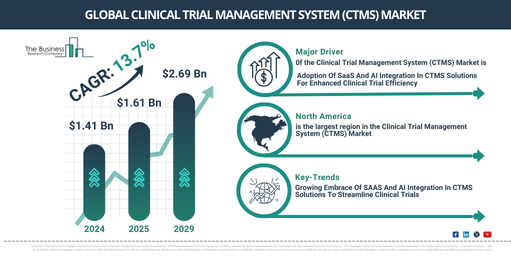
    The market size of the clinical trial management system (CTMS) has witnessed substantial growth in the past years. The rise from $1.41 billion in 2024 to $1.61 billion in 2025, showcasing a compound annual growth rate (CAGR) of 14.2%, is quite remarkable. The historical growth trends are mainly due to factors such as increased complexity in clinical trials, a surge in global clinical trials, strict regulatory compliance, more emphasis on patient-centric trials, and the escalated outsourcing of clinical trials.

    The market size for the clinical trial management system (CTMS) is projected to witness a substantial increment in the forthcoming years. The market is anticipated to expand to $2.69 billion by 2029, augmenting at a compound annual growth rate (CAGR) of 13.7%. The significant expansion in the forecast period can be connected to the constant requirement for real-time data exposure, harmonization with electronic health records (EHRS), an increase in the execution of virtual and decentralized trials, more commitment toward risk-based supervision, and progress in analytics and artificial intelligence. Key trends during this forecast period incorporate a concentrated attention on regulatory compliance and data protection, the rising popularity of adaptive clinical trial models, cooperative platforms for stakeholder involvement, remote monitoring and handling of sites, and evolving standards and interoperability of data.

    Download a free sample to assess the report’s scope and structure:

    https://www.thebusinessresearchcompany.com/sample.aspx?id=13147&type=smp

    How Are Key Drivers in the Industry Acting as Catalysts for the Growth of the Clinical Trial Management System (CTMS) Market?

    The projected expansion of the clinical trial management system (CTMS) market is largely attributed to the growing prevalence of decentralized clinical trials. These trials differ from conventional approaches as they incorporate telemedicine and local healthcare services, thus eliminating or lessening the requirement for patients to attend hospital-based trial sites. A CTMS closely tracks enrollment and participant activities and renders comprehensive supervision and documentation throughout these decentralized processes. As reported by the UK’s Clinical Trials Arena in February 2023, there is an anticipated 17% surge in the adoption of decentralization components in clinical trials by year-end 2023, surpassing the record numbers recorded in 2021. Consequently, the amplification in decentralized clinical trials is set to stimulate the evolution of the CTMS market. The Clinical Trial Management System (CTMS) Market will be influenced significantly by the escalating demand for personalized medicine. Personalized medicine is an approach that utilizes a patient’s genetic makeup to inform decisions pertaining to disease prevention, diagnosis, and cure. The application of CTMS can customize the clinical trial procedures, modifying recruitment, protocol formation, data compilation, patient involvement and data scrutiny to cater to the individual requirements of each patient. As per the Personalized Medicine Coalition’s Scope and Significance of Progress report in 2022, the US FDA sanctioned 12 personalized medicines in 2022, which constituted roughly 34% of all freshly approved molecular entities for treatment. As a result, the augmented demand for personalized medicine fuels the expansion of the CTMS market.

    Which Segments in the Clinical Trial Management System (CTMS) Offer the Most Growth?

    The clinical trial management system (CTMS) market covered in this report is segmented –

    1) By System Type: Enterprise Clinical Trial Management System, On-Site Clinical Trial Management System

    2) By Component: Software, Service, Hardware

    3) By Delivery: Web-Based (On-Demand), Licensed Enterprise (On-Premises), Cloud-Based (SaaS)

    4) By End User: Large Pharma-Biotech Companies, CROs, Medical Device Manufacturers, Small And Mid-Sized Pharma-Biotech Companies, Other End Users

    Subsegments:

    1) By Enterprise Clinical Trial Management System: Cloud-Based Solutions, On-Premises Solutions

    2) By On-Site Clinical Trial Management System: Manual Systems, Semi-Automated Systems

    Request customized data on this market:

    https://www.thebusinessresearchcompany.com/customise?id=13147&type=smp

    What Are the Fastest-Growing Geographies in the Clinical Trial Management System (CTMS) Market?

    North America was the largest region in the clinical trial management system (CTMS) market in 2024. Asia-Pacific is expected to be the fastest-growing region in the forecast period. The regions covered in the clinical trial management system (CTMS) market report are Asia-Pacific, Western Europe, Eastern Europe, North America, South America, Middle East, Africa

    What Are the Current Market Growth and Trends in the Clinical Trial Management System (CTMS) Industry?

    Leading firms in the clinical trial management system (CTMS) market are introducing innovative tech platforms such as Software as a Service (SaaS) integrated with artificial intelligence to accelerate pharmaceutical development. SaaS-based CTMS is a cloud-based software that aids in effectively managing and monitoring different aspects of clinical trials, making it accessible from anywhere that has an internet connection, which eliminates the requirement for local software installation and upkeep. Take for example, in June 2023, Saama Technologies, Inc., a US company specializing in clinical development software and services, introduced a combined platform of SaaS-based products that enhance its current AI and machine learning solutions. This helps in quicker clinical development and commercialization. This platform streamlines crucial clinical trial management operations, decreases query generation times by up to 90%, and brings significant time efficiency in study data transformation and analysis. It provides a complete overview of trial procedures and patient progress from a singular location.

    View the full report here:

    https://www.thebusinessresearchcompany.com/report/clinical-trial-management-system-ctms-global-market-report

    What Are the Key Elements That Define the Clinical Trial Management System (CTMS) Market?

    A clinical trial management system (CTMS) is a software platform designed to facilitate and streamline the management of clinical trials. It is a comprehensive solution to centralize, organize, and automate various aspects of the clinical trial process, enabling efficient study planning, execution, monitoring, and reporting.

    Purchase the full report and get a swift delivery:

    https://www.thebusinessresearchcompany.com/purchaseoptions.aspx?id=13147

    About The Business Research Company:

    With over 15000+ reports from 27 industries covering 60+ geographies, The Business Research Company has built a reputation for offering comprehensive, data-rich research and insights. Armed with 1,500,000 datasets, the optimistic contribution of in-depth secondary research, and unique insights from industry leaders, you can get the information you need to stay ahead in the game.

    Get in touch with us:

    The Business Research Company: https://www.thebusinessresearchcompany.com/

    Americas +1 3156230293

    Asia +44 2071930708

    Europe +44 2071930708

    Email us at info@tbrc.info

    Follow us on:

    LinkedIn: https://in.linkedin.com/company/the-business-research-company

    YouTube: https://www.youtube.com/channel/UC24_fI0rV8cR5DxlCpgmyFQ

    Global Market Model: https://www.thebusinessresearchcompany.com/global-market-model

  • Market Trends Influencing Strategic Decisions in the Clinical Next-Generation Sequencing (NGS) Data Analysis Industry: Innovative Next-Generation Sequencing Solutions Transforming Genomic Analysis

    Market Trends Influencing Strategic Decisions in the Clinical Next-Generation Sequencing (NGS) Data Analysis Industry: Innovative Next-Generation Sequencing Solutions Transforming Genomic Analysis

    Discover trends, market shifts, and competitive outlooks for the clinical next-generation sequencing (ngs) data analysis industry through 2025-2034 with The Business Research Company’s reliable data and in-depth research

    What Are the Key Milestones in the Clinical Next-Generation Sequencing (NGS) Data Analysis Market’s Growth Trajectory From 2025 To 2034?

    In recent times, the market size for clinical next-generation sequencing (NGS) data analysis has expanded rapidly. The market projections suggest a growth from $3.43 billion in 2024 to $4.15 billion in 2025, reflecting a compound annual growth rate (CAGR) of 20.8%. The historical growth can be linked to progress in genomic research, reduction in the cost of sequencing, a rising preference for personalized healthcare, broader usage in clinical diagnostics, and an increased occurrence of genetic diseases.

    In the coming years, the clinical next-generation sequencing (NGS) data analysis market is projected to experience exponential growth, surging to a worth of $8.73 billion by 2029 with a compound annual growth rate (CAGR) of 20.5%. This anticipated growth within the forecast period can be credited to factors such as the growing use of liquid biopsy techniques, the incorporation of artificial intelligence in data analysis, the broadening of precision medicine initiatives, the advent of innovative sequencing technologies, and a greater emphasis on population genomics initiatives. Key trends expected during this forecast period comprise the expansion of companion diagnostics, the emergence of decentralized testing models, the rising employment of cloud-based solutions, the growth of NGS applications in non-invasive prenatal testing, and the creation of standardized data interpretation protocols.

    Download a free sample to assess the report’s scope and structure:

    https://www.thebusinessresearchcompany.com/sample.aspx?id=14877&type=smp

    What Are the Major Market Drivers Behind the Rising Adoption of Clinical Next-Generation Sequencing (NGS) Data Analysis Market?

    The growth of the clinical next-generation sequencing data analysis market is being catalyzed by the escalating demand for customized drugs. Personalized medication is a therapeutic strategy that takes into account the unique variability in people’s genes, environment, and lifestyle. Factors such as advancements in genomic technologies, growing challenge of diseases, enhanced treatment outcomes, and escalating healthcare expenses are all contributing to surging demand for these specialized medicines. Essential to personalized treatment, next-generation sequencing (NGS) data analysis allows for fast and precise sequencing of a multitude of genes simultaneously, thereby promoting a more comprehensive understanding of a person’s genetic composition. In October 2022, STAT, a health-centric news firm based in the US, reported the existence of over 75,000 genetic testing products and 300 personalized drugs. Moreover, in 2023, the Personalized Medicine Coalition, a US-based advocacy group, revealed that the FDA gave its approval for personalized medications for 34% of new pharmaceuticals, and over the past eight years, these medications had been approved for a minimum of 25% of new drugs. Subsequently, the burgeoning demand for personalized medicines is fueling the expansion of the clinical next-generation sequencing data analysis market.

    Which Key Market Segments Comprise the Clinical Next-Generation Sequencing (NGS) Data Analysis Market and Drive Its Revenue Growth?

    The clinical next-generation sequencing (NGS) data analysis market covered in this report is segmented –

    1) By Solution And Services: NGS Data Analysis Tools, NGS Data Analysis And Sequencing Services, NGS Storage, Management And Cloud Computing Platform, Platforms

    2) By Technology: Sequencing By Synthesis (SBS), Nanopore Sequencing, Single-Molecule Real-Time (SMRT) Sequencing, Other Technologies

    3) By Application: Diagnostics, Drug Discovery And Designing, Medical Research, Other Applications

    4) By End User: Hospitals And Clinics, Academic Institutes And Research Centers, Biotechnology Companies, Life Science Technology Vendors, Other End Users

    Subsegments:

    1) By NGS Data Analysis Tools: Software Platforms, Data Interpretation Tools, Bioinformatics Tools, Data Analytics Solutions

    2) By NGS Data Analysis And Sequencing Services: Sequencing Services, Data Analysis Services, Consultation Services, Research And Diagnostic Services

    3) By NGS Storage, Management, And Cloud Computing Platform: Data Storage Solutions, Data Management Platforms, Cloud-Based Platforms, Cloud Storage Services

    4) By Platforms: Sequencing Platforms, NGS Instrumentation Platforms, Integrated NGS Platforms

    Request customized data on this market:

    https://www.thebusinessresearchcompany.com/customise?id=14877&type=smp

    Which Areas Are Leading Regions in the Clinical Next-Generation Sequencing (NGS) Data Analysis Market Expansion Across the Globe?

    North America was the largest region in the clinical next-generation sequencing (NGS) data analysis market in 2024. Asia-Pacific is expected to be the fastest-growing region in the forecast period. The regions covered in the clinical next-generation sequencing (NGS) data analysis market report are Asia-Pacific, Western Europe, Eastern Europe, North America, South America, Middle East, Africa.

    What Are the Strategic Trends Steering theClinical Next-Generation Sequencing (NGS) Data Analysis Market Direction?

    Significant enterprises involved in the clinical next-generation sequencing (NGS) data analysis sector are innovating advanced options, such as the NextSeq 2000 Sequencing System, in order to cater to the growing need for preciseness in genomic evaluation. This system encapsulates an amalgamation of hardware and software components uniquely created to conduct the DNA sequencing process, which entails determining the exact sequence of nucleotides in a DNA molecule. For instance, US-based biotech firm Illumina Inc. launched the NovaSeq X Series in September 2022, a game-changing new range of production-scale sequencers that promise quicker, more effective, and more sustainable sequencing. Part of the NovaSeq X Series are NovaSeq X and NovaSeq X Plus, capable of generating over 20,000 whole genomes annually, a throughput 2.5 times higher than previous sequencers. The sequencers feature state-of-the-art technology, inclusive of a fundamentally unique sequencing by synthesis (SBS) chemistry (XLEAP-SBS) that is twice as fast and up to thrice as precise, superior-resolution optics, and an ultra-high-density flow of cells that provide a throughput 2.5 times greater while reducing sequencing expenses.

    View the full report here:

    https://www.thebusinessresearchcompany.com/report/clinical-next-generation-sequencing-ngs-data-analysis-global-market-report

    How Is the Clinical Next-Generation Sequencing (NGS) Data Analysis Market Conceptually Defined?

    Clinical next-generation sequencing (NGS) data analysis refers to the process of interpreting genetic information obtained through next-generation sequencing technologies in a clinical context. It allows for the rapid and cost-effective sequencing of large quantities of DNA or RNA, enabling the identification of genetic variations associated with diseases or conditions.

    Purchase the full report and get a swift delivery:

    https://www.thebusinessresearchcompany.com/purchaseoptions.aspx?id=14877

    About The Business Research Company:

    With over 15000+ reports from 27 industries covering 60+ geographies, The Business Research Company has built a reputation for offering comprehensive, data-rich research and insights. Armed with 1,500,000 datasets, the optimistic contribution of in-depth secondary research, and unique insights from industry leaders, you can get the information you need to stay ahead in the game.

    Get in touch with us:

    The Business Research Company: https://www.thebusinessresearchcompany.com/

    Americas +1 3156230293

    Asia +44 2071930708

    Europe +44 2071930708

    Email us at info@tbrc.info

    Follow us on:

    LinkedIn: https://in.linkedin.com/company/the-business-research-company

    YouTube: https://www.youtube.com/channel/UC24_fI0rV8cR5DxlCpgmyFQ

    Global Market Model: https://www.thebusinessresearchcompany.com/global-market-model

  • Top Trends Driving Innovation and Change in the Clinical Data Management Systems (CDMS) Market: Revolutionizing Clinical Data Management With New Technology

    Top Trends Driving Innovation and Change in the Clinical Data Management Systems (CDMS) Market: Revolutionizing Clinical Data Management With New Technology

    Discover trends, market shifts, and competitive outlooks for the clinical data management systems (cdms) industry through 2025-2034 with The Business Research Company’s reliable data and in-depth research

    How Has The Clinical Data Management Systems (CDMS) Market Size Shifted, And What Is the Outlook Through 2034?

    There has been significant expansion in the market size of clinical data management systems (CDMS) in the last few years. Market predictions estimate an increase from $2.89 billion in 2024 to $3.28 billion in 2025, at a compound annual growth rate (CAGR) of 13.6%. The surge experienced in the past can be attributed to factors such as increased regulatory guidelines, a rise in the amount of clinical data, an emphasis on the precision and quality of data, proliferation of multicenter clinical trials, and heightened outsourcing of these trials.

    A surge is anticipated in the clinical data management systems (CDMS) market size in the coming years, escalating to $5.37 billion by 2029 with a compound annual growth rate (CAGR) of 13.1%. The hyper-growth projected during the predicted period is fueled by factors such as the implementation of risk-based monitoring, the acceptance of patient-focused trial models, broader utilization of real-world evidence (RWE), internationalization of clinical trials, and emphasis on interoperability, along with increased focus on decentralized and virtual trials. Noteworthy trends during the prediction period encompass integration with electronic health records (EHR), application of artificial intelligence for data analysis, risk-based supervision, incorporation with mobile health (mhealth), and adherence to data privacy rules and regulations.

    Download a free sample to assess the report’s scope and structure:

    https://www.thebusinessresearchcompany.com/sample.aspx?id=13961&type=smp

    What External and Internal Drivers Are Contributing to the Growth of the Clinical Data Management Systems (CDMS) Market?

    The anticipated growth of the clinical data management systems (CDMS) market is primarily propelled by the escalating volume and intricacy of clinical trials. Clinical trials are research experiments designated to appraise a medical, surgical or behavioral intervention. The indispensable role of clinical data management systems in such trials is safeguarding the error-free collection, integration, and accessibility of data for interpretation, thus uplifting the trustworthiness and swiftness of research outcomes. For example, ClinicalTrials.gov, a US governmental web tool, reported that in 2022, findings from 4,024 clinical trials were published, a number that increased to 5,063 in 2023. This illustrates the escalating volume and complexity of clinical trial subjects, consequently, forcing the growth of the clinical data management systems (CDMS) market.

    What Segment Types Define the Clinical Data Management Systems (CDMS) Market Structure?

    The clinical data management systems (CDMS) market covered in this report is segmented –

    1) By Type: Paper-Based Systems, Electronic Data Capturing Systems, Hybrid Systems

    2) By Component: Software, Services

    3) By Deployment: On-Premise, Cloud-Based

    4) By End Use: Contract Research Organization (CROs), Medical Device Companies, Pharma/Biotech Companies, Other End Uses

    Subsegments:

    1) By Paper-Based Systems: Manual Data Entry, Paper Forms

    2) By Electronic Data Capturing Systems: Clinical Trial Management Systems (CTMS), Electronic Case Report Forms (eCRFs), Data Management Software

    3) By Hybrid Systems: Combination of Paper and Electronic Systems, Cloud-Based Solutions

    Request customized data on this market:

    https://www.thebusinessresearchcompany.com/customise?id=13961&type=smp

    Which Geographic Areas Hold the Strongest Growth Potential in the Clinical Data Management Systems (CDMS) Market?

    North America was the largest region in the clinical data management systems market in 2024. The regions covered in the clinical data management systems market report are Asia-Pacific, Western Europe, Eastern Europe, North America, South America, Middle East and Africa.

    What Long-Term Trends Are Transforming the Competitive Landscape of the Clinical Data Management Systems (CDMS) Market?

    Primary players in the clinical data management systems (CDMS) industry are striving to invent novel technologies like health intelligence platforms to boost their market earnings. A health intelligence platform denotes an all-inclusive technological solution that utilizes data analytics and artificial intelligence to improve precision, efficacy, and insights procured from clinical trial data management. To illustrate, Orion Health Group Limited, a New Zealand-based firm specializing in healthcare software, unveiled Orchestral in April 2023. Orchestral brings about a transformative change in healthcare data management through its versatile platform that can be stationed on-cloud or on-premises. It offers advanced features such as machine learning, NLP, and smooth data integration. This introduces a noteworthy improvement in health data analytics, facilitating improved decision-making in healthcare with unparalleled efficacy and adaptability.

    View the full report here:

    https://www.thebusinessresearchcompany.com/report/clinical-data-management-systems-cdms-global-market-report

    What Is the Definition of the Clinical Data Management Systems (CDMS) Market?

    Clinical data management systems (CDMS) are specialized software applications designed to manage and process clinical trial data, ensuring accuracy, completeness, and consistency. CDMS is essential for ensuring data integrity, supporting regulatory compliance, and enabling efficient data analysis and reporting in clinical trials.

    Purchase the full report and get a swift delivery:

    https://www.thebusinessresearchcompany.com/purchaseoptions.aspx?id=13961

    About The Business Research Company:

    With over 15000+ reports from 27 industries covering 60+ geographies, The Business Research Company has built a reputation for offering comprehensive, data-rich research and insights. Armed with 1,500,000 datasets, the optimistic contribution of in-depth secondary research, and unique insights from industry leaders, you can get the information you need to stay ahead in the game.

    Get in touch with us:

    The Business Research Company: https://www.thebusinessresearchcompany.com/

    Americas +1 3156230293

    Asia +44 2071930708

    Europe +44 2071930708

    Email us at info@tbrc.info

    Follow us on:

    LinkedIn: https://in.linkedin.com/company/the-business-research-company

    YouTube: https://www.youtube.com/channel/UC24_fI0rV8cR5DxlCpgmyFQ

    Global Market Model: https://www.thebusinessresearchcompany.com/global-market-model

  • Cleanroom Technologies Market Overview 2025: Competitive Shifts, Forecast Models, and Emerging Opportunities

    Cleanroom Technologies Market Overview 2025: Competitive Shifts, Forecast Models, and Emerging Opportunities

    Discover trends, market shifts, and competitive outlooks for the cleanroom technologies industry through 2025-2034 with The Business Research Company’s reliable data and in-depth research

    What Are the Key Projections for the CAGR of the Cleanroom Technologies Market Size From 2025 to 2034?

    The market size for cleanroom technologies has seen a significant increase in past years. The progression is expected from $7.02 billion in 2024 to $7.45 billion in 2025 with an annual growth rate of 6.2%. The historic period’s expansion is due to advancements in machine learning, growth in big data, cost-effectiveness, enhanced computational ability, and broadly available connectivity.

    Anticipated to experience robust expansion in the upcoming years, the value of the cleanroom technologies market is forecasted to reach $9.54 billion by 2029, displaying a compound annual growth rate (CAGR) of 6.3%. The prediction of growth for the forecast period is credited to factors such as the integration of edge AI, sector-specific resolutions, improved security protocols, ethical considerations and governance in AI, and incorporation with IoT. The forecast period also highlights key market trends such as digital transformation within enterprises, collaboration in the tech industry, progress in cleanroom equipment technology, the expansion of biotechnology and life science research, and the surfacing of applications utilising nanotechnology.

    Download a free sample to assess the report’s scope and structure:

    https://www.thebusinessresearchcompany.com/sample.aspx?id=13617&type=smp

    What Are the Core Growth Drivers Propelling the Cleanroom Technologies Market Forward?

    The rise in healthcare-acquired infections (HAIs) is propelling the demand for cleanroom equipment in the market. Healthcare-acquired infections (HAIs) are those that patients get while undergoing treatment for another ailment in a healthcare facility, like a hospital or a clinic. The importance of cleanroom technologies in healthcare settings is paramount to minimize the risk of HAIs and assure the safety of both patients and products. For example, the UK Health Security Agency reported in September 2024 that in the financial year 2022-2023, there was a surge in cases of hospital-onset healthcare-associated (HOHA) E. coli infections from 6,525 to 7,881. Therefore, the escalating trend of Healthcare-acquired infections (HAIs) is fostering the growth in the cleanroom equipment market.

    What Segment Types Define the Cleanroom Technologies Market Structure?

    The cleanroom technologies market covered in this report is segmented –

    1) By Product: Equipment, Consumables

    2) By Construction Type: Standard Or Drywall Cleanrooms, Hardwall Cleanrooms, Softwall Cleanrooms, Terminal Boxes Or Pass-Through Cabinets

    3) By End-Use Outlook: Pharmaceutical Industry, Medical Device Industry, Biotechnology Industry, Hospitals And Diagnostic Centers

    Subsegments:

    1) By Equipment: HVAC Systems, Cleanroom Air Filters, Laminar Flow Cabinets, Cleanroom Monitors And Sensors, Pass-Through Chambers

    2) By Consumables: Cleanroom Garments, Cleanroom Wipes, Adhesive Mats, Disinfectants And Cleaners, Sterile Packaging Materials

    Request customized data on this market:

    https://www.thebusinessresearchcompany.com/customise?id=13617&type=smp

    Which Geographic Areas Hold the Strongest Growth Potential in the Cleanroom Technologies Market?

    North America was the largest region in the cleanroom technologies market in 2024. Asia-Pacific is expected to be the fastest-growing region in the forecast period. The regions covered in the cleanroom technologies market report are Asia-Pacific, Western Europe, Eastern Europe, North America, South America, Middle East, Africa.

    Which Emerging Trends that Are Influencing theCleanroom Technologies Industry Evolution?

    Leading firms in the cleanroom technologies market are focusing on developing and introducing advanced technologies, such as complete cleanroom technology solutions, to provide customers with superior features. Cleanroom technology solutions represent a set of systems, techniques, and procedures designed to establish and sustain an environment with limited airborne particles, pollutants, and other environmental factors. For example, ABN Cleanroom Technology, a provider of pre-fabricated cleanroom solutions based in Belgium, unveiled a pre-packaged low dewpoint cleanroom system in April 2023. The core principle of cleanroom technology is to remove moisture from the air to manage humidity levels within the space, thereby improving the company’s market position. Given the high demand for moisture regulation, the energy consumed during this manufacturing phase is considerable and greatly affects the financial performance of any battery manufacturing business.

    View the full report here:

    https://www.thebusinessresearchcompany.com/report/cleanroom-technologies-global-market-report

    What Is the Definition of the Cleanroom Technologies Market?

    Cleanroom technology pertains to a specially engineered environment created to reduce the occurrence of airborne particles, including dust, bacteria, and other contaminants, to uphold a controlled standard of cleanliness. Cleanrooms find widespread application in the pharmaceuticals, biotechnology, electronics, aerospace, and healthcare sectors, where the preservation of a sterile or particle-free environment is essential to ensure product quality, safety, and adherence to regulatory standards.

    Purchase the full report and get a swift delivery:

    https://www.thebusinessresearchcompany.com/purchaseoptions.aspx?id=13617

    About The Business Research Company:

    With over 15000+ reports from 27 industries covering 60+ geographies, The Business Research Company has built a reputation for offering comprehensive, data-rich research and insights. Armed with 1,500,000 datasets, the optimistic contribution of in-depth secondary research, and unique insights from industry leaders, you can get the information you need to stay ahead in the game.

    Get in touch with us:

    The Business Research Company: https://www.thebusinessresearchcompany.com/

    Americas +1 3156230293

    Asia +44 2071930708

    Europe +44 2071930708

    Email us at info@tbrc.info

    Follow us on:

    LinkedIn: https://in.linkedin.com/company/the-business-research-company

    YouTube: https://www.youtube.com/channel/UC24_fI0rV8cR5DxlCpgmyFQ

    Global Market Model: https://www.thebusinessresearchcompany.com/global-market-model

  • Global Chronic Venous Occlusions Treatment Market Trends: Regional Breakdowns and Strategic Insights

    Global Chronic Venous Occlusions Treatment Market Trends: Regional Breakdowns and Strategic Insights

    Discover trends, market shifts, and competitive outlooks for the chronic venous occlusions treatment industry through 2025-2034 with The Business Research Company’s reliable data and in-depth research

    What is the Anticipated CAGR of the Chronic Venous Occlusions Treatment Market, and What Factors Will Drive It?

    In recent times, the market size for the treatment of chronic venous occlusions has witnessed significant growth. It is projected to upscale from $6.7 billion in 2024 to a substantial $7.19 billion by 2025, registering a compound annual growth rate (CAGR) of 7.3%. Factors such as increased investment in innovative treatments, growing incidence of venous disorders, enhanced awareness and diagnostics, robust clinical trials and research efforts, along with improved patient outcomes and life quality, have contributed to the growth observed in the historical period.

    Expectations are high for the chronic venous occlusions treatment market to experience significant expansion in the coming years, with projections estimating a growth to $9.32 billion in 2029 at a compound annual growth rate (CAGR) of 6.7%. This robust growth forecast can be credited to an increase in understanding and awareness of venous disorders, a heightened demand for minimally invasive procedures, shifting population demographics towards an older age bracket, advancements in endovascular therapies, and a greater emphasis on patient-focused care. Key trends for the forecast period include technological innovations in the field of interventional radiology, an emphasis on endovascular therapies, growing instances of venous disorders, and an increase in the aging population, along with progress in minimally invasive procedures.

    Download a free sample to assess the report’s scope and structure:

    https://www.thebusinessresearchcompany.com/sample.aspx?id=13286&type=smp

    What Are the Major Market Drivers Behind the Rising Adoption of Chronic Venous Occlusions Treatment Market?

    The rise in obesity rates is predicted to fuel the future expansion of the chronic venous occlusion treatment market. Obesity, a health disorder characterized by an overabundance of body fat leading to a body mass index (BMI) of 30 or more, can be mitigated using chronic venous occlusion treatments. These treatments aid in managing obesity-related symptoms such as edema and skin alterations by enhancing blood circulation and reducing inflammation, thereby assisting in improved obesity control. For example, the World Heart Federation, a Switzerland-based global cardiovascular community that is non-governmental, reported in March 2023 that about 2.3 billion adults and children worldwide were obese or overweight. The current obesity trend suggests that by 2025, the population affected by obesity will rise to 2.7 billion. As a result, the chronic venous occlusion treatment market is being driven by the escalating prevalence of obesity. Chronic Venous Occlusions Treatment Market Driver: Increasing Adoption Of Minimally Invasive Procedures To Drive The Growth Of Chronic Venous Occlusions Treatment Market

    Which Key Market Segments Comprise the Chronic Venous Occlusions Treatment Market and Drive Its Revenue Growth?

    The chronic venous occlusions treatment market covered in this report is segmented –

    1) By Product: Devices, Drugs

    2) By Application: Varicose Veins, Venous Stasis Ulcers, Edema, Deep Vein Thrombosis, Other Applications

    3) By End User: Hospitals, Clinics, Ambulatory Surgery Centers, Trauma centers, Other End-Users

    Subsegments:

    1) By Devices: Venous Stents, Catheters, Endovenous Laser Therapy (EVLT) Devices, Angioplasty Balloons, Other Interventional Devices

    2) By Drugs: Anticoagulants, Thrombolytics, Anti-inflammatory Medications, Pain Management Drugs, Other Pharmacological Treatments

    Request customized data on this market:

    https://www.thebusinessresearchcompany.com/customise?id=13286&type=smp

    Which Areas Are Leading Regions in the Chronic Venous Occlusions Treatment Market Expansion Across the Globe?

    North America was the largest region in the chronic venous occlusions treatment market in 2024. Asia-Pacific is expected to be the fastest-growing region in the forecast period. The regions covered in the chronic venous occlusions treatment market report are Asia-Pacific, Western Europe, Eastern Europe, North America, South America, Middle East, Africa

    What Are the Strategic Trends Steering theChronic Venous Occlusions Treatment Market Direction?

    Leading companies involved in the treatment market for chronic venous occlusion are concentrating on creating breakthrough solutions, including implantable medical devices specifically designed for patient suffering from chronic venous insufficiency (CVI). These implantable devices are surgically inserted into the body and are designed to stay inside for a long time, typically to diagnose, treat or keep track of medical conditions. For example, in June 2024, Koninklijke Philips N.V. (Philips), a Dutch technology company, introduced the Duo Venous Stent System, an implantable medical device. This novel device by Koninklijke Philips N.V. incorporates a double-layer design, boosting flexibility and radial durability for superior vein support. The innovative coating enhances biocompatibility and reduces the risk of blood clotting, while the system’s precise delivery ensures correct placement despite challenging body structures.

    View the full report here:

    https://www.thebusinessresearchcompany.com/report/chronic-venous-occlusions-treatment-global-market-report

    How Is the Chronic Venous Occlusions Treatment Market Conceptually Defined?

    Chronic venous occlusion refers to the long-term blockage or obstruction of veins, often in the legs or arms, which can impede blood flow and lead to various health issues, including swelling, pain, and skin changes. The treatment is used to manage symptoms, slow down the progression of the disease, and prevent complications.

    Purchase the full report and get a swift delivery:

    https://www.thebusinessresearchcompany.com/purchaseoptions.aspx?id=13286

    About The Business Research Company:

    With over 15000+ reports from 27 industries covering 60+ geographies, The Business Research Company has built a reputation for offering comprehensive, data-rich research and insights. Armed with 1,500,000 datasets, the optimistic contribution of in-depth secondary research, and unique insights from industry leaders, you can get the information you need to stay ahead in the game.

    Get in touch with us:

    The Business Research Company: https://www.thebusinessresearchcompany.com/

    Americas +1 3156230293

    Asia +44 2071930708

    Europe +44 2071930708

    Email us at info@tbrc.info

    Follow us on:

    LinkedIn: https://in.linkedin.com/company/the-business-research-company

    YouTube: https://www.youtube.com/channel/UC24_fI0rV8cR5DxlCpgmyFQ

    Global Market Model: https://www.thebusinessresearchcompany.com/global-market-model

  • Chronic Myeloid Leukemia Treatment Market Outlook 2025: Mapping Growth, Innovation, and Regional Shifts

    Chronic Myeloid Leukemia Treatment Market Outlook 2025: Mapping Growth, Innovation, and Regional Shifts

    Discover trends, market shifts, and competitive outlooks for the chronic myeloid leukemia treatment industry through 2025-2034 with The Business Research Company’s reliable data and in-depth research

    What Are the Key Milestones in the Chronic Myeloid Leukemia Treatment Market’s Growth Trajectory From 2025 To 2034?

    In recent times, the market size of treatments for chronic myeloid leukemia has seen a notable increase. The market, which will rise from $9.2 billion in 2024 to $9.76 billion in 2025, boasts a compound annual growth rate (CAGR) of 6.2%. This surge over the historic period owes its momentum to factors such as an increase in the prevalence of chronic myeloid leukemia, heightened awareness surrounding cancer treatment, governmental initiatives, and an expansion in research and development activities pertaining to treatments for chronic myeloid leukemia.

    In the coming years, the market size of treatments for chronic myeloid leukemia is predicted to witness robust expansion. The market valuation is projected to reach $13.12 billion in 2029 with a compound annual growth rate (CAGR) of 7.7%. This growth during the forecast period can be credited to an increasing need for more effective and tolerable treatments, augmented healthcare expenditure, and investments in therapies for chronic myeloid leukemia along with the rise of personalized medicine. Pivotal trends forecasted for this period include enhanced diagnosis and screening procedures, innovative therapies for chronic myeloid leukemia, the advent of targeted therapies, advancements in early diagnosis and screening, as well as monitoring technologies.

    Download a free sample to assess the report’s scope and structure:

    https://www.thebusinessresearchcompany.com/sample.aspx?id=12915&type=smp

    What External and Internal Drivers Are Contributing to the Growth of the Chronic Myeloid Leukemia Treatment Market?

    The escalating cases of myeloid leukemia are predicted to stimulate the growth of the chronic myeloid leukemia (CML) treatment market in the future. Myeloid leukemia is a cancer type that begins in the bone marrow and impacts the cells that generate various blood cells types. The treatment of chronic myeloid leukemia (CML) aims to enhance bone marrow function by focusing on leukemia’s root cause to reduce complications due to low blood cell counts, decrease the need for chemotherapy and transplants, and increase survival rates for people with myeloid leukemia. For instance, the American Cancer Society, a US-based voluntary health organization, estimated in January 2023 that there were about 20,380 cases and 11,310 deaths of acute myeloid leukemia (AML) in adults that year. Hence, the escalating instances of myeloid leukemia fuel the chronic myeloid leukemia (CML) treatment market. The upward trend of chromosome abnormalities is expected to promote the growth of the chronic myeloid leukemia (CML) treatment market. Chromosome abnormalities imply structural or numerical errors in a person’s chromosomes, the thread-like structures in cells that hold genetic information. Patients with specific chromosomal abnormalities might have poor prognosis and may require intense treatments like CML. For example, according to the National Library of Medicine (NLM), a US-based biomedical informatics and computational health data science research, in a study conducted in Saudi Arabia, chromosome abnormalities were identified in 59 newborn infants with congenital anomalies (39.3%), accounting for 2.3% of total NICU admissions. Therefore, the growing presence of chromosome abnormalities is boosting the development of the chronic myeloid leukemia (CML) treatment market.

    What Segment Types Define the Chronic Myeloid Leukemia Treatment Market Structure?

    The chronic myeloid leukemia treatment market covered in this report is segmented –

    1) By Type: Targeted Therapy, Chemotherapy, Radiation Therapy, Splenectomy, Stem Cell Transplant

    2) By Route of Administration: Oral, Parenteral, Other Route of Administrations

    3) By End-User: Hospitals, Specialty Clinics, Other End-Users

    Subsegments:

    1) By Targeted Therapy: Tyrosine Kinase Inhibitors (TKIs), Monoclonal Antibodies

    2) By Chemotherapy: Combination Chemotherapy, Single-Agent Chemotherapy

    3) By Radiation Therapy: External Beam Radiation Therapy, Total Body Irradiation

    4) By Splenectomy: Open Splenectomy, Laparoscopic Splenectomy

    5) By Stem Cell Transplant: Autologous Stem Cell Transplant, Allogeneic Stem Cell Transplant

    Request customized data on this market:

    https://www.thebusinessresearchcompany.com/customise?id=12915&type=smp

    Which Geographic Areas Hold the Strongest Growth Potential in the Chronic Myeloid Leukemia Treatment Market?

    North America was the largest region in the chronic myeloid leukemia treatment market in 2024. The regions covered in chronic myeloid leukemia treatment market report are Asia-Pacific, Western Europe, Eastern Europe, North America, South America, Middle East and Africa.

    What Long-Term Trends Are Transforming the Competitive Landscape of the Chronic Myeloid Leukemia Treatment Market?

    Leading firms in the chronic myeloid leukemia (CML) treatment market are concentrating on producing novel products to maintain their market standing. Case in point, in August 2023, Precipio, Inc., a cancer diagnosis company headquartered in the US, introduced the BCR-ABL 2.0 Panel for chronic myeloid leukemia (CML). This instrument detects the BCR-ABL1 gene, facilitating chronic myeloid leukemia (CML) diagnosis. As the most sophisticated BCR-ABL panel, it boasts comprehensive coverage, simplified workflows, and reduced costs, significantly improving patient care. Furthermore, it is equipped to identify the ABL1 mutation, eradicating the need for a second round of BCR-ABL1 gene testing, thereby providing highly accurate results.

    View the full report here:

    https://www.thebusinessresearchcompany.com/report/chronic-myeloid-leukemia-treatment-global-market-report

    What Is the Definition of the Chronic Myeloid Leukemia Treatment Market?

    Chronic myeloid leukemia (CML) is a type of cancer that affects the bone marrow and blood cells and is characterized by the overproduction of abnormal white blood cells known as granulocytes. Chronic myeloid leukemia (CML) treatment aims to control the disease, reduce symptoms and improve the quality of life for patients suffering from the disease.

    Purchase the full report and get a swift delivery:

    https://www.thebusinessresearchcompany.com/purchaseoptions.aspx?id=12915

    About The Business Research Company:

    With over 15000+ reports from 27 industries covering 60+ geographies, The Business Research Company has built a reputation for offering comprehensive, data-rich research and insights. Armed with 1,500,000 datasets, the optimistic contribution of in-depth secondary research, and unique insights from industry leaders, you can get the information you need to stay ahead in the game.

    Get in touch with us:

    The Business Research Company: https://www.thebusinessresearchcompany.com/

    Americas +1 3156230293

    Asia +44 2071930708

    Europe +44 2071930708

    Email us at info@tbrc.info

    Follow us on:

    LinkedIn: https://in.linkedin.com/company/the-business-research-company

    YouTube: https://www.youtube.com/channel/UC24_fI0rV8cR5DxlCpgmyFQ

    Global Market Model: https://www.thebusinessresearchcompany.com/global-market-model

  • Chronic Care Management Software Market in Focus: Forecasting Growth Drivers, Scaling Potential, and Global Opportunities

    Chronic Care Management Software Market in Focus: Forecasting Growth Drivers, Scaling Potential, and Global Opportunities

    Discover trends, market shifts, and competitive outlooks for the chronic care management software industry through 2025-2034 with The Business Research Company’s reliable data and in-depth research

    How Has The Chronic Care Management Software Market Size Shifted, And What Is the Outlook Through 2034?

    The market size for chronic care management software has experienced a significant expansion in the past few years. Its anticipated growth will be from $13.44 billion in 2024 to $15.38 billion in 2025, reflecting a compound annual growth rate (CAGR) of 14.4%. The surge witnessed in the historic time frame is a result of the escalating prevalence of chronic illnesses, an expanding elderly population, a focus on patient-centric care, an increase in demand for remote patient monitoring, and escalating healthcare expenses.

    Anticipations predict a quick expansion for the chronic care management software market in the coming years. The market is projected to rise to $26.35 billion by 2029, with a compound annual growth rate (CAGR) of 14.4%. The predicted development within the projection period is mainly due to the uptake of telemedicine and virtual care, a heightened emphasis on preventive care, a growing demand for interoperable healthcare solutions, an increase in healthcare consumerism, and regulatory backing for chronic care management initiatives. The forecast period also includes significant trends such as personalized chronic disease management, the use of wearables and Internet of Things (IoT) devices, the roll-out of telehealth platforms, the deployment of predictive analytics for proactive care, and the implementation of technologies for remote patient observation.

    Download a free sample to assess the report’s scope and structure:

    https://www.thebusinessresearchcompany.com/sample.aspx?id=14668&type=smp

    What Are the Core Market Drivers Propelling Growth in the Chronic Care Management Software Industry?

    The rise in the use of healthcare information technology (IT) solutions is projected to fuel the progress of the chronic care management software market. These solutions, which encompass digital technologies and strategies designed to optimize healthcare processes, boost the quality of patient care, and enhance overall health outcomes, are becoming increasingly essential in improving efficiency, enhancing patient care, streamlining operations, and complying with regulations within an increasingly digital healthcare landscape. With various IT tools, chronic care management software enhances care quality for patients with chronic disorders by fostering improved communication, coordination, and monitoring of their healthcare needs. For example, the Healthcare Information and Management Systems Society (HIMSS), a not-for-profit organization in the US, indicated in their January 2022 report that a remarkable 80% of healthcare providers are planning to increase their spending on technology and digital solutions in the next five years. Moreover, a survey in February 2023 by Rock Health, a health technology firm in the US, demonstrated out of 8,014 participants, 76% of individuals over 55 had used telemedicine services, and 80% of all participants had at some point accessed care via telemedicine—an increase of 8% from 72% in 2021. Consequently, the escalating use of healthcare information technology (IT) solutions is propelling the expansion of the chronic care management software market.

    How Is the Chronic Care Management Software Market Segmented?

    The chronic care management software market covered in this report is segmented –

    1) By Type: Standalone Software, Integrated Software

    2) By Deployment: Cloud-Based, Web-Based, On-Premise

    3) By Application: Chronic Disease Management, Case Management, Communication And Collaboration, Other Applications

    4) By End User: Hospitals, Clinics, Specialty Centers, Other End Users

    Subsegments:

    1) By Standalone Software: Remote Patient Monitoring Software, Chronic Disease Tracking Software, Appointment Scheduling Software, Medication Management Software, Patient Engagement Software, Electronic Health Records (EHR) Software, Data Analytics and Reporting Tools

    2) By Integrated Software: Integrated Chronic Care Management Platforms, Telehealth and Telemedicine Integration, Health Information Exchange (HIE) Systems, Care Coordination and Communication Tools, Population Health Management Solutions, Billing and Revenue Cycle Management Integration, Patient Portal and Mobile App Integration

    Request customized data on this market:

    https://www.thebusinessresearchcompany.com/customise?id=14668&type=smp

    Which Regions Are Driving the Next Phase of the Chronic Care Management Software Market Growth?

    North America was the largest region in the chronic care management software market in 2024. Asia-Pacific is expected to be the fastest-growing region in the forecast period. The regions covered in the chronic care management software market report are Asia-Pacific, Western Europe, Eastern Europe, North America, South America, Middle East and Africa.

    What Key Market Trends and Innovations Are Shaping the Future of the Chronic Care Management Software Industry?

    Leading firms in the chronic care management software market are concentrating on the development of cutting-edge solutions such as EHR-integrated software to enhance their market position through superior patient results, improved care coordination, and efficient workflows for healthcare providers. This type of software for chronic care simplifies patient management by integrating real-time health information, treatment strategies, and communication resources within a single electronic health record system. For example, in March 2024, Rimidi, a US-based digital health firm, initiated the Rimidi Care Network – a collaborative program for remote patient monitoring service providers meant to expand the reach of RPM services. This initiative is planned to link healthcare providers, payers, and tech vendors, facilitating them to effectively distribute Rimidi’s solutions across a broader spectrum of healthcare environments. By merging with electronic health records and providing user-friendly RPM tools, Rimidi aims to assist organizations in improving patient engagement, particularly in chronic condition management. The program is designed to simplify remote care services, enhance results and broaden the access to groups that would benefit from remote health monitoring.

    View the full report here:

    https://www.thebusinessresearchcompany.com/report/chronic-care-management-software-global-market-report

    How Is the Chronic Care Management Software Market Defined and What Are Its Core Parameters?

    Chronic care management software is a digital solution designed to assist healthcare providers in managing and coordinating care for patients with chronic conditions. This software helps healthcare providers streamline care delivery, track patient progress, and improve outcomes for individuals with chronic health issues.

    Purchase the full report and get a swift delivery:

    https://www.thebusinessresearchcompany.com/purchaseoptions.aspx?id=14668

    About The Business Research Company:

    With over 15000+ reports from 27 industries covering 60+ geographies, The Business Research Company has built a reputation for offering comprehensive, data-rich research and insights. Armed with 1,500,000 datasets, the optimistic contribution of in-depth secondary research, and unique insights from industry leaders, you can get the information you need to stay ahead in the game.

    Get in touch with us:

    The Business Research Company: https://www.thebusinessresearchcompany.com/

    Americas +1 3156230293

    Asia +44 2071930708

    Europe +44 2071930708

    Email us at info@tbrc.info

    Follow us on:

    LinkedIn: https://in.linkedin.com/company/the-business-research-company

    YouTube: https://www.youtube.com/channel/UC24_fI0rV8cR5DxlCpgmyFQ

    Global Market Model: https://www.thebusinessresearchcompany.com/global-market-model