Category: Healthcare Services

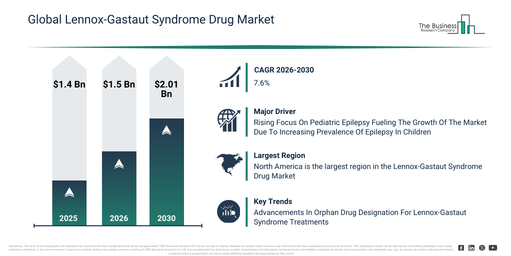
  • A key trend shaping the Lennox-Gastaut Syndrome Drug Market involves the Advancements In Orphan Drug Designation For Lennox-Gastaut Syndrome Treatments

    A key trend shaping the Lennox-Gastaut Syndrome Drug Market involves the Advancements In Orphan Drug Designation For Lennox-Gastaut Syndrome Treatments

    The Business Research Company’s 2026 market reports include new capabilities such as market attractiveness scoring and analysis, total addressable market analysis, company scoring matrix, interactive excel data dashboard, improved supply chain analysis, upcoming startups in the market, and overview of key products, aimed at improving the depth, usability, and strategic value of the insights delivered.

    What Market Value Is Anticipated For The Lennox-Gastaut Syndrome Drug Market Over The Period 2026–2030?

    The lennox-gastaut syndrome drug market size has experienced strong growth in recent years. It is projected to increase from $1.4 billion in 2025 to $1.5 billion in 2026, exhibiting a compound annual growth rate (CAGR) of 7.6%. This historical expansion can be attributed to factors such as limited treatment options for severe epilepsy syndromes, an increasing diagnosis of pediatric epilepsy disorders, reliance on traditional anticonvulsant therapies, growing awareness among neurologists, and the expansion of hospital-based epilepsy care.

    The lennox-gastaut syndrome drug market is projected to experience substantial expansion over the coming years. By 2030, its valuation is expected to reach $2.01 billion, propelled by a compound annual growth rate (CAGR) of 7.6%. The expansion during the projected timeframe stems from breakthroughs in rare epilepsy drug creation, an uptick in orphan drug authorizations, the increasing integration of personalized epilepsy care, heightened funding for neuroscience exploration, and improved reach to specialized epilepsy clinics. Significant developments expected in the forecast period involve the spread of cannabidiol-derived treatments, a rise in co-administered and combined drug strategies, a greater emphasis on epilepsy cases that are difficult to treat, refined pediatric epilepsy drug compositions, and an escalation in clinical investigations for innovative antiepileptic drugs.

    Download the Free Sample Report to Explore Key Market Insights:

    https://www.thebusinessresearchcompany.com/sample.aspx?id=24276&type=smp

    What Underlying Factors Are Accelerating The Growth Of The Lennox-Gastaut Syndrome Drug Market?

    The escalating emphasis on pediatric epilepsy is anticipated to stimulate expansion within the lennox-gastaut syndrome drug market. Pediatric epilepsy is defined as a neurological condition characterized by recurrent seizures in children. The incidence of pediatric epilepsy is increasing, largely attributed to a rise in neonatal and infant brain injuries, which can precipitate the onset of epilepsy during early childhood. This heightened focus on pediatric epilepsy provides support for lennox-gastaut syndrome drugs by underscoring the critical nature of early intervention; specialized medications are essential for managing difficult-to-control seizures and preventing developmental delays in affected children, thereby highlighting the demand for tailored therapies to address their specific neurological challenges. As an illustration, in November 2023, the American Academy of Pediatrics, a US-based professional association, stated that epilepsy represents the most prevalent childhood brain disorder in the United States, impacting approximately 470,000 children and adolescents between the ages of 0 and 17. Thus, the growing attention to pediatric epilepsy is indeed a key factor propelling the growth of the lennox-gastaut syndrome drug market.

    How Is The Lennox-Gastaut Syndrome Drug Market Divided Into Its Major Segments?

    The lennox-gastaut syndrome drug market covered in this report is segmented –

    1) By Drug Type: Central Nervous System Depressants, Anticonvulsants, Perampanel, Cannabidiol, Neural Regeneration Peptide 2945, Other Drug Types

    2) By Route of Administration: Oral, Injection, Intranasal, Topical

    3) By Therapeutic Use: Long-Term Management, Acute Seizure Treatment, Adjunctive Therapy, Rescue Medications

    4) By Distribution Channel: Hospital Pharmacy, Retail Pharmacy, Online Pharmacy

    5) By End-User: Hospitals And Clinics, Home Care Settings, Specialized Epilepsy Centers, Pharmaceutical Retail Pharmacies

    Subsegments:

    1) By Central Nervous System Depressants: Benzodiazepines, Barbiturates, Sleep-Inducing Agents

    2) By Anticonvulsants: Valproate, Lamotrigine, Topiramate, Felbamate, Rufinamide

    3) By Perampanel: Branded Formulations, Generic Formulations

    4) By Cannabidiol: Plant-Derived Cannabidiol, Synthetic Cannabidiol

    5) By Neural Regeneration Peptide 2945: Peptide-Based Monotherapy, Combination Therapies

    6) By Other Drug Types: Corticosteroids, Immunoglobulins, Ketogenic Agents

    Which Market Trends Are Creating New Opportunities In The Lennox-Gastaut Syndrome Drug Market?

    Companies operating within the lennox-gastaut syndrome drug market are increasingly focusing on advancements in orphan drug designation to enhance regulatory support, secure market exclusivity, and accelerate the commercialization of treatments for this rare and severe condition. Orphan drug designation is a distinct status conferred by regulatory agencies, including the FDA, to medications developed for rare diseases or conditions affecting fewer than 200,000 individuals in a specific area. For instance, in March 2023, Marinus Pharmaceuticals Inc., a US-based pharmaceutical company, announced that the US Food and Drug Administration (FDA) had granted Orphan Drug Designation (ODD) to ganaxolone for the treatment of lennox-gastaut syndrome (LGS). LGS is a severe form of epilepsy that originates in childhood and is characterized by intractable seizures and neurodevelopmental impairment. This designation provides benefits such as market exclusivity upon regulatory approval, exemption from FDA application fees, and tax credits for qualified clinical trials.

    Who Are The Prominent Organizations Shaping The Lennox-Gastaut Syndrome Drug Market?

    Major companies operating in the lennox-gastaut syndrome drug market are Pfizer Inc., Johnson & Johnson, F. Hoffmann-La Roche AG, AbbVie Inc., Sanofi SA, Abbott Laboratories, Novartis AG, GlaxoSmithKline plc, Takeda Pharmaceutical Company, UCB SA, Eisai Co Ltd., Amneal Pharmaceuticals Inc., Supernus Pharmaceuticals Inc., Lundbeck A/S, GW Pharmaceuticals Plc, Ultragenyx Pharmaceutical Inc., Marinus Pharmaceuticals Inc., Stoke Therapeutics Inc., Zynerba Pharmaceuticals Inc., Ovid Therapeutics Inc.

    Read the full lennox-gastaut syndrome drug market report here:

    https://www.thebusinessresearchcompany.com/report/lennox-gastaut-syndrome-drug-global-market-report

    Which Region Is Projected To Dominate The Lennox-Gastaut Syndrome Drug Market During The Forecast Period?

    North America was the largest region in the lennox-gastaut syndrome drug market in 2025. Asia-Pacific is expected to be the fastest-growing region in the forecast period. The regions covered in the lennox-gastaut syndrome drug market report are Asia-Pacific, South East Asia, Western Europe, Eastern Europe, North America, South America, Middle East, Africa.

    Request A Tailored Lennox-Gastaut Syndrome Drug Market Research Report For Competitive Advantage:

    https://www.thebusinessresearchcompany.com/customise?id=24276&type=smp

    Browse Through More Reports Similar to the Global Lennox-Gastaut Syndrome Drug Market 2026, By The Business Research Company

    Gastric Cancer Drugs Global Market Report

    https://www.thebusinessresearchcompany.com/report/gastric-cancer-drugs-global-market-report

    Metabolic Disorders Drugs Global Market Report

    https://www.thebusinessresearchcompany.com/report/metabolic-disorders-drugs-global-market-report

    Gastrointestinal Drugs Global Market

    https://www.thebusinessresearchcompany.com/report/gastrointestinal-drugs-global-market

    Get in touch with us:

    The Business Research Company: https://www.thebusinessresearchcompany.com/

    Americas +1 310-496-7795

    Asia +44 7882 955267 & +91 8897263534

    Europe +44 7882 955267

    Email us at info@tbrc.info

    Follow us on:

    LinkedIn: https://in.linkedin.com/company/the-business-research-company

    YouTube: https://www.youtube.com/channel/UC24_fI0rV8cR5DxlCpgmyFQ

    Global Market Model: https://www.thebusinessresearchcompany.com/global-market-model
  • A significant industry trend in the Lenegre’s Disease Market includes the Launch of Advanced High-Density Diagnostic Catheters for Enhanced Cardiac Procedure Outcomes

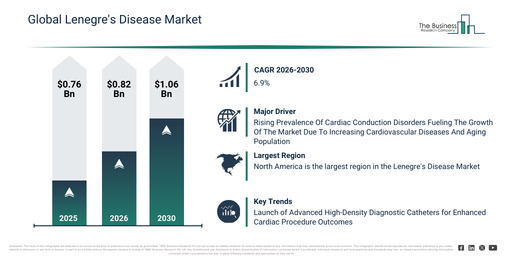
    A significant industry trend in the Lenegre’s Disease Market includes the Launch of Advanced High-Density Diagnostic Catheters for Enhanced Cardiac Procedure Outcomes

    The Business Research Company’s 2026 market reports include new capabilities such as market attractiveness scoring and analysis, total addressable market analysis, company scoring matrix, interactive excel data dashboard, improved supply chain analysis, upcoming startups in the market, and overview of key products, aimed at improving the depth, usability, and strategic value of the insights delivered.

    What Is The Expected Market Size Of The Lenegre’s Disease Market From 2026 To 2030?

    The lenegre’s disease market has experienced substantial growth in the recent past. It is projected to expand from $0.76 billion in 2025 to $0.82 billion in 2026, demonstrating a compound annual growth rate (CAGR) of 6.9%. This historical growth can be attributed to several factors including limited awareness of rare cardiac conduction disorders, reliance on symptomatic arrhythmia management, an increasing aging population with conduction abnormalities, early adoption of pacemaker therapy, and the advancement in cardiology specialty care.

    The lenegre’s disease market is projected to experience substantial expansion over the upcoming years. By 2030, its valuation is anticipated to reach $1.06 billion, demonstrating a compound annual growth rate (CAGR) of 6.9%. This projected growth during the forecast period is propelled by several factors, including strides in cardiac electrophysiology research, an increasing need for early arrhythmia identification, the broader availability of personalized cardiac care, more widespread remote cardiac monitoring solutions, and increased funding for rare cardiac disease research. Key developments expected throughout this period encompass enhanced electrophysiological diagnostic methods, the increasing integration of cardiac implantable electronic devices, a sharpened emphasis on genetic and inherited cardiac conditions, the expanding application of continuous cardiac monitoring, and progress in conduction system disease investigations.

    Download the Free Sample Report to Explore Key Market Insights:

    https://www.thebusinessresearchcompany.com/sample.aspx?id=22034&type=smp

    Which Growth Drivers Are Contributing To The Progress Of The Lenegre’s Disease Market?

    The anticipated increase in cardiac conduction disorders is projected to fuel the expansion of the lenegre disease market. These disorders involve conditions that disrupt the heart’s electrical signaling, resulting in irregular heart rhythms or compromised heartbeat coordination. The growing incidence of cardiovascular diseases alongside an aging population is leading to a rise in the prevalence of cardiac conduction disorders. Common cardiovascular conditions such as hypertension, coronary artery disease, and heart failure directly impact the heart’s electrical conduction system, consequently leading to issues like arrhythmias and heart block. By progressively degenerating the heart’s conduction system, these disorders cause Lenègre’s disease, resulting in blockages and arrhythmias. For instance, in October 2024, according to the Centers for Disease Control and Prevention, a US-based government agency, in 2023, cardiovascular disease claimed 919,032 lives, accounting for one in every three deaths. Coronary heart disease remained the most prevalent form of heart disease, and notably, about one in six deaths from cardiovascular diseases occurred among adults younger than 65 years. Thus, the escalating prevalence of cardiac conduction disorders serves as a significant driver for the lenegre disease market. The escalating healthcare spending is anticipated to propel the growth within the lenegre’s disease market in the coming years. Healthcare spending pertains to the financial allocations made for healthcare services and systems, covering expenses necessary to sustain and enhance the health of a population within a given region. The primary factors contributing to this increase in healthcare expenditure include the expanding prevalence of chronic diseases, which necessitates continuous medical attention and prolonged treatment, thereby increasing the demand for healthcare services and ultimately elevating overall healthcare costs. Lenegre’s disease contributes to higher healthcare spending due to the need for continuous diagnostic evaluations, ongoing cardiac monitoring, and advanced therapeutic interventions like pacemaker implantation, all of which raise long-term medical expenses. For instance, in April 2025, according to the American Medical Association, a US-based professional association, health spending in the U.S. rose by 7.5% in 2023 to reach $4.9 trillion, or $14,570 per person, marking a notable increase compared to the 4.6% growth recorded in 2022. Consequently, the expenditure on healthcare is driving the lenegre’s disease market.

    Which Segments Are Included In The Analysis Of The Lenegre’s Disease Market?

    The lenegre’s disease market covered in this report is segmented –

    1) By Disease Classification: Idiopathic Lenègre’s Disease, Familial And Genetic Lenègre’s Disease, Age-Related Degenerative Lenègre’s Disease

    2) By Treatment Type: Pacemaker Therapy, Implantable Cardiac Rhythm Management Devices, Pharmacological Management, Supportive And Symptomatic, Monitoring And Diagnostic Follow-up

    3) By Route of Treatment Delivery: Implantable Device-Based Therapy, Non-Implantable Drug And Monitoring-Based Management

    4) By End User: Hospitals, Cardiology Clinics, Ambulatory Surgical Centers, Specialty Cardiac Care Centers

    Subsegments:

    1) By Idiopathic Lenègre’s Disease: Isolated Progressive Cardiac Conduction Disease, Sporadic Lenègre’s Disease, Non-Syndromic Conduction System Degeneration

    2) By Familial and Genetic Lenègre’s Disease: SCN5A-Mutation–Associated Lenègre’s Disease, Other Ion-Channel Gene–Associated Lenègre’s Disease, Autosomal Dominant Progressive Cardiac Conduction Disease

    3) By Age-Related Degenerative Lenègre’s Disease: Senile Fibrosis-Related Conduction Disease, Degenerative His–Purkinje System Disease, Age-Associated Progressive Atrioventricular Block

    What Trends Are Affecting The Expansion Of The Lenegre’s Disease Market?

    Leading firms within the lenegre disease market are concentrating on bringing innovative products, like high-density diagnostic catheters, to market, aiming to enhance the precision and efficacy of heart-related medical interventions. These high-density diagnostic catheters are specialized instruments employed in the field of cardiology for highly accurate mapping of the heart’s electrical activity, thereby facilitating comprehensive diagnosis and management of irregular heart rhythms. An example of this trend is Biosense Webster Inc., a US-based medical equipment manufacturing company, which introduced an OPTRELL mapping catheter with TRUEref technology in July 2023. This OPTRELL mapping catheter with TRUEref technology, integrated with the CARTO 3 System, delivers high-definition electrophysiological mapping through its 48 small electrodes, allowing medical professionals to chart intricate cardiac arrhythmias with superior accuracy and formulate more potent ablation strategies.

    Which Key Industry Participants Are Active In The Lenegre’s Disease Market?

    Major companies operating in the lenegre’s disease market are Medtronic plc, Boston Scientific Corporation, Abbott Laboratories, Biotronik SE & Co. KG, LivaNova PLC, MicroPort Scientific Corporation, Lepu Medical Technology Co. Ltd., Osypka AG, Medico S.R.L., Shree Pacetronix Ltd., Pacetronix Medical Equipment Pvt. Ltd., Cardiac Science Corporation, Japan Lifeline Co. Ltd., Cook Medical, Integer Holdings Corporation, Merit Medical Systems Inc., Nipro Corporation, Teleflex Incorporated, Edwards Lifesciences Corporation, Getinge AB

    Read the full lenegre’s disease market report here:

    https://www.thebusinessresearchcompany.com/report/lenegres-disease-global-market-report

    What Are The Leading Geographic Regions In The Lenegre’s Disease Market?

    North America was the largest region in the lenegre’s disease market in 2025. The regions covered in the lenegre’s disease market report are Asia-Pacific, South East Asia, Western Europe, Eastern Europe, North America, South America, Middle East, Africa.

    Request A Tailored Lenegre’s Disease Market Research Report For Competitive Advantage:

    https://www.thebusinessresearchcompany.com/customise?id=22034&type=smp

    Browse Through More Reports Similar to the Global Lenegre’s Disease Market 2026, By The Business Research Company

    Rare Neurological Disease Treatment Global Market Report

    https://www.thebusinessresearchcompany.com/report/rare-neurological-disease-treatment-global-market-report

    Rare Diseases Treatment Global Market Report

    https://www.thebusinessresearchcompany.com/report/rare-diseases-treatment-global-market-report

    Rare Disease Diagnostics Global Market Report

    https://www.thebusinessresearchcompany.com/report/rare-disease-diagnostics-global-market-report

    Get in touch with us:

    The Business Research Company: https://www.thebusinessresearchcompany.com/

    Americas +1 310-496-7795

    Asia +44 7882 955267 & +91 8897263534

    Europe +44 7882 955267

    Email us at info@tbrc.info

    Follow us on:

    LinkedIn: https://in.linkedin.com/company/the-business-research-company

    YouTube: https://www.youtube.com/channel/UC24_fI0rV8cR5DxlCpgmyFQ

    Global Market Model: https://www.thebusinessresearchcompany.com/global-market-model
  • A key trend shaping the Leber Hereditary Optic Neuropathy Treatment Market involves the Advancements In Targeted Therapies Driving Innovations In Genetic Treatment For Vision Disorders

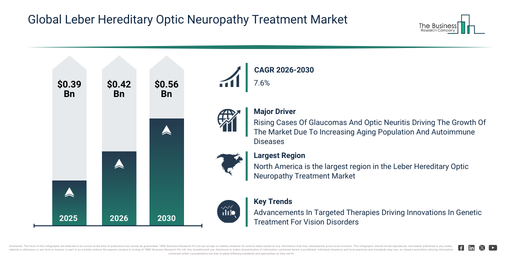
    A key trend shaping the Leber Hereditary Optic Neuropathy Treatment Market involves the Advancements In Targeted Therapies Driving Innovations In Genetic Treatment For Vision Disorders

    The Business Research Company’s 2026 market reports include new capabilities such as market attractiveness scoring and analysis, total addressable market analysis, company scoring matrix, interactive excel data dashboard, improved supply chain analysis, upcoming startups in the market, and overview of key products, aimed at improving the depth, usability, and strategic value of the insights delivered.

    What Market Valuation Is Forecasted For The Leber Hereditary Optic Neuropathy Treatment Market By 2030 Starting From Its 2026 Size?

    The leber hereditary optic neuropathy treatment market size has experienced robust growth in recent years. It is projected to increase from $0.39 billion in 2025 to $0.42 billion in 2026, at a compound annual growth rate (CAGR) of 7.9%. The expansion observed in the historic period stemmed from factors such as limited therapeutic choices for mitochondrial disorders, an increasing diagnosis of inherited optic neuropathies, the initial adoption of idebenone therapy, rising awareness of genetic eye diseases, and progress in neuro-ophthalmology research.

    The leber hereditary optic neuropathy treatment market is projected for substantial expansion in the coming years. By 2030, this market is anticipated to reach a valuation of $0.56 billion, exhibiting a compound annual growth rate (CAGR) of 7.6%. This projected expansion throughout the forecast period stems from several factors, including escalating investment in mitochondrial medicine research, a surge in clinical trials for gene and stem cell therapies, the broadening scope of precision medicine initiatives, enhanced availability of genetic testing technologies, and a heightened emphasis on early intervention approaches. Key developments expected during this timeframe encompass the broadening of mitochondrial gene therapy research, a rise in the use of antioxidant-based pharmacological treatments, an increase in genetic counseling and family risk assessment services, a greater emphasis on prompt molecular diagnosis, and progress in stem cell-based methods for optic nerve regeneration.

    Download the Free Sample Report to Explore Key Market Insights:

    https://www.thebusinessresearchcompany.com/sample.aspx?id=23438&type=smp

    What Primary Drivers Are Shaping The Development Of The Leber Hereditary Optic Neuropathy Treatment Market?

    The rising occurrence of glaucoma and optic neuritis is anticipated to propel the expansion of the leber hereditary optic neuropathy treatment market moving forward. These eye conditions involve damage to the optic nerve and subsequent vision loss; glaucoma is typically linked to elevated intraocular pressure, while optic neuritis often stems from inflammation, frequently associated with autoimmune diseases. The increasing prevalence of glaucoma and optic neuritis can be attributed to an aging global demographic and advancements in diagnostic methods. Both glaucoma and optic neuritis feature optic nerve damage and vision impairment, presenting commonalities with LHON. As these conditions become more widespread, there is a growing emphasis on research and therapeutic development targeting optic nerve degeneration. This concentrated effort directly benefits LHON treatment, given that the fundamental processes of optic nerve damage are central to all three disorders. A notable example is from October 2024, when the Centers for Disease Control and Prevention, a US-based federal agency, reported over 3 million Americans currently affected by glaucoma, with projections indicating a rise to 6.3 million by 2050, largely influenced by the aging U.S. population. Consequently, the increasing incidence of glaucoma and optic neuritis is a significant factor driving the growth of the leber hereditary optic neuropathy treatment market.

    Which Segment Categories Define The Leber Hereditary Optic Neuropathy Treatment Market?

    The leber hereditary optic neuropathy treatment market covered in this report is segmented –

    1) By Treatment: Medication, Stem Cell Therapy, Gene Therapy, Genetic Counseling

    2) By Route Of Administration: Intramuscular, Oral, Other Routes Of Administration

    3) By Diagnosis: Molecular Genetic Testing, Magnetic Resonance Imaging (MRI), Blood tests, Other Diagnosis

    4) By Distribution Channel: Hospital Pharmacy, Retail Pharmacy, Online Pharmacy

    5) By End-Users: Clinic, Hospital, Other End-Users

    Subsegments:

    1) By Medication: Idebenone, Antioxidants, Mitochondrial-Targeted Therapies, Neuroprotective Agents

    2) By Stem Cell Therapy: Autologous Stem Cell Therapy, Allogeneic Stem Cell Therapy, Induced Pluripotent Stem Cell (iPSC) Therapy

    3) By Gene Therapy: Adeno-Associated Virus (AAV)-Mediated Therapy, Mitochondrial Gene Editing, RNA-Based Therapies

    4) By Genetic Counseling: Carrier Screening, Predictive Testing, Family Risk Assessment, Pre-Symptomatic Genetic Counseling

    Which Trends Are Influencing The Leber Hereditary Optic Neuropathy Treatment Market?

    Leading companies in the leber hereditary optic neuropathy (LHON) treatment market are focusing on developing innovative solutions, such as gene therapy clinical trials, to improve treatment efficacy, restore mitochondrial function, and address the underlying genetic causes of LHON. These gene therapy trials aim to restore vision by introducing functional copies of defective mitochondrial genes, like ND4. Before securing regulatory approval, such studies undergo multiple stages, including preclinical research, phase 1, phase 2, and phase 3 trials. For instance, in August 2023, Neurophth Therapeutics, a China-based gene therapy company, launched a Phase I/II clinical trial to treat leber hereditary optic neuropathy targeting ND1-LHON in China and the U.S. This trial intends to evaluate the safety, tolerability, and efficacy of NFS-02 following approvals from the U.S. FDA and China’s NMPA. The first patient has been dosed, marking a significant milestone in Neurophth’s global endeavors towards early drug approval and commercialization. The company is also accelerating patient enrollment and exploring additional gene therapy applications for other unmet medical needs.

    Who Are The Top Companies Competing In The Leber Hereditary Optic Neuropathy Treatment Market?

    Major companies operating in the leber hereditary optic neuropathy treatment market are GenSight Biologics S.A., Chiesi Farmaceutici S.p.A., Stealth BioTherapeutics Corp., Astellas Pharma Inc., BridgeBio Pharma Inc., Reneo Pharmaceuticals Inc., Abliva AB, Khondrion B.V., Mitotech S.A.P., Neurophth Therapeutics Co. Ltd., Genethon, F. Hoffmann-La Roche Ltd, Novartis AG, Pfizer Inc., Sanofi S.A., Bayer AG, Takeda Pharmaceutical Company Limited, AbbVie Inc., Johnson & Johnson, Biogen Inc.

    Read the full leber hereditary optic neuropathy treatment market report here:

    https://www.thebusinessresearchcompany.com/report/leber-hereditary-optic-neuropathy-treatment-global-market-report

    How Does The Leber Hereditary Optic Neuropathy Treatment Market Perform Across Major Global Regions?

    North America was the largest region in the leber hereditary optic neuropathy treatment market in 2025. Asia-Pacific is expected to be the fastest-growing region in the forecast period. The regions covered in the leber hereditary optic neuropathy treatment market report are Asia-Pacific, South East Asia, Western Europe, Eastern Europe, North America, South America, Middle East, Africa.

    Request A Tailored Leber Hereditary Optic Neuropathy Treatment Market Research Report For Competitive Advantage:

    https://www.thebusinessresearchcompany.com/customise?id=23438&type=smp

    Browse Through More Reports Similar to the Global Leber Hereditary Optic Neuropathy Treatment Market 2026, By The Business Research Company

    Retinal Disorder Treatment Global Market Report

    https://www.thebusinessresearchcompany.com/report/retinal-disorder-treatment-global-market-report

    Peripheral Neuropathy Global Market Report

    https://www.thebusinessresearchcompany.com/report/peripheral-neuropathy-global-market-report

    Optic Atrophy Management Global Market Report

    https://www.thebusinessresearchcompany.com/report/optic-atrophy-management-global-market-report

    Get in touch with us:

    The Business Research Company: https://www.thebusinessresearchcompany.com/

    Americas +1 310-496-7795

    Asia +44 7882 955267 & +91 8897263534

    Europe +44 7882 955267

    Email us at info@tbrc.info

    Follow us on:

    LinkedIn: https://in.linkedin.com/company/the-business-research-company

    YouTube: https://www.youtube.com/channel/UC24_fI0rV8cR5DxlCpgmyFQ

    Global Market Model: https://www.thebusinessresearchcompany.com/global-market-model
  • An Important Factor Driving the Leber Congenital Amaurosis Market Is the Rising Prevalence Of Inherited Retinal Diseases Driving The Growth Of The Market Due To Advancements In Genetic Testing And Diagnosis

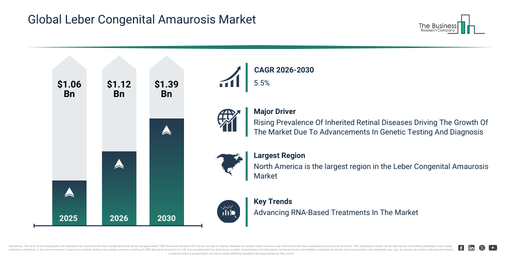
    An Important Factor Driving the Leber Congenital Amaurosis Market Is the Rising Prevalence Of Inherited Retinal Diseases Driving The Growth Of The Market Due To Advancements In Genetic Testing And Diagnosis

    The Business Research Company’s 2026 market reports include new capabilities such as market attractiveness scoring and analysis, total addressable market analysis, company scoring matrix, interactive excel data dashboard, improved supply chain analysis, upcoming startups in the market, and overview of key products, aimed at improving the depth, usability, and strategic value of the insights delivered.

    How Is The Market Size Of The Leber Congenital Amaurosis Market Expected To Change Between 2026 And 2030?

    The leber congenital amaurosis market has experienced robust expansion over recent years. Its projected growth trajectory indicates an increase from $1.06 billion in 2025 to $1.12 billion in 2026, advancing at a compound annual growth rate (CAGR) of 5.5%. Historically, this growth has been driven by factors such as limited therapeutic alternatives for inherited retinal disorders, heightened recognition of uncommon genetic eye conditions, improvements in retinal imaging techniques, the expansion of pediatric ophthalmology services, and nascent research efforts in gene replacement therapy.

    The market for Leber Congenital Amaurosis is projected to experience robust expansion over the coming years. This market is anticipated to reach a valuation of $1.39 billion by 2030, exhibiting a compound annual growth rate (CAGR) of 5.5%. This growth during the forecast period is primarily driven by increased investments in ophthalmic gene therapy research, the expansion of precision medicine programs, a rising number of regulatory clearances for therapies targeting rare diseases, broader acceptance of sophisticated genetic testing, and enhanced healthcare accessibility for rare genetic conditions. Key trends expected during this period involve a wider range of gene therapy approvals for inherited retinal diseases, a heightened emphasis on early genetic screening and diagnosis, an increase in clinical trials for innovative retinal regeneration treatments, greater uptake of assistive vision technologies, and progress in retinal prosthesis and bionic eye solutions.

    Download the Free Sample Report to Explore Key Market Insights:

    https://www.thebusinessresearchcompany.com/sample.aspx?id=22033&type=smp

    Which Major Factors Are Driving The Expansion Of The Leber Congenital Amaurosis Market?

    The market for Leber congenital amaurosis (LCA) is expected to grow due to the increasing occurrence of inherited retinal diseases. Inherited retinal diseases (IRDs) are defined as genetic conditions that impact the retina, the light-sensitive tissue at the rear of the eye essential for sight. This rise in inherited retinal diseases is attributed to advancements in genetic testing, improved awareness and diagnostic methods, and an extended life expectancy. Progress in genetic testing has simplified the diagnosis of inherited retinal diseases, leading to the identification of more cases. Leber congenital amaurosis aids in advancing the understanding of inherited retinal diseases by revealing genetic mutations and disease mechanisms that contribute to the development of targeted therapies and treatments. For example, in January 2025, data from the UK Parliament’s House of Commons Library, a UK-based government administration, indicated that approximately 25,000 people in the UK were affected by inherited retinal diseases in 2024, an annual increase of 2%. Consequently, the growing prevalence of inherited retinal diseases acts as a primary driver for the Leber congenital amaurosis market.

    How Is The Leber Congenital Amaurosis Market Structured Across Different Segments?

    The leber congenital amaurosis market covered in this report is segmented –

    1) By Treatment Type: Gene Therapy, Pharmaceutical Drugs, Retinal Prosthesis, Assistive Devices, Other Treatments

    2) By Age Of Onset: Congenital Leber Congenital Amaurosis (LCA) (From Birth), Early Childhood Leber Congenital Amaurosis (LCA) (1-5 Years), Late-Onset Leber Congenital Amaurosis (LCA) (6 Years And Above)

    3) By Distribution Channel: Direct Tender, Retail Sales

    4) By End User: Hospitals, Specialized Eye Clinics, Ophthalmology Research Centers, Home Care Settings, Other End Users

    Subsegments:

    1) By Gene Therapy: RPE65 Gene Replacement Therapy, CRISPR-Based Gene Editing, AAV (Adeno-Associated Virus) Vector Therapy, Emerging Experimental Gene Therapies

    2) By Pharmaceutical Drugs: Retinoid-Based Therapies, Neuroprotective Agents, Anti-Inflammatory Drugs, Antioxidant Therapies

    3) By Retinal Prosthesis: Implantable Retinal Chips, Artificial Retinal Stimulation Devices, Bionic Eye Technology

    4) By Assistive Devices: Low Vision Aids, Screen Readers and Braille Devices, Mobility Aids for Vision Impairment

    5) By Other Treatments: Stem Cell Therapy, Optogenetics-Based Treatments, Visual Rehabilitation Programs, Nutritional and Dietary Interventions

    What Trends Are Advancing Progress In The Leber Congenital Amaurosis Market?

    Leading companies in the leber congenital amaurosis market are concentrating on developing innovative solutions, such as RNA-based treatments, to enhance vision restoration and disease management. RNA-based treatments utilize RNA molecules to address diseases by targeting genetic processes, including mRNA vaccines, siRNA therapies, antisense oligonucleotides, and RNA aptamers. For instance, in January 2025, Laboratoires Théa S.A.S., a France-based pharmaceutical company, established Sepul Bio, a specialized business unit dedicated to advancing RNA therapies for inherited retinal diseases, with a specific focus on sepofarsen for leber congenital amaurosis 10 (LCA10) and ultevursen for USH2A-associated retinitis pigmentosa. After the successful dosing of the first patient in the LUNA Phase 2b clinical trial for ultevursen, Sepul Bio is well-prepared to achieve substantial progress in addressing these rare genetic disorders.

    Which Major Players Dominate The Leber Congenital Amaurosis Market?

    Major companies operating in the leber congenital amaurosis market are Sanofi S.A., Novartis AG, Astellas Pharma Inc., Invitae Corporation, Novelion Therapeutics Inc., Andelyn Biosciences Inc., CD Genomics Inc., Editas Medicine Inc., MeiraGTx Holdings plc, Sangamo Therapeutics Inc., LKC Technologies Inc., Aldeyra Therapeutics Inc., Asper Biogene OÜ, Allergan Inc., ProQR Therapeutics N.V., GenSight Biologics S.A., Ocugen Inc., Ophthotech Corporation, Atsena Therapeutics Inc., HuidaGene Therapeutics Co. Ltd.

    Read the full leber congenital amaurosis market report here:

    https://www.thebusinessresearchcompany.com/report/leber-congenital-amaurosis-global-market-report

    Which Region Currently Holds The Largest Share Of The Leber Congenital Amaurosis Market?

    North America was the largest region in the leber congenital amaurosis market in 2025. Asia-Pacific is expected to be the fastest-growing region in the forecast period. The regions covered in the leber congenital amaurosis market report are Asia-Pacific, South East Asia, Western Europe, Eastern Europe, North America, South America, Middle East, Africa.

    Request A Tailored Leber Congenital Amaurosis Market Research Report For Competitive Advantage:

    https://www.thebusinessresearchcompany.com/customise?id=22033&type=smp

    Browse Through More Reports Similar to the Global Leber Congenital Amaurosis Market 2026, By The Business Research Company

    Congenital Heart Disease Chd Global Market Report

    https://www.thebusinessresearchcompany.com/report/congenital-heart-disease-chd-global-market-report

    Progressive Multifocal Leukoencephalopathy Treatment Global Market Report

    https://www.thebusinessresearchcompany.com/report/progressive-multifocal-leukoencephalopathy-treatment-global-market-report

    Gauchers Disease Global Market Report

    https://www.thebusinessresearchcompany.com/report/gauchers-disease-global-market-report

    Get in touch with us:

    The Business Research Company: https://www.thebusinessresearchcompany.com/

    Americas +1 310-496-7795

    Asia +44 7882 955267 & +91 8897263534

    Europe +44 7882 955267

    Email us at info@tbrc.info

    Follow us on:

    LinkedIn: https://in.linkedin.com/company/the-business-research-company

    YouTube: https://www.youtube.com/channel/UC24_fI0rV8cR5DxlCpgmyFQ

    Global Market Model: https://www.thebusinessresearchcompany.com/global-market-model
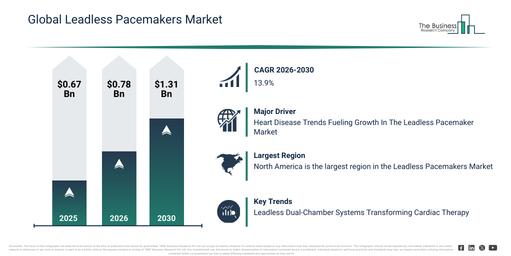
  • A Significant Growth Driver for the Leadless Pacemakers Market Is the Heart Disease Trends Fueling Growth In The Leadless Pacemaker Market

    A Significant Growth Driver for the Leadless Pacemakers Market Is the Heart Disease Trends Fueling Growth In The Leadless Pacemaker Market

    The Business Research Company’s 2026 market reports include new capabilities such as market attractiveness scoring and analysis, total addressable market analysis, company scoring matrix, interactive excel data dashboard, improved supply chain analysis, upcoming startups in the market, and overview of key products, aimed at improving the depth, usability, and strategic value of the insights delivered.

    What Is The Market Size Of The Leadless Pacemakers Market In 2026 And What Value Is Projected For 2030?

    The leadless pacemakers market size has experienced significant growth in recent years. It is anticipated to increase from $0.67 billion in 2025 to $0.78 billion in 2026, demonstrating a compound annual growth rate (CAGR) of 15.6%. This historical expansion can be attributed to several factors, including the limitations of traditional lead-based pacemakers, a rising incidence of cardiac arrhythmias, an expanding elderly population, growing awareness of lead-related complications, and advancements in cardiac device miniaturization.

    The leadless pacemakers market is anticipated to undergo significant growth in the upcoming years. Its value is expected to reach $1.31 billion by 2030, demonstrating a compound annual growth rate (CAGR) of 13.9%. The expansion during this forecast period can be attributed to the escalating demand for minimally invasive cardiac therapies, advancements in battery and device longevity technology, the broader adoption of remote patient monitoring, the establishment of more electrophysiology centers, and increased investment in next-generation cardiac devices. Dominant trends during the forecast period include the increasing uptake of leadless cardiac pacing systems, a shift towards minimally invasive cardiac implant procedures, a rising preference for devices with reduced infection risk, the expansion of dual-chamber leadless pacemaker development, and enhanced integration of remote cardiac monitoring.

    Download the Free Sample Report to Explore Key Market Insights:

    https://www.thebusinessresearchcompany.com/sample.aspx?id=15846&type=smp

    What Key Drivers Are Influencing The Growth Of The Leadless Pacemakers Market?

    The expanding prevalence of heart disease is projected to propel the advancement of the leadless pacemaker market in the future. Heart ailments encompass a variety of conditions impacting the heart’s structure or function, leading to issues like impaired blood flow, irregular heart rhythms, or other complications affecting the cardiovascular system. The escalation in heart diseases stems from factors such as demographic growth and an aging populace, lifestyle choices, high stress levels and physical inactivity, challenges within healthcare systems, and both genetic and environmental influences. Leadless pacemakers offer notable advantages in addressing specific heart conditions, ensuring effective pacing while mitigating the risks associated with leads and facilitating a less intrusive implantation process. For example, in February 2024, the World Health Organization (WHO), a Switzerland-based intergovernmental body, reported an anticipation of over 35 million new cancer cases by 2050, representing a 77% rise from the estimated 20 million cases in 2022. Consequently, the increasing incidence of heart disease is a key driver for the growth of the leadless pacemaker market. The rising adoption of minimally invasive procedures is anticipated to fuel expansion within the leadless pacemaker market moving forward. Minimally invasive procedures involve medical interventions conducted through tiny incisions or natural bodily orifices, utilizing specialized instruments and imaging guidance to minimize tissue damage, reduce pain, and shorten recovery times, all while achieving effective diagnostic or therapeutic outcomes. The heightened preference for these procedures primarily stems from their capacity to accelerate recovery and alleviate postoperative discomfort, thereby encouraging more patients and healthcare providers to opt for these methods over conventional open surgeries. Leadless pacemakers align with minimally invasive approaches by eliminating the necessity for surgical pockets and transvenous leads, enabling implantation via a small catheter-based technique that lessens tissue disruption and speeds up recuperation. For instance, in March 2024, data released by the American Society of Plastic Surgeons (ASPS), a professional medical organization based in the US, indicated that the total number of cosmetic minimally invasive procedures climbed from 23,672,269 in 2022 to 25,442,640 in 2023, showing a 7% year-over-year increase. Therefore, the growing inclination towards minimally invasive procedures is a significant factor driving the leadless pacemaker market.

    What Are The Key Segments Of The Leadless Pacemakers Market?

    The leadless pacemakers market covered in this report is segmented –

    1) By Product Type: Ventricular Leadless Pacemakers, Atrioventricular (AV) Synchronous Leadless Pacemakers, Dual-Chamber Leadless Pacemaker Systems

    2) By Fixation Mechanism: Passive Fixation, Active Fixation

    3) By Indication: Bradycardia, Atrioventricular Block, Atrial Fibrillation with Slow Ventricular Response, Other Indications

    4) By End User: Hospitals, Cardiac Specialty Clinics, Ambulatory Surgical Centers

    Subsegments:

    1) By Ventricular Leadless Pacemakers: VVI-Mode Leadless Pacemakers, Rate-Responsive Ventricular Leadless Pacemakers (VVIR), Single-Module Ventricular Leadless Pacemakers

    2) By Atrioventricular (AV) Synchronous Leadless Pacemakers: Accelerometer-Based AV Synchronous Leadless Pacemakers, Algorithm-Driven AV Synchrony Leadless Pacemakers, Single-Module AV Synchronous Leadless Pacemakers

    3) By Dual-Chamber Leadless Pacemaker Systems: Modular Dual-Chamber Leadless Pacemaker Systems, Communicating Leadless Atrial and Ventricular Pacemaker Systems, Wireless Synchronized Dual-Chamber Leadless Pacemakers

    How Are Trends Transforming The Leadless Pacemakers Market Landscape?

    Leading companies in the leadless pacemakers market are concentrating on developing innovative products like dual-chamber systems to enhance cardiac pacing efficiency and patient outcomes. A dual chamber system is a pacemaker that concurrently monitors and stimulates both the heart’s atrium and ventricle, which helps maintain proper timing between the upper and lower chambers, improves blood flow, prevents irregular heart rhythms, and boosts overall cardiac efficiency and patient quality of life. For instance, in July 2023, Abbott Laboratories, a US-based medical-device company, received US Food and Drug Administration (FDA) approval for its AVEIR DR dual-chamber leadless pacemaker system. This system allows two tiny devices, one in the atrium and one in the ventricle, to communicate beat-to-beat via its implant-to-implant (i2i) technology. By removing the necessity for transvenous leads, this system considerably reduces the risk of infection and mechanical complications while offering more physiologic pacing. As the adoption of dual-chamber leadless pacemakers expands, these innovations are projected to broaden the patient population eligible for minimally invasive cardiac pacing and improve long-term clinical outcomes.

    Who Are The Leading Companies Operating In The Leadless Pacemakers Market?

    Major companies operating in the leadless pacemakers market are Medtronic Plc, Abbott Laboratories, Boston Scientific Corporation, BIOTRONIK SE & Co. KG, MicroPort Scientific Corporation, LivaNova PLC, EBR Systems Inc., Cairdac, Imricor Medical Systems Inc., Osypka Medical GmbH, Shree Pacetronix Ltd., Lepu Medical Technology Co. Ltd., Terumo Corporation, MEDICO S.p.A., Vitatron Holding B.V., Oscor Inc., CathRx Ltd., Japan Lifeline Co. Ltd., Cardiac Pacemakers Inc., NVT AG

    Read the full leadless pacemakers market report here:

    https://www.thebusinessresearchcompany.com/report/leadless-pacemakers-global-market-report

    Which Region Is Expected To Register The Fastest Growth In The Leadless Pacemakers Market?

    North America was the largest region in the leadless pacemakers market in 2025. Asia-Pacific is expected to be the fastest-growing region in the forecast period. The regions covered in the leadless pacemakers market report are Asia-Pacific, South East Asia, Western Europe, Eastern Europe, North America, South America, Middle East, Africa.

    Request A Tailored Leadless Pacemakers Market Research Report For Competitive Advantage:

    https://www.thebusinessresearchcompany.com/customise?id=15846&type=smp

    Browse Through More Reports Similar to the Global Leadless Pacemakers Market 2026, By The Business Research Company

    Pacemakers Global Market Report

    https://www.thebusinessresearchcompany.com/report/pacemakers-global-market-report

    Cardiac Pacemakers Global Market Report

    https://www.thebusinessresearchcompany.com/report/cardiac-pacemakers-global-market-report

    External Pacemakers Global Market Report

    https://www.thebusinessresearchcompany.com/report/external-pacemakers-global-market-report

    Get in touch with us:

    The Business Research Company: https://www.thebusinessresearchcompany.com/

    Americas +1 310-496-7795

    Asia +44 7882 955267 & +91 8897263534

    Europe +44 7882 955267

    Email us at info@tbrc.info

    Follow us on:

    LinkedIn: https://in.linkedin.com/company/the-business-research-company

    YouTube: https://www.youtube.com/channel/UC24_fI0rV8cR5DxlCpgmyFQ

    Global Market Model: https://www.thebusinessresearchcompany.com/global-market-model
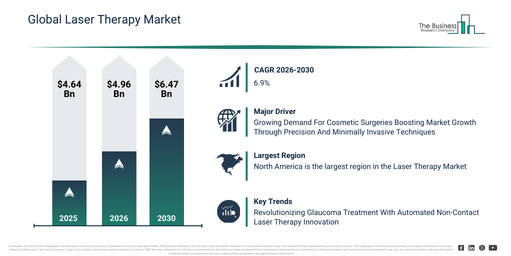
  • Global Laser Therapy Industry Trends and Market Growth Forecast for 2026–2030

    Global Laser Therapy Industry Trends and Market Growth Forecast for 2026–2030

    The Business Research Company’s 2026 market reports include new capabilities such as market attractiveness scoring and analysis, total addressable market analysis, company scoring matrix, interactive excel data dashboard, improved supply chain analysis, upcoming startups in the market, and overview of key products, aimed at improving the depth, usability, and strategic value of the insights delivered.

    What Will Be The Estimated Market Valuation Of The Laser Therapy Market By The End Of 2030?

    The laser therapy market has shown substantial growth recently. It is forecast to expand from $4.64 billion in 2025 to $4.96 billion in 2026, demonstrating a compound annual growth rate (CAGR) of 7.0%. The market’s past growth can be ascribed to factors such as the increasing occurrence of chronic pain conditions, the wider acceptance of minimally invasive surgical procedures, an elevated demand for dermatological treatments, the broader use of lasers in dental and ophthalmic fields, and advancements in laser device technology.

    The laser therapy market is anticipated to experience significant expansion in the coming years. Projections indicate it will reach $6.47 billion by 2030, exhibiting a compound annual growth rate (CAGR) of 6.9%. This growth during the forecast period stems from factors such as increasing demand for non-invasive treatment options, improvements in laser precision and control technologies, heightened investment in healthcare facilities, greater public understanding of laser treatments, and the proliferation of ambulatory surgical centers. Key trends projected for this period involve a rise in the use of minimally invasive laser procedures, the broadening of laser applications across diverse medical fields, an escalating demand for aesthetic and cosmetic laser therapies, the increased application of laser therapy for pain management, and improvements in the precision and safety of laser systems.

    Download the Free Sample Report to Explore Key Market Insights:

    https://www.thebusinessresearchcompany.com/sample.aspx?id=24273&type=smp

    What Major Growth Drivers Are Shaping The Outlook Of The Laser Therapy Market?

    The escalating need for cosmetic operations is projected to advance the laser therapy market moving forward. Cosmetic surgeries are defined as elective surgical procedures designed to enhance or modify an individual’s appearance, frequently involving the reshaping of facial features, body contouring, or skin rejuvenation to achieve aesthetic goals. The increasing societal and media-driven focus on physical appearance, combined with advancements in minimally invasive techniques and greater affordability, is significantly increasing the demand for these procedures. Laser therapy complements cosmetic surgeries by facilitating precise, minimally invasive procedures that result in faster healing, reduced scarring, and improved skin rejuvenation outcomes. For instance, in June 2024, according to data published by the American Society of Plastic Surgeons (ASPS), a US-based organization, liposuction was the most popular plastic surgery in 2023, with nearly 350,000 procedures performed, a 7% increase from 2022, while hand surgeries totaled 207,887, up 2%, and maxillofacial surgeries reached 52,868, a 1% rise compared to the previous year. Consequently, the rising demand for cosmetic surgeries is fueling the expansion of the laser therapy market.

    Which Segment Classifications Shape The Laser Therapy Market?

    The laser therapy market covered in this report is segmented –

    1) By Type: Diode Lasers, Solid State Lasers, Liquid Lasers, Semiconductor Lasers, Gas Lasers, Dye Lasers, Other Types

    2) By Mode Of Delivery: Contact Mode, Non-Contact Mode

    3) By Application: Dermatology And Aesthetics, Dental, Ophthalmology, Urology, Cardiovascular, Oncology

    4) By End User: Hospitals, Specialized Clinics, Ambulatory Surgical Centers, Other End Users

    Subsegments:

    1) By Diode Lasers: Low-Level Diode Lasers, High-Intensity Diode Lasers, Aesthetic Diode Lasers, Dental Diode Lasers

    2) By Solid State Lasers: Neodymium-Doped Yttrium Aluminum Garnet Lasers, Erbium-Doped Yttrium Aluminum Garnet Lasers, Holmium-Doped Yttrium Aluminum Garnet Lasers, Alexandrite Lasers

    3) By Liquid Lasers: Dye-Based Liquid Lasers, Tunable Liquid Lasers

    4) By Semiconductor Lasers: Vertical-Cavity Surface-Emitting Lasers, Distributed Feedback Lasers, Quantum Cascade Lasers

    5) By Gas Lasers: Carbon Dioxide Lasers, Helium-Neon Lasers, Argon Lasers, Excimer Lasers

    6) By Dye Lasers: Rhodamine Dye Lasers, Coumarin Dye Lasers

    7) By Other Types: Fiber Lasers, Ultrafast Lasers, Hybrid Laser Systems

    Which Trends Are Impacting The Growth Of The Laser Therapy Market?

    Leading companies in the laser therapy market are concentrating on developing innovative products, such as automated non-contact laser therapy devices, to improve access to efficient and patient-friendly laser-based treatment solutions. Automated non-contact laser therapy devices are medical systems designed to deliver laser energy to targeted body areas without making physical contact with the skin, utilizing programmable settings and robotic or automated mechanisms to ensure consistent, hands-free application for therapeutic purposes like pain management, inflammation reduction, and tissue regeneration. For instance, in February 2025, Alcon, a Switzerland-based ophthalmic surgical product company, launched Voyager Direct Selective Laser Trabeculoplasty (DSLT) for treating glaucoma and ocular hypertension in the United States. This system delivers laser pulses with high precision by employing proprietary eye-tracking technology, thus eliminating the necessity for a gonio lens and manual targeting. This innovation streamlines clinical operations, enhances treatment accessibility, and positions laser therapy as a more viable first-line option for a broader spectrum of patients.

    Which Companies Are Expanding Their Footprint In The Laser Therapy Market?

    Major companies operating in the laser therapy market are Coherent Corp., IPG Photonics Corporation, El.En. S.p.A., Lumenis Ltd., Candela Medical, Cynosure, Alma Lasers, Fotona, Biolase Inc., Iridex Corporation, AngioDynamics Inc., Erchonia, Convergent Dental, biolitec Group, BTL Industries, Asclepion Laser Technologies, Quanta System, Dornier MedTech, LightScalpel, Ziemer Ophthalmic Systems

    Read the full laser therapy market report here:

    https://www.thebusinessresearchcompany.com/report/laser-therapy-global-market-report

    Which Regions Are Projected To Dominate The Laser Therapy Market In The Coming Years?

    North America was the largest region in the laser therapy market in 2025. Asia-Pacific is expected to be the fastest-growing region in the forecast period. The regions covered in the laser therapy market report are Asia-Pacific, South East Asia, Western Europe, Eastern Europe, North America, South America, Middle East, Africa.

    Request A Tailored Laser Therapy Market Research Report For Competitive Advantage:

    https://www.thebusinessresearchcompany.com/customise?id=24273&type=smp

    Browse Through More Reports Similar to the Global Laser Therapy Market 2026, By The Business Research Company

    Laser Technology Global Market Report

    https://www.thebusinessresearchcompany.com/report/laser-technology-global-market-report

    Dermatology Medical Lasers Global Market Report

    https://www.thebusinessresearchcompany.com/report/dermatology-medical-lasers-global-market-report

    Cosmetic Lasers Market

    https://www.thebusinessresearchcompany.com/report/cosmetic-lasers-market

    Get in touch with us:

    The Business Research Company: https://www.thebusinessresearchcompany.com/

    Americas +1 310-496-7795

    Asia +44 7882 955267 & +91 8897263534

    Europe +44 7882 955267

    Email us at info@tbrc.info

    Follow us on:

    LinkedIn: https://in.linkedin.com/company/the-business-research-company

    YouTube: https://www.youtube.com/channel/UC24_fI0rV8cR5DxlCpgmyFQ

    Global Market Model: https://www.thebusinessresearchcompany.com/global-market-model
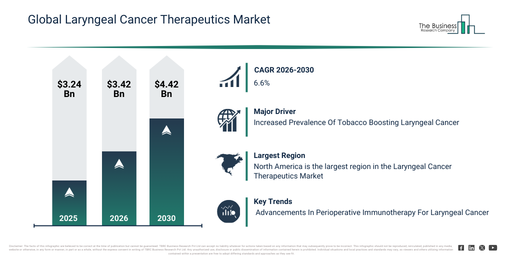
  • Laryngeal Cancer Therapeutics Market Size Outlook and Demand Growth Across 2026–2030

    Laryngeal Cancer Therapeutics Market Size Outlook and Demand Growth Across 2026–2030

    The Business Research Company’s 2026 market reports include new capabilities such as market attractiveness scoring and analysis, total addressable market analysis, company scoring matrix, interactive excel data dashboard, improved supply chain analysis, upcoming startups in the market, and overview of key products, aimed at improving the depth, usability, and strategic value of the insights delivered.

    What Market Size Growth Is Projected For The Laryngeal Cancer Therapeutics Market During The Forecast Period 2026–2030?

    The laryngeal cancer therapeutics market size has experienced robust growth in recent years. This market is projected to expand from $3.24 billion in 2025 to $3.42 billion in 2026, achieving a compound annual growth rate (CAGR) of 5.5%. Contributing factors to this historic growth include the high prevalence of tobacco and alcohol consumption, a rising incidence of head and neck cancers, increased application of chemotherapy and radiation therapy, the expansion of oncology treatment centers, and improved cancer diagnosis rates.

    The laryngeal cancer therapeutics market is projected to experience substantial growth over the coming years, with its valuation expected to reach $4.42 billion by 2030, progressing at a compound annual growth rate (CAGR) of 6.6%. This anticipated expansion during the forecast period is fueled by several factors, including the increasing integration of immunotherapy drugs, ongoing advancements in targeted therapy development, a rise in healthcare spending dedicated to oncology, enhanced public awareness surrounding early cancer screening, and the proliferation of specialty cancer treatment facilities. Furthermore, prominent trends for this period encompass the growing acceptance of immunotherapy specifically for laryngeal cancer, a noticeable shift towards treatment methods that preserve organs, a wider application of combination therapy regimens, an intensified focus on managing early-stage cancer, and the broader implementation of personalized treatment planning.

    Download the Free Sample Report to Explore Key Market Insights:

    https://www.thebusinessresearchcompany.com/sample.aspx?id=13238&type=smp

    What Drivers Are Expected To Influence The Laryngeal Cancer Therapeutics Market During The Forecast Period?

    The rising incidence of tobacco consumption is anticipated to drive the expansion of the laryngeal cancer therapeutics market. Tobacco is defined as the leaves from Nicotiana plants, which are gathered and processed for various applications like smoking, chewing, and snuffing. Its use is a primary risk factor for laryngeal cancer, significantly influencing both the disease’s progression and its treatment results. Laryngeal cancer therapeutics are concerned with managing and addressing the effects of tobacco use on this condition. For example, data from October 2024, specifically the 2024 National Youth Tobacco Survey released by the US Food and Drug Administration (USFDA), a US-based federal agency, showed that 1.1% of all students (approximately 2.25 million) currently used tobacco products. This included 10.1% of high school students (about 1.58 million) and 5.4% of middle school students (around 640,000). Furthermore, 2.8% of students (about 760,000) reported current use of any combustible tobacco product, and 3.0% (approximately 840,000) reported using multiple tobacco products. Consequently, the growing prevalence of tobacco is a key factor propelling the laryngeal cancer therapeutics market forward.

    What Market Segments Are Evaluated Within The Laryngeal Cancer Therapeutics Market?

    The laryngeal cancer therapeutics market covered in this report is segmented –

    1) By Treatment Type: Chemotherapy, Immunotherapy, Other Treatments

    2) By Route Of Administration: Oral, Parenteral

    3) By Distribution Channel: Hospital Pharmacy, Online Pharmacy, Retail Pharmacy

    4) By End-User: Hospitals, Homecare, Specialty Centers, Other End-Users

    Subsegments:

    1) By Chemotherapy: Neoadjuvant Chemotherapy, Adjuvant Chemotherapy, Palliative Chemotherapy

    2) By Immunotherapy: Checkpoint Inhibitors, Monoclonal Antibodies, Cancer Vaccines

    3) By Other Treatments: Radiation Therapy, Targeted Therapy, Surgery

    What Major Market Trends Are Driving Changes In The Laryngeal Cancer Therapeutics Market?

    Leading companies in the laryngeal cancer therapeutics market are prioritizing the creation of novel products, such as perioperative checkpoint inhibitor therapies, to enhance patient survival and decrease recurrence rates. These perioperative checkpoint inhibitor therapies involve treatments administered around the time of surgery (either before or after) that utilize immune checkpoint inhibitors to bolster the immune system’s capacity to combat cancer cells, thereby aiding in tumor reduction, recurrence prevention, and improved overall survival. For example, in June 2025, Merck & Co. Inc., a US-based pharmaceutical company, obtained US Food and Drug Administration (FDA) approval for Keytruda (pembrolizumab) as a neoadjuvant and adjuvant therapy for resectable locally advanced head and neck squamous cell carcinoma (HNSCC) with PD-L1 expression (CPS ≥1). Keytruda is given before surgery (neoadjuvant) and continued after surgery (adjuvant) in conjunction with radiotherapy, with or without cisplatin, to diminish recurrence risk and improve progression-free survival. This innovation, by harnessing the patient’s immune system to target residual cancer cells and integrating with current surgical and radiation protocols, supports more accurate, patient-specific care, optimizes treatment results, and signifies a transition toward combination immunotherapy strategies in managing laryngeal and other head and neck cancers.

    Who Are The Top Market Participants Influencing The Laryngeal Cancer Therapeutics Market?

    Major companies operating in the laryngeal cancer therapeutics market are Pfizer Inc., F. Hoffmann La Roche Ltd., Merck & Co., AbbVie Inc., Novartis AG , Bayer AG, Sanofi-Aventis LLC , Bristol Myers Squibb, AstraZeneca plc, GlaxoSmithKline plc, Eli Lilly and Company, Amgen Inc., C.H. Boehringer Sohn AG & Co. KG., Regeneron Pharmaceuticals Inc., Incyte Corporation, Aurobindo Pharma Ltd., Cipla Inc., Hikma Pharmaceuticals plc, Amneal Pharmaceuticals LLC, Lupin Limited , Seagen Inc., Exelixis Pharmaceuticals Inc., BeiGene Ltd., Taiho Pharmaceutical Co. Ltd., Genentech Inc., Mirati Therapeutics Inc.

    Read the full laryngeal cancer therapeutics market report here:

    https://www.thebusinessresearchcompany.com/report/laryngeal-cancer-therapeutics-global-market-report

    Which Region Is Forecast To Lead The Laryngeal Cancer Therapeutics Market In Terms Of Market Size?

    North America was the largest region in the laryngeal cancer therapeutics market in 2025. Asia-Pacific is expected to be the fastest-growing region in the forecast period. The regions covered in the laryngeal cancer therapeutics market report are Asia-Pacific, South East Asia, Western Europe, Eastern Europe, North America, South America, Middle East, Africa.

    Request A Tailored Laryngeal Cancer Therapeutics Market Research Report For Competitive Advantage:

    https://www.thebusinessresearchcompany.com/customise?id=13238&type=smp

    Browse Through More Reports Similar to the Global Laryngeal Cancer Therapeutics Market 2026, By The Business Research Company

    Head And Neck Cancer Therapeutics Global Market Report

    https://www.thebusinessresearchcompany.com/report/head-and-neck-cancer-therapeutics-global-market-report

    Oral Cancer Treatment Global Market Report

    https://www.thebusinessresearchcompany.com/report/oral-cancer-treatment-global-market-report

    Small Cell Lung Cancer Therapeutics Global Market Report

    https://www.thebusinessresearchcompany.com/report/small-cell-lung-cancer-therapeutics-global-market-report

    Get in touch with us:

    The Business Research Company: https://www.thebusinessresearchcompany.com/

    Americas +1 310-496-7795

    Asia +44 7882 955267 & +91 8897263534

    Europe +44 7882 955267

    Email us at info@tbrc.info

    Follow us on:

    LinkedIn: https://in.linkedin.com/company/the-business-research-company

    YouTube: https://www.youtube.com/channel/UC24_fI0rV8cR5DxlCpgmyFQ

    Global Market Model: https://www.thebusinessresearchcompany.com/global-market-model
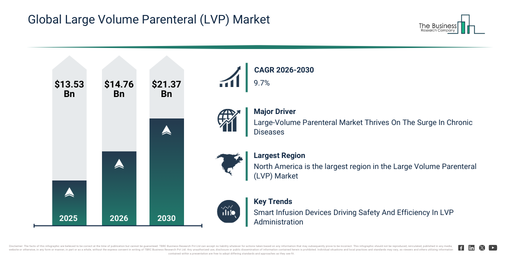
  • Large Volume Parenteral (LVP) Market Insights Highlighting Opportunities and Drivers Supporting Growth to 2030

    Large Volume Parenteral (LVP) Market Insights Highlighting Opportunities and Drivers Supporting Growth to 2030

    The Business Research Company’s 2026 market reports include new capabilities such as market attractiveness scoring and analysis, total addressable market analysis, company scoring matrix, interactive excel data dashboard, improved supply chain analysis, upcoming startups in the market, and overview of key products, aimed at improving the depth, usability, and strategic value of the insights delivered.

    How Will The Market Size Of The Large Volume Parenteral (LVP) Market Evolve From 2026 To 2030?

    The large volume parenteral (lvp) market size has shown strong growth over recent years. It is anticipated to increase from $13.53 billion in 2025 to $14.76 billion in 2026, reflecting a compound annual growth rate (CAGR) of 9.1%. The expansion observed historically is attributable to factors such as rising hospitalization rates, an increase in intravenous fluid therapy usage, more frequent surgical procedures, the development of critical care infrastructure, and the growth in infectious disease treatment.

    The large volume parenteral (lvp) market is anticipated to experience robust expansion over the coming years. Projections indicate it will reach $21.37 billion by 2030, demonstrating a compound annual growth rate (CAGR) of 9.7%. This anticipated growth during the forecast period is primarily driven by factors such as an aging global population, the escalating occurrence of chronic illnesses, a heightened need for parenteral nutrition, the development of healthcare infrastructure in developing economies, and an increase in emergency and trauma care provisions. Key trends anticipated during this period encompass a rising preference for non-PVC and environmentally friendly LVP packaging, the proliferation of pre-prepared and pre-mixed infusion solutions, an intensified emphasis on ensuring sterility and preventing contamination, the expanding application of LVPs in critical care and emergency medical settings, and an increase in the volume of hospital-based infusion therapies.

    Download the Free Sample Report to Explore Key Market Insights:

    https://www.thebusinessresearchcompany.com/sample.aspx?id=12195&type=smp

    What Drivers Are Influencing The Large Volume Parenteral (LVP) Market?

    The increasing incidence of long-term health conditions is projected to boost the expansion of the large-volume parenteral market in the future. These conditions are defined as illnesses or health issues that typically persist for at least three months and may deteriorate over time. The escalation in chronic disease cases is primarily attributed to factors such as tobacco consumption, exposure to smoke, and inadequate nutrition. Patients suffering from these conditions necessitate a suitable balance of vital nutrients to sustain their strength. Parenteral administration ensures precise drug dosages, as most medications are absorbed directly into the bloodstream, bypassing the digestive system. For example, data from September 2023, provided by the World Health Organization, a specialized United Nations agency based in Switzerland, indicated that 41 million deaths annually worldwide, representing 74% of all fatalities, were due to non-communicable diseases (NCDs) or chronic conditions. Consequently, the rising prevalence of chronic diseases is a key factor propelling the expansion of the large-volume parenteral market.

    Which Segment Areas Are Covered In The Large Volume Parenteral (LVP) Market Analysis?

    The large volume parenteral (lvp) market covered in this report is segmented –

    1) By Type: Soft Bag LVP, Plastic Bag LVP, Glass Bottle LVP

    2) By Volume: 100 ML – 250 ML, 250 ML – 500 ML, 500 ML – 1000 ML, 1000 ML -2000 ML, 2000 And More

    3) By Application: Basic Infusion, Therapeutics Infusion, Nutritious Infusion

    4) By End-User: Hospital, Medical Centers, Other End Users

    Subsegments:

    1) By Soft Bag LVP: PVC Soft Bags, Non-PVC Soft Bags

    2) By Plastic Bag LVP: Polypropylene Bags, Polyethylene Bags

    3) By Glass Bottle LVP: Single-Use Glass Bottles, Multi-Dose Glass Bottles

    Which Trends Are Shaping The Future Of The Large Volume Parenteral (LVP) Market?

    Leading companies in the large volume parenteral (LVP) market are focusing on developing smart infusion device innovations, such as intelligent large-volume infusion pumps. This approach aims to meet the growing demand for safer, more automated, and connected intravenous therapy, driven by the expansion of hospital-based infusion services, remote patient monitoring, and the need for standardized, error-resistant medication delivery. An intelligent large-volume infusion pump is designed to deliver high-volume IV fluids (LVP) and includes dose-error reduction software, connectivity to smart drug libraries, and advanced alarm management features. Unlike conventional infusion pumps that depend on manual programming and offer limited automation, these advanced systems help reduce dosing errors, ease workflow burdens, and integrate seamlessly with hospital IT infrastructure. For example, in April 2024, Baxter International Inc., a US-based pharmaceutical and medical device company, received U.S. FDA clearance for its Novum IQ Large-Volume Infusion Pump with Dose IQ smart-dose software. This device enables high-rate fluid delivery, including large-volume infusions, incorporates safety features such as drug library integration to minimize dosing errors, and supports connectivity with hospital electronic medical records and smart monitoring systems. By enabling safe, automated, and reliable administration of large fluid volumes, the Novum IQ pump helps healthcare providers improve infusion accuracy, reduce the risk of dosing errors, and streamline high-volume IV therapy processes.

    Which Global Companies Are Actively Competing In The Large Volume Parenteral (LVP) Market?

    Major companies operating in the large volume parenteral (lvp) market are Pfizer Inc., Fresenius Kabi AG, Abbott Laboratories Inc., Otsuka Holdings Co. Ltd., Baxter International Inc., B. Braun Melsungen AG, Grifols S.A., Cipla Limited, ICU Medical Inc., Biocon Limited, Sichuan Kelun Pharmaceutical Co. Ltd., Alembic Pharmaceuticals Limited, Cadila Healthcare Ltd., Gland Pharma Limited, Akums Drugs & Pharmaceuticals Ltd., Beximco Pharmaceutical Ltd., Taj Pharmaceuticals Limited, Albert David Ltd., Amanta Healthcare Ltd., Unique Pharmaceutical Laboratories Ltd., Ahlcon Parenterals India Ltd., Parenteral Drugs Limited, Abaris Healthcare Pvt. Ltd., BML Parenteral Drugs, Denis Chem Lab Ltd., Pentagon Labs Ltd., DJ Labs Pvt. Ltd., Higgs Healthcare

    Read the full large volume parenteral (lvp) market report here:

    https://www.thebusinessresearchcompany.com/report/large-volume-parenteral-lvp-global-market-report

    Which Regions Are Expected To Experience Rapid Expansion In The Large Volume Parenteral (LVP) Market?

    North America was the largest region in the large volume parenteral (LVP) market in 2025. Asia-Pacific is expected to be the fastest-growing region in the forecast period. The regions covered in the large volume parenteral (lvp) market report are Asia-Pacific, South East Asia, Western Europe, Eastern Europe, North America, South America, Middle East, Africa.

    Request A Tailored Large Volume Parenteral (LVP) Market Research Report For Competitive Advantage:

    https://www.thebusinessresearchcompany.com/customise?id=12195&type=smp

    Browse Through More Reports Similar to the Global Large Volume Parenteral (LVP) Market 2026, By The Business Research Company

    Small Volume Parenteral Global Market Report

    https://www.thebusinessresearchcompany.com/report/small-volume-parenteral-global-market-report

    Small Volume Parenteral Global Market Report

    https://www.thebusinessresearchcompany.com/report/small-volume-parenteral-global-market-report

    Parenteral Nutrition Global Market Report

    https://www.thebusinessresearchcompany.com/report/parenteral-nutrition-global-market-report

    Get in touch with us:

    The Business Research Company: https://www.thebusinessresearchcompany.com/

    Americas +1 310-496-7795

    Asia +44 7882 955267 & +91 8897263534

    Europe +44 7882 955267

    Email us at info@tbrc.info

    Follow us on:

    LinkedIn: https://in.linkedin.com/company/the-business-research-company

    YouTube: https://www.youtube.com/channel/UC24_fI0rV8cR5DxlCpgmyFQ

    Global Market Model: https://www.thebusinessresearchcompany.com/global-market-model
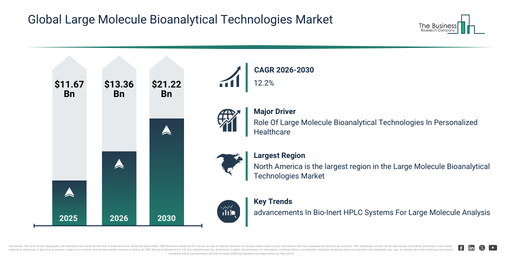
  • Global Large Molecule Bioanalytical Technologies Market Expected to Reach $21.21 Billion by 2030 with 12.2% CAGR

    Global Large Molecule Bioanalytical Technologies Market Expected to Reach $21.21 Billion by 2030 with 12.2% CAGR

    The Business Research Company’s 2026 market reports include new capabilities such as market attractiveness scoring and analysis, total addressable market analysis, company scoring matrix, interactive excel data dashboard, improved supply chain analysis, upcoming startups in the market, and overview of key products, aimed at improving the depth, usability, and strategic value of the insights delivered.

    What Is The Forecasted Market Value Of The Large Molecule Bioanalytical Technologies Market Across 2026–2030?

    The large molecule bioanalytical technologies market has expanded significantly in recent years. It is projected to increase from $11.67 billion in 2025 to $13.36 billion in 2026, exhibiting a compound annual growth rate (CAGR) of 14.5%. The historical growth of this market can be attributed to the rise in biologics development, the increasing application of chromatography techniques, the expansion of protein characterization studies, the growing adoption of elisa-based assays, and an increase in pharmaceutical R&D spending.

    The market size for large molecule bioanalytical technologies is poised for substantial growth in the coming years, projected to reach $21.22 billion in 2030 with a compound annual growth rate (CAGR) of 12.2%. This expansion during the forecast period is fueled by an expanding pipeline of monoclonal antibodies, progress in cell and gene therapy research, a growing need for biomarker validation, the rising complexity of biologics, and the increased availability of bioanalytical outsourcing services. Significant trends anticipated during this period include the wider adoption of advanced mass spectrometry techniques, an escalating demand for high-sensitivity bioanalytical assays, the increasing application of multiplex and high-throughput testing, the expansion of bioanalytical support tailored for cell and gene therapies, and the rising practice of outsourcing large molecule bioanalysis to contract research organizations.

    Download the Free Sample Report to Explore Key Market Insights:

    https://www.thebusinessresearchcompany.com/sample.aspx?id=15596&type=smp

    What Drivers Are Shaping The Future Growth Of The Large Molecule Bioanalytical Technologies Market?

    The market for large molecule bioanalytical technologies is anticipated to expand due to an increasing emphasis on personalized medicine. Personalized medicine involves tailoring medical care and health choices to individual patient characteristics, including their genetic profile, biomarkers, lifestyle, and environmental influences, aiming for enhanced effectiveness and minimized adverse reactions. Several elements contribute to the heightened attention on personalized medicine, such as variations in disease vulnerability among individuals, the transition towards value-based healthcare models, and a greater emphasis on patient-centric approaches. In drug development, large-molecule bioanalytical technologies are employed to define the pharmacokinetics and pharmacodynamics of large-molecule drugs, which include treatments like monoclonal antibodies or gene therapies. As an illustration, data from February 2024, published by the Personalized Medicine Coalition, a US-based non-profit organization, indicated that the FDA gave approval to 16 new personalized medicines for rare disease patients in 2023, which represents an increase from six approvals in 2022. Consequently, the growing focus on personalized medicine is a key catalyst for the expansion of the large molecule bioanalytical technologies market.

    What Segmentation Levels Are Considered In The Large Molecule Bioanalytical Technologies Market?

    The large molecule bioanalytical technologies market covered in this report is segmented –

    1) By Product And Services: Instruments, Reagents And Consumables, Software, Services

    2) By Technology: Chromatography, Mass Spectrometry, Enzyme-Linked Immunosorbent Assay, Electrophoresis, Polymerase Chain Reaction, Western Blot, Flow Cytometry

    3) By Application: Biologics, Oligonucleotide Derived Drugs And Molecules, Viral Vector, Cell And Gene Therapy, Nanoparticles And Polymers, Disease Diagnosis, Other Applications

    Subsegments:

    1) By Instruments: Mass Spectrometers, Chromatography Systems, Immunoassay Analyzers

    2) By Reagents And Consumables: Antibodies, Enzyme-Linked Immunosorbent Assay (Elisa) Kits

    3) By Software: Data Analysis Software, Visualization Software

    4) By Services: Analytical Testing Services, Contract Research Organization (CRO) Services, Method Development And Validation Services, Stability Testing Services

    What Key Trends Are Influencing The Development Of The Large Molecule Bioanalytical Technologies Market?

    Leading firms within the large molecule bioanalytical technologies market are concentrating efforts on creating bio-inert, high-accuracy chromatographic and detection systems. This focus addresses the growing need for strong, consistent, and sensitive bioanalysis, which is spurred by accelerated biologics R&D, more stringent regulatory demands, and the expansion of intricate therapeutic types like monoclonal antibodies, bispecifics, and gene therapies. Such a bio-inert HPLC system functions as an analytical tool designed to lessen unwanted interactions between large biomolecules and the inner workings of chromatography equipment, which in turn enhances recovery, decreases peak tailing, and provides more precise quantification, contrasting with conventional HPLC systems where analyte loss and inconsistent results can occur due to metal-binding and surface adsorption. As an example, in April 2024, Waters Corporation, a US-based analytical-instrument company, introduced the Alliance iS Bio HPLC System. This system incorporates MaxPeak High-Performance Surface (HPS) technology to ensure bio-inert flow paths, minimize undesirable analyte interactions, and boost sensitivity, simultaneously reducing common QC lab errors by up to 40%. It seamlessly integrates with Empower chromatography software for compliant data acquisition, accommodates contemporary column chemistries, and streamlines method transfer through its integrated intelligent method translation. Through its blend of surface inertness, intuitive design, and integrated error-reduction features, the Alliance iS Bio system assists biologics QC laboratories in expediting analyses, enhancing reproducibility, and mitigating the likelihood of out-of-specification (OOS) results.

    Which Leading Firms Are Contributing To The Growth Of The Large Molecule Bioanalytical Technologies Market?

    Major companies operating in the large molecule bioanalytical technologies market are Thermo Fisher Scientific Inc., Danaher Corporation, Laboratory Corporation of America Holdings, Agilent Technologies Inc., Charles River Laboratories International Inc., Intertek Group plc, Shimadzu Corporation, Bio-Rad Laboratories Inc., Qiagen N.V., HORIBA Ltd., SCIEX, Bio-Techne Corporation, Hamilton Company, Promega Corporation, Verder Group, Solvias AG, Analytik Jena AG, Genedata AG, Wyatt Technology Corporation, Nanalysis Corporation, Avomeen Analytical Services, Cergentis B.V., Halo Labs Inc., Hitachi High-Technologies Corporation, Precision NanoSystems Inc.

    Read the full large molecule bioanalytical technologies market report here:

    https://www.thebusinessresearchcompany.com/report/large-molecule-bioanalytical-technologies-global-market-report

    Which Geographic Regions Are Influencing Demand In The Large Molecule Bioanalytical Technologies Market?

    North America was the largest region in the large molecule bioanalytical technologies market in 2025. Asia-Pacific is expected to be the fastest-growing region in the forecast period. The regions covered in the large molecule bioanalytical technologies market report are Asia-Pacific, South East Asia, Western Europe, Eastern Europe, North America, South America, Middle East, Africa.

    Request A Tailored Large Molecule Bioanalytical Technologies Market Research Report For Competitive Advantage:

    https://www.thebusinessresearchcompany.com/customise?id=15596&type=smp

    Browse Through More Reports Similar to the Global Large Molecule Bioanalytical Technologies Market 2026, By The Business Research Company

    Biochemistry Analyzer Global Market Report

    https://www.thebusinessresearchcompany.com/report/biochemistry-analyzer-global-market-report

    Bioanalytical Testing Services Global Market Report

    https://www.thebusinessresearchcompany.com/report/bioanalytical-testing-services-global-market-report

    Molecular Diagnostics Devices And Equipment Global Market Report

    https://www.thebusinessresearchcompany.com/report/molecular-diagnostics-devices-and-equipment-global-market-report

    Get in touch with us:

    The Business Research Company: https://www.thebusinessresearchcompany.com/

    Americas +1 310-496-7795

    Asia +44 7882 955267 & +91 8897263534

    Europe +44 7882 955267

    Email us at info@tbrc.info

    Follow us on:

    LinkedIn: https://in.linkedin.com/company/the-business-research-company

    YouTube: https://www.youtube.com/channel/UC24_fI0rV8cR5DxlCpgmyFQ

    Global Market Model: https://www.thebusinessresearchcompany.com/global-market-model
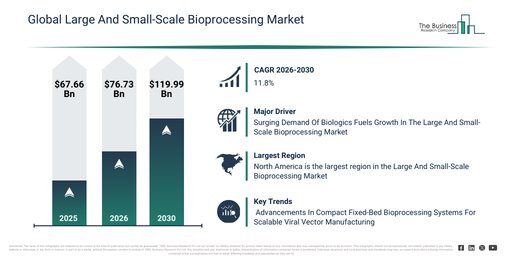
  • Large And Small-Scale Bioprocessing Market Future Outlook Showing Expansion Toward $119.99 Billion by 2030

    Large And Small-Scale Bioprocessing Market Future Outlook Showing Expansion Toward $119.99 Billion by 2030

    The Business Research Company’s 2026 market reports include new capabilities such as market attractiveness scoring and analysis, total addressable market analysis, company scoring matrix, interactive excel data dashboard, improved supply chain analysis, upcoming startups in the market, and overview of key products, aimed at improving the depth, usability, and strategic value of the insights delivered.

    What Market Size Increase Is Anticipated For The Large And Small-Scale Bioprocessing Market Over The 2026–2030 Period?

    The large and small-scale bioprocessing market size has experienced significant expansion in recent years. It is projected to grow from $67.66 billion in 2025 to $76.73 billion in 2026, achieving a compound annual growth rate (CAGR) of 13.4%. The historical growth of this market can be attributed to the expansion of biopharmaceutical manufacturing, increased investment in biotechnology R&D, the broadening of fermentation-based production, an escalating use of cell culture technologies, and the advancement in large-scale stainless steel bioreactors.

    The large and small-scale bioprocessing market is projected to experience substantial expansion over the upcoming years. This market is anticipated to reach a valuation of $119.99 billion by 2030, exhibiting a compound annual growth rate (CAGR) of 11.8%. This projected growth is primarily driven by factors such as the increasing demand for biologics and biosimilars, a greater uptake of single-use technologies, the expansion of personalized and precision medicine, the broadening of CDMO services, and a heightened emphasis on sustainable bioprocessing techniques. Key developments expected during this period involve the increasing integration of single-use and modular bioprocessing systems, an escalating need for adaptable small-scale bioprocessing solutions in research and development, the broadening of contract biomanufacturing and outsourcing frameworks, a stronger emphasis on achieving process scalability from laboratory to commercial production, and the enhanced merging of upstream and downstream bioprocess workflows.

    Download the Free Sample Report to Explore Key Market Insights:

    https://www.thebusinessresearchcompany.com/sample.aspx?id=15845&type=smp

    Which Economic Or Industry Drivers Are Impacting The Large And Small-Scale Bioprocessing Market?

    The increasing requirement for biologics is anticipated to drive expansion in the large and small-scale bioprocessing market moving ahead. Biologics are defined as medical products originating from living organisms or their constituents, encompassing items like vaccines, blood products, gene therapies, tissues, and recombinant therapeutic proteins. This rising demand for biologics stems from progress in biotechnology, enhanced comprehension of disease processes, and the desire for specialized and individualized treatments. Both large-scale and small-scale bioprocessing play crucial roles in the effective development and commercialization of biologics. Small-scale bioprocessing is vital for initial development phases, optimization efforts, and feasibility assessments. Conversely, large-scale bioprocessing guarantees the efficient, consistent production of biologics, adhering to regulatory standards for their commercial release. As an illustration, data from February 2024, provided by the National Library of Medicine, a US-based medical library, indicated that in 2023, the Food and Drug Administration (FDA) approved 55 new drugs, which comprised 29 new chemical entities (NCEs) and 25 new biological entities (NBEs). This represented a 50% increase over the 37 approvals recorded in 2022. Consequently, the increasing requirement for biologics fuels the expansion of the large and small-scale bioprocessing market.

    How Is The Large And Small-Scale Bioprocessing Market Segmented Across Key Categories?

    The large and small-scale bioprocessing market covered in this report is segmented –

    1) By Product: Bioreactors Or Fermenters, Cell Culture Products, Filtration Assemblies, Bioreactors Accessories, Bags And Containers, Other Products

    2) By Mode: In-house, Outsourced

    3) By Workflow: Downstream Processing, Fermentation, Upstream Processing

    4) By Scale: Industrial Scale, Small Scale

    5) By Application: Biopharmaceuticals, Specialty Industrial Chemicals, Environmental Aids

    Subsegments:

    1) Bioreactors Or Fermenters: Single-Use Bioreactors, Stainless Steel Bioreactors, Glass Bioreactors

    2) Cell Culture Products: Cell Culture Media, Sera And Supplements, Reagents

    3) Filtration Assemblies: Membrane Filters, Depth Filters, Tangential Flow Filtration Systems

    4) Bioreactor Accessories: Spargers, Impellers, Sensors And Probes

    5) Bags And Containers: Single-Use Bags, Storage Containers, Transfer Bags

    6) Other Products: Mixers, Tubing And Connectors, Sampling Systems

    What Key Trends Are Influencing The Development Of The Large And Small-Scale Bioprocessing Market?

    Major companies within the large and small-scale bioprocessing market are dedicated to developing innovative solutions, such as fixed-bed, low-footprint bioreactor controllers. This focus is driven by the booming fields of gene therapies, vaccines, and biologics, which demand high-productivity, cost-efficient, and scalable viral vector and advanced therapy manufacturing. A fixed-bed, low-footprint bioreactor controller serves as specialized hardware designed to manage large-area cell culture within fixed-bed reactors, distinguishing itself from conventional large-scale stirred-tank bioreactors—which require substantial physical space, significant capital investment, and complex infrastructure—by offering a compact form factor, an intuitive user interface, and optimized fluid handling. For instance, in May 2025, Univercells Technologies SA, a bioprocessing company from Belgium, unveiled the scale-X Nitro Controller. This controller is specifically engineered to operate their 200 m² and 600 m² scale-X Nitro fixed-bed bioreactors. It presents as a compact, wheeled unit with a 1.6 m² footprint, allowing it to easily pass through standard cleanroom doors. Furthermore, it supports both adherent and suspension cultures and provides highly intuitive control. The system facilitates rapid scale-up from research and development to commercial manufacturing in approximately ~8 months, while simultaneously reducing the cost-of-goods by 36–82% compared to traditional adherent processes. Ultimately, by combining high productivity with a simplified, space-saving design, the scale-X Nitro Controller empowers biomanufacturers, particularly CDMOs and vaccine developers, to accelerate their development timelines and lower the economic barrier for large-scale viral production.

    Who Are The Dominant Players Shaping The Large And Small-Scale Bioprocessing Market Landscape?

    Major companies operating in the large and small-scale bioprocessing market are F. Hoffmann-La Roche AG, Novartis AG, Sanofi S.A., Pfizer Inc., Merck & Co. Inc., Bristol Myers Squibb Company, AstraZeneca PLC, GlaxoSmithKline PLC, Takeda Pharmaceutical Company Ltd., Eli Lilly and Company, AbbVie Inc., Amgen Inc., Biogen Inc., Regeneron Pharmaceuticals Inc., Genentech Inc., Gilead Sciences Inc., Novo Nordisk A/S, CSL Limited, UCB S.A., Samsung Biologics, WuXi Biologics, Boehringer Ingelheim

    Read the full large and small-scale bioprocessing market report here:

    https://www.thebusinessresearchcompany.com/report/large-and-small-scale-bioprocessing-global-market-report

    What Are The Top-Performing Regions Within The Large And Small-Scale Bioprocessing Market?

    North America was the largest region in the large and small-scale bioprocessing market in 2025. Asia-Pacific is expected to be the fastest-growing region in the forecast period. The regions covered in the large and small-scale bioprocessing market report are Asia-Pacific, South East Asia, Western Europe, Eastern Europe, North America, South America, Middle East, Africa.

    Request A Tailored Large And Small-Scale Bioprocessing Market Research Report For Competitive Advantage:

    https://www.thebusinessresearchcompany.com/customise?id=15845&type=smp

    Browse Through More Reports Similar to the Global Large And Small-Scale Bioprocessing Market 2026, By The Business Research Company

    Single Use Bioprocessing Global Market Report

    https://www.thebusinessresearchcompany.com/report/single-use-bioprocessing-global-market-report

    Bioprocessing Technology Global Market Report

    https://www.thebusinessresearchcompany.com/report/bioprocessing-technology-global-market-report

    Bioprocess Technology Global Market Report

    https://www.thebusinessresearchcompany.com/report/bioprocess-technology-global-market-report

    Get in touch with us:

    The Business Research Company: https://www.thebusinessresearchcompany.com/

    Americas +1 310-496-7795

    Asia +44 7882 955267 & +91 8897263534

    Europe +44 7882 955267

    Email us at info@tbrc.info

    Follow us on:

    LinkedIn: https://in.linkedin.com/company/the-business-research-company

    YouTube: https://www.youtube.com/channel/UC24_fI0rV8cR5DxlCpgmyFQ

    Global Market Model: https://www.thebusinessresearchcompany.com/global-market-model