Category: Healthcare Services

  • Global Nephrotic Syndrome Industry Trends and Market Growth Forecast for 2026–2030

    Global Nephrotic Syndrome Industry Trends and Market Growth Forecast for 2026–2030

    The Business Research Company’s 2026 market reports include new capabilities such as market attractiveness scoring and analysis, total addressable market analysis, company scoring matrix, interactive excel data dashboard, improved supply chain analysis, upcoming startups in the market, and overview of key products, aimed at improving the depth, usability, and strategic value of the insights delivered.

    What Market Size Growth Is Projected For The Nephrotic Syndrome Market During The Forecast Period 2026–2030?

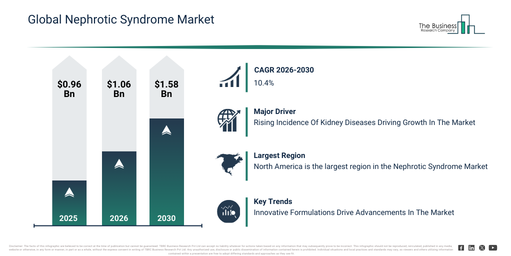
    The nephrotic syndrome market has shown rapid expansion in recent years. It is projected to grow from $0.96 billion in 2025 to $1.06 billion in 2026, achieving a compound annual growth rate (CAGR) of 10.6%. The market’s historical growth was driven by a high prevalence of diabetes and hypertension, the reliance on steroids for treatment, insufficient diagnostic awareness, the gradual adoption of dialysis technologies, and an increasing incidence of childhood nephrotic syndrome.

    The nephrotic syndrome market is anticipated to experience significant expansion in the coming years. This market is projected to reach $1.58 billion by 2030, exhibiting a compound annual growth rate (CAGR) of 10.4%. This growth during the forecast period can be primarily ascribed to progress in targeted therapies, the expanding application of precision nephrology, the creation of enhanced dialysis equipment, increased investment in innovations for kidney replacement therapy, and the increasing utilization of molecular diagnostic instruments. Key trends anticipated over the forecast timeframe involve the increasing application of immunosuppressive treatments, a rising demand for sophisticated dialysis and kidney support technologies, wider implementation of early diagnostic screening initiatives, the escalating incidence of chronic kidney diseases necessitating treatment, and the broader integration of personalized medicine strategies within nephrology.

    Download the Free Sample Report to Explore Key Market Insights:

    https://www.thebusinessresearchcompany.com/sample.aspx?id=21228&type=smp

    Which Economic Or Industry Drivers Are Impacting The Nephrotic Syndrome Market?

    A rising occurrence of kidney ailments is anticipated to boost the expansion of the nephrotic syndrome market in the future. Kidney diseases encompass various conditions or disorders that hinder the proper functioning of the kidneys, essential organs tasked with purifying blood by removing waste and excess fluids. This surge in kidney disease cases is linked to factors such as diabetes, high blood pressure, obesity, an aging demographic, and altered lifestyle habits, such as consuming too much sodium and insufficient hydration. Nephrotic syndrome exacerbates kidney issues by damaging the glomeruli, thereby compromising the kidney’s capacity to filter waste and retain vital proteins. For example, in June 2023, data from Oxford Academic, an academic research platform of Oxford University Press located in the UK, indicated that the prevalence of CKD in the UK is estimated to increase by 4% from 8.27 million to 8.61 million individuals between 2022 and 2032. The anticipated stage distribution for 2032 is 30.36% for stage 1, 21.07% for stage 2, 29.78% for stage 3a, 11.86% for stage 3b, 4.15% for stage 4, and 2.78% for stage 5. Consequently, the growing number of kidney disease cases is fueling the expansion of the nephrotic syndrome market.

    What Market Segments Are Evaluated Within The Nephrotic Syndrome Market?

    The nephrotic syndrome market covered in this report is segmented –

    1) By Type: Drugs, Devices

    2) By Diagnosis Tests: Urinalysis, Glomerular Filtration Rate (GFR), Blood Test, Kidney Biopsy, Computerized Tomography (CT) Scan

    3) By Application: Clinics, Hospitals, Specialty Centres, Other Applications

    Subsegments:

    1) By Drugs: Steroids, Immunosuppressants, Diuretics, ACE Inhibitors

    2) By Devices: Dialysis Machines, Peritoneal Dialysis Catheters, Hemodialysis Catheters, Kidney Replacement Therapy Devices

    Which Trends Are Shaping The Future Of The Nephrotic Syndrome Market?

    Leading companies operating in the nephrotic syndrome market are prioritizing the development of innovative formulations, such as loop diuretic injections, to enhance fluid management and lessen edema in patients afflicted with nephrotic syndrome. A loop diuretic Injection is defined as an injectable medication that prevents sodium and chloride reabsorption in the loop of Henle, thereby promoting rapid urine production. It finds use in addressing conditions like acute pulmonary edema, heart failure, and severe hypertension by reducing fluid overload. As an illustration, in March 2024, Avenacy Inc., a US-based pharmaceutical company, introduced furosemide for Injection in the U.S., a generic equivalent to Lasix, which received approval from the Food and Drug Administration for treating edema linked to heart failure, liver cirrhosis, and kidney diseases. Packaged in 25-unit packs of 100 mg/10 mL doses, this launch is integral to Avenacy’s broader strategy to expand its injectable medication portfolio, with intentions to unveil over 20 products in 2024. This particular drug is indicated for adult and pediatric patients for the management of edema associated with congestive heart failure, cirrhosis of the liver, and renal disease, including nephrotic syndrome.

    Who Are The Top Market Participants Influencing The Nephrotic Syndrome Market?

    Major companies operating in the nephrotic syndrome market are Pfizer Inc., F. Hoffmann-La Roche AG, AbbVie Inc., Bristol-Myers Squibb Company, Abbott Laboratories, Novartis AG, GlaxoSmithKline plc, Amgen Inc., Eli Lilly and Company, Asahi Kasei Corporation, Otsuka Pharmaceutical Co. Ltd., Astellas Pharma Inc., Vertex Pharmaceuticals, Chugai Pharmaceutical Co. Ltd., Mallinckrodt Company, Evotec SE, Travere Therapeutics Inc., Aurinia Pharmaceuticals Inc., Orbis Biosciences Inc., Alpine Immune Sciences, Kezar Life Sciences, Zenyaku Kogyo Co. Ltd

    Read the full nephrotic syndrome market report here:

    https://www.thebusinessresearchcompany.com/report/nephrotic-syndrome-global-market-report

    What Are The Top-Performing Regions Within The Nephrotic Syndrome Market?

    North America was the largest region in the nephrotic syndrome market in 2025. The regions covered in the nephrotic syndrome market report are Asia-Pacific, South East Asia, Western Europe, Eastern Europe, North America, South America, Middle East, Africa.

    Request A Tailored Nephrotic Syndrome Market Research Report For Competitive Advantage:

    https://www.thebusinessresearchcompany.com/customise?id=21228&type=smp

    Browse Through More Reports Similar to the Global Nephrotic Syndrome Market 2026, By The Business Research Company

    Neonatal Infant Care Global Market Report

    https://www.thebusinessresearchcompany.com/report/neonatal-infant-care-global-market-report

    Acute Respiratory Distress Syndrome Ards Global Market Report

    https://www.thebusinessresearchcompany.com/report/acute-respiratory-distress-syndrome-ards-global-market-report

    Lower Respiratory Tract Therapeutics Global Market Report

    https://www.thebusinessresearchcompany.com/report/lower-respiratory-tract-therapeutics-global-market-report

    Get in touch with us:

    The Business Research Company: https://www.thebusinessresearchcompany.com/

    Americas +1 310-496-7795

    Asia +44 7882 955267 & +91 8897263534

    Europe +44 7882 955267

    Email us at info@tbrc.info

    Follow us on:

    LinkedIn: https://in.linkedin.com/company/the-business-research-company

    YouTube: https://www.youtube.com/channel/UC24_fI0rV8cR5DxlCpgmyFQ

    Global Market Model: https://www.thebusinessresearchcompany.com/global-market-model
  • Neonatal Respiratory Distress Syndrome Treatment Market Size Outlook and Demand Growth Across 2026–2030

    Neonatal Respiratory Distress Syndrome Treatment Market Size Outlook and Demand Growth Across 2026–2030

    The Business Research Company’s 2026 market reports include new capabilities such as market attractiveness scoring and analysis, total addressable market analysis, company scoring matrix, interactive excel data dashboard, improved supply chain analysis, upcoming startups in the market, and overview of key products, aimed at improving the depth, usability, and strategic value of the insights delivered.

    How Will The Market Size Of The Neonatal Respiratory Distress Syndrome Treatment Market Evolve From 2026 To 2030?

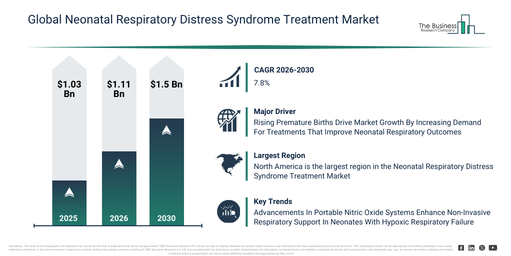
    The neonatal respiratory distress syndrome treatment market size has seen strong expansion in recent years. It is anticipated to increase from $1.03 billion in 2025 to $1.11 billion in 2026, exhibiting a compound annual growth rate (CAGR) of 8.0%. The historical growth trajectory is attributable to elevated premature birth rates, the dependence on conventional oxygen therapy, restricted access to neonatal intensive care units, the initial adoption of natural surfactants, and a rise in infant respiratory morbidity.

    The neonatal respiratory distress syndrome treatment market is anticipated to experience robust expansion over the coming years. Its valuation is projected to reach $1.5 billion by 2030, demonstrating a compound annual growth rate (CAGR) of 7.8%. This projected growth is driven by several factors, including the creation of sophisticated synthetic surfactants, the broadening of non-invasive ventilation techniques, increasing financial commitment to neonatal care tools, growing worldwide understanding of issues affecting newborns, and the upgrade of hospital-based respiratory support systems. Key trends expected during this period encompass the increased acceptance of surfactant replacement therapies, a rise in the application of CPAP and non-invasive ventilation, improvements in neonatal intensive care facilities, a heightened emphasis on managing premature births, and the ongoing development of both synthetic and bioengineered surfactants.

    Download the Free Sample Report to Explore Key Market Insights:

    https://www.thebusinessresearchcompany.com/sample.aspx?id=20899&type=smp

    What Major Drivers Are Influencing Demand In The Neonatal Respiratory Distress Syndrome Treatment Market?

    The increasing occurrence of premature births is anticipated to fuel the expansion of the neonatal respiratory distress syndrome treatment market moving forward. Premature births are defined as the delivery of a baby prior to reaching thirty-seven weeks of gestation, leading to incompletely developed organ systems necessitating specialized medical care. A significant element contributing to the surge in premature birth rates is the growing frequency of maternal health issues, given that these conditions can impede typical fetal development and induce early labor due to physiological stress on both the mother and the fetus. Treatment for neonatal respiratory distress syndrome enhances survival rates and provides stability for premature infants whose undeveloped lungs make them very susceptible to respiratory failure. For example, data from September 2024, provided by Statistique Canada, a Canada-based governmental organization, showed that the percentage of births happening before 37 weeks of gestation rose marginally from 8.2% in 2022 to 8.3% in 2023, demonstrating a minor increase in preterm births. Consequently, the growing incidence of premature births is propelling the expansion of the neonatal respiratory distress syndrome treatment market.

    Which Segment Areas Are Covered In The Neonatal Respiratory Distress Syndrome Treatment Market Analysis?

    The neonatal respiratory distress syndrome treatment market covered in this report is segmented –

    1) By Therapy: Oxygen Therapy, Surfactant Therapy

    2) By Route Of Administration: Parenteral, Inhalation, Other Routes Of Administration

    3) By End User: Hospitals, Sub-Acute Facilities, Home Care, Retail Pharmacies

    Subsegments:

    1) By Oxygen Therapy: Conventional Oxygen Therapy, High-Flow Nasal Cannula (HFNC) Oxygen Therapy, Continuous Positive Airway Pressure (CPAP) Oxygen Therapy, Invasive Mechanical Ventilation With Oxygen Therapy

    2) By Surfactant Therapy: Natural Surfactants, Synthetic Surfactants, Combined Surfactant Therapy (Natural + Synthetic), Prophylactic Surfactant Therapy, Rescue Surfactant Therapy

    What Key Trends Are Influencing The Development Of The Neonatal Respiratory Distress Syndrome Treatment Market?

    Prominent companies operating in the neonatal respiratory distress syndrome treatment market are concentrating on developing advanced solutions, such as next-generation, mobile nitric-oxide delivery systems. These initiatives aim to enhance oxygenation, reduce treatment complications, and broaden access beyond traditional NICU settings. Portable nitric-oxide systems are medical devices engineered to generate and provide inhaled nitric oxide on demand, thereby improving oxygenation and alleviating pulmonary hypertension in neonates with hypoxic respiratory failure, while also permitting safe application during patient transport. As an illustration, in June 2025, Beyond Air Inc., a US-based medical device company, submitted a PMA supplement to the U.S. Food and Drug Administration for LungFit PH 2. This is a lighter and transport-ready nitric oxide generator that leverages the company’s patented Ionizer technology. Engineered for enhanced portability and user convenience, the device ensures uninterrupted nitric oxide delivery while simultaneously reducing nitrogen dioxide production, thus guaranteeing safer therapy even during neonatal transport. Simultaneously, phase-4 registry data for INOmax, a well-recognized iNO therapy by Mallinckrodt, reveals sustained real-world benefits in neonates affected by pulmonary hypertension, further emphasizing the clinical significance of inhaled nitric oxide in the management of hypoxic respiratory failure in newborns.

    Which Global Companies Are Actively Competing In The Neonatal Respiratory Distress Syndrome Treatment Market?

    Major companies operating in the neonatal respiratory distress syndrome treatment market are Medtronic Plc, GE Healthcare, Koninklijke Philips NV, Drägerwerk AG & Co. KGaA, Chiesi Farmaceutici, Fisher & Paykel Healthcare, Vyaire Medical, Laerdal Medical, Hamilton Medical, Inspiration Healthcare, Ventec Life Systems, Neotech Products, Windtree Therapeutics Inc., Discovery Laboratories Inc., ResMed Inc., Abbott Laboratories, Aerogen Pharma Corp., ONY Biotech, Yuhan Corporation, Atom Medical Corporation, Mindray Bio-Medical Electronics, Getinge AB, Nihon Kohden Corporation, Siare Engineering Spa

    Read the full neonatal respiratory distress syndrome treatment market report here:

    https://www.thebusinessresearchcompany.com/report/neonatal-respiratory-distress-syndrome-treatment-global-market-report

    Which Region Shows The Strongest Potential For Future Growth In The Neonatal Respiratory Distress Syndrome Treatment Market?

    North America was the largest region in the neonatal respiratory distress syndrome treatment market in 2025. Asia-Pacific is expected to be the fastest-growing region in the forecast period. The regions covered in the neonatal respiratory distress syndrome treatment market report are Asia-Pacific, South East Asia, Western Europe, Eastern Europe, North America, South America, Middle East, Africa.

    Request A Tailored Neonatal Respiratory Distress Syndrome Treatment Market Research Report For Competitive Advantage:

    https://www.thebusinessresearchcompany.com/customise?id=20899&type=smp

    Browse Through More Reports Similar to the Global Neonatal Respiratory Distress Syndrome Treatment Market 2026, By The Business Research Company

    Neonatal Infant Care Global Market Report

    https://www.thebusinessresearchcompany.com/report/neonatal-infant-care-global-market-report

    Light Therapy Global Market Report

    https://www.thebusinessresearchcompany.com/report/light-therapy-global-market-report

    Image Guided Radiation Therapy Global Market Report

    https://www.thebusinessresearchcompany.com/report/image-guided-radiation-therapy-global-market-report

    Get in touch with us:

    The Business Research Company: https://www.thebusinessresearchcompany.com/

    Americas +1 310-496-7795

    Asia +44 7882 955267 & +91 8897263534

    Europe +44 7882 955267

    Email us at info@tbrc.info

    Follow us on:

    LinkedIn: https://in.linkedin.com/company/the-business-research-company

    YouTube: https://www.youtube.com/channel/UC24_fI0rV8cR5DxlCpgmyFQ

    Global Market Model: https://www.thebusinessresearchcompany.com/global-market-model
  • Neonatal Phototherapy Market Insights Highlighting Opportunities and Drivers Supporting Growth to 2030

    Neonatal Phototherapy Market Insights Highlighting Opportunities and Drivers Supporting Growth to 2030

    The Business Research Company’s 2026 market reports include new capabilities such as market attractiveness scoring and analysis, total addressable market analysis, company scoring matrix, interactive excel data dashboard, improved supply chain analysis, upcoming startups in the market, and overview of key products, aimed at improving the depth, usability, and strategic value of the insights delivered.

    What Is The Forecasted Market Value Of The Neonatal Phototherapy Market Across 2026–2030?

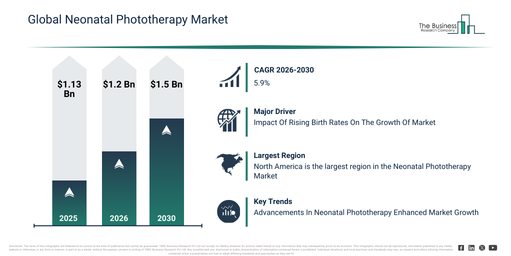
    The neonatal phototherapy market has witnessed strong growth in recent years. It is projected to expand from $1.13 billion in 2025 to $1.2 billion in 2026, demonstrating a compound annual growth rate (CAGR) of 6.1%. The expansion observed historically can be attributed to several factors, including the high prevalence of neonatal jaundice, a continued dependence on fluorescent phototherapy units, limited neonatal care infrastructure in low-income regions, increasing hospital birth rates, and the early adoption of conventional phototherapy methods.

    The market for neonatal phototherapy is projected to experience substantial expansion in the coming years. Its valuation is anticipated to reach $1.5 billion by 2030, progressing at a compound annual growth rate (CAGR) of 5.9%. This anticipated growth during the forecast period is primarily driven by several factors, including a swift transition to LED phototherapy systems, increased investments in neonatal healthcare equipment, the broadening availability of home phototherapy devices, technological innovations leading to energy-efficient phototherapy solutions, and a heightened understanding of neonatal complications. Key trends characterizing the forecast period encompass the escalating utilization of LED phototherapy devices, a rising embrace of portable and home-based phototherapy units, an increasing need for non-invasive neonatal care alternatives, the expansion of screening programs for neonatal jaundice, and the continuous development of energy-efficient phototherapy technologies.

    Download the Free Sample Report to Explore Key Market Insights:

    https://www.thebusinessresearchcompany.com/sample.aspx?id=20898&type=smp

    Which Market Drivers Are Supporting The Expansion Of The Neonatal Phototherapy Market?

    The neonatal phototherapy market is anticipated to expand due to increasing birth rates. Such rising birth rates typically result from factors like enhanced healthcare, higher fertility rates, cultural inclinations towards larger families, and increased immigration in specific regions. Neonatal phototherapy is vital for addressing jaundice in premature infants, employing light to break down surplus bilirubin in their blood. This intervention helps mitigate the risk of severe complications, such as brain damage, which are more frequent in preterm babies because of their underdeveloped liver function and increased susceptibility to jaundice. For instance, in January 2023, as per a report from the Centers for Disease Control and Prevention, a US-based national public health organization, the United States experienced a 1% increase in registered births, reaching 3,664,292, compared to the year before. Thus, rising birth rates are propelling the growth of the neonatal phototherapy market.

    What Segmentation Levels Are Considered In The Neonatal Phototherapy Market?

    The neonatal phototherapy market covered in this report is segmented –

    1) By Type: Conventional Phototherapy Equipment, LED Phototherapy Equipment, Fiber Optic Phototherapy Equipment

    2) By Form Factor: Traditional Phototherapy Lamps, Phototherapy Beds, Flexible Phototherapy Lamps

    3) By Application: Skin Diseases Treatment, Neonatal Jaundice Management

    Subsegments:

    1) By Conventional Phototherapy Equipment: Fluorescent Tube Phototherapy Units, Incandescent Lamp Phototherapy Units

    2) By LED Phototherapy Equipment: Blue LED Phototherapy Units, White LED Phototherapy Units

    3) By Fiber Optic Phototherapy Equipment: Overhead Fiber Optic Phototherapy Units, Blanket Or Pad-Type Fiber Optic Phototherapy Units

    What Key Trends Are Influencing The Development Of The Neonatal Phototherapy Market?

    Leading companies within the neonatal phototherapy market are concentrating on developing innovative solutions, such as advanced open warmers, to improve postnatal care for newborns. An advanced open warmer (AOW) denotes a medical apparatus frequently utilized in neonatal and pediatric settings to maintain a stable body temperature in newborns and infants, particularly those born prematurely or with low birth weight. For instance, in October 2024, Draeger India Pvt. Ltd, an India-based medical and safety technology company, unveiled the BabyRoo TN300, which is engineered to offer flexibility in labor and delivery rooms as well as neonatal intensive care units. This pioneering device aims to provide optimal care for newborns, especially those requiring intensive support post-birth. The BabyRoo TN300 includes dual heat sources for consistent temperature upkeep, skin temperature regulation for individualized warming, a prewarm function for rapid readiness, integrated thermomonitoring to identify thermal stress, lung-protective respiratory support through an AutoBreath module, and a family-centered care design to foster parental engagement in infant care.

    Which Leading Firms Are Contributing To The Growth Of The Neonatal Phototherapy Market?

    Major companies operating in the neonatal phototherapy market are Koninklijke Philips N.V., Drägerwerk AG & Co. KGaA, Medela AG, Heal Force Bio-Meditech Holdings Limited, Natus Medical Incorporated, Ningbo David Medical Device Co Ltd, BPL Medical Technologies Pvt Ltd, Zhengzhou Dison Instrument and Meter Co Ltd., NeoLight LLC, Atom Medical Corporation, BabyBloom Healthcare B.V., Bistos Co Ltd., Phoenix Medical Systems Pvt Ltd, Nice Neotech Medical Systems Pvt Ltd, Herbert Waldmann GmbH & Co KG

    Read the full neonatal phototherapy market report here:

    https://www.thebusinessresearchcompany.com/report/neonatal-phototherapy-global-market-report

    How Is The Neonatal Phototherapy Market Distributed Across Key Geographic Regions?

    North America was the largest region in the neonatal phototherapy market in 2025. The regions covered in the neonatal phototherapy market report are Asia-Pacific, South East Asia, Western Europe, Eastern Europe, North America, South America, Middle East, Africa.

    Request A Tailored Neonatal Phototherapy Market Research Report For Competitive Advantage:

    https://www.thebusinessresearchcompany.com/customise?id=20898&type=smp

    Browse Through More Reports Similar to the Global Neonatal Phototherapy Market 2026, By The Business Research Company

    Fetal And Neonatal Monitoring Devices Global Market Report

    https://www.thebusinessresearchcompany.com/report/fetal-and-neonatal-monitoring-devices-global-market-report

    Baby Care Products Global Market Report

    https://www.thebusinessresearchcompany.com/report/baby-care-products-global-market-report

    Pediatric And Neonatal Testing Kit Global Market Report

    https://www.thebusinessresearchcompany.com/report/pediatric-and-neonatal-testing-kit-global-market-report

    Get in touch with us:

    The Business Research Company: https://www.thebusinessresearchcompany.com/

    Americas +1 310-496-7795

    Asia +44 7882 955267 & +91 8897263534

    Europe +44 7882 955267

    Email us at info@tbrc.info

    Follow us on:

    LinkedIn: https://in.linkedin.com/company/the-business-research-company

    YouTube: https://www.youtube.com/channel/UC24_fI0rV8cR5DxlCpgmyFQ

    Global Market Model: https://www.thebusinessresearchcompany.com/global-market-model
  • Global Neonatal Infant Care Market Expected to Reach $4.99 Billion by 2030 with 7.9% CAGR

    Global Neonatal Infant Care Market Expected to Reach $4.99 Billion by 2030 with 7.9% CAGR

    The Business Research Company’s 2026 market reports include new capabilities such as market attractiveness scoring and analysis, total addressable market analysis, company scoring matrix, interactive excel data dashboard, improved supply chain analysis, upcoming startups in the market, and overview of key products, aimed at improving the depth, usability, and strategic value of the insights delivered.

    What Market Size Increase Is Anticipated For The Neonatal Infant Care Market Over The 2026–2030 Period?

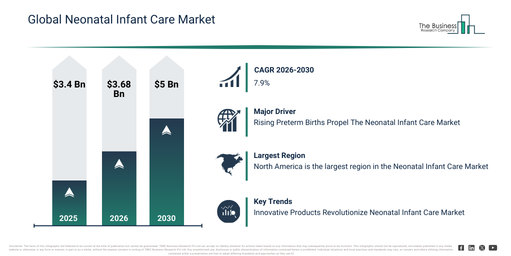
    The neonatal infant care market size has demonstrated robust growth in recent years. This market is expected to expand from $3.4 billion in 2025 to $3.68 billion in 2026, registering a compound annual growth rate (CAGR) of 8.4%. The expansion observed during the historic period was driven by factors such as high premature birth rates, inadequate neonatal care infrastructure, the initial adoption of traditional incubators, rising neonatal mortality rates, and the slow integration of basic screening devices.

    The neonatal infant care market is projected to experience substantial expansion over the coming years. This market is anticipated to reach a valuation of $5 billion by 2030, exhibiting a compound annual growth rate (CAGR) of 7.9%. Factors contributing to this growth during the projection period include the increasing implementation of advanced neonatal monitoring systems, augmented investment in the expansion of neonatal ICUs, the growing integration of digital and remote neonatal care technologies, a swift transition towards energy-efficient phototherapy options, and heightened awareness regarding neonatal complications. Key trends defining the forecast horizon encompass the wider embrace of sophisticated neonatal monitoring devices, escalating demand for portable and in-home infant care equipment, the expansion of neonatal intensive care units (NICUs), the increasing utilization of LED phototherapy and contemporary thermoregulation tools, and a sharpened emphasis on early screening and diagnostic advancements.

    Download the Free Sample Report to Explore Key Market Insights:

    https://www.thebusinessresearchcompany.com/sample.aspx?id=7871&type=smp

    What Underlying Factors Are Accelerating The Growth Of The Neonatal Infant Care Market?

    The growing count of premature infants is fueling the expansion of the neonatal infant care market. A premature birth is defined as the delivery of a baby prior to reaching 37 weeks of gestation. Neonatal infant care becomes essential for premature and ill babies suffering from various medical conditions, as it ensures secure and optimal environments for their development. As an illustration, in September 2024, data from Statistique Canada, a governmental organization located in Canada, showed a minor increase in the percentage of births before 37 weeks of gestation, rising from 8.2% in 2022 to 8.3% in 2023. This points to a slight upward tendency in preterm deliveries. Consequently, the expanding incidence of premature births is a significant catalyst for the growth of the neonatal infant care market.

    How Is The Neonatal Infant Care Market Segmented Across Key Categories?

    The neonatal infant care market covered in this report is segmented –

    1) By Product Type: Thermoregulation Devices, Phototherapy Devices, Monitoring Systems, Neonatal Hearing Screening, Neonatal Infant Resuscitator Devices, Vision Screening, Other Product Types

    2) By Prenatal And Fetal Equipment: Ultrasound And Ultrasonography Devices, Fetal Dopplers, Fetal Magnetic Resonance Imaging (MRI), Fetal Monitors

    3) By Neonatal Equipment: Infant Warmers And Incubators, Phototherapy Equipment, Neonatal Monitoring Devices And Respiratory Assistance

    4) By End-User: Hospitals, Pediatric And Neonatal Clinics

    Subsegments:

    1) By Thermoregulation Devices: Infant Warmers, Incubators, Warm Air Blankets

    2) By Phototherapy Devices: LED Phototherapy Units, Fiberoptic Phototherapy Systems

    3) By Monitoring Systems: Vital Sign Monitors, Cardiac Monitors, Pulse Oximeters

    4) By Neonatal Hearing Screening: Automated Auditory Brainstem Response (ABR) Systems, Otoacoustic Emission (OAE) Devices

    5) By Neonatal Infant Resuscitator Devices: Bag-Valve-Mask Resuscitators, Neonatal Resuscitation Systems

    6) By Vision Screening: Retinal Imaging Systems, Vision Assessment Tools

    7) By Other Product Types: Suction Devices, Feeding Equipment, Accessories And Consumables

    How Are Trends Impacting The Neonatal Infant Care Market?

    Leading companies in the neonatal infant care market are concentrating on innovative products to secure a competitive advantage. These advanced neonatal infant care solutions incorporate state-of-the-art technologies designed to enhance medical surveillance, support developmental progress, and ensure optimal well-being for newborns. For instance, in August 2023, Cardinal Health Inc., a US-based health care company, launched the NTrainer System 2.0. The NTrainer System 2.0 is a next-generation medical device engineered to assist premature and newborn infants in developing oral coordination skills. It provides clinicians with objective data to track an infant’s progress and offers parents confidence in their infant’s development and potential to thrive following discharge. This system supports proper suck-swallow-breathe coordination in premature infants and delivers consistent, repeatable assessment and therapy.

    Who Are The Dominant Players Shaping The Neonatal Infant Care Market Landscape?

    Major companies operating in the neonatal infant care market are Atom Medical Corp., Drägerwerk AG & Co. KGaA, Fisher & Paykel Healthcare Limited, GE Healthcare Technologies Inc., Ibis medical equipment and systems Pvt. Ltd., Medtronic PLC, Natus Medical Incorporated, International Biomedical Ltd., Koninklijke Philips NV, Weyer GmbH, Inspiration Healthcare Group PLC, Masimo Corp., CooperSurgical Inc., Abbott Laboratories, Edan Instruments Inc., Medela AG, Nihon Kohden Corporation, Getinge AB, Nice Neotech Medical Systems Pvt. Ltd., Becton, Dickinson and Company, Hill-Rom Holdings Inc., Edwards Lifesciences Corporation, Cardinal Health Inc., Smiths Medical International Ltd., Hamilton Medical AG, Vyaire Medical Inc., Air Liquide Medical Systems Pvt. Ltd., Draeger Medical Systems Inc., Siemens Healthineers AG, Danaher Corporation, B. Braun Melsungen AG

    Read the full neonatal infant care market report here:

    https://www.thebusinessresearchcompany.com/report/neonatal-infant-care-global-market-report

    Which Region Is Projected To Dominate The Neonatal Infant Care Market During The Forecast Period?

    North America was the largest region in the neonatal infant care market share in 2025. The regions covered in the neonatal infant care market report are Asia-Pacific, South East Asia, Western Europe, Eastern Europe, North America, South America, Middle East, Africa.

    Request A Tailored Neonatal Infant Care Market Research Report For Competitive Advantage:

    https://www.thebusinessresearchcompany.com/customise?id=7871&type=smp

    Browse Through More Reports Similar to the Global Neonatal Infant Care Market 2026, By The Business Research Company

    Targeted Therapy Global Market Report

    https://www.thebusinessresearchcompany.com/report/targeted-therapy-global-market-report

    Anti Neoplastic Agents Global Market Report

    https://www.thebusinessresearchcompany.com/report/anti-neoplastic-agents-global-market-report

    Leukemia Therapeutics Global Market Report

    https://www.thebusinessresearchcompany.com/report/leukemia-therapeutics-global-market-report

    Get in touch with us:

    The Business Research Company: https://www.thebusinessresearchcompany.com/

    Americas +1 310-496-7795

    Asia +44 7882 955267 & +91 8897263534

    Europe +44 7882 955267

    Email us at info@tbrc.info

    Follow us on:

    LinkedIn: https://in.linkedin.com/company/the-business-research-company

    YouTube: https://www.youtube.com/channel/UC24_fI0rV8cR5DxlCpgmyFQ

    Global Market Model: https://www.thebusinessresearchcompany.com/global-market-model
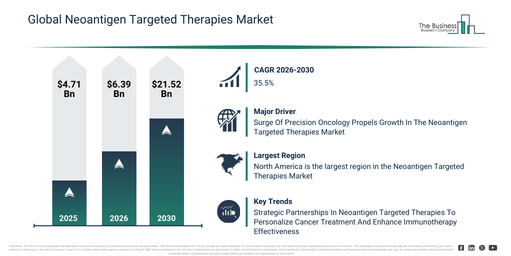
  • Neoantigen Targeted Therapies Market Future Outlook Showing Expansion Toward $21.52 Billion by 2030

    Neoantigen Targeted Therapies Market Future Outlook Showing Expansion Toward $21.52 Billion by 2030

    The Business Research Company’s 2026 market reports include new capabilities such as market attractiveness scoring and analysis, total addressable market analysis, company scoring matrix, interactive excel data dashboard, improved supply chain analysis, upcoming startups in the market, and overview of key products, aimed at improving the depth, usability, and strategic value of the insights delivered.

    How Much Is The Neoantigen Targeted Therapies Market Expected To Grow In Terms Of Market Value Between 2026 And 2030?

    The neoantigen targeted therapies market size has shown substantial expansion in recent years. This market is anticipated to increase from $4.71 billion in 2025 to $6.39 billion in 2026, exhibiting a compound annual growth rate (CAGR) of 35.8%. The growth observed in the past can be ascribed to several factors, including a scarcity of immunotherapy choices, the gradual progress in cancer vaccine development, the initial utilization of genomic sequencing, limited availability of clinical trials, and a reliance on conventional oncology treatments.

    The neoantigen targeted therapies market is projected to experience substantial expansion in the coming years, with its size anticipated to reach $21.52 billion by 2030, demonstrating a robust compound annual growth rate (CAGR) of 35.5%. This significant growth during the forecast period is primarily attributed to the rapid advancement of personalized cancer therapies, increased investment in genomic sequencing, the expansion of clinical research collaborations, the rising adoption of combination immunotherapies, and the growing demand for precision oncology solutions. Furthermore, major trends identified for this period include the increasing uptake of personalized cancer vaccines, the broadening of targeted immunotherapy research pipelines, a rise in clinical trials for neoantigen-based combination therapies, an escalating demand for early genetic profiling in oncology, and a surge in the development of TIL-based therapeutic approaches.

    Download the Free Sample Report to Explore Key Market Insights:

    https://www.thebusinessresearchcompany.com/sample.aspx?id=11944&type=smp

    Which Growth Drivers Are Contributing To The Progress Of The Neoantigen Targeted Therapies Market?

    The expansion of precision oncology is projected to drive the growth of the neoantigen targeted therapies market moving forward. Precision oncology is a method of cancer treatment that leverages detailed genetic and molecular information regarding a patient’s tumor to guide the selection of appropriate targeted therapies. This approach employs neoantigen-targeted therapies by utilizing advanced genomic analysis to pinpoint the distinct neoantigens expressed by an individual’s cancer cells. The integration of neoantigen-targeted therapies in precision oncology signifies a strategy to address the unique genetic makeup of each patient’s tumor, providing a more personalized and effective treatment solution. As an illustration, a report titled Precision Oncology Clinical Trials & Statistics 2024, issued by Novotech in March 2024, indicated that by November 2023, twelve treatments had obtained FDA approval for specific biomarker-selected indications, with six of these also being part of the NCCN guidelines. By the close of the year, 43% of the 217 FDA-approved oncology therapies were classified under precision oncology, and 78 of these therapies featured DNA or NGS-detectable biomarkers, emphasizing the increasing prominence of biomarker-driven treatments in cancer care. Thus, the advancement of precision oncology is propelling the growth of the neoantigen targeted therapies market.

    What Major Segment Divisions Exist Within The Neoantigen Targeted Therapies Market?

    The neoantigen targeted therapies market covered in this report is segmented –

    1) By Type: Monotherapy, Combination Therapy

    2) By Immunotherapy Type: DNA Or RNA-Based Vaccines, Protein-Based Vaccines, Dendritic Cell Vaccines, TIL-Based Therapies

    3) By Target Disease Indication: Colorectal Cancer, Renal Cell Carcinoma, Non-Small Cell Lung Cancer, Bone Cancer, Gynecological Cancer

    4) By Route Of Administration: Intradermal, Intravenous, Subcutaneous

    5) By Application: Medical Research Institution, Hospitals and Clinics, Other Applications

    Subsegments:

    1) By Monotherapy: Individual Neoantigen-Targeted Treatments

    2) By Combination Therapy: Neoantigen-Targeted Therapies Combined With Other Immunotherapies, Neoantigen-Targeted Therapies Combined With Chemotherapy, Neoantigen-Targeted Therapies Combined With Targeted Therapies

    What Industry Trends Are Redefining The Neoantigen Targeted Therapies Market?

    Leading companies within the neoantigen targeted therapies market are adopting strategic partnership approaches to customize neoantigen vaccines and monoclonal antibody drugs, aiming to overcome existing immunotherapy challenges in treating solid tumors. Such collaborations involve companies leveraging each other’s strengths and resources to achieve mutual benefits and success. For instance, in April 2023, Moderna, Inc., a US-based pharmaceutical and biotechnology company, collaborated with Merck & Co., Inc., another US-based pharmaceutical company, to launch mRNA-4157 (V940). This investigational individualized neoantigen therapy (INT) is designed to generate a tailored antitumor immune response based on the unique mutational signature of a patient’s tumor. mRNA-4157 (V940) functions by encoding up to 34 neoantigens to stimulate T cell responses, thereby enhancing the body’s ability to target and destroy tumor cells when combined with Merck’s immunotherapy KEYTRUDA. This combination aims to improve recurrence-free survival in patients with high-risk resected melanoma.

    Which Companies Are Leading Innovation In The Neoantigen Targeted Therapies Market?

    Major companies operating in the neoantigen targeted therapies market are F. Hoffmann-La Roche AG, Merck and Co. Inc., Bristol Myers Squibb Company, Kite Pharma Inc., Amgen Inc., Moderna Inc., BioNTech SE, Bavarian Nordic Inc., Advaxis Inc., Immatics NV, Iovance Biotherapeutics Inc., Agenus Inc., Achilles Therapeutics Plc, Medigene AG, Gritstone Bio Inc., SQZ Biotechnologies Company, Aduro BioTech Inc., Inovio Pharmaceuticals Inc., Gradalis Inc., EpiVax Inc., ISA Pharmaceuticals BV, Vaxon Biotech SA, Ziopharm Oncology, Genocea Biosciences Inc., Cellular Biomedicine Group Inc., Immunovaccine Inc.

    Read the full neoantigen targeted therapies market report here:

    https://www.thebusinessresearchcompany.com/report/neoantigen-targeted-therapies-global-market-report

    What Are The Leading Geographic Regions In The Neoantigen Targeted Therapies Market?

    North America was the largest region in the neoantigen targeted therapies market in 2025. The regions covered in the neoantigen targeted therapies market report are Asia-Pacific, South East Asia, Western Europe, Eastern Europe, North America, South America, Middle East, Africa.

    Request A Tailored Neoantigen Targeted Therapies Market Research Report For Competitive Advantage:

    https://www.thebusinessresearchcompany.com/customise?id=11944&type=smp

    Browse Through More Reports Similar to the Global Neoantigen Targeted Therapies Market 2026, By The Business Research Company

    Malaria Treatment Global Market Report

    https://www.thebusinessresearchcompany.com/report/malaria-treatment-global-market-report

    Infectious Disease Therapeutics Global Market Report

    https://www.thebusinessresearchcompany.com/report/infectious-disease-therapeutics-global-market-report

    Influenza Treatment Global Market Report

    https://www.thebusinessresearchcompany.com/report/influenza-treatment-global-market-report

    Get in touch with us:

    The Business Research Company: https://www.thebusinessresearchcompany.com/

    Americas +1 310-496-7795

    Asia +44 7882 955267 & +91 8897263534

    Europe +44 7882 955267

    Email us at info@tbrc.info

    Follow us on:

    LinkedIn: https://in.linkedin.com/company/the-business-research-company

    YouTube: https://www.youtube.com/channel/UC24_fI0rV8cR5DxlCpgmyFQ

    Global Market Model: https://www.thebusinessresearchcompany.com/global-market-model
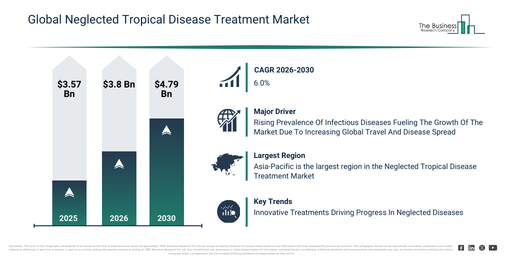
  • Neglected Tropical Disease Treatment Market Revenue Growth Expected to Reach $4.78 Billion by 2030 with 6% CAGR

    Neglected Tropical Disease Treatment Market Revenue Growth Expected to Reach $4.78 Billion by 2030 with 6% CAGR

    The Business Research Company’s 2026 market reports include new capabilities such as market attractiveness scoring and analysis, total addressable market analysis, company scoring matrix, interactive excel data dashboard, improved supply chain analysis, upcoming startups in the market, and overview of key products, aimed at improving the depth, usability, and strategic value of the insights delivered.

    What Market Value Is Expected For The Neglected Tropical Disease Treatment Market At The End Of The 2026–2030 Forecast Period?

    The neglected tropical disease treatment market has witnessed substantial growth in recent years. It is projected to increase from $3.57 billion in 2025 to $3.8 billion in 2026, exhibiting a compound annual growth rate (CAGR) of 6.3%. This historic expansion can be ascribed to factors such as the enduring prevalence of these diseases in tropical areas, support from global health organizations, the expansion of donor-funded treatment programs, the availability of generic therapeutics, and heightened public health awareness initiatives.

    The neglected tropical disease treatment market size is expected to show significant expansion over the next few years, with projections indicating it will reach $4.79 billion by 2030, advancing at a compound annual growth rate (CAGR) of 6.0%. This anticipated growth during the forecast period is primarily fueled by rising investments in eradication programs, the increasing adoption of integrated disease management strategies, the ongoing development of novel antiparasitic drugs, a rise in public-private partnerships, and a heightened focus on enhancing healthcare access in remote areas. Furthermore, key trends anticipated in this period include the increased deployment of combination drug therapies, a growing emphasis on early disease detection programs, expanded use of mass drug administration strategies, the development of community-based treatment models, and an intensified focus on treatment accessibility.

    Download the Free Sample Report to Explore Key Market Insights:

    https://www.thebusinessresearchcompany.com/sample.aspx?id=24616&type=smp

    What Primary Drivers Are Shaping The Development Of The Neglected Tropical Disease Treatment Market?

    The anticipated growth of the neglected tropical disease treatment market is linked to the increasing occurrence of infectious diseases. These illnesses originate from harmful microorganisms like bacteria, viruses, fungi, or parasites, capable of direct or indirect transmission between individuals. The heightened incidence of infectious diseases stems from greater travel, which expedites the cross-border dissemination of pathogens. Neglected tropical disease treatment supports the management of infectious diseases by offering specific therapies to curb and eradicate disease transmission. Such treatments enhance public health, particularly for susceptible populations, by alleviating disease impact and preventing enduring disabilities. For instance, the UK Health Security Agency reported in February 2024 that tuberculosis cases in England climbed to 4,850 in 2023, representing an increase of 10.7% from 4,380 cases in 2022. Consequently, the growing prevalence of infectious diseases is a key factor driving the expansion of the neglected tropical disease treatment market.

    What Segment Types Make Up The Neglected Tropical Disease Treatment Market?

    The neglected tropical disease treatment market covered in this report is segmented –

    1) By Drug Class: Anti-Parasite, Antifungal, Antibiotics, Other Drugs Class

    2) By Disease Type: Leishmaniasis, Schistosomiasis, Lymphatic Filariasis, Chagas Disease, African Trypanosomiasis, Other Disease Types

    3) By Route of Administration: Oral, Parenteral

    4) By Distribution Channel: Hospital Pharmacy, Retail Pharmacy, Online Pharmacy

    5) By End User: Hospital, Specialty Clinics, Homecare Settings, Other End Users

    Subsegments:

    1) By Anti-Parasite: Anthelmintics, Antiprotozoals, Antimalarials, Ectoparasiticides

    2) By Antifungal: Azoles, Polyenes, Allylamines, Echinocandins

    3) By Antibiotics: Tetracyclines, Macrolides, Rifamycins, Sulfonamides

    4) By Other Drug Classes: Antivirals, Corticosteroids, Combination Therapies, Supportive Treatments

    What Key Developments And Trends Are Impacting The Neglected Tropical Disease Treatment Market?

    Major companies engaged in the neglected tropical disease treatment market are dedicating efforts to developing innovative solutions, including all-oral, field-deployable therapeutics, with the goal of simplifying administration, improving safety, and expanding access in low-resource environments. All-oral therapeutics for conditions such as human African trypanosomiasis feature small-molecule drugs taken by mouth over a short duration, which helps enhance treatment reach, diminish the necessity for hospitalization, and lower operational barriers when compared with traditional injectable therapies. For example, in December 2023, Sanofi S.A., a France-based multinational pharmaceutical company, introduced Fexinidazole Winthrop, an oral treatment created in collaboration with not-for-profit organizations. Fexinidazole is a nitro-containing small molecule intended to replace older regimens that required intravenous administration or inpatient care. Its oral formulation, streamlined dosing schedule, and favorable safety profile make it suitable for application across both stages of certain forms of sleeping sickness, thereby increasing treatment accessibility in remote areas. Moreover, Fexinidazole stands in contrast to conventional alternatives like melarsoprol and eflornithine, which are injectable, necessitate complex monitoring, and carry higher toxicity or operational challenges.

    Who Are The Key Players Driving Competition In The Neglected Tropical Disease Treatment Market?

    Major companies operating in the neglected tropical disease treatment market are Pfizer Inc, Johnson And Johnson, Merck And Co Inc, AbbVie Inc, Bayer AG, Novartis AG, Sanofi SA, AstraZeneca PLC, Abbott Laboratories, GlaxoSmithKline plc, Takeda Pharmaceutical Company Limited, Astellas Pharma Inc, Eisai Co Ltd, Shionogi And Co Ltd, Dr Reddys Laboratories Ltd, Cipla Ltd, Gilead Sciences Inc, Bristol Myers Squibb Company, Teva Pharmaceutical Industries Ltd, Sun Pharmaceutical Industries Ltd, Lupin Limited, Alvogen

    Read the full neglected tropical disease treatment market report here:

    https://www.thebusinessresearchcompany.com/report/neglected-tropical-disease-treatment-global-market-report

    How Does The Neglected Tropical Disease Treatment Market Perform Across Major Global Regions?

    Asia-Pacific was the largest region in the neglected tropical disease treatment market in 2025. The regions covered in the neglected tropical disease treatment market report are Asia-Pacific, South East Asia, Western Europe, Eastern Europe, North America, South America, Middle East, Africa.

    Request A Tailored Neglected Tropical Disease Treatment Market Research Report For Competitive Advantage:

    https://www.thebusinessresearchcompany.com/customise?id=24616&type=smp

    Browse Through More Reports Similar to the Global Neglected Tropical Disease Treatment Market 2026, By The Business Research Company

    Benign Prostatic Hyperplasia Bph Treatment Devices And Equipment Global Market Report

    https://www.thebusinessresearchcompany.com/report/benign-prostatic-hyperplasia-bph-treatment-devices-and-equipment-global-market-report

    Pain Management Devices And Therapies Global Market Report

    https://www.thebusinessresearchcompany.com/report/pain-management-devices-and-therapies-global-market-report

    Defibrillator Devices And Equipment Global Market Report

    https://www.thebusinessresearchcompany.com/report/defibrillator-devices-and-equipment-global-market-report

    Get in touch with us:

    The Business Research Company: https://www.thebusinessresearchcompany.com/

    Americas +1 310-496-7795

    Asia +44 7882 955267 & +91 8897263534

    Europe +44 7882 955267

    Email us at info@tbrc.info

    Follow us on:

    LinkedIn: https://in.linkedin.com/company/the-business-research-company

    YouTube: https://www.youtube.com/channel/UC24_fI0rV8cR5DxlCpgmyFQ

    Global Market Model: https://www.thebusinessresearchcompany.com/global-market-model
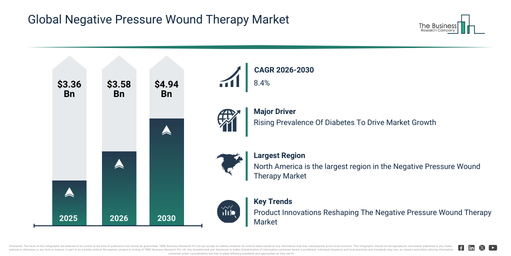
  • Negative Pressure Wound Therapy Market Expected to Record Steady Growth and Approach $4.93 Billion by 2030

    Negative Pressure Wound Therapy Market Expected to Record Steady Growth and Approach $4.93 Billion by 2030

    The Business Research Company’s 2026 market reports include new capabilities such as market attractiveness scoring and analysis, total addressable market analysis, company scoring matrix, interactive excel data dashboard, improved supply chain analysis, upcoming startups in the market, and overview of key products, aimed at improving the depth, usability, and strategic value of the insights delivered.

    What Is The Estimated Market Size Of The Negative Pressure Wound Therapy Market During 2026–2030?

    The negative pressure wound therapy market size has experienced strong growth in recent years. This market is projected to expand from $3.36 billion in 2025 to $3.58 billion in 2026, exhibiting a compound annual growth rate (CAGR) of 6.4%. Historically, this growth can be attributed to factors such as the increasing occurrence of chronic wounds, a rise in surgical procedures, the expanding diabetic and elderly populations, the broadening of hospital wound care programs, and the availability of advanced wound therapy devices.

    The negative pressure wound therapy market is projected to experience substantial expansion over the coming years. This market is anticipated to reach $4.94 billion by 2030, exhibiting a compound annual growth rate (CAGR) of 8.4%. Factors contributing to this growth during the projected period include the increased embrace of home healthcare services, a heightened emphasis on economical wound management, the proliferation of outpatient care facilities, a surging demand for single-use wound care products, and continuous technological advancements in wound therapy equipment. Key trends anticipated for this forecast span involve the wider adoption of portable NPWT systems, an escalating demand for disposable NPWT devices, an increasing concentration on at-home wound care options, the development of sophisticated dressing materials, and a stronger focus on achieving quicker wound recovery results.

    Download the Free Sample Report to Explore Key Market Insights:

    https://www.thebusinessresearchcompany.com/sample.aspx?id=5687&type=smp

    Which Major Factors Are Driving The Expansion Of The Negative Pressure Wound Therapy Market?

    The increasing incidence of diabetes is anticipated to fuel the expansion of the negative pressure wound therapy market. Diabetic foot ulceration (DFU) stands out as the primary application for negative pressure wound therapy. Wounds in individuals with diabetes present healing challenges due to potential poor circulation in those with uncontrolled diabetes, leading to reduced oxygen supply to the wound and slower tissue recovery. Consequently, negative pressure wound therapy provides superior graft integration compared to traditional dressings for diabetic patients. For example, the International Diabetes Federation (IDF), a Belgum-based non-profit body, stated in July 2023 that 540 million individuals between 20 and 79 years old had diabetes in 2022, with forecasts indicating an increase to 643 million by 2030 and 783 million by 2045. Hence, the expanding prevalence of diabetes is a key impetus for the negative pressure wound therapy market.

    How Are The Various Segments Of The Negative Pressure Wound Therapy Market Categorized?

    The negative pressure wound therapy market covered in this report is segmented –

    1) By Product: Conventional NPWT Devices, Single Use NPWT Devices

    2) By Wound Type: Surgical And Traumatic Wounds, Ulcers, Burns

    3) By End User: Hospitals, Homecare, Other End-Users

    Subsegments:

    1) By Conventional NPWT Devices: Portable NPWT Systems, Stationary NPWT Systems, Canister-Based NPWT Devices

    2) By Single-Use NPWT Devices: Disposable NPWT Systems, Battery-Operated NPWT Devices, Compact NPWT Units

    What Trends Are Projected To Affect The Negative Pressure Wound Therapy Market?

    Major companies in the negative pressure wound therapy market are developing new portable and disposable negative pressure wound therapy (NPWT) devices to sustain their market position. Portable and disposable negative pressure wound therapy (NPWT) devices are compact, single-use medical instruments that apply controlled suction to wounds, assisting in healing by removing excess fluids and promoting optimal conditions for tissue recovery, while offering the convenience of mobility and eliminating the need for complex, traditional systems. For instance, in June 2023, Advanced Oxygen Therapy Inc., a US-based medical equipment manufacturing company, launched the NEXA Negative Pressure Wound Therapy (NPWT) system. The NEXA NPWT system offers a unique and flexible platform that combines the simplicity of disposable NPWT with the performance features of traditional durable NPWT technology. This portable, silent, and cost-effective system aims to provide improved wound care performance at a lower cost. AOTI’s NEXA and Topical Wound Oxygen (TWO2) therapy uniquely combines higher-pressure oxygen delivery with non-contact cyclical compression and humidity, making it a valuable option for chronic wound care and healing.

    Which Major Firms Influence Developments In The Negative Pressure Wound Therapy Market?

    Major companies operating in the negative pressure wound therapy market are Devon International Group, ConvaTec Group plc., DeRoyal Industries Inc., Smith & Nephew plc, Acelity L.P. Inc., Mölnlycke Health Care AB, ATMOS MedizinTechnik GmbH & Co. KG, Cardinal Health Inc., Talley Group Limited, Medela AG, Lohmann & Rauscher GmbH & Co. KG, Triage Meditech Pvt. Ltd., Carilex Medical GmbH, Shandong Weigao Xinsheng Medical Devices Co. Lt, Genadyne Biotechnologies Inc., B. Braun Melsungen AG, Cork Medical LLC, BSN medical GmbH, Investor AB, Olle Larsson Holding AG, PAUL HARTMANN Asia-Pacific Ltd., KCI Licensing Inc., Arjo USA Inc., 3M Company, MPM Medical Inc., Prospera Technologies Inc., Innovative Therapies Inc., Laboratoires URGO, 4L Health Co. Ltd, Pensar Medical LLC, Virchow Biotech Pvt. Ltd., Arobella Medical LLC, Spincare Inc., Ursapharm Arzneimittel GmbH

    Read the full negative pressure wound therapy market report here:

    https://www.thebusinessresearchcompany.com/report/negative-pressure-wound-therapy-global-market-report

    Which Region Currently Holds The Largest Share Of The Negative Pressure Wound Therapy Market?

    North America was the largest region in the negative pressure wound therapy market in 2025. Asia-Pacific is the fastest-growing region in the negative pressure wound therapy market share. The regions covered in the negative pressure wound therapy market report are Asia-Pacific, South East Asia, Western Europe, Eastern Europe, North America, South America, Middle East, Africa.

    Request A Tailored Negative Pressure Wound Therapy Market Research Report For Competitive Advantage:

    https://www.thebusinessresearchcompany.com/customise?id=5687&type=smp

    Browse Through More Reports Similar to the Global Negative Pressure Wound Therapy Market 2026, By The Business Research Company

    Botanical Extracts Global Market Report

    https://www.thebusinessresearchcompany.com/report/botanical-extracts-global-market-report

    Vanilla Extract Global Market Report

    https://www.thebusinessresearchcompany.com/report/vanilla-extract-global-market-report

    Plant Extracts Global Market Report

    https://www.thebusinessresearchcompany.com/report/plant-extracts-global-market-report

    Get in touch with us:

    The Business Research Company: https://www.thebusinessresearchcompany.com/

    Americas +1 310-496-7795

    Asia +44 7882 955267 & +91 8897263534

    Europe +44 7882 955267

    Email us at info@tbrc.info

    Follow us on:

    LinkedIn: https://in.linkedin.com/company/the-business-research-company

    YouTube: https://www.youtube.com/channel/UC24_fI0rV8cR5DxlCpgmyFQ

    Global Market Model: https://www.thebusinessresearchcompany.com/global-market-model
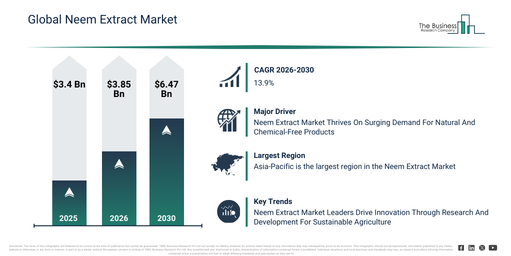
  • Neem Extract Industry Expansion Forecast Showing Market Size of $6.47 Billion by 2030 at 13.9% CAGR

    Neem Extract Industry Expansion Forecast Showing Market Size of $6.47 Billion by 2030 at 13.9% CAGR

    The Business Research Company’s 2026 market reports include new capabilities such as market attractiveness scoring and analysis, total addressable market analysis, company scoring matrix, interactive excel data dashboard, improved supply chain analysis, upcoming startups in the market, and overview of key products, aimed at improving the depth, usability, and strategic value of the insights delivered.

    What Market Size Expansion Is Predicted For The Neem Extract Market Between 2026 And 2030?

    The neem extract market has experienced rapid expansion recently. It is projected to increase from $3.4 billion in 2025 to $3.85 billion in 2026, demonstrating a compound annual growth rate (CAGR) of 13.4%. This historical growth can be attributed to factors such as traditional medicine usage, increased adoption of herbal products, a reliance on natural pesticides, limited awareness of organic farming, and slow regulatory approvals.

    The neem extract market is projected to experience swift expansion in the upcoming years. Its valuation is anticipated to reach $6.47 billion by 2030, demonstrating a compound annual growth rate (CAGR) of 13.9%. This anticipated growth during the projection period stems from factors such as increasing consumer demand for clean-label products, the expansion of organic farming, a rise in herbal nutraceutical consumption, a growing preference for plant-based cosmetic formulations, and improvements in extraction technologies. Key trends expected during this forecast timeframe encompass a heightened demand for herbal and natural remedies, the expanding application of neem in organic farming, increased uptake of neem-derived skincare and haircare items, broader integration of neem in nutraceutical formulations, and a noticeable increase in neem-based antimicrobial and antifungal solutions.

    Download the Free Sample Report to Explore Key Market Insights:

    https://www.thebusinessresearchcompany.com/sample.aspx?id=10818&type=smp

    What Key Drivers Are Influencing The Growth Of The Neem Extract Market?

    The increasing consumer desire for organic products is anticipated to fuel the expansion of the neem extract market in the foreseeable future. These products are defined as those made exclusively with natural ingredients, free from synthetic chemicals, hormones, antibiotics, or genetically modified organisms (GMOs). Neem extract finds application across diverse sectors such as agriculture, personal care items, pharmaceuticals, and animal feed, thanks to its distinct antibacterial and antifungal attributes, which position it as an ideal ingredient for a range of organic and natural formulations. For example, data released by the Organic Trade Association (OTA), a US organic industry business association, in April 2025 indicated that U.S. certified organic product sales surged by 5.2% in 2024, propelled by escalating consumer demand. This growth was more than double the 2.5% overall market increase, with sales reaching an unprecedented USD 71.6 billion for the year. Consequently, the rising preference for organic goods is serving as a primary catalyst for the neem extract market’s expansion.

    Neem Extract Market Driver: Neem Extract Market Soars With The Expanding Horizon Of The Cosmetics Industry

    Which Market Segments Are Examined In The Neem Extract Market Study?

    The neem extract market covered in this report is segmented –

    1) By Type: Leaf Extract, Fruit And Seed Extract, Bark Extract

    2) By Formulation: Dry, Liquid

    3) By Application: Food And Beverages, Pharmaceutical, Nutraceutical, Personal Care And Cosmetics, Agriculture And Farming, Other Applications

    Subsegments:

    1) By Leaf Extract: Neem Leaf Powder, Neem Leaf Oil, Neem Leaf Extract for Supplements

    2) By Fruit And Seed Extract: Neem Seed Oil, Neem Cake (byproduct of seed extraction), Neem Seed Powder

    3) By Bark Extract: Neem Bark Powder, Neem Bark Extract for Medicinal Use, Neem Bark Extract for Skincare Products

    Which Upcoming Trends Are Expected To Influence The Neem Extract Market?

    Leading companies in the neem extract market are concentrating on developing advanced neem-derived solutions, including biofertilizers and biopesticides, to bolster their market presence and foster sustainable agriculture. These novelties aim to heighten product effectiveness, boost crop yields, and diminish environmental repercussions, while simultaneously creating new avenues in global agricultural arenas. For instance, in October 2023, the University of Ghana, a public university based in Ghana, hosted a research dissemination workshop that showcased neem-based solutions for growing healthy vegetables. This event, organized by ARPPIS at the University of Ghana, was geared towards promoting safe vegetable production. The workshop provided a platform for diverse participants and underscored the critical role of neem-based solutions for sustainable and safe vegetable cultivation in Ghana.

    Who Are The Primary Competitors In The Neem Extract Market?

    Major companies operating in the neem extract market are Reddy International, Neeming Australia Pty Ltd., Bros India Group, Gramin India Agri BusiNest, Agro Extracts Limited, Fortune Biotech Ltd., The Indian Neem Tree Company, Ozone Biotech, PJ Margo Pvt Ltd., Trifolio-M-GmbH, GreeNeem Agri Pvt Ltd., Neem India Products Pvt Ltd., Phyto Life sciences Pvt Ltd., Green Earth Products Pvt Ltd., Ichimaru Pharcos Co Ltd., Greenchem Biotech, Sunrise Agriland Development & Research Pvt Ltd., Unjha Ayurvedic Pharmacy, Herbo Nutra Extract Private Limited, APEX INTERNATIONAL, MRIDA GREENS & DEVELOPMENT PRIVATE LIMITED, YAXON BIOCARE Pvt Ltd., AYUSH HERBALS & HEALTHCARE PRIVATE LIMITED, Herbal Creations, Cymbio Pharma Pvt Ltd, Truzt Organic

    Read the full neem extract market report here:

    https://www.thebusinessresearchcompany.com/report/neem-extract-global-market-report

    Which Region Is Expected To Register The Fastest Growth In The Neem Extract Market?

    Asia-Pacific was the largest region in the global neem extracts market in 2025. Western Europe is expected to be the fastest-growing region in the forecast period. The regions covered in the neem extract market report are Asia-Pacific, South East Asia, Western Europe, Eastern Europe, North America, South America, Middle East, Africa.

    Request A Tailored Neem Extract Market Research Report For Competitive Advantage:

    https://www.thebusinessresearchcompany.com/customise?id=10818&type=smp

    Browse Through More Reports Similar to the Global Neem Extract Market 2026, By The Business Research Company

    Drug Delivery Devices Global Market Report

    https://www.thebusinessresearchcompany.com/report/drug-delivery-devices-global-market-report

    Injectable Drug Delivery Devices Global Market Report

    https://www.thebusinessresearchcompany.com/report/injectable-drug-delivery-devices-global-market-report

    Drug Delivery Devices Global Market Report

    https://www.thebusinessresearchcompany.com/report/drug-delivery-devices-global-market-report

    Get in touch with us:

    The Business Research Company: https://www.thebusinessresearchcompany.com/

    Americas +1 310-496-7795

    Asia +44 7882 955267 & +91 8897263534

    Europe +44 7882 955267

    Email us at info@tbrc.info

    Follow us on:

    LinkedIn: https://in.linkedin.com/company/the-business-research-company

    YouTube: https://www.youtube.com/channel/UC24_fI0rV8cR5DxlCpgmyFQ

    Global Market Model: https://www.thebusinessresearchcompany.com/global-market-model
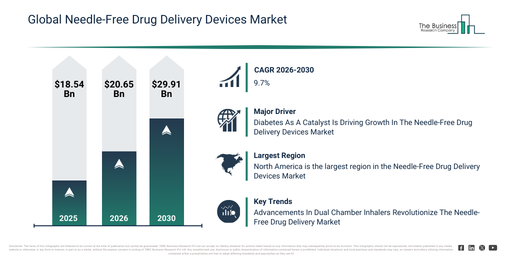
  • Needle-Free Drug Delivery Devices Market Revenue Expected to Reach $29.91 Billion by 2030 with 9.7% CAGR

    Needle-Free Drug Delivery Devices Market Revenue Expected to Reach $29.91 Billion by 2030 with 9.7% CAGR

    The Business Research Company’s 2026 market reports include new capabilities such as market attractiveness scoring and analysis, total addressable market analysis, company scoring matrix, interactive excel data dashboard, improved supply chain analysis, upcoming startups in the market, and overview of key products, aimed at improving the depth, usability, and strategic value of the insights delivered.

    How Large Is The Needle-Free Drug Delivery Devices Market Projected To Become By 2030 Based On Its 2026 Valuation?

    The needle-free drug delivery devices market size has seen substantial growth over recent years. It is anticipated to expand from $18.54 billion in 2025 to $20.65 billion in 2026, registering a compound annual growth rate (CAGR) of 11.4%. This historic expansion can be ascribed to several factors, including needle phobia experienced by patients, the quest for safer injection alternatives, an uptick in infectious disease vaccinations, the inherent limitations of traditional needle-based techniques, and early innovations in jet injection mechanisms.

    The market size for needle-free drug delivery devices is set to experience significant expansion over the next few years. It is projected to climb to $29.91 billion by 2030, exhibiting a compound annual growth rate (CAGR) of 9.7%. This growth during the forecast period is driven by the increasing prevalence of chronic diseases, a growing embrace of self-administration therapies, the expansion of telemedicine and remote care services, rising demand for minimally invasive drug delivery methods, and advancements in microneedle and transdermal technologies. Prominent trends expected in this period include an increasing demand for painless drug delivery techniques, wider adoption of home-based drug delivery solutions, a rise in the use of needle-free devices for pediatric applications, continued growth in self-administration treatments for chronic conditions, and the broader expansion of needle-free vaccine delivery systems.

    Download the Free Sample Report to Explore Key Market Insights:

    https://www.thebusinessresearchcompany.com/sample.aspx?id=15615&type=smp

    What Major Growth Drivers Are Shaping The Outlook Of The Needle-Free Drug Delivery Devices Market?

    The expanding occurrence of diabetes is projected to fuel the expansion of the needle-free drug delivery device market moving ahead. Diabetes is a chronic medical condition characterized by elevated blood sugar, resulting from insufficient insulin generation or the body’s inefficient use of insulin. The surge in diabetes cases is attributable to inactive lifestyles, poor eating habits, genetic factors, increasing urbanization, and an aging demographic, further exacerbated by restricted healthcare access and growing global obesity. In diabetes management, needle-free drug delivery devices offer an alternative method for administering insulin, replacing traditional injections. These devices utilize technologies like jet injectors or transdermal patches to deliver insulin subcutaneously without needles, thereby reducing the typical discomfort and apprehension associated with injections and improving patient comfort. As an illustration, in June 2024, the National Health Service, a UK government department, reported that in 2023, the NHS identified more than 549,000 new individuals in England facing a risk of type 2 diabetes. This raised the overall count of people with non-diabetic hyperglycemia, or pre-diabetes, registered with a GP to 3,615,330. This figure signifies a considerable increase from 3,065,825 in 2022, marking an increment of nearly 20%. Consequently, the rising incidence of diabetes is fueling the expansion of the needle-free drug delivery device market.

    What Segment Groups Are Identified Within The Needle-Free Drug Delivery Devices Market?

    The needle-free drug delivery devices market covered in this report is segmented –

    1) By Device Type: Inhalers, Jet Injectors, Novel Needles, Transdermal Patches

    2) By Application: Pain Management, Vaccine Delivery, Pediatric Injections, Insulin Delivery, Other Applications

    3) By End-User: Hospitals And Clinics, Home Healthcare

    Subsegments:

    1) By Inhalers: Dry Powder Inhalers (DPI), Metered Dose Inhalers (MDI), Nebulizers

    2) By Jet Injectors: High-Pressure Jet Injectors, Spring-Powered Jet Injectors, Battery-Operated Jet Injectors

    3) By Novel Needles: Micro-Needle Arrays, Nano-Needle Arrays

    4) By Transdermal Patches: Microneedle Patches, Conventional Patches

    How Are Trends Shaping The Direction Of The Needle-Free Drug Delivery Devices Market?

    Major companies in the needle-free drug delivery device market are prioritizing advanced solutions, such as dual-chamber inhalers, to enhance efficacy and ease of administration, thereby addressing the evolving requirements of patients and healthcare providers. A dual-chamber inhaler is a system featuring two compartments capable of holding different medications independently. This design facilitates the combination of multiple drugs into a single inhaler, simplifying treatment and increasing patient convenience. For instance, in April 2024, Berry Global, a US-based plastic manufacturing company, launched the BerryHaler, an innovative dry powder inhaler (DPI) aimed at revolutionizing patient-centered healthcare solutions. This dual-chamber inhaler includes a dose counter, ensuring precise medication delivery. Its complete plastic construction, free of any metal parts, makes it suitable for complex inhalation treatments, streamlining dosage and effectively combining multiple drugs. Its advanced functionalities comprise a bi-directional mouthpiece cover for convenience and hygiene, alongside audible signals to confirm proper usage. The integrated dose counter helps in accurately monitoring medication usage, thus preventing dosage errors.

    Which Companies Hold Significant Positions In The Needle-Free Drug Delivery Devices Market?

    Major companies operating in the needle-free drug delivery devices market are 3M Company, Medtronic plc, Novo Nordisk AS, Becton Dickinson and Company, Insulet Corporation, MannKind Corporation, Med-Jet Inc., Portal Instruments, PharmaJet, National Medical Products Inc., Mika Medical Co. Ltd., Medical International Technology Inc. (MTI), NanoPass Technologies Ltd., PenJet Corporation, Akra Dermojet S.A., NuGen Medical Devices Inc., Crossject SA, Injex Pharma AG, Bayer AG, Antares Pharma Inc., Inovio Pharmaceuticals Inc.

    Read the full needle-free drug delivery devices market report here:

    https://www.thebusinessresearchcompany.com/report/needle-free-drug-delivery-devices-global-market-report

    Which Regions Are Projected To Dominate The Needle-Free Drug Delivery Devices Market In The Coming Years?

    North America was the largest region in the needle-free drug delivery devices market in 2025. Asia-Pacific is expected to be the fastest-growing region in the forecast period. The regions covered in the needle-free drug delivery devices market report are Asia-Pacific, South East Asia, Western Europe, Eastern Europe, North America, South America, Middle East, Africa.

    Request A Tailored Needle-Free Drug Delivery Devices Market Research Report For Competitive Advantage:

    https://www.thebusinessresearchcompany.com/customise?id=15615&type=smp

    Browse Through More Reports Similar to the Global Needle-Free Drug Delivery Devices Market 2026, By The Business Research Company

    Rotavirus Prophylaxis Global Market Report

    https://www.thebusinessresearchcompany.com/report/rotavirus-prophylaxis-global-market-report

    Appendicitis Treatment Global Market Report

    https://www.thebusinessresearchcompany.com/report/appendicitis-treatment-global-market-report

    Automotive Fascia Global Market Report

    https://www.thebusinessresearchcompany.com/report/automotive-fascia-global-market-report

    Get in touch with us:

    The Business Research Company: https://www.thebusinessresearchcompany.com/

    Americas +1 310-496-7795

    Asia +44 7882 955267 & +91 8897263534

    Europe +44 7882 955267

    Email us at info@tbrc.info

    Follow us on:

    LinkedIn: https://in.linkedin.com/company/the-business-research-company

    YouTube: https://www.youtube.com/channel/UC24_fI0rV8cR5DxlCpgmyFQ

    Global Market Model: https://www.thebusinessresearchcompany.com/global-market-model
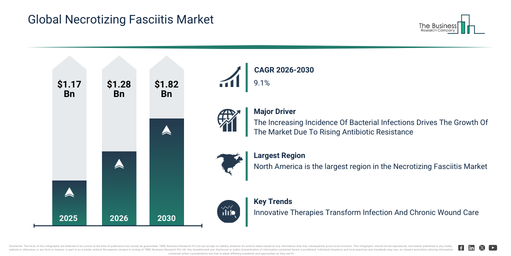
  • Global Necrotizing Fasciitis Market Set for Strong Expansion Reaching $1.81 Billion by 2030 at 9.1% CAGR

    Global Necrotizing Fasciitis Market Set for Strong Expansion Reaching $1.81 Billion by 2030 at 9.1% CAGR

    The Business Research Company’s 2026 market reports include new capabilities such as market attractiveness scoring and analysis, total addressable market analysis, company scoring matrix, interactive excel data dashboard, improved supply chain analysis, upcoming startups in the market, and overview of key products, aimed at improving the depth, usability, and strategic value of the insights delivered.

    What Market Value Is Anticipated For The Necrotizing Fasciitis Market Over The Period 2026–2030?

    The necrotizing fasciitis market has experienced robust expansion over the past few years. It is projected to expand from $1.17 billion in 2025 to $1.28 billion in 2026, exhibiting a compound annual growth rate (CAGR) of 9.4%. Historically, this expansion has been driven by advancements in surgical debridement methods, the wider availability of broad-spectrum antibiotics, improved intensive care facilities, increasing medical understanding of severe soft tissue infections, and progress in wound care practices.

    The market for necrotizing fasciitis is projected to experience substantial expansion in the coming years. This market is forecast to reach a valuation of $1.82 billion by 2030, exhibiting a compound annual growth rate (CAGR) of 9.1%. This anticipated growth is driven by several factors including the development of targeted antimicrobial therapies, a rise in the adoption of precision diagnostics, the expansion of advanced critical care infrastructure, an increase in research into immunomodulatory treatments, and a heightened focus on rapid-response infection management protocols. Key trends during this period are anticipated to involve an increased emphasis on early diagnostic interventions, a greater uptake of advanced antibiotic regimens, the growing application of adjunctive therapies, the expansion of multidisciplinary critical care approaches, and a stronger focus on rapid surgical management.

    Download the Free Sample Report to Explore Key Market Insights:

    https://www.thebusinessresearchcompany.com/sample.aspx?id=30334&type=smp

    What Drivers Are Expected To Influence The Necrotizing Fasciitis Market During The Forecast Period?

    The rising occurrence of bacterial infections is anticipated to boost the expansion of the necrotizing fasciitis market in the future. These infections are defined as ailments or states resulting from detrimental bacteria entering and proliferating inside the body, causing harm to tissues and sickness. The heightened frequency of bacterial infections largely stems from antibiotic resistance, which diminishes the efficacy of conventional therapies, enabling infections to endure and disseminate. A greater occurrence of bacterial infections fosters a more precarious setting for severe soft tissue infections. This directly contributes to the widespread nature and rapid advancement of necrotizing fasciitis, as opportunistic pathogens take advantage of compromised host immunity to quickly penetrate fascial layers. For example, data released in March 2024 by the Centers for Disease Control and Prevention, a US-based government agency, showed that tuberculosis cases climbed from 8,320 in 2022 to 9,615 in 2023, marking an increase of 1,295 cases. Consequently, the growing frequency of bacterial infections is fueling the expansion of the necrotizing fasciitis market.

    How Is The Necrotizing Fasciitis Market Divided Into Its Major Segments?

    The necrotizing fasciitis market covered in this report is segmented –

    1) By Treatment Type: Surgical Debridement, Antibiotic Therapy, Hyperbaric Oxygen Therapy, Other Treatment Types

    2) By Type: Type I, Type II, Type III

    3) By Age Group: Pediatric, Adult, Geriatric

    4) By Distribution Channel: Hospital Pharmacies, Retail Pharmacies, Online Pharmacies

    5) By End-User: Hospitals, Specialized Clinics, Emergency Care Centers, Home Healthcare Providers, Pharmaceutical Companies

    Subsegments:

    1) By Surgical Debridement: Early Debridement, Radical Debridement, Serial Debridement, Fasciotomy

    2) By Antibiotic Therapy: Intravenous Antibiotics, Oral Antibiotics, Combination Therapy, Targeted Therapy

    3) By Hyperbaric Oxygen Therapy: Monoplace Chamber Therapy, Multiplace Chamber Therapy, Adjunctive Therapy, Postoperative Therapy

    4) By Other Treatment Types: Immunoglobulin Therapy, Supportive Care, Wound Care Management, Pain Management

    Which Market Trends Are Creating New Opportunities In The Necrotizing Fasciitis Market?

    Major companies engaged in the necrotizing fasciitis market are channeling their efforts into developing advanced therapies, such as antibiotics and immunotherapies, to address biologics and new wound care approaches. Antibiotics are medications that destroy or prevent the proliferation of bacteria, whereas immunotherapies are treatments that strengthen or alter the body’s immune response to fight off infections or illnesses. For instance, in March 2025, Altru Health System, a US-based nonprofit physician-led healthcare provider, launched Hyperbaric Oxygen Therapy (HBO) to enhance the healing of wounds and support patient recovery in individuals with persistent or hard-to-treat conditions. This therapy administers 100% oxygen within a pressurized environment, thereby boosting tissue oxygenation and stimulating the body’s intrinsic healing processes. It targets conditions like diabetic foot ulcers, tissue damage caused by radiation, impaired skin grafts, and severe infections, providing a non-invasive addition to conventional medical treatment.

    Who Are The Prominent Organizations Shaping The Necrotizing Fasciitis Market?

    Major companies operating in the necrotizing fasciitis market are GlaxoSmithKline Public Limited Company, Gilead Sciences Inc., Teva Pharmaceutical Industries Limited, Merck And Co. Inc., bioMérieux S.A., Cipla Limited, Dr. Reddy’s Laboratories Limited, Hikma Pharmaceuticals PLC, Mankind Pharma Limited, Wockhardt Limited, Xellia Pharmaceuticals ApS, Basilea Pharmaceutica International Ltd., Avita Medical Inc., HiMedia Laboratories Pvt. Ltd., CutisCare Pvt. Ltd., NovaBay Pharmaceuticals Inc., TCS Biosciences Ltd., 3i Diagnostics Limited, Antabio S.A.P., Pfizer Inc.

    Read the full necrotizing fasciitis market report here:

    https://www.thebusinessresearchcompany.com/report/global-necrotizing-fasciitis-market-report

    Which Region Is Forecast To Lead The Necrotizing Fasciitis Market In Terms Of Market Size?

    North America was the largest region in the necrotizing fasciitis market in 2025. Asia-Pacific is expected to be the fastest-growing region in the forecast period. The regions covered in the necrotizing fasciitis market report are Asia-Pacific, South East Asia, Western Europe, Eastern Europe, North America, South America, Middle East, Africa.

    Request A Tailored Necrotizing Fasciitis Market Research Report For Competitive Advantage:

    https://www.thebusinessresearchcompany.com/customise?id=30334&type=smp

    Browse Through More Reports Similar to the Global Necrotizing Fasciitis Market 2026, By The Business Research Company

    Gastrointestinal Pathogen Testing Global Market Report

    https://www.thebusinessresearchcompany.com/report/gastrointestinal-pathogen-testing-global-market-report

    Hospice Care Global Market Report

    https://www.thebusinessresearchcompany.com/report/hospice-care-global-market-report

    Viral Gastroenteritis Global Market Report

    https://www.thebusinessresearchcompany.com/report/viral-gastroenteritis-global-market-report

    Get in touch with us:

    The Business Research Company: https://www.thebusinessresearchcompany.com/

    Americas +1 310-496-7795

    Asia +44 7882 955267 & +91 8897263534

    Europe +44 7882 955267

    Email us at info@tbrc.info

    Follow us on:

    LinkedIn: https://in.linkedin.com/company/the-business-research-company

    YouTube: https://www.youtube.com/channel/UC24_fI0rV8cR5DxlCpgmyFQ

    Global Market Model: https://www.thebusinessresearchcompany.com/global-market-model