Category: Healthcare Services

  • CRISPR Gene Editing Market Future Outlook Showing Expansion Toward $8.28 Billion by 2030

    CRISPR Gene Editing Market Future Outlook Showing Expansion Toward $8.28 Billion by 2030

    The Business Research Company’s 2026 market reports include new capabilities such as market attractiveness scoring and analysis, total addressable market analysis, company scoring matrix, interactive excel data dashboard, improved supply chain analysis, upcoming startups in the market, and overview of key products, aimed at improving the depth, usability, and strategic value of the insights delivered.

    What Is The Estimated Market Size Of The CRISPR Gene Editing Market During 2026–2030?

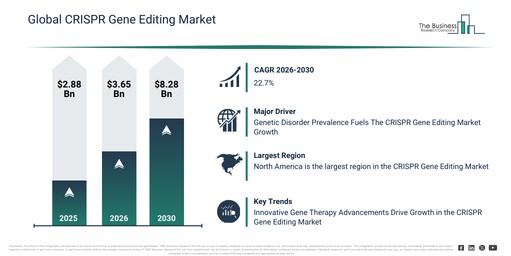
    The crispr gene editing market size has experienced significant expansion in recent years. It is anticipated to grow from $2.88 billion in 2025 to $3.65 billion in 2026, exhibiting a compound annual growth rate (CAGR) of 27.1%. This historical growth can be attributed to the demand for precise gene modification tools, the limitations of older gene editing technologies, the advancement of genomics research, its adoption in academic settings, and funding allocated to genetic research.

    The crispr gene editing market is poised for substantial expansion in the coming years. It is forecast to grow to $8.28 billion by 2030, exhibiting a compound annual growth rate (CAGR) of 22.7%. This anticipated growth is attributed to the approval of gene editing therapies, the broadening scope of precision medicine, progress in agricultural biotechnology, the development of regulatory frameworks, and ongoing technological enhancements of crispr systems. Noteworthy trends during this forecast period include the surge in clinical gene therapy research, the increased application of agricultural gene editing, the proliferation of functional genomics studies, advancements in delivery technologies, and a greater emphasis on ethical and regulatory compliance.

    Download the Free Sample Report to Explore Key Market Insights:

    https://www.thebusinessresearchcompany.com/sample.aspx?id=15549&type=smp

    Which Economic Or Industry Drivers Are Impacting The CRISPR Gene Editing Market?

    The expanding occurrence of genetic disorders is projected to stimulate the advancement of the CRISPR gene editing market. A genetic disorder represents a health condition resulting from abnormalities in the genome, encompassing mutations within a single gene (monogenic), multiple genes (polygenic), or chromosomal irregularities. The rise in genetic disorder prevalence is attributed to genetic mutations, an aging global population, and consanguineous marriages. CRISPR gene editing provides substantial assistance in handling genetic disorders by enabling precise and targeted modifications to an individual’s DNA. Furthermore, researchers utilize CRISPR technology to pinpoint and rectify specific mutations that cause genetic disorders, thereby restoring normal biological functions and mitigating disease symptoms, as observed in conditions such as cystic fibrosis and sickle cell anaemia. For instance, in October 2025, as reported by the Cystic Fibrosis Trust, a UK-based charity supporting individuals with cystic fibrosis, the year 2024 saw 164 new diagnoses of cystic fibrosis (CF), with 123 of these cases identified via newborn screening. By the close of 2024, a total of 11,381 individuals were registered with CF. Consequently, the growing prevalence of genetic disorders is fueling the expansion of the CRISPR gene editing market.

    How Are The Various Segments Of The CRISPR Gene Editing Market Categorized?

    The crispr gene editing market covered in this report is segmented –

    1) By Type: CRISPR-Associated Nuclease (Cas Nuclease), Guide Ribonucleic Acid (RNA), Deoxyribonucleic Acid (DNA) Ligase, Restriction Endonuclease, Other Types

    2) By Services: Design Tools, Plasmid And Vector, CRISPR-Associated Protein 9 (Cas9) And Guide Ribonucleic Acid (g-RNA), Delivery System Products, Other Services

    3) By Technology: CRISPR Or Cas9, Zinc Finger Nucleases, Other Technologies

    4) By Application: Agricultural, Biomedical, Industrial, Genome Engineering, Disease Models, Functional Genomics, Other Applications

    5) By End User: Academic Institutes And Research Centers, Biotechnology Companies, Contract Research Organizations (CROs), Pharmaceutical And Biopharmaceutical Companies

    Subsegments:

    1) By CRISPR-Associated Nuclease (Cas Nuclease): Cas9, Cas12, Cas13

    2) By Guide Ribonucleic Acid (RNA): Single-Guide RNA (sgRNA), Dual-Guide RNA, Synthetic Guide RNA

    3) By Deoxyribonucleic Acid (DNA) Ligase: T4 DNA Ligase, E. Coli DNA Ligase

    4) By Restriction Endonuclease: Type II Restriction Enzymes, Type I And III Restriction Enzymes

    5) By Other Types: CRISPR Delivery Systems, CRISPR Plasmids, CRISPR-Based Diagnostic Tools

    What Trends Are Affecting The Expansion Of The CRISPR Gene Editing Market?

    Major entities within the CRISPR gene editing market are focusing on developing innovative products, such as gene therapy, to attract broader customer bases, increase sales, and boost revenue. Gene therapy is a medical method that uses genes to treat, prevent, or cure various diseases and disorders. For example, in December 2023, the US Food and Drug Administration (FDA), a federal agency based in the US, approved Casgevy, a cell-based gene therapy, for the management of sickle cell disease. Casgevy therapy operates by utilizing CRISPR/Cas9, a particular type of genome editing technology. Specifically, hematopoietic stem cells are modified through the application of CRISPR/Cas9 technology.

    Which Major Firms Influence Developments In The CRISPR Gene Editing Market?

    Major companies operating in the crispr gene editing market are Crispr Therapeutics, Thermo Fisher Scientific, Intellia Therapeutics, Horizon Discovery, Synthego Corporation, Integrated DNA Technology (Danaher), Editas Medicine, GenScript, Agilent Technologies, New England Biolabs, CSIR-Institute of Genomics & Integrative Biology (IGIB), Strand Life Sciences Pvt. Ltd., Bio Palette Co. Ltd., Churchi Genome Engineering and Therapeutic Research Center, Beam Therapeutics Inc., Eurofins Genomics India, Setsurotech Co. Ltd., Merck Japan, Institut Pasteur, CureVac, Cellectis, BiovelocITA S.r.l., Evotec A.G., SNIPR Biome, Oxford Genetics, ERS Genomics, Alia Therapeutics, Solvo, BioTalentum, BIOCAD, BioVendor, Research & Diagnostic Products, Contipro, Lonza Biotec, Sotio, Selvita, BioVentures Institute Ltd, Sigma-Aldrich, Poseida Therapeutics, NanoCellect Biomedical, Sherlock Biosciences, Repare Therapeutics, Inscripta Inc., Santa Cruz Biotechnology, Caribou Biosciences Inc., Egenesis Inc., Homology Medicines, System Biosciences, Takara Bio USA Inc., Inari Agriculture Inc., Precision BioSciences, Cell Microsystems Inc., GeneCopoeia Inc., Merck KGaA, Origene Technologies Inc., Pluristem Therapeutics Inc.

    Read the full crispr gene editing market report here:

    https://www.thebusinessresearchcompany.com/report/crispr-gene-editing-global-market-report

    What Are The Top-Performing Regions Within The CRISPR Gene Editing Market?

    North America was the largest region in the CRISPR gene editing market in 2025. Asia-Pacific is expected to be the fastest-growing region in the forecast period. The regions covered in the crispr gene editing market report are Asia-Pacific, South East Asia, Western Europe, Eastern Europe, North America, South America, Middle East, Africa.

    Request A Tailored CRISPR Gene Editing Market Research Report For Competitive Advantage:

    https://www.thebusinessresearchcompany.com/customise?id=15549&type=smp

    Browse Through More Reports Similar to the Global CRISPR Gene Editing Market 2026, By The Business Research Company

    Crispr Gene Editing Global Market Report

    https://www.thebusinessresearchcompany.com/report/crispr-gene-editing-global-market-report

    Crispr Technology Market

    https://www.thebusinessresearchcompany.com/report/crispr-technology-market

    Plant Breeding And Crispr Plants Global Market Report

    https://www.thebusinessresearchcompany.com/report/plant-breeding-and-crispr-plants-global-market-report

    Get in touch with us:

    The Business Research Company: https://www.thebusinessresearchcompany.com/

    Americas +1 310-496-7795

    Asia +44 7882 955267 & +91 8897263534

    Europe +44 7882 955267

    Email us at info@tbrc.info

    Follow us on:

    LinkedIn: https://in.linkedin.com/company/the-business-research-company

    YouTube: https://www.youtube.com/channel/UC24_fI0rV8cR5DxlCpgmyFQ

    Global Market Model: https://www.thebusinessresearchcompany.com/global-market-model
  • CRISPR And Cas Gene Market Revenue Growth Expected to Reach $13.09 Billion by 2030 with 22.3% CAGR

    CRISPR And Cas Gene Market Revenue Growth Expected to Reach $13.09 Billion by 2030 with 22.3% CAGR

    The Business Research Company’s 2026 market reports include new capabilities such as market attractiveness scoring and analysis, total addressable market analysis, company scoring matrix, interactive excel data dashboard, improved supply chain analysis, upcoming startups in the market, and overview of key products, aimed at improving the depth, usability, and strategic value of the insights delivered.

    What Market Size Expansion Is Predicted For The CRISPR And Cas Gene Market Between 2026 And 2030?

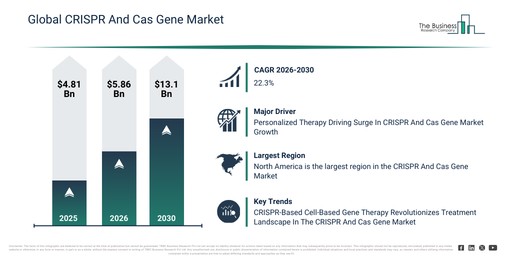
    The crispr and cas gene market size has seen substantial growth recently. It is projected to expand from $4.81 billion in 2025 to $5.86 billion in 2026, achieving a compound annual growth rate (CAGR) of 21.8%. Historically, this expansion can be linked to several factors including the groundbreaking discovery of crispr cas systems, lower gene editing expenses, broader adoption in academic research, the availability of research kits, and backing from government funding.

    The crispr and cas gene market is anticipated to experience substantial growth over the next few years, with its size expected to reach $13.1 billion by 2030, driven by a compound annual growth rate (CAGR) of 22.3%. This expansion during the forecast period is primarily attributed to the clinical implementation of gene editing, the spread of personalized medicine, the emergence of biotech startups, increased funding for research, and improvements in delivery mechanisms. Key trends foreseen include the wider application of gene editing in research, its expanding utilization in cell line engineering, increased integration into drug discovery processes, the creation of advanced crispr libraries, and the rise of bespoke gene editing services.

    Download the Free Sample Report to Explore Key Market Insights:

    https://www.thebusinessresearchcompany.com/sample.aspx?id=13632&type=smp

    What Major Drivers Are Influencing Demand In The CRISPR And Cas Gene Market?

    An increasing emphasis on personalized therapy is anticipated to boost the expansion of the CRISPR and Cas gene markets in the future. Personalized therapy is defined as a medical approach utilizing an individual’s genetic makeup to inform decisions regarding disease diagnosis, treatment, and prevention. CRISPR and the Cas gene, especially Cas9, find application in personalized medicine by allowing accurate alterations to a person’s genetic material, thereby offering significant potential for advances in creating customized treatments for genetic conditions, cancer, and diverse medical issues. As an illustration, in February 2024, data from the Personalized Medicine Coalition (PMC), a US-based organization, revealed that in 2023, the FDA approved 16 new personalized therapies for rare disease patients, which is a rise from the six treatments sanctioned in 2022. Consequently, the escalating need for personalized therapy will fuel the development of the CRISPR and Cas gene markets.

    Which Market Segments Are Examined In The CRISPR And Cas Gene Market Study?

    The crispr and cas gene market covered in this report is segmented –

    1) By Product Type: Kits And Enzymes, Libraries, Design Tool, Antibodies, Other Products Types

    2) By Service Type: Cell Line Engineering, gRNA Design, Microbial Gene Editing, DNA Synthesis

    3) By Application: Clinical, Financial, Operational And Administrative

    4) By End Use: Biotechnology And Pharmaceutical Companies, Academics And Government Research Institutes, Contract Research Organizations (CROs)

    Subsegments:

    1) By Kits And Enzymes: CRISPR Kits, Cas Enzymes, Grna Synthesis Kits

    2) By Libraries: CRISPR Libraries For Gene Knockout, CRISPR Libraries For Gene Activation, Sgrna Libraries

    3) By Design Tools: Online Design Platforms, Software For CRISPR Guide RNA Design, Custom Design Services

    4) By Antibodies: Antibodies For Cas Proteins, Antibodies For Detection Of Edited Cells, Secondary Antibodies For Immunoassays

    5) By Other Product Types: Delivery Systems, CRISPR-Related Consumables, Control Plasmids And Reagents

    Which Trends Are Influencing The CRISPR And Cas Gene Market?

    Major companies engaged in the CRISPR and Cas gene markets are developing innovative products like CRISPR-based cell-based gene therapy to enhance their product offerings and achieve a competitive advantage. This therapy involves using CRISPR gene-editing technology to modify or correct genetic material within cells, providing a targeted and potentially transformative approach to treating genetic disorders, diseases, and other medical conditions at the cellular level. For example, in December 2023, Vertex Pharmaceuticals Incorporated, a US-based biopharmaceutical company, received approval for CASGEVY (exagamglogene autotemcel [exa-cel]) from the U.S. Food and Drug Administration (FDA). CASGEVY is a CRISPR/Cas9 genome-edited gene therapy for the management of sickle cell disease (SCD) in individuals aged 12 and above who experience recurrent vaso-occlusive crises. CASGEVY is a first-of-its-kind medication that has the potential to be a one-time transformational therapy for qualified sickle cell patients. Since CASGEVY administration necessitates specific training in stem cell transplantation, Vertex is collaborating with experienced institutions to establish a network of independently owned, approved treatment centers (ATCs) across the United States to provide CASGEVY to patients.

    Who Are The Primary Competitors In The CRISPR And Cas Gene Market?

    Major companies operating in the crispr and cas gene market are F. Hoffmann-La Roche AG, Thermo Fisher Scientific Inc, AstraZeneca plc, Danaher Corporation, Lonza Group AG, Bio-Rad Laboratories Inc., eGenesis, Novartis Institutes for BioMedical Research, GenScript, Takara Bio Inc., Merck KGaA, Horizon Discovery Group Plc, Beam Therapeutics Inc, Intellia Therapeutics Inc, New England BioLabs, Recursion Pharmaceuticals Inc, Caribou Biosciences Inc, Cellectis S.A., Editas Medicine Inc, CRISPR Therapeutics AG, Mammoth Biosciences, Inscripta Inc, Prime Medicine Inc, Precision BioSciences Inc, Sangamo Therapeutics Inc.

    Read the full crispr and cas gene market report here:

    https://www.thebusinessresearchcompany.com/report/crispr-and-cas-gene-global-market-report

    Which Region Shows The Strongest Potential For Future Growth In The CRISPR And Cas Gene Market?

    North America was the largest region in the CRISPR and Cas gene market in 2025. Asia-Pacific is expected to be the fastest-growing region in the forecast period. The regions covered in the crispr and cas gene market report are Asia-Pacific, South East Asia, Western Europe, Eastern Europe, North America, South America, Middle East, Africa.

    Request A Tailored CRISPR And Cas Gene Market Research Report For Competitive Advantage:

    https://www.thebusinessresearchcompany.com/customise?id=13632&type=smp

    Browse Through More Reports Similar to the Global CRISPR And Cas Gene Market 2026, By The Business Research Company

    Cranial Fixation And Stabilization Devices Global Market Report

    https://www.thebusinessresearchcompany.com/report/cranial-fixation-and-stabilization-devices-global-market-report

    Cerebrospinal Fluid Management Csf Devices And Equipment Global Market Report

    https://www.thebusinessresearchcompany.com/report/cerebrospinal-fluid-management-csf-devices-and-equipment-global-market-report

    Assistive Technologies For Visually Impaired Global Market Report

    https://www.thebusinessresearchcompany.com/report/assistive-technologies-for-visually-impaired-global-market-report

    Get in touch with us:

    The Business Research Company: https://www.thebusinessresearchcompany.com/

    Americas +1 310-496-7795

    Asia +44 7882 955267 & +91 8897263534

    Europe +44 7882 955267

    Email us at info@tbrc.info

    Follow us on:

    LinkedIn: https://in.linkedin.com/company/the-business-research-company

    YouTube: https://www.youtube.com/channel/UC24_fI0rV8cR5DxlCpgmyFQ

    Global Market Model: https://www.thebusinessresearchcompany.com/global-market-model
  • Craniomaxillofacial (CMF) Distraction System Market Expected to Record Steady Growth and Approach $2.42 Billion by 2030

    Craniomaxillofacial (CMF) Distraction System Market Expected to Record Steady Growth and Approach $2.42 Billion by 2030

    The Business Research Company’s 2026 market reports include new capabilities such as market attractiveness scoring and analysis, total addressable market analysis, company scoring matrix, interactive excel data dashboard, improved supply chain analysis, upcoming startups in the market, and overview of key products, aimed at improving the depth, usability, and strategic value of the insights delivered.

    How Large Is The Craniomaxillofacial (CMF) Distraction System Market Projected To Become By 2030 Based On Its 2026 Valuation?

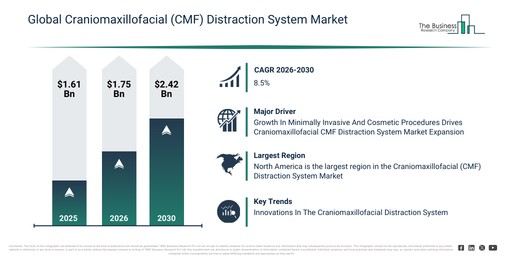
    The craniomaxillofacial (cmf) distraction system market has observed significant growth in recent years. It is anticipated to expand from $1.61 billion in 2025 to $1.75 billion in 2026, demonstrating a compound annual growth rate (CAGR) of 8.5%. This historical growth can be attributed to several factors including the prevalence of craniofacial deformities, restricted non-surgical correction options, the role of hospital-based reconstructive surgery, the demand for pediatric surgery, and trauma-related facial injuries.

    The craniomaxillofacial (cmf) distraction system market size is projected to experience robust growth in the upcoming years. It is anticipated to expand to $2.42 billion by 2030, achieving a compound annual growth rate (CAGR) of 8.5%. This growth throughout the forecast period can be attributed to enhancements in distraction technology, an increase in reconstructive surgery volumes, better patient outcomes, the proliferation of specialty surgical centers, and the implementation of minimally invasive techniques. Significant trends expected during this period include a rising application in congenital facial deformities, the increased adoption of bioabsorbable devices, the growth of reconstructive facial surgery, an expansion of trauma correction procedures, and the customization of distraction systems.

    Download the Free Sample Report to Explore Key Market Insights:

    https://www.thebusinessresearchcompany.com/sample.aspx?id=19017&type=smp

    Which Market Drivers Are Supporting The Expansion Of The Craniomaxillofacial (CMF) Distraction System Market?

    The expanding adoption of minimally invasive and cosmetic procedures is projected to fuel the growth of the craniomaxillofacial (CMF) distraction system market in the future. These procedures involve medical interventions that utilize small incisions or non-surgical methods to improve appearance or address various health concerns. The escalating popularity of minimally invasive and cosmetic treatments stems from advancements in medical technology, leading to safer and more effective options, as well as an increased desire for aesthetic enhancements influenced by societal emphasis on looks. The CMF distraction system enables precise bone adjustments with minimal incisions, thereby improving facial contouring and correcting structural issues within these procedures. For example, in August 2023, The Aesthetic Society, a US-based organization specializing in plastic surgery and cosmetic medicine, reported that Americans spent over $11.8 billion on aesthetic procedures, representing a 2% increase from the previous year. Consequently, the rise in minimally invasive and cosmetic procedures is a key driver for the expansion of the craniomaxillofacial (CMF) distraction system market.

    What Segment Groups Are Identified Within The Craniomaxillofacial (CMF) Distraction System Market?

    The craniomaxillofacial (cmf) distraction system market covered in this report is segmented –

    1) By Product Type: Internal Distraction Devices, External Distraction Devices, Dissolvable Distraction Devices

    2) By Material: Titanium, Stainless Steel, Polymers

    3) By Application: Orthognathic Surgery, Trauma Surgery, Reconstructive Surgery

    Subsegments:

    1) By Internal Distraction Devices: Rigid Internal Devices, Adjustable Internal Devices

    2) By External Distraction Devices: Monolateral External Devices, Bilateral External Devices

    3) By Dissolvable Distraction Devices: Bioabsorbable Distraction Devices

    What Trends Are Advancing Progress In The Craniomaxillofacial (CMF) Distraction System Market?

    Leading companies active in the craniomaxillofacial (CMF) distraction system market are concentrating on developing innovative solutions, such as surgical planning tools for craniomaxillofacial (CMF) applications, to enhance accuracy, improve patient outcomes, and streamline surgical procedures. Surgical planning solutions for craniomaxillofacial (CMF) applications refer to advanced technologies and instruments used for meticulously planning and simulating surgical operations involving the face and jaw. For instance, in April 2024, 3D Systems Corporation, a US-based engineering company, received FDA clearance for its VSP surgical planning solutions specifically designed for craniomaxillofacial (CMF) applications, enabling the company to provide personalized surgical planning services and patient-matched implants within the U.S. These VSP solutions leverage sophisticated medical imaging, surgical planning software, and 3D printing technologies to create customized surgical guides and models, significantly improving surgical precision and results. This tailored approach allows surgeons to prepare more accurately for complex procedures, ultimately enhancing patient care and surgical efficiency.

    Which Companies Hold Significant Positions In The Craniomaxillofacial (CMF) Distraction System Market?

    Major companies operating in the craniomaxillofacial (cmf) distraction system market are Johnson & Johnson, Stryker Corporation, DePuy Synthes, Zimmer Biomet Holdings Inc., KLS Martin Group, 3D Systems Inc, Aesculap AG, Brainlab, Medartis AG, Matrix Surgical USA, Inion, Calavera Surgical Design, Medtronic Plc, Integra LifeSciences Corporation, B Braun Melsungen AG, OsteoMed LLC, Jeil Medical Corporation, Linvatec Corporation, Orthofix Medical Inc, Sientra Inc, Xilloc Medical BV, Surgi Tec NV, Smith+Nephew Plc, MicroPort Scientific Corp, Osteopore Ltd, Leica Biomaterials AG, Titamed

    Read the full craniomaxillofacial (cmf) distraction system market report here:

    https://www.thebusinessresearchcompany.com/report/craniomaxillofacial-cmf-distraction-system-global-market-report

    How Is The Craniomaxillofacial (CMF) Distraction System Market Distributed Across Key Geographic Regions?

    North America was the largest region in the craniomaxillofacial (CMF) distraction system market in 2025. Asia-Pacific is expected to be the fastest-growing region in the forecast period. The regions covered in the craniomaxillofacial (cmf) distraction system market report are Asia-Pacific, South East Asia, Western Europe, Eastern Europe, North America, South America, Middle East, Africa.

    Request A Tailored Craniomaxillofacial (CMF) Distraction System Market Research Report For Competitive Advantage:

    https://www.thebusinessresearchcompany.com/customise?id=19017&type=smp

    Browse Through More Reports Similar to the Global Craniomaxillofacial (CMF) Distraction System Market 2026, By The Business Research Company

    Cranial Implants Global Market Report

    https://www.thebusinessresearchcompany.com/report/cranial-implants-global-market-report

    Craniomaxillofacial Cmf Devices And Equipment Global Market Report

    https://www.thebusinessresearchcompany.com/report/craniomaxillofacial-cmf-devices-and-equipment-global-market-report

    Skull Clamp Global Market Report

    https://www.thebusinessresearchcompany.com/report/skull-clamp-global-market-report

    Get in touch with us:

    The Business Research Company: https://www.thebusinessresearchcompany.com/

    Americas +1 310-496-7795

    Asia +44 7882 955267 & +91 8897263534

    Europe +44 7882 955267

    Email us at info@tbrc.info

    Follow us on:

    LinkedIn: https://in.linkedin.com/company/the-business-research-company

    YouTube: https://www.youtube.com/channel/UC24_fI0rV8cR5DxlCpgmyFQ

    Global Market Model: https://www.thebusinessresearchcompany.com/global-market-model
  • Cranial Fixation System Industry Expansion Forecast Showing Market Size of $2.32 Billion by 2030 at 7.5% CAGR

    Cranial Fixation System Industry Expansion Forecast Showing Market Size of $2.32 Billion by 2030 at 7.5% CAGR

    The Business Research Company’s 2026 market reports include new capabilities such as market attractiveness scoring and analysis, total addressable market analysis, company scoring matrix, interactive excel data dashboard, improved supply chain analysis, upcoming startups in the market, and overview of key products, aimed at improving the depth, usability, and strategic value of the insights delivered.

    What Market Value Is Anticipated For The Cranial Fixation System Market Over The Period 2026–2030?

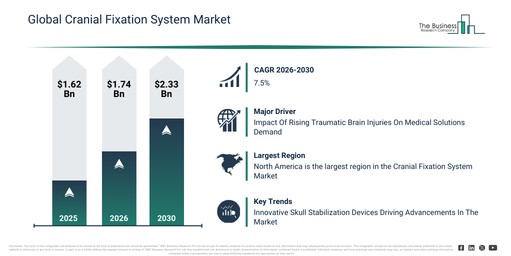
    The cranial fixation system market has experienced robust expansion over recent years. Projections indicate this market will expand from $1.62 billion in 2025 to $1.74 billion in 2026, maintaining a compound annual growth rate (CAGR) of 7.7%. This historical expansion is largely due to factors such as rising traumatic brain injuries, an increase in neurosurgical procedures, the reliance on metallic implants, the prevalence of hospital-based surgical care, and the demand for long-term cranial stability.

    The cranial fixation system market is anticipated to experience substantial expansion in the coming years. It is projected to reach a valuation of $2.33 billion by 2030, demonstrating a compound annual growth rate (CAGR) of 7.5%. This projected growth during the forecast period stems from factors such as innovations in implant materials, the proliferation of neurosurgical centers, an increase in accident rates, the increasing need for patient-specific implants, and enhancements in surgical outcomes. Key trends expected during this period involve the increasing adoption of biocompatible materials, the development of customized cranial implants, expanded application in trauma and neurosurgery, the widespread use of absorbable fixation devices, and advancements leading to improved surgical precision and stability.

    Download the Free Sample Report to Explore Key Market Insights:

    https://www.thebusinessresearchcompany.com/sample.aspx?id=21160&type=smp

    What Underlying Factors Are Accelerating The Growth Of The Cranial Fixation System Market?

    The increasing occurrence of traumatic brain injuries (TBI) is anticipated to drive the expansion of the cranial fixation system market in the future. These injuries, known as TBI, happen when an external impact, such as a blow or jolt to the head, causes harm to the brain. The growth in TBI cases stems from more frequent road traffic accidents, sports-related injuries, falls among the elderly, and military combat-related trauma. Cranial Fixation Systems are vital for stabilizing skull fractures and holding bone fragments securely, which aids in proper healing and lessens complications for patients suffering from traumatic brain injuries. As an example, a report from April 2024 by the American Association of Neurological Surgeons (AANS), a US-based nonprofit neurosurgical association, indicated that in 2023, sports and recreational pursuits were responsible for over 21% of all traumatic brain injuries experienced by American children and adolescents. Annually, an estimated 1.7 to 3.8 million traumatic brain injuries occur in the United States. Consequently, the escalating prevalence of traumatic brain injuries (TBI) is fueling the growth of the cranial fixation system market.

    How Is The Cranial Fixation System Market Divided Into Its Major Segments?

    The cranial fixation system market covered in this report is segmented –

    1) By Product Type: Implants, Mesh, Plates And Screws, Other Product Types

    2) By Indications: Brain Aneurysm, Brain Cancer, Hydrocephalous, Other Indications

    3) By Absorbability: Non Absorbable, Absorbable

    4) By End-User: Hospitals, Ambulatory Surgical Centers, Other End-Users

    Subsegments:

    1) By Implants: Cranial Implants, Biocompatible Implants, Custom Implants

    2) By Mesh: Titanium Mesh, Polymer Mesh, PEEK Mesh

    3) By Plates and Screws: Titanium Plates and Screws, Stainless Steel Plates and Screws, Absorbable Plates and Screws

    4) By Other Product Types: Cranial Staplers, Cranial Drills, Cranial Fixation Accessories

    How Are Trends Transforming The Cranial Fixation System Market Landscape?

    Leading companies within the cranial fixation system market are prioritizing the creation of innovative offerings, such as sophisticated skull stabilization devices, with the goal of enhancing the accuracy and safety of neurosurgical operations. Skull stabilization devices are specialized medical instruments engineered to firmly secure and stabilize the skull during neurosurgical procedures. As an illustration, in July 2023, Stryker Corporation, a US-based medication company, introduced its Q guidance system, featuring cranial guidance software. This Q guidance system, with its cranial guidance software, elevates cranial surgeries by delivering precise navigation and advanced imaging functionalities, consequently improving surgical planning and precision. Its intuitive interface and rapid performance optimize operational workflows, ultimately leading to enhanced patient outcomes.

    Who Are The Prominent Organizations Shaping The Cranial Fixation System Market?

    Major companies operating in the cranial fixation system market are Medtronic plc, Stryker Corporation, Zimmer Biomet Holdings Inc, Integra LifeSciences Holdings Corporation, 3D Systems Corporation, KLS Martin LP, Aesculap AG, Fin-ceramica Faenza SpA, Medyssey Co. Ltd, Evonos GmbH & Co KG, DePuy Synthes Companies of Johnson & Johnson, Bioplate Inc, Jeil Medical Corporation, Adeor Medical AG, NEOS Surgery SL, Osteopore International Pty Ltd, Xilloc Medical BV, OsteoMed LP, Medartis AG, Matrix Surgical USA, Cavendish Implants, CranioTech, Vitalys Surgical

    Read the full cranial fixation system market report here:

    https://www.thebusinessresearchcompany.com/report/cranial-fixation-system-global-market-report

    Which Region Is Projected To Dominate The Cranial Fixation System Market During The Forecast Period?

    North America was the largest region in the cranial fixation system market in 2025. The regions covered in the cranial fixation system market report are Asia-Pacific, South East Asia, Western Europe, Eastern Europe, North America, South America, Middle East, Africa.

    Request A Tailored Cranial Fixation System Market Research Report For Competitive Advantage:

    https://www.thebusinessresearchcompany.com/customise?id=21160&type=smp

    Browse Through More Reports Similar to the Global Cranial Fixation System Market 2026, By The Business Research Company

    Antiviral Combination Therapy Global Market Report

    https://www.thebusinessresearchcompany.com/report/antiviral-combination-therapy-global-market-report

    Oncolytic Virus Therapy Global Market Report

    https://www.thebusinessresearchcompany.com/report/oncolytic-virus-therapy-global-market-report

    Respiratory Syncytial Virus Rsv Therapeutics Global Market Report

    https://www.thebusinessresearchcompany.com/report/respiratory-syncytial-virus-rsv-therapeutics-global-market-report

    Get in touch with us:

    The Business Research Company: https://www.thebusinessresearchcompany.com/

    Americas +1 310-496-7795

    Asia +44 7882 955267 & +91 8897263534

    Europe +44 7882 955267

    Email us at info@tbrc.info

    Follow us on:

    LinkedIn: https://in.linkedin.com/company/the-business-research-company

    YouTube: https://www.youtube.com/channel/UC24_fI0rV8cR5DxlCpgmyFQ

    Global Market Model: https://www.thebusinessresearchcompany.com/global-market-model
  • Cell Transfection Market Developments and Growth Opportunities Across 2026–2030

    Cell Transfection Market Developments and Growth Opportunities Across 2026–2030

    The Business Research Company’s 2026 market reports include new capabilities such as market attractiveness scoring and analysis, total addressable market analysis, company scoring matrix, interactive excel data dashboard, improved supply chain analysis, upcoming startups in the market, and overview of key products, aimed at improving the depth, usability, and strategic value of the insights delivered.

    What Is The Market Size Of The Cell Transfection Market In 2026 And What Value Is Projected For 2030?

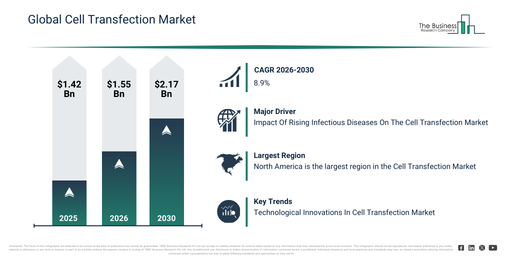
    The cell transfection market size has demonstrated significant growth over recent years. It is anticipated to expand from $1.42 billion in 2025 to $1.55 billion in 2026, driven by a compound annual growth rate (CAGR) of 9.2%. This historical expansion can be attributed to several factors including the broadening of molecular biology research, the increased utilization of gene expression studies, the rise in recombinant protein production, the growing adoption of in vitro genetic manipulation, and the availability of a variety of transfection methods.

    The cell transfection market is anticipated to experience robust expansion over the coming years. This market is projected to reach $2.17 billion by 2030, exhibiting a compound annual growth rate (CAGR) of 8.9%. This predicted growth stems from factors such as the accelerated development of gene and cell therapies, increased investments in genetic engineering research, a rising demand for high-throughput screening assays, the expansion of personalized medicine research, and the increasing adoption of non-viral delivery technologies. Key trends anticipated during this period encompass the greater adoption of high-efficiency transfection reagents, an increase in the use of viral vector-based transfection, a growing need for scalable transfection methods, the expansion of automated transfection platforms, and a heightened emphasis on transfection reproducibility.

    Download the Free Sample Report to Explore Key Market Insights:

    https://www.thebusinessresearchcompany.com/sample.aspx?id=19361&type=smp

    Which Growth Drivers Are Contributing To The Progress Of The Cell Transfection Market?

    The increasing incidence of infectious diseases is projected to drive the future growth of the cell transfection market. Infectious diseases are illnesses stemming from germs that disseminate from person to person or via contaminated sources. Inadequate public health infrastructure, along with vaccine hesitancy and misinformation, has facilitated the spread and evolution of pathogens. Cell transfection serves as a potent tool for infectious diseases, enabling scientists to introduce genes into cells to investigate how infections affect them and to evaluate new treatments. For instance, in October 2024, according to the World Health Organization, a Switzerland-based international public health organization, roughly 8.2 million people were newly diagnosed with tuberculosis in 2023, an increase from about 7.5 million in 2022, identifying tuberculosis as the leading infectious disease killer. Consequently, the rise in infectious disease cases propels the cell transfection market.

    What Are The Key Segments Of The Cell Transfection Market?

    The cell transfection market covered in this report is segmented –

    1) By Method: Electroporation, Lipofection, Calcium Phosphate, Viral Transfection, Other Methods

    2) By Application: Biomedical Research, Therapeutic Delivery, Protein Production

    3) By End User: Academic And Research Institutes, Pharmaceutical And Biotechnology Companies, Contract Research Organizations, Other End Users

    Subsegments:

    1) By Electroporation: Square Wave Electroporation, Pulsed Electric Field Electroporation, Multielectrode Array Electroporation

    2) By Lipofection: Cationic Lipid-Based Transfection, Lipid Nanoparticle-Based Transfection, Liposomal Transfection

    3) By Calcium Phosphate: Calcium Phosphate Co-precipitation, Modified Calcium Phosphate Methods

    4) By Viral Transfection: Lentiviral Transduction, Adenoviral Transduction, AAV (Adeno-Associated Virus) Transduction

    5) By Other Methods: Microinjection, Nanoparticle-Mediated Transfection, Sonoporation, Magnetofection

    What Trends Are Projected To Affect The Cell Transfection Market?

    Major companies operating in the cell transfection market are actively integrating innovations into their transfection systems to enable precise control over gene expression. A transfection system is a technique or technology specifically designed to introduce foreign nucleic acids into cells, serving purposes like studying gene function, producing proteins, or altering gene expression. For instance, in July 2024, STEMCELL Technologies, a Canada-based biotechnology company, launched the Cellpore transfection system, a novel tool engineered to enhance cell engineering research. This system leverages advanced microfluidic technology to facilitate the intracellular delivery of various macromolecules into cells, thereby addressing limitations associated with traditional transfection methods. It possesses the capability to transfect up to 10 million cells per second, rendering it suitable for large-scale applications. Moreover, the system demonstrates compatibility with diverse cell types, including T cells and hematopoietic stem cells, and can effectively deliver various cargoes such as small molecules, Ribonucleic Acid (RNA), proteins, and antibodies.

    Who Are The Leading Companies Operating In The Cell Transfection Market?

    Major companies operating in the cell transfection market are Thermo Fisher Scientific Inc., Merck KGaA, Agilent Technologies Inc., Lonza Group AG, Sartorius AG, Sigma-Aldrich Corporation, Bio-Rad Laboratories Inc., QIAGEN N.V., Stemcell Technologies Inc., GenScript Biotech Corporation, Promega Corporation, Takara Bio Inc., Molecular Devices LLC, New England Biolabs Inc., CureVac SE, OriGene Technologies Inc., Tocris Bioscience, Vector Biolabs, Mirus Bio LLC, Addgene Inc., Altogen Biosystems, Cell Biolabs Inc., Cellecta Inc., ExCell Bio Inc., GeneCopoeia Inc.

    Read the full cell transfection market report here:

    https://www.thebusinessresearchcompany.com/report/cell-transfection-global-market-report

    What Are The Leading Geographic Regions In The Cell Transfection Market?

    North America was the largest region in the cell transfection market in 2025. Asia-Pacific is expected to be the fastest-growing region in the forecast period. The regions covered in the cell transfection market report are Asia-Pacific, South East Asia, Western Europe, Eastern Europe, North America, South America, Middle East, Africa.

    Request A Tailored Cell Transfection Market Research Report For Competitive Advantage:

    https://www.thebusinessresearchcompany.com/customise?id=19361&type=smp

    Browse Through More Reports Similar to the Global Cell Transfection Market 2026, By The Business Research Company

    Cells Therapy Global Market Report

    https://www.thebusinessresearchcompany.com/report/cells-therapy-global-market-report

    Cell Therapy Human Raw Materials Global Market Report

    https://www.thebusinessresearchcompany.com/report/cell-therapy-human-raw-materials-global-market-report

    Stem Cells Therapy Global Market Report

    https://www.thebusinessresearchcompany.com/report/stem-cells-therapy-global-market-report

    Get in touch with us:

    The Business Research Company: https://www.thebusinessresearchcompany.com/

    Americas +1 310-496-7795

    Asia +44 7882 955267 & +91 8897263534

    Europe +44 7882 955267

    Email us at info@tbrc.info

    Follow us on:

    LinkedIn: https://in.linkedin.com/company/the-business-research-company

    YouTube: https://www.youtube.com/channel/UC24_fI0rV8cR5DxlCpgmyFQ

    Global Market Model: https://www.thebusinessresearchcompany.com/global-market-model
  • Global Cell Therapy Technologies Market Forecast 2026–2035 Presenting Long-Term Industry Expansion Insights

    Global Cell Therapy Technologies Market Forecast 2026–2035 Presenting Long-Term Industry Expansion Insights

    The Business Research Company’s 2026 market reports include new capabilities such as market attractiveness scoring and analysis, total addressable market analysis, company scoring matrix, interactive excel data dashboard, improved supply chain analysis, upcoming startups in the market, and overview of key products, aimed at improving the depth, usability, and strategic value of the insights delivered.

    What Will Be The Estimated Market Valuation Of The Cell Therapy Technologies Market By The End Of 2030?

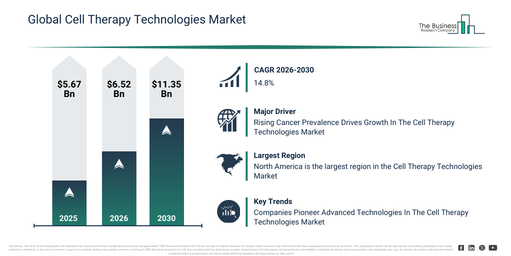
    The cell therapy technologies market size has experienced rapid growth in recent years. It is projected to expand from $5.67 billion in 2025 to $6.52 billion in 2026, achieving a compound annual growth rate (CAGR) of 15.0%. This historical growth can be attributed to increasing clinical research in cell-based therapies, the rising adoption of stem cell treatments, the expansion of research cell banks, the availability of advanced bioprocessing equipment, and the growth in translational medicine programs.

    The cell therapy technologies market is projected to experience substantial expansion in the coming years. This market is set to reach $11.35 billion by 2030, exhibiting a compound annual growth rate (CAGR) of 14.8%. Key drivers for this growth during the forecast period include the expanding commercialization of cell therapies, a surge in investments directed towards regenerative medicine, the proliferation of point-of-care cell therapy systems, an escalating need for automated manufacturing workflows, and an intensified regulatory emphasis on process consistency. Prominent trends observed over the forecast period encompass a greater uptake of closed-system cell processing platforms, a rise in the utilization of automated cell culture systems, an increasing imperative for scalable cell therapy manufacturing, the wider availability of process monitoring and quality control instruments, and a heightened emphasis on standardized cell handling.

    Download the Free Sample Report to Explore Key Market Insights:

    https://www.thebusinessresearchcompany.com/sample.aspx?id=4122&type=smp

    What Primary Drivers Are Shaping The Development Of The Cell Therapy Technologies Market?

    The rising incidence of cancer is anticipated to propel the expansion of the cell therapy technologies market during the forecast period. Cell therapy utilizes living cells as therapeutic agents to treat various diseases. When applied to cancer, this therapy harnesses the immune system’s intrinsic capability to detect and eliminate abnormal cells within the body. For instance, in January 2024, the American Cancer Society, a US-based nonprofit cancer advocacy organization, reported an increase in cancer cases to 2,001,140, up from 1,958,310 in 2023, representing a growth of 2.19%. Thus, the growing number of cancer cases is expected to contribute significantly to the growth of the cell therapy technologies market going forward.

    Which Segment Classifications Shape The Cell Therapy Technologies Market?

    The cell therapy technologies market covered in this report is segmented –

    1) By Product: Consumables, Equipment, Systems And Software

    2) By Cell Type: T-Cells, Stem Cells, Other Cell Types

    3) By Process: Cell Processing, Cell Preservation, Distribution And Handling, Process Monitoring And Quality Control

    4) By End User: Life Science Companies, Research Institutes And Cell Banks

    Subsegments:

    1) By Consumables: Cell Culture Media, Bioreactors And Cell Culture Vessels, Cell Separation And Processing Kits, Cryopreservation Bags And Vials

    2) By Equipment: Cell Counters, Centrifuges, Cell Sorting Equipment, Incubators

    3) By Systems And Software: Closed-System Cell Processing Systems, Automated Cell Culture Systems, Point-Of-Care Cell Therapy Systems, Laboratory Information Management Systems (LIMS), Data Management Software For Cell Therapies, Process Optimization And Tracking Software

    Which Upcoming Trends Are Expected To Influence The Cell Therapy Technologies Market?

    Major companies within the cell therapy market are concentrating on developing advanced technological solutions, specifically automated manufacturing platforms, to enhance the scalability, reproducibility, and efficiency of producing cell-based therapies. These automated cell therapy technologies integrate robotics, process monitoring, and closed-system manufacturing, which serves to streamline production while upholding cell quality and ensuring regulatory adherence. For example, in 2025, Limula, a US-based cell therapy company, introduced an automated cell therapy platform specifically designed to accelerate cell manufacturing, reduce the need for manual intervention, and improve the consistency and safety of therapeutic cell products. The launch of this platform signifies a crucial advancement toward commercial-scale cell therapy production, enabling a quicker transition from research to clinical application.

    Which Companies Are Expanding Their Footprint In The Cell Therapy Technologies Market?

    Major companies operating in the cell therapy technologies market are Lonza Group AG, Thermo Fisher Scientific Inc, Merck KGaA, Terumo Corporation, Danaher Corporation, Fujifilm Holdings Corporation, Sartorius AG, Becton Dickinson and Company, Avantor Inc., Cellular Biomedicine Group, CORESTEM, Astellas Pharma Inc, Anterogen Co. Ltd, Arce Therapeutics, CARsgen Therapeutics, Co.Don AG, Neogene Therapeutics, GammaDelta Therapeutics Limited, SOTIO, Genestack, Novartis AG, Celgene Corporation, Gilead Sciences, Juno Therapeutics, Allogene Therapeutics, Bluebird Bio, Amgen, Regen BioPharma, Bellicum, Biotchpharma, BrainStorm Cell Therapeutics, Pluristem, Next BioSciences, CryoSave, BioHeart, Stem Cell Technologies

    Read the full cell therapy technologies market report here:

    https://www.thebusinessresearchcompany.com/report/cell-therapy-technologies-global-market-report

    How Does The Cell Therapy Technologies Market Perform Across Major Global Regions?

    North America was the largest region in the cell therapy technologies market in 2025. Asia-Pacific is predicted to record the fastest growth over the forecast period. The regions covered in the cell therapy technologies market report are Asia-Pacific, South East Asia, Western Europe, Eastern Europe, North America, South America, Middle East, Africa.

    Request A Tailored Cell Therapy Technologies Market Research Report For Competitive Advantage:

    https://www.thebusinessresearchcompany.com/customise?id=4122&type=smp

    Browse Through More Reports Similar to the Global Cell Therapy Technologies Market 2026, By The Business Research Company

    Metal Structural Insulation Panels Global Market Report

    https://www.thebusinessresearchcompany.com/report/metal-structural-insulation-panels-global-market-report

    Vacuum Insulation Panel Global Market Report

    https://www.thebusinessresearchcompany.com/report/vacuum-insulation-panel-global-market-report

    Exterior Insulation And Finish System Global Market Report

    https://www.thebusinessresearchcompany.com/report/exterior-insulation-and-finish-system-global-market-report

    Get in touch with us:

    The Business Research Company: https://www.thebusinessresearchcompany.com/

    Americas +1 310-496-7795

    Asia +44 7882 955267 & +91 8897263534

    Europe +44 7882 955267

    Email us at info@tbrc.info

    Follow us on:

    LinkedIn: https://in.linkedin.com/company/the-business-research-company

    YouTube: https://www.youtube.com/channel/UC24_fI0rV8cR5DxlCpgmyFQ

    Global Market Model: https://www.thebusinessresearchcompany.com/global-market-model
  • Cell Therapy Processing Market Outlook 2026–2030 Exploring New Business Opportunities

    Cell Therapy Processing Market Outlook 2026–2030 Exploring New Business Opportunities

    The Business Research Company’s 2026 market reports include new capabilities such as market attractiveness scoring and analysis, total addressable market analysis, company scoring matrix, interactive excel data dashboard, improved supply chain analysis, upcoming startups in the market, and overview of key products, aimed at improving the depth, usability, and strategic value of the insights delivered.

    What Market Size Growth Is Projected For The Cell Therapy Processing Market During The Forecast Period 2026–2030?

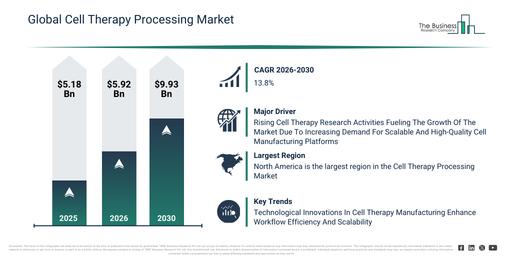
    The cell therapy processing market has witnessed significant growth in recent years. It is projected to expand from $5.18 billion in 2025 to $5.92 billion in 2026, exhibiting a compound annual growth rate (CAGR) of 14.3%. This historical growth can be attributed to a confluence of factors, including the increasing number of clinical trials for cell therapies, the expansion of biopharmaceutical manufacturing capacity, the availability of specialized processing facilities, developing expertise in GMP compliance, and rising investment in advanced therapeutics.

    The cell therapy processing market is poised for substantial expansion over the next few years. Its valuation is expected to reach $9.93 billion by 2030, demonstrating a compound annual growth rate (CAGR) of 13.8%. This anticipated growth during the forecast period can be linked to the increasing commercialization of gene and cell therapies, a rising need for contract manufacturing services, the spread of decentralized manufacturing models, the increasing implementation of digital quality management systems, and a surge in regulatory approvals for cell-based treatments. Significant trends for the forecast period encompass a greater adoption of GMP-compliant processing platforms, an escalating demand for scalable cell therapy manufacturing, the growing incorporation of workflow automation software, further expansion of contract processing services, and an intensified focus on sterility and quality assurance.

    Download the Free Sample Report to Explore Key Market Insights:

    https://www.thebusinessresearchcompany.com/sample.aspx?id=27244&type=smp

    Which Major Factors Are Driving The Expansion Of The Cell Therapy Processing Market?

    The increasing volume of cell therapy research endeavors is anticipated to fuel the expansion of the cell therapy processing market in the future. Cell therapy involves creating therapeutic agents from live cells to address or manage various conditions, such as cancers, autoimmune issues, and genetic ailments. The escalating need for cell-based treatments stems from a rising requirement for scalable and uniform manufacturing systems capable of handling high cell concentrations without sacrificing product integrity. Furthermore, cell therapy processing proves advantageous for cell therapy investigations because it facilitates the standardized creation, quality verification, and large-scale manufacturing of superior cells, thereby guaranteeing dependable and consistent results for both experimental and clinical analyses. As an illustration, data from December 2024, provided by the International Federation of Pharmaceutical Manufacturers and Associations, a Switzerland-based non-profit organization, indicated that six first-in-class cell and gene treatments became available in 2023, representing 50% more than the three released in 2022. Consequently, the growing quantity of cell therapy research efforts is propelling the growth of the cell therapy processing market.

    What Market Segments Are Evaluated Within The Cell Therapy Processing Market?

    The cell therapy processing market covered in this report is segmented –

    1) By Offering Type: Products, Services, Software

    2) By Applications: Cardiovascular Diseases Or Cardiac Regenerative Therapies, Bone Repair, Neurological Disorders, Skeletal Muscle Repair, Cancer, Other Applications

    3) By End-User: Research Institutes, Biopharmaceutical Companies, Contract Research Organizations, Other End-Users

    Subsegments:

    1) By Products: Cell Processing Systems, Cell Separation Devices, Cell Culture Equipment, Cell Preservation Systems, Consumables And Reagents

    2) By Services: Contract Manufacturing Services, Process Development Services, Quality Control And Testing Services, Logistics And Supply Chain Services, Regulatory Compliance And Documentation Services

    3) By Software: Cell Processing Workflow Management Software, Data Analysis And Reporting Software, Quality Management Software, Laboratory Information Management Systems (LIMS), Compliance And Audit Management Software

    How Are Trends Shaping The Direction Of The Cell Therapy Processing Market?

    Leading companies in the cell therapy processing market are prioritizing the creation of advanced solutions, such as integrated bioreactor-centrifuge systems, to optimize manufacturing workflows and enhance the consistency, scalability, and sterility of cell-based therapies. An integrated bioreactor-centrifuge system functions as a unified apparatus that combines cell incubation and centrifugal separation within a single closed unit, enabling continuous, automated cell processing without requiring intermediate transfers. For example, in March 2025, Limula SA, a Switzerland-based company specializing in cell and gene therapy (CGT) manufacturing, unveiled LimONE, an automated, closed-system platform for cell therapy production. This innovative system incorporates hardware, single-use consumables, and protocol-driven software to streamline complex cell processing steps, including incubation, centrifugation, and reagent handling, into one compact unit, thereby enabling consistent, scalable production of therapies such as CAR-T and gene-edited stem cells from initial research to GMP-compliant manufacturing without the necessity for intricate technology transfers.

    Who Are The Top Market Participants Influencing The Cell Therapy Processing Market?

    Major companies operating in the cell therapy processing market are Johnson & Johnson Services Inc., Bristol-Myers Squibb Company, Thermo Fisher Scientific Inc., Novartis AG, Gilead Sciences Inc., Danaher Corporation, Lonza Group AG, Anterogen Co. Ltd., Terumo Corporation, Sartorius AG, Bio-Techne Corporation, STEMCELL Technologies Inc., Miltenyi Biotec GmbH, AGC Biologics S.p.A., MaxCyte Inc., Cellares Corporation, Cellectis S.A., JW Cayman Therapeutics Company Limited, Cell Therapies Pty Ltd., InGeneron Inc., WuXi Advanced Therapies, Catalent Inc.

    Read the full cell therapy processing market report here:

    https://www.thebusinessresearchcompany.com/report/cell-therapy-processing-global-market-report

    Which Region Currently Holds The Largest Share Of The Cell Therapy Processing Market?

    North America was the largest region in the cell therapy processing market in 2025. Asia-Pacific is expected to be the fastest-growing region in the forecast period. The regions covered in the cell therapy processing market report are Asia-Pacific, South East Asia, Western Europe, Eastern Europe, North America, South America, Middle East, Africa.

    Request A Tailored Cell Therapy Processing Market Research Report For Competitive Advantage:

    https://www.thebusinessresearchcompany.com/customise?id=27244&type=smp

    Browse Through More Reports Similar to the Global Cell Therapy Processing Market 2026, By The Business Research Company

    Cell Line Development Global Market Report

    https://www.thebusinessresearchcompany.com/report/cell-line-development-global-market-report

    Cell Cultures Global Market Report

    https://www.thebusinessresearchcompany.com/report/cell-cultures-global-market-report

    Cell Expansion Global Market Report

    https://www.thebusinessresearchcompany.com/report/cell-expansion-global-market-report

    Get in touch with us:

    The Business Research Company: https://www.thebusinessresearchcompany.com/

    Americas +1 310-496-7795

    Asia +44 7882 955267 & +91 8897263534

    Europe +44 7882 955267

    Email us at info@tbrc.info

    Follow us on:

    LinkedIn: https://in.linkedin.com/company/the-business-research-company

    YouTube: https://www.youtube.com/channel/UC24_fI0rV8cR5DxlCpgmyFQ

    Global Market Model: https://www.thebusinessresearchcompany.com/global-market-model
  • Global Cell Signaling Market Report 2026–2035 Highlighting Expansion Outlook and Forecast Opportunities

    Global Cell Signaling Market Report 2026–2035 Highlighting Expansion Outlook and Forecast Opportunities

    The Business Research Company’s 2026 market reports include new capabilities such as market attractiveness scoring and analysis, total addressable market analysis, company scoring matrix, interactive excel data dashboard, improved supply chain analysis, upcoming startups in the market, and overview of key products, aimed at improving the depth, usability, and strategic value of the insights delivered.

    How Will The Market Size Of The Cell Signaling Market Evolve From 2026 To 2030?

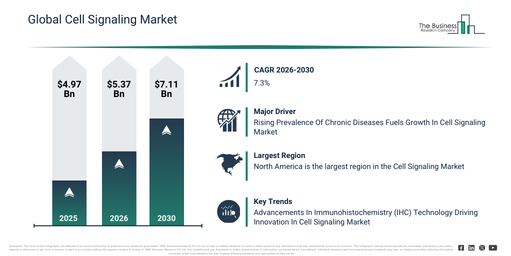
    The cell signaling market has experienced significant expansion recently. It is projected to increase from $4.97 billion in 2025 to $5.37 billion in 2026, exhibiting a compound annual growth rate (CAGR) of 8.2%. Historically, this expansion has been driven by factors such as the broadening of molecular biology research, the increased application of immunoassays in laboratory settings, the rise in cancer signaling studies, the growing adoption of western blotting techniques, and the availability of sophisticated antibodies.

    The cell signaling market is projected to experience substantial expansion in the coming years, reaching $7.11 billion by 2030, demonstrating a compound annual growth rate (CAGR) of 7.3%. This anticipated growth throughout the forecast period is driven by several factors, including heightened investments in research for targeted therapies, an increasing need for precise signaling analysis, the broadening of translational research applications, the expanding utilization of high-throughput proteomics, and the greater incorporation of computational biology tools. Key developments expected during this period involve a heightened emphasis on pathway-specific signal analysis, the increasing deployment of high-sensitivity detection reagents, the rising adoption of multiplex signaling assays, the development of quantitative cell communication studies, and improved integration of advanced imaging techniques.

    Download the Free Sample Report to Explore Key Market Insights:

    https://www.thebusinessresearchcompany.com/sample.aspx?id=15758&type=smp

    What Key Drivers Are Influencing The Growth Of The Cell Signaling Market?

    The increasing prevalence of chronic diseases is expected to propel the growth of the cell signaling market going forward. Chronic diseases are long-lasting medical conditions that progress slowly and persist for extended periods, often for years or even a lifetime, necessitating ongoing management and treatment to control symptoms, prevent complications, and maintain quality of life. The widespread nature of these conditions stems from an aging population, unhealthy lifestyles, and the accessibility and infrastructure of healthcare. Cell signaling research provides valuable insights and tools for understanding, diagnosing, treating, and preventing chronic diseases, offering hope for improved outcomes and quality of life for affected individuals. For instance, in January 2023, according to the National Library of Medicine, a US-based biomedical library, the number of people 50 years of age and older having at least one chronic illness is predicted to rise from 71.522 million in 2020 to 142.66 million in 2050, a 99.5% increase. Therefore, the increasing prevalence of chronic diseases is driving the growth of the cell signaling market.

    Which Segment Areas Are Covered In The Cell Signaling Market Analysis?

    The cell signaling market covered in this report is segmented –

    1) By Product: Consumables, Instruments

    2) By Signaling Type: Endocrine Signaling, Paracrine Signaling, Autocrine Signaling, Synaptic Signaling Source, Other Signaling Types

    3) By Pathway: Akt Signaling Pathway, AMPK Signaling Pathway, ErbB Or HER Signaling Pathway, Other Signaling Pathways

    4) By Technology: Microscopy, Western Blotting, Flow Cytometry, Immunohistochemistry (IHC), Enzyme-Linked Immunosorbent Assay (ELISA), Mass Spectrometry, Other Technologies

    5) By Application: Research Applications, Medical Applications

    Subsegments:

    1) By Consumables: Reagents, Antibodies, Kits, Chemicals and Enzymes

    2) By Instruments: Flow Cytometers, Microplate Readers, Cell Counters, Western Blotting Systems, Real-Time PCR Systems

    Which Market Trends Are Creating New Opportunities In The Cell Signaling Market?

    Major companies operating in the cell signaling market are prioritizing the creation of innovative technologies, such as immunohistochemistry (IHC) assays, to enhance their standing in the market. Immunohistochemistry (IHC) assays represent laboratory techniques employed to identify and visualize specific proteins or antigens within tissue samples. For instance, in September 2023, Cell Signaling Technology (CST), a US-based life sciences discovery technology company, announced the introduction of SignalStar Multiplex IHC technology, an inventive tool for a method for spatial biology research utilizing mid-plex, high-throughput immunohistochemistry (IHC) assays. This groundbreaking technology enables researchers to detect multiple targets concurrently in formalin-fixed, paraffin-embedded (FFPE) tissues with high sensitivity and specificity. It functions by employing a combination of antibodies, oligonucleotides, and fluorophores to amplify the antibody signal, thus allowing the detection of targets, even those exhibiting low expression levels, up to eight proteins in a single tissue.

    Which Global Companies Are Actively Competing In The Cell Signaling Market?

    Major companies operating in the cell signaling market are Johnson & Johnson, F. Hoffmann-La Roche Ltd., Pfizer Inc., Bayer AG, Bristol-Myers Squibb Company, Thermo Fisher Scientific Inc., Novartis AG, GlaxoSmithKline plc, Eli Lilly and Company, Gilead Sciences Inc., Danaher Corporation, Merck KGaA, Becton Dickinson and Company, Agilent Technologies Inc., PerkinElmer Inc., Beckman Coulter Inc., Bio-Rad Laboratories Inc., Qiagen N.V., Bio-Techne Corporation, Miltenyi Biotec, Promega Corporation, Janssen Pharmaceuticals Inc., Abcam plc, Horizon Discovery Ltd., Cell Signaling Technology Inc., Cisbio Bioassays, Rockland Immunochemicals Inc.

    Read the full cell signaling market report here:

    https://www.thebusinessresearchcompany.com/report/cell-signaling-global-market-report

    Which Region Is Expected To Register The Fastest Growth In The Cell Signaling Market?

    North America was the largest region in the cell signaling market in 2025. Asia-Pacific is expected to be the fastest-growing region in the forecast period. The regions covered in the cell signaling market report are Asia-Pacific, South East Asia, Western Europe, Eastern Europe, North America, South America, Middle East, Africa.

    Request A Tailored Cell Signaling Market Research Report For Competitive Advantage:

    https://www.thebusinessresearchcompany.com/customise?id=15758&type=smp

    Browse Through More Reports Similar to the Global Cell Signaling Market 2026, By The Business Research Company

    Cell Separation Global Market Report

    https://www.thebusinessresearchcompany.com/report/cell-separation-global-market-report

    Membrane Separation Technology Global Market Report

    https://www.thebusinessresearchcompany.com/report/membrane-separation-technology-global-market-report

    Cell Isolation Global Market Report

    https://www.thebusinessresearchcompany.com/report/cell-isolation-global-market-report

    Get in touch with us:

    The Business Research Company: https://www.thebusinessresearchcompany.com/

    Americas +1 310-496-7795

    Asia +44 7882 955267 & +91 8897263534

    Europe +44 7882 955267

    Email us at info@tbrc.info

    Follow us on:

    LinkedIn: https://in.linkedin.com/company/the-business-research-company

    YouTube: https://www.youtube.com/channel/UC24_fI0rV8cR5DxlCpgmyFQ

    Global Market Model: https://www.thebusinessresearchcompany.com/global-market-model
  • Cell Separation Technologies Market Growth Prospects 2026–2030 with Innovation Trends and Competitive Landscape

    Cell Separation Technologies Market Growth Prospects 2026–2030 with Innovation Trends and Competitive Landscape

    The Business Research Company’s 2026 market reports include new capabilities such as market attractiveness scoring and analysis, total addressable market analysis, company scoring matrix, interactive excel data dashboard, improved supply chain analysis, upcoming startups in the market, and overview of key products, aimed at improving the depth, usability, and strategic value of the insights delivered.

    What Is The Forecasted Market Value Of The Cell Separation Technologies Market Across 2026–2030?

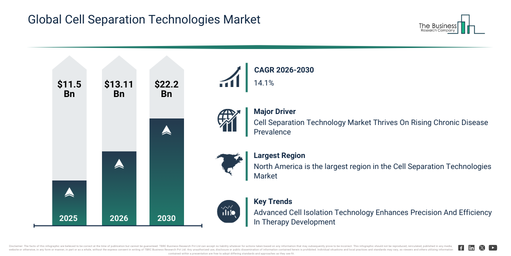
    The cell separation technologies market size has experienced rapid growth in recent years. It is projected to expand from $11.5 billion in 2025 to $13.11 billion in 2026, achieving a compound annual growth rate (CAGR) of 14.0%. The historical period’s growth can be ascribed to an increase in stem cell research activities, the rising application of cell-based assays, the expansion of academic and biomedical research institutes, the greater adoption of flow cytometry techniques, and the availability of advanced separation consumables.

    The cell separation technologies market is poised for significant expansion in the coming years. Its valuation is projected to reach $22.2 billion by 2030, exhibiting a compound annual growth rate (CAGR) of 14.1%. This anticipated growth during the forecast period is fueled by factors such as the escalating demand for research into personalized medicine, a surge in investments directed towards cell-based therapeutics, the broadening scope of automated laboratory processes, a heightened emphasis on ensuring reproducibility in cell analysis, and the increasing incorporation of AI-assisted cell sorting instruments. Key trends shaping the forecast period encompass a greater uptake of methods for isolating high-purity cells, an expanding utilization of sorting systems relying on magnetic and fluorescence technologies, a rising requirement for automated instruments dedicated to cell separation, the proliferation of separation kits tailored for specific applications, and an intensified concentration on high-throughput cell processing.

    Download the Free Sample Report to Explore Key Market Insights:

    https://www.thebusinessresearchcompany.com/sample.aspx?id=16013&type=smp

    What Major Growth Drivers Are Shaping The Outlook Of The Cell Separation Technologies Market?

    An escalating incidence of chronic diseases is anticipated to stimulate growth in the cell separation technology market. These conditions are health problems that persist for a year or longer, demanding continuous medical attention, limiting everyday activities, or both. Among the most common chronic diseases are cancer, heart disease, stroke, diabetes, and arthritis. The widespread occurrence of chronic diseases is attributable to an increase in modifiable lifestyle choices, social inequities, infections, genetics, autoimmunity, and mental health issues. Cell separation technologies contribute to advancing treatments for chronic diseases by offering a method for isolating cancer cells, immune cells, and other relevant cell types. For example, in April 2025, the Centers for Disease Control and Prevention (CDC), a US-based federal agency, reported that in 2023, approximately 194 million U.S. adults, or 76.4%, indicated they had at least one chronic condition. This prevalence was 59.5% among young adults, 78.4% among midlife adults, and 93.0% among older adults. Therefore, the rising prevalence of chronic diseases is propelling the expansion of the cell separation technology market.

    What Segmentation Levels Are Considered In The Cell Separation Technologies Market?

    The cell separation technologies market covered in this report is segmented –

    1) By Product: Instruments, Consumables And Reagents

    2) By Technology: Gradient Centrifugation, Surface Markers Separation, Fluorescence Activated Cell Sorting, Magnetic Cell Sorting, Filtration Based Separation

    3) By Application: Stem Cell Research, Immunology, Neuroscience, Cancer Research, Other Applications

    4) By End-User: Biotechnology And Pharmaceutical Companies, Hospitals And Diagnostic Laboratories, Academic And Research Institutes, Other End-Users

    Subsegments:

    1) By Instruments: Centrifuges, Magnetic Cell Sorters, Flow Cytometers, Laser Capture Microdissection Systems, Cell Sorters

    2) By Consumables And Reagents: Separation Columns, Cell Separation Kits, Filters, Microbeads

    What Trends Are Affecting The Expansion Of The Cell Separation Technologies Market?

    Leading companies operating in the cell separation technologies market are concentrating on developing innovative products, such as automated temperature-controlled tissue-dissociation systems, to standardize and accelerate the conversion of solid tissues into viable single-cell suspensions for downstream applications. These automated temperature-controlled tissue-dissociation systems are instruments designed to combine regulated motion, temperature, and enzymatic digestion protocols to safely and reproducibly dissociate tissue into single cells. For instance, in June 2025, STEMCELL Technologies, a Canada-based provider of cell culture media, separation reagents, and instruments for cell-biology research, introduced the STEMprep Tissue Dissociator System. Its key features include precise temperature control ranging from 4 °C to 37 °C to optimize enzymatic activity and preserve cell viability; fully automated workflows that reduce hands-on labor and improve consistency; a modular design supporting 4-, 8-, or 12-sample processing; and protocol flexibility, using validated STEMCELL enzymes or user-defined methods for different tissue types. This system enables researchers to save time, reduce variability, and maintain high viability in primary cells, thereby enhancing the reliability of downstream single-cell analytics, flow cytometry, and cell therapy development.

    Which Leading Firms Are Contributing To The Growth Of The Cell Separation Technologies Market?

    Major companies operating in the cell separation technologies market are Merck KGaA, Thermo Fisher Scientific Inc., Danaher Corporation, Becton Dickinson and Company, GE HealthCare Technologies, Corning Incorporated, Lonza Group, Sartorius AG, Bio-Rad Laboratories Inc., Pall Corporation, Eppendorf AG, Miltenyi Biotec B.V. & Co. KG, Stemcell Technologies Inc., 10X Genomics Inc., Cytena GmbH, Pluriselect GmbH, Akadeum Life Sciences Inc., Cellenion, NanoCellect Biomedical Inc., Agilent Technologies Inc, Cytek Biosciences Inc, Cell Microsystems Inc, Nexcelom Bioscience, ChemoMetec

    Read the full cell separation technologies market report here:

    https://www.thebusinessresearchcompany.com/report/cell-separation-technologies-global-market-report

    Which Regions Are Projected To Dominate The Cell Separation Technologies Market In The Coming Years?

    North America was the largest region in the cell separation technologies market in 2025. Asia-Pacific is expected to be the fastest-growing region in the forecast period. The regions covered in the cell separation technologies market report are Asia-Pacific, South East Asia, Western Europe, Eastern Europe, North America, South America, Middle East, Africa.

    Request A Tailored Cell Separation Technologies Market Research Report For Competitive Advantage:

    https://www.thebusinessresearchcompany.com/customise?id=16013&type=smp

    Browse Through More Reports Similar to the Global Cell Separation Technologies Market 2026, By The Business Research Company

    Cell Isolation Global Market Report

    https://www.thebusinessresearchcompany.com/report/cell-isolation-global-market-report

    Cell Separation Technologies Global Market Report

    https://www.thebusinessresearchcompany.com/report/cell-separation-technologies-global-market-report

    Separation Machinery Global Market Report

    https://www.thebusinessresearchcompany.com/report/separation-machinery-global-market-report

    Get in touch with us:

    The Business Research Company: https://www.thebusinessresearchcompany.com/

    Americas +1 310-496-7795

    Asia +44 7882 955267 & +91 8897263534

    Europe +44 7882 955267

    Email us at info@tbrc.info

    Follow us on:

    LinkedIn: https://in.linkedin.com/company/the-business-research-company

    YouTube: https://www.youtube.com/channel/UC24_fI0rV8cR5DxlCpgmyFQ

    Global Market Model: https://www.thebusinessresearchcompany.com/global-market-model
  • Cell Separation Market Forecast 2026–2035 Highlighting Market Data Patterns and Industry Insights

    Cell Separation Market Forecast 2026–2035 Highlighting Market Data Patterns and Industry Insights

    The Business Research Company’s 2026 market reports include new capabilities such as market attractiveness scoring and analysis, total addressable market analysis, company scoring matrix, interactive excel data dashboard, improved supply chain analysis, upcoming startups in the market, and overview of key products, aimed at improving the depth, usability, and strategic value of the insights delivered.

    What Market Size Increase Is Anticipated For The Cell Separation Market Over The 2026–2030 Period?

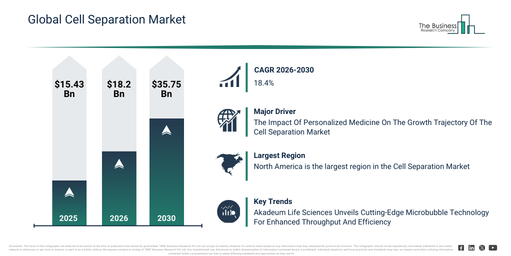
    The cell separation market size has seen swift expansion in recent years. It is anticipated to grow from $15.43 billion in 2025 to $18.2 billion in 2026, exhibiting a compound annual growth rate (CAGR) of 18.0%. The past growth in this market can be attributed to several factors including the expansion of cancer research programs, advances in stem cell research, the increasing adoption of flow cytometry, a greater demand for diagnostic cell separation, and the wider availability of separation consumables.

    The cell separation market size is predicted to undergo significant expansion in the upcoming years. It is projected to reach $35.75 billion by 2030, demonstrating a compound annual growth rate (CAGR) of 18.4%. This growth during the forecast period is driven by increasing investments in cell-based therapies, a rising demand for precision diagnostics, the broadening of immunotherapy research, greater adoption of automated clinical laboratories, and the growing use of personalized medicine approaches. Key trends anticipated during this period involve the increasing integration of magnetic and fluorescence-based sorting techniques, a heightened requirement for high-purity cell populations, the expanded deployment of automated cell separation systems, a wider scope of single-cell isolation applications, and an enhanced focus on clinical-grade cell processing.

    Download the Free Sample Report to Explore Key Market Insights:

    https://www.thebusinessresearchcompany.com/sample.aspx?id=9928&type=smp

    What Drivers Are Expected To Influence The Cell Separation Market During The Forecast Period?

    The growing trend towards personalized medicine is projected to accelerate the expansion of the cell separation market in the upcoming years. Personalized medicine, also known as precision medicine, is a new method in medical treatment and healthcare that considers individual differences in patients’ genes, environments, and lifestyles. This approach has the potential to enhance cell separation procedures in multiple ways, enabling more accurate and customized strategies in biomedical and therapeutic applications. For instance, in February 2024, as reported by the Personalized Medicine Coalition (PMC), a US-based nonprofit organization, in 2023, the Food and Drug Administration (FDA) authorized 7 new personalized treatments for cancer, out of a total of 26 personalized treatments. This represents a substantial rise from the 12 approved in 2022. Thus, the increasing move towards personalized medicine is fostering the growth of the cell separation market.

    How Is The Cell Separation Market Segmented Across Key Categories?

    The cell separation market covered in this report is segmented –

    1) By Cell Type: Human Cells, Animal Cells

    2) By Method: Gradient Centrifugation, Surface Markers Separation, Fluorescence Activated Cell Sorting, Magnetic Cell Sorting

    3) By Product: Consumables, Instruments

    4) By Application: Biomolecule Isolation, Cancer Research, Stem Cell Research, Tissue Regeneration, In Vitro Diagnostics, Therapeutics

    Subsegments:

    1) By Human Cells: Blood Cells, Stem Cells, Tumor Cells

    2) By Animal Cells: Mammalian Cells, Avian Cells, Insect Cells

    Which Trends Are Influencing The Cell Separation Market?

    Key companies in the cell separation market are concentrating on developing advanced technologies, such as microfluidic rare cell enrichment, to enhance the isolation, analysis, and subsequent applications of rare and circulating tumor cells for cancer research and diagnostics. Microfluidic rare cell enrichment refers to the application of micro-scale fluidic devices for isolating and concentrating rare cells from complex samples, facilitating precise analysis and diagnostics. For example, in June 2024, Bio-Rad Laboratories, a US-based life sciences company, launched Celselect Slides 2.0, aiming to improve the capture and isolation of rare cells. These new slides enable more efficient enrichment of CTCs, thereby supporting high-precision cancer research workflows and accelerating the development of targeted therapies. The introduction of Celselect Slides 2.0 reaffirms Bio-Rad’s commitment to advancing cell separation technologies and supporting cutting-edge cancer research initiatives.

    Who Are The Dominant Players Shaping The Cell Separation Market Landscape?

    Major companies operating in the cell separation market are Becton Dickinson and Company, Merck KGaA, Thermo Fisher Scientific Inc., Bio-Rad Laboratories Inc., Terumo Corporation, Miltenyi Biotec GmbH, Beckman Coulter Inc., STEMCELL Technologies Inc., PluriSelect Life Science UG and Co. KG, GE HealthCare Technologies Inc., Life Technologies Inc., Danaher Corporation, Corning Incorporated, Sartorius AG, Bio-Techne Corp., Takara Bio Inc., Lonza Group Ltd., MagBio Genomics, Akadeum Life Sciences Inc., Invent Biotechnologies Inc.

    Read the full cell separation market report here:

    https://www.thebusinessresearchcompany.com/report/cell-separation-global-market-report

    Which Region Is Forecast To Lead The Cell Separation Market In Terms Of Market Size?

    North America was the largest region in the cell separation market in 2025. Asia-Pacific is expected to be the fastest-growing region in the cell separation market report during the forecast period. The regions covered in the cell separation market report are Asia-Pacific, South East Asia, Western Europe, Eastern Europe, North America, South America, Middle East, Africa.

    Request A Tailored Cell Separation Market Research Report For Competitive Advantage:

    https://www.thebusinessresearchcompany.com/customise?id=9928&type=smp

    Browse Through More Reports Similar to the Global Cell Separation Market 2026, By The Business Research Company

    Sandwich Panels Global Market Report

    https://www.thebusinessresearchcompany.com/report/sandwich-panels-global-market-report

    Structural Insulated Panels Market

    https://www.thebusinessresearchcompany.com/report/structural-insulated-panels-market

    Vacuum Insulation Panel Global Market Report

    https://www.thebusinessresearchcompany.com/report/vacuum-insulation-panel-global-market-report

    Get in touch with us:

    The Business Research Company: https://www.thebusinessresearchcompany.com/

    Americas +1 310-496-7795

    Asia +44 7882 955267 & +91 8897263534

    Europe +44 7882 955267

    Email us at info@tbrc.info

    Follow us on:

    LinkedIn: https://in.linkedin.com/company/the-business-research-company

    YouTube: https://www.youtube.com/channel/UC24_fI0rV8cR5DxlCpgmyFQ

    Global Market Model: https://www.thebusinessresearchcompany.com/global-market-model