Category: Healthcare Services

  • Cell Transfection Market Developments and Growth Opportunities Across 2026–2030

    Cell Transfection Market Developments and Growth Opportunities Across 2026–2030

    The Business Research Company’s 2026 market reports include new capabilities such as market attractiveness scoring and analysis, total addressable market analysis, company scoring matrix, interactive excel data dashboard, improved supply chain analysis, upcoming startups in the market, and overview of key products, aimed at improving the depth, usability, and strategic value of the insights delivered.

    What Is The Market Size Of The Cell Transfection Market In 2026 And What Value Is Projected For 2030?

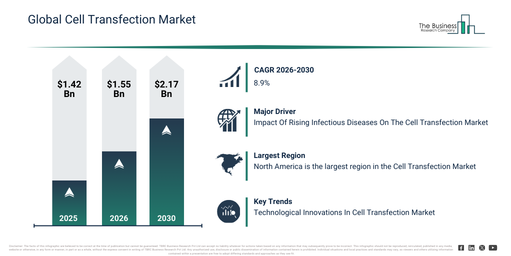
    The cell transfection market size has demonstrated significant growth over recent years. It is anticipated to expand from $1.42 billion in 2025 to $1.55 billion in 2026, driven by a compound annual growth rate (CAGR) of 9.2%. This historical expansion can be attributed to several factors including the broadening of molecular biology research, the increased utilization of gene expression studies, the rise in recombinant protein production, the growing adoption of in vitro genetic manipulation, and the availability of a variety of transfection methods.

    The cell transfection market is anticipated to experience robust expansion over the coming years. This market is projected to reach $2.17 billion by 2030, exhibiting a compound annual growth rate (CAGR) of 8.9%. This predicted growth stems from factors such as the accelerated development of gene and cell therapies, increased investments in genetic engineering research, a rising demand for high-throughput screening assays, the expansion of personalized medicine research, and the increasing adoption of non-viral delivery technologies. Key trends anticipated during this period encompass the greater adoption of high-efficiency transfection reagents, an increase in the use of viral vector-based transfection, a growing need for scalable transfection methods, the expansion of automated transfection platforms, and a heightened emphasis on transfection reproducibility.

    Download the Free Sample Report to Explore Key Market Insights:

    https://www.thebusinessresearchcompany.com/sample.aspx?id=19361&type=smp

    Which Growth Drivers Are Contributing To The Progress Of The Cell Transfection Market?

    The increasing incidence of infectious diseases is projected to drive the future growth of the cell transfection market. Infectious diseases are illnesses stemming from germs that disseminate from person to person or via contaminated sources. Inadequate public health infrastructure, along with vaccine hesitancy and misinformation, has facilitated the spread and evolution of pathogens. Cell transfection serves as a potent tool for infectious diseases, enabling scientists to introduce genes into cells to investigate how infections affect them and to evaluate new treatments. For instance, in October 2024, according to the World Health Organization, a Switzerland-based international public health organization, roughly 8.2 million people were newly diagnosed with tuberculosis in 2023, an increase from about 7.5 million in 2022, identifying tuberculosis as the leading infectious disease killer. Consequently, the rise in infectious disease cases propels the cell transfection market.

    What Are The Key Segments Of The Cell Transfection Market?

    The cell transfection market covered in this report is segmented –

    1) By Method: Electroporation, Lipofection, Calcium Phosphate, Viral Transfection, Other Methods

    2) By Application: Biomedical Research, Therapeutic Delivery, Protein Production

    3) By End User: Academic And Research Institutes, Pharmaceutical And Biotechnology Companies, Contract Research Organizations, Other End Users

    Subsegments:

    1) By Electroporation: Square Wave Electroporation, Pulsed Electric Field Electroporation, Multielectrode Array Electroporation

    2) By Lipofection: Cationic Lipid-Based Transfection, Lipid Nanoparticle-Based Transfection, Liposomal Transfection

    3) By Calcium Phosphate: Calcium Phosphate Co-precipitation, Modified Calcium Phosphate Methods

    4) By Viral Transfection: Lentiviral Transduction, Adenoviral Transduction, AAV (Adeno-Associated Virus) Transduction

    5) By Other Methods: Microinjection, Nanoparticle-Mediated Transfection, Sonoporation, Magnetofection

    What Trends Are Projected To Affect The Cell Transfection Market?

    Major companies operating in the cell transfection market are actively integrating innovations into their transfection systems to enable precise control over gene expression. A transfection system is a technique or technology specifically designed to introduce foreign nucleic acids into cells, serving purposes like studying gene function, producing proteins, or altering gene expression. For instance, in July 2024, STEMCELL Technologies, a Canada-based biotechnology company, launched the Cellpore transfection system, a novel tool engineered to enhance cell engineering research. This system leverages advanced microfluidic technology to facilitate the intracellular delivery of various macromolecules into cells, thereby addressing limitations associated with traditional transfection methods. It possesses the capability to transfect up to 10 million cells per second, rendering it suitable for large-scale applications. Moreover, the system demonstrates compatibility with diverse cell types, including T cells and hematopoietic stem cells, and can effectively deliver various cargoes such as small molecules, Ribonucleic Acid (RNA), proteins, and antibodies.

    Who Are The Leading Companies Operating In The Cell Transfection Market?

    Major companies operating in the cell transfection market are Thermo Fisher Scientific Inc., Merck KGaA, Agilent Technologies Inc., Lonza Group AG, Sartorius AG, Sigma-Aldrich Corporation, Bio-Rad Laboratories Inc., QIAGEN N.V., Stemcell Technologies Inc., GenScript Biotech Corporation, Promega Corporation, Takara Bio Inc., Molecular Devices LLC, New England Biolabs Inc., CureVac SE, OriGene Technologies Inc., Tocris Bioscience, Vector Biolabs, Mirus Bio LLC, Addgene Inc., Altogen Biosystems, Cell Biolabs Inc., Cellecta Inc., ExCell Bio Inc., GeneCopoeia Inc.

    Read the full cell transfection market report here:

    https://www.thebusinessresearchcompany.com/report/cell-transfection-global-market-report

    What Are The Leading Geographic Regions In The Cell Transfection Market?

    North America was the largest region in the cell transfection market in 2025. Asia-Pacific is expected to be the fastest-growing region in the forecast period. The regions covered in the cell transfection market report are Asia-Pacific, South East Asia, Western Europe, Eastern Europe, North America, South America, Middle East, Africa.

    Request A Tailored Cell Transfection Market Research Report For Competitive Advantage:

    https://www.thebusinessresearchcompany.com/customise?id=19361&type=smp

    Browse Through More Reports Similar to the Global Cell Transfection Market 2026, By The Business Research Company

    Cells Therapy Global Market Report

    https://www.thebusinessresearchcompany.com/report/cells-therapy-global-market-report

    Cell Therapy Human Raw Materials Global Market Report

    https://www.thebusinessresearchcompany.com/report/cell-therapy-human-raw-materials-global-market-report

    Stem Cells Therapy Global Market Report

    https://www.thebusinessresearchcompany.com/report/stem-cells-therapy-global-market-report

    Get in touch with us:

    The Business Research Company: https://www.thebusinessresearchcompany.com/

    Americas +1 310-496-7795

    Asia +44 7882 955267 & +91 8897263534

    Europe +44 7882 955267

    Email us at info@tbrc.info

    Follow us on:

    LinkedIn: https://in.linkedin.com/company/the-business-research-company

    YouTube: https://www.youtube.com/channel/UC24_fI0rV8cR5DxlCpgmyFQ

    Global Market Model: https://www.thebusinessresearchcompany.com/global-market-model
  • Global Cell Therapy Technologies Market Forecast 2026–2035 Presenting Long-Term Industry Expansion Insights

    Global Cell Therapy Technologies Market Forecast 2026–2035 Presenting Long-Term Industry Expansion Insights

    The Business Research Company’s 2026 market reports include new capabilities such as market attractiveness scoring and analysis, total addressable market analysis, company scoring matrix, interactive excel data dashboard, improved supply chain analysis, upcoming startups in the market, and overview of key products, aimed at improving the depth, usability, and strategic value of the insights delivered.

    What Will Be The Estimated Market Valuation Of The Cell Therapy Technologies Market By The End Of 2030?

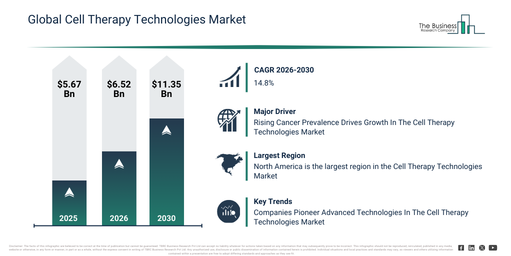
    The cell therapy technologies market size has experienced rapid growth in recent years. It is projected to expand from $5.67 billion in 2025 to $6.52 billion in 2026, achieving a compound annual growth rate (CAGR) of 15.0%. This historical growth can be attributed to increasing clinical research in cell-based therapies, the rising adoption of stem cell treatments, the expansion of research cell banks, the availability of advanced bioprocessing equipment, and the growth in translational medicine programs.

    The cell therapy technologies market is projected to experience substantial expansion in the coming years. This market is set to reach $11.35 billion by 2030, exhibiting a compound annual growth rate (CAGR) of 14.8%. Key drivers for this growth during the forecast period include the expanding commercialization of cell therapies, a surge in investments directed towards regenerative medicine, the proliferation of point-of-care cell therapy systems, an escalating need for automated manufacturing workflows, and an intensified regulatory emphasis on process consistency. Prominent trends observed over the forecast period encompass a greater uptake of closed-system cell processing platforms, a rise in the utilization of automated cell culture systems, an increasing imperative for scalable cell therapy manufacturing, the wider availability of process monitoring and quality control instruments, and a heightened emphasis on standardized cell handling.

    Download the Free Sample Report to Explore Key Market Insights:

    https://www.thebusinessresearchcompany.com/sample.aspx?id=4122&type=smp

    What Primary Drivers Are Shaping The Development Of The Cell Therapy Technologies Market?

    The rising incidence of cancer is anticipated to propel the expansion of the cell therapy technologies market during the forecast period. Cell therapy utilizes living cells as therapeutic agents to treat various diseases. When applied to cancer, this therapy harnesses the immune system’s intrinsic capability to detect and eliminate abnormal cells within the body. For instance, in January 2024, the American Cancer Society, a US-based nonprofit cancer advocacy organization, reported an increase in cancer cases to 2,001,140, up from 1,958,310 in 2023, representing a growth of 2.19%. Thus, the growing number of cancer cases is expected to contribute significantly to the growth of the cell therapy technologies market going forward.

    Which Segment Classifications Shape The Cell Therapy Technologies Market?

    The cell therapy technologies market covered in this report is segmented –

    1) By Product: Consumables, Equipment, Systems And Software

    2) By Cell Type: T-Cells, Stem Cells, Other Cell Types

    3) By Process: Cell Processing, Cell Preservation, Distribution And Handling, Process Monitoring And Quality Control

    4) By End User: Life Science Companies, Research Institutes And Cell Banks

    Subsegments:

    1) By Consumables: Cell Culture Media, Bioreactors And Cell Culture Vessels, Cell Separation And Processing Kits, Cryopreservation Bags And Vials

    2) By Equipment: Cell Counters, Centrifuges, Cell Sorting Equipment, Incubators

    3) By Systems And Software: Closed-System Cell Processing Systems, Automated Cell Culture Systems, Point-Of-Care Cell Therapy Systems, Laboratory Information Management Systems (LIMS), Data Management Software For Cell Therapies, Process Optimization And Tracking Software

    Which Upcoming Trends Are Expected To Influence The Cell Therapy Technologies Market?

    Major companies within the cell therapy market are concentrating on developing advanced technological solutions, specifically automated manufacturing platforms, to enhance the scalability, reproducibility, and efficiency of producing cell-based therapies. These automated cell therapy technologies integrate robotics, process monitoring, and closed-system manufacturing, which serves to streamline production while upholding cell quality and ensuring regulatory adherence. For example, in 2025, Limula, a US-based cell therapy company, introduced an automated cell therapy platform specifically designed to accelerate cell manufacturing, reduce the need for manual intervention, and improve the consistency and safety of therapeutic cell products. The launch of this platform signifies a crucial advancement toward commercial-scale cell therapy production, enabling a quicker transition from research to clinical application.

    Which Companies Are Expanding Their Footprint In The Cell Therapy Technologies Market?

    Major companies operating in the cell therapy technologies market are Lonza Group AG, Thermo Fisher Scientific Inc, Merck KGaA, Terumo Corporation, Danaher Corporation, Fujifilm Holdings Corporation, Sartorius AG, Becton Dickinson and Company, Avantor Inc., Cellular Biomedicine Group, CORESTEM, Astellas Pharma Inc, Anterogen Co. Ltd, Arce Therapeutics, CARsgen Therapeutics, Co.Don AG, Neogene Therapeutics, GammaDelta Therapeutics Limited, SOTIO, Genestack, Novartis AG, Celgene Corporation, Gilead Sciences, Juno Therapeutics, Allogene Therapeutics, Bluebird Bio, Amgen, Regen BioPharma, Bellicum, Biotchpharma, BrainStorm Cell Therapeutics, Pluristem, Next BioSciences, CryoSave, BioHeart, Stem Cell Technologies

    Read the full cell therapy technologies market report here:

    https://www.thebusinessresearchcompany.com/report/cell-therapy-technologies-global-market-report

    How Does The Cell Therapy Technologies Market Perform Across Major Global Regions?

    North America was the largest region in the cell therapy technologies market in 2025. Asia-Pacific is predicted to record the fastest growth over the forecast period. The regions covered in the cell therapy technologies market report are Asia-Pacific, South East Asia, Western Europe, Eastern Europe, North America, South America, Middle East, Africa.

    Request A Tailored Cell Therapy Technologies Market Research Report For Competitive Advantage:

    https://www.thebusinessresearchcompany.com/customise?id=4122&type=smp

    Browse Through More Reports Similar to the Global Cell Therapy Technologies Market 2026, By The Business Research Company

    Metal Structural Insulation Panels Global Market Report

    https://www.thebusinessresearchcompany.com/report/metal-structural-insulation-panels-global-market-report

    Vacuum Insulation Panel Global Market Report

    https://www.thebusinessresearchcompany.com/report/vacuum-insulation-panel-global-market-report

    Exterior Insulation And Finish System Global Market Report

    https://www.thebusinessresearchcompany.com/report/exterior-insulation-and-finish-system-global-market-report

    Get in touch with us:

    The Business Research Company: https://www.thebusinessresearchcompany.com/

    Americas +1 310-496-7795

    Asia +44 7882 955267 & +91 8897263534

    Europe +44 7882 955267

    Email us at info@tbrc.info

    Follow us on:

    LinkedIn: https://in.linkedin.com/company/the-business-research-company

    YouTube: https://www.youtube.com/channel/UC24_fI0rV8cR5DxlCpgmyFQ

    Global Market Model: https://www.thebusinessresearchcompany.com/global-market-model
  • Cell Therapy Processing Market Outlook 2026–2030 Exploring New Business Opportunities

    Cell Therapy Processing Market Outlook 2026–2030 Exploring New Business Opportunities

    The Business Research Company’s 2026 market reports include new capabilities such as market attractiveness scoring and analysis, total addressable market analysis, company scoring matrix, interactive excel data dashboard, improved supply chain analysis, upcoming startups in the market, and overview of key products, aimed at improving the depth, usability, and strategic value of the insights delivered.

    What Market Size Growth Is Projected For The Cell Therapy Processing Market During The Forecast Period 2026–2030?

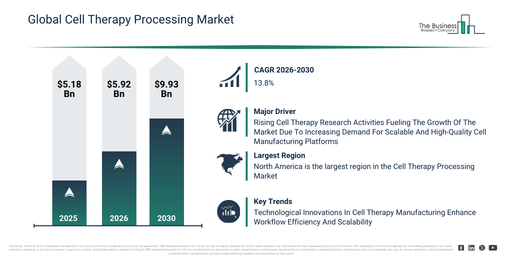
    The cell therapy processing market has witnessed significant growth in recent years. It is projected to expand from $5.18 billion in 2025 to $5.92 billion in 2026, exhibiting a compound annual growth rate (CAGR) of 14.3%. This historical growth can be attributed to a confluence of factors, including the increasing number of clinical trials for cell therapies, the expansion of biopharmaceutical manufacturing capacity, the availability of specialized processing facilities, developing expertise in GMP compliance, and rising investment in advanced therapeutics.

    The cell therapy processing market is poised for substantial expansion over the next few years. Its valuation is expected to reach $9.93 billion by 2030, demonstrating a compound annual growth rate (CAGR) of 13.8%. This anticipated growth during the forecast period can be linked to the increasing commercialization of gene and cell therapies, a rising need for contract manufacturing services, the spread of decentralized manufacturing models, the increasing implementation of digital quality management systems, and a surge in regulatory approvals for cell-based treatments. Significant trends for the forecast period encompass a greater adoption of GMP-compliant processing platforms, an escalating demand for scalable cell therapy manufacturing, the growing incorporation of workflow automation software, further expansion of contract processing services, and an intensified focus on sterility and quality assurance.

    Download the Free Sample Report to Explore Key Market Insights:

    https://www.thebusinessresearchcompany.com/sample.aspx?id=27244&type=smp

    Which Major Factors Are Driving The Expansion Of The Cell Therapy Processing Market?

    The increasing volume of cell therapy research endeavors is anticipated to fuel the expansion of the cell therapy processing market in the future. Cell therapy involves creating therapeutic agents from live cells to address or manage various conditions, such as cancers, autoimmune issues, and genetic ailments. The escalating need for cell-based treatments stems from a rising requirement for scalable and uniform manufacturing systems capable of handling high cell concentrations without sacrificing product integrity. Furthermore, cell therapy processing proves advantageous for cell therapy investigations because it facilitates the standardized creation, quality verification, and large-scale manufacturing of superior cells, thereby guaranteeing dependable and consistent results for both experimental and clinical analyses. As an illustration, data from December 2024, provided by the International Federation of Pharmaceutical Manufacturers and Associations, a Switzerland-based non-profit organization, indicated that six first-in-class cell and gene treatments became available in 2023, representing 50% more than the three released in 2022. Consequently, the growing quantity of cell therapy research efforts is propelling the growth of the cell therapy processing market.

    What Market Segments Are Evaluated Within The Cell Therapy Processing Market?

    The cell therapy processing market covered in this report is segmented –

    1) By Offering Type: Products, Services, Software

    2) By Applications: Cardiovascular Diseases Or Cardiac Regenerative Therapies, Bone Repair, Neurological Disorders, Skeletal Muscle Repair, Cancer, Other Applications

    3) By End-User: Research Institutes, Biopharmaceutical Companies, Contract Research Organizations, Other End-Users

    Subsegments:

    1) By Products: Cell Processing Systems, Cell Separation Devices, Cell Culture Equipment, Cell Preservation Systems, Consumables And Reagents

    2) By Services: Contract Manufacturing Services, Process Development Services, Quality Control And Testing Services, Logistics And Supply Chain Services, Regulatory Compliance And Documentation Services

    3) By Software: Cell Processing Workflow Management Software, Data Analysis And Reporting Software, Quality Management Software, Laboratory Information Management Systems (LIMS), Compliance And Audit Management Software

    How Are Trends Shaping The Direction Of The Cell Therapy Processing Market?

    Leading companies in the cell therapy processing market are prioritizing the creation of advanced solutions, such as integrated bioreactor-centrifuge systems, to optimize manufacturing workflows and enhance the consistency, scalability, and sterility of cell-based therapies. An integrated bioreactor-centrifuge system functions as a unified apparatus that combines cell incubation and centrifugal separation within a single closed unit, enabling continuous, automated cell processing without requiring intermediate transfers. For example, in March 2025, Limula SA, a Switzerland-based company specializing in cell and gene therapy (CGT) manufacturing, unveiled LimONE, an automated, closed-system platform for cell therapy production. This innovative system incorporates hardware, single-use consumables, and protocol-driven software to streamline complex cell processing steps, including incubation, centrifugation, and reagent handling, into one compact unit, thereby enabling consistent, scalable production of therapies such as CAR-T and gene-edited stem cells from initial research to GMP-compliant manufacturing without the necessity for intricate technology transfers.

    Who Are The Top Market Participants Influencing The Cell Therapy Processing Market?

    Major companies operating in the cell therapy processing market are Johnson & Johnson Services Inc., Bristol-Myers Squibb Company, Thermo Fisher Scientific Inc., Novartis AG, Gilead Sciences Inc., Danaher Corporation, Lonza Group AG, Anterogen Co. Ltd., Terumo Corporation, Sartorius AG, Bio-Techne Corporation, STEMCELL Technologies Inc., Miltenyi Biotec GmbH, AGC Biologics S.p.A., MaxCyte Inc., Cellares Corporation, Cellectis S.A., JW Cayman Therapeutics Company Limited, Cell Therapies Pty Ltd., InGeneron Inc., WuXi Advanced Therapies, Catalent Inc.

    Read the full cell therapy processing market report here:

    https://www.thebusinessresearchcompany.com/report/cell-therapy-processing-global-market-report

    Which Region Currently Holds The Largest Share Of The Cell Therapy Processing Market?

    North America was the largest region in the cell therapy processing market in 2025. Asia-Pacific is expected to be the fastest-growing region in the forecast period. The regions covered in the cell therapy processing market report are Asia-Pacific, South East Asia, Western Europe, Eastern Europe, North America, South America, Middle East, Africa.

    Request A Tailored Cell Therapy Processing Market Research Report For Competitive Advantage:

    https://www.thebusinessresearchcompany.com/customise?id=27244&type=smp

    Browse Through More Reports Similar to the Global Cell Therapy Processing Market 2026, By The Business Research Company

    Cell Line Development Global Market Report

    https://www.thebusinessresearchcompany.com/report/cell-line-development-global-market-report

    Cell Cultures Global Market Report

    https://www.thebusinessresearchcompany.com/report/cell-cultures-global-market-report

    Cell Expansion Global Market Report

    https://www.thebusinessresearchcompany.com/report/cell-expansion-global-market-report

    Get in touch with us:

    The Business Research Company: https://www.thebusinessresearchcompany.com/

    Americas +1 310-496-7795

    Asia +44 7882 955267 & +91 8897263534

    Europe +44 7882 955267

    Email us at info@tbrc.info

    Follow us on:

    LinkedIn: https://in.linkedin.com/company/the-business-research-company

    YouTube: https://www.youtube.com/channel/UC24_fI0rV8cR5DxlCpgmyFQ

    Global Market Model: https://www.thebusinessresearchcompany.com/global-market-model
  • Global Cell Signaling Market Report 2026–2035 Highlighting Expansion Outlook and Forecast Opportunities

    Global Cell Signaling Market Report 2026–2035 Highlighting Expansion Outlook and Forecast Opportunities

    The Business Research Company’s 2026 market reports include new capabilities such as market attractiveness scoring and analysis, total addressable market analysis, company scoring matrix, interactive excel data dashboard, improved supply chain analysis, upcoming startups in the market, and overview of key products, aimed at improving the depth, usability, and strategic value of the insights delivered.

    How Will The Market Size Of The Cell Signaling Market Evolve From 2026 To 2030?

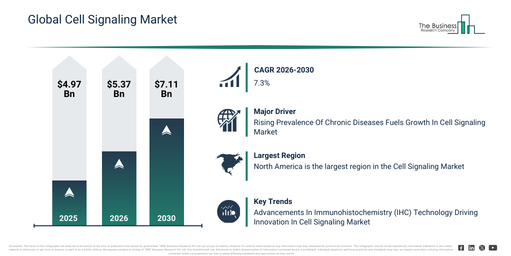
    The cell signaling market has experienced significant expansion recently. It is projected to increase from $4.97 billion in 2025 to $5.37 billion in 2026, exhibiting a compound annual growth rate (CAGR) of 8.2%. Historically, this expansion has been driven by factors such as the broadening of molecular biology research, the increased application of immunoassays in laboratory settings, the rise in cancer signaling studies, the growing adoption of western blotting techniques, and the availability of sophisticated antibodies.

    The cell signaling market is projected to experience substantial expansion in the coming years, reaching $7.11 billion by 2030, demonstrating a compound annual growth rate (CAGR) of 7.3%. This anticipated growth throughout the forecast period is driven by several factors, including heightened investments in research for targeted therapies, an increasing need for precise signaling analysis, the broadening of translational research applications, the expanding utilization of high-throughput proteomics, and the greater incorporation of computational biology tools. Key developments expected during this period involve a heightened emphasis on pathway-specific signal analysis, the increasing deployment of high-sensitivity detection reagents, the rising adoption of multiplex signaling assays, the development of quantitative cell communication studies, and improved integration of advanced imaging techniques.

    Download the Free Sample Report to Explore Key Market Insights:

    https://www.thebusinessresearchcompany.com/sample.aspx?id=15758&type=smp

    What Key Drivers Are Influencing The Growth Of The Cell Signaling Market?

    The increasing prevalence of chronic diseases is expected to propel the growth of the cell signaling market going forward. Chronic diseases are long-lasting medical conditions that progress slowly and persist for extended periods, often for years or even a lifetime, necessitating ongoing management and treatment to control symptoms, prevent complications, and maintain quality of life. The widespread nature of these conditions stems from an aging population, unhealthy lifestyles, and the accessibility and infrastructure of healthcare. Cell signaling research provides valuable insights and tools for understanding, diagnosing, treating, and preventing chronic diseases, offering hope for improved outcomes and quality of life for affected individuals. For instance, in January 2023, according to the National Library of Medicine, a US-based biomedical library, the number of people 50 years of age and older having at least one chronic illness is predicted to rise from 71.522 million in 2020 to 142.66 million in 2050, a 99.5% increase. Therefore, the increasing prevalence of chronic diseases is driving the growth of the cell signaling market.

    Which Segment Areas Are Covered In The Cell Signaling Market Analysis?

    The cell signaling market covered in this report is segmented –

    1) By Product: Consumables, Instruments

    2) By Signaling Type: Endocrine Signaling, Paracrine Signaling, Autocrine Signaling, Synaptic Signaling Source, Other Signaling Types

    3) By Pathway: Akt Signaling Pathway, AMPK Signaling Pathway, ErbB Or HER Signaling Pathway, Other Signaling Pathways

    4) By Technology: Microscopy, Western Blotting, Flow Cytometry, Immunohistochemistry (IHC), Enzyme-Linked Immunosorbent Assay (ELISA), Mass Spectrometry, Other Technologies

    5) By Application: Research Applications, Medical Applications

    Subsegments:

    1) By Consumables: Reagents, Antibodies, Kits, Chemicals and Enzymes

    2) By Instruments: Flow Cytometers, Microplate Readers, Cell Counters, Western Blotting Systems, Real-Time PCR Systems

    Which Market Trends Are Creating New Opportunities In The Cell Signaling Market?

    Major companies operating in the cell signaling market are prioritizing the creation of innovative technologies, such as immunohistochemistry (IHC) assays, to enhance their standing in the market. Immunohistochemistry (IHC) assays represent laboratory techniques employed to identify and visualize specific proteins or antigens within tissue samples. For instance, in September 2023, Cell Signaling Technology (CST), a US-based life sciences discovery technology company, announced the introduction of SignalStar Multiplex IHC technology, an inventive tool for a method for spatial biology research utilizing mid-plex, high-throughput immunohistochemistry (IHC) assays. This groundbreaking technology enables researchers to detect multiple targets concurrently in formalin-fixed, paraffin-embedded (FFPE) tissues with high sensitivity and specificity. It functions by employing a combination of antibodies, oligonucleotides, and fluorophores to amplify the antibody signal, thus allowing the detection of targets, even those exhibiting low expression levels, up to eight proteins in a single tissue.

    Which Global Companies Are Actively Competing In The Cell Signaling Market?

    Major companies operating in the cell signaling market are Johnson & Johnson, F. Hoffmann-La Roche Ltd., Pfizer Inc., Bayer AG, Bristol-Myers Squibb Company, Thermo Fisher Scientific Inc., Novartis AG, GlaxoSmithKline plc, Eli Lilly and Company, Gilead Sciences Inc., Danaher Corporation, Merck KGaA, Becton Dickinson and Company, Agilent Technologies Inc., PerkinElmer Inc., Beckman Coulter Inc., Bio-Rad Laboratories Inc., Qiagen N.V., Bio-Techne Corporation, Miltenyi Biotec, Promega Corporation, Janssen Pharmaceuticals Inc., Abcam plc, Horizon Discovery Ltd., Cell Signaling Technology Inc., Cisbio Bioassays, Rockland Immunochemicals Inc.

    Read the full cell signaling market report here:

    https://www.thebusinessresearchcompany.com/report/cell-signaling-global-market-report

    Which Region Is Expected To Register The Fastest Growth In The Cell Signaling Market?

    North America was the largest region in the cell signaling market in 2025. Asia-Pacific is expected to be the fastest-growing region in the forecast period. The regions covered in the cell signaling market report are Asia-Pacific, South East Asia, Western Europe, Eastern Europe, North America, South America, Middle East, Africa.

    Request A Tailored Cell Signaling Market Research Report For Competitive Advantage:

    https://www.thebusinessresearchcompany.com/customise?id=15758&type=smp

    Browse Through More Reports Similar to the Global Cell Signaling Market 2026, By The Business Research Company

    Cell Separation Global Market Report

    https://www.thebusinessresearchcompany.com/report/cell-separation-global-market-report

    Membrane Separation Technology Global Market Report

    https://www.thebusinessresearchcompany.com/report/membrane-separation-technology-global-market-report

    Cell Isolation Global Market Report

    https://www.thebusinessresearchcompany.com/report/cell-isolation-global-market-report

    Get in touch with us:

    The Business Research Company: https://www.thebusinessresearchcompany.com/

    Americas +1 310-496-7795

    Asia +44 7882 955267 & +91 8897263534

    Europe +44 7882 955267

    Email us at info@tbrc.info

    Follow us on:

    LinkedIn: https://in.linkedin.com/company/the-business-research-company

    YouTube: https://www.youtube.com/channel/UC24_fI0rV8cR5DxlCpgmyFQ

    Global Market Model: https://www.thebusinessresearchcompany.com/global-market-model
  • Cell Separation Technologies Market Growth Prospects 2026–2030 with Innovation Trends and Competitive Landscape

    Cell Separation Technologies Market Growth Prospects 2026–2030 with Innovation Trends and Competitive Landscape

    The Business Research Company’s 2026 market reports include new capabilities such as market attractiveness scoring and analysis, total addressable market analysis, company scoring matrix, interactive excel data dashboard, improved supply chain analysis, upcoming startups in the market, and overview of key products, aimed at improving the depth, usability, and strategic value of the insights delivered.

    What Is The Forecasted Market Value Of The Cell Separation Technologies Market Across 2026–2030?

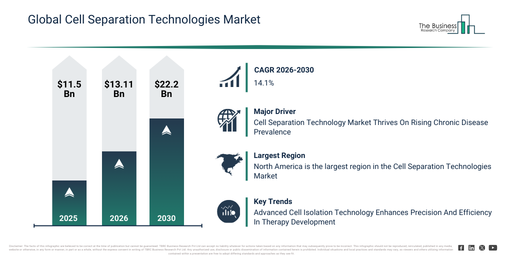
    The cell separation technologies market size has experienced rapid growth in recent years. It is projected to expand from $11.5 billion in 2025 to $13.11 billion in 2026, achieving a compound annual growth rate (CAGR) of 14.0%. The historical period’s growth can be ascribed to an increase in stem cell research activities, the rising application of cell-based assays, the expansion of academic and biomedical research institutes, the greater adoption of flow cytometry techniques, and the availability of advanced separation consumables.

    The cell separation technologies market is poised for significant expansion in the coming years. Its valuation is projected to reach $22.2 billion by 2030, exhibiting a compound annual growth rate (CAGR) of 14.1%. This anticipated growth during the forecast period is fueled by factors such as the escalating demand for research into personalized medicine, a surge in investments directed towards cell-based therapeutics, the broadening scope of automated laboratory processes, a heightened emphasis on ensuring reproducibility in cell analysis, and the increasing incorporation of AI-assisted cell sorting instruments. Key trends shaping the forecast period encompass a greater uptake of methods for isolating high-purity cells, an expanding utilization of sorting systems relying on magnetic and fluorescence technologies, a rising requirement for automated instruments dedicated to cell separation, the proliferation of separation kits tailored for specific applications, and an intensified concentration on high-throughput cell processing.

    Download the Free Sample Report to Explore Key Market Insights:

    https://www.thebusinessresearchcompany.com/sample.aspx?id=16013&type=smp

    What Major Growth Drivers Are Shaping The Outlook Of The Cell Separation Technologies Market?

    An escalating incidence of chronic diseases is anticipated to stimulate growth in the cell separation technology market. These conditions are health problems that persist for a year or longer, demanding continuous medical attention, limiting everyday activities, or both. Among the most common chronic diseases are cancer, heart disease, stroke, diabetes, and arthritis. The widespread occurrence of chronic diseases is attributable to an increase in modifiable lifestyle choices, social inequities, infections, genetics, autoimmunity, and mental health issues. Cell separation technologies contribute to advancing treatments for chronic diseases by offering a method for isolating cancer cells, immune cells, and other relevant cell types. For example, in April 2025, the Centers for Disease Control and Prevention (CDC), a US-based federal agency, reported that in 2023, approximately 194 million U.S. adults, or 76.4%, indicated they had at least one chronic condition. This prevalence was 59.5% among young adults, 78.4% among midlife adults, and 93.0% among older adults. Therefore, the rising prevalence of chronic diseases is propelling the expansion of the cell separation technology market.

    What Segmentation Levels Are Considered In The Cell Separation Technologies Market?

    The cell separation technologies market covered in this report is segmented –

    1) By Product: Instruments, Consumables And Reagents

    2) By Technology: Gradient Centrifugation, Surface Markers Separation, Fluorescence Activated Cell Sorting, Magnetic Cell Sorting, Filtration Based Separation

    3) By Application: Stem Cell Research, Immunology, Neuroscience, Cancer Research, Other Applications

    4) By End-User: Biotechnology And Pharmaceutical Companies, Hospitals And Diagnostic Laboratories, Academic And Research Institutes, Other End-Users

    Subsegments:

    1) By Instruments: Centrifuges, Magnetic Cell Sorters, Flow Cytometers, Laser Capture Microdissection Systems, Cell Sorters

    2) By Consumables And Reagents: Separation Columns, Cell Separation Kits, Filters, Microbeads

    What Trends Are Affecting The Expansion Of The Cell Separation Technologies Market?

    Leading companies operating in the cell separation technologies market are concentrating on developing innovative products, such as automated temperature-controlled tissue-dissociation systems, to standardize and accelerate the conversion of solid tissues into viable single-cell suspensions for downstream applications. These automated temperature-controlled tissue-dissociation systems are instruments designed to combine regulated motion, temperature, and enzymatic digestion protocols to safely and reproducibly dissociate tissue into single cells. For instance, in June 2025, STEMCELL Technologies, a Canada-based provider of cell culture media, separation reagents, and instruments for cell-biology research, introduced the STEMprep Tissue Dissociator System. Its key features include precise temperature control ranging from 4 °C to 37 °C to optimize enzymatic activity and preserve cell viability; fully automated workflows that reduce hands-on labor and improve consistency; a modular design supporting 4-, 8-, or 12-sample processing; and protocol flexibility, using validated STEMCELL enzymes or user-defined methods for different tissue types. This system enables researchers to save time, reduce variability, and maintain high viability in primary cells, thereby enhancing the reliability of downstream single-cell analytics, flow cytometry, and cell therapy development.

    Which Leading Firms Are Contributing To The Growth Of The Cell Separation Technologies Market?

    Major companies operating in the cell separation technologies market are Merck KGaA, Thermo Fisher Scientific Inc., Danaher Corporation, Becton Dickinson and Company, GE HealthCare Technologies, Corning Incorporated, Lonza Group, Sartorius AG, Bio-Rad Laboratories Inc., Pall Corporation, Eppendorf AG, Miltenyi Biotec B.V. & Co. KG, Stemcell Technologies Inc., 10X Genomics Inc., Cytena GmbH, Pluriselect GmbH, Akadeum Life Sciences Inc., Cellenion, NanoCellect Biomedical Inc., Agilent Technologies Inc, Cytek Biosciences Inc, Cell Microsystems Inc, Nexcelom Bioscience, ChemoMetec

    Read the full cell separation technologies market report here:

    https://www.thebusinessresearchcompany.com/report/cell-separation-technologies-global-market-report

    Which Regions Are Projected To Dominate The Cell Separation Technologies Market In The Coming Years?

    North America was the largest region in the cell separation technologies market in 2025. Asia-Pacific is expected to be the fastest-growing region in the forecast period. The regions covered in the cell separation technologies market report are Asia-Pacific, South East Asia, Western Europe, Eastern Europe, North America, South America, Middle East, Africa.

    Request A Tailored Cell Separation Technologies Market Research Report For Competitive Advantage:

    https://www.thebusinessresearchcompany.com/customise?id=16013&type=smp

    Browse Through More Reports Similar to the Global Cell Separation Technologies Market 2026, By The Business Research Company

    Cell Isolation Global Market Report

    https://www.thebusinessresearchcompany.com/report/cell-isolation-global-market-report

    Cell Separation Technologies Global Market Report

    https://www.thebusinessresearchcompany.com/report/cell-separation-technologies-global-market-report

    Separation Machinery Global Market Report

    https://www.thebusinessresearchcompany.com/report/separation-machinery-global-market-report

    Get in touch with us:

    The Business Research Company: https://www.thebusinessresearchcompany.com/

    Americas +1 310-496-7795

    Asia +44 7882 955267 & +91 8897263534

    Europe +44 7882 955267

    Email us at info@tbrc.info

    Follow us on:

    LinkedIn: https://in.linkedin.com/company/the-business-research-company

    YouTube: https://www.youtube.com/channel/UC24_fI0rV8cR5DxlCpgmyFQ

    Global Market Model: https://www.thebusinessresearchcompany.com/global-market-model
  • Cell Separation Market Forecast 2026–2035 Highlighting Market Data Patterns and Industry Insights

    Cell Separation Market Forecast 2026–2035 Highlighting Market Data Patterns and Industry Insights

    The Business Research Company’s 2026 market reports include new capabilities such as market attractiveness scoring and analysis, total addressable market analysis, company scoring matrix, interactive excel data dashboard, improved supply chain analysis, upcoming startups in the market, and overview of key products, aimed at improving the depth, usability, and strategic value of the insights delivered.

    What Market Size Increase Is Anticipated For The Cell Separation Market Over The 2026–2030 Period?

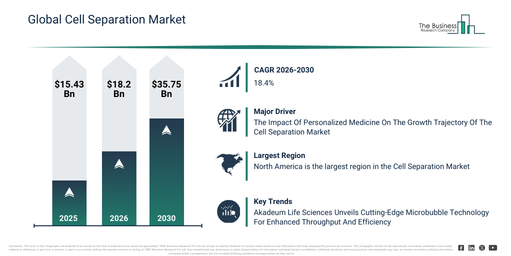
    The cell separation market size has seen swift expansion in recent years. It is anticipated to grow from $15.43 billion in 2025 to $18.2 billion in 2026, exhibiting a compound annual growth rate (CAGR) of 18.0%. The past growth in this market can be attributed to several factors including the expansion of cancer research programs, advances in stem cell research, the increasing adoption of flow cytometry, a greater demand for diagnostic cell separation, and the wider availability of separation consumables.

    The cell separation market size is predicted to undergo significant expansion in the upcoming years. It is projected to reach $35.75 billion by 2030, demonstrating a compound annual growth rate (CAGR) of 18.4%. This growth during the forecast period is driven by increasing investments in cell-based therapies, a rising demand for precision diagnostics, the broadening of immunotherapy research, greater adoption of automated clinical laboratories, and the growing use of personalized medicine approaches. Key trends anticipated during this period involve the increasing integration of magnetic and fluorescence-based sorting techniques, a heightened requirement for high-purity cell populations, the expanded deployment of automated cell separation systems, a wider scope of single-cell isolation applications, and an enhanced focus on clinical-grade cell processing.

    Download the Free Sample Report to Explore Key Market Insights:

    https://www.thebusinessresearchcompany.com/sample.aspx?id=9928&type=smp

    What Drivers Are Expected To Influence The Cell Separation Market During The Forecast Period?

    The growing trend towards personalized medicine is projected to accelerate the expansion of the cell separation market in the upcoming years. Personalized medicine, also known as precision medicine, is a new method in medical treatment and healthcare that considers individual differences in patients’ genes, environments, and lifestyles. This approach has the potential to enhance cell separation procedures in multiple ways, enabling more accurate and customized strategies in biomedical and therapeutic applications. For instance, in February 2024, as reported by the Personalized Medicine Coalition (PMC), a US-based nonprofit organization, in 2023, the Food and Drug Administration (FDA) authorized 7 new personalized treatments for cancer, out of a total of 26 personalized treatments. This represents a substantial rise from the 12 approved in 2022. Thus, the increasing move towards personalized medicine is fostering the growth of the cell separation market.

    How Is The Cell Separation Market Segmented Across Key Categories?

    The cell separation market covered in this report is segmented –

    1) By Cell Type: Human Cells, Animal Cells

    2) By Method: Gradient Centrifugation, Surface Markers Separation, Fluorescence Activated Cell Sorting, Magnetic Cell Sorting

    3) By Product: Consumables, Instruments

    4) By Application: Biomolecule Isolation, Cancer Research, Stem Cell Research, Tissue Regeneration, In Vitro Diagnostics, Therapeutics

    Subsegments:

    1) By Human Cells: Blood Cells, Stem Cells, Tumor Cells

    2) By Animal Cells: Mammalian Cells, Avian Cells, Insect Cells

    Which Trends Are Influencing The Cell Separation Market?

    Key companies in the cell separation market are concentrating on developing advanced technologies, such as microfluidic rare cell enrichment, to enhance the isolation, analysis, and subsequent applications of rare and circulating tumor cells for cancer research and diagnostics. Microfluidic rare cell enrichment refers to the application of micro-scale fluidic devices for isolating and concentrating rare cells from complex samples, facilitating precise analysis and diagnostics. For example, in June 2024, Bio-Rad Laboratories, a US-based life sciences company, launched Celselect Slides 2.0, aiming to improve the capture and isolation of rare cells. These new slides enable more efficient enrichment of CTCs, thereby supporting high-precision cancer research workflows and accelerating the development of targeted therapies. The introduction of Celselect Slides 2.0 reaffirms Bio-Rad’s commitment to advancing cell separation technologies and supporting cutting-edge cancer research initiatives.

    Who Are The Dominant Players Shaping The Cell Separation Market Landscape?

    Major companies operating in the cell separation market are Becton Dickinson and Company, Merck KGaA, Thermo Fisher Scientific Inc., Bio-Rad Laboratories Inc., Terumo Corporation, Miltenyi Biotec GmbH, Beckman Coulter Inc., STEMCELL Technologies Inc., PluriSelect Life Science UG and Co. KG, GE HealthCare Technologies Inc., Life Technologies Inc., Danaher Corporation, Corning Incorporated, Sartorius AG, Bio-Techne Corp., Takara Bio Inc., Lonza Group Ltd., MagBio Genomics, Akadeum Life Sciences Inc., Invent Biotechnologies Inc.

    Read the full cell separation market report here:

    https://www.thebusinessresearchcompany.com/report/cell-separation-global-market-report

    Which Region Is Forecast To Lead The Cell Separation Market In Terms Of Market Size?

    North America was the largest region in the cell separation market in 2025. Asia-Pacific is expected to be the fastest-growing region in the cell separation market report during the forecast period. The regions covered in the cell separation market report are Asia-Pacific, South East Asia, Western Europe, Eastern Europe, North America, South America, Middle East, Africa.

    Request A Tailored Cell Separation Market Research Report For Competitive Advantage:

    https://www.thebusinessresearchcompany.com/customise?id=9928&type=smp

    Browse Through More Reports Similar to the Global Cell Separation Market 2026, By The Business Research Company

    Sandwich Panels Global Market Report

    https://www.thebusinessresearchcompany.com/report/sandwich-panels-global-market-report

    Structural Insulated Panels Market

    https://www.thebusinessresearchcompany.com/report/structural-insulated-panels-market

    Vacuum Insulation Panel Global Market Report

    https://www.thebusinessresearchcompany.com/report/vacuum-insulation-panel-global-market-report

    Get in touch with us:

    The Business Research Company: https://www.thebusinessresearchcompany.com/

    Americas +1 310-496-7795

    Asia +44 7882 955267 & +91 8897263534

    Europe +44 7882 955267

    Email us at info@tbrc.info

    Follow us on:

    LinkedIn: https://in.linkedin.com/company/the-business-research-company

    YouTube: https://www.youtube.com/channel/UC24_fI0rV8cR5DxlCpgmyFQ

    Global Market Model: https://www.thebusinessresearchcompany.com/global-market-model
  • Cell Processing Technologies Market Outlook 2026–2030 with Major Growth Drivers and Emerging Industry Trends

    Cell Processing Technologies Market Outlook 2026–2030 with Major Growth Drivers and Emerging Industry Trends

    The Business Research Company’s 2026 market reports include new capabilities such as market attractiveness scoring and analysis, total addressable market analysis, company scoring matrix, interactive excel data dashboard, improved supply chain analysis, upcoming startups in the market, and overview of key products, aimed at improving the depth, usability, and strategic value of the insights delivered.

    How Much Is The Cell Processing Technologies Market Expected To Grow In Terms Of Market Value Between 2026 And 2030?

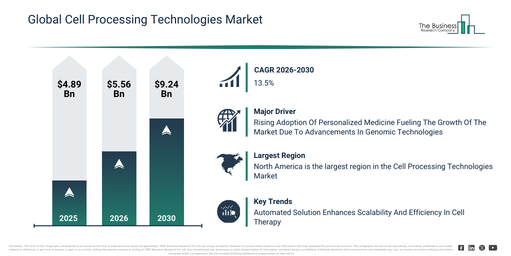
    The cell processing technologies market has experienced rapid expansion in recent years. It is forecast to grow from $4.89 billion in 2025 to $5.56 billion in 2026, exhibiting a compound annual growth rate (CAGR) of 13.7%. The market’s historical growth can be attributed to the proliferation of cell-based research activities, the increased application of cell culture techniques, advancements in regenerative medicine research, the accessibility of sophisticated laboratory equipment, and a rise in academic and clinical research funding.

    The cell processing technologies market is anticipated to experience substantial growth over the next few years. It is forecast to expand to $9.24 billion by 2030, achieving a compound annual growth rate (CAGR) of 13.5%. This growth during the projected period can be attributed to the increasing commercialization of cell therapies, a rising demand for scalable cell manufacturing, the expanding applications of personalized medicine, growing investments in bioprocess automation, and a heightened regulatory focus on cell processing standards. Significant trends in the forecast period encompass a greater adoption of automated cell processing systems, an increasing need for closed-system cell handling technologies, the expanding integration of digital process monitoring, a broader utilization of single-use consumables, and an enhanced emphasis on cell viability and quality control.

    Download the Free Sample Report to Explore Key Market Insights:

    https://www.thebusinessresearchcompany.com/sample.aspx?id=27243&type=smp

    What Drivers Are Influencing The Cell Processing Technologies Market?

    The increasing integration of personalized medicine is projected to propel the expansion of the cell processing technologies market going forward. Personalized medicine is a healthcare strategy that involves adapting treatments to individual patients based on their genetic, environmental, and lifestyle attributes to optimize results and enhance care. The demand for personalized medicine is on the rise due to breakthroughs in genomic technologies, which facilitate the precise identification of genetic variations and enable customized treatments for individuals. Cell processing technologies augment personalized medicine by allowing for the exact manipulation and preparation of patient-specific cells, rendering them crucial for tailored therapies. These technologies improve treatment outcomes by guaranteeing high-quality, viable cells, thus furthering the development of targeted and effective medical interventions. For instance, in February 2024, as per the Personalized Medicine Coalition (PMC), a US-based nonprofit organization, the U.S. Food and Drug Administration (FDA) sanctioned 26 new personalized medicines in 2023, representing an increase from 12 approved in 2022. Therefore, the growing adoption of personalized therapies is driving the growth of the cell processing technologies market.

    What Major Segment Divisions Exist Within The Cell Processing Technologies Market?

    The cell processing technologies market covered in this report is segmented –

    1) By Product Type: Equipment, Consumables, Software

    2) By Application: Oncology, Cardiovascular Disease, Bone Repair, Neurological Disorders, Skeletal Muscle Repair, Immune Diseases, Other Applications

    3) By End-User: Pharmaceutical and Biotechnology Companies, Academic Research Institutes, Other End-Users

    Subsegments:

    1) By Equipment: Bioreactors, Centrifuges, Cell Counters, Incubators, Cryopreservation Systems, Cell Washers, Cell Sorters, Microscopes

    2) By Consumables: Cell Culture Media, Reagents, Pipettes and Tips, Flasks and Plates, Cryovials, Filters, Disposable Bags, Tubes and Containers

    3) By Software: Process Monitoring Software, Data Management Software, Automation Control Software, Quality Control Software, Imaging and Analysis Software, Inventory Management Software

    What Trends Are Advancing Progress In The Cell Processing Technologies Market?

    Major companies operating in the cell processing technologies market are focusing on developing technologically advanced solutions, such as automated cell therapy manufacturing platforms, to enhance scalability, improve process efficiency, cell quality, and reduce production costs. An automated cell therapy manufacturing platform refers to a fully integrated system that uses advanced robotics, sensors, and software to perform the entire process of producing cell-based therapies with minimal manual intervention. For instance, in March 2025, Limula SA, a Switzerland-based life sciences company, launched LimONE, a fully automated cell therapy manufacturing platform designed to transform the production of advanced therapies such as CAR-T and gene-edited stem cells. It streamlines complex manufacturing processes by integrating a bioreactor and centrifuge into a single, closed device that uses one consumable throughout all development stages. LimONE enables hospitals, biotech firms, and manufacturers to accelerate the transition from research to clinical trials and commercial production, making life-saving, personalized cell and gene therapies more accessible to patients.

    Which Companies Are Leading Innovation In The Cell Processing Technologies Market?

    Major companies operating in the cell processing technologies market are Thermo Fisher Scientific Inc., Danaher Corporation, Cryo-Cell International Inc., Merck KGaA, Becton Dickinson and Company, Lonza Group AG, Terumo Corporation, WuXi AppTec Co. Ltd., Charles River Laboratories International Inc., Bio-Rad Laboratories Inc., PHC Holdings Corporation, Bio-Techne Corporation, StemCell Technologies Inc., Shibuya Corporation, Repligen Corporation, Beckman Coulter Inc., ThermoGenesis Holdings Inc., Ori Biotech Ltd., Biospherix Ltd., Miltenyi Biotec B.V. & Co. KG, Sartorius Stedim Biotech, Cytiva

    Read the full cell processing technologies market report here:

    https://www.thebusinessresearchcompany.com/report/cell-processing-technologies-global-market-report

    Which Regions Are Expected To Experience Rapid Expansion In The Cell Processing Technologies Market?

    North America was the largest region in the cell processing technologies market in 2025. The regions covered in the cell processing technologies market report are Asia-Pacific, South East Asia, Western Europe, Eastern Europe, North America, South America, Middle East, Africa.

    Request A Tailored Cell Processing Technologies Market Research Report For Competitive Advantage:

    https://www.thebusinessresearchcompany.com/customise?id=27243&type=smp

    Browse Through More Reports Similar to the Global Cell Processing Technologies Market 2026, By The Business Research Company

    Peptide Therapeutics Global Market Report

    https://www.thebusinessresearchcompany.com/report/peptide-therapeutics-global-market-report

    Peptide Synthesis Global Market Report

    https://www.thebusinessresearchcompany.com/report/peptide-synthesis-global-market-report

    Glucagon Like Peptide 1 Global Market Report

    https://www.thebusinessresearchcompany.com/report/glucagon-like-peptide-1-global-market-report

    Get in touch with us:

    The Business Research Company: https://www.thebusinessresearchcompany.com/

    Americas +1 310-496-7795

    Asia +44 7882 955267 & +91 8897263534

    Europe +44 7882 955267

    Email us at info@tbrc.info

    Follow us on:

    LinkedIn: https://in.linkedin.com/company/the-business-research-company

    YouTube: https://www.youtube.com/channel/UC24_fI0rV8cR5DxlCpgmyFQ

    Global Market Model: https://www.thebusinessresearchcompany.com/global-market-model
  • One of the Major Drivers of the Cell Penetrating Peptide Market Is the Role Of Research And Development In Fueling Cell Penetration Peptide Market Growth

    One of the Major Drivers of the Cell Penetrating Peptide Market Is the Role Of Research And Development In Fueling Cell Penetration Peptide Market Growth

    The Business Research Company’s 2026 market reports include new capabilities such as market attractiveness scoring and analysis, total addressable market analysis, company scoring matrix, interactive excel data dashboard, improved supply chain analysis, upcoming startups in the market, and overview of key products, aimed at improving the depth, usability, and strategic value of the insights delivered.

    What Market Value Is Expected For The Cell Penetrating Peptide Market At The End Of The 2026–2030 Forecast Period?

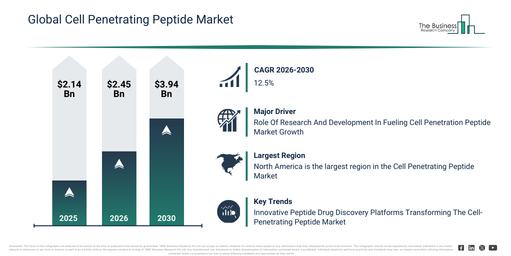
    The cell penetrating peptide market has experienced rapid expansion in recent years. This market is projected to expand from $2.14 billion in 2025 to $2.45 billion by 2026, demonstrating a compound annual growth rate (CAGR) of 14.8%. Historically, this growth can be ascribed to several factors, including heightened pharmaceutical research focused on drug delivery, advancements in peptide synthesis capabilities, an increasing adoption of molecular imaging tools, the broadening of academic studies in peptides, and the initial integration of CPP technologies.

    The cell penetrating peptide market is forecast to experience substantial expansion over the next few years. It is expected to reach a value of $3.94 billion by 2030, demonstrating a compound annual growth rate (CAGR) of 12.5%. The projected growth during this period stems from increased investments in targeted therapeutics, a growing need for non-viral gene delivery methods, the expansion of personalized medicine development, an elevated focus on the efficiency of intracellular drug delivery, and the rising clinical assessment of CPP-based systems. Prominent trends throughout the forecast timeframe include the increasing development of advanced CPP-based drug carriers, the growing utilization of CPPs in gene delivery applications, the wider adoption of chimeric peptide designs, the expansion of targeted intracellular delivery platforms, and an enhanced emphasis on engineering peptides with low toxicity.

    Download the Free Sample Report to Explore Key Market Insights:

    https://www.thebusinessresearchcompany.com/sample.aspx?id=15537&type=smp

    What Drivers Are Shaping The Future Growth Of The Cell Penetrating Peptide Market?

    The cell penetration peptide market is projected for future growth, fueled by escalating investment in health research and development. Health R&D involves systematic inquiry and experimentation to advance scientific understanding and create innovative solutions that enhance healthcare outcomes. The increase in health research and development stems from healthcare demands, technological progress, global health priorities, various investment incentives, and economic opportunities. Cell penetration peptides offer adaptable and efficient methods for delivering biomolecules and therapeutics into cells, thereby contributing to diverse areas of health R&D, including drug delivery, gene therapy, vaccine development, molecular imaging, and cellular research. For instance, according to the Office for National Statistics, a UK-based government agency, the UK government’s net spending on research and development (R&D) reached £17.4 billion ($22.1 billion) in 2023, up from £16.1 billion ($20.45 billion) in 2022, marking an 8.2% rise. Consequently, this surge in research and development is actively driving the expansion of the cell penetration peptide market.

    What Segment Types Make Up The Cell Penetrating Peptide Market?

    The cell penetrating peptide market covered in this report is segmented –

    1) By Type: Synthetic Cell Penetrating Peptides, Protein-Derived Cell Penetrating Peptides, Chimeric Cell Penetrating Peptides

    2) By Application: Drug Delivery, Gene Delivery, Diagnostics, Molecular Imaging, Other Applications

    3) By End Use: Pharmaceutical And Biotechnology Companies, Contract Research Organization (CROs), Hospitals And Clinics, Other End Users

    Subsegments:

    1) By Synthetic Cell Penetrating Peptides: Linear Synthetic CPPs, Branched Synthetic CPPs, Peptide Conjugates, Lipid-Modified Synthetic CPPs

    2) By Protein-Derived Cell Penetrating Peptides: Tat Peptides (From HIV-1 TAT), Antennapedia Peptides, Homeodomain Peptides

    3) By Chimeric Cell Penetrating Peptides: Fusion Peptides, Hybrid Peptides

    How Are Trends Transforming The Cell Penetrating Peptide Market Landscape?

    Major companies in the cell-penetrating peptide market are focusing on developing innovative platforms, such as peptide drug discovery platforms, to gain a competitive edge. A peptide drug discovery platform functions as a comprehensive system or toolkit designed to facilitate the identification, design, optimization, and evaluation of CPP-based therapeutics. For instance, in May 2023, Fujitsu Limited, a Japan-based information and communications technology equipment and services corporation, launched the Biodrug Design Accelerator, a platform specifically for managing research processes in peptide drug discovery. This accelerator assists peptide drug discovery scientists in pharmaceutical firms by expediting and enhancing the efficiency of peptide drug development, particularly through the ‘design, make, test, analyze’ (DMTA) cycles. It also enables streamlined communication among scientists regarding synthesis and testing, while maintaining compatibility with HELM, a method for describing complex biomolecules.

    Who Are The Key Players Driving Competition In The Cell Penetrating Peptide Market?

    Major companies operating in the cell penetrating peptide market are Thermo Fisher Scientific Inc., Novo Nordisk A/S, Merck KGaA, Corden Pharma GmbH, Sarepta Therapeutics Inc., GenScript Biotech Corporation, Bachem Holding AG, R&D Systems Inc., PolyPeptide Laboratories AB, PeptiDream Inc., Revance Therapeutics Inc., CPC Scientific Inc., Tocris Bioscience, Bio-Synthesis Inc., AnaSpec Inc., Avidity Biosciences Inc., Iris Biotech GmbH, PEPperPRINT GmbH, Chemos GmbH & Co. KG, Creative Peptides GmbH, ProImmune Ltd., Pepscan Inc., The Cupid Peptide Company, AltaBioscience Ltd., Peptomyc

    Read the full cell penetrating peptide market report here:

    https://www.thebusinessresearchcompany.com/report/cell-penetrating-peptide-global-market-report

    Which Geographic Regions Are Influencing Demand In The Cell Penetrating Peptide Market?

    North America was the largest region in the cell penetrating peptide market in 2025. Asia-Pacific is expected to be the fastest-growing region in the forecast period. The regions covered in the cell penetrating peptide market report are Asia-Pacific, South East Asia, Western Europe, Eastern Europe, North America, South America, Middle East, Africa.

    Request A Tailored Cell Penetrating Peptide Market Research Report For Competitive Advantage:

    https://www.thebusinessresearchcompany.com/customise?id=15537&type=smp

    Browse Through More Reports Similar to the Global Cell Penetrating Peptide Market 2026, By The Business Research Company

    Plasma Fractionation Global Market Report

    https://www.thebusinessresearchcompany.com/report/plasma-fractionation-global-market-report

    Cell Separation Global Market Report

    https://www.thebusinessresearchcompany.com/report/cell-separation-global-market-report

    Cell Expansion Global Market Report

    https://www.thebusinessresearchcompany.com/report/cell-expansion-global-market-report

    Get in touch with us:

    The Business Research Company: https://www.thebusinessresearchcompany.com/

    Americas +1 310-496-7795

    Asia +44 7882 955267 & +91 8897263534

    Europe +44 7882 955267

    Email us at info@tbrc.info

    Follow us on:

    LinkedIn: https://in.linkedin.com/company/the-business-research-company

    YouTube: https://www.youtube.com/channel/UC24_fI0rV8cR5DxlCpgmyFQ

    Global Market Model: https://www.thebusinessresearchcompany.com/global-market-model
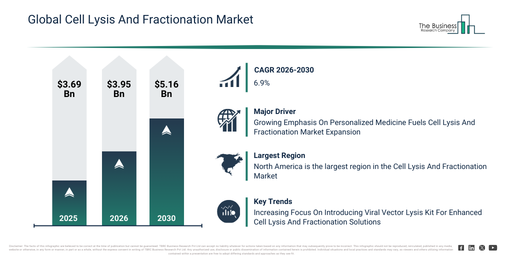
  • A key trend shaping the Cell Lysis And Fractionation Market involves the Increasing Focus On Introducing Viral Vector Lysis Kit For Enhanced Cell Lysis And Fractionation Solutions

    A key trend shaping the Cell Lysis And Fractionation Market involves the Increasing Focus On Introducing Viral Vector Lysis Kit For Enhanced Cell Lysis And Fractionation Solutions

    The Business Research Company’s 2026 market reports include new capabilities such as market attractiveness scoring and analysis, total addressable market analysis, company scoring matrix, interactive excel data dashboard, improved supply chain analysis, upcoming startups in the market, and overview of key products, aimed at improving the depth, usability, and strategic value of the insights delivered.

    What Is The Estimated Market Size Of The Cell Lysis And Fractionation Market During 2026–2030?

    The cell lysis and fractionation market size has shown significant expansion in recent years. This market is expected to increase from $3.69 billion in 2025 to $3.95 billion in 2026, achieving a compound annual growth rate (CAGR) of 7.0%. Historically, this growth has been driven by factors such as escalating molecular biology research activity, the expansion of proteomics studies, an increase in the application of nucleic acid purification techniques, the growth of life science laboratories, and a greater demand for standardized sample preparation methods.

    The cell lysis and fractionation market size is projected to experience robust expansion over the coming years, reaching $5.16 billion by 2030, driven by a compound annual growth rate (CAGR) of 6.9%. This anticipated growth stems from factors such as increased investments in proteomics and genomics research, a growing embrace of automated sample preparation, a heightened emphasis on high-throughput analysis, the expansion of biopharmaceutical research pipelines, and the rising deployment of integrated laboratory systems. Key trends foreseen during this period encompass the wider adoption of automated cell lysis systems, a surging demand for highly efficient protein extraction, an increased application of chemical and mechanical lysis techniques, the broadening scope of fractionation-based sample preparation, and an intensified focus on maintaining sample integrity.

    Download the Free Sample Report to Explore Key Market Insights:

    https://www.thebusinessresearchcompany.com/sample.aspx?id=14064&type=smp

    Which Economic Or Industry Drivers Are Impacting The Cell Lysis And Fractionation Market?

    The increasing emphasis on personalized medicine is anticipated to stimulate growth in the cell lysis and fractionation markets in the coming period. Personalized medicine represents a nascent medical approach that utilizes an individual’s genetic profile to diagnose and treat illnesses, customizing medical choices and therapies according to each patient’s distinct genetic composition. Cell lysis and fractionation are fundamental to precision medicine, enabling the isolation and examination of specific subcellular components, such as proteins, organelles, and nucleic acids, from patient samples. This capability empowers scientists and medical practitioners to investigate the molecular mechanisms of disease and formulate bespoke treatments tailored to each patient’s unique molecular characteristics. As an illustration, in February 2024, the Personalized Medicine Coalition (PMC), a US-based nonprofit, reported that in 2023, the Food and Drug Administration (FDA) approved 7 new personalized treatments for cancer, from a total of 26 personalized treatments, which was a notable rise from the 12 approved in 2022. Consequently, the expanding focus on personalized medicine is propelling the development of the cell lysis and fractionation markets.

    How Are The Various Segments Of The Cell Lysis And Fractionation Market Categorized?

    The cell lysis and fractionation market covered in this report is segmented –

    1) By Type: Mammalian Cells, Microbial Cells

    2) By Application: Nucleic Acid Purification And Isolation, Protein Purification And Isolation

    3) By End-User: Research Laboratories And Institutes, Biopharmaceutical, Biotechnology Companies

    Subsegments:

    1) By Mammalian Cells: Adherent Mammalian Cells, Suspension Mammalian Cells, Primary Cells, Cell Lines

    2) By Microbial Cells: Bacterial Cells, Yeast Cells, Fungal Cells, Algal Cells

    Which Trends Are Impacting The Growth Of The Cell Lysis And Fractionation Market?

    Leading firms within the cell lysis and fractionation market are concentrating on introducing sophisticated solutions, including CGT (cell and gene therapy) viral vector lysis kits, to secure a competitive advantage. These kits provide an easier AAV (Adeno-associated virus) lysis approach designed to enhance SOPs (Standard Operating Procedures), quality control, and safety, concurrently standardizing bioprocessing workflows. As an illustration, in July 2023, QIAGEN, a Germany-based company specializing in sample and assay technologies, unveiled its new CGT Viral Vector Lysis Kit, enabling the quantification of virus titers for various serotypes through a precise and consistent method beginning with cell lysates. This new CGT viral vector lysis kit augments QIAGEN’s quickly growing digital PCR product line for the biopharma sector, which currently features three QIAcuity Residual DNA Quantification Kits for assessing host cell DNA carryover and ten QIAcuity Cell and Gene Therapy (CGT) dPCR Assays used in adeno-associated virus (AAV) titer quantification.

    Which Major Firms Influence Developments In The Cell Lysis And Fractionation Market?

    Major companies operating in the cell lysis and fractionation market are Hoffmann-La Roche Ltd, Merck & Co. Inc., Thermo Fisher Scientific Inc., Danaher Corporation, Becton, Dickinson and Company, Lonza Group AG, Illumina Inc., Beckman Coulter Inc., PerkinElmer Inc., IDEX Corporation, Bio-Rad Laboratories Inc., QIAGEN NV, Eppendorf AG, Miltenyi Biotec B.V. & Co. KG, Promega Corporation, Takara Bio Inc., Abcam plc, Cell Signaling Technology Inc., BioVision Inc., Diagenode LLC, Claremont BioSolutions LLC, Norgen Biotek Corp., Qsonica LLC, Labfreez Instruments Group Co. Ltd.

    Read the full cell lysis and fractionation market report here:

    https://www.thebusinessresearchcompany.com/report/cell-lysis-and-fractionation-global-market-report

    What Are The Top-Performing Regions Within The Cell Lysis And Fractionation Market?

    North America was the largest region in the cell lysis and fractionation market in 2025. The regions covered in the cell lysis and fractionation market report are Asia-Pacific, South East Asia, Western Europe, Eastern Europe, North America, South America, Middle East, Africa.

    Request A Tailored Cell Lysis And Fractionation Market Research Report For Competitive Advantage:

    https://www.thebusinessresearchcompany.com/customise?id=14064&type=smp

    Browse Through More Reports Similar to the Global Cell Lysis And Fractionation Market 2026, By The Business Research Company

    Cell Separation Technologies Global Market Report

    https://www.thebusinessresearchcompany.com/report/cell-separation-technologies-global-market-report

    Cell Therapy Technologies Global Market Report

    https://www.thebusinessresearchcompany.com/report/cell-therapy-technologies-global-market-report

    Cell Harvesting Global Market Report

    https://www.thebusinessresearchcompany.com/report/cell-harvesting-global-market-report

    Get in touch with us:

    The Business Research Company: https://www.thebusinessresearchcompany.com/

    Americas +1 310-496-7795

    Asia +44 7882 955267 & +91 8897263534

    Europe +44 7882 955267

    Email us at info@tbrc.info

    Follow us on:

    LinkedIn: https://in.linkedin.com/company/the-business-research-company

    YouTube: https://www.youtube.com/channel/UC24_fI0rV8cR5DxlCpgmyFQ

    Global Market Model: https://www.thebusinessresearchcompany.com/global-market-model
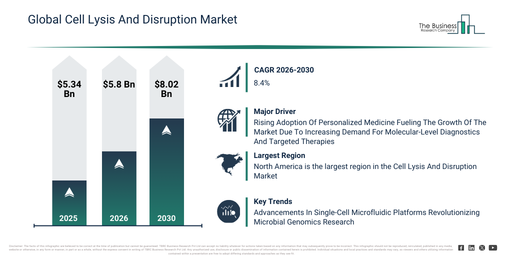
  • A significant industry trend in the Cell Lysis And Disruption Market includes the Advancements In Single-Cell Microfluidic Platforms Revolutionizing Microbial Genomics Research

    A significant industry trend in the Cell Lysis And Disruption Market includes the Advancements In Single-Cell Microfluidic Platforms Revolutionizing Microbial Genomics Research

    The Business Research Company’s 2026 market reports include new capabilities such as market attractiveness scoring and analysis, total addressable market analysis, company scoring matrix, interactive excel data dashboard, improved supply chain analysis, upcoming startups in the market, and overview of key products, aimed at improving the depth, usability, and strategic value of the insights delivered.

    What Market Size Expansion Is Predicted For The Cell Lysis And Disruption Market Between 2026 And 2030?

    The cell lysis and disruption market size has experienced robust growth in recent years. It is projected to expand from $5.34 billion in 2025 to $5.8 billion in 2026, exhibiting a compound annual growth rate (CAGR) of 8.7%. This historical growth can be ascribed to the expansion of molecular biology research activities, the increasing application of recombinant protein production, the development in academic life sciences research, the rising adoption of microbial fermentation processes, and the availability of advanced laboratory instruments.

    The cell lysis and disruption market size is poised for robust expansion in the coming years. It is projected to reach $8.02 billion by 2030, growing at a compound annual growth rate (CAGR) of 8.4%. This anticipated growth during the forecast period stems from the increasing demand for biologics manufacturing, rising investments in cell and gene therapy research, the broadening of proteomics and genomics studies, a growing emphasis on automation in laboratories, and the wider adoption of high-throughput screening platforms. Prominent trends throughout the forecast period include the increasing uptake of mechanical cell disruption systems, a rising utilization of high-purity lysis reagents, the growing need for scalable cell processing solutions, the expansion of automated sample preparation workflows, and an enhanced focus on achieving optimal yield and reproducibility.

    Download the Free Sample Report to Explore Key Market Insights:

    https://www.thebusinessresearchcompany.com/sample.aspx?id=24498&type=smp

    What Major Drivers Are Influencing Demand In The Cell Lysis And Disruption Market?

    The burgeoning emphasis on personalized medicine is anticipated to propel the expansion of the cell lysis and disruption market in the future. Personalized medicine represents a healthcare strategy where treatments and care are customized based on each patient’s unique attributes, including their genetic makeup and lifestyle. The increasing adoption of personalized medicine stems from advancements in genomic technologies, facilitating more accurate detection of genetic variations responsible for diseases, thereby enabling therapies that are more targeted and efficacious. The heightened need for personalized medicine underscores the importance of cell lysis and disruption, given their critical role in isolating Deoxyribonucleic Acid (DNA), Ribonucleic Acid (RNA), and proteins from patient samples. This extraction is vital for the molecular analysis necessary to formulate customized treatments. As an illustration, in February 2024, data from the Personalized Medicine Coalition, a US-based nonprofit organization, and the U.S. Food and Drug Administration (USFDA), a US-based regulatory authority, indicated the approval of 16 new personalized treatments for rare disease patients in 2023. This marks a substantial rise from the 6 personalized treatments approved in 2022. Consequently, the concentrated effort on personalized medicine is set to invigorate the growth of the cell lysis and disruption market.

    Which Market Segments Are Examined In The Cell Lysis And Disruption Market Study?

    The cell lysis and disruption market covered in this report is segmented –

    1) By Product: Reagents And Consumables, Instruments

    2) By Cell Type: Bacteria Cells, Mammalian Cells, Plant Cells, Yeast Or Fungi Or Algae

    3) By Application: Cell Organelle Isolation, Protein Isolation, Downstream Processing, Nucleic Acid Isolation

    4) By End-Use: Pharmaceutical And Biotechnology Companies, Academic And Research Institutes, Other End-Users

    Subsegments:

    1) By Reagents And Consumables: Enzymes, Detergent Solutions, Kits And Reagents

    2) By Instruments: Homogenizers, Sonicator, Microfluidizer, Other Instruments

    What Major Market Trends Are Driving Changes In The Cell Lysis And Disruption Market?

    Companies operating within the cell lysis and disruption market are increasingly concentrating on developing advanced solutions, such as single-cell microfluidic platforms, to improve the capabilities and efficiency of single-cell analysis for researchers engaged in microbial genomics. A single-cell microfluidic platform is a miniature device designed to accurately isolate, manipulate, and analyze individual cells by managing minuscule fluid volumes within microchannels, thus enabling automated and high-throughput single-cell studies. As an example, in January 2024, Atrandi Biosciences Inc., a biotechnology company based in Lithuania, launched its Flux platform along with the Single-Microbe DNA Barcoding Kit. These products leverage semi-permeable capsule (SPC) technology, which facilitates the efficient isolation and lysis of individual microbial cells while preserving the integrity of subsequent reactions. The innovative platform provides high-throughput functionalities, allowing for precise microbial genome quantification and DNA sequencing, which is crucial for advancing microbial genomics and single-cell analysis. Ultimately, these solutions are engineered to streamline and enhance existing workflows, making high-resolution, single-cell analysis more readily available and impactful for researchers across numerous scientific disciplines.

    Who Are The Primary Competitors In The Cell Lysis And Disruption Market?

    Major companies operating in the cell lysis and disruption market are F. Hoffmann-La Roche Ltd., Thermo Fisher Scientific Inc., Merck KGaA, Becton Dickinson and Company (BD), Agilent Technologies Inc., Bio-Rad Laboratories Inc., Qiagen N.V., Eppendorf AG, Miltenyi Biotec GmbH, Takara Bio Inc., Promega Corporation, New England Biolabs Inc., Covaris LLC, Microfluidics International Corp., Claremont BioSolutions LLC, Qsonica LLC, Zymo Research Corp., BioVision Inc., Beckman Coulter Inc., Sartorius AG, PerkinElmer Inc.

    Read the full cell lysis and disruption market report here:

    https://www.thebusinessresearchcompany.com/report/cell-lysis-and-disruption-global-market-report

    Which Region Shows The Strongest Potential For Future Growth In The Cell Lysis And Disruption Market?

    North America was the largest region in the cell lysis and disruption market in 2025. Asia-Pacific is expected to be the fastest-growing region in the forecast period. The regions covered in the cell lysis and disruption market report are Asia-Pacific, South East Asia, Western Europe, Eastern Europe, North America, South America, Middle East, Africa.

    Request A Tailored Cell Lysis And Disruption Market Research Report For Competitive Advantage:

    https://www.thebusinessresearchcompany.com/customise?id=24498&type=smp

    Browse Through More Reports Similar to the Global Cell Lysis And Disruption Market 2026, By The Business Research Company

    Cell Separation Global Market Report

    https://www.thebusinessresearchcompany.com/report/cell-separation-global-market-report

    Cell Separation Technologies Global Market Report

    https://www.thebusinessresearchcompany.com/report/cell-separation-technologies-global-market-report

    Cell Free Dna Isolation And Extraction Global Market Report

    https://www.thebusinessresearchcompany.com/report/cell-free-dna-isolation-and-extraction-global-market-report

    Get in touch with us:

    The Business Research Company: https://www.thebusinessresearchcompany.com/

    Americas +1 310-496-7795

    Asia +44 7882 955267 & +91 8897263534

    Europe +44 7882 955267

    Email us at info@tbrc.info

    Follow us on:

    LinkedIn: https://in.linkedin.com/company/the-business-research-company

    YouTube: https://www.youtube.com/channel/UC24_fI0rV8cR5DxlCpgmyFQ

    Global Market Model: https://www.thebusinessresearchcompany.com/global-market-model