Category: Healthcare Services

  • AI In Oncology For Analytical Solutions Market Global Report 2026 Market Forecast 2026–2035 Highlighting Market Data Patterns and Industry Insights

    AI In Oncology For Analytical Solutions Market Global Report 2026 Market Forecast 2026–2035 Highlighting Market Data Patterns and Industry Insights

    The Business Research Company’s 2026 market reports include new capabilities such as market attractiveness scoring and analysis, total addressable market analysis, company scoring matrix, interactive excel data dashboard, improved supply chain analysis, upcoming startups in the market, and overview of key products, aimed at improving the depth, usability, and strategic value of the insights delivered.

    What Market Value Is Anticipated For The AI In Oncology For Analytical Solutions Market Over The Period 2026–2030?

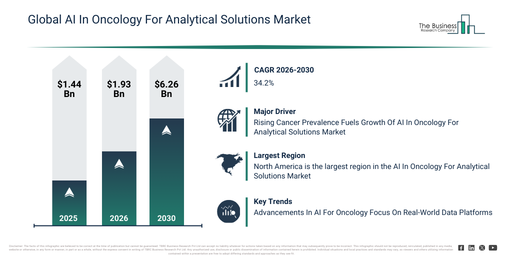
    The ai in oncology for analytical solutions market has experienced exponential growth in its size over recent years. It is projected to expand from $1.44 billion in 2025 to $1.93 billion in 2026, demonstrating a compound annual growth rate (CAGR) of 34.2%. The increase observed in the historic period can be attributed to limited AI adoption in oncology, continued reliance on conventional diagnostic methods, a growing global prevalence of cancer, increasing clinical research activities, and the rising demand for personalized medicine.

    The market size for ai in oncology for analytical solutions is anticipated to experience substantial expansion over the next few years. It is projected to reach $6.26 billion by 2030, demonstrating a compound annual growth rate (CAGR) of 34.2%. The increase projected for this period can be attributed to progress in AI algorithms designed for oncology, the broadening scope of oncology data licensing services, deeper integration of AI with genomic data, the growing adoption of clinical decision support software, and enhanced collaboration between healthcare providers and AI solution vendors. Key trends during the forecast period include a rising uptake of AI-based imaging and diagnostic software, increased utilization of predictive analytics in oncology research, the expansion of clinical decision support systems for treatment planning, the growing incorporation of genomic data into cancer treatment solutions, and an increasing need for data licensing and analytics services.

    Download the Free Sample Report to Explore Key Market Insights:

    https://www.thebusinessresearchcompany.com/sample.aspx?id=13569&type=smp

    Which Economic Or Industry Drivers Are Impacting The AI In Oncology For Analytical Solutions Market?

    The increasing occurrence of cancer is projected to drive expansion within the AI in oncology for the analytical solutions market in the coming years. Cancer encompasses various conditions marked by the unrestrained proliferation and dissemination of atypical cells. In cancer treatment, AI in oncology for analytical solutions plays a role in delivering tailored therapies, facilitating prompt diagnosis, and enhancing patient results, owing to its capability to rapidly and effectively handle extensive and intricate data. For example, reports from May 2024 by the National Cancer Institute, a US-based Government agency, indicate that around 2 million new cancer cases are anticipated to be diagnosed in the US during 2024, alongside a forecast of more than 611,000 deaths. Projections suggest that by 2040, the number of new cancer cases globally will climb to an estimated 29.9 million, and fatalities linked to cancer will reach 15.3 million. Consequently, the growing incidence of cancer is a key impetus for the AI in oncology for analytical solutions market.

    How Is The AI In Oncology For Analytical Solutions Market Divided Into Its Major Segments?

    The ai in oncology for analytical solutions market covered in this report is segmented –

    1) By Component: Data Licensing Services, Software Solutions, Analytics and Other Services

    2) By Cancer Type: Breast Cancer, Lung Cancer, Prostate Cancer, Colorectal Cancer, Brain Tumor, Kidney Cancer, Non-Hodgkin Lymphoma, Bladder Cancer

    3) By Application: Diagnostic And Screening, Prognostic And Risk Stratification, Treatment Planning And Clinical Decision Support, Biomarker Discovery And Drug Development

    Subsegments:

    1) By Data Licensing Services: Oncology Data Licensing, Genomic Data Licensing

    2) By Software Solutions: AI-Based Imaging Software, Diagnostic Software, Clinical Decision Support Software

    3) By Analytics And Other Services: Predictive Analytics Services, AI Training And Support Services, Data Analysis Services

    How Are Trends Transforming The AI In Oncology For Analytical Solutions Market Landscape?

    Leading companies in the AI in oncology for analytical solutions market are prioritizing the development of AI innovations, such as new real-world data platforms, to accelerate cancer research and advance generative AI models in oncology. A real-world data platform is defined as a system that integrates and manages observational data from various sources outside of standard clinical research settings, including electronic health records, health insurance claims, patient surveys, and disease registries. For example, in October 2023, the US-based Central Ohio Transit Authority unveiled Vista, a novel real-world data platform designed to expedite cancer research and enhance generative AI models in oncology. This platform aims to provide a more comprehensive and standardized approach to managing cancer research data by merging several databases, such as the data portal database and the genomic database. Moreover, Vista is expected to streamline data sharing, elevate data quality, and support various applications within oncology and other healthcare domains.

    Who Are The Prominent Organizations Shaping The AI In Oncology For Analytical Solutions Market?

    Major companies operating in the ai in oncology for analytical solutions market are IBM Watson Health, NVIDIA Corporation, Siemens Healthineers, GE Healthcare, Tempus, DeepMind Health, Paige.AI, PathAI, Aidoc, Nucleai, OWKIN, SOPHiA Genetics, Imagen Technologies, Atomwise, Enlitic, Inspirata, 3Scan, Zebra Medical Vision, Ibex Medical Analytics, Vuno Inc., Proscia, Google Health, Huiying Medical

    Read the full ai in oncology for analytical solutions market report here:

    https://www.thebusinessresearchcompany.com/report/ai-in-oncology-for-analytical-solutions-global-market-report

    What Are The Top-Performing Regions Within The AI In Oncology For Analytical Solutions Market?

    North America was the largest region in the AI In oncology for analytical solutions market in 2025. Asia-Pacific is expected to be the fastest-growing region in the forecast period. The regions covered in the ai in oncology for analytical solutions market report are Asia-Pacific, South East Asia, Western Europe, Eastern Europe, North America, South America, Middle East, Africa.

    Request A Tailored AI In Oncology For Analytical Solutions Market Research Report For Competitive Advantage:

    https://www.thebusinessresearchcompany.com/customise?id=13569&type=smp

    Browse Through More Reports Similar to the Global AI In Oncology For Analytical Solutions Market 2026, By The Business Research Company

    artificial intelligence in oncology global market report

    https://www.thebusinessresearchcompany.com/report/artificial-intelligence-in-oncology-global-market-report

    ai in cancer diagnostics global market report

    https://www.thebusinessresearchcompany.com/report/ai-in-cancer-diagnostics-global-market-report

    ai in pharma global market report

    https://www.thebusinessresearchcompany.com/report/ai-in-pharma-global-market-report

    Get in touch with us:

    The Business Research Company: https://www.thebusinessresearchcompany.com/

    Americas +1 310-496-7795

    Asia +44 7882 955267 & +91 8897263534

    Europe +44 7882 955267

    Email us at info@tbrc.info

    Follow us on:

    LinkedIn: https://in.linkedin.com/company/the-business-research-company

    YouTube: https://www.youtube.com/channel/UC24_fI0rV8cR5DxlCpgmyFQ

    Global Market Model: https://www.thebusinessresearchcompany.com/global-market-model
  • AI in Mental Health Market Global Report 2026 Market Outlook 2026–2030 with Major Growth Drivers and Emerging Industry Trends

    AI in Mental Health Market Global Report 2026 Market Outlook 2026–2030 with Major Growth Drivers and Emerging Industry Trends

    The Business Research Company’s 2026 market reports include new capabilities such as market attractiveness scoring and analysis, total addressable market analysis, company scoring matrix, interactive excel data dashboard, improved supply chain analysis, upcoming startups in the market, and overview of key products, aimed at improving the depth, usability, and strategic value of the insights delivered.

    What Is The Expected Market Size Of The AI in Mental Health Market From 2026 To 2030?

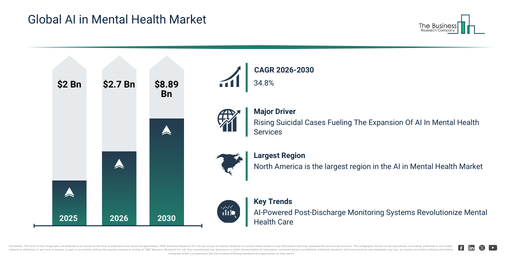
    The market size for AI in mental health has experienced rapid expansion in recent years. It is anticipated to increase from $2 billion in 2025 to $2.7 billion in 2026, achieving a compound annual growth rate (CAGR) of 34.7%. The historical growth of this market can be ascribed to factors such as the initial limited uptake of AI in healthcare, a continued dependence on traditional therapy methods, the rising occurrence of mental health disorders, the expansion of digital health initiatives, and early investments in AI tools specifically for healthcare.

    The ai in mental health market is projected for significant expansion in the coming years, with its size expected to reach $8.89 billion by 2030, demonstrating a compound annual growth rate (CAGR) of 34.8%. This anticipated growth during the forecast period is fueled by several factors, including the progress in machine learning algorithms tailored for mental health, a rising need for remote patient observation, the broadening scope of virtual therapy and SaaS offerings, the incorporation of AI into wearable and VR technologies, and an increase in partnerships between healthcare institutions and technology firms. Key developments expected over this period encompass the integration of AI chatbots with virtual therapy platforms, the uptake of predictive analytics for patient oversight, an increase in wearable devices and brain-computer interfaces, the broadening application of context-aware computing within mental health services, and the escalating utilization of AI-driven patient behavioral pattern recognition.

    Download the Free Sample Report to Explore Key Market Insights:

    https://www.thebusinessresearchcompany.com/sample.aspx?id=14242&type=smp

    What Major Drivers Are Influencing Demand In The AI in Mental Health Market?

    The rising number of suicidal incidents is anticipated to boost the expansion of AI within the mental health market moving forward. Suicidal cases describe situations where individuals experience thoughts, feelings, or behaviors aimed at intentionally harming themselves with the intent to end their own lives. Mental health conditions such as depression, bipolar disorder, schizophrenia, and substance abuse are key factors contributing to suicidal thoughts and actions. AI in mental health is utilized to detect early indicators of suicidal risk by analyzing patterns in user information, thereby facilitating prompt intervention and support. For example, in April 2025, according to the American Foundation for Suicide Prevention, a US-based voluntary health organization, the overall age-adjusted suicide rate in the United States demonstrated minimal change, recorded at 14.21 per 100,000 in 2022 and 14.12 per 100,000 in 2023. Consequently, the increasing prevalence of suicidal cases is driving the growth of AI in the mental health market.

    Which Segments Are Included In The Analysis Of The AI in Mental Health Market?

    The ai in mental health market covered in this report is segmented –

    1) By Component: Software-As-A-Service (SaaS), Hardware

    2) By Technology: Natural Language Processing (NLP), Context-Aware Computing, Computer Vision, Machine learning

    3) By Application: Conversational Interfaces, Patient Behavioral Pattern Recognition

    4) By End-User: Hospitals And Clinics, Mental Health Centers, Research Institutions

    Subsegments:

    1) By Software-As-A-Service (SaaS): AI-Powered Chatbots, Virtual Therapy Platforms, Mental Health Assessment Tools, Predictive Analytics Solutions

    2) By Hardware: Wearable Devices, Brain-Computer Interfaces, Virtual Reality Systems For Therapy

    Which Trends Are Impacting The Growth Of The AI in Mental Health Market?

    Key players in the AI in the mental health market are innovating technology, such as the AI-powered behavioral health system named Discovery365, to enhance their market offerings. Discovery365 is a system designed to monitor patient progress for one year following discharge from a behavioral treatment program, a period during which relapse rates are typically high. For instance, in September 2023, Discovery Behavioral Health Inc., a US-based mental health service company, in partnership with Videra Health and Brigham and Women’s Hospital, a US-based academic medical center, introduced Discovery365. This pioneering AI-powered system aims to address the one-year recovery gap in behavioral health. The platform leverages advanced AI technology to analyze patient data post-discharge, specifically utilizing video-captured analytics to assess patient progress and identify potential signs of struggle or relapse. Discovery365 endeavors to reduce relapse rates and support patients during the critical year after treatment completion by extending care beyond the confines of treatment programs.

    Which Key Industry Participants Are Active In The AI in Mental Health Market?

    Major companies operating in the ai in mental health market are BetterHelp, Lyra Health, American Well Corporation, Doctor on Demand, Cerebral, MDLive, Talkspace Inc., Ginger, Quartet Health, Meditopia, Mantra Health, Happify Health, Woebot Health, Kintsugi, Marigold Health, SilverCloud Health, Cognoa, BioBeats, MeQuilibrium, Mightier, Nue Life, Mindstrong Health, Oliva Health, Wysa Ltd

    Read the full ai in mental health market report here:

    https://www.thebusinessresearchcompany.com/report/ai-in-mental-health-global-market-report

    Which Region Shows The Strongest Potential For Future Growth In The AI in Mental Health Market?

    North America was the largest region in the AI in mental health market in 2025. Asia-Pacific is expected to be the fastest-growing region in the forecast period. The regions covered in the ai in mental health market report are Asia-Pacific, South East Asia, Western Europe, Eastern Europe, North America, South America, Middle East, Africa.

    Request A Tailored AI in Mental Health Market Research Report For Competitive Advantage:

    https://www.thebusinessresearchcompany.com/customise?id=14242&type=smp

    Browse Through More Reports Similar to the Global AI in Mental Health Market 2026, By The Business Research Company

    emotional ai global market report

    https://www.thebusinessresearchcompany.com/report/emotional-ai-global-market-report

    mental health global market report

    https://www.thebusinessresearchcompany.com/report/mental-health-global-market-report

    AI in medical devices global market report

    https://www.thebusinessresearchcompany.com/report/ai-in-medical-devices-global-market-report

    Get in touch with us:

    The Business Research Company: https://www.thebusinessresearchcompany.com/

    Americas +1 310-496-7795

    Asia +44 7882 955267 & +91 8897263534

    Europe +44 7882 955267

    Email us at info@tbrc.info

    Follow us on:

    LinkedIn: https://in.linkedin.com/company/the-business-research-company

    YouTube: https://www.youtube.com/channel/UC24_fI0rV8cR5DxlCpgmyFQ

    Global Market Model: https://www.thebusinessresearchcompany.com/global-market-model
  • One of the Major Drivers of the AI In Emergency Room And Hospital Management Market Global Report 2026 Market Is the Increasing Acceptance Of Electronic Health Records Boosts Market Growth

    One of the Major Drivers of the AI In Emergency Room And Hospital Management Market Global Report 2026 Market Is the Increasing Acceptance Of Electronic Health Records Boosts Market Growth

    The Business Research Company’s 2026 market reports include new capabilities such as market attractiveness scoring and analysis, total addressable market analysis, company scoring matrix, interactive excel data dashboard, improved supply chain analysis, upcoming startups in the market, and overview of key products, aimed at improving the depth, usability, and strategic value of the insights delivered.

    What Market Valuation Is Forecasted For The AI In Emergency Room And Hospital Management Market By 2030 Starting From Its 2026 Size?

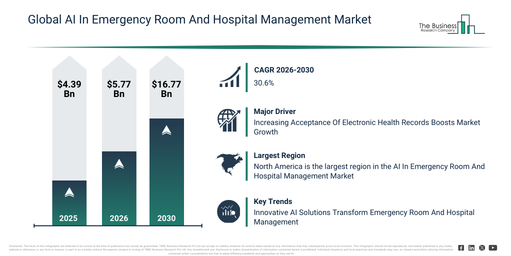
    The market for AI in emergency room and hospital management has experienced exponential growth in its size over recent years. It is anticipated to expand from $4.39 billion in 2025 to $5.77 billion in 2026, achieving a compound annual growth rate (CAGR) of 31.2%. The historical expansion can be attributed to several factors including the limited adoption of AI technologies in healthcare, a reliance on manual hospital workflows, increasing patient volumes in ER and hospitals, growing investment in hospital IT infrastructure, and early implementations of machine learning in healthcare analytics.

    The ai in emergency room and hospital management market size is anticipated to experience substantial expansion in the coming years. It is projected to increase to $16.77 billion in 2030, demonstrating a compound annual growth rate (CAGR) of 30.6%. This growth during the forecast period is fueled by the broadening of AI platforms and solutions for healthcare, the rising demand for real-time patient data analytics, the implementation of AI-driven decision support systems, advancements in predictive and prescriptive analytics, and the integration of AI with electronic health records (EHRs). Significant trends for this period encompass the incorporation of AI-based patient monitoring systems, the use of predictive analytics for emergency room management, AI-powered workflow optimization in hospitals, the adoption of context-aware computing for decision support, and an increased reliance on AI-powered applications for operational efficiency.

    Download the Free Sample Report to Explore Key Market Insights:

    https://www.thebusinessresearchcompany.com/sample.aspx?id=20708&type=smp

    Which Market Drivers Are Supporting The Expansion Of The AI In Emergency Room And Hospital Management Market?

    The rising adoption of electronic health records is expected to stimulate expansion in the AI in emergency room and hospital management markets in the future. Electronic health records (EHRs) are digital versions of patients’ paper files, encompassing all their health details. This growing embrace of EHRs stems from their capacity to enhance patient care via improved data access, optimized operational procedures, better dialogue among healthcare providers, and the analytical potential to guide clinical decisions. Within emergency rooms and hospital management, AI supports EHRs by simplifying data input, enhancing patient assessment through predictive analytics, automating administrative functions, and offering clinical decision assistance, ultimately resulting in quicker diagnoses and tailored treatment approaches. An example illustrating this trend is from April 2024, where a report by the National Center for Health Statistics, a US-based government agency, indicated that 88.2% of office-based physicians utilized an electronic health record (EHR) system, with 77.8% using a certified EHR system. Consequently, the growing acceptance of electronic health records will power the growth of AI in emergency room and hospital management market.

    Which Segment Categories Define The AI In Emergency Room And Hospital Management Market?

    The ai in emergency room and hospital management market covered in this report is segmented –

    1) By Offering: Hardware, Software, Services

    2) By Technology: Machine Learning, Natural Language Processing, Context-Aware Computing, Computer Vision

    3) By End User: Hospitals and Emergency Departments, Ambulatory and Urgent Care Centers, Other End Users

    Subsegments:

    1) By Hardware: Graphics Processing Units, AI-Optimized Servers and Computing Systems, Medical-Grade Sensors and Monitoring Devices

    2) By Software: Ai Platforms, Ai-Powered Applications, Analytics Solutions, Workflow Management Solutions

    3) By Services: Implementation And Integration Services, Support And Maintenance Services, Training And Consulting Services

    What Major Market Trends Are Driving Changes In The AI In Emergency Room And Hospital Management Market?

    Major companies operating in the AI in emergency rooms and hospital management market are concentrating on patient flow management and operational optimization through advanced tools, including Generative AI-based SaaS solutions, to facilitate digital transformation. This enables hospitals to adapt to changing needs and improve system-wide governance. Generative AI-based SaaS tools are cloud-based software solutions that utilize artificial intelligence to create content, insights, or automation capabilities, thereby enhancing decision-making and operational efficiency across diverse industries. For example, in June 2023, LeanTaaS, a US-based provider of SaaS solutions for hospital operations, launched iQueue Autopilot. This generative AI tool is designed to improve patient flow and capacity management, offering human-like interactions to support decision-making in both inpatient and outpatient settings. iQueue Autopilot employs three methods: Lean Forward for real-time recommendations, Lean Back for proactive alerts, and Moment in Time Problem Solving for immediate risk management. It combines AI/ML expertise with an extensive repository of hospital operational data to deliver actionable insights, ensuring hospitals can optimize resources and enhance patient outcomes.

    Who Are The Top Companies Competing In The AI In Emergency Room And Hospital Management Market?

    Major companies operating in the ai in emergency room and hospital management market are International Business Machines Corporation, Microsoft Corporation, Oracle Corporation, SAP SE, Salesforce Inc., Palantir Technologies, Accenture plc, Capgemini SE, Deloitte, PricewaterhouseCoopers, NVIDIA Corporation, Intel Corporation, Epic Systems, Koninklijke Philips N.V., Medtronic, Boston Scientific, Baxter International, Johnson & Johnson, Roche, Aidoc, Qure.ai, Health Catalyst, Dascena

    Read the full ai in emergency room and hospital management market report here:

    https://www.thebusinessresearchcompany.com/report/ai-in-emergency-room-and-hospital-management-global-market-report

    How Is The AI In Emergency Room And Hospital Management Market Distributed Across Key Geographic Regions?

    North America was the largest region in the AI in emergency room and hospital management market in 2025. The regions covered in the ai in emergency room and hospital management market report are Asia-Pacific, South East Asia, Western Europe, Eastern Europe, North America, South America, Middle East, Africa.

    Request A Tailored AI In Emergency Room And Hospital Management Market Research Report For Competitive Advantage:

    https://www.thebusinessresearchcompany.com/customise?id=20708&type=smp

    Browse Through More Reports Similar to the Global AI In Emergency Room And Hospital Management Market 2026, By The Business Research Company

    AI in medical devices global market report

    https://www.thebusinessresearchcompany.com/report/ai-in-medical-devices-global-market-report

    artificial intelligence AI in operating room global market report

    https://www.thebusinessresearchcompany.com/report/artificial-intelligence-ai-in-operating-room-global-market-report

    artificial intelligence in disaster response and emergency management global market report

    https://www.thebusinessresearchcompany.com/report/artificial-intelligence-in-disaster-response-and-emergency-management-global-market-report

    Get in touch with us:

    The Business Research Company: https://www.thebusinessresearchcompany.com/

    Americas +1 310-496-7795

    Asia +44 7882 955267 & +91 8897263534

    Europe +44 7882 955267

    Email us at info@tbrc.info

    Follow us on:

    LinkedIn: https://in.linkedin.com/company/the-business-research-company

    YouTube: https://www.youtube.com/channel/UC24_fI0rV8cR5DxlCpgmyFQ

    Global Market Model: https://www.thebusinessresearchcompany.com/global-market-model
  • A key trend shaping the AI In Cancer Diagnostics Market Global Report 2026 Market involves the AI-Driven Pathology Solutions Transform Cancer Diagnosis in Europe

    A key trend shaping the AI In Cancer Diagnostics Market Global Report 2026 Market involves the AI-Driven Pathology Solutions Transform Cancer Diagnosis in Europe

    The Business Research Company’s 2026 market reports include new capabilities such as market attractiveness scoring and analysis, total addressable market analysis, company scoring matrix, interactive excel data dashboard, improved supply chain analysis, upcoming startups in the market, and overview of key products, aimed at improving the depth, usability, and strategic value of the insights delivered.

    How Is The Market Size Of The AI In Cancer Diagnostics Market Expected To Change Between 2026 And 2030?

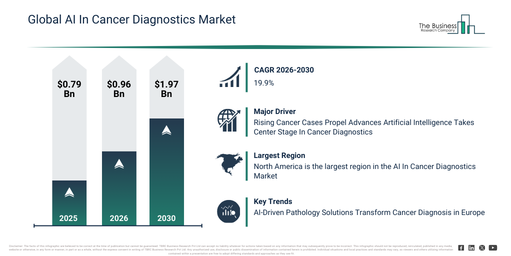
    The market for AI in cancer diagnostics has seen rapid expansion over the last few years. This market is projected to expand from $0.79 billion in 2025 to reach $0.96 billion by 2026, demonstrating a compound annual growth rate (CAGR) of 20.2%. Historically, its expansion has been driven by factors such as the initial limited integration of AI in early diagnostic processes, a previous dependence on conventional imaging methods, a global increase in cancer cases, a growing need for solutions that enable early detection, and an increase in the number of diagnostic centers.

    The ai in cancer diagnostics market size is projected to experience significant expansion in the coming years, with an anticipated valuation of $1.97 billion by 2030, exhibiting a compound annual growth rate (CAGR) of 19.9%. This growth throughout the forecast period is driven by advancements in deep learning and machine learning algorithms, the proliferation of ai-powered imaging systems, increasing integration of predictive analytics in healthcare, rising investments in digital health technologies, and enhanced collaboration between ai developers and medical institutions. Prominent trends for this period include the growing adoption of AI-based imaging and diagnostic tools, the incorporation of predictive analytics into cancer screening, the increased application of ai for tumor identification and classification, the expansion of AI-driven monitoring and follow-up systems, and strengthened cooperation between hospitals and ai solution providers.

    Download the Free Sample Report to Explore Key Market Insights:

    https://www.thebusinessresearchcompany.com/sample.aspx?id=13567&type=smp

    What Underlying Factors Are Accelerating The Growth Of The AI In Cancer Diagnostics Market?

    The rising incidence of cancer is expected to drive the expansion of artificial intelligence in the cancer diagnostics market. Cancer involves a cluster of diseases characterized by abnormal cell proliferation with the capacity to invade or spread to other parts of the body. Integrating AI into cancer care aims to enhance efficiency, accuracy, and personalized treatment options, ultimately improving patient outcomes. For instance, in May 2024, the National Cancer Institute, a US-based Government agency, projected approximately 2 million new cancer cases to be diagnosed in the U.S. in 2024, with over 611,000 deaths anticipated. By 2040, new cancer cases globally are estimated to increase to 29.9 million, alongside a rise in cancer-related deaths to 15.3 million. Therefore, the increasing prevalence of cancer is a significant driver for the growth of artificial intelligence in the cancer diagnostics market.

    How Is The AI In Cancer Diagnostics Market Structured Across Different Segments?

    The ai in cancer diagnostics market covered in this report is segmented –

    1) By Component: Software Solutions, Hardware, Services

    2) By Cancer Type: Breast Cancer, Lung Cancer, Brain Tumor, Skin Cancer And Cervical Cancer, Prostate And Colorectal Cancer, Other Cancer Types

    3) By Application: Screening And Diagnosis, Tumor Identification, Monitoring

    4) By End User: Hospitals, Diagnostic Centers, Medical Research Institutes

    Subsegments:

    1) By Software Solutions: Machine Learning Software, Deep Learning Software, Image Analysis Software

    2) By Hardware: AI-Powered Imaging Systems, Diagnostic Devices

    3) By Services: AI Integration Services, Consulting And Training Services, Support And Maintenance Services

    Which Trends Are Shaping The Future Of The AI In Cancer Diagnostics Market?

    Leading companies in the AI in cancer diagnostics market are witnessing substantial growth, propelled by innovations in AI-driven digital pathology systems for identifying cancer. These AI-powered digital pathology solutions for cancer detection involve the application of artificial intelligence algorithms to identify cancer and other diagnostic indicators across various tissue types, thereby facilitating accurate and prompt cancer diagnoses, assisting in case prioritization, and ensuring consistent diagnostic outcomes. For example, in November 2023, Dedalus and Ibex Medical Analytics, a European health software company, introduced an integrated end-to-end AI-powered digital pathology system for cancer diagnosis across Europe. This particular solution seeks to enhance accuracy, provide AI-enabled decision support tools, simplify reporting, improve laboratory efficiency, and elevate diagnostic certainty.

    Which Major Players Dominate The AI In Cancer Diagnostics Market?

    Major companies operating in the ai in cancer diagnostics market are Microsoft Corporation, IBM Corporation, Verily Life Sciences LLC, Tempus Labs Inc, Guardant Health Inc, Lunit Inc, Paige AI Inc, Viz.ai Inc, Enlitic Inc, Ibex Medical Analytics Ltd, Kheiron Medical Technologies Limited, CureMetrix Inc, CancerIQ Inc, MultiplAI Health Inc, Freenome Holdings Inc, SkinVision B V, Owkin Inc, Imagen Technologies Inc, Cyrcadia Health Inc, Oncora Medical Inc, Xilis Inc

    Read the full ai in cancer diagnostics market report here:

    https://www.thebusinessresearchcompany.com/report/ai-in-cancer-diagnostics-global-market-report

    Which Region Is Projected To Dominate The AI In Cancer Diagnostics Market During The Forecast Period?

    North America was the largest region in the artificial intelligence in cancer diagnostics market in 2025. The regions covered in the ai in cancer diagnostics market report are Asia-Pacific, South East Asia, Western Europe, Eastern Europe, North America, South America, Middle East, Africa.

    Request A Tailored AI In Cancer Diagnostics Market Research Report For Competitive Advantage:

    https://www.thebusinessresearchcompany.com/customise?id=13567&type=smp

    Browse Through More Reports Similar to the Global AI In Cancer Diagnostics Market 2026, By The Business Research Company

    artificial intelligence in cancer diagnostics global market report

    https://www.thebusinessresearchcompany.com/report/artificial-intelligence-in-cancer-diagnostics-global-market-report

    AI in medical diagnostics global market report

    https://www.thebusinessresearchcompany.com/report/ai-in-medical-diagnostics-global-market-report

    artificial intelligence in the diagnostic global market report

    https://www.thebusinessresearchcompany.com/report/artificial-intelligence-in-the-diagnostic-global-market-report

    Get in touch with us:

    The Business Research Company: https://www.thebusinessresearchcompany.com/

    Americas +1 310-496-7795

    Asia +44 7882 955267 & +91 8897263534

    Europe +44 7882 955267

    Email us at info@tbrc.info

    Follow us on:

    LinkedIn: https://in.linkedin.com/company/the-business-research-company

    YouTube: https://www.youtube.com/channel/UC24_fI0rV8cR5DxlCpgmyFQ

    Global Market Model: https://www.thebusinessresearchcompany.com/global-market-model
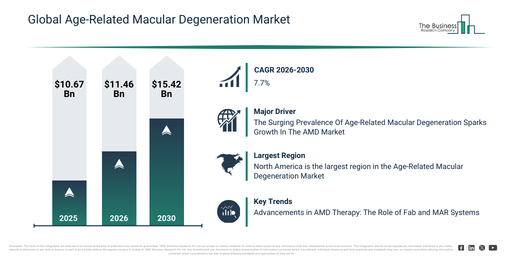
  • A significant industry trend in the Age-Related Macular Degeneration Market Global Report 2026 Market includes the Advancements in AMD Therapy: The Role of Fab and MAR Systems

    A significant industry trend in the Age-Related Macular Degeneration Market Global Report 2026 Market includes the Advancements in AMD Therapy: The Role of Fab and MAR Systems

    The Business Research Company’s 2026 market reports include new capabilities such as market attractiveness scoring and analysis, total addressable market analysis, company scoring matrix, interactive excel data dashboard, improved supply chain analysis, upcoming startups in the market, and overview of key products, aimed at improving the depth, usability, and strategic value of the insights delivered.

    What Is The Market Size Of The Age-Related Macular Degeneration Market In 2026 And What Value Is Projected For 2030?

    The age-related macular degeneration market size has experienced significant expansion over recent years. It is anticipated to increase from $10.67 billion in 2025 to $11.46 billion in 2026, achieving a compound annual growth rate (CAGR) of 7.5%. Historically, this growth can be linked to the worldwide aging population, the rising occurrence of AMD, restricted treatment options in earlier periods, increased understanding of eye health, and the expansion of hospital and ophthalmology clinic facilities.

    The market size for age-related macular degeneration is poised for substantial growth over the coming years, with projections indicating an expansion to $15.42 billion in 2030, demonstrating a compound annual growth rate (CAGR) of 7.7%. This anticipated increase throughout the forecast period stems from factors such as the development of advanced anti-VEGF drugs, augmented investment in ophthalmology research, the proliferation of specialty pharmacies and digital pharmacy channels, the growing application of combination therapies, and an increasing embrace of personalized treatment strategies. Prominent trends for the forecast period feature a greater uptake of anti-VEGF therapies, the rising consumption of nutritional supplements and low vision assistance, an increase in photodynamic and laser therapy interventions, the broadening of intravitreal and intravenous administration pathways, and intensified awareness coupled with consistent eye screening initiatives.

    Download the Free Sample Report to Explore Key Market Insights:

    https://www.thebusinessresearchcompany.com/sample.aspx?id=10845&type=smp

    Which Growth Drivers Are Contributing To The Progress Of The Age-Related Macular Degeneration Market?

    The increasing incidence of age-related macular degeneration (AMD) is projected to drive the expansion of the age-related macular degeneration (AMD) market in the future. AMD is a progressive ocular disease impacting the macula, which is a vital segment of the retina crucial for central vision. Treatments for age-related macular degeneration (AMD) assist individuals with retinal disorders by reducing the progression and impact of the condition. As an illustration, reports from Optimaxa, a UK-based laser eye treatment specialist, indicated in February 2023 that 196 million people worldwide were affected by age-related macular degeneration (AMD), with projections suggesting this number will climb to 288 million by 2040, representing 8.7 percent of the global population. Consequently, the growing prevalence of age-related macular degeneration (AMD) is a primary force behind the age-related macular degeneration market.

    What Are The Key Segments Of The Age-Related Macular Degeneration Market?

    The age-related macular degeneration market covered in this report is segmented –

    1) By Type: Wet Age-Related Macular Degeneration (AMD), Dry Age-Related Macular Degeneration (AMD)

    2) By Drug: Eylea, Lucentis, Avastin, Other Drugs

    3) By Distribution Channel: Hospital Pharmacy, Specialty Pharmacy

    Subsegments:

    1) By Wet Age-Related Macular Degeneration (AMD): Anti-VEGF Injections, Photodynamic Therapy, Laser Surgery

    2) By Dry Age-Related Macular Degeneration (AMD): Nutritional Supplements, Low Vision Aids, Therapies For Geographic Atrophy

    What Key Trends Are Influencing The Development Of The Age-Related Macular Degeneration Market?

    Major companies in the age-related macular degeneration (AMD) market are advancing innovative technologies, such as recombinant antigen-binding fragments. Recombinant antigen-binding fragments (Fab) are engineered proteins derived from antibodies that specifically bind to target antigens, commonly utilized in therapeutic applications to inhibit disease-related pathways. For instance, in December 2023, Enzene Biosciences, an India-based biotechnology company, launched ranibizumab, a recombinant monoclonal antibody fragment (Fab) specifically engineered to inhibit vascular endothelial growth factor (VEGF), a key protein involved in the development of abnormal blood vessels in conditions such as age-related macular degeneration (AMD) and diabetic macular edema (DME). By obstructing VEGF, ranibizumab effectively decreases the leakage and proliferation of these blood vessels, which helps preserve vision in patients with these retinal disorders. It is delivered through intravitreal injection and has gained widespread acceptance in clinical practice for its efficacy in treating various retinal diseases. The introduction of ranibizumab has greatly enhanced the treatment landscape for patients grappling with these serious conditions.

    Who Are The Leading Companies Operating In The Age-Related Macular Degeneration Market?

    Major companies operating in the age-related macular degeneration market are F. Hoffmann-La Roche Ltd., Novartis AG, Bayer AG, Pfizer Inc., Bausch Health Companies Inc., Regeneron Pharmaceuticals Inc., Alimera Sciences Inc., Alkeus Pharmaceuticals Inc., Outlook Therapeutics Inc., Samsung Bioepis Co. Ltd., Biocon Ltd., Bio-Thera Biopharmaceutical Co. Ltd., Acucela Inc., Ophthotech Corporation, Kodiak Sciences Inc., REGENXBIO Inc., Alkahest Inc., Opthea Limited, Apellis Pharmaceuticals Inc., Graybug Vision Inc., IVERIC bio Inc., Santen Pharmaceutical Co. Ltd., Ocular Therapeutix Inc., Chengdu Kanghong Pharmaceutical Group Co. Ltd., pSivida Corp., Clearside Biomedical Inc., SciFluor Life Sciences LLC, Lineage Cell Therapeutics Inc.

    Read the full age-related macular degeneration market report here:

    https://www.thebusinessresearchcompany.com/report/age-related-macular-degeneration-global-market-report

    What Are The Leading Geographic Regions In The Age-Related Macular Degeneration Market?

    North America was the largest region in the global age-related macular degeneration market in 2025.Asia-Pacific is expected to be the fastest-growing region in the forecast period. The regions covered in the age-related macular degeneration market report are Asia-Pacific, South East Asia, Western Europe, Eastern Europe, North America, South America, Middle East, Africa.

    Request A Tailored Age-Related Macular Degeneration Market Research Report For Competitive Advantage:

    https://www.thebusinessresearchcompany.com/customise?id=10845&type=smp

    Browse Through More Reports Similar to the Global Age-Related Macular Degeneration Market 2026, By The Business Research Company

    macular degeneration treatment global market report

    https://www.thebusinessresearchcompany.com/report/macular-degeneration-treatment-global-market-report

    macular edema and macular degeneration global market report

    https://www.thebusinessresearchcompany.com/report/macular-edema-and-macular-degeneration-global-market-report

    non proliferative diabetic retinopathy global market report

    https://www.thebusinessresearchcompany.com/report/non-proliferative-diabetic-retinopathy-global-market-report

    Get in touch with us:

    The Business Research Company: https://www.thebusinessresearchcompany.com/

    Americas +1 310-496-7795

    Asia +44 7882 955267 & +91 8897263534

    Europe +44 7882 955267

    Email us at info@tbrc.info

    Follow us on:

    LinkedIn: https://in.linkedin.com/company/the-business-research-company

    YouTube: https://www.youtube.com/channel/UC24_fI0rV8cR5DxlCpgmyFQ

    Global Market Model: https://www.thebusinessresearchcompany.com/global-market-model
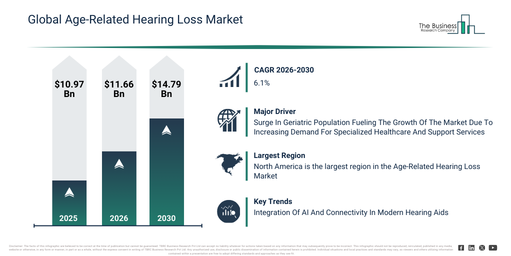
  • A key trend shaping the Age-Related Hearing Loss Market Global Report 2026 Market involves the Integration Of AI And Connectivity In Modern Hearing Aids

    A key trend shaping the Age-Related Hearing Loss Market Global Report 2026 Market involves the Integration Of AI And Connectivity In Modern Hearing Aids

    The Business Research Company’s 2026 market reports include new capabilities such as market attractiveness scoring and analysis, total addressable market analysis, company scoring matrix, interactive excel data dashboard, improved supply chain analysis, upcoming startups in the market, and overview of key products, aimed at improving the depth, usability, and strategic value of the insights delivered.

    What Will Be The Estimated Market Valuation Of The Age-Related Hearing Loss Market By The End Of 2030?

    The age-related hearing loss market has experienced robust expansion in recent times. It is anticipated to increase from $10.97 billion in 2025 to $11.66 billion in 2026, achieving a compound annual growth rate (CAGR) of 6.3%. Historically, this growth was influenced by factors such as limited public understanding of hearing loss in older populations, the substantial cost of hearing devices, an insufficient number of trained audiologists, reliance on hospital-centric distribution, and a modest uptake of cochlear implants.

    The age-related hearing loss market is anticipated to experience significant expansion in the upcoming years. Its valuation is predicted to climb to $14.79 billion by 2030, demonstrating a compound annual growth rate (CAGR) of 6.1%. The expected growth during this period stems from various factors such as technological advancements in smart and AI-powered hearing aids, the expanding geriatric population, increasing governmental support for hearing healthcare, the development of tele-audiology and online distribution, and extended insurance coverage for hearing devices. Noteworthy trends for the forecast period include the increasing adoption of advanced hearing aid technologies, a growing preference for cochlear implants in instances of severe hearing loss, the wider utilization of assistive listening devices in public settings, the broadening of online distribution channels for hearing devices, and improved awareness and diagnosis of age-related hearing loss.

    Download the Free Sample Report to Explore Key Market Insights:

    https://www.thebusinessresearchcompany.com/sample.aspx?id=24136&type=smp

    What Primary Drivers Are Shaping The Development Of The Age-Related Hearing Loss Market?

    The expanding elderly demographic is anticipated to stimulate the age-related hearing loss market’s growth in the future. This demographic encompasses people who are 65 years of age or older. An extended life expectancy fuels the increase in the elderly population, stemming from progress in healthcare, enhanced living standards, and more effective handling of long-term illnesses, enabling a greater number of individuals to reach advanced ages. Managing age-related hearing loss assists the elderly by emphasizing the necessity of specific hearing devices, communication techniques, and medical services to elevate their life quality and participation in social activities. As an illustration, in June 2024, data from California Health Advocates, a US-based non-profit entity, showed that in 2022, people aged 65 and above constituted 17.3% of the total population, with projections indicating an increase to 22% by 2040. Consequently, the expanding elderly demographic is propelling the expansion of the age-related hearing loss market.

    Which Segment Classifications Shape The Age-Related Hearing Loss Market?

    The age-related hearing loss market covered in this report is segmented –

    1) By Product Type: Hearing Aids, Cochlear Implants, Assistive Listening Devices, Other Product Types

    2) By Distribution Channel: Hospitals, Audiology Clinics, Online Stores, Other Distribution Channel

    3) By End-User: Adults, Geriatric Population

    Subsegments:

    1) By Hearing Aids: Behind-the-Ear (BTE), In-the-Ear (ITE), Receiver-in-the-Ear (RITE), Completely-in-the-Canal (CIC), In-the-Canal (ITC), Invisible-in-the-Canal (IIC), Smart Hearing Aids

    2) By Cochlear Implants: Unilateral Cochlear Implants, Bilateral Cochlear Implants, Wireless Cochlear Implants, Hybrid Cochlear Implants

    3) By Assistive Listening Devices: FM Systems, Infrared Systems, Induction Loop Systems, Personal Amplifiers, TV Streamers and Amplifiers

    4) By Other Product Types: Bone Anchored Hearing Systems, Tinnitus Maskers

    How Are Trends Impacting The Age-Related Hearing Loss Market?

    Key players within the age-related hearing loss market are directing their efforts towards developing cutting-edge technologies, including smart hearing aids equipped with AI-based sound processing and Bluetooth connectivity. These advancements are designed to improve auditory function, decrease the effort required for listening, and enhance both user experience and quality of life. Hearing aids featuring AI-based sound processing and Bluetooth capabilities can automatically adjust to various listening environments by optimizing sound in real time, concurrently enabling fluid audio streaming and device control through smartphone integration. For instance, in August 2024, Phonak, a hearing solutions company based in Switzerland, unveiled the Audéo Sphere Infinio hearing aid, which is the world’s first to include a dedicated real-time AI chip for separating speech from noise. This specific feature allows users to achieve considerably clearer speech in loud settings, boosting hearing performance and user contentment. It also provides dynamic, real-time speech enhancement from any direction, tackling a significant obstacle for individuals experiencing hearing loss.

    Which Companies Are Expanding Their Footprint In The Age-Related Hearing Loss Market?

    Major companies operating in the age-related hearing loss market are Sonova Holding AG, Bose Corporation, Demant A/S, Amplifon S.p.A., WS Audiology, Cochlear Limited, Starkey Hearing Technologies, MED-EL Elektromedizinische Geräte GmbH, Miracle-Ear Inc., Audina Hearing Instruments Inc., SeboTek Hearing Systems LLC, Sound World Solutions Inc., GN Hearing A/S, Audicus Inc., Lexie Hearing, Nuheara Limited, Audien Hearing, Orka Hearing, Envoy Medical Corporation, Nurotron Biotechnology Co. Ltd.

    Read the full age-related hearing loss market report here:

    https://www.thebusinessresearchcompany.com/report/age-related-hearing-loss-global-market-report

    How Does The Age-Related Hearing Loss Market Perform Across Major Global Regions?

    North America was the largest region in the age-related hearing loss market in 2025. Asia-Pacific is expected to be the fastest-growing region in the forecast period. The regions covered in the age-related hearing loss market report are Asia-Pacific, South East Asia, Western Europe, Eastern Europe, North America, South America, Middle East, Africa.

    Request A Tailored Age-Related Hearing Loss Market Research Report For Competitive Advantage:

    https://www.thebusinessresearchcompany.com/customise?id=24136&type=smp

    Browse Through More Reports Similar to the Global Age-Related Hearing Loss Market 2026, By The Business Research Company

    ear health global market report

    https://www.thebusinessresearchcompany.com/report/ear-health-global-market-report

    speech impairment global market report

    https://www.thebusinessresearchcompany.com/report/speech-impairment-global-market-report

    hearing loop global market report

    https://www.thebusinessresearchcompany.com/report/hearing-loop-global-market-report

    Get in touch with us:

    The Business Research Company: https://www.thebusinessresearchcompany.com/

    Americas +1 310-496-7795

    Asia +44 7882 955267 & +91 8897263534

    Europe +44 7882 955267

    Email us at info@tbrc.info

    Follow us on:

    LinkedIn: https://in.linkedin.com/company/the-business-research-company

    YouTube: https://www.youtube.com/channel/UC24_fI0rV8cR5DxlCpgmyFQ

    Global Market Model: https://www.thebusinessresearchcompany.com/global-market-model
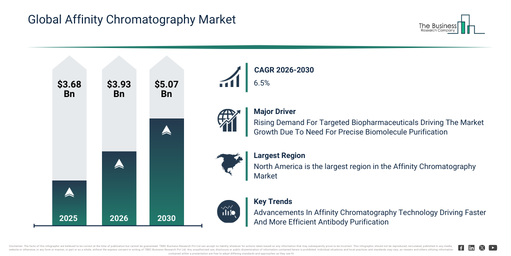
  • An Important Factor Driving the Affinity Chromatography Market Global Report 2026 Market Is the Rising Demand For Targeted Biopharmaceuticals Driving The Market Growth Due To Need For Precise Biomolecule Purification

    An Important Factor Driving the Affinity Chromatography Market Global Report 2026 Market Is the Rising Demand For Targeted Biopharmaceuticals Driving The Market Growth Due To Need For Precise Biomolecule Purification

    The Business Research Company’s 2026 market reports include new capabilities such as market attractiveness scoring and analysis, total addressable market analysis, company scoring matrix, interactive excel data dashboard, improved supply chain analysis, upcoming startups in the market, and overview of key products, aimed at improving the depth, usability, and strategic value of the insights delivered.

    What Market Size Growth Is Projected For The Affinity Chromatography Market During The Forecast Period 2026–2030?

    The affinity chromatography market has experienced significant growth in recent years. It is anticipated to increase from $3.68 billion in 2025 to $3.93 billion in 2026, achieving a compound annual growth rate (CAGR) of 6.8%. Historically, this expansion has been driven by the expansion of biopharmaceutical manufacturing activities, increasing research on recombinant proteins, wider adoption of affinity-based separation methods, growth of academic and research institutions, and the availability of advanced chromatography materials.

    The affinity chromatography market is anticipated to experience substantial growth in the upcoming years. Its valuation is projected to reach $5.07 billion by 2030, expanding at a compound annual growth rate (CAGR) of 6.5%. This growth within the forecast period can be attributed to factors such as an escalating demand for monoclonal antibodies, increased investments in biologics development, the widening scope of personalized medicine research, a heightened focus on optimizing downstream processes, and the broader integration of single-use chromatography systems. Prominent trends observed during this period include the increasing application of high-specificity purification methods, the rising adoption of protein-based therapeutics, a growing requirement for pre-packed chromatography columns, the expansion of biopharmaceutical research activities, and an enhanced emphasis on process scalability and reproducibility.

    Download the Free Sample Report to Explore Key Market Insights:

    https://www.thebusinessresearchcompany.com/sample.aspx?id=24455&type=smp

    Which Major Factors Are Driving The Expansion Of The Affinity Chromatography Market?

    The expansion of the affinity chromatography market is anticipated to be driven by the increasing need for biopharmaceuticals. These are therapeutic products derived from biological sources, such as living organisms or cells, employed for treating, preventing, or diagnosing illnesses. The heightened demand for biopharmaceuticals stems primarily from their ability to provide highly specific and effective therapies for challenging conditions like cancer and autoimmune disorders, leading to improved patient results where conventional medications often prove inadequate. The affinity chromatography technique facilitates the precise and efficient purification of intricate biomolecules, including antibodies and proteins, which is crucial for manufacturing premium biopharmaceutical products. For instance, in July 2025, according to Sartorius, a Germany-based international life science technology company, global sales of biopharmaceutical drugs saw an approximate 9% increase, reaching USD 458 billion in 2024, an increment from the prior year, making up 41% of the total pharmaceutical market compared with 40% in 2023. Consequently, the escalating demand for biopharmaceuticals will stimulate the growth of the affinity chromatography market.

    What Market Segments Are Evaluated Within The Affinity Chromatography Market?

    The affinity chromatography market covered in this report is segmented –

    1) By Product: Resins Or Gels, Columns, Magnetic Beads, Reagents And Consumables, Accessories

    2) By Technique: Immobilized Metal Affinity Chromatography, Protein A Or G Or L Affinity Chromatography, Bio-Specific Affinity Chromatography, Other Techniques

    3) By Application: Biomolecule Purification, Chromatographic Separation

    4) By End User: Pharmaceutical And Biotechnology Companies, Research Institutes, Academic Institutions

    Subsegments:

    1) By Resins Or Gels: Agarose-Based resins, Polystyrene-Based resins, Silica-Based resins, Sepharose-Based gels, Dextran-Based resins, Cellulose-Based resins

    2) By Columns: Pre-Packed Columns, Empty Columns, Mini-Spin Columns, Gravity Flow Columns, High-Performance Columns

    3) By Magnetic Beads: Streptavidin-Coated Beads, Protein A Or G Or L-Coated Beads, Ni-NTA Magnetic Beads, Glutathione Magnetic Beads, Custom Ligand-Conjugated Beads

    4) By Reagents And Consumables: Ligands, Elution Buffers, Binding Buffers, Wash Buffers, Coupling Reagents

    5) By Accessories: Tubing And Connectors, Frits And Filters, Column Holders, Sample Loops, Flow Restrictors

    What Industry Trends Are Redefining The Affinity Chromatography Market?

    Leading companies active in the affinity chromatography market are concentrating on developing advanced solutions, such as next-generation affinity chromatography units, for rapid, adaptable, and efficient antibody purification within laboratory environments. These units mark a significant progression in purification systems, offering enhanced specificity, scalability, and automation, often integrating innovative ligands and improved resin materials to cater to the evolving requirements of biopharmaceutical research and production. For instance, in October 2024, Sartorius, a pharmaceutical company based in Germany, unveiled the Sartobind Rapid A Lab, a protein A unit. This is an affinity chromatography unit that boasts the fastest Protein A matrix available, providing outstanding productivity and transforming antibody purification. Crafted for research scientists, it presents a plug-and-play system suitable for benchtop purification and swift cycling, negating the requirement for buffer degassing. Its membrane resists clogging and sustains consistent backpressure, enabling reliable application with syringes, pumps, or chromatography systems for up to 100 purification cycles. Over its consumable duration, it yields up to 17 times higher antibody yields compared to conventional resin columns.

    Who Are The Top Market Participants Influencing The Affinity Chromatography Market?

    Major companies operating in the affinity chromatography market are Thermo Fisher Scientific, Merck KGaA, GE Healthcare Life Sciences, MilliporeSigma, Lonza Group Ltd., Agilent Technologies, Cytiva, Sartorius AG, Tosoh Bioscience, Waters Corporation, Bio-Rad Laboratories, Pall Corporation, Promega Corporation, Biotage, KNAUER Wissenschaftliche Geräte GmbH, BioWorks Inc., BIA Separation, JNC Corporation

    Read the full affinity chromatography market report here:

    https://www.thebusinessresearchcompany.com/report/affinity-chromatography-global-market-report

    Which Region Currently Holds The Largest Share Of The Affinity Chromatography Market?

    North America was the largest region in the affinity chromatography market in 2025. The regions covered in the affinity chromatography market report are Asia-Pacific, South East Asia, Western Europe, Eastern Europe, North America, South America, Middle East, Africa.

    Request A Tailored Affinity Chromatography Market Research Report For Competitive Advantage:

    https://www.thebusinessresearchcompany.com/customise?id=24455&type=smp

    Browse Through More Reports Similar to the Global Affinity Chromatography Market 2026, By The Business Research Company

    high performance liquid chromatography global market report

    https://www.thebusinessresearchcompany.com/report/high-performance-liquid-chromatography-global-market-report

    nutraceutical excipients global market report

    https://www.thebusinessresearchcompany.com/report/nutraceutical-excipients-global-market-report

    liquid chromatography instruments global market report

    https://www.thebusinessresearchcompany.com/report/liquid-chromatography-instruments-global-market-report

    Get in touch with us:

    The Business Research Company: https://www.thebusinessresearchcompany.com/

    Americas +1 310-496-7795

    Asia +44 7882 955267 & +91 8897263534

    Europe +44 7882 955267

    Email us at info@tbrc.info

    Follow us on:

    LinkedIn: https://in.linkedin.com/company/the-business-research-company

    YouTube: https://www.youtube.com/channel/UC24_fI0rV8cR5DxlCpgmyFQ

    Global Market Model: https://www.thebusinessresearchcompany.com/global-market-model
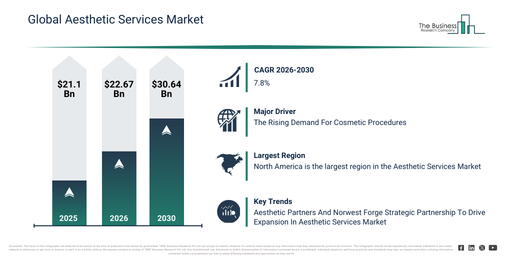
  • A Significant Growth Driver for the Aesthetic Services Market Global Report 2026 Market Is the The Rising Demand For Cosmetic Procedures

    A Significant Growth Driver for the Aesthetic Services Market Global Report 2026 Market Is the The Rising Demand For Cosmetic Procedures

    The Business Research Company’s 2026 market reports include new capabilities such as market attractiveness scoring and analysis, total addressable market analysis, company scoring matrix, interactive excel data dashboard, improved supply chain analysis, upcoming startups in the market, and overview of key products, aimed at improving the depth, usability, and strategic value of the insights delivered.

    How Will The Market Size Of The Aesthetic Services Market Evolve From 2026 To 2030?

    The aesthetic services market has experienced significant expansion in recent years. Its valuation is projected to increase from $21.1 billion in 2025 to $22.67 billion in 2026, registering a compound annual growth rate (CAGR) of 7.4%. This historical growth can be linked to factors such as increasing awareness of cosmetic procedures, rising disposable income, a growing number of dermatology clinics and spas, the expansion of aesthetic treatment technologies, and the prevalence of beauty and wellness culture.

    The aesthetic services market is projected for substantial expansion over the upcoming years. It is anticipated to reach $30.64 billion by 2030, showing a compound annual growth rate (CAGR) of 7.8%. This projected growth stems from factors such as the embrace of advanced laser and injection technologies, an increasing call for minimally invasive procedures, the proliferation of medical spa and cosmetic surgery facilities, a heightened emphasis on individualized aesthetic solutions, and the broadening of patient demographics to include adolescent and geriatric groups. Noteworthy trends during this period encompass a surge in demand for non-invasive cosmetic treatments, the increasing appeal of skin lightening therapies, the development of body contouring offerings, a rise in the use of aesthetic implantation techniques, and an elevated commitment to tailored aesthetic outcomes.

    Download the Free Sample Report to Explore Key Market Insights:

    https://www.thebusinessresearchcompany.com/sample.aspx?id=12584&type=smp

    What Key Drivers Are Influencing The Growth Of The Aesthetic Services Market?

    The increased demand for cosmetic procedures is anticipated to fuel expansion within the aesthetic services market in the future. These procedures encompass medical or surgical interventions aimed at improving or modifying an individual’s physical appearance. Aesthetic services are vital to cosmetic procedures, offering a range of non-surgical treatments and supportive services that boost overall outcomes and tackle particular beauty-related issues. For example, in April 2025, the British Association of Aesthetic Plastic Surgeons, a surgical organization located in the UK, reported a 5% rise in cosmetic surgical procedures from 2023 to 2024, totaling 27,462 procedures conducted in 2024. Consequently, the heightened demand for cosmetic procedures is a key impetus behind the growth observed in the aesthetic services market.

    Which Segment Areas Are Covered In The Aesthetic Services Market Analysis?

    The aesthetic services market covered in this report is segmented –

    1) By Type: Facial Aesthetic Services, Skin Lightening, Body Contouring, Aesthetic Implantation

    2) By Age Group: Adult, Geriatric

    3) By End-User: Hospitals, Ambulatory Surgical Centers, Beauty Centers And Medical Spas, Dermatology Clinics

    Subsegments:

    1) By Facial Aesthetic Services: Botox Injections, Dermal Fillers, Chemical Peels, Microdermabrasion, Facials

    2) By Skin Lightening: Topical Creams, Chemical Peels, Laser Treatments

    3) By Body Contouring: Non-Surgical Body Contouring, Surgical Body Contouring

    4) By Aesthetic Implantation: Breast Implants, Facial Implants, Body Implants

    What Key Developments And Trends Are Impacting The Aesthetic Services Market?

    Leading companies in the aesthetic services market are concentrating on establishing alliances to enhance their competitive standing. These collaborations are designed to yield mutual advantages and reinforce the positions of the firms involved. For instance, in November 2023, Aesthetic Partners, a US-based practice management company specializing in clinical aesthetics, announced a strategic partnership with Norwest, a US-based investment firm, to accelerate expansion into new markets. Through this alliance, Aesthetic Partners will commit investments to infrastructure and the growth of both existing and new clinics. Furthermore, Aesthetic Partners collaborates with physician-led medical aesthetics, cosmetic dermatology, and plastic surgery clinics situated in thriving suburban markets throughout the U.S., emerging as one of the initial platform participants in the booming aesthetics market.

    Which Global Companies Are Actively Competing In The Aesthetic Services Market?

    Major companies operating in the aesthetic services market are Galderma SA, Merz Aesthetics, Cutera Inc, Cynosure Inc, Alma Lasers Ltd, Lumenis Ltd, Bausch Health Companies, AbbVie Inc, Ipsen SA, Teoxane SA, Sinclair Pharma, Revance Therapeutics Inc, Prollenium Medical Technologies, Hugel Inc, Medytox Inc, GC Aesthetics, Establishment Labs, Sientra Inc, Candela Medical, Jeisys Medical

    Read the full aesthetic services market report here:

    https://www.thebusinessresearchcompany.com/report/aesthetic-services-global-market-report

    Which Region Is Expected To Register The Fastest Growth In The Aesthetic Services Market?

    North America was the largest region in the aesthetic services market in 2025. Asia-Pacific is expected to be the fastest-growing region in the forecast period. The regions covered in the aesthetic services market report are Asia-Pacific, South East Asia, Western Europe, Eastern Europe, North America, South America, Middle East, Africa.

    Request A Tailored Aesthetic Services Market Research Report For Competitive Advantage:

    https://www.thebusinessresearchcompany.com/customise?id=12584&type=smp

    Browse Through More Reports Similar to the Global Aesthetic Services Market 2026, By The Business Research Company

    aesthetic medicine global market report

    https://www.thebusinessresearchcompany.com/report/aesthetic-medicine-global-market-report

    professional beauty services global market report

    https://www.thebusinessresearchcompany.com/report/professional-beauty-services-global-market-report

    investigation and security services global market report

    https://www.thebusinessresearchcompany.com/report/investigation-and-security-services-global-market-report

    Get in touch with us:

    The Business Research Company: https://www.thebusinessresearchcompany.com/

    Americas +1 310-496-7795

    Asia +44 7882 955267 & +91 8897263534

    Europe +44 7882 955267

    Email us at info@tbrc.info

    Follow us on:

    LinkedIn: https://in.linkedin.com/company/the-business-research-company

    YouTube: https://www.youtube.com/channel/UC24_fI0rV8cR5DxlCpgmyFQ

    Global Market Model: https://www.thebusinessresearchcompany.com/global-market-model
  • Global Aesthetic Lasers Market Global Report 2026 Industry Trends and Market Growth Forecast for 2026–2030

    Global Aesthetic Lasers Market Global Report 2026 Industry Trends and Market Growth Forecast for 2026–2030

    The Business Research Company’s 2026 market reports include new capabilities such as market attractiveness scoring and analysis, total addressable market analysis, company scoring matrix, interactive excel data dashboard, improved supply chain analysis, upcoming startups in the market, and overview of key products, aimed at improving the depth, usability, and strategic value of the insights delivered.

    What Is The Forecasted Market Value Of The Aesthetic Lasers Market Across 2026–2030?

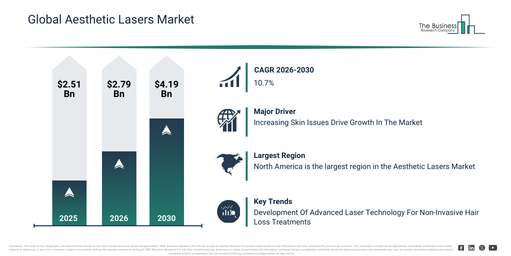
    Recent years have witnessed a swift expansion in the aesthetic lasers market size. This market is projected to expand from $2.51 billion in 2025 to $2.79 billion in 2026, exhibiting a compound annual growth rate (CAGR) of 11.0%. Historically, this expansion has stemmed from factors such as the restricted accessibility of sophisticated aesthetic laser devices, a rising consumer inclination towards cosmetic procedures, an expanding count of dermatology clinics, heightened awareness regarding skin care, and the uptake of laser-based hair removal.

    The aesthetic lasers market is expected to experience significant growth in the coming years. It is projected to reach $4.19 billion by 2030, showing a compound annual growth rate (CAGR) of 10.7%. This expansion during the forecast period is driven by factors such as technological advancements in laser devices, the expanding network of medical spas and beauty clinics, a rising preference for minimally invasive procedures, increasing disposable income and spending on cosmetics, and the broadened application of laser treatments for conditions like vascular lesions and acne. Key trends anticipated in this period include a heightened demand for non-invasive cosmetic procedures, the growing adoption of both ablative and non-ablative lasers, the continued expansion of dermatology clinics and medical spas, an increased focus on skin rejuvenation and scar treatments, and the rising popularity of hair removal and tattoo removal procedures.

    Download the Free Sample Report to Explore Key Market Insights:

    https://www.thebusinessresearchcompany.com/sample.aspx?id=20707&type=smp

    What Major Growth Drivers Are Shaping The Outlook Of The Aesthetic Lasers Market?

    The aesthetic lasers market is projected to expand due to the rising occurrence of skin-related problems. These issues encompass various conditions affecting the skin, such as acne, eczema, psoriasis, and infections, which can manifest as irritation, redness, dryness, and pigmentation changes, thereby impacting both the skin’s appearance and overall health. The growing frequency of these conditions stems from factors including environmental pollution, extended UV exposure, unhealthy lifestyle choices, inadequate diet, elevated stress levels, and genetic susceptibility. Aesthetic lasers offer solutions for a range of skin concerns through the emission of concentrated light energy. Their mechanism involves targeting particular skin layers, stimulating collagen synthesis, and fostering skin rejuvenation. These devices enhance skin texture, tone, and overall appearance, requiring minimal downtime. As an illustration, Cancer Australia, a government cancer agency, reported that in November 2025, Australia recorded 1,527 deaths from melanoma of the skin in 2023, comprising 1,038 males and 489 females. The estimated deaths for 2025 are 1,455, with 990 males and 465 females. By 2025, the likelihood of dying from melanoma of the skin by age 85 is 1 in 253 (0.40%) for an individual, specifically 1 in 181 (0.55%) for males and 1 in 422 (0.24%) for females. Consequently, the rising prevalence of skin-related issues is fueling the expansion of the aesthetic lasers market.

    What Segmentation Levels Are Considered In The Aesthetic Lasers Market?

    The aesthetic lasers market covered in this report is segmented –

    1) By Type: Ablative Laser, Non-Ablative Laser

    2) By Application: Skin Resurfacing Or Skin Rejuvenation, Hair Removal, Acne And Scars, Tattoo Removal, Treatment Of Vascular Lesions, Other Applications

    3) By End User: Dermatology Clinics, Beauty And Wellness Centers, Medical Spas

    Subsegments:

    1) By Ablative Laser: CO2 Lasers, Erbium Lasers, Fractional Lasers

    2) By Non-Ablative Laser: Diode Lasers, Pulsed Dye Lasers, Nd:YAG Lasers, Alexandrite Lasers

    What Trends Are Projected To Affect The Aesthetic Lasers Market?

    Key companies in the aesthetic lasers market are prioritizing the advancement of sophisticated technologies, including low-level laser therapy (LLLT) devices, to offer non-invasive solutions for addressing hair loss, thereby stimulating hair regrowth and enhancing scalp health. Low-Level Laser Therapy (LLLT) represents a non-invasive approach that utilizes low-intensity light to trigger cellular activity, promote recovery, alleviate inflammation, and improve outcomes for hair regrowth, pain management, and skin rejuvenation. For instance, in June 2024, Lumenis Be. Ltd., an Israel-based company specializing in energy-based medical devices, unveiled FoLix, which stands as the first FDA-cleared proprietary fractional laser specifically engineered to treat hair loss in both men and women. This pioneering technology works by delivering precise laser pulses to stimulate hair follicles, encouraging hair growth without the necessity of chemicals, needles, anesthesia, or surgery. Patients can anticipate notable improvements after a mere 4-6 monthly sessions.

    Which Leading Firms Are Contributing To The Growth Of The Aesthetic Lasers Market?

    Major companies operating in the aesthetic lasers market are Solta Medical Inc., Cynosure, El.En. S.p.A., InMode, Lumenis Be Ltd., Cutera Inc., Alma Lasers Ltd., Candela Medical, Fotona, Sciton Inc., BIOLASE Inc, Jeisys Medical, Quanta System S.p.A., SharpLight Technologies Ltd., Tria Beauty Inc., Aerolase Corp, Energist Ltd., Lynton Lasers, Aesthetics Biomedical, LYMA Life Ltd, DEKA M.E.L.A. S.r.l., Leaflife Technology, BVLASER

    Read the full aesthetic lasers market report here:

    https://www.thebusinessresearchcompany.com/report/aesthetic-lasers-global-market-report

    Which Regions Are Projected To Dominate The Aesthetic Lasers Market In The Coming Years?

    North America was the largest region in the aesthetic lasers market in 2025. Asia-Pacific is expected to be the fastest-growing region in the forecast period. The regions covered in the aesthetic lasers market report are Asia-Pacific, South East Asia, Western Europe, Eastern Europe, North America, South America, Middle East, Africa.

    Request A Tailored Aesthetic Lasers Market Research Report For Competitive Advantage:

    https://www.thebusinessresearchcompany.com/customise?id=20707&type=smp

    Browse Through More Reports Similar to the Global Aesthetic Lasers Market 2026, By The Business Research Company

    medical lasers global market report

    https://www.thebusinessresearchcompany.com/report/medical-lasers-global-market-report

    laser technology global market report

    https://www.thebusinessresearchcompany.com/report/laser-technology-global-market-report

    laser processing global market report

    https://www.thebusinessresearchcompany.com/report/laser-processing-global-market-report

    Get in touch with us:

    The Business Research Company: https://www.thebusinessresearchcompany.com/

    Americas +1 310-496-7795

    Asia +44 7882 955267 & +91 8897263534

    Europe +44 7882 955267

    Email us at info@tbrc.info

    Follow us on:

    LinkedIn: https://in.linkedin.com/company/the-business-research-company

    YouTube: https://www.youtube.com/channel/UC24_fI0rV8cR5DxlCpgmyFQ

    Global Market Model: https://www.thebusinessresearchcompany.com/global-market-model
  • Advanced Wound Care Devices Market Global Report 2026 Market Size Outlook and Demand Growth Across 2026–2030

    Advanced Wound Care Devices Market Global Report 2026 Market Size Outlook and Demand Growth Across 2026–2030

    The Business Research Company’s 2026 market reports include new capabilities such as market attractiveness scoring and analysis, total addressable market analysis, company scoring matrix, interactive excel data dashboard, improved supply chain analysis, upcoming startups in the market, and overview of key products, aimed at improving the depth, usability, and strategic value of the insights delivered.

    What Market Size Increase Is Anticipated For The Advanced Wound Care Devices Market Over The 2026–2030 Period?

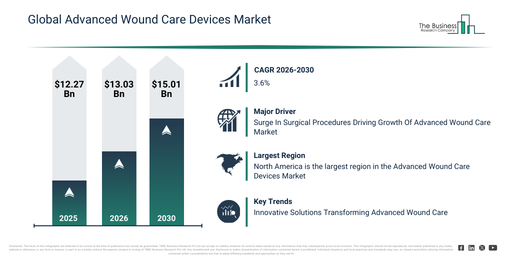
    The advanced wound care devices market has demonstrated significant growth in recent years. It is projected to expand from $12.27 billion in 2025 to $13.03 billion in 2026, achieving a compound annual growth rate (CAGR) of 6.2%. The development observed in previous periods can be attributed to the increasing incidence of chronic wounds, a greater understanding of the advantages of advanced wound care, the implementation of antimicrobial and hydrogel dressings, improvements in hospital and clinic infrastructure, and a growing population of diabetic and elderly patients.

    The advanced wound care devices market is projected to experience consistent expansion over the upcoming years. This market is anticipated to reach a valuation of $15.01 billion by 2030, demonstrating a compound annual growth rate (CAGR) of 3.6%. This expansion during the projection period stems from several factors, including innovations in tissue-engineered products, a greater uptake of smart and bioactive dressings, an increase in homecare and outpatient services, rising healthcare spending, and the incorporation of technologies for infection prevention and skin protection. Key trends observed throughout the forecast period encompass a broader acceptance of hydrogel and bioactive dressings, a surge in the application of antimicrobial gels and powders for chronic wound management, the widening availability of advanced foam and tissue-engineered products, an intensified emphasis on infection prevention and skin protection, and the proliferation of homecare and outpatient solutions for wound care.

    Download the Free Sample Report to Explore Key Market Insights:

    https://www.thebusinessresearchcompany.com/sample.aspx?id=9583&type=smp

    What Drivers Are Expected To Influence The Advanced Wound Care Devices Market During The Forecast Period?

    The increasing volume of surgeries is projected to boost the advanced wound care market. A surgical procedure is an intervention involving the cutting or penetration of body tissues to treat illnesses, injuries, or conditions, or to modify bodily functions or enhance appearance. Advanced wound care products are beneficial in surgeries as they facilitate faster healing and diminish the likelihood of complications such as infections. For instance, in June 2024, the American Society of Plastic Surgeons, a US-based professional medical organization, stated that in 2023, liposuction was still the most popular plastic surgery procedure, with nearly 350,000 procedures conducted, representing a 7% increase over 2022. Hence, the rising number of surgeries is a significant driver for the advanced wound care market.

    How Is The Advanced Wound Care Devices Market Segmented Across Key Categories?

    The advanced wound care devices market covered in this report is segmented –

    1) By Product Type: Antimicrobial Gels, Antimicrobial Powder, Concentrated Surfactant, Hydrogels Dressings, Skin Protectants, Wound Cleansers, Semi-Permeable Films Dressings, Semi-Permeable Antimicrobial Films Dressings, Semi-Permeable Non Antimicrobial Films Dressings, Other Products

    2) By Wound Type: Surgical And Traumatic Wounds, Diabetic Foot Ulcers, Pressure Ulcers, Venous Leg Ulcers, Burns, Other Wounds

    3) By Application: Chronic Wounds, Acute Wounds

    4) By End User: Hospitals, Clinics, Homecare Settings, Other End Users

    Subsegments:

    1) By Antimicrobial Gels: Silver-Based Gels, Iodine-Based Gels, Honey-Based Gels

    2) By Antimicrobial Powder: Silver Powder, Iodine Powder, Other Antimicrobial Powders

    3) By Concentrated Surfactant: Non-Ionic Surfactants, Anionic Surfactants, Cationic Surfactants

    4) By Hydrogel Dressings: Amorphous Hydrogels, Sheet Hydrogels, Composite Hydrogels

    5) By Skin Protectants: Barrier Creams, Film-Forming Solutions, Other Skin Protectant Products

    6) By Wound Cleansers: Saline Solutions, Antiseptic Solutions, Enzymatic Cleansers

    7) By Semi-Permeable Films Dressings: Transparent Films, Adhesive Films

    8) By Semi-Permeable Antimicrobial Films Dressings: Silver-Infused Films, Iodine-Infused Films

    9) By Semi-Permeable Non Antimicrobial Films Dressings: Standard Transparent Films, Non-Adherent Films

    10) By Other Products: Bioactive Dressings, Tissue-Engineered Products, Advanced Foam Dressings

    Which Upcoming Trends Are Expected To Influence The Advanced Wound Care Devices Market?

    Leading companies within the advanced wound care market are concentrating on developing innovative technologies, such as Aquacel Hydrofiber Technology, to cater to the requirements of healthcare providers and their patients. Aquacel Hydrofiber Technology is a soft, absorbent substance that transitions into a gel when it encounters wound fluid. For example, in January 2023, Convatec Group PLC, a UK-based medical device company, introduced ConvaFoam, an advanced foam dressing. ConvaFoam was specifically created to assist in managing the silent crisis of hard-to-heal wounds, which carries a substantial and escalating economic, clinical, and social impact. This product is unique as the only foam dressing to feature superabsorbent fibers and AQUACEL Hydrofiber technology, and it aims to extend wear time through a silicone adhesive designed for an ideal balance of adhesive strength, gentle skin adhesion, and breathability.

    Who Are The Dominant Players Shaping The Advanced Wound Care Devices Market Landscape?

    Major companies operating in the advanced wound care devices market are 3M Company, Coloplast Corporation, ConvaTec Group plc, Smith & Nephew plc, Integra LifeSciences Corporation, Organogenesis Holdings Inc., Medtronic plc, MiMedx Group Inc., Derma Sciences Inc., Johnson & Johnson Private Limited, Mölnlycke Health Care AB, Cardinal Health Inc., B. Braun Melsungen AG, Baxter International, Acelity L.P. Inc., BSN Medical GmbH, Covidien plc, DeRoyal Industries Inc., Hollister Incorporated, Human Biosciences Inc., Kinetic Concepts Inc., Medline Industries Inc., Triage Meditech Pvt. Ltd., ACell Inc., Acera Surgical Inc., ACI Medical LLC, Advanced Oxygen Therapy Inc., Imbed Biosciences Inc., MolecuLight Inc., NuVision Biotherapies Ltd.

    Read the full advanced wound care devices market report here:

    https://www.thebusinessresearchcompany.com/report/advanced-wound-care-devices-global-market-report

    Which Region Is Forecast To Lead The Advanced Wound Care Devices Market In Terms Of Market Size?

    North America was the largest region in the advanced wound care market in 2025. Asia-Pacific is expected to be the fastest-growing region in the advanced wound care market report during the forecast period. The regions covered in the advanced wound care devices market report are Asia-Pacific, South East Asia, Western Europe, Eastern Europe, North America, South America, Middle East, Africa.

    Request A Tailored Advanced Wound Care Devices Market Research Report For Competitive Advantage:

    https://www.thebusinessresearchcompany.com/customise?id=9583&type=smp

    Browse Through More Reports Similar to the Global Advanced Wound Care Devices Market 2026, By The Business Research Company

    wound care devices global market report

    https://www.thebusinessresearchcompany.com/report/wound-care-devices-global-market-report

    wound closure devices global market report

    https://www.thebusinessresearchcompany.com/report/wound-closure-devices-global-market-report

    advanced wound care global market report

    https://www.thebusinessresearchcompany.com/report/advanced-wound-care-global-market-report

    Get in touch with us:

    The Business Research Company: https://www.thebusinessresearchcompany.com/

    Americas +1 310-496-7795

    Asia +44 7882 955267 & +91 8897263534

    Europe +44 7882 955267

    Email us at info@tbrc.info

    Follow us on:

    LinkedIn: https://in.linkedin.com/company/the-business-research-company

    YouTube: https://www.youtube.com/channel/UC24_fI0rV8cR5DxlCpgmyFQ

    Global Market Model: https://www.thebusinessresearchcompany.com/global-market-model