Category: Healthcare Services

  • Human Primary Cell Culture Market Growth In 2026: Market Size, Key Drivers And Future Outlook

    Human Primary Cell Culture Market Growth In 2026: Market Size, Key Drivers And Future Outlook

    Backed by market attractiveness analysis, total addressable market sizing, company benchmarking matrices, interactive Excel dashboards, wider supply chain intelligence, emerging startup coverage, and detailed product-level insights, The Business Research Company’s 2026 market reports are designed to offer research that is more actionable and strategically valuable than ever.

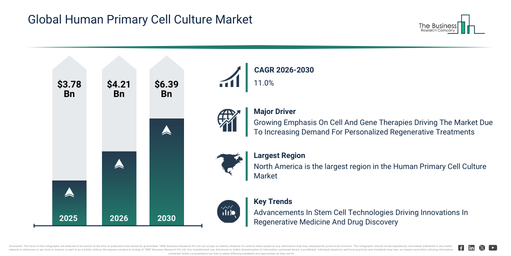
    Human Primary Cell Culture Market Growth From $4.21 Billion In 2026 To $6.39 Billion By 2030 At A CAGR Of 11%

    The human primary cell culture market size has seen substantial growth in recent years. It is anticipated to expand from $3.78 billion in 2025 to $4.21 billion in 2026, achieving a compound annual growth rate (CAGR) of 11.3%. This historical expansion can be attributed to various factors, including the limitations of immortalized cell lines, an increase in biomedical research activities, enhanced funding for life sciences research, a rising demand for predictive preclinical models, and advancements in cell isolation and culture techniques.

    The human primary cell culture market is projected to experience substantial expansion in the coming years. Its valuation is anticipated to reach $6.39 billion by 2030, exhibiting a compound annual growth rate (CAGR) of 11.0%. This anticipated growth during the forecast period is attributable to several factors, including a heightened emphasis on personalized medicine, an increase in pharmaceutical and biotech research and development (R&D) investments, broader acceptance of regenerative therapies, innovations in cell culture systems, and the expanding application of human primary cells in disease modeling. Key trends foreseen in this period involve the rising utilization of human primary cells in drug discovery and toxicity evaluations, increased integration of patient-derived cells for precision medicine studies, a growing need for serum-free and chemically defined culture media, broader applications of primary cells within regenerative medicine, and a heightened preference for in vivo-relevant cell models compared to immortalized cell lines.

    Get A Free Sample Report With In-Depth Market Insights:

    https://thebusinessresearchcompany.com/sample_request?id=54957956&type=smp&name=Human%20Primary%20Cell%20Culture%20Market%20Report%202026&utm_source=Blogs&utm_medium=Paid&utm_campaign=Oct_PR

    Human Primary Cell Culture Market Growth Drivers: What’s Behind The Acceleration?

    A heightened interest in cell and gene therapies is anticipated to drive the expansion of the human primary cell culture market in the future. These therapies represent sophisticated medical interventions designed to alter or substitute genetic material or cells, aiming to treat or cure illnesses at a molecular level. The increasing importance placed on cell and gene therapy stems from their capacity to offer lasting or curative solutions for genetic disorders, cancers, and rare diseases, by tackling the fundamental issue at the molecular level. Within cell and gene therapies, human primary cell cultures find application in creating treatments, manufacturing viral vectors, and evaluating gene editing methods. As an illustration, in July 2024, data from the American Society of Gene & Cell Therapy (ASGCT), a US-based non-profit organization, indicated that approximately 76 gene therapy trials commenced in the USA during the second quarter of 2024, representing a 25% increase over the first quarter. Consequently, the heightened priority given to advancing cell and gene therapies is stimulating the expansion of the human primary cell culture market.

    Human Primary Cell Culture Market Segment Analysis: What Are The Core Market Categories?

    The human primary cell culture market covered in this report is segmented –

    1) By Product Type: Primary Cells, Reagents And Supplements, Instruments, Primary Cell Culture Media, Other Product Types

    2) By Applications: Drug Discovery, Therapy Development, Regenerative Medicine, Other Applications

    3) By End User: Pharmaceutical And Biotechnology Companies, Contract Research Organizations (CROs), Academic And Research Institutions

    Subsegments:

    1) By Primary Cells: Human Dermal Fibroblasts (HDF), Human Epidermal Keratinocytes (HEK), Human Mesenchymal Stem Cells (HMSC), Human Endothelial Cells, Human Hematopoietic Cells

    2) By Reagents And Supplements: Growth Factors And Cytokines, Antibiotics And Antimycotics, Fetal Bovine Serum (FBS), Buffers And Chemicals, Cryopreservation Reagents

    3) By Instruments: Cell Culture Incubators, Biosafety Cabinets, Centrifuges, Cell Counters And Analyzers, Microscopes

    4) By Primary Cell Culture Media: Serum-Free Media, Chemically Defined Media, Classical Media, Protein-Free Media, Custom Media

    5) By Other Product Types: Culture Dishes And Plates, Flasks And Bottles, Pipettes And Tips, Cell Strainers And Filters, Coated Culture Surfaces

    Human Primary Cell Culture Market Trends: What’s Defining The Industry’s Next Phase?

    Leading companies within the human primary cell culture market are concentrating on creating technologically advanced solutions, particularly induced pluripotent stem cell (iPSC) and embryonic stem cell (ESC) technologies, with the aim of improving cell-based research, optimizing drug discovery processes, and speeding up progress in regenerative medicine and personalized therapies. Both iPSC (Induced Pluripotent Stem Cell) and ESC (Embryonic Stem Cell) technologies utilize the reprogramming of adult cells or the application of embryonic cells to generate pluripotent stem cells, which possess the ability to transform into diverse cell types beneficial for research, drug discovery, and regenerative medicine applications. A notable illustration of this trend occurred in July 2024, when BioServe Biotechnologies India Pvt Ltd., an India-based Biotechnology and life sciences firm, introduced a range of advanced stem cell products from REPROCELL, designed to bolster scientific research and drug development efforts across India. This product portfolio encompasses cell culture media, tools for stem cell differentiation, 3D cell culture systems, and services for drug discovery. Such innovations significantly contribute to advancements in regenerative medicine, disease modeling, and preclinical research, all leveraging iPSC and ESC technologies.

    Human Primary Cell Culture Market Top Companies Driving Competitive Growth

    Major companies operating in the human primary cell culture market are Thermo Fisher Scientific Inc., Merck & Co. Inc., Lonza Group AG, STEMCELL Technologies Inc., American Type Culture Collection, PromoCell GmbH, Krishgen Biosystems Private Limited, Cell Culture Company Limited Liability Company, HiMedia Laboratories Private Limited, 3H Biomedical Aktiebolag, ScienCell Research Laboratories Inc., Cell Applications Incorporated, Life Technologies Private Limited, PELOBIOTECH Gesellschaft mit beschränkter Haftung, Amsbio Limited, AcceGen Biotechnology Limited Liability Company, Cell Biologics Incorporated, BI Biotech India Private Limited, Innoprot Sociedad Limitada, ZenBio Incorporated, Evercyte GmbH, Cell Systems Corporation, Cytion GmbH, Kosheeka Private Limited

    View The Full Human Primary Cell Culture Market Report:

    https://thebusinessresearchcompany.com/report/human-primary-cell-culture-global-market-report?utm_source=Blogs&utm_medium=Paid&utm_campaign=Oct_PR

    Human Primary Cell Culture Market Regional Analysis And Top Geography

    North America was the largest region in the human primary cell culture market in 2025. Asia-Pacific is expected to be the fastest-growing region in the forecast period. The regions covered in the human primary cell culture market report are Asia-Pacific, South East Asia, Western Europe, Eastern Europe, North America, South America, Middle East, Africa.

    Reach Out To Our Team:

    The Business Research Company: https://www.thebusinessresearchcompany.com/

    Americas: +1 310-496-7795

    Asia: +44 7882 955267 & +91 8897263534

    Europe: +44 7882 955267

    Email us at: marketing@tbrc.info

    Follow us on:

    LinkedIn: https://in.linkedin.com/company/the-business-research-company

    YouTube: https://www.youtube.com/channel/UC24_fI0rV8cR5DxlCpgmyFQ

    Global Market Model: https://www.thebusinessresearchcompany.com/global-market-model
  • Human Papillomavirus (HPV) Cytomegalovirus (CMV) Therapeutic Market Size And Forecast 2026–2030: Trends Driving Industry Expansion

    Human Papillomavirus (HPV) Cytomegalovirus (CMV) Therapeutic Market Size And Forecast 2026–2030: Trends Driving Industry Expansion

    Featuring market attractiveness scoring, total addressable market sizing, company benchmarking matrices, interactive Excel dashboards, deeper supply chain intelligence, emerging startup tracking, and granular product-level insights, The Business Research Company’s 2026 market reports are built to deliver research that is both more actionable and more strategically valuable.

    Human Papillomavirus (HPV) Cytomegalovirus (CMV) Therapeutic Market Expansion Outlook: What Revenue Opportunities Are Ahead?

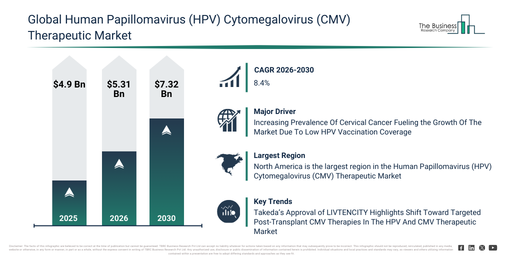
    The human papillomavirus (hpv) cytomegalovirus (cmv) therapeutic market size has experienced significant expansion recently. It is projected to increase from $4.9 billion in 2025 to $5.31 billion in 2026, registering a compound annual growth rate (CAGR) of 8.3%. This historical growth can be attributed to factors such as the high global prevalence of hpv and cmv infections, a rising incidence of cancers linked to viruses, widespread adoption of prophylactic hpv vaccination programs, the increasing burden of cmv infections in immunocompromised patients, and advancements in antiviral drug development.

    The human papillomavirus (hpv) cytomegalovirus (cmv) therapeutic market size is projected to experience robust expansion over the coming years. This market is anticipated to reach $7.32 billion by 2030, exhibiting a compound annual growth rate (CAGR) of 8.4%. Factors contributing to this growth during the forecast period include the escalating demand for therapeutic vaccines, a heightened emphasis on cancer immunotherapy, increased investments in antiviral research and development, the expansion of screening and early intervention initiatives, and a greater understanding of congenital and persistent viral infections. Key trends anticipated during the forecast timeframe involve the intensified development of therapeutic vaccines for hpv and cmv, the wider embrace of immunotherapy-driven antiviral treatments, a growing emphasis on combination approaches for managing viral infections, the broadening of targeted therapies for cancers linked to viruses, and an increase in clinical investigations for advanced antiviral medications.

    Get A Free Sample Report With In-Depth Market Insights:

    https://thebusinessresearchcompany.com/sample_request?id=68759333&type=smp&name=Human%20Papillomavirus%20%28HPV%29%20Cytomegalovirus%20%28CMV%29%20Therapeutic%20Market%20Report%202026&utm_source=Blogs&utm_medium=Paid&utm_campaign=Oct_PR

    Human Papillomavirus (HPV) Cytomegalovirus (CMV) Therapeutic Market Growth Factors Behind Sustained Expansion

    The expanding occurrence of cervical cancer is anticipated to boost the growth of the human papillomavirus (HPV) and cytomegalovirus (CMV) therapeutic market. Cervical cancer, defined as a malignant tumor in the cervix, is primarily escalating due to ongoing infections with high-risk human papillomavirus (HPV) strains, which induce atypical cervical cell changes that can become cancerous if left untreated. Human papillomavirus (HPV) cytomegalovirus (CMV) therapeutics aid in cervical cancer management by targeting the viral progression of the disease and enhancing patient results. These therapies diminish the likelihood of cancer development through antiviral treatments and immunotherapies, thereby improving long-term health and quality of life. For example, the American Cancer Society reported in April 2024 that around 20 million new cervical cancer cases were diagnosed globally in 2022, a figure expected to increase to 35 million by 2050. Consequently, the rising incidence of cervical cancer is a key driver for the human papillomavirus (HPV) and cytomegalovirus (CMV) therapeutic market. The growth of the human papillomavirus (HPV) cytomegalovirus (CMV) therapeutic market is also anticipated to be driven by increasing healthcare expenditure. This expenditure represents the collective spending on medical services, treatments, and health resources, financed by governments, insurers, and individuals to guarantee accessible and high-quality care. Human papillomavirus (HPV) and cytomegalovirus (CMV) therapeutics gain from this rise in spending, as it facilitates wider availability of sophisticated antiviral treatments and preventive measures. For illustration, the Office for National Statistics, a UK government body, stated in May 2024 that total healthcare expenditure experienced a 5.6% nominal increase between 2022 and 2023, which signifies a substantial acceleration compared to the 0.9% growth noted in 2022. Thus, the escalating healthcare expenditure is a significant factor in the expansion of the human papillomavirus (HPV) cytomegalovirus (CMV) therapeutic market.

    Human Papillomavirus (HPV) Cytomegalovirus (CMV) Therapeutic Market Segment Breakdown: Which Categories Lead On Revenue?

    The human papillomavirus (hpv) cytomegalovirus (cmv) therapeutic market covered in this report is segmented –

    1) By Therapeutic Type: Vaccines, Antiviral Drugs, Immunotherapy

    2) By Route of Administration: Intramuscular, Oral

    3) By Indications: Cervical Cancer, Genital Warts, Head And Neck Cancer, Anal Cancer

    4) By Distribution Channel: Hospitals, Retail Pharmacies, Specialty Clinics

    Subsegments:

    1) By Vaccines: Prophylactic Vaccines, Therapeutic Vaccines, Recombinant Vaccines, Virus-Like Particle (VLP) Based Vaccines

    2) By Antiviral Drugs: Nucleoside Analogues, Deoxyribonucleic Acid Polymerase Inhibitors

    3) By Immunotherapy: Monoclonal Antibodies, Immune Checkpoint Inhibitors, Adoptive T-cell Therapy

    Human Papillomavirus (HPV) Cytomegalovirus (CMV) Therapeutic Market Industry Trends Fueling Future Revenue Growth

    Leading companies within the human papillomavirus (HPV) and cytomegalovirus (CMV) therapeutics market are concentrating on advancing novel technologies, such as post-transplant anti-cytomegalovirus (CMV) treatment, with the aim of addressing previously unmet medical demands, boosting treatment effectiveness, lessening resistance to current therapies, and enhancing patient outcomes for those who are immunocompromised. This post-transplant anti-cytomegalovirus (CMV) treatment refers to therapeutic interventions designed to either prevent or manage cytomegalovirus (CMV) infections in individuals who have received organ or stem cell transplants and are considered high-risk because of their immunosuppressed state. As an illustration, in June 2024, Takeda Pharmaceutical Company Limited, a pharmaceutical firm based in Japan, secured approval from the Japanese Ministry of Health, Labour, and Welfare (MHLW) for LIVTENCITY (maribavir) specifically for treating post-transplant cytomegalovirus (CMV) infection or disease that has shown resistance to existing anti-CMV medications. This cutting-edge antiviral agent stands as the sole treatment available in Japan that specifically targets and suppresses the cytomegalovirus (CMV)-specific UL97 protein kinase, thereby providing a unique action mechanism distinct from conventional treatments.

    Human Papillomavirus (HPV) Cytomegalovirus (CMV) Therapeutic Market Leading Players And Competitive Positioning

    Major companies operating in the human papillomavirus (hpv) cytomegalovirus (cmv) therapeutic market are Merck & Co. Inc., Pfizer Inc., GlaxoSmithKline plc, Moderna Inc., BioNTech SE, Gilead Sciences Inc., F. Hoffmann-La Roche AG, Sanofi S.A., AstraZeneca plc, Novartis AG, AbbVie Inc., Bristol Myers Squibb Company, Takeda Pharmaceutical Company Limited, Amgen Inc., Vir Biotechnology Inc., Inovio Pharmaceuticals Inc., Dynavax Technologies Corporation, Hookipa Pharma Inc., Vaxart Inc., Bavarian Nordic A/S

    View The Full Human Papillomavirus (HPV) Cytomegalovirus (CMV) Therapeutic Market Report:

    https://thebusinessresearchcompany.com/report/human-papillomavirus-hpv-cytomegalovirus-cmv-therapeutic-global-market-report?utm_source=Blogs&utm_medium=Paid&utm_campaign=Oct_PR

    Human Papillomavirus (HPV) Cytomegalovirus (CMV) Therapeutic Market Geographic Analysis: Where Is Demand Rising Fastest?

    North America was the largest region in the human papillomavirus (HPV) cytomegalovirus (CMV) therapeutic market in 2025. Asia-Pacific is expected to be the fastest-growing region in the forecast period. The regions covered in the human papillomavirus (hpv) cytomegalovirus (cmv) therapeutic market report are Asia-Pacific, South East Asia, Western Europe, Eastern Europe, North America, South America, Middle East, Africa.

    Reach Out To Our Team:

    The Business Research Company: https://www.thebusinessresearchcompany.com/

    Americas: +1 310-496-7795

    Asia: +44 7882 955267 & +91 8897263534

    Europe: +44 7882 955267

    Email us at: marketing@tbrc.info

    Follow us on:

    LinkedIn: https://in.linkedin.com/company/the-business-research-company

    YouTube: https://www.youtube.com/channel/UC24_fI0rV8cR5DxlCpgmyFQ

    Global Market Model: https://www.thebusinessresearchcompany.com/global-market-model
  • Human Organoids Market 2026 Outlook: Market Size, CAGR And Key Growth Opportunities

    Human Organoids Market 2026 Outlook: Market Size, CAGR And Key Growth Opportunities

    Built to provide research that’s more actionable and strategically valuable, The Business Research Company’s 2026 market reports include market attractiveness analysis, total addressable market sizing, company benchmarking matrices, interactive Excel dashboards, broader supply chain intelligence, emerging startup tracking, and in-depth product insights.

    Human Organoids Market Growth Potential: How Will Market Size Shift Through 2030?

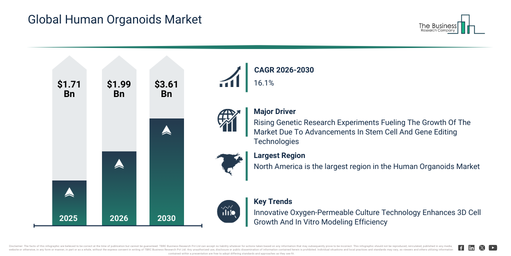
    The human organoids market has experienced rapid growth in recent years. It is projected to expand from $1.71 billion in 2025 to $1.99 billion in 2026, achieving a compound annual growth rate (CAGR) of 16.6%. This historical expansion is primarily due to advancements in stem cell research, the limitations of traditional 2D cell cultures, a rising demand for predictive preclinical models, increased investment in biomedical research, and a growing focus on reducing animal testing.

    The market for human organoids is anticipated to experience significant expansion in the coming years. This market is projected to reach $3.61 billion by 2030, demonstrating a compound annual growth rate (CAGR) of 16.1%. Several factors contribute to this growth during the projected period, including the greater uptake of precision medicine approaches, growing pharmaceutical r&d spending, broader applications of organoids in regenerative medicine, advancements in 3D cell culture systems, and a rising need for human-relevant disease models. Key developments anticipated for the forecast timeframe encompass the expanding utilization of organoids in drug discovery and toxicity assessments, their increased deployment for disease modeling and pathophysiology investigations, the growing requirement for personalized medicine based on patient-derived organoids, the wider application of organoids in oncology and neurology studies, and enhanced partnerships between academic institutions and pharmaceutical companies for organoid-focused research.

    Get A Free Sample Report With In-Depth Market Insights:

    https://thebusinessresearchcompany.com/sample_request?id=81565366&type=smp&name=Human%20Organoids%20Market%20Report%202026&utm_source=Blogs&utm_medium=Paid&utm_campaign=Oct_PR

    Human Organoids Market Demand Drivers Opening New Revenue Streams

    The expanding volume of experiments in genetic science is projected to propel the advancement of the human organoids market in the future. Genetic science, a biological field, investigates how characteristics are passed down via genes and how genetic data shapes the growth and function of living entities. The surge in genetic science experiments stems from technological innovations enhancing gene editing speed and accuracy, thereby facilitating more profound investigations into diseases and the creation of focused therapies. This scientific discipline aids human organoids by enabling precise gene manipulation to create models for particular diseases and observe their progression. It assists scientists in comprehending genetic conditions, evaluating novel medications, and devising personalized treatment approaches more efficiently. As an illustration, in April 2024, the American Society of Gene & Cell Therapy, a US-based non-profit medical and scientific organization, communicated that in Q4 2023, phase III gene therapy clinical trials saw a 10% increase, representing the first quarterly rise since Q3 2022. Consequently, the growing number of experiments in genetic science will fuel the human organoids market.

    Human Organoids Market Segmentation: How Does The Market Break Down By Category?

    The human organoids market covered in this report is segmented –

    1) By Type: Brain Organoids, Heart Organoids, Intestinal Organoids, Kidney Organoids, Liver Organoids, Lung Organoids, Pancreatic Organoids

    2) By Technology: 3D Bioprinting, Cell Culture Technology, Hydrogels And Scaffold-Based Technology

    3) By Application: Drug Discovery, Infectious Disease Research, Neurology Studies, Oncology Research, Personalized Medicine

    4) By End User: Pharma And Biotech Companies, Contract Research Organizations, Academic And Research Institutes

    Subsegments:

    1) By Brain Organoids: Cerebral Organoids, Midbrain Organoids, Hypothalamic Organoids, Spinal Cord Organoids

    2) By Heart Organoids: Cardiac Muscle Organoids, Vascularized Heart Organoids, Chamber-Specific Heart Organoids

    3) By Intestinal Organoids: Small Intestine Organoids, Colon Organoids, Duodenal Organoids

    4) By Kidney Organoids: Nephron Organoids, Glomerular Organoids, Proximal Tubule Organoids

    5) By Liver Organoids: Hepatic Organoids, Bile Duct Organoids, Cholangiocyte Organoids

    6) By Lung Organoids: Airway Organoids, Alveolar Organoids, Bronchial Organoids

    7) By Pancreatic Organoids: Islet Organoids, Ductal Pancreatic Organoids, Acinar Pancreatic Organoids

    Human Organoids Market Trends Powering Strategic Industry Growth

    Major companies in the human organoids market are concentrating on developing advanced culture platforms and materials designed to boost cell viability and oxygen delivery. This focus aims to improve the accuracy and scalability of in vitro models for applications in drug discovery, regenerative medicine, and personalized therapy. For instance, in June 2025, Mitsui Chemicals Group, a Japan-based chemical manufacturing company, introduced its InnoCell oxygen-permeable cell culture microplates. These innovative microplates integrate the company’s specialized materials and precision cutting techniques to enhance oxygen supply to cells, proving especially useful in 3D spheroid and organoid cultures by reducing cell death and improving long-term viability. They are offered in both non-treated (N-type) and collagen-coated (C-type) versions to accommodate various cell types. The plates also boast low drug adsorption and excellent fluorescence imaging properties. With these advancements, the product is positioned to support drug discovery, personalized medicine, regenerative therapies, and advanced in vitro modeling in pharmaceutical research.

    Human Organoids Market Competitive Overview And Top Companies

    Major companies operating in the human organoids market are Organovo Holdings Inc., Emulate Inc., MIMETAS B.V., InSphero AG, DefiniGEN Limited, CN Bio Innovations Limited, CELLINK AB, Hubrecht Organoid Technology, Stemcell Technologies Inc., Crown Bioscience Inc., Synthego Corporation, Altis Biosystems Inc., Molecular Devices LLC, TissUse GmbH, Nortis Inc., Hesperos Inc., Vivodyne Inc., Curi Bio Inc., Axol Bioscience Ltd.

    View The Full Human Organoids Market Report:

    https://thebusinessresearchcompany.com/report/human-organoids-global-market-report?utm_source=Blogs&utm_medium=Paid&utm_campaign=Oct_PR

    Human Organoids Market Global Footprint: Which Region Leads The Market?

    North America was the largest region in the human organoids market in 2025. Asia-Pacific is expected to be the fastest-growing region in the forecast period. The regions covered in the human organoids market report are Asia-Pacific, South East Asia, Western Europe, Eastern Europe, North America, South America, Middle East, Africa.

    Reach Out To Our Team:

    The Business Research Company: https://www.thebusinessresearchcompany.com/

    Americas: +1 310-496-7795

    Asia: +44 7882 955267 & +91 8897263534

    Europe: +44 7882 955267

    Email us at: marketing@tbrc.info

    Follow us on:

    LinkedIn: https://in.linkedin.com/company/the-business-research-company

    YouTube: https://www.youtube.com/channel/UC24_fI0rV8cR5DxlCpgmyFQ

    Global Market Model: https://www.thebusinessresearchcompany.com/global-market-model
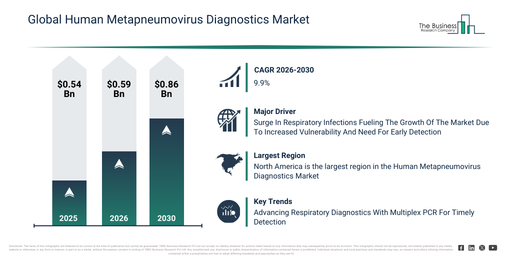
  • Human Metapneumovirus Diagnostics Market Size Growth: From $0.59 Billion In 2026 To $0.86 Billion By 2030

    Human Metapneumovirus Diagnostics Market Size Growth: From $0.59 Billion In 2026 To $0.86 Billion By 2030

    Backed by market attractiveness analysis, total addressable market sizing, company benchmarking matrices, interactive Excel dashboards, wider supply chain intelligence, emerging startup coverage, and detailed product-level insights, The Business Research Company’s 2026 market reports are designed to offer research that is more actionable and strategically valuable than ever.

    Human Metapneumovirus Diagnostics Market Value Analysis: What Growth Lies Ahead Over The Forecast Period?

    The human metapneumovirus diagnostics market size has experienced rapid growth in recent years. It is projected to increase from $0.54 billion in 2025 to $0.59 billion in 2026, at a compound annual growth rate (CAGR) of 10.1%. Historically, this expansion has been driven by factors such as the rising incidence of respiratory tract infections, increased hospitalization of infants and elderly patients, expansion of pcr-based diagnostic capabilities, growing awareness of non-influenza respiratory viruses, and improved access to diagnostic laboratories.

    The human metapneumovirus diagnostics market is projected to experience substantial expansion in the coming years. Its valuation is anticipated to reach $0.86 billion by 2030, demonstrating a compound annual growth rate (CAGR) of 9.9%. This projected growth is driven by factors such as a heightened need for swift respiratory diagnostic solutions, the broadening scope of multiplex and syndromic testing, increased capital allocation towards molecular diagnostic innovations, a sharper emphasis on prompt and precise viral identification, and enhanced readiness for recurring respiratory epidemics. Key developments expected during this timeframe involve the wider acceptance of molecular diagnostics for respiratory viruses, a surging need for quick and accessible hmpv testing, a greater focus on early diagnosis particularly for children and the elderly, the proliferation of comprehensive multiplex panels for respiratory pathogens, and the tighter incorporation of diagnostic findings into medical treatment planning.

    Get A Free Sample Report With In-Depth Market Insights:

    https://thebusinessresearchcompany.com/sample_request?id=33709531&type=smp&name=Human%20Metapneumovirus%20Diagnostics%20Market%20Report%202026&utm_source=Blogs&utm_medium=Paid&utm_campaign=Oct_PR

    Human Metapneumovirus Diagnostics Market Growth Backed By Core Demand Fundamentals

    The escalating prevalence of respiratory infections is projected to stimulate growth within the human metapneumovirus diagnostics market moving forward. These infections are illnesses caused by viruses, bacteria, or other pathogens that impact the respiratory system, including the sinuses, throat, airways, and lungs. The increased occurrence of respiratory infections is linked to their tendency to expose individuals to detrimental pollutants, which irritate and weaken the respiratory tract, thereby heightening its vulnerability to infections. Human metapneumovirus diagnostics play a crucial role in identifying hMPV as the underlying cause of respiratory infections, enabling precise treatment and enhanced patient management. For example, in January 2025, the UK Health Security Agency, a UK-based government body, documented that during the 2023–2024 season, respiratory infection rates in England peaked at 8.0 per 100,000 in weeks 50 and 52 of 2023, further escalating to 10.2 per 100,000 in week 4 of 2024, while acute respiratory infection (ARI) incidents in closed settings amounted to a total of 2,051, with most cases reported in care homes and hospitals. Therefore, the growing prevalence of respiratory infections is actively propelling the expansion of the human metapneumovirus diagnostics market.

    Human Metapneumovirus Diagnostics Market Segment Trends And Revenue Contributors

    The human metapneumovirus diagnostics market covered in this report is segmented –

    1) By Product Type: Reagents And Kits, Instruments

    2) By Test Type: Molecular Diagnostics, Immunodiagnostics

    3) By Technology: PCR-Based Diagnostics, Immunofluorescence Assays, Lateral Flow Assays

    4) By End-Use: Hospitals And Clinics, Diagnostic And Reference Laboratories, Academic And Research Institutions, Other End Users

    Subsegments:

    1) By Reagents And Kits: Sample Collection Kits, Nucleic Acid Extraction Kits, Viral Transport Media, Control Reagents

    2) By Instruments: Thermal Cyclers, Automated Analyzers, Nucleic Acid Extractors, Fluorescence Readers

    Human Metapneumovirus Diagnostics Market Growth Trends Reshaping The Competitive Landscape

    Companies operating within the human metapneumovirus diagnostics market are prioritizing the development of innovative offerings, such as respiratory polymerase chain reaction (PCR) diagnostic solutions, to enhance their molecular diagnostic capabilities for identifying a wide array of respiratory pathogens. A respiratory polymerase chain reaction (PCR) diagnostic solution functions as a molecular testing method designed to detect and identify respiratory pathogens through the amplification of their genetic material, providing high levels of sensitivity and specificity. For example, in March 2023, Jiangsu BioPerfectus Technologies Co., Ltd., a China-based molecular diagnostic company, launched its respiratory pathogen multiplex real-time polymerase chain reaction (PCR) diagnostic kit. This solution is engineered for the simultaneous detection of multiple respiratory pathogens with high accuracy and a quick turnaround time, thereby boosting diagnostic efficiency in clinical and point-of-care settings. Its broad coverage and precise operation are instrumental in supporting timely clinical decision-making, particularly when managing respiratory infections that exhibit similar symptoms.

    Human Metapneumovirus Diagnostics Market Competitive Landscape: Which Companies Lead The Industry?

    Major companies operating in the human metapneumovirus diagnostics market are F. Hoffmann-La Roche Ltd., Thermo Fisher Scientific Inc., Abbott Laboratories, Quest Diagnostics, Hologic Inc., QuidelOrtho Corporation, Bio-Rad Laboratories Inc., ARUP Laboratories, Qiagen NV, Diasorin, Luminex Corporation, bioMérieux, Seegene Inc., Cepheid, R-Biopharm AG, Certest Biotec, ZeptoMetrix, Xi’an Tianlong Science and Technology Co. Ltd, The Native Antigen Company, Hangzhou Testsea Biotechnology Co. Ltd., Attogene.

    View The Full Human Metapneumovirus Diagnostics Market Report:

    https://thebusinessresearchcompany.com/report/human-metapneumovirus-diagnostics-global-market-report?utm_source=Blogs&utm_medium=Paid&utm_campaign=Oct_PR

    Human Metapneumovirus Diagnostics Market Regional Split: Which Areas Are Fueling Growth?

    North America was the largest region in the human metapneumovirus diagnostics market in 2025. Asia-Pacific is expected to be the fastest-growing region in the forecast period. The regions covered in the human metapneumovirus diagnostics market report are Asia-Pacific, South East Asia, Western Europe, Eastern Europe, North America, South America, Middle East, Africa.

    Reach Out To Our Team:

    The Business Research Company: https://www.thebusinessresearchcompany.com/

    Americas: +1 310-496-7795

    Asia: +44 7882 955267 & +91 8897263534

    Europe: +44 7882 955267

    Email us at: marketing@tbrc.info

    Follow us on:

    LinkedIn: https://in.linkedin.com/company/the-business-research-company

    YouTube: https://www.youtube.com/channel/UC24_fI0rV8cR5DxlCpgmyFQ

    Global Market Model: https://www.thebusinessresearchcompany.com/global-market-model
  • Metastatic Urothelial Carcinoma Market Analysis 2026: Market Size, Growth Trends And Industry Outlook

    Metastatic Urothelial Carcinoma Market Analysis 2026: Market Size, Growth Trends And Industry Outlook

    Featuring market attractiveness scoring, total addressable market sizing, company benchmarking matrices, interactive Excel dashboards, deeper supply chain intelligence, emerging startup tracking, and granular product-level insights, The Business Research Company’s 2026 market reports are built to deliver research that is both more actionable and more strategically valuable.

    Metastatic Urothelial Carcinoma Market CAGR Outlook And Future Development

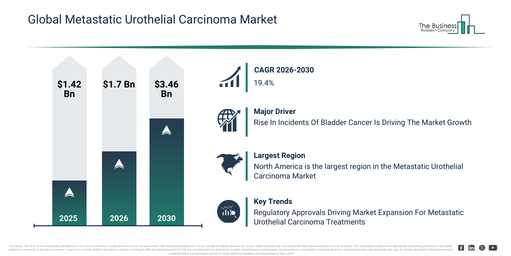
    The metastatic urothelial carcinoma market size has experienced rapid expansion in recent years. It is anticipated to increase from $1.42 billion in 2025 to $1.7 billion in 2026, achieving a compound annual growth rate (CAGR) of 19.9%. This historical growth can be attributed to several factors, including the rising prevalence of bladder cancer, the early adoption of chemotherapy regimens, the increased use of cystoscopy diagnostics, a growing demand for targeted therapy, and advancements in immunotherapy research.

    The metastatic urothelial carcinoma market is projected to experience substantial expansion in the coming years, reaching $3.46 billion by 2030, demonstrating a compound annual growth rate (CAGR) of 19.4%. This anticipated growth during the forecast period is propelled by factors such as the broader availability of fgfr inhibitors, the increasing uptake of combination immunotherapies, advancements in biopsy accuracy technology, greater investment in oncology research and development, and a rising preference for personalized treatment approaches. Key developments anticipated in the forecast period encompass oncology development guided by precision medicine, improvements in diagnostics supported by AI, optimizing cancer treatment through big data integration, assessment utilizing virtual imaging and simulation, and automated solutions for oncology workflows.

    Get A Free Sample Report With In-Depth Market Insights:

    https://thebusinessresearchcompany.com/sample_request?id=51552030&type=smp&name=Metastatic%20Urothelial%20Carcinoma%20Market%20Report%202026&utm_source=Blogs&utm_medium=Paid&utm_campaign=Nov_PR

    Metastatic Urothelial Carcinoma Market Growth Catalysts And Demand Drivers

    The increasing incidence of bladder cancer is anticipated to fuel the expansion of the metastatic urothelial carcinoma market in the future. Bladder cancer is characterized by the development of malignant cells within the bladder’s tissues, frequently originating in the urothelial cells that line it. The growing number of bladder cancer diagnoses stems from factors such as smoking, exposure to chemicals, ongoing bladder inflammation, and enhanced diagnostic techniques. Given its status as an advanced and aggressive form of bladder cancer, metastatic urothelial carcinoma underscores the vital necessity for prompt diagnosis, superior therapeutic interventions, and intensified research initiatives, thereby stimulating innovations and progress in managing bladder cancer and leading to improved patient results in confronting this serious illness. For example, data from February 2023, provided by a Cancer Research UK charity, indicates that new bladder cancer cases in the UK are projected to rise from roughly 9,800 annually between 2023 and 2025 to about 10,700 cases per year by 2038-2040. Consequently, the increasing prevalence of bladder cancer is a key driver for the metastatic urothelial carcinoma market.

    Metastatic Urothelial Carcinoma Market Segment Trends And Revenue Contributors

    The metastatic urothelial carcinoma market covered in this report is segmented –

    1) By Treatment: Chemotherapy, Targeted Therapy, Immunotherapy, Radiation Therapy

    2) By Diagnosis: Urine Lab Tests, Cystoscopy, Intravenous Pyelogram (IVP), Biopsy

    3) By End User: Hospital, Oncology Clinics, Research Institutes, Other End Users

    Subsegments:

    1) By Chemotherapy: Platinum-Based Chemotherapy, Gemcitabine-Based Chemotherapy

    2) By Targeted Therapy: FGFR Inhibitors, Immune Checkpoint Inhibitors

    3) By Immunotherapy: PD-1 Or PD-L1 Inhibitors, CTLA-4 Inhibitors, Combination Immunotherapies

    4) By Radiation Therapy: External Beam Radiation Therapy, Stereotactic Body Radiation Therapy

    Metastatic Urothelial Carcinoma Market Trends Shaping Long-Term Demand

    Leading companies operating within the metastatic urothelial carcinoma market are actively seeking regulatory authorizations for their drug products to expand their reach and solidify their position in the care of adult patients experiencing locally advanced or metastatic urothelial carcinoma (la/mUC). Regulatory approvals denote the formal consent issued by governmental or oversight bodies, allowing a drug, medical device, or treatment to be marketed and made available for public use. As an illustration, in April 2023, Merck & Co. Inc., a pharmaceutical company based in the US, obtained FDA approval for KEYTRUDA (pembrolizumab) for the initial treatment of certain patients diagnosed with locally advanced or metastatic urothelial cancer. This represents a significant achievement in urothelial cancer treatment, as the combination of KEYTRUDA (pembrolizumab) and enfortumab vedotin is now the first anti-PD-1 therapy approved in the U.S. in conjunction with an antibody-drug conjugate for individuals with locally advanced or metastatic urothelial cancer. During the trial, this combination therapy exhibited a statistically meaningful improvement in overall survival (OS) and progression-free survival (PFS) when compared against traditional platinum-based chemotherapy (gemcitabine plus cisplatin or carboplatin). This combined approach provides a new therapeutic choice for these patients who might not have had effective treatment options previously.

    Metastatic Urothelial Carcinoma Market Competitive Landscape: Which Companies Lead The Industry?

    Major companies operating in the metastatic urothelial carcinoma market are Pfizer Inc., Johnson & Johnson Services Inc., F. Hoffmann-La Roche Ltd., Merck & Co., Inc., AbbVie Inc., Bayer AG, Bristol-Myers Squibb Company, AstraZeneca PLC, Eli Lilly and Company, Gilead Sciences Inc., Merck KGaA, Astellas Pharma Inc., Genentech Inc., Genentech Inc., Exelixis Inc., EMD Serono, Zymeworks Inc., Mirati Therapeutics Inc., UroGen Pharma Ltd.

    View The Full Metastatic Urothelial Carcinoma Market Report:

    https://thebusinessresearchcompany.com/report/metastatic-urothelial-carcinoma-global-market-report?utm_source=Blogs&utm_medium=Paid&utm_campaign=Nov_PR

    Metastatic Urothelial Carcinoma Market Geographic Analysis: Where Is Demand Rising Fastest?

    North America was the largest region in the metastatic urothelial carcinoma market in 2025. Asia-Pacific is expected to be the fastest-growing region in the forecast period. The regions covered in the metastatic urothelial carcinoma market report are Asia-Pacific, South East Asia, Western Europe, Eastern Europe, North America, South America, Middle East, Africa.

    Reach Out To Our Team:

    The Business Research Company: https://www.thebusinessresearchcompany.com/

    Americas: +1 310-496-7795

    Asia: +44 7882 955267 & +91 8897263534

    Europe: +44 7882 955267

    Email us at: marketing@tbrc.info

    Follow us on:

    LinkedIn: https://in.linkedin.com/company/the-business-research-company

    YouTube: https://www.youtube.com/channel/UC24_fI0rV8cR5DxlCpgmyFQ

    Global Market Model: https://www.thebusinessresearchcompany.com/global-market-model
  • Metastatic Prostate Cancer Market Growth To $13.16 Billion Creates New Opportunities Across The Industry

    Metastatic Prostate Cancer Market Growth To $13.16 Billion Creates New Opportunities Across The Industry

    Built to provide research that’s more actionable and strategically valuable, The Business Research Company’s 2026 market reports include market attractiveness analysis, total addressable market sizing, company benchmarking matrices, interactive Excel dashboards, broader supply chain intelligence, emerging startup tracking, and in-depth product insights.

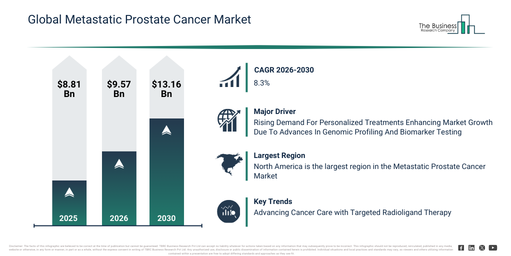
    Metastatic Prostate Cancer Market Set To Climb From $9.57 Billion In 2026 To $13.16 Billion By 2030

    The metastatic prostate cancer market has experienced substantial expansion in recent years. It is anticipated to increase from $8.81 billion in 2025 to $9.57 billion in 2026, exhibiting a compound annual growth rate (CAGR) of 8.6%. The market’s past growth can be ascribed to a rising occurrence of advanced prostate cancer, the proliferation of oncology treatment centers, enhanced survival rates achieved through early intervention, the availability of diverse therapeutic alternatives, and a greater utilization of chemotherapy protocols.

    The metastatic prostate cancer market is projected to experience substantial expansion over the upcoming years. This market is forecast to reach $13.16 billion by 2030, exhibiting a compound annual growth rate (CAGR) of 8.3%. This anticipated growth during the forecast period is fueled by several factors, including the increasing creation of novel immunotherapies, the growing embrace of personalized cancer treatments, the broadening of clinical trials for advanced therapies, the expanding application of radiopharmaceutical treatments, and an elevated emphasis on improving quality-of-life outcomes. Key trends anticipated within this period involve the increasing uptake of targeted and hormonal therapies, a rising prevalence of combination treatment regimens, an intensified focus on precision oncology methodologies, the proliferation of advanced diagnostic and biomarker testing, and a heightened commitment to patient-centered treatment approaches.

    Get A Free Sample Report With In-Depth Market Insights:

    https://thebusinessresearchcompany.com/sample_request?id=97250346&type=smp&name=Metastatic%20Prostate%20Cancer%20Market%20Report%202026&utm_source=Blogs&utm_medium=Paid&utm_campaign=Nov_PR

    Metastatic Prostate Cancer Market Opportunity Drivers: What’s Unlocking New Revenue Potential?

    The increasing need for customized treatments is anticipated to fuel the expansion of the metastatic prostate cancer market in the future. Customized therapies are medical strategies designed to match an individual’s genetic makeup, lifestyle, and unique disease attributes, aiming for more precise and impactful results. This growing demand for personalized treatments stems from the increasing accessibility of genomic profiling and biomarker testing; these technologies assist in pinpointing particular mutations and biological indicators, enabling healthcare professionals to choose treatments with a higher probability of success for each patient. Personalized therapeutic methods, including biomarker-guided treatments and gene-targeted medications, are revolutionizing the management of metastatic prostate cancer by matching specific interventions to each patient’s distinct tumor characteristics, thereby enhancing efficacy and reducing adverse effects. As an illustration, in February 2024, data from the Personalized Medicine Coalition, a US-based non-profit entity, showed that the US Food and Drug Administration (FDA) sanctioned 16 novel personalized therapies for rare conditions in 2023, an increase from 6 approvals in the year 2022. Consequently, the escalating demand for personalized treatments is a key driver for the expansion of the metastatic prostate cancer market.

    Metastatic Prostate Cancer Market Segment Analysis Spotlighting Growth Areas

    The metastatic prostate cancer market covered in this report is segmented –

    1) By Treatment Type: Chemotherapy, Immunotherapy, Hormonal Therapy, Radiation Therapy, Other Treatments

    2) By Route of Administration: Oral, Parenteral Route, Intravenous

    3) By Distribution Channel: Hospital Pharmacy, Retail Pharmacy, Online Pharmacy, Other Distribution Channels

    4) By End User: Hospitals, Clinics, Cancer Centers, Research Laboratories, Other End-Users

    Subsegments:

    1) By Chemotherapy: Docetaxel, Cabazitaxel, Mitoxantrone, Combination Chemotherapy Regimens

    2) By Immunotherapy: Sipuleucel-T, Immune Checkpoint Inhibitors, Cancer Vaccines, Cytokine Therapies

    3) By Hormonal Therapy: Luteinizing Hormone-Releasing Hormone (LHRH) Agonists, LHRH Antagonists, Anti-Androgens, Androgen Synthesis Inhibitors, Combined Androgen Blockade (CAB)

    4) By Radiation Therapy: External Beam Radiation Therapy (EBRT), Stereotactic Body Radiotherapy (SBRT), Radiopharmaceutical Therapy, Intensity-Modulated Radiation Therapy (IMRT)

    5) By Other Treatments: Targeted Therapy, Bone-Targeted Therapy, Clinical Trial Drugs, Palliative Therapy

    Metastatic Prostate Cancer Market Innovation Trends Shaping Future Development

    Key companies active in the metastatic prostate cancer market are prioritizing technological advancements in cancer treatment, such as advanced targeted radioligand technology designed to deliver precise radiation to cancerous cells while preserving healthy tissues. This advanced targeted radioligand technology is a therapeutic approach that combines a molecule targeting prostate specific membrane antigen PSMA with a radioactive isotope, enabling the selective destruction of cancer cells throughout the body. For instance, in March 2025, Novartis AG, a Switzerland based multinational pharmaceutical company, obtained U.S. Food and Drug Administration (FDA) approval for Pluvicto for its earlier application in patients with PSMA-positive metastatic castration-resistant prostate cancer. Pluvicto is comprised of a prostate-specific membrane antigen (PSMA) targeting ligand linked to a beta-emitting radionuclide; it operates by binding to PSMA-expressing tumor cells and delivering localized radiation to eradicate cancer cells. Its distinct features include high tumor specificity, a favorable safety profile, and the potential for combination with other therapies. Its applications cover advanced-stage prostate cancer treatment, particularly for patients who have progressed after androgen deprivation therapy. The benefits include improved progression-free survival, targeted cytotoxicity, reduced off-target effects, and enhanced patient outcomes.

    Metastatic Prostate Cancer Market Leading Companies: Who Holds The Strongest Market Presence?

    Major companies operating in the metastatic prostate cancer market are Pfizer Inc., Merck & Co. Inc., AbbVie Inc., Bayer AG, Bristol-Myers Squibb Company, AstraZeneca PLC, Novartis AG, Astellas Pharma Inc., Ipsen Group, Exelixis Inc., Ferring Pharmaceuticals, Dendreon Pharmaceuticals LLC, Hinova Pharmaceuticals Inc., Janux Therapeutics Inc., Clarity Pharmaceuticals Ltd., Convergent Therapeutics Inc., Johnson & Johnson, Sanofi, Eli Lilly And Company, Roche Holding AG, Takeda Pharmaceutical Company Limited

    View The Full Metastatic Prostate Cancer Market Report:

    https://thebusinessresearchcompany.com/report/metastatic-prostate-cancer-global-market-report?utm_source=Blogs&utm_medium=Paid&utm_campaign=Nov_PR

    Metastatic Prostate Cancer Market Global Footprint: Which Region Leads The Market?

    North America was the largest region in the metastatic prostate cancer market in 2025. Asia-Pacific is expected to be the fastest-growing region in the forecast period. The regions covered in the metastatic prostate cancer market report are Asia-Pacific, South East Asia, Western Europe, Eastern Europe, North America, South America, Middle East, Africa.

    Reach Out To Our Team:

    The Business Research Company: https://www.thebusinessresearchcompany.com/

    Americas: +1 310-496-7795

    Asia: +44 7882 955267 & +91 8897263534

    Europe: +44 7882 955267

    Email us at: marketing@tbrc.info

    Follow us on:

    LinkedIn: https://in.linkedin.com/company/the-business-research-company

    YouTube: https://www.youtube.com/channel/UC24_fI0rV8cR5DxlCpgmyFQ

    Global Market Model: https://www.thebusinessresearchcompany.com/global-market-model
  • Metastatic Melanoma Therapeutics Market Forecast: Breaking Down The Numbers Behind Future Expansion

    Metastatic Melanoma Therapeutics Market Forecast: Breaking Down The Numbers Behind Future Expansion

    Backed by market attractiveness analysis, total addressable market sizing, company benchmarking matrices, interactive Excel dashboards, wider supply chain intelligence, emerging startup coverage, and detailed product-level insights, The Business Research Company’s 2026 market reports are designed to offer research that is more actionable and strategically valuable than ever.

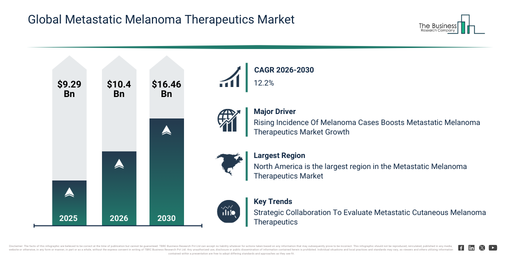
    Metastatic Melanoma Therapeutics Market Forecast: Value Set To Climb From $10.4 Billion To $16.46 Billion

    The metastatic melanoma therapeutics market size has seen rapid growth in recent years. It is projected to expand from $9.29 billion in 2025 to $10.4 billion in 2026, achieving a compound annual growth rate (CAGR) of 11.9%. The historical period’s expansion can be attributed to the increasing incidence of melanoma, the introduction of checkpoint inhibitors, advancements in targeted therapy, the adoption of stereotactic radiosurgery, and growing awareness of early-stage detection.

    The metastatic melanoma therapeutics market is projected to experience substantial expansion in the coming years. It is foreseen to attain a value of $16.46 billion by 2030, growing at a compound annual growth rate (CAGR) of 12.2%. This anticipated growth during the forecast period is primarily fueled by the wider application of combination immunotherapies, the creation of advanced BRAF and MEK inhibitors, increased investment in oncology research and development, enhanced diagnostic accuracy through AI tools, and the rising acceptance of personalized cancer treatments. Prominent trends expected in this period include the integration of precision medicine into melanoma therapy, AI-assisted methods for tumor detection and treatment strategy, optimization of immunotherapy via big data, virtual simulations for oncology education and prognosis, and automated processes for treatment workflows and therapy monitoring.

    Get A Free Sample Report With In-Depth Market Insights:

    https://thebusinessresearchcompany.com/sample_request?id=80417601&type=smp&name=Metastatic%20Melanoma%20Therapeutics%20Market%20Report%202026&utm_source=Blogs&utm_medium=Paid&utm_campaign=Nov_PR

    Metastatic Melanoma Therapeutics Market Growth Momentum: What Factors Are Shaping Demand?

    The increasing occurrence of melanoma cases is anticipated to stimulate the expansion of the metastatic melanoma therapeutics market. Melanoma, a type of skin cancer, originates in melanocytes, the cells responsible for skin pigment regulation. This cancer can manifest anywhere on the skin. Metastatic melanoma therapeutics encompass various treatments designed to obstruct mutant chemicals and inhibit the proliferation of melanoma cells while safeguarding healthy tissue. For example, in January 2023, the American Cancer Society, a US-based voluntary health organization focused on cancer eradication, projected 58,120 new melanoma diagnoses in males and 39,490 in women in the US for 2023, amounting to approximately 97,610 cases, with around 7,990 predicted melanoma deaths. Consequently, the rising prevalence of melanoma is fueling the growth of the metastatic melanoma therapeutics market.

    Metastatic Melanoma Therapeutics Market Segment Performance And Emerging Opportunities

    The metastatic melanoma therapeutics market covered in this report is segmented –

    1) By Therapy: Chemotherapy, Immunotherapy, Targeted Therapy, Radiation Therapy, Surgery

    2) By Line Of Therapy: First-Line, Second-Line, Third-Line

    3) By End User: Hospitals, Specialty Clinics, Home Healthcare, Other End-Users

    Subsegments:

    1) By Chemotherapy: Dacarbazine, Temozolomide, Carboplatin And Cisplatin Combinations

    2) By Immunotherapy: Checkpoint Inhibitors, Interleukin-2 (IL-2), Oncolytic Virus Therapies

    3) By Targeted Therapy: BRAF Inhibitors, MEK Inhibitors, KIT Inhibitors

    4) By Radiation Therapy: Stereotactic Radiosurgery, Palliative Radiation Therapy

    5) By Surgery: Tumor Resection, Sentinel Lymph Node Biopsy, Debulking Surgery

    Metastatic Melanoma Therapeutics Market Trends Redefining Industry Growth

    Leading companies in the metastatic melanoma therapeutics market are dedicating efforts to developing innovative immunotherapies and combination treatment strategies to enhance patient outcomes and improve the effectiveness of first-line treatments. These cutting-edge immunotherapies and combined approaches function by activating or modulating the immune system to fight diseases, frequently paired with other treatments to boost their efficacy and achieve synergistic results. For instance, in March 2024, IO Biotech A/S, a US-based biotechnology company, successfully completed the enrollment of 380 patients in its pivotal Phase 3 trial (IOB-013/KN-D18 NCT05155254). This trial evaluates IO102-IO103 in combination with pembrolizumab (KEYTRUDA) compared to pembrolizumab alone for the first-line treatment of unresectable or metastatic melanoma. The study is sponsored by IO Biotech and conducted in collaboration with Merck, a U.S.-based pharmaceutical company, with Merck supplying pembrolizumab for the research. This particular combination therapy aims to strengthen anti-tumor immune responses, potentially leading to improved overall response rates and long-term clinical outcomes for patients afflicted with advanced melanoma.

    Metastatic Melanoma Therapeutics Market Key Players: Which Companies Lead Industry Competition?

    Major companies operating in the metastatic melanoma therapeutics market are Pfizer Inc., F. Hoffmann-La Roche AG, Merck & Co. Inc., Novartis AG, Bristol-Myers Squibb Company, AstraZeneca PLC, Amgen Inc., Regeneron Pharmaceuticals Inc., Exelixis Inc., Immunocore Holdings plc, Genentech Inc., Iovance Biotherapeutics Inc., Adaptimmune Therapeutics plc, Evaxion Biotech A/S, InxMed Co. Ltd., AiVita Biomedical Inc., Cytovation AS, Biocad, Apexigen Inc., Checkmate Pharmaceuticals, HUYABIO International LLC, IO Biotech, Nykode Therapeutics, Karyopharm Therapeutics, Zucero Therapeutics, Ultimovacs ASA, Immuneering Corporation, TILT Biotherapeutics

    View The Full Metastatic Melanoma Therapeutics Market Report:

    https://thebusinessresearchcompany.com/report/metastatic-melanoma-therapeutics-global-market-report?utm_source=Blogs&utm_medium=Paid&utm_campaign=Nov_PR

    Metastatic Melanoma Therapeutics Market Regional Split: Which Areas Are Fueling Growth?

    North America was the largest region in the metastatic melanoma therapeutics market in 2025. The regions covered in the metastatic melanoma therapeutics market report are Asia-Pacific, South East Asia, Western Europe, Eastern Europe, North America, South America, Middle East, Africa.

    Reach Out To Our Team:

    The Business Research Company: https://www.thebusinessresearchcompany.com/

    Americas: +1 310-496-7795

    Asia: +44 7882 955267 & +91 8897263534

    Europe: +44 7882 955267

    Email us at: marketing@tbrc.info

    Follow us on:

    LinkedIn: https://in.linkedin.com/company/the-business-research-company

    YouTube: https://www.youtube.com/channel/UC24_fI0rV8cR5DxlCpgmyFQ

    Global Market Model: https://www.thebusinessresearchcompany.com/global-market-model
  • Metastatic Lung Adenocarcinoma Treatment Market Expected To Grow At 9.6% CAGR Through 2030: What Businesses Need To Know

    Metastatic Lung Adenocarcinoma Treatment Market Expected To Grow At 9.6% CAGR Through 2030: What Businesses Need To Know

    Featuring market attractiveness scoring, total addressable market sizing, company benchmarking matrices, interactive Excel dashboards, deeper supply chain intelligence, emerging startup tracking, and granular product-level insights, The Business Research Company’s 2026 market reports are built to deliver research that is both more actionable and more strategically valuable.

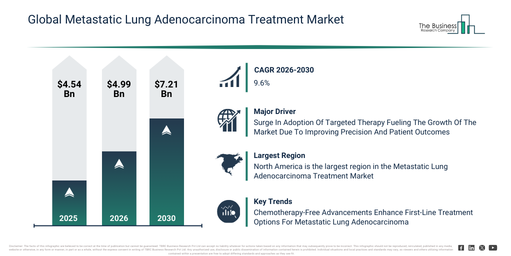
    Metastatic Lung Adenocarcinoma Treatment Market Revenue Growth On Track For A 9.6% CAGR Through 2030

    The market size for metastatic lung adenocarcinoma treatment has experienced substantial growth in recent years. It is anticipated to expand from $4.54 billion in 2025 to $4.99 billion in 2026, exhibiting a compound annual growth rate (CAGR) of 9.9%. Historically, this growth has been fueled by factors such as rising lung cancer prevalence, the adoption of platinum chemotherapy, the early use of egfr inhibitors, an increased reliance on radiation therapy, and growing diagnostic advancements.

    The metastatic lung adenocarcinoma treatment market size is projected for substantial expansion in the coming years, expected to reach $7.21 billion by 2030, exhibiting a compound annual growth rate (CAGR) of 9.6%. This growth during the forecast period is propelled by factors such as the broadening use of alk and ros1 inhibitors, the increased uptake of immunotherapy combinations, advancements in CAR-T cell research for lung cancer, improvements in advanced imaging, and a surge in investment towards targeted therapy development. Key trends anticipated over the forecast period encompass the incorporation of precision medicine into lung adenocarcinoma treatment, the application of AI for tumor detection and optimizing therapies, big data-fueled improvements in immunotherapy, the use of virtual simulation platforms for oncology education, and the development of automated diagnostic and treatment workflow solutions.

    Get A Free Sample Report With In-Depth Market Insights:

    https://thebusinessresearchcompany.com/sample_request?id=78199701&type=smp&name=Metastatic%20Lung%20Adenocarcinoma%20Treatment%20Market%20Report%202026&utm_source=Blogs&utm_medium=Paid&utm_campaign=Nov_PR

    Metastatic Lung Adenocarcinoma Treatment Market Expansion Drivers: What’s Shaping Future Growth?

    The metastatic lung adenocarcinoma treatment market is projected to grow due to the increasing integration of targeted therapy. This cancer treatment method utilizes drugs to precisely inhibit tumor proliferation by targeting specific genes or proteins responsible for cancer development and dissemination. Targeted therapy is gaining prominence as it precisely addresses particular genetic mutations, resulting in more effective clinical outcomes and fewer adverse effects compared to conventional treatments. Specifically for metastatic lung adenocarcinoma, this therapy works by blocking the genetic mutations driving cancer progression and spread, offering a more precise strategy with reduced side effects and potentially significantly enhancing patient survival and quality of life for those with actionable mutations. For example, in July 2023, data from the American Society of Gene and Cell Therapy (ASGCT), a US-based professional membership organization, and Citeline, a US-based provider of drugs and devices, indicated that 247 gene therapies were in Phase II at the end of the first quarter of 2023, which subsequently increased by 5% to 260 by the end of the second quarter. This demonstrates how the rising uptake of targeted therapy is propelling the expansion of the metastatic lung adenocarcinoma treatment market.

    Metastatic Lung Adenocarcinoma Treatment Market Segment Landscape And Growth Outlook

    The metastatic lung adenocarcinoma treatment market covered in this report is segmented –

    1) By Treatment: Chemotherapy, Targeted Therapy, Immunotherapy, Radiation Therapy

    2) By Route Of Administration: Oral, Intravenous

    3) By End-User: Hospitals, Cancer Research Centers, Specialty Clinics

    Subsegments:

    1) By Chemotherapy: Platinum-Based Chemotherapy, Non-Platinum Chemotherapy, Combination Therapy, Single-Agent Chemotherapy

    2) By Targeted Therapy: Epidermal Growth Factor Receptor Inhibitors, Anaplastic Lymphoma Kinase Inhibitors, C-Ros Oncogene 1 Receptor Tyrosine Kinase Inhibitors, V-Raf Murine Sarcoma Viral Oncogene Homolog B1 Inhibitors, Rearranged During Transfection Inhibitors, Mesenchymal-Epithelial Transition Factor Inhibitors, Neurotrophic Tropomyosin Receptor Kinase Inhibitors

    3) By Immunotherapy: PD-1 Inhibitors, PD-L1 Inhibitors, CTLA-4 Inhibitors, Combination Immunotherapy, CAR-T Cell Therapy (Emerging)

    4) By Radiation Therapy: External Beam Radiation Therapy (EBRT), Stereotactic Body Radiotherapy (SBRT), Intensity-Modulated Radiation Therapy (IMRT), Proton Therapy

    Metastatic Lung Adenocarcinoma Treatment Market Strategic Trends: What Defines The Next Growth Phase?

    Leading companies in the metastatic lung adenocarcinoma treatment market are concentrating on developing advanced solutions, such as chemotherapy-free treatments, to improve long-term survival rates by targeting specific genetic mutations and enhancing patient outcomes. Chemotherapy-free treatment refers to cancer therapies that utilize alternative approaches like targeted therapy or immunotherapy, aiming to manage cancer effectively while reducing the severe side effects typically associated with traditional chemotherapy. For instance, in August 2024, Johnson & Johnson, a US-based healthcare company, disclosed that the U.S. Food and Drug Administration (FDA) had granted approval for RYBREVANT (amivantamab-vmjw) in combination with LAZCLUZE (lazertinib) as a first-line, chemotherapy-free treatment for adults diagnosed with locally advanced or metastatic non-small cell lung cancer (NSCLC) characterized by EGFR exon 19 deletions or exon 21 L858R substitution mutations. This approval was backed by results from the Phase 3 MARIPOSA study, which showcased superior progression-free survival compared to osimertinib.

    Metastatic Lung Adenocarcinoma Treatment Market Competitive Landscape: Who Leads The Industry?

    Major companies operating in the metastatic lung adenocarcinoma treatment market are Pfizer Inc., Johnson & Johnson, F. Hoffmann-La Roche Ltd, Merck & Co. Inc., Bristol-Myers Squibb Company, AstraZeneca PLC, Novartis AG, Boehringer Ingelheim International GmbH, BeiGene Ltd., Novocure, Gilead Sciences, Daiichi Sankyo Company Limited, Mirati Therapeutics Inc., Nuvalent Inc., Moderna Therapeutics, Shanghai Henlius Biotech, Duality BioSciences Inc., Arcus Biosciences Inc., NeoImmuneTech Inc., Hutchison Medipharma Limited, Betta Pharma Company Limited, OncoC4 Inc., Xcovery Holding Company, BioNTech SE

    View The Full Metastatic Lung Adenocarcinoma Treatment Market Report:

    https://thebusinessresearchcompany.com/report/metastatic-lung-adenocarcinoma-treatment-global-market-report?utm_source=Blogs&utm_medium=Paid&utm_campaign=Nov_PR

    Metastatic Lung Adenocarcinoma Treatment Market Top Region: Where Does Most Revenue Come From?

    North America was the largest region in the metastatic lung adenocarcinoma treatment market in 2025. Asia-Pacific is expected to be the fastest-growing region in the forecast period. The regions covered in the metastatic lung adenocarcinoma treatment market report are Asia-Pacific, South East Asia, Western Europe, Eastern Europe, North America, South America, Middle East, Africa.

    Reach Out To Our Team:

    The Business Research Company: https://www.thebusinessresearchcompany.com/

    Americas: +1 310-496-7795

    Asia: +44 7882 955267 & +91 8897263534

    Europe: +44 7882 955267

    Email us at: marketing@tbrc.info

    Follow us on:

    LinkedIn: https://in.linkedin.com/company/the-business-research-company

    YouTube: https://www.youtube.com/channel/UC24_fI0rV8cR5DxlCpgmyFQ

    Global Market Model: https://www.thebusinessresearchcompany.com/global-market-model
  • Metastatic HR+/HER2- Breast Cancer Market Forecast To Reach $17.26 Billion By 2030: Key Trends Explained

    Metastatic HR+/HER2- Breast Cancer Market Forecast To Reach $17.26 Billion By 2030: Key Trends Explained

    Built to provide research that’s more actionable and strategically valuable, The Business Research Company’s 2026 market reports include market attractiveness analysis, total addressable market sizing, company benchmarking matrices, interactive Excel dashboards, broader supply chain intelligence, emerging startup tracking, and in-depth product insights.

    Metastatic HR+/HER2- Breast Cancer Market Value Growth And Long-Term Outlook

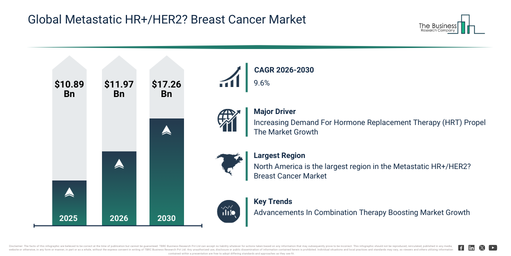
    The metastatic hr+/her2- breast cancer market has demonstrated substantial growth in recent times. Its value is anticipated to rise from $10.89 billion in 2025 to $11.97 billion in 2026, progressing at a compound annual growth rate (CAGR) of 9.9%. This past expansion can be ascribed to an increase in breast cancer prevalence, the widespread use of hormonal therapies, greater application of chemotherapy, the creation of effective early diagnostic instruments, and enhanced survival monitoring.

    The market size for metastatic hr+/her2- breast cancer is anticipated to show robust expansion over the next few years. It is projected to increase to $17.26 billion by 2030, achieving a compound annual growth rate (CAGR) of 9.6%. This growth during the forecast period is attributed to the rise of targeted therapies like cdk4/6 inhibitors, expanding research into immunotherapy, increased application of genomic profiling, a growing demand for combination treatment regimens, and improvements in patient monitoring technologies. Significant trends expected during this period include advancements in precision hormonal therapy, AI-enhanced treatment personalization, data-driven approaches to monitoring treatment response, the use of virtual simulation for oncology training, and the integration of automated diagnostic workflows.

    Get A Free Sample Report With In-Depth Market Insights:

    https://thebusinessresearchcompany.com/sample_request?id=63628740&type=smp&name=Metastatic%20HR%2B%2FHER2%E2%88%92%20Breast%20Cancer%20Market%20Report%202026&utm_source=Blogs&utm_medium=Paid&utm_campaign=Nov_PR

    Metastatic HR+/HER2- Breast Cancer Market Development Factors: What’s Supporting Demand?

    The metastatic HR+/HER2- breast cancer market is anticipated to experience growth, primarily propelled by the rising adoption of hormone replacement therapy (HRT). HRT is a medical intervention designed to supplement or replace hormones that are present at suboptimal levels within the body, most commonly observed during menopause or in instances of various hormone deficiencies. The increased usage of HRT can be attributed to its proven effectiveness in enhancing treatment outcomes, its association with fewer side effects when compared to traditional therapies, and ongoing advancements in precision medicine. Furthermore, HRT can offer support to patients with metastatic HR+/HER2- breast cancer by alleviating symptoms of estrogen deficiency related to menopause, such as hot flashes and vaginal dryness. This is achieved without compromising the effectiveness of existing endocrine therapies, as HRT’s primary focus is on correcting hormone imbalances rather than targeting cancerous cells directly, thereby contributing to an improved quality of life for individuals undergoing cancer treatment. For instance, in October 2023, data from the Health Professional Academy, a UK-based personalized health professional learning platform, indicated that approximately 11 million hormone replacement therapy (HRT) prescriptions were issued in 2022/23, marking an almost 50% increase from the prior year. Thus, the escalating use of hormone replacement therapy (HRT) is a significant driver for the metastatic HR+/HER2- breast cancer market.

    Metastatic HR+/HER2- Breast Cancer Market Breakdown By Product Type And Application

    The metastatic hr+/her2- breast cancer market covered in this report is segmented –

    1) By Drugs: Paclitaxel, Tamoxifen, Docetaxel, Other Drugs

    2) By Treatment: Radiation Therapy, Vitamin Therapy, Macrobiotic Diets, Homeopathy, Herbal Medication

    3) By End-User: Hospitals, Clinics, Other End-User

    Subsegments:

    1) By Paclitaxel: Generic Paclitaxel, Taxol

    2) By Tamoxifen: Generic Tamoxifen, Nolvadex

    3) By Docetaxel: Generic Docetaxel, Taxotere

    4) By Other Drugs: Letrozole, Anastrozole, Exemestane, Palbociclib, Ribociclib, Abemaciclib

    Metastatic HR+/HER2- Breast Cancer Market Transformation Trends: What Innovations Are Driving Change?

    Major companies operating in the metastatic HR+/HER2- breast cancer market are actively developing combination therapy regimens to expand their indications, market reach, and range of treatment options. Combination therapy refers to a therapeutic strategy that entails the simultaneous application of two or more therapeutic agents, potentially including chemotherapy, targeted therapy, immunotherapy, hormone therapy, or other modalities. This approach aims to treat a medical condition more effectively by targeting diverse pathways, thereby enhancing the overall treatment response and reducing the probability of conditions, such as cancer, developing resistance to any singular treatment. For instance, in July 2023, Merck & Co., Inc., a US-based pharmaceutical company, announced the outcomes of its Phase 3 KEYNOTE-756 trial, which assessed KEYTRUDA (pembrolizumab), an anti-PD-1 therapy, in conjunction with chemotherapy approved by the Food and Drug Administration, a US-based government agency. The trial successfully achieved its primary endpoint by demonstrating a significantly improved pathological complete response (pCR) rate in patients with high-risk, early-stage ER+/HER2- breast cancer. KEYNOTE-756 stands as the first positive Phase 3 trial to illustrate a statistically significant improvement in pCR rate with an immunotherapy regimen in the neoadjuvant setting for the patient population. The trial’s protocol involved KEYTRUDA with chemotherapy as a neoadjuvant treatment, followed by adjuvant KEYTRUDA combined with endocrine therapy for high-risk, early-stage ER+/HER2- breast cancer.

    Metastatic HR+/HER2- Breast Cancer Market Company Landscape And Competitive Strategy

    Major companies operating in the metastatic hr+/her2- breast cancer market are Pfizer Inc., F Hoffmann-La Roche AG, AstraZeneca PLC, Eli Lilly and Company, Merck & Co, Arvinas Inc, Olema Pharmaceuticals Inc, Genentech Inc, Veru Pharma, DualityBio Inc, BioNTech SE, Evgen Pharma, EQRx Inc, G1 Therapeutics Inc, Immutep Ltd, RemeGen Co Ltd, SynCore Biotechnology Co Ltd, Allarity Therapeutics AS, Jiangsu Alphamab Biopharmaceuticals Co Ltd, Byondis BV, Jiangsu Hansoh Pharmaceutical Co Ltd, Shanghai Miracogen Inc, Eisai Co Ltd, Tyme Inc, Orion Pharma

    View The Full Metastatic HR+/HER2- Breast Cancer Market Report:

    https://thebusinessresearchcompany.com/report/metastatic-hr-her2-breast-cancer-global-market-report?utm_source=Blogs&utm_medium=Paid&utm_campaign=Nov_PR

    Metastatic HR+/HER2- Breast Cancer Market Regional Breakdown: Where Is Demand Concentrated?

    North America was the largest region in the dominated market in 2025. Asia-Pacific is expected to be the fastest-growing region in the forecast period. The regions covered in the metastatic hr+/her2- breast cancer market report are Asia-Pacific, South East Asia, Western Europe, Eastern Europe, North America, South America, Middle East, Africa.

    Reach Out To Our Team:

    The Business Research Company: https://www.thebusinessresearchcompany.com/

    Americas: +1 310-496-7795

    Asia: +44 7882 955267 & +91 8897263534

    Europe: +44 7882 955267

    Email us at: marketing@tbrc.info

    Follow us on:

    LinkedIn: https://in.linkedin.com/company/the-business-research-company

    YouTube: https://www.youtube.com/channel/UC24_fI0rV8cR5DxlCpgmyFQ

    Global Market Model: https://www.thebusinessresearchcompany.com/global-market-model
  • Metastatic Breast Cancer Treatment Market Size Forecast From 2026 To 2030: Key Industry Trends

    Metastatic Breast Cancer Treatment Market Size Forecast From 2026 To 2030: Key Industry Trends

    Backed by market attractiveness analysis, total addressable market sizing, company benchmarking matrices, interactive Excel dashboards, wider supply chain intelligence, emerging startup coverage, and detailed product-level insights, The Business Research Company’s 2026 market reports are designed to offer research that is more actionable and strategically valuable than ever.

    Metastatic Breast Cancer Treatment Market Poised To Hit $38.63 Billion By 2030 With A 11.6% CAGR

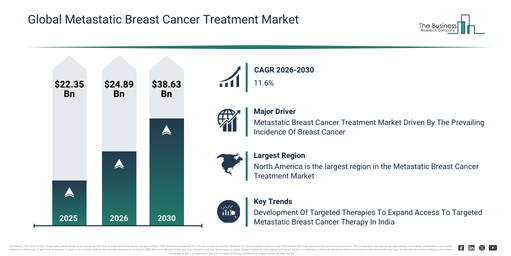
    The metastatic breast cancer treatment market size has demonstrated rapid expansion in recent years. It is projected to increase from $22.35 billion in 2025 to $24.89 billion in 2026, achieving a compound annual growth rate (CAGR) of 11.4%. The surge observed in the past can be attributed to several factors, including the escalating burden of metastatic breast cancer, the adoption of various chemotherapy regimens, the broadened application of hormone therapy, advancements in radiation techniques, and improved cancer screening programs.

    The metastatic breast cancer treatment market size is anticipated to undergo significant expansion in the coming years. It is projected to achieve a value of $38.63 billion by 2030, exhibiting a compound annual growth rate (CAGR) of 11.6%. This growth during the forecast period is fueled by an increasing demand for targeted therapies, the emergence of more immunotherapy options, greater investment in genomic profiling, the broadening of tele-oncology services, and a focus on personalized treatment pathways. Dominant trends expected in this period involve advancements in developing targeted therapies, AI-driven methods for patient monitoring and treatment selection, the integration of digital platforms for providing remote oncology care, improved simulation-based training for oncology procedures, and the automation of diagnostic workflows in cancer screening.

    Get A Free Sample Report With In-Depth Market Insights:

    https://thebusinessresearchcompany.com/sample_request?id=10816&type=smp&name=Metastatic%20Breast%20Cancer%20Treatment%20Market%20Report%202026&utm_source=Blogs&utm_medium=Paid&utm_campaign=Nov_PR

    Metastatic Breast Cancer Treatment Market Industry Drivers: What’s Behind The Revenue Growth?

    The increasing incidence of breast cancer is anticipated to fuel the expansion of the metastatic breast cancer treatment market moving forward. Breast cancer is characterized by the formation of tumors from abnormal cells that begin to grow and divide without control within the breast cells. This condition arises due to various influences, including genetic predispositions, hormonal imbalances, lifestyle choices, and environmental exposures. Metastatic breast cancer treatment plays a crucial role in managing the widespread occurrence of breast cancer by enhancing both the prognosis and the overall well-being of individuals facing advanced-stage disease. For example, a September 2023 report from the American Cancer Society, a US-based non-profit organization, estimated that approximately 297,790 women would be diagnosed with invasive breast cancer in 2023, alongside an expected 55,720 new cases of ductal carcinoma in situ (DCIS). The report also projected about 43,700 women would succumb to breast cancer in the same year. Consequently, the pervasive presence of breast cancer acts as a key driver for the growth of the metastatic breast cancer treatment market.

    Metastatic Breast Cancer Treatment Market Segment Analysis And Revenue Potential

    The metastatic breast cancer treatment market covered in this report is segmented –

    1) By Therapy Type: Chemotherapy, Radiation Therapy, Biologic Targeted Therapy, Breast Surgery, Hormone Therapy

    2) By Molecule Type: Monoclonal Antibody, Peptides, Polymer, Small Molecule, Gene Therapy

    3) By Route Of Administration: Oral, Parenteral

    4) By End-User: Hospitals, Clinics, Ambulatory Surgical Centers, Other End-Users

    Subsegments:

    1) By Chemotherapy: Anthracyclines, Taxanes, Antimetabolites, Platinum Agents

    2) By Radiation Therapy: External Beam Radiation, Stereotactic Radiosurgery, Brachytherapy

    3) By Biologic Targeted Therapy: HER2-Targeted Therapy, CDK4 Or 6 Inhibitors, PARP Inhibitors, PI3K Inhibitors

    4) By Breast Surgery: Lumpectomy, Mastectomy, Sentinel Lymph Node Biopsy, Reconstructive Surgery

    5) By Hormone Therapy: Selective Estrogen Receptor Modulators (SERMs), Aromatase Inhibitors, Estrogen Receptor Downregulators (ERDs)

    #Metastatic Breast Cancer Treatment Market Growth Trends: What’s Shaping The Future Outlook?

    Companies operating within the breast cancer treatment market are primarily focusing on the development of targeted therapies to improve clinical results and expand accessibility for patients suffering from advanced disease. Targeted therapy refers to medications designed to specifically interfere with molecular pathways involved in cancer proliferation, thereby minimizing damage to normal cells while simultaneously enhancing treatment efficacy. For example, in January 2023, BDR Pharmaceuticals, an India-based pharmaceutical company, introduced Bdpalbo (palbociclib) in India for managing advanced and metastatic breast cancer. Bdpalbo, a CDK4/6 inhibitor, is available in three capsule strengths: 125 mg, 100 mg, and 75 mg. This launch aims to improve the availability of treatment for patients with advanced disease by offering a more affordable formulation of palbociclib, thus supporting better therapeutic outcomes through increased accessibility.

    Metastatic Breast Cancer Treatment Market Key Players Shaping Industry Direction

    Major companies operating in the metastatic breast cancer treatment market are Pfizer Inc., AstraZeneca plc, Novartis AG, Eli Lilly & Co., Merck & Co. Inc., Johnson & Johnson Services Inc., F. Hoffmann-La Roche AG, Bristol-Myers Squibb Company, AbbVie Inc., Seattle Genetics Inc., Genentech Inc., MacroGenics Inc., Daiichi Sankyo Company Limited, Celgene Corporation, Mersana Therapeutics Inc., Olema Oncology, RemeGen, SynCore Biotechnology, Allarity Therapeutics, Byondis B.V., Jiangsu Alphamab Biopharmaceuticals Co. Ltd., Shanghai Miracogen Inc., Ambrx Inc., Rhizen Pharmaceuticals SA, Immutep Ltd.

    View The Full Metastatic Breast Cancer Treatment Market Report:

    https://thebusinessresearchcompany.com/report/metastatic-breast-cancer-treatment-global-market-report?utm_source=Blogs&utm_medium=Paid&utm_campaign=Nov_PR

    Metastatic Breast Cancer Treatment Market Geographic Landscape: Which Region Leads Industry Growth?

    North America was the largest region in the metastatic breast cancer treatment market in 2025. Asia-Pacific is expected to be the fastest-growing region in the global metastatic breast cancer treatment market during the forecast period. The regions covered in the metastatic breast cancer treatment market report are Asia-Pacific, South East Asia, Western Europe, Eastern Europe, North America, South America, Middle East, Africa.

    Reach Out To Our Team:

    The Business Research Company: https://www.thebusinessresearchcompany.com/

    Americas: +1 310-496-7795

    Asia: +44 7882 955267 & +91 8897263534

    Europe: +44 7882 955267

    Email us at: marketing@tbrc.info

    Follow us on:

    LinkedIn: https://in.linkedin.com/company/the-business-research-company

    YouTube: https://www.youtube.com/channel/UC24_fI0rV8cR5DxlCpgmyFQ

    Global Market Model: https://www.thebusinessresearchcompany.com/global-market-model