Category: Healthcare Services

  • Medical Kiosk Market 2026: Market Size, Growth Drivers And Emerging Opportunities

    Medical Kiosk Market 2026: Market Size, Growth Drivers And Emerging Opportunities

    Backed by market attractiveness analysis, total addressable market sizing, company benchmarking matrices, interactive Excel dashboards, wider supply chain intelligence, emerging startup coverage, and detailed product-level insights, The Business Research Company’s 2026 market reports are designed to offer research that is more actionable and strategically valuable than ever.

    Medical Kiosk Market Poised To Hit $4.58 Billion By 2030 With A 18% CAGR

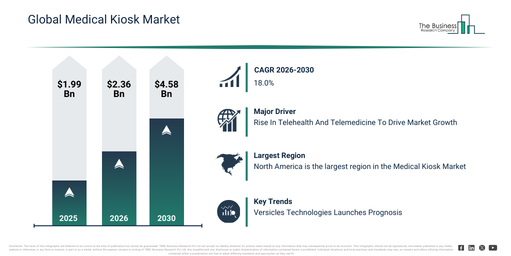
    The medical kiosk market has experienced substantial expansion in its size over the past few years. Its expansion is projected to proceed from $1.99 billion in 2025 to reach $2.36 billion by 2026, demonstrating a compound annual growth rate (CAGR) of 18.3%. This historical growth is attributable to several factors, including the imperative to lessen administrative burdens in hospitals, an increase in patient visits to healthcare facilities, the implementation of digital check-in systems, the proliferation of outpatient and specialty clinics, and the requirement for more efficient patient registration procedures.

    The medical kiosk market is projected to experience substantial expansion in the coming years. This market is predicted to reach $4.58 billion by 2030, exhibiting a compound annual growth rate (CAGR) of 18.0%. Several factors contribute to this anticipated growth during the forecast period, including a heightened demand for contactless healthcare solutions, the broadening of telehealth infrastructure, a stronger emphasis on enhancing the patient experience, the scarcity of healthcare personnel, and increasing investments in smart hospital technologies. Key trends anticipated for this period encompass a greater uptake of self-service healthcare options, the proliferation of telemedicine and remote consultation kiosks, an increase in the implementation of contactless patient interaction systems, the expanding incorporation of fundamental diagnostic features into kiosks, and a sharpened focus on automating workflows within healthcare settings.

    Get A Free Sample Report With In-Depth Market Insights:

    https://thebusinessresearchcompany.com/sample_request?id=60155020&type=smp&name=Medical%20Kiosk%20Market%20Report%202026&utm_source=Blogs&utm_medium=Paid&utm_campaign=Nov_PR

    Medical Kiosk Market Growth Drivers: What’s Behind The Acceleration?

    Looking ahead, the rising adoption of telehealth and telemedicine is projected to fuel the expansion of the medical kiosk market. Telehealth encompasses the application of telecommunications to deliver diverse healthcare services and information remotely, whereas telemedicine particularly focuses on remote clinical appointments and healthcare provision. Crucially, medical kiosks serve remote healthcare by providing physical locations for virtual appointments, data transfer, and patient interaction. These kiosks extend telehealth capabilities into various environments, thereby improving accessibility in places like pharmacies and workplaces. For instance, an analysis by FAIR Health Inc., a US-based non-profit organization, in April 2023 revealed that national telehealth usage saw a 7.3% increase in 2023, climbing from 5.5% of medical claim lines in December 2022 to 5.9% in January 2023. Consequently, the expansion of telehealth and telemedicine is a significant catalyst for the medical kiosk market’s growth.

    Medical Kiosk Market Breakdown By Product Type And Application

    The medical kiosk market covered in this report is segmented –

    1) By Type: Check-In-Kiosk, Payment Kiosk, Way Finding Kiosk, Telemedicine Kiosk, Self-Service Kiosk

    2) By Technology Type: CMOS Sensors, CCD Sensors

    3) By Application: Specialty Clinics, Hospitals, Pharmacies, Other Applications

    Subsegments:

    1) By Check-In Kiosk: Patient Registration Kiosk, Appointment Check-In Kiosk, Health Screening Kiosk

    2) By Payment Kiosk: Bill Payment Kiosk, Insurance Verification Kiosk, Co-Payment Kiosk

    3) By Way Finding Kiosk: Interactive Maps, Directional Signage, Facility Information Kiosk

    4) By Telemedicine Kiosk: Virtual Consultation Kiosk, Remote Monitoring Kiosk, Health Assessment Kiosk

    5) By Self-Service Kiosk: Prescription Refill Kiosk, Lab Test Results Kiosk, General Information Kiosk

    Medical Kiosk Market Trends: What’s Defining The Industry’s Next Phase?

    Leading firms within the medical kiosk market are actively creating digital health kiosks with the aim of boosting patient involvement, optimizing healthcare delivery, and widening access to health data. Digital health kiosks are defined as self-service interactive terminals crafted to support a range of healthcare functions and elevate patient interaction within medical environments. For instance, in November 2023, Versicles Technologies, an India-based company developing AI products, introduced Prognosis, a digital health kiosk, offering fundamental diagnostic services including blood pressure, blood sugar, ECG monitoring, temperature, and weight. This kiosk incorporates a touchscreen interface with video instructions, delivering results in under a minute. Its design allows for placement across diverse venues, such as hospitals and fitness centers, with certified nurses on hand to aid users during their self-evaluations.

    Medical Kiosk Market Company Landscape And Competitive Strategy

    Major companies operating in the medical kiosk market are Olea Kiosks Inc., Meridian Kiosks, REDYREF Interactive Kiosks, KIOSK Information Systems, DynaTouch Corporation, Pyramid Computer GmbH, Lilitab LLC, Elo Touch Solutions Inc., ZIVELO Inc, Clearwave Corporation, Healthware Systems, XIPHIAS Software Technologies Pvt Ltd, Frank Mayer and Associates Inc, Cammax Limited, LamasaTech Ltd, NCR Corporation, Vecna Technologies Inc, Phoenix Kiosk, SlabbKiosks, Acante Solutions Limited, Source Technologies, Aila Technologies Inc, PatientWorks Corporation, Image Manufacturing Group, Klystron Global

    View The Full Medical Kiosk Market Report:

    https://thebusinessresearchcompany.com/report/medical-kiosk-global-market-report?utm_source=Blogs&utm_medium=Paid&utm_campaign=Nov_PR

    Medical Kiosk Market Global Footprint: Which Region Leads The Market?

    North America was the largest region in the medical kiosk market in 2025. Asia-Pacific is expected to be the fastest-growing region in the medical kiosk market report during the forecast period. The regions covered in the medical kiosk market report are Asia-Pacific, South East Asia, Western Europe, Eastern Europe, North America, South America, Middle East, Africa.

    Reach Out To Our Team:

    The Business Research Company: https://www.thebusinessresearchcompany.com/

    Americas: +1 310-496-7795

    Asia: +44 7882 955267 & +91 8897263534

    Europe: +44 7882 955267

    Email us at: marketing@tbrc.info

    Follow us on:

    LinkedIn: https://in.linkedin.com/company/the-business-research-company

    YouTube: https://www.youtube.com/channel/UC24_fI0rV8cR5DxlCpgmyFQ

    Global Market Model: https://www.thebusinessresearchcompany.com/global-market-model
  • Medical Irradiation Market Set To Expand From $3.77 Billion In 2026: Growth Outlook Through 2030

    Medical Irradiation Market Set To Expand From $3.77 Billion In 2026: Growth Outlook Through 2030

    Featuring market attractiveness scoring, total addressable market sizing, company benchmarking matrices, interactive Excel dashboards, deeper supply chain intelligence, emerging startup tracking, and granular product-level insights, The Business Research Company’s 2026 market reports are built to deliver research that is both more actionable and more strategically valuable.

    Medical Irradiation Market Size And Revenue Outlook Through 2030

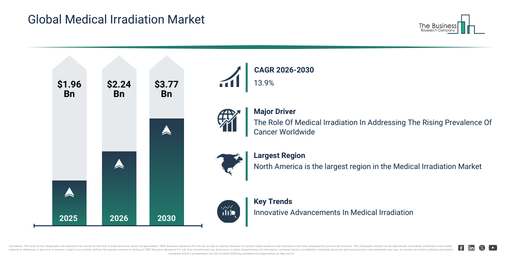
    The medical irradiation market has seen rapid growth in recent years. It is anticipated to expand from $1.96 billion in 2025 to $2.24 billion in 2026, achieving a compound annual growth rate (CAGR) of 14.2%. The historical increase can be attributed to several factors, including rising cancer incidence rates, the increased adoption of radiotherapy in oncology care, the expansion of diagnostic imaging services, advancements in radiation delivery systems, and greater investments in healthcare infrastructure.

    The medical irradiation market size is projected to undergo significant expansion over the next few years. It is forecast to reach $3.77 billion by 2030, demonstrating a compound annual growth rate (CAGR) of 13.9%. This anticipated growth during the forecast period is driven by several factors, including the increasing demand for precise cancer treatments, heightened awareness regarding early disease diagnosis, the expansion of specialized therapy centers, an expanding elderly population, and ongoing enhancements in radiation safety standards. Prominent trends expected in this period encompass the rising adoption of targeted radiation therapies, the expanding application of irradiation in diagnostic imaging, a stronger emphasis on precision and dose optimization, the proliferation of radiation-based cancer treatment programs, and an elevated focus on patient safety and regulatory adherence.

    Get A Free Sample Report With In-Depth Market Insights:

    https://thebusinessresearchcompany.com/sample_request?id=32038097&type=smp&name=Medical%20Irradiation%20Market%20Report%202026&utm_source=Blogs&utm_medium=Paid&utm_campaign=Nov_PR

    Medical Irradiation Market Growth Factors Behind Sustained Expansion

    The increasing incidence of cancer is projected to fuel the expansion of the medical irradiation market moving ahead. Cancer is characterized by the unchecked proliferation of cells, affecting multiple organs and leading to considerable illness and death globally. Medical irradiation serves as a vital method in cancer therapy, employing focused radiation to harm or eliminate cancerous cells while limiting harm to healthy cells. For instance, according to a report published by the Leukemia & Lymphoma Society, a US-based non-profit health organization, in 2023, 184,720 persons in the US are anticipated to receive a leukemia, lymphoma, or myeloma diagnosis. Furthermore, a projected 1,958,310 new cancer cases are expected to be diagnosed in the US in 2023, with new instances of leukemia, lymphoma, and myeloma likely representing 9.4% of those cases. Consequently, the widespread occurrence of cancer is a key factor boosting the development of the medical irradiation market.

    Medical Irradiation Market Segment Analysis And Revenue Potential

    The medical irradiation market covered in this report is segmented –

    1) By Disease Type: Trisomy 21, Translocation Medical Irradiation, Mosaic Medical Irradiation

    2) By Treatment: Diagnosis, Therapy

    3) By Distribution Channel: Direct Tender, Retail Sales, Other Distribution Channels

    4) By End User: Hospital, Clinics, Homecare Setting, Therapy Centers, Other End-Users

    Subsegments:

    1) By Trisomy 21: Prenatal Diagnosis, Postnatal Diagnosis

    2) By Translocation Medical Irradiation: Acute Lymphoblastic Leukemia (ALL), Chronic Myeloid Leukemia (CML)

    3) By Mosaic Medical Irradiation: Genetic Counseling, Diagnostic Imaging

    Medical Irradiation Market Industry Trends Fueling Future Revenue Growth

    Leading companies in the medical irradiation market are developing innovative solutions, such as the Premium Dual-Energy Mobile System, to gain a competitive edge. A Premium Dual-Energy Mobile System is a high-end medical imaging device that integrates dual-energy technology for enhanced diagnostic capabilities, while offering mobility across different clinical settings to provide advanced imaging solutions at the point of care. For instance, in July 2023, KA Imaging, a Canada-based manufacturer, unveiled its Reveal Mobi Pro dual-energy mobile X-ray system. The Reveal Mobi Pro is a comprehensive mobile X-ray solution that combines SpectralDR technology with KA Imaging’s Reveal 35C detector. At the bedside, Reveal’s capacity to take dual-energy and conventional images simultaneously with a single exposure enhances patient and hospital results while safeguarding income by lowering outflows.

    Medical Irradiation Market Key Players Shaping Industry Direction

    Major companies operating in the medical irradiation market are Hitachi Ltd., Toshiba Corporation, Siemens Healthcare GmbH, Koninklijke Philips N.V., GE Healthcare Company, Mayo Clinic Health System, Canon Medical Systems R&D (Dalian) Co. Ltd., Varian Medical Systems Inc., Elekta AB, Accuray Incorporated, Ion Beam Applications S.A., Brainlab AG, ViewRay Technologies Inc., Mevion Medical Systems Inc., RaySearch Laboratories AB, NTP Radioisotopes SOC Ltd., RefleXion Medical Inc., Vision RT Ltd., Sun Nuclear Corporation, Eckert & Ziegler BEBIG GmbH, C-RAD AB, Panacea Medical Technologies Pvt. Ltd., Standard Imaging Inc., CIVCO Radiotherapy Inc., IntraOp Medical Corporation, RTsafe Solutions Ltd., Mirada Medical Corporation

    View The Full Medical Irradiation Market Report:

    https://thebusinessresearchcompany.com/report/medical-irradiation-global-market-report?utm_source=Blogs&utm_medium=Paid&utm_campaign=Nov_PR

    Medical Irradiation Market Regional Split: Which Areas Are Fueling Growth?

    North America was the largest region in the medical irradiation market in 2025. Asia-Pacific is expected to be the fastest-growing region in the forecast period. The regions covered in the medical irradiation market report are Asia-Pacific, South East Asia, Western Europe, Eastern Europe, North America, South America, Middle East, Africa.

    Reach Out To Our Team:

    The Business Research Company: https://www.thebusinessresearchcompany.com/

    Americas: +1 310-496-7795

    Asia: +44 7882 955267 & +91 8897263534

    Europe: +44 7882 955267

    Email us at: marketing@tbrc.info

    Follow us on:

    LinkedIn: https://in.linkedin.com/company/the-business-research-company

    YouTube: https://www.youtube.com/channel/UC24_fI0rV8cR5DxlCpgmyFQ

    Global Market Model: https://www.thebusinessresearchcompany.com/global-market-model
  • Medical Information Market Size And Growth In 2026: Key Factors Shaping Future Demand

    Medical Information Market Size And Growth In 2026: Key Factors Shaping Future Demand

    Built to provide research that’s more actionable and strategically valuable, The Business Research Company’s 2026 market reports include market attractiveness analysis, total addressable market sizing, company benchmarking matrices, interactive Excel dashboards, broader supply chain intelligence, emerging startup tracking, and in-depth product insights.

    Medical Information Market Growth From $4.62 Billion In 2026 To $6 Billion By 2030 At A CAGR Of 6.8%

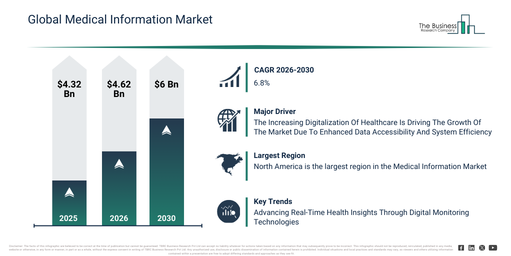
    The medical information market has experienced substantial expansion in recent times. Forecasts indicate its size will increase from $4.32 billion in 2025 to $4.62 billion in 2026, demonstrating a compound annual growth rate (CAGR) of 6.9%. Factors contributing to this historical growth include the broadening of pharmaceutical research endeavors, an increase in clinical trial volumes, the growing intricacy of regulatory standards, a heightened need for unified medical data access, and the expanded implementation of electronic health records.

    The medical information market is projected for significant expansion over the coming years. By 2030, this market is anticipated to reach $6 billion, demonstrating a compound annual growth rate (CAGR) of 6.8%. Factors driving this growth during the forecast period include the expanding adoption of AI-driven medical analytics, the escalating need for real-world evidence generation, the proliferation of cloud-based healthcare platforms, a heightened emphasis on data interoperability standards, and increased capital directed towards regulatory intelligence solutions. Key trends expected in the same period involve a surge in the embrace of cloud-based medical information platforms, the increased deployment of real-time clinical decision support systems, an expanding requirement for integrated medical data management, the enlargement of pharmacovigilance and regulatory information services, and a sharpened focus on data accuracy and compliance.

    Get A Free Sample Report With In-Depth Market Insights:

    https://thebusinessresearchcompany.com/sample_request?id=46015119&type=smp&name=Medical%20Information%20Market%20Report%202026&utm_source=Blogs&utm_medium=Paid&utm_campaign=Nov_PR

    Medical Information Market Demand Drivers Opening New Revenue Streams

    The anticipated expansion of the medical information market going forward is directly influenced by the increasing digitalization of healthcare. This digitalization encompasses the integration of digital technologies, such as electronic health records, telemedicine, and data analytics, into healthcare systems to enhance patient care, operational efficiency, and health outcomes. A primary catalyst for this growing digitalization of healthcare is the escalating adoption of electronic health records (EHRs), as they optimize patient data management, improve clinical decision-making, and boost the effectiveness and coordination of care delivery. This advancement in healthcare digitalization improves the accessibility, accuracy, and real-time sharing of medical information, leading to better patient care, more streamlined clinical workflows, a reduction in administrative burden, and improved coordination among healthcare providers. This ultimately supports more informed medical decisions and efficient health system management. For instance, in February 2023, according to a report published by NHS England, a UK-based public health organization, 86% of NHS Trusts have implemented an Electronic Patient Record (EPR) system, a figure projected to increase to 91% by December 2023. Additionally, in the social care sector, 52% of providers have adopted a Digital Social Care Record. Thus, the increasing digitalization of healthcare is a significant driver for the medical information market.

    Medical Information Market Segmentation And Category Overview

    The medical information market covered in this report is segmented –

    1) By Service Type: Medical Information Services, Pharmacovigilance Services, Regulatory Affairs Services

    2) By Therapeutic Area: Oncology, Neurology, Cardiology, Immunology, Other Therapeutic Areas

    3) By Delivery Mode: On-Premise, Cloud-Based, Web-Based

    4) By Application: Drug Development, Drug Safety Monitoring, Regulatory Compliance, Clinical Research

    5) By End User: Pharmaceutical Companies, Biotechnology Companies, Healthcare Providers, Contract Research Organizations

    Subsegments:

    1) By Medical Information Services: Contact Center Support, Scientific Response Document Creation, Medical Writing And Content Management, Query Management, Knowledge Database Management

    2) By Pharmacovigilance Services: Case Processing, Signal Detection And Risk Management, Aggregate Reporting, Literature Screening, Regulatory Submissions

    3) By Regulatory Affairs Services: Regulatory Strategy And Consulting, Dossier Preparation And Submission, Labeling Services, Lifecycle Management, Regulatory Intelligence

    Medical Information Market Trends Powering Strategic Industry Growth

    Leading companies in the medical information market are concentrating on developing innovative solutions, such as digital health monitoring platforms, to improve access to real-time data, boost patient engagement, and support more informed clinical decision-making. These digital health monitoring platforms are technology-driven systems that gather, analyze, and share live health data from patients via devices like wearables and mobile applications, facilitating remote care and prompt medical interventions. For instance, in December 2024, ElectronRx Limited, a US-based deep technology company, introduced PurpleDx, a smartphone application designed for the remote monitoring of lung function in patients with chronic respiratory conditions such as asthma, COPD, interstitial lung disease, and pulmonary hypertension. The app utilizes built-in smartphone sensors to collect and interpret key digital biomarkers, including heart rate, respiratory rate, and tidal volume. This functionality allows patients to track their lung health from home and share real-time data with healthcare professionals. Through integration with a clinical dashboard, providers can remotely tailor treatment plans and enhance care delivery, representing a significant advancement in digital health for managing pulmonary diseases.

    Medical Information Market Competitive Analysis Of Leading Industry Participants

    Major companies operating in the medical information market are McKesson Corporation, Accenture plc, International Business Machines Corporation, Oracle Corporation, Cognizant Technology Solutions Corporation, Infosys Limited, IQVIA Holdings Inc., HCL Technologies, Wolters Kluwer N.V., Epic Systems Corporation, InterSystems Corporation, Medical Information Technology Inc., Veradigm Inc., Innovaccer Inc., Verato Inc., CliniComp International Inc., Patagonia Health Inc., Optum Inc., Cerner Corporation, Veeva Systems Inc., Parexel International Corporation, Medidata Solutions Inc.

    View The Full Medical Information Market Report:

    https://thebusinessresearchcompany.com/report/medical-information-global-market-report?utm_source=Blogs&utm_medium=Paid&utm_campaign=Nov_PR

    Medical Information Market Top Region: Where Does Most Revenue Come From?

    North America was the largest region in the medical information market in 2025. Asia-Pacific is expected to be the fastest-growing region in the forecast period. The regions covered in the medical information market report are Asia-Pacific, South East Asia, Western Europe, Eastern Europe, North America, South America, Middle East, Africa.

    Reach Out To Our Team:

    The Business Research Company: https://www.thebusinessresearchcompany.com/

    Americas: +1 310-496-7795

    Asia: +44 7882 955267 & +91 8897263534

    Europe: +44 7882 955267

    Email us at: marketing@tbrc.info

    Follow us on:

    LinkedIn: https://in.linkedin.com/company/the-business-research-company

    YouTube: https://www.youtube.com/channel/UC24_fI0rV8cR5DxlCpgmyFQ

    Global Market Model: https://www.thebusinessresearchcompany.com/global-market-model
  • Medical Imaging Workstations Market Forecast 2026–2030: Market Size, Trends And Growth Opportunities

    Medical Imaging Workstations Market Forecast 2026–2030: Market Size, Trends And Growth Opportunities

    Backed by market attractiveness analysis, total addressable market sizing, company benchmarking matrices, interactive Excel dashboards, wider supply chain intelligence, emerging startup coverage, and detailed product-level insights, The Business Research Company’s 2026 market reports are designed to offer research that is more actionable and strategically valuable than ever.

    Medical Imaging Workstations Market Expansion Outlook: What Revenue Opportunities Are Ahead?

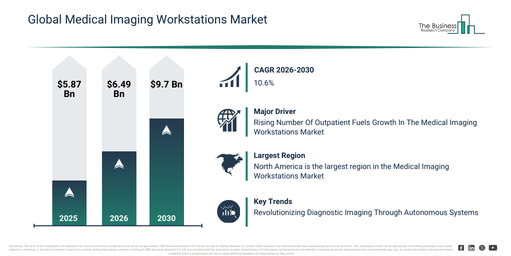
    The medical imaging workstations market has experienced considerable growth in recent years. It is anticipated to expand from $5.87 billion in 2025 to $6.49 billion in 2026, exhibiting a compound annual growth rate (CAGR) of 10.6%. Historically, this expansion was fueled by elements such as the shift from analog to digital imaging systems, an increase in hospital radiology departments, the rising use of CT and MRI scans, growing diagnostic imaging volumes, and investments in healthcare IT infrastructure.

    The market for medical imaging workstations is projected to experience substantial expansion over the forthcoming years. This sector is anticipated to reach $9.7 billion by 2030, exhibiting a compound annual growth rate (CAGR) of 10.6%. This expansion during the projection period stems from an escalating need for timely and precise diagnoses, the increasing prevalence of chronic and lifestyle ailments, the proliferation of diagnostic facilities, wider integration of sophisticated imaging methods, and the imperative for swifter clinical support systems. Key developments expected during this timeframe encompass the greater integration of advanced diagnostic imaging platforms, a heightened requirement for high-performance visualization workstations, an intensified emphasis on enhancing workflow efficiency within radiology departments, broader capabilities for multimodality imaging interpretation, and a stronger inclination towards ergonomically sound and user-focused workstation designs.

    Get A Free Sample Report With In-Depth Market Insights:

    https://thebusinessresearchcompany.com/sample_request?id=39652049&type=smp&name=Medical%20Imaging%20Workstations%20Market%20Report%202026&utm_source=Blogs&utm_medium=Paid&utm_campaign=Nov_PR

    Medical Imaging Workstations Market Growth Backed By Core Demand Fundamentals

    The increasing count of outpatients is projected to boost the expansion of the medical imaging workstations market. Outpatients are individuals who seek medical care without needing to stay in a hospital overnight. Recent years have seen a significant rise in outpatient visits alongside a decrease in inpatient discharges, specifically for imaging. This indicates a move of imaging services from inpatient settings to outpatient ones. New payer demands and patient preferences have considerably driven the establishment of these outpatient services as standalone facilities. For instance, in March 2023, Becker’s Hospital Review, a US-based medical industry trade magazine, reported that 95% of health leaders anticipate higher outpatient volumes in 2023, with 40% expecting increases of 10% or more. Consequently, the rising number of outpatients will fuel the growth of the medical imaging workstations market.

    Medical Imaging Workstations Market Segment Outlook: Which Categories Are Growing Fastest?

    The medical imaging workstations market covered in this report is segmented –

    1) By Modality: Magnetic Resonance Imaging, Computed Tomography, Ultrasound, Mammography, Other Modalities

    2) By Component: Visualization Software, Display Units, Display Controller Cards, Central Processing Units

    3) By Usage: Thick Client Workstations, Thin Client Workstations

    4) By Application: Diagnostic Imaging, Clinical Review, Advanced Imaging

    5) By End-User: Hospitals, Diagnostic Centers, Ambulatory Centers, Other End-Users

    Subsegments:

    1) By Magnetic Resonance Imaging (MRI): Closed MRI Workstations, Open MRI Workstations, MRI Post-Processing Workstations

    2) By Computed Tomography (CT): Standard CT Workstations, Advanced CT Post-Processing Workstations, Mobile CT Workstations

    3) By Ultrasound: Portable Ultrasound Workstations, Cart-Based Ultrasound Workstations, Ultrasound Image Processing Workstations

    4) By Mammography: Digital Mammography Workstations, Stereotactic Biopsy Workstations, 3D Mammography Workstations

    5) By Other Modalities: X-Ray Workstations, Nuclear Medicine Workstations, Fluoroscopy Workstations

    Medical Imaging Workstations Market Growth Trends Reshaping The Competitive Landscape

    Leading firms within the medical imaging workstation market are progressively adopting cutting-edge technologies like autonomous imaging to boost workflow efficiency, refine diagnostic precision, and lessen the burden on technologists. Autonomous imaging describes AI-powered systems capable of guiding patients, capturing images, and conducting initial analyses with minimal human involvement, thereby facilitating quicker, more uniform, and superior imaging outcomes. For example, in March 2025, GE HealthCare, a medical technology firm from the US, collaborated with NVIDIA, a US-based AI computing enterprise, to introduce autonomous X-ray and ultrasound imaging solutions aimed at revolutionizing diagnostic imaging processes. These advanced workstations incorporate AI-driven imaging protocols, automated patient placement, and real-time image refinement to capture high-quality diagnostic images with reduced manual effort, concurrently producing preliminary evaluations. Their primary functionalities encompass independent operation, AI-powered dose optimization, and smooth integration with hospital Picture Archiving and Communication Systems (PACS). These innovations cater to diverse applications such as radiology, point-of-care ultrasound, and mobile imaging setups, contributing to improved efficiency, heightened diagnostic assurance, decreased operator exhaustion, and greater patient volume.

    Medical Imaging Workstations Market Leading Companies And Competitive Benchmarking

    Major companies operating in the medical imaging workstations market are General Electric Company, Koninklijke Philips NV, Siemens Medical Systems Inc., Fujifilm Healthcare Corporation, Canon Medical Systems Corporation, PaxeraHealth, Hologic Inc., Carestream Health India Pvt. Ltd., Esaote SpA, Medicor Imaging, Hitachi Medical Systems, Toshiba Medical Systems Corporation, Samsung Medison Co. Ltd., Shimadzu Corporation, Agfa-Gevaert NV, Sectra AB, Merge Healthcare Inc., Intelerad Medical Systems Incorporated, McKesson Corporation, Analogic Corporation, Barco NV, ContextVision AB, Infinitt Healthcare Co. Ltd., Mirada Medical Limited

    View The Full Medical Imaging Workstations Market Report:

    https://thebusinessresearchcompany.com/report/medical-imaging-workstations-global-market-report?utm_source=Blogs&utm_medium=Paid&utm_campaign=Nov_PR

    Medical Imaging Workstations Market Regional Breakdown: Where Is Demand Concentrated?

    North America was the largest region in the medical imaging workstations market in 2025. Asia-Pacific is expected to be the fastest-growing region in the forecast period. The regions covered in the medical imaging workstations market report are Asia-Pacific, South East Asia, Western Europe, Eastern Europe, North America, South America, Middle East, Africa.

    Reach Out To Our Team:

    The Business Research Company: https://www.thebusinessresearchcompany.com/

    Americas: +1 310-496-7795

    Asia: +44 7882 955267 & +91 8897263534

    Europe: +44 7882 955267

    Email us at: marketing@tbrc.info

    Follow us on:

    LinkedIn: https://in.linkedin.com/company/the-business-research-company

    YouTube: https://www.youtube.com/channel/UC24_fI0rV8cR5DxlCpgmyFQ

    Global Market Model: https://www.thebusinessresearchcompany.com/global-market-model
  • Medical Imaging Reagents Market Size Reaches $17.37 Billion In 2026: What Is Driving Growth?

    Medical Imaging Reagents Market Size Reaches $17.37 Billion In 2026: What Is Driving Growth?

    Featuring market attractiveness scoring, total addressable market sizing, company benchmarking matrices, interactive Excel dashboards, deeper supply chain intelligence, emerging startup tracking, and granular product-level insights, The Business Research Company’s 2026 market reports are built to deliver research that is both more actionable and more strategically valuable.

    Medical Imaging Reagents Market Growth Potential: How Will Market Size Shift Through 2030?

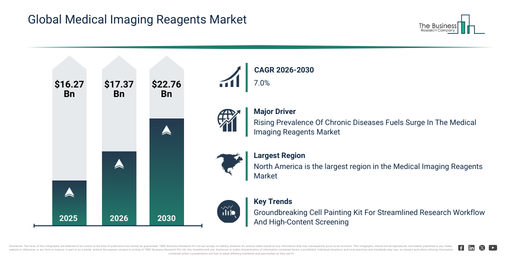
    The medical imaging reagents market size has experienced strong growth in recent years. It is projected to increase from $16.27 billion in 2025 to $17.37 billion in 2026, achieving a compound annual growth rate (CAGR) of 6.7%. This historical expansion can be attributed to the advancement of diagnostic imaging modalities, the rising prevalence of chronic diseases, an increased use of contrast agents in radiology, the growth of nuclear medicine procedures, and the expansion of hospital imaging infrastructure.

    The medical imaging reagents market size is expected to experience significant growth in the coming years. It is projected to expand to $22.76 billion by 2030, achieving a compound annual growth rate (CAGR) of 7.0%. This anticipated growth during the forecast period is fueled by the increasing demand for early disease detection, the rising burden of cancer and neurological disorders, a surge in imaging procedure volumes, the expansion of precision diagnostics, and an uptick in clinical research activities. Noteworthy trends for this period include a growing demand for high-resolution diagnostic imaging, an increased utilization of contrast reagents in chronic disease diagnosis, the broader application of nuclear imaging in oncology, a heightened focus on the safety and biocompatibility of imaging reagents, and a greater adoption of multimodal imaging techniques.

    Get A Free Sample Report With In-Depth Market Insights:

    https://thebusinessresearchcompany.com/sample_request?id=21289141&type=smp&name=Medical%20Imaging%20Reagents%20Market%20Report%202026&utm_source=Blogs&utm_medium=Paid&utm_campaign=Nov_PR

    Medical Imaging Reagents Market Growth Catalysts And Demand Drivers

    The rising incidence of chronic diseases is anticipated to boost the expansion of the medical imaging reagents market in the future. These conditions are characterized by their duration of a year or more, requiring ongoing medical care and potentially deteriorating over time. Medical imaging reagents are essential for diagnosing and identifying chronic diseases by allowing visualization of organs and affected anatomical structures. For example, in February 2024, the Centers for Disease Control and Prevention (CDC), a US-based federal public health agency, reported that roughly 129 million individuals in the United States suffer from at least one significant chronic ailment, such as heart disease, cancer, diabetes, obesity, and hypertension. Consequently, the growing prevalence of chronic diseases is a key factor driving the medical imaging reagents market.

    Medical Imaging Reagents Market Segment Landscape: Which Areas Lead Development?

    The medical imaging reagents market covered in this report is segmented –

    1) By Class: Contrast Reagents, Optical Reagents, Nuclear Reagents

    2) By Technology: Nanoparticles, Fluorescent Dyes, Probes Radiopharmaceuticals, Fluorescent Proteins, Quantum Dots

    3) By Modality: X-Ray, CT Scan, Ultrasound, MRI Scan

    4) By Application: Neurological Disorder, Cardiovascular Disorder, Cancer, Gastrointestinal Disorder, Musculoskeletal Disorder, Nephrological Disorder, Other Applications

    5) By End User: Biotechnology Companies, Pharmaceutical Companies, Diagnostic Labs

    Subsegments:

    1) By Contrast Reagents: Iodine-Based Contrast Agents, Barium Sulfate Contrast Agents, Gadolinium-Based Contrast Agents

    2) By Optical Reagents: Fluorescent Dyes, Luminescent Agents, Optical Probes

    3) By Nuclear Reagents: Radioisotopes, Radiopharmaceuticals

    Medical Imaging Reagents Market Trends Shaping Long-Term Demand

    Leading companies within the medical imaging reagents market are focusing on developing innovative products, such as cell painting kits, to increase their market revenues. These kits feature pre-optimized, verified fluorescent probes and an accompanying diluent, designed to streamline the cell painting workflow while ensuring high batch-to-batch repeatability and validation for high-content screening systems. As an illustration, in December 2023, Amazon Web Services (AWS), a US-based company, demonstrated its role in transforming drug discovery by employing high-throughput Cell Painting, an advanced image-based assay for high-content screening. This technique enhances the understanding of cellular behaviors and phenotypes. By utilizing AWS’s scalable infrastructure, researchers can effectively manage large volumes of cell image data and conduct complex image processing tasks. The Cell Painting Batch solution on AWS, which integrates tools like CellProfiler, automates these processes, thereby resolving challenges such as fluctuating workloads, difficulties in collaboration, and requirements for significant compute power. This overall strategy not only accelerates drug discovery but also improves scientific reproducibility and promotes collaboration across various laboratories.

    Medical Imaging Reagents Market Industry Leaders And Competitive Landscape

    Major companies operating in the medical imaging reagents market are Lantheus Holdings Inc., Thermo Fisher Scientific Inc., Bayer AG, Bracco SpA, PerkinElmer Inc., SA Laboratoires André Guerbet, Guerbet Group, Merck KGaA, Curium Pharma, Nordion Inc., IBA Molecular, Eckert & Ziegler Radiopharma GmbH, Advanced Accelerator Applications, Jubilant Life Sciences Limited, Mallinckrodt Pharmaceuticals, CMC Contrast AB, Triad Isotopes Inc., Nihon Medi-Physics Co Ltd, Eczacibasi-Monrol Nuclear Products, Telix Pharmaceuticals, ITM Isotope Technologies Munich, Blue Earth Diagnostics Ltd., Navidea Biopharmaceuticals Inc.

    View The Full Medical Imaging Reagents Market Report:

    https://thebusinessresearchcompany.com/report/medical-imaging-reagents-global-market-report?utm_source=Blogs&utm_medium=Paid&utm_campaign=Nov_PR

    Medical Imaging Reagents Market Geographic Landscape: Which Region Leads Industry Growth?

    North America was the largest region in the medical imaging reagents market in 2025. The regions covered in the medical imaging reagents market report are Asia-Pacific, South East Asia, Western Europe, Eastern Europe, North America, South America, Middle East, Africa.

    Reach Out To Our Team:

    The Business Research Company: https://www.thebusinessresearchcompany.com/

    Americas: +1 310-496-7795

    Asia: +44 7882 955267 & +91 8897263534

    Europe: +44 7882 955267

    Email us at: marketing@tbrc.info

    Follow us on:

    LinkedIn: https://in.linkedin.com/company/the-business-research-company

    YouTube: https://www.youtube.com/channel/UC24_fI0rV8cR5DxlCpgmyFQ

    Global Market Model: https://www.thebusinessresearchcompany.com/global-market-model
  • Medical Imaging And Radiology Software Market Valued At $11.41 Billion In 2026: Key Trends And Growth Drivers

    Medical Imaging And Radiology Software Market Valued At $11.41 Billion In 2026: Key Trends And Growth Drivers

    Built to provide research that’s more actionable and strategically valuable, The Business Research Company’s 2026 market reports include market attractiveness analysis, total addressable market sizing, company benchmarking matrices, interactive Excel dashboards, broader supply chain intelligence, emerging startup tracking, and in-depth product insights.

    Medical Imaging And Radiology Software Market Value Analysis: What Growth Lies Ahead Over The Forecast Period?

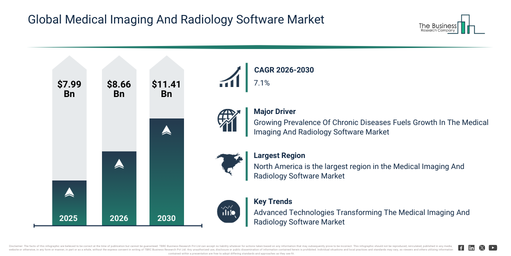
    The medical imaging and radiology software market has witnessed strong expansion in recent years. It is expected to grow from $7.99 billion in 2025 to $8.66 billion in 2026, at a compound annual growth rate (CAGR) of 8.5%. The historical growth of this market can be attributed to several factors, including the digitization of radiology departments, the widespread installation of imaging equipment, the early adoption of PACS systems, increasing diagnostic imaging volumes, and the demand for faster image interpretation.

    The medical imaging and radiology software market size is foreseen to achieve significant growth in the coming years. It is projected to expand to $11.41 billion in 2030, exhibiting a compound annual growth rate (CAGR) of 7.1%. This expansion during the forecast period is propelled by factors such as the increasing demand for efficient diagnostic workflows, a shortage of radiologists, the growing complexity of imaging data, the expansion of remote diagnostics, and an emphasis on faster clinical decision-making. Prominent trends anticipated in the forecast period include the rising adoption of integrated PACS and RIS platforms, a surging demand for advanced visualization and annotation tools, the expanding utilization of imaging software in research and clinical workflows, the proliferation of teleradiology and remote image access, and a heightened focus on workflow optimization within radiology departments.

    Get A Free Sample Report With In-Depth Market Insights:

    https://thebusinessresearchcompany.com/sample_request?id=84767434&type=smp&name=Medical%20Imaging%20And%20Radiology%20Software%20Market%20Report%202026&utm_source=Blogs&utm_medium=Paid&utm_campaign=Nov_PR

    Medical Imaging And Radiology Software Market Opportunity Drivers: What’s Unlocking New Revenue Potential?

    The increasing occurrence of chronic diseases is anticipated to drive the expansion of the medical imaging and radiology software market in the future. These are enduring health conditions marked by continuous or repeated symptoms, necessitating continuous medical oversight. The widespread presence of chronic diseases is an intricate and diverse problem, shaped by factors such as urbanization, genetic susceptibility, and the embrace of inactive lifestyles. In the context of chronic disease management, medical imaging and radiology software play a crucial role in early identification, precise diagnosis, tracking disease progression, and developing treatment plans, thereby enabling prompt actions and enhancing patient results. For example, data from September 2023 provided by the World Health Organization (WHO), an intergovernmental organization based in Switzerland, indicates that chronic diseases are responsible for 41 million deaths globally each year, representing 74% of all fatalities. Specifically, this figure encompasses 17.9 million deaths due to cardiovascular diseases, 9.3 million from cancer, 4.1 million from chronic respiratory diseases, and 2.0 million from diabetes. Consequently, the increasing incidence of chronic diseases acts as a key driver for the expansion of the medical imaging and radiology software market.

    Medical Imaging And Radiology Software Market Segments: Where Is Growth Concentrated?

    The medical imaging and radiology software market covered in this report is segmented –

    1) By Type: Picture Archiving And Communication System (PACS), Radiology Information System (RIS), Other Types

    2) By Imaging Modality: X-Ray Imaging Software, Computed Tomography (CT) Imaging Software, Magnetic Resonance Imaging (MRI) Software, Ultrasound Imaging Software, Nuclear Medicine Imaging Software

    3) By Application: Hospitals, Diagnostic Centers, Other Applications

    Subsegments:

    1) By Picture Archiving And Communication System (PACS): PACS Software, Cloud-Based PACS, On-Premises PACS

    2) By Radiology Information System (RIS): RIS Software, Cloud-Based RIS, On-Premises RIS

    3) By Other Types: Electronic Health Record (EHR) Integration Software, Medical Imaging Analytics Software, Medical Imaging AI Software, Telemedicine And Teleradiology Software, 3D Imaging Software, Diagnostic Imaging Software

    Medical Imaging And Radiology Software Market Innovation Trends Shaping Future Development

    Major medical imaging and radiology software companies are introducing new technologies, such as deep learning reconstruction, to enhance image quality, improve diagnostic accuracy, and optimize workflow efficiency. These cutting-edge solutions utilize artificial intelligence and advanced algorithms to reconstruct medical images with greater clarity and detail. Deep learning reconstruction (DLR) technology is an advanced AI-powered imaging technique that sharpens medical pictures and accelerates scan times in modalities like magnetic resonance imaging (MRI), contributing to enhanced image quality, faster diagnosis, and improved patient experiences. For example, in August 2023, FUJIFILM Healthcare Americas Corporation, a US-based healthcare company, unveiled the ECHELON Synergy MRI system, a 1.5 Tesla magnetic resonance imaging (MRI) system that incorporates Synergy DLR technology powered by artificial intelligence (AI). This innovation improves image sharpness and accelerates scan times, offering the potential for higher throughput, superior image quality, and increased patient satisfaction. The system seeks to improve access to MRI services and reduce appointment wait times. It is equipped with a spacious bore and table for patient comfort, SoftSound gradient technology for reduced noise, and AutoExam One Touch operation for a streamlined workflow. Furthermore, the inclusion of Hydro AG antibacterial coating addresses healthcare-associated infections, offering additional protection against common bacteria strains.

    Medical Imaging And Radiology Software Market Key Participants And Competitive Landscape

    Major companies operating in the medical imaging and radiology software market are McKesson Corporation, Siemens Healthineers AG, Fujifilm Holdings Corporation, GE Healthcare, Koninklijke Philips N.V., Canon Medical Systems Corporation, Agfa-Gevaert N.V., Carestream Health Inc., Sectra AB, Intelerad Medical Systems Incorporated, Merge Healthcare Incorporated, Advanced Data Systems Corporation, Visage Imaging Inc., Novarad Corporation, Ambra Health, Mach7 Technologies Limited, TeraMedica Inc., Dicom Solutions LLC, OmniPACS Inc., Insignia Medical Systems Ltd.

    View The Full Medical Imaging And Radiology Software Market Report:

    https://thebusinessresearchcompany.com/report/medical-imaging-and-radiology-software-global-market-report?utm_source=Blogs&utm_medium=Paid&utm_campaign=Nov_PR

    Medical Imaging And Radiology Software Market Largest Region: Which Geography Holds The Biggest Share?

    North America was the largest region in the medical imaging and radiology software market in 2025. The regions covered in the medical imaging and radiology software market report are Asia-Pacific, South East Asia, Western Europe, Eastern Europe, North America, South America, Middle East, Africa.

    Reach Out To Our Team:

    The Business Research Company: https://www.thebusinessresearchcompany.com/

    Americas: +1 310-496-7795

    Asia: +44 7882 955267 & +91 8897263534

    Europe: +44 7882 955267

    Email us at: marketing@tbrc.info

    Follow us on:

    LinkedIn: https://in.linkedin.com/company/the-business-research-company

    YouTube: https://www.youtube.com/channel/UC24_fI0rV8cR5DxlCpgmyFQ

    Global Market Model: https://www.thebusinessresearchcompany.com/global-market-model

  • Medical Image Management Market Size In 2026: Growth Outlook And Forecast Through 2030

    Medical Image Management Market Size In 2026: Growth Outlook And Forecast Through 2030

    Backed by market attractiveness analysis, total addressable market sizing, company benchmarking matrices, interactive Excel dashboards, wider supply chain intelligence, emerging startup coverage, and detailed product-level insights, The Business Research Company’s 2026 market reports are designed to offer research that is more actionable and strategically valuable than ever.

    Medical Image Management Market Size Forecast: How Big Could The Market Get By 2030?

    The medical image management market has experienced significant growth in recent years. It is forecast to grow from $5.37 billion in 2025 to $5.81 billion in 2026, at a compound annual growth rate (CAGR) of 8.2%. The expansion observed in the historic period can be attributed to factors such as the early digitization of radiology departments, the widespread adoption of PACS, an increase in diagnostic imaging volumes, the rising use of electronic health records, and the necessity for efficient medical data storage.

    The medical image management market size is anticipated to experience substantial growth over the upcoming years. It is projected to expand to $7.98 billion by 2030, achieving a compound annual growth rate (CAGR) of 8.3%. This projected growth can be attributed to several factors, including the increasing volumes of imaging data, the proliferation of multi-site healthcare networks, a growing necessity for interoperability, heightened regulatory attention on data retention, and the demand for expedited clinical access to images. Prominent trends expected during the forecast period include the increasing adoption of vendor-neutral archives across healthcare systems, a rising need for centralized image storage and retrieval capabilities, greater integration of imaging systems across various modalities, the expansion of image sharing for collaborative clinical decision-making, and an elevated focus on long-term medical image archiving and compliance.

    Get A Free Sample Report With In-Depth Market Insights:

    https://thebusinessresearchcompany.com/sample_request?id=11591230&type=smp&name=Medical%20Image%20Management%20Market%20Report%202026&utm_source=Blogs&utm_medium=Paid&utm_campaign=Nov_PR

    Medical Image Management Market Growth Momentum: What Factors Are Shaping Demand?

    The increasing occurrence of chronic illnesses is projected to drive the growth of the medical image management market in the future. A chronic illness refers to an ongoing medical condition or ailment that persists for a considerable duration, typically three months or longer. Consistent medical imaging allows healthcare professionals to monitor the progression of chronic illnesses by comparing images sequentially, which helps in evaluating treatment, making necessary adjustments, and identifying any complications or changes in a patient’s condition. For instance, in February 2024, the Centers for Disease Control and Prevention (CDC), a US-based federal public health agency, reported that an estimated 129 million people in the United States live with at least one major chronic disease, including conditions such as heart disease, cancer, diabetes, obesity, and hypertension. Therefore, the expanding prevalence of chronic illnesses is stimulating the growth of the medical image management market.

    Medical Image Management Market Segment Analysis: What Are The Core Market Categories?

    The medical image management market covered in this report is segmented –

    1) By Product: Vendor Neutral Archives (VNA), Picture Archiving And Communication Systems (PACS), Application-Independent Clinical Archives (AICA)

    2) By Delivery: On Premise, Hybrid, Cloud

    3) By Application: Standard Radiography, Advanced Body Imaging, Cardiovascular Imaging, Neuroradiology, Musculoskeletal Imaging And Pain Management, Oncology Imaging, Other Applications

    4) By End User: Hospitals, Clinics, Diagnostic Centers, Ambulatory Surgery Centers

    Subsegments:

    1) By Vendor Neutral Archives (VNA): Data Integration Solutions, Storage And Retrieval Systems, Image Lifecycle Management

    2) By Picture Archiving And Communication Systems (PACS): Diagnostic Imaging Solutions, Workflow Management Tools, Image Sharing And Collaboration Features

    3) By Application-Independent Clinical Archives (AICA): Multi-Modal Image Storage, Long-Term Data Preservation, Clinical Data Management Tools

    Medical Image Management Market Trends Redefining Industry Growth

    Major companies operating in the medical image management market are focusing on integrating advanced technologies like cloud-based Picture Archiving and Communication Systems (PACS) to improve imaging accessibility, streamline operational workflows, and enhance diagnostic efficiency. Cloud-based PACS utilizes cloud infrastructure to store and manage medical images, enabling healthcare professionals to securely access, review, and analyze imaging data from any location. For instance, in November 2023, Koninklijke Philips N.V., a Netherlands-based global health technology company, unveiled HealthSuite Imaging, a next-generation cloud-based PACS platform powered by AI-enabled clinical and operational workflows. This solution unifies cloud storage, sophisticated AI capabilities, and secure multi-user access to centralize imaging information, automate analysis, and support collaborative decision-making across clinical departments. Its key features encompass predictive analytics, AI-driven triage, and enhanced interoperability with broader health IT ecosystems. The platform supports applications across radiology, cardiology, oncology, and enterprise-wide imaging operations, delivering advantages such as improved workflow productivity, faster diagnostic turnaround times, elevated patient care, and reduced complexity of on-premise IT infrastructure.

    Medical Image Management Market Top Companies Driving Competitive Growth

    Major companies operating in the medical image management market are McKesson Corporation, International Business Machines Corporation, NTT DATA Corporation, Fujifilm Holdings Corporation, Siemens Healthineers, Koninklijke Philips N.V., GE Healthcare, Hologic Inc., Agfa-Gevaert Group, Carestream Health Inc., Change Healthcare, Hyland Software Inc., Intelerad Medical Systems Incorporated, Sectra AB, Merge Healthcare Inc., Infinitt Healthcare Co. Ltd., TeraRecon Inc., Novarad Corporation, Subtle Medical Inc., Mach7 Technologies Ltd., BridgeHead Software Ltd., Zebra Medical Vision Inc., Ambra Health, Vital Images Inc.

    View The Full Medical Image Management Market Report:

    https://thebusinessresearchcompany.com/report/medical-image-management-global-market-report?utm_source=Blogs&utm_medium=Paid&utm_campaign=Nov_PR

    Medical Image Management Market Regional Analysis: Which Geography Leads On Revenue?

    North America was the largest region in the medical image management market in 2025. Asia-Pacific is expected to be the fastest-growing region in the forecast period. The regions covered in the medical image management market report are Asia-Pacific, South East Asia, Western Europe, Eastern Europe, North America, South America, Middle East, Africa.

    Reach Out To Our Team:

    The Business Research Company: https://www.thebusinessresearchcompany.com/

    Americas: +1 310-496-7795

    Asia: +44 7882 955267 & +91 8897263534

    Europe: +44 7882 955267

    Email us at: marketing@tbrc.info

    Follow us on:

    LinkedIn: https://in.linkedin.com/company/the-business-research-company

    YouTube: https://www.youtube.com/channel/UC24_fI0rV8cR5DxlCpgmyFQ

    Global Market Model: https://www.thebusinessresearchcompany.com/global-market-model
  • Medical Image Analysis Software Market Trends Supporting 9.8% CAGR Growth Through 2030

    Medical Image Analysis Software Market Trends Supporting 9.8% CAGR Growth Through 2030

    Featuring market attractiveness scoring, total addressable market sizing, company benchmarking matrices, interactive Excel dashboards, deeper supply chain intelligence, emerging startup tracking, and granular product-level insights, The Business Research Company’s 2026 market reports are built to deliver research that is both more actionable and more strategically valuable.

    Medical Image Analysis Software Market Revenue Outlook: What CAGR Lies Ahead Through 2030?

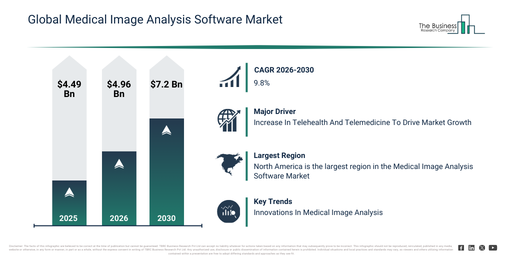
    The medical image analysis software market has seen rapid expansion over recent years. Its valuation is set to rise from $4.49 billion in 2025 to $4.96 billion in 2026, at a compound annual growth rate (CAGR) of 10.4%. Key factors contributing to its historical growth include an increase in diagnostic imaging procedures, the widespread deployment of MRI and CT scanners, the early shift to digital systems in radiology departments, a strong demand for accurate disease diagnosis, and the increasing incorporation of imaging into clinical research.

    The medical image analysis software market size is anticipated to experience substantial expansion over the coming years. This market is projected to reach $7.2 billion by 2030, exhibiting a compound annual growth rate (CAGR) of 9.8%. Factors contributing to this growth during the forecast period include the increasing incidence of chronic diseases, a heightened emphasis on precision diagnostics, the expansion of diagnostic imaging infrastructure, the advancement of data-driven healthcare, and the need for quicker and more precise image interpretation. Key trends during this period encompass the growing embrace of multi-modality image analysis, an escalating need for quantitative imaging in clinical decision support, the expanding application of advanced visualization tools for intricate diagnoses, the broader implementation of image analysis within oncology and neurology, and enhanced integration of imaging software into existing clinical workflows.

    Get A Free Sample Report With In-Depth Market Insights:

    https://thebusinessresearchcompany.com/sample_request?id=97406611&type=smp&name=Medical%20Image%20Analysis%20Software%20Market%20Report%202026&utm_source=Blogs&utm_medium=Paid&utm_campaign=Nov_PR

    Medical Image Analysis Software Market Expansion Drivers: What’s Shaping Future Growth?

    The increasing adoption of telehealth and telemedicine is anticipated to drive the expansion of the medical image analysis software market in the future. Telehealth encompasses the remote delivery of diverse healthcare services and information through telecommunication technologies, whereas telemedicine specifically focuses on remote clinical consultations and the provision of healthcare. Such virtual healthcare approaches produce a significant quantity of medical images, and medical image analysis software is vital for interpreting them, facilitating rapid and precise diagnoses, particularly in geographically distant or poorly serviced regions. Incorporating artificial intelligence improves automated image analysis, lessens geographical obstacles, and aids in optimizing virtual consultations. As an illustration, FAIR Health Inc., a US-based non-profit organization, reported in April 2023 that national telehealth utilization grew by 7.3% in 2023, increasing from 5.5% of medical claim lines in December 2022 to 5.9% in January 2023. Consequently, the expansion of telehealth and telemedicine is propelling the growth of the medical image analysis software market.

    Medical Image Analysis Software Market Segment Breakdown: Which Categories Lead On Revenue?

    The medical image analysis software market covered in this report is segmented –

    1) By Type: Integrated Software, Standalone Software

    2) By Image Type: 2D Image, 3D Image, 4D Image

    3) By Modality: Tomography, Ultrasound Imaging, Radiographic Imaging, X-Ray Imaging, MRI, Other Modalities

    4) By Application: Orthopedics, Dental Application, Neurology, Cardiology, Oncology, Obstetrics And Gynecology, Mammography, Other Applications

    5) By End User: Hospital, Diagnostic Center, Research Center, Other End Users

    Subsegments:

    1) By Integrated Software: Picture Archiving And Communication Systems (PACS), Radiology Information Systems (RIS), Electronic Health Records (EHR) With Imaging Modules

    2) By Standalone Software: Image Processing Software, Visualization Software, Diagnostic Software

    Medical Image Analysis Software Market Strategic Trends: What Defines The Next Growth Phase?

    Leading companies within the medical image analysis software market are prioritizing the adoption of advanced technologies, such as immersive, artificial intelligence (AI)-enhanced imaging, to boost diagnostic accuracy, streamline clinical workflows, and improve patient outcomes. This immersive, AI-enhanced imaging involves utilizing spatial and virtual-reality (VR) environments to display medical images in a three-dimensional interactive space, thereby facilitating natural navigation, manipulation, and interpretation of complex anatomical structures. For instance, in February 2024, Visage Imaging, a US-based medical imaging software company, launched Visage Ease VP for Apple Vision Pro, an extended reality platform specifically designed for medical image analysis. Visage Ease VP enables clinicians to visualize and manipulate volumetric CT, MRI, and PET scans within a fully immersive environment. It operates by converting DICOM images into interactive 3D models, allowing for rotation, segmentation, and cross-sectional analysis. Its unique features include seamless integration with existing PACS systems, real-time rendering, and XR-enabled collaborative review. Applications of this technology extend across radiology, surgical planning, and educational training, offering benefits such as enhanced diagnostic precision, improved workflow efficiency, and stronger multidisciplinary collaboration.

    Medical Image Analysis Software Market Leading Players And Competitive Positioning

    Major companies operating in the medical image analysis software market are Aquilab SAS, Carestream Health Inc., Esaote S.p.A, GE HealthCare Technologies Inc., Image Analysis Group, INFINITT Healthcare Co. Ltd., Merge Healthcare Inc., MIM Software Inc., Mirada Medical Limited, Philips Healthcare, ScienceSoft USA Corporation, Siemens AG, Toshiba Medical Systems Corporation, Xinapse Systems Ltd., AGFA Healthcare, Aktien-Gesellschaft für Anilin-Fabrikation Group, Aidoc Medical, Arterys Inc., Blackford Analysis Ltd., Butterfly Network Inc., Canon Medical Systems Corp., ContextVision AB, Fujifilm Medical Systems Corp., Hologic Inc., Life Image Inc., Mirai Medical Co., Nines Radiology inc., PathAI Inc., Pie Medical Imaging BV, Quibim, Riverain Technologies, Sectra AB, Spintech Holdings inc., Subtle Medical Inc.

    View The Full Medical Image Analysis Software Market Report:

    https://thebusinessresearchcompany.com/report/medical-image-analysis-software-global-market-report?utm_source=Blogs&utm_medium=Paid&utm_campaign=Nov_PR

    Medical Image Analysis Software Market Geographic Spread And Regional Opportunities

    North America was the largest region in the medical image analysis software market in 2025. The regions covered in the medical image analysis software market report are Asia-Pacific, South East Asia, Western Europe, Eastern Europe, North America, South America, Middle East, Africa.

    Reach Out To Our Team:

    The Business Research Company: https://www.thebusinessresearchcompany.com/

    Americas: +1 310-496-7795

    Asia: +44 7882 955267 & +91 8897263534

    Europe: +44 7882 955267

    Email us at: marketing@tbrc.info

    Follow us on:

    LinkedIn: https://in.linkedin.com/company/the-business-research-company

    YouTube: https://www.youtube.com/channel/UC24_fI0rV8cR5DxlCpgmyFQ

    Global Market Model: https://www.thebusinessresearchcompany.com/global-market-model
  • Medical Holography Market Forecast Highlights A $7.01 Billion Opportunity For Industry Participants

    Medical Holography Market Forecast Highlights A $7.01 Billion Opportunity For Industry Participants

    Built to provide research that’s more actionable and strategically valuable, The Business Research Company’s 2026 market reports include market attractiveness analysis, total addressable market sizing, company benchmarking matrices, interactive Excel dashboards, broader supply chain intelligence, emerging startup tracking, and in-depth product insights.

    Medical Holography Market Growth Analysis: How Will Revenue Trend Over The Forecast Period?

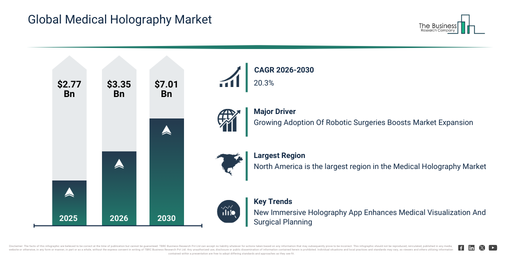
    The medical holography market has experienced rapid expansion in its size over recent years. This market is projected to expand from $2.77 billion in 2025 to $3.35 billion in 2026, demonstrating a compound annual growth rate (CAGR) of 20.8%. Historically, this growth has been driven by several factors, including innovations in medical imaging technologies, the initial integration of 3D visualization instruments in healthcare, the growing intricacy of surgical operations, an increase in medical training simulations, and heightened financial commitment to healthcare visualization solutions.

    The medical holography market is projected to experience rapid expansion over the coming years. Its value is anticipated to reach $7.01 billion by 2030, progressing at a compound annual growth rate (CAGR) of 20.3%. This growth during the forecast timeframe is primarily driven by factors such as a surge in demand for precision medicine, an increase in minimally invasive surgical procedures, the growing acceptance of immersive learning technologies, the proliferation of digital hospitals, and ongoing advancements in holographic hardware and software. Key trends expected within this period encompass the increasing integration of holography into surgical planning, the expanding application of holographic visualization in medical training, a heightened need for real-time 3D medical imaging, the broader implementation of holography in individualized treatment strategies, and enhanced synchronization of holography with diagnostic imaging systems.

    Get A Free Sample Report With In-Depth Market Insights:

    https://thebusinessresearchcompany.com/sample_request?id=63444915&type=smp&name=Medical%20Holography%20Market%20Report%202026&utm_source=Blogs&utm_medium=Paid&utm_campaign=Nov_PR

    Medical Holography Market Development Factors: What’s Supporting Demand?

    The escalating adoption of robotic surgeries is anticipated to propel the growth of the medical holography market in the future. These surgeries involve robotic systems, precisely controlled by surgeons, to execute operations that are both precise and minimally invasive, thereby enhancing accuracy and shortening patient recovery periods. The rising prevalence of robotic surgeries is driven by their exactness, reduced invasiveness, quicker recuperation, and fewer complications, further supported by technological advancements and the incorporation of artificial intelligence. Medical holography aids robotic surgeries by providing surgeons with clear 3D images of a patient’s anatomy, which enhances precision and contributes to superior outcomes. For instance, Intuitive Surgical Inc, a US-based manufacturer of robotic surgical systems, reported in December 2024 that approximately 2,683,000 procedures were carried out using da Vinci surgical systems in 2024, marking a 17% increase from the 2,286,000 procedures performed in 2023, with 9,902 systems installed globally, up 15% from the previous year. Consequently, the expanding utilization of robotic surgeries is driving the growth of the medical holography market.

    Medical Holography Market Segmentation: How Does The Market Break Down By Category?

    The medical holography market covered in this report is segmented –

    1) By Type: Holographic Displays, Holographic Prints, Holographic Microscopy, Holographic Scanners

    2) By Application: Medical Imaging, Ophthalmology, Dentistry, Urology, Orthopedics, Medical Education, Biomedical Research, Other Applications

    3) By End User: Hospitals And Clinics, Academic Medical Centers, Research Laboratories, Pharmaceutical And Biotechnology Companies

    Subsegments:

    1) By Holographic Displays: 3D Medical Imaging Displays, Surgical Visualization Displays, Diagnostic Imaging Displays

    2) By Holographic Prints: Anatomical Model Prints, 3D Printed Medical Models, Patient-Specific Surgical Plans

    3) By Holographic Microscopy: Cellular Structure Visualization, Live Tissue Imaging, Nano-Scale Imaging In Biomedicine

    4) By Holographic Scanners: 3D Body Scanners For Diagnosis, Optical Coherence Tomography (OCT) Scanners, Holographic Ultrasound Scanners

    Medical Holography Market Transformation Trends: What Innovations Are Driving Change?

    Major entities within the medical holography market are prioritizing the development of innovative solutions, such as advanced immersive holographic visualization, to elevate the accuracy and efficiency of medical diagnoses and treatments. This immersive holographic visualization technology produces interactive, three-dimensional holograms, allowing users to investigate intricate data or settings in a highly realistic and captivating way. For example, in March 2024, Siemens Healthineers, a Germany-based medical technology company, introduced the Cinematic Reality app, which permits users to observe immersive, interactive holograms of the human body. The Cinematic Reality app is engineered to utilize the capabilities of Apple Silicon and Metal, thereby establishing a strong foundation for future progress. The application enables users to view immersive, interactive holograms of the human body, generated from genuine medical scans. This functionality enhances the visualization of anatomy, supporting both surgical planning and medical education. Moving forward, it holds the potential to assist surgeons with pre-operative planning, facilitate improved communication among specialists from various disciplines, and help non-radiologists and patients gain a better comprehension of medical scans and associated conditions.

    Medical Holography Market Competitive Overview And Top Companies

    Major companies operating in the medical holography market are RealView Imaging, EchoPixel Inc., ImmersiveTouch Inc., Medivis Inc., Holoxica Limited, Phase Holographic Imaging AB, Lyncée Tec SA, Nanolive SA, Ovizio Imaging Systems NV SA, ZSpace Inc., Zebra Imaging Inc., Leia Inc., Holografika Kft, VividQ Ltd., Lightspace Technologies, EON Reality Inc., Mach7 Technologies Limited, HoloEyes Inc., HoloTech Switzerland AG, MDH Hologram Ltd., Hologramica Ltd., Looking Glass Factory Inc., HoloMed

    View The Full Medical Holography Market Report:

    https://thebusinessresearchcompany.com/report/medical-holography-global-market-report?utm_source=Blogs&utm_medium=Paid&utm_campaign=Nov_PR

    Medical Holography Market Top Region By Revenue And Market Share

    North America was the largest region in the medical holography market in 2025. Asia-Pacific is expected to be the fastest-growing region in the forecast period. The regions covered in the medical holography market report are Asia-Pacific, South East Asia, Western Europe, Eastern Europe, North America, South America, Middle East, Africa.

    Reach Out To Our Team:

    The Business Research Company: https://www.thebusinessresearchcompany.com/

    Americas: +1 310-496-7795

    Asia: +44 7882 955267 & +91 8897263534

    Europe: +44 7882 955267

    Email us at: marketing@tbrc.info

    Follow us on:

    LinkedIn: https://in.linkedin.com/company/the-business-research-company

    YouTube: https://www.youtube.com/channel/UC24_fI0rV8cR5DxlCpgmyFQ

    Global Market Model: https://www.thebusinessresearchcompany.com/global-market-model
  • Medical Health Screening Market Analysis: How The Industry Is Evolving Toward A $26.97 Billion Future

    Medical Health Screening Market Analysis: How The Industry Is Evolving Toward A $26.97 Billion Future

    Backed by market attractiveness analysis, total addressable market sizing, company benchmarking matrices, interactive Excel dashboards, wider supply chain intelligence, emerging startup coverage, and detailed product-level insights, The Business Research Company’s 2026 market reports are designed to offer research that is more actionable and strategically valuable than ever.

    Medical Health Screening Market Forecast: What Value Will The Market Reach By 2030?

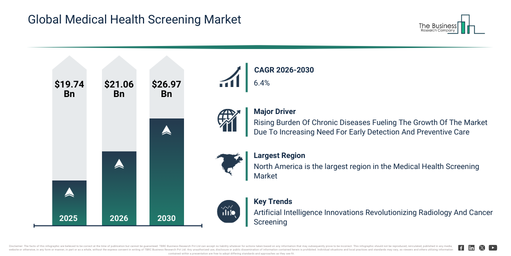
    The medical health screening market has seen robust expansion in recent years. This market is expected to increase from $19.74 billion in 2025 to $21.06 billion in 2026, demonstrating a compound annual growth rate (CAGR) of 6.7%. Factors contributing to its historical growth include a heightened focus on preventive healthcare, the proliferation of diagnostic laboratory networks, an increase in the prevalence of chronic diseases, enhanced availability of routine testing services, and the expansion of employer-backed health programs.

    The medical health screening market size is projected to experience strong growth in the coming years. It is predicted to reach $26.97 billion by 2030, achieving a compound annual growth rate (CAGR) of 6.4%. This expansion during the forecast period can be attributed to factors such as the increasing adoption of personalized medicine approaches, the rising integration of digital health platforms, the expansion of population-level screening initiatives, the growing demand for home-based testing services, and an increasing focus on early cancer detection. Major trends anticipated in this period include the increasing adoption of preventive health screening programs, the rising use of multi-parameter diagnostic panels, a growing demand for early disease detection services, the expansion of corporate and occupational health screening, and an enhanced focus on personalized screening protocols.

    Get A Free Sample Report With In-Depth Market Insights:

    https://thebusinessresearchcompany.com/sample_request?id=95513459&type=smp&name=Medical%20Health%20Screening%20Market%20Report%202026&utm_source=Blogs&utm_medium=Paid&utm_campaign=Nov_PR

    Medical Health Screening Market Industry Drivers: What’s Behind The Revenue Growth?

    The increasing incidence of chronic diseases is anticipated to boost the growth of the medical health screening market in the future. Chronic diseases are defined as long-term health issues, such as diabetes, heart disease, and asthma, which typically endure for a year or more, necessitating continuous medical care or restricting daily activities. The rise in these conditions is attributable to sedentary lifestyles, as prolonged inactivity weakens overall body health and increases susceptibility to long-term medical issues. Medical health screening is crucial for chronic diseases because it enables the early detection of risk factors and symptoms, allowing for prompt intervention and management. This approach can prevent complications, enhance quality of life, and alleviate the overall burden associated with these persistent conditions. For instance, in April 2025, according to the International Diabetes Federation, a Belgium-based non-profit organization, as of today, 589 million adults aged 20–79 are living with diabetes worldwide, and this number is expected to rise to 853 million by 2050. Thus, the escalating prevalence of chronic diseases is propelling the expansion of the medical health screening market.

    Medical Health Screening Market Segment Trends And Revenue Contributors

    The medical health screening market covered in this report is segmented –

    1) By Test Type: Routine Tests, Non-Routine Tests, Cancer Screening Tests, Specialty Tests, Other Test Types

    2) By Sample Type: Blood, Urine, Saliva, Other Sample Types

    3) By End User: Hospitals Or Clinics, Diagnostic Laboratories, Workplaces, Research Institutes, Other End Users

    Subsegments:

    1) By Routine Tests: Blood Pressure Monitoring, Blood Glucose Testing, Lipid Profile, Complete Blood Count (CBC), Urinalysis

    2) By Non-Routine Tests: Genetic Testing, Hormonal Testing, Allergy Testing, Infectious Disease Testing

    3) By Cancer Screening Tests: Mammography, Pap Smear Test, Colonoscopy, Prostate-Specific Antigen (PSA) Test, Low-Dose CT Scan For Lung Cancer

    4) By Specialty Tests: Cardiovascular Screening, Neurological Screening, Pulmonary Function Tests, Bone Density Test

    5) By Other Test Types: Wellness Tests, Executive Health Checkups, Prenatal Screening, Occupational Health Screening

    #Medical Health Screening Market Growth Trends: What’s Shaping The Future Outlook?

    Major companies operating in the medical health screening market are focusing on introducing innovative solutions, such as artificial intelligence-powered radiology informatics and cancer screening, to enhance early detection, improve diagnostic accuracy, and streamline clinical workflows. AI-enabled radiology informatics and cancer screening refer to the use of artificial intelligence technologies to analyze medical imaging data and identify potential signs of cancer or other abnormalities with greater speed and accuracy. For instance, in February 2025, DeepHealth, a US-based health informatics company, launched a new suite of AI-powered radiology informatics and cancer screening solutions powered by their cloud-native operating system, DeepHealth OS. This includes the Diagnostic Suite, a unified AI-driven diagnostic workspace, and advanced AI tools for lung, prostate, and brain health screening. These innovations aim to enhance clinical accuracy, streamline workflows, and improve operational efficiency across diverse healthcare settings.

    Medical Health Screening Market Competitive Landscape: Which Companies Lead The Industry?

    Major companies operating in the medical health screening market are Abbott Laboratories, Siemens Healthineers AG, Labcorp Holdings Inc, Quest Diagnostics Incorporated, Eurofins Scientific SE, QuidelOrtho Corporation, Exact Sciences Corporation, Unilabs AB, LifeLabs LP, ARUP Laboratories, BioReference Health LLC, Guardant Health Inc, DDRC Agilus Diagnostics Limited, Clinical Reference Laboratory Inc, Freenome Holdings Inc, Genova Diagnostics Inc, Cerba Healthcare SAS, DELFI Diagnostics Inc, Truvian Sciences Inc, ACM Medical Laboratory Inc, LabPlus, Sonic Healthcare Limited

    View The Full Medical Health Screening Market Report:

    https://thebusinessresearchcompany.com/report/medical-health-screening-global-market-report?utm_source=Blogs&utm_medium=Paid&utm_campaign=Nov_PR

    Medical Health Screening Market Regional Analysis And Top Geography

    North America was the largest region in the medical health screening market in 2025. The regions covered in the medical health screening market report are Asia-Pacific, South East Asia, Western Europe, Eastern Europe, North America, South America, Middle East, Africa.

    Reach Out To Our Team:

    The Business Research Company: https://www.thebusinessresearchcompany.com/

    Americas: +1 310-496-7795

    Asia: +44 7882 955267 & +91 8897263534

    Europe: +44 7882 955267

    Email us at: marketing@tbrc.info

    Follow us on:

    LinkedIn: https://in.linkedin.com/company/the-business-research-company

    YouTube: https://www.youtube.com/channel/UC24_fI0rV8cR5DxlCpgmyFQ

    Global Market Model: https://www.thebusinessresearchcompany.com/global-market-model