Category: Healthcare Services

  • Medical Component Manufacturing Market Growth Outlook From $16.21 Billion In 2026 To $21.87 Billion By 2030

    Medical Component Manufacturing Market Growth Outlook From $16.21 Billion In 2026 To $21.87 Billion By 2030

    Backed by market attractiveness analysis, total addressable market sizing, company benchmarking matrices, interactive Excel dashboards, wider supply chain intelligence, emerging startup coverage, and detailed product-level insights, The Business Research Company’s 2026 market reports are designed to offer research that is more actionable and strategically valuable than ever.

    Medical Component Manufacturing Market Set To Climb From $16.21 Billion In 2026 To $21.87 Billion By 2030

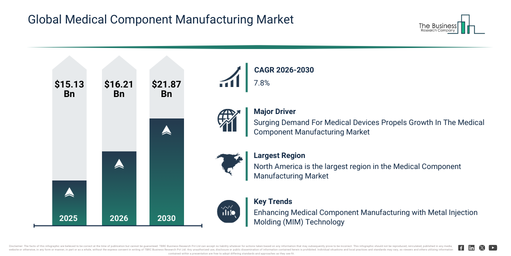
    The medical component manufacturing market has experienced substantial growth in recent years. Projections indicate it will expand from $15.13 billion in 2025 to $16.21 billion in 2026, exhibiting a compound annual growth rate (CAGR) of 7.1%. This historical market expansion is attributable to various factors, including an increase in medical device production, a surging demand for surgical instruments, the enlargement of hospital infrastructure, the early adoption of outsourcing for component manufacturing, and a heightened need for standardized medical parts.

    The medical component manufacturing market size is projected to witness substantial growth over the next few years, expanding to $21.87 billion by 2030, at a compound annual growth rate (CAGR) of 7.8%. This anticipated growth is driven by the increasing adoption of minimally invasive procedures, a rising demand for implantable devices, the expansion of additive manufacturing in healthcare, enhanced regulatory scrutiny on component quality, and the global proliferation of medical device markets. Throughout the forecast period, key trends are expected to include a growing demand for precision-manufactured medical components, the increasing integration of advanced manufacturing processes, a heightened focus on miniaturization of medical device parts, the broadening of custom and application-specific component production, and a stronger emphasis on quality compliance and traceability.

    Get A Free Sample Report With In-Depth Market Insights:

    https://thebusinessresearchcompany.com/sample_request?id=44196900&type=smp&name=Medical%20Component%20Manufacturing%20Market%20Report%202026&utm_source=Blogs&utm_medium=Paid&utm_campaign=Nov_PR

    Medical Component Manufacturing Market Growth Momentum: What Factors Are Shaping Demand?

    The increasing demand for medical devices is set to drive the expansion of the medical component manufacturing market. Medical devices encompass instruments, machines, appliances, software, implants, or comparable articles utilized in diagnosing, preventing, monitoring, treating, or alleviating diseases or medical conditions in humans. Medical component manufacturing is dedicated to producing essential parts such as injection-molded and electronic components for these devices. For illustration, in July 2024, the American Hospital Association, a US-based professional organization, reported that imports of medical equipment (devices) had reached US$ 14.9 billion, a rise from US$ 14.0 billion at the same time in 2023, indicating a steady year-over-year increase in the need for medical devices. Consequently, this escalating demand for medical devices is a primary driver for the medical component manufacturing market.

    Medical Component Manufacturing Market Segment Landscape: Which Areas Lead Development?

    The medical component manufacturing market covered in this report is segmented –

    1) By Process: Forging, Metal Injection Molding, 3D Printing, Ceramic Injection Molding, Investment Casting, Plastic Injection Molding, Other Processes

    2) By Service: Device Development And Manufacturing Services, Quality Management Services, Final Goods Assembly Services

    3) By Application: Laparoscopy, Pulmonary, Urology And Gynecology, Cardiovascular, Orthopedic, Oncology, Neurovascular, Radiology, Other Applications

    Subsegments:

    1) By Forging: Open-Die Forging, Closed-Die Forging, Precision Forging

    2) By Metal Injection Molding: Stainless Steel Components, Titanium Components, Other Metal Components

    3) By 3D Printing: Polymer-Based Printing, Metal-Based Printing, Bioprinting

    4) By Ceramic Injection Molding: Alumina Components, Zirconia Components, Other Ceramic Materials

    5) By Investment Casting: Precision Investment Casting, Shell Casting, Other Investment Casting Techniques

    6) By Plastic Injection Molding: Thermoplastics, Thermosetting Plastics, Biodegradable Plastics

    7) By Other Processes: Extrusion, Machining, Die Casting

    Medical Component Manufacturing Market Trends Redefining Industry Growth

    Leading companies active in the medical component manufacturing market are implementing sophisticated technologies, such as metal injection molding technology, which offers improved precision and less manufacturing waste. Metal injection molding technology describes a production method that integrates the processes of injection molding and powder metallurgy to create intricate and highly accurate metal components by injecting a mix of metal powder and polymer into a mold. For instance, in October 2024, Biomerics, a US-based medical equipment manufacturing company, introduced vertically integrated metal injection molding (MIM) services. A new Metal Injection Molding (MIM) service is currently accessible through a Center of Excellence, thereby strengthening capabilities in fabricating complex, high-performance interventional medical devices.

    Medical Component Manufacturing Market Industry Leaders And Competitive Landscape

    Major companies operating in the medical component manufacturing market are Johnson & Johnson Services Inc., Abbott Laboratories Inc., 3M Company, Heraeus Holding GmbH, Medtronic plc, Danaher Corporation, Siemens Healthineers AG, Becton Dickinson and Company, Koninklijke Philips NV, Stryker Corporation, Baxter International Inc., Boston Scientific Corporation, Olympus Corporation, The Lubrizol Corporation, Intuitive Surgical Inc., Terumo Corporation, Varian Medical Systems Inc., West Pharmaceutical Services Inc., The Ensinger Group, 3D Systems Inc., Hudson Technologies Inc., Seisa Medical Inc, Viant Medical Inc., Anchor Harvey Components LLC, The Rodon Group, Nexxt Spine LLC, Hologic Inc., American Casting Company, Optimum Medical Limited, Walter Stern Inc.

    View The Full Medical Component Manufacturing Market Report:

    https://thebusinessresearchcompany.com/report/medical-component-manufacturing-global-market-report?utm_source=Blogs&utm_medium=Paid&utm_campaign=Nov_PR

    Medical Component Manufacturing Market Top Region By Revenue And Market Share

    North America was the largest region in the medical component manufacturing market in 2025. Asia-Pacific is expected to be the fastest-growing region in the forecast period. The regions covered in the medical component manufacturing market report are Asia-Pacific, South East Asia, Western Europe, Eastern Europe, North America, South America, Middle East, Africa.

    Reach Out To Our Team:

    The Business Research Company: https://www.thebusinessresearchcompany.com/

    Americas: +1 310-496-7795

    Asia: +44 7882 955267 & +91 8897263534

    Europe: +44 7882 955267

    Email us at: marketing@tbrc.info

    Follow us on:

    LinkedIn: https://in.linkedin.com/company/the-business-research-company

    YouTube: https://www.youtube.com/channel/UC24_fI0rV8cR5DxlCpgmyFQ

    Global Market Model: https://www.thebusinessresearchcompany.com/global-market-model
  • Medical Cold Chain Monitoring Market Forecast To Reach $4.18 Billion By 2030: Key Growth Drivers And Industry Trends

    Medical Cold Chain Monitoring Market Forecast To Reach $4.18 Billion By 2030: Key Growth Drivers And Industry Trends

    Featuring market attractiveness scoring, total addressable market sizing, company benchmarking matrices, interactive Excel dashboards, deeper supply chain intelligence, emerging startup tracking, and granular product-level insights, The Business Research Company’s 2026 market reports are built to deliver research that is both more actionable and more strategically valuable.

    Medical Cold Chain Monitoring Market Forecast: Value Set To Climb From $2.4 Billion To $4.18 Billion

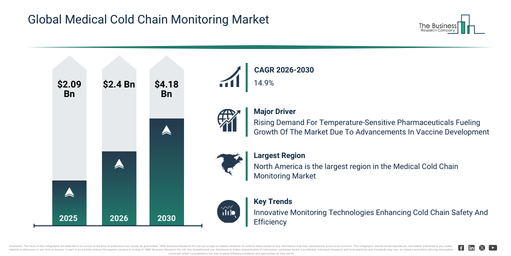
    The size of the medical cold chain monitoring market has experienced swift expansion recently. This market is projected to expand from $2.09 billion in 2025 to $2.4 billion in 2026, demonstrating a compound annual growth rate (CAGR) of 15.0%. Historically, this expansion has been driven by factors such as the rise in vaccine immunization initiatives, the expanding supply of temperature-sensitive medications, the prompt integration of data loggers within logistics, mandates for drug storage regulations, and the enlargement of hospital pharmacy systems.

    The medical cold chain monitoring market is anticipated to undergo substantial expansion in the coming years, with its valuation projected to reach $4.18 billion by 2030, demonstrating a compound annual growth rate (CAGR) of 14.9%. This projected growth throughout the forecast period stems from factors such as the increasing production of biologics and specialty drugs, expanding global vaccination efforts, the widespread adoption of cloud-based monitoring platforms, a greater emphasis on patient safety and product integrity, and the development of cold chain infrastructure in emerging economies. Key trends expected during this period include the increased integration of real-time temperature monitoring systems, a sharpened focus on regulatory compliance and audit readiness, a rising demand for comprehensive end-to-end cold chain visibility, the broadening of vaccine and biologics distribution networks, and a higher rate of remote monitoring adoption in healthcare logistics.

    Get A Free Sample Report With In-Depth Market Insights:

    https://thebusinessresearchcompany.com/sample_request?id=70023802&type=smp&name=Medical%20Cold%20Chain%20Monitoring%20Market%20Report%202026&utm_source=Blogs&utm_medium=Paid&utm_campaign=Nov_PR

    Medical Cold Chain Monitoring Market Expansion Drivers: What’s Shaping Future Growth?

    The increasing requirement for temperature-sensitive pharmaceuticals is projected to drive the expansion of the medical cold chain monitoring market moving forward. Temperature-sensitive pharmaceuticals refer to pharmaceutical products that necessitate strict temperature regulation during storage, transportation, and handling to preserve their effectiveness and safety, including vaccines, biologics, and certain medications. This escalating demand for temperature-sensitive pharmaceuticals arises from the growing prevalence of chronic and autoimmune diseases, which require biologic treatments highly susceptible to temperature variations. Medical cold chain monitoring addresses the increasing demand for temperature-sensitive pharmaceuticals by ensuring these products remain within the specified temperature range throughout the entire supply chain, thus maintaining their potency and safeguarding patient health. For instance, in March 2025, the National Health Service (NHS), a UK-based government department, aims to achieve 25% self-sufficiency in immunoglobulin by the end of 2025, with an anticipated increase to 30–35% by 2031, and is expected to reach 80% self-sufficiency in albumin as early as next year. Therefore, the rising demand for temperature-sensitive pharmaceuticals is bolstering the medical cold chain monitoring market.

    Medical Cold Chain Monitoring Market Segments: Where Is Growth Concentrated?

    The medical cold chain monitoring market covered in this report is segmented –

    1) By Type: Hardware, Software

    2) By Temperature Range: Chilled (2°C to 8°C), Frozen (-20°C), Deep-Frozen (-70°C to -80°C), Ultra-Low Temperature (Below -80°C)

    3) By Application: Hospital, Pharmaceutical Factory, Biology Laboratory, Pharmacy, Other Applications

    Subsegments:

    1) By Hardware: Sensors, Data Loggers, RFID Devices, Temperature Monitors, GPS Devices, Control Panels

    2) By Software: Cloud-Based Monitoring Solutions, On-Premise Monitoring Systems, Data Analytics Platforms, Dashboard And Reporting Tools, Integration And API Solutions

    Medical Cold Chain Monitoring Market Strategic Trends: What Defines The Next Growth Phase?

    Leading companies in the medical cold chain monitoring market are focusing on introducing innovative monitoring technologies to enhance temperature control, data tracking, and real-time visibility. These advanced instruments help diminish the risk of spoilage by providing more precise and continuous temperature measurements, remote alerts, and cloud-based analytics. For instance, in January 2025, SpotSee, a US-based condition-monitoring solution provider, unveiled WarmMark QR, an economical and sustainable temperature indicator crafted to revolutionize cold chain monitoring. This indicator, which features a scannable QR code, removes the necessity for complex equipment and improves visibility, compliance, and decision-making across the entire supply chain. The goal of this launch is to strengthen cold chain safety and efficiency, particularly within sectors like pharmaceuticals and healthcare that demand exact temperature management.

    Medical Cold Chain Monitoring Market Key Participants And Competitive Landscape

    Major companies operating in the medical cold chain monitoring market are NXP Semiconductors NV, Emerson Electric Co., Testo SE & Co. KGaA, Haier Biomedical, Cold Chain Technologies, OMEGA Engineering inc., Sensitech Inc., B Medical Systems, Rotronic AG, Berlinger & Co AG, ELPRO-BUCHS AG, Velvetech LLC, Monnit Corporation, Dickson Data, LogTag Recorders Ltd., Global Cold Chain Solutions, Argus, TrackoBit, Signatrol, SmartSense by Digi, Milesight, E-Control Systems, InTemp Data Loggers, Digital Matter, Nordic Cold Chain Solutions

    View The Full Medical Cold Chain Monitoring Market Report:

    https://thebusinessresearchcompany.com/report/medical-cold-chain-monitoring-global-market-report?utm_source=Blogs&utm_medium=Paid&utm_campaign=Nov_PR

    Medical Cold Chain Monitoring Market Regional Analysis And Top Geography

    North America was the largest region in the medical cold chain monitoring market in 2025. Asia-Pacific is expected to be the fastest-growing region in the forecast period. The regions covered in the medical cold chain monitoring market report are Asia-Pacific, South East Asia, Western Europe, Eastern Europe, North America, South America, Middle East, Africa.

    Reach Out To Our Team:

    The Business Research Company: https://www.thebusinessresearchcompany.com/

    Americas: +1 310-496-7795

    Asia: +44 7882 955267 & +91 8897263534

    Europe: +44 7882 955267

    Email us at: marketing@tbrc.info

    Follow us on:

    LinkedIn: https://in.linkedin.com/company/the-business-research-company

    YouTube: https://www.youtube.com/channel/UC24_fI0rV8cR5DxlCpgmyFQ

    Global Market Model: https://www.thebusinessresearchcompany.com/global-market-model
  • Medical Case Management Market Research 2026: Market Size, Trends, Segments And Growth Forecast

    Medical Case Management Market Research 2026: Market Size, Trends, Segments And Growth Forecast

    Built to provide research that’s more actionable and strategically valuable, The Business Research Company’s 2026 market reports include market attractiveness analysis, total addressable market sizing, company benchmarking matrices, interactive Excel dashboards, broader supply chain intelligence, emerging startup tracking, and in-depth product insights.

    Medical Case Management Market Revenue Growth On Track For A 5.8% CAGR Through 2030

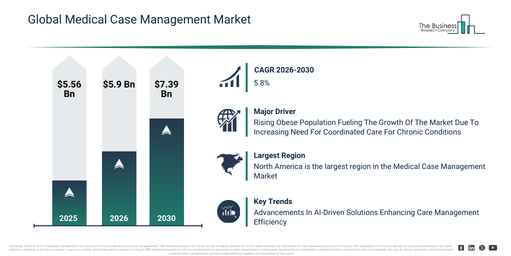
    The medical case management market has experienced robust expansion in recent years. Its valuation is predicted to rise from $5.56 billion in 2025 to $5.9 billion in 2026, exhibiting a compound annual growth rate (CAGR) of 6.1%. The market’s historical development can be linked to factors such as an increase in the prevalence of chronic diseases, the broadening of healthcare service networks, the growing need for healthcare cost management, an escalating demand for coordinated patient care, and the implementation of structured care pathways.

    The medical case management market is projected to experience robust expansion in the coming years. This market is set to reach $7.39 billion by 2030, exhibiting a compound annual growth rate (CAGR) of 5.8%. Factors driving this growth during the projected period include the increased application of AI-driven care analytics, a surge in demand for remote case management services, the broadening of value-based care models, greater incorporation of telehealth platforms, and an intensified emphasis on patient-centric care delivery. Key trends anticipated for the forecast period encompass a wider embrace of digital case management platforms, a rise in the utilization of remote patient coordination tools, enhanced integration with electronic health records, the broadening of multidisciplinary care coordination models, and a sharpened focus on outcome-based care.

    Get A Free Sample Report With In-Depth Market Insights:

    https://thebusinessresearchcompany.com/sample_request?id=27129665&type=smp&name=Medical%20Case%20Management%20Market%20Report%202026&utm_source=Blogs&utm_medium=Paid&utm_campaign=Nov_PR

    Medical Case Management Market Development Factors: What’s Supporting Demand?

    An anticipated increase in the obese population is projected to drive the expansion of the medical case management market in the foreseeable future. This demographic comprises individuals with excessive body fat, generally identified by a body mass index (BMI) of 30 or higher. The growing prevalence of obesity stems from increased consumption of high-calorie, processed foods, leading to excessive caloric intake and subsequent weight gain. Medical case management is essential for obese individuals to ensure coordinated, comprehensive care, given that they frequently contend with various chronic ailments like diabetes and hypertension, which demand continuous oversight and integrated therapeutic strategies. As an illustration, a report released in March 2023 by the World Obesity Federation, a UK-based non-profit organization, forecasts that obesity will impact 1.25 billion people globally by 2025, representing 17% of the world’s population. Moreover, this figure is projected to climb to 1.91 billion, or 24%, by 2035. Consequently, the increasing obese population is acting as a catalyst for the expansion of the medical case management market.

    Medical Case Management Market Segment Analysis: What Are The Core Market Categories?

    The medical case management market covered in this report is segmented –

    1) By Type: Web-Based Case Management, Telephonic Case Management, Field Case Management, Bilingual Field Case Management

    2) By Application: Chronic Pain Case Management, Catastrophic Case Management, Independent Medical Examinations, Short-Term Disability, Long-Term Disability, Other Applications

    3) By End-User: Hospitals , Home Care Settings, Other End Users

    Subsegments:

    1) By Web-Based Case Management: Cloud-Based Platforms, On-Premises Solutions, Mobile-Enabled Case Management, Integrated EHR Systems, Real-Time Reporting Dashboards

    2) By Telephonic Case Management: Inbound Case Management, Outbound Case Management, 24/7 Nurse Triage Services, Chronic Disease Management Support, Post-Discharge Follow-Up Calls

    3) By Field Case Management: Catastrophic Injury Management, Workers’ Compensation Field Visits, Return-To-Work Assessments, Home Environment Evaluations, Rehabilitation Progress Monitoring

    4) By Bilingual Field Case Management: Spanish-English Case Coordination, Multilingual Cultural Competency Support, Translation And Interpretation Services, Immigration Case Support, Cross-Border Patient Navigation

    Medical Case Management Market Transformation Trends: What Innovations Are Driving Change?

    Leading companies within the medical case management market are prioritizing the development of sophisticated tools, such as AI-powered care management solutions, with the goal of enhancing operational efficiency. These AI-powered care management solutions serve as intelligent digital instruments that leverage artificial intelligence to analyze patient data, pinpoint potential health concerns, and facilitate the development and administration of personalized care plans. For instance, in September 2024, Innovaccer Inc., a US-based healthcare technology company, unveiled its Care Management Copilot. This system embeds Innovaccer’s specialized healthcare AI model, Sara, into its existing care management platform to streamline documentation processes and enable care managers to engage with 30–40% more patients. Key functionalities include AI-driven patient summaries that extract essential data conforming to care protocols, identify critical problems, and provide a concise overview of previous interactions, thereby aiding in preparing for patient engagement. The solution also supports documentation in real-time by capturing discussions, automatically populating care plans and assessments, and offering suggestions informed by protocols. Furthermore, it integrates smoothly with major EHRs, thereby eliminating redundant data entries and ensuring that all team members possess access to up-to-date patient records.

    Medical Case Management Market Top Companies Driving Competitive Growth

    Major companies operating in the medical case management market are Cigna Group, Optum Inc, Aetna Inc, CorVel Corporation, Genex Services LLC, EK Health Services Inc, AXIOM Medical Consulting LLC, Coventry Health Care, TRIUNE Health Group, EagleOne Case Management Solutions Inc, The Alaris Group Inc, Healthcare Solutions Inc, PayerFusion Holdings LLC, GMMI Inc, Sierra Nevada Administrators, Medical Case Management Group, Anthem Inc, Managed Medical Review Organization Inc, Sedgwick Claims Management Services Inc, Broadspire Services Inc, Mitchell International Inc, MedRisk Inc

    View The Full Medical Case Management Market Report:

    https://thebusinessresearchcompany.com/report/medical-case-management-global-market-report?utm_source=Blogs&utm_medium=Paid&utm_campaign=Nov_PR

    Medical Case Management Market Geographic Analysis: Where Is Demand Rising Fastest?

    North America was the largest region in the medical case management market in 2025. Asia-Pacific is expected to be the fastest-growing region in the forecast period. The regions covered in the medical case management market report are Asia-Pacific, South East Asia, Western Europe, Eastern Europe, North America, South America, Middle East, Africa.

    Reach Out To Our Team:

    The Business Research Company: https://www.thebusinessresearchcompany.com/

    Americas: +1 310-496-7795

    Asia: +44 7882 955267 & +91 8897263534

    Europe: +44 7882 955267

    Email us at: marketing@tbrc.info

    Follow us on:

    LinkedIn: https://in.linkedin.com/company/the-business-research-company

    YouTube: https://www.youtube.com/channel/UC24_fI0rV8cR5DxlCpgmyFQ

    Global Market Model: https://www.thebusinessresearchcompany.com/global-market-model
  • Medical Biomimetics Market Forecast 2026: Market Size, Competitive Landscape And Growth Drivers

    Medical Biomimetics Market Forecast 2026: Market Size, Competitive Landscape And Growth Drivers

    Backed by market attractiveness analysis, total addressable market sizing, company benchmarking matrices, interactive Excel dashboards, wider supply chain intelligence, emerging startup coverage, and detailed product-level insights, The Business Research Company’s 2026 market reports are designed to offer research that is more actionable and strategically valuable than ever.

    Medical Biomimetics Market Value Growth And Long-Term Outlook

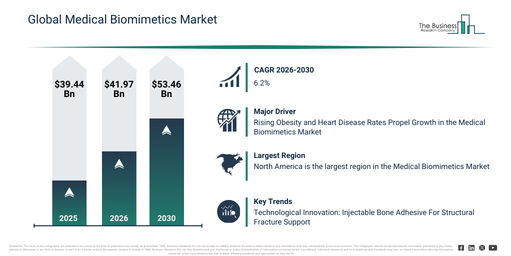
    The medical biomimetics market has experienced robust expansion over recent years. It is projected to increase from $39.44 billion in 2025 to $41.97 billion in 2026, demonstrating a compound annual growth rate (CAGR) of 6.4%. The historical growth in this sector is attributable to various factors, including advancements in material science research, the escalating prevalence of chronic diseases, the recognized limitations of conventional implants, the initial development of tissue engineering techniques, and a rise in academic and clinical research collaborations.

    The medical biomimetics market is projected for substantial expansion in the coming years, with its valuation expected to reach $53.46 billion by 2030, progressing at a compound annual growth rate (CAGR) of 6.2%. This anticipated growth throughout the forecast period can be attributed to the escalating demand for personalized medical solutions, enhanced investments in regenerative medicine, a growing aging population, the broadening of minimally invasive treatment approaches, and increasing approvals for bioinspired medical devices. Significant trends during this period include a wider adoption of biomimetic implants and prosthetics, an expanded utilization of biomimetic drug delivery systems, a heightened call for artificial organs and tissues, the enlargement of tissue engineering and regenerative solutions, and an intensifying emphasis on biocompatible and bioinspired materials.

    Get A Free Sample Report With In-Depth Market Insights:

    https://thebusinessresearchcompany.com/sample_request?id=29616323&type=smp&name=Medical%20Biomimetics%20Market%20Report%202026&utm_source=Blogs&utm_medium=Paid&utm_campaign=Nov_PR

    Medical Biomimetics Market Industry Drivers: What’s Behind The Revenue Growth?

    The rising prevalence of obesity and heart disease is anticipated to drive the expansion of the medical biomimetics market in the coming years. Obesity is defined as a medical state where excessive body fat accumulates to an unhealthy degree, while heart disease encompasses various conditions affecting the heart and its vessels. Biomimetics plays a role in developing assistive devices, such as orthotics and prosthetics, which can help individuals with conditions like diabetes or obesity manage their health. For example, in May 2025, the Office for Health Improvement and Disparities, a UK-based government body, reported that from 2023 to 2024, an estimated 64.5% of adults aged 18 and over in England were overweight or living with obesity, marking an increase from 64.0% recorded between 2022 and 2023. Furthermore, in October 2024, data from the Centers for Disease Control and Prevention, a US-based government agency, indicated that in 2023, cardiovascular disease resulted in 919,032 fatalities, accounting for one in every three deaths. Coronary heart disease continued to be the most common form of heart disease, and notably, approximately one in six deaths from cardiovascular diseases occurred among adults younger than 65 years. Thus, the increasing incidence rates of obesity and heart disease are propelling the growth of the medical biomimetics market.

    Medical Biomimetics Market Segment Breakdown: Which Categories Lead On Revenue?

    The medical biomimetics market covered in this report is segmented –

    1) By Type: Cardiovascular, Orthopedic, Ophthalmology, Dental, Other Types

    2) By Application: Wound Healing, Tissue Engineering, Drug Delivery, Other Applications

    3) By End User: Hospitals, Specialty Clinics, Other End Users

    Subsegments:

    1) By Cardiovascular: Vascular Grafts, Stents and Heart Valves, Cardiac Assist Devices

    2) By Orthopedic: Bone Grafts, Joint Replacement Implants, Spinal Implants

    3) By Ophthalmology: Artificial Corneas, Retinal Implants, Intraocular Lenses

    4) By Dental: Dental Implants, Bone Regeneration Products, Biocompatible Materials

    5) By Other Types: Wound Healing Products, Tissue Engineering Scaffolds, Neurological Devices

    #Medical Biomimetics Market Growth Trends: What’s Shaping The Future Outlook?

    Leading companies in the medical biomimetics market are concentrating on technological advancements in orthopedic care, particularly injectable bone adhesives, which offer structural support and facilitate early patient mobilization for complex fractures. An injectable bone adhesive is a synthetic, calcium phosphate-based biomaterial developed to be injected into bone voids or fracture sites, acting as a bio-adhesive and a mechanically reinforced filler. For example, in January 2024, Biomimetic Innovations Ltd, an Ireland-based medical device company, introduced OsStic, a synthetic injectable structural bio-adhesive bone void filler. OsStic provides provisional fixation and structural support in complex or peri-articular fractures, fills bone defects where standard fixation proves insufficient, and aids in early mobilization. This biomaterial is calcium phosphate-based, suitable for minimally invasive injectable delivery, and crafted to imitate the mechanical properties of natural bone, thereby enhancing osteointegration and overall patient recovery.

    Medical Biomimetics Market Leading Players And Competitive Positioning

    Major companies operating in the medical biomimetics market are BASF SE, Bayer Aktiengesellschaft, Abbott Laboratories, Stryker Corporation, Zimmer Biomet Holdings Inc., Otsuka Medical Device Company Ltd., LivaNova PLC, Össur hf., Forschungszentrum Jülich GmbH, Biohorizons Implant Systems Inc., Inventia Plc, Blatchford Limited, Keystone Dental Corporation, Xtant Medical Holdings Inc., AVINENT Science and Technology, SynTouch Inc., Curasan Inc., CorNeat Vision Inc., Hstar Technologies Co. Ltd., Veryan Medical Ltd., Swedish Biomimetics 3000 ApS, Osteopore International Pte Ltd., KitoTech Medical Ltd., Vandstrom Inc.

    View The Full Medical Biomimetics Market Report:

    https://thebusinessresearchcompany.com/report/medical-biomimetics-global-market-report?utm_source=Blogs&utm_medium=Paid&utm_campaign=Nov_PR

    Medical Biomimetics Market Global Footprint: Which Region Leads The Market?

    North America was the largest region in the medical biomimetics market in 2025. The regions covered in the medical biomimetics market report are Asia-Pacific, South East Asia, Western Europe, Eastern Europe, North America, South America, Middle East, Africa.

    Reach Out To Our Team:

    The Business Research Company: https://www.thebusinessresearchcompany.com/

    Americas: +1 310-496-7795

    Asia: +44 7882 955267 & +91 8897263534

    Europe: +44 7882 955267

    Email us at: marketing@tbrc.info

    Follow us on:

    LinkedIn: https://in.linkedin.com/company/the-business-research-company

    YouTube: https://www.youtube.com/channel/UC24_fI0rV8cR5DxlCpgmyFQ

    Global Market Model: https://www.thebusinessresearchcompany.com/global-market-model
  • Medical Billing Software Market Size In 2026: Regional Growth, Key Segments And Future Outlook

    Medical Billing Software Market Size In 2026: Regional Growth, Key Segments And Future Outlook

    Featuring market attractiveness scoring, total addressable market sizing, company benchmarking matrices, interactive Excel dashboards, deeper supply chain intelligence, emerging startup tracking, and granular product-level insights, The Business Research Company’s 2026 market reports are built to deliver research that is both more actionable and more strategically valuable.

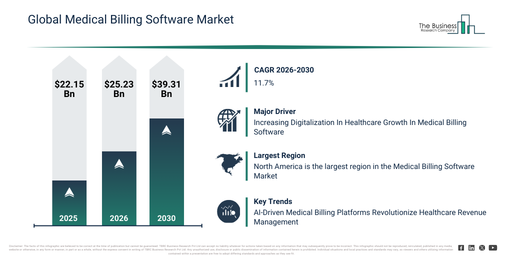
    Medical Billing Software Market Poised To Hit $39.31 Billion By 2030 With A 11.7% CAGR

    The medical billing software market has experienced substantial expansion recently. This market is projected to expand from $22.15 billion in 2025 to $25.23 billion in 2026, demonstrating a compound annual growth rate (CAGR) of 13.9%. Historically, this expansion has been driven by factors such as the increasing intricacy of healthcare reimbursement, higher rates of claim rejections, an elevated administrative burden on providers, the initial digitalization of healthcare billing systems, and the imperative for more expeditious payment cycles.

    The medical billing software market is set to experience substantial expansion in the next few years, with projections indicating it will climb to $39.31 billion by 2030, achieving an 11.7% compound annual growth rate (CAGR). This growth during the forecast period stems from factors such as an increasing move towards cloud deployment models, the rising adoption of value-based care billing, growing regulatory compliance requirements, the demand for real-time billing visibility, and the expansion of small and mid-sized healthcare facilities. Prominent trends for the forecast period include the increasing use of cloud-based medical billing platforms, a greater focus on automating claims and coding processes, an escalating demand for integrated revenue cycle solutions, the expansion of compliance and fraud detection capabilities, and the increasing application of analytics to optimize billing performance.

    Get A Free Sample Report With In-Depth Market Insights:

    https://thebusinessresearchcompany.com/sample_request?id=63121347&type=smp&name=Medical%20Billing%20Software%20Market%20Report%202026&utm_source=Blogs&utm_medium=Paid&utm_campaign=Nov_PR

    Medical Billing Software Market Growth Factors: What’s Supporting Expansion?

    The medical billing software market is anticipated to experience growth driven by the increasing digitalization within healthcare. Digitalization in healthcare involves integrating digital technologies across various aspects of healthcare delivery, management, and administration to enhance efficiency, accessibility, and the overall quality of care. This advancement is largely fueled by the ability to quickly and securely share patient information irrespective of location, which improves care coordination and reduces medical errors. For medical billing software, digitalization specifically enhances operational efficiency, accuracy, compliance, and patient engagement, ultimately contributing to better financial outcomes for healthcare organizations. For instance, in 2024, data from the Office of the National Coordinator for Health Information Technology (ONC), a US-based federal agency, indicated that the majority of hospitals had implemented core systems allowing patients to electronically view (99%), download (96%), and share (84%) their health information from their online medical records in at least one care setting. Consequently, the rising digitalization in healthcare is a significant driver for the medical billing software market.

    Medical Billing Software Market Segmentation: How Does The Market Break Down By Category?

    The medical billing software market covered in this report is segmented –

    1) By Type: Claims Scrubbing, Code And Charge Entry, Compliance Tracking, Professional Billing, Institutional Billing

    2) By Deployment: On-Premise, Cloud-Based

    3) By Pricing Option: One-Time, Annual, Monthly

    4) By Function: Patient Pre-Registration, Claims Management, Billing And Collection, Accounting And Financial Management, Other Functions

    5) By End-User: Multi-Specialty Hospitals, Super Specialty Hospitals, Clinics, Pharma And Medical

    Subsegments:

    1) By Claims Scrubbing: Pre-Submission Error Detection, Claim Validation And Verification, Denial Management Tools, Automated Claim Review And Editing

    2) By Code And Charge Entry: Automated Coding Systems, Charge Capture Solutions, Code Lookup And Validation Tools, EHR Integration For Charge Entry

    3) By Compliance Tracking: Regulatory Compliance Monitoring (HIPAA, CMS), Auditing And Reporting Tools, Fraud Prevention And Detection, Compliance Management Dashboards

    4) By Professional Billing: Physician And Provider Billing Solutions, Fee Schedule Management, Patient Billing And Payment Solutions, Insurance And Payer Billing Management

    5) By Institutional Billing: Hospital Billing Systems, Ambulatory And Outpatient Billing Solutions, Facility Charge Capture, Payment Posting For Institutions

    Medical Billing Software Market Industry Trends: What’s Reshaping Demand?

    Key players in the medical billing software market are developing AI-driven platforms aimed at boosting accuracy, efficiency, and revenue cycle management. AI technology is capable of automating repetitive tasks like data entry, coding, and claims processing, which decreases the need for manual work and accelerates the overall billing procedure. For example, in August 2023, FareMD, a US-based health tech startup, introduced an AI-driven platform to streamline medical billing in the US. This platform utilizes automation and artificial intelligence to address billing inefficiencies that incur an annual cost of $300 billion for the nation. FareMD’s platform marks a significant change in healthcare billing by automating the conversion of visit notes and reducing denied claims, ultimately enabling hospitals to operate more efficiently.

    Medical Billing Software Market Competitive Overview And Top Companies

    Major companies operating in the medical billing software market are Oracle Corporation, Tata Consultancy Services Limited, Cognizant Technology Solutions Corporation, GE HealthCare Technologies, HCL Technologies Limited, GeBBS Healthcare Solutions, eClinicalWorks, Athenahealth, Flatworld Solutions Pvt. Ltd., EverCommerce Inc., Phreesia Inc., WebPT, AGS Health, CareCloud Inc., TherapyNotes LLC, Kareo Inc., Medusind, CentralReach, DrChrono, AdvancedMD, Elation Health, Practice Fusion Inc., ImageTrend, Brightree LLC, Digitech Computer LLC, Azalea Health Innovations Inc., Glorium Technologies

    View The Full Medical Billing Software Market Report:

    https://thebusinessresearchcompany.com/report/medical-billing-software-global-market-report?utm_source=Blogs&utm_medium=Paid&utm_campaign=Nov_PR

    Medical Billing Software Market Regional Split: Which Areas Are Fueling Growth?

    North America was the largest region in the medical billing software market in 2025. The regions covered in the medical billing software market report are Asia-Pacific, South East Asia, Western Europe, Eastern Europe, North America, South America, Middle East, Africa.

    Reach Out To Our Team:

    The Business Research Company: https://www.thebusinessresearchcompany.com/

    Americas: +1 310-496-7795

    Asia: +44 7882 955267 & +91 8897263534

    Europe: +44 7882 955267

    Email us at: marketing@tbrc.info

    Follow us on:

    LinkedIn: https://in.linkedin.com/company/the-business-research-company

    YouTube: https://www.youtube.com/channel/UC24_fI0rV8cR5DxlCpgmyFQ

    Global Market Model: https://www.thebusinessresearchcompany.com/global-market-model
  • Medical Billing Outsourcing Market Growth Forecast Through 2030: Market Size And Trends In 2026

    Medical Billing Outsourcing Market Growth Forecast Through 2030: Market Size And Trends In 2026

    Built to provide research that’s more actionable and strategically valuable, The Business Research Company’s 2026 market reports include market attractiveness analysis, total addressable market sizing, company benchmarking matrices, interactive Excel dashboards, broader supply chain intelligence, emerging startup tracking, and in-depth product insights.

    Medical Billing Outsourcing Market Size And Revenue Outlook Through 2030

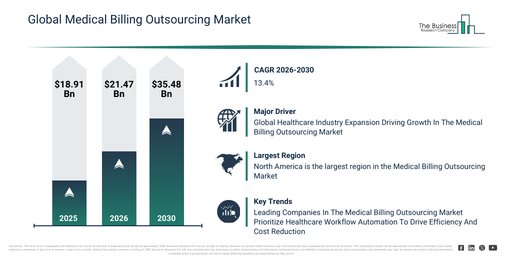
    The medical billing outsourcing market has experienced rapid expansion in recent years. Its value is projected to increase from $18.91 billion in 2025 to $21.47 billion in 2026, demonstrating a compound annual growth rate (CAGR) of 13.5%. This historic growth can be linked to factors such as rising healthcare administrative complexity, increasing claim denial rates, a shortage of trained billing professionals, the growth in insurance-based healthcare systems, and the early adoption of third-party billing services.

    The medical billing outsourcing market size is projected to experience substantial expansion in the coming years. This market is anticipated to reach $35.48 billion by 2030, exhibiting a compound annual growth rate (CAGR) of 13.4%. This anticipated growth during the forecast period can be primarily attributed to several factors, including the intensifying need to enhance provider profitability, the escalating complexity of regulations in healthcare billing, the broader implementation of value-based care models, the increasing embrace of cloud-based billing platforms, and the demand for scalable billing operations. Key trends identified for the forecast period encompass a greater outsourcing of revenue cycle management functions, a heightened emphasis on billing accuracy and compliance management, an escalating need for cost efficiency in administrative processes, the expansion of comprehensive end-to-end billing and coding services, and a wider integration of analytics for monitoring billing performance.

    Get A Free Sample Report With In-Depth Market Insights:

    https://thebusinessresearchcompany.com/sample_request?id=97629035&type=smp&name=Medical%20Billing%20Outsourcing%20Market%20Report%202026&utm_source=Blogs&utm_medium=Paid&utm_campaign=Nov_PR

    Medical Billing Outsourcing Market Demand Drivers: What’s Powering Industry Growth?

    The global expansion of the healthcare industry is anticipated to boost the medical billing outsourcing market in the future. This sector encompasses an integration of economic segments providing goods and services to individuals experiencing diverse health conditions. To enhance operational efficiency and concentrate on essential patient care, the healthcare industry has progressively adopted outsourcing for medical billing services. An illustration of this trend is found in December 2024 data from the Centers for Medicare & Medicaid Services, a US-based federal agency. This data showed hospital spending accelerating from a 3.2% growth in 2022 to 10.4% in 2023, with CMS additionally forecasting an 8.2% NHE growth for 2024. Consequently, the expanding healthcare industry is projected to be a key driver for the medical billing outsourcing market’s growth throughout the forecast period.

    Medical Billing Outsourcing Market Segment Trends And Revenue Contributors

    The medical billing outsourcing market covered in this report is segmented –

    1) By Service: Front End, Back End

    2) By Component: In-house, Outsourced

    3) By End User: Hospitals, Physician Offices

    Subsegments:

    1) By Front End: Patient Registration, Insurance Verification, Coding And Billing, Charge Entry, Other Front-End Services

    2) By Back End: Accounts Receivable Management, Payment Posting, Denial Management, Insurance Follow-Up, Coding Compliance, Other Back-End Services

    Medical Billing Outsourcing Market Innovation Trends: What Developments Are Reshaping The Industry?

    Major companies operating in the medical billing outsourcing market are focusing on developing healthcare workflow automation platforms. Their objective is to enhance efficiency, reduce costs, and improve accuracy in the billing process, thereby streamlining operations for healthcare providers and ensuring timely reimbursement for services rendered. A healthcare workflow automation platform is essentially a software solution crafted to simplify and automate various processes within the healthcare system. This advanced platform transforms order entry and results for outpatient clinics, effectively lowering costs while simultaneously boosting efficiency, accuracy, and the quality of patient care. As an illustration, in November 2023, Shadowbox, Inc, a US-based company, launched its Shadowbox Automation Platform, a dedicated healthcare workflow automation tool. This platform seamlessly integrates with a diverse library of electronic health records (EHRs) and Radiology Information Systems (RIS), enabling a completely paperless workflow for order entry and results. This integration eliminates the necessity for manual processes and intricate EHR integration projects, facilitating a more efficient transfer of data. Furthermore, it provides complete patient information along with automated insurance verification and prior authorization at the time the order is placed.

    Medical Billing Outsourcing Market Competitive Landscape: Which Companies Lead The Industry?

    Major companies operating in the medical billing outsourcing market are Cerner Corporation, Kareo, Genpact, McKesson, eClinicalWorks, The SSI Group, HCLTech, Allscripts, R1 RCM, Accretive Health, Connext Global Solutions, AdvancedMD Inc., CareCloud Inc., Revele Billing Services, Infinite Outsourcing Solutions, Promantra Synergy Solutions Ltd., 4D Global Medical Billing Services, Helpware, Wing Assistant, Medwave Billing & Credentialing Services, Atlas Billing Company LLC, GeBBS Healthcare Solutions, Med-Write Inc., Solutions for Medical Billing Inc., Onion Creek Medical Billing Services, MedAstin Medical Billing Services, iCare Billing Solutions, Unity Communications LLC, Remote CoWorker, P3 Healthcare Solutions, PracticeMax, RRAH Services, 24/7 Medical Billing Services, MedBillingExperts, Flatworld Solutions Pvt. Ltd., MedUSA Healthcare Services

    View The Full Medical Billing Outsourcing Market Report:

    https://thebusinessresearchcompany.com/report/Medical-Billing-Outsourcing-Global-Market-Report?utm_source=Blogs&utm_medium=Paid&utm_campaign=Nov_PR

    Medical Billing Outsourcing Market Top Region: Where Does Most Revenue Come From?

    North America was the largest region in the medical billing outsourcing market in 2025. Western Europe was the second-largest region in the global medical billing outsourcing market analysis. The regions covered in the medical billing outsourcing market report are Asia-Pacific, South East Asia, Western Europe, Eastern Europe, North America, South America, Middle East, Africa.

    Reach Out To Our Team:

    The Business Research Company: https://www.thebusinessresearchcompany.com/

    Americas: +1 310-496-7795

    Asia: +44 7882 955267 & +91 8897263534

    Europe: +44 7882 955267

    Email us at: marketing@tbrc.info

    Follow us on:

    LinkedIn: https://in.linkedin.com/company/the-business-research-company

    YouTube: https://www.youtube.com/channel/UC24_fI0rV8cR5DxlCpgmyFQ

    Global Market Model: https://www.thebusinessresearchcompany.com/global-market-model
  • Medical Automation Technologies Market Analysis: $7.93 Billion Market Size In 2026 And Future Growth Prospects

    Medical Automation Technologies Market Analysis: $7.93 Billion Market Size In 2026 And Future Growth Prospects

    Backed by market attractiveness analysis, total addressable market sizing, company benchmarking matrices, interactive Excel dashboards, wider supply chain intelligence, emerging startup coverage, and detailed product-level insights, The Business Research Company’s 2026 market reports are designed to offer research that is more actionable and strategically valuable than ever.

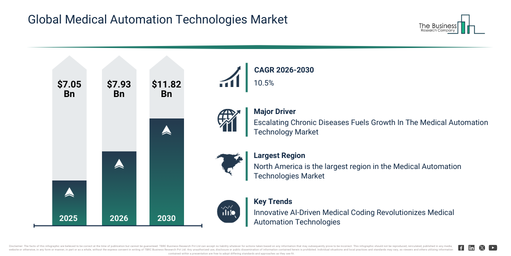
    Medical Automation Technologies Market Growth From $7.93 Billion In 2026 To $11.82 Billion By 2030 At A CAGR Of 10.5%

    The medical automation technologies market size has seen rapid growth recently. It is forecast to expand from $7.05 billion in 2025 to $7.93 billion in 2026, at a compound annual growth rate (CAGR) of 12.4%. The historical growth of this market can be attributed to increasing healthcare operational complexity, a shortage of skilled healthcare professionals, rising diagnostic testing volumes, the early adoption of medical robotics, and the demand for standardized clinical processes.

    The medical automation technologies market size is projected for significant expansion in the coming years. It is anticipated to reach $11.82 billion by 2030, demonstrating a compound annual growth rate (CAGR) of 10.5%. This growth throughout the forecast period stems from factors such as the proliferation of remote and home-based care, increasing investments in healthcare automation, the rising integration of AI-driven medical technologies, the demand for quicker clinical decision-making, and the expansion of smart healthcare infrastructure. Prominent trends for the forecast period include the widening deployment of automated diagnostic and monitoring systems, the increasing application of robotic technologies in therapeutic procedures, a greater adoption of automation in laboratories and pharmacies, the growing integration of home healthcare automation solutions, and an enhanced focus on workflow efficiency and error reduction.

    Get A Free Sample Report With In-Depth Market Insights:

    https://thebusinessresearchcompany.com/sample_request?id=51890541&type=smp&name=Medical%20Automation%20Technologies%20Market%20Report%202026&utm_source=Blogs&utm_medium=Paid&utm_campaign=Nov_PR

    Medical Automation Technologies Market Growth Drivers: What’s Behind The Acceleration?

    The future expansion of the medical automation technology market is anticipated to be driven by the rising incidence of chronic diseases. These are enduring health conditions, exemplified by diseases such as diabetes, marked by their extended duration and often slow development, necessitating continuous care and treatment to manage symptoms and avert complications. Factors contributing to the escalating occurrence of chronic illnesses include inactive lifestyles, unhealthy eating habits, pollutants in the environment, and a progressively older population. Medical automation technology aids in managing chronic diseases more effectively by offering tailored treatment strategies, remote observation of patients, and automated analysis of data, thereby boosting efficiency and results while easing the load on healthcare systems. As an illustration, in September 2024, data from the British Heart Foundation, a UK-based cardiovascular research charity, indicated that roughly 7.6 million people in the UK are presently suffering from heart and circulatory ailments, consisting of 4 million men and 3.6 million women. It is projected that by 2030, this figure could grow by 1 million, and by 2040, it might climb by an additional 2 million beyond the current count. Consequently, the growing frequency of chronic diseases is fueling the expansion of the medical automation technology market.

    Medical Automation Technologies Market Segment Analysis Spotlighting Growth Areas

    The medical automation technologies market covered in this report is segmented –

    1) By Type: Diagnostic And Monitoring Operations, Therapeutic Automation, Lab And Pharmacy Automation, Home Healthcare Automation

    2) By Application: Imaging And Radiology, Clinical Chemistry Analysis, Vital Signs Monitoring, Surgery And Rehabilitation

    3) By End Use: Hospitals And Diagnostics Centers, Research Institutes And Laboratories, Homecare Settings

    Subsegments:

    1) By Diagnostic And Monitoring Operations: Diagnostic Imaging Automation, Patient Monitoring Systems Automation, Laboratory Diagnostic Automation, Remote Patient Monitoring

    2) By Therapeutic Automation: Robotic Surgery Systems, Infusion Pumps And Automated Drug Delivery, Automated Rehabilitation Devices, Radiotherapy Automation

    3) By Lab And Pharmacy Automation: Automated Laboratory Equipment, Pharmacy Dispensing Automation, Automated Sample Handling And Analysis, Robotic Pharmacy Solutions

    4) By Home Healthcare Automation: Remote Health Monitoring Devices, Wearable Health Devices, Home Care Robotics, Automated Medication Management Systems

    Medical Automation Technologies Market Trends: What’s Defining The Industry’s Next Phase?

    Major companies operating in the medical automation technologies market are adopting innovative technologies, such as AI-driven medical coding, to drive revenue growth. AI-driven medical coding involves utilizing artificial intelligence algorithms to automatically assign accurate medical codes to patient diagnoses, treatments, and procedures, thereby streamlining healthcare billing and administrative tasks while minimizing errors and improving efficiency. For instance, in December 2023, CorroHealth Inc., a US-based healthcare technology company, launched Pulse, a revolutionary advancement in the automation of medical coding. With adaptive learning capabilities and real-time insights, it continuously improves the accuracy of its coding. Its user-centric design prioritizes process optimization, productivity enhancement, and unmatched value delivery to healthcare practitioners. It effortlessly interfaces with any electronic health record (EHR) and is fully tailored to the specific requirements of every healthcare facility.

    Medical Automation Technologies Market Leading Companies: Who Holds The Strongest Market Presence?

    Major companies operating in the medical automation technologies market are Johnson & Johnson Services Inc., F. Hoffmann-La Roche AG, Thermo Fisher Scientific Inc., Abbott Laboratories, Medtronic plc, Danaher Corporation, Siemens Healthineers AG, Koninklijke Philips N.V., Becton Dickinson and Co, GE HealthCare Technologies Inc., Boston Scientific Corporation, Zimmer Biomet Holdings Inc., Olympus Corporation, Terumo Corporation, Intuitive Surgical Inc., Oracle Cerner, Hologic Inc., Illumina Inc., Mindray Medical International Limited, Nikon Corporation, Sysmex Corporation, Bio Rad Laboratories Inc., QIAGEN N.V., Carl Zeiss Meditec AG, Yuyama Co Ltd.

    View The Full Medical Automation Technologies Market Report:

    https://thebusinessresearchcompany.com/report/medical-automation-technologies-global-market-report?utm_source=Blogs&utm_medium=Paid&utm_campaign=Nov_PR

    Medical Automation Technologies Market Regional Breakdown: Where Is Demand Concentrated?

    North America was the largest region in the medical automation technologies market in 2025. Asia-Pacific is expected to be the fastest-growing region in the forecast period. The regions covered in the medical automation technologies market report are Asia-Pacific, South East Asia, Western Europe, Eastern Europe, North America, South America, Middle East, Africa.

    Reach Out To Our Team:

    The Business Research Company: https://www.thebusinessresearchcompany.com/

    Americas: +1 310-496-7795

    Asia: +44 7882 955267 & +91 8897263534

    Europe: +44 7882 955267

    Email us at: marketing@tbrc.info

    Follow us on:

    LinkedIn: https://in.linkedin.com/company/the-business-research-company

    YouTube: https://www.youtube.com/channel/UC24_fI0rV8cR5DxlCpgmyFQ

    Global Market Model: https://www.thebusinessresearchcompany.com/global-market-model
  • Medical Automation Market 2026 Market Size And Growth Forecast: Key Trends To Watch

    Medical Automation Market 2026 Market Size And Growth Forecast: Key Trends To Watch

    Featuring market attractiveness scoring, total addressable market sizing, company benchmarking matrices, interactive Excel dashboards, deeper supply chain intelligence, emerging startup tracking, and granular product-level insights, The Business Research Company’s 2026 market reports are built to deliver research that is both more actionable and more strategically valuable.

    Medical Automation Market Expansion Outlook: What Revenue Opportunities Are Ahead?

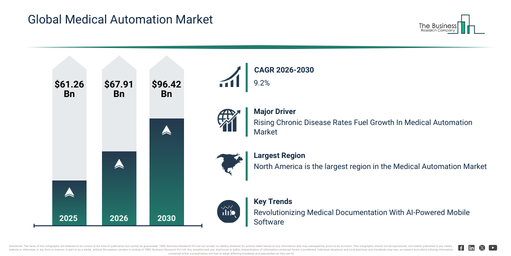
    The medical automation market size has seen rapid expansion in recent years. It is projected to grow from $61.26 billion in 2025 to $67.91 billion in 2026, at a compound annual growth rate (CAGR) of 10.9%. This historical growth can be linked to several factors, including a scarcity of healthcare workforce, an increase in hospital patient volumes, the imperative for operational efficiency, a rise in medical errors from manual processes, and the early implementation of hospital information systems.

    The medical automation market is projected to experience substantial expansion over the coming years. Its valuation is anticipated to reach $96.42 billion by 2030, progressing at a compound annual growth rate (CAGR) of 9.2%. This anticipated expansion during the forecast timeframe is primarily driven by factors such as the increasing digitization of healthcare, a growing need for cost-effective healthcare services, the proliferation of robotic-assisted surgical procedures, wider integration of connected medical devices, and heightened investments in smart hospital initiatives. Key trends anticipated during the forecast period encompass a greater degree of automation within clinical and administrative processes, increased deployment of robotics in surgical operations and diagnostic procedures, the broadening integration of automation platforms powered by software, wider application of automation within laboratory and pharmacy settings, and an escalating call for solutions that minimize errors and enhance patient safety.

    Get A Free Sample Report With In-Depth Market Insights:

    https://thebusinessresearchcompany.com/sample_request?id=87757720&type=smp&name=Medical%20Automation%20Market%20Report%202026&utm_source=Blogs&utm_medium=Paid&utm_campaign=Nov_PR

    Medical Automation Market Growth Factors Behind Sustained Expansion

    The growing occurrence of chronic ailments is anticipated to fuel the expansion of the medical automation market in the future. These are defined as enduring medical conditions that persist over an extended period and typically deteriorate over time. The surge in chronic diseases stems from inactive lifestyles, poor dietary habits, and an aging population. Medical automation enables precise tracking and prompt interventions for chronic conditions, thereby enhancing patient care and results. For example, data released in February 2024 by the Centers for Disease Control and Prevention (CDC), a federal public health agency based in the US, indicated that approximately 129 million people in the United States suffer from at least one significant chronic disease, including conditions such as heart disease, cancer, diabetes, obesity, and hypertension. Consequently, the rising instances of chronic diseases are propelling the expansion of the medical automation market.

    Medical Automation Market Segment Performance And Emerging Opportunities

    The medical automation market covered in this report is segmented –

    1) By Component: Equipment, Capital Equipment, Consumables, Software, Services

    2) By Connectivity: Wired, Wireless

    3) By Application: Diagnostics And Monitoring, Therapeutics, Lab And Pharmacy Automation, Medical Logistics And Training, Large-Joint Replacement, Spinal Fusion, Other Applications

    4) By End User: Hospitals, Diagnostic Center, Pharmacies, Research Laboratories And Institutes, Homecare, Specialty Clinics, Ambulatory Surgical Centers (ASCs), Other End Users

    Subsegments:

    1) By Equipment: Diagnostic Equipment, Therapeutic Equipment, Monitoring Equipment

    2) By Capital Equipment: Surgical Robots, Imaging Systems (MRI, CT Scanners), Patient Lifting Equipment, Automated Laboratory Equipment

    3) By Consumables: Test Strips And Kits, Reagents And Chemicals, Single-Use Devices

    4) By Software: Healthcare Management Software, Diagnostic Software, Automation Software For Laboratory And Pharmacy Systems, AI Or ML-Based Software Solutions For Medical Diagnostics

    5) By Services: Maintenance And Support Services, Consulting Services, Integration And Implementation Services, Training Services

    Medical Automation Market Industry Trends Fueling Future Revenue Growth

    Key companies operating within the medical automation market are concentrating on developing innovative solutions, such as clinician-controlled mobile apps, to stimulate revenue growth. A clinician-controlled mobile app is a software application specifically designed by healthcare professionals, including physicians, nurses, therapists, and other clinicians, to facilitate various aspects of patient care, communication, and management. For instance, in April 2024, Augmedix Inc., a US-based data services and medical documentation company, launched Augmedix Go. This clinician-controlled mobile app utilizes ambient AI technology and structured data to produce a fully automated draft medical note after patients visit healthcare settings like emergency departments. This automation simplifies the medical documentation process, enabling clinicians to dedicate more time to patient care by minimizing the time spent on administrative tasks such as note-taking.

    Medical Automation Market Key Players: Which Companies Lead Industry Competition?

    Major companies operating in the medical automation market are Johnson & Johnson Services Inc., F. Hoffmann-La Roche AG, Thermo Fisher Scientific Inc., Abbott Laboratories, Medtronic plc, Siemens Healthineers AG, Becton, Dickinson and Company, Royal Philips, Stryker Corporation, Boston Scientific Corporation, Zimmer Biomet Holdings Inc., Agilent Technologies Inc., Terumo Corporation, Intuitive Surgical Inc., Smith & Nephew plc, Hologic Inc., ResMed Inc., Bio Rad Laboratories Inc., QIAGEN N.V., Carl Zeiss Meditec AG, Masimo Corporation, Elekta AB, Tecan Group Ltd., Accuray Inc.

    View The Full Medical Automation Market Report:

    https://thebusinessresearchcompany.com/report/medical-automation-global-market-report?utm_source=Blogs&utm_medium=Paid&utm_campaign=Nov_PR

    Medical Automation Market Geographic Landscape: Which Region Leads Industry Growth?

    North America was the largest region in the medical automation market in 2025. Asia-Pacific is expected to be the fastest-growing region in the forecast period. The regions covered in the medical automation market report are Asia-Pacific, South East Asia, Western Europe, Eastern Europe, North America, South America, Middle East, Africa.

    Reach Out To Our Team:

    The Business Research Company: https://www.thebusinessresearchcompany.com/

    Americas: +1 310-496-7795

    Asia: +44 7882 955267 & +91 8897263534

    Europe: +44 7882 955267

    Email us at: marketing@tbrc.info

    Follow us on:

    LinkedIn: https://in.linkedin.com/company/the-business-research-company

    YouTube: https://www.youtube.com/channel/UC24_fI0rV8cR5DxlCpgmyFQ

    Global Market Model: https://www.thebusinessresearchcompany.com/global-market-model
  • Medical Antibacterial Curtain Market Size Forecast: How The Industry Is Expected To Grow From 2026 To 2030

    Medical Antibacterial Curtain Market Size Forecast: How The Industry Is Expected To Grow From 2026 To 2030

    Built to provide research that’s more actionable and strategically valuable, The Business Research Company’s 2026 market reports include market attractiveness analysis, total addressable market sizing, company benchmarking matrices, interactive Excel dashboards, broader supply chain intelligence, emerging startup tracking, and in-depth product insights.

    Medical Antibacterial Curtain Market Growth Potential: How Will Market Size Shift Through 2030?

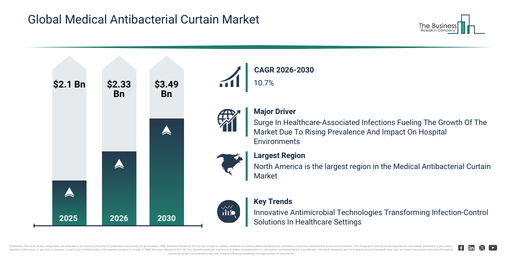
    The medical antibacterial curtain market has experienced rapid expansion in recent years. This market is expected to grow from $2.1 billion in 2025 to $2.33 billion in 2026, exhibiting a compound annual growth rate (CAGR) of 11.0%. The historical growth of this market can be attributed to factors such as rising concerns over hospital-acquired infections, the extensive use of fabric privacy curtains, the initial integration of antimicrobial textile treatments, the expanding healthcare infrastructure, and increasing infection control regulations.

    The medical antibacterial curtain market size is poised for significant expansion in the coming years. This market is expected to reach $3.49 billion by 2030, achieving a compound annual growth rate (CAGR) of 10.7%. The projected growth over the forecast period is driven by factors such as increasing investments in infection prevention infrastructure, a rising demand for reusable antimicrobial textiles, the expansion of outpatient care facilities, a growing focus on sustainable healthcare materials, and more frequent replacement cycles for hospital curtains. Prominent trends for the forecast period include the increasing adoption of disposable antibacterial curtains, a heightened demand for infection-control hospital furnishings, the growing utilization of silver and copper treated fabrics, the wider availability of reusable antimicrobial curtain solutions, and an enhanced emphasis on easy-to-clean curtain materials.

    Get A Free Sample Report With In-Depth Market Insights:

    https://thebusinessresearchcompany.com/sample_request?id=44671135&type=smp&name=Medical%20Antibacterial%20Curtain%20Market%20Report%202026&utm_source=Blogs&utm_medium=Paid&utm_campaign=Nov_PR

    Medical Antibacterial Curtain Market Demand Drivers Opening New Revenue Streams

    The medical antibacterial curtain market is anticipated to experience growth going forward, driven by the increasing occurrence of healthcare-associated infections (HAIs). HAIs are infections that patients acquire while receiving treatment in a healthcare setting. The rise in these infections is often attributed to factors such as extended hospital stays, which heighten individuals’ exposure to infectious agents. Medical antibacterial curtains play a role in mitigating healthcare-associated infections by inhibiting the proliferation and spread of harmful bacteria on various surfaces, thus contributing to a cleaner and safer hospital environment. For instance, in May 2024, the European Centre for Disease Prevention and Control, a Sweden-based government agency, reported that 4.3 million patients annually acquired HAIs in 2022–2023, with 29.3% being respiratory infections. Consequently, the increasing prevalence of healthcare-associated infections (HAIs) is a key factor propelling the medical antibacterial curtain market.

    Medical Antibacterial Curtain Market Segment Landscape And Growth Outlook

    The medical antibacterial curtain market covered in this report is segmented –

    1) By Type: Disposable, Reusable

    2) By Material Type: Polyester, Polypropylene, Polyethylene, Other Material Types

    3) By Application: Hospital Rooms, Operating Theaters, Patient Recovery Areas, Intensive Care Units (ICU)

    4) By Sales Channel: Direct Sales, Online Retailers, Distributors, Wholesale

    5) By End-User: Hospitals, Clinics, Nursing Homes, Home Healthcare Settings

    Subsegments:

    1) By Disposable: Non-woven Fabric Curtains, Polypropylene Curtains, Antimicrobial PVC Curtains, PEVA or EVA Curtains

    2) By Reusable: Polyester Curtains, Cotton Blend Curtains, Treated Fabric Curtains, Mesh-Top Curtains

    Medical Antibacterial Curtain Market Trends Powering Strategic Industry Growth

    Major companies operating in the medical antibacterial curtain market are concentrating on developing novel solutions, such as sporicidal curtains, to address the escalating demand driven by concerns over hospital-acquired infections (HAIs), stricter infection-control regulations, and the need to reduce laundering costs and cross-contamination in high-turnover care environments. Sporicidal curtains, which are specifically treated to eliminate bacterial and fungal spores, contribute to preventing infections by reducing the dispersal of harmful microorganisms, thereby maintaining a cleaner and safer atmosphere in hospitals, clinics, and other healthcare settings where patients are susceptible to contamination. For instance, in September 2025, QSD Custom Manufacturing Inc., a Canada-based custom manufacturing company, launched Endurocide Sporicidal Curtains, an innovative disposable curtain system that provides a proven self-disinfecting surface for healthcare environments. The Endurocide curtains are manufactured from a treated disposable fabric formulation that both captures and inactivates pathogens on contact, remains active for up to two years without requiring laundering, satisfies flame-retardant standards, can be installed on standard curtain tracks, and are positioned for application in hospitals, long-term care, and emergency response units; their key benefits encompass a sustained reduction in surface bioburden, lower operational laundry costs, simplified change-out logistics, and decreased cross-contamination in comparison to conventional reusable textile curtains.

    Medical Antibacterial Curtain Market Competitive Landscape: Who Leads The Industry?

    Major companies operating in the medical antibacterial curtain market are Herculite Products Inc., Zhangjiagang Medi Medical Equipment Co. Ltd, Panaz Ltd., EcoMed, Sotexpro, Reynard Health Supplies, Silentia AB, Elers Medical, Endurocide Limited, ØRN HEALTH, Hygenica Ltd., Medica Pacifica Pte Ltd, Hytex Group Pty Ltd, Iskus Health Ltd., Hospital Curtain Solutions Ltd, Cubicle Curtain Factory Ltd, Global Medical Curtains Ltd, Antimicrobial Fabrics Ltd, Healthcare Cubicle Curtains Ltd, Medical Privacy Systems Ltd

    View The Full Medical Antibacterial Curtain Market Report:

    https://thebusinessresearchcompany.com/report/medical-antibacterial-curtain-global-market-report?utm_source=Blogs&utm_medium=Paid&utm_campaign=Nov_PR

    Medical Antibacterial Curtain Market Largest Region: Which Geography Holds The Biggest Share?

    North America was the largest region in the medical antibacterial curtain market in 2025. Asia-Pacific is expected to be the fastest-growing region in the forecast period. The regions covered in the medical antibacterial curtain market report are Asia-Pacific, South East Asia, Western Europe, Eastern Europe, North America, South America, Middle East, Africa.

    Reach Out To Our Team:

    The Business Research Company: https://www.thebusinessresearchcompany.com/

    Americas: +1 310-496-7795

    Asia: +44 7882 955267 & +91 8897263534

    Europe: +44 7882 955267

    Email us at: marketing@tbrc.info

    Follow us on:

    LinkedIn: https://in.linkedin.com/company/the-business-research-company

    YouTube: https://www.youtube.com/channel/UC24_fI0rV8cR5DxlCpgmyFQ

    Global Market Model: https://www.thebusinessresearchcompany.com/global-market-model
  • Medical Antibacterial Coating Market Reaches $10.07 Billion In 2026: Forecast And Growth Opportunities

    Medical Antibacterial Coating Market Reaches $10.07 Billion In 2026: Forecast And Growth Opportunities

    Backed by market attractiveness analysis, total addressable market sizing, company benchmarking matrices, interactive Excel dashboards, wider supply chain intelligence, emerging startup coverage, and detailed product-level insights, The Business Research Company’s 2026 market reports are designed to offer research that is more actionable and strategically valuable than ever.

    Medical Antibacterial Coating Market Value Analysis: What Growth Lies Ahead Over The Forecast Period?

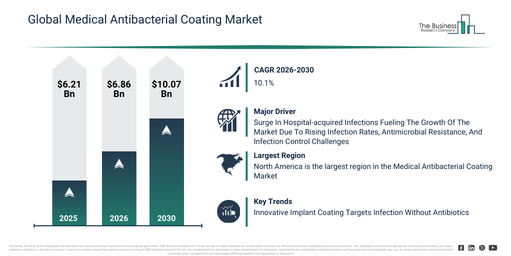
    The medical antibacterial coating market size has seen rapid expansion in recent years. This market is projected to expand from $6.21 billion in 2025 to $6.86 billion in 2026, demonstrating a compound annual growth rate (CAGR) of 10.4%. Historically, this growth has stemmed from factors such as an increasing prevalence of hospital-acquired infections, the extensive use of invasive medical devices, the early implementation of silver-based antimicrobial technologies, a rise in surgical procedures, and heightened awareness regarding infection control.

    The medical antibacterial coating market is anticipated to show substantial expansion over the next few years. It is projected to reach $10.07 billion by 2030, progressing at a compound annual growth rate (CAGR) of 10.1%. This expected growth is primarily due to the increasing need for advanced solutions for infection prevention, the growing use of implantable devices, advancements in antimicrobial polymer research, a heightened regulatory focus on patient safety, and wider acceptance of coated medical devices. Prominent trends for the forecast period include a greater uptake of silver-based coatings, an increased demand for medical devices resistant to infection, the expanded application of polymer-based antimicrobial surfaces, the proliferation of coatings designed for implantable devices, and a stronger emphasis on achieving enduring antibacterial performance.

    Get A Free Sample Report With In-Depth Market Insights:

    https://thebusinessresearchcompany.com/sample_request?id=45156983&type=smp&name=Medical%20Antibacterial%20Coating%20Market%20Report%202026&utm_source=Blogs&utm_medium=Paid&utm_campaign=Nov_PR

    Medical Antibacterial Coating Market Growth Backed By Core Demand Fundamentals

    The anticipated expansion of the medical antibacterial coating market is linked to the increasing occurrence of hospital-acquired infections (HAIs). HAIs are defined as infections contracted by patients while hospitalized, which were absent upon their admission. This rise in HAIs is fueled by elements like crowded hospital environments, which foster the transmission of pathogens among susceptible individuals. Medical antibacterial coatings contribute to reducing hospital-acquired infections by preventing the multiplication and dispersion of detrimental microorganisms on medical equipment and surfaces, thereby boosting cleanliness and patient well-being. As an illustration, data from the Australian Institute of Health and Welfare, an Australia-based government agency, indicated that in April 2025, among 12.1 million hospitalizations, 150,000 cases involved complications stemming from healthcare-associated infections (37%), with delirium (13%), cardiac issues (12%), and respiratory issues (10%) being the subsequent most common complications. Consequently, the escalating rate of hospital-acquired infections is a primary impetus for the expansion of the medical antibacterial coating market.

    Medical Antibacterial Coating Market Breakdown By Product Type And Application

    The medical antibacterial coating market covered in this report is segmented –

    1) By Coating Type: Silver-Based, Copper-Based, Polymer-Based, Other Coating Types

    2) By Application: Implantable Devices, Surgical Instruments, Catheters, Other Applications

    3) By End-User: Hospitals, Ambulatory Surgical Centers, Diagnostic Centers, Other End-Users

    Subsegments:

    1) By Silver-based Coatings: Silver Nitrate Coatings, Silver Sulfadiazine Coatings, Nano-silver Coatings, Silver-Zinc Coatings

    2) By Copper-based Coatings: Copper Oxide Coatings, Copper-Silver Alloy Coatings, Nano-copper Coatings, Copper-Chitosan Coatings

    3) By Polymer-based Coatings: Polyethylene Glycol (PEG)-based Coatings, Polysaccharide-based Coatings, Polyurethane-based Coatings, Polylactic Acid (PLA)-based Coatings

    4) By Other Coating Types: Zinc-based Coatings, Titanium Dioxide (TiO2) Coatings, Chlorhexidine Coatings, Quaternary Ammonium Compound (QAC) Coatings

    Medical Antibacterial Coating Market Growth Trends Reshaping The Competitive Landscape

    Key companies in the medical antibacterial coating market are prioritizing advanced, innovative solutions, such as non-eluting bactericidal coatings. Their aim is to diminish the likelihood of implant-related infections, circumvent antibiotic resistance, and enhance patient outcomes in high-risk surgical scenarios. A non-eluting bactericidal coating is characterized as a surface treatment designed to kill bacteria on contact without releasing antimicrobial agents into the body. For instance, in April 2024, Onkos Surgical, a US-based medical technology company, obtained FDA De Novo approval for its pioneering antibacterial-coated orthopedic implants. These implants are engineered to combat bacterial contamination, which presents a serious risk in permanent implant procedures. Infections of this nature can be particularly detrimental in orthopedic oncology and revision arthroplasty, where patients frequently have compromised immunity. The coating technology seeks to reduce infection risk without dependence on antibiotics. This signifies a considerable stride forward in safeguarding high-risk patients during complex orthopedic surgeries.

    Medical Antibacterial Coating Market Company Landscape And Competitive Strategy

    Major companies operating in the medical antibacterial coating market are BASF SE, Royal DSM N.V., Axalta Coating Systems Ltd., Hempel A/S, Specialty Coating Systems Inc., Sciessent LLC, Bactiguard Holding AB, Sono-Tek Corporation, Harland Medical Systems Inc., Plastic Coatings Limited, Covalon Technologies Ltd., BioCote Limited, AST Products Inc., Mitsubishi Chemical Group Corporation, Hydromer Inc., PPG Industries Inc., Akzo Nobel N.V., Nippon Paint Holdings Co. Ltd., RPM International Inc., Lonza Group AG

    View The Full Medical Antibacterial Coating Market Report:

    https://thebusinessresearchcompany.com/report/medical-antibacterial-coating-global-market-report?utm_source=Blogs&utm_medium=Paid&utm_campaign=Nov_PR

    Medical Antibacterial Coating Market Regional Analysis: Which Geography Leads On Revenue?

    North America was the largest region in the medical antibacterial coating market in 2025. The regions covered in the medical antibacterial coating market report are Asia-Pacific, South East Asia, Western Europe, Eastern Europe, North America, South America, Middle East, Africa.

    Reach Out To Our Team:

    The Business Research Company: https://www.thebusinessresearchcompany.com/

    Americas: +1 310-496-7795

    Asia: +44 7882 955267 & +91 8897263534

    Europe: +44 7882 955267

    Email us at: marketing@tbrc.info

    Follow us on:

    LinkedIn: https://in.linkedin.com/company/the-business-research-company

    YouTube: https://www.youtube.com/channel/UC24_fI0rV8cR5DxlCpgmyFQ

    Global Market Model: https://www.thebusinessresearchcompany.com/global-market-model