Category: Healthcare Services

  • Macular Edema and Macular Degeneration Market Outlook Through 2030: Understanding The Growth Opportunity

    Macular Edema and Macular Degeneration Market Outlook Through 2030: Understanding The Growth Opportunity

    Backed by market attractiveness analysis, total addressable market sizing, company benchmarking matrices, interactive Excel dashboards, wider supply chain intelligence, emerging startup coverage, and detailed product-level insights, The Business Research Company’s 2026 market reports are designed to offer research that is more actionable and strategically valuable than ever.

    Macular Edema and Macular Degeneration Market Forecast: What Value Will The Market Reach By 2030?

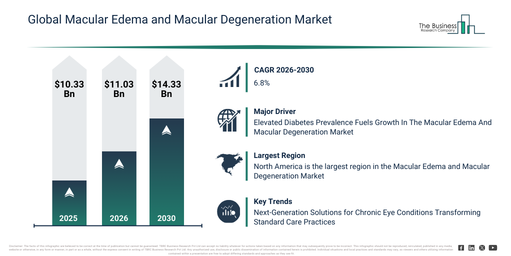
    The market size for macular edema and macular degeneration has experienced robust growth in recent years. This market is expected to expand from $10.33 billion in 2025 to $11.03 billion in 2026, exhibiting a compound annual growth rate (CAGR) of 6.8%. The historical expansion can be attributed to the rising prevalence of diabetes and retinal disorders, an aging population with elevated vision impairment risks, the clinical effectiveness of anti-VEGF injections, increased awareness of macular diseases, and the proliferation of ophthalmology clinics.

    The macular edema and macular degeneration market size is anticipated to experience robust expansion over the coming years, with projections indicating a rise to $14.33 billion by 2030, demonstrating a compound annual growth rate (CAGR) of 6.8%. This growth during the forecast period is primarily driven by factors such as the escalating global diabetic population, increased screening for retinal diseases, a growing preference for minimally invasive eye treatments, wider accessibility to advanced ophthalmic care, and elevated healthcare spending directed towards vision preservation. Significant trends expected during this period include the increasing adoption of anti-VEGF based therapies, a heightened demand for early diagnosis and intervention, the expanding utilization of combination drug and laser therapies, a growing emphasis on managing diabetic eye complications, and the continued expansion of outpatient and clinic-based eye care services.

    Get A Free Sample Report With In-Depth Market Insights:

    https://thebusinessresearchcompany.com/sample_request?id=49200546&type=smp&name=Macular%20Edema%20and%20Macular%20Degeneration%20Market%20Report%202026&utm_source=Blogs&utm_medium=Paid&utm_campaign=Nov_PR

    Macular Edema and Macular Degeneration Market Growth Drivers: What’s Behind The Acceleration?

    The increasing number of individuals with diabetes is anticipated to propel the growth of the macular edema and macular degeneration market. Diabetes is a chronic medical condition characterized by elevated glucose (sugar) levels in the blood. This condition damages the blood vessels within the eye, potentially resulting in macular edema and macular degeneration. For instance, in June 2024, data from The National Health Service (NHS England), a UK-based publicly funded healthcare system, indicated a substantial rise in pre-diabetes cases. In 2023, the NHS in England identified 3,615,330 individuals with pre-diabetes, marking an 18% increase from 3,065,825 in 2022. Furthermore, among individuals younger than 40, cases saw a surge of nearly 25%, growing from 173,166 in 2022 to 216,440 in 2023. Therefore, the expanding diabetes population is a significant driver for the growth of the macular edema and macular degeneration market.

    Macular Edema and Macular Degeneration Market Segmentation: How Does The Market Break Down By Category?

    The macular edema and macular degeneration market covered in this report is segmented –

    1) By Treatment Type: Drug Therapy, Laser Treatment

    2) By Application: Macular Edema, Diabetic Macular Edema (DME), Cystoid Macular Edema (CME), Macular Degeneration, Dry Age-Related Macular Degeneration, Wet Age-Related Macular Degeneration

    3) By End User: Hospitals, Clinics, Other End Users

    Subsegments:

    1) By Drug Therapy: Anti-VEGF (Vascular Endothelial Growth Factor) Injections, Steroid Injections, Combination Therapy (Anti-VEGF + Steroids)

    2) By Laser Treatment: Focal Laser Photocoagulation, Subthreshold Laser Therapy, MicroPulse Laser Therapy

    Macular Edema and Macular Degeneration Market Trends: What’s Defining The Industry’s Next Phase?

    Major companies within the macular edema and macular degeneration market are prioritizing the creation of innovative solutions, such as continuous-delivery ocular implants, aimed at lessening treatment demands, enhancing patient adherence, and delivering more consistent long-term therapeutic results. Continuous-delivery ocular implants are compact, replenishable devices inserted into the eye that gradually release medication over several months, thereby aiding patients by reducing the need for frequent injections and providing stable, prolonged treatment for retinal conditions. For example, in February 2025, F. Hoffmann-La Roche Ltd, a biotechnology company headquartered in Switzerland, obtained U.S. Food and Drug Administration (FDA) approval for Susvimo, a refillable ocular implant designed to deliver the anti-VEGF drug ranibizumab for treating diabetic macular edema (DME). Susvimo is engineered as a long-acting, surgically placed reservoir that continuously releases a tailored formulation of ranibizumab, thereby sustaining therapeutic drug levels for extended durations. Unlike standard anti-VEGF intravitreal injections, which often demand monthly or bi-monthly administration, Susvimo provides a refill-exchange interval of roughly six months, significantly reducing the treatment burden for patients. Its sustained-delivery approach improves adherence, streamlines clinical operations, and offers durable anatomical and visual benefits for individuals suffering from chronic retinal disease.

    Macular Edema and Macular Degeneration Market Competitive Overview And Top Companies

    Major companies operating in the macular edema and macular degeneration market are F. Hoffmann-La Roche Ltd., Novartis AG, Regeneron Pharmaceuticals Inc., Bayer AG, AbbVie Inc., Bausch Health Companies Inc., Santen Pharmaceutical Co Ltd, Apellis Pharmaceuticals Inc., Alimera Sciences Inc., Kodiak Sciences Inc., Opthea Limited, IVERIC bio Inc., Neurotech Pharmaceuticals Inc., Regenxbio Inc., Graybug Vision Inc., Clearside Biomedical Inc., Kubota Pharmaceutical Holdings Co Ltd, Acucela Inc., PanOptica Inc., Ocugen Inc.

    View The Full Macular Edema and Macular Degeneration Market Report:

    https://thebusinessresearchcompany.com/report/macular-edema-and-macular-degeneration-global-market-report?utm_source=Blogs&utm_medium=Paid&utm_campaign=Nov_PR

    Macular Edema and Macular Degeneration Market Largest Region: Which Geography Holds The Biggest Share?

    North America was the largest region in the macular edema and macular degeneration market in 2025. The regions covered in the macular edema and macular degeneration market report are Asia-Pacific, South East Asia, Western Europe, Eastern Europe, North America, South America, Middle East, Africa.

    Reach Out To Our Team:

    The Business Research Company: https://www.thebusinessresearchcompany.com/

    Americas: +1 310-496-7795

    Asia: +44 7882 955267 & +91 8897263534

    Europe: +44 7882 955267

    Email us at: marketing@tbrc.info

    Follow us on:

    LinkedIn: https://in.linkedin.com/company/the-business-research-company

    YouTube: https://www.youtube.com/channel/UC24_fI0rV8cR5DxlCpgmyFQ

    Global Market Model: https://www.thebusinessresearchcompany.com/global-market-model
  • Macular Degeneration Treatment Market Growth Potential: What The Latest Forecast Reveals

    Macular Degeneration Treatment Market Growth Potential: What The Latest Forecast Reveals

    Featuring market attractiveness scoring, total addressable market sizing, company benchmarking matrices, interactive Excel dashboards, deeper supply chain intelligence, emerging startup tracking, and granular product-level insights, The Business Research Company’s 2026 market reports are built to deliver research that is both more actionable and more strategically valuable.

    Macular Degeneration Treatment Market Size Outlook: How Quickly Will Revenue Expand Through 2030?

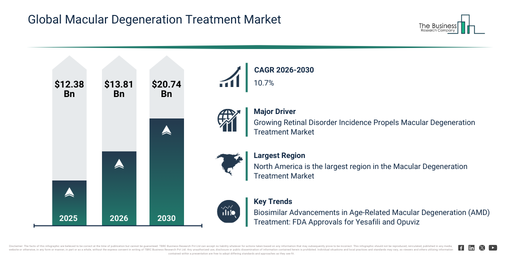
    The macular degeneration treatment market has experienced rapid expansion in recent years. Projections indicate it will grow from $12.38 billion in 2025 to $13.81 billion in 2026, demonstrating a compound annual growth rate (CAGR) of 11.5%. This historical growth can be ascribed to several factors, including an aging global population, a rise in the prevalence of age-related macular degeneration, the clinical success of anti-VEGF injections, enhanced ophthalmic diagnostic capabilities, and increasing access to specialized eye care services.

    The macular degeneration treatment market is poised for substantial expansion in the coming years. By 2030, its value is projected to reach $20.74 billion, demonstrating a compound annual growth rate (CAGR) of 10.7%. This anticipated growth stems from factors such as an expanding global elderly population, increased investment in advanced retinal therapies, a heightened emphasis on managing early-stage age-related macular degeneration, the wider adoption of gene and regenerative treatments, and greater healthcare expenditure on vision care. Significant trends influencing this period encompass an elevated focus on timely diagnosis and managing disease progression, the increasing use of anti-VEGF therapies, a rising need for treatments aimed at long-term vision preservation, the proliferation of minimally invasive treatment methods, and increased public awareness regarding age-related eye conditions.

    Get A Free Sample Report With In-Depth Market Insights:

    https://thebusinessresearchcompany.com/sample_request?id=73406469&type=smp&name=Macular%20Degeneration%20Treatment%20Market%20Report%202026&utm_source=Blogs&utm_medium=Paid&utm_campaign=Nov_PR

    Macular Degeneration Treatment Market Growth Factors Behind Sustained Expansion

    The rising prevalence of retinal disorders is projected to stimulate the growth of the macular degeneration treatment market. These conditions affect essential retinal tissue, impacting how individuals interpret visual information and often leading to impaired or lost vision. For instance, the American Academy of Ophthalmology estimates that by 2050, approximately 7.32 million people in the United States will experience primary open-angle glaucoma, a collective term for various eye disorders, with the highest figures observed in populations aged 70 to 79 years (32%), women (50%), and Hispanics (50%). The most affected demographic group is Hispanic men. Consequently, the increasing burden of retinal disorders is a significant driver for the expansion of the macular degeneration treatment market.

    Macular Degeneration Treatment Market Segment Trends And Revenue Contributors

    The macular degeneration treatment market covered in this report is segmented –

    1) By Stage of Disease: Early-Stage AMD, Intermediate AMD, Late-Stage AMD

    2) By Route of Administration: Oral, Injectable, Other Routes of Administration

    3) By End User: Ambulatory Surgical Centers, Ophthalmic Clinics, Hospitals

    Subsegments:

    1) By Early-Stage AMD: Nutritional Supplements, Lifestyle Modification Treatments

    2) By Intermediate AMD: Regular Disease Monitoring and Imaging Surveillance, Risk-Factor Management and Lifestyle Modification

    3) By Late-Stage AMD: Surgical Treatments, Advanced Anti-VEGF Therapies, Gene Therapy Options

    Macular Degeneration Treatment Market Industry Trends Fueling Future Revenue Growth

    Major companies operating in the macular degeneration treatment market are actively developing biosimilars for age-related macular degeneration (AMD) to broaden access to effective therapies. Biosimilars are biological medical products that are highly similar to an already approved reference product, with no clinically meaningful differences regarding their safety, purity, or potency. For instance, in May 2024, Biocon Biologics Ltd, an Indian-based company, and Samsung Bioepis Co. Ltd, a South Korea-based company, obtained FDA Approvals for Yesafili and Opuviz, two new biosimilars. Both biosimilars function by inhibiting vascular endothelial growth factor (VEGF), which is responsible for abnormal blood vessel growth in the eye. This action assists in preventing vision loss associated with conditions such as AMD and diabetic retinopathy. The FDA’s approval process encompassed comparative studies demonstrating that Yesafili and Opuviz possess no significant differences in efficacy or safety when compared to Eylea. These studies involved rigorous assessments of the biosimilars’ pharmacokinetics and immunogenicity.

    Macular Degeneration Treatment Market Competitive Landscape: Which Companies Lead The Industry?

    Major companies operating in the macular degeneration treatment market are F Hoffmann La Roche Ltd, Regeneron Pharmaceuticals Inc, Novartis AG, Bayer AG, Allergan Inc, Bausch Health Companies Inc, Santen Pharmaceutical Co Ltd, Alimera Sciences Inc, Apellis Pharmaceuticals Inc, Iveric Bio Inc, Aerie Pharmaceuticals Inc, Kodiak Sciences Inc, Neurotech Pharmaceuticals Inc, Regenxbio Inc, Adverum Biotechnologies Inc, Applied Genetic Technologies Corp, 4D Molecular Therapeutics Inc, GenSight Biologics SA, Nanoscope Therapeutics Inc, Annexon Inc, Ocular Therapeutix Inc, Graybug Vision Inc

    View The Full Macular Degeneration Treatment Market Report:

    https://thebusinessresearchcompany.com/report/macular-degeneration-treatment-global-market-report?utm_source=Blogs&utm_medium=Paid&utm_campaign=Nov_PR

    Macular Degeneration Treatment Market Regional Analysis: Which Geography Leads On Revenue?

    North America was the largest region in the macular degeneration treatment market in 2025. Asia-Pacific is expected to be the fastest-growing region in the forecast period. The regions covered in the macular degeneration treatment market report are Asia-Pacific, South East Asia, Western Europe, Eastern Europe, North America, South America, Middle East, Africa.

    Reach Out To Our Team:

    The Business Research Company: https://www.thebusinessresearchcompany.com/

    Americas: +1 310-496-7795

    Asia: +44 7882 955267 & +91 8897263534

    Europe: +44 7882 955267

    Email us at: marketing@tbrc.info

    Follow us on:

    LinkedIn: https://in.linkedin.com/company/the-business-research-company

    YouTube: https://www.youtube.com/channel/UC24_fI0rV8cR5DxlCpgmyFQ

    Global Market Model: https://www.thebusinessresearchcompany.com/global-market-model

  • Macrolide Antibiotics Market Growth Outlook: Why Analysts Expect Continued Expansion

    Macrolide Antibiotics Market Growth Outlook: Why Analysts Expect Continued Expansion

    Built to provide research that’s more actionable and strategically valuable, The Business Research Company’s 2026 market reports include market attractiveness analysis, total addressable market sizing, company benchmarking matrices, interactive Excel dashboards, broader supply chain intelligence, emerging startup tracking, and in-depth product insights.

    Macrolide Antibiotics Market Size, Value And Growth Trajectory Through 2030

    The macrolide antibiotics market size has experienced substantial growth in recent years. It is projected to expand from $65.42 billion in 2025 to reach $72.74 billion by 2026, demonstrating a compound annual growth rate (CAGR) of 11.2%. The historical growth of this market can be attributed to the widespread prevalence of bacterial respiratory infections, the long-standing clinical use of erythromycin and azithromycin, broad physician familiarity with macrolides, the expansion of hospital and outpatient antibiotic use, and their strong efficacy against gram-positive pathogens.

    The macrolide antibiotics market is projected to experience swift expansion over the coming years. This market is set to reach $106.7 billion by 2030, exhibiting a compound annual growth rate (CAGR) of 10.0%. This anticipated growth is driven by several factors, including an increase in community-acquired infections, the expansion of outpatient and ambulatory care options, a heightened need for affordable generic antibiotics, a stronger emphasis on managing antimicrobial resistance, and broader access to healthcare in developing nations. Key trends anticipated during this period involve a sustained requirement for broad-spectrum antibiotics, their increasing application in treating respiratory tract infections, a growing inclination towards oral antibiotic formulations, the proliferation of generic macrolide antibiotics, and an enhanced commitment to antibiotic stewardship initiatives.

    Get A Free Sample Report With In-Depth Market Insights:

    https://thebusinessresearchcompany.com/sample_request?id=38359442&type=smp&name=Macrolide%20Antibiotics%20Market%20Report%202026&utm_source=Blogs&utm_medium=Paid&utm_campaign=Nov_PR

    Macrolide Antibiotics Market Demand Drivers Opening New Revenue Streams

    The rising occurrence of skin infections is projected to propel the expansion of the macrolide antibiotics market moving forward. A skin infection is a condition that results from the entry of detrimental microorganisms into the skin, leading to inflammation and frequently accompanied by symptoms such as redness, swelling, and pain. The increase in skin infections can stem from elements like inadequate hygiene practices, compromised immune systems, exposure to environmental contaminants, antibiotic resistance, and insufficient wound care. Macrolide antibiotics are often prescribed for addressing skin infections caused by bacteria such as Staphylococcus aureus or Streptococcus pyogenes, especially in instances of penicillin allergy or resistance. For example, in August 2023, Skin Health Institute Inc., an Australia-based non-profit organization, indicated that psoriasis affects an estimated 2–3% of the population in Australia, identifying it as a relatively common skin condition. Consequently, the escalating prevalence of skin infections is fueling the growth of the macrolide antibiotics market.

    Macrolide Antibiotics Market Segment Analysis Spotlighting Growth Areas

    The macrolide antibiotics market covered in this report is segmented –

    1) By Drugs: Azithromycin, Clarithromycin, Erythromycin, Fidaxomicin, Telithromycin

    2) By Indication: Respiratory Tract Infections, Skin Infections, Sexually Transmitted Infections, Gastrointestinal Infections, Other Indications

    3) By Route Of Administration: Oral, Parenteral, Other Routes Of Administrations

    4) By Distribution Channel: Hospital Pharmacies, Drug Stores And Retail Pharmacies, Online Providers

    5) By End User: Hospital, Dermatology Clinic, Clinic, Ambulatory Centre

    Subsegments:

    1) By Azithromycin: Oral Tablets, Oral Suspension, Injection

    2) By Clarithromycin: Immediate-Release Tablets, Extended-Release Tablets, Oral Suspension

    3) By Erythromycin: Tablets, Capsules, Topical Solution, Injection

    4) By Fidaxomicin: Oral Tablets, Oral Suspension

    5) By Telithromycin: Oral Tablets, Oral Film-Coated Tablets

    Macrolide Antibiotics Market Trends Powering Strategic Industry Growth

    Major companies operating in the macrolide antibiotics market are focusing on developing innovative products such as ketolide antibiotics designed to overcome antimicrobial resistance and shorten treatment duration to improve adherence and lower healthcare burden. Ketolide antibiotics are a class of antibiotics derived from macrolides that are designed to treat bacterial infections, including those resistant to standard macrolides, by inhibiting bacterial protein synthesis, helping combat resistant strains and improve treatment efficacy. For instance, in November 2024, Wockhardt Ltd., an India-based pharmaceutical company, soft-launched Nafithromycin, marketed under the brand name Miqnaf, an innovative lactone-ketolide macrolide antibiotic to address drug-resistant community-acquired bacterial pneumonia. The product is a novel small-molecule macrolide/ketolide (nafithromycin) formulated for oral dosing as an ultra-short, once-daily, three-day course; it was developed to concentrate highly in lung tissue, show greater in vitro potency versus some azithromycin-resistant strains, and provide a simplified regimen that can improve compliance and reduce overall antibiotic exposure.

    Macrolide Antibiotics Market Leading Companies: Who Holds The Strongest Market Presence?

    Major companies operating in the macrolide antibiotics market are Pfizer Inc., AbbVie Inc., Bayer AG, Sanofi S.A., Abbott Laboratories, Novartis AG, GlaxoSmithKline plc, Teva Pharmaceutical Industries Limited, Viatris Inc., Daiichi Sankyo Company Limited, Sun Pharmaceutical Industries Limited, Cipla Limited, Lupin Limited, Zydus Lifesciences Limited, Alkem Laboratories Limited, Aurobindo Pharma Limited, Dr Reddys Laboratories Limited, Wockhardt Limited, Hikma Pharmaceuticals PLC, Sandoz Group AG

    View The Full Macrolide Antibiotics Market Report:

    https://thebusinessresearchcompany.com/report/macrolide-antibiotics-global-market-report?utm_source=Blogs&utm_medium=Paid&utm_campaign=Nov_PR

    Macrolide Antibiotics Market Geographic Spread And Regional Opportunities

    North America was the largest region in the macrolide antibiotics market in 2025. The regions covered in the macrolide antibiotics market report are Asia-Pacific, South East Asia, Western Europe, Eastern Europe, North America, South America, Middle East, Africa.

    Reach Out To Our Team:

    The Business Research Company: https://www.thebusinessresearchcompany.com/

    Americas: +1 310-496-7795

    Asia: +44 7882 955267 & +91 8897263534

    Europe: +44 7882 955267

    Email us at: marketing@tbrc.info

    Follow us on:

    LinkedIn: https://in.linkedin.com/company/the-business-research-company

    YouTube: https://www.youtube.com/channel/UC24_fI0rV8cR5DxlCpgmyFQ

    Global Market Model: https://www.thebusinessresearchcompany.com/global-market-model
  • Lupus Therapeutics Market Forecast Insights: The Road To $4.34 Billion By 2030

    Lupus Therapeutics Market Forecast Insights: The Road To $4.34 Billion By 2030

    Backed by market attractiveness analysis, total addressable market sizing, company benchmarking matrices, interactive Excel dashboards, wider supply chain intelligence, emerging startup coverage, and detailed product-level insights, The Business Research Company’s 2026 market reports are designed to offer research that is more actionable and strategically valuable than ever.

    Lupus Therapeutics Market CAGR Outlook And Future Development

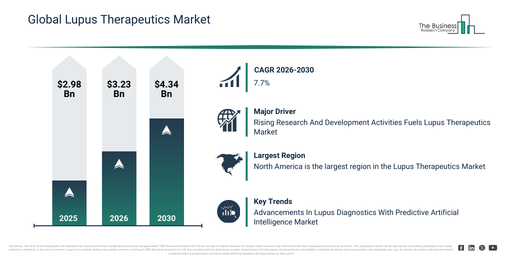
    The lupus therapeutics market has demonstrated robust growth over recent years. Projections indicate an increase in its value from $2.98 billion in 2025 to $3.23 billion in 2026, driven by a compound annual growth rate (CAGR) of 8.7%. Factors contributing to its past growth include the rising prevalence of systemic lupus erythematosus, the extensive use of corticosteroids and antimalarial drugs, enhanced clinical diagnosis of autoimmune disorders, the expansion of hospital-based rheumatology services, and increased patient awareness regarding lupus symptoms.

    The lupus therapeutics market is projected to experience substantial expansion over the coming years. This market is forecast to reach $4.34 billion by 2030, exhibiting a compound annual growth rate (CAGR) of 7.7%. Factors contributing to this growth during the forecast period include increased investment in biologic drug development, a rising need for steroid-sparing treatments, enhanced funding for autoimmune disease research, broader availability of specialty rheumatology clinics, and greater healthcare spending on chronic autoimmune conditions. Key trends anticipated within the forecast timeframe involve the increasing embrace of biologic and targeted therapies, a stronger emphasis on achieving long-term disease control, a growing focus on individualized lupus management strategies, the wider implementation of combination therapy methods, and heightened awareness regarding early diagnosis and treatment for lupus.

    Get A Free Sample Report With In-Depth Market Insights:

    https://thebusinessresearchcompany.com/sample_request?id=32953191&type=smp&name=Lupus%20Therapeutics%20Market%20Report%202026&utm_source=Blogs&utm_medium=Paid&utm_campaign=Nov_PR

    Lupus Therapeutics Market Growth Backed By Core Demand Fundamentals

    Enhanced research and development endeavors are projected to drive the growth of the lupus therapeutics market moving forward. These activities encompass systematic investigation and experimentation aimed at advancing knowledge, technology, or product creation across diverse sectors. The escalation in R&D efforts is frequently propelled by the demand for innovation, technological progress, the need to address emerging challenges, improvements in healthcare outcomes, and the fostering of economic expansion through scientific discoveries and technological breakthroughs. R&D initiatives contribute to the advancement of lupus therapeutics by identifying novel treatments, refining existing therapies, and deepening the understanding of the disease’s underlying mechanisms. For instance, in March 2023, a report issued by the Congressional Research Service, a U.S.-based federal legislative agency, highlighted that the President’s FY2024 budget proposal allocates approximately $209.7 billion to research and development (R&D), signifying an increase of $8.9 billion (4.4%) over the FY2023 estimated level of $200.8 billion. When adjusted for inflation to FY2024 dollars, this proposal corresponds to a constant-dollar increase of 2.4% compared with the FY2023 actual level. Therefore, the expanding research and development activities are fueling the growth of the lupus therapeutics market.

    Lupus Therapeutics Market Segment Performance And Emerging Opportunities

    The lupus therapeutics market covered in this report is segmented –

    1) By Disease Type: Systemic Lupus Erythematosus (SLE), Cutaneous Lupus Erythematosus, Drug-Induced Lupus Erythematosus, Neonatal Lupus

    2) By Treatment Type: Non-Steroidal Anti-Inflammatory Drugs (NSAIDs), Biologics, Antimalarial Drugs, Corticosteroids, Other Treatment Types

    3) By Route Of Administration: Oral, Subcutaneous, Intravenous, Other Routes Of Administration

    4) By End User: Hospitals And Clinics, Diagnostic Laboratories, Other End Users

    Subsegments:

    1) By Systemic Lupus Erythematosus (SLE): Mild SLE, Moderate SLE, Severe SLE

    2) By Cutaneous Lupus Erythematosus: Acute Cutaneous Lupus, Subacute Cutaneous Lupus, Chronic Cutaneous Lupus (Including Discoid Lupus)

    3) By Drug-Induced Lupus Erythematosus: Medications Known To Cause Drug-Induced Lupus, Hydralazine, Procainamide, Isoniazid

    4) By Neonatal Lupus: Heart-Related Neonatal Lupus, Skin-Related Neonatal Lupus

    Lupus Therapeutics Market Growth Trends Reshaping The Competitive Landscape

    Leading enterprises within the lupus therapeutics sector are concentrating their efforts on creating sophisticated blood tests that incorporate predictive artificial intelligence to improve the precision of diagnoses and the effectiveness of therapies. These AI-powered diagnostic instruments analyze biomarkers present in blood specimens via AI algorithms, enabling more precise forecasting of disease progression or patient reactions to treatment. An illustrative example is AMPEL BioSolutions LLC, a US-based precision medicine firm, which introduced its LuGENE blood test in March 2024. This test employs predictive artificial intelligence to forecast lupus flares and identify potential drug targets by analyzing gene expression. Its objective is to transform how lupus, an autoimmune condition, is managed by offering customized therapeutic pathways for individuals. The test pinpoints real-time irregularities in gene expression contributing to inflammation and immune system dysfunction, which are amenable to pharmaceutical intervention.

    Lupus Therapeutics Market Key Players: Which Companies Lead Industry Competition?

    Major companies operating in the lupus therapeutics market are Pfizer Inc., Johnson & Johnson, Merck & Co. Inc., AbbVie Inc., Sanofi SA, AstraZeneca PLC, Novartis AG, Roche Holdings Inc., GlaxoSmithKline plc, Eli Lilly and Company, Viatris Inc., Teva Pharmaceutical Industries Ltd., Bausch Health Companies Inc., Sun Pharmaceutical Industries Ltd., Aurobindo Pharma, Dr. Reddy’s Laboratories Ltd., Hikma Pharmaceuticals PLC, Amneal Pharmaceuticals LLC, Lupin Ltd, Zydus Lifesciences Limited, Glenmark Pharmaceuticals Limited

    View The Full Lupus Therapeutics Market Report:

    https://thebusinessresearchcompany.com/report/lupus-therapeutics-global-market-report?utm_source=Blogs&utm_medium=Paid&utm_campaign=Nov_PR

    Lupus Therapeutics Market Top Region By Revenue And Market Share

    North America was the largest region in the lupus therapeutics market in 2025. Asia-Pacific is expected to be the fastest-growing region in the forecast period. The regions covered in the lupus therapeutics market report are Asia-Pacific, South East Asia, Western Europe, Eastern Europe, North America, South America, Middle East, Africa.

    Reach Out To Our Team:

    The Business Research Company: https://www.thebusinessresearchcompany.com/

    Americas: +1 310-496-7795

    Asia: +44 7882 955267 & +91 8897263534

    Europe: +44 7882 955267

    Email us at: marketing@tbrc.info

    Follow us on:

    LinkedIn: https://in.linkedin.com/company/the-business-research-company

    YouTube: https://www.youtube.com/channel/UC24_fI0rV8cR5DxlCpgmyFQ

    Global Market Model: https://www.thebusinessresearchcompany.com/global-market-model
  • Lupus Nephritis Market Explained: What Is Fueling Growth To $2.98 Billion By 2030?

    Lupus Nephritis Market Explained: What Is Fueling Growth To $2.98 Billion By 2030?

    Featuring market attractiveness scoring, total addressable market sizing, company benchmarking matrices, interactive Excel dashboards, deeper supply chain intelligence, emerging startup tracking, and granular product-level insights, The Business Research Company’s 2026 market reports are built to deliver research that is both more actionable and more strategically valuable.

    Lupus Nephritis Market Set To Climb From $2.24 Billion In 2026 To $2.98 Billion By 2030

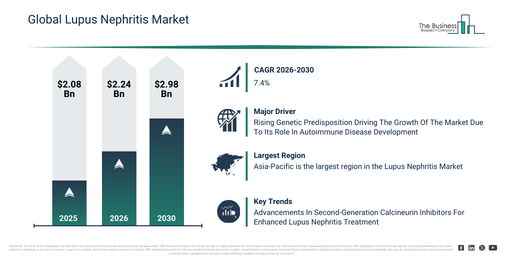
    The lupus nephritis market has shown robust expansion in recent times. Forecasts indicate it will expand from $2.08 billion in 2025 to $2.24 billion by 2026, demonstrating a compound annual growth rate (CAGR) of 7.7%. Historically, this growth has been driven by factors such as the rising incidence of systemic lupus erythematosus, advancements in kidney biopsy and diagnostic methodologies, the extensive application of corticosteroids for treatment, an expansion in hospital-centric nephrology services, and a heightened understanding of autoimmune kidney conditions.

    The lupus nephritis market is anticipated to experience robust expansion over the next few years. It is forecast to attain a value of $2.98 billion by 2030, growing at a compound annual growth rate (CAGR) of 7.4%. This projected growth in the upcoming period stems from factors such as increasing investment in biologic drug development, a heightened focus on early intervention to prevent kidney failure, wider adoption of combination therapy regimens, the enlargement of specialty nephrology clinics, and a rise in healthcare spending directed towards autoimmune disease management. Significant trends during the forecast period encompass an increasing emphasis on early diagnosis and continuous disease monitoring, the expanding use of immunosuppressive and biologic therapies, a greater focus on personalized treatment approaches, the extension of long-term disease management strategies, and heightened awareness of autoimmune kidney complications.

    Get A Free Sample Report With In-Depth Market Insights:

    https://thebusinessresearchcompany.com/sample_request?id=15947816&type=smp&name=Lupus%20Nephritis%20Market%20Report%202026&utm_source=Blogs&utm_medium=Paid&utm_campaign=Oct_PR

    Lupus Nephritis Market Growth Catalysts And Demand Drivers

    The rising incidence of genetic predisposition is anticipated to drive expansion in the lupus nephritis market. This term describes inherited genetic characteristics that heighten an individual’s susceptibility to specific diseases or conditions. The growing occurrence of genetic predisposition stems from elements like inheritance patterns, environmental factors, and specific gene mutations. The escalating presence of genetic predisposition is crucial in the onset of lupus nephritis, highlighting the influence of inherited genetics in autoimmune conditions, especially those impacting renal function. As an illustration, data from October 2024 by the Cystic Fibrosis Trust, a UK national charity, showed the UK CF Registry had 11,148 registered patients in 2022, rising to 11,318 in 2024, indicating a 1.52% increase in those with cystic fibrosis (CF). Consequently, the expanding prevalence of genetic predisposition is fueling the growth of the lupus nephritis market.

    Lupus Nephritis Market Segment Landscape And Growth Outlook

    The lupus nephritis market covered in this report is segmented –

    1) By Stage: Class 1, Class 2, Class 3, Other Stages

    2) By Drug Class: Immunosuppressive Drugs, Corticosteroids, Biological Agents, Antimalarial Drugs

    3) By Route Of Administration: Oral, Parenteral, Other Routes Of Administration

    4) By Distribution Channel: Hospital Pharmacy, Retail Pharmacy, Online Pharmacy

    5) By End-User: Hospitals, Specialty Clinics, Other End-Users

    Subsegments:

    1) By Class 1: Asymptomatic Cases, Mild Proteinuria, Incidental Diagnosis

    2) By Class 2: Mild Hematuria, Low-Grade Proteinuria, Minimal Immune Complex Deposition

    3) By Class 3: Active Lesions, Chronic Sclerotic Lesions, Crescent Formation

    4) By Other Stages: Class 4 (Diffuse Lupus Nephritis), Class 5 (Membranous Lupus Nephritis), Class 6 (Advanced Sclerotic Lupus Nephritis)

    Lupus Nephritis Market Trends Shaping Long-Term Demand

    Leading companies in the lupus nephritis market are directing their efforts towards the development of advanced second-generation calcineurin inhibitors to improve treatment efficacy and long-term kidney outcomes for patients. These second-generation calcineurin inhibitors are utilized in lupus nephritis to mitigate inflammation and prevent kidney damage through the modulation of immune responses. For example, in September 2024, Aurinia Pharmaceuticals Inc., a commercial-stage biopharmaceutical company based in Canada, announced that the Japanese Ministry of Health, Labour, and Welfare had granted approval for LUPKYNIS (voclosporin) for the treatment of lupus nephritis. This approval permits voclosporin to be administered in conjunction with mycophenolate mofetil (MMF), a decision supported by data from the AURORA Clinical Program, which demonstrated its safety and efficacy. The approval signifies a major milestone, expanding therapeutic options for lupus nephritis patients in Japan and contributing to improved disease management and patient outcomes.

    Lupus Nephritis Market Competitive Landscape: Who Leads The Industry?

    Major companies operating in the lupus nephritis market are F Hoffmann La Roche Ltd, Bristol Myers Squibb, Novartis AG, GlaxoSmithKline plc, Eli Lilly and Company, AstraZeneca PLC, Pfizer Inc, Johnson and Johnson, Merck and Co Inc, Sanofi, AbbVie Inc, Bayer AG, Amgen Inc, UCB SA, Otsuka Pharmaceutical Co Ltd, Aurinia Pharmaceuticals Inc, RemeGen Co Ltd, Kezar Life Sciences, Equillium Inc, Kyverna Therapeutics Inc, Biogen Inc

    View The Full Lupus Nephritis Market Report:

    https://thebusinessresearchcompany.com/report/lupus-nephritis-global-market-report?utm_source=Blogs&utm_medium=Paid&utm_campaign=Oct_PR

    Lupus Nephritis Market Regional Analysis And Top Geography

    Asia-Pacific was the largest region in the lupus nephritis market in 2025. The regions covered in the lupus nephritis market report are Asia-Pacific, South East Asia, Western Europe, Eastern Europe, North America, South America, Middle East, Africa.

    Reach Out To Our Team:

    The Business Research Company: https://www.thebusinessresearchcompany.com/

    Americas: +1 310-496-7795

    Asia: +44 7882 955267 & +91 8897263534

    Europe: +44 7882 955267

    Email us at: marketing@tbrc.info

    Follow us on:

    LinkedIn: https://in.linkedin.com/company/the-business-research-company

    YouTube: https://www.youtube.com/channel/UC24_fI0rV8cR5DxlCpgmyFQ

    Global Market Model: https://www.thebusinessresearchcompany.com/global-market-model
  • Lung Cancer Surgery Market Forecast To Reach $6.73 Billion By 2030: Key Trends Explained

    Lung Cancer Surgery Market Forecast To Reach $6.73 Billion By 2030: Key Trends Explained

    Built to provide research that’s more actionable and strategically valuable, The Business Research Company’s 2026 market reports include market attractiveness analysis, total addressable market sizing, company benchmarking matrices, interactive Excel dashboards, broader supply chain intelligence, emerging startup tracking, and in-depth product insights.

    Lung Cancer Surgery Market Forecast: Value Set To Climb From $5.6 Billion To $6.73 Billion

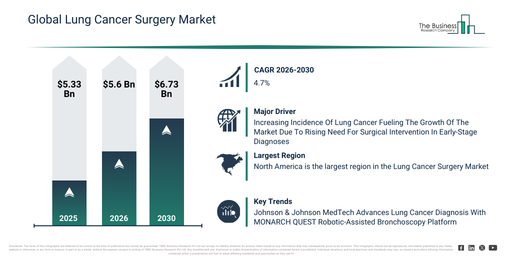
    The lung cancer surgery market size has demonstrated robust expansion in recent years. It is anticipated to increase from $5.33 billion in 2025 to $5.6 billion in 2026, registering a compound annual growth rate (CAGR) of 5.1%. This historical growth can be linked to several factors, including the rising incidence rates of lung cancer, enhanced hospital surgical capabilities, the availability of proficient thoracic surgeons, the increasing adoption of video-assisted thoracoscopic surgery, and greater awareness of early-stage lung cancer treatment.

    The lung cancer surgery market size is projected to experience consistent expansion over the upcoming years. This market is anticipated to reach $6.73 billion by 2030, exhibiting a compound annual growth rate (CAGR) of 4.7%. Key drivers of this forecasted growth include the increasing incorporation of robotic surgery platforms, a heightened demand for precise surgical results, the proliferation of specialized cancer care facilities, rising capital expenditure in surgical technology, and the wider implementation of enhanced recovery after surgery protocols. Significant trends expected during this period involve the increasing embrace of minimally invasive surgical approaches, a rise in robotic-assisted thoracic surgery applications, a stronger inclination towards lung-sparing procedures, broadening utilization of advanced surgical instruments, and an increased emphasis on improving post-surgical recovery outcomes.

    Get A Free Sample Report With In-Depth Market Insights:

    https://thebusinessresearchcompany.com/sample_request?id=87209543&type=smp&name=Lung%20Cancer%20Surgery%20Market%20Report%202026&utm_source=Blogs&utm_medium=Paid&utm_campaign=Oct_PR

    Lung Cancer Surgery Market Opportunity Drivers: What’s Unlocking New Revenue Potential?

    The rising occurrence of lung cancer is projected to drive expansion within the lung cancer surgery market. Lung cancer is defined by the unchecked proliferation of atypical cells in one or both lungs, potentially disrupting their proper function. This surge in lung cancer cases stems from extended exposure to air pollution, particularly fine particulate matter, as these microscopic particles are capable of permeating deeply into the lungs, resulting in inflammation, cellular harm, and genetic alterations that can foster cancer progression. Surgical intervention for lung cancer aids in lowering the fatality rate associated with the disease by facilitating the prompt excision of malignant tumors prior to their dissemination or advancement. As an illustration, in June 2025, data from the Centers for Disease Control and Prevention, a US-based federal government agency, indicated that in 2023, lung cancer caused 131,584 deaths in the United States, subsequent to 218,893 newly reported cases in 2022. Consequently, the growing frequency of lung cancer is stimulating the expansion of the lung cancer surgery market.

    Lung Cancer Surgery Market Breakdown By Product Type And Application

    The lung cancer surgery market covered in this report is segmented –

    1) By Surgical Approach: Thoracotomy, Minimally Invasive Surgeries

    2) By Procedure: Lobectomy, Segmentectomy, Pneumonectomy, Sleeve Resection, Extended Reserction

    3) By Product: Thoracoscopes, Mediastinoscopes, Bronchoscopes, Robotic-Assistes Thoracic Surgery Systems, Surgical Staplers, Surgical Energy Instruments, Advanced Energy Instruments, Advanced Bipolar Instruments, Ultrasonic Instruments

    4) By Distribution Channels: Direct Tender, Retail Sales, Online Sales, Other Channels

    5) By End User: Hospitals, Ambulatory And Surgical Centres, Academic And Research Institutes, Specialiaty Cancer Care Centre, Other End Users

    Subsegments:

    1) By Thoracotomy: Lobectomy, Pneumonectomy, Segmentectomy, Wedge Resection

    2) By Minimally Invasive Surgeries: Video-Assisted Thoracoscopic Surgery (VATS), Robotic-Assisted Surgery

    Lung Cancer Surgery Market Innovation Trends Shaping Future Development

    Leading companies within the lung cancer surgery market are concentrating on developing innovative technologies, such as robotic-assisted surgeries, to improve surgical accuracy, shorten recovery times, and enhance patient outcomes. Robotic-assisted surgeries involve minimally invasive procedures carried out by surgeons utilizing robotic systems to increase precision, lower complications, and better patient recovery. For instance, in March 2025, Johnson & Johnson MedTech, a US-based medical devices and technology company, announced the U.S. 510(k) regulatory clearance of MONARCH QUEST. The MONARCH QUEST robotic-assisted bronchoscopy platform offers enhanced reach and stability for accessing small, hard-to-reach lung nodules, thereby improving the ability to diagnose lung cancer in its earlier stages. Its advanced maneuverability and integration with imaging technologies enable more accurate biopsies while minimizing patient discomfort. Designed to expand procedural capabilities and streamline workflow, the platform supports greater clinical confidence and consistency across a broader spectrum of bronchoscopic procedures.

    Lung Cancer Surgery Market Company Landscape And Competitive Strategy

    Major companies operating in the lung cancer surgery market are Johnson And Johnson, Medtronic plc, Fujifilm Holdings Corporation, B Braun Melsungen AG, Olympus Corporation, Intuitive Surgical Inc, Teleflex Incorporated, Karl Storz SE, Lepu Medical Technology Beijing Co Ltd, Ambu AS, KLS Martin Group, Richard Wolf GmbH, Ethicon Inc, Ackermann Instrument GmbH, Scanlan International Inc, Sontec Instruments Inc, Covidien LLC, Stryker Corporation, Smith And Nephew plc, CONMED Corporation, Erbe Elektromedizin GmbH

    View The Full Lung Cancer Surgery Market Report:

    https://thebusinessresearchcompany.com/report/lung-cancer-surgery-global-market-report?utm_source=Blogs&utm_medium=Paid&utm_campaign=Oct_PR

    Lung Cancer Surgery Market Geographic Analysis: Where Is Demand Rising Fastest?

    North America was the largest region in the lung cancer surgery market in 2025. Asia-Pacific is expected to be the fastest-growing region in the forecast period. The regions covered in the lung cancer surgery market report are Asia-Pacific, South East Asia, Western Europe, Eastern Europe, North America, South America, Middle East, Africa.

    Reach Out To Our Team:

    The Business Research Company: https://www.thebusinessresearchcompany.com/

    Americas: +1 310-496-7795

    Asia: +44 7882 955267 & +91 8897263534

    Europe: +44 7882 955267

    Email us at: marketing@tbrc.info

    Follow us on:

    LinkedIn: https://in.linkedin.com/company/the-business-research-company

    YouTube: https://www.youtube.com/channel/UC24_fI0rV8cR5DxlCpgmyFQ

    Global Market Model: https://www.thebusinessresearchcompany.com/global-market-model
  • Lung Cancer Screening Market Analysis: Understanding The Drivers Behind 9.5% CAGR Through 2030 Growth

    Lung Cancer Screening Market Analysis: Understanding The Drivers Behind 9.5% CAGR Through 2030 Growth

    Backed by market attractiveness analysis, total addressable market sizing, company benchmarking matrices, interactive Excel dashboards, wider supply chain intelligence, emerging startup coverage, and detailed product-level insights, The Business Research Company’s 2026 market reports are designed to offer research that is more actionable and strategically valuable than ever.

    Lung Cancer Screening Market Revenue Growth On Track For A 9.5% CAGR Through 2030

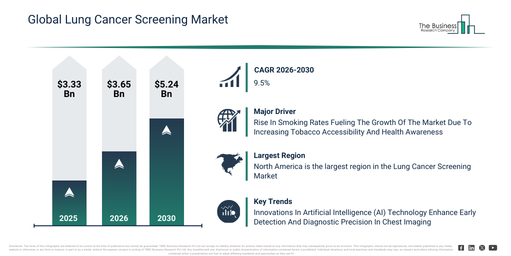
    The lung cancer screening market size has experienced substantial growth in recent years. It is projected to expand from $3.33 billion in 2025 to $3.65 billion in 2026, achieving a compound annual growth rate (CAGR) of 9.6%. This historical growth can be attributed to various factors, including the increasing incidence of lung cancer within aging populations, heightened awareness of the advantages of early screening, the broadening of diagnostic imaging infrastructure, advancements in CT imaging technology, and the implementation of guideline-based screening protocols.

    The lung cancer screening market is anticipated to experience substantial growth over the next few years. It is projected to expand to $5.24 billion by 2030, achieving a compound annual growth rate (CAGR) of 9.5%. This growth during the forecast period is attributable to several factors, including the increasing integration of AI-assisted diagnostic workflows, the expansion of population-based screening initiatives, a rising focus on personalized risk assessment, growing investments in technologies for early cancer detection, and increasing support from healthcare policies for screening programs. Major trends expected in this period encompass a wider adoption of low-dose CT screening programs, the growing incorporation of AI in imaging analysis, an increased emphasis on screening high-risk populations, the expansion of preventive oncology initiatives, and an enhanced focus on the early detection of lung cancer.

    Get A Free Sample Report With In-Depth Market Insights:

    https://thebusinessresearchcompany.com/sample_request?id=75944157&type=smp&name=Lung%20Cancer%20Screening%20Market%20Report%202026&utm_source=Blogs&utm_medium=Paid&utm_campaign=Oct_PR

    Lung Cancer Screening Market Growth Momentum: What Factors Are Shaping Demand?

    An increase in smoking rates is anticipated to drive the expansion of the lung cancer screening market in the future. Smoking involves inhaling smoke, usually from burning tobacco, into the mouth and lungs. Elevated stress levels are contributing to higher smoking rates, as individuals increasingly use smoking to cope. Lung cancer screening plays a crucial role in tackling increasing smoking rates by allowing for the early identification of health risks linked to smoking. This early detection can encourage individuals to stop smoking and aid wider public health initiatives aimed at decreasing tobacco consumption. For example, data from October 2024 by the Office for Health Improvement & Disparities, a UK-based government organisation, revealed that in 2023, the proportion of current smokers within the routine and manual occupation group (aged 18 to 64) stood at 19.5%. Consequently, the escalating smoking rates are fueling the expansion of the lung cancer screening market.

    Lung Cancer Screening Market Segment Analysis And Revenue Potential

    The lung cancer screening market covered in this report is segmented –

    1) By Diagnosis Type: Low Dose Spiral Computed Tomography Scan, Chest-X-Ray

    2) By Cancer Type: Non-Small Cell Lung Cancer, Small Cell Lung Cancer

    3) By Age Group: 50 And Older, Below 50

    4) By End-User: Hospitals And Clinics, Diagnostic Centers, Other End-Users

    Subsegments:

    1) By Low Dose Spiral Computed Tomography Scan: Screening, Diagnostic, Follow-Up

    2) By Chest X-Ray: Posterior Anterior, Lateral, Portable

    Lung Cancer Screening Market Trends Redefining Industry Growth

    Key companies operating in the lung cancer screening market are concentrating on developing advanced solutions, such as normal flagging, to boost diagnostic accuracy, reduce false positives, and enhance the early detection of cancerous nodules. Normal flagging refers to a technological feature in lung cancer screening that automatically identifies and flags scans revealing no abnormal findings, thereby aiding in the prioritization of cases needing further review. For instance, in May 2025, Lunit Inc., a South Korea-based medical technology company, launched INSIGHT CXR4, its next-generation artificial intelligence (AI)-powered chest X-ray analysis solution, which is now CE MDR-certified for deployment across Europe. Designed to assist radiologists with improved diagnostic accuracy and workflow efficiency, the solution detects 12 chest abnormalities, including lung nodules, pneumonia, and acute bone fractures, and introduces features such as current-prior image comparison to support early disease detection and clinical decision-making.

    Lung Cancer Screening Market Key Players Shaping Industry Direction

    Major companies operating in the lung cancer screening market are Abbott Laboratories Inc., Canon Inc., Siemens Healthineers AG, Koninklijke Philips N.V., GE Healthcare Technologies Inc., Quest Diagnostics Incorporated, Shimadzu Corporation, NeoGenomics Laboratories Inc., Freenome Holdings Inc., Biodesix Inc., Lunit Inc., Infervision, Riverain Technologies, VisionGate, Delfi Diagnostics Inc., Hologic Inc., Fujifilm Holdings Corporation, United Imaging Healthcare Co. Ltd., Samsung Medison Co. Ltd., Carestream Health Inc., Analogic Corporation, Toshiba Medical Systems Corporation

    View The Full Lung Cancer Screening Market Report:

    https://thebusinessresearchcompany.com/report/lung-cancer-screening-global-market-report?utm_source=Blogs&utm_medium=Paid&utm_campaign=Oct_PR

    Lung Cancer Screening Market Global Footprint: Which Region Leads The Market?

    North America was the largest region in the lung cancer screening market in 2025. Asia-Pacific is expected to be the fastest-growing region in the forecast period. The regions covered in the lung cancer screening market report are Asia-Pacific, South East Asia, Western Europe, Eastern Europe, North America, South America, Middle East, Africa.

    Reach Out To Our Team:

    The Business Research Company: https://www.thebusinessresearchcompany.com/

    Americas: +1 310-496-7795

    Asia: +44 7882 955267 & +91 8897263534

    Europe: +44 7882 955267

    Email us at: marketing@tbrc.info

    Follow us on:

    LinkedIn: https://in.linkedin.com/company/the-business-research-company

    YouTube: https://www.youtube.com/channel/UC24_fI0rV8cR5DxlCpgmyFQ

    Global Market Model: https://www.thebusinessresearchcompany.com/global-market-model
  • Lung Cancer Liquid Biopsy Market Growth To $2.42 Billion By 2030: What’s Driving The Expansion?

    Lung Cancer Liquid Biopsy Market Growth To $2.42 Billion By 2030: What’s Driving The Expansion?

    Featuring market attractiveness scoring, total addressable market sizing, company benchmarking matrices, interactive Excel dashboards, deeper supply chain intelligence, emerging startup tracking, and granular product-level insights, The Business Research Company’s 2026 market reports are built to deliver research that is both more actionable and more strategically valuable.

    Lung Cancer Liquid Biopsy Market Value Growth And Long-Term Outlook

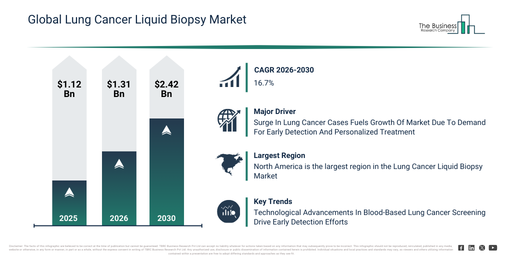
    The lung cancer liquid biopsy market has seen swift expansion in recent years. Its valuation is anticipated to climb from $1.12 billion in 2025 to $1.31 billion in 2026, demonstrating a compound annual growth rate (CAGR) of 17.0%. This historical increase can be ascribed to factors such as rising lung cancer incidence rates, the drawbacks of tissue biopsy methods, advancements in molecular diagnostics, the availability of circulating biomarker technologies, and an uptick in oncology research endeavors.

    The lung cancer liquid biopsy market size is anticipated to undergo significant expansion in the coming years. It is projected to achieve a valuation of $2.42 billion by 2030, progressing at a compound annual growth rate (CAGR) of 16.7%. This projected growth can be linked to several factors, including the surging demand for precision oncology solutions, the widening scope of liquid biopsy clinical applications, the increasing uptake of companion diagnostics, the escalating integration of AI-driven data analysis, and a heightened emphasis on early cancer screening programs. Prominent trends expected in this forecast period involve the rising adoption of non-invasive diagnostic techniques, the growing use of NGS-based liquid biopsy tests, an expanding need for early cancer detection, the development of personalized oncology diagnostics, and the improved integration of bioinformatics platforms.

    Get A Free Sample Report With In-Depth Market Insights:

    https://thebusinessresearchcompany.com/sample_request?id=21197373&type=smp&name=Lung%20Cancer%20Liquid%20Biopsy%20Market%20Report%202026&utm_source=Blogs&utm_medium=Paid&utm_campaign=Oct_PR

    Lung Cancer Liquid Biopsy Market Expansion Drivers: What’s Shaping Future Growth?

    The rising occurrence of lung cancer is anticipated to boost the expansion of the lung cancer liquid biopsy market in the coming years. This condition involves the unchecked multiplication of atypical cells within the lungs, frequently stemming from smoking and environmental factors. The primary reason for the increase in lung cancer cases is ongoing tobacco consumption, as smoking introduces carcinogens to the lungs that stimulate irregular cell development. Lung cancer liquid biopsy offers assistance by identifying cancer-associated genetic mutations and tumor DNA through a blood sample, thereby facilitating early detection, selection of appropriate treatments, and tracking disease progression or therapeutic response. For instance, in January 2023, a report from the American Cancer Society (ACS), a U.S.-based nonprofit organization, projected that in 2023, approximately 238,340 individuals, comprising 117,550 men and 120,790 women, would receive a lung cancer diagnosis, and 127,070 people are predicted to succumb to the illness. Consequently, the increasing prevalence of lung cancer is stimulating the growth of the lung cancer liquid biopsy market.

    Lung Cancer Liquid Biopsy Market Segmentation And Category Overview

    The lung cancer liquid biopsy market covered in this report is segmented –

    1) By Product: Instruments, Consumables, Kits And Reagents, Software And Services

    2) By Technology: Multi-Gene-Parallel Analysis (Ngs), Single-Gene Analysis (PCR Microarrays)

    3) By Biomarker: Cell-Free Deoxyribonucleic Acid, Circulating Tumor Deoxyribonucleic Acid, Extracellular Vesicles, Circulating Tumor Cells, Other Biomarkers

    4) By Clinical Application: Therapy Selection, Treatment Monitoring, Early Cancer Screening, Recurrence Monitoring, Other Applications

    5) By End User: Diagnostics And Imaging Centres, Hospitals, Academics And Research Centers, Other End Users

    Subsegments:

    1) By Instruments: PCR Instruments, Microarray Instruments, Next-Generation Sequencing (NGS) Instruments

    2) By Consumables Kits And Reagents: Sample Collection Kits, Amplification Reagents, Sequencing Reagents

    3) By Software And Services: Data Analysis Software, Cloud-Based Services, Bioinformatics Tools

    Lung Cancer Liquid Biopsy Market Strategic Trends: What Defines The Next Growth Phase?

    Leading companies in the lung cancer liquid biopsy market are prioritizing the development of technological advancements, such as blood-based lung cancer screening tests, to boost early detection capabilities, improve diagnostic accuracy, and enable non-invasive, real-time monitoring of tumor progression and treatment response. A blood-based lung cancer screening test offers a non-invasive method, analyzing biomarkers in the bloodstream to identify the presence of lung cancer at an early stage. For instance, in October 2023, DELFI Diagnostics Inc., a US-based biotechnology company, introduced FirstLook Lung, a blood-based liquid biopsy test created to assist in early lung cancer detection. This test utilizes fragmentomics to detect early lung cancer with high sensitivity and a 99.8% negative predictive value, making it a convenient and accessible initial step for at-risk individuals. Its objective is to enhance early detection, increase screening rates, and help direct further imaging resources to those most likely to benefit.

    Lung Cancer Liquid Biopsy Market Competitive Analysis Of Leading Industry Participants

    Major companies operating in the lung cancer liquid biopsy market are F. Hoffmann-La Roche Ltd, Thermo Fisher Scientific Inc., Biocept Inc., Agilent Technologies Inc., Eurofins Scientific, Illumina Inc., Sysmex Corporation, Bio-Rad Laboratories Inc., QIAGEN N.V., Natera Inc., Myriad Genetics Inc., NeoGenomics Laboratories Inc., Guardant Health Inc., Exosome Diagnostics Inc., Menarini Silicon Biosystems S.p.A., Inivata Ltd, Lucence Diagnostics Pte Ltd, LungLife AI Inc., Biodesix Inc., Oncocyte Corporation

    View The Full Lung Cancer Liquid Biopsy Market Report:

    https://thebusinessresearchcompany.com/report/lung-cancer-liquid-biopsy-global-market-report?utm_source=Blogs&utm_medium=Paid&utm_campaign=Oct_PR

    Lung Cancer Liquid Biopsy Market Regional Split: Which Areas Are Fueling Growth?

    North America was the largest region in the lung cancer liquid biopsy market in 2025. Asia-Pacific is expected to be the fastest-growing region in the forecast period. The regions covered in the lung cancer liquid biopsy market report are Asia-Pacific, South East Asia, Western Europe, Eastern Europe, North America, South America, Middle East, Africa.

    Reach Out To Our Team:

    The Business Research Company: https://www.thebusinessresearchcompany.com/

    Americas: +1 310-496-7795

    Asia: +44 7882 955267 & +91 8897263534

    Europe: +44 7882 955267

    Email us at: marketing@tbrc.info

    Follow us on:

    LinkedIn: https://in.linkedin.com/company/the-business-research-company

    YouTube: https://www.youtube.com/channel/UC24_fI0rV8cR5DxlCpgmyFQ

    Global Market Model: https://www.thebusinessresearchcompany.com/global-market-model
  • Lung Cancer Diagnostic And Screening Market Trends Reshaping Industry Growth Through 2030

    Lung Cancer Diagnostic And Screening Market Trends Reshaping Industry Growth Through 2030

    Built to provide research that’s more actionable and strategically valuable, The Business Research Company’s 2026 market reports include market attractiveness analysis, total addressable market sizing, company benchmarking matrices, interactive Excel dashboards, broader supply chain intelligence, emerging startup tracking, and in-depth product insights.

    Lung Cancer Diagnostic And Screening Market Poised To Hit $4.04 Billion By 2030 With A 9.6% CAGR

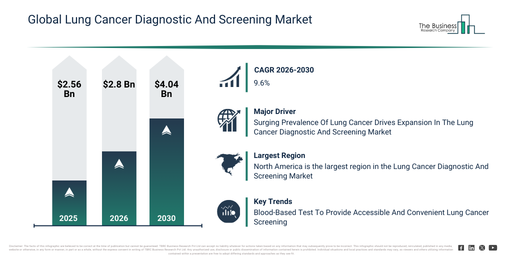
    The lung cancer diagnostic and screening market size has experienced robust growth in recent years. It is projected to expand from $2.56 billion in 2025 to $2.8 billion in 2026, achieving a compound annual growth rate (CAGR) of 9.4%. Historically, this growth has been driven by factors such as the high prevalence of smoking-related lung cancer, the widespread adoption of chest X-ray and CT imaging, the expansion of hospital-based diagnostic infrastructure, increasing awareness surrounding early lung cancer detection, and the rise of biopsy-based diagnostic confirmation.

    The lung cancer diagnostic and screening market is projected for significant expansion over the coming years. This market is set to reach $4.04 billion by 2030, exhibiting a compound annual growth rate (CAGR) of 9.6%. Factors driving this growth during the forecast period include the broadening of national lung cancer screening programs, the increasing uptake of low-dose CT screening, a rising demand for biomarker and blood-based tests, escalating healthcare investments in oncology diagnostics, and enhanced accessibility to diagnostic imaging centers. Key trends anticipated in the forecast period encompass a greater acceptance of early lung cancer screening initiatives, an expanding utilization of advanced imaging and biomarker tests, a heightened emphasis on screening high-risk populations, the proliferation of non-invasive diagnostic methods, and an increasing integration of multimodal diagnostic pathways.

    Get A Free Sample Report With In-Depth Market Insights:

    https://thebusinessresearchcompany.com/sample_request?id=22271904&type=smp&name=Lung%20Cancer%20Diagnostic%20And%20Screening%20Market%20Report%202026&utm_source=Blogs&utm_medium=Paid&utm_campaign=Oct_PR

    Lung Cancer Diagnostic And Screening Market Development Factors: What’s Supporting Demand?

    The growing incidence of lung cancer is projected to drive the expansion of the lung cancer diagnostic and screening market moving forward. Lung cancer is a severe illness marked by the uncontrolled multiplication of abnormal cells in the lung tissues, manifesting symptoms such as coughing, chest pain, and difficulty breathing. Lung cancer diagnosis and screening enable the early detection of the disease in patients through various tests, including an incisional biopsy and a bronchoscopy. For example, in January 2023, the American Cancer Society, a US-based government organization, reported approximately 238,340 new cases of lung cancer in the United States (117,550 in men and 120,790 in women). Furthermore, there were reportedly 127,070 deaths attributed to lung cancer (67,160 in men and 59,910 in women). Hence, the increasing prevalence of lung cancer is a key driver for the growth of the lung cancer diagnostic and screening market.

    Lung Cancer Diagnostic And Screening Market Segment Outlook: Which Categories Are Growing Fastest?

    The lung cancer diagnostic and screening market covered in this report is segmented –

    1) By Product: Instruments, Consumables And Accessories

    2) By Test: Biomarkers Tests, Imaging Test, Biopsy, Blood Test, Other Tests

    3) By Cancer Type: Non-Small Cell Lung Cancer, Small Cell Lung Cancer

    4) By End User: Hospital, Independent Diagnostic Laboratories, Diagnostic Imaging Centers, Cancer Research Institutes, Other End-Users

    Subsegments:

    1) By Instruments: Imaging Devices, Biopsy Devices, Bronchoscopy Systems

    2) By Consumables And Accessories: Biopsy Needles, Reagents And Assays, Imaging Contrast Agents, Sample Collection Kits

    Lung Cancer Diagnostic And Screening Market Transformation Trends: What Innovations Are Driving Change?

    Major companies in the lung cancer diagnostic and screening market are concentrating on developing a blood-based test that utilizes machine learning, such as whole-genome machine learning, to provide accessible and convenient lung cancer screening and gain a competitive edge in the market. Whole-genome machine learning involves the application of machine learning algorithms to analyze and interpret comprehensive sets of genetic information, encompassing an organism’s entire genome. For instance, in October 2023, DELFI Diagnostics Inc., a US-based developer of accessible blood-based tests, launched FirstLook Lung, a blood test using whole-genome machine learning to analyze cell-free DNA fragments, enhancing lung cancer screening with a 99.7% NPV. The test, designed for routine blood work, identifies individuals with potential lung cancer, including early-stage disease. Addressing low LDCT screening uptake, the test aims to improve population health.

    Lung Cancer Diagnostic And Screening Market Leading Companies And Competitive Benchmarking

    Major companies operating in the lung cancer diagnostic and screening market are Thermo Fisher Scientific Inc., Abbott Laboratories Inc., Danaher Corporation, Siemens Healthcare GmbH, FUJIFILM Corporation, Koninklijke Philips N.V., GE Healthcare Bio Sciences AB, Quest Diagnostics Incorporated, Agilent Technologies Inc., Illumina Inc., Qiagen Inc., Myriad Genetic Laboratories Inc., NeoGenomics Laboratories Inc., Canon Medical Systems Corporation, Oncimmune Holdings Plc, Riverain Technologies LLC, VisionGate, Foundation Medicine Inc., Biodesix, OncoCyte, Broncus Medical Inc.

    View The Full Lung Cancer Diagnostic And Screening Market Report:

    https://thebusinessresearchcompany.com/report/lung-cancer-diagnostic-and-screening-global-market-report?utm_source=Blogs&utm_medium=Paid&utm_campaign=Oct_PR

    Lung Cancer Diagnostic And Screening Market Top Region: Where Does Most Revenue Come From?

    North America was the largest region in the lung cancer diagnostic and screening market in 2025. The regions covered in the lung cancer diagnostic and screening market report are Asia-Pacific, South East Asia, Western Europe, Eastern Europe, North America, South America, Middle East, Africa.

    Reach Out To Our Team:

    The Business Research Company: https://www.thebusinessresearchcompany.com/

    Americas: +1 310-496-7795

    Asia: +44 7882 955267 & +91 8897263534

    Europe: +44 7882 955267

    Email us at: marketing@tbrc.info

    Follow us on:

    LinkedIn: https://in.linkedin.com/company/the-business-research-company

    YouTube: https://www.youtube.com/channel/UC24_fI0rV8cR5DxlCpgmyFQ

    Global Market Model: https://www.thebusinessresearchcompany.com/global-market-model
  • Low-Grade Glioma Market Growth To $1.94 Billion Creates New Opportunities Across The Industry

    Low-Grade Glioma Market Growth To $1.94 Billion Creates New Opportunities Across The Industry

    Backed by market attractiveness analysis, total addressable market sizing, company benchmarking matrices, interactive Excel dashboards, wider supply chain intelligence, emerging startup coverage, and detailed product-level insights, The Business Research Company’s 2026 market reports are designed to offer research that is more actionable and strategically valuable than ever.

    Low-Grade Glioma Market Size And Revenue Outlook Through 2030

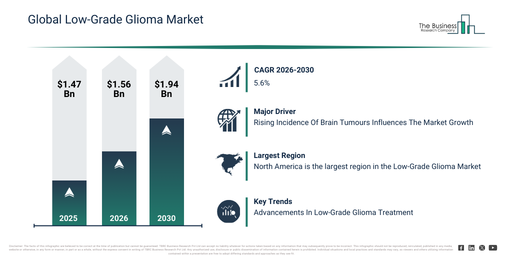
    The low-grade glioma market size has shown robust growth over recent years. It is anticipated to increase from $1.47 billion in 2025 to $1.56 billion in 2026, achieving a compound annual growth rate (CAGR) of 5.9%. This past growth can be ascribed to advancements in neuroimaging technologies, enhanced survival rates in low-grade glioma patients, higher neurosurgical intervention rates, increasing awareness of brain tumor symptoms, and the expansion of oncology treatment centers.

    The low-grade glioma market size is anticipated to experience substantial growth over the coming years. It is projected to expand to $1.94 billion by 2030, demonstrating a compound annual growth rate (CAGR) of 5.6%. This expected growth throughout the forecast period stems from factors such as an increasing emphasis on molecular tumor profiling, greater investment in targeted oncology drugs, a growing demand for less aggressive treatment options, expanding availability of specialized neuro-oncology care, and ongoing clinical trials for new therapies. Furthermore, significant trends during this period include a heightened focus on early diagnosis and monitoring, a growing uptake of targeted drug therapies, an increasing preference for multimodal treatment approaches, the expansion of personalized treatment planning, and the rise of long-term disease management strategies.

    Get A Free Sample Report With In-Depth Market Insights:

    https://thebusinessresearchcompany.com/sample_request?id=44979692&type=smp&name=Low-Grade%20Glioma%20Market%20Report%202026&utm_source=Blogs&utm_medium=Paid&utm_campaign=Oct_PR

    Low-Grade Glioma Market Industry Drivers: What’s Behind The Revenue Growth?

    The rising prevalence of brain tumors is anticipated to drive the expansion of the low-grade glioma market. A brain tumor is characterized as an unusual proliferation of cells in or around the brain, which can be either non-cancerous or cancerous. The increasing occurrence of brain tumors is attributed to factors such as greater exposure to radiation, environmental pollutants, genetic susceptibilities, and advancing age. Low-grade glioma interventions are beneficial for brain tumors by utilizing advanced diagnostic methods and targeted treatments like surgery, radiation, and chemotherapy. These approaches contribute to decelerating tumor growth, preserving neurological capabilities, and enhancing patient prognosis, making prompt detection and personalized care essential for managing other brain tumors with comparable growth patterns. For instance, in October 2025, according to the Cancer Australia, an Australia-based government agency, in 2023, Australia recorded 1,597 deaths from brain cancer (956 men and 641 women). By 2025, this number is expected to rise slightly to 1,639 deaths (979 men and 660 women). The estimated risk of dying from brain cancer by age 85 in 2025 is 1 in 195 (0.51%), with the risk higher for males at 1 in 165 (0.61%) and lower for females at 1 in 240 (0.42%). Therefore, the increasing incidence of brain tumors is a key driver for the growth of the low-grade glioma market.

    Low-Grade Glioma Market Segment Landscape: Which Areas Lead Development?

    The low-grade glioma market covered in this report is segmented –

    1) By Drug Type: Trametinib, Dabrafenib, Ivosidenib, Mirdametinib

    2) By Treatment: Surgery, Chemotherapy, Radiation

    3) By Distribution Channel: Online Pharmacies, Hospital Pharmacies, Retail Pharmacies

    Subsegments:

    1) By Trametinib: MEK Inhibitor Monotherapy, Combination Therapy (with BRAF Inhibitors)

    2) By Dabrafenib: BRAF V600E–Mutant Low-Grade Glioma, Combination Therapy (with MEK Inhibitors)

    3) By Ivosidenib: IDH1-Mutant Low-Grade Glioma, Oral Targeted Monotherapy

    4) By Mirdametinib: NF1-Associated Low-Grade Glioma, MEK Inhibitor Monotherapy

    #Low-Grade Glioma Market Growth Trends: What’s Shaping The Future Outlook?

    Leading firms within the low-grade glioma market are prioritizing the integration of combination therapies and targeted treatments, such as genetic alteration drugs, to secure a competitive advantage and enhance care for children with low-grade glioma. Genetic alteration drugs are targeted therapies developed to modify or inhibit specific genetic mutations or abnormalities within cells, thereby assisting in treating diseases like cancer by blocking the pathways responsible for uncontrolled cell growth. For instance, in May 2024, Day One Biopharmaceuticals, a US-based biotechnology company, introduced Tovorafenib (Ojemda) after securing accelerated FDA approval. This targeted therapy is intended for children aged six months and older presenting with unresectable or recurrent low-grade glioma (LGG) linked to BRAF gene alterations. Providing a convenient once-weekly oral treatment, it addresses a critical requirement for pediatric LGG patients who have had limited prior treatment options.

    Low-Grade Glioma Market Industry Leaders And Competitive Landscape

    Major companies operating in the low-grade glioma market are F Hoffmann La Roche Ltd, Novartis AG, AstraZeneca PLC, Bristol Myers Squibb Company, Merck & Co Inc, Ipsen SA, Agios Pharmaceuticals Inc, Day One Biopharmaceuticals Inc, Les Laboratoires Servier, BeiGene Ltd, Daiichi Sankyo Company Limited, AnHeart Therapeutics Inc, Apollomics Inc, CStone Pharmaceuticals Co Ltd, Avistone Biotechnology Co Ltd, Blueprint Medicines Corporation, Revolution Medicines Inc, SpringWorks Therapeutics Inc, Exelixis Inc, Genentech Inc

    View The Full Low-Grade Glioma Market Report:

    https://thebusinessresearchcompany.com/report/low-grade-glioma-global-market-report?utm_source=Blogs&utm_medium=Paid&utm_campaign=Oct_PR

    Low-Grade Glioma Market Regional Breakdown: Where Is Demand Concentrated?

    North America was the largest region in the low-grade glioma market in 2025. Asia-Pacific is expected to be the fastest-growing region in the forecast period. The regions covered in the low-grade glioma market report are Asia-Pacific, South East Asia, Western Europe, Eastern Europe, North America, South America, Middle East, Africa.

    Reach Out To Our Team:

    The Business Research Company: https://www.thebusinessresearchcompany.com/

    Americas: +1 310-496-7795

    Asia: +44 7882 955267 & +91 8897263534

    Europe: +44 7882 955267

    Email us at: marketing@tbrc.info

    Follow us on:

    LinkedIn: https://in.linkedin.com/company/the-business-research-company

    YouTube: https://www.youtube.com/channel/UC24_fI0rV8cR5DxlCpgmyFQ

    Global Market Model: https://www.thebusinessresearchcompany.com/global-market-model